Someone knows truth of

Zealous Greens threat to the future of clubs
BILL STEFANIAK
Don’t
IAN MEIKLE The






Someone knows truth of
Zealous Greens threat to the future of clubs
BILL STEFANIAK
Don’t
IAN MEIKLE The

Scan the marker below using your phone’s camera to download the GX App and
• Explore GX from the comfort of your own home.
• Scan our ‘X’ markers throughout the village to discover more.
• Create a mood board of your favourite homes, local art, sustainability features and inclusions.
• Stay up to date with the latest events.
Open every Friday to Monday 10am – 4pm ProHart Avenue, Strathnairn
Visit ginninderry.com or download the App today to plan your visit.
By Belinda STRAHORN

DUNNY paper and baked beans weren’t the only things Australians were squirrelling away during the pandemic, they were hoarding coins, too.
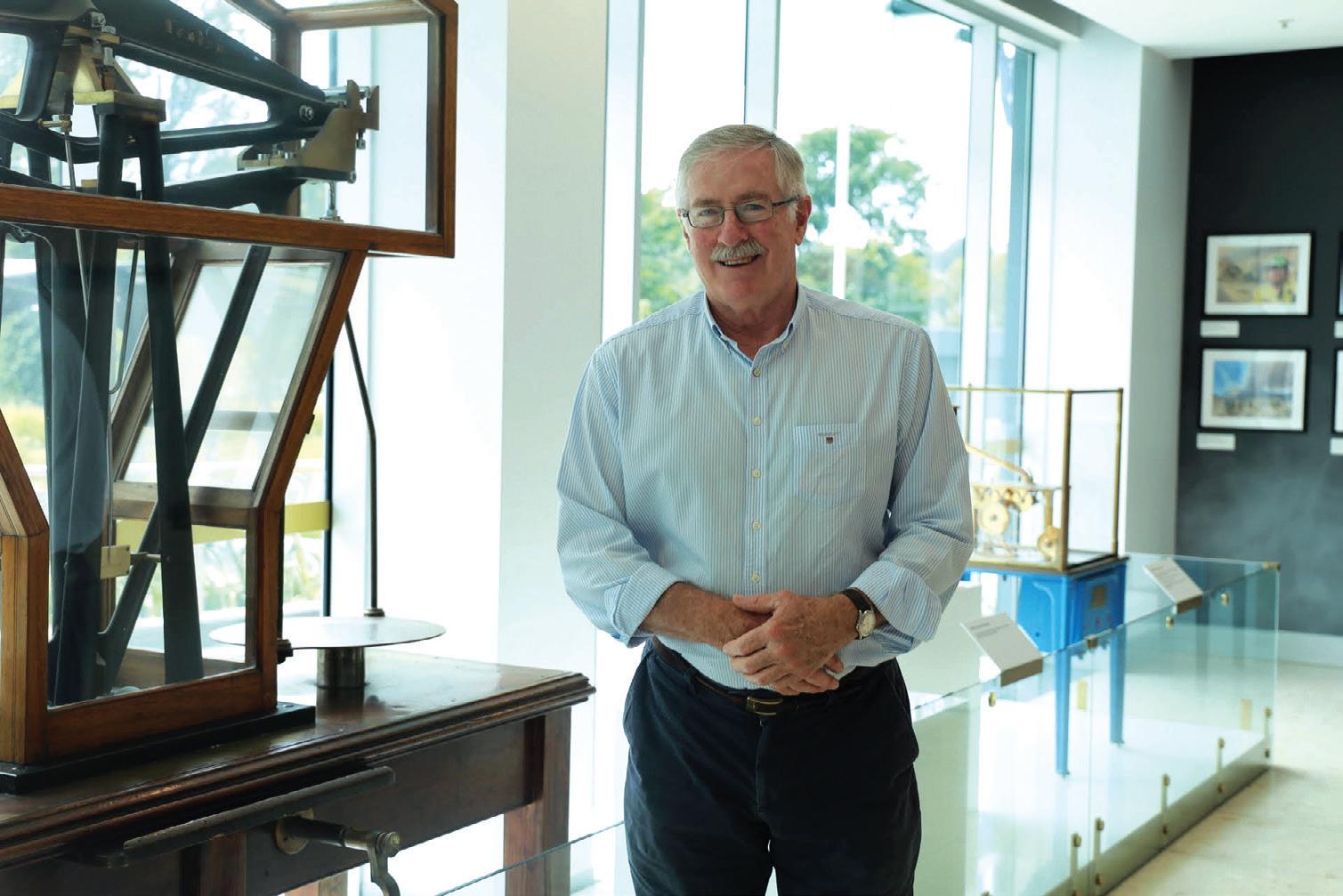
Despite many retailers saying no to cash for hygiene reasons, retiring Royal Australian Mint boss Ross Mac Diarmid says COVID-19 forced many people to use cash and stash left over coins in piggy banks, jars and wallets.
“In tough economic times people go back to what they know and what they are familiar with,” says MacDiarmid.
“What we are seeing at the mo ment is people transacting in notes and when they do their grocery shop, for example, they are receiving the change and putting it away and not spending it.
“There are a lot of coins that are being hoarded at the moment; are they likely to come back in the next 12 months or so? That we don’t know.”
After a decade in the top job, Mr MacDiarmid, who has presided over a period of soaring visitor numbers, the first coloured curved coin produced in the world and supplying circulating coin for countries in the Pacific, is
Arts & Entertainment
Canberra Matters
Cinema & Streaming
Crossword
Dining & Wine
Garden 35
Horoscopes 30
Letters 6
News 3-15
Politics 14

Seven Days 4 Cover: Thinking small is tireless Kate’s big calling.
Photo: Holly Treadaway. Story Page 12.
2911
Mint boss Ross MacDiarmid… “What’s fascinating about covid is it has caused a shift back to people using cash and for lots of
Tracey Avery 0477 939999
Advertising account executives: Damien Klemke, 0439 139001
Editor: Ian Meikle, editor@citynews.com.au
Assistant editor: Danielle Nohra, danielle@citynews.com.au
Journalists: Belinda Strahorn, belinda@citynews.com.au; Kathryn Vukovljak, kathryn@citynews.com.au
Nathan Schmidt, nathan@citynews.com.au
Arts editor: Helen Musa, 0400 043764, helen@citynews.com.au
Production manager: Janet Ewen
Proof reader: Glenda Anderson
In
Please





Whatever you do don’t sneeze, we’re watching
SO, I’m sitting in the opticians when the young man measuring the distance that separates my eyeballs publicly performed what is fast becoming an unnatural act.
He sneezed. He sniffled and then, cognisant of my withholding an inhalation and the clock ticking against me, he quickly apologised.
“Hay fever” was the explanation and the exhalation of relief not a second too soon.
In these covid-conscious times it’s electrifying to watch how people fall silent, frozen at the sound of a cough or a tissuedeprived sneeze.
The twitching pandemic nerve is never far from the surface, especially given the clusterburst and lockdown in Adelaide this past week followed by the local revelation that another diplomat got off a plane in Sydney, motored with impunity to Canberra and turned out to be covid positive. He was the second dipo in three weeks. No medi-hotel quarantine for them.
the emergency department with respiratory problems.
But what’s a bumper grass-pollen season without a bumper grass-mowing season?
A bloody great headache for Minister Chris Steel and his City Services crew.
But back to my dispensing optician and his in-shop indiscretion. Little wonder he’s suffering. As many as one in three people suffer from hay fever during the spring grass pollen season.
“It’s been five years since we had a big hay fever season in Canberra and we predict that this year is likely to see the return of a bumper grass pollen season,” was the ANU’s
This past week he’s had to stump up more than $6 million in “surge funding” to stay on top of the city’s prolific grass and weed growth, caused by recent record rainfall conditions, and also repair damaged roads.
While there wouldn’t be an unhappy mowing contractor in Canberra right now, pity the City Services manager on the TV news the other night bemoaning that the city has been mown not once, not twice but three times.
The exclusive resident Clubhouse is now open at The Aerie at Narrabundah.
love affair with lawn”.
Running until February, the travelling exhibition features stuff such as a Hills Hoist, lawn mowers and gardening tools, and covers the invention of the mower, lawn sports and looks at the future of mowing (attention City Services).
There’s also a “Canberra module” that delves into the history of lawn in Canberra (there’s a history?), the development and growth of the suburbs to some local iconic lawns.
CANBERRA Avenue through Fyshwick is the ACT’s top car-crash spot, according to an analysis of insurance claims.
Inexplicably, peak-hour traffic between
1.30pm and 4.30pm on Monday afternoon is not the time to be there with nose-to-tail collisions accounting for 67 per cent of crashes. Could it be the pressure of people commuting to Queanbeyan, your columnist unkindly posited
Among six new entries to make AAMI’s top 10 list this year are arterial roads such as Drakeford Drive in Kambah and the Federal Highway at Watson.
DINNER at the writing Overalls’ must be a barrel of laughs if this week’s “CityNews” is any guide. Leafing through the pre-printed pages, I fell upon two headings – “Dead women: Someone out there knows the truth” and “Stories of terrible murders took 40 years to tell”.
The first opus is by historian-cumauthor-cum-journalist Nichole Overall, a depressing tale of more unsolved murders of young women in the ACT. The second is by our streaming columnist and her son Nick Overall, who is previewing a drama series looking at how a mass murderer in Perth was finally caught.
Nichole’s been knee-deep in murders for months as she finalises a podcast about a series of unsolved, shocking deaths of young women in the Canberra region. A “Podcast Prelude” will be live from December 2, with the first episodes on Keren Rowland, a 20-year-old receptionist who didn’t make a meeting with her friends 50 years ago open to public access on December 9 (at capitalcrimefiles.podbean.com)
“These unexplained mysteries continue to weigh heavily on the Canberra region. Someone out there knows the truth. This is the chance to discover it,” she says.
Ian Meikle is the editor of “CityNews” and can be heard on the “CityNews Sunday Roast”, 2CC, weekly 9am-noon.

Enjoy premium facilitie s such as an indo or heate d swimming p ool, g ym, , cinema viewing ro om and lounge librar y. Your retirement will feel like a luxur y holiday at The Aerie.
A selection of brand new homes at a range of prices are now selling.
Plus reserve before 18 December and you could Live Fee Free* at The Aerie for a year!
B ook a private tour t Call Rob Rowe on 0 4 visit w w w.liveat thea
oday.
3 8 2 5 4 0 4 3 or erie.com /clubhouse.









EVER since 2010, when I published the book “SAS Sniper”, I have been drawn into the fascinating world of the Special Forces operator.
“Sniper” was a big seller here and in the US and in its aftermath half a dozen retired operators sought me out to write their stories.
Two further biographies followed before I called a halt. Then in 2017, I drew the threads together in “Warrior Elite”, which explored the history of our Special Forces and the intelligence organisations that worked with them from World War II. This took me further into the shadowy world of the Special Air Services Regiment with its symbols, rituals and code of secrecy, and deepened my knowledge of its highly developed psychological framework.
I had been to Afghanistan only once, well before the first SAS troops arrived, but it was enough to appreciate the factors at play when the two worlds collided. And every conversation with my SAS friends has confirmed the mindset that has led to the horrors revealed in the reports released this past week.
In all wars, the official propagandists insist that the enemy is so different, so alien, that they can be regarded as less than human, thereby giving the soldiers permission to kill (or be killed) in battle.
In Afghanistan such propaganda was barely needed. The local maledominated society was a communal relic of the 15th century. They regarded
The Brereton Report has identified more than 20 possible war crimes and murders by Australian SAS troops in Afghanistan in 2012 describing it as “possibly the most disgraceful episode in Australia’s military history”.
Columnist and author ROBERT MACKLIN is unsurprised…
women as chattels, useful only in giving birth to sons and cooking meals. For sex they had boys.
They were tribal. Their laws were those of feud and vendetta. They had no attachment to the concept of truth; words and attitudes were tools to be deployed simply to produce a result.
Into that unchanging world came the SAS operators selected and trained for a role that was almost equally alien to the values of most Australians.
In the SAS lexicon, “Selection” usually refers to the hugely demanding physical course that pushes candidates to their limits before being initiated into their tribe. In fact, it is much more than that. First up, there are written tests and “psychological evaluations”. Then comes the “barrier testing” that can winnow out some hopefuls before the pack marches, navigation exercises carrying 32-kilo packs in high summer and other tough challenges.
The physical side is important, but the real clincher is the psychological evaluation. These are examined forensically and shared with the officers in charge so that exceptions can be made in

“passing” the candidate. The one vital element is whether he is sufficiently malleable to accept the values to be imposed from above. In Afghanistan this would often include the order to assassinate a fellow human being. That is the sticking point.
To assist him over the taboo the commanders will dehumanise the victim by designating him a “High Value Target” (HVT). They will place the operator in a small troop that includes someone who has already been “blooded”. These elements will cushion the new boy’s decision to break this final taboo.
It is a heady moment. Once it is passed, the operator’s personal moral compass collapses. What remains is the faltering embrace of the regiment. Little wonder that so many of its members suffer a debilitating PTSD.
But add to the mix an imposing, combative commander decorated with medals awarded by a government seeking public approval for a disastrous, unwinnable war and what do you invite? War crimes.
robert@robertmacklin.com
WITHOUT consultation, a 10-yearold development application was approved in March for a 24-storey building on Borrowdale House, the old Post Office on the north-west perimeter of the Woden Town Square.
We have strong concerns that this development will create more wind and overshadow our public space – the east west connections to the library and the town square –diminishing the potential for activity and entertainment where people want to socialise and spend time.
In a similar situation, on May 22, 2018, “The Canberra Times” reported that the ACT Greens rejected Geocon’s proposed high-rise hotel at Garema Place on two grounds – overshadowing of Garema Place and the squeezing-out of entertainment and nightlife. They said if the proposal was to go ahead it would cause long-term damage to the city as a “place to spend time and to run businesses”.
The planning regulations exempt the Woden DA from ACAT review meaning there is no pathway for an independent review of this damaging proposal.
Our public spaces and business opportunities are important to us – 24 storeys on the Town Square is urban vandalism and we request positive
outcomes with the government purchasing the three-storey building for an arts centre.
Fiona Carrick, president, Woden Valley Community Council
I’M not sure which pair of rose-tinted glasses Jack Kershaw, of Kambah, is looking through (“Two big towers with very different design stories”, CN, November 5), but I find his preference for 1950’s Soviet-style architecture (Sky Plaza, Woden) compared with “downmarket Melbourne” Grand Central Towers quite amazing.
Given my druthers, downmarket Melbourne seems to me to be a vast improvement on the bereft design criteria applicable to many current Canberra apartments.
Brian Franklin, Fraser
COLUMNIST Jon Stanhope is concerned that under the new ACT government the Christmas public holiday is “in danger of being cancelled” (CN, November 12). No Jon, only the Grinch can steal Christmas.
Russell Wenholz, Holt














Journalist and social historian NICHOLE
OVERALL follows up an earlier column and previews a new podcast on the mystery murders of Canberra women.
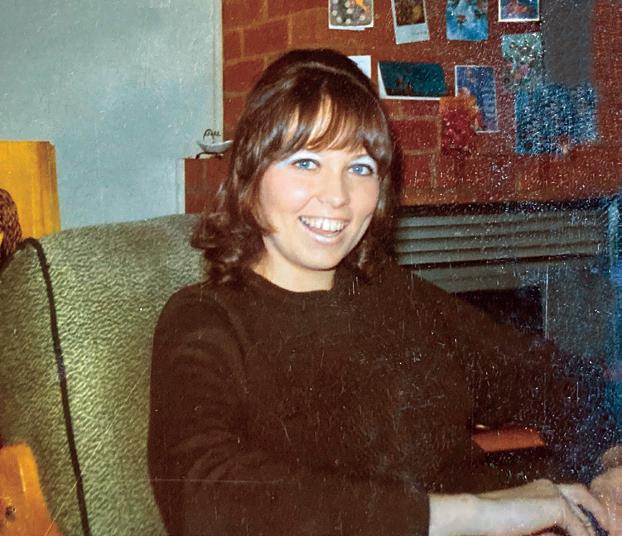
THE cherubic young woman smiles broadly at the camera. Her shimmery blue eyeshadow dramatically frames her almond-shaped, dusky blue eyes. A long, darkish fringe bobs over the top of her brows and soft curls bunch gently on her shoulders.
It’s the face of someone full of life, celebrating a Christmas she cannot know will be her last.
On a fine February evening in Canberra 50 years ago, Keren Rowland, a 20-year-old receptionist, is on her way to meet with friends.
She doesn’t arrive.
Her white Mini Minor is found abandoned – though locked – along Parkes Way, close by where the historic Blundell’s Cottage perches on the edge of Lake Burley Griffin.
She is never seen alive again.
Close to three months later, Keren’s remains are stumbled across in the lonely, densely forested area that locals know as the site of the Canberra Air Disaster of 1940 and its memorial, close to the Canberra Airport.
Five decades on, the who, what and why remain maddeningly unanswered.
Along with ranking as one of the
national capital’s most enduring unsolved mysteries, it bears chill ingly similar hallmarks to a number of other cases involving young women that have occurred within the orbit of the ACT since.
Among them is that of 28-year-old “attractive” mother of three, Mary Bertram. On a Sunday afternoon in 1974, Mary left home never to return. Four days later her naked, strangled body was found in bushland on Canberra’s outskirts. No one has ever been charged.
On Friday, June 13, 1980, 18-yearold Elizabeth Herfort disappeared without trace after an evening socialising with friends at the ANU Union Bar. Forty years on, her fate remains unknown.
These are only the tip of the iceberg.
Is there a possibility any of these terrible crimes might be linked? Theories, conjecture and various urban myths have inevitably arisen. Unsurprisingly, most stray widely from the often harsher facts.
For some time now I’ve been conducting an in-depth, original investigation into each of these
disturbing situations.
Now, on December 9 – what would have been Keren’s 70th birthday – I’m releasing a podcast, “Capital Crime Files”, on these unresolved cases, jigsaw puzzles with pieces scattered by the passing of not just years but decades. I’ve assembled them to provide a more complete, accurate picture, for the first time.



As a critical part of the series, where possible, I’ve interviewed families and friends, their tragic losses and the lack of a resolution, a never-ending, soul-burdening hurt.
These include Keren’s younger brother, Steve. While continuing to search for answers over all this time, he has never before spoken publicly about the ongoing impact of the tragedy on his family.
“I certainly have no problem talking about Keren at all,” he says. “It’s terrific that someone is taking an interest in this case as it has been sadly overlooked for too long.”
“Anything that brings attention to it is welcome so as to keep Keren in people’s minds – maybe helping to even one day possibly find the truth about what happened to her.
“Another of the elements that remains so painful and yet which has been virtually ignored, is that we lost two people that day – Keren was five months pregnant when she went missing.”
In addition, I have also tracked down witnesses and located those with memories of the times and events as they unfolded. I’ve spoken with police and detectives, both retired and active.
I’ve obtained court records, police statements and coronial inquests. I’ve seen crime-scene photos and diagrams.
A special “Podcast Prelude” will be live from December 2, with a launch for the first episodes on Keren on December 8, to be available publicly the following day. There will also be an accompanying website with additional material including photos, maps, interviews and more.
While my aim is to hopefully unearth a memory, a clue or a link that might reinvigorate and encourage reinvestigation, at the least, it’s also to honour the memories of those so lost and to fully impart the stories of lives and promise cut short. These unexplained mysteries continue to weigh heavily on the Canberra region. Someone out there knows the truth. This is the chance to discover it.
Podcasts at capitalcrimefiles. podbean.com
I’ve combed historical archives and archival material. And, of course, I’ve compared it all to the speculation that’s proliferated with the arrival of an online, often anonymous world. I’ve also been helped in putting it together by other locals including video and sound editors, photographers and musicians, making it truly a regional endeavour.
Anyone with any information should contact CrimeStoppers, or feel free to contact me directly at capitalcrimefiles@gmail.com

‘We want to make sure we help set a strong foundation that builds them up to become lifelong learners’
A “HOME away from home” for the young children in their care, Busy Bees Early Learning Centres are dedicated to providing care and education in a welcoming environment, designed specifically for children to feel secure and happy, giving them a great start to lifelong learning, says quality education and compliance manager, Jennifer Dale.
With seven centres across the ACT, Jennifer says that the Busy Bees’ values underpin everything they do: “We are here to care for and serve our children, their families and the community. We strive to provide the best quality in education and maintain the highest standards in care and safety, as well as ensure that we give value so our centres are affordable for families.
“As parents, we want our children to go to an environment where outstanding care is provided and they feel at home. That’s why relationships with our staff are so important,” she says.
Jennifer says that the teams working at Busy Bees are highly trained, professional and are encouraged to continue their studies and qualifications in early childhood education.
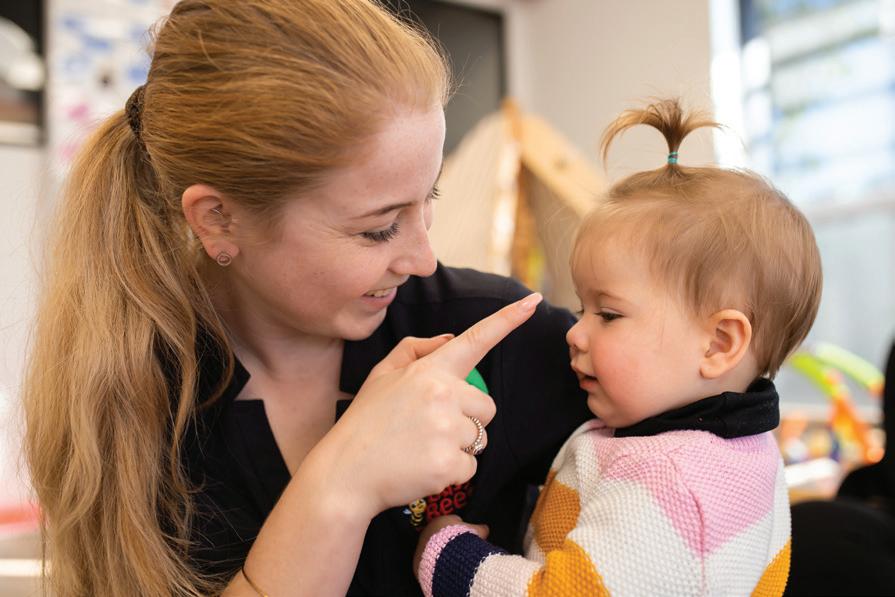
“Early learning is important for young children to develop social and cognitive skills, co-operation with peers as well as have their first experiences with maths, science and literacy,” says Busy Bees manager Katherine Hellwig.
A CAREER in the early childhood sector provides many opportunities for people to make a contribution and help shape the education and care of young children, says human resources manager, Jocelyn King.
Jocelyn says that there are a number of rewarding career pathways available to those interested in commencing a career, or having a midlife career change into early childhood education.
“People don’t realise the opportunities our sector provides because it is an understated career pathway,” she says.
“If you love to learn, and would love to contribute and help shape the future for our children, a career in early childhood gives you such a great reach into a community. It is a well-rounded profession with many opportunities to grow and learn.
“You don’t have to be a certain age to start a traineeship. There are a lot
you to travel and build a lifelong career as an educator.”
Jocelyn says that a managerial pathway can see educators moving into leadership roles within the Busy Bees centres, or other educators might like to focus on their technical skills and continue their studies to become an early childhood teacher.
“There are also other functioning support roles within our network such as accounting, HR and marketing,” she says.
Jocelyn says that pathways to becoming a leader of the Busy Bees organisation is also an aspiration that can be achieved: “Our chief operating officer started as a Certificate III trainee and is now an executive of a global business – it truly is possible!” she says.
Busy Bees have roles on offer across the ACT and Queanbeyan, particularly for those interested in undertaking a
Heading up the national quality team, Jennifer says that her team supports each of the centres to ensure they not only meet the national standards, but exceed them.
“Everything we do is linked to the national quality framework that tells us what quality looks like. We use this to guide all our plans and activities within our centres,” says Jennifer.
Jennifer says that there is a large body of research that tells us that children learn more in their first five years than any other time in their lives. “We want to make sure that we help set a strong foundation that builds them up to become lifelong learners,” says Jennifer.
Service manager at Busy Bees at The Park, located at the Brindabella Business Park, Katherine Hellwig brings 22 years of
experience in the ACT early education and care sector. She says that early learning is important for young children to develop social and cognitive skills, co-operation with peers as well as have their first experiences with maths, science and literacy.
“We help put children on the right path and develop lifelong skills,” she says.
Through play-based learning, Katherine says that she and her team work with families to understand each child’s strengths and areas of interest.
“We support each child to reach their full potential,” she says.
Featuring beautifully designed, open-plan rooms, a dedicated art studio, dining hall and spacious outdoor settings tailored for each age group, Katherine says that all of the Busy Bees centres create excellent
environments for children to learn.
An example of this is the “art pods” at The Park, which are separate spaces specially designed for art and creative work that the children can return to at later times to continue their creations. Katherine says the art pods provide great opportunities to scaf fold their learning into other explorations.
“As an educator, we are always looking at how we can provide provocations and take a journey with the children to investigate and find answers together,” she says.
Busy Bees Early Learning Centres (call 1300 851331 or busybees.edu.au) in the ACT are at: Crace; Jenny Wren, Mawson; Oxley; Peter Pan, Curtin; Springbank Rise, Casey; The Park, Brindabella Business Park and Yerrabi Ponds, Gungahlin.

SOMEWHERE during the last election, a candidate said something about revising the public sculpture program initiated by Jon Stanhope when he was
Given how the city needs to position itself as having a culture that would attract visitors as well as being a great place to live, it is definitely time to reinstate a public sculpture program.
The former program was successful. A few noisy trolls went on about particular works and made the issue a political one that led to the programs being cancelled. This was a shame and a mistake.
This city should have a wellresourced and well-run sculpture program to build on a selection of works that are scattered throughout the suburbs and along major roads. Such a program needs to include expertise to avoid “plonk art”, where works are placed with no thought to the context or surroundings.
Bad positioning can lead to works looking mean and miserable.
Agreeing to setting up
This city should have a well-resourced and well-run sculpture program to build on a selection of works that are scattered throughout the suburbs and along major roads.
such a program is easy – and should be done – but bringing together the expertise to do it is a longer story.
There is another opportunity for public sculpture to be a feature of Canberra’s profile. Christmas 2020 is almost upon us and many will be deciding where they can travel within Australia safe from the pandemic and somewhere that offers an interesting experience. What is on offer that reflects on the culture of the city?
There’s Floriade or in 2020, Floriade Reimagined. Another could be the Canberra City Gallery with its varied exhibitions. Then there are the official online tourism promotions. Unfortunately, these expensive online media messages are cringeworthy.
Despite the best efforts of some of many developers and the Planning Directorate, Canberra’s stand-out reputation is still that it is a “bush capital”.
The general impression remains that the city’s established areas are blessed with fabulous trees, parks
and open spaces. Locals have come to value these green spaces and trees even more as they seek peace away from thinking about all the scary stuff swirling around the world.
Canberra’s open spaces by themselves may not draw visitors but maybe it is time to revisit an often-mentioned proposal to enhance at least one of them. And before the City Renewal Authority gets any silly ideas, this is not suggesting more inappropriate developments and archi-parks (think West Basin barbarism).
Instead the suggestion is about enhancing local cultural opportunities, making use of parklands by adding something to lure visitors to the city. Think permanent public art pieces – think sculpture.
The suggestion is to work with the Commonwealth (NCA) to use Commonwealth Park and the other parklands between the two bridges. These well-designed and accessible parklands could be enhanced with many more commissioned sculptural pieces permanently located so that people are encouraged to wander around and to sit and to experience
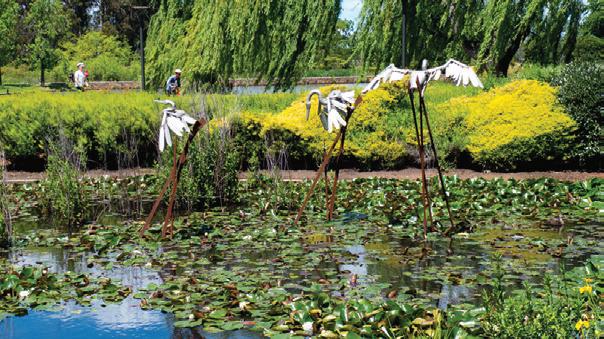
a range of pieces – large and small, contemporary and traditional (whatever that means) and many mediums. There are some there already, so why not add to those.
In conjunction with an array of many more permanent works, there could be the occasional addition of temporary artworks to mark particular festivals – possibly linking with or as part of Contour 556. But the emphasis should be on the static works being permanently placed carefully throughout these easily accessed lakeside parklands (those on the north of the lake). The suggestion is not applicable to the arboretum as it is not easy to access, is not friendly to wander about, it is huge and hilly and it is not a parkland.
Commonwealth Park is close by the city centre and deserves to be known more and used more often by visitors – as well as being a place for quiet meanderings by locals – who are increasing in number with developments in nearby suburbs. Put those two ideas together and there could be a comprehensive public sculpture program for the city – the nation’s bush capital and a sculpture capital. I am sure Jon Stanhope would like to see his former program restarted and expanded.
Paul Costigan is an independent commentator and consultant on the visual arts, photography, urban design, environmental issues and everyday matters.

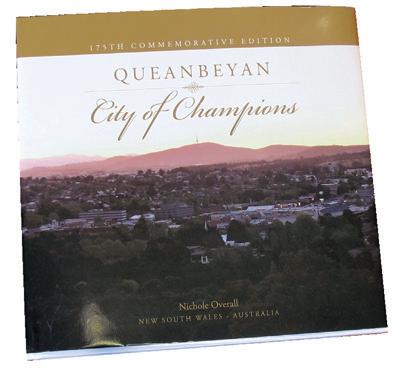



by Nichole Overall
An award-winning social and pictorial history of Queanbeyan over 175 years.
This full-colour gloss coffee-table book contains 256 pages, more than 300 colour and black & white rare and unique images.
$39 (includes postage).
For information & bookings, 0413 671 123 or visit anoverallview.wixsite.com/blog

★ Led by university qualified & experienced teachers
★ Fun and stimulating activities that provides both enjoyment and learning
★ Sessions include music, movement, dance, fine & gross motor activities as well as literacy and numeracy
★ Emphasis on development of motor skills, academic and social skills
★ Parent classes for children 5 months to 2 years
★ Independent Pre-Preschool for 3 year olds
★ Preschool PLUS for 4 and over
★ Providing children with the academic and social skills required for formal schooling by introducing structure and routines in a play based fun and creative atmosphere


By Danielle NOHRA

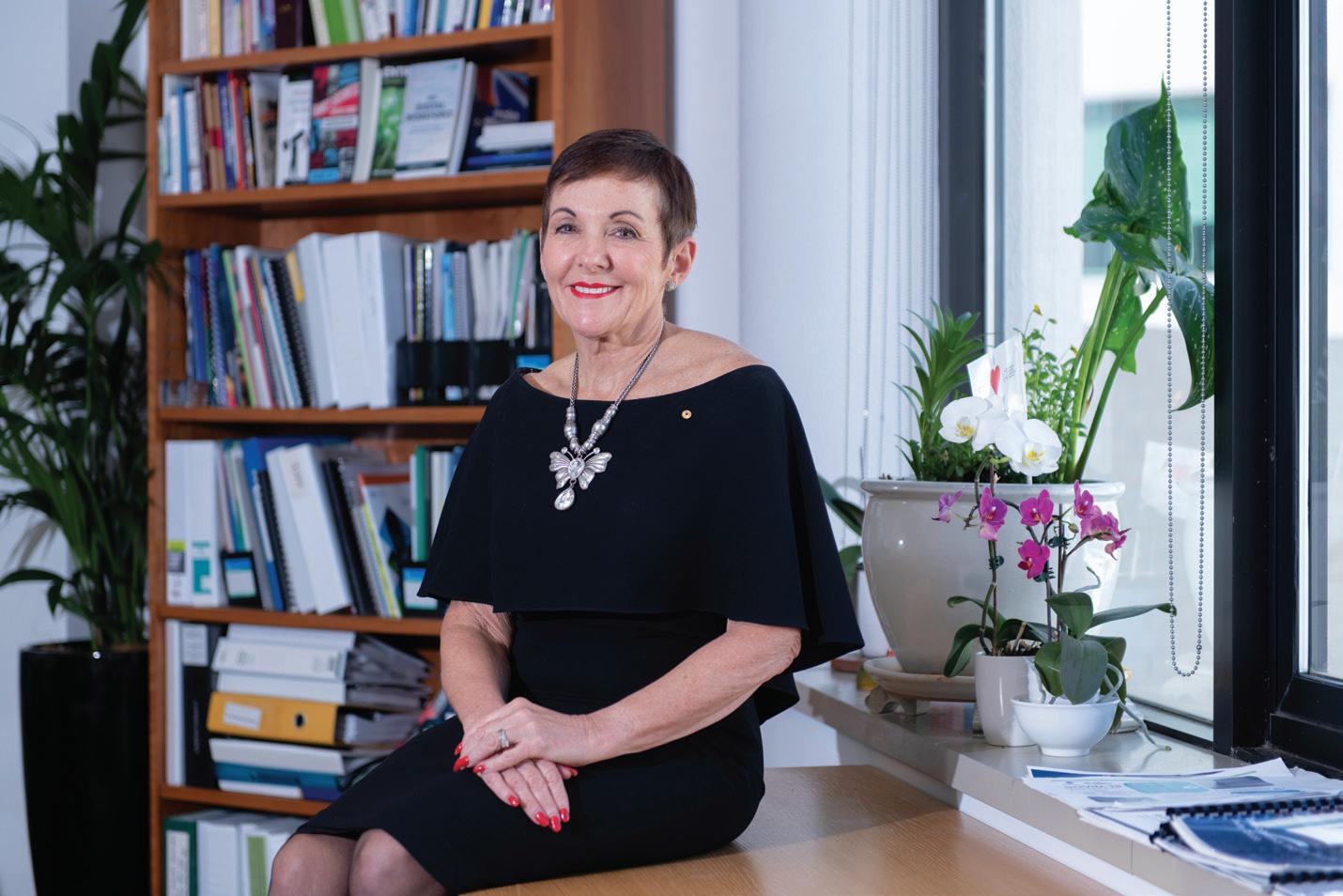
FOR a woman who doesn’t like to talk about herself, the inaugural Australian Small Business and Family Enterprise ombudsman and former ACT chief minister, Kate Carnell, has accomplished a lot of things worth talking about.
So much so, that last year, the “Australian Financial Review” named her in the top 100 most influential women in Australia.
And when looking at her career, it’s easy to see why.
Brisbane-born pharmacist Kate moved to the ACT in 1977, with her then-husband Ian, where she bought her first pharmacy in Red Hill in 1981. She was 25.
A few years later she started another in Gowrie, and around that time had two children – a boy and a girl.
She ran her businesses for 15 years, got involved in the Pharmacy Guild and the local

drug problems, generally into criminals, is fundamental.”
Life after politics for the passionate changemaker that Kate hopes to be, saw her head a variety of organisations and join multiple boards.
“I think I’m good at change and the organisations that I was involved with were all things that I had a level of passion about,” she says.
One of her earlier careers post politics, which people always find a bit different, she says, was her position as the executive director of the National Association of Forest Industries.
“It’s always a bit controversial but my grandfather was a forester so I grew up walking around national parks in Queensland,” says Kate, whose grandfather had a strong view on sustainable forestry.
“Funnily, we all love wood and you do have to cut down trees if you want wooden floors and wooden tables and wooden chairs.
“It always frustrates me a bit, the view that we can’t possibly cut down trees and forests in Australia, but we can import a very large amount of wood from Indonesian rainforests.”
In 2008, Kate was appointed
If you’re on an average wage, there’s absolutely no rational reason why women would work on Thursday or Friday because you end up working for $2 an hour on Thursday and nothing on Friday.
– Kate Carnell
And, more recently, as the inaugural Australian Small Business and Family Enterprise ombudsman, Kate has been an advocate for affordable childcare for women.
“Affording childcare is a really huge problem in the small business space, particularly for women who own businesses,” she says.
“Thirty-eight per cent of small businesses are owned by women, nationally, and that figure is going up very quickly. It might even be higher than that in the ACT, but it wouldn’t be lower.
“It’s a really counterproductive thing to have childcare that’s too expensive to allow these small business owners to really spend the time growing their business.
“[Under] the current system, if you’re on an average wage, there’s absolutely no rational reason why women would work on Thursday or Friday because you end up working for $2 an hour on Thursday and nothing on Friday.
“There’s no logic to work the hours you need to work to keep your kids in full time childcare if you’re in that wage bracket.
“We educate women really well. Fifty-eight per cent of
keep the organisation vibrant, she says she won’t be retiring.
“I’ll do something else. I’m not going to retire. But I’m really lucky because I do the Australian Made campaign, I do beyondblue, I’m on the Climate Change Authority, I help a number of small businesses as a mentor, so I won’t be light on stuff to do if I finish this role next year,” she says. She’s busy, and she plans to stay busy, with just a bit of downtime to go kayaking with her husband, Ray, and do some cooking.
But don’t ask her about her favourite TV shows or movies – there’s no time for that!
As for what legacy she’ll leave in her current role, she hopes they’ve made sure that the federal government is much more aware of the issues surrounding small businesses, saying small businesses aren’t “little big businesses”.
“There’s no similarity between BHP and the small business over on the corner and we do some dumb stuff like our legislation is the same for BHP as it is for little businesses so I hope that what we’ve done is we’ve put the importance of the small-tomedium-business sector on the agenda,” she says.

BluePackets offer a range of support services and tailor our support agreements to suit your business. The broad skill set of our team means we can provide you with a total IT solution or complement your existing IT resources.

THE vulnerability of democracy has been on display in the aftermath of the elections in the US.
Hopefully, a clear outcome will result in a sensible surrender and hand over of power.
The remaining question looms large about what would have hap pened if the electoral college votes were even closer. Already there is widespread doubt about the conduct of the election, particularly amongst Trump supporters, and conspiracy theories are thriving. They are fertilised by the lack of trust in politics in general and in politicians in particular.
Australians cannot afford to be smug. A saving grace is compulsory attendance at the ballot box – often erroneously referred to as “compul sory voting”. Instead of the campaign making a huge effort to bring citizens out to vote, the focus remains clearly on the issues and the personalities.
Acceptance of the election results in the ACT, NZ and Queensland was in marked contrast to the US. Granted, the results were clear. However, in NZ and Queensland the handling of COVID-19 also marked a significant increase in the level of trust in the leader and in the incumbent government.
In 2019, Prof Ian McAllister, of the ANU, said: “I’ve been studying
was in 1979 when the level dipped to 56 per cent. Only 12 per cent of citizens believe that government is run “for the people”, and 56 per cent believe it is run for “a few big interests”.
Even more concerning is trust in our politicians. It was bad enough in 2007 at the level of 47 per cent. By last year this had dipped to 25 per cent. Many argue that the advent of Donald Trump was fuelled by distrust in the Washington establishment.
major hits all over the globe, winning back the people’s trust and satisfaction would appear to be one of the most pressing and urgent challenges facing our political leaders and institutions,” he said.
How much more pertinent is that warning after watching the outcome of the American election?
Former Prime Ministers Rudd and Turnbull have been agitating about the untoward influence of certain

The media should be a protector of democracy, shedding light on untoward behaviour, hypocrisy and corruption. And yet, just over half a million people have supported Kevin Rudd’s call for a royal commission into the untoward and inappropriate interference in government and government processes by a narrow and ever more concentrated media.
Petition EN1938 has now been presented in federal parliament. The petition commences with: “Our democracy depends on diverse sources of reliable, accurate and independent news. But media ownership is becoming more concentrated alongside new business models that encourage deliberately polarising and politically
The petition makes a number of other points about the protection of
“We are especially concerned that Australia’s print media is overwhelmingly controlled by News Corporation, founded by Fox News billionaire Rupert Murdoch, with around two-thirds of daily newspaper readership,” it says.
Ironically, as if to prove the point, Murdoch’s “The Australian” found ways to attack the petition, pointing to the distrust in science and opposition to social distancing (that has contributed to hundreds of thousands of deaths in the US).
Kevin Rudd tweeted: “Australia urgently needs a #MurdochRoyalCommission to avoid following the American path”.
We may have a much more sophisticated electoral system than the Americans. However, with increasing distrust in our politicians and political systems, do not make the mistake of thinking our democracy is not similarly vulnerable.
Michael Moore is a former member of the ACT Legislative Assembly and an independent minister for health. This column marks his 14th anniversary as political columnist with “CityNews” and we salute his tireless contribu tion and wisdom to our columns.



I BELIEVE the citizens of the ACT will rue the day they naively elected six Greens members to the Assembly due to the party’s policies in a number of areas, not the least of which are community clubs.
The ACT is blessed with a still large but now diminished number of community clubs. Many were set up for the purpose of supporting certain sporting teams in our community or ethnic groups or just clubs often catering for a broad clientele.
They have, since the inception of poker machines in 1976, used poker machines to finance their operations and to donate considerable sums of money to local sporting and other community groups and charities. Several clubs, such as the Raiders group of clubs, the Tuggeranong Rugby club group (Vikings) and the Ainslie Aussie rules group have contributed many dollars to their respective codes that would not have been able to operate if those clubs did not exist.
The Raiders Group (and thank God they still own the highly profitable Queanbeyan Leagues Club) has used the profits to fund this great team that has been part of Canberra’s very soul since 1982.
The Vikings Club has funded the local ACT team in the national secondtier competition as well as providing huge support to our successful and much loved Brumbies.
The Greens use the spurious argument that these further restrictions will help address problem gambling. I’ve got news for them, they won’t. Problem gamblers bet on anything. They are free to bet online and do.

These clubs have all provided quality sporting facilities the community would not otherwise have, for the use and benefit of thousands of Canberrans, young and old.
Others, such as the Southern Cross clubs, have provided support in cash and kind to numerous charities and good causes over the years (the Southern Cross clubs alone support well over 50 disparate groups and the Vikings support more than 50 sporting groups in the Tuggeranong Valley each year).
Ten years ago there were more than 5000 poker machines in ACT clubs. Since government restrictions were introduced in 2015/16 the number has reduced to less than 4000. The bet limits and the type of notes allowed to be put in are already much lower than for clubs across the border in Queanbeyan.
Many of our clubs are struggling (even without covid restrictions). A number have closed in the last four years and, in recent months, the Eastlake Kaleen Sports Club and the Belconnen Way Soccer Club have closed.
The ACT Licensed Clubs Association would have been happy to just be left alone for the next four years but the Green zealots want to further squeeze the lemon. They, in cahoots with their ALP bedfellows, have promised to now further reduce the number of machines to 3500 and further restrict bet limits.
The Greens use the spurious argument that these further restrictions will help address problem gambling. I’ve got news for them, they won’t. Problem gamblers bet on anything. They are free to bet online and do.

They are also free to go across the border to Queanbeyan and play the pokies there to their heart’s content, which no doubt many do due to fewer restrictions being in place in NSW.
The number of Canberra citizens joining clubs in Queanbeyan this year has dramatically increased.
Our clubs employ 1700 mainly young Canberrans. They provide subsidised meals, entertainment and convivial meeting places for more than 200,000 Canberrans. They subsidise junior sport.
If they are sent to the wall as a result of this new government policy who will pick up the multi million dollar tab – the ACT government? Unlikely and, really, why should the taxpayer have to pick up the tab when the clubs have been happily contributing to this themselves since 1976 at no cost to the long-suffering ACT taxpayer?
In recent times, the Greens have used as an example of a successful pokie-free club, a club I helped build and served on the committee of – the Polish Club, in Turner.
What they fail to say is that the Polish Club does not have paid staff but relies almost entirely on nonpaid, dedicated volunteers. I have
been one myself.
Another club without pokies is the Commonwealth Club. Unlike the Polish Club, the staff are paid, but the membership fees are about $2000 a year and the meals and drinks, while very good, are expensive.
The ALP has had a long and usually positive history supporting and benefiting from licensed clubs in this town.
For the sake of battling Canberra families, junior sport, sport and community events in general, not to mention 1700 club workers, it’s time they rethought getting into bed with the Greens on this issue.
I’m sure the Libs would support them and 10 ALP and nine Liberal members beat six Greens any day. If not, we will all be the losers if this madness continues.
Bill Stefaniak is a former Liberal Opposition Leader and a past director of the Royals Rugby Club Weston, the RUC at Barton and the Polish Club.


Hundreds for Thousands is a Christmas fundraiser aimed at helping families in need across Canberra, Queanbeyan, Yass, Cooma and Goulburn. With your help, our goal is to raise $100,000, allowing us to provide 1000 families with a $100 grocery gift voucher. This voucher will give each family the freedom to choose the food that they like to eat and help to make their Christmas day lunch or dinner special.
10 Salvation Army centres (listed on the website) are involved in the fundraiser, each with a goal of $10,000 which will contribute to the overall $100,000 target. You have the freedom to choose which centre to support so donate today and GIVE WHERE YOU LIVE!


IT can be an uncomfortable reality, but organising funeral arrangements, creating a will, or investing in an estate plan is an important part of life.
Pre-planning can give you and your loved ones peace of mind and in this special feature “CityNews” showcases compassionate professionals who can help arrange the details and minimise the burden to help make these difficult decisions easier.
WHILE death can be hard to think about, Capon & Hubert Lawyers & Mediators help take the discomfort out of making a will, says wills and estate planning lawyer Ashilpa Khanna.
When death occurs, a common misconception, according to Ashilpa, is the spouse takes control of the estate and its assets, which is not generally the case.
“If you don’t make a will, the state’s law effectively does it for you,” says Ashilpa, who urges people to create a will to secure a plan for the future.
“For families, a relative dying without a will causes significant strife, since a will names the legal guardians of the person’s children.
“The last thing you want to have if you die is a fight over who’s going to raise your children.”
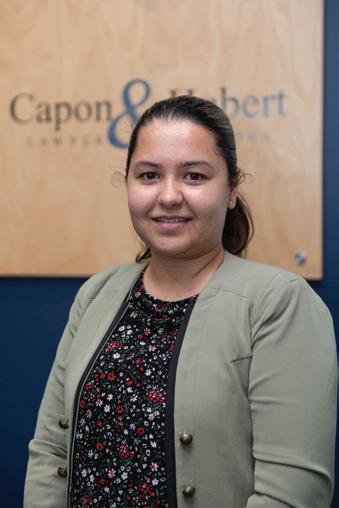
But to better cushion any sudden tragedies, Ashilpa firmly believes everyone should have an estate plan and it all starts with a will.
At Capon & Hubert Lawyers & Mediators, Ashilpa says great care is taken into providing expert and honest advice, ensuring each client is aware of the legal process and
“We will always use common sense, respect, courtesy and good judgement when dealing with clients.”
Capon & Hubert Lawyers & Mediators, First Floor, 32-38 Townshend Street, Phillip. Email enquiries@chsol.com.au, call 6152 9203 or visit chsol.com.au
WITH more than eight hectares of memorial gardens, which are maintained by a dedicated team of ground staff, Norwood Park Crematorium and Memorial Gardens provides a beautiful setting for memorials and ceremonies, and a tranquil space to visit the resting place of loved ones.
The grounds are open from sunrise to sunset, every day of the year.
Having a memorial can provide a place to reflect and remember a loved one, to visit in grief or on special occasions, says a spokesperson for the Crematorium.
Norwood Park Crematorium and Memorial Gardens offers a range of memorial options, from wall niches and rose gardens, to native gardens and family estates.
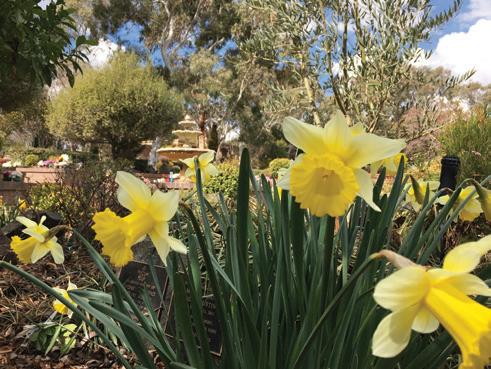
Reservations can also be made for a future memorial, as part of estate planning. Families can book an appointment with memorial staff to have a tour of the grounds and choose a spot to reserve.
At Norwood Park, cremations and funeral services are available for all denominations and civil services.
The newly renovated and extended chapel now has space to seat 250 patrons, although current covid restrictions allow seating for up to 100. There’s also a catering room, and space for outdoor gatherings,
with an outdoor chapel in a garden setting that has stunning views to Mount Majura, seating for up to 150 guests and additional standing room. As many families choose to include music and photos in their loved ones’ services, the chapel is equipped with speakers and large screens. Livestreaming is also available for those unable to attend.
Norwood Park Crematorium, 65 Sandford Street, Mitchell. Call 6241 3177, email info@norwoodpark. com.au, or visit norwoodpark.com.au


Maliganis Edwards Johnson special counsel James Madden.

prepared. Other times, even when a will is valid, someone may feel they haven’t been adequately provided for.
“A lot of people don’t know what to do or where to start when a loved one dies and a solicitor can guide them through that,” he says.
“It can be emotional work, and if there are disputes, a solicitor is able to ‘step back’ and look at all the individual points of view.”
James says he can help people navigate problems when they feel that a will is “not fair”.
James has been a solicitor for more than 15 years, and in estate litigation for the past 10 years.
“It’s a complex area, with our ageing population and people who have more to leave than ever before,” he says.
“I like talking to people and helping them feel prepared, or if necessary, untangle any problems that can arise.”
Maliganis Edwards Johnson, 60 Marcus Clarke Street, Civic. Call 6257 2999 or visit mej.com.au

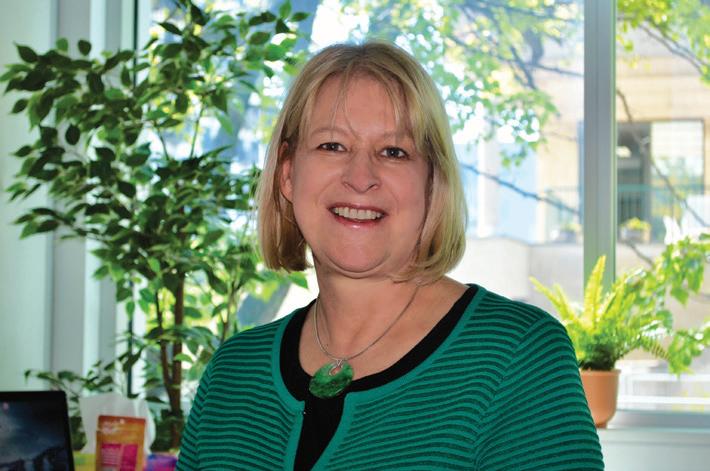
MANY people arrange their funeral but have neither a will nor an enduring power of attorney in place, says KJB Law’s estate planning special counsel Kerstin Glomb.
“Should you also wish to take charge and nominate a person or persons who you trust to look after your financial, personal care, health care and medical research matters, should you no longer have decision-making capacity and who should look after your minor children and should receive your wealth upon your death. It is important to have a proper estate plan in place,” Kerstin says.
“When addressing estate planning, you should cover as many possible situations and include not just a plan A, but also a plan B and if possible, a plan C.” Kerstin says that a proper estate plan should address all aspects of a person’s wealth, including
held in a company or family trust.
“Depending on your wealth structure and estate planning wishes, it may therefore not be sufficient to just make a will because some of your wealth may not automatically form part of your estate,” she says. With vast experience in helping clients with, for example, parental loans, self-managed super funds and estate planning in all ‘shapes and sizes’, involving blended families, Kerstin is also able to give advice in German succession law.
Kerstin says KJB Law, and its principals, Andrew Freer, Des Moore and Jo Twible, help people with a range of other legal affairs, including grant of probate, family law, property law, and review of retirement village contracts.




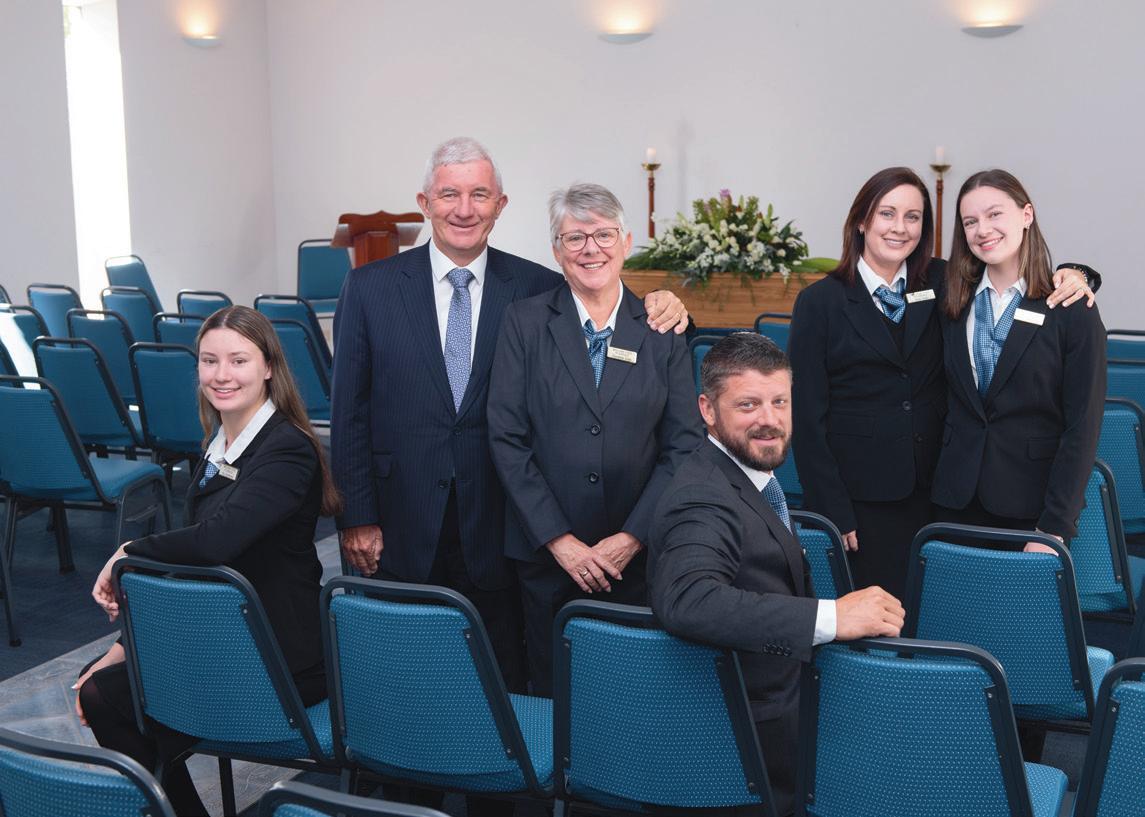
BILL and Christine Cole, the principals of William Cole Funerals, say they approach arranging funerals with compassion and have organised more than 17,000 services in their 30 years in their Belconnen-based funeral home.
An independent and family operated funeral home, run by former high-school sweethearts Bill and Christine and their team, which includes daughter Judy and her husband Naithan, son David and more recently, two of their granddaughters, Bill
experience exceeds their expectations.”
For Bill, becoming a funeral director was a “call ing”, whilst Christine says she found her passion by helping people in their time of grief, using her talents to provide an organised, calm approach to planning a funeral with the families she met.
As one of only two remaining locally-owned funeral homes in Canberra, Bill says they offer personalised, empathetic and understanding service and choice for families, including all different styles of funerals and

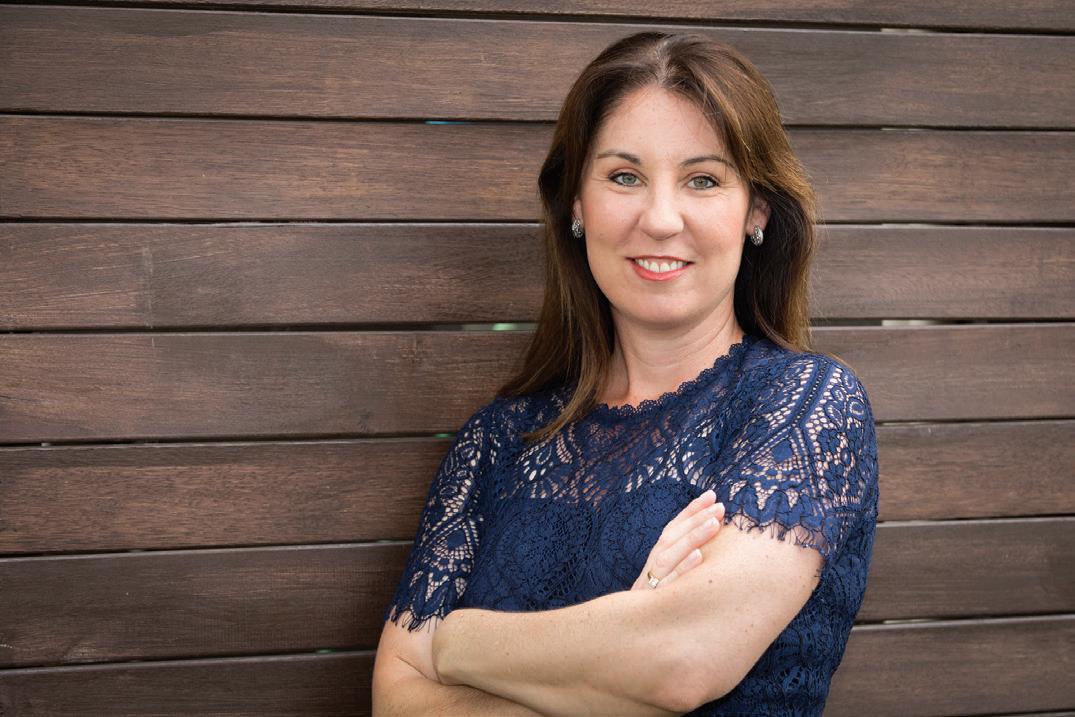
Meyer Vandenberg. Call 6279 4444, email estates@ mvlawyers.com.au or visit meyervandenberg.com.au


WITH so many diverse dance classes and programs in the ACT, everyone is bound to find a style that suits them best.
And, once they do, not only can learning to dance be fun, it’s also a chance to get creative, make friends, get fit and, in some cases, learn about the world.
LEARNING dance can help nurture children’s natural creativity, give them the physical skills to enhance their abilities and develop their confidence, says QL2 Dance artistic director
support an ever-changing balance of taught skills, rigorous challenge, creative practice, disciplined activity, and provocative guidance.”
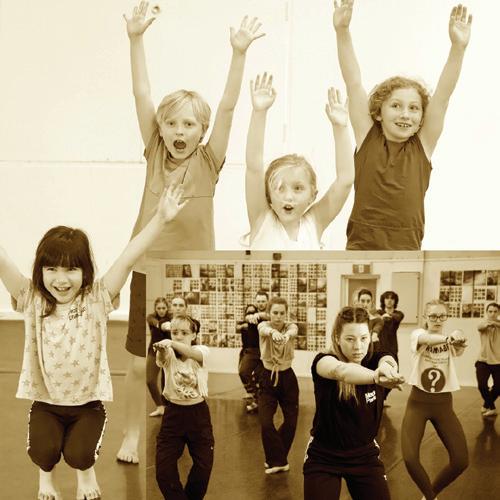
Ruth says the youth dance company offers training programs for young dancers who will eventually participate in its performance projects.
QL2 Dance has been offering programs from ages eight to 26 but next year, a new program called “Creative Moves” for ages three to five and five to seven, will be offered.
Ruth says QL2 prioritises choreographic literacy, intellectual engagement, and the discipline of creative process.
“We enable growth and development for young dance artists, emerging chore ographers and our audiences, producing thoughtful and challenging dance works,” she says.
“We present immersive, creative and demanding performances by emerging and established artists.
“Ours is a unique approach to training and dancers’ development; nurturing creativity and collaboration along with technical skills and rigorous training.”
QL2 Dance, Gorman Arts Centre, 55 Ainslie Avenue, Braddon. Call 6247 3103 or visit ql2.org.au
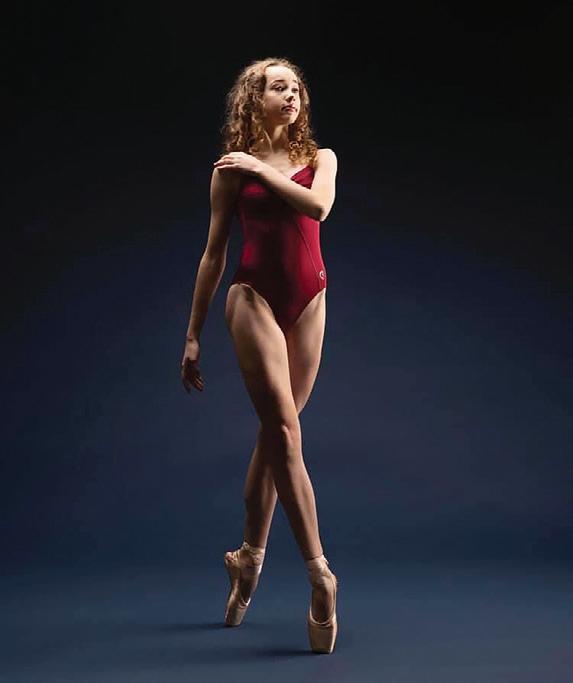
OFFERING classes in classical ballet, jazz, tap, hip hop, contemporary, musical theatre, lyrical and open classical, as well as performance classes and conditioning, the Kim Harvey School of Dance director, Kim Harvey, is thrilled to be back to teaching face-to-face.
“We’re working hard now to prepare the students for online auditions, examinations and future opportunities in a shorter than usual time span,” she says.
Kim Harvey School of Dance has been running for 30 years, and now operates from a bespoke building that was awarded the Australian Institute of Architect’s ACT Art in Architecture Award 2016, Kim says.
“Our students are fortunate to have access to a world-class facility and our highly-trained faculty love working in the space,” she says.
Kim says she’s proud to have been instrumental in the early training of future and current dance professionals such as Dimity Azoury and Cadi McCarthy.
“I love running the school: the interaction with engaged young minds, the opportunity to see students grow and learn, the sharing of knowledge and love of dance to all ages and the family and community that extends beyond the dance school,” she says.
Kim Harvey School of Dance, at “The Oak”, 11 Rosevear Place, Dickson. Call 6230 0425, email admin@kimharveydance.com.au or visit kimharveydance.com.au


Evening and day classes starting from 3 FEBRUARY 2021
Wednesday nights, 7.30 – 9.00 PM Thursday mornings, 10.30 AM – 12 NOON
Today (Lesley) 6286 6401
Folk Dance Canberra Hall, 114 Maitland Street, Hackett 2602 www.folkdancecanberra.org.au folkdancecanberra@gmail.com

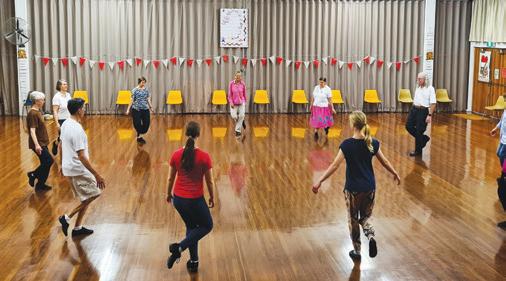
CANBERRANS can experience the world through dance, in the safety of Hackett Community Centre, at Folk Dance Canberra, says the dancehall’s publicity officer Lynette Aitchison.
Operating for more than 26 years, Folk Dance Canberra offers classes to all ages and skill types in dance styles that span the globe, from Russia and the Balkans, to Israel and Turkey, and even Samoa.
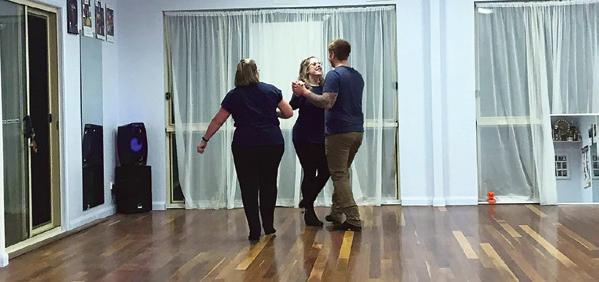
While the classes can vary in complexity, Lynette says they’re all fun and good for physical fitness.
“Some of the dances are quite easy, some are more complicated. Some are like village dances, others are more choreographed,” she says.
“The music is really interesting and different, and often has inspiring stories behind it because it’s related to an event that’s happened in that country, or it’s part of the culture.
“A lot of us are travellers. It takes you to another world.”
Personally, Lynette, who joins in on the classes, too, is a fan of Balkan dance and has even travelled to Bulgaria to participate in a dance workshop there.
“I think I like dancing from the Balkans region more, but I do everything, even dances from the Samoa islands,” she says.
Folk Dance Canberra, Hackett Community Centre, 114 Maitland Street, Hackett. Call 6286 6401 or visit folkdancecanberra.org.au
TEACHING a range of classic dance styles, Dale’s Ballroom Dancing offers a fun way to get fit, socialise and compete in a friendly environment, says owner Dale Harris.
“You don’t realise how much exercise you’re doing, you’re constantly on the move,” she says.
Dale, who loves seeing her students having fun and improving in her classes, teaches styles such as the 10 traditional ballroom dances: waltz, tango, foxtrot, quickstep, Viennese waltz, cha cha, samba, jive, rumba and paso doble.
Backed by more than 20 years’ experience teaching dance, Dale started dancing even earlier, at the age of six, when she developed an interest in ballroom dancing.
She’s since received many qualifications in ballroom dancing and is also a championship adjudicator who travels interstate to judge ballroom competitions.
And while it’s not compulsory, Dale says her students have a chance to compete and she loves seeing them receive medals for their achievements.
“I enjoy seeing the looks on the kids’ faces when they get their medals,” she says.
But, she says she also loves to see them having a great time and enjoying the classes, with classes for adults, children and social classes, too.
Dale’s Ballroom Dancing, 245 Cowlishaw Street, Tuggeranong. Call 6296 4009, email dale_harris@bigpond.com or visit dalesballroomdancing.com
MANUKA Woden Physiotherapy has a long-standing association with the dance community, says practice principal and physiotherapist Greg Nash.
“In the 1980s and 1990s, the original principal of the practice worked with the Australian Ballet, as well as local dance schools,” he says.
Also, his daughter Cinzia Nash is a dance teacher at DanceEdge in Tuggeranong. Greg himself has been treating dancers from many disciplines for more than 30 years, with experience in many conditions associated with ballet, hip hop, contemporary dance and ballroom.
Graduate physiotherapist Vera Chalneva, an elite rhythmic gymnast who has also been coaching for seven years and has a wide-ranging sporting background, has recently joined the practice, too. WIth an interest in postural exercise, soft tissue therapy and women’s health, Greg says Vera’s an invaluable asset to the practice and that she complements his experience in sport and musculoskeletal physiotherapy.
“Manuka Woden Physiotherapy aims to provide the highest level of care to all our patients, and will be open during the Christmas and New Year period,” Greg says.
Manuka Woden Physiotherapy and Sports Injury Clinic, Call Manuka on 6295 6896 or Woden on 6281 1382 or visit manukawodenphysio.com.au



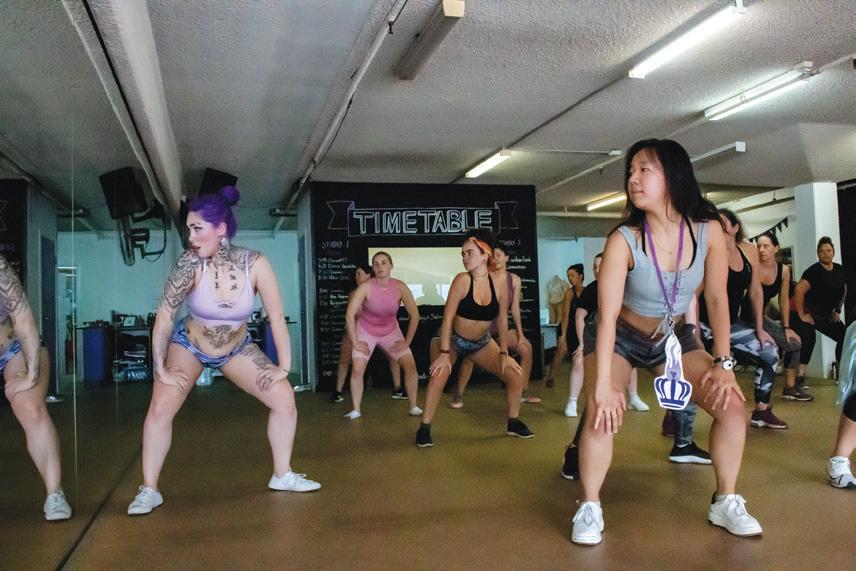
WHETHER exercise dances like Zumba or world dance like Brazilian Funk or Afrobeat, director of Subsdance dance studio in Kingston, Charlie Wan, says her classes focus less on being perfectly technical and more on creating a space for expression and community.
While Charlie bought the studio only 18 months ago, she’s used her own experience as a dance teacher founding studios around the world to build a diverse space merging arts, community and social issues, she says.
“I found personally as someone who has been performing as a full-time job for 15 years that the commercial dance world can be a little elitist; you have to be a certain way, look a certain way,” she says.
“If you’re a performer, dancer, or entertainer who’s ready to be in a space where everyone is accepted,
where we never discriminate and are open to all forms of creativity, Subsdance is the place for you.”
Charlie says she has four main rules for Subsdance.
“Rule one in our place – there is no hate, towards each other or yourself.
“Rule two, it’s not about the choreography. Take what we have and make it your own.
“Rule three, there’s no level of fitness or technique you have to be in this space.
“Rule four, in all elements, not just dance, be confident and love yourself.”
Subsdance Dance Studio, The Cusack Centre, Level 1, 27-29 Eyre Street, Kingston. Call 0477 528026 or visit subsdance.com.au
Find your “Something” at Subsdance – the home of diversity, self-love and chosen family in Canberra. We humbly dance on Ngunnawal land and are a safe space for our LGBTQI+ family.
Keep an eye on our social media to track our upcoming shows at the studio, performances and classes.
Dance Fitness | ZUMBA! | Pilates
Brazilian Samba | Afro Beats | Reggaeton
Commercial Caburlesque | Exotic After Dark Heels | Chair | Jamaican Dancehall Hip Hop Fusion




IT’S time to see the ability in disability, is the core message of this year’s annual International Day of People with Disability (IDPwD) on December 3.
The initiative was founded by the UN in 1992 and has since been observed around the world, including in Australia, where the government started funding it in 1996, and continues to today in recognition of the 4.4 million Australians who live with a disability.
The day’s aim is to highlight the achievements and contributions of people with disability and to increase public awareness, understanding and acceptance of those people living with disability through online testimonials and personal stories.
This year, with the coronavirus pandemic impacting events, the initiative is calling on people to share stories on social media by using the #disablestereotypes hashtag.
Visit idpwd.com.au
THE Carer Gateway is a way to support carers across Australia who are looking after a family member or friend and are often unseen despite their considerable contribution to society, says Carers ACT chief executive officer Lisa Kelly.
The Australian government initiative connects the nation’s 2.65 million carers who might be looking after someone with a disability, a medical condition, mental illness or frailty from old age, with in-person, phone, and online services, and anyone in the ACT that uses the service will be greeted by Lisa’s team at Carers ACT which is a service delivery partner of Carer Gateway.
The service provides carers with coaching, counselling, respite care, connection with other carers and their stories, and online skills, and helps promote carer wellbeing, says Lisa.
“The Carer Gateway [service] provides information and advice on the support available to carers across Australia, and has a great range of online resources to help promote carer wellbeing,” Lisa says.
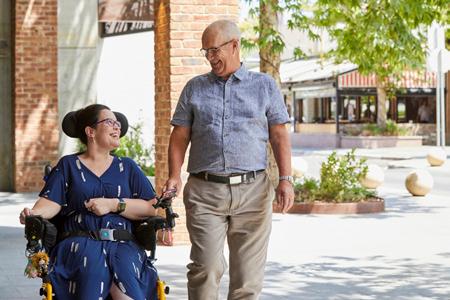
impacting them the most, and then devise an action plan to rebalance the carer’s load.
“It might be accessing respite, peer support or education to help with caring like correct lifting, for example.
“Often carers don’t reach out for support for themselves, and many aren’t even aware that they can, or that there is so much available.”
“In accessing the Carer Gateway [service], we go through a process, talking through their needs and what’s
Carers ACT, call 6296 9900, email carers@carersact.org.au or visit carersact. org.au. Carer Gateway, call 1800 422737 or visit carergateway.gov.au


WHEN it comes to managing chronic pain, illnesses and disabilities, Arthritis ACT focuses on the whole person – mind and body – in order to get vital outcomes, says CEO Rebecca
It’s about looking at pain in a holistic way, not just addressing pain through manage ment or treatment but also the psychological components to pain, believing that if the mind is hurting, so too will the body, says Rebecca, ahead of the International Day of People with
“What we find is if you’re not treating your mind as well as your body then your body is going to suffer,” she says.
“If you’re not treating the whole person, you’re not going to get a vital outcome.”
At Arthritis ACT, which supports anyone suffering from chronic pain, illness or disability, not just arthritis and joint pain, including those on NDIS, DVA and My Aged Care, it helps people work towards managed solutions in the future, says Rebecca.
Arthritis ACT’s programs also address the sense of isolation and anxiety many chronic pain sufferers feel through support group sessions or one-on-one meetings, she says.
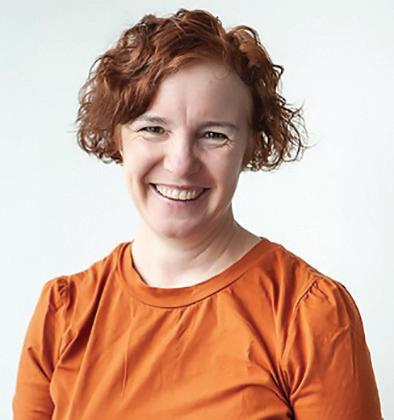
One of the programs, its art therapy sessions, are most popular among people living with a disability, says Rebecca.
“Any of our practitioners can be seen by anyone no matter their disability,” she says.
Arthritis ACT CEO Rebecca Davey.
“We support people that are just doing it really tough and don’t know where to turn.”
Arthritis ACT, 170 Haydon Drive, Bruce. Call 1800 011041, email info@arthritisact.org.au or visit arthritisact.org.au
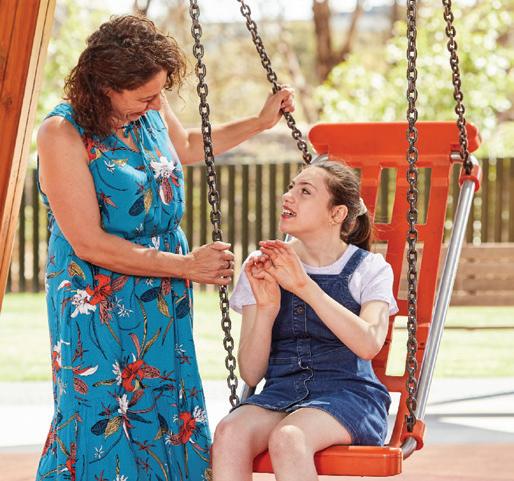


Physiotherapy – including the GLAD program for knee and hip osteoarthritis, sports injury prevention and rehabilitation, and pain condition support.
Exercise Physiology – Individual exercise prescriptions, small group classes to increase strength and improve rehabilitation, strength and balance classes, hydrotherapy support.
Occupational Therapy – access reports for NDIS and Disability Support Pensions, home modifications, equipment prescriptions.
Dietetics – meal planning, weight management support, food intolerance support.


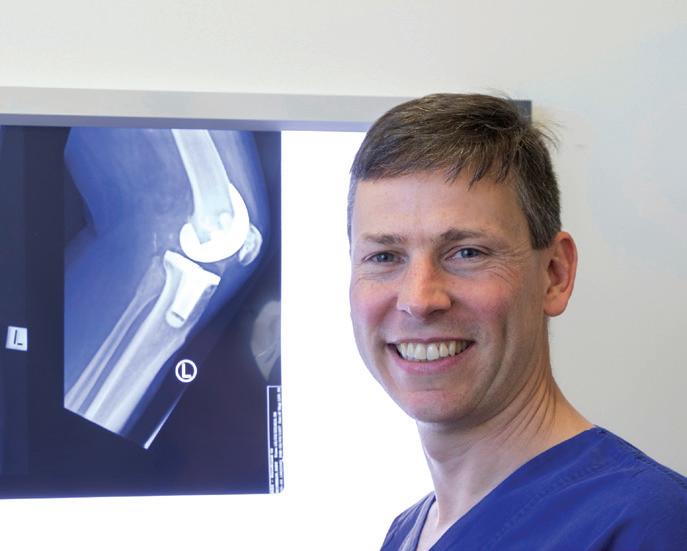
Prof Chris Roberts (trauma, sport, hand, wrist, elbow, shoulder), Prof Paul Smith (trauma, pelvis, hip and knee), Dr Nicholas Tsai (trauma, spine, hip and knee), Dr Al Burns (trauma, sport, knee and hip), Dr Gawel Kulisiewicz (trauma, sport, hip, knee, foot and ankle), Dr Igor Policinski (microsurgery, hand, wrist, elbow and shoulder), Dr Larissa Trease (sport and exercise medicine), Prof David Little and
and
management
Orthopaedics ACT, Woden Specialist Medical Centre, Level 2, 90 Corinna Street, Woden. Call 6221 9320 or visit orthoact.com.au
WHEN Capital Rehabilitation Supplies was established last year, there was a gap in affordable and useful services for sick and recovering patients, says manager Tim Robinson.
Based out of their Mitchell showroom, Tim says they’re the only family-owned rehabilitation supplier in Canberra with a range of everyday living aids for Australians living with a disability or an impairment, frailty in old age, or for people who are in recovery. People should be able to afford treatment and have the right to live comfortably, according to Tim, who says their extensive range also caters to those on the NDIS scheme as Tim and his team are a registered provider for NDIS equipment and consumables.
Products include mobility aids such as electric lift chairs, height-adjustable chairs, and other patient lifting equipment, as well as mobility scooters. They also sell comfort and support products such as pressure care cushions, mattresses, home care and electric hospital beds, and bathroom products, says Tim.
With years of knowledge in the industry, Tim wants to bring comfort and security to peoples lives but knows that dealing with some issues can be sensitive, so it’s their delicate and helpful approach that sets them apart, he says.
“In doing this, we hope to bring comfort and security to people’s lives with our large range of aged care and rehabilitation equipment [which] we believe can help,” says Tim.
Capital Rehabilitation Supplies, 3/66 Heffernan Street, Mitchell. Call 6174 4813 or visit capitalrehabilitationsupplies.com.au




Professor David Little
World renowned expert in hip and lower extremity conditions in children.
To make an appointment call: 02 8072 1384
Dr Samya Lakis
Expertise in paediatric spine and deformity plus general paediatric orthopaedics.
To make an appointment call: 02 9580 6066
Associate Professor Tillman Boesel
Expertise in pain management services, including advanced neuromodulation therapies.
To make an appointment call: 02 9517 1764
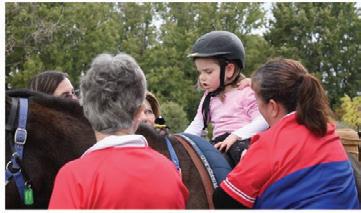
PEGASUS Riding for the Disabled has been able to welcome back almost all of its participants following months of suspended classes because of covid, says executive general manager Matthew Watson.
“Except for our ‘Hippotherapy’ classes, which is physiotherapy on horseback, we are back to pre-covid times and couldn’t be happier, as it was a long stretch without people being able to attend,” he says.
“We’ve had a core team here to look after the horses, but it’s not the same without our participants and volunteers.
“The volunteers love being here as much as the participants.”
Serving the ACT and local NSW region, Pegasus provides specialised horse-facilitated therapy programs and activities for people living with disabilities, including mounted riding and unmounted horse management programs. Matthew says that Hippotherapy is on the cards to be back up and running by 2021.
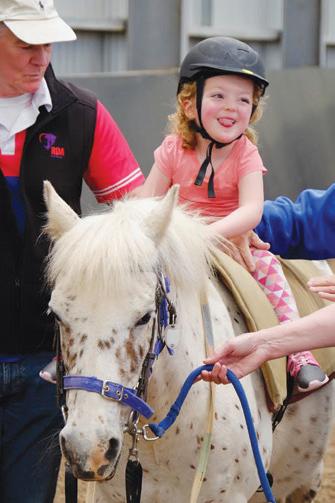
Pegasus says that its horses and the interactions with them is what makes them unique.
“Learning to listen to the horse, respecting the horse and riding as softly as possible are fundamental to life at Pegasus,” they say.
“This not only teaches fantastic life skills to the rider, but it also treats the horse with the dignity and care that they deserve.”
Pegasus Riding for the Disabled, 119 Drake Brockman Drive, Holt. Call 6254 9190, email admin@pegasusact.com.au or visit pegasusact.com.au



Incontinence supplies, Catheters, and drainage bags, Pads and Pants • Braces (Back, Knee, Ankle, Wrist, Hernia) Moon Boots Adult and Children • Crutches and mobility walking aids and frames • Homecare
and
and much
• Electric Lift recliner chairs. Scooters, Walkers and mobility products.

CANBERRANS can complain to the ACT Human Rights Commission about abuse, neglect or exploitation of a vulnerable person, says ACT discrimination and community services commissioner Karen Toohey.
A vulnerable person is anyone older than 60 years of age, someone who has a disability or impairment, or is socially isolated, she says.
There are several different ways the com mission responds to complaints, including anonymously or confidentially, says Karen.
“A complaint can be made by the vulner able person, a carer, friend, family member, service provider or other person concerned about the vulnerable person,” she says.
“You can call us for information and to have a confidential discussion about options, or you can make a complaint.
“We can talk through options for trying to resolve the concerns informally, provide information and referral options.
“This might include referral to advo cacy services or legal advice, the Public Advocate, or helping you liaise with service providers.”
In the ACT, people with a disability are protected from unfair treatment, bullying, harassment and vilification under the ACT Discrimination Act.
ACT Human Rights Commission, level 2/11 Moore Street Canberra. Call 6205 2222, email human.rights@act.gov.au or visit hrc.act.gov.au
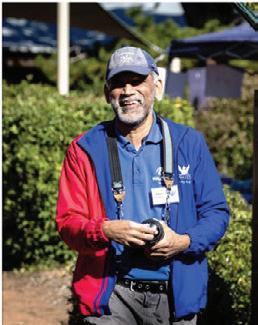
Fundraising,
Administration activities
Gardening
Farm Maintenance tasks
Class side walkers















By Joanne Madeline Moore
ARIES (Mar 21 – Apr 20)
Gung-ho Rams are fantastic at starting things but not so good at finishing them. Monday’s Lunar Eclipse heralds a brilliant light-bulb moment, when you have the enthusiasm to get an ambitious idea off the ground. Mercury and Saturn also boost your patience and persistence so you can (hopefully) see the project through to a successful conclusion in the future. The weekend stars favour meditation, contemplation, spiritual pursuits, volunteer work and helping others.
TAURUS (Apr 21 – May 21)
Monday’s Lunar Eclipse shines a spotlight on personal and shared finances, plus power and trust issues. Jupiter, Saturn and Pluto also encourage you to take a good long look at your basic values, life philosophy and future aspirations. And how much do you truly value your authentic self? Remember, there is just no substitute for healthy core self-esteem. Your mantra for the week is from birthday great, entertainer Bette Midler: “Cherish forever what makes you unique.”
GEMINI (May 22 – June 21)
The Lunar Eclipse (in your sign) highlights the precarious balancing act between personal needs and relationship responsibilities. Creative communication and smart negotiation are the secrets to smooth partnerships, as you take the time to talk things through. When it comes to financial matters and property issues, if you’ve done the hard work required then you’ll be able to capitalise on any opportunities that come your way. Don’t rush… it’s all in the preparation and timing.
CANCER (June 22 – July 23)
You’re keen to daydream the hours away in your cosy Crab cave, as Monday’s Lunar Eclipse visits your solitude zone. But – as you retreat into your own private world –make sure you can differentiate between fact and fantasy, otherwise you’ll end up in a confusing mess. A joint venture (or a romantic partnership) needs to pass the Practicality Test. So try to balance being idealistic with being realistic. And don’t make serious commitments unless you’re 100 per cent certain you can keep them.
LEO (July 24 – Aug 23)
When it comes to ambitious aspirations, social networking and your peer group, the more versatile and inventive you are, the better the final outcome will be. A realistic and disciplined daily routine will also help you to pursue your dreams and achieve your goals. Do your best to show extra kindness and compassion towards a friend or family member who’s going through a tough time. The things they are dealing with are more serious and complex than you previously thought.
VIRGO (Aug 24 – Sept 23)
Do you know where you’re heading? With the New Moon activating your career and future direction zone, you need to have a long, hard think about creative adjustments that could improve your life in 2021. Have the courage to listen to your intuition and follow your true destiny. But avoid the Virgo tendency to be paralysed by perfection and obsessed with a sea of possibilities. As birthday great Mark Twain reminds us: “The secret of getting ahead is getting started.”
LIBRA (Sept 24 – Oct 23)
Monday’s Lunar Eclipse energises your creative thinking zones but, if you take a sharp detour into fantasyland, then stern Saturn will bring you back down to earth with a thud. A family matter or a financial issue also needs to be examined in a careful and balanced way. Then you need to put on your "big girl" (or "big boy") pants and make a firm decision. No fence-sitting allowed Libra! If you don’t make a definite decision soon, then someone else will step in and do it for you.
SCORPIO (Oct 24 – Nov 22)
Money matters could become increasingly complicated, as Monday’s Lunar Eclipse stirs up your money zones. Shrewd Scorpio: you have a good business brain – just make sure you’re using it! Ignorance is no excuse. With Mercury also moving into your cash zone, do all you can to improve your financial literacy ASAP. Sunday’s Venus/Neptune trine is fabulous for a romantic relationship, a creative project or helping a charitable cause. Compassion and kindness will take you far.
SAGITTARIUS (Nov 23 – Dec 21)
A romantic or platonic relationship takes centre stage, as the Lunar Eclipse lights up your partnership zone. With the Sun and Mercury both visiting your sign, it’s time to shake off the shackles of other people’s expectations and instead, be the authentically real Sagittarian you are. You’ll find your greatest ally is your sense of humour. So your mantra for the moment is from writer (and birthday great) Mark Twain: “The human race has one really effective weapon and that is laughter.”
CAPRICORN (Dec 22 – Jan 20)
With the Lunar Eclipse activating your wellbeing zone, get moving and exercising! Nutritious meals are also on the celestial menu, as you take more interest in your health and more pride in your appearance. If you have the confidence to listen to your wise inner voice, then it will point you in the right direction. Jupiter, Saturn and Pluto are all powering through your sign. This planetary trio make you more proactive and perceptive about turning average opportunities into good fortune.
AQUARIUS (Jan 21 – Feb 19)
It’s a wonderful week to tackle a creative project and express yourself in your own unique and quirky Aquarian way, as the Lunar Eclipse stimulates your drama and eccentricity zones. From Wednesday onwards, a fresh chapter opens up involving your peer group so make sure you choose any new friends wisely. Your motto for the moment is from birthday great, writer and entrepreneur Mark Twain: “Good friends, good books, and a sleepy conscience… that is the ideal life.”
PISCES (Feb 20 – Mar 20)
The main celestial theme for this week? A work issue, volunteer project or family matter is taking up a lot of your time and attention but, if you hang in there, it will pay off in the long run. Mars also activates your money zone and motivates you to move forward financially. Then Sunday’s Venus-Neptune trine highlights romantic love, dreaming big dreams and imagining creative schemes. There’s also a heightened appreciation of the arts, beauty and cultural matters.
Copyright Joanne Madeline Moore 2020
as of pupils? (7)
23 To be brave and dashing, is to be what? (7)
24 Name an eminent musical composer, teacher, or conductor. (7)
5 What is a more familiar name for the Keeling Islands? (5)
6 Which cows have not produced calves? (7)
15 What is an alternative name for a meatball? (7)
16 Which term describes a newborn child? (7)
17 What might a Spanish-American call an Anglo-Saxon foreigner? (6)
18 What is a proposition given, from which conclusions may be drawn? (5)
19 Name a vigorous dance. (5)
20 Name a Greek epic poem, ascribed to Homer. (5)
When only a gourmet toastie will do…
By Helen Musa
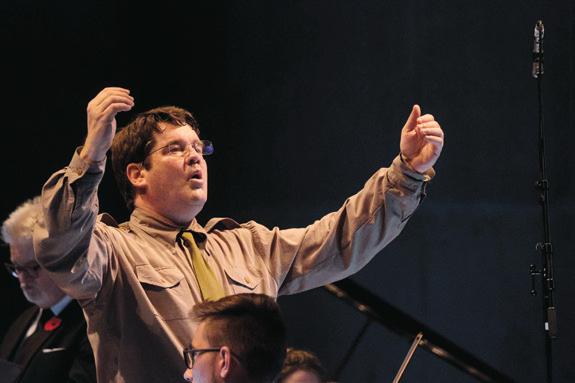
IF you thought Chris Latham, the first musical artist-in-residence at the Australian War Memorial and former “CityNews” Artist of the Year, had gone quiet of late, you’d have been right.
For Latham, having dealt comprehensively with World War I through the lens of music in works like “The Gallipoli Symphony” and “The Diggers’ Requiem” as part of his project “The Flowers Of War” has now turned his attention to the Vietnam war for “The Vietnam Requiem”, and it’s been quite a learning curve.
That’s because Latham, a classically trained musician, instantly recognised that he was out of his depth musically in a war synonymous with great anthems from the worlds of rock and pop, so he’s had to call in the big guns.
“I don’t consider myself a pop music specialist, so I have made sure the creative team is filled with them,” he tells me when we catch up.
He has, as a select group of Canberrans will see, “a quick taste of what we’re planning to do for ‘The Vietnam Requiem’” on December 2, when, at the Chapel of the Australian Centre for Christianity and Culture, John Schumann will perform a new version of “I Was Only 19”, accompanied by Bill Risby, once described by Roland Peelman as “a seducer of the piano”.
“It’s always a risk when making a version of an iconic song to change things,” Latham says.
“I thought we’d make a version that honoured the original but also break new ground… but the Vietnam vets consider it their anthem, so it’s important to get that song right.”
The same night will see Patricia Amphlett, “Little Patti”, singing the song taken from “The Deer Hunter” cavatina and made famous by Cleo Laine and John Williams as “You Are Beautiful”.
Latham is momentarily leaping across World War II to one nearer in time, because 2021 marks the 50th anniversary of the withdrawal of our troops, promised by Prime

Minister Billy McMahon and delivered by his successor, Gough Whitlam.
Apart from Iraq and Afghanistan, which he considers to be “too close”, the “Flowers of War” project will eventually comprise “a full set” of musical tributes to those lost in war.
Others will be a “Misere” reflecting on the fall of Singapore and the Thai Burma Railway in 2022, a Korean War concert focusing on peacekeeping missions in 2023, a commemoration of the Holocaust in 2024 and in 2025 a World War II work, marking the war in the Pacific.
Latham is well aware that in moving into the territory of the Vietnam War he must be careful.
“I’m listening to people who were wit-
By Helen Musa
IN an impassioned speech on YouTube, the Canberra International Music Festival’s director Roland Peelman launched the 2021 autumn event with the enticing promise of bringing Vienna to Canberra –with an all-Aussie line-up of musicians.
Drawing parallels between the “City of Dreams” and the once-derided “City Without A Soul”, Peelman pointed to the beauty, the richness of the culture and the pivotal role in music shared by both towns.
Vienna, Peelman pointed out, is the city where Haydn, Mozart and Beethoven made history, where Schubert and Strauss were born, where Mahler led its famous opera house into the 20th century and where Schönberg anticipated the human tragedy of two world wars.
“A trip to Vienna may not be possible during covid times, but instead Vienna’s musical legacy and spirit of innovation, including a waltz or two, will be captured,” he said. With all that in mind, Mozart’s “Turkish March”, he said, would open the festival, the popular series, “Beethoven for Breakfast” would feature as a daily treat, and Mahler’s “The Song of the Earth” would conclude the event on May 9.
will see performing scholar Neal Peres Da Costa and Canberra flautist Sally Walker centre stage.
Canberra-born violin virtuoso Kristian Winther returns to the festival with Beethoven and Schubert.
Jazz is to the fore, as it is in Vienna, with the Australian Art Orchestra, Andrea Keller and Sandy Evans appearing at the Fitters’ Workshop and jazz venues around town.
On a darker note, two festival premieres are directly related to COVID-19.
Katy’s Abbott’s interactive “Hidden Thoughts: Do I Matter?” is distilled from the answers of more than 200 women to a confidential survey about their private thoughts.

The Australian Voices asked 22 composers to write a response to the pandemic at a time when no one could physically sing together. The result is “Far and Near”, 22 songs from beat-boxing to chanting, from scatting to singing, brought together for the first time in Canberra.
Peelman is especially proud of the fact that this year the NGA and the ANU School of Music have joined to celebrate First Nations artists by performing every day during the festival.
Canberra composers Brenda Gifford and Chris Sainsbury will feature, along with performer-celebrities, the didgeridoo player William Barton and violinist Eric Avery, the Tiwi Strong Women and the Wilfred brothers from Arnhem Land.
nesses, and it’s a lot more complicated than most people think,” he says.
Latham was unable to travel to Vietnam this year because of COVID-19, but he’s been doing a great deal of research into historical records, looking at period films and photographs. He hasn’t seen present-day Vietnam but is very familiar with how it looked in the 1950s and 1960s, which will be shown through music and projected imagery with the full requiem, which will premiere at Llewellyn Hall in June next year.
“There’s a lot of new information in this requiem, it’s 50 years of knowledge and some will be hard for people to read,” he tells me.
The requiem will engage people from
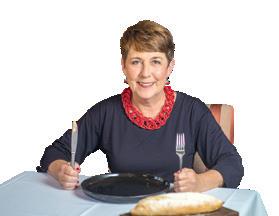
the pop, rock and jazz worlds along with orchestral musicians.
He’s been looking for works other than classical pieces, so they will be 12 pop songs in the first half and in the second half, the requiem, commissioned by the AWM, comprising an overture and 12 movements by composers such as Elena Kats-Chernin, Ross Edwards, Graeme Koehne and Andrew Schultz.
It will be performed by Van-Anh Vo on Vietnamese instruments, William Barton on didgeridoo, members of the Canberra Symphony Orchestra, military musicians and choirs.
“There’ll be a rock band in the orchestra, which will be heavily dominated by plucking strings, and Vietnamese musical instruments, the Ðàn Tranh and the Dan Bau, so I think it will be a one-off,” he says.
The idea is to tell the stories of Australians and New Zealanders on the battlefield, the effects of war on the civilian and military medical staff and entertainers who toured, the protest movement, journalists and photojournalists, and the south Vietnamese refugees who fled.
It will be in Llewellyn Hall at 50 per cent capacity but performed twice, on June 5 and 6, perfectly timed, Latham says, for the 3rd Battalion Royal Australian Regiment’s 50th anniversary.
Tickets for “The Vietnam Requiem” will go on sale early in 2021, details at theflowersofwar.org
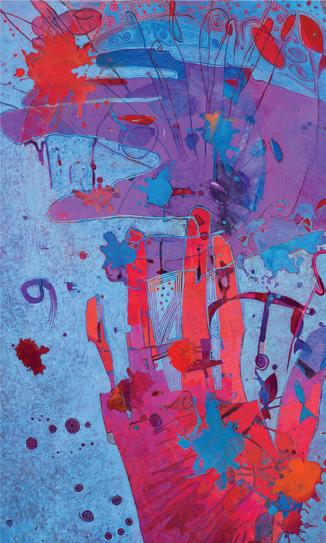
Mindful of the festival’s enforced 2020 cancellation, Peelman and his team have put in place covid-safe plans, both indoor and outdoor events, in particular by programming concerts of one hour each, repeated twice on most occasions.
The Australian Romantic & Classical Orchestra will make its Canberra debut, with two Mozart concerts that
Nardi Simpson, best known as part of the Stiff Gins, will present “Possum Song” in the Yuwaalaraay language, which incorporates the sounds made by a possum cloak.
Canberra International Music Festival 2021, April 29-May 9, tickets now on sale at cimf.org.au
PERTH, 1959: Scenic, peaceful, safe; the kind of place you would leave a front door unlocked, more occupied with whether the sun was out for a good day at the beach than any worry of a break in.
This was until a nefarious and terrifying string of crimes started pulling the city apart.
Houses were broken into, property damaged, women left to die after hit and runs, a father shot at home metres away from his children.
Perth fell victim to the infamous serial killer Eric Edgar Cooke, whose lust for revenge against a world he believed had cast him to the outer edges went from petty break ins to vicious murders over the course of five brutal years.
Cooke became known as “The Night Caller”, prowling the streets of the city at twilight looking for victims.
In a desperate attempt to put “The Night Caller” behind bars, two men would be falsely accused. Darryl Beamish and John Button were charged with the murders of Jillian McPherson Brewer and Rosemary Anderson. In reality, the women were yet more victims of Cooke’s deadly dealings. It would not be until some 40 years later, thanks to the work of multiple awardwinning journalist Estelle Blackburn, that the two men would be exonerated.
Estelle wrote about the life and times of Cooke in her captivating and brilliantly

researched book “Broken Lives”. Now, she’s been working with streaming service Stan to turn the story of the serial killer and the devastation he caused into the platform’s first true crime series, “After The Night”, set to release on November 29.
I spoke with Estelle, who is living in Canberra, about her work on the book and the upcoming series, and the way her story intertwines with those affected by Cooke is just as fascinating.
It was the brother of one of the men wrongfully accused who met Estelle at a dance in 1991 and by complete chance told her how John had been falsely convicted on the charge of killing his girlfriend. With Estelle’s interest piqued, she met with John the following year. After hearing his




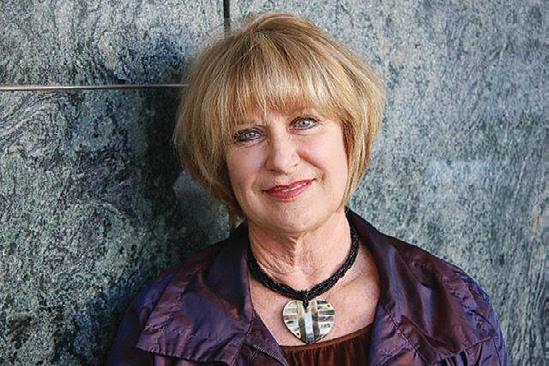
testimony, she began writing.
Over the next six years, Estelle contacted those affected by the serial killings. She scoured electoral rolls, phone books, went door knocking and more in her efforts to hear and collect the stories of the victims of Cooke.
“Apart from one, I managed to gather the stories of every murder victim’s family. The anger and the injustice out there surrounding the Cooke case is very much what motivated me to want to tell them,” she says.
The detail involved in these stories is astounding. Blackburn weaves the accounts of their lives together in a way that makes them human and very real. As a result, when they do tragically cross paths with “The Night Caller”, the effect for the reader is all the more devastating.
“I didn’t want to write it as a piece of journalism like many other true-crime works are done,” she says.
“There’s no me in it. Instead, and I promised John Button this, I wanted to tell the stories so that they run through the generations of the families.”
Much of Estelle’s research will be featured in the upcoming Stan series – it was only a matter of time before the platform produced its first true-crime show. The sub-genre is a global phenomenon that sees books fly off shelves, podcasts intently listened to and millions of views clocked up for streaming
services that offer these gritty shows.
I asked Estelle as an author of a true-crime story, why she thinks people are so captivated by these dark and confronting records.
“I think everyone, in a way, likes to be their own detective. These stories offer a thrill, a change from everyday life that gives us the chance to work it out,” she says.
Estelle wrote “Broken Lives” over 10 years through a combined exercise in authorship and citizen advocacy that John Button and Darryl Beamish’s cases were reopened under the light of new evidence found through her work. The two men eventually had their convictions quashed as a result.
Their stories will be examined in detail in “After The Night”.
Estelle says it was “justice” that drew her to this strange and frightening series of events.
“I totally believe in justice… telling these stories and giving people the chance to tell them is so important,” she says.
Estelle is revising her writing memoir, “The End of Innocence”, which tells of her own experiences in her investigation of the murders. It will be republished in the near future.
More of Nick Overall on Twitter @ nick_overall

By Dougal MACDONALD

“Ellie and Abbie (and Ellie’s Dead Aunt)” (M)
I’M uncertain whether I, a straight male, am an appropriate person to review writer/director
Monica Zanetti’s first feature.
It’s about a teenage girl who somehow knows that she is lesbian but is scared to come out.
I assume that Ms Zanetti, if she is not lesbian, has lesbian friends. Her film’s five main women characters, who all are, have been or feel they are, actively lesbian, behave as the screenplay dictates.
I wish that I could tell you that the film illuminates and explains the inner emotions, thoughts and yearnings driving the characters. But it doesn’t. That opacity rather reduces its potential value for young women.
Seventeen-year-old Ellie (Sophie Hawkshaw), a talented scholar in her final year of high school, lives with her mum Erica (Marta Dusseldorp) whose close chum (Rachel House) is comfortable about being lesbian.
Ellie is trying to find courage enough to ask Abbie (Zoe Terakes) to accompany her to the school formal. The screenplay hovers around that problem for much of its time. The fifth principal female character is Tara (Julia Billington), a fiery lesbian activist in the 1980s, whose ghost appears at crucial moments to give Ellie sage advice.
Those five women all give fine performances. Where the film’s shortcomings become apparent is in the recording of its talking, moving images. The sound isn’t always as clear as it should be. In contrast with, yet because of, the underlying
difficulties and shortcomings I’ve already mentioned, the objective of the plot quickly becomes transparent but unconvincing. And its resolution is a bit awkward – Abbie turns up at the formal wearing jodhpurs and riding boots!
I regret not being able to recommend the film more highly. Its M rating is due to vocabulary –without it, the appropriate classification would almost certainly be PG. And its singlemost important line comes from Erica, who wants Ellie to understand that being lesbian isn’t how porn depicts it.
At Palace Electric and Dendy “Fatman” (M)
THE first movie of the Christmas 2020 cinema season delivers a different view of Chris Cringle. He’s not just a jolly fat guy in a red suit who spends the eve of December 25 driving around Planet Earth delivering the modern equivalent of gold, myrrh and frankincense.
No, he’s a businessman, and in 2020, business is falling somewhat behind.
The concept underlying “Fatman” comes from the filmmaking brothers Nelms, Eshom and Ian, who’ve written a screenplay that updates the Santa ethos just three years short of the double centenary of its creation in the poem “A Visit from St. Nicholas”.
Santa really lives not at the North Pole but on a Canadian farm with his loving black American wife Ruth (Marianne Jean-Baptiste) and those hard-working elves who toil throughout the year making all those gifts that he delivers.
Playing Chris/Santa, Mel Gibson reminds us of his strong acting chops. To save the firm, he’s obliged to take a contract with the US Army. That’s just one of the story conceits that allows “Fatman” to build a bit of dramatic muscle, rather in the style that spelled out the Hollywood brand in the days when movies were finding their feet as the 20th century’s principal cultural gift to mankind.
But the film’s main dramatic theme stems from 14-year-old spoiled brat Billy (Chance Hurstfield). Billy gets angry when his only gift under the Christmas tree turns out to be a lump of coal. So he engages a skinny hit-man (Walter Goggins) to take a contract on Chris Cringle. Well, you can’t do that, can you? Santa Claus nowadays performs the main role in celebrating the birthday of Jesus of Nazareth in a festival more mercantile than spiritual. The film doesn’t belabour that dichotomy. Rather, it spends its time being an entertainment built from intelligent observation of the occasion mixed with a nostalgic look back to those hey-days when action and imagination-filled movie houses before TV had grown into its greedy modernism.
At Dendy, Hoyts and Limelight
By Helen Musa
FOR artists Amadis Lacheta and Lee Grant, meeting again at Congo on the south coast was a case of kismet – fate – at work.
For although they knew each other, having schooled at Telopea Park School and Narrabundah College, it took a chance meeting at the home of Congo potter Jim Simms, to set them on a joint mission to unveil the hidden side of life in the Eurobodalla area as they plan to do in the Basil Sellers Exhibition Centre, Moruya from December.
“What makes where we live special, and why have people chosen to settle here?” they ask.
Grant, a well-known photographer in Canberra, holds degrees from the ANU in anthropology and visual arts, won the National Photographic Portrait Prize in 2018 and produced her first book, “Belco Pride”

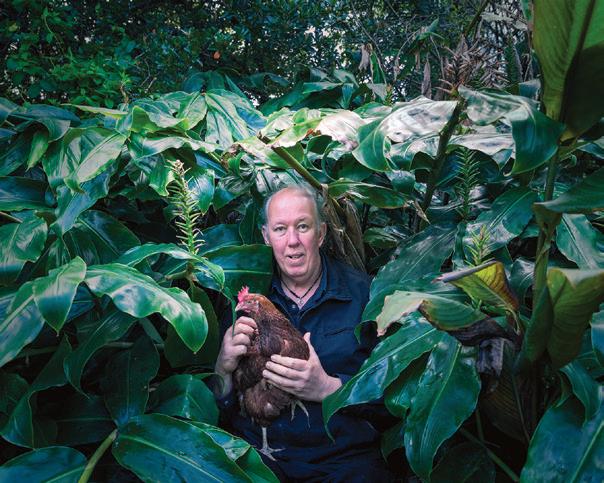

grams and now in the Eurobodalla and the wider region as a policy and project officer for the Community Industry Group and as an advocate for Seniors Rights Service.
“I got to know a lot of people in disability and sustainability and local food production, people who make and build things and make music, business people from a broad spectrum,” she says.
“A lot of people think the south coast is quite Anglo-Saxon, but it’s not true.
“There’s not perhaps the diversity like Sydney, Melbourne or Canberra, but the point of our project is to honour this diversity and show not just people you don’t know, but the kind of things that people do… Robust regional communities are diverse, creative and responsive to change.”
For instance, there’s the aforementioned oudmaker, Faouzi Saouli who came from Morocco with his wife Cat, to look after her father.
Another lively character their exhibition will focus on is Jan Frikken, a former staffer at Illawarra Multicultural Services who now
runs a supermarket in Batemans Bay. She has turned her shop into a hub for the wider multicultural community, making spaces to meet and upstairs for English classes.
Then there’s Lei Parker, who 30-odd years ago moved onto a big, old property in Tuross Head then in 2006 set up “The Beagle Weekly” website to provide residents and visitors to the Eurobodalla area with an independent news source.
At the youthful end of the spectrum is Eurobodalla Shire Council’s community development officer Jordan Nye, a young Indigenous man descended from an old family at Barlings Beach, described by Lacheta as “lovely empathetic young man defining his path and multiculturalism”.
Ceramic artist Mary Watson, whose cottage studio burnt down in the fire, has already set up again in the Manor Retirement Village in Batemans Bay, where she has prepared for a popup show in Mogo, while awaiting the arrival of a new kiln.
Everybody knows Chris Scroggy, whose collection of more than 200 Hawaiian shirts
By Helen Musa
ONE of Canberra’s most talked-about alternative rock bands, Sputnik Sweetheart, who won the title of Triple J Unearthed Feature Artist in June, has a new single, “Rolling”, coming out December 3 on all streaming services. Led by frontwoman Nette France, the lyrics were inspired by Tim Winton’s coming-of-age novel, “Breath”.
THE appointment of Tara Cheyne to replace Gordon Ramsay as ACT Arts Minister has been greeted with cautious optimism by arts community members. Before entering the Legislative Assembly, Cheyne served on the Belconnen Arts Centre board and as chair of the Belconnen Community Council and has since been a member of the Speaker’s art acquisitions committee.
COMEDY writers Michele Conyngham and Patrick Davies Trumper have joined forces with science communicator, Dr Phil Dooley, to create “Dramatis Scientificae”, a site full of skits, interviews with scientists, articles, and parody and satire fusing comedy with genuine learning. Recent posts include “Adventures Abroad in Science”, featuring fusion scientist Adelle Wright from the ANU and “Date with a Doctor”, a silly sketch about

prejudice. Accessible at dramatisscientificae.com
THE 24th Japanese Film Festival returns from December 4-13 with a free streamed festival featuring over 25 Japanese films including features, documentaries, as well as stop motion and animated shorts. The program showcases Tokyo International Film Festival Audience Award winner, the quirky rom-com “Tremble All You Want”, and Kinema Junpo’s top-10 listed drama, “One Night”. As well, the festival celebrates the subversive in “Provocation and Disruption: Radical Japanese Filmmaking from the 1960s to the 2000s”, a free classics program. All details and
bookings at japanesefilmfestival.net
“WOMEN of Steel”, a rousing and often humorous story about the 1980-1994 campaign for jobs by Wollongong women has been directed by 30-year career steelworker Robynne Murphy. Screens at ARC Cinema, NFSA, 6pm, Wednesday, December 2, book at fan-force.com/screenings/women-of-steel-nfsa/
RETURNING to the stage for the first time this year, the Canberra Sinfonia, conducted by Leonard Weiss, is focusing on two pieces by Australian composer Natalie Nicolas, “The Business of Recovery” and “The End”, both originally written for string quartet, alongside a hidden 19th century gem by Franz Lachner. Wesley Uniting Church, Forrest, 2pm Saturday, December 5, book at canberrasinfonia.com
CANBERRA artist Paul Easther achieved a certain fame with his 2013 Bald Archy Prize entry, a painting of Prime Minister Julia Gillard enjoying a fag outside the Lodge, titled “Becoming Famous is the Worst Thing That Can Happen to You…” Now he tells us he’s just published “Paparazzi”, a digital magazine that showcases abstract photos he took around his own house during the pandemic.
is legendary. He, with his wife Robyn, run the Narooma Quarterdeck on the shores of the Wagonga Inlet. Since buying the business in 2001 they have transformed the former oyster growers’ shed and fish and chip takeaway to a hub for domestic and international musicians touring blues, folk, bluegrass R&B and indie rock.
“It’s become a beloved institution steeped in regional feeling,” Lacheta says.
In her view, Australians are not very good at celebrating so in their exhibition at “The BAS” they want to go deeper, to celebrate what people are doing and how they continue to go forward.
The show coincides with the first anniversary of the bushfires and Grant’s photos will form the visual centrepiece. The stories written by Lacheta appear in the catalogue, while a film montage will be shown on a screen.
“Untold Eurobodalla”, Lee Grant and Amadis Lacheta, The BAS, corner of Vulcan St and Campbell St, Moruya, Tuesday-Sunday, 10am4pm, Saturday, December 12-February 7.






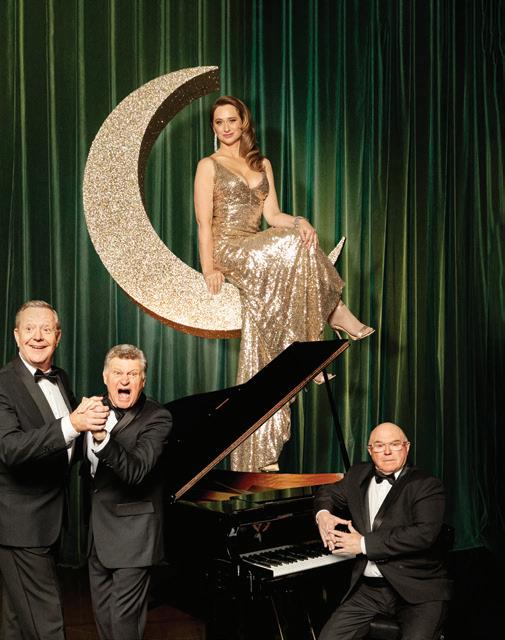
SOMETIMES all I want is an amazing coffee and a yummy toastie. Not just any toastie. Not a skinny, boring toastie with a slice of processed cheese and a slice of processed ham. A gourmet toastie.
And that’s what I got on a recent trip to Redbrick in busy Fyshwick.
There are thousands of ways to make a toastie. They can be as humble as you like or as posh as you like. They can be healthy or laden with calories. The beauty of the toastie is it’s easy and you can have them any time of day or night, and for any reason. With cafés they often arrive pretty quickly and piping hot, which is what I was after on my busy errand day when I got a bad case of the hunger pangs.
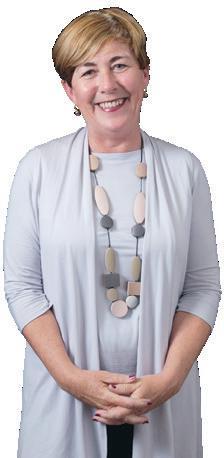
I’m big on flavour with food, so it’s no wonder the basil pesto, tomato, bocconcini and rocket toastie caught my eye. It looked delish
The pesto packed a punch, the tomato was juicy and ripe and the rocket lovely and peppery. The melted bocconcini just oozed out of the two slices of bread.
when served. Nice and thick. Wonderfully golden. Made with fresh ingredients. The pesto packed a punch, the tomato was juicy and ripe and the rocket lovely and peppery.
The melted bocconcini just oozed out of the two slices of bread. It was great value for $12.
It was the ultimate comfort food. That, with my quality (and pretty) cappuccino made for a lovely pit stop on a busy day.
The second toastie on the menu is ham (but quality ham), cheese (but quality



granola with seasonal fruit, coconut yogurt and almond milk ($12). Another is avo, feta, rocket and lemon on toasted ancient grain loaf ($12).
An added bonus was I sat outside at one of the two tables Redbrick had out that day, and in the sun. Redbrick has added lovely,

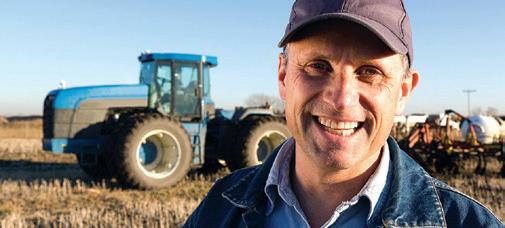

“CityNews” is looking to immediately appoint an energetic, self-motivated general reporter. It’s a full-time contract position for a reporter to write for our independent news magazine and website. Do you have?
• Minimum of two years’ experience
• Strong written and verbal communication skills
• Self-motivation, confidence and energy
• A sound knowledge of the Canberra region
Weekend work will be required on a rostered basis. The role is a full-time, contract until June next year. Beyond then will be by negotiation.
To apply:
Email a cover letter, CV and examples of your work to Kate Meikle, director, Macquarie Publishing at: kate@citynews.com.au

lush greenery outside to liven matters up.
To be truthful, I would have been just as happy inside. Redbrick’s décor is warm and inviting. In the centre of the long, wooden communal table was a gorgeous arrangement of dried flowers. Not too far away was a comfy sofa, some comfy stools and a big window letting the light flood through.

Redbrick has been open in Fyshwick for over a year. They began roasting coffee in
roasting and education facility in Fyshwick, as well as cafés in the inner north (Clay in Turner) and in Ovolo Nishi (Makeshift by Redbrick). To say the team is passionate about coffee is an understatement. At Redbrick you order at the counter and food is delivered. Dine in or take away, perhaps sitting on the lawn among the trees in the park across the road.
THE browsing of shelves in the Woden library, suitably socially distanced, saw me find a book intriguingly titled “I Drink Therefore I Am”: a cute take on Descartes’ famous “I think therefore I am”.
The blurb on the back of the 2009 book had me hooked: “A good-humoured antidote to the pretentious clap-trap that is written about wine today and a profound apology for the drink on which civilisation was founded”.
Great, I thought, no pretension. But on reading this so-called “philosopher’s guide to wine” my blood pressure rose and, if it hadn’t been a library book, I would have tossed it on the fire (oh, yes, and if I had an open fire, too). Had the blurb writer read this mind-blowingly pretentious homage to twaddle?
Writer and philosopher Sir Roger Scruton, who died of cancer in the UK in mid October aged 75, was a firm believer in the notion that France is the centre of wine production and no other place can produce wine that is reflective of terroir because it is not imbued with the culture that has arisen from the cultivation of the soils of France.
“Breeding” is the nomenclature that Scruton gives to this centrality of French wines, something he describes as “a quality which has only something to do with ancestry, and much more to do with culture, settlement and pietas.”
The latter, cloyingly pretentious term means a dutiful/loving attitude towards the gods and is derived from Roman culture. In Scruton’s construct, this “breeding” just cannot be found elsewhere than in the bosom of France’s wine-growing regions, which drip with sufficient culture so that there are wines that are transcendental.
Wine columnist RICHARD CALVER finds his blood pressure rising as he makes his way through a book that, if it hadn’t been from the library, he would have tossed it on the fire (if he had a fire).
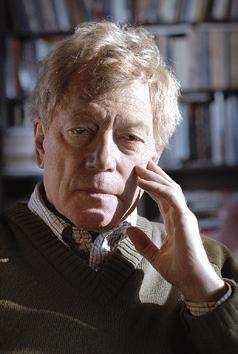

their stainless-steel aromas.”
taste of grapes”.
In dismissing all other cultures and their wines, Scruton is particularly harsh on Australia. He professes “suspicion” towards the wines of Australia and NZ because “the greatest wines grow in sacred places – the temples of Roman gods, the gardens of monasteries and the terraced hillsides where cavalries parcel out the land”.
He contrasts this with the wines of Australia, glibly described as “beefy chardonnay and gay shiraz”, which go on a journey “to nowhere, from the nowhere they have been made”.
He says that Australian wines do not taste of places. Instead, he says, “they have decided to taste of grapes”.
Oh dear, this tendency apparently is despicable with the wines of our beloved country becoming personified and therefore they “leap fully armed from the bottle, slashing you around the head with
Stainless steel doesn’t have an aroma, for goodness sake. I looked it up and found that stainless steel is an iron alloy with a minimum of 10.5 per cent chromium by mass. This layer of chromium is what makes stainless steel less likely to rust, corrode or stain. Chromium forms an oxide when it is in contact with air and water, making it more durable. It’s possible that this oxide layer could help to remove unwanted smells, such as the smell of garlic, but the evidence is still shaky. If only Sir Roger had tempered his metaphors with some facts. Then there is a quite startling change of direction. For no rational reason, Scruton isolates two Australian wineries whose wines he appears to approve of, without citing any rationale for choosing to favour Wirra Wirra and Brokenwood. The latter’s “rustic shiraz” is pointed to: “If I were to describe this wine, I would say that it tastes like the sound of cicadas, but that is just another illustration of how difficult it is, to describe the taste of things.” The sound of cicadas, seriously? And did this philosopher skip the part where they teach you about Aristotelian syllogism? What valid deductive argument could there possibly be from the maddening disconnected propositions made about Australian wine?
But for the unfortunate timing, we might have bought Sir Roger a T-shirt I saw bearing the slogan: “I’m not rude, I’m educated”.


TOPIARY, bonsai, cloud pruning – what’s the difference? None really, it’s all about training plants to grow a specific way.
Cloud pruning, or shaping the plant to resemble clouds, is a Japanese concept known as Niwaki. Popular in the far east and the USA, it’s only just catching on here, though in its simplest form it’s training buxus into a ball shape, which has long been popular.
Topiary, especially in grand estates, has been favoured in Britain for centuries, with extreme rivalry between head gardeners. I’ve seen topiary pyramids, peacocks, even teddy bears and a complete hunting scene of a fox chased by hounds. As well as box, taxus or yews are often used. The latter unfortunately don’t grow well in Canberra. The Romans were masters in growing buxus, of which the so-called English box originated in the Mediterranean. Small-leaved holly, such as Ilex aquifolium “angustifolia”, can be clipped into shapes and will hold for long periods with very little pruning. This is ideal for low hedges. Other suitable plants include dwarf escallonia, rosemary and dwarf conifers.
AN environmental weed invading gardens at the moment is galium aparine, commonly called sticky weed. Besides being a menace in the home garden, this invasive species is causing real problems in cereal crops. It is easily recognisable with its climbing, clinging habit of hooked hairs. It can cling to every plant in the garden, as well as clothing and animals, which aids in its dispersal and spread. Fortunately it’s easy to pull out, being shallow rooted.
ANOTHER problem in our garden is wild viola, currently smothering the Michaelmas daisies, or asters. There’s only one course of action: dig out the lot. This has given me the opportunity to separate the two, so I can pot up the daisies for plant stalls, or plant in bare spots in the garden. Wild violas go into the Trash Pak, not the compost heap.
ONE of my pet hates is the changing of wellknown plant names, often into impossible tongue twisters. As explained by the Royal Horticultural Society, it would now appear that Eurasian and
American asters are quite different families, although they have almost identical flowers. So the common Michaelmas daisy from Europe, which we all know as aster novae-angliae, now becomes symphyotrichum novae-angliae
NOW is the time to plant almost all veggies, including potatoes. Remember, if they’re for sale at garden centres it’s time to plant. And do keep deadheading roses to keep the blooms coming. Potted outdoor plants need feeding more often than those in the ground, as any fertilisers tend to leach out with regular watering. Finally, a reminder for existing and/or new readers of my garden page – it is online with all previous editions, simply click on “CityNews” gardening.