Who’s new in the Assembly zoo?
BELINDA STRAHORN
Arts centres need to be part of the ‘new normal’ PAUL COSTIGAN
Will to make the most of renewable energy
DANIELLE NOHRA
Promise of a super spring for gardens
CEDRIC BRYANT

Who’s new in the Assembly zoo?
BELINDA STRAHORN
Arts centres need to be part of the ‘new normal’ PAUL COSTIGAN
Will to make the most of renewable energy
DANIELLE NOHRA
Promise of a super spring for gardens
CEDRIC BRYANT
The far-from-ordinary life of LIZ ALLEN

By Belinda STRAHORN

posting, recycling and waste manage ment lies closer to home.
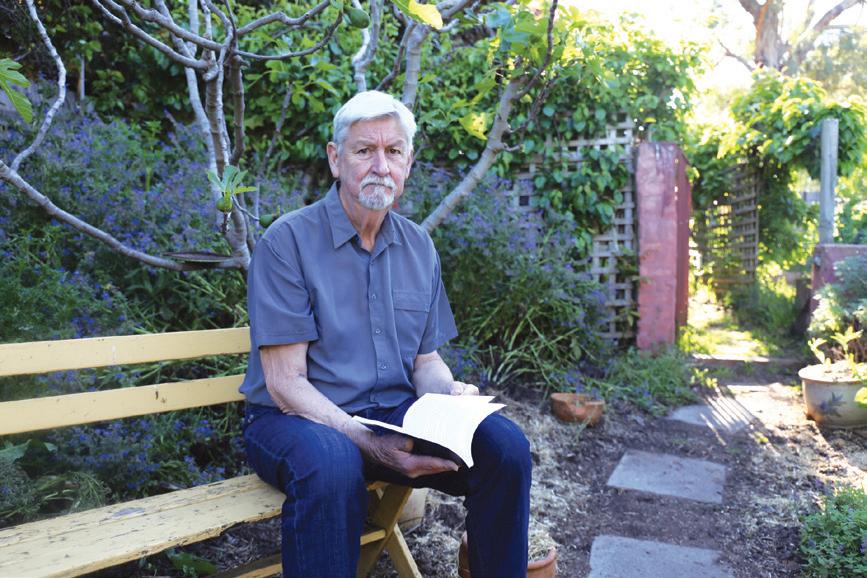
WASTE warrior Gerry Gillespie argues that when it comes to waste we’ve got it all wrong.
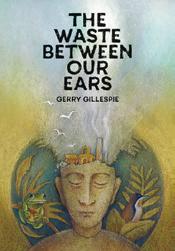
In his new book, “The Waste Between our Ears” Gillespie, 71, a writer, researcher and advocate, challenges readers to change the way they think about rubbish.
“We need to change our minds about waste, because the only place waste exists is between our ears,” he says.
“Waste is a concept derived from lazy thinking and twisted economics.
“We need to reconnect our organic waste to local soils and our wasted resources to local jobs.”
The idea of zero waste is pretty hot right now.
In times of increasing heat, fire and rising waters, Gillespie’s book presents recycling and composting as the means to achieve a zero waste economy.
Gillespie, who calls Queanbeyan home, has been involved in the recovery of wasted resources and their reuse for almost three decades.
Known as the “creative composter”, Gillespie’s concepts have taken him across the globe to China, the UK, the US and Egypt, but his passion for com-
Arts & Entertainment 19-22
Canberra Matters 6
Cinema & Streaming 20
Crossword 18
Dining & Wine 21
Gardening 23
Horoscopes 18
Letters 12
News 3-12
Politics 8, 9
Gillespie, who helped invent the territory’s yellow-lid bin recycling system, says the ACT should look to Wales, a leader in waste management, to improve its recycling capabilities.
“The key is source separation,” he says.
“In Wales, they stopped using big bins and they use a stack system, so each house has a bin on a trolley and you separate your waste into different categories like paper and cardboard, glass and metals, and you leave that bin, along with a food scraps bin, on the side of the road for collection.
“The collectors take the waste from the categorised trolley system that’s been left on the curb and they put it into the truck.”
If waste were collected as separated products, Gillespie argues more than half of it could be returned to soil as compost and biological products.
A large percentage of the rest, he says, can be put back through recy cling, re-manufacturing and re-using and as a result, create more jobs.
“Instead of investing in huge, big, expensive trucks you are investing in people and creating jobs and that’s what I am saying is the best outcome, especially during a pandemic, where we need to create more jobs.”
Up until 2001, the ACT was a “big stand out”, recycling about 71 per cent
Seven Days 4 Cover: Dr Liz Allen… from dropout to doctor. Photo: Holly Treadaway. Story Page 10. Ph
9b/189
Tanya has extensive knowledge in all areas of family law and can provide you with prompt advice such as:
Property and Financial Settlements
Divorce & Separation
Parenting & Custody Disputes, Spousal Maintenance
De Facto Relationship Matters
Please phone us for an appointment

terials from Wales because it’s not contaminated.”
Gillespie points to countries across the globe who are excelling in the field of waste reduction, simply by thinking differently.
“The Zabbaleen people in Egypt have perfected a door-to-door system with manual and mechanical systems that allow for local production of paper, cardboards, clean pelletised plastic and topsoil from compost,” he says.
“There’s a community in Raglan, NZ, that has achieved 74 per cent diversion from landfill and is turning Raglan’s waste into resources for employment and environmental benefit while moving toward zero waste.”
Gillespie’s book is the culmination of a lifetime of work and includes eight of his original poems.
Author Gerry Gillespie… “The key is not in the stars, but in our minds.”
of its total waste stream.
In 2020, Gillespie argues we could be doing more.
“The problem is you have a situation where, if the company who is collecting the product is not the same company that is trying to sort the product, the one who is running the collection truck doesn’t want to send it back to the centre unless it’s full and so they have a temptation to increase
Since 1993: Volume 26, Number 43
Managing Director: James Anderson, 0404 077605, james@citynews.com.au
Director: Kate Meikle, kate@citynews.com.au
Senior advertising account executives: David Cusack, 0435 380656 Tracey Avery 0477 939999
Advertising account executives: Damien Klemke, 0439 139001
Editor: Ian Meikle, editor@citynews.com.au
Assistant editor: Danielle Nohra, danielle@citynews.com.au
Journalists: Belinda Strahorn, belinda@citynews.com.au; Kathryn Vukovljak, kathryn@citynews.com.au
Arts editor: Helen Musa, 0400 043764, helen@citynews.com.au
Production manager: Janet Ewen
Proof reader: Glenda Anderson
Accounts: accounts@citynews.com.au


Photo: Belinda Strahorn
the compaction more,” Gillespie says.
“You can’t call it recycling if you pulp the stuff so tightly together and you end up having 20 per cent of it becoming waste, because it’s so damaged.
“Or you have a situation where the federal government has to step in because the Chinese say we don’t want to take your contaminated rubbish anymore.
“China will still take recycled ma-
Kicking off his new novel during a global pandemic wasn’t part of the plan, either was a cancer diagnosis early this year, but Gillespie says it’s all part of the journey.
The international zero-waste campaigner’s logical argument is a simple one; to help the environment and grow a local economy.
“The key is not in the stars, but in our minds.”
“The Waste Between Our Ears” ($30) is available at Paperchain Bookstore, Manuka.

I HAVE a duck-egg blue Vespa. I call it Francesca (the Vespa). Apparently, owners often give their motor scooters names.
I have a friend who called her late Vespa Daffodil. If you’re wondering, it was yellow. Francesca and I have been together for nearly two decades, longer than some marriages. Despite my guiltily kicking the tyres of a younger model at Motorini last week, I am devoted to my scooter.
As I grow older, at the simple admission of scooter ownership some people think it’s one of those electric ones with the orange flag. Disability scooters are a wonderful help to so many people, but did they have to call them “scooters”?
Then F and I were startled when the ACT’s top traffic cop Marcus Boorman stepped into the media spotlight this past week to call out “scooter” riders calling them “idiots”. Now hang on a minute, fella…
But it wasn’t the motor sort (of course not), it was the “idiot” riders of this current outbreak of blue and orange hire e-scooters touting themselves around the lake, on random street corners and even roundabouts.
“Just this morning... I was advised by a gentleman that said he was struck by someone on a footpath when he left a restaurant,” says Marcus Plod.
“If anyone thinks they can get on these things and undertake risky behaviour and be an idiot, there will be consequences and there’s a number of fines that we will give

Hire e-scooters… riders (not these people) are getting into trouble with the cops.
out.” Watch for speed vans down on the cyclepaths.
WHICH segues nicely to the oddest story of the week, when a passing car took a night potshot at a white speed-detection van parked on the Canberra Avenue median strip.
Now, who amongst us hasn’t been tempted to throw an insult at them, but fire a gun? Police say a bullet struck the sign on top of the van and A/Insp Adam Liversidge made the point that speed vans always have operators inside.
“No one should be put at risk doing their job from reckless behaviour like this,” he said.
“All speed vans have high-quality CCTV around their vehicles, which police are reviewing as part of their investigations.
CCTV shows a silver station wagon driving past at the time of the incident.
I KNOW I shouldn’t feel this way, but I was deflated at the news of an active case of COVID-19 in the ACT, the first in a stellar run
Kerryn Coleman revealed a diplomat in his 70s, a returned overseas traveller, tested positive at day 10 of his
“The circumstances of this new case demonstrate that our quarantine system here in the ACT is working well to protect the Canberra community from COVID-19,” Dr Coleman assured us.
“However, it is another timely reminder that COVID-19 still poses a risk to the ACT and the situation can change quickly.”
I SEEM to be developing an obsession about those bloody corflute things that littered our highways and byways on the run up to the ACT election. There seemed to be thousands of them, but not as many as perhaps there might have been.
City Services rangers took more than 2100 corflutes into custody during the campaign saying they were in breach of the Public Unleased Land Act 2013 code of practice, ie hammered into the wrong spots.
As the corflute-free Greens warned, this type of signage can’t be recycled in yellowlid bins. According to ACT NoWaste’s Anthony Haraldson, two free corflute drop - off points are in operation at the Mitchell and Mugga Lane resource management centres
where the deflated egos of campaign losers can be sensitively despatched into history.
“Care will need to be taken to remove contamination such as paper, glue, wood, metal and plastic fixings from the corflute signs to enable them to be recycled,” Mr Haraldson warns.
AND speaking of recycling, ANU academic with a sense of humour Clive Williams shared half a page of the things that made him grumpy in last week’s “CityNews”, bemoaning that the Mugga Lane “tip” is now described as a “resource management centre”.
On “public hypocrisy”, he courageously described the common public-speaker preamble: “I’d like to begin by acknowledging the traditional custodians of the land on which we meet today…” as “meaning less humbug given the way we’ve treated the land and the Aboriginal people from whom we took it”.
He followed up with an email to me quoting Desmond Tutu: “When the missionaries came to Africa they had the Bible and we had the land. They said: ‘Let us pray’. We closed our eyes. When we opened them we had the Bible and they had the land.”
Come along and see the friendly free-flying birds that can be photographed and fed. Walk amongst over 500 birds from 50
*Only closed Christmas Day

FINALLY, from the Department of Useless Research comes this week’s analysis of the most used sensual bedroom word in popular music.
Unsurprisingly, the word is “love”, but “bedroom” is the least mentioned, probably because it doesn’t rhyme with anything much (She started to bloom in my bedroom?). Anyway, the UK authors of this time waster Beyoncé is the most bedroom-obsessed artist with 123 mentions of bedroom talk in her top 10 songs; comprising 95 mentions of love, 12 mentions of kiss, 10 mentions of f*ck, three mentions of bed, and one mention of d*ck, p*ssy, and sex.

Ian Meikle is the “CityNews” editor and can be heard on the “CityNews Sunday Roast” on 2CC, 9am-noon.









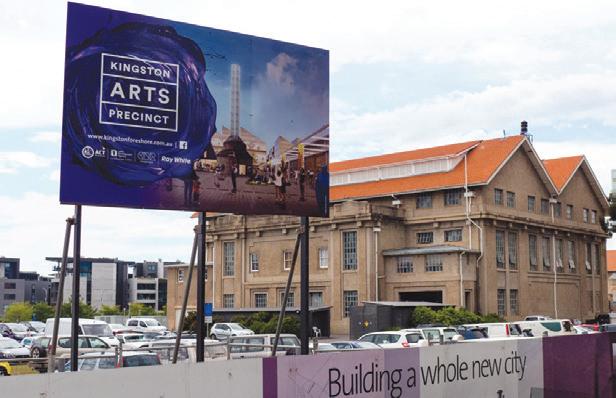
IN 2015, the now disbanded Land Development Agency announced the follow up to its 2011 master plan with the go-ahead for the Kingston Arts Precinct.
This was seen as an awakening of interest in arts activities by the ACT government. Work was to commence in 2016. It is now October, 2020, and it is yet to happen. The snail-paced progress on the Kingston Arts Precinct is an unfortunate but realistic indicator of commitments to the arts by recent Labor/Greens governments.
During the lead up to this year’s ACT election, the question was asked why the Arts Minister had not updated the arts policy. No answer was forthcoming. The two major parties gave commitments to an ad hoc mix of arts activities and infrastructure, but neither made a comprehensive commitment to Canberra’s arts and culture.
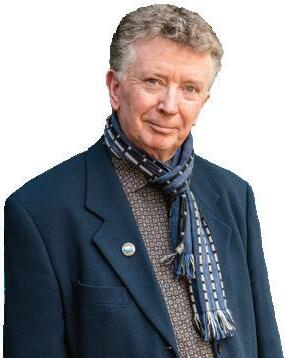
The one ray of hope was a document by the ACT Greens.
This contained a mish-mash of worthy phrases with much of the focus on performing
The
emphasis for arts centres should be based on community control with creative leadership from linked-in arts organisations and artists with professional expertise in working with residents.
arts. The document was titled “Properly Valuing the Arts”. It was not an arts policy, but rather a cobbled together group of statements.
While it reflected some good intentions to recognise some deficiencies of government participation in local arts (the list is long), it lacked a cohesive and integrated arts policy approach that has been missing for decades in Canberra.
In recent years the ACT government has added an extension to the Belconnen Arts Centre and committed to additions to the Tuggeranong Arts Centre. While there are centres for organisations such as Gorman Arts and maybe one day there will be a collective of organisations at the Kingston Arts Space, these are not centres based around key geographical areas and population centres. Forward planning for population centres should have included the provision of locally focused mixed-use arts centres.
The types of arts centres that



should be scattered throughout the city are those that provide opportunities for locals to come together for exhibitions, classes, performance events and a mix of community-based cultural activities.
The suburban areas where such locally focused arts centres have been overlooked include Woden, Gungahlin, Weston, Molonglo, South Tuggeranong, West Belconnen, and both the inner north and inner south of Canberra.
During crisis times such as that brought about by the COVID-19 epidemic, a focus on locally run cultural activities should be an important key factor in mitigating the health stresses as well as enhancing the opportunities for self-expression among the residents.
What the present crisis highlights is that successive ACT governments have not put in place the necessary infrastructure to support locally focused cultural activities.
This does not take away from the importance of a network of well-funded arts organisations but is an argument for a complementary network of new community centred
are also structured around main population centres.
The emphasis for arts centres should be based on community control with creative leadership from linked-in arts organisations and artists with professional expertise in working with residents.
This approach is not that currently being undertaken by the City Renewal Authority whose shallow and patronising approach of plonking expensive pop-ups here and there is doing nothing to nurture community creativity or ownership of local arts activities.
The new batch of politicians recently elected to the ACT government may contain among them one or two with
the ACT Greens about resetting what is normal following the recovery from the epidemic (fingers being crossed that it does not return).
Resetting the approach to arts policy would be a big step forward especially if this was done by insisting on a key part of a new policy was to put in place a locally oriented arts infrastructure that nurtured community ownership and involvement through local arts centres.
Paul Costigan is an independent commentator and consultant on the visual arts, photography, urban design, environmental issues and everyday matters.



By Danielle NOHRA

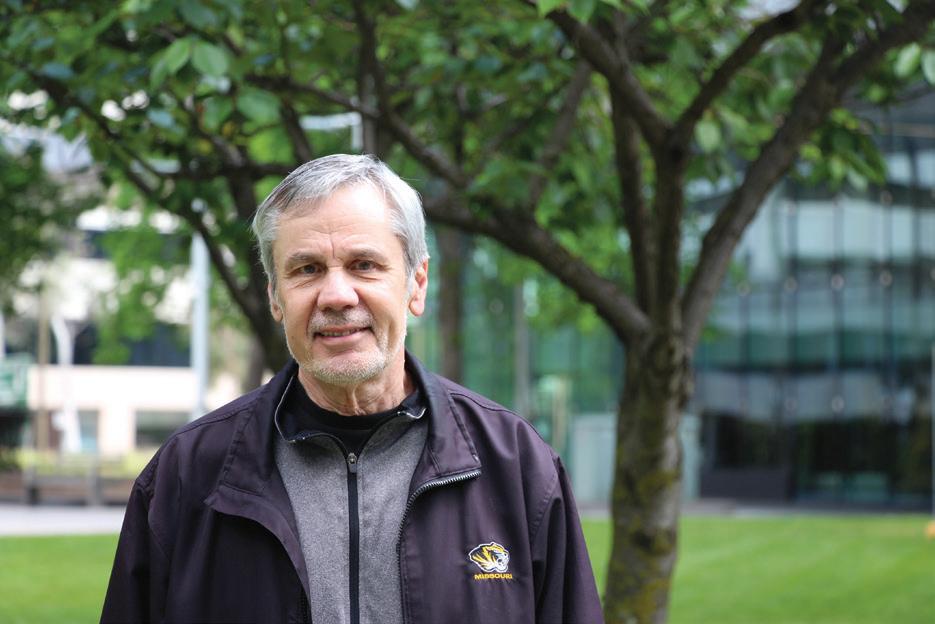
WHEN it comes to renewable energy, if other jurisdictions, states, territories, countries, did what Canberra does, the Paris Climate Agreement would be met, says climate-change expert Prof Will Steffen.
The emeritus ANU professor says humans have pushed the climate too far – a topic that he researches with other scientists across the globe.
“We’re going to miss the Paris target [which is to limit the temperature increase by] 1.5C, so we really have to get moving to meet the upper Paris target to [keep the global temperature rise] well below 2C, and I still think we can beat the well below 2C,” he says.
But it won’t be easy, according to Will.
However, he says: “If everyone did what Canberra did we would come in at about 1.7C or 1.8C, which would stabilise temperature. Canberra is a leader in Australia and we’re viewed as a leader globally in climate action.”
Since last year, Canberra moved to 100 per cent renewable electricity, and what that means, says Will, is the ACT puts enough renewable energy into the grid to meet the territory’s demand.
“We are in the south-east Australian grid, and we, as a jurisdiction, have put in solar and wind that generates slightly more than the amount of energy we use in Canberra,” he says.
“So, basically, we are doing our fair share to be 100 per cent renewable.”
Although, that doesn’t mean
Will
“My cooking, my cleaning, whatever I’m doing around the apartment is 100 per cent renewable, no emissions to the atmosphere. So Canberrans can say that for anything that they use electricity for.”
that there’s still not more to be done, and the ACT government has promised to put in a big battery, which is actually two large battery storage systems that would be able to deliver about 250MW in the region.
In the ACT, Will says we run off solar, which is mainly from the Monaro Highway, and wind, which is from Victorian and SA wind farms.
“The ACT is saying we have an obligation to back up the SA grid so when we have a temporary outage in renewables because it’s very cloudy or the wind isn’t blowing, we’ve stored electricity and we can put it in to keep the electricity supply even,” he says.
“Of course, the famous big battery is the one in SA that Elon Musk put in. The next time there was a power outage in SA, the battery put hundreds of megawatts within the system before the gas plant could even fire up.”
Gas, known as a transition fuel, is still used in the ACT, especially for energy use such
as heating, cooling and cooking, but Will says these things can be electrified.
“People still have gas, some people still heat their homes here in Canberra with gas [and] run their cooking with gas so the next stage that the ACT government is taking is to get fossil fuels out of other sectors of our ACT economy and the big ones are heating and cooling,” he says.
“The point with gas is that we already have enough gas plants and enough gas for use of gas as a transition. And now because renewables are cheap, it’s just as cheap or cheaper to cook with electric stoves.”
In Will’s Civic apartment, which he moved to about 20 years ago with his wife to be closer to public transport and ANU, it’s all electricity, so he says he can go to bed at night with a clear conscience.
“My cooking, my cleaning, whatever I’m doing around the apartment is 100 per cent renewable, no emissions to the atmosphere. So Canberrans







can say that for anything that they use electricity for,” he says.
As for his car, it’s not electric but Will encourages Canberrans to hold on to their “clunkers” for a few more years and wait until electrics are really inexpensive and common, and buy an electric car.
“By 2025 I think all electric cars will be cheap enough and common enough to buy,” he says.
“Electric cars will be even cheaper and simpler, so instead of filling up with petrol, you charge a battery, so you can plug it in at home, when you’re not using it, and let it charge up.
“We’re not going to buy another car. We’ll probably not have a car. We tend to use public transport and active transport.”
So things are looking good in the ACT when it comes to renewables, according to Will. But he says there’s a couple of big problems when it comes to other states and territories following Canberra’s lead. And he’s worried that other states and coun-
“There’s two big problems. You’ve got political ideology, particularly at the federal level and you’ve got vested interest,” he says.
“We don’t have any fossil fuel companies in Canberra and they really don’t in SA either, but they do in Victoria and they do in NSW and they do in Queensland [and this vested interest might prevent them from going renewable].
“These are the problems we have to overcome.
“Renewables are now cheaper and they’re cleaner so the economics have swung in favour of renewables, so when the federal government is proposing a gasled recovery, it does not stack up economically so they’re going to have to subsidise it with taxpayers’ money.
“Why in the world would they do that? They do it because of ideology, unfortunately, because climate change and renewables have become a political issue. And they do it because of vested interest [and] the powerful fossil-fuel lobby.”
Under Prime Minister Scott Morrison’s gas-led proposal, Will says emissions will go up and the work that’s already been done will go backwards.
“We know what the consequences are. We experienced the fires, 50 per cent of the Great Barrier Reef is dead, and we’re basically dooming our children to have a really difficult planet to live on by doing this,” he says.
“We need to have a planet we can live on, if we don’t have that, we don’t have anything.
“But the bright story is you can go a different way, and that’s what Canberra’s doing. We’ve just got to convince others to follow.”


PRIME Minister Scott Morrison was challenged by Leigh Sales at the conclusion of her “7.30” program’s post-Budget interview with him to bag Donald Trump.
Morrison declined and attempted (in the face of multiple aggressive interjections by Sales) to explain that he did not intend to offer commentary on either of the two candidates for the American presidency, Trump or Biden, in the weeks leading up to the US election.
He referenced the importance of the US-Australia alliance and of maintaining international relationships irrespective of the politics and I think, by inference, the personality and character of respective leaders.
I thought Morrison handled the questions and indeed the interview, as a whole, quite well. He certainly had Sales’ measure and by the end of the interview her aggression, interruptions as well as multiple attempted “gotcha” questions had become not just tiresome but rather silly.
While Morrison’s decision to decline to publicly criticise Trump was appropriate, I do hope that somebody, somewhere in the federal ministry or our armed forces or foreign service has let some person, at an appropriate level and in a position of power and influence in the US, know that Australia and Australians are appalled by Donald Trump and the US
I hope that somebody, somewhere in the federal ministry or foreign service has let someone in a position of power and influence in the US know that Australia is appalled by Donald Trump and that our relationship will not survive another four years of this madness.
government and that the US should not assume that our relationship will survive another four years of this madness.
While Trump is clearly a deeply troubled individual he is dangerous to boot. I have no doubt he would not hesitate to start a war if he thought there were votes in it. I also fear, because of our alliance with the US and Australia’s past willingness to follow it into any unwinnable war it is wont to wage, anywhere in the world, that when Trump, if he is re-elected, does inevitably declare war on Iran, that Australia will be first in line to rejoin the coalition of the willing.
I should acknowledge that my dread at the prospect of Australia being again seduced to join a pointless war, as a willing handmaiden to the US, is heightened by the fact that I have grandchildren of military age.

Donald Trump caricature: hafteh7
While it may not yet be clear, it was the question of the nature and importance of “alliances” that prompted me to write this column.
One of the treasured pieces of correspondence that I have filed away in the multiple filing cabinets and boxes of “treasured” papers and documents in my garage is a letter I received from the then NZ Labour Party Prime Minister, David Lange, in 1987.
The letter was in response to one I had written congratulating him on the principled and courageous stand he had taken, despite the obvious risk it posed to the ANZUS alliance, to ban the entry of nuclear-powered or nuclear-armed ships into NZ’s territorial waters and to declare the land and airspace of NZ nuclear-free zones.
The bans were affected by the NZ Nuclear Free Zone, Disarmament and Arms Control Act 1987.


After the passage of the Act, the US government duly suspended its obligations to NZ under the ANZUS treaty. Thirty three years later and, as far as I am aware, there is no appetite in NZ to reverse the nuclear ban in order to resurrect ANZUS and once again enjoy the warm embrace of Uncle Sam.
I recently asked a Kiwi friend if there was a concern within NZ that it might one day rue the decision to fracture its alliance with the US. He answered, forcefully, that New Zealanders were a principled, proud, tough and independent peoples, but if NZ was seriously threatened and friends such as Australia and the US did not come to its aid, as NZ would surely go to theirs because it had dared to assert its sovereign right to ban nuclear arms, then it was moot for Australians to reflect on what you get when you remove the Z from ANZUS.
I thought the point well made and it disappoints me that it doesn’t reflect Australia’s attitude to our relationship with the US.
Our mendicant status was defined in 1966 at the height of the Vietnam War by then Australian PM Harold
Holt when he committed us as prepared to go “All the way with LBJ”. PM John Howard later confirmed our subservience when he committed Australia, as one of only three nations worldwide prepared to join the US in the coalition of the willing, in the disastrous invasion of Iraq.
Which brings us back to Donald Trump. The Vietnam, Iraq and Afghanistan wars were a disaster for Australia and the world and they were pursued at a time when the US was led by reasonably capable, sane and able presidents. Just imagine the chaos that Trump is capable of.
Australia needs a David Lange; a prime minister prepared to say “no” to the US.
Jon Stanhope was chief minister from 2001 to 2011 and represented Ginninderra for the Labor Party from 1998. He is the only chief minister to have governed with a majority in the Assembly.

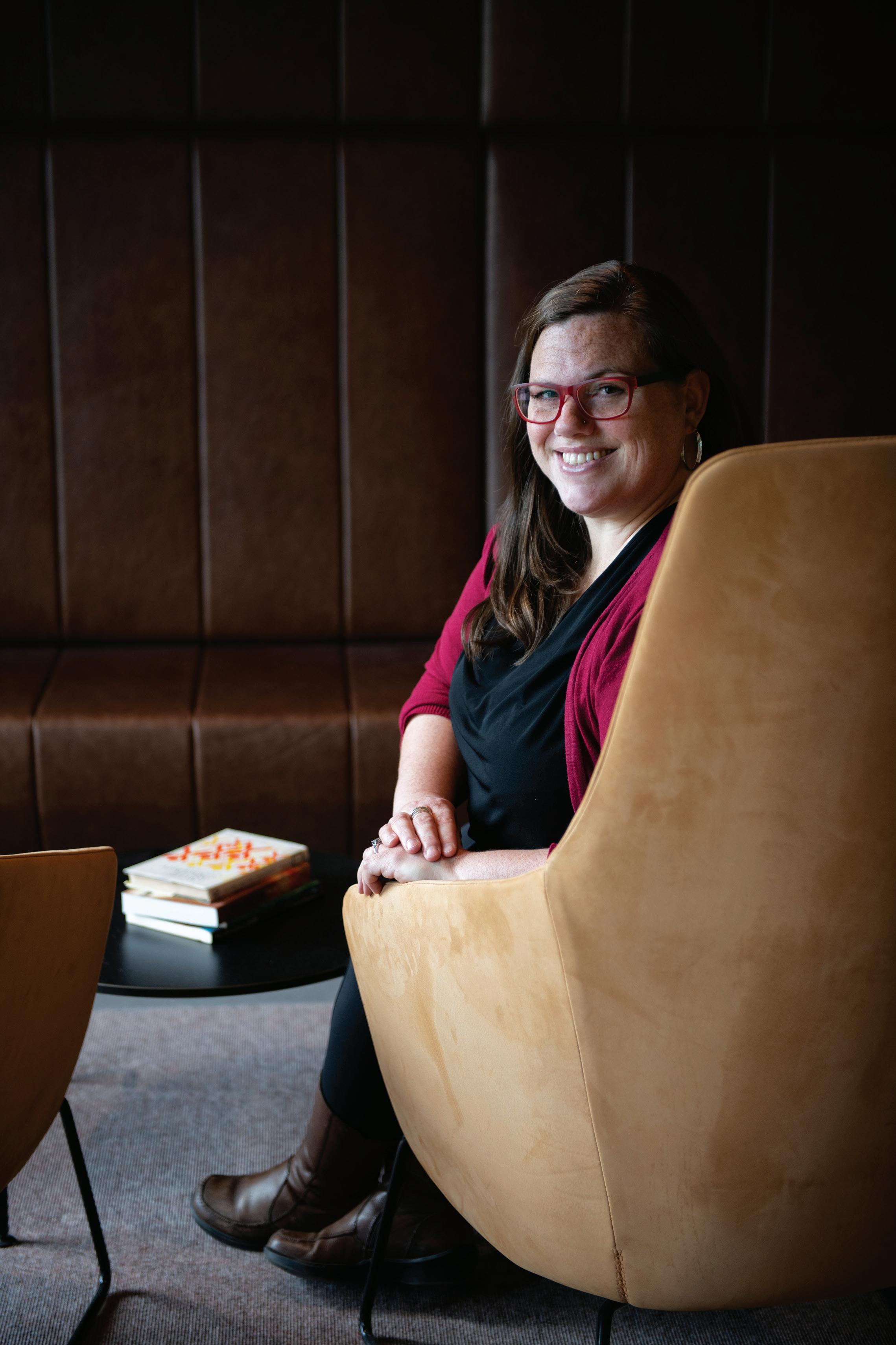
By Belinda STRAHORN
THE ACT election was groundbreaking in more ways than one: the first territory poll fought during the covid pandemic, a record 70 per cent of people chose to pre-poll, and female representation in the chamber has now increased to 14 of the 25 seats.
The election threw up some surprising results. Along with the defeat of a handful of sitting members, it ushered in some new faces and among them some interesting characters with diverse backgrounds.


and final seat. As a former teacher, school principal and lawyer, Cain will be pursuing better education outcomes for Canberra kids.
Kurrajong

So, who’s in, who’s out? Here’s the line up.
Ginninderra voters have delivered Greens’ candidate Jo Clay, the carbon-obsessed former lawyer and climate-change activist, a seat in the Assembly. Clay’s background includes stints as an author, artist and businesswoman. Clay wrote a book about her two-year “low-carbon diet” in which she reduced her family’s carbon footprint by 77 per cent.
A hare’s breath split the Liberals’ Peter Cain and his Labor opponent Gordon Ramsay, after a tight showdown for the fifth
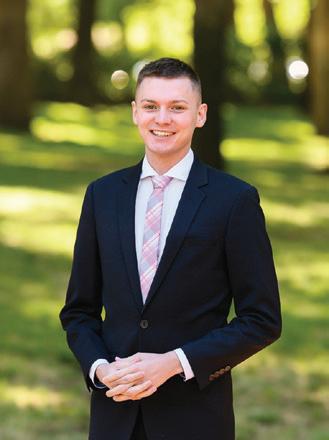
Kurrajong’s newest recruit sarotti joins party leader with a clear policy agenda that focuses on housing and homelessness, gambling reform, drug and alcohol issues, gender equity and health. A strong showing in this term may im prove her chances of succeeding Rattenbury as leader of the party down the track.
Brindabella
Former real estate agent and auctioneer, the Greens’ Johnathan Davis , scraped through claiming the final seat in the Tuggeranong-based electorate. Davis is hoping to champion small business, public education, the environment and LGBTIQ rights.
There was barely a cigarette paper between Labor’s star candidate Taimus Werner-Gibbings and Davis.
Brindabella was the one that no one saw coming on election night. It was assumed the
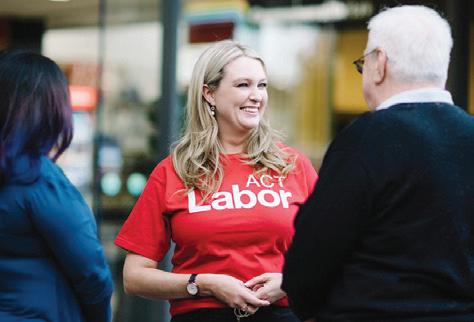
Labor’s newest recruit in Murrumbidgee is mental health advocate, and academic . Given her background and interest in this subject you can expect Dr Paterson will be working to improve mental health in the ACT.
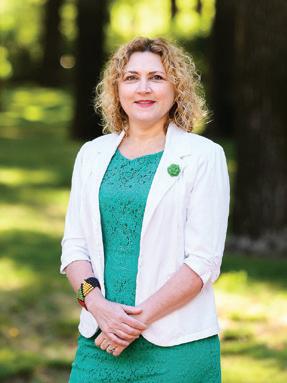
The Greens have replaced like for like with the retirement of MLA Caroline Le Couteur and the arrival of Emma Davidson A strong advocate for women’s issues in the community, she will champion affordable housing, healthcare, public transport and better sports and arts facilities.
Yerrabi
Newly minted Liberal MLA and country music singer Leanne Castley joins Liberal leader Alistair Coe in Yerrabi, replacing the party’s former MLA James Milligan. Best known for her singing, some Canberrans would

remember she ran against Labor’s Andrew Leigh at the last federal election.
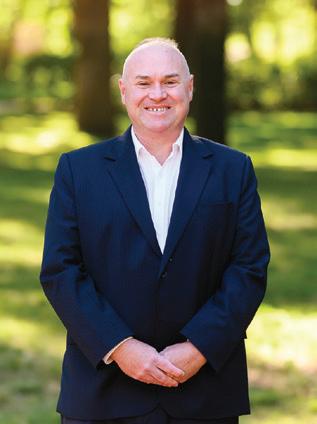
The Greens welcome Yerrabi. Braddock has strong environmental credentials and will seek more action on the issue of climate change in the next Assembly.
Braddock is a former environmental engineer and public servant; he also served as secre tary of the Gungahlin Community Council.
Brindabella
Outgoing business and employment spokesman for the Liberals Andrew Wall suffered an electoral reverse of fortune on election night. Having topped the poll four years ago he was relegated to third spot for the Liberals and missed out on returning to the Assembly.
Yerrabi
The Liberals’ sport and recreation spokesperson James Milligan failed to be returned in Yerrabi. A graphic designer by profession, following the loss of his seat he will probably return to his graphic-design background.



Departing Liberal veteran Vicki Dunne said Milligan and Wall’s departures were a “great loss” for the party.
Despite his campaign efforts, the electorate did not back Deepak this time in Yerrabi. On the back of a big swing against the Labor Party, sitting MLA Deepak-Raj Gupta fell well short of securing a quota.
Accident-prone Liberal and former transport spokesperson Candice Burch failed to retain her seat in Kurrajong. Some would remember that she replaced the late Steve Doszpot. Burch was criticised during the campaign for her unhelpful comments on light rail.
Murrumbidgee
In Murrumbidgee, the Labor party swapped Bec Cody for academic Dr Marisa Paterson. In a former life Cody was also a trade unionist. Re-elected Labor MLA for Kurrajong Rachel Stephen-Smith lamented the loss of her colleague on election night acknowledging her contribution in the area of workers’ rights. “She never took a backward step,” Stephen-Smith said, describing the loss of Cody and Gupta as “devastating” for the Labor caucus.
Ginninderra
Attorney-General and former minister of religion Gordon Ramsay lost his seat after only one term as Labor was reduced to two seats, falling victim to resurgent Greens in the northern electorate.

By Belinda STRAHORN

kicked out of home and became homeless in her late teens.
FOR someone who describes themselves as “not very extraordinary”
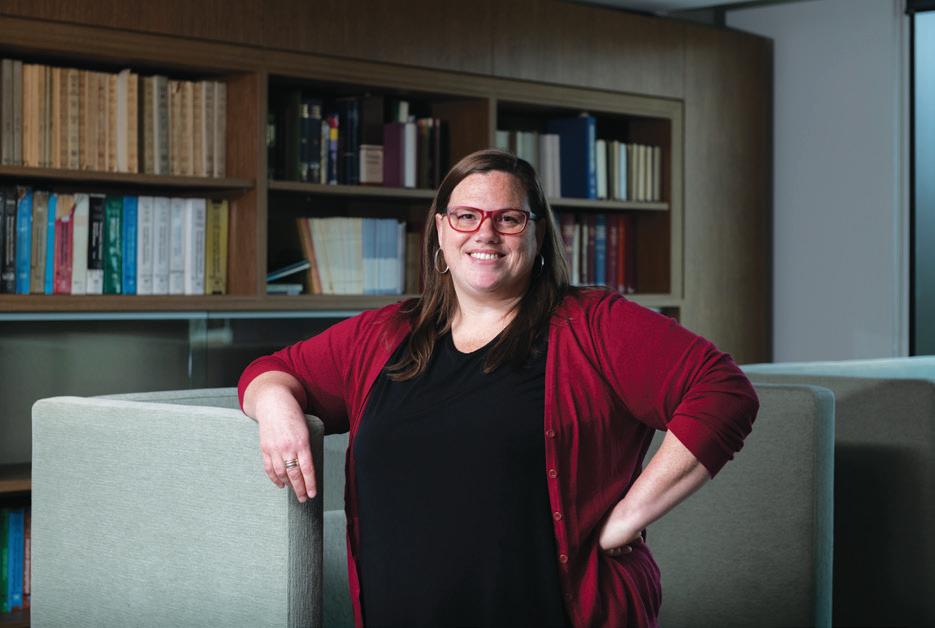
Dr Liz Allen, 40, has had a far from ordinary life.
From high-school dropout, to homeless, to teen mum, the now ANU demographer and sought-after population commentator, says life on the edge has afforded her a unique power to help those who can’t help themselves.
As a highly skilled demographer and social researcher, Allen’s keeping busy making sense of this tumultuous time, and with seven kids of her own, aged between one and 23, she’s in demand.
But it hasn’t always been like this.
“Every now and again I pinch myself and think ‘You’re a doctor’,” Allen said.
One of eight children, Allen grew up in western Sydney. She was sexually abused during her primary school years, left school in year seven, was
“I don’t really like to talk about sleeping rough, but the physical pain of hunger and thirst is one I will never forget,” she said.
Eventually finding a safe place to live, Allen had her first baby at 17 with the partner she’s still with today. She recalls in detail, the moment of “pro found” clarity, in which she was forced to make a decision about the direction of her life.
“I remember holding my baby girl in my arms and thinking that I can either die in a gutter with a needle in my arm or I can make this right,” she said.
“I had to fix this.”
That she did.
Enrolling in TAFE at Mount Druitt, Allen completed Year 12, she was then accepted into an applied chemistry course at university, but didn’t finish.
“It wasn’t for me,” she said.
“I wasn’t equipped with the science that was necessary to do it and I felt really stupid.
“And then the realisation of how expensive everything was, it was an entire paycheck for a single book, it was too difficult.”
Tough as nails, and determined to find her way, the young
Dr Liz Allen… “I remember holding my baby girl in my arms and thinking that I can either die in a gutter with a needle in my arm or I can make this right.”
mum enrolled in a bachelor of social science course.
“So I went from analysing dead people to counting dead people with demography,” she chuckled.
At one point, Allen hoped to become a politician, with ambitions to “change the world” but it wasn’t until she chose a subject
Photo: Holly Treadaway
in demography, the study of population, that things started to fall into place.
“I had to choose between jurisprudence and demography, and I couldn’t say ‘jurisprudence’ and I had no idea what it was, so I chose demography because it sounded interesting,” she said.
Suddenly everything made sense.
“Demography was like the secret source or the key to Pandora’s Box; it was like a language that I needed to understand to unlock the secrets of why my life had taken the trajectory it had,” she explained.
“By looking at population composition, by looking at the stories of people and the pattern of behaviours, we can learn a lot about ourselves and the stories of how we have come to be.”
While Allen had unearthed her life’s passion, her struggle with disadvantage was far from over.
“I was the odd one out,” she said.



“I was the nerd who sat at the front of the lecture theatre and took notes. I couldn’t afford to muck around like everyone else because I didn’t have the teaching materials to fall back on, so I had to listen
couldn’t afford the clothes everyone else would wear and people didn’t like that and I
A square peg in a round hole, Allen went on to finish her degree, and picked up a graduate job with the Australian Bureau of Statistics in
A few years later, with more children in tow, she decided to leave work and return to study, completing a master’s degree
With big ideas, and a big voice, Allen who refers to herself as “constructively angry” has shaken things up in the world of demography, something she’s been criticised for.
“Most demography in terms of a discipline perspective is done by white, old, wealthy men in Australia and has been forever,” she explained.
“And here I come with my unique brand; I’m a defiant person, and that pisses people off but being a defiant person allows you to ask better questions of the data and interrogate things that others don’t so we know a more complete story of ourselves.”
One thing that bothers Allen is inequality.
“It really shits me,” she said.
“You don’t realise what it’s like until you live it or you are open to understanding and listening to those who have lived it.
“I would suggest we have enough data and evidence at the moment to point to where help is needed and where there are issues that we don’t need, it’s like tying a bow on it, or polishing a turd, we
don’t need another process we just need action.”
Poverty isn’t the only thing Allen wants to speak about. She’s a strong advocate for managed population growth and thinks COVID-19 could have a long-term impact on our way of life.
“This recession is like nothing we have lived experience with in this country,” she said.
“The only comparison we have is the Great Depression, and after that came conflict, but as a result of those two things we had a baby boom and what we call a demographic dividend.
“The baby boomers ushered in the golden era in Australian history where home ownership took roots in society and we had a deliberate agenda for nation building.
“Sadly, I don’t think we will see that here.”
Contrary to popular belief Allen argues the pandemic will bring about a baby bust, not a baby boom.
“The future is so uncertain that we won’t have that baby boom and we won’t have that demographic dividend because people are not choosing to have babies because it’s too risky.”
Allen can claim to be an author too, her book ‘The Future of Us: Demography Gets a Makeover’ was published in April.
Despite all the trimmings, Allen says she’s “still working hard to survive”.
“Financially I am not like my colleagues, again I’m the odd one out,” she said.
“It’s like the buildings at ANU, they were built thinking that the academics would be at their holiday homes in summer, so I’m the poor sod sitting in those hot buildings with no aircon, but that’s the reality.
“I’m still working hard to survive, honestly I don’t think I’ll have the prospect of ever owning a home.”

by Nichole Overall
THE best way to listen to politicians on television, I’ve discovered, is not at all.
I don’t mean turn them off entirely – though several of my family would certainly vote for that – just the sound. It’s a distraction. All you’re missing is pabulum mixed with repetition, exaggeration and the occasional fib.
But turn it off and suddenly you’re treated to a face in close-up that can tell you much more about the character of the speaker than all the wordage in the world.
In fact, I’m told, our brains are actually designed to make judgments about our fellow human beings from their faces and their upper-body language.
This is how we characterise film stars into heroes and villains even before they utter their opening lines. And it’s how politicians try to trick us with words while their faces are telling us a very different – and much more authentic – story.
It came crashing home when, once again, I couldn’t bear Scott Morrison pretending to answer Leigh Sales’ questions on the ABC’s “7.30”.
I’m
told, our brains are actually designed to make judgments about our fellow human beings from their faces and their upper-body language.
When I hit the “mute” button I reared back in fright. I was suddenly confronted by a big, angry bear. And if his lips curled up at the ends it wasn’t to smile but to dribble with hunger before tearing at someone’s throat –Leigh’s, or worse, mine!
So, over the next few days I sought out other prominent pollies and tried the same experiment. The results were, well, mixed.
Opposition Leader Anthony Albanese, sans sound, I can report, does a great impression of an unmade bed. No surprises there. But Treasurer Josh Frydenberg was the very picture of a blow-up doll, frowning as if trying desperately to keep all the air inside lest it make a squeaky noise as it departed the stopper in his bottom.
Queensland’s Annastacia Palaszczuk minus that grating screech was Head Girl giving the valedictory at Indooroopilly High; while
Victoria’s Dan Andrews could have been a prefect at Mannix College (which he probably was). The ACT debaters, Barr and Coe seemed to disappear into the studio background.
By now I’d caught the bug so next day I tuned in to CNN and rounded up Joe Biden. Alas, he’d hidden almost his entire face behind a blue mask.
I quickly passed on to Kamala Harris and, happily, she was debating Mike Pence. Boy, did she put on a happy face or three. Whether she was being an Indian like her mum, a Caribbean like her dad or a stern prosecutor like her professional self, she was happy-scary-smiley with teeth that radiated. Scott Morrison’s bear would have met his match.
However, Mike Pence was not impressed. The only movement from his entire head came from
a fly that perched briefly in his silver hair. Then, bingo, Joe was back, bare-faced this time, and it really didn’t make much difference; it still looked like a mask.
Finally, poor Gladys Berejiklian was everywhere and whether the sound was on or off she was either Gilligan of that TV Island or Sad Sack, a comic book character I remembered from childhood, a poor downtrodden soldier in the US Army always getting humiliated through no fault of his own.
The only difference, I guess, is that Sad Sack was a private whereas poor Gladys, “stuffed up” her private life with a bum from Wagga Wagga; and she was running the whole shooting match.
robert@robertmacklin.com
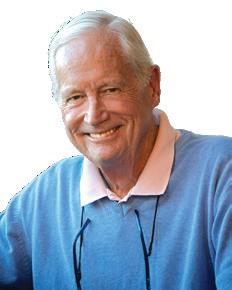
ELIZABETH Lee is the new Liberal Party leader in the ACT and Giulia Jones her deputy.
Ms Lee, who replaces Alistair Coe as leader, says: “Regardless of who people voted for, we will be a voice for all Canberrans and ensure that the LaborGreens government is firmly held to account and that our community always comes first.”

THE Australian Institute of Architects is calling on the federal environment minister to block the approval for Australian War Memorial’s redevelopment proposal arguing the demolition of Anzac Hall violates legislated heritage protections.
“Hands off Anzac Hall” campaign spokesperson Clare Cousins is urging Environment Minister Sussan Ley to listen to the feedback from experts, including the government’s own principal heritage adviser, the Australian Heritage Council.
THE ladies of the Weston Creek VIEW Club will be raising money for the Smith Family’s Learning for Life program for disadvantaged children at its next lunch meeting at the Canberra Southern Cross Club, Woden, from 11.30am on Tuesday, November 10. Lunch costs $30 and is open to visitors and guests. RSVP to 6286 4626 by 5pm, Thursday, November 5.
A “HUGE” range of Christmas gifts and homemade goodies are promised for the Calvary Hospital Auxiliary’s annual Christmas stall at Belconnen Markets, 8am-5pm, on the weekend of November 28 and 29. All proceeds go towards the purchase of equipment and items for the comfort of Calvary Public Hospital patients.



MORE than 70 notable Australians have signed an open letter to the Prime Minister in support of the Australian Heritage Council and opposing the $498m Australian War Memorial redevelopment.
The Council is the Australian government’s principal adviser on heritage matters and it made a submission to the War Memorial in the current consultation under the Environment Protection and Biodiversity Conservation Act (EPBC) 1999
Among the signatories are: Paul Barratt (former Secretary of the Department of Defence), Paul Daley (author and journalist), Elizabeth Evatt (first Chief Justice of the Family Court), Steve Gower and Brendon Kelson (former Directors of the War Memorial), Carmen Lawrence (formerly Premier of WA), Don Watson (author), architects, historians, former diplomats, and former officers of the memorial.
Dear Prime Minister,
THE Australian War Memorial development project will have major heritage impacts on the memorial, a place that has deep meaning for all Australians.
The intervention by the Australian Heritage Council, the government’s principal adviser on heritage matters, shows that reconsideration of the project is imperative.
The Council is chaired by the Hon. Dr David Kemp AC, a former Cabinet minister. Its recent submission to the Memorial under
the Environment Protection and Biodiversity Conservation Act (EPBC) 1999 concluded thus:
“Regrettably the council cannot support the conclusion that the proposed redevelopment will not have a serious impact on the listed heritage values of the site and recommends that the matters above [set out in the council’s submission] be given serious attention.”
While the signatories to this open letter have multiple perspectives on the many issues raised by the project, we strongly support the Council’s views and are united in our concerns about the heritage impacts. These impacts include:
• the proposed demolition of the awardwinning Anzac Hall (2001);
• the loss of the free-standing form of the Memorial building, to be swamped by a huge glazed addition (that will also be visible down Anzac Parade);
• the loss for most visitors of the existing commemorative entry, with entry mostly being via the lower ground level; and
• on the overall landscape setting of the Memorial from changes to the Parade Ground in front of the Memorial, the expansion of other buildings on site and the overall hardening of what is currently a respectful balance of built and landscape elements.
The memorial must be supported to achieve its core functions, but this should (and can) occur without damage to its core commemorative strength – the iconic heritage building and site.
We urge the Australian government not to accept the current proposal. It should be
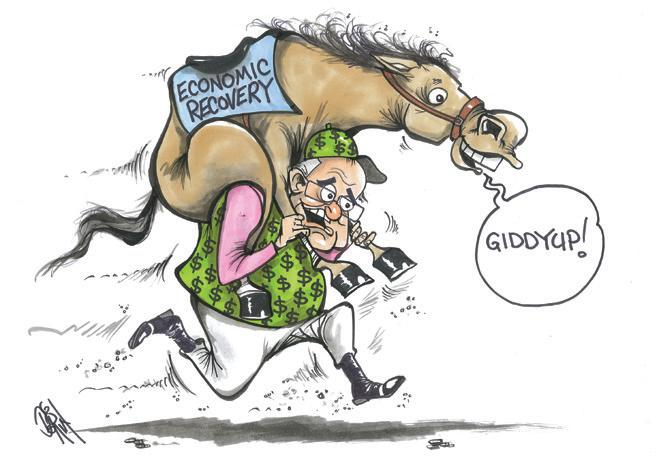
withdrawn and significantly amended, or EPBC Act approval should be refused.
A complete list of signatories is at citynews.com.au
OUR higher-education system gives us the next generation of qualified professionals, problem-solvers and researchers. It also provides the foundational experiences and knowledge young people need to realise their potential. Equal access to higher
“CityNews” is looking to immediately appoint an energetic, self-motivated general reporter.
It’s a full-time, contract position for a reporter with at least two years’ experience to write for our independent, quality news magazine and website.
Duties include:
• Working to deadlines and responding to breaking news.
• Writing accurate, balanced and fair copy for the “CityNews” magazine and website.
• Updating social media.
• Creating online newsletters.
Do you have?
• Minimum of two years’ experience.
• Strong written and verbal communication skills.
• Self-motivation, confidence and energy.
• A sound knowledge of the Canberra region.

Weekend work will be required on a rostered basis. The role is a full-time, contract until June next year. Beyond then will be by negotiation.
To apply:
Email a cover letter, CV and examples of your work to Kate Meikle, Director, Macquarie Publishing at: kate@citynews.com.au
dose of dorin
equality is not justifiable.
For disadvantaged students to achieve better outcomes in higher education there must be more capacity in access and support for students. Students from disadvantaged backgrounds often need more support to achieve their educational goals and to believe that their dreams are possible.
Many universities such as ANU have mentoring programs and scholarships set up by institutions and individuals to help disadvantaged students achieve access. It is important for all of us to help disadvantaged students when we can to give them hope and a fair chance.
Joanne Wheelahan, Civic
education is vital for everyone; a person’s social or cultural background or disabilities should not present insurmountable hurdles.
Twenty-five per cent of the Australian population can be classified as coming from a low socio-economic background, this group represents less than 15 per cent of Australian university students. Indigenous people are also significantly underrepresented in Australian universities, as are the people from regional and remote areas.
The current imbalance in highereducation participation in a society such as Australia, a country that prides itself on
THE election win returning a Barr government suggests a good proportion of people in Canberra are cashed up. Rising residential rates and substantial land taxes are apparently of little concern for many people.
A so-called “progressive” Labor/Greens government will drive the continuing concreting over of yet more green spaces in Canberra.
We can expect to see more long lines of greenhouse-gas-intensive concrete pouring trucks assisting the construction of still more high-rise buildings across the landscape. These appear to be primarily black or grey, rather than anything even close to green in colour or intention.
Murray May, Cook
In most countries, the main problems with hydrogen are the amount and type of fuel used to generate it.
If a fossil fuel, such as natural gas (mostly methane – CH4), or even worse, coal is used to supply the electricity for production of hydrogen by the best known but least efficient method, electrolysis of water, the net reduction in CO2 emissions is minimal.
If the most-used method of hydrogen generation, known as steam methane reforming, is used, one part of carbon dioxide (CO2) is produced for every two parts of water.
Lately there has been much comment about surges, or sharp peaks, of electricity from Australia’s vast and growing number of solar panels, that the National Electricity Market finds difficult – even impossible at times – to manage.
This problem offers a near-ideal solution to emissions-free hydrogen production. Instead of “dumping” surplus electricity, it could be used for producing hydrogen by electrolysis – a process that can be turned on or off as the electricity supply demands.
Dr Douglas Mackenzie, Deakin
ROBERT Macklin (“How politicians have deserted climate change”, CN, October 14) made an understatement when he said that our politicians have betrayed us on climate change.
According to the World Bank, the average person caused 100 tonnes of carbon dioxide emissions during the first Kyoto Protocol period (1990-2012). The average Australian caused almost 400 tonnes.
The world would already have warmed by two degrees if other people had followed our example.
The government’s target is for the average Australian to cause another 250 tonnes by 2030. By 2050 our average net emissions are likely to rise to 800 tonnes.
If the world is to meet the Paris Agreement goal of keeping global warming to less than two degrees, then
for every tonne of CO2 that Australians have caused since 2012, someone, somewhere else, will have to agree to cause a tonne less than their fair share of emissions.
When our politicians talk of “zero net emissions by 2050” they really mean that Australians will merely stop adding to the 800 tonnes or so of net emissions that we will have already caused.
Leon Arundell, Downer
PERIODICALLY there are court cases where the defence for people who were highly intoxicated by alcohol or illicit drugs, or both, and allegedly committed murder, is that they were unable to form an intention to murder. On face value this can be easily accepted. However, in my view it begs further examination in the cause of justice, especially for the victim’s family. What is not mentioned as coming under consideration, in the many reports I have read, is that a person has a responsibility before the law not to self-cause their inability to know right from wrong by breaking a law – eg public drunkenness, and also not to self-cause their ability to deviate from the social norm – ie holding an intent not to murder – again by breaking a law.
Colliss Parrett, Barton
CLIVE Williams (“What really irritates me…”, CN, October 22) rightly criticises the hypocrisy of public speakers prefacing their remarks by saying: “I’d like to acknowledge the traditional custodians of the land...”. How many of them could actually name any of these custodians or tell you what they have actually done that is so praiseworthy? Many times I’ve had to listen to speakers parroting these phrases, only to then give a 30, 40 or 50-minute speech and never mention these custodians again. How sincere are they?
Malcolm Brandon, via email
BluePackets offer a range of support services and tailor our support agreements to suit your business. The broad skill set of our team means we can provide you with a total IT solution or complement your existing IT resources.


THE saying, “there’s always room for improvement’’, is as relevant in the home as it is in many other areas in life. Whether extending or renovating, landscaping the garden, getting essentials for the farm, or looking at feature items to bring new life into the home, “CityNews” speaks to talented experts who are passionate about improving people’s homes.
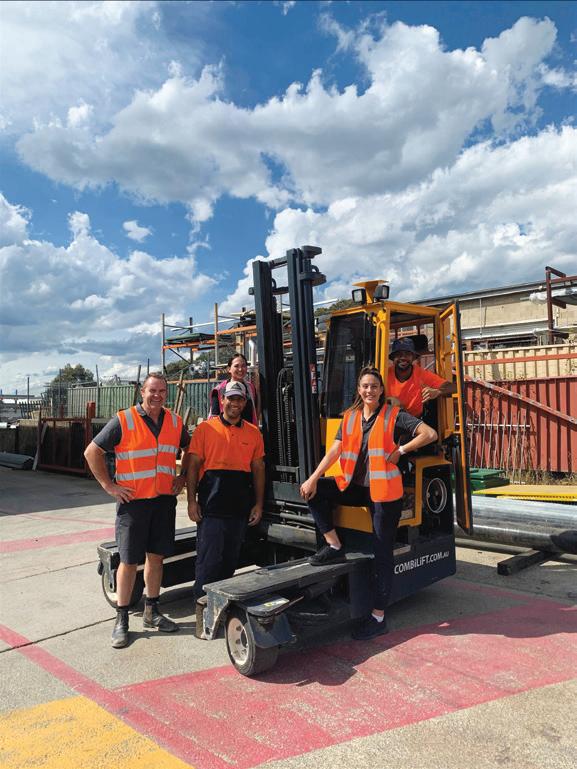
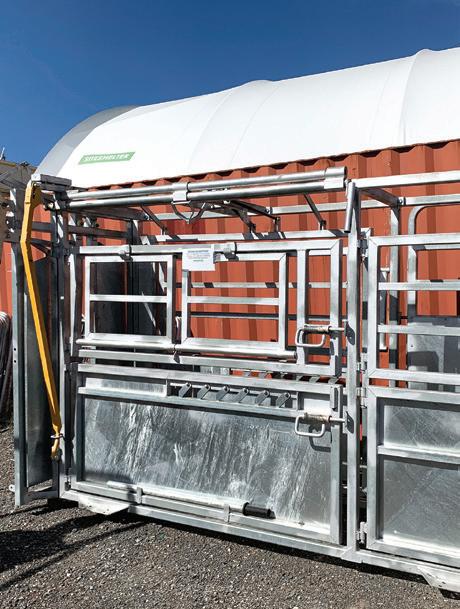
Darren’s got the best steel deals in the region
in the Canberra region, Independent Steel Company has transitioned from distributing high-quality, nationally-sourced steel to dealing directly with their local customers.
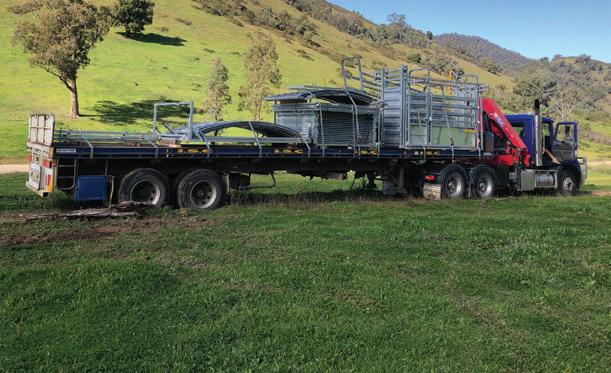
Without the Independent Steel Company, Darren says many local farmers would be forced to travel as far as Wagga Wagga for a long list of
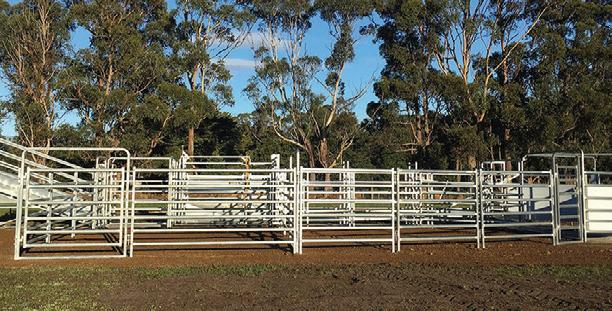
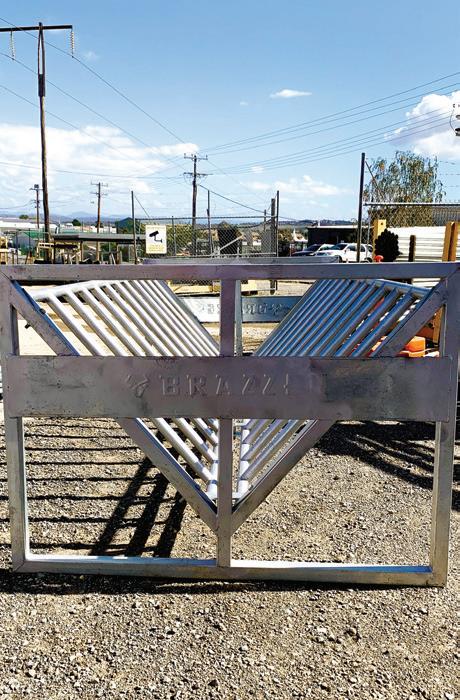
According to Darren, the company stocks high-quality Brazzen products and has the “largest stock of products in the region”, with a range that includes items such as loading ramps and hay feeders to horse and cattle panels.
As a locally-owned and operated business, he claims to have the “best deals in the region”, saying he owes it to their independence, not being tied to one manufacturer, and having the flexibility to shop around to pass those savings
Darren and his team take an active role in the region and employ 20 Canberra and Queanbeyan locals at their Queanbeyan warehouse.
And, while Darren might bleed green, the Independent Steel Company also supports a range of sporting teams across Queanbeyan and the ACT, from the Queanbeyan Whites Rugby team to the lawn bowls club, he says.
Independent Steel Company, 27 Endurance Avenue, Queanbeyan. Call 6298 4999 or email sales@ independentsteelcompany.com.au
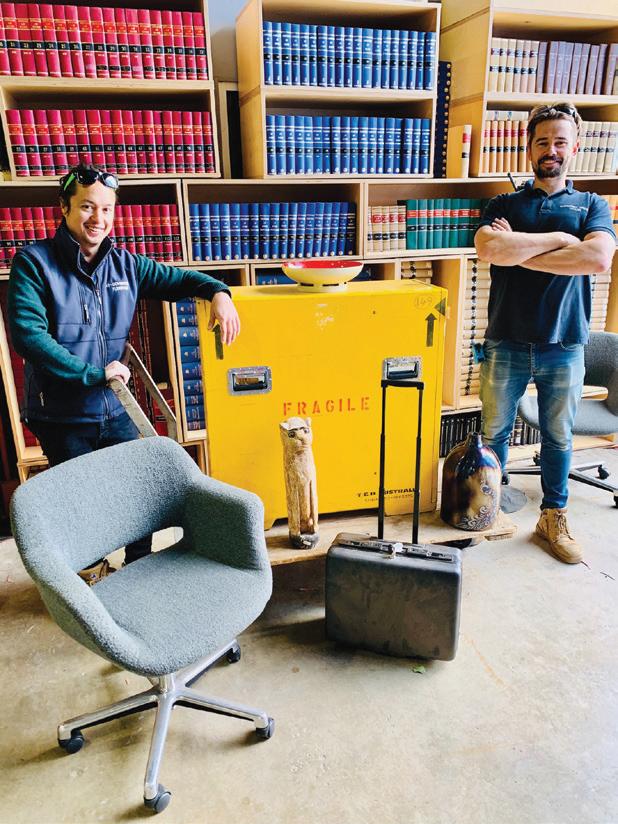
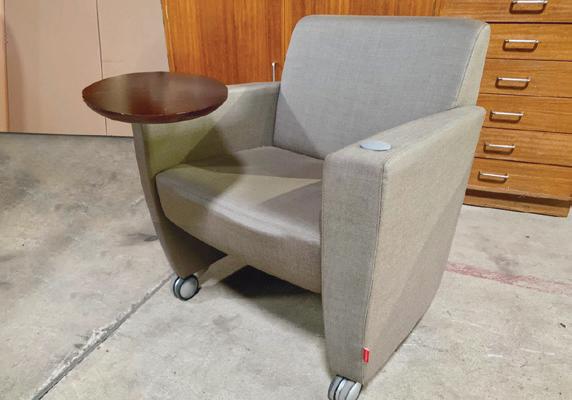
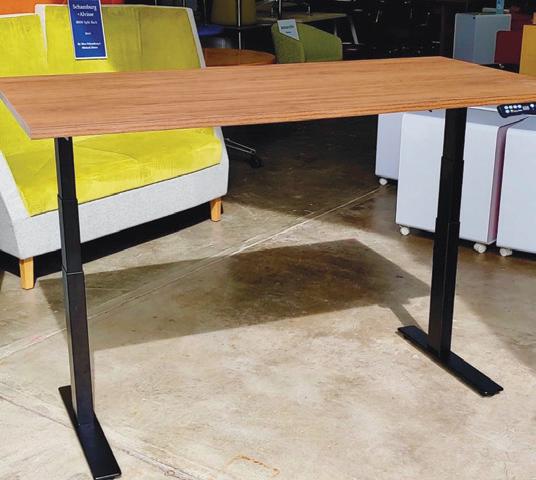
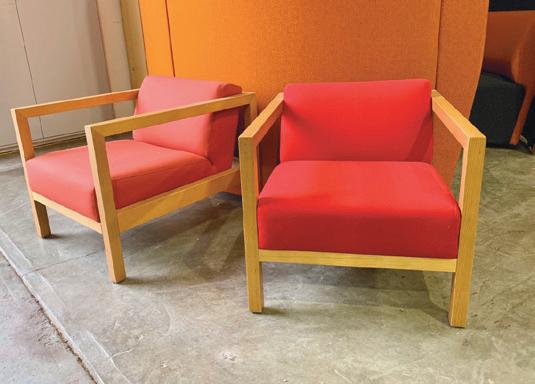
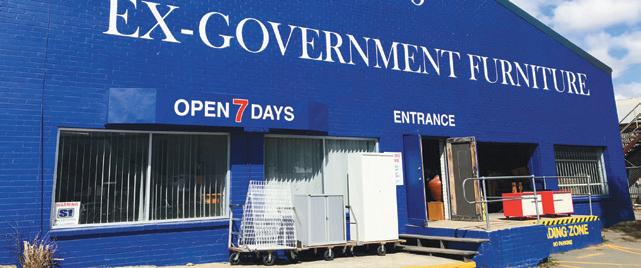
OLD-SCHOOL, vintage-style lounge chairs are comfy and cool, says Ex-Government Furniture owner James Fullerton, who says the store has a wide range of brightly coloured chairs and lounges in stock.
“The new thing is old things, with people wanting that retro look,” says James.
“We’re all looking for more comfort at home, too, now that we’re spending more time there, and a cosy, single-seater lounge chair can help create a reading nook or a bit of space away from the family to relax.”
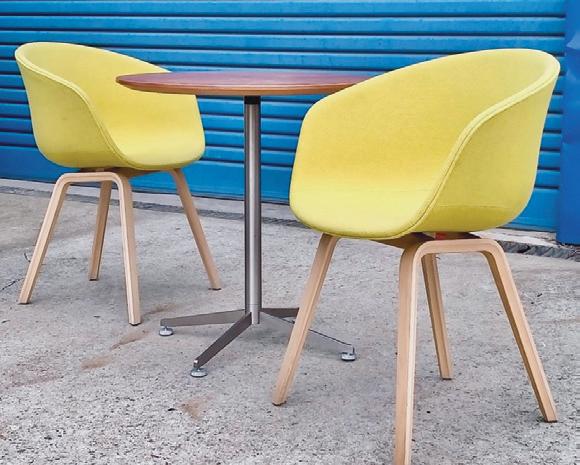
James says Ex-Government Furniture has a large selection, from the Danish HAY “About A Chair” by Hee Welling, to the Australian-made Jardan lounge chair.
“We’ve got a range of contemporary
designs that have a 1980s feel,” he says.
“We’re seeing people buying more highquality items like these, wanting furniture for the home that will last the test of time.
“All the items we have are well-designed and well-made, some with a solid timber frame, and they just give that little bit more comfort.
“It’s a sustainable way to go, and keeps more furniture out of landfill.”
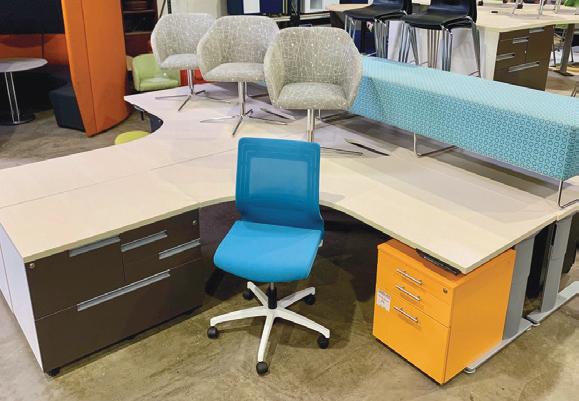
James says Ex-Government Furniture also has a huge range of mesh-back office chairs, but anyone who wants one should “get in quick, they’re in high demand”.
Ex-Government Furniture, 6 Yallourn Street, Fyshwick. Call 6280 6490 or visit exgovfurniture. com or facebook.com/exgovfurniture




•
•
•
•
•
•
•



FROM
“We’re
market and they’re looking for value for money, so the need to have your property looking its absolute best and stand out has never been greater.”
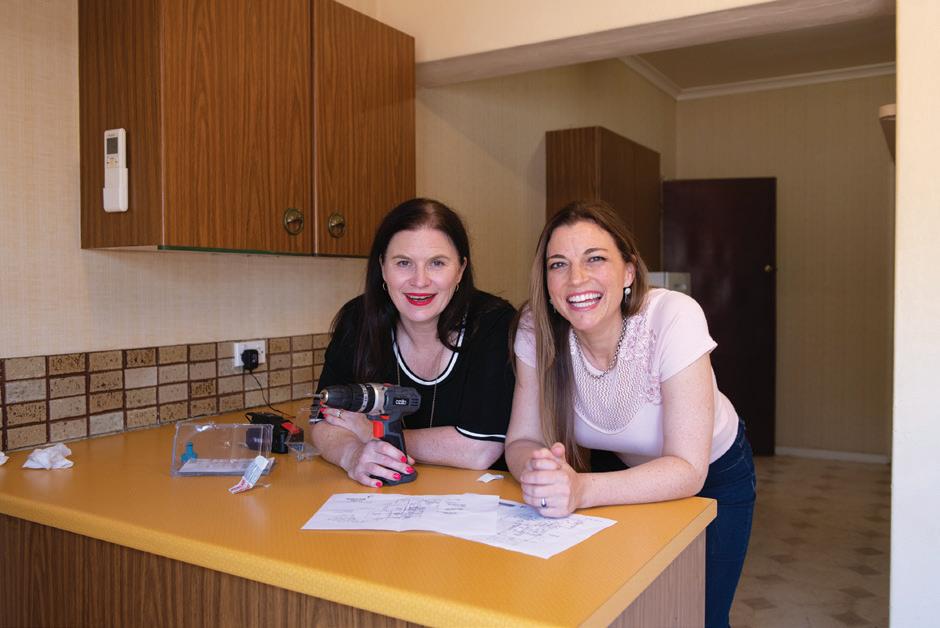
Kim and her business partner, Sophie McLean, make renovating accessible to everyone through their company, Your Property Profits. They say they can cover all the upfront costs of the renovation for their clients so they can sell their home faster and for a higher price, though conditions apply.
Your Property Profits. Call 1800 225597 or visit yourpropertyprofits.com.au for a free consultation.

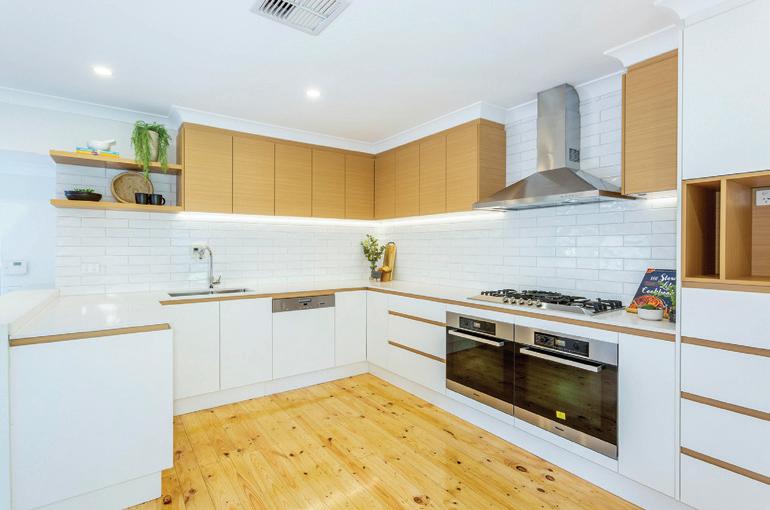

BORDEAUX Construction and Management doesn’t shy away from complex renovations, extensions or “knock-down rebuilds”, says project manager Michael Milutinovic.
No matter what an existing home or block looks like, Michael says the family-run business will work with clients from the initial concept stages all the way through to building them a dream home.
“Everything we deliver is a high-quality product that we can stand by for the long term because our reputation and our clients’ needs are very important to us,” he says.
And, Michael says that’s the case for any project, whether it’s from scratch or refreshing a home with a renovation or extensions. With any home extension, he says they work with clients from the start to understand the vision they have in mind and then work with them step-by-step from the beginning to handover.
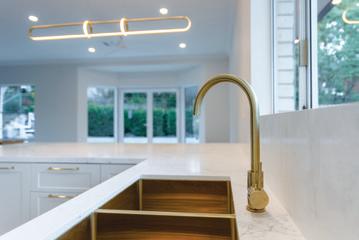
“We provide an obligation-free initial consultation which covers initial design and costs,” says Michael, who holds an unrestricted, “A”-class builder’s licence and has more than 14 years’ experience in the construction industry in Canberra and Sydney. When families outgrow their home but don’t want to move, Michael says Bordeaux Construction and Management can offer professional extension solutions for areas including new sunrooms, master suites and ensuites.
“We have worked with clients to open up their living spaces,” he says.
“Our ultimate goal is always constructing their dream project at the highest quality possible.”
Bordeaux Construction and Management, 8 Aurora Place, Queanbeyan. Call 6299 4642 or visit bordeauxbcm.com.au
WITH a need for affordable storage options outside metropolitan areas, Self Storage Solutions, a family-run business, was established about 30 years ago to fill the gap, says owner Lewis Jones.
Lewis’ parents saw the need for affordable storage options when they were running a removalist company in Sydney, which inspired them to open Self Storage Solutions, conveniently located near the truck stop at Marulan, only a one-hour drive from Canberra.
Lewis, who lives in Canberra, says he recently took over the reins when his parents retired.
He says clients love the savings they get by storing their items outside of the city.
“Our monthly storage costs are easily half the price of a storage unit in Canberra,” says Lewis.
“Our clients are typically people who are relocating or renovating and who don’t require regular access to their storage unit.”
Self Storage Solutions offer three storage unit size options and Lewis says caravans, boats and trailers can also be stored, to keep them out of people’s home driveways. He says they can be collected seven days a week during daylight hours.
“We can also offer a removalist service, if required,” he says.
Self Storage Solutions. Call 9986 3618 or visit selfstoragesolutions.com.au
Let us do the hard work for you with our pack & move, door to
storage available!
FOR QUALITY STORAGE AT A GREAT PRICE
CALL TODAY: 02 9986 3618 Email: office@selfstoragesolutions.com.au selfstoragesolutions.com.au

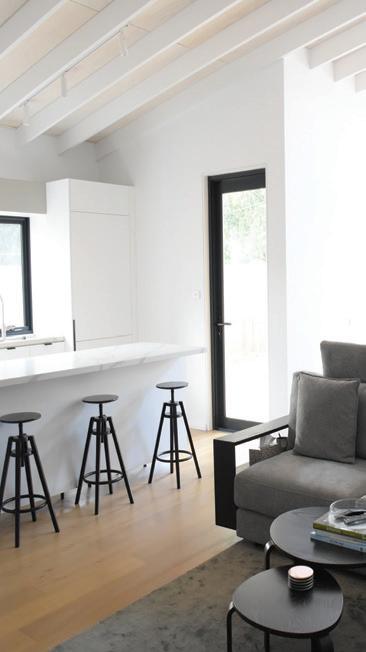

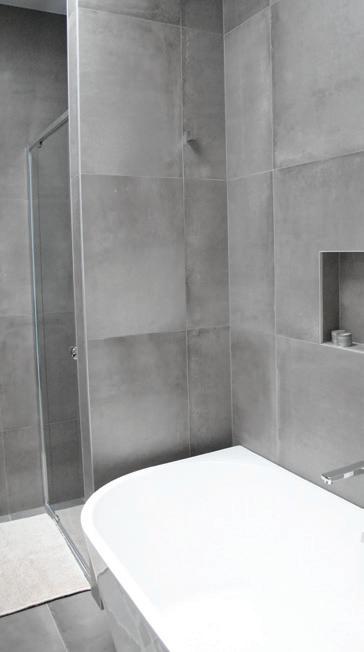
BORDEAUX CONSTRUCTION & MANAGEMENT PTY LTD

Total Design Consultancy and Project Management
• Home • Office • Extensions • Renovation • Granny flats • Sun room addition
• Build your new dream home • Commercial premises • Retail
BORDEAUX BATHROOMS
• Designed with you with your budget in mind • High standard of workmanship
• High quality finish • Completed on time, every time
BORDEAUX KITCHENS (Associated with Capital Cabinetmaking)
Specialise in custom-built design and joinery • Kitchens
• Vanity and laundry units • Commercial Joinery
• Shop/office • Home office • Experienced tradesmen and full trade co-ordination available
Showroom Hours: Mon-Fri: 9.00am to 4.00pm, Sat: 9.00am to 12pm, or by appointment














Joanne Madeline Moore
ARIES (Mar 21 – Apr 20)
This week Mercury moves forwards (yeah!), but your ruler Mars is still retrograde (boo!). The more creatively you communicate with other people, the more satisfying the week will be. Attached Aries – strive to be more tolerant and cooperative with your partner. Singles… are you looking for love? Don’t accept second (or third) best. Have the confidence and patience to wait for your soul mate. Good things will come (eventually) to Rams who wait!
TAURUS (Apr 21 – May 21)
A frustrating problem involving work, health or a household pet should gradually improve, as Mercury moves forwards and you start to get back into a more dependable daily routine. But have you been a lazy Bull? Regular exercise is a must, so why not pal up with a friend for a daily walk or regular workouts at the local gym? (Covid restrictions permitting.) This week, fortune definitely favours tenacious Taureans who are practical and proactive!
GEMINI (May 22 – June 21)
Your ruling planet Mercury has been retrograding for the last three weeks, so stress levels have been high and patience low. But things gradually improve from mid-week onwards when Mercury finally moves forwards. Hopefully, you’ve learnt some valuable lessons – like slowing down and calming yourself within. Taskmaster Saturn tests your patience on Friday but – with focus and determination – you’ll navigate your way around any temporary roadblocks.
CANCER (June 22 – July 23)
With the Sun activating your entertainment sector, jump out of your Crab comfort zone (and your covid cocoon) and have some fun (in appropriate ways). Plus, when it comes to your personal and professional lives, strive to be extra patient, and keep the lines of communication and creativity wide open. Your motto for the moment is from birthday great, singer-songwriter-musician Joni Mitchell: “I want to have fun, I want to shine like the Sun.”
LEO (July 24 – Aug 23)
Thank goodness Mercury finally moves forwards on Tuesday evening (London time). So Wednesday onwards is a terrific time for creative Cats to post, publish, podcast, talk, text and tweet up a storm. There’s also much satisfaction to be gained from contributing your specific talents to a worthy cause within your local community. On Friday, tread carefully with a grumpy sibling, neighbour, or work colleague, as communication is blocked in some way.
VIRGO (Aug 24 – Sept 23)
The week starts with Mercury and Mars both retrograde, so discretion, patience and persistence are required in spades. Mercury turns direct but then Saturn squares Mercury on Friday. So it will take a while for dramas to recede, problems to resolve and communication to improve. Wisdom for the week is from singersongwriter (and birthday great) Lorde. “Take care of your thoughts when you are alone and take care of your words when you are with people.”
LIBRA (Sept 24 – Oct 23)
This week, with Venus visiting Libra (until November 21) and Mercury turning direct in your sign, it’s time to create, collaborate and communicate, in your own inimitable, charming style. As birthday great Albert Camus wrote “Charm is the way of getting the answer yes, without having asked any clear question.” But a frustrated family member will need to be handled with extra care, so make sure you crank your diplomacy skills up to high!
SCORPIO (Oct 24 – Nov 22)
It’s time to express your deepest emotions in creative and powerful ways that move others. Whether through speaking, writing, painting, photography, acting, singing, dancing, drawing or playing music. As Scorpio singer-songwriter-painter (and birthday great) Joni Mitchell observes: “I sing my sorrow and I paint my joy.” A patient and thorough approach brings the best results, especially involving a work colleague or a health issue.
SAGITTARIUS (Nov 23 – Dec 21)
Sagittarians are fiercely independent folk. You pride yourself on being able to do most things on your own but that’s not always such a good idea. On Tuesday, Mercury moves forwards in your networking zone, but Mars is still reversing through your friendship zone. And Saturn pushes you to take on less and delegate more. So this week, the secret to success is working collaboratively and patiently with others. You’ll find many hands make light work!
CAPRICORN (Dec 22 – Jan 20)


Aim to be more proactive, especially when it comes to networking with colleagues. But don’t let annoying disruptions and minor matters get to you. No one wants to be around a grumpy Goat! Instead of brooding when other people don’t understand what you want, tell them exactly what you need. And learn to delegate, de-stress and de-compress. Take some time off so you can enjoy doing the things you love. No one (not even a capable Capricorn) is indispensable.
AQUARIUS (Jan 21 – Feb 19)
Many Aquarians are feeling rather restless. With Jupiter, Saturn and Pluto all powering through your soul and seclusion zone, it’s time to ditch distractions, slow down and listen to the wisdom of your inner voice. So your motto for the moment is from birthday great, fashion icon and Vogue editor Anna Wintour: “I respond to my own instincts. Sometimes they’re successful and sometimes they’re not. But you have to remain true to what you believe in.”
PISCES (Feb 20 – Mar 20)
On Tuesday evening, Mercury moves forwards in your shared resources zone however Mars continues reversing through your money zone until November 14. So – when it comes to financial matters – it’s a case of one step forwards and two steps back. With patience and perseverance, you’ll eventually get there. Confidence levels are also a bit low so do your best to surround yourself with positive people who boost your spirits and encourage your dreams.
Copyright Joanne Madeline Moore 2020
8
9
10
14
18
19
21 What are eight-armed sea creatures? (6)
22 What, in law, is an agreement creating an obligation to do something? (8)
23 England is part of which continent? (6)
CORRECTION
Down
1 Name another term for a holiday. (8)
2 What is a confused mass of something? (6)
3 Which soft-toned flute is played in a vertical position? (8)
4 Name a title of respect in Iran, Afghanistan, Pakistan, etc. (4)
5 What is a group of military vehicles travelling together under the same orders? (6)
6 To penetrate, or run through something, is to do what? (6)
12 What is a short narrative of an interesting particular occurrence? (8)
13 Name either of the two times in the year when the sun is at its greatest distance from the celestial equator. (8)
15 What is a spotted, leopard-like cat? (6)
16 Name an ancient ruined city in Upper Egypt, on the Nile. (6)
17 Which material binds bricks, stones, etc, into a compact mass? (6)
20 What does a tramp carry across his shoulders? (4)
In Crossword 755 the solution carried a wrong answer. To the question for 1 Across ("What is a hole-in-one on a par four?") we gave the answer as "Falcon". This was incorrect, the answer is an albatross or double-eagle. Apologies to anyone tearing their hair out with frustration.

By Helen MUSA

AUSDANCE ACT’s newly-arrived director, Cathy Adamek, is looking around for an electrifying place to hit the dance floor, but she’s not very optimistic about her chances in the current covid climate.
Fresh from Adelaide, she’s an actor, dancer and choreographer armed with a doctorate on dance music culture who can as easily converse about strategic plans for the arts as about acid house and disco, one of the most important music forms of the 20th century, she believes.
Trained as a classical dancer with Adelaide’s Joanne Priest and Sheila Laing, Adamek also holds a degree in literature from the University of Adelaide and acting qualifications from both NIDA and the Webber-Douglas Academy of Dramatic Art in London. She views contemporary dance as a hybrid art form which, despite its ancient pedigree, is only just asserting itself alongside other major art forms.

Her initial impression that Canberra was a “very quiet city” was completely dispelled when she was directed further down the street to the Bunda Street precinct, which she found was hopping with activity. She already senses a subtle difference between Canberra and her home city, where she fears the arts may be declining and where there are “silos” in the arts forms and a surfeit of politics.
Her arrival from SA has caused some excitement at Ausdance ACT, which hasn’t had a full-time director since 2015 when, in the wake of massive funding cuts, they had to let Neil Roach go.
Ausdance ACT president Lauren Honcope, exhausted by this year’s costly cancellation of their big annual money-spinner, the Youth Dance Festival, can hardly hide her relief, telling me how her team of volunteers have expended blood, sweat and tears to keep the office going until they obtained sufficient funding to hire a director again.
“The cancellation hit us in the guts but now the future is looking brighter,” Honcope says.
range of genres of practice and professional dance but also community dance of all kinds, serving as an umbrella structure and encouraging networks which are linked nationally.
Initially trained in ballet, she is very sceptical of the rigid classical teaching approach of yesteryear that was all about following strict rules to perform in “Swan Lake” or if you were an actor, Shakespeare. She applauds the nationwide move toward safe dance techniques.
To her, dance represents bodily freedom from restrictions and control and her eclectic view of dance has led to a keen interest in the function of dancing in health so she looks forward to meeting Philip Piggin, founder of the Dance for Wellbeing program, at Belconnen Arts Centre.
And she’s not just a theorist. Her long career in artistic and commercial performance includes a recent tour with Australian Dance
Theatre, in Garry Stewart’s “Be Yourself” and acting in Jen Kent’s psychological film “The Nightingale”, and the feature “The Babadook”. She has even produced and choreographed “Here’s Humphrey” and worked on post-production for the US feature “Charlotte’s Web”.
Adamek had only been in town for three days when we met and was bunking down in rented accommodation on the edge of Civic with her 12-year-old son while she looked around for appropriate schools and places to live – she’s impressed by stories of Canberra’s educational opportunities.
By Helen Musa
AN impressive line-up of Canberra-grown directors staging classic plays forms the backbone to Canberra REP’s 2021 season in its 89th year.
Clearly designed as an antidote to 2020’s truncated season, it is, with the exception of “The Governor’s Family”, which is rescheduled from this year, an entirely fresh season of seven rather than the usual six plays.
The idea, REP staff says, is to engage audiences with high-profile works – three from Australia, two from the UK and two from the US.
The season opens with “Cat on a Hot Tin Roof”, a huge hit from REP in 2001 when it was staged by the late Canadian director Walter Learning, to be revived by Anne Somes from Free Rain Theatre. This steamy Mississippi drama by Tennessee Williams is famous for its big roles, like Big Daddy the patriarch, Maggie the Cat the daughter-in-law and her damaged husband, Brick.
Next up is Louis Nowra’s “Così”. Set in a Melbourne mental hospital in 1971, where a production of Mozart’s “Così Fan Tutte” with a cast of patients is in progress as the streets outside erupt with anti-Vietnam war protests. Canberra theatre identity and drama teacher, Sophie Benassi, now studying for the directing
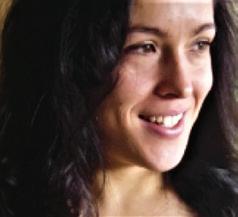
course at NIDA, makes her debut in a play which argues that reality is unique for each person.
Ed Wightman, an ANU theatre luminary who later studied at the London Academy of Music and Dramatic Art (LAMDA), is a favourite with REP and returns to direct the thriller “Rope” by Patrick Hamilton, who also wrote “Gaslight”. In a play made famous by Alfred Hitchcock’s 1948 film version, two flatmates murder their friend purely to see if they can get away with it. REP’s onto a sure thing here.
The fourth play of the season is “The Governor’s Family”, in which playwright Beatrix Christian conjures up the ghosts of our colonial past in a play about viceregal secrets in late 19th-century NSW. Another REP stalwart, Tony Llewellyn-Jones, who studied at the ANU as a young man before enjoying a long professional career in acting, is back to direct.
Cate Clelland, another REP veteran, returns to direct Tom
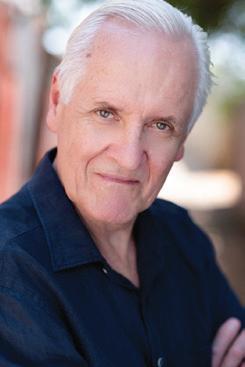
wings, or so they think.
Hannie Rayson’s “Hotel Sorrento” is the sixth play for 2021, a familial drama in which three sisters reunite after 10 years in different worlds. Alexandra Pelvin from Mockingbird Acting Studio and Theatre Company, joins Benassi as a first-time director for REP.
Finally, for the 2021 Christmas season, Liz Bradley, who has recently directed a hilarious “What The Butler Saw” for REP, takes on more serious fare in American actor/ writer Kate Hamill’s bold feminist adaptation of Jane Austen’s “Sense and Sensibility”.
And with the current worldwide craze for Austen, you could hardly call that a risky choice.
Canberra REP Theatre, Acton, book at canberrarep.org.au or 6257 1950.
Adamek arrives job-ready. An actordancer who has worked extensively with independent dance companies, she has also served as the president of Ausdance SA and has no illusions about the challenges the organisation faces as it rebuilds.
With that connection to the organisation, she speaks quickly and fluently about its aims. Ausdance, she says, supports a wide
To Adamek, dance is personal. As a young woman in Adelaide she was immersed in the groundswell of youth culture and says, “I was introduced to the Toucan Club on Hindley Street, where I found goths, people in theatre costumes and big hairdos. It was the most amazing culture, where the DJs were curating a new sound at a time when Adelaide radio was ultra conservative”.
“It was as if I’d found the key to ‘The Secret Garden’ on the dancefloor,” she says.
“It was the perfect art form.”
Cathy welcomes emails from those wanting to discuss dance matters at act@ausdance.org.au

ACROSS the ditch, Curtis Vowell’s movie tells how Zoe (Rose Matafeo) challenged the conventions of the gestation industry.
“Baby Done” starts with Zoe denying the result of a pregnancy test in week 26. And follows that with avoidance of all the professional advice about how to conduct herself during the last trimester.
Zoe’s a headstrong girl who, with her partner Tim (Matthew Lewis), runs a small arborist business somewhere in the North Island.
Rose’s job is to carry her trusty chainsaw up tall trees and saw off undesirable limbs. She’s good at it. She’s ambitious. She’s busting to get selected to represent NZ at the world tree-climbing championships in Canada in about three months’ time.
Readers with an arithmetical turn of mind won’t take long to work out what is going to occupy Zoe in those months, during which Sophie Henderson’s screenplay squeezes out every possible social, emotional, medical, obstetric and relationship problem that might confront a woman in her first pregnancy.
For Zoe, those issues pale into insignificance in the overriding obstacle dominating her thoughts about the whole darned thing.
Gestation is okay. Birthing is okay. But Zoe just doesn’t want to be a mum.
Rose Matafeo plays Zoe with deft comic skill. Matthew Lewis is stoic throughout. The end is predictable. But as Zoe’s determined obstructionism builds, this mere male’s mind found itself wishing that somebody would confront the irritation and frustration that had been building since the film began.

Which, in a perverse way, is a measure of its effectiveness!
At all cinemas
“On the Rocks” (M)
THIS is filmmaker Sofia Coppola’s third collaboration with actor Bill Murray. For inexplicable reasons, the usual timeline for an upcoming movie got blurred as “On the Rocks” approached its ongoing Canberra season. At last it is here, as much for Fred and Shirley Everage who simply want to be entertained away from the stresses of COVID-19 as for cineastes who like their movies to gently massage their thinking organs. And I am a hybrid of those two audience qualities.


Stay in touch with the names making news on Sundays from 9am as 2CC and “CityNews” present Canberra’s only local weekend news and current affairs program.
It’s a revolving panel show that brings to the microphone great “CityNews” commentators and 2CC personalities.
Be part of the conversation call 6255 1206 between 9am and noon

In New York, Laura (Rashida Jones) and Dean (Marlon Wayans) live comfortably, she’s an aspiring writer, he runs a firm that’s on the way up the economic ladder.
But for Laura, the marriage is becoming uncomfortable. Is Dean being unfaithful? The evidence is building. His company employs several attractive women younger than his wife.
Where does Laura look for comfort? Not in infidelity but in the company of her father Felix (Murray), a wealthy, high-living playboy with friends at most levels of society and who loves and leaves beautiful women all over town.
“On the Rocks” is essentially a two-hander as Felix tries to guide Laura in the unhappy
task of catching Dean with another woman outside business hours.
The film’s dramatic values are gentle, yet insistent. We sympathise with Laura’s confusion about Felix’s insistence that Dean is playing away. We don’t know whether or not that’s correct.
By turns gentle, uncompromising, entertaining and discomforting, the story’s progress through this dichotomy takes 97 minutes to resolve before sending us out aware that we have seen a wonderfully satisfying combination of narrative style and gently insistent drama that steers clear of message or unresolvable tension.
It’s a film to enjoy, to love and to admire. Where, I wonder, will it be when the next bunch of Oscar nominees gets published?
At Palace Electric
“Never Too Late” (M)
THIS mildly amusing movie tells about four veterans planning to repeat their escape from a Vietnamese PoW camp. Escape? From where?
From an Adelaide veterans’ retirement village nearly five decades after the conflict ended. Why? Because in his meanderings around the hospital, former Lieut Bronson (James Cromwell) has seen the woman who farewelled him as the ship carrying his unit to the war sailed.
In her 70s, Jacki Weaver plays Norma effortlessly. Norma’s the army nurse whom Bronson couldn’t muster up the courage to ask to marry him then. Now that she’s back in his vicinity, he wants to make up for lost time. Jack Thompson (born Australia, 1940), Dennis Waterman (born UK, 1948) and Roy Billing (born NZ, 1947) play Bronson’s comrades in arms and in the home. Shane Jacobson plays Roy Billing’s son. Max Cullen (born Australia, 1940) plays a very old veteran past his use-by date but refusing to accept its inevitability. And the Australianborn son of a real-life Vietnamese refugee mother Zachary Wan plays Elliot, a young man who joins the group because it seems the right thing to do.
Getting top billing, prolific American actor James Cromwell has been in several Australian movies since playing Farmer Hoggett in “Babe” in 1993, when he turned 53. I list the years in which “Never Too Late’s” principal actors were born because we cannot know how much longer they’ll be around to please us in more movies. And the contemporary Australian film industry owes most of them a significant debt.
At Palace Electric, Hoyts Belconnen and Limelight

DESPITE all the fascinating new ways we’re taking in television, streaming may actually be on a path to resembling more… well, traditional television. Stay with me here.
Disney has announced a major restructuring of its entire business to craft a more dedicated focus on streaming.
It essentially means that the time, money, and effort of the company at large will go into the creation of film and TV that’s available to the on-demand viewer, those subscribed to Disney+.
The announcement of the restructure, along with the upcoming release of season two of the company’s biggest TV show “The Mandalorian”, a “Star Wars” spin off, has seen Disney’s stock price rise by five per cent, truly just one representation of the money to be made from this growing entertainment medium.

This is to create even more competition with attention rivals such as Netflix, which means better and broader catalogues of productions. With the number of platforms out there now, catering to every viewing niche possible, we’re getting ever more choice when it comes to where to put our money.
Some might say, a little too much choice.
To catch every hot new show, movie or event coming out, a subscription to more than three services alone can see the monthly bill already getting up there.
Let’s take a hypothetical.
Say the kids want to be watching a few episodes of “The Simpsons” or the newest animated offering from Disney – it’s going to have to be on Disney+. That’s $9 a month.
Then, say the family wants to catch up on the
last few games of the NRL or cricket – they might switch over to “Kayo”, a platform that starts at $25 a month and specialises in sport.
Later, perhaps a few of the older viewers want to get hooked on Netflix’s newest mystery/ drama series, “The Haunting of Bly Manor”, a creepy, big-budget ghost story.
Altogether these three platforms rack up a bill of almost $50 a month, or close to $600 a year.
However, what if everything you wanted to watch was packaged together under a discounted price?
That’s what cable television used to do. Users would fling a subscription price off to their cable or satellite provider and the provider would in turn do the rest of the work,
paying the individual companies in line with the viewers’ preferences they purchased in a
What then might be stopping massive entertainment conglomerates such as Disney from packaging together platforms and offering them at a hot deal price?
It seems they’re on that trajectory. Disney is the owner of another company called Hulu, an American streaming platform with its own original shows (they produced the one on Australia’s only Bond, Queanbeyan’s George Lazenby).
Furthermore, Disney also owns ESPN, another large sporting network in the US that, of course, has its own streaming platform “ESPN+”.
With this in mind, Disney may move toward a business model where users can access all three at a better deal.
Imagine the clever ads appealing to a sports fan subscribed to ESPN: “You like sport? Well would you also like a subscription to Disney+ bundled with that for just a few bucks more?”
If such a plan succeeds, the merging of companies could be the new norm. It especially benefits smaller streaming platforms such as Hulu, which has nowhere near the power to compete with the big boys such as Netflix.
Stay tuned, we might yet see in our future of entertainment consumption a “Cable 2.0”.
More of Nick Overall on Twitter @nick_overall

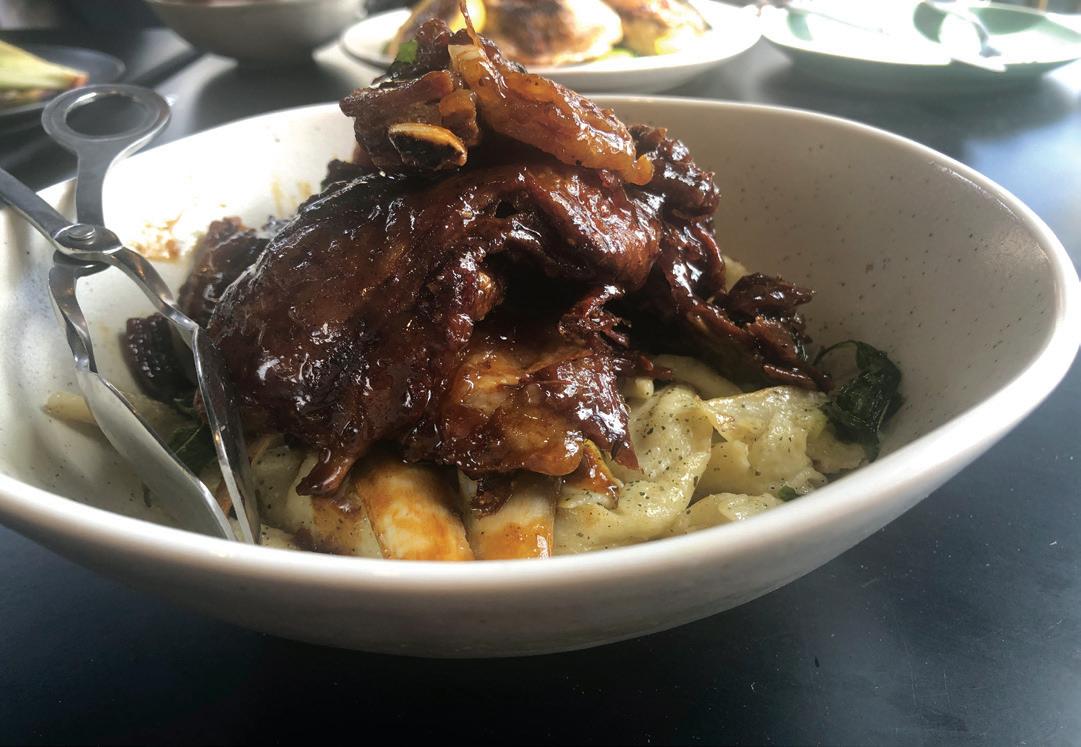
A NEW queen is reigning over Kingston. Queenies, which opened a couple of weeks ago, has made a grand entrance and locals are loving it.
Located where Charlie’s Corner used to be, Queenies has overhauled the look and feel of the venue.
It features an eclectic range of furniture (including carefully restored train carriage seats from 1907 and a major piece of artwork celebrating Liliuokalani, Australian’s first queen of the belly dancers).

You’ll also find fab art deco-inspired pieces, antique mahogany pieces, and loads of warm colours about the
Décor aside, Queenies promises a ‘true
local’ approach, starting with its food and drink menu. The wine list is impressive and features Canberra region and Australian wines and craft beers from independently owned breweries. The menu is refreshingly different. Many dishes have a native and/or uniquely Australian twist, incorporating ingredients like myrtle butter, finger limes, Kakadu plum, Davidson plum, Dorrigo pepper and wattle seed. The menu includes sandwiches, small dishes (some great to share, some a bit awkward to share), mains, charcuterie and cheese platters, and sweets. Several cocktails are also created with intriguing elements like wattle flower wine and wattle seed bourbon.
It was lunch and we grabbed a table in the large, outdoor dining area (covered to protect from the sun).
We indulged so much so that it’s impos sible to squeeze all the dishes we ordered in this review.
THERE’S something about these covid times that concentrates the mind around money. In recollecting a recent night at home (where else on a Monday?) it hit me that pecuniary thoughts seemed to have taken on great significance.
My daughter had procured a 2018 Head Old Vine Grenache from the Barossa Valley: I was given a small glass to taste. The immediate question: “What do you think?” she asked as she made a separate dinner for a visiting friend. “But nothing too bougie [bourgeois].”
“Okay, well, I don’t usually go for grenache 100 per cent varietals, I prefer GSMs (grenache, shiraz, mourvèdre) but this is a good, textural wine with some bold dark cherry flavour,” I said.
“It finishes with a bit of bite but I think that if you’d cellared it for a couple of years at least, or with air, it would smooth out well. It is good now, but could be superla -
She said: “No wonder my friends all say, ‘so you’ve gone all bougie about wine now’. I get it from you. But, yeah, I like it and I like the tannin I get from the finish.”
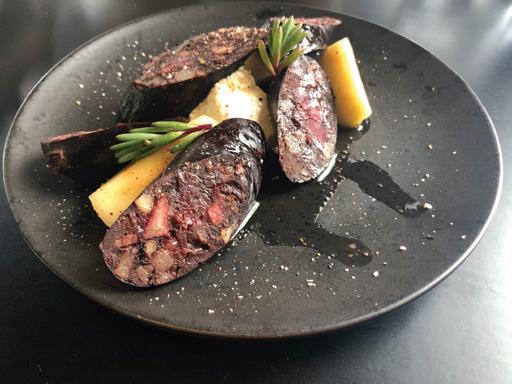
The saganaki ($16.50) was salty and squeaky and dished up with bright redcur-
Blood sausage… served with camel milk feta and slow-cooked, crunchy apple.
A total contrast in flavour was the blood sausage ($18.50), served with camel milk feta and slow-cooked apple with a crunchy texture. One impressive dish was the charcoal lemon myrtle half chicken ($38). It was tangy and super succulent. The Kurrajong braided green leaves that arrived with the chicken were gorgeous.
We also adored the smoked lamb belly with fascinating (and tasty) Dorrigo pepper noodles, with chilli and honey ($36). Dorrigo pepper is such a wonderful native Australian flavour and it lifted the noodles to a new height.
We also shared charred cos lettuce with shallots, Davidson plum vinegar and splashes of olive oil ($12). Calories aside, the hand-cut chips are worth ordering ($12).
For wines, we began with a Jade and Jasper Fiano from Riverland, South Australia ($55, but more than $70 at another restaurant in the area, so great value), and topped off with 2019 Bloodwood – Big Men in Tights, a gorgeous rosé from Orange, NSW ($59).
It’s fantastic to see this prime core of real estate brought back to life, after having been closed since Charlie’s shut up shop during the bushfires. When visiting, check out the handpainted fresco at the bar, by local artist and gallery owner Kacy Grainger. It’s stunning.
My daughter had procured a 2018 Head Old Vine Grenache from the Barossa Valley: I was given a small glass to taste. The immediate question: ‘What do you think’ she asked.
their money who could “crack open a really good wine two-three times a week, like dad.”
“Drinking your inheritance,” I thought as I returned to the study to check my tasting notes and wine spreadsheet to check if I had tried any Head wine previously. I head not (haha) but there was a 2018 Old Vine Shiraz listed and I’d marked it as suitable for 2024 consumption. I noticed it had been a gift of a dinner guest. My opinion of that friend rose.
I kept two mouthfuls to have with my dinner of leftovers, a chicken casserole heavy on cayenne pepper, and I could also opine that the grenache was a good food wine that was not deadened from the kick
And then I snuck away to my study to look up the price as my daughter, in the yet absence of her visitor, Skyped another friend in lockdown in Melbourne who confessed to be quaffing a $9 wine from Aldi as they engaged on this increasingly popular medium. She held up a glass of red and I think she said it was a Durif (the Venturer series Durif is $8.99 at that outlet).
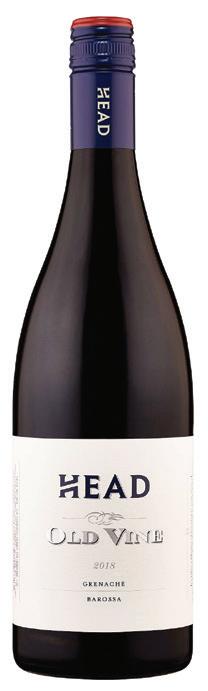
One wine site said $35 a bottle for the Head Grenache, the same price shown on the winery’s website. I then consulted the Halliday 2020 “Wine Companion” (I’m too mean to buy the 2021 version, now out I see, albeit reduced to $31.50).
The 2020 edition says that Head Wines is a five-star winery and that the 2017 vintage of the Old Vine Grenache is a fivestar wine at 95 points and also at a price point of $35. The cellaring recommendation was up to 2034, so my advice about cellaring the 2018 was vindicated.
I became part of the Skype conversation on my return to the kitchen where my daughter remarked to her friend that a $9 Durif could “do the job” but that it was only bougie persons who had made
I also checked the short, online “Wine Folly” profile of Grenache: “Grenache produces rich, flavourful red wines as well as deep ruby-tinted rose. Grenache is the most important variety in Chateauneuf-duPape…”
That is a rich person’s drinking. “Wine Folly” says Chateauneufdu-Pape is like the “gateway drug to French wine”. Although Grenache based, this Southern Rhone prestigious appellation has a number of blends to its name, its ancient traditions deriving from the time when the Pope moved to Avignon in 1309. I did an internet search for the 2016 excellent vintage and saw that one brand had recently dropped its price, purportedly, from more than $300 a bottle to just on $85.
But I put aside my “bougie” thoughts about ordering this devil with trousers on and decided instead to cadge another glass of the Head from my daughter and to make sure I gave her a hug.
“A wise person should have money in their head, but not in their heart.” –Jonathan Swift

By Helen Musa
LIKE it or loathe it, there’s something quintessentially Australian about suburbia, and no city does it better than Canberra.
No wonder the National Museum of Australia gives pride of place to its holdings of prized artefacts like the hills hoist, the family caravan and the FJ Holden.
Now, with the creeping tendency towards townhouse and unit life seemingly more suited to cocktail-sipping than the outdoor life, Design Canberra is taking a sentimental journey to the world of lawns, lovinglytended garden beds and the backyard.
This year’s festival, devoted to the covid-related theme of “care”, will run from November 9-29, with special attention to mid-century modernism, Canberra artists and suburbia.
It’s a good fit for a festival devoted to the idea of Canberra as a city of design as it looks at “the suburban identity of Canberra to see the beauty in the icons and share why we love where we live”.
In “This is Suburbia”, windows will open in exhibitions at Canberra Contemporary Art Space and Belconnen Arts Centre, a graphic intervention in Gungahlin, keynote talks and a photography competition called “Sweet Suburbia 2020”.
On November 17 at the Shine Dome, social commentator and demographer Bernard

Salt, famous for popularising the phrases “smashed avocado” and “seachange shift”, will give a keynote address, “Suburbia’s Time in the Sun”, where he’ll argue that the coming of the coronavirus has invigorated the suburbs via the work-from-home social experiment.
A new event, “Two Minutes to Midnight” at the Midnight Hotel on November 16, will see designer-influencers like architect Shelley Penn and urban designer Catherine Simpson, converse about the spaces, places and values, then identify two high-impact proposals to help build a future as yet unwritten.
At Gungahlin Place Park, Canberra designer Chelsea Lemon will make a graphic
intervention based on the Namadgi bushfires, especially around the Yankee Hat trail, where a distinct line shows where the fire cut off.
But the festival is not all nostalgia and will also debunk myths about suburbia and look to lessons from 20th-century suburban experiments.
Straddling the subjects of suburbia and the festival’s all-time favourite subject, mid-century modernism, will be a look at the 1970s co-housing initiative, Wybalena Grove in Cook, with architect Michael Dysart delivering a keynote address on cooperative housing.
Roy Ground’s 1959 Shine Dome, public artworks like “Ethos” by Tom Bass and Frank

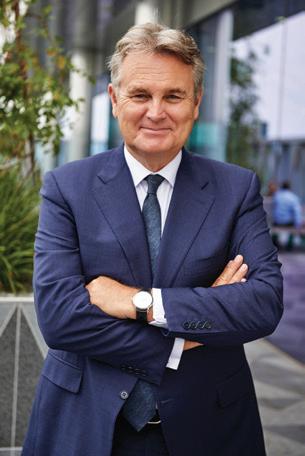
Hinder’s 1963 glass ceiling mosaic at the entry to the Monaro Mall will also have pride of place, with the Hinder becoming the gateway to this year’s festival’s hub in the mall.
Artist Hannah Quinlivan has created a site-specific spatial drawing artwork, “Desiderium”, to be installed at the City Walk entry close to the building’s arched canopies, slim pillars and Hinder’s often-ignored art work.
But it’s not just a festival that looks at the past; it’s also looking to the present as the folded glass “blankets” by Kirstie Rea, 2020 designer-in-residence, crafted to the theme “with care”, demonstrate.
At a virtual briefing on September 29,
project manager Kate Nixon, flanked by Rachael Coghlan, CEO of Craft ACT which manages the festival, outlined the 200 events that would make up the seventh consecutive Design Canberra.
It had been no mean feat, she said, to get sponsors and artists together this year, battling fire, hail storms and the pandemic to “re-imagine what a responsible creative festival would look like” for the 50-year-old membership-based organisation.
In “meet the makers”, there would be the physical opportunity to meet Canberra‘s artists and view films about design in 43 open studios, with 56 artists helping the public to get hands-on experience in workshops.
In bus tours, visitors can go behind closed doors to private homes and public buildings like the Shine Dome and the Australian Institute of Architects.
The Design Canberra-BMW car-wrap competition will see cars become canvases for young designers and artists, while the annual Rolfe Classic BMW Twilight Drive on November 17 and 24 will see revheads testdriving new BMW models to destinations like the “Three Peaks”, where UC architecture lecturer Ann Cleary will throw light on the axes created by Mt Ainslie, Red Hill and Black Mountain.
Finally, Nixon said, apart from the festival giving an opportunity to spend time together, the art itself would be “the silver lining to a difficult year”.
Design Canberra Festival, November 9-29, book at designcanberrafestival.com.au
By Helen Musa
LAKESPEARE & Co have sealed a deal with Manuka’s Typica café to stage a musical theatre restaurant event, “Songs & Sonnets Over Dinner” on December 4 and December 12, preceding a new venture, “Shakespeare Down the Pub” featuring “Measure for Measure” directed by Christopher Stollery. Co-artistic director Lexi Sekuless says the Covid-affected company probably won’t present a free park show during the summer season. Book at lakespeare.eventbrite.com
CANBERRA author Peter Papathanasiou, who published his memoir, “Little One” with Allen & Unwin, made a splash in 2019, and now has a deal with British publisher Transit Lounge for his debut crime fiction novel “The Stoning”, a “rural noir” thriller introducing fictional Greek-Australian detective George Manolis. Papathanasiou began writing the book as part of the City University of London’s creative writing MA program.
COMEDIAN and TV personality, Wil Anderson will host the University of Canberra’s 30th anniversary Facebook Live celebration, “Future Bright”, with a limited, socially-distanced live audience at The Street Theatre and online from 7.30pm on Friday, November 6. Questions from the online audience will be answered by a panel of UC experts, with music from Alice Ivy. Register at canberra.edu.au/futurebright
BUNGENDORE Wood Works Gallery is celebrating the work of a favourite sculptor in wood, Silvio Apponyi, who was awarded a Medal of the Order of Australia this year, showcasing a new array of Apponyi’s sculptures which range from abstract creations to life-sized animals. 22 Malbon St, Bungendore, November 14 until March next year.
THE National Gallery of Australia’s 2020 Annual Lecture, “Decolonise Your Feminism”, features First
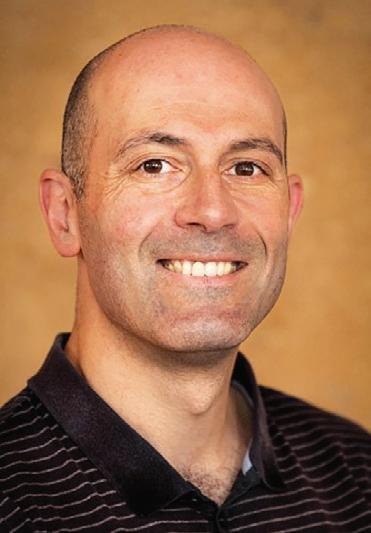
Nations’ scholars Crystal McKinnon, Kimberley Moulton and Paola Balla questioning whether feminism has been relevant to Aboriginal and Torres Strait Islander women in the arts. The online event will sit alongside the NGA’s “Know My Name” virtual conference, from November 10-13 and will also celebrate NAIDOC Week 2020, postponed because of COVID-19. Book at connect.nga.gov.au/135/223
STORY Week (formerly Story-Fest), Australia’s largest performing writers festival, will go virtual and international from November 6-14, with poetry slams, talks and shared story-telling experiences from attendees around the world. The Australian Poetry Slam finals will be part of the festival program, with the National Final on November 14. Full program at wordtravels.info

year with longer days enabling more time in the garden.
The promise of regular rain for the coming summer with the El Nina effect augurs well. The shrubs in our garden are looking better and more floriferous than they have done for several years. And, yes, equally so the weeds have taken a liking to this weather.
Certainly, plants have been coming into flower earlier this year. For example, our collection of clematis is in flower several weeks sooner than previously. Many of our native plants cannot wait to burst into their bright colours. And, wow, the fragrance of French lavender, the first to bloom.
AFTER harvesting a crop of English spinach, the second cut and size of the leaves in just a few weeks are enormous.
Our broad beans have now topped two metres, but do I cut the tops off or let them keep growing?
It’s now confession time; after writing about gardens for more than 30 years, I must admit I’m not a veggie grower. Many readers might have guessed by the infrequency I write about veggies. The other problem is I don’t have the space, although this is not an excuse. For example, Joel and Anna Simons, who owned the

had an amazing garden with a continual crop of veggies. With no veggie garden, they simply grew them amongst the flower beds. It worked perfectly, so what’s my excuse?
There’s been an incredible increase in home growing with the stay-at-home virus situation. Veggie seedlings and seed specialists have seen an explosion in sales.
Anyone new to veggie (or any other type of) gardening the “bible” is “The Canberra Gardener”, written by members of the Horticultural Society of Canberra. It’s available at most bookshops and newsagents.
ROSES are coming into flower and would love a feed. If using a liquid feed, make a small earth bank about 30cm out from the stem around the bush. This will direct the plant nutrient directly down to the root zone rather than running off. This may need to be further out depending on the size of the bush.
If you spot aphids, it’s best to wash them off rather than reaching for the spray, which will also kill ladybirds – that just love aphids and can eat 10 times their own weight in a day.
If you must spray, use the natural organic

pyrethrum made from the daisy of the same name. This is safe for all edible crops. Most pyrethrum sprays only last for a couple of days, however Multicrop has developed a long-life pyrethrum spray, which will last up to 20 days.
ALONG with vigorous growth of everything else in the garden, sweet peas are shooting skywards – ours are nearly two metres! Keep tying them up and, once you consider a reasonable height, pinch the top out. This encourages more side shoots and flowers.
DAHLIA tubers can still be planted. I’m guessing the frosts may have finished for the year and it’s worth a chance planting tomato seedlings. As with dahlias, put the stake in first before planting.
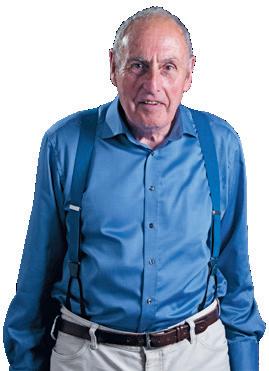





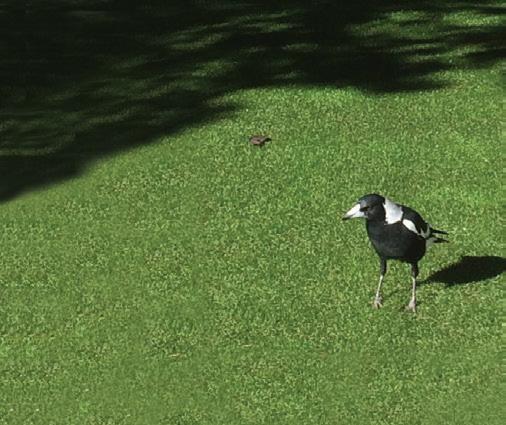



CALL FOR YOUR APPOINTMENT
• Physiotherapy – including the GLAD program for knee and hip osteoarthritis, sports injury prevention and rehabilitation, and pain condition support.
• Exercise Physiology – Individual exercise prescriptions, small group classes to increase strength and improve rehabilitation, strength and balance classes, hydrotherapy support.
• Occupational Therapy – access reports for NDIS and Disability Support Pensions, home modifications, equipment prescriptions.
• Dietetics – meal planning, weight management support, food intolerance support.