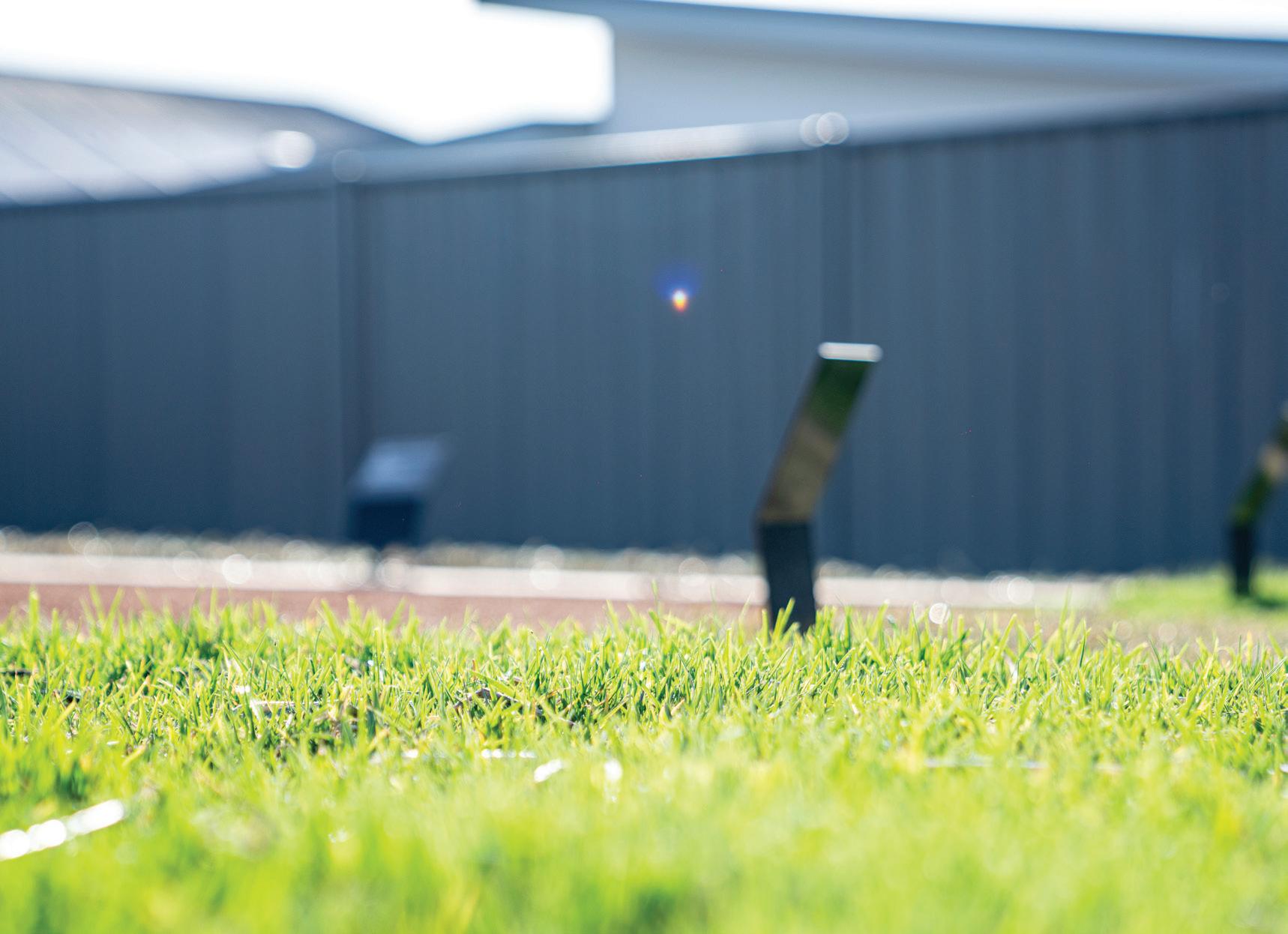
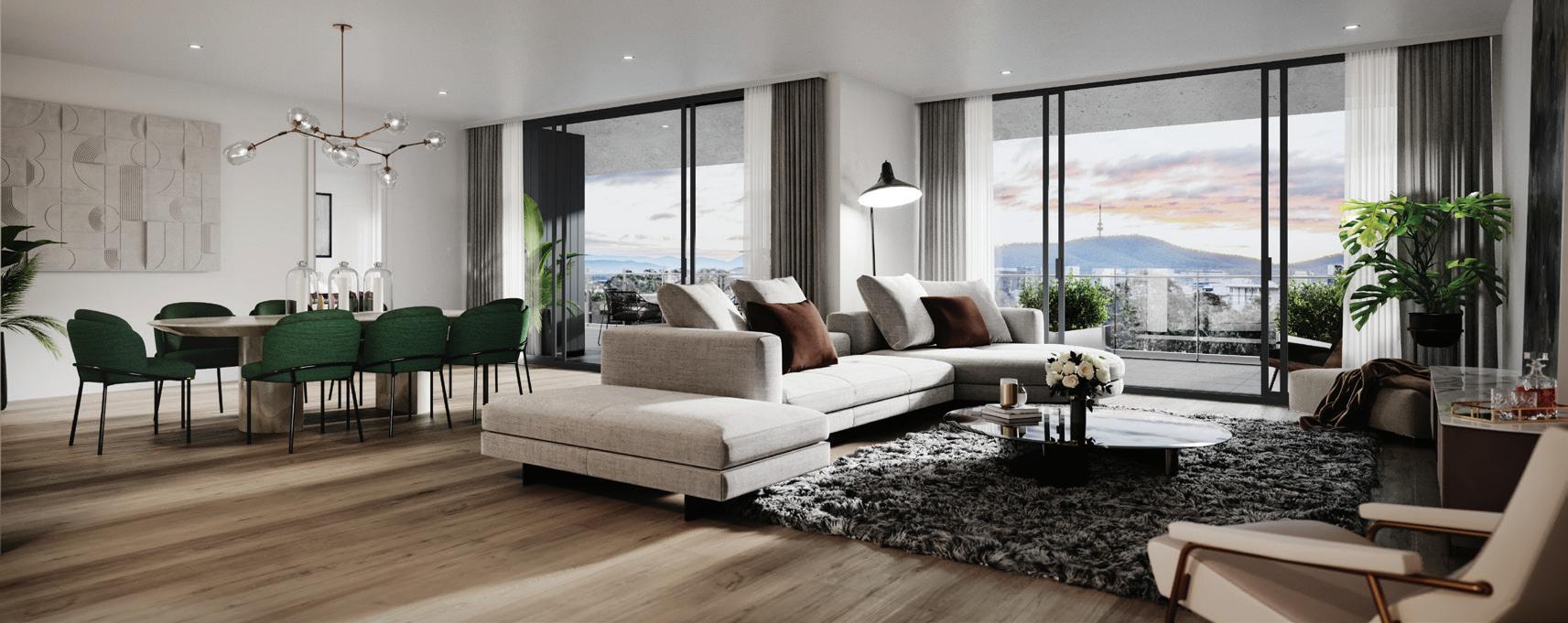
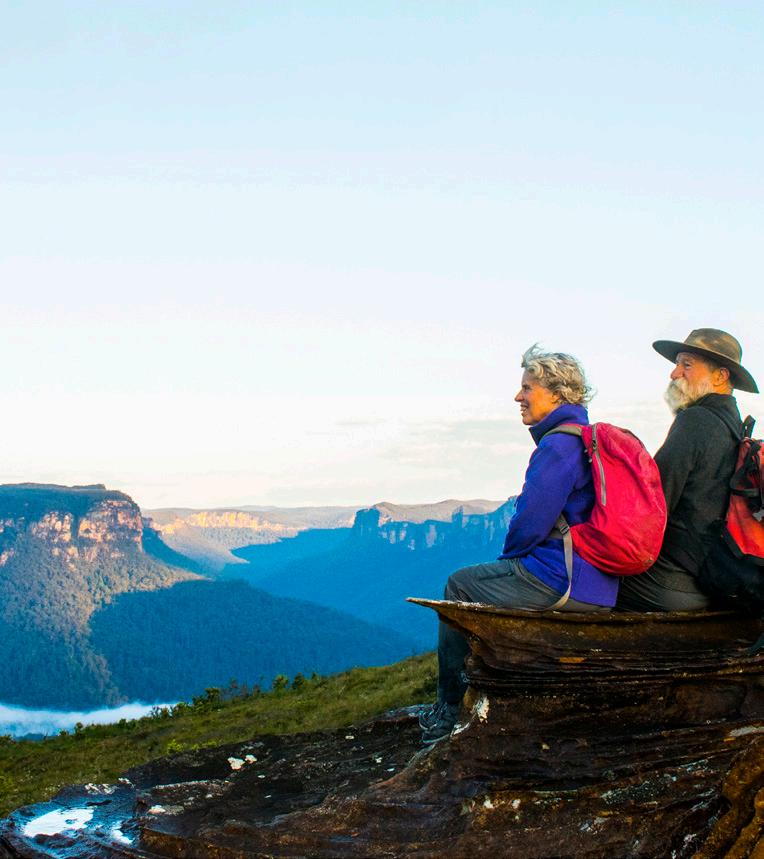
A turf display is just one of the innovations you'll see when you visit GX – the Ginninderry Experience.
The GX turf display showcases seven different turf types – each with an irrigated and non-irrigated version. See how they perform with little or no maintenance, in Canberra’s unique climate.
Victorious Labor hunkers down for years to come
By Belinda STRAHORN
CANBERRANS punished the Liberals across the territory, choosing instead to place their trust in ACT Labor to continue governing for another four years.
The election outcome this time was clear early in the night, with ABC election analyst Antony Green predicting Labor had been returned before 8pm.
At press time, Labor had 10 confirmed seats, the Liberals eight and the Greens five. No matter the outcome of the final two seats, it is clear that Labor will go on to form a minority government with the Greens.
While Labor received 38 per cent of the total vote, and the Liberals 33.8 per cent, the big winners on election night were the ACT Greens who picked up 13.5 per cent of the vote giving party leader Shane Rattenbury a clear mandate to help shape the direction of the new government.
Labor leader Andrew Barr was comfortably returned as chief minister, leading his party to an historic sixth consecutive term in office.
Barr, who polled the highest of any candidate this election, overcame
INDEX
Arts & Entertainment 19-21
Canberra Matters 8
Cinema & Streaming 19
Crossword 23
Dining 21
Gardening 22
Horoscopes 23
Letters 14
News 3-14
his opponents’ attempt to label the government he led as a stale and tired administration.
At the Belconnen Labor Club, Barr told members on Saturday night he accepted victory with “humility”.
“It’s a humbling experience to lead a political party and to lead a government,” he said.
“Twenty twenty has thrown so much at us and tested everything.
“Canberra has turned to a strong and experienced government and voted to return a Labor government.”
At the other end of town, the Canberra Liberals gathered at the QT. It was always going to be a subdued affair once the outcome of the election was clear early in the count.
Leader Alistair Coe and his wife Yasmin entered their party function met by a room of disappointed faces.
In a gracious concession speech, Coe, 36, spoke of his 20-year association with the Liberals and thanked his team of candidates who remembered the “forgotten people of Canberra”.
“Our campaign was true to our values and it was positive,” Coe said.
“The campaign was next level in terms of professionalism… we received negative attacks but that’s to be expected.
“It’s been the greatest honour of my life to lead the Canberra Liberals and I look forward to doing all I can to hold this government to account.”
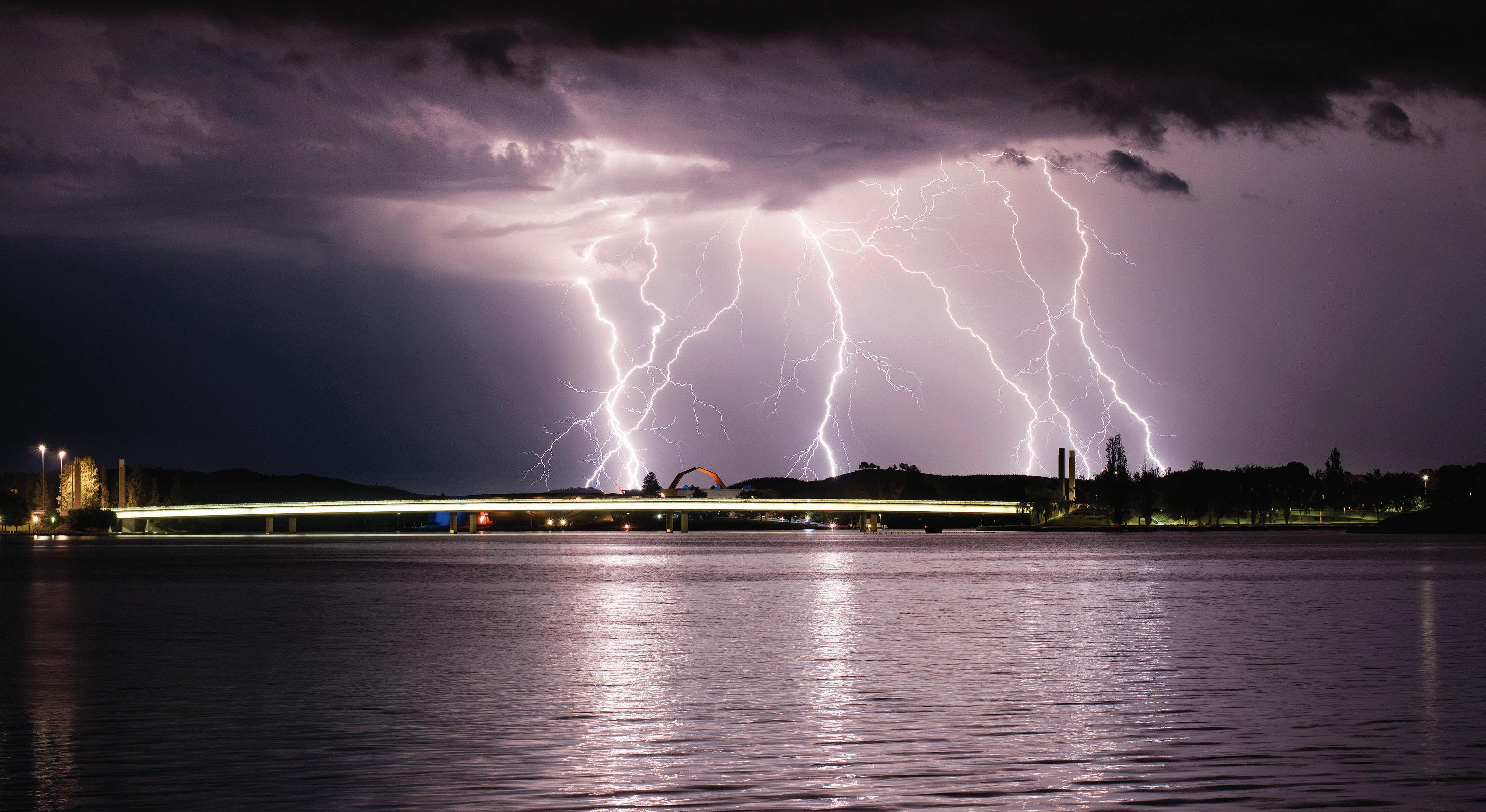
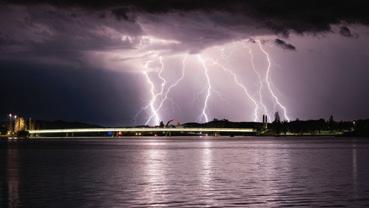
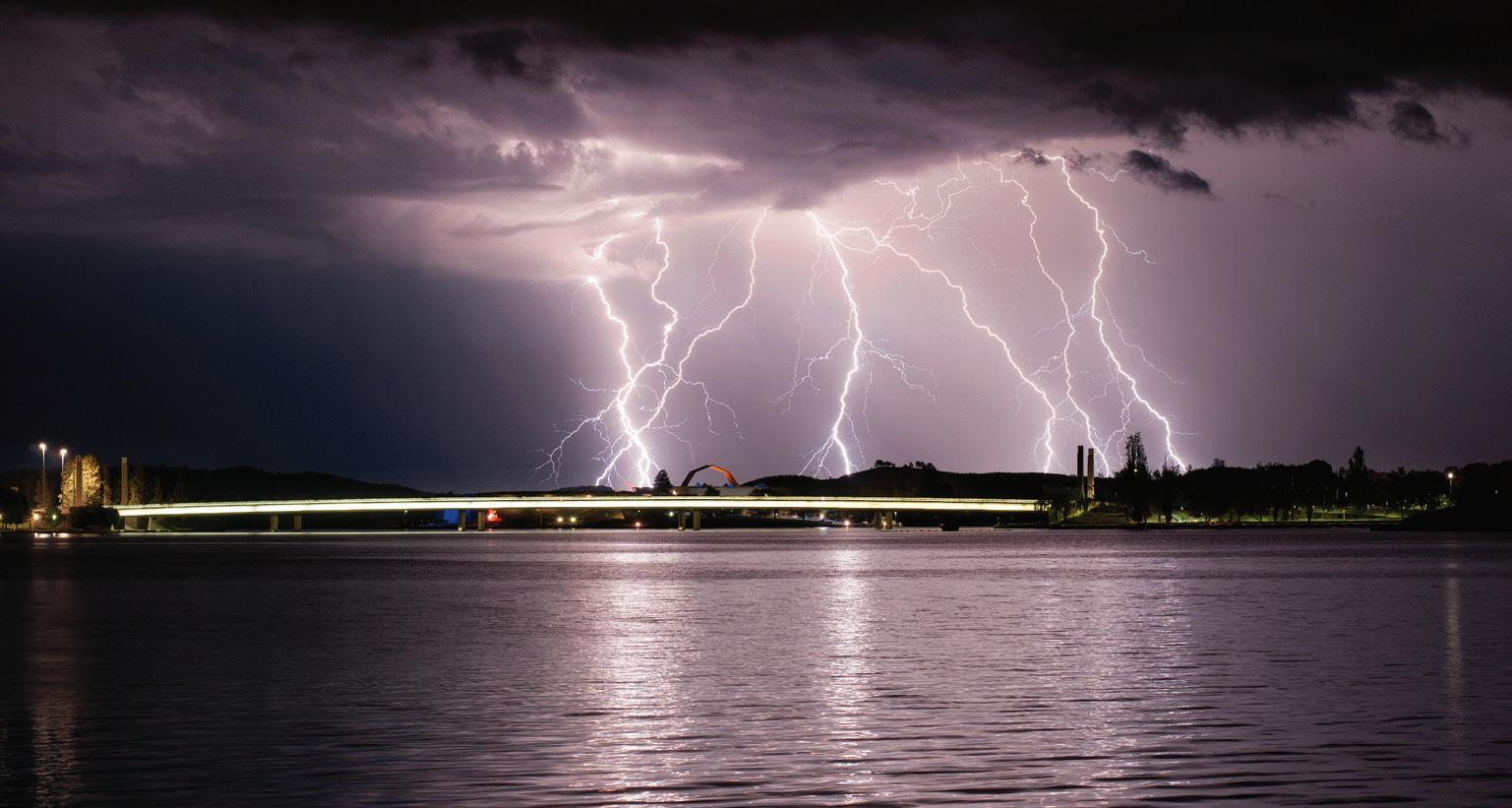
Politics 9 Seven Days 4 Cover: Canberra braces for severe summer rain storms.
Photo: Andrew Campbell. Story Page 10.
TANYA NADIN, PARTNER
Tanya has extensive knowledge in all areas of family law and can provide you with prompt advice such as:
Property and Financial Settlements
Divorce & Separation
Parenting & Custody Disputes, Spousal Maintenance
De Facto Relationship Matters
Please phone us for an appointment
The Liberals’ campaign, which focused entirely on cost-of-living pressures, clearly didn’t resonate well with voters.
As with every ACT election, the parties enjoyed mixed results across the five electorates, some suffering setbacks in key seats, while in others the voters delivered a status quo outcome.
Among the independents candidate Fiona Carrick did well in Murrumbidgee but lost preferences because she didn’t run a group ticket.
The decision by former Liberal leader Bill Stefaniak to run as Belco Party convenor in Ginninderra meant that the Liberals also had an uncomfortable night in that seat. Retiring Liberal Vicki Dunne criticised Stefaniak’s decision to run in the electorate which cost the Liberals votes and meant Elizabeth Kikkert just scraped back.
the Greens had run a good grassroots campaign that paid off handsomely.
The Greens will no doubt be pressing to have a greater say during this term of government than the last on the back of this result.
On election night, at the Polish Club in Turner, Rattenbury addressed the party faithful.
“This year has been a year that’s not looked good, but tonight bucks that trend,” he said. “Tonight Canberrans have voted for a better normal.”
The ACT clearly expected more from its alternative government than goofy campaign stunts and gimmicks.
“It was misguided that Bill Stefaniak ran,” Dunne said.
“He carved out four to five per cent of our vote and didn’t make it easy for us.
“The road to victory is a narrow path for the Liberals, we recognise that everything has to go right for us.”
It clearly didn’t.
Saturday’s result confirmed that
Since 1993: Volume 26, Number 42
Managing Director: James Anderson, 0404 077605, james@citynews.com.au
Director: Kate Meikle, kate@citynews.com.au
Senior advertising account executives: David Cusack, 0435 380656
Arts editor: Helen Musa, 0400 043764, helen@citynews.com.au
Production manager: Janet Ewen
Proof reader: Glenda Anderson Accounts: accounts@citynews.com.au
By all accounts, the election outcome confirms that the electorate believed Barr had done a good job of managing ACT through the pandemic. However, the sobering reality is that Saturday’s election has returned a Labor/Greens government still faced with a large budget deficit, a failing hospital system, appalling indigenous incarceration rates and infrastructure backlog that must be addressed during the next four years.
Barr used his victory speech to begin to outline his agenda for the next term of government centred around jobs, covid and climate change.
Bitter recriminations within Liberal camp will be underway, analysing what went wrong with their campaign.
The finger will be pointed squarely
at Coe and Liberals campaign director Josh Manuatu. The party was heavily criticised during the campaign over its unwillingness to explain how they would pay for their promises, most notably their proposed four-year freeze on residential rates and its inevitable impact on services.
The ACT is one of the most sophisticated and well-educated electorates in the country and clearly expected more from its alternative government than goofy campaign stunts and gimmicks.
When Coe faced the media for the first time since the election, he took full responsibility for the party’s loss, saying changes will be required so the party can come back stronger. By contrast, Labor largely managed to stay on message throughout the campaign. Despite being criticised for being boring, it clearly worked. Although not a stunning result for the government, it was a good outcome. However, the real unwritten story of this election is that the Liberals’ chances of winning government at the next election have been made that much harder. This poor showing had gifted Labor and the Greens a potential further term in office. While winning one or two seats in 2024 may be possible for the Libs, winning three or four would probably take two terms, meaning Labor could find itself governing the ACT for three decades.
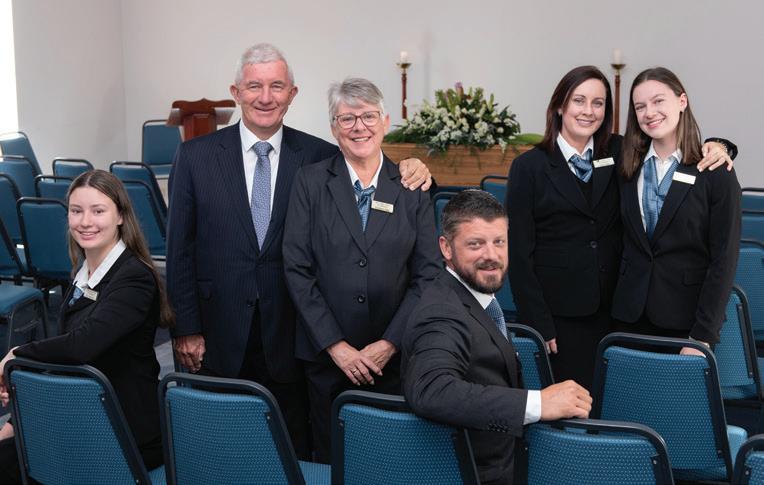
Excellence in Funeral Service
The stakes are getting high now election’s done
THE tomato plants of Canberra have clarity and the real prospect of a productive future now the ACT election has ended.
As candidates comb the highways and byways collecting their corflute signage under threat of fines, one hopes the wooden stakes will be restored to back gardens to ensure a certain future for at least tomato vines in Canberra.
Ironically, on the basis of the environment and landfill, the Greens demurred using the plastic-coated corflutes for publicising their faces and look where it got them – back into government with a firm hand down Andrew Barr’s (legislative) pants.
At one point, given the snowballing estimate of Greens seats on election night, I was starting to worry if leader Shane Rattenbury was amassing enough new members to become the Leader of the Opposition!
As is universally recorded, the election was a remarkable experience. The vote defied the predictions of being “very tight” and turned out to be quite decisive with The Greens clear
winners, the Liberals the losers and Labor gratefully standing still while seats were moving right to left.
The prospect of a cross bench of independents was again smashed, with Belco Party convenor (and former Liberal Opposition Leader and minister) Bill Stefaniak effectively announcing his return to retirement on 2CC’s morning-after “CityNews Sunday Roast”. His opportunistic stab at getting a seat in Ginninderra fell short and he was diffidently weathering Liberal disdain for, surprise surprise, distracting the Liberal struggle to hold two seats.
But it does raise the issue that it seems almost impossible under the Hare-Clark system for independents to get a look in. The last independents elected to the Assembly was 22 years ago. There were three of them – our political columnist Dr Michael John Moore AM, who served in the first four Assemblies (08/05/1989 - 21/10/2001), and footballer Paul Osbourne and his running mate, policeman Dave Rugendyke
While Belco Bill won’t be coming back, the best-performing independent candidate Fiona Carrick just might have another shot at banging her head against the Murrumbidgee wall. She didn’t commit on the radio program (four years is a long time), but admitted to having enjoyed the adrenalin of advocacy.
Emergency Response Specialists
WAS the three-week pre-polling window too long? In the absence of too many meaningful policies to announce, the candidate challenge seemed just to stay out of trouble.
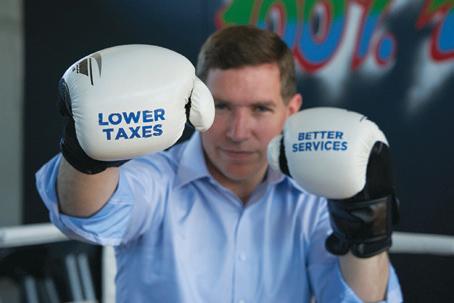
The Liberal leader fatality decided to fill in the time amusing television crews that, not unreasonably, earned him the name of “stunt man” from Andrew Barr. We had Al with boxing gloves, a sledge hammer, making pies and something made of ice to illustrate freezing rates (I’d stopped looking by then). All faltering outings from the Boris Johnson UK Brexit campaign playbook.
Likewise, Andrew Barr gave a wonderful victory speech that was generous to his foes, kind to all candidates and grateful for another term. Was that humility on view?
On 2CC, former minister, the aforementioned Michael Moore was unforgiving and said it goes to credible leadership. He built on the theme in his “CityNews” column this week saying: “The leadership of Alistair Coe has never been popular amongst Canberrans. He has failed to offer the sort of cut-through personality that we have seen from politicians such as Kate Carnell and Meegan Fitzharris.”
However, once unplugged from the constraints of his party’s narrow, disciplined and repetitive campaign, Coe gave the concession speech on Saturday night that was eloquent, kind and inclusive. It was the Alistair I know and like, but all too late for too many voters.
He seems a changed man since his wedding a year ago. Last week he even confessed to liking journalists? What’s next, older people?
LAST week’s “CityNews”, rich in important information that exposed the Labor Party’s dirty polling tricks and Jon Stanhope’s exposure of the government’s tooth-andnail resistance to keep suppressed secrets of the Canberra Hospital, was clearly an irritant to some people.
Hundreds of papers were removed from baskets in Civic and Woden in a cowardly attempt by some little people, we can only guess who, to stifle public consumption of a free, independent voice.
However, some consolation from Tina Faulk , of Swinger Hill, who wrote to say that
on the Saturday when Labor’s “improved bus timetables” came into force, “confusing and disrupting many, especially elderly bus passengers, it seemed positively karmic that a wad of flyers for Transport Minister Chris Steel should be left to rot, rain washed and dirty in a reserve near Markham Street, Mawson”.
She wondered if the person delegated to distribute them had missed the bus. That notwithstanding, Mr Steel enjoyed the top Labor spot in Murrumbidgee with the lion’s share of a quota all to himself.
BUT the real loss of the week wasn’t Alistair Coe’s, it was the Canberra Raiders’, who were knocked out of the park and the finals series by the rampaging Melbourne Storm (30-10).
“The first 25 minutes that we had no footy, we didn’t defend well,” Canberra coach Ricky Stuart said at his one-answer, post-match press conference.
“Four tries to nil was really disappointing, because we were passive in defence. We didn’t start well, and it’s not us.
“I can handle the loss, I can understand the loss, but I’m just really disappointed we didn’t play to our... we didn’t have one of our better games tonight.”
Ricky has but one year to battle to the next Grand Final, the Libs have four or probably eight to get back into contention.
Ian Meikle is the “CityNews” editor and can be heard on the “CityNews Sunday Roast”, 2CC, 9am-noon.
Alistair Coe boxing before the election knockout.
Fighting to raise lost park huts from the ashes
By Belinda STRAHORN
services, for 50 years, to provide labour and materials for the upkeep of huts.
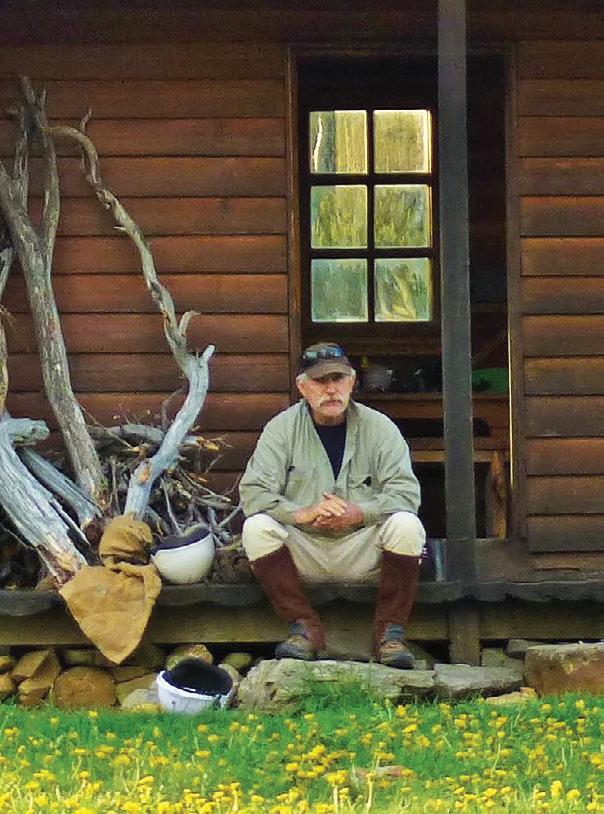
Clive Richardson, 68, member of the KHA has ridden horses and bush walked through Kosciuszko and Namadgi National Parks for decades and says the loss of the huts – while small in comparison to the loss of homes, lives and animals – is huge in a historical sense.
“We have such little heritage in this country, so we need to preserve the huts as physical reminders of what life was like back then and to give people an understanding of just how tough people lived,” said Richardson.
“If the huts aren’t reconstructed we
will lose the physical reminders of an
The KHA is lobbying the ACT Parks Service to have the two insured stockmen’s huts reconstructed. They are also calling on NSW Parks to rebuild all 10 huts in KNP.
In the past, huts destroyed by fire have not been replaced by the parks service and the association fears the two huts in Namadgi will face the same fate.
“We are not sure what ACT Parks are going to do and we haven’t heard back from them whether they are going to commit to rebuild the huts or commemorate the site with a plaque,” he said.
“The huts were insured and we will provide labour so this is a cost-neutral project and we are committed to re -
or the heritage of the hut, it’s the precedent it sets; so does that mean that every time we lose a hut it’s not going to be replaced?
“This is a changed fire environment and we are going to see ongoing issues with fire and so we need to have some sort of understanding of what’s going to happen if and when we lose more huts.”
A spokesperson for the Environment, Planning and Sustainable Development Directorate confirmed that no decision has been made in relation to rebuilding huts destroyed during the fires, but said the directorate recognises the “value” of the huts.
The huts had been some of the few
historical links left to the high country, including huts from early grazing times.
Max and Berts Hut was built 50 years ago and named after the Oldfield cousins, a long-standing pastoral family in the area. The Demandering Hut, also built half a century ago, was earmarked for an upgrade after parts of the hut were eaten by white ants.
Mr Richardson praised ACT rangers and firefighters who performed a “Herculean” task saving the remaining 13 huts, maintained by KHA, that are scattered through the Namadgi National Park.
The 10 huts destroyed by fire in the KNP were Delany’s Hut, Sawyers Hill Rest House, Happys Hut, Brooks Hut, Round Mountain Hut, Bradley and O’Briens Hut, Four Mile Hut, Vickerys Hut and two Linesmans Huts at 15 Mile Spur.
Mr Richardson said the NSW Parks Service has a good track record of replacing huts as demonstrated after the 2003 fires, and hopes this will continue across NSW and the ACT, for the benefit of park users.
“Horse riders, bike riders and bushwalkers all visit them regularly and they provide shelter for those in an emergency, people camp around them and the huts are constantly photographed,” Mr Richardson said.
“The huts are a huge drawcard for the parks.”
★ Led by university qualified & experienced teachers
★ Fun and stimulating activities that provides both enjoyment and learning
★ Sessions include music, movement, dance, fine & gross motor activities as well as literacy and numeracy
★ Emphasis on development of motor skills, academic and social skills
★ Parent classes for children 5 months to 2 years
★ Independent Pre-Preschool for 3 year olds
★ Preschool PLUS for 4 and over
★ Providing children with the academic and social skills required for formal schooling by introducing structure and routines in a play based fun and creative atmosphere
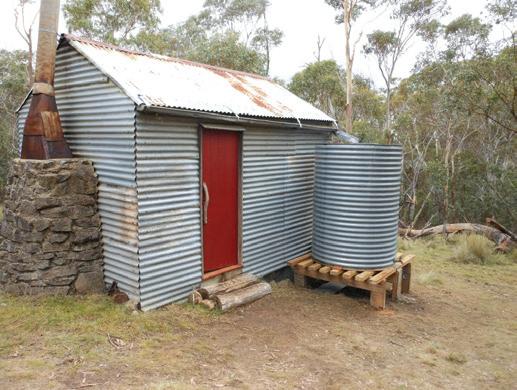
Max and Berts Hut... rough but functional.
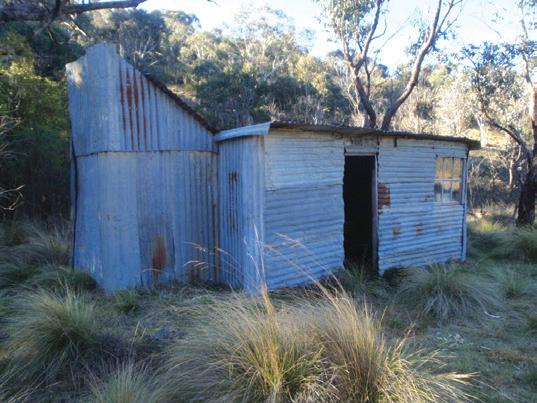
Demandering Hut before the fires.
Clive Richardson… “If the huts aren’t reconstructed we will lose the physical reminders of an era, forever.”
CANBERRA MATTERS
Talking points taking over the planning debates
CANBERRA used to have an active level of advocacy across the spectrum of arts, social and welfare groups.
There have been numerous occasions in the term of the last ACT government when residential groups discovered that other organisations were encouraged to support the government’s line against the community groups – or have remained silent.
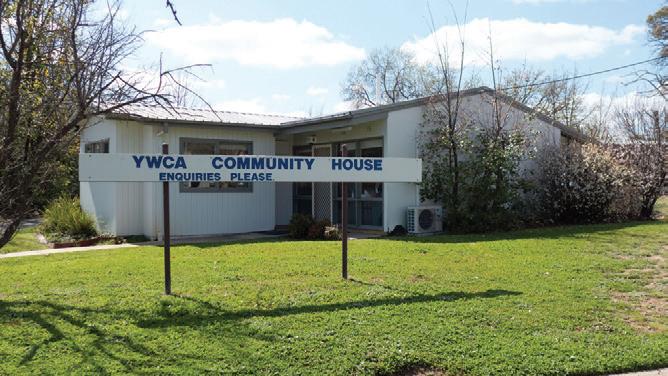
When Ainslie residents reached out to the YWCA about the proposal for the YWCA to change the lease for the corner of Bill Pye Park so that residential units could be built there, the response was not quite what they expected.
It was as if the YWCA’s responses were written by Minister Yvette Berry’s legendary bureaucrats, who know how to spin words to avoid addressing community issues and ensure that the government’s not-negotiable decisions override the aspirations of the residents.
The YWCA CEO stated:
“It’s communityzoned land and we’re just
Those in the know wondered whether the 45 groups listed as members of the Conservation Council knew that their names were being used to support the work to destroy West Basin’s ecology and biodiversity.
trying to use it to meet the needs of the community.”
Locals were very clear that they wished the community facilities not to be converted for housing but to be re-allocated for local community uses.
The YWCA adopted the high ground about its use of the land with no qualms about overriding the aspirations of those that live on the street.
The YWCA runs with an equity agenda – but apparently this doesn’t apply when dealing with residents affected by their decisions to build on community sites.
Another shock came to those defending West Basin against the barbarous developments being pushed through by Andrew Barr and the City Renewal Authority.
The majority of responses were against the development. However, one that supported stood out. This was from the ACT Conservation Council. Anyone who had dealt with the government on this issue would
have recognised a lot of the phrasing used in the Conservation Council’s submission. It was as if Shane Rattenbury and the Chief Minister’s office had written most of it.
Then there’s the coincidence that the CEO of the Conservation Council used to work for Shane Rattenbury. Small town?
Those in the know wondered whether the 45 groups listed as members of the Conservation Council knew that their names were being used to support the work to destroy West Basin’s ecology and biodiversity.
Did all of them, including climate groups, extinction revolution and grasslands groups, support the Conservation Council’s keenness to back the bulldozing of trees and biodiversity?
the talking points supplied by Yvette Berry’s bureaucracy to justify the use of community land for housing.
been expected that the arts would have worked with the community groups.
Dickson residents could not forget how a local climate group was encouraged to back housing on Section 72 (Dickson Parklands). When questioned that their submission would be against the residents’ wishes for the site – someone stated that the residents’ advocacy was a few noisy locals (or words to that effect).
A little side mystery was how Common Ground Canberra is linked to Argyle Housing, a NSW organisation. Their brochures used to be at Common Ground Gungahlin, yet trying to get a straight answer as to who runs Common Ground has been difficult. Many have asked whether the Gungahlin Common Ground model was subject to tender, was a tender used for the Dickson Common Ground and is the Argyle model of Common Ground the best use of the ACT’s monies allocated for social housing?
Advocacy in Canberra used to always involve the arts. With so much residential action being pursued to
It is known that the arts groups have been offered deals on new accommodation for their activities. But what else is going on is a secret as the arts groups have signed a confidentiality agreement. Silenced, the lot of them! Such is life in the 21st century arts in Canberra.
The art of being silenced is being practiced too often. Is this the way that 21st century democracy now works in Canberra?
Paul Costigan is an independent commentator and consultant on the visual arts, photography, urban design, environmental issues and everyday matters.
If the Liberal Party doesn’t find some way to form an alliance with a credible territory-wide minor party or high-profile and electable independents then it’s highly
likely the Labor/Greens coalition will govern for many years to come.
Perpetual government will fail democracy
FIRSTLY, congratulations to the Labor and Greens Parties for their win in the election. It was a significant achievement; the sixth straight win for Labor and the second victory in a row for the now formalised Labor/ Greens coalition.
The emergence of the coalition and the appointment of Greens members to the cabinet is an interesting and strategically savvy adaptation by Labor and the Greens to the rigours of the Hare-Clark system.
It represents a major challenge to the Liberal Party and indeed all minor parties and independents vying for election to the Legislative Assembly.
Reflecting on the outcome of the last two elections I think it highly likely that if the Liberal Party doesn’t find some way to form a similar alliance with a credible territory-wide minor party or highprofile and electable independents then it is highly likely that the Labor/Greens coalition will govern for many years to come.
As lovely as that may be for the Labor Party and the Greens I am not sure it is good for either the quality of governance or our democracy.
It is probably time, I think, that we had a look at the governance arrangements foisted on us 30 years ago. In four years time we will have had 12 consecutive years of majority government with a unicameral parliament (no upper house or house of review) and a single tier of government, i.e. no pesky mayor or local government to contend with.
This is a dream scenario in which to govern – for those governing – but probably not conducive to open, transparent and accountable government.
Excuse my cynicism, but it has lately been refreshed by my experience with two FOI requests I made more than four months ago for information on two subjects each of which was a major focus in the election campaign, namely the redevelopment of the Canberra Hospital and West Basin.
The requests were simple and straightforward, but after four months of requests by the ACT govern ment to change the scope of the requests and for extensions of time for this and that and a decision to take legal action to challenge the decision of the ombudsman to over turn the decisions to refuse access to the information, none of the information I had sought has been provided.
I know, of course, what the information I sought in relation to the Canberra Hospital will show. It will reveal that the timetable agreed, in 2010, for the refurbishment and/or replacement of the entire Canberra Hospital precinct was abandoned by the then Labor/Greens’ government in about 2014/15. The funding dedicated to the hospital project and to public health was almost certainly then transferred to the light rail project.
bidgee, who would have been an excellent member of the Assembly if elected, that one of her great frustrations as head of the Woden Valley Community Council and more recently as a candidate for Murrumbidgee was the refusal of Labor and the Greens to take the people of Canberra into their confidence on the question of the “opportunity cost” of light rail.
In other words, in deciding to proceed with the multibillion dollar light rail project, what were the range of projects and initiatives that it was decided would need to go on the shelf, so that light rail could progress.
Is, for example, the fact that up to 4000 Canberra children from families without private health insurance, many of them undoubtedly Aboriginal, wait up to four years for an appointment with a specialist in any way a consequence of the reduction in health funding of more than $100 million a year, in real terms, for the last six or more years directly attributable to the decision to fund the tram? The answer is clearly, yes.
What went wrong in election like no other?
IT’S easy to blame COVID-19 for the failure of the Liberals and the success of the Labor/Green government in the ACT election. However, the reality is much more complex.
Social distancing, restrictions on movement and gatherings, limitations on being in shopping centres or door knocking made this election like no other.
Campaigns are multi-facetted and many elements were limited, favouring incumbents. In times of uncertainty voters tend to favour incumbency and voters could appreciate ACT’s handling of the virus in contrast to Victoria.
Chief Minister Andrew Barr constantly reassured the community that he was doing everything within his power to protect jobs in Canberra. This was an issue raised by “Andy”, a caller to 2CC’s “CityNews Sunday Roast”, suggesting jobs was really the issue rather than the Liberals’ populist campaign, appealing to the hip pocket.
than a broader policy of support for education across the board (including Catholic schools) would have created a better impression.
Dissatisfaction with Labor and Liberal is not enough to explain the result. The performance of the Greens is appreciated by Canberrans. The way in which the Greens have used their influence within government has appealed to voters.
Addressing climate change, a focus on social justice and willingness to take hard decisions, have all brought the Greens into the mainstream. A great deal of the credit for this must go to leader Shane Rattenbury.
And where were the independents and minor parties in this election? The Belco Party appeal in Ginninderra “to keep the bastards honest” was not enough. Fiona Carrick in Murrumbidgee was the outstanding crossbench achiever on primary votes. Her profile and contribution within her own community clearly had an impact.
Alistair Coe prided himself on refusing to use a negative campaign as noted, in his gracious concession speech. Why? Labor was vulnerable on poor performances in education and health and corruption.
I am not suggesting that the decision to abandon a previously announced decision to invest in public health and to transfer the funding to public transport was not a decision that Labor and the Greens did not have the power to take.
However, I believe that they should explain the basis of the decision to prioritise public transport over public health, and that attempts by the public to access information relevant to that decision in the lead up to an election should not have been resisted at every stage.
In addition to taking a look at the structure of the Assembly and the form of governance in the ACT both the FOI Act and the Ombudsman Act are clearly in need of review. I am beginning to fear that the ombudsman is about as useful as pockets in a shroud.
I was interested in a conversation with Fiona Carrick, a very good independent candidate for Murrum-
Is the fact, as reported during the election campaign by the St Vincent de Paul Society, that there are in Canberra today 208 fewer units of public housing in Canberra than there were in 2010, despite the population having increased over that period by 65,000 people, directly attributable to the decision to fund the tram? The answer is clearly, yes. Is the fact that the government has deliberately reduced the supply of land for detached housing in order to obtain super profits from land sales thereby excluding thousands of Canberrans from home ownership, attributable to the need to fund the tram? The answer is probably, yes. I could go on and on.
A question I have asked myself is: Have we, in our overwhelming endorsement of the Labor/Greens government, declared that we are fine with this and that it reflects our values and priorities?
Jon Stanhope was chief minister from 2001 to 2011 and represented Ginninderra for the Labor Party from 1998. He is the only chief minister to have governed with a majority in the Assembly.
However, the mantra of cutting costs and improving services was never fully explained. It did not make sense to voters. How would they do it? Opposition Leader Alistair Coe simply had no answer and credibility dived as he avoided the question. This was reinforced by Labor’s negative campaign tactic of putting an “L” plate around his neck. Coe prided himself on refusing to use a negative campaign as noted, in his gracious concession speech. Why? Labor was vulnerable on poor performances in education and health and corruption. NAPLAN results and the poor rating of the Canberra Hospital by the AMA along with delay in establishing an anti-corruption and integrity commission were opportunities missed.
Instead, the negative focus was on the Liberal Party. The leadership of Alistair Coe has never been popular amongst Canberrans. He has failed to offer the sort of cut-through personality that we have seen from politicians such as Kate Carnell and Meegan Fitzharris. The control by the conservative elements of the Liberal Party, with the impression that Senator Zed Seselja is still the puppet master, has not helped. The policy of providing more funding to Catholic schools rather
However, the preference flows moved across to the Greens rather than to her. David Pollard, also a long-term contributor to his community, was not able to appeal to Yerrabi voters in the primary vote and was not able to get ahead of the Greens to gain the preference flows.
The expected strong showing from the Canberra Progressives and the Belco Party did not materialise. And this may well be where COVID-19 played a key role. The Greens were a safer option in uncertain times and conventional approaches to campaigning were not available until very late in the run up to the election.
The review of the election by the Electoral Commission and the Legislative Assembly Committee needs to examine the ballot papers.
The message at the top of the ballot paper reads “Number five boxes from 1 to 5 in the order of your choice”. Instead,the message currently at the bottom of the ballot paper is the one that should be used in both places: “Remember to number at least five boxes from 1 to 5 in the order of your choice”. This would result in fewer exhausted votes.
Most voters were surprised at the outcome of the last federal election. It is a similar story in the ACT. What it demonstrates is that voters really do have the final say.
Michael Moore is a former member of the ACT Legislative Assembly and an independent minister for health. He has been a political columnist with “CityNews” since 2006.
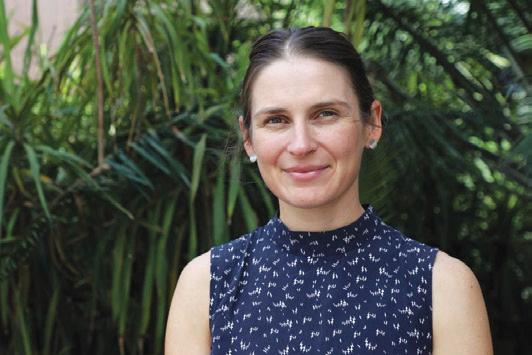
With an increase in moisture in the air, the storms that will be seen in Canberra, will likely be thunderstorms, says bureau senior climatologist Felicity Gamble.
Photo: Andrew Cambell
Canberra braces for severe summer rain storms
By Danielle NOHRA
in the ACT over the next few months and severe summer storms.
And with an increase in moisture in the air, the storms that will be seen in Canberra, will likely be thunderstorms, says bureau senior climatologist Felicity Gamble.
The outlook for the rest of the year shows an
La Nina results in a cooling of the central and eastern tropical Pacific Ocean and it typically increases the chance of widespread flooding across much of eastern Australia.
When looking at storm or severe storm climatology for the ACT, she says Canberra is more likely to get severe storms during the summer months.
“Typically Canberra sees maybe three or four
So much more than an Electrician!
ELECTRICAL – AIR CONDITIONING – PLUMBING
Safety First: We never compromise on safety.
Up Front Affordable Pricing: Tailored solutions to your needs
We call ourselves electricians, but we are so much more, handling a wide variety of jobs, tasks each and every day!
have these but just one of the criteria.
“Canberra does typically see those during the warmer months and there’s not a lot of research on how La Nina affects storm frequency but there is some literature that does indicate that storms are slightly more likely during a La Nina event.
“But having said that, there are some areas that are still recovering from drought, so the stream levels and water levels and catchments or water storages are still reasonably low, so that can help alleviate some of the flood risks, but it doesn’t take much for soils to become saturated and then you have that increased risk of run-off and high stream flows and flash flooding to occur.
or greater, very strong wind gusts around the 90km/h speed, flash flooding and tornadoes.”
overnight temperatures of 12.3C.
“We have seen some recent heavy falls in the south-east of NSW, so the soils are reasonably saturated. Soil moisture is reasonably high in those areas, so if we were to see an extended period of high rainfall, potentially some heavy falls, then that certainly does increase the risk of flooding.”
In line with the rainfall outlook, Felicity says Canberra is expecting to see slightly cooler than average daytime temperatures for the three months of October to December.
“Typically, when you’re seeing above average rainfall, we’re seeing more clouds than normal and that can moderate the daytime temperatures,” she says.
“When you look at overnight temperatures, though, we are seeing very strong odds of warmer than average overnight temperatures. So while daytime temperatures might be more moderate, not quite to those extremes we saw last summer, we’re still likely to see pretty warm overnight temperatures.
“When you have that increased cloud cover that we’re seeing in the rainfall outlook, it does tend to also mean cooler-than-average daytime temperatures but that cloud cover, at night, means that you’re losing less heat to radiation.
“When you have the clouds it’s a little bit like a greenhouse or like a blanket on top that keeps that heat at the surface level, or at the level where we can feel it so it keeps that heat in rather than it being lost to space. That’s one of the reasons that we’re likely to see above normal overnight temperatures.”
Looking at November, Felicity says the median daytime temperature is about 23.7C and the median overnight temperature is about 10C, then December will see median daytime temperatures of 27.8C and average
La Nina is likely to stay in place until early next year, according to Felicity, who says the additional rainfall means dust storms have a lower chance of occurring this year.
While the rain will come as a relief after this year’s hot, dusty, smoke-filled summer, it doesn’t mean that the region is free from bushfires.
The Bushfires and Natural Hazards Cooperative Research Centre’s three-month outlook has indicated normal fire potential.
“Fire is a regular occurrence so when they say normal fire potential, it doesn’t mean no risk or no fires, it means there’s not an increased fire potential or a decreased potential,” Felicity says.
“Last year we had that very dry lead up [to the fire season], so not only were the grass areas and paddock fields dry but also the forest areas.
“In the end, what was the most destructive were those big bushfires that got into the forest and really just spread through because everything was so dry.”
It won’t be as dry this year, but while the wetter weather conditions in eastern Australia will help in the short term, Felicity says they can also lead to an increased risk of fast-running fires in grasslands and cropping areas over summer.
“The above-average rainfall now can help grow the grass, and [it will] look green and lush initially but it can only take a couple of very hot days, three or four very hot days in a row, just to dry things out, and then that becomes susceptible to burning,” Felicity says.
“If there’s a lot of fuel then that means you can have these very rapid burning fires in the grasslands. That’s what they’re really watching at the moment because although it is going to be wetter than average, it is going to mean increased fuel growth.”
When talking grumpy, what really irritates me…
When CLIVE WILLIAMS analysed the things that irritated him he found most of his gripes could be grouped under a few headings: doubtful art, discourteous behaviour, unsympathetic building development, poor use of English and a couple of contemporary issues.
AS comedian Dylan Moran said:
“Some people have told me that I’m grumpy; it’s not something that I’m aware of. It’s not like I walk around poking children in the eye... not very small ones, anyway.”
When I analysed the things that irritated me, I found most of my gripes could be grouped under a few headings: doubtful art, discourteous behaviour, unsympathetic building development, poor use of English, and a couple of contemporary issues. Clearly, grumpiness is a personal thing, but no doubt some of my gripes will resonate with other Canberrans.
First , doubtful art. Poorquality art works are often praised by experts as profound, but I note that prize-winning art chosen by “art experts” rarely coincides with the people’s choice (emperor’s clothes come to mind).
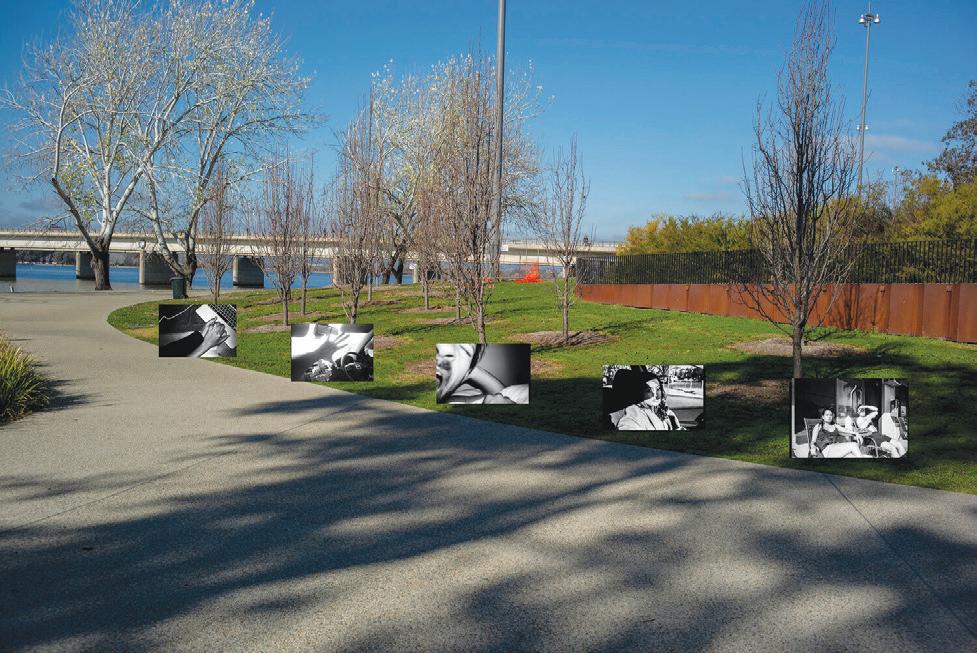
There are some examples of doubtful art in the current Contour 556 exhibition around Lake Burley Griffin. As one example, most competent photographers would consider
the black and white photographs on display by Kings Avenue Bridge to be very amateurish.
Contour 556 is Canberra’s free public art biennial “held around the designed heart of Australia’s capital city: Lake Burley Griffin”; Contour 556 artists “have been selected for their ability to respond to the de signed city of Canberra: represented by Australia’s political, cultural and physical history”.
Pretentious artists’ descriptions of their work are another turnoff.
One artist represented at Contour 556 claims: “This series is informed by my innate tendency for biophilic and techno curious speculation…” whatever that means.
Second , discourtesy. Perhaps the most common example is car drivers failing to acknowledge a courtesy, such as another driver giving way to them when they didn’t have to.
Another is driver thoughtlessness – such as leaving a large gap in front of his or her vehicle at traffic lights causing vehicles further back to miss
wearing opaque sunglasses – police officers seem to be prime offenders.
Constant attention to smart phones has become obsessive behaviour for some people. It should be a courtesy to turn phones off when socialising with others.
People who noisily spit and blow their noses in the public shower booths at the local swimming pool (and perhaps pee silently while showering) are another concern.
Third, land development. I have no problem with urban and suburban renewal when it does not impact on residents or affect heritage values,
announcers, say “haitch” for “h” and “yee-ah” for “year”.
Radio interviewees who start every response with “Look” are irritating as are those who use “like” as a filler word.
In recent years there’s been an unnecessary tendency to redescribe work – “staff” are now “team members”, the Mugga Lane “tip” is now a “resource management centre”, and a “discussion” is now a “conversation”.
Meanwhile, I try to avoid buying anything with a price ending in “99” because it is psychologically misleading, but unfortunately one has no
I will conclude with COVID-19 and
This includes foolish COVID-19 public dictates – such as walking clockwise around Lake Burley Griffin, inconsistency in the application of safety regulations, interminable public health briefings and Auslan gesticulators on TV when subtitles
On the public hypocrisy front, I’d include the common speaker preamble “I’d like to begin by acknowledging the traditional custodians of the land on which we meet today…” which is meaningless humbug given the way we’ve treated the land and the Aboriginal people from whom we
No doubt many will disagree with me – or have their own pet dislikes, but I rest my case for the time being and hope I might have some small influence on reducing irritating behaviour in Canberra.
However, I’m not obsessing about it. As Ted Danson said: “You use and lose a lot of energy being grumpy.”
Clive Williams is a Canberra writer and commentator. Grumpy is an occasional column dedicated to things that get up your nose. Readers are invited to vent (typically around 300 words, please) at editor@citynews.com.au
Amateurish? Photographs from the Contour 556 public art festival-by-the-lake.
YESTERDAYS
‘Gates to Nowhere’ open memories of the past
RUN your hands along its chiselled, tawnyhued stone walls and it’s almost possible to feel the past that lingers within the Victorian Gothic church after 16 decades catering to the stuff of life.
Births, deaths and marriages, Sunday worship and milestones – the manifestation of the evolution of a community, a town, a region – over 160 years, filling countless volumes devoted to such records.
As one of the Canberra area’s longest surviving ecclesiastical constructions, there’s also the curiosities, quirks and even a mystery or two for good measure.
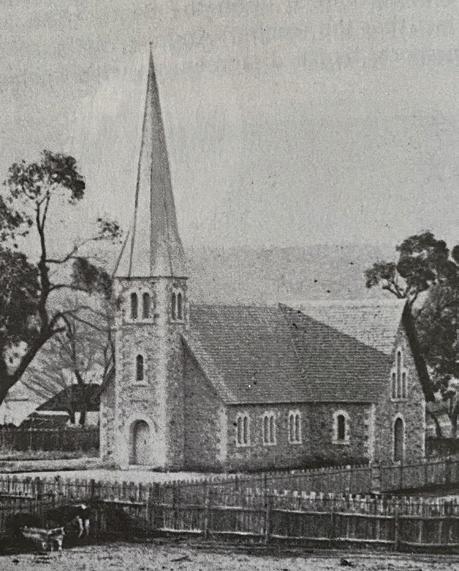
Initially without its 75-foot spire and the stained glass windows to the memory of many a prominent local citizen, Christ Church opened in service of the Queanbeyan district’s Anglican faithful on October 7, 1860.
A year later, on October 30, the second Bishop of Sydney, Frederic Barker, conferred consecration – that is, performed the highly specific ceremony intended to deliver it from any evil.
Sheltered within stately grounds set upon the bank of a picturesque river, Christ Church remains as impressive as when it first appeared for a host of reasons, not least its prime real estate.
A pin to mark the close to 1.2-hectare (threeacre) site on a map shows it to be virtually the geographic heart of the once tiny “village” that’s grown into a major regional centre around it.
In a modern setting, it’s noted as representing “a consolidation of the city centre and of the Anglican faith in the region; this National Trust
classified precinct is one of Queanbeyan’s most historically significant sites”.
The building was the second house of God to then stand upon the Limestone Plains – the other, the similarly-styled St John’s in now Canberra, completed mid-1844.
It was though, the third to exist: Christ Church Mk 1 was a simple edifice of “rubble-stone
walls, without buttresses”, erected in time for Christmas, 1844 – and hence its name.
Its boast was to outdo merchant Robert Campbell’s St John’s, constructed nearby his estate, Duntroon (1833), for the approved status of consecration. No less than the Bishop of Australia of the Church of England, William Broughton, would perform the ritual for Christ Church on March 8, 1845. The Scottish Campbell’s “kirk” would wait another four days.
The Queanbeyan church grounds were designated on the small grid of streets etched to indicate the original 1838 plan for a town. Six years later they’d also be home to the wider area’s first educational establishment (followed by Ginninderra and St John’s school).
The quaint inaugural schoolhouse – just a single room with a dirt floor and accommodating as many as 30 pupils at once – still stands on the southern boundary of the land parcel given up for holy purposes.
Added at the same juncture were a rudimentary parsonage and rough-hewn, whitewashed stables. The home of the horses, vital to an early parson given the extraordinary area for which he was responsible, also survived.
Not so fortunate, the “old” church. At a humble 44 feet by 24 feet, it was deemed no longer an edifying enough testament to God in his heavens.
Enter the 30-year-old reverend Alberto Dias Soares, son of a Portuguese knight, who’d trained as an artist and engineer in Paris.
While not formally trained as an architect, his own church would become one of 30-odd for which he’d be acknowledged, from Burra to Bungendore and beyond.
Christ Church would be remade seemingly in the likeness of St John’s with a “crossshaped plan form” crafted by the Irish-born local builder Daniel Jordan.
Having added to the school in the mid-1860s, a decade later Soares decided a two-storey rectory was necessary, rising closer to the river in local, high-quality, hand-made red brick.
Of the more unusual characteristics of the locale, one is the absence of a graveyard.
While it was declared that St John’s adjacent burial ground “was to be the resting place of all Christians”, it took some time to access in those earlier days, never mind having to cart
along a body as well.
Given that until 1846 Queanbeyan only had an unconsecrated area in Oaks Estate – where there’s still said to be up to 44 bodies buried in unmarked graves – the lack of such a nearby opportunity remains surprising.
Today when coffins make their final journey from Christ Church, they pass beneath the “lych” gate at the main entrance, redesigned in 1947 as a memorial to parishioners who lost their lives in two world wars.
Like something out of a Jane Austen novel, they’re traditionally found in English churches at the end of what were known as “corpse roads”, along which bodies were carried for burial. A superstition attached to them is the belief the spirit of the last person buried in proximity remains to guard over, earning their title of “Resurrection Gates”.
There have been tragedies within the grounds themselves, including the sad coincidence that both of the first ministers, Edward Smith and Soares, had infants who passed away in the old parsonage.
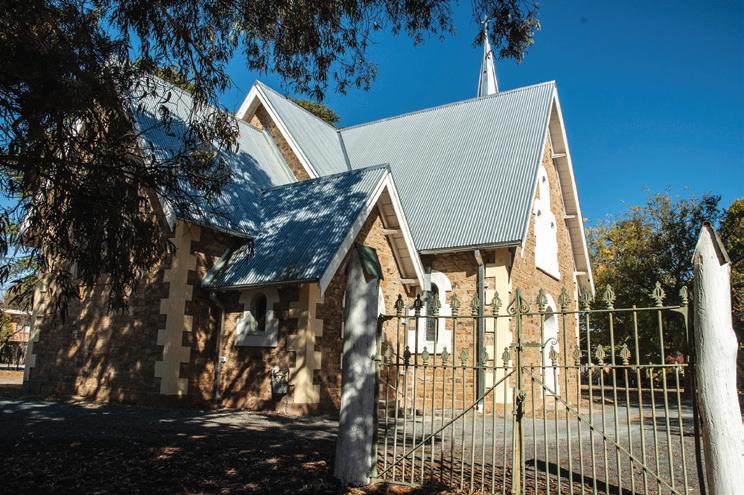
Just beyond where that building stood, off to the side of the main drive that encircles the church, there’s a pair of faded, rust-riddled, wrought-iron gates.
Flanked by two sturdy timber posts, they’re firmly secured with a heavy, weathered chain and padlock – despite the fact that they stand attached to nothing, keeping neither anything in, nor out.
These were those that were front and centre from 1884.
Now, literally, Gates to Nowhere. Or perhaps it’s the past they open to us, a rich and fascinating view down a lane of memory to a time when an unassuming structure with a panoramic view of a pretty watercourse nestled in a valley protected by surrounding outcrops arose to serve both the community and the Lord.
More of the history and the mystery at anoverallview.wixsite.
com/blog
Today’s “Gates to Nowhere”… they were front and centre at Christ Church from 1884.
Christ Church, pictured in 1870... opened in service of the Queanbeyan district’s Anglican faithful on October 7, 1860.
but what we do have is people,” says Adam
NEWS / Chifley Health Centre
By Kathryn VUKOVLJAK
THE future of the Chifley Health and Wellness Centre looks secure after both major political parties made last-gasp offers of rent relief to the Y Canberra Region to support the ailing health hub.
In response to a petition from members of the Centre, which had not been expected to reopen after the Christmas break, Labor was first to offer six months’ rent relief and grant support from December 2020, which was followed up with a Liberals’ offer of rent relief and operational funding for 12 months.
Executive manager – health, recreation and accommodation of the Y Canberra Region, Adam Horner, says the rent support would give them time to consider a long-term strategy for the financially unviable centre.
“We’ve got an opportunity now to look at how we can create a more sustainable service in the long term,” he says.
Adam says the community-based gym has been in the red for the past 20 years, with the pandemic making it worse.
“The businesses that subsidise the gym have been struggling, and we had to reduce our hours to ensure proper cleaning and contact tracing,” he says.
“We made sure we could offer access to members at guaranteed times, and that people would
and provide qualified instructors and modified support for those recovering from surgery or injury, or living with chronic illness or disability.”
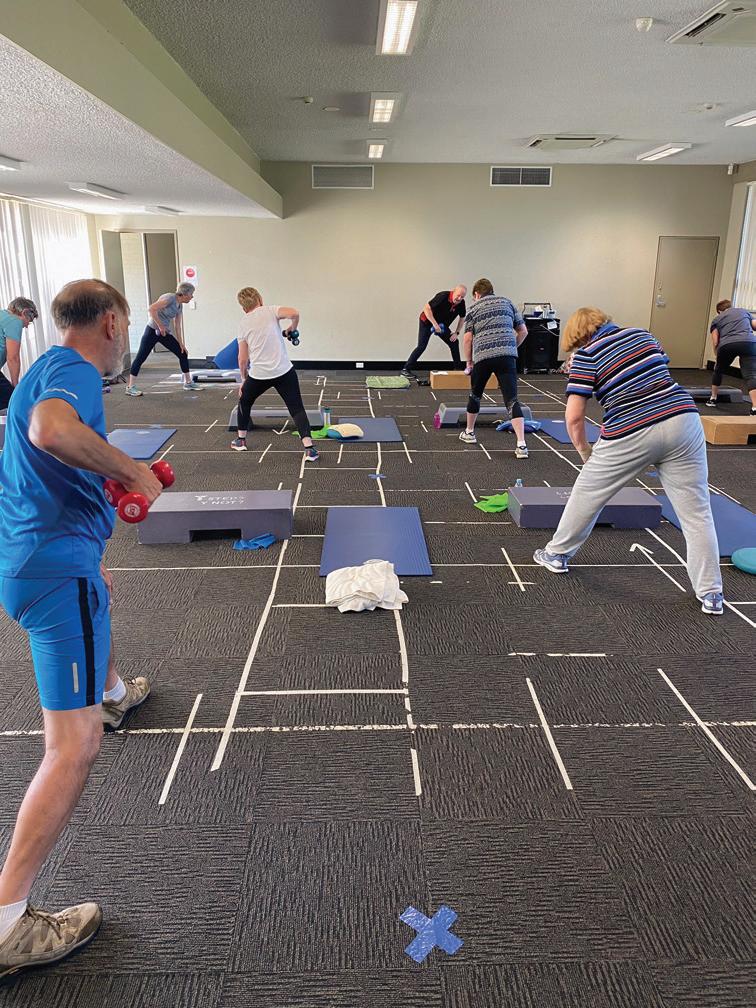
Member of the Health and Wellness Centre Margot Marshall, 70, who gathered more than 100 signatures for the petition in a few days along with fellow member Libby White, says going to the club gives structure to her day.
“I go and do my class, then we all get a coffee afterwards,” she says.
“I’m more fit now than I was when I was working, and just sitting at a computer all day. It’s use it or lose it, and the fitness centre is important to us all socially, physically and mentally. Most of us are in the 65-90 year age group. We all really wanted it to stay open.”
Margot says those who signed the petition are prepared to pay more for their membership if it would help.
“It’s a fantastic place, with classes that cater for all fitness levels, it’s age-friendly, unpretentious and comfortable,” she says.
“I was absolutely elated when we heard back from Labor so soon, and then the Liberals. You do wonder if they listen to seniors, and whether you matter.”
“There’s a strong community voice in Chifley, and it’s very uplifting,” says Adam.
“We’re an old gym at the back of an old school, we don’t have any new equipment or flashy TVs, we don’t have much at all but what we do have is people.”
A little blue sky for the airport
FROM December 3 – or earlier, depending on the Tasmanian government’s decision to open borders to the ACT – Canberra Airport will fly four weekly return services between Canberra and Hobart.
Canberra Airport says Link Airways, a Canberraowned airline, will provide direct flights from Canberra to Hobart for the first time since 2013.
Pelican flies north
MEANWHILE, the airport has also announced direct flights between Canberra and Port Macquarie, in partnership with Port Macquarie Airport and regional airline Fly Pelican.
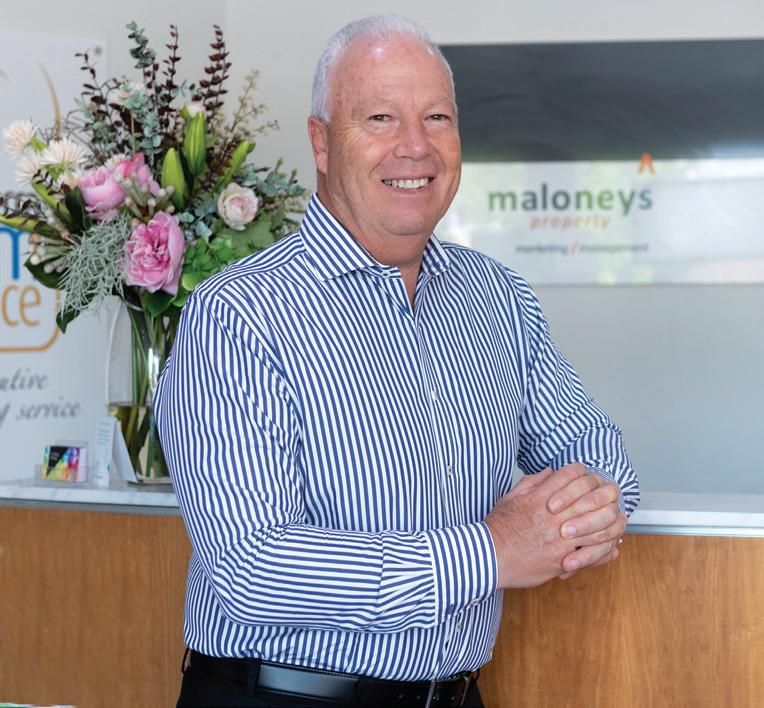
Trusted Philip’s driven to get the best price for your home
WHEN people sell their biggest asset – their home, it requires a lot of trust, something that real estate expert Philip Kouvelis says he’s earnt over his long career.
With more than 47 years’ experience in the real estate industry, Philip, who always gives his clients 100 per cent, says the name Philip Kouvelis has become a trusted household name.
And, after moving to the Kingston-based real estate agency, Maloney’s Property, last year, he says he’s as energised and focussed as ever on flexing his property muscles, getting out from behind the desk and working with his clients to get them the best sale result.
Now he’s not running his own business, Philip loves spending more time in the field and selling properties all over Canberra.
“I am looking for new business anywhere in Canberra, not just the Kingston area and am very happy to meet with people to discuss their situation, with no obligation,” says Philip, who has sold more than 1000 homes since the start of his career.
But, he says he’s never lost sight of the importance that people are trusting him to sell their biggest asset.
“It’s humbling for me to be invited into people’s homes and discuss their plans with them. It’s something I have always valued,” he says
“For me, it’s all about working with people and bringing them together to create a deal. It’s the success of putting a deal together is what drives me.
“Some might take longer than others but there’s nothing
better than handing the keys over at the end of the deal.”
Philip says being invited by people to come back and handle the sale of their future properties is a big compliment and testament to his professionalism.
“I’ve always approached people on a personal level [and] am on their side,” he says.
As a justice of the peace and auctioneer, Philip says he loves giving back to the community and has helped raise about $2 million in his role as a charity auctioneer.
He was also awarded Real Estate Institute ACT’s auctioneer of the year, three times, and, having been brought up in Canberra, lives and breathes the local lifestyle and community, is an avid fan of golf, horse racing and keeps physically fit and sharp-minded with regular lake walks, bootcamps and tackling the gruelling Red Hill steps on Mugga Way every week.
Philip’s recently moved to Kingston to be within walking distance of Maloney’s office but admits to not being an office person, saying he’s much happier out in the field, looking for, listing and selling properties.
He says he’s no stranger to innovation, having sold a property last week via Facetime to buyers in France!
The Canberra market is currently very active, according to Philip, who says Canberra has been able to be resilient during tough times such as the GFC, bushfires and COVID-19.
“The Brindabella ranges seem to protect Canberra [from] a lot of problems that affect the rest of the country,” he says.
“We have strong employment and it’s a credit to government that we have remained strong over many years.”
Contact Philip Kouvelis via email philip@maloneys.com.au or call 0412 622420.
From 1 November, Fly Pelican will fly direct twice a week from Canberra Airport, with a launch price of $149 one-way.
Infrastructure boost
THE ACT will receive $155 million for transport infrastructure from the federal government as part of its COVID-19 economic recovery plan. Spending for the ACT includes $88 million for the Molonglo River Bridge and $50 million for a South West Corridor upgrade.
ACT senator Zed Seselja says that since being elected in 2013, the Liberal and Nationals government had committed more than $975 million for infrastructure in the ACT.
Getting physical… “We’re an old gym at the back of an old school, we don’t have any new equipment or flashy TVs, we don’t have much at all
Horner.
LETTERS
IT’S been pointed out that the West Basin (now “Acton Waterfront”) development plan has been around for nearly 30 years. That pretty much confirms its status as a lemon.
The City Renewal Authority is trying to get the Acton Foreshore property development going (because that’s what it’s all about, and to hell with anything else).
Associated planned blocks of flats, including at City Hill and along Commonwealth Avenue, will eliminate important views of the lake and mountains, and overshadow the puny (just 50 metres wide) jaw-breaking public domain we’ll be left with on Acton Foreshore, even after the expensive and dodgy reclamation of a chunk of the lake.
Trees demanded by the National Capital Authority will likely disappear to preserve lake views from the flats (any trees along Kingston Foreshore?).
As well, we need the current troubled and outrageously expensive, Parliamentary Triangle-destructive, Commonwealth Avenue Bridge-destructive, cultural landscape-destructive, and City Hill Precinct-destructive, Civic-to-Capital-Hill section of the Woden tram line, with its insanely expensive underground electricity supply, and complicated infrastructure works, to be re-routed.
With less disruption and cost it could travel, say, a much more free-flowing route
taking in Edinburgh Avenue (very close to Acton Foreshore), straight on to Liversidge Street, the southern shore of Acton Peninsula, an elegant new sail-boat-friendly bridge (for trams, bikes, and pedestrians) redolent of Griffin’s missing crossing, to a better, sunnier, public precinct at Lennox Gardens North/Flynn Place, Flynn Drive on to State Circle, and continuing to Woden as currently planned – a route on which normal overhead power lines would be acceptable.
For proponents of inner-city residential densification, don’t forget there’s still cosseted Reid, (yes, really), provided it’s done sensitively.
Jack Kershaw, Kambah
Thanks to Jack
I’D like to congratulate Jack Kershaw on his excellent article “How Canberra was ‘sold’ to developers” (CN, October 8). I believe that Canberra has lost its quaint atmosphere.
Paola Giurgola (daughter of the architect Romaldo Giurgola)
Insensitive ACT government
ANKETELL Street in Tuggeranong is a botched mess.
After publicity on the difficulties of
parking at the front of the health centre (with insufficient disabled parking) and my wife, in her wheelchair, talking for some time to Minister Rachel Stephen-Smith, roadworks were undertaken.
Imagine our horror at seeing the two parking spots at the front of the centre moved some distance further away and halved in number. Spaces exist behind the centre, access to the back of which requires the ambient person to apply considerable strength to proceed up the inclined access.
A bus lane was added. Then the government announced buses would be taken out of Anketell Street. The work was redundant before being started! People in wheelchairs were completely ignored.
Canberra politicians and public servants pay no attention to the public, yet again attacking the minority for whom the government exists to protect.
John Wright, via email
Rethink medical qualifications
TO get more general practitioners and specialists in the ACT, perhaps the ANU should review its entry qualifications for medicine.
Serious medical students don’t want to have to do another degree before they do medicine, so they head for NSW uni or Newcastle uni where they only have to do an oral and written aptitude test.
Here they meet people from other places. They marry someone from another area and do
not return to Canberra.
My grandchild and a neighbour’s nephew both decided to train in these cities. Now they are specialists in the cities in which they trained.
Rewa Bate, Coombs
Help with mental health
THERE is no question that across Australia, people’s mental health conditions have escalated significantly due to fear, anxiety and social isolation. COVID-19 has hit the community hard.
What is very troubling is that 54 per cent of people with a mental illness do not access any kind of treatment. Close to seven in 10 of all GP presentations are now people with mental health issues.
Mental health issues need to be talked about more across the community. Close to half (45 per cent) of all Australians will experience a mental illness in their lifetime.
It is now estimated a huge 3.8 million Australians live with a mental illness. 690,000 live with a severe mental illness.
We absolutely need to be investing more in services that help people with mental health issues. We must make it easier for people to access the help that is actually out there.
That’s where the not-for-profit Mental Illness Fellowship of Australia comes in. We have a special hotline designed to help people work out where they can get help. It is a free service and readers should simply call 1800 985944. You can also get more information at minetworks.org.au
Tony Stevenson, CEO, Mental Illness Fellowship of Australia
Experts with a passion for keeping you healthy
THERE’S no shortage of knowledgeable health experts in Canberra.
Whether it’s general practice, keeping fit, providing surgical intervention, or supporting those with chronic conditions,
“CityNews” speaks with a variety of health experts, all passionate about the wellbeing of their patients.
AS a member of the Travel Clinics Australia group, Dickson Medical & Travel Clinic provides up-to-date information on disease protection across the world, says co-owner and director Guillaume Prudent-Richard.
Guillaume says the practice has a full range of vaccines and preventative medicines in stock, and is one of two places in Canberra dedicated to travel medicine and one of the few accredited to vaccinate against yellow fever.
checks, diving and aviation medicals and two nurses, Margaret McLachlan and Susan Webster.
Rebecca says.
“We know that weight loss and exercise are the gold standards for managing chronic pain conditions, and we have a dietitian who can recommend what to eat to avoid painful flare-ups, whether a person is dealing with arthritis, osteoporosis, cancer, food allergies or food intolerance.”
Rebecca says the not-for-profit also has an occupational therapist who can help make life easier for people through assisting with home modifications for safety and access, energy-saving equipment, technology and daily living aid recommendations, and through providing support to access the NDIS
Arthritis ACT also offers exercise physiology programs designed to reduce pain for anyone living with any musculoskeletal conditions.
One-on-one exercise physiology consults are designed for anyone who needs help with an individually prescribed exercise program (land-based or hydrotherapy), a review on a current exercise program and advice on how to safely progress towards their goals through exercise.
Arthritis ACT, Building 18, 170 Haydon Drive, Bruce. Call 1800 011041, email info@arthritisact.org.au or visit arthritisact.org.au
Established in 1987, Dickson Medical & Travel Clinic also offers general practice and occupational medicine, such as employee medicals and screening.
Guillaume, his wife Dr Tereza Prouza and Dr Zdenka Grundel took over the practice as co-owners in October and say their books are open for new patients.
The team includes Dr Les Buczynski, who has an interest in travel medicine and family and men’s health, Dr Di Hannaford, who specialises in women’s health, Dr Doug Randell, who performs employment
“We have a large, experienced team, offering flexibility and choice for patients, with a number of emergency appointments available each day,” says Guillaume.
“With a comprehensive suite of services, from standard general practice services such as diabetes and asthma management to tropical vaccinations and occupational medicine, we’re a one-stop shop.”
Dickson Medical & Travel Clinic, Unit 5, 151 Cowper Street, Dickson. Call 6257 3853 or visit dicksonmedical.com.au
Dr Tereza Prouza and Dr Zdenka Grundel.
Diabetes NSW & ACT has been helping people living with diabetes for over 80 years. We offer our community of 45,000 members an extra level of support through reliable information and helpful programs designed to make it easier to manage your diabetes.
As a member of our community you have access to:
• expert advice and support via our Helpline
• the latest health information
• great food tips and recipes
• free and discounted events and programs
• discounts from our online shop diabetesshop.com.
Having trained in anaesthesia and pain medicine at the Royal Prince Alfred and Nepean Hospitals in Sydney, Boesel’s professional interests include teaching at both undergraduate and post fellowship levels, the treatment of neuropathic pain and complex medico-legal work.
Offering a complete service to its patients is important to Orthopaedics ACT, says practice manager Deborah Henry.
“Our aim is always to manage the wellness of our patients and to provide the best service to our referring doctors,” she says.
“Not all patients require surgical intervention and by
having a range of experts working cohesively, this gives
Other experts on the team are Adj. Prof Chris Roberts Smith (trauma, pelvis, hip and knee), Dr Nicholas Tsai (trauma, spine, hip and knee), Dr Al Burns (trauma, sport, knee and hip), Dr Phil Aubin (trauma, tumour, foot, ankle, hip and knee), Dr Gawel Kulisiewicz (trauma, sport, hip, knee, foot and ankle), Dr Igor Policinski (microsurgery, hand, wrist, elbow and shoulder), Dr Larissa Trease (sport and exercise medicine), Prof David Little and Dr Samya Lakis (paediatric orthopaedics).
Orthopaedics ACT, Woden Specialist Medical Centre, Level 2, 90 Corinna Street, Woden. Call 6221 9320 or visit orthoact.com.au
Diabetes screening takes five minutes
THIS World Diabetes Day (November 14), ACT general manager of Diabetes NSW & ACT Natalie Smith is urging Canberrans to take five minutes to complete the quick and easy online screening on the organisation’s website.
Natalie says there are currently 18,550 people in the ACT registered as living with diabetes, of which 83.1 per cent of those are living with type 2 diabetes.
In Australia, about 280 people are diagnosed every day, according to Diabetes NSW & ACT, and one in four adults over 25 are living with diabetes or prediabetes.
Natalie says it’s estimated 500,000 people in Australia are unaware they have diabetes until they develop a serious complication such as kidney disease, blindness or stroke.
On World Diabetes Day, Natalie says they’ll also be celebrating nurses and midwives, in recognition of their work supporting those living with diabetes.
“We’re also supporting them to enhance their knowledge of diabetes through continuous learning opportunities,” she says.
Diabetes NSW & ACT, Level 1, 101 Northbourne Avenue. Call 6248 4500, call the helpline on 1300 136588, or visit diabetesnsw.com.au
To join our community or to find out more about the advice and support we offer, call our ACT Office on 02 6248 4500 or visit our website diabetesnsw.com.au Been inactive too long? It’s time to move for
Restore wellbeing and quality of life with exercise that is safe, functional and provides social connection.
Tailored exercise that strengthens independence and ability to move with confidence in every day activities.
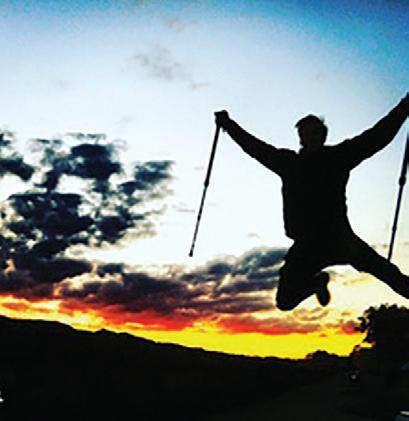
Personal and Group Training in BungyPump-Nordic Walking and Over 50’s Community Fitness classes available NOW.
Call Duncan TODAY on 0404 373 157 or email: info@boomeraabs.com.au
ACT general manager of Diabetes NSW & ACT Natalie Smith.
Physiotherapy – including the GLAD program for
and hip osteoarthritis, sports injury prevention and rehabilitation, and pain condition support.
Exercise Physiology – Individual exercise prescriptions, small group classes to increase strength and improve rehabilitation, strength and balance classes, hydrotherapy support.
Occupational Therapy – access reports for NDIS and Disability Support Pensions, home modifications, equipment prescriptions.
FITNESS classes for the over-50s should include a mix of strength, cardio, balance and flexibility training, says Duncan Craig, personal trainer, founder of BoomerAABS and ACT representative of BungyPump.
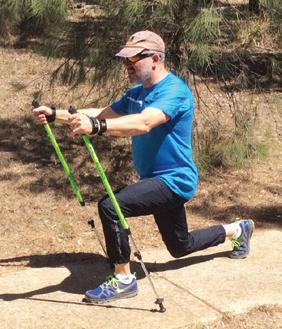
Duncan offers one-on-one, group or active training classes, modifying exercises to suit individual needs, and using Nordic walking techniques with BungyPump poles.
“Walking with BungyPump gives a full-body workout, burns more calories, trains more muscles and is easier on the joints,” he says.
“The poles offer all the benefits of aerobic activity as well as strength development, flexibility and balance all in the one activity.”
The “AABS” stands for “Active Ageing, Balance and Strength”, and with 43 years’ experience in the Australian Army and Depart ment of Defence, experienced fitness professional Duncan, who also has a Cert III and IV in fitness at CIT, says he knows how to help older people get strong and healthy, the right way.
BoomerAABS founder Duncan Craig.
“I teach the correct techniques to allow clients to exercise safely and effectively, without risk of injury, so they can enjoy everyday life,” he says.
“My classes are a friendly, sociable environment which motivates people to stay healthy.”
Call Duncan on 0404 373157, email info@boomeraabs. com.au, visit boomeraabs. com.au or facebook.com/ BoomerAABS
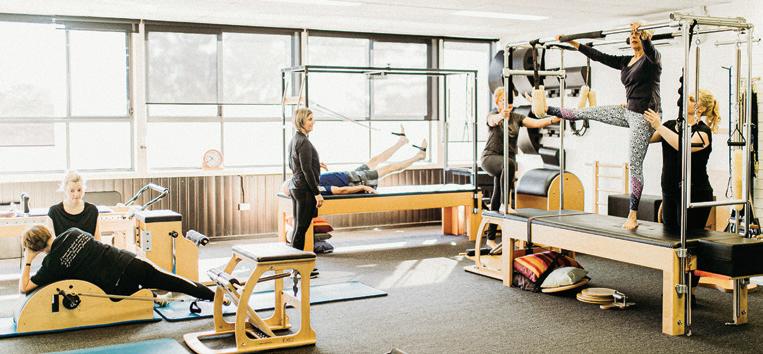
of Pilates Centre Canberra.
“Pilates training is a long process and a course can cost between $7000 to $10,000, with 300 hours work experience required,” she says.
Pilates instructors need to be highly trained, according to Felicia, who says they are at the Pilates Centre Canberra, which is a host site for BASI, the worldleading Pilates instructor training school.
Felicia has been teaching Pilates for 13 years, and says that with a properly trained instructor you get skilful teaching with an understanding of how to perform what can be complex exercises.
“As a qualified teacher, I can see when an exercise is correct and know exactly
Pilates are different for everyone, Felicia says, but it’s rewarding to see people progress.
“Many people start classes for one reason, say to fix their hip, then realise it helps their whole body,” she says.
“Pilates helps the body work how it’s meant to work.”
It’s the perfect training partner for anything, Felicia says, whether in recovery from injury or surgery, for athletes or walkers, or for people wanting to build strength, flexibility, coordination or balance.
The Pilates Centre Canberra, 58 Colbee Court, Phillip. Call 6162 1793.
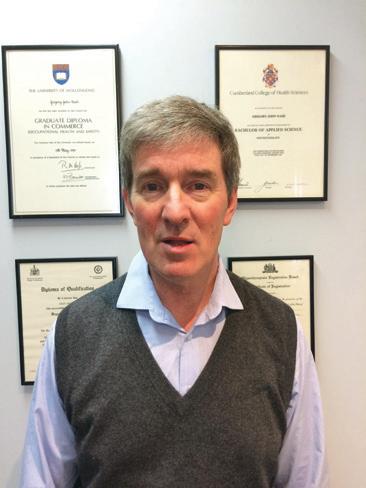
PHYSIOTHERAPIST Greg Nash says he’s been treating many patients for “covid-related” injuries.
Greg, who’s the practice principal at Manuka Woden Physiotherapy and Sports Injury Clinic, says he’s seen people hurt themselves through activities such as overdoing house jobs, gardening or taking on different activities such as house painting.
“It’s peak gardening season so I’m expecting to see more of these injuries throughout spring,” he says.
Greg says Manuka Woden Physi otherapy and Sports Injury Clinic has plenty of runs on the board, with 40 years in practice, 20 of those in Canberra.
Backed with 35-plus years’ experience, including working at the Sydney Olympics and Paralympics in 2000, Greg’s special interest areas are in musculoskeletal physiotherapy, sports injuries and occupational health and safety.
“This sports season is like no other due to the impact of COVID-19, and it takes time to get fitness and strength back to how it was,” says Greg.
“I’ve covered all football codes through my career, and I’m currently working with the Canberra Centurions who are the carry-over champions from 2019 and have won this season as well.
“Our daughter is an accomplished dancer and ballet teacher, so I’ve also been the physiotherapist for her students, too.
“I’ve covered a wide range of injuries over my professional career.”
Manuka Woden Physiotherapy and Sports Injury Clinic, 3/48 Corinna Street, Woden. Call 6281 1382 or visit manukawodenphysio.com.au
Greg Nash.
Felicia Darbyshire-Pirie of Pilates Centre Canberra.
ARTS & ENTERTAINMENT
Celebrating contrarian Connee
By Helen MUSA
ARTS IN THE CITY
EVERYONE in Queanbeyan of a certain age knows ConneeColleen Cameron.
She’s one of the town’s genuinely larger-than-life characters and most locals will be surprised to learn that she has a surname, knowing her simply as “Connee”, part of the Queanbeyan community for decades as an artist, activist, agitator, archivist, and a notoriously strident champion of Queanbeyan’s cultural history.
Now in an art-meets-history show at The Queanbeyan Hive in October, the improbably retired Connee-Colleen will be the subject of an exhibition featuring sculpted portraits of real-life local subjects, her drawings, sketches, plans and records of her long artistic career.
A collaboration between ConneeColleen’s family, Create Collaborate Collective, Rotary Club of Jerrabomberra and The Queanbeyan Hive, the show celebrates her relentless battles to save Queanbeyan’s unique character in the face of chic modernity.
The Hive doesn’t beat about the bush, describing Connee’s methods as “sometimes slightly mad”, but adding, “They also often worked. She saved buildings. She badgered the Premier to let John Gale’s statue stand. She stood up for
her town. She led rebel heritage walks.”
I have sat on arts committees with Connee and seen her ejected from council meetings for her rowdy, passionate interjections as she sought to save some of Queanbeyan’s most historic buildings, even a modest cottage in Surveyor
Street, from oblivion.
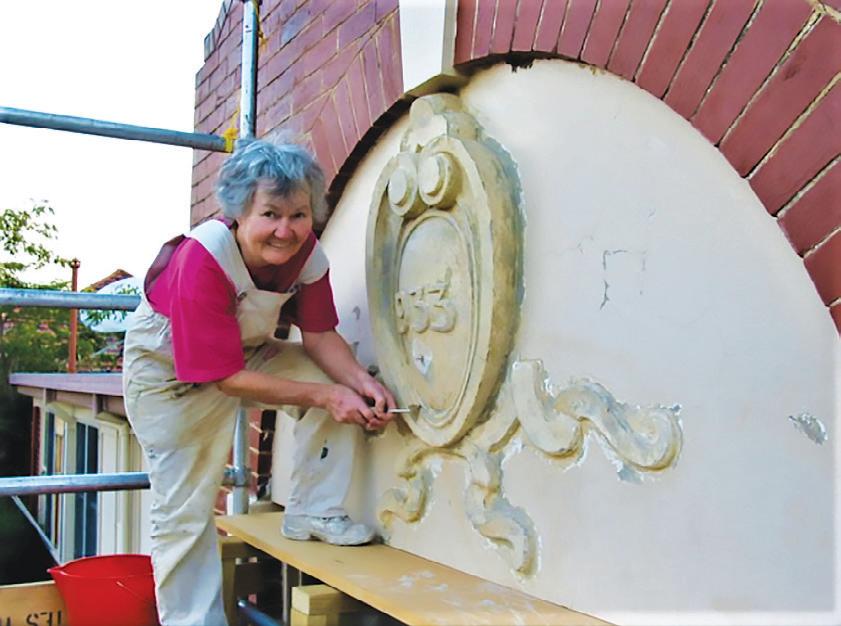
A contrarian by nature, she used her fondness for a good fight to advance the community she lived in, once saving 2500 bricks and moulds of a frontispiece on the façade of the 1933 Queanbeyan District Hospital building before it was demolished.
Many people may not have been aware that she was a professionally trained artist, having, as a single mum, put herself through masters in sculpture at the ANU School of Art.
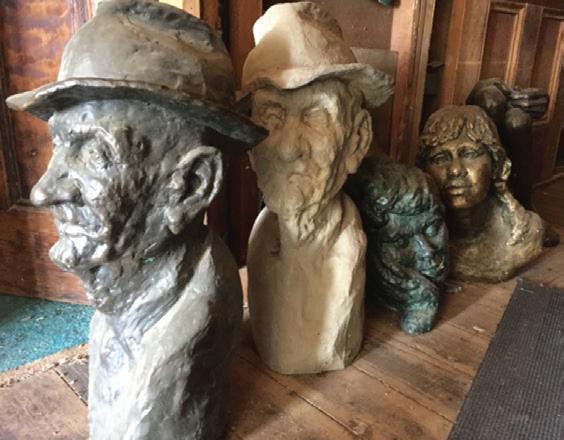
The central feature of the exhibit will be 15 large sculptures in bronze and concrete fondant, where she used local subjects. Two life-sized statues standing side by side in the exhibition are of John Smith and Dorothy Noone, both George Forbes House residents in the 1980s.
Owner/curator of the Hive, Helen Ferguson, hopes the exhibition will attract visitors who can help fill in details about Connee’s subjects, such as Smith, Noone, Harold Gibb, Mary Mimi Culshaw, Aileen Brown, Kay Milly and Bronwyn Nader.
The show will also feature tiny busts and models in bronze and wax of real-life people, preparatory sketches, historical artefacts, a photo showing a maquette of Peter Corlett’s John Gale sculpture, and artworks by present day George Forbes House residents and Koomarri participants.
The works mostly come from two exhibitions Connee did in the 1980s, “A Time And A Place” with George Forbes House residents, and “Different Ways of Seeing” with Koomarri participants.
Ferguson says many of the works were moved professionally to the Hive where they have been cleaned.
“This show rescues these pieces for posterity and the question next would be where they end up.
“They’re not for sale in this show,” he says, “but there are ideas that council should put some of them in public places.”
“Connee-Colleen: Queanbeyan Character” at The Queanbeyan Hive, 274 Crawford Street, Queanbeyan. Free but timed bookings essential via events.humanitix.com
Jacket with a symbolic past
By Helen Musa
THE Australian Institute of Aboriginal and Torres Strait Islander Studies has recently unearthed from its huge collection a jacket designed by Yolngu philosopher, diplomat and leader, David Burrumarra.
The “Elcho Jacket” represents the coming together of Yolngu and Balanda (black and white) law when, in 1978, then-Governor-General Sir Zelman Cowen visited Elcho (Galiwin’ku) Island to invest him with an MBE. Burrumarra insisted all visiting dignitaries, including Sir Zelman, dress in jackets designed by him especially for the event.
THE National Portrait Gallery has announced that it will make the 2021 edition of the National Photographic Portrait Prize bigger, longer and themed to reflect the experience of events this year, with a focus on the concept of “Living Memory”. The call for entries will open on December 1 and the augmented exhibition opens in July.
BRAHMS’ String Sextet no 2 in G major op 36, written in the midst of the composer’s infatuation with singer Agathe von Siebold, is the subject of Canberra Strings’ next concert, to be performed by Barbara Jane Gilby, Pip Thompson, Lucy Carrigy-Ryan, Jack Chenoweth, Samuel Payne and Julia Janiszewski. At Wesley Uniting Church, Forrest, 3pm, Sunday, November 1. Book at trybooking.com
THE 11th Korean Film Festival (October 29-November 5) returns with a free digital program of 18 feature films accessible at koffia.com.au/2020/, including “The Man Standing Next”, a thriller observing the inner circle of President Park Chung-hee during the 40 days before his assassination As well, seven features from past festivals will be screened on SBS On Demand (November 1-8).
A series of Monday lunchtime chats has been organised by singer Fleur Millar in the gardens of Manning Clark House, 11 Tasmania Circle, Forrest. On October 26, “CityNews” art writer Anni Doyle Wawrzynczak speaks followed on November 2 by poet Luke Whitington and on November 9, heritage adviser Amy Jarvis. Each from 1pm2pm. Book at fleurmillar@yahoo.com.au or 0421 187688.
SARA Dowse’s first novel, “West Block”, is set in 1977, two years after “The Dismissal” sees five bureaucrats in West Block recovering from the shock of Gough Whitlam’s dismissal while grappling with the mechanics of power. Originally published by Penguin in 1983, it saw Dowse draw on her experience in government as inaugural head of the first women’s office in the Department of Prime Minister and Cabinet. Now, as the real building is slated to become a boutique hotel, a new edition of “West Block” has been released by For Pity Sake Publishing in hard back and audio. More at forpitysake.com.au/store
Connee working on the facade of the old Queanbeyan Hospital.
Connee-Colleen’s “Man ‘N Hat”, “John Smith”, 1984, foreground.
The humour gets serious in the race for mayor
“Irresistible” (M)
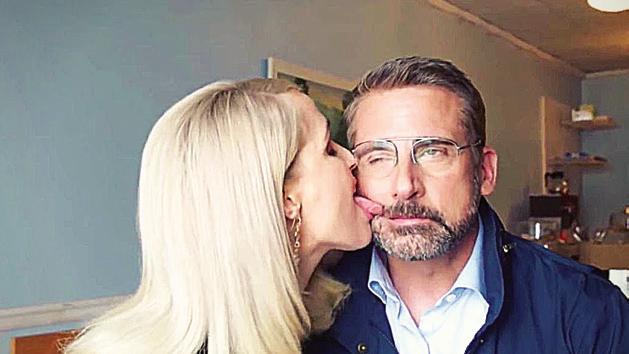
I CAME away from Jon Stewart’s no-holds-barred comedy grateful for Pol. Sci. 1 all those years ago. How well will a movie satirising American politics as Deerlaken, Wisconsin, prepares to elect a new mayor, go down in Oz?
The 2016 presidential election has just gone Republican. Stewart’s film takes us to the brink of a ballot that we expect will elect Democrat candidate Hastings (Chris Cooper). Running the party machine in Deerlaken during the campaign is consultant Zimmer (Steve Carrll).
It would be hard to find two more different guys chasing the same outcome for what should be the same reason.
Retired from the Marine Corps as a colonel, Hastings is now a farmer who at a Deerlaken town-council meeting accused the mayor of screwing over the local immigrant community.
Taking one look at him, Zimmer sees a heartland conservative with the soul of a liberal – “a church-going Bernie Sanders with better bone density”. So he convinces Hastings – a guy as Trump Country as you can get – to run for mayor and marshals major party resources to back him, all with the hope of turning the national spotlight on a new brand of Democratic winner.
The film is a gleeful, jocular look at the twin demons of money and packaging setting about killing electoral democracy. The humour is serious. The denouement embodies surprised optimism.
“Irresistible”... a gleeful, jocular look at the twin demons of money and packaging setting about killing electoral democracy.
As “Variety” put it: “The film is a lot like a politician: it makes a big show of leading the viewer, but without rocking the boat”.
At all cinemas
“Hope Gap” (M)
From filmmaker William Nicholson comes this controlled observation of the breakdown of a long-standing marriage. It’s essentially a two-hander performed with style, grace and a screenplay that pulls no punches. After 29 years of marriage, Edward (Bill Nighy) tells Grace (Annette Bening) that he plans to move out of the family home in the small English town of Seaford. Here are two actors whose provenance is unshakeable. Bill Nighy could turn reading a
sundayROAST
Stay in touch with the names making news on Sundays from 9am as 2CC and “CityNews” present Canberra’s only local weekend news and current affairs program.
It’s a revolving panel show that brings to the microphone great “CityNews” commentators and 2CC personalities.
Be part of the conversation call 6255 1206 between 9am and noon
page of the phone book into a special experience. His portrayal here of a high-school history teacher who comes home each night to arrange the evening meal is controlled, confident of Edward’s reason, unshakeable in its finality.
But it is Bening as Grace who steals the film, desolate, unable to understand where she might have gone wrong, if indeed she has gone wrong. Grace has been spending her days compiling an anthology. Her delivery of sadness, anger, inability to accept that Edward has found another woman to be more comforting (sex apparently plays no part in his decision) is brilliant.
Grace and Edward’s 25-year-old son Jamie
(Josh O’Connor) in London is bewildered when he learns of Edward’s intention. His efforts to bring about reconciliation don’t work.
Apparently, writer/director Nicholson found the seed of the film’s story in the collapse of his own parents’ marriage after 33 years. It resonated in me – I have travelled that road and know the confusion that it creates. Seeing it so sensitively delineated in the film four decades later still has power to disturb me.
At all cinemas
“Rebecca” (M)
I’VE not read Daphne du Maurier’s best-selling romantic Gothic novel published in 1938. After reading Wikipedia’s précis of its plot, I see no reason to.
It’s about an unnamed young woman who impetuously marries a wealthy widower, only to discover that he and his household are haunted by the memory of Rebecca, his late first wife.
A best-seller that has never gone out of print, “Rebecca” sold 2.8 million copies between its publication in 1938 and 1965. It has been adapted numerous times for stage and screen, including a 1939 play by du Maurier herself, and the film “Rebecca” (1940), starring Laurence Olivier and Joan Fontaine and directed by Alfred Hitchcock, won the Academy Award for Best Picture.
Is this version adapted by Jane Goldman and Joe Shrapnel, and directed by Ben Wheatley, a good movie?
Against my natural inclination, I confess that I found its 129 minutes entertaining, its thesis compelling and its environment persuasive.
Its staging may not be perfect – the sharp eye may detect the odd continuity shortcoming – but it’s well performed by Lily James as Mrs de Winter, Armie Hammer as Maxim de Winter, Keeley Hawes as Beatrice Lacey and Kristin Scott Thomas as Mrs Danvers.
I was aware of Mrs Danvers before I had more than a smattering of a notion of what the plot was about. After seeing this film, I suspect that she and the erotically-voracious Rebecca might have been lovers. She’s a character in playing whom an actress can pull out all the stops and let her rip. Which Scott Thomas does. She’s in good company – in the 1940 version, Judith Anderson played her. In 1997, Diana Rigg played her in a two-episode TV version. Danvers is an enigma in any medium.
And for motoring buffs, the de Winter wheels is a Bentley convertible in gold duco, a car to die for. But not to take into the bush.
At Dendy
WATCH IT! / streaming and stuff
He’s got the whole world in his
AT 94, Sir David Attenborough is living proof some things get better with age as he still manages to captivate a global audience.
Having educated the world on all things bright and beautiful, all creatures great and small for more than seven decades, his programs have joined the streaming world. And of course, it’s Netflix that gets to champion his newest film, “A Life on Our Planet”, becoming one of the most watched programs of the last two weeks.
It’s filled with everything we’ve come to expect from these mesmerising docos. Spectacular footage from the depths of the oceans to the heights of rainforest canopies and everything in between. However, with this new production comes a slight shift in focus.
Sir David Attenborough… his teaching and message not lost on the up-and-coming ones.
that more than illustrates this, on joining Instagram to highlight the new film.
Though at its core it’s about the wonders of wildlife, this film takes on a more personal edge with an exploration of Attenborough’s own remarkable life and career. We’re given a window into his inspirations as a boy, to his breakout work in his 20s, all the way through his globetrotting adventures up to the ripe old age of 93 (the number of letters he boasts after his name are almost as mind-boggling).
As expected, the film comes with an important message, Attenborough describing the near extinction of many species he’s witnessed throughout his career and the vital importance of wildlife and wilderness conservation, argued as always, eloquently and passionately.
Quite remarkable is how Sir David continues to engage so widely across generations. His teaching and message is certainly not lost on the up-and-coming ones.
Two weeks ago he grabbed a world record
Like a giant flock of short-tailed shearwater birds hungry to grab some good nature pics, one million users descended on the account within 4 hours and 44 minutes, the fastest ever time for an Instagram user to reach that number of followers.
For comparison, Sir David has outdone former football sensation David Beckham, Jennifer Aniston of “Friends” fame, Pope Francis and even the Duke and Duchess of Sussex.
Speaking of Royals, in promotion of this new film Attenborough had an online video call with the young offspring of Will and Kate which, as you can imagine, got quite the attention.
He talked with George, Charlotte and Louis about their favourite animals, his hopes for the future of near extinct species and, in a huge controversy, he even weighed in on the age-old cats vs. dogs debate favouring the latter of the two.
Now that is a pretty powerful
hands
vote on the whole matter, I’d reckon. Furthermore, Attenborough’s catalogue of documentary series and films have an astounding prominence and popularity in the world of streaming. So plentiful are they I’d run out of room to list them all, but no matter what streaming platform you’re subscribed to, from Amazon to Stan, there’s without a doubt at least one of the great naturalist’s works available.
SO too, an astounding number of topics. Empires of ants, the world of Tasmania, the wonders of plant life are all just some of the topics covered. If there’s a wildlife niche of interest for you, odds are that Sir David has covered it somewhere out there.
In my view, it’s Stan that offers the best of the best. “Planet Earth”, “Planet Earth 2” as well as “Blue Planet” and “Blue Planet 2” covering both the wonders of the land and sea respectively in spectacular fashion.
It’s one quote in particular from Sir David that pretty accurately sums up the power of his work: “It seems to me that the natural world is the greatest source of excitement; the greatest source of visual beauty, the greatest source of intellectual interest. It is the greatest source of so much in life that makes life worth living.”
More of Nick Overall on Twitter @nick_overall
DINING / Department of Pizza, Campbell
Where dough is king and the pizza is... glorious
THE foundation of a glorious pizza is the dough.
At the Department of Pizza, or DOP, which opened at Campbell shops mid-August, dough is king. The team has mastered the art of making dough – not too thin, not too thick and easy to digest.
DOP also worships quality tomato and olive bases and super-tasty toppings, many sourced locally (including rosemary from a mum’s garden).
Located where the former bottle shop used to be, DOP is already pumping out pizzas at an amazing rate, especially for takeaway (couple of hundred on one Friday night). We visited to dine in and our taste buds fired up with two flatbreads – sea salt and rosemary ($12), followed by gorgonzola and roast walnut ($14).
The pizzas,
EXHIBITION
created with love, are wood-fired, traditional and authentic. That includes the margherita ($18) with a flavour-bomb tomato sauce, fresh, aromatic basil and yum fior di latte. How can something so simple taste so sensational?
Next up was the potato and prosciutto pizza, with the garlic olive oil base ($22). Ingredients included rosemary and more of that classic fior di latte. Divine. We got our kick of the day with the salami, mushroom and olive pizza on a tomato base ($22). The hot sopressa salami was mouth-wateringly delicious.
Desserts are sensational. Lemon is one of my all-time favourites and the limoncello cake was moist and to die for. We couldn’t resist the decadent tiramisu. Neither dessert looked refined, but we forgave that with the first bite.
The blackboard wine list is inspiring and features labels that DOP members discovered while in Adelaide and Noosa (glasses $11 to $16; bottles $36 to $63). We enjoyed a
Hills Gentle Folk Vin de Sofa (bring it to life by chilling for a bit). This perfect blend of pinot noir and pinot gris is described by the folks at Gentle Folk as ‘loveable and slurpable’.
The décor at DOP is simple but smart.
The student ‘rag’ turns 70
By Helen Musa
OUTRAGE, depravity, Menzies, Hawke, the Aboriginal Tent Embassy, the Telstra Tower shown as a phallus – they’ve all appeared on the covers of “Woroni”, the ANU’s student rag.
Not a rag any more, as present-day “Woroni” editor Isobel Lindsay-Geyer and deputy editor-inchief Josefine Ganko are quick to point out.
These days, “Woroni” is an elaborate empire involving a six-times-a-year glossy publication, a radio station and, since 2017, a TV station.
And instead of a few friends cutting and pasting pages in a back room, its editorial and content team now comprises about 70 people, bringing a more professional approach along with the gloss.
But, Lindsay-Geyer and Ganko stress, while it may have lost its grungy edge, it’s still an activist paper, designed to hold the ANU to account.
edition where a man in vicechancellor’s robes is captioned: “This man is an academic, this man is your enemy”, and an O-week edition featuring a naked man, one of many, the editors say.
Although it began modestly in the 1950s, “Woroni” has given a leg up to some well-known journalists, such as former “Canberra Times” editor and student activist Jack Waterford, “Sydney Morning Herald” crime reporter Fergus Hunter and Asian affairs commentator for the ABC, the BBC, “The Economist” and “The Straits Times”, Kean Wong, who edited “Woroni” in the ‘80s and, after it, Canberra’s arts magazine “Muse.”
There’s a long bar to the left as you walk in, with a massive pizza oven at the back.
Tiles are a crisp white and emerald green.
A lovely feature is an original door from the old bottle shop, with its layers of paint stripped away to reveal gorgeous wood.
“It still surprises and still pisses people off,” Ganko says. That’s being celebrated in an exhibition at aMBUSH Gallery in the ANU’s Kambri precinct.
Featuring a seven-metre-long timeline feature wall, it also shows full-colour reprints of past “Woroni” covers, an overview of the history of “Woroni”, and separate walls devoted to activism (feminism, indigenous rights, LGBTIQ+ issues, politics, free speech), outrage (sex, drugs, nudity, profanity), as well as “Woroni” Radio and “Woroni” Television.
What started off last year as a glint in the eye of “Woroni” business team member Ben Lawrence was picked up when Lindsay-Geyer became editor, secured a budget and volunteers, and gained support from aMBUSH Gallery, particularly gallery co-ordinator Elisa Donato.
The “outrage” side of the show is front and centre, seen in the paper’s keen pursuit over the 70 years of issues such as the war in Iraq, HECS fees, sexual harassment on a campus notorious for its night-time dangers and the increasing corporatisation of the ANU. Puns are a favourite device, with the masthead once adjusted to read “Moroni” and in a repeated joke, the Australian American War Memorial characterised as “Phallus in Wonderland”.
There’s the “Depravity” issue, the “Disorientation”
Wong sees the essential difference now and when he worked on it as the advent of the internet, but he also feels that while the fee-driven commercial arrangements at the ANU have made campus life more inequitable and led to a more fractured student body, there must still be plenty to report on.
In Wong‘s view, the ANU used to be more collegiate and the campus more compact, so that music gigs and arts events all took place within a two-kilometre radius of campus, a big difference.
Coming out once a fortnight in his time, he believed the paper served a very important function, since Canberra was more isolated than it is today, although it drew bright young people from all over the country under the NUS scheme and was, too, “very global in outlook”.
The paper, Wong says, was brought out using manual, analogue cutting and pasting, with dashes to harass the typesetters at “The Queanbeyan Age” into making last-minute changes.
“CityNews” writer and arts advocate, Meredith Hinchliffe, though not an ANU student, has described the magazine/paper as “so important…it captured the energy of life on the campus, a bit leftist and a bit activist and with good photos”.
“Woroni” – 70 Years of Outrage and Activism”, aMBUSH Gallery Kambri, until November 1. Details at ambushgallery.com Woroni, July 1956.
Margherita pizza… flavour-bomb tomato sauce, fresh, aromatic basil and yum fior di latte.
Limoncello cake… moist and to die for.
Photos: Wendy Johnson
Get the hang of floral displays
veranda may not be ideal. Baskets can also be hung in trees, on a sturdy branch. Thread the hook through a section of old garden hose to prevent it cutting into the bark.
scraggly, out-of-control plants. The same advice was given regarding watering and feeding.
it is, the more moisture will be retained, and a greater variety of plants can be used. For a stunning display, baskets 40-50cm wide work well.
A small basket of 20-30cm is fine for a single display of petunias, for example, but baskets of this size will dry out quicker.
Line the basket with foam carpet underfelt with the blue plastic on the inside, adding a few holes in the bottom for drainage. Add a few holes on the sides as well, and gently push the roots of the bedding plants through into the potting mix. Use a premium-grade potting mix.
Large baskets can be heavy when wet, so when hanging from veranda beams, the hooks need to be substantial, and ones that swivel allow the basket to be turned every couple of weeks.
For bright colours in full sun, a combination of geraniums and ivy geraniums, petunias, nasturtiums, alyssum, dianthus [pinks], and marigolds will look stunning.
Let the imagination run wild as to the variety of plants, with most perennials suitable.
For herbs, choose a large basket. Pennyroyal, chives, sage, marjoram and parsley can all be used; though herbs need full sun, so a shady
Hanging gardens and pots dry out very quickly in summer, especially when in full sun and with reflected heat. Most will need watering every few days and possibly every day, if exposed to hot winds. Have someone water all the potted plants if going away, and feed baskets regularly with a certified organic liquid seaweed. This is especially important after potting up the plant, to encourage strong new root growth.
BESIDES promoting more flowers, pruning is important to keeping shrubs under control so that they don’t intrude over footpaths or even into power lines.
Pruning is also a way of promoting spring leaf colour. For example, Photinia robusta hedges present a stunning display.
However, unless pruned regularly, most shrubs – whether grown as individual specimens or as a hedge – can quickly grow out of control.
WHEN it comes to native plants, we were originally told they didn’t need pruning, which
Nowadays, common sense has prevailed and we don’t consider native plants as any different to other shrubs. The rule of thumb for most plants is to prune after flowering by reducing the height and sides by a maximum of up to but not more than one third at any one time.
NOW is an ideal time to plant citrus and, at this time, they are just coming into flower. Citrus originated in China, although oranges have been grown in the Mediterranean region for more than 2000 years. Oranges have been grown commercially in China for more than 3000 years. The plant hunter Meyer in 1911 noted more than 80 kinds of edible oranges grown in China. Citrus, particularly kumquats, are a traditional housewarming present and for the Chinese New Year.
PUZZLES PAGE FREE PUZZLES EVERY DAY AT citynews.com.au
Joanne Madeline Moore
Your week in the stars – Oct 26-Nov 1, 2020
ARIES (Mar 21 – Apr 20)
Joint ventures and relationship improvements are on the table. But – with Mercury and Mars both retro – don’t spoil a potentially productive week by being too gung-ho and reckless! Slow down, think before you speak and consult with others before you make an important move. Saturday night’s Full Moon highlights hiccups in your financial management. So when it comes to money matters, aim to be less impulsive and extravagant, and more cautious and thrifty.
TAURUS (Apr 21 – May 21)
This week’s Full Blue Moon (in your sign) emphasises your practical side. So do your best to handle current situations in a suitably sensible and pragmatic fashion. When it comes to a romance, work partnership or joint venture, avoid getting stuck in a boring rut. With Mercury still in retrograde mode (until November 3) find creative ways to reboot and refresh relationships. But don’t believe everything you hear! Keep your BS detector switched onto high.
GEMINI (May 22 – June 21)
With the help of the Full Blue Moon, use the power of your fertile imagination and trusty intuition to get to the bottom of a problem that’s been bothering you. If you listen to the wisdom of your inner voice, it will point you in the right direction. You’re keen to communicate with work colleagues and close friends. But remember that Mercury (your ruling planet) is retrograde until November 3. So make sure you speak with extra precision and listen with extra compassion.
CANCER (June 22 – July 23)
The silvery, changeable Moon is your power planet. So many sensitive Crabs feel particularly emotionally volatile around the time of the Full Moon. This week’s full moonbeams are in earthy, sturdy Taurus, so you’ll feel more grounded (and less moody) than usual. But Mercury and Mars are still retrograde, so be careful and consistent in the way you communicate with others (especially work colleagues, clients, customers, children, teenagers and close friends).
LEO (July 24 – Aug 23)
Expect some dramatic disruptions at home or work, as unpredictable Uranus opposes your ruler the Sun. Plus Mercury and Mars are both still retrograde. So stop complaining Cats! It’s time to put on your big-girl (or big-boy) pants, boost your concentration, buckle down to business, be doggedly determined and tackle jobs you’ve previously put on the backburner. Be inspired by birthday great Theodore Roosevelt: “Do what you can, with what you have, where you are.”
VIRGO (Aug 24 – Sept 23)
Courtesy of retrograde Mercury, you could encounter problems with a stressed relative or a neurotic neighbour, as you misunderstand each other’s motives. You need to backtrack, unscramble your antennae, and articulate your true intentions in a careful and compassionate way. You’ll find it is a suitable time to review financial matters, find something that’s lost, tackle jobs you’ve previously put on the backburner, and cross important tasks off your long to-do list.
LIBRA (Sept 24 – Oct 23)
Expect a week of topsy-turvy extremes. Venus shifts into Libra, which boosts your charming and tactful nature. However – with Mercury reversing through your sign and Mars retro in your relationship zone – you’re going to need those diplomatic skills! Saturday night’s Full Moon stimulates your spending gene. But before you start splashing cash around, make sure you consult with your romantic or business partner, so you’re both on the same financial page.
SCORPIO (Oct 24 – Nov 22)
Mercury is still reversing through your sign (until Wednesday) so a personal project or a close relationship could suddenly stall - or even go backwards! Don’t waste precious time worrying and stressing about it. Instead, be a patient Scorpio as you reflect, revise, re-evaluate and re-calibrate. Saturday’s Full Blue Moon shines a spotlight on your relationship skills as you turn up your charm and sex appeal –and turn down your jealous and possessive streak.
SAGITTARIUS (Nov 23 – Dec 21)
This week the planets (including retrograde Mercury and the Full Moon) activate your spirituality zone. So it’s time to slow down, review major plans, revisit unfinished projects and look within for inspiration and peace. You’re in the mood to dream big but it will take plenty of patience to turn your dreams into reality. Your mantra for the week is from actress (and birthday great) Julia Roberts: “You never stop pursuing greater understanding of yourself and the world.”
CAPRICORN (Dec 22 – Jan 20)
Are you a Capricorn who’s lost your confidence? Retrograde Mercury, Uranus and the Full Moon are all stirring up your hopes and wishes zone. So you need to review your dreams for the future and avoid the tendency to make mountains out of molehills. Believing in yourself is important, even though it may be the last thing you feel like doing. Your motto for the week is from birthday great, Theodore Roosevelt: “Believe you can and you’re halfway there.”
AQUARIUS (Jan 21 – Feb 19)
This week – in areas involving home, family, parents, property, work, employers or your public reputation – expect the unexpected! Your best laid plans could come unstuck, as you ride a wave of unsettling changes. Mercury is reversing through your career and travel zones so take extra care with cars, computers, contracts and communication (especially with students, colleagues, clients or customers). Saturday night’s Full Blue Moon stirs up your restless side.
PISCES (Feb 20 – Mar 20)
Retrograde Mercury, Uranus and the Full Moon are all disturbing your travel zone. So a work trip, holiday or weekend getaway could be disrupted, changed or completely scrapped. When communicating with other people (in person and online) choose your words wisely. If you’re unsure how a comment will be received, then it’s better to say nothing! With Mars and Mercury both reversing through your finance zones, avoid making important decisions about money.
Copyright Joanne Madeline Moore 2020
General knowledge crossword No. 756
4
7 What do we call one who makes or sells candles? (8)
8 To be expert in the use of the hand or mind, is to be what? (6)
9 Which term describes that which is rare? (8)
11 Name an infectious skin disease caused by parasitic mites. (7)
13 Name a thick-shelled, edible nut of certain cultivated varieties of hazel. (7)
15 To look carefully at something, is to do what? (7)
17 To behave in a mechanical way, is to be what? (7)
20 What are hobbles or fetters? (8)
23 Name a worldwide youth movement. (6)
24 Which bowling style is used in softball? (8)
25 To feel sorrow, is to do what? (6)
1 Name the train on the Adelaide/Darwin line that follows the Overland Telegraph route. (4)
2 To bury someone, is to do what? (6)
3 Name one of the various bivalve molluscs. (4)
4 Name a former silver coin of France. (5)
5 When something pulsates or vibrates, what does it do? (6)
6 Popeye’s lady friend was known as ... Oyl? (5)
9 To be not just or equitable, is to be what? (6)
10 Name a large two-toed, swift-footed, flightless bird. (7)
12 Name sluggish, arboreal edentates of tropical America. (6)
14 What is a detachable section of a space vehicle? (6)
16 What, colloquially, do we call those who opt out of arrangements? (6)
18 Which statuette is sought after by many actors? (5)
19 Name another term for offspring or progeny. (5)
21 What do we call an assistant? (4)
22 Name a British nobleman. (4)
Sudoku hard No. 278
Pritike rang to ask about some of the federal Budget items that affect her and her business.
“Gail, I understand that there are some personal tax cuts. I am not sure what they mean for me, but neither me nor my partner John received them in our last pay and I am not sure why,” she said. I replied that while the federal government makes announcements, there is always a lag until the Bill receives Royal Assent, which it did on October 14.
"It can take up to a month before software is updated to use the new tables," I told her.
"I can confirm that the payroll program I use was not updated last week but has been this week, so I'm sure yours will be updated soon.
“The changes that were legislated for July 1, 2022, have been brought forward by two years and now apply from July 1 this year."
Here are the new tax rates effective now plus the 2 per cent Medicare levy: Nil to $18,200, 0% tax; $18,201 to $45,000, 19%; $45,001 to $120,000, 32.5%; $120,001 to $180,000, 37% and $180,001 plus, 45%.
"Treasurer Josh Frydenburg said the tax cut for people earning $60,000 will be $2415, while those on $80,000 will get $2160 and those earning $125,000 or more will receive $2430," I told her.
"So Pritike you and John should be taxed at the lower rates in your next pays.”
I had previously talked with Pritike about a granny flat for her parents and was able to tell her that granny flats were now exempt from capital gains tax, provided there are written agreements between the parties.
“There are some other changes that might be helpful for your business so I will give you a brief summary of some of these," I said.
"As a business with a turnover of less than $10 million you can deduct the balance of your depreciation pool provided that it is less than $150,000, which could be helpful.
"You can also write off any new assets you purchase with a cost of less than $150,000, except for a car that costs more than $59,136. The maximum that you can write off is $59,136.
“There are also some loss carry back provisions that you might be able to use as your business was closed for some time during COVID-19.
"If you make a loss during the 2019-20, 2020-21 or 2021-22 years then you can claim tax back against your 2018-19 or later year’s income tax paid. This is a temporary measure that will enable you to get a refund. "You have probably heard about the JobMaker hiring credit of up to $200 a week for 12 months if you hire young Australians. There are also some fringe benefits tax concessions including that multiple, work-related electronic devices such as phones, tablets and laptops will now not be subject to fringe benefits tax for businesses with turnover between $10 million and $50 million. There are other measures, but they're not relevant to your business.”
Pritike was pleased with my advice and said: “That's really given me food for thought, thank you.”
If you want advice on tax cuts or anything in the Budget contact the friendly team at Gail Freeman & Co on 6295 2844.
Disclaimer
This column contains general advice, please do not rely on it. If you require specific advice on this topic please contact Gail Freeman or your professional adviser.