Can Coe beat the odds with three north seats?
BELINDA STRAHORN
Time for voters to judge stubborn Stephen-Smith

MICHAEL MOORE Barr gets into the weeds to stymie housing
JON STANHOPE
Planning blot on the bush capital landscape
PAUL COSTIGAN






Can Coe beat the odds with three north seats?
BELINDA STRAHORN
Time for voters to judge stubborn Stephen-Smith
MICHAEL MOORE Barr gets into the weeds to stymie housing
JON STANHOPE
Planning blot on the bush capital landscape
PAUL COSTIGAN
WHAT have we learnt this week as Canberrans navigate a blizzard of policies (aimed at pre-pollers) from parties large and small?
We know the Libs don’t want you wasting money to see the GP nor wasting time to get any subsequent surgery. They have “declared war” on hospital waiting lists, promising to halve wait times and turbocharge elective surgeries and emergency departments. And they’ve suspended commercial rates for two years atop the already promised four-year pause in rate rises for domestic property owners.
We know that Labor has promised a new, zero-emissions primary school for 600 Strathnairn kids in emerging West Belconnen (though deep down, I fancy good town planning would have already had it on the drawing board).
That’s a lazy $45 million to build and there’s another $33 million for Narrabundah College, of which “stage one” will include upgrading old buildings and replacing the temporary transportable classrooms with energy efficient ones.
If that’s the cost of the refurb, one can only imagine what a dump it must have become under the government’s watch. Oh, hang on, they’re the same people making the refurb promises.
Then came $85 million for a new high school in Taylor and $35 million for a primary school in north Gungahlin.
That’s a $200 million lick before we get to the vague promises to look into expanding schools in Woden and Molonglo that were met with silence when tenacious “CityNews” assistant editor Danielle Nohra asked (as she does relentlessly from all parties) for costs.
STILL on schools, Labor’s tipping $99 million into renewing school infrastructure projects on the heels of the Liberals’ pledge to spend $15 million on boosting school maintenance projects over four years.
THE gobsmacker of the week, for me, was the news that Andrew Barr will not present himself to the next Legislative Assembly as Opposition Leader.
In an otherwise pleasant interview with “CityNews” political reporter Belle
Richard is based in our Canberra office and his practice areas include: Workplace Injuries
Wills, Estates & Probate Conveyancing
General & Commercial Litigation
Strahorn (Page 14), he made it plain that it would be the “end of an era” if Labor lost the October 17 poll. Not the commitment to public service that electors in Kurrajong might be expecting.
“If we aren’t supported in October that’s the end of an era, and I don’t intend to hang around like a miserable ghost.” he says.
No win, no Andy – it’s a proposition that, if the ClubsACT polling is to be believed, won’t be keeping quite so many people in the ACT awake at night.
To use marketing parlance, the poll of more than 1300 respondents revealed that the shine had gone off Brand Barr and that he was being identified as a liability to Labor. His leadership style attracted a lot of unflattering commentary. Opponent Alistair Coe, by comparison, attracted only one desultory remark. Scribbler Strahorn’s


full account is next door on Page 5, if you hadn’t noticed.
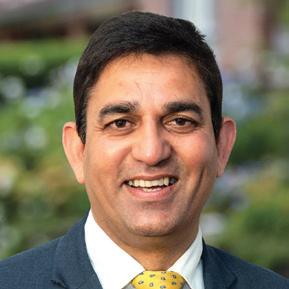
WITH restrained fanfare (ie none) the Canberra Liberals have settled on the party’s fifth candidate for Kurrajong. IT project manager and company director Rattesh Gumber has caught the hospital pass after two earlier nominees very publicly fell over.
Straight into the Liberal Kool-Aid, he says: “I am putting myself forward because I know how hard it is for families and businesses to make ends meet and we need a government that is focused on helping everyone get ahead.”
WITHOUT being too technical, but “bat in hell” is the sentiment safely applied to most, if not all, independent candidates’ chances at ACT elections these days. They struggle to get seen, they struggle to get heard and they struggle to get first-preference votes, no matter how patiently political columnist Michael Moore explains the vagaries of Hare Clark, as he did last week.
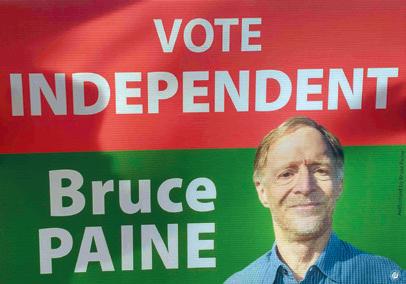
Bruce Paine, an independent candidate for Kurrajong, became one I noticed in recent days from his (possibly only) red and green corflute sign on Cotter Road.
In a note to “CityNews” he bemoans the thousands of corflutes that major political parties are using and that all the public
funding they receive should instead be spent on Canberrans in need.
He notes, correctly, that candidates who win at least four per cent of the valid vote are funded from public money more than $8 a vote.
“The three major parties received a combined total of over $1.6 million following the last ACT election: $750,488 for Labor; $717,056 for Liberals and $200,768 for the Greens,” he writes, then pluckily challenges them to donate those funds to charity.
He leads by example: “As an independent candidate for Kurrajong, I will qualify for the same $8 a vote if I exceed the four per cent threshold. I commit now to donate every dollar I receive to charities for their work in Canberra.”
Mr Paine might be a bat destined for heaven, but probably not for the Legislative Assembly.
Ian Meikle is the “CityNews” editor and can be heard on the “CityNews Sunday Roast”, 2CC, 9am-noon.


Authorised by Peter Tait,
By Belinda STRAHORN

THE Canberra Liberals remain ahead of ACT Labor as the major parties enter the crucial closing weeks of the campaign, a new survey reveals.
It also tracks the faltering popularity of the Labor leader across all five ACT electorates.
An online poll of voting intentions by 1320 respondents, conducted by ClubsACT, puts the Liberals ahead at 38.6 per cent and on track for a higher primary vote than Labor across every electorate.
The Labor vote is languishing on 36.1 per cent, down from 38.4 per cent at the 2016 election, with the party’s only gain in the electorate of Murrumbidgee. The Greens’ vote dropped slightly at 9.6 per cent, falling from 10.3 per cent at the last election. The Greens’ only gain was in Ginninderra.
The survey also revealed a high level of dislike for Labor leader Andrew Barr, despite the fact that four per cent of people don’t know who Liberal leader Alistair Coe is. Despite a well documented relationship antipathy between Barr, the government and the club movement,
ClubsACT chief executive Gwyn Rees says the survey was an exercise in gauging voter sentiment not “payback” for the slow lifting of trading restrictions imposed on clubs during COVID-19.
“We wanted to understand what the key issues were ahead of the election, to gauge what voters are thinking and report back to our member base,” Rees said.
Eighty-two per cent of respondents who voted Liberal at the 2016 election will vote for them again this election, the survey shows. Seventy two per cent are rusted on Labor voters and 54 per cent will stick with the Greens. But the increase in support for the Liberals would more than likely not be enough to vanquish the Labor and Greens’ vote.
“The election will come down to one or two key seats with a likely scenario being the ACT Greens holding the balance of power, forming a minority government. But based on the responses we received it is possible that the Liberals could form a majority government of their own,” Rees said.
“I think it’s very close, it could be tilted either way.”
About 15.7 per cent of respondents indicated they would vote for a minor party or independent, with the Belco Party gaining traction from Liberal and Labor voters in Ginninderra.

“The really interesting takeout was that the Belco Party brand was being recognised everywhere,” Rees said.
The new survey largely mirrors the only other public election poll to date, conducted by the Australia Institute, which some weeks ago indicated Labor’s primary vote was down to 37.6 per cent (from 38.4 per cent in 2016), while the Liberals had increased 1.5 per cent to 38.2 per cent.
The ClubsACT survey revealed a high level of dislike for Labor leader Andrew Barr, with his favourability going backwards in every electorate, including his home electorate of Kurrajong.
Barr was least liked in Brindabella
(-23 per cent), then Ginninderra (-14 per cent), Murrumbidgee (-14 per cent) Kurrajong (-10 per cent) and Yerrabi (-5 per cent). Coe is the more unpopular of the two leaders in Kurrajong (-11 per cent) followed by Ginninderra (-8 per cent). He is the most favourable in his own electorate of Yerrabi (13 per cent).
The Labor leader’s disapproval rating is almost twice as high as the Liberal leader’s with more than 30 per cent of respondents rating Barr as “strongly unfavourable” compared to Coe’s “strongly unfavourable” rating at 16 per cent.
Clearly, Barr is a polarising figure in ACT politics with 34 mentions
when respondents were asked what single issue will have the biggest influence over how they will vote.
All views expressed in relation to Barr were negative, with one respondent indicating “Barr was too arrogant” while another made mention of his “refusal to listen”.
Coe was mentioned only once, also in an unfavourable light, with the respondent indicating: “If Coe leads the Libs, I cannot vote for them.”
The high level of negative data surrounding the Labor leader raises questions about his brand, says Rees.
“Is his brand problematic? Is it toxic?” he said.
“From what I can see it is going to be a reason people don’t vote for the Labor Party.
“Voters are looking for a leader that listens, is transparent and has integrity.”
Survey respondents rated the cost of living as the most important issue to them, followed by health and the economy.
Reducing the cost of living was the most popular issue for 18-to-44-yearolds, while a strong economy was an important issue for those aged over 45. Reducing crime was the least popular issue for voters from all age groups. Voters seem more worried about reducing the cost of living and health care than the creation of jobs and climate change.


By Kathryn VUKOVLJAK

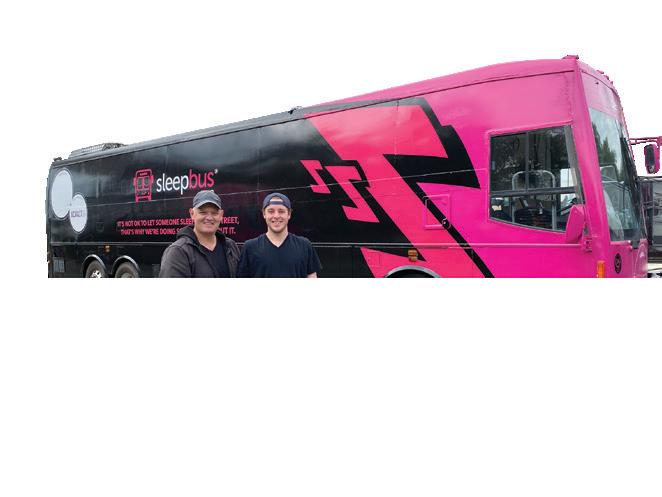
DELIVERY of Canberra’s pink Sleepbus, which will provide a safe night’s sleep to women and children in need, has been delayed by COVID-19, but founder and CEO Simon Rowe is pushing ahead and working on the bus himself at his Melbourne worksite.
As well, he has a blue Sleepbus for Queanbeyan, a pink Sleepbus for Melbourne that has just been completed, and a fourth planned for Maroochydore, Queensland. With many more to come, he hopes.
Simon works with bus companies to get buses to convert; some are bought and some are donated.
He designs and builds each Sleepbus in-house at his “SleepbusHUB”, helped by his twin sons Harrison and Ethan, 20.
“We all live together and it’s pretty isolated here, so we’ve been able to get quite a lot done in lockdown. It’s slow, but great that we’re able to make progress at all.”
They’re reworking the original Melbourne Sleepbus into the Canberra
pink Sleepbus, altering the configura tion to feature 20 individual sleep pods accessed from outside. Each pod has a bunk bed, toilet, console with read ing light, USB charger, intercom and headphone jack for free-to-air TV, plus space for a pet.
Sleepbus was trialled in Melbourne from late 2016-2019, with overwhelm ingly good feedback, says Simon.
“We were at capacity every night, and we’d do a simple ‘happiness scale’ test, asking guests on a scale of 1-10 how they felt going in at night and coming out in the morning,” he says.
“We were getting scores of 3.2 going in and 8.3 coming out.”
Simon found himself homeless for four months in 1993, when he was evicted after using his rent money to fix the car he needed for work.
“It can happen so easily, one major bill and that was it,” he says.

Then in May 2015, he got chatting to a man trying to sleep on a busy St Kilda street, who told Simon it was safer to sleep during the day than at night.
“I decided I needed to do something about it, to give people sleeping rough a safe place to sleep until they get back on their feet, but do it quickly and cheaply,” he says.
Simon founded the Sleepbus charity under a 100 per cent model, with all funds raised going directly to the project. Fundraising for the Canberra bus has been conducted by the National
Council of Women ACT.
He says he’s still looking for a sponsor to cover the operating costs for the Canberra service, but is thrilled to have found a resource for resetting the buses each day in Canberra, removing the need for volunteers to clean, make beds and do laundry each day.
Queanbeyan Council has allocated a parking location for Sleepbus at the tourist information centre, with Canberra locations yet to be announced. The

buses will be available 365 days a year, and operated by volunteer caretakers, with a third-party security monitor.
“I don’t know when we’ll officially launch, but by the end of the year might be nice,” he says.
“All I can do is be ready, and keep working on what I can with what I’ve got.”
For more information and to donate visit sleepbus.org/projects/canberra
MORE than 60 ACT hospitality workers lose their jobs every day, according to the latest data from the Australian Bureau of Statistics.
The data shows that the ACT’s hospitality industry has lost another 900 jobs in the past fortnight, with a total of 3670 job losses since the coronavirus restrictions began. That’s equal to 24.8 per cent of the ACT’s hospitality workforce.
The hospitality industry is urging the ACT government and health authorities to permit one patron per two square metres.
Australian Hotels Association’s ACT GM Anthony Brierley says the industry fears that failure to ease restrictions will mean hundreds of hospitality businesses will be insolvent by the start of 2021.
PODIATRIST Ricky Lee, from The Walking Clinic, will present “Looking After My Feet”, a free health seminar via Zoom, 7pm-8.30pm, on Thursday, October 22. The seminar will focus on why feet are so important to health, what happens as we age and ways to reduce pain. RSVP to reps@hcca.org.au by October 21 so the Zoom links can be sent to participants.
THANK Your Cleaner Day will be celebrated on October 21. Its promoters say it’s a day to acknowledge the contribution professional cleaners make in maintaining hygienically clean environments that contribute to the overall health in our communities.

















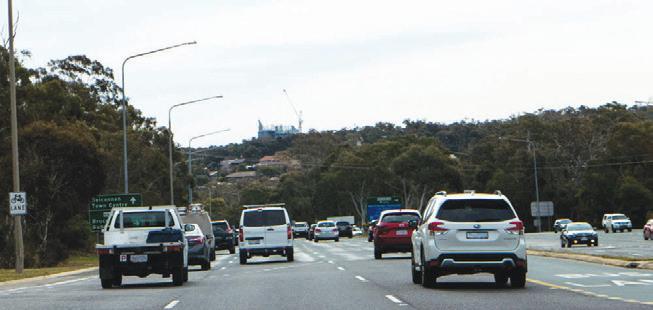
DRIVING west on Belconnen Way, under the Gungahlin Drive Bridge, there is a view that demonstrates how planning and landscape aesthetics are not in the skill set of those who run this city.
Until recently this journey into Belconnen was a tree-lined experience. Now, as you get to the underpass, the view is disrupted by high rises in the distance. The block is visible above the cherished tree canopy and so the aesthetic of this journey has now altered – for the worse. The ACT’s chief planner is responsible for this vandalism.
This is a city in a landscape. That’s what it was always meant to be. Yes, it is a bush capital, but it is so much more. The landscape is not something that has been added to the architecture as it has been built.
Natural and constructed landscapes are the fabric of the city. The urban landscapes include complex biodiversity, greenery, waterways, lakes and hills designed to

When bureaucratic urbanists say there’s no harm losing views of the surrounding hills from West Basin or from the approaches to Commonwealth Bridge, they display an ignorance of the city’s heritage and landscape values.
complement other natural, cultural, social and architectural structures. All this came together to form the urban aesthetic of Canberra. Residents enjoy living here.
The landscape nature of the city works in an obvious and a subtle fashion. The natural and built green infrastructures benefit human health and wellbeing. Landscapes have added to the quality of life as well as providing opportunities for aesthetic and recreation enjoyment. Previous designers were careful to allow for views towards the surrounding hills and to ensure that suburbs had an ambience that included easy access to greenery, biodiversity and aspects of the natural environment.
The above is a very brief description of how landscape works in this city. This is not rocket science. A mountain of publications provides much better information on how important green infrastructure, landscape, biodiversity and heritage
are fundamental to successful cities.
However, considering what is being done in our name by the ACT Labor/ Greens government and its planning bureaucracies, including the City Renewal Authority, the conclusion must be that these people cannot read.
When bureaucratic urbanists state that there is no harm in losing views of the surrounding hills from West Basin or from the approaches to Commonwealth Bridge, they are displaying an ignorance of the city’s heritage and landscape values.
scapes to this city and a willingness to work with the residents.
When the National Capital Authority chief planner signs off on planning for super high rise on Northbourne at the Wakefield and Macarthur streets intersection, or agrees to the infamous land swap of the Curtin Horse Paddocks for the filling in of part of West Basin, the NCA is failing as the national stewards of the landscapes intelligently put in place by former planners and landscape architects.
All this and more points to the wrong people being in key positions. These leadership jobs need professionals with expertise and experience in appreciating the value of land-
All cities go through processes of change with the successful doing so by working with residents to build on the city’s identity, heritage and landscape aesthetics.
There is little of this awareness in what is rolled out by the ACT’s Planning Directorate. Residents continue to be frustrated and annoyed by the reality of what the directorate does not deliver on – for instance, planning that works for the city and its landscapes.
Every four years the topic of planning and development is discussed by candidates as they try to convince voters that they will deliver on the aspirations of the residents – and be the stewards of the city’s urban landscapes.
Next year there will be an-
other government that will be taking responsibility for the city. In order to honour their commitments on planning and development, whoever forms the next government needs to deal with the reality that the Planning Directorate is no longer fit for purpose. A complete cultural change is required. Successful independents need to ensure this total change is a high priority.
Voters should not go to the 2024 election still talking about the same planning atrocities and government neglect of trees, greenery, biodiversity, heritage and landscape values.
Paul Costigan is an independent commentator and consultant on the visual arts, photography, urban design, environmental issues and everyday matters.

Unwin Place, Weston





An elderly woman with hearing loss came to my clinic for a second opinion, after she had recently been to a hearing aid sales person. I found the cause of her hearing loss was simply the fact that she had build-up of wax in her ears, the salesperson had failed to inspect them. You might be surprised how often this happens!
Here are some things to do to avoid getting ripped off:
1. A visit to the GP may save you from being ‘sold’ something when your only problem is wax in your ears.
Recently I was told by two different patients that they were quoted $16,000 for a pair of hearing aids. This seems a ridiculous amount of money to pay and is most likely not appropriate for the majority of people (or possibly anyone).
5. If you are a pensioner or partpensioner, or a DVA gold or white card holder, you should carefully consider if you want to use the free-to-client government hearing aids or if you’d like to top-up to a different hearing aid.
“In an unregulated market there is a lot of opportunity to take advantage of people. Yes you have read correctly, there is no licensing of people who sell hearing aids.”
2. Look for someone who is independent and can offer you unbiased advice, not just give you a sales pitch.
– Dr Vass
3. There are a range of hearing aid prices. Finding the right hearing aid might save you money and it will also give you the best chance of success.
4. Hearing aids can be expensive.
The free-to-client hearing aids are appropriate for many people, however if you have great difficulty hearing background noise (for example in restaurants) then you might trial the top-up hearing aids, but only if you can afford them. There are a range of top up options and prices, if you are disappointed after a trial, you should return them and trial the free-toclient hearing aids.
If you get the feeling the person you’re dealing with is just trying to sell you something, then take a step back and get a second opinion.
RADIATA pine trees are, in the ACT, a declared pest plant. They have been declared as such in recognition of their status as a significant environmental weed.
The establishment and mainte nance of commercial radiata pine plantations in the ACT has, as a consequence, long been blasted by environmentalists.
They are often referred to as bio-deserts. Opponents of commercial radiata forests claim that as a tree spe cies radiata pine outcompetes native species, reduces diversity, depletes the soil and is stunningly invasive.
It is interesting, therefore, though not a bit surprising, to see ACT Labor and the Greens attempting to justify, in part, their opposition to the provision of sufficient land to meet the housing choice or needs of working-class and lower-income Canberra families by asserting that the Kowen Forest, the ACT’s only significant remaining radiata pine forest, is in the words of the Chief Minister Andrew Barr: “Too environmentally sensitive to be bulldozed for urban development”.
Barr made this stunning claim in a debate in the Legislative Assembly on July 30 (Hansard P1761) in an attempt to wedge Opposition Leader Alistair Coe because of the stated determination of the Liberal Party to seek to ensure that enough land was available to meet the housing choices of all Canberrans, including most particularly young families, the working class and otherwise lowerincome households, and not just those residents that constitute the Labor and Greens Parties base, namely Canberra’s large and dominant middle class.
The revised position of Labor and the Greens on the Kowen pine forest is that it is more important to protect the recreational needs of middle-class off-road bike riders than to respond to the housing needs of the working poor and young families.
it is claimed that there is sufficient developable land in the ACT, including the Kowen Plateau, to meet the anticipated housing needs of the ACT at current rates of population growth for up to 100 years.
Pertinently, that assessment was made on the basis of a 50/50 split of attached and nonattached housing.
The Chief Minister was joined in his defence of the Kowen pine plantation as too environmentally sensitive to be considered as a potential site for housing by none other than the Minister for the Environment and Minister for Planning and Land Management, Mick Gentleman. I am genuinely surprised and disappointed by how effortlessly Mick has shrugged off his
that the government was ignoring the needs of the working class and most particularly “blue-collar workers”, that while they recognised the importance of the ALP being seen to be sympathetic to the working class, they couldn’t understand why (being, apparently, unfamiliar with the expression “blue-collar workers”) the ALP would concern itself with cattle dogs.
In his loyal support of his leader’s commitment to not bulldoze the Kowen pine forest for suburban development, Mick, the Minister for the Environment, said: “We hear those opposite talk about protecting green space, yet every time they talk about land release, they talk about building on our sensitive landscapes.”
Struck, no doubt, by the apparent double standard of Labor and the Greens on its commitment to “environmentally sensitive landscapes” one of my “CityNews” colleagues asked a number of questions of the government on the subject.
She asked, for instance, on what basis Barr and Gentleman considered the Kowen pine forest “environmentally sensitive”.
Minister Gentleman’s spokesperson, having no doubt recognised just how silly the claim about the environmental sensitivity of the Kowen pine forest was, ignored the question and went on to suggest that the government’s concern about the bulldozing of Kowen was in fact related to the community uses of the area.
to respond to the housing needs of the working poor and young families.
My colleague also asked the following question: “Noting your concern for protecting sensitive landscapes, why did you, in pursuance of the West Basin land deal agree to transfer an area of high-quality yellow box, red gum grassy woodland at Hughes to the Commonwealth for housing purposes.”
The ACT Labor/Greens Government provided this intriguing answer: “The federal government has the absolute power to acquire any land in the capital for a national purpose. The federal Liberal government has determined that the North Curtin paddocks are the most suitable location of a future diplomatic estate.”
Are Labor and the Greens seriously suggesting that they played no part in offering the NCA the land at Hughes or the decision of the NCA to acquire the Curtin horse paddocks? Is it truly the case, as suggested in this written response from the office of the Minister for Planning, that the federal government simply asserted its “absolute power” and compulsorily acquired the horse paddocks? The mind boggles.
Without wishing to digress, it is relevant to a consideration of the
attitude of Labor and the Greens to housing policy that in the report on the Taxation Review, which Andrew Barr tabled in 2012, and on which, incidentally, he dubiously bases his justification for the increasingly regressive rates regime we now enjoy,
On that subject, and I am sorry to digress (again), I was told a story the other day, which is possibly apocryphal but not beyond belief. The story goes that at a recent meeting of the ACT Labor Caucus one of the young, inexperienced, middle-class, professional politicians that are emblematic of the modern Labor Party interjected, during a discussion about the fact
In other words the revised position of Labor and the Greens on the Kowen pine forest is that it is more important to protect the recreational needs of middle-class off-road bike riders than
Jon Stanhope was chief minister from 2001 to 2011 and represented Ginninderra for the Labor Party from 1998. He is the only chief minister to have governed with a majority in the Assembly.


What is Vote Easy? – Vote Easy is a completely voluntary and independent platform, encouraging communities (voters and candidates) to come together without influence to elect strong local leaders. Once nominations close, Vote Easy allows registered candidates a non-bias platform (Australian owned) and a central location where candidates and voters can easily find each other We want you to find the candidate who will represent you. You, as the voter, will select a politician who will speak on your behalf and make decisions that represent you, your community and Australia. Selecting good strong community leaders will deliver governments that better reflect the communities in which we live.


ELECTIONS are the time when ordinary citizens can hold governments to account. It is certainly time to hold the longstanding, complacent ACT Labor government to account.
But look at the alternative! Would it be any better? How many people are saying: “I know it is time for a change of government – but I just can’t bring myself to vote conservative”.
The exposé by Danielle Nohra in “CityNews” (“Directorate keeps millions from open tender”, September 17) on the failures of the Community Services Directorate identified the sorts of problems with a long-serving government where not one minister has ever served in opposition.
The description of the purchasing of some $190 million in services without open tender was described as “chaotic”, “confused”, “lazy”, “incompetent” and just “administrative convenience”.
The minister at this time was Rachel Stephen-Smith. Considering the evidence, does she really deserve to be re-elected. If enough Labor voters leave the box next to her name without a tick – it is possible that one of her colleagues will be elected instead. The beauty of Hare-Clark is that incumbent candidates can be punished in this manner.
The Community Services Directorate’s handling of purchasing is a flabbergasting example of astonishing incompetence. It is an abject failure in protection of the community interest by the directorate. And these failures occurred under the ministerial stewardship of Rachel Stephen-Smith.
However, although this example is in the public eye thanks to Danielle Nohra and “CityNews”, it may well not be the only example of such poor processes to be found in the ACT government. It begs the question about how many other directorates will be exposed with a similar examination.
Incompetence, laziness and chaotic administration are bad enough. When this slackness is combined with bloody-mindedness, there is really a problem. Ironically, at the same time as allowing such incompetence, the same minister was responsible for forcing the $80,000 Foodbank program in the ACT to go to tender. There was a blanket refusal to renew this funding to maintain the program despite this being the approach under previous minister Katy Gallagher.

service moved about 10 tonnes of food into Canberra each week. Over the previous five years alone the Rotary Foodbank program delivered close enough to four million meals comprising two million kilograms of fresh, frozen and packaged food.
Rotary was the co-ordinator on a voluntary basis. Roadmaster provided transport at a huge discount, charities distributed the food. For all of this, the ACT government paid less than $100,000 for the transport – a third of the commercial cost.
Rachel Stephen-Smith, along with her advisers and her bureaucrats, were told that, as a service club, the Rotary Club of Canberra would not participate in a tender process. “When value is ignored in counting the costs” was the subject of my column at the time.
The Community Services Directorate’s handling of purchasing is a flabbergasting example of astonishing incompetence. It is an abject failure in protection of the community interest by the directorate. And these failures occurred under the ministerial stewardship of Rachel Stephen-Smith.
Instead, the Rotary Club of Canberra was told that it was government policy to go to open tender no matter the amount and the community contribution. Despite a series of meetings and extended advocacy efforts – the Directorate under Rachel Stephen-Smith – chose the path of confrontation. And all this at a time when huge purchases were by-passing the tender
As was explained to the minister at the time, the Foodbank
The issue was value for money, the long-term community contribution of members of the Rotary Club of Canberra and the risk to those in hunger. To its shame, the ACT government remained stubborn in its decision to put Foodbank to tender.
In the end the Rotary Club of Canberra worked with the successful tenderer to ensure, as far as possible, that people will not go unnecessarily hungry. However, the cost to the ACT increased.
It made me angry to read that this purchasing fiasco paralleled an almost unfettered approach to avoiding the tender process.
On the one hand, I recently recognised how well Rachel Stephen-Smith handled the media for the COVID-19 epidemic.
However, on the other, the performance of the Health Directorate and the Canberra public hospital system under her watch certainly raises questions about her oversight of the directorates for which she has had responsibility.
The challenge for ACT voters is to determine if they think either a different Labor candidate, or a Liberal one, would do better as a minister.
Michael Moore is a former member of the ACT Legislative Assembly and an independent minister for health. He has been a political columnist with “CityNews” since 2006. He is a member of the Rotary Club of Canberra.
HOW exciting, Minister Chris Steel’s electrifying announcement about having an electric bus fleet by 2037!
(“Seven Days”, CN, September 17).
It’s almost as exhilarating as yet another assurance by the Chief Minister that Canberra has the best health system in Australia and the umpteenth set of grand plans for the Canberra Hospital – and the list goes on. Promises, promises galore being dusted off as catch ups. I’ve often wondered what Labor’s tired old catchphrase about being “progressive” really means.
Perhaps it’s an almanac of everything “still in progress” after nearly 20 years – and now they want us to “steel” ourselves to make it 23!
Put simply – it is too long for any party to be in power. It suggests a tired, born-to-rule arrogant lethargy, lack of interest in transparency and constituency opinion.
Dare we hope that Canberrans might vote based on facts rather than ideological allegiances, slick hype and the same old, same old we-know-best fixation?
Len Goodman, Belconnen
CONGRATULATIONS to Toni Hassan on her opinion piece, “Is Embedded Big Data Stalking Schoolchildren?” (CN, September 17).
With two primary school-aged children it’s long been a concern of mine how much screen time they are consuming at school and it’s great to read of others with a like mind.
I lament at the discreditable comments by Labor’s Yvette Berry in relation to the Liberals’ policy of bringing learning “back to basics”, facetiously suggesting that “we might as well get out the chalkboard and throw away Chromebooks”.
Indeed, Canberrans should have little faith in any statement that breaches Yvette’s mouth; one only needs to look at her history of bungled policies and the cold reality that she has presided over a portfolio (Education) that continues to fail our children, particularly in
relation to learning outcomes.
I suppose we should expect that Berry knows better than Sydney Grammar’s principal, who said that laptops were not necessary in class and that more traditional teaching methods were more effective.
This is an obvious example of the age-old mantra that the Labor Party knows what’s best for us... but that’s a letter for another day.
Michael Stachow, Giralang
I NOTICED that Chief Minister Andrew Barr was scathing in his Twitter attacks on Binary Australia.
I have not heard of this organisation, but I think it’s a bit much for him to complain about the calls when he or his office sent out requests for financial contributions to help attack the ACT Liberal Party’s policies. I was very surprised to see his unsolicited email to me.
Elizabeth Cox, via email
A BRIEF summary of Canberrans’ voting intentions for the upcoming ACT election: masochists will be voting for the Labor Party, optimists will favour the Liberals, the Greens are the dreamers’ choice and the gamblers will try their luck with the independents.
The few realists left will be voting with their feet and taking steps to emigrate to NZ!
Mario Stivala, Belconnen
HERE’S another political limerick, this one offering advice to the ambitious candidate:
If it’s politics to which you aspire
Not the backbench but something much higher
Then credentials, or none
You won’t come undone
Just ensure you’re a plausible liar
David Lander, via email
RESPONSE to Danielle Nohra’s interview last week with new War Memorial director Matt Anderson has been uniformly critical of the plans to expand the memorial.
SADLY, Matt Anderson is not telling the whole story here. The AWM needs to tell more and new stories, but given the techniques and technologies available, he doesn’t need more space to do it.
The AWM has huge amounts of space available to reorganise and re-prioritise its displays to emphasise recent conflicts, if that’s what it wants to do.
Mr Anderson has been saddled with the unenviable job of selling the unsellable – that is, to plead that the AWM “needs” $498 million at a time when other cultural institutions are denied even operating expenses (eg the National Museum having just had to shed 12 positions) and when the economy and society are reeling from the effects of the 2019-20 bushfires and the covid-related depression.
And he wants to demolish a perfectly good, 18-year-old building! This is an unconscionable platform, and not one a responsible government should countenance.
I am a military historian, a former member of the AWM staff and a member of the Heritage Alliance, which is dedicated to saving the AWM from grievously damaging itself by these unnecessary and destructive changes.
Prof Peter Stanley, via email
MR Anderson repeats and recycles arguments made familiar by the former Director, Dr Brendan Nelson. Two points he fails to confront, however:
1. Every cultural institution in the world has to make hard decisions about how much of its collection can be on display at any one time; very few can display more than 5-10 per cent of their collection; to cover recent conflicts, the memorial could repurpose the rarely visited Colonial Conflicts area on its lower floor and use the extensive AWM building at Mitchell;
2. As journalist Jack Waterford wrote, the memorial is primarily about commemorating the service and sacrifice of volunteer soldiers, sailors and airmen and women, not about “telling


the stories” of professional ADF members in the last couple of decades; the story-telling function is one for regimental museums and military theme parks, which is what the memorial will look increasingly like if the current plans come to fruition.
David Stephens, convener, Heritage Guardians
THE AWM should indeed tell human stories related to war service. Why then is the AWM management planning to spend vast sums on floor space to distract our attention to weaponry rather than the impacts of war?
And where are the human stories of the veterans’ suicides, the questions about why they are happening, and the stories of the terrible impacts on veterans’ families for decades after wars finish?
The AWM continues the ridiculous claim that their proposal – which they speak of as a done deal, despite the ongoing processes that will decide whether the project proceeds or not – has the support of most Australians. They ignore every bit of evidence of strong opposition, and report only the answers to their own highly leading questions.
Sue Wareham, president, Medical Association for Prevention of War
MR Anderson seems to imply that the AWM site and buildings aren’t as important as what is in them. That is a very simplistic view of what constitutes the memorial.
Who would want the unique qualities of that extraordinary site damaged by an ill-considered development plan – but that is what is proposed. This is simply, heritage vandalism. In any case, the additional space can be achieved without the irreversible damage to the heritage site that this development proposal represents.
As for Anzac Hall – it is suitable for adaptive re-use. Mr Anderson doesn’t seem to know there are existing costed and engineered plans that show that.
Mr Anderson needs to stop the rhetoric and get on with achieving what we all want – the best outcome for veterans, the memorial, and Australian architecture and heritage.
Stewart Mitchell, former AWM head of buildings, services and heritage

If we win, I’m in; if we lose, I won’t hang around

Political reporter BELINDA STRAHORN gets a personal glimpse of Labor’s confident leader with a plan, win or lose.
THE ACT’s most powerful man won’t “hang around like a miserable ghost” if Labor isn’t re-elected come October 17 to govern the territory for a sixth consecutive term in office.
While Labor leader Andrew Barr admits he hasn’t given much thought to post-election life, he does know that he won’t be leading the Labor Party in opposition, should their bid to win government fail.
“If we aren’t supported in October that’s the end of an era, and I don’t intend to hang around like a miserable ghost,” Barr said.
“Australian politics has had 10 years of former leaders undertaking less than constructive activities and contributions, so my role model in a post-political world would be Julia Gillard and find some productive things to do in areas that I’m passionate about.”
But that’s not front and centre of his mind right now. Pre-poll voting in the territory’s first pandemic-style election has opened ahead of the October 17 poll, and it’s from now that Barr faces the public’s verdict on how his government has managed over the past four years.
It was a sunny day, when we met, which is good, for the man in the territory’s top job has a lot on his plate right now. He smiles as we “shake hands”, elbow style. There is an innate reassurance about Barr’s demeanor. He seems confident enough about the task ahead, but concedes it’s going to be one of the “strangest” elections he’s ever fought.
In his half-decade role as chief minister, this year has been “tough”. From the fires that came close to the city’s southern suburbs to the pandemic and the rolling economic crisis, Barr has learnt more about bushfire smoke, hailstorms and the nature of infectious disease than any before him. Rejecting the notion that his is a tired government, Barr prefers to focus on his team’s experience and skill that is needed to steer the ship “with a steady pair of hands at the wheel” through the malaise that has cloaked 2020. His message to voters is that it wouldn’t be wise to change horses midstream.
“Clearly the longer any government is in office there will always be a ‘we should give the other team a go,’ but my argument here is that now is certainly not the time to be making that change,” he said.
Part of Barr’s justification for seeking a further term is the fact that in his view the government has rejuvenated itself from within. The long history of governments formed in the ACT demonstrates why achieving a majority is rare and most administrations end up entering into a coalition with the Greens, a minor party or crossbench members to form government.
“Long-term governments certainly do need to renew in office and that’s certainly what has happened with new ministers and new members
being elected,” Barr said.
“We have a team that is diverse in its backgrounds and ages, people like Gordon Ramsay who’s had significant careers outside of parliament, we have young people like Tara Cheyne and Michael Pettersson and there’s some middle-aged folk like myself, I am the longest serving having been elected in 2006, the rest of my team are relatively new.”
Barr was 14-years-old when politics first grabbed him. He can pinpoint the exact moment – a winter’s day at Lyneham High School in 1988, when he knew a career in politics was on the cards.
“I got sent home for not wearing the school uniform,” he chuckled.
“Canberra can get pretty cold in winter and the jumper I was wear ing over my school sloppy joe was a slightly different colour to one you were supposed to wear, the school was pretty strict on uniform.
“So the injustice of not being able to wear a warm jumper on a cold day motivated a 14 year old.”
Did he protest?
“Yes, I did,” he replied.
“And that was the beginning of learnings in democracy at Lyneham High School in the 1980s.”
Born in Lismore, Barr’s parents were still teenagers when he arrived on the scene. Still in high school at the time, his parents juggled studying at the University of New England and raising their son. His brother was born six years later.

When Barr was four years old, the family moved to Canberra after his dad took a job with the Commonwealth Treasury. A close connection formed between the Barr family and former Treasury secretary Ken Henry and his family, with many camping holidays spent together.
Barr was 10 when Bob Hawke led the ALP to a comfortable victory over Malcolm Fraser’s Liberals in 1983, and Paul Keating, Barr’s political idol, became treasurer.
Labor leader Andrew Barr… “Clearly the longer any government is in office there will always be a ‘we should give the other team a go’, but my argument here is that now is certainly not the time to be making that change.”
until he studied at the Australian National University.
“Paul Keating has just become prime minister, I had always had a passion for Keating, so when he became PM I decided it was time to join the Labor Party and that was 1992,” he said.
If we aren’t supported in October that’s the end of an era, and I don’t intend to hang around like a miserable ghost.”
“That was probably the first federal election I recall when Hawke won, and what that meant to my mum is something that stayed with me through all that time,” he said.
“There were three of us living in a two-bedroom granny flat off the back of someone else’s house in Fraser in 1983, we were not wealthy and I guess the election of the Hawke government was quite a big thing in our household.”
Barr comes from a close-knit yet well-dispersed family, with his extended family relatives living in northern NSW – and all staunch supporters of the National Party.
“All of my parents’ brothers and sisters, who live in Sydney or Can-
A career working mostly as a political staffer followed, until 2006, when at 33, he became a member of the ACT Assembly, elected on a countback to replace former treasurer Ted Quinlan.
In one of his proudest achievements, Barr – the first openly-gay government leader –married his long-term partner Anthony Toms in 2019. But perhaps Barr’s greatest challenge will be convincing ACT voters that the government he leads is worthy of their trust for another term.
It’s an awful lot to ask, especially when Labor’s track record for financial management is questionable at best, having racked up disturbingly large budget deficits while in office.
Barr’s administration has also come in for well justified criticism for its management of the ACT’s overstrained hospital system with the longest waiting times of anywhere in Australia, coupled with cripplingly inadequate mental health services, an unacceptable rate of incarceration for Indigenous Australians, large urban infill, high taxes and a budget deficit, estimated to be the worst in ACT history.
some of the cracks in his government’s economic credibility by allowing his sixth-term administration to implement infrastructure programs to kickstart the economy in lockstep with other states and territories.
“The approach and the economic advice that is coming out of the Reserve Bank and national cabinet is we should be pursuing a growth agenda, not an austerity agenda,” Barr said.
“And that’s got bipartisan support amongst the state and territories and the federal Liberal government, so perhaps for the first time in a while there might be a degree of bipartisanship for the path of economic recovery and that is to grow your economy, prudently.”
Barr has identified that investment in major infrastructure projects will help lead the ACT economy out of the current recession, citing the 90-year old Manuka Pool, which was built during the Great Depression, as an example of what can be achieved coming out of the current economic downturn.
Infrastructure was always going to play a big part in Labor’s election campaign, specifically, stage two of light rail and the half-billion dollar redevelopment of the Canberra Hospital. The hospital redevelopment, a project long planned for and promised at the 2016 election for a 2022 finish, is now not going to start until 2021, with an expected completion date in 2024.
While Barr recognises that the second stage of the tram is unlikely to be such a polarising issue in the campaign this time, he argues that it is still an important piece of public infrastructure and his government
into [the light rail] procurement before it’s ready to go to the market, but we are committed to building it,” Barr said.
“We have gone through two elections of considerable [light rail] debate. We built stage one against arguably a very strong force of opposition, I think it’s less so this time around and people do want to see the network extended, and we will do so but in a prudent and sensible way.”
Looking ahead, if returned on October 17, Barr’s list of priorities for the first 100 days of a new term in government include maintaining the “strong” public health response to the pandemic, keeping Canberrans in jobs and putting together the Budget.
But the electoral arithmetic the Barr government is faced with means it will have to campaign exceptionally well to secure the support of a majority of Canberrans again.
The government’s fate hangs on the choices made by undecided voters in a couple of key electorates. While the magic number to form a majority government is 13, it is more than likely that, if returned, it will be as a minority government with the Greens.
With a lengthy and somewhat patchy economic record to defend, only time will tell if the voters’ patience has finally worn thin with Barr’s tenure as chief minister.
“In the end, I know that I’ll put my best foot forward and if people want a continuation with me as chief minister they’ll vote for that and if they don’t they don’t, and life moves on.”
Next week: Liberal leader Alistair Coe.
LET’S hear it for the kids.
They have been nothing but resilient this year. Resilience is the buzzword of all the parenting books and blogs these days, but there’s nothing like living through a pandemic to really bring it out in our little people.
Through the challenge of their summer holidays blighted by the smoke and threat of bushfires to the downright difficulty of homeschooling, when you bend down and look at it from a child’s perspective, their world has duck dived, been pulled apart and back again, and yet they have coped remarkably.
Every day since mid-March they hear the words “because of the virus… dot dot dot”.
The dots have ranged from the very painful and upsetting news of – “Because of the virus we can’t go to play in the park / see friends / hug anyone / go to the shops / go anywhere” to today’s reality, which I know is a much more generous set of rules and a hell of a lot

When you bend down and look at it from a child’s perspective, their world has duck dived, been pulled apart and back again, and yet they have coped remarkably.
better than the kids in Victoria are experiencing.
But there are still a share of disappointments for kids on a daily basis and implications to what they look forward to and expect will happen in their lives because that is the way it’s always been for them.
• Because of the virus we can’t walk into school to drop you off.
• Because of the virus you can’t visit your grandad in Sydney or your great-grandad in Adelaide.
• Because of the virus mummy can’t volunteer in the classroom and help the kindy students learn to read, or watch your Book Week dress-up parade at the school.
• Because of the virus no mucking around at the shopping centre and you must stay away from people.
• Because of the virus your cousins won’t be coming for Christmas this year… ouch, that one hurts a lot. They say that the way we have dealt emotionally with the pandemic is simi-
lar to the stages of grief, which includes denial, anger, bargaining, depression and that gold-star stage of acceptance (has anyone reached there yet?).
While I admit to having felt all of these emotions this year, these days I find that bargaining seems to visit me most often and mainly when it comes to the kids.
I hear myself saying things such as: “So long as the kids can still do most of the things they usually do, so long as they can still have play dates, still go to school, still enjoy birthday parties and playgrounds… I’d trade that for... dot dot dot”.

I know there’s no way I can bargain my way out of this reality, but I can’t seem to help it when it comes to the children. We want our kids to get through this time as safely and happily as they can. We want to shield them from as much of the disappointment this year has thrown at us as possible.
The biggest bargaining will come for us when Christmas is in our sights. I’ve heard Melburnians say: “If we get through this lockdown and do the right thing, we can have a good Christmas”.
I’m starting to wonder what Christmas would be like for the kids
this year and what I will need to do to manage, plan and support them as we approach the time that my children love the most.
This week, I received an email from the company that took our kids’ Santa photo at the shopping centre in December. They were asking me to participate in a survey as to whether or not I would consider having a noncontact visit to Santa this year.
It broke my heart a little, thinking of yet another small business and casual staffers who would have been assured of a great income stream this
December, all trying their best to pivot their business and keep their staff. I feel for them coming up with some sort of covid-safe experience in which Santa is a safe 1.5 metres away from the children, but the magic and joy of a photo with Santa is still present for the children. Good luck to them. My first reaction was why bother with a photo? But then explaining to the kids that Santa photos were cancelled this year “because of the virus” breaks my heart just a little more. Thankfully, their little tanks of resilience aren’t filled up just yet.

There are 25 seats up for grabs in the October 17 ACT election and there is one seat in each of the five electorates of five members that will effectively decide the election – the fifth seat. In a series of articles, political reporter BELINDA STRAHORN has been analysing the fate of each of the “fifth seats”. This week she looks at Yerrabi.
THE fifth seat in Yerrabi could be pivotal in determining which party forms the next government in the ACT.
Canberra Liberals’ leader Alistair Coe would be anticipating a stronger show of support for the party in his own electorate, and forms an important part of his strategy to wrest government away from Labor and the Greens.
Without securing additional seats in Yerrabi and Murrumbidgee, Coe’s plan to form majority government would be unlikely to succeed.
While the Liberal leader is pinning his hopes on an increased vote, Labor’s campaign will be lamenting the loss of popular candidate Meegan Fitzharris, whose personal following would have gone a long way towards shoring up its vote in Yerrabi. If the Liberals can’t consolidate on Fitzharris’ departure, the door is open for a strong independent or a minor-party candidate to steal the fifth seat.
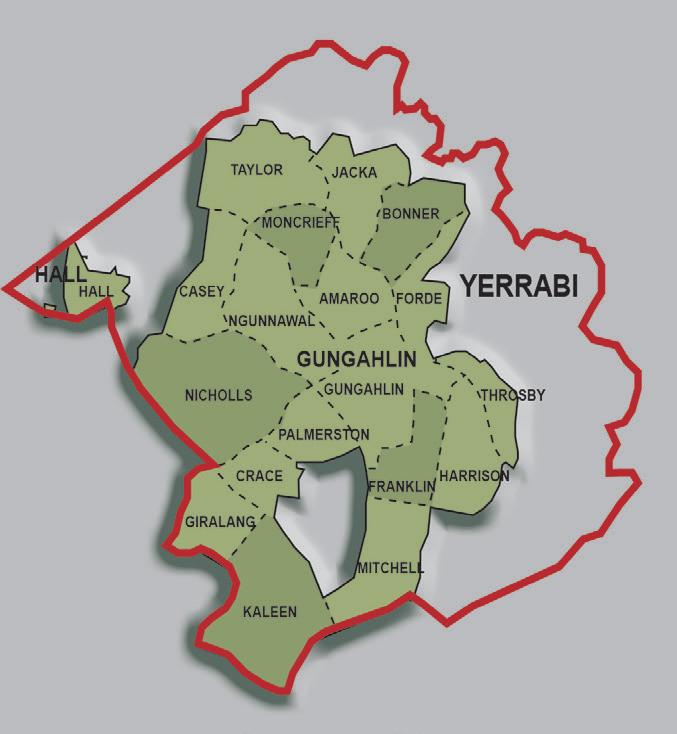
Gungahlin voters the most culturally diverse
In a challenge to both parties, the demographics of Yerrabi, especially around Gungahlin are changing.
Yerrabi is the most culturally diverse of the five ACT electorates, with migrants from South Asia and China representing the largest portion of residents, outside of those born in Australia.
In response, both sides of politics have endorsed candidates from ethnically diverse backgrounds, in order to appeal to voters.
The Liberals in particular have made a concerted effort to attract voters from diverse backgrounds this election, with the party describing the team taken to the ACT election as “modern and diverse” with many of its candidates born overseas.
Endorsing candidates likely to have widespread appeal to ethnically diverse communities is an “intelligent move”, according to Dr Liz Allen, a demographer and social researcher at the Australian National University.
“The newer suburbs in Canberra, typically in the Gungahlin area, are home to the largest share of people from the more recent waves of immigration, making the areas more culturally and linguistically diverse than the Canberra average,” said Dr Allen.
“It’s incredibly smart and strategic that parties would put forward candidates that reflect the people that they are going to represent.”
Labor pre-selected Deepak-Raj Gupta at the last election. Though initially unsuccessful, he went on to take the seat upon the retirement of Meegan Fitzharris. Given Gupta was elected on a countback, his true level of support will be tested for the first
time this election.
A quick glance at the names of candidates selected by the parties gives us some insight into the likely direction of the future representation of Yerrabi and Gungahlin in future elections.

Krishna Nadimpalli and Jacob Vadakkedathu, both of Indian descent, are the Canberra Liberals’ candidates in Yerrabi. Vadakkedathu mounted solid campaigns in 2012 and in 2016, where he secured 6.1 per cent of first preference votes.
Mainul Haque, Canberra Muslim Community president, is running for the ACT Greens and Mohammad Munir Hussain, the man who sought to have the 2016 ACT election declared invalid, is the Federation Party’s candidate in Yerrabi. He is of Bagladeshi descent. Chinese candidate Dr Fuxin Li is standing as an independent.
While both major parties have identified capturing as much of the ethnically diverse vote in order to secure the fifth seat in Yerrabi, former candidate Kim Huynh argues it would be a mistake for parties to assume that picking culturally diverse candidates will necessarily translate into more votes for them.
Huynh’s experience running as an independent in Ginninderra, securing five per cent of the vote at the last election, demonstrates that his Vietnamese heritage alone would not be enough to reach a quota.
A lecturer in politics and international relations at the ANU, Huynh and his family arrived as refugees to Australia from Vietnam in 1979.
“In ethnic communities, people can know you but that doesn’t necessarily mean they’ll vote for you, this is something I know as a candidate,” he said.
“It counts to say that you are diverse as a party, but I haven’t heard anyone say anything credible about whether ethnic groups vote in blocks in Canberra.”
Should the Liberals pick up an extra seat in Murrumbidgee, that would bring their tally in the ACT Assembly to 12 members, but they would still need one more seat to form majority government. The most likely way to achieve that outcome would be by securing the fifth spot in Gungahlin. Liberal leader Alistair Coe says the mission is do-able.
However, veteran electoral analyst Malcolm Mackerras believes that the odds are “distinctly against” the Liberals winning three seats in Yerrabi and therefore going on to form majority government.
“I think the odds are distinctly in
“Which would produce the result 12 Liberal, 12 Labor and 1 (independent, minor party or Greens’ candidates), which is the most likely result.”
Mackerras predicts the Barr government will be returned in 2020.
What do the other pundits say?
Pinning its campaign on light rail while continuing to capitalise on Meegan Fitzharris’ popularity, Labor had a good outing in Yerrabi at the last election, picking up 43.9 per cent of the electorate’s vote.
But “CityNews” columnist Michael Moore has cast doubt on Labor’s chances of replicating its success from last election.
“Labor does not have the very strong drawcard of Meegan Fitzharris again, however, they are certainly good for two to get elected,” Moore said.
“I think that Alistair [Coe] will get around a quota and the other Liberal votes will flow through to James Milligan.”
While the loss of Meegan Fitzharris may alter Labor’s vote, “CityNews” columnist Paul Costigan believes it’s unlikely to alter the outcome with Labor likely to retain the third seat.
“At this stage it’s too close to call but most likely the result will be much the same as 2016,” he said.
The ‘indi’ (independent candidate) factor.
The other likely scenario would be if there were a strong showing by a minor party, such as the Canberra Progressives or an independent such as David Pollard, in the absence of Meegan Fitzharris, which could steal the fifth seat away from Labor.
Kim Huynh highlights the difficulties faced by candidates from
secure a quota without the brand recognition that major parties enjoy.
“You have to do something wild as an ‘indi’, it’s not enough to be rock solid, you have to do something more, otherwise how are people going to get to know you?” he said.
Huynh predicts the unofficial mayor of Crace, David Pollard, is worth keeping an eye on in Yerrabi.
“David Pollard was the best ‘indi’ in Yerrabi. Last time he got two per cent, he’s a great leader in his community and he’s a great communicator but he’s got no brand name behind him.
“Really ‘indi’s’ have no chance, and that makes my soul sorry, there’s only five candidates per electorate and you’ve got the 16 per cent quota.”
What about the incumbents?
The support for Labor’s Deepak-Raj Gupta, from the Indian community, may get him over the line, Suzanne Orr has some presence as a minister and Michael Pettersson’s drug policy may get him some votes.
Alistair Coe’s own electorate could give the Liberal leader some further advantage. He’s also a consistent performer, polling well in each election he’s run in since 2008. In 2016 Coe secured more than 7000 votes and 14 per cent of the first preferences with James Milligan winning 7.6 per cent of first-preference votes.
Liberals candidate and country music singer Leanne Castley has some experience on the campaign trail, she ran for the seat of Fenner in the federal election, campaigning against Labor’s Andrew Leigh. Canberra Progressive’s candidate Bethany Williams is running a decent social media campaign while the CFMEU’s legal officer Tom Fischer and public servant Georgia Phillips are first-time ACT election candidates for Labor.
Earlier published reviews of the electorates of Brindabella, Murrumbidgee and Kurrajong in this series can be read at citynews.com.au
THE United Nations’ International Day of Older Persons marked 30 years of supporting seniors on October 1.
The UN says it’s a timely opportunity to highlight the important contributions that older people make to society. The UN also wants to raise awareness, all year round, of the issues and challenges of ageing in today’s world.
To celebrate seniors here in Canberra, “CityNews” speaks to the organisations in the ACT who support seniors and are passionate about helping them make the most out of later life.
THE Council on the Ageing (COTA) ACT is encouraging people to reimagine ageing with the launch of their #ReimaginingAgeing campaign this month.
“Adjusting to our longer lives demands a ‘wholesale’ rethink of how we understand and talk about age,” says COTA ACT CEO Jenny Mobbs.

Jenny says it’s important to remember that while “older people” may be labelled as one homogenous group, individuals within it can span an age range of more than 40 years.
“At each stage, individuals have distinctive behaviours, preferences and buying power, different levels of health and wellbeing, and different needs for support and celebration in their lives,” she says.
October will see COTA ACT launch their #ReimaginingAgeing campaign with a number of activities including the Hughes Community Shed working bee day on October 17 and “Get Online Week” from October 19-25.

On October 25, craft activities will be the feature of Grandparents Day celebrations, and October 28 will be a #ReimaginingAgeing Donation Day, where Beyond Bank will match dollar-for-dollar every donation contributed to COTA ACT in support of their work focused on seniors affected by COVID-19 in the community.
“We encourage people to get involved with #ReimaginingAgeing and support our older community members,” says Jenny.
COTA ACT, Hughes Community Centre, Wisdom Street, Hughes. Call 6282 3777 or visit cotaact.org.au
ADRIA Care provides a home-like environment and high-quality aged care for up to 42 residents, as well as 36 independent-living villas in a landscaped environment with mature trees and gardens.
Adria Care general manager Iva Vujica says the villas are all two-bedroom and residents enjoy a shared community room for activities and social events.
“There are weekly outings organised using our private bus and we have a nurse on site, available around the clock should residents need medical attention,” Iva says.
As well as organised social programs, the village provides multilingual staff, regular mass, an on-site chapel, a psychologist, podiatrist, chemist, hairdresser and pharmacist.
“Adria Care is located 500 metres from Cooleman Court and bus services connect it to Woden, Civic, Belconnen and Tuggeranong town centres,” says Iva.
“It’s close to everything!”
Adria Care, 89 Fremantle Drive, Stirling. Call 6288 0198, email admin@adria.org.au or visit adria.org.au
Set amongst landscaped grounds, Adria Care is a warm and welcoming community of people from all around the world. We pride ourselves on cultural diversity and celebration, and offer a wide range of activities to cater for all interests. We provide care for Croatian and all other nationalities.
Adria Care fosters individuality and independence, providing support and assistance to enable residents to live in a comfortable and secure environment. Adria Care in Stirling offers residential care for 42 residents, incorporating 2 respite rooms, and Special Care. The village also contains 36 independent living villas. All villas have 2 bedrooms, a courtyard and a garden, and residents enjoy a peaceful and welcoming community lifestyle.
Our aim is to provide a caring, safe, home-like atmosphere, reflecting your rights to dignity, respect, privacy, safety and the best quality of life.
Contact our friendly staff today to arrange a personal tour.


For the month of October, Council on the Ageing (COTA) ACT is #ReimaginingAgeing to celebrate older Canberrans.
During the recent COVID-19 lockdown, many older Canberrans were not able to participate in their usual activities. Staying at home led to feelings of isolation and loneliness, older Canberrans felt marginalised due to being in a high risk category under COVID-19. We encourage you to support Canberra’s older
community members. Take the time to get to know your older neighbours or other seniors in your community. Ask them about their life. Reach out to make a new friend, ask a question, join in on community activities, share a recipe, borrow some sugar, make tea for two and celebrate ageing!
COTA ACT is supporting and celebrating many activities across the Territory for, about and focused on older Canberrans such as:

Council on the Ageing (COTA) ACT is recruiting theatre volunteers, 55 years and over to explore the mental health effect COVID-19 has had on older Canberrans. Those interested will work with local theatre professionals from Rebus Theatre. Workshops to commence in late November 2020.
Ideally we are looking for people who are prepared to discuss and share their experiences as well as work with others in the community to understand their encounters of COVID-19.
For more information visit www.cotaact.org.au/news/item/recruiting-for-covid-19theatre-project/ or email Events@cotaact.org.au or call the COTA ACT office on 6282 3777.
Pandemics: do they change how we address age and ageing?




YOUR Property Profits works with downsizers looking to move onto the next chapter of their retirement and wanting to maximise the sale of their home before they move into a smaller place, or a retirement village, says owner Kim Persson.
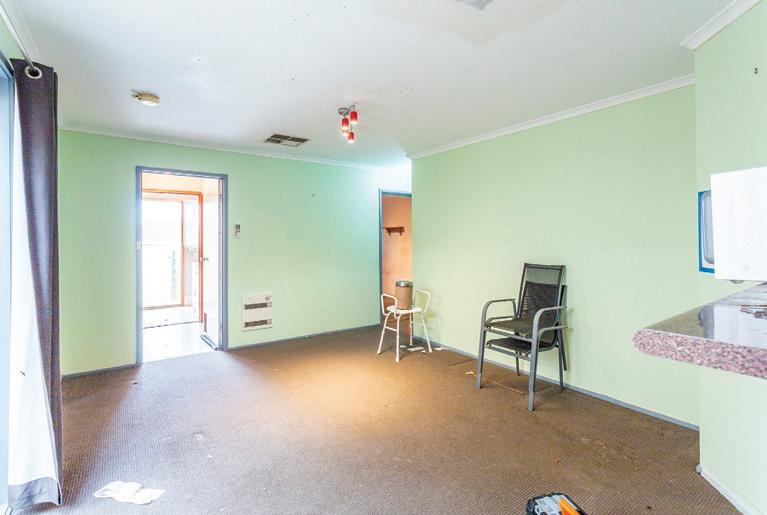
“Often seniors do not have the energy or the know-how to renovate their home for sale, and sometimes they find themselves asset-rich but cash-poor,” says Kim.
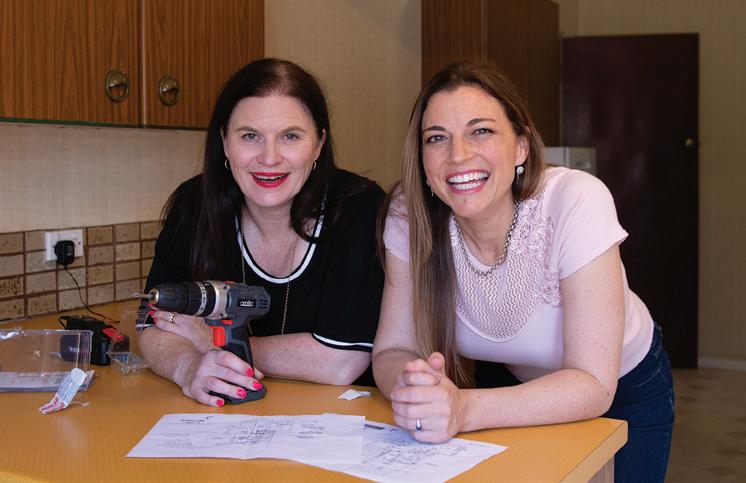
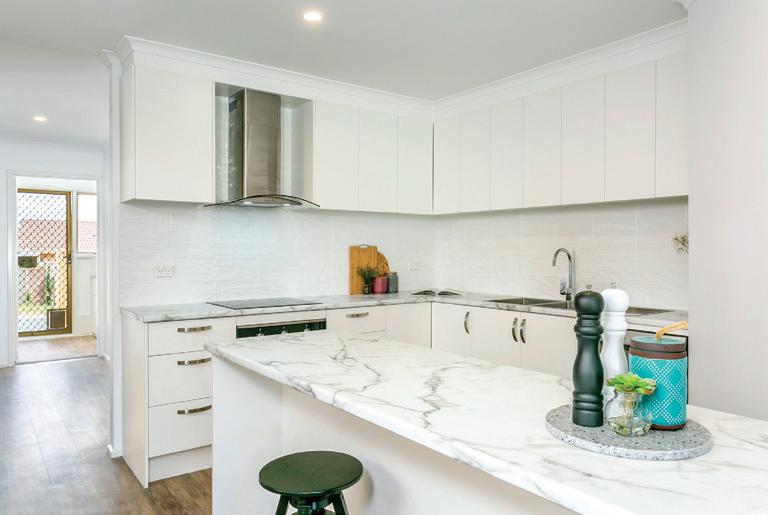
Your Property Profits has a unique business model, in which Kim and her business partner Sophie McLean, plus a team of tradespeople, stylists and real estate experts, organise and manage a renovation, style and prepare a home inside and out, for sale.
They take all the hard work on for their clients
make strategic improvements to a home that will increase the sales result.
“We can do as much or as little as our clients need or desire,” says Kim.
“Some people ask for minor repairs to get their home ready for sale, while others just leave us the keys and we take care of the entire process from renovation to sale.”
Kim says she and Sophie analyse the market to ensure they renovate to appeal to the majority of buyers in a particular area.
“Our intention is to always help our owners maximise their sale price and we do so with strategic planning without over-capitalising,” she says.
Your Property Profits. Call 1800 225597, email
Your Property Profits

CANBERRA’S boutique retirement community in Narrabundah, The Aerie, builds on more than 30 years’ experience in perfecting the balance between independence and community in retirement living design, according to Lendlease.
Developed by Lendlease, residents at The Aerie enjoy the ultimate resort-style living, with a brand-new clubhouse featuring incredible facilities such as an indoor heated pool, gym and bar, says a Landlease spokesperson.
“Conveniently located, The Aerie captures the best of both worlds. Easy connections to the city, yet far enough away to enjoy the tranquillity of a safe and secure community,” the spokesperson says.
“Boasting an elevated position, residents enjoy sweeping views over the Kowen Ranges, while only minutes away from
Canberra Hospital, specialist centres and the bustling cafe culture and shops of Red Hill, Manuka and Kingston.”
For residents Geoff and Dot Charlton, it was the idyllic location and wonderful facilities that drew them to this Lendlease community.
“We love living here. The clubhouse is so impressive and tastefully decorated. It has everything you need and it’s becoming a great meeting place,” they say.
For people interested in visiting, the brand-new clubhouse is now open for private inspections.
To find out more or to book an appointment, contact Rob Rowe on 0438 254043 or visit liveattheaerie.com/clubhouse





AN active lifestyle has many physical and mental benefits and is particularly important for seniors, according to Orthopaedics ACT’s orthopaedic surgeon Dr Nicholas Tsai, who specialises in the areas of spine, hip, knee and trauma.
“Activity promotes cardiovascular fitness and social interactions, it elevates one’s mood and also helps to prevent osteoporosis due to inactivity and lack of sun exposure,” he says.
“All joints benefit from moderate daily movements, whether the exercises are land-based or in water. Walking aids are also important for pain relief if you have arthritis in the lower limbs.”

Orthopaedics ACT strives to provide the best advice to all members of the senior community, says Dr Tsai.
“Patients will be assessed by orthopaedic surgeons, and both surgical and non-surgical options discussed,” he says.
“The goal is always to improve the condition and to return to an active lifestyle as soon as possible.”
Dr Tsai says patients with mild symptoms will be referred either to their onsite sport and exercise medicine physician Dr Lari Trease, or a physiotherapist participating in the GLA:D exercise program, which helps people with hip and knee osteoarthritis manage their symptoms.
“Surgical intervention is offered as the last resort, usually after conservative management has not been successful or if the condition is deemed so severe that conservative treatment is unlikely to improve it,” he says.
Orthopaedics ACT, Woden Specialist Medical Centre, Level 2, 90 Corinna Street, Phillip. Call 6221 9320 or visit orthoact.com.au
PARKINSON’S is a degenerative neurological disease for which there is no known cure, says Parkinson’s ACT president John Sheldrick.
He says the number of people with Parkinson’s is increasing within the community and can affect people from their 30s onwards.
There are medical and surgical interventions that help people to manage their symptoms, according to John, who says Parkin son’s ACT (PACT) supports and promotes activities to improve the wellbeing of people with Parkinson’s and to offer support to their carers and families within the ACT and surrounds.
As part of this, PACT supports eight different support groups, including two dance groups, a singing group, painting with Parkinson’s and a young onset group.
“These support activities also provide a place where people can enjoy fellowship, chat and share experiences,” John says. PACT also hosts information seminars and publishes a monthly bulletin.
It contributes to Parkinson’s research, as well as providing support for aged-care nurses in improving their knowledge of the disease, and scholarships for a student nurse at UC and a medical student at ANU.
can be put in place as early as 18 years old, says Ashilpa Khanna of Capon & Hubert Lawyers & Mediators.
your primary is unavailable or predeceased [or establishing] appropriate provisions for blended families.
Parkinson’s ACT, Community Centre, 7 Collett Place, Pearce. Call 1800 644189, visit parkinsonsact.org.au or email




“A will not only governs how, and to whom, your assets are to be distributed but also can direct your executors as to your funeral wishes or appoint guardian(s) of your minor children,” says Ashilpa, who is a wills and estate planning lawyer.
Ashilpa says it’s important to have a will prepared to ensure that a person’s wishes are given effect when they’re no longer there.
“Not having a will can make lives difficult for your loved ones and end up costing more in trying to administer your estate,” she says.
“There are many important factors to consider, [such as] appointing substitute
“It is also important to check your superannuation arrangements.”
Capon & Hubert Lawyers, a well-established firm that has been in business for more than 34 years believes in being accessible to clients, Ashilpa says.
“I enjoy my work and the people I work with, we have a very supportive work culture which in turn drives me to do the best for my clients,” she says.
Capon & Hubert Lawyers & Mediators, first floor, 32-38 Townshend Street, Phillip. Call 6152 9203 or visit chsol.com.au
Parkinson’s is a degenerative neurological condition which affects movement and mood. It affects an estimated 1,500 people in the ACT and surrounds. More than that, it affects carers, families and friends.
Parkinson’s ACT is a volunteer-run, non-profit organisation providing information, support and education. Our purpose is to promote the well-being and interests of people living with Parkinson’s in the ACT and nearby region.
The support of people who share your experience is invaluable. Parkinson's ACT can help.




www.parkinsonsact.org.au | actparkinsons@gmail.com



















Having
A WILL alone is not enough when it comes to estate planning, says KJB Law’s estate planning special counsel Kerstin Glomb.
A proper estate plan should address all aspects of a person’s wealth, including superannuation, jointly owned assets and assets in a company or family trust.
“When addressing estate planning, the documents should cover as many possible situations and include not just plan A, but plan B and even plan C,” says Kerstin.
Kerstin says this is particularly important as no one knows what might happen in the future and who might be living and/or is able to act for example as executor or guardian of minor children at the time.
“I can also help people to prepare their enduring power of attorney, which in my view is a major part of a proper estate plan,” she says.
“By addressing their enduring power of attorney, a person is taking charge in a practical sense and can nominate someone they trust to look after their financial matters, personal care, health care, and medical research matters, should they no longer have the capacity to do so themselves.”
With vast experience in helping clients with parental loans, selfmanaged super funds and estate planning in “all shapes and sizes”, including estate planning for blended families, Kerstin is also able to give advice in German succession law.
Kerstin says KJB Law, and its principals, Andrew Freer, Des Moore and Jo Twible, help people with a range of other legal affairs, including grant of probate, family law, property law and review of retirement village contracts.

ROSELLA Occupational Therapy has been providing experienced, reliable occupational therapy services in the ACT since 2016, says director Joanne Kinsella.
Occupational therapy is about helping people to do the things they want and need to do despite an illness or injury, according to Joanne, who says it’s about supporting safety, health and wellbeing, independence and quality of life.
“We provide practical advice on falls prevention, manual handling, and safer and easier ways for people to do everyday things that are important to them,” she says.
This could mean simplifying tea-making, suggesting smart technology to help keep someone living alone safe, delivering a falls prevention home exercise program, advising on recliner chair selection, advising on bathroom redesign to reduce falls risks, or helping family work out calming strategies to keep looking after someone with dementia. Every service is unique to fit peoples’ individual circumstances, Joanne says.

“We are often asked to give advice on a new home or renovation design, when an older relative comes to live with their family, or there’s been a change in someone’s health and abilities,” Joanne says.
“We specialise in dementia support and home modifications/accessible design.
“We work with private clients, NDIS and My Aged Care funded services. Our services are delivered within people’s homes, as we want to help keep people living at home.”
Rosella Occupational Therapy. Call 0457 206492 or email info@rosellaot.com.au
FALLS are a leading cause of death in older people, which is why Arthritis ACT runs specialised strength and balance classes as well as tai chi for falls prevention, says Arthritis ACT CEO Rebecca Davey.
By doing the classes and concentrating on mobility, Rebecca says people can stay at home and remain independent in their later years.
“Pain and arthritis aren’t only conditions of people as they age, but we do know that it’s more prevalent in the older community,” says Rebecca.
“As a result, all of our programs have a focus on the needs of the ageing community.”

Kerstin Glomb Estate Planning Special Counsel

Arthritis ACT offers seniors support through exercise and social groups in a one-stop-shop of coordinated care.
“We know it’s important to keep active and healthy as we age and Arthritis ACT has a team of experienced exercise physiologists, physiotherapists, counsellors, occupational therapists and dietary specialists who can help,” Rebecca says.
Arthritis ACT, Building 18, 170 Haydon Drive, Bruce. Call 1800 011041, email info@arthritisact.org.au or visit arthritisact.org.au



Physiotherapy – including the GLAD program for knee and hip osteoarthritis, sports injury prevention and rehabilitation, and pain condition support.
Exercise Physiology – Individual exercise prescriptions, small group classes to increase strength and improve rehabilitation, strength and balance classes, hydrotherapy support.
Occupational Therapy – access reports for NDIS and Disability Support Pensions, home modifications, equipment prescriptions.
Dietetics – meal planning, weight management support, food intolerance support.








each resident has their own space,” he says. Located on the site of the old Fisher Primary School, Araluen Village is aimed at fully independent retirees, aged 60 and up, with support available from management and other residents.
“There are heaps of activities, run by residents in the facilities provided, such as aqua aerobics in the indoor pool, croquet or bowls on the bowling green, a walking group, and a group that plays pool together,” Nic says.
A GOVERNMENT-funded home care package can offer freedom and independence in how seniors live a good life in their later years, says Helen Fuller, the program manager of aged care at Capital Region Community Services (CRCS).
“People get to choose the services that reflect their needs and we can help them navigate the system,” she says.
Helen says she chats to people about what a good life looks like to them, and it’s constantly in review.
some residents modify and improve their residences,” he says.
“Ultimately it gives seniors a choice in how they live, they can be independent, private and secluded, or be an active part of the community.”
Araluen Village. Contact Nic Salter-Harding on 0412 600085, email nic.salter-harding@ljhooker or visit araluenlifestyle.com.au
The ‘incredible’ benefits of Nordic walking
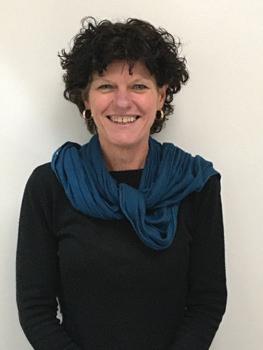
“People’s needs can change from month-to-month, so we want to make sure that what they access is still relevant,” she says. “Our whole approach to co-designing a plan is constantly putting the client at the centre and giving them every opportunity to decide what they want instead of prescribing things to them.”
Seniors can be reluctant to ask for help, says Helen, but accessing the home care package offers peace of mind.
“Early access to the services available, allows the person to make an informed choice, and supports them to do more things that they enjoy,” Helen says.
CRCS has a small, passionate team that provide a huge array of services, including ways for people to be socially connected, individual IT help, support for being safe at home, light gardening and lawn care.
Capital Region Community Services. Visit crcs.com.au or call 6264 0200.
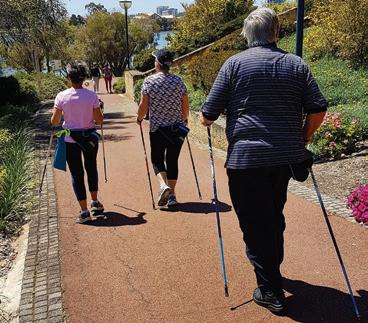
NORDIC walking is one of the most affordable and fun ways to get moving and stay active and healthy, so seniors can keep doing all the things they love, says Kristen Pratt of Capital Nordic Walking.
“Exercise, when done properly, is proven to boost health,” she says.
“Even a few minutes every day can strengthen the immune system, improve brain function, reverse the effects of ageing in the heart, and may even improve your memory. Exercise can also be a boon to mental health.”
Kristen says exercising outdoors is a covidsafe option because there are less people, little or no contact with surfaces that others might have touched and plenty of fresh air.
“Nordic walking is an incredible fitness activity –it’s fun, super effective, and convenient,” she says.
“It suits all ages and fitness levels and is suitable for people with health and mobility challenges like Parkinson’s, arthritis or balance problems.
“It’s a low-impact, total-body workout – as gentle as walking – but delivering results that are proven to be way better than walking, jogging or cycling.
“Best of all, it’s fun to do with friends and family.”
Capital Nordic Walking. Email Kristen@capitalnordicwalking.com.au, call 0499 993215, or visit capitalnordicwalking.com.au
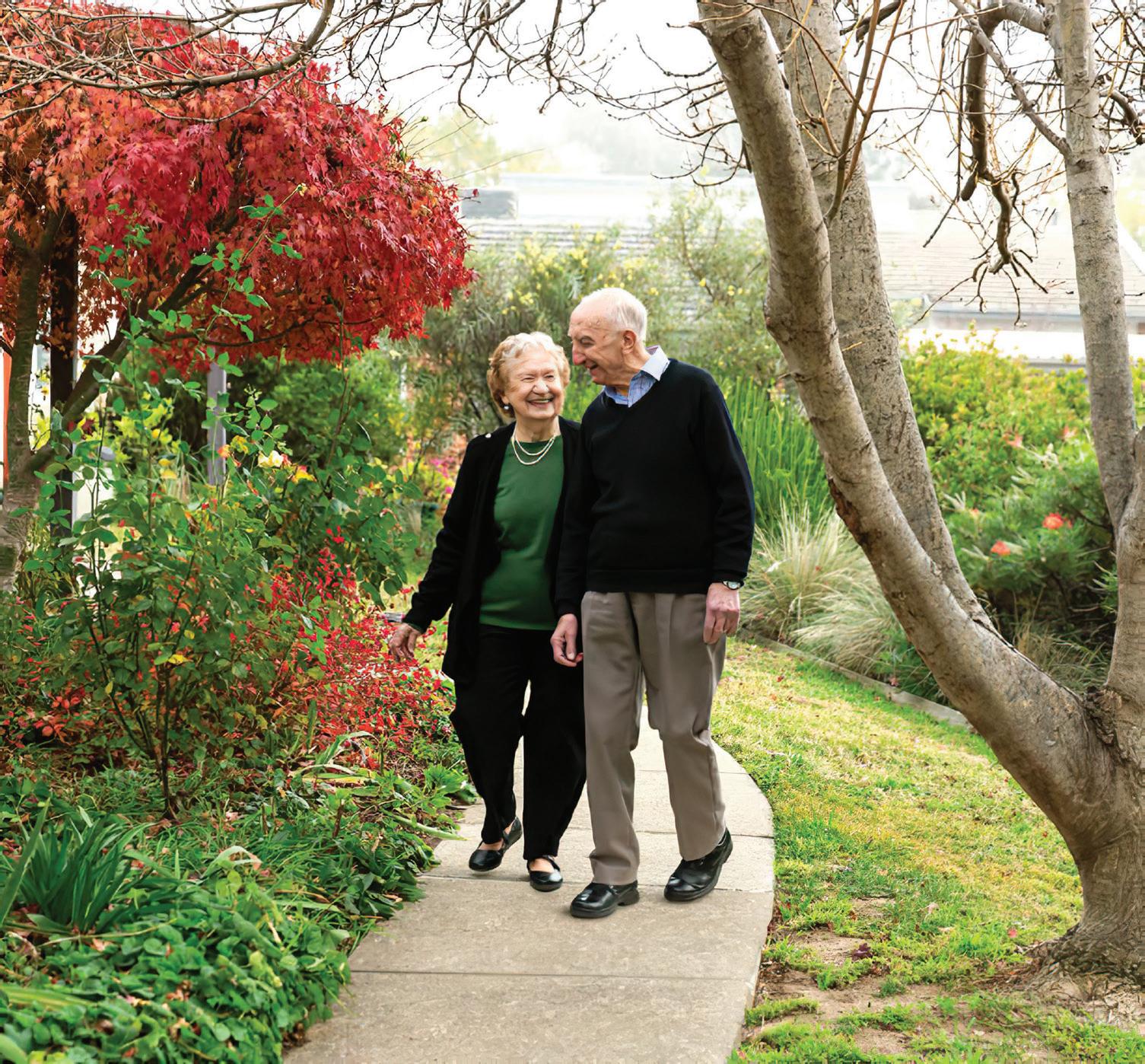
•
•
•
•
•




is the beauty of daphne; its fragrant flowers can be enjoyed for at least six months of the year. The buds are starting to open on daphne “Spring Pink”, with a mass of blossoms for the next couple of months. The first leaves are appearing on the early flowering Clematis montana “Rubens” with its pale pink flowers. This means it’s time to plant these wonderful climbers. Even the flowers on the bay tree are about to open.
SEEING water lilies for sale here, I was reminded of seeing them grow in a glasshouse at the Cambridge University Botanic Gardens in the UK. These are not just any water lily, but the largest in the world. The lily pads are more than three metres across, with the underwater stalk seven to 10 metres long, and are strong enough for two small children to sit on them. Their native habitat is in the shallow waters of

IT’S exciting when bulbs I’d forgotten about suddenly appear in unexpected places. I suggest not to plant Triteleia or “Star of Bethlehem”, tempting as it may be with its rich blue flowers. Once in a garden they take over, smothering other small annuals and perennials for several months. Our lawn is now a sea of these bulbs with their tiny flowers; mow the lawn and the flowers will be back within 48 hours. I’d love to receive suggestions on how to get rid of them organically!
A HINT on spreading mulch. Give the ground a good soaking, or after rain is ideal, then spread a layer of aged composted horse manure before the mulch. Of course, ground covers provide a living mulch and reduce weeds. When plant shopping, look out for Veronica peduncularis, which has a mass of tiny, bright blue flowers with yellow centres. Or choose a carpet thyme, which has a tight mass of tiny leaves with either pink or white summer flowers, making it almost impossible for weeds to get through. Culinary thymes grow too rangy. Use a sugar cane mulch under strawberry plants to keep the fruit clean

Your pond may not be large enough for this water lily!
away from the soil, and to discourage snails.
GIVE flowering shrubs a prune now, if they’ve finished flowering, to encourage many more branches and flowers next spring. Reduce the shrub by up to, but not more than, one third. One exception is Buddleia, or butterfly bush, which can certainly be reduced by two thirds as it’s such a vigorous grower. When pruning bulbs such as jonquils or daffodils, cut the leaves back about six weeks after flowering. You don’t have to leave the leaves until they all go brown and die down. The old idea of tying the leaves in knots or with string is now out, too. Now is the perfect time to trim conifers, especially if grown as a hedge. It’s important for all hedges to make the top narrower than the base, to allow even sunlight to penetrate to the base of the plant, preventing die-back.


• Extensive range of shoes for Runners, Joggers, Walkers and Gym enthusiasts of all ages
• Brands include Asics, Brooks, Nike, New Balance, Mizuno, Saucony, Hoka and On
• Great range of technical running apparel which breathes (wicks moisture) all year round
• Extensive range of nutrition products from Endura, GU, Hammer and Tailwind
• Come in and speak to our staff of Runners, Triathletes and Orienteers with a passion and a first-hand knowledge of our entire product range! Visit our ‘long running store’ at 76 Dundas Court, Phillip
THE suburb of Mitchell has long had a lightindustrial focus. But now, weaving in between the industrial experts of the region are other businesses such as cafes, accounting firms, gyms, clothing stores and physiotherapists.
The suburb was named after Maj. Sir Thomas Livingstone Mitchell, surveyor-general and explorer of NSW, and all its streets are named after Australian industrialists.
This week “CityNews” meets some of the top businesses operating out of the northside’s commercial hub.
BROTHER and sister team Mat
Scifleet and Sam Vrins run JAX
Tyres as an efficient business where they do their best to look after every customer, according to Sam.
Sam says their father, Pat, started and managed the business in the early days and the business has now run successfully for 26 years.
“We pride ourselves on customer service and aim to give our customers the best deals possible,” says Sam.
“We get repeat customers through being renowned for our one-on-one customer service approach.”
JAX specialises in tyres, wheels and mechanical services such as brakes and suspension, Sam says.
Customers who purchase four new tyres from a range of respected brands, and a wheel alignment, qualify for the “myjax” platinum tyre maintenance plan, which includes more than $500 worth of savings for each qualifying vehicle.
“It also allows customers to access and track their tyre maintenance on our website,” Sam says.

By following the recommended servicing, using the periodical reminders within the programme, Sam says customers receive significant discounts and bonuses while prolonging the life and performance of the tyres.
She says JAX also sells highperformance passenger car, light truck and four-wheel drive brands such as BFGoodrich, Bridgestone, Continental, Dunlop, Goodyear, Hankook, Michelin and Pirelli, as well as value-for-money brand options.
JAX Tyres, 10-12 Winchcombe Court. Call 6241 8586 or visit jaxtyres.com.au
SAVING people’s time and money, Oldmate ACT provides a range of services such as plumbing, gas fitting, heating, air-conditioning, hot water and minor electrical work.
It’s a “one-stop-shop” says director Tim Drage, who has more than 20 years’ experience in the industry.
“When people have various issues within their household, they can just come to the one company,” he says.
“We can help them out with a majority of their appliances and different fixtures within the house.”
And that also goes for businesses, as Oldmate ACT works commercially, too.
As for the quality of work, Tim says it’s the highest because they work hard to get it right so they’re only at a job once.
“Our qualified staff are always on hand to answer any questions and give the best possible advice. We will always provide you with quality service at a competitive price,” he says.
“We have multiple vehicles servicing Canberra and surrounds, offering a quick turn-around.
“An emergency service is always offered, so if someone has a burst water pipe flooding the house or no hot water, we can come fix it.”
Oldmate ACT. Call 6254 6576, email office@ oldmateact.com.au or visit oldmateact.com.au
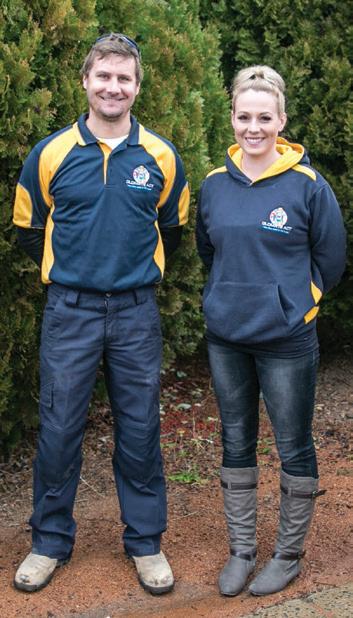








How can we help you?
• Make your staff more productive
• Effective strategies for office and remote workers
• Safeguard against security issues
in IT Support Services – at a fixed price
Teams include features like one-on-one chats, Instant Group Messages, Video & Voice calls and document sharing.
Collaboration is made easy - your Team can edit documents and work on the same project at the same time, making them more efficient.
Let us help you – we are your IT department.

THE professional team of business technology experts at OmniIT are helping businesses work from home with the innovative, user-friendly software, Microsoft Teams, says OmniIT partner Michael Warnock.
Michael started OmniIT 23 years ago and, now, he and his wife Cheryl manage a passionate team of nine business technology experts, who provide managed IT services, which include helping clients move to Microsoft Teams software.
Accredited by Microsoft as a “silver partner”, Michael says that Microsoft Teams is the future for business.
“Microsoft Teams allows you to take the office with you, wherever you go and lets you connect with everyone in a collaborative way,” he says.
He says it also allows people to store all their documents in the cloud and it has integrated video conferencing through Skype, as well as the ability for multiple people to work on the same document together.

With more people working from home than ever before, Michael says OmniIT has had a lot of experience in setting businesses up to allow staff to work successfully from home and Microsoft Teams provides an easy way for business to operate with people working outside the office environment.
“We are moving all our clients to Microsoft Teams as it makes working so much easier for them and is user
friendly,” says Michael.
OmniIT also provides managed IT services and support to businesses, with services including cloud computing, data backup, security, IT infrastructure and planning, and project management.
OmniIT, unit 8, 12 Sandford Street. Call 6230 3839, email support@omniit.com.au or visit omniit.com.au
MOTORCYCLISTS are among the “We’re teaching the physical responsibility for themselves, actively identifying anything on the roads that may present a safety issue, without assuming that cars will give way to bikes.
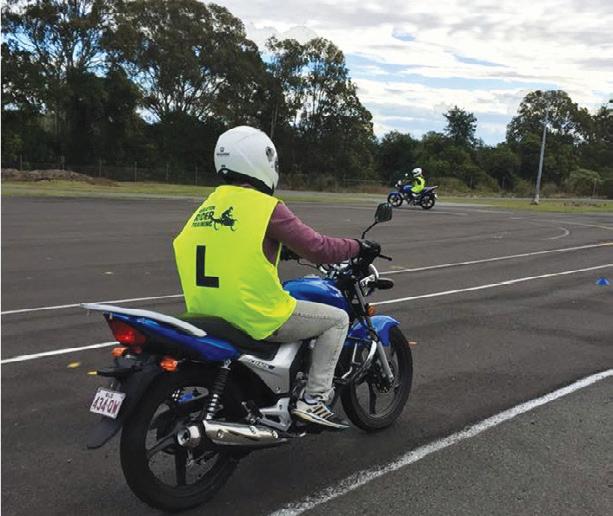


“I want to train those who have chosen to ride a motorcycle to be
In Canberra, Steve says most people like to ride their motorcycles in the summertime, which is why it’s timely to start training
“If you are planning to get your motorcycle licence, now is the time to get started so you can get the training you need to get your ‘L’ and ‘P’ plates and enjoy the best weather for riding,” he says. Weekend training is held weekly at both Merici College in Braddon and Sutton Road at Majura and occasionally on Fridays.
Revolution Rider Training, 54 Hoskins Street. Call 6109 0154 or visit revolutionridertraining.com.au

• repairing, resizing and re-casing services • add extra feather and down to your quilts, pillows or sleeping bags
THERMA Quilts has been specialising in making and servicing feather and down products such as quilts, pillows and cushions since the 1980s, according to a Therma Quilts spokeswoman.
Using quality textiles, she says the seamstresses hand-make every item suited to the customer’s needs and provide a top-up service when quilts and pillows show signs of wear or loss of warmth and fluffiness.
“Servicing of feather and down products is essential for keeping them in optimal condition for comfort,” she says.
“With time and usage, body proteins and lipids (natural oils and perspiration) are absorbed onto quilt casings and into the feather and down inside.
“Over time, this build-up dampens the down, which causes it to lose its thermal resistance. However, regular servicing of your quilts would ensure that your down is fresh and fluffy.
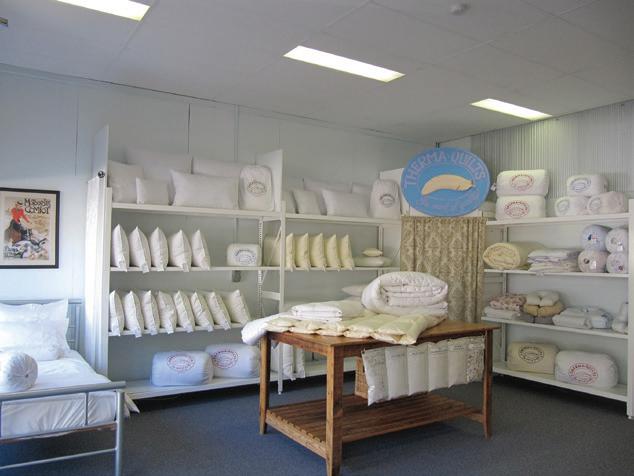
“With time and usage, the fabrics on quilts wear out and get thin, but once holes appear there is no need to throw away your quilt.
“Therma Quilts is able to re-case your quilts in addition to other services such as extending them into a larger size or reducing them to
With its eco-friendly cleaning process, Therma Quilts services feather and down products including sleeping bags and down clothing as well as other textiles such as silk, polyester, cotton and wool quilt underlays.
“Whether you’re wanting to rejuvenate your quilt, customise it or buy a new custommade one we can look after you,” she says.
Therma Quilts, 10-12 Kemble Court. Call 6241 6859 or visit thermaquilts.com.au

A PICTURE framer by trade, Eddy Tillotson, the owner of Framing Pieces, not only offers framing services, but also sells the most comprehensive selection of fine art supplies in the area.
2012 and now we’re a niche market in Canberra, selling strictly high-end fine art supplies and serving professional or semi-professional artists,” he says.

“We have an exclusive range of watercolours, soft pastels, oil paints, acrylics and media inks, pencils and sketchbooks. The items are available online, but artists are tactile and often prefer to visit the store to feel the paper, rather than read about GSM paper numbers online.”
Eddy started the business in 2004 and says he has a good knowledge of the industry and how things are made.

“We’ve done anything from photos of kids at the beach to a helicopter control panel, and a big pair of leather aprons from a timber mill,” he says. Eddy says Framing Pieces can also work with local artists to frame a series of works for exhibitions.
Framing Pieces, 44-46 Grimwade Street. Call 6255 7033 or visit framingpieces.com.au
AFTER providing the Canberra region with quality and reliable electrical services for about three years, Clark Electrical and Air Conditioning has expanded, and now offers plumbing services too.
Owner Aaron Clark, who has been an electrician for almost 30 years, says the business is now a “one-stop-shop”.
Aaron, and his team of nine experienced tradespeople, service the whole Canberra region, helping with problems such as toilets, drains, gutter work, LED lighting, or switchboard upgrades.
“Our air conditioning department can meet all your heating and cooling needs, especially if you are looking to upgrade your gas system to electric, which is cheaper to run and can incorporate with
He says the showroom in Mitchell is open for people to visit and see products on display such as wifi air conditioning systems, which
“It’s a great feature for people wanting to turn on their air conditioning before they get home, or switch it off if they forget
Clark Electrical & Air Conditioning, 5/12 Sandford Street. Call 1300 230462 or email aaronclarkelectrical@gmail.com

Reliable:
Qualified:



I had a Zoom session this week with Jude and Pete, who are planning to retire shortly and needed advice.
“I receive the US pension from the employment of my spouse, who died a few years ago,” Pete said.
“Meanwhile, Jude is eligible for a UK state pension and another from her former UK employer.
“To top it all off my mother, who is going into a nursing home, has a German pension!”
I suggested we look at Pete’s mother’s German pension first. “Interestingly enough, there are some German and Austrian pensions that are not counted for Social Security purposes, which means your mother can receive the full Australian Centrelink pension as well as the German pension depending on her other income," I said.
“The reason for this is that these pensions are called ‘restitution’ payments and are paid to victims of Nazi persecution.
“So as your mother is receiving the full pension she can continue to do so when she goes into the nursing home.”
Pete was grateful for the advice and said he had been worried his mother had filled out the form incorrectly.
“Pete, now as to your pension it will be payable for life and, under the US double-tax agreement as it results from government service, it is only taxable in the US," I said.
"You pay tax at the rate of 30 per cent on this pension and every year you should receive a form (1042-S) showing that 30 per cent tax has been deducted. You do not need to disclose this in your Australian tax return under the current rules.
"I also note that you will receive a PSS pension on your retirement and a pension from Australian Super. While you are in Australia, you will pay tax on your PSS pension and receive an offset of 10 per cent on the gross amount of the pension, which effectively reduces the tax that you will pay on this pension.
"The pension you receive from Australian Super will be tax free as you have satisfied a condition of release by retiring after age 60.
"I do remember you mentioning that you might go to live in the US and advise that this could have tax ramifications for you.
"Your tax-free pension will not be tax free in the US and the concessional tax rate that applies to your PSS pension will also not apply. Your spouse pension will also be taxed in a different way.
"So if you do decide to go back to the US you will have to consider these matters very carefully."
Peter said he hadn't realised different countries taxed pensions in different ways and would come and see me again if they did move to the US.
Turning to Jude’s UK pensions, I said they were taxed in the usual way. "However, the State pension is eligible for an 8 per cent tax offset as Jude will have made contributions to it," I said.
"The employment pension is unlikely to have any concessions, which makes it a little easier but I will review that more carefully when you provide the documentation.”
Jude said: "Thank you Gail, that sounds very easy for me.”
If you need advice on pensions that you receive from overseas contact the friendly team at Gail Freeman & Co on 6295 2844. Disclaimer
This column contains general advice, please do not rely on it. If you require specific advice on this topic please contact Gail Freeman or your professional adviser.
Joanne Madeline Moore
Your week in the stars – October 5-11, 2020
ARIES (Mar 21 – Apr 20)

Rambunctious Rams: this week there’s the potential for explosive Mars-Pluto power struggles with an authority figure, work colleague or parent (especially on Friday). The situation is complicated by Mars being retrograde (and Uranus opposing Mercury). Calm down and try to communicate with extra care and diplomacy, otherwise you could over-react and do or say something you later regret! So be patient and try to make frustration your friend.
TAURUS (Apr 21 – May 21)
Expect a rather intense week, as the planetary patterns stir up inner compulsions, submerged secrets or hidden resentments. You could also become obsessed about someone from the past. Smart Bulls will learn from their own mistakes, let go and then move onto fresher and more fertile pastures. Inspiration for the week is from birthday great, actress Kate Winslet: “The good and bad things are what form us as people… change makes us grow.”
GEMINI (May 22 – June 21)
This week you’ll experience the greatest satisfaction if you share your goals, aspirations and dreams with other like-minded people. Collective collaboration is the key. But you need to think long-term and be patient. Mercury is at odds with Uranus, which could disrupt your daily routine or stir up an old health issue. Do your best to get the balance right between being creative and being thorough; between having inspirational ideas and making practical progress.
CANCER (June 22 – July 23)
If you are crabby with work colleagues or loved ones this week, then they will be in the mood to fight back! So do your best to be more compassionate and generous towards other people. Plus try to view a troubled close relationship from a much more philosophical perspective. As birthday great John Lennon observed: “We’ve got this gift of love, but love is like a precious plant. You’ve got to keep watering it. You’ve got to really look after it and nurture it.”
LEO (July 24 – Aug 23)
There’s a challenging square between Pluto and retrograde Mars, so do your best to avoid online arguments and run-ins with authority figures. If you are the person in charge, then resist the urge to be bossy and over-bearing with others. Behaving like a demanding Diva will get you nowhere fast! Try to be extra patient… which is not one of your natural virtues. Coupled Cats: plan a pleasant surprise for your partner. Single Lions: love and work are linked in unexpected ways.
VIRGO (Aug 24 – Sept 23)
This week Mercury (your patron planet) is at odds with disruptive Uranus, and then Pluto squares Mars. So the more unpredictable, unreliable and demanding others are, the more you will shift into fussy, finicky, obsessive mode. You’ll feel much less stressed if you take ten deep breaths, try to relax and keep things in perspective. Remember – you can’t control what other people say and do. The weekend is wonderful for personal projects and shared adventures.
LIBRA (Sept 24 – Oct 23)
The retrograde Mars-Pluto square stymies motivation and slows progress (especially involving a romantic relationship, joint venture or domestic matter). Uranus also stirs things up with friendships or finances so expect the unexpected! You could also find it difficult to stick to your chosen diet, daily exercise program or usual beauty routine. Perhaps it would be better to moderate your perfectionist streak and learn to love your perceived imperfections?
SCORPIO (Oct 24 – Nov 22)
Retrograde Mars squares powerful Pluto (your ruler) on Friday, which boosts your temperamental streak and your Scorpio control-freak tendencies. And you may feel like you’re stuck in a rut or even going backwards. The more stubborn you are, the more challenging the week will be. On the weekend, Venus and Uranus encourage you to reach out and help someone in a surprising way. Whatever happens, keep your options open and try to be flexible.
SAGITTARIUS (Nov 23 – Dec 21)
It will be very easy to say the wrong thing to the wrong person at the wrong time but making controversial comments will land you in hot water. So think things through and choose your words wisely. And expect some rather surprising disruptions to your daily routine as Uranus upsets your work applecart. A fun and flexible attitude will help you navigate the week in a more positive fashion. The weekend favours socialising with colleagues and exercising with friends.
CAPRICORN (Dec 22 – Jan 20)
There could be cross words between you and a family member, as you seem to be heading in different directions. Remember the good times you’ve had together and look for some common ground. Things will look a lot brighter in the morning. Your motto for the moment is from birthday great Eleanor Roosevelt: “With the new day comes new strength and new thoughts.” If you are single, you could fall in love with someone from another country or culture.
AQUARIUS (Jan 21 – Feb 19)
Aquarians often feel restless, rebellious and agitated. This week, with the planets illuminating your solitude/soul zone, you need to slow down and look within as you contemplate, meditate or ruminate. Negotiation planet Venus also encourages you to hold out the olive branch of peace (especially to a stressed family member). So your motto for the moment is from birthday great, music legend John Lennon: “Turn off your mind, relax and float downstream.”
PISCES (Feb 20 – Mar 20)
Does it feel as if your dreams are on hold or your finances are going backwards? This week retro Mars slows things down and increases frustrations. But then lucky Venus swoops in and encourages you to pair up with a loved one and make your combined dreams come true. You’ll need to be patient though Pisces! Your mantra for the moment is from birthday great John Lennon: “A dream you dream alone is only a dream. A dream you dream together is reality.”
Copyright Joanne Madeline Moore 2020
is a renowned player in which sport? (6)
10 Name a member of Jason’s band, in search of the Golden Fleece. (8)
11 What is a more common term for pulchritude? (6)
12 Which tower-like structure is used for storing grain? (4)
13 Which variety of mineral includes the emerald? (5)
16 In which direction does the Nile flow? (5)
19 Name a type of horse of graceful, intelligent breed. (4)
21 To come into possession of something, is to do what? (6)
22 Name one of the numerous species of flat fish. (8)
23 To make careful utilisation of resources, is to do what? (6)
24 To be able to read and write, one must be what? (8)
25 To act in opposition, is to do what? (6)
2 George Formby was accompanied by which instrument? (7)
3 What is a period of one hundred years? (7)
4 Name another term for compositions. (6)
5 Which explosive force is equal to that of 1000 tons of TNT? (7)
6 Name the lightweight full-length one-piece wetsuit used for spear fishing, waterskiing, etc. (7)
7 Name the nationality of Dick Whittington. (7)
13 William Frederick Cody was more commonly known as ... Bill? (7)
14 What are accounts brought back, or presented? (7)
15 Which room is set aside for the washing of clothes? (7)
17 Which sea creature has eight sucker bearing arms? (7)
18 What are three-legged stands? (7)
20 Name a particular breed of collie. (6)
Sudoku medium
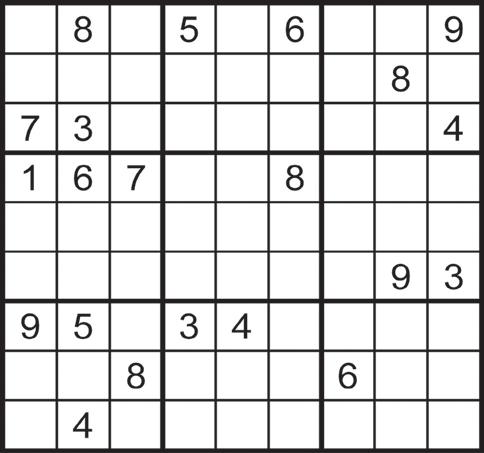

By Helen MUSA

THE 21st Italian Film Festival is bound to confirm all over again the extraordinary hold Italian filmmakers have on cinematic art.
The festival is bookended by the live-action version of “Pinocchio” starring Roberto Benigni to open, and Giuseppe Tornatore’s “Malèna”, starring Monica Bellucci, to close.
Benigni, best known as the star of the 1997 film “Life Is Beautiful”, for which he won the Oscar for Best Actor, plays the woodcutter Geppetto, who fathers/makes the puppet Pinocchio, who wants to become a real boy.
Garrone’s highly theatrical version of the children’s tale by Carlo Collodi is being billed as a “gothic masterpiece”, mixing the grotesquery of the story’s famous characters, the Cat, the Fox and the Cricket, with a gritty realism that shows the impoverished life of the working people in feudal Tuscany.
The closing film, “Malèna”, has been chosen in memory of film composer Ennio Morricone, who died in July. Set during
World War II, the film shows 13-year-old Renato besotted with Malèna, the most beautiful woman in a small Sicilian town and the subject of malicious gossip.
Morricone’s soundtrack to “Malèna” was nominated for the Academy Award for Best Original Score and the Golden Globe Award for Best Original Score and the title track has been recorded by Yo-Yo Ma. Made in 2000, it is one of 13 feature films for which Morricone composed the score that was directed by Giuseppe Tornatore.
In all, he wrote more than 400 scores for the screen and 100 classical works, with credits for all Sergio Leone’s films since “A Fistful of Dollars”, all Tornatore’s films since “Cinema Paradiso” and movies as unalike as “Exorcist II” and “The Untouchables”.
His score to “The Good, the Bad and the Ugly” is one of the most recognisable of all soundtracks in history.
Sandwiched in between these two classics is a festival mix of crime, comedy, social realism and psychological drama.
Marco Bellocchio’s “The Traitor”, a big winner at Italy’s 65th David di Donatello Awards, shows Pierfrancesco Favino playing a Sicilian Mafia boss-turned-police informer.
In a double whammy for actressturned-director Jasmine Trinca, we’ll be seeing Ferzan Ozpetek’s new film “The Goddess of Fortune”, where Trinca plays
a mother who leaves her kids with two gay friends when she falls ill, screening alongside her own short film, “Being My Mom”, a mother and daughter’s journey through a deserted Rome.
A special presentation screening is “Martin Eden”, writer and director Pietro Marcello’s take on Jack London’s 1909 novel about an outspoken writer at a pivotal moment in Italy’s pre-war history.
Comedy highlights include Neapolitan romantic comedy “7 Hours To Win Your Heart”, where a group of desperate men in Turin attempt an armoured truck robbery and “Once Upon A Time... in Bethlehem”, where comedy duo Ficarra and Picone star as a thief and a priest who are magically transported to Palestine to make sure the birth of Jesus follows its course.
As in all good film festivals, the kids are not forgotten. For age 15 and over, there’s “My Brother Chases Dinosaurs” and for all ages, “The Most Beautiful Day In The World”, where a luckless theatre manager receives a strange inheritance, the custody of two children, only to discover that one of them has amazing telekinetic powers.
Both those films are recommended in a curiously Italian subsection of the program – “Nonna-Friendly Films”.
The 21st Italian Film Festival, October 1-18, bookings italianfilmfestival.com.au

EARLY in August, 2018, “CityNews” published this review and it is repeated here to honour the memory of Ruth Bader Ginsburg, whose passing I mourn, as I imagine many readers also will do. And I fear for the possible effect that current events in the US may do to sully that memory.
“RBG” (PG)
THIS acronymic title announces Ruth Bader Ginsburg, the second woman to become an Associate Justice in the US Supreme Court.
A dry subject for a movie? It depends on your point of view of the rights of the common man and woman. In 1789, the framers of the US Constitution could never have imagined the court’s influence on daily life today in a country where the rule of law encompasses modern attitudes and procedures. RBG, as she is affectionately known, is a physically diminutive legal powerhouse. The film examines several of the landmark cases on which she sat. She has championed the rights of minorities unable to speak for themselves. Her judgements come directly to the point of the cases before the court.

Directed by Julie Cohen and Betsy West, “RBG” delivers a family portrait and professional CV of an unexpected pop-
culture icon, documenting her life and achievements with care, affection and forthright energy. It’s entertaining at every step, often amusing, always respectful not merely for the judicial office she occupies. She is not a woman to mess about with.
Then, in mid-February last year, I wrote the following review.
“On the Basis of Sex” (M)
SIX months ago, I gave four stars to the documentary “RBG”, describing it as a “family portrait and professional CV of an unexpected pop culture icon”.
At that time Mimi Leder’s biographical film written by Daniel Stiepleman dealing with the early life and burgeoning career of RBG may well have been filmed. It’s a re-enactment of a young wife and mother, determined to become a lawyer, from the 1959 class at Harvard Law School to winning a landmark judgement in the Tenth Circuit Court of Appeals.
Dry, wordy stuff? All those libraries filled with statutes and law reports and prestigious journals to master?
Where’s the action, the suspense, the conflict, the tension, those elements that every law student must master before being let loose on clients seeking judgement or defence? And which together with basic humanity also form the basis of every cinema box-office hit.
Leder and Stiepleman deliver those well enough in a two-hour movie canvassing significant events in Ruth Bader Ginsburg’s early private, academic and professional lives to a climax telling how the Tenth Citcuit Court of Appeals overturned a Taxation Court decision denying


Stay in touch with the names making news on Sundays from 9am as 2CC and “CityNews” present Canberra’s only local weekend news and current affairs program.
It’s a revolving panel show that brings to the microphone great “CityNews” commentators and 2CC personalities.
Be part of the conversation call 6255 1206 between 9am and noon

her male client the right to funding that would have been made available to a woman in the same circumstances.

Jones carries “On The Basis of Sex”, standing front and centre in virtu ally every sequence in the film. Armie Hammer plays her husband and Justin Theroux is American Civil Liberty Union boss Mel Wulf. Sam Waterston plays Erwin Griswold, Dean of Harvard Law School at the time when Ruth, already a Cornell graduate, began her law course.
Griswold, an ultra-conservative, later US solicitorgeneral, noted that the US Constitution makes no reference to women whom he believed belonged at home, and that success of the ACLU campaign would rip the fabric of American society to shreds. After a year at Harvard, Ruth transferred to Columbia Law School.
Bill Clinton appointed Ruth, after a stellar career in law, legal education and legal scholarship, to become an Associate Justice of the Supreme Court. And before Mimi Leder released her film, Ruth walked up to the camera on the forecourt of the Supreme Court in Washington, as if to say “This film gets it right”.
“RBG” is available to stream on the ABC’s iView platform. “On The Basis of Sex” is available on the Binge streaming platform, however an exhibitor with their finger on the pulse could do worse than run a cinema season on either or both these two films.
Chris Ryan tells us of a new initiative, “Sideway Comedy”. Ryan and local comedians Frankie McNair, Laura Campbell and Agata Nabaglo want to get a more balanced line-up that includes women, people with disability, LGBT+ and black, indigenous or people of colour. Held every second Thursday at 7pm at Sideway Bar, 21 East Row. Sign up to perform at facebook.com/sidewayscomedyCBR/
The Private Life of a Portrait” reveals the stories behind works from the National Portrait Gallery collection and the creative and social process of making a portrait. The exhibition features interviews with artists and sitters as well as rarely-seen working drawings, scrapbooks, sketches and footage. October 10-March 14.
REBUS Theatre is hosting a filmmaking adventure in which two troupes of young filmmakers will each devise a film exploring issues close to their hearts. A free program for LGBTQIA+ youth aged 12-17 years, it will be held at Ainslie Arts Centre during the school holidays, October 6-8. Enrolments at rebustheatre.com/post/ acting-out-on-screen.
HOT on the heels of news from the National Opera that the 2020 season of “La Rondine” would be postponed to late 2021, the company has announced the first of two productions for 2020, Mozart’s two-act opera, “La Clemenza di Tito”. The audition process is already underway.
CANBERRA Bonsai Society’s annual show is coming up, including traditional exotic plant species and Australian species. Daily demonstrations will be held at 11am and “Bonsai Basics” sessions at 2pm. At Canberra High School, Bindubi Street, Macquarie, 9am-5pm, October 10, and 9am-4pm, October 11. $5 entry.
THE other day I experienced a peculiar moment. Watching a film on my phone that I’d lost interest in, my mind began to wander. Without much thought I tried to give my phone an upwards swipe, which resulted in nothing happening.
Moments later I realised what I’d attempted to do.
That “upwards swipe” is a characteristic of the infamous videosharing app TikTok.
Users swipe up continuously through short, often humorous videos. The requirements are that these can only be a minute long in total, but often fall under the 10-second mark.
Uninterested in what you’re seeing? Swipe up and the next video is preloaded ready for you to watch. That one not grabbing your attention? Swipe up again.
Amazingly, TikTok will track how long you spend watching each individual video (let alone who knows how much else, but we won’t mention China), and then before you know it, hey, presto, they’ve devised a feed of videos they know you’ll spend as much time as possible watching.
I had my suspicions that the app might be having some sort of negative effect on my attention span,

but my almost unconscious action of “upwards swipe next video, please” confirmed it.
Why am I talking about this? Well, last week Netflix dropped a challenging and widely praised doco that dives into the world of social media and the effects it has on unsuspecting consumers.
It’s called “The Social Dilemma” and it’s stirred up quite the buzz. It features former executives, ethicists and all sorts of social-media employees who have sounded the alarm on the escalating dangers and damage of social media.
The series, originally from a podcast that can be streamed online, details the deficits on mental health, attention span and social interaction exacerbated by the million and one networking platforms we now have such immediate access to.
Like TikTok, these social-media
companies track time spent on any particular subject, then preload the next post, photo, or video to keep your eyes glued for as long as possible. And you can bet that Netflix or any other streaming platform has algorithms at work doing the same thing.
It becomes particularly dangerous when we consider the political implications generated by feeds that want to keep viewers hooked.
Interested in one thought, movement or ideology and social-media platforms will know about it and be more than happy to send you down a rabbit hole.
And then we wonder why people in the Twitterverse end up in these rampant and vicious echo chambers.
What the documentary
cleverly points out though is the way social-media users have to take responsibility for their own online interactions. If we actively diversify our sources of information, Facebook or Twitter or whatever we might use will think: “Hmm, if I want to keep this person interested, we’re going to have to show them a diverse range of information otherwise we’ll lose them.”
And of course, to lose users’ interest means losing that potential to make the copious amount of ad revenue.
“The Social Dilemma”, though not always communicating its messages effectively, makes for essential viewing in an age where those without some type of social-media app available to them are in a very small minority. Its point is clear – we have the ability to transform our feeds back into tools we use rather than making ourselves tools of the companies trying to use us.
More of Nick Overall on Twitter @nick_overall

Big windows at the front attract passersby, who regularly stop and watch dumpling makers working their magic,” writes dining reviewer JOHNSON
MY last review of dumplings led to an interview on 2CC on the best dumpling places in Canberra, which led to a faithful reader writing to say Dumpling Social is a new hotspot worth visiting. Off we went… Dumpling Social has a prime possie on Woden’s Bradley Street precinct. It sports a funky fitout and its special vibe makes you want to eat loads of dumplings (which we did). Staff are welcoming, energetic and friendly, and work mighty hard to create joy about the place. Big windows at the front attract passersby, who regularly stop and watch dumpling makers working their magic. On our visit, two dumpling masters were pumping out pork and chive dumplings. We couldn’t resist and ordered some (eight pieces, $12.90 and $1 extra for pan-fried). Dumpling Social takes this old classic to a new level and we eagerly dipped each dumpling into a pieces, $10.90). We also selected the fashionable beef and beetroot dumplings, which were fabulous and not just for their flavour, but also for their sense of style – the pastry is beetroot infused and

and a spiced soy sauce, an exciting combination of flavours.
To boost our vitamin intake we selected the stir-fried Asian greens, the best we’ve had in yonks. The dish – a delightful mixture of
crunchy snow peas, broccoli and oyster mushrooms – arrived piping hot ($18.90). It was bright, lively and
We’ll be back soon for the crispy and aromatic Peking duck served with steamed pancakes ($35.90 full serve and $21.90 half serve) and the slow-roasted lamb shanks in unique Szechuan sauce with smoked cumin seeds ($21.90) and MORE DUMPLINGS, including the Crystal Jade prawn (four pieces, $12.90).
Indulging in desserts wasn’t possible because we were stuffed at the end of our lunch, which we enjoyed on a table outside in the sun. But fans of Nutella won’t want to miss the freshly steamed fluffy bun stuffed with a rich Nutella filling
Dumpling Social is licensed with sparkling, white, rosé and red wines, eight styles of sake, soju, more than 10 beers and ciders and a decent
Shop R02, 9 Bradley Street, Woden, open seven days.
By Helen Musa
LANDSCAPE architect Neil Hobbs and his architect partner-colleague, Karina Harris, are obviously born optimists – they never had any real doubt that their biennial public art festival-by-the-lake “Contour556” would go ahead.
Taking its name from the water level of Lake Burley Griffin, this will be the third iteration of the event and with funding from EventsACT, ArtsACT, the City Renewal Authority, Australia Council and private sector donors, they’re confident it will hit the spot once more in encouraging Canberrans to view this designed city in a new light.
The event is now incorporated, with a board and talented ANU intern Rachel Turner to help Harris and Hobbs negotiate “lots of chickens and lots of eggs” in the form of locations, government approvals and regulations.

“Yes, we were always hopeful,” Hobbs says.
“Although four months ago it looked a bit grim… but with people walking around the lake in droves, we thought, fingers crossed, that as our exhibition takes place in the public realm it would be a perfect opportunity to try out physical distancing.”
Outdoor events dominate in “Contour556”, allowing people to view art while walking or riding their bikes, so it will be fairly easy to manage.
With a City Renewal grant, Harris and Hobbs realised that expansion was key, so activities have been programmed in the ANU precinct, around Petrie Plaza and even in Braddon, Hobbs says, “establishing a connection between the city and
a bit before “Contour”, others coming down early and a few continuing into November.
Sydney-Portuguese artist Nuno Rodrigues de Sousa’s three-work installation “The Laws of Growth”, inspired by Mondrian, Spinoza and Euclid, has been on the walls at Cox Architecture in Eastlake Parade, Kingston, since September 14 and will come down on October 23.
Nearby, Michael Le Grand’s 1982 painted steel sculpture “Cockatoo”, made from salvaged material from the old Reid House boiler, will be up outside Cox Gallery from October 1.
Performance artists, including Ellis Hutch, Jacqueline Bradley, Canberra Dance Theatre, the Lurk Collective and Localjinni’s AlleyHART will be found everywhere, reciting, moving and telling











excitement and daily life of husband-and-wife photographers Aishah Kenton and Sean Davey. One initiative that has captured Hobbs’s imagination is by Katy Mutton, whose artistic boat was a central feature of the first “Contour556” in 2016.
Funded by the Copyright Agency Cultural Fund and ArtsACT, Mutton will be engineering a performance piece, “Panopticon”, outside the ANU Drill Hall Gallery on October 16. With decent funding, the bulk of which goes to paying the artists, Hobbs now feels it’s become a part of the Canberra landscape, so that he can confidently assert: “We’ll be back in 2022”.
“Contour556,” October 9-31, all program details at contour556.com.au




Upgrade to a ducted reversecycle air conditioner and save $2000* off the purchase price.

$2000* credit on your ActewAGL electricity bill.
Upgrade to a reverse-cycle air conditioner and save $1000* off the purchase price.
$1000* credit on your ActewAGL electricity bill.