‘How can the community be satisfied that it has received best value for money?’
DIRECTORATE KEEPS MILLIONS FROM THE MARKET
Reporter DANIELLE NOHRA reveals that $190 million of Community Services’ $208 million contracts budget was awarded without competitive tender.
GREAT SCOTT!
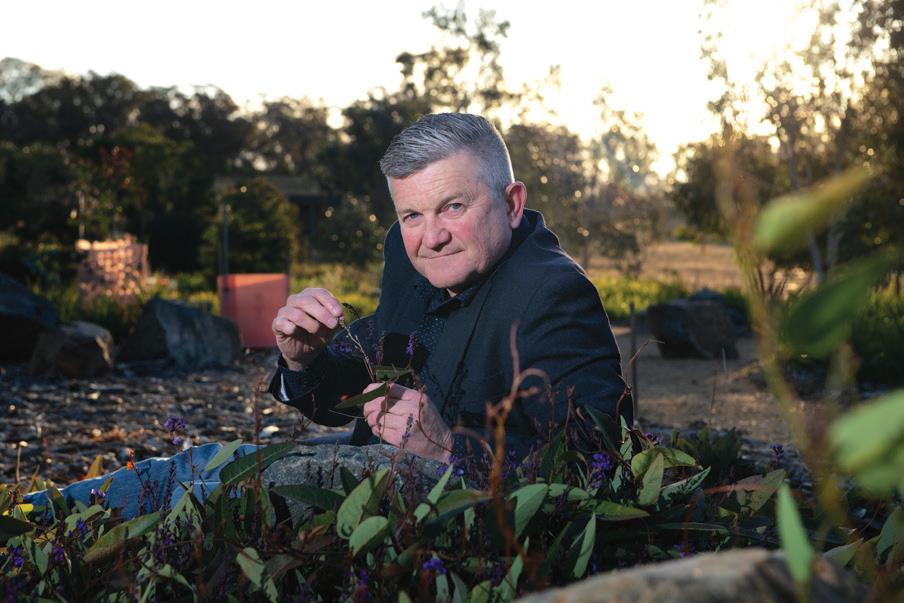
The arboretum’s SCOTT SADDLER has a scary past he likes to share
Dear Prospective MLA’s,
Arthritis ACT, Pain Support ACT and the ACT ME/CFS Society together support Canberran’s with a range of debilitating pain and fatiguing conditions.
According to current research, approximately 100,000 Canberran’s live with a form of Arthritis. For some this has very little impact on their lives, for others, it is completely disabling. Musculoskeletal disease is currently the most costly group of diseases to the Australian health budget, and is the largest cause of disability in our community.
Chronic pain currently affects approximately 50,000 people in our city. Chronic pain is regularly poorly treated, and many people with chronic pain find it difficult to access appropriate support in Canberra.
Myalgic Encephalomyelitis, also referred to by many as Chronic Fatigue Syndrome, affects as many as 1 in 100 people. It can affect you at any age, and it may impact your life for months, to years, to a lifetime. There is no cure, and whilst some people will largely recover, the majority of people who live with this condition do so to some degree for the rest of their lives. It does not react to treatment like many other chronic conditions, and you can be entirely bedbound by the condition for years.
As you work towards election into the assembly, we would like to ask you to consider the following:
• Hydrotherapy Pools are being promised by both major parties for the southside. We welcome both initiatives and are pleased that both will have low cost options available for those living with chronic pain conditions.
• Whilst the southside will now have a number of hydrotherapy pools, the northside has very limited access to UCH which Arthritis ACT has had to ration due to demand even prior to COVID. The other northside hydrotherapy pool is too expensive for the majority of people living with chonic conditions to utilise. We need to stop being a city of 2 sides. Equal access to low cost hydrotherapy is an essential health priority across our city.
• Conservative Management of Osteoarthritis reduces the number of joint replacements that need to occur. The ACT has the highest rate of joint replacement in Australia, and interestingly, also has some of the highest costs for individuals to access conservative management of their osteoarthritis. Physiotherapy programs such as GLA:D and weight management are key in reducing the need for joint replacement. Conservative management of osteoarthritis needs to be publicly funded in the ACT as it is in nearly every other state and territory in Australia.
• Kids get arthritis too! In the ACT there is no paediatric trained rheumatologist, and most children in Canberra travel interstate for care, some up to monthly. This impedes on their schooling, affects their parent’s ability to work, and our own health system is not adequately supported with the specialist understanding of the conditions to be able to provide our children with the holistic care they need.
Arthritis ACT, Pain Support ACT and the ACT ME/CFS Society thank all who are willing to put their hands up and help govern our wonderful city. We have been, and will continue to be, your partners in meeting the needs of Canberrans in need of extra support, and we look forward to helping meet these glaring gaps in health provision in your new term in Government.
In Sincerity,
Rebecca Davey CEO
Arthritis and Pain Support ACT
Arthritis ACT, Pain Support ACT and ACT ME/CFS Society
COVER STORY
How trees and talk help Scott to give stuff back
By Danielle NOHRA
SCOTT Saddler was going down a “scary path”, he had friends in jail, others dead and if it wasn’t for the mentorship of one man, he doesn’t know where he would have ended up.
The 57-year-old of Dickson, now has a dream job as the executive branch manager at the National Arboretum, part of a career that saw him honoured recently with his appointment as a Member of the Order of Australia for service to public administration and as a supporter and mentor of indigenous youth.
“It was Athol who got me through,” says Scott, of the late Athol Boney, an Aboriginal man from Scott’s hometown, Wagga Wagga.
“Having Athol as a mentor meant everything. I could have been one of the ones in jail or god knows.
“Since then, wherever I’ve gone with work I’ve mentored Aboriginal staff.”
For Scott, a Wiradjuri man who has now been mentoring people for about 20 years, it’s about giving back.
“I left home at about 15 and was a bit of a loose cannon,” says Scott, who remembers when Athol would call
INDEX
him up on days he had skipped TAFE to hold him accountable.
From a greenkeeper, he studied and eventually moved into a parks’ man agement role in Townsville, which paid enough for him to stop playing.
Since, he’s worked for local govern ments in Queensland, Victoria, NSW and the ACT in roles such as parks’ manager, director of recreation and director of parks.
He’s also worked at places such as Concord Oval in Sydney, zoos, botanic gardens and centenaries but he loves working at the National Arboretum the most, because it’s everything brought into one.
“This job is why I studied for 15 years,” says Scott, who has done stud ies in greenkeeping, horticulture, landscape design and irrigation man agement.
He started at the National Arbore tum about six years ago and, outside of work, continues to mentor Aboriginal people in the region.
“Currently, there’s 13 Aboriginal peo ple [in the ACT] that I mentor,” he says.
“It’s about me giving back. I take them back to country a few times a year and we meet up with elders and we teach them how to carve shields out of trees and make clapsticks.”
Scott says when they all get on the bus to go, it’s always quiet, but when they get to country there’s laughter, jokes and friendship.
to me, they can talk to themselves.
There’s a flow-on effect. They start helping as well,” he says.
The first time Scott mentored someone was back in Wagga Wagga and, at the time, he says he didn’t even know he was mentoring.
“I was in Wagga and this young Aboriginal fella had some problems with work and his family life,” he says.
Since 1993: Volume 26, Number 37
31
20
5-20 Politics 8 Seven Days 6 Few cheers in Caterina’s sobering drink warnings. Story Page 16.
Managing Director: James Anderson, 0404 077605, james@citynews.com.au
Arts editor: Helen Musa, 0400 043764, helen@citynews.com.au
Production manager: Janet Ewen
Proof reader: Glenda Anderson
Accounts: accounts@citynews.com.au
RICHARD BAKER, PARTNER
Richard is based in our Canberra office and his practice areas include:
Workplace Injuries
Wills, Estates & Probate
Conveyancing
General & Commercial Litigation
Please phone us for an appointment
know I was mentoring, I just thought we were catching up. He improved in his work, moved up the ladder and his family life got better, too.”
Since, no matter where in Australia, Scott’s been mentoring Aboriginal people.
“It’s just a matter of me giving back. I never did it for trophies, I just love doing it,” Scott says.
“It’s been a wonderful journey working across Australia but also having that connection to country and
“But the biggest buzz for me is when I see someone that I mentored 15 years ago, mentoring someone else.”
It changes people’s lives, says Scott, who’s passionate about making change, but isn’t a radical changemaker.
“I can make changes where I work and culturally enhance the areas I work in. When I came here there was nothing Aboriginal here,” he says.
More recently, the arboretum’s been running tours where they show people a tucker garden and tell them about the medicinal and edible usage of more than 4000 plants in the garden.
But not all of Scott’s changes have been in relation to the Aboriginal culture and he says when he first started at the arboretum there were only two staff looking after 40,000 trees.
“I expanded this to 11,” he says.
He also was part of a team behind the upgrades of the arboretum’s water system, which saw the system computerised and fitted with drip tubes and soil moisture sensors.
“Now I sleep at night because I know the trees are being well looked after,” says Scott who believes Canberra has the hardest climate for plants, pointing to the region’s temperature differential of 55C, with a bottom of -10C and a top of 45C.
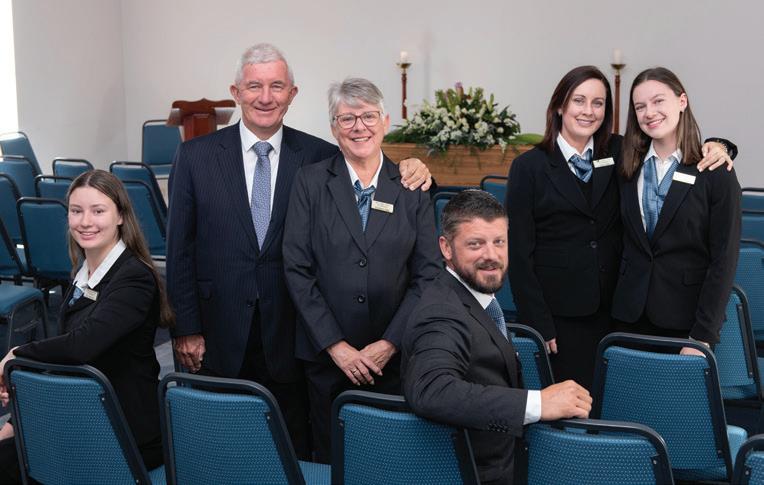
Excellence in Funeral Service
Scott Saddler… “Wherever I’ve gone with work I’ve mentored Aboriginal staff.”
Photo and cover: Holly Treadaway
All the fluted fun of corrugated polypropylene
CORFLUTES. I came across a couple of people recently, one a reader, the other a radio listener, who’d never heard the expression. Hadn’t a clue what I was talking about.
For clarity, I have looked it up and can formally report that corflute is the industry name given to corrugated polypropylene, a fluted plastic that is lightweight yet rigid. The vote-for-me signs on sticks that are made from it punctuate the highways and byways around Canberra typically first appearing about six weeks from an election.
And, as night follows day, the moment the election corflutes began appearing, the ACT Greens began moaning again for a ban on roadside electoral signs.
Given covid restrains a lot of traditional campaigning, thousands of corflutes are festooning our major thoroughfares. And there is no legal limit on the number a candidate can plant.
“It’s well past time to get rid of these annoying electoral signs – they’re a huge turn off for the community and are a huge waste of plastic,” bemoaned killjoy Greens Murrumbidgee candidate Emma Davidson
“Once the election is over, we can only assume that most of these end up going straight into landfill. What an utter waste.”
However, the Greens are not alone: the ACT Electoral Commission’s report on the 2016 election noted that social media had
“indicated a relatively widespread degree of dissatisfaction with the proliferation of campaign signs (principally the signs on stakes known as corflutes) across Canberra’s main roads and suburban streets” – but stopped short of recommending they be banned. Meanwhile, my colleague and “CityNews” political reporter Belinda Strahorn in a piece for citynews.com.au reported it was “corflute carnage” across Canberra with one Labor candidate using chicken wire to stop thieves knocking off his signs.
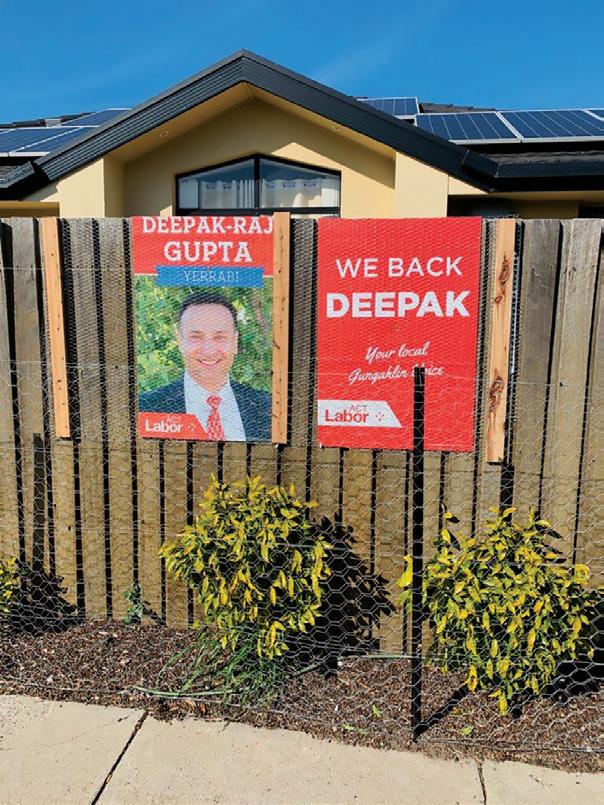
Labor member for Yerrabi Deepak-Raj Gupta has had corflutes stolen from the fences of his friends’ properties in Gungahlin. They’re now bolted down with chicken wire (the signs, not his friends), but he fears the thieves will be back.
In an aside, Belinda was told by Liberals’ campaign director Josh Manuatu that it is his theory that, given the competitive nature of the Hare Clark voting process, corflutes are more likely to be knocked off by members of your own ticket than someone from another party. It’s getting ugly out there!
And there have been arrests… of corflutes, with City Services’ rangers taking 37 corrugated polypropylene signs along the light-rail route on Flemington Road into custody.
And assaults… with two Canberra Liberals’ volunteers putting up election corflutes in Evatt in the early hours of a weekday morning being held up and robbed at gunpoint.
The volunteers were erecting roadside signs for Ginninderra candidate Kacey Lam at the intersection of Owen Dixon Drive and Heydon Crescent.
Kerstin Glomb Estate Planning Special Counsel
The candidate’s guide to securing corflutes.
government’s City Renewal Authority ap plication to revamp the West Basin precinct effective immediately, even though more than 140 of 187 submissions lodged during
Basin. The Liberals have previously promised to
Stanhope had argued that the ACT government has not been upfront with its dealings in relation to the Curtin Horse Paddocks and West Basin.
“I’m not a conspiracy theorist but I believe it’s a remarkable coincidence that in the week that the Ombudsman advises myself and the ACT government that documents that the government has been desperately trying to keep secret, should not be kept secret, the government releases information about a contract that it signed, in April, for works in relation to West Basin,” he said.
HERE’S an hilarious piece of pre-election hokum with Transport Minister Chris Steel haplessly announcing that a re-elected Labor government would, in an “ambitious transition”, have an electric bus fleet in place by... 2037! Imagine this: Chief Minister Chris Steel marked his 21 years in the Assembly and Labor’s 36 years in government by declaring the “ambitious transition” from 2020 to electric buses in Canberra was now complete.
Ian Meikle is the “CityNews” editor. He can be heard on the “CityNews Sunday Roast”, 9am-noon on 2CC.
When political points trump the public’s health
FOR more than six months the public’s health has been the priority for all governments. It did not last. With the fracturing of the national cabinet and an opportunity to slam the Andrews Labor government in Victoria, politics has become the priority.
The half year of co-operation protecting the public’s health was a pleasant surprise. Even more surprising was the actions of the conservative federal government in putting aside its mantra on ending debt and injecting massive stimulus into the economy.
The need for government intervention has been supported by big and small businesses alike. The irony is that it is largely businesses that have resisted governments interfering in any way. Until, that is, that they are the ones needing help!
Now the politics of advantage has raised its ugly head.
The second wave of the epidemic in Victoria could have happened in any jurisdiction.
In this epidemic, new chal-
There are questions voters need to ask themselves going into the ACT election: who will prioritise health and life? Who will provide leadership in resilience, tenacity, dynamism, agility and social consciousness?
lenges confronted health services and governments every day. The blame game is alive and well. The political advantage of blame is that it undermines confidence in the governing party. It will be interesting to see who emerges as the statesman out of the crisis of this pandemic.
Victorian Premier Dan Andrews has put the health of his community first. Compare his achievements to the federal government’s failed contact-tracing app. The CovidSafe App has simply not delivered on its promise. Had the federal government done its job effectively in this respect – the contact tracing that was necessary could have been handled electronically. The second wave in Victoria would have been less serious. Instead of reflecting on their own failures in contact tracing, Prime Minister Scott Morrison and federal Health Minister Greg Hunt compare the contact-tracing achievements of
NSW with Victoria. It is a deliberate attack on the Andrews Labor Government. Such comparisons are simply too difficult to carry out in such a short time with so many confounding factors at play.
Consider the fact that Victoria was overloaded with active community cases. Having the epidemiologists and trained staffers in place to deal with such high numbers proved a serious challenge. The NSW public health systems did not have the numbers to be so overwhelmed. They had increased capacity following the Ruby Princess “debacle” that seems to be forgotten with political point scoring taking priority.
Almost all Australian jurisdictions have reduced expenditure on public health over the last decades. The average expenditure was below two per cent of the health budget. Governments were warned against these cuts – but proceeded because there were no immediate consequences. No-one is blame free.
The political blame game has fuelled a feeding frenzy. No one likes lockdown. Businesses do not
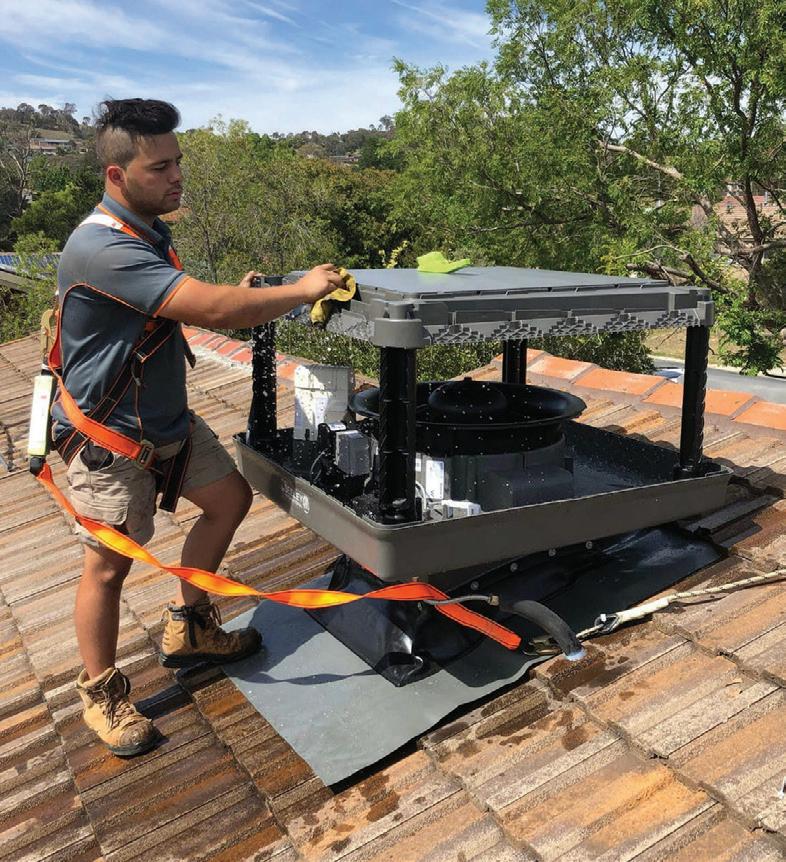
The devastating bush fires our nation experienced at the beginning of this year had a significant impact across our nation. Canberra recorded some of the highest levels of air pollution in the world. This year it is more important than ever to have your Evaporative Cooler serviced to clear out any residual smoke particles that your unit has been exposed to.
Master Gasfitters are on a mission to bring climate comfort to all Canberra homes with high quality, affordable and reliable lifestyle options in the heating, cooling and hot water industry.
It’s important to have your Evap Cooler serviced to ensure it is working safely and efficiently and therefore reducing your energy bills.
like being hampered. Paul Guerra, the CEO of Victorian Chamber of Commerce and Industry, used the opportunity to attack the Andrews government’s roadmap, claiming it as “a massive blow for business and jobs” and failing “to deliver an easing of restrictions quickly”.
Fortunately, not every business puts their own interests before sickness and death. Victorian businesswoman Jen Clark went viral in social media
explaining she was “incensed” by this sort of politicisation of the pandemic. She made five points in response. The first was: “No-one’s business or job is worth more than another person’s life”. She argued, Paul Guerra “implies the business community in Victoria has no resilience, tenacity, dynamism, ability to make sacrifices, be agile, socially conscious and put aside their entitlement and disappointment for the greater good and/or ability to prioritise human life over economic profit”.
The NT government was recently returned in an election. Queensland has an election in October and WA in March – all appeal to their voters by keeping their borders closed – keeping their people safe.
Complacency regarding our own jurisdiction by observing the shenanigans in Victoria is dangerous for Canberrans.
There are some questions that voters need to ask themselves going into the ACT election. Who will prioritise health and life? Who will provide leadership in resilience, tenacity, dynamism, agility and social consciousness?
Michael Moore is a former member of the ACT Legislative Assembly and an independent minister for health. He has been a political columnist with “CityNews” since 2006.
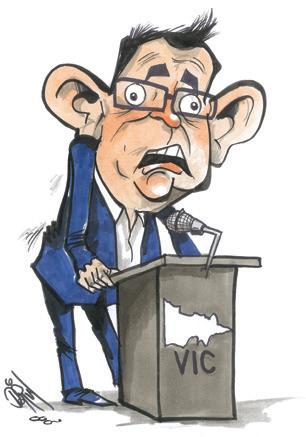
Victorian Premier Dan Andrews. Caricature: Paul Dorin
INVESTIGATION / procurement
‘How can the community be satisfied that it has received best value for money?’
Directorate keeps millions from open tender
By Danielle NOHRA
ALMOST $190 million worth of contracts were awarded without competitive tender by the ACT Community Services Directorate in its most recent year of public reporting.
In the 2018/19 financial year, almost 91 per cent of its procurement contract budget, worth more than $208 million, was awarded without the directorate going to the open market for tender.
The directorate let 94 contracts, worth almost $190 million, exempt from tender. None of this is illegal nor breaches the directorate’s nor the government’s circular on procurement nor the “Government Procurement Regulation 2007” legislation.
The legislation tender requirements say that anything under $25,000 only needs one quote and doesn’t need to go through a tender process (it doesn’t even make it to the annual report); anything above $25,000 and up to $200,000 needs at least three written quotes before a contract is awarded and anything above $200,000 goes to an open tender, where multiple applicants can apply for the contract.
However, the CSD annual report lists 71 contracts above $200,000 as being passed through without competitive tender. That’s more than half of all contracts from that year.
Taxpayers would expect government departments to practice the usual cornerstones of public-sector procurement, such as openness to competition.
But according to procurement policy guidelines and the legislation, the CSD can override such competi-
Dr Jenny Stewart… “We’ve had the
one
“It’s chaotic,” says Dr Jenny Stewart, a professor of public policy at UNSW Canberra.
“They seem to be confused about how to apply the policy, the particular purchasing policy, which admittedly gives a huge amount of scope for exemptions in the first place.
“Compared with the federal bureaucracy, it’s quite loose. They have much clearer and more comprehensive provisions governing procurement in the federal bureaucracy.
“I would think that the ACT is probably a little bit more careless. We’ve had the one government, one party in power for 20 years now and I think they’re not put under too much pressure to perform, particularly when it comes to administrative stuff.
“Theoretically, if they wanted to, they could make almost exempt anything if they could convince themselves that it’s value for money, whatever that might be.
“If you’re extending your garage, you’ll probably get more quotes than they seem to.”
However, a CSD spokesperson says the department has not been found to be in breach when scrutinised at the Assembly’s annual report hearings, which is a financial audit and not a performance audit.
The spokesperson says the regulation supports the legislation, which allows single select tenders where criteria, such as ethical behaviour, probity and management risk, are met.
“The majority of the contracts falling within this category relate to programs where existing contracts were extended for an additional term in accordance with Procurement Guidelines and approved by the ACT Government Procurement Board,” she says.
“Other single select tenders were let in accordance with tender requirements.”
First some general definitions from “Government Procurement and Tenders” webpage: “single select” tendering is when the agency approaches a single supplier directly to provide a quote or tender for goods, services or works. “Select tendering” is when the agency approaches a number of potential suppliers directly to provide a quote or tender for its goods, services or works.
It makes sense until something called the “Procurement Policy Circular” is taken into consideration.
Here’s where it gets confusing. It says: “A procurement that seeks a single quotation or three quotations in accordance with the quotation and tender requirements (that is, a procurement that does not need an exemption) is not referred to as a single or single select procurement.”
but simply to reflect what they already do and make it sound not too bad.
“That’s why it says all the things you would expect about openness to competition and all those excellent and good things, but then it says if it’s value for money, as determined by a public servant, it can be [exempt from those excellent other things]. It’s not a very rigorous policy document.”
Aformerhead of government procurement, who wishes to remain anonymous, also believes that the report shows laziness, however, says determining the motivation for the action is difficult without a performance audit.
in
20 years now and I think they’re not put under too much pressure to perform, particularly when it comes to administrative stuff.”
This contradicts the online government procurement advice page stating that a select tender needs a number of quotes.
If this is also the case, then why does the 2018/19 CSD report label 12 select contracts as not being exempt? Confused yet? It gets worse.
The directorate’s annual report and the actual contracts are riddled with inconsistencies, with many contracts stating “yes” (exempt) on the report but then saying “no” (not exempt) on the publicly accessible contract documents.
The CSD spokesperson admits there is room for human error, saying: “The process does require manual entry and it is possible for human error within this, however, every care is taken and any errors are rectified as soon as they are observed.”
But, if the contracts are right and the report is wrong, then it again goes against the government’s policy, which states that a procurement shouldn’t be labelled as select or single select if it doesn’t need an exemption.
The more surprising contracts, according to honorary professor of Public Policy at ANU and former Public Service commissioner Andrew Podger, is the number of single select procurements of services that aren’t community-based, particularly consulting services.
“I would expect these to be subject to select or open tender except in limited cases, eg where the expertise required is not available from other companies or where the consultancy is a follow-on from previous quality work,” he says, of the 17 consultancy tenders that were single select.
And again, there are inconsistencies between the report and the contracts, with the report, in some cases, stating it’s a “consultancy” service, and then on the contract it says “non-consultancy”.
There are anomalies all over the place, says Dr Stewart.
“A group of contracts in this category that caught my eye went to a consulting firm. This firm came up with a CSD industry strategy, and then evaluated their own strategy,” she says.
“Even when a consultant has sold the public service on the idea of doing this particular job, it’s not really good practice to have the same company evaluating the project that they had performed.”
She says the ACT procurement policy allows for normal tendering
processes to be bypassed where “value for money” can be demonstrated, and in practice, this allows a lot of leeway.
There are other questionable contracts, too. One security company, for example, was given a $143,434 contract, leaving “CityNews” to ask why a security company, out of more than 30 in the ACT (according to the Yellow Pages alone) was specifically chosen to be exempt from competitive tender for this contract?
“The procurement of this tender has met the necessary guidelines for a single select tender process,” says the CSD spokesperson, who sent through the contract to “CityNews” after it initially came up as “page not found” when clicking through to the contract.
This contract is, again, inconsistent with the report, which says it’s “yes”, exempt, and the contract says “no”, not exempt.
“Incompetence, an inadequate understanding of the procurement legislation, laziness, dishonesty, workplace stress to perform to tight deadlines and an individual drive to demonstrate efficient performance are all possible motives,” the former public servant says.
“It seems that corners have been cut, with what appears on the surface to be little justification, to achieve other objectives that are generally legitimate, but sometimes not so. How can the community be satisfied that it has received best value for money?
“In the past few years, criminal procurement fraud cases have been prosecuted in Victoria, NSW, Queensland and the Commonwealth in areas such as education, emergency services and IT, so it is unrealistic to expect that the ACT would be exempt from such behaviour.
I would say laziness and administrative convenience, rather than incompetence or corruption led to the poor practices we see in the report.”
Reporting inconsistencies don’t seem new, and after taking a quick look through the CSD annual reports from 2015-16 and 2012-13, and a more in-depth look into the 2018-19 report, Dr Stewart says: “My impression is they are trying to regularise a very untidy scene.”
“I would say laziness and administrative convenience, rather than incompetence or corruption led to the poor practices we see in the report,”
Jenny says.
“Over time, though, there is certainly a danger, that some of these relationships may become too cosy and could certainly lead to a perception of corruption. The department needs to tighten up the way it interprets and implements its ‘valuefor-money’ policy in procurement.
“The [CSD] procurement policy document allows plenty of outs [letting the directorate] get away with not going to tender.
“It’s astonishingly broad. It’s a policy document that’s written not to actually control or modify behaviour
“As with most systems involving the expenditure of public money, and procurement in the ACT would be over $1 billion a year, fraud is at the edges and in the shadows. Sloppy processes, however, enhance the opportunities for misuse of public money. Monitoring is essential to keep the system functioning well.
“Importantly, even when there is no corruption, unless contract services are competitively tested when there are several suppliers, it is generally the case that the government will be paying more for its services.”
A small number of contracts – 20 – according to the report, went to tender, including 12 select contracts, seven quotation contracts and 11 public contracts.
But overall, one has to question why large contracts are being given to consultants. And, most importantly, what’s with all the inconsistencies?
“It is procurement that caused the public health breakdown in Victoria,” Jenny says.
“It is so important, but because all of the movers and shakers think it is ‘boringville’ and the province of people who can’t do policy, then it just goes under the radar until suddenly, nearly all the things that can go wrong, go wrong in procurement.”
one government,
party
power for
OPINION / Aboriginal children
Government all talk on reforms for kids in crisis
THE ACT government has provided a response, but has implemented none of the recommendations in the “Our Booris, Our Way” review of arrangements for the care and protection of Aboriginal children.
The review was commissioned by the government in June, 2017, more than three years ago, in response to outrage in the local Aboriginal and Torres Strait Islander community at the rate of removal of Aboriginal children from their families and placement in out-of-home care in Canberra, which was scandalously the highest in Australia.
“Our Booris, Our Way” was undertaken by a steering committee of members of the Aboriginal and Torres Strait Islander community under the leadership of Ms Barb Causon. In recognition of the dire outcomes Aboriginal children in Canberra in touch with the care and protection system were experiencing, the steering committee resolved to produce a series of interim reports over the period of its inquiry, to facilitate the early implementation of any recommendations.
The initial “Our Booris, Our Way” recommendations were thus made in August 2018, i.e. over two years ago. In its response to the final report, the government agreed to the appointment of an implementation oversight committee, comprised solely of Aboriginal and Torres Strait Islander members, to monitor the report’s implementation.
The fact that a majority of even the interim recommendations have either not been implemented or have only been partially implemented is causing serious frustration and alarm within the Aboriginal community.
It is particularly telling that the oversight committee has openly advised that it shares my concern and that of the broader community at what is seen as an inordinately slow pace of implementation of the recommendations as well as evidence that the meaning and intent of recommendations is being deliberately skewed.
An audit of progress in the implementation of the 15 interim recommendations made by the steering committee, nine of which were made in 2018, reveals just how casual the government’s response to the needs of Aboriginal children in care and protection has been.
Recommendations 2 and 3 (August, 2018) are that the Aboriginal and Torres Strait Islander Child Placement Principles (ATSICPP) be embedded in practice in the ACT.
A fundamental tenet of the ATSICPP is that all decisions involving an Aboriginal child in touch with care and protection be informed by advice from an Aboriginal Community Controlled organisation. The government purportedly agreed to these recommendations in 2018. However, since that time there has been no apparent attempt to either engage with an existing Aboriginal community controlled organisation or to build capacity within the ACT to fulfil this vital role.
Indeed, it is widely understood that the ACT government either has already done so or intends to simply roll over the contract with the existing non-Aboriginal mainstream organisations who have over the last five years, through the ACT Together consortium, usurped the role of Aboriginal communitycontrolled organisations in this regard. If that is in fact the ACT government’s
There is a growing fear in the Aboriginal community that the government is signalling when it comes to listening to Aboriginal voices it’s a case of ‘our way or the highway’.
intention it would be viewed by the Aboriginal community as a total betrayal of its claimed support for systemic reform and the childplacement principles.
There are also high levels of concern about whether the intent of Recommendation 1, which is that child protection workers working with Aboriginal families not only have the highest possible training but demonstrated cultural awareness and, importantly, a strong desire, if not preference, for working with Aboriginal children, has been met.
Recommendation 5 (December, 2018) is that the ATSICPP be explicitly enshrined in legislation. There are legislative precedents in the states, most particularly Queensland and Victoria, which could appropriately act as a guide or model for the ACT but it appears, from the government response, that the Community Services Directorate has, after nearly two years, made no progress in the drafting of the recommended amendments.
Recommendation 6 (December, 2018) goes to the heart of the importance of Aboriginal community-controlled organisations being central to the response to the needs of Aboriginal children in touch or at risk of coming into touch with the child-protection system. It urges the establishment and funding of an Aboriginal community-controlled Child Care Association. Again, almost two years after this interim recommendation was made, it has received little more than lip service.
The “Our Booris, Our Way” steering committee made a total of 35 recommendations and the picture I have painted above is a snapshot of the nature of the government’s less-thanurgent response to the report.
However, I will conclude by expressing my particular disappointment that the government has accorded no priority to accepting, let alone implementing, a recommendation to mirror the actions of progressive governments in SA, Queensland and Victoria and appoint an Aboriginal and Torres Strait Islander children’s commissioner.
This appointment was rightly seen by the “Our Booris” steering committee as potentially transformative in maintaining a focus on and meeting the needs of the most vulnerable and disadvantaged residents of Canberra, namely Aboriginal children.
There is a growing fear in the Aboriginal community that in its response to “Our Booris, Our Way” the government is signalling that when it comes to listening to Aboriginal voices it is a case of “our way or the highway”.
Julie Tongs is the CEO of Winnunga Nimmity jah Aboriginal Health and Community Service.
JULIE TONGS
CANBERRA MATTERS
Why all the endless planning upset for residents?
IN 2010, Dickson residents lodged objections to a unit development and eventually took the developer and the ACT Planning Directorate through the appeals tribunal and won.
Following that ruling, the developer completely revised the plans, residents went along with the new concept and the units were built.
A long list of issues was identified with the original plans. The plot ratios were questionable and many measurements did not add up. Residents thought that the government planners had failed to do their job. They had made little attempt to correct obvious faults and had allowed the development application to go to consultation thinking that noone would notice. The neighbourhood joined in the action to object.
Once the event was over, there was hope that the planning bureaucracy may have learnt something. The deputy planning chief was Ben Ponton. Instead the ACT’s planning regime has become more complicated
The Planning Directorate under this Labor/Greens government is seen as being dysfunctional and no longer capable of delivering a liveable city for the future generations.
and harder for residents to understand. Most residents would have little chance of getting their heads around proposed residential developments.
Having observed Canberra’s planning for many years, a consistent factor is how the Planning Directorate continues to upset neighbourhoods by allowing awful development applications to be considered.
Things have been getting worse – not better. Based on how residents see themselves treated through the planning processes, the only conclusion people can come to is that the Planning Directorate regards residents as a nuisance, that residents do not know anything about their suburb and do not appreciate the wonders of development.
As a result of this culture within the Planning Directorate, residents are treated as an annoyance to be dealt with using whatever means at hand.
Despite how bad things are with neighbourhood planning decisions,
the larger corporate developments have tended to hog the media attention. Meanwhile the soul-destroying neighbourhood developments continue. The Planning Directorate continues to allow questionable development applications to sail through the assessment processes. It is largely left to residents to identify faults, to deal with the tricks and to make sense of what is happening in their neighbourhoods.
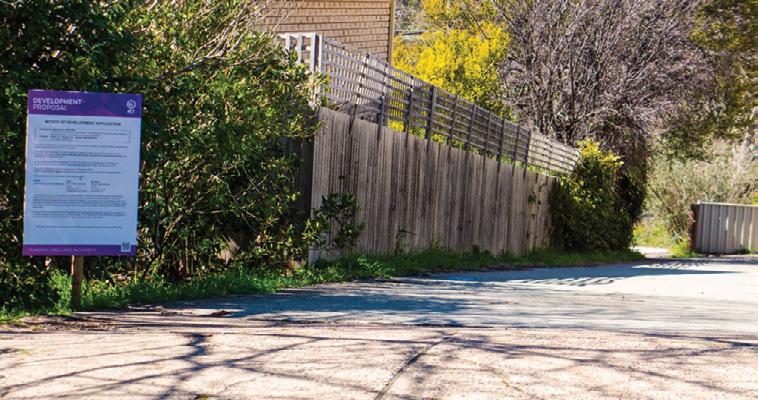
This brings me to the latest that has been brought to my attention. The block, a former Mr Fluffy site, is in the established suburb of Macgregor in West Belconnen. The developer said to the neighbours that he was going to build two two-storey houses for his children.
The neighbours to the site in Macgregor have already identified questionable measurements within the plans, what is stated is not necessarily what is presented, they have serious issues with the plot ratios and feel as though the whole game is being stacked against them. The development application contains information about the relationships between
The application is signed by a couple. However, it is the father, who has professional connections with the directorate, who is dealing with the residents as if he is the developer. Family members have been or are still employed within the Planning Directorate. The neighbours are concerned about their chances of having a fair hearing.
When it comes to suburban residential development applications, everything points to the ACT Planning Directorate’s processes being completely broken, having been distorted by mismanagement and lobbying.
The Planning Directorate under
capable of delivering a liveable city for the future generations.
Neighbourhood development should be a number one priority issue for the next government. A new form of planning directorate is required – with new leadership. Andrew Barr needs to be grilled about what he intends to do (if he wins) to change the culture of his Planning Directorate. He promised changes in 2016 – but the reality is it is much worse.
Paul Costigan is an independent commentator and consultant on the visual arts, photography, urban design, environmental issues and everyday matters.
Reliable:
Qualified:
Ken Hubert
Family Law and Mediation
Experienced in all areas of Family Law, including adoptions. Ken is an accredited business and family mediator.
Ashilpa Khanna
Wills and Estate Planning Lawyer
A valid and up-to-date Will can help reduce stress for your family & friends, limit administration costs, and lessen the possibility for dispute over your estate.
Daryn Griffiths
Property and Commercial Solicitor
Let us help to navigate the complexity of conveyancing laws in the ACT & NSW including stamp duty, identity verification, and tenancy laws.
Over 30 years serving Canberra
ELECTION 2020
Revealed: the backroom faces in fight for votes
By Belinda STRAHORN
AFTER a sluggish start, the ACT election campaign is starting to gather momentum with Chief Minister Andrew Barr hoping to stave off Canberra Liberals’ leader Alistair Coe’s growing traction.
But the election involves more than just the public faces who grace corflutes across the territory. Much of the grunt work is conducted by somewhat anonymous, in-house political professionals made up of party hacks, elders and campaign strategists.
“CityNews” sat down with two of the backroom operatives who sit alongside Barr and Coe in the fight for your vote.
JOSH MANUATU, Canberra Liberals campaign director
At 30 years of age and 6ft in height, Manuatu, who was born in Queanbeyan and raised in Goulburn has become a recognisable fixture of the Canberra Liberals’ franchise.
The committed dog lover and tea enthusiast will face his biggest test yet, in the driving seat of the Liberals’ attempt to make history and win government for the first time in 19 years.
Manuatu, for the record, has been a long-time Liberal staffer and former president of the Young Liberals. As a staff member for Federal Energy Minister Angus Taylor, Manuatu was embroiled in the infamous Angus Taylor-Clover Moore stoush where Taylor used inaccurate travel figures to accuse Sydney Council of virtue signalling on climate change.
Before his posting to Taylor’s office, Manuatu was an adviser to Tasmanian senator Eric Abetz. He’s worked on other election campaigns and spent time in Britain with Prime Minister Boris Johnson’s election staff including fellow Australians Simon Berger and Isaac Levido – the political strategist credited with Boris Johnson’s victory.
In the true sense of a party aparichit Manuatu applies his trade behind the scenes as a key backroom operator. His position gives him a unique insight into the Liberals’ election chances and is well placed to analyse what his opponents may be doing at the same time.
“CityNews” began by asking Manuatu how he thinks Labor’s campaign is going?
I think it’s going well for them. They are a long-term government and they have a lot of experience in winning elections, the next couple of weeks are going to be interesting to see what they do. We are very much the underdog and we need to mount a strong campaign to take it up to them. Labor has a strong campaign machine with big institutional backing from union bosses and pokie
revenue. So it is a bit of a David and Goliath battle but we’re working hard as a part of our grassroots campaign to speak to as many people as we can.
After 19 years in opposition, what will it take to knock Labor off its perch and form government?
Whoever speaks to the most voters will determine the election and we’re trying our hardest to make sure that’s us. In order for Labor to win they need to effectively do the same. This year has been a very interesting year with coronavirus. The campaign is going to be much shorter, much more impactful and both parties need to navigate things we haven’t had to previously.
What are the key issues this election?
It really comes down to the cost and quality of living for Canberrans. People are really doing it tough, even before coronavirus. The increase in costs of rates for people who own a house and the costs of rents are skyrocketing, and what are people getting in return for that? That is what this election is going to come down to, those individual hip-pocket concerns. The hospital system is in despair, footpaths aren’t being maintained and yet we are paying record taxes for it.
had to scrap our plan and re-do it at times, but it’s just a matter of trying to adapt to the changing situation. If we can’t knock on doors, we will make phone calls instead.
Who do you think will win? Hopefully us.
Some people are calling it the ‘social-media election’. How big a part is social media playing in this campaign?
It’s really important. There are a lot more people on social media than there were four years ago, it’s ever increasing and there’s less reliance on traditional mediums than there was. We have got to think a lot more carefully about what we are putting on social media and making sure the message cuts through.
What’s been the strategy in managing candidates’ diversity?
We have a really great team that brings together people from a broad cross section of the community. Alistair Coe was really keen to take forward a team that reflects not just our party but our community, which includes a lot of diversity. We are very proud of the fact that we’ve got the first majority female party room in the country and now we have one of the most culturally diverse groups of people standing for the election.
How has your experience prepared you for campaigning during a pandemic?
Any job in politics teaches you to be prepared for anything. The pandemic has forced us to rethink a lot of things but at the end of the day we just have to push through. This year has been really tough on a lot of people and a lot of business and political parties are no different. Covid has changed a lot of things we would have normally done and we’ve
MELISSA JAMES, ACT Labor campaign director
ACT Labor could make history come October, if voters decide to return a Labor-led government for a sixth time since 2001. Pulling the strings behind the Chief Minister’s re-election is ACT Labor campaign director Mel James. James, 36, was born and bred in Tasmania, her first recollection of campaigning was letterboxing on a tricycle at the age of five.
“Four generations of my family have door knocked and letterboxed together… we have always been a politically engaged family, I was practically brought up on Hare Clark,” James said.
Friendly but focused, the former chief of staff to Health Minister Rachel Stephen-Smith is lending her weight to the goal of returning the Barr government to office, a task she readily admits won’t be easy but can be achieved.
How do you think the Liberals’ campaign is going?
They are definitely out there, the candidates are really focused and energetic and working hard, but I think centrally they have had a few hiccups with candidates. Having gone through a vetting process of our own candidates and knowing how long it can take, the thought of something like that happening and so quickly, you wouldn’t wish it even on your worst enemy.
What will it take to extend Labor’s 19-year run governing the territory?
The central campaign and the individual candidates are under no
illusion of what we are asking for.
ACT Labor has been in government for 19 years and whilst we have had several leaders throughout that time and probably we see them as distinct periods with different visions for the city, I think that we understand completely that we are asking Canberrans to have a huge amount of trust in us.
I think, particularly this year, our experience has shone through in terms of Andrew as Chief Minister, the Health Minister and Emergency Management Ministers, that 19 years has not been a bad thing and that 19 years has put us in good stead to get us through some really difficult times.
What are the key issues this election?
Environment and climate change remain the most significant issues and that was particularly focused on people’s minds with the bushfires. Covid has raised other issues, jobs and economy and health are up there and then education remains a big issue for families, too. So health, education, climate change, jobs and the economy are what people are talking about in terms of what they are going to vote on.
Some people are calling it the ‘social-media election’. How big a part is social media playing in this campaign?
I don’t think any campaign in the world has cracked the social-media campaign formula yet. The algorithm is changing and there’s no formula for success, which makes it more challenging and riskier in some ways, because in our system where you have 25 individual candidates trying to stand out, you don’t want them to stand out for the wrong reasons. Online is where people are so that’s where politicians need to be. Getting the nuances of the different platforms can be challenging.
have that roots-up representation. Diversity comes in a lot of different roles. There is gender, sexuality and life experience. There are so many different diversity elements to our community and I think our candidates have a large amount but we also need to work within our party to make sure we continue to support people to find their place in the party.
How has your experience prepared you for campaigning during a pandemic?
I don’t think there would be any experience from any campaign in years gone by that could equip you for a covid campaign. It’s a lot about taking those traditional skills and adapting quickly. We have a tried and true model of ground campaigning as a party, with large active volunteer bases that get out and talk to people and so we have had to roll the dice on some different approaches. It’s about taking everything you know and throwing it out in some regards and working out where people are and what they want to talk about. And there is an appetite for people to want to talk about political issues at the moment because the economic and health elements of the pandemic have turned people’s minds to some of the inequalities we are seeing in the community.
Who do you think will win?
I think it’s going to be close. I wouldn’t be betting on a Hare Clark system. We are asking for something huge. I think we have what it takes but I think we have to continue to work and keep telling people why we deserve to be here and that we are not taking the Canberran community for granted. It’s going to be close and I can tell that the Liberals’ candidates are throwing everything at the wall, too.
Josh Manuatu… “It really comes down to the cost and quality of living for Canberrans.”
Melissa James… “Environment and climate change remain the most significant issues. Photos: Belinda Strahorn
Is embedded Big Data stalking schoolchildren?
E-LEARNING or information
computer technology is a fixture in ACT schools but the rush to embrace it risks undermining ingenuity and young people’s capacity to be caring, calm and resilient under pressure.
After last month’s e-security breach (that saw offensive material shared en masse), ACT public school students could not access Google Classroom where high school and college students have their school work assigned and worked on.
In that time there was panic among students about how they would retrieve emails and essential homework in the “cloud”. Many students were distraught.
Ongoingly, how do they own their learning when Google Classroom appears to be such a fragile repository for their work?
So much ACT schooling is now online it could vanish or be inaccessible to students when “incidents” occur.
Is it wise to have so much tied up in a contract with one of the world’s biggest profit-making corporations? In the very least, shouldn’t information management practices be reviewed?
Our students are also increasingly subject to Big Data algorithms that thin their privacy and concentrate power in the hands of a global elite.
Technology is sold to us as a tool but it’s much more than that. It’s not value neutral. Google Classroom now
Google Classroom, now embedded in ACT education, is provided by a multinational platform that is notorious for harvesting user data for profit… Does student data held by Google vanish as soon as students leave the ACT education system? If not, why not?
embedded in ACT education is provided by a multinational platform that is notorious for harvesting user data for profit.
Just what is the arrangement the ACT Education Directorate has with the US tech giant? What does it cost?
How does Google stand to benefit? Does student data held by Google vanish as soon as students leave the ACT education system? If not, why not?
A delegation of Canberra parents met with the directorate to ask these questions. We were pleased senior bureaucrats made time to hear our concerns. We were told of ongoing evaluations, but left with many queries unanswered.
The directorate has moved to assure families that after the “deeply regrettable” e-breach, a number of security enhancements have been made to the student G-mail system “to ensure our system is safe and secure”.
But this goes much further than access to a secure information system. What’s needed is a comprehensive review of the ACT’s Bring Your Own
Device (BYOD) policy as part of a wide-reaching public investigation into screen-based technology in school education.
While acknowledging that online education can enhance learning, like any reform, the risks and downsides need to be managed.
There is a growing body of evidence that technology is undermining learning, creating distractions, undermining co-operation and the pro-social aspects of school.
The point of a school education is not merely the attainment of particular pieces of knowledge but the pursuit of human empathy. Our web world has made accessing new information and sharing it dead easy but caring in a social context, I’d argue, has become more difficult.
Social e-networks are easy to weaponise. Even the platform Google Classroom provides our students with for so-called collaborative learning can be used to affirm or condemn classmates when they are online. Mobile phones in schools certainly
provide schools with a conundrum. On one hand they might be the most potent learning tool in the history of education, but on the other they can be socially destructive on many levels.
Students can be accessing whatever they want whenever they want. Boys watching porn videos at lunchtime? Yes, it is happening. The ability to play or stream music on a smartphone also means that students often stick headphones in their ears and “tune out” rather than interact with peers for awkward but potentially rewarding conversation. And smart phones are the contemporary tool of choice for bullying.
And these devices shrivel genuine conversation and tolerance. That’s a problem given we construct and reconstruct their ideas of social reality through dialogue.
Teens will take risks by sharing views with parents, peers and teachers when they are supported to argue and negotiate in conversations that are motivated by people who want to listen, understand and resolve differences.
This sort of skilled social construction boosts human development while protecting individuals from self deception. Pro-social dialogue, which
helps students transition to emotional interdependence is best found and nurtured offline.
So, again, just what has been the impact of the BYOD policy on learning outcomes and the impacts on mental health and behavioural outcomes in the classroom and inevitably at home?
Studies show how deep reading is diminished by excessive screen use. Skimming words on a screen is a very different way of processing information with less opportunity for reasoning, critical thought and insight.
An inquiry with testimony from teachers, students and families would unearth stories and the evidence for the best course ahead.
As the election campaign heats up, I am among a growing number of Canberra parents who want to see each major party commit to a full public review of tech in schools early in the next term of government.
Toni Hassan is a Canberra parent and author of “Families in the Digital Age” (published by Hybrid).
TONI HASSAN
Few cheers in Caterina’s sobering drink warnings
cancers and a range of chronic diseases.
But, she says it’s an issue that can be
est in social change, social justice and politics, is why Caterina was driven towards working in the not-for-profit
“There are lots of different places where people can make change,” she
“I thought the not-for-profit sector creates a great environment to trial programs and approaches and look at
ing humans who are doing all they can to make sure people are healthy, they’re safe and they’re connected to
terina says, is that no one wakes up one day and says: “I’m going to have a
“There’s a range of concerning facilitators that contribute to alcohol
Alcohol companies make a lot ofterina, pointing out that about 80 per cent of alcohol is sold to about 20 per
“The consistent messaging out there about alcohol is coming from
“It’s harmful. It’s everywhere. The availability and price of alcohol also
in the role as CEO in March, wants to see these attitudes around risky drinking changed.
Before FARE, Caterina worked in a range of roles across the government and not-for-profit sector, which included the Department of Veterans’ Affairs, ACTCOSS, as a policy and development officer, FARE, as the director of research, and before rejoining FARE as its chief, she founded For Purpose, an organisation that works with not-for-
profits to support their strategic, advocacy and communications capacity.
During her time in the not-forprofit sector and working with not-forprofits, Caterina, who holds a bachelor in population health, saw the effect alcohol has on communities, families and individuals.
“A lot of social and health problems
that we talk about are amplified at the moment by alcohol,” says Caterina.
“If we can address alcohol harm, it can make a huge difference to a number of things.”
She says risky drinking contributes to so many things such as injury, family violence, ability to hold down a job, mental health issues, liver conditions,
“We need to change the way we talk about alcohol. If people don’t drink, we sometimes point out that it’s odd or different but one in five people don’t drink alcohol, and for some people, drinking any alcohol at all can be problematic, so we shouldn’t assume that everyone is a drinker.”
FARE also wants to change the misconceptions around alcohol such as the information around drinking when pregnant or how much a person
should be drinking a week.
New draft National Health and Medical Research Council (NHMRC) guidelines suggest drinking no more than four standard drinks on any one occasion, and no more than 10 across the week. For pregnant women, it recommends no alcohol at all and the same goes for children under 18.
Now, more than ever, Caterina says risky drinking is seen more in older generations and younger generations are drinking less.
“We’re seeing more risky drinking in older people than we’ve ever seen,” she says, predicting that could be because older people have more money and more time.
Young people are drinking less and Caterina says this could be because of the presence of social media, it could also be because young people socialise in different ways, or, she says, another theory is that young people just don’t want to do what their parents think is cool.
But for young people who are drinking, Caterina says there are concerns around alcohol delivery, with the Annual Alcohol Poll revealing that online alcohol retailers weren’t routinely checking ID, with 38 per cent of people saying their ID wasn’t checked and 25 per cent saying it was left unattended.
“Everyone selling alcohol should be required to check IDs because no one should be able to sell alcohol to children, which is illegal in pubs, clubs and bottle shops. But there’s a gaping hole in our laws around online alcohol sales where there is zero requirement for ID checks,” she says.
“This loophole needs to be closed to keep our children, families and communities safe.”
The annual alcohol poll is available via fare.org.au
What is Vote Easy? – Vote Easy is a completely voluntary and independent platform, encouraging communities (voters and candidates) to come together without influence to elect strong local leaders.
Once nominations close, Vote Easy allows registered candidates a non-bias platform (Australian owned) and a central location where candidates and voters can easily find each other We want you to find the candidate who will represent you. You, as the voter, will select a politician who will speak on your behalf and make decisions that represent you, your community and Australia. Selecting good strong community leaders will deliver governments that better reflect the communities in which we live.
Caterina Giorgi… “We’re seeing more risky drinking in older people than we’ve ever seen.”
Photo: Danielle Nohra
The campaign swag that sets a clever candidate apart…
By Belinda STRAHORN
I DEEPLY regret not collecting the “Kevin 07” T-shirt. Much like the “It’s Time” T-shirt from Gough Whitlam’s election campaign 48 years ago, it will probably go down as one of the most memorable pieces of political paraphernalia.
No one really knows from election to election, which campaign swag will resonate, but often the most obscure posters, T-shirts and flyers stick in the public imagination long after the campaign is over.
Sometimes the most memorable merchandise comes from the least likely of candidates. Many Canberrans would remember Kim Huynh’s unorthodox campaign from last time. Most voters would struggle to remember what the independent candidate for Ginninderra stood for, but they wouldn’t forget his posters sporting his impressive rig with a prominent “BELCO” tattoo stamped across his chest.
For the record, the tattoo wasn’t real but the ANU lecturer did get Belconnen’s postcode 2617 tattooed on his arm after the 2016 election.
Even the most bizarre campaign swag is worth holding on to after the election is over. For one, there is always the chance that today’s ACT Assembly election candidates become tomorrow’s elected officials and all of a sudden your “Barrack for Carrick” gear gets a new life.
Swag, like politics, is all about the long game, so don’t donate that shirt just yet. Here is the 2020 gear most likely to become a
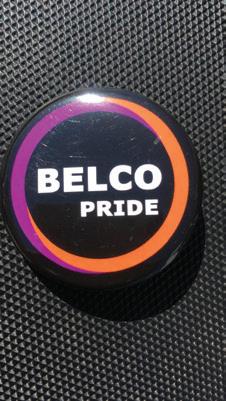
The “Belco Pride” pin
What makes it worth saving? The growing trend.
The Belco Party, led by former Canberra Liberal Bill Stefaniak, is running on the motto “keep the bastards honest”, coined by Australian Democrats’ leader the late Don Chipp. This election will likely decide if the Belco Party is just a
Therese Faulkner’s pub coaster
What makes it worth saving? Trying something different.
While the guy with the rig had something that really captured attention, the Canberra Progressives’ candidate for Kurrajong, Therese Faulkner, has gone all out to capture the vote of the mug punter by employing the slogan
CAPa D advertising
Calling on citizens to vote carefully
IN the lead up to the October 17 ACT Election, the Canberra Alliance for Participatory Democracy (CAPaD) is calling on voters to choose their candidates carefully.
has shown that candidates who put in statements glean more votes than those who don’t.
The “We back Deepak” corflute
What makes it worth saving? The quirky factor.
Countback Deepak is looking to build on his electoral good fortune from last time by securing a seat in the ACT Assembly in the first round, rather than sweating on securing a quota on countback.
Vijay Dubey’s T-shirt
“Think about the candidates, not just their political parties,” says CAPaD secretary Peter Tait.
Practising GP, Peter says CAPaD, an association empowering citizens to engage in politics, grew out of a series of “kitchen table conversations” held by SEE-Change in 2014, where there was a common theme that the government wasn’t delivering what people wanted.
“We formed an organisation to do something,” says Peter.
Now, Peter says CAPaD is urging Canberrans to ask: “Out of the candidates you will vote for, think about how they are going to represent you? Are they up for the job? How will they involve people in their decision and policy-making?”
“Of our current 25 MLAs, 15 of them filled in candidate statements before the 2016 election,” he says. For voters, Peter says it’s important to get the right people in government. “We believe that government in Canberra will be strengthened if we elect MLAs who will work with constituents in developing and implementing policy and we are more likely to get a city we want to live in,” he says.
CAPaD’s role also includes working with community groups to grow their capacity and engagement in the political process, working with academics at UC on deliberative democracy and shining a light on the role, relationships and responsibilities of members of the ACT Legislative Assembly.
“We invite everybody to become active citizens,” says Peter, who is passionate about increasing the level of participation Canberrans have in creating a better, more liveable Canberra.
His corflute featuring the slogan “We back Deepak” is a little goofy but quirky just the same and will appeal to certain voters.
David “Waistcoat” Pollard’s campaign material
What makes it worth saving? Best-dressed candidate.
Independent for Yerrabi David Pollard is doing his best to lift the dress standard of candidates this election. However it leaves him open to criticism that he looks more like a 19th century gentleman than someone standing for office in 2020. He’s certainly in the running for the best-dressed candidate.
The Federation Party has gone with a slogan for its bumper sticker that will resonate with voters from election to election. Despite the best efforts of the major political parties, they fail to capture everyone’s hearts and minds at election time. This is one piece of election swag that could be dusted off and used again in the future. Use it as a bookmark in the meantime.
What makes it worth saving? The fluro factor.
Vijay Dubey’s popularity as the dumped Canberra Liberal-candidate-turned-Belco-Party-convert isn’t the only eye-popping thing about his campaign. While most political candidates rely heavily on a red, white and blue colour palette, Vijay’s rolled out bold and distinctive black-and-fluro colours for his campaign shirts, which have quickly become synonymous with the candidate’s fun, no-frills, first-name-basis campaign.
“Grow better democracy” donation seeds
What makes it worth saving? An environmentally friendly campaign donation. Keen to cultivate the seeds of political change, Canberra Progressives’ candidate for Kurrajong Tim Bohm has come up with a nifty idea to raise some campaign cash. At $25 or $50 a pop you can buy “Purple Dragon” carrot seeds or seeds to grow “Royal Burgundy” beans. They might be the most expensive veggies you’ll ever cultivate but it’s probably the most novel piece of merch in this election.
To help people make informed decisions when voting, the CAPaD invites candidates to submit their responses to a number of questions about their skills, expertise and how they intend to build community involvement when setting agenda, participating in processes and the formation of policy. These are put up on the CAPaD website.
Peter says this helps voters gain a better sense of what personal attributes candidates bring to the role of MLA and how they would develop a strong working relationship between themselves and their constituents, should they be elected.
For candidates, Peter says analysis from the CAPaD website
“Research from the UC is that people don’t like the way that politics is played. They want it to be played for the benefit of the community and environment, not the top end of town,” Peter says.
“On a Canberra-level it’s about planning and development. That’s a big bug-bear and people are annoyed.
“Without involvement in the political system, people become resentful, angry and cynical. The problem with cynicism is that you opt out of the system and you can’t change it.
“[But] you can choose where you place your vote and vote wisely.”
Visit canberra-alliance.org.au
There’s not much rocking the Kurrajong boat
There are 25 seats up for grabs in the October 17 ACT election and there is one seat in each of the five electorates of five members that will effectively decide the election – the fifth seat. In a series of articles political reporter BELINDA STRAHORN will analyse the fate of each of the “fifth seats”. This week she looks at Kurrajong.
ONE wouldn’t be looking to Canberra’s central electorate of Kurrajong to cause an upset on election night given its largely stable voting pattern.
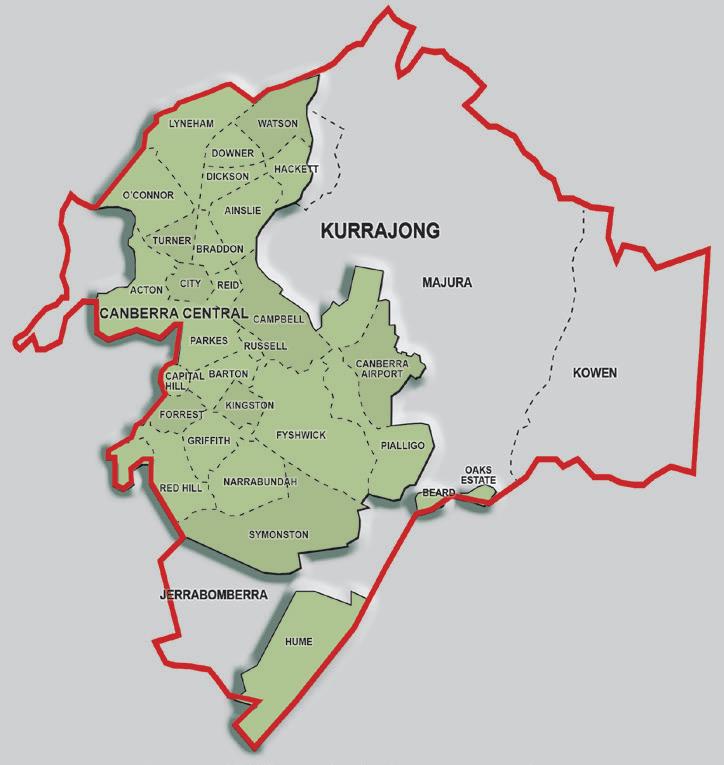
From the mansions of Forrest to the less celebrated suburb of Oaks Estate, no other electorate in Canberra embodies greater diversity.
Voters here are either rusted on to Labor or Liberal, however there’s also strong support for the Greens.
In the absence of a major campaign setback – between now and October 17 – one could comfortably assume the same voting pattern of two Labor, two Liberals and one Green will be followed.
Who’s likely to be returned?
Labor leader and Chief Minister Andrew Barr and Health Minister Rachel Stephen-Smith, Liberal Elizabeth Lee and Candice Burch and Greens leader Shane Rattenbury are all re-contesting their seats.
Barr, ACT politics’ most influential man by virtue of the position he holds, and Stephen-Smith, who’s performed well during COVID-19, are odds-on to secure seats for the Labor Party in October’s ballot.
Greens’ leader and cabinet minister Shane Rattenbury should also be comfortably returned. The Greens enjoy strong support in Kurrajong, concentrated largely in the inner north, home to the party’s top nine performing booths at the 2016 ACT Assembly election.
At the last election, between 22 and 29 per cent of voters gave their first preference to the Greens in Dickson, Downer, Watson, Lyneham, Turner and Ainslie. In most of those booths, the Greens’ vote was stronger than the 2012 election.
In 2016, Kurrajong delivered more than a full quota to the Greens (1.1), Labor achieved 2.3 quotas and the Liberal Party 1.9. In case you’ve passed out from election fatigue already, the ACT operates under the Hare Clark voting system, where parties are required to achieve a quota of votes in order for its candidates to be elected.
The Liberals’ Kurrajong plan
Liberals’ leader Alistair Coe will be looking to Kurrajong to keep his prospects of forming government on track. Incumbents Candice Burch – elected on a countback to replace the late Steve Doszpot in 2017 – and Elizabeth Lee, will both be hoping to retain their positions.
The Liberals out-polled Labor in the suburbs of Red Hill, Yarralumla and Griffith in the last territory election. Deakin, where 57.7 per cent of voters gave the Liberals their first preference, was the party’s best booth. But the party received less than 20 per cent of the first-preference vote in Downer, Dickson, Ainslie,
Turner and Lyneham.
The other inner-north booths re corded just a 20 per cent first-prefer ence vote for the Liberals. Two of the Liberals’ strongest-polling booths in Kurrajong – Yarralumla and Deakin –were moved in a redistribution to the electorate of Murrumbidgee.
Here’s what the experts think
Political analysts are hard pressed to disagree with the current voting pattern of two Liberals, two Labor and one Green in Kurrajong.
Former chief minister Jon Stan hope predicts there will be no change in Kurrajong.
Veteran electoral mastermind
Malcolm Mackerras has spent a lifetime studying federal and ACT elections. The honorary fellow of Australian Catholic University has analysed the results from last year’s federal election and is also predicting little change in the seat of Kurrajong.
At last year’s federal election, Labor’s vote increased in the seat of Canberra held by Alicia Payne.
Were that result to be replicated at the ACT election, Labor’s chances of picking up an additional seat would improve. However, as Mackerras points out, voting intentions don’t always align in federal and territory elections.
“In the federal election there was a heavy Labor vote in Kurrajong and if you translate the federal vote to Kurrajong you would be unsure that the Liberal Party will get its second seat, but I have no doubt the Liberal Party will keep its second seat because I simply know so many people who voted Labor at the federal election and will vote Liberal at the territory election,” said Mackerras.
Labor enjoys a happy hunting ground in the ACT having held power uninterruptedly since 2001 at a territory level. Similarly, the ACT’s federal House of Reps seats have not been touched by a Liberal since the 1990s — and even then the member, Brendan Smyth, was thrust in through a by-election but his seat returned to Labor 13 months later.
Mackerras argues the ACT is “so naturally left leaning” that it is “distinctly” more likely that the Barr government will be returned”.
“My predictions are that the Labor Party will win three of the five seats in Ginninderra and Yerrabi, and two of the five seats in Brindabella, Murrumbidgee and Kurrajong,” he said.
“But the Liberals will win three of the five in Brindabella and Murrumbidgee and two in Kurrajong, Ginninderra and Yerrabi. That leaves Shane Rattenbury who will win his seat in Kurrajong as holding the balance of power so that’s 12 Labor, 12 Liberal and one other and the other is Shane Rattenbury and that makes the 13 to 12, a left-leaning majority.”
when the five-electorate, 25-member ACT Assembly was first introduced, replacing the old threeelectorate, 17-member chamber.
The old electorate of Molonglo has traditionally been the most favourable for minor parties or independents, always returning at least one MLA from outside the two major parties.
Michael Moore served for four terms as an independent member of the ACT Legislative Assembly representing Molonglo and became Australia’s first independent minister serving in Chief Minister Kate Carnell’s minority government and later with Gary Humphries.
Moore predicts the Liberals’ Candice Burch’s position is less safe than the others, and will be the most contested seat. Burch finished behind the late Steve Doszpot at the last election but was re-elected to replace him.
“Shane will do okay, he will secure the fifth seat [in Kurrajong] because people want to vote Greens, and people are disappointed with Labor,” Moore said.
“Barr will get a couple of quotas, Lee will stay, Stephen-Smith has done a good job through covid, but Candice Burch is vulnerable.”
Kurrajong’s a ‘good mix’
Marea Fatseas, chair of the Inner South Canberra Community Council (ISCCC), and longtime inner-south resident, describes the electorate of Kurrajong as a “good mix of Canberra”.
Contrary to popular belief, Fatseas says there is wealth disparity in Kurrajong, with the largely affluent innernorth and inner-south suburbs only a section of the electorate’s make-up.
“If you look at Narrabundah, for example, there are two areas; there’s the old Narrabundah which is east of Sturt Avenue and Jerrabomberra
which has a different profile so we are a diverse community and often people don’t realise that,” Fatseas said.
What are voters saying?
Rising rates are still a big issue among voters this election, but Fatseas says it’s not the top concern.
“We did a survey, we had 550 respondents and their top concern was the maintenance of street trees, verges and parks, municipal stuff that councils usually do in other states,” Fatseas said.
“A lot of people feel those municipal functions have not been looked after very well, and the second major concern was planning.”
Given the keen attention that developers pay to the area, Fatseas says voters in Kurrajong are worried about the rate and quality of development and planning transparency.
“People want to have a say on what’s built next to them, people want to have a say about access to sunlight, building height, rezoning and green space,” Fatseas said.
With parts of the electorate nearly 100 years old, there’s growing concern that developments will put the area’s heritage at risk.
“You look at Kingston and Barton, they are 90 per cent apartments, and if you look at the canopy cover it’s one of the lowest in Canberra. If you look at the number of detached houses it’s only four
to eight per cent and the ones that are left, are heritage listed,” Fatseas said.
“And so there’s a strong mandate from the community to say that they won’t stand for the whole of the inner south being turned into apartments.”
Transport is another key issue.
“All those buses that come from Woden to the city don’t stop along Adelaide Avenue and so we have to take the slow bus to town and on weekends it’s very irregular.”
Who else is running?
New faces to run in Kurrajong include Canberra Liberals’ candidates Patrick Pentony, founder of the Southside Farmers Markets and former Army reservist Robert Johnson.
Labor candidates are political staffer Jacob Ingram; union official Madeline Northam and Judy Anderson.
Rebecca Vassarotti is running again for the ACT Greens along with Adriana Boisen and Michael Brewer.
The Canberra Progressives have fielded three candidates in Kurrajong; Therese Faulkner, Peta Swarbrick and social-media guru Tim Böhm. Böhm is running a large slice of his election campaign via social media, a clever move in this climate. He’ll be an interesting candidate to watch.
A second opinion on hearing loss
An elderly woman with hearing loss came to my clinic for a second opinion, after she had recently been to a hearing aid sales person. I found the cause of her hearing loss was simply the fact that she had build-up of wax in her ears, the salesperson had failed to inspect them. You might be surprised how often this happens!
Here are some things to do to avoid getting ripped off:
1. A visit to the GP may save you from being ‘sold’ something when your only problem is wax in your ears.
Recently I was told by two different patients that they were quoted $16,000 for a pair of hearing aids. This seems a ridiculous amount of money to pay and is most likely not appropriate for the majority of people (or possibly anyone).
5. If you are a pensioner or partpensioner, or a DVA gold or white card holder, you should carefully consider if you want to use the free-to-client government hearing aids or if you’d like to top-up to a different hearing aid.
“In an unregulated market there is a lot of opportunity to take advantage of people. Yes you have read correctly, there is no licensing of people who sell hearing aids.”
2. Look for someone who is independent and can offer you unbiased advice, not just give you a sales pitch.
– Dr Vass
3. There are a range of hearing aid prices. Finding the right hearing aid might save you money and it will also give you the best chance of success.
4. Hearing aids can be expensive.
The free-to-client hearing aids are appropriate for many people, however if you have great difficulty hearing background noise (for example in restaurants) then you might trial the top-up hearing aids, but only if you can afford them. There are a range of top up options and prices, if you are disappointed after a trial, you should return them and trial the free-toclient hearing aids.
If you get the feeling the person you’re dealing with is just trying to sell you something, then take a step back and get a second opinion.
Angry at what government has done to this city
I’M not a candidate in the forthcoming election nor a member of any party. I was heavily involved in the Labor movement previously serving on the ACT Labor Council as a delegate and working as a union organiser.
I’m now just a citizen so angry at what the ACT Labor/Greens government has done to the city.
I was born in Canberra and, instead of complaining, I’ve decided to be active.
I’m challenging the media to take a stand against the ACT government on what it has done with this city, which has become the concrete capital of Australia. We are seeing the slow death of the bush capital.
I find it outrageous that the Labor/Greens government justifies building the light rail as part of the Burley Griffin Plan; if that’s the case, why have they abandoned the city of gardens and trees that was the Burley Griffin’s plan for this city.
The ACT Greens need to be called out for their hypocrisy; on one hand, they’re all about climate change, but then they’ve created a city that’s getting hotter due to their vision of a compressed city of buildings and no green spaces.
Noel Bartone, via email
‘Contempt’ for Canberrans
I FULLY concur with columnist Michael Moore (CN, September 3) on his spot-on piece about the forthcoming ACT election, “Suddenly working for votes?”
Yes, the Labor/Greens coalition seems to be desperately carrying out minor road works and calling our attention to them via embarrassing signs.
I must share a recent experience I had of the ACT government’s inefficiency and contempt for Canberrans through its Minister Chris Steel.
In January, I sent him a letter pointing out the rundown condition of the two large signs at the entrance and exit of Commonwealth Bridge. I attached two photos and mentioned the urgency to install new signs as this area must be the most touristic of our capital.
Six months later I received his reply, not commenting on the subject matter at all but instructing me to address my suggestion to Access Canberra. Disgraceful, and I told him so on his Facebook page and in an email.
I hope Canberrans are not as blind as to keep on electing this type of element that, after 19 years, is showing more and more complacency and disdain for a large section of our capital’s population.
Vivien Munoz, Holt
Has Andrew forgotten about Brendan?
ANDREW Barr is reported to be unimpressed with Jon Stanhope’s decision to accept an offer to spearhead the Liberals’ proposed poverty taskforce should the Liberals win the coming elections.
Has Andrew Barr forgotten how he lured Brendan Smyth, a senior serving member of
the Liberal Party, away from the party just before the last election by offering him a plum job as the inaugural commissioner for international engagement on a hefty salary?
By the way, what has become of Brendan Smyth? He has not been seen nor heard of again by the ACT public. Is the ACT taxpayer still paying his salary?
Ann Cooper, Wanniassa
[In the absence of international engagement, Mr Smyth has been working as the ACT’s COVID-19 local business commissioner – Editor.]
Ask the children about statues
COLUMNIST Robert Macklin’s reminder of the stature of Sir John McEwen in our political history is convincing (CN, September 3). Less convincing is the idea that a statue is the best way to remember his achievements.
Let’s think of another reason for new statues.
Let’s think of statues that celebrate Australian achievement; statues that will delight all who encounter them, both young and old.
Imagine Storm Boy and Mr Percival (“Storm Boy” by Colin Thiele) in the parliamentary triangle, not far from the National Library and Questacon. We could add Lief and Jasmine of Deltora (“Deltora Quest” series by Emily Rodda).
Let’s celebrate the richness of Australian children’s literature and with statues that will be visited and revisited with joy by
Canberrans and visitors. Jackie French has given us Josephine the dancing kangaroo. Mem Fox has given us “Possum Magic”. Who would you choose?
London has Peter Pan in Kensington Gardens, and New York has Alice in Wonderland in Central Park. Seattle has a troll under a bridge, Bremen has town musicians, Boston has “Make Way for Ducklings” and Copenhagen, the Little Mermaid.
Let’s be proud of Australian children’s literature. The Canadians have named not one, but two primary schools after their beloved children’s story teller Robert Munsch who gave children everywhere “The Paper Bag Princess”.
Let’s ask our children and their teachers who they would like to visit in Canberra.
Robin McCallum, Higgins
Fix the roads first
RE the Athllon Drive upgrade: when we bought our block in Torrens in 1966 we were influenced by the fact that the proposed Athllon Drive would be for public transport vehicles only.
Now it has become a noisy race track.
Increasing the number of traffic lanes will mean more traffic and more noise, something that most nearby residents would oppose. The government could spend the $135 million in repairing existing roads, many of which are developing dangerous potholes.
Gordon Worrall, Torrens
Appalled at electric car subsidy
I WAS appalled at MLA Shane Rattenbury’s suggestion that if the Greens are elected they will set aside $50m to subsidise those buying electric cars by $10,000 a car. For a start, the long-term viability of electric cars is doubtful.
Spectacles
Prescription sunglasses
Contact Lenses & Solutions Eye testing
Spectacle suppliers to: The department of Veteran’s Affairs & ACT Spectacle Scheme
The use of clean hydrogen for vehicles is already being used extensively in the UK and other EU countries as the perfect clean energy for buses and trucks.
However, this is not the point, as Chief Minister Andrew Barr keeps telling us, Canberra has the highestpaid workers in Australia, yet in every town centre and in some suburban centres we see homeless people sleeping rough.
The successful Safe Shelter program instituted by Richard Griffith’s could not operate this year due to the virus. Did the ACT government offer an alternative? No! Rattenbury’s $50 million could provide a substantial amount of low-cost housing rather than going to those high earners, who could easily afford an electric car and don’t need a donation of $10,000!
Cedric Bryant, Watson
More answers before the election
SENATOR Zed Seselja’s influence does loom large over Coe and Co’s deliberate yet poorly envisioned “rates and rubbish”-style electioneering campaign (Paul Costigan, CN, September 3).
While carefully hiding away their conservative and regressive positions on many social and personal choice issues, the ACT Liberals also shirk from sharing their strategies for delivering core promises about freezing rates and lowering taxes while ensuring better services.
They have had four years to consider what they would like to alter, reduce or remove, in order to fund and realise their priorities for us.
Will temporary new fees be attached to some services and the hire of community facilities? Will urban development planning processes and construction activity outcomes be less scrutinised?
Will ACT Public Service recruitment be frozen and employees denied wage increases over the next four years? Will some basic maintenance tasks in our suburbs be left to ratepayers volunteering for working bees? Will local bus operations be further cut and broken journeys stretch out more in morning peak hour and mid-afternoon travel periods, so new dedicated and direct bus services can run across Canberra for non-government school students?
Will women’s reproductive health rights and services be interfered with, given this has been an area of high and consistent interest for some in the current shadow ministry, over many years?
More information and answers are certainly needed well before October 17.
Sue Dyer, Downer
Sleeping rough or receive a $10,000 subsidy to buy an electric car, who has the greatest need, asks letter writer Cedric Bryant.
The concrete capital of Australia? Is this the Canberra we want to leave for future generations, asks letter writer Noel Bartone.
OATRAM FINANCE are the Transport and Earthmoving Finance Specialists
Regardless if the goods are new or used, from a private sale or a dealer, we have the Working Finance for your Working Equipment.
We pride ourselves on complete finance solutions to keep your business running. We have access to some of the best finance rates due to our volumes. We are located in Queanbeyan on Crawford Street and we service the ACT and NSW.
THERE’S no shortage of experts in Canberra. Whether in sewing, property, allied health, motorcycle training, double glazing or office furniture, “CityNews” speaks with a variety of experts, all driven to share their skills and services with the ACT region.
Small classes teach life-long sewing skills
SEW Simple can help people sew anything, say sewing advisors Sonia Hogan and Sharon Schluter, with a variety of classes available at the shop most days to help would-be stitchers along.
“Sewing is a life skill, and once you’ve learned you’ll never be bored in pandemic times – there’s always something to do,” says Sonia.
They offer a “Sew Anything” class, where people can work on unfinished projects they’ve had in the cupboard for years or start something new.
The shop also runs classes in ruler work, dressmaking, machine embroidery,
introduction to overlocking, making the “ultimate travel bag”, free motion quilting, and how to put a patchwork quilt together, which covers the techniques of putting the top, batting and backing together with a professional binding.
Class numbers are restricted to four, which Sonia says gives everyone the opportunity for individual attention and to learn from each other, as well as complying with social distancing.
“We’re a niche, small shop, we sell, teach and provide services and support for the machines we sell,” she says.
“We try to keep up to date with patterns and fabrics, too, with beautiful Tula Pink fabrics available.”
With more than 43 years in business, owner Greg Carmody says Sew Simple is the number one shop in Australia for Husqvarna Viking sewing and embroidery machines, as well as selling brands such as Pfaff, Juki and Janome, plus needles and accessories.
“The idea is that all our staff understand the business and the stock,” says James, who makes sure their staff are as well-informed as himself and Taylor.
Taylor, a qualified cabinet maker, says the team cleans, repairs and restores all the furniture they receive and guarantees it’s of top quality.
Sew Simple, Unit 1, 40 Raws Crescent, Hume. Call 6282 7144, email sales@sewsimple.com.au or visit sewsimple.com.au
“We know what we are talking about, we have been around a long time and understand what sells,” says Taylor.
“We get new, high-quality office furniture through the showroom every week, from ergonomic chairs, desks and workstations, to
quality, second-hand office furniture, says James. James, Taylor and the team work across all aspects of the business, from removing used furniture, cleaning and reconditioning it, to selling them – be it for office fitouts, restaurants or residential buyers.
“If our customers are after something specific that they can’t find in the shop, we can help source it – we know where to go,” James says.
Ex-Government Furniture, 6 Yallourn Street, Fyshwick. Call 6280 6490 or visit exgovfurniture.com or facebook. com/exgovfurniture
Ex-Government Furniture owners James Fullerton, left, and Taylor Radnell.
EXPERTS OF CANBERRA advertising feature
Renovate the home to sell it for more
DESPITE the uncertainty of a global pandemic, with now a second wave in areas like Melbourne, the co-director of Your Property Profits, Kim Persson, believes now is the best time for homeowners to sell.
“The Canberra property market is a quiet achiever,” Kim says.
“With the majority of the territory’s population says Kim.
“Buyers are returning to the market and they are looking for value for money, so the need to have your property looking its absolute best and stand out has never been greater.”
Kim and her business partner Sophie McLean make renovating accessible to everyone through
Expert advice for dealing with chronic pain
ARTHRITIS ACT has a team of expert allied health professionals, who can support people with chronic pain, whatever their age or condition, says CEO Rebecca Davey.
“We’re experts in ways of dealing with pain,” Rebecca says.
“We know that weight loss and exercise are the gold standards for managing chronic pain conditions, and we have a dietitian who can recommend what to eat to avoid painful flare-ups, whether a person is dealing with arthritis, osteoporosis, cancer, food allergies or food intolerance.”
Rebecca says the not-for-profit also has an occupational therapist who can help make life easier for people through assisting with home modifications for safety and access, energy-saving equipment, technology and daily living aid recommendations, and through providing support to access the NDIS or the Disability Support Pension.
“We provide one-on-one physiotherapy consultations, including hands-on manual therapy, exercise prescription and posture education, as well as rehabilitation options post-surgery,” Rebecca says.
Arthritis ACT also offers exercise physiology programs designed to reduce pain for anyone living with any musculoskeletal conditions.
One-on-one exercise physiology consults are designed for anyone who needs help with an individually prescribed exercise program (land-based or hydrotherapy), a review on a current exercise program and advice on how to safely progress towards their goals through exercise.
Arthritis ACT, Building 18, 170 Haydon Drive, Bruce. Call 1800 011041, email info@arthritisact.org.au or visit arthritisact.org.au
Your Property Profits co-directors Kim Persson, left, and Sophie McLean.
Arthritis ACT offers services such as physiotherapy consultations and exercise physiology programs.
CALL FOR YOUR APPOINTMENT
Physiotherapy – including the GLAD program for knee and hip osteoarthritis, sports injury prevention and rehabilitation, and pain condition support.
Exercise Physiology – Individual exercise prescriptions, small group classes to increase strength and improve rehabilitation, strength and balance classes, hydrotherapy support.
Occupational Therapy – access reports for NDIS and Disability Support Pensions, home modifications, equipment prescriptions.
MOTORCYCLISTS are among the most vulnerable road users, says Revolution Rider Training CEO Steve Lake, so all its training programs have a focus on safety.
“We’re teaching the physical skills of motorcycle riding, but our goal has always been to push the safety side,” says Steve.
“We believe the rider must take responsibility for themselves, actively identifying anything on the roads that may present a safety issue, without assuming that cars will give way to bikes.
“I want to train those who have chosen to ride a motorcycle to be safe.”
Revolution Rider Training currently has three trainers in the ACT, but Steve says that’s set to double in the next few weeks.
“All our instructors have, or are in the process of getting, their Cert IV in motorcycle instruction,” Steve says.
Steve says the most common type of motorcycle crash is from riding through a curve, without any other vehicles involved, so Revolution Rider Training encourages riders to monitor themselves and their decisions.
“Riding with this in mind puts the rider in control of their environment, feeling safer while enjoying it more, and feeling more immersed in the experience,” he says.
THE longest-running uPVC double glazing company in the ACT, Solace Creations, has been helping Canberrans keep their homes warm in the winter and cool in the summer since 2006, says owner Karen Porter.
“Our customers draw on our expertise and experience to custom-design windows to give their homes the best outcomes for comfort as well as looking great,” she says.
Karen says the team at Solace Creations pride themselves on offering a friendly and warm customer service when they deliver any range of double glazed windows and doors.
“We are not just focused on double glazing and all the benefits it provides,” she says.
“We are also focused on how to make your home more beautiful.”
Solace Creations’ dedicated in-house installation team manages the profes sional installation of the new windows that are all Australian made and meet Australian standards.
Karen says Solace Creations is currently doing major renovations on their showroom and when it reopens, it will provide a world-class display of uPVC double glazed windows and doors. In the meantime, people are welcome to visit and walk through its mobile display.
WHEN “CityNews” visual arts reviewer, Anni Doyle Wawrzyńczak, was announced as the recipient of the 2017 ANU College of Arts and Social Sciences Publishing Prize, she little knew how different a book could be from a PhD thesis.
For it seemed to Wawrzyńczak, who had graduated with a PhD earlier in the same year, that her doctoral dissertation, titled “Transcending the National Capital Paradigm: The Evolution of Local Arts in Australia’s National Capital”, was just about ready to go. She was to find otherwise as she wrestled with the task of transforming academic artspeak into comprehensible English for a broader readership – not just visual arts buffs – keen to discover what makes Canberra’s art scene tick.
Her prize was the publication of her manu script by the ANU Press. This month at last it is in print, finally titled “How Local Art Made Australia’s National Capital”, resplendent with a spectacular image of Patricia Piccinini’s “Skywhale” on the cover, 37 pictures inside and crammed with true stories, statistics and larger-than-life arts personalities.
It’s been quite a journey, full of love, heartbreak and a mighty amount of research.
Anni reveals how Canberra’s arts scene ticks
found Megalo print studio and the Bitumen River Group which preceded the Contemporary Art Space who now lectures at the School of Art and Design and rebel eX De Medici, who “relentlessly went her own way”.
So is it mostly a visual arts book?
“It wasn’t solely about the Art Space, it was about the nature of Canberra itself… a broad story that held within its smallest stories,” she says.
“While the visual arts stand as a marker of Canberra as a unique art space, not like anywhere else in the world, the same could be said for dance and music.”
The finished book begins with arts practice from 1913-1978 and goes through to 2001, with a short conclusion that brings the narrative into the period of the present Arts Minister, Gordon Ramsay.
Bob Boynes, who arrived in the late ‘70s from politics-ridden Adelaide to find Canberra “a breath of fresh air”.
Sympathetic political figures emerge from and former arts ministers Bill Wood and Gary
A good part of the book is to do with how women came to make art. Wawrzyńczak, who was earlier in life a jazz singer and is still a professional stage manager, had never studied feminism, so it came as a shock to her to find out that year after year the Canberra Contemporary Art Space was exhibiting more female than male artists.
Among them were influential figures, such as Alison Alder, the printmaker who helped
The cover was a problem, as none of the colourful types spelled out “Canberra”. But Martin Ollman’s photo of the Skywhale had been on the fridge door for the previous two years and she soon realised it had to be on the cover. ANU designer Teresa Prowse did the rest.
“Skywhale’s complexity echoes Canberra’s own… I wish the rest of Australia would understand that parliament has nothing to do with the way we live and work in this community,” Wawrzyńczak says.
“How Local Art Made Australia’s National Capital”, ANU Press, free download or $60 print version, order at press.anu.edu.au/publications
Author Anni Doyle Wawrzyńczak.
Martin Ollman‘s photo of the Skywhale on the cover.
Onya, Joy... can’t say better or fairer than that
“Slim & I” (PG)
IF you’re Australian and alive in the second half of the 20th century, it’s a fair bet that you’ve heard the music of David Gordon Kirkpatrick (1927-2003).
In 1938, young Gordon changed his stage name to Slim Dusty. What followed became Australian country music history. And reshaped Australian country music.
To describe Slim Dusty as an icon of Australian country music is to use that term correctly, unlike the galling over-use of its adjectival form, particularly by electric media folk.
In this film, director Kriv Stenders acknowledges Slim’s contributions affectionately and, as far as can be ascertained, accurately. As well he might, having access to the wide range of recorded images and sounds that weren’t available to the folk who wrote and sang in the years when writing down words and music was the only way of preserving the songs they sang about their daily lives and interests.
But Stenders’ film goes further. Indeed, his film sets the record straighter. Tucked at the end of its title is an eponymous “I”.
Who was that person? Well, it’s a lady called Joy McKean who before marrying Slim in 1951 had, together with her sister Heather, an established career in country music. Who, after marrying Slim, created most of the songs that made him famous. And at age 90 is still writing and composing. “Slim & I” is more a paean to her than to Slim.
Onya Joy. Onya Kriv. Can’t say more, better or fairer than that.
At Dendy, Palace Electric and Limelight
“After We Collided” (M)
I’VE not read Anna Todd’s 2014 romance novel that seems to have ignited flames of enthusiasm among the young-adult age group. Watching director Roger Kumble’s film of the book, for which she wrote the screenplay, the best I can say is that it knows what it intends to say and the age group at which she aimed it.
It’s Todd’s second novel to be filmed. It’s Kumble’s sixth feature film since his debut in 1999, since when most of his time has been spent directing episodes of TV potboiler series. His features seem mostly to have been about young folk learning about their emotional prospects and the biological nitty-gritty that accompanies growing up.
sundayROAST
Stay in touch with the names making news on Sundays from 9am as 2CC and “CityNews” present Canberra’s only local weekend news and current affairs program.
It’s a revolving panel show that brings to the microphone great “CityNews” commentators and 2CC personalities.
Be part of the conversation call 6255 1206 between 9am and noon
In a tedious tale of love, disappointment, retribution and other ingredients, young actor Hero Fiennes Tiffin (fair dinkum; what were his parents thinking about?) plays Hardin.
Hardin and Tessa (Josephine Langford) have a thing going. Their families live in a typical middle-class suburb in a typical American city. Their lives are entangled with those of other young adults.
Does Tessa deserve Hardin? Is Hardin good for Tessa? Kumble’s film spends 105 minutes including closing credits pondering those questions en route to conclusions that may very probably be wrong.
At Dendy, Hoyts and Limelight
“Adam” (PG)
DIRECTOR Maryam Touzani has set her debut film in Casablanca. It could have been any city with a large Muslim population. There’s no politics or religion in it.
Here’s what leading American critic Jay Weissberg says about it: “Taking the stories of two women, both frozen in existential stasis, and bringing them together in a predictable yet deeply satisfying manner, the writer-director ensures this scrupulously even two-hander about grief, shame, and the redemption of motherhood doles
out emotional comfort food that’s neither too sweet nor too heavy.”
A widow with a delightful six-year-old daughter, Abla (Lubna Azabal) ekes out a living selling bakery delights from the kitchen of her apartment. Pregnant Samia (Nisrin Erradi) is living on the street. Abla shoos her away from her doorstep.
The Muslim hospitality ethic eventually leads Abla to change her mind. Samia is determined that when her baby is born she will put it out for adoption.
What begins as an uncomfortable change of Abla’s heart develops into a relationship from which both women make important discoveries about themselves. That’s what the film is about. I watched it alone and was enchanted by it.
The strong beauty of Lubna Azabal will be with her decades hence and her talent for conveying wordless emotion is powerful. Nisrin Erradi’s poignant portrayal of a woman with a difficult future matches it. Call yourself a cineaste? Don’t miss this one.
At Palace Electric
WATCH IT! / streaming and stuff
Creepy,
confronting blockbuster
ARTIFICIAL intelligence? Alien planets? A dash of Greek mythology and a whole bunch of rather obvious religious symbolism as a backdrop? I don’t think you could get any more “Ridley Scott” if you tried.
In his television directorial debut, the famous filmmaker who’s brought us hits such as “Blade Runner”, “Alien”, “The Martian” and “Prometheus”, has whipped up another of his philosophical sci-fi spectacles with “Raised by Wolves”.
Set hundreds of years in the future, the story tells of two artificially intelligent androids programmed to raise a colony of human beings after a war on Earth, fuelled by religious differences, tore it apart.
Streaming on Foxtel Binge, it’s creepy, confronting and has a blockbuster budget to back it all up.
INTERESTINGLY, we’re seeing more and more widely known and successful filmmakers continue to shake hands with streaming companies to get their big new productions to viewers, rather than go down the usual cinematic-release route.
“I’m Thinking of Ending Things” is another example of this, a film produced by Netflix and dropped earlier this month.
It’s the newest effort from the weird and wonderful mind of Charlie Kauffman, famed for his writing and production of strange films such as “Eternal Sunshine of the Spotless Mind”, “Being John Malkovich” and “Adaptation”.
“I’m Thinking of Ending Things” is certainly no exception. A sad and surreal head scratcher, it feels as if you’re walking through a dream. For
“Raised by Wolves”... another of Ridley Scott’s philosophical sci-fi spectacles.
anyone who likes a bit of a challenge in their viewing – I do – or a movie that rewards a close eye to detail, this is definitely one for you.
WHILE we’ve got Netflix on for this week, I’d be remiss to not talk about “Cobra Kai”, its newest original show (streaming now) that’s turned into quite the hit and, again, represents a series inspired by a classic film.
Remember Daniel Larusso’s arch-enemy in the 1984 classic “The Karate Kid”? The one who copped the rough end of that epic crane kick in the final tournament? Well “Cobra Kai” revisits him some 34 years later: down, out and washed up after his loss to our hero from the original film.
Now he seeks redemption and reopens his famous Cobra Kai dojo and wants to reignite his
rivalry with Daniel to make something of himself. The series is quick witted, entertaining and very watchable, especially for fans of the original film (I’m happy for a Twitter debate from anyone who didn’t). The Netflix-watching community have been loving it, with it holding the top spot in the trending Top 10 for a solid while.
STAN also had an original movie trending this week, the homegrown Helen Reddy biopic “I Am Woman”. It tells the story of how Ms Reddy and her famous song, for which the film is named, became an anthem for the women’s movement of the 1970s – and beyond.
The film’s inspirational story tells of how Reddy arrived in New York in 1966 with nothing but her three-year-old daughter, a suitcase and $230. Five years later, she’d become one of the biggest stars of her time, with an incredible eight number one US singles. Still alive today, at 78 she continues to share her talents, collaborating on the film.
How fascinating it is to see storytellers of all different kinds now offering their talents and tales to streaming companies eager to present to their viewers. Seems almost like everything old is becoming new again in a movement where we may yet see our generation, too, “waxing on and waxing off”.
More of Nick Overall on Twitter @nick_overall
“Adam”... grief, shame, and the redemption of motherhood.
Hidden gem at the local shops
CANBERRA loves its local shops. As much as we can be attached to our own, it’s worth exploring the ACT’s local shop landscape to see what you can uncover.
Recently, that landed me in a sunny spot at the Gang Gang Café, a hidden gem in Downer (Frencham Place).
The place has a strong, friendly community vibe and couldn’t be more relaxed if it tried. Bricks are exposed on inside walls, concrete floors polished, the furniture a medley of pieces with some individual tables and some communal. And a café with the name Gang Gang wouldn’t be complete without at least one piece of artwork on the wall featuring a shy gang gang cockatoo, this one a male with a crimson red head and fluffy light-grey, feathered body.
Gang Gang is a neighbour to the Downer Community Centre and the local oval is just across the road. The shop’s bronze kangaroo sculpture, unveiled in 2019 to replace a previous sculpture that went missing (who knows where?) adds character.
The breakfast menu kicks off with simple toast and choice of jam, Vegemite or peanut butter ($9). I was peckish but couldn’t decide sweet or savoury. The berry and banana buttermilk pancakes with maple syrup caught my eye ($18) and so did the ricotta and berry raisin toast ($16). Hmmm.
In the end I settled, as I so often do with my first meal of the day, on savoury, ordering the baked eggs shakshuka ($20). Who doesn’t love a piping hot serve of a hearty Mediterranean dish to take away the tummy grumbles? Shakshuka means ‘mixture’ and the dish was just that.
baked beans, two baked eggs, tomatoes, onions, and a secret mix of spices all oven baked in a large, flat skillet.
with white sourdough toast smothered with butter. It was a huge serve and super tasty. It truly did hit the spot, although my eggs were a tad overcooked for my liking.
Other items on Gang Gang Café’s all-day breakfast menu include an intriguing and healthy-sounding bircher muesli ($15), eggs Benedict, which comes with salmon, ham or bacon ($18), and avo and feta smash on toasted sourdough ($14).
menu has been introduced, with delivery available from 3pm to 8pm. Open seven days. Free wifi.
ART Game Nancy’s new gallery
of an office block next door to King O’Malley‘s pub, of which he is managing director and after looking at it, Sever decided it was “a nice space”.
Although the new gallery is not visible from the street, you can access it from inside the pub if you want to, another interesting vibe, and there’s a simpatico landscape design service facing.
When we catch up, Nancy has been busy bringing across paintings by South Australian surrealist artist Andrew Baines. His striking exhibition had to close suddenly because of COVID-19, so pretty well nobody saw it. Now’s the chance to rectify that.
She also has four Michael Taylor paintings not showing in the exhibition now running at Gorman and a couple of paintings by in-demand Braidwood artist and ANU School of Art graduate, Kate Stevens.
In what she calls “a nice twist”, she’ll also bring in some of her Janet Dawson paintings. It was Dawson’s
politician after whom the pub was named.
Sever will also have changing exhibitions and things are getting exciting for October when Neil Hobbs’ free public art biennial ‘Contour 556’ takes place. The City Walk Gallery will exhibit sculptures by South Australian artist Greg Jones for that and there’ll be a bigger sculpture outside too.
So why is she doing it?
“Well I just feel I have to, we can’t just see businesses closing down,” she says.
“The artists haven’t stopped working but have had very little support and I think they need as many professional exhibitions as possible.”
Husband Adrian seems very philosophical about her new gallery venture and the Sorbonne-educated Nancy, well, she’s taking the Gallic view, saying “As long as I have the energy I want to keep doing it – it’s a very existentialist view”.
Telling stories of ‘place’ in portraiture
By Helen MUSA
OPENING soon at the National Portrait Gallery is “This Is My Place”, which will take a fresh look at the places that define who we are. Featuring over 100 works in painting, photography, drawing, printmaking and sculpture from the NPG collection, it travels from coast to coast via the rivers, streets, mountains, studios and sportsgrounds to tell stories of “place” in portraiture. September 19-February 28. Pre-bookings essential at portrait.gov.au
THE Q, Queanbeyan, is once again hosting the Manhattan Short Film Festival, which this year features nine finalists out of 971 entries from Australia, Finland, Iran, Russia, Israel, North Macedonia, State of Palestine and USA. “Best Film” and “Best Actor” awards are determined by ballots cast by the audiences in each participating venue. September 24-26, bookings online only, strictly by 4pm, September 25 at theq.net.au
“RICHES to Rags in Covid Time,” composed by the head of the ANU School of Music, Kim Cunio, has been recorded on virtual instruments at
the ANU. The track is inspired by ragtime music popular during the Spanish flu in the early 20th century. Cunio and sound technician Matthew Barnes used a USB to play a digital file of the music on a Yamaha C7 Disklavier virtual piano. Accessible at soundcloud.com/anumusic-1/
THE 8th Queer Screen Film Fest is now running online, featuring more than 40 feature films, documentaries and shorts, with 29 Australian premieres. “Breaking Fast” is a romantic comedy about Mo, a practicing Muslim, who is pleasantly surprised when all-American Kal offers to join him in his nightly fast-breaking Iftar meals. The festival is offering three differently-themed short film packages free of charge for 11 days from September 17-27, bookings at queerscreen.org.au or 9280 1533.
TWO live performances of “Maîtres de la Composition” will see Dan Russell on violin and Edward “Teddy” Neeman on piano playing colourful and “almost jazzy” soundscapes of French compositions by Ravel, Debussy, Poulenc and Fauré. Wesley Music Centre on Sunday, September 27 at 2pm and 3.30pm. Seating capped at 30 people per concert. Bookings online only at phoenixcollective.com.au
Smoky
Gang Gang Café, 4/2 Frencham Place, Downer, open Monday to Sunday (7am to 8pm).
Baked eggs shakshuka… smoky baked beans, two baked eggs, tomatoes, onions, and a secret mix of spices all oven baked in a large, flat skillet. Photo: Wendy Johnson
Duratone Hi-Fi PTY LTD
SPRING CLEANING
Now is the time to trade-in your old equipment
Sales & Service
Turntables, Streamers, Amplifiers & Speakers from vintage to new.
Would you like to watch those old family videos once again, or listen to your favourite records on CD?
SLIDES TO DVD NOW AVAILABLE PRICE ON APPLICATION
We can take your vinyl records or cassette tapes and put them onto CD and we transfer VHS tapes onto DVD.
OPEN 7 DAYS
Cooleman Court, Weston Creek | 6293 4677 | songland.com.au
PUZZLES PAGE
Joanne Madeline Moore
Your
ARIES (Mar 21 – Apr 20)
Your ruler Mars is retrograde (until November 14) so motivation will be low and impatience high. And the more you try to assert your authority and independence with others, the more stressful and frustrating things will be. Just remember – you can’t be the boss all of the time. Calm down and recalibrate Rams! If you are more consultative, then the week will run more smoothly. Sunday is a good day to catch up with like-minded folk in your local community.
TAURUS (Apr 21 – May 21)
This week the celestial message is patience. Busy Bulls have been very active but with Mars reversing through your solitude zone, you’ll find rest, relaxation and reflection are just what the doctor ordered. If you look to the future with a positive attitude, then fabulous opportunities will manifest (eventually) but you must be extra patient. The weekend is a wonderful time to write down your goals and aspirations, plus work on your talents and strengths.
GEMINI (May 22 – June 21)
With Mercury (your ruling planet) at odds with Pluto, Saturn and retrograde Mars, delays and disruptions will unsettle your usually genial Gemini demeanour. You’ll find circumstances are constantly evolving, so keep your schedule flexible and your mind open to sudden changes. It is a suitable time to do research or revise written work (rather than take a trip or launch a brand new project). The buzz words for this week? Adapt, amend, review and redo.
CANCER (June 22 – July 23)
Dynamic Mars is still reversing through your career zone until November 14. So it’s not an ideal time to kick-start a promotion, initiate a work project, launch a product or look for a new job. If you do, then expect plenty of annoying delays and frustrations. On the weekend, Venus and the North Node stimulate your money zone. So, the more creatively and generously you share financial ideas and collaborate with others, the more successful you’ll be in the future.
LEO (July 24 – Aug 23)
This week your communication, motivation and inspiration are muted by retrograde Mars and slow-moving Saturn. Which will tend to squash your Leo ebullience and Cat creativity. But don’t let difficulties and delays deter you from following your dreams! Be inspired by real life Superman, birthday great Christopher Reeve: “So many of our dreams at first seem impossible, then they seem improbable, and then, when we summon the will, they soon become inevitable.”
VIRGO (Aug 24 – Sept 23)
Expect a very frustrating week Virgo! Mars is reversing through your shared finances zone, so it’s not a good time to lend cash, borrow money or initiate a financial partnership. Instead, be patient and wait until after November 14, when Mars turns direct. On Wednesday (when Saturn squares Mercury) energy levels will be low and you could also feel pessimistic about a current project. It’s Equinox week, so try to maintain a sense of balance and perspective.
LIBRA (Sept 24 – Oct 23)
With reactive Mars reversing through your relationship zone, tread gingerly with a sulky partner, an unreliable lover, a grumpy house mate or a frustrated family member. You’ll find the more patient and diplomatic you are, the less stressful the week will be. And don’t let other people deter your ambitions or derail your dreams! Be inspired by birthday great, actor and disability rights activist Christopher Reeve: “Don’t give up. Don’t lose hope. Don’t sell out.”
SCORPIO (Oct 24 – Nov 22)
Mars is reversing through your job zone, so it will be difficult to get the ducks all lined up at work. If you are patient and persistent (which are Scorpio strengths) then you’ll make slow but steady progress. Being extra cooperative with colleagues, clients and customers will also lead to long-term rewards. But avoid getting drawn into a power struggle (or conspiracy theory) in your local community. It is a good time to revise and reboot your exercise regime.
SAGITTARIUS (Nov 23 – Dec 21)
Sagittarians usually love to rush! But with Mars retrograde (and Saturn also slowing things down) your need for speed is curtailed and everything seems to move at a snail’s pace. Your limited patience will wear thin with pedantic people, frustrating family members and confusing communication. You prefer a spontaneous approach, but you’ll find some sort of solid daily routine, will help you tackle projects in a more sustainable and satisfying way.
CAPRICORN (Dec 22 – Jan 20)
With Mars in retro mode, plus Saturn (your patron planet) also hindering progress, you may feel as if you’re going nowhere. The stars are testing your stamina and persistence, so don’t give up. You need to tap into your bountiful reserves of inner strength as you pick yourself up, dust yourself off, and set a positive new course (especially at work). So your mantra is from birthday great, writer F Scott Fitzgerald: “Never confuse a single defeat with a final defeat.”
AQUARIUS (Jan 21 – Feb 19)
Be careful when talking and driving, as Mars reverses through your conversation and transport zone. Otherwise you could find yourself smack bang in the middle of an argument or accident. So slow down! There is much inner peace to be found via activities like prayer, meditation, contemplation, yoga or tai chi as you calm down and listen to the wise guidance from within. With Venus visiting your relationship zone, cooperation is the secret to positive partnerships.
PISCES (Feb 20 – Mar 20)
Mars continues reversing through your self-esteem and money zone (until November 14). Plus Pluto, Mercury and Saturn throw a spanner into a close relationship or financial venture, so it feels like it’s going backwards. It will take oodles of self-belief, positive self-talk, financial discipline, patience and persistence to get things back on track. On the weekend there’ll be an opportunity to patch up a work problem or a domestic dilemma, so grab it with both hands.
Copyright Joanne Madeline Moore 2020
8
9
10
11
in
is the operation inverse to multiplication? (8)
14 Name a species of large, extinct mammals of the elephant kind. (8)
18 What describes something of special elegance, or fineness? (6)
19 To confirm something is to do what? (8)
21 Name the vast, treeless plains of the arctic regions. (6)
22 What was the profession of Sir Joseph Banks? (8)
23 Which city hosted the 1896 Olympic Games? (6)
1 Who was the Australian welfare worker,
known for her work with immigrant women, Caroline ...? (8)
2 Name, basically, the only word that ends with “eamt”. (6)
3 To be backward, is said to be what? (8)
4 Name a North African republic, capital N’Djamena. (4)
5 To be highly offensive, is to be what? (6)
6 What is an alternative name for a summerhouse? (6)
12 What is a blood feud also known as? (8)
13 Which expression denotes numbers? (8)
15 Name the largest river in the world. (6)
16 Which island was formerly called Formosa? (6)
17 To settle a matter decisively, is to do what? (6)
20 What is an elaborate melody for a single voice? (4)
GARDENING
gardens, but the other main feature was an avenue of crabapples, namely Malus ioensis “Plena”, also known as the Bechtel crab or prairie crab, as it’s native to North America. This was first found and brought into cultivation in 1840 by E A Bechtel, who found it growing in Staunton, Illinois.
There are at least 50 species of crabapple, most originating in China and Japan. At least 14 varieties are readily available here, plus about six as grafted weeping varieties. Malus hupehensis has been cultivated in China for hundreds of years, its leaves used as a tea substitute. It was first introduced into Britain from China by the famous plant hunter Ernest Wilson in 1900. Look out for M. hupehensis
“Strawberry Parfait”,
stamens. These all grow to about five metres tall with a similar spread.
OTHER favourite spring blossom trees are flowering cherries, made famous by festivals in Japan, but here we face the wretched pear and cherry tree slug. It decimates the leaves, leaving just a skeleton of the leaf structure. The insecticide Confidor was a deterrent but this has now been banned. The old-fashioned solution was to throw fine sand or ash on the tree at first sight of these pests with the wind behind you, but this doesn’t address the problem. Ornamental crabapples don’t have this issue, although fruiting crabapples can be attacked by codling moths.
The plant generally known as “japonica” was once very popular. The correct full name is Chaenomeles japonica, or Japanese flowering quince, with “japonica” referring to its origin in Japan. It’s also widely grown in China and related to the fruiting quince Cydonia oblonga. It’s a deciduous shrub presenting a spectacular floral display, usually with red flowers before the leaves appear, with white and pink varieties also avail -
Do you really want to grow japonica?
able. A word of warning, though – while I don’t often discourage readers from buying particular plants, be aware this shrub has wicked prickles and suckers out of control very easily and rapidly!
THE three-month forecast until the end of November is regular rain for eastern Australia. Certainly August was a gardener’s delight, making it so easy to pull out the profusion of weeds appearing after the rain.
WHEN mulching with drip irrigation, lift the pipes above any existing decomposed mulch and soil, check for any damaged sections and make sure all clips are in place. Flush the line before applying new mulch.
Upgrade to a ducted reversecycle air conditioner and save $2000* off the purchase price.
$2000* credit on your ActewAGL electricity bill.
Upgrade to a reverse-cycle air conditioner and save $1000* off the purchase price.