JON STANHOPE: What’s behind secret land-swap values?
MICHAEL MOORE: Voters deliberately kept in dark over corruption
BELINDA STRAHORN: Time to make election slogans great again!
PAUL COSTIGAN: Is Barr the only hope for ACT’s planning future?

JON STANHOPE: What’s behind secret land-swap values?
MICHAEL MOORE: Voters deliberately kept in dark over corruption
BELINDA STRAHORN: Time to make election slogans great again!
PAUL COSTIGAN: Is Barr the only hope for ACT’s planning future?
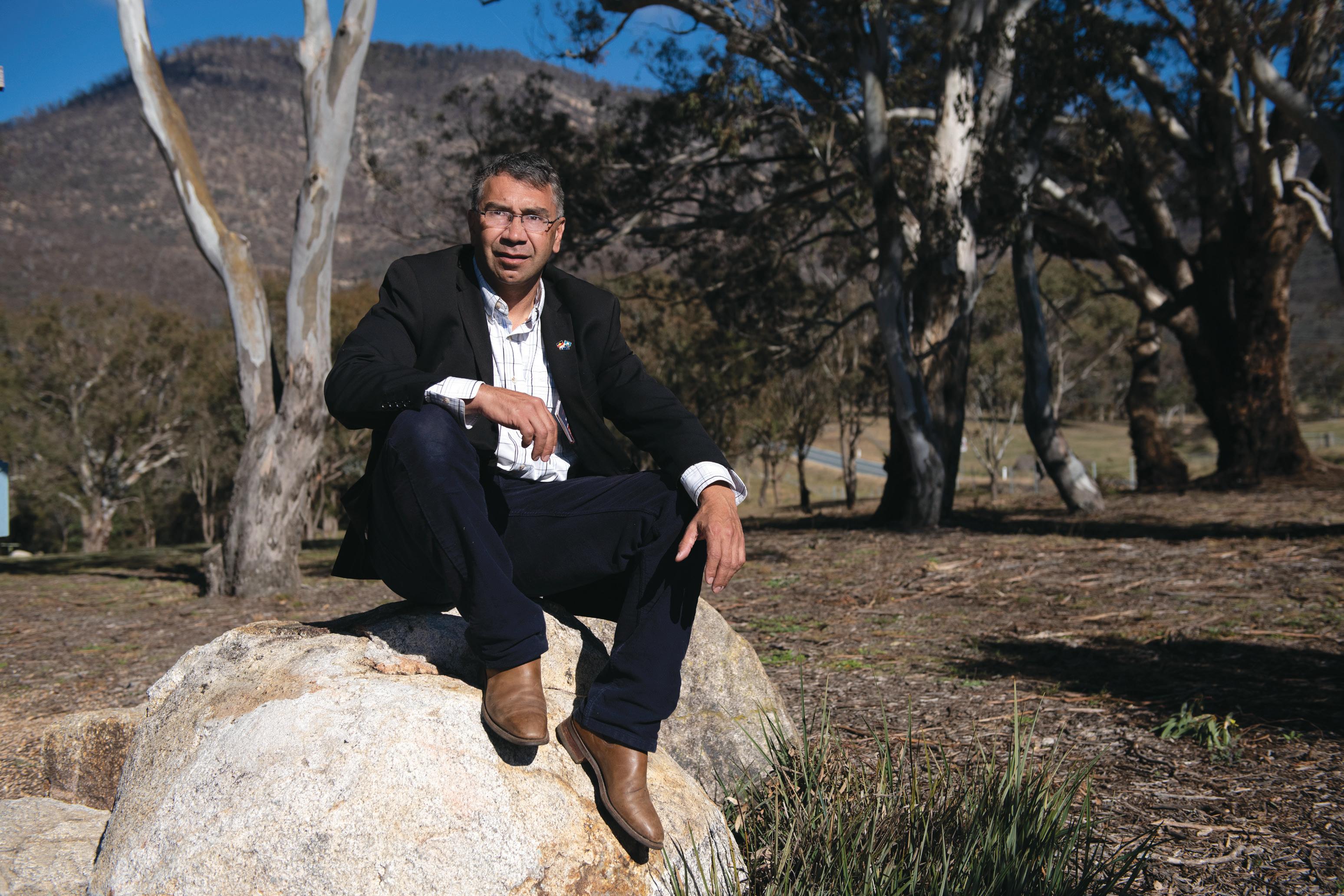
PAUL HOUSE says the ACT government has walked away from a signed land deal with local Aborigines










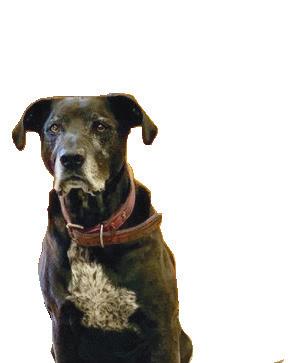


A Canberra man injured in an ‘unprovoked’ dog attack labels ACT dog laws as
‘farcical’, but the government says it has the ‘strongest’ dog laws in the country, reports BELINDA STRAHORN
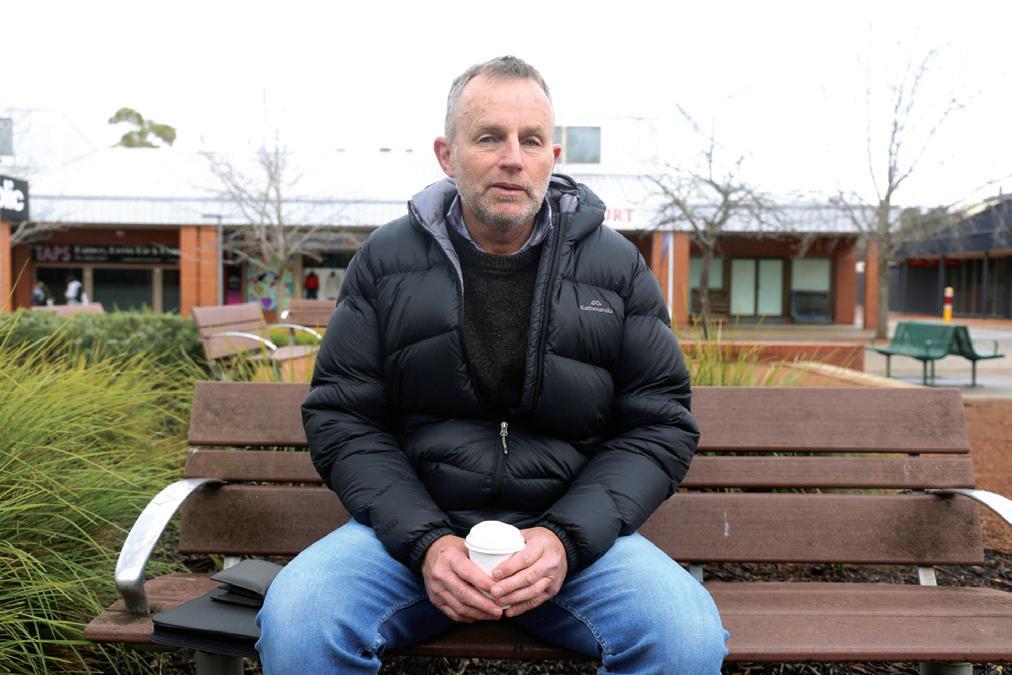
A CHISHOLM man, seriously injured while trying to protect his puppy from a vicious canine, says the ACT government’s dog laws put the rights of attacking dogs ahead of victims.
Brett Jones, 63, broke his wrist in two places trying to shield his fivemonth-old puppy Archie from a savage Staffy breed dog, during a walk in a public place in Chisholm.
In the wake of the incident Brett is calling for “stricter” accountability measures for attacking dog owners, but a spokesperson for Transport Canberra and City Services (TCCS) says the ACT has the “strongest” dog laws in the country.
Brett jumped into action trying to fight the 25kg dog away from his small puppy during the incident on April 4. The attacking dog, which was unleashed, was eventually separated from Archie with the help of three passers-by who had to sit on the dog and muzzle its mouth with tape, in order to restrain it.
Brett sustained cuts to his arms, bruising to his knees and a broken wrist. His puppy suffered from deep puncture wounds to its legs and tail.
Three months on and Brett is still recovering.
“I was in total fear initially for my puppy’s life, then mine,” he said.
Despite the owner being issued with a control order and fines, Brett said he was “gobsmacked” when he learnt the offending dog was released back into the care of its owner the same day.
He says the territory’s dog laws don’t go far enough to protect humans and their pets.
“It’s outrageous that attacking animals generally get returned to their owners or, as in my case, not even impounded by Domestic Animal Services.
“The current laws in Canberra talk about fines and compliance, this dog that blindsided me wanted to kill my dog who was around 15kg at the time and I had to save him.
“In doing so I was badly injured but because my injuries are not dog bites,
apparently they don’t count when as sessing the severity of the attack.
“There needs to be more drastic action here, the attacking animal has more rights than the victim of the at tack.”
Dog attacks are a growing problem in Canberra.
The ACT’s domestic dog author ity, Domestic Animal Services (DAS), received an alarming 309 dog-attack or harassment complaints between January and mid-June, including 40 attacks on humans.
The incidents ranged from harass ment that caused no injury through to aggressive biting, a TCCS spokesper son said.
Dog attacks reported to DAS have increased in recent years from 795 in 2018 to 817 in 2019.
But the government maintains it has the “strongest” laws in the coun try to deal with dog attacks.
“Public safety was the primary consideration in determining wheth er a declared dangerous dog can be returned to its owner,” the TCCS spokesperson said.
“If the risk to public safety can be
and making dangerous dog owners more accountable.
In over 40 years of legal practice, Bill has worked across most areas of law but now focuses on:
Conveyancing & Property Law
Commercial Transactions
Local Government Law
Wills & Estates
accountable and reward the overwhelming majority of pet owners who
In October, 2017, Canberra woman Tania Klemke was mauled to death by her dog while trying to save a male visitor the animal was attacking. It’s believed the dog was known to the authorities and had attacked before.
The ACT government introduced legislation in December, 2017, aimed at protecting the community from dangerous dogs and to hold irresponsible dog owners accountable.
Under current legislation, the ACT government can euthanise dogs that have attacked people or other animals. The specifics of the incident are investigated by DAS to determine if the dog is a danger to the public or
Brett, who is still out of pocket for his medical expenses, says the accountability measures for dangerous dog owners are “not working”.
“Dangerous dogs should not be released back to the owner under strict conditions, what a farce, this is a recipe for disaster,” Brett said.
“Meanwhile, the victims are both physically and mentally scarred or in some cases their pets killed, and the

“The Labor-Greens government has the wrong priorities and repeat-
“Many victims of vicious dog attacks feel dangerous dogs have greater rights than they do. We need to make dangerous-dog owners more
“I’m really nervous about taking my dog out for a walk, I even carry a baseball bat now because I’m scared another dog will attack us.”
Please phone us for an appointment



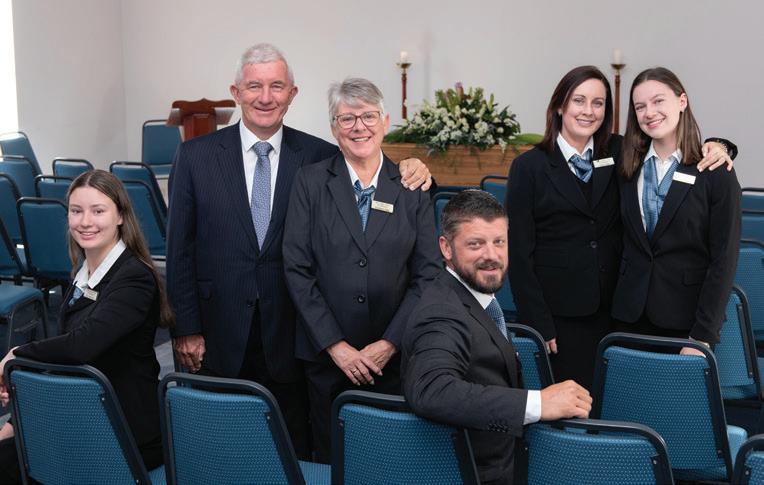

MY day job is the joy of editing this paper and I have, as editors are wont to do, been musing about a word – “grateful”.
One unsurprising definition was “appreciative of benefits received”, but I think of gratitude having much deeper value. It’s about acknowledging an emotional indebtedness.
It’s more than superficially being “grateful” (thankful, maybe) for the gift of, say, sharing gossip over a decaf, soy latte with friends or the wistful beauty of a milky winter sun. One journalist we know of regularly uses “grateful” to acquit the weekly slate of freebies by listing her sponsors.
So why the pondering? The last seven days or so have given this paper and its website a lot to be grateful for. And I mean grateful. Industrial-strength gratitude.
We are incredibly grateful recipients of a federal government grant from the $50 million Public Interest News Gathering (PING) program, which supports public-interest journalism in regional Australia delivered by newspapers, commercial television and radio businesses.
Our grant was but a welcome crumb of that big number, but when combined with the kind support from readers over recent months, we’ve been able to expand our talented team in ways that were beyond us without this leg-up.
I think you’ll agree, we’ve chosen wisely. With the ACT election looming, we’ve
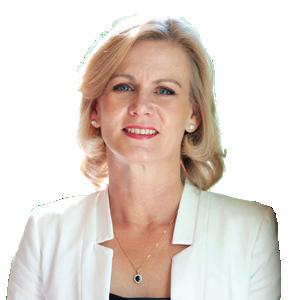
been able to welcome Belinda Strahorn, a skilled and experienced print and television journalist, as our political reporter. She has had overseas experience, including reporting for Aljazeera in London.
In backing the work of Belinda and all our journalists and contributors, we cheerfully publish advertising to cover the costs of getting a paper out in these incredibly challenging times.

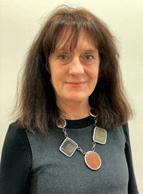

To that end, we’ve also been able to employ Tracey Avery, one of the most experienced print advertising executives I’ve ever met. And I’ve met the best! She lives and breathes the benefits of print (and website) advertising for her clients and will be a fabulous advocate for the “CityNews” story, which is a good one.
So, where’s the gratitude? We’re grateful to have Belinda and Tracey on board and deeply grateful, the wistful beauty of the milky winter sun notwithstanding, to the Commonwealth for its vote of confidence in us.
AS Donald Trump masterfully diverted public attention from America’s health and economic disasters with a malevolent sug -


3) should be delayed, our own date with electoral destiny (October 17) draws closer.
John Lawrence, of Flynn, in this week’s letters page (Page 14), reckons the run up to October’s poll is a “miserable disappointment” and as quiet as a cemetery at midnight. Unlike President Trump, our local aspirants are trying anything to get seen and heard in the absence of traditional campaigning methods, such as doorknocking. They stand dolefully around shopping centres handing out highly recyclable flyers. The more shameless have inveigled their way into the Moncrieff Residents’ Group on Facebook to the chagrin of some members
community noticeboard.
AND in this election climate, one shouldn’t be surprised to see former crimper and Labor backbencher Bec Cody calling on her political comrades to expand the ACT portable long service leave scheme to include her former comrades.
The member for Murrumbidgee proclaimed: “Today, I’m calling on the ACT
government to recognise that hairdressers have skills that are transferable across businesses in Canberra and that they deserve to have the same entitlements under the portable long service scheme that tradespeople in other industries have,” Ms Cody says.
But here’s the rub. Ms Cody concedes the itinerant nature of the industry saying: “Hairdressers often don’t stay with one employer for long enough to qualify for long-service leave”. Time was that long-service leave was just that: an entitlement for long service with the one employer, a sort of loyalty bonus.
FINALLY, there’s been a special birthday at the zoo: poster boy Hummer the giraffe turned 19 and was feted with a special “giraffe cake”.
As Hummer enters the last of the teenage years, I was piqued to wonder what the life expectancy is for giraffes. And I’m sorry I looked, Hummer; in the wild, up to 26 years and a little longer in captivity.
Apropos of nothing, I also learnt that giraffes need less sleep than any other mammal – five minutes at a time (standing up), to an average of 30 minutes a day.
Clearly they’re here for a good time not a long time!

Set amongst landscaped grounds, Adria Care is a warm and welcoming community of people from all around the world. We pride ourselves on cultural diversity and celebration, and offer a wide range of activities to cater for all interests. We provide care for Croatian and all other nationalities.
Adria Care fosters individuality and independence, providing support and assistance to enable residents to live in a comfortable and secure environment. Adria Care in Stirling offers residential care for 42 residents, incorporating 2 respite rooms, and Special Care. The village also contains 36 independent living villas. All villas have 2 bedrooms, a courtyard and a garden, and residents enjoy a peaceful and welcoming community lifestyle.
Our aim is to provide a caring, safe, home-like atmosphere, reflecting your rights to dignity, respect, privacy, safety and the best quality of life. Contact our friendly staff today to arrange a personal tour.


IN the last month or so, I’ve lodged a few Freedom of Information requests.
I have made requests of the ACT and Commonwealth governments in relation to the West Basin/Curtin Horse Paddocks land swap having been provoked into doing so following a request that one of my “CityNews” journalist colleagues had made of both governments for the valuation of the parcels of land involved in the deal.
The NCA refused, peremptorily and in a supercilious fashion, to provide any information to my colleague while the ACT government simply refused to respond at all.
Both the NCA and the Chief Minister’s Department have now responded to my FOI requests, but disappointingly if not surprisingly, have declined to provide any information of any substance.
I found the basis of the decisions to deny to release the sought after information unconvincing. In my view the decisions were neither consistent with either the intent or substance of the respective Freedom of Information Acts. I have asked the ombudsman to review the decisions.
The ACT government based its refusal on a claim that to release the valuation would damage its relationship with the Commonwealth.
While I find it hard to believe that Scomo could give two hoots about
I cannot recall the ACT government consulting the Hughes community, of its intention to convert urban open space, in a prominent, elevated position in Hughes, into a housing estate for foreign missions as the price for reclaiming two acres of lake bottom.
anything that the ACT government might do or say it is, I guess, heartening to know that Andrew Barr has decided to work on his relationship with the Prime Minister.
Having said that, documents that were released under the FOI Act a couple of years ago to the Lake Burley Griffin Guardians provide an insight into what the Chief Minister thinks of Scomo and the Commonwealth government.
The documents contain this gem from a response which Barr made, in February, 2019, to a question from a journalist about the land swap negotiations with the Commonwealth: “Instability in the federal government has been hampering discussions. The constant changing of priorities, leadership and ministers within the federal government makes negotiating a challenge. It is clear that a federal Labor government provides the best opportunity for these matters to progress.”
So much for worrying that the release of the valuation of two blocks
of land involved in the land swap would endanger relations between the two governments.
Unless, of course, the valuations or costs otherwise associated with the land swap raise tricky questions. In that regard the documents released to LBG Guardians contain snippets of information that, while interesting, raise a myriad of questions.
For example, it is revealed that in May, 2017, Andrew Barr advised Senator Fiona Nash, Minister for Territories that: “The ACT government is in the process of constructing the first stage of the public realm at a cost of $17 million and has committed a further $37.74 million as part of the 2017-18 Budget to progress Stage 2. It is this work that requires the acquisition of the lake bed. Overall, the cost of building the public realm is around $100 million.”
This admission begs the question where, at the end of the day, will the $100 million come from? Will it be passed on to those that purchase an apartment at West Basin, thus
assuring its status as an enclave of privilege? Or will the much-put-upon ratepayer be expected to foot the bill?
One other quite fascinating aspect of the deal is that from the commencement of negotiations in 2015 up until 2018 the land that it was proposed be transferred to the Commonwealth was in fact in Hughes not Curtin.
In a brief prepared for the Chief Minister on May 26, 2017, preparatory to a meeting with the then-Minister for Territories Fiona Nash, he is advised that the NCA was insisting that the Commonwealth would require a letter from the ACT supporting the gazettal of the land in Hughes for Commonwealth purposes.
The Chief Minister was further advised that any support from the ACT for the use by the Commonwealth of the land “is likely to draw criticism from adjacent landholders, which are primarily residential homes, as it is currently zoned Urban Open Space and is in a prominent, elevated position.”
The Chief Minister was accordingly further advised that: “The issue of the lake bed reclamation and the Hughes land need to be decoupled.”
I may be wrong, but I cannot recall
the ACT government consulting the Hughes community, let alone the broader Canberra community, of its intention to convert urban open space, in a prominent, elevated position in Hughes, into a housing estate for foreign missions as the price for reclaiming two acres of lake bottom.
As we now know, the City Renewal Authority, having clearly developed cold feet, turned its attention to what it perceived a softer target – namely the Curtin Horse Paddocks.
Hughes has apparently dodged a bullet. Well, at least until next time. Pity about the horse paddocks.
Jon Stanhope was chief minister from 2001 to 2011 and represented Ginninderra for the Labor Party from 1998. He is the only chief minister to have governed with a majority in the Assembly.


Nearly 20 years ago the ACT government signed an agreement to accommodate Aboriginal input into the management of Namadgi National Park, but it never happened, reports DANIELLE NOHRA .
THE ACT government has been accused of dishonouring a written agreement with local Aboriginal custodians that has led to the destruction of historical sites, intergenerational trauma and cultural genocide.
In the spirit of reconciliation, in 2001 two of three Ngambri/Ngunnawal party signatories signed an agreement to establish a “99 Year Namadgi Special Aboriginal Lease” under the then Gary Humphries-led ACT Liberal government.
Under the agreement, the Aborigines gave up a native title claim they had lodged in the Federal Court and, in return, the ACT government agreed to work in partnership with them in the management of Namadgi National Park.
“We had a lot of hope about the future of exercising our rights as local custodians,” says Paul House, who was there at the April 30, 2001, signing with his mum, Dr Matilda House, to watch her brother Nurrie Arnold Williams sign what they thought would be a big step forward for the traditional owners of the ACT.
“Under the agreement, the interim board was to become a statutory board of management. Labor came into power in 2001 [and] the agreement slowly faded away. [It was] swept under the carpet.”
According to Paul, who is now representing the two Aboriginal parties to the agreement, the interim committee was quietly dissolved in about 2007.
“We gave up our native title claim to sign the agreement. We gave up significant rights,” he says.
“We’ve got a current generation of elders who have passed away who never saw an outcome from this agreement. How disgusting is that?”
Since this “non-agreement”, Matilda House has formally written to the government twice, after more than a decade of informal contact, calling on them to honour the agreement.
In an email seen by “CityNews”, Chief Minister Andrew Barr wrote to her on July 23 saying that discussions to reinvigorate the Namadgi Agreement were initiated in 2018, but these discussions faltered because they were unsure of “who were the right people to be part of” the agreement or development of a new agreement.
“The government is not in a position to determine who is, and is not, considered Ngunnawal,” Mr Barr wrote.
But even so, he said they, under the Environment, Planning and Sustainable Development Directorate, established a Dhawura Ngunnawal Caring for Country Committee, giving its mem-
•
•
•
•
•
bers input into the management of country.
Following this interaction with the govern ment, Paul is pursuing legal action in a bid to have the 2001 agreement honoured.
“Our voice is not being heard. As a signatory but also as a Ngambri custodian, the ACT gov ernment is turning its back and dishonouring the voice of the people, the 2001 agreement and the historical truths of Ngambri country,” Paul says.
“The evidence of Ngambri providence is pow erful and compelling and they’re ignoring it.”
Since the “betrayed” agreement, Paul says a whole generation of children have been ex cluded from managing the park, two fires have torn through the park, resulting in the loss of sacred sites, and their connection to country has been ignored.
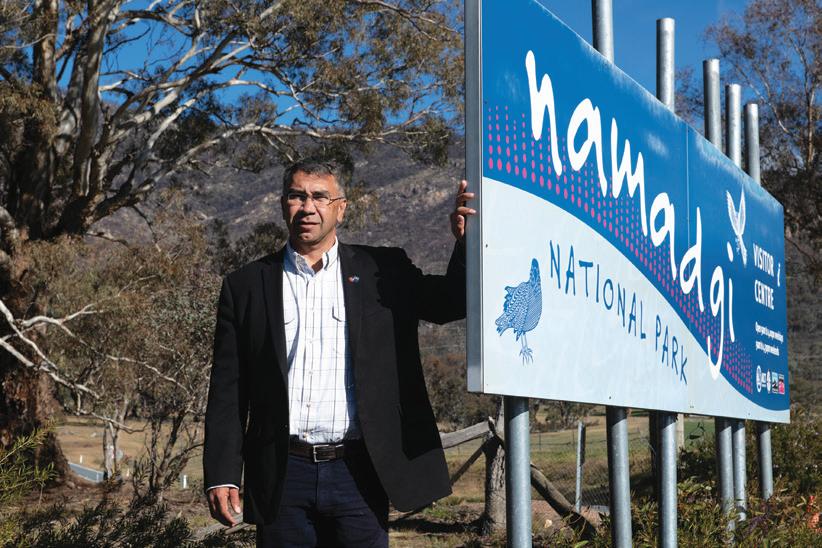
“Because we’ve been excluded, throughout this whole process, during the Namadgi agreement, it’s led to the mismanagement of Namadgi National Park, which has resulted in the destruction of hundreds of sites of significance in the park,” says Paul, who believes the destruction of these sites would have been mitigated under Ngambri management.
“The park’s burned twice since 2001. [If the agreement was honoured] management of the park would have had First Nation input, First Nation knowledge and First Nation skills and knowledge and experience embedded into the way the park could have been better managed.”
The signed 2001 document, under the “Native Title Act 1993”, agreed to a permanent, statutory board of management consisting of six Aboriginal members and six non-Aboriginal members.
“Ngambri children, who are now young adults, have missed out on an opportunity to pursue a career and the opportunity to manage country,” Paul says.
“A whole generation of Ngambri people have missed out on a potential career in sharing, maintaining and managing country. That’s a breach of our human rights.”
Currently, parts of Namadgi National Park remain closed for the restoration of the park, which includes a rock-art site at Yankee Hat, after the Orroral Valley bushfire burnt more than 80 per cent of the park, but the Ngambri people continue to have no say in the physical and spiritual restoration of their country.
“We’ve been let down and betrayed by a government that says one thing and does another,”
Paul says.
“Our voice is not being heard. Our right to
take control is being stifled in a government process and it lacks respect for established Aboriginal protocols.
“Since the signing in 2001 we’re still the most socially and economically disadvantaged groups of people here in the ACT [and this is] adding to the current trauma and intergenerational trauma that non-Aboriginal people are putting on First Nation people through their lack of action, through their legislation, through their lack of policy [and] lack of commitment.”
Even more concerning for the Ngambri people, according to Paul, is the lack of recognition of their special status. The ACT government invites other groups and individuals to trample over
traditional protocols.
“We’ve missed out on speaking rights for country, we’ve missed out on custodianship of country, to protect country, to manage country. We’ve missed out on the decision making of country,” he says.
“It’s creating intergenerational trauma, a stolen generation. There’s actually a generation of people being told a lie on their own country. This current government is stealing the identity away from Ngambri people on country. “They’re stealing it, they’re trying to reinterpret it, they’re trying to whitewash the true history of this country here in the ACT. That’s what they’re doing. It’s criminal.”
IT could still pass as a semirural route skirting Canberra’s northern boundary and most commuters pay no heed to the solitary sign and locked gate indicating the location of an aviation disaster that shook a nation.
Eight decades on, the mystery and the controversies surrounding what former NSW politician-turned-author Andrew Tink described as “the plane crash that destroyed a government”, linger as a vapour trail in its wake.
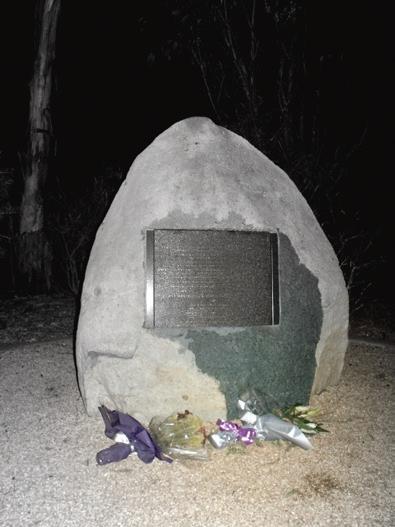
At the summit of the rugged ridge where a RAAF Lockheed Hudson bomber (A16-97) inexplicably plummeted to earth on a sunny winter’s morning 80 years ago, there’s a rarely seen stone monument to the 10 victims onboard. Virtually incinerated on impact, they included some of the country’s most prominent members of a government then firmly on a war footing.
As August 13, 1940, dawned, it had already been anything but ordinary.
Almost a year into a second world conflict, the German Luftwaffe, intent on invasion, had launched its first major air offensive in what became the Battle of Britain.
Far from the skies over England’s south-east coast, near 11am on that day, “about two miles north of the old NSW town of Queanbeyan” along the quiet road between it and the Australian capital, a huge aircraft was seen flying barely a few hundred feet from the ground.
As it crested a rise, over which was the Canberra aerodrome, one witness would attest the plane banked sharply left and then “turned completely over sideways and hit the ground.” It was consumed by flames so hot, parts of it melted.
An unfathomable, tragic accident. Or was it?
The press reported “ideal flying conditions”. Rumours circulated that someone other than Air Force pilot, Flt-Lt Bob Hitchcock, was at the controls (as well as on his level of expertise). There arose questions of why so many significant political figures were travelling together.
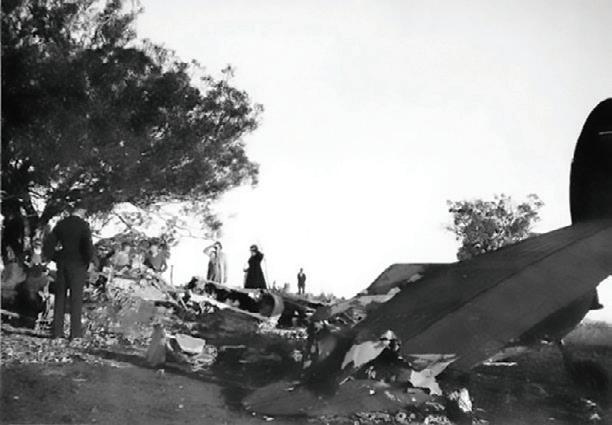
The manifest comprised three senior ministers on their way to attend a Cabinet meeting: Geoffrey Street, Minister for the Army; Minister for External Affairs, Sir Henry Gullett; and Minister for Air and the RAAF, James Fairbairn.
Others present were the chief of the General Staff, Sir Cyril Brudenell White, his liaison officer, Fairbairn’s private secretary and four RAAF flight crew.
It seems the potential as an act of war – sabotage through espionage –was only briefly entertained, but that didn’t stop the conjecture.
By that very afternoon there appeared stories of “hand-of-fate” proportions, involving others who were meant to be on the plane.
Ministerial assistant Murray Tyrrell, a later alderman on the Queanbeyan Council, had flown with Fairbairn and Gullett to Canberra in the same plane the previous week. On this occasion, he apparently caught the train instead.
As detailed by another author, Dr Cameron Hazlehurst, a shaken Tyrrell presented the devastating news to the Prime Minister, describing Robert Menzies’ reaction as “absolutely stunned”. Unbeknown to the other, the PM had himself been intended for that flight. One to avoid flying unnecessarily, he’d also gone by train.
In the face of a host of inconclusive


inquiries, recollections and analysis still vary dramatically.
Rather than “nose down” it seems the bomber “pancaked”; an attempt to land on the only spot of ground cleared of everything but a large log – which ripped away much of the underbelly.
Other persistent speculation involves the degree to which the tragic affair undermined Menzies’ wartime government.
A week after what the PM would refer to as “that terrible hour”, he’d call an election for September 21.
The hung parliament outcome resulted in further instability. Just a year later, Labor’s John Curtin would prevail.
While some downplay its importance, Andrew Tink argues that the event directly contributed to Labor taking power.
“The absence of some of Menzies’ most loyal supporters was pivotal,” he explains.
“In addition, Gullett’s seat of Henty was won by an independent, Arthur Coles, who ended up holding the balance of power. He backed a Budget amendment that amounted to a vote of no confidence, leading to Curtin being commissioned as the prime minister. Had Gullett not been killed, none of that would have occurred.”
Controversially,

Andrew also posits that it’s not inconceivable that Minister Fairbairn, an able pilot but with no experience of the notoriously finicky Hudson, had pulled rank on Hitchcock and taken over command.
“A week before the crash, Fairbairn had discussed how he intended to practice landing Hudson bombers which had a ‘nasty stalling characteristic’ that he felt could be dealt with by better handling of the throttles,” says Tink.
“In light of what happened, I think this is quite damning.”
Furthermore, Andrew points out that the premature removal of the badly burned bodies from the scene meant “it was impossible to tell where they had been in the wreckage.”
Now known as the Fairbairn Pine Plantation, as the wind whispers through the forest, it’s a place that makes you feel you’re miles from anywhere. And yet, beyond the dense trees on one side are the bright lights of the heart of the Australian Commonwealth; on the other, the bustling regional city of Queanbeyan.
Erected 20 years on from what was a national tragedy, the memorial sits within a small open area, surrounded
by five eucalypts. According to the National Capital Authority, the idea the trees “may be the vestiges of the original heavily wooded hilltop”, is dubious in the face of the reported intensity of the fire.
A victim of thoughtless vandalism over the years, the area subsequently came to be fenced off and locked. The definitive reasons for the crash continue to elude. If the fog of war clouded things then, now the passage of time seems to have done the same, awareness of the impact of the disaster fading like the very sign that points to it.
• Once a regular haunt for teenagers, it’s also claimed as one of Canberra’s “most haunted” – from temperature fluctuations to cars stalling and the apparition of a woman. Historically, it is linked with other less explored events, and that’s a tale for another column.
More at anoverallview. wixsite.com/ blog


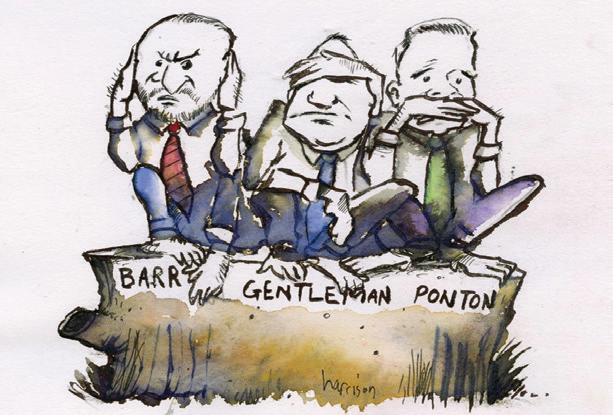
IT’S an interesting exercise to commission a friend to draw a cartoon of the three people (two politicians and one bureaucrat) who are largely responsible for Canberra’s planning and development.
The common perception of these three is that if you try to contact them, you will soon learn that they do not want to see you, they do not want to hear from you and they do not want to speak with you.
Planning Minister Mick Gentleman should be the key politician with the vision for the city. Have not seen it yet! In response to letters from residents, his staff write tomes for him to sign that say little of any consequence, thank you for raising issues and politely tell you to go away.
Gentleman seems to occupy this position so that others can deal with that pesky stuff around planning and development.
From the little we know of this bloke, he will not change.
Trying to describe chief planner Ben Ponton was
What will it take for Andrew Barr to realise how easy it is to work with residents and through that partnership, have a city that all of us could be proud of?
not easy. The common view would be that this senior planning bureaucrat has lived forever within the walls of the planning building. He enjoys constantly adding variations to the planning laws and things have become so bad that even the Chief Minister agrees the planning laws needed to become simpler and accessible.
The problem is that the person appointed to carry out this change is the chief planner himself. He is presently doing this very slowly.
Maybe one day soon, a visionary planning minister (dream on) will require his planning chief to engage with the electorate, to be interested in planning being based on evidence and on the realities of people’s lives and their aspirations for their children.
Two monkeys down and one to go.
That would be much-maligned Chief Minister Andrew Barr. He has spent most of the last decade being a 30-something hipster. He seems to want to live in a modern city just like

other crowded metropolitan cities. Because of this or more simply because of what appears to be his neo-liberal conservative side, he allows developers to build – to my mind – questionable apartment towers across town.
Given that he lives in a stand-alone house with a garden, is it too much to ask for him and his ACT Greens partners to ensure that others have the same opportunity?
As Andrew approaches the ripe age of 50 years, is it possible that he may think twice about the influence of the ACT’s notorious planning bureaucrats and the profit-hungry developer lobby?
What will it take for Andrew Barr to realise how easy it is to work with residents and through that partnership, have a city that all of us could be proud of?
After all, the Chief Minister has shown a good side of late. While taking the advice of his Chief Medical Officer, he has handled the covid crisis reasonably well. He has stood up against the conservative voices from some ACT Liberals to open up the city as fast as possible – despite the pandemic being ever present. In midJuly he rightly criticised Geocon’s
outrageous apartment proposal for the middle of Kingston.
Here’s a little mischief. Let’s reimagine Andrew Barr’s words about Kingston and apply them as if he was talking about the whole of Canberra:
“While this government supports residential changes that increase local economic activity and support the viability of local business, development proposals go too far and do not meet the equally important goal of protecting what makes Canberra a special place to live and visit.”
When considering the three monkeys in the cartoon, the curious thing is that Andrew Barr may be the only one who has the potential to become more humane and responsive in his treatment of people, the city, and how urban development can deliver a place for future generations. Is that too optimistic?
Paul Costigan is an independent commentator and consultant on the visual arts, photography, urban design, environmental issues and everyday matters.

Every good election needs a decent catchcry. Every bad one does, too. It’s campaign time in the ACT and the slogans are coming thick and fast as BELINDA STRAHORN

THE in-your-face hurly-burly of election time in the ACT has begun and so too the snappy catchphrase.
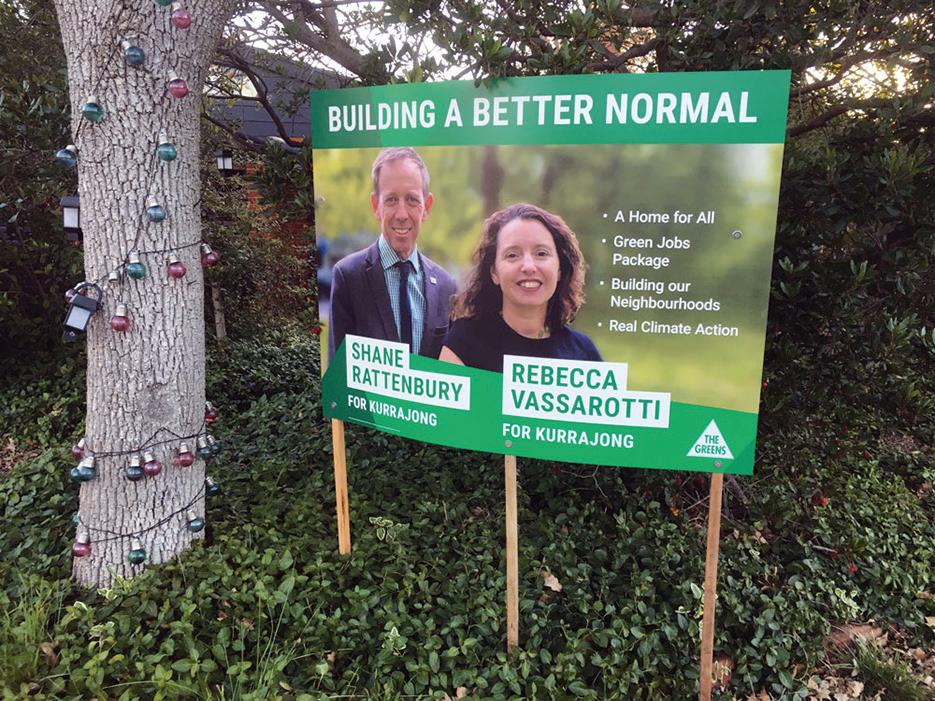
“There is a better way”. “Building a better normal”. “Demand better”.
If these slogans were men, they’d wear double breasted jackets, far too formal for my liking, but I’m no catchcry expert.
So, what do the pundits say? Do they work? Do they inspire loyalty? Are they strong enough to change minds?
For every ripper slogan such as “It’s time” (ALP, 1972) or “Kevin 07” (ALP, 2007) there are those that play a part in why many of us have a hard time remembering who was running.
In 2020, “There is a better way” is the official Canberra Liberals’ campaign catchphrase. The Greens are running with “Building a better normal” and Labor is still searching for the perfect one-liner (last time it was “The Canberra you love – only better”).
Political communications guru and
associate professor of journalism at the University of Canberra Caroline Fisher says a good slogan should be something catchy, short and pithy, with a lathering of ideology, good language and limited yawn factor.
“It needs to be about something big ger, a big idea, something bigger than the item that’s for sale, in this case poli tics,” she says.
Fisher, a former media advisor to Queensland Premier Anna Bligh, thinks parties here are missing a trick when it comes to effective slogans.
While the ACT Greens’ motto “Build ing a better normal” seems to have captured a mood, Fisher admits it hasn’t hit the mark.
“Very lacklustre,” she says.
“There’s a sense of the future and working towards something better, so it’s aspirational, but normal is a very uninspiring term, it’s very anticlimactic.
“If they had perhaps tapped into that sense of a ‘new’ normal, building a bet ter ‘new’ normal, it may have worked.
“It’s a very flat slogan and doesn’t have a lot of emotional appeal.”
The Canberra Liberals’ “There is a better way” is like marketing word soup, something marketing connois seurs should avoid because it doesn’t really say anything.
“The question it raises for me is, a better way to ask what? A better way to where?” Fisher says.
to find a vision that the public can she says.


And Sustainable Australia’s “Stop Overdevelopment. Stop Corruption” falls short in “building vision”.
“It’s negative, they are big claims and big statements, I don’t think it’s building a vision to bring people along.”
But “Barrack 4 Carrick”, independent candidate for Murrumbidgee Fiona Carrick’s battle phrase, has some makings of a decent slogan, Fisher says.
“It’s very catchy and I remembered it, so I think it’s really good,” she says.
“It doesn’t tell us what she stands for but what she needs is name recognition and, in that sense, it’s terrific.”
None of this year’s mantras will make the slogan hall of fame, where textbook classics such as “Keep the bastards honest” (Australian Democrats) or “Turn the Lights On” (Fraser, Liberals, 1975) reside.
“Make America Great Again” (Trump, 2016) and “The Bill we can’t afford” (Liberals, 2019), are other “clever” slogans that had “loads of emotional pull”, Fisher says.
Dr Andrew Hughes, political marketing master and lecturer at the

should be simple, filled with punch, mood and emotion.
He says the Greens have failed to capitalise with “Building a better normal”.
“What’s normal?” Hughes says.
“It’s very vague, too broad and not specific enough.
“It’s like someone has got the buzzword generator out and said we should use this as a slogan, without believing in it.
“If they had said something like ‘Building a better normal for a greener society’ that makes more sense and that is consistent with their brand.”
The Canberra Liberals’ “There is a better way” could “work quite well”, Hughes says, “as long as they back that statement up with what their brand is and what they signify through policy announcements as a political party.
“But if people have had a bad experience with your brand, in this case the Libs, that’s where it can get dicey.”
As for ACT Labor’s catchcry, watch this space.
“They [Labor] might focus on a social message like ‘Stick with us to see it through’, which is another way of saying we recognise there are uncertain times right now but stick with us and we can progress forward together.”
The Flux Party’s “Upgrade Democracy” slogan raises questions it shouldn’t, Hughes says.
“How are you going to change democracy to make it better?” he says.
“A slogan shouldn’t raise questions straightaway.
“If a slogan raises questions then questions are doubt and doubt is a negative and a negative is a bad thing in politics.”
Bad slogans, there’ve been plenty of those, such as Labor’s 1987 attempt “Don’t change horses in midstream” – try squeezing that on a badge – or John Howard’s strange 1987 “Incentivation”.
But Hughes says Tony Abbott’s “Five-point plan” takes the cake, describing it as “terrible”.
“A reporter walked up to him and said, “What’s the five-point plan?” and after point one or point two he said, “I don’t know”.
“Anything above the four-word limit in a slogan is dangerous territory.”
So, how big a role do slogans play in getting parties into power? Can a catchphrase really win an election?
“They sure can,” Hughes says.
“Gough Whitlam’s “It’s time” is a classic example.”
“Slogans really are for the undecided voter; the jingles, the slogans can make a real difference,” Fisher says.
“If they capture that mood for change really well, then yes they can build momentum.”
As far as campaign slogans go, this year’s pickings for the ACT election may not be good enough to sing, pop on a T-shirt or stamp on a badge. But who remembers any of John Howard’s catchcries, and he went on to win four elections.
VOTERS have been deliberately kept in the dark regarding the extent of corruption that may have sullied the ACT government.
The Labor-Greens government has deployed a series of tactics to ensure any issues of concern were not reported before the coming election.
Timing has been critical.
From shortly after the 2016 election, this column encouraged the government to get on with the establishment of an anti-corruption watchdog and to ensure it had “real teeth”.
The government had different ideas. It is now apparent that the intention was always that there would be no reports or findings before the election in the third week in October, 2020.
Canberrans going to the polling place will now have to take into account suspicion of corruption in considering their vote without having any real evidence upon which to make their decisions.
basically three tactics available for politicians to deal with issues. They can support. They can
last election the Labor-Greens government has been using every possible tactic they could find to delay the onset of the Integrity Commission.
oppose. They can delay. Since the last election the Labor-Greens govern ment has been using every possible tactic they could find to delay the onset of the Integrity Commission. There was no choice to oppose. Every party and independent going into the last election supported some form of anti-corruption commission.
Step one in delaying was to get agreement from across the political spectrum. This would surely take time. An Assembly committee was
nearly eighty recommendations. The report not only identified the need for such an “Anti-Corruption and Integrity Commission” but also examined in detail how it should deal with corruption.
With such an extensive report the government could feel justified in taking time to examine the report and its recommendations in detail, consult further and then prepare legislation.
At the time I wrote: “The committee report has set the ground rules.
It is now time for the recommendations to be turned into laws and to comply with the committee’s generous timeframe for establishment by the
However, the report also provided an excellent tool for further delay. The committee was not satisfied that the government would draw up legislation in complete compliance with the report. It was explicit, therefore, in demanding that the legislation itself be the subject matter of yet another
Even the title of the anti-corruption body was changed to soften the impact for the general public. Starting as the Anti-Corruption and Integrity
tion established the ACT Integrity

nominating former Supreme Court justice Terry Higgins for the job as the first commissioner.
The well-respected judge had long been involved with Labor. As such they may have expected the advantage of ensuring that the commissioner was not automatically antagonistic. However, the more important advantage of the nomination became clear when there were objections. Even more time was lost for the process to deal with the objections and then to continue the search.
With the appointment of a former Federal Court judge, Hon Justice Dennis Cowdroy AO QC, as commissioner it appeared that the Integrity Commission was finally under way. His commencement date was the first day of July, 2019. However, there was no office, no website, no staff and no processes in place. All of these required negotiation and cost money and time.
Five months later came the appointment of Mr John Hoitink as the Commission’s chief executive officer with responsibility for the day-today operations of the commission and advising the commission about operational and financial matters. Further staff were appointed and systems put in place to accept complaints and to facilitate mandatory reporting.
Around 100 complaints have been received by the Integrity Commission. Sorting through them and then investigating thoroughly takes time. Timing is a critical political issue that the government has played in their own interest. The interests of voters have been left for another day, another election.
Michael Moore is a former member of the ACT Legislative Assembly and an independent minister for health. He has been a political columnist with “CityNews” since 2006.
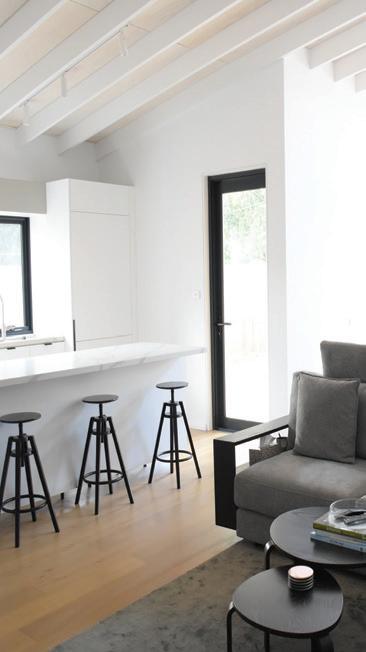


BORDEAUX CONSTRUCTION & MANAGEMENT PTY LTD
Total Design Consultancy and Project Management
• Home • Office • Extensions • Renovation • Granny flats • Sun room addition
• Build your new dream home • Commercial premises • Retail
• Designed with you with your budget in mind • High standard of workmanship
• High quality finish • Completed on time, every time
BORDEAUX KITCHENS (Associated with Capital Cabinetmaking)
Specialise in custom-built design and joinery • Kitchens
• Vanity and laundry units • Commercial Joinery
• Shop/office • Home office • Experienced tradesmen and full trade co-ordination available
Showroom Hours: Mon-Fri: 9.00am to 4.00pm, Sat: 9.00am to 12pm, or by appointment


THE run up to October’s ACT elections is a miserable disappointment; it’s quiet as a cemetery at midnight.
Do those running for public office honestly believe they can go to ground and expect to win seats by flying low under the radar and relying on voters to blindly vote along party lines and not on issues such as those raised by political columnist Jon Stanhope (CN, June 25)?
Stanhope wrote that over the eight years before the arrival of coronavirus the ACT government has annually spent, on average, around $475 million more than it has earned and has turned its level of net debt from a negative of $736 million to $3.100 billion, expected to blow out to $4.5 billion in the not too distant future.
If that’s not a train wreck one wonders what is. Think of $4.5 billion in notes wrapped in pallets spread out across your lounge room floor at chin or eye height and ask yourself: “Do I vote for those responsible for a debt of this magnitude?”.
Those running for public office would be wise not to treat the electorate with contempt or indifference because as individuals we are savage and capable of dispatching you to the rubbish bin of history.
Its time you all stepped out into the sun and told us something of your background, what you stand for, identified problems within government and the territory, and offered solutions.
Please spare us from a clown election.
John
Lawrence, Flynn
I MUST say I am surprised by all the money the federal member for Fenner Andrew Leigh has to spend on election ads lately, with his consistent advertisement about how the federal government’s so-called job cuts will be made worse if you vote Liberal in the upcoming ACT local election.
Irrespective of who wins this year’s local election, they can hardly have any influence on what the federal government does.
To me, these Leigh ads are scaremongering and false, and if the ALP has nothing to offer
dose of dorin

the local electorate but stoop to this type of behaviour, I’m afraid, Mr. Barr and his cronies don’t deserve to win. Good riddance.
Errol Good, Macgregor
RECENTLY, I watched the movie “The Lorax” (again) and it got me thinking.
So today I read the latest “CityNews” and my copy of Dr Seuss’ “The Lorax”. Dr Seuss is a prophet and philosopher. There are so many important messages in his writings.
In “The Lorax” his message to the voters of the ACT is: “Unless someone like you cares a whole, awful lot, nothing is going to get better. It’s not.”
This isn’t perfect, and I need to borrow from the movie, too, but as I see it, Canberra is Thneedville, Andrew Barr was the young Once-ler chopping down all the trees, and now he is O’Hare selling bottled air (apartments).
Barr’s developer buddies are O’Hare’s thugs, I think columnist Paul Costigan is the Lorax and colleague Jon Stanhope is the old Once-ler, both pointing out how things have gone horribly wrong.
Alistair Coe is Ted who hopes to bring back the trees. Perhaps Jeremy Hanson is Grammy who can point Ted in the right direction.
As he claims to be a Green, you would think there would be a place for Shane Rattenbury in all of this, but alas I think that Shane and the rest of the Greens/Labor government are represented by the Once-ler’s family. All they are interested in is “biggering and biggering”.
I only hope that this time the people of the ACT can see the ongoing destruction of the former Bush Capital by this government and on October 17 will sing “Let it grow, let it grow” (of course, there are so many other reasons to get rid of this awful government, too).
Neil Dunn, Fisher
POPULAR walking tracks at Namadgi National Park have reopened after bushfire damage closed the park earlier this year.
Areas such as Gibraltar Falls, Corin Dam, Settlers Walking Track and Square Rock are now open, but the Visitor Information Centre and other areas remain closed as fire-recovery work continues.
The Woods Reserve and Mt Clear campgrounds have also reopened to campers and are taking online bookings.
Old Boboyan Road remains closed to allow for works at Yankee Hat to protect the rock-art site.
A NEW coronavirus testing site is open in Kambah.
The drive-through only site is located in the northern carpark of Jenke Circuit, following demand for another testing site in the south.
It’ll be open from 9.30am to 5pm, seven days a week. No appointments needed.
Recent advertising by Clark Electrical and Air Conditioning has omitted the company’s trade licence numbers. For clarity, they are: Electrical, 19957304; Air Conditioning, L128119 and Plumbing, 20141231.

By Kathryn VUKOVLJAK

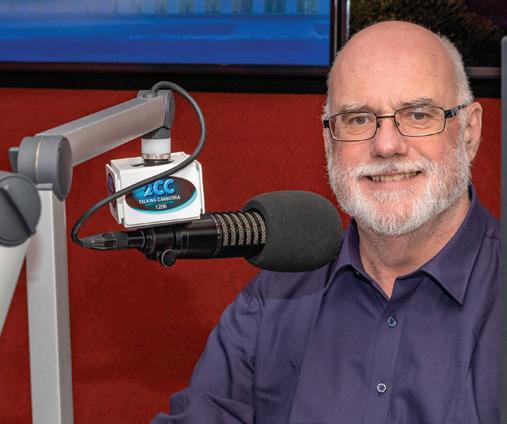
THE stars have aligned for radio announcer Stephen Cenatiempo, who’s back behind the mic and hosting 2CC’s new local breakfast show.
Made redundant from Southern Cross Austereo in December after two years hosting Triple M’s “Australia by Night” program, Stephen, 46, says that after things went “belly up” there, it only got worse in the wake of COVID-19.
“It was tough for a few months, then Alan Jones retired and a few other dominoes fell into place and here I am,” he says.
The nature of working in radio is to move around, Stephen says, and he’s had two years in Coffs Harbour as an afternoon announcer, five years presenting the Hunter Valley Today morning show on 2NM in Muswellbrook and two years in Newcastle with SCA.
“It suits me, I’m single and in this business, it’s accepting that we’ll be going far from home, you might eventually end up at home or home might become somewhere else.
“I’ve always liked Canberra. I’m a Sydney boy originally so I like the
hustle and bustle of the city, but when you’ve been living in the bush for the better part of 10 years, Canberra is a good hybrid. And it’s not as cold as they make it out to be.”
As an out-of-towner landing in Canberra in the run up to the ACT election, Stephen says he’s keen to talk to the main players but wants to keep the program for the people listening.
“I specifically decided when I came here that this show was going to be for Canberrans outside the bubble, so we’ll talk politics but only as far as it affects people’s lives,” he says.
“As someone that’s spent a lot of time in the back rooms of politics I know the spin before it happens. A lot of other announcers berate politi cians and think it’s going to achieve something. I know it’s not, because their egos are as big as mine, but I’ll make it clear if they refuse to answer a question.”
A former auctioneer and construc tion administrator, Stephen says he always wanted to get into radio but didn’t know how to break into the industry.

“I started doing a weekly radio show with a mate of mine in a tin shed out the back of Marrickville in Sydney –we had a lot of fun, learned a lot of bad habits,” he says.
A chance meeting with Murray Wilton, who was the nighttime announcer at 2GB, and saying to him: “I want to do what you do, how do I do that?” led Stephen to study radio at AFTRS (Australian Film Television and Radio School) in Sydney, where in a moment of “just serendipitous synchronicity”
he became a mentee of then-AFTRS director of radio Mark Collier, who had worked at 2CC many years ago, and had given Ray Hadley and Alan Jones their first jobs.
“I had some great guidance from
Mark from a talk radio perspective, and got my first gig at 2HC in Coffs before I graduated in 2010,” Stephen says. Since then, he’s won nine ACRAs (Australian Commercial Radio Awards), as well as being nominated for lots he didn’t get, he says.
“I’m coming up to 10 years in the industry and I’ve won nine awards, so I’m quite happy they’re skipping the awards this year so my streak stays
“The awards are a lovely acknowledgement as they’re voted on by industry heavyweights, so it’s good to know that from a craft perspective I’m doing the right thing.”
But it’s the listeners that matter, he says, and with a love of telling stories and talking to people, he’s got a passion for talk radio.
“Announcing is better than a real
“I can be a bit of a loner, but I’m a people person at heart and like to socialise and learn about things.
“I aim to never be like anyone else. I don’t know how to be anyone else. I am who I am. Some people think I’m obnoxious, some think I’m friendly, I get angry sometimes, I get passionate about things, I laugh, I cry. You get what you see, and if you don’t like it, bad luck.”
Stephen Cenatiempo can be heard on 2CC, 5.30am-9am, weekdays.
Reliable:
Qualified:


FROM birth preparation, breastfeeding support, finding the perfect gift or taking bub to their first swimming class, “CityNews” speaks to the businesses who can help support families with pregnancy, birth, babies, kids and beyond.

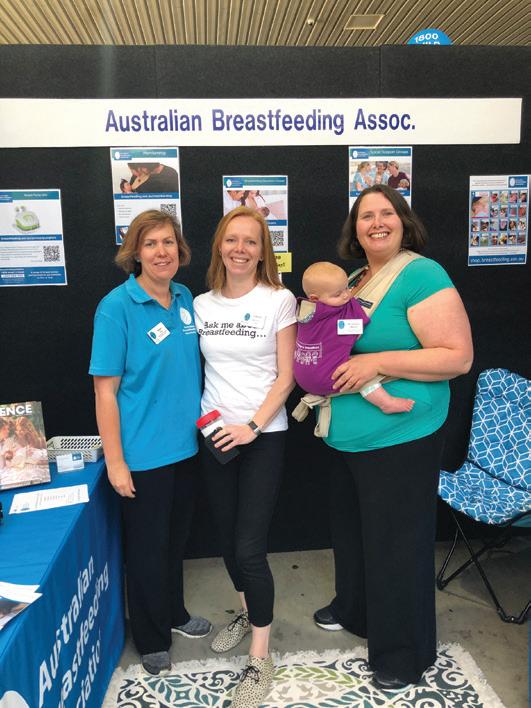
FOLLOWING World Breastfeeding Week, the Austral ian Breastfeeding Association’s regional representa tive of the ACT and Southern NSW (ACTSNSW), Megan Fox, says the group is starting to “test the waters” in getting back to face-to-face gatherings.
“We’ve kept our services running throughout the pandemic, providing online breastfeeding education sessions in addition to our long-running 24/7 phone line service,” says Megan.
“We know that some families with young babies or expectant mums might have more anxiety around public gatherings, and that’s understandable too, which is why we’ll be continuing to run our Zoom sessions. It’s also easier for us to manage than venues and numbers.
“It can be more convenient, too, as mums who aren’t ready to leave the house for whatever reason can interact from the sofa in pyjamas!”
However, for mums that are ready to get out of the house, the group will be organising playdates outdoors at playgrounds for mums to bring along their older children.
Megan says the group has also added new ele ments to its “Mum2Mum” app, which was originally an information portal, but is now more interactive, with the capacity for mums to create a profile and search for breastfeeding information based on their child’s age.
Mums can also keep a journal to record their baby’s feeds, sleep and nappy changes, and press a button to directly access the ABA’s helpline, “live chat” or
Crescent, Chifley. Call 6162 2716 or visit breastfeeding.asn.au
Lindsay Hollingsworth
WITH a focus on helping women prepare for giving birth, New Beginnings Birth owner and hypnobirthing educator
Lindsay Hollingsworth says she has a genuine passion for empowering and educating women during pregnancy, birth and the postnatal period.
With qualifications from The HypnoBirthing Institute, Lindsay runs a five-week hypnobirthing course, which she is currently limiting, in line with COVID-19 restrictions, to six women and their birthing partner, whether it’s their husband, sister, mum, friend or doula.
The course teaches mums and their partners about the birth process using evidence-based techniques for a calm, stress-free experience.
“This program is changing the way women are birthing and how they feel about their births in the long term, through learning how to work with their body, not against it,” she says.
Lindsay also offers free, two-hour information sessions, so women and their partners can decide if the course is right for them.
“COVID-19 restrictions could easily swing back to only allowing one support person in the delivery room, so this course helps mums-to-be feel as prepared as
possible in themselves, understanding how birth works, physiologically, hormonally and emotionally,” she says.

to advocate for themselves, ask the right questions, and helpful ways that partners can offer support during labour.
“We shouldn’t be having fear around birth. It’s a natural process and my aim is for women to have better birth outcomes and positive memories of the experience for the rest of their lives.”
New Beginnings Birth. Call 0411 133400, email hello@newbeginningsbirth.com.au or visit newbeginningsbirth.com.au




The Australian Breastfeeding Association (ABA) is the largest information and support service for breastfeeding in Australia. ABA is known as an authority worldwide.
Canberra group is a source of friendship, resources and fun for many women. We offer mother-to-mother support, social contact, discussion meetings and breastpump hire. We look forward to meeting you and your family.
Our group covers the suburbs of Canberra and the surrounding areas of NSW, including Queanbeyan, Yass, Bungendore, Goulburn and Braidwood.
The FREE Breastfeeding Helpline is available 24 hours a day, 7 days a week. Trained volunteer counsellors answer calls in their own homes. Call 1800 mum 2 mum 1800 686 268




Trained volunteers provide evidencebased information about breastfeeding via LiveChat at breastfeeding.asn.au Mothers and their support people can be referred to breastfeeding counselling if needed.
We’re here for you.
ABA runs breastfeeding education sessions for expectant parents. The sessions are presented by trained volunteers who give up-to-date information and insights into breastfeeding and parenting in the early days. We have a limited number of free sessions available, please email canberra@breastfeeding.asn.au to find out more.

Breast pumps are available to hire from the Canberra group. Trained ABA volunteers hire out the breast pumps from their home. They are available to assist with questions about using the pump, expressing and storing breastmilk, and breastfeeding.

mum2mum has been designed to provide you with all of the breastfeeding information and support you need at your fingertips. Search for breastfeeding information based on your baby or child’s age. Find the answers to some commonly asked questions. Plus you can keep a journal for your baby or child or record their feeds, sleep and nappy changes. You can also easily access ABA’s National Breastfeeding Helpline, LiveChat, the website and our store for resources that may assist you in your breastfeeding. Members receive information straight to their phone based on their child’s age and development up to 12 months, including answers to common questions that families have for babies at the same age.



FROM soft and cuddly bears to highly collectable items, co-owner of the Teddy Bear Shop Meg Cutler says they even stock a COVID-friendly activity scarf.
“The scarf is designed so that the baby has toys to play with while being carried, but if the toy is dropped, it can only go to the end of the scarf, not on the ground,” she says.
Meg says the shop features all sorts of bears, from flat bears, cute and cuddly bears, as well as christening gifts and children’s dinnerware, classics from Peter Rabbit, Paddington and Winnie the Pooh, and popular collectable brands such as Charlie Bears, Hermann and Steiff.
“We have just become a Charlie Bears Paw Store, of which we’re only one of 10 in Australia, and this means we’re able to buy from their secret collection,” she says.
Meg says quality toys make the perfect gift for any occasion, because they’re designed to last, and “we know how important ‘furever’ friends are”.
Business has been quietly steady, which is good, she says, because it means “not having too many people around at the same time so that we can keep up our COVID cleaning regime”.
The Teddy Bear Shop, Shop 9, Majura Park Shopping Centre. Call 0418 303448, email hugs@theteddybearshop.com.au or visit theteddybearshop.com.au

IT may be cold outside but it’s warm at JUMP! Swim Schools Fyshwick, with the small, indoor, purposebuilt pool always heated to 33C, says owner and manager Holly Singh
“The whole facility is kept warm, too, so people love coming in throughout the winter months, particularly with young children,” she says.
Holly says the swim school has a friendly, family environment, with all staff knowing the students by name and a focus on intimate classes with expert, qualified swimming teachers.

Class size has always been kept small, with a maximum of two classes in the purpose-built pool at any one time, which means the swim school naturally fits within the current COVID-19 restrictions, she says.
“We are finding that people are keen to get back to swimming lessons, and our small classes, with a maximum of seven for babies and up to four for independent swimmers, create the right environment to encourage learning and progress,” says Holly.
toddlers and lessons for older children that go all the way to pre-squad.
They’re also offering free trials at the moment, Holly says, so people are welcome to book in and come along to try a class according to the child’s age and skill level.
JUMP! Swim Schools Fyshwick, 5/25-23 Iron Knob Street, Fyshwick. Call 0432 178133 or visit jumpswimschools.com.au
KIDSTART Southside Education and Activity Centre offers a unique early childhood education program, says director Kristen O’Connor.
Operating since 1996, Kristen says their ageappropriate programs for children from five months to five years prepares children for school socially, physically, emotionally and intellectually.
With three distinct programs, Kristen says families with little ones will love to experience the unique play-based fun, creative and co-operative atmosphere at Kidstart.
“We give the kids the best head start by igniting in them a love of learning,” says Kristen, who has been the director since 2005.
“We receive wonderful feedback from schools and
we create strong relationships with our families.” Each of the Kidstart teaching staff hold a four-year (at least) university qualification, and Kristen says her team provides children with exceptional academic and practical knowledge.
“Combined with a love of children, we bring the Kidstart Southside classrooms to life as a wonderful, stimulating environment where a true love of learning is developed at an early age,” she says. Kristen says they’ve also implemented strict hygiene practices to provide a safe and clean environment.
Kidstart Education, 65 Sternberg Crescent, Wanniassa. For enrollment enquiries visit kidstart.com.au



By Helen Musa
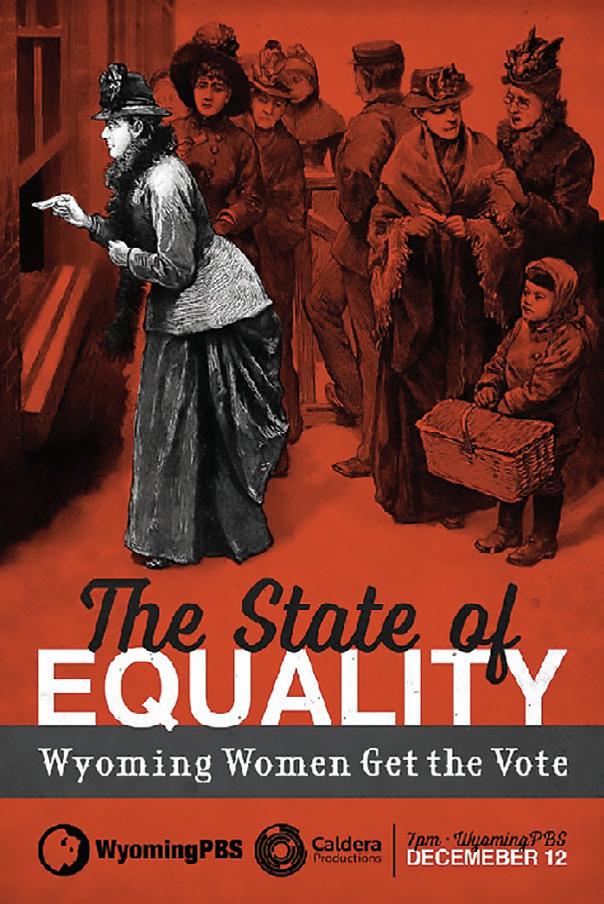
MOST people think NZ was the first place to give women the vote, but in reality it was the fledgling territory of Wyoming, US, as a new film co-produced by a former Canberran shows.
The documentary, “The State of Equality”, nominated for Best Historical Documentary and Best Musical Score in the “Heartland” chapter of the 2020 Emmy Awards, shows how the wild, wild west led the east in the struggle for women’s suffrage.
A grassroots movement that preceded the 1893 NZ legislation by 24 years and the 1929 passing of the American 19th Amendment for female suffrage by 51 years, it saw Wyoming Territory in 1869 become the first democracy in the modern world to recognise a woman’s right to vote, well before it became a state in 1890.
It’s a proud tale that film producer Sophie Barksdale and director Geoff O’Gara, based in Lander, Wyoming, have been dying to tell.
Barksdale has been living for about five and a half years in Lander, where her husband Scott, originally from Arkansas, works for the non-profit global wilderness school NOLS and she is the producer and development associate for Caldera Productions, founded by O’Gara.
“Wyoming feels like this little bubble, it’s

so rural, so ‘wild west’,” she says.
“But I’m finding it the perfect environment to raise our six-year-old son, River.”
Barksdale was raised in the heartland of the Canberra arts community, the daughter of noted composer Jim Cotter and teacherlibrarian Julie Gardner.
Educated at Orana Steiner School, which she describes as “glorious”, she speaks glowingly of the drama elective in her final years at Hawker College, where she studied drama under Steve Brown and Bren Weatherstone. She still belongs to a Facebook group of old Hawker drama students and says: “I think of film as just an extension of drama”.
She and her sister Alice grew up in what she calls “lounge room rehearsal spaces”,
By Helen Musa
AS part of the ongoing Where You Are festival, TEDxCanberraCountdown is presenting “Flattening the Climate Curve” a live virtual event showcasing five bril liant ideas for climate action from Canberra youth. The young people’s pitches will be accompanied by talks from local change-makers, performances by Canberra artists, short films, and networking opportunities. Friday, August 14, 5-7pm. Program details at risecan berra.com and registrations to eventbrite.com.au
CANBERRA Qwire has altered its name from “Canberra Gay and Lesbian Qwire” and its constitution now reads, “Canberra Qwire welcomes members from the diversity of sexual orientations and gender identities across the LGBTIQ+ communities, and allies”. The Qwire has added a new verse to the recorded Global Move ment for Climate Action #resolution2020 song, “World on Our Shoulders” to the effect that “As our forests burn and our birds have molten wings/We will raise our voice, we will sing for change, right now”. It’s on YouTube.
GEOFF Page’s Poetry at Smiths will join “That Poetry Thing at Smiths” for the rest of the year on the Mondays of September 7, October 6, November 9 and December 7. Because of COVID-19 the program will mainly be on Zoom, with interstate poets performing online and some Canberra poets performing live from Smiths. View at facebook.com by searching “That Poetry Thing”.


and replete with rich native American history.
“Wyoming makes sense, it’s been good, and it’s a lovely city with a huge arts community and film scene. The city has been most welcoming,” she says.
“But when they told me it was the home of the women’s vote, I thought they were lying.”
Her plan had been to be a housewife, but immediately she met someone in the library who, on hearing that she had worked in film, passed her phone number onto O’Gara. The rest is history.
”Wyoming thrives on storytelling, so it’s hard to work out whether there’s a grain of truth in any of the stories… we had to resist so many popular myths and we wanted to tie in with the national story of the 19th Amendment,” she says.
Most people, she asserts, want to know the real story, and there were uncomfortably racist elements to the movement for women’s suffrage as white ex-Confederate men manoeuvred to swamp (with their wives’ votes) the votes of the many AfricanAmerican miners and Buffalo Soldiers who settled there after the Civil War.
Barksdale has been finding parallels between the colonial histories of the US and Australia, including in a “Stolen Generation” story of “Indian” boarding schools in the US, the subject of her latest film with Northern Arapaho director Jordan Dresser, “Home From School”.
Watch “The State of Equality” on YouTube.
THE 5th annual Canberra Writers Festival, coming up from August 12-16, believes it will be the first writers festival in Australia to offer live events, with 17 live and streamed and 10 streamed-only events. Following its theme, “Power Politics Passion”, the focus wil be on issues more than literature, with sessions such as “The Truth Will Set You Free, But First It Will Piss You Off” featuring feminist Gloria Steinem. Bookings and details at canberrawritersfestival.com.au
Soprano Susannah Lawergren… Wesley Music Centre, August 16.
A NEW children’s book, “Vote 4 Me”, published by Wild Dog Books, makes preferential voting easy to understand. Written by author and electoral educator Krys Saclier, with illustrations by political cartoonist Cathy Wilcox, it is set in the fictional Mount Mayhem Public School and elections for a new class representative.
ART Song Canberra’s next live concert, “Songs Around the Piano”, will be given by soprano Susannah Lawergren with Maciej Pawela on piano twice, because of physical distancing requirements. Wesley Music Centre, Forrest at 3pm and 4.15pm, Sunday, August 16. Book via trybooking.com

By Dougal MACDONALD

“UNHINGED” is a powerful thriller in which 21st-century communications technology forms a major and disconcerting dramatic element in its 90 minutes run-time.
It’s not a “nice” film. Actor Russell Crowe plays a man (we never learn his name) beset by an awful family tragedy, who happens to be driving the pick-up truck that doesn’t move off after the light goes to green at a New Orleans intersection.
Until that point, the film has been making a plangent observation of big-city morning traffic as Rachel (Caren Pistorius) like any good mom in modern-day America is driving her early-teenage son Kyle (Gabriel Bateman) to school.
That exercise in futility, occupying several minutes, develops a sense of Rachel’s driving ineptitude that brought me close to frustrated laughter.
But it had a purpose, because Rachel finds herself immediately behind the man when the light turns to green. Rachel gives him a long blast on her car’s horn. And that triggers the rest of the film’s full-on action.
Is “Unhinged” worth your patronage?
Like all movie choices, it depends on what you want. From this point, it’s automotive mayhem, bad-mannered road rage, unrestrained fender-bending and mild
frustration arising out of Rachel’s failure to head for the closest cop shop to get help.
The Internet Movie Database puts its estimated cost at $US30 million. Most of that would have gone on buying cars for wrecking and getting the city’s co-operation in setting up some major tail-backs.
I left “Unhinged” feeling that it wasted Russell Crowe’s capabilities, which in a perverse way gave the film strength while sending no message other than pulling no punches about bad driving habits.
At Dendy, Palace Electric and Hoyts


Stay in touch with the names making news on Sundays from 10am as 2CC and “CityNews” present Canberra’s only local weekend news and current affairs program.
It’s a revolving panel show that brings to the microphone great “CityNews” commentators and 2CC personalities.
Be part of the conversation call 6255 1206 between 10am and noon

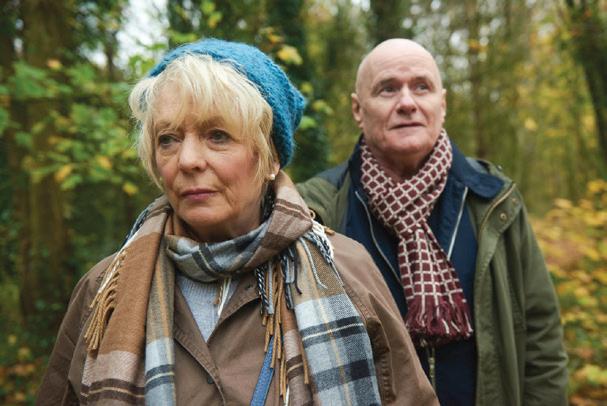
FROM writer/director Paul Morrison comes a tale of the human condition as old age begins to bite, telling it like it is when two strangers, Dave (Dave Johns) and Fern (Alison Steadman), no longer young, meet in a London park while walking his german shepherd and her cairn terrier.
Why 4½ stars? Here’s how another reviewer, David Griffiths, put it:
“The great script also allows Dave Johns and Alison Steadman the chance to shine. Grouped together with his performance in ‘I, Daniel Blake’, Johns shows that he is a
likable actor who… once again he deserves to win awards for his work here, anything else is just wrong.
“Likewise Steadman was born to play Fern. She plays her uneasiness to a tee and like Johns makes her character likable to the audience despite her flaws. Together the two pull off two of the best performances you will see in cinema this year.”
This neatly sums it up. Watching it, I found myself achingly moved by the honesty and the credibility that Morrison gave it, qualities not often found in films telling stories about ordinary people.
And it has Alison Steadman. Her name may not be as familiar as others but her career since 1971 lists 128 titles, mostly in TV series and short films. She was in her mid-70s when she played Fern. The camera loves her. And so do I.
As well, animal lovers will delight at how the two dogs interact with their people, each other and the camera.
At Palace Electric, Dendy and Hoyts
“The Secret: Dare to Dream” (PG)
SHOT in the American State of Louisiana, “The Secret: Dare to Dream” spends 107 minutes delivering a stock standard romantic story proclaiming its Hollywood mainstream origins with as fine a collection of style cliches as you might ever want to avoid.
The publicists’ puffery describes it as being about the power of positive thinking. You could have fooled me.
For the screenplay, director Andy Tennant co-wrote with Bekah Brunstetter an adaptation of a novel by Australian TV producer Rhonda Byrne.
Apparently, Ms Byrne has become wealthy by researching and writing about what appears to have been the science of getting rich. I haven’t read anything else she has written, nor do I expect I ever will. She’s also this film’s producer.
It’s not a bad movie. It’s merely a pot-boiler about people dealing with not only a wild storm but also some of life’s realities that they’d rather not have to confront. That’s not an unreasonable theme. But it’s been done many times before and watching its journey to an utterly predictable conclusion doesn’t take long to become humdrum.
Katie Holmes plays Miranda, a widow with three children, the oldest of whom Missy (Sarah Hoffmeister) is about to have her 16th birthday. Brother Greg is a few years younger, little sister Bess is more so. Miranda is having financial problems. Her day in a small town is routine. Then the storm hits. A falling tree punches a hole in the roof of their house. That will cause problems with giving Missy a party. And Bess craves a pony.
Earlier, Bray (Josh Lucas) arrived in town looking for Miranda to give her an envelope. What’s in it? We have to wallow through most of the movie to learn the answer. I won’t spoil it for you. Bray is an academic. He’s also a dab hand with all manner of tools and materials for fixing holes in roofs.
At Palace Electric, Dendy and Hoyts
live gig as possible.
“Virtual concerts” are being held for people to pay, log in, and watch through their digital portals.
Of course, a virtual concert can’t quite replicate the magic of seeing our favourite artists belting out live on stage, but from some of the conversations I’ve had it seems people are still excited about this, especially if it means they can support the industry that’s experiencing some Dire Straits (pun certainly intended).
Getting together with a few friends (socially distanced, of course), cracking some drinks and watching gigs on a large-screen TV with a good speaker set up would actually seem quite the popular idea given the circumstances.
Three-piece rock band DMA’s, from Sydney, played one of the most recent of these streamed
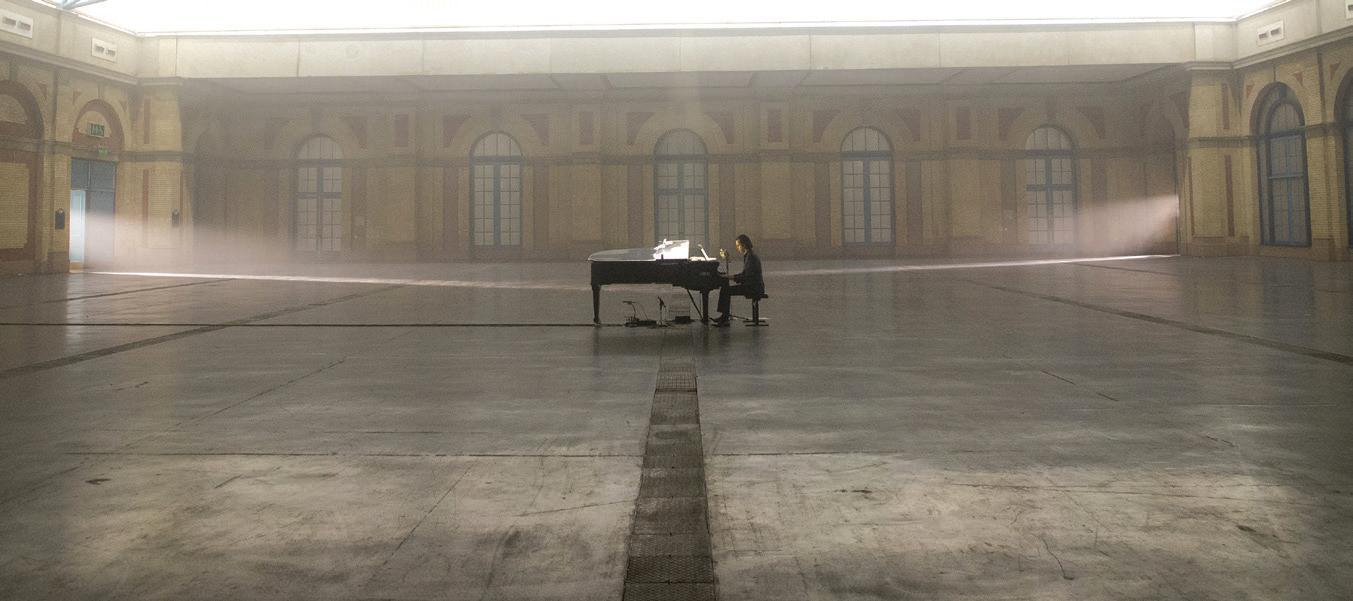
hosted one of these virtual gigs for fans to live stream using a platform called Dice, which specialises in bringing music directly to viewers through the internet.
Cave, who was supposed to be on a world tour, instead set himself up alone at a grand piano and played an evocative set at London’s Alexandra Palace.
Fans were hyped, paid $29 for their “ticket” and were ready for the show. All seemed well until a few minutes in many started experiencing what has befallen us all at some point… that ever frustrating, rotating ring in the middle of the screen that freezes everything around it.
The stream stuttering meant that for many they felt the concert had been ruined. The event, which was supposed to be a one off, was made
police to hunt down and kill the eldest or else the youngest and more innocent will be executed. If interested, you can now stream it on SBS On Demand.
More Aussie talent is also being showcased over on Stan with the new homegrown production “Relic” currently in the service’s trending charts. This one is a uniquely unnerving horror film about three generations of a family dealing with the strange and sinister behaviour of the matriarch, locked away in her isolated country home.
All of this speaks to the brilliant talent of the Australian arts and entertainment industries, and in the face of the challenges present, the importance of continuing to support such artists, or as we might currently call them, our Sultans of Stream.
By Helen Musa
“I WOULDN’T be here but for Bob Hawke,” says 26-year-old Alex Wu, recent winner of the Sydney Film Festival’s $7000 “Dendy Live Action Short Award” for best Australian short film for “Idol”.
That’s quite literally true, since his parents already had a daughter, meaning that if they hadn’t moved to Australia, they would never have been able to have him under the one-child policy in China.
“It’s one of those interesting junctures in history that allowed me to be,” Wu says. His father, who went on to found Canberra’s Chinese-Australian school, came to do his PhD at the University of Queensland in the late 1980s and became a leading figure in multicultural affairs here. In the wake of the Tiananmen Square massacre in 1989, Bob Hawke allowed Chinese students to stay on so he brought his wife here, did several other degrees and they both ended up as senior public servants in Canberra.

Wu went to Gold Creek Primary then to Lyneham High, where he fell in with the school’s music culture and played a leading comic in the Elton John-Tim Rice musical “Aida”.
In years 11 and 12 at Narrabundah College, where Wu studied double specialist maths, he came under the influence of veteran media teacher Celia Stott, who opened up for the first time the possibility of a career path in film.
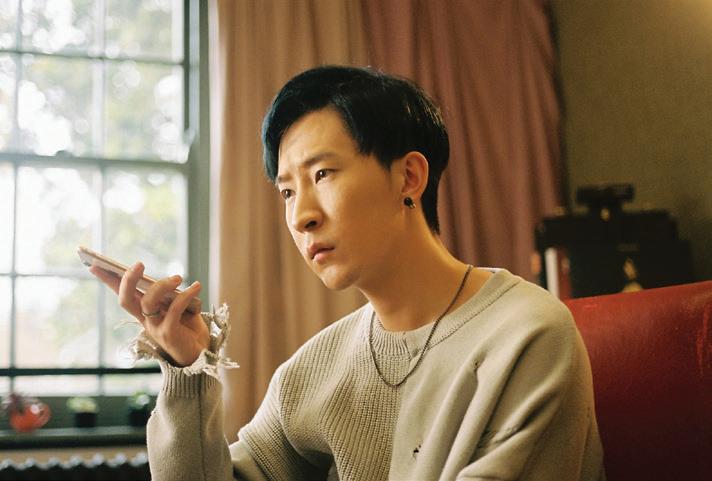
cameras with real film in them and said, ‘go out and make something, splice it by hand, get a feel for it’. It energised me like nothing before. Narrabundah’s a great environment, you work hard, you feel pushed… and it made me feel like I could become a filmmaker.”
In 2011 while still at Narrabundah, he made a western, “Compass”, which won the Audience Choice Award at the 2011 Canberra Short Film Festival and top prize at the 2011 Leonid Film Awards. He also made music
videos on Super 8 for the 2012 Canberra Short Film Festival.
While studying at the Victorian College of the Arts from 2013 to 2015 he spent time working at Hoyts and volunteered at Sydney Film Festival, so feels he’s come full circle in winning an award.
In 2015 Wu’s work “Beneath the Cotton Clouds” got into the LA Indie Film Festival and Toronto Student Film Festival. In 2016, his film “Motown” had its world premiere at the 60th BFI London Film Festival, then last year he returned to do an honours year and
By Wendy JOHNSON

JOHN-PAUL Romano describes himself as “owner and humble peasant” of Italian Brothers, the newish fine-foods establishment and wine bar nestled in the middle of Manuka Arcade.
On our visit he was dressed smartly in a crisp white shirt, light grey pants and polished black shoes – with a bright apron featuring a map of Italy.
At Italian Brothers, John-Paul has “replicated” a small store in a tiny, old-fashioned village that he fell in love with during a year in sun-baked Calabria. The store was central to its community – gathering place, café, coffee shop, wine bar, deli and general store.
Hanging out at the store inspired John-Paul to open something similar once he returned home to Australia. He’s done just that.
We popped by to enjoy a glass of wine and a specialty antipasto platter ($45), and what a platter it was (indeed, one of the most fascinating we’ve had in yonks).
The ingredients, sourced from Australia, Italy, the UK and other spots, were quality through and through. Think (in no particular
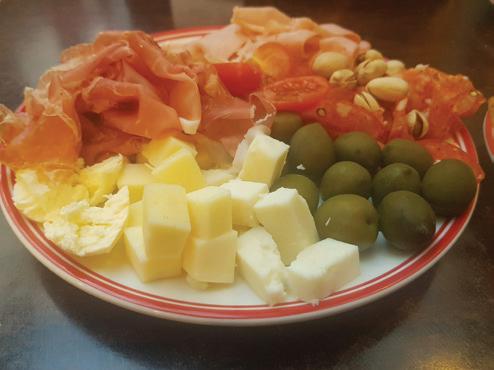
salami, goats cheese, green olives, stuffed bell peppers, pistachios, chilli mortadella, smoked sun-dried tomatoes, and more. Loads of bread accompanied the platter, baked fresh every day in Ainslie. It is a generous platter for $45 and could easily be shared by more than two. We took our time, over a couple of glasses of pinot grigio, and enjoyed every bite, feeling pretty cosy on a small table in the arcade itself, watching the world walk by.
In addition to the antipasto, Italian Brothers offers biscotti, panini and other goodies, all proudly lined up in cabinets. Beer and cocktails are also available.
You order inside (with a fireplace flickering on a big-screen TV) and can sit in the arcade (about 10 seats) or on one of the six or so stools inside.
The shop is a foodie’s delight and packed to the rafters with oodles of quality Italian and other tinned, packaged, bottled and fresh fine food – far, far too many to list. Shop for gorgeous flour, premium dried pasta (including some organic), spicy hot cream peppers, mixed bush mushrooms, eggplant strips, every kind of bean imaginable, pasta sauces, sardines, preserved lemons, cheeses, desserts, wines… the list goes on (and on).
Italian Brothers truly is Manuka’s fine-food destination. Takeaway is also available. Open seven days from 8am and, during these crazy COVID-19 times, remains open until there aren’t any more customers.
Italian Brothers. Shop 2, Manuka Arcade, Franklin Street, Manuka.
as part of the course made his Sydney winner – “Idol”, shot in a single day at the VCA.
Ostensibly set in a big city like Beijing or Shanghai, “Idol” shows a handsome young screen celebrity, Wan Ran, played by Kyle Chen, being dressed down in the green room by his terrifying Big Sister-style manager (Jiapei Wu) after a teenage fan commits suicide when she learns that he has a private love-interest.
“When I was younger I was reticent to explore the Chinese side of myself, but now I want audiences to know that Asian people
have the same feelings as everyone else, this is a very human, compelling story that shows what people go through.”
“In the ‘Idol’ entertainment industry managers control the celebrities, who don’t own their phones or their private lives, their friendships aren’t real, they’re inventions or productions, like the snake that eats its own tail,” he says.
The film is not intended as an attack on the film industry but as a peek into its darker aspects.
“As the main character’s situation unravels, I made a conscious choice to present what the audience sees, to make the film immersive, in the moment, putting the audience into the shoes of the idol – it’s more like a play, very performance-driven.”
Wu made the film entirely in Mandarin, a language in which he admits he’s not fluent.
“I really enjoyed directing in Mandarin, paying attention to how the words sounded, the pitch, the tempo, the silences inbetween and the emotions showing on the person’s face… it’s an immediate emotional experience.”
Wu is naturally thrilled to have won a jury prize at Sydney Film Festival and his film now qualifies for Oscar consideration, but although the $7000 will buy him creative time and help him pay the rent, he has no illusions about the film industry.
“I’ve tried my best, but like Sisyphus, I’m pushing a giant boulder up the hill and getting pulled down… But winning a big award helps remind me that I’m on the right path.
“Ultimately film is all I want to do.”


•
Joanne Madeline Moore

ARIES (Mar 21 – Apr 20)
Aries folk need to have an ambitious project to channel their fiery energy into. As original celebrity chef – and birthday great – Julia Child declared: “Find something you’re passionate about and keep tremendously interested in it.” This week you’ll be given the opportunity to lead, influence or help those around you so don’t waste it. But there is the potential for explosive Mars-Pluto power struggles with an authority figure, work colleague or parent (especially on Thursday).
TAURUS (Apr 21 – May 21)
This week’s tempestuous stars highlight your occasional inclination to jealous or overbearing Bullish behaviour. It’s time to loosen your possessive grip on a loved one, otherwise you’ll just drive them away with your demanding and stubborn demeanour. You’re also in the mood to text and tweet and communicate but are you posting confusing mixed messages? And are others happy to hear what you’ve got to say? Strive to be much more precise, diplomatic and discriminating.
GEMINI (May 22 – June 21)







This week a relationship with your sweetheart, business partner or member of your peer group could be frustrating and confusing (or just completely unpredictable). The best way to handle the situation is with plenty of patience and understanding. On the weekend, the Sun and Mars encourage you to contribute your versatile Gemini talents to a worthy cause within your local neighbourhood. If you do, then satisfying community connections and positive friendships will follow.
CANCER (June 22 – July 23)
If you’ve been burying your head in the sand, then a problem could come to a head and demand to be addressed. The planets encourage you to be direct about dealing with challenges, especially involving work and finances. Definitely no sidestepping allowed! Do your best to avoid being a snappy Crab on Thursday, when the Moon and Pluto magnify your mood swings and heighten your emotional sensitivity. The more defensive you are, the more difficult relationships will be.
LEO (July 24 – Aug 23)
This week the Sun and Mercury are moving through your sign, plus the Sun connects with fiery Mars. So it’s time to tap into the very essence of what makes you the feisty, creative, dramatic Diva that you are. Don’t let relationship rumbles, work worries or financial fiascos diminish your flamboyant style. Be inspired by Leo model and actress Cara Delevingne (who was born on August 12, 1992): “Be brave. Believe in yourself. Make yourself proud.” Spoken like a true Lion!
VIRGO (Aug 24 – Sept 23)
Mercury (your patron planet) is moving through your isolation zone. So – whether or not you’re in Covid lockdown or quarantine – slow down and reflect on where you’re going, and where you’ve been. When it comes to a much-needed future holiday, be patient and plan carefully. It’s also a time when unresolved relationship issues could be dredged up all over again. The Sun and Mars encourage you to be proactive about healing the past and heading towards a brighter future.
LIBRA (Sept 24 – Oct 23)
Has your perfectionist streak got out of control? The more you try to make everything ‘perfect’ this week, the more you will attract opposition from others. So focus on the evolving journey, rather than the final destination. The weekend looks wonderful, when the Sun and Mars encourage you to make a wish list of your goals for the future. Be inspired by birthday great Madonna: “I stand for freedom of expression, doing what you believe in, and going after your dreams.”
SCORPIO (Oct 24 – Nov 22)
Mighty Mars squares powerful Pluto (your ruler) on Thursday, which boosts your stubborn streak and your control-freak tendencies. You’ll find the more temperamental you are, the more challenging the week will be. So simmer down Scorpio! On the weekend, the Sun and Mars encourage you to reach out and help someone at work or a friend in need. The close connections you foster within your professional peer group will prove beneficial in the long-term.
SAGITTARIUS (Nov 23 – Dec 21)
Expect financial problems or communication chaos (especially with work colleagues, clients or customers). Sagittarians are free spirits so you could also feel frustrated by local lockdown rules and/or travel restrictions. Don’t let it stop you from being adventurous and taking on challenges in creative and Covid appropriate ways. Draw inspiration from birthday great Madonna: “If I can’t be daring in my work or the way I live my life, then I don’t really see the point of being on this planet.”
CAPRICORN (Dec 22 – Jan 20)
Your ruler Saturn (planet of limitations and patience) is transiting through your sign until December. So it’s time for active and ambitious Capricorns to pace yourself, as some plans backfire and confidence levels are lower than usual. You could also question your current trajectory and look to others for feedback and approval. Don’t overdo it though! As birthday great Madonna observes: “If your joy is derived from what others think of you, then you’re going to be disappointed.”
AQUARIUS (Jan 21 – Feb 19)
This week’s planetary patterns amp up your Aquarian need for freedom, independence and avant-garde adventures. But don’t feel you have to tackle a current project or problem on your own. The Sun and Mercury are visiting your relationship zone, so there are plenty of people around who are happy to help. All you have to do is sum up the courage to ask. But too much reckless haste could lead to an argument or accident, so slow down and pace yourself (especially on Monday).
PISCES (Feb 20 – Mar 20)
Expect some dramas this week, as Mars and Pluto stir up old grievances involving values, finances, possessions and/or friends. By all means use your diplomatic talents to help find solutions but, if you sit back and let others make decisions, then you’ll just feel paralysed and powerless. So strive to be much more proactive and self-sufficient, especially involving work. The weekend is a wonderful time to get physical in the great outdoors as you walk, run, bike or go on a nature hike.
Copyright Joanne Madeline Moore 2020
1 Which Biblical condemned robber was
instead of Jesus? (8)
2 Which grey matter is said to comprise two percent of one’s body weight? (6)
3 Name the gas that forms about four-fifths of the volume of the atmosphere. (8)
4 The Roman poet Publius Ovidius Naso was known as whom? (4)
5 What are groups of three closely related things? (6)
6 What is a recess, opening out of a room? (6)
12 Which term describes a generous bestowal of gifts? (8)
13 Which musical performance is delivered by a man under the window of his beloved? (8)
15 Name an abbreviated name for particular anthropoid apes. (6)
16 Which term describes a figure that is rectangular? (6)
17 What was the profession of Norman von Nida? (6)
20 What is a small, narrow, secluded valley? (4)
WHILE there is an ever-increasing range of new plants available now, I still recommend many of the old varieties.
In the 1960s and early 1970s there was a fashion fad of planting low hedges lining the path to the front door of alternated coleonema aureum (or golden diosma) and nandina domestica nana. “Nana” refers to the dwarf variety. As fashions change, these two plants have largely disappeared from sale. This is a pity as they’re extremely hardy and suited to Canberra. Nandina is evergreen, with bright red berries in winter. It’s also known as the sacred bamboo and grows naturally throughout Asia.
When redesigning existing gardens, I always persuade owners not to remove any existing nandina. It’s said that if nandina is in the garden already, while you may never be rich you will never be poor. Nandina will grow to 1.5 metres tall, while the dwarf variety only grows to about 0.5m. One of the most improved varieties of nandina domestica nana is “Moon Bay”, also suited to pots for the balcony garden.
In colder weather, its green leaves change to an amazing kaleidoscope of colours, as good as flowers for brightening the winter garden. I recommend a group of these combined with golden diosma, which is covered in tiny pink flowers in winter and perfect for the easy-care garden. Diosma only needs a light trim after flowering in spring.
DECIDUOUS trees used to arrive “bare-rooted” at garden centres in winter. This means they were dug up at the grower nursery and delivered with no soil on the roots. Until they were sold, the garden centres covered the roots with soil to stop them drying out. One advantage of this was being able to see if they were root-bound.
Today, garden centres pot the trees up immediately on arrival so they can be sold throughout the year, but the roots can’t be seen. If they’ve been kept in the pot for too long, the roots will circle round and round with nowhere else to grow. Sometimes, with judicious pruning, this can be corrected before planting. However, if planted like
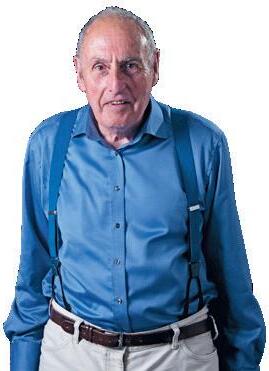


this they will continue to circle in the planting hole rather than spreading out naturally, which in turn anchors the tree to the ground. If you go to plant the tree and the roots are badly rootbound, return it to the garden centre.
When planting trees, be aware of all underground services, gas, water, electric and phone lines. Keep in mind if a tree grows to 10 metres tall, depending on the variety, it will have a 10-metre spread. So plant no closer than at least five metres from buildings. This includes overhead power lines, of which ACTEW regulations require all growth be kept at least 1.5m clear. I would suggest at least two metres. If you don’t keep the lines clear ACTEW will do it and charge you handsomely!
IT’S time to prune crepe myrtles by at least a third, before the leaves start appearing. Crepe myrtles flower in late summer/autumn on new-season wood. Plant peonies now, as well as summer and autumn flowering bulbs, which will be on display at garden centres.



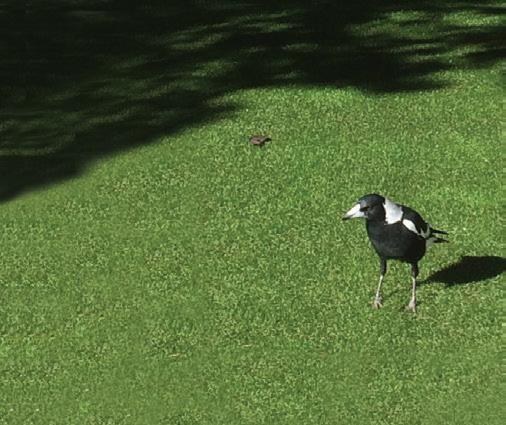



NDIS Applications – We will co-ordinate the reports you need as well as providing you with a detailed impact report to support your application.
Disability Support Pension Applications – We provide a detailed report outlining the impact of your disability on your daily life.
Home Modifications – We can assist you in the design of necessary modifications for your home to assist you to achieve your life goals; coordinating with builders and other building experts to ensure your home meets your needs.
Equipment Prescriptions – We can assist you to source the correct equipment to improve your life.