Stop the tram and start caring for the community JON STANHOPE
There’s rarely a dull day in Eden-Monaro NICHOLE OVERALL
Sometimes a politician gets it right… almost PAUL COSTIGAN
Imagination ahoy, pirates in
lounge KATE MEIKLE Is there a future for the comfort of faith? PAT POWER Black stories matter, too NICK OVERALL
DARK ARTS
New Canberra Theatre Centre director ALEX BUDD walked straight into empty venues
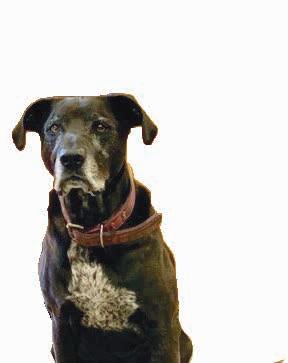
His master’s ears: meet Rupert the hearing dog
By Belinda STRAHORN
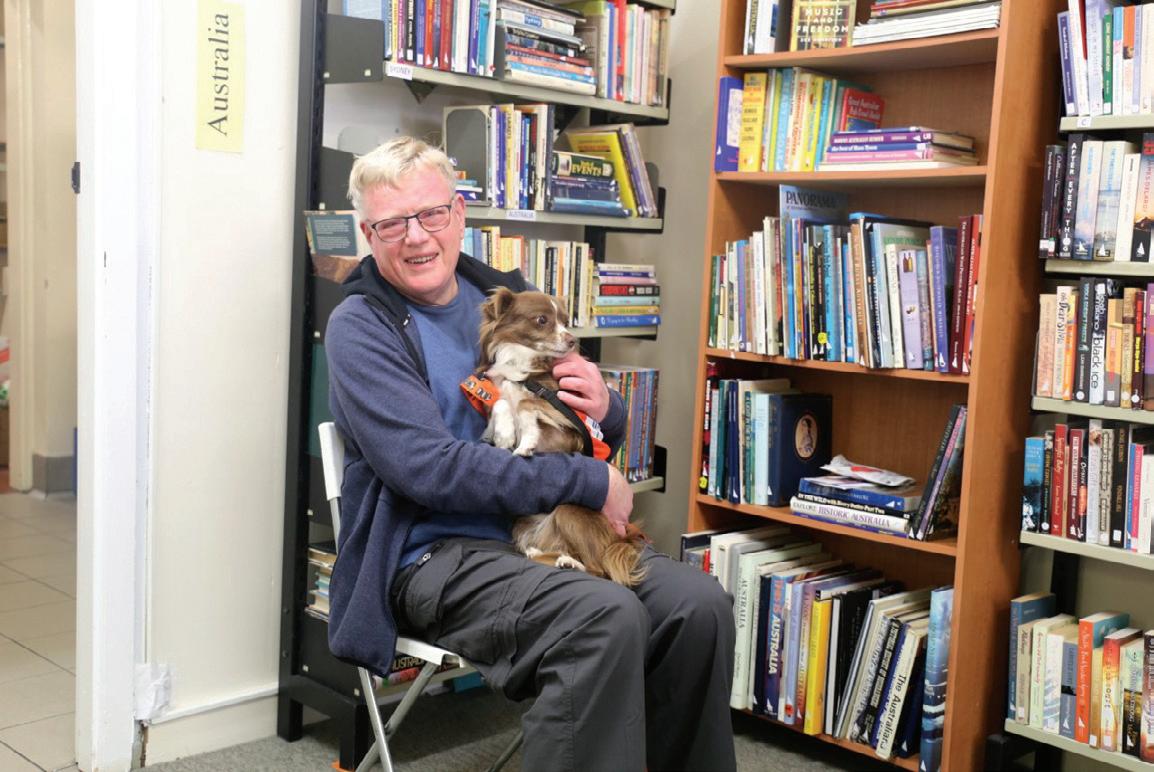
WITH canine companion Rupert by his side, Queanbeyan’s Warren Love knows when the doorbell rings.
Rupert is a Lions Hearing dog and helps take the stress out of everyday tasks for Warren, who is deaf.
“He’s my best friend,” Warren said. Rupert, a six-year-old shih tzucross, has been trained to tell Warren when someone is at the front door, he’s an alarm clock to wake him, alerts
INDEX
Arts & Entertainment 19-21
Canberra Matters 12
Crossword 22
Dining & Wine 21
Garden 23
Horoscopes 22
Letters 14
News 3-18
Politics 14
smoke alarm goes off; and when the oven bell chimes he lets Warren know that dinner is ready.
Rupert’s capabilities are a lifeline for 71-year-old Warren who has been profoundly deaf since birth.
Trained to be his master’s ears, Ru pert is Warren’s living alert system, pawing or nudging him when common sounds ring, then leading him to them.
“He makes me happy,” Warren said.
Like many Lions Hearing dogs, Ru pert was rescued from the pound.
The well-trained pooch is one of 600 dogs helping those who are deaf or hard of hearing.
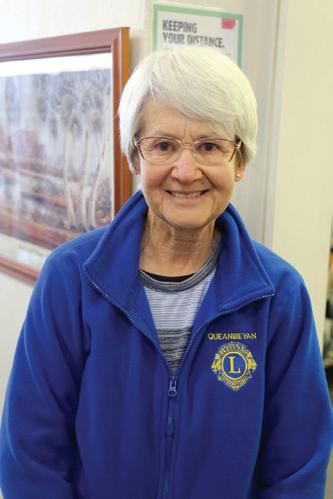
Retired pre-school teacher Deb Bowles joined the Queanbeyan Lions Club in 2009 in the hope of “giving something back” to the community.
The long-serving club secretary was instrumental in matching Warren with Rupert, almost five years ago.
To date, the club has housed three Lions Hearing dogs with hearing im paired members of the Queanbeyan community.
“The first dog was Happy and he went to a person in Queanbeyan, then there was Tod the dog with an owner in Jerrabomberra and then. of course, Rupert with Warren,” she said.
Deb said Rupert helps Warren feel confident and maintain his independ ence.
“When we met Warren he had never
Hearing dogs have the same access rights as guide dogs for the blind
to eight months and are provided free to eligible people across Australia.
146 Monaro Street, Queanbeyan, open 10am-4pm, Thursday-Saturday.
Seven Days 4 Cover: New Canberra
Theatre director Alex Budd. Story Page 19.
Photo: Holly Treadaway. Ph
TANYA NADIN, PARTNER
Tanya has extensive knowledge in all areas of family law and can provide you with prompt advice such as:
Property and Financial Settlements
Divorce & Separation
Parenting & Custody Disputes,
Spousal Maintenance
De Facto Relationship Matters
Please phone us for an appointment
Since 1993: Volume 26, Number 25
Managing Director: James Anderson, 0404 077605, james@citynews.com.au
Director: Kate Meikle, kate@citynews.com.au
Senior advertising account executive: David Cusack, 0435 380656
Arts editor: Helen Musa, 0400 043764, helen@citynews.com.au
Production manager/graphic design: Janet Ewen
Graphic designer: Karl Speller
Proof reader: Glenda Anderson
Accounts: accounts@citynews.com.au
Excellence in Funeral Service
Lions club secretary Deb Bowles… instrumental in matching Warren with Rupert almost five years ago.
SEVEN DAYS
The news is good (and bad) for ‘chip wrappers’
HERE’S a curious irony. In new research from the University of Canberra more than threequarters of Australian news consumers say they’ll miss their local newspaper if it shuts down, while big publishers are taking an axe to their titles.
dose of dorin
To be clear, “CityNews” and citynews.com.au thrives on our readers’ (and advertisers’) support and, despite the malady of recent months, we haven’t missed a beat – same great writing showcased on the same great paper.
However, I don’t recall a single local politician standing up to ACM, the out-of-town publishers of the out-of-townprinted “Canberra Times”, when its suburban weekly “Chronicle” closed at Easter. ACM also shuttered venerable newspapers around us in Yass, Goulburn and Queanbeyan. More recently, News Corp turned off 100 regional and suburban titles across the country.
The “Digital News Report” from UC’s News and Media Research Centre surveyed more than 2000 adult Australian news consumers and found that 76 per cent would miss their local newspaper if it went out of business.
Lead researcher A/Prof Sora Park says: “The data shows that local newspapers are the main source of information for almost half of regional news consumers about their community.”
Soberingly, to an old news hack like me, only 54 per cent of news consumers said they preferred impartial news (46 per cent don’t
want to know the truth, per cent said independent journalism was important for society to function properly.
And as the bully publishers force digital offerings in lieu of the chip wrapper, the survey reports only 14 per cent of people pay for online news. Hardly a golden, new dawn.
ANOTHER election, another rates break from the Treasurer, Andrew Barr. Last election we got a rates holiday with a rise of only 5 per cent, this time – compliments of coronavirus and political nervousness – the Chief Minister has frozen residential rates this coming year.
Opposition Leader Alistair Coe should hardly be surprised, having announced pre-virus that the Libs would freeze the rate rises for four years in the event of their being elected in October. It’s part of a COVID recovery plan for the
admission of an unfair rates regime.
BUT who knows what’s going on under the bonnet of the ACT Budget right now. Certainly, the Treasurer won’t tell. In a “heated debate” in the ACT Legislative Assembly on a government motion to postpone the 2020-21 Budget until after the ACT election in October, the Libs fruitlessly moved amendments calling for a look at the government’s operating statement, balance sheet and cash flow statement at April 30.
Given the cataclysmic events of the past year and the political posturing aside, I reckon we’re all entitled to know where the finances stand, especially before we’re asked to vote. Dodging it until after the election seems disingenuous.
VETERAN TV newshound Ken Begg was
startled to receive a form letter from the ACT government saying he has been assessed as a “high risk to road safety” for one or more of the following reasons:
• You have a medical condition that requires review by a specialist.
• You are a police identified driver.
• You drive a heavy vehicle.
• You hold a public vehicle condition and have a medical condition and
• Your visual acuity does not meet the fitnessto-drive standard.
“NONE of these reasons apply to me,” protests credible Ken.
“As an older driver, I’m probably a ‘potential risk’ but my annual medical and eye tests advise differently.”
He says the letter goes on to demand he submit a “specialist report”.
“For what? This letter offends and is wrong,” he says.
“I registered my complaint (along with many others, I was told) and advised to disregard it.”
But he wonders about the bigger questions: How did the government make this assessment? What information, if any, is it holding about personal health?
ICON Water has been making a selfcongratulatory fuss over its decision to freeze the “combined water and sewerage
price” for 2020-21.
“This has been a really tough year for everyone, so we have been looking at ways we can support the Canberra community and make life a little easier for those who may be struggling,” said Ray Hezkial, Icon Water managing director.
Wow, thanks, Ray. The $18 saved this year amounts to about 35 cents a week.
And while they were making things easier for struggling ratepayers, how’s this sleight of hand: Icon’s increasing the water supply charge by $6.21 to offset an imposed reduction in the fixed sewerage charge of $6.21 by the ACT Independent Competition and Regulatory Commission.
AND this edition is something of a family affair: we have articles from Robert and Wendy Macklin, Nichole Overall and her son Nick , and my daughter Kate’s column has made it this week! As my radio mate Rod Henshaw says: “Nepotism is fine provided you keep it in the family!”
Ian Meikle is the “CityNews” editor. He can be heard on the “CityNews Sunday Roast” , 10am-noon on 2CC.
TUITION BY KUMON
60 YEARS OF PROVEN RESULTS
When Kevin rushed home to tell his family he received an “A” in his Maths exam they were all thrilled. Kevin had not always been good at Maths. In fact, a few years ago his mum, Janet saw his struggle and enrolled him in the Kumon Maths Program.
In the 3 years that he has been at Kumon, Kevin has gone from lacking basic skills and not believing in himself to being top of his class.
“I can honestly vouch for the benefits of the Kumon approach to learning” Janet reflected. “Kevin now has a solid foundation in Maths, greater discipline towards his study, better focus and confidence with all subject areas. I am very glad we enrolled him in the Kumon Maths Program.”
If your child can benefit from improved skills and greater confidence, then Kumon is for you.
Kumon Maths and English programs cater for children from preschool to year 12 with a daily approach to developing excellent academic and life skills. The Kumon Instructor will tailor your child’s study program based on their specific needs. Call your local Kumon Centre today to see how your child can get the ‘Kumon Advantage’.
POLITICS / a territory in deep debt
Stop the tram and start caring for the community
I’M sure Alistair Coe and his Liberal colleagues will have had a really good laugh at the outrage from Labor and the Greens following Coe’s World Environment Day commitment to plant one million trees in the ACT over the next 10 years, if the Liberals win the October election.
The shock and horror in Labor and Greens ranks that the Liberal Party had out-greened them, and on World Environment Day of all days, was palpable. How dare Alistair Coe and the Liberals make promises about protecting the environment? What a nerve.
Minister for City Services Chris Steel spluttered about the cost of planting trees and decried Coe’s fiscal irresponsibility.
It will not have gone unnoticed that for Chris Steel, or indeed any Labor or Greens Minister in the current ACT government, to lecture Alistair Coe about fiscal responsibility is akin to Tony Abbott lecturing Julia Gillard about sexism and misogyny.
One does not have to look too hard at the state of the ACT’s books to realise how crook things are.
The numbers speak for themselves.
Since becoming Treasurer in 2011, Andrew Barr has, for example, turned the level of net debt in that year from a negative of $736 million to $3.1 billion this year, that is, an increase of $3.8 billion. This was before the
By averaging out the level of debt accumulated over the eight years before the arrival of the coronavirus, the ACT government has in each of those years spent, on average, around $475 million more than it has earned.
coronavirus pandemic.
It was estimated, also before the pandemic struck, that net debt would exceed $4 billion by 2021. In other words, a turnaround of just under $5 billion. With the advent of coronavirus and its immediate impact on both territory revenue and expenditure it is likely that ACT net debt will now close in on $4.5 billion.
To put that in perspective and to understand the magnitude of that level of debt for a small jurisdiction with an annual budget of around $6 billion, debt of $4.5 billion equates to roughly 75 per cent of total operating revenue.
It is also instructive to reflect, if one averages out the level of debt accumulated over the eight years before the arrival of the coronavirus, the ACT government has in each of those years spent, on average, in the order of $475 million more than it has earned.
It would be interesting, if not a little depressing, to know how the government spent the $475 million a year that it has racked up on the never-
never. I admit I don’t have a clue.
There are a few areas of expenditure where it clearly didn’t spend it, notably it has not been spent on hospitals, health care, affordable or social housing, pensioner concessions or on addressing poverty or indigenous disadvantage or, for that matter, in planting trees.
If asked to try and identify the most likely use to which the borrowings were put I would guess that the tram would be among the favourites. However, the tram would have consumed only a fraction of the $4 billion in existing borrowings. We will, I fear, need to wait for a change of government and an independent audit to discover the truth about where the $475 million a year, on average, that the Treasurer has been borrowing actually went.
What we do know, from the audited financial statements, is that over the eight years of this mad spending spree the accumulated operating deficit amounts to $2.018 billion and the accumulated cash deficit is $1.7 billion in the General Government
Sector and $2.3 billion in total.
In light of Steel’s new-found concern for fiscal discipline and wise budgeting it’s surprising that he refuses to release the business case and cost benefit analysis (BCR) for stage 2 of light rail.
As we know the auditor-general reported that the BCR for stage 1 of the project was a mere 0.49 and even then there were a range of costs, including an estimated $200 million to move a range of underground services, $192 million to relocate public housing, and costs of park-and-ride facilities, associated bus interchange works and road works which were not included in that analysis.
Gossip emanating from within the ACT government is that the BCR for stage 2a is in the order of 0.20 or, in other words, for every dollar spent the economic return will be 20 cents.
In light of the extremely poor state of the ACT’s finances and hence limited capacity to cushion the ACT from the economic impact of the pandemic, the Chief Minister should emulate the strength and political courage shown by NSW Premier Gladys Berejiklian who postponed, because of the new economic reality, the construction
of a promised football stadium in order to free up funds for projects of higher economic and social value, and announce that Stage 2 of the tram will be postponed indefinitely.
The state of the ACT Budget should not, of course, be assessed by looking only at the level of debt. Unfortunately there is no comfort to be had from any of the other major fiscal measures such as net financial worth, net financial liabilities or the budget deficit as expressed through the net operating balance.
The ACT’s finances are in a demonstrably worse state than at any time since self-government and that is, mind you, at a time that the growth in taxation has never been higher.
Jon Stanhope was chief minister from 2001 to 2011 and represented Ginninderra for the Labor Party from 1998. He is the only chief minister to have governed with a majority in the Assembly.
ONE AGENCY SANDY MORRIS advertising
‘On
Trusted advice comes straight from Sandy’s heart
ACT’s “most recommended” real estate agent Sandy Morris, of One Agency, says that trust is her number one guiding principle when it comes to looking after her clients.
“My business has always been run on making sure owners are looked after. Building their trust is so important, so they know that my advice is from my heart,” she says. Sandy has recently received the Most Recommended Real Estate Agent Award by ratemyagent.com.au as voted by her clients. She’s also been voted the “most recommended” female real estate agent and in the top five agents in the ACT for three years running.
Sandy, who has more than 15 years’ experience in real estate, started out working for the larger agencies before making the decision to join the One Agency network in 2014 as the principal of her own agency, One Agency Sandy Morris.
and house sales,” she says. Sandy calls her One Agency team her “work family” who are based at the Kambah Village.
“My clients trust that I will get as much as I can from the sale of their property and make sure it is a smooth process for them, so they can move on.”
And now is a great time to get your house on the market, with prices remaining strong and buyer confidence back after a short break during COVID-19 restrictions, says Sandy.
My business has always been run on making sure owners are looked after. Building their trust is so important.
She admits that when she first started out on her own she was concerned if anyone would trust her, but word-ofmouth grew after she proved how well she looks after her clients and her great results.
“The business has grown exponentially, with eight of us now in the agency, dealing with property management
“As far as buyer interest goes, it is back to normal. I am optimistic that the ACT remains a strong market,” says Sandy who says she now modifies how her open homes are run to ensure social distancing.
She encourages owners to feel confident at this time to put their home on the market, despite media stories that focus on “doom and gloom”.
“On the ground, there is no difference in buyer interest and prices haven’t dropped,” she says.
Sandy says that winning the “most recommended” real estate agent award makes her feel proud to know that the feedback from owners has been so positive and that above all... they trust her.
One Agency Sandy Morris. Call 6296 4252 or 0420 380895, email sandymorris@oneagency.com.au or visit oneagencysandy.com.au
Award-winning real estate agent Sandy Morris… “My clients trust that I will get as much as I can from the sale of their property and make sure it is a smooth process for them.”
AGENT OF THE YEAR
NEWS / fighting for women with disabilities
Top senior speaks up against domestic violence
By Danielle NOHRA
AFTER a horse riding accident in 1995, this year’s ACT Senior Australian, Sue Salthouse, quickly became aware of the inequality between disabled and non-disabled people, and the issues of domestic violence against women with disabilites.
“People don’t think about disability until they’re facing disability,” says Sue, of Kingston, who wants to use her role as the ACT’s top senior to highlight the issues of domestic violence against women with disbilities.
Sue became a paraplegic in a “split second”, and at the time of the accident, the then 45-yearold was the acting principal at an ACT primary school, but decided that she didn’t want to keep teaching in a wheelchair.
“I decided to work in the disability sector and was given a job with Women with Disability Australia,” she says.
“I started working in the area looking at the incidents of violence against women with disabilities [where] there’s a high level of abuse and neglect.
“You quickly realise there’s a power imbalance between people with disabilities and nondisabled people, and sometimes that’s exploited.
“Sometimes that’s through abuse of a sexual nature and sometimes that’s a physical nature.
“We know with domestic violence, it’s gender-
based violence in a significant proportion of Australian society and with disability, it’s much higher.”
Quoting the catchphrase, “there’s no excuse for abuse”, Sue says it’s everybody’s responsibil ity to value everyone and it’s everybody’s respon sibility to manage their own behaviour and treat each other with respect and value every life.
“Anybody who relies on another person for as sistance is at risk of abuse,” she says.
“We need to learn the skills to intervene and not be a bystander. It’s hard to intervene and say when you hear an incident of violence happening but it’s important to be able to have the skills to intervene.
“We really need to be able to say that we don’t tolerate that in our society.”
Sue, who works on the board of Women with Disability ACT and on the NDIS’s independent advisory council, is currently working for Life line to move its program “DV Alert”, a program teaching people the characteristics of domestic violence and how to recognise it, respond to it and report it, safely, online.
And while domestic violence against women with disabiltiies is a big driver for Sue’s activ ism, she’s also passionate to shine a light on the unnecessary barriers around participation for people with disability.
“While you’re in hospital and doing rehab, your body dynamics change completely so you have to relearn how to sit straight, how to push a wheelchair, how to do everything,” she says.
“You’re really cushioned from the outside world when you’re in hospital.
“It didn’t take long to find out that other people
living with disabilities, whether they’re born with disability, had an accident, or a degenerative condition, their access to things in society is very limited.
“It’s much harder to get into the workforce because people assume what you can’t do rather than focusing on what you can do.”
And, without work, there’s no economic secu-
rity, which Sue says means people are then more vulnerable to things that could go wrong.
But, she says employees should be more open to hiring people with disabilities because of the benefits they bring to the workplace.
“People with disabilities are amazing problem solvers because we’re always working out how we will get into this car, how we will use public transport, and apply these problem-solving skills to our work,” she says.
One of the hardest things for Sue has been physical access to places such as her friends’ houses.
“We need to be sure that we’re only building houses that are accessible for people with disability,” she says.
“Every home needs reinforced walls in a bathroom so later on you can put grab rails in.
“A lot of my friends I can’t visit because of steps.” Sue thinks there should be a simple change to the building code to make it a little more accessible.
“I want everywhere to be visitable. I want to be able to live my life by visiting friends and having a social life,” Sue says.
Other odd attitudes she’s noticed are around stereotyping, and says it’s not uncommon for people to ask the person she’s with what she’d like to drink, instead of asking her directly.
“I really don’t know why it happens,” she says.
“I think that’s funny that people would assume they don’t talk to the person in the wheelchair or the person who looks different. Everybody has the capacity to choose what coffee they want.”
If you have experienced sexual assault, domestic or family violence, call 1800 RESPECT
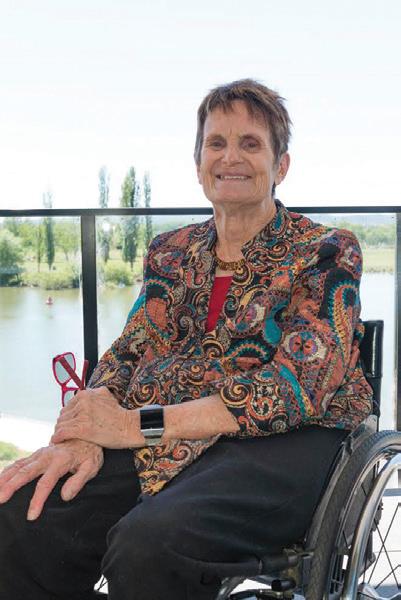
Sue Salthouse… “People with disabilities are amazing problem solvers.
There’s rarely been a dull day in
“It’s the most exciting election since 1929 …” – ”Don’s Party”
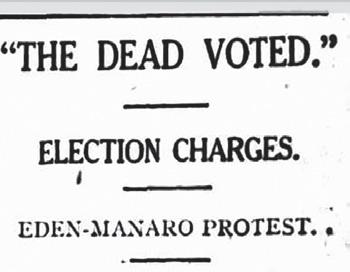
FROM the setting for the 1976 world premiere “Don’s Party”, the provocative Australian film on disillusionment in life and politics, to accusations of “the dead voting”, the federal seat of Eden-Monaro has rarely had a dull moment in its 119-year history.
In the lead up to its second byelection since its 1901 creation (the 159th nationally over that period), taking place on July 4, there’s been in-fighting, record breaking and as many visits from pollies as in a non-socially-distanced world. All ensuring the country’s 16th physically largest electorate (of 151) remains one to watch for a smorgasbord of reasons.
Outdoing the 2001 record of 10 candidates, 14 want-to-be politicians, with addresses from Bega to Bredbo, have decided to give it a crack. Not to mention those who didn’t make the cut – including one perennial independent who apparently missed the close of nominations, as well as the withdrawal of certain State members who’d looked at jumping the Federal fence.
In addition, the Nats alone had four willing to try their hand for pre-selection.
Why all the sudden interest?
As it stands, the seat has garnered attention from the get-go.
One of the original 75 “Federation Divisions”, it’s seen everything from uncontested elections, mammothly long-serving members and lots of talk about its “bellwether” values…
let alone winning margins that are frequently by skin-of-teeth.
E-M has gone to Labor in 22 elections and the Liberals nine, though until 1943 it went the way of “conservativelyaligned” parties (Protectionists, Nationalists, etcetera) on 16 occasions.
It’s had just 11 different members to date.
Another record for this outing is the six female candidates (previous high of four in 1996). Given both major parties have women running, in all likelihood the electorate will have its first female member of parliament.
And so, to E-M’s quirkier history: on November 10, 44 years ago, at the Nova Cinema in the voting heart, Queanbeyan, the curtain and eyebrows were raised with the first screening of Bruce Beresford’s adaptation of David Williamson’s 1971 play, “Don’s Party”. (The commercial opening of the provocateur Phillip Adams-produced piece took place at Center Cinema in Canberra a week later).
It’s based around the actual ‘69 federal election in which a resurgent Labor Party, after two decades of voter aversion, is all but the victor – until it’s not. The Canberra Tally Room rolls out the count as celebrations turn to misery, and EdenMonaro is repeatedly mentioned.
When John Gorton’s Coalition snuck through with a wafer-thin majority against Gough Whitlam’s Labor, E-M had not yet officially turned “bellwether”. Rather than voting in as its representative a member of the party that took government, it reinstalled previous long-serving Laborite, Allan Fraser.
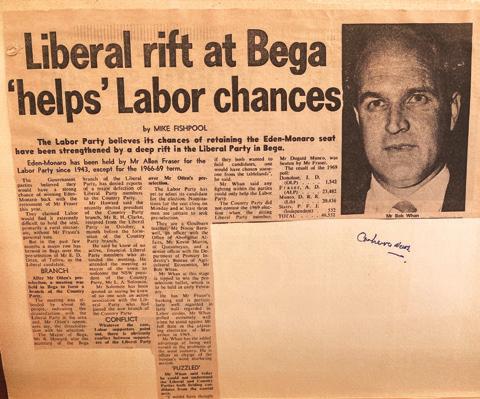
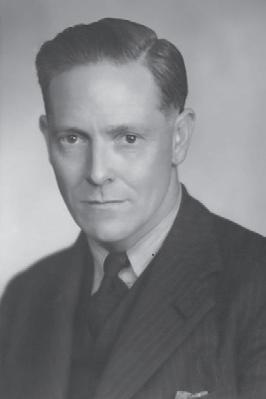
First elected in 1943, Fraser prevailed for the ALP through seven Federal elections when the Liberal Party was at the helm (from 1949). He’d be defeated after 23 years by Lib Dugald Munro when the conservatives secured the then largest majority in
FEDERAL MEMBERS TO A MAN…
Australian political history. Only the second ALP member to hold it, Fraser outdid the seat’s inaugural member, Sir Austin Chapman (25 years), for longevity after taking it back in 1969. Standing down at the 1972 election (two years later he’d cross the border and become the Member for Fraser in the ACT), at this juncture EdenMonaro earned further prominence as the nation’s primary political barometer.
In the olden days, a bell round the neck of a castrated ram (a wether) let the shepherd know what his flock was up to.
Politically, a “bellwether” tolls the way an electorate is leaning, indicating an overall trend.
In the 2010 campaign, Tony Abbott
declared, “We cannot win the election unless we win Eden-Monaro”. The Coalition failed to do both.
The election of 2016 saw E-M lose its record status for going with the elected government to Roberston (since 1983). Nor did it return to form in 2019.
With even the experts apparently unable to get a handle on it, are all the mixed signals indicative of something more widespread?
In the current circumstances, COVID-19 and harrowing bushfires mean voter focus may not be on their multiple choices. Tough going for candidates too, with no real chance to get out “on the hustings” to sell themselves.
So, will the status quo hold or will an independent be able to outdo Jim Collins’ 10.4 per cent of 1990?
Do the Nationals have any hope of again reaching double figures, something not done since Peter Cochran’s 16.4 per cent in 1987 (the Nat became Member for Monaro a year later).
Oh, and that “dead voting” thing?
At the only other E-M byelection in 1926, on the death of former Braidwood publican, Sir Austin,
again two years later.
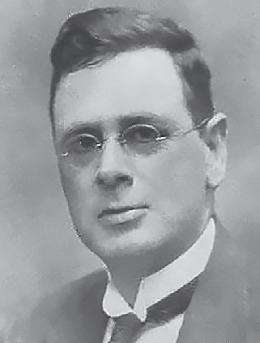
In 1929, a return to the polls following a no-confidence vote in the Nationalist-Country government saw Perkins outdone 49.9 per cent to 50.1 per cent by Labor’s John Cusack (father of Stan Cusack, of Canberra furniture renown).
Controversy erupted with claims that 49 of Perkins’ votes were credited to Cusack and that names of residents from Canberra and Moss Vale appeared on the Queanbeyan rolls. Even more sensationally, that some had voted although they were in fact, dead.
Unsuccessful in the High Court, Perkins was returned in 1931. He’d lose to an ascendant Allan Fraser a dozen years later.
Ultimately then, as well as being one of the country’s most colourful electorates, the unpredictability of Eden-Monaro makes it eminently watchable – even for those not partial to such machinations.
I have my popcorn at the ready for elec tion night.
For more, anoverall view.wixsite. com/blog
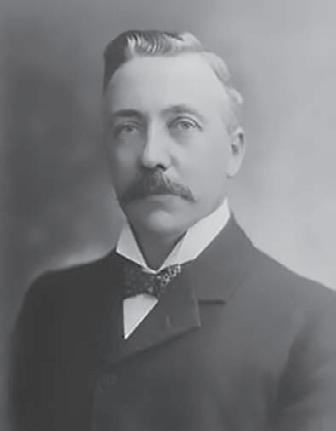
Sir Austin Chapman.
John Cusack.
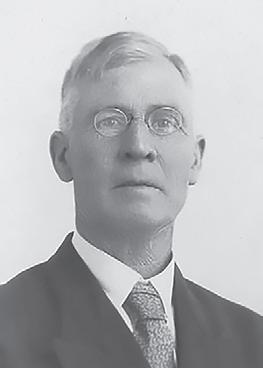
John Perkins.
Dugald Munro.
Allan Fraser.
CANBERRA MATTERS
Sometimes a politician gets it right – well, almost
HERE’S some praise for an ACT politician. The accolade goes to the Greens’ Caroline Le Couteur for her work in chairing (from 2016) the Legislative Assembly committee on planning and urban renewal and the release of the April report – “The Inquiry into Engagement with the Development Application Process in the ACT”.
In April, 2017, the ACT government appointed Ben Ponton as the chief planner and head of the Planning Directorate. He was quoted as pursuing “a citizen focus”, saying: “I’ve already put communications out to my team to ask them to think about the citizens and always have the customer experience at the forefront of their thinking.
“It’s about understanding what’s important to communities, what’s important to government and working to provide for high quality public spaces and improved environmental management.”
In my reading of the committee’s report it
becomes obvious that whatever the chief planner thought he was going to do, he did not do it. He has failed according to his own performance criteria.
The 66 recommendations from the report are mild changes that any chief planner and planning minister who cared for the community would have implemented ages ago.
They would not have needed a committee to receive submissions and then to go through the onerous task of countless committee hearings – only to come up with a load of recommendations that state the obvious. For example:
#34: The committee recommends that the Planning and Development Act 2007 is amended to allow for the rejection of development applications which contain false or misleading information.
#36: The committee recommends that the completeness check process is expanded to include a check of the accuracy of key elements such as scale, north orientation and the plot ratio calculation.
#56 to #60: Heritage gets a mention in the hope that heritage matters be considered appropriately within development application processes. (Meaning – they are not now).
In my reading of the committee’s report it becomes obvious that whatever the chief planner thought he was going to do, he did not do it.
And for all those in the community who have made countless submissions on Zones, Planning Refreshes and on Master Plans – there’s this revelation:
#66: The committee recommends that the Territory Plan Review rectify the disconnect between the development application process, as per the Territory Plan, and key design and character elements that are articulated in master plans, planning refreshes and zone objectives.
The recommendations are those that the Labor and Liberals allowed to be listed. What was rejected?
Caroline allows an insight into the battles. At the end of the report she states: “It is clear from the community
and industry feedback received by the inquiry that the ACT’s planning system needs substantial reform.
Liberal and Labor members of the committee did not agree with other recommendations that I believe would address key issues raised by the community such as: How can residents impacted by development proposals have their say and have it listened to; Ensuring that Canberra has sufficient affordable housing, in convenient locations to house our residents; Allowing new housing and renovations can be made in existing locations while addressing amenity, traffic, character and environmental issues; and Effectively addressing environmental issues.”
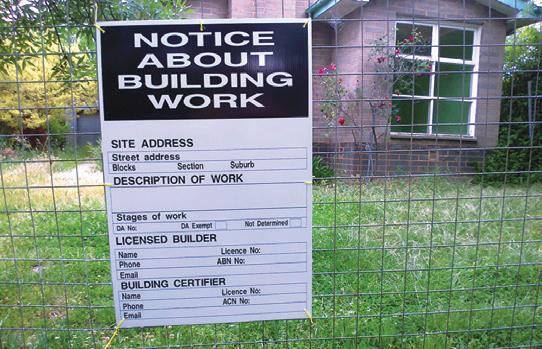
She then goes on to make nine more recommendations – that make perfect sense to the community, but you can see why the mainstream parties would be troubled by them. Such as the last: #9: That where a builder has been the subject of regulatory action by Access Canberra, the certifier for their future projects is appointed by the ACT government.
Caroline is not standing at the October 17 election. The ACT Greens were seriously compromised by their 2016 agreement with Labor to form government.
That agreement gave Shane Rattenbury a position in cabinet. Caroline has had to pursue issues from a difficult position being part of the agreement that has allowed Barr & Co to carry on being barbarous towards the community.
The committee’s report is worth reading only to realise how the fundamentals of the planning system are broken and how far the planning minister and his chosen planning chief are removed from the realities of the local communities.
All the best and thank you, Caroline. At least you tried.
Paul Costigan is an independent commentator and consultant on the visual arts, photography, urban design, environmental issues and everyday matters.
The naughty book that rewrote the ‘70s censorship debate
By Danielle NOHRA
FIFTY years ago government censorship in Australia saw authors arrested, books banned and bookstore owners threatened by police, until one book changed everything.
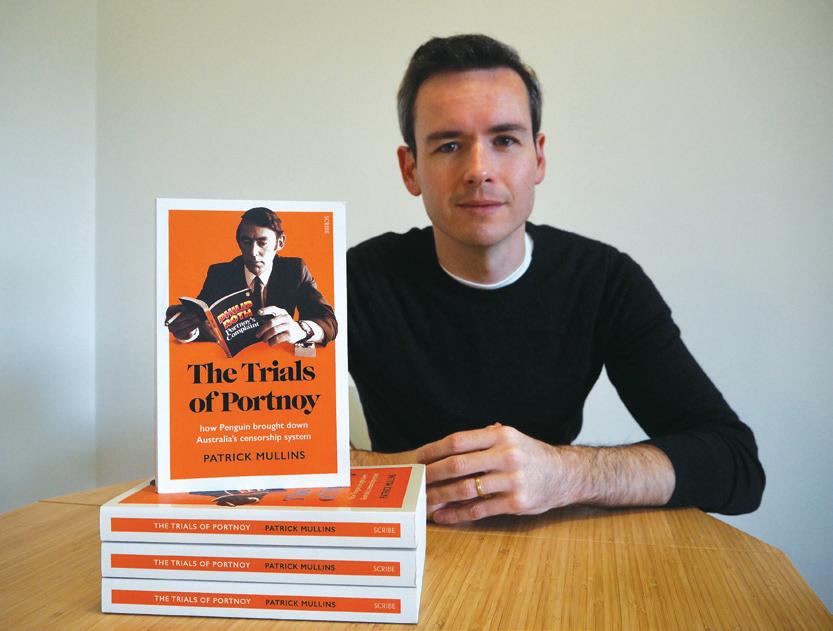
Philip Roth’s “Portnoy’s Complaint”, a book “technically about masterbation”, according to Canberra author Dr Patrick Mullins, was chosen by publisher Penguin to challenge literary censorship in Australia, and eventually played a large role in bringing it to an end.
But before it did, the circulation of the book in Australia in 1970 led to criminal charges, police raids and a series of court trials across the nation.
Intrigued by these trials, Patrick began looking into court transcripts, which are scattered around the nation, to understand how Penguin, writers, booksellers, academics and lawyers reshaped Australian literature and culture forever.
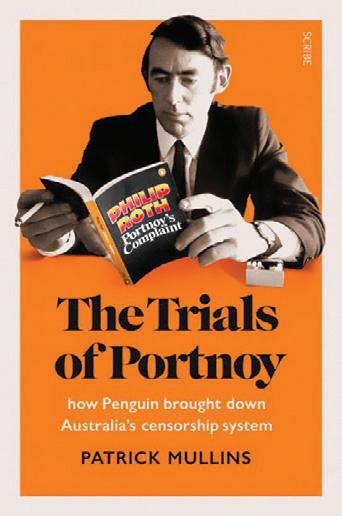
Patrick’s interest led to him writing “The Trials of Portnoy”, a book about the trials, literary censorship and “fighting for freedom”.
Now, published by Scribe, Patrick, 32, of Griffith, tells the story of “Portnoy’s Complaint” and its role in this fight for freedom.
“The book, [“Portnoy’s Complaint”], had been a bestseller overseas [after it was published in America in early 1969], but when it was banned Penguin Books secretly decided to smuggle it into Australia, print 75,000 copies, and then publish it all around the country,” he says.
“The book sold out within a fortnight, with people stampeding bookstores to get it.”
It was a big deal, according to Patrick, who says selling 10,000 in a year (at that time) was enough to make a book a bestseller.
“Then, the police swooped and there was a series of court trials in nearly every state over the book,” he says.
Here in Canberra, legendary bookstore owner Teki Dalton sold about 30 copies of “Portnoy’s Complaint” in his Civic-based shop before police officers threatened to prosecute him, if he continued to sell the book.
“He pulled the book from sale,” Patrick says.
“The book technically wasn’t even banned in Canberra but police still threatened to take him to court.
“Basically, they said, we’re going to make him lose time and money by dragging him through court. It was intimidation.”
ANU students at the campus newspaper, “Woroni”, had a bit more success, and Patrick says they printed an excerpt of the book in their orientation week issue.
“‘Woroni’ said: ‘We’re printing this excerpt and we want to stir up controversy about censorship,” he says.
If people read the excerpt and wanted to buy the book, Patrick says “Woroni” had about 100 books, which they strategically marked up in price in case they needed to use the money for court fees.
But by that time (March, 1971) there had been three trials with mixed results, so the Woroni editors escaped charges because of the uncertainty around the differing results.
Patrick says censorship not only affected literature, but it also affected other areas such as arts and theatre, too. But it was literature that made the big push, which gave many industries more freedom.
“Censorship... kept all sorts of books away from Australian readers,” Patrick says.
“‘All Quiet on the Western Front’, ‘A Farewell to Arms’, ‘Lolita’, ‘Lady Chatterley’s Lover’, ‘The Catcher in the Rye’, among others, were banned on grounds that they were obscene, or indecent, or blasphemous, or seditious.
“The federal government kept those books out of Australia, and the state governments prosecuted Australian writers,
publishers, and booksellers who produced or sold obscene or indecent works.
“The big [punishment] was jail. [Australian author] Robert Close was jailed in 1946 for writing a book called ‘Love Me Sailor’.”
According to Patrick, Robert did three months in jail for using the word “rutting” in the book.
“One of the reasons ‘Portnoy’s Complaint’ was chosen was because of the taboo subject matter,” Patrick says.
At the time, Patrick says masterbation was something that people were made to feel ashamed about.
“This is an example of how literature can teach you not to feel ashamed and not to feel guilty,” says Patrick, who believes literature is also a way of developing empathy.
“Even if you don’t like books like that, you can understand they’re exploring human behaviour and allowing us to understand different points of view and ways of living. Literature can change and shape our lives.”
Before the end of censorship, Patrick says university students would have to go overseas, get copies of books there, read them there and then come back to Australia.
Now, Patrick wants his book to highlight the brave people who forced these changes.
“We forget too easily the people who make change in Australia,” he says.
“I want people to remember these brave people, both at Penguin, and the people who testified in the trials.”
All up, Patrick says there were eight trials all around Australia about the selling of the book, with a mixture of guilty verdicts, collapsed cases and trials where they couldn’t reach a verdict.
“The results of those trials were mixed — and eventually both the federal and state governments had to back down and remove ‘Portnoy’s Complaint’ from the banned list,” he says.
“It helped bring down the censorship system, which was dismantled in 1972, when Gough Whitlam was elected.”
“The Trials of Portnoy” ($35) via scribepublications.com.au
Albo’s playing a dangerous game on rights
By Robert MACKLIN
LABOR leader Anthony Albanese is playing a dangerous game with his complaints about the government’s delay of the referendum for Aboriginal constitutional recognition.
If he’s not careful, PM Scott Morrison might take him seriously. That would be a disaster all round.
Something profound has changed since the presentation of the original Uluru Statement from the Heart called for a Voice, a Treaty and a “Makkarata” or Truth-telling commission in that order. The younger generation of Aboriginal activists – where a cohort of very bright, articulate Aboriginal women have taken an increasingly public role – have realised that the timing was back to front.
The “big men” guiding that original order had no taste for the massacre and poison stories that pictured their recent ancestors as primitive victims of the whitefellas’ guns. They had come a long way since then. They hated the idea that they were victims seeking recompense. They wanted to be seen as equals negotiating the right to have their 60,000 years of occupation appropriately recognised. So Voice first, Makkarata later.
It was an understandable position. But the whitefella politicians didn’t see it that way – the conservatives never would – and neither right now did a majority of the voting population. Their education had made heroes of the white explorers and pioneers. And all around them were the rich fruits of their endeavours, this Australian middle power that perennially “punches above its weight”.
Only very tentatively were a growing number discovering the true Australian history as revealed in such works as Scott Cane’s “First Footprints”, Bruce Pascoe’s “Dark Emu”, Henry Reynold’s “The Other Side of the Frontier”, Billy Griffiths’ “Deep Time Dreaming” and even - dare I say it - my own “Castaway”. They knew that the Makkarata was needed to turbocharge the process.
So behind the scenes the younger generation was reversing the call: the truth telling should come first, with the Treaty and the Voice to follow. But they also knew that the process of change would not happen overnight, so they were pretty sanguine about the Morrison delays. Even when the cause received a huge boost from the Black Lives Matter eruption in the US and around the nation, they held off demands for speedier government action.
They also knew that while Minister Ken Wyatt’s heart was in the right place, any proposal he put to the coalition cabinet would be filleted before it emerged as a referendum question. And because Labor would not want to be seen voting against any advance in the Aboriginal cause, they’d support some half-hearted proposal or be blamed for a defeat that postponed real advance to the political never-never.
Besides, they were afraid that any rush to action would mean that the consultation process with the scattered Aboriginal communities would be incomplete. And the opportunity was too precious to be rushed.
On the other hand, Scott Morrison would quite like to be seen as the champion of a broad movement toward reconciliation, particularly if he were able to “wedge” the Opposition along the way. So, if Albanese’s demands became a clarion call, he might well be tempted.
Albanese and his advisers aren’t fools. They will try to calibrate the message to keep it fresh in the electorate’s perceptions but not so urgent that the PM will chance his arm. Of course, all their finely-honed restraint will be for nought unless they actually win the next election.
But that’s another story.
robert@robertmacklin.com
Patrick Mullins with his new book “The Trials of Portnoy”… and the cover.
More options for a ‘safe’ election
THE focus of the local community is slowly shifting from the coronavirus pandemic to the ACT election in October.
Campaigning has started in earnest. Watch the announcements. There will be more money for pet projects, investment in health and education, better planning, jobs, better financial management, rates freeze and the list goes on. In the meantime, ACT Attorney-General, Gordon Ramsay, has introduced a second COVID-19 Emergency Response Legislation Amendment Bill 2020. The first was introduced in early April. The intention is to reassure the people of Canberra that his government has a sense of responsibility with regard to the October election. As part of the introduction he stated the Bill will “ensure the ACT 2020 election can go ahead in a COVIDsafe way”.
The Bill is set to amend the Electoral Act to make it easier for people to vote without putting themselves at risk. Everyone hopes that we have seen the last of the cases and there will be no need. However, as is apparent from Beijing, it is possible that the Territory will suffer a “second wave” of the pandemic at the time of the election. It is best to have appropriate systems in place. At a time when other governments internationally are making it
At a time when other governments internationally are making it harder for people to vote, Gordon Ramsay is setting some new standards in the opposite direction.
harder for people to vote, Mr Ramsay is setting some new standards in the opposite direction. At the moment the amendments will apply just for this year’s October election. However, like many lessons coming from the Australian response to COVID-19, some of the actions might just be proved effective and later become embedded into our systems.
Where elections occur on weekdays in countries such as the US and the UK, lowerpaid workers are at a disadvantage as they are unlikely to be able to take the time off work. Ramsay’s Bill moves well beyond the Australian advantage of having elections held on Saturdays and makes them even more accessible.
Following a recommendation of the ACT Electoral Commission, the Minister says his Bill will “support expanded eligibility for early voting and minimise the risk of COVID-19 transmission during the election period”. Early voting has been growing amongst the Canberra electorate as it provides convenience for people across the socio-economic spectrum.
LETTERS Time to share the ACT tax secrets
CANBERRA voters deserve full details on the competing tax strategies of the major parties. We should have the fair-dinkum community debate on tax that we have never had.
As it stands, Labor is promising its “War on the Poor” will resume if it wins the election; the Liberals, that there will be a four-year ceasefire, and the Greens tax policy will be whatever Andrew Barr tells them it is.
None of the parties in the current Assembly seem to support a tax system that is horizontally and vertically equitable. Small parties and independents should smash the majors on this.
Everybody should remember that the unit-title surcharges were a virtual secret before the 2016 election. What secrets will there be this time?
Peter Bradbury, via citynews.com.au
‘Shocking’ delay on road
IT has been four months since the final design of the William Slim Drive Duplication was released, yet alarmingly construction has not yet been completed.
This legislation goes even further. Mr Ramsay claims: “The Bill also introduces the legislative framework for telephone voting so it can be an option to vote for people who are blind or vision-impaired and those with physical disabilities”. There will also be “limited overseas electronic voting”. The intention here is to avoid “international postal delays due to COVID-19.”
Keeping voters safe will be a priority for the Electoral Commission which has control over the administration of elections. Controls on queues of people will be important as will the distance between ballot boxes.
Voting early in pre-polling booths has been a growing trend in Canberra, and so it is likely this option will appeal to even more people.
It is to be hoped that the ACT Electoral Commission will provide a significant increase in the number of pre-polling booths across different regions within the ACT.
The Attorney-General would have us believe that he is motivated to be “safe, fair and inclusive” in his “planning for the ACT Election”.
Things can still go awry. It is worth remembering, as pointed out in this column a few weeks ago, Gordon Ramsay only needs the support of one other minister to postpone the election.
Under Section 159 of the ACT Electoral Act 1992 : “the Executive may, by written notice, make provision for extending the time for holding the election”. Just two ministers are required under the definition of “the executive” in ACT legislation.
It’s a shame that it takes a pandemic to provide motivation for ways to make voting easier. With elections “essential to our system of representative democracy”, it is critical that every opportunity is provided to make it easier for every eligible person to vote, independent of their status or the role they play in our society.
Michael Moore is a former member of the ACT Legislative Assembly and an independent minister for health. He has been a political columnist with “CityNews” since 2006.
With over 20,000 vehicles, this key road connecting Belconnen to Gungahlin has been submerged in traffic and residents are stuck due to one lane. This project was due to be completed in the 1980s and the Commonwealth has already provided $20 million funds, so the delay is shocking and must be ended.
Laura Clarke, via email
Buyers should know
PUBLIC housing must provide a safety net for the truly needy, but public housing is handed out to those who are not needy.
An example of the folly of this government department is its view that a person earning $103,000 is needy and qualifies for subsidised housing.
An example of this government’s abuse of power is its practice of demanding developers hand over a percentage of units in return for approval for building apartments. This amounts to blackmail – if you don’t give us 10 per cent of the units in your development you don’t get approval to build.
Another aspect of this shake down of developers by the ACT government to get free properties is that purchasers of units are not told there are public tenants in their complex.
If it’s illegal to sell a property in the ACT without an energy rating it should also be illegal to sell apartments without disclosing how many public housing properties are in each complex and which apartments have been allocated. This enables purchasers to make informed decisions when buying properties.
Lucinda Spier, via email
Price rise from drop?
The ICRC has given Canberrans a 2.56 per cent reduction in electricity prices from July 1… just in time for ACTEW to cut its package discount by 5 per cent from 25 per cent down to 20 per cent. So our “reduction” is actually a 2.44 per cent increase. Thanks ACTEW… time to shop around.
Robert Doyle, Kambah
Attorney-General Gordon Ramsay… says his Bill will “support expanded eligibility for early voting and minimise the risk of COVID-19 transmission during the election period”.
Imagination ahoy, with pirates in the living room
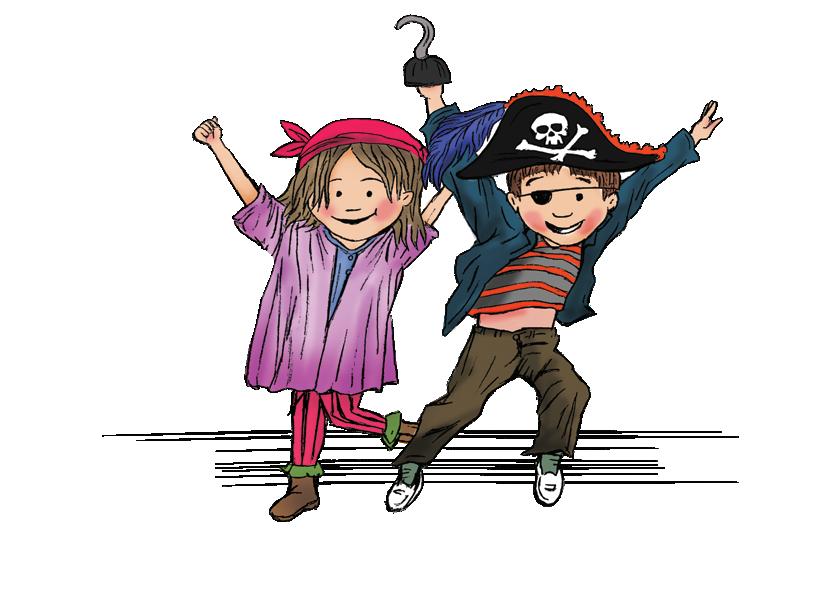
TWO little pirates have taken over our living room.
Blankets, cushions, a mast with a pirate sail made out of pajama bottoms is their ship, with sleeping quarters, a kitchen and a toy computer on board as well. It’s all been carefully constructed and imagined by my three and six-year-old children and it’s pretty awesome.
They sail the high seas one day, the next they are running a cafe and garage, another day they are running a zoo, with stuffed animals all around the house. The cost of entry is a gold coin that is quickly snaffled into my son’s money box.
All of their daily collaborative imaginative play has been a by-product of the school closure and is honestly the best thing to have come out of the virus crisis for our family life.
During the height of social isolation, I observed a big change in our son and daughter.
The complaining, the constant asking: “What are we doing
Now, as the normal school routine has returned, I doubt I will be as quick to schedule all the extra activities with as much fervour as I did, especially in the next school holidays.
today, mummy?” and the squabbling subsided, and they got on with their imaginative play.
Slowing down, relying on each other and their imaginations for entertainment has produced amazing co-operation and adventures that I could never have given, bought or shown them.
Goes to show the power and the beauty of the imagination for their independence – and my sanity.
Swimming classes, ballet, karate and birthday parties were suddenly replaced by long days at home. I reckon our kids got a taste of the style of parenting that we experienced growing up.
I distinctly remember that my mum’s catch phrase response to the familiar whinge of “Mummm, I’m bored…” was: “I’m not here to entertain you, go find something to do!”
I’ve read plenty of articles
critical of the way my generation is over-scheduling and over-doing parenting.
These articles encourage me to allow the children to be bored in order to stimulate creativity. So my mum’s “I’m not here to entertain you” phrase was not only reflective of the time but also “on point” with what the experts are recommending.
I haven’t naturally tended towards that parenting style as I have always loved taking my kids out. I’ve scheduled at least one activity, usually more into a day since the kids were babies.
Always being a “do-er”, I enjoy researching activities, being on the pulse as to what children’s shows are in town, which museums offer a great kids’ program. And when we moved to Canberra almost two years ago, the kids and I have been spoiled by choice offered through the national institutions, the fabulous playgrounds and play centres, and the ease of getting around to enjoy them.
But I found that when I lovingly ignored them – I gave them the space to work things out, without relying on me to step in so quickly, the kids got on with entertaining themselves.
Perhaps I’ve been an “over-doer” because the idea of having the
The explosion of imagination helped us all deal with the stressful realities of this time. They seemed
Now, as the normal school routine has returned, I doubt I will be as quick to schedule all the extra activities with as much fervour as I did, especially in the next school holidays. Let them be bored for a bit, who knows where their imaginations will take them.
DATE: Every Thursday from June 11 to July 16 TIME: 12.45pm for a 1:00pm start LOCATION: Online (attend from anywhere)
LET’S GET TO WORK CONFERENCE
EXPLORING INNOVATION IN EMPLOYMENT FOR PEOPLE WITH DIABILITY ONE PERSON AT A TIME THROUGH CUSTOMISED EMPLOYMENT AND MICROENTERPRISE
Hosted by Imagine More
• How to discover who a person is; their skills, talents and interests by engaging the support of people who know them well
• How to identify work roles that match what is discovered
• How to identify conditions for success
• How to customise a job
• How to provide the best support for a person with disability starting a job
• How to gain the courage to give someone with a disability a chance of a meaningful job
• To understand employing one person at a time rather than grouping people with disability is best practice
• How to set up a Microenterprise
Replay of all sessions available
jan@imaginemore.org.au
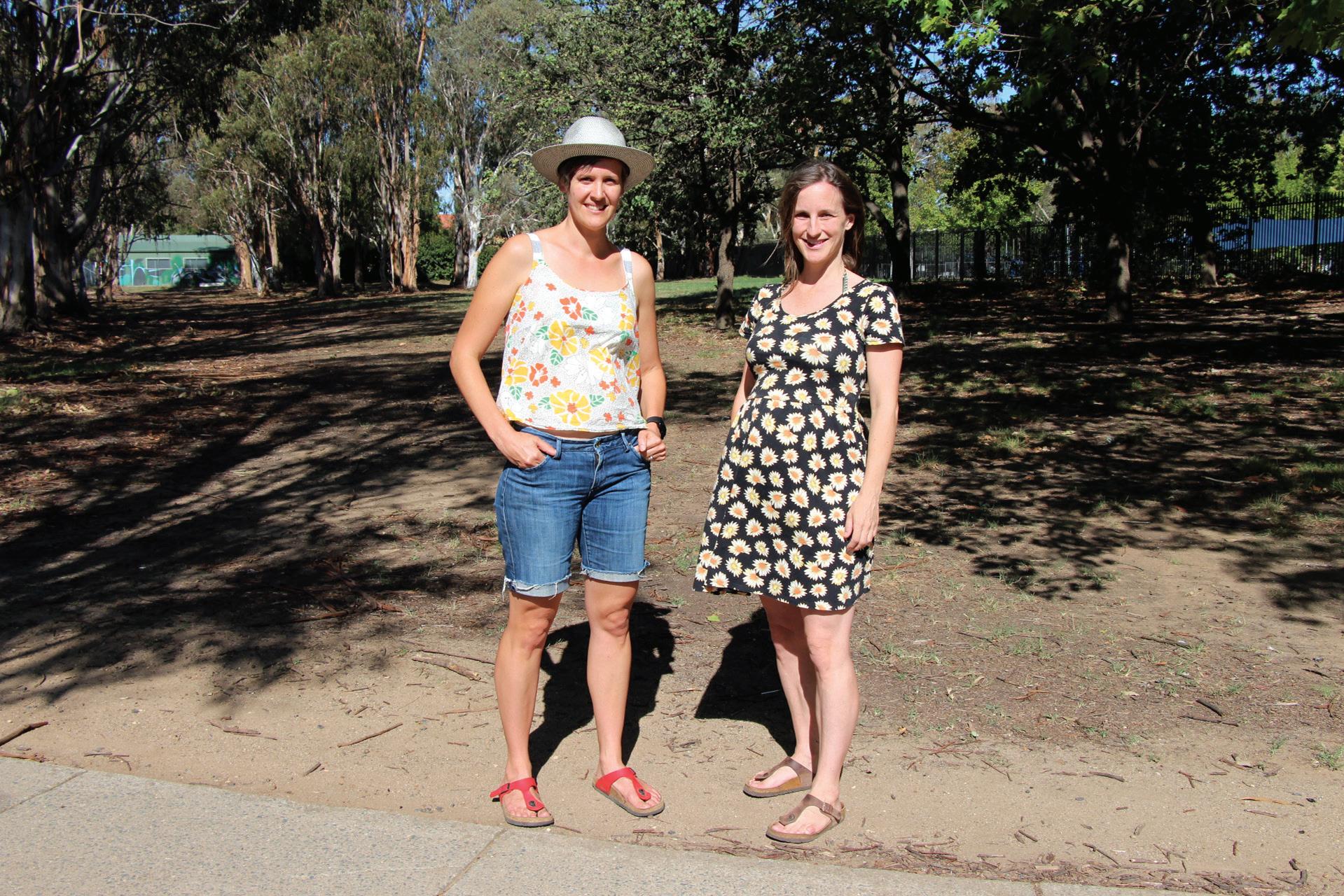
Mums pushing for a playground in Dickson, Hedda Ransan-Cooper, left, and Purdie Bowden… “New suburbs have a generous government budget for creating recreation spaces while older suburbs like Watson do not,” says Purdie. Photo: Danielle Nohra
Freya Toussaint (Owner, Thinking Of You Gift) Jack Kruger (Admin Assistant, University of Canberra)
Above: Gus Reichelt (Research Technician, CSIRO)
Above (left to right):
Emma Lynam (Owner, The Master Shredder) Cameron Zellner (Zellner Services)
Above (left to right):
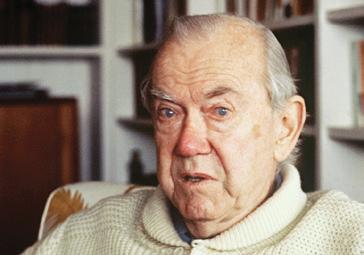
I WAS a schoolboy when I was introduced to Graham Greene through “The Power and the Glory”.
I struggled along with the main character, a “whisky priest”, eventually recognising the triumph of God’s grace amidst the weaknesses and struggles of human nature.
Over the years, I was entranced by many of his novels right through to his last, “Monsignor Quixote”. Many of Greene’s writings are rather grim, not dissimilar to “Mystery Road”, screened on ABC TV (in fact, I gave up watching it for that reason). But there is a delightful lightness in “Monsignor Quixote”, Graham Greene’s last great novel, which is the story of Sancho, the Communist mayor, just voted out of office, and his old fashioned parish priest, Monsignor Quixote, in trouble with his bishop.
I enjoyed even more the film version where Sancho was played by Leo McKern (Rumpole of the Bailey) and Monsignor Quixote by Sir Alec Guinness.
The unlikely pair take a car trip across northern Spain in Monsignor Quixote’s quaint little car. It turns out that Sancho spent time in the seminary studying for the priesthood but ended up embracing Marxism as his religion.
There is a deep friendship between the two great characters expressed in
It is vital that those of us who are secure in our faith have a very real understanding of the struggles of those who are damaged or wounded.
the wonderful dialogue between them as they debate the great questions of life and where God fits into it all.
Their discussions are well lubricated by a good quantity of Spanish wine which Sancho had thoughtfully prepared for the journey. They find themselves in some awkward situations, sometimes involving the police.
Nearly 30 years ago, I was asked to write a piece on Graham Greene for “The St Vincent de Paul Profile”.
I opined: “Many of Greene’s characters were sinners, but they were also searchers. Undoubtedly, they reflected much of the tension within the author himself. He felt that made him less of a Catholic. I personally found those characters attractive because there is much about them with which we can all identify, if we are honest enough to admit it.
“I suppose I must acknowledge, too, that I have an admiration for the ‘little people’ who are brave enough to poke fun at the establishment occasionally.”
When invited to write this piece for “CityNews”, I was asked: “Is there a Christian future? How much of the Christian church’s own moral/
human failings are to blame? And in times of crisis, like these dreadful recent months, are people turning towards or away from the spiritual comfort of faith?”
Others may be in a better position than I am to describe the impact on our faith of what is happening in our world right now. So much will depend on how it personally affects us as individuals or as families.
Novelist Graham Greene... “Many of Greene’s characters were sinners, but they were also searchers.”
The media has brilliantly depicted the whole gamut of stories and the good and the not-so-good in the human response.
In recent days, I presided over the funeral at Michelago of a dear friend of mine, not much older than me and a much loved mother of six children. Even within the limitations currently imposed on funerals, the faith and love of the family was palpable.
Yet I can easily imagine in other circumstances of grieving there could be deep anger – towards God, fellow family members, the government etcetera.
Sometimes, we can best help simply by listening with understanding and compassion rather than trotting out
simplistic solutions. I know that many counselling and help-line agencies are doing exactly that.
Remembering is a vital part of our faith-life: to recall those times when we have personally experienced God’s love, often through the kindness and care of others; the times when we have been confronted by seemingly insurmountable problems, but eventually not only survive but even grow in the process.
When the Second Vatican Council dealt with atheism in the mid-1960s it accused believers of causing people to turn away
from God because of the inconsistencies in their own life. How alarmingly true is that today with the terrible scandals emerging around child sexual abuse and other forms of abuse. This is particularly pertinent to the Catholic Church which historically has placed so much emphasis on sexual morality only to fail dismally in recent times.
Is there a Christian future? Jesus said of his followers “I have come that they might have life and have it to the full”. In order to promote such life it is vital that those of us who are secure in our faith have a very real understanding of the struggles of those who are damaged or wounded.
This is not a time for preaching or lecturing, but an opportunity to reach out to others in a spirit of welcome and acceptance. And finally to say sorry and to really mean it by making restitution in every way possible.
Pat Power is auxiliary bishop emeritus of Canberra and Goulburn and Canberran of the Year, 2009.
OPINION / taking on technology
When the television set doesn’t turn off...
MACKLIN gets a taste of technological triumph when she masters the off switch of a new hi-tech television set!
LAST night I experienced a technological triumph. I turned off the television.
This was not just any old TV. Oh, no. We had worn out the old one during isolation and decided to upgrade. Our son did intense research and we now possess the latest, thinnest, blackest and almost biggest set that is available in the modern world. It came with three instruction manuals that were completely incomprehensible, three remotes and something called a “Sound Box”.
Naturally, he had to do the installation and promised to explain everything, which is why you have children. Their technology prowess almost makes up for their teenage years. We went out. He phoned wanting a screwdriver, which I thought was a strangely old-fashioned request and then much later, summoned us home. When we walked into the small living room I nearly fell over with shock. The entire sideboard was engulfed and the sun that used to
blaze through the kitchen window, was now blotted out.
“I had to get this size for the very best reception,” he said proudly and began to instruct. I ordered my brain to focus because I did not want to be one of those silly old farts who don’t understand anything modern.
I did take note of the long, thin remote that he waved at us like Harry Potter with his wand and said was only to be used for “on” and “off’. However, when he began to work down the list of HDMIs I began to drift and by the time he reached HDMI IN 3 e ARC/ARC I was gone.
Of course, you don’t absorb anything unless you are motivated, interested and practise. I had mastered the advanced technology of my new washing machine and latest dishwasher in 10 minutes. All my favourite television programs could be accessed through the free-to-air all channels. “Antiques Roadshow”, “Hard Quiz”, “World Championship Ice Skating”, “Selling Houses
Australia” and “Landscape Artist of the Year” were easy and familiar. But I forced myself to listen again because knowing how to record the lifestyle programs and be able to whizz through the millions of advertisements, would surely add to my quality of life. Sadly, I had missed that information.
However, my husband had not wavered in his concentration because he regards the mastering of the latest
HEADLINES
a sunny press conference, I could see right through his hair. Then we went to Netflix to watch the gripping British series “Bodyguard”, then back to Channel 9 to record “Have you Been Paying Attention?”, zoomed over to SBS Streaming , back to “Media Watch” and finally, “Hyper” which is short, without the ads and a laugh before bed.
This wasn’t as easy as it sounds and at one stage, an instruction manual went flying and knocked over a mug. But at last, with a satisfied sigh, he waved a remote at the TV and staggered off to the shower. But wait a minute – the set hadn’t gone off. Down in the right hand corner were flashing lights and techno jargon which meant “systems still running, you idiot!”.
hill at Iwo Jima, planting the flag and ending World War II.
And I must say that this man who can’t work the washing machine or the dishwasher, was awesome. We watched the ABC and SBS first and the reception was so amazing I saw that Dr. Norman Swan had aged through the pandemic, Laura Tingle had fingernails shorter than mine and when the Ginger Nut was giving
“I can do this!” I told myself rummaging through the battered manuals, woolly bed socks, Milo dregs and orange peels on the coffee table. Under the cheese-and-crackers plate was the long, thin remote. I grabbed it, pointed, pressed. And the monster screen went black.
Whoopee!
Well, it wasn’t Iwo Jima, but in these testing times, it’s important to enjoy the smallest triumph.
Baking to help sick babies
By Kathryn Vukovjak
WITH a goal of raising $110,000 to buy two Giraffe incubator care stations for the Neonatal Intensive Care Unit (NICU) at the Canberra Hospital, the annual Bake for Babies fundraiser is aiming high this year, says co-ordinator Tina Martinovic.
Now in its fourth year, Tina says the fund raiser will run until September 30, a month longer than usual.
Over the past four years it has raised more than $150,000 to help sick and premature new born babies.
“We’ve extended the usual three-month window to four months this year to give the community more time to bake as we may have bitten off more than we can chew,” she says.
“But even if we raise enough for one unit it will be a fantastic asset to clinical staff and patients.”
Organised by the Newborn Intensive Care Foundation (NICF), both Tina and NICF chair man Peter Cursley have their own stories behind wanting to support NICU. Twenty-six years ago, Peter’s daughter Hannah was born blue, unresponsive and brain-damaged, and died at three days old. Tina’s now four-year-old son Kristijan was born at 27 weeks following placental abruption and survived without any lasting effects, though the odds were stacked against him.
Martinovic… “Even if we raise enough for one unit it will be fantastic.”
“The level of care we received in the NICU at the Canberra Hospital was just incredible,” she says.
“Staff there cared for Kristijan as if he was their own.
“It was always touch and go, and we know that if he hadn’t had access to this equipment, some of which was purchased by NICF, it could have been a very different story. Our family is eternally grateful.”
Tina says NICF works hard to provide the type of equipment the government doesn’t provide. She is encouraging the community to bake any treats they fancy and sell them to friends,
family and workmates for the charity. NICF chairman and 2016 Australian of the Year ACT Local Hero Peter Cursley says the hi-tech Giraffe incubator care stations “create a controlled, protected micro-environment for peaceful fast healing, bringing babies one step closer to the caregivers’ expertise, their parents’ embrace, and to going home healthy”. Proceeds are to be deposited into the Foundation’s Giraffe account, Tina says. All deposits over $2 receive a tax-deductible receipt and 100 per cent of all deposits will go towards the Giraffe care stations.
newborn.org.au/Bakeforbabies
WENDY
Tina
dose of dorin
ARTS & ENTERTAINMENT
New theatre chief opens to an empty house
The Canberra Theatre Centre will remain relatively becalmed, despite coronavirus restrictions easing and theatres permitted a limited form of reopening, new Canberra Theatre director Alex Budd tells arts editor HELEN MUSA
ALEX Budd, the new director of the Canberra Theatre, has barely sold a ticket since taking up the position in February. But he’s
And even now, with the coronavirus restrictions easing and theatres permitted a limited form of reopening, progress at the theatre centre is likely to be slow.
“The lifting of restrictions is a great thing and it enables us to consider small scale activities which bring a limited audience back to our foyers and venues,” he says.
“The key issues for full-scale operation remain physical distancing, and broad support of arts companies and producers currently in urgent and desperate need of defibrillation.
“Much of our regular activity in The Playhouse and Canberra Theatre won’t return without their restoration coupled with enough seats to sell to make performances economically viable.”
Nevertheless, the livewire 45-year-old Budd seems buoyant and optimistic, having used the lockdown time to take stock, a chance few new directors ever have.
“If it weren’t so hideous, so disruptive and
distressing to so many people, this period would be absolutely fascinating,” he says.
“As a new person still finding my feet and getting to know the team, it was difficult to slam the script into reverse.”
Budd has come home again, after 22 years, directly from his role as executive producer, touring and commercial for Opera Australia, having left Canberra in 1998 to take up a lighting job with Graeme Murphy at Sydney Dance Company.
Born and bred in Canberra, the former voice student of the ANU School of Music knows this town well. He was part of the small, talented group of singers who founded Stopera chamber opera company in the 1990s, he worked at the Canberra Theatre as a lighting operator and designer under Alex Sciberras, absorbing the culture of the theatre centre he is now directing.
What a homecoming!
taken up a “very transferable” job in admin with WA Opera, working remotely.
When the COVID-19 crisis hit, Alex says: “We had just started to put roots down and to meet people through school.
staff have been doing long overdue upgrades to the dressing rooms. The women’s bathrooms in the Canberra Theatre have been upgraded to include an ambulant toilet and the capital works program slated for next year has been moved forward to 2020. Communicating by email has meant a huge reduction in paper used.
“The baseline economics of running a theatre is selling tickets,” yes, it’s the old bums-on-seats measure, he says, and if they were to observe the social distancing regulation of the four-square-metre rule, they’d be lucky to get 220 people into the bigger theatre, which seats 1239.
“Even if we could, that’s not the way I imagine enjoying an evening in the theatre,”
As to the future, he describes it as “a crystal ball with about a dozen chambers”.
With wife Kate, Budd hit the ground running, rented a house and settled their three boys into his old alma mater, Canberra Grammar School.
Kate, who met Alex when they were both working at OA, had grown up in Melbourne
“Canberra is a lovely social space and small enough to run into people you know.”
Budd started work at Canberra Theatre on February 3. All was well. “Spamalot” had started and the subscription season at the Playhouse and David Williamson’s “Family Values” was coming up in March.
MUSIC Latham’s ‘Flowers’ to Vietnam
By Helen Musa
THE recent virtual launch in the UK by Aussie pianist Alex Wilson of his “Kelly Studies and Monographs” CD has prompted a catchup with Chris Latham, 2013 “CityNews” Artist of the Year, artist-in-residence at the Australian War Memorial and director of “The Flowers of War”.
The “Kelly” of Wilson’s CD was Australian-born composer, pianist, Olympic rower and World War I hero, Frederick Septimus Kelly, who served at Gallipoli then died at the age of 35 at the Battle of the Somme in 1916, leaving behind him a body of musical works which have become the centrepiece of Latham’s ongoing “Flowers” project highlighting composers who were lost in battle.
Australian-born composer and World War I hero, Frederick Septimus Kelly.
writing throughout the lockdown and is now halfway through his “Vietnam Requiem: Our War Abroad and At Home”, a sequel to “The Diggers’ Requiem” and “a ball breaker if ever there was one”.
veterans, Australian and NZ veterans and civilian medical teams to contact him at team@theflowersofwar.org to discuss their experiences.
“We had 82 people logging on, mostly in the UK,” Latham says of the Wilson launch, a good number by British estimates, he is told.
Latham has been actively promoting and recording Kelly’s vocal, chamber and piano music over the last few years and pianist Wilson sees his work as “melodically lyrical and fiercely virtuosic”.
Latham has been arranging and
“I thought the Great War was hard, but I was dreaming. Vietnam was a very hot war in the midst of the Cold War. The wound is deep and the stories vast and varied. They grab at you like nightmarish tentacles and don’t let go,” he says.
He is particularly keen for any retired members of the intelligence community, south Vietnamese refugees, Army of the Republic of Vietnam
Because the people who experienced it are still alive, Latham believes it is now necessary to be overt about making music to assist with healing, but the other objective with “The Flowers of War” is cultural recovery – “To make something, recover something”.
“Vietnam Requiem: Our War Abroad and At Home”, Llewellyn Hall, June 6, 2021. More information at theflowersofwar.org
although they got through “Family Values,” by a grim Friday the 13th, Budd was talking to the Canberra Comedy Festival about closing its gala and on March 18 he announced, over-optimistically that the theatres would close for four weeks, later extended.
It’s since been a hive of activity, with six box office staff working around the clock on ticket refunds and postponements remotely from their kitchens.
Other staff have been busy rescheduling productions. Technical and maintenance
He says: “In the long term I’m really optimistic that the experience of being in the room with the lights going out, with 1200 people you don’t know, sharing something, will be back soon.”
But theatre companies, he cautions, won’t all just switch the lights back on at the one time and some smaller venues may be able to open more quickly, since every space’s reliance on ticket sales is different.
“We should get through winter and I would like there to be a ‘spring awakening’ of live theatre across Australia – we are all in this together.”
New Canberra Theatre director Alex Budd… “I would like there to be a ‘spring awakening’ of live theatre across Australia.” Photo: Holly Treadaway
The real lesson is that black stories matter, too
WHILE this is a column about what’s streaming, it would be hard to avoid the storming news about what is, well, not streaming.
Platforms have been removing iconic pieces of popular culture, comedies, dramas and so on, for containing “racial insensitivi ties”. Chris Lilley, the man behind series such as “We Can Be Heroes”, “Angry Boys”, and most well-known, “Summer Heights High”, has been one of the targets, with all of these shows being taken off Netflix. They are known to stream very highly in Australia and overseas.
That’s just the start. Icons such as “Little Britain” and “Fawlty Towers” and perhaps generating the most heat, the classic masterpiece “Gone with the Wind”, have also been removed.
I’ve had discussions with people on their views and have received a resounding “yes” in asking whether they believe that “GWTW” should have been taken down. My second question was if they’d actually seen the film. The common answer among my, albeit small, sample, was “no”.
than good, one where our forward thinking becomes closed off rather than opened up.
The solution surely can’t be found in such
positive difference.
Voices of indigenous peoples here and overseas are powerful drivers of necessary change and film and television is one of the most universal of modern artistic avenues to achieve
Streaming platforms from our own home offers the opportunity to reach millions, now more than ever, and the stories and perspectives of people of colour are able to inform and educate in ways not previously seen.
Does not masterful art like this classic film make us think and help us understand more how to move into the future? And isn’t that for the better?
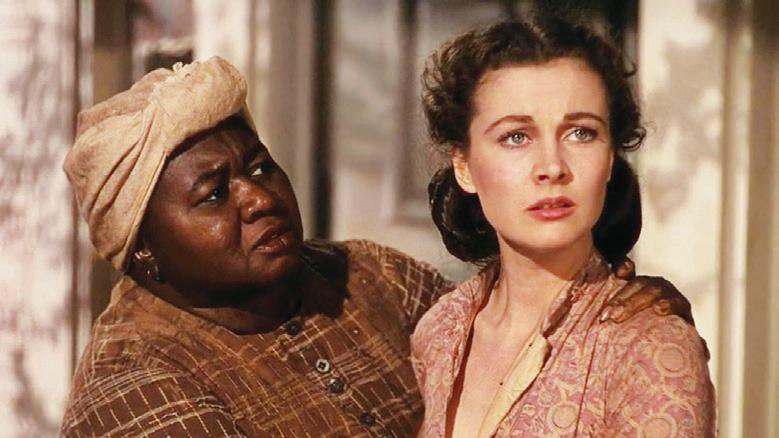
Yes, “GWTW” is set during the American Civil War and the issue of slavery is one of the central elements – and why a country went to war against itself. Surely to try to eliminate such depictions is to “erase” pieces of our history? If we don’t confront these terrible moments in time, if we aren’t
made see the type of things that did occur and feel rightly uncomfortable, dismayed and even angered at the injustice, will there be the possibility, as the saying goes, for a repeat of history because we’ve been conveniently helped to forget it?
It won nine Academy Awards, including one to Hattie McDaniel, as Mammy, the first black woman to do so, and Margaret Mitchell’s 1936 book has never been out of print.
Does not masterful art like this classic film make us think and help us understand more how to move into the future? And isn’t that for the better?
Isn’t comedy supposed to hold up a mirror to us and make us realise our own shortcomings?
When we start removing such works we sit on the precipice of a very slippery slope, one that has the potential to do more harm
We don’t make progress by destroying, but by creating. More investment in such storytelling, more access to stories and information outside the “mainstream”, more power to the people by opening up even more avenues of expression is what is required.
Making all the right noises on social media isn’t enough. Projects, plans, new ideas and initiatives to explore, condemn or celebrate are what will continue to make a
And if you happen to need any recommendations on just some of this talent already on offer, you can find, just released on Netflix, “Da 5 Bloods”, from acclaimed African American director, Spike Lee. This historically ambitious film tells of the powerful contribution of African American soldiers to the Vietnam War. Lee’s previous film, “BlacKkKlansman” is also on Netflix. Find “12 Years a Slave” on Foxtel, our own “Mystery Road” on ABC iView. “I Am Not Your Negro” is on Stan. SBS On Demand is also offering a plethora of documentary content on the history of the movement we see unfolding before us right now.
Black lives matter and so do their stories.
NICK OVERALL
ARTS IN THE CITY
Kirstie’s commissioned to care
By Helen Musa
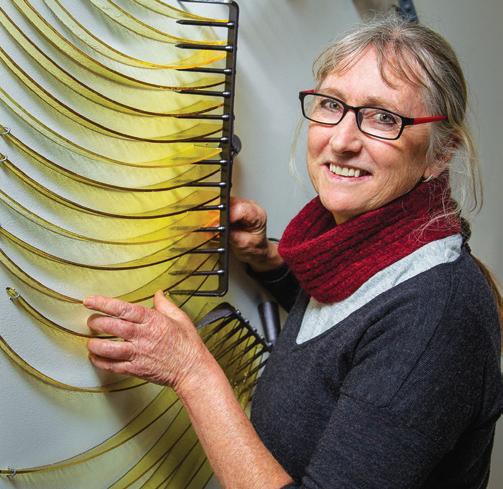
QUEANBEYAN-based glassmaker, Kirstie Rea has been announced as the 2020 “DESIGN Canberra” festival’s designer-in-residence. Rea had been commissioned to create a new work that responds to the festival’s 2020 theme of “care”, to be exhibited during the annual summit presented across the city from November 9-29.
THE National Opera is preparing a new “In the Studio” web series, in which the episodes will feature Canberra artists, with recorded highlights from a coaching session artistic director Peter Coleman-Wright had with them in May. Meantime the company is keen for members of the public to become National Opera patrons, friends or subscribers. Visit nationalopera.org.au
“HARRY Potter and the Cursed Child” at Melbourne’s Princess Theatre will be suspended for a further six weeks, until August 9. Ticket holders will be automatically moved to an alternative date from January 6, with the same seating allocation they originally booked. But unlike actors in other theatre companies, the Potter employees, most of whom are on long-term contracts, are in receipt of JobKeeper, so you can be sure they’re keen to tread the boards again sooner than that. Latest at harrypottertheplay.com
THE owner of the Kyeema Gallery at 13 Gladstone Street, Hall is easing restrictions sufficiently to hold a “Meet the Artists” session with painters in the show “The World Around Us”, Nell Anderson, Margaret Carr and Isla Patterson from 2-5pm, Sunday, June 28. There will be food and drinks also inside and under the verandah. The exhibition will then continue until July 19. MOVING Archetypes was the
first dance studio in Canberra to go online without a gap in classes, director Padma Menon says, and she will continue those online classes for the rest of this term, ending on June 27. But for term 3, starting in the week of July 20, she’s planning a mix of online and studio classes. The term’s theme will be “Saraswathi: The Wisdom Goddess”, and the focus will be on the practice of dance as contemplation. Inquiries to movingarchetypes.com.au
Gone? “Gone with the Wind” Oscar winners Hattie McDaniel (Best Supporting Actress), left, and Vivien Leigh (Best Actress).
Glassmaker Kirstie Rea in her studio.
Photo: Rebecca Olsen
When a sip of decent sherry was just the job
DID I already tell you my déjà vu joke? I am feeling nostalgic about the trifle that features in the now deceased Keith Floyd’s “A Feast of Floyd” published in 1989.
I haven’t made that dessert in about a decade. Not because the law isn’t concerned with trifles, only just desserts, but because even I baulk at using the amount of cream the recipe calls for.
In fact, I got out the cookbook to make his moussaka, which is excellent and found myself looking aimlessly at the recipes I no longer make, including the trifle.
Not only is cooking with the amount of butter and cream Floyd prescribes out of fashion but there it was, in the trifle recipe, a reminder of a similarly out-of-fashion wine. The trifle recipe calls for the addition of up to 100ml of a “decent sherry” that you use to douse the sponge cake base.
The word “sherry” is an anglicisation of Jerez, an area of Spain where the white grapes traditionally used to make the drink are grown.
It is a fortified wine, like port. That means neutral grape spirit is added to the wine to increase its alcohol content and which acts as a preservative. I went to the cupboard where I keep my spirits and, lo, in the back
there are two bottles of sherry that I recall were both purchased for cooking purposes.
One is from Spain and so can carry that nomenclature: it is a Valdespino Pedro Ximenez sherry at 17 per cent alcohol by volume and costs around $25 a bottle.
It is mahogany in colour, sweet and dense
DINING / Antica Ricetta, Manuka
and goes well in puddings: perhaps the “decent sherry” of which Floyd speaks. But from 2011 “sherry” produced in Australia cannot be called “sherry” but can be called “cream, crusted/crusting and solera fortified”.
It is also possible for Australian winemakers to invent their own descriptor or trademark, which surely you would do rather than name a wine “crusty”, a description that evokes my idea of a fictional dog food.
My other bottle shows that McWilliams exercised that option and this “Royal Reserve” is simply described as “Dry”. It might also soon be described as “rare” because, unfortunately in January this year McWilliams went into administration after more than 140 years as a family business.
Sherry reached its popularity peak about 40 years ago. One source tells me that in the late 1970s roughly twice as much was exported from the south of Spain than is exported today.
The closest I could come to a similar statistic for Australia was Wine Australia telling me that all: “Fortified wine currently accounts for two per cent Australian wine sold globally. Back in 1950, it accounted for 86 per cent of Australian beverage wine production, then fortunes faded for fortified wine when preferences switched to table wines in the 1960s.”
Let’s face it, sherry is a drink we associate
Wonky service but ‘pizza perfezione’
ITALIAN cuisine is so comforting, especially on a windy winter’s day, so we booked Antica Ricetta in Palmerston Lane, Manuka. The atmosphere is very Italian, including the music and red, green and white colour scheme.
The menu is extensive, reasonably priced and includes all the Italian suspects.
We shared a couple of dishes, including the arancini Siciliani ($7 a piece) which was crunchy on the outside and soft and creamy on the inside. The ragu bolognese was rich and cheese oozed from the centre of the two arancini balls.
The dish of the day by far was the Siciliana pizza with ultra-thin crust and well thoughtthrough toppings – whole anchovies, salty capers, olives and gorgeous oregano ($20). Perfezione.
My pappardelle Calabrese with chilli ($18 or $21) offered up deep and intense flavours that made a strong statement. While the passata sauce is memorable, my happiness ended there. Some of my pasta had clumped together (most unpleasant and a surprising technical flaw) and I struggled to find much evidence of Italian sausage.
A dish that scored more points was the pappardelle ai gamberi. The prawns were plump and garlicky ($21 or $24). This dish had a nice chilli kick and the pasta, tossed in a seafood bisque, wasn’t overcooked.
One of our party ordered the tortelloni
plate, with the three large parcels of pasta stuffed with mushroom, gorgonzola cheese and potato. It was served with a butter reduction and while not the restaurant’s fault, we were dining in the cold so it didn’t take long for the butter reduction to harden. We agreed a burnt butter sauce might have been wiser, to cut through the richness.
All up, this dish was good but not great. Our friend, having road-tested our choices, openly proclaimed she had “food envy”. The rocket and beetroot salad was okay.
roasted beets would have lifted the flavour profile.
Antica Ricetta staff are pleasant, but the service was wonky at best (even though three staff tended to us throughout our lunch). We waited more than 20 minutes for our bottle of wine. It took several reminders before it finally arrived, after our entrees.
We had to ask for water. We had to ask more than once for cutlery, including a spoon to dish up the gorgeous arancini sauce. We had to ask for utensils and plates so we could share the salad. After several requests to turn the outdoor heaters on we finally lucked in. Patience is certainly the name of the game at Antica Ricetta.
with our parents or grandparents. For example, Bridget Jones’s mother drinks it in Helen Fielding’s 1990s novel bearing Bridget’s name. My parents would often drink it as an aperitif and at least one NZ restaurant where I served in my early twenties had a cream of mushroom soup paired with an Oloroso sherry.
But one of the things that changes fashion is economics. Sherry and its Australian equivalents are very good value for money, especially having regard to the high level of alcohol content they contain: you get a bigger bang for your buck even when buying the refined and delicious sherries.
Roy Morgan research recently estimated that 3.92 million Australians (27.4 per cent of the workforce) are unemployed or under-employed. Given that in the depths of winter a fortified wine is warming, perhaps a penchant for sherry with our soup could return? Even without the soup.
sundayROAST
Stay in touch with the names making news on Sundays from 10am as 2CC and “CityNews” present Canberra’s only local weekend news and current affairs program.
It’s a revolving panel show that brings to the microphone great “CityNews” commentators and 2CC personalities.
Be part of the conversation call 6255 1206 between 10am and noon
Sherry wines formed an essential part of the provisions for all vessels sailing to the New World.
Siciliana pizza… ultra-thin crust, whole anchovies, salty capers, olives and gorgeous oregano. Dish of the day! Photo: Wendy Johnson
•
•
•
PUZZLES PAGE FREE PUZZLES
Joanne Madeline Moore
ARIES (Mar 21 – Apr 20)
Resist the overwhelming urge to be an impulsive and impetuous Ram! Under the influence of retrograde Mercury, Saturn and the Lunar Eclipse, you need to apply the brakes and think before you speak and act. Otherwise you could upset others with your hasty words and reckless actions. When it comes to your career ambitions, the main quality you need to cultivate at the moment is patience. So your motto for the week is: “Good things come to those who wait.”
TAURUS (Apr 21 – May 21)
This week you’re keen to exercise your Bullish brain as you talk, text, tweet, post, publish and converse in increasingly creative ways. If communication problems arise then take the time to discuss and dissect issues with the people involved. Then you’ll start to see the current situation from a much more balanced perspective. It’s also time to put aside preconceived concepts (that aren’t working) and examine old beliefs in a progressive and philosophical new light.
GEMINI (May 22 – June 21)
Retrograde Mercury and the earthy Lunar Eclipse shine a spotlight on money, business, property, investments, taxes and joint finances. So make sure they are all in practical order. But communication looks strained so be careful you’re not drawn into an argument, either in person or online. And don’t allow someone to persuade you to do something against your better judgment. Have the common sense (which is actually not so common!) to stand your ground and say no.
CANCER (June 22 – July 23)
With the Sun visiting Cancer, look for a creative project that you can really sink your teeth into. Jupiter, Pluto, Saturn and the Lunar Eclipse also light up your relationship zone. So helping other people – and putting their wellbeing first – is the key to a satisfying week. Be inspired by Cancerian birthday great Princess Diana: “Carry out a random act of kindness, with no expectation of reward, safe in the knowledge that one day someone might do the same for you.”
LEO (July 24 – Aug 23)
Are you sick and tired of being perpetually busy? Have you been feeling like a lacklustre Lion, with too many tasks crammed into your timetable? With Mercury reversing through your solitude zone you’ll find sleep, meditation, contemplation, rest and relaxation are just what the doctor ordered. The one activity you do need to engage in is helping and serving others. Be inspired by birthday great, Princess Diana: “Everyone has the potential to give something back.”
VIRGO (Aug 24 – Sept 23)
The main prerequisite you need is plenty of patience! Expect frustrations involving your daily routine as Saturn and retrograde Mercury slow things down. Then Jupiter and Pluto place partnerships (of the romantic and platonic variety) under the microscope. So do your best to get the relationship balance right between spontaneity and planning; between independence and intimacy. Self-expression is favoured on the weekend, when the Lunar Eclipse lights up your creativity zone.
LIBRA (Sept 24 – Oct 23)
Polite Librans are the peacemakers of the zodiac. And you’ll definitely require your diplomacy skills this week, as Saturn and the Lunar Eclipse activate your home zone and you feel as if you’re stuck in an endless episode of Family Feud! With Mercury reversing through your career zone, it’s also not a good time to sign a professional contract, initiate a work project or look for a new job. Jupiter and Pluto encourage you to learn more about your family history and ancestors.
SCORPIO (Oct 24 – Nov 22)
This week’s stars boost your personal magnetism. The Jupiter-Pluto conjunction increases your desire to be in charge but, if you want to avoid frustrating power struggles and unpleasant dramas, then stop trying to control others. You’ve got a choice! You can be powerful and passionate – or compulsive and controlling. If you’re a smart Scorpio, then you’ll choose the path of least resistance as you channel your energy into positive and productive projects.
SAGITTARIUS (Nov 23 – Dec 21)
Is it always appropriate to be fearlessly frank? And is honesty always the best policy? Your natural inclination is to be incredibly blunt but is everyone ready for your special brand of Sagittarian truth serum? This week strategic Pluto pairs up with your patron planet Jupiter. So a dollop of discretion and a pinch of diplomacy will smooth troubled waters. If you’re smart, then you’ll talk a lot less and listen a lot more, as you hold your tongue and uncover a secret (or two).
CAPRICORN (Dec 22 – Jan 20)
This week there’s a Jupiter/Pluto conjunction and a Lunar Eclipse (both in Capricorn). Plus Saturn (your patron planet) shifts back into your sign, which will boost your drive and ambition. But it will also fan your control-freak tendencies, which could end up alienating others. Remember – the only person you can control is yourself! So strive to turbo-charge your personal evolution, as you tap into your substantial leadership skills and steer your life in a positive new direction.
AQUARIUS (Jan 21 – Feb 19)
Courtesy of Jupiter, Pluto, Saturn and the Eclipse, you’re keen to follow humanitarian or spiritual pursuits. You’ll seek out the wise counsel of a trusted mentor or play that role yourself to someone who is looking for judicious guidance. You’ll also question your inner motivations, which can be confronting. But a soulful examination of your interior life will give you the self-knowledge and confidence to let your quintessential Aquarian nature and unique talents truly shine.
PISCES (Feb 20 – Mar 20)
If you’re involved with a group, class, club or organisation, then expect power plays and personality clashes to increase as the week develops. A friendship could also be placed under temporary strain. When it comes to your social circle, aim to be more discriminating and don’t waste precious time on false friends and negative people who undermine your confidence. You need to consciously choose a peer group that will help propel you towards the future of your dreams.
Copyright Joanne Madeline Moore 2020
10
11
14
18
substance is applied to the surface of metal, pottery, etc, for protection? (6)
19 Which electronic device performs countless tasks when programmed? (8)
21 A special natural ability or aptitude is known as what? (6)
22 What is the body of an aircraft called? (8)
23 What is titanium dioxide more commonly known as? (6)
of Cairns,
(8)
2 What was the surname of Billy the Kid? (6)
3 What are the main divisions of a book? (8)
4 Which expression describes that which is second-hand? (4)
5 Which term is given to an Australian returned soldier? (6)
6 To have concurred, is to have done what? (6)
12 What do we call a service person who runs away from service? (8)
13 Which dish consists of eggs, beaten and fried and often served folded round other ingredients? (8)
15 Name the second book of the Old Testament. (6)
16 Which sword is used chiefly for thrusting? (6)
17 Who was Shakespeare’s Prince of Denmark? (6)
20 Name a hard, durable, resinous wood. (4)
GARDENING
Lonely? Take off to the garden
GARDENING is helpful for good mental health, particularly with the isolation created by COVID-19.
A study commissioned by the UK Royal Horticultural Society of 2000 people found 52 per cent of adults have experienced feeling alone, with 39 per cent taking to the garden to combat the feeling.
That study was before the virus lockdown. The RHS has collaborated with the UK National Health Service to promote gardening for good mental health.
Even with a balcony a small “garden” can be created. Illustrated here is the balcony of friends who downsized to a unit. Just look at the variety and colour of their plants!
People can also garden in one of the numerous community gardens in Canberra, a great way to foster friendships.
One way to overcome loneliness is to join a garden club, of which there are at least 20 in Canberra. The Belconnen Garden Club members have been sending in pictures, jokes and poems almost on a daily basis
RECENTLY we travelled to the south coast, which brought into stark reality the extent of the fires. We travelled through Bombala and the Mt Imlay Highway to Eden,
sight was the regeneration of tree ferns against the backdrop of burnt eucalypts; nature is amazing.
To put the extent of the Australian fires into perspective: they burnt nearly 18 million hectares, almost the equivalent of the total area of the UK (24 million hectares).
South coast residents have asked how they should reconsider the landscaping around their homes. Garden centres on the south coast said that after the fires there was a reluctance to plant the highly volatile, high-oil content native plants near their homes. This advice is equally applicable in Canberra; if planting natives, keep them well clear of the house and especially not near raised timber decks or
TIME to plant asparagus and rhubarb. Here are a few hints: The soil preparation for both plants is similar, although asparagus can remain productive in the same spot
for 20 years. Around 20 plants is sufficient for a family of four. Prepare a raised bed about a metre wide. Dig in plenty of organic material from your compost heap plus composted horse manure, available from the Hayshed, Pialligo.
• Asparagus plants are either male or female. It’s preferable to buy male, as they don’t produce seed there is a higher yield of shoots. Dig trenches 30cm wide and 15cm deep. Soak the shoots for 15 minutes in a seaweed solution before planting. Place the crowns 30-50cm apart in the trenches and cover with 10cm soil. Water in
665 61813511 toni@twinstitchupholstery.com.au
A balcony garden… just look at the variety and colour of the plants.
Rare opportunities only available until 30th June 2020
Demonstrators and Porsche approved Driveaway^
MY14 Cayenne GTS White 4.8 V8, Panoramic sunroof and more YKM63U $76,990
MY17 Macan Turbo PDK, Sports Design package, tow bar and more .............................. DXK64Y $89,990
MY19 Macan Tiptronic, Dark Blue, Panoramic Roof, Spyder alloys and more DZG76Z $99,990
MY19 Cayenne Black 19” S alloys, Heated seats, Power steering plus and more GULSON2 $119,990
MY20 718 Boxster Black PDK, 19 Inch Cayman S wheels, Entry & Drive and more .... GULSON5 $124,990
MY19 Cayenne E-Hybrid White, Heated seats, Power steering plus and more K11025 $129,990
MY19 Cayenne S Jet Black High Gloss Exterior and Roof Rails, and more ...................... AYAC89Y $154,990
MY15 911 Carrera S White, PDK One owner, PASM sports suspension and more EGS65H $169,990 ^Driveaway includes balance of registration.
Centre Canberra
Newcastle Street Fyshwick ACT 2609 Phone 6162 0911