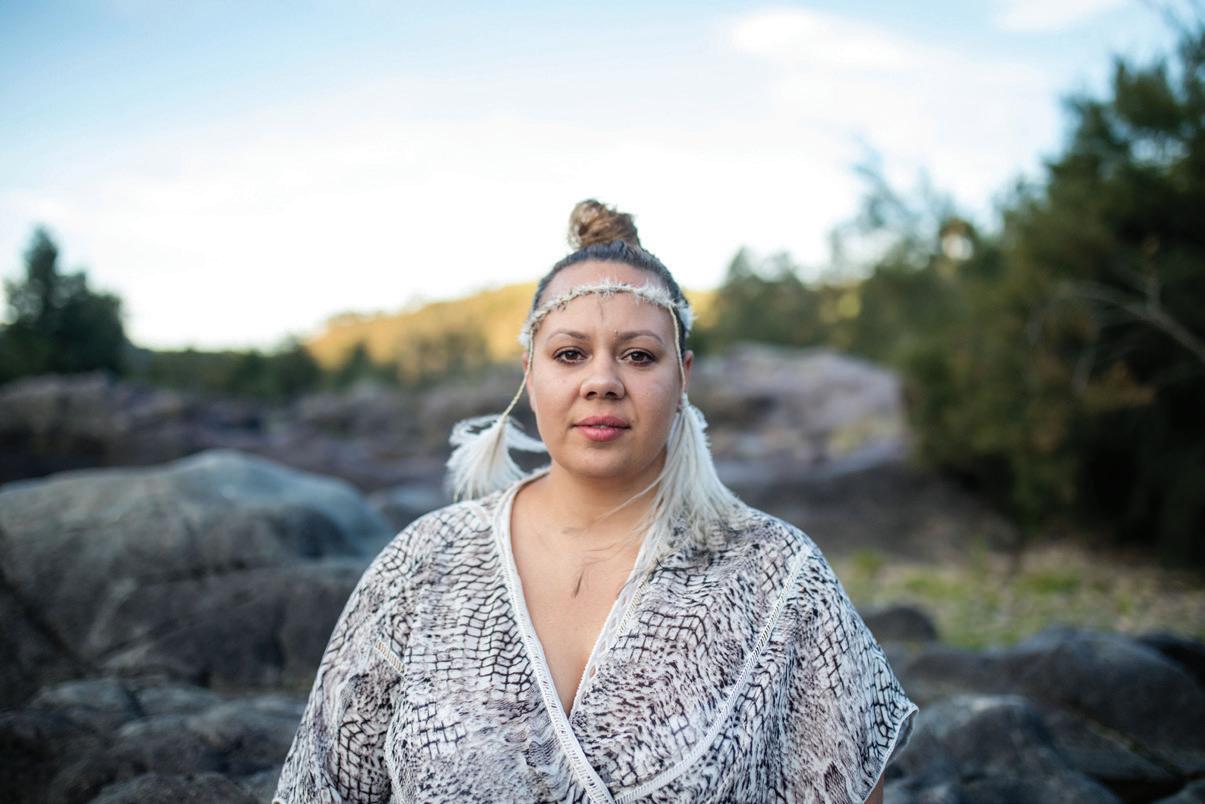
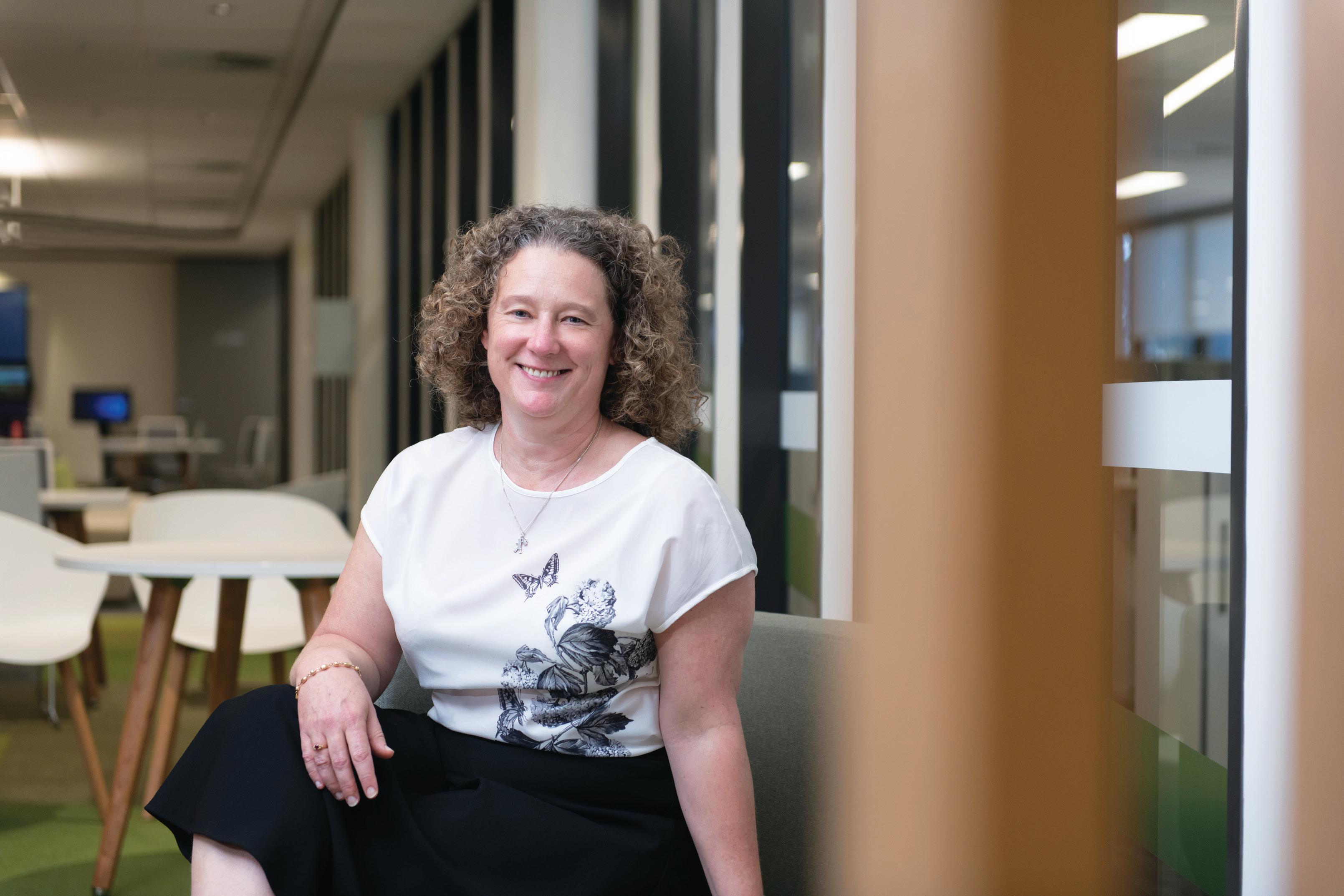
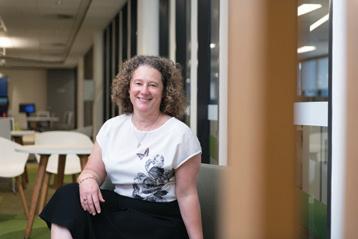
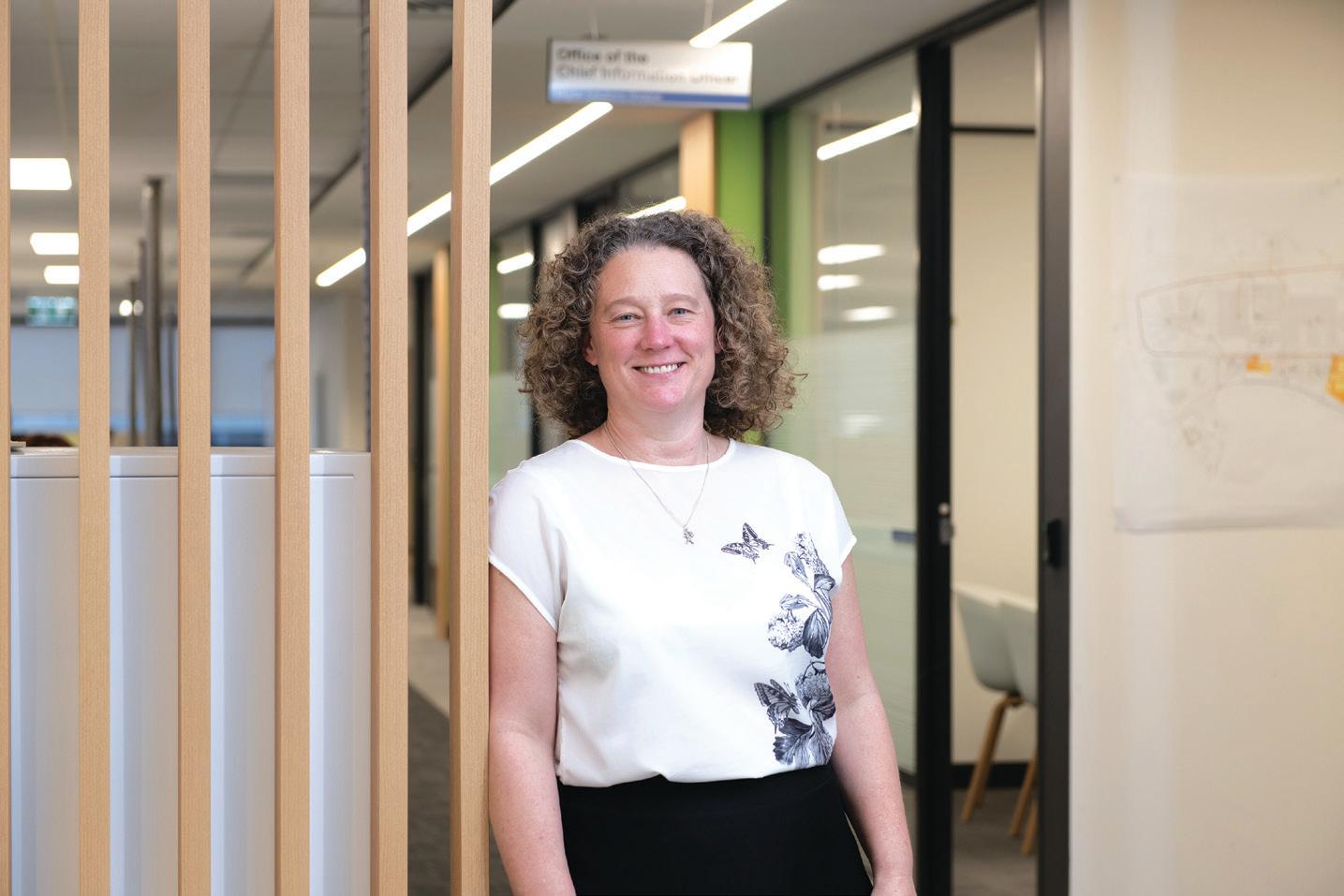
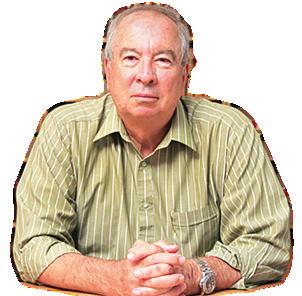
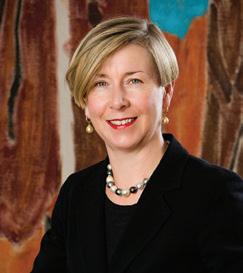
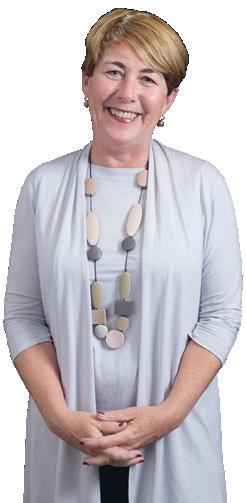
DANIELLE NOHRA meets the local medical chief managing the virus pandemic, DR KERRYN COLEMAN
Dear Chief Health Officer,
We thank you for your pivotal role in keeping the Canberra community safe and you can be satisfied that the ACT has the best results of any jurisdiction. But we must also remind you of the adverse impact (financial and emotional) on the club sector of being slower than other juridictions in easing lock-down arrangements.
As you have told us, each jurisdiction is adopting a staged approach that it judges best. In terms of this judgement, could you advise why you are adopting a more cautious approach than NSW when we have had such a prolonged period in the ACT of being free of COVID infections through community transmission?
If a more cautious approach is justifiable, it is clear that this is not what the current policy is achieving. ACT residents are travelling to Queanbeyan to attend activities not allowed here (e.g. poker machines). They can also enjoy these services by travelling to Batemans Bay or any other surrounding town. So the current policy is not avoiding the risks you identify but simply forcing an alternative way for Canberrans to enjoy them.
By ‘encouraging’ travel outside the ACT, the current policy would apprear to be increasing risks, not reducing them, compared with keeping people within the Territory. If your argument on risk is sound, then logically, you should immediately close the borders to prevent residents travelling to areas where they would face such risks.
If you are not willing to take that option, then your policy is simply favouring NSW over our ACT club venues, their employees and supplier businesses.
I appreciate you face a difficult challenge to balance risks but all roads lead to your advice to government. Every day the ACT delays action sees an increase in the number of club boards and management having to make critical decisions to address the extended financial hardship that impact on ACT employment, suppliers and importantly the community.
We have put to you a detailed plan that is safe and has a high level of compliance for COVID-19 protocols. Our industry operates in a high level of day-to-day compliance environment and this should give you confidence to open our clubs to where they can approach an economic proposition.
ClubsACT remains very willing to explore with you the arrangements you deem necessary to enable the ACT to adopt the same standards and lessening of restrictions adopted elsewhere.
As you can appreciate it is a challenging and troubling time for the club industry, and I once again invite you to meet at your earliest convenience.
Yours sincerely,
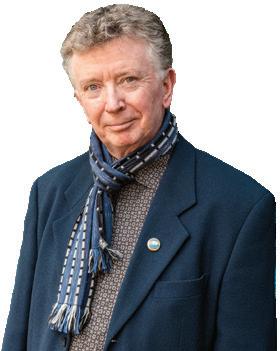
Gwyn Rees Chief Executive, ClubsACT
Charities wobble in disasters’ aftermath
By Kate MEIKLE
IMPACTS of the bushfires and COVID-19 have been a “double hit” with many local charities and community organisations struggling to stay afloat, according to a recent survey of Canberra’s community sector.
The Hands Across Canberra’s threemonth survey shows that 97 per cent of the community sector has been impacted, with 83 per cent saying that they will be significantly impacted, says Diane Kargas Bray, chair of Hands Across Canberra.
The Starlight Children’s Foundation says this year is like no other with every planned event having to be cancelled.
“Millions of dollars we would have raised through dinners, balls, bike rides and treks have been cancelled for the whole year,” says CEO Louise Baxter.
“Every week that goes by there is an event that was not held and dollars not raised.”
While Louise acknowledges that the crisis has affected everyone and it is a “tough time” she says that there are no fewer sick kids because of COVID-19.
“Sometimes during tough times, we think of others who might be doing it
INDEX
Arts & Entertainment 19-21
Canberra Matters 10
Crossword 23
Dining 21
Garden 22
Horoscopes 23
Letters 12
News 3-14
Politics 14
Starlight Foundation works in partnership with children’s wards and hospitals including the Centenary Hospital for Women and Children to lift chroni-
from Queanbeyan, is a big fan of the Starlight Foundation.
His mum, Naomi Taylor says that Starlight helps make the hospital a
Seven Days 4 Cover: ACT chief health officer Dr Kerryn Coleman in profile, Page 8. Photo: Holly Treadaway.
Since 1993: Volume 26, Number 24
Managing Director: James Anderson, 0404 077605, james@citynews.com.au
Director: Kate Meikle, kate@citynews.com.au
Senior advertising account executive: David Cusack, 0435 380656
Arts editor: Helen Musa, 0400 043764, helen@citynews.com.au
Production manager/graphic design: Janet Ewen
Graphic designer: Karl Speller
Proof reader: Glenda Anderson
Accounts: accounts@citynews.com.au
TANYA NADIN, PARTNER
Tanya has extensive knowledge in all areas of family law and can provide you with prompt advice such as:
Property and Financial Settlements
Divorce & Separation
Parenting & Custody Disputes, Spousal Maintenance
De Facto Relationship Matters
Please phone us for an appointment
positive place for him. Diagnosed with Spinal Muscular Atrophy Type 2 (SMA) – the childhood version of Motor Neurone Disease at two years old, William’s degenerative condition means that he requires admissions to Canberra Hospital and Sydney Children’s Hospital to manage his condition that affects his ability to walk, sit up and feed.
His most recent stint at Canberra Hospital earlier this year lasted for seven weeks, when a fall from his motorised wheelchair resulted in a broken leg.
Daily visits from the Starlight Captains helped keep him happy and gave his mum a break.
“The Starlight Captains decorated William’s hospital room, creating a web that he could throw balls into from his bed,” she says.
She says that the Starlight Foundation helps to make hospital a positive place for William.
“As he gets older, he will need to keep coming to hospital, so to make hospital enjoyable is a very good thing for him,” says Naomi.
She encourages people to consider making a tax-deductible donation to help support Starlight’s programs.
“Without donations the programs wouldn’t exist and they are vital for the mental health of children and parents, especially those kids who are in hospital for months on end,” she says.
Donate at starlight.org.au/donate
Water price freeze to save $18
ICON Water, Canberra’s monopoly water supplier, is freezing its combined water and sewerage prices until the end of the 2020-21 financial year.
From July 1, prices will stay the same as the 2019-20 prices, but the ACT Independent Competition and Regulatory Commission’s senior commissioner Joe Dimasi says: “The price freeze means that a typical household consuming 200 kilolitres of water per year will save $18 off the total water and sewerage bill that Icon Water could have charged for 2020-21.”
While Icon Water is holding overall prices, it will increase the water supply charge by $6.21 (which is below the maximum increase of $20 allowed by the commission) to offset a reduction in the fixed sewerage charge of $6.21 determined by the commission. The 2020–21 allowed maximum price increase is 1.5 per cent. This reflects changes in the Consumer Price Index, the cost of debt and certain pass-through allowances as set out in the commission’s 2018 decision on prices for the 2018-2023 regulatory period.
Excellence in Funeral Service
William McLennan enjoys a little hospital fun with a couple of Starlight Captains.
SEVEN DAYS
“FOR males, a strong predictor for increased drinking was because of a loss of job or decline in working hours. For females, a strong predictor for increased drinking was having a childcaring role.”
I know some kids that would drive anyone to drink, so I’m not sure what conclusions can be fairly drawn about the gender roles in a pandemic, but in May, according to ANU research, increased alcoholic consumption was “slightly higher for males” and “substantially higher for females”.
Little wonder mothers around the ACT were pressing so hard to get Taylor and Tarquin back in front of the post-coronavirus whiteboard.
Co-author Prof Nicholas Biddle says the study found almost one in four women who drank at all (22.8 per cent) reported an increase in drinking during May. Almost one in five men (17.9 per cent) reported an increase in the same period.
The main reason given for an increase in drinking, for males and females, was spending more time at home. For 67.3 per cent of males, this was the reason their drinking increased, while 63.7 per cent of females reported the same.
THE Calwell Slasher, a knife-wielding man, is scaring the bejesus out of Calwell burghers with reports he’s been lunging at and has stabbed multiple residents on the southern
suburb’s streets since June 6. Police say because the incidents all occurred at night, descriptions of the wanted man vary, but the consistent information is that he’s in his 20s or 30s and has dark hair. Oh, and a knife.
STAY with me here. The ACT Greens have lauded the Liberal Berejiklian government for committing $36 million to put rough sleepers into permanent homes in NSW. Now, soon-to-retire Greens member for Murrumbidgee Caroline Le Couteur is asking why the ACT Labor government can’t do the same, by buying units from the
private sector to accommodate the 54 or so rough sleepers in Canberra.
Why doesn’t she just ask her leader Shane Rattenbury, who is joined at the hip ministerially to the Barr government, to ask his colleagues instead of her grandstanding in the media? After all, it was the Greens who backed Labor into government in 2008.
I WAS crestfallen for the community when chief health officer Dr Kerryn Coleman announced our first coronavirus infection since early May. Turns out it was a diplomat in his 40s who was infected overseas. Turns out dipos enjoy immunity from the order
to quarantine for 14 days upon arriving in Australia and our Weston Creek resident was allowed to drive home after flying into Sydney airport.
“No one else was exposed during that trip, but he has since exposed his whole family,”
Dr Coleman said.
“So that is what happens when you stay in home quarantine. And his family will need to stay in quarantine now until we allow them to leave.”
FOURTEEN people are doing biffo for the seat of Eden-Monaro, a large field for a by-election, says ABC election analyst Antony Green
In the ballot paper draw Shooters, Fishers and Farmers Party candidate, Matthew Stadtmiller will be listed first and the Liberal Party’s Fiona Kotvojs last. Labor’s Kristy McBain is in eighth position.
Mr Green said it helped to be at the top of the ballot paper in order to receive the donkey vote, which could add around 0.5 per cent to a candidate’s tally.
But because it followed the same order as the ballot paper at the 2019 federal election he didn’t expect the order of the ballot paper to make a big impact.
The Australian Electoral Commission says 114,244 people are enrolled to vote in the July 4 poll.
WINE columnist Richard Calver explained the concept of “wine legs” (not a measure of intoxication) in the last edition and I thought it worth sharing again.
Bemoaning a Barossa shiraz as “lacking legs” he explained that the issue of “legs” was mostly about alcohol content, not an indicator of taste.
“You can look for it by holding the wine glass at an angle to let a stream flow up one side of the glass,” he opined. “Then bring the glass back to level and look for how the wine flows to see the viscosity and also look for the density of the legs that form.
“If you see a lot of legs, the wine has a higher alcohol content that, in a nicely aged shiraz, you should taste as a warming sensation in the back palette. Or perhaps not. The effect is not always a foolproof way of measuring whether the wine is of good quality: that should come through more in the depth and colour of the wine.” Okay, lesson over; you can go out to play.
Ian Meikle is the “CityNews” editor. He can be heard on the “CityNews Sunday Roast” 10am-noon on 2CC.
rsm.com.au
OPINION / deaths in custody
Despite the deaths, the attorney snubs families
I HAVE in the last couple of years attended three coronial inquests – two in the ACT and one in NSW.
All three inquests concerned the deaths of young Canberra men in prison. Their names are Steven Freeman, Mark O’Connor and Jonathon Hogan. Two of the deaths were in the AMC and the third was in Junee Prison.
Steven and Jonathon, both of whom were born and raised in Canberra, were Aboriginal. Jonathon died by suicide and Steven and Mark died as a result of a drug overdose; Mark from the ingestion of illicit drugs and Steven as a result of drugs prescribed by Justice Health.
I did not know any of these men, or their families, before their deaths. Attending the inquests was, nevertheless, among the saddest and most emotionally exhausting experiences of my life.
I was saddened by the death of each of these young men, all of whom were aged in their twenties when they died. Each of them had a history of substance use and addiction and overt or underlying health issues including mental illness. Each had a history of contact with the criminal justice system and of imprisonment.
It is clear that none of them had been able to take advantage of the services purportedly available within Canberra to help people with
the range of issues they were living with. It is clear that society, i.e. us, had failed to meet their needs.
Sitting stiffly in a Coroners Court, hearing descriptions of the circumstances and details of their deaths, alone, desperate and locked in a cell, described in the cold, clinical and factual style that is the way of our courts, was unutterably sad to me and must have been excruciating and heart-breaking for their families.
I have not spoken in detail to any of these families about their reaction to or feelings about the inquest into their loved ones’ death.
However, my reaction was one of disappointment and frustration, admittedly of different degrees, at what I felt were lost opportunities to force or encourage the reform of systems that had clearly failed. In each of the inquests I have attended there was, for example, stark evidence of the different arms of government – most pertinently health, justice, police and corrections – operating independently and at times in opposition to each other. In each case, a person in the care and under the control of the state had died. There cannot be any
greater failing.
It is interesting in this regard to compare the difference in outcomes achieved by the external review undertaken by Philip Moss into the care of Steven Freeman while incarcerated in the AMC and the subsequent coronial inquest into his death in the prison. Philip Moss engaged closely, personally and respectfully with Steven’s mother and family and invited public submissions to his review. The Moss report has led to substantive and enduring changes in the management and delivery of health care at the AMC. The coronial inquest into his death has resulted, so far as I am aware, in little more than simmering resentment from his family and friends.
I have recently been contacted by members of the ACT Coronial Reform Group (CRG) and have met with them. The CRG was established in 2016 by family members of people whose deaths have been the subject of a coronial inquest in the ACT and who were disappointed and/or disillusioned with both the coronial process and its outcomes.
The principal aims of the CRG are
to reform the coronial process to empower families of those who are the subject of an inquest by ensuring they have an equal voice and by reforms that mandate that central features of the Coroners Act are adhered to.
In response, in large measure to the advocacy of the CRG, the ACT government convened a forum in November to discuss coronial reform. At that forum representatives of the CRG raised the full gamut of issues of concern to it and its proposals for reform.
The Justice and Community Safety Directorate subsequently circulated minutes of the forum which the CRG, in a letter in early December to Attorney-General Gordon Ramsay advised him with “considerable concern” did not reflect a range of “significant issues” raised at the forum.
Without bothering to respond and without further ado the Attorney tabled a raft of amendments to the Coroners Act that simply do not meet the expectations of the CRG and the bereaved families they represent. Nor apparently do they reflect the issues raised at the public forum held in November, which it seems, was
held mainly for show.
In their letter to Attorney-General Ramsay the CRG advised him: “The families at the forum clearly explained that their experiences of the coronial process were disempowering, re-traumatising and ultimately ineffective. If JACS and the courts now design the way forward without working with families we are deeply concerned that they will merely replicate a system that meets their needs but does not meet the needs of families.”
Pray tell, Attorney, how do you propose to respond to that simple request, by grieving Canberra families, to be listened to?
Jon Stanhope was chief minister from 2001 to 2011 and represented Ginninderra for the Labor Party from 1998. He is the only chief minister to have governed with a majority in the Assembly.
It's more than a display village. It's an experience.
Experience the Canberra region’s most exciting display village.
New display home! ‘The Banksia’ by Sienna Homes now open Explore 18 homes from 13 leading builders plus two Flexi-living homes, the Mini-G Tiny Home and sustainability and local art trails.
Open every Friday – Monday 10am – 4pm
Visit ginninderry.com or download the App today to plan your visit.
Calm Dr Kerryn takes pandemics in her stride
Who is Kerryn Coleman? Reporter
ACT’s reassuring medical face of the coronavirus pandemic – and chief health officer only since December.
WHEN Dr Kerryn Coleman took on the role of ACT chief health officer in December an international health pandemic wasn’t on her to-do list.
Kerryn was planning to focus on sexual health in the community, but has had to put all efforts into the crisis instead.
Not that she came to it unprepared, having worked as a public health registrar in Perth (where she grew up), a medical officer in the NT, a medical adviser in Canberra and the director of public health at the Central Queensland Hospital and Health Service.
“I had only recently been appointed chief health officer and I must admit, hadn’t really thought that I would be here at this point in this time of my career,” says Kerryn, describing the opportunity to lead in a crisis as challenging but rewarding.
At the time, Canberra was experiencing the unprecedented bushfires, and while the health response was not the main focus, Kerryn says the smoke aspect in the ACT was something that was not experienced before.
“There was that, and then the pandemic now. We all train, we all know that one day it’ll happen but this is probably the pinnacle of a health emergency – the proper, outright pandemic,” she says. But it’s not her first and she recalls her work during the H1N1 (swine flu) pandemic in 2009.
“A pandemic comes around once every 10 years, if that,” she says.
“[But] the experience this time has been very different for a number of reasons. One, is the infection is very different. H1N1 was flu, this is coronavirus and we’ve not had a pandemic with coronavirus before.”
Kerryn’s also experienced in dealing with “run-of-the-mill” outbreaks such as pertussis (whooping cough), measles in NT, and the Zika virus in Queensland.
“I was in central Queensland and we had the first case and that one’s particularly important be cause the mosquito that transmits it is only found in central to north of Queensland,” she says.
“Part of the training and part of the experience absolutely prepares us for this. We have fantastic processes in place, fantastic guidelines that are generally around how you deal with an infectious disease and you get comfortable with the little bits.
“But a newly emerging disease that you don’t know much about, with a degree of uncertainty, like anyone else, it’s a new experience but we have the training, which we can base some actions on with a bit of confidence.”
While Kerryn’s lived in various states and ter ritories across Australia, she and partner Paul have been in Canberra, where his family lives, on and off for about 10 years.
She likes working in the ACT because, she says, Canberra residents are really engaged with their own health.
those communications.”
On finishing medical school, Kerryn became interested in the health of populations or groups of people.
“It’s a really nice mix of being able to work with communities – that engagement factor and the changes you can see that start with maybe some increasing trust and maybe some behavioural stuff and then they eventually do lead to changing health outcomes.
“And because they take so long and they’re embedded in a trust environment, they actually have longer-lasting implications, hopefully through generations as well.
“That’s what it’s about, it’s less about trying to fix the broken bone or what somebody’s presenting with at the time, but actually trying to improve the health and wellbeing of a group of people – gradually, steadily, sustainably over time.”
But for now, like the coronavirus, Kerryn is here to stay – even though her mum would like
available.”
And when things do slow down, Kerryn would like to put time into some of the things she had initially planned to do, such as the environmental health space and education around sexually transmitted infections in young people.
Until then, she urges patience.
“We are in a really good position at the moment and it’s really important that we have some patience around easing of the restrictions,” she says.
“We’ve got a really good plan, we’ve set out some really important milestones that give us time to detect whether there are going to be any negative impacts from the easing of restrictions between those phases.
“We just need to allow that time to collect the evidence, to make sure it’s safe to keep moving.
“But, underpinning that is the fact that we are very confident about our response to any cases that we get so that our aim would be to prevent any outbreaks appearing as we do get cases.”
More restrictions start to ease
With no significant increase in coronavirus cases in Canberra, the ACT government said, from midday, June 19, it will move to step 2.2 in its recovery plan, which will see:
• Cafes, restaurants, bars and licenced venues can seat up to 100 people within the one per four sqm rule – dependent on venue size
• Patrons can buy an alcoholic drink (seated), without having to get a meal, and betting agencies are allowed to reopen
• Local theatres, cinemas and concert venues will be able to reopen for up to
100 people within the one per four sqm rule
• The occupancy at places of worship will also increase to 100 people for facilities that can manage the one per four sqm rule
• Gyms, health clubs and fitness centres will be able to expand their services under supervision and with regular cleaning
• Non-contact community and social sport competitions are allowed to restart but contact sports aren’t allowed to start until July 10
CANBERRA MATTERS
How poor planning is turning Canberra toxic
CANBERRA’S community representatives struggle to find positive things to say about the ACT’s planning directorate. Most have seen too much bad stuff going down.
However, the planning directorate regularly manages to surprise the most seasoned representatives for all the wrong reasons. There are no signs of things getting better!
There’s a long list of planning and development issues that community groups are grappling with now. Each is an astonishing example of how this city is being slowly rubbished through a lack of good governance. Here are a few examples.
ON the evening of May 26 there was a presentation to the online meeting of the Inner South Canberra Community Council about proposals for major waste-disposal facilities to be built in Fyshwick. These have been on the planning directorate’s agenda for a couple of years.
The presentation provided heaps of evidence on how waste-disposal facilities (think
There’s a long list of planning and development issues that community groups are grappling with now. Each is an astonishing example of how this city is being slowly rubbished through a lack of good governance.
dirt, dust, noise and a huge amount of traffic) should not be considered for the Fyshwick of 2020.
The site in question is surrounded by shops, commercial outlets and light industry with residential areas close by or planned for coming years. As the facts were lined up, the obvious question was that surely no-one in planning or any of the Labor/Greens politicians could consider this as an appropriate location?
Despite many submissions with overwhelming evidence from local businesses and resident groups, the directorate and the ACT politicians keep considering it as a possibility. Reckless or plain stupid?
THE Gungahlin Community Council is presently backing the YMCA’s child centre’s opposition to a huge apartment complex being plonked alongside it on the corner of Gundaroo Drive and Gozzard Street. During the May 13 online presentation to the
community council, it was revealed the developer’s traffic experts offered one of those wonderful statements: “No traffic issues as residents will be catching the tram”.
The child care centre will be forced to share a small driveway with the new towers (16 storeys – 290 apartments), which means parents dropping off and picking up will be competing for space to enter, to stop and then to turn to exit. There will be no visitor parking. There will be garbage trucks and deliveries to the building. The tram stop is almost one kilometre away. The traffic issues are unbelievable.
There are logical and humane reasons for this proposal to be knocked back including non-compliance issues. But hey! The ACT government and its planning directorate favour a large developer’s profit over the fate of an established child-care centre, local children and their parents. Who needs child care anyway?
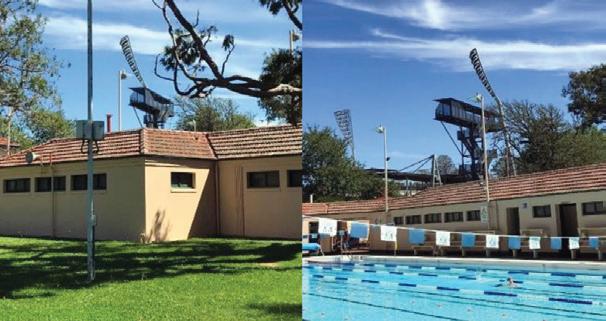
THE Manuka Pool has been threatened several times by Andrew Barr’s government. It is a significant heritage site. The might of Big Footy has been a challenge for local residents and
the Friends of Manuka Pool.
In the last round the planning directorate pulled a fast one. Hidden away in the proposals was another for a tower next to the pool. This tower appeared almost overnight with no realistic notice of its arrival. The tower looms large over the heritage site and allows for cameras to have a bird’s eye view of games on the oval and straight down into the pool. Think long lenses. Surely someone in planning would have thought of that! But who cares for heritage, the amenity and privacy of swimmers? After all, these people in the pool are being active and exercising whereas the crowd next door are mostly sitting and yelling. Why should the government and its planning directorate favour those being active and enjoying their pool?
There are decisions on the North Curtin horse paddocks, West Basin, Section 72 Dickson, Woden’s everdiminishing cultural, sports and green spaces, and the list goes on.
With the city’s rich heritage, its fabulous greenery and the amenity of the established urban areas, voters deserve to have an intelligent, creative, design driven and people friendly directorate overseeing planning and development and other urban issues. Which candidates for the October 2020 ACT elections are committed to delivering on this? Step forward.
Paul Costigan is an independent commentator and consultant on the visual arts, photography, urban design, environmental issues and everyday matters.
The Manuka Pool and tower… who cares for heritage, the amenity and privacy of swimmers?
Photo: Friends of Manuka Pool
George Floyd aftermath: dark sides to the shadows of protest outrage
I SHOULD say at the outset that I don’t for one moment condone social injustice and racial inequality – or police brutality, but recent events in America should be seen in context.
I have worked with several American police forces, including the LAPD, NYPD, and Chicago PD, and found that policing in those jurisdictions is enormously challenging.
There are of course some police officers who should not be in policing because of their negative attitude towards the public, or sections of it, but many police forces in America are subjected to daily abuse and threats of violence.
In Chicago, in the district of Harrison, which at one time had the highest murder rate in America, to get into the local gang a prospective member (usually in his low to midteens) had to be seen by other gang members to have shot at police.
The week before I was there, the squad’s sergeant had been shot and wounded through the roof of a police cruiser by a shot from a “derelict” highrise building. (Many high-rise public housing buildings had no power or water due to non-payment of rates.)
Chicago had a rejuvenation program for one of the city’s depressed areas, but businesses such as McDonald’s could not get young black people to work for them because they made more money acting as lookouts for drug dealers. Few poor black families lived together as a family because single mothers got paid a federal subsidy. This was a recipe for young black men to have several women partners at the same time, with all the social disruption that caused, particularly for their children.
the prison population. This reflects the reality that young black men are responsible for a disproportionate percentage of solvable crime.
The reasons for US incarceration rates are complex, but have a lot to do with America’s social structure which divides along educational, economic, judicial and racial lines.
George Floyd was representative of America’s large, poor black environment. He was born in October, 1973, in Fayetteville, North Carolina, and raised in the public housing complex of Cuney Homes in the Third Ward of Houston, Texas.
He was a big man at 193 centimetres tall and weighing 101 kilograms. Family and friends describe him as a gentle giant. Floyd played on the basketball and football teams at Yates High School, but while he was a good player at up to state level, he was not able to transition to becom ing a professional player.
The widespread and justifiable peaceful protests about social injustice and racial inequality were hijacked by activists from various extreme political backgrounds to engage in violence against authority, while many others have seen it as a golden opportunity to loot.
In the US, black people make up 13 per cent of the population and 40 per cent of
Rallimax has the latest wheel and rim straightening lathe, enabling us to successfully realign most damaged alloy wheels. Visit us at 1/184 Gladstone Street, Fyshwick Telephone 6280 5967 rallimaxsport.com.au
Police may see themselves as the aggrieved
Lacking a good education, Floyd became a car customiser and played club basketball. From 1994 he also performed as a rapper as “Big Floyd” in the hip-hop group Screwed Up Click. According to “Texas Monthly”, Floyd among many others helped establish Houston as one of the world’s great hip-hop scenes.
The American rap music scene is also synonymous with drug taking. Floyd had a series of arrests for theft and drug possession and was charged in 2007 for armed robbery during a home invasion. He took a plea deal in 2009 for five years in prison.
He was paroled in 2013 after spending four years at the Diboll Correctional Center at Diboll, Texas. (This is a private state prison for men, run under contract for the Texas Department of Criminal Justice.) After Floyd’s release, he became involved with a local ministry, “Resurrection Houston”.
In 2014, Floyd moved to Minneapolis, Minnesota, where he had jobs driving a truck and providing security at a restaurant. He lived in St Louis Park (a small city west of Minneapolis). In 2017, he filmed an anti-gun violence video. In 2020 he lost
George Floyd… his circumstances were similar to those of many black people in America, which is why there has been such an upswelling of outrage at his very public and unnecessary death.
his security job due to the COVID-19 pandemic. Floyd had five children, including two daughters in Houston, ages six and 22, and an adult son in Bryan, Texas.
In May 2020, Floyd was suspected of having passed a counterfeit $20 bill. (American banknotes are very easy to colour-photocopy.) It is not clear why he was arrested, but at the time he was allegedly under the influence of fentanyl and had methamphetamine in his system.
There seems little doubt that his death was caused by a police officer kneeling on him. An autopsy, commissioned by Floyd’s family found that the “evidence is consistent with mechanical asphyxia as the cause” of death, with neck compression restricting blood flow to the brain, and back compression restricting breathing. Floyd was also positive for COVID-19 at the time of his death.
Floyd’s circumstances were similar to those of many black people in America which is why there has been such an upswelling of outrage at his very public and unnecessary death.
However, the widespread and justifiable peaceful protests about social injustice and racial inequality were hijacked by activists from various extreme political backgrounds to engage in violence against authority, while many others have seen it as a golden opportunity to loot and get what they can’t afford to buy.
The violence has also acted as a magnet to out-of-towners keen to exploit the situation.
Protests internationally, including in Australia, combine those who are genuinely concerned about racial equality and social justice, with the usual serial protesters and those who see a way of exploiting the situation for their own purposes.
The challenge for authorities is to allow peaceful protests, but prevent those who want to turn them violent from doing so. This requires good security intelligence and careful crowd and police management.
Ultimately, of course, meaningful political action is needed to remove injustices and inequalities.
Clive Williams is a visiting professor at the ANU’s Centre for Military and Security Law.
RECENTLY, I saw a brief TV clip of a body of US police walking in regiment formation towards a disturbance. One pedestrian was pushed to the ground by a baton without the cops missing a step.
What worries me greatly is that the police in the US may be beginning to see themselves as the aggrieved, with 147 dead in the line of duty in 2019, with few if any friends in politics and the courts and virtually none on the streets.
This may or may not be a justified line of reasoning but I hate to think how many more injuries and deaths may occur – citizens and police – if it grips all police forces.
Colliss Parrett, Barton
North can keep the trams…
I AGREE with the views expressed by Jack Kershaw (Letters, CN, June 4).
However, there is one sensible and desirable solution. Do NOT bring the tram across the lake! The northern suburbs are welcome to keep it for their own.
Daphne Harding, via email
Less ‘vibrancy’, more fun
WHEN looking for more COVID-induced blessings, it turns out that less local barrow-pushing of “vibrant” and “vibrancy” has been a welcome relief for some.
That is despite the odd desperate developer still clinging to these “v” words when trying to offload poorly sited towers of small units with no quick and easy access to generous greenspaces, or having them re-emerge in the latest round of justifications from the National Capital Authority and the City Renewal Authority as they push on to bulldoze West Basin.
Many, of all ages, will continue to discover and value stimulating and energetic pursuits outside the home, including at our spacious and well-run cultural institutions which are now re-opening.
More Canberrans know now that much can be enjoyed without spending heaps of money, that is now in shorter supply for many anyway, and without having others jostling or breathing down their necks, or having to shout to be heard. Hopefully, new routines and opportunities will make it easier to avoid certain locations and minimise coming into contact with those who can’t wait to seek out the closeness of commercially-based, hard-surfaced “vibrancy”, which South Korea has shown can quickly lead to outbreaks of “herd” complacency and the virus.
Sue Dyer, Downer
So, where is Section 72?
WHY do journalists, politicians and others here in the ACT, always assume people know where a particular section is in a suburb. Example, Section 72, Dickson. For all I know they could be referring to a building.
So, how about being more specific and providing definite location details. So, where is it?
Halina Zachara, Belconnen
EDITOR’S NOTE: Fair enough, Halina. Columnist Paul Costigan says Section 72, Dickson is located east of the Dickson Shopping Centre. The site, that includes the Dickson Pool, is bounded by Antill Street to the north, Sullivans Creek/the Dickson Drain to the south, Cowper Street to the west, and Hawdon Place to the east.
THE GADFLY
Why is the federal government scared of the arts?
IT’S the nature of the arts community that we live in hope. After all, the material we work with is the human condition. We live with the hope that the glass is half full, not half empty for that way lies despair and futility.
So against all the odds we hung on Scott Morrison’s every word at his recent Press Club address, hoping that he’d at least recognise our existence, and even throw us a bone. We waited in vain. We should be used to it by now. Many of us grew up in the pre-Whitlam era when the federal government was actually censoring literature such as D.H. Lawrence’s “Lady
Chatterley’s Lover” and Philip Roth’s “Portnoy’s Complaint”. Films such as Fellini’s “La Dolce Vita” and the British murder mystery “Blow-up” joined the earlier banned list; and that included any that dared feature bushrangers!
The Whitlam era was a watershed, but in the years since the Hawke-Keating duumvirate, slowly the old anti-cultural forces have been lowering their dead hands of righteousness upon our communal pursuit of delight and wonder.
And today’s Pentecostal PM, alas, is becoming their bullying Master and Commander.
a seat in economy class. But while we dips our lid in acknowledgement, their meagre contributions only highlighted the sightless orb turned our way by the purblind Nelson in The Lodge.
We supply some $112 billion to the nation’s GDP each year. We employ vastly more than coal or iron ore.
We are not quite without allies. Morrison might have banned us from the A Train, but at least the two Bs – Premier Gladys and Chief Minister Andrew – gave us
It’s not as though we’re an insignificant contributor to the government’s beloved economy. We supply some $112 billion to the nation’s GDP each year. We employ vastly more than coal or iron ore. We engage and entertain literally millions of our fellow Australians; many of whom become our eager bedfellows in that lovely quiet time before lights out.
And given half a chance our books, films and television series could become major contributors to the national balance of trade.
One of our more impressive exports from the arts put the issue as gracefully as we’ve
“We will have to live with a mutating, evolving, shifting threat. We are asked to live with doubt, uncertainty and
– whether political or viral –can leave us frightened and paranoid, more likely to draw back than try and bridge them.
But art, in its ability to cross social, partisan and even temporal gaps can help foster a shared sense of understanding. And it can teach us about one another, inspiring empathy rather than anger.
“Art matters because it lets us engage with our complex social fabric, allowing us to cross divides and work toward a safer and more meaningful existence together.”
The author was Cate Blanchett writing in “The New York Times” earlier this month.
Another insight reached me in a letter from a group dedicated to keeping documentary film alive throughout its desperate time in our polity’s ICU. The authors were Australians of sufficient wealth and soul to become philanthropists.
“The arts help us process the pleasure and pain of our shared humanity,” they wrote. “They are critical to the health and well being of our society. Yet despite this, government policy continues to be characterised by neglect and abandonment.”
Why? What are they so afraid of?
robert@robertmacklin.com
Can big end of town protect the Prime Minister?
THE chief medical officer and the chief health officers of the states and territories provided, and continue to provide, the health information. The National Cabinet, an important Prime Ministerial initiative, provides broader advice.
So, what was the purpose of establishing the National COVID-19 Coordination Commission (NCCC)?
The NCCC is from the big end of town. It is separate from ordinary folk and pushes the emphasis away from health, the individual and small business, to big business and corporations.
According to Prime Minister Scott Morrison, its purpose is to “co-ordinate advice to the Australian government on actions to anticipate and mitigate the economic and social effects of the global coronavirus pandemic” and to “ensure the government receives the most comprehensive advice to meet the challenges ahead to cushion the economic impact of the coronavirus and help build recovery”.
Scott Morrison and Josh Frydenberg needed protection from their own party when they stepped outside of their ideology. Many of their big-business supporters and members of the parliamentary and broader party were horrified at their approach.
Morrison and Treasurer Josh Frydenberg needed protection from their own party when they stepped outside of their ideology. Many of their big-business supporters and members of the parliamentary and broader party were horrified at their approach. In this respect, appointing a big-end-of-town conservative bunch was the right move.
There are partial exceptions on the NCCC. Former Labor minister and union heavyweight Greg Combet will have some influence. However, Mr Combet is now chair of Industry Super Australia and chair of IFM Investors, a global asset-management business owned by the industry superannuation fund. Jane Halton was the head of the federal Department of Health and is a director of the Coalition of Epidemic Preparedness Innovations (Norway). She also has
a foot in big business as a member of the boards of the ANZ Bank and James Packer’s Crown Resorts.
The NCCC is overwhelmingly big-business oriented. Neville Power was the chief executive of the Fortescue Metals Group and is chair of the NCCC. The deputy chair, David Thodey, was chief executive of Telstra. Catherine Tanna is managing director of EnergyAustralia and on the Reserve Bank board. Paul Little was MD of Toll Holdings and is described in Wikipedia as “one of the richest people in Australia”.
on all non-health aspects of the pandemic response”. Any response will have significant health impacts – and health will continue to have economic impacts.
The Prime Minister must have been feeling the pressure regarding appointments to the NCCC and their lack of critical health expertise when he stated: “The board will work in tandem with the chief medical officer, Dr Brendan Murphy, who continues to lead the Commonwealth’s health response”.
This group cannot provide political protection for the Prime Minister. If he takes their advice to open businesses, no matter how cautious it is, “to unlock resources, break bottlenecks and fix problems for Australian families, businesses and communities”, he is still not protected.
The NCCC is supported by membership of the secretaries of the Department of the Prime Minister and Cabinet, Philip Gaetjens, and Home Affairs, Mike Pezzullo earning more than $700,000 per year. Economics is health dependent. Failure in preventive measures worldwide has had the greatest impact on economies since the great depression. It is not good enough for Scott Morrison to say the role is to “advise the Prime Minister
How much more evident was this interdependency when Finance Minister Mathias Cormann blasted protestors attending the Black Lives Matter rallies? Yet he remains keen to see businesses up and running.
The NCCC is certainly designed to make opening businesses the priority.
Where are the small business or trades representatives? Where are those with serious academic expertise in public health to support health administrator Jane Halton – who is also chair of the Council on the Ageing? Where are the other NGO representatives? Where are the representatives of the states and territories?
A second wave of the COVID-19 pandemic will be blamed on advice from the big end of town!
“Our actions are guided by the best possible medical advice, while putting the economic and social wellbeing of all Australians front and centre of our response”.
With the make up of the NCCC, this claim of the Prime Minister seems very shallow – his biggest failure, however, is the lack of integration with health.
Michael Moore is a former member of the ACT Legislative Assembly and an independent minister for health. He has been a political columnist with “CityNews” since 2006.
HOME DELIVERY FROM CITYNEWS.COM.AU
Jane Halton. Greg Combet.
Time to get fit and healthy, but take it slow HEALTH AND FITNESS
HEALTH crisis or not, everyone benefits from a healthy lifestyle. Whether it’s improving strength from home, attending small, group personal training sessions or bootcamps, getting outside and walking, taking fitness classes, or managing pain, there are many ways to improve someone’s health. And now, as coronavirus restrictions continue to ease it’s a little easier to get moving towards better health. But don’t overdo it, say Canberra experts, who recommend taking it slow for people who have had a long break from exercise.
Online sessions help prevent falls
PREVENTION is crucial when it comes to injuries and falls, says Arthritis ACT CEO Rebecca Davey.
“We encourage people to speak to us about preventing injury, as much as [we do for people] dealing with chronic pain,” she says.
“You don’t have to have arthritis to come and see us.”
After taking its offerings online since COVID-19, Arthritis ACT has seen a new cohort of people who are making use of its programs, and Rebecca says they will be able
to continue to do so.
“Our yoga classes and sessions that help prevent falls and fractures have been so incredibly popular that we are committed to providing them online, forever,” she says.
“We also have all our education classes online, as well as extended information on chronic pain and a cache of educational seminars.”
Rebecca says Arthritis ACT is thrilled to be reaching so many more people, and that it had long been an intention of the group to provide more of their information online.
AFTER the chaotic and quick shut down of gyms and fitness centres due to COVID-19, Stellar Canberra has reopened many of its facilities, says its general manager of health and wellness, Ryan Davies.
“Now people can access us in their own time, and it’s also helpful for those who aren’t keen to come back to face-to-face yet for health reasons,” she says.
“Our experts, including physios, exercise physiologists and therapists, can see clients via telehealth if they prefer [too].”
Arthritis ACT, Building 18, 170 Haydon Drive, Bruce. Call 1800 011041, email info@arthritisact.org.au or visit arthritisact.org.au
We offer a suite of programs to physically and emotionally assist you with the impact of chronic pain.
WE ARE ONLY OFFERING ONE TO ONE SESSIONS WITH EXERCISE PROFESSIONALS AT THIS TIME
Services available:
Exercise Physiology via individual consultations
GLA:D Physiotherapy program for hip and knee osteoarthritis
Dietitian consultations for weight loss/gain and pain relief
Occupational Therapy to improve daily living challenges
Individual counselling and health education
Support for dealing with pain
All programs can be incorporated into NDIS, DVA and My Aged Care
We accept GP Referrals for Medicare funded allied health services
How else we can help you:
Most chronic pain conditions respond to exercise and weight los
People living with pain may be feeling more isoluated at this time, contact us for ongoing support
Mild depression and anxiety will significantly increase perceptions of pain and our counselling & support will help reduce this impact
Now, the Southern Cross Health Club group exercise classes, Anytime Fitness and Stellar Swim have all reopened with some limitations, says Ryan.
But, he says Stellar Canberra was fortunately able to remain partially operational through the crisis, offering one-on-one bootcamps and personal training in the outdoor fitness area.
“It’s so important to maintain that community aspect and sense of connection through seeing people and keeping up with exercise, both for our members and the cohort of staff on JobKeeper,” he says.
“[Then, when restrictions began to ease] we were one of the first pools to reopen and we have our aqua aerobics classes back up and running, with space also
allocated for lap swimmers and private swimming classes available.”
Stellar Canberra’s boutique fitness studio, designed for aerobics and dance classes, will reopen on June 30 with restricted numbers and social distancing in place, and the circuit training room has just reopened, too, with classes for seniors available, he says.
“All our staff have a full understanding of the procedures in place to keep everyone safe, and we look forward to welcoming more people back as time goes on,” Ryan says. The women’s gym and FloatAbove are still closed at this stage.
Stellar Fitness, Southern Cross Health Club, corner of Yamba Drive and Launceston Street, Phillip with entry via Launceston Street. Call 6283 7340.
Arthritis ACT CEO Rebecca Davey.
HEALTH AND FITNESS
Ease into exercise to avoid injury
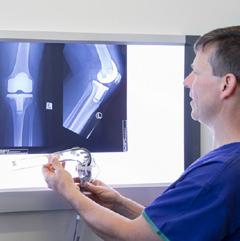
EVEN during the current situation, it’s essential for people to look after themselves, whether through exercise or maintaining their medical regime, says Orthopaedics ACT practice manager Deborah Henry.
Dr Lari Trease, sport and exercise physician, says the COVID-19 physical distancing period may have disrupted many people’s activity regimes.
“For some, it has been a time to do more walking or bike riding with their family, for others who have had their gym closed, they may have fallen out of the habit of being active,” she says.
“The key to remaining active and injury-free is to make sure that if you’re starting a new activity (or resuming an activity not done for a few weeks or months) that you do
For those doing more activity than usual, Dr Trease advises ensuring well-fitted equipment, such as having the bike seat at the right height or having good, supportive footwear.
“As people start to get back into their previous routines it’s important to have any niggles looked at if they persist or limit their enjoyment or ability to exercise,” she says.
“Finally, I’ve seen some patients with low back pain from working in a different position to their usual desk while working from home (think the couch) and it’s important to make sure you’re well set up to work from home.”
Dr Trease is offering video-telehealth appointments to all patients, with scripts and imaging referrals organised electronically, allowing for remote care in these COVID times.
Mondays 9:10am: Buff Bones
Bone-strengthening & balance enhancing class
• Tone up, enhance posture, improve balance & gain overall strength
• Safe for those with osteoporosis, lower back conditions & arthritis
Tuesdays 7:00: Experienced Pilates
For those who have been doing Pilates for a few years
• Challenging and flowing mat class
Wednesdays 12:05pm: Foundation Pilates
For people with no or little Pilates experience
• A focus on the basics whilst still experiencing a flowing mat class
• Full-bodied workout
To benefit from expert tuition phone 0412 022 917 or email barton@pilatescanberra.com.au 14 Macquarie Street, Barton (part of the Hale Health Club at the Brassey Hotel) www.pilatescanberra.com.au
“Orthopaedics ACT is COVID-19 requirements,” Deborah says. Orthopaedics ACT, Woden Specialist Medical Centre, Level 2, 90 Corinna Street, Woden. Call 6221 9320 or visit orthoact.com.au
Walking poles work the whole body
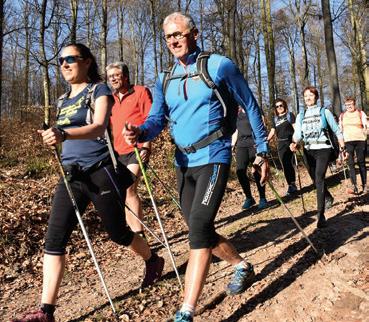
NORDIC Walking is a specific fitness technique and gives a full body workout – it’s not just walking with sticks, says Kristen Pratt of Capital Nordic Walking.
“It can be enjoyed at any level, from the extremely fit to those with health challenges,” she says. “I used to be a competitive runner but I’ve learned that you don’t have to go fast to get a good workout.”
Pilates Canberra at Hale Health Spa is now open again to restricted numbers, private or duet classes, though Lanette says they will continue with “popular” online classes, too.
“We had to completely close all our in-person classes and instead offered one-on-one support in real time, Zoom classes for groups and pre-recorded classes that people could do in their own time,” she says.
“We’ve found that it’s more convenient for many people, who are busy with work and families, or immunocompromised, and prefer to be able to do their class from home.”
With experienced instructors, who are able to watch students very closely and correct them online, Lanette says it’s been successful and she intends to continue.
“It was in the back of my mind to offer classes online at some point but it all happened sooner than I thought it would,” she says. “We do general strength and conditioning, as well as injury rehabilitation, and while some people have complex needs and specific conditions, it’s working out really well.”
Classes are now up and running as usual, though throughout the COVID-19 restrictions, Kristen says people were reaching out on the Capital Nordic Walking Facebook page to find one other person to walk with – a bit like speed dating.
“It’s been great for getting people outside, and we’re finding that people are coming to us in ready-made groups with their family and friends,” she says.
Nordic Walking combines the simplicity of walking with core and upper body conditioning, and because it doesn’t feel like hard work people are happy to walk further and for longer, Kristen says.
Kristen, who’s an occupational therapist and qualified Nordic Walking and fitness instructor, says it tones more than 90 per cent of the muscles in the body (double that of walking, jogging and cycling), increases cardiovascular activity and burns higher calories.
Capital Nordic Walking. Email hello@ capitalnordicwalking.com.au, call 0499 993215, or visit capitalnordicwalking.com.au
Stay on your feet and burn more calories with a Nordic workout.
• Burns calories fast, it’s low-impact, great for you, and FUN!
• More effective than regular walking, jogging or cycling.
• Easy on joints, strengthens your back, shoulders, arms & core
• Improves your posture
• Will prepare you for snow skiing
No matter what your age or fitness level come and unlock the benefits of cross-country skiing
– call Kristen today!
Dr Lari Trease at the Olympics.
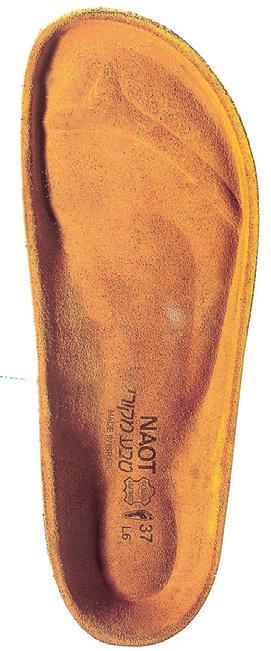
WHY NAOT FOOTWEAR?
Hallux Support:
Enables natural hold of the big toe, prevents the foot from slipping forward and improves the foot’s hold on the shoe.
Elevated Footbed Centre:
The elevated centre of the insole releases pressure in the joints of the central part of the foot.
Arch Support:
Enables the weight of the body to be correctly distributed and reduced pressure generated by the spinal column and joints.
Latex Sponge Layer: A
Deep Heel Indentation:
Helps the body’s balance and maintains the natural shape of the pad of the heel that protects the heel bone.
Flexibility, Durability and Shock Absorption:
The comfort footbed is made of a unique, high-quality blend of cork and latex granting it flexibility, shock absorbing qualities and long-term durability.
THE
Footwear that’s made for comfort
SUPPORTIVE footwear is available at The Healthy Foot podiatry, which also offers preventative care, aesthetic treatments and personalised orthotics.
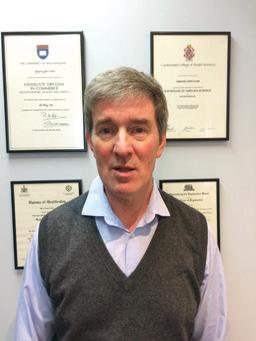
Podiatrist Dr Mark Clayton says they sell orthotic-friendly footwear in many styles, colours and sizes.
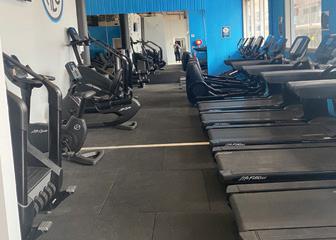
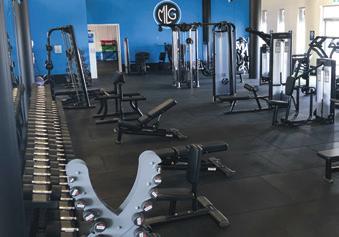
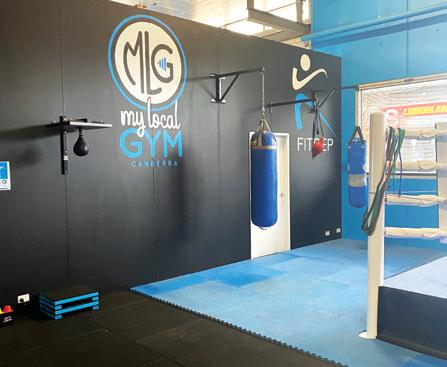
Amaroo-located gym, My Local Gym, prides itself
Mark says returning to the gym is a very exciting time and the gym is currently offering a booking system for members to come in for a session or a class.
He says the team is working hard to maintain strict hygiene standards, with ongoing cleaning of the equipment.
And, once restrictions ease further, the gym will move back to being open 24/7, giving customers even more flexibility with their workout schedule.
The two brothers love the social vibe of their gym, which they say is very welcoming and family-friendly.
Since they opened in 2018, Mark says they have built great relationships with the local community and many friendships have been formed at the gym.
“As a family-run business we are focused on achieving health and fitness goals, but we also go that extra mile and offer a personal touch to our service,” says Mark.
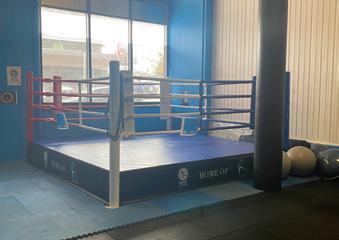
Their boxing academy is one of the things which Mark says sets My Local Gym apart from others, with a boxing ring for boxing classes, including female self-defense classes coming soon.
Mark says he and the team look forward to welcoming new members to the gym, creating a tailored program to help them stay fit and healthy.
My Local Gym, 2/2 Emerald Way, Amaroo. Call Pete on 0476 956225, Mark on 0427 616184 or visit mylocalgymcanberra.com.au
The Healthy Foot stocks Naot footwear, a brand that’s passionate about making people feel comfortable, according to a Naot spokesperson.
“They call them shoes of peace, with each pair a product of collaboration,” says the spokesperson.
“Crafted by hand, through the combined efforts of people from different cultures and backgrounds, Naot shoes are ethically made using sustainable methods with materials of the highest quality.
“Fine Italian leathers and its signature insoles, combined with advanced designs, make for an unparalleled combination of quality, fashion and comfort.”
Naot says its uniquely engineered insoles are made of natural cork and latex and lined with a suede lining, creating a flexible and shock absorbing base of superior support that is designed to replicate the shape of one’s foot, “much like a footprint left behind in the sand”.
The Healthy Foot, 1/151 Cowper Street, Dickson, and 1/37 Heard Street, Mawson. Call 6262 8383 or visit naotofcanberra.com.au
Greg warns of return-to-sport injuries
THIS sports season is like no other, says physiotherapist Greg Nash, who only recently saw his first rugby-related injury for the season.
Usually Greg, who is the practice principal at Manuka Woden Physiotherapy and Sports Injury Clinic, would have seen patients presenting with various sportrelated injuries from March, and is now warning people to be careful with their bodies as they return to team sport.
“Our bodies have deconditioned over the shut down and it takes time to get our fitness and strength back to how it was,” says Greg.
As gyms start to open their doors again, Greg recommends people talk to their GP, physiotherapist, coach or trainer to ensure they adapt and reduce the risk of injury.
“Early management is very important for any injury that happens,” says Greg.
Greg has also been treating many patients for “COVID-related” injuries such as overdoing house jobs or taking on activities that they had never done before such as house painting. Greg has also been busy helping those with painful necks and strained backs due to long hours working from home. Backed with 35 years’ experience, Greg’s special interest areas are in musculoskeletal physiotherapy, sports injuries and occupational health and safety.
Manuka Woden Physiotherapy and Sports Injury Clinic, 48 Corinna Street, Woden. Call 6281 1382 or visit manukawodenphysio.com.au
family-owned,
Greg Nash.
ARTS & ENTERTAINMENT
Krystal’s shell necklace art honours her ancestors
By Helen MUSA
FLOREY jewellery-maker Krystal Hurst has been shortlisted for the 2020 Telstra National Aboriginal and Torres Strait Islander Art Awards.
Her entry, Neptune necklace, is an elaborate shell necklace made of layered pippy shells (bitjagang) threaded with seaweed beads – ”a continuous thread of ocean jewels,” she says.
In 2013, Canberra’s Jennifer Kemarre Martiniello was named winner of the $50,000 Telstra Award for her work “Golden Brown Reeds Fish Trap” made of glass, and Hurst follows her in reinventing traditional forms and materials to make contemporary art.
The Telstras are Australia’s longest run ning indigenous art awards, and this year’s batch saw 67 Aboriginal and Torres Strait Islander artists selected from 238 entries, with just eight finalists from Queensland, NSW, ACT and Victoria.
It’s been a good year for Hurst, who works for National Parks by day and runs her online art business Gillawarra (“resting place” in the Gathang/Kattang language) Arts and Crafts by night.
After being named a finalist in last year’s Telstra Awards and the ACT indigenous Business Awards, this year she facilitated her first weaving workshop at the NGA, conducted Aboriginal jewellery workshops at the National Museum and exhibited work at First Draft gallery in Sydney and in “Emerging Contemporaries” at Craft ACT.
Hurst has been living in Canberra for more than 10 years, having first come here to study for a BA in environmental science and cultural heritage at the University of Canberra.
“It’s been incredible to be on Ngunnawal country,” she tells us.
“It keeps me connected when I’m so far away and always thinking about home, that’s why I do art.”
Home to Hurst is the mid-north coast of NSW, from which she identifies as a Worimi woman. More specifically, her parents grew up on the Aboriginal reserve Purfleet, now a suburb of the greater Taree region.
“My arts education started in the 1980s
living on the mission back home, it was the way the community came together and I took it from my parents… to me it’s about continued cultural practice and stories talked through art practice.”
Hurst’s jewellery, with its images of native animals and use of natural materials, illustrates that intention.
“I’ve always been doing art ever since I was little – it’s what my mum and dad did, painting and making jewellery, so I felt it was good to be into art,” she says. But being a practical kind of person, once here in Canberra she started working out how to make it pay through her sophisticated website gillawarraarts.com, through which she also runs workshops in weaving, jewellery, painting and linocuts.
“It’s wonderful allowing other people to learn about indigenous art, which is so rich
and it’s grown, it’s a fun thing to be part of”.
Hurst identifies strongly with the ACT arts community saying, “so many of our people in the arts sector have taken a huge hit during COVID-19 but what’s happening in the social media is interesting and many indigenous artists like me are really going for it”.
She views jewellery as a form of fine art and says she wants to do more solo exhibitions. To that end she applied for and won an ACT government activities grant of $12,585 to create a body of work that responds to “the symbology of Aboriginal sovereign
“It’s a piece I created for my ancestors,” she says.
“While making this piece, I thought of my mother, my grandmothers and many ancestors before… I imagined the type of adornment they wore to feel strong and proud, to tell our mob who they were and who they were connected to.
“I used shells I collected and fused them all together with seaweed using fishing line. It’s quite a big piece with lots and lots of shells. I really just wanted to create something in honour of all of the matriarchs who lived and passed on, since it’s important to show the role of indigenous women as knowledge holders.”
2020 Telstra National Aboriginal and Torres Strait Islander Art Awards, Museum and Art Gallery of the Northern Territory. Open to the public August 8-January 31.
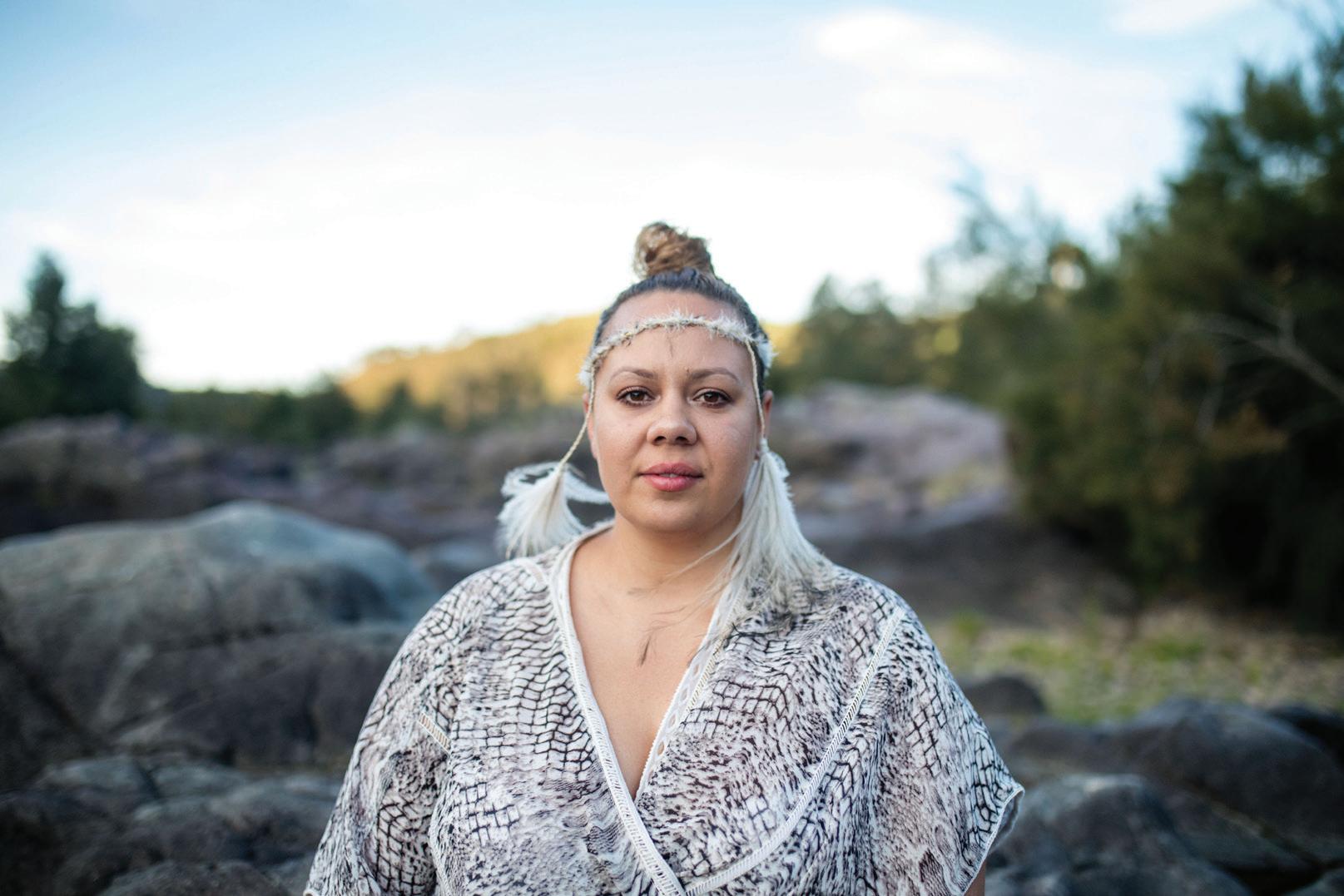
Model wearing Hurst’s jewellery, “Sunset Earth” earrings featuring emu feathers and dyed raffia emu.
Jewellery-maker Krystal Hurst.
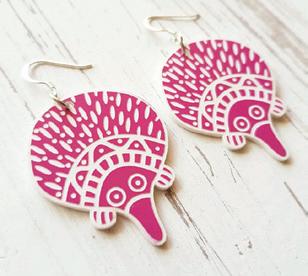
“Echidna bubs” earrings by Krystal Hurst.
WATCH IT! / streaming and stuff
Why streamers are lining up their blockbusters
LET me unlock a memory for you: it’s a Friday afternoon, you’ve headed down to your local video rental store. Four weekly hires for $10 and a sneaky overnight new release of a blockbuster you’ve been hanging out for over the weekend. Ah, the days!
Streaming has made such stores near extinct, with access to all the new films available at your fingertips for not even a quarter of what you used to pay.
With just one month to go until we can get back to the movies, platforms have been trying extra hard to give us the most “cinematic” experience they can, with blockbuster films being taken off those virtual shelves in abundance.
Foxtel Binge has snapped up a bunch of hits. This includes much of the gargantuan works of Chris Nolan, infamous director behind “The Dark Knight”, “Inception” and “Dunkirk”. These are all up in the charts now as his new film “Tenet” is set to hit theatres when they’re back in business.
Perhaps on the back of the most recent “Space X” launch led by that alien-like creature, Elon Musk, (in the headlines for recently naming his child X Æ A-12), Netflix, too, is going to space.
“First Man”, the biopic about Neil Armstrong is trending and it’s crazy to think that the very device you watch “First Man’’ on is hundreds of times more powerful than
the computers on board Apollo 11.
Stan is back down on Earth clinging tightly to the “Fast and Furious” franchise, with the seventh instalment just hitting that platform. There seems to be no exhaustion for the high-octane “F&F”, as even with the zillion entries into the series the streaming demand for them remains supercharged.
As we step further away from our lives of lockdown and cinemas reopen, it will be interesting to see whether the spike in streaming we’ve seen drops off.
The convenience of blockbusters such as these being just a few button presses away
could jeopardise the cinema industry like it did with the video hire one. We’ll soon find out.
In these times of sweeping social change and political tensions, we’re also seeing a lot of productions dealing with such relevant matters at the top of the charts.
Netflix just released “Jeffrey Epstein: Filthy Rich”, a disturbing and illuminating documentary series about the multi millionaire’s exploits and scandals. It’s been in Netflix’s top 10 for a few weeks now.
Netflix also added “Moonlight” to its library. It might ring a bell for you as
sundayROAST
Stay in touch with the names making news on Sundays from 10am as 2CC and “CityNews” present Canberra’s only local weekend news and current affairs program.
It’s a revolving panel show that brings to the microphone great “CityNews” commentators and 2CC personalities.
Be part of the conversation and call 6255 1206 between 10am and noon.
American man living in Miami. It’s seen a big resurgence of interest since its addition at the beginning of the month.
Like what we saw with “Contagion”, it is fascinating that given all we see in the brutal daily bulletins, you’d think we’d jump on our streaming service to escape the real world for a few hours. Instead, it’s quite the opposite. We’re still so drawn to these very dark and very real inside looks at the events that unfold in the real world.
In the end, it’s all about balance. The platform that can provide both the blockbuster action as well as the real-world insights into the things that matter to us will come out on top.
Netflix has done this best to date with its continued evolution and adaptation. Video didn’t quite kill the radio star, but more so make it wake up to itself. If cinemas are to survive against streaming, they too will need to find ways to keep things fresh. Who dares wins.
“second-Best Picture” of 2017 at the Oscars – well, at least according to the hosts who announced “La La Land” for the top prize. Turns out that was wrong, and the statue was grabbed back and handed over to “Moonlight”. Awkward but hilarious. This shouldn’t overshadow the brilliance of the rightful winner either, a story in three chapters on the life of a gay African-
NICK OVERALL
ARTS IN THE CITY
Singing out loud from home
By Helen Musa
MUSICACT is calling on all Canberra region musicians to register to play and sing on their patios, balconies, sidewalks and driveways from 2pm to 2.20pm on June 21, International Make Music Day. Known since 1982 in France as the “Fête de la Musique” it’s now held in more than 750 cities in 120 countries. Registration to musicact. com.au is simple and everyone goes in the draw for prizes.
FRIENDS of the ANU Classics Museum is over the moon at news that the model of Rome in the Classics Museum space has been freed from the protective covering necessitated by hail damage to the skylights above the model in January. It is now ready to be viewed, but only once access to the campus buildings becomes possible for the public.
Fête de la Musique in Paris, 2014… now worldwide and in Canberra on June 21.
be live-streamed at 7.30pm from June 24 to 28 inclusive. Bookings at baghdaddymusical.com.au
THE notorious Off-Broadway musical, “Who’s Your Baghdaddy (Or How I Started the Iraq War)” has been reimagined to be performed online by an all-star Aussie cast in its Australian premiere. Stars include Blake Erickson (“Shrek”), Phillip Lowe (“Georgy Girl”) and Laura Murphy (“Muriel’s Wedding”), the musical is set in an AA-style support group meeting for people who imagine their actions led to the start of the Iraq war. The show will
BUDDING Theatre has emerged from its online status and has sent out role offers for its productions “The Great Gatsby” and “The Importance of Being Earnest”. Both shows have been rescheduled for September 14-19 and cast announcements are on Facebook and Instagram.
SUKI & Hugh Gallery is up and running, with Sara Freeman’s exhibition of paintings from last summer, “No Such Thing as Solid Ground”. Freeman uses purely natural materials which is important to her overall philosophy and has developed the combination of egg tempera and wax through experimentation over many years. 38A Gibraltar St, Bungendore, 10am to 4pm Saturday and Sunday, until June 28.
BRAIDWOOD mixed media artist Ray Monde, who works with collage and synthetic polymer paint, was one of three to receive a Veolia Creative Arts Scholarship, now in its 13th year. The $3000 Veolia Creative Arts Scholarship will assist Monde to create a series of artworks following the fires in his local region. A further funding round will be held in the second half of the year, details at veolia.com
“Fast and Furious”... here comes the seventh series of the high-octane franchise.
Musical ways to change the mood
By Helen Musa
THE Breakfast Band is a new group for the Musica Viva in Schools online touring program.
Made up of cellist Rachel Johnston, mandolinist and polymath muso Trent Arkleysmith and acrobatic-banjo whiz kid Gareth Bjaaland, the band is the brainchild of Canberra musician and Musica Viva’s artistic director of education, Michael Sollis.
Over the next five weeks the program will be presenting more than 120 streamed concerts across Australia and from June 22-25 the show, “Timmy and the Breakfast Band” will help students at Jerrabomberra Primary and Sutton Primary discover how music can influence their own actions, thoughts and emotions through an unusual pairing of music making and circus.
I caught up with Johnston by phone to her home in Majors Creek, where she lives with partner Arkleysmith and their blended family of three kids as they were preparing to live-stream for the first time before a 15-day virtual tour to schools.
“We had 10 weeks of touring booked in until November so the aim is to retain as many of the schools as possible,” she says.
“Schools can dial in from everywhere so it’s a great opportunity for Musica Viva, fingers crossed it all works well.”
The show is a kind of play involving mandolin, musical saw, drums, banjo, cello and acrobatics that revolves around schoolboy
Timmy (Bjaaland) who hears music in his head and knows just how it can change his mood, feelings and reactions.
“We like to give a bit of a headsup to the kids so that they can feel like Timmy and maybe even try to use music to change their minds…
Especially nowadays, with everything so stressful it’s good to have music as a positive, but it’s wrapped up with a hefty dash of acrobatics and a lot of Buster Keaton-type activity,” Johnston says.
So Bjaaland leaps and acts, broadcasting from his home in northern NSW, Johnston plays cello, Arkleysmith plays everything else – cello, mandolin, trumpet and drum kit – and it’s all brought together from Sydney by Musica
DINING / Cobargo Hotel
Pub
Viva’s Jemma Tabet, though Johnston quips: “We are not Disney and we’re not Pixar, this is never going to replace live music”.
The experience is grist to the mill for the talented trio, who are seasoned touring artists on the folk circuit, and much more.
NZ-born Johnston, for instance, started on the cello at age six, performed with the noted Tankstream Quartet in Berlin, studied at the Juilliard for two years, completed her masters in London, then in 2006 joined the then all-girl Australian String Quartet in Adelaide for seven and a half years then quit to try her hand at what she calls “non-classical stuff”.
“I’d always wanted to channel into folk,” she says.
“I said I’d give myself a little bit of time with non-classical, but that was 2013 and I’m still doing it.”
By then she’d met Arkleysmith, a trained cellist who’d run away to the circus and lived on a farm at Peel near Bathurst. Together as the music duo Two If by Sea, they’ve travelled the festival circuit performing Celtic, Scandinavian, American and eastern European tunes and songs.
But with two children of their own and one from his former marriage, they looked to find a place of their own in the country and ended up in one of the state’s music meccas, Majors Creek near Braidwood, a paradise at least until the bushfires and COVID-19 hit.
More at musicaviva.com.au/education
grub’s cooking at the coast
THERE was no mistaking that Canberrans wanted to see the sea, feel the sand and breathe in salty air on the June long weekend, and the timing was perfect with COVID-19 restrictions easing.
While hospitality workers welcomed the hustle and bustle, some likely collapsed at the end of the three days, having served thousands of customers. At one point I counted more than 30 people lined up outside a local fish and chip shop. One restaurant owner told me that the pace was so great they would likely run out of food and be forced to close Monday.
Some restaurants weren’t coping with calls and so took their phones off the hook. Others wisely popped messages up on social media to help control demand.
We opted to drive to Cobargo, in part to support the small community hit so badly by the fires, and now the pandemic. The sign out the front of the Cobargo Hotel, an historic watering hole for sure, told patrons to sign in with their phone number and practice social distancing. Bottles of hand sanitiser lined the bar.
The hotel bistro’s menu celebrates pub grub, including burgers, parmis, schnitties, pizzas, and fish and chips.
The flathead was my choice, with the batter on the three pieces of fish lovely and light and
Pork schnitzel… the biggest schnitty we’d ever seen, moist and packed a punch on flavour.
Wendy Johnson
chunky chips piping hot ($20). I squeezed fresh lemon over the fish and dipped pieces into the tangy tartare sauce. The side salad was fresh and the dressing creamy with some zing.
My friend’s pork schnitzel made my dish look petite. It was the biggest schnitty we’d ever seen, taking up three-quarters of the plate. It was exceptionally moist and packed a punch on flavour.
Before leaving, I bought a dozen eggs, with the hotel supporting locals by selling staples given the grocery store in town is still closed.
Part of the pressure was that not all south coast eateries opened. For some it’s still not commercially viable and several we spotted had started renovating during the pandemic, with work not yet finished.
Regardless of the pressure, most in hospitality managed to maintain a sense of humour, with one female bar person declaring: “This is the first time I’ve poured a beer in two months and it feels soooo good!”.
To maximise returns, some eateries understandably restricted their menus. The Catalina Club in the Bay, for example, only offered pizza in its restaurant.
Others encouraged patrons to understand the need to flip tables often on social media. Here’s how The Bayview Hotel politely put it:
“Warning: Bars need your help. We can only open at one-third of our capacity. Those who cannot drink for three are kindly asked to leave their place to the professionals.”
Primula, polyanthus, hellebore, bergenia, cyclamen, iris unguicularis, parahebe and viola hederacea will all flower from winter to early spring. The latter two are great as groundcovers. Primula is an annual with pink, white or purple flowers. Polyanthus is often treated as an annual but I’ve been growing it undisturbed for several years and it continues to multiply.
Bergenia cordifolia has a couple of common names, Elephant’s Ears, due to its leaf size, and Pigsqueak, is due to the funny noise made when the leaves rub together. The botanical name, given in 1794, honours physician and botanist Karl August von Bergen. Bergenia is remarkably tough, tolerating conditions from -36C to +46C. It heralds from some of the severest conditions on earth from Siberia across to the Himalayas and China. It is perfectly suited to our comparatively mild
STILL one of the world’s favourite pot plants, cyclamen persicum, flowering now and until early spring, can last longer than often thought. Google states that it’s “a compact flowering pot plant that may last one season only or perhaps the next”. I planted this one (pictured) in this basket in 2000 and have photos in full flower in 2007! Except for regular feeding with organic Maxicrop seaweed plant nutrient, I’ve done nothing – neither the soil nor the liner in all that time has been changed. Some of the seeds over the years have fallen from our basket to the ground and are growing there quite happily. This photo was taken two weeks ago.
Cyclamen, another native of the harsh, rocky hillsides in Syria, Turkey and Lebanon where they have extremes of heat and snow, thrives in pine forests in particular. It was recorded by plant hunters in the 1600s and cultivated in France by 1731.
The garden centres are brimming with this cyclamen; not only in pink but also with white, red and mauve flowers. If you buy it as an indoor pot plant don’t throw it out when it finishes flowering and gone into dormancy for summer, plant it out in a shady spot in your garden. If no garden, lay
the pot on its side until February/March. Then stand the pot upright, start to water and feed and away it will go, flowering for another season.
The Bedouins grate the semi-poisonous cyclamen roots and mix with lime. They scatter this on the surface of lakes or large bodies of water where there are abundant fish, who then eat it and are stunned by this mixture, and easily collected by the fishermen. I am not suggesting you try this on Lake Burley Griffin!
CHECK out the local garden centre to see which vegetables are on the shelves. This is always an indication of which should be planted now. Certainly chives and onion seedlings can go in. My broad beans are really taking off, as are the peas, and English spinach was planted today. With so many folk suddenly growing their own veggies, I am told that veggie seedlings and seeds are disappearing off the shelves as fast as they arrive!
Cyclamen, one of the world’s favourite pot plants.
Bergenia is one tough plant that anyone can grow.
PUZZLES PAGE FREE PUZZLES EVERY DAY AT citynews.com.au
Joanne Madeline Moore
Your week in the stars – June 22-28, 2020
ARIES (Mar 21 – Apr 20)
With Venus retrograde (until Thursday) and Mercury retrograde (until July 12) relationships will be rocky, misunderstandings are likely and it will be very easy to misinterpret what others are saying. So if you’re uncertain, then take the time to double-check. On the weekend you’ll need to get your speed skates back on, when Mars (your power planet) dashes into your sign. Prepare to jump in and make a split-second decision… which is your speciality.
TAURUS (Apr 21 – May 21)
Don’t fall into the trap of undervaluing and neglecting your numerous Taurean talents. With Venus (planet of culture and creativity) finally moving forwards on Thursday, it’s time to express yourself in uplifting ways that make your heart sing. Be inspired by birthday great, singer-songwriter Carly Simon (who was born on June 25): “There’s always a creative side to me, even when it’s quiet musically … like painting or decorating or planting a garden.”
GEMINI (May 22 – June 21)
With your ruling planet Mercury stuck in slow retro mode (until July 12) you’ll feel like reviewing, reassessing and reimagining past projects, rather than initiating new ones. The North Node and retrograde Venus are both visiting your sign, so you’re double the trouble and twice as much fun. But too much jokey hilarity (combined with no action) could annoy other people (who are hard at work). So get busy and look like you’re doing something Gemini!
CANCER (June 22 – July 23)
The Sun’s transiting through your sign this week, so it’s time to crawl out of your cosy Crab cave and take on challenges with confidence, good communication skills and plenty of chutzpah. No excuses Cancer! Even though Mercury is reversing through your sign, get motivated and get moving. Be inspired by birthday great, the writer, lecturer and political activist Helen Keller (who was blind and deaf): “Life is either a daring adventure, or nothing.”
LEO (July 24 – Aug 23)
Opportunities are around this week, but they aren’t immediately obvious. They are hidden in unexpected places, waiting for you to discover them. So don’t waste the chance to let your Cat creativity and unique talents shine! But is a fair-weather friend or acquaintance leading you up the primrose path to financial trouble? Try to keep a sensible head on your Leo shoulders. Singles – an introduction from someone in your peer group could lead to long-term love.
VIRGO (Aug 24 – Sept 23)
Creative communication and careful observation are the secrets to a good week, especially at work. But – with Mercury in retrograde mode – resist the temptation to launch half-baked projects or jump to hasty conclusions. Listen closely to what others are telling you, otherwise you’ll misunderstand their true meaning and motives. And be careful what you post online, as a confusing comment could lead to unexpected consequences in the days and weeks ahead.
LIBRA (Sept 24 – Oct 23)
Thank goodness Venus (your patron planet) turns direct on Thursday and close relationships should start to improve. So your motto is from birthday great, singer-songwriter Carly Simon: “I am blessed to have so many great things in my life, especially family and friends.” But remember Mercury is still reversing through your career zone. So extra organisation and diplomacy are required when you’re dealing with students, colleagues, clients or customers.
SCORPIO (Oct 24 – Nov 22)
Be extra careful in the way you communicate from Monday through until Thursday, otherwise you could reveal too much or be completely misunderstood. When it comes to loved ones, it’s time to completely change your current modus operandi. Plenty of praise and encouragement will get you a lot further than negative remarks and constant criticism. You’ll find the more positive energy you put into close relationships, the more they will sparkle and shine.
SAGITTARIUS (Nov 23 – Dec 21)
Resist the overwhelming urge to be impulsive and impetuous! Under the influence of retrograde Venus and retrograde Mercury, you need to apply the brakes and think before you speak and act. Otherwise you could upset others with your hasty words and reckless actions. When it comes to your fabulous aspirations for the future, the main quality you need to cultivate is patience. So your motto for the moment is: “Good things come to Sagittarians who wait.”
CAPRICORN (Dec 22 – Jan 20)
Are vague worries doing your head in? Stressing about things that might happen is not the sensible way to go. The planets encourage you to stop worrying and start doing. Concentrate on positive changes you can make right here and right now. Plus aim to be more proactive about appreciating (and protecting) your neighbourhood and local environment. If you network with like-minded people, then you really can achieve a lot. Think global; act local!
AQUARIUS (Jan 21 – Feb 19)
Aquarians are fabulous at formulating abstract ideas, discussing dreams and talking about future plans. But – with Saturn moving through your sign – it really is time to be productive and actually walk your talk. This week, actions definitely speak louder than words! So your motto for the moment is from entrepreneur Elon Musk (who was born on June 28, 1971): “I don’t create companies for the sake of creating companies, but to get things done.”
PISCES (Feb 20 – Mar 20)
Have you been procrastinating Pisces? Monday through until Friday is your last chance to get a major task done-and-dusted, as Mars finishes transiting through your sign. And then (with Venus moving forwards in your domestic zone) the weekend is a wonderful time to spend with family members. They will appreciate your tender loving care. Be inspired by birthday great, Meryl Streep: “My family really does come first. It always has and always will.”
Copyright Joanne Madeline Moore 2020
General knowledge crossword No. 738
4 What was the name of five kings of Norway? (6)
7 To cave in, is to do what? (8)
8 Which small surgical instrument is used for opening abscesses, etc? (6)
9 Name an alternative term for a felon. (8)
11 What do we call supervisors of groups of workers? (7)
13 When one evades consequences, one does what? (4,3)
15 What describes that which relates to the nature of fire? (7)
17 What is another term for a corpse? (7)
20 Name a fire-resistant fabric. (8)
23 What is a mender of pots, pans, etc? (6)
24 What do we call one engaged in a lawsuit? (8)
25 Name a suit of cards with red figures. (6)
1 Which cardinal number is represented by the Roman numeral IV? (4)
2 What are dirigibles also known as? (6)
3 To pirouette, is to do what? (4)
4 Name a renowned telephone greeting. (5)
5 What do they call the fastest shearer in the shed? (6)
6 What is a lord, entitled to allegiance and service? (5)
9 Name a brandy, especially one made in France. (6)
10 What are underhand relationships often called? (7)
12 What are hangmen’s halters, or their like? (6)
14 Name a particular gambling card game. (6)
16 What is another term for a standard-bearer? (6)
18 To be active or lively, is to be what? (5)
19 What are British noblemen known as? (5)
21 Which unit of information, usually eight bits, is stored by a computer? (4)
22 What noise is a pig said to make? (4)
Small-business owners Loreen and Peter called me worried about not having received their JobKeeper payment for May.
I said I'd contact the Australian Tax Office on their behalf and find out why.
"One of the difficulties with the system is that while I can see JobKeeper has been applied for, I cannot see whether or not it has been paid,” I told them.
I found out that the reason JobKeeper had not been paid was because the ATO was confirming the company’s eligibility for the payment. The company employs four people and had only been reporting two employees through Single Touch Payroll (STP). The other two employees, Loreen and Peter had not been included in STP. Loreen was the company director and Peter was not an officer of the company.
The ATO officer advised that Loreen was regarded as an "eligible business participant" whereas Peter was not so the JobKeeper claim would not be paid for him.
For the information of readers, every company is allowed only one eligible business participant.
I explained that Loreen and Peter were not eligible business participants, they were, in fact, employees – they were "closely held" employees and as such they did not have to be included in STP.
In fact, only last week the ATO had extended the period for which closely held employees do not have to be included in single touch payroll by a further 12 months.
I also advised the ATO that, as employees, neither of them could sign the declaration as an eligible business participant to receive JobKeeper as this declaration required that they sign to say that they were not employees.
The ATO pointed out that tax returns for the current year had not been lodged for either Loreen or Peter. I countered that they were covered by tax agent extensions until June 30.
I explained that everything this company had done was in accordance with the law and Loreen and Peter were clearly employees. They had received payment summaries every year, their wages totals were included in the Business Activity Statements and they were being paid super guarantee.
As I reported this to Peter he said: “I am so glad that you made the call Gail, we had no idea of any of this information.”
I said: “Yes, it is important when dealing with the ATO that you know and understand the laws that apply in your situation.
"However, to sort this out you now need to send evidence to the ATO of your wage payments, including the payroll program summaries, bank statement summaries and other items.
"When they have received all these items I am advised that your JobKeeper payment will be paid within a few days.
Loreen was relieved. "Thanks so much, Gail, and in any future tricky situations we will contact you before we do anything,” she said.
If you need assistance with ATO discussions on your JobKeeper claim, contact the friendly team at Gail Freeman & Co Pty Ltd on 6295 2844.
Disclaimer
This column contains general advice, please do not rely on it. If you require specific advice on this topic please contact Gail Freeman or your professional adviser.
Sudoku hard No. 269
Rare opportunities only available until 30th June 2020
Demonstrators and Porsche approved Driveaway^
MY14 Cayenne GTS White 4.8 V8, Panoramic sunroof and more
MY17 Macan Turbo PDK, Sports Design package, tow bar and more ..............................
$76,990
MY19 Macan Tiptronic, Dark Blue, Panoramic Roof, Spyder alloys and more DZG76Z $99,990
MY19 Cayenne Black 19” S alloys, Heated seats, Power steering plus and more ......... GULSON2 $119,990
MY20 718 Boxster Black PDK, 19 Inch Cayman S wheels, Entry & Drive and more GULSON5 $124,990
MY19 Cayenne E-Hybrid White, Heated seats, Power steering plus and more ............. K11025 $129,990
MY19 Cayenne S Jet Black High Gloss Exterior and Roof Rails, and more AYAC89Y $154,990
MY15 911 Carrera S White, PDK One owner, PASM sports suspension and more ....... EGS65H $169,990 ^Driveaway includes balance of registration.