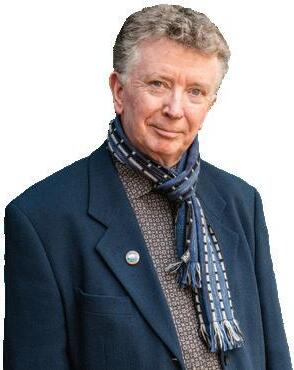
NCA rides roughshod over the community
PAUL
COSTIGAN






PAUL
Talented 16-year-old violinist Isaiah Bondfield tirelessly chases his dream, even if the going has got tough...
Disturbed Jonathon dies alone in a cell JON STANHOPE Virus blame games begin MICHAEL MOORE Cartoons at midnight, but not for the kids NICK OVERALL

All our four clinics are open





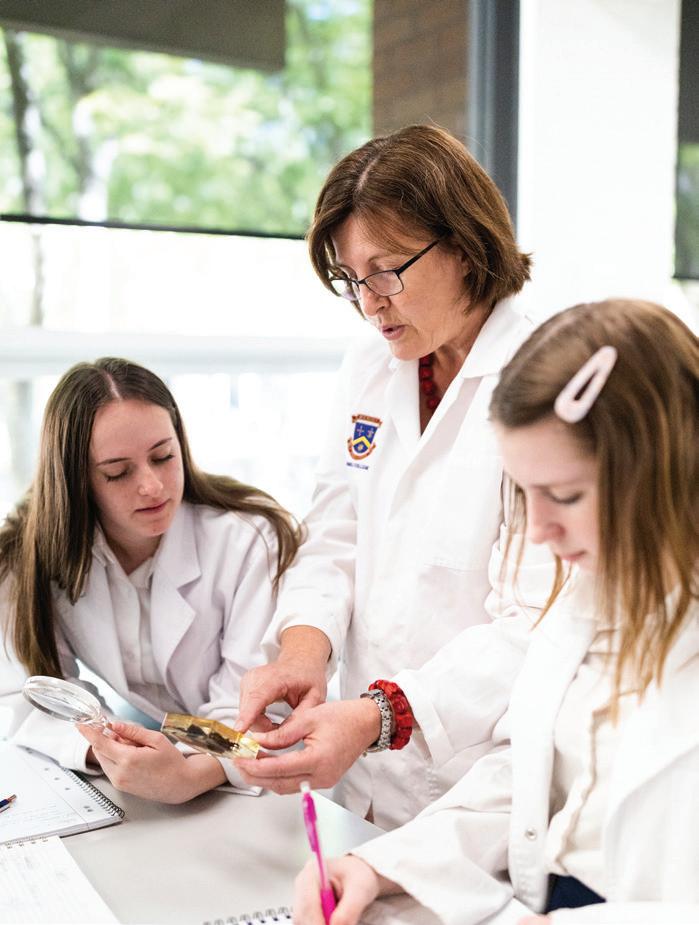


St Clare’s College is an outstanding school, offering rich opportunities in the pursuit of academic excellence, cultural and artistic endeavours, sporting opportunities and time to develop spiritually, socially and emotionally.
Our motto is “Seek Wisdom” and our mandate is to open up all of the possibilities available to young women in a fast changing and dynamic world. We have both the opportunity and the obligation to
change the world by empowering our students to recognise their potential and to embrace the opportunities open to them. We do this in partnership with parents and together we achieve amazing outcomes.
Our heritage and traditions coupled with our superb location, contemporary Learning facilities and dedicated professional staff make St Clare’s the Secondary College of choice in the ACT.
By Danielle NOHRA

EVERY year volunteer work is worth billions to the Australian economy, but now, because of COVID-19, it’s at risk, according to a new ANU analysis.
Since February almost 70 per cent of volunteers stopped volunteering nationally, and researchers Prof Mat thew Gray and Prof Nicholas Biddle say this has had a major impact on vital services across the country.
“Volunteers provide services that may not otherwise be provided, often for those who are most vulnerable in the community,” Prof Biddle says.
“If the level of volunteering in Aus tralia continues to decline substantially and does not pick up as physical distancing restrictions are eased, then there are likely to be large flowon effects for Australians that rely on volunteers, and for the volunteers themselves.”

ganisations were forced to stand down volunteers due to coronavirus restrictions, 31 per cent are experiencing an increase in demand for their services.
For volunteer Glenda Anderson, who fits in the “at risk” age group, it won’t be an issue, but she says she knows a few volunteers who had to stop because of health issues.
Glenda has continued to volunteer throughout the whole pandemic, but says people aged 70 or older were told they’re not allowed to, for now.
“Most of the volunteers that I’ve worked with have been happy to continue,” says Glenda, who volunteers at Palliative Care ACT and Clare Holland House.
Before the pandemic she also volunteered for the Canberra Region Cancer Centre but due to health risks, they’re not allowing volunteers at the moment, she says.
When they do allow volunteers again, she says she won’t be reluctant to go back.
would suggest volunteers won’t volunteer again.
“I think some volunteers and some employers are going to feel nervous about going back to face-to-face environments, which is why, as a peak body, we’re making sure the government is aware of issues and concerns,” she says.
Another concern for community organisations, according to Vicky, is making sure they can keep their volunteers engaged, so as these organisations start up again, they’re more likely to keep volunteering with them.
“We’re encouraging people to involve volunteers in their staff community by sending them the staff newsletter or involving them in staff meetings,” she says.
tion of the volunteers, they’ve had to suspend their services.
This, then, has an effect on the mental health of volunteers and the people they interact with, according to Vicky, who says not being able to volunteer can be quite distressing for people.
“Volunteering can provide friendships, it’s more than just serving a meal,” she says.
At the end of the day, Vicky says volunteers are at the heart of the community, and it’s not until they’re not there that people realise the huge difference they make.
“We’d be lost without them,” she says.
The analysis found the decrease in volunteering during the pandemic is equal to 12.2 million hours per week.
The research commissioned by Volunteering Australia, also shows that at a time where community or-
Arts & Entertainment 19-21
Canberra Matters 8
Crossword 23
Dining 20
Garden 22
Horoscopes 23
Letters 10
News 3-14
Politics 14
And now, with politicians and experts talking about “learning to live with the virus”, it raises the question, will Canberrans who are older than 65, who are more at risk to the virus and who volunteer more hours than any other age group, volunteer again when restrictions lift?
“I wouldn’t be reluctant to go back at all. There’s less people that can volunteer at the moment [and] people, more than ever, need someone familiar to talk to because most people have been in isolation and are seeing less people,” she says.
“Most of the volunteers that I’ve worked with have been happy to continue, too.”
Despite the survey results, CEO of Canberra’s peak body for volunteering Vicky Darling says VolunteeringACT hasn’t seen any evidence either that
Since 1993: Volume 26, Number 20
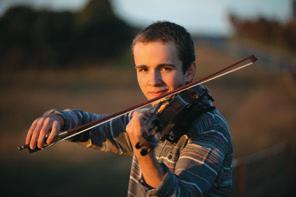
Seven Days 6 Cover: Violinist Isaiah Bondfield. Photo: Holly Treadaway. Story Page 19.
Managing Director: James Anderson, 0404 077605, james@citynews.com.au
Director: Kate Meikle, kate@citynews.com.au
Senior advertising account executive: David Cusack, 0435 380656
Advertising account executive: Damien Klemke, 0439 139001
Tim Rutherford, 0412 933150
Editor: Ian Meikle, editor@citynews.com.au
Assistant editor: Danielle Nohra, danielle@citynews.com.au
Journalist: Kathryn Vukovljak, kathryn@citynews.com.au;
Arts editor: Helen Musa, 0400 043764, helen@citynews.com.au
Production manager/graphic design: Janet Ewen
Graphic designer: Karl Speller
Proof reader: Glenda Anderson
Accounts: accounts@citynews.com.au


Vicky says organisations can also look at creating new volunteer roles for those volunteers who are in virus limbo and still wanting to volunteer from home.
“Obviously not all programs and services have been able to change the way they run and have had to temporarily suspend them [because they’re not able to meet the coronavirus requirements],” she says.
The areas Vicky says that are experiencing the most pressure are agedcare services, disability services and community sector services where the need is still there but for the protec -
“The wonderful thing about volunteers is that they choose to do it. There is something wonderful about a human being who is there for the love of it. “We’d be a much poorer society if we didn’t have people like that.”
And, while what volunteers do is free, Vicky says volunteering is not free and it costs organisations wages to co-ordinate volunteers, train volunteers, and other out-of-pocket costs.
“I believe these organisations need more money than what they’re getting,” she says.
[Which is why] we will be advocating for changes to the way volunteering is supported, especially as we move into the recovery phase of the current public health emergency.”

LIBERATE CAFES! If only tweet troll Donald Trump was Chief Minister, we’d have the coronafree ACT rocking again.
Mercifully he isn’t and Andrew Barr is prudently breathing incremental life back into the community, albeit too slowly for the relevance-deprived Opposition Leader Alistair Coe and some seriously hardpressed small businesses.
Opening playgrounds, dog parks, reserves and limited-patron cafes is an unsurprising start and consistent with the national cabinet’s stage 1 mudmap.
But 10 diners at a time is a test for cafes and restaurants.
“Perhaps some smaller venues will give it a go, feeling that a few bums on seats is bet ter than no bums on seats,” writes long-time “CityNews” dining critic Wendy Johnson in a think piece on citynews.com.au
“As for customers? Some will be thrilled and happy to support those who give opening a go. Others will be worried about #safety concerns. Some might be happy to continue having food delivered to their homes where they can spend winter nights eating in front of the telly in their pjs.” Gogglenosh, now you’re cooking, Wendy!
COE was also in front of the cameras goading the government into giving cafes and clubs a better go. Asked if the Canberra Liberals will be working with the ACT government on this? It’s not likely, says Al.
“The interactions with the Chief Minister’s office and mine, unfortunately have not been forthcoming. The Chief Minister doesn’t want to engage with the opposition.” And so the election campaign starts…
WITH the ACT election looming in October and the deadline for registering new parties by June 30, campaigning in the covid world couldn’t be tougher – no kissing babies, shaking hands or smirking selfies. Take first-time Labor candidate for Murrumbidgee Dr Marisa Paterson, who writes in dignified frustration: “You

couldn’t pick it; the first time I go to run there is a pandemic.
“Campaigning has been significantly restricted and I’ve lost most of my campaign team from Canberra as they are students who have gone home to their families in the lockdown period in other states.
“That said, I’m walking 10 kilometres a day letterboxing and calling local residents, really trying to get momentum on the campaign. I also work full time (as a social policy researcher at the ANU) and have three school-aged children who have been home over the past month/s.”
THEN we have a new political entity, the ACT branch of the Australian Progressives, the Canberra Progressives with the well-worn goal “to keep the ACT government accountable”. The Canberra Liberals have been banging their heads against that objective for nearly two decades. Progressives president, Woden Valley resident and father of two, Robert Knight

has registered the party for October.
“The Canberra Progressives will field candidates at the October election, with a view to winning seats and supporting a progressive agenda in the ACT which upholds our party values of ethics, evidence and empowerment.”
“Unlike the ACT Labor/Greens and Canberra Liberals, which appear to be run exclusively by a very select and privileged few, the Canberra Progressives will always ask party members and community members to help develop policies and positions on all key decisions.” Just like the Australian Democrats and history knows where that got them.
LAURIE Blackall is the ACT’s chief curtain peeper having stepped up as the new Neighbourhood Watch president.
A Neighbourhood Watcher since 1989, Laurie came to the ACT with his parents in 1968 and has seen the neighbourhoods across Canberra grow. He now lives in Casey after growing up in Ainslie and Rivett. Grandfather of four, Laurie says he “looks forward to the challenges of building capability to remain relevant in an increas-
ingly connected and informed community”.
He replaces two-term president Margaret Pearson, who is stepping down to concentrate on her role as company secretary of Neighbourhood Watch Australasia (Australia & NZ).
OUR columnists are always surprised (and delighted) to be recognised in the wider community. For example, “Canberra Matters” columnist Paul Costigan and his partner were shopping at Majura Park when a woman walking towards them edged up.
“Mr Costigan?” she asked.
“She then thanked me several times for the articles and said she wished ‘they’ were listening,” says Paul.
Blackall… new president.
“I then had to ask ‘do I know you?’ as her face was completely obscured by a mask, sunglasses and a cap.
“She said ‘no’, but that she needed to say something because of the articles in ‘CityNews’, which she picks up all the time.
“A few more words and we parted.
“Who was that masked woman?” he mused with apologies to “The Lone Ranger”.
“I will never know!”



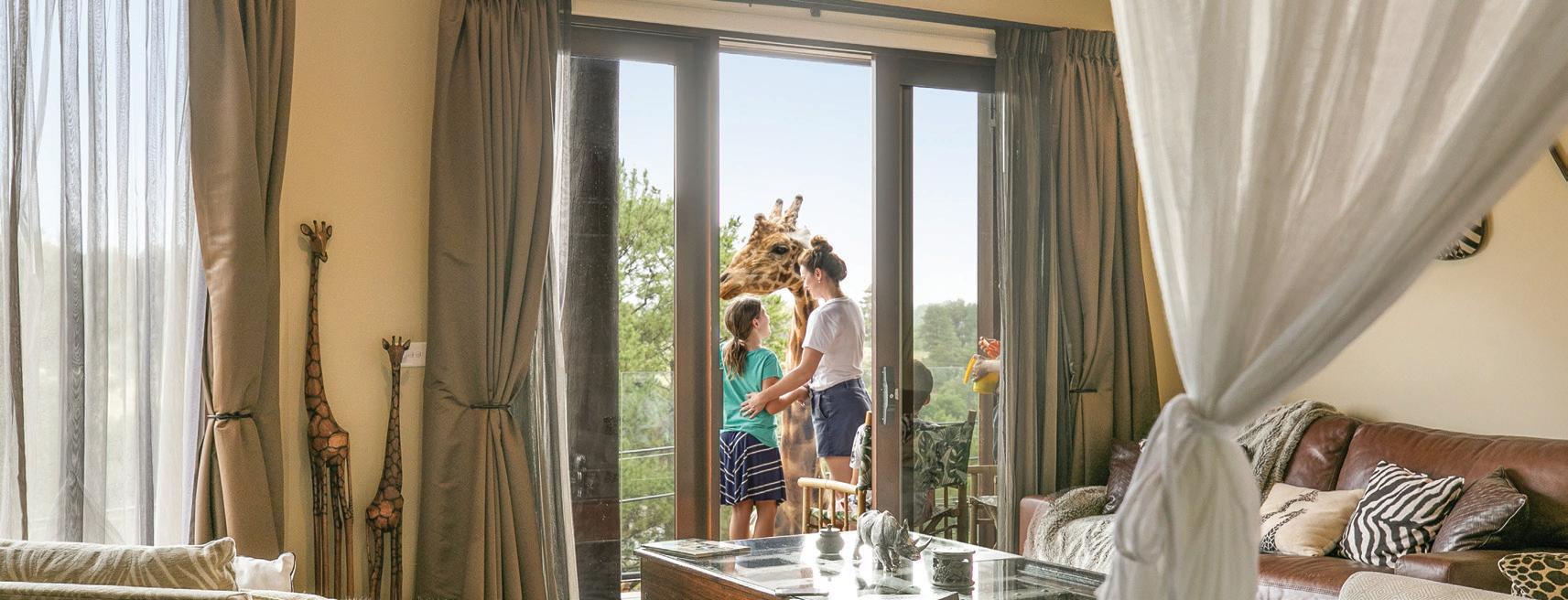


...so I said to my keeper “I’m over the social isolation …GET ME SOME HOUSE GUESTS!”


…and for six weeks I’ve only had my sister to talk to!
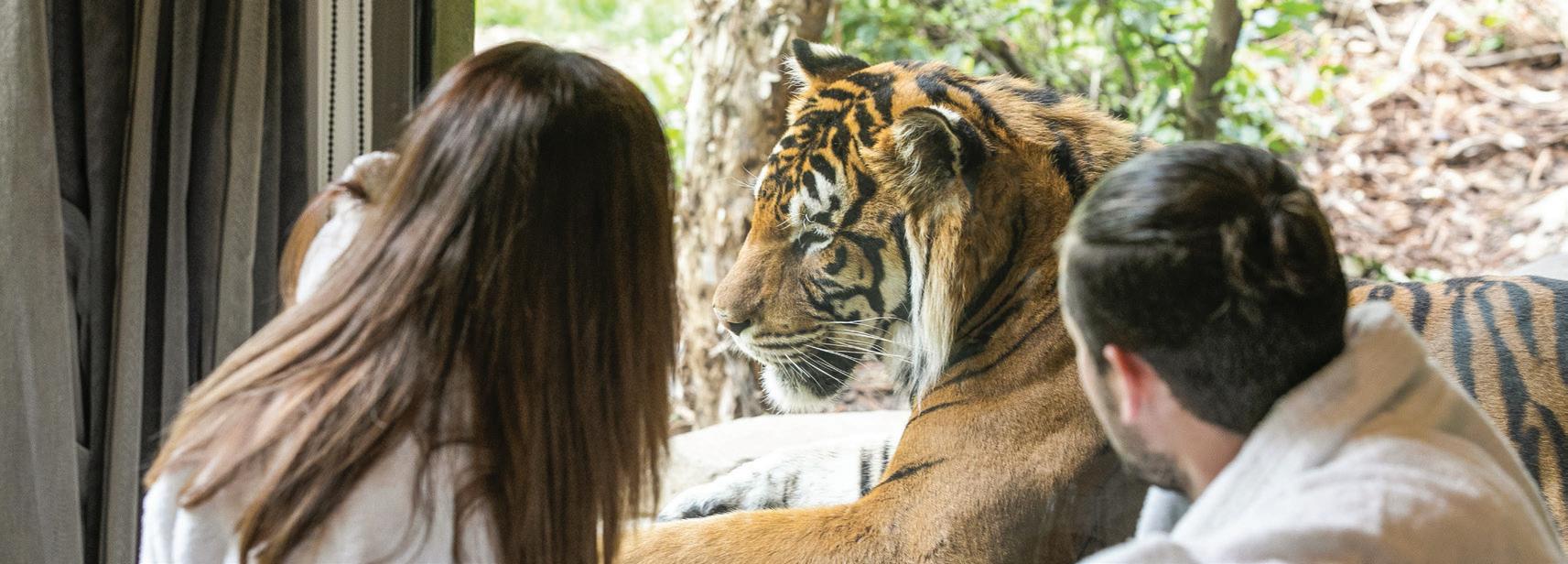
AFTER 6 WEEKS OF ‘QUIET TIME’, CAN YOU DEAL WITH EATING AND SLEEPING WITH 200 ANIMALS?
Jamala Wildlife Lodge is having a restricted opening of some of its rooms, only for a few nights a week and for those living in the Canberra region*. Due to social isolation rules and the fact that the zoo is still closed to the public, it’s virtually just you and the animals (plus a few other guests and some staff )! However, it’s not total seclusion - your ‘roommate’ will visit your balcony or window (maybe a giraffe, a cheetah, 2 lovable sun bears, lions or tigers) and your sleep will probably be interrupted by the roaring of lions and tigers or the calling of monkeys. What’s worse is that your roommates may hang around while you are having dinner in your luxury African themed room, as for the first time our chefs will have a gourmet 3 course dinner hamper delivered to your room. (If prior to your booking date, Government regulations allow dining in our restaurant, you may have this option).
20 hours living with the animals, but only for a very limited number of couples or families and most likely only for a week or two* *opening days subject to bookings and to Govt restrictions. Travel subject to Govt regulations.


@jamalalodge
@jamalawildlifelodge


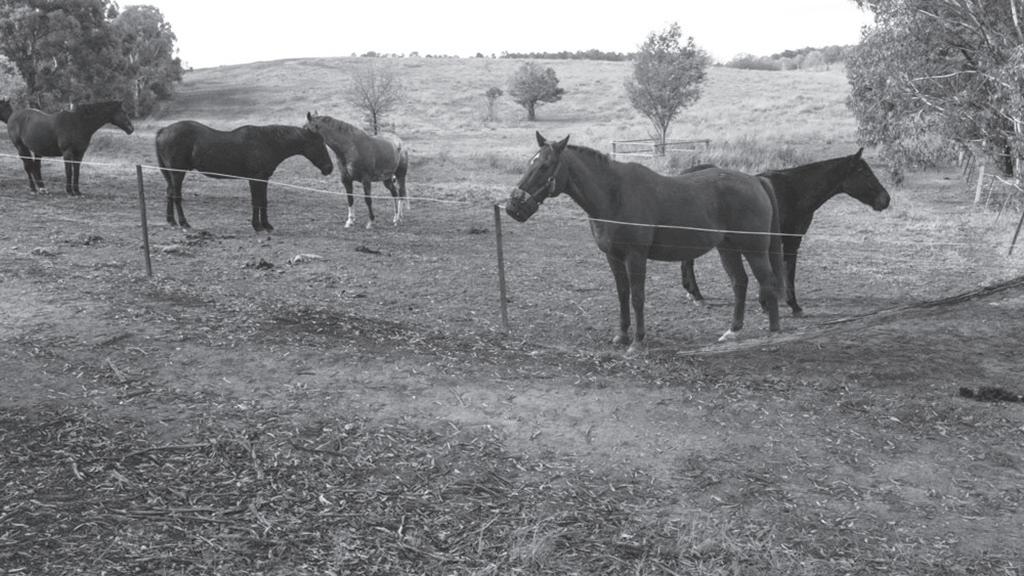
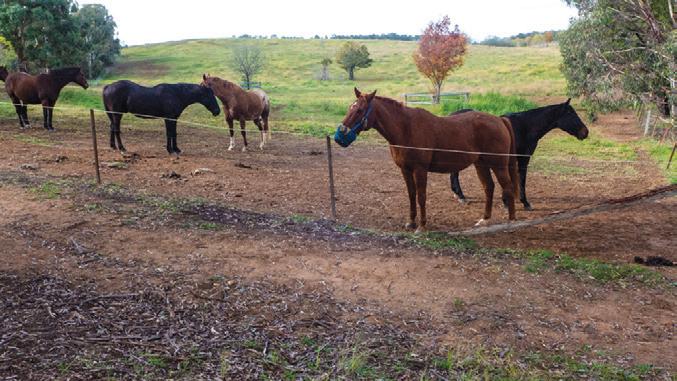
ALTERNATE facts are being used to deny the ramifications on a national asset and on the lives of Canberra’s active equestrian communities as the public wakes up to the ACT government’s secret land swap with the NCA.
The dreadful land swap will see the City Renewal Authority (CRA) trade the North Curtin equestrian paddocks for part of the lake in West Basin.
This secret deal was conjured up by the CRA with the National Capital Authority (NCA) and the North Curtin horse owners are the unacknowledged detritus in yet another of the nasty ACT government’s development deals.
In 1962, following more than a decade of advocacy, the government agreed with Walter Eddison to establish equestrian parks in Canberra. This was the same Walter Eddison, World War I Light Horseman, who served at Gallipoli and the Somme. He lost three sons in World War II and his property became the basis for Woden.

There’s now a park in Woden, Eddison Park, to honour
The North Curtin horse owners are the unacknowledged detritus in yet another of the nasty ACT government’s development deals.
this family. Were the NCA and CRA boards aware of this crushing blow to the hard work of this honoured Canberran and his family when they signed up to this horrible deal?
The North Curtin equestrian parks were first located on land that was eventually given over to the nearby golf club. The new site, on the southern side of the Cotter Road in North Curtin, was originally not in good shape. It had little vegetation and was often used for dumping rubbish. This changed through the dedicated work by locals and a Landcare group. They planned, planted and created shelterbelts and wildlife corridors to deliver better managed land for native birds and animals. Besides the equestrian communities, these green spaces are used for recreation by the nearby residents.
In 2014 a memorandum of understanding about access to the North Curtin paddocks was signed between the ACT government and the
equestrian association.
When the association recently questioned the Planning Minister’s office about this, the response was a denial of responsibility despite the agreement having been with the Chief Minister’s Directorate and signed by Minister Shane Rattenbury.
In 2013 the Yarralumla Residents Association fought off the NCA’s proposal to allocate lakeside land for embassies. That advocacy included research illustrating that the NCA was not making use of the land already available to it. Many sites were not being taken up by the designated embassies.
This mismanagement continues. Instead the NCA has been foolishly convinced to agree with the CRA and to enter into a questionable deal to allow the CRA to have a slice of the West Basin waters.
There are better options for allocating land for embassies. The lazy thinking by the CRA has led the NCA into the worst option for anyone who believes in community values, in the care of green spaces and respects the equestrian community’s right to have previously hard-won access to these paddocks.
hugely unpopular. It was abolished and the new City Renewal Authority was part of Andrew Barr’s solution. It has failed miserably to manage things better. This land deal with the NCA demonstrates that the CRA is worse than the LDA. The CRA has dragged the NCA into a place where deeds are done that brush aside people’s concerns for lifestyle, sustainability and heritage.
The research available on why cities need to enhance their green spaces is enormous. Cities are working hard to increase their greenery and this has been a wake-up call during the virus lockdown.
But apparently not for the fault-rid-
and by doing a deal to have the NCA bulldoze the North Curtin green spaces. What a collective achievement!
The proposal to rip away these horse paddocks from the equestrian community is bureaucratic foul play. Canberrans need to understand that this is being done in their name. Residents need to remember who is responsible for such horrible actions and to make their displeasure known at the polling booths in October.
Paul Costigan is an independent commentator and consultant on the visual arts, photography, urban design, environmental issues and everyday matters.



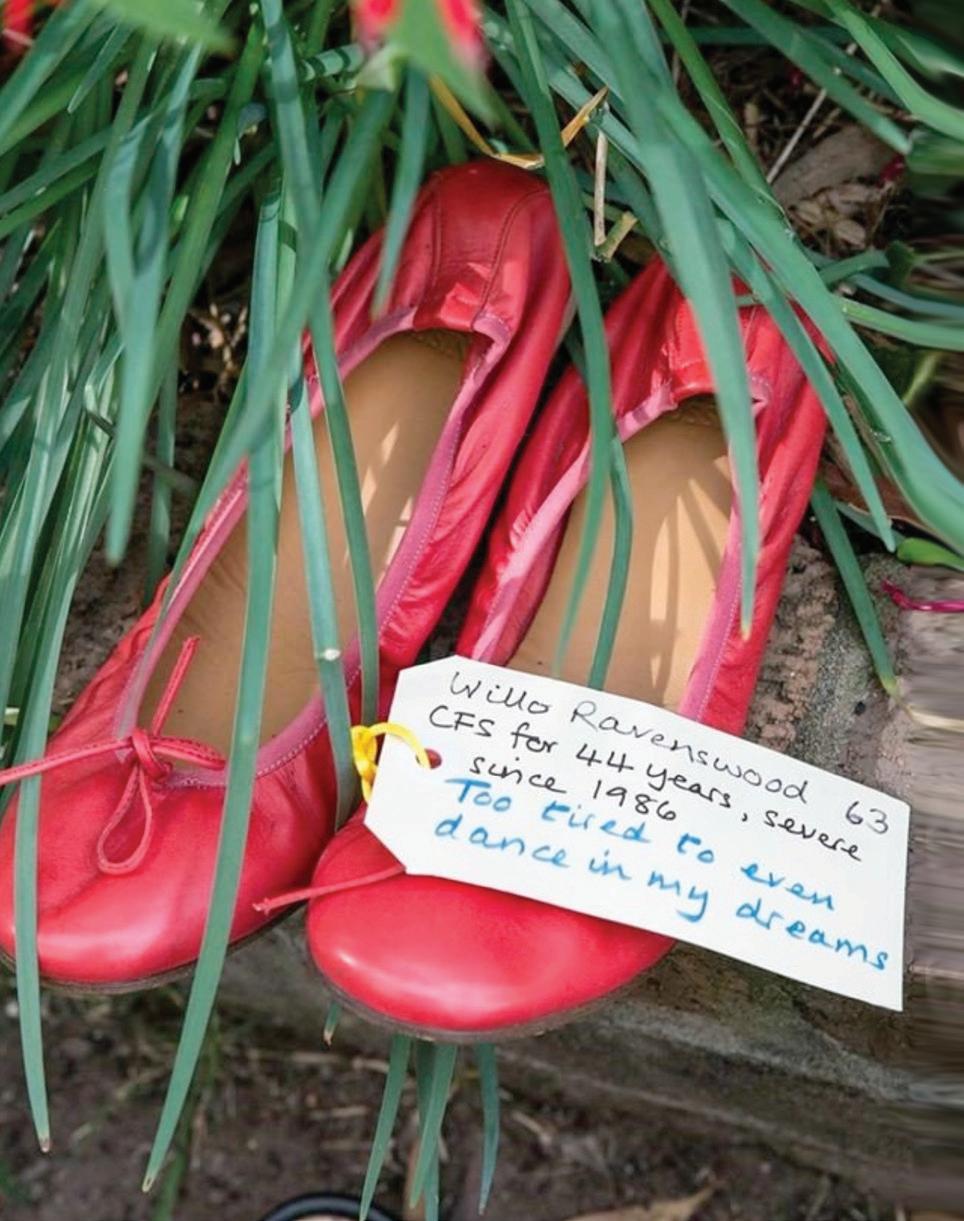
ME/CFS is a very poorly understood, hard to diagnose, and harder to live with disease.
The ACT ME/CFS Society provides regular self help courses and support groups for people living with ME/CFS and their carers (parents in particular)
These can be attended in person*, online or through video conferencing.
The Society also provides regular health and wellbeing seminars as well as access to free counselling for members.
Online courses support health care providers with education regarding ME/CFS.
*Not currently under the Covid-19 restrictions.
The ACT ME/CFS Society works closely with Arthritis ACT and Society members have access to all the programs delivered at Arthritis ACT.
admin@mecfscanberra.org.au www.mecfscanberra.org.au
WHILE not disinterested in planning issues, I am often impressed with the energy and enthusiasm that columnist Paul Costigan brings to the state of planning and quality of life of Canberra.
I had to agree with his reference to the ACT Labor/Greens alliance and its use of alternate facts to fend off criticism (“Stunned: the NCA’s lakeside land horse trading”, CN, May 7).
The now notorious Dickson land swap and the “non-building” of an Aboriginal drug and alcohol centre despite the money apparently being spent, the never ending tram propaganda (which at vast expense will save the city by destroying it). The reference to Orwell really set the tempo of the critique, however. The regime has in fact suspended belief in the existence of objective truth.
Rather than addressing the facts you create an alternative narrative (à la “1984”), and if it has to be changed weekly so be it. Orwell, although a socialist, came to despise the fact that socialists actually had contempt for ordinary people (that is us, the very people that their policies were supposed to help).
The risk of having such seditious thoughts is the risk of becoming, in Orwell’s words, an “unperson” having committed a “thoughtcrime”, which is essentially recognising objective truth, something the regime does not believe to exist.
I look forward to Paul’s next instalment!
Martin Gordon, Dunlop

I ALWAYS look forward to Nichole Overall’s articles on our region’s history in “CityNews”. It is amazing how she manages to undertake the breadth and depth of research into our past considering her busy civic and charitable contributions on top of being a wife, mother and journalist. What often confounds me, is that whereas other researchers have trawled through similar territory over the decades, Nichole invariably reveals new insights and intriguing angles that make the reader want to find out more.
Her story, “Memories of the first pandemic to silence Anzac Day” (CN, April 23) was really well written and balanced. It ranged from setting a global and national context spanning over a century, to closing in on her favourite Queanbeyan in 1928 and the heartfelt address of the reverend Wearne, a stretcher bearer from the Great War.
Thank you, Nichole, for highlighting the words he said to the mothers who had lost their sons. They resonate just as much today: “Think when the sheer loneliness of life grips you, when days drag, when funds run low – think of the sacrifice your sons made on Anzac’s shore, and learn to say: ‘It was for me’.”
This realisation bonded us as neighbours standing in recognition and remembrance at the end of our driveways on April 25.
Nichole Overall’s article placed in true context the scale of our “sacrifices” in meeting current challenges on this Anzac Day.
Garry Reynolds, Spence
WITH Bill Stefaniak now putting his hand up to create a Belco Party, I think there may be a chance to create some practical thinking without political ideology.
I wish there had been that sort of approach before the light rail was started, but that’s another story.
This approach may attract supporters of this new independence and I know through my own business experiences and my short stint at putting my hand up for local politics that there are some very business-savvy and well established people in Canberra who would morally, practically and financially support a fourth party, We really, really need this opportunity if we are to create practical change.
The biggest reality of our future is to identify what must be done to put the house in order. I’ve always believed in “doing the best with what we have” without embarking on new projects.
Consider future stuff, but be realistic. Don’t overspend. Isn’t that how we’re supposed to manage our family and business? Doesn’t
the community expect us to conduct good business? Pretty simple, really.
However, it will take some courage; courage to say what needs to be said. The people deserve the truth. We need a confident, no-nonsense leader. No factions. No individuals making their own arrangements. Leave political egos at the door. That would be a party I’d be keen to see, but you know what?
I hope that what Bill is trying to do attracts some good practical and realistic people. The ACT sure deserves it.
Chic Henry, via email
On hearing the ACT opposition leader say (on May 7) that the pandemic has ended, an inner-north voter was moved to poetry...
The pandemic has ended I know
Because we heard it from Coe
There’s no long road to slowly hoe
And no more virus as a long-term foe
Because we heard it from Coe.
– Anonymous
IT was a nice surprise to see the column by Pat Power in “CityNews” (“In adversity, goodness and love triumph”, May 7) and I hope to see more of them if possible. He has a wealth of experience and always puts a very human and kind touch on matters. Thanks very much.
John Farrands, via email


Be confident that your energy prices won’t go up, but will actually go down every July. That’s right, decrease!
Get price certainty – and peace of mind –by locking in great low rates until June 2022.
An easy, secure set-and-forget plan that rewards you with ongoing savings.
Don’t know where you’ll be next? Take the plan with you if you move anywhere in the ACT.
Connect with your local energy expert today. 13 14 93
actewagl.com.au/certainsaver assist@actewagl.com.au
“It is clear that as a community we failed Jonathon Hogan at every stage of his short and tragic life,” writes JON STANHOPE as he shares the sad story of the demise of a young Aboriginal man the system failed to save.
“I AM sorry that Jonathon experienced such despair in circumstances which were unsafe for him. In my view, the state failed to provide Jonathon with adequate care at a time when he was in great need.”
These are the concluding remarks of NSW deputy coroner Harriet Grahame in her report on the inquest into the death in Junee Prison in February, 2018, of Jonathon Hogan, a young Canberra Aboriginal man.
Justice Grahame’s formal finding into Jonathon’s death was: “Jonathon was mentally ill at the time of his death. He was alone in his cell. I find that his death was intentionally self-inflicted in circumstances of being held in custody with inadequate mental health care in the preceding months.”
The cause of Jonathon’s death was “neck compression as a result of hanging” with a ligature attached to a hanging point on the double bunk in his cell. He was 23 years old. He had a partner and five children.
Jonathon was born and grew up in Canberra. He was one of us, a product of our community. He went to school here. As a teenager he developed a drug and alcohol habit and spent time in juvenile detention. He became schizophrenic and developed other serious mental health issues that led to suicidal ideation and self-harm and he became a client of our mental health services.
As a young adult he became addicted to methamphetamine and, through offending related to mental health and drug addiction, was imprisoned in the AMC as well as in NSW.

It is clear that as a community we failed Jonathon at every stage of
his short and tragic life.
The most egregious of a litany of failings in Jonathon’s care in Junee Prison was arguably the failure to respond to the recommendations of a psychiatric report prepared following his detention that recommended, in light of the depth of his psychosis, that Jonathon receive intensive treatment in a gazetted mental health unit for his mental illness rather than in the prison.
However, the last and fateful chapter in Jonathon’s short life began on July 28, 2017, when he appeared before a magistrate in the ACT Magistrates Court on a number of charges. He was refused bail and the court ordered he undertake a mental health assessment at the Canberra Hospital.
He was transferred to the Canberra Hospital mental health unit by ACT police on July 29. The coroner advises that “Jonathon presented as distressed and reported that he had been experiencing auditory hallucinations since 2012. He reported “significant methamphetamine use” the preceding day (about eight points).”

ONLINE breastfeeding education sessions are now available to support families who are unable to access face-to-face services because of COVID-19 restrictions.
Led by breastfeeding educators, the Australian Breastfeeding Association (ABA) has introduced the Breastfeeding Education Live (BEL) interactive webinars via Zoom, covering topics such as how to position and attach baby to the breast, read baby’s cues and the signs that baby is getting enough milk.
Canberra volunteer breastfeeding educators will be part of the team facilitating the sessions.
Megan Fox, ABA Canberra group co-leader said the online service had been on its wishlist for a long time, but became more immediate when other services closed down.
“We are presenting these sessions in a new way, with groups limited to a maximum of 10 couples, to allow time to chat to each other and ask us questions,” she said.
An issue the coroner did not address, being beyond the scope of her jurisdiction, is the circumstances that led to Jonathon being able, apparently, to casually walk out of the Canberra Hospital, on the day he was dropped off by the police, and flee to Orange, where he was arrested two days later by NSW police, charged with new offences and sent to Junee Prison.
I attended the coronial inquest into Jonathon’s death in the company of his father Matt Hogan, in my capacity as an employee of Winnunga Nimmityjah Aboriginal Health and Community Service. Incidentally, Matt and I were the only two members of the public at the inquest.
In chatting with Matt he told me issues that continue to haunt him and

that did not fall within the power of the coroner to address are how Jonathon was simply able to walk out of the Canberra Hospital when he had been refused bail and was presumably remanded to the AMC and why, following his arrest two days later in NSW, the ACT did not apply for his extradition and return to the mental health unit at Canberra Hospital consistent with the order of the ACT Magistrates Court.
Matt believes that it is highly probable that if Jonathon had not been able to simply walk out of Canberra Hospital, had been returned to the ACT and had been able to access appropriate mental health treatment and drug and alcohol rehabilitation in a culturally appropriate Aboriginal-specific facility that he may still be alive.
Coroner Grahame also referred, in some depth, to the continuing relevance of the findings of the Royal Commission into Aboriginal Deaths in Custody and reiterated the undeniable truth that the over-representation of Aboriginal people in prison provides the immediate explanation for the disturbing number of Aboriginal deaths in custody.
She further identified racism and dispossession as at the heart of the underlying issues that create the circumstances leading to the level of contact that Aboriginal peoples have with the criminal justice system.
The scourge of black deaths in custody surely requires a stronger legislative response from governments across Australia. One such response that I would support is the introduction of legislation based on the UK Corporate Manslaughter and Corporate Homicide Act 2007. That Act provides that companies, and importantly government bodies, face prosecution if they are found to have caused or contributed to a person’s death due to their corporate health and safety failings.
The Act specifically applies to all deaths in police custody, prison cells, mental health facilities and immigration detention facilities.
Jon Stanhope was chief minister from 2001 to 2011 and represented Ginninderra for the Labor Party from 1998. He is the only chief minister to have governed with a majority in the Assembly.
“We know that successful breastfeeding depends on confidence, knowing you can do it and having good information.
“We offer online antenatal breastfeeding education sessions too, because the more information people have before starting the breastfeeding journey, the better.”
Megan said the BEL webinars were designed to allow all families access to breastfeeding information, resources and services, even if they live in remote or rural areas.
“We are mainly volunteer-run, so those in rural areas may not have access to a volunteer near them,” she said.
Through funding from the John James Foundation, ACT government and Southern NSW Local Health District, Megan said the Canberra group has a limited number of free and discounted membership/BEL packages for expectant parents in the Canberra region who have found it difficult to access antenatal breastfeeding education as a result of the coronavirus pandemic.
Register at breastfeeding.asn.au


‘On the
ACT’s “most recommended” real estate agent Sandy Morris, of One Agency, says that trust is her number one guiding principle when it comes to looking after her clients.
“My business has always been run on making sure owners are looked after. Building their trust is so important, so they know that my advice is from my heart,” she says. Sandy has recently received the Most Recommended Real Estate Agent Award by ratemyagent.com.au as voted by her clients. She’s also been voted the “most recommended” female real estate agent and in the top five agents in the ACT for three years running.
Sandy, who has more than 15 years’ experience in real estate, started out working for the larger agencies before making the decision to join the One Agency network in 2014 as the principal of her own agency, One Agency Sandy Morris.
and house sales,” she says. Sandy calls her One Agency team her “work family” who are based at the Kambah Village.
“My clients trust that I will get as much as I can from the sale of their property and make sure it is a smooth process for them, so they can move on.”
And now is a great time to get your house on the market, with prices remaining strong and buyer confidence back after a short break during COVID-19 restrictions, says Sandy.
My business has always been run on making sure owners are looked after. Building their trust is so important.
She admits that when she first started out on her own she was concerned if anyone would trust her, but word-ofmouth grew after she proved how well she looks after her clients and her great results.
“The business has grown exponentially, with eight of us now in the agency, dealing with property management
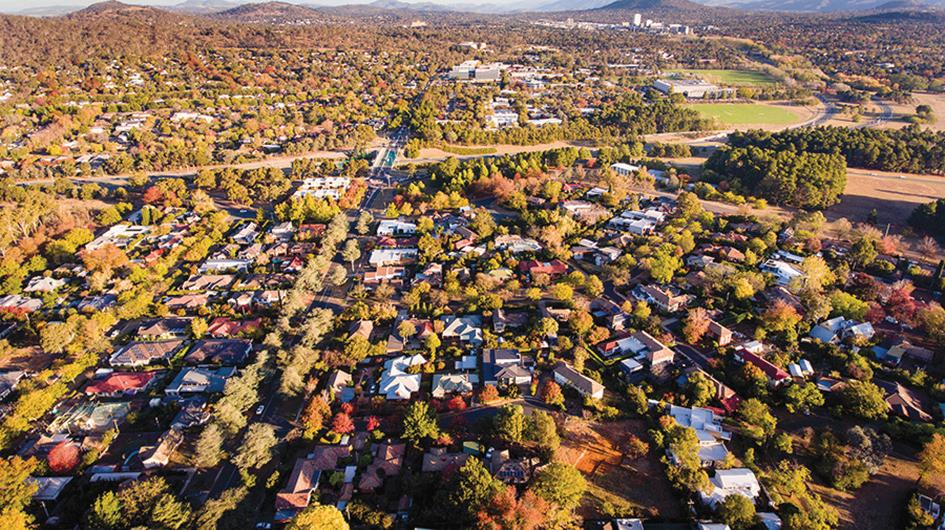
“As far as buyer interest goes, it is back to normal. I am optimistic that the ACT remains a strong market,” says Sandy who says she now modifies how her open homes are run to ensure social distancing.
She encourages owners to feel confident at this time to put their home on the market, despite media stories that focus on “doom and gloom”.
“On the ground, there is no difference in buyer interest and prices haven’t dropped,” she says.
Sandy says that winning the “most recommended” real estate agent award makes her feel proud to know that the feedback from owners has been so positive and that above all... they trust her.
One Agency Sandy Morris. Call 6296 4252 or 0420 380895, email sandymorris@oneagency.com.au or visit oneagencysandy.com.au



Award-winning real estate agent Sandy Morris… “My clients trust that I will get as much as I can from the sale of their property and make sure it is a smooth process for them.”



BLAMING others is the most popular technique in current politics.
By blaming the World Health Organization and China over COVID-19, American President Donald Trump has moved the political focus.
The US is well experienced at blaming others when it comes to the spread of disease. There is significant evidence, for example, that the 1918-19 so-called Spanish flu originated in Kansas and was taken to Europe by the US military towards the end of World War I. From there it spread across the world. And we still call it the “Spanish Flu” instead of the “Kansas Flu”.
It is not as though warnings from health organisations were not clear and loud.
For years the World Federation of Public Health Associations has been arguing that it is time to increase expenditure on prevention from the average of less than 3 per cent of health budgets in developed countries.
This association, representing more than 100 public health associations internationally, has argued for a focus on prevention, protection and health promotion. The advocacy has largely fallen on ears deafened by the sound of conservative ideology.
The World Health Organization is not perfect. However, assigning blame on it as though it’s done nothing flies in the face of reality. It is important to keep in mind that as a UN body it has no power over other countries. It receives its mandate and finance from the World Health Assembly, which is a meeting of health representatives from most nations on earth.
The former director-general of the WHO, Dr Margaret Chan, as far back as 2012 warned of impending disaster as she attempted to move countries from complacency to action. She told the executive meeting of the WHA that “the challenges facing public health, and the broader world context in which we struggle, have be -
The US is well experienced at blaming others when it comes to the spread of disease. There is significant evidence, for example, that the 1918-19 so-called Spanish flu originated in Kansas.
come too numerous and too complex for a business-as-usual approach.”
Dr Chan later approached the World Federation of Public Health Associations requesting guidelines to improve public health in a globalised world. The outcome was “The Global Charter for the Public’s Health”. One of the prime objectives was to “ensure a comprehensive approach to tackling the threats to health everywhere”.
This charter was released in 2016 and became the force for change during my own time as a member of the WFPHA’s governing council and as president. It was designed to work hand-in-hand with the UN Sustainable Development Goals. However, governments preferred to spend money on treatment rather than prevention. Protection, prevention and health promotion! Where governments have paid attention to these three guiding principles countries have fared reasonably well through COVID-19. However, where funding to these areas has been slashed, governments have not been in an appropriate position to handle the pandemic.
These messages ran parallel to so many similar ones from the WHO. Was the WHO approach perfect? No. Could they have done more? Probably. However, it should be noted that the entire budget for the WHO is similar to that of a major tertiary teaching hospital in Germany or the US.
And, to rub salt into the wound, the US was already recalcitrant in its dues to the WHO when President Trump announced a moratorium on funding from that country. This
was in marked contrast to Germany, where Chancellor Angela Merkel saw the need for co-ordination and boosted her country’s contribution to the WHO.
Trump has been trying to blame China for his own failings since becoming President. Aligning the WHO with China, despite having no evidence, moved the focus from his own dramatic failures in handling COVID-19 in the US. With more than 1.5 million cases and approaching 100,000 deaths, he really does have something to hide.
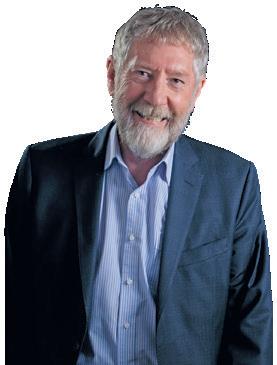
The Sharri Markson story in the “Daily Telegraph” suggesting a “Five Eyes” intelligence leak provided evidence COVID-19 emerged from a Wuhan laboratory was not only false – it was not leaked by any of the five intelligence organisations.
Sadly, it was part of the US propaganda and it appears was leaked through the US embassy in Canberra.
The blame game is alive and well. It is not so long ago that a disastrous and expensive war was conducted on the basis of “weapons of mass destruction”. Just as the truth is the first casualty of war – it seems it is also the first casualty of a failed political response to a pandemic.
Michael Moore is a former member of the ACT Legislative Assembly and an independent minister for health. He was president of WFPHA 2016-18.
By Kathryn VUKOVLJAK

STROKE survivor Nathan Nguyen climbed five of Canberra’s hills and mountains over five days to raise awareness of stroke in young people.
Through his efforts in making it to the top of Mt Taylor, Mt Painter, Mt Arawang, Mt Ainslie and Red Hill, and other fundraising events over the past two years, Nathan has raised more than $15,000 for the Stroke Foundation and was a finalist in its 2020 Stroke Awards Fundraiser of the Year category.
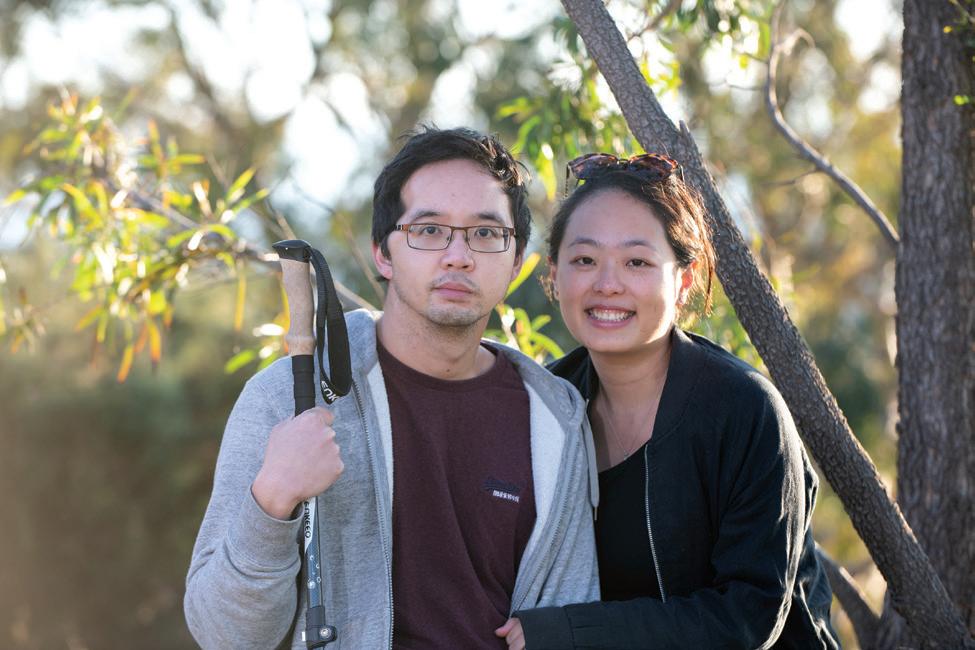
Following an ischaemic stroke caused by a work injury in 2018, air force armament engineer Nathan, now 32, was given the grim prognosis that he wouldn’t walk again.
“I had a fair amount of shock at the extent of my injury but I was keen to prove the doctors wrong,” he says.
“Therapy has been and still is a huge effort, though it is paying off and I can

walk again despite everything taking a lot longer than I’d like.
“If nothing else, perseverance has always been one of my virtues.”
Nathan, of Harrison, says he wanted the physical challenge of tackling some of Canberra’s peaks.
“Before the injury I was an avid hiker, so it felt important to me that I get something of the old me back, even in a limited capacity,” he says.
“It wasn’t easy, nothing like it would have been three years ago, but I had my wife Kerrie and a group of supporters with me which helped me get there.”
Nathan says he is continuing in his recovery, having returned to work last year.
“I’m fortunate to be cognitively intact, and grateful that I’m still essentially me and that the stroke didn’t cause any lasting damage in that regard,” he says.
“It’s the physical component I’m still battling with and I need a stick to help me with walking sometimes, though my main issue is my left arm. It used to be a dead weight but now I can move it a bit.
“From being wheelchair-bound to where I am now, I’ve come a long way.”


IF that good-fornothing coronavirus, is good-forsomething, it’s been time.
Time to organise the home office, time to get the garden growing, time to get the house warm for winter and time to bring those dream home ideas to life. And to help bring those dreams to life, “CityNews” speaks with Canberra experts, who are passionate about helping people improve their home. Here’s what they said…
‘High standard’ landscape supplies for any job
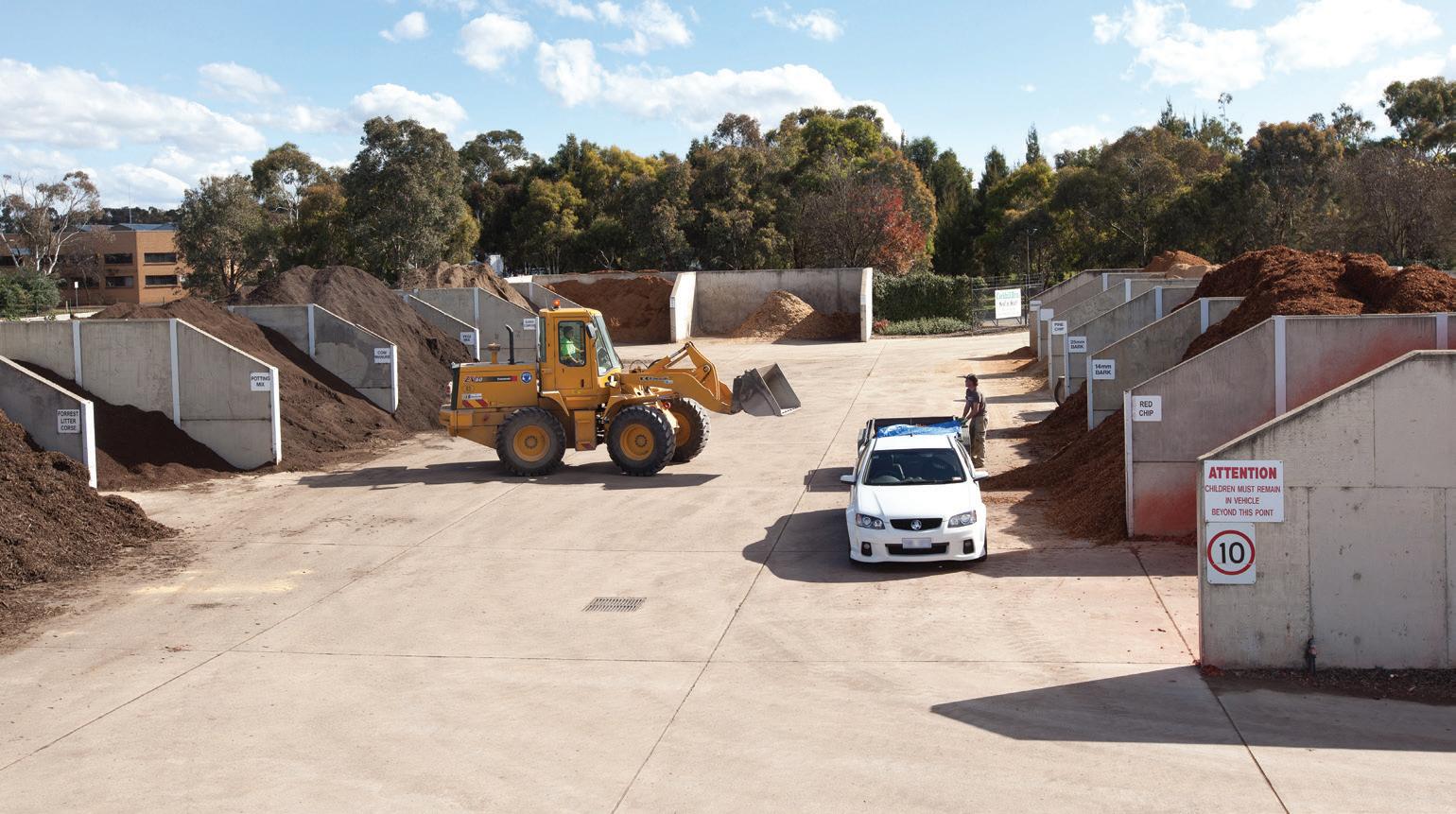
WITH more than 65 years’ experience in landscape supplies and green waste, Corkhill Bros staff can help with any project, whether residential or commercial, says director Brian Corkhill.
“Our staff are always welcoming and happy to talk customers through our extensive product ranges, and offer a large variety of truck sizes to help with each project,” says Brian.
Corkhill Bros’ products range from mulches and soils to sands, gravels and firewood.
“We extract and process all of the soil mixes within our range [and] we get these soil mixes tested bi-annually to ensure our customers only receive the highest standard of products,” says Brian.
Corkhill Bros continues to host the green waste drop-off facility at the Mugga Lane Resource Management Centre, as well as receiving all the green waste collected in the Canberra kerbside green bins.
“We are highly committed to ensuring all green waste that’s received at our facility re-enters the Canberra community as a
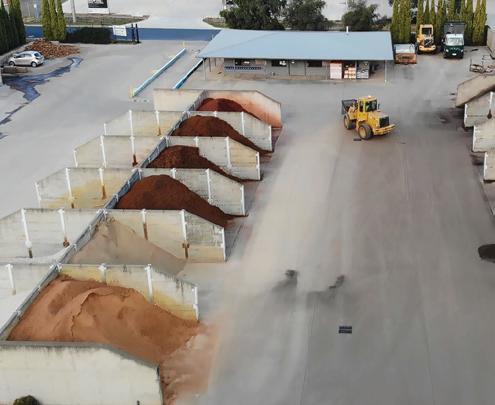
green-waste derived product can be purchased as a mulch or soil conditioner (coarse forest litter or fine forest litter) from our Mugga Lane or Mitchell depots.
“The composted green waste is also incorporated into many of our soil mixes as an organic component.”
Brian says Corkhill Bros is committed to expanding its service
scaping products in a cubic metre bag, which is suitable for projects with restricted site access or those that cannot have loose material tipped on site,” he says.
Corkhill Bros, 33 Darling Street, Mitchell (6241 8860), and Mugga Lane Resource Management Centre, Symonston (6239 7200). Call or visit corkhillbros.com.au
Neil’s quick to get quality windows to clients
SKYVIEW Windows was created more than 15 years ago in a small factory with a staff of five and a vision of supplying quality products in the shortest possible lead times, says managing director, Neil Thompson.
“The company mantra from day one was ‘Quality Windows, Fast’,” says Neil.
Since then, Skyview has grown and seven years ago expanded to a 2500sqm factory in High Street, Queanbeyan.
Neil says part of Skyview’s suc
are manufactured right here in Queanbeyan to Australian standards using dedicated local people from a mixture of local and imported raw materials to ensure cost competitiveness and, unlike the major window companies, all the profits stay right here,” he says.
“Skyview is the only window company able to supply any powdercoat colour with no cost premium involved.
“This allows our customers to mix and match colour schemes for their houses without having to

Since 1954



tions get people the best sale results.
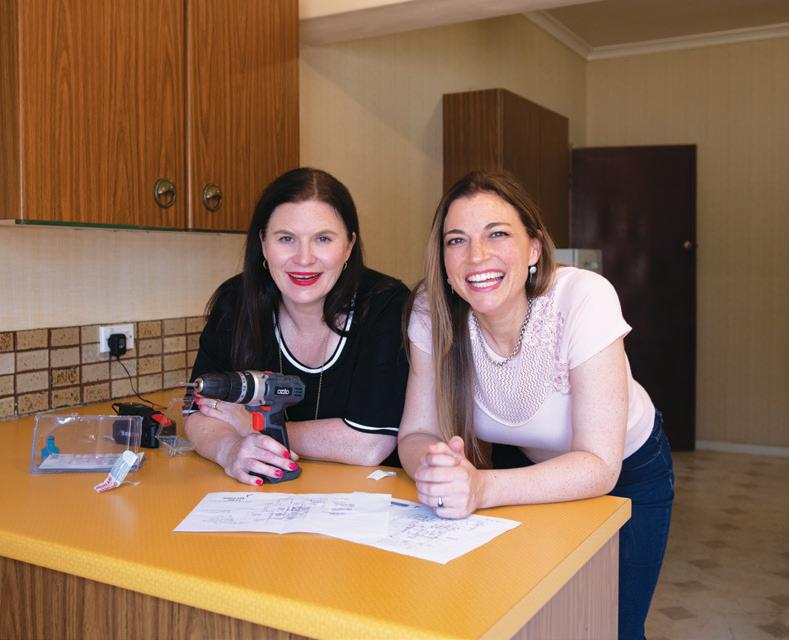
By taking on the up-front costs, Kim and Sophie, backed with years of experience in home renovation, say their innovative, local business gets homes sold quickly, without the worry of financial hardship.
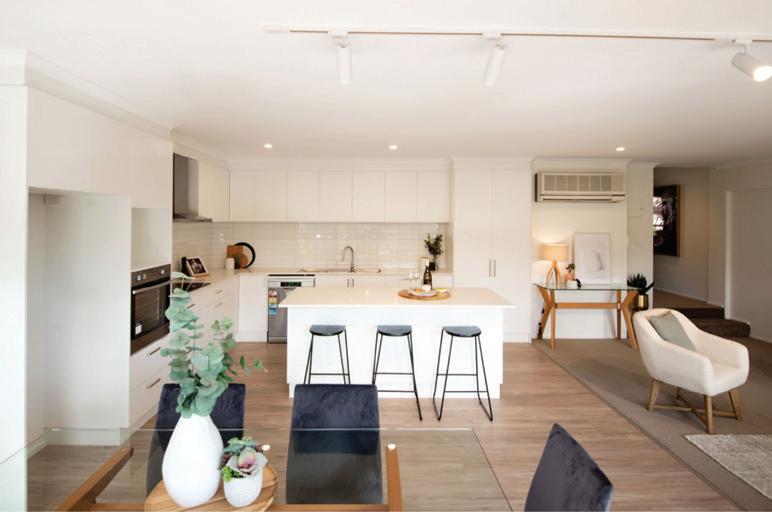
They take all the hard work on for their clients and pay for all the up-front costs, confident in their ability to make strategic improvements to a home, only renovating where it will increase the value of the home and improve the sales result.
“Our clients love not having to do anything, as we manage the entire renovation for them,” says Kim.
Kim and Sophie, as well as their team of tradespeople, stylists and real estate experts, organise and manage a renovation, style and prepare a home inside and out, ready for sale.
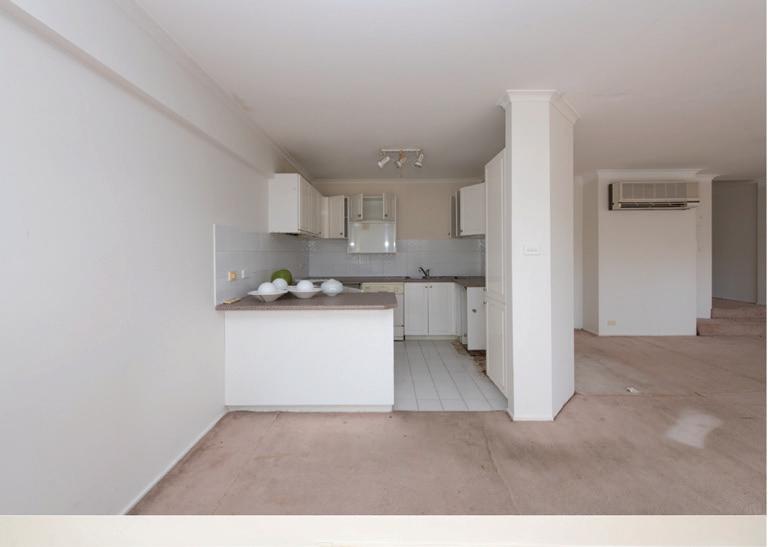
kitchen and living area,” says Kim.
It’s all been renovated, styled and put on the market now, ready for sale. On Saturday, it had the most inspections booked for LJ Hooker for any of their other listings!”
During these unprecedented times, Kim says it’s even more important to ensure a property has the greatest chance at selling by looking its best and appealing to the majority of buyers.
“That is where Your Property Profits can help to ensure you get the best possible price at sale and walk away with more money in your pocket,” says Kim.
Your Property Profits. Call Kim and Sophie on 1800 225597, email hello@yourpropertyprofits.com.au or visit yourpropertyprofits.com.au
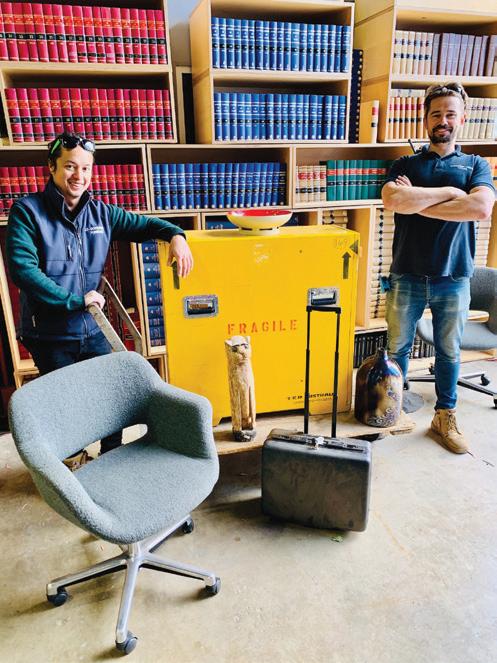
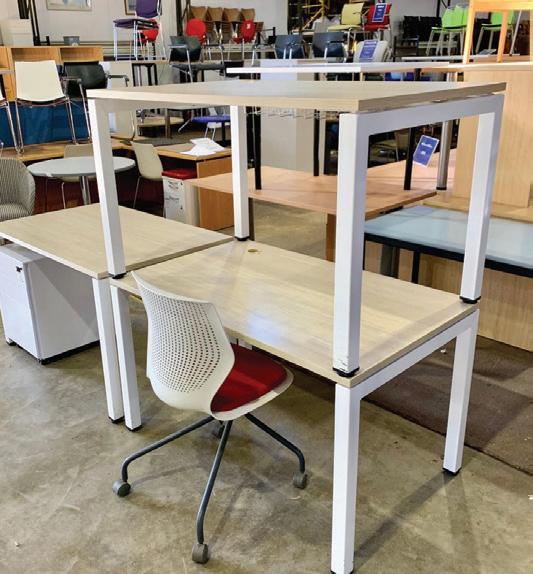
A DINING chair can only get people so far, according to Ex-Government Furniture owner James Fullerton, who says a decent office setup is important for people working from home.
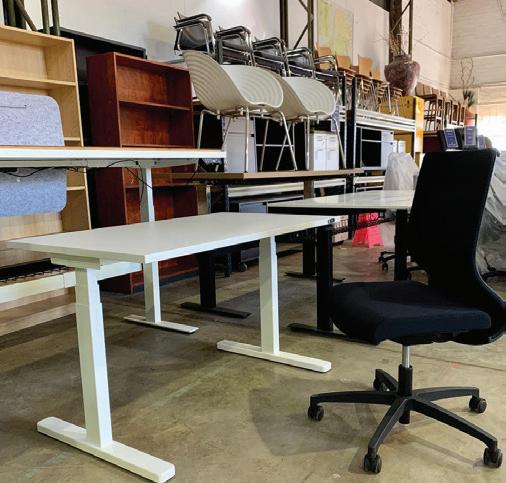
“We have a large range of office chairs that are comfortable and adjustable, as there might be more than one person using it,” he says.
“We also have a lot of small desks and workstations, as we know people are finding it hard to co-work with partners and kids at the dining table and need to create a separate ‘office’ in the corner of another room.”
At the moment, James says storage items are popular, too, particularly items like mobile drawers on wheels that allow people to hide office or school clutter by sliding it out of the way.
“Things have to look neat at home for those Zoom meetings!” he says.
“[With] school work, extra devices and office filing, it can all pile up. We all want to look professional and feel organised when having meetings at home.”
He says garage storage and metal shelving is also proving popular, as more people are getting into the garden or doing DIY jobs.
“People seem to have more time as they’re not commuting, and are out in the garden so the tools need to be organised,” he says.
Ex-Government Furniture, which James says sells designer items at a lower price, has a strict social distancing policy at the moment, with a cordoned-off area for bringing out and demonstrating products.
Ex-Government Furniture, 6 Yallourn Street, Fyshwick. Call 6280 6490 or visit exgovfurniture. com or facebook.com/exgovfurniture







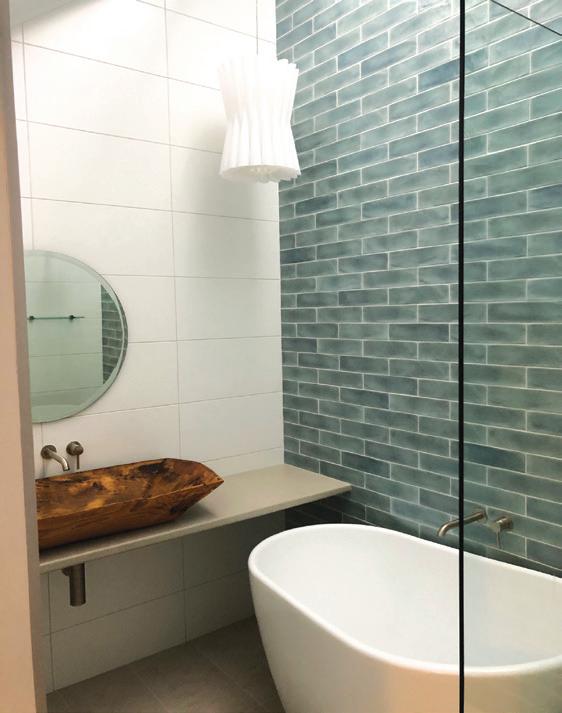
TILES are a great way to update the home, says Rivoland Tiles’ general manager James Hibberson.
“Our comprehensive service provides a great knowledge of tiles, and we have the latest, most advanced products sourced from overseas,” he says.
“We are conscious of the everchanging styles available and our team is always up-to-date with current trends and technologies.”
Rivoland Tiles, a family-owned and operated business, has a large variety of new and trendy tiles, and provides quality service and commitment to creating the best tile selection experience, James says.
He says they are one of the largest tile stockists on the eastern coast and are the largest supplier of tiles in the Canberra region.
With a knowledgeable and reliable team on hand, James says Rivoland Tiles also provides fixing materials, tools and technical advice to achieve the best possible outcome, whether it be for a home renovation, project home, boutique or a large-scale development.
“We love helping families renovate or build their dream home, or help make their investment a success,” he says.
Rivoland Tiles. Queanbeyan showroom at 100 Crawford Street, call 6297 4510. Mitchell showroom at 55 Darling Street, call 6241 1557. Visit rivoland.com.au


BY providing an even heat distribution, in-floor heating is popular for getting the home pleasantly warm for winter, says the P.A.P. Heating Solutions managing director, Peter Heaney.
Specialising in floor-heating products and services, Peter says in-floor heating is also popular in greenhouses, outdoor access areas, sports stadiums and factories.
When it comes to in-floor heating, Peter says warmth is distributed wall-to-wall, thanks to the heating cable being evenly embedded within the floor.
“The even heat distribution means no hot or cold spots, so it’s ideal for children,” he says.
“Being unobtrusively embedded within the floor allows for furniture to be located anywhere, without having to consider duct outlets or other equipment.
“[And], floor surfaces that are normally cold to touch, such as slate or tiles, become a pleasant source of warmth.”
P.A.P. Heating Solutions says in-floor heating is especially recommended for people suffering allergy or respiratory complaints such as asthma, caused by moving air or dust particles.
The system runs on off-peak electricity, which is comparable to gas, and no building modifications are required for installation in a new home with a slab floor, according to Peter, who says as there are no moving air draughts, rooms can be adequately heated at lower temperatures.
Peter says a combination of radiant and convective heat provides excellent comfort with little vertical temperature variation, making slab heating suitable for homes with high ceilings.
“It’s also quiet, clean and safe to run, with no maintenance required,” he says.
P.A.P. Heating Solutions, 23 Winchcombe Court, Mitchell. Call 6242







By Danielle NOHRA

IT’S rare to find a musician who plays from the heart, but 16-year-old violinist Isaiah Bondfield does it easily. His musical journey, on the other hand, has been a little harder, says his teacher.
Sydney-based Madeleine Easton became Isaiah’s music teacher after he approached her and asked for lessons while he was volunteering at the Canberra International Music Festival last year. She was performing with her orchestra Bach Akademie Australia.
Even though Madeleine is a well-estab lished, internationally recognised violinist, she still loves teaching and says Isaiah is a deserving student.
“He is facing circumstances quite different to the average music student of his age,” she says.
“He is from a family of six children, he pays for his own lessons, he pays for his own travel from Canberra to Sydney, sometimes even getting up at 3am in winter to get the bus up. He also pays for all his own music, strings, instruments and instrument maintenance.”

But, for Isaiah of Dunlop, his love of music drives his violin playing, even if it does mean long bus trips to Sydney, or busking for money.
professional musician is nigh on impossible if one doesn’t come from a wealthy family,” she says.
“There is no way I could ever have purchased [my violin] without a great deal of help.”

And Madeleine says she can’t think of anyone more deserving to help than Isaiah.
“He is from a large family who simply do not have funds to supply him with the instrument and bow he needs,” she says.
“Isaiah also should not have to be thinking about how on earth he can work in the hours outside school in order to raise the money for his violin lessons, and also a new bow and violin. He’s only 16 and should be focusing on school.”
Having lessons with Madeleine has made a world of difference for Isaiah who says he has learnt more in the last year than he had in the past four years.
“But as my technique is improving, I’m realising, and others are realising, that I don’t have a good enough violin,” he says.


“I haven’t been able to afford one because I’m always paying for my lessons, but an upgraded violin would help in many ways.
“You always aim the highest. I’d want to go to Europe if I could. I’m really interested in music in Germany but I don’t know if I can do it financially.” Otherwise, Isaiah says he would look into expanding his music knowledge in Sydney or Melbourne.
But it seems like Isaiah is already on the road to musical success, and this year was appointed concertmaster of the Canberra Youth Orchestra, and has been accepted into the Australian Youth Orchestra as one of its youngest members, says Madeleine.
Isaiah also does some chamber music with the ANU open school of music.
“My favourite music is chamber music,” he says.
“It’s my favourite thing because when there’s no conductor, everyone in the
orchestra leads, and that’s what brings music to life.
“It’s my favourite thing, when you get a group of people who are putting their souls into the music.
“It’s never the music that impacts me, it’s about how it’s played, and it’s the deliverance of the music that stays with you, which is why I love chamber music.”
More broadly Isaiah says he wants to get to a place where he can create music that affects people “emotionally and on a ‘spiritual’ level – not religious spiritual but life-changing spiritual”.
“[That’s] my final goal, and what all the goals of studying are all about,” he says.
“It’s also related to, in a way, why I like the ‘life’ of chamber music.”
Anyone able to help Isaiah should contact madeleine@bachakademieaustralia.com.au




THE Street Theatre has well and truly emerged from isolation, with a successful Zoom session of “First Seen” in mid-May and now a new live-streamed performance of the vampiric tale “St Nicholas” by Irish playwright Conor McPherson, directed by Shelly Higgs and featuring actor Craig Alexander as a cynical theatre critic in Dublin who meets a group of modern-day vampires who offer him eternal life. View at vimeo.com/376745123, Friday, June 5 to Sunday, June 7.
GLASS artists Benjamin Edols and Kathy Elliott have been working in partnership since their first joint exhibition at the de Vera Gallery, San Francisco, in 1993. Their collaborative works involve a two-stage process of hot and cold glass techniques, where once Edols has blown the vessels, Elliott cuts the glass on a lathe to create a surface of lines and planes. They’re exhibiting their works at beavergalleries.com.au until May 24.
OPERA Australia’s CEO Rory Jeffes has reflected on the “harrowing impact” restrictions on mass gatherings are having on the company’s winter season, with the cancellation of the new production of “Carmen” by Matthew Barclay, which would have toured to Canberra Theatre, as well as Davide Livermore’s next digital instalment of Donizetti’s Tudor Queens trilogy, “Roberto Devereux”, the Australian premiere of “Light in the Piazza”, and the premiere of “Rembrandt’s Wife”, a new Australian opera by Andrew Ford and Sue Smith.
MUSICA Viva’s Paul Kildea has announced violinist Harry Ward and chamber music ensemble Partridge String Quartet as the third iteration of its leadership initiative, “FutureMakers”. The two-year, part-time project offers artists a comprehensive professional development curriculum focused on strengthening their entrepreneurial capabilities, nurturing artistic leadership and shaping the sector’s future.
MANY remember a time getting up early on a Saturday morning for the weekly dose of “Looney Tunes”. Now it seems at least a third of those who can recall such a past-time instead watch cartoons at midnight on a Friday.
Welcome to “Adult Swim”, the “night-time identity” of Cartoon Network, an after-hours, animated, humour-based platform, strictly for adults.
It’s a hub of the offbeat, weird and alternative. Spend a hot minute on their website and you’ll be sucked into a surreal and stylised sea of streaming. Not just television shows, but podcasts, music, games and much more, all instantly available and accessible.
While “Adult Swim” has been around since 2001, the quirky undertaking has found major success in its constant expansion and continuing evolution. If there’s one sure-fire window into the future of entertainment consumption, this is definitely it.
This week saw a return after a mid-season 4 break of the gem in its crown, the animated streaming phenomenon “Rick and Morty”. Even if you haven’t watched it, those names probably seem familiar. That’s because of the show’s knack for stirring up

news, ensuring it’s the hot topic of conversation or trending in your feed.
You could be forgiven for thinking “Rick and Morty” sound suspiciously like a certain ‘80s time-travelling, DeLorean-driving duo: a crazy old scientific genius takes his grandson on inter-dimensional adventures where they wind up in all kinds of cosmic situations. Despite the homages to beloved sci-fi classics, it’s definitely not for the kids.
The show is notorious for pushing


Stay in touch with the names making news on Sundays from 10am as 2CC and “CityNews” present Canberra’s only local weekend news and current affairs program.
It’s a revolving panel show that brings to the microphone great “CityNews” commentators and 2CC personalities.
Be part of the conversation call 6255 1206 between 10am and noon

boundaries. Jumping between philosophical and juvenile, the controversy that inevitably trails behind means there’s as many who love it as love to hate it.
In the famous words of 19th century American showman and circus owner PT Barnum: “There’s no such thing as bad publicity”. Not dissimilar to what we’ve seen with “South Park” (again, which you probably know even if you’ve never actually watched), “Adult Swim” thrives on the ability to make
you say: “What the actual?”, the shock value accounting for much of the recognition factor.
To give you an idea of the originality of this mishmash of mediums, in one of the newest episodes of “Rick and Morty”, a spoof fictional advertisement at the end of the episode gives a link to a website. Turns out if you type that domain name into your computer in the real world, it’s a “portal” to the show’s official website where more content is there to greet you.
This is a genius way to keep people engaging even after the credits roll and is setting the bar for viewer expectations in the streaming world.
Netflix not missing the beat picked up “Rick and Morty” to watch on their platform, too.
THAT streaming giant has also had major success again this week with another of their slickly produced documentaries at the top of the trending pops.
“The Last Dance” focuses on basketball superstar Michael Jordan and his journey with the Chicago Bulls. Emotional and inspiring, its popularity is no doubt in part due to the current big ball-shaped hole in
our non-sporting coronavirus lives.
OVER on Stan, in the last week there’s been the release of “The Great”, a comedy/drama series chronicling the rise of the 18th century Russian monarch “Catherine the Great”. Trust me, this is no time for eye-rolling as we progress from cartoons to centuries-old documented fact. It’s written by Tony McNamara who took out the 24-carat, 13-inch man in 2018 for his screenplay for “The Favourite” – a film about poor dotty Queen Anne of England that I personally reckon more than deserved the top honour of its year.
This is the cleverness of McNamara’s work: the brilliantly executed weaving of comedy into period pieces making them widely accessible and hugely entertaining, this has certainly been the case for me. I have a hunch that’ll greatly please the historian of note in my own family.

RIZLA in Braddon is on the go with its “iso menu” and while we were happy to drive to our dining destination for pick up, we wondered whether the food would withstand the test of delivery from the north side to the south side.
It’s a challenge many food venues face while feeding us hungry Canberrans these days. Rizla hits the mark.
We started with smoked salmon on crunchy light rye, with plenty of salmon on each piece ($6 each). It stimulated the taste buds and geared us up for the sensational tuna tartare which we scooped up onto potato crisps ($18). The quality of the tuna was right up there and the combination of flavours beautiful.
The mains were equally delicious and the chicken breast ($25) was wonderfully moist, despite its journey from point A to point B. It was served on top of a generous amount of creamy polenta, with crunchy greens and a lovely burnt-sage butter.

The melt-in-the-mouth, slow-braised beef cheeks is a perfect recipe for takeaway ($28). The decadent, rich and inviting Paris mash was a real treat and we applauded the depth of flavour in the red wine jus.
For our daily

For fun we ordered thin-cut Parmesan chips ($6) which were a bit tired on arrival, but not totally exhausted.
Like many hospitality venues, Rizla has put heart and soul into its “sorry but you can’t come and dine with us” menu. It’s been innovative with its packages, too. Think the “Happy Hour at Home grazing box” ($60), the “Deluxe Night In” ($125), the Light Lunch for Two” ($60) and kids’ meals which include fish and chips ($10) and chicken and chips ($8).
Rizla is famous for its wines and has great labels to choose from if you’d like to buy direct.
received but not yet accepted. We were given a timeframe for confirmation which was somewhat reassuring. Sure enough, shortly after noon we received confirmation and so two of our small lunch group drove to do the big pick up.
These systems are all fair enough in these crazy COVID times. Patience and flexibility are required if we want the luxury of ordering in some pretty delicious food.
Order online and pick up at the restaurant (corner Lonsdale and Elouera Streets, Braddon). Opening times at drinkrizla.com.au
By Helen Musa
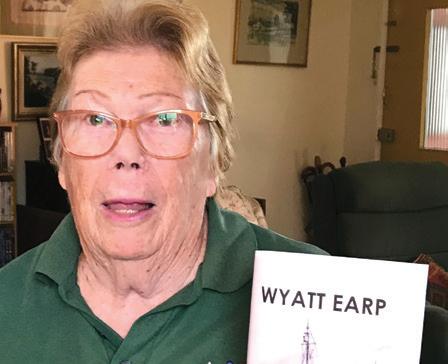
THERE’S something counterintuitive about a book on an Antarctic ship named “Wyatt Earp” coming out of landlocked Canberra, but when author Trish Burgess explains her background, it makes sense.
Burgess is no stranger to publishing. A long-time administrator at UNSW Canberra and now volunteer researcher, editor and proof-reader in the Howard Library, she is also a former vigneron who co-authored “Riesling in Australia” with Ken Helm.
But a book about the Antarctic? It turns out that Burgess, a Canberran since the 1960s, is the descendent of a naval family. Her grandfather was manager of Williamstown Dockyard in Melbourne, from which the British research ship “Discovery” set out in 1935 to find the American polar explorer Lincoln Ellsworth, who had gone missing in the Ross Sea. Burgess’ mother had met a young naval officer on the search ship who wrote to her for several years, sending details of the actual finding of Ellsworth.
Burgess helped her mother self-publish the letters from the young officer and it
was the beginning of a lifelong infatuation with the Antarctic, culminating in a new book, “Wyatt Earp: The Little Ship with Many Names”, published this month.
The larger-than life Ellsworth flew 3500 kilometres across the Antarctic mainland in 1935 and his four Antarctic expeditions opened up Australian people’s thinking about the Antarctic, she says, but the impetus to tell the story in book form came with the commemoration in September 2019 by the Australian Antarctic Division and the Norwegian Ambassador of the 100th anniversary since the launch of a little wooden ship built in 1919 in Molde, Norway.
Initially named “M/S [Motorskip] Fanefjord”, it was built as a coastal trading ship to carry cargo from Norway to England and as far north as Greenland.
An ordinary enough start, but from there the modest craft enjoyed an adventurous life coloured by the personalities who steered it.
It helped that Burgess’ scientist husband spent 11 summers in 16 years in the Larsemann Hills, near Davis Station in the Antarctic. Following his retirement, Burgess made four small-ship expeditions to the Antarctic, leading to a fever of researching and writing on the history of the region.
The story of Lincoln Ellsworth and his quaintly-named ship piqued her curiosity,
but the ship was her focus and connection began in 1933, The Australian Arctic and Antarctic explorer Sir Hubert Wilkins, had found M/S Fanefjord as a suitable vessel on behalf of the wealthy American, who had plans for Antarctic voyages and aviation feats.
The eccentric Ellsworth, who claimed to own the hair-trigger six-shooter with which the “Gunfight at the OK Corral” hero had fought, quickly renamed the ship the “M/V [Motor Vessel] Wyatt Earp”.
The ship was to make five trips to the Antarctic, four with Ellsworth and Wilkins
between 1933 and 1939 and one for the newly-formed Australian National Antarctic Research Expedition in 1948-1949. Burgess’ book covers the early years, its four Antarctic voyages between 1933 and 1939, its sale to the Australian government and its wartime duties with the Department of Defence and the Royal Australian Navy, a time when it was lent to the SA Boy Scouts, commissioning for the first Australian National Antarctic Research Expedition, its time as a coastal steamer carrying explosives to WA and Papua, and the final days carrying cargo to
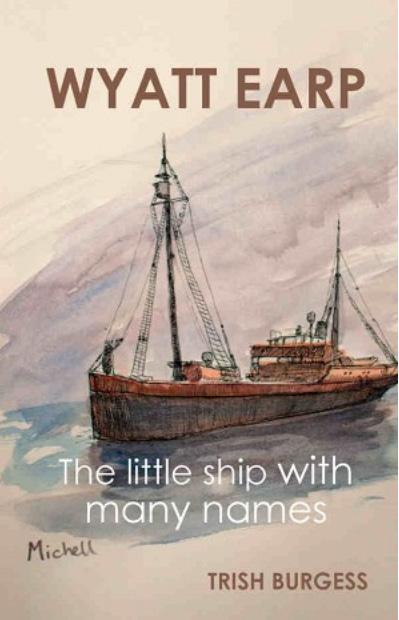
night at Rainbow Beach near Fraser Island, the ship grounded, never to sail again. “A warm and sunny place for the ‘Wyatt Earp’ to rest,” Burgess says.
“Wyatt Earp: The Little Ship with Many Names”, connorcourtpublishing.com.au. ($29.95).
By Helen Musa
THE lure of the Antarctic has always been powerful for Canberra artists bent on combating the view that the icy landmass to the south is fit only for the sounds of silence.
Now the head of the ANU School of Music, Kim Cunio, has created new music from usually unheard regions in the “Aurora Musicalis” compilation, available on Bandcamp.
Through the “Sounds of Space” project, Cunio joined space weather researcher at the British Antarctic Survey, Dr Nigel Meredith and Cambridge artist-engineer, Diana Scarborough to create a 90-minute soundtrack set to piano.
Meredith had already recorded Earth’s natural radio sounds not normally audible to the human ear at the Halley Research Station on the Brunt Ice Shelf, operated by the British Antarctic Survey.
Scarborough, who visited Canberra last year to work on the project, combined the resulting soundtrack with original visual sequences using photos and images captured at Halley, which she has described as “not only ideal for capturing these incredible sounds, but also stunning visuals, including spectacular auroras that light the horizons with bright and captivating colour.”
Cunio came on board around 2018 and listened to what Meredith had recorded, of which he says: “It blew me away. I’d never heard anything like it.”
No wonder, Meredith had grappled with four years of data normally used to investigate space weather storms, from the Halley Very Low Frequency receiver, and selected one day of radio emissions made by the planet, including spherics, whistlers and chorus, a series of weird and wonderful noises.
Based close to Cambridge is the British Antarctic Survey, where a group of about 200 scientists work. Cunio was impressed by them as “a really engaged community”. They even invited him to view a prehistoric ice core, “probably the most emotional moment in my life,” he says.
Meredith, who had been working through a

spectrograph which can show a visual image of sounds, effectively taught Cunio how to “listen” to the sounds over a period of months in a place where there is a very low level of noise, later moving into a house where he played along, improvising on the piano “as if I were in Antarctica”.
The resultant 90-minute recording, “Aurora Musicalis”, completed in just one day, is both a day in the life of Antarctica and a statement that science and art can work together.
To him, the music sounds at times like a kind of dawn chorus, but he knows many people will think it’s more like John Williams 1960s “Lost in Space” music and Meredith agrees, saying: “The result is these eerie noises that make you feel you are on the set of a classic science fiction film, but which at the same time are strangely familiar.”
“Aurora Musicalis” is free to access at soundsofspaceproject.bandcamp.com/track/aurora-musicalis-compilation



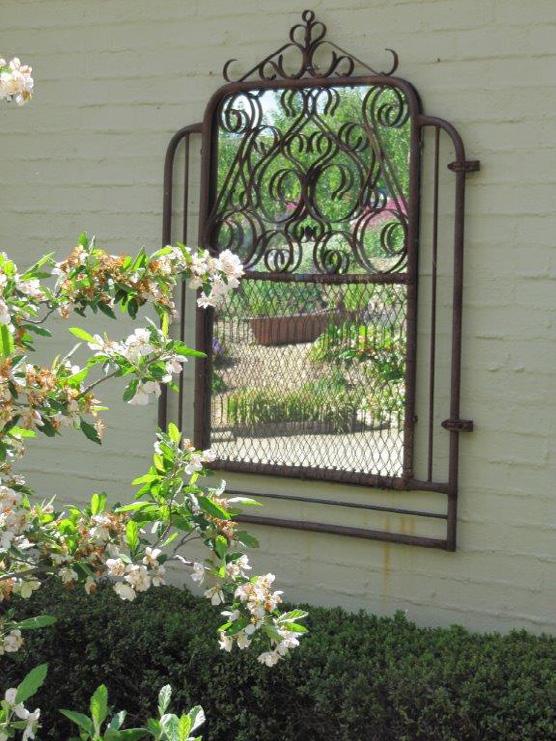
bought at The Green Shed, it’s a case of “one man’s trash is another man’s treasure”, as the saying goes. Two of the gates in our garden are examples of this, when garden-renovation clients asked me to throw out “rubbish” for them. One was a traditional front gate that I used in its original rusted state. I once saw an identical gate in a Bathurst garden transformed into a mirror mounted on a wall, which is a great way to make a small garden look bigger.
In the 1950s, the then Yass Shire Council decided to modernise the town and ordered all verandahs in the main street above the shops to be pulled down. Most had historic wrought-iron panels dating back to the late 1800s, many of which were cast in Britain and brought out as ballast on sailing

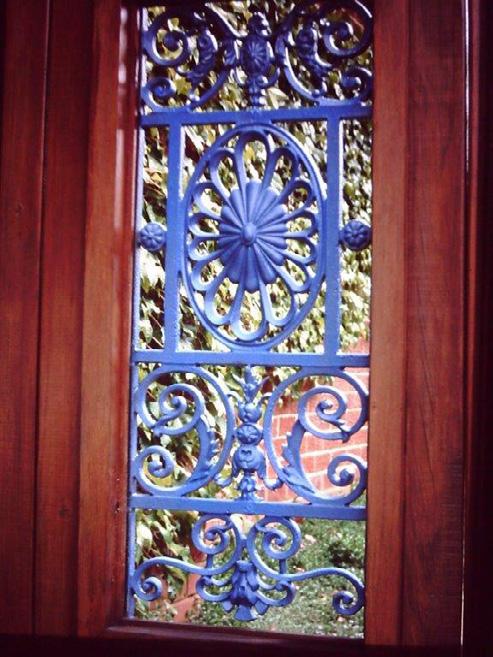
ships with wheat and wool on the return journey.
Illustrated here are two panels I rescued in Yass, dated 1899, which I incorporated into our
I’ve seen old rusty bicycles as a feature in gardens with the front basket planted with flowers. There is no limit to your imagination at minimal, if any, cost.
MUSHROOMS are springing up in many gardens and parks, from horrible-looking black ones to pretty red ones with white spots that look straight out of a fairytale.
In Britain and Europe, it’s a popular Sunday pastime to go mushrooming, however be warned! We’ve had poisonous death cap varieties growing here.

Mushroom warning signs have been placed near oak and silver
Warning signs have been placed particularly near oak and silver birch trees, as seen in Watson. I’d recommend not to pick any mushrooms in the wild and to make
children aware not to touch them, no matter how pretty they appear. Unfortunately, in Canberra we have had deaths from people eating wild mushrooms.
There is a wonderful range of edible mushrooms at the Capital Region Farmers Market at EPIC, as well as truffles, another fungus that grows in association with oak trees. We have several oak plantations on truffle farms in the district, often grown with hazelnut trees.
BEES are environmental champions and one of our ecosystem’s most important pollinators. They are responsible for much of our food supply and are essential to sustain life on earth.
Yet bee populations have been in decline for years, often due to the increase of chemical sprays, as well as forest and tree clearing, as is still happening in Queensland.
However, in the home garden we can play our part by not using chemical fertilisers and sprays and planting bee-friendly flowers.
Quoting the Japanese farmer and philosopher Masanobu Fukuoka: “The ultimate goal of farming is not the growing of crops, but the cultivation and perfection of human beings.”
FINALLY, congratulations to the committee and members of the Belconnen Garden Club for keeping in touch with each other during the lockdown. Every few days emails are circulated containing everything from garden hints to cartoons, jokes and poems to keep spirits up.


Joanne Madeline Moore
Your week in the stars – May 25-31, 2020
ARIES (Mar 21 – Apr 20)

Monday’s Mars/Uranus connection revs up your spontaneity, enthusiasm and motivation. So make sure you channel all of that fiery Aries energy into an appropriately positive and productive project. And is it time to patch up a festering problem with a relative or neighbour? Think carefully before you speak though! Hasty comments will just inflame an already sensitive situation, whereas soothing words are the balm that will heal an old wound.
TAURUS (Apr 21 – May 21)
With Venus (your ruling planet) in retrograde mode, have you got your head in the sand? If you avoid dealing with an important issue then expect more problems. It’s time to face the reality that a financial situation needs to be completely recalibrated or a major relationship has to move in a radical new direction. In the words of celebrity chef Jamie Oliver (who was born on May 27): “People hate change, until the pain of not changing is worse than change itself.”
GEMINI (May 22 – June 21)
This week the Sun, Venus and Mercury are all moving through your sign. So you’re keen to tackle things at a lightning pace as you solve a puzzle, multi-task like a pro, study, travel (locally), teach or just chat up a storm. With Venus in retrograde mode, it’s also a good week to forgive someone and let go of a grudge that’s been weighing you down. Then you’ll feel lighter and less encumbered by problems from the past. Destiny is calling so be ready to answer!
CANCER (June 22 – July 23)
Are you feeling stressed? Help is at hand, as the Sun, Venus and Mercury transit through your soul zone. So there is peace and quiet to be found via meditation, contemplation, creative visualisation, yoga, chanting or tai chi as you slow down and listen to your inner voice. As spiritual teacher Marianne Williamson observes: “Ego says – Once everything falls into place I’ll feel inner peace. Spirit says – Find your inner peace and then everything will fall into place.”
LEO (July 24 – Aug 23)
When it comes to your career (or lack of career) are you disappointed and disgruntled? You’re impatient to make changes but don’t underestimate the value of examining people and situations in a more careful, considered and creative way. This week the devil is definitely in the detail as you slow down, don your detective cap and have a serious second-look. If you have the courage to follow your true destiny, then things will slowly start to fall into place.
VIRGO (Aug 24 – Sept 23)
When it comes to close relationships, shift into take-charge mode. Mars and Uranus encourage you to keep the partnerships that are working well or have plenty of potential. But is it time to turf a lover who’s been letting you down? Or part ways with a business partner who’s not pulling their weight? Or finally discard a friend who doesn’t really have your best interests at heart? If you are proactive, decisive and perceptive, then you’ll reap the rewards.
LIBRA (Sept 24 – Oct 23)
Venus continues its backward trajectory through your aspirations zone. So you’re in the box seat for some major procrastination. But is that such a good idea? Do your best to be creative (rather than confused) and determined (rather than dazed). You can expect some setbacks and disappointments but so what? Don’t use it as an excuse to just give up. Be inspired by birthday great Clint Eastwood: “If something doesn’t come up the way you want, forge ahead.”
SCORPIO (Oct 24 – Nov 22)
This week other people will continually surprise (and flummox) you with their unpredictable antics, so don’t lose sleep trying to work out where they are coming from. And avoid being a cynical Scorpio who sabotages relationships. Nurture and cherish your close connections. If you’re unhappily single, keep pursuing your dream of finding your soul mate. Draw inspiration from birthday great Stevie Nicks: “I live in the realm of romantic possibility.”
SAGITTARIUS (Nov 23 – Dec 21)
With Venus and Jupiter both in retrograde mode, do you feel as if you’re stuck in the re-run of a B-grade movie? Are current plans being derailed and future prospects looking dodgy? The planets are urging you to revise, review, reconsider, recycle, reuse and repurpose. Family and friends are also acting like a mirror as they reflect back aspects of yourself you don’t want to see. So you need to listen and learn with an open mind and a loving heart.
CAPRICORN (Dec 22 – Jan 20)
Don’t take good health for granted. Be proactive about making positive lifestyle choices, and prioritise time for regular exercise and nutritious home-cooked meals. As writer (and birthday great) Ralph Waldo Emerson reminds us: “The first wealth is health.” With Venus still retrograde, is a close relationship going through a bumpy patch? Mercury moves into your partnership zone, which encourages you to work on keeping the lines of communication open.
AQUARIUS (Jan 21 – Feb 19)
Aquarians love to rock the boat and ruffle a few feathers. This week proactive Mars connects with radical Uranus so – if you must be a rebel – make sure you’re a rebel with a worthy cause. Saturn is reversing through your sign, so any changes must be made slowly and surely with plenty of thought and careful consideration. For extra inspiration, look to amazing Aquarian role-models who thrive on helping others (like Yoko Ono and Oprah Winfrey).
PISCES (Feb 20 – Mar 20)
Venus is still reversing through your home zone. So plenty of tact and patience are required, if you want to get through the week with less family friction and domestic drama. If something isn’t working out, then jump in and try to fix it. With Mars marching through your sign (until June 28) there’s never been a better time to be a proactive Piscean. Be inspired by philosopher (and birthday great) Ralph Waldo Emerson: “An ounce of action is worth a ton of theory.”
Copyright Joanne Madeline Moore 2020
3 Which band of colours is produced when white light passes through a prism? (8)
7 Name the meat of a young sheep. (6)
8 To have joined up, is to have done what? (8)
9 What is a period of ten years? (6)
10 When one makes something foul, dirty or unclean, one does what? (8)
11 What do we call a paper hankie? (6)
14 To be smart or stylish, is to be what? (6)
17 What are altar attendants of minor rank? (8)
18 Name the monarchs who ruled England 1485-1603. (6)
19 Which person practises deception under an assumed name? (8)
20 What is an eighth part of a circle? (6)
21 What is a list of terms in a particular field? (8)
1 Name the legendary enchantress who by her singing, lured sailors to wreck their boats on her rock. (7)
2 Which large lizards are found in tropical America? (7)
3 What is a lofty tower attached to a church or the like? (7)
4 What might we call a tale of mystery and horror? (7)
5 When something turns round like a wheel, it does what? (7)
6 What is the quality of being free from vanity, boastfulness, etc? (7)
11 When one is buying and selling, one is doing what? (7)
12 Name the eighth sign of the zodiac. (7)
13 What is the Latin name for Odysseus? (7)
14 To ruin or spoil something, is to do what to it? (7)
15 To be learned or scholarly, is to be what? (7)
16 What is the highest singing voice in women and boys? (7)
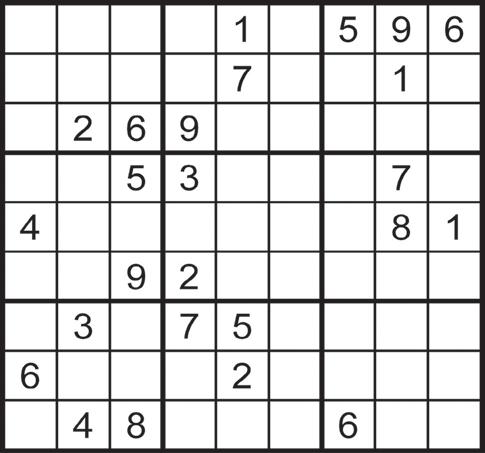
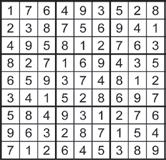

Stacey and Dylan have just reopened their shop and are finding things quiet. In a Zoom meeting this week Dylan said they needed to improve the shop's profitability.
"JobKeeper and the cash-flow boost have helped us but we really need to put plans in place so we are profitable after September when they stop,” he said.
I agreed that it was really important to have a strategy in place to deal with the future and what might happen after September.
"As you know, I have Mindshop tools available that can help with your plans," I said.
"It is quite possible there will be changes in the next two or three years and you may need to change your direction a few times.
"For now, I suggest that you do some scenario planning. I can help you do this with your staff, looking at some possible different options. You could look at new markets, whether your shop is in the right location, whether you need new stores, franchising could be worth thinking about, selling online, having some email specials and I am sure that your team will come up with loads of other ideas.”
Stacey said that was exactly what they needed because they were going round in circles and not getting anywhere with their planning.
I told her: “That is just the start. A SWOT analysis (Strengths, Weaknesses, Opportunities and Threats) can then help you chart the way forward.
"At this stage in the COVID cycle, I suggest that you look at your ongoing expenses and see where there is waste so you can keep your costs under control. Doing a waste audit can really assist so that the loss of the COVID subsidies will not have any impact on your business. Among other things that you could consider whether there have been any changes in the buying habits of your customers during this pandemic. Have you lost customers? If so, what steps can you put in place to get them to return once everything settles back.”
I also recommended they look at how they could use technology more effectively.
"I recommend that you make sure you have email contact addresses for your customers," I said.
"This gives you the opportunity to have email-only sales for your customers. Being able to sell online also opens up more opportunities. I have noticed that being home during this period I have bought many items online and obviously this is going to be normal for many purchases.”
“As we have no idea of what the world will look like when we are out of the crisis, we all have to adjust our business model to fit the situation as it evolves.
"So you could find that you make changes now and in a few months’ time you have to change again and this could even happen a further couple of times. So it's great you are taking action at this time. I look forward to being on the journey with you.”
In closing the meeting, Dylan said he and Stacey were really grateful for my assistance and that they looked forward to our next meeting with the team "so we can be ready for our brave new world".
If you require help with your business coming out of COVID and how you might pivot so that your business achieves maximum profitability contact the friendly team at Gail Freeman & Co Pty Ltd on 6295 2844.
Disclaimer
This column contains general advice, please do not rely on it. If you require specific advice on this topic please contact Gail Freeman or your professional adviser.