

Q&A: HOW THE LAW MAKES SURE
BILL’S BACKING BELCO

Stefaniak to stand again for his new Belco Party
By Danielle NOHRA

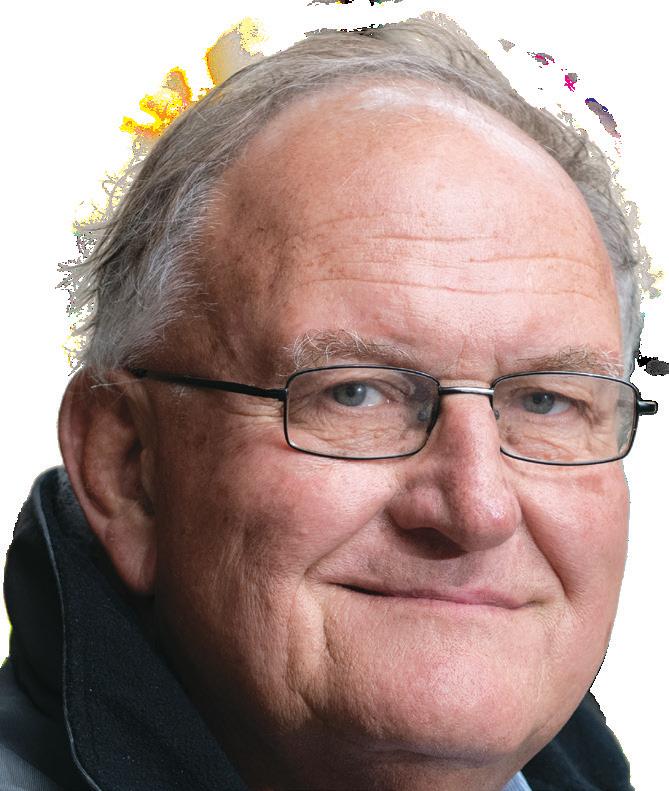
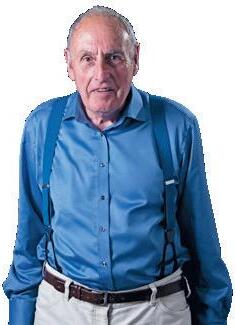
CONCERNED the Belconnen area is being left behind for infrastructure and maintenance, former ACT Liberal Party leader Bill Stefaniak is standing again to make sure it doesn’t.
Bill was the ACT opposition leader in 2006 before being replaced by Zed Seselja in 2007 and wants another crack at politics because of his worries for the region.
He’ll be standing for his own Belco Party.
“Fundamentally, there’s a concern that Belconnen might be left behind in terms of development in Canberra,” says Bill, 68, of Narrabundah.
“It worries me a bit, some of the infrastructure looks tired, buildings are left derelict.”
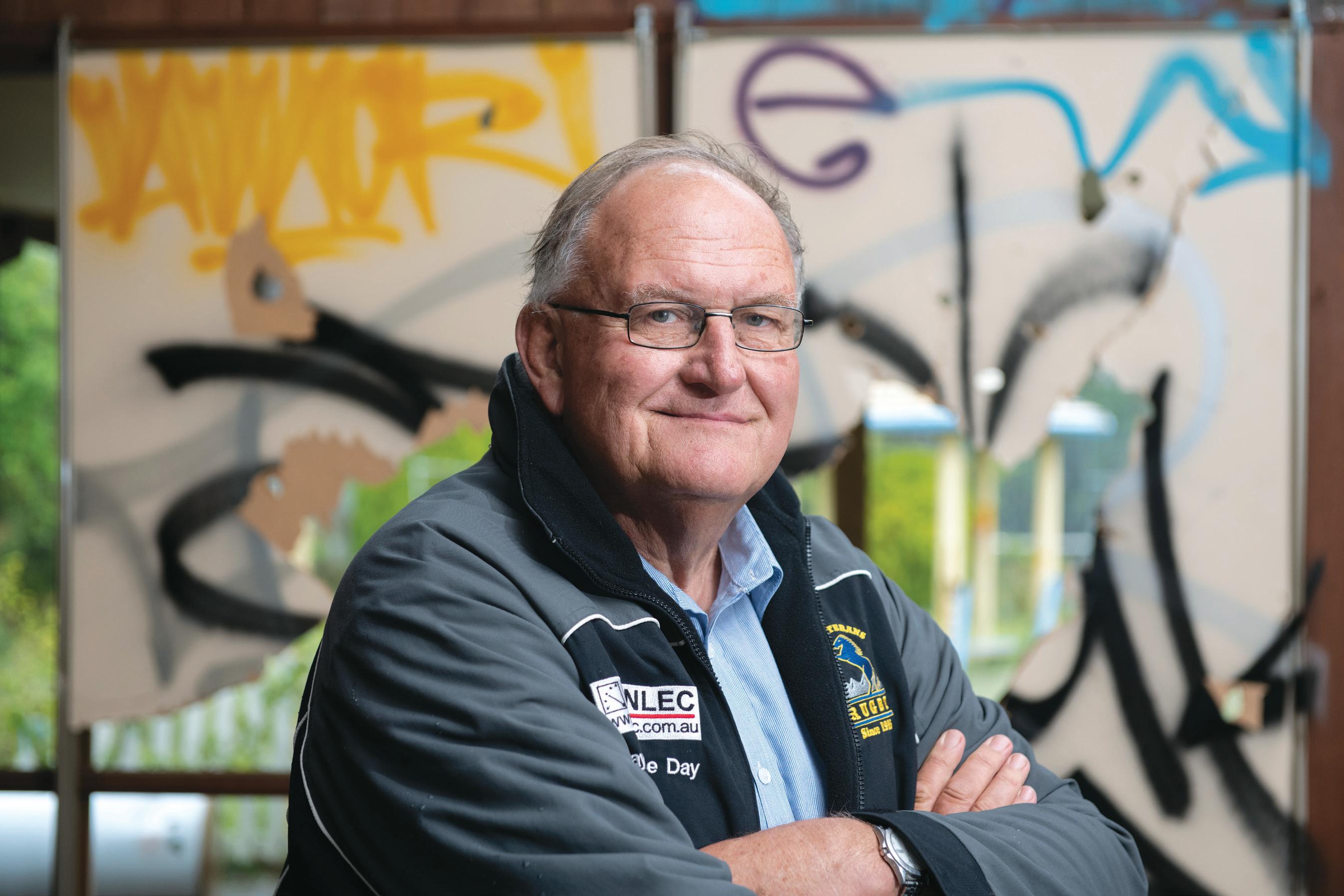
One building Bill’s concerned about is the Hawker Tennis Centre, which he says has, over the years, been burnt, vandalised, used as a squat and is dangerous.
“People in the area are also worried about sporting ovals being left neglected and having units put on them,” he says.
While Bill doesn’t live in the Belconnen area these days, he says Ginninderra is still “his” electorate and where he watched his two young est children grow up, and where he lived for more than 21 years.
“We have lots of friends here and a lovely, extended family here, and two of our youngest kids were brought up here,” says Bill, who represented Ginninderra from 1995 to 2008.
He says he knows the area well, and argues that the Labor Party no longer stands for the Ginninderra electorate.
“One of the big problems for the Labor Party Australia-wide and especially in Canberra, and the Greens too, is it used to be a strong party of the working class and now it’s not, it’s inner-city elites. Belco and Belconnen certainly isn’t inner-city and it’s certainly not elite,” he says.
Bill believes the biggest problem is that Canberra has had a government for 19 years, and in that time, he says governments get tired and ministers get arrogant.
“I get complaints all the time that the Chief Minister, Andrew Barr, won’t go to any events where people are going to criticise him,” he says.

“In the early days I was impressed by the chief minister but now he’s become aloof and quite dogmatic and it’s gone to his head.
“This government isn’t listening.
complacent. It’s a long time even for a good government to be in.”
No matter who takes government come October 17, Bill says the Belco Party will be there to keep them honest.
“We will bring a commonsense approach of getting things done in a
The counterfactual capacity for kindness
QC Geoffrey Robertson, he of “Hypotheticals” fame, commenting about coronavirus told “The Australian”: “One thing that makes me optimistic about humankind is this counterfactual capacity for kindness.
“And I think that, in a way, coronavirus has spread that sense of carefulness and consideration for other people, which is the only way we’re going to survive it.”
Counterfactual means “contrary to the facts” and I read the comment as saying despite everything awful about human behaviour (such as selfish returned travellers not self-isolating), kindness and compassion will shine through.
I’ve seen it in action this past week. My daughter Kate, delivering “CityNews” to the Jamison Centre (such is a family business when a delivery guy goes ill) was approached by a lady who told her she wasn’t on the internet and relied on our paper, and we had to keep going. Kate was touched and said she felt like
crying and the lady said she did, too.
Then I took a call from a dear chum and fellow owner of a highly regarded Canberra family business.
He’s getting by, but he wanted to help us by taking some advertising space. What better time to be seen, what better time to take some market share? He’d hate me to share his name, but like every advertiser in “CityNews” right now, he deserves your patronage.
Finally, thanks to the shield of the federal government’s JobKeeper program, as my son-in-law James Anderson says, we’ve got the band back together. The stood-down people are standing up again.
Everyone’s income on our full-time staff has been diminished by coronavirus and it’s a constant threat to the viability of our paper, but like the challenge of eating an elephant, we’re doing one bite at a time.

Ian Meikle, editor
service causes problems, I think there’s certainly a lot of anger in the community about development, building standards need improving, there are considerable concerns in relation to rates,” Bill says.
Once registered, Bill will be run-
number of programs under them that are ‘can haves’ and not ‘must haves’.
“Whoever forms the government in October is going to have a big job to rein in expenditure because the current government has certainly spent money far in excess.”



Former opposition leader Bill Stefaniak photographed at the old Hawker Tennis Centre… “There’s a concern that Belconnen might be left behind in terms of development in Canberra.” Photo and cover: Holly Treadaway
POLITICS / listening to whingers complain gets up my nose
For heaven’s sake, it’s quarantine, not prison
BEING quarantined for a couple of weeks in an InterContinental Hotel, or even the Ibis, is not akin to prison. Self-centredness blinds some people to reality.
Separating “at risk” travellers from the community is simply an effective public health measure deployed in a time of crisis.
Listening to whingers complain about hotel rooms and the food delivered for them gets up my nose. And drawing a prison comparison is hyperbole. Anyone who has been in a prison must have been cringing at such a ludicrous comparison.
Even the modern prison in Canberra is certainly no InterContinental. Prisoners do not have open access to the internet, as one example. There is limited connection to loved ones. Where is the sense of community? The attitude contrasts with the majority who accepted quarantine in good humour to prevent the spread
The COVID-19 crisis
Listening to whingers complain about hotel rooms and the food delivered for them gets up my nose. And drawing a prison comparison is hyperbole. Anyone who has been in a prison must have been cringing at such a ludicrous comparison.
is testing us as human beings. It is separating the self-centred from the altruistic. Separating the wheat from the chaff. The majority of our population are now playing their role by remaining in their homes. And it is hard.
Our society works on being connected and by sharing space. Showing that you care over the internet is possible. However, not being able to hug, gather together and share space with extended families, including children or grandchildren is distressing.
There are also many lessons to be learnt. How well have Australian governments handled this outbreak?
The long-term preparation was not good enough thanks to constant cuts to preventive health. The constant push for less and less tax combined with a drive for a surplus has been given far more priority over the
health of the population.
Messaging should come from an independent Australian Centre for Disease Control funded by all juris dictions. Instead, as strong as they might be, having our chief medical officer and his deputy providing lead ership is undermined by their role as public servants. Public servants may give frank and fearless advice.

workers on the frontline, says Michael Moore.
However, such advice is conveyed in private before a political decision. It is then the role of public servants to deliver on the government’s decision. The community is right to question how much of the advice was watered down.
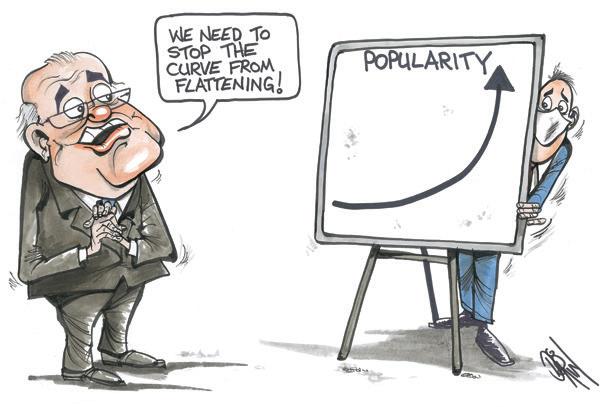
Prime Minister Scott Morrison’s National (War) Cabinet was to present a unified approach. However, there are problems.
Firstly, including leaders of the oppositions would have been more inclusive and provided a clearer message.
Secondly, examples such as the Labor Victorian Premier and Liberal NSW Premier taking
a harder line against the Prime Minister’s approach simply added to the impression of inconsistency for the federal government.
The National Cabinet should also have included representation from local government. There are so many important public health roles played at the local level that being included in the decision making process would have improved the outcomes.
Regional areas are suffering from the spread of the virus and often do not have the necessary health infrastructure to deal with the seriously ill.
Yet another example of self-centred approaches is the public wearing of surgical masks. These should be reserved for health-care workers on
the front line.
There are two main reasons. Such equipment is in short supply and is vital and protects our front line health workers. They do not work in the general public, let alone out in the fresh air while walking the dog in a maximum group of two people.
A review from the Center for Infectious Disease Research and Policy at the University of Minnesota stated as part of its conclusion: “Respirators are the best choice for protecting healthcare and other frontline workers” and “leaving aside the fact that they (surgical masks) are ineffective, telling the public to wear cloth or surgical masks could be interpreted by some to mean that people are safe to stop isolating at home”.
Whether it be “imprisoned” in a hotel, inappropriate wearing of masks, or isolated at home, a co-ordinated process is necessary to manage the “least worse solution” to the spread of this virus.
We may do better in the future. In the meantime, the biggest contributors to managing the virus are the people who are doing their best to follow the advice from the Department of Health.
Michael Moore is a former member of the ACT Legislative Assembly and an independent minister for health. He has been a political columnist with “CityNews” since 2006.





Strict
All
All
Drop-to-door delivery service
Now operating 6 days a week (closed
Please respect your fellow community members & our staff by adhering to our
We have plenty of stock, so please get in contact across our platforms with any enquiries.
Thank


SEVEN DAYS
World in crisis: you saw it first here, no really
WELL, we can’t say we didn’t see something coming, even if we didn’t know it was to be the coronavirus.
We, for the purpose of this argument, are readers of “CityNews”.
I had been pondering the size, speed and shock of COVID-19 and how it caught everyone napping, hadn’t it?
Almost everyone. But not the “CityNews” astrologers. I went back and lo, in January our weekly astrologer Joanne Madeline Moore says this in her predictions for 2020: “Uranus continues its transit through Taurus. Uranus is the planet of revolutions, disruptions, shocks and changes; whereas Taurus rules money, the economy, banks and material possessions.
“So prepare for financial, real estate and stock market instability in 2020, which could result in a global recession.”
But there’s hope. She writes: “In December, Jupiter and Saturn transit into Aquarius, the sign of freedom, equality and humanity, which will usher in a progressive mini Age of Aquarius.”
And more: Neil Somerville, in his annual Chinese New Year horoscope in February said the Year of the Rat will be “celebrated in great style”. Maybe not in Wuhan, Neil, but he was on the money in the next sentence: “A lot is set to happen this year with events having far-reaching consequences”.
ONE of them is the loss this year of Floriade, a month-long favourite with ratepayers from mid-September that celebrates spring with oodles of tulips in
Commonwealth Park.
It must have been a lousy, though sensible, call to make, especially given there’s a million or so bulbs somewhere with our name on them. But there’s a gift in everything and the Chief Minister Andrew Barr tells us the bulbs are to be planted all around Canberra during winter for a city-wide flower show in spring. Who knows, it might prove a brighter experience than having them all down by the lake.
LESS happy was Our Glorious Leader’s growl at superannuates sloping off to self isolate at the south coast. Mr Barr described it as “extraordinarily selfish” because of the
risk of spreading the virus and there being a lack of health resources there.
Our website (citynews.com.au) went bunta for days drawing out a reasonable response from columnist Robert Macklin, sheltering in Tuross, who given an acute respiratory condition, says he’s way safer on the south coast. His column is on Page 12.
Another chum toughing it out near Mollymook wrote to say: “Sitting in my home-away-from-home reading Robert Macklin’s column, I feel vindicated for deciding to self isolate here.
“I contemplated putting a little mud on the number plate, but no need. Everyone here is very friendly – at least at a two-metre
distance. “Waving a friendly hello has become an observing pastime.
“In the hopefully unlikely event we get sick and our local doctor is swamped (unlikely – no queues here) I doubt we’ll run the Canberra triage gauntlet. Sydney is our backstop, but
games apparently do best per 30-minute sessions – 240 for men and 209 for women. Unsurprisingly, meditating uses only 33 calories for men and 29 for women. Alas, sex is pretty useless too and knocks over only 60 calories for men and 53 for women. Given the average time of lovemaking
for Australian couples is 12.2 minutes, it’s hardly worth the effort, calorifically speaking.
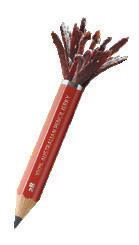
THAT Fyshwick advertising wag and would-be politician (if only we would elect him) Tim Bohm popped out an extraordinary offer of a chewable pencil with lead at the pointy end and beef jerky the other (pictured). “How do you let your creative juices flow without ruining your pencil,” Timbo asked? The answer – a 100 per cent Australian Jerky Pencil. I thought he’d taken leave of his senses until I noticed the asterixed small print saying the offer expired noon, April 1.
CONTENDER for the customer-service-intimes-of-crisis award would have to go to the Farrer IGA. A compulsorily self-isolating Issacs matron in need of groceries calls the store to see if they do home deliveries. Not really, but what did she need? So up and down the aisles the manager shopped with the homecomer on the phone, packed the lot and delivered it to the doorstep. Best of all, no charge.

Need help in planning during this crisis?












Composts & Soils Mulches
Sands Gravels Granites Wall Rocks Firewood

How the law makes sure you keep your distance VIRUS CRISIS / the ACT rules
SOCIAL-distancing requirements have become a source of confusion in Australia, especially with states and territories announcing different measures across the nation.
In NSW, a man has been fined for eating a kebab on a bench and a couple was fined for sitting in their car, raising the question, will that happen in Canberra, too?
Q: Can Canberrans see their family if they live in a different household in Canberra?
A: Yes, so long as there aren’t already two people at the residence who don’t usually reside there and the one person per four square metres rule is met.
Q: Can a boyfriend/girlfriend/partner visit each other if they live in different households?

A: Yes. So long as there aren’t already two people at the residence who don’t usually reside there, and the one person per four square metres rule is met.
Q: If two people from a household are together, can they, within social distancing requirements, meet with another person?
A: Yes, you can have up to two
normally reside there, so long as you meet the one person per four square metres rule.
Q: Can Canberrans go outside to exercise more than once in a day?
A: Yes, people are allowed to go outside for the purpose of exercise, however, they must maintain appropriate physical distancing and be in a group of no more than two people, unless they are from your household.
Q: How far can we drive for exercise?
A: People are allowed to travel for es -
People should, however, minimise the amount of travel they undertake if it involves coming into contact with other people (public transport, for instance).
Q: Can Canberrans go for a drive, just for the sake of it?
A: There is no rule against going for a drive within the ACT, however, regard should be given to restrictions on non-essential trips within NSW. Rules on public gatherings must be adhered to at any destination.
Q: Can people get a takeaway coffee with a friend and go for a walk?
Yes. Cafes and restaurants can still sell takeaway products. While walking you must ensure you are not in a group larger than two people, unless they are from your household group.
Q: Can one or two people go and sit outside, say by the lake, if they’re abiding to social distancing measures?
The safest place to be is at home. Unless they are at the lake to exercise, people should restrict travel outside their home to essential reasons only. Limiting the spread of the virus is the best way to flatten the curve. The easiest way that people can help stop the spread is by staying home as much as possible, and practising good
Q: How will police be enforcing social-distancing measures? Will they be implementing things such as roadside stops, like seen in other parts of Australia, to see where people are going?
A: New directions issued by the chief health officer under the “Public Health Act” has allowed police and other regulatory bodies to enforce regulatory action. ACT Policing will encourage compliance before considering the enforcement of ACT
COVID-19 directions. Canberrans are reminded that failure to comply with the directions of the chief health officer rules doesn’t just risk enforcement, it risks people’s lives. Police will continue to be mobile and proactive in patrolling roads and the community each day. They will remain visible and focused on community safety in these times.
Q: If you become unwell but do not meet the testing requirements, and have not come in contact with any confirmed coronavirus cases, what should you do?
A: If you are concerned you may be unwell and have flu-like symptoms it’s important you limit exposure to other people. Stay at home from work or school and avoid social interactions. Help prevent the spread of germs by paying attention to, and practising, good hand, respiratory and general hygiene. Cover your mouth and nose when coughing and sneezing with a tissue, or cough into your elbow. Dispose of tissues into a bin and then wash your hands. Wash your hands regularly throughout the day, especially after using the toilet and before eating. If you’re worried you may have symptoms of COVID-19, call your GP in the first instance, who can advise on appropriate infection control measures.


Exercise Physiology via individual consultations
GLA:D Physiotherapy program for hip and knee osteoarthritis
Dietitian consultations for weight loss/gain and pain relief
Occupational Therapy to improve daily living challenges
Individual counselling and health education
Support for dealing with pain
All programs can be incorporated into NDIS, DVA and My Aged Care
We accept GP Referrals for Medicare funded allied health services

Most chronic pain conditions respond to exercise and weight loss
People living with pain may be feeling more isoluated at this time, contact us for ongoing support
Mild depression and anxiety will significantly increase perceptions of pain and our counselling & support will help reduce this impact

Limping Canberra trumped by Tassie’s response
SCOTT Morrison is to be congratulated for the audacious scale and scope of the stimulus packages which the Commonwealth government has announced and which it is rolling out.
It’s fair to say that the sheer scale of the overall package, currently in the order of $200 billion, has taken most of us by surprise and even the Prime Minister’s army of committed enemies has struggled to coherently decry the Commonwealth’s response.
It is probably inevitable in the face of the cataclysmic impact that COVID-19 will have on the economy and the community that no stimulus package will ever gain unanimous support.
It is also almost certainly the case that no matter how generous any such package may be that it will ever be considered generous enough. I note for example the immediate response of UnionsACT that the Commonwealth’s $130 billion job-support initiative was totally inadequate.
While the Commonwealth’s response, at every level, to the coronavirus pandemic has quite
I refuse to accept that the tram should have been accorded priority over the health care needs of the community.
rightly attracted our attention and been analysed and critiqued by economists, the media and the unions, there has been less attention paid to the nature, adequacy and level of support being advanced by the states and territories.
It is, of course, difficult to compare the relative merit of each of the states and territories’ response to the crisis because of the size of their economies as well as differing economic structures and tax bases.
However, it is reasonable, for the purposes of comparison, to use the level of net debt to operating revenue of each of the jurisdictions.
It is notable that the average of the net debt to operating revenue of all states and territories in 2019 was 24 per cent while in the ACT it was 40 per cent, but forecast in the 2019-20 budget and the 2020 budget review to rise to 63 per cent within the next two years.
It is instructive, in light of this, to compare the response to date of the ACT government to that of the Tasmanian government since Tasmania is the jurisdiction closest

to us in population and the size of our respective budgets and economy.
The ACT budget is in deficit with the budget review, tabled in February, revealing the net operating balance was negative $453 million while the Tasmanian budget is in surplus and that the ACT has net debt of more than $3 billion (forecast to grow to $4 billion in two years) while Tasmania has net debt of just more than $100 million (forecast to grow to $1 billion in three years).
In the last two weeks, Tasmania has announced two stimulus packages worth $985 million including $50 million to fast-track maintenance, $20 million in interest-free loans to affected businesses and payments of $250 for individuals and $1000 for families required to selfisolate as well as $150 million to buy equipment and supplies and provide additional staff to combat COVID-19.
Meanwhile, the ACT government has committed a total of $351 million (ie $634 million less than Tasmania) in an initial package of $137 million including a non-means-tested $150 rates rebate and a $2622 credit to
businesses for commercial rates bills and a further package of $214 million of which $126 million is for health infrastructure and staffing including a $23 million “pop up” accident and emergency facility at Canberra Hospital.
Incidentally, those of us over 65 years of age and forced to contemplate our mortality as coronavirus goes its merry way are praying this latest “pop up” will be more successful than the ACT government’s last and ill-fated flirtation with a “pop up” facility, namely that at West Basin.
I do, of course, wish the ACT government and all those in the ACT public service who serve it and us every success in combating and responding to COVID-19. We are depending on them. Our lives are literally in their hands. I have, as I always have had, a deep faith in the professionalism and dedication of the ACT Public Service.
For myself I just can’t help wishing that the government hadn’t decided, in 2015, to abandon the affordable and fully developed hospital redevelopment plan put in
place in 2010-11 by then Deputy Chief Minister and Minister for Health Katy Gallagher that would have seen the entire Canberra Hospital precinct redeveloped and somewhere in the order of an additional 150 public hospital beds currently in operation.
I refuse to accept that the tram should have been accorded priority over the health care needs of the community.
My confidence would also be much higher than it is if the current government had not at the same time reduced funding for ACT Health Services by at least $100 million a year, in real terms, over the last five years. Stay safe.
Dr Khalid Ahmed and I have posted to the University of Canberra Policy Space blog a detailed analysis of the current state of the ACT Budget.


‘These teachings are particularly timely now, with many parents working from home, kids off school and potentially out of their routine.’
Online autism support can help families at home
A
parents
at home, says Angela Bambach, director of Love Learning Events in northern NSW.
The Son-Rise® program was created by Barry “Bears” Neil Kaufman and Samahria Lyte Kaufman in the USA in the 1970s when their son, Raun, was diagnosed as severely autistic.
Son-Rise mum Angela says she travelled to the US and experienced first-hand what the “inspiring” program can do for families, and is passionate about bringing it to Australia.
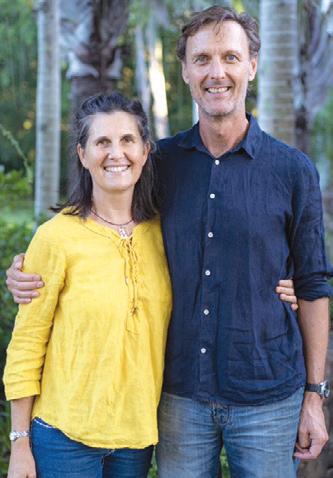
“While this program has personally helped my family, I think these teachings are particu larly timely now, with many parents working from home, kids off school and potentially out of their routine, and where it’s harder to make things safe and predictable for them,” she says.
“We had hoped to bring the Start-Up program here in July, but as that’s not possible now, we’re offering the ‘Son-Rise Program Online’, which features all the foundational Son-Rise teachings in an online format, at a greatly reduced price if people sign up before Tuesday, April 14,” she says.
While the original plan had been for Love Learning Events to host a series of lectures in April and then the five-day Son-Rise Start-Up program in July, US presenters and Son-Rise teachers, Raun K. Kaufman (the son who recovered through the original program created by his parents) and Kate C. Wilde, are still committed to bringing the Start-Up program to Australia next year, travel restric tions permitting.
“The Son-Rise program shows us how to work with our children one on one, through games and activities they love, and at home, in an environment that’s comfortable for them,” Angela says.
“As parents we notice the tiniest progress, we know our child and love them most, and we are the best people to learn and implement these techniques.”
Angela says the Son-Rise program encour-
“For example if the child is ‘ism-ing’ (stimming) as a way to take care of themselves, as a parent you would join in too, in a respectful, loving way. By meeting the child there, parents can make that much-needed connection,” she says.
“Another central technique is being sincere about celebrating our children for
for them, for example, making eye contact.”
An important part of the program is addressing the overwhelm for parents that often comes with a diagnosis that may sound quite doom-and-gloom, Angela says.
“The Kaufmans, as parents and founders of the program, understand the essence of autism as a social-relational challenge, not a
behavioural disorder,” she says.
“The main focus is on building deep connection rather than behavioural change, so it’s highly respectful of the child.”
Angela says that every parent on the program is empowered to believe in their child and that they can learn.
“If you’re told your child will never speak, you may feel despondent and helpless, but if you believe they might speak at some point, you’ll feel more positive and create more opportunities for them to learn.
“We believe each child is an intelligent, unique human and we’ll never give up on them. The Son-Rise program can help a child feel loved and supported, and keep families together.
“Ultimately it’s about believing in your child and giving them all the opportunities you can.”
The Autism Help Webinar: 3 strategies that you can use right now to help your child presented by Raun K. Kaufman is available at lovelearningevents.com/webinar-registration
In the webinar, you will also learn about the Son-Rise Program Online which is being offered to Australians at a massive discount for a limited time. It currently costs US$423, reduced by 2 thirds from US$1275 (that’s AU$700 at the current exchange rate/at the time of publishing).
Sign up to the webinar lovelearningevents. com/webinar-registration to receive more details the online program and how to enrol.





Dodging death sentence in south-coast isolation
Chief Minister Andrew Barr has described holidaying Canberrans self-isolating at the south coast as “extraordinarily selfish” because of the risk of spreading the virus and a lack of resources there. Columnist ROBERT MACKIN, writing from Tuross, begs to differ.
THIS wretched plague has suddenly turned all sorts of normal behaviour into moral questions, and most derive from a simple measurement of distance.
By now, we’re all familiar with the rule about staying a metre and a half from each other, but for some people it seems almost impossible to change their ways.
Not this kid. As a septuagenarian with COPD (a euphemism for emphysema) I’m very aware that COVID-19 is a death sentence.
So I have no problem managing my compulsory exercise, of two substantial walks a day, and the rest indoors at the computer writing my next book. Indeed, I don’t mind appearing quite rude when folk venture too close and there’s nowhere to turn.
“Stand back!” I cry, or freeze them with a wildeyed look.
Shopping help a call away for those stuck at home
By Danielle NOHRA
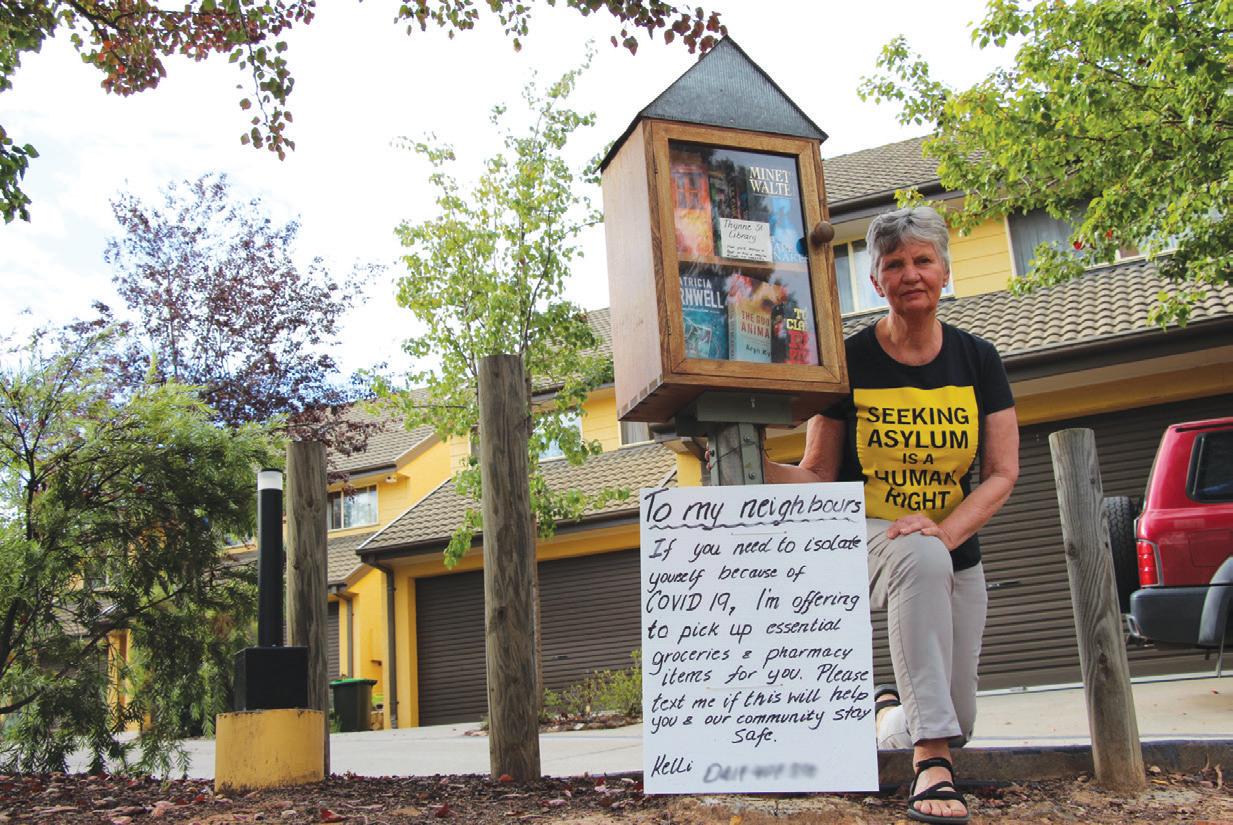
PASSIONATE about helping vulnerable people in the community, Bruce resident Kelli Hughes put out a sign inviting neighbours to message her if they need essential items during the coronavirus crisis.
The 72-year-old put the sign out on Thynne Street, Bruce, a few weeks ago, saying: “To my neighbours, if you need to isolate yourself because of COVID-19, I’m offering to pick up essential groceries and pharmacy items.”
Even though the sign says groceries and pharmacy items, Kelli’s not opposed to getting other stuff for people in need.
“I’m prepared to have a conversation and ask people what they really need during this time,” she says.
But, she says she’ll only be taking items to people in the Bruce area.
“I’m assuming people who have seen the sign will be within walking distance of me,” she says.
When people do call for items, Kelli says she will get the items and then leave them in a bag at the door and let
the person know.
Kelli, who started the community library in Bruce about five years ago, and who belongs to a Baptist church that encourages the support of vulnerable people, isn’t a stranger to volunteering and helping others.
“I’ve been doing stuff like this for more than 50 years,” she says.
And even though Kelli is classified as being at a “higher risk” of getting the virus because of her age, she says she is not worried but is very alert to the risks.
“I am doing a lot to look after my health,” she says.
“I’m typically a transport user but I’m not using the buses at the moment. I am socially isolating myself, even though that’s hard for me because I’m an extravert and a widower. I live alone so this will be challenging for me.”
Kelli’s not alone in wanting to help, and in Gungahlin, a group to help deliver groceries and other items to vulnerable people in the region has been started.
Krishna Nadimpalli, a recently retired environmental scientist and ACT Liberal candidate, started the Facebook group called the “Gungahlin coronavirus self-isolation support group” in a bid to help people in the local community.
“We are preparing the network to
support the vulnerable people who are likely to be isolated soon,” says Krishna, 60, of Amaroo, who has already had a few people call and ask for help.
“The coronavirus situation is in front of us and instead of talking about what will help, I wanted to do something that will help people now.
“We’re offering help to anyone who can’t risk going out and doing their grocery shopping, or getting medicine.”
Krishna, with a group of about 20 volunteers, says they will help seniors, people with disabilities, people with health problems, people in isolation and homeless people.
Krishna’s still not sure how he will help homeless people yet, but he is working on ideas where the group can help them, too.
The group volunteers also stress their willingness to help older people, who are more at risk to the virus.
“We want to help older people. They need to be isolated right now and we need to prevent spreading the virus to these older people,” Krishna says.
“We cannot put our seniors in public transport to get their essentials such as medicines and groceries.”
So far, the group is restricted to Gungahlin, but Krishna says he is not opposed to helping people in other areas, too.
Andrew Barr and the south coast mayors about Canberra folk retreating to their beach houses, the moral question becomes a dilemma.
In the last few years, hundreds of Canberrans have invested in the south coast and made it their home-awayfrom-home, sometimes for holidays but often working in both places.
It’s a matter of distance. My wife Wendy and I live half our life in Canberra, where we have a big extended family, the other half in Tuross at the beach house. But the new book, a fascinating slice of recent Australian history implicit in a biography of a very remarkable bloke, has kept us in Tuross because by chance, that’s where my subject lives.
But I’m totally aware that there are no ICU facilities down here. The nearest is in Canberra and by the time we contract the plague, chances are that Canberra Hospital will be overrun. Happily, Wendy is as healthy as a heifer, but I’d never get through the triage net.
So, here we stay and now that I’ve finally cracked the code to get a Woolworth’s delivery, the odds against our getting infected have improved a bit.
There were one or two little bumps in the road. The first delivery contained a quarter of a watermelon plus another whole melon you could hardly jump over. Happily, Wendy was able to improve neighbour relations with half each to the nice bloke next door and the other fellow down the street who, in more feisty days I’d offended in a dispute about his trees and my view. All forgiven now.
But when there’s a sudden flare-up from ACT Chief Minister
In the last few years, hundreds of Canberrans have invested in the south coast and made it their home-away-from-home, sometimes for holidays but often working in both places as the seasons and the employment opportunities permit. This is particularly true of the semi-retired, who, despite the second-rate medical services, try to live a healthy life with more exercise than ever before. In many ways it’s an extended suburb of the national capital, as indeed the original planners conceived Jervis Bay. So, of course that is their right. It’s equally understandable that they now fear an influx of holiday makers. And while the local rental agencies at Tuross have “closed the books”, this is not the case in other towns hard hit by the Christmas bushfires.
I guess every Canberra family will calculate the odds. We’re now stuck here, and one of our sons is using our Canberra apartment as his work-from-home office when his wife takes over the home schooling of their little girls.
We miss them – and our Sydneybased son and family – terribly. But when I think of the plight of other friends in Australia and around the world, even a little whinge seems absurd.
And the way those wonderful medical scientists are exhausting every resource to find a cure is truly inspiring. The only question is distance – how long before they cry, “Eureka!”
robert@robertmacklin.com
Kelli Hughes… offering to pick up essential groceries and pharmacy items.
Photo: Danielle Nohra
Krishna Nadimpalli… “We cannot put our seniors in public transport to get their essentials such as medicines and groceries.” Photo: Senthan Thani
CANBERRA MATTERS / downsides
Nobody’s listening when noise ruins your life
MANY Canberrans have the luxury of living in established suburbs and until recently had some confidence that the nature of the suburb probably would not change radically during their lifetimes.
The current Barr Labor/Greens coalition government has been working hard to change this by constantly introducing planning variations that make people very uneasy about the future of the place they call home. The barbarians are definitely at the gate.
While this may sound a little bleak, spare a moment for those who had put their faith in planning and good government and have bought into apartments in one of Canberra’s mixed-use residential urban precincts. They are becoming more common across Canberra with residents living in apartments above or among commercial and business premises.
About eight years ago there was a case when Canberra’s planning and regulatory processes inadequately dealt with the incompatibility issues that arose through having commercial and




Ashilpa
Mixed-use urban precincts are now becoming common within the city’s town centres but the regulations and planning involved are inadequate and incompetently managed. Buyers beware!
residential together. This was in Cape Street, Dickson.
The residents in a well-established apartment complex were comfortable being alongside the downtown, busy café/restaurant area (Dickson’s Chinatown). While at times it was noisy, things tended to quieten down around 10pm, at least by midnight.
This changed when a café opposite upgraded to a restaurant bar that usually stayed open well into the morning. The residents had objected to the licensing changes – but to no avail. The planning minister then was Andrew Barr.
Besides the excessive noise, there was also the disgusting behaviour of those who left questionable human waste and not-so-nice stuff on doorsteps, on the pavements and in the car park beneath the apartments.
No amount of lobbying moved the regulators or planners to intervene. Eventually the bar sold up and the
site returned to being a normal café/ restaurant.
Chief Minister Andrew Barr brags about how successful the developments have been along the former lightindustrial Braddon streets of Lonsdale and Mort. This part of Braddon is now an inner-city hub of cafes, bars, restaurants, mixed shopping and commercial outlets along with an increasing number of residential apartments. What follows is a sad tale of how incompetence and corrupted regulatory processes reward those with contempt for the regulators.
Residents in a Braddon apartment were enjoying their lifestyle till a pub on the street behind expanded into the back lane and converted the area to a beer garden. Nearby residents now had the full volume of music and loud voices well into the morning. As with any groups of drunken men, the voices were not those that provided pleasurable listening into the early hours. There was no escape from these constant intrusions. A full night’s sleep was now rare.
The official responses included that the development application (DA) had
Daryn

beer garden was operational. Despite many requests, the noise management plan has not been sighted. Serious doubts exist as to whether it was ever undertaken. As can be imagined, the practice of pass-the-buck bureaucracy has frustrated those concerned along with the disappointment in ACT politicians who have done what they are famous for – they ducked for cover.
One local member, Shane Rattenbury, did generously spend time talking the issues through, but no meaningful assistance has materialised.
The conclusions drawn by residents is that no-one in this government is interested in fixing the failure of planning and regulations as they apply in these mixed-use precincts.
Instead residents have experienced
collateral damage to this government’s laissez faire approach to planning and the blatant contempt for regulations by some commercial operators.
For the moment the bar is silent, but after the crisis it will return. The issues that have brought the problems for residents are serious given the manifesto of Andrew Barr to ‘encourage’ more residents to live in apartments. Mixed-use urban precincts are now becoming common within the city’s town centres but the regulations and planning involved are inadequate and incompetently managed. Buyers beware!
Paul Costigan is an independent commentator and consultant on the visual arts, photography, urban design, environmental issues and everyday matters.

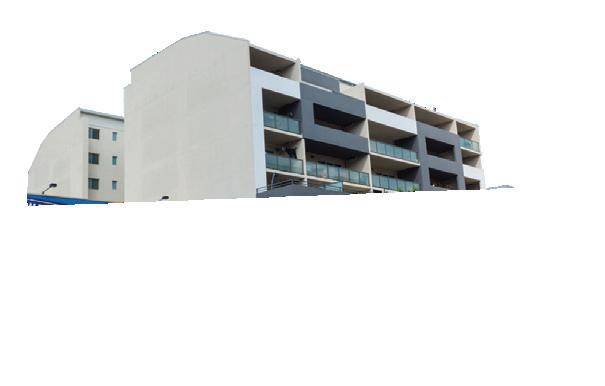
Apartments in Braddon… besides the excessive noise, there was also the disgusting
Photo: Paul Costigan
Determined Kate helps save tumour man’s life
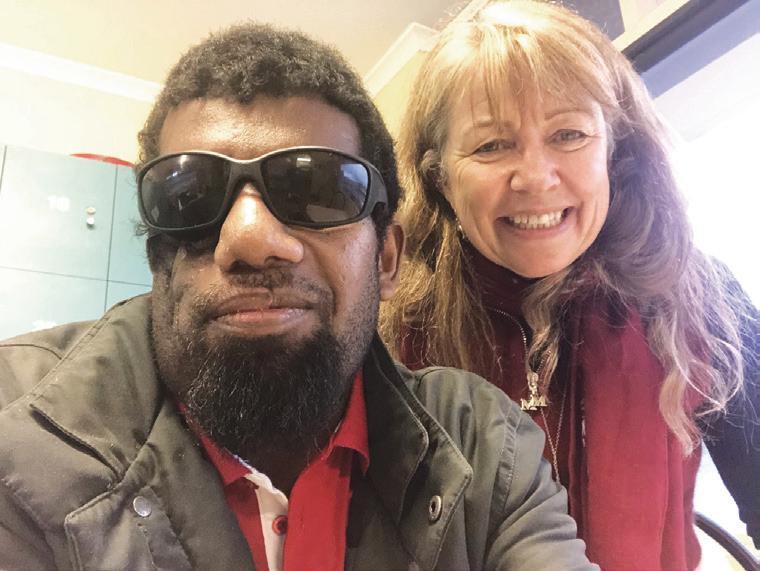
QUEANBEYAN’S Kate Holder knows what it’s like to live out of a suitcase. The retired teacher and avid traveller spent most of last year living away from home, on a quest to help Vanuatu man Jilifi Neifata, conquer a facial tumour that was slowly taking his life.
The 32-year-old father of three had a slim chance of beating the huge growth that engulfed his face – until Holder and her son Robert Williams, with the help of a prominent SA surgeon and a legion of generous supporters gave him a second chance at life.
A retired Queanbeyan teacher, instrumental in organising life-saving surgery for a Vanuatu man, explains how the epic experience changed her life.
Holder, 60, spent much of last year in Adelaide where Neifata underwent major surgery to remove the tumour and reconstruct his disfigured face – a procedure easily done in Australia, but not possible in Vanuatu.
Bringing Neifata and his family to SA for surgery wasn’t easy but Holder, who welcomed her 20th grandchild this year, was “determined” to help the young father who developed the rare tumour 13 years ago.
“We became like family, and with family you do anything for them,” Holder said.
“I live in a big Aboriginal family here; people come and go, and we have a big extended Aboriginal community in Queanbeyan, so family is important to me.”
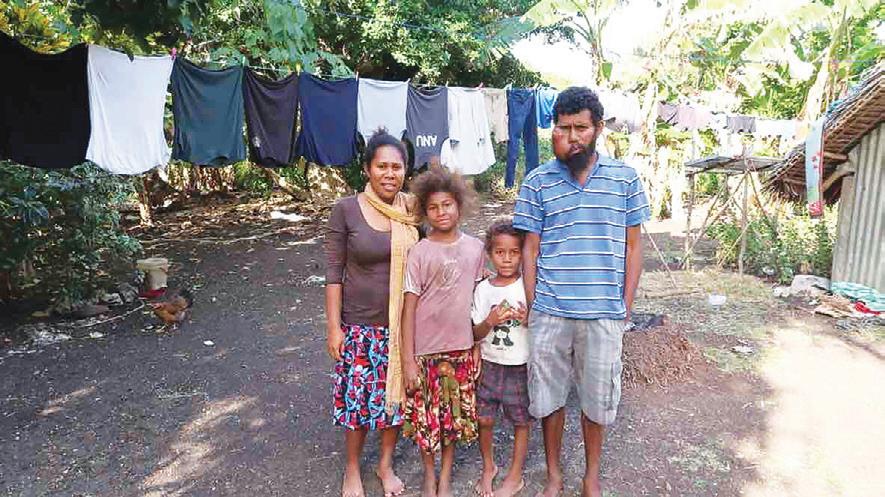
Neifata, his wife Nai, and children Miriam, 13, Jethro, 9 and Annette (Netty), 5, live on the island of Futuna. With a population of just 500, the remote island is not on the tourist map.
It’s a primitive existence, Holder says, with no electricity and limited services, meaning people with severe medical conditions such as Neifata’s do not normally survive.
Holder’s son, Robert, a Namadgi-Ngunnawal man, was researching for his archaeology PhD on the island, when he met Neifata and became his friend.
“During Rob’s research trip he was wholeheartedly embraced by Jilifi and the people of the island, they adopted him like a member of their

+
Food for dogs, not dog food


has a growing tumour on his face, surely we should try to do something’, and I thought what could we do?
“So, I decided to visit Futuna and meet Jilifi and his family… and I did.”
She told Jilifi that if he really wanted to come to Australia she would do something… and he said “yes”.
With Holder’s help, Neifata made the 3500-kil ometre journey to Adelaide to undergo surgery because Vanuatu lacks the medical expertise necessary for such an operation.
If left untreated, Neifata’s slow-growing tu mour would have been fatal.
“The tumour was getting bigger; it was heavy and uncomfortable,” said Holder.
“Jilifi didn’t want to leave his house and he was suffering from bad headaches… we later found out he had less than a year to live.”
The 21-hour, $100,000 procedure to remove the 825-gram tumour and reconstruct Neifata’s face was conducted at Adelaide’s Ashford Hospital.
The surgery saved his life.
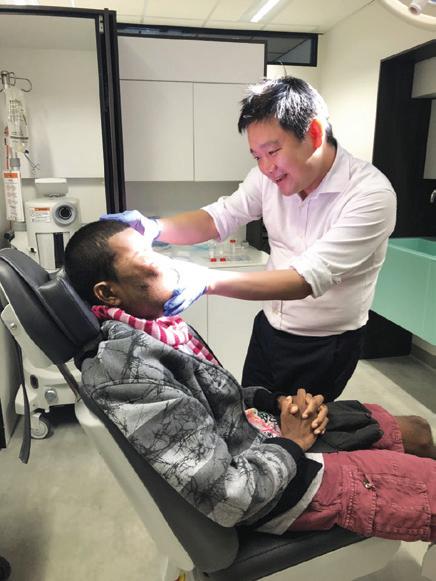
Dr Andrew Cheng, a South Australian oral and maxillofacial surgeon, performed the operation for free, one of several pro bono cases the prestigious doctor undertakes regularly.
“Everything just seemed to fall into place at the right time,” Holder explained.
“I wrote email after email trying to find a surgeon to help, and Dr Cheng answered within a week.
“He said: “If you can get Jilifi here, he will be my pro bono case for 2019’.
“Getting Jilifi here was huge, and Dr Cheng doubted we could do it in a sense, because someone from Vanuatu had tried to get here previously and they had their visa denied, so it was very hard.
“Jilifi and his family didn’t have identities as such so we had to organise passports and visas and a medical visa… it was a huge team effort, and we did it.”
People from all over the world chipped in to help, raising $3000 through Holder’s GoFundMe page.
A long list of charities and organisations also jumped on board including Walk on Water, the Cancer Council Lodge and Capital Travel Manuka.
Dr Cheng was assisted by hospital staff, nurses, anaesthetist Dr Peter Devonish and surgeons Dr Kim Tsao, and Dr Paul Duke, who came out of retirement to help, each donating their time and expertise.
St Matthew’s Church in Karabar, covered
almost six months of accommodation costs for Neifata in Adelaide and the Queanbeyan Lions Club paid for flights and donated money.
“Kate approached us and said can you do anything to help,” said Queanbeyan Lions Club president Max Carrick.
“We felt we could help and so that’s what we set out to do.
“We played a small part in saving Jilifi’s life. It was such a great result. I don’t believe Kate has received the recognition she should have, she’s incredible.
“It was such a fantastic outcome.”
The epic undertaking wasn’t without its complications, Holder admitted.
“The surgery went well in that it saved his life, they were one membrane away from invading the brain, which meant it would have been inoperable, but thankfully it was taken out and it was benign which was amazing,” said Holder.
“But the graft failed so he had to go back into ICU and surgery so that extended it all and cosmetically he had a drooping eye so Dr Cheng wasn’t happy with that and he wanted Jilifi to look the best he could so another surgery was arranged.
“His eye doesn’t work amazingly now, he will need to wear an eye patch for some time, but it might improve… the most important thing is he has his life.”
A life Neifata plans to make the most of, Holder says. Once waiting to die on a remote island in Vanuatu, Neifata now has every reason to live.
“Jilifi told me his dream came true,” Holder smiled.
“It’s been an epic and life-changing experience for everyone.”
Oral and maxillofacial surgeon Dr Andrew Cheng examines Jilifi Neifata’s tumour in Adelaide before the operation.
Before his surgery… Jilifi Neifata and his family in their tiny Vanuatu village.
Personally, I’d rather be back in China right now
I KNOW how we can long for things in the past because time filters out nitty gritty parts. I sit here now in Australia during the coronavirus pandemic and actually long to be back in Shanghai, China during SARS 2003.
The start of the virus was very confusing given the lack of transparency, but having lived in China for many years, we were used to this.
Once the government got their act together and started full lockdowns of epidemic centres and enforced rules and regulations, we started to feel relieved.
I was living in Shanghai at that time and we were fortunate that the virus jumped from south China to north China so we were spared major lockdowns. However, there were major transformations within the city. Before you entered all establishments your temperature was taken, everyone out on the street wore a mask, the elevator of every building had a schedule on it to show when it was last disinfected and all persons coming and going within an area were scrutinised.
Yes, there were failings to this system like the taxi drivers who were supposed to wear masks and would have them swinging off one ear, only to pop them back on when a police officer was in view.
At this moment in time, given the handling of the virus, I honestly wish I was back in China where I could feel safe and secure.
Adrienne
Farrelly, via email
Progressive government? You must be joking
THE world really is going mad. The ALP and the Greens in the ACT combining to legislate, in the face of opposition from the Liberal Party, the Human Rights Commission, the Law Society, the Bar Association and the Legal Aid Commission to deny an accused person in the ACT a basic right cherished and defended in liberal democracies for 800 years, namely the right to trial by jury.
This is a fundamental tenet of the rule of law and it is notable that other jurisdictions across Australia facing the Covid-19 crisis, including most notably the Liberal Government in NSW have not taken this draconian step. To be fair, one does need to concede that Iran, Russia, Turkmenistan, Saudi Arabia and North Korea have adopted the same position as ACT Labor and the Greens on the issue of an accused person’s right to a fair trial.
Attorney-General Gordon Ramsay and Minister for Justice and Greens Leader Shane Rattenbury, who championed the amendment, should in particular hang their heads in shame. Caroline what were you thinking? A progressive government? You must be joking.
Jon Stanhope, via citynews.com.au
Moore is wrong to hit rant button
IT is a while since I worked with Michael Moore (and a nice bloke he is). But he seems
to have not compared notes with Jon Stanhope (same issue of CN, April 2) who again points out the extent of the financial mess the ACT is in.
So when Michael hit the rant button for the big-taxing, big-spending state like some other commentators of late: it reminded me of that solid ALP adviser and local Richard Farmer, who noted the best sort of tax is one that someone else pays!
I have been a public servant most of my life and even a tax assessor for a while, and gouging money out of people is not fun and also the font of ideas to waste money on never runs dry.
I am not against interventions that make our society better, but massive makeovers and impositions must surely grate up against Michael’s civil liberties and personal freedoms inclination (which I largely share).
I have great sympathy for our police and military in the current situation having to police these petty but unavoidable rules. If Michael thinks more interventions and restrictions are good I would suggest respectfully he is very wrong.
I did some background work on rationing for a U3A presentation and the experience of both world wars with rationing, controls and tax hikes loses appeal very quickly (an outlier is Cuba which has hobbled along with ration books for some 58 years (too long)!
One day (hopefully, soon) we can venture into parks and restaurants, hug and shake hands even. Some of the sillier ideas of our (not so splendid) isolation will evaporate
again. Michael might then come up with some positive ideas, too.
Martin Gordon, Dunlop
More action on innernorth hooning
IT’S time for authorities to take effective action in relation to ongoing localised hooning around the inner north, too (“How the hoons are taking over suburban streets”, Paul Costigan, CN, April 2).
Loud, regular bouts of revving and screeching started in mid-December in the lead up to Summernats in the afternoons and at twilight, particularly on weekends.
Clear evidence of fast and dangerous driving was left behind on major roadways adjacent to inner-north suburbs, including on Ginninderra Drive.
This unwanted antisocial behaviour continued into January and well beyond Summernats and could still be heard in the past week. Observations and concerns passed to local MLAs at the beginning January did not produce remedial action.
And now our less-trafficked main roads and streets are also encouraging some “to put their foot down” and may stimulate even more risky behaviour and local noise pollution by the more bored and less occupied in our community over the coming months.
It is time for real action and that includes either cancelling an influencing event such as Summernats or moving it well away from any suburban environment or rural locality in the ACT.
Sue Dyer, Downer
Empty buses must be wasting money
IT’S three decades since I moved to Bungendore from the ACT, but I still visit Canberra often and have former colleagues and friends there.
One of them who frequently uses Transport Canberra’s buses is dismayed by the wasteful misuse of ACT government funds on running buses quite or nearly empty to a timetable that bears no resemblance to public demand. She understands the cause to be the intransigent attitude of the Transport Workers Union.
She wonders what the ACT government considers more important during the crisis – paying drivers to drive empty buses on the normal schedule or saving public money by reducing the frequency, and thereby the expense, of unproductive journeys.
She was appalled to hear on ABC Radio News that the union expects that its members will continue to receive full payment during the fall in patronage. Our conversation ended with a rhetorical question about an analogous Canberra situation. What justification does the ACT government have for spending a large amount of limited public money running so many nearly empty buses at such close intervals in a period of significantly reduced demand for them?
Dougal Macdonald, Bungendore







suduko
ARTS & ENTERTAINMENT
Spotlight on ballet costumes of character
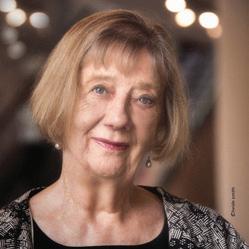
CANBERRA dance writer Michelle Potter is a busy woman.
A former curator of dance at the National Library and the Jerome Robbins Dance Division at the Lincoln Centre, she has a dance blog to keep alive and a backlog of scholarly articles to complete.
Now she’s about to release a hardcover publication with Melbourne Books about the art of Kristian Fredrikson, one of Australia’s most celebrated designers, with a foreword by long-time director of the Australian Ballet Maina Gielgud.
“This is going to be quite different from my other books,” Potter tells me with some excitement.
Her biographies of Meryl Tankard and founding director of the Australian Ballet School, Dame Maggie Scott were, she says, “about dancers, but this one covers a much wider field”.
For even though Fredrikson’s chief focus was on dance, he also worked in film, TV, opera, musicals and even straight theatre – 10 years at the Melbourne Theatre Company with George Ogilvie and, the year before his death in 2005, designing the costumes for Cate Blanchett as Hedda Gabler.
Potter is a former teacher-dancer with the National Capital

Ballet School and Dancers, and an awarded director of dance documentaries such as “The Ballets Russes in Australia” and “Boro’s Ballet”. She is also a respected researcher, with a PhD in art and dance history from the ANU and more than 140 interviews for the NLA, the NFSA, New York Public Library for the Performing Arts and the National Dance Archive of NZ.
“The research for the book was based on an oral history I did for the NLA in the 1990s, and it has led me in different directions, including back into art history,” she says.
“It’s been wonderful to use that to go into Kristian’s work.
“His designs were quite amazing, he had a wonderful intellect and would always research everything, he also had a background in art history and he claimed Raphael and Watteau among his influences.
“In preparing for a production of ‘The Nutcracker’ for the Australian Ballet he went back into Russian dance history to research the Russian idea of tutus, then went to the 1950s and the Borovansky Ballet in Australia where the tutus were incredibly short.”
One thing, she says, that made Fredrickson stand out was the way his costumes reflected the characters the dancers were playing.
“He really made me feel what that character was like,” actors and dancers told her, and the costume-makers all agreed that if they asked for more details he’d give it to them. He was also known for designing costumes that moved with the body, although prima ballerina Gailene Stock said his tutus were always incredibly tight.
Fredrikson’s art lives on in his exquisite drawings – as Potter says, “he didn’t just draw stick figures, he drew


the person”.
Without doubt, the turning point in NZ-born Fredrikson’s five-decade career was his meeting with Graeme Murphy on the Melbourne Theatre Company’s 1975 production of “The Revenger’s Tragedy”.
Murphy enjoyed working with Fredrikson so much that when he became director of the Dance Company of NSW (soon the Sydney Dance Company) he headhunted Fredrikson to design his sexy production of “Shéhérazade”.
“It was quite an erotic work and they sprayed Diorissimo into the audience,” Potter says.
“Kristian based the diaphanous costumes on the paintings of Gustav Klimt, all blues and golds, and the dancers all wore Klimt-like clipped designs on their foreheads and cheeks… there was a tent with observers over the top, who would turn their heads away when the action got too sensual.”
Although he continued designing for the Australian Opera and the Australian Ballet, Fredrikson went on to

“Sleeping Beauty”, and eventually they killed him.
During the last year of his life, as he was suffering the effects of emphysema, he was designing “The Nutcracker” in NZ, “Sleeping Beauty” in Melbourne and “Swan Lake” in Houston, saying: “As far as I am concerned, I will probably design until I drop.”
“And that’s exactly what he did,” Potter says.
Fredrikson succumbed to his illness as the Houston “Swan Lake” was still in preparation.
“Kristian Fredrikson: Designer” by Michelle Potter, $59.95. Pre-order at melbournebooks.com.au/products/ kristian-fredrikson
TAKEAWAY / from White Chaco, Braddon
Fine-dining delights in isolation
Keen to support struggling restaurants while maintaining social distancing, dining reviewer WENDY JOHNSON used feedfeed.com.au to order dinner.
STAY home. Could the COVID-19 message be any clearer?
While our restaurants, clubs, pubs, cafés and bars have shut shop for sit-down meals, many are – at lightning speed – redesigning business models to offer takeaway, pre-order and pickup and/or home delivery systems.
It’s a tasty way to break the monotony that some face cooking at home night after night after night.
Bigger picture, it’s a fabulous way to support the hospitality industry that works so hard to keep us well-fed and watered.


To make life easy and to save heaps of search time, a group of Canberrans, from creative digital agency ED, created a web portal listing local hospitality businesses adapting to the new social distancing measures.
Within a week of its launch, feedfeed.com.au already had 320 venues listed, with more than 16,500 unique users. What does that tell you about how much Canberrans love to eat?
Hew Sandison from ED says the site is a work in progress, but the team wanted to get it up quick-sharp to meet growing demand. It’s free for food businesses to sign up to feedfeed (businesses are vetted to ensure they’re adhering to the new-normal rules).
I hopped on to check the site out and decided what to get for my first “food-delivered” review. I was looking for restaurant-quality food and delivery to Kingston. I spotted White Chaco in Braddon and saw free delivery to Kingston with a minimum order of $40. Bingo.
The menu is divided into sharing plates, rice dishes, ramen dishes and drinks. It was a snap to order and
White Chaco delivered with no problem at all. Now came the real test – how did the food stand up? Again, no problem. We ordered the seared salmon sashimi ($15.90) which was as melt-in-the-mouth as it was the first time I had it (sitting down in the restaurant). It travelled super well.
The small morsels of Taiwan-style popcorn chicken were bursting with flavour and the meat moist – a fun starter to share. The vegetarian fried dumplings were just as yum ($10.50). The wasabi king prawn bao was scrumptious, but a little worse for wear through the delivery process ($14.90 for two).
An amazing dish was the beef curry ($17.90). The beef was so tender there was no need for a knife and the curry a complex but soul-satisfying mix of ingredients, masterfully pulled together. We took the advice, when ordering, to try the pork ramen, which has become a White Chaco signature dish ($17.90). We poured the broth on top of the noodles, pork and egg and got stuck right in.
We ate outside, sitting 1.5 metres away from each other, enjoying every bite. The menu’s at
Arts editor HELEN MUSA speaks to local dance writer Michelle Potter about her latest book celebrating the art of Kristian Fredrikson
Michelle Potter, Canberra 2019. Photo: Heide Smith
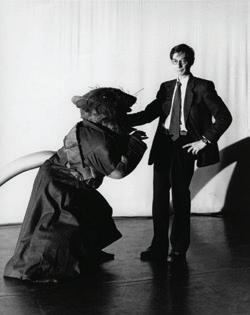
“Cinderella”, Australian Ballet 1972, Ugly Sister (played by Robert Helpmann).
Kristian Fredrikson, 1992. Photo: Jim McFarlane
Pork ramen… a White Chaco signature dish, we poured the broth on top of the noodles, pork and egg and got stuck right in. Photo: Wendy Johnson
ARTS & ENTERTAINMENT
Curtain-up on centre’s other half
By Helen Musa
JOGGERS and passing motorists
will have noticed the doubling of the Belconnen Arts Centre in recent months as the long anticipated stage 2 emerges on the shores of Lake Ginninderra.
The $15 million expansion to stage 1 comprises a flexible theatre space, a new dance and rehearsal studio, a new exhibition space, a café, new public toilets and a foreshore upgrade and was once referred to by the ACT Arts Minister Gordon Ramsay as “a multi-use town hall”.
Designed by DJAS (Daryl Jackson Alastair Swayn) Architecture, who also designed Canberra Girls Grammar Early Learning Centre Extension, John James Village, and the ANU Centre for Arab and Islamic Studies, it has been erected by PBS Building.
On turning the first sod in December 2018, Minister Ramsay talked up an anticipated future of “opportunities for performing arts”. He said the project would create 27 new jobs and include training opportunities for cadets undergoing a Bachelor of Building and Construction Management at UC.
The history of the centre goes back at least 20 years when, after years of lobbying by a group of Belconnen community artists, a spot on the banks of Lake Ginninderra was secured.
Amid the festivities accompanying the opening of stage 1 in August, 2009, the then-Chief Minister Jon Stanhope threw cold water on the vision splendid, cautioning that the centre must be made viable and genuinely active before the government would consider a second stage.
But in the original environmentally-friendly design by Williams Ross Architects, stages 1 and 2 had been designed as a conceptual whole, with two unusual curved roof forms which crossed each other, cabling primed to plug into stage 2 and even a low-cost polycarbonate material on
WINE
government pledged funding for stage 2 and a totally new design process was set in motion.
- Drop your donations in any time - Songland is open 7 days!
Meantime Stanhope’s warning had been heeded and since 2009, the centre has become a hive of visual art exhibitions, dance, classes and workshops, events and concerts, an artistin-residence program, mini-offices for arts organisations such as Musica Viva and The Griffyn Ensemble, and artist forums in the grand foyer, which looks out through two expanses of windows on a spectacular view of Lake Ginninderra.
While many significant exhibitions have been hung in the three main exhibition spaces, the centre especially endeared itself to the government through in-house socially inclusive programs such as Dance for Wellbeing and won ACT Chief Minister’s Inclusion Awards in 2010, 2012 and 2013.
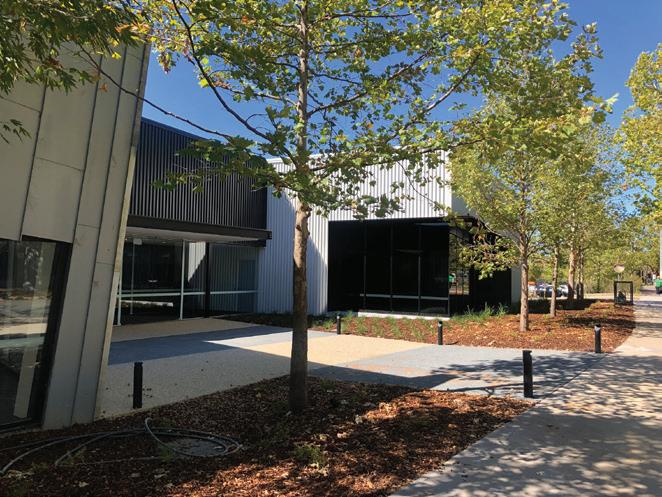
The new and the old buildings could not be more different. Stage 1 features striking slanted walls, curved roofing and large expanses of glass – a kind of visual fantasy that drew oohs and aahs for its sheer beauty.
Stage 2 is solid, squarer and more functional,
“artist station” offices and studios, two retail stores, a small event art lounge, an executive office, boardrooms, meeting rooms and customer amenities.
Staff have not been idle during the building process, with Co-CEO and artistic director, Monika McInerney, public programs officer Ann McMahon, Dance for Wellbeing program officer Philip Piggin and IGNITE programs officer Penny Pollard still presenting regular programs (most of which have now momentarily gone online) and new staffers, technical manager Linda Buck and live programs officers Chenoeh Miller alongside Sammy Moynihan working around the clock to get ready for the big reveal.
Alas, we don’t know when that will be.
Co-CEO Centre, Jack Lloyd, told us the centre was looking forward to finding ways of showing people through the new building, but that obviously would not take place any time soon.
But, he predicted: “Belconnen Arts Centre will come out the other side with a new building and wonderful new programs for the community to enjoy.”
Summer smoke sees off local vintage
THE 2020 year is already weird for some and tragic for others.
From the New Year’s Eve struggle to breathe and see through the yellow/brown smoke haze as we walked to Kingston to celebrate at Otis, to the hail that shattered windows in my apartment together with the now dampened fires ablaze in Namadgi and a pandemic that has the power to push panic worldwide, these all add up to a suspension of the normal.
From these epic events I lead you to the dreadful news that there is little likelihood of a 2020 vintage for Canberra wineries, one of the many unhappy consequences that have resulted from the bushfire season that we have experienced.
The reason is smoke taint. The Australian Wine Research Institute (AWRI) describes this phenomenon as exposure of vines and grapes to smoke so that “undesirable sensory characters, such as smoky, burnt, ashy or medicinal” flavours are tasted in wines subsequently made.
With the sort of restraint you expect from a research institute, they record that “consumers have been shown to respond negatively to smoke-tainted wines.”
The science of the process is paradoxically fascinating. Here’s the AWRI again: “The compounds in smoke primarily responsible for the taint are the free volatile phenols that are produced when wood is burnt.
“These can be absorbed directly by grapes and can bind to grape sugars to give glycosides that
have no smoky aroma. Often these glycosides are described as smoke-taint precursors.
“During fermentation (and also over time in barrel or bottle) these glycosides can break apart, releasing the volatile phenols into the must or wine, and allowing the smoky flavour to be perceived. “These glycosides can also release the volatile phenols in the mouth during the drinking of wine, which may contribute to the perception of smoke taint.”
Fran Marshall, from the Canberra District Wine Industry Association has told “CityNews” that the impact of smoke is varied across the district.
“Initial smoke taint test reports indicate that each area within our district is receiving vastly different levels of smoke taint results, and as several wineries are still going through the smoke testing process, we still don’t have a clear picture of the level of damage to the whole district just yet,” she says.
Despite that approach, the decision to not harvest in 2020 has already been made by some individual wineries.
Ms Marshall indicates that this “reinforces their own and our region’s ethos of premiumquality wines that represent the unique terroir that is Canberra District wines.





“We take our responsibility to lovers of Canberra wine seriously and we have taken steps to ensure the highest standards of quality and integrity are evident in the instance that wine is made in 2020.”
Bravo. The message is that, whenever we can, we must support those who have been caused loss because of the bushfires. The way to help is to buy Canberra wines.
As we sit out the coronavirus isolation, please look out for a Canberra district wine.
As Ms Marshall says: “This prospective lack of vintage 2020 provides us an opportunity to be very excited about the release of the district’s 2019 red wines, knowing that 2019 was one of the best vintages on record.
“Our ‘19 wines, and those from the ’17 and ’18 vintages will become the highlight of 2020, and it’s these wines that we invite you all to buy, drink and savour.”
And those aren’t tears, by the way, my eyes have been irritated by the smoke.


sundayROAST
Stay in touch with the names making news on Sundays from 10am as 2CC and “CityNews” present Canberra’s only local weekend news and current affairs program.
It’s a revolving panel show that brings to the microphone great “CityNews” commentators and 2CC personalities. Be part of the conversation call 6255 1206 between 10am and noon

Photo: Helen Musa

Non weeper, a fragrant delight GARDENING
THE climbing clematis terniflora is a delight in autumn with its fragrant white flowers creating an almost weeper-like display.
Unlike many clematis, the terniflora C. paniculata, which is native to north east Asia, is evergreen, and both frost and heat hardy. In fact, it flowers best after a hot summer and is beloved by bees.
C. paniculata was introduced into America in 1864 and has become naturalised in most states. It’s a vigorous, hardy autumn flowering climber with white fragrant flowers. A spectacular specimen spotted in the front of an Ainslie garden (pictured) has been attracting great interest from passersby.
To keep your winter flowering display going, I suggest clematis “Wisley Cream”, which as the name suggests has tiny, creamy-white, bellshaped flowers. The buds on ours, growing over an arch in our front garden, are prolific, and we keep walking under the arch to enjoy it.
ITALY is in the grip of not only coronavirus but also a threat to its horticultural industry: the virulent bacterial plant disease xylella, with hosts found in more than 360 plant species in southern Europe. It is estimated to have already caused in excess of E1.5 billion [$A2.8 billion] worth of damage, with no known cure at present.
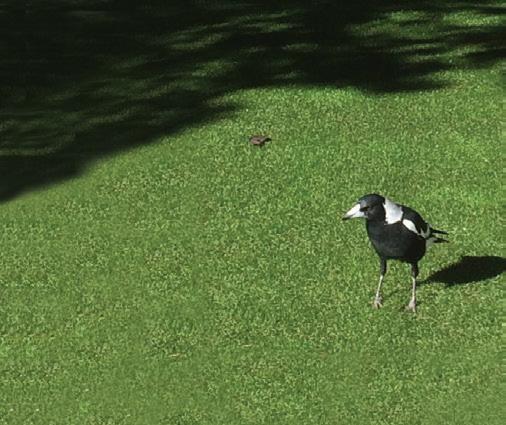

Originally restricted to the Americas, with outbreaks wiping out crops of coffee, citrus, grapefruit, peach and grapes, xylella has cost the grapevine industry in California more than $US100 million a year in direct losses. It has now spread through most countries of Europe, with lavender, rosemary and oleander now affected. In Italy alone, millions of olive trees have been grubbed out and destroyed. At present it has not reached the UK. If it reached Australia it would be catastrophic, which is why Border Force has to come down much harder on persons bringing in any produce or plant material.
IT’S time to sow the tantalisingly fragrant sweet Lathyrus odoratus Here’s how: first, soften the hard shell of the seed and place it on a paper towel in an


airtight container. Once the seeds start to sprout, transplant into small plant pots filled with seedraising mix. Keep moist but not overwatered in a warm spot, maybe on the kitchen windowsill, to harden off before planting out. Alternatively, sow the seed directly into the soil about 5cm deep, planting about 30cm apart. You’ll need a frame or mesh for the sweet peas to climb, or make a tripod of stakes. Water in with Maxicrop organic seaweed.
THERE’S still time to cut the leaves of hellebores to ground level, for late winter to spring flowers. Commonly known as winter roses, they’re no relation to the rose, except their flowers are similar to old-fashioned roses. The range of flower colours, shape, form and even colours of leaves, continue to increase. One of the largest growers of hellebores is Plant Growers of Australia with their huge wholesale nursery

in Victoria. They supply to almost every garden centre in Eastern Australia.
Now is the ideal time to plant with the still warm, moist soil. Try H. “Ruby Daydream”, H. “Molly’s White”, H. “Anna’s Red” (I love this one!), and the stunning double flowered H. “Cinderella”. Almost all of these grow to about 50cm tall with the same spread, in a semi-shady spot in groups of colour.


Brighten your winter garden with hellebore “Anna’s Red”
PUZZLES PAGE FREE PUZZLES EVERY DAY AT citynews.com.au
Joanne Madeline Moore
Your week in the stars – April 13-19, 2020
ARIES (Mar 21 – Apr 20)

The Sun’s in Aries so Rams are raring to go. But prepare for a frustrating week when powerful Pluto trims your fiery wings and squashes your natural ebullience. Plus Jupiter boosts your tendency to be temperamental and impulsive. Slow down and consider the consequences of the actions you take. The Universe is teaching you to be much more patient and disciplined. So make sure you look carefully and consider cautiously before you leap.
TAURUS (Apr 21 – May 21)
It’s time for steady Bulls to step up and be the calm voice of reason, as you find practical ways to organise your home life and assist loved ones. If you are patient, cooperate and delegate, then it will help steer you onto more solid ground in these uncertain times. Be inspired by Queen Elizabeth (a Taurus who turns 94 on April 21): “Whatever life throws at us, our individual responses will be all the stronger for working together and sharing the load.”
GEMINI (May 22 – June 21)
Open, honest and considered communication is required this week. Expect an eventful weekend, when Mercury (your ruling planet) links up with Venus and Mars. Make sure your restless mood doesn’t turn into reckless behaviour. Passing on unverified hear-say could lead to unpleasant consequences, so think long and hard Gemini before you spread secrets or gossip. What we need at the moment are kind words, helpful actions and noble deeds.
CANCER (June 22 – July 23)
Relationships with loved ones or colleagues will be put under stress this week, as the Sun-Jupiter-Pluto squares increase workloads, limit patience and lengthen frustrations. If you are housebound with sick or bored family members then do your best to keep them comfortable, well-fed, well-hydrated and entertained. The weekend is a good time to don your detective cap, do research, dig deep and uncover previously hidden information that others miss.
LEO (July 24 – Aug 23)
The Sun (your patron planet) clashes with Pluto and Jupiter on Tuesday and Wednesday. So they are days when you’ll have to put your individual needs aside and help those around you. You will be given the opportunity to lead others and you may have to make a difficult decision on behalf of someone else. If you consult with loved ones and listen to your inner voice, then you’ll know what to do. Your motto for the moment is – keep calm and carry on!
VIRGO (Aug 24 – Sept 23)
This week looks frustrating as the Sun, Pluto and Jupiter leave you feeling stuck between a rock and a hard place, especially involving finances. So think things through carefully before you make any definitive long-term decisions. And don’t forget to eat well and exercise regularly. On the weekend you could receive a welcome message from an old friend or former colleague who you haven’t seen for a while. There’s lots of news to catch up on.
LIBRA (Sept 24 – Oct 23)
Home Sweet Home looks a stressful place to be, especially if you’re in quarantine, self-isolation, lockdown or you’re unwell. Do your best to make the best of a bad situation. Remember – we are all in this together. It’s time to support each other so make sure you keep in regular phone contact with family members, close friends and work colleagues. Plus take the time to talk things through with a trusted confidante – a problem shared is a problem halved.
SCORPIO (Oct 24 – Nov 22)
Scorpios are born organisers, supreme strategists and marvellous managers. Which are qualities that are certainly required during this global pandemic. But don’t let your need to be in control get out of control. Loved ones will also appreciate kind words and loving actions. When it comes to activities around the home, be proactive and disciplined. In the words of Thomas Jefferson (former US President and birthday great): “Action will delineate and define you.”
SAGITTARIUS (Nov 23 – Dec 21)
This week looks stressful, as circumstances challenge you and test your limited patience. So avoid the temptation to rush and play pointless power games. Mercury and Venus encourage you to communicate in a much more diplomatic and compassionate fashion. You’ll also be given the opportunity to lead or influence others in positive ways. Don’t waste it. People are looking for you to come up with some creative strategies that boost morale so don’t disappoint!
CAPRICORN (Dec 22 – Jan 20)
Many super capable Capricorns are natural leaders but avoid being too brisk and brusque and bossy this week, as your controlling side goes into overdrive. Loved ones respect your pragmatic approach and your multi-tasking skills, but they can also be overwhelmed by them. So try to be more sensitive to the fears and emotional needs of others. We are facing a global crisis that requires cool heads and helping hands, compassionate actions and loving hearts.
AQUARIUS (Jan 21 – Feb 19)
People are feeling sick, scared or just overwhelmed. So clear communication is the secret to making the current coronavirus crisis a bit less stressful. Resist the urge to launch half-baked projects and jump to hasty conclusions. And listen closely to what others are telling you, otherwise you’ll misunderstand their motives. As actress (and birthday great) Emma Thompson said: “Many problems, big or small, start with bad communication. Someone’s isn’t listening.”
PISCES (Feb 20 – Mar 20)
Are you in lockdown or recovering from coronavirus? With Venus in your home zone, do things that lift your spirits, like cooking a delicious meal, reading poetry or listening to inspiring music. You also need to look at your work and/or financial situation with a fresh set of eyes. You can’t fix unprecedented problems with old solutions! As Albert Einstein (a fellow Piscean) said: “We cannot solve problems with the same thinking we used when they were created.”
Copyright Joanne Madeline Moore 2020
General knowledge crossword No. 728
Across
3 Which bugle call is sounded at Anzac Day functions? (4,4)
7 What is another term for an indigene? (6)
8 What is a gem cut in a long, rectangular shape? (8)
9 Name the capital of Cuba. (6)
10 Which term describes that which is common to the whole people of a country? (8)
11 Which instrument is played by Andre Rieu? (6)
14 When one entertains, one does what? (6)
17 To be of an unsettled character is to be what? (3,5)
18 Which grape is dried in the sun, or artificially? (6)
19 What is a particular type of coffee? (8)
20 Name a line drawn on a weather map. (6)
21 To be adorned with pendent ornaments is to be what? (US) (8)
Down
1 What is another name for Easter Island? (4,3)
2 What is a strongly fortified place? (7)
3 Beirut is the capital of which West Asian republic? (7)
4 Name the practice of travelling from place to place for pleasure. (7)
5 What are excursions also known as? (7)
6 What is a structure of latticework? (7)
11 With which single word did Van Gogh sign his paintings? (7)
12 Which marine animal has eight bloodsucking arms? (7)
13 If it’s not in here, where else might it be? (2,5)
14 What, in science fiction, is a robot made to resemble a human? (7)
15 Name the twentieth letter of the Greek alphabet. (7)
16 Which term describes that which relates to dealing with morals? (7)
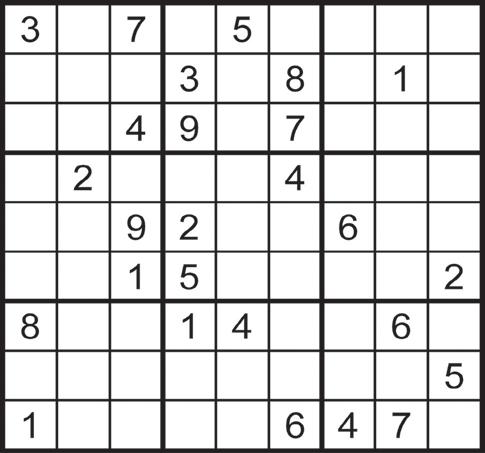
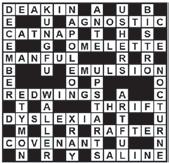
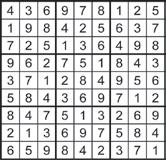

You may have had to contemplate how your team can work from home and be productive during this current crisis.
Our team members have worked from home for the last 12 years, so we have good processes for dealing with remote working but this is the first time we have all been working off-site.
The best piece of advice that I can give you is to make friends with your IT consultant who is probably also working remotely.
If you are not in the cloud you need to ensure that your computer system will allow all your staff to log on from their homes and work efficiently.
Of course, you also need to ensure that all your staff have a good enough internet signal at home. One of my team cannot access wifi (yes, in Canberra – thank you, Telstra) from her home so she has to use a dongle.
Depending on your business your team will also need working mobile phones as there is a lot more co-ordination when everyone is off site and many programs will require two-factor authentication. It is really important that your team members know what they can claim in their tax returns next year for working from home and the exact records that they need to keep.
Ironically, the Australian Taxation Office has just issued a new ruling titled "Deductions for work expenses” clarifying what can be claimed. The effect of this ruling is to confirm that you cannot make claims based on estimates. All claims have to be substantiated. In addition, you need to keep a separate diary for the period that you are working from home and you cannot use the representative one-month period that is usually permissible. If you need more information on this please contact our office. Yes, for us it is business as usual.
You will need to ensure that your phones can be forwarded to the appropriate team member. Your telephone company should be able to do this for you although they too may be a bit slow because they have had to close their call centres and their teams are also working remotely. Can you print from home or do you need to ensure that your team members have printers? Fortunately, we can print to the office but most of our communication is electronic. Our filing is also electronic so there is little need for printers. We do, however, have a great scanning app on our phones for scanning documents.
To keep in contact, weekly meetings are more efficient. There are a number of programs that you can use to keep in touch with your team, I prefer Zoom but have several installed on my computer and phone as different organisations prefer different tools. I can also talk to clients and conduct meetings with either one person or many. When I get up in the morning I dress for work and as I walk into the office I activate my work brain.
When I leave the office I turn on my home brain. I try to make sure that I eat my meals away from my desk so that I have separation between home and work. For me, that works.
Going forward it is business as usual. I will continue to update you on matters tax, business, superannuation and retirement while we are social distancing. Please stay safe and healthy.
For advice on tax, superannuation, business and retirement contact the friendly team at Gail Freeman & Co Pty Ltd on 6295 2844.
Disclaimer
This column contains general advice, please do not rely on it. If you require specific advice on this topic please contact Gail Freeman or your professional adviser.
Sudoku hard No. 264

Be confident that your energy prices won’t go up, but will actually go down every July. That’s right, decrease!
Get price certainty – and peace of mind –by locking in great low rates until June 2022.
An easy, secure set-and-forget plan that rewards you with ongoing savings.
Don’t know where you’ll be next? Take the plan with you if you move anywhere in the ACT.