ACT DEBT SHOCK: “As of today, every Canberra household is nominally indebted for $18,000 to repay Barr’s debts… it will be left to a future (most likely non-Labor) government and your children and grandchildren to pay off.” –
JON STANHOPE



ACT DEBT SHOCK: “As of today, every Canberra household is nominally indebted for $18,000 to repay Barr’s debts… it will be left to a future (most likely non-Labor) government and your children and grandchildren to pay off.” –
JON STANHOPE
The people who care for the community’s most vulnerable are in crisis, says EMMA CAMPBELL of ACTCOSS
DAYLIGHT SAVING CLOCKS GO BACK SUNDAY, APRIL 5





Strict
All
All
Drop-to-door
Now
Please
Thank


By Danielle NOHRA

A KEY responder to the COVID-19 crisis, the community services sector, is going to start seeing service closures and job losses if more isn’t done to support it, says ACT Council of Social Service (ACTCOSS) CEO Dr Emma Campbell.
Emma, who took on the role at ACTCOSS, an organisation that advocates for and represents not-for-profit community services, a few months ago, could have never imagined the situation she’s walked into.
“This is unprecedented, but I’m pleased to be advocating for vulnerable people and the community services sector during such a difficult time,” says Emma, who worked for Doctors Without Borders in Sierra Leone in the middle of the ebola epidemic and ran the administration for an ebola hospital there.
Having worked during epidemics before, Emma says she knows how important it is to look out for vulnerable people as well as the community services sector.
“The community services sector is at the forefront of supporting vulner-
able Australians and more needs to be done,” she says.
“We’re beginning to hear, from some of our members, that they’ve already seen a dramatic decrease to their revenue and that they are struggling, and some will need to make some difficult decisions as they move forward.”
Emma is now calling on the ACT government to reduce the administrative burden on community service providers as they respond to the coronavirus crisis by delaying or relaxing on reporting obligations and suspending KPIs and outcomes services.
“We’re calling on the ACT government to create maximum flexibility on contracts for government-funded community organisations to enable them to respond to the changing community needs in this crisis,” she says.
She is also calling on the ACT government and the federal government to extend financial support beyond businesses to include not-for-profit community service providers so they can continue operations during the crisis and through to a future recovery phase.
“It is really important that community service providers continue to be funded and supported so they can focus on providing the critical
WERE I sleeping much at the moment, I’m sure I’d wake up and think this shitshow was a bad dream. It isn’t.
The social and economic devastation of coronavirus fear has infected every pore of our anxious community.
Never mind a dose of COVID-19, I feel sick for the innocent, decent people across this city whose lives have been suddenly tossed into the conga queue from hell, hustling to get a make-ends-meet handout.
I feel for the numbed businesses trying to navigate this mess. We are one of those small companies, a family one with loyal, tight, long-serving, valued colleagues. This past week we tearfully stood some down and chopped the hours of others to try and

some of the services who provide financial support and information for those who are facing hardships, and they say they are getting calls from
preserve a future for our 27-year-old free newspaper and for our employees. On first blush, the federal government’s “wage keeper” payment is going to be a big help to getting those people back to work.
Our mighty columnists, contributors and arts reviewers have rallied to keep us going and I love them all the more for it.
Keeping our independent voice will be easy, but is all this enough to see us through?
We hope so and we’re going to be asking advertisers who can afford it to share the kudos in helping get our austerity editions published. And, shamelessly, I’m tin-rattling for any sort of donation via citynews.com.au. It’s that serious. Stay safe.
Ian Meikle, editor
“They’re going to struggle, they’re already talking about making people redundant.
“We need to make sure that com-
that all of us are facing an uncertain and difficult next few months but the community services sector will be essential to helping us through that.”




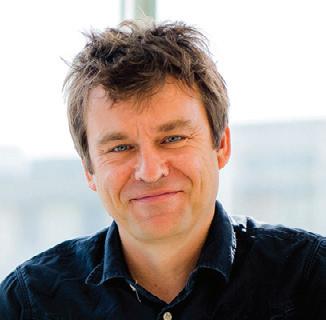
WHILE the nation is self-isolating from the dangers of the coronavirus, behavioural insight specialist Dr Dirk Van Rooy warns of other hidden health risks that will arise from isolation.
“The government’s between a rock and a hard place. [They need to] protect residents, by socially isolating them from the potentially deadly virus, but social isolation, itself, has health risks,” he says.
“For instance, the risk of developing dementia almost doubles, the risk of heart attacks and stroke increases by at least 30 per cent, and the risk of cancer increases 25 per cent.”
While there’s no clear solution to managing both health risks, Dr Dirk says there are things that can be done to help this new social recession.
“One of the things that’s become apparent is the collapse in social contact, not just socially, but also physically,” he says.
“We’re still connected in a virtual way through social media but physically, we’re distant.
“[Isolation] tends to be particularly hard on the population that’s already vulnerable to both isolation and loneliness to begin with, like older adults, people with disabilities and people with pre-existing health conditions,” he says.
“Those are the cohorts of groups that typically struggle with isolation and loneliness and the current social

Social isolation almost doubles the risk of developing dementia, the risk of heart attacks and stroke increases by 30 per cent, and the risk of cancer by 25 per cent. That’s what behaviourist Dr Dirk Van Rooy tells DANIELLE NOHRA
recession is making it worse.”
There are some statistics doing the rounds from mobile GPS data, according to Dr Dirk, who says about two weeks ago people in Sydney were moving around at about 93 per cent of normal, and that has now dropped below about 50 per cent.
“That’s a huge drop into the extent people are moving around and that poses some serious health problems,” he says.
There is a difference between loneliness and isolation, too, he says. People can be socially isolated without feeling lonely, or lonely without being socially isolated.
“But both loneliness and isolation have clear effects on health and they both increase the level of stress hormones in the body,” he says.
“That then leads to poor sleep, a compromised immune system and cognitive decline in older people.
“There’s also a wide range of research that shows social isolation leads to depression and there’s a relationship between social isolation and depression, anxiety and thoughts of suicide.”
In general, during this time
of isolation, Dr Dirk encourages individuals to ramp up their virtual communication.
“We know from research, things like video calls and phone calls provide a richer interaction than just texting,” he says.
“It becomes more difficult for those groups that would have been more vulnerable to begin with such as older people and people with health issues.”
Dr Dirk says it could be argued that the social recession is the more important one, and if there’s a focus there, the economic impact will follow.
One way to help people feel less isolated and lonely could be through technology, says Dr Dirk, but it can be hard for older people who are less tech savvy.
At the moment, Australia is seeing a lot of people losing jobs and Dr Dirk says social support would help these people as well.
“When you lose your job and become unemployed you’re not just losing your income, it comes with a lot of psychological losses,” he says.
“You lose your professional identity, which is very important to a lot of people. We know that when people
lose their job there’s a big drop in selfesteem and confidence, they lose their daily routine, there’s no purposeful activity to engage with and they lose that working social network. That’s a lot to lose at the same time.
“The key pathway to loneliness and social isolation is through stress and losing your job increases stress.
“Significantly, people are going to be in this position and it’s probably hard to get out of this position without help, and that doesn’t just mean financial help.”
If situations such as domestic violence, depression and health problems arise from this pandemic, Dr Dirk says there’s going to be an immense
pressure on the community sector.
“The people who are best placed to deal with these situations are our health care professionals in the community organisations and those are the exact services that have almost been defunded over the last eight years,” he says.
“Social support is one of the most important means of reducing stress. We, as humans, are social animals and what COVID-19 is doing, is threatening our social connections.
“We’ve evolved to feel safe in groups, it’s pretty much hard-wired in our brains to be social, which is why we experience isolation as a physical state of emergency. As soon as that social connection drops away, it creates a state of chronic stress in our bodies.”
The Australian Psychological Association has already indicated that there’s a global issue around loneliness and isolation, according to Dr Dirk, who says it will be exacerbated by this crisis.
“But as soon as people are exposed to some social support, the benefits can come quite quickly,” he says.
“You can probably recover from loneliness quicker than the actual virus [which is why] it’s fundamental for governments to create jobs, and not only create jobs but also create jobs that improve the lives of others as well.”





St Clare’s College has been delivering Excellence in Girls’ Education since 1965. The College is located on one campus in Griffith, ACT and caters for students from Years 7-12.
We pride ourselves on developing and delivering an excellent curriculum catering for the learning needs of a wide range of students. Students are encouraged to become active learners and are given every opportunity to grow in all aspects of their life.
The wide range of courses on offer provide students with a strong basis for making future academic decisions. St Clare’s College provides a safe and empowering learning environment that supports students in reaching their full potential.
Applications for admission for 2021 close on Friday 29 May. For more information on how to apply visit our website.

NEVER mind the looming menace of coronavirus, the grinding daily media brief of local po-faced pollies and health bureaucrats is starting to take its toll.
The schadenfreude guilt of the howmany-today announcements is tripping me out. It’s becoming like sports scores. Did we win today? How many? The triumph of only five, the failure of, what, nine more?

Like the ACT version of cruise-ship shame, the flicker of real community fear of the viral bus to Kambah went nuts on our website when ACT Health called for anyone who caught bus number 31 from Dickson on March 17, to self-quarantine after a passenger was confirmed to have coronavirus. And as if that wasn’t bad enough, it was running 17 minutes late!

Next day there’s Health Minister Rachel Stephen-Smith consoling fearful passengers with the news the self-isolation edict was “highly precautionary” and that the poor bastard who was succumbing to COVID-19 apparently wasn’t especially symptomatic at the time.
But buses, unlike the community one hopes, won’t be getting any better anytime soon with reticent Transport Canberra quickly abandoning its “we’re listening” promise to revise the flawed timetables because of the coronavirus disruption.
Pity the ACT Transport Minister Chris Steel, who only weeks ago was puffed up with boastfulness at the astounding,
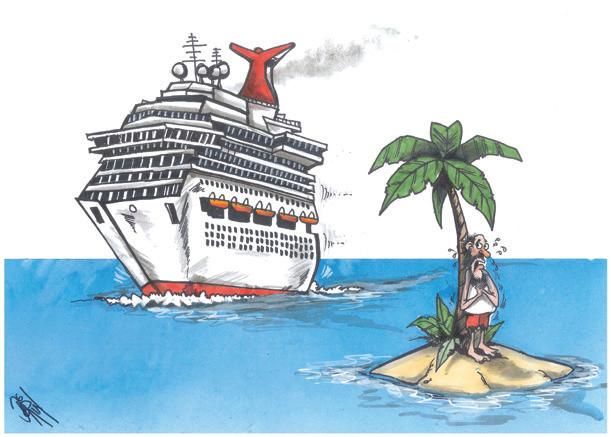
amazing, arguably unbelievable levels of patronage in public transport, having to tell us that if you have to catch a bus stay clear of the driver; oh, and avoid other passengers, and, well, really it’s probably not especially wise to even catch the bus!
His cameo performance took some of the attention away from Education Minister Yvette Berry who was left haplessly wriggling and writhing over the bungled no-kids-willbe-turned-away assertion as principals were sending out notes to parents saying keep your ankle biters elsewhere, we’re pupil-free.
The minister sort of put together a social media apology on Facebook and, as if this
whole farrago wasn’t funny enough, we learn that the pre and after-school care, at least in the south, is open. For whom one wonders if Tarquin and Taylor have been at home watching ABC Kids all day.
THE bad news was the sad death of a woman in her 80s, the good that two people in the ACT have recovered, which shouldn’t be entirely a surprise given the overwhelming majority of reported infectees are self-quarantining at home with presumably mild symptoms, much like Australia’s dauphin Prince Charles, toughing it out in darkest Scotland.
INTERESTINGLY, innovative technology is allowing 2CC afternoon’s star announcer (he made me say that), the affable Leon Delaney, like his morning station mates Alan Jones and Ray Hadley, to broad comfortably from home with producer Eddie Williams pivoting the program from the highly sanitised, state-of-the-art studios in Crace.
MEANWHILE, an accountant mate writes that she decided to close the office and send her staff off to work in splendid self-isolation at home. “Knowing I had parcels on the way to the office, I rang Australia Post to find out what to do.
“I asked for the Kingston Post Office and was advised they don’t have a phone and that, as a business operator, I was obliged to present myself at Australia Post to prove that I am who I say I am.
“I pointed out that I am self-isolating on the basis of medical and Prime Ministerial advice. Of no moment, I was told, that is what has to happen. Even in this pandemic? Yes was the answer.”
AND, as some businesses wrestle with an income vacuum, others can’t keep up. I heard from Mitchell’s “Doona Guy”, the irrepressible Julian Kusa , in a caring note to ensure I was fine, confirmed he was too, but “inundated with people wanting their quilts cleaned and ready for quarantine”.
“Occasionally, we’ve given out
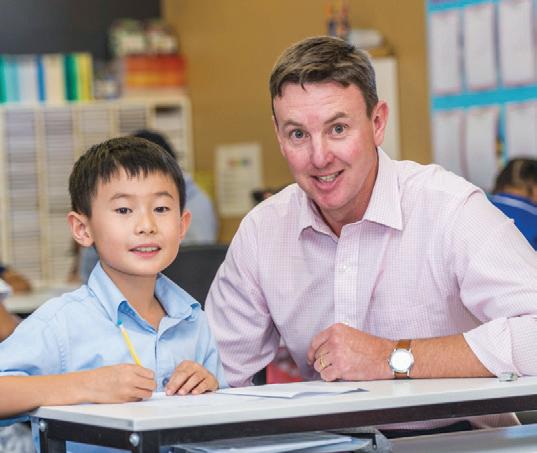
Kumon has become a mainstay for the 1800 school children already enrolled in the Kumon Maths and English programs in the ACT. They would normally attend their Kumon Centre twice a week, but now they are fully home-based for the duration of the COVID-19 pandemic. Students are doing their daily worksheets at home under the supervision of parents and guidance of their trained Kumon Instructors.
complimentary toilet rolls to our senior clients as well. I never knew this thing had such high value!.” Gotta love Therma Quilts.
HERE’S some advice for the times from the only caring-sharing lawyer I know – and it’s free. Mediator Iveta Bales emailed her “beautiful people” with some things she’s getting solace from.
• Bringing myself back into the present –spending five minutes focusing on senses; what can I hear, see, feel, smell, taste.
• Loving kindness meditation – a mantra is helpful, something like “may you love with ease, may you be happy, may you be free from pain.”
• Deep breathing – using the breath to calm the nervous system. Inhale through the nose for four counts, hold the breath for seven counts and exhale through the mouth for eight counts. Repeat.
BUT let’s finish with a joke only an editor could love, purloined from the UK gossip newsletter
“Popbitch”: a vicar and a rabbit walk into a blood bank. The rabbit says: “I think I might be a type O.”



“At least, I can rely on Kumon to see my two sons through this stressful and uncertain period,” says Jenny, a long-term Kumon parent in Canberra. “The structure that Kumon provides is brilliant.”
Gavin enrolled his daughter in the Maths program last year and says he would recommend it to anyone who is worried about their child not thriving. “She has surpassed her grade level since enrolling 12 months ago, so I know she’ll be alright,” says Gavin.






Kumon Maths and English programs cater for children from preschool to year 12 with a daily approach to developing excellent academic skills. The Kumon Instructor will tailor your child’s study program based on their specific needs.
Students would normally attend Kumon classes twice each week and receive homework to do every other day.




Exercise Physiology via individual consultations
GLA:D Physiotherapy program for hip and knee osteoarthritis
Dietitian consultations for weight loss/gain and pain relief
Occupational Therapy to improve daily living challenges
Individual counselling and health education
Support for dealing with pain
All programs can be incorporated into NDIS, DVA and My Aged Care
We accept GP Referrals for Medicare funded allied health services

Most chronic pain conditions respond to exercise and weight loss
People living with pain may be feeling more isoluated at this time, contact us for ongoing support
Mild depression and anxiety will significantly increase perceptions of pain and our counselling & support will help reduce this impact

Here’s the really big question: who will be first to produce the effective vaccine, once the first version fails to turn the tide? I like to think it will be Queensland Uni combined with Melbourne’s Peter Doherty Institute.
COLUMNISTS love peering into the future, especially when their readers are in a tough spot. Everyone wants to know what’s going to happen tomorrow.
And if we get it wrong, almost no one remembers; they’re much more concerned with the next prognostication. Just ask the astrologers.
So here’s a few thoughts from our Tuross retreat, based on the current state of play and looking, I hope, on the bright side of life.
Education: Every mum and dad who has spent months “homeschooling” will have fallen in love with teachers. In fact, when classes finally resume, little Jane, Johnny, Ahmed and Weilian, will bring big posies of flowers to class.
Health: Doctors, nurses, ambos and other health workers will be honoured with a National Memorial in Can-
berra. A massive campaign will arise for a free National Health Service like the UK; private health cover will be abandoned in favour of a bigger Medicare levy (and about time, too).
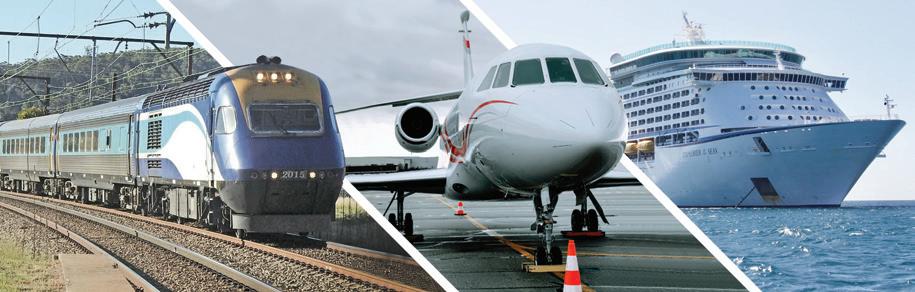
Travel: All those years of smaller aircraft seats, knee-room and cattleclass service – and the ludicrous salaries of top executives – mean that henceforth we’ll all prefer trains. Public demand will force improved rail links and new ones between cities, towns and the coast (such as Canberra to Batemans Bay.)
ALL THOSE MASSIVE CRUISE SHIPS WILL BE CEREMONIOUSLY SUNK TO PROVIDE ARTIFICIAL REEFS FOR FISH AND FISHERS. AS THEY SINK, THE APPLAUSE
FROM AUSTRALIA ALONE WILL BE HEARD IN DEEP SPACE.
Welfare: Newstart will stay above the poverty line forever (or until we forget).
Grooming: Long hair will be “in” until the vaccine, then “crew cuts” and “cropped” will be de rigueur (and that’s just the women).
Reading: Many “self-isolating” hours will be spent rediscovering books. Authors will take the place of the celebrity chefs. But only briefly. Like the chefs, their products are tastier than the producers (though sometimes with writers it’s the other way around.)
Australian politics:
There will be a rush to the polls to chuck out the incumbents. Poor Gladys is history. Scotty from Marketing might have given it his best shot, but he started with a trust deficit and all those early mixed messages from the bushfires and the pandemic will never be forgotten. A tourism and treasury guy, he cared as much about economics as health, and the voters put survival first by a country mile. (And he left Albo out of the “National Cabinet” to comment from the sidelines, constructively, of course.)
International: Emperor Xi Jinping will ride high for a while, but the second wave of Covid-19 will mean the end of him and a period of chaos comparable to the Warring States (475-221 BC) before a new emperor ascends the Dragon throne. Europe will fracture then reunite in a different form. India will collapse; and no one even thinks about Africa.
America: Joe Biden is an obvious Covid-19 candidate; and after they carry a squealing Donald J Trump out of the White House, your guess is as good as mine.
Vaccine: Here’s the really big question: who will be first to produce the effective vaccine, once the first version fails to turn the tide? I like to think it will be Queensland Uni combined with Melbourne’s Peter Doherty Institute. But that just shows how subjective predictions are. “The wish,” they say, “is father of the thought”. Even the astrologers know that.
robert@ robertmacklin. com
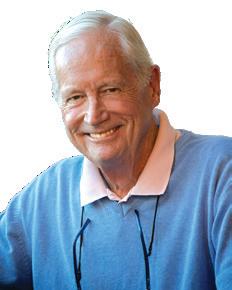

IN May last year it was reported that the 2019-20 Tasmanian budget had “plunged” into debt.
The Tasmanian Labor shadow treasurer was quoted as saying: “The irresponsible dive into debt will see taxpayers foot the bill for millions of dollars worth of interest every year.”
The quantum of the debt that reduced the Labor Party in Tasmania to apoplexy was $284 million. The fact that the budget was in surplus did not, it appears, assuage Labor’s horror.
The report further said the Tasmanian budget forecast that the level of debt would “balloon” to $1.1 billion in 2022-23, which it advised is about a sixth (16.6 per cent) of Tasmania’s annual operating revenue.
If the Tasmanian Labor Party thinks that $248 million of debt is “irresponsible” what should we make of the current ACT Labor/Greens government’s attitude to the debt that it’s racking up?
It is notable that when Andrew Barr became Treasurer in 2011 the ACT had negative net debt of $736 million. That means there was $736 million in the piggy bank and the territory’s cash reserves therefore exceeded its gross liabilities by that amount.
Andrew did not, however, muck about and within a year the piggy bank was empty and by the end of his second year in the job the ACT budget had
Since releasing the debt genie from its bottle in 2013 net debt in the ACT has ballooned to Skywhale proportions… As of today, every Canberra household is nominally indebted for $18,000 to cover the repayment cost of the existing debt.
“plunged” into net debt of $109 million. Since releasing the debt genie from its bottle in 2013 net debt in the ACT has “ ballooned” to Skywhale proportions. From a position of negative net debt of $736 million in 2011 it has increased in giant leaps, somewhat akin to the cravings of an ice addict for methamphetamine, the more you have the more you need, to a debt of $109 million in 2013; $910 million in 2015; $1.453 billion in 2017 and $2.216 billion in 2019.
However, that’s not the half of it. Net debt of $2.216 billion at June 2019, at least in the eyes of ACT Labor and the Greens is no more than a trifle, nothing to worry about – a mere bagatelle.
The ACT 2019-20 budget review accordingly advises that by June net debt will be $3.076 billion and will increase to $4.030 billion by June 2022 at which time it will be equivalent to 63 per cent of the ACT’s annual operating revenue.
The budget review also confirms

that the repayment cost that ACT ratepayers are being asked to cough up, in this year alone, for the debt that Labor and the Greens have accrued is $214.7 million. It should also be noted that when interest rates do inevitably begin to rise that the interest payment on our net debt will increase by approximately $40 million for each one per cent increase in the interest rate.
Notwithstanding the existing lowinterest rate environment the current level and rate of increase in net debt is clearly unsustainable.
From 2013 to 2019 net debt has increased at a compounding rate of 65 per cent a year. What this represents, in real money terms, is that as of today every Canberra household is nominally indebted for $18,000 (over and above current rates and other charges) to cover the repayment cost of the existing debt. That sum will increase with the already mooted additional $1 billion in borrowings over the next couple of years.
While the government has been
bashful about exactly how and when it plans to discharge all this debt you do understand, I assume, that it will in the main be left to a future (most likely non-Labor) government, and to your children and grandchildren to pay off.
The government’s lack of fiscal discipline is not only reflected in the almost $5 billion turnaround in the ACT’s net debt in the decade to 2021-22.
The budget review also confirms the extent to which the ACT budget increasingly gives the appearance of being a work of fiction. Indeed it would hold its own if nominated for the Miles Franklin Award.
Let me give you one example. In the budget review the government concedes that the estimated headline deficit of $89.1 million for 2019-20 had morphed into a deficit of $255.6 million. A blowout of the deficit of $166.5 million or just under 290 per cent in just seven months.
The change was explained on page 29 of the budget review in the following terms: “This is a deficit increase of $166.5 million in 2019-20 primarily as a result of a decrease in GST revenues.” In other words it was
the Commonwealth’s fault.
However, over the page, on page 31 of the budget review, it is reported that the decrease in Commonwealth grants revenue, comprising largely GST revenue, for 2019-20 was $17.6 million. In other words the decrease in GST revenues constituted only 10 per cent of the total increase in the blowout in the deficit but was unblushingly described in the budget review, in true Trumpian fashion, as the “primary” reason for the blowout. Incidentally, the truer picture of the state of the ACT finances is given not by the headline deficit but by the net operating balance which is currently forecast in the budget review to be a deficit of $458.3 million.
I have never been entirely sure what the expression “going to hell in a hand basket” means or indeed when it might reasonably be used, but my instinct is, in light of the state of the ACT budget, that around about now might be appropriate.


BORDEAUX CONSTRUCTION & MANAGEMENT PTY LTD

Total Design Consultancy and Project Management
• Home • Office • Extensions • Renovation • Granny flats • Sun room addition
• Build your new dream home • Commercial premises • Retail
• Designed with you with your budget in mind • High standard of workmanship
• High quality finish • Completed on time, every time
BORDEAUX KITCHENS (Associated with Capital Cabinetmaking)
Specialise in custom-built design and joinery • Kitchens
• Vanity and laundry units • Commercial Joinery
• Shop/office • Home office • Experienced tradesmen and full trade co-ordination available
Showroom Hours: Mon-Fri: 9.00am to 4.00pm, Sat: 9.00am to 12pm, or by appointment


JOHN SHORTIS
Singer, composer and political satirist
How are you travelling?
Me and my partner (singer Moya Simpson) have lost all work indefinitely, so we’re carefully working out how to deal with that. We’re working on a new show for future streaming called “Going Viral”, which is a satire about the current situation. We’re creating a virtual choir for the choir we run. And we’re writing and recording songs that last 20 seconds for people to play and sing while they wash their hands. The level of creativity continues. We are self-isolating, going for walks, and shopping for essentials which definitely include alcohol and books (hard copy, of course).

AMEY BENCKE
Birth doula
How are you travelling?
As a professional birth support person, I have a lot of close contact with clients in their homes and in hospitals. To reduce the risk of contracting and spreading COVID-19, I’m now offering appointments using Skype instead of doing home visits.
All of our local hospitals have limited the number of support people allowed in labour, so sometimes I can’t be there. This is a massive blow to my small business and has kept me up most nights, but it’s devastating to my clients – most of whom have previous birth trauma and have hired me to keep them calm during labour.
I get calls every day from expecting parents asking what’s happening, but the advice changes daily and varies with each care
How does your future look?
Immediately it looks grim, but the constant flow of songs and YouTubes and on-line activities by fellow artists who are rising above this give us all reason to keep going and surviving. I think it will change the world forever, like 9/11 did. Exactly how I don’t know. I hope we don’t get too used to isolation, working from home, doing activities on the internet. We need the actual gathering of people to return as it was, or better than it was. It may also have an effect on our climate (much less flying for example), which would be a good outcome.

How does your future look?
I’m working hard to make sure my clients are well prepared and know that they can have amazing births, with or
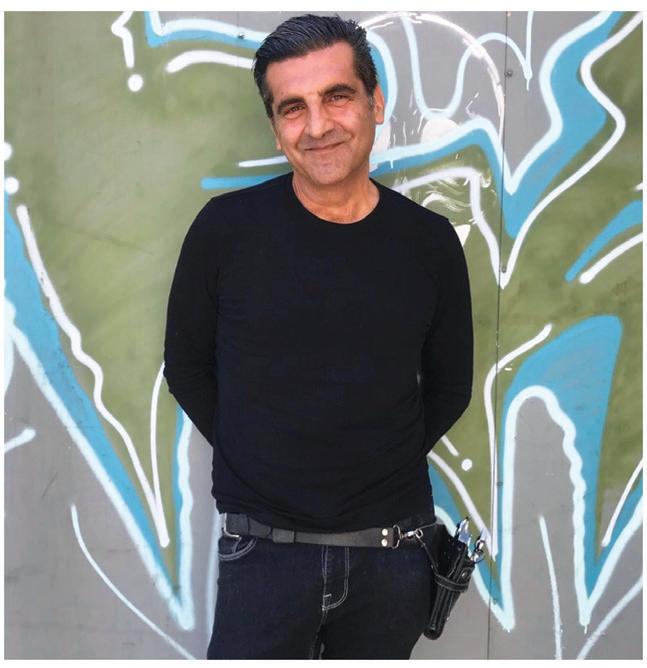
In the current situation, yoga classes, workshops and retreats as we know them are on hold. The only possible way to practice yoga together and We are building a beautiful new yoga studio right




THE conservative notion of “small government is best” belongs on the dung heap.
Throughout the last half century there has been increasing pressure to reduce bureaucracy and cut taxes. The approach: minimise the role of government, increase laissez faire.
However, the advent of COVID-19 shows just how important governments are in protecting populations.
There is no part of industry, or even a coalition of big companies, that would be able to handle the current crisis over a single virus. Without significant government intervention, the death rate in Australia and internationally would have been astronomical. Conservatives largely believe the power of the individual rather than that of the state to deliver a good society.
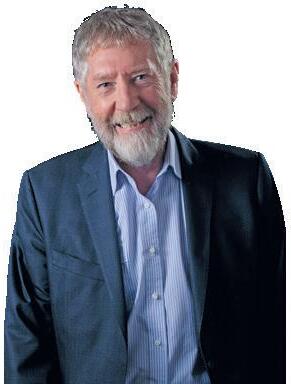
In a scathing attack on large government and Americans who vote Democrat, Dennis Prager wrote in “National Review”: “The government’s role in society should be limited
The nation is underprepared to deal most effectively with the current challenges. Spending on prevention is like an insurance policy: it is difficult to see the value unless there is a disaster.
to absolute necessities such as national defence and the resource of last resort to help citizens who cannot be helped by other citizens, private organisations or charities.”
There is some truth in every argument. Australians value the freedoms of our society and worry when they are whittled away. Perhaps conservatives might argue that overcoming the COVID-19 threat is a defence role – and therefore governments do have a role to play.
However, the conservative attacks on the stimulus package of Kevin Rudd to deal with the Global Financial Crisis tell a different story.
Even years later, Tony Abbott claimed “the former government were spending like drunken sailors”. Conservatives resist anything that interferes with allowing the individual to accumulate wealth through
hard work.
The prime driver for small government is lowering taxation. This is largely driven by large corporations.
The challenge presented by the advent of COVID-19 is the cost of the response. Australia’s stimulus will likely cost hundreds of billions of dollars in order to protect small business, to protect workers, to protect individuals and to increase health expenditure.
Where will the money come from?
As COVID-19 is an international challenge, perhaps the solution lies internationally.
At what point will the international community bite the bullet and close down tax havens such as those in the Bahamas, Bermuda, the Channel Islands, Jersey, Liechtenstein and Monaco? This might be a long-term solution, but COVID-19 provides an appropriate catalyst.
The ability of large corporations and the super wealthy to hide their money from fair taxation simply

leaves the burden on other taxpayers. It is patently unfair.
In the short term, Australia has the capacity to increase debt. This will also increase the deficit. As Prime Minister Scott Morrison was attempting to make a religion of taking Australia into surplus, the US (in 2019) was running a deficit of over a trillion US dollars.
At the same time their national debt was more than $US20 trillion. And its economy was growing.
The traditional ways to reduce debt are to tax more or to spend less. Cut government departments and govern-


ment services versus taxation. Taxing less is now out of the question if there is any chance of the government successfully restoring the economy or being able to assist people who lose their jobs or contract the virus.
This COVID-19 crisis reveals that the right-wing mantra of smaller and smaller governments is indefensible.
The constant reduction in government spending on preventive health and cuts to health research funding, as a percentage of overall expenditure on health, is a disaster. The nation is underprepared to deal most effectively with the current challenges. Spending on prevention is like an insurance policy: it is difficult to see the value unless there is a disaster.
The choice is an increase in taxation or major, major cuts to expenditure. At a time when social welfare and health are critical, these are not areas to be cut. The other big items in the budget are education and defence. Conservatives have been cutting education already, but are unlikely to cut defence. The outcome will be an increase in taxation. The key question is: will big business pay its fair share?
Michael Moore is a former member of the ACT Legislative Assembly and an independent minister for health. He has been a political columnist with “CityNews” since 2006.

NOW is surely the time to reconsider the critical Civic to Capital Hill section of Light Rail stage 2, especially its cost.
Little cost data is publicly available for the Civic to Capital Hill arrangement, but extensive, costly, heritage-destructive infrastructure works, with prolonged traffic disruption, much of it permanent, will be involved.
As well, costly special wires-free infrastructure is required from Civic to the western end of Adelaide Avenue (and special rolling stock to go with it). However, it is debatable if it is essential for any part except Commonwealth Avenue.
From the planning standpoint, the latest ACT government promotional video of Light Rail Stage 2a (Civic to Lake Burley Griffin), doesn’t show any inkling of the associated property development that will be built along Commonwealth Avenue North, and into south-facing West Basin – even though the developments are integral parts of the overall scheme.
Those developments are virtually guaranteed to be mediocre, once developers have finished with them. Above all, they will degrade and ruin the important open-space character of the precinct, as well as the vistas to and from City Hill and environs.
If and when Stage 2a is extended further south (ruining the integrity of the Commonwealth Avenue Bridge, and the symmetry with its Kings Avenue twin), there will be more “land-value-capture” mediocre property development in, and upsetting

the balance and symmetry of, the national triangle itself.
Jack Kershaw, Kambah
WHEN I noticed that a long line of natives along Redfern Street in Macquarie had been fenced off, I thought that at last this ACT government has seen the need to start looking after our nature strips and median strips the way they should be.
I was sadly mistaken.
I was informed that Evoenergy is installing a high-pressure gas main to the new suburb of Whitlam in the Molonglo Valley. The yellow pipes are visible at the bottom of Coulter Drive. They will connect to the existing system in Redfern Street where the trees are fenced off.
In my suburb, Weetangera, residents park all over the median strips and nature strips, and across driveways blocking pedestrian access. It is probably the same across the city. This is illegal and this lazy, inept government does not care less.
Meanwhile, the vegetation on these areas of public land is largely gone and turned into barren dirt. From an amenity point of view, the result is an eyesore.
Another example of the urban blight in my suburb involves a residence that has had a shipping container and a large pile of rubbish in the front yard for years and no action taken by the government.
What must visitors think, from cities where civic pride requires residents to abide by parking and waste management bylaws? This is supposed to be the nation’s capital but tourists from western countries would go home, far from impressed with the neglected state of urban amenity in our suburbs. It is a disgrace.
Colin Lyons, Weetangera
‘Keep
WE are now told that coffee shops cannot accept “keep cups” and must use only their takeaway cups. I would suggest this is rather ridiculous. We at times use a coffee outlet in the Woden Valley. A couple of weeks ago we presented our own cups for coffee, no problem and we got a discount, good for those on a pension.
Last week we presented our own “keep cups” and were told to read the sign, these are not allowed to be used due to the coronavirus.
The lady making the coffee said we may
have the virus and pass it on to the coffee shop staff! We must use their takeaway cups, which in most cases are not recyclable. I pointed out it is possible that some staff may actually have the virus and pass it on to countless customers, including us with the takeaway cups, further contaminated with the definitely non-recyclable plastic lids, which go directly to the mouth when drinking. Her immediate response “that then will be your problem!”.
So the staff make, maybe in a day, many dozens of coffee in takeaway cups complete with lids possibly contaminated with the virus. Do the staff disinfect their hands after making each cup or wear gloves? In reality it is not practical. So why cannot we use our “keep cups” which we know are clean and sterile?
Cedric
Bryant, Watson
THE coronavirus has now killed more than 40,000 people worldwide. Some will not agree, of course, but putting Israel Folau’s well publicised outcry to one side, I am of the view that God has nearly had enough of us and our behaviour, and is sending a virulent message “smarten up or ship out”. And, with corona mortality so high I think it preferable for the Prime Minister to avoid the phrase “when we come to the other side”.
Colliss Parrett, Barton


















SURFACING in community meetings across Canberra is an issue that is upsetting people’s enjoyment of their neighbourhoods.
The topic is hooning and the ever-increasing disruption that has now become a common experience for residents. And where are the local Assembly members on this? No-one knows as our ACT politicians spend most of their time in their comfortable Civic compound rather than out working with residents.
Molonglo residents have a large problem with hooning in all its forms – cars speeding, cars racing alongside each other up the wide streets, cars mounting footpaths and the noise and dangers that come with disruptive behaviour by a few.
The Woden police are fully aware of the problem. Residents know that there are not enough patrols in the area. Residents have been advised to report car registrations and other details – but that is rarely possible. And the local members?

When venturing out was possible, it was to confront the reality of large groups of men who believe they could dominate community spaces in packs and behave in an intimidating and aggressive way towards women or anyone who challenges their behaviour.
Too busy – so it falls to the volunteer community councils to try to get someone to take notice.
The planning for Molonglo was undertaken during the reign of the then planning minister, Andrew Barr. There are lists of issues as a result of the stupidity of that mess of planning. Now there is this extra one.
These Molonglo suburbs are devoid of community facilities and the streets are designed as if to encourage car racing. Did no-one check the historical facts on how to plan suburbs and to build in facilities and other infrastructure to provide for younger people? Doesn’t look like it given the nightly activities out on the streets.
Meanwhile over in the northern suburbs around Watson, the residents have had enough.
To paraphrase the locals: Sum-
merNats operates on a social licence as well as a governmental one. With the decision to continue with the burnouts event on January 4, this social licence is now extinct. SummerNats inflicted smoke, noise, particulate pollution and social issues on the electorate of Kurrajong, especially residents of Watson, Dickson, Hackett and Downer.
When venturing out was possible, it was to confront the reality of large groups of men, empowered by the event’s valorisation of toxic masculinity to believe that they could dominate community spaces in packs and behave in an intimidating and aggressive way towards women, or anyone who challenges their behaviour.
Law enforcement was powerless to intervene – witness Eaglehawk on the evening of Friday, January 3.
If you missed that event – large scale hooning took over the streets around Eaglehawk and the few police who could be spared from dealing with the fire emergencies were pelted with cans and stones and had to retreat from taking action.
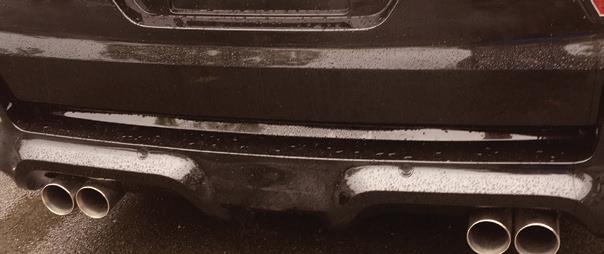
What SummerNats delivers is a clear message that the ACT government endorses hooning and associated bad behaviour on the streets. There must be connections with this official blessing of hooning every January and what erupts at night on the streets across Canberra.
The residents in and around Watson and Downer accept that living near EPIC (the showground) means that events happen and sometimes there can be noise. These are mostly great things that add to the culture of the city. SummerNats is not one of these. It may add to the pockets of some in accommodation and those that sell booze, but for the people who live here is now well beyond its use by date.
The city hosts numerous car shows and they are to be encouraged. But let’s get real – SummerNats is a major hooning event with a thin veil of car


appreciation being used to justify its explosion across the city’s suburbs each year.
Some opportunist political types may try to make this a law and order issue. It isn’t that simple. It is about a government being responsible for the planning mess it has made and about locally elected politicians earning their well-paid salaries and generous perks by representing the views of residents – especially those in Watson/Downer/ Dickson and those across town in Molonglo.
Residents await actions (not words) on hooning and the overdue cancelling of SummerNats.
Paul Costigan is an independent commentator and consultant on the visual arts, photography, urban design, environmental issues and everyday matters.
By Helen Musa
AS galleries everywhere close their doors, some such as Beaver Galleries, are ahead of the pack.
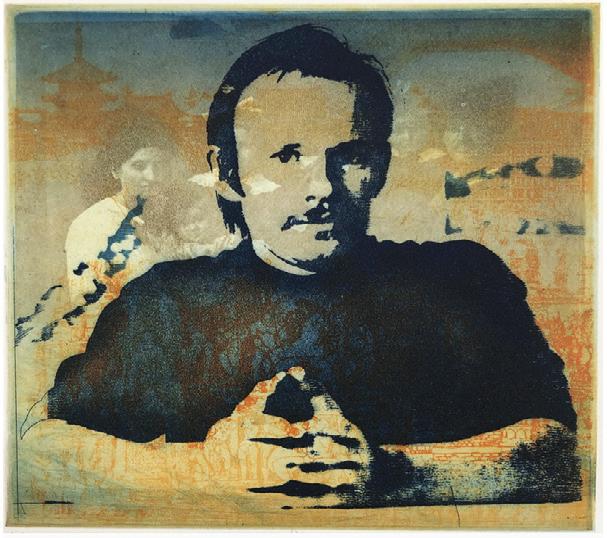
Their planned exhibition of work by the late, great artist/printmaker Jörg Schmeisser, for instance, is ready to hang, but it’s already viewable online – all 72 works.
The exhibition, “Jörg Schmeisser, The Journey Continues: Prints from the Family Collection” is drawn from the collection of the Schmeisser family – his artist widow, Keiko Amenomori-Schmeisser and daughters Aya and Taë.
When Schmeisser died in June 2012, there was an outpouring of grief in Canberra for the man who had, from 1978 to 1997, headed the School of Art’s printmaking workshop, where he became mentor to some of our leading printmakers, while keeping up his

91”
own art practice, with more than 200 solo exhibitions worldwide.
His work is represented in the British Museum, Victoria and Albert Museum, Bibliothèque Nationale de France, Museum of Modern Art in New York, Staatliche Sammlungen Dresden, Germany, Museum fur Ostasiatische Kunst in Cologne, Germany, and the National Gallery of America. In Australia, his work is held in all of the major state galleries as well as the National Gallery of Australia.
Keiko says: “I look after Jörg’s work and found some special prints, maybe not editioned prints, but things like colour proofs, which he did a lot in his career… since Martin and Susie Beaver were always so supportive of his work, it was in my mind to have a show based on those prints.”
Since his death in 2012, she said, there had been a number of exhibitions including a small one in Japan last year and one in Dresden, Germany, but the future was less certain.
Jörg, she said, was the quintessential artist-traveller. In the early days of their marriage she went with him to the US, Israel, and the village in Poland where he was born and around Japan, including north to Hokkaido, the subject of a series in this unusual exhibition.
But with two daughters to raise, Keiko stayed at home in O’Connor while his travels took him to places as far afield as Angkor Wat and Antarctica, Ladakh, Jerusalem, Venice, Princeton and Arnhem Land.
“He was not often at home, but luckily


Stay in touch with the names making news on Sundays from 10am as 2CC and “CityNews” present Canberra’s only local weekend news and current affairs program.
It’s a revolving panel show that brings to the microphone great “CityNews” commentators and 2CC personalities.
Be part of the conversation call 6255 1206 between 10am and noon

my father had been a businessman and was hardly at home, so it was quite familiar, ” Keiko explains.
“I always let him go and he always returned a much happier man.”
Always gregarious, he kept up his connections and friendships around the world. I once spent hours with him in Osaka drinking beer and talking art, a favourite pastime.
But in Keiko’s view there were two visits
which were of the greatest significance.
The first was to Ladakh in Himalayan northern India, where he went with a German photographer on an expedition funded by the Cologne Museum of East Asian Art.
“He had always treasured history, but Ladakh also had vast nature and harsh conditions, similar to Antarctica, almost untouched – and they travelled on a donkey,” she says.
The second seminal visit was to Antarctica in 1998 as part of a scientific visit organised by Princeton.
“Jörg loved science and was intrigued by the things they talked about,” she says, which is evident in both the prints and diary which he later exhibited. Of the icebergs, he said, “There was nothing to compare them to, as I had done with buildings, in front of mountains or beside trees.”
A family story is that after returning from Antarctica, family and friends alike endured many hours of slides and videos delivered in a manner that his daughters called being “Jörganised”.
According to one of his oldest friends, author and playwright Roger Pulvers, whom he had met in Kyoto in 1968, Schmeisser had taken part in archaeology digs in the Middle East, where authenticity in line, location and colour was essential for scientific identification.
Striving for complete authenticity would be seen in his etchings of Beijing’s Forbidden City, Nara, Ladakh, Angkor Wat, Siena and Khajuraho, but in some works, Pulvers says, the “disorder of imbalance” prevails, as in his etchings of icebergs.
In 2010 Jörg Schmeisser wrote: “In the end it is both the travel and I, who create the marks, which will make the print of the journey.”
“Jörg Schmeisser, The Journey Continues: Prints from the Family Collection”, Beaver Galleries, until April 12. Viewable at beavergalleries.com.au
By Wendy JOHNSON
WE all expected the announcement, but it wasn’t fun when it came. Restaurants, bars and cafés closed except for takeaway and/or home delivery.

How will restaurants, bars and cafés cope now that COVID-19 has robbed us of our beloved hospitality industry, such a key component of community in the ACT? How will social Canberra cope?
Some hospitality folk aren’t equipped to play the takeaway game, and not all fine-dining operators will be able to. Some, even those who have been in the biz for yonks, are throwing their hands in the air and hanging a “closed” sign on their doors until matters return to normal. Some have been quick off the mark to do as much as they can, knowing they won’t cover all the bills but hoping to at least hang on to staff. Some are still scratching their heads, wondering what to do.
Every part of the ACT is affected. Tough times have just begun on the hospitality front, but we need to support as much as we can.

takeaway menu is being launched soon.
A friend and I decided to test “social-distance lunching”. She works in Kingston, so we popped to the Foreshore for a bite and to soak in the scenery.
We discovered the new Marion’s To Go, the first dedicated takeaway on the Foreshore. There’s a takeaway window, space cordoned off for ordering and a preliminary menu with
I ordered while my friend found a seat close to the water. There are loads of benches around the Foreshore and although everyone should respect one another by maintaining the correct distance, you can still socialise without screaming. My friend ordered the honey-roasted pumpkin salad which came in a cardboard container with a wooden fork. It was $8.50 and a great deal for the size and quality of the salad, delish and loaded with goodies. In addition to the big chunks of pumpkin, the salad featured baby spinach, chickpeas, quinoa and lemon vinaigrette.
I’ve had in a long time – crunchy baby cos, crispy bacon, egg white, salty anchovy, croutons and an amazing dressing. With one coffee, lunch was $26 all up.
My friend and I maintained our social distance. We enjoyed each other’s company, the sun, the fresh air and the views. Not so bad at all, and we felt good about contributing, in our own small way, to the hospitality industry that gives so much to the capital.


By Helen Musa
AS countless musicians across the country sink between the waves of virus-related closures, Canberra classical guitarist Matt Withers is well and truly keeping afloat.
Not only has Withers moved quickly to transfer all his guitar students to Skype lessons, but he’s also touting an important concert coming online in mid-April by using a couple of stunning YouTube video-clips to promote his work.
But without doubt, his proudest achievement in these trying times has been the arrival of his first child, Edward, in mid-January.
He and his wife, Emma (who has been effectively in lockdown for several months now through childbirth, fire and pestilence), are bunkered down in blissful Curtin while Withers does the essential shopping and Edward, whose proud parents have surrounded him with music every day of his life, is happily unaware.
Withers is a long-term member of Australia’s premier guitar quartet, Guitar Trek, but he’s also known for his entrepreneurial talents and knowledge of social media, which have allowed him to give Skype lessons as far as Dubai and China for several years now.
“But now all my students have migrated this week to Skype or other platforms,” he says, adding, “It’s a way forward, but I do hope it comes back to face-toface contact, of course.”
“Online classes have their limitations,” he explains, because “teaching is a social interaction” and he’s often manipulating the students’ hands to get the right technique.
Alas, he’s found it necessary to cancel his planned performance showcase of prize winners in the 2020 Matt Withers Australian Music Composition competition, which would also have involved Canberra-raised composer Sally Whitwell, who wrote a piano and guitar duo specifically to be played in the concert. Thankfully, he reports, a planned ABC recording of
that work has been “postponed but not cancelled”. Undaunted, he’ll be performing favourite works, such as Lennon and McCartney’s “Yesterday”, arranged by Takemitsu, and Rodgers and Hart’s “Blue Moon,” arranged by Almeida, from his recent ABC classics recording “Songs of Yesterday” in a live-streamed recital on April 17. This is part of the Melbourne Guitar Festival’s extended program, organised and directed by guitarist Michael McManus to allow the festival to have a presence in spite of cancellations.
As for Withers’ YouTube videos, stunning examples of artful distancing, his recordings resulted from an artsACT grant late last year which allowed him, director Marisa Martin, cinematographer Matthew Ong and drone cinematographer Matthew Jelly to get out and about in Floriade and springtime Mount Stromlo to record “Vincent (Starry Starry Night)” and Jobim’s “A Felicidade”, the latter winning him a new cohort of fans in Brazil.
McManus, he reports, is running the online platform for the April concert but he will arrange the Canberra filming himself to make sure it’s topquality for live-streaming.
They’re asking for donations to view the whole concert with various levels – $20, $40 and $60 –allowing home-based audiences access.
“In the past world, if kids wanted to come to a concert parents might have been distressed by the noise or the cost,” Withers says.
“This way you can have the best seats in your own house and see a full classical concert.”
He’s already seen ticket sales across Australia as well as in London and Paris – his friends in Paris will be sitting around at 11am French time to enjoy the music.
All the while, 11-week old Edward remains blissfully oblivious – and he’s laughing.
Guitar Festival live-stream concert, 7pm AEST, April 17, register at melbourneguitarfestivallivestreams.com/ matt-withers
COMMENT by Helen Musa
THE NEW, election-year arts festival “Elsewhere” has been paused by ArtsACT in the face of the coronavirus disruptions.
Planned for July, it was prefigured in an ACT Budget where the government had allocated $225,000 to produce it.
Festival or no festival, principles about setting up a new event are under question.
For his part, Arts Minister Gordon Ramsay declared his excitement about the event, which would support local artists and celebrate the history and story of Canberra’s artistic talent.
In a media release on March 11, ArtsACT said that “Elsewhere” would “highlight the world-class work of Canberra’s creatives who have forged careers ‘Elsewhere’ after their humble beginnings in the ACT.”
Humble beginnings? Members of the Canberra arts community were asking, with a united touch of rage.
In a city good enough for national and international artists such as glassmaker Klaus Moje, sculptor Neil Roberts, poet Geoff Page, author Marion Halligan, opera singer Tobias
Cole and guitarist Tim Kain to make their homes, you’d think this kind of cultural cringe unnecessary.
It is undeniable that Canberra has seen its brightest and best, such as the late Ross Stretton, who became head of the Royal Ballet, shine on the world stage.
But underlying the announcement by ArtsACT seemed to be an idea that arts and culture in Canberra began with Robyn Archer’s 2013 Canberra Century arts program, confirmed in an online video suggesting that the designated “creative producer” of the festival, Yolande Norris, had been mentored by Archer.
Norris, who now works as an officer with ArtsACT, has plenty of experience. An ANU School of Art and Design art graduate with 15 years at the coalface with Newcastle’s “This Is Not Art”, “You Are Here” in Canberra, cross-art projects with Big hART and producing “Girls Rock! Canberra”, she is also a respected arts writer.
But people with longer memories know that Canberra has always nurtured artists in many different fields, sustained two tertiary schools of art and music, and been a hotbed of experiment, as with Splinters Theatre of Spectacle and the punk artists of the 1990s, and that much of this activity was spearheaded by passionate individuals, not government entities.
So what exactly will the festival eventually be? Would we be seeing a deluge of Canberra-raised performance stars, such as electronic rockers Peking Duk, or plays by Tommy Murphy, staged by leading directors like Iain Sinclair and Tom Healey? Well probably not. A recent mystifying interview at artshub.com.au by George Dunford titled, “Meet Yolande Norris, creative producer of Australia’s newest biennale,” while vague on detail, used a word ArtsACT had not —”biennale”, replete with connotations of a major visual art event. That provocative word alone had members of key funded visual arts organisations in a collective rage as to why they had not been consulted. Over two weeks in July, ArtsACT’s announcement said, “Elsewhere” would present “a select and succinct program of new, major works and performances by nationally and internationally acclaimed artists who began or built their careers in Canberra”. Norris says, “‘Elsewhere’ will enable outstanding and established artists to ‘bring their works Home’ to Canberra. The project will offer a rich narrative around the contribution Canberra has made to the national arts ecology.” Arts ecology? If “ecology” is defined as the study of the relationships between living organisms, the absence of serious consultation in this case suggests a failing system.




Joanne Madeline Moore

ARIES (Mar 21 – Apr 20)
Tuesday night’s Full Moon revs up your relationship zone so romantic Rams are ready to rumble and singles are keen to catch up with friends. But hasty Mars and reckless Uranus are at odds, so take things slowly (especially on Tuesday and Wednesday) otherwise you could become involved in an argument or accident. You need to watch what you say – if you don’t self-edit what comes out of your mouth, then you could end up with an awkward (or angry) situation on your hands.
TAURUS (Apr 21 – May 21)
Some stubborn Bulls can get stuck in a stultifying daily rut. This week it’s time to ricochet out of your usual routine and do something completely different. Variety is the spice of life, as you experiment with exciting new activities – and cope with detours, disruptions and challenges along the way. But the more you try to bulldoze others into doing things, the more they are likely to resist. If you want to avoid ongoing problems and power struggles, learn to graciously let go and move on.
GEMINI (May 22 – June 21)
The Full Moon stimulates your peer group zones, so it’s an important time to nurture and cherish your close friends. You may also need to assist a friend or family member who is sick or experiencing financial trouble. Pluto, Jupiter and Saturn make positive aspects to your ruler Mercury, so fast thinking and practical strategies will help you solve problems and alleviate stress. Your motto for the week is from birthday great, singer Billie Holiday: “If I don’t have friends, then I ain’t got nothing.”
CANCER (June 22 – July 23)
Looking after a loved one won’t be easy, as you struggle to juggle your personal and professional lives. This week’s Full Moon falls in your home zone, so be on domestic drama alert and realise that stress levels will be running high (and selfcontrol running low). Mars and Uranus could also stir up a problem with a friend, colleague or business partner, especially on Tuesday or Wednesday. So watch what you say Crabs, as you do your best to carefully sidestep around a sensitive situation.
LEO (July 24 – Aug 23)
Mars, Uranus and the Full Moon fire up your tempestuous nature, so you’ll feel amped up and ready to perform as you let your hair down and overdo just about everything! But don’t let overconfidence (and over-exuberance) trip you up this week. Your head’s full of ambitious dreams and future schemes, but they’ll only work if you can persuade other people to contribute to Team Leo. You’ll find creative collaboration will take you a lot further than functioning as a solo operator.
VIRGO (Aug 24 – Sept 23)
The Full Moon and Mercury stir up your money zones. So, the spotlight is on making adjustments regarding money, possessions and/or resources that you share with loved ones. You’ll find a direct approach garners the best results. When it comes to finances and business, make sure you research thoroughly and plan meticulously. The weekend looks particularly productive, when Saturn helps you deal with practical matters, solve a problem or practice a handy new skill.
LIBRA (Sept 24 – Oct 23)




A loved one, close friend, business partner or professional rival could stun you by making a surprise move. Be prepared with a few fast moves (and choice words) of your own! Is your love life stuck on autopilot? The Full Moon urges you to blast away the cobwebs and look at things from a fresh angle. Singles – are you fed up with dating disasters? You require a kind and caring soul who you can really communicate with. So steer clear of flirtatious charmers with dubious motives.
SCORPIO (Oct 24 – Nov 22)
Tuesday night’s Full Moon favours meditation, contemplation and investigation as you solve a problem or get to the bottom of a perplexing mystery. However, if you are a super stubborn Scorpio who hangs onto the past and resists change, you’re in for a rocky ride in the months ahead. You need to be more flexible and adapt to constantly changing circumstances. Heed the wise words of Scorpio columnist and social commentator Will Rogers: “Chaotic action is preferable to orderly inaction.”
SAGITTARIUS (Nov 23 – Dec 21)
The Full Moon highlights goals, networking, friendships and online groups. There’ll be surprises or even shocks, as your previous plans are thrown out the window. Try to get the balance right between being spontaneous and being prepared. And slow down (particularly on Tuesday and Wednesday) otherwise you could overreach and come a cropper. You also need to take your foot out of your mouth and communicate with more care and consideration, especially involving friends and finances.
CAPRICORN (Dec 22 – Jan 20)
Resist the push from other people to rush and get into a full-on Full Moon panic (especially on Tuesday and Wednesday). Steady leadership, bold ideas and brave decision-making are required this week so step up and be a positive role-model. Your motto for the moment is from playwright and diplomat Clare Boothe Luce (who was born on April 10, 1903): “Courage is the ladder on which all the other virtues mount.” For some lucky Capricorns, work and love are linked in wonderful ways.
AQUARIUS (Jan 21 – Feb 19)
Expect a rather dramatic and disruptive week of shocks, surprises and general shenanigans! Tuesday and Wednesday look particularly unpredictable, when there’s a Full Moon and Mars squares Uranus. So pace yourself; drive carefully; think before you speak; and pause before you pounce. Many adventurous Aquarians will feel bored, restless and housebound. So start planning an exciting escapade (somewhere exotic) in 2021. Saturn also encourages you to look, listen and learn.
PISCES (Feb 20 – Mar 20)
There are plenty of challenges at the moment but avoid approaching things in a superficial way Pisces. There is so much going on behind the scenes that you’re not aware of – so keep your eyes and ears open, do your research, read between the lines and listen to what your intuition tells you. The Full Moon fires up your joint finances zone so try to smooth over any potential problems diplomatically. People are also looking to you for leadership when it comes to kindness and compassion.
Copyright Joanne Madeline Moore 2020

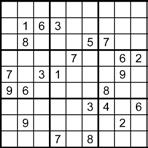
1 On the 7th of which month in 1941 was Pearl Harbor attacked? (8)
2 Name an ancient Chinese martial art. (4,2)
8
9
10
11
of milk. (8)
14 What are European thrushes called? (8)
18
19 What is an impairment in reading ability? (8)
21 Name an Australian champion tennis player, Patrick ... (6)
22 Which term describes an agreement between persons to refrain from doing some act? (8)
23 What is another term for salty or saltlike? (6)
3 Which French general was defeated at the Battle of Waterloo? (8)
4 Name another term for a poker stake. (4)
5 Which people escort us to our seats at theatres? (6)
6 What do we call a small unpretentious restaurant? (6)
12 What are parvenus more commonly known as? (8)
13 Which musical piece is appropriate to the night or evening? (8)
15 Name a primary linguistic form from which derivatives are formed? (6)
16 Name a popular US jazz musician, Fats ... (6)
17 To be crafty or cunning is to be what? (6)
20 What is able to penetrate solids to take photographs? (4)
this time of the year our dogwood, or Cornus, is beloved by birds for its strawberry-like fruit.
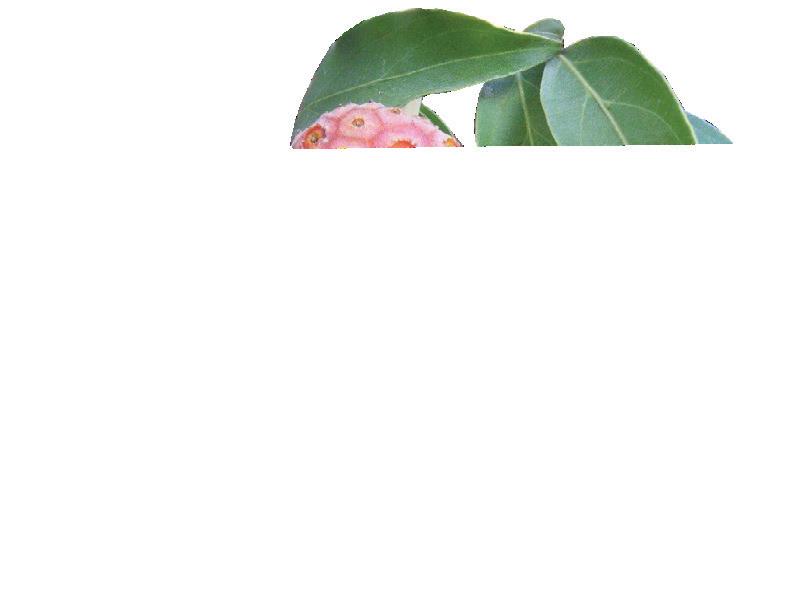
Cornus capitata is a large family native to the Himalayas and China, introduced to the west in 1825. It’s a small, extremely hardy evergreen tree that grows well here.
This dogwood was given the Award of Merit by the Royal Horticultural Society for its flowers in 1922 and its fruit in 1974. It is always a guaran tee of a great plant and especially for excellence as an exhibition plant (garden show entries, please note). The lemon-yellow flower bracts in summer gradually change from a light and then deep pink in large clusters over the whole tree. Now, the strawberry-like fruit gradually changes from green to red at this time. Our specimen was planted more than 10 years ago and is now a manageable size of 4m high x 2m wide.
The deciduous Cornus florida is renowned for its mass of pink bracts from spring to summer. This is a small deciduous tree and can suffer from drought conditions. I’ve seen the demise of numerous specimens, although I suspect from lack of regular watering.
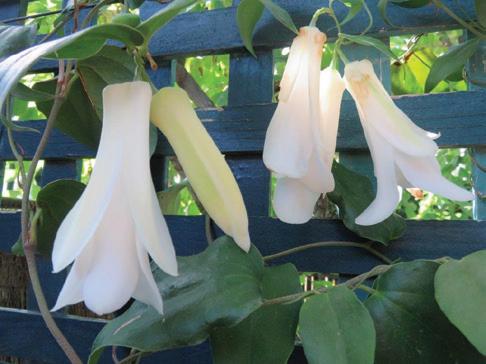
WE continually marvel at one climber in our garden, Lapageria rosea var. albiflora “White Cloud”, which is the national flower of Chile; also known as the Chilean bellflower. As it prefers shade to semi-shade, ours is growing on a lattice under overhanging branches of a silver birch. Recognised as one of the most beautiful of all climbing plants, with its pure white tubular flowers 10cm long, it was introduced to the west in 1847 and quickly became a favourite conservatory plant in the UK. Despite the severity of this summer, it has flowered better than ever. Clusters of flowers first appear in late spring, then it rests, followed by flowers in summer and more now, in autumn.
plums and 13 different apricots grown. These were mainly grown on the estates of large country houses with tall brick-walled fruit and vegetable gardens. The fruit was espaliered on the walls for the reflected heat in summer, for example in Henry VIII’s royal kitchen garden at Hampton Court Palace in London. For more details visit hrp.org.uk.

WE’RE fortunate with the great variety of fruit available today. But, going back to the 1600s there was an even greater variety of fruit available than now. Classed then as exotic fruit, there were 53 varieties of peaches and nectarines, 33
OUR Michaelmas daisies are flowering now, the best they’ve been for 10 years, and are abuzz with bees. When they’ve finished flowering, I’ll divide them to fill in bare spots where some less sturdy plants succumbed to the summer heat. Almost a lookalike is the native Swan River daisy, brachyscome, and one of the best is B. “Magenta Blue”. A perfect spreading ground cover now in flower, this can be seen growing at the Botanic Gardens. In the cooler weather, it’s the ideal time to walk through and see the many autumn flowering plants there. I’d recommend picking up the “Flowers, Fruit and Foliage” guide at the Visitors’ Centre first.
THE Belconnen Garden Club had a recent visit to the Cool Country Natives nursery in Pialligo. Members were staggered at the range of plants available, at what is now the only specialist native plant nursery in Canberra. We were able to go behind the scenes to the propagation areas, to see thousands of seedlings growing in tunnel houses. This means they’re acclimatised to our climate from day one.






OATRAM FINANCE are the Transport and Earthmoving Finance Specialists
Regardless if the goods are new or used, from a private sale or a dealer, we have the Working Finance for your Working Equipment.
We pride ourselves on complete finance solutions to keep your business running. We have access to some of the best finance rates due to our volumes. We are located in Queanbeyan on Crawford Street and we service the ACT and NSW.
Call us today on: 02 6297 8588
1/78 Crawford Street, Queanbeyan | Email: andrew@oatram.com.au | oatram.com.au