




WHILE the coronavirus continues to spread in the ACT and across the nation, more than ever, now’s the time for Canberrans to look out for the needs of older people in the community, says geriatrician and general physician Dr Mary Ann Kulh.
“Many older Canberrans are sitting at home, watching news of the virus on television and becoming anxious or depressed,” says Dr Kulh of COVID-19, an infectious disease detected in Wuhan, China, and first reported to the World Health Organization in late December.
Dr Kulh, who works out of More than Medicine in Braddon, says Canberrans can reach out to highrisk seniors, aged 65 and above, by offering to go to the shops or markets for them or keeping an eye on their health.
“Some of our frail Canberrans may have difficulty getting out of the house to stock up on essential supplies,” she says.
“[And] older people over the age of 65, generally, as experienced in China and Europe, have a higher mortality rate [in the face of the coronavirus].”
The rate, however, is a big grey area at the moment, according to Dr Kulh, who says not everyone that’s suffered from the COVID-19 illness has been tested, which means they can’t get an accurate case fatality rate.
But regardless of the exact

DANIELLE NOHRA talks to a geriatrician about the special needs of vulnerable older people in the face of the coronavirus virus and how they can minimise their chances of being infected.
statistics, Dr Kulh says the mortality rate in older people is higher.
And, she says the risks are even higher for older people with comorbidities, which are other chronic diseases or illnesses such as diabetes, heart disease or lung disease.
The other group of older people at risk are people who have a weak immune system such as people with rheumatoid arthritis and autoimmune diseases, she says.
“It’s more their frailty that determines their risk of getting disease rather than their age,” she says.
“But at the moment we know that older people, full stop, are more likely to get the coronavirus, so it’s safer for all older people to take precautions.”
One of these precautions is, even though there’s no vaccination for COVID-19 yet, to be vaccinated against the flu when it comes out in April, Dr Kulh says.
“If they get the flu, their immune system might be weakened and then they might get COVID-19 on top of that,” she says.
She says this will also help prevent overwhelming the health care system

with another pandemic.
The federal government has announced a ban on non-essential static gatherings with more than 500 people, and Dr Kulh agrees saying large group gatherings should be avoided by seniors as a precaution, too.
“The numbers are likely to change, too, it just comes down to common sense,” she says.
Usually Dr Kulh’s patients tell her about celebrating big birthday milestones, and she recommends older people reconsider large gatherings for significant birthdays for now.
In general, Dr Kulh says people should practice what the federal government is calling social distancing, which they recommend standing a metre and a half away from people.
“Even if they’re in a doctor’s waiting room, it’s important to practice that there, too,” she says.
At the moment, she says general practices are okay for seniors to keep going to because they have not recorded a COVID-19 case yet but she urges seniors to avoid walk-in clinics and fever clinics such as the Weston Creek Walk-In clinic which



recorded the first coronavirus case in Canberra.
“Another way to reduce virus transmission is to wash your hands for at least 20 seconds with soap and water or use alcohol-based hand sanitiser,” she says.
And if seniors are struggling to get access to hand sanitiser, Dr Kulh says they should speak to their local pharmacist and see if they can source it for them.
“I also recommend that seniors make their wishes known to their loved ones about what sort of medical care they would like,” she says.
It’s important they have an advanced care plan in case they end up in hospital, she says.
And, the community can help older people, too, says Dr Kulh, who
recommends unwell family, friends or community to not visit older people whether they’re in a nursing home or in their own home.
“Regular visitors need to be vigilant with social distancing, not visiting if they have symptoms of fever or respiratory illness, or are generally unwell, make sure they wash their hands and use alcoholbased hand sanitiser,” she says.
“At the moment the Australian government hasn’t said don’t visit family in nursing homes but this might change. Find out from the nursing home first what their rules are. The same goes for people visiting older people who are in hospital as well.”
Dr Kulh also advises that people monitor the symptoms in older people they look after or are close to.
“We can look out to see if they’re unwell with not just the typical symptoms of fever, cough and shortness of breath, but also be aware that older people might present symptoms in other ways such as delirium,” she says.
“They could also start to have falls when they don’t usually.”
For anyone worried about symptoms that they think might be the coronavirus, Dr Kulh says contact the coronavirus health information line on 1800 020080 and they will let people know what to do if they’re unsure.




MICHELLE GRATTAN says that while the public seeks certainty, on some fronts there will be no absolutes, just scales of assessment, probability and risk.
CHIEF medical officer Brendan Murphy was still shaking hands on Sunday morning.
But when that afternoon Scott Morrison announced the latest coronavirus measures, including compulsory self-isolation for overseas arrivals, the Prime Minister said he and other cabinet members wouldn’t be shaking hands anymore.
Only two days earlier Morrison had been thrusting his hand at a notably wary Gladys Berejiklian. Confusing messages.
On the other hand, this isn’t just a fast-moving situation, but one in which even experts have differing takes (the advice from the federalstate medical officers’ panel may be unanimous but it’s understood there are disputes in their deliberations), and politicians struggle with responses, even as they follow the medical recommendations.
For example, the NSW government has appeared more forward-leaning than the feds.
While members of the public understandably seek certainty, on some fronts there will be no absolutes, just scales of assessment, probability, and risk.
That’s not to say the federal government should not have been clearer at times, and its mass media advertising campaign was inexplicably slow to materialise.
Only history will show definitely whether Murphy and the government are right in their claims Australia is keeping “ahead of the curve”, or the critics vindicated in arguing it is behind it.
Morrison in particular has wanted to put the most optimistic gloss on things, not least because he hoped to minimise economic disruption.
Despite the constant flow of news conferences over recent weeks, the government avoided dwelling on how bad things could get.
By Sunday Morrison’s tone had changed. He had a graph to illustrate the need to flatten the curve of infection to enable the health system (notably the intensive care facilities) to cope. “Slowing the spread, you free up the beds,” he said.
Stark and unfolding realities were starting to prevail – though not entirely – over the prime ministerial desire to keep the lines upbeat.
And compulsion and the law were replacing choice and advice, in the

measures Morrison outlined following meetings of cabinet’s national security committee and the new “national cabinet” of federal and state leaders (and after Morrison spoke with Britain’s Boris Johnson and NZ’s Jacinda Ardern).
Like NZ, Australia will now insist all arrivals self-isolate for a fortnight. The only exceptions will be Pacific Islanders who are transiting to their home countries.
Morrison said this measure would be effective in “flattening the curve”.
As foreign travellers dry up, most incoming traffic will be Austral ians returning home.
Foreign cruise ships are to be stopped from arriving for 30 days in what will be a rolling ban.
organised that would be contrary, once those provisions are put in place, to state law.”
Berejiklian was quick to say NSW already had the powers to enforce self-isolation, emphasising what was involved “is a matter of life and death”.
This recalled her strong language of a few days ago when she said the situation was “not business as usual”.
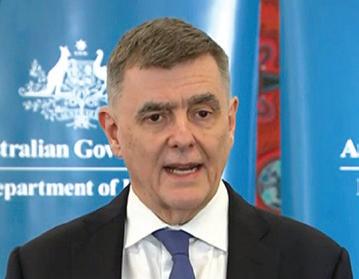
Chief
The cessation of non-essential gatherings has moved from advice to a formal prohibition, which will be backed by state law.
On the enforcement side he said: “The states and territories wisely are not going to create event police or social-distancing police… But the legislation impact would mean that if a person did fail to observe the 14-day self-isolation or if an event was


Work is underway on restrictions on visits to nursing homes and arrangements for indigenous communities as well as further restrictions on enclosed gatherings.
As for the federal cabinet, it will be “social distancing” with “no more handshakes”, more meetings by video conferences and less travelling. Morrison has already cancelled some engagements.
So far schools generally are not being closed (though some individual schools are shutting down). It’s said closing schools could promote community transmission, with children out and about. Many would be left with grandparents who would be in the most vulnerable age group. Also, if parents had to stay at home to care
for their kids, this could deplete the health workforce.
Arrangements for parliament are still being worked on, and the presiding officers have had talks with Murphy. The sitting is likely to be kept as short as needed to get through the legislation necessary for the $17.6 billion stimulus package.
Opposition leader Anthony Albanese in his national address promised “a spirit of bipartisanship. We will be constructive. We will support the government to protect the health of Australians, but also to protect their jobs and our economy”.
The package was all about trying to head off a recession by keeping growth positive in the June quarter. As things are going, that looks like it could require a miracle as well as the package. Many small businesses will collapse, despite the help the government is offering.
Almost certainly, a lot more stimulus will be needed, with the question only the amount.
But a measure of how deep the crisis is becoming is that at the moment, the national conversation is mostly about health, not economics.
Michelle Grattan is a professorial fellow at the University of Canberra. This article was originally published on The Conversation website (theconversation.com)




Coronavirus is stressful. Experts LOUISE STONE and KATRINA McLEAN share ways that people can cope with the anxiety.
ONE of our patients was recently talking about her anxiety around the coronavirus epidemic. This woman’s stress was understandable. She had survived a serious infection with swine flu, but only with a prolonged stay in intensive care.
“I guess we all walk on the edge of a cliff… anything can happen to anyone at any time. We are never really safe. But people like me? Now we know the edge of the cliff is right there, and we can’t help looking down,” she said.
While some people may be more susceptible to becoming seriously ill with the coronavirus than others, none of us are immune to the pervading sense of anxiety that has taken hold around the world.
For Australians in particular, this crisis has come immediately after a horror summer of bushfires, which took their own toll on our collective mental health.
But there are some things we can keep in mind, and some practical steps we can take, to keep coronavirus-related anxiety under control.
It hasn’t been an easy start to the decade. In the face of the summer’s bushfires, many of us contended with threats to our health, our homes and even our lives.
Even those not directly affected were faced with constant images of charred bushland, injured wildlife, and homes burnt to the ground.
The bushfires put a strain on our collective mental health, and it’s very likely some people are still struggling.
Natural disasters, though, are visible and tangible. There are things we can do to avoid the threat, manage the danger or mitigate the risk. We can see the smoke, check the app, buy an air purifier, prepare our homes. And despite the vivid images of floods, fires and cyclones, we know the storm will pass.

Epidemics are different. A novel epidemic is unknown, evolving and a global risk.
We are faced with a variety of information (and misinformation) online. Guidelines contradict each other, different states have different approaches, and experts disagree.
Meanwhile, infection rates climb as economies fall. We know we may contract the virus, and as yet we know there’s no vaccine to prevent it. While the bushfires united us, coronavirus seems to divide us.
There’s an ugly side to ways we can deal with the stress of an unknown enemy like the coronavirus.
ing people they see as high-risk. This is not helpful.
We also seek to manage our anxiety by trying to prepare ourselves and our families for the possibility of isolation or quarantine.
While this is reasonable to a degree, practices such as stockpiling toilet paper and other goods can feed, rather than relieve, anxiety. Empty supermarket shelves can create panic, and further disadvantage people who might be living from week to week.
Epidemics isolate us from each other physically too, and this will only happen more and more.
So how can we put things into perspective?
We can take heart in knowing many people will develop only mild disease from the
There are of course vulnerable members of our community: those with compromised immune systems due to illness or age. We need to protect these people as a community by creating safe spaces for them to live, work and access health care, rather than fostering panic. Our greatest asset lies in our own bodies. We may not understand how to best protect ourselves, but our bodies are experienced managers of novel immune challenges, and they will manage the risk as effectively as they can.
Ultimately, our best chance at surviving this virus relies on nurturing our bodies: avoiding exposure through hand-washing and isolation where appropriate, eating well, exercising, managing chronic illnesses, and getting enough sleep.
The anxiety a pandemic generates is inevitable. At the end of the day, we all need to learn to live with a degree of risk we can’t avoid.
The World Health Organization has developed some practical tips for dealing with the stress of this outbreak.
Here are a few of them:
• Accept that it’s normal to feel sad, stressed, confused, scared or angry during an outbreak.
• Find ways to talk about how you feel with others, especially if you are in quarantine.
• Remember to keep an eye out for your children during this time, and for loved ones who already have mental illness. They may need help dealing with this added anxiety.
• If you feel overwhelmed, seek support from a health professional.
• Don’t use smoking, alcohol or other drugs to deal with your emotions. Keep your body as healthy as possible by eating well, exercising and getting enough sleep.
• Limit worry by limiting media exposure to a few trusted sources.
• Draw on skills you have used in the past that have helped you to get through difficult times.
If this article has raised issues for you, or if you’re concerned about someone you know, call Lifeline on 131114.
Authors: GP and clinical associate professor from the ANU, LOUISE STONE and assistant professor in medicine at Bond University KATRINA McLEAN. Dr WENDY BURTON, a GP in Brisbane, also contributed to this article, which was originally published on The Conversation website (theconversation.com)




When a health crisis is the driver of an economic crisis, the uncertainties are multiplied, and people’s reactions are more difficult to predict, writes MICHELLE GRATTAN.
LET’S hope it won’t come to this, but handling the coronavirus might eventually make dealing with the global financial crisis look rather a doddle.
The GFC was devastating – for businesses, individuals and many economies. But it was a financial crisis that drove an economic crisis. When a health crisis is the driver of an economic crisis, the uncertainties are multiplied, and people’s reactions are more difficult to predict.
Will the government’s mega $17.6 billion stimulus package be sufficiently big and well targeted to head off an Australian recession?
That was the obvious question when PM Scott Morrison had to eat many of his previous words about Labor’s alleged waywardness in times past and announce his own cash splash for individuals and businesses.
It’s easy to ask but no one can be confident about the answer.
The spending has been carefully pitched to try to stop the economy tanking via a negative June quarter (the general assumption is the March one is down the gurgler). Some $11 billion will go out the door by June 30, and it is estimated the measures will
add 1.5 per cent to growth in the June quarter. The rub is, no one knows how much the virus will take off growth in that quarter.
In any crisis, confidence is key. In this crisis, people obviously are worried not just about jobs and income but also about the sickness.
Different segments of the population will vary in their principal concerns. Young people will be more preoccupied with the employment and financial implications, older people with health matters, but there will be much overlap, with many of the young and middle aged fretting about older relatives.
Glitches will be found and priorities disputed but in general the government’s package appears sound. Nearly $12 billion goes to business, largely to small and medium-sized enterprises, in an attempt to keep people in jobs. Meanwhile Morrison is putting moral pressure on big businesses to look after their own. Some are responding.
The $4.8 billion for 6.5 million welfare recipients and other lower-income people to receive a one-off $750 payment is unashamedly designed to boost household consumption ASAP. The government can’t wait to get the

money out – it will be dispatched from the end of this month.
Here, however, more uncertainties emerge. All the economic data and past experiences say giving these people money will see it spent rather than saved. But will things be the same in these extraordinary circumstances?
About half the beneficiaries of this cash are pensioners – people in the coronavirus’ most vulnerable age group. How many of them will be fearful enough about their health prospects to think they should put away some or all of their windfall from the government?
In political terms, there are lessons in the unfolding crisis.
Politicians should remember that old adage of what goes around, comes around. The Coalition in recent years has made a mantra of how the Rudd government spent too much on combating the impact of the GFC.
There’s an argument that Labor overspent in its second stimulus package, costing $42 billion, and we know it had flaws. But it was better to err on the side of overkill, and now it’s Kevin Rudd and former treasurer Wayne Swan running round finger pointing.
The Morrison government is aware of the danger of doing too little, hence
as it crafted the measures it “grew” the package (which compares with Rudd’s $10.4 billion first tranche). And it stresses the plan is “scalable” – an ugly way of promising to do more if necessary. The next opportunity will be in the May Budget.
It’s the same with the government’s crowing about the (prospective) surplus while this was still in the budget’s womb. It will be born a deficit.
Politicians never seem to learn it’s best not to get too full of yourself.
Morrison took the rare course of an address to the nation. He wanted to reassure the public. But are people comforted these days by anything a political leader says? In our age of distrust of the political class, probably not much. Perhaps better to put the chief medical officer on.
Commentators have been saying this crisis will make or break Morrison. We can’t be sure about this either.
If the economy goes into a serious recession, that would transform the political landscape, but in what way is another unknown. A recession helped see off the Fraser government. But as treasurer Paul Keating announced
“the recession we had to have” at the start of the 1990s and then as prime minister he won an election in 1993. So a recession wouldn’t necessarily be fatal for the Morrison government. Nor would avoiding one necessarily deliver the Prime Minister the votes of a thankful electorate.
The public were not grateful to Labor for warding off recession. Gratitude isn’t something today’s fractious voters are inclined to hand out. They thought it was Labor’s job to get them through the GFC. If the Coalition prevents a recession Morrison will receive some bouquets, but whether their pleasant scent lingered would depend on a whole lot else.
Michelle Grattan is a professorial fellow at the University of Canberra. This article was originally published on The Conversation (theconversation. com.au)



Year 7-12 Catholic
co - educational College

St John Paul II College ( JPC ) continues to lead the way in developing students who are independent, innovative and critical thinkers in a Catholic contex t.
• A proven track record in academic and employment pathways 2021 Enrolment – Open from 27 April to 22 May 2020
• A personalised educational pathway
• One - on- one mentoring
• Student leadership oppor tunities
• I ndependent Learning Time
For information about enrolments, please see the website or contac t the College O ce. https://w w w.jpc.ac t.edu.au/ T – (02) 6163 4800 1021 Gungahlin
THE hashtag #scottycomelately appeared on social media in mid-January. It is appropriate for Prime Minister Scott Morrison.
At last there is a stimulus package to counter the crashing markets and economic impact of COVID-19. However, it ought to have been two or three weeks earlier. It should have been in line with the timely health response.
#scottycomelately also eventually took action on the bushfires. By that time so much of Australia was already incinerated.
Calling in the Defence Force Reserves, for example, provided assistance to firefighters. But was late! Imagine the impact if this action had been taken earlier with defence personnel and machinery assisting fire fighters in clearing access roads and building fire breaks.
In the light of the crashing stock market, the stimulus package is critical for Australia’s long-term economic outlook.

However, the timing is #scottycomelately. From the first reaction to COVID-19, the government publicly
The stimulus package was a difficult decision for a government with its tunnel vision on a budget surplus. It is a good decision. It just took too long.
identified the impact on tourism, on our universities and on the economy in general. But it is only now that the stimulus package is put in place.
#scottycomelately claims to have been working on the package for two weeks. Two weeks! In this time the market has reacted and our economy has taken a thrashing. This was a difficult decision for a government with its tunnel vision on a budget surplus. It is a good decision. It just took too long.
There are broader issues for #scottycomelately and his conservative colleagues.
Perhaps #scottycomelately will realise the importance of funding an integrity and anti-corruption commission at some time in the future. Whenever he does so, if he does, it will be too late for the “Sports Rorts” affair, too late for Angus Taylor’s attack on Clover Moore and too late for taxpayers’ money being spent in the name of the Liberal Party. Too late for the lost trust in democracy!
Climate change is the most notable
short termism. Taking the short-term view and counting the dollars now… all stops pulled out for a surplus. Support coal. Support other fossil fuel industries. The science is clear. Taking action now is critical for our future and particularly the future of our children and their children. We simply cannot afford a #scottycomelately with the damage being done now.
Transition planning on climate change is more vital than supporting fossil fuels. Supporting renewable energies to manage the transition away from fossil fuels would be taking the long-term view.
The early stages of the COVID-19 health response provided the exception for the Prime Minister. And then #scottycomelately let two days slip before the ban on 500+ group gatherings. The early response to the COVID-19 virus set an example for the rest of the world. And then the Prime Minister put a footy game ahead of the nation’s health and the cabinet refused to self-isolate after Minister Peter Dutton tested positive for the virus.
Listening to the science was the hallmark of the early stages of the response to COVID-19. Attention has been paid to outstanding health leaders
such as Prof Brendan Murphy in the Department of Health, Prof Raina MacIntyre at the University of NSW and Prof Sharon Lewin at the Doherty Institute. What happened about the cabinet self-isolation and the two-day delay in implementing the crowd bans?
Thinking ahead in order to fund prevention measures is challenging for all governments rather than a focus on short-term, quick, election-winning results. This is why funding to a range of services that would have helped mitigate the impact of the bushfires has been cut. The expenditure on preventive health measures, according to the Institute of Health and Welfare, has been reducing year after year.
The federal government now spends less than two per cent of all health expenditure on prevention. The focus is not on prevention but on treatment. The image of sending the ambulance again and again to the bottom of the cliff instead of building a fence at the top comes to mind.
#scottycomelately’s reluctance to take a long-term view, and substitute short-term political priorities undermines effective government, undermines trust in government, undermines trust in our ministers and undermines trust in democracy.
Michael Moore is a former member of the ACT Legislative Assembly and an independent minister for health.
PUBLIC schools in the ACT are planning for the digital delivery of lessons but for the moment, school’s will remain open, according to the ACT government.
The preparations follow the declaration of the ACT as being in its first health state of emergency in response to the fast evolving COVID-19 situation across Australia.
The government says if it becomes required, ACT public schools will use technology enabled learning and ChromeBooks.
At this stage, there is no requirement for schools to close but to ensure schools remain as safe as possible the ACT government recommends the suspension of sports carnivals and large concerts, consider postponing school fetes and other events and begin postponing excursions, with excursions planned for later in the month or next month considered case by case. Information on COVID-19 at health.act.gov.au



Ken
Hubert Family Law and Mediation
Ashilpa
Khanna Wills and Estate Planning Lawyer
Daryn Griffiths
Property and Commercial Solicitor



AS Fortress America slammed its doors on those irritating Europeans and President Trump vowed to make America well again, the ACT lost its coronavirus innocence to a 30-something man, who turned himself into the Weston Creek Walk-in Centre.
None of this fazed ACT chief health officer Dr Kerryn Coleman who reassuringly said, sure, there would be a heightened level of anxiety around the place but there was no risk to the general community from this case, but didn’t say why.
The ACT is poised and ready, and keep washing your hands was the message but the Canberra Liberals, fearing the infection risks of malingering in waiting rooms, called for drive-through testing facilities and heartlessly, I thought, want to recall rusty, dusty, retired GPs and nurses to the front line, which given their age puts them at greater risk. But I’m not a doctor.

MEANWHILE, more terrifying than the doctor’s waiting room, new research reveals that Canberrans are the second most likely people (behind
Tasmanians!) to practise PDA.
I had to ask around the office what a PDA is –public display of affection ie “pashing”.
The research, conducted by a travel insurance company, reveals that we’re also up for more intimate displays of affection (IDA?) than any other state, with more than 20 per cent of respondents saying they don’t mind kissing with tongues in public. The Virus Police will be on to that one!
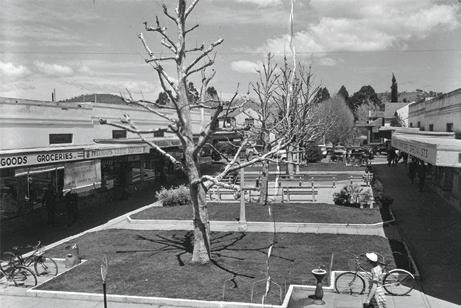
I WAS sorry to see the sad photo of the gnarled, old London Plane tree that toppled in the rain in Manuka. Planted on The Lawns, more than 65 years ago (possibly more, but that’s as far back as

we could get) it and three others had historical significance based on their association with Lindsay Pryor, who was the superintendent of Parks and Gardens from 1944-1958. The group was declared protected in 2012.
The pollarding, which is a pruning system involving the removal of the upper branches of a tree, was directed by Pryor who viewed the technique on a trip to Japan in 1946.
According to the ACT Tree Register, while the tree species is common in Canberra, pollarded examples such as these are rare.
AND back to that perilously raised footpath in Denison Street, Deakin (“Seven Days”, March 5). Reader Antonino Iannella says: “I raised the issue with a Fix My Street request over two years ago, which I am sure I could prove”. So that puts the repair wait at, oh, two years and two weeks and counting.

‘I am a little confused with humanity at the moment’
PAUL Dorin is the “CityNews” cartoonist. His day job is as a station commander for Fire Rescue NSW and this summer he and his team saw a lot of service with the bushfires. I asked him the other day if he was okay. This is his poignant response:
“I am a little confused with humanity at the moment. During the bushfires l saw the most amazing kindness of people towards others. I experienced it personally while on deployment fighting the bushfires.
“l had members of the public come up to me while on duty who had travelled for hours wanting to drop off packets of bottled water to fire stations for the firefighters and food for those directly affected by the fires.


A VIRTUAL TOUR www.daramalan.act.edu.au For information about enrolments in other Years, visit our website or contact the Enrolments Office on the details below.
6348 | enrolments@daramalan.act.edu.au Reception (02) 6245 6300.
“I remember being in South Nowra extinguishing fire hotspots on the side of the road, after the Princes Highway had reopened, and a passer-by noticed us dragging hoses and putting out fires and drove into the service station about 500 metres up the road, purchased cold water and snacks and drove back to hand them out to me and my crew.
“It was emotionally moving the generosity and kindness of people, and now, noticing as we all have people scrambling and fighting over toilet paper, grabbing what they can and once in their hands not prepared to share any.
“It is such a contrast from the generosity of people only a month ago to what we are experiencing now.”

We’ve had some great conversations at coffee catch ups and mobile offices across Canberra. It would be great to meet you at one of my upcoming events.
However, in light of the Coronavirus please visit www.aliciapayne.com.au or search Alicia Payne for Canberra on Facebook to get up-to-date information about when and where you can meet me.
If you have an issue to raise but don’t want to meet face-to-face, you can always send me an email at alicia.payne.mp@aph.gov.au or call my office on 6277 4168.
Most importantly, continue to wash your hands regularly and follow information about Coronavirus from the ACT Health website at https://health.act.gov.au


An elderly woman with hearing loss came to my clinic for a second opinion, after she had recently been to a hearing aid sales person. I found the cause of her hearing loss was simply the fact that she had build-up of wax in her ears, the salesperson had failed to inspect them. You might be surprised how often this happens!
Here are some things to do to avoid getting ripped off:
1. A visit to the GP may save you from being ‘sold’ something when your only problem is wax in your ears.
Recently I was told by two different patients that they were quoted $16,000 for a pair of hearing aids. This seems a ridiculous amount of money to pay and is most likely not appropriate for the majority of people (or possibly anyone).
5. If you are a pensioner or partpensioner, or a DVA gold or white card holder, you should carefully consider if you want to use the free-to-client government hearing aids or if you’d like to top-up to a different hearing aid.
“In an unregulated market there is a lot of opportunity to take advantage of people. Yes you have read correctly, there is no licensing of people who sell hearing aids.”
2. Look for someone who is independent and can offer you unbiased advice, not just give you a sales pitch.
– Dr Vass
3. There are a range of hearing aid prices. Finding the right hearing aid might save you money and it will also give you the best chance of success.
4. Hearing aids can be expensive.
The free-to-client hearing aids are appropriate for many people, however if you have great difficulty hearing background noise (for example in restaurants) then you might trial the top-up hearing aids, but only if you can afford them. There are a range of top up options and prices, if you are disappointed after a trial, you should return them and trial the free-toclient hearing aids.
If you get the feeling the person you’re dealing with is just trying to sell you something, then take a step back and get a second opinion.
Country Women’s Association members from Queanbeyan who joined a global crafting effort sewing pouches for bushfire orphaned wildlife, say the experience has left them eager to offer even more practical help in the community.
ARMED with sewing machines, needles and thread – and plates loaded with goodies – Melita Benson hatched a plan one Saturday morning in January.
Watching footage of animals ravaged by the fierce bushfires, the Queanbeyan CWA Evening Branch member and unapologetic animal lover, organised a sew-in at her home.
Members eager to help, gathered to trace patterns, cut fabric and stitch pouches for injured and orphaned joeys.
The pouches were made to cuddle and comfort young marsupials that lost their mothers in the fires that raged across the country.
“I felt so helpless about everything that was going on, it was breaking my heart and I felt I needed to do something practical,” Benson explained.
A staggering one billion animals are estimated to have perished and many marsupials were left orphaned or homeless.
Fortunately, some of these tiny, furry creatures had a chance thanks to legions of volunteers, at home and across the globe, who gathered in homes and halls sewing pouches for injured wildlife.
“It was such a great experience,”
Benson said.
“We had expert sewers manning the machines, we had non-sewers cutting out bed sheets, we had people ironing, we had people who donated material and lots of other people donating lots of lovely yummies to keep us going.”
After hours of ferocious sewing, the pouches – made in different sizes – were bundled up and sent to animal shelters in Cooma, Braidwood and the south coast.
Days later, Benson had her own brush with emergency when the Beard fire roared within 300 metres of the front doorstep of her Crestwood home.

“We were evacuated… it was really scary,” she said.
“Most of us who gathered to sew in January had our own personal experiences with the fires, we have all been affected and each one of us has a story.”
Just like club president Susan Westcombe, who joined CWA 12 years ago.
“I was down the coast when the fires started,” Westcombe said.
“We had to be evacuated from Tomakin, we drove to Ulladulla and we had to spend the night in the car at Mollymook because the highway was closed, it was a frightening time.
“Being able to come together and sew and knowing that something we made went out to local wildlife carers felt really good.”
A sentiment echoed by dressmaker, Adela Greenbaum, a new member of the Queanbeyan branch.
“I was overseas in Canada visiting family during Christmas and New Year and so I was seeing the news reports of the fires and the damage,” Greenbaum said.
“As soon as I got back to Australia, I really wanted to pitch in, it was good to be able to do something con -
structive to help.
“I think a lot of us are now very interested in finding out about other causes in the community that we can provide more practical assistance, whether that be wildlife products or something for those in the community that aren’t doing as well.”
Club secretary Nicole Lyons helped defend her family’s home in Batemans Bay, the day the flames ripped through Catalina.
“It was so confronting, the adrenalin was pumping,” she said.
“It was like a war zone down there,
it was horrific. There were no phones, no petrol and no electricity.”
That old saying you can take the girl out of the country, but you can’t take the country out of the girl rings true for many CWA members including Lyons.
“I’m a country girl, I grew up in Delegate, I went to ag college, my great grandmother was in the CWA… so I guess it has always been in my blood,” Lyons said.
The Queanbeyan CWA Evening Branch formed 10 years ago after merging with the Queanbeyan CWA Branch, which started in the late ‘60s.
The 36-member group has a strong presence in the Queanbeyan community and is known for its fundraising efforts and lobbying ability, proving the organisation is more than “tea and scones”.
“I joined CWA on the proviso I didn’t have to make a scone,” Benson giggled.
And she hasn’t. It’s evident, one thing binds these ladies together.
“The friendship,” Benson said smiling.
“CWA has opened up so many doors to friendship for me, it really has, it’s all about making friends and contributing to the community.”
Anyone wishing to donate joey pouches or join the CWA Queanbeyan Evening Branch should email cwaqesecretary@gmail.com



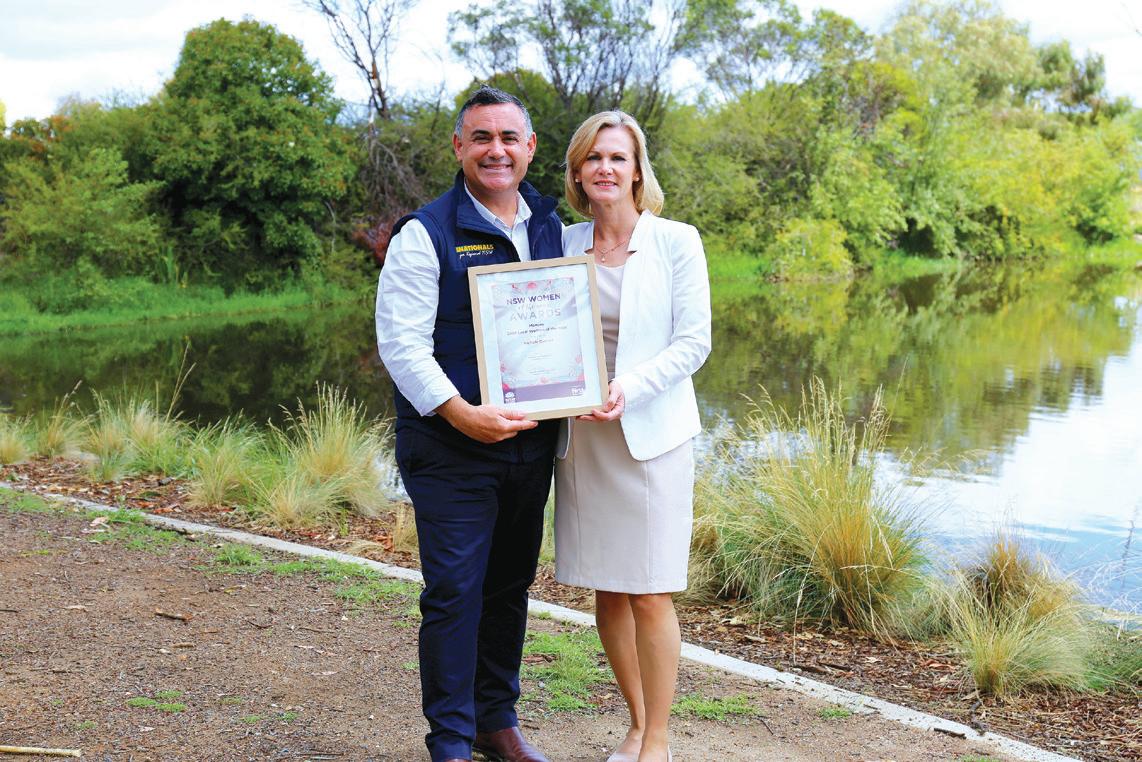
strong advocate for women in the region and our local youth.”
Through work as a local historian (and columnist for “CityNews”) Ms Overall has ensured many of the region’s previously untold stories get the
the history of Queanbeyan and surrounds, and also hosts historic tours for local schoolchildren.
“The Monaro is a better place thanks to work that Nichole does and she is a very worthy recipient of this award,” he says.
I’M so over coronavirus; but that might be because I’ve had a shot of the best vaccine around – it’s extracted from the big heart of our fellow Australians.
It arrived with a wallop when we set out on a planned celebration with friends who had just sold their Canberra home for quite a lot of money (so they were going to shout).
We were down at Tuross where the flames had spared us, this year at least, but in the aftermath the whole Christmas season was a bust for the businesses who rely on it to see them through the winter months.
So, even though we’d noticed a few youngsters on skateboards cruising down Allenby Road – we knew there was no need to book a table at the Country Club. After all, the town is full of restaurants and take-aways.
So at 6.20 we strolled over to the club to await our guests, took the lift to the first floor while trying to decide whether to choose Australian or Chinese from the big, double-sided menu. But when the lift doors opened we just stood there, totally stunned. The entire floor was packed with visitors;
The people of Canberra and surrounds had heard calls to support their compatriots who were doing it tough and responded with that big Australian heart.
every last place on the 100 or so tables was taken, and the waiting staff were ferrying great plates of chicken and corn and spuds and gravy to hungry customers.
We were flummoxed. We caught the lift back down just in time to intercept our friends. “Not a problem,” we decided. “Everyone’s here so the Pickled Octopus will be deserted. Let’s go.”
But there, the story was the same. “Unbelievable!” we cried.
But at least, we knew from experience, the Chinese-Vietnamese restaurant in the village would have tons of room. And when we arrived, it too was packed but there were two bare tables… but both were “reserved”. They offered take-away, but they said it would take 90 minutes!
Same with The Tavern in the corner – packed to the gills. So at last we reached Sails which
serves the best take-away fish and chips in town (except for the Boatshed). And in a mere 20 minutes we had our meals and were headed home to eat them, washed down with a very nice dry sauvignon blanc.
By then, I must confess, I was blinking back tears. For the people of Canberra and surrounds had heard calls to support their compatriots who were doing it tough and responded with that big Australian heart. For we’re not just a country, it seems, we’re a community as well.
robert@robertmacklin.com
Grasses, ground covers, shrubs and trees suitable for cool climate gardens available year round. A large range of unusual grafted plants and bush food plants also available. Expert staff happy to advise or answer questions.


THE Chief Minister Andrew Barr and his Labor/Greens government have made it clear that their view of Canberra’s future is different from that of the city’s residents and those that cherish its place in the world as Australia’s bush capital.
Having masses of tall apartment towers with less greenery and open spaces is the government’s solution to accommodating increases in Canberra’s population. Of course, this is rubbish. It is a complete falsehood that as the city grows that we need to dump our cherished neighbourhoods and the values that formed the city.
For anyone who attended the Woden Valley Community Council meeting earlier this month, it is obvious that our political and planning leaders are trashing the joint. At that meeting the hard-working president, Fiona Carrick, had managed to get three ACT agency chiefs to address residents. They were the Environment, Planning and Sustainable Development deputy boss, the Suburban Land Agency boss and

Something has to change before this lot does any more irreparable damage. Besides the urgent need to change our political leaders, a complete change is also required in those that head up the city’s planning and development agencies.
deputy, and the ACT’s Major Projects Canberra deputy boss.
Fiona Carrick commenced the meeting with very detailed evidence of what the main issues are for the Woden Town Centre. What followed was that the three agencies present provided little to address those concerns and the aspirations of the Woden community. All of the agencies specialised in not giving straight answers to questions. It was a painful experience to listen to their ingenuous spin.
While there has been increased talk in recent months of green infrastructure, planting more trees and building sustainable communities, it seems that such are not applicable for the dozens of high-rise towers being plonked on every available space in the Woden Town Centre. According to those running Canberra’s planning and development, the founding ideals and values are being jettisoned to
suit the developer-first agenda and short termism of this Labor/Greens coalition government.
One of the more mind-bending explanations came from the Suburban Land Agency on traffic arrangements once their Woden block is sold for a 480-apartment tower. The government’s traffic experts had advised that with the arrival of the 1000 or so residents and their cars that no traffic issues will occur. While this was plainly stupid, it was even more so when it was pointed out how many towers are to be built and it will be the total impact of all these new residents that needs to be considered. The agency response was more of the same spin that made even less sense.
Not to be outdone by the stupidity on display that night, Chris Steel, the Minister for City Services and local member for Brindabella, has announced another of his off-the-planet decisions. He is good at making these silly announcements.
Despite being promised for almost a decade, the residents of Molonglo still do not have a large supermarket.
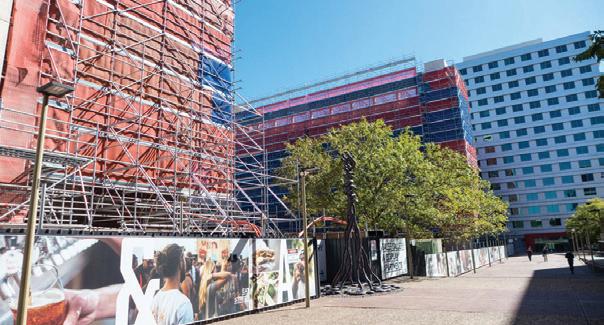
Steel’s solution to the subsequent overcrowding at Weston’s Cooleman Court is to take away some of the neighbourhood parkland to make way for more car parking.
Yes, despite his government’s recent spin on open spaces and trees, he is about to bulldoze his way to reduce the city’s greenery to avoid doing anything to provide the expanding suburbs of Molonglo with their own supermarket. So much for this government’s green credentials and so much for Steel being a local member representing his constituents.
What is happening in Woden, Weston and Molonglo is not too different to what is happening across our wonderful city. Canberra’s residents consistently list the priorities as being good design, greenery, parks,
open spaces, good transport, roads that deal with the increasing traffic as well as community, sports, cultural and art facilities. Yet there is almost nothing in reality from this government to deliver on such aspirations. Something has to change before this lot does any more irreparable damage. Besides the urgent need to change our political leaders, the presentations in Woden the other night brought it home that a complete change is also required in those that head up the city’s planning and development agencies.
Paul Costigan is an independent commentator and consultant on the visual arts, photography, urban design, environmental issues and everyday matters.


















THE addictive nature of digital technology and smartphones is underlined twice in the March 5 edition of “CityNews”.
Kate Meikle’s article “The digital kids who are driving their parents crazy” addresses children’s digital behaviours and the “need to unplug”. A letter “We survived today – will we tomorrow?” describes a driver’s near-miss experience as a result of another driver irresponsibly using a mobile phone.
Political columnist Michael Moore’s article in the same issue notes that while the ACT should be a showcase of educational excellence, our students are falling behind.
One thing that would help student learning and social outcomes I believe is a ban on mobile phones and other digital devices during school hours, except those used for educational purposes.
Smartphones are highly addictive and distracting. Four states have already, or are currently implementing bans, namely NSW, Victoria, Tasmania and WA.
Such a policy improves student health and well-being, greatly reduces distraction, and improves social interaction between students.
Why does the ACT still have its head in the sand on this issue?
Murray May, Cook
UNFORTUNATELY, many would have found it impossible to enjoy the wonders of Skywhale on March 9 at either take-off time or when it was lit up and inflated again that Monday night as part of the Enlighten festivities,

thanks to the very limited span of two-hourly, local bus services offered over a public holiday weekend (“The mother of all air balloons floats back”, citynews.com.au, March 9).
With luck, some may be able to see it if they have access to an early enough bus on weekdays in May when Skywhale returns to Canberra.
Sue Dyer, Downer
THE most recent newsletter from the ACT government boasts that “Sections of the next stage of the track, including along Commonwealth Avenue, will be grassed to maintain Canberra’s iconic city views.”
The photo provided certainly suggests a lovely green corridor along the light rail track. But it forgets to take into account that this is
Canberra… hot, dry Canberra.
Lush green grass comes at a huge cost – both in terms of water and maintenance –especially during summer.
Perhaps something more economical than grass would help keep our tax dollars flowing to important things that Canberrans really need (money for hospital beds and schools to name just a few).
Adriana Vanden Heuvel, Bruce
I WAS disappointed in reading Michael Moore’s political column “Labor goes belly up and has only itself to blame” (CN, March 5). He propagates the lie that the ACT is running on 100 per cent renewable electricity. This couldn’t be further from the truth. The ACT
has solar power, which is effective during the day if the sun is shining. It even has battery back up, which is also effective when you have brief fluctuations in power. However, the ACT is connected to the grid, which is dominated by coal-fired power. This is what keeps our fridges, street lighting, the light rail etcetera running when we have no sunlight.
Unfortunately, people like Mr Moore have little or no education on this matter and seek to keep spewing the propaganda that the ACT relies on 100 per cent renewable power.
Phil Page, via email
AMID the technology we have today are speed limiters, wifi and GPS instruments, all capable of calculating drivers’ speeds from point A to point B. If all vehicles were fitted with these sorts of devices then no-one would be speeding. Your vehicle would have an ID signature with your wifi, which could be registered with, say, the transport authorities.
This sort of technology would identify any speeding and penalties could be sent to your mail address.
So my question is, why hasn’t the government made this mandatory?
The answer? No-one will speed. This means no revenue from speeding fines and that’s not going to happen because speeding penalties are just revenue raising.
Vince Silvestro, via citynews.com.au
THE National Trust of Australia’s Cooma Cottage in Yass, once the home of Australian explorer Hamilton Hume, will host its family Twilight Picnic Fair, 3pm-7pm, on Saturday, April 4. They’re promising a large variety of stalls, arts and crafts, honey, wine, quilt and spinners and weavers’ displays, local produce, alpaca products, soaps and candles, face painting, sausage sizzle, animals and more. Entry is $5 adults and children; $20 for a family. All proceeds supporting the National Trust (NSW).
Lecture cancelled
THE Canberra Conversation public lecture “Canberra is Growing, but How Should We Accommodate this Growth?” planned for the Albert Hall on Monday, March 23, has been postponed because of the coronavirus.
Poetry awards open
ENTRIES are now open until June 30 for the 2020 Dorothea Mackellar Poetry Awards, which attract thousands of entries each year from children in Tasmania, through to the NT. This year, a new category will be introduced for students within a 100-kilometre radius of the awards’ birthplace of Gunnedah. All application details at dorothea.com.au

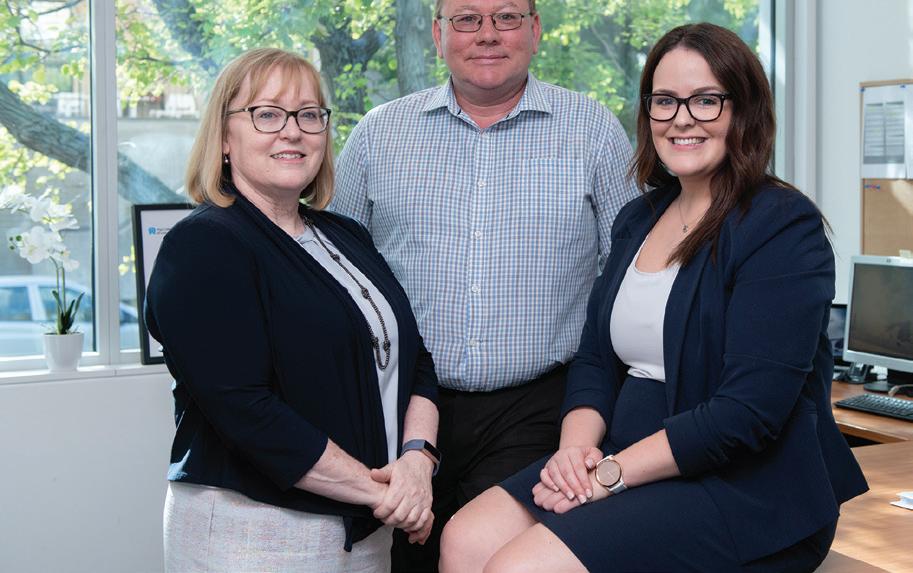
Kerry White
Family Law Special Counsel
Over 20 years’ experience in Family Law
Dispute Resolution
Family Law Mediator
Laura Dowling
Family Law Associate
Masters in Applied Family Law
Property Settlements and Complex Parenting Matters
Kerry and Laura would be pleased to help you with your family law needs

Dear Mr Barr,
IN 2017, your government imposed surcharges on the rates and land tax of unit-titled properties. You refer to this as a new methodology.
The experience of me and my neighbours is that our two-bedroom townhouses (unimproved value $105,000, market value $351,000) are now asked, with the surcharges, to pay rates and land taxes that are almost identical to four-bedroom block-titled townhouses with unimproved and market values that are more than double ours.
This is clearly unjust; it doesn’t meet your stated intention for these surcharges “to achieve fairer and more equitable outcomes”.
I have analysed the case you presented to justify these surcharges. In summary, most of the case you presented is incorrect, a misleading use of statistics and as applicable to block-titled properties as it is to unit-titled properties.
You have not made a valid case for taxing unit-titled properties in a different way to block-titled properties.
The only thing left is that equity viewed from a market-value perspective differs from equity viewed from a land-value perspective.
Critically, you have not presented any case to support higher taxes on unit-titled properties in comparison

The ACT government’s surcharges to the rates and taxes of units in Canberra are unjust and, arguably, infringe the human rights of their owners, argues retired economic statistician (Australian Bureau of Statistics and International Monetary Fund) PETER BRADBURY (abridged) open letter to Chief Minister Andrew Barr.
to otherwise identical block-titled
Your case starts with an incorrect assumption that every unit-titled property is significantly different from every block-titled property and, as a result, failed to identify a need to apply a solution to all properties.
The result of all of this is that the surcharges are not compliant with the Human Rights Act 2004 as they represent an invalid discrimination against the guarantees of that act for equality before the law.
There would appear to be no objective and reasonable justification under section 28 of the act, there are clearly better alternatives to achieve horizontal equity at market value, most obviously rebasing the tax system to market value.
Your methodology seeks to proxy market-value outcomes by adjusting the land value of individual properties so that it delivers horizontal equity viewed from a market-value perspective when a land-value-based tax scale is applied to it.
The methodology that you have
adopted has no chance of delivering horizontal equity against market value because:
a) Primarily, it is not related to market value in any way.
b) It is not applied and can’t be ap plied to block-titled properties, despite most of those properties requiring adjustment to achieve horizontal equity across the ACT community.
c) The maximum adjustment factor that the methodology could generate is not large enough for very high capital intensity properties, like high density apartments, to be properly adjusted.
What you have developed is a discriminatory and arbitrary tax scheme that has increased the num ber of properties paying more than an equitable amount from both land and market value perspectives.

The methodology is particularly ineffective in adjusting what appears to be the main target, high-density apartments.
As these surcharges have never been a valid discrimination, they must be repealed and all monies collected need to be refunded with

unit-titled properties sit towards the bottom of the valuation spectrum (however measured) and are already the prime victims of your tax reform agenda, as a progressive conveyance duty is replaced by regressive rates and land taxes.
As my analysis shows, you are also failing to even meet your own modest
properly review the fixed charges which, if they have any beneficial purpose, seem to be targeting the same issue as these surcharges.
Hoping that the human rights of unit-title owners and renters can be restored without delay.
Peter Bradbury, Holt


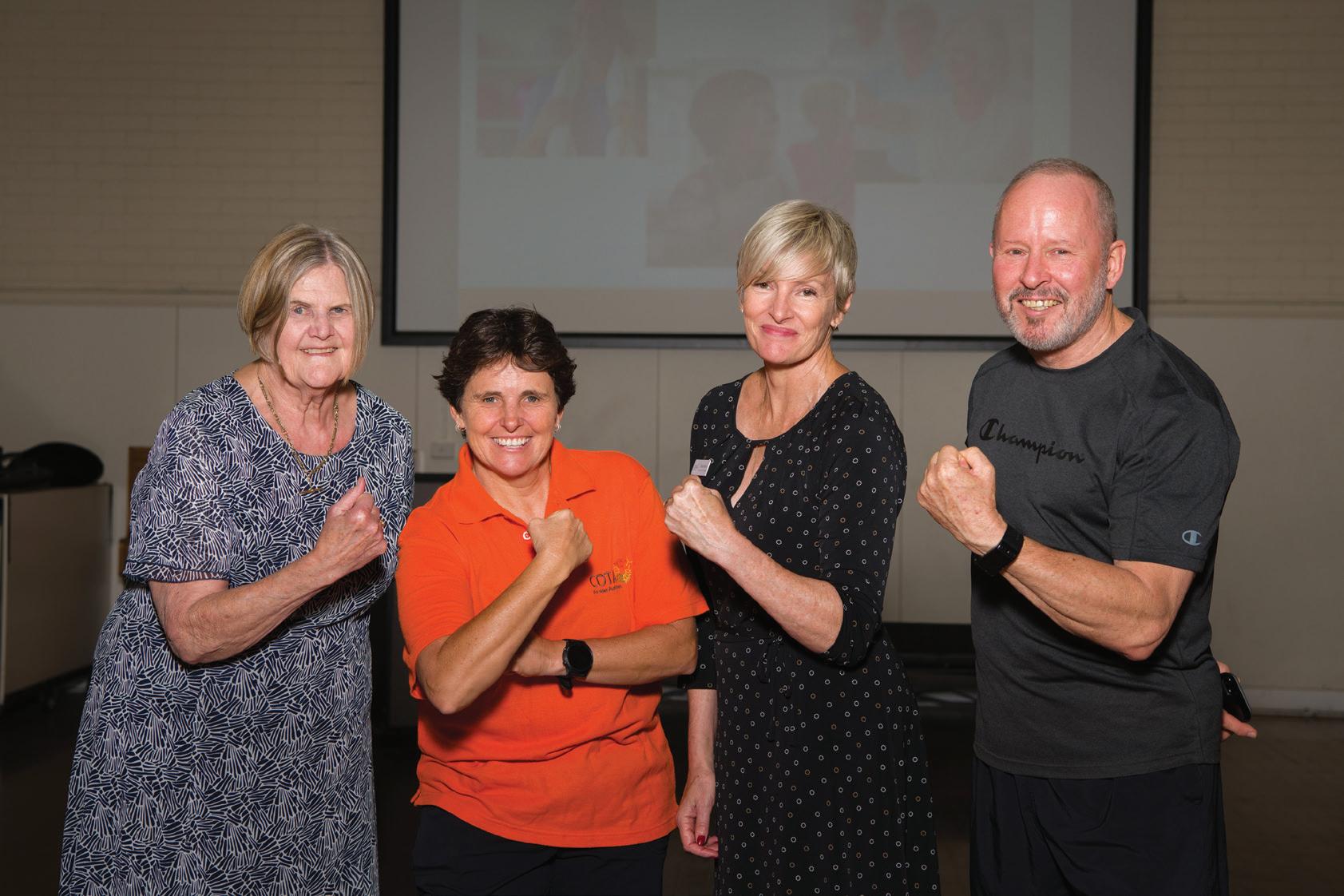
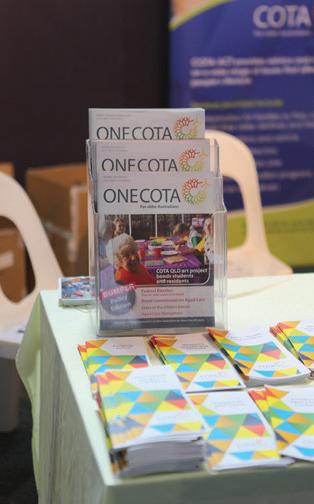
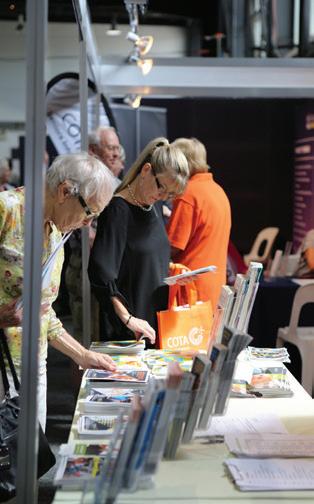
SENIORS Week, which was scheduled from March 23-29 has been postponed due to coronavirus, says Jenny Mobbs, CEO of the Council on the Ageing ACT (COTA).
Seniors Week, organised annually by COTA is the celebration for and of older Canberrans, says Jenny.
Jenny says that COTA ACT will instead host ACT Seniors Week on September 14-20.
“We need to be guided by the govern ment to ensure people’s safety,” says Jenny.
“We will postpone Seniors Week until spring and hope to work it in with Floriade, to make it a big seniors event.” Older people are our fastest growing demographic in the ACT, says Jenny and she wants seniors not to be socially isolated from friends and information during this time.
The COTA ACT office at Hughes Com munity Centre remains open for visitors but some scheduled group classes and activities may be changed or cancelled and Jenny advises people to call or visit the COTA ACT website for updates on their group classes.
“We don’t want people to be lonely. Heed the government’s health messages such as hand washing and keep up to date with current information from the radio and newspapers,” she says.
“Call us if you need help.


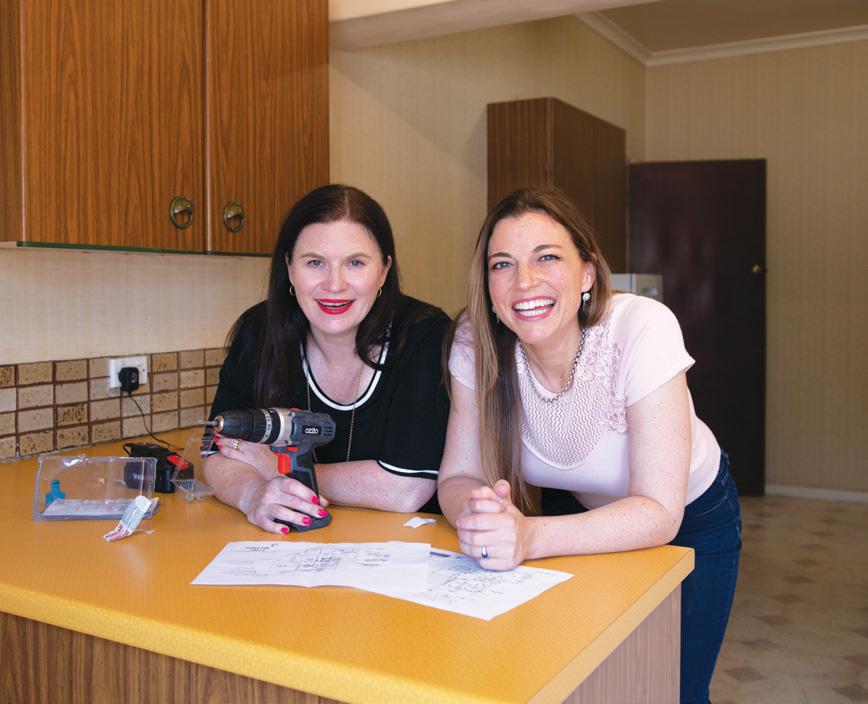
home before they move into a smaller place or a retirement village, says owner Kim Persson.
“Often seniors do not have the energy or the know-how to renovate their home for sale, and sometimes they find themselves asset-rich but cash-poor,” says Kim.
Your Property Profits has a unique business model, unlike any other company in Australia, in which Kim and her business partner Sophie McLean, plus a team of tradespeople, stylists and real estate experts, organise and manage a renovation, and style and prepare a home inside-and-out, for sale. They say they take all the hard work on for their the sale result.
“We do everything for our clients, they just have to leave us the keys and could enjoy a holiday or move in with family,” says Kim.
Kim says she and Sophie strategically analyse the market and what the majority of buyers want in a particular area.
“We renovate to appeal to buyers, to get the best price,” says Kim.
Your Property Profits. Call 0411 648908, email hello@yourpropertyprofits.com.au or visit yourpropertyprofits.com.au
Unique village has a one move mission
GREENWAY Views, based on Athllon Drive, Greenway, represents a significant financial investment into a new kind of seniors’ living, according to LDK Seniors’ Living managing director Paul Browne.
From living independently in retirement through to end-of-life care, the model provides higher intensity personal care where it’s needed, with the mission to help seniors live independently in their homes for life, as part of its “one move promise”.
“People are downsizing later now, some are in their early 80s, and there’s no point doing that if you don’t get access to care when it’s needed,” Paul says.
“It’s unique, very much the first of its kind, and reflects the different mindset we’re seeing now in relation to aged care and retirement.
“If you’re 80 today, you’d have been 20 in 1960, this is a generation that is looking for more.”
Paul describes Greenway Views as “like a land-based cruise ship”, with more than 30 social activities, and facilities including shops, an auditorium, cafes, a corner store, wine cellar, beautiful landscaped gardens, restaurants, a Pilates studio, learning spaces and an RSL onsite.
“It’s all overlooking the mountains, and close to facilities including the South Point shopping centre and the Vikings Club in Tuggeranong,” Paul says.
“We have more than 380 senior living homes, repurposed from existing buildings, and with no exit fees – people are more paranoid about making financial mistakes later in life and want to see all contingencies.”

Greenway Views, Athllon Drive, Greenway. Call 1300 089872 or visit ldk.com.au






COTA ACT staff are available to answer calls between 9:00am – 5:00pm Monday to Friday. Questions regarding your Seniors Card or any other services that we manage please call: 6282 3777
Wash your hands thoroughly with soap and water for at least 20 seconds to prevent passing on germs. Dry your hands.
Together we can help stop the spread and stay healthy.
For more information about Coronavirus (COVID-19) visit health.gov.au
For information, please visit the ACT Government Department’s public health alert web page
www.health.act.gov.au/public-health-alert/ updated-information-about-covid-19

OR
The Australian Government Department of Health website
www.health.gov.au/news/health-alerts/novelcoronavirus-2019-ncov-health-alert

The Australian Government Department of Health has a number of Coronavirus (COVID – 19) hygiene resources including factsheets and Frequently Asked Question brochures available.
Access these resources via the Australian Government’s Department of Health website www.health.gov.au/news/health-alerts/ novel-coronavirus-2019-ncov- health-alert/ coronavirus-covid-19-resources If you have serious symptoms such as difficulty breathing call triple zero

Iva says the village has 36 two-bedroom independ ent living villas, and also caters for up to 42 residents in private rooms with an ensuite.
THOSE who are over 65 and speak English as a second language can be disadvantaged as they age, according to Jen Ramirez, who is the NSW/ACT care services manager for the Multicultural Communities Council of Illawarra (MCCI).
“We want to help seniors avoid social isolation, by creating social groups and services that address the
“We also offer accommodation from respite to long-term care, as well as a shared community room for activities and social events,” she says.
Adria Village is a medium-sized, 24-hour facility offering high-quality aged care, with staff that show dedication and make the lives of residents safe, comfortable and enjoyable, Iva says.
“We have a registered nurse on site, available 24/7 should anyone need medical attention, and I’m also a nurse,” she says.
“We offer a laundry service and a variety of breakfasts, lunches and dinners, as well as morning and afternoon tea, taking into account residents’ dietary needs.”
“We offer outings twice a week on our private bus, on Mondays to the local shops or for a coffee, and on Fridays to somewhere like the Australian National Botanic Gardens or to a club for lunch,” she says.
“Adria Village is close to Cooleman Court and the bus service outside the village connects us to Woden, Civic, Belconnen and Tuggeranong town centres.”
As well as organised social programs and twicedaily exercise classes, the village provides multilingual staff, regular mass, an on-site chapel, a psychologist, podiatrist, chemist, hairdresser, pharmacist and a themed “happy hour” once a month.
Adria Village, 89 Fremantle Drive, Stirling. Call 6288 0198, email admin@adria.org.au or visit adria.org.au
A participant of the MCCI-run mind and body class.
Queanbeyan to address the needs of culturally and linguistically diverse (CALD) seniors.”
Another focus for MCCI is on helping seniors in CALD communities to stay healthy and comfortable in their own homes.
“We can provide support through domestic assistance, personal care, flexible respite and individual


Set amongst landscaped grounds, Adria Village is a warm and welcoming community of people from all around the world. We pride ourselves on cultural diversity and celebration, and offer a wide range of activities to cater for all interests. We provide care for Croatian and all other nationalities.
Adria Village fosters individuality and independence, providing support and assistance to enable residents to live in a comfortable and secure environment. Adria Village in Stirling offers residential care for 42 residents, incorporating 2 respite rooms, and Special Care. The Village also contains 36 independent living villas. All villas have 2 bedrooms, a courtyard and a garden, and residents enjoy a peaceful and welcoming community lifestyle.
Our aim is to provide a caring, safe, home-like atmosphere, reflecting your rights to dignity, respect, privacy, safety and the best quality of life.
Contact our friendly staff today to arrange a personal tour.



MCCI’s reliable, caring, bilingual staff can help you to be independent at home providing:
• Help at Home (personal care, domestic assistance, social support)
• Health & Wellbeing including social groups, outings and gentle exercise
• Community Transport
• Carer Support - flexible respite
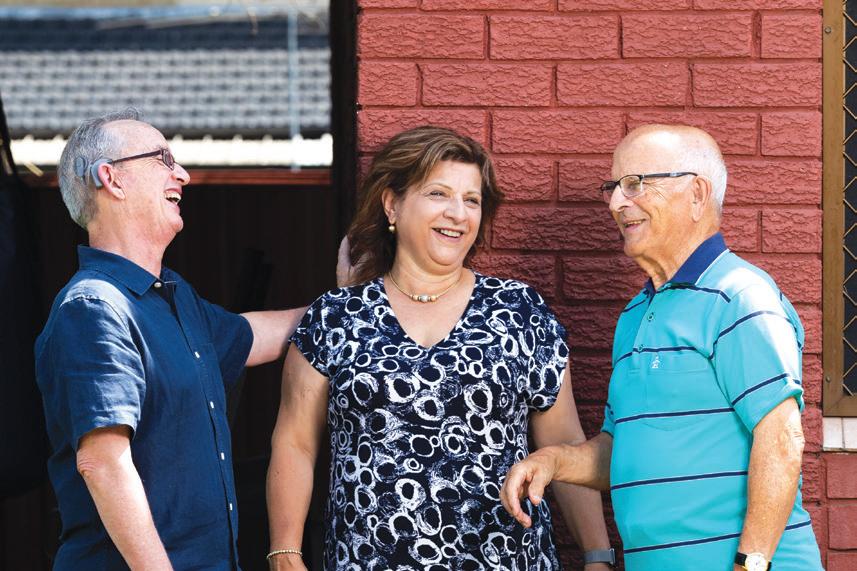
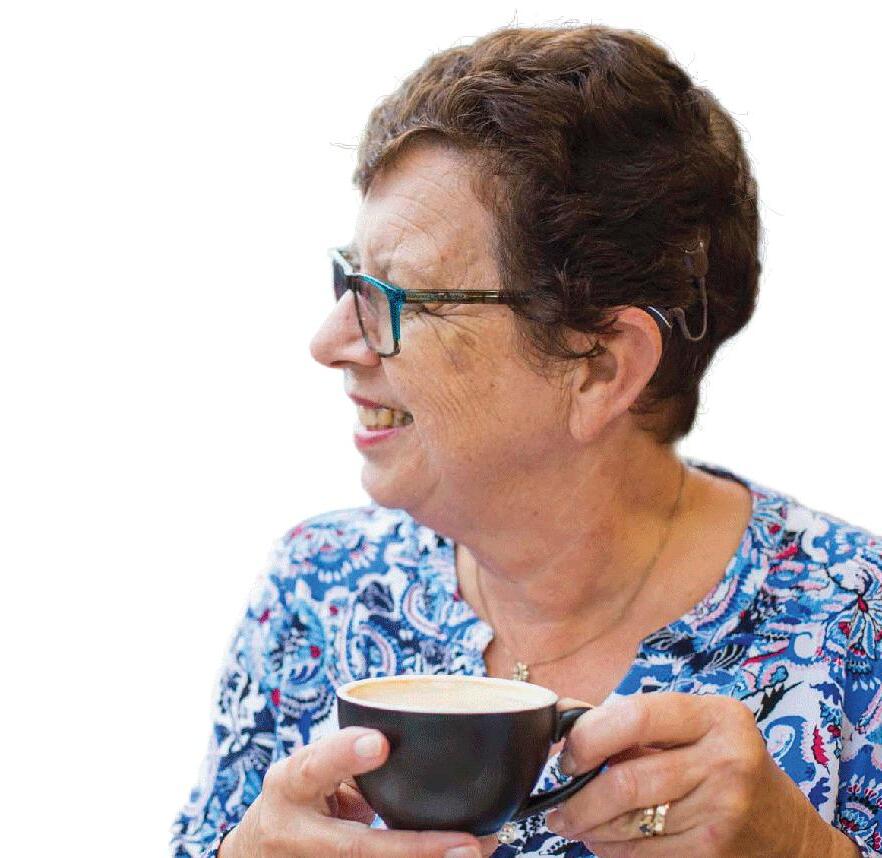
is a higher risk of dementia, says a spokesperson from the Royal Institute for Death and Blind Children (RIDBC), which runs the SCIC Cochlear Implant Program Canberra. As such, regular hearing tests are recommended after the age of 50, says Deakin-based ear, nose and throat (ENT) surgeon Dr Tim Makeham.
“We know hearing loss is prevalent amongst older Australians,” says Dr Makeham, who is urging people to consider a cochlear implant when their hearing aids are no longer enough.
Hearing devices such as a cochlear implant keep people connected to those that matter most in their lives like family and friends, he says.
Last year, the Sydney Cochlear Implant Centre (SCIC), Australia’s largest cochlear implant program and an RIDBC service, performed more than 400 cochlear implant surgeries, says RIDBC.
he says he became distant and as a result withdrew from society and, to some extent, his family. He says he persisted with hearing aids despite them becoming “physically painful”, but they weren’t enough.
“It is beyond measure the [positive] impact the cochlear implant has had on me,” says Alan.
And, a cochlear implant can have a positive impact on more people, according to RIDBC’s Jo Dodds.
For a comprehensive hearing test to determine if an implantable solution is right for you, contact the Canberra team at SCIC on 1300 581 391 or info@ridbc.org.au. Fully bulk-billed appointments are available with a referral from an audiologist or GP.
SCIC, an RIDBC service, Equinox Business Park, Equinox 4, Level 1, 70 Kent Street, Deakin. Call 6124 1501, email canberraadmin@scic.org.au or visit scic.org.au
AN ACTIVE lifestyle has many physical and mental benefits and is particularly important for seniors, according to Orthopaedics ACT’s orthopaedic surgeon Dr Nicholas Tsai, who specialises in the areas of spine, hip, knee and trauma.
“Activity promotes cardiovascular fitness and social interactions; it elevates the mood and also helps to prevent osteoporosis due to inactivity and lack of sun exposure,” he says.
“All joints benefit from moderate daily move ments, whether the exercises are land-based or in water. Walking aids are also important for pain relief if you have arthritis in the lower limbs.”
Orthopaedics ACT strives to provide the best advice to all members of the senior community, says Dr Tsai.
“Patients will be assessed by experienced orthopaedic surgeons, and in most cases a con servative management plan will be provided,” he says.
“The goal is always to improve the condition and to return to an active lifestyle as soon as possible.”
Dr Tsai says patients with mild symptoms will be referred either to their onsite sport and exercise medicine physician Dr Lari Trease, or a physiotherapist participating in the GLA:D exercise program, which helps people with hip and knee osteoarthritis manage their symptoms.
Orthopaedics ACT also offers joint replacement information sessions for those who have to undergo joint replacement surgery.
“Surgical intervention is offered as the last resort, usually after conservative management has not been successful or if the condition is
If you answer YES to one or more of these questions, a cochlear implant may be right for you. in crowded places? children’s voices clearly? on the phone?
For a FREE information session please register your interest at info@ridbc.org.au or call 1300 581 391

deemed so severe that conservative treatment is unlikely to improve it,” he says.
Orthopaedics ACT, Woden Specialist Medical Centre, Level 2, 90 Corinna Street, Woden. Call 6221 9320 or visit orthoact.com.au
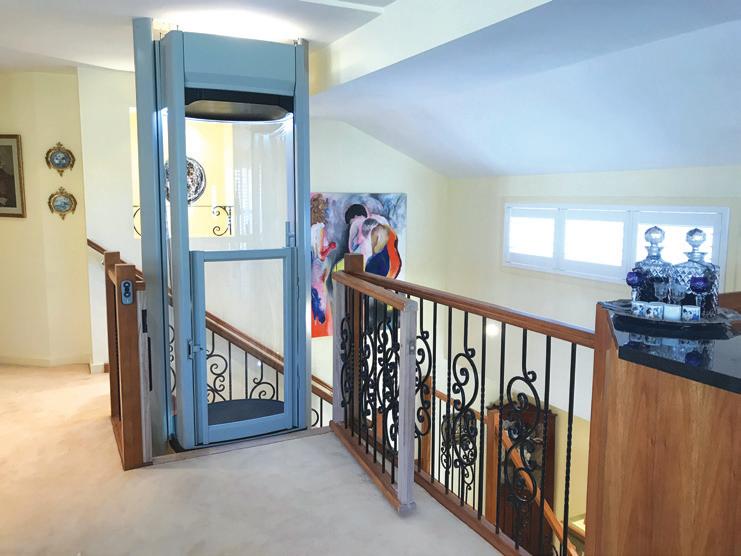
owner Mike Bresnik.
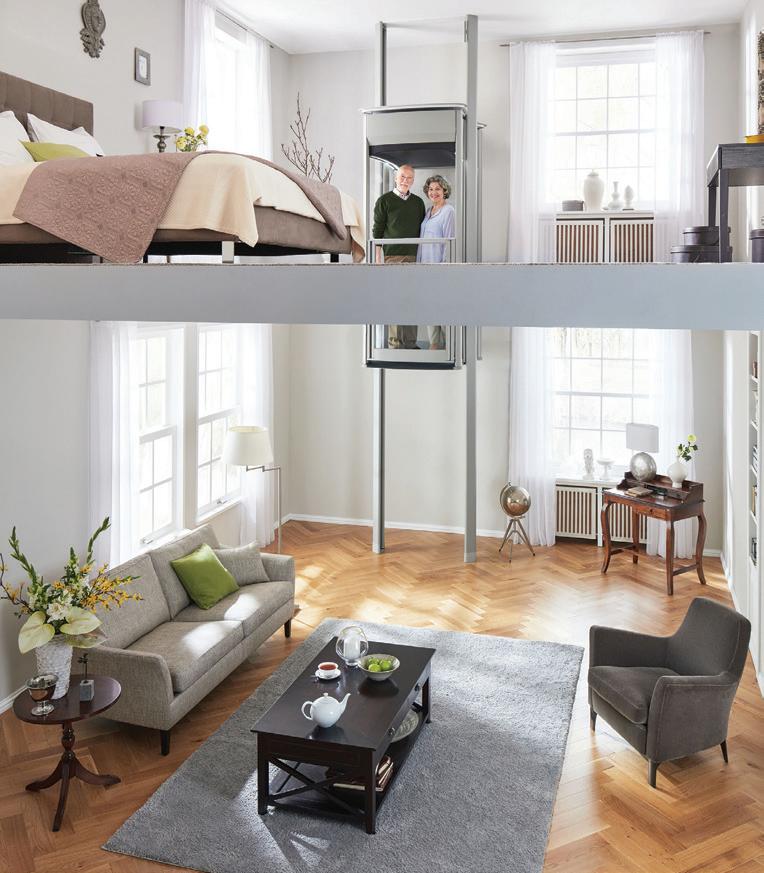
“We cater to all walks of life in the supply and installation of domestic home lifts,” says Mike.
He says domestic lifts are gaining popularity as people choose to stay in their home, alongside trusted neighbours and lifelong friends, but are no longer able to climb their stairs safely.
“We hear from many people who love their doublestorey homes and the neighbourhood they’re in, and don’t want to have to move or downsize,” he says.
“Adding a lift can save them money and stress as well.”
He says ill health or injury can also make an internal domestic lift a cost-effective way to help with mobility.
Personal Home Lifts Canberra offers two models.
The “Elegance” will suit one to two people with a 170kg and carer, holding 240kg.
“Designed purely for the domestic market, these lifts only take one to two days to install and as they’re a self-supporting structure, they need no formal or costly plan,” he says.
“Unlike a stairwell chair lift, these are quicker, cleaner and safer than anything currently offered on the market.
“Packed with numerous safety features for peace of mind, as well as remote controls, these lifts can become a must-have for double-storey homes.”
Personal Home Lifts Canberra. Call 6147 5566 or email hello@personalhomelifts.com.au






elegant home lift, ideal for homeowners with mobility issues, giving independence within their double storey home.
cost effective choice avoiding the extra cost burdens & stress in downsizing
Diabetes NSW & ACT has been helping people living with diabetes for over 80 years. We offer our community of 45,000 members an extra level of support through reliable information and helpful programs designed to make it easier to manage your diabetes.
As a member of our community you have access to:
• expert advice and support via our Helpline
• the latest health information
• great food tips and recipes
• free and discounted events and programs
• discounts from our online shop diabetesshop.com
To join our community or to find out more about the advice and support we offer, call our ACT Office on 02 6248 4500 or visit our website diabetesnsw.com.au

OLDER people are more at risk of diabetes, according to Natalie Smith, the ACT general manager of Diabetes NSW & ACT.
She says more than 18,000 people in the ACT are registered as living with diabetes, of which 82 per cent of those are living with type 2 diabetes.
CARERS may experience isolation, often have their own health problems, lose touch with friends, and have higher levels of exhaustion, depression and worry, according to Carers ACT general manager Kim Bool.
“Caring for somebody who is elderly or living with a long-term illness or disability can be quite exhausting, so Carers ACT focuses on providing support that will help make a carer’s life easier,” she says.
Carers ACT’s primary goal is to look after the wellbeing of carers so they can maintain their caring role and has a wide range of services and support to assist people in looking after an elderly family member or friend.
Kim says Carers ACT can explain how the “My Aged Care” system works and how to get the most out of it, too.
ACT general manager of Diabetes NSW & ACT Natalie Smith.
In Australia, about 280 people are diagnosed every day, according to Diabetes NSW & ACT, and one in four adults over the age of 25 are living with diabetes or prediabetes.
“We want to get the message out there and provide education and awareness,” Natalie says.
Type 2 diabetes can often develop in older age groups, according to Diabetes NSW & ACT, which is why it is very proud to be able to support the community through awareness activities, screening events, support and education opportunities.
“We are offering [more than] 30 face-to-face education programs in the ACT until June to support those living with diabetes, and our membership for concession card holders and pensioners costs $33 and is valid until June 2021,” she says.
Diabetes NSW & ACT, Level 1, 101 Northbourne Avenue. Call 6248 4500, email customerservice@ diabetesnsw.com.au or visit diabetesnsw.com.au
And, one of the most significant supports Carers ACT provides is help for carers to take short breaks from caring in order to recharge.
Carers ACT encourages them to “think outside the box” about ways they would like to have a break beyond the traditional option where a professional support worker temporarily cares for their family member. They say there are other options such as Carers ACT’s Deakin Cottage or residential respite or in-home care.
“Taking a break could also mean having some one else take on regular tasks, like transport to medical appointments, cooking, gardening, cleaning and personal care,” Kim says.
Carers ACT, 1800 052222, email carers@carersact.org. au or visit carersact.org.au


Carers ACT know about caring and we’re here to help you with your caring role and wellbeing by supporting you with:



TO make life easier for seniors, Arthritis ACT offers support through exercise and social groups in a one-stop shop of coordinated care, says CEO Rebecca Davey.
“We know it’s important to keep active and healthy as we age, and Arthritis ACT has a team of experienced exercise physiologists, physiotherapists, counsellors, occupational therapists and dietary specialists who can help,” she says.
“The beauty of this is that they all work together to improve the health of seniors.”
Rebecca says Arthritis ACT has many support networks for those with long-term conditions, and can link seniors in with specialists.
“People can pop in if they want to discuss their needs, but if it’s an allied health requirement they will
need to make an appointment to guarantee they will see who they need,” she says.
“The great thing is we can schedule more than one appointment at a time, which makes everything so much easier.”
Arthritis ACT also runs support groups, exercise programs and social activities such as movie groups to help people dealing with arthritis pain speak with others going through the same experience.
“Our range of exercise programs include 30 sessions
SENSITIVITY to heat and cold can change as we get older, according to a spokeswoman from Therma Quilts, who says the company has been keeping Canberrans warm since the 1980s.
Using quality textiles, the seamstresses at Therma Quilts hand-make every item suited to the customer’s needs and provide a top-up service when quilts and pillows show signs of wear or loss of warmth and fluffiness, says the spokeswoman.
“Servicing of feather and down products are essential for keeping them in optimal condition for comfort,” she says.
“With time and usage, body proteins and lipids (natural oils and perspiration) are absorbed on to quilt casings and into the feather and down inside.
We offer a suite of programs to physically and emotionally assist you with the impact of chronic pain.
TCH Hydrotherapy now closed – please refer to www.artritisact.org.au for new hydrotherapy location in Southside

Services available:
Exercise Physiology group classes and individual consultations
GLA:D Physiotherapy program for hip and knee osteoarthritis
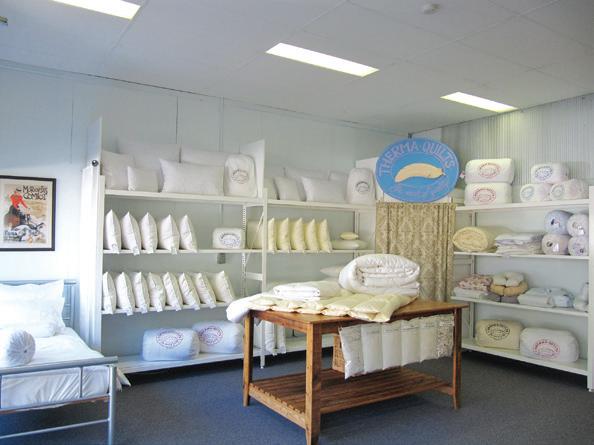
“Over time, this build-up dampens the down, which causes it to lose its thermal resistance. However, regular servicing of your quilts would ensure that your down is fresh, fluffy and keeps you nice and warm during winter.

•
•
throw away your quilt.
“Whether you’re wanting to rejuvenate your quilt, customise it or buy a new custom-made one we can look after you.”
Therma Quilts, 10-12 Kemble Court, Mitchell. Call 6241 6859 or visit thermaquilts.com.au


• repairing, resizing and re-casing services
• add extra feather and down to your quilts, pillows or sleeping bags.
Dietitian consultations for weight loss/gain and pain relief
Occupational therapy to improve daily living challenges
Individual counselling and health education
Pain Support programs, seminars and support groups
All programs can be incorporated into NDIS, DVA and My Aged Care
We accept GP Referrals for Medicare funded allied health services
How else we can help you:
Most chronic pain conditions respond to exercise and weight loss
Hydrotherapy is proven to lead to reduction in many kinds of chronic pain
People living with pain often suffer from being isolated and we have programs that will lessen this impact
Mild depression and anxiety will significantly increase perceptions of pain and our counselling, support groups and exercise groups will help reduce this impact



CURTIN Optical stocks a wide range of eyewear, contact lenses and accessories, says owner Corey Nicholls, pictured.

Having been a part of the Curtin community for 20 years, Curtin Optical has three experienced optometrists available for appointments from Tuesdays to Saturdays.
“We cater to all tastes – from budget to well-known brands,” says Corey.
Curtin Optical also offers mobile optical dispensing services – spectacle selections and deliveries to the elderly or people unable to come into the store due to disability.
This includes spectacle repairs and adjustments, and an after-hours service.
In addition, Curtin Optical offers an
express service for those who have lost or broken their spectacles.
Curtin Optical’s instore services have a same day turnaround and its mobile jobs have a 24-hour turnaround.

Corey says its independence from large chains gives customers a more personalised service. They are also providers to the ACT pension scheme and DVA.
In its full workshop facility, Curtin Optical’s Corey is a fully-qualified optical mechanic and offers an express service on most (stock) single vision jobs, including rimless spectacles.
Curtin Optical. Shop 1B, Curtin Place, Curtin. Call 6281 1220 or email looking@curtinoptical.com.au

CANBERRA’S peak body for volunteering and community information, VolunteeringACT, is calling for nominations for the Senior Volunteer of the Year Award.
“Recognising the extraordinary work of volunteers is vital,” says VolunteeringACT CEO Vicky Darling.
“Older Canberrans volunteer so many hours each year. While volunteers do not expect to be paid for their contribution, we acknowledge and celebrate these individuals, and want them to know their acts of selflessness do not go unnoticed and, in fact, epitomise what it means to be a part of the Australian community.
This year, the 29th year of the Volunteering Awards, there are nine award categories, with the Senior Volunteer of the Year Award honouring an individual or team (aged over 55) whose volunteering contribution has made a significant impact, Vicky says.
“It’s a time where we take stock of the unparalleled contribution volunteers make to our community, and thank them for their hard work, knowing we live in a world where we are asking more of volunteers than ever before,” she says.
Vikcy says head to volunteeringact.org.au to nominate (and thank) a senior volunteer today. Nominations are open until 5pm, April 6.
VolunteeringACT, Level 2, 2020 City Walk, Civic. Call 6251 4060 or visit volunteeringact.org.au


FOR seniors, now is the time to enjoy life without the demands of home maintenance, says Goodwin’s executive manager of retirement living, Erik Boddeus.
With retirement villages in Monash, Ainslie, Crace and Farrer, Erik says Goodwin provides communities where seniors can enjoy their later years of life.
“Trained and reliable Goodwin carers can help you with a range of tasks in the home and out in the community,” Erik says.
“Services are tailored to your specific needs so you can live the life you want.”
Residents can choose from one, two or three bedroom architect-designed award-winning villas or apartments within its vibrant and active communities and resort-style facilities.
There are also live-in care communities, which are a new generation of “nursing homes” offering “luxurious accommodation” that residents can personalise, says Erik.
Goodwin has a large care team, which Erik says includes 24/7 on-site nurses, professional chefs, allied health staff, activity coordinators and Australia’s industry-first full-time, in-house pharmacist.
“Demand for our services is increasing and we’re well placed in Canberra to offer this to local seniors,” Erik says.
And, Goodwin offers in-home care, so seniors can stay in their home for longer, he says.
For more information about Goodwin, call 6175 5100, email info@goodwin.org.au or visit goodwin.org.au















ESTABLISHED in 1993, Total Mobility sells, supports and services a broad range of “assistive technology” to individuals, aged care facilities and hospitals.
“We provide a unique service in Canberra as we have a wide range of mobility products and equipment for sale or rental,” says Total Mobility ACT branch manager Tim Kapustin.
From basic products to assist daily life such as walking sticks or aids to open jars or pick items off the ground, to customised powered scooters, Total Mobility sells to the public as well as works with people who have funding through the NDIS or community aged care packages.
With two service technicians based in the ACT, Tim says the team provides great service and support to their customers.
“Our staff are experts and experienced in the industry,” he says.
“People can come to see us in our showroom and know that the person who serves them is a product specialist.”
And if there’s any tricky or highly technical questions that the eightperson team can’t answer immediately, Tim says they can refer queries onto their colleagues in Sydney.
“We don’t sell items just for the sake of the sale. We work with our clients to find the best solution for them, within their budget,” says Tim.

We offer Home Care packages,
fee for service and no obligation chats to assist you

Our approach is strengths based. Together we build a circle of support around you, with you at its centre. Our team of Support Workers are handpicked, trained and well supported to work alongside of you to support your independence and wellbeing. Your Case Manager will be in regular contact and you’ll have their mobile phone number so you can always contact them directly.



occupational therapists keep seniors safe
ROSELLA Occupational Therapy has been providing experienced, reliable occupational therapy services in the ACT area since 2016, according to director Joanne Kinsella.
“Our services are delivered within people’s homes, as we’re focused on keeping seniors safe in the community,” she says.
Joanne says Rosella can provide assistive equipment, including wheelchairs, mobility scooters, walking aids, adjustable beds, lift-recliner chairs, custom seating, hoists, lifting aids and mobile shower commode chairs.
“The list is endless – we can assess people’s homes and identify potential needs, and then make suggestions for equipment that will help,” she says.
Rosella Occupational Therapy also provides falls risk assessments, according to Joanne, who says they’re valuable for people who are thinking ahead about preventing falls, as well as those who have already fallen.


“We look at changing the environment, removing trip hazards, improving lighting, looking at shoes, glasses, improving strength and coordination and making routines easier,” she says.
“Another focus for us is dementia support, to provide appropriate recreational activities, enable people to be able to do more for themselves and take away frustration as much as possible.”
Rosella Occupational Therapy, call 0457 206492 or email info@rosellaot.com.au

THROUGH a mix of individualised services, annecto,
a not-for-profit originally established in Melbourne in 1969, helps seniors stay living in their homes for as long as possible, says practice leader Beth Wurcker.
The Canberra location has been servicing the region for three years now, and is active in Queanbeyan and Googong, too, according to Beth who says annecto is offering four funding levels of aged-care packages to the region, from which families then select the services they need.
“This could be anything from domestic assistance, personal care, overnight care, shopping or getting out to social events [and] we’ll soon be taking a small group of three or four to the art gallery and for lunch,” she says.
“We can also provide nurses, physios, maintenance
or personal support equipment.”
The non-faith-based organisation is extremely proud of its small, friendly team of support workers here in the ACT, says case manager Liss Guest.
“We ensure that the support worker is compatible with the client, as it really has to be the right fit,” Liss says.
“As we’re so small, we can provide a very responsive, unique and personalised service, and the highest quality support so our clients feel safe and comfortable at home.
“We’re a caring and inclusive team, and we’re on the journey with the family.”
Annecto, Unit 12, 8 Chandler Street, Belconnen. Contact Liss on 0481 604400 or liss.guest@annecto.org.au, or Beth on 0481 603480 or beth.wurcker@annecto.org.au


FROM buying and selling properties to new relationships, separations and general family law advice, seniors can face the same legal situations as younger people, says KJB Law’s estate planning special counsel Kerstin Glomb.
“While my area of expertise is estate planning, wills and enduring powers of attorney, as well as superannuation, [which includes] ensuring the proper nominations go where they should, there are many occasions where the legalities of a situation apply to any age,” says Kerstin, who is also a notary public.
Kerstin says KJB Law looks after people’s affairs, including grant of probate, wills and family trusts, too. KJB Law says it has invested in specialised solicitors

Kerstin Glomb - Estate Planning Special Counsel
KJB
and staff to practice across a range of areas including estate planning, family law, conveyancing and commercial law to ensure that it’s always able to provide legal services with prompt attention and high-quality. Its principals, Andrew Freer, Des Moore and Jo Twible, say they present the human side of the legal profession making the law more approachable and easier to understand.
And, Jo Twible and associate Raina Sinha both have expertise in retirement village contracts, including aged-care entry and exit, and inter-family transfers.
KJB Law, ground floor, 10 Corinna Street, Woden. Call 6281 0999 or visit kjblaw.com.au
•
Kerstin Glomb would be pleased to help you with your






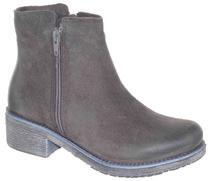

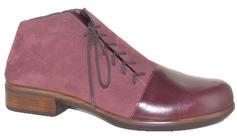
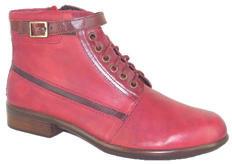




MOBILITY Matters, which specialises in the sale of rehabilitation and hospital equipment, has joined forces with Leef Independent Living Solutions to bring a bigger range to the market, says regional manager Kristy Randall, who is part of the new leadership team for the group.
Recently, the three Mobility Matters’ show rooms in Fyshwick, Bega and Batemans Bay have joined Leef Independent Living Solutions. Leef’s general manager of integrated care and functional health Cathie Lindholm says the Leef group will enhance Mobility Matters’ current range with new specialised items such as eating and drinking products like feeding arms to allow a person to feed independently or an electronic spoon to assist people whose hands tremor.
“Our slogan is ‘reverse the way you feel’,” Cathie says.
“Whatever their circumstances, we strive to make people’s lives easier, and as independent as possible.”
Cathie says Leef has a big focus on support ing people with dementia and has specialised
“Dementia patients can become agitated and disoriented so having something like a pet can give them something to focus on,” says Cathie.
“The robotic dogs and cats are programmed
“Whatever the challenges people face, there will be something we can do to make it easier, a


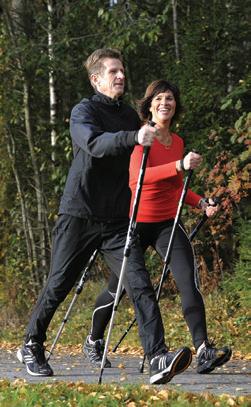
WITH 30 years’ experience in podiatry, Dr Mark Clayton of The Healthy Foot in Dickson has been helping people identify and manage their podiatric pain and chronic foot injuries for decades.
“Usually the feet are the compensators, they compensate for any abnormalities,” says Mark, who believes it’s possible for chronic foot pain, knee pain and hip pain to be linked.
“From my point of view, it’s good to start at the feet. If you adjust the feet correctly, the rest of the body can follow.”
As well as identifying and treating causes of podiatric discomfort or pain, Mark says The Healthy Foot can provide footwear advice, preventative care, aesthetic treatments and can create orthotics tailored to each individual’s needs. He says they sell orthoticfriendly footwear in many styles, colours and sizes.
The Healthy Foot, 1/151 Cowper Street, Dickson, or 1/37 Heard Street, Mawson. Call 6262 8383 or visit thehealthyfoot.com.au
BungyPumps are a unique fitness walking pole with built in suspension offering 4, 6 or 10kg of pressure resistance. The poles activate 90% of your body’s muscles, burning up to 77% more kilojoules whilst you walk. Bungypump poles offer stability and pain relief, with the suspension absorbing the pressure on your joints bringing back the joy of walking!
Come and experience BungyPump walking in March: Mon 23 & 30 March @ 9:30am; Wed 25 & April 01 @ 11:30am; Fri 27 & April 03 @12:00pm; and Sun Mar 29 @ 1:30pm.
Meet at the corner of Parkes Pl W and Queen Elizabeth Tce (near the flags), Parkes ACT.
Walks are free, but booking is essential as spaces are limited. Phone Duncan on 0404 373 157, or email dcraig@pcug.org.au www.bungypump.com.au
THE BungyPump is the only walking pole with in-built resist ance in Australia, says the ACT representative of BungyPump, Duncan Craig.
“BungyPump boosts the benefits of walking, activating 90 per cent of your muscles and burns up to 77 per cent more calories than walking without poles,” Duncan says.
“It’s a case of ‘no pain, more gain’ as the poles’ in-built sus pension eliminates hard shocks, which means that elbows and shoulders are not over-exerted and the pressure is relieved on knees and hips, giving your body a low-impact exercise.
“The suspension also provides upper body strength and toning exercise.
“People with lower back pain immediately feel relief, too. One woman who tried the poles didn’t think she’d be able to walk even a short distance because of her lower-back pain but she was surprised at the huge difference she felt because the poles eased the pressure from her back.”
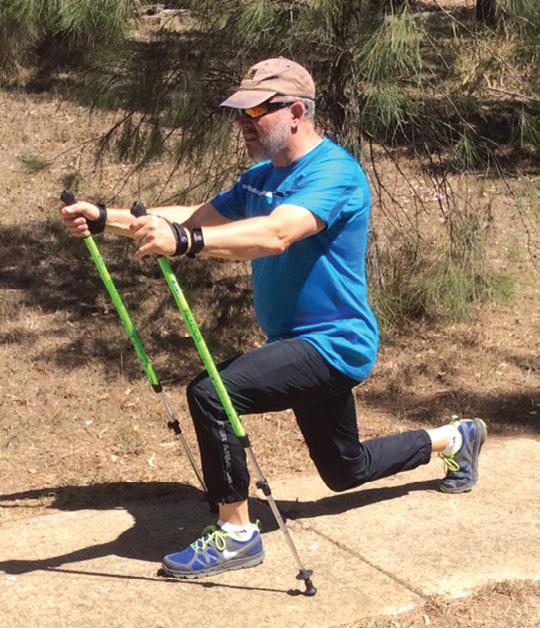
types of poles, the health and fitness benefits of walking with them, and the opportunity to experience walking with the poles,” he says.
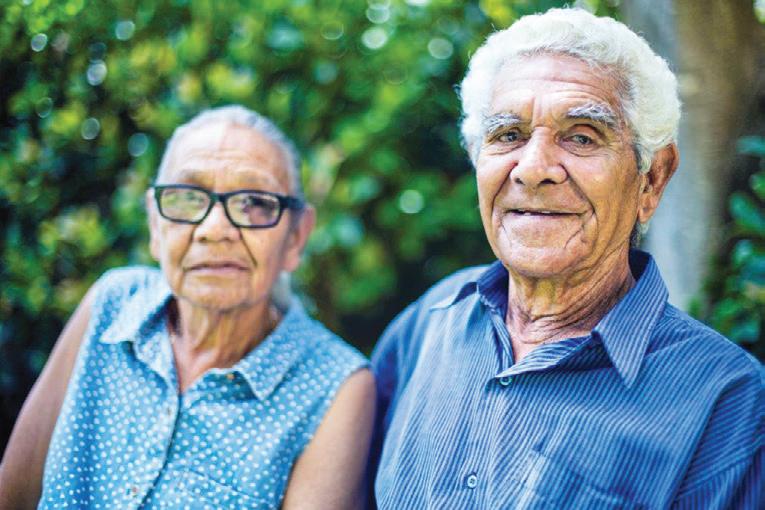
LIFE Without Barriers supports people to achieve their goals and maximise their opportunities to participate as fully in society as they wish, according to ACT and south west NSW operations manager Richard Cabrita.
Richard says Life Without Barriers values independence, which is why it runs training programs to help seniors stay independent, such as a popular program on slips, trips and falls for older Canberrans.
Duncan will be holding a series of free “comeand-try” sessions during March.
“The sessions will each be 45 minutes in duration and provide information about the different
“Give me a call and come for a walk with me so I can introduce you to BungyPump and you can experience it for yourself, obligation free.”
Call Duncan on 0404 373157, email dcraig@bcug. org.au or visit bungypump.com.au
“This is by far our most popular session; booked out months in advance,” he says.
“We have heard so many good reports, individuals are feeling stronger, able to confidently access their home and community with significant reduction in falls.”
Richard says Life Without Barriers was established close to three decades ago by a determined group of

community members with a clear vision to partner with people to improve lives for the better.
Soon, Richard says Life Without Barriers will finalise its merge with DUO Services, a not-for-profit service provider for seniors and people with disability, to provide help with daily living and life tasks, companionship, community and social support, personal care and mobile services, therapeutic and clinical care, cleaning and household tasks, home modifications, maintenance and handyman, garden maintenance and modifications, and respite care.
Life Without Barriers, 25 Blaxland Crescent, Griffith. Call 1800 935 483, email agedcareservices@lwb.org.au or visit lwb.org.au
PARKINSON’S ACT supports and promotes the wellbeing and interests of people with the nervedegenerating disease Parkinson’s, says Parkinson’s ACT president John Sheldrick.
“We are a volunteer-run, non-profit organisation providing information, support and education for people living with Parkinson’s, as well as their families, friends and carers in the ACT and region,” he says.
“As part of this we run five different support
Canberra, as a place for people to chat and share experiences.”
John says they host information seminars and publish a monthly bulletin.
“We contribute to Parkinson’s research, as well as providing support for aged-care nurses in improving their knowledge of the disease, and scholarships for a student nurse at UC and a medical student at ANU.”
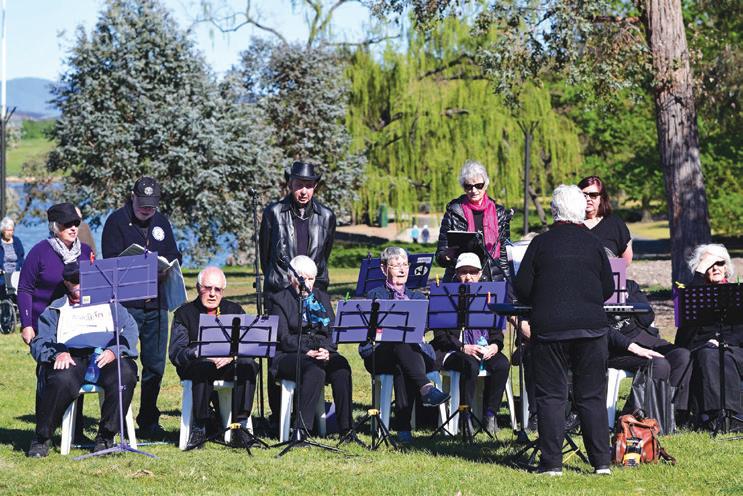
Parkinson’s is a degenerative neurological condition which affects movement and mood. It affects an estimated 1,500 people in the ACT and surrounds. More than that, it affects carers, families and friends.
Parkinson’s ACT is a volunteer-run, non-profit organisation providing information, support and education. Our purpose is to promote the well-being and interests of people living with Parkinson’s in the ACT and nearby region.
The support of people who share your experience is invaluable. Parkinson's ACT can help.






www.parkinsonsact.org.au | actparkinsons@gmail.com

















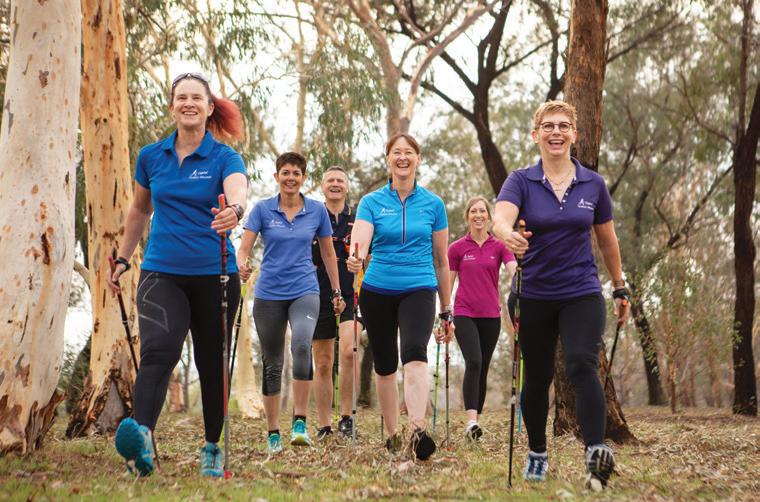
NORDIC Walking is one of the most affordable and fun ways to get moving, and stay active and healthy, so seniors can keep doing all the things they love, says Kristen Pratt of Capital Nordic Walking.
“Exercise, when done properly, is proven to boost health,” she says.
“Even a few minutes every day can strengthen the immune system, improve brain function, reverse the effects of ageing in the heart, and may even improve your memory.
“Exercise can also be a boon to mental health.”
In the midst of the coronavirus pandemic, Kristen says exercising outdoors is by far the safest option because there are less people, little or no contact with surfaces that others might have touched and plenty of fresh air.
“Nordic Walking is an incredible fitness activity – it’s
fun, super effective, and convenient,” she says.
“It suits all ages and fitness levels and is suitable for people with health and mobility challenges like Parkinson’s, arthritis or balance problems.
“It’s a low-impact, total-body workout – as gentle as walking – but delivering results that are proven to be way better than walking, jogging or cycling.
“It doubles the number of muscles being worked to over 90 per cent, can blast as many calories as running, strengthens your upper body and core, improves your posture, and takes a huge amount of strain off your legs, hips and back.
“Best of all, it’s fun to do with friends and family.”
Capital Nordic Walking. Email hello@capitalnordicwalking.com.au, call 0499 993215, or visit capitalnordicwalking.com.au
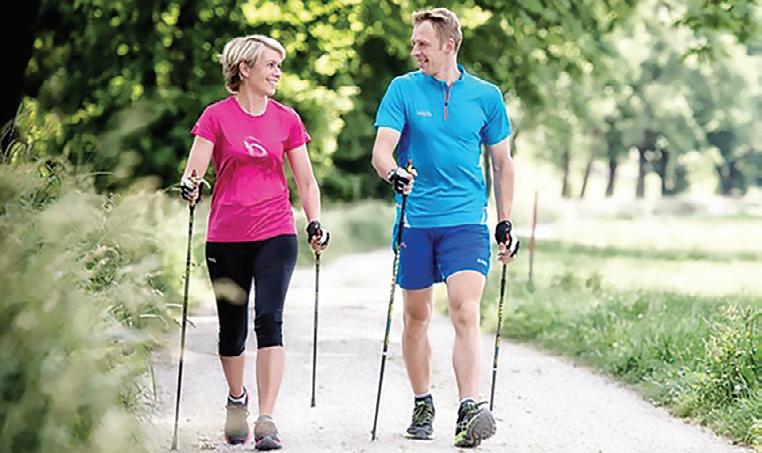
Take advantage of the fitness regime that has been keeping Scandinavian skiers trim since the 1930s!
Nordic Walking is far more effective than regular walking, jogging, cycling or swimming. Much easier on joints, provides stability, strengthens core and improves posture.
Suitable for all ages and fitness levels and health conditions like Parkinson’s, arthritis, osteoporosis and heart disease.
www.capitalnordicwalking.com.au





The history of Italian rugby as seen through its jerseys 15 - 27 March 2020 East Hotel, Canberra




The exposition, through a careful selection of photographs and memorabilia, will retrace the main milestones events of the history of Italian rugby from the Monarchy era (1929) to the latest Rugby World Cup in Japan (2019) This exhibition will display 18 most significant jerseys and the most iconic shots in the history of Italian rugby.







Stay in touch with the names making news on Sundays from 10am as 2CC and “CityNews” present Canberra’s only local weekend news and current affairs program.
It’s a revolving panel show that brings to the microphone great “CityNews” commentators and 2CC personalities.
Be part of the conversation and call 6255 1206 between 10am and noon.



















Mario came to the office concerned about the potential impact COVID 19 might have on his business.
“It's a very worrying time. We don’t know when we might be closed down, how severe the impact will be on Australia and Australians," he said.
"We don’t know if we'll be safe and when things will return to normal. In fact many of us don’t even know where to begin.” I told him the first thing to do is put together a "disaster scenario" plan.
"I have a simple one because in my business it is easy enough for us all to do everything online and remotely," I said.
"So for us, our plan is done in conjunction with our IT people. It may not be as simple for you. Might I suggest that you do some homework before we draft up a plan together.
“I recommend that you write down some ideas on where things are now, your key challenges, your concerns and your opportunities.
"It would also be helpful to identify your key suppliers or other businesses that you work with so that we can make sure that you have access to everything that you need to keep the business operating for as long as is necessary.”
Mario said he'd do that immediately so we could talk again in a couple of days.
"As everything is moving so fast I want to make sure that the business can cope with any contingency,” he said.
I replied the next part of the disaster scenario plan was to look at different scenarios and their possible impacts on his business.
"Together with you and your management team we would look at low-level, medium-level and high-level scenarios both for their severity and their impact on your business," I told Mario.
"Having arrived at the different scenarios we would then create plans at each level.
"It is important to test the plans so that you are ready to jump from one level to the next should it be required.
"At the moment things are unfolding every day and the escalation is quite marked.
"Last week, a complete shutdown didn’t seem realistic.
"This week it seems more plausible and on a daily basis things could change again. We are just playing a waiting game so having the plans in place is critical.”
Mario said that sounded "very feasible" and could be done quite quickly.
I said “When the scenarios become reality then everything is in place and ready for you to do what is necessary.
"Obviously as this happens then you will be well placed to react and make good decisions rather than flying by the seat of your pants.
"Remember that the value in the process is having everything ready but it can be quite challenging getting to the actual scenarios.
"Like all planning processes, one of the benefits is that other opportunities will usually arise when the collective brains are working together and this will help you through these challenging times.”
Mario said he felt good about the plan and was keen to meet again soon to get the ball rolling.
Disclaimer
This column contains general advice, please do not rely on it. If you require specific advice on this topic please contact Gail Freeman or your professional adviser.
9, 71 Leichhardt Street, Kingston ABN 57 008 653 683 Listen to our tax tips on 2CA and 2CC
(Chartered accountant, SMSF specialist advisor and Authorised Representative of Lifespan Financial Planning Pty Ltd AFS Lic No. 229892) info@gailfreeman.com.au | www.gailfreeman.com.au Follow us on Facebook Follow us
ARIES (Mar 21 – Apr 20)

Restless Rams are ready to charge off in exciting new directions, as the New Moon lights up your sign. So it's action stations for adventurous Aries. It’s certainly the best week of the year to hatch ambitious ideas, make adventurous plans and initiate bold new projects. But your ruler Mars pairs up with powerful Pluto on Monday. So avoid coming on too strong; losing your sense of perspective; and scaring people away with your fiery intensity (especially at work).
TAURUS (Apr 21 – May 21)
Are you stubbornly holding onto outdated ideas? Are you sticking to obsolete ways of thinking, as if you’re on autopilot? This week the New Moon, Jupiter and Pluto encourage you to let go of an old grudge, put aside pre-conceived notions or examine your beliefs in a philosophical new light. So your motto for the moment is from Aries writer and activist Maya Angelou: “If you don’t like something, change it. If you can’t change it, change your attitude.”
GEMINI (May 22 – June 21)
This week (courtesy of Mars and Pluto) secrets and mysteries percolate, and appearances can be deceptive. Still waters run deep and there is much more to a current situation than meets the eye. So think things through carefully before you speak and, if you find yourself compelled to spread salacious gossip, just bite your tongue and say nothing! It is a good time to dream big dreams and set ambitious goals for the future, as the New Moon activates your hopes and wishes zone.
CANCER (June 22 – July 23)
Tuesday’s New Moon charges up your career/reputation zone so prepare for a few changes. But the more you try to control those around you, the more they will tend to push back. So take a good long look at your motives. Perhaps you need to be less possessive? Perhaps you could give someone more freedom, so they can fight their own battles and make their own mistakes? Food for thought, as you transform the way you connect with family, friends and colleagues.
LEO (July 24 – Aug 23)
With the New Moon in fellow fire sign Aries, you’re feeling feisty and restless and ready for adventure! So it’s a terrific time to take a trip or plan a future holiday. But remember that hubris and over-confidence often come before a fall. So the buzz word this week is humility. If you’re a clever Cat, then you’ll be kinder towards others and more tolerant of their individual idiosyncrasies. The weekend is fabulous for socialising with colleagues and working with friends.
VIRGO (Aug 24 – Sept 23)
Insightful speech is your best friend this week. You’ll get the best results if you research something thoroughly (with your Virgo x-ray vision) and then tell it like it is. Other people will appreciate your direct and honest approach. Monday and Tuesday are the most suitable days to uncover a secret, solve a puzzling problem or get to the bottom of an intriguing mystery. And some singles will experience a strong attraction to someone who is passionate and proactive.
LIBRA (Sept 24 – Oct 23)
Your week in the stars – March 23-29, 2020 Sudoku
When it comes to love, relationships, appearance and performance, don’t get hung up on an obsession with perfection. This week Jupiter pushes you to enjoy yourself and appreciate the abundance in your life, while Pluto compels you to transform yourself into who you really are. Be inspired by Lady Gaga (who turns 34 on Saturday): “I am not perfect; I just think that imperfections are beautiful.” Saturday and Sunday are super for romance, money and entertaining.
SCORPIO (Oct 24 – Nov 22)
Monday’s Mars-Pluto connection boosts your intensity and amplifies your assertive side. Then (courtesy of Tuesday’s New Moon) it’s a fabulous time to review your physical fitness levels, introduce healthier food choices and reboot your exercise routine. Don’t have one? It’s the best week of the year to make a dynamic start! And avoid the temptation to operate on autopilot. If you shake up your daily routine, then it will put an extra spring in your Scorpio step.
SAGITTARIUS (Nov 23 – Dec 21)
Sagittarians have big ideas but you can have trouble walking your talk. This week Mars and Pluto help you get motivated so you can get things done. So it’s a wonderful week to power through all those mundane tasks you’ve been putting off for a very long time. Like finalising paperwork, paying bills, making appointments and tackling overdue household chores. With Tuesday’s fiery New Moon in Aries, your motto for the moment is "The early bird catches the worm".
CAPRICORN (Dec 22 – Jan 20)
With Mars, Pluto and Jupiter all congregating in Capricorn, it’s time to be fiercely protective of your persona and publicly confident about your capabilities. If you don’t love yourself and respect your talents, then why should anyone else? So your motto for the moment is from birthday great, entertainer Lady Gaga: “Don’t you ever let a soul in the world tell you that you can’t be exactly who you are.” The weekend is wonderful for love, business and travel.
AQUARIUS (Jan 21 – Feb 19)
Are you ready for a grand adventure? This week’s New Moon sees curious Aquarians ricocheting off in diverse directions. Which is exactly how it should be, as you explore and experiment to the max. So do your very best to keep expressing your true self, stretching your wings and trying new things. As birthday great Lady Gaga observes: “You have to be unique and different and shine in your own way.” Home Sweet Home is the place to be on the weekend.
PISCES (Feb 20 – Mar 20)
The New Moon lights up your cash zone, which signals a fresh financial chapter. So the more up-to-date and informed you are about money matters, the better your fiscal future will be. Mars and Pluto also send an important message your way. When it comes to your social circle and peer group, don’t waste precious time on negative friends who undermine your dreams. Instead, nurture relationships with positive people who make you feel powerful and proactive.
Copyright Joanne Madeline Moore 2020
Across
1 To have sought alms is to have done what? (6)
8 What is an epithet of respect prefixed to the name of a member of the clergy? (8)
9 Which colloquial term implies that something is very good? (6)
10 What are malignant tumours? (8)
11 What are male ducks called? (6)
13 Name a bore whose shaft penetrates an aquifer, and in which the water level raises above ground by hydrostatic pressure. (8)
16 What is an alternative term for dawn? (8)
19 What is a program or list of things to be done, discussed, etc? (6)
22 Which precious stone is of convex hemispherical form? (8)
24 What describes the incarnation of a god? (6)
25 Name a dressed salad of finely sliced white cabbage. (8)
26 What are examinations of mineral ores to determine their constituents? (6) Down
2 Name another term for a mistake. (5)
3 The works of which German operatic composer included Orpheus and Eurydice, Christoph Von ...? (5)
4 What is the art and training of a horse in obedience, deportment etc? (8)
5 Which cricket term describes a set of six bowls? (4)
6 Who are employed to tend horses? (6)
7 Name the capital of Turkey. (6)
12 What is a supporter or an associate? (4)
14 Name the well-known New Zealand operatic soprano Dame Kiri ... (2,6)
15 Which metallic element has the symbol Fe? (4)
17 Name the largest river in the world. (6)
18 What do we call a large male kangaroo? (6)
20 Which term applies to tests (5)
21 What is a daily record of one’s experiences? (5)
23 Name a renowned Australian bushranger Ben ... (4)

By Helen Musa
HE’S known for his large-scale terrestrial events, but now the founding director of the National Multicultural Festival, Domenic Mico, is using his art to take a leap into the cosmos.
Following a sell-out exhibition at FORM Gallery in Queanbeyan during 2018, the noted arts identity-turned-painter has refocused his gaze to outer space in a series of large oil paintings conjuring up cosmic clouds, nebulae and constellations.
This new suite of oil paintings, which will occupy the large gallery of M16 Artspace in Griffith, is curated by “CityNews” arts writer Dr Anni Doyle Wawrzyńczak.
Mico is no stranger to Canberrans. Born in Calabria, Italy but raised in Canberra, he became the first recipient in 1982 of the Australia Council’s Ros Bower Award for Community Arts, has been honoured for his life in art with an Order of Australia Medal and an Italian knighthood and was in 2001 named by “The Canberra Times” as one of 75 people who had shaped the national capital. He founded the Canberra Day celebrations which became the Canberra Festival, as well as Blue Folk Community Arts Association at Strathnairn, Tuggeranong Arts Centre, TAU Community Theatre, the Backstage Performing Arts Café and the National Multicultural
3 - 5 APRIL
WILLIAMS

“I’ve read about astronomy a lot in a general way, but from the painting point of view it’s the colours that matter,” he says.
“I started stargazing as an adult at Strathnairn.”
That’s where Mico founded the influential arts collective Blue Folk, which has recently given its name to a laneway in Ginninderry’s first suburb.
“There was something very exciting about staring up into the sky, and once upon a time at Strathnairn you could see the whole universe,” he says.
Mico recollects having enjoyed the same experience on a camping trip to the Warrumbungles, where the absence of competing ambient light and pollution meant you could see more of the heavens.
Alas, no longer, and when he returned to his native Italy, he could hardly make out the unfamiliar northern skies at all, for the same reasons.
Photo: Helen Musa

the early 1970s and now, back at the easel, he sees this new suite of paintings a natural continuation of his earlier flowery bursts of colour.
“I wanted to explore the colours of the
The idea of the M16 exhibition came from musing on things happening in the universe and most of his paintings reflect on positive space, showing light and colour, with only one painting concerning black holes.
it is not impossible that the pricks of light on his canvases suggesting stars may manifest that.
He’s no astronomer, but loves looking upwards at night.
Viewers of his new work will notice a more profound aspect to this new suite of works, darker and more enigmatic than his 2016 images of light and colour.
“When you look at the skies,” he says, “you feel very small and it all makes you think of death.”
And not just death, he adds, but also that perennially vexing question, “Are we alone?”
“The Cosmos”, M16 Artspace, Griffith, March 20-April 5.






Based on hours of in-depth interviews with doctors and nurses about their experiences of training and working in hospitals, Grace Under Pressure is a surprising, intimate, and deeply moving theatre experience that reveals these hidden stories of health professionals in their own words.


“Military Wives” (M)
THE standing army of the UK practises its trade more in foreign lands than at home. While in recent years women have served overseas, most of the battlefield work falls to men. Men being what they are, they have wives and children waiting for their return. Sometimes, great fears become tragic realities. When the phone rings, or there is a knock on the door, soldiers’ wives must steel themselves for the worst. While they wait, diversions are essential.
A screenplay by Rosanne Flynn and Rachel Tunnard draws on a wide collection of real-life stories which director Peter Cattaneo has made into an emotionally powerful film telling how the wives of the troops in one British regiment created a diversion that has grown into a large charity with more than 70 choirs, chart-topping hit records, and public performances.

In 2010, Kate (Kristin Scott Thomas) is the wife of a colonel whose regiment is serving in Afghanistan and Sharon Horgan plays Lisa, a captains wife. These two women form the backbone of a plot that delivers a mixture of humour, pathos, self-discovery and ultimate success as a group of soldiers’ wives deal with daily routines and 24/7 tensions.
The plot ingredients of “Military Wives” ring true. The music grows in style, culminating in archival footage from the first choir’s actual performance in the Albert Hall before the Queen at a service commemorating the end of World War I. The gentle humour is
At all cinemas
“In Fabric” (MA)
SOME might classify this strong and offbeat feature into the horror genre. I don’t. I’ve seen a number of surrealist movies by great filmmakers, of which “In Fabric” is one.
Surrealism was the first literary and artistic movement to become seriously associated with cinema. Nowadays, it’s expressed mostly in blockbuster movies based on so-called “comic books”.
“In Fabric” is a kooky movie in the best surreal vein.
whom Australia has seen not enough) buys in an up-market London boutique staffed by an off-the-wall group of young women, to wear on an exploratory first date.
Sheila’s experiences wearing the dress are short-lived. She dies in a road accident. We next see it on washing-machine repair-man Reg (Leo Bill) at his bucks party. Reg is about to undergo a visit to a refined kind of hell, including an interrogation by a tough-asold-boots police person (Caroline Catz in a role as far as can be from “Doc Martin’s” Louisa).
Writer/director Peter Strickland isn’t trying to get his audience excited by

things that don’t often appear in conventional movies – an elderly gentleman masturbating while watching the senior shop lady masturbating a merkin worn by a nude lifelike mannequin, Reg’s fiancée Babs (Hayley Squires) undergoing a caesarean delivery. The lighting and backgrounds are often strong and unusual. The music is insistent.
Reg’s explanation of machine faults made me smile a little, as did a pair of gay bankers (Steve Oram and Julian Barratt). But I came away pleased that somebody was following the tradition of the great surrealists – Luis Bunuel, Federico Garcia Lorca, Alejandro Jodorowsky and David Lynch.
At Dendy
“Bloodshot” (MA)
THE mind boggles. In his feature directorial debut, David SF Wilson spends 105 minutes steering muscle-man Vin Diesel through a screenplay by Jeff Wadlow and Eric Heisserer adapting a comic book by Wadlow and three others.
Why does the mind boggle? Well, it’s like this. Diesel plays Special Forces soldier Ray, who’s killed not far into the film. No, we don’t see Diesel in flashback. Suddenly, we meet scientist Emil Harting (Guy Pearce), whose field is improving the severely
wounded by implants that not only repair the wound but also improve the user’s powers. Harting’s real ambition knows no bounds – think world domination!
The acme of Harting’s achievements has been to resurrect Ray as a new super hero, called Bloodshot, able to self-repair whenever and however he’s injured. Bloodshot doesn’t immediately remember what Ray was doing immediately before he died. But he will, and in time he does. Ray had sworn to kill the Aussie hit-man who shot both him and his bosomy blonde wife. Harting wants Bloodshot to forget vengeance and terminate Wigans (Lamorne Morris), a techno-whiz of whom Harting doesn’t approve. And there’s lots more like that.
The estimated cost of producing “Bloodshot” was $US45 million, largely for the CG, no surprise given its fantasy content of violent moments that defy every relevant natural law. In its first three weeks, it has taken only $US1.5 million worldwide, which says something about its public acceptance. The acting of merit comes from Pearce, Morris and Eiza Gonzalez as the obligatory woman on the team.
At Dendy, Hoyts and Limelight

By Helen Musa
AS autumn leaves wrap themselves around the southern highlands, violinist and director of the Bowral Autumn Music Festival Myee Clohessy, well known to Canberrans for her performances with the Acacia Quartet, is busy putting together an opening that’s getting her very excited.
It’s a lunchtime recital by percussion “superwoman” Claire Edwardes, whose performance will feature two world-premiere works on marimba, waterphone, vibraphone and woodblocks, by Sydney composer Ella Macens and music broadcaster Andrew Ford, along with compositions by Australian composers Kate Moore, Elena Kats-Chernin, Matthew Hindson, and Edwardes herself.
Later Edwardes’ group Ensemble Offspring will star with narrator Katia Molino in a concert for children that includes Australian works such as Holly Harrison’s “Mad Hatter’s Tea Party” and “Vibe Rant” with Ross Edwards’ “Animisms”, Ned McGowan’s “Annabel”, about a princess who is good every day, except on Saturdays.
Set in the evocative surrounds of St. Jude’s Anglican Church in Bowral, the festival will range over classical and 20th and 21st century works.
Unsurprisingly, the Acacia Quartet violinists Lisa Stewart and Clohessy, violist Stefan Duw and cellist Anna Martin-Scrase, will provide the backbone to the festival, performing music by women composers with pianist and Sibelius expert Aura Gowa, who will also perform a solo recital.
Canberra-raised organist David Reccia Chynoweth, now based in Italy, will play Bach, Koehne, the Mendelssohns, Handel and Guilmant. Chynoweth had his first piano lessons at the age of six, but has since taken out a Diploma in Organ with distinction from the Conservatorium of Music in Frosinone, Italy, and a
Emerging artists are a strong feature, with Mikaela Sukkar, oboist with the Australian Youth Orchestra, and Hamish Wagstaff, assistant organist and conductor at Christ Church St Laurence, performing music by the rarely-heard 18th century German Princess Anna Amalia and a new composition, written especially for them by Sarah Elise Thompson.
Towards the end of the festival, the illustrious Australian soprano, Taryn Fiebig will join the Acacia Quartet to perform songs, not least Australian composer Iain Grandage’s “The Owl and The Pussy Cat”.
On the Sunday, following a festival service featuring the St Jude’s Singers directed by Allan Beavis, Sydney singers Bel a cappella directed by Anthony Pasquill with organist Hamish Wagstaff, will perform music on a religious theme, then the festival winds up with the Highlands Music Collective and The Roma Strings directed by Clohessy, with solo clarinettist Alexandra Donaldson.

By Wendy JOHNSON
By Helen Musa

MUSICACT has appointed Canberra-born bass player Joel Tyrrell as its new program manager, with the brief to deliver MusicACT’s professional development program to empower contemporary musicians and the industry of all ages to grow their careers in Canberra. Inquiries to 0410 132680 or joel@musicact.com
CAROLINE Downer has installed an exhibition called “Art Word Place” at the Regional Australia Institute in Barton. Writers from the Arts North West region were commissioned to create a short poem or prose based on their home landscape. The artists drew on this as the basis of new works capturing rivers, plains and sky, drought, of adversity and optimism. Level 2, 53 Blackall Street, Barton, 8am to 5pm, Monday to Thursday, until further notice.



EVEN the folks behind Kita wondered what they were thinking when they opened a nocturnal hotspot. It was a risk that paid off.
Kita is constantly busy, with travellers, students (free wi-fi!), hospitality staff, tradies and anyone who has been out on the social scene flowing in late at night and through the wee hours of the morning for fresh, tasty food and great coffee.
Kita, at Narrabundah shops, is a family establishment with the mum bringing “Indonesian flair all the way from South Sumatra” to many dishes on the menu. The son is a barista at heart and a seasoned hospitality worker so the foundations for this “whacky” idea were quickly set.
We went not long after Kita opened and were impressed. We decided on a second visit this year to see how the place was travelling.
Even though there’s no alcohol at Kita (not even BYO), the crowds were packed in.
We shared the Indonesian corn fritters ($9.50) which were delicious and not greasy or heavy. The Perkedel Jagung arrived with a spicy housemade relish, which we eagerly dipped our fritters into.
The curry of the week (beef rendang $17.50) was the best we’ve had in Canberra in a long time. The combo of spices was impressive and the heat just right. The meat was so tender no knife was needed and it was a generous serve. What an impressive dish.
For something different I ordered the Indonesian-inspired burger – satay chicken, beef rendang or veggie patty ($19.50). The satay chicken was scrumptious. The chicken was incredibly moist and the peanut satay sauce perfect. The housemade chips were crispy and just the right serve.
Also on the night menu are other dishes Indonesia is famous for, including Gado gado ($17.50), Nasi Goreng ($18), Laksa ($16.50) and Bakso ($15.50).
Kita staff are friendly and efficient but not pushy (always with a smile). The décor is also relaxed. Different dining zones include one up a couple of steps featuring large, burgundy leather furniture. Intriguing photos of Indonesian people and places hang on the walls.
Staff tell us expanded outdoor seating is on the horizon and perhaps even extended hours.
A breakfast menu has been operating with great success Saturdays and Sundays only.
Kita, Narrabundah shops. Eftpos only. No alcohol (including no BYO). Kita is open Wednesday and Thursday, 6pm-6am, and Friday, 6pm to noon Saturday, then Saturday, 6pm to noon Sunday.

STRATHNAIRN Arts has two shows, paintings by Cindy Curby that capture the life of local native flora found in the bushlands of the Canberra region, along with “Once Upon a Time, When Trees Were Big” mixed medias works by Elena Bozhko Marshall until April 5.
ROLAND Peelman, artistic director of the Canberra International Music Festival, will perform a recital of piano music by Bach, Mozart, Schumann, Skrjabin and Kats-Chernin at Wesley Music Centre, Forrest, 12.40 to 1.20pm, Wednesday, March 25. No bookings required. Program and tickets at the door.
CANBERRA Contemporary Art Space staff emailed to say they’re busy settling into their new home on Lake Burley Griffin, and would be happy to accept tax-deductible donations to help. Meantime, exhibitions at CCAS Manuka go on as usual and as there is still availability to exhibit there this year they’re calling for proposals. Information and donations at ccas.com.au
MANY performances have been postponed or cancelled by the government’s strategy to contain coronavirus. The cancelled performances this week include:
• WORKS by James Madsen, Meredith Connie and Julia Vlahogiannis at the ANU School of Music on March 26.
• CANBERRA Bach Ensemble at St Christopher’s Cathedral, Manuka, March 27 and 29.
• THE twilight concert at the Tuggeranong Arts Centre, March 29.
• THE Australian Chamber Orchestra’s performance at Llewellyn Hall, on March 21.












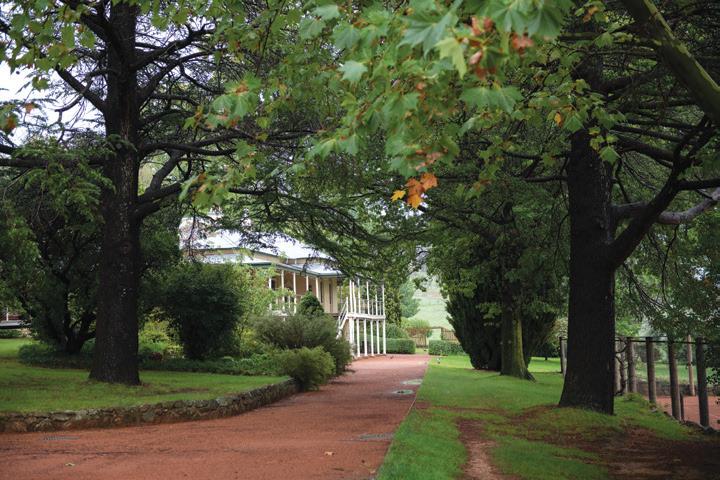

WELL-established and park-like, with expansive lawns and shady old trees, historic Lambrigg has matured in recent years, say owners Kate and Peter Gullett.
Despite the tough, hot summer, Lambrigg will open as part of Open Gardens Canberra on March 28-29.
“It just keeps getting hotter, but we love being out here in the bush,” says Peter, who grew up on the property that was originally established by wheat-breeder William Farrer in 1891.
Much of the garden was developed by Peter’s parents, who lived at the property from 1949 and created stone walls, garden rooms and terraces to help manage the steep site.
“They grew a lot more flowers than we do; annuals and perennials, but we’ve simplified things with more hardy plantings, like hedges of rose and lavender, so it’s easier to maintain,” says Kate.
“Having said that, I’ve planted a small flower bed with mini dahlias, catmint and roses where we used to have a veggie patch, it’s a bit of fun.”
From the pin oaks planted in the 1950s along the driveway to an olive tree in memory of Peter’s family who lived in Greece, the garden also features an English oak tree on the north-west side of the garden that Peter grew from an acorn when he was a boy.
Words: Kathryn Vukovljak
Photos: Holly Treadaway
“It was a good place to plant it as it provides beau tiful shade, though I’m not sure I had that foresight at the time,” Peter says.
Peter and Kate say they keep the trees high and trimmed up to allow for vistas underneath over towards the Murrumbidgee river, and enjoy the magnolias, azaleas, tough pink and white dogwoods, rhododendrons, Japanese maples and camellias around the homestead.
In 2015 they received a grant from Heritage ACT towards the restoration of Farrer’s laboratory, and say they’re now working on updating the infrastruc ture, adding stone walls, timber screens and ha-ha walls.

“We’ve always enjoyed being able to share the garden, hosting weddings and other events. We love it when visitors bring a blanket and a book, find a spot they like and settle in,” Kate says.
“It takes a while to wander through,” says Peter.
“It’s a dear old garden. We’re fond of it.”
“Lambrigg”, Tidbinbilla Road, Tharwa, 10am-4pm, Saturday, March 28 and Sunday, March 29. Entry $8, free to under-18s and Open Gardens Canberra members. Funds raised go to the Kids Cancer Centre at Sydney Children’s Hospital. Visit opengardenscanberra.org.au/members
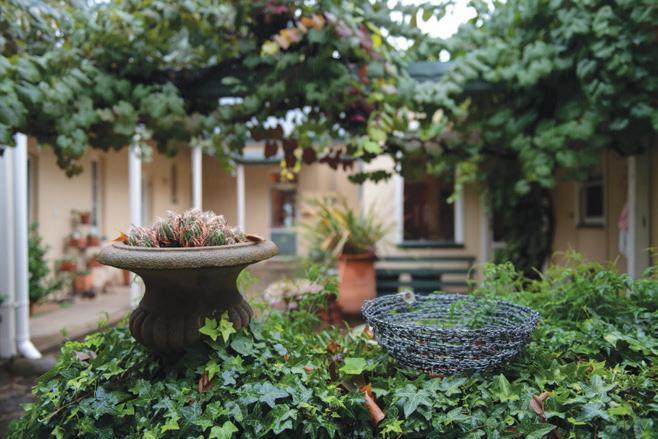
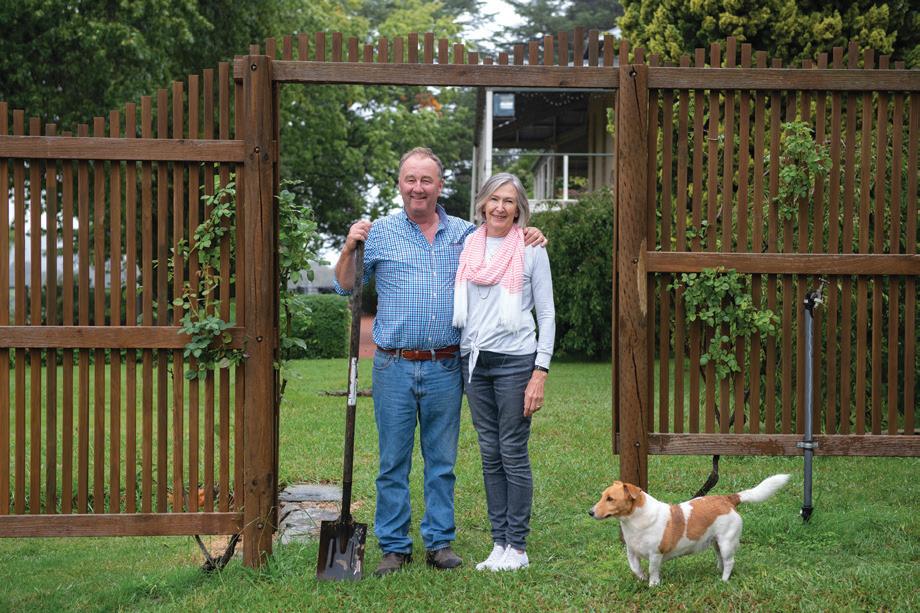


NATURE is truly amazing, irrespective of climate change. Deciduous trees and shrubs know exactly when the leaves should change colour and shed, and when to produce new growth and leaves.
If there’s no rain, these trees will lose their leaves earlier due to the dryness of the soil. The problem with heavy storm rain is that it simply runs off, rather than soaking down to the root zone.
Looking to add autumn colour? The time to look in the garden centres is now. The leaf colour of many trees of the same variety, such as maples, can vary considerably, whether they have been propagated from seed rather than cuttings or grafting. The latter are cloned and will come true to the parent plant. You may see half a dozen trees in garden centres all labelled Acer palmatum, and yet the leaf colour can vary quite considerably from tree to tree.
If planting trees this autumn, a perfect time, keep in mind the size of a tree, shown clearly on most labels. For example if a tree grows to eight metres tall, you will need to plant it at least eight metres from the home or other buildings on the block. Unfortunately, blocks are rapidly being reduced in size, some even down to 270 square metres. As a result there is no space for even reasonable-sized shrubs, let alone trees.
In new suburbs it will be many years before there is sufficient protection from mature trees to shelter delicate maples or dogwoods. However, in many older suburbs this will not be a problem.
COMMERCIAL horticulturists and home gardeners are being encouraged to desist from using peat.
When we owned a nursery in Yass, many years ago, we used to buy peat moss to add to our own potting mix for greater water retention. In addition, peat is beneficial when added to the soil for all acid-loving plants from natives to daphne and rhododendrons.

We would buy it in huge bales, mainly from Russian peat bogs. However, horticultural practices have moved on, and today we like to see peat

stay in the ground.
Peat has been some of the world’s most important carbon sinks; that is, until now. Peat bogs are drying out and could become a source of emissions, worsening climate change.
In many countries peat is still a primary source of heating homes. Rising temperatures have also had an impact on the drying-out process, resulting in peat bogs switching from absorbing carbon to releasing it into the atmosphere.
AS we move into bulb-planting time, it may be appropriate to dig up and relocate those planted in the wrong spot. Over the years, both natural mulch from falling leaves and mulch added by the gardener means the bulbs gradually get deeper. By the time they have fought their way to the surface spring has gone.
The rule of thumb recommended by Dutch bulb growers is to dig these up and replant to a depth the same as the bulb is thick. If for example a daffodil bulb is six centimetres thick, replant
it six centimetres deep and water in with liquid seaweed.
IN the past I have created gardens with coloured themes, the most popular being the soft pastel flowers of pink, white, mauve and lavender.
Apparently, some people don’t like looking out at their garden with bright reds, orange or yellow on a hot day. Unfortunately, many of our native plants have these strong colours.
Despite requests of “no native plants”, I would sometimes sneakily include native plants of the blue, white or pink varieties. For example, Prostanthera ovalifolia, the mint bush with its profusion of blue flowers or the white-flowered Philotheca myoporoides, the native mint bush.
I’ve had requests for plants of purple or burgundy, with the emphasis on the foliage rather than the flowers.
Among the smaller perennial plants available, the spring-flowering Heuchera “Palace Purple” fits the bill perfectly. Then there’s the Ajuga “Black Scallop”, a dense ground cover growing to just 10cm high with a spread of 80cm of glossy, deep-purple foliage and pink flowers.
The autumn-flowering Salvia sinaloensis “Aztec Blue” has purple leaves. Leucadendron “Ebony” has almost black leaves all year round with yellow/red flowers in autumn and winter, growing to two metres. I particularly recommend this plant.
Then there’s a plant that’s taken gardens by storm, the perfectly named Loropetalum “Plum Gorgeous” with its purple leaves and masses of tiny, pink, spidery flowers in spring and into the summer.
In our garden, I under-estimated its size, so allow for it to grow up to 1.5-metres tall with a metre-plus spread. It responds well to clipping.
Purple-foliaged plants act as a foil for other plants. For instance, purple next to a plant with orange flowers makes a stunning combination. These are just a few of the purple-foliaged plants, all with a variety of flower colours.







Average block sizes of 550sqm at an average price of $375,000.

There’s so much that makes Ginninderry extraordinary:
• Large blocks between 500-700sqm, ready later this year.
• Breathtaking views of the Brindabellas.
• Big backyards and open communal spaces with an abundance of established trees.

• Canberra’s only 6-star Green Star rated community. Give us a call to book your tour today. We’re open seven days. Flexi-living homes now open for inspection.
• Architect designed.
• The freedom and flexibility of a separately-titled home with the convenience and low-maintenance lifestyle of an apartment.
• No body corporate fees.
• Four Flexi-living display homes now open at our GX Display Village.
Investment opportunity – Flexi-living display homes for sale and leaseback.
1 McClymont Way, Strathnairn (Follow the signs from Pro Hart Avenue)