


Day the Penises for Peace came a cropper ROWAN HENDERSON
It’s Woden calling, anyone listening?
PAUL COSTIGAN
When kids get jealous KATE MEIKLE

Day the Penises for Peace came a cropper ROWAN HENDERSON
It’s Woden calling, anyone listening?
PAUL COSTIGAN
When kids get jealous KATE MEIKLE





By Danielle NOHRA

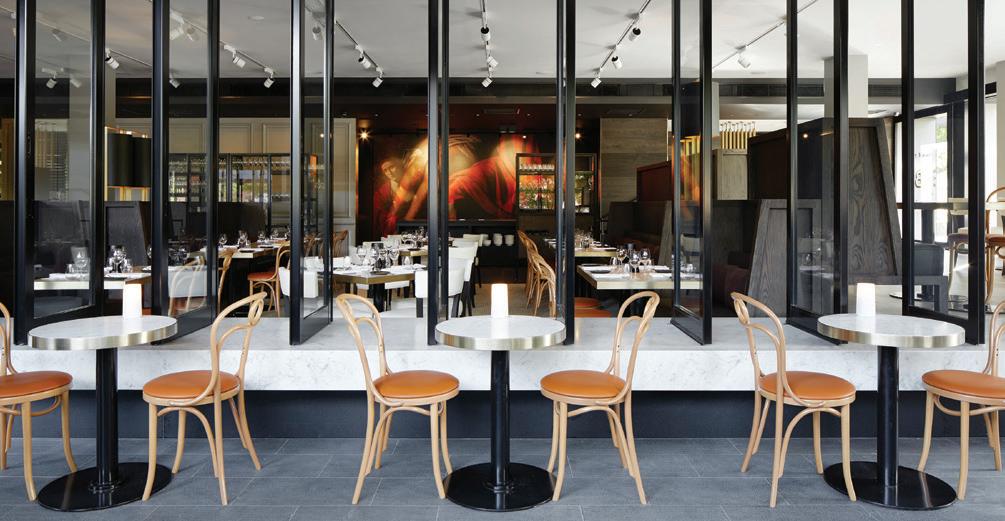
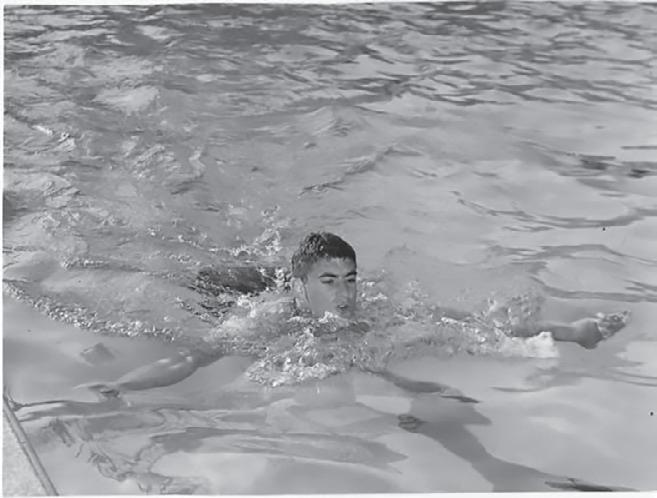
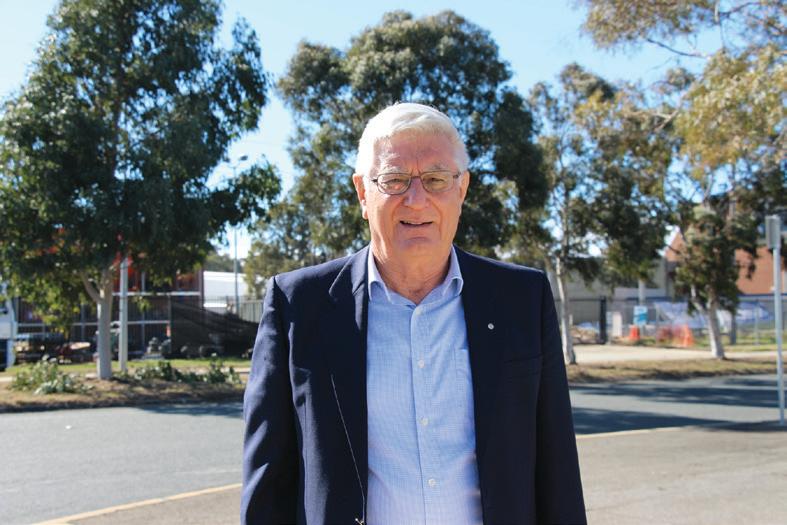
AT the age of 80, Turner resident Gary Stutsel is still breaking records in swimming, and recently competed in the Great Barrier Reef Masters Games where he won 10 gold medals, all in record time.
Gary was 13, though, when he won his first race in his home city, Sydney, but says it wasn’t until he was 49 when he swam his fastest time in the 100-metre breaststroke event.
These days, he mostly swims for fun but was a real contender when he was swimming competitively.
He even almost qualified for the 1960 Olympic Games after coming third at the trials, but says he missed out because of changes to the structure of the Games.
He says the butterfly and breaststroke were separated following the 1956 games, meaning only two people from each country were chosen for each stroke, not three.
“It didn’t devastate me but it was a bit of a setback,” says Gary, who stopped competitively swimming at 22 to work full-time as a pharmacist.
“I kept swimming with a social club though, which held races, until
I was 35.”
Even though Gary’s Olympic swim ming dreams never came true, he kept swimming and was a key player in set ting up the Masters Swimming Aus tralia Association, which has clubs in Canberra where Gary now swims.
He’s also the treasurer of the Molon glo Water Dragons, a Masters Swim ming club, but his involvement with Masters Swimming goes back to its beginning.
Gary was living in Sydney in 1974 when a group of 45 US Masters swim mers came to compete.
“In this competition I won the breaststroke in the 35-to-39 age group and came second in freestyle after being narrowly beaten by John Hen ricks, who was the 1956 Olympic gold medallist,” he says.
“But what I was really impressed by was the fairness of the five-year age groups in all strokes and distances, and by how women and men were swimming together.”
After the competition Gary joined a group of eight men and two women, with an objective to form a regular Masters championship in Australia and adopted the name, Australian Masters Swimming Association (AMSA).
“Up until then there were three men’s groups who were mostly social swimmers but had their own annual competitions,” he says.
“There was nothing in the ACT at
the time and there was a mixed competition in SA.”
NSW constitution.
The idea behind AMSA was that it would hold a competition every year, which would be open to everyone, something Gary says is still a value to this day.
“In the beginning it was about competition whereas now it’s about the training and socialising though,” he says.
But before it got to this stage, there was still plenty of work to be done and not long after establishing the association Gary got the idea they should formalise what they were doing so he drafted a national constitution and a
Since 1993: Volume 25, Number 30
This new structure became the gov erning body of branches in each state, with Gary being the first national secretary, which was then an unpaid volunteer role.
Over the years Gary’s seen an increase in the number of swimmers through the club and he’s also seen an increase in women swimming with the club.
“At the first competition there was probably about 80 per cent males, now 51 per cent are females and 49 per cent are males,” he says.
Here in Canberra, where Gary’s been for about 11 years, he says it had
wanted to compete in NSW competitions,” he says.
According to Gary, there are currently three Canberra Masters clubs in the ACT but he believes there is a big opening for more of these cubs here.
Personally, Gary swims in all of the pools tied to the Canberra Masters clubs, saying he gets to one of them about three times a week because he loves the physical and mental benefits from staying active.
“I hope to keep swimming for as long as I can still get to the pool,” he says.
Arts & Entertainment 30-33
Canberra Matters 8
Cinema 33
Crossword 35
Dining 32
Gardening 34
Horoscopes 35
News 3-15
Politics 13, 15
Socials 16 Cover: Baby Zelda models her fancy cotton pants.

Photo by Holly Treadaway. Story Page 6.
Managing Director: James Anderson, 0404 077605, james@citynews.com.au
Director: Kate Meikle, kate@citynews.com.au
Senior advertising account executive: David Cusack, 0435 380656
Advertising account executives: Daniel Clayton, 0451 232129; Matt George, 0413 667699; Damien Klemke, 0439 139001
Editor: Ian Meikle, editor@citynews.com.au
Assistant editor: Danielle Nohra, danielle@citynews.com.au
Journalist: Kathryn Vukovljak, kathryn@citynews.com.au; Arts editor: Helen Musa, 0400 043764, helen@citynews.com.au
Production manager/graphic design: Janet Ewen
Graphic designer: Karl Speller
Proof reader: Glenda Anderson
Accounts manager: Bethany Freeman-Chandler, accounts@citynews.com.au
•
• Accessing aged care for the first time



• Navigating MyAgedCare

• Transitioning between the Commonwealth Home Support Program, Home Care Packages and/or Residential Aged Care
• Your rights and responsibilities

A LONG daily commute, once only a hassle for big city folks is now apparently an issue here.
The latest national data reveals Canberrans are spending more than double the time getting to work than in 2002. Arriving in 2003, I often heard the comforting comment: “Nowhere in Canberra is more than 25 minutes away”.
Call me a pedant but I left Mitchell at 9am last Wednesday bound for Reid and made the rookie mistake of taking the light rail-clogged Northbourne Avenue. The 10.5-kilometre journey took 30 minutes. Not serious, but a worrying sign of things to come.
SPEAKING of long commutes, the Bish is back in Canberra, at least on a part-time basis. The WA-based, former deputy Liberal leader Julie Bishop is to become the ANU’s first female chancellor. Ms Bishop, who won’t take up the position until January, has already been drawn into a scandal that has plagued the prestigious tertiary institution for years.

In 2017, the Human Rights Commission rated the ANU as having double the national average of sexual violence on campus.
While welcoming her appointment, two student associations see the former foreign minister’s appointment as “an opportunity to lead the nation in ending sexual violence at Australian universities”.
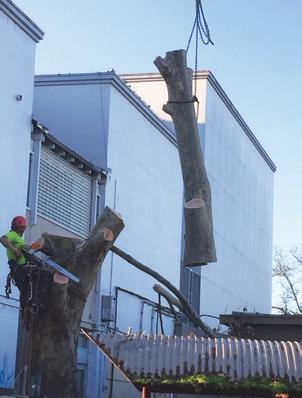
AFTER almost four years of expensive legal squabbles it took mere hours to fell a controversial plane tree hampering a developer’s plans to stimulate business in Manuka. A small crowd assembled on Franklin Street to witness a dexterous demonstration of lopping and slicing by a skilled arborist and team. Most had dispersed by the time the once familiar canopy was no more than a trunk hauled high into the sky by a large crane that then dumped it into a chipping machine.
There was a mixture of comments from those watching. One forthright gentleman in his early 70s unambiguously and loudly suggested “that f...ing tree should have been ripped down four years ago”. However a carefree millennial woman, suddenly halted by the roar of the chainsaw, exclaimed: “Oh, my god, I thought they had already saved that tree”.
MEANTIME, while Manuka traders are
very keen to see the once posh precinct rejuvenated, some are unhappy to rise again under the banner of a tantrum-throwing toddler who sits in Washington’s Oval Office. Morris Property Group, which is developing the old Stuart Flats, has borrowed Donald Trump’s successful election campaign mantra “Make America Great Again” and is flogging red baseball caps with the slogan “Make Manuka Great Again”.
AT last November’s Kids off Nauru rally at Parliament House I spotted a grumpy looking
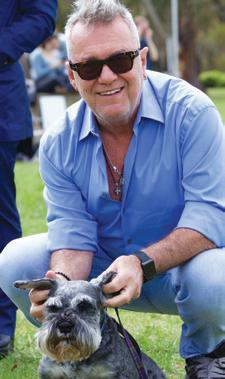
schnauzer. As the human at the end of its lead squatted down to coax the recalcitrant “Ollie” to pose, I recognised him as Australian rock legend Jimmy Barnes . Sadly, Ollie died last week revealing his hard-rocking master’s soft heart. In a double blow for Barnsie, who lost another dog recently, he tweeted: “Today I lost Oliver. Now both my darling boys are gone. Everything hurts and life will never be the same again. Fly away boys, dad loves you”.
There appears to be a distinct lack of sympathy around Canberra for Federal politician Barnaby Joyce. Joyce’s financial bottom line has apparently taken a massive hit after, to use an analogy his New England constituents would understand, he “jumped the fence”. The former accountant should have known that multiplying is more costly than dividing or subtracting.
By Kate Meikle
LABOR backbench MLA Tara Cheyne has secured the support of the Assembly to “explore whether and how the government might have a role in removing the barriers to people giving sustainable products a go,” she says.
This includes encouraging Canberrans to use reusable nappies and sanitary products.
Ms Cheyne recently met with Emma Black, founder of Canberra Cloth Bums, advocates for the use of cotton nappies.
“These barriers might be financial, due to the initial outlay when purchasing sustainable products, or where people might have some anxiety about how to use the product,” says Tara.
The motion suggested investigating the feasibility of a rebate scheme, a cloth-nappy “library” service, introductory workshops and more education material.
“The purpose would be to give plenty of information about these products and make them as accessible as possible when consumers are making choices about what’s right for them,” says Tara.
Cloth nappies offer a cheaper bottom line, Page 6






An average baby needs 6000 nappies from birth to toilet-training. KATE MEIKLE meets a mum on a mission to educate parents about the benefits of environmentally friendlier cloth nappies.
GILMORE mum Emma Black is on a mission to educate parents about the benefits of using cloth nappies to help reduce the environmental impacts of disposable nappies.
Last year she founded a community group called Canberra Cloth Bums, which now has 400 online members and holds regular meetings and information sessions to encourage parents to give cloth nappies a try.
“People think of them as the old terry towelling squares and pilch-
ers and the gross buckets of soaking nappies. Cloth nappies have changed and there are so many different styles now,” she says.

Emma tried cloth nappies for her now 17-month-old daughter Meredith when she was five months and found that cloth nappies were both environ mentally and wallet friendly.
“The last kerbside audit of Can berra’s household waste showed that 6.1 per cent of Canberra’s waste was nappies. A single item making up that much of the waste stream is crazy. Disposables also take up to 500 years to degrade,” she says.

“Even if parents make a change by using one cloth nappy a day they are saving 365 disposable nappies each year from ending up in landfill.

“I’d like the next audit to show a reduction in the amount of nappies we throw out,” she says.
After having her baby, Emma says she felt a passion to make a difference to the environment: “I got the ‘savethe-world’ complex! I wondered what I can do to save the world for her future and I thought I would start with making a difference on my patch.”
Emma says she has now become
Canberra Cloth Bums founder Emma Black… “Six-point-one per cent of Canberra’s waste is nappies. A single item making up that much of the waste stream is crazy.”
more conscious of her environmental impact in other areas of her life. For example, she now uses reusable baby wipes, carries reusable cutlery with her and gives food scraps to her neighbour’s chickens.
“It’s all about making small changes and, in time, making it part of your routine,” she says.
Canberra Cloth Bums hold regular















set of cloth nappies.
Although the initial financial outlay can be intimidating (between $500 and $800), once a baby has a set of adjustable cloth nappies, they will last them until they are toilet trained, says Emma. This compares with an average spend of $2000 on disposable nappies across a baby’s first two and a
“Even with detergent, water and electricity costs, which are only about $200 across this time, in the end when you use cloth nappies you save a lot of money.” she says.
And Emma promises that she doesn’t spend any longer than one hour each week washing the nappies!
Being the only mum in her mother’s group who uses cloth nappies, Emma says that the friendships she has found from starting the group and connecting with like-minded mums who also feel passionate about using cloth nappies has been another positive aspect for her.
Photo: Holly Treadaway
information sessions at the Canberra Environment Centre in Acton with volunteers showing parents the different types of cloth nappies and how they might suit their baby.
Because the majority of cloth nappies are sold online, Emma says that parents get a lot out of seeing and touching the products and getting advice before investing in a
“Everyone on the action group volunteers their time and is generous and kind with their knowledge. It’s a supportive group,” she says.
Canberra Cloth Bums will hold a cloth nappy introduction session on September 1 at Canberra Environment Centre, Acton. More at canberraenvironment. org or the Canberra Cloth Bums group on Facebook.


HOW many times can ACT apparatchiks use terms such as: “We are very conscious of what you are saying” or “I take your point” and then completely devalue the issues with misleading information.
Apparently, as many as it takes to avoid difficult questions. This is what happened at the July Woden Valley Community Council meeting when such phrases were repeated by planning bureaucrats and the Minister for Urban Things, Rachel Stephen-Smith. Stephen-Smith had come to the meeting to talk about the future of the former CIT site near the hospital. That was the easy bit.
Then the real discussions commenced and it became apparent that this Minister for Urban Renewal was not aware of the depth of feeling within Woden about the lack of arts, community and sports facilities and the diminishing green spaces.

The politest version of events is that this politician did not manage the situation well as the
On the night, it was uncomfortable (but slightly entertaining) watching Minister Stephen-Smith flounder so badly, trying all the usual clichéd answers. None of the usual spin and avoidance tactics were working.
Woden community’s questions and statements poured forth.
When asked several times about why Woden was missing out on facilities when the population was rapidly increasing, she tried desperately to deflect the queries with the well-practised spin. Her response was to try to universalise the issue – to talk about how other areas of Canberra are faring with facilities – even mentioning how the inner-north is asking for things (not mentioning that she has ignored such requests).
The temperature rose when the recent Sport Minister Yvette Berry’s report of sports facilities was discussed. This report used data from the major organisations, mostly located in northern Canberra, that dismissed the missing facilities as identified by the Woden community. Again, Stephen-Smith trotted out more clichés and seemed to hint that this troublesome issue was someone
else’s doing (namely Yvette Berry’s).
On the night, it was uncomfortable (but slightly entertaining) watching her flounder so badly, trying all the usual clichéd answers. None of the usual spin and avoidance tactics were working. Her “support” bureaucrat was offering nothing simply because Woden residents have missed out on so much and there was nothing she or any bureaucrat could say to justify the obvious.
It became clear that she was unable to admit that so many things were wrong despite all the facts being placed in front of her. When that item finished, she left quickly.
Then came an even more wondrous presentation and questions about a small community designated site in O’Malley. After a brief introduction, residents were addressed by a traffic specialist who carried out his presentation as if he was a TV quiz host – complete with distracting jargon and stage movements. His presentation was based on specialist surveys that produced statistics against some magical traffic-specialised set of measures. No matter what he said
to illustrate that the situation was not too bad, residents continued to respond (sometimes very loudly) with their real-life experiences of the parking and the traffic mess associated with this part of the suburb.
It is this small site, designated for community use decades ago, that the government had moved to sell but had no idea of its future use. So for the last few years the residents have had surveys, traffic studies and other bureaucratic noises on how the site could be used. Attention on this site has focused the residents on the larger traffic issues (trying to exit during peak hours) plus the streetparking problems.
Many “I hear what you are sayings”
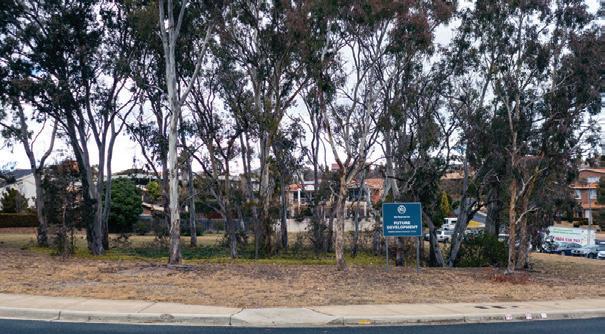
later, nothing was resolved. Maybe the chief planner, who was present, may decide that this silly waste of resources needs to stop, traffic lights urgently should be installed and something done about the parking. As for the site and its trees, maybe confirm it as a green space for evermore. Is anyone within the ACT government capable of acting on what Woden residents are saying? It’s about community, arts and sports facilities, green spaces and traffic issues.
Paul Costigan is an independent commentator and consultant on the visual arts, photography, urban design, environmental issues and everyday matters.


Molonglo Dental Surgery is a modern, family-friendly private dental clinic located in the Coombs Health Hub Precinct, within the district of Molonglo Valley. We provide quality dental care to the burgeoning communities within Molonglo Valley and its neighbouring districts: Belconnen, North Canberra, South Canberra, Canberra Central, Weston Creek and Woden Valley.

To help overcome your child’s dental anxiety in a fun and interactive way, we are happy to introduce the Dinosaur Chair. Molonglo Dental Surgery is the first dental practice in the whole of Canberra to install the Dinosaur Chair – to the delight of all our young patients!
An absolute hit with small toddlers and pre-schoolers, this brightly coloured dinosaur-shaped chair is designed to inject a huge dose of fun into your child’s next dental visit. It is a great impression-builder for kids making their first-ever dental visit. In addition to its many awesome features to help tackle dental phobia in a fun and non-threatening way, the Dino Chair is first and foremost a paediatric-focused innovation that paves the way for better kid-friendly treatments and successful outcomes.
Our Philosophy
We love to see our patients smile. We understand it takes more than just exceptional dentistry to make it happen. It involves making the daily effort to turn our dentist clinic into a warm, welcoming and friendly place. It takes commitment, focus, and dedication on the part of our dentists, dental nurses and the entire staff team to realise the goal of consistently delivering a great patient experience for all our customers.
* IF ELIGIBLE 2-17 YEAR OLDS UNDER MEDICARE FUNDED SCHEME
*Terms and conditions

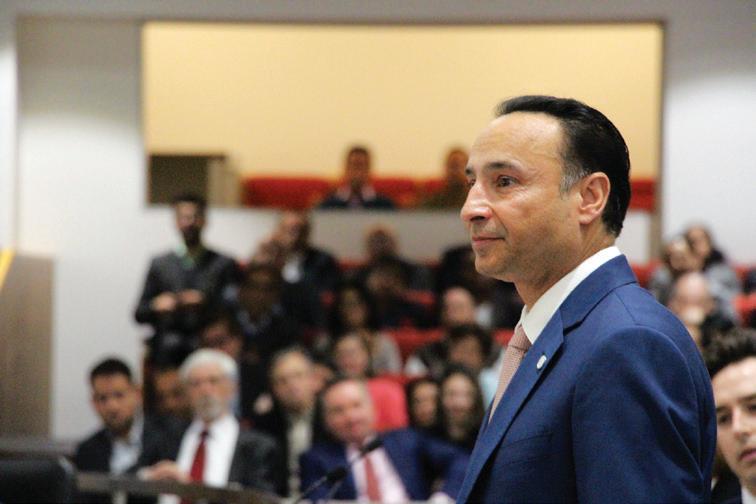
By Danielle Nohra
DEEPAK-Raj Gupta stood up with love and joy to give his maiden speech at the Legislative Assembly, but said there was also emptiness inside him.
The new ACT Labor member for Yerrabi was brought to tears, and so were some in the crowd, when he spoke about his late parents not being there to see him sworn in.
Gupta, 53, of Gungahlin, has replaced senior minister Meegan Fitzharris following her shock resignation in June.
In his speech he said he would use his position to focus on small businesses and multiculturalism.
“For the past few weeks I’ve been sitting down with small businesses in the Gungahlin region and talking to them,” he said.
“The Labor Party is the party of jobs and strong economic management and these are values I will continue to advocate.”
The Indian-born Assembly member said he would also focus on the multicultural community.
“I’m really proud to stand in the chamber as an Australian-Indian,” he said.
More broadly Deepak, who said he had seen Gungahlin grow alongside his two children for almost two decades, promised to listen to the Gungahlin region and be its voice.
“I’m determined to bring tangible change to my community,” he said.

IN mid-June, Facebook – in cahoots with 28 partners in the financial and tech sectors – announced plans to introduce Libra, a blockchain-based virtual currency.
The world’s governments and central banks reacted quickly with calls for investigation and regulation. Their concerns are quite understandable, but unfortunately already addressed in Libra’s planned structure.
The problem for governments and central banks: a new currency with no built-in respect for political borders and with a pre-existing global user base of 2.4 billion Facebook users in nearly every country on Earth, could seriously disrupt the control those institutions exercise over our finances and our lives.
The accommodation Facebook is already making to those concerns. Libra is envisaged as a “stablecoin”, backed by the currencies and debt instruments of those governments and central banks themselves and administered through a “permissioned” blockchain ledger by equally centralised institutions (Facebook itself, Visa, Mastercard, et al.).

Facebook’s new currency play Libra isn’t a cryptocurrency; it’s more like a digital gift card, writes THOMAS L. KNAPP
To put it a different way, Libra will not be a true cryptocurrency like Bitcoin or Ether. Neither its creation nor its transactions will be decentralised and distributed, let alone easily made anonymous.
A “blockchain” is just a particular kind of ledger for keeping track of transactions. It does not, in and of itself, a cryptocurrency make.
In simple terms, Libra is just a new brand for old products: digital gift cards and pre-paid debit cards.
The only real difference between Libra and existing Visa or Mastercard products is that Libra’s value will fluctuate with the “basket” of currencies and bonds it’s backed by, instead of being denominated in one particular (also fluctuating – you experience the fluctuations as changes in the prices of goods) currency such as the dollar or the euro.
When it comes to the goal envisaged by cryptocurrency’s creator, the pseudonymous Satoshi Nakamoto
– to free money from control and manipulation by governments and central banks – Libra is a dead end. Instead of being manipulated by one government or central bank, Libra will be manipulated by all of them. Cryptocurrency is, to get biblical, new wine in old wine skins – it bursts those skins, by design. Libra isn’t new wine. It isn’t even a new wine skin. It’s a blend of the same old wines, in the same old skins, with a fancy new label. And there’s nothing to suggest that the old wine is getting better with age. Fortunately, these structural defects also mean that Libra isn’t a threat to real cryptocurrency. Accept no substitutes.
Thomas L. Knapp (Twitter: @thomaslknapp) is director and senior news analyst at the William Lloyd Garrison Center for Libertarian Advocacy Journalism (thegarrisoncenter.org). He lives and works in north central Florida.

Potter Travel offers day and extended tours for Canberra people.
Regular daily outings: Enjoy a Sydney Harbour Jacaranda Cruise, a Melodies & Tulips tour to Bowral, or a Nepean Belle Paddlewheeler Luncheon Cruise on the Nepean River........ tomentionjustafew. Or for a longer trip away: A Melbourne ‘Terracotta Warriors’ Tour, a South Australian Riverland Tour, a Melbourne Cup Tour or a Tamworth Music Festival Tour plusmanymore.
Overseas Tour to: Portugal & Croatia in May 2020... ask about our ‘Early Bird Special’ valid for August bookings.
For itineraries, dates and prices on all tours we offer, visit: pottertravel.com.au 6297 8585

Stay in touch with the names making news on Sundays from 10am as 2CC and “CityNews” present Canberra’s only local weekend news and current affairs program.
It’s a revolving panel show that brings to the microphone great “CityNews” commentators and 2CC personalities.
Be part of the conversation and call 6255 1206 between 10am and noon.









ONE of the things I clearly remember when telling my mum the due date of my first born, was her saying how we hadn’t planned his birthday very well. And she’s right!
Having a birthday in early January isn’t the best timing, especially for a little one who has ended up absolutely loving toys.
Birthdays are a long wait for all kids, but coming off the back of Christmas gifts, apart from picking up some birthday bargains during the Boxing Day sales, there’s not a great benefit. He asks me often how long away is his birthday, for a five-year-old it seems an age.
It’s made it harder lately when his little sister turned three. This year she was really into it – counting the sleeps and choosing her cake design. It was an exciting time for her and us as we celebrated the end of the “terrible twos”.
Part of parenting I had no idea I had to actually do is teach my kids how to receive gifts. It became clear when the kids started crying when a friend gave them a lovely, thoughtful and useful plate as a gift. To be fair, it’s hard to get pumped about a plate when you were hoping it was a Transformer!
The kids also directly ask this generous friend if she has got a present for them every time they
The whole crying-when-your-sibling-has-abirthday thing drives me bananas.
Surely he can suck it up and just let his sister have her birthday? Apparently not, yet.
see her! Total parent cringe. But it made me realise the intricate social codes that we all work around when it comes to presents.
I imagine my kids would say to me, after they complete their present training: “So, mum, let’s get this right, I can’t ask for a gift; I must act surprised and delighted with whatever I receive; I must wait until everyone is watching until I open it; I must thank them and tell them how much I like it (even if I don’t, really); I can’t cry when my sibling gets a gift and I don’t, and I have to wait an eon before my birthday comes around again…”
Yes, kids. Growing up is tough!
The whole crying-when-yoursibling-has-a-birthday is one thing that drives me bananas. Kind and generous people gave my son a
small present to alleviate his sadness that he felt during his sister’s special day. It cheered him up, but I felt frustrated and a bit embarrassed by his whingeing. Surely, he can suck it up and just let her have her birthday? Apparently not, yet.
This was until my big brother recently went through the family photo albums. There he was, turning 16 about to blow out the candles on his cake. What was I, his 13-year-old (and way too old for these shenanigans) sister doing? Having a big old cry in the background.
Like mother like son perhaps?
Total parent cringe.

A NEW international study has found fathers who invest time and money in their children are likely to be more jealous when their partner cheats on them compared with dads who are less involved.
ANU anthropologist Dr Geoff Kushnick was part of the research team and says while previous studies have focused on differences between the sexes, this study investigated cultural differences including fathers’ involvement in their children’s upbringing.
“The critical finding from across the various populations we surveyed was that the more fathers invested in their kids, the more jealous they would feel if their wives or partners had sex with someone outside of the relationship,” Dr Kushnick says.
“Whether a person lives in a small village in Indonesia or in a bustling Los Angeles neighbourhood, norms regarding sexuality and fatherhood can have a big influence on the jealousy someone feels when they are betrayed by their life partner.”
The team, led by the University of California, surveyed 1048 men and women from 11 populations around the world, including urban areas in the US, India and Japan.
“We presented each respondent with a number of scenarios where they experience infidelity, such as their partner having sex with someone else. Then we asked them to report their feelings
Kushnick says.
“Cross-cultural research of this sort allows us to better understand how human behaviour is shaped by the social context, and to get past generalisations about how males behave or how females behave.”
Dr Kushnick says men tend to have less involvement in their children’s lives in female-dominated societies, such as matrilineal systems, where fathers were not expected to provide ongoing support.
“Fathers in these societies have a less severe jealous response to extramarital sex than those in other societies where they player a bigger role in family life,”
Dr Kushnick says.
The study is published in “Nature Human Behaviour”.

TAXPAYERS Australia Limited, also known as Tax and Super Australia, celebrated its centenary in May through the presentation of the inaugural Galah Awards for the most wasteful expenditure programs by governments in Australia.
The awards were sponsored by the Taxpayers Research Foundation Limited and received nominations from the Commonwealth and all states and territories.
Tax and Super Australia explains that the Galah Awards are so named because: “Galahs are pink and grey raucous parrots, but as the Australian Museum once provided on its website, ‘we call people galahs if they are acting silly or do something foolish’.” These nominations for the Galah Awards are clear examples of what foolish things governments can do.”
There were three Galah Award categories, namely: Category 1 for the worst implemented program; Category 2 for the most expensive and inefficient program; and Category 3 for the worst implemented program.
There were a total of 43 nominations from across Australia. Two of these were from the ACT, for Light Rail Stage 1 and the Ngunnawal Bush Healing Farm.
In a large and extremely competitive field of marginal, problematic, ideologically driven, pork-barrelling or otherwise unjustifiable projects the Taxpayers Research Foundation Limited awarded the ACT government the Galah Award – Highly Condemned, in Category Two, which was for the most expensive and inefficient program in Australia, for Light Rail Stage 1. The ACT was pipped for the major title in this category, the Ultimate Loser Award, by the infamous NSW Baby Bundles scheme.
“A cost benefit analysis prepared in 2012 estimated a benefit-cost ratio (BCR) of 1.02 for the light rail project and 1.98 for a bus rapid transit. The BCR’s were reported in a submission to Infrastructure Australia.
“A subsequent business case released in 2014 estimated a BCR of 1.2 for light rail and 2.4 for the bus rapid transit alternative.
“The BCR estimate for light rail, however, was misleading. It included land value uplift and wider economic benefits, which are notably excluded by Infrastructure Australia in its assessment of the benefits of such projects. Excluding those benefits, as they should be, the BCR for the light rail project was according to the ACT auditor-general in 2016 a mere 0.49.
“To proceed with a project where the return is less than 50 cents for every dollar spent is simply not consistent with the nationally accepted cost benefit rules. Notably the BCR reported by the auditor-general was likely an overestimate as the audit pointed out that apart from the excluded agency costs, considerable work for the business case had not been completed including, but not limited to the utility services which needed to be relocated.
If you thought that on the strength of the business case for Light Rail Stage 1 that no fiscally responsible government would or should have proceeded with the project, wait until you see the business case for Stage 2.
“In an ACT Legislative Assembly hearing, project officials advised that those costs could be in the order of $200 million.
“Financial analysis of the project released after the project was committed to indicated that significant development along the corridor would be required, along with land sales, value capture mechanisms and an increase in taxes in order to recover the financial costs of the project.
“Along the corridor, 1288 public housing dwellings were demolished. The government allocated $192 million in 2016 for the replacement of the lost stock. These costs were not included in the business case or the CBA.”
As the ACT government ramps up preparations for the commencement of Light Rail Stage 2, it is probably timely to review the most salient features of the successful nomination of Stage 1 for a Galah Award as a guide to how Stage 2 might fare if nominated in the future for an award in its own right in the toughly contested competition for the most expensive and inefficient program in Australia.
The following excerpts from the formal nomination of Light Rail Stage 1 for a Galah Award would, therefore, one imagines, have clearly been central to the project receiving its Highly Condemned Award.
“The project, delivered under a PPP has a whole-of-life nominal cost of $1.78 billion and present value cost (2016) of $939 million discounted at 7.52 per cent. However, these costs do not include estimated agency costs associated with the construction and operation of the light rail. Under the partnership, the government will pay $375 million in capital contribution, $1.27 billion in availability payments over 20 years and retain $129.7 million of risks. The government will also carry the patronage and fare box risk.”
I accept that if one reads the above summary of the business case, financial implications and budget impact of Light Rail Stage 1 really quickly it seems quite benign and unremarkable. It is also, of course, to the uninitiated, little more than mumbo jumbo and it is not surprising that the response of most of us when reading technical guff such as this is to simply turn the page before our eyes glaze over.
The Galah Awards might be seen as little more than a bit of frivolous and harmless fun and hence easily dismissed. That would, however, be a mistake. They are deadly serious and if you, like many of us, have thought that on the strength of the business case and BCR for Light Rail Stage 1 that no fiscally responsible government would or should have proceeded with the project, just wait until you see the business case and BCR for Stage 2.

CANBERRA is the home of Federal Parliament and, as such, naturally attracts activists who want to get their message across to those “in power” and gain media attention for their cause.
Over the years Canberra has seen significant national protest such as the establishment of the Aboriginal Tent Embassy and countless protests outside Parliament House on issues as diverse as wool prices, abortion, employment conditions and uranium mining.
However, in the city of Canberra itself, the community has also had its own concerns. “Activism: forces for change in Canberra”, at Canberra Museum and Gallery, explores the dual role Canberra has played as a site of protest for local issues and matters of national and international importance.
In 1911, with the creation of the Federal Capital Territory, the entire adult population of Canberra lost their enfranchisement. Even after gaining one seat in the House of Representatives in 1948 their member could only vote on matters directly affecting the Territory until 1966. Senate representation came in 1975.
No local system of government with legislative power existed in the ACT until 1989 when self-government was imposed. So it was that Canberra’s population spent most of the 20th century struggling to have its daily concerns heard. Not that this bothered the major-

From the Homosexual Law Reform Society, Women Against Rape in War to Penises for Peace, Canberra has a rich history of protest.
ROWAN HENDERSON previews a new exhibition of local activism that’s just opened at the Canberra Museum and Gallery.
ity much – 63.75 per cent of Canberrans voted against self-government in 1978.
Despite this, the ‘60s and ‘70s in Canberra saw the same rise in social activism as the rest of Australia and sometimes Canberrans were ahead of the nation in their social awareness.
The formation of the Homosexual Law Reform Society in 1969 was the first group formed in Australia with the intention of decriminalising homosexual acts.
The Women Against Rape in War gatherings in Canberra during Anzac Day from 1980 were the forerunners to later marches in Sydney and Melbourne. This “early adopter” status of Canberra has continued, with the ACT becoming the first Australian jurisdiction to ban smoking in restaurants and other enclosed places in 1994 and attempting to legalise marriage equality in 2013.
Another side of activism that can be easily forgotten is the battles that are lost or the developments that never happened.
Apart from the direct participants how many Canberrans remember the protest over the Duffy transportable homes park, the demolition of the
Capitol Theatre or the Battle for Rocky Knob in Narrabundah?
Other demonstrations that will be well-remembered in Canberra include protests against the building of Telstra Tower (then known as Black Mountain Tower) and the work of Save the Ridge in opposing the building of the Gungahlin Drive Extension (GDE) through O’Connor Ridge.
In looking at the history of activism it is easy to forget that for everything being protested, there is an opposing side. When the GDE was being protested against by Save the Ridge in the early 2000s there was another group, GDE Now!, working to support its construction.
Another aspect of local activism addressed in this exhibition is its inherent creativity. To make a splash, get some media coverage and attract attention requires creative thinking and acting.
The material culture of activism therefore largely consists of the badges, posters and puppets – the tools of the activist.
The exhibition also shows, for the first time, the almost seven-metre-long Stop Arms For Export protest float col-
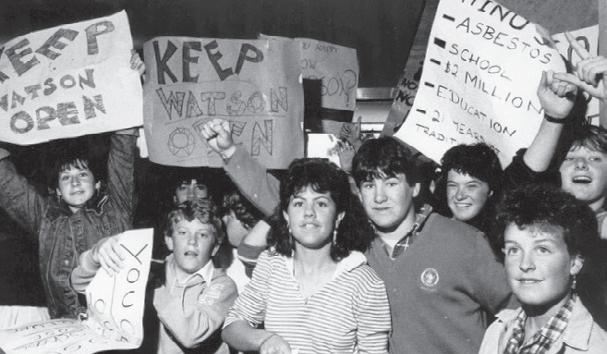
lected by the National Museum of Australia following the AIDEX protests in 1989 and 1991.
The AIDEX exhibition was held at NATEX (now EPIC) and was a showcase for companies wishing to sell defence materiel to the federal government. Significant protest occurred at the exhibition site, leading to over 200 arrests in 1991.
This float, in the shape of an arm and fist holding a sign reading “Stop Arms For Export”, was used at a number of locations including Parliament House and Garema Place.
In 1991 a group of naked men hid inside the arm which was used to ram the National Exhibition Centre’s
main gate. The plan was for the men – known as the Penises for Peace – to jump out of the arm inside the exhibition. This was foiled by the police who diverted the arm from the main gate and then overturned it, trapping the people inside.
This exhibition aims to showcase both the creativity and the hard work of activists across Canberra’s history. It is a story of devotion to a cause; persistence in the face of defeat and of working in many different ways to create change in society.
Rowan Henderson is the acting assistant director, Exhibitions and Collections, Canberra Museum and Gallery.

Rallimax has the latest wheel and rim straightening lathe, enabling us to successfully realign most damaged alloy wheels. Visit us at 1/184 Gladstone Street, Fyshwick Telephone 6280 5967 rallimaxsport.com.au





THE Centre Alliance Party is working more and more effectively in the Federal parliament as competent, philosophically centrist crossbenchers.
In the ACT we have a burning need for the same.
Holding the government accountable is part of the job. Just as important is ensuring that government can get on with its program when it is in the best interests of the community. The best interests of the community go beyond looking after the majority.
The key role for the Centre Alliance was set out in founder Nick Xenophon’s first speech in the Senate.
“An independent must take every issue as it comes and ask: ‘If we change things, who might it hurt and who will it help?’ and then hopefully make the right choice,” he said.
“I have tended not to see things in terms of Left or Right. Instead, I try to think about what is right and what is wrong”.
One concern many voters have regarding crossbench members is the exercise of disproportionate power. The then-Senator Xenophon also addressed this issue.
guage that is divisive and hurtful. ‘Lifters’ and ‘leaners’, the ‘taxed’ and the ‘not taxed’ – this language does not bring us together; it divides us. It is not helpful, true or necessary,” she said.
Her colleague Senator Stirling Griff also took up this call when elected in 2016.
“I am not open to fear and hate campaigns for political gain and control,” he said.
He has also raised fundamental concerns undermining our democracy: “The creeping role of dark money in politics is a threat to Australian democracy, and to combat it we need more timely disclosure of donations and a substantial lowering of disclosure amounts”.
The drivers of the Centre Alliance, such as seeking accountability, refusing to ‘horse trade’ and being willing to take on hard issues would be a huge improvement to ACT politics.
“Horse trading implies a willingness to vote for something you do not believe in in order to get something else you want,” he said.
“When people do try to horse trade they can end up with a donkey or, worse still, end up making an ass of themselves.”
In 2016, South Australian Rebekha Sharkie came into parliament as the member for Mayo under the Xenophon banner (later to become the Centre Alliance).
She launched her political career identifying a positive approach to the role of crossbenchers seeking a “move away from short-term fixes to sensible, informed and evidence-based planning. The long-term prosperity of our nation depends on it”.
She also took on the growing acrimony in our politics and concerning disparity in Australia.
“We must, as a nation, move away from lan-
When Nick Xenophon stepped down from the Senate his place was taken by Rex Patrick whose influence and impact has been increasing significantly since the Morrison government was returned to power.
He brings to the table sensible, evidence-based decisions in the best interests of the community.
In his first speech in the Senate, Patrick included a reflection on how he should go about his role.
“How do we, as individuals and as a chamber, achieve the lofty aims that we set ourselves and that are demanded of us in the Constitution?” he said.
“We should not exercise power irresponsibly, but by the same token we must also recognise that there are circumstances when it is also irresponsible not to exercise a power”.
In the ACT we have no equivalent to the Centre Alliance. The Greens, like their counterparts in the Federal Parliament, sit to the left of the Labor Party. They play an important role. However, the drivers of the Centre Alliance, such as seeking accountability, refusing to “horse trade” and being willing to take on hard issues would be a huge improvement to ACT politics.






RETIREMENT means different things to different people.
For some it’s about hitting the road (or sky) and seeing the world, for others it’s about finding the right community or location to enjoy the coming years and for some it’s about managing the niggles and pain that often come with age.
But no matter what it is, “CityNews” speaks with experts who aim to help retirees make the most of their new-found freedom after decades of hard work!

frontage in Frederickton, Macleay Valley Village provides a peaceful rural lifestyle, says Sarah.
“In late spring, stage one will see the opening of 56 villas and a country club in the heart of the village,” says Sarah.
The country club will be fitted with an entertainment quarter, an outdoor pool, exercise room, craft room and other amenities which, Sarah says, will give residents everything they need to do the things they love.
“Every villa has stunning views of the rolling countryside.”
With the adjacent nursing home, Macleay Valley House Aged Care, residents will know that aged care support is nearby should they need to transition.
Macleay Valley Village, 100 Macleay Street, Frederickton. Visit macleayvillage.com.au or call Steve from sales on 0414 863666.
RECENT changes might affect a person when drawing up a will or organising estate planning arrangements, says Ashilpa Khanna, of Capon & Hubert Lawyers & Mediators.
Ashilpa says changes include superannuation arrangements and tax implications for beneficiaries under different types of trusts.
“It is very important to consult with someone with whom you are able to ask questions [about these changes],” she says.
“This helps in being well informed when drawing up your will or making estate planning arrangements.”
With its personalised approach, Ashilpa says Capon & Hubert Lawyers & Mediators spends time with its clients to find the best possible solution at a reasonable cost – including wills and estate planning.

“Wills and estate planning are important because they ensure that your loved ones are looked after when you are gone,” she says.
“Having your affairs in order saves time and money or the need to prove something before the court.
“It also ensures that your lifetime’s assets are disposed of in the manner that you would have intended.
Lawyer Ashilpa Khanna of Capon & Hubert Lawyers & Mediators.
“If your circumstances have changed since you last made your will, it is best to seek advice and make an informed decision as to whether your will needs updating.”
Capon & Hubert Lawyers & Mediators, First Floor, 32-38 Townshend Street, Phillip. Email enquiries@chsol.com.au, call 6152 9203 or visit chsol.com.au









IT’S never too early to start thinking about retirement and how much superannuation is needed to fund it, says Gail Freeman, of Gail Freeman & Co.
“From the day you start working, a percentage of your wages goes into super,” she says.
“It’s important to know and understand your super fund as well as consolidate any old funds you might have.
“[And] as you get older, it’s useful to check if you have enough super for retirement.”
According to Gail, there are things people can do to increase the amount they have in their superannuation account leading into retirement, such as adding up to $25,000 as a personal contribution, which can be made in a tax deductible manner.
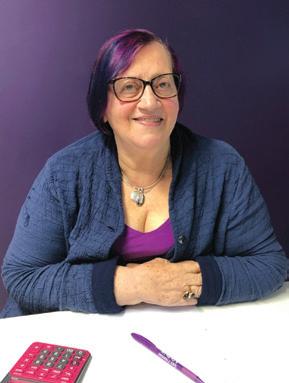
If people don’t put the full $25,000 in one year, Gail says there are new rules allowing them to carry the balance forward to contribute in the following five years.
“Depending on your tax rate, making a personal contribution to top up your super can be an attractive proposition,” she says.
Gail also recommends to check how much insurance (if any) is in the super fund, as people might be paying for insurance they no longer need when they finish working.
“There are recent changes to super rules that people may need to be aware of, so I recommend discussing your personal situation with a professional,” she says.
Gail Freeman & Co offers investment advice, superannuation and retirement planning services, in addition to tax and business accounting.
Gail Freeman & Co, 9/71 Leichhardt Street, Kingston. Call 6295 2844, email info@gailfreeman.com.au or visit gailfreeman.com.au
FOR retirees ready to shift to a smaller home, Downsizing with Care’s experienced specialists have the skills to support and inform them through the entire move.
Founder Melissa Freasier says Downsizing with Care prides itself on understanding and working with clients to help them get the results they want.
As a certified organising specialist, Melissa experienced first-hand what downsizing is like when she moved her family from a large four-bedroom home to a two-bedroom unit.
“We can help in many ways, from providing help [around] the sequencing of a move, [helping] make sense of what to do first and providing tips and tricks to sell excess items,” she says.
“We can also pack and unpack and have been trained in packing techniques for fragile objects.”
Melissa says her all-female team are aged in their 40s and 50s and have a wealth of knowledge and experience.
“They understand the importance and value of specialty objects and are very understanding and sensitive to the emotional side of downsizing,” she says.
Downsizing with Care can tailor services to the client’s needs. It runs regular seminars to offer tips on the downsizing process, with one being held at Hughes Community Centre, at 11am, September 4. To book, call Charlene on 0408 534229.
Downsizing with Care. Call 6134 5200, email hello@downsizingwithcare.com.au or visit downsizingwithcare.com.au
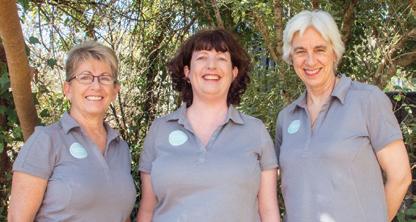

CREATED with the ageing population in mind, The Pod Canberra’s family-run team are the modern innovators of the granny flat, which are otherwise known as secondary residences, says co-founder Jacki Valk.
“It’s hard to find a good, high-quality secondary home for your backyard and that’s where we come in,” says Jacki, who also wanted to create the “pod” for people living with disabilities, people looking for investment opportunities and to give more space to parents or kids to escape to.
“All kinds of solutions have been offered for a pod. They have wide entry doors and we can build it with ramps, lifts and large entertaining areas.”
Jacki says the pod is unique because it
provides an all-inclusive price that includes; the plans, DA approvals, BA approvals, construction (ready to move in with items such as flooring, blinds, whitegoods and TV) and handover.
“It’s hard to find good a high-quality secondary home for your backyard and that’s where we come in,” Jacki says.
“We have made it to how myself and my parents like to live, small luxury we call it.”
The Pod Canberra opens a two-bedroom, one-bathroom pod in Giralang once a month for people to have a look and get a feel for the size.
The Pod Canberra. Call 1300 843763 or visit thepodcanberra.com.au









MOST people need a combination of interventions to manage their pain, says the director of Canberra Chiropractic, Dr Ben Schutte, who has been helping clients manage pain for about 30 years.
But, he says what’s most important when managing pain is what people do for themselves in conjunction with their healthcare adviser.
When it comes to pain at Canberra Chiropractic, Ben says the services they offer revolve around a series of adjustments along with prescribed exercises and advice on what behaviours to change.
“[This] usually includes being more active,” he says.
Ben says factors like stress, fear and a sedentary lifestyle can amplify pain.
“We know from recent neurophysiology studies that pain is actually an emotion which is generated in your brain,” he says.
“This occurs when the brain perceives that an injury has occurred.”
Ben says Canberra Chiropractic can also help people manage issues such as lower back pain, sciatica, upperbody pain, headaches, dizziness and sports injuries.
Canberra Chiropractic, Unit 5, 9 McKay Street, Turner. Call 6247 3388, email admin@canberrachiropractic.com.au or visit canberrachiropractic.com.au

Set amongst landscaped grounds, Adria Village is a warm and welcoming community of people from all around the world. We pride ourselves on cultural diversity and celebration, and offer a wide range of activities to cater for all interests. We provide care for Croatian and all other nationalities.
Adria Village fosters individuality and independence, providing support and assistance to enable residents to live in a comfortable and secure environment. Adria Village in Stirling offers residential care for 42 residents, incorporating 2 respite rooms, and Special Care. The Village also contains 36 independent living villas. All villas have 2 bedrooms, a courtyard and a garden, and residents enjoy a peaceful and welcoming community lifestyle.
Our aim is to provide a caring, safe, home-like atmosphere, reflecting your rights to dignity, respect, privacy, safety and the best quality of life. Contact our friendly staff today to arrange a personal tour.

ADRIA Village provides a home-like environment and high-quality aged care for up to 42 residents, as well as 36 independent-living villas in a landscaped environment with mature trees and gardens.
Adria Village general manager Iva Vujica says the villas are all two-bedroom and residents enjoy a shared community room for activities and social events.
“There are weekly outings organised using our private bus and we have a nurse on site, available around the clock should residents need medical attention,” Iva says.
As well as organised social programs, the village provides multilingual staff, regular mass, an on-site chapel, a psychologist, podiatrist, chemist, hairdresser and pharmacist.
“Adria Village is located 500 metres from Cooleman Court and bus services connect it to Woden, Civic, Belconnen and Tuggeranong town centres,” says Iva.
“It’s close to everything!”
Adria Village, 89 Fremantle Drive, Stirling. Call 6288 0198, email admin@adria.org.au or visit adria.org.au


LIFE can change when people retire, which is why it’s important for seniors to be supported through exercise and social groups, says Arthritis ACT CEO Rebecca Davey.
“Life does change when you retire,” she says.
“Some social connections you had with people at work may be lost so we recommend people lead into retirement with a plan that includes what activities, clubs or support networks you’d like to get involved with.”
According to Rebecca, it’s also a time for seniors
Arthritis ACT runs support groups, exercise programs and social activities such as movie groups to help people dealing with arthritis pain to chat to others going through the same experience.
“Sometimes it helps being able to have a whinge with others about your arthritis, who are also going through it,” says Rebecca.
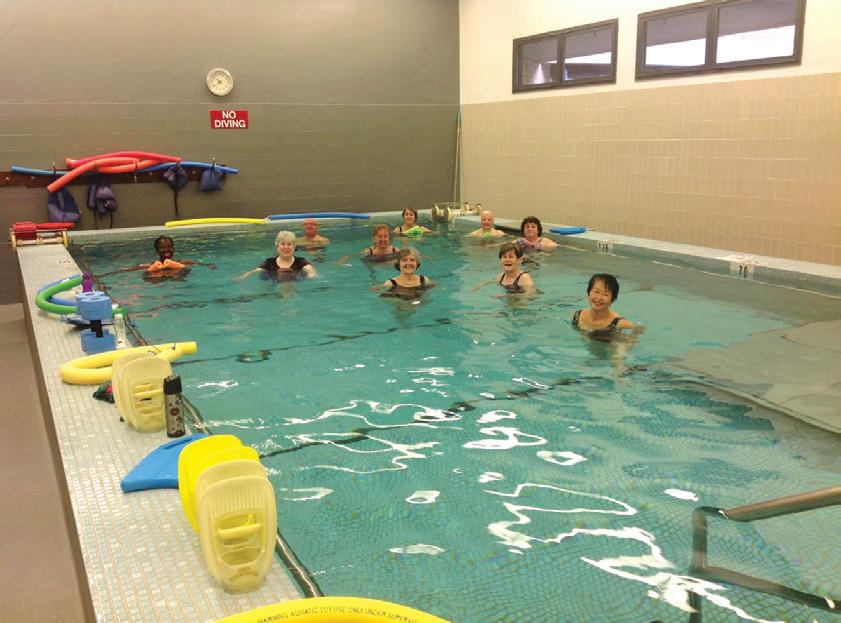
“Our range of exercise programs includes 30 sessions of hydrotherapy each week, yoga, tai chi, strength and balance classes and aqua aerobics.”

suite of programs to physically and emotionally assist
with the impact of chronic pain.

• Hydrotherapy at locations across Canberra
• Exercise Physiology group classes and individual consultations
• GLA:D Physiotherapy program for hip and knee osteoarthritis
• Dietitian consultations for weight loss/gain and pain relief
• Occupational therapy to improve daily living challenges
• Individual counselling and health education
• Pain Support programs, seminars and support groups
• All programs can be incorporated into NDIS, DVA and My Aged Care
• We accept GP Referrals for Medicare funded allied health services

• Most chronic pain conditions respond to exercise and weight loss
• Hydrotherapy is proven to lead to reduction in many kinds of chronic pain
• People living with pain often suffer from being isolated – we have programs that will lessen this impact
• Mild depression and anxiety will significantly increase perceptions of pain – our counselling, support groups and exercise groups will help reduce this impact.


LLOYD’s Caravans owner Kerry Lloyd and his three sons love to hear where their clients venture.
Whatever age, customers are encouraged to come to Lloyd’s for a service and safety check – or other requirements such as accessories or insurance repairs –before their next adventure.
Lloyd’s Caravans has operated in Canberra since the ’60s and Kerry says he’s glad to carry on his father’s legacy as well as work with his three sons – Mitchell who’s an auto electrician, Matthew, a panel beater, and Kyle, a carpenter.
Lloyd’s Caravans provides services such as caravan insurance repairs, modifications and servicing and can also work on trailers, camper vans, horse floats and motorhomes.

“We’re all trained in the caravan industry trade and we are the preferred repairers for all major insurance companies,” Kerry says.
“Caravans and motorhomes are evolving all the time and we’re evolving with them.”
Lloyd’s Caravans, Unit 1-57 Tennant Street, Fyshwick. Call 0438 800652, email caravanscanberra@gmail.com
TRAVELLING in retirement is growing in popularity and Jamison Travel has helped many retirees plan their perfect trip, says owner Michelle Everson.

Whether it’s a luxury cruise, a short guided tour or an active adventure holiday, Michelle says Jamison Travel can design trips to suit all budgets and needs.
One option, which Michelle says is ideal for retirees, is their guided mid-week trips in which people can enjoy an overnight getaway to a show or concert in Sydney, with all transport, meals and entertainment included.
The next such trip is to see the Edinburgh Tattoo in Sydney, in October, and Michelle says it’s a great way to meet new people, especially for solo travellers. Another trip, to the Hunter wine region, is planned for next year.
Jamison Travel holds a solo travellers’ expo at the Albert Hall in September each year.
“We also hold information and film sessions about different travel destinations instore that feature drinks, nibbles and interesting presentations to inspire travellers,” says Michelle.
“Cruising remains a popular and affordable option for retirees – with European river cruising never going out of style.”
Jamison Travel, Shop 5, 39 Bowman Street, Macquarie. Email info@jamisontravel.com.au, call 6251 5166 or visit jamisontravel.com.au

LIFE Without Barriers, one of the largest, most trusted providers of aged care support in the ACT, is empowering retirees through its training sessions, says operations manager Ric Cabrita.
This year, Life Without Barriers has created a number of groups and training sessions such as one on one computer skills, which cover internet banking, email and social media accounts – to keep in touch with family members.
“We have a strong focus on maintaining independence at whatever stage,” Ric says.
“Doesn’t matter what stage you are at, it’s never too early to start engaging with new skills, to become more productive.
“There are many social and mental health benefits and these create better outcomes for people in their later years.”
Run out of the Griffith Community Hub, other classes on offer include how to safely navigate around the home, gentle exercise and diabetes management.

“We have a philosophy of enablement and reablement,” Ric says.
“If someone has an injury, we strive to get them reabled back to their pre-injury mobility.”
Life Without Barriers can work with retirees to maximise government funding for the activities to help keep their costs down or even make it cost neutral to the participant, says Ric.
“We [also] provide support such as home care, cleaning, garden and home maintenance, house modification and personal care,” he says.
Life Without Barriers, 25 Blaxland Crescent, Griffith. Call 1800 935483 or visit lwb.org.au

becomes extremely important, says the owner of Personal Home Lifts, Mike Bresnik.
“A home lift provides the ability for Canberrans to remain in their houses and compared to the costs of downsizing it is a cost effective option,” he says.
“Real estate agents have told me that, on average, the cost of moving is $72,000.
“A personal home lift costs between $35,000 and $40,000 (plus building and electrical work) so it really is an affordable option.”
Mike says domestic lifts are gaining popularity as people choose to stay in their home, alongside trusted neighbours and life-long friends, but are no longer
“It’s another way to get their independence back and gives their family peace of mind,” he says.
A display lift has been installed at Fyshwick Home & Heating and Mike encourages people to come and see the lift in action.
“There are two lift sizes to choose from, and the larger one is suitable to fit a standard wheelchair and a carer inside,” he says.
Personal Home Lifts. Call 6147 5566 or visit the display lift at Fyshwick Home & Heating, 88 Wollongong Street, Fyshwick.

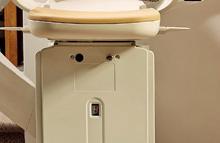
An elegant home lift, ideal for homeowners with mobility issues, giving independence within their double storey home. A cost effective choice avoiding the extra cost burdens & stress in downsizing

Contact Jamison Travel on 6251 5166 or info@jamisontravel.com.au to secure your spot. Hurry spaces are limited.
The Royal Edinburgh Militar y Tattoo Sydney
Thursday 17th October –Friday 18th October 2019
What’s included:
- Return coach from Jamison Travel
- Overnight accommodation at a 4 star hotel
- Pre show dinner
- Platinum seating at ANZ Stadium
- Breakfast
$675 per person twin share
$799 for a single room



At Capon and Hubert Lawyers we ensure that your estate goes to family or friends of your choice.
Having a valid and up-to-date Will can help reduce stress for your family and friends, limit administration costs, and lessen the possibility for dispute over your estate. We understand your situation is different and may require a unique specialist approach.
THERE are four parties to every hearing-loss discussion or decision and of these four, the weak est link is family, says the ACT branch chairman of Better Hearing Australia, Bill Leane.
“Throughout history, the family has been the main source of knowledge, but somehow over time the family has been squeezed out,” he says.
“We think the time has come to bring the family back into the equation.”
Now, Better Hearing Australia seeks to work with families of people who live with hearing loss by introducing them to items that can help.
“We have developed a gift pack that could be given to an older family member by their children in a loving situation,” Bill says.
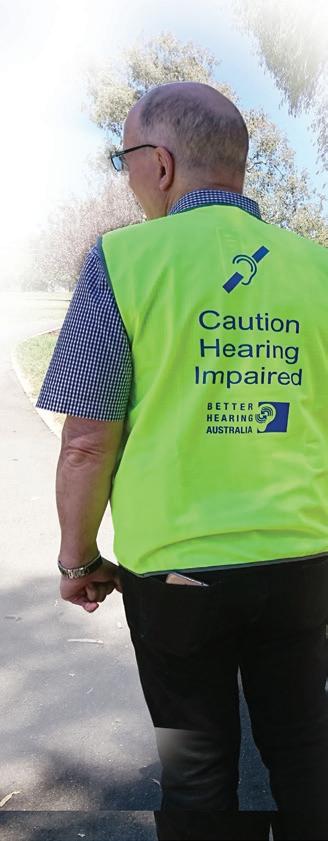
By gently introducing the gift pack to relatives with hearing loss, Bill believes they will be more responsive to using items such as a safety vest, which highlights their hearing loss.
“People who have been wearing the safety vests tell us that they have been treated with respect and feel empowered,” he says.
“For instance, people with hearing problems who enjoy walking can’t hear when cyclists are coming along from behind.
“When they wear the vest, the cyclists behave differently, give the person more space and it’s a lot safer.”
The pack also includes a sports T-shirt to keep people active, confident and competitive, as well as a booklet about managing hearing loss within a household.
Better Hearing Australia, COTA Building, 2 Wisdom Street, Hughes. Call 6281 3962, email bhacanberra@gmail.com or visit bhacanberra.org

&
Better Hearing Australia mission is to bring information, education, skills & proven management packages to families coping with the debilitating effects of progressive hearing loss.
BHA Canberra Helps…
BEFORE
• Outreach program of knowledge, skills & strategies
• Workshops and drop-in centre consultation
• Plan execution and useful management tips and apps
DURING
• Coaching for hearing loss clients and network team leaders in plan execution
• Managing common hearing loss ‘pinch-points’, and related seminars and practice sessions
• Managing help networks, (including family relationships)
• Hearing loss management classes (including lipreading)
................................................................ AFTER
• On call ‘One to One’ coaching
• Remedial or corrective ‘round table’ facilitation to resolve diversions & distractions
• BHA Events for meeting others in similar situations and celebrating success



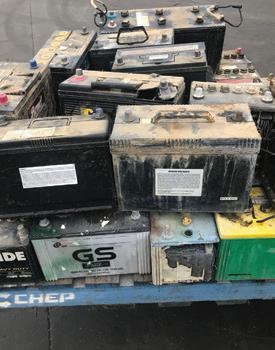
MOST people know recycling has environmental benefits but fewer understand its economic benefits, according to Planet Ark, founder of National Recycling Week, held this year from November 11-17.
A spokesperson from Planet Ark says recycling creates 9.2 jobs for every 2.8 jobs in landfilling and it makes people happy, too.
“A study across 27 countries found that people who recycle have higher life satisfaction levels and are overall happier people,” Planet Ark says.
As for the environmental benefits, Planet Ark says manufacturing products from recycled materials uses less energy compared to the use of virgin materials.
“Recycling one tonne of plastic saves enough energy to power 31 homes for a month,” says Planet Ark.
According to the Australian Plastics Recycling Survey for 2016-17, a total of 3,513,100 tonnes of plastics were consumed in Australia. Of the plastic consumed, a total of 293,900 tonnes of plastics were recycled (excluding tyre recovery), which is a fall of 10 per cent from 2015-16.
Including tyres, total plastics recovery was 415,200 tonnes.
WITH winter in full swing, the co-owner of Alexanders Furnishings, Rosslyn Rebbeck, says the most energy efficient method, when it comes to decorating and insulating a home, is to install well-lined curtains with a pelmet covering at the top.
“Double glazing is not the answer,” says Rossyln.
Instead, she says Alexanders Furnishings has a curtain heading system called EVO, which is a lot more effective and is well regarded by the energy rating people.
“This heading system allows the curtains to stack back far more efficiently than previously available heading types, allowing more valuable winter sunlight in,” she says.
“Together with the EVO heading system we have developed new track sections that incorporate a sleek and slim-lined pelmet system which does not require the traditional bulky timber pelmet over the top of your curtains.”
Alexanders Furnishings has been servicing Canberra and surrounds for about 50 years and Rosslyn says they look forward to welcoming new and old customers to the Hindmarsh Drive showroom.
“We have friendly staff who know what they’re talking about,” she says.
“And we can also custom-make roller blinds, roman blinds, bonded fabric blinds, honeycomb blinds, venetian blinds and sunscreen roller blinds.”
Alexanders Furnishings, Shop 5, Paul’s Centre, Hindmarsh Drive, Phillip. Call 6281 1611.
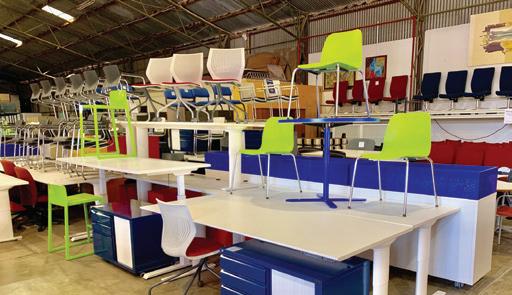
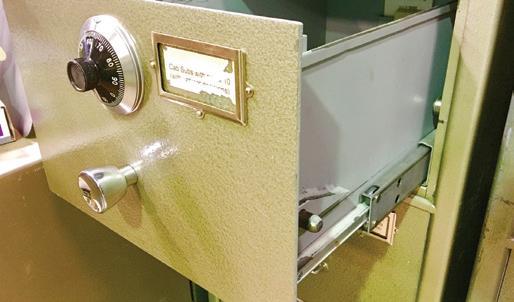
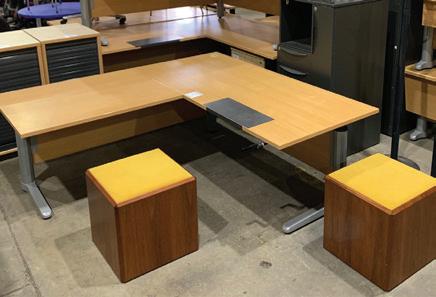
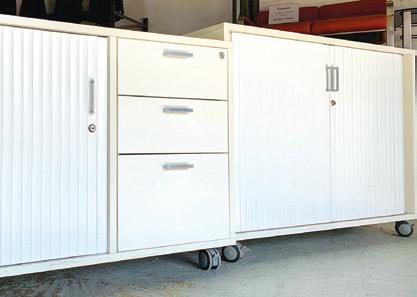
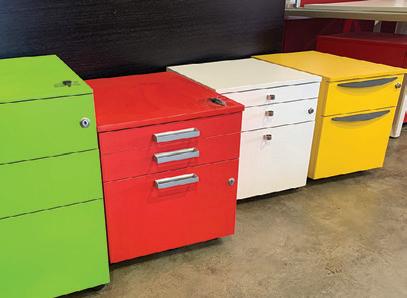
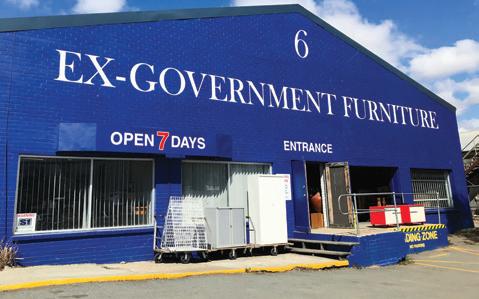
EX-GOVERNMENT Furniture, a leading dealer of surplus office furniture, saves a huge amount of stuff from landfill by fixing it for resale, says co-owner and manager James Fullerton.
“Recycling is one thing – but reusing an item in the first place is an even more environmentally friendly option,” he says.
A new item doesn’t always mean it’s better, says James, who believes it is often the easiest thing to do.
“We do a lot of reuse at Ex-Government Furniture and are conscious of what we do to keep items away from landfill,” he says.
“Even if a piece of furniture comes to us and it is broken, we break it down to the component parts –separating the different pieces of metal to take to recycling.”
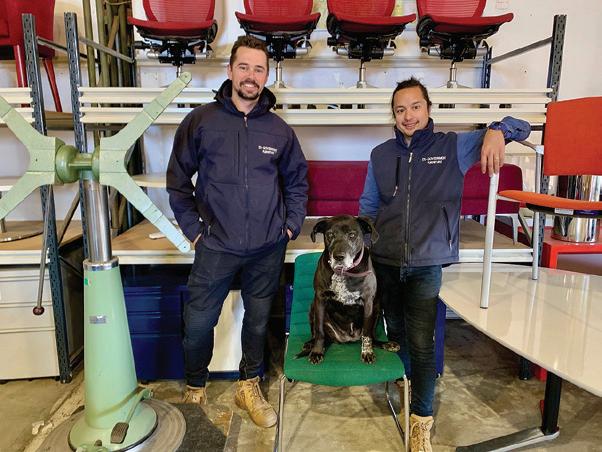
Ex-Government Furniture co-owners Taylor Radnell, left, and James Fullerton with the director of operations, Lady. furniture.”
waste, Ex-Government Furniture gets in second-hand items weekly and repurposes them so they’re in an “almost new condition”.
Ex-Government Furniture stocks office and home furniture such as high-quality office chairs, desks, workstations, boardroom tables and shelving.
Rather than creating more

“We have a lot of high-quality furniture in great condition, ready to go,” James says.
“If something needs a clean or fixing, we do that so our customers get a high-quality, clean, reused piece of
James says they have many adjustable office chairs and workstations in stock, all made by well-regarded Australian manufacturers.
Ex-Government Furniture, 6 Yallourn Street, Fyshwick. Call 6280 6490 or visit exgovfurniture.com or facebook.com/exgovfurniture







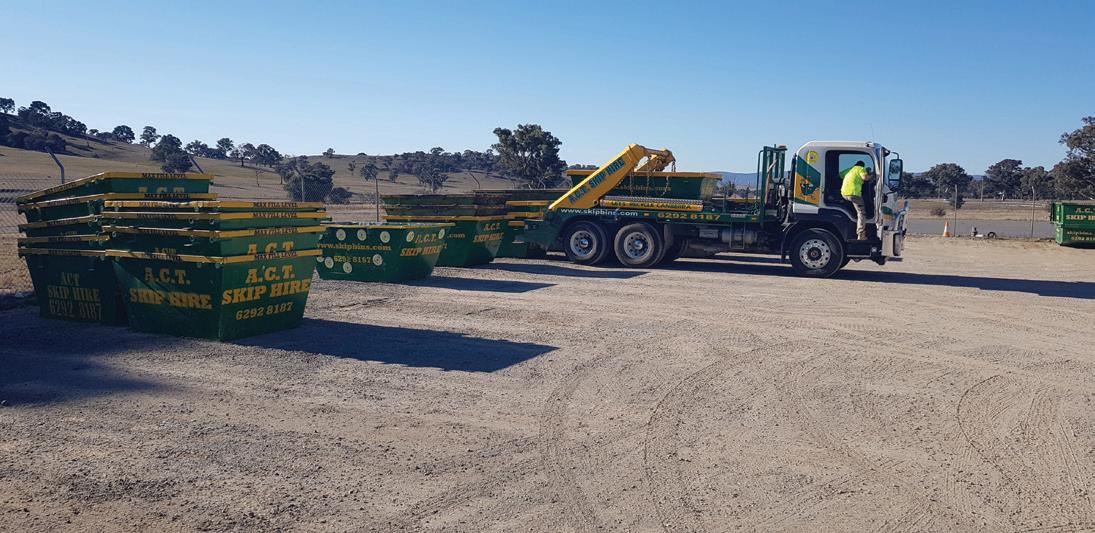
“NO one can work in the waste industry and remain ignorant of the problems we are facing locally and globally, regarding waste,” says ACT Skip Hire owner Tony Barron.
“Australia is generating around 70 million tonnes of waste per year.”
Disheartened by the amount of material they saw going to landfill from their skips, Tony and wife Robyn set out to do something about it.
“We dramatically changed our business operation model from waste transport to waste reduction and education, through establishing the ACT Resource Recovery Centre,” he says.
“There were many hiccups, but we knew we were on the right track and persevered.”
recovery, recycling and reuse.
“It is intensive, hard and dirty work, but it is having a direct, tangible impact on the level of waste going to landfill in our community,” Tony says.
“We are diverting over 60 per cent of our materials from going to landfill and working on increasing this to at least 90 per cent.”
To help divert waste from landfill, Tony and Robyn’s son Daniel is running an op shop, Let’s Recycle Canberra, out of the ACT Resource Recovery Centre in Hume.
Anything that can be resold is salvaged
supplies.
Daniel says: “We are friendly, happy to negotiate on price and proud to be doing a good thing for the planet by reusing these items rather than sending them to landfill.
“You will be surprised with the variety. Come and find the treasures within.”
Let’s Recycle Canberra is open 10am-4pm, on Thursday to Saturday.
ACT Skip Hire and Let’s Recycle Canberra Op Shop, 11 John Cory Road, Hume. Call 6292 8187 or visit skipbins.com.au

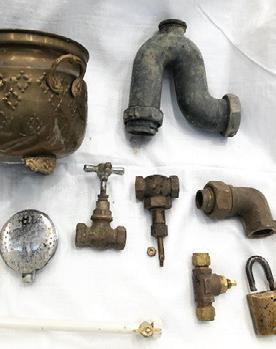
SIMS Metal Management says it’s grown to be the leading collector, processor and supplier of recycled metal in Australia.
The company says this has been made possible through a network of 30 locations servicing all states and territories.
Sims Metal Management also operates in more than 20 countries.
“Our processing capacity, which includes five fragmentisers, shears, balers and granulating plants, operates to the highest environmental and quality standards to produce products that are recognised and sought after throughout the world,” the company says.
Sims Metal Management buys ferrous metal from metal dealers, peddlers, auto wreckers, demolition firms and others
who generate obsolete metal, and from manufacturers who generate industrial metal.
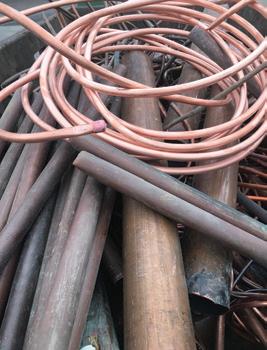
“We source non-ferrous metals from manufacturers, known as production offcuts, and from generators of electricity, telecommunication service providers, as well as others, who generate obsolete metal,” the company says.
“Our focus on optimisation and continuous improvement, with internal investments in our operations, functions and people is setting us on a solid path for many years to come.”












Canberra and Australia’s largest Scrap Metal Recycler. Operating in ACT for over 15 years.
Sims Metal has ACT’s first and only END OF LIVE VEHICLE STATION that removes all fuels, oils, coolants which are captured in tanks and environmentally disposed of.
•
Free Electronic Waste drop off.
•
We supply bins to industrial and commercial clients and farm clean ups for steel, iron and all non ferrous metals.





Wunderbar taste of authentic Bavarian WENDY JOHNSON
By Helen MUSA

THEATRE director Simon Phillips has been reflecting on the question of whether movies can effectively be turned into plays.
He should know the answer. Phillips is justly famous for his productions of musicals such as “Priscilla Queen of the Desert”, the Musical, “Love Never Dies”, “Dream Lover”, “Ladies in Black” and now, “Muriel’s Wedding the Musical”.
Now he’s directing the production of “Shakespeare in Love” for Melbourne Theatre Company, which shortly after opening, will come to Canberra. It’s not a musical but music by Paddy Cunneen will be performed on stage by the ensemble.
The play, adapted by Lee Hall from the screenplay by Tom Stoppard and Marc Norman, is based on the 1998 film starring Joseph Fiennes and Gwyneth Paltrow that won seven Oscars in 1998.
Here’s the set-up: the youthful Will Shakespeare has a bad case of writer’s block and desperately needs a muse. His new comedy “Romeo and Ethel, the Pirate’s Daughter” has no heart, but then he meets Viola and a real-life Romeo and Juliet story starts to take hold. But Viola has a secret.
When we catch up with Phillips by phone to Melbourne, he’s just been on a flying trip to Sydney to put the finishing touches to “Muriel,” so the relationship between stage plays and films is very much on his mind.
It’s quite common, he thinks, for musicals to come from straight plays and for films to become musicals, but the one he believes least common is to go from a film to a straight play.
“Musicals based on movies are common enough because the structure of a movie and a musical can be somewhat compatible – the way you tell a story in a musical is in a quickfire set of scenes, just as in a movie.”
As well, he says, the people who produce musicals are always after recognised source material – “I suppose it’s reassuring for the production, everyone knows the film, so it must be okay.”
Another thing is the question of location.
“It’s common in films to have many different sets, totally unlike Ibsen where we are sitting in a room… mind you, Shakespeare changes locations five times or more in a play,” he says.
Straight plays, he thinks, normally demand depth of character, but turning a movie into a play doesn’t lend itself to that.
The Melbourne Theatre Company has billed “Shakespeare in Love” as “a rollicking night of romance and backstage fun”.
“Maybe so, but there’s a kernel of affection and romance at the centre,” he says.
“The two leads fall in love and that story plays out.
“It’s going to be very interesting in the stage adaptation, which makes more use of the actual play ‘Romeo and Juliet’ than the film did.
“There is beautiful poetry which gives some level of real gravitas and romance.”
All the same, it’s true that his “wonderful cast” are having a rollicking time.
“I love it because it’s a light-hearted tribute to the power of the theatre to be transformative,” Phillips says.
With “Shakespeare in Love”, there’s “something for the Bard lovers there for the taking if that’s your bent, but our play is not dependent on a knowledge of Shakespeare.”
Friends have asked Phillips: “Why come and see it on stage when I can just go and see the movie?”
“It’s a valid question, but when something is so theatrical it becomes a celebration of the theatre itself,” he says.
“It’s certainly a feat to put it on in the theatre, but the element of being live is an extra delight. I think of it as a beloved title being given a new outing.
“It’s a ‘coup de theatre’ – beautiful to look at, but still with the sense of being acted out on a bare Elizabethan stage.”
“Shakespeare in Love”, Canberra Theatre, August 22-August 31. Book at canberratheatrecentre.com.au






GHENOA GELA: LITTLE SISTER, DAUGHTER, GRANDDAUGHTER, COMIC, TEACHER, FIGHTER, GOLD MEDALLIST, AIR GUITARIST, CHARMER, TV STAR, TORRES STRAIT MAINLANDER, WALKING POLITICAL STATEMENT –HAS MADE A SHOW.
This is your invitation into the complex political, social, colonial and cultural expectations she navigates every day. MyUrrwai, tells a sensitive, deeply personal story and continues Ghenoa’s honing of a unique choreographic voice and her own cultural politics and identity.
"Her ability to make you share her joys, sorrows and anger is strong… you feel what it is like in her shoes"
JOYCE MORGAN: SMH

By Helen Musa
WHEN a young travelling salesman wakes up to find himself turning into an insect, you can be sure all is not well with society.
It was so in 1915 when, in the dying days of the Austro-Hungarian empire, Franz Kafka wrote his famous novella, “The Metamorphosis”.
It was so in 1969 when English theatre enfant terrible Steven Berkoff adapted the novella for the stage.
And it certainly is so in 2019 as climate change assails our way of life and threatens that insects may be the only living creatures remaining after we destroy the earth.
For entomologically-inclined readers, the correct translation from the original German of “ungeheures ungeziefer”, is not “insect” but “a monstrous vermin” or “a verminous bug”.
With all this in mind, director Adam Broinowski and a team of actors gifted in physical theatre have embarked upon a production of the Berkoff version at The Street Theatre.
Berkoff, trained at Jacques Lecoq’s school of physical theatre in Paris, initially played Gregor Samsa, the salesman, and prefaced the published script with the words: “How I almost got the hang of Kafka”.
Broinowski believes that Berkoff successfully retained Kafka’s verbal density even as he showed Gregor climbing, crawling, hanging from the walls, feeling his skin harden, working out how and what to eat and, above all, relating to his family.



“The way Berkoff saw it, the characters were living within a system that makes people into insects, their skins were shrinking and, like their souls, Gregor’s transition into an insect is a kind of rebellion against the system.”
Broinowski, born into a Canberra diplomatic family, partly educated in Japan and armed with a PhD from the University of Melbourne, is now a post-doctoral research fellow in the School of Culture, History and Language at the ANU, but it’s the physical side of theatre that fascinates him.
for The Street last year and now relishes the opportunity of developing “Metamorphosis” with talent such as Dylan Van Den Berg as Gregor, Christopher Samuel Carroll as his father, Ruth Pieloor as his mother and, newcomer to The Street (but by no means to the wider theatre in Canberra), Stefanie Lekkas in the key role of the sister, Grete, who needs to get rid of her increasingly insect-like brother if she is to survive in society.
By happy coincidence Carroll, who like Berkoff, trained at the Lecoq school, is on hand with Broinowski to assure us that the
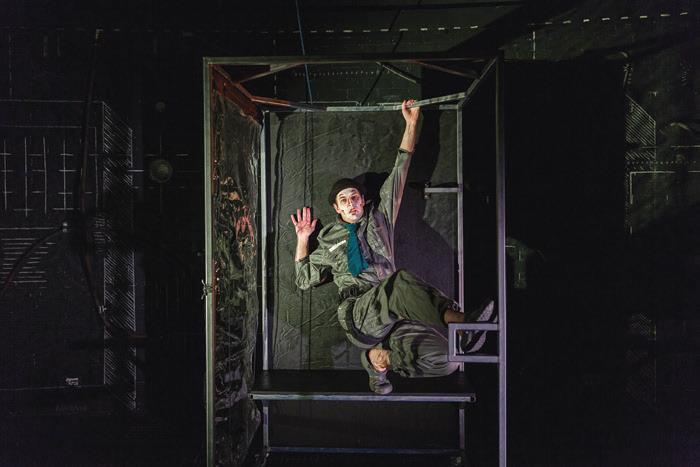
production will not be above the audiences’ heads and that the play is “playful and very,
“The text is very irreverent, it reminds me of vaudeville,” he says.
“We are tapping into the physicality of the story,” says Carroll, explaining that while the play is notionally set in a large house, designer Imogen Keen has created a cage within the stage to hold Gregor, complete with harnesses and ropes from which he can suspend.
“The ropes are a wonderful device to suggest being caught or trapped,” says Carroll.
As director Broinowski has invested in the story intellectually and has been reading up on his Kafka and a lot of literary theory, but
he is quick to emphasise that there is a real plot, with a character almost as complex in Lekkas’ role as the sister.
Briefly, the play is set in a materialistic world still as resonant as the days Kafka wrote the novella. There’s something murky in the background of the family meaning they need to pay off a huge debt. Gregor’s sister, Grete Samsa, of marriageable age, becomes collateral in the financial negotiations of the family. And having an insect in the family doesn’t help – we won’t tell you what happens, but it doesn’t look good for Gregor.
“Metamorphosis”, The Street Theatre, August 16-31. Book at thestreet.org.au or 6247 1223.


By Helen Musa
STEPHEN Fisher-King, who grew up in Canberra, was a soloist with the Woden Valley Youth Choir and studied at the Canberra School of Music, has amassed an incredible nine Mo Awards and eight Annual Australian Club Entertainment Awards — the latest for “70s Unplugged,” named Best Production Show at the 2019 ACE Awards. He’ll perform the show at The Q on Wednesday, August 14, 10.30am and 7.30pm. Book at theq.net.au or 6285 6290.
- Please donate any unwanted records, CDs, DVDs and cassette tapes, and all of the money raised goes directly to the animals at the Weston RSPCA
- Drop your donations in any time
- Songland is open 7 days!




Cooleman Court, Weston Creek | 6293 4677 | songland.com.au



NIGEL Palfreman, artist-in-residence at the Playing Field Studio and a drama and media teacher at St Edmund’s College, is staging eight of his own short plays and a song co-written with local muso Frank Zappia, under the title “Hang on a Second”. Expect to see everything from a film noir mystery to the AGM of the Four Horsemen of the Apocalypse. At Smith’s Alternative, 7pm, August 16. Book at smithsalternative.com
THE Canberra Symphony Orchestra’s inaugural Kingsland resident artist, violist Alina Zamfir, will perform with pianist Ella Luhtasaari in “British Impressionists’ Journey to America”, a program of works by Bloch, Bridge and Clarke. At Wesley Music Centre, 12.40pm-1.20pm, Wednesday, August 14. No bookings, tickets at the door.
UNDER the baton of Craig Johnson, Brindabella Orchestra will perform pieces by Humperdinck, Mozart, Holst, Delius and others for its winter concert. At Weston Community Hub Neighbourhood Hall, corner of Hilder and Gritten Streets, Weston, 2pm, Sunday, August 18. Entry by donation.
KYLE Ramsay-Daniel will join Limestone Consort to perform Lars-Erik Larsson’s “Concertino for Double Bass & String Orchestra”. The ensemble will also perform works by Vivaldi, Reger and Graupner. No bookings, exit by donation ($20 suggested). At St Paul’s Anglican Church, Manuka, 2pm, Sunday, August 11.
MARKO Sever, who has just completed postgraduate studies at the Royal Academy of Music, winning prizes in organ playing and academica, will perform an organ recital at Wesley Uniting Church at 3pm, August 11. Book at trybooking.com




By Wendy JOHNSON

all $32) and crispy pork knuckle.
THE chandelier above the bar holds more than 500, one-litre, glass steins. The beer flows. The meat dishes abound.
The Bavarian Woden, like the other 29 locations in Sydney, Melbourne, Adelaide and Brisbane, puts its heart and soul into making you believe you’re in the heart of the Alps at an Oktoberfest.
Twenty beers are on tap, many imported and served in authentic beer steins, including Lowenbrau, Stiegl and Hofbrau. The Bavarian also offers local craft beers and limited wines.
The Bavarian dishes up a good helping of German hospitality. The menu is designed around modern Bavarian classics – all matching perfectly with beer. It’s heaven for meat lovers, including all-you-can-eat meat platters on Wednesdays ($35 per person).
Rev up your tastebuds with a house-made pretzel with butter ($5) or a giant one if you prefer, served also with pickled cucumber and sweet mustard ($11.50). Then move on to signature dishes such as schnitzels (nine types,
The pork knuckle is where my dining partner started (small serve $28; large $36). The meat was melt-in-the-mouth. The mash was super creamy, sauerkraut authentic and apple compote not too sweet and with a lovely hint of cinnamon.
I was in for sausages (six types are on the menu, all $25.50), attracted to the char-grilled Nurnberger. The five mini pure pork sizzler sausages were moist and seasoned perfectly with a secret line up of herbs, spices and marjoram. There’s a choice of sides.
The Bavarian is a social place with heaps happening and loads of specials (it’s hard to keep it all straight). Think $10 lunch specials, free snacks from 4pm to 6pm (conditions apply) and a happy hour daily with $5 beers, house wine, basic spirits and $1 chicken wings. Kids under 12 eat free Sundays from the kinder menu. If you dare (or are just plain crazy), you can try to demolish the Schnitzelmeister ($80; bookings essential). The challenge is to single-handedly eat a six-stack of chicken schnitzel with ham, cheese and four sides in one hour and you get your meal “on the haus”. Lucky that Woden hospital is nearby!



View Greg Devenny-Mackay’s oil paintings of the famous musicians, and other works by the weekly art class







“Who You Think I Am” (M) NO, I haven’t left a principal verb out of the title for this dramatic French film. Two subordinate verbs should be enough to generate curiosity. And a little pondering will reveal that the title is not a question – it’s an answer. So, what’s the question?
Director Safy Nebbou’s filming of his own adaptation of Camille Laurens’ novel portrays a woman dealing with emotional damage following a divorce brought on by her husband’s infidelity with a younger woman whom the couple had reared after her parents died in a car crash.
Got that back story? It’s less complex than it looks. Claire lectures in the literature department of a French university. At 50, with two adult sons, her choice of lover to fill the gap is not working well. Ludo is a whambam-thank-you-ma’am sort of guy who’s also playing away with a younger woman.
Now, there’s a possibility for Claire to ease her erotic cravings and wreak a little vengeance.
The story has reached a significant narrative point. Claire creates a fake Facebook profile, Clara, whom she dangles in front of Ludo who doesn’t take the bait. But his flat-mate Alex sees the post and gets a bit smitten.
“Who You Think I Am” has an erotic energy that doesn’t need display of erogenous zones to drive its emotional core. Its power derives more from words and ideas than from actions. And that deceit gives it a sublime flavour.
Playing Claire/Clara, Juliette Binoche, at age 55, projects a breathtaking loveliness in
a performance full of awareness.
Categorising “Who You Think I Am” poses enough options to satisfy any vigorous curiosity. It’s romantic. It’s a message about truthfulness. It’s an intelligent observation of women’s sexuality. It answers the question, “what is there after orgasm passes?” And bestriding it like a female colossus is Binoche, a performance to be savoured and remembered.
At Palace Electric
“Fast & Furious Presents: Hobbs & Shaw” (M)
I ENJOY a good laugh and the ninth contemporary action offering in the F&F franchise came very close to making me laugh, if not at least to smile.
Writer Chris Morgan has a commendable talent for treating the ridiculous seriously. Stunt-man-turned-director David Leitch put that talent to good use. Dwayne Johnson as American diplomatic security service agent Luke Hobbs and his English anti-buddy Jason Statham as former British military man Deckard Shaw head the cast. English actress Vanessa Kirby plays Shaw’s brilliant fearless rogue MI6 agent daughter Hattie. And splendid London-born actor Idris Elba plays the cyber-genetically enhanced anarchist arch-villain Brixton.
The drama centres on posses-
sion of a vial containing the only known supply of a rapid-acting virus that spreads faster than wildfire and has the debilitating effect of liquefying the internal organs of any human whom it attacks. Brixton’s task is to spread it about. Hattie has made contact with it and is hoping to thwart Brixton and destroy it while it incubates.
Those elements underpin 140 minutes of vigorous action, widespread destruction and stunts crazy enough to satisfy any level of escapist yearnings.
The wordplay may be a tad juvenile but it’s smart and incongruous enough to leaven the violent mixture. The climax takes place among Hobbs’ family in Samoa (played by Hawaii’s 8th-largest island). For sheer imaginative absurdity and mindless, expensive-looking fun (mostly created by several huge computer graphics teams) the film is hard to beat.
At all cinemas
“The Public” (M)
THAT enigmatic title delivers a low-budget, high-impact film that tackles some of the social issues currently challenging America. Avoiding national politics and people at the top, it looks at a city’s grassroot disadvantages, the poor, the homeless, men suffering


mental illness. And at local government as an election approaches, at the limited focus of local news media, at local power issues. So why four stars for a movie about those matters?
It’s written and directed by Emilio Estevez, who also plays Stuart, a librarian at a public library in Cincinnati. It’s winter. The library is a place where indigent men come for shelter at least during library opening hours.
On the day in question, dramatic values begin to develop, the plight of characters gains exposure, the division between compassion and authority widens, and those in positions of authority are thinking more about how a sit-in at closing time and the possible public outcry will affect their electoral prospects.
The production shortcomings in “The Public” are not powerful enough to displace the human values that form its core. The good guys don’t win in the last reel. Nor do they lose. Tomorrow may bring a mote of change.
And that’s why I rate the film as meriting four stars.
At Palace Electric and Capitol 6


BY
Set on a ship, bound for Australia, Belfast Girls tells the story of five of Earl Grey’s Irish ‘orphans’. In the 1850s thousands of Irish girls were given the chance to travel to Australia to escape the famine, and to find a better life under Lord Earl Grey’s ‘orphan scheme’. This is their story.
“The timing of Belfast Girls and its story of 1850 Irish women emigrating to Australia is perfect.” BROKEN LEG REVIEWS
“...a thought-provoking work of historic fiction and tremendous imagination”
THEATRE WORLD INTERNET MAGAZINE


THIS is a momentous year for the Horticultural Society of Canberra, the city’s first gardening club now celebrating its 90th birthday.
The formation of the HSOC was not without drama. In 1925 an attempt to form a garden club called the Canberra Horticultural Society failed, mainly due to financial problems.


Further attempts were made in 1927 and 1928, equally without success.
Canberra in those days was a raw place and, indeed, the term bush capital was appropriate, although that name was not used until many years later.
In those days, trees and shrubs were supplied free by the government nursery.
On March 27, 1929, a meeting was called again to try to start a garden club. It was more successful this time and with assistance from the then Parks and Gardens Department, a provisional committee was formed with a change of name to the Horticultural Society of Canberra.
The first president was Mr AE Bruce, the then superintendent of Parks and Gardens. His great love was roses and he was responsible for planting the rose gardens on the median strip of Commonwealth Avenue in front of the Hotel Canberra and Albert Hall. I have a copy of the planting plan of the roses. This plan also included the planting of the Cedrus deodara cedars that now adorn the median
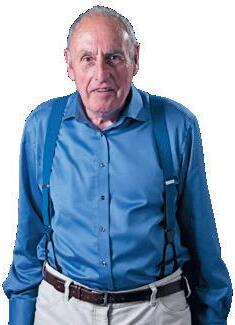


from the proposed tram to Woden. Mr Bruce remained president until 1932, establishing the three-year term of office as listed in the new constitution. The society flourished through the Depression and World War II. The first female president was Joyce Kavanagh, 1972-1975.
One of the society’s great achievements was publishing “The Canberra Gardener”, the first edition of which appeared in 1948. The latest, 10th edition was published in 2010 and is readily available through bookshops and many newsagents. It remains an invaluable guide and reference book for gardeners in the ACT. Even more importantly for those moving to Canberra from other climes such as Queensland with our range of seasons.
To celebrate these events, the Canberra Museum and Gallery in Civic will hold a display celebrating the history of “The Canberra Gardener” from August 30 to


November 1. This display will include other historic gardening items.
The society meets at 7.30pm on the third Monday of every month, except for a Christmas break, at the Wesley Church Centre on National Circuit, Forrest; all are welcome.
An interesting speaker is always engaged at these meetings.
In addition, the society stages spectacular flower shows. A special emphasis is placed on the participation of children.
The society also has a demonstra -
tion garden on the corner of Battye and Purdie Streets, Bruce. This is where plants are trialled, often new varieties supplied by commercial growers from interstate to assess their suitability for Canberra. The garden is open to the public at various times. Members are encouraged to help develop the garden through regular working bees. Some members who don’t have a garden can still enjoy gardening.
The first show this spring will be the Spring Bulb and Camellia Show on the weekend of September 14-15.
Full information on other events at hsoc.org.au

Joanne Madeline Moore

ARIES (Mar 21 – Apr 20)
Are you procrastinating about which project to pursue? A bored and unengaged Ram is a recipe for trouble. With the Full Moon activating your aspirations zone, focus intently on your goals for the future. And with Neptune moving through your dreaming zone, it’s definitely time to follow your bliss. So your motto for the moment is from original celebrity chef (and birthday great) Julia Child: “Find something you’re passionate about and keep tremendously interested in it.”
TAURUS (Apr 21 – May 21)
The focus is on home sweet home as the Sun, Mercury, Venus and Mars all visit your domestic zone. Mid-week is the best time to patch up problems with a family member or tidy up and beautify your living or office space. Then Thursday’s Full Moon pushes you to display your true capabilities, as you discover your individual groove and assert your independence at work. Avoid being stubborn though. If you experiment and explore, then you’ll really shine.
GEMINI (May 22 – June 21)
Mid-week is a wonderful time to resolve a misunderstanding with a friend or family member. If you walk a mile in their shoes, then you’ll have more patience and empathy for their current situation. Then the Full Moon encourages you to explore and experiment as you study, travel or venture into brave new personal territory. It’s also important to capitalise on your current international contacts. With careful nurturing, who knows where they will lead in the future?
CANCER (June 22 – July 23)
If you’ve been burying your head in the sand, then a financial problem could come to a head and demand to be addressed. The planets encourage you to be direct about dealing with challenges. Definitely no side-stepping allowed! Wednesday is the best day of the week to express your creativity or organise a romantic rendezvous. Do your best to avoid being a snappy Crab on Thursday, when the Full Moon magnifies your mood swings and heightens your emotional sensitivity.
LEO (July 24 – Aug 23)
The Sun, Mercury, Venus and Mars are all travelling through your sign. So it’s time to tap into the very essence of what makes you the fiery, creative, demanding Diva that you are. Don’t let relationship rumbles, work worries or financial fiascos diminish your delightfully flamboyant demeanour. Be inspired by Leo model and actress Cara Delevingne (who was born on August 12, 1992): “Be brave. Believe in yourself. Make yourself proud.” Spoken like a true Lion!
VIRGO (Aug 24 – Sept 23)
Prepare for a colourful and chaotic week! Mercury (your patron planet) is powering through Leo until August 29. So creative ideas and persuasive arguments will keep your mercurial mind well stimulated. Friday looks rather disruptive though, when Uranus takes your usual routine and turns it upside down. With a fun and flexible attitude, you’ll sail through any temporary turbulence and order will be restored by the time Mars moves into your sign on the weekend.
LIBRA (Sept 24 – Oct 23)
Wednesday looks wonderful, when the Sun and Venus encourage you to make a wish list of your goals for the future. The Aquarian Full Moon also stimulates your peer group, hopes and wishes zones. So make sure you surround yourself with family, friends and colleagues who encourage your talents and support your dreams. Be inspired by singer-songwriter (and birthday great) Madonna: “I stand for freedom of expression, doing what you believe in, and going after your dreams.”
SCORPIO (Oct 24 – Nov 22)
You have ambitious professional plans and goals for the future but sometimes you hold yourself back for fear of looking foolish. This week’s stars encourage you to be confident and proactive as you reach for the stars! You’re in the mood to fix something around the house or repair a problematic relationship with a relative. A family member could also turn to you for some insightful words of wisdom. If you listen to your intuition, then you’ll know just what to say.
SAGITTARIUS (Nov 23 – Dec 21)
You’re in the mood for foreign travel as you dream of exotic destinations and romantic escapades. Unhappily single? Start planning your itinerary as soon as possible because you could meet your soul mate on your next holiday. Attached Sagittarius – you could play gregarious host to family or friends who come to stay from far away. If you have a problem, then turn to a relative for some advice. They have an alternative perspective that will open up your options considerably.
CAPRICORN (Dec 22 – Jan 20)
It’s all about money honey, as the Full Moon stirs up trouble and you need to find an innovative solution to a cash flow problem. If you’re a clever Cap, then you’ll pal up with a financially astute person who helps you find ways to develop a second stream of income. The more proactive, creative and collaborative you are, the more positive your financial future will be! It’s also a good time to get closer to family and friends who you know you can trust and rely on.
AQUARIUS (Jan 21 – Feb 19)
Thursday’s Full Moon (in your sign) amps up your Aquarian need for freedom, independence and avant-garde adventures. But don’t feel you have to tackle a current project or problem on your own. The Sun, Mercury, Venus and Mars are visiting your relationship zone, so there are plenty of people around who are happy to help. All you have to do is sum up the courage to ask. On Friday too much haste could lead to an argument or accident, so pace yourself.
PISCES (Feb 20 – Mar 20)
With the Sun, Mercury, Venus and Mars visiting your job zone, dynamic and decisive action is required at work. Don’t waste your numerous talents with constant daydreaming that leads nowhere! If you procrastinate and dither around, then lucrative opportunities and important connections will promptly pass you by. On Thursday you’ll feel compelled to connect with your inner world or help someone in need, as the Full Moon fires up your spiritual and humanitarian zone.
Copyright Joanne Madeline Moore 2019
Across
1 Name the bell in the clock tower of the Houses of Parliament in London. (3,3)
7 Name the German Nazi official who supervised the extermination of the Jews in WWII, Adolf ... (8)
8 To be in existence, is to be what? (6)
9 Which radioactive chemical element has the symbol Ac, and the atomic no 89? (8)
10 Which object is superstitiously worn as a protecting charm? (6)
11 What do we call someone who pretends to be someone else in order to deceive others? (8)
14 Name another term for some fishing boats. (8)
18 What is a group of four know as? (6)
19 What do we call one who gives work to people, especially for wages? (8)
21 Who was the first Australian-born Governor- General, Sir Isaac ...? (6)
22 To be a minor, is to be what? (5,3)
23 Which ferruginous earth is used as a brown pigment? (6)
1 Which south Victorian gold mining city was the site of the Eureka Stockade in 1854? (8)
2 Which part of the harness of a horse is used to restrain and guide the animal? (6)
3 Name a term expressing denial. (8)
4 What might we call a native of Edinburgh? (4)
5 What is a reparation for a loss, damage, or injury of any kind? (6)
6 To guarantee against risk of loss or harm, is to do what? (6)
12 What do we call pies, tarts, etc? (8)
13 What was the former name of Zimbabwe? (8)
15 To send a prisoner back into custody, to await further proceedings, is to do what? (6)
16 What does the “W” stand for in George W Bush? (6)
17 To bombard heavily, is to do what? (6)
20 What are affirmative votes called? (4)
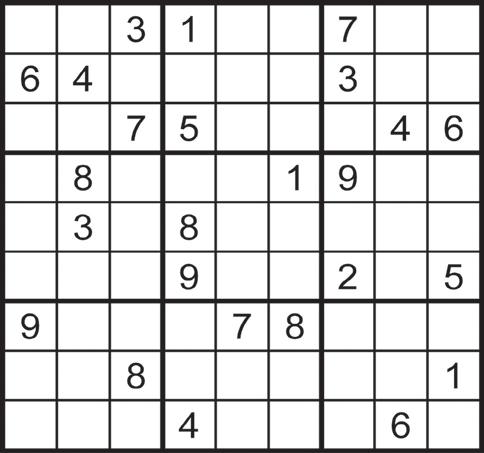
















A rare opportunity to lease a fully fitted out office suite of 223sqm* with great natural light and outlook in a prominent corner location with Building Signage Rights available. Positioned on the corner of London Circuit and Farrell Place in the vibrant City West precinct, this boutique office building is conveniently located to the Law Courts and the ANU and offers wonderful exposure to busy London Circuit. The following are the features of the tenancy: