It’s hard work being a voter!
MICHAEL MOORE
Can old dog whistlers be taught new tricks?
MIKE WELSH
So, what the heck is sake?
RICHARD CALVER
Timeless lure of lemon-scenteds
CEDRIC BRYANT



It’s hard work being a voter!
MICHAEL MOORE
Can old dog whistlers be taught new tricks?
MIKE WELSH
So, what the heck is sake?
RICHARD CALVER
Timeless lure of lemon-scenteds
CEDRIC BRYANT
Why Marist College headmaster MATTHEW HUTCHISON believes



By Danielle NOHRA

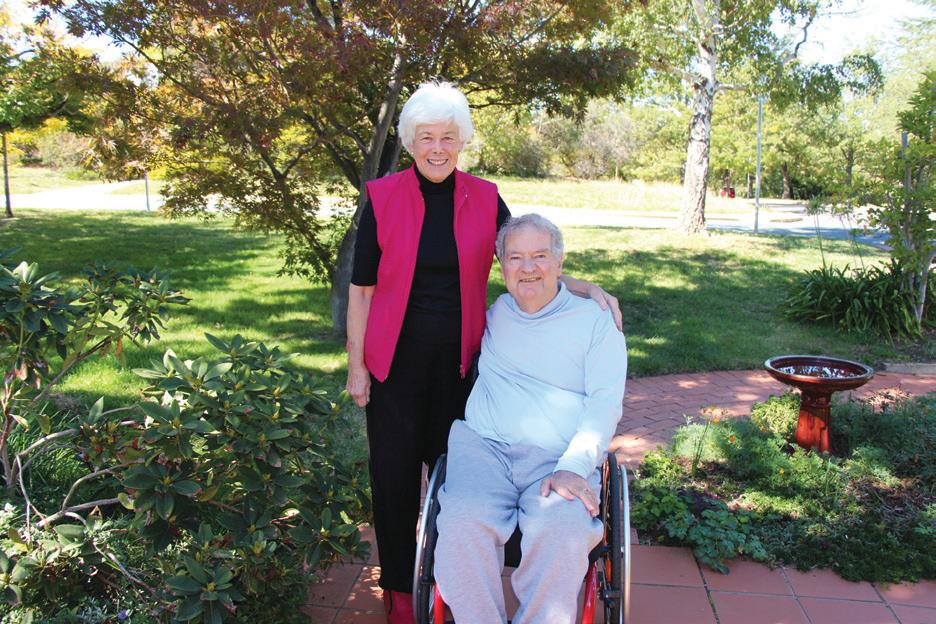
FIVE years ago, Campbell couple Helen and Eugene Holzapfel were on a dream holiday when their lives changed forever.
On the last night of a trip around Europe, the couple was staying with friends in England. In the early morning, Eugene rose to go to the bathroom and, in the dark on an unfamiliar landing, took a wrong turn and tumbled down the stairs.
At the hospital they were told it was unlikely he would ever walk again.
“Our lives turned upside down,” says Helen, 76.
Eugene, now 74, spent six weeks on his back in hospital with not much else to do except look up at the ceiling.
“After, they had to get him up and start to rehabilitate him and he was as weak as a kitten,” Helen says.
“He couldn’t even sign his own name.”
It took about three months
Arts & Entertainment 25-27
Canberra Matters 4
Crossword 28
Dining & Wine 27
Gardening 29-31
Horoscopes 28
Letters 10
News 3-12 Politics 8
24
for Eugene to build up the strength to travel home to face four months at the Prince of Wales Hospital in Sydney.
During this time Helen had become a bit of a “gypsy” and was travelling back and forth from Sydney to Canberra, while Eugene was finding it hard coming to terms with needing help from people as opposed to helping people.
Then their home was robbed.
“I felt really bad because I couldn’t help,” says Eugene.
“None of that was easy and it was pretty hard emotion ally and physically. I spent eight months in hospital and wouldn’t have had eight days in hospital previously. It was quite a shock.”
Eventually Eugene was moved to the rehabilitation unit in Canberra Hospital to strengthen his upper body be fore finally getting home.
“In the meantime, I’m going a bit like a cut snake trying to get the house ready for Eugene,” Helen says.
“I’d had enough of Eugene being in hospital, so I found a wonderful handyman who did everything that was needed to get him home.”
Once he was home, it quickly
became clear to Helen that Canberra lacked a lot of services for people with spinal injury.
After befriending three couples who were going back and
Since 1993: Volume 25, Number 15

28
9b/189 Flemington Road, Mitchell. Kayley Bencke makes short work of long hair. Story Page 6.

Managing Director: James Anderson, 0404 077605, james@citynews.com.au
Director: Kate Meikle, kate@citynews.com.au
Senior advertising account executive: David Cusack, 0435 380656
Advertising account executives: Daniel Clayton, 0451 232129; Matt George, 0413 667699; Damien Klemke, 0439 139001
Editor: Ian Meikle, editor@citynews.com.au
Assistant editor: Danielle Nohra, danielle@citynews.com.au
Journalist: Kathryn Vukovljak, kathryn@citynews.com.au
Arts editor: Helen Musa, 0400 043764, helen@citynews.com.au
Production manager / graphic design: Janet Ewen
Graphic designer: Karl Speller
Proof reader: Glenda Anderson
Accounts manager: Bethany Freeman-Chandler accounts@citynews.com.au

time, so we spoke to both the Canberra Labor Party and the Canberra Liberals,” she says.
“They both said they’d help, then Labor got in and said
It was a slow process until Helen took charge and found a space in Flynn, which was approved by Spinal Cord Injuries
Australia and has now been up and running since late 2017.
It’s been about five years since Eugene’s injury and the couple has learnt a lot along the way.
“For a while it was a lot of trial and error and learning that a lot of stuff was not pos -
“If you go to a restaurant, you have to do quite a lot of work to
“A lot of places say they’re ‘wheelchair accessible’ but they’re not. There is a code, but it doesn’t seem to be adhered to.”
Eugene says spinal-cord injury is a life-changing thing but it doesn’t happen to a lot of people.
“I wanted to call it ‘The Cripple and the Carer’ but Helen wasn’t keen,” Eugene laughs. In it, each chapter is written in the point of view from both Helen and Eugene.
“Originally, I wrote my part as a record for my grandchildren but then when I looked at it I thought there could be other people going through something similar who could get some value from it,” Eugene says.
“As part of our book, we did a little survey asking people with spinal-cord injury what’s important to them.
“Five people put footpaths downs. Just moving around the streets is a big problem.”
Helen says the book isn’t just for people with spinal injury.
“I think life can have an awful lot of ups and downs,” she says.
“It’s about making life work in a situation that I never dreamt I would have been served up.
forth to a spinal gym in Sydney, the group collectively had a think about how they could get one running in Canberra.
“It was just around election
“You don’t have much choice. You have to get on with life and what you’ve got. I had no time to say ‘poor misery me’.”
They decided to put their journey into a book titled “Home, Hope and Helen”.
“What’s important is we’re still together. We still laugh like we used to and we love each other more.”
The book is stocked at Paperchain and Harry Hartog in Phillip, and $2 of every sale goes to Spinal Cord Injuries Australia.
If you want to be in the 10% who achieve wealth, don’t miss our free Pathway to Wealth information sessions.
The presentation will take you through proven strategies for building your wealth. This is not a get rich quick seminar. However, if you want simple, effective and practical strategies for achieving financial success, then this is a must attend.
You will receive valuable information on property, shares, superannuation, negative gearing, debt management and more. You will learn how to put together a plan that is right for you and your individual circumstances and goals.
• 10 reasons most people fail to achieve financial success and what you can do about it
• The seven steps to achieving wealth
• The four keys to a successful wealth management plan
• The simple formula for beating procrastination
• Why property, shares and superannuation are all important
• How saving tax can help fund your wealth creation
• Whether you should increase your mortgage repayments or start investing
• How you can make efficient use of your cash flow
Seats strictly limited so RSVP essential.
CANBERRA voters are about to elect Federal politicians to represent the people of the ACT. But do they?

Ever tried to get a response from your Federal politicians to an important local issue such as what is happening to West Basin or could you do something to stop those awful bland box towers dominating the Northbourne Avenue entrance to Canberra?
Somewhere between the bigger-picture Federal outlook and the ACT government’s narrow view of the world, voters are missing out on having any politicians take their issues seriously.
assist with any of the urban issues that continually frustrate and annoy residents.

As the voting day gets closer the question is – will our three House of Representatives politicians and the two senators represent the Canberra voters on local matters?
Based on past performances, it is more likely that the five will concentrate on their party’s national issues and pay little attention to ACT matters. The Feds will look after their versions of national things (the big picture) and avoid local stuff as that’s the job of the ACT politicians. That sounds logical but maybe it is not that simple.

Some of that local stuff has a lot to do with the big picture and our ACT politicians continue to place your day-to-day issues way down any list of their priorities. Somewhere between this bigger-picture Federal outlook and the ACT government’s narrow view of the world, ACT voters are missing out on having any politicians take their issues seriously.
Canberra does not have a local government with councilors who remain accessible to their communi-

Should voters accept that our five Federal politicians think it is their duty to do nothing about the huge range of complex urban matters that affect Canberrans?
ties. We have an ACT government with ministers who spend too much time being important and collectively avoiding getting their hands dirty with down-toearth issues that affect residents’ daily lives – such as questionable planning and undesirable developments.
This brings me to an election pamphlet that landed in my letterbox.
This Federal candidate set out three
points – climate, schools/hospitals and social justice.
These are top priority issues and ones that any progressive candidate would list. But she neglected to differentiate herself from any other candidate. She offered nothing special about herself and avoided identifying with local issues facing residents of Canberra or to state how she would
Should voters accept that our five Federal politicians think it is their duty to do nothing about the huge range of complex urban matters that affect Canberrans? This is wrong. These Federal politicians should recognise their responsibilities.
Having been elected from electorates in Canberra, they should do a lot more that is tangible to honour their first contract – being the one they have with this electorate.
Here are a few issues that need to be addressed by those now hoping to be elected from Canberra in this Federal election:
What are you going to do about the horrible things that the ACT government is about to do to West Basin?
What are your views on the dangers to the heritage, the aesthetic and ecological values?
What steps will you take to bring creativity, intelligence and good design back into the planning and development that is about to happen along Northbourne Avenue?
What are you going to do about the slow reduction to Canberra’s urban

Caitlyn has always been an outstanding student and often felt unchallenged in the classroom. In year 3 her dad Rick signed her up for a two-week free trial at Kumon and then decided to join the program. It didn’t take long before Caitlyn was studying topics above her school grade level.
forest and the subsequent effect this is having on the city’s biodiversity as well as reducing the opportunities to deal with climate change (increasing heat island effects)?
It is no longer good enough for Federal candidates to think that they can harass voters to get elected and then to walk away and be important as Federal politicians to sit on the hill and simply not care about the damage being done to the city that elects them. It is time to look for Federal candidates who commit to staying in touch with residents and to assisting with residents in their quests for better outcomes on local heritage, ecological, urban and development issues. Link your vote to the future of Canberra’s urban environment.
Paul Costigan is an independent commentator and consultant on the visual arts, photography, urban design, environmental issues and every day matters.


“I’m impressed that the Kumon program doesn’t limit students to an age or grade. Caitlyn has been able to progress at her own pace to topics which really do challenge her,” says Rick.
Caitlyn added, “I really enjoy learning new work at Kumon. It can sometimes be difficult, but I get lots of support from my Kumon Instructor and I just don’t give up. I love it!”
How does Kumon work?


Do you want the ‘Kumon advantage’ for your child?

Kumon Maths and English programs cater for children from preschool to year 12 with a daily approach to developing excellent academic skills. The Kumon Instructor tailors your child’s study program based on their specific needs. Students attend Kumon classes twice each week and receive homework to do every other day.



There are four Kumon Centres located in Canberra. For almost 30 years, they have collectively helped thousands of students improve their maths and English abilities. Call your local Kumon Centre today to see how your child can get the ‘Kumon advantage’.





By Kathryn VUKOVLJAK

ELEVEN-year-old Kayley Bencke has donated 40cm of her hair to be made into wigs for sick children.
Kayley has donated to Hair with Heart, a national hair-donation campaign man aged by children’s charity Variety NSW.
“My mum told me about it,” Kayley says. “She explained all the things Vari ety does for kids and I wanted to help.
“Hair isn’t important to me, but it is to others. That’s why I use my hair to make wigs for kids who have lost their hair because of a medical condition.”

Kayley, who’s in year 6 at Farrer Primary School, also donated 60cm of her hair in 2015 and says she’s glad to be able to do it again.
“I know how happy it makes children with alopecia to get wigs and I love making others happy,” she says.
“I’m surprised it took four years for my hair to grow. It grows really fast and I don’t get it cut.”
Donated hair needs to be at least 35.5cm to make a wig and each one costs families up to $6000, so Kayley is also raising money to help.
She says each wig lasts one to two years, so families can spend tens of thousands of dollars on wigs.
“I would really like to reach my
fundraising goal of $3000, which is half the cost of a wig. I’ve raised $1272.15 so far,” she says.
“Last year I raised more than $2100.
“Getting my hair cut for a wig makes me feel happy that I’m helping other kids.
“If I needed one, I would definitely wear a wig. I think it would make me feel better, especially if I was sick.”
Kayley says she prefers having short hair, because she doesn’t have to brush it for as long.
“My family are all very proud of me. I can’t wait to do it again when my hair gets long enough,” she says. “Maybe in another four years.”
To help Kayley reach her goal, donate at hairwithheart.everydayhero.com/au/ kayley-donates-again



Reader MAX McGregor, of Curtin, is seriously grumpy about how a cast of TV dopes dumped on Canberra.
I’M really grumpy. Did anyone else watch “Travel Guides” on Channel Nine on Tuesday, April 2 at 8.40pm? I watched it right through to the end.
It was billed as “ordinary Australians” look at a week’s holiday in Canberra. That sounded great, but the actual show left me cringing to think that relatives and friends overseas might actually see the show and think that’s what ordinary Aussies are really like!
Well, at least they did show us some of Canberra’s highlights, but mostly through the eyes of a group of four “presenters”, who must surely have been rejects from “Gogglebox”, making incredibly stupid and inappropriate comments, then laughing and wheezing themselves silly at their own humour; also spending much too much time messing about with flowers while trying to see which of them could make the most inane remark (at which point they would then giggle like a bunch of schoolkids – no offence intended, schoolkids).
Not to mention the two young women “commentators” wearing Stetsons, who thought it funny to keep referring to Floriade as “Fluoride”, while they mangled the English language as they tried to sound like a pair of fair-dinkum Aussie yobbos.
And then there were the three young men, whose major contribution was to complain that Canberra had no nightlife and too many roundabouts.
Just who selects these amateurs to visit and evaluate tourist destinations?
And just what was the show’s judges’ verdict on Canberra? Four out of five as a place to visit and spend some time (can’t be too grumpy about that!).






ELECTIONS are an awesome responsibility for everyone involved; they test more than political parties and candidates, they also test voters on the level of trust they can have in political parties, specific candidates and democracy in general.
Locally, Labor and the Greens went to the last election promising to deliver light rail. This was not a particularly popular policy amongst many Canberrans. It was opposed by the Liberal Party and was subject to serious criticism. There are still many sceptics. However, the government stuck to its guns and have delivered.
Even those who disagreed, including the Canberra Liberals, have not tried to undermine the project. Of course, there will always be healthy, sceptical examination of the details by the opposition. That is a key element of their job. However, by and large, the promise was made, tested and delivered.
Will the same be true at the Federal election? The Labor Party has promised a significant injection of funds into Medicare with a specific focus on cancer. There are sceptics –notably Liberal Health Minister, Greg Hunt. He claims the promise will cost an additional $6 billion and put a huge hole in the Budget.
And here’s the rub. The claim fires up that awesome responsibility. Making a judgement about who is telling the truth, the extent of spin and just who
Making a judgement about who is telling the truth, the extent of spin and just who can be trusted becomes a key obligation of every voter.
can be trusted becomes a key obligation of every voter. And that’s just one issue.
How often have we heard a new government come into power and suddenly “discover” there is not as much money available as the previous government had claimed.
“Oh dear, because of the incompetence of the previous government we can no longer deliver on our promises!” No wonder ordinary people lose trust in politicians, political parties and the system itself.
Before the last election, the coalition warned that a Labor government would not be able to protect our borders. “Stop the boats” was the catchcry of people such as Scott Morrison and Peter Dutton. And they did deliver. In the same manner as many ACT residents were concerned about or opposed to the tram – so too, many citizens opposed the hard line taken by the coalition. However, they were not cowered. They delivered on their promise.
Labor has seen the writing on the wall regarding boat people and has adopted a similar approach to the Liberal and National parties. However, the difference (and, coincidentally, the power of independents) was demon-
strated by Labor support for Kerryn Phelps’ legislation to ensure appropriate medical treatment in Australia for offshore refugees.
Indefinite detention is an anathema to our democracy, to human rights and jurisprudence. Detaining someone beyond Australia’s borders is one thing. Not knowing the length of the sentence is simply cruelty. It is barbaric; the action of a bully.
For some voters the question will be: can Labor be trusted to protect our borders. For others, the question will be: can Labor be trusted to adopt rational human rights approaches while still protecting our borders. For others, this simply will not be an issue.
The government has also been asking voters if they can trust Labor with the economy, while singing their own praises and their good fiscal management. They claim to have brought the Budget into black. But can they be trusted? They have benefitted from increasing commodity prices and,
even so, it is simply not true to argue they have brought the Budget into surplus. To be trusted, they ought to have argued predictions in the forward estimates indicate (if commodity prices remain strong) that the Budget will come into surplus in the out years.
The conservatives claim fiscal management as a strength. In the 2013 election they lambasted Labor for building net debt to just under $175 billion. While in government, Liberal net debt has reached $536 billion. Net debt may not be the best indicator of the state of the economy. However, the government’s own political spin came back to bite it.
Who should be trusted on the economy, on border security, on health? Who should be trusted with our democracy? Voters have some tough decisions.
Michael Moore is a former member of the ACT Legislative Assembly and an inde pendent minister for health. He has been a political columnist with “CityNews” since 2006.
MARK Scott will speak about his new book, “On Us”, in which he draws on his years as a journalist, ABC managing director and, now, secretary of the NSW Department of Education, to question the fragmenting of the media and the implications of what he calls “the greatest real-time experiment conducted on humanity” with the arrival of the smartphone.
At the Small Events Theatre, Kambri Cultural Centre, University Avenue, ANU, 6.30pm, Wednesday, May 8. It’s free but register at eventbrite.com.au
HERE’S another excuse to enjoy freshly baked scones at the next pre-loved clothing sale at St Ninian’s. Catering for all ages and sizes, this one’s suited to autumn and winter, and includes footwear, children’s clothing and linen. At St Ninian’s Uniting Church Hall, 9am-1pm, Friday, May 3 and Saturday, May 4.

“TOP End Wedding”, featuring Miranda Tapsell and Gwilym Lee, is the big attraction at the Zonta Club of Canberra’s Breakfast Movie Fundraiser at Palace Electric Cinema, Acton, 3.30pm, Sunday, May 5. Tickets via trybooking.com



By Danielle NOHRA
FORMED in 2017 to lobby the ACT government for a light rail stop in Mitchell, the Mitchell Traders Association has now been promised a stop in 2020 but that doesn’t mean it’s quietening down anytime soon.
“We need to keep making noise,” says its new president Michael War nock.
Michael, the director of omniIT, an IT-support business in Mitchell, took over as president at the end of last year.
He’s replaced Anthony Manning who resigned to focus on his business, Phoenix Gym, but remains a member.
Following up on the work started by Anthony and the association’s peren nial secretary Julian Kusa, Michael says there’s still lots to be done.
“The Mitchell Traders Association doesn’t stop because of the light rail,” he says.

“We have to make the light rail and its connected bus transport work. We have to help the ACT government make it work. That’s why the Mitchell Traders Association will continue to exist.
“We need to keep knocking on the government’s door. We need them to know that we’re still here and we need a lot more done. They forgot the tram stop because we didn’t have a voice. So we just need to keep reminding them every now and then that we’re still here and we need some attention.”
Even though the Mitchell Traders Association has done a lot in its first two years, Michael says the association has a list of ongoing and proposed projects it wants to get on the move this year.
He says some of the ongoing and proposed projects include tree re -




placements, duplicating parking on the Flemington Road slip lane and the amalgamation of parking bays in Winchcombe Court.
He also wants to promote Mitchell to the greater Canberra region.
The association is in talks with the Australian War Memorial Treloar Technology Centre in Mitchell to run a Mitchell “showcase”, which will coincide with one of its open days.
“They get 10,000 to 15,000 visitors on a Saturday and we need to be adding to
But mainly, Michael says he wants to get Mitchell businesses to talk to
“It’s a thriving place,” he says. “I want to see businesses in Mitchell trading with each other.
“I want to see business owners getting to know each other or getting to know their neighbours.”
While they’re at it, he wants them to get to know the association and get
“We need more members,” he says.
“It’s now time to ramp it up a little bit and show everybody what has happened.
“I want to make a difference and there’s really so much to be done here.
“By having more members we’ll have more people to contribute more. It’s got to be a team effort.”
The experts of Mitchell, Pages 13-15
PAUL Costigan’s article on urban architecture (CN, March 28) got me thinking about Canberra as a bush capital, a place where we can be both in the middle of a tranquil forest and in the middle of a vibrant city, the very best of both worlds.
At Paul’s suggestion, I am proud to reclaim the name NIMBY because this city is my backyard. Why are we allowing a few rich and powerful men to build their vision of a skyline for Canberra, to transform our bush capital with towering apartment buildings that overlook our backyards and block our views of the natural environment?
Andrea Wild, Palmerston
I WAS disgusted that Chief Minister Andrew Barr was reported to have spent $100,000 on celebrations for the opening of the tram. Every day around the city, we see the homeless sleeping rough on the streets. We are supposedly an affluent city and the second best in the world to visit and yet we cannot provide crisis accommodation for the homeless and disadvantaged; but our government was willing to spend this amount plus more on a street party. I am even more surprised the Greens would go along with this blatant irresponsible spending of the public purse.
Cedric Bryant, Watson


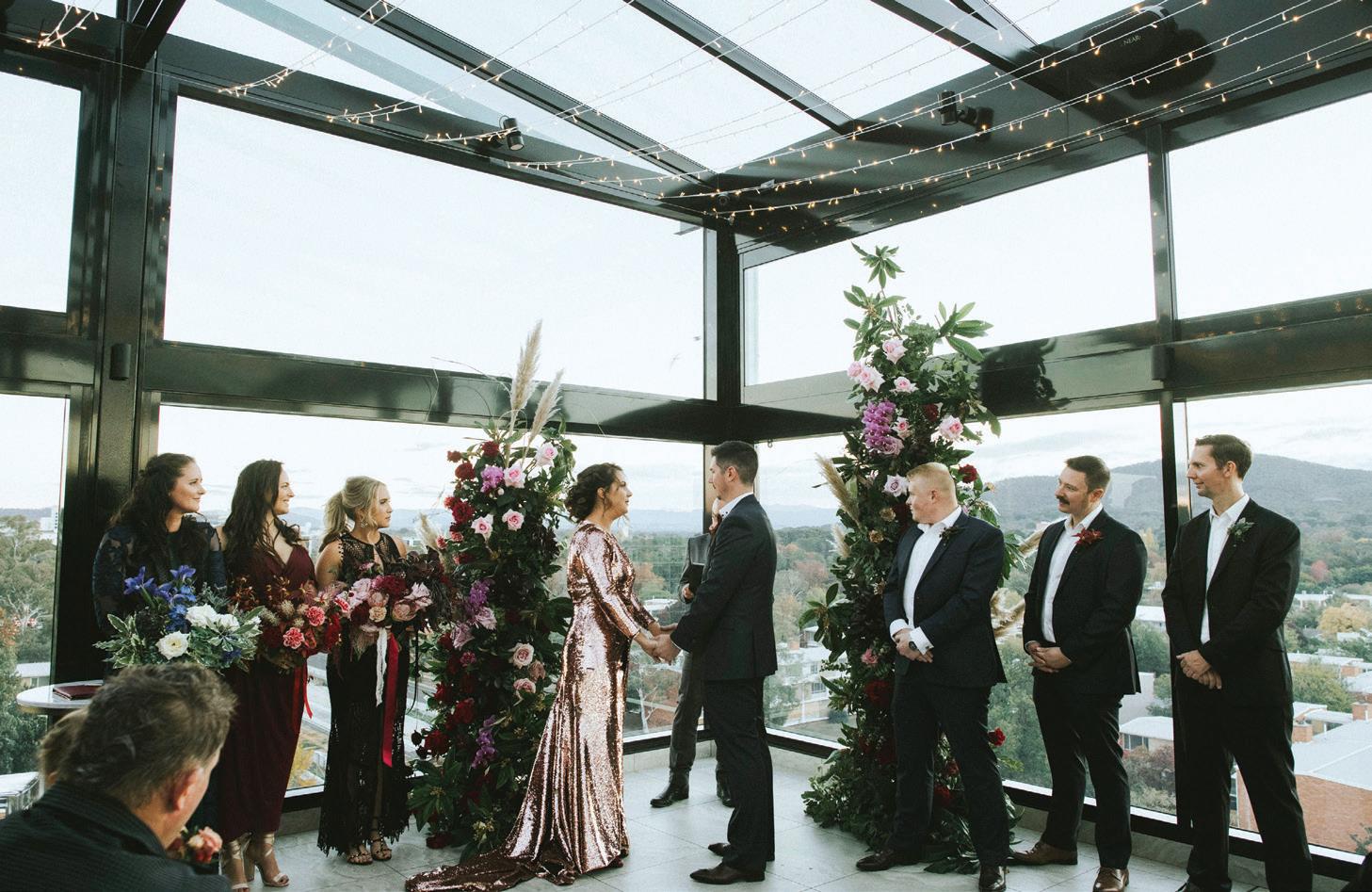
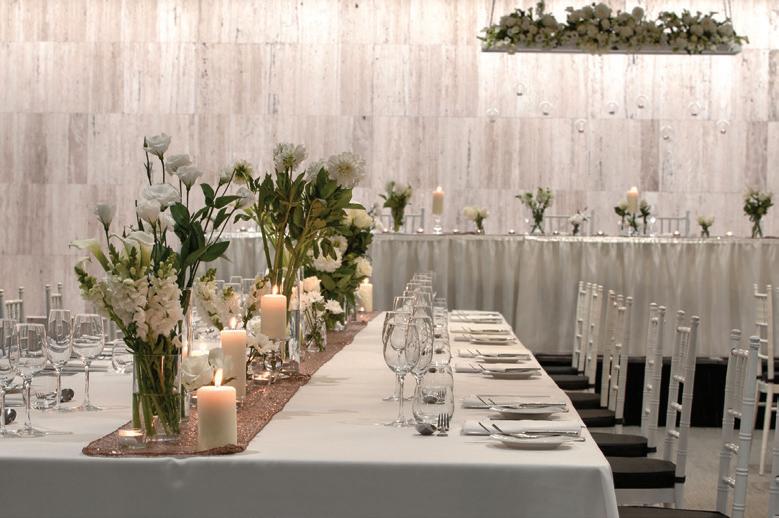
The Canberra Rex Hotel has spaces that are perfect for both intimate and grand celebrations for your family and friends. We have an array of ceremony and reception spaces available for your special day with the ability to host intimate gatherings from 20 guests to celebrations of 600 guests.


Columnist MIKE WELSH highlights the dangers of taking the politically astute and now fully engaged millenials for granted in the upcoming Federal election.
THE smug smirk permanently parked across the annoyingly plausible face of Prime Minister Scott Morrison is not borne of any cockiness but a deeply held conviction that he finally has opposition leader Bill Shorten right where conservative politics wants him – in a one-on-one contest.
Tony Abbott didn’t need to figure Bill out and Malcolm Turnbull didn’t even try, but ScoMo has been gagging to get Bill to this for a long time. Morrison’s smirk is dripping with “Bill’s my bunny”.
Officially, the line will be the economy, climate change, border protection etcetera but the undercurrent, or dog whistle, is: “Bill is a bad, bad man”. After six years and three leaders, the LNP has little else in its campaign kitbag.

For someone with a flash marketing resume, Morrison is acutely aware of that basic rule
of advertising, “less is more”.
On the surface, he made a meal of his first pitch to the nation after calling the election on April 11 with his: “If you vote for me you’ll get me, if you vote for Bill Shorten, you’ll get Bill Shorten”. But there is a method to his seemingly message-mangling madness.
Message: “Get Bill and you also get his nasty union thug mates”.
A few days earlier Morrison had served the entree: “But Labor are full of lies and high tax. That’s all you need to know about Labor”.
Message: “Bill Shorten is a liar”.
And Bill’s union mates were central to conservative commentator Miranda Devine’s ludicrous piece in the Sydney “Telegraph” suggesting Shorten’s slight speech affliction is in fact an affectation. Devine said “Shorten sometimes says “with” and sometimes “wiv”, a vestige of trying to slum it with his union bruvvers after attending one of Melbourne’s poshest schools”.
Message: “Bill Shorten is a fraud”.
With an already deeply cynical

electorate largely disapproving of negative political behaviour, the battle will still be more about slogans and smear/fear campaigns of varying degrees of viciousness than explanation of policies.
But relying on the effectiveness of negative political attacks poses real risks for the major players. Do they have the skill to kick a head and move on? Millennials are now more politically astute and fully engaged than in the recent past.
Twenty three years ago my five-year-old daughter came running into the room crying indignantly that “John Howard hurts families”. She’d been exposed to a negative ALP TV commercial designed to prevent Howard from moving into The Lodge in March, 1996. A residence he occupied (too little for some locals’ liking) for the next 11 years during which he launched successful election campaigns mostly with the perennial “who-do-you-trust?” line.
That traumatised five-year-old is now a millennial with a raft of millennial issues demanding to be addressed.
Signalling and messaging to this socially progressive cohort, financially conservative, with a genuine concern for the planet is now a complex task.
Thanks to social media flushing out the concept of identity politics, defined as: “A tendency for people of a particular religion, race, social background, etcetera to form exclusive political alliances, moving away from traditional broad-based party politics”, the once reliable short, sharp political stab that easily reached the masses now comes with the high risk of missing new mobs within the masses.
Bright young political staffers are now required to forensically fossick through the dirty and dangerous skips of social media, hoping to tap into a seam of vote-winning gold running through our increasingly more fragmented and fraught society.
But there are still many cautious coalition MPs who are much less flamboyant than their brash new leader from the world of advertising. A week before the poll was called, the member for Bennelong (John Howard’s old seat), John Alexander, ran with “who do you trust?”.
Just how difficult it is to teach old dog whistlers new tricks will be clear on or around May 18.




SUPPORTED by Gungahlin’s newer surrounding suburbs, Mitchell is home to a growing variety of businesses and services.
The suburb was named after Maj. Sir Thomas Livingstone Mitchell, surveyorgeneral and explorer of NSW, and all its streets are named after Australian industrialists.
This week “CityNews” meet some of the top, expert businesses operating out of the northside’s commercial hub.
NOW’s the time to insulate the home and ahead of winter, says BASC’s project manager Murray Johnson.
BASC, which stands for blinds, awnings, shutters and curtains, is a locally owned and operated company specialising in supplying quality window furnishings in and around the ACT.
Murray says BASC has an extensive range of blinds, awnings, shutters and curtains that can help insulate homes over the cold months.
“A lined curtain with well-manufactured and well-fitted pelmets are an excellent way of retaining heat within the house,” he says.
It’s the same with their cellular blinds, he says, which keep the cold out. Likewise, plantation shutters, which can be made to measure.
“Our external awnings are another great way to keep the cold out,” he says.
“The zip-track awnings are Australian made and designed and are mostly popular because of their simplicity.
“They’re a great product and they’re really robust.”
BASC recently took on two sales assistants, Julee Scott and Kate McInnes, who come with many years’ experience and can help customers with any window-furnishing query.
“We have a showroom with an extensive range of products and people can pop in at any time without an appointment,” Murray says.
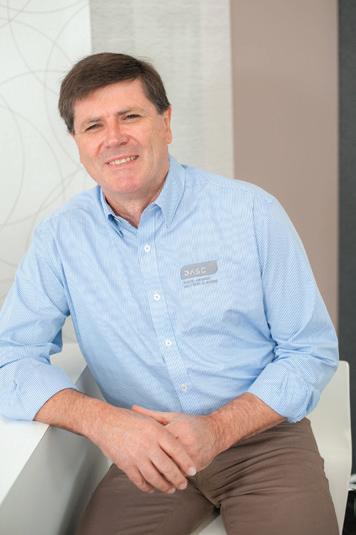
BASC’s project manager Murray Johnson.
BASC, Unit 9, 9 Brookes Street, Mitchell. Call 6255 0055, email basc@bascact.com.au or visit bascact.com.au
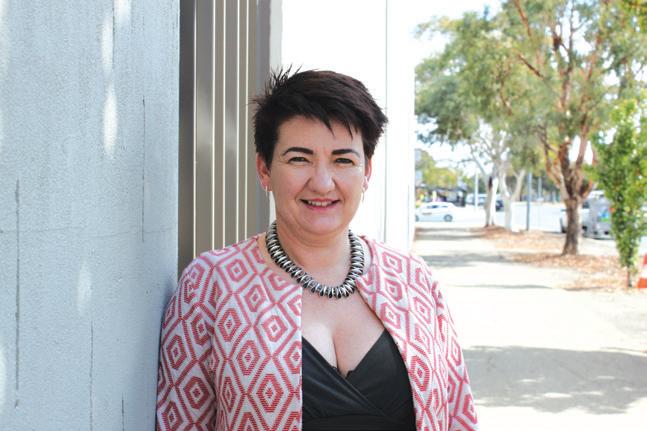
“We are passionate about clients, we’ve got a real interest in small businesses and we look at the client and the business together, rather than separately,” she says.
“It’s all about the relationship. You see clients once or twice a year and over time you get to know them and their families and interests. All of this knowledge can inform the advice I give.
“We take a strategic approach to our clients’ financial circumstances, taking into account personal goals, wider family relationships and attitude to money.”
Jane says Hadrill Accounting can give businesses the tools they need to be able


and surrounding regions.
Murray Johnson welcomed Julee Scott to the BASC team last July. Together they offer exceptional industry experience, competitive and affordable solutions and can assist with
things as budgeting, profit margins, cash flow and long-term goals,” she says. Aside from business advice, Hadrill Accounting can also help with business tax returns.
“And we are transparent with our costing,” she says.
“We never any charge for short phone calls or emails. Clients will never get an unexpected bill – we always tell clients in advance if we are charging for a particular piece of advice.”
Hadrill Accounting, 3/6 Dacre Street, Mitchell. Call 6154 7792 or visit hadrillaccounting.com.au

design and colour suggestions for all internal and external window furnishings.
Come and meet Murray and his professional team at the new and improved showroom, or book an in house quote. Trading hours Monday to Friday 8.30am – 5.00pm and Saturday 9.00am – 12noon.

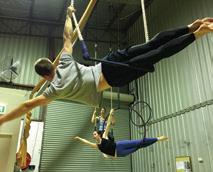
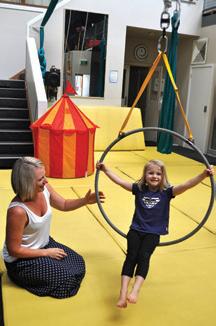
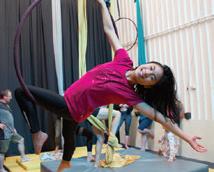
SINCE establishing Aerial Sports in 2015, its owner Cher Albrecht says her objective is to bring playful activities into adult, sedentary lifestyles.
apparatuses and you’re able to explore what your body can do,” she says.



And after opening a second section for classes, Aerial Sports now has more space for even more play through a range of classes such as regular aerial, silk, lyra or trapeze, as well as classes that work on handstands and flexibility.
“These classes give adults the opportunity to work out, but in a fun way,” she says.
“It’s an alternative to a gym workout.”
Since the expansion Aerial Sports now offers an extra adult class for beginners on Saturdays at 11.30am and an extra aerial foundations class on Sunday at 6pm and Wednesday at 7pm.
“You don’t need to be strong for these classes, you build strength as you learn,” she says.
Aerial Sports also runs multiple kids classes, which are run on a term basis but Cher says the adult classes are run on a













have stressful jobs or lives come in to switch off and have a great time.
climbing and moving in and on the

CAR Service Canberra’s new owners Jake and Monique Hickenbotham are revamping the business with energy and a fresh approach.
“It was a pretty good shop in the past, we’re just bringing with us some new energy,” Jake says.
Jake, who has 13 years experience as a mechanic, is looking forward to adding his experience to the 15 years Car Service Canberra has been in Mitchell.
The Repco-authorised service centre does all car servicing and repairs, auto-electrical work, manufacturer’s log book service, engine diagnostics, commercial van and light truck servicing, campervan and caravan service and trailer safety check and service.
When it comes to care servicing, Jake says don’t leave it too long.
“If you leave it too long, things might go wrong but if you service your car every six months, you’ll get more mileage out of it,” he says.
Overall, Jake says Car Service Canberra offers an excellent service at a reasonable price.
Car Service Canberra, 7 Baillieu Court, Mitchell. Call 6241 3011 or visit carservicecanberra.com.au





MOTIVATED to help business owners reach their full potential, Kristin and Dan Miller founded Trade Guardian in 2009 to do just that.
They were inspired after Kristin assisted her father with his painting business in 2008. She created a bookkeeping process to get him up to date with his reporting, assisted with marketing, quoting, invoicing, chasing debtors and booking in jobs.
“We could see the immediate impact it had on his business and we were motivated to help other business owners as well,” Kristin says.
Trade Guardian provides administrative and book keeping support such as data entry, bank reconciliations, payroll, super and LSL reporting, payment processing, chasing over debtors, activity statements and other compliance work.
“We support a wide range of small businesses, entre preneurs, professionals and tradespeople,” Kristin says.
“All business owners work so hard and should focus on the core components of their business.
“We can take the administrative pressure off and ensure all compliance requirements are met.
“We are qualified and competent and love working with small business owners to support them in what they do.”
Kristin says they also work closely with each business owner to tailor a service, which will specifically meet their needs.
Trade Guardian, Unit 8, 29 Buckland Street, Mitchell. Call 6162 1928 or visit tradeguardian.com.au

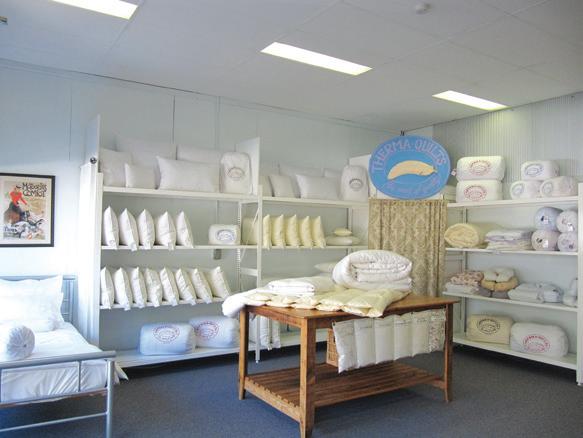
LOCALLY owned and proud of it, the family-owned Mitchell business Therma Quilts, specialises in making and servicing feather and down products such as quilts, pillows and cushions that have been keeping Canberrans warm since the ‘80s.
As the weather gets colder, it can even make quilts bigger or smaller to suit any changes in bed sizes since last winter.
Using quality textiles, the seamstresses at Therma Quilts hand-make every item suited to the customer’s needs and provide a top-up service when quilts and pillows show signs of wear or loss of warmth and fluffiness.
“Servicing of feather and down products are essential for keeping them in optimal condition for comfort,” Therma Quilts says.
“With time and usage, body proteins and lipids (natural oils and perspiration) are absorbed on to quilt casings and into the feather and down inside.
“Over time, this build-up dampens the down, which causes it to lose its thermal resistance. However, regular servicing of your quilts would ensure that your down is fresh, fluffy and keeps you nice and warm

out and get thin, but once holes appear there is no need to throw away your quilt.
“Whether you’re wanting to rejuvenate your quilt, customise it or buy a new custom-made one we can look after you,” Therma Quilts says.
Therma Quilts, 10-12 Kemble Court, Mitchell. Call 6241 6859 or visit thermaquilts.com.au








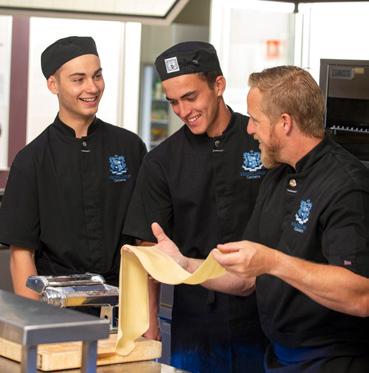
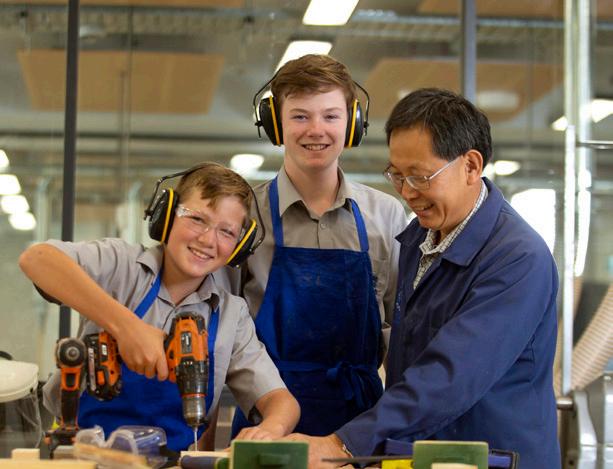
THERE is irrefutable evidence that boys and girls respond to the world differently, they require different approaches to help them grow, says Matthew Hutchison, headmaster of Marist College Canberra, a Catholic school for boys from Years 4 to 12.
“When comparing the average boy to the average girl, the gender differences in the area of language, emotions, impulse control and sensory reaction are due to differences in brain structure and its rate of development,” he says.
“Additionally, gender differences in cognitive skills such as verbal fluency, reading, spatial skills and learning styles most certainly are the result of changes to the brain, which are shaped by environ mental influences of family, school and society.
“As the body of research grows supporting the notion of cognitive gender differences, so do the strategies for helping students learn in ways that best suit their ability.
“Research would further suggest that those strate gies work best in a single-sex environment.”
Mr Hutchison says this has vast implications for learning, teaching and emotional development and reaffirms his belief that boys’ schools succeed for many boys.
“Despite such evidence, the role of single-sex schools in the present educational climate remains hotly debated,” he says.
need a safe, supportive and connected place where they can

Mr Hutchison, who is in his second year of leading Marist College Canberra (MCC) after eight years as head of school at Sydney’s St Augustine’s College, says: “We know boys need a safe, supportive and connected place where they can develop the skills to become confident and competent men.
“We believe at MCC that this happens best in an environment that gives boys the support to explore a variety of masculinities and avenues of endeavour without the limitations placed on tradition.
“MCC provides a place where students can learn in ways that match their capabilities, develop skills in communication with many different people, explore a wide variety of opportunities without limitation and discover what sort of man they will become.
“At MCC, the entire school community is organised programmatically and culturally, specifically in response to boys’ needs and potential. We seek to make our single-sex culture work for the good of the men these boys will become and together, we proudly create fine young men.”





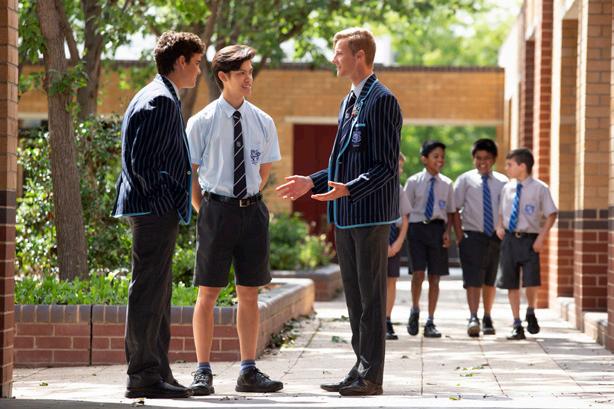

‘Boys thrive in a culture that understands and celebrates them’
MATTHEW HUTCHISON , headmaster of Marist College Canberra, answers some frequently asked questions:
Q. What does the research tell us from a boy’s perspective?
A: Not all boys are the same, so teachers and schools should not blindly apply a “one-size-fits-all” approach. Research confirms the need for teachers in boys’ schools to employ pedagogical strategies tailored to boys’ developmental pace and build curricular content that can engage and involve more boys. At MCC we have a distinct “boy-centred approach” to pedagogy and curriculum which may not be easily implemented with the same sense of purpose, intensity and focus in a co-educational classroom.
What pedagogical strategies are best tailored for boys?
I passionately believe it is time to face the evidence and start providing educational programs and opportunities that are designed for what boys bring to the classroom instead of telling them they could succeed if only they tried harder.
I have worked in boys’ schools for over 30 years. I appreciate many experienced colleagues long ago found their way to a set of practices that appear to work especially well for boys, although some may not be consciously aware of their pedagogical stance. In contrast, teachers who have transitioned from co-educational schools to boys’ school are clearly able to articulate the need to re-orient their pedagogical practice. They know it is important to talk less, use humour and give short instruction with clear timelines. They understand they must get boys doing, they know boys respond to challenge, enjoy options with tasks and need clear rules and expectations.
Do we need to redefine gender assumptions?
Do boys’ schools present a narrow understanding of masculinity?
It is often assumed that boys’ schools are incubators of dominant masculinity. I believe boys’ schools have a unique opportunity to expose the negative strands in the social construct of masculinity. We believe MCC succeeds in teaching boys that there are many routes to becoming a good man and many expressions of manhood. Being schooled with other boys often creates a culture to question, reflect, adjust and grow – to ask uncomfortable questions and share ideas without fearing ready judgement. Boys at MCC can explore issues of gender and sexuality and the many versions of manhood in an authentic, testing way that might not work for them in a different environment.
At MCC we strive to create a community where compassion, gentleness and kindness are foremost in hearts, minds and mission. We teach a thoughtful, sensitive and dignified notion of manhood. Our success stems from many reasons, including teaching young men moral values and principles that strengthen our society and that model kindness, tolerance, empathy and, especially, respect for women.
At MCC our boys learn that real men read, cry, listen, talk about what matters to them, take care of others, engage in philosophical discussions and appreciate art. They learn that real men can change tyres, nappies and their minds.
At MCC our boys learn that real men read, cry, listen, talk about what matters to them, take care of others, engage in philosophical discussions and appreciate art. They learn that real men can change tyres, nappies and their minds.
Do you have to be good at sport to attend a boys’ school?
It is self-evident that in a boys’ school wide-scale participation in school co-curricular activities, often over represented by girls in co-educational schools, are naturally filled by boys. Boys feel free to pursue their interests in a single-sex environment without preconceived notions of rigid gender expectations that too often regulate their decisions, discourage risk and limit their opportunities to discover their talents. The high rates of participation in co-curricular activities at MCC are an expectation by the school and the boys themselves. As boys progress through MCC, it is striking to see them thrive in their particular passions as sportsman, musicians or debaters, but also as actors, programmers or chess players. No one activity dominates.
What is special about teaching boys?
Research also informs us that some teachers in co-educational settings bring unconscious gender assumptions about student performance to their classrooms which polarise and label boys and girls. The sometimes negative discourse about boys ‘as a group’ in co-educational settings may actually generate and amplify gender group behaviour. Successful teachers in boys’ schools find their way to view boys as asset-rich. In these classrooms, the differences among boys come more clearly into focus, removed from gender bias and stereotyping. Effective teaching in an all-boys’ classroom sets up opportunities to reset their performance expectations where academic success is measured by boys’ achievement and not by girls.
We know boys thrive in a culture that understands, accepts and celebrates them. I have always believed that to work in a boys’ school you have to like boys. This would seem obvious but teachers in boys’ schools have to enjoy their “have-a-go attitude”, their humour and the sense of fun they bring to the classroom. Boys want to know their teachers value them and have a genuine interest in their welfare. The once given of advice of “not smiling before Easter” is the most ill-informed instruction to a teacher of boys. In boys’ schools, teachers need to talk to boys so that they will listen and listen to boys so they will talk. This allows us to nurture each boy as they try to figure out how to live in this world.


By Kathryn VUKOVLJAK
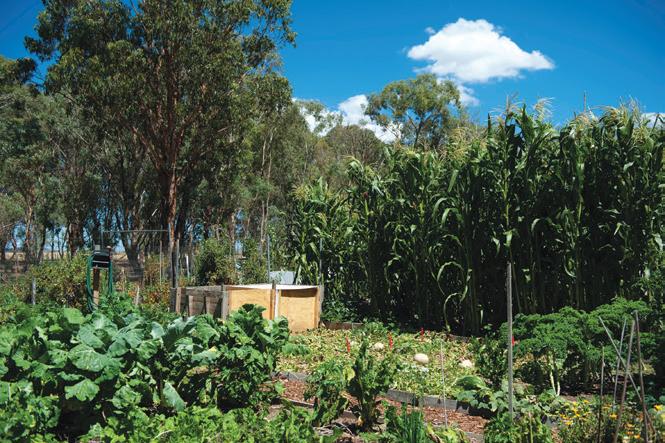
AN allotment-style garden in a thriving patchwork of flowers and veggies is tucked away in the back of Mitchell.
The Canberra Organic Growers Society garden’s 20-year government lease is due for renewal in 2020, says Mitchell volunteer convenor Narelle McLean, but she’s hopeful the garden will continue.
“We cover the greater Gungahlin area and our gardeners might have a balcony for a few pots but no space to grow more,” she says.
“As well as the obvious health benefits to growing organic food, there’s the social side, too, for people who are old, lonely or not well.”
Visited by nosy cows and kangaroos looking for shade at the southern end of Hoskins Street, the garden is one of 12 COGS gardens in the ACT with the philosophy of growing food for personal use without pesticides or herbicides.
“People plant interesting things, there’s primarily what grows each season, and we have more unusual plants like this tall corn that’s actually maize grown by a Kenyan family,” says Narelle.
“There’s also tomatoes, pumpkin, capsicum, chillies, garlic, Asian greens, leafy veggies and now the winter veg is going in.
“The cows come around so we sometimes give them our offshoots, and we get the most beautiful birds, though some are destructive, of course.”
“Most of our gardeners work or study, there aren’t many retirees but there’s a lot of expertise and people are happy to share knowledge,” she says.
“It’s so colourful and varied here in terms of age, nationality and professions. We’ve got a one-year-old up to an 81-year-old, and families from China, Japan, Vietnam, Bangladesh, Kenya, UK, Brazil, Netherlands and Portugal who often grow produce from their countries.”
The garden received a community grant in August that Narelle, 74, says was used to replace the fence and gate to improve security.
Members pay an annual levy to cover things such as water and insurance.
“We rely on donations and fundraising, and we’re very proud of the shed and undercover area that we funded by doing Bunnings barbecues,” she says.
“Members can bring young families and the kids can sit here and draw, or they can come for a cuppa and share some cake.”
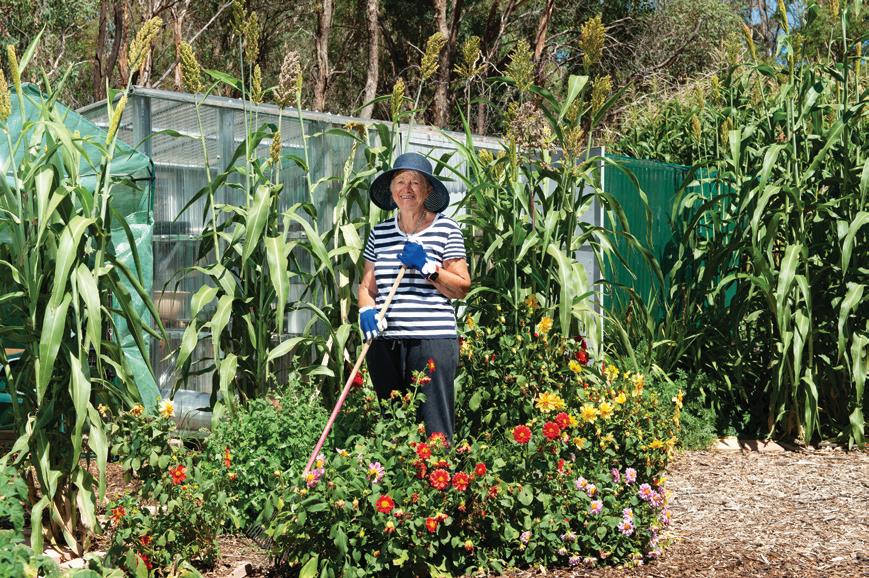
People tell Narelle they can’t believe how rural and quiet it is, she says.
“There’s the gum trees, the open air, no traffic. The model aeroplane club and Icon Water are nearby, but we’re fortunate as it’s so peaceful,” she says.
“We’ve got fruit trees and flowers, and our bees produce honey from the gardens.
“I keep getting requests to go on the waiting list.
“In the winter the wind blows through, but that’s gardening, you stick on your hat and coat and away you go.”

For more information, visit cogs.asn.au or email mitchell_convenor@cogs.asn.au


Do you know who previously lived in your home? If someone cooked or even smoked methamphetamine in your home, it is most likely contaminated.
Around 8000 doses of methamphetamine are consumed in the ACT every day. That’s close to 3 million doses each year. CMC can test your home for as little as $300.


Respiratory problems
Behaviour problems
Sleep pattern changes
Increased susceptibility to illness
Eye and skin irritation


SCHOOL open days and information evenings for Catholic, private or public schools are an important opportunity for parents and potential students to gain an insight into the everyday learning of Canberra’s educational centres.
Whether it be for children or teenagers, visitors can discover what each has to offer for the 2020 school year.
WHETHER a child is a high achiever or a student needs a bit more help, Canberra Grammar School is a great place for all kinds of students, says the head of school, Dr Justin Garrick.
From preschool to year 12, Justin says Canberra Grammar School treats each individual student with care and consideration.
“We believe children need an environment that encour ages them to seek out academics and social relationships, to find their passions and purpose in a complex world; to be ready for the world,” he says.
Justin understands that choosing the right school is one of the most important decisions a parent or guardian can make, which is why Canberra Grammar School’s open days consists of a tour, morning tea, an information session, a Q&A session and an opportunity to speak with staff and with the students.
“Our students are our greatest ambassadors. Speak to them and they will tell you what makes CGS special,” he says.
Canberra Grammar School is now accepting enrolments for 2020 and invites parents and guardians to come along to its open days on May 29 and October 16
“Open Day is your opportunity to visit our beautiful Red Hill or Northside Campus and to have your questions answered,” Justin says.
Canberra Grammar School, Northside Campus, 33 Blamey Crescent, Campbell. Southside Campus, 15 Alexander Street, Red Hill. Visit cgs.act.edu.au








ST Edmund’s College has been leading boys’ education in the community since opening 65 years ago, says assistant principal, college operations, Jacob Knowles.
“St Eddies is a really warm and caring environment,” he says.
“We offer a range of opportunities for the boys to explore success in many different areas such as a tailored learning program which caters for the diverse level of needs that each boy has.
“We have a pastoral care program that has student wellbeing at its centre and we have opportunities for faith formation through mission and service programs, and links with the international community.”
The school’s co-curricular program also means students can engage in activities such as sport.
Jacob says the proud and welcoming teachers at St Eddies will be at the school on Saturday, May 11, 11am-3pm, to tell interested parents and potential new students all about the inclusive school.
“They can come along for a selfguided tour or be shown around by one of the student leaders,” he says.
“The facilities will also have showcases on display. Parents and carers can register online if they want to come along. It’s going to be a great day.”
St Edmund’s College’s open day, 11am-3pm, Saturday, May 11. Register at sec.act.edu.au

CANBERRA Girls Grammar School is creating the next generation of pioneers and leaders, says principal Anna Owen.
“Every second, in every classroom, is tailored in a very purposeful way to give the remarkable girls in our care the opportunity to unfold into young women who are able to articulate what it is to be well-educated, who understand the great responsibility of receiving a great education and who insist on living ethically and purposely,” she
Described as a warm, supportive and driven school, Anna says it’s a perfect environment for able and focused girls.
“Often girls who have been in a co-ed environ ment in primary school articulate their frustrations in year 5 or year 6,” she says.
“We offer tailored programs and a personalised approach for each of the girls, [which means] your daughter won’t get lost at Canberra Girls Grammar School.”
But it’s not all about hard work and Anna says they also have a lot of fun.
“Our student-run assemblies each week epitomise this, where academic rigor, sporting achievement, creative expression and generosity of spirit are all highlighted and celebrated,” she says.
Canberra Girls Grammar School is having its senior school information evening on Thursday, May 2
The sit-down event will be hosted by Anna and will feature short presentations, a Q&A with current students and opportunities for one-on-one conversations with staff and Anna.
Canberra Girls Grammar School, 48 Melbourne Avenue, Deakin. Register for the information evening at cggs.act.edu.au/evening

COME AND JOIN US AT THE
Open mornings: 7 May, 2019 9.30-11.00am 13 May, 2019 9.30-11.00am
Open evening: 7 May, 2019 • 5.30-7.00pm
Enrolment period: 6 May - 24 May, 2019. Enrolment information can be collected from the school office during this time. Office hours 8.30am – 4.00pm.
Holy Trinity Primary School 18-20 Theodore Street, CURTIN ACT 2605 Phone 02 6281 4811 office.holytrinity@cg.catholic.edu.au

“CityNews” is looking for a confident, skilled writer with at least three years’ experience to assist principally with the preparation of advertising features and write news and features variously for the magazine and its website citynews.com.au
CV to editor@citynews.com.au before sunset Friday, May 3.
HOLY Trinity is a small primary school and early learning centre in Curtin and prides itself on living out Jesus’ message of faith, hope and love and upholding the equality, dignity and worth of each individual, says principal Philippa Brearley.
“The school’s mission is to inspire connections with our God, ourselves, our learning and our world,” she says.
“This mission aims to develop curious, inquiring, knowledgeable and caring young people who are responsible for creating a compassionate and more peaceful world in the future.”
Through the International Baccalaureate, Primary Years Programme, Philippa says the school offers an engaging, relevant and stimulating curriculum which prepares its students to meet the challenges of tomorrow.
“We strive to nurture stu dents who are internationally minded with an understand ing of their responsibility to themselves and the world,” she says.
Holy Trinity Primary School is having two open mornings from 9.30am to 11am on Tuesday, May 7 May 13, and one open evening, 5.30pm to 7pm, on Tuesday, May 7

At the open days and night, Philippa says year 6 leaders, parents of the community and members of the school and early learning centre leadership team will show interested families around the school, early learning centre and surroundings.
“Whilst we take you on a personal tour, we will talk to you about our school philosophy which aligns with our Catholic faith and International Baccalaureate’s beliefs,” she says.
Holy Trinity Primary School and Early Learning Centre, 18-20 Theodore Street, Curtin. Call 6281 4811 or visit holytrinity.act.edu.au

THE small Campbell school, St Thomas More’s Primary School, is opening its doors on Monday, May 6, to share with families its inclusive and friendly community, says principal Julie Wiley.
“Being a small school with 150 students, we can provide a personalised education for our students,” she says.
“We know all our students really well and have a close relationship with our families.”
Julie says the school has a high defence population, with about 50 per cent of its enrolments coming from defence families.
“We have a Defence schools mentor who works in the school to support our Defence families,” she says.
“When students transition, we understand the impact this can have on the family and on the child’s education. The Defence schools mentor can be
that link between families and the school to ensure a seamless transition.”
As for the school’s teachers, Julie says they are highly experienced and provide a quality education.
“We provide an inclusive education and welcome students with disabilities or learning needs,” she says.
The open day on May 6 runs from 9am to 3pm. During the day, Julie says, parents are welcome to pop in at any time and look around the school to get an idea of what it can offer their child and their family.
“If they’d like a one-on-one guided tour with me they can ring and book,” she says.
St Thomas More’s Primary School, 24 White Crescent, Campbell. Call 6249 8869, email office.stmore@cg.catholic.edu.au or visit stmore.act.edu.au

WHEN students go to Burgmann Anglican School, they’re also joining a community, says admissions administrator Megan Davis.
“We’re very much a community where students can go on a journey of discovery,” she says.
“We’re a very diverse and supportive community on a number of levels. Whether it’s looking at the interests that students have or whether it’s looking at cultural backgrounds – we’re very welcoming.”
Burgmann Anglican School has a number of scheduled school tours throughout the year, which are noted on its website, and it also has a couple of information nights.
The year 11 information night for 2020 is on Wednesday, May 29, and the year 9 information night for 2020 is on Wednesday, August 21
For the year 9 information night, Megan says there
will be an expo with faculty booths to showcase the subjects.
“We have outdoor education, a strong science program, a strong maths program, an arts and design program and computing electives,” she says.
“The students will be challenged but also given support and guidance to help them be the best they can be.
“We cater for students doing tertiary and accredited subjects and we also offer school-based apprenticeships (ASBAS),” she says.
“We have student support, too, and our library is open later into the evening for senior students to offer study support.”
Burgmann Anglican School, call 6204 3207 or visit burgmann.act.edu.au





AS Canberra’s largest secondary school, St Mary MacKillop College can stay true to its mission to be a Catholic school for all, says principal Michael Lee.
Located across two campuses in the Tuggeranong Valley, Michael says St Mary MacKillop’s is able to welcome boys and girls, as well as students from a range of different faith, cultural and socioeconomic backgrounds.
“In order to cater to the wide range of students, MacKillop provides them with great teachers, a wide range of curriculum options, extensive facilities, and a huge range of sport, performance and co-curricular choices,” he says.
College captains Chris Caruana and Gabrielle Petersen say there’s something for everyone at St Mary MacKillop College.
“We’ve had so many opportunities at MacKillop, from
leadership opportunities to representing the school in sport,” they say.
“What we love about MacKillop is the community aspect, the interesting classes and that we’ve formed really strong relationships with our friends and teachers.
“Even though it’s a big school, we have always felt valued here.”
St Mary MacKillop College’s year 7 information night for 2020 begins at the Wanniassa campus, 6.30pm on Monday, May 6
St Mary MacKillop College. Wanniassa Campus (Years 7-9), Mackinnon Street and Isabella Plains Campus (Years 10-12), Ellerston Avenue. Call 6209 0100 or email info@mackillop. act.edu.au











Stay in touch with the names making news on Sundays from 10am as 2CC and “CityNews” present Canberra’s only local weekend news and current affairs program. It’s a revolving panel show that brings to the microphone great “CityNews” commentators and 2CC personalities.
Be part of the conversation and call 6255 1206 between 10am and noon.


By Helen MUSA

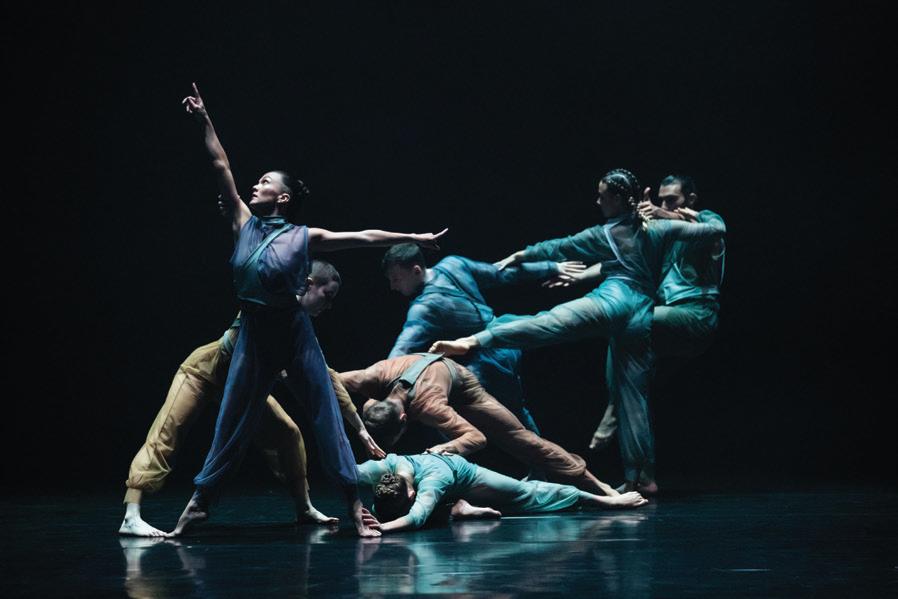
IT’S Sydney Dance Company’s 50th anniversary this year and when the elite troupe comes to Canberra it’ll be in party mood.
Instead of conventional seating in the Canberra Theatre, there’ll be a mix of general admission and cabaret-table seating onstage, reminiscent of Robyn Archer’s big cabaret “Le Chat Noir” years ago in the same venue.
Later, in November, they’ll have a bigger birthday bash in Sydney’s Roslyn Packer Theatre, when there’ll be time to look back on a history that began in 1969 when it was founded by Suzanne Musitz Davidson.
In the meantime, all eyes will be on the contemporary choreography of three artists, Rafael Bonachela, Gabrielle Nankivell and Melanie Lane in a triple bill of edgy dance.
Speaking from Port Pirie, she has been doing a residency for Country Arts SA. Originally from the Eyre Peninsula, she’s familiar with the region and is tickled pink that the triple bill will travel later to the theatre in Whyalla. Her new work “Neon Aether” is an SDC premiere aimed at transporting dancers and viewers to the upper regions of air beyond the clouds. and hunting and other grounded things… I

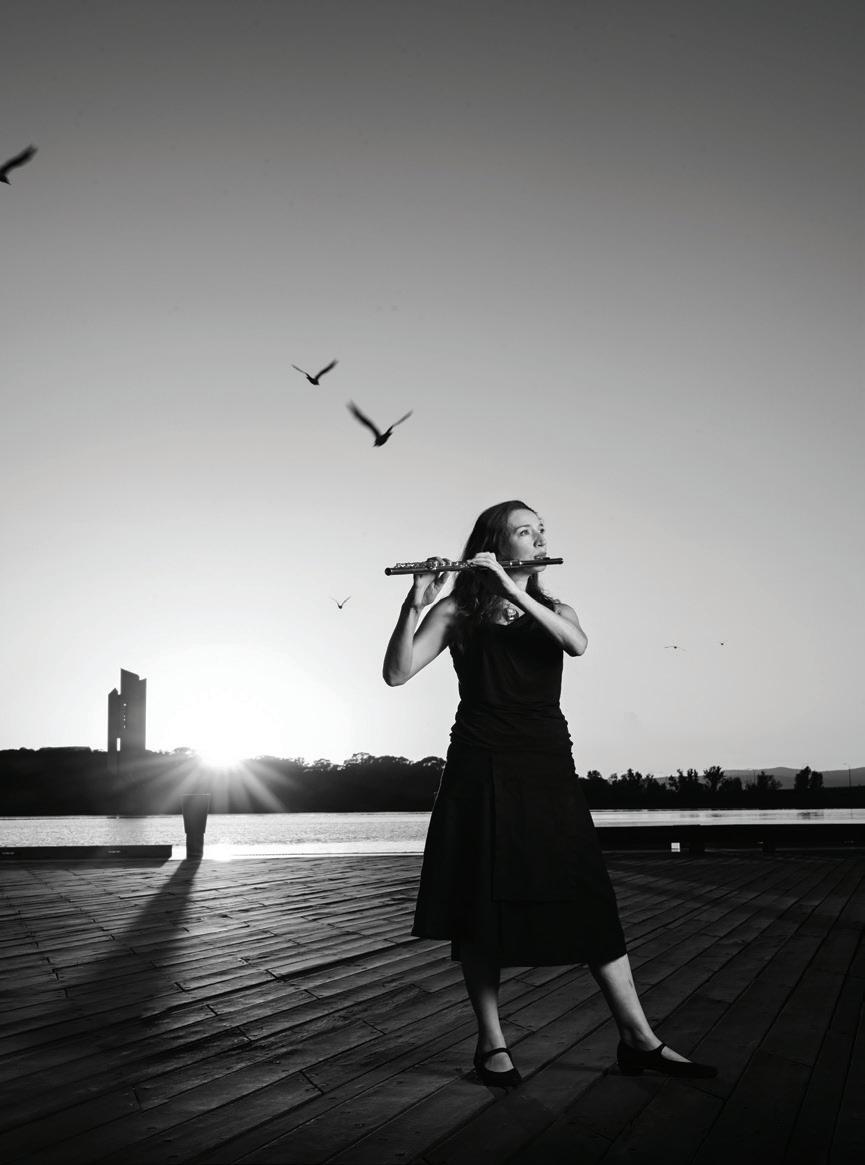
wanted to work with something that doesn’t make sense, something more ambitious.”

The music for the 29-minute-long “Neon Aether” has been composed by dancer-sound artist Luke Smiles, well known to Canberra audiences from his time with Chunky Move.
“Luke and I have collaborated on about 10 soundtracks and shows, including ‘Wildebeest’,” she says. “He’s even danced in some of my shows… his music is quite distinctive and he’s very much in demand for dance,
“Neon Aether”, she says, is about our relationship to air. She has combined ideas about air “to find a new movement vocabulary, to give the dancers a kind of environment to explore a kind of landscape of emotion that had a physical aspect in the body.”
The idea of “neon” came to her as something airy which evoked colours, while “aether”, which she describes as an archaic word, was the word for a substance once
thought to permeate space.
“Neon Aether” falls into five levels, representing a gradual ascension through different atmospheres, so does it end on a high note or a quiet note?
“You can have both those things at once, it’s for the audience to decide,” Nankivell says.
“Bonachela/Nankivell/Lane”, Sydney Dance Company, Canberra Theatre, May 2-4. Book at 6275 2700.

The Queen of Crime returns
Belconnen Community Theatre
May 17th to 25th
Bookings: Phone 62752700 Canberraticketing.com.au
A Tempo Theatre production

An amateur production by arrangement with Origin Theatrical, on behalf of Samuel French LTD.
Would you like to watch those old family videos once again, or listen to your favourite records on CD?
We can take your vinyl records or cassette tapes and put them onto CD and we transfer VHS tapes onto DVD.




Now taking enrolments for term 2
Commencing 1 May
Wednesday or Thursday classes 7.00pm–9.30pm
To register or find out more Visit lavenderartstudios.com.au
By Helen Musa
DARAMALAN technology and design students are programming drones for a surprise scene in Joe Woodward’s coming production of Bertolt Brecht’s “Mother Courage and Her Children”, performed in Pulitzer-winning author Tony Kushner’s translation. They’re also transforming McCowage Hall into a Berlin-like underground club with bar and cafe facilities. April 27-May 4. Book at trybooking.com
FOLLOWING recent changes to state government festival regulations, a very relieved Illawarra Folk Festival director David De Santi has received assurances that the event can go ahead at Bulli Showground on January 16-20, when it celebrates 35 years. Artist applications to illawarrafolkfestival.com.au are now open until May 30.
“BRIGHT Sparks in Canberra” will be a family-friendly concert by

talented young musicians, staged by Friends of the Albert Hall, 6.30pm, on Tuesday, April 30. As a bonus, the Theatre Organ Society of Australia ACT will perform on the Compton theatre organ. The event’s free but register at eventbrite.com
NATIONAL Portrait Gallery director Karen Quinlan has announced an extended entry period for the inaugural $75,000 Darling Portrait Prize. The prize will be presented in March at the refurbished gallery. Entries to portrait.gov.au will be open from May 1 to October 1.
FORM Gallery in Queanbeyan will host a champagne breakfast at the gallery, coinciding with the group exhibition, “Interpretations of Place”. Ticket sales and 10 per cent of any art purchased on the day will be donated to the Australian Cancer Research Foundation. At 1/30 Aurora Avenue, Queanbeyan, 11am, on Friday, May 3. Tickets $20, at the door.
“DANCE on the Edge” will be the centrepiece in Belconnen Arts Centre’s contribution to Ausdance ACT Dance Week, a showcase of commissioned dance works from dance artists including Alana Stenning, Australian Dance Party, Eliza
Sanders, Gretel and Chloe Burgess and Nicholas Jachno. At 118 Emu Bank, Belconnen, 5pm and 8pm, Saturday, May 4 and 2pm, Sunday, May 5. Book at eventbrite.com.au
SYDNEY Writers Festival’s “Live and Local” program returns to Canberra streaming headline events to the National Library throughout the day on Saturday and Sunday, May 4-5. Audience members can actively engage by submitting questions via Twitter and SMS to the writers on stage, who will include Nana Kwame Adjei-Brenyah, Rachel Kushner, David Marr, Jenny Erpenbeck and Andrew Sean Greer. Free but registrations to stickytickets.com.au
THE Austrian Choir, joined by guest artists the Canberra Harmony Chorus, will perform an afternoon of autumnal choral music interspersed with solos and duets at the Austrian Australian Club, Heard Street, Mawson, 2pm, Sunday, April 28. Book at 6288 7884 or tickets at the door.
By Helen Musa
THE 22 choristers from the Australian Rugby Choir and their partners, are packing their bags for the 2019 International Male Choral Festival, the largest event of its kind in the world.
Around the cathedral city of Truro, Cornwall, in the UK’s south west, between May 2 and May 6 there’ll be more than 59 choirs performing, totalling some 2000 voices, with visitors from nearby Wales and further afield – the Atlantic Boychoir from Canada, the MM Male Voice Choir from Finland, the 60-strong Cenestra Male Choir from South Africa and, of course, “our boys”.
musical director Rachel Campbell and accompanist Karen Da Silva, the balance to be made up by the choir, which also receives financial support from the Brumbies and the Australian War Memorial for whom, since its foundation in 1996, they’ve performed regularly.
It’s the third overseas visit for the choir that performed in a male-voice choir concert at Carnegie Hall during 2008. Welsh operatic bassbaritone Bryn Terfel was the guest artist.
“What a special thing that was,” Bergersen says.
In 2012, as part of the combined Oceania/ World Choir established in the lead up to the London Olympics, it performed in London’s Festival Hall, where Terfel dragged them all out on to the riverbank to sing with him.
certs in the Tate Gallery at St Ives, Truro Cathedral and The Eden Project, two enormous biosphere domes constructed in a disused china-clay pit to house all plants collected from across the globe.
Once back in Truro for the finale, it’ll participate in a big choral seminar and the choir has also entered the festival competition to be held in the cathedral.
Although the Australian Rugby Choir has a huge repertoire of popular songs, they’ve prepared three special ones for the competition, the American spiritual “Dem Dry Bones”, “Festival Sanctus” by Eph Ehly and performed in Latin, and the a cappella number, Kurt Bestor’s “Prayer of the Children”, composed for the children in war-torn countries.
Email elita.mackay@lavenderartstudios.com.au
First Floor, 42 Townshend Street, Phillip ACT facebook.com/lavenderartstudios Adult

About half of the active strength of the Rugby Choir are going, with an equal number of partners, making it 44 all up, and all paying for themselves.
Committee member and project manager for the Cornwall festival trip Frank Bergersen says a donation from Beyond Bank of $5000 will go towards meeting the $10,000 cost of taking the
Springtime in Cornwall sounds pretty good to Bergersen and the other choir members, who will start arriving in London in late April and then take a bus to the Cornish seaside town of Newquay on May 1.
The choir will give seven performances over five days, with night-time concerts in Penzance, Liskeard and Truro Cathedral and daytime con -

If it all sounds like an exercise in pure pleasure, it is.
“If you’ve got a love of music, you’re able to indulge it by singing in a choir,” Bergersen says.
“It helps get the blood flowing and there’s the camaraderie element. Individually, we might be average, but together, there’s a warm blend – it just makes you feel good.”


/ china plate, kambri precinct, anu
By Wendy JOHNSON
FANS of China Plate will be thrilled with the sister restaurant, which opened at Kambri Precinct, ANU, a few weeks ago.

It’s by no means a carbon copy of the Kingston location. Everything about the place is radically different, in a delightful way.
China Plate – front and centre in the new “town square” – has its eye on the university market with half the students hitting the place being Chinese. It’s attractive to young diners with its selection of Asian fusion dishes, prices and look and feel, but sophisticated enough to attract uni profs and other non-millennials hanging about campus.
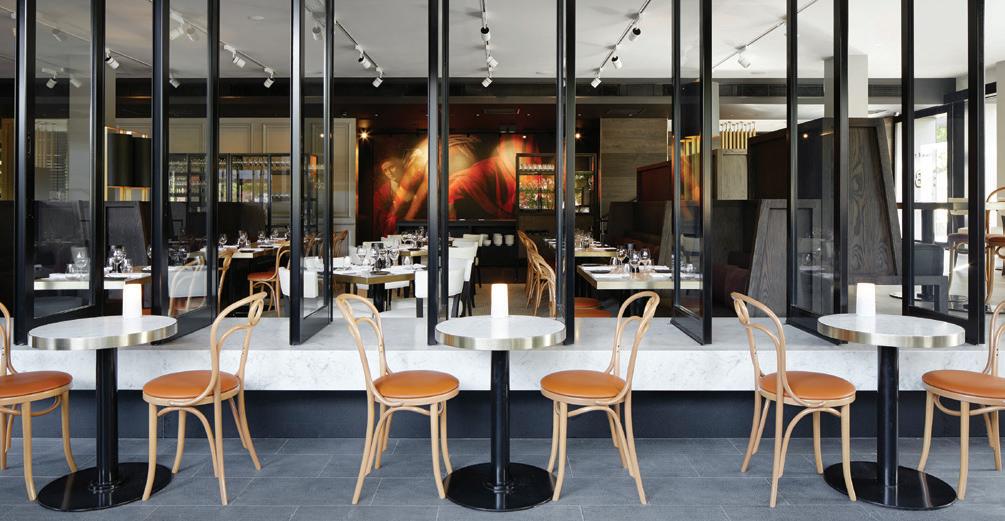
The décor is “wow”, including two gigantic murals each with fish swimming
up the wall (the fish symbol represents freshness). Other lovely touches are the delicately designed plates and bowls (also featuring fish) and small fans hung on the walls with welcoming, wise sayings such as: “In hardship we see true friendship” and “A smile dispels many worries”. Table tops are made of recycled timber.
The Shang Hai dumplings and Shan Tung dumplings are a sure-fire way to stimulate tastebuds at the beginning of the meal ($7 for four).
The salt and pepper squid was a top pick ($20). It’s lightly battered and packs a punch with fresh chilli and five-spice salt. The squid was super tender and looked delightful served on a blue plate in the shape of a fan. It went well with the mixed veggie dish with garlic ($16).
If you love a roast don’t miss out on sharing one of the Chinese roast options (duck or pork belly or barbecue pork). We were in heaven with the half-roasted duck
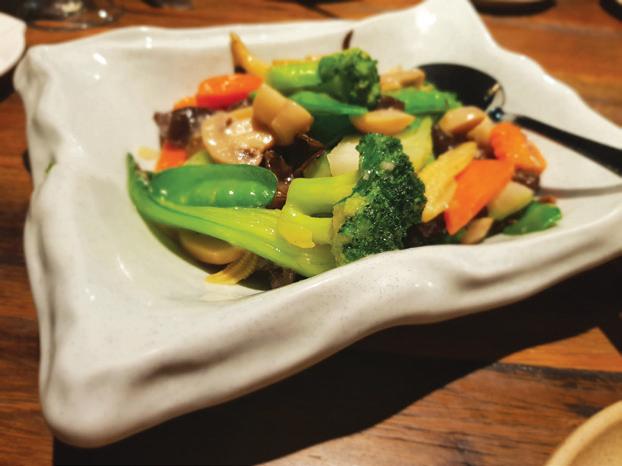
By Richard CALVER

A RECENT dinner at Raku, a Japanese restaurant in Civic, raised a host of issues: how culture affects wine, food and the very elemental basis of how we think but particularly what the heck is sake?
So, let’s start with my favourite Japanese joke (they do not eat dogs!): a little Japanese dog bit a man and the owner got the shitzued out of him!
Anyway, we were at Raku and my lovely friend does not like most wines. She had never tried sake so we ordered a flask as a new experience for her. She was overwhelmed.
“This is really good.”
“But you don’t normally like wine.”
“True but I like this. What is it made from?”
“It’s rice wine, they ferment the rice like you would with beer but they add a, I think, a fungus.”
“This isn’t your mushroom joke about how the mushroom is always a fun guy at parties?
“No, I mean it, the stuff is fermented rice with a… something I forget added. But I’m pretty sure it’s a mould or ancient fungus.”
“Okay. I like how it’s so smooth but ancient fungus sounds weird like you are getting so old that you are part of the ‘Lord of the Rings’ cast. What else do you know?”
“The only other thing I can recall,” I said increasingly affected “is that it’s like getting a martial arts belt; there are grades. And it’s strong”, I said almost slumping after taking another slug.
Where is the food? I thought, with images of drunken Tokyo salarymen asleep on their fast trains after

mandatory work drinks, their stupefied forms invading my increasingly uninhibited consciousness.
“I also know,” I said steadying the ship, “that what we have here is served cold and that shows it is of a higher grade. In my vague understanding, the lower-grade stuff is served hot, which makes it more volatile and more likely to hit the bloodstream and send you to drunkenness, the sort of stuff I usually drink that mixes in with memories of wonderful clean food and an urge to sing karaoke.”
Posting the excellent restaurant experience, I search the internet to see if my waffle is reflected in reality. One of the confounding quotations reflects my salaryman reverie and is disturbingly apposite. It says most sakes are only (!) about 40-proof, which renders them about half as strong as most whiskeys and vodkas. “The image of the drunken Japanese businessman is not due to sake alone. It is most often drunk alongside beer, but also sometimes with plum wine or shochu (sweet potato-based vodka).” Pow, I think, point proved albeit the apologist who wrote this post was thinking that 40 per cent proof is a mere bagatelle or was leading up to
writing a ‘Monty Python’ script.
Another website tells me that the hierarchical stuff is true: it says that Junmai-shu, Ginjo-shu, Daiginjoshu, Honjozo-shu and Namazake are the five main kinds of sake, in ascending order.
The degree of milling apparently makes all the difference to the sake. The drink is made with certain varieties of rice that is stripped of the bran in order to remove the protein and oil that the grain contains.
Yet another website told me that this process is concerned with how much each grain of rice is removed from the outside husk in an attempt to get at the starchy core inside.
The more the rice is milled the better the sake, hence the hierarchy. Plus there is a maker’s discretion in adding small amounts of distilled alcohol to the brewing process that can bring out different flavours, aromas and textures in the sake. But yeast and koji (the mould spores that I had remembered were essential) are ubiquitous.
I’m glad I found a “wine” that my friend likes. But when I went on a local liquor seller’s website the price ranged from $10 to $240 a bottle. That’s as big a gap as the cultural differences.
The ribs are soaked in tangerine water for two hours before being marinated with garlic. They’re then deep fried to golden perfection and the garlic crumble and spring onions added crunch and texture. China Plate tells us that the Chinese love this dish with an icy cold beer or crisp glass of wine. It’s more about the taste than the quantity of meat on the ribs.
A dish we’ll try next time is the beef brisket hot pot ($18). The meat is stewed with cinnamon, liquorice, bay leaf, ginger and other goodies for at least six hours, guaranteeing it will just fall apart.
China Plate is still road-testing dishes with customers so expect the menu to evolve.
It was fab sitting near the floor-to-ceiling windows watching university life pass by. Lin Pun and partner/manager Lewis Gong have picked a prime position at Kambri.
China Plate, Kambri Precinct, ANU, open seven days.


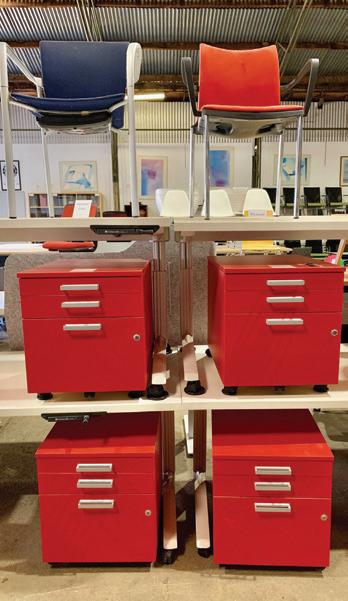
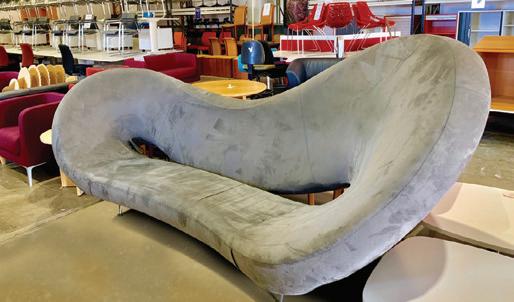
One of the goals of the modern international furniture industry has been to transform furniture from being a long-term investment into a disposable fashion commodity. Furniture designers these days are under pressure to be “on trend” and this message is reinforced by the types of competitions and prizes that are available. There are strategies in place to encourage the consumer to replace their furniture over shorter and shorter cycles in order to increase their average spend over time.
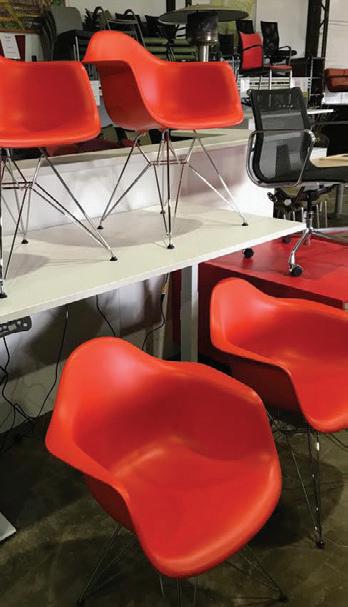
Most modern furniture designers come from a graphics background, with little knowledge of how things are made, or how furniture interacts with people’s lifestyles. They design furniture that will look good as an image. The classic scenario is a chair that is graphically strong in striking colors but poorly made and uncomfortable. The client sees the chair in all the magazines, visits a stylish showroom that places the chair in its best light, and the low build quality puts it in a price range that seems irresistible.
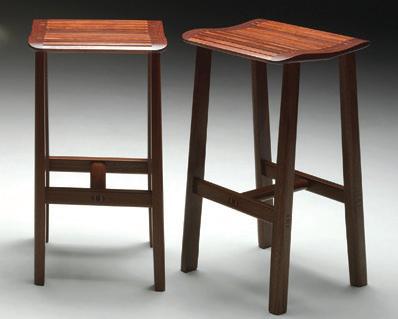
The client purchases the chair and almost immediately starts to regret the choice, because the item is the image of a chair, not an actual performance object. It is almost a relief when, after a few years, the legs start to wobble and the owner feels justified in throwing it away. It didn’t cost very much, it was never very comfortable and anyway, it is no longer trendy. There is no point in trying to repair it, it’s time to buy a new chair.
The antidote to this trend it to find a local designer/maker who builds things to last. This type of craftsman relies completely on the holistic performance of the things they make. The designs must be timeless, the craftsmanship must be impeccable and the performance must be exceptional, otherwise they have no market. At Dunstone Design, we have been making contemporary fine furniture for more than 20 years. Some of our designs, like the Waterfall stool (pictured), have stood the test of time and are as popular today as they were when they were first launched. This type of holistic performance is what sets a furniture designer/ maker apart from the everyday high-street furniture shop.
Evan Dunstone
CHURCHILL FELLOW 2001

Workshop/showroom open 7am to 5pm Tuesday to Friday and 10am to 2pm Saturdays – or by appointment.
Phone: 02 6297 8200
3/5 Aurora Place, Queanbeyan NSW
Email: evan@dunstonedesign.com.au www.dunstonedesign.com.au
Joanne Madeline Moore
Your week in the stars – April 29-May 5, 2019
ARIES (Mar 21 – Apr 20)

Are you an Aries spendthrift? With the New Moon stimulating your cash zone (plus impulsive Mercury and indulgent Venus both moving through your sign] you’re in the mood for a spontaneous spending spree. But is that a smart idea? When it comes to just about everything this week, if you are patient (and put in the preparation required) then you’ll be able to capitalise on the lucky breaks that come your way. Just remember Rams – slow and steady wins the race.
TAURUS (Apr 21 – May 21)
Bulls love their dependable routines. But this week you’ll be jolted out of pedantic predictability as Venus (your patron planet) powers through action-sign Aries and your perfectly planned routine gets the boot! So do your best to be smart and sexy… rather than self-indulgent and stubborn. The weekend New Moon’s in Taurus, so it’s a wonderful time to rejuvenate your physical appearance, kick-start a personal project or recalibrate your plans for the coming year.
GEMINI (May 22 – June 21)
This week’s astro-emphasis is on formal volunteer work or just providing spontaneous assistance to someone who is sad, sick, in trouble or less fortunate. So your mantra for the moment is from birthday great, Audrey Hepburn: “As you grow older, you will discover that you have two hands; one for helping yourself, the other for helping others.” And there’s no room for negative self-talk! The Mercury/ Jupiter link encourages you to be kind and generous towards yourself.
CANCER (June 22 – July 23)
Are you being too stubborn about an issue with a loved one or work colleague? Serious Saturn and perceptive Pluto push you to let go of a past grudge and orchestrate a subtle shift in attitude. On Friday, a fabulous work opportunity could come your way. Then the weekend New Moon encourages you to set goals and reach for the stars. Heed the wise words of birthday great Audrey Hepburn: “Opportunities don’t often come along. So, when they do, you have to grab them.”
LEO (July 24 – Aug 23)
The New Moon helps you power ahead with changes that have the potential to transform your life in positive ways. Plus Mars and Mercury boost your courage and creativity so you can pursue your goals for the future. But you must be adventurous and morph from a cautious Cat into a brave Lion! And you must let go of a perceived failure from the past that has been holding you back. If you truly learn from your mistakes, then you can finally move on to fresh pastures.
VIRGO (Aug 24 – Sept 23)
Do you have to be so virtuous Virgo, and such a stickler for doing things the right way? This week try to find the sweet spot between being overly organised and overly spontaneous, as you have fun and get a lot done. Travel is likely over the next year, as Saturday night’s New Moon activates your adventure zone. So start planning and networking ASAP. If you nurture your foreign friendships and cross-cultural connections, then the possibilities are endless.
LIBRA (Sept 24 – Oct 23)
This week you’ll be given the chance to heal an old emotional wound or patch up a relationship problem. So don’t let false Libran pride stop you from taking a giant leap forward when it comes to love, forgiveness, family and friendship. Accept the opportunity gratefully, with outstretched hands and an open heart. As birthday great Audrey Hepburn said: “People have to be restored, renewed, revived, reclaimed and redeemed; never throw out anyone.”
SCORPIO (Oct 24 – Nov 22)
Transformation is the name of the game this week, as the planets push you to rise Phoenix-like from the ashes of a difficult situation. A challenging relationship has the potential to be reborn into a much more positive partnership. But you must be prepared to release old grudges; let go of the past; forgive and forget. So your motto for the moment is from birthday great, actress and humanitarian Audrey Hepburn: “The best thing to hold onto in life is each other.”
SAGITTARIUS (Nov 23 – Dec 21)
With Jupiter (planet of confidence and prosperity) jumping through your sign (until December 2) a personal project shows great promise. But don’t let low self-esteem or negative self-talk hold you back. You have to be your Number One fan. If you don’t believe in yourself (and your talents) why should anyone else? Inspiration for the week is from Hollywood legend (and birthday great) Audrey Hepburn: “Nothing is impossible. The word itself says ‘I’m possible’!”
CAPRICORN (Dec 22 – Jan 20)
Karma comes calling this week Capricorn and a blast from the past could unsettle you. Do your best to keep the situation in perspective. Then the earthy New Moon lights up your leisure zone on the weekend. So – if you’ve got one – get out and potter in the garden. (As birthday great Audrey Hepburn observed: “To plant a garden is to believe in tomorrow.”) If you’re a garden-less Goat, then go hiking in the hills or enjoy a relaxing stroll in your local park.
AQUARIUS (Jan 21 – Feb 19)
Aquarians can be quite disorganised. This week’s New Moon (in practical, earthy Taurus) encourages you to establish some sort of domestic routine, which will help you to complete tasks in a much more streamlined fashion. But the Mercury-MarsJupiter connections increase your tendency to blurt things out. So think before you speak! When it comes to a recalcitrant relative or an annoying neighbour, perhaps it’s time to build bridges and let bygones be bygones?
PISCES (Feb 20 – Mar 20)
You need to be clear and straightforward in the way you communicate with other people this week. Don’t waste precious time pussyfooting around or being ‘creatively elastic’ with the truth. With the New Moon in pragmatic Taurus, it’s time to be a more practical Pisces and stick to the facts, especially when it comes to money, goals and business matters. By all means escape into a fabulous fantasy world – but make sure you can step back into reality when it’s required!
Copyright Joanne Madeline Moore 2018
What is the long narrow platform on which fashion models parade clothes? (7)
22 Which plant of the mint family is used in cooking? (7)
23 What is a mixture, or a medley, called? (7)
24 Name one who is very sensitive to the beauties of art or nature. (7)
1 Name the negative pole of a battery. (7)
2 Which loose outergarment is worn by an artist? (5)
3 To be successful, is to what? (7)
4 What is a sliding compartment in a piece of furniture? (6)
5 What is Indian corn also known as? (5)
6 In which country was George Bernard Shaw born? (7)
7 What do we call a chain of mountains? (5)
13 Which term describes one who is under medical treatment? (7)
15 To which animal class does a lizard belong? (7)
20 What do we call the
of a given region, taken collectively? (5)
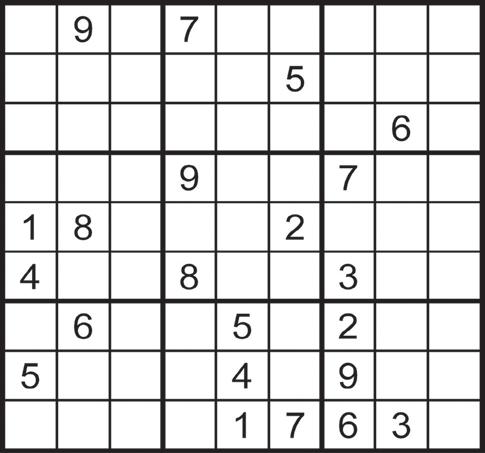

LEMON-scented plants have been popular since ancient times for their culinary, medicinal and fragrant uses.
When visitors walk through our side gate they cannot avoid brushing past and noticing the strong lemon-scented leaves of the Aloysia triphylla (lemon verbena). If there’s space, this deciduous shrub is a must for any garden.
Introduced into Europe from Chile in the 1790s, it was named after Maria Louise, wife of Carlos IV of Spain – Aloysia being a corruption of Louise. The Victorians took to it immediately for the rich lemonscented leaves. The almost insignificant white-tinged, pink flowers appear from late summer into the autumn.
Lemon verbena has numerous uses starting with either fresh or dried leaves to make a tea. The taste is fairly strong for culinary uses, so it is suggested to use sparingly. The leaves can be used in savoury stuffing and sauces; or used to flavour cakes and ice cream.
Besides the rich lemon fragrance of the leaves when picked fresh, they equally retain the lemon scent for several years when dried. Hence they are ideal for pot pourri and used to deter insects.
THEN we have Thymus x citrodora or lemon thyme. An old herb book of mine says the Greeks saw it as an emblem of courage and to the Romans, it was a remedy for melancholy. To tell a person they smelled of
Thymes are extremely useful in the garden as a natural, living mulch, of which there are many varieties. Here we are only interested in the lemon-scented thyme, both the greenleafed variety (which grows to 30cm tall with pale-mauve flowers in summer) and Thymus x citriodora (golden lemon thyme). These two are some of the most attractive of the thyme family.
MELISSA officinalis (lemon balm or sweet balm) is a fragrant, lemon-scented evergreen perennial growing to 45cm. This plant is extremely beneficial in the garden because its small, white flowers are highly attractive to bees. I cannot emphasise the importance of bee-attracting plants essential for pollinating a wide variety of plants from ornamentals to fruit trees and berry crops. Originating in the Middle East, its leaves were used as a tea. In days past, lemon balm was used as a strewing herb on the floor to freshen a room. I understand Melissa tea is still well-known in France as a tonic and remedy for headaches and tiredness.
FROM time to time, I like to share information of plants growing in our garden because I know they are tried and tested over many years. An example and a favourite of mine is Liriope muscari. A native of Asia, the name is due to the flowers being similar the bulb muscari or grape hyacinth, although no relation.
With its strap-like foliage, the clusters of purple flowers appear at this time of the year; followed by blackish berries in winter.



lining driveways and paths or grown in a group. Liriope has been given the UK’s Royal Horticultural Society’s Award of Merit.
THERE are many fragrance shrubs to give us joy in late autumn and through the winter, especially daphne.
Most people are familiar with Daphne odora and the variegated form Daphne odora aureomarginata, which have been in cultivation by the Chinese for several thousand years, although not introduced into the West by early plant hunters until 1771.
However, there are only a few daphne from China compared with the great many varieties from Europe, especially from the Mediterranean, growing from the toe of Italy right up through the Caucasus and Piedmont.
Used to long, hot summers, they are well suited to our extremes of climate, more so than the Chinese varieties. Although, there is no doubt that Daphne odora

WHEN buying plants, don’t just look at the common name, but read the full name on the label. Some common-name labelling can be misleading.
For example, Correas have been described as “native fuchsias”, whereas in reality they are not even related. A better description would perhaps be “fuchsia like”.
Another example is Edgeworthia papyrifera labelled as “yellow daphne”, is not a daphne, although botanically it belongs to the same family as daphne, namely Thymelaeaceae
Interestingly this Edgeworthia, more correctly E. chrysanthas is a Chinese shrub that grows to between 1m and 1.5m tall with clusters of fragrant yellow flowers clothed on the outside with white. It is used in Japan for the manufacture of high-class paper for currency. It was introduced to the West in
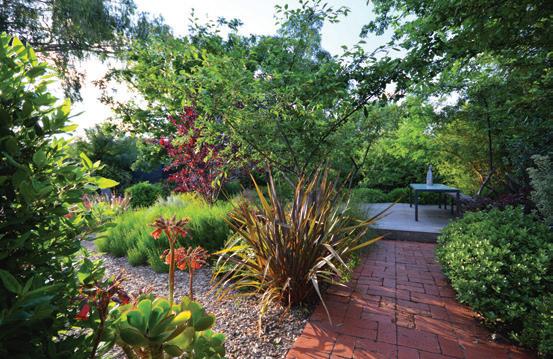
1845. Despite the misleading common name it is still an attractive shrub.
Jottings...
• I recommend not putting tea bags in the compost heap. Many, but not all, have a plastic content, which means they will not break down.
• To stop codling moth in apple trees, place a band of hessian round the trunk about a metre from the ground. Tie half way and fold over.

The Open Gardens Canberra season has ended, but KATHRYN VUKOVLJAK didn’t want to let it slip away without a second look at some of the highlights from the gardens “CityNews” visited over the past season...
THE cooler weather has set in and the Open Gardens Canberra season has come to a close, but it was a cracker with everything from structured formal gardens, those with a strong, sustainable, productive focus, veggies galore, historical elements, rare plants and some that have been allowed a more relaxed evolution.
AINSLIE
Photos: Holly Treadaway
TRUDY Yogini’s densely packed, productive garden evolved through hard work and research.
Trudy’s focus on sustainability, composting, water collection and year-round produce has created a space that envelops the house with climbers, shade and foliage, with hidden paths to follow and edibles at every turn.
Having learned the principles of permaculture, renewable resources and producing no waste through
says the garden ties in with her sustainable lifestyle.
The courtyard near the house is abundant with herbs and citrus, and is a favourite spot that Trudy uses for meditating and her yoga practice.
Trudy harvests veggies year-round, thanks to underplanting varieties that might otherwise suffer in extreme heat or frost, with salad greens available any time, beans and peas in spring and masses of summer vegetables including sweet corn, tomatoes, zucchini, carrots, beetroot, ginger and asparagus.
“I’ve created a microclimate which benefits urban life, improves the air and is my small contribution to a cleaner
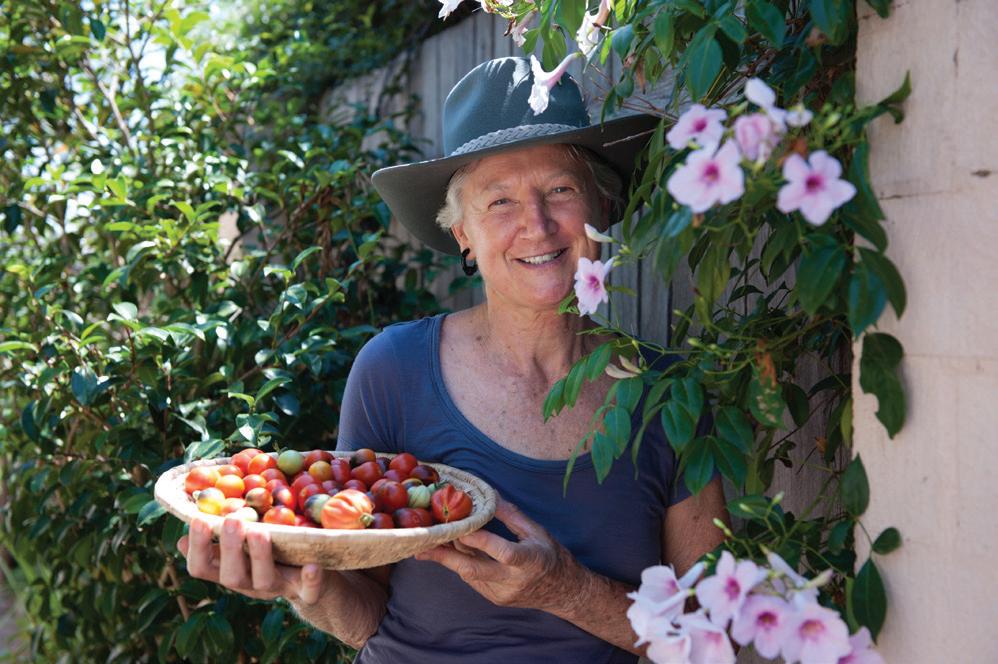

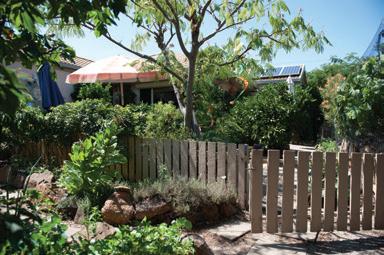
The next season starts in September, Join Open Gardens Canberra for $25 to visit a year of gardens for free. You can also visit as a non-member for $8 a garden. Open Gardens Canberra’s membership year runs from September 1 until August 31.
Visit opengardenscanberra.org.au/members for more information
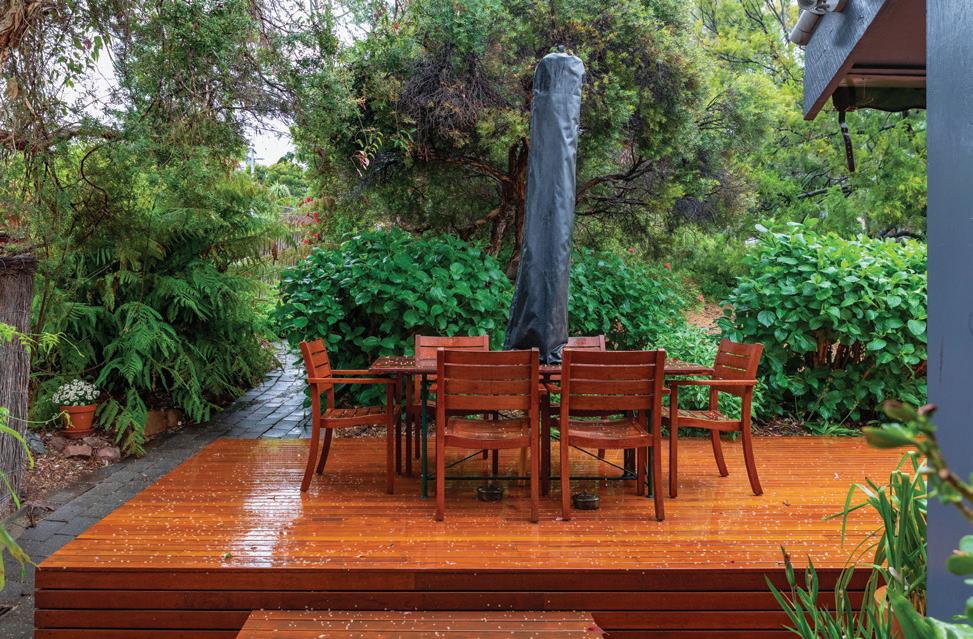

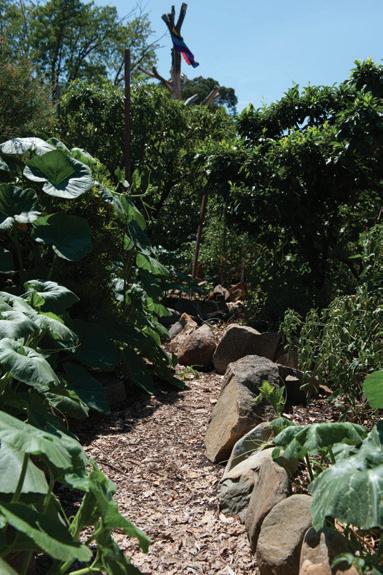
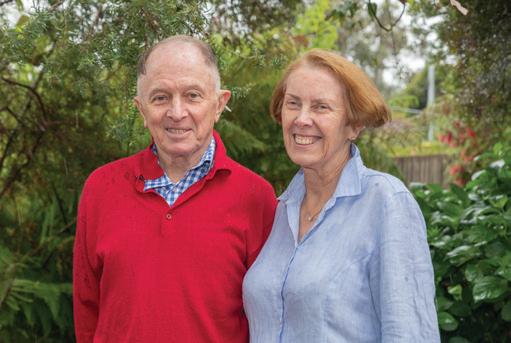
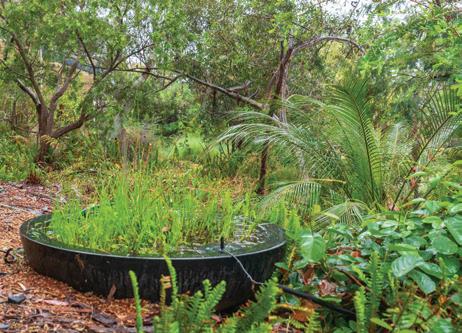
1800sqm block.
and
for
and
The garden features a broad sweep of natives to the
and veggies, berries, beehives and chooks tucked away in the back behind thriving hydrangeas and callistemon.
Meandering paths take visitors to hidden nooks and crannies in what Alan describes as a “largely unstructured garden full of surprises” on their steep
The couple grow seedlings, make hand cream from their own beeswax, and jam from their raspberries and boysenberries.
Alan says the garden has been a labour of love, with much work going into improving the soil and creating efficient irrigation through 50,000-litre water systems, including rainwater tanks under the front deck which overflow into a sunken tank.
“We built the garden ourselves, we’ve carted in rocks and countless truckloads of soil and washed river sand, built wastewater and rainwater systems, which we top up with mains water,” he says.

Photos: Holly Treadaway
WITH a hand-built parterre rose garden, succulents, trees, shrubs, perennials and English box hedges as dividers, Christine Gascoyne’s large, magical garden is packed with an array of plants, including several unusual varieties she loves to experiment with.
“There’s the callicarpa shrub with metallic purple berries, an amorphophallus lily with its striking flowers but horrible stench, and a persicaria painter’s palette, which has irregular splashes and markings,” she says.
There is a small lawn area for Christine’s grandchildren to kick a ball, but much of the garden is hidden along winding paths that she says seem “magical and secretive” to the kids.

Photos: Holly Treadaway
VIBRANTLY green and as joyful as the lady herself, Joan O’Loughlin’s pretty cottage garden is abundant with foliage, including several varieties of weeds, which she admits she has a relaxed attitude towards.
The back lawn is framed by overflowing beds creating shade and privacy, with a touch of pink and blue flowers among the green including salvias (which the bees love), crepe myrtle, aquilegia, hellebores, Japanese maple, irises, Korean spruce and bulbs in spring. Joan says she can often be found pottering outside in her nightie
the “heap” hidden behind the garden shed, comprising bales of pea straw that form a compost enclosure.
Pot plants and hanging baskets surround the house, filled with gardenias, begonias, orchids, fuchsia and citrus, and Joan says she’ll happily salvage any seedlings that grow in cracks between the pavers.
“It’s not a designed garden and I very much go with the flow,” she says.