After 30 years, the unwanted government is here to
MICHAEL MOORE
The panicky minister and his half-baked prison JON STANHOPE


Someone save these trees from the developers
PAUL COSTIGAN
More to weeping than meets the eye
CEDRIC BRYANT

After 30 years, the unwanted government is here to
MICHAEL MOORE
The panicky minister and his half-baked prison JON STANHOPE
Someone save these trees from the developers
PAUL COSTIGAN
More to weeping than meets the eye
CEDRIC BRYANT
VICKIE HINGSTON-JONES

By Rod HENSHAW

WALKING into Colin Steele’s Hawker home, you could be excused for thinking you’ve stumbled into a library. The main living area is flanked by floor-to-ceiling bookcases literally oozing literature.
There are even more collections in the study, spare room and almost everywhere you look. But not the bedroom.
“We sleep in a room without books,” says Colin. “That’s one of the things my wife (Anna) says she’s never going to do.”
Clearly, he wants to avoid a similar fate to that of 19th century bibliophile Sir Thomas Phillipps, arguably the world’s most prolific collector of books and artefacts.
“His wife left him because she was bedded by books,” Colin says.
While trying to take in the enormity of these incredible collections, the former University Librarian at the ANU (1980 to 2002) says what’s there is just a fraction of what’s left. The rest have either been sent to Melbourne to go under the hammer at auction, while other collections are housed at the Fisher Library at Sydney University and at the Australian National University.
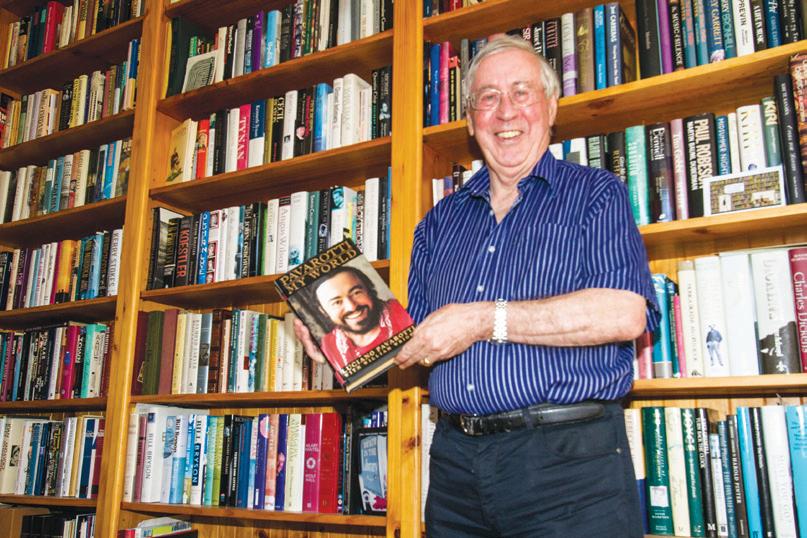
adorned with signatures or autographs neatly inserted into the respective tomes.
The upcoming auction at Leski’s Melbourne auction house on March 3 will feature Colin Steele’s “Autograph and Book Collection” (lots 502 – 510). It is a bibliophile’s fantasy.
What makes these collections so different is the fact that most of them are signed, either by
Hop across the ditch to the UK and you discover all things English. The British Royal Family collection is breathtaking, from Edward, Duke of Kent (Queen Victoria’s dad), through to Charles and Camilla, encapsulating all the majesty and, of course, the attendant salacious hanky panky that went on throughout those royal years. It’s all there, signed or autographed or containing
Since 1993: Volume 25, Number 7
‘60s, which makes Bill and Monica look like a relatively harmless grope in the park. Not even close, with or without cigar.
But it’s not all Pommie political proclivities, pageantry and peccadilloes. There’s a veritable assortment of English satire and comedy in the ‘60s and an entire collection on the 1968 English World Cup win.
Back to the US, he’s got a selection titled “American Astronauts and the Space Race”. And
closer to home, “Australian Prime Ministers, Politicians, Governors-General and Other Public Figures”. You get the picture?
Colin Steele’s affinity with books began as a child in his native England.
“Having been brought up in the north-east of England, we didn’t have any other entertainment in the 1950s. So reading was a good thing to do.”
It was when he began his academic years at Oxford that the notion of collecting books became a reality.
“All the people at Oxford, like (JRR) Tolkien, would wander through the reading rooms. If I’d have got Tolkien to sign one of the books, you wouldn’t need superannuation,” he laments.
Likewise, when he came to Australia he left behind some literary gold, which he gave to friends.
“There were first editions of Ian Fleming which are now worth a fortune.”
Colin Steele’s interest in books continued in Australia and even today, in his mid-seventies, he’s an emeritus fellow at the ANU’s College of Arts and Social Sciences.
He was chair of the National Word Festival from 1983 to 1987 and since then has been convenor of the ANU’s “Meet the Author” events, which has provided countless opportunities to add to his autographed collection.
So why does he now want to divest himself of these treasured collections? The answer is simple.
“We’re really doing this because of what happens when you die. Could they be going to the tip? That’s happened with some other major collections in Canberra.”
And the obvious, irresistible last question: “Do you have a Kindle?”
“Yes,” he replied. “But only for travelling.”
Arts & Entertainment 18-20
Canberra Matters 6
Cinema 20
Crossword 21
Dining 20
Garden 22-23
Horoscopes 21
News 3-9
Politics 7

Social 17
Ph 02 6189 0777 Fax 02 6189 0778
9b/189 Flemington Rd, Mitchell 2911
taken by Ian Meikle, 9b/189 Flemington Road, Mitchell. Cover: End-of-life doula Vickie Hingston-Jones. Photo: Holly Treadaway. Story Page 5.
Managing Director: James Anderson, 0404 077605, james@citynews.com.au
Director: Kate Meikle, kate@citynews.com.au
Senior advertising account executive: David Cusack, 0435 380656
Advertising account executives: Daniel Clayton, 0451 232129; Damien Klemke, 0439 139001
Editor: Ian Meikle, editor@citynews.com.au
Assistant editor: Danielle Nohra, danielle@citynews.com.au
Journalist: Kathryn Vukovljak, kathryn@citynews.com.au
Arts editor: Helen Musa, 0400 043764, helen@citynews.com.au
Production manager / graphic design: Janet Ewen
Graphic designer: Karl Speller
Proof reader: Glenda Anderson
Accounts manager: Bethany Freeman-Chandler accounts@citynews.com.au





HAVING a car stolen is traumatic, but when your vehicle is located wrecked the trauma takes on new dimensions.
Thieves recently stole a Canberra woman’s car and spent seven days clocking up six speeding fines totalling $1850, 16 demerit points and 3000 kilometres. The spooky postscript to this nightmare is that the car was abandoned after hitting a power pole outside the woman’s place of employment just minutes before she arrived for work.
IRATE Canberra cabbies staged a peaceful protest outside the ACT Assembly presenting the Barr government with an “invoice” for $76 million. ACT Taxi Plate Owners Association Inc chairman Peta Ivanovski said: “ACT and interstate families have lost their life savings due to the government flooding the market with new taxi licences at a fraction of the price they paid”. Ivanovski said if the group did not receive compensation it would stand candidates at the next election.
THE UC Canberra Capitals continued celebrations well into the week after their drought-breaking WNBL championship win against Adelaide. Fans had the chance to thank the team, which had not won a premiership since 2008, with a ticker-tape parade through the UC concourse. Members

of the victorious team arrived in a convoy of Audis to the wild cheers of the crowd that showered the basketball heroes with streamers and confetti.
WHATEVER the future holds for Canberra radio’s Angie Clairvoyant , only she knows. After 14 years in the business beginning at Mix 106.3 and including stints at 2CA and 2CC, Angie says she is “hanging up my radio hat”. In a Facebook post Angie announced she was “ready for my semi-retirement” but
didn’t reveal future plans.
AS for predicting the future of the man they call the nation’s best broadcaster, Alan Jones, not even clairvoyants are prepared to take a punt. But it hasn’t prevented wild speculation from many Sydney radio types. Latest word is that the Jones boy –networked to Canberra through 2CC – is to be replaced by another early-morning riser from another medium who is presently being paid a handsome wage (by the same
company as Alan) to sit on his hands.

Saturday, 2 March 9.30am - 11.00am
A RETIRED AFL umpire may have provided proof that some are “blind” or at least “one eyed”. Canberra manTrevor Parkinson who officiated for more than 20 years from the ‘60s to the ‘80s posted a pic on Facebook after successful surgery to relieve optic nerve pressure.
Pet” (a podcast about teacher and rugby league player Peter Dawson who is now accused of murdering his wife). In “Who the Hell is Hamish?” journalist Greg Bearup tells of serial conman Hamish McLaren who swindled millions from his victims, including Sydney woman Tracy Hall, who lost $378,000. Hall learnt the painful truth about Hamish from his brother-in-law Chris Rourke, in a life-shattering phone call in which she asked: “Who the f..k is Hamish?”.
“One-eyed” former AFL umpire Trevor Parkinson.
Parkinson says the constant taunts of “get your eyes checked” and “where’s your white cane?” were a part of the game, but made no difference to the decisions he made. There are a few around town who might argue the Ainslie games Trev controlled may have suffered from a lack of clear eyesight.
STILL on footy and multi-premiershipwinning Ainslie coach Chris Rourke is receiving publicity he may not appreciate. Rourke pops up in “The Australian” newspaper’s latest crime podcast “Who the Hell is Hamish?”, billed as the new “Teachers’
IT may not be long before pics of Canberra’s unwanted dogs are appearing on social pages. Social Dog Company founder Tatum Brown says events such as the “Canines, Cocktails and Catch-ups” at the Treehouse Bar in Civic give people wanting to rescue a dog or just hang out and relax, the opportunity to meet and greet in a social environment. Up to 40 people attended the last event to sip cocktails and mingle with the mostly greyhound crowd. The most popular cocktail is apparently a “Paw-tini”.


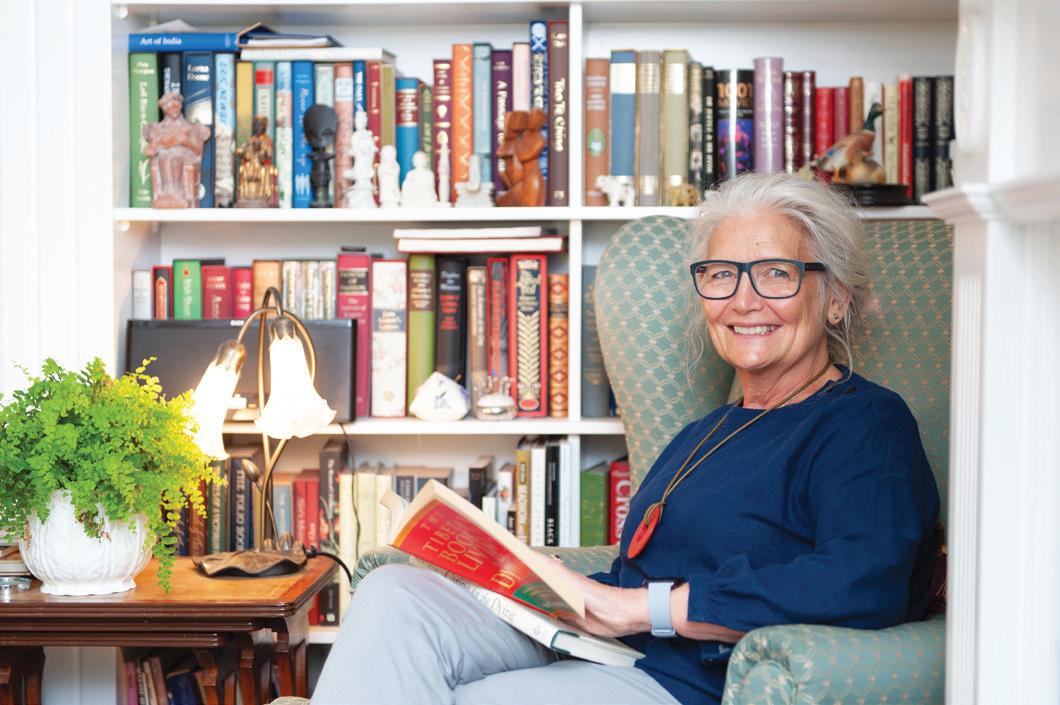
Married to David, Vickie has four children, six grandchildren and two dogs, she says. She retired from working in library and information services in 2005 to become a birth doula, continued training and gradually moved from birth into end-of-life work. She’s also an artist and the president of the Artist Society of Canberra, a beekeeper, a volunteer guide at Lanyon Homestead, a seamstress making burial gowns for babies from donated wedding dresses and is on a panel travelling around Australia discussing neonatal and infant loss.
She says she likes to speak to people well before they can even imagine the end of their life, and plans to run a series of death cafes to start the conversation over coffee and cake.
“Talking about death while we’re fit, young and healthy is healthy in itself,” Vickie says.
“It pulls the dragon out from under the bed, you look it in the eye and see that it’s not that scary actually.”
End-of-life doula work can extend to supporting the family and helping people become involved in organising their own send-off, Vickie says.
“We talk about writing your eulogy, putting your slideshow together, getting involved and that in turn helps to move from that space of rigid fear to a place of creating a really happy end to your life.
“The family can be involved, too; I love the idea of decorating coffins, working with seamstresses who make shrouds and volunteers who do flowers from people’s gardens. It can be so nurturing.
“You also don’t need to worry about what’s going to happen to the family because they’re engaged in the process, so they have somewhere to move to once the death has occured.”
Vickie says that doing this work has made her comfortable about her own end of life.
“I told my husband that I want to die at home, unless it’s totally impractical and I get hit by a bus,” she says.
body, arranging the funeral and being with the family afterwards.
“Often I’ll talk to a family and ask, when you die do you want to be buried or cremated? And they might say, ‘I don’t care, I’ll be dead, it won’t matter’. And the family will say, ‘I thought
you’d want this, or that’. And you get a whole dynamic opening up.
“Having the conversation prevents anxiety and arguments among the
family once the person is gone – it’s a hard enough time but can be made so much worse if there’s unease about what they would have wanted.”
There’s often far more scope for being involved in the funeral process than people realise, from keeping the body at home to natural burials.
“People don’t generally know the options for death care and funerals,” she says.
“I have an idea in my head, I want there to be plenty of really good French champagne and some good cheese. Hopefully mine, because I make cheese. And I want there to be jazz playing, a nice breeze, and I told him I want our white curtains to flutter in the breeze. Then I realised I had plantation shutters put in and they’re not going to flutter in this vision I have!
“But you know, it’s a work in progress.”
Contact Vickie at hingston-jones.com

Baby Checks & Immunisation
Child & Adolescent Health
Women’s Health: Cervical screening, GP shared pregnancy care
Implanon insertion/removal
Men’s Health • Veteran’s Health and DVA Claims • Bulk Bill Children under 16 years of age

Mental Health Care
Skin Checks • Minor Surgical Procedures • Travel Health & Vaccinations • Health Assessments & Care Plans • Asthma Care & Spirometry • Commercial & Recreational Diving Medicals WELCOMING NEW PATIENTS SAME DAY appointments available!
MORE than a decade ago Downer residents were dealing with the government’s questionable proposal to sell the former school site for a 300-unit apartment block.
This proposed complex included social housing, private apartments, commercial outlets, a childcare centre and kept the cherished courtyard with a much-loved sculpture. The commitment was that the heritage trees around the edges of this part of the park were under no threat.
Then around 2011 the Community Housing Canberra (CHC) bought the site through a direct sale given their community-housing brief.
The CHC reduced the number of units and the scale of the development. Its plans included social housing (what they do), private apartments, some independent living apartments (for aged people), childcare centre, the courtyard (sadly, the sculpture went missing) and all the surrounding trees, the birds and the biodiversity.

In 2019 almost none of the above applies except
Is everyone too busy to notice? When the trees on Bradfield Street and part of Melba Street are all gone, maybe then locals will start to ask questions.
that CHC is still the developer.
The courtyard has gone, there is no social housing and the trees along Bradfield Street are to go (some gone already) and the trees alongside the site on Melba Street are in danger.
Despite former rhetoric about how this development complex was to be integrated into the community and deliver a range of benefits back to the residents who gave up their school and this part of the Downer parklands, there are to be now no identifiable community benefits plus there will be the loss of all the previously heritage listed greenery.
Some are satisfied that the trees will be replaced. But they fail to comprehend that new plantings will most likely suffer a similar fate of others in Canberra. That is, given the way this government looks after trees, the maintenance will be minimal resulting in no significant growth in the lifetime of anyone alive today.
Then there is the role of the CHC – which is supposed to be delivering
community housing. In this case it is simply acting as any other commercial developer and within that seems to little care for the character and heritage of the suburb.
While the CHC has worthy intent and has suffered from the mean hand of this government in having monies withdrawn from it, none of that justifies how it is going about this development and how it is the agency overseeing the destruction of this suburb’s heritage.
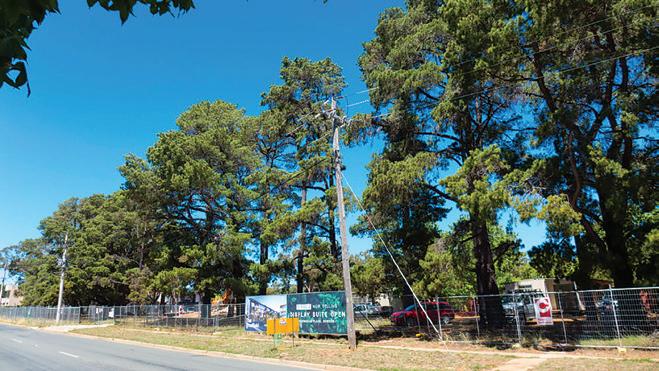
Other developers are forced to work around such significant trees. Why not the CHC? The story is complex and too long for this short opinion piece. But having carried out research in the time available, there is nothing obvious to why the CHC has not taken more steps to retain these trees and possibly seen to it that a long-term strategy was in place to see a timed replacement of any trees that may be in a bad way. There is no reason for the complete and simultaneous removal of all these trees. None.
Recently, there has been advocacy about trees and a new emphasis on heritage. However, despite the political speeches, constant consultations, petitions, the voices from lobby and

residents’ groups, the many worthy green, eco-friendly associations and heritage groups, few are raising strong objections to the imminent removal of these magnificent heritage trees that are part of the historic character of Downer.
This serious loss of trees is a very perverse outcome to a long history of planning and development, timeconsuming consultations and deals on this Downer site.
Is everyone too busy to notice? When the trees on Bradfield Street and part of Melba Street are all gone, maybe then locals will start to ask questions.
CLAIRE EDWARDES PERCUSSION
Anyone on the CHC executive or board and those of all colours within this government with an interest in the environment, heritage, planning, urban development, housing and the list goes on, they need to do a serious rethink about how they are sitting on the fence watching this heritage disaster unfold. Any of these people could change this outcome.
Paul Costigan is an independent commentator and consultant on the visual arts, photography, urban design, environmental issues and everyday matters.

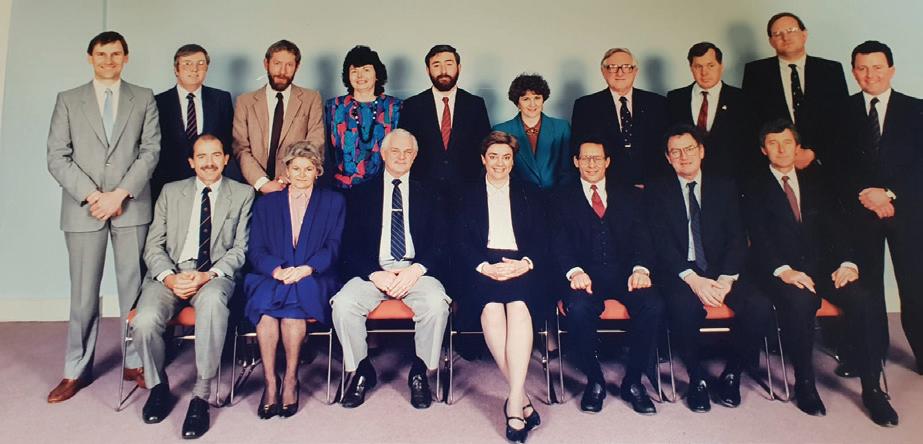
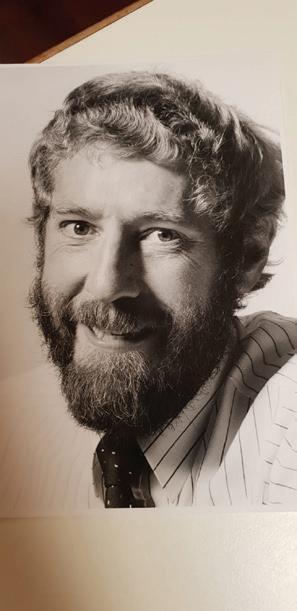
Elected to the first ACT Legislative Assembly on March 4, 1989, MICHAEL MOORE remembers Canberra’s early days of self-government
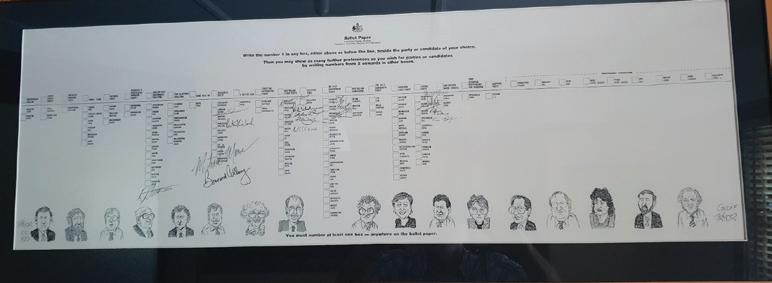
THE Sun-Ripened Warm Tomato Party, the Party! Party! Party! Party and the Surprise Party were all on the March 4, 1989 ballot paper for the first ACT Assembly.
These parties were the brainchild of satirist Emile Brunoro. None of their candidates were successful – other than as particularly effective satire. Have any lessons been learnt over the last 30 years?
Almost two thirds of Canberrans had voted in a referendum against self-government in 1978, understanding that it was to facilitate cuts to Canberra.
The unbelievably cynical, anti-selfgovernment parties tapped into the popular sentiment to “abolish” self-government. Before the first sitting day, No-Self Government Party member David Prowse had the numbers to be the Speaker. His colleague Craig Duby would become a minister in the Alliance government.
Rally. Preferences proved the key to being elected, as has re-occurred so many times since.
The expectation that Dennis Stevenson, of the Abolish Self-Government Party, would step down if he was not able to get the numbers proved a ruse. Despite amazing shenanigans such as sleeping in his office, the hard, rightwing Stevenson would be elected for a second term. Blame for the fiasco was directed at the modified D’Hondt electoral system that was used for the first Assembly. It was a great scapegoat.
However, the electoral system really delivered fairly on the way that Canberrans had voted. The ballot paper in 1989 was just a tad over a metre in length with 21 parties, nine independents and 117 candidates. Despite the objections to having self-government thrust upon the Territory, only
The major parties were unable to seriously negotiate with the Residents Rally leader, Bernard Collaery. Hence, the shambolic start to the Assembly was based on an agreement between Labor and Liberal that a major party should make up the first government and Rosemary Follett was elected as the ACT’s first chief minister. Her government lasted just five months until Liberal Trevor Kaine was able to gain support from Collaery and Duby to form the Alliance government.
The saving grace of the first Assembly was the establishment of the committee system. Lessons were learnt. Committees of the ACT Assembly still play a key role in ensuring appropriate consideration of complex issues, and in maintaining accountability of those in government.
Carmel Maher, who was elected with the No-Self Government Party, worked tirelessly

than he could use. In 1991, a “Canberra Times” banner screamed: “House of Farce”. The Speaker, David Prowse, held a press conference to announce he feared having rabies, another Assembly member had been caught driving an unregistered car and three others were being investigated over financial irregularities.
In 1990, Minister for Urban Services and No-Self Government member Craig Duby was fined $900 for refusing to have a drink-driving test. Being dependent on his support, Chief Minister Trevor Kaine did not fire him – but set the standard for “toughing it out”.
Many lessons can be learnt from the first elec -
in that first Assembly have been repeated in just as farcical manner at the Federal level with Rudd-Gillard-Rudd and with TurnbullMorrison. Things may have seemed a mockery on democracy, but legislation was considered, issues of government were dealt with and the people held members to account at the next election.
The Federal government ignored the wishes of the ACT and stabbed the territory in the back. Thirty years later, the government we did not want is here to stay. However, some of the scar tissue remains.
Michael Moore was elected to first ACT Legislative Assembly in 1989 and was re-elected as an MLA until 2001. He has been a political columnist with “CityNews” since 2006.

tion.
The reality is that the type of changes of governments that happened



IT’S a truism that generals tend to fight the last war they won instead of the one that confronts them. But never have I seen it so brazenly displayed in the election battleground as the Morrison government fires the opening salvo against the Labor enemy.
Scott Morrison was the director of the NSW branch of the Liberal Party in 2001 when John Howard trounced Kim Beazley in the “Tampa” election. The moment Howard engaged the SAS to keep the refugees from landing, Beazley was toast. It was an ad-man’s victory. Morrison, who had been a promoter of NZ tourism and would transfer his promo skills to the Australian body in 2004, was up to his neck in it.
He really took the lesson to heart. When he became Immigration Minister, he militarised Operation Sovereign Borders with Gen Angus Campbell (now CDF) by his side; and as the Navy turned back the boats he rode the wave of applause from his party room all the way to The Lodge. So, what could be more natural than to remount the strategy in this latest contest for the Treasury benches?
Trouble is, these days the boats are few and far between. So he’s had to raise the temperature of the debate by re-opening Christmas Island in the wake of a vote in Parliament to treat the remaining refugees a little more humanely.
But by refighting the last war, he’s totally overlooked the real danger to our sovereign borders just over the horizon. Indeed, this man who fondled a lump of coal in the Parliament itself, is complicit in creating the conditions for an armada of boats that would dwarf the few hundred that carried the refugees from the Middle East wars to our shores. For that is the absolute certainty if the Morrison government continues to join with the other climate-change denialists and global temperatures rise 2C.
The war we’re fighting today goes to the heart of our future life on Earth. It’s no longer a vague possibility that might
The global theme for International Women’s Day on March 8 is “think equal, build smart, innovate for change”. KATE MEIKLE looks at the issues facing women…
THE eradication of domestic and family violence and the improvement of the economic security of women are two issues the National Council of Women Australia is particularly concerned with, according to president Robyn Nolan.
“People say that in Australia we are the lucky country, but these are significant issues,” she says.
“We have come a long way, but domestic and family violence kills one woman every week. We need to do more work in education early on, more work with men’s programs and look at solutions that impact women long term, such as housing and helping women stay in their homes,” she says.
The moment Howard engaged the SAS to keep the refugees from landing, Beazley was toast. It was an ad-man’s victory. Morrison was up to his neck in it.
discomfort us in the decades ahead. As the bushfires penetrate ever closer to our provincial towns and cities, as the floods break the northern river banks, drown the stock and ravage the homes of our people, and as our great river courses in the south fade to a deadly green to millions of native fish, it is a real and present danger.
That’s just us. We’re the relatively lucky country because our continent is so vast – and our population so small – that we will always be able to adapt better than others whose islands and deltas will be inundated and others whose crowded hinterlands will no longer support their vast populations. They will be on the march and on the sea. The very notion of sovereign borders will be drawn into question. It is a crisis that we should be preparing for right now – with diplomacy, defence and most important, with leadership in the struggle against climate change.
We know that Scomo (or is it “Promo”) will be cuddling coal as the waters of Lake Burley Griffin lap the Parliament and the bushfires roar down from the Brindabellas. But what of the Labor Party?
Are they up for the fight?
robert@robertmacklin.com

Robyn says that economic insecurity can affect women at all stages of their life, from addressing educational inequality for girls in Aboriginal and rural communities to providing new-skills training to older women.
“We want to champion superannuation measures to better support women such as the removal of superannuation thresholds for women who work part time and including superannuation payments with the paid parental leave scheme,” she says.
Robyn says the message of International Women’s Week is an important one and it needs all of the community to make cultural changes to support the issues facing women.
“Women can’t do it alone. Men must be part of any solution, all of the community needs to be involved. We should all work together in our community so no one is disadvantaged, particularly women and girls,” she says.
The National Council of Women provides bursaries for young women pursuing studies in the science, technology, engineering and maths fields, and encourages and promotes nontraditional roles for young women.
According to UN Women National Committee, International Women’s Day is a day when all women are recognised for their achievements. First born out of labour movements at the turn of the 20th century in North America and across Europe, International Women’s Day (IWD) is celebrated around the world on March 8.
Thursday, March 7
Breakfast with Madeline Stuart, the world’s first professional model with Down syndrome, 7.30am, National Gallery of Australia, Parkes. Book at eventfinda.com.au; Canberra International Women’s Day Lunch, noon, National Convention Centre. More information at unwomen.org.au
Friday, March 8
CPSU Women’s Lunch, 12.30pm, National Portrait Gallery. Guest speaker former ACT senator Katy Gallagher. Book at eventbrite.com.au
“Her Sound, Her Story” documentary screening and panel discussion, 6pm, National Film and Sound Archive. Book at nfsa.gov.au; “Tell it Sisters”, IWD Day comedy showcase, 8pm, Tuggeranong Arts Centre Theatre. Book at tuggeranongarts.com
ON February 15, the Minister for Corrections, Shane Rattenbury, made announcements about the pathway to the future for ACT corrective services.
I had assumed on the day of the announcement that the backdrop to the statements the minister made was the release, in close succession, of the Decembers Australian Bureau of Statistics (ABS) Report on “Imprisonment in Australia” and January’s report on corrective services by the Productivity Commission.
The ABS confirmed that last year the ACT overtook WA as the jurisdiction with the highest Aboriginal incarceration rate in Australia. This shameful honour was compounded by further ABS findings that the ACT also had the highest rate of increase in the rate of indigenous incarceration in Australia, the highest indigenous recidivism rate in Australia and the highest number of detainees on remand in Australia.
The Productivity Commission report on the performance of corrective services across Australia added to this tale of woe and failure with a range of additional data. For example, it found that the AMC, a muchheralded, human-rights-compliant and rehabilitation-focused prison has, over the last two years, established a reputation as the most violent prison in Australia.
The AMC, a much-heralded, human-rights-compliant and rehabilitation-focused prison has, over the last two years, established a reputation as the most violent prison in Australia.
The Productivity Commission also determined that the AMC has the lowest time out of cells of any jurisdiction in Australia with a detainee in the AMC being confined to their cell, on average throughout the year, for 16 hours a day. The ACT auditor-general in a swingeing report on rehabilitation services at the AMC made similar findings.
The Productivity Commission also revealed that the real net operating expenditure per prisoner and per offender per day in the ACT suffered the biggest reduction of any jurisdiction falling from $337.94 in 2011-12 to $283.48 in 2017-18. This represents a drop in expenditure at the AMC of just on $20,000 per prisoner per year over the last seven years or, in other words, during the time that Shane Rattenbury has been Minister for Corrections. I had assumed therefore that it was this sorry record of failure that the minister had in mind when he outlined his vision for the future of corrections in the ACT.
However, it now transpires that unbeknownst to all of us, the minister
also had in his possession the first detailed report by ACT Inspector of Correctional Services Neil McAllister of the treatment of detainees in the AMC. Suffice to say, the report is absolutely damning and it is almost certain it was this report, more so than the ABS or Productivity report, that panicked the minister into his half-baked and frankly incoherent pronouncements.
The central thrust of the proposed new approach to managing corrections was, the minister said, the importance of not increasing the size of the AMC.
In his press release and in media interviews he stated repeatedly that: “$14.5 million of funds (will be) redirected away from prison expansion into community programs.”
“This is the first time an Australian jurisdiction has committed to reinvesting what would otherwise be millions of dollars towards expanding prisons; instead these funds will be directed to rehabilitative programs.
“In taking this decision not to simply expand the jail, the ACT

government has clearly affirmed that… we want to urgently stem the flow of people into the prison.
“With prison rates on the increase, we cannot-in good consciencemaintain the status quo.”
However, with his next breath, the minister announced that the government had committed $997,000 for the planning and design of an expansion to the AMC of an additional 80 cells.
This new prison is described in the Minister’s press release as a “minimum security facility” and will be known as the Alexander Maconochie Reintegration Centre (AMRC).
Unfortunately, the minister has not given any indication of the expected capital or recurrent cost of this 80-cell expansion. What is certain is that it will cost an awful lot more than the $14.5 million that the minister tells us he has “redirected away from prison expansion”.
When built, the people imprisoned in the AMRC will undoubtedly find a more pertinent name for it, perhaps something along the lines of the Canberra Clayton’s Prison or the prison you have when you don’t have a prison or the prison you have when you have made a complete stuff up of
the one you have and you need a quick diversion.
Seriously, the question is why the minister thinks that the AMRC will be successful in delivering rehabilitation programs that will address the causes of criminal behaviour, reduce recidivism, address alcohol, drug and tobacco use and addiction and make detainees employment-ready when leaving the prison when his record and that of the AMC on these issues in the decade since the AMC opened is simply dismal.
The minister’s priority should be to demand of his officers that they concentrate on ensuring that the AMC be governed and managed in a way consistent with the clear vision and legislation that underpinned its establishment.
Jon Stanhope was chief minister from 2001 to 2011 and represented Ginninderra for the Labor Party from 1998. He is the only chief minister to have governed with a majority in the Assembly.




GAZETTED in 1982, the industrial suburb of Hume was named after the explorer Hamilton Hume. Its streets are named after Australian industrialists and businessmen, which suits the lightindustrial suburb.
MENTION ‘CityNews’ AND RECEIVE
5% OFF TERM FEES
+ A FREE ANGELINA BALLERINA TOP
LISA Clark Dance Centre has been one of Canberra’s leading dance schools since it opened in 1991, says director Lisa Clark.
Located in Hume, the school initially began on Tuggeranong focusing on ballet and jazz.
“There was a great need for quality dance teaching on the south side,” Lisa says.
“Today we do ballet, jazz, tap, contemporary, musical theatre, specialised preschool aged classes, adult classes in ballet and tap and an elite training program for selected talented dancers.”
Lisa did a three-year, dance-teaching degree at the Royal Academy of Dance in London after deciding she wanted to focus her ballet training on teaching.
“I only teach ballet because, for me, it’s an allencompassing artform or exercise,” she says.
“It’s a very holistic form of exercise and it’s also a very intellectual pursuit.”
But, Lisa says dance in general is great for fitness, posture, wellbeing, discipline, musicality and creativity.
In the centre’s ballet elite training program, she says students get exceptional results.
“Our elite-training program is designed for students who show talent in classical ballet, in particular, but also contemporary and it’s also for students who would pursue teaching as a career,” she says.
“Our students are being selected to train at elite institutions in Australia and overseas.”
Lisa Clark Dance Centre, 3/73 Sheppard Street, Hume. Call 6260 2272 or visit lisaclarkdancecentre.com.au
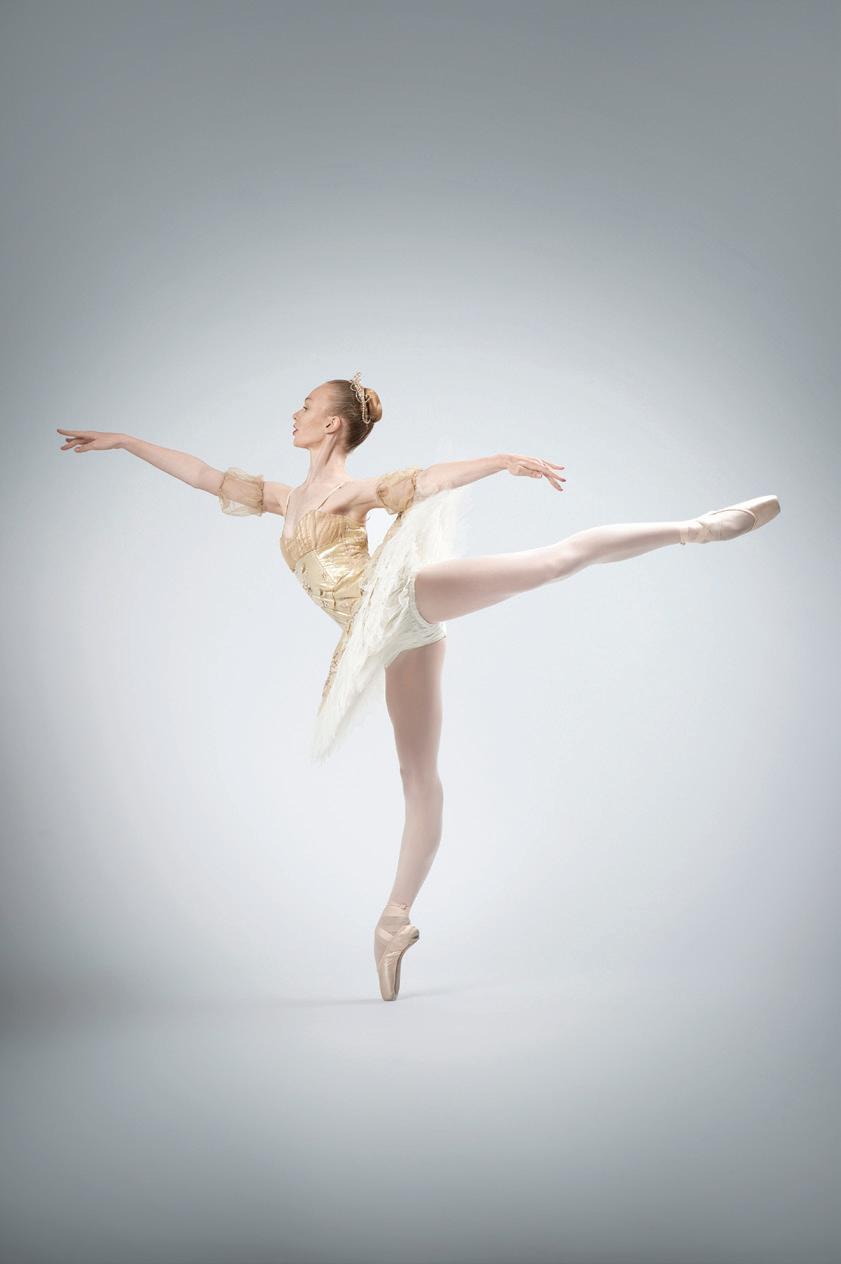


Here are five reasons for your child to experience dance early on:
• Physical Development
• Cognitive Development
• Building Confidence
• Social Awarness
• And so much fun!
Most children develop a love of dance and music before they can even walk or talk!
Come along and try a class! LCDC offers Angelina Ballerina Academy classes for 3-5 year olds, Jazz classes for 4-5 year olds and classes for 18 months - 2 year olds with Mum and Dad!
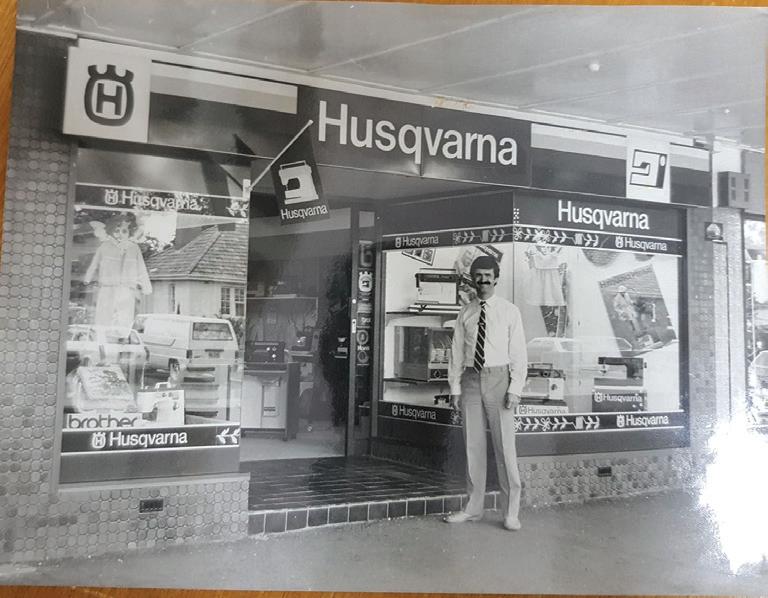
43 years of technological advances for industrial and domestic sewing machines.
Now located in Hume, Greg says Sew Simple remains the number one shop in Australia for Husqvarna Viking sewing and embroidery machines.
Greg loves the extraordinary Swedish quality of a Husqvarna Viking machine and says they’re an industry leader in technology.
“They’ve gone a big step forward because they’re really the only machine on the market with artificial intelligence,” he says.
“For example, you can tell the machine what fabric you wish to sew and the machine will set the correct
“It’ll even indicate which is the correct needle and foot pressure.”
Sew Simple also sells brands such as Pfaff, Juki and Janome as well as all the correct needles and accessories.
“The Pfaff machines have an extraordinary range of creative and decorative stitches,” Greg says.
“But most importantly Sew Simple is renowned for its technological services and support for the machines we sell.”
Sew Simple, Unit 1, 40 Raws Crescent, Hume. Call 6282 7144, email sales@sewsimple.com.au or visit sewsimple.com.au












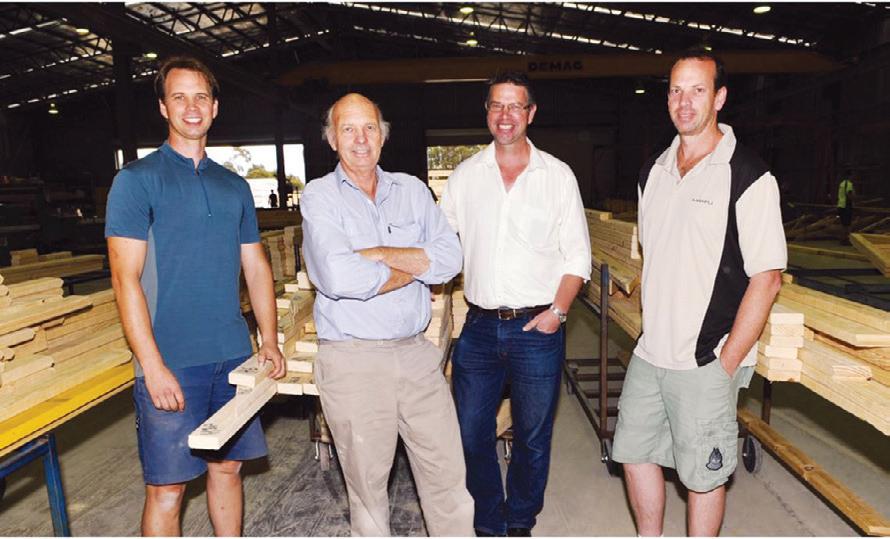
FAMILY-run Universal Trusses is leading the way in truss manufacturing software, says director Arthur Potter.
Arthur, who works alongside his brothers, father and nephew, says Universal Trusses gets visitors coming from around the world to look at its equipment.
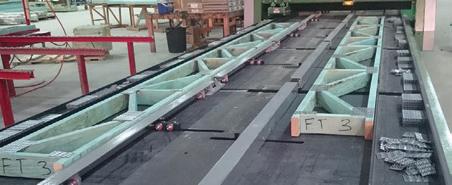
“The machinery we installed four years ago was the second of its kind in the world – the first was a prototype in Norway,” Arthur says.
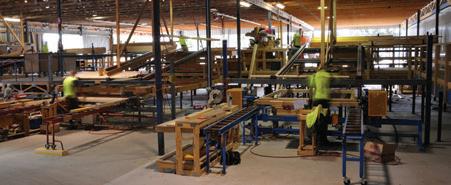
“There’s been more since, but we still get people wanting to have a look and get an understanding of how we build roof trusses.”
The truss-manufacturing software, according to
Arthur, produces a better-quality product and if it’s designed right, it builds exactly to that design.
“[Because of this] we do a lot of work for other truss companies in Australia, NZ and the US,” he says.
But it’s not only about trusses and Arthur says they deliver wall frames and floor systems, too.
“[No matter what it is] we look after people, we provide solutions and we give them the look they want at a price they can afford,” he says.
Universal Trusses, 52 Sheppard Street, Hume. Call 6260 1436, email office@universaltrusses.com.au or visit universaltrusses.com.au

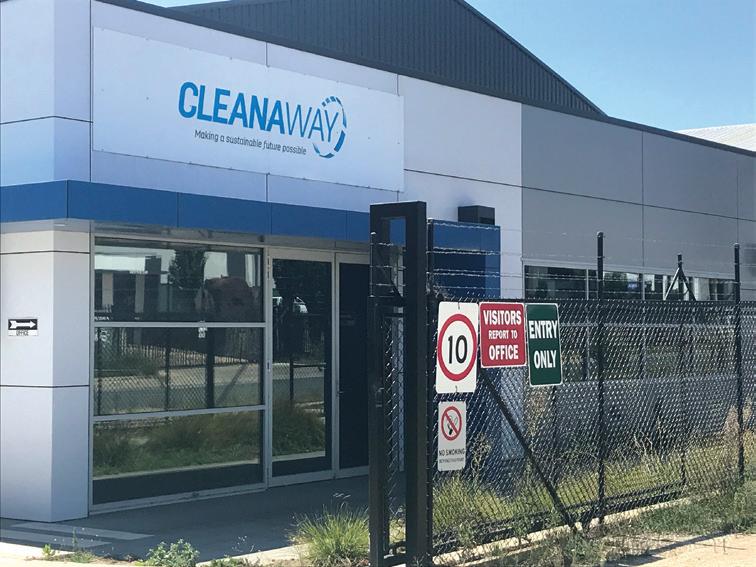
CLEANAWAY, a waste management, industrial and environmental services company in Hume, lives by the motto: “Making a sustainable future possible”.
“When you think about waste as a resource, it opens up a world of possibilities,” says the ACT Cleanaway branch manager, Robert Hibbert.
“Cleanaway is committed to helping industry, businesses and the community create a sustainable Australia for generations to come.”
Robert says Cleanaway is basically a one-stop-shop for waste and recycling.
“We can handle anything from medical waste, hazardous waste, large bulk containers, to small bins for general use,” he says.
“We give people the opportunity to dispose of waste
Cleanaway is unique in that it doesn’t believe there is any other companies who can handle all waste items like it can.
“We believe we have the full ability to handle medical and hazardous waste,” he says.
Cleanaway complies to all Government and Environmental Protection Agency regulations, which is why Robert believes they’re the perfect choice for all waste and recycling services.
“We have a high level of experience, too, and we’re also fully Australian owned and the largest waste company in Australia,” he says.
“Our services save people money and help the environment.”

Mail or market it, Michael’s got the answer

NATIONAL Mailing and Marketing provides a one-stopshop for warehousing and distribution, mail-fulfilment services, print production and third party logistic (3PL), says business strategy and development manager Michael Steele.
National Mailing and Marketing has grown in the ACT for about 25 years, which Michael says has meant they’ve evolved from a predominantly publication storage and distribution service to one providing a diverse suite of related services such as digital on-demand printing, banner production and management, digital duplication and distribution, print and merchandise broking, direct mail and campaign production and distribution.
“We have a number of e-business clients where we store their products,” he says.
“We have clients from businesses, start-ups, government departments and e-retailers that need assistance with any digital printing services such as business cards
“We’re probably the only ones who provide that end-to-end solution.
“We can help from the concept stage all the way through to production. We can also store products and deliver them, too.”
When it comes to any new or old National Mailing and Marketing customers, Michael says their focus is to exceed expectations every time.
“We don’t just give them what they want, we also add value where we can,” he says.
“We also try to deliver a very competent, competitive and cost effective service.”
National Mailing and Marketing, 11 Tralee Street, Hume. Call 6269 1000, email contactus@nationalmailing.com.au or visit nationalmailing.com.au



GETTING help with hearing loss is all about improving communication and gaining clarity, says Dr Bill Vass, principal of Dr Vass Hearing Clinic.
With 30 years’ experience in the hearing industry and the longest-serving private practitioner in Canberra, he says that while people think nothing of having an eye test or wearing glasses to correct their vision, the idea of having a hearing test and facing up to hearing issues is still not comfortably accepted.
“Hearing loss is identified as an elderly person’s issue and it is associated negatively with ageing. That’s not necessarily true. Generally, people don’t want to admit they need hearing help.
“I say to patients, I wear glasses to improve my eyesight. It doesn’t mean I am blind!” says Dr Vass.
“Wearing hearing aids means you are seeking better clarity and improved communication.”
He encourages people to take a hearing test with a qualified practitioner, as the benefits of using a hearing aid, should a person need
one, are life-changing.
Dr Vass says that Hearing Aware ness Week (March 3-9) is a chance to bring the issue of hearing loss to the community. As the first of only 20 doctors of audiology in Australia, with vast experience gained throughout his career, Dr Vass is a specialist in the field of hearing.
“Some patients put up with hear ing loss year after year and they cre ate many excuses for their problem, such as ‘everyone mumbles’,” he says.
“Having a frank and honest conversation with a loved one about their hearing is important to try to get them to admit they need a hearing test.
“That’s why Hearing Awareness Week helps raise the issue and increase awareness.”
Patients have the certainty that they will be seeing Dr Vass when they visit the clinic and that he will provide one-on-one, tailored care and advice.
However, Dr Vass warns that the hearing aid industry is unregulated and that anyone can sell hearing aids, without formal training in audiology.
The recent surge of retail hearing aid sales and the dominance of multi national companies, paying staff high commissions for making sales, has created problems of rogue providers

they need hearing help.”


ONE in six Australians (3.5 million people) are either deaf, hearing impaired or living with a chronic ear disorder, which is why Hearing Awareness Week annually raises national awareness around hearing impairments and ways to protect hearing.
This year Hearing Awareness Week will be held from Sunday, March 3, to Saturday, March 9, and throughout the week organisers are asking the community to give people with a hearing impairment a fair go.
“There are more possibilities than ever before to be included in all aspects of community and business life,” says a Hearing Awareness Week spokesperson.
“What is needed now is for the rest of the community to catch up and take the opportunity to give people with a hearing loss a fair go.
“Employers have more support than ever to make their workplace inclusive and accessible for Australians with a hearing loss.
“Australians with a hearing loss are ready and willing – the challenge is to the community to be inclusive.”


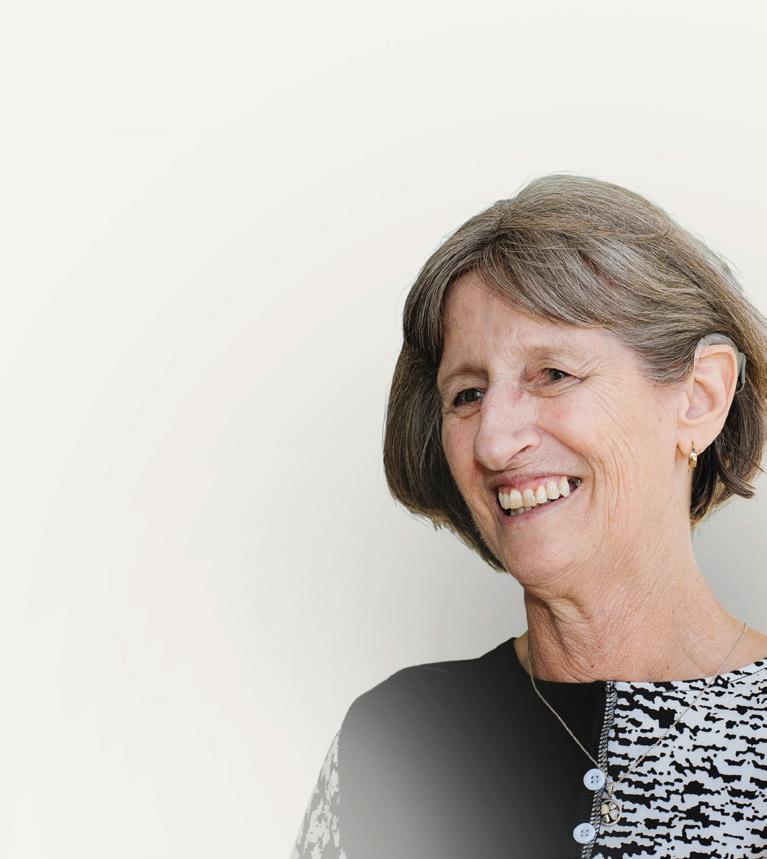
Blind Children service based in Canberra, taught Dianne to hear again.
“Getting the implant really has been the best thing I have ever done for myself,” Dianne says.
“It has made such a huge difference to my life, both in my work and at home.
“I can contribute in work meetings and social discussions like I never could before. It’s really changed everything.”
According to the Royal Institute for Deaf and Blind Children, the SCIC Cochlear Implant Program completed
person’s safety, too.
“If someone has a hearing aid but still struggles in a crowded place, then an implant might be suitable for them,” she says.
“Cochlear implants are suited for people with severe or moderate and varying degrees of hearing loss.”
SCIC Cochlear Implant Program, Equinox Business Park, Equinox 4, Level 1, 70 Kent Street, Deakin. Call 6124 1501, email canberraadmin@scic.org.au or visit scic.org.au



THE ACT Deafness Resource Centre’s Health

will be there too, providing free hearing screening tests.
“To take advantage of this free service you must book first directly with Australian Hearing on 6232 3200.”
Glenn says ample parking is available at the Hellenic Club on a first come, first served basis.
“It’s free to members of the club and at a
reasonable rate to others,” he says.
ACT Deafness Resource Centre’s Hearing and Health Expo, the Hellenic Club, Woden, 10am-3pm, Thursday, March 7.





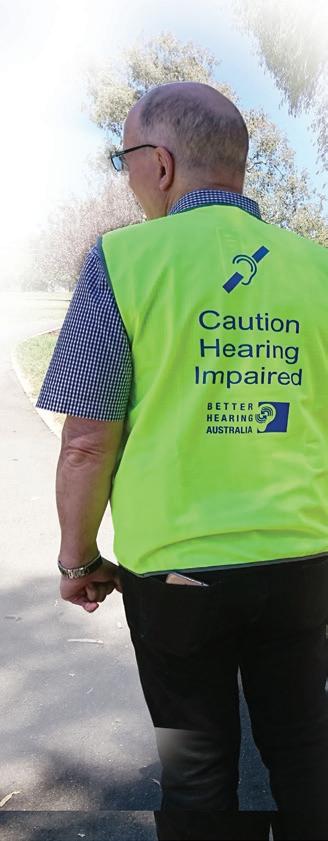
CANBERRA has a significant hearing-loss problem, according to Bill Leane, chairman of the ACT branch of
He says 25 per cent of Canberrans are more than 55 years old and, of these people, 60 per cent would benefit
“Ten thousand people have and regularly use a hearing device [and] 50,000 Canberrans and their families tolerate and accommodate life with a frustrating and debilitating
“Many of the frustrated 50,000 Canberrans also experi -
“In these cases, hearing loss is pushed lower in the
Bill says Better Hearing Australia is a charity with the mission to bring information, education, skills and proven management packages to anyone coping unnecessarily with the debilitating effects of progressive hearing loss such as isolation, loneliness, withdrawal and depression.
“Better Hearing Australia is here to help before, during and after the acquisition of hearing loss,” he says.
“We have a free outreach program through social and
“We conduct workshops on strategies of how family networks and clients can help manage hearing-loss journeys, within their own resources and with access to public support.
“We offer coaching and mentoring for clients and network leaders.
“[And] we operate three weekly hearing-loss management classes in Canberra, with a class complement of about 12 per class.”
Better Hearing Australia, COTA Building, 2 Wisdom Street, Hughes. Visit bhacanberra.org or call 6281 3962.
CHIEF MINISTER’S CONCERT
TueSday 19 March, 11am and 1pm
Join the Band of the Royal Military College for an unforgettable show.
Albert Hall, Commonwealth Ave, Yarralumla.
ENTRY BY GOLD COIN DONATION
Bookings via www. cmc19.eventbrite.com.au or 6282 3777
ACT SENIORS WEEK EXPO
ThursDAY 21 March,10am-3pm
One big day – entertainment and info on retirement, aged care, community and government services, legal, finance, travel and more!
Exhibition Park in Canberra. ENTRY BY GOLD COIN DONATION
Positive Ageing Awards
Friday 22 March, 2:30pm
Recognise and celebrate the groups and individuals that contribute to the older Canberra community.
Weston Ck Labor Club, Teesdale Cl, Stirling. Bookings required - call 6282 3777

Canberrans & their families tolerate life with a frustrating and often debilitating hearing deficiency!
Hearing Australia mission is to bring information, education, skills & proven management packages to families coping with the debilitating effects of progressive hearing loss.
BHA Canberra Helps… BEFORE
• Outreach program of knowledge, skills & strategies
• Workshops and drop-in centre consultation
• Plan execution and useful management tips and apps
DURING
• Coaching for hearing loss clients and network team leaders in plan execution
• Managing common hearing loss ‘pinch-points’, and related seminars and practice sessions
• Managing help networks, (including family relationships)
• Hearing loss management classes (including lipreading) ................................................................ AFTER
• On call ‘One to One’ coaching
• Remedial or corrective ‘round table’ facilitation to resolve diversions & distractions
• BHA Events for meeting others in similar situations and celebrating success www.bhacanberra.org
Do you know somebody who would benefit from our Coping Package? Contact Better Hearing Australia Canberra now Phone or call







By Helen Musa
CANBERRA is about to light up again with the annual Enlighten Festival running through March 1-6, and most of our national institutions are beavering away to produce spectacular illuminations that will show their buildings in, well, a new light.
Quick off the mark with a free event is the National Gallery with “Fields of Love”, an immersive after-hours event centring on the animated illumination by contemporary Australian artist Tony Albert of the Girramay/ Yidinji/Kuku Yalanji peoples. Albert’s work “I Am Visible” will be projected onto the façade of the NGA.
Electric Fields from SA will also “light up” the gallery’s outdoor stage with new music by composer Michael Ross and vocals by Zaachariaha Fielding.
Not far behind is the Department of Parliamentary Services at Parliament House, which is devising a new illumination, a re-imagining of an illumination that commemorated the 125th anniversary of women’s suffrage in SA. The new one will include portraits, including the recently unveiled painting of indigenous MP Linda Burney, of the “first” women of the Australian Parliament, taken from the Historic Memorials Collection.

With what it proudly says is the best view in Canberra, the executive chef at the members’ and guests’ dining room in Parliament House, David Learmonth, has dreamt up a patriotic, six-course, degustation feast for one night only.
Surely only a hatted and Michelin star chef such as Learmonth could dream up some of the Aussie gourmet offerings he’s pairing with wines from Lake George and Lerida wineries, involving macadamia custard, Murray cod, finger lime, wattle-seed buttermilk, prickly pear, the Parliamentary Librarian’s gin and, his favourite, Gooda
Creek mushrooms from Murrumbateman.
“Australia has a lot of good ingredients in both vegetables and protein,” he tells us.
Meantime, down the hill at Questacon is “The Poet’s Guide to Science”, described by Inspiring Australia ACT as a “unique and innovative cross-disciplinary event”.
It’s a work of fiction, but weaves in cameos from real, working scientists talking about controversial areas of science – “engaging, hilarious and thought-provoking,” they’re saying.
The show grew out of discussions between laser physicist Dr Phil Dooley, director/

writer Michele Conyngham and actor Patrick Davies Trumper, and takes on scientific dilemmas that ordinary Australians face.
Briefly, Cy (Trumper) visits his GP (Dooley) hoping for a cure for his loss of faith in science. The doctor isn’t interested, but soon the two embark on a journey to discover the truth, where the characters in the play meet real scientists and discuss controversies around GM foods, vaccines and climate change.
And the real scientists? At Questacon, they’ll include chair of Water Science at the University of Canberra, Prof Ross Thompson
and Dr Rebecca Colvin from the ANU College of Health and Medicine.
All the while, the night noodle markets will become the outdoor auditorium from which the Illuminations around the Parliamentary Triangle can be viewed – light and food together.
“Fields of Love”, NGA, 5-9pm, March 1, free entry. Parliament House Chef’s Degustation, 7pm, Saturday, March 9, bookings to aph.gov.au “The Poet’s Guide to Science”, Japan Theatre, Questacon, March 7-9, bookings to enlightencanberra.com


By Helen Musa
THE five-piece Alma Orquestra plans to transport Smith’s to Lisbon with Fado and folkloric songs of the Iberian Peninsula, as well as music from Portuguese-speaking nations of Cape Verde, Angola and Brazil. At Smith’s Alternative, Civic, 3.30pm, Sunday, March 3. Book at smithsalternative.com
THE Australian Rugby Choir members say they’re off again to the five-day biennial Cornwall International Male Choir Festival held in the cathedral city of Truro from May 2-6. They’ll be competing in the festival’s choir competition.
“Prospective New Members Night” is at Patterson Hall, Curtin Primary School, 7.30pm, Thursday, March 7. Would-be choristers should call 0448 839440.
TUGGERANONG Arts Centre’s innovative art curator Narelle Phillips is retiring after seven years of non-stop exhibitions and is, we hear, moving to CIT to teach floral art, her first love.
“BEAUTY and the Beast” is a perennial winner with audiences, as Canberra Philharmonic is anticipating with its coming production. Top heavy with local stars, it’s at Erindale Theatre, March 7-23. Book at philo.org.au or 6257 1950.
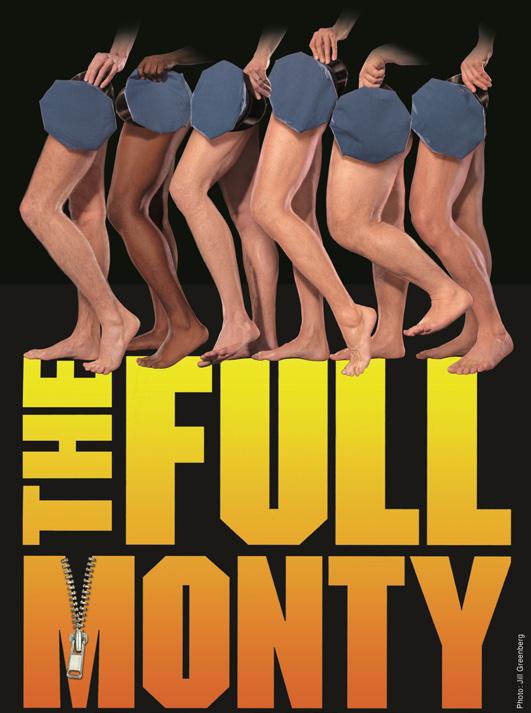
“THE Full Monty” follows six

down-on-their-luck steelworkers who come up with a bold way to make some quick cash. Chris Baldock is staging the musical version of this crowd-pleaser for SUPA Productions, with a hot creative team and “a dream cast that will knock audiences socks off.” The Q, March 8-23. Book at theq.net.au or 6285 6390.
MARGARET Wright’s National Eight Foot Pitch Recorder Orchestra for the larger and deeper recorders will see more than 57 players from Queensland, Victoria and the regions here for NEFPRO ’19, Woden Seniors Club, Corinna Street, Phillip, 10am-4pm, Sunday, March 3. Book at u3acanberra.org.au
ANU Honours graduate in piano, Lucus Allerton, is taking a look into childhood in a concert for grown-ups, built around Robert
Schumann’s “Scenes from Childhood”, showing what Schumann’s many hangovers teach us about childhood creativity. Wesley Music Centre, Forrest, 3.30pm, Sunday, March 3. Book at trybooking.com
APPLICATIONS are now open for Music Scholarships for 2019 awarded by the Wesley Music Foundation and Wesley Uniting Church (since 1994) to outstanding voice and instrumental students at tertiary and secondary level. Apply at wesleycanberra.org.au by 5pm, Thursday, March 7. Inquiries to 6232 7248.
THE Australian Chamber Orchestra’s coming Beethoven & Prokofiev concerts will be directed by “fiery and charismatic” Italian violinist Lorenza Borrani. At Llewellyn Hall, 8pm, Saturday, March 9. Book at aco.com.au or 1800 444444.
By Helen Musa
SYDNEY’S newest string quartet is coming to town and its livewire founder, Perth-raised violinist Dan Russell, has a strong Canberra connection – in fact he might move here.
Russell exudes enthusiasm as he speaks of his ambitions for the Phoenix Quartet and its umbrella organisation, the Phoenix Collective.
“I started the collective last year as a flexible ensemble, with sometimes piano and violin, guitar and violin, sometimes a tango trio with bandoneon, violin and piano,” he tells “CityNews”.
The latter, he reports, brought the strongest audience attendance and he wants to do it again – “tango is something people really dig”. Fate intervened when violinist/violist and director of the Crossroads Festival Charmian Gadd spotted him and picked up the quartet to perform Schubert’s “Death and the Maiden” at her 2018 event.
“The performance turned into a launch… she got me to bring it out a year earlier than I planned,” Russell says, explaining that he wasn’t finished with the broader collective, which allowed him to experiment with the rare guitar and violin combination, and to bring in people he wanted to work with.

that may allude to life after death, or being in cyberspace – it’s up to the listener.
He and his fellow players Yuhki Mayne, violin; Ella Brinch on viola and Andy Wilson, cello, are turning the concert title, “Life, Love and Death” back to front, starting with death in the form of Philip Glass’s minimalist String Quartet #3, written for the 1985 film tracing the notorious seppuku ritual suicide of writer Yukio Mishima, then they switch to an uplifting, satirical and quirky polka by Shostakovich, followed by Mozart’s 1st string quartet, written when he was a teenager.
The “main course” as Russell puts it, will be Beethoven’s 10th string quartet, “The Harp”, concluding with a rendition of D Balakrishnan’s Turtle Island work, “Skylife”, a funky classical/ jazz
Russell is no novice. Trained at the University of WA and the WA Academy of Performing Arts, he came east as an orchestral musician with “The Phantom of the Opera” and found himself in Sydney for the first time.
After taking a few classes with a concertmaster with the Opera Australia Orchestra he was offered full-time work, playing for opera and ballet. It allowed him to buy a small apartment in Sydney and was an education for the young violinist, who has recently cemented his interest by becoming concertmaster for the new Coast Opera Australia, based in Gosford. He describes opera as “a force of nature of its own”, saying: “It’s quite incredible to see how the human voice, unamplified, can soar over an orchestra”.
Russell also played around in Australia with
for hundreds of concerts.
It was on tour to Townsville with Kammer Philharmonie that he met his wife, a Canberraraised public servant. He talked her into flying to be with him in Europe and the result was a marriage, one daughter and now, another baby on the way. His wife’s mum, two brothers and stepfather all live here and he visits regularly, playing with the CSO.
And, yes, as well as bringing another concert, “The Baroque Bizarre”, to the ACT in May, Russell is seriously thinking about a move to Canberra, which he calls “my second home”.
“Life, Love and Death”, Phoenix Quartet, Larry Sitsky Room, ANU School of Music, Thursday, March 7. Book at trybooking.com
By Helen Musa
IT was all feathers, teeth and smiles at the 24th Canberra Area Theatre Awards (CATs), back at Llewellyn Hall after a year’s break.
“Twenty four years! I never thought it would last,” beamed founder and CAT mother, Coralie Wood, as she watched the busloads of CATs followers from around NSW and the ACT pack into the hall at the ANU School of Music to see actress Amanda Muggleton and “CityNews” music writer Ian Mclean introduce routines and excerpts from shows, along with the winners, who had been singled out from the Canberra region and beyond for their work during 2018.
The Gold CAT Award was won by Martin Searles for “versatility and achievement in acting and set design throughout the year with a range of companies”. The
judges note that he had appeared in lead roles in musical and straight theatre, including “Radio on Repertory Lane”, “12 Angry Men” and “Shrek the Musical”, while also designing or co-designing the sets for “42nd Street”, “Fame” and “Shrek the Musical”.
The Silver CAT Award went to renowned teacher (and “CityNews” theatre writer) Joe Woodward and the Daramalan Theatre Company for “achieving a high standard of student productions, for providing opportunities for, and mentoring students in acting, directing and the composition and performance of original incidental music, and for successfully exposing students to the demands of significant mainstage theatre pieces.”
The CAT judges also made non-award commendations to nine companies for the contribution they have made to theatre and to the community, especially to charities.
The big winners this year were

So Popera, Wollongong and Canberra Repertory, with six awards each, while Chevalier College in Bowral was close behind with five awards and several awards going to other schools in the Southern Highlands this year.
Asked what the CATs would be


doing for its 25th anniversary next year, Wood told us: “John Barilaro [NSW Deputy Premier and CATs supporter] wants it to be at Sydney Opera House, but who knows?”
Full list of CAT Award winners at citynews.com.au








By Wendy JOHNSON
SMART operators in hospitality must carefully balance familiar with new. Chopping and changing confuses customers, but “same, same” is utterly boring.
So I was intrigued when I spotted a “wine and pizza” announcement by The Pop Inn.

The Pop Inn – a mobile bar – has joined forces with The Pizza Trailer – a mobile pizza operator – and the combo will continue to pop up periodically.
“We knew The Pizza Trailer from the Old Bus Depot markets and thought their sourdough, woodfired pizzas would be a perfect match for our wines and cheese and meat boards,” says Pop Inn owner Kimberley Ohayon.
The collaboration worked a treat for us, too, as we settled in at Telopea Park one afternoon.
The Pizza Trailer creates its pizza dough with a 30-year-old sourdough starter. It’s proved for around 48 hours before being stretched and topped with amazing ingredients.
Sourdough woodfired pizza, a Naples tradition, is easy to digest. The Pizza Trailer can cook five pizzas at once in the oven on the back of the truck, in 90 seconds. The Margherita ($12) was clean on taste, and the tomato base divine. The mushroom and olive ($14) was yum and the spicy salami and cherry tomato ($16), on an olive
The Pop Inn – a mobile bar – has joined forces with The Pizza Trailer – a mobile pizza operator – and the combo will continue to pop up periodically.
oil base, had great kick.
The Pop Inn is famous for its cheese boards, with varieties mainly sourced from Mart Deli, Fyshwick Markets. Kimberley rotates cheeses to maintain interest. The Manchego with rosemary rind is marvellous, triple-cream cows’ milk decadent, and Italian Provolone piccante bitey. Meat boards offer selections by Queanbeyan’s Balzanelli Smallgoods.
The timing for interesting collaborations is perfect with The Pop Inn having just celebrated its second birthday.
The idea for the adventure came to Kimberley while living in Italy. She wanted to emulate the intimate Italian wine bars she found so bellissimo. After 18 months, the custom-built, self-contained trailer – 6.5-metres long and weighing in at 3.2 tonnes – began popping up at places such as Lennox Gardens, Telopea Park, Haig Park and Bowen Park. “We try to stay for a couple of weeks at a time to make new friends,” says Kimberley. Every millimetre of The Pop Inn has been carefully designed. When fully open, the trailer transforms into a bar with rows of wine glasses,

bar fridges and a kitchenette. It’s no surprise it has won two architectural and design awards.
The Pop Inn sets up tables and chairs, offers picnic rugs and has warm blankets in winter. Everyone is welcome, even the pets.
The Pop Inn’s times and days vary, depending on location and weather, but the website is always up-to-date. The Pizza Trailer posts its whereabouts the same way.
By Dougal MACDONALD
“Stan & Ollie”(PG)




PAY no attention to reports of historical inaccuracies in director Jon S Baird and writer Jeff Pope’s film memorialising the two prolific comedians whose careers together (32 silent shorts, 40 sound shorts and 23 features) bridged from a short silent comedy in 1927 until their last film at the end of 1944.
“Stan & Ollie” has bravo performances from Steve Coogan as Stan Laurel and John C Reilly as Oliver Hardy. The plot follows a short prologue introducing the pair on the set of a 1931 potboiler trying to get their salaries raised to match the worldwide fame and box-office wealth they garnered for producer Hal Roach.
The film’s main body is the 1956 tour of Britain and Ireland on which the pair tried to re-establish their reputation. Its reproduction of streetscapes, cars and trains looks pretty good. Sequences showing promotional occasions satirise British middle and upper-class pomposity. A continuing thread involves British impresario Bernard Delfont (Rufus Jones) engaged to manage the tour but more inclined to feather his own nest.
Stan and Ollie had their wives along on the tour. Playing Stan’s wife Ida, Nina Arianda gives a sharp woman’s comic take to what was going on. Billed before Stan in the credits, and rightly so, pint-sized dynamo Shirley Henderson plays Lucille Hardy.
In a TV interview, John C Reilly told of three hours applying prosthetics and make-up to become Ollie every day on set and an hour at day’s end having them removed. The resemblance doesn’t end there. The voice, the subtlety of movement and delivery of dialogue, are both spot on. Steve Coogan has Stan’s features and gestures down to a “T”, writing the pair’s dialogue and physical gags.
The film neatly summarises the pair’s personal relationship that sometimes became uncomfortable.
I liked “Stan & Ollie” a lot. It invoked childhood watching the first half of many a Saturday matinee before the cowboy movie that mostly followed. It reminded me of the Laurel and Hardy cartoon strip in “Film Fun”. I guess much of today’s population isn’t old enough to have had such happy experiences. “Stan & Ollie” does them a service by showing the more innocent age of movies that preceded today’s DIY media overkill that makes every kid with a smartphone a potential Oscar winner.
At all cinemas
“Vox Lux ” (MA)
THIS is the second feature by writer/ director Brady Corbet. We’ve not seen the first (“The Childhood of a Leader”, 2015, examining the development of a youthful fascist, suggesting that it challenges its audience, which I find commendable).
“Vox Lux” in a somewhat backhanded way also challenges its audience. Its structure is similar to a three-act stage play. In Act 1, the 1999

shooting of teenagers in a high school leaves Celeste (Raffey Cassidy) with a bullet between two neck vertebrae. After her recovery, Celeste and her songwriter sister perform a song that, in the inexplicable manner of such things, goes viral and makes Celeste a star.
Act 2, occupying most of the film’s 119 minutes, unfolds in 2017. Celeste is to perform at a concert that night to promote her sixth album. Experiences have toughened her in the dog-eat-dog world of celebrity. She has become a mother. Now 31 years old, she confronts the possibility that her daughter may be pregnant. In Croatia, a seaside massacre has been carried out by men wearing masks similar to one that she wore earlier in her career. And she is remembering how she knocked a pedestrian down with her car.
Tough stuff, this. Not made any softer or sweeter by what Celeste has become. She’s aggressive. She’s tough. She may have learned how to handle the media and the paparazzi
but her manipulative manager (Jude Law) isn’t helpful when the time comes to face them clamouring for an explanation of events on that Croatian beach. When she and her daughter go to a coffee shop to avoid the pack, the manager plays the song that made her famous and wants a selfie with her.
Act 3 is the concert. Celeste belts out the opening number. The performance is raw, edgy, confronting. The jangly instrumental backing is dominated by drum beats, more for assertive rhythm than for musical merit. The energetic dance routine becomes very same old same old. Roll closing credits. From the top down, a welcome change from the bottom-up convention.
The best for last. As adult Celeste, Natalie Portman rages and curses and abuses her people in a helluva performance that audience members have to respect and admire even if they find much of the film distasteful.
At Dendy and Palace Electric
Joanne Madeline Moore

ARIES (Mar 21 – Apr 20)
Expect plenty of financial ups and downs over the next few years, as unpredictable Uranus blasts back into your money zone (where it stays until 2026). If you’re a smart Ram, then you’ll adjust to constantly changing circumstances and put extra money aside to tide you over when times are tight. This week is a terrific time to let your imagination run wild, tap into your intuition, revisit an old creative project or lend a helping hand to someone who’s in need.
TAURUS (Apr 21 – May 21)
With capricious Uranus shifting back into your sign, expect some major shocks and surprises over the next seven years. So take nothing for granted and avoid being an intractable Bull. The more willingly you accept change (and the more creatively you think) the less unsettled you’ll feel. So your mantra for the moment is from fellow Taurean, Edward de Bono: “Creativity involves breaking out of established patterns in order to look at things in a different way.”
GEMINI (May 22 – June 21)
Gung-ho Geminis could veer off on a radical new spiritual direction over the next few years, as Uranus moves through your soul zone. For tamer Twins, regular meditation, yoga or Tai Chi sessions will help you approach daily chores with renewed energy and extra enthusiasm. However, over the next three weeks, retrograde Mercury could cause problems in your professional life. So do your best to be clear and concise with colleagues, clients and/or customers.
CANCER (June 22 – July 23)
Your friendships will change dramatically over the next few years, as Uranus shakes up your peer group. Some old friends will fall by the wayside, while new mates add an avant-garde and adventurous flavour to your world. You could also become involved with a humanitarian organisation, either within your local community or on a more global scale. It’s a good week to revise and re-evaluate old learning, as you revisit the wise advice of a former teacher or mentor.
LEO (July 24 – Aug 23)
Prepare for some professional detours or life direction deviations over the next few years! You’ll find the more experimental and progressive you are, the more positive the changes will be. Your public reputation could also soar or plummet, depending on your behaviour. So do your best to conduct yourself with style, substance, dignity and discretion. Saturn improves your concentration on Saturday, which will help you power through paperwork or tackle detailed mental tasks.
VIRGO (Aug 24 – Sept 23)
Travel and/or education are set for some unexpected upheavals over the next few years, courtesy of Uranus. If you stubbornly stick to a pre-conceived ‘perfect’ plan, then you’ll constantly feel flustered and flummoxed. Whereas Virgos who are versatile, adaptable and open to new ideas will navigate these changes well. You can also expect some communication mix-ups over the next three weeks, as Mercury (your patron planet) reverses through your relationship zone.
LIBRA (Sept 24 – Oct 23)
Over the next few years (courtesy of Uranus) expect major shifts involving sexuality, intimacy, joint finances and/or shared resources. Most importantly, keep your options wide open because things will be changing at a constant rate. The more fluid and flexible you are, the happier you’ll be. Even though communication planet Mercury turns retrograde (from Tuesday until March 28) do your best to keep the conversation flowing with family, friends and colleagues.
SCORPIO (Oct 24 – Nov 22)
On Wednesday, revolutionary Uranus races back into your relating zone. So your partnerships (whether of the romantic, platonic or business variety) will be radically reinvented over the next few years. If you are a stubborn Scorpio who hangs onto the past and resists change, then you’re in for a rocky relationship ride. Mercury moves into retrograde mode (from March 5-28). So it’s not a good time to start a project or buy a new phone, computer, car or home.
SAGITTARIUS (Nov 23 – Dec 21)
Your life will be shaken and stirred over the next few years, as disruptive Uranus moves through your daily routine zone. The more avant-garde and adventurous you are, the more exciting those changes will be! The planets also encourage a more alternative approach to your physical, mental and emotional wellbeing. But with Mercury reversing through your home zone (from March 5-28) expect some domestic dramas that will test your (limited) Sagittarian patience.
CAPRICORN (Dec 22 – Jan 20)
When it comes to a child, teenager, lover or friend, hold onto your seat and prepare for a roller-coaster ride over the next few years. The less open you are to change, the more dramatic these disruptions will be. Events won’t unfold the way you expect, and you’ll find yourself stretched and challenged in uncomfortable new directions. On Tuesday, Mercury starts reversing through your talking, texting and tweeting zone. So check (and re-check) all messages before you post.
AQUARIUS (Jan 21 – Feb 19)
Your ruling planet Uranus shifts back into your domestic zone on Wednesday. So there’ll be plenty of family changes, upheavals, surprises, separations and general shenanigans over the next few years. And Mercury is in retrograde mode from March 5-28. So some areas of your life – especially involving money matters – may appear to go backwards. Make sure you research and process financial information thoroughly, otherwise things could quickly become very messy.
PISCES (Feb 20 – Mar 20)
In areas involving communication, education and/or your local community expect the unexpected over the next few years! Courtesy of unpredictable Uranus, your best laid plans will come unstuck as you ride a wave of unsettling but stimulating changes. Plus, with Mercury reversing through your sign (from March 5-28) you’re set for some communication chaos over the next three weeks. The best way to handle hiccups and hassles? With plenty of patience and compassion.
Copyright Joanne Madeline Moore 2018
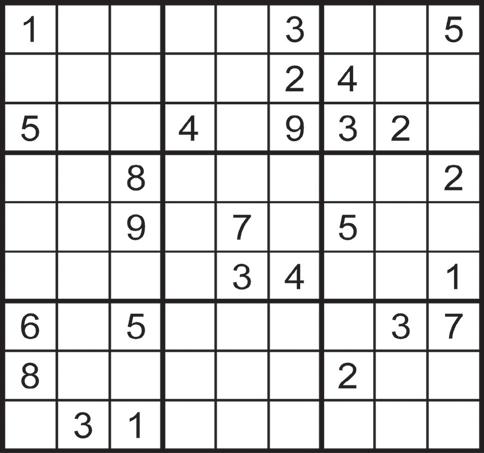
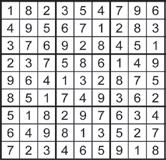
Across
3 What is another term for personality? (8)
7 What is a shooting star known as? (6)
8 Name a popular frozen delicacy. (3,5)
9 What is a situation in which items become piled up behind one another? (6)
10 What is a trellis on which vines are trained to grow? (8)
11 Name a large bottle for wine, etc. (6)
14 What are small venomous snakes, widespread in northern Eurasia? (6)
17 Which term describes a rigid disciplinarian, especially a military one? (8)
18 To call for, with earnest desire, is to do what? (6)
19 What is a very young bird called? (8)
20 What is a trip to convey a message? (6)
21 Which term describes a commercial traveller? (8)
Down
1 Which expression relates to the thigh or femur? (7)
2 Which city hosted the 2008 Olympic Games? (7)
3 Name the war that took place from 1853 to 1856. (7)
4 Which king was known as the "Lion Heart". (7)
5 To be barren or unproductive is to be what? (7)
6 When one thinks of another with regard, wonder, or the like, one does what? (7)
11 What are extreme and general scarcities of food? (7)
12 What, in chemistry, is a system consisting of colloidal particles dispersed in a gas? (7)
13 Name birds of the Old World passerine family. (7)
14 Name a substance which, when injected into animal tissues, will stimulate the production of antibodies. (7)
15 Which people drive stock over long distances? (7)
16 When one counts, or calculates, one does what? (7)

Aaron wants to be a man with a plan
Aaron looked exhausted as he revealed that his retail business was suffering from lower than expected sales this past year. He'd come to see me for help to develop a business plan. I reassured him he wasn't alone and that other clients had also found last year to be a bit slow.
"It seems that whenever there is instability in politics or an election, the instability overflows into the Canberra market," I said.
"Things seem to have settled down now and with a late Easter things should be stable until then, but with an election in May, there will probably be another period of instability.
"So this is the perfect time to write your new business plan and set your budget for the next financial year.”
I told him I used the Mindshop process for business and strategic planning.
"This consists of a series of tools that any business, small or large, can utilise to improve their business and cope with instability and uncertainty in any environment," I said.
"There are a range of tools that we can use and I will tailor these specifically for your business.
"It's always a good idea to start with the vision for your business. Once this is clear to you and your team, we could move on to working out your key performance indicators (KPIs), which are the specific performance measures of your business that are quantifiable and easily measurable, so you can monitor your results.
“You then set your financial budget to measure the financial health of the business. You're in retail, so easily managed targets for your team are helpful. You could also do a waste audit. It is said that every organisation has as much of 30 per cent waste in its operating costs. Once these are identified you can start to remove them, which will impact on your bottom line. As you eliminate waste and link in the KPIs, your business plan, your strategic plan and your vision then you have measurable outcomes so you can better see where you are going."
Aaron said it sounded very exciting and wanted to know when we could start the process.
“We need to work out the exact plan, the tools we'll use, how we'll involve the team, the timing for preparation of the budget and how we can integrate the budget and other measurements into the planned strategies," I told him.
"There will be a lot of initial planning, but from there we can start running workshops and include your team. We'll need to appoint teams so that we can measure the improvements and have full oversight of the process.
“The next step is to meet again and work out which tools we'll need to get the best results for you. It's probably a good idea to involve your manager at this stage and the rest of the team at the next stage. We can then work out a timetable and get the budget under way so that is part of the whole process. I am really looking forward to seeing your business move to the next stage.”
If you need help with your business strategy, business plan or future expansion contact the friendly team at Gail Freeman & Co Pty Ltd on 6295 2844.
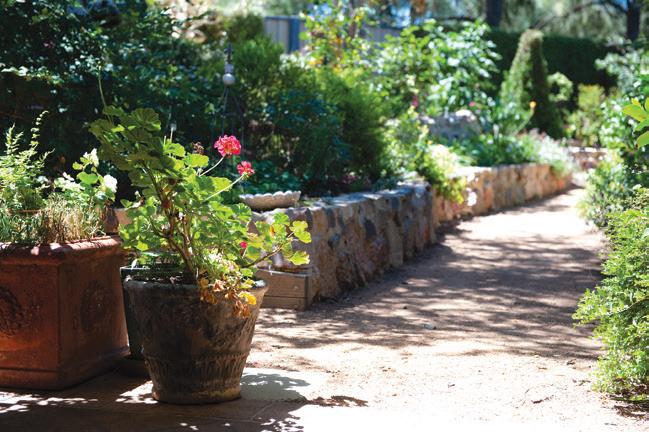
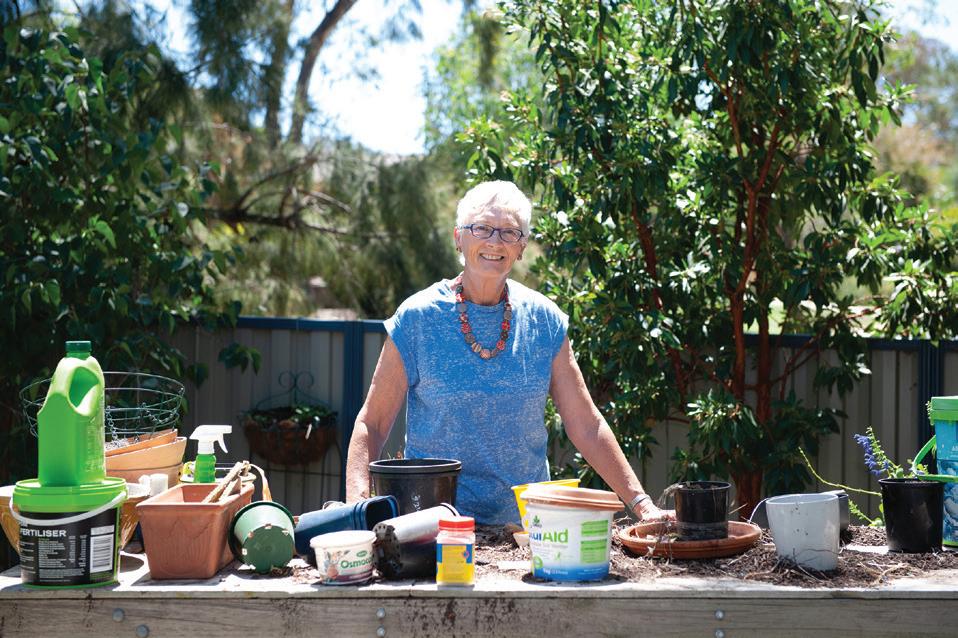


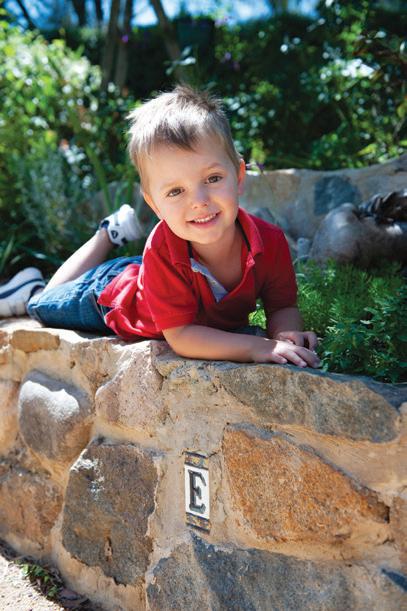


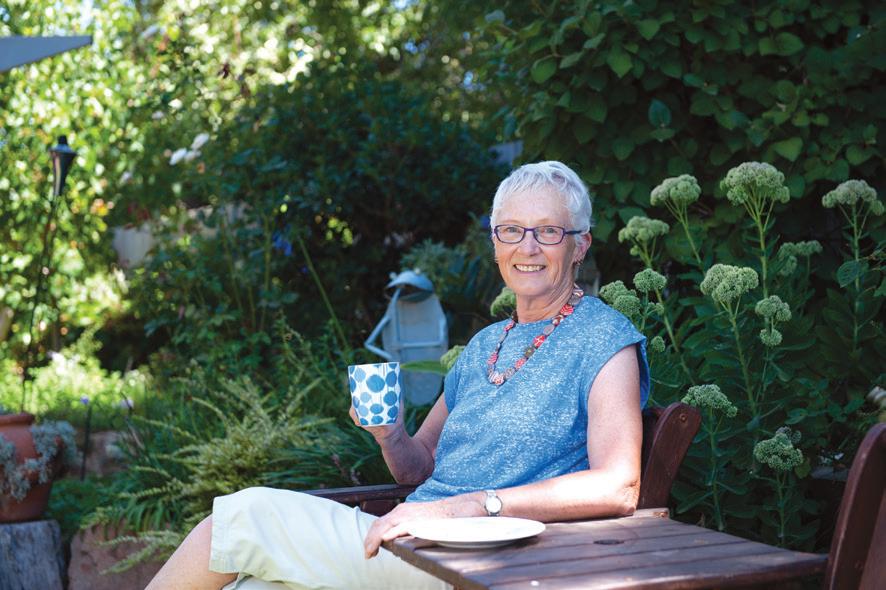
CHRISTINE Gascoyne’s large, magical garden in Gowrie is packed with a wide array of plants, including several unusual varieties she loves to experiment with.
“There’s the callicarpa shrub with metallic purple berries, an amorphophallus lily with its striking flower but horrible stench, and a persicaria painter’s palette, which has irregular splashes and markings,” she says.
“I love every minute I spend working in the garden and these plants are a real pleasure for me.”
This private garden on a battleaxe block will be open on March 2-3 as part of Open Gardens Canberra’s autumn program.
There is a small lawn area for Christine’s grandchildren to kick a ball, but much of the garden is hidden away along winding paths that she says seem “magical and secretive” to the kids.
A hand-built parterre rose garden, succulents, trees, shrubs and perennials complete the picture, with English box hedges as dividers and deciduous trees creating a show of autumn colour.
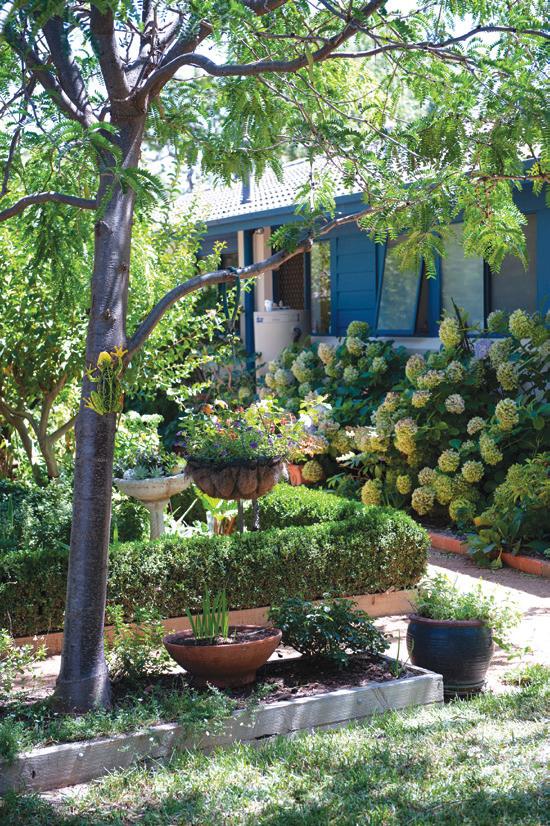
Not to be slowed down by a complicated knee replacement surgery that didn’t go as planned, Christine says she has plenty of new jobs on the go.
“My latest project is the mortared rock walls, which I’ve built myself as with everything else in the garden,” she says.
“I’ve been pulling out shrubs and sleepers to create these more defined, built-up beds that will retain moisture and soil that much better.”
Words: Kathryn Vukovljak
Photos: Holly Treadaway
The rock walls are decorated with a Spanish tile bearing the initial of each of Christine’s grandchildren, picked up on her 2016 trip to walk the Camino de Santiago trail.
Christine says that many of the trees she planted in 2005 when she started creating the garden are now providing shade and protection for smaller and more sensitive plantings.
“The secret to the success of the garden is soil improvement through composting, and effective drainage,” says Christine.
“I also rely very heavily on the 23,000-litre rainwater tanks that collect water from the house and garage, they’re the garden’s life source.”
Devonshire teas will be available on the weekend, as well as plants for sale.
48 Weathers Street, Gowrie, open 10am-4pm, Saturday, March 2, and Sunday, March 3. Admission $8; free to under-18s and Open Gardens Canberra members. Funds raised go to the St Vincent de Paul Society. It costs $25 to join Open Gardens Canberra and gain free entry to all open gardens until August 31. More information at opengardenscanberra.org.au/members
ALSO OPEN ON MARCH 2-3: Joan’s garden at 51 Dash Crescent, Fadden, and the Kambah Community Garden COGS, corner of Springbett Street and O’Halloran Circuit, Kambah.

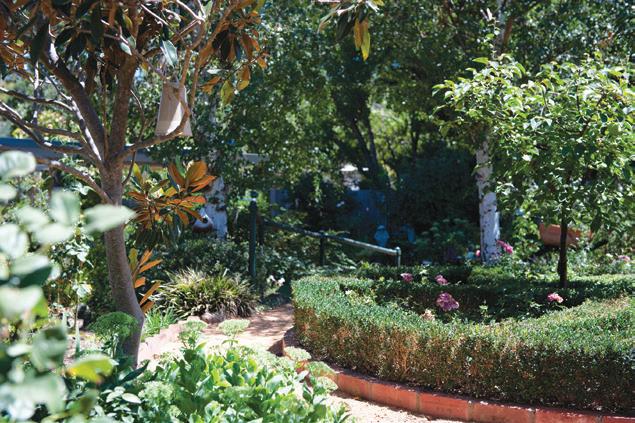
By Cedric BRYANT

BE careful when deciding to prune weeping cherry trees because the preferred time for flowering weepers is immediately after flowering and during winter for non-fruiting weeping trees.
Most weeping trees are grafted on to standards or a trunk of a similar tree with the graft varying from 1.5 metres to 2.5 metres from the ground.
Weeping cherries are one of the most popular, but there are also weeping trees from apricots, mulberries, flowering apples and peach to pussy willows.

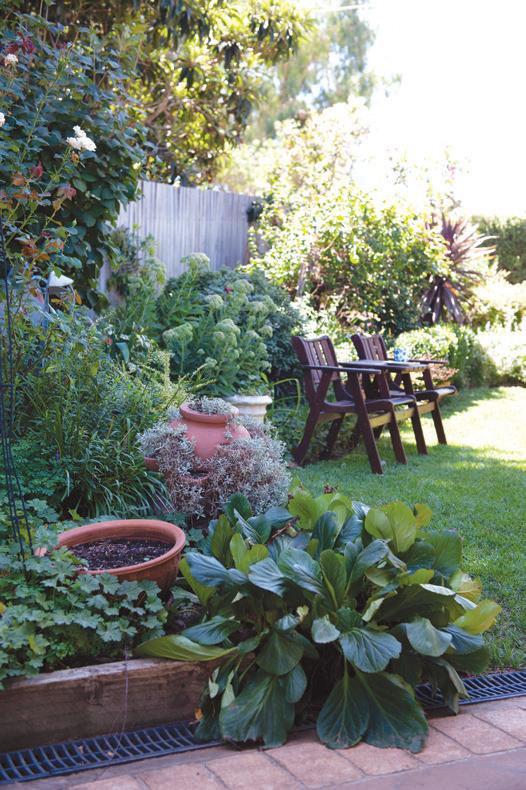
Each variety has its own characteristics and, with many, pruning is not essential. However, I prefer to keep branches at least a metre from the ground and the area under the tree well mulched. This prevents mowers from damaging the bark. Definitely keep whipper-snippers well away from all shrubs and tree trunks – they are very effective ring barkers!
Grass under trees is not a good idea. It is a rapacious feeder and can reduce the crop on fruiting trees by a third.
The term “weeper” can be misleading. For example, the white-flowering Prunus Shirotae is anything but a weeper. Its branches can grow metres higher than the graft, with a width of up to four metres. I have seen attempts at trying to force the branches down by tying or even using fishing weights!
Most weeping trees will grow at least four metres or more wide. I recently saw two either side of a path a metre from the front door!
MIRRORS give an extension to the garden. Place
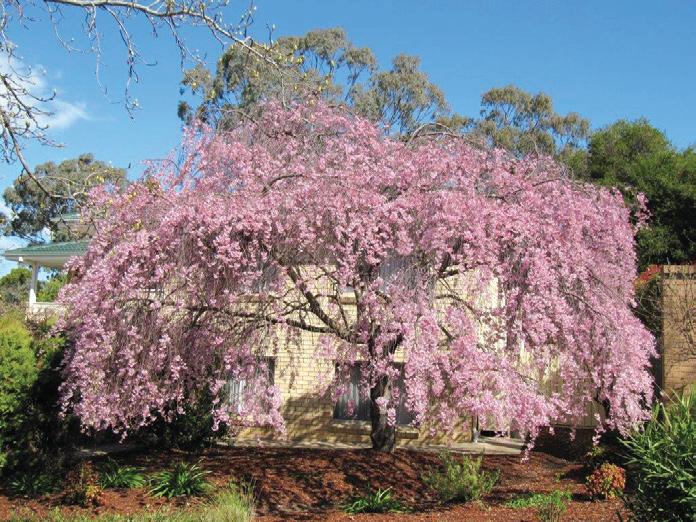
angles to each other. As one walks towards the corner the garden to the right comes into view in the mirror and vice versa. A mirror placed in a door frame on a fence gives the impression of a garden going on and on. Further interest is added to garden urns or sculptures when a mirror is placed behind the object. I have picked up second-hand mirrors at antique and junk shops, one coming on top of our car from Crookwell.
CONTINUING my short series on gardens worth visiting this northern summer in the UK, I recommend the Royal Horticultural Society’s garden “Harlow Carr”, a couple of kilometres from the town centre of Harrogate in North Yorkshire. With almost 30 hectares of magnificent gardens, arboretum and glasshouses, the site started off



and subsequently in 1840 an hotel and health spa rooms were established amid the magnificently laid out gardens. It is open all year and there are more details at rhs.org.uk/harlowcarrwhatson.
• Tomatoes slow to ripen? Try green tomatoes stewed in water, add a little sugar plus whipped cream for an alternate dessert.
• Plant rue and marigolds round the veggie patch to discourage snails.
• If fruit trees have finished fruiting, prune them now.
• Make a clean, diagonal cut across the stem when cutting flowers. Don’t crush the ends with no leaves under the water. Add sugar in the water to prolong their life.