

































































By Danielle NOHRA

MORE than 13 years working for Royal Life Saving ACT, CEO Cherry Bailey has seen a worrying cultural change towards water safety.
“Families are far more time poor and lessons on learning to swim cost a lot more,” she says.
“All these barriers are stopping people from getting kids in the water.
“And a lot more kids these days are scared of deep water.”
But, Cherry says, even though peo ple are less likely to learn water skills they’re still participating in water activities.
“There’s no reason to be dropping wa ter safety on the priority list,” she says.
For parents with children who are unable to swim and for adults who are also lacking any swimming skills, Cherry urges them to get enrolled in a swimming program.
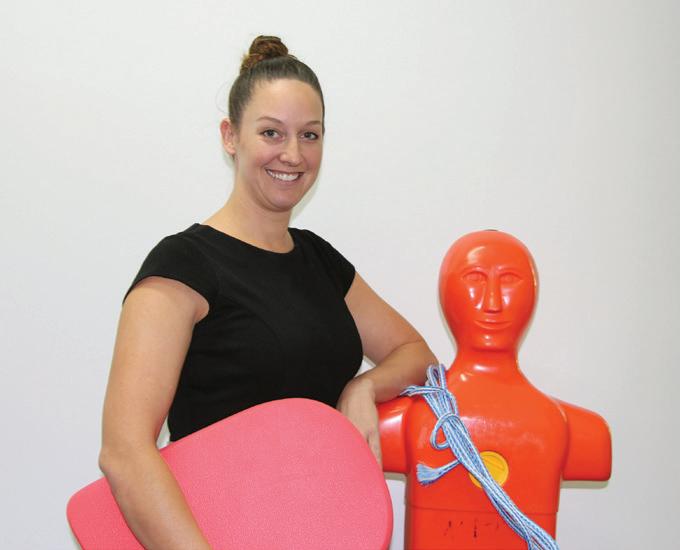
“We provide school-based programs but that’s a two-week program with 10 lessons and it’s not enough,” she says.
“There is research and data that shows the more exposure a child has to the water, the better off they’ll be.
“Personally, I would say once a week or once a fortnight is ideal but the gen-
2019 Horoscope 22-23
Arts & Entertainment 17-19
Arts in the city 18
Canberra Matters 13
Gardening 20
Jumbo Crossword 21
News 3-16
Summer What’s On 19

eral message is the more the better.”
Now the ACT has a Canberra Nippers, Cherry is hopeful more people will become educated in beach safety too, however, she says there’s probably still a lack of it here.
Last year rivers, creeks and streams saw the largest number of drownings nationally, according to the 2018 Royal Life Saving National Drowning Report.

crossword Page 21.
Ph 02 6189 0777
In Canberra there were three drownings over the 2017/18 financial year, all of which were in local lakes, rivers and creeks.
“We have six major rivers, three big lakes and more and more community ponds popping up,” says Cherry.
“Even though we don’t have a beach, we’re still surrounded by water.
“Canberra has a very open storm
Since 1993: Volume 25, Number 1
Managing Director: James Anderson, 0404 077605, james@citynews.com.au
Director: Kate Meikle, kate@citynews.com.au
Senior advertising account executive: David Cusack, 0435 380656
Advertising account executives: Daniel Clayton, 0451 232129; Damien Klemke, 0439 139001
Editor: Ian Meikle, editor@citynews.com.au
Assistant editor: Danielle Nohra, danielle@citynews.com.au
Journalist: Kathryn Vukovljak, kathryn@citynews.com.au
Arts editor: Helen Musa, 0400 043764, helen@citynews.com.au
Production manager / graphic design: Janet Ewen
Graphic designer: Paulette Leo
Proof reader: Glenda Anderson
Accounts manager: Bethany Freeman-Chandler accounts@citynews.com.au
water system as well.
“The ACT has its own set of risks despite being so central to so many different aquatic environments around us.”
The three drownings in Canberra over the last year were all men and nationally the ratio sits at around 80 per cent men and 20 per cent women.
“The contributing factors have been determined broadly as peer pressure (with males being more susceptible), a lower fear factor for men (the way they perceive danger differs to females), and men more likely to be combining alcohol and drugs with aquatic activities,” Cherry says.
She says alcohol is the number one contributing factor for drownings in rivers and lakes.
“One of the biggest messages is to avoid the combination of alcohol and/ or drugs and aquatic activities,” she says.
“Secondly, people need to be aware of changing environments.
“If they visited the river it might not be deep the next time they go there.”
Cherry’s third important tip is to never swim alone.
She also advises people to familiarise themselves with risks such as fastflowing currents, water temperatures, slippery banks and emerging objects.
“And also wearing life jackets while boating, water skiing or fishing,” she says.
“Whilst we had three drownings last year in the ACT there might have been more [ACT residents drowning outside of Canberra],” she says.
“We have many ACT residents who travel to the south coast and other recreational areas outside of Canberra and those people don’t count towards the ACT.
Last year on the far south coast (from Batemans Bay to Tathra) 80 per cent of the drownings were people from the ACT.
“I encourage people to familiarise themselves with the areas that they’re going to be visiting,” she says.
“Talk to locals, find out where the rips are, swim between the flags.
“Don’t make assumptions that your skills and abilities will transfer.
“What a child is able to do in one environment might not be the same as another environment.”
Cherry is heading up to the Gold Coast over the holidays and says she’ll be swimming between the flags.
The wonder of water:
Boost your mood, walk around the lake, Page 12
What’s with drinking all this water? Page 12
Make the most of water in the garden, Page 20
Drama short courses for all ages from Sat 19–Fri 25 Jan at Canberra College Performing Arts Centre







MIKE WELSH says there’s something special missing from his family’s lives this summer…
THERE’S something missing in our lives these holidays. It’s Missy, Missy Higgins.
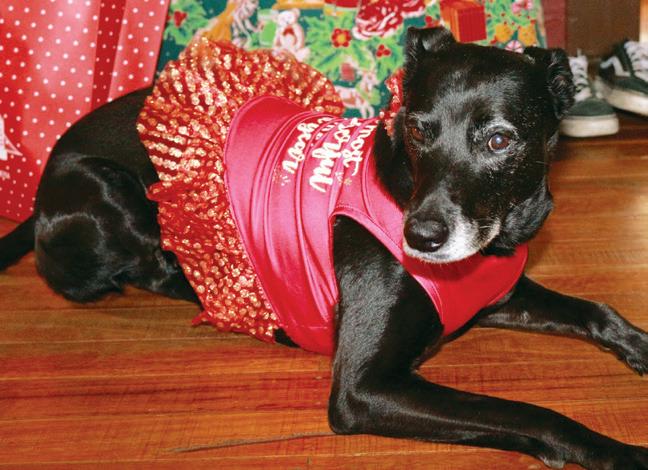
Not the multi-talented singersongwriter, but Missy, a shiny, black 10-year-old kelpie/whippet cross rescue dog we adopted in early 2017. We re-christened her, adding the singer songwriter’s surname to give her some extra “cred” (it also works as her territory included the northern suburb of Higgins). And it turned out she didn’t need any help in that department. She had personality plus (we thought, anyway) plus mega attitude. Missy quickly wormed her way into our household and hearts.
I hadn’t had a dog since the 1970s when our family had a jet-black border collie whose name cannot be uttered now. It was more than likely offensive at the time, too, but

also back then there was no dog ice cream or dog yoghurt and it was a time when nobody paid exorbitant vet fees and dogs had names like “Butch” and “Scruffy” and “Bimbo” but were never referred to as Doggos.
Missy didn’t seem to consider herself a dog and couldn’t understand why the leather couch was denied her, although she obviously got that message loud and clear.
She had a haughty attitude to most things and in particular to other dogs, although she would deign to sniff the occasional butt during her daily walks. Peer pressure?
Missy loved bedtime stories, her favourite being “Why Dogs Sniff Each Other’s Bums”, the classic tale which more than plausibly answers the eternal question of why dogs engage in the socially awkward practice. Without giving too much away, the story goes… all the village dogs were summoned to an important meeting in the town hall to discuss the issue of appropriate public leg cocking etcetera. As the dogs entered the hall
they were required to hang their bums on coat hooks in the foyer. Halfway through the meeting a fire alarm rang and as the panicked dogs raced from the building they mostly grabbed the wrong butt. And that is why, to this very day, a dog will leave a juicy bone and sniff another’s bum in a desperate bid to find its own. Missy never tired of this story even though she “abhorred”
the term sniffing butt. “Common!” She did possess a dog’s obsession with walks and, despite her delicate and ladylike persona, she would plough through as many walks as we were prepared to be dragged on. And, like all dogs she had no shame whatsoever of public pooing. Her poo PB was three in the one walk. But Missy was prone to look down her
elegant snout at many of our, to her, frivolous requests of activities we attempted to engage her in.
She flatly refused to fetch anything; no tennis balls, no sticks, and certainly no slippers or newspapers.
“All the tummy tickles in the world won’t get me doing that” was the prevailing attitude. We had to draw the line at her request for an instagram account. She would have been insufferable.
She was a tad racist, too, and as a mostly inside dog she would bark more threateningly than at other times when the courier man with the turban and beard delivered the online shopping.
Sadly, in September Missy became seriously ill and had to be put to sleep. We all still miss Missy. Mostly her presence in the house, usually flopped in a bed near the fire during our harsh winters or a spot of sun near a glass door. And even all these months later, there are times when arriving home we still expect to see her waiting at the window.
In announcing her passing on social media I was stunned and warmed at the number and nature of the heartfelt and genuine comments on the heartache of losing a family dog. We all learnt a lot from Missy Higgins. And in my case, thankfully, you can teach an old dog new tricks. RIP Missy.









Archives come to life to inform the restoration of a significant piece of Mount Stromlo’s landscaping history. AMY JARVIS and JACK DUNSTAN report
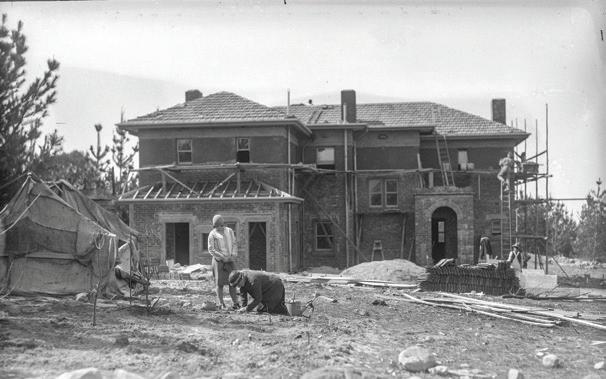
IT’S late 1927, and renderers and roof tilers are working hard on adding the finishing touches to Observatory House, soon to be the grand home of Mount Stromlo Observatory’s founding director Walter Geoffrey Duffield and his young family.
Little by little, the puzzle of the orchard was revealed in the archives. Outside, Duffield’s wife Doris and daughter Joan plant seeds and saplings on the exposed and rocky mountaintop, surrounded by a dense pine forest.
In an interview in 2004, Joan Duffield remembered: “During the building… my mother wasted no time in getting the garden growing. Likewise, we all put our hands to the wheel and made an orchard on a small plot of vacant land... here were planted apples, pears, oranges, lemons, peaches, apricots, plums and nectarines, which all did well.”
As the orchard grew and flourished, it was harvested and enjoyed by generations of Observatory directors and their families. The orchard was much more than a collection of fruit trees – it also marked the barrier between work and home life for the directors and their families.
One might assume that privacy was difficult to obtain when your office was a mere 100 metres from your front door, but on reflection Professor Don Mathewson, Observatory director 1979-1986, mentioned that the orchard provided the necessary separation, musing that “once you passed through the orchard you were… home”.
While the orchard provided a physi cal and aesthetic separation between the administration hub of the Com monwealth Solar Observatory Building (1926) and the Director’s Residence (1928), it also forged a strong connection between these two early and very significant buildings for more than 70 years, until the devastating Canberra firestorm in 2003.
Following the significant damage caused by the fire, Mount Stromlo Observatory has recovered steadily with several of the historic buildings restored and much of the landscape regenerated with both natural regrowth and deliberate plantings. However, in place of the Duffield orchard, a makeshift car park had sprung up and, for the last 15 years, that’s the way it stayed.
The Research School of Astronomy and Astrophysics and ANU Heritage
have spent several years working on projects to reconnect the local and visiting community to the site including the development of a heritage trail, stabilisation and interpretation of the ruined director’s residence and the reopening of the visitor centre. It was during these projects that ANU Heritage gained access to thousands of photographs and site plans as well as discovering and undertaking oral histories with past residents. Little by little, the puzzle of the orchard was revealed in the archives. The words in Joan Duffield’s recollections were soon matched to photographs showing the family planting on the site. By closely examining aerial and other historic photographs
from the 1920s until the 1990s, they were able to understand how the site changed over time and understand the layered history of the area.
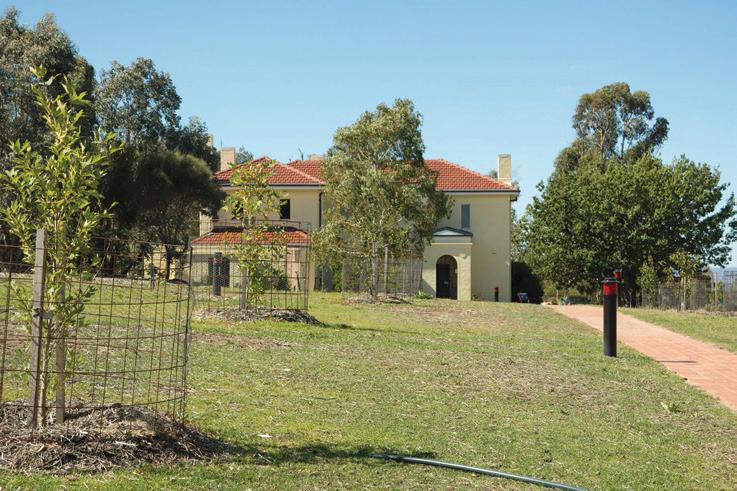
Using this archival research as their reference, Harris Hobbs Landscapes designed a landscape plan that re-established the formal pathway and included ornamental fruit trees to reflect the original plantings. With funding from the Research School of Astronomy and Astrophysics and the support of an ACT Heritage grant, the car park was relocated and the orchard was replanted in its original location in late 2017.
The restoration of the orchard, as well as installation of the brick path and grassy picnic areas, are a critical
vatory and those who walk the Mount Stromlo Heritage Trail, of which the orchard is now a major part.
To follow the self-guided Mount Stromlo Heritage Trail, download the ANU Walks App or the ANU Space App via web download via services. anu.edu.au
The trail is open to visitors during site opening hours, seven days a week, from 8am-6pm.
This article was first published in the “ANU Reporter” Summer 2018 (reporter.anu.edu.au)








ROD HENSHAW talks to an author who has revealed that when it comes to that first step on the moon, “The Dish” wasn’t the dish we thought it was.
TO write a historical, non-fiction book where accuracy and first-hand accounts are paramount presents challenges, which get harder if the central character is no longer with us.
And even had he been around, he would never have collaborated with telling the story. In fact, he would have fought tooth and nail to stop it being published.
These hurdles faced NSW barristerturned-politician-turned-author, Andrew Tink when he set out to chronicle the events that captured the world’s attention, nearly 50 years ago, centred around the frenetic environment we generally knew as the “Race to the Moon”.
NASA was pulling out all stops to claim bragging rights by being the first to put a man on the moon. Three high-tech facilities each contributed to that happening; Tidbinbilla, Orroral Valley and Honeysuckle Creek deepspace tracking stations near Canberra. It was the latter that piqued the author’s curiosity and resulted in the recently-released book “Honeysuckle
Creek – the story of Tom Reid, a little dish and Neil Armstrong’s first step.” (UNSW Press).
Tom Reid was a Scotsman who grad uated from Glasgow University with first-class honours in electrical engi neering before migrating to Australia where he joined the Royal Australian Navy in 1952, serving as electrical of ficer for five years before taking a job at Woomera in SA with NASA’s Project Mercury as senior scientific officer.
He and his first wife, Betty, and their four children came to Canberra in 1964 where he became station director at Orroral Valley Space Tracking Sta tion and later at Honeysuckle Creek. That station was destined to become invaluable by working collectively with similar stations in Spain and at Goldstone in the Californian desert to track the Apollo craft and provide data links for communication.
As director, Tom was often regarded as a prickly Glaswegian, not willing to suffer fools gladly. But it was this nononsense attitude that enabled him to form a team of talented technicians.
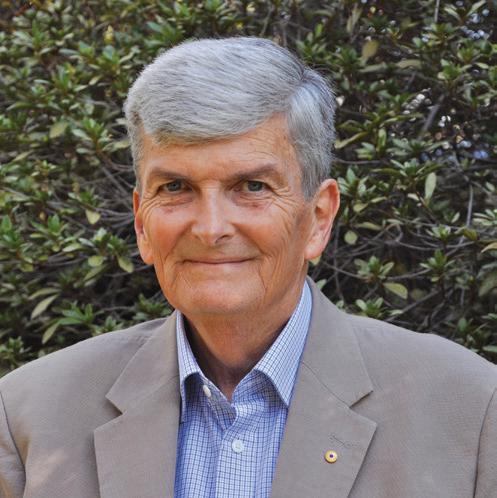
After a relatively short illness, Betty tragically died at the age of 36 leaving Tom to care for the children. Some years later, Andrew Tink began dating one of Tom’s daughters, Marg. It was during this time that Tink came to know Tom Reid and his second wife, Margaret, later to become ACT sena tor Margaret Reid, the first woman to be elected as Senate President.
“I tried to get him to talk about this on a few occasions – tried to get him to open up about what he’d done at Honeysuckle Creek, especially in relation to Apollo 11. But he always changed the subject,” says Tink.
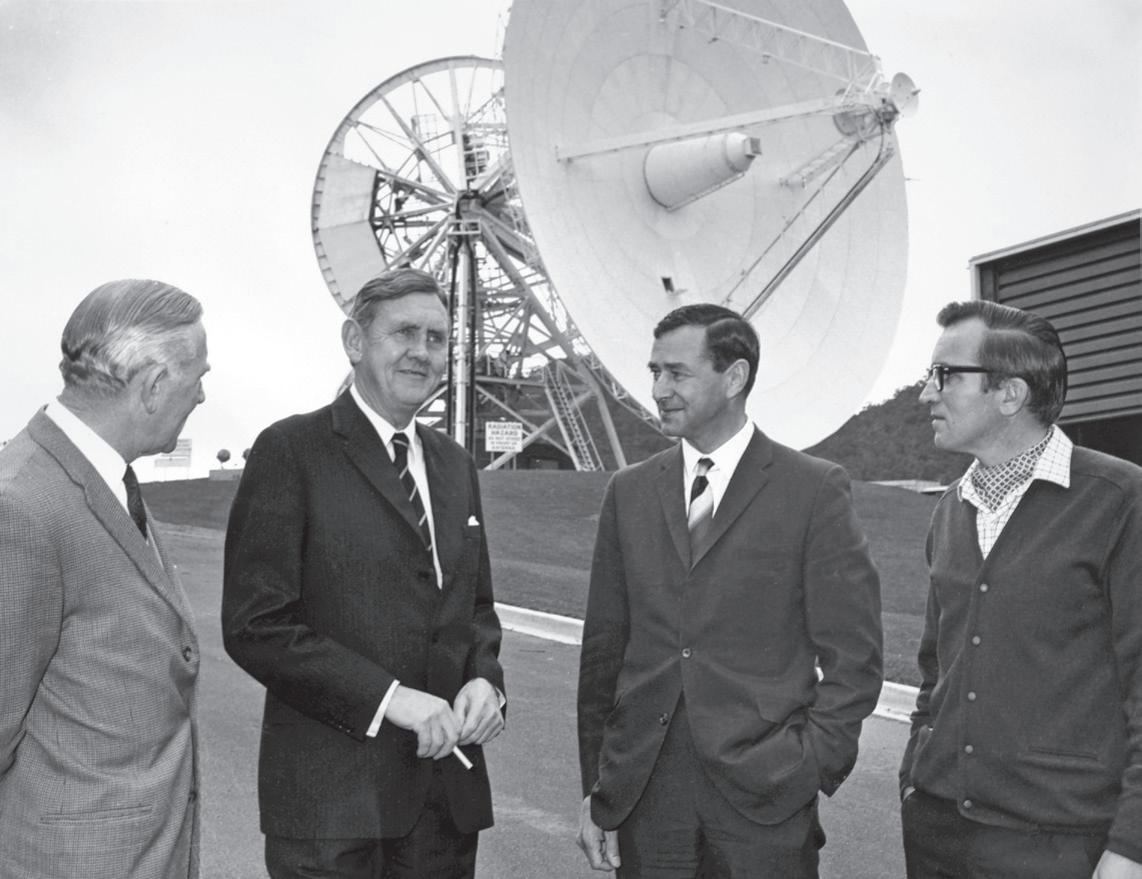
“He absolutely hated, loathed, talking about himself. He was an extremely modest, private person and if he ever said anything about his work, he would always deflect to the team
Tink remained in the dark about Reid’s work until after his death in 2010 and that’s when he decided to go ahead with the book.
While there had been many pub -
lished reports about the role of Honeysuckle Creek in the Apollo 11 project –and the moon landing in particular on July 21, 1969 – the behind-the-scenes story of the station and Tom Reid’s role as director had never really been told.
The film “The Dish”, released in 2000, hit a raw nerve with Tink because it gave the impression that the Parkes tracking station in NSW was pivotal in getting that historical footage of Neil Armstrong landing on the moon.
“I sat there in the theatre watching the opening scenes and there was Sam Neill playing Cliff Buxton who was the so-called dish master of the Parkes dish,” says Tink.
“I sat there thinking ‘wrong place, wrong person’. And this just rankled with me.”
A couple of years later, Tink was at a function at the NSW parliament also attended by Senator Margaret Reid and daughter Marg.
“I said, Marg, what’s your father
think of ‘The Dish’? She said he refused to watch it. He’s been told it contains major inaccuracies and he wants nothing to do with it,” Tink says. The author acknowledges the work done by the Parkes tracking station, but he has long been keen to set the record straight regarding vision of the actual landing and that famous first step for mankind watched live by 600-million people around the world. And finally, the story of the unassuming Tom Reid is told.



• Are your tax return lodgments up to date?
• Are your business activity statements up to date?
• Do you have a tax debt that you don’t know how to sort out?
• What about your budget? Does this need tweaking so that it is in line with your other goals?
• Do you need to review your SMSF or superannuation fund to ensure that there will be enough funds when you retire?
• Do you need a change of strategy in your SMSF or are you thinking of setting one up?
• Will you have enough money to retire? What can you do if you don’t?
• Is your business as profitable as you would wish?
• Is your accounting software working for you?
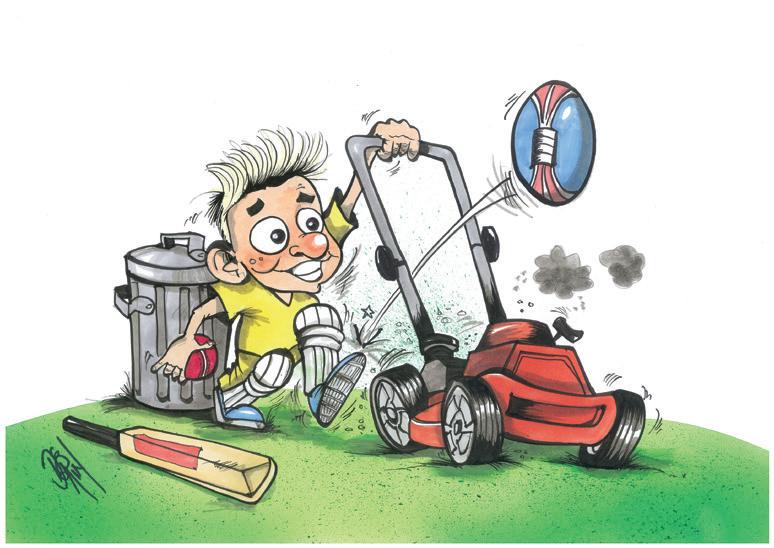
I WAS lucky enough to grow up having the best backyard to play in. It was, fair dinkum, a good-sized lawn and large enough to play any ball game. The only minor negative was it took me up to three hours to mow!
It was a great backyard to muck around and it became serious stuff when the footy or cricket season took over the backyard I became the young, amateur backyard curator carefully detailing and mowing the lawn depending whether it was a winter mow or a summer mow.
The winter was Rugby League season and the grass was mowed high with a cushion feel to soften the fall being tackled. The line markings were painted with any kind of acrylic white paint I could find laying around in the shed. Old pillows were taped up against the few trees that were considered to be a concern. I had a microphone and speakers set up to introduce the players running out to play.
At one stage, the local soccer club down the road was throwing out a small grandstand which I dragged

The sound of a mower in summer (and winter) for ‘CityNews’ cartoonist PAUL DORIN takes him back to his days of backyard sports... and an unnatural fascination for grass!
emulate the same effect by mowing one strip high and dropping one or two notches on the mower going back in the other direction.
play. One year I saved enough pocket money for flood lights so I could set them up around the fence for night games.
The rules we had for backyard footy were:
• Four tackle rule.
• 15-minute halves.
• Kicking goals and penalty goals, between the two back trees and above the lowest branch.
• Ball kicked into the tree branch when caught was play on.
In summer it was cricket and with the mower on the lowest setting the batting strip was mowed first. I always loved seeing cricket fields on television with outfields of beautiful, different-coloured green strip effects. I’d try to
After the ground was mowed I even borrowed a small, handpush, concrete roller from a neighbour two doors down and would spend at least an hour going up and down to harden the pitch before painting the crease lines.
Up until one day getting my very own set of stumps for my birthday we used the tin garbage bins. This was actually perfect, it was a sure giveaway when the ball hit the stumps it would make a sound and everyone knew you were out.
A good hook shot would agitate the asbestos on the back wall of the house.
I think most of the rules for backyard cricket were the same:
• Can’t get out first ball.

&

• Back fence bounce first was four runs. Side fences were two runs.
• Over the fence was “six and out”! Plus batsman has to retrieve the ball.
• Not to start arguments, no leg before wicket unless it was obvious.
• Hitting the fence on the full was “six, not out”.
• No underarm bowling.
• Depending on numbers playing, the laundry wall was wicket keeper.
• Always debated whether the dog was included as a fielder.
• Ball rolling off the roof, if caught was out! I look back and feel terrible for our neighbours who had a two-storey house with plenty of windows and would’ve been concerned every year when
I started mowing the cricket pitch.
Before we changed over to a tennis ball we all feared and avoided hitting the neighbours’ house especially the windows, which was an automatic dismissal. I can remember at least three times my cricket ball landing on their kitchen table via the window!














once


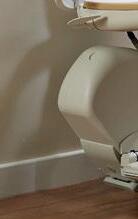
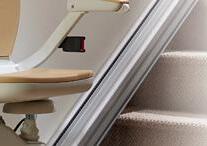
straight or curved staircases
Indoor and outdoor lifts • Free home assessment • Fast installation
By Danielle Nohra
WHEN thirst kicks in many people think of the saying: “If you’re thirsty, you’re already dehydrated”, and lurch towards the nearest water source and start chugging into hydration.
But, The Healthy Eating Hub dietitian Clare Wolski says thirst isn’t always a sign of dehydration.
“It’s a misconception,” says Clare, 29, of Holder.
“Our thirst senses adapt. If you start to drink more water, you’ll feel thirsty more.”
And, bladders adapt, too.
“A common misconception is: ‘I’m drinking more, I’m just going to go to the toilet more’,” she says.
“For many people it will take a couple of weeks [for their bladders to adapt] but it may be longer if people struggle with severe urgency and frequency.”
But there are certain liquids, that while water-based, Clare says have a diuretic effect, meaning people need to put more in to make up for what’s coming out.
“Our major water beverages such as tea and coffee do still contain water but they can have a diuretic effect, which means we will excrete them more,” she says.
“Alcohol is a very high diuretic. When we drink alcohol, while we’re taking fluid in, we’re excreting more.”
Generally, Clare says, adults need to
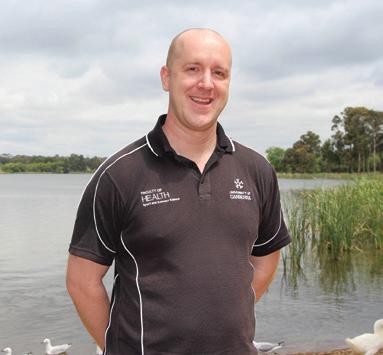
drink about 1.8-2.5 litres of water a day.
“It depends a bit on size and energy levels,” she says.
“But we should really stick to up around 2.5 litres in the summertime.
“Water can improve your energy levels and that’s quite important in the summer.”
When people don’t get enough water, Clare says it can affect con centration or they might experience headaches and fatigue.
“While we can get through the same tasks during the day, it feels a lot harder,” she says.
“Without enough water you can get constipation or have difficulty pass ing a bowel movement.
“From a scientific standpoint wa ter is the building block of life on the planet. All life on the planet requires water.”
In fact humans are a large percent age of water (about 75 to 85 per cent), which Clare says facilitates all of human’s functions such as getting oxygen from the lungs to fingers and toes.
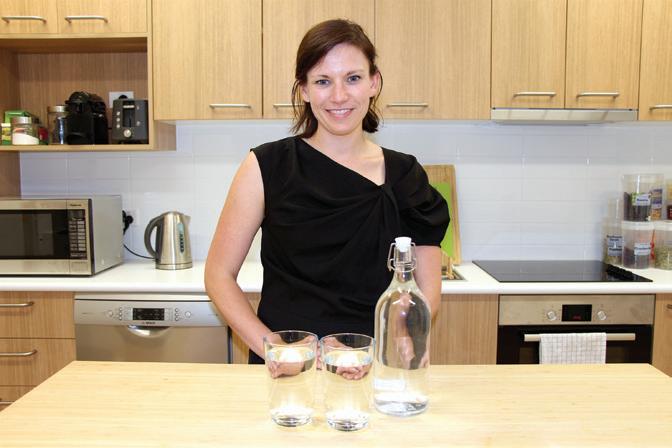
Dietitian Clare Wolski… “Alcohol is a very high diuretic. When we drink alcohol, while we’re taking fluid in, we’re excreting more.”
you eat with a glass of water,” she says.
“The properties of water allow a lot of things to take place,” she says.
“Water is in about every single one of our cells.
“It allows all of our metabolic functions to take place.
“The better hydrated we are, the easier it is for your body to move nutrients and blood cells.”
For people who forget to drink water, Clare suggests making water accessible and having it at a temperature that’s enjoyable.
“That might be pairing anything
“If you do that with three meals and two snacks, you’ll get to about 1.5 litres quickly.
“If you don’t enjoy the taste of water you can make it a bit more inviting by putting things like berries or cucumbers or mint in it.
“You can also get some herbal and fruit based tea and infuse it into cold water.
“High-sugar content in beverages doesn’t help much with hydration.
“While the electrolytes in sports drinks can be good, often the sugar
content that goes with it isn’t worth it from a calorie perspective.”
Luckily, Clare says fruit and vegetables count because a lot of them are largely water based.
She recommends salad vegetables such as cucumbers, capsicum and lettuce, as well as other vegetables such as green beans and zucchinis.
“From a fruit perspective, our high-water fruits would be watermelon, apples, rockmelon and citrus fruits like oranges,” she says.
Make the most of water in the garden, Page 20
GOING for a walk around a lake or eating lunch by a pond can help boost mood, self-esteem and positivity, according sport and exercise psychologist Richard Keegan.
The University of Canberra associate professor says while water is pivotal for hydration, research shows being around water and out in nature can also boost mood.
“We forget we respond well to nature,” says Richard, 38, of Flynn.
“One of the theories is that being in nature is easier on your attention. Nature lets you relax and lets your mental system recharge.
“You can recharge because things aren’t competing for your attention.”
Natural sources of water might be harder
access by 2050 with research predicting half the population will be in cities.
“But the interesting thing is it doesn’t take much and it could be as simple as a small pond,” he says.
“It’s about trying to trigger that perception of irregular noises and patterns.”
Richard uses tasks such as walking the dog as something to hold him accountable and get him out in nature.
He particularly likes seeing the sparkle in the water as he cycles around Lake Ginninderra or Lake Burley Griffin with his family and says exercising amplifies some of the known positive effects of being out in nature.
“And assuming we notice these effects then that should be more motivating [to exercise] as

obviously it would be positive reinforcement of the behaviour,” he says.
“[But] people have lost touch with being active in nature. Try have your lunch by water or plan a walking meeting. Tiny little things add up.”
Richard says having connections to nature and often water isn’t a new idea and highlights its importance in indigenous cultures in Australia and in North America.
“Those traditions that tend to view humans as custodians and simply part of nature (rather than owning and even ‘dominating’ or controlling nature) tend to have important cultural ties to places,” he says.
– Danielle Nohra
Compiled by Danielle Nohra
MOST people know where water comes from and how humans need it to survive but did you know that human bones are 25 per cent water?
Or that up to 148,000 litres of water are used to manufacture a car? Here are some more interesting facts about water, which might surprise you…
• 68.7 per cent of the fresh water on Earth is trapped in glaciers.
• 75 per cent of people are chronically dehydrated.
• 95 per cent of a tomato is water.
• A 30g slice of bread is about 40 per cent water.
• A child dies every 15 seconds from waterrelated diseases.
• A two per cent drop in body water can trigger fuzzy short-term memory, trouble with basic math, and difficulty focusing on the computer screen or on a printed page.
• A person can live weeks without food but only days without water.
• A tap that drips once every second wastes 30 litres of water daily.
• About 25,700 litres of water is required to grow a day’s food for a family of four.
• Agriculture accounts for over 80 per cent of world water consumption.
• Americans use five times the amount of water than Europeans.
• Around 80 per cent of the Australian population lives on or near the coast.
• At any given time, half of the world’s hospital beds are occupied by patients suffering from a water-related disease.
• Australia is the highest user of water per person in the world, despite being the driest inhabited continent.
• Australia is the world’s driest inhabited continent and 70 per cent of the land is arid.
• Baths use less water than a typical shower. Soaking in a partially filled tub will use less water than a short shower.
• It takes 450 litres of water to produce one egg.
• It takes 5000 litres of water to produce a kilo of rice.
• The weight a person loses directly after intense physical activity is weight from water, not fat.






OPEN 7 DAYS A WEEK FOR LUNCH AND DINNER OVER DECEMBER AND JANUARY




(CLOSED CHRISTMAS DAY)


THE current ACT Labor/Greens government has defied common sense by hanging on to how it does planning and development. There are no real signs that anything is going to change.
A little while ago I said: “Hands up those who can remember agreeing that Canberra needs loads more high-rise towers.”
It would be wonderful if the National Capital Authority and the City Renewal Authority were to deliver a new Northbourne Avenue of people-scaled architecture embraced with lush greenery. All new buildings should include double-glazing, solar power and a raft of energy efficient mechanisms – as well as being aesthetically diverse and attractive within well-designed landscapes.
Such an entrance to Canberra would define the city as a 21st century bush capital as well as a peoplefocused city that refuses to be like others with skylines cluttered with bland machine architecture.

People are sick of the dumb statements that infill is necessary and therefore we must give up our cherished suburbs for high-rise. This is stupid.
Hands up anyone who believes this is about to happen.
In 2018 the government delivered more pretty-picture documents.
Included were the constant patronising messages about the need for more infill because the population was expanding. Who would have thought? What a wonderful meaningless piece of logic.
The real message was not for residents but for developers seeking a green light to carry on as usual. That is previously agreed height limits remain optional, greenery can be sacrificed to squeeze in more apartments, and streets and footpaths are there to provide off-street parking no matter what the impact on other residents.
Residents are a very aware bunch of people who love this city. They would like its growth to be managed intelligently and creatively. People are sick of the dumb statements that infill is necessary and therefore we must give up our cherished suburbs for high-rise. This is stupid.

It is possible to have it all, not just one or the other; namely a healthy built environment, more infill, good and varied architecture, cultural facilities, heritage and enhanced green infrastructure.
Sadly, the creative intelligence required to deliver such solutions is not evident among the current ACT politicians and their leaders in the numerous planning bureaucracies.
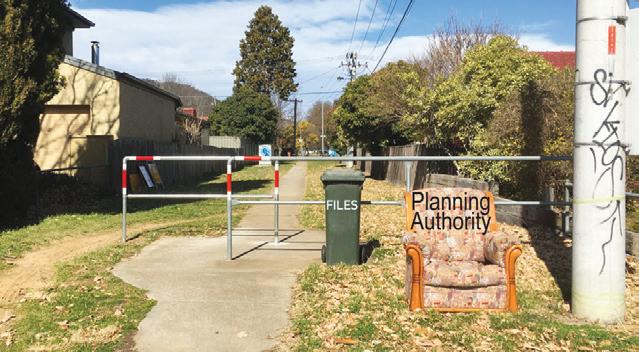
Which brings me to “respect”. Residents would love to respect the bureaucrats who present on developments. People are tired of being patronised with spin and meaningless justifications for even more questionable developments. There was a load of this stuff in 2018.
This came to a head mid year when a bureaucrat was doing the usual and some of the audience could not take it any more and started to make comments. Up jumps the chief planner and demanded that people show respect for the presenter. You can guess what some people said quietly in response.
If politicians and bureaucrats think they deserve respect – then stop talking rubbish and be honest about what
Getting around the rules… some droll digital mischief from Paul Costigan, who writes that the government’s real message on infill is not for residents but for developers seeking a green light to carry on as usual.
is going on. It is really that simple.
Even in social housing this government plays nasty and unnecessary games. It is as if politicians want to reinforce a misconception that people are against social housing in their neighbourhoods. Not so.
It should not be a choice of community open spaces and facilities versus more social housing. A commonsense approach would be to deliver both using the tools that are available through – wait for it – real long-term planning.
Another query. Is this government yet to install computers with network storage for meeting agendas, notes and minutes? With the “Dickson Land Swap” fiasco we were told that the information was in a box that was “misplaced”. If we are to believe
that, then no one created digital files, nothing was emailed and nothing was electronically stored.
Hands up all those who believe that. In 2019 the ACT Labor/Greens government needs to make urgent, real and tangible changes to how planning and development happens. No more silly “Have Your Say” websites, no more bureaucratic nonsense and dishonesty. Try being nice and talk directly to and listen to residents. Hands up those who want that to happen.
Paul Costigan is an independent commentator and consultant on the visual arts, photography, urban design, environmental issues and everyday matters.





To view our affordable and effective services please go to
By Kathryn VUKOVLJAK

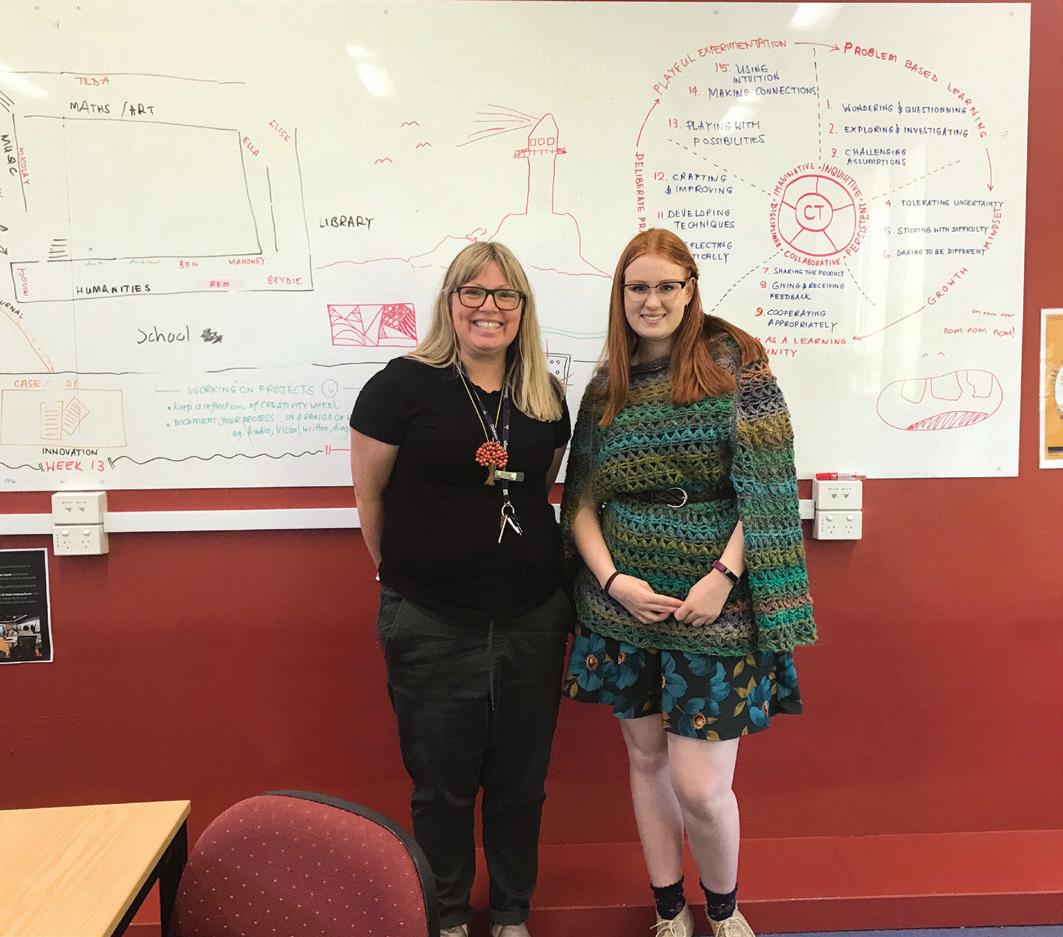
FROM an eco-dress that can be worn 10 ways to a children’s book about the carbon cycle, the projects produced by year 11 and 12 students of the Interdisciplinary Inquiry course at Dickson College in 2018 are many and varied.
However it’s not about what they’ve learned – it’s how, says teacher Claire Sandrey.
“Teaching this course has been challenging and exciting, it flips traditional teaching on its head,” says Claire.
The Interdisciplinary Inquiry is a process-oriented course that can be personalised to students’ interests, according to Craig Edwards, principal at Dickson College.
“The course gives students increased agency and more of a say in what they learn,” he says.
Craig says he was inspired by a visit to High Tech High School in San Diego in 2014,
which focuses on group projects and inquiry-based learning as its bread and butter.
“I was impressed with the school, where the process of inquiry isn’t just about creating a project, it’s about how we become researchers and inquirers, how to think critically about the problem itself and also how we learn, how we acquire knowledge and skills,” he says.
“I was keen to bring this type of learning to our senior secondary.”
Craig says the Interdisciplinary Inquiry course was written by teams of teachers from ACT schools, approved by the BSSS (Board of Senior Secondary Studies) and rolled out at the start of 2018.
Dickson College was one of the first schools to adopt this course, with other schools interested in developing their own versions.
“We had around 15 students across years 11 and 12 take up the course in 2018, and hope over time we’ll have more,” says Craig.
“Initially it was very abstract but now we have the
student work and we can really talk about it. I’m pleased with how it’s gone.”
Even though students can study whatever they want, the course is far from an easy ride, Craig says.
“The idea of choosing what you want to research is appealing but once we get into the rigour of conducting proper research and inquiry, it is actually quite challenging,” he says.
Student Elise Palethorpe, 18, says she’s gained a different perspective on what learning’s all about.
“It’s been so much fun – I studied maths and science so to do something like Inquiry has been amazing,” she says.
“I’ve been able to try so many new things and I guess because it’s all about the process, I feel comfortable doing it. I ended up writing a book – I’d never do that, I thought I hated creative writing! But in this class I feel comfortable to try all these things.”
Year 12 student Lucy Francis, 18, says she took the course because she thought it sounded exciting and different.
Clark Electrical Services is a long established and leading electrical company in the Canberra. Whether you require an electrician for renovations, are in need of new home wiring services, full-home wiring replacement service, have insurance claims or inspections pending or are extending your home, Clark Electrical Service has got you covered. We provide electrical inspections, routine electrical wiring maintenance, and will consult with you on ways to make your home more energy efficient.
• We cover all of Canberra.
• We employ only qualified and experienced electricians.
• We don’t charge the earth.
• We appreciate our loyal customers.
• Seniors discounts avaliable
• $49 electrical inspections

“I like that it’s not about the work you produce at the end, it’s the journey of getting there, which is so different to other classes,” she says.
“I feel I’ve learnt more real-world skills, how to learn and how to fail, which is a big one I struggle with.
“The course in general has given me more confidence, and I’ve found that it doesn’t mat ter if an idea doesn’t work out because I’ve actually learned something from that.
“If something goes wrong I can now step back and say, what did I actually get from this, not just why but how could it not have gone wrong, and what did I learn?”
Having better understand ing of these skills helps students with the other disciplines they’re studying, says Claire.
“Students have said they’ve gained the confidence to try new things and ask more questions,” she says.
“The Interdisciplinary course blurs the boundaries between the disciplines, and uses a mix of research articles, case studies and practical components to develop the students’ capabilities in what we call the four Cs – creativity and innovation, communica tion, critical thinking and collaboration.
“Students learn those skills and apply them to their independent projects. There’s a constant reflection, look ing at things from different perspectives.
“They use their own












NATALIE GATELY has some tips to keeping kids safe (and out of trouble) when you’re at work these holidays.
MANY working parents battle with school holidays, especially the long period between Christmas and the start of the new school year. Most people receive four weeks’ leave a year, but school holidays take up about 12 weeks of the year.
Even if both parents take their leave at different times, they’ll still need to find alternative care arrangements for younger children. Older kids will spend days at home unsupervised.
Leaving young people at home raises questions and concerns for parents. How long can they be at home alone? How can I ensure their safety? How will they occupy their time? What if someone comes to the house? Should I let them leave the house during the day to visit a friend? How secure will the house be?
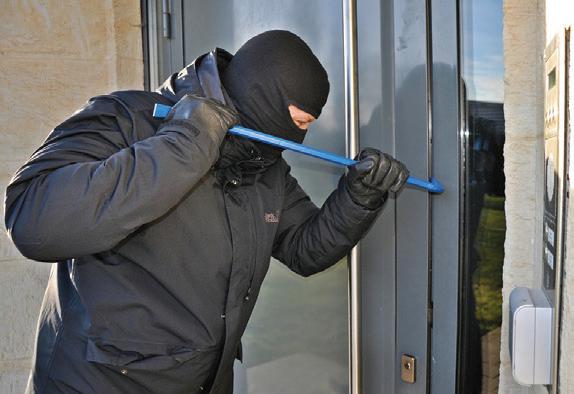
Based on soon-to-be-published findings on young offenders and previous research into home security (particularly burglaries), the following advice may provide guidance for concerned working parents during school holidays.
Most burglars reported they are motivated by opportunity and convenience. They look for unoccupied homes with open doors and windows in daylight hours. Teach your children how to operate door locks, ensuring front and back doors stay locked. But keep keys in locked doors in case they need to exit quickly.
Most burglars avoid homes if they detect someone is present. So there is a fine line between making the house occupied, while ensuring children do not open doors to strangers. Ensure your children know your rules on letting someone in the home without your permission or answering the door to anyone they don’t know. Have a plan on how to respond to this.
It’s also worth ensuring that you:
• ensure children know how to phone triple 0 in the event of an emergency. Write down your full name, address and telephone number and keep it by the phone. Kids (and adults!) can panic in emergencies and forget basic details.
• write down a responsible, available person’s number if you are at a job that cannot take phone calls.
• create a family “phone book” with each family member’s particular friends. Make sure you know the names and phone numbers of their closest mates. That way if you ever lose your child or they do not return you have a starting point to phone their friends.
• limit time online and install security software that allows you to monitor online activity and avoid online predators.
While most parents believe their child would never engage in antisocial behaviour, the lack of supervision, structure and boundaries during school holidays can lead some children to push boundaries or even break the law, especially when encouraged by peers.
Our interviews, soon to be released, with children who had been charged with an offence indicated they committed the burglary during daylight hours in the company of friends and for consumable items.
Very few actually “planned” their offences. Most just saw the opportunity (goods left on display, doors and windows left open)
while they were roaming the streets looking for something to do. And often they were responding to dares by friends. The most common tactic to determine whether to burgle a property was simply to knock on the door to see if someone was in.
So, if your child is allowed to go out while on school holidays, here are some parameters you can consider for their safety:
• agree on times they can be outside while you are not home (and limit extended periods of time).
• agree on where they are allowed to go – locations that provide pseudo-supervision (such as shopping centres) are preferable to long periods of street-wandering.
• make sure they know not to go near people in cars who stop to talk to them (do not approach the car even if the person is speaking quietly). Explain that most adults do not ask young people for help – they usually ask other adults – so children must be wary of assisting adults when they are alone.
• instead of telling children never talk to strangers, tell them if they need help to look for a mother with children or go into a public place (like a shopping centre) and ask for help.
• notice if your child seems to have excess funds or new items in the house. Investigate further if they tell you they have been “given” or “loaned” something from a friend.
• notice if they seem quiet or reluctant to tell you how they have spent their day.
If you’ve allowed your child to leave the home when you’re not there, there are still things to consider when they return to an empty house:
• have a lockbox for spare keys so they can re-enter the home (10 per cent of burglars reportedly entered a home with keys left in easily detected locations).
• given burglaries are often committed during daylight hours, teach children to have a quick “sweep” of doors and not to enter if something looks out of place (such as a door that is now open or a damaged fly screen).
• ensure they phone you or another responsible adult when they return.
By following these tips you can help keep your child safe and out of trouble when leaving them alone during the holidays.
Natalie Gately is the criminology courses co-ordinator at Edith Cowan University. This article was originally published on theconversation.com
By Helen Musa
HANS Christian Andersen’s “The Princess and the Pea” is one of his most-loved yet shortest stories, only 379 words in length.
We never know the characters’ names, only that the prince is suspicious of most princesses because “there was always something about them that was not as it should be” and that his mother, the queen, sets a test for the bedraggled princess who appears at the gate.
Hardly the subject, you’d think, for a musical, but that’s exactly what the story became in 1959 when “Once Upon a Mattress” opened on Broadway in 1959 with music by Mary Rodgers, the daughter of Richard Rodgers, of Rodgers and Hammerstein and lyrics by Marshall Barer.
Fleshed out with eccentric characters, it introduces Prince Dauntless the Drab, Queen Aggravain, King Sextimus and Princess Winnifred the Woebegone – the names say it all. In the rather adult subplot, the characters Sir Harry and his pregnant love interest Lady Larken help expand the story.
It was unexpectedly successful and has seen several revivals on TV, where comedienne Carol Burnett first played the princess and later the queen, and one on Broadway starring Sarah Jessica Parker.
This writer saw Queanbeyan Players stage the show more than 20 years ago and now Ickle
Pickle Productions is reviving it here during the school holidays in a production they say is suitable for the whole family.
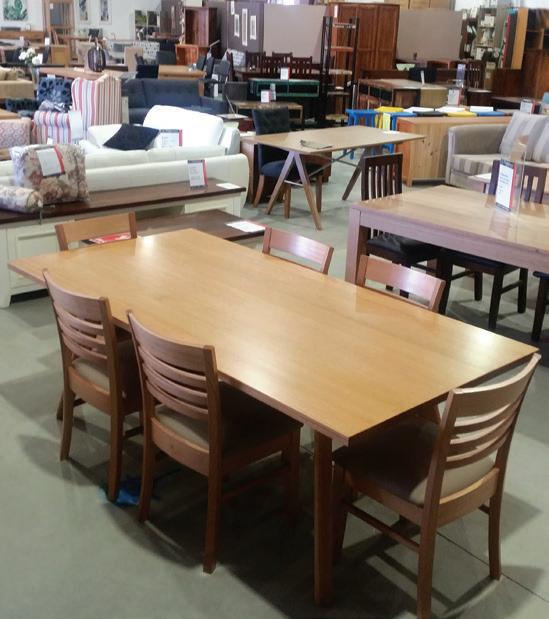
“CityNews” caught up with director Anita Davenport as the cast prepared to head for Harvey Norman in Fyshwick to test the mattresses – in Andersen’s story there are 20 of them.
She had heard about the Queanbeyan Players’ version. “People told me they loved it then, so why not now?” she asks.
Devonport is no stranger to shows touched by eccentricity, having directed the musical “Barnum” for Canberra Philharmonic during 2018. She praises the array of comic characters in the musical and the vocal opportunities.
“The thing I love the most is that Dauntless and Winnifred are not typical prince and princess, it’s wonderful to have comedians’ roles for the leads.”
The prince, played by Isaac Gordon, (also in “Barnum”) Davenport concedes, is a bit of a drip.
“We’ve taken care to look at his character and asked why she wants him… But Isaac and Alex [Alex McPherson as Princess Winnifred] in the two leads are wonderful vibrant performers,” she says.
The role of Winnifred intrigues her.
“She’s a very strong woman, much like his mother Queen Aggravain [Deanna Gibbs] but she does believe in him, and they actually like each other.
“When Dauntless asks her not to leave, his reason is, ‘I like you – you swam the moat’.”
That’s one of the many instances that makes “Once Upon a Mattress” seem like quite a modern
By Helen Musa
POLISH pianist Lucas
(Lukasz) Krupinski is, by any estimate, a rising star of the piano world – and he keeps coming back to Canberra.
Since September, he’s been studying full time at the Royal College of Music in London under Prof Dmitri Alexeev, but he is taking time off to pay a visit to Canberra with his mother, Agnieszka, over the holidays and has agreed to per form a one-off “garden recital” at the Red Hill home of music patrons Brian and Dianne Anderson. The Anderson garden was previ ously opened through Australia’s Open Garden Scheme.

musical, way ahead of its time for 1959.
“It has a wonderful storyline,” Davenport says, “it challenges the Andersen story in a funny and uplifting way, yet as with most fairy stories, it’s about true love.”
Davenport says that with any musical billed as suitable for all the family, there are different levels – “Some of the script is just for the adults and it might go over the heads of the children but really, anybody over the age of six will love the show.”
She has introduced puppets and there is a strong pantomime element, with characters such as the Minstrel, the Jester, the Wizard, the Gypsy and the Nightingales. As for the jokes, most of them are “very silly.”
The music ranges from classical styles through to oompapa, she says. Well-known Canberra voice coach, Lauren Nihill, is musical director and as well as the fun tunes there are some lovely love songs, including “In a Little While”, between Steven Galinec and Alissa Pearson playing Sir Harry and Lady Larken.
“I love working for Ickle Pickle Productions because it has both adults and young people… some of the cast have done dozens of shows, but you see them talking to the young ones and the newbies – I think that comes through,” says Davenport.
“Once Upon a Mattress”, Belconnen Theatre, January 11-24. Book at canberraticketing.com.au or 6275 2700.

It’s not the first time he has performed for the Andersons, having previously played works by the great Polish composer there in support of Canberra’s Australian International Chopin Piano Competition.
The past year has been good for the young artist. Krupinski won the 7th International Piano Competition in San Marino in March and performed during the year for the presidents of China and Poland and at Carnegie Hall.
Born in 1992 in Warsaw, he graduated Magna cum Laude first from the Fryderyk Chopin University of Music in Warsaw. He
has come first in international piano competitions in Aachen, Hannover, Minsk, Belarus, and Tomsk and has twice been honoured with the Minister of Culture and National Heritage Prize for remarkable artistic accomplishments. In 2016 he was honoured with a Commemorative Medal from Fryderyk Chopin University of Music.
“Chopin in the Garden”, 57 Arthur Circle, Red Hill, 5.30pm for 6pm, Saturday, January 12, advance bookings essential to 0414 628007 or 0412 625920. There will be some seating, but guests are invited to bring their own chair or blanket to sit on.





IT started out to be just a normal Sunday dinner with my adult children where we would eat and they would intermittently groan at my dad jokes, the telling of which appears to be entrenched as an expectation when we gather.
A penguin walks into a bar and says to the barman: Have you seen my brother in here? The barman says: What does he look like?
We wanted something out of the ordinary, not quotidian. (Relatedly, what do you call a conformist cloud? Stratus quo.)
So, we made it a celebration by comparing two rosés. The early evening temperature was warm and the wine was chilled and each bottle cost $24 from BWS at Kingston so the style of wine suited an informal celebration

We pitted a Canberra district rosé against one from SA. Both were pinot derived and from the 2018 vintage.
and it wasn’t a wallet buster. Plus, rosé is an easy-drinking crowd pleaser that was well matched with the Serrano ham salad (it was too hot for a Sunday roast).
A rosé is any light pink wine, generally coloured by brief contact with red grape skins.
We pitted a Canberra district rosé against one from SA. Both were pinot derived and from the 2018 vintage.
Lerida Estate is at the foot of the Cullerin Range at Lake George and it specialises in pinot noir. Bird in Hand is also a winery with cool-climate influences, based in the Adelaide Hills.
The Lerida Estate was a much more vibrant pink than the almost translucent Bird in Hand.
The Lerida was slightly higher in alcohol content at 12.5 per cent, the Bird 12 per cent.
Six wine glasses and three water glasses adorned the dinner table
as I and my pigeon pair took on the mantle of critic, a person, according to the “Devil’s Dictionary”, who boasts himself hard to please because nobody tries to please him.
The bouquet of the Lerida was heady, with perfumed raspberries a feature.
A big slug of water ensured that the taste buds were refreshed before the other wine was tasted. The Bird was also pleasant on the nose.
The first taste of each reinforced the contrast between a richer, complex local wine and a pleasant but not outstanding rival.
As each gained air though, the differences became less pronounced with the verdict from the three of us that the Bird in Hand was enhanced by the food whereas we preferred the Lerida as a stand-alone drink.
I called Andrew McFadzean, general manager of Lerida, to

comment on this observation.
“I am pleased that it’s approachable as a stand-alone drink despite the fact that it goes with the Australian way of eating,” he said.
“One of the things we talk about at the winery is the way Australians eat. It’s 7.30 at night and it’s really hot and we eat outside, so a number of the lighter varietals suit the way we eat, especially as we go into summer.
“We do make a rosé that is a lot more structured that is more a food wine, a saignée style that is barrel fermented for extra interest.”
Dear reader, saignée means “to bleed” and is a method of rosé winemaking that involves “bleeding” off a portion of red wine juice after it has been in contact with the skins and seeds and makes a bolder wine.
But that style of rosé was absent and, despite the dad jokes, there was no family bloodshed, although I did tell a porky about great grandad who glowers down from a hand-coloured photo above the dining room table.
“My lovelies,” I remarked, “great grandad died peacefully in his sleep…”
They nodded, impressed with this historical remembrance.
“Unlike,” I added, ”the passengers in his car.”
Singer Lucy Sugerman’s summer plans include…

• Taking lots of trips to the Cotter or Casuarina Sands to swim; it’s super refreshing, an easy getaway and a nice drive (also the rope swing is fun).
• This applies any time of the year, but I often go to Power Kart Raceway with friends (also Brodburger at Kingston Foreshore and ice-cream afterwards!).
• Going to lookouts such as Mount Ainslie or Telstra Tower in the evening. The city is so gorgeous at that time, especially on balmy, summer nights.
• Lonsdale Street in Braddon! Yes, I’m one of those people. There are so many great cafes, restaurants and shops. The highlight for me is always Frugii (I always get the cheesecake).
• Going down to Lake Burley Griffin as well. My family are avid windsurfers so the lake is great for that (although I prefer stand-up paddle boarding).

By Helen Musa
SWEPT away by the romance of “Love and Desire: Pre-Raphaelite Masterpieces from the Tate”, the National Gallery is cook ing up a season of “Summer Lovin’.” Reality TV series personality and author Osher Günsberg will host a summer party in the gallery to which couples, singles and groups are welcome. Ticket price includes entry to the exhibition, where they may be “seduced by the iconic artworks”. In the Australian Garden, NGA, 6pm-9pm, Saturday, January 19. Book at nga.gov.au.
“A SLICE of the incredible Brooklyn nightlife” is coming to town in the form of “Sasha Velour Live”, a 75-minute, oneperson show created by Velour (Alexander Hedges Steinberg), the winner of “RuPaul’s Drag Race Season 9”. Celebrating the “heart of drag”, the show includes some of her favourite numbers, including “Cellophane” and “This Woman’s Work”. At The Playhouse, Wednesday, January 9, book at canberratheatrecentre.com.au

hosting a party at the National Gallery, January 19.
CANBERRA artist Kylie Fogarty has been commissioned by Quest Apartment Hotels to create two pieces of art for the foyer of its new Quest Canberra City Walk. The pieces, “Stringybark Study 2” and “The Grand Duo”, feature the gum trees of North Canberra. Fogarty says she is “fascinated by trees, the stories they tell, the connection to their location and the fauna they support”.
M16’s “Art Roadshow” is a new venture where 10 items produced by the public will be selected, displayed and discussed with certified Canberra fine art and antiques valuer Andrew Whitehead to uncover their stories and value. “Have you ever wondered what that artwork that you found in the garage sale from down the road is actually worth?” M16 asks. Expressions of interest to have items valued are due to m16artspace.com.au by 5pm, February 22. Book for the roadshow night on March 18 at eventbrite.com.au
ACT Veterans and Arts Minister Gordon Ramsay has announced the allocation of $10,000 to the “Boots N’ All Choir: Strong Together in Song” project, to provide resources and a safe space for veterans, their families and first responders to sing together.
The “CityNews” holiday guide to happenings and attractions around Canberra as compiled by DANIELLE NOHRA EVENTS

THE annual Street Machine Summernats is Australia’s biggest horsepower party in the Southern Hemisphere. At Exhibition Park, 10 Flemington Road, Lyneham, January 3-6. Information at summernats.com.au
“SASHA Velour Live and in Colour” is a one-woman show celebrating the spectacle of drag through some of Sasha’s favourite numbers. At Canberra Theatre Centre, London Circuit, Civic, 8pm-9.30pm, January 9. Information at canberratheatrecentre. com.au
THE Portobello Road market at the Old Bus Depot Markets is all about browsing through a wide variety of high quality antiques and collectables such as decorative art and fine silver to restored furniture and jewellery. At 21 Wentworth Avenue, Kingston, 10am-4pm, January 13.
“ROME: City and Empire” features more than 200 of the British Museum’s most engaging and beautiful Roman objects each
telling the story of how Rome grew from a series of small villages to become a mighty empire. At National Museum of Australia, Lawson Crescent, Acton, until February 3. Information at nma.gov.au
TO highlight the Australian National University’s connection with “Rome: City and Empire”, voluntary guides will conduct a one-hour tour focusing on specific Roman items in the collection that relate to those in the NMA exhibition. In the AD Hope Building, Ellery Crescent, ANU, 12.30pm, January 11. Free but numbers are limited. Bookings to 6288 3373.
“LIVING Water: Journeying in inks” is an exhibition fuelled by Ella Whateley’s passion for ink and paper, and intrigued by the rich visual languages of Chinese painting and Chinese calligraphy. At the Australian Centre on China in the World, Australian National University, Fellows Lane, Acton, until January 11. Information at ciw.anu.edu.au
NATIONAL Portrait Gallery is celebrating 20 years, with 20 new portraits in its exhibition “20/20”. At King Edward Terrace, Parkes, until February 10. Free. Information at portrait.gov.au
THE National Library of Australia’s major exhibition “Cook and the Pacific” revisits the extraordinary Pacific voyages of Capt James Cook, between 1768 and 1780. At Parkes Place, Canberra, 10am-5pm, until February 10. Visit nla.gov.au
FROM Aboriginal times through to the establishment of the village of Hall in 1881, the exhibition, “A Tale of Two Villages” tells the story of the Hall-Ginninderra district. At Hall School Museum and Heritage Centre, Victoria Street, Hall, until June 13. Free. Information at museum.hall.act.au
“AFTER the war” explores the personal stories of hope, loss and love of ordinary Australians whose lives have been altered by war. At Australian War Memorial, Treloar
Crescent, Campbell, 10am-5pm, until July 11. Free. Information at awm.gov.au
IN August the Australian Mint released a coloured $1 coin with images from “The Tales of Snugglepot and Cuddlepie” by May Gibbs, and now, the Mint’s children’s activity area is transforming into a May Gibbs activity corner for children aged four to 10. At Denison Street, Deakin, January 7-18. Free.
THE National Library of Australia invites families to drop in to read stories from the Dreaming, explore the science of Cook’s voyages and create their own story of adventure at the “WordPlay” room for children aged four and over. National Library of Australia, Parkes Place, Canberra, until February 3. Information at nla.gov.au
EVERY Saturday at 2pm visitors can take a short walk with a ranger at Tidbinbilla Nature Reserve who will teach them about potoroos and other important inhabitants of the Eucalypt Forest. After, at 2.45pm, guests can join another walk to search for koalas and hear some stories about them. At Tidbinbilla Reserve Road, Paddys River. Normal entry fees to Tidbinbilla apply. Visit tidbinbilla.act.gov.au
WATCH the UC Capitals take on Bendigo Spirit in Round 13 of the Women’s National Basketball League Championship at the Australian Institute of Sport, Leverrier Street, Bruce, 7pm, January 4. Information at wnbl.com.au
CANBERRA United takes on Adelaide United at McKellar Park, Walkley Place, McKellar, 4pm-7pm, January 13. Information to canberraunited.com.au
Opening night at the open-air cinema... Lady Gaga and Bradley Cooper in “A Star is

By Helen Musa
BILLED as “doggy-friendly”, the American Express Openair Cinemas program has now become a regular fixture on the Canberra calendar.
Dog owners may bring their best furry friends to any screening, but are asked to anticipate films with expected gunfire and explosions.
Luckily, that shouldn’t include opening night on January 9, which this year features the latest iteration of “A Star is Born”, starring Lady Gaga and Bradley Cooper, who also directed the movie. These are the very newest of films. There’ll also be “Boy Erased” a drama starring Nicole Kidman, Russell Crowe and Joel Edgerton, “The Children Act,” where Emma Thompson plays a judge tasked with ruling on the case of a sick teenager refusing a blood transfusion on religious principle, and an advanced screening of “The Hate U Give”, a thriller where the character Starr Carter
witnesses the fatal shooting of her childhood best friend.
There will also be plenty of new family-friendly titles including “Mary Poppins Returns”, “The Grinch”, Disney’s “The Nutcracker” and “Instant Family”.
The 2018 festival of food, fun, flicks and ice-cream, which takes place on the Patrick White Lawns near the National Library of Australia will feature 39 events involving alternative entertainment, live music and DJ performances before the latest feature films hit the big screen.
A variety of seating options are available with a blanket or lounger available for hire as part of any ticket package and premium tickets to the lounge include reserved seating on a bean bag and a glass of wine.

American Express Openair Cinema, Patrick White Lawn (adjacent to the National Library), January 9-February 17, Book at openaircinemas.com.au
“Doggy-friendly”, open-air cinema… but owners are asked to anticipate films with expected gunfire and explosions.


Stay in touch with the names making news on Sundays from 10am as 2CC and “CityNews” present Canberra’s only local weekend news and current affairs program.
It’s a revolving panel show that brings to the microphone great “CityNews” commentators and 2CC personalities.
Be part of the conversation and call 6255 1206 between 10am and noon.



•
•
•
•
•
•

A NEW Year starts, but the garden’s new year began in spring when life emerged from the cold with a hundred shades of green adorning deciduous trees and shrubs and the bulbs moving through the soil.
The weather predictions are that this will be the hottest and driest summer on record. Let’s hope the weather experts have got it wrong.
However, plants are much tougher than what we might think. For instance, during a big drought Goulburn residents were banned from any outdoor watering, including in watering cans, for five years. And yet their roses never looked so good and even camellias survived.
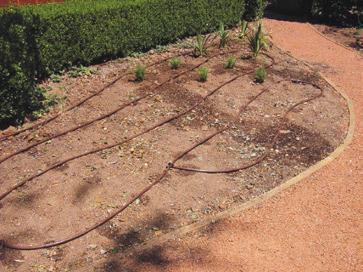
Drip irrigation is the only effective way to water garden beds, not sprinklers.
For every three litres of water applied by sprinkler or hand-held hose on a hot summer’s day over 30C in Canberra, two litres will evaporate and never reach the roots of plants!
Many people are not getting the message and end up with massive water bills. The weather bureau’s average rainfall for Canberra is 619mm; the average evaporation rate is 1800mm!
A reminder: using any type of sprinkler system between 9am and 6pm is completely banned by our water authority, Icon Water. Fines apply. However, drip systems are permitted at any time.
Drip lines should be placed on top of the soil and under the mulch, thus preventing any evaporation. Another important reminder: if you are on holidays and have an automatic watering system arrange for a friend or relative to regularly check the system.

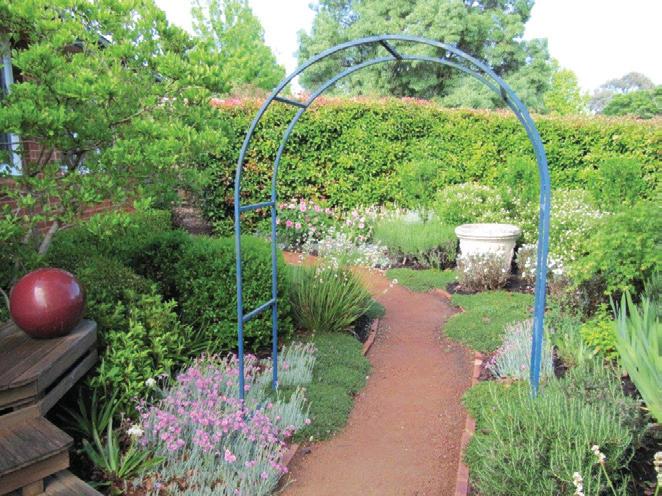
For the well-established garden it may be worthwhile paying a person to look after your garden while you’re away rather than losing valuable plants.
Automatic systems can fail and I have known of gardens flooded for weeks when the system did not turn off! What a water bill!
Potted plants will need to be watered every couple of days. If feasible, move the pots to the shadiest part of the garden.
The most important aspect of gardening during summer is watering and this is dealt with in the opening chapters of “The Canberra Gardener”, the local gardening bible published by the Horticultural Society of Canberra. Written by its members, it is a mini-encyclopedia covering every aspect from ground preparation to watering, feeding and planting. It is available from all bookshops and most newsagents.
• Continue to deadhead roses and perennials. Don’t put rose prunings on the compost heap.
• Feed tomatoes and strawberries with Maxicrop Seaweed Plant Nutrient with a weak solution every two weeks.
• If we do have spells of rain combined with hot weather, mildew can be a problem, particularly on strawberries, roses and geraniums. Spray with certified organic eco-fungicide.
• When feeding container plants always water first and then apply a liquid plant food (as above) regularly.




SUMMER heat also affects our furry friends and the ACT RSPCA has shared some easy tips to ensure pets have a safe summer
• Do they have sun protection? Pets experience sunburn and heatstroke. Provide shade and other sun barriers whenever possible to reduce their overall sun exposure. Don’t forget the sunscreen! It’s a good idea to use a non-toxic, hypoallergenic sunscreen formulated specifically for use on pets.
• Recognise the signs of heatstroke – this includes but not limited to excessive panting, weakness, vomiting, lethargy and eventually unconsciousness and death. Ensure pets have access to shade and clean water at all times.
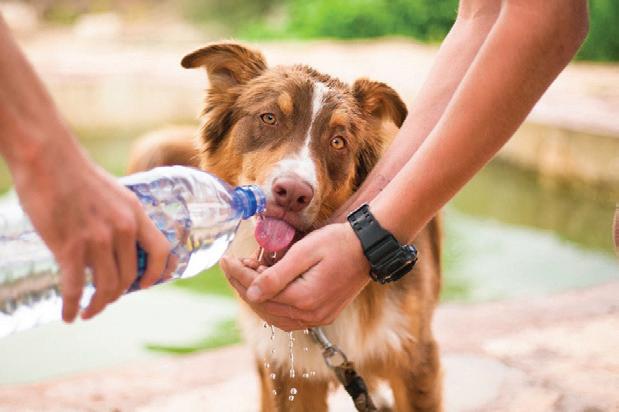
• Avoid the hottest part of the day – It’s best to save long walks or runs for early morning or evening when the day (and ground) has had time to cool down. Their paws can be burnt from cement if we’re not careful.
• Ensure it’s pet-friendly – Make sure wherever you’re going allows animals. Some beaches and campsites that normally allow them may have different rules during busy periods. Additionally, if you’re going to be on the road for extended periods, try and take the most direct route possible. Also, consider getting a copy of your pet’s medical history in case something unexpected happens. It’s a good idea to visit the vet before taking your pet on holiday. They can do a check-up of the animal’s health.
• Don’t leave pets in hot cars! It only takes six minutes for an animal to die in a hot car. We cannot stress enough how imperative it is. Additionally, if your pet travels on the back of a ute do a touch test of the area first to ensure it won’t burn.
• So you want to take your pet swimming – Despite what many people believe, not all animals can swim! For example, some dog breeds find it quite difficult such as bulldogs, corgis and greyhounds. If you take a pet to the water, ensure they’re supervised at all times and you may even want to invest in a pet life jacket.

“CityNews”
JOANNE
MOORE shares her predictions for the year ahead.
PREPARE for banking, real estate and stock market volatility in 2019, which could even result in another global financial crisis. So find practical ways to protect your assets and gain more financial freedom and independence. Can you sell property or shares to pay off debt and boost cash flow? Or earn extra money turning something you love into an entrepreneurial venture?
There will continue to be reality checks for corporations, businesses, banks and politicians. People who have taken short cuts (or been dishonest) in these areas will be caught out and face serious repercussions. We will see more respect for the wisdom of our elders, as well as the long overdue restructuring of nursing homes, aged care facilities and end-of-life options. Expect substantial growth in areas involving education, sport and travel, such as advances in online learning and digital publishing, more supersonic planes and high-speed trains, plus a boom in horse racing and adventure tourism. The year also bodes well for boosted funds for sporting organisations and space exploration, as well as more countries around the world legalising euthanasia.
LOVE & LUST
Attached Bulls – love and lust are on the menu in 2019, when (courtesy of extravagant Jupiter) your sex drive regularly soars. January, February and December are terrific months to travel with your partner, preferably to an exotic foreign destination that’s near water. Singles – don’t sit around waiting for true love to knock on your door. February, May and June are fabulous months to flirt up a storm and circulate in style (both in person and online) when proactive Mars and charismatic Venus visit your sign.
LOOT & LUCK
Lucky Jupiter is moving through your “money-from-others” zone (until December 2, 2019) so you could benefit from a favour, freebie, pay rise, inheritance, gift, bumper tax return, divorce settlement or superannuation payout. Make sure you manage any windfall wisely, with a view to long-term financial security. Then, from December 3 onwards, there’s money to be made via publishing, education, travel, business trips, international contacts, imports or exports.
LIFESTYLE
2019 is the year when you can really stand out from the crowd and make a strong impression in the public sphere. With unique Uranus moving back into your sign (from March 6 until 2026) the more authentically you express your personality, talents and creativity, the more successful you’ll be. Saturn, Pluto and four eclipses are activating your education zones. So it’s important that you channel serious and focused energy into updating your skills or studying new subjects in the coming year. The more you challenge yourself mentally, the better.
NEW YEAR MOTTO
“All of us invent ourselves. I’ve always taken risks and I’ve never worried about what the world might think of me.”
time to research, revise, rethink and recalibrate.
NEW YEAR MOTTO
“The man of my dreams could walk round the corner tomorrow. I’m older and wiser and I think I’d make a great girlfriend. I live in the realm of romantic possibility.”
(Stevie Nicks)
(March 21-April 20)
LOVE & LUST
Relationships will be “steady as she goes” in 2019. Which could be an issue for adrenaline addicted Rams! If you are attached, do all you can to reboot a stale partnership or fix a frustrating problem. If you allow boredom and complacency to set in, then it won’t be long before you’re heading out the door. Singles – with Venus vamping through your sign (April 21-May 15) you’ll be at your bewitching best as you attract admirers like moths to a flame. So, it’s the perfect time to fall in love, join an online dating site or update your current profile.
LOOT & LUCK
Travel and luck are linked in 2019, when you could benefit from a foreign friendship or an international business connection. January and February are particularly good months to tap into your entrepreneurial side and turn an abstract, innovative idea into a productive and lucrative project. But avoid gambling, real estate speculation and joint financial ventures in July and November, when retrograde Mercury scrambles your logic and confuses your business brain.
LIFESTYLE
January and February are the months to take some calculated risks and set a fabulously unique course for the year. But your professional life is in for some serious and transformative changes as you take on more responsibilities in your current position, accept a leadership role, start a new job or change careers. With Jupiter jumping through your adventure zone, travel beckons – especially in January, February or March.
NEW YEAR MOTTO
“Don’t let anyone in the world tell you that you can’t be exactly who you are. You have to shine in your own way.” (Lady Gaga)
(Cher)
(May 22-June 21)
LOVE & LUST
Courtesy of bountiful Jupiter, 2019 is a very positive year for relationships. Attached Twins – you have much to learn from your spouse and the more you explore new horizons together, the better the partnership will be. Singles – you could discover your perfect match when travelling; be attracted to someone from another country or culture; find true love with a teacher; or a long-term platonic friendship could take a surprisingly romantic detour!
LOOT & LUCK
When it comes to receiving funds from others, 2019 will be a frustrating year. If someone owes you money, don’t expect it back in a hurry. And – if you find yourself in financial difficulties – then don’t presume that family or friends will bail you out! In the current economic climate, the more cautious and thriftier you are, the better your fiscal future will be. January is the best month to commit yourself to a rebooted budget. If you are serious about making progress, you’ll start to see pleasing results by July.
LIFESTYLE
Love, friendship, luck, travel and business are all linked. So, 2019 is a fortunate year to start (and promote) a promising joint venture, especially with a business partner from another country or culture. But avoid making important career decisions in February, July and November, when Mercury (your ruling planet) reverses through your money and work zones. Instead, take the
(June 22-July 23)
LOVE & LUST
Expe c t some challenges in 2019 as Saturn, Pluto and three eclipses stir up your relationship zone. Singles –you may have to date a few duds before you find your dream lover. Don’t give up – each dating disappointment will lead you closer to your soul mate. Attached Crabs –February is the prime month to plan a romantic weekend escape with your sweetheart, when Venus boosts your sensuality and lust for life. But things could come to a head in July, when the Lunar Eclipse shines an unforgiving light on a frustrating problem.
LOOT & LUCK
The Lunar Eclipse fires up your money zone in January. So be careful you don’t get carried away on holiday (or at the New Year sales) and end up with a financial fiasco on your hands. In 2019, good fortune manifests via your connection with a friend, colleague, employee or tenant. You’ll also find that prudent spending, solid work habits and a healthy lifestyle will lead to more lucky opportunities coming your way in the future.
LIFESTYLE
Existing one-to-one relationships (whether romantic, platonic or business) have a karmic quality to them over the coming year. You could meet someone for the first time (or go somewhere new) where you experience a distinct feeling of deja-vu. The Saturn-Neptune connection stimulates your kind, caring and humanitarian side in January, June and November. You’ll feel like travelling in April and December but expect some turbulence along the way.
NEW YEAR MOTTO
“Carry out a random act of kindness, with no expectation of reward, safe in the knowledge that one day someone might do the same for you.” (Princess Diana)
LOVE & LUST
In 2019 you’ll experience a lucky love cycle, as Jupiter (planet of prosperity) powers through your romance and good fortune zone. So, it’s a wonderful year to join an online dating site, fall in love, move in together, propose, get married or renew your wedding vows. You could also go on a special holiday with your partner or start a hot romance with a sexy foreigner, as love and travel are connected. The best months to take a trip are January, February, April and May.
LOOT & LUCK
Many Leos will be extra lucky in 2019, as prosperity planet Jupiter moves through your good fortune zone! So, it’s an auspicious year to sell shares or real estate, enter a competition, buy a lottery ticket, visit the casino, win at the races or launch a lucrative project. But avoid making important financial decisions (like applying for a loan or signing a contract) when Mercury is retrograde in February, July and November.
LIFESTYLE
It’s a fabulous year to foster friendships, as you extend your peer group to include a generous and philanthropic
new crowd. Your family life is also incredibly important in 2019. Some Lions will welcome a new baby or enjoy improved relations with a child, teenager or parent as you share mutual hobbies, sports and interests. You’ll also feel more benevolent towards a recalcitrant relative and may find it in your heart to forgive and forget their past transgressions.
NEW YEAR MOTTO
“We need to be kinder to ourselves. If we treated ourselves the way we treated our best friend, imagine how much better off we would be?” (Meghan
Neptune and Saturn stimulate your love zones in 2019, so you could celebrate your engagement, get married, move in with your lover or become a parent, as you strive for more permanence in your primary partnership. With hard work and commitment, your love life will slowly go from strength to strength. Singles – expect a temporary dating drought in February, when Mercury reverses through your relationship zone. The best months to meet your soulmate are in May, June, August and September, when your earthy charm attracts admirers from near and far.
LOOT & LUCK
With prosperity planet Jupiter visiting your domestic zone, family and luck are linked. So, the period between now and December 2 is the best time to redecorate, renovate, build an extension, sell property, buy a new home or other real estate, house-sit, relocate or start a home-based business. Good fortune could also come via a loved one, distant relative or family friend. Your luckiest days of the year are May 3 and August 21 so plan something special.
LIFESTYLE
With four eclipses stimulating your peer group zones, is 2019 the year to sever ties with a fair-weather friend? Make it a priority to fill your friendship group with positive people who encourage your talents and support your dreams. The following dates are when Mercury (your ruling planet) is retrograde… from February 5-28 be extra careful when communicating with loved ones; July 7-August 1 looks tricky for friendships and social networking; from October 31-November 20 expect computer, travel or car chaos.
“Your self-worth is determined by you. You don’t have to depend on someone telling you who you are.” (Beyonce)
(September 24-October 23)
Attached Libra – January and June are terrific times to travel with your sweetheart. Whereas April and May are the best months to bring more romance, flirting, fantasy and fun into the relationship. If you’re single, make sure you’re actively on the lookout for love in January and February, when adventurous Uranus and proactive Mars power through your partnership zone. And don’t be shy about promoting your positive qualities. If you don’t love and respect yourself, then why should anyone else?
Prosperity planet Jupiter moves through your communication and social networking zone until December 2. So, you could hit the internet jackpot when something you post (or sell) online goes viral. There’ll also be opportunities to boost cash flow via writing, teaching, podcasting or public speaking. But your financial situation could stall (or temporarily go backwards) in November, when Mercury reverses
through your money zone. With plenty of patience and persistence, things will soon be back on track again.
LIFESTYLE
Expect some hiccups during the coming year as Saturn, Pluto and three eclipses stimulate your home zone. Any dramas will be easier to manage if you are flexible, take your domestic responsibilities seriously and make your family Number One. With Jupiter activating your travel zone, an interstate sojourn or an overseas adventure are on the cards so start planning your itinerary (and saving) ASAP. Best places to visit? Cultural cities with fabulous food and fashion (such as New York, Paris, Barcelona, Melbourne and Milan).
NEW YEAR MOTTO
“Family’s first and that’s what matters most. Tennis is just a game; family is forever.” (Serena Williams)
“I
never want to be just one thing. I want to be multidimensional.” (Katy Perry)
(October 24-November 22)
Singles – are you stuck in a rut, brooding about the past or searching for love in all the same old places? With Uranus and Neptune activating your relationship zones, be more creative and adventurous as you look for a lover who shakes up your comfort zone (someone with an avant-garde approach to life). Attached Scorpios – 2019 is the year to get the balance right between the stability of your day-to-day routine and the excitement of your shared dreams and fantasies for the future.
LOOT & LUCK
Finances and luck are linked in 2019, as Jupiter (planet of prosperity and good fortune) transits through your money zone. So expect a boost to your bank balance via a pay rise, bonus, gift or extra business coming your way. It’s also an auspicious year to buy a lottery ticket, enter a competition, bet on the horses or hit the casino. Any windfall won’t last long if you don’t manage it wisely though. So, make sure you squirrel extra cash away to tide you over when times are tight.
LIFESTYLE
Jupiter is journeying through your self-esteem zone. So, it’s time to truly love yourself and expand your personal parameters so you can become the biggest and best version of yourself that you can possibly be! And don’t dismiss the assistance of others. Influential people are happy to help you. With an experienced teacher, coach or mentor on board, you can achieve great things. If you travel in 2019, it’s likely to be for work or study purposes, rather than just frivolous fun.
NEW YEAR MOTTO
(November 23-December 21)
In 2019, strive to get the balance right between being an independent, free spirit and having satisfying relationships. Singles – you’ll feel extra frisky in January and February, as you flirt up a storm and circulate in style. So, it’s the perfect time to host a party, go on a blind date, join a singles club or look for love online. If you are attached, alternate solo projects with joint ventures. May and June favour companionship, romance and pampering your partner, so plan something special.
LOOT & LUCK
With Pluto, penny-pinching Saturn and four eclipses stirring up your money zones in 2019, expect delayed payments, tax problems, diminished cash flow or budget blowouts. July looks particularly problematic, when retrograde Mercury and two eclipses bring financial issues to a head. Separating your wants from your needs is a must, as smart Sagittarians get thrifty and concentrate on sensible saving, sustainable living and getting by on less.
LIFESTYLE
Lucky Jupiter (your power planet) is moving through your sign until December 2, which is good news for your general health, physical vitality and mental wellbeing. Jupiter also gives you the chutzpah to initiate personal changes and then take on the world. Make the most of this powerful energy surge, which only happens every 12 years. It’s time to be the best and boldest Sagittarian you can be, as you take on ambitious challenges and venture into exciting new areas that would usually daunt you. Confidence is definitely the rocket fuel that will take you places in 2019!
NEW YEAR MOTTO
“Happiness and confidence are the prettiest things you can wear.” (Taylor Swift)
(December 22-January 20)
LOVE & LUST
Attached Caps – the Solar and Lunar Eclipses (in January and July) could stir up hidden tensions, particularly if one of you has been putting work before the relationship. It’s best to bring these problems up into the light of day, where they can be examined, discussed and resolved.
Singles – Cupid’s arrow is most likely to strike in February, May or June, when you’re attracted to a tender Taurus or a caring Cancer. So, brush up on your flirting technique and sexy one-liners.
LOOT & LUCK
Intuition and luck are linked, as your inner voice guides you in the right direction. But be very careful about money matters in January and July when the Lunar Eclipse and retrograde Mercury scramble your financial antennae. The luckiest month of 2019 is December, when prosperity planet Jupiter activates your personal and good fortune zones. So, make sure you prepare well during the preceding 11 months so you’re ready, willing and able to capitalise on good luck when it comes along.
LIFESTYLE
Saturn (which is still transiting through Capricorn) presents some serious challenges in 2019. If you learn from them, then you’ll gradually develop and mature… like a fine red wine. Activities such as meditation, contemplation, yoga and journaling are favoured, as Jupiter journeys through your spiritual zone and you tap into the wisdom within. The positive Saturn/Neptune connections (in January, June and November) are fabulous for taking a special dream and spinning it into a rock-solid reality.
NEW YEAR MOTTO
“The way I see it, if you want the rainbow, you’ve got to put up with the rain.” (Dolly Parton)
The Lunar Eclipse (on January 21) heralds a dramatic year for love. Attached Aquarians – February is a fabulous time to travel with your partner. But your romantic life looks rocky in July, when Mercury reverses through your relationship zone and communication goes haywire. So, it’s not an ideal time to make important decisions about matters of the heart. Singles – are you looking for your soulmate in all the wrong places? In April and May, true love could be as close as the boy or girl next door.
LOOT & LUCK
The internet and luck are linked in 2019 and your public profile could suddenly take off via the clever use of social media (and a helping hand from Jupiter). A tweet, blog post, video or podcast could reach a wider audience or even go viral. Astute Aquarians will find numerous ways to monetise lucky opportunities that come along. But avoid being impulsive and buying big-ticket items (such as a car, home or investment property) in February, when Mercury reverses through your money zone.
LIFESTYLE
With Saturn, Pluto and three eclipses highlighting your humanitarian zone, many Aquarians will become involved in volunteer work as you reach out to help the old, sick, homeless or disadvantaged. You’ll feel extra restless in 2019, as Jupiter and Uranus stir up your gypsy gene and you’re keen to explore local landmarks, travel internationally or move interstate. But you may discover that the grass isn’t always greener on the other side!
“Do your best to make a difference. Not only in your own life but also in other people’s lives.” (Oprah Winfrey)
Love, travel and adventure are linked in January and February. From March onwards you’ll feel like refreshing your dating profile, road-testing a potential partner, taking a fledgling fling to a serious new level or rebooting a long-term relationship that’s got into a rut. But matters of the heart are likely to stall in July, when Mercury reverses through your romance zone. So, it’s not a good month to celebrate an engagement, get married or launch a new liaison. Instead, be patient and wait.
With fortunate Jupiter activating your career zone, an exciting new professional venture is shining on the horizon. So, it’s a wonderful year to look for a job, hit your boss for a raise, apply for a business loan, expand your present vocation, buy out a struggling competitor or live the laptop lifestyle by starting an online business. If extra money comes your way, don’t be too impulsive and short-sighted! Make sure you secure any windfall wisely, with an eye to your long-term future needs.
LIFESTYLE
In January, June and November, the Saturn/Neptune connection helps you be more productive with your creativity and spiritually. So, it’s the perfect time to take up a daily discipline (such as meditation or yoga) plus turn an abstract idea into a concrete reality (such as a book, poem, painting or some other tangible creative project). But extra caution and discrimination are required in February and September. Don’t be gullible and let a dubious friend, colleague, client or customer lead you down the primrose path to Piscean trouble!
NEW YEAR MOTTO
“Life is very interesting. In the end, some of your greatest pains become your greatest strengths.” (Drew Barrymore)
Copyright Joanne Madeline Moore
2018