ACT Australian of the Year DION DEVOW challenges the language of colour
It’s all here @…
Kippax Fair Directory 2018
DISCOVER THE GROVE NGUNNAWAL
Dedicated Dion wants to make light of ‘dark’
By Danielle Nohra
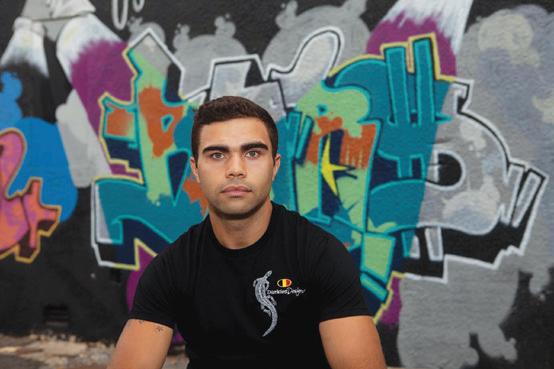
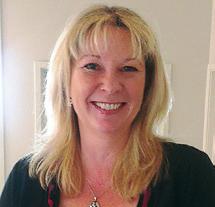
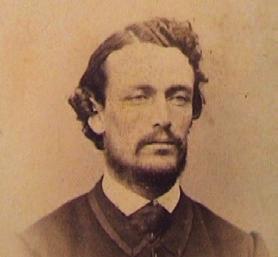
CANBERRA’s 2018 ACT Australian of the Year, Mark “Dion” Devow, is still coming to terms with the enormity of his award, and soon it will turn into more of a reality when he stands next to the nominees for the Australian of the Year Award.
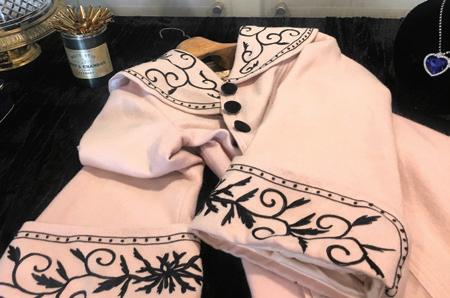
Dion, an indigenous entrepreneur, was awarded early in November for his clothing brand Darkies Designs, which uses a controversial name to reclaim a derogatory term and express pride in his Aboriginal culture and heritage.
It was a project originally meant for family and friends but soon snowballed into something bigger to the extent his clothing is sold Australia-wide.
Even though Dion’s not a graphic artist (he’d previously worked in indigenous health and education) he started Darkies Designs in 2010 be cause he couldn’t find clothes he liked.
“At that time there weren’t many indigenous clothing labels,” he says.
“So, with a graphic artist, I came up with about 10 designs featuring indig enous art and words.
“I just wanted to wear Aboriginal clothes with a cool design on them.”
One of Dion’s first concepts was a T-shirt with the logo: “100% Pure Australian”.
Teased for being “the dark one in
the point where it becomes engaging, rather than derogatory.
“I really want to promote Aboriginal culture and embrace and celebrate it with the rest of the world,” he says.
“I want Darkies Designs to be the
“The Aboriginal culture is the old est living culture and I don’t think people understand that.
ing with an Aboriginal flag on it, visit an Aboriginal community, learn about
“People make mistakes throughout history. There was segregation and disconnect from mainstream Australia before we received an apology, at least for me that’s how I felt.
“I was always proud to be Australian and Aboriginal, but now I feel part
It’s still not perfect though, Dion says, especially in the business realm, so he wants to continue bringing indigenous and non-indigenous people together.
In 2014, Dion created The Yarning Circle, which showcases and engages with indigenous business owners’ networks.
As an ambassador for Indigenous Community Volunteers, Dion also sits on the ACT Aboriginal and Torres Strait Islander Elected Body and is working hard to help other indigenous business owners achieve their dreams. In the meantime, Dion continues to follow his dreams after setting up a cleaning and IT business.
Arts & Entertainment 19-21
Arts in the City 20
Cartoons 12-13
Gardening 23
Jumbo Crossword 22
Letters 8
News 5-17
What’s On 21
Yesterdays 17
is taken by Ian Meikle, 9b/189 Flemington Road, Mitchell.
“I’m inviting the rest of Australia to embrace and celebrate and share the Aboriginal culture because it’s a part of what it is to be Australian,” he says.
“Embrace it, wear an item of cloth-
“We’re all Australian, so why not embrace it and understand it more? I’m interested in all cultures, so why issigns, Dion says the clothes aren’t just
“I was always told, by a teacher, that I’d never be able to work in IT because I wasn’t smart enough,” he says.
“I’ve created this business to learn along the way and attract other indigenous people to the industry.”
Darkies Designs at darkiesdesigns.com.au
WHEN IT MATTERS
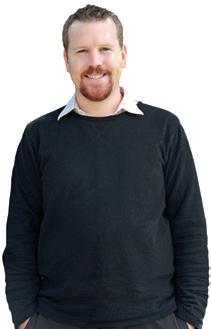
The 2018 ACT Australian of the Year Mark “Dion” Devow… “We’re all Australian, so why not embrace it and understand it more? I’m
Middle-class values smother our compassion
“OH God, we are near complete despair. How can we possibly change our fate? How can we possibly persuade our society that we deserve to be treated with decency and respect? How can we possibly fight a criminal justice system that has been designed to ensure our defeat? How can we possibly combat the blindness of white men and women so deeply invested in their own privilege that they cannot afford to see how much we suffer?”
These are the words of Michael Dyson from his recent book “Tears We Cannot Stop”. The book is subtitled “A Sermon to White America” and it challenges white Americans to reflect on the extent to which they either consciously or unconsciously assert that their “whiteness” invests in them privileges that are denied black people. Dyson insists that it is white superiority and privilege that is perpetuating a racial hierarchy resulting in widespread institutional racism.
The state and nature of race relations in the US are certainly different than in Australia. Nevertheless, the levels of disadvantage and discrimination that Aboriginal and Torres Strait Islander people continue to endure and the overtly racist response by many Australians to non-white citizens and to asylum seekers, most notably people of Muslim faith, suggests that the issue of white privilege and racism in Australia also deserves greater attention.
My sense is that the dire levels of indigenous disadvantage in Canberra would come as a surprise to most Canberrans.
Even here in Canberra, one of the most prosperous and allegedly progressive cities in the world, the briefest look at the disparity of outcomes achieved by Aboriginal and Torres Strait Islander residents against almost all of the indicators of wellness and equality would seem to make the case being put by Dyson in “A Sermon to White America”.
My sense is that the dire levels of indigenous disadvantage in Canberra would come as a surprise to most Canberrans. If I am correct and that is the case then it, of course, begs the question why that is so. However, perhaps of equal interest would be the explanation that those of us who are aware of the levels of disadvantage suffered by our Aboriginal neighbours here in Canberra would give if asked to explain our apparent lack of concern and indifference to their suffering.
When, for example, is the last time you saw a letter to the editor, a petition, a passionate exhortation from a local politician or indeed anyone anywhere about the priority that we should give to responding to the disadvantage, discrimination and adversity experienced by Aboriginal residents of Canberra?
To illustrate the point, just this month the “Family Matters” national report on the over-representation of Aboriginal and Torres Strait Islander children in out-of-home care confirmed yet again that the ACT has among the highest rate of removal of Aboriginal children from their families in Australia.
An Aboriginal child in Canberra is 12.5 times more likely than a nonAboriginal child to be taken from its parents. The report includes a state and territory report card that highlights the performance of each jurisdiction against a range of indicators. The ACT report card notes pointedly that the ACT has performed “particularly poorly against all measures”.
The “Family Matters” headline finding is that on current trends the number of Aboriginal children in out-of-home care in Australia will triple in the next 20 years. This absolutely stunning prediction has not, I understand, received any media attention in Canberra. One assumes it was not thought to be newsworthy. In fact, there is almost no social or economic measure that does not reveal a similar level of disparity
in outcomes in Canberra between Aboriginal and non-Aboriginal people. Whether it be in relation to homelessness, incarceration rates, home ownership, rates of arrest, domestic violence, education, health, employment, developmental vulnerability or the number of children living in poverty the disproportion between Aboriginal and nonAboriginal people, black and white, is of a similarly staggering order to that of children in out-of-home-care.
These sorts of outcomes are traditionally explained away as the predictable consequences of the generations of discrimination and disadvantage experienced by indigenous people in Australia. The sins of our (white) fathers for which we the current generation of whites say, we surely cannot be expected to be held responsible.
Michael Dyson, for one, refuses to cop that. His conclusion that white people are conveniently if not self-interestedly blind to institutional racism and bigotry is certainly very challenging. Most people would undoubtedly be offended by any suggestion that they are racist, as indeed would I. Nevertheless, Dyson’s analysis that white privilege is at the heart of the discrimination faced by
black people is cogent and persuasive. Those that dismiss Dyson’s thesis as irrelevant to Australia or more particularly the circumstances of Aboriginal people in Canberra might find alternative explanations equally awkward.
It is increasingly being put to me that what ails Canberra is a dominant and smothering middle class. That Canberra is increasingly being seen as lacking empathy or compassion or is indifferent to the concerns or needs of those within our community for whom life is a constant struggle is explained by reference to the dominance of a large middle class that wants for nothing and that controls all of the institutions of influence and government and, indeed, the government itself.
Jon Stanhope was chief minister from 2001 to 2011 and represented Ginninderra for the Labor Party from 1998. He is the only chief minister to have governed with a majority in the Assembly.
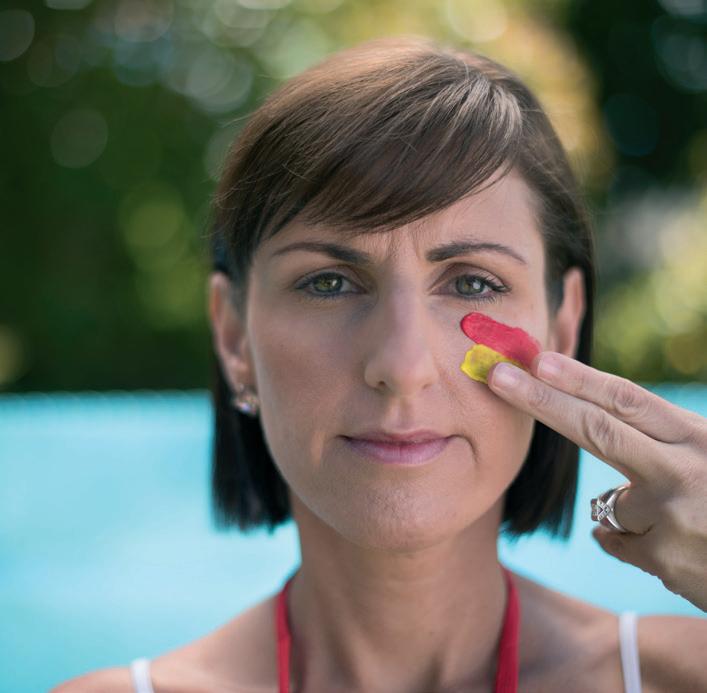
KEEP OUR KIDS SAFE THIS SUMMER.
The home swimming pool is the most common location for injury and drowning death for children under five. We can all work together to protect children in our community.
Closely supervise kids at all times
Learn how to resuscitate
Check your pool barriers meet the current safety standards
Keep your barriers clear of objects and plants that kids can use to climb into the pool area
Teach your kids to swim and be safe around pools
times
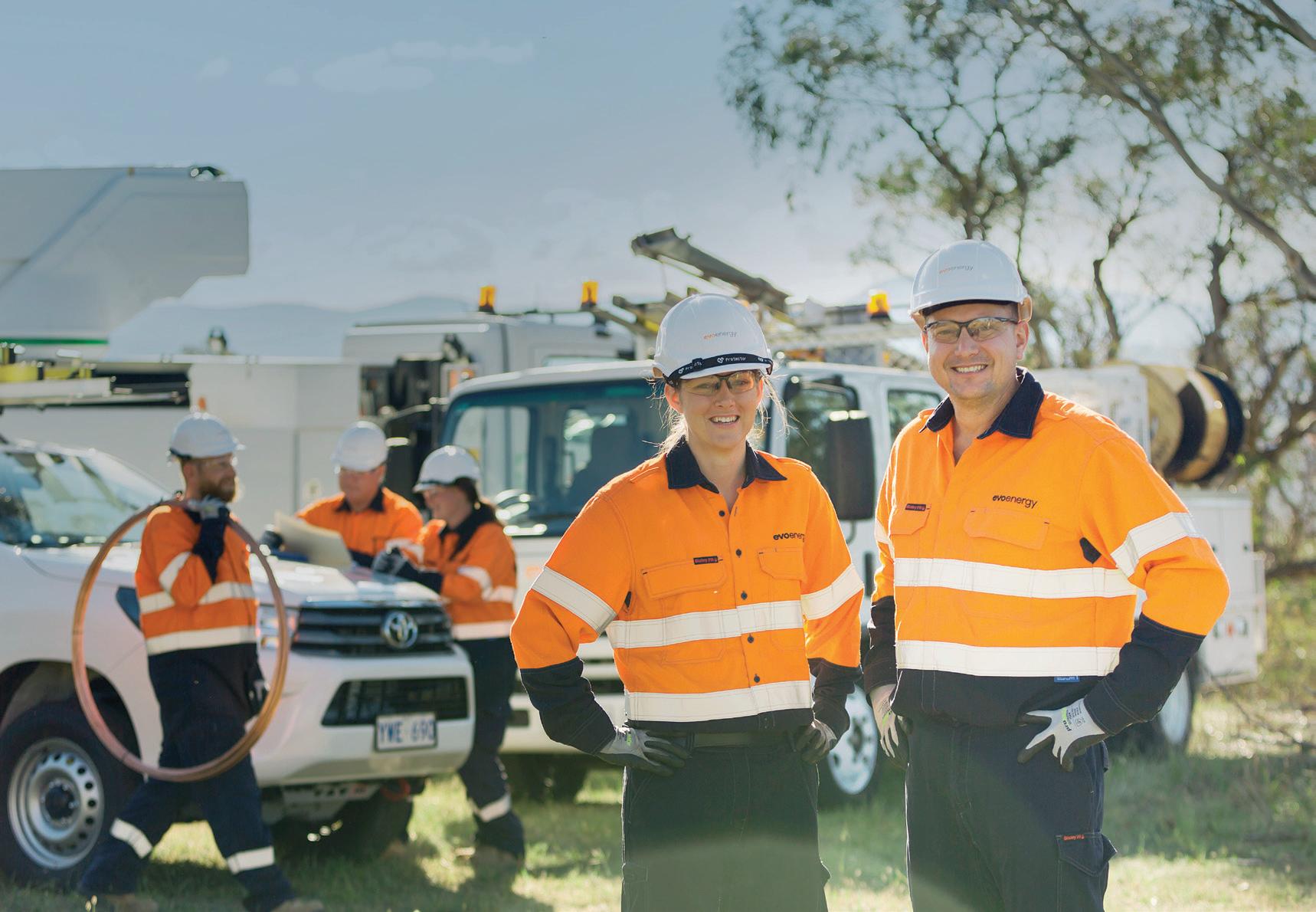
On 1 January 2018, the part of ActewAGL that looks after the electricity and gas networks will be changing its name to Evoenergy.
You’ll still talk to ActewAGL, or another retailer, about your energy bills. But Evoenergy will deliver your electricity and gas through our networks to you.
This change has been brought about from a decision by the Australian Energy Regulator.
This is simply a name change. What doesn’t change is our commitment to you.
We will continue to maintain the electricity and gas networks with a high standard of service, safety and reliability.
Contact Us
You can continue to report unplanned outages on the emergencies and faults lines.
AH, Canberra, the third best city in the world and, we’re told, a beautiful place to visit for overseas visitors.
Welcoming tourists is the overgrown grass, half a metre high, on the median strips on the Federal Highway past Epic.
Then on to the graffiti-covered back fences of Downer and graffiti-covered fences screening the demolished public housing along Northbourne Avenue.
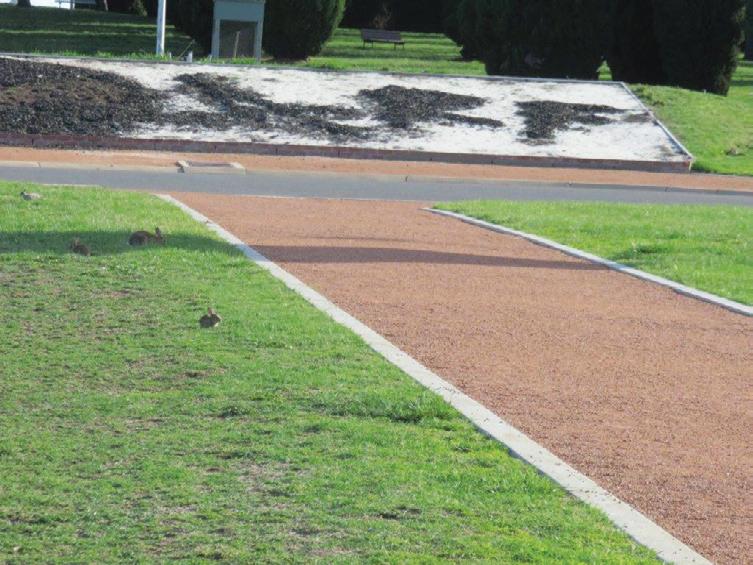
Crossing London Circuit to view the floral display bed on City Hill there’s… well, it’s anyone’s guess. In place well before Floriade, maybe it’s a permanent new style of sculpture amid the rabbits saving mowing costs by keeping the grass short.
Cedric Bryant, Watson
Yes, but…
I NEVER was much good at mathematics, but if it is true that only 80 per cent of eligible Australians voted in the same-sex survey, and that 62 per cent of them voted “Yes”, doesn’t that mean that (62% x 80%) only 49.6 per cent of the Australian population voted “Yes”? Hmmm.
Max McGregor, Curtin
Hinder & Associates
Light rail to Russell
IT is extremely shocking that the first stage of the ACT light rail ignores a key area of public transport – Russell. This area is critical and needs to be immediately catered for given the high number of people likely to use light rail in this area.
Please extend light rail immediately as passengers travelling to Russell already face severe inconvenience, having to change buses daily.
Bring back speedboats
DAY in, day out I read of the proposals for Lake Burley Griffin including boardwalks and apartments; you name it, it has been put out there but how about bringing back powerboat racing, which was popular from the ‘50s to the ‘80s on the lake?
It brought interstate supporters and tourism dollars not to mention keeping the horrid algae under control.
The lake has entertained speedboats of many and varied engine makes and capacities – ski boats, F1 hydro and jet-ski racing – offering exciting and colourful entertainment.
Michael Attwell, Dunlop
David Jones, via email
OPINION / service above self
Big things from big resolutions
By Michael Moore
WHEN it comes to New Year resolutions, the motto of more than a million members of Rotary International shows just how big you can go: “To do good in the
Members of Rotary are part of secular, non-partisan clubs delivering service above self.
Such a commitment could be seen as motherhood. However, a former Australian who was president of Rotary International, Sir Clem Renouf, saw a need and thought big. The seeds were sown for an international commitment to eradicate polio.
In 1985 Rotary International made a resolution to “rid the world of polio by 2005”. Members of Rotary in their millions have supported this program. They came close in 2005 – but are still not quite there. In 2017 there were still 16 cases of wild polio in the world, with 11 in Afghanistan and 5 in Pakistan.
When Bill and Melinda Gates saw the achievement of Rotary, they decided to boost the effort starting with an injection of $55 million which rose to $355 million by 2009. For every $1 raised by Rotary International the Gates Foundation donated $2 and this continues to this day. Thinking big also works locally. The Rotary Club of Canberra is just one
of 16 Rotary clubs in Canberra “doing good in the world”. Tackling poverty in Canberra had the immediate challenge to assist hungry families. For more than 10 years the Rotary Club of Canberra with Foodbank NSW and more than 25 Canberra charities have delivered meals to families, as well as homeless and elderly people in need. Four million meals were delivered in the five years to June, 2017.
The “Safe Shelter” program offers safe, warm, overnight shelter in innerCanberra for homeless men and, where appropriate, provides StreetSwags. Doing good in the ACT!
Tackling the causes of poverty in Canberra included a role in breaking the cycle of “no home, no education, no job”.
The outcome is “Our Place – live, learn, achieve”, an integrated package supporting a cohort of young homeless people in Canberra providing shelter, educational support and mentoring for employment.
A partnership with Foyer Foundation is establishing similar models around Australia.
In November each year around 400 senior Canberrans are provided an afternoon of entertainment at Albert Hall. The Canberra Rotary Club arranges transport, provides afternoon tea and, with Sing Australia, gives all a good time.
As part of the club’s resolution to do good in Canberra donations have also been made to organisations such as St John’s Care’s Christmas dinner, Canberra Hospital Oncology Ward, NSW
Bushfire Appeal, Brain Tumour Research Foundation and many others.
A New Year resolution “to do good in the world” means going beyond Australia. Rotary Clubs in Australia regularly donate “Shelterboxes” as part of emergency disaster relief internationally. The contents include items such as a family-sized tent, solar lights, water storage and purification equipment, thermal blankets and cooking utensils to help start the process of creating a home.
To meet the commitment to “do good in the world”, members of the Rotary Club of Canberra’s international commitment also work with Rotary in Tonga to provide drinking water to schools, they sponsor a teacher for St Judes School in Arusha, Tanzania. Donations are made to social justice mentoring, to the UN Women Safe Buses Program in PNG and to empowering women in developing countries through education and economic activity. Books and schooling materials have been provided to schools in PNG and the Philippines and ablution blocks constructed in Zambia.
Many good works are carried out across the world by Rotarians in Australia with funding matched by the Rotary Foundation. You too can donate to the Rotary Foundation in Australia (tarft.org.au) and help “to do good in the world”.
Michael Moore is a member and pastpresident of the Rotary Club of Canberra and has been honoured as a Paul Harris Fellow.
Choose an exceptional lifestyle
By the not-for-profit specialists in retirement living and seniors’ care, Goodwin.
Why would you consider living anywhere else?
· Generous floorplans
· No home maintenance
· Indoor and outdoor living
· Access to an exclusive Clubhouse
· No stamp duty
Secure parking
Adaptable to mobility needs
Home care available when needed
Close to shops & medical services.
EXCLUSIVE OFFER! UP TO $2,500 TO COVER YOUR MOVING COSTS
Relieves the pressure of moving. Use it for project management, styling to sell your home, gardening, waste removal, pack/ unpack and much more.
–
•
•
•
NEWS / popular on citynews.com.au
The year’s top five clicks on citynews.com.au
1. Coco digs up an unusual and ‘confusing’ grave site
FEBRUARY: All eyes were on
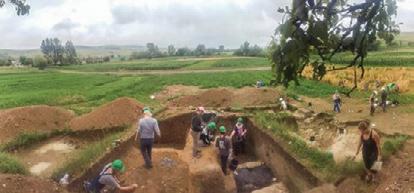
ANU anthropology student Coco James earlier this year, after she unearthed a “confusing” grave burial in a Transylvanian cemetery. The unusual site helped provide evidence for the first official written history of the Székely people.
2. Canberra’s chaotic string of attacks in the south
JULY: Canberra’s south has seen its share of crime in the past year but this was especially evident on Monday, July 17, when a number of robberies and other chaotic attacks occurred in the timeframe of two hours.
The best of…
Michael Moore
Here are political commentator
MICHAEL MOORE’s top three columns:
1. How the bosses ‘game’ works
3. Telephone scam: say ‘yes’ and you’re gone
MARCH: Many had their guard up in March after Canberrans were warned of a telephone scam, set to hit Australia from the US, where scammers were recording people saying “yes” to make it sound like the person had authorised a major purchase.
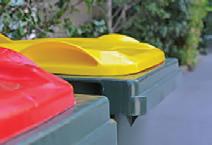
4. Bin collection days change for six suburbs
SEPTEMBER: Due to population growth across some areas of the ACT, bin collection days were changed for six suburbs; Ainslie, Hackett, Gungahlin, Lyons, Yarralumla and Richardson.
Jon Stanhope
Here are columnist JON STANHOPE’s top three columns:
1. Minister’s blunt cuts hurt vulnerable people
Top of the arts
Here are the year’s best-read arts stories:
1. Mel George wins inaugural NIDA Fellowship
2 4
5. Parents lose power to ‘rainbow ideology’
MARCH: An opinion piece by Nick Jensen, which was critical about the Safe Schools program, had many “CityNews” readers bursting for a discussion in the comments section.
MARCH: Michael Moore came up with a solution to catch the 77 individuals, identified by the Australian Tax Office in 2015, who earned over $1 million and paid NO tax. How? Apply a “floor level” for high-income earners, he said.
2. E-cigarettes, they’re here to help!
SEPTEMBER: After electronic cigarettes were marketed as a tool to assist quitting, Michael Moore questioned the truth behind the campaign. He found that although true for a tiny minority, the evidence is incredibly thin to support such claims.
3. Barr says no to helping boy attacked by dog
JULY: Even though the court decided the ACT government had no legal obligation to pay an ex-gratia payment of $200,000 after a boy was viciously attacked by two dogs in 2010, Michael Moore said the Chief Minister had a moral one. The court heard that, at six, Jack was attacked to such an extent that he spent more than six weeks in hospital, lost 13 teeth and had to have 17 medical procedures including a skin graft to his head.
MARCH: Stanhope criticised the ACT government after Minister for Community and Disability Services, Rachel Stephen-Smith announced it would stop funding SHOUT Inc (Self Help Organisations United Together), by May 31.
2. Lumpy irony of Labor and the pokie shares
JUNE: There was irony during Budget estimates after ACT Greens Caroline Le Couteur said the government shouldn’t invest in companies that manufacture poker machines. A government that, through its administrative arm, is one of the largest owners and operators of poker machines in Australia.
3. Labor’s indigenous boast comes unstuck
MAY: The local Aboriginal community responded in anger and frustration after the ACT government betrayed a long-standing commitment to meet the needs of the Aboriginal and Torres Strait Islander community with a focused and specialised drug and alcohol rehabilitation service.
JANUARY: Canberra glass artist Mel George won the National Institute of Dramatic Art Indigenous Fellowship for Cultural Leadership as part of a grant from the Luminis Foundation.
2. Gauging the temperature of the nation: The Bald Archies
FEBRUARY: The satirical Bald Archy prize exhibition, in its 24th year saw a return of one of its former superstars – Pauline Hanson, who was depicted in one painting as a phoenix rising.
3. ANU School of Music appoints new open school convenor
FEBRUARY: Leading ACT music educator Kevin Knapp was appointed the new open school convenor for the Australian National University.
Social events of the year
Here are the three most-looked at social events:
1. APRIL:
The ACT Young LawyersYoung Professionals Ball, at the National Gallery.
MARCH: An evening with Elizabeth Cameron Dalman, at the Portrait Gallery.
The Black Opal race day, at Thoroughbred Park.
THE TRADITION CONTINUES...
HOI POLLOI, a casual dining venue located in the heart of Old Parliament House, overlooking the majestic House of Representatives Courtyard. It’s the perfect spot for business lunch meetings, to grab a drink at the bar, or simply park your pram and enjoy our fantastic food and drink offerings in peace, while your kids can play in the dedicated kids’ corner
True to our name, we believe dining out should be celebrated by everyone, so we’ve designed a menu that focuses on fresh produce and value for money.
OPEN DAILY 8:30am-2:30pm MONDAY TO FRIDAY 11:30am-2:30pm SATURDAY & SUNDAY Book a table today call 1300 870 433 or visit hoipolloioph.com
The Paris End is where you’ll find an eclectic mix of local Crafters, Makers, Designers, Artists, Artisans and Purveyors .... and probably something more.
Open Tues to Fri 10am-5pm, and Saturdays 10am-4pm Phone: 02 6262 3237 theparisendcanberra@gmail.com 1/56 Heffernan St, Mitchell
and
We provide:-
•
• Residential care with a dementia specific ward,
• Respite and daycare programs,
• Multicultural facility on beautifully landscaped grounds,
• A variety of activities, interests, hobbies, pursuits and pastimes. www.villaggio.com.au
Why not call us today for an appointment to view our accommodations, community areas, living areas and meet our friendly and supportive staff.
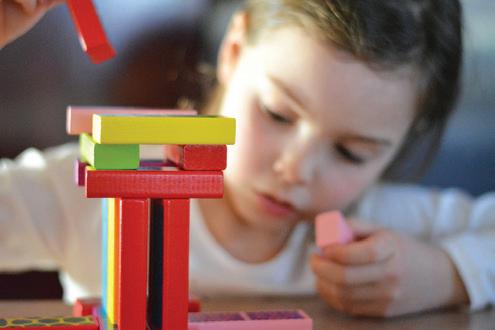
MISSING from the top-trending children’s toy lists is what should actually be at the very top in terms of learning… building blocks, writes KYM SIMONCINI and KEVIN LARKIN
BLOCKS have been part of children’s play for a long time. But there’s still no other toy that compares in promoting all areas of children’s development. Any early childhood teacher can easily identify all the areas block play develops including fine motor, social, language and cognitive skills. Blocks develop spatial reasoning skills.
As children experiment by stacking, balancing, or building with blocks, they need to share, respect other children’s constructions, ask for desired blocks and describe what they are creating. Perhaps more importantly, children develop problem-solving skills, creativity and imagination in creating their masterpieces. Finally, let’s not forget persistence where children try again and again to build the tallest tower or most elaborate castle.
Less well known is that blocks also foster spatial reasoning. Spatial reasoning is the ability to mentally manipulate objects or to think in a way that relates to space and the position, area, and size of things within it. We use spatial reasoning skills in everyday life when we read maps, pack the car for holidays, assemble flat-pack furniture or cut cake into equal slices.
Spatial reasoning skills are linked to mathematics skills. Children who have good spatial skills tend to have
better maths skills. Many people are unaware of the research, but early mathematics skills are a better predictor of later school success than either early reading or socialemotional skills. Block play helps children understand many mathematical concepts in number, measurement and geometry.
During block play children count, measure, estimate, pattern, transform, and learn about symmetry.
Perhaps most surprising to readers will be the research that shows spatial reasoning skills are the best predictor of whether children will end up in a Science, Technology, Engineering and Mathematics (STEM) related career. Spatial skills are especially important in STEM-related jobs where people are required, for example, to create or read X-ray and ultrasound imaging, engineering and architectural designs or cross sections of heating and plumbing systems.
Block play also fosters spatial language. When children play with blocks they hear and produce more words related to spatial reasoning including things such as beneath, above, next to, behind, and so on.
One study showed block play elicited more spatial language than any other type of play. The other types of play included playing with puppets, playing house, shops, school, zoos,
chefs and throwing a ball.
Other research that looked at spatial language showed the more spatial words children heard, the more spatial words they produced and the better they performed on spatial tasks. In this study, researchers looked at language relating to the spatial features and properties of objects such as the dimensions of objects (such as how big, small, wide, tall), the forms of shapes (for example rectangle, circle, square) and other spatial properties (like bent, pointy, curved).
There are a wide variety of choices for blocks for children including MegaBloks for really young children, Duplo, wooden blocks or waffle blocks for preschoolers, and Eco bricks and Lego for older children. These age guidelines are suggestions only. My 10 and 14-year-old daughters will still play with the wooden blocks.
Much of the reason blocks are such enduring toys is due to the fact they’re “loose parts”. That is, they can be moved, arranged, combined, taken apart and put together in any number of ways. Froebel, the father of kindergarten, created 10 gifts for children of which six were blocks. The best way to engage children in block play is to play alongside them and show your interest and enthusiasm in block building. My friend has a ritual of playing half an hour every afternoon with Duplo with her three young boys aged five, three and one. She says it’s her favourite time of day.
Assistant Prof Kym Simoncini works at the University of Canberra and Kevin Larkin is a senior lecturer at Griffith University. This article was originally published on theconversation.com
Playing with building blocks… develops fine motor, social, language and cognitive skills.
YESTERDAYS / city of champions
Hail the cream of Queanbeyan
WHAT, I hear you ask, could the man responsible for the creation of that most parochial of sports, Australian Rules Football, one of the most highly regarded writers this country has produced, and the only antipodean to don the tux of the world-famous spy, 007, possibly have in common?
More than just being “Strayan”, more than being legends on the scale of those who wear undergarments on the outside of their clothes; Thomas Wentworth Wills Miles Franklin and George Lazenby are able to boast something of even greater import: each has an enduring connection with the City of Champions – Queanbeyan, NSW 2620, population 42,000. And for this they’ve earned a place on the recently instigated Honour Walk.
To suggest the little-city-that-could has long punched above its weight in the turning out of stars of major proportions, is undisputed.
In honour of this honour, in 2011, the idea of a Walk of Honour was advanced, with the First Eleven of local celebrities set in stone (and bronze) in order that they might be passed over daily by an admiring public, in the revamped Crawford Street Lifestyle Precinct.
Formula One fantasmo, Mark Webber; the multi-talented squash-tennis-racquetball-hockey dynamo, Heather McKay; genius of the rugby goosestep, David Campese – and now two more of the incredible 12 locals to have represented Australia in that sporting domain, Alan Morton AM (11 Tests) and Matt Giteau, who played in the green and gold 103 times – all feature.
They join a bevy of seemingly boundless bounty in Stage II of the project, among them Tom Wills, a celebrity sportsman who dared take a dozen English wickets in his inaugural match at Lord’s, and even more historically significant, act as captain-coach of the First Aboriginal XI to tour Britain. A powerhouse in rugby, too, and it was his feeling that this code was “too English” that he went on in 1859 to make one up that he believed eminently more suitable.
And Queanbeyan’s claim (and it’s sticking to it) is that it was in these parts where it all started: Master Wills was born on the Molonglo Plains in 1835, his early childhood spent here and, inevi-
tably, where his talent began to bloom. So too, Miles Franklin, growing up at Brindabella when Queanbeyan was the epicentre of the surrounding region (1500odd residents was virtually a metropolis).
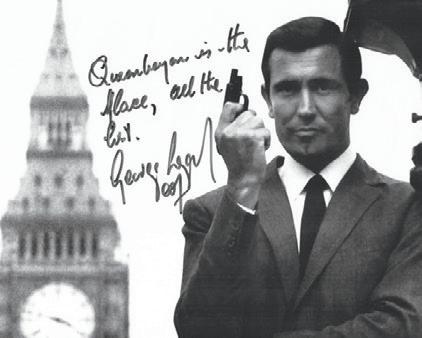
Then there’s our boy George, aka Mr Bond, a Queanbeyan High School graduate who scaled the glittery heights to earn more than Hugh Jackman for looking the goods and becoming the martini-drinking, Aston Martin-driving, womanising, least secret of agents (just the once mind you, that egregious decision making him almost as famous).
While atop that totem pole, albeit briefly, the raffish sex symbol continued to visit his family living in Morton Street and although unable to attend the unveiling of his plaque, George sent his best wishes to “all in my old town”.
Then there are those who, while making their mark in more modest ways, have provided exemplary examples, including a regional version of Annie Oakley meets Calamity Jane.
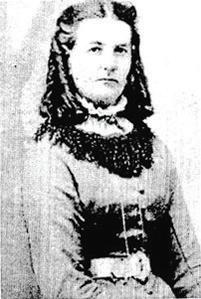
The gun-toting, horse-breaking, more than six-foot tall Elizabeth McKeahnie was a true frontierswoman, owning and operating her own dairy and cattle property in the mid to late 1800s, and achieving 100 per cent female participation rates by only employing women assistants.
Her Scottish parents arrived at the same time as the “town” (1838 – pop. 50), and along with being practical, the indomitable Elizabeth was not raised a yokel, also writing poetry. In fact, such an all-rounder was she, on her death in 1919, her glowing denouement revealed that “her conversational gifts were above the average and, taken altogether, she was a woman as much higher in womanly qualities as she was in stature above the ordinary.”
So, while you may or may not be a local who’ll be graced with the chance of finding yourself a part of this avenue that honours those who have walked these streets before, do call by and make yourself better acquainted with just why Queanbeyan is, truly, a City of Champions.
And feel free to spread the good word.
For more on these remarkable Champions – including Tom Wills’ tragic, self-inflicted end with a pair of nail scissors, and the Queanbeyan-Goulburn impasse when it comes to Franklin and Lazenby – visit nichole2620. wordpress.com
Anthony and Angelina came to see me about the new rules around depreciation on investment properties.
"We are thinking of buying another rental property at present and we have been told that some of the depreciation rules have changed," said Anthony.
I told them it was good timing on their part because the legislation had only recently passed and that I could answer their questions with certainty.
"The new rules are different depending on whether you are the first owner or the subsequent owner of a rental property," I said, asking if they were looking at new properties.
Angelina said the one she liked was third hand, but the one Anthony favoured was new.
“If you buy the new one, nothing has changed in relation to depreciation, but if you buy the other one, there are changes," I said.
"So I will outline them for you; if you buy a property that had a previous owner then you will not be able to claim any share of the depreciation value of the plant or articles in the property.
"Plant or articles covers those items that are generally regarded as 'easily removable' or items that are mechanical and are not part of the building structure. So if you buy a new house I would expect that you would have claims for depreciation on carpet, curtains or blinds, kitchen appliances, hot water services, solar panels and possibly a security system. If you buy a new apartment you could also claim depreciation on your share of mechanical items such as the lift and intercom system.
"With this new legislation, you will have no claim for depreciation on any of these items purchased when you buy the property. However, if you replace the stove or carpet or any of the other items that you would have been able to depreciate in the past you will be able to claim depreciation on the replacement items.”
Anthony asked if it were better to buy a new property.
"Not necessarily as a rental property is an investment you need to look at the value of the investment and not just at the tax position," I said.
"The depreciation on plant or articles may be quite minimal. By not claiming it as you go you will claim the depreciation on these items when you sell the property.”
“However, the special building write off will remain and can be transferred between purchasers. So if you buy the third-hand property, the 2.5 per cent building write off on such items as the original cost, kitchen and bathroom upgrades and electrical and plumbing work continues for 40 years from the date that construction commenced.
“I should also remind you that you will no longer be able to claim travel to visit the property or to collect rents if you are not employing an agent. So, although there are lots of changes, property should still be a worthwhile investment for you. You will just do things a little differently if you buy an established property.”
Angelina said she was relieved that the impact of the changes weren't as serious as she'd first feared.
If you need advice on your rental property or any other tax related matter call the friendly team at Gail Freeman & Co Pty Ltd.
Top: George Lazenby… a Queanbeyan High School graduate.
Left: Elizabeth McKeahnie… Guntoting, horse-breaking frontierswoman.
Right: Tom Wills… creator of Australian Rules Football.
Infrastructure Support and Cloud Services for Business
BluePackets offer a range of support services and tailor our support agreements to suit your business. The broad skill set of our team means we can provide you with a total IT solution or complement your existing IT resources.
ARTS & ENTERTAINMENT
Down in the Deep, Dark Wood
By Helen Musa
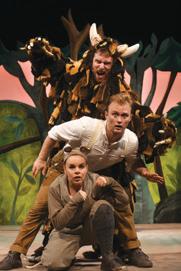
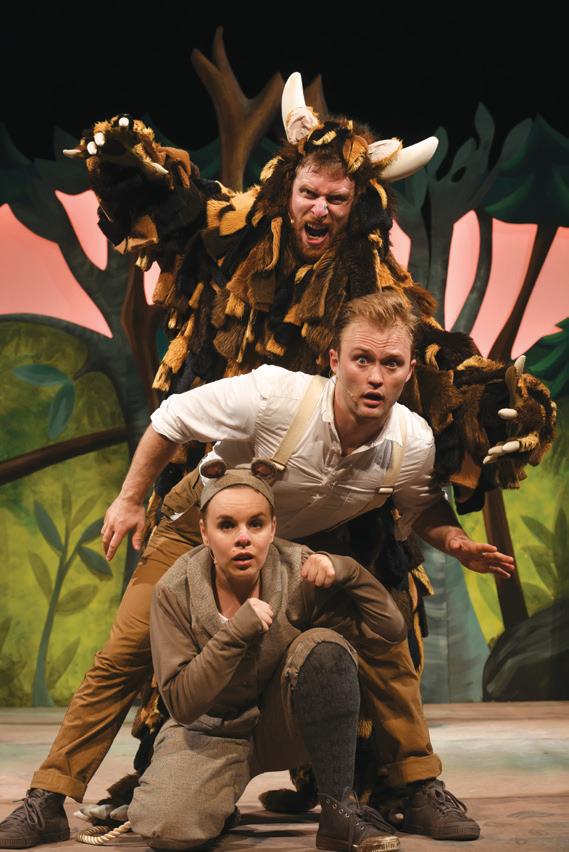
ACTOR Jonathan MacMillan is possessed of a resonant voice that sounds just like a Gruffalo, the role he’ll play in the touring production of the same name coming to the Canberra Theatre.
But what exactly is this misunderstood beast, a creature that suffers from pretty well never having been seen?
“I have it on good authority that it is a gigantic monster, originating in England,” MacMillan tells “CityNews”.
And, yes, there are Gruffalos, plural, as they can breed, although he suspects Gruffalos will find it hard to find lady Gruffalos to that end.
“My take is they are a very rare breed,” he says.
“It walks on two legs but at times has a bit of a three-legged appearance, like a grizzly bear with horns on its head.. But hang on, don’t grizzly bears come from America and don’t they walk on all fours? True, MacMillan says, but they stand up to attack their adversaries.
As the actor who plays this lonely creature, the terror of the forest, he feels some sympathy for the Gruffalo.
“He’s more than anything a bit lonely,” he suggests. “His problems are more as a result of his physical appearance than any inherited evil streak, and even if he is a carnivore, he’s by and large unaware of it… This creates quite a bit of danger for smaller creatures.”
The very popular play, “The Gruffalo”, adapted from the children’s book, is soon coming to town with new actors, Josh Anderson, Tina Jackson and MacMillan; new costumes and revamped
sets that evoke the Deep, Dark Wood. The play follows Mouse into the same Deep, Dark Wood, where she encounters the wheeler-dealer Fox, the retired Woodland Air Force general Owl and Snake, the party animal. To avoid becoming dinner Mouse kills their appetite and terrifies them by inventing a monster friend, the Gruffalo. But be careful what you wish for. Mouse almost outsmarts herself when she comes face to face with the creature of her imagination.
“It’s a universal theme,” MacMillan says. But it’s also enormous fun, with five or so different songs, including a couple of big numbers for Mouse and unique numbers for the main predator.
“People laugh at the Gruffalo as he is a predatory beast of large size even though he’s the antagonist.
“But the way I see it, essentially, he doesn’t do anything to get out of his nature. That plays a part in the attraction.”
In MacMillan’s view children aged three to five – the target audience – are just starting to get a sense of self and difference from their parents but they’re still so small that they can’t do anything on their own. “Gruffalo is very popular with kids but because he’s very big, they relate best to Mouse,” he explains. “They like the idea of being small and powerless but with cleverness enough to get on top… really the only thing Mouse has is her brains.”
His accent may be deceptively Gruffaloish, but MacMillan spent his youth and early adulthood in Los Angeles, first visiting Australia with a tour in 2012 and moving here, to Melbourne, a little over a year ago.
As a novice college actor, he scored the role of Jean, who turns into a rhinoceros in Ionesco’s play of that name. He judges his greatest success to be in
puppetry in the Broadway production of “War Horse” and played Baby T-Rex in more than 30 countries with “Dinosaurs: The Arena Spectacular”.
“There’s a little bit of an animal theme going on in my career and the Gruffalo is
a natural progression,” he says.
“The Gruffalo”, Canberra Theatre, January 27-28, various sessions. Bookings to canberratheatrecentre.com.au or 6275 2700.
Kaaron wins the top fiction award
AUTHOR Kaaron Warren has been awarded the top fiction award for her book “The Grief Hole” at the 2017 ACT Writing and Publishing Awards.
“These awards play an important role in the fostering of our local writing sector”, said ACT Writers Centre director
Sarah Mason.
“They highlight the tremendous quality and breadth of work produced in the region.”
Winners in the publishing categories
Fiction
Winner: “The Grief Hole” by Kaaron Warren
Highly Commended: “All the King’s Men”, edited by Shane W. Smith Highly Commended: “Fabel” by Tom Heffernan
Poetry
Winner: “The Last Day Before Snow”, edited by Carmel Summers
Highly Commended: “For all the Veronicas (The Dog Who Staid) by Andrew Galan
Highly Commended: “Afterlives” by Chris Palmer Children’s
Winner: “Amazing Animals of Australia’s National Parks” by Gina Newton
Highly Commended: “Australia Illustrated” by Tania McCartney Winners of the ACT Writing Awards
June Shenfield Poetry Award
Joint winner: Penny O’Hara, “third daughter”
Joint winner: Ella Jeffery, “Recycling”
Highly Commended: “The Uses of a Shark” by Damen O’Brien
Marjorie Graber-McInnis Short Story Award
Winner: Cherisse Kelly, “273”
Highly Commended: “The Secret Moons” by Frances Seymour
Highly Commended: “Intersection” by James Salvage
Anne Edgeworth Fellowship
Joint recipient: Jemimah Cooper
Joint recipient: Jacqueline de Rose-Ahern
Highly Commended: Ellen Harvey
Highly Commended: Kathryn Hind
“The Gruffalo”, from top, Jonathan MacMillan, Josh Anderson and Tina Jackson.
Photo by Heidrun Lohr
‘Titanic’ show sails successfully into the future
By Helen Musa
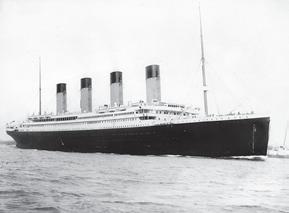
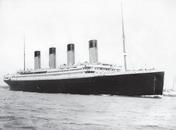
“TITANIC the Exhibition”, claimed as the world’s most popular exhibition with more than 25 million visitors, is not coming to Canberra.
But its general manager Alexis Vaughan, figuring that the entertainment precinct in Moore Park, Sydney, is just a quick drive down the highway, made a trip to town to show us some snippets from the huge show, which closes on February 4.
The work of Atlanta-based Imagine Exhibitions and its CEO Tom Zaller, who curated “Titanic”, it is one of more than 35 exhibitions in museums, science centres, aquariums, resorts and non-traditional venues. The one we’re likely to get next is the “Downton Abbey” show.
She showed us a small handful of examples, but the full show showcases more than 300 artefacts from “Titanic” and her sister ships the Olympic and the Britannic, and from James Cameron’s famous film about the doomed voyage in 1912 of the most luxurious ship in the world.
It’s definitely an interactive experience, Vaughan says. Visitors will receive a boarding pass corresponding with a real passenger on the ship and will feel as if they’re walking through the vessel. At the end, they’ll get to know of “their” passenger’s fate.
Luckily, Vaughan explains, the three ships were built at roughly the same time and were roughly identical, giving Zaller a clear
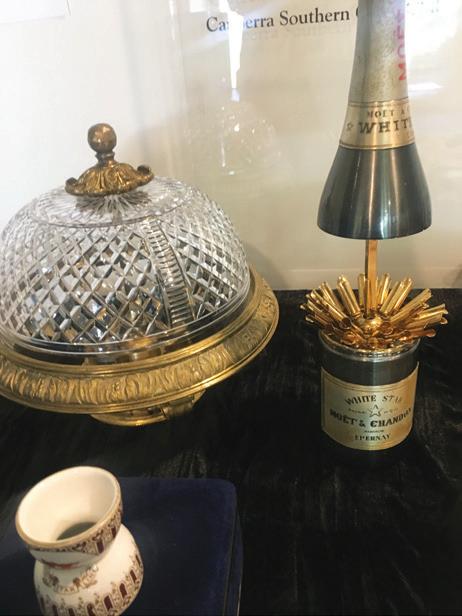
idea of what the artefacts and furnishings were like. Thus the grand chandelier from the Olympic formed the basis of the movie chandelier.
All were intended as prestigious vessels for the first-class passengers at least, so firms like Moët & Chandon created a champagne bottle-shaped cigarette holder for the White Star Line – that’s on show.
While many artefacts from the sunken vessel have not survived, one has, a first-class egg cup filched by the maid after she was fired by the ship’s captain Edward John Smith, who perished when the ship sank.
“The egg cup survived because of an act of thievery,” Vaughan notes.
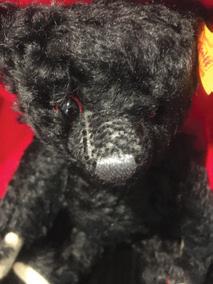
Talking of survivors, the show also deals with the aftermath of the tragedy, through a plaque from the lifeboat, reminiscences of a party thrown by American socialite Madeleine Astor for the rescue ship Carpathia and a Steiff teddy bear – worth more than $50,000 – produced to help raise funds for the orphans of “Titanic”. The little bear has
ARTS IN THE CITY
red eyes, to show it’s been crying.
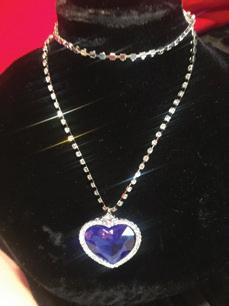
Cameron’s movie has proved to be a secondary source of artefacts. Kate Winslet’s “sinking coat” is there. So is her character’s heart-shaped necklace. Well, not the original – that’s worth well over $30 million and is kept by its owner Celine Dion, in her house.
“We bring the ‘Titanic’ to life,” Vaughan says. There’s a scale model, there are plans and the opportunity to walk into a first-class stateroom with the bed made up or have photos snapped on the grand staircase.
“The less glamorous side is shown too, in the boiler room for instance, where visitors can smell the coal or the telegraph room where desperate signals were going out to nearby ships,” she says.
There are newspaper clippings, there are statistics, court transcripts, new artefacts, a learning gallery and a newly-added virtual reality experience that lets visitors experience diving to the wreck.
Vaughan lives and breathes the sinking of the ‘Titanic’, and she feels it. “We know that it was a freezing night with no moon in the sky, hinting of tragedy,” she says.
How best to capture that foreboding? The answer is simple – they’ve created a four-metre-high iceberg.
“It’s a cleverly constructed kind of icebox, but it’s real,” she says.
“Titanic – The Exhibition”, Byron Kennedy Hall, The Entertainment Quarter, Lang Road, Moore Park, until February 4. Bookings to Ticketek.com or 8240 2135, (weekdays 9am-5pm).
With a spring in their steps
By Helen Musa
CONGRATULATIONS to the five young hoofers from QL2 Dance who have been accepted into university performing arts courses. Alison Tong, Caspar Ilschner, Maddy Bowman, Mia Tuco and Milly Vanzwol all have places at the Victorian College of the Arts and Ilschner also has an offer from NZ School of Dance.
CONGRATULATIONS are also in order to the Canberra Theatre Centre, which has in the past year seen over a quarter of a million people, including more than 11,000 school students, attending 494 performances.
THE National Film and Sound Archive will train the spotlight on fashion in film from January 6-14. Guests include Academy-award nominated costume designer Anna Senior (“The Getting of Wisdom” and “My Brilliant Career”). Focus films such as “The Dressmaker”, “Moulin Rouge!” and “Picnic at Hanging Rock” will also be screened. Bookings and program details to nfsa.gov.au
CANBERRA developer Art Group and the Canberra Glassworks have announced that the 2018 Art Group Creative Fellow is Lisa Cahill, a Canberra glass artist well known for her large-scale, architectural public art, both in Australia and the US.
AUSTRALIAN National Capital Artists and “Art Monthly Australasia” magazine are co-presenting the inaugural ANCA Critic-in-Residence program for 2018, in which two writers, Caren Florance and Oscar Capezio, get a fivemonth stipend each, a mentorship with “Art Monthly” editor Michael Fitzgerald and publishing opportunities, as well as a 12-month subscription to the magazine.
AFTER an accidental hiatus in 2017 caused by booking problems, “Short+Sweet Theatre 2018” is in planning now and playwrights have until January 15 to submit scripts for 10-minute plays to festival director, Trevar Alan Chilver at trevar@shortandsweet.org
THE “Art, Not Apart” festival will return on March 17 with performances, exhibitions, installations, film, projection and parties held around NewActon, The Shine Dome, the National Film and Sound Archive and the Alinga Street Footbridge.
FOLLOWING the recent success of the weekend “Detonate”, which celebrated International Day for People with Disabilities, Belconnen Arts Centre and Canberra Symphony Orchestra have signed a memorandum of understanding aimed at providing fine music performances with opportunities for access and inclusion and accessible, inclusive multi-arts projects and workshops.
The heart necklace. A little, red-eyed Steiff bear.
Kate Winslet’s “sinking cape”.
Young dancers on the move… from left, Alison Tong, Caspar Ilschner, Maddy Bowman, Mia Tuco and Milly Vanzwol.
Photos by Lorna Sim
acquired for $1.4 million
The
Close look at the art of giving
By Helen Musa
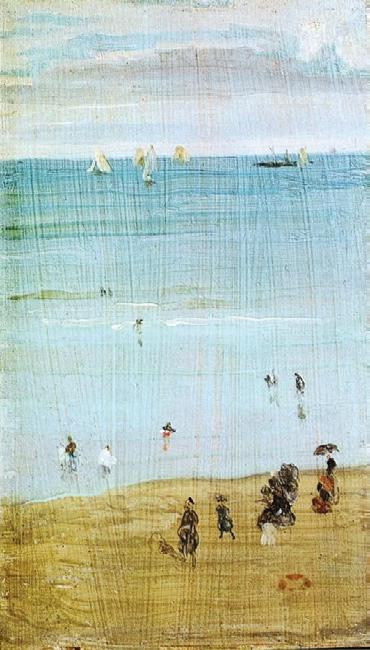
NOT only has the National Gallery of Australia just purchased James A Whistler’s tiny seascape “Harmony in blue and pearl: The Sands, Dieppe 1885” for $1.4 million, but it has planned a bumper summer season of sights for visitors.
The Whistler purchase has the gallery reflecting on the depth of its Australia’s Impressionist collection, strengthened by the loan from a private collector of Frederick McCubbin’s large, early work, “Bush Idyll 1893” and, as NGA director Gerard Vaughan notes, Arthur Streeton’s “The Point Wharf, Mosman Bay 1893.”
These recent acquisitions have inspired the gallery to launch a summer trail to celebrate what it calls “The Art of Giving”, to recognise the donors who have enhanced the NGA collection through their patronage.
Highlights, gallery staff say, include Sam Jinks’ commission, “The deposition, 2017”, created for the “Hyper Real” exhibition, new works by David Hockney purchased through the Orde Poynton Bequest and Paul Sérusier’s masterpiece, “Woman from Savoy” (La Savoyarde) 1890, recently added to the collection and now installed with two works by Sérusier and Emile Bernard on loan from the Kerry Stokes Collection
Among the many Australian acquisitions are five works from Sidney Nolan’s 1964 “Antarctica” series purchased by the NGA Foundation, a loan of a painting from Sidney Nolan’s 1962 series on Burke and Wills, Tasmanian painter Philip Wolfhagen’s seven-panel work “A litany of vapours 2007” purchased from the NGA Foundation Gala Dinner Fund 2017, as well as work by Rosalie Gascoigne donated by Hester Gascoigne, work by Brian Blanchflower and Ildiko Kovacs donated by James and Jacqui Erskine, and works by Akio Makigawa donated by Tom Lowenstein.
Pride of place is given to Gordon and Marilyn Darling’s gift to the nation of 57 Albert Namatjira watercolours, five Papunya boards from 1972-73, acquired from the Allan Scott collection and private donors and a 18th century Papua New Guinean ancestor figure in wood and pigment, acquired in 2016.
WHAT’S ON
The ‘CityNews’ holiday guide to happenings and attractions around Canberra as compiled by DANIELLE
NOHRA
EVENTS
“SAY Oui” to a night of toots, hoots and kinky burlesque boots as “The Old Married Couple” present a cavalcade of guests performing acts such as burlesque and comedy at Smith’s Alternative on December 30.
FROM January 4-7, Summernats will be featuring events such as Australia’s top street machine judging competition, a burnout battle and concerts from artists such as Wolfmother and Thudamentals. At Exhibition Park in Canberra, 10 Flemington Road, Lyneham. Bookings to 6241 8111.
THE National Film and Sound Archive will explore the magic of costumes from films such as the red satin gown worn by Nicole Kidman in “Moulin Rouge!” and Miranda’s white dress from “Picnic at Hanging Rock”, with a week-long line up of screenings, talks and special guests. At NFSA, McCoy Circuit, Acton, January 6-14. Bookings required.
ENJOY food, music and views of Canberra in “Arboretum After Hours”. Free entry and parking at Forest Drive, off Tuggeranong Parkway, from 5pm-9pm, January 5-19.
THE Australian National Botanic Gardens is offering its guests the opportunity to sample native delights with its “Bush Tucker afterDARK Experience”. Learn about local indigenous foods during a bush-tucker demonstration from native foods cook Fred, from Fred’s Bush Tucker, then explore the gardens on a twilight ranger-led tour. At the Australian National Botanic Gardens, Clunies Ross Street, Acton, until February 2. Tickets are $50.
EXHIBITIONS
THE NGA’s summer exhibition “Hyper Real” consists of 50 works in sculpture and video art by 32 artists, varying from the huge “Pregnant woman” by Ron Mueck to Patricia Piccinini’s fragile hybrid babies. National Gallery of Australia, to February 18. Bookings to premier.ticketek.com.au or 132 849.
THE NPG’s big summer exhibition, “Starstruck: Australian Movie Portraits”, is for people who love film and portraits, at the National Portrait Gallery until March 4. Bookings to portrait.gov.au
FAMILY
DISCOVER “Colour” as never before at Questacon. As part of the exhibition visitors can hear fascinating stories from people who see colour when they hear music. Questacon, the National Science and Technology Centre, King Edward Terrace, Parkes. Runs until February 1 on various days.
A FREE “Hands-On History”, school-holiday activity run by the Australian War Memorial teaches children about what servicemen and servicewomen wear, eat and what jobs they do. It also offers a range of activities where children can try on uniforms, handle real objects, and discover incredible stories of Australians in wartime. Lower galleries, Treloar Crescent, Campbell, Monday to Thursday, January 8-25 and Saturdays, January 20 and 27.
SPORT
SUPPORT Canberra’s local women’s basketball team in the WNBL, as the UC Capitals take on Perth Lynx at the National Convention Centre on December 29, from 7.30pm.
PART of the Australian Pro Tour, the East Canberra Challenger, will be held at the Canberra Tennis Centre in Lyneham. Players from the world’s top 100 will feature in the event, which runs January 6-13.
sundayROAST
Stay in touch with the names making news on Sundays from 10am as 2CC and “CityNews” present Canberra’s only local weekend news and current affairs program.
It’s a revolving panel show that brings to the microphone great “CityNews” commentators and 2CC personalities.
Be part of the conversation and call 6255 1206 between 10am and noon.
HOLIDAY JUMBO SOLUTION
James A Whistler’s “Harmony in blue and pearl:
Sands, Dieppe 1885”...
“The Art of Giving”, National Gallery of Australia, free (except for entry to “Hyper Real”).
Puzzle on Page 22
HOLIDAY JUMBO CROSSWORD
GARDENING
When Lindsay called the PM
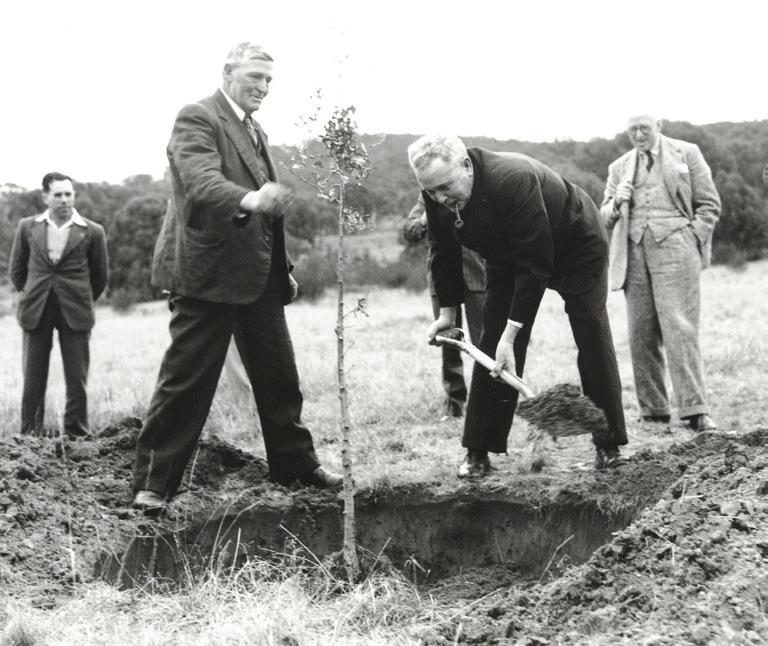
IN 1949, an evening phone call from director of Parks and Gardens Lindsay Pryor to the then prime minister, Ben Chifley, was all it took to arrange an official tree planting at the proposed botanic gardens in Canberra.
Subsequently, on September 12, 1949, during a visit to Canberra by an International Delegation of Foresters, the Australian National Botanic Gardens was “officially” started by the planting of two trees by PM Ben Chifley and the director of London’s Kew Gardens, Sir Edward Salisbury.
The gardens have never looked back with support from the Commonwealth and the Friends of the Gardens.
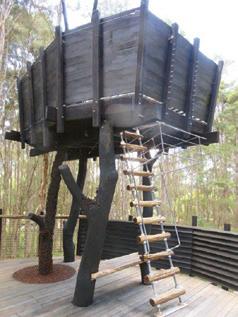
Now there’s something new and exciting happening at the constantly improving gardens; the opening of the extraordinary, two-storey “Paperbark Tree House”. It took three months to build and is the most significant project to date funded by the Friends.
Reaching high into the canopy of a paperbark forest, climbers can join the birds on the second storey. This is already proving a major holiday attraction for children.
NOT everyone leaves town over the summer holiday break. There are many dedicated gardeners who are loath to leave their gardens during the hottest part of the year. Here are some suggestions for those holidaying at home:
• We have had a big build up of moisture recently in the ground
with all plants looking good as we head into full summer (plus helping to reduce the water bill). But one cannot be complacent, certainly with watering of pots, particularly if they contain annuals such as petunias.
• One recent job I have been engaged in with our garden is thin ning out bulbs. Some of these have multiplied to such an extent, often in the wrong places, they have to come out. Some were planted years ago near new shrubs that, at the time of planting, were maybe 20-30cm tall, many now 2-3m tall and wide. The bulbs are now in total shade, resulting in virtually no flowers. Take care to dig the bulbs out without damaging the shrub roots. To store bulbs place them in an open string bag similar to an orange bag. Hang where mice can’t get to them in a cool, dry spot; the garage is ideal. It’s not long to bulb-planting time, starting in March.
• It is time to feed long-flowering summer shrubs such as roses. I am still recommending certified organic Neutrog Seamungus, a combination of seaweed and chook poo, not only for roses but all shrubs and perennials. This can be applied in pellet or liquid form.
• Now’s the time to deadhead roses for an autumn flush of blooms. While for most gardeners this suggests just snipping off the dead flowers, one needs to be considerably more severe to encourage plenty of new flowers on strong, short stems. This can be as severe as the late winter/early spring pruning.
• Watering other than by dripper
should be carried out in the early morning. This is especially important for roses. If watered on warm evenings the leaves stay moist encouraging black spot. I recommend readily available EcoRose, a certified organic fungicide to combat black spot, mildew and rust on all plants, not just roses.
• Check drip watering systems regularly, even if staying at home; did you put the fork through the pipe without realising it? Or have you arranged for family or friends to check automatic irrigation systems if you are away because automatic timers can fail?
Jottings...
• Keep picking fruit just before it ripens. Fallen fruit can encourage fruit fly, so be sure to collect it.
• Regularly deadhead perennials and annuals, such as petunias.
• Now is the time to plant potatoes.
• Remove unwanted tree and shrub seedlings such as privet and Nettle Tree, Celtis Australia, cotoneasters and pyracantha.
Ben Chifley plants a tree on September 12, 1949, signalling the start of the Botanic Gardens in Canberra.
Away with the birds… the new tree house at the Botanic Gardens.
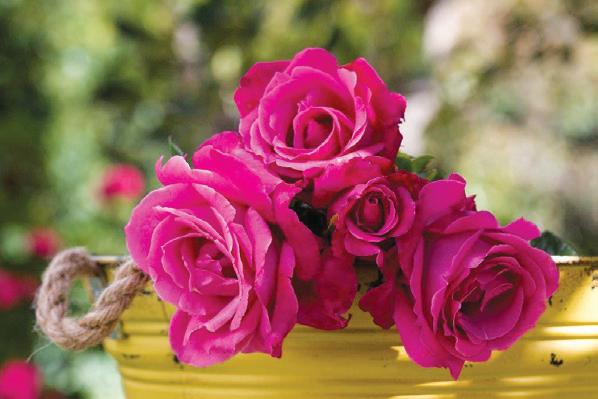
Time to deadhead and feed the roses for an autumn burst of blooms.
Put the focus on your lifestyle
With a choice of stunning architecturally designed 1, 2 and 3 bedroom apartments, a community of like-minded people and one of Canberra’s most sought-after locations, Marian Manuka really lets you put the focus on your lifestyle. Exclusive to over 55’s, these premium apartments are available for inspection now.
Open for inspection Franklin Street, Manuka
Closed Christmas Day, Boxing Day and New Years Day but open every other day over the festive season. Mon to Sat 10am–1pm & Sun 9am-11am or by appointment. Contact Melissa Martin-Smith on 0412 765 198 or 02 6163 7777