Tuesday 7 March 6pm – 8pm Dame Pattie Menzies House Dickson
Thursday 18 May 6pm – 8pm Gungahlin Library
DIY Draught Proofing
Wednesday 15 March 6pm – 8pm Weston Creek Community Centre Wednesday 24 May 6pm – 8pm Belconnen Arts Centre
Actsmart about heating your home
Tuesday 4 April 6pm – 8pm Tuggeranong Library
Wednesday 14 June 6pm – 8pm Weston Creek Community Centre
seven days
Of bending rules and sobering statistics
Reducing energy bills and saving money is quick and easy.Borrow the DIY Home Energy Action Kit from any ACT library
For more information and bookings:
visit actsmart.act.gov.au email actsmartadvice@act.gov.au or phone 1300 141 777
All workshops are free with limited places available. Bookings are essential.
The Carbon Challenge is a fun way to become sustainable at home. Will you take the challenge? It’s FREE actsmart.act.gov.au
A GAMBLING addiction expert claims Canberra’s licensed clubs are “bending rules” and “sanitising” reports on the flow of poker machine profits.
Dr Charles Livingstone says the ACT formula, which requires clubs to give eight per cent of profits from pokies to community groups assisting those impacted by gambling addiction, is “deeply flawed, opaque and misleading”. The researcher says in many cases clubs “were giving the money to themselves”.
ClubsACT chief executive Gwyn Rees rejected the findings, suggesting researchers were “playing with the figures to get the answer they want”.
MEANTIME, some sobering statistics have been shared on the impact problem gambling has on the ACT community.
Local gambling counsellors estimate there are 14,000 problem gamblers in Canberra, with at least one thousand seriously addicted.
The experts say gambling harm expands exponentially when the equation of one problem gambler impacting six to 10 others is applied.
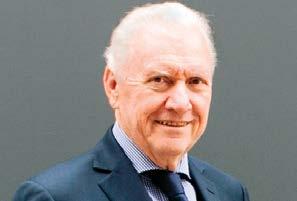
THE ACT opposition has accused the Barr government of “failing” inmates at the Alexander Maconochie Centre after the second death in custody within 12 months. But, according to a former superintendent, there was a time when the Hume complex was functional. Doug Buchanan, a highly experienced correctional manager, was seconded from NSW in 2010 with a single brief to “regain control of the prison” after officers “were being assaulted almost on a daily basis” and staff sick leave had “skyrocketed”.
The now-retired Buchanan says once he gained control his secondment was terminated (May, 2011) and is sure “today’s managers still have their hands tied behind their backs by a human rights agenda”.
CM Andrew Barr is unfussed about from whom he borrows a political stunt. Taking a leaf from PM Malcolm Turnbull’s stunts-on-public-transport playbook, Barr boarded the Xplorer from Canberra to Sydney to promote the need for faster rail services between the cities. The CM also fantasised of a time when Turnbull would be able to take a train from
Kirribilli to The Lodge. By the time train travel journeys between the cities are shortened, Turnbull will likely be long gone from The Lodge.
FORMER Canberra man Baxter Reid’s 15 minutes of fame seems to have evaporated. Detained in the US for overstaying his visa by 90 minutes, the 28-year-old is expected back in Australia this week, but it’s unclear if he’ll make an appearance in his old stomping ground. Social media, which was ablaze with pleas for financial help for Reid who innocently became entangled in red tape, has now gone quiet.
CONFUSION surrounds the variety of educational options available in the ACT. As families grapple with Gonski and do the NAPLAN numbers, stats reveal the capital as having the highest participation rate of homeschooling in the nation (up 122 per cent), begging the question why?
Added to that trend, figures from the 2016 ABS census show that after years of private secondary schools having the majority share, Canberra’s public schools are clawing back enrolments from the non-government sector at a rate of almost three times the national average.
A CONTROVERSIAL feminist and writer whose bio boasts an ability to use humour and distilled fury to lay bare issues affecting women returned to the capital last week. Clementine Ford, “The Panel” and “Q&A” regular, was guest speaker at a Women Lawyers Association dinner during ACT Law Week. According to those who attended the sell-out function, Ford did not disappoint.
A CANBERRA couple chose a radical approach to repairing their rocky relationship – reality TV. Sarah and Keelan (surnames are not used) featured in Nine’s The Last Resort”, which promises couples that a month on an isolated resort will “reignite their love”. But Keelan’s drinking apparently got the better of him and the troubled couple are back in the bosom of Tuggeranong.
A dose of laughs from Dr Peek-a-Boo
Kathryn Vukovljak reports
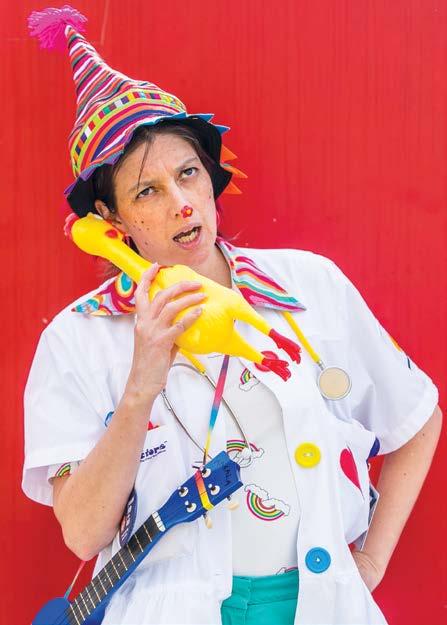
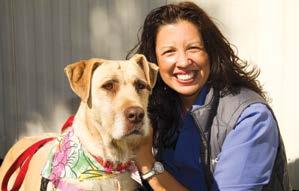
WITH the power to uplift sick kids, make ‘em laugh and brighten the day of anyone she meets in the hospital corridors, writer, actor, producer and improviser Heidi Silberman says she loves using her improv skills as a “clown doctor”.
Heidi, who’s known as Dr Peek-a-Boo when she’s on duty every Friday at the Centenary Hospital for Women and Children, along with her colleagues Dr Sparkles and Dr Snooze, has a self-designed lab coat that twirls, a red nose and rainbow socks, as well as a stethoscope, bubbles, squeaky toys and a ukelele hidden about her person.
“It’s not so different from improvisation in the theatre, in the sense that you’re in the moment, taking whatever idea is thrown at you and running with it,” she says.
“But as a clown doctor we need to have a strong sense of compassion, and be able to connect, not just to the child but to parents, nurses and doctors as well.”
As clown doctoring is still a one-day-a-week job, mum-of-four Heidi, 42, says she also does role playing for the ANU medical school and law school, teaches at the Canberra Academy of Dramatic Art, writes screenplays, having had her first fulllength play “White Tulips” accepted into the First Seen: New Works-in-Progress program at The Street Theatre, as well as performing and teaching
through Impro ACT.
She says she’s been clown doctoring since September 2014, when the Humour Foundation’s program first started at Canberra Hospital, and knew straight away it was something she’d love to do.
“I’ve been on the other side of the hospital bed myself and I know what it feels like to have a child in hospital,” she says.
“It can be worrying, exhausting and just plain boring at times, and I know that as a clown doctor we could maybe be in that room for 10 minutes, but it gives the child something else to talk about for the rest of the day and it can change the atmosphere in the room completely.
“We’ll start with something but move on quickly if it’s falling flat, until we hit the smile we’re looking for.
“We’ve learned now not to judge ourselves if it feels like nothing is working!”
Heidi says the clown doctors generally work in pairs, both for someone to bounce off and to debrief with.
“There can be hard rooms and sometimes when a patient is experiencing something that my own child has been through, whether asthma, allergies or infections, it can get really tough and I have to tell myself to keep it together,” she says.
“But I love seeing the kids smile – I’m like a human mobile! When I hear a cry, that’s like my pager and I try to go there and see if I can help or divert or just make them smile. Sometimes the crying stops out of their astonishment at the sight of me, and they’re like, ‘what are you?’!
“I love leaving a room a different place to when I entered it. It’s the best feeling.”
Since 1993: Volume 23, Number 18
Art versus money
TERENCE Malone will launch Judith White’s new book “Culture Heist – Art versus Money” at the ANU Drill Hall Gallery, 3pm, Sunday, May 28. White, former executive director of the members’ organisation at the Art Gallery Society of NSW, writes about the conflict between the public good and the forces of corporatisation. Bookings to eventbrite.com.au
Winter lunch
THERE’S a “Winter Warming Lunch” planned by the CWA Canberra Day Branch, at 8 Barry Drive, Civic, 11am-2pm, on Friday, June 2. For $12 there will be the choice of three soups, bread, slices and tea and coffee. There will also be a craft stall and a raffle. All welcome.
Hall museum calls
A VISIT to the Hall School Museum and Heritage Centre is the next outing for the Canberra Archaeological Society on Sunday, June 4. The event begins at 10.30am with an introduction by Phil Robson and followed by a guided tour of all the exhibitions, including the “Stones that Speak” displays presented by Ken Heffernan and his team. The cost is a donation to the museum and RSVP is via eventbrite.com.au by Thursday, June 1. All welcome.
Heidi Silberman... “We’ll start with something but move on quickly if it’s falling flat, until we hit the smile we’re looking for.”
Photo by Maddie McGuigan
Pokies debate pushes Labor into a corner
CORRUPTION undermines good governance. And good governance is fundamental to ensuring a vibrant and successful democracy.
One of the key understandings from Queensland’s Fitzgerald Royal Commission from the late 1980s was that corruption grows from “bending the rules” on the small things.
This is why the ACT and the Federal governments need to ensure they have appropriate checks and balances. Recent exposure of the family of deputy tax commissioner Michael Cranston will be used (incorrectly) to argue that appropriate checks and balances are working.
The normal checks and balances of good public service practice, auditing, policing and parliamentary oversight were not enough to expose the corruption of Eddie Obeid. It took the NSW Independent Commission Against Corruption to identify the issues and find appropriate evidence to pursue his corrupt actions as a minister in the NSW Labor government.
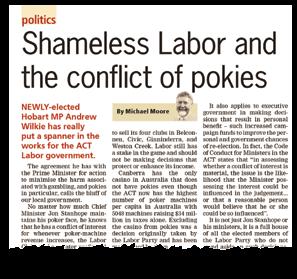
The recent debate in the ACT over changes to poker-machine policies raises questions that ought to be investigated. For around 10 years I have argued in this column that all the elected members of the Labor Party have a conflict of interest regarding poker machines.
For around 10 years I have argued in this column that all the elected members of the Labor Party have a conflict of interest regarding poker machines.
Although not a “personal” conflict of interest – it does play a significant role in assuring the election of each and every one. Jon Stanhope attempted to resolve this issue when he was Chief Minister by proposing the sale of Labor Party interest in clubs. He was unsuccessful.
from September 9, 2010.
At the last election, Chief Minister, Andrew Barr, flagged extending poker machines to Canberra Casino that resulted in ClubsACT launching an unprecedented attack on the Labor Party, spending nearly a quarter of a million dollars supporting candidates opposing Labor’s approach. The Liberal Party saw their opportunity and poured fuel on the fire.
The tension between the govern-
ment and ClubsACT remained palpable after the election, with some of the Labor-affiliated clubs distancing themselves from ClubsACT.
The Construction, Forestry, Mining and Energy Union (CFMEU), owners of the Tradies clubs, were reported in “The Canberra Times” by Kirsten Lawson as having a vitriolic split with ClubsACT. The CFMEU is now part of an alternative group. Apparently, this is much more acceptable to the government, although the Labor Party’s clubs belong to neither industry group.
The Greens have bought into the debate by announcing the intention to introduce a limit on poker
machines to $1 per bet. Greens leader, Shane Rattenbury, in a heated debate in the Legislative Assembly, indicated support for a limit of $250 from EFTPOS machines as simply a good first step to broader reforms.
With Liberal shadow minister Mark Parton vigorously defending the position of ClubsACT, not only on pokies in the casino but on any regulated change to poker machines, the Labor Party is being pushed more and more into a corner.
The irony is that the party finds itself in this situation when it seems it might be trying to do the right thing by problem gamblers. Parton missed the damage done by addiction to gambling with inappropriate and offensive comments in the Assembly including the suggestion that more Canberrans were addicted to chocolate than to gambling.
Gambling has become much more ubiquitous in our society and goes well beyond poker machines. Exposure of children to marketing of gambling, for example, has been invasive. About three quarters of children aged 8-16 can recall the name of at least one sports-betting brand, while about
a quarter can recall four brands or more. More worrying is that 75 per cent of children think that gambling is a normal or common part of sport –mainly because of the advertising that they see for these products.
The Greens explain the place of poker machines “of the $19 billion gambled by Australians every year, 60 per cent (or $12 billion) goes into poker machines”.
Labor in the ACT does have a problem. It is probably not enough of a conflict of interest to be called corruption. However, the impact on decision making around gambling has always been muddy. Corruption starts with bending the rules. The ACT does need an independent body that can initiate appropriate investigations and clean up this mess and ones like it.
Michael Moore was an independent member of the ACT Legislative Assembly (1989 to 2001) and was minister for health.
Actsmart offers a range of free programs for ACT businesses including:
support to implement efficient recycling and waste management practices
obligation free onsite energy and water assessments • rebates of up to $5,000 (on a cost share basis) to upgrade inefficient equipment More than 1000 ACT businesses have already signed up to Actsmart programs.
Michael Moore’s column
25 and 50 years on: the Mabo decision and the 1967 referendum
In conversation
Join our panel of guest speakers for a conversation on the progress of Indigenous rights in light of these significant anniversaries. Light refreshments included.
Saturday 3 June I 2pm Gallery tours
Join us in our Memory of a Nation exhibition and Federation Gallery for lunchtime tours that shed light on how government policy affected Aboriginal people’s lives.
Monday 29 and Wednesday 31 May, Friday 2 June I 12.30pm
Further details on both events and to book: naa.gov.au/visit-us/events
Larrakia petition to Queen Elizabeth II, 1972 (detail). NAA: A2354, 1973/86
Dangerous dogs – much talk, little action
By Rod Henshaw
GUNGAHLIN
father
and businessman John Hynes has had enough. And he’s ready to take matters into his own hands.
“I don’t care what happens. I will kill the dog and I’ll go after the owner with a baseball bat if they come near my kid again. I’ll absolutely butcher the dog without a second’s hesitation.”
The outburst was prompted by his account of an incident earlier this year when his 10-year-old daughter was baled up by an unleashed dog while she was doing athletics training at a public park in Charnwood.
The girl had been running on a designated training track at the oval when the large, “pit bull style” dog ran at her.
“She’s 38 kilos and the dog was a lot bigger, 60 or 70 kilos. I yelled at her to stand still. If she hadn’t, it could have kept running at her,” says Hynes, who grabbed a hurdle and started chasing the dog away only to be confronted by the owner claiming he was within his rights to have an unleashed dog on the oval – and that it was the girl’s fault for running!
“The dog was unregistered, untrained, unchipped – uneverything!
“My kid is still scared of dogs.”
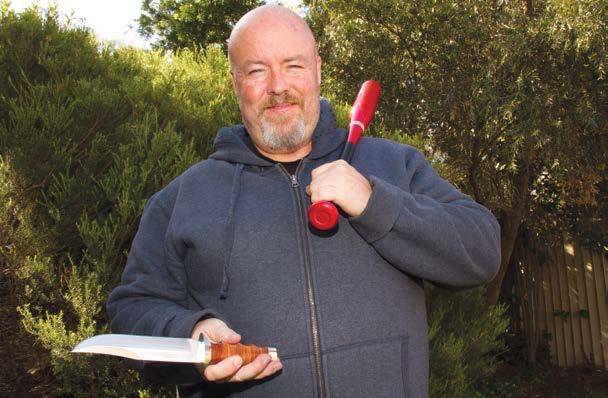
To demonstrate his anger, Hynes displays a couple of lethal-looking knives and a baseball bat, which he’s determined to use should he see the need to.
His frustration is also directed at the authorities, having endured the all-too-familiar bureaucratic merrygo-round of firing off complaint emails to the Chief Minister’s office, only to receive motherhood statements back for his trouble.
Hynes stresses he is not anti-dogs. For about 27 years he owned german shepherds and says he’d be horrified if he ever got into the situation where his animals caused any discomfort to people, or other animals.
From a neighbourhood perspective there are few issues that excite – and polarise – the Canberra community more than the Territory’s dog issue, or more accurately, dog-owner issue.
The well-documented and highly disturbing incident at Yerrabi Pond
earlier this year sadly highlights the flaws of the present legislation that for all intents and purposes looks tough on paper, but appallingly lacking in follow-up action.
Dubbed the Toscans’ case, it happened when the Gungahlin family was walking their small dog at a popular recreation venue where it was set upon by three arab bull, or pit bull, dogs ripping the smaller animal apart. The three large dogs were being walked by two men, not the owner, when the attack occurred and, despite all efforts by Mr Toscan to separate them, their beloved animal had no chance of survival.
“The mental effect on that family has been horrendous,” says shadow minister for Urban Services, Steve Doszpot, who’s largely been driving the efforts to have the legislation amended.
He is appalled by the events that unfolded in subsequent weeks after the attack.
“Initially the (pit bull) dogs were impounded by Domestic Animal Services. But after about four to six weeks, they (the Toscans) were notified that the dogs had been given back to the owner.”
To add insult to anguish for the Gungahlin family, the dogs, when they were returned, were not classified as dangerous dogs. And in a farcical twist resembling a script from “The Pink Panther’s” Inspector Clouseau, the two men walking the offending dogs were fined about $300 for having the dogs in their possession. No action was taken against the owner.
That shocking attack, and its equally hideous sequel, occurred before the current amendments were finally drafted, which will hopefully become law sooner rather than later.
Transport and City Services Minister Meegan Fitzharris acknowledges the input to the amendments submitted by Steve Doszpot and has vowed to review the Yerrabi Pond incident.
“(It’s) currently being re-looked at to make sure the decision was right.”
Well, yes, minister, the decision should be revisited. But no, the decision to return the pit bulls to their owner without them even being classified as dangerous was patently wrong.
According to Fitzharris, it’s all about balance. And to be fair, she is absolutely right.
“I have to find the right balance between the government’s role and the right legislative settings and people’s right to own a dog – and people’s responsibility to the community.
“I don’t want to solely focus on the ambulance at the bottom of the cliff. I want to stop these things happening in the first place. It’s my responsibility to get the right balance between all of those.”
Doszpot says the amendments don’t go far enough – and he again points to the Yerrabi Pond incident as a classic example.
“The legislation has been strengthened to some extent. But to not even categorise (the dogs) as being dangerous, I find reprehensible,” he says.
“It’s not until the media picks up on these stories that pressure is put on the government.”
Undoubtedly, the vast majority of dog owners are responsible people who love their animals and will go to great lengths to ensure they are kept under control at all times. It’s not unreasonable for those owners to want prescribed recreational areas where they can let their dogs off leashes for a healthy romp and for the most part this works perfectly.
Official figures show there were 360 reported dog attacks in Canberra last year of which 124 animals were impounded. The number of people treated for dog attacks in emergency departments was 155, an increase of 50 per cent in the past five years.
Disturbingly, the second-highest number of injuries treated in emergency departments was to patients’ heads.
The RSPCA inevitably has a close interest in any changes to the Domestic Animals Act but by nature of its operation does not have any active role in its administration.
According to RSPCA CEO Tammy Ven Dange, there’s adequate available research about effective animal legislation, but it should be focused entirely on the individual, not the animal.
“Animals operate on instinct. It’s not the animal’s fault whatever it’s done because animals are animals,” she says.
“What I can talk about are things that people have tried to introduce into legislation that doesn’t work, that’s specifically targeted at the animals, oftentimes around breeds.
“We’re very firm in our view that breed-specific legislation doesn’t work.
“There’s plenty of research to say ‘we’ll ban this or that breed’. What’s proven is that every irresponsible pet owner is going to be irresponsible regardless of what you give them.”
Tammy Ven Dange echoes the sentiment that reinforcement of whatever legislation comes into effect can only work – if it’s enforced.
“My question would be; is the current legislation as it stands being enforced. If not, what needs to be done to reinforce it? And how do you make sure the people know it’s being enforced?”
This is clearly the challenge for government – enforcement combined with education. And this would appear to be the direction in which Meegan Fitzharris and the government is heading.
Tammy Ven Dange… “It’s not the animal’s fault whatever it’s done because animals are animals.”
The sad news is that it’s taken a concerted campaign of media and Legislative Assembly opposition pressure, combined with an alarming number of dog attacks on people – and other animals – to finally awaken the sleeping giant in London Circuit to the fact that, yes, there is a problem!
John Hynes holds the view that nothing tangible will happen until a politician’s child or grandchild becomes victim to a dog attack.
Steve Doszpot goes a step further.
“There’s been a lack of understanding in the government that we have a problem,” he says.
“My concern is that it’s a tragedy waiting to happen. I just hope it’s not a human tragedy waiting.”
Photo by Rod Henshaw
John Hynes … “I will kill the dog and I’ll go after the owner with a baseball bat if they come near my kid again.” Photo by Rod Henshaw
Steve Doszpot… “It’s a tragedy waiting to happen. I just hope it’s not a human tragedy waiting.”
Upgrade your ducted gas system, $400claim: eftpos gift card
Buy a new gas space heater, claim: $400 eftpos gift card
Buy a new ducted gas system, $800claim: eftpos gift card Our Biggest Gas Heating Deals Are On Now
Buy a new hot water system, claim: $400 eftpos gift card
Surprise! The Great Gas Housewarming Party is back again, with huge savings and up to a $800 eftpos gift card when you install new gas appliances or upgrade your old ones!
Discover what modern natural gas heating and hot water can do for you (and your budget) this winter. Find your nearest appliance retailer at actewagl.com.au/gasrewards
Easy-to-control, highly efficient and delightfully cosy—there’s lots to love about natural gas. And with our range of manufacturer incentives across a wide selection of appliances, there’s now even more to celebrate. So make natural gas heating and hot water the life of the party this winter. *
Government’s indigenous boast comes unstuck
“I’D actually challenge them on that – how have they been progressive when they have one of the highest, disproportionate rates of indigenous incarceration in the country...
“How can the government make statements like that?
“The government needs to be careful about these claims.”
So said Ross Fowler, chairman of the Aboriginal and Torres Strait Islander Elected Body, the peak Aboriginal advisory body in the ACT.
Mr Fowler made these comments in the week following the decision by the ACT government to not proceed with a decision to establish an indigenousspecific drug and alcohol residential rehabilitation service. The service has been planned for the last decade and construction of a purpose-built facility was completed, at a cost of many millions of dollars, in the middle of last year.
Attempts by ACT government ministers to deflect responsibility for their own shortcomings by insisting that the Aboriginal community was ‘confused’ or had ‘misunderstood’ the intended purpose of the facility simply inflamed the situation.
vice for much of the last year on the terms of a service delivery agreement for the management of the service.
As part of this process, the government had also engaged the Alcohol, Tobacco and Other Drug Association (ATODA) to work with Winnunga Nimmityjah on the development of a model of care specifically for an indigenous drug and alcohol residential rehabilitation facility. It is understood that ATODA was paid more than a quarter of a million dollars for this work.
nal community responded in anger and frustration at what it saw as a major betrayal of a long-standing commitment by the government to meet the needs of the Aboriginal and Torres Strait Islander community for focused and specialised drug and alcohol rehabilitation.
better drug and alcohol services.
In addition to the quite remarkable but appropriate decision of the president of the ACT Branch of the Labor Party to take her Assembly colleagues to task for ignoring the needs of the Canberra Aboriginal community, I imagine that Ross Fowler’s questioning of the regular boast of the ACT government as being “progressive” would also have struck a nerve.
consistent with those of a progressive government.
The government had also been in detailed negotiations with Winnunga Nimmityjah Aboriginal Health Ser-
Despite all this, on May 8 the ACT Health Directorate confirmed, apparently on the basis of advice that the Territory Plan did not permit the operation of a drug and alcohol residential rehabilitation facility on the land on which it had been constructed, that it had abandoned the plan for a residential drug rehabilitation service and was initiating a process to decide on an alternative use for the facility.
Unsurprisingly, the local Aborigi-
Attempts by ACT government ministers to deflect responsibility for their own shortcomings by insisting that the Aboriginal community was “confused” or had “misunderstood” the intended purpose of the facility simply inflamed the situation.
One aspect of the condemnation of the government emanating from within the Aboriginal community that should be particularly concerning for the government was the decision by Ms Jo Chivers, the current president of the ACT Branch of the Labor Party, to publicly join Ross Fowler in his stinging criticism of the decision by the government to walk away from the urgent needs of the Aboriginal community for more and
I was particularly interested in Mr Fowler’s challenge to the “progressive” credentials of the ACT government because I was coincidentally also, in the last few weeks, challenged by a friend who insisted that the actions of the ACT government in clearing public housing tenants out of the Northbourne corridor to permit the creation of a further enclave of privilege for the well-off were not
My friend went on to insist that the government’s now entrenched policy of restricting the supply of greenfield land to force up prices and so maximise returns was, along with the decision to relocate public and social housing tenants to the nether regions of the city, in fact pure neo-liberalism.
One swallow does not a summer make but I would be nervous if I was in government and the genie that Ross Fowler has let out of the bottle took wings.
READY FOR THE WORLD
Jon Stanhope is an advisor at Winnunga Nimmityjah Aboriginal Health Service. He was Chief Minister from 2001 to 2011 and represented Ginninderra for the Labor Party from 1998.
Ross Fowler.
Jo Chivers.
No gun for ‘superhuman’ hero Ernie
THE heroism of a World War II US medic during a battle on Hacksaw Ridge at Okinawa was transposed to the big screen with much acclaim by Mel Gibson in 2016, while John Simpson, “the man with the donkey” who rescued the wounded at Gallipoli, is an entrenched part of the Anzac legend.
There’s another to equal them though, an Australian war-time stretcher bearer whose feats of extraordinary bravery are a story that remains largely untold – despite being the only soldier ever awarded the prestigious Military Medal four times.
Last week marked the 100th anniversary of the date the first of these was presented to Pte Ernest Albert Corey, formerly of Cooma, then Canberra and Queanbeyan, on May 17, 1917.
This he achieved for rescuing, under “direct enemy observation”, amidst the mud and human detritus that was “no man’s land” on the Western Front, a countless number of men over a 17-hour stretch – without a moment’s respite.
Ernie had volunteered for the task, along with a small group of other soldiers with first-aid experience, another two of whom also received a Military Medal, similarly for their “great courage and devotion to duty”.
Peter Hohnen, Canberra lawyer and author of “The Wolf” (the tale of the disguised German warship that “terrorised the allies” in World War I) has spent years researching Ernie’s story for a book on his life and believes the private’s skills in saving lives, rather than taking them, was almost a matter of serendipity.
“In Cooma, Ernie had been a blacksmith’s striker and given the relatively dangerous nature of the work, he’d undertaken a first-aid course with St John’s Ambulance,” says Hohnen.
“His former employment may also have accounted for his sheer strength and stamina as he wasn’t a large man, once describing himself as the shortest in his battalion.”
Certainly, the fellow members of the 55th Battalion recognised both Ernie’s physical and mental aptitude for the role for which he put himself forward.
“As a stretcher bearer, he was almost
superhuman,” was how he was described by his comrade, Pte Bert Bishop.
And Ernie’s valour didn’t end after the first battle. He would earn another three Military Medals (or Bars as they’re known following the initial medal) in less than 18 months – the last two in the same month, September, 1918 – and during which time it’s estimated “scores of men of the battalion had their lives saved by Ernie Corey.”
“To put it into perspective, 115,000 Military Medals were awarded for bravery during World War I,” says Hohnen.
“Of those, 5700-odd received a Bar and there were a mere 180 second Bars. And then, there’s just the one instance throughout the British Empire and Commonwealth, of a third Bar – that
awarded to our own Ernie Corey.”
Who knows how much longer Ernie would have gone on or how many more he may have saved except for the fact he would eventually need saving himself: going to the aid of a wounded officer, he was seriously impacted by a high-explosive shell and after two operations, was sent home. Thereafter, the details of Ernie’s remarkable war record became as low-key as the man himself.
Peter Hohnen believes Ernie’s incredible actions haven’t received the attention they deserve because of the still relatively recent focus on Gallipoli.
“The Western Front is largely
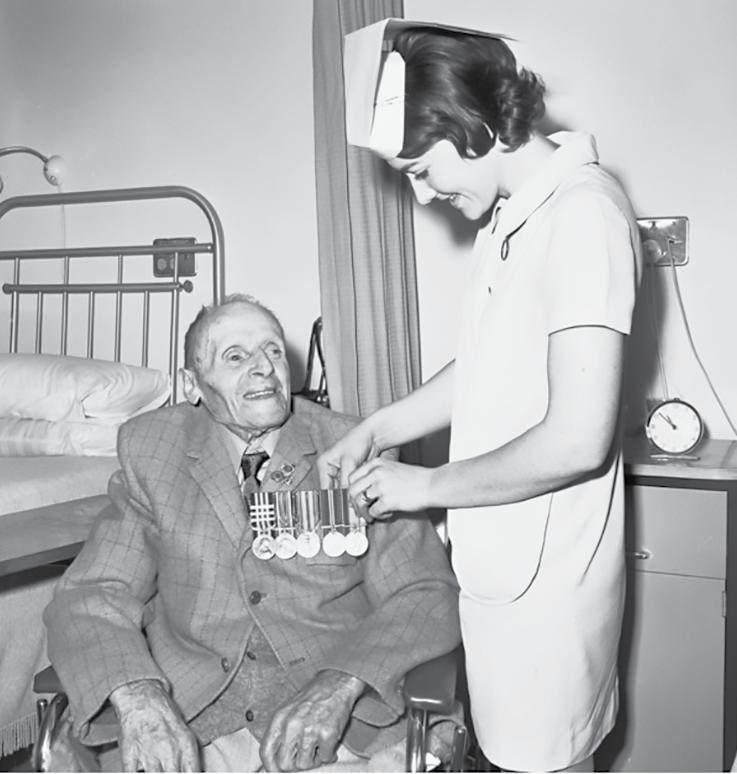
overlooked and Ernie was a humble man. He didn’t make a fuss about his own heroism or deeds. He didn’t write a book and there weren’t movies made about him – but I’m pleased to be looking to rectify this,” says Hohnen. When Ernie returned home he took up work as a cleaner at the Department of Interior and became the operator of the Canberra incinerator. He married Sarah Jane Fisher at St Gregory’s Church, Queanbeyan, and the couple had a daughter, Patricia. Incredibly, with the outbreak of World War II, at the age of 49, Ernie signed up – and was accepted – again, serving until 1943. His final years were spent in the Queanbeyan Nursing Home, where his medals were pinned to his chest for the last time just before his death in 1972. Today they’re to be found at the Australian War Memorial, but as to Ernie’s story, that’s one that has been waiting 100 years to be told.
Journalist, social historian and author Nichole Overall is working with Peter Hohnen on his book about Ernie Corey. They are keen to hear from anyone who has further information or connections to the story. Emails to herocorey@ gmail.com
NICHOLE OVERALL
Picturing art’s benefits
ADRIANE Boag, of the National Gallery of Australia, will talk of her experience working with dementia patients and discuss the benefits of visual arts on our health and mental well-being at the “Sundowner” soiree of Medical Research Week in the foyer of the John Curtin School of Medical Research, 131 Garran Road, Acton, 5.15pm-7pm on Wednesday, June 7. Cost is $20 ($15 for Australian Society for Medical Research members and students). Bookings via trybooking. com/book/event?eid=269633
Have a heart
PROCEEDS of MLA Steve Doszpot’s Annual Charity Trivia Night will this year be dedicated to the Heart Foundation ACT. It’s at the Hellenic Club, Woden, 6.30pm, on Friday, June 30. There will be prizes, auctions, raffles... and trivia galore. Individual tickets are $60 and tables of 10, $500. Bookings are open at trybooking.com
Calling all Shufflers
REGISTRATIONS are open for this year’s Santa Speedo Shuffle when, on Sunday, July 30, brave souls will strip to their Speedos and brave the winter weather to run the western basin of Lake Burley Griffin for 65 minutes. In aid of Cystic Fibrosis ACT, the race ends with a special Christmas in July festival at the Southern Cross Yacht Club in Yarralumla. Registrations close on June 30. Teams can be up to six people and must raise a minimum of $2000 before 9am on the event day. Individuals must raise a minimum of $500 before 9am on the event day. Register at cfact.org.au
Audience with Julia
AUTHOR Julia Baird will be at the Great Hall, University House, on Tuesday, June 27, to talk about her acclaimed biography of Queen Victoria. A ticket to the Eat Drink and Be Literary dinner is $72 and includes a two-course meal and house wine. Bookings to anu.edu. au/events or 6125 4144.
Ernest Corey, the only soldier in the British Commonwealth to have been awarded the Military Medal four times, is pictured in the Queanbeyan Nursing Home with Sister Mary Hawkins in May, 1971. Photo Australian War Memorial
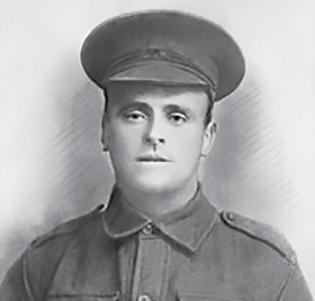
Ernest Corey, circa 1916.
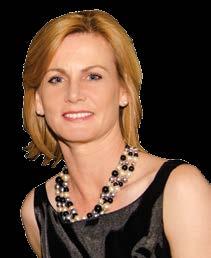
Adriane Boag.
Contradictions that confuse players
I HAVE this vivid image of a young footballer some years ago desperately trying to remain cognisant during a presentation about the perils of taking illicit substances, performanceenhancing drugs and excessive consumption of alcohol.
It was the usual fare, concentrating on the impact drugs and alcohol will have on their careers as professional players, the repercussions on family and loved ones, broader consequences and so on.
This is aside from the obvious fact that as a sportsman, fitness is an asset and drinking to the point of being plastered, borders on vandalism of the body.
The young footballer missed the highpoint of the presentation as he had succumbed to the natural inclination of most 18-year-old males, which is to fall asleep when forced to spend more than 10 minutes trying to focus in a stereotypical classroom setting where somebody, vaguely resembling a teacher remembered from year 9, talks and talks in the hope that by some form of osmosis something will penetrate the adolescent mind.
The media will respond with ferocity to feed the public’s insatiable desire for anything remotely connected to a well-known sportsman going off the rails.
I remember it well because I was the one delivering the epilogue. It was one of three talks provided that day; unfortunately, mine was the last.
The topic was the media’s handling of sportspeople who transgress.
The message was that the media will respond with ferocity to feed the public’s insatiable desire for anything remotely connected to a well-known sportsman going off the rails.
I pointed out that while the essence of sport is what happens on the field, public interest is never higher than with the whiff of a scandal.
I present this scenario in the wake of rugby league’s cocaine weekend. It’s the familiar story of sportsmen succumbing to temptation followed by public humiliation, absolute remorse and then punishment.
It is why I have sympathy for the NRL and any other sporting body dealing with any similar sequence of events.
But at the same time, questions need to be raised about mixed mes -
sages being presented, particularly to young sportsmen.
Professional sporting codes do more than most workplaces to educate their charges about the possible consequences of actions and the need to make considered decisions.
The concern I have is twofold.
How much of the educational approach is actually going to work given that most young footballers opted for sport as an escape from the classroom? A generalisation, I know, but I am drawing from personal experience.
The other aspect is the conflicted messages often presented by professional sporting bodies.
For example, sports bodies crack down on gambling by their sportspeople while embracing online gambling advertising.
The moral compass appeared to be
having a holiday when bookie Tom Waterhouse became part of Rugby League’s game-day coverage, which created a lack of delineation between League and gambling.
Thankfully, those days appear to be over although the Waterhouse intrusion is being heavily challenged by Ben Johnson’s questionable foray into promoting online gambling.
As sportspeople are warned about the dangers of alcohol, their playing strips are often emblazoned with alcohol-company logos.
Perhaps the education process to young sportspeople should be targeted at pointing out the reasoning behind the ambiguity.
In the minds of many, it is difficult to differentiate.
Don’t
Join an acting course with Canberra Academy of Dramatic Art – and add a little drama to your life!
10197NAT Certificate IV
in Acting for Stage and Screen
Full or part-time study. Next audition/info session on May 28, register online now, places limited!
Check website for future audition dates.
CUA40513 Certificate IV in Musical Theatre
Auditions opening soon.
Classes for Children and Young People
Drama, acting and musical theatre – right around Canberra.
Enrol online today!
Dads work too much, say kids
A THIRD of Australian children aged 11-13 years say their fathers work too much, according to new research from the ANU.
As part of the “Growing Up in Australia” study, the research observed around 3000 fathers and their children and during this time found that one third of children did not always enjoy time with their dads.
Lead researcher Prof Lyndall Strazdins says fathers’ long hours on the job, including regular night and weekend work and difficulties getting time off work, contributed to their children’s perceptions. Prof Strazdins says nearly half of fathers worked more than 44 hours a week.
“Our research has shown that people who work more than 39 hours per week are putting their health at risk, and we have also shown that expectations to work long hours are a problem for gender equality,” she says.
“Workplaces still assume men are more devoted to their jobs than women and so they expect men to work longer hours, but this creates dilemmas for fathers.
“Our research shows that although kids really value the work that their parents do, whether it’s at home, in the office or elsewhere, they also have views about how long is too long to work.
“While nearly one in eight children wished their father did not work, most kids understand that dad needs to work.”
cut the aid budget
WHILE I waited in the supermarket queue my impatience grew as my stomach growled in hunger. I felt annoyed as I looked down at the food in my trolley because I wanted to be at home cooking my dinner rather than waiting to be served. As my stomach continued growling, I tried to stop myself feeling annoyed by thinking about the people suffering hunger pains in Africa.
With 20 million people currently facing a famine and starvation crisis in the countries Yemen, Somalia, South Sudan and Nigeria, the hungry, growling stomachs would be deafening across eastern Africa at the moment. The $303 million Mr Turnbull heartlessly cut from the AusAid budget could have gone a long way to preventing one of the worst humanitarian
catastrophes from engulfing Africa.
Mr Turnbull, is there really anything left in the AusAid Budget to cut?
Mr Turnbull, when will you recommit Australia to the UN Millennium Declaration?
Mr Turnbull, when will you ensure Australia contributes our fair share towards achieving the first UN Millennium Development Goal – eradicating extreme poverty and hunger?
Mr Turnbull, please don’t cut another $303 million from the AusAid budget because it can help quieten the growling stomachs that are deafening eastern Africa.
Elisha
McMurray, via email
Society’s disabled view of what’s ‘perfect’
YOU don’t see many people with Down syndrome around anymore. I used to work in “special needs” schools as well as in respite care, so I got to know children with this condition, their love of life and laughter. Down syndrome, the most common genetic abnormality, is caused by an extra copy of the 21st chromosome (also known as Trisomy 21). The common physical characteristics include stunted growth, almond-shaped eyes and a flattened nose. Usually there is also an intellectual impairment and some increased risk of medical complications such as cardiac, intestinal and thyroid disease. Some may need significant support, but most will lead independent and ordinary lives.
People with Down syndrome are slowly but surely being eradicated from our society. Because of the common occurrence of this condition, screening tests have been developed over many years such that now it can be determined with 99.5 per cent accuracy, using the new readily available Non-Invasive Prenatal Testing (NIPT), whether an unborn child is likely to be carrying an extra copy of the 21st chromosome.
It is considered routine care to offer a pregnant woman what is known as a “First Trimester Screen” – an ultrasound and blood test are statistically analysed to determine the mother’s risk of her child having several different genetic conditions, including Down syndrome. What is often not communicated is that the test’s primary purpose is to prenatally determine whether the child is at an increased risk of these conditions so that the pregnant woman can have further testing to confirm this and ultimately proceed to end the pregnancy.
A friend recently went for these tests, unaware of why they were being recommended. As she went for her ultrasound the nurse informed her that if it was found that her baby did have Down syndrome, they would support her through her termination.
My friend was shocked and (already in a hormonal state) declared her confusion as to why this would even be suggested. The nurse simply kept reassuring her that if she did need a termination, it was a simple and painless procedure.
This is not an unusual story, with “Lateline” last year reporting “many women [with a prenatal diagnosis of Down syndrome] were put under repeated pressure to terminate their pregnancies and given only worst-case scenarios for their baby’s chances of a meaningful life”. Current legal practice is that it is the parents’ choice as to whether to have these screening tests in the first place and following this whether to continue with the
People with Down syndrome are slowly but surely being eradicated from our society.
pregnancy if a diagnosis of Down syndrome results.
In the medical profession it often seems there is an assumption that all women will want to have these screening tests performed and if their baby is found to have an abnormality, they will want to end the pregnancy.
This perhaps stems from an unspoken belief that allowing a child with such an abnormality to be born would be a burden on the family, their community and the health system at large, and that a child with any detected “imperfection” would not have worth or be wanted.
In Australia about 96 per cent of infants prenatally diagnosed with Down syndrome are terminated. In places such as Iceland it is 100 per cent. It won’t be long before there are no more people with Down syndrome in our society and our world will be poorer for it.
Politicians also need to take part of the responsibility for this tragedy. The sacred cow of choice, echoed just last week by our Chief Minister, inevitably leads to situations such as this. This choice should end with toothbrushes, career decisions and lifestyles, not extend to the extermination of an entire group of people. It is a great irony that although we are providing significant increases in funding and support for people with disabilities through the NDIS, we are at the same time targeting their elimination.
If my wife and I are blessed with another pregnancy, we will not be taking the pre-screening test. Rather we will embrace the opportunity if we have a child with Down syndrome, with the added advantage of being able to see a unique and beautiful face walking down Canberra streets for many years to come. I don’t think they are the ones with the disability, but rather it is often our concept of the “perfect” which is truly disabled.
Nick Jensen is the director of the Lachlan Macquarie Institute, which helps develop leaders in public policy (lmi.org.au).
Taiwan’s Participation is Vital to Global Influenza Pandemic Preparedness and Response
Dr. Chen Shih-chung | Minister of Health and Welfare Republic of China (Taiwan)
Disease knows no borders. Only by working together, leaving no one out, can we adequately address the challenges of emerging infectious diseases, which have been made all the more complex by the effects of globalization on our health environment. As influenza viruses are constantly evolving and circulating in humans, as well as a number of animal species, the specter of a potential influenza pandemic haunts us constantly. Outbreaks of avian influenza and novel influenza have repeatedly threatened global health security in the past few years. As a result, the World Health Organization (WHO) has continuously urged nations to invest more in the development and implementation of various pharmacological and nonpharmacological interventions against pandemic influenza.
Taiwan was devastated by the 2003 SARS outbreak. Many of our frontline healthcare workers became infected while caring for patients, and unfortunately, some perished, including a nurse, then in her third trimester of pregnancy. Several hospitals were closed, more than 151,000 people were quarantined at home, a travel advisory was issued, and schools closed. We paid a heavy price to learn that disease indeed respects no national borders and to recognize the importance of international collaboration in tackling the threat posed by infectious disease. At that time, Taiwan not being a WHO member, we did not receive timely information on the SARS virus and related disease control information. We were dependent on the expertise generously shared by the US CDC on how to control the outbreak. It was not until the SARS outbreak spread to Heping Hospital that the WHO finally dispatched experts to Taiwan. This was the first such assistance the organization had provided us in 31 years. SARS was a reminder to the WHO and the international community that they could not afford to leave Taiwan out in the cold, and led them to ponder ways of bridging this gap in the global health network.
In the post-SARS period, our public health officials and experts were invited to participate in WHO SARS conferences. Following the issuance of the WHO Pandemic Influenza Preparedness and Response guidance document, Taiwan established a national stockpile of influenza antiviral drugs in 2003, formulated a national influenza pandemic preparedness and response plan in 2005, and created a prepandemic stockpile of A/H5N1 vaccine for human use in 2007. In addition, we set up a three-tier preparedness plan that includes efforts by the central government, local governments, and healthcare institutions to maintain a 30-day stockpile of personal protective equipment. We also established a communicable disease control network, designating six pandemic response hospitals across Taiwan. Since 2005, we have been invited to attend certain WHO technical meetings on influenza, where we are able to exchange experiences with experts from around the world. Also, Taiwan was included in the framework of the WHO’s International Health Regulations (2005) in 2009, establishing a direct liaison with WHO headquarters so we could report major public health events directly to the WHO. Thanks to having these direct communication channels, Taiwan was able to effectively implement various control measures during the H1N1 influenza pandemic of 2009. We practiced real-time surveillance, promptly notified the WHO, and shared genetic information on the H1N1 influenza virus with the international community. Further, we were able to obtain the vaccine strain to domestically produce a vaccine and reached a national vaccination coverage rate of over 70 percent, effectively reducing H1N1-associated mortality and preventing the further spread of the virus domestically and abroad.
Taiwan confirmed the world’s first human case of H6N1 avian influenza in 2013 and promptly shared genetic information on the virus with the international community. Earlier this year, we identified a human H7N9 case imported from China. Genetic data showed that the virus was highly pathogenic for poultry and had a mutation associated with resistance to commonly used antivirals. Besides reporting the case information and the test results to the WHO through the National IHR focal point, we submitted sequencing data to GISAID within three days of identifying the case and voluntarily shared the virus strain with WHO-collaborating influenza centers in the United States and Japan within a month. The sequencing data can serve as reference for the WHO Global Influenza Surveillance and Response System to select seasonal influenza vaccine strains. As a responsible member of the international community, Taiwan was glad to be able to share its experience, provide recommendations on the clinical management of H7N9, and offer other information that can serve as important reference for WHO antiviral stockpile guidelines.
Beside the continued occurrence of H5N2 avian influenza outbreaks in Taiwan, the highly pathogenic H5N6 avian influenza virus, with a mortality rate of 70 percent, and which has infected 17 people in mainland China, was found among poultry in Taiwan earlier this year. Although no human case of H5N6 has been found in Taiwan, due to our proximity to China and relevant migratory bird routes, we will continue to closely monitor avian influenza virus activity in an effort to prevent poultry-to-human transmission of the virus.
It is regrettable that political obstruction has resulted in Taiwan’s often being refused attendance at technical meetings of the WHO. This situation has created grave difficulties in Taiwan’s efforts to collaborate with the international community on disease prevention. We are profoundly disappointed that the WHO has failed to abide by its Constitution and has ignored widespread support in the international community for Taiwan’s participation in the WHA, instead bowing to political pressure from a certain member by excluding Taiwan from that body. The WHO is a professional, international health organization. It is obliged to abide by the principles espoused in its Constitution, particularly the enjoyment of the highest attainable standard of health for all people, regardless of race, religion, political belief, or economic or social condition. This right to health is the foundation underpinning the WHO’s previous invitations to Taiwan to participate in the WHA and, on an equal basis, in WHO activities and technical meetings.
We urge the WHO and related parties to acknowledge Taiwan’s longstanding contributions to the international community in the areas of public health, disease prevention, and the human right to health, as well as the healthcare partnerships it has forged with WHO member states. Taiwan is capable of and willing to fulfill its responsibilities and to collaborate with the WHO to deal with the challenges of disease control. The WHO should recognize the legitimacy and importance of Taiwan’s participation in the WHO and its Assembly. To bridge the gap in the global disease prevention network, Taiwan needs the WHO, but the WHO also needs Taiwan.
Festa della Repubblica advertising feature
‘The Italian community is keen to share the celebration for this very important day with the multicultural population of the
Special day to celebrate everything Italian
TO mark the 71th anniversary of the Italian Republic, Com.It.Es. Canberra is hosting a free event called Festa della Repubblica.
Traditionally celebrated on June 2, the day commemorates the institutional referendum held by universal suffrage in 1946, in which the Italian people were called to the polls to decide on the form of government, following the end of World War II and the fall of Fascism.
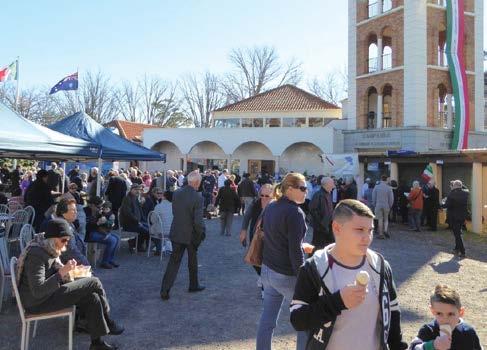
The Canberra community event will be held at the Italian Cultural Centre, 80 Franklin Street, Forrest, on Sunday, May 28 and everyone is invited to experience and enjoy all aspects of Italian culture.
“The Italian community is keen to share the celebration for this very important day with the multicultural population of the ACT,” says Com. It.Es. Canberra president Paola Cerrato.
“It will be a great opportunity to experience all things Italian in a warm and welcoming atmosphere,” he says.
The Festa della Repubblica will offer a variety of food, gelato, sweets and coffee from 10.30am to 4pm.
There will also be a variety of entertainment provided including Italian music.
A versatile and functional roof for all seasons Michael knows the real Italy
TWENTY-five years ago, when the Italian Travel Bureau owner Michael Perrone started consulting, he wanted to show people a different side of Italy.
“People only seemed to know about the main cities of Italy,” he says.
“I wanted to create something to give people a place to trust with the right information about Italy.”
As well as being an avid traveller, Michael gained a lot of his knowledge from growing up in Italy and also travelling around its surrounding countries.
Michael moved to Australia 27 years ago and has since shared his favourite Italian locations, including one of his favourites, Sicily.
“We always look for something that is a little bit different,” Michael says.
“The tours and guides are run by English-speaking locals.
“We’re very specialised and we know the area very well.”
Italian Travel Bureau. 21 Eastlake Parade, corner of Trevillian Quay. Kingston Foreshore. Call 6223 2780 or visit italianbureau.com.au
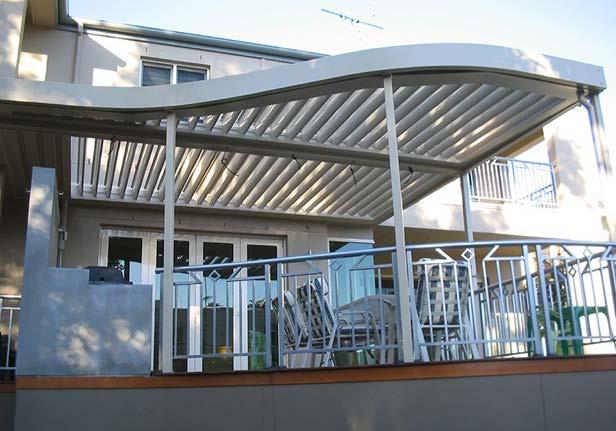
USING an Australian design, Vergola has been offering a quality opening roof system to communities in the ACT and southern NSW for more than 30 years.
Vergola is the original, energy-efficient, open/close roof system that adds versatility and functionality to a home, creating a comfortable space all year round.
Owner Franco Barilaro, a man originally from Monza, Italy, says Vergola prides itself on its goodquality service and reasonable price.
“You can adjust it to shade or sun or rain,” he says.
A normal roof cuts the sun out completely, but
with a Vergola roof it can be opened up, allowing the sun to come through, which would heat up the house in winter.
“Whether you need roofing or screening for domestic, commercial or industrial applications, we have what you need at prices you will appreciate,” Franco says.
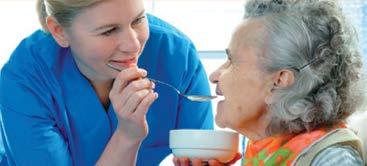
ESTABLISHED by members of the local Canberra Italian community in conjunction with some from the Spanish community, Villaggio Sant’ Antonio is a multicultural retirement village dedicated to the care of the aged in the region.
The overall concept of Villaggio is to provide excellent care in a home-like environment.
“It’s all about the residents, everything we do is based on their needs,” says general manager Michael Giugni.
“We have qualified staff, we’ve got great grounds and it’s very homely.”
Accommodation is available to all aged people regardless of financial, ethnical, religious or racial status.
People can choose from self-care villas, respite and day care, and the hostel and lodge.
The Villaggio vision is to provide the highest quality
of care to ageing members of Canberra’s culturally diverse community.
“Our nurturing environment will enable older people who use our services to remain well, active and independent for as long as possible,” Michael says.
At Villaggio Sant’ Antonio we care about the happiness and welfare of our residents and our highly experienced and expert staff apply utmost dedication for peace of mind and tranquillity of our residents.
We provide:-
• High quality outstanding independent living units,
• Residential care with a dementia specific ward,
• Respite and daycare programs,
• Multicultural facility on beautifully landscaped grounds,
• A variety of activities, interests, hobbies, pursuits and pastimes.
Why not call us today for an appointment to view our accommodations, community areas, living areas and meet our friendly and supportive staff.
WITH Italian roots in Torino, north of Italy, Ben and his mum, MaryAnn are sharing their culture through Biginelli Espresso in the Canberra School of Music, on the city side of the ANU. Ben’s grandma came to Australia after World War II when Mary-Ann was a toddler and brought with her the knowledge of traditional Italian recipes, which Mary-Ann has since taught the chefs at Biginelli Espresso.
Biginelli Espresso is an excanteen, which Ben describes as a “hole-in-the-wall cafe” that sells modern Italian food.
As well as paninis and cakes, the cafe also offers vegan and vegetarian options, and sells quirky hot drinks such as turmeric and matcha green chais.
“Mum and I try and grow what we can out of the garden for ingredients,” Ben says.
“We’re also the cheapest on campus (for coffee), we do uni prices for everyone, whether you go to uni or not.”
The coffee beans are traditionally woodfire roasted, which Ben says adds a slight smokey texture.
Biginelli Espresso. Level 5, School of Music, ANU. Call 6125 5848.
Festa della Repubblica, Italian Cultural Centre, 80 Franklin Street, Forrest, Sunday, May 28.
Biginelli Espresso staff with, at right, Ben and his mother Mary-Ann.
Vergola… the original, energy-efficient, open/close roof system that adds versatility and functionality to a home.
Biginelli Espresso
compassion fatigue
When a carer starts to lose it
IT’S been known for decades that “caring” professionals, such as doctors, dentists, vets and “emergency first responders”, are among those who are extremely vulnerable to mental disorders including depression, anxiety and suicide.
And now, according to research, we can add other disorders, loosely gathered under the heading of “compassion fatigue”.
“A substantial number of people are profoundly affected by the work they do. For example, mental-health workers, nurses, doctors, palliative-care workers, midwives, aged-care workers, veterinarians, emergency first responders, lawyers, teachers, domestic-violence workers, animal-shelter workers and rape-crisis counsellors are at high risk of developing compassion fatigue and vicarious trauma,” according to Compassion Fatigue Australia, a collaboration of expert consultants based in Adelaide, specialising in high-stress, traumasubjected workplaces.
“Helping others, whether by occupation, as a volunteer or unpaid carer, can bring deep satisfaction and reward. However, it can also inflict a secondary wounding; one that leaves the helper feeling as if they were injured on a personal level.”
HEIKE HAHNER looks at an emerging mental problem among the caring professions –
compassion fatigue
bottled-up emotions, substance abuse, excessive blaming, difficulty concentrating, mentally and physically tired, compulsive behaviours such as overeating, overspending, gambling, sexual addiction and isolation from others.
But the most detrimental symptom of compassion fatigue, especially for the medical professional, is apathy.
The source of their stress is dealing daily with trauma situations, long working hours, fear of making mistakes, responsibility at work and difficulties balancing work and personal responsibilities.
Ignoring emotions may lead to burnout, emotional exhaustion, poor professional efficacy and high cynicism. Subsequently, patients may find themselves being consulted by a doctor or vet who has an apathetic attitude, who is mentally and physically tired and in denial about his or her own problems.
Safe Work Australia statistics (2015), indicate that about one in five Australian workers is likely to be experiencing a mental health condition such as depression or anxiety at any given time. This is estimated to cost Australian workplaces $10.9 billion a year in absenteeism, presenteeism and compensation claims.
Sadly, there’s more; Australia already ranks highest in the world with its population suffering from depression and the use of antidepressants. Last year saw a 10-year high for suicides in Australia, with men being three times more likely to commit suicide then women.
Globally, the medical profession has the highest suicide rates of any profession followed by dentists. So it is unsurprising that 63 per cent of veterinarians suffer from psychological distress and every 12 weeks in Australia a veterinarian dies from suicide.
Our motto is ‘realise the dream’ and we invite you to take the journey with us! Images from some of the unique tours the Italian Travel Bureau offer:
The Australian Work Health and Safety Strategy 2012-2022 has identified work-related mental disorders as a priority of focus.
Signs of compassion fatigue may be
healthy eating
Compassion fatigue comes at a considerable economic, cultural and individual cost responsible for chronic absenteeism, increased workers’ compensation costs, high staff turnover rates as well as friction between staff and management, leading to work-related mental disorder claims each year in Australia of around $480 million.
These are grim numbers, but the most tragic possibility is that we are losing our most compassionate professionals to compassion fatigue and suicide.
More information at compassionfatigue.com.au
Heike Hahner is a psychology consultant, hhahner@bigpond.com
Getting healthy habits to stick
By Clare Wolski
WHEN it comes to healthy eating, it’s never too late to change bad habits or build new ones.
Here’s how: prioritise what’s important by really asking yourself if the habit you want to build reflects what’s important to you and your life now. You might feel like you “should” eat healthier or you “should” get up early and exercise. But “should” is a big red flag. When you say you “should” do something, you’re comparing what you’re doing now, to an ideal version of yourself, which doesn’t really exist. Then you feel guilty for not being that ideal.
Ask yourself, honestly: “What do I want? What will I feel good about doing?” Pick habits that will help you get there.
One of my favourite expressions is: “Simple things become complicated when we expect too much”. It’s easy to make big plans and have high expectations of yourself. You’re going to get up every day and do yoga for 30 minutes and be able to bend yourself backwards in no time, right? We can’t often change our life, our struggles or the demands on our time. At least not in a big way. But we can change our expectations amongst those things. We can look objectively at our time and decide what we can achieve. What can you realistically do? There’s no right or wrong.
Once you know what habit you want to change, make a Specific, Measurable, Achievable, Realistic and Time-bound (SMART) plan to change that habit. For example: I’m going to have ½ a plate of vegetables (measurable) four weeknights this week (time-bound). This means I need to pick the meals and pick the vegetables at the same time, make a shopping list and do the
groceries on Saturday (specific and achievable steps). I feel really confident that I can do that (realistic).
Use habit building strategies:
• Schedule it – book in the time to make your plan happen.
• Pair it – if it’s a small task, try grouping it with something else you normally do. For example, if you make a cup of tea in the evening, while the kettle is boiling pick your snacks for the next day or get your breakfast things out.
• Accountability – Tracking works as both a reminder and a reward for habit building. Keep a tracking app in your phone or jot it down in your diary.
• Do the bare minimum – Sometimes the habit of the habit is more important than the habit itself. Just keep the momentum going even if the action is not perfect. For example, if you’re really not keen for excerise, getting to the gym is 90 per cent of the battle. Just get there and doing ANYTHING will help keep the habit going.
• Be kind to your future self – doing little things now, can really impact how easy a habit is later. Pull out your gym gear for the next day’s exercise. Plan your snacks for the week. Make it as easy for your future self as possible.
Clare
Wolski is a practising dietitian at The Healthy Eating Hub, call 6174 4663.
Centuria Property Funds Limited
Quality refurbs right in the city’s centre
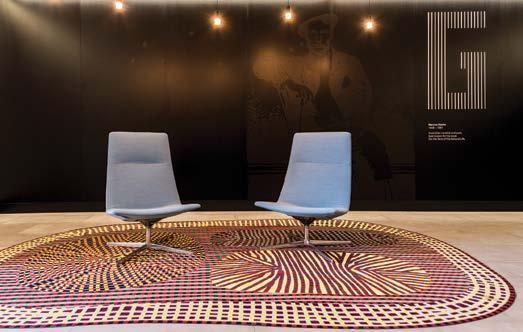
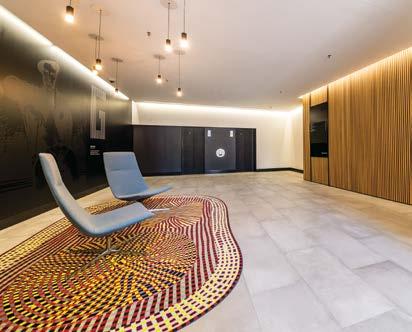
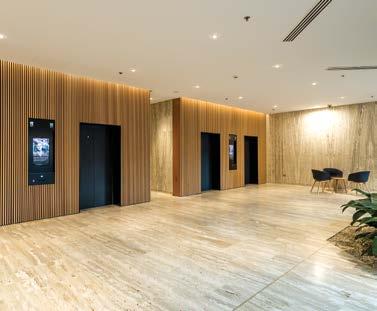
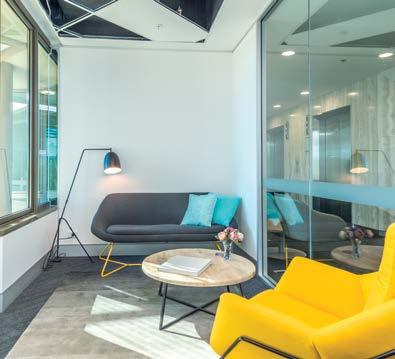
ELEMENTS of two buildings on Marcus Clarke Street have been refurbished into contemporary spaces that focus on tenants’ overall wellness.
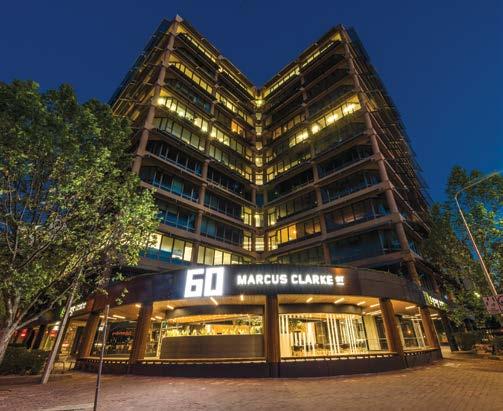
One is Canberra’s well-known building, 60 Marcus Clarke Street, (or the “St George building”), which sits on the corner of Marcus Clarke and Barry Drive.
Now, after massive developments at the Australian National University, the building has become centralised within the street, making it more appealing to private-sector tenants who have a synergy with ANU.
“The connectivity to the ANU and even access to the University of Canberra and CIT is an advantage to tenants, particularly with an increased focus on staff education and subsequently, staff retention,” says Knight Frank associate director Daniel McGrath.
Knight Frank and CBRE are the leasing agents for Centuria Property Funds Limited.
Both properties sit in the Centuria Metropolitan REIT (centuria.com.au/ metropolitan-reit).
The other opportunity is further down Marcus Clarke Street at number 54, originally developed by Canberra Airport owner Terry Snow and designed in the ‘80s by award-winning architect, Enrico Taglietti.
Both buildings are an easy walk to the Civic bus interchange and Canberra Centre.
And, following the work done by Centuria, the precinct now has a renewed life and energy says Mr McGrath.
Light, warm offices with exceptional views
54 Marcus Clarke Street
ALREADY home to corporate tenants, 54 Marcus Clarke Street has a 624sqm space available on Level 5 for a new, private-sector tenant or two.
Leasing agent Dan McGrath, of Knight Frank, says the floor can be split into five tenancies, if required.
The refurbished, whole-floor office space comes with a new carpet and ceiling, male and female amenities, two passenger lifts and six car spaces.
Joint agent Zoe Ferrari, of CBRE, says: “There are exceptional views towards Black Mountain and towards the Brindabellas.
“The building offers warm timber elements with a light-filled atmosphere on the upperoffice floors.”
It’s well serviced by both local and on-site amenity with café and restaurant options within the immediate vicinity, including hatted restaurant Courgette.
The ASX-listed Centuria Metropolitan REIT (CMA) invests in office and industrial assets in metropolitan markets across Australia and holds a portfolio of assets valued at $417.5 million, which are diversified across Sydney, Canberra, Brisbane and Adelaide.
60 Marcus Clarke Street
Retail and office offerings in an iconic building Specialists in quality property opportunities
CONVENIENTLY positioned on a prominent corner on the street, 60 Marcus Clarke Street recently underwent substantial refurbishment but still keeps its distinguished stature as an “iconic building”.
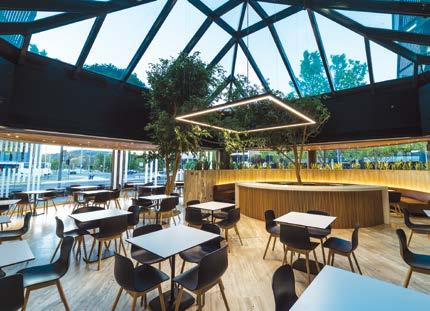
The building’s foyer garden atrium and adjoining cafe have become one of the Canberra CBD’s premier informal meeting places. It has 12 office levels, ground floor retail tenancies, a main building lobby and two levels of car parking.
A 213.7sqm retail space on the ground floor is available featuring full-height windows along the length of the tenancy, creating many possibilities for signage and shopfront options.
The space can be subdivided into two smaller suites of about 110sqm and 80sqm.
“A focus on the ground-floor plan draws people from the street and provides a focal point for tenants and their visitors,” Mr McGrath says.
“There is refreshed energy within the building, promoting a healthy and happy workplace.”
The building has an on-site cafe located adjacent to the building lobby.
In addition, new end-of-trip facilities have been included during the refurbishment incorporating bike storage, showers and locker facilities.
“This is increasingly becoming one of the main criteria for tenants when seeking new office space, with an organisation placing increased focus on staff wellness, improving productivity in the workplace,” says joint agent Zoe Ferrari, of CBRE.
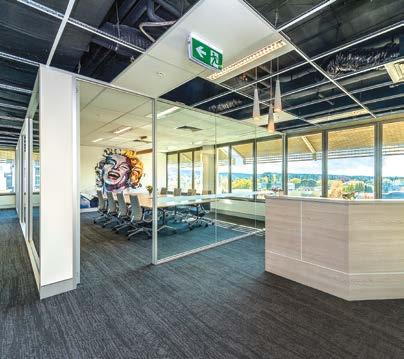
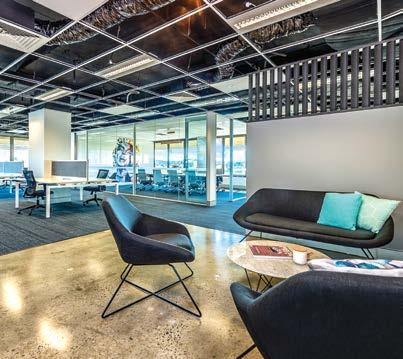
Further up on Level 4 is a 432sqm, “edgy designed” suite offering a new spec fitout incorporating a mix of polished-concrete floors, exposed ceilings and timber features to create an exciting workspace.
The floor plan is creatively fitted out and includes a reception area, boardroom, meeting room, three offices, 36 workstations and a large kitchen/breakout area.
Centuria
Centuria Property Funds Limited, combined with Centuria Property Funds No. 2 Limited, the Responsible Entity for the ASX-listed Centuria Metropolitan REIT (CMA), has about $3 billion of funds under management in 18 unlisted property funds and three listed REITs. CPFL is responsible for all property investments within the company and currently manages a portfolio of more than $1.1 billion.
Its national leasing manager David Schmidt-Lindner says Centuria prides itself on taking a hands-on approach.
“We also pride ourselves on creating attractive turnkey fitouts for new and existing tenants,” he says.
“Many tenants find this quite appealing because it takes the stress out of an office move and allows them to get on with their usual business.
“It gives businesses the opportunity to relocate much more efficiently and removes the time and cost risks often associated with constructing a new fitout.”
With 54 and 60 Marcus Clarke Street amongst Canberra CBD’s most recognised buildings Mr Schmidt-Lindner says they were in need of an overhaul to bring them into the 21st century.
“Centuria made a long-term commitment to the building and therefore its tenants spending a total of about $2.8 million on refurbishment projects,” he says.
In the coming months Centuria plans to create a selection of new suites throughout 54 and 60 Marcus Clarke Street, ranging from around 100sqm up to 425sqm.
“We plan on including some great creative design features as well as producing well-considered layouts, which are generally suitable for most businesses,” he says.
“We have a high level of asset and project management expertise in-house, which allows us to be nimble and be proactive rather than reactive landlords.”
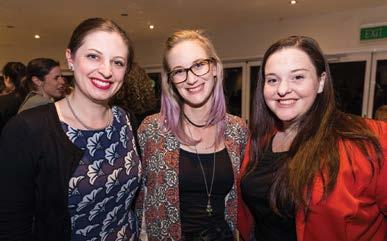
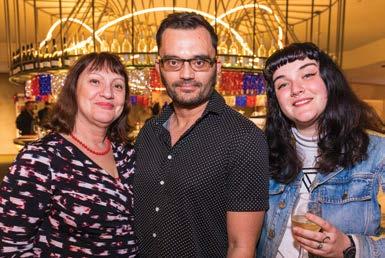
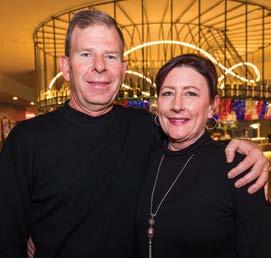
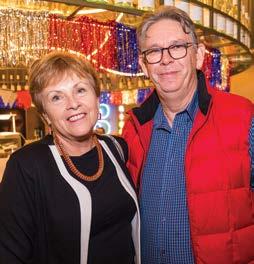
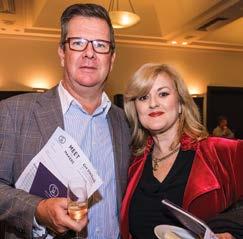
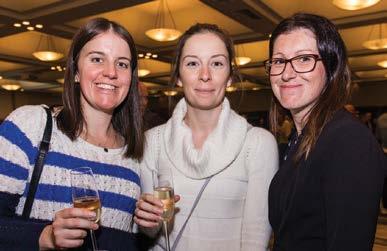
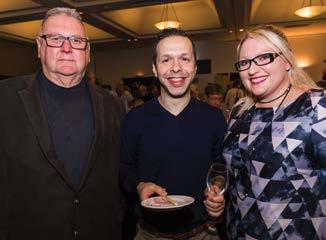
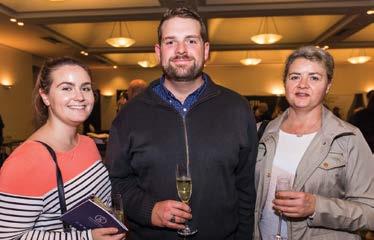
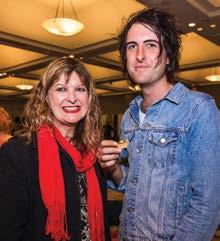
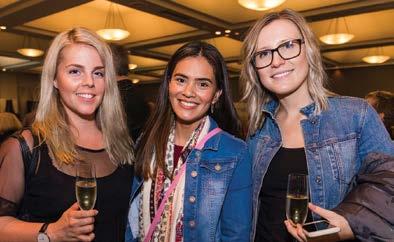
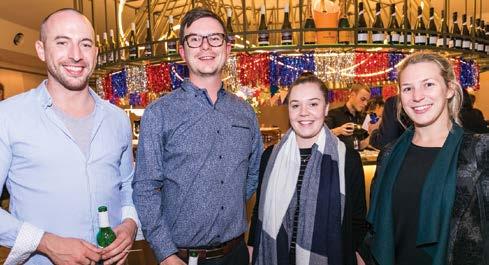
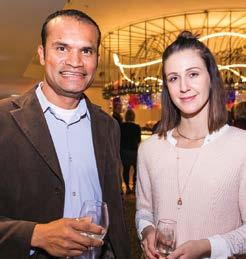
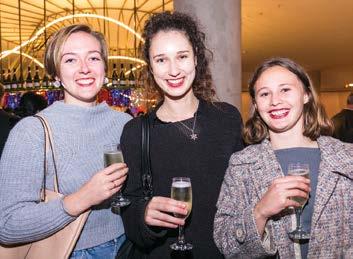
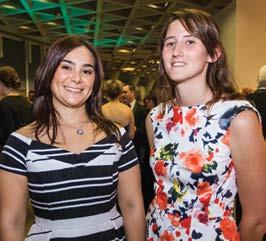
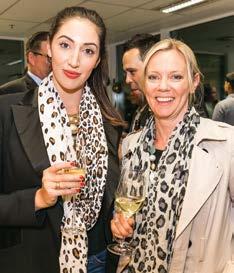
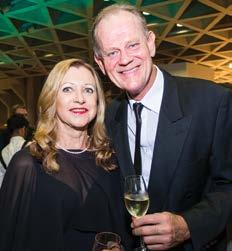
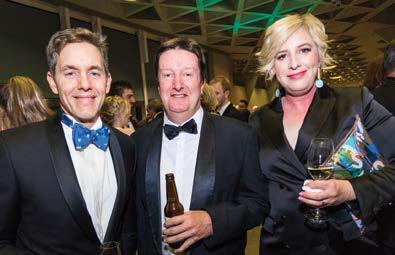
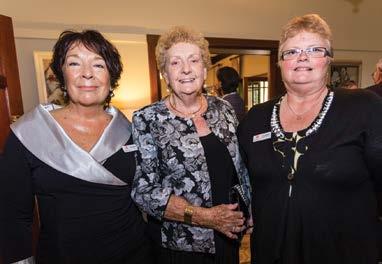
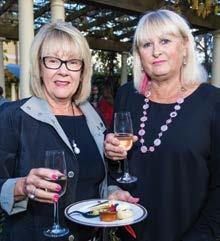
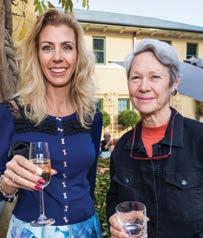
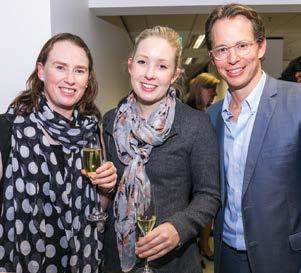
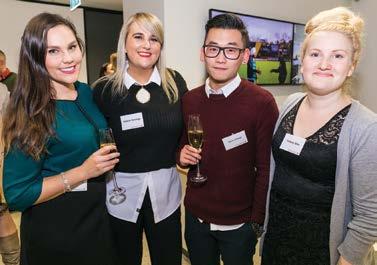
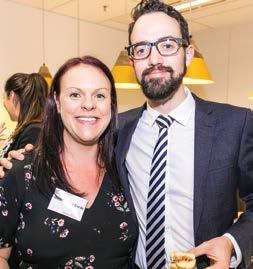
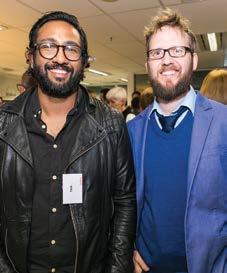
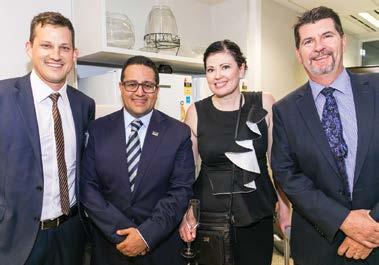
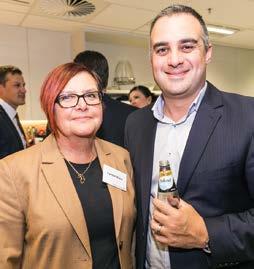
At the American Essentials Film Festival opening night, Acton
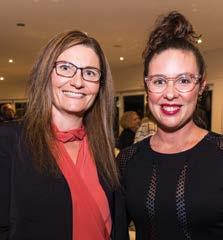
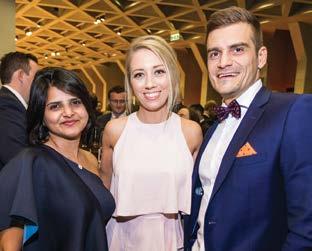
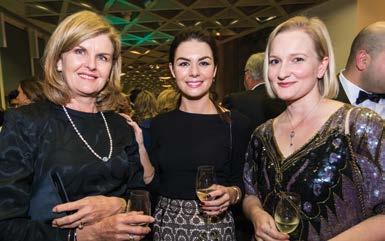
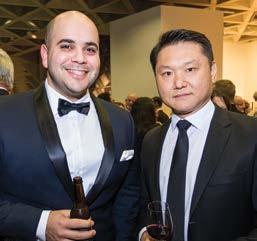
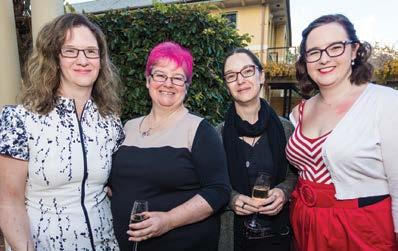
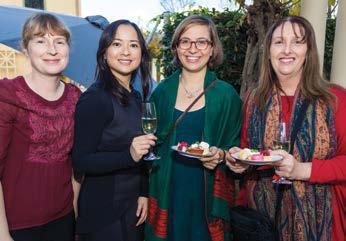
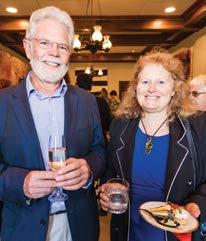
At the AILA President’s Drinks, Margaret Hendry Lecture, New Acton
Photos
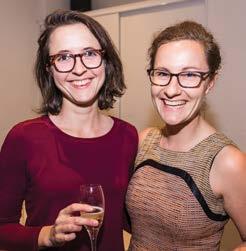
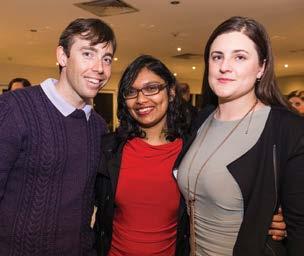
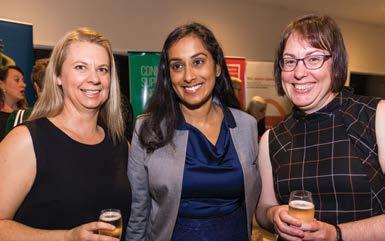
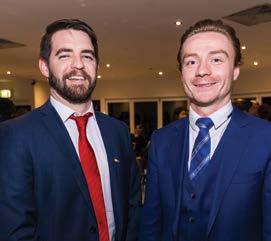
Steve Jones and Rhys Pogonoski
Ashley Cox, Janette Wojtaszak and Olivia Mahon
Claire Bradbury and Katherine Dellar
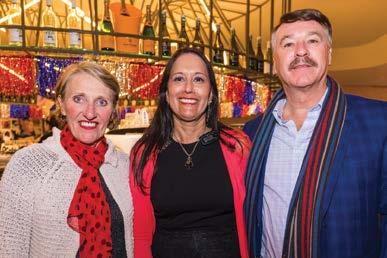
Chris Miko, Bernadette Tate and Karen Jameson
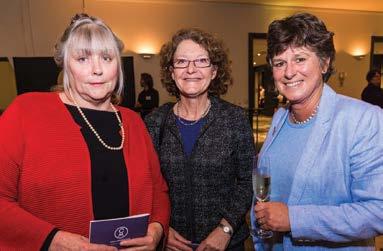
Anne Lawson, Sarah Slaughter and Tegan Gahar
Kevin Thorburn, Fabio Longordo and Sarah Coventry
Lauren Ferrett, Callum Hicks and Vicki Ferrett
Jacinta Northam, Anusha Goonetilleke and Genevieve Bolton
John Nichol and Michelle Culnane Caitlin Bell, Jane Dareyshire and Nikita Kwan
Michael Daffey, Nilanka Goonetillake and Liz Leiter
Alice Zhang, Matilda Gillis and Stephanie Giblin
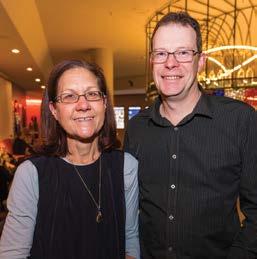
Janet Courtis and Steph Creagh
Tania Hayward and Melanie Moss
Andrew and Jenny Kelly
Sarah Burns, Mikaela Cato and Annelise Corey
Georgina and Nicolette Clementz
Matt Clifton, Neil Hunt, Jordan Crawford and Chelsea Hosking Lucy Sheaves and Michael Stankov
Christine Cameron and Therese Row
Gay Williamson, Ron Thorman, Christine Satchell and Damien Haas
Connie Leikas, Rob Vidaic and Kira Leikova
David Chand and Raquel Shanice Janet Mann, Madhu and Mike Fowler
Emma Coll and Sid Chakrabarti
Margot Tredoux and Terry Strong
Jane Easthope and Michael Healy
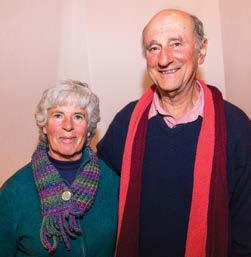
Rae and Gerry Jacobson
Gail and Kieran Stopp
Maree and Chris Rule
Stay in touch with the names making news on Sundays from 10am as 2CC and “CityNews” present Canberra’s only local weekend news and current affairs program. It’s a revolving panel show that brings to the microphone great “CityNews” commentators and 2CC personalities.
between 10am and noon.
Jeff Yacoub and Jae Seol
Michelle van Eerde and Brett Nolan
Ivan and Isobella Juric
Mashlee Marcuccio and Linda Hein
CEO Gayle Sweaney with patron Shirley Sutton and Julie Elliott
Annette Dunkley, Nicole Murphy, Jennifer Dunkley and Charissa O’Sullivan
Tracey Robinson, Amy Cheng, Anika Stobart and Vanessa Whelan
Sharon Bruzja and Ros Byrne
Marilyn Whiddett and Judy Reid Teena Harkins and Deborah Ford
Rob Whelan and Karen Dahl
Nicky Symon, Emily Tindal and Maria Comyns
Jessica Hickey, Isobela Gorringe, Terry Cheng and Chelsey Bibo
Diane Fox and Kathy Agius Tony Lulic with Phil and Larissa Gray Kiara Shah, Ellie Colovati and Mayo Pospisil
Michelle Nagle, Nicola Friedlieb and Ben Dixon
Andrea Ahyick and Cassie Turnbull Yan Long and Vikram Varma
Sam Bruno and Joe McKinley
Cheryl Cartwright and Tim Shaw
Tish Karunarathna and Daniel Lloyd
Lyndall Black and Josh Guetaya
Adrian Roeling, Craig Wagstaff, Katherine Waters and Leon Buchanan
Guiliana and Patrick Baggoley
cold weather health & fitness
Many hot ways to stay healthy
AS the leaves change and the days get colder many people tend to forget about their summer commitment, not so long ago, dedicated to exercise and health. In Canberra there are plenty of options to get outside, or inside, in autumn and winter and stay healthy, whether it’s starting a new sport or learning how to help others get fit.
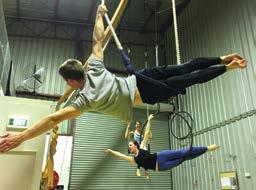
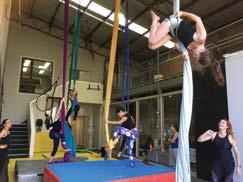
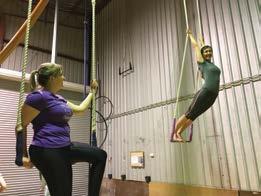
A taste of aerial acrobatics
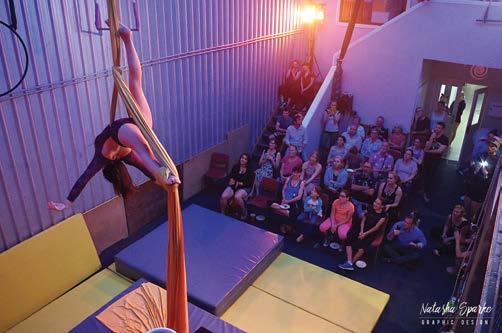
THE owner of Aerial Sports in Mitchell, Cher Albrecht, is inviting people into her “adult playground” to try some “taster classes”.
“If people are looking for an opportunity to work out during the colder months, aerial acrobatics is a good alternative and is still as much fun as going outside,” Cher says.
For $5 on May 27 kids and adults can try classes such as regular aerial, silk, lyra or trapeze, as well as classes that work on handstands and flexibility.
“Beginners can come and have a sample of what it’s all about,” says Cher.
“It’s an alternative way to work out, it’s a fun kind of fitness and people are exhausted by the end without even realising how much work they’ve done.
“They get a lot out of it because they’re training new muscles and moving in new, challenging ways.”
Aerial Acrobatics also offers free hot chocolate and tea through the colder months.
FERNWOOD’S upcoming three-day sale will help new members keep fit this winter says Fernwood’s Woden club manager Vivia Hale.
The sale runs between May 24-27 with different terms and conditions for each club in Canberra.
Vivia says it’s a great time to join before it gets too cold to exercise outside.
“All five clubs are offering indoor bootcamps over the next few months,” she says.
“Most of us have a day spa on site as well, where
clients can have laser spot fat reduction, which offers a loss of centimetres and helps maintain weight.”
Even though Vivia encourages people to come in during any season, she says that winter is a great time to maintain health.
“I encourage people to come in and try something they’ve never tried before,” she says.
Visit any Fernwood club or go to fernwoodfitness.com.au
Youth club with an eye on the future
SERVING the local community for 60 years, Canberra Police Community Youth Club (PCYC) has been in Erindale since the 1980s, offering a range of low-cost and high-quality programs and activities to engage young people and the community.
“PCYC sport and recreation programs and activities form a part of a community engagement strategy,” PCYC says.
“These programs and activities are a low-cost, high-quality service run out of the PCYC Erindale Centre.
“This wide range of sporting and recreational options caters to the diverse local community and provides PCYC members with an inclusive environment, sense of belonging and an increase in health and mental wellbeing.”
PCYC also offers targeted programs for young
people exhibiting anti-social behaviour, disengagement from school or engaging in low-grade, petty crime.
“Personal development outcomes for participants include improved resilience, leadership skills, teamwork skills, a sense of belonging, fostering better social skills, a sense of identity, skills to manage emotions, practical skills, understanding of healthy choice making, goal setting skills, and building positive self image,” PCYC says.
“Whatever journey people may have been on, it is our mission to empower people to create pathways to a better future for themselves.”
Canberra Police Community Youth Club, 17 Grattan Court, Wanniassa. Call 6296 1292, email erindale@pcyc. net.au or visit pcyc.net.au
through the colder months
Certificate courses that tackle health
OVER coming months CIT Bruce is offering a range of courses that focus on health in the community.
One of these courses is the Certificate IV in Population Health, which focuses on improving the health and wellbeing of groups in the community.
“Graduates would work for places like ACT Health or not-for-profit organisations, to educate communities about health,” says senior educator for health sciences Sara Dukic.
Another course is the Smoking Cessation Skill Set, which Sara says is designed for healthcare professionals to teach them how to support people who are trying to quit smoking.
“A lot of health professionals don’t feel comfortable and this gives them a skill set to have that conversation,” Sara says.
There’s also the Certificate IV and Diploma
in Work Health and Safety, which the course co-ordinator Kath St Laurent says is useful in any industry.
“There is always the possibility of workplace injuries or illnesses,” she says.
“All work exposes people to hazards, from manual handling, sedentary computer-based work, hazardous chemicals, electricity to working with machinery or even psychological hazards such as stress.
“While having good workplace health and safety practices is a social and legal responsibility, it also makes good business sense and can assist your workplace in reducing lost work time due to incidents.”
DUE to high demand, Universal Medical Imaging is located in four locations around Canberra, which include Braddon, Kingston, Calvary Public Hospital and Gungahlin.
“We have convenient parking on site with introduced bulk bill, CT scan and X-ray services,” says the Universal Medical Imaging general manager, Jeffrey Wheeler.
Jeffrey says Universal Medical Imaging is owned and operated by local specialists with the primary aim of improving access to diagnostic
imaging in the ACT.
“In addition to imaging services we also provide a range of interventional procedures, including biopsy and injections for spinal pain,” Jeffrey says.
“The radiologists at UMI are highly qualified and have specific areas of expertise including prostate, breast, musculoskeletal and sports injuries, bowel, cardiac and oncology.”
Visit umic.com.au or call 6126 5000.
Pedalling through the colder months
CYCLING is a great way for the family to get out and enjoy the outdoors, says the owner of Cookies Cycles David Cooke.
David often rides with his two kids and says that there are plenty of nice places in Canberra to cycle as a family.
“It’s a matter of continuing to ride through the cooler months and the longer people keep it up, the better it is for their health,” he says.
Cookies Cycles is open six days a week and stocks a wide range of bicycles, skateboards and scooters, as well as parts, accessories and a repair workshop.
Cookies Cycles also has a range of electric bicycles, which David says are a great option for commuters.
“They give the rider as much assistance as they need to get up the hills and a lot less effort to get to work,” he says.
Cookies Cycles, 227 Flemington Road, Franklin. Call 6242 0338.
David Cooke with his kids Billy and Ashleigh.
health & fitness advertising feature
Pilates helps rehabilitation through to fitness
ESTABLISHED in 1996, Pilates Canberra has evolved from a home-based operation to its current structure of two connected studios that use the same philosophy and Pilates training.
Pilates Canberra’s Phillip studio has been open since 2010 and its director Felicia Darbyshire-Pirie focuses on helping clients with fitness, pain management, rehabilitation, body awareness, confidence through movement and general confidence in daily living.
“From rehabilitation through to fitness, we can tailor anything for the individual,” Felicia says.
“We also have group-style sessions with no more than 10 people in our classes at a time.”
Felicia sees Pilates as a perfect training partner for everything, including activities such as sport. Pilates also helps eliminate stress, detox the body and improve posture.
AIKIDO is more than a martial art for AikiLife’s sensei (teacher) Ann who believes it’s a way of life, developing awareness, sensitivity, respect and nurturing.
AikiLife offers Takemusu Aiki for adults, which is based upon principles of non-aggression, non-resistance and noncompetitiveness, as well as Akido Japanese, for kids aged three to 15, teaching children playground safety, early language skills, respect and confidence.
James Samana, a senior aikido student who recently received his black belt, has been training for six years and says he has seen benefits to his health, inner strength and mental health.
“For me, it’s a physical representation of mindfulness because you’re becoming in tune
with things such as opposition,” James says.
James describes his teacher, Ann as having exquisite technique.
“She needs to be, to throw big guys like me around,” he says.
James has even transformed many of these skills into his job as a public servant.
“When conflicts arise, there’s this concept of blending in with the other partner’s energy,” he says.
AikiLife’s dojo was recently renovated to be traditionally Japanese by the parent and student community and it’s where the first black belt gradings by Ulf Evenas Shihan (from Sweden) will be held.
AikiLife, Unit 102, Level 1, 43-57 Townshend Street, Phillip. Call 0449 508068, visit aikilife.com.au or email ann@aikilife.com.au
Fitness poles for muscle tone and calorie burn
FITNESS doesn’t have to be confined within four grey walls, especially in such a beautiful city such as Canberra, says fitness instructor at Capital Nordic Walking, Kristen Pratt.
“Millions of people globally are enjoying terrific results from walking with fitness poles,” says Kristen, who is also an occupational therapist.
Walking with fitness poles helps tone around 90 per cent of the muscles in the body and also burns higher calories than sports such as running or swimming.
“It also significantly reduces the load and strain on ankle, knee and hip joints, strengthens core, improves posture, and can ease back and neck pain,” she says.
She says that the beauty of Nordic Walking is that it is affordable, fun and sociable.
“Best of all, it is low impact, but highly effective as a total body exercise that is big on burn and easy on joints,” Kristen says. Kristen is holding free information sessions during International Nordic Walking Weekend, May 27-28.
Capital Nordic Walking, email hello@capitalnordicwalking.com.au, call 0499 993215 or visit capitalnordicwalking.com.au
is talking
CHRIS COLEMAN CANBERRA in...
Felicia Darbyshire-Pirie.
Expert friends for a world of cyber attacks
a business in lots of other ways, too.
Craig, the geek with passion to help
CRAIG the Computer Geek has a passion for providing quality service and fixing computers at a reasonable price.
With nearly 30 years of experience in IT, Craig Plaister offers services to suit the technology needs of his customers in private and small businesses, in the home or in the workplace across Canberra and Queanbeyan.
He offers business solutions, home services and web services including home and office network set-up, virus removal, off-site backups, disaster recovery, custom PC builds, security systems and more.
“We can help small businesses, community organisations and embassies with their web presence by creating a website that is user friendly and suits their needs,” says Craig.
Craig recommends the end of financial year is a good time to consider upgrading PCs that are around five years old and he can help customers find the right computer.
Craig also specialises in digital marketing across social media to promote small businesses.
Craig the Computer Geek. Visit craigthecomputergeek.com.au or call 0411 147909. Email enquiries@ craigthecomputergeek.com.au
Keeping an eye on vital tools of business
OPC was established in Canberra in 1985 when typewriters were still around and the company has been constantly evolving ever since.
“Nowadays we are a true end-to-end technology provider, delivering complete on-premise Cloud and managed ICT services along with Drupal and govCMS web services,” says managing director Brett Norton.
“We realise most organisations lack both the time and resources to properly look after their IT and websites, but these are vital tools for any business.”
Brett says having a fully functioning, fast and secure IT infrastructure
has never been more important.
“Cyber threats are becoming increasingly sophisticated and can be catastrophic so it’s important to have the right tools and skills protecting your business data and communication channels,” he says.
“This is where we come in, delivering practical and workable solutions to suit all needs and budgets.
“So if you want real and measurable value for your organisation, you can simply, leave IT to us.”
OPC IT. Level 1, Unit 15/26 Ipswich Street, Fyshwick. Call 6162 8300 or visit opc.com.au
Servicing for trouble-free technology
AFTER a recent move to a new location in Fyshwick, ESC Technology continues to carry out equipment servicing and repairs for business and enterprise equipment as well as commercial and industrial equipment.
ESC Technology has been around for nearly 20 years and its owner John Falez says the company is well qualified and experienced in the repair and servicing of items such as inkjet, laser printers and multifunction devices, projectors and electronic whiteboards.
“We are an authorised service centre for Oki, Canon, Brother, Samsung, Panasonic and Epson imaging products,” John says.
“But we service most brands for trouble-free operation.
“We also do installation of all the equipment we sell.”
ESC Technology, Unit 7, 49 Townsville Street. Call 0419 241284, email sales@esctech.com.au or visit esctechnology.com.au
John Falez.
Managing director Brett Norton and the OPC IT staff.
arts & entertainment
By Helen Musa
RODGERS and Hammerstein’s
“South Pacific” was way ahead of its time when it first hit Broadway in 1949.
The show was an instant hit, packed with numbers such as “I’m Gonna Wash that Man Right Outa My Hair”, “Bali Ha’i” and, most famously, “Some Enchanted Evening”. But it was also saying some tough things about racism that packs just as powerful a punch in 2017 as when the show first opened.
Janet Tweedie, director of the Queanbeyan Players’ production that’s about to appear at The Q, is especially proud of that.
Ellen Scott, who has performed around the local traps since taking a role in Free Rain’s “Singin’ in the Rain” in 2010, plays the central role of Nellie. This is a big role for her and one she’ll partly share with understudy Alyce King.
Scott knows that some audience members will dismiss Nellie as a racist cow from Little Rock, Arkansas and, as she says: “I’ve said that myself, and also, gosh, I can’t believe I’m saying that” whenever Nellie expresses herself on the subject of coloured people.
“Yes, it’s so politically incorrect, this role is important, especially when she’s being blunt,” she says.
Her opposite number, Michael Moore, playing Emile De Becque, suggests that by modern-day standards his character’s preparedness to go off on a suicide mission because
he’s lost Nellie seems plain irresponsible.
Not to worry, he gets to sing two of the great showstoppers of all time, the aforementioned “Some Enchanted Evening” and Moore’s favourite “This Nearly was Mine”, a multi-layered song encompassing bitterness and longing.
And, yes, he and Scott agree, Emile is way too old for Nellie, another bit of incorrectness, but one that can be excused by standards of the era.
The pair explain how Nellie wants to be sophisticated and intelligent, while Emile wants someone innocent and fresh.
Tina Robinson plays Bloody Mary. Her last big role was Eliza Doolittle in “My Fair Lady”, also directed by Tweedie, but this time she is cast against type and ethnicity.
“I had to get the accent perfect,” she says, explaining that she went to the Glenn Close/ Harry Connick movie to study the Vietnamese actor who played the role there.
Robinson is normally a jazz singer and when asked by Tweedie to do the role in the lower register of Sarah Vaughan, she went for it.
“It’s become a dream role, it wasn’t at first,” she says.
Tweedie takes a break from rehearsals at the Queanbeyan Uniting Church Hall to explain the extraordinary complexity of “South Pacific.”
“It’s really complex, there’s a lot of busyness and it took me three days to work out the rehearsal schedule,” she says.
As if that weren’t enough, cast members were performing in “The Addams Family”, “Chicago”, “Les Mis” and “Die Fledermaus”. As well, she needed a good line-up of singing, dancing males.
It’s a very different show from her “My Fair Lady” but Tweedie is working with the same team, which includes her set-designer husband Roger Timewell.
“I chose the show because I’ve always loved the music and my daughter Jenna grew up with it,” she says.
“South Pacific”, at The Q – Queanbeyan Performing Arts Centre, June 2-11. Bookings to theq.net.au or 6285 6290.
A question of glass and when it isn’t
By Helen Musa
A POWERFUL retrospective of work by glass artist Kirstie Rea has just opened at the Canberra Museum and Gallery – and it raises questions as to whether there are times when glass is not glass.
Rea, born and bred in Canberra, has led many lives in many places, not least the great glass centres of Europe and the US, but she always comes home to Queanbeyan, where she lives and Pialligo, where she works.
These days she’s out and about a lot, photographing, walking around Mount Jerrabomberra, Molonglo Gorge or Namadgi National Park.
“It’s field work,” she says and, indeed, a major collaborative exhibition to be held in Wagga Wagga City Gallery next year will deal with the practice of walking.
A long-time worker in the press gallery at Parliament House, where her father was a senior journalist, Rea was a scribbler before she fell in love with stained glass and then, after a visit to the Victoria & Albert in London, the full gamut of the potential contemporary glass offers.
“Canberra and Queanbeyan are central to me, they are where I keep returning to, this is the area that I love,” Rea tells me.
“What I really enjoy when I’m standing on my back door looking out is that the air is so clear.”
Rea sets the scene by talking about place.
“Talking about a sense of place is so bandied around these days that people roll their eyes,” she says, but too bad, her work has always been inspired by place and, as she gets into her senior years, it only gets better.
“I no longer aim for the summit, instead of walking on to the mountain I walk into it, I look very deeply.”
As for glass, she’s been absorbed in it for a long time, since 1974 she estimates, when she was entranced by the light in colour and stained glass.
It wasn’t until after a trip to London in 1980, when she saw an exhibition called
“The 1979 New Glass Review Show” from Corning, that she thought glass might be her life.
“I was intrigued, I thought how’s this made? How’s that made?” she says.
On returning to Australia she found the first glass course at the Canberra School of Art was being advertised, signed up and came under the seminal influence of glass master Klaus Moje, under whom she was to become a student and a teacher.
We fast forward through Rea’s kaleidoscopic career, which includes a stint as the founding creative director of Canberra Glassworks, an administrative experience that she would rather not repeat, preferring to focus on creative work as she did when she became artist-in-residence at the same place during 2014.
Over the past five years Rea has created flowing-glass installations that suggest folded and hung fabric. Or it could be the way that she has combined glass with other materials, such as blades from a rake that she has used to evoke round bales of hay in the countryside.
“It doesn’t come from playing with the materials, it comes first with an idea,” she says.
“People sometimes refer to my recent work as drapery, I never intended that.”
“Kirstie Rea, the land: a 20 year survey”, Canberra Museum and Gallery until August 20.
Glass artist Kirstie Rea.
FRIENDS of Chopin Australia will have the brilliant young pianist Łukasz Krupiński from Poland here for a recital at the Polish Embassy at 7pm on Friday, June 2. Then music lovers Brian and Dianne Anderson are hosting an intimate recital and high tea at 57 Arthur Circle, Red Hill, on Saturday, June 3, at 3.15pm. Bookings essential for both to president@ friendsofchopin.org.au or 0466 620825. All proceeds will go to the Third Australian International Chopin Piano Competition to be held in Canberra in September.
THE Human Rights Arts and Film Festival is opening its season with Hollie Fifer’s disturbing documentary “The Opposition”,
arts in the city cinema
Helen Musa
Polish piano star tickles the ivories for Chopin competition
which follows the struggles of 3000 residents of the Paga Hill community in Papua New Guinea when their homes were bulldozed to make way for a luxury resort. At Palace Electric Cinema, Monday, May 29 to Wednesday, May 31. Bookings to palacecinemas.com.au
GOOD news is to hand that Canberra/ Queanbeyan dancer Dimity Azoury has been promoted to the rank of senior artist with the Australian Ballet.
CANBERRA Symphony Orchestra’s second concert in its Australian Series will see Greenway 3, a trio of baritone voice, clarinets and piano, perform a repertoire that includes
CLEARANCE!
New old stock, super-ceded models and pre-owned gear: amps, turntables, receivers, speakers.
PROFESSIONAL, FUN TUITION IN Ballroom Dancing
• Junior classes
Starting February 6, Monday’s from 6.30pm
• Adult Beginner & Intermediate classes
Starting Wednesday’s 3rd May from 7.30pm (8 weeks)
• Social Dancing
• Private Dancing Lessons Individuals or Groups (perfect for wedding parties)
All Classes are now held at:
“About Light”, a commissioned work by Alice Humphries, who used the National Photographic Portrait Prize 2017 as her inspiration. At the National Portrait Gallery, 6.30pm, Thursday, June 1. Bookings to cso.org.au
“WE wanted to make a vibey space to create music in,” say Guyy and Adam Lilleyman, who have just opened their own Amberly Studios in Kambah. They are throwing a launch party and free barbecue to give people an opportunity to wander around the area and bush studio. At 325 Kambah Pool Road from 3pm, Saturday, June 3. A free event.
THE Street’s contemporary jazz focus
continues with a performance on Thursday, June 1, featuring New York-based Israeli guitarist Yotam Silberstein and his quartet. Then on Friday, June 2, Satoko Fujii and Natsuki Tamura will join Jessica Dunn’s Sirens Big Band to perform Fujii’s “Fukushima Suite”. Bookings to thestreet.org.au or 6247 1223.
CANBERRA Choral Society is teaming up with the National Capital Orchestra for an allAustralian concert featuring the works of Carl Vine, Matthew Hindson and Graeme Koehne, conducted by Leonard Weiss. At Llewellyn Hall, 7.30pm, Saturday, June 3. Bookings to premier.ticketek.com.au
Forensic thriller with more to tell
“Don’t
Tell” (M)
WHEN telling a true story, verity and credibility should be at the forefront of the filmmaker’s mind.
And it is so in the case of Anne Brooksbank’s screenplay written to guide director Tori Garrett in telling how Queensland schoolgirl Lyndal’s story led to the abolition of jury trials in civil cases and was influential in persuading Archbishop Peter Hollingworth to resign from the office of Governor-General.
At age 12, Lyndal, a boarder at Toowoomba’s Anglican Preparatory School, was groomed by teacher Kevin Guy who eventually had frequent sex with her and persuaded her that she should not tell anybody.
A decade later, Lyndal, a morose, sullen young woman totally unlike the bright, happy child whose emotional stability had been totally wrecked by Guy’s behaviour, sought help from solicitor Steve Roche (Aden Young) less to get monetary compensation than to have her story heard and believed.
“Don’t Tell” is a forensic thriller that draws on not only the record of the litigation but, almost certainly, interviews with real people whose involvement in the case was significant.
Knowing the outcome of the case, a matter of public record, does not diminish the film’s dramatic power. Rather, getting there leaves us admiring the forensic talent of the barrister who overcame not only the defendant’s legal team but also overt obstruction by school management outside the court and clandestine concealment of relevant records.
Top marks to Sara West for her portrayal of Lyndal as an adult, Jack Thompson as Bob Myers pleading her case before Judge Margaret Wilson (Caroline Kennison), Jacqueline McKenzie as the barrister for the school, Gyton Grantley as the paedophile Kevin, whose suicide note did not get admitted in evidence, and Robert Taylor as school council chairman Robert Brewster.
Of such components are compelling cinema made.
At Palace Electric and Capitol 6
“Viceroy’s House” (M)
Dale’s Ballroom Dancing
HUSBAND-and-wife team Paul Mayeda Berges (writer) and Gurinda Chadha (director) have crafted a balanced telling of how Lord Louis “Dickie” Mountbatten (Hugh Bonneville), his wife
Edwina (Gillian Anderson) and daughter Pamela (Lily Travers) arrived in the vice-regal house with one overriding task – getting Britain out of its three-centuries-long rule over India.
It’s a big film, not only for its subject matter but also for its depiction of colonial mastery on the grandest scale that Britain ever imposed. In an interview with Britain’s “Telegraph” in February, Pamela Hicks says it contains a number of environmental inaccuracies, but they don’t intrude on the story’s real substance.
Which focuses on the political and diplomatic to-ing and fro-ing between Mountbatten Indian leader Nehru, Muslim leader Jinnah and the father of modern India Mahatma Gandhi. It’s fascinating stuff, condensed perhaps but nevertheless convincing.
Recalling a visit from Hugh Bonneville, Pamela says that he “didn’t look like my father, of course…He was chosen because of the success of ‘Downton Abbey’.”
Michael Gambon plays General “Pug” Ismay, whose revelation of a British Cabinet paper resolved the defining of the boundary between India and Pakistan at partition.
The Indian cast includes the great Om Puri as the blind grandfather of the film’s fictitious female love interest Aalia (Huma Qureshi), promised to one man but in love with another.
Partition and the ensuing violence were, of course, not fictitious. The film uses archival newsreel footage of the latter.
At Palace Electric, Capitol 6 and Dendy
“King Arthur: Legend of the Sword” (M)
GUY Ritchie co-wrote (with Joby Harold) and directed this take on the Arthurian legend that stylistically more than any other film genre resembles Peter Jackson’s vision of “The Hobbit”, specifically, “The Battle of the Five Armies” (2014). In other words, lots of guys rushing hither and yon whacking each other with pointy or edged instruments or bashing heads with blunt objects. Ritchie has every right to massage what is at best nothing more than a legend into whatever fable he wishes. He’s set it in the 7th century. It starts with a battle raging between scruffy guys with giant elephants and other scruffy guys without elephants. There’s a mage (Astrid Berges-Frisbey) whose influence over Arthur (Charlie Hunnam) waxes and wanes between good and bad. No, “mage” is not a misspelling. It’s an archaic word for a magician. And where would cinema or literature be without magicians? If you revere traditional accounts of the legend, you may find Ritchie’s version unpalatable. It certainly ain’t no “Camelot”! It inflates the legend into a fantasy employing all manner of escapist cinema motifs borrowed from, and scarcely more convincing than, outer-space movies. By the time its 127 minutes finished I neither knew nor cared what happened.
At all cinemas
Sara West as Lyndal in “Don’t Tell”.
Where lunch is more than a Lark Delights of a new Turkish kitchen
By Richard Calver
I WAS speaking with the convenor of my defunct writers’ group (not my fault, your honour) which is, sadly, now a faded memory.
“Aren’t you running out of things to write about wine?” she asked.
“Well, not yet,” I said. “It seems that there are a number of wineries with restaurants in the Canberra region that I could visit, explore their cellar-door offerings and have a decent lunch, telling people about the wine.”
“Okay, sounds good,” she said, “when are we exploring?” And the beauteous words that followed.
She said: “I’ll drive.”
We decided on an autumnal Saturday sojourn, which I would arrange. I started by calling Shaw’s because I had been told their restaurant was very good and I like their wines. Alas, since February the restaurant has been closed and the Shaw website says they are looking for a new lessee for the venue.
So I called Four Winds whose pizza and wine offering had been positively talked about at work; fully booked.
I then remembered that Lark Hill had a restaurant at the vineyard and Bungendore is closer to home than Murrumbateman. Sorted. We arrived at the restaurant to be greeted by a wonderful vista, revealed through ceilingto-floor glass that lets the light in and which shows the golds and russet reds of vine leaves that are ready to fall. The view was framed by a line of trees and an absence of human settlement.
“Without the gum trees, we could be in rural France,” said my companion.
When we were seated the image of France was enhanced because our waitress Justine is an intern from a town near St Tropez and her accent was thickly Gallic. I found myself humming “La Marseillaise”. She explained that she was not a sommelier but that she was at Lark Hill to learn about their style of winemaking. And their style is to be commended: local, biodynamic.
We started with fizz, the non-vintage “Roxanne” sparkling pinot noir. There was no sting in the tail of this wine; it was sufficiently pleasant with small bubbles, yeasty but had a strange colour, like a faded 1970s couch. It did go well with the pork belly bun. We then tried the chardonnay, 2015, to accompany zucchini fritters.
My companion: “Chardonnay is under-rated and seems not fashionable but I love its richness.”
The wine was pleasant; I liked the melon taste on the front palate and the clean finish.
Next for me was a 2009 cabernet merlot and water for my driver. The wine was far from over-the-hill, full flavoured, complex and plummy. It went very well with the pappardelle, lamb ragu, goat curd and almonds. This was not a cheap outing; food and wine came to $166.
At the cellar door, we then had a complete tasting overseen by one of the winemakers and owners at Lark Hill, Sue Carpenter. I very much liked the Exaltation, a 2013 blend of shiraz, sangiovese and merlot. It was a very well balanced wine and its name is the collective for larks. But at $75 a bottle, I just took off with the memory.
ONE of the world’s wonders has got to be food. I drool over dishes from different cultures. It inspires and intrigues me. And that includes the northernwestern Turkish cuisine that is the focus of the newish Origin Turkish Kitchen in Manuka.
For many years, this relatively small space on Captain Cook Crescent was Lee’s Inn, famous (in part) for its generous, tasty $5 soups. Now that I’ve positioned it, let’s tuck into the new experience that is the Origin Turkish Kitchen.
With Turkish cuisine we’re talking wonderful spices, loads of vegetables, herbs and seafood; charcoal grilling; slow cooking and wonderful techniques.
We kickstarted our experience with sigara boregi ($14.50), light pastry filled with piping hot, oozy, salty feta cheese, fresh herbs and white sauce. Addicting is the only word that describes these little, cigar-shaped delights.
Another highlight was the charcoal grilled prawns ($25.90). Turkish cuisine has mastered the art of marinating and this dish demonstrated that beautifully. The prawns packed a punch on flavour and most were wonderfully moist and tender (some slightly overcooked). The dish was complete with fluffy Turkish pilav (rice) and a salad with grilled
vegetables.
From the “Chef’s Favourites” part of the menu, we dug into the iskender ($24.70), thinly shaved lamb with tomato sauce, punchy fresh chilli, creamy cool yoghurt and soft Turkish bread. My only concern was the level of salt, which we felt was a tad over the top. We were thankful we had the yoghurt to help cut through.
We were
Dreamboogie… at the Harmonie German Club, Thursday, June 15.
Sex and sorrows, that’s the blues
“BLUES is about the truth. The joys and sorrows of life, the challenges and excitement, love and sex – blues addresses them all,” says Dreamboogie singer Rebecca Davey.
She’s part of a four-piece band that reimagines and reinterprets songs of trailblazing blues performers for today’s audiences, using contemporary sounds and fresh arrangements.
Since its formation in early 2010, Dreamboogie has toured Australia, appearing at blues festivals and venues in major cities and regional areas.
The band will appear at the Harmonie German Club, Thursday, June 15.
pretty stuffed at this stage or might have had a go at some of the other “Chef’s Favourites”, such as the moussaka ($23.90) or the kuzu incik ($25.90), slow-cooked lamb shank – two heart-warming, cold-weather dishes. We would also have indulged in a decadent baklava ($8.50) or sutlac, a Turkish-style rice pudding ($9.90).
If you can’t decide what to order, head to the banquet offerings, which include a mini option ($28 per person, for minimum of two) and a vegetarian banquet ($35 per person).
The décor at Origin Turkish Kitchen is built around bold, bright colours. The walls are painted a strong tomato red, the massive wall artworks – with scenes from Turkey – are each loaded with colour. The exotic-looking lamps add further pops of colour and the black and white tablecloths feature a traditional mosaic-type pattern.
We found the lights too bright for evening dining. It would be nicer to have softer lighting for a more comfortable ambience.
It’s attentive service with a full smile at Origin Turkish Kitchen.
9/2-10 Captain Cook Crescent, Manuka, call 6232 6984. Open six days, breakfast (from 10am, lunch and dinner until 10pm). Some outdoor dining available. BYO.
Charcoal grilled fresh prawns.
Photo by Maddie McGuigan
pm
Gallery’s secret fern garden
THERE is a hidden treasure with plants forming the basis of a sculpture garden in Canberra.
It is the Fiona Hall Fern Garden at the Australian National Gallery and quite possibly more tourists than locals know of it.
In 1996 Mary Eagle, then senior curator of Australian art, approached Fiona Hall, one of Australia’s foremost photographers and sculptors, to consider a work for the gallery.
Hall proposed a discrete garden, more like landscape architecture than art. An out-of-sight, unused courtyard space on the easterly side of the gallery with 23-metre-high concrete walls was selected.
The design features 58 200-yearold mature Dicksonia Antarctica tree ferns 2.6 metres tall, with a system of paths, fountains and seating.
The garden opened in 1998 and is based on the spiral form of the fern frond, a symbol of healing and rejuvenation. It was Hall’s first major permanent landscape installation.
The main path is decorated in vortex patterns like the movement of an eddying stream with white, river pebbles that came from Collector.
The complete story is at nga.gov. au/sculpturegarden/fern.cfm
“LONGER flowering periods and extended dry summer spells
are likely to be faced by gardeners in the future.” No, not a climate change warning for Australia, but Britain.
A new report, “Gardening in a Changing Climate 2017”, published by the Royal Horticultural Society in conjunction with Reading University, sets out the implications of climate change and suggests ways to mitigate the effects in the home garden.
RHS climate scientist Eleanor Webster said: “The role of gardens in delivering ecosystems will become increasingly important. An understanding of climate patterns will help gardeners prepare to deal with more weather extremes.”
The report’s conclusions will be equally applicable to gardeners
here. The publication date is June 7 and can be seen at rhs.org.uk/ climate-change
FOR anyone with a voracious appetite for all things gardening, I recommend joining the UK Royal Horticultural Society; it’s worth it just for the monthly journal “The Garden”. Plus on any visit to the UK, members can visit the society’s five gardens with the premier garden at Wisley in Surrey.
You will not be alone, membership is more than 475,000! As number 767, I’ve been a member for 38 years. Information at rhs.org. uk/membership
THERE’S a wide range of pest-repellent plants for house and garden.
For example, beyond being great for dwarf hedges along paths, Santolina chamaecyparissus is ideal for making sachets to stop moths attacking clothes. And garlic can be sprayed to combat
wooly aphids, spider mites, pear and cherry tree slug and many more pests (plant garlic now!). Which makes Penny Woodward’s new book “PestRepellent Plants” (Hyland House Publishing) an indispensible addition to the garden library.
Jottings…
• Sasanqua camellias, the toughies of the camellia family and perfect for hedges, are in flower at garden centres. They take full sun and provide colour through winter.
• Add a good handful of garden lime to each barrow of leaves in the compost heap.
• Shred leaves using the mower and add them straight onto garden beds as mulch. They break down by late spring and add nutrients to the garden.
• If available, add manure to the compost heap, not directly onto the garden. But if the garden is not being used for the next few months, dig the manure well into the garden.
The National Gallery’s secret garden... the Fiona Hall Fern Garden.
Green and grey Santolina at the Arboretum.
ARIES (Mar 21 – Apr 20)
Get ready for the spontaneous sparks to fly this week! Which could work out well, depending on your attitude. Brilliant ideas are favoured, but a hasty and halfbaked approach could see you end up in a heap of trouble. So pace yourself Rams. Relationships and social media look super, as Jupiter gives you the confidence to win friends and influence people. You’ll find the more actively you participate in community projects, the more fabulous connections you’ll make.
TAURUS (Apr 21 – May 20)
Business-minded Bulls – a creative approach clears away the cobwebs, especially when it comes to money matters. And with Mars moving through your money zone (until Sunday, June 4) the more proactive you are about increasing your cash flow, the more your financial situation will improve. But avoid being too black and white about a complicated relationship issue – especially involving possessions or joint finances. You’ll find there are many shades of grey in-between.
GEMINI (May 21 – June 21)
With the Sun and sexy Mars stimulating your sign, you’re feeling flirtatious. As performer Kylie Minogue (who has Sun, Moon, Mercury, Venus and Mars all in Gemini) says “I’m just a natural flirt.” Mercury (your ruling planet) links up with powerful Pluto on Wednesday, so it’s time to approach life with extra passion and persistence. And don’t rush! Research and an unusually forensic approach will see you solve a problem or uncover a mystery (or two).
CANCER (June 22 – July 22)
With Jupiter and the Sun stimulating your home zone, is it time to shake up your domestic routine; clear the clutter; extend your living space or even renovate? You need plenty of room to move at the moment. A family relationship is also set to improve in leaps and bounds. Saturn boosts professional productivity on Thursday, and helps you socialise and circulate with an influential new crowd. If you want to get ahead at work, you’ll have to do some serious networking!
LEO (July 23 – Aug 22)
The planets activate your hopes and wishes zone, so you need to be passionately proactive about your future goals. Don’t just dream about it – get out there and do it! Confidence is the rocket fuel that will take you where you want to go. It’s also time to celebrate your strengths (rather than focus on your perceived weaknesses). Be inspired by birthday great Marilyn Monroe: “Imperfection is beauty, madness is genius, and it’s better to be absolutely ridiculous than absolutely boring.”
VIRGO (Aug 23 – Sept 22)
Virgos are versatile and multi-talented, but you’re not very good at promoting your skills and blowing your own trumpet. This week, with the Sun, Mars and Jupiter revving up your reputation zone, you’re shining in the public spotlight. So make sure you’re putting on a spectacular show! As birthday great Marilyn Monroe said, “Everyone is a star and deserves the right to twinkle.” Wednesday is particularly good for doing research, analysing statistics or tackling detailed mental work.
LIBRA (Sept 23 – Oct 23)
You love your creature comforts and Libran luxuries but avoid getting stuck in a complacent rut. With the Sun, Mars and Jupiter all activating your adventure zone, it’s time to plan an overseas sojourn; take an interstate trip; or rough it in the great outdoors closer to home. If you stretch yourself beyond your comfort zone, then you’ll feel more energized and alive! It’s also a wonderful week to consolidate a long-term relationship or make a serious new romantic commitment.
SCORPIO (Oct 24 – Nov 21)
Grab your magnifying glass and don your detective cap! With the Sun and Jupiter activating your intrigue zones you could uncover a surprising secret, as a financial fiasco or a romantic indiscretion is revealed. Plus, with Mercury and Pluto linking up, you’re in the mood to read, research and investigate. So your motto for the moment is from fellow Scorpio, Bill Gates: “Whether I’m at the office, at home or on the road, I always have a stack of books I’m looking forward to reading.”
SAGITTARIUS (Nov 22 – Dec 21)
When it comes to a close personal relationship, slow down. If you jump to halfbaked conclusions about a loved one, then you could end up with scrambled egg on your Sagittarian face! Single Archers – love and travel are linked in wonderful ways, so start saving (and planning your itinerary) ASAP. Saturday is a fabulously fortunate day, when prosperity planet Jupiter sends blessings your way. Just make sure you don’t let a lucky opportunity pass you by.
CAPRICORN (Dec 22 – Jan 19)
Expect Monday to be full of frustrations and delays. But then business deals and professional matters are favoured from Tuesday onwards, when your instincts lead you in the right direction. If you are fair and flexible, then you’ll be able to patch up a problem with a fractious family member. The secret is to take charge in a diplomatic way. Be inspired by Clint Eastwood (born on May 31): “Sometimes, if you want to see a change for the better, you have to take things into your own hands.”
AQUARIUS (Jan 20 – Feb 18)
You’ll feel like rocking the relationship boat and causing controversy. Be careful who you stir up though, as they may have a few surprise moves of their own! Make the most of your unique talents on Tuesday and Wednesday, when Mars and Uranus rev up your creativity. Look to avant-garde Aquarian role models (like Mozart, Bob Marley and Yoko Ono) for some extra inspiration. Sick of being single? You could fall for someone very fast, especially via an online introduction.
PISCES (Feb 19 – Mar 20)
Life’s confusing for many Pisceans at the moment but don’t complicate matters by becoming overly dependent on the counsel of others. Asking for advice is fine, but it’s up to you to make the final decision. Flashes of intuition will lead intrepid Fish in the right direction. Plus, with Mercury moving through your communication zone (until June 6) it’s time to express your feelings and say exactly what’s on your mind. The weekend is a wonderful time for a family celebration.
Copyright Joanne Madeline Moore 2017
4 What is a humorous imitation of a serious piece of writing? (6)
7 Which machine with sails, grinds grain, etc? (8)
8 Name the husband of Queen Victoria, Prince ... (6)
9 What is a light structure for purposes of shelter, etc, in a park? (8)
11 To pass away, is to do what? (7)
13 What is something unexpected, but particularly welcome and timely? (7)
15 Quito is the capital of which S American republic? (7)
17 Name an elementary particle in an atomic nucleus. (7)
20 Which Rugby League team won the premiership eleven years in a row from 1956-1966? (8)
23 Which term describes nearness to the North Pole? (6)
24 What are words formed from the initial letters of other words? (8)
25 Name a mild beverage taken after a drink of spirits. (6)
Down
1 Name a different term for a prima donna. (4)
2 What are currents at variance with the main currents? (6)
3 Name a flightless NZ bird. (4)
4 What is a flat or level surface? (5)
5 What is an eraser also known as? (6)
6 Name a popular board game. (5)
9 What is another term for a dirty or untidy place? (6)
10 What describes an article belonging to an incomplete or broken set? (7)
12 Which dish is served at dinner before the main course? (6)
14 What is the relative social position of an individual? (6)
16 Name the fruits of the oak. (6)
18 Which planet is the third, in order from the sun? (5)
19 What is the Academy Award known as? (5)
21 What is another term for a microbe? (4)
22 Which stones are used in jewellery? (4)
Gina runs a business with an annual turnover of $3 million and came to see me for advice about how changes to the definition of small-business turnover would affect her.
I confirmed that the small business turnover threshold had been increased to $10 million from $2 million.
"And this means, Gina, that you can take advantage of being a small business until such time as your turnover exceeds $10 million or the law is changed again," I told her.
"There are concessions available to you, some of which will be useful this financial year. For example, one of the great benefits of being classified as a small business is that you can claim an immediate write off for any item of plant costing less than $20,000. Originally this concession was to end at June 30, but it has been extended for a further year."
Gina stopped me there, asking: "So, if I buy any piece of equipment that costs less than $20,000 I can claim it outright?" I told her, yes and asked if she had something in mind.
"Well, I have been thinking of improving our front foyer," she said.
"We need a new reception desk, some new chairs and, of course, some new artworks. A new car might also be nice."
I confirmed that all those items should be available for her to write off, especially the artwork.
"The normal depreciation rate for an artwork is based on a life of 100 years," I advised her.
"So you would have to write them off over 100 years rather than claim them outright. This is clearly very advantageous.
"If you do buy a car using this concession, the cost of the car must be less than $20,000 you cannot claim $20,000 and then depreciate the balance.
"One of the other benefits of being a small business as defined is that you can lodge and pay your Business Activity Statements (BAS) on a cash basis rather than on an accrual basis.
"This means you pay the BAS when you receive the money rather than when you send out the invoice, which is clearly preferable and beneficial for your cashflow."
Gina asked if there was something about stocktaking, an annual chore she hated.
"Yes, there is good news," I confirmed.
"You don't need to do an annual stocktake provided the value of the stock at the beginning of the year and the value of the stock at the end of the year do not differ by more than $5000. If that's the case, you also don't need to include the estimated value of the stock at either the beginning or the end of the year in your financial statements, which makes life a lot easier."
Grateful Gina left my office very happy, saying: "There's a lot of useful information here and I can see some benefits for my business and things that I need to do before June 30 to minimise our tax liability for this financial year."
If you need help with any taxation matter in relation to your business contact the friendly team at Gail Freeman & Co Pty Ltd on...