Assembly shines as Feds rant and rave
MICHAEL
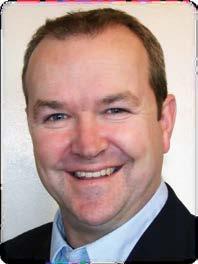
Stunts that make fools of politicians CHRIS COLEMAN
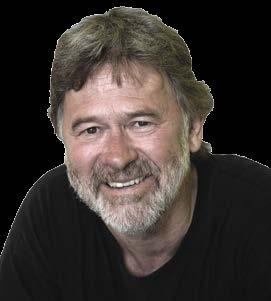
When a Redgum confronts a redgum! JOHN SCHUMANN
Bitten by unfair credit card charges
GRUMPY

Assembly shines as Feds rant and rave
MICHAEL
Stunts that make fools of politicians CHRIS COLEMAN
When a Redgum confronts a redgum! JOHN SCHUMANN
Bitten by unfair credit card charges
GRUMPY

Finding ways to forgive the French RICHARD CALVER
Seeking out super-tough plants CEDRIC BRYANT











By Danielle Nohra
A FEW years ago doctors believed that Oliver Lanham, now five, would never walk independently after being diagnosed with profound unilateral deafness at six weeks of age and then cerebral palsy at two.
Determined, Ollie’s parents Angela Patch and Mark Lanham were in and out of specialist appointments and waiting rooms hoping that one day Ollie would be walking on his own, in a school uniform, with improved speech. And he did.
Just weeks ago Ollie began his first day of kindergarten at Hughes Primary School joining his eight-year-old brother Elliott and six-year-old sister Millie.
“Seeing Ollie walking independently with improved speech on his first day of kindy was like a dream come true,” says Angela.
“Three years ago his neurologist thought he may have had a neurodegenerative disorder, so to go from believing we might lose him, to seeing him attend mainstream schooling was like winning Lotto.”
Ollie’s parents are especially thankful for The Shepherd Centre, which works with children who are deaf or who have hearing loss.
“They have helped Ollie’s teachers to understand the nature of his deafness and provided practical strategies to ensure he can hear the best he can in the classroom,” Angela says.
Since 18-months, Ollie has attended regular group programs and private sessions with a Shepherd Centre therapist in Rivett.
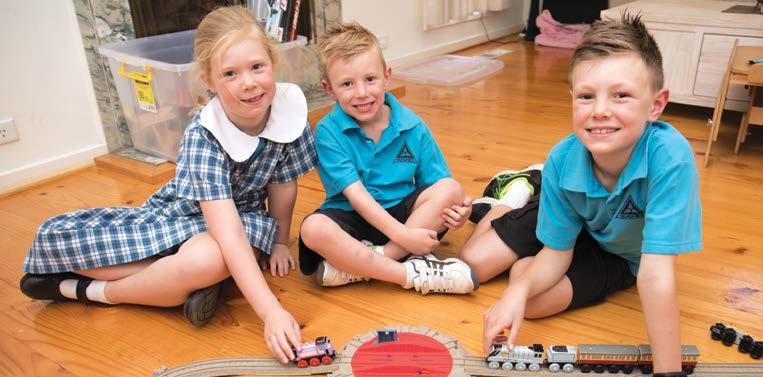
“The Shepherd Centre has supported our family through everything, the whole way,” Angela says.
Centre CEO Jim Hungerford says: “In Canberra we’ve been operating for 15 years now in Rivett and currently have over 40 kids.
“In years gone past it was difficult for [kids with hearing loss] to ever fit into mainstream society. People would use the terms ‘deaf’ and ‘dumb’, which are horrible terms.
“These days every child with hearing loss has a really good chance to fit in.”
Jim says that Ollie is a wonderful example of someone who has successfully been able to attend a mainstream school even though he has profound unilateral deafness.
“Raising a child with hearing loss can be a terrifying experience and about one third also have other disabilities like Ollie does,” Jim says.
At the age of two Ollie was diagnosed with cerebral palsy and just after his third birthday, Ollie and his family travelled to the US for the surgical procedure selective dorsal rhizotomy that has since seen him walking without aid.
Angela says: “I found a specialist in St Louis, Missouri, Dr T.S. Park, and within a month Ollie was taking his first steps by himself.”
Angela says she and her husband Mark fundraised for the whole trip. They set up a GoFundMe page and Angela says they reached their target a few days before leaving, using the money for Ollie’s surgery as well as the family’s flights and accommodation.
“It was unbelievable, there were so many tears of joy,” Angela says.
“I did so much research and reading, found Dr Park and thought: ‘Is this too good to be true?’”
Angela says that immediately after the surgery Ollie’s speech improved and she would hate to think what it would be like without The Shepherd Centre’s involvement.
“The Shepherd Centre has certainly been a part of Ollie’s total journey,” she says.
“They’ve been there when we’ve had bad news and have been excited for us when we’ve had good news.
“I’ve been really impressed how they do go over and beyond and are happy to communicate with any stakeholders involved in Ollie’s care.”
Angela says that Ollie will struggle with school because of the extra effort he needs to put in, but he’s doing well.
She says Ollie’s grown into “a real character” who loves singing and dancing and can now pick up the words to any Katy Perry or Meghan Trainor song.
The Shepherd Centre, Canberra. At Nealie Place, Rivett. Call 9370 4402 or email enquiries@shepherdcentre.com.au
Arts & Entertainment 17-20
Cinema 20
Dining 20
Crossword 21
Gardening 22-23
Horoscopes 21
Letters 11
News 3-11
Politics 8
Socials 16
Sport 6

Sharpe eye turns to the sensual. Story Page 18.
Canberra.
Since 1993: Volume 23, Number 6
CEO: Greg Jones, 0419 418196, greg@citynews.com.au
Editor: Ian Meikle, editor@citynews.com.au
Journalists: Kate Meikle, kate@citynews.com.au; Danielle Nohra, danielle@citynews.com.au; Kathryn Vukovljak, kathryn@citynews.com.au
Arts editor: Helen Musa, 0400 043764, helen@citynews.com.au
Photographer: Andrew Finch
Advertising manager: Greg Jones, 0419 418196
Senior advertising account executive: David Cusack, 0435 380656
Advertising account executive: Liam Jones, 0400 092095; Damien Klemke, 0439 139 001; Emily Lester, 0406 412 462
Production manager / graphic design: Janet Ewen
Graphic designer: Paulette Leo
Proof reader: Glenda Anderson
Accounts manager: Bethany Freeman-Chandler accounts@citynews.com.au






Barr needs to be reminded that merely taking up cycling does not a hipster make, either.
ACT Labor newcomer Bec Cody’s attempt at broadening her profile has backfired badly. The MLA copped a hammering for straying beyond her roads, rates and rubbish boundaries after labelling the RSL Club at Sussex Inlet a “racist disgrace” over tiles in its urinal depicting Aboriginal men. Ms Cody called on the National RSL to “address this filth as a matter of urgency”. The sorry saga again highlights the need for savvy media minders for politicians.
THE Assembly opening week also included some weird beard banter. CM Andrew Barr taunted his former opposite number Jeremy Hanson over his new facial hair. The also freshly hirsute Barr strangely suggested that Hanson’s beard failed to qualify him as a hipster. Barr needs to be reminded that merely taking up cycling

does not a hipster make, either.
THE closure of two North Canberra eateries by ACT Health has served up some interesting responses both from the operators and their customers. The Central Cafe at Gungahlin and Belco’s Ricardo’s were closed for alleged “serious food safety breaches” and being a “risk to public health”. Ricardo De Marco, from Ricardo’s, responded swiftly by confidently predicting he would be back in business pronto, but the Central’s owners opted to post a lengthy handwritten explanation in their window. Apparently, new refrigeration equipment had failed to arrive but sadly for the Central, ACT Health did arrive and on a day which peaked at 41C.
THE king of breakfast radio, Alan Jones , is a late scratching from Black Opal Stakes’ preliminaries in Canberra next week. Due to a sluggish recovery from a recent operation, the former Wallaby coach and Group One racehorse owner remains unwell and will be replaced at the Thoroughbred Park podium

on Friday, March 3, by his boss and fellow turf fanatic, John Singleton . Jones hasn’t been heard in Canberra (on 2CC) since late last year and is expected to return to the wireless in late March.
There may soon be fewer “chuggers” in Garema Place thanks to the ABC’s “7.30” program. Charity Muggers or “chuggers” are the often annoying young people who approach passers-by seeking donations
for well-known Australian charities. But “7.30” reports the extreme sales tactics may stem from the exploitation and poor treatment of staff by Appco, the company that employs them.
The direct marketer is facing a $60 million class action by 700 of its salespeople, some of whom are paid just $5 an hour and allegedly subjected to bizarre punishment rituals should they fail to reach budgets.
IS Barnaby Joyce seriously intent on “doing a Donald” and draining the capital of its core industry? Or is he just dog whistling to the bush?
The Nat’s leader, who copped flack for his decsion just before the last election, to shift the Pesticides and Veterinary Medicines Authority to his own seat of Armidale, is urging his foot soldiers to motivate their electorates to choose any Commonwealth department they wish for their patch.
A “Canberra, everything must go” fire sale to shore up the Nat’s appeal in the bush may require a serious audit of the ‘roos in Barnaby’s top paddock.
ON the topic of ‘roos, the annual cull is on again and the Australian Society for Kangaroos (ASK), says it remains as “shifty” as ever.
Vice president Fiona Corke says the “government has a track record of changing the law to suit their agenda”... and that ASK had no confidence in the latest “lame attempt at public consultation”.
IN over a decade on Canberra talkback radio, there was no greater trigger for callers than the dangerous practice of tailgating. Now the ACT government is undertaking a trial of chevron road markings, which show motorists safe distances to observe.
Authorities hope the white V-shaped markers used overseas will encourage Canberra drivers, alleged to be the worst tailgaters in Australia, to back off.
Actsmart offers a range of free programs for ACT businesses including:
• support to implement efficient recycling and waste management practices
• obligation free onsite energy and water assessments
• rebates of up to $5,000 (on a cost share basis) to upgrade inefficient equipment
More than 1000 ACT businesses have already signed up to Actsmart programs.










Experience the glittering Stuart Devlin –The Designer with the Midas Touch exhibition with a guided tour.
Stuart Devlin AO is best known in Australia as the designer of our decimal coins, a springboard for an international career as an influential designer, goldsmith and silversmith.
Take a guided tour for a unique insight into the stories behind the dazzling objects of the exhibition. The 30 minute tours are $10 per person and are conducted by guides with specialist knowledge. Tours run weekdays at 11.00 am and 3.00 pm.
Book a tour now by visiting eventbrite.com.au and searching ‘Stuart Devlin’. Hurry, spaces are filling quickly! General admission free Royal Australian Mint, Canberra www.ramint.gov.au
Reader MAX McGREGOR, of Curtin, is grumpy about the way businesses add fees when he uses his credit card to pay a bill
I’M grumpy about the way businesses make a charge for what they call a “processing fee” each time I use my credit card. Why should they levy the charge as a percentage of the $ amount of each transaction, rather than as a set fee per transaction?
Just how much does it really cost to “process a payment”? 50 cents? $1? If I spend a night at a motel, I’m charged a percentage for using my credit card. If I spend three nights at the same motel, I’m charged three times as much for processing my payment. Why?
It’s even worse when I pay a larger bill, such as for water or electricity. ActewAGL imposes a levy of 0.55 per cent, called a “transaction fee”, based on the total amount of every bill (which, incidentally, includes GST). These bills can (and often do) run into several

hundred dollars or more. Why then should it cost so much more just for processing a larger payment? And, anyway, how do they get away with charging a fee on the GST element of the transaction which is, effectively, a tax on a tax?
Don’t ask the ACT Assembly – they’ll tell you that it’s a Reserve Bank issue, and that “it appears that the fee is not prohibited from being charged”, neatly sidestepping the issue of the tax that’s being charged on the GST. Shouldn’t the ACCC be pursuing this on behalf of Australian consumers?
Grumpy is an occasional column dedicated purely to things that get up your nose. Readers are invited to vent (no more than 300 words, please) at editor@citynews.com.au

IN the lead-up to the start of Super Rugby in 1996, the expectation was the Brumbies would go okay but would be overshadowed by NSW and Queensland.
The side was a mix of local players such as George Gregan, Joe Roff and Steve Larkham, complemented with the likes of David Knox, Ewen McKenzie and Brett Robinson.
Despite the early predictions, they became one of the most successful Australian teams in the professional era, making the final in only their second season and laying the platform for two premierships.
The Brumbies start the 2017 season with similar expectations to that side of 1996. Five Wallabies – Pocock, Moore, Tomane, Toomua and Lealiifano – are missing from the side which made the finals last year. Add to this the loss of Robbie Coleman and the injury to Tomas Cubelli and, on the surface, the cupboard looks bare.
I remember well a bonding session with the Brumbies in Jindabyne in the lead up to the start of the 1996 season. I came away impressed by the self-belief within the side. Many people outside Canberra had questioned why there should even be a team here in the first place!
The 2017 Brumbies face a similar predicament with many questioning if they will be competitive. Like the team of ’96, there are many unknowns. It’s a new-look halfback, fly half, inside centre combination. The loss of David Pocock leaves a huge hole, but the hope is that it can be covered by Chris Alcock.
If anybody has the ability to draw on the experience of 1996 it is Steve Larkham. He was playing second grade for the Canberra Vikings a year before
The Brumbies start the 2017 season with similar expectations to that side of 1996… Like the team of ’96, there are many unknowns.
the Brumbies started. Larkham proved that, given a chance, anything is possible.
It is hoped the Brumbies of 2017 have the ability to create their own history.
That was a theme established at the Raiders last season by coach Ricky Stuart who was keen to draw on the past.
He had ex-players from the Raiders’ three premiership-winning teams speak to the current generation. History can be quite daunting and overwhelming, but Stuart was able to turn it into a positive for the players.
The Raiders this season now have to deal with a different kind of expectation, one where we are all expecting them to do well.
JUST on a couple of issues I have written about in the past six months:
• The ACT government appears open to the idea of some form of partnership with the ANU in building a new pool to replace Civic pool. The ANU


has proposed a 25-metre pool, the government needs to replace the Civic one with a 50-metre pool. So the obvious solution is a partnership between the two.
The swimming community has several concerns; the ANU pool must be a public pool and there needs to be parking. The feeling is the Molonglo Pool will have scope to become a major competition facility with 2500 seating capacity. There is also the possibility of a diving pool at Molonglo.
• The other issue is where to build the proposed ice-skating facility on the southside. There is momentum for it to be located on the shores of Lake Tuggeranong, but there is a school of thought that it could be located on the site of the existing facility at Woden.


















Canberra has a thriving African drum and dance scene with the next 6-week African dance course now taking enrolments. Work up a sweat while learning the funky moves of traditional West African dance in high energy classes led by world-renowned Mohamed Bangoura and accompanied by live drumming.
All levels welcome and bookings essential.
7.35-9pm Thursdays, 2 March – 6 April
@ Duffy Primary. Ph: 0414 236 323 or email: info@drumeffect.com.au
For info on other drum & dance events, visit www.drumeffect.com.au

dose of dorin

THE tone of the current ACT Legislative Assembly is different. It is the ninth Assembly since self-government and the first time that there have been 25 members.
The majority of members are women for the first time in an Australian parliament. The conduct of Question Time last week was in marked contrast to the ranting and raving of the Federal House of Representatives. But the question remains – has the Assembly changed for good?
Accounting for the changed tone is complex. It could be because there are more women than men. It could be leadership. Half of the Assembly members are new to politics. Whatever the case, a new lens has been applied to the operation of this small parliament and, for the moment, the change is looking good.
The opposition is doing its job. Shadow health minister, Vicki Dunne, had prepared a series of questions on the use and accuracy of ACT Health data.
The Liberals ran the questions and the supplementary ones in a co-ordinated and incisive manner. Health data is an important issue that goes to the heart of ensuring the best possible care and the most appropriate judgements about distribution of the health resources. The only respite that Health Minister Meegan Fitzharris felt while in the hot seat was when Labor backbench questions interfered with the flow. A “Dorothy Dixer” from Chris Steele on LGBTIQ allowed the Chief Minister an opportunity to crow about achievements and set out challenges. Fitzharris withstood the onslaught, answering difficult questions effectively, avoiding being lured into the data-fraud scandal that engulfed then-Health Minister Katy Gallagher in 2012.
Fitzharris had earlier announced that she had commissioned “a comprehensive, system-wide review of ACT Health data and reporting processes”. In answering questions from the opposition she did rely heavily on what she expected from the review. A detailed question was taken on notice to be answered at a later date.
By comparison, the response of Greens Minister Shane Rattenbury was somewhat
A new lens has been applied to the operation of this small parliament and, for the moment, the change is looking good.
disappointing. It seemed that he was taken by surprise on a data question relating to his portfolio area of mental health. There was no attempt to answer the question at the time and (as was his prerogative) he took the question on notice.
In contrast to the methodical, polite but perceptive questioning and answers that were the hallmark of the ACT Assembly, the House of Representatives was chaos.
Treasurer Scott Morrison brought a lump of coal into the chamber. Concurrently, Prime Minister Malcolm Turnbull was attempting to lay the whole blame of blackouts in SA on that State’s Labor government. His attempt was to foot the culpability on to Labor and renewables when NSW (with a Liberal government) was also suffering blackouts.
Recent Federal Question Times have deteriorated into shouting matches and accusations. Many of our own Federal members seem to be relying on “alternative facts”, bluster and bullying as a tool of persuasion. And then many wonder about the rejection of the status quo and a rise in populism!
Enough of a Punch and Judy Question Time. It’s time for razor-sharp questioning and thoughtful, evidence-based answers. Breaking bad habits is hard. However, there is just a chance that in the ACT Assembly, at least, there might be some change for good.
Michael Moore was an independent member of the ACT Legislative Assem bly (1989 to 2001) and was minister for health.

By Chris Coleman
THERE are several definitions in my Macquarie dictionary for the word stunt. The shortest is: “Anything done to attract publicity.”
I’m on the record as having a dislike of political stunts performed for the sake of what – for the want of a better word – we shall now call “stuntery”.
Perhaps we need to have that word added to the dictionary:
Stuntery n. an activity, usually performed by a political figure or aspiring political figure, to distract an electorate’s attention from genuine politics” [Origin, Canberra radio station 2CC, 2017.]
But I digress… You don’t have to delve too far into the records of this very journal to find proof of my dislike of stuntery.
But look at what we’ve had offered by our elected officials in recent weeks:
• A lump of coal (lacquered, by the way, so as not to stain the fingers of those who touched it) passed around the government benches with glee in Question Time in Federal Parliament.
• A small solar panel waved around by the Federal Greens in response, an act replicated in the ACT Legislative Assembly in its first sitting week for the year.
• And the Chief Minister referring to the Shadow Attorney General’s “bearded hipster guise” at the behest of a radio interview. Followed by a performance where he skulled a beer at the cricket after similar urgings.
Please, don’t get me wrong; I’m not averse to politicians having a bit of fun. They’re only human (or at least bear a passing resemblance to being human). But what do any of the above activities do to actually improve the level of debate and/or government? I’m at a loss to come up with a result other than nothing, although I would accept “very little” at a pinch.
Some people subscribe to Oscar Wilde’s words: “The only thing worse than being talked about is not being talked about.” Is this true?
Let’s return to the lump of coal. Time will tell, but you can almost guarantee that when next there’s a debate about a winery, a horse stud, or a food production area being dug up for a coal mine, the pictures will be rolled out.
The solar panels? The National Museum may want them to include in a future exhibit on how political parties lose their way going for froth instead of beer. And as for skulling a beer? Sure, Bob Hawke is famous for his downing beers in record time as a union figure, but he didn’t do it during his time as PM. For most – if not all – his time in office, he was officially on the wagon.
In short, there’s a time and a place for stunts, but it’s a very short time, and a very small place. Politicians need to be extra careful, lest they be remembered for their stunts instead of their policy.
If you still need convincing, allow me to conclude with two items: Alexander Downer and a pair of fishnet stockings.
I FIRST came to Canberra with Redgum in 1979. We were touring to promote our first album “If You Don’t Fight You Lose” and, as I recall, we played to a moderately large and gratifyingly appreciative crowd at the Ainslie Hotel – now The Mercure.
Since then, I’ve been in and out of our nation’s capital quite often – and I enjoy my visits. Unlike any other city in Australia and, in the absence of raging bushfires, Canberra and its surrounding bush coexist quite happily. I note with approval the wide variety of natives that line the streets and populate the parks, carefully protected, I have no doubt, by Canberra’s Tree Protection Act (2005)
For my part, I am well versed in legislation to protect trees.
In 1956 mum and dad bought a little red-brick house in Lower Mitcham, Adelaide. A long time before mothers drove everywhere in Landcruisers and Pajeros, mum and I used to walk a mile or so to the Mitcham shopping strip. One day, she spied a tiny eucalyptus seedling growing in a crack in the asphalt just behind the fence of the railway station. In under an hour it was in a Vegemite glass 2/3 full of water on the laundry window sill. When it was sufficiently robust, and despite dad’s protestations and dire predictions, she planted it halfway down the block up against the fence. Its tap-root found the underground stream that ran under our block and it thrived. Really thrived. A significant feature on Google Earth, you can still see this tree from outer space. Had I known then what I know now, I would have flushed that wispy little seedling in a heartbeat.
Dad died in 2002 and, until mum moved into care, I spent my Saturday afternoons for the next 10 years trying to prevent a monsoonal downpour of redgum seeds, leaves, bark and branches from burying mum’s house.
When she was no longer able to live at home, we found her a room in a residential care facility. We also had to find $450,000 to secure it for her so, with some regret, we put the family home on the market. In very short order, we discovered that the river redgum was deemed a “significant tree” and that it could not be removed without planning approval. Its size and the “exclusion zone” effectively precluded all renovations and redevelopment. In fact, the canopy of the tree was such that the existing footprint of the small house already encroached on the exclusion zone. After several weeks of fruitless open inspections, the real estate agent wrote to me: “Unless we can resolve the status of the tree, it is going to be the cause of a significant financial loss for your mother.”
Before the Development Assessment Panel, I approached the neighbours. Apparently, a huge bough had dropped destroying one neighbour’s fence and his pergola. Another neighbour lived in fear of
It was decided that the survival of the poorly sited, inappropriate and demonstrably dangerous tree on private land should prevail over the interests of the woman who planted it.
another branch dropping and killing his dogs. Without exception, everybody hated the tree with unbridled passion.
In trying to resolve the matter quickly, I spoke to the mayor, one of the councillors and one helpful council officer. All were sympathetic but shoulders were shrugged and palms were turned upwards. I was ushered into the planning process, which took months. I had to complete forms, secure a sitemap, gather letters of support, produce photos, pay for a professional assessment of the tree’s condition and get a quote for its removal. Despite a detailed and logical application, it was rejected quickly by a bunch of bureaucrats, presumably devoid of common sense. (I was reminded of Morris West’s observation: “Bureaucrats are the accursed of God.”) The Development Assessment Panel, apparently, decided that the survival of the poorly sited, inappropriate and demonstrably dangerous tree on private land should prevail over the interests of the woman who planted it.
One of my mates in real estate looks after lots of commercial property for his clients. He told me that owners of land with trees approaching “significance” size simply remove them before they grow big enough to fall under the legislation. This practice, while understandable, defeats the very purpose of the legislation.
In Canberra recently, I observed that lots of natives are being removed from Northbourne Avenue to make way for the light railway. I have no doubt that the ACT government has exempted itself from its own Tree Protection Act. But, if my experience in SA is anything to go by, God help you if you have a significant tree on your own land. Because the bureaucrats won’t.
Singer/songwriter John Schumann will perform in concert at the Harmonie Club, Narrabundah, on Saturday, March 11. Tickets from Songland Records, Cooleman Court, or call 6293 4677.













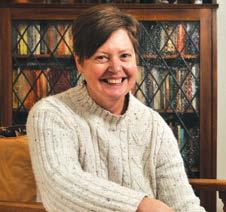
By Danielle Nohra CANBERRA romance fiction writer
Elisabeth Rose says everyone wants to be loved. And she should know, having written 16 books on the subject.
“It’s a fundamental human need, I think that’s why it resonates with so many people,” she says.
The statistics confirm that; the latest numbers from the Australian Romance Readers Association say romance fiction is keeping the publishing industry alive with 55 per cent of those surveyed saying they read more than five romance books a month, and of those 9 per cent read more than 15 romances a month.
Romance is the largest single category of books sold in the world and in 2015, romantic fiction sales in Australia reached $100m. In the US, the romance market is worth more than $1.08 billion.
And it’s not only women. In Nielsen’s latest survey men accounted for 15 per cent of the market.
Elisabeth Rose, whose surname is Hoorweg (Rose is her nom de plume and her grandmother’s name), has enjoyed writing and reading since she was a child.
During her career she has witnessed and interacted with many new themes, which are constantly being introduced into the world of romance writing.
“That’s why I think romance is so successful, because it reflects the role of women in society and how these roles have changed and
evolved,” says Elisabeth.
“The other thing is the changing roles of women dealing with issues that resonate with people now.” She says people have become more open about discussions around domestic violence or bringing up children with disabilities.
“These are ideas you can write about now, but earlier they weren’t acceptable,” says Elisabeth.
“Someone I know separated from her husband and he turned out to be gay.
“Novels that touch on these ideas can be supportive for women who are in difficult situations.”
When forming a character, sometimes Elisabeth uses characteristics from people around her and every now and then she pulls ideas from the media.
“A couple of times I’ve heard stuff on the radio, once I saw a little story in the paper about a couple and used it for an idea.”
Elisabeth mostly enjoys creating characters and the psychological part of it. She questions how people would react to certain situations and if these events would be believable.
There was one novel in particular, “Empty


Stay in touch with the names making news on Sundays from 10am as 2CC and “CityNews” present Canberra’s only local weekend news and current affairs program.
It’s a revolving panel show that brings to the microphone great “CityNews” commentators and 2CC personalities.
Be part of the conversation and call 6255 1206 between 10am and noon.

Heart”, that Elisabeth found especially challenging to write.
The idea for “Empty Heart” was created from the disorientated feeling that people get when they’ve been swimming in the sea for a while and then, when they get back to the beach, they are a distance away from their stuff. From this Elisabeth formulated a character who goes for a swim and then comes out in a completely different place, with no signs of her towel, her belongings or her newly married husband.
“It took me so long to work out a scenario of how it would be feasible,” she says.
“I never plot books out, I just start with an idea. Sometimes I have to back pedal, but I have fun because the characters will take me in a direction that I wouldn’t usually go.”
She says that these stories can be more difficult because she isn’t writing about what she knows.
Originally Elisabeth would create stories about musicians, which were easier for her to write because of her background in music. She appreciates history and likes it when books tie historical information with fiction.
One author that Elisabeth particularly enjoys in the romance genre is Jane Austin.
Elisabeth’s next novel, a romantic suspense story, is expected to be published mid this year.
The Australian Romance Readers Convention will be held in Melbourne, February 24-26 and will feature international and Australian authors and includes the annual Romance Readers Awards.
RACING identity John Singleton is the keynote speaker at the third Annual Autumn Luncheon at Thoroughbred Park on Friday, March 3. Tickets at $140 from 6204 0000.
GIFT of Life’s DonateLife Walk 2017 will start from the Patrick White Lawns, between the National Library and Lake Burley Griffin, Parkes, at 6.45am, on Wednesday, March 1. Register at giftoflife.asn.au
ANYONE with a Welsh background or interest in Wales and its culture is invited to a St David’s Day social evening in Weston Creek that includes a three-course dinner on Wednesday, March 1. More information from cymrycanberra@yahoo.com or call 0408 089235.
INTERNATIONAL speaker Phillip Hockley will present a free lecture, “A New View of God and its Effect on Well-being”, at the Reception Room of the Legislative Assembly, 2pm, on Sunday, March 5. No bookings, all welcome. Enquiries to 6296 1102.
DR Kim Schmid, of St John Ambulance, is the guest speaker for the next lunch meeting of the Weston Creek VIEW Club, at the Southern Cross Club, Woden, 11.30am2.30pm, on Tuesday, March 7. Two-course dinner is $28 and interested ladies and new members are welcome.
Bookings to 6288 7625 by Thursday, March 2.
From this week, recipients of home-care packages will have a far greater say in the care they get and who they get it from, writes BINA BROWN*
CONSUMERS are used to shopping around for better deals with cars, interest rates and hotel rooms.
Under Increasing Choice in Home Care reforms, from February 27, if someone with a home-care package is unhappy with the service they are getting from a provider, they will easily be able to go elsewhere.
The reforms have opened up the home-care market to new providers as a way of offering greater choice for consumers who receive care packages valued between $11,693.65 and $52,545.40 a year, depending on a person’s care needs.
The changes mean funding for a home-care package will be allocated to consumers and follow the consumer, replacing the current system where home-care places are allocated to individual approved providers to deliver service in a particular location.
Under the reforms, the four levels and types of care and the required assessment to access home-care packages will remain the same, as will fees, supplements and the existing Consumer Directed Care model.
A search on myagedcare.gov.au shows Canberra currently has about 16 providers of level one and two packages and 20 providers of level three and four packages, with more expected to enter the system.
Peter Scutt, co-founder of bettercaring.com.au, an online marketplace that connects consumers directly with local, independent care and support workers, is particularly excited at the prospect of providers offering consumers new options, including the opportunity to self-direct their package.
“Under this option, not only can consumers take more control and choose which services they want and from who, but it typically includes lower administration fees and tiered case management. Consumers then don’t have to pay a lot for case management if they don’t need it, which leaves more of the package funds available to fund services,” says Scutt.
Council on the Ageing chairman Ian Yates is encouraging consumers to be forthright in negotiating with providers for what they believe is best for them and be prepared to shop around.
“If they currently have a home-care package with a provider, they will need to sign a new contract. If they are so inclined, they should ask friends or family about whether the package they are getting meets their needs, and if not, find a provider with the type of package that does,” says Yates.
He expects there to be some early movement between providers by consumers who are looking forward to the flexibility and choice but warns there could be traps.
One area of concern is the introduction of exit fees, which are designed to cover any administrative cost incurred by a package provider. These must be disclosed in the Home Care Agreement.
“There is no real issue if the fee is a basic sum of administration, but if it is of a size that it is a deterrent to someone who wants to change providers, then that is unconscionable,” he says.
Yates says he looks forward to the day similar reforms are rolled out in residential care, where individuals would hold the bed licence rather than the aged-care facility.
A spokesperson for the Department of Health says people approved for home care by the Aged Care Assessment Team from July 1, 2016, will automatically be placed on a new national queue for home-care packages.
Consumers who have an approval before July 1, 2016 will need to opt-in to the national queue by advising they are actively seeking care – via the government website myagedcare.gov.au or the contact centre on 1800 200422.
*Bina Brown is a director of aged-care solutions company Third Age Matters
IT was literally a chance encounter: an unscripted moment in time when an accident and what initially appeared to be the act of a good Samaritan would lead to the handing down of Canberra’s first – and only – criminal sentence of death by hanging.
When this dramatic verdict was delivered at 9pm on February 24, 1953 the capital, although by then 40 years old, was in many ways still in its infancy, described as little more than two suburbs with a creek running through the middle, boasting a population of less than 30,000.
One of its citizens was 28-year-old returned serviceman, Vincent George Dixon, who had spent two years as an Army gunner in World War II, apparently lying about his age, making him only 18 when he was court-martialled and discharged in 1943.
Almost a decade later, Dixon was a drunken itinerant –married and living at the temporary workers’
Aside from ‘trembling lips’, Dixon was said to be otherwise devoid of emotion. No one had been hanged for rape in Australia for 20 years.
community of Westlake, which until 1965 existed at the edge of Yarralumla, but today is nothing more than the ghostly echo of a suburb.
On the night of November 29, 1952, an intoxicated Dixon was heading to Civic following an argument with his wife. Driving through the otherwise deserted streets near Hotel Kurrajong, his attention was captured by a plea for help from a badly injured young woman lying on the side of the road.
It quickly became clear the woman, a 20-year-old trainee nurse from Queanbeyan, and her unconscious male companion, had been thrown from a nearby mangled motorbike. Dixon offered to drive her to the Canberra Hospital, suggesting they could then organise for an ambulance to come back for the man.
Suffering fractured ribs and a broken pelvis, the nurse accepted the offer. It didn’t take long though for her gratitude to change to concern as she
became aware Dixon was heading in the opposite direction of the hospital, towards Red Hill.
When he pulled on to a side road and the car came to a stop, she began to scream.
“If you don’t keep quiet, I’ll choke you,” her abductor threatened.
When this failed to produce the desired effect, he instead brought down a heavy object on the side of her head. Unbelievably, he then apologised and began to cry. According to the nurse’s later statement, his apparent remorse didn’t stop him from sexually assaulting her, and it was only when he was done that he drove her on to the hospital.
At his trial in the ACT Supreme Court three months later Dixon, pleading not guilty, tried every angle of defence: he’d never seen the nurse (who remained nameless throughout and ever after); he wasn’t anywhere near Red Hill; she must have had relations with her boyfriend; before finally admitting he did engage in sexual activity with her, but it was consensual.
For Mr Justice Simpson, all of this
YOUR readers may have seen a helicopter flying low over the suburbs or read the two-page “infomercial” produced by “The Canberra Times” on February 9. As usual, the actual cost of ActewAGL using a helicopter for inspecting powerlines is not revealed. Many other organisations such as oil and gas authorities (pipeline inspection), National Parks (weed and feral animal control) and the bushfire authorities (fire breaks) have moved from the use of helicopters for inspection purposes to the use of drones, cameraequipped light aircraft and satellite imagery.
As someone who occasionally flies a helicopter myself, I can tell you that they are very expensive to run, especially at slow speed. The two-seat Robinson 22 that I fly costs around 15 cents per second all up, so the larger ActewAGL one would be much more and has to cover 2500 kilometres of transmission line.
ActewAGL may be aware that a Texas energy company, Xcel Energy, inspects 512,000 kilometres of electricity and natural gas infrastructure and uses beyond operator line-of-sight drones.
Perhaps ActewAGL should examine this latest technology and advise us clients just how much their use of helicopters is costing us consumers. Our electricity prices are already too high and their executive remuneration payments fall into the Ahmed Fahour (head of Australia Post) level on a per capita basis, so anything that can be done to lower costs would be a great to help consumers.
Ric Hingee, Duffy
OUR road safety program continues to operate in blissful ignorance of which parts of it are or are not working. Thirty-five thousand Canberra drivers since 2007
have caused rear-end crashes that killed four people, injured almost a thousand and damaged about 70,000 vehicles.
Only about 2000 of those drivers were fined for failing to keep a safe following distance.
For most of that period there has been a “Don’t tailgate” sign on City Hill and ACT Policing has conducted an annual blitz on tailgating. The effectiveness of these measures has not been reviewed, even though rear-end crashes are increasing.
On February 14 the Road Safety Minister announced a trial of chevron road markings to educate drivers about safe following distances, but again with no mention of any evaluation.
Leon Arundell, Downer
AS a footnote to Tim Gavel’s advocacy of learning to swim by school students (CN, February 9, “The life skill we can’t keep overlooking”), the NSW Department of Sport and Recreation used to run a very successful learn-to-swim program (Swimsafe).
This was discontinued on ideological grounds; the department was competing with private sector for-profit providers. Not even child safety could be allowed to block private profiteering.
Stephen Brown, Forrest
POLITICAL columnist Michael Moore quite rightly states that Australia does not have “compulsory voting”, even though the Museum of Democracy tells its visitors so. The term should be a “compulsory muster”.
Ben Gershon, Curtin
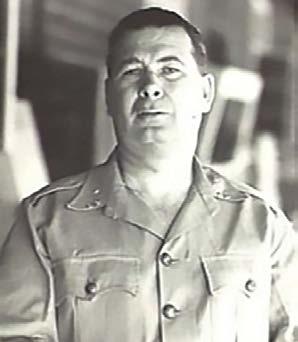
Justice Simpson, the sole judge appointed to the ACT Supreme Court from 1945 until 1960… “I agree with your verdict [of guilty], gentlemen.”
further pointed to the man’s guilt. In addition, Dixon had a track record –he’d served 18 months in prison for the attempted rape of his own sister six years earlier.
The jury would reach its decision in just under two hours and at the passing of the sentence, the judge would declare: “I agree with your verdict [of guilty], gentlemen.”
Aside from “trembling lips”, Dixon was said to be otherwise devoid of emotion.
No one had been hanged for rape in Australia for 20 years and Dixon awaited a decision of the Executive Council of either a date and place for his execution or an appeal against the sentence.
Neither came. Instead, exactly one month later – March 24, 1953 – the Governor-General, Sir William McKell, commuted it to imprisonment “for the term of his natural life”.
Even though capital punishment would not be abolished in the capital until 1973, no death sentence was ever carried out in Canberra; if Dixon’s had gone ahead, it most likely would have occurred in Darwin (as Federal Territory).
Dixon was transferred to Long Bay Gaol, his shack at No. 42 Westlake demolished at his request and, as he vowed at the time, that if he were freed he would never return to Canberra. Save for a handful of newspaper articles, he – and his victim – were never heard of here again.
Nichole Overall is a Queanbeyan-based journalist and social historian with a predilection for bringing to light the unsolved mysteries and conundrums of the capital region. She will soon launch a podcast series in which this dramatic case will feature.
Join an acting course with Canberra Academy of Dramatic Art – and add a little drama to your life!
10197NAT Certificate IV in Acting for Stage and Screen Full or part-time study. Audition/info session on April 23, register online.
CUA40513 Certificate IV in Musical Theatre Auditions mid-year.
Classes for Children and Young People Drama, acting and musical theatre – right around Canberra. Enrol online today.

STANDING on the former site of Erindale Homestead, after which it’s named, Erindale Centre, in the south-west of Canberra, serves as a shopping hub for its surrounding suburbs and beyond.

Where the Vikings took their first steps
WHEN a group of friends with an interest in rugby union met for a friendly drink in 1976, the idea for the Tuggeranong Valley Rugby Union and Sports Club was born.
Back then the club was just one room with five staff, four sporting groups and a handful of members.
Almost 40 years later the Vikings Group has grown to four licensed clubs now providing sporting and social facilities for more than 50,000 people in Canberra’s south, says a spokesperson.
This includes the first Vikings Club to open in 1979, Erindale Vikings, which has since been joined by Chisholm, Town Centre (Civic) and Lanyon Vikings.
“We pride ourselves on continuing to embody our community spirit, and being a genuine part of the southside community,” says the spokesperson.
“Thanks to our unique club model, we have been able to provide for a diverse range of social and recreational needs of our community.
“Today we are proud to support several first class sporting facilities, and more than 8000 athletes and players across 41 different sports and activities in 51 affiliated clubs.
“As a not-for-profit entity, Vikings provides about $2 million each year in grants, infrastructure and other support to Tuggeranong’s sporting and community based clubs.
“We have been able to contribute more than $41 million to our community since our inception.”
Erindale Vikings, 6 Ricardo Street, Wanniassa. Call 6121 2100. For information on all locations visit vikings.com.au
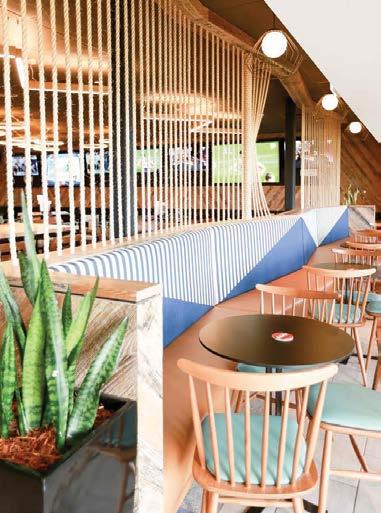

WITH age-related hearing loss affecting three out of four Australians over the age of 70 the Brindabella Hearing and Speech Centre in Erindale, like the other Canberra locations, emphasises the importance of early intervention.
“[The longer it’s avoided] the auditory processing parts of the brain can ‘forget’ how to hear and auditory re-training becomes more difficult, not to mention lifestyle and dexterity impacts,” practice manager Mandy Nyhof says.
Established in 2004 Mandy says the Brindabella Hearing and Speech Centre is the largest independent provider of audiology and speech-language pathology services in Canberra, and the only organisation that offers services covering both sides of the communication spectrum.
“A number of diagnostic services we offer were previously available only by travelling to Sydney,” Mandy says.
The team at Brindabella Hearing and Speech Centre takes a diagnostic, client-centred approach to rehabilitation.
“Most importantly, unlike much of the hearing aid industry and at least parts of the speech pathology industry, we refuse to pay commissions or set sales targets for our audiologists or speech-language pathologists as we strongly believe such incentives can lead to advice that is not always in the best interests of the client,” Mandy says.
Brindabella Hearing and Speech Centre. Erindale clinic. Unit 1/43 Comrie Street, Wanniassa. Contact 6281 2311 or visit hearingandspeech.com.au for more locations.

IT’S never too late to start looking after your skin, says the team at Australian Skin Cancer Clinics, which opened a clinic at Erindale Chambers in Wanniassa early last year.
The Australian sun is one of the harshest in the world. Australians have two to three times the number of incidences of skin cancer compared to Canada, the US and the UK.
“Quite often people think that a sunspot is simply just a sunspot, but given time, they can change into something that is life threatening,” the clinic says.
“Any change in a mole is important, and changes can occur in size, shape, and colour, or moles can start to itch or tingle. These are serious warning signs and a signal to get
your moles checked.
“We expect two out of every three adult Australians to develop skin cancer at some point in their lives that will either be life threatening or severely disfiguring.
“Many adults recognise that damage done to their skin occurred when they were young, therefore we should all be thinking about our children. Prevention is better than cure, so remember to ‘slip, slop, slap’.
“We specialise in the early detection, treatment and management of skin cancer and melanoma.”
To make an appointment (no referral necessary) at the Erindale Clinic call 6296 8100 or visit ausskinclinics.com.au

•
• No
THE team at Acton Advice Group helps to design a retirement plan that is uniquely tailored for each client, says managing director Lynette Murray.
“It’s no good coming up with the ‘best product’ for investment if that’s opposed to what your goals are,” Lynette says.
“You can let life happen or you can design the retirement you want.”
Lynette says that people in Canberra often retire early here and live longer so it’s important to make retirement goals accessible.
Acton Advice Group has found that they often talk to a retiring couple who don’t realise, until asked, that they have two different visions in mind.
Lynette says: “People often say: ‘I had no idea that this is what my husband or wife wanted’.”
As well as financial planning Acton Advice Group provides other services such as mortgages and estate planning.
When Lynette Murray founded the Wanniassa office in 2010, she was defining the goal for an organisation that would be built with the client, their family and their hopes and ambitions for the future at the very heart of the organisation.
“We take care of people from their first house in the beginning until their retirement,” Lynette says.
Acton Advice Group’s vision is for clients to not only tell them
good news but also be open with things that are worrying them so they can work on taking that worry and replacing it with peace of mind.
“Our vision is for the business to be like a financial hub for the client,” Lynette says.
“No matter what the financial issue is, clients can come and speak to us and if we don’t specialise in that area we know professionals to recommend.”
Lynette Murray has more than 30 years’ experience in the financial services industry, specialising in financial planning for more than 15 years.
Acton Advice Group. Unit 5/43 Comrie Street, Wanniassa. Contact info@actonadvice.com.au or 6104 9059 or visit actonadvice.com.au


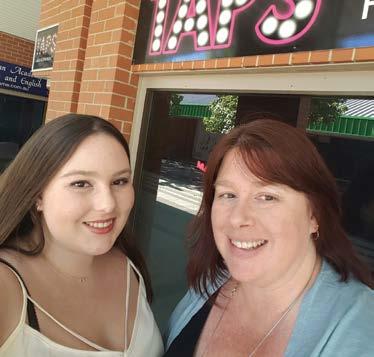
LONG-time dancer of 15 years, Mikayla Pullin, and her supportive “dance mum” Lynette have taken over ownership at TAPS Dancewear, determined to keep the store alive.
“We used to come to TAPS Dancewear all the time and didn’t know what we’d do without it,” Mikayla says.
Mikayla says it’s an advantage because she has used and experienced all the products that TAPS Dancewear sells.
Mikayla is a young dancer who has studied a variety of dance genres locally in Canberra over the past 14 years including jazz, tap, ballet, lyrical, contemporary, song and dance, broadway jazz/musical theatre and hip hop.
She has also performed regionally, nationally and internationally as part of a
Peter Blackshaw Tuggeranong is an independently operated franchise office run by principals Robert and Amy Peaker, who are actively involved in the day-to-day management of the agency.
“The main thing we’re doing differently is that as well as residential products we also have a focus on project marketing,” Robert says.
“We can assist from finding the development site in the beginning all the way through to sales and marketing.”
Peter Blackshaw Tuggeranong currently has two projects on the go, one at Greenway and the other at Moncrieff.
Robert says they’re upper-end products that have
nearly sold out.
As a whole, the Tuggeranong office brings together a team of highly experienced sales agents, property managers and administration staff who are all committed to delivering a great experience to their customers.
Proud of their reputation as a dynamic, innovative and progressive office, the team is constantly looking for new ways to exceed their clients’ expectations.
Peter Blackshaw Tuggeranong. 8/33 Gartside Street, Erindale. Call sales on 6296 7077, rentals on 6296 5595 or visit peterblackshaw.com.au
national performance troupe.
She says although TAPS Dancewear is slowly changing we like to keep it as affordable and friendly as possible.
“Most of our supplies are Australian made, operated and tested.
“It’s genuine dancewear so you know it’s not going to break the first time you put it on and it will last.”
The business has gradually expanded over the years and now includes an online shopping facility for local, national and international customers.
TAPS Dancewear. Unit 4/30 Grattan Court, Wanniassa. Call 6282 2331, email info@tapsdancewear.com or visit tapsdancewear.com
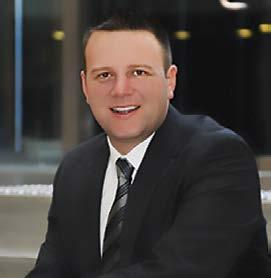






WANNIASSA Dental Surgery is a locally owned, long-standing part of the Erindale community, operating since 1984 and with its current owners since 1994.
“We are a family practice offering all aspects of general dentistry as well as cosmetic, preventative and restorative services, including same-day crowns,” says the Wanniassa Dental team.
The Wanniassa Dental team says it has four long-serving principal dentists and a hygienist who give a special and personal touch, focusing on patient care in modern premises with state-of-the-art equipment.
Wanniassa Dental Surgery also offers easy online direct billing to private funds.
“Wanniassa Dental Surgery’s philosophy is to give the best service in a safe, skilled and caring environment. The team is all about giving patients the best treatment that meets their needs.” says Wanniassa Dental.
Wanniassa Dental Surgery, 1st Floor, 43 Comrie Street, Wanniassa (opposite Erindale Shopping Centre). Visit wanniassadental.com.au or call 6231 0001.
SERVING the local community for more than 50 years, Canberra Police Community Youth Club (PCYC) has been in Erindale since the 1980s, offering a range of low-cost and high-quality programs and activities to engage young people and the community.
“PCYC have an enthusiastic case management team who are dedicated to client driven outcomes,” PCYC says.
“Our case management framework encompasses a flexible, creative, strengths-based approach to supporting individuals and families in need.”
The Canberra PCYC runs recreational-based early intervention, crime prevention and reduction, and youth crime diversion programs for vulnerable young people.
“These are targetted programs for young people who are exhibiting anti-social behaviour, disengagement from school, or are engaging in low-grade, petty crime,” PCYC says.
“Personal development outcomes for participants include improved resilience, leadership skills, teamwork skills, a sense of belonging, fostering better social skills, a sense of identity, skills to manage emotions, practical skills, understanding of healthy choice making, goal setting skills, and building positive self image.”
PCYC also offers a wide range of sporting and recreational options that cater to the diverse local community and provide members with an inclusive environment, sense of belonging and an increase in health and mental well-being.
Canberra PCYC says it’s committed to seeing lives changed.
“Whatever journey people may have been on, it is our mission to empower people to create pathways to a better future for themselves.”
Canberra Police Community Youth Club, 17 Grattan Court, Wanniassa. Call 6296 1292, email erindale@pcyc.net.au or visit pcyc.net.au









By Helen Musa

IF there’s one thing the Canberra public should expect from the 2017 “Enlighten” festival it is that it will enlighten us – and light up the buildings in the parliamentary precinct.
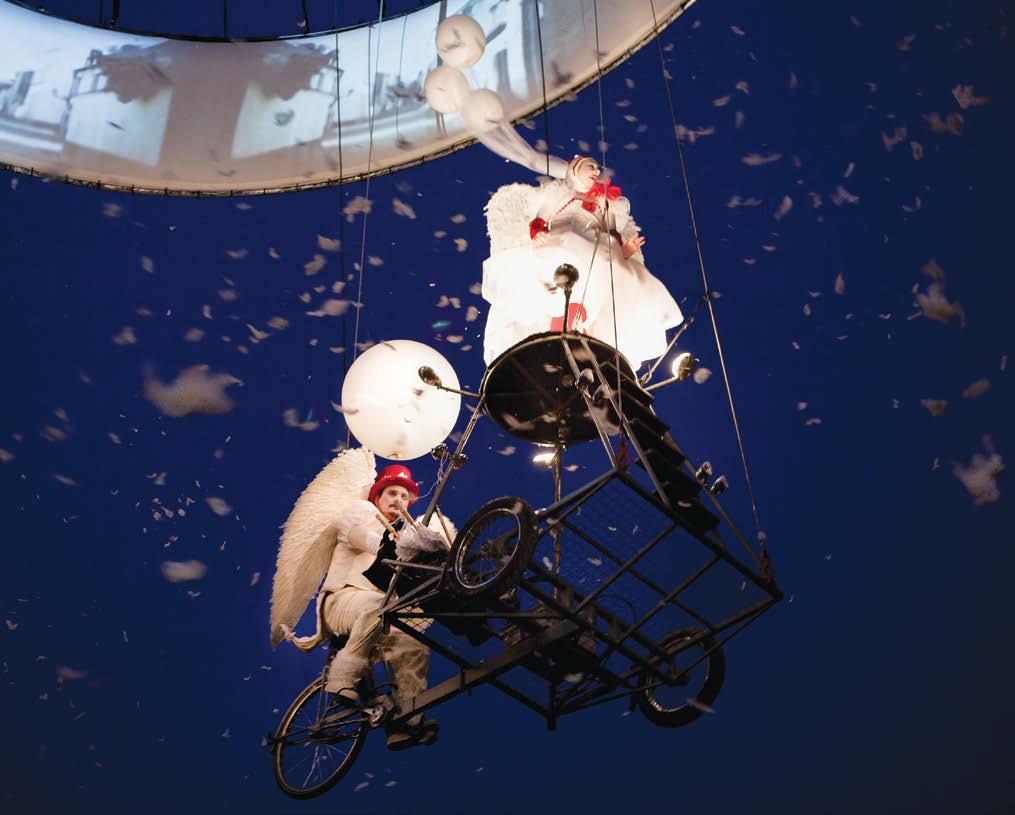
Top on the list of enlightening events curated by creative director Nicole Warren will be “Pedaleando Hacia El Cielo” (Cycling to heaven), an aerial act by Belgian musical theatre company Theater Tol who, we are told, will move between the earth and the sky, carried by the sound of opera. This famous non-verbal company, directed by Lot Seuntjens, prefers to play in “unusual” locations, such as Canberra.
Artistic installations and shows involving light are to be found everywhere, but notably in Zap Circus’ “Atomic Glow” and the free installation “For Heaven’s Sake”, where three angels from Melbourne indie group Born in a Taxi will inhabit a transparent cube in the Parliamentary Triangle.
The National Gallery invites patrons to “live like Louis XIV with a glass of champagne and then enjoy exclusive, premium access to ‘Versailles: Treasures from


the Palace’.”
Equal in hedonism, but with a twist of science, is Questacon’s “Pure ImaGINation: The Science of Gin”, a masterclass in the joys of “mother’s ruin” seen through its contemporary artisan formulations. The public usually beats the doors down for these useful scientific shows.
Even the normally respectable corridors of the Royal Australian Mint will be transformed into an underground disco by DJs Robot Citizen and Black Temple, along with Jazida’s Fabulous Fan Veil Dancers and Obsidian Bellydance.
With “Enlighten”, the later in the day, the better, so Parliament House will allow sophisticated schmoozing in “Sunset on the Roof”, at the specially-created Rooftop Bar, while the Australian National Botanic Gardens creates its unusual “Luminous Botanicus” tours.
Hovering over the whole event is Warren’s liberating theme for 2017 of “freedom, flight and feathers”, perhaps best personified in The Cloudmen who, inspired by the Surrealist artist, Magritte, will give us the Belgian artist’s signature “Businessman, Umbrella and Apple” – up in the clouds.
“Enlighten 2017”, national buildings and the Parliamentary Triangle, March 3-13. Program details at enlightencanberra.com.au





By Helen Musa
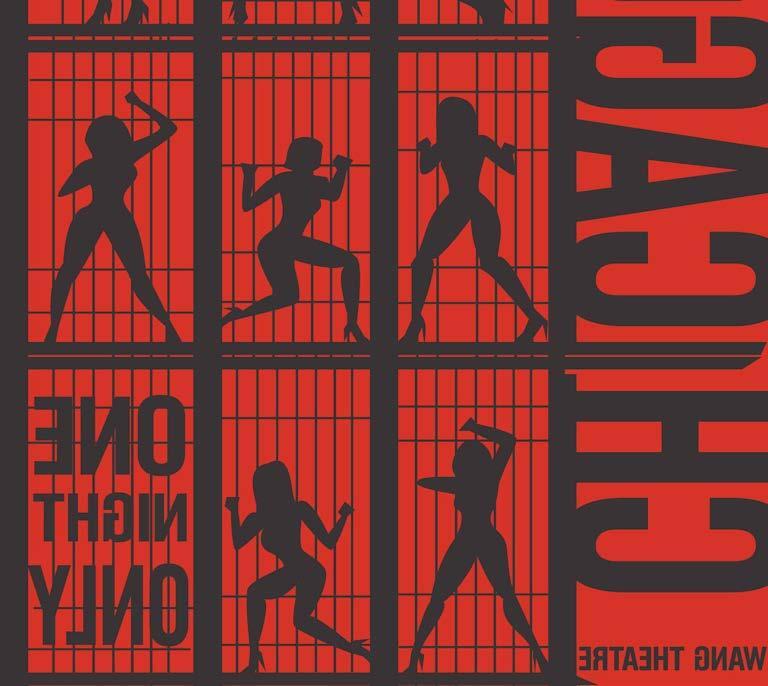
WHEN “CityNews” last spoke to artist Wendy Sharpe she was at Belconnen Arts Centre for her exhibition of quick portraits of refugees and told us that she felt drawing them was “like being a trapeze artist without a net”.
It’s an apt metaphor for the exhibition that she’s bringing to Aarwun Gallery under the title “Burlesque & Circus: Wendy Sharpe”. Sharpe both delighted and enraged art lovers in 1996 when she won the Archibald Prize for her “Selfportrait as Diana of Erskineville”, in which she appears, blousy and magnificent, as a suburban goddess.
She has also hit the news as the winner of the Portia Geach Memorial Prize, twice, and the Sulman Prize and for her commission as the Australian Official War Artist to East Timor, which resulted in poignant and colourful paintings, including one of Kylie Minogue entertaining
the troops.
While she’s always been an artist of conscience, who described her 2015 refugee exhibition as “a way of stopping people from being treated as statistics”, the show coming to Canberra in early March is a flashback to her naughtier inclinations, as Sharpe goes to the backstages of Sydney and Paris in search of experiences that can only be described as exotic and sensual.
Assistant director at Aarwun Ella Chartres is busy preparing an exotic opening function, which will feature local burlesque artists Rebelle Velveteen, Liz Rainbow and Mae de la Rue, while gallery owner Robert Stephens can hardly contain his excitement at having attracted such a popular artist.
In entering the same territory as 19th-century French artist Toulouse-Lautrec, Sharpe’s paintings are sometimes playful, but as with Lautrec, they hint at the darker side of life on the very fringes of society.
“Burlesque & Circus: Wendy Sharpe”, Aarwun Gallery, Shop 11 Federation Square, Gold Creek, March 4-April 4.

By Richard Calver
IT took me a while to forgive the French. On July 10, 1985, the “Rainbow Warrior” was bombed.
And I’m not talking about an attack with a sticky French dessert (bombe is a French frozen ice cream dessert that is made in a round mould). No, this was serious and infuriating. Fernando Pereira, a photographer, drowned on the ship as it sank in Auckland harbour. “Rainbow Warrior”, owned by Greeenpeace, had been about to set off to protest the nuclear test program that the French were undertaking in the South Pacific and the clumsy, but successful, attempt to stop the protest ended in disaster and embarrassment. Two French spies were convicted of manslaughter but received a very light sentence. It seemed as if this illegal venture had succeeded. Such was my outrage at the time that I boycotted all French wine and food; illogically, I even stopped ordering French food at restaurants. This behaviour lasted about a year. But even though I retain the memory, the rancour has been expunged. It was just stupidity on the part of the then-French Government. C’est tout. I was reminded of this silent (and pretty ineffectual) protest and my renewed respect for the ways of the French recently when I quizzed a couple of winemakers here in Canberra about what was going on in the vineyards.
Join our classes and enjoy yourself in a fun and relaxed social environment at our studio in Isabella Plains
• Junior classes – Monday’s from 6.30pm
• Adult Beginner & Intermediate classes – Wednesday’s from 7.30pm
• Social Dancing
• Private Dancing Lessons
– Individuals or Groups (perfect for wedding parties)
All Classes are now held at:
Isabella Plains
Primary School Hall
130-140 Ellerston Ave, Isabella Plains


By Helen Musa

“GO West” is the imperative in the popular disco and showbiz song by the Village People and the 23-year-old Canberra Area Theatre Awards – the CATS – have done just that, with its gala night of nights taking place for the first time outside the nation’s capital in Dubbo.
The move into the regions, inspired by the NSW government’s loyal financial support of the CATS for the last few years, didn’t seem to dampen the enthusiasm of CATgoers as they donned their high heels and feather boas to pack the Dubbo Regional Theatre on Saturday night (February 18) to see hosts, TV actor John Wood and “CityNews” music writer Ian McLean, introduce acts and the 47 people singled out by the judges for their work in the year 2016.
Top CAT for 2016, winner of the Gold CAT Award, was Janet Cunningham, pictured, a drama and theatre studies teacher at Wollongong High School of Performing Arts. Not only is she a 4.2-star rated pedagogue, she was instrumental in transforming Wollongong’s oldest high school into a specialised performing arts institution.

Descended from a long line of Wollongong High alumni, Cunningham was praised by the judges for directing, set design, costume design, teaching and inspiring students at the school, which also carried off several other awards on the night, including one to Cunningham as Best Director of a School or Youth Musical.
The Silver CAT Award went to another CATS stalwart, Molong Players, for bringing original theatre to the Molong community for the last 40 years and for raising more than $1.5 million for local charities.
Among the guests for the evening were “Mr Hollywood Gossip” Craig Bennett, actor/ entrepreneur Simon Gallaher, TV personality Maggie Kirkpatrick, singer/songwriter Peter Cupples and former CAT awardee, professional actor Billie Bouchier, who entertained the crowd with “This Is the Moment” from the musical “Jekyll & Hyde”.
Gallaher, Bennett and Cupples joined to present a tribute to Jon English. The partner of the late actor/musician, Coralea Cameron, was on hand to present a commemorative award for Best Actor in a Leading Role in a Musical to Daniel Downing from So Popera Productions in Wollongong, who has gone on to feature in the Melbourne production of “Kinky Boots”.
An award for Best Director of a School or Youth Play went to “CityNews” theatre critic Joe Woodward for Daramalan Theatre Company’s “The Resistible Rise of Arturo Ui”.
There was a light touch of irony in the fact that the NSW government’s own award for Best Production of a Musical went to Canberra’s Free Rain Theatre for its production of “Wicked”.
CATS founder Coralie Wood said she was thrilled at the way regional theatre groups had embraced the awards, which started in 1994 with just a handful of Canberra-based companies and a few judges.
The full list of CATS winners is at citynews.com.au
Frank van de Loo, from Mount Majura Vineyards, said that the grapes were just coming into veraison. This is a fancy word for the onset of ripening. It was originally a French word and we stole it. Véraison became veraison. I’m sure that you are au fait with the fact that we sometimes steal from the French language. And we owe the French so much when it comes to matters oenological. Hear what Hugh Johnson in “The World Atlas of Wine” has to say about the influence of the Gallic: “When the last raindrop has been counted, and no geological stone is left unturned, there will still remain the imponderable question of national character which makes France the undisputed mistress of the vine; the producer of infinitely more and more varied great wines than all the rest of the world.”
That mastery means we adopt some of their language for the descriptors of wine making. The local Chandon website describes veraison as the process where “sugars begin to accumulate, acids decline, colour increases and berries soften”.
Ever practical, Frank van de Loo reminds me that veraison is a trigger for the roll out of protection from bird life. It takes the workers at Mount Majura about a fortnight to roll out nets to protect the vines from feathered attack.
John Leyshon, who is the president of the Canberra District Wine Association and proprietor of Mallaluka Wines, tells me that at the Yass end of Dog Trap Road, where his vineyard is located, it’s been “a really strange year”. This is a reference to the fickle weather with John indicating that it was the wettest winter he has experienced in 13 years. And when I say “veraison” in my faux French accent John says “that’s pretty good”.
“Ah.” I say, “it took me a long time to forgive the French after the ‘Rainbow Warrior’. I even gave up champagne.”
This comment was greeted with a deal of laughter: “What did the growers of Champagne have to do with the stupidity of the government?” he asks.
“Nothing”, I replied. “Rien.”





By Dougal Macdonald “Silence” (MA)
MARTIN Scorsese’s film of Shusaku Endo’s novel of the conflict between the emperor in the middle of the 17th century and the attempt by the Jesuits to establish Catholicism in Japan accompanies Fathers Rodrigues (Andrew Garfield) and Garupe (Adam Driver), despatched to catch up on what Father Cristovao Ferreira has been doing since handing his last report years earlier to a Dutch trader for delivery to the Order in Portugal.
Father Ferreira (1580-1650) is the film’s only character with an authentic history and here played by Liam Neeson.
Intellectually complex, the film speaks of 300,000 converts to Catholicism – other sources say 100,000. Either way, the number was enough to alarm the Japanese emperor, who appointed a bureaucracy to root it out. This bunch of loyal functionaries led by an exquisitely subtle interrogator (Nisao Ogata) exercised incredible power within its remit.
Much of the film deals with how they went
about it. Scorsese doesn’t mince matters in depicting their techniques of inflicting pain as a persuasive measure for extended periods that might lead to death. Father Rodrigues’ stubborn resistance against pressure from the interrogator to apostatise provides the film with interesting, if sometimes unconvincing, theological arguments. I expect that committed Christians will find “Silence” rewarding. The rest of us might value it rather less. And as you might expect, there’s not a lot of laughs in it.
At Dendy and Palace Electric
“Trespass Against Us” (MA)
THE feature film debut of director Adam Smith (whose career includes several episodes of “Dr Who”), also that of writer Alastair Siddons, is a film about family. But don’t make the mistake of concluding that it is a film for the whole family. Its MA classification is fair dinkum. Behaviour, plot and language are tough, antisocial, obscene and often uncomfortable.
Meet the Cutler family, dwelling in a collection of decrepit caravans parked on flat country somewhere in England. Patriarch Colby, violent, domineering, tough, unblemished by any notion of sympathy for anybody outside his family, rules with an iron fist, justifying his defiance of law and societal convention as a yearning for nothing more – or less – than absolute freedom. Brendan Gleeson’s portrayal of him is an absolute cracker. Impossible to love or admire, but you know what you’re getting from him and it’s unpalatable more often than not!
Eldest son Chad (Michael Fassbender) is cast in a similar mould but with essential differences. At the behest of wife Kelly (Lyndsey Marshal), a tough lady with compassionate overtones, Chad’s determined that nearlyseven-year-old Tyson (Georgie Smith) and his five-year-old sister should get the education he never had.
There’s the family, then, careering around the countryside with no regard for terrain, getting whatever they need by stealing it, disdainfully smashing property and giving
PC Lovage (Rory Kinnear) a very hard time and, in a perverse way, much of the film’s comedy. It’s behaviour that we should castigate on every moral ground, yet it’s also a lotta fun to watch. My star rating breaks fresh ground – a tad more than 3½, not quite enough for 4.
At Palace Electric
“Hidden Figures” (PG)
DIRECTOR Theodore Melfi’s second (after “St Vincent”) feature tells how three Afro-American women with hard-earned qualifications in mathematics and engineering made significant contributions to the gestation of America’s entry into the space race in a desperate effort to out-class the Soviet Union’s achievements.
The story is certainly worth telling.
Playing the women are Taraji P. Henson as number-cruncher extraordinary Katherine Johnson (NASA later named a major research facility after her); Octavia Spencer as Dorothy Vaughan who got NASA’s first big computer
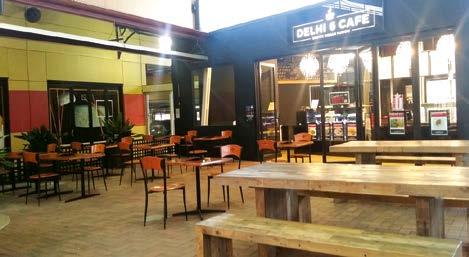
WHEN I think of fish and chips in summer I think sand, sea, salty air – and seagulls. Or do I think Lake Burley Griffin?
A few special spots in the capital lure you in to indulge in soul-satisfying fish ‘n’ chips, including the Yacht Club with its massive lawn stretching to the water where families congregate on picnic blankets relaxing, playing games and having a yarn.
One of my fave places is at the Kingston Foreshore, when the wind isn’t blowing a gale.
“That Fish + Chip Place” runs out of the recently renovated 38 Espresso Cafe. While 38 Espresso operates as normal during the day (with amazing coffee, I might add), That Fish + Chip Place is only open on Friday and Saturday nights (BYO only).
It’s a simple affair and cheap as (here it comes) chips.
Your fish fillet is $15 (grilled only, which is better for your health and you can actually taste the fish) and comes with chips and salad. Choose natural; chilli and lime; lemon and herb or mango habanero sauce, with its carefully balanced fruity heat. Salt and pepper calamari is also $15. Not a fish fan? Charcoal-grilled Cajun chicken and Greek salad are both $15.

Nothing says summer quite like tasty fish and chips, even if you’re not surrounded by sand, sea and salty air.
That Fish + Chip Place opened on January 6 and plans are to continue until the warm weather has kissed us goodbye.
The simple concept is by design and it adds to the fun. With your meal you get a compost wood knife, fork and napkin set wrapped in recycled paper by BioPak, a “be good, do good, feel good” business. BioPak is carbon neutral and donates one per cent of profits to rainforest rescue.
Rock up to the front counter, place your order, get a number and perch yourself outside at a picnic table. When you hear your number called, hop up, grab your meal and enjoy.
I’ve been to That Fish + Chip Place twice. I ordered the chilli and lime the first time, but it didn’t hold enough kick; so the second time I asked the kitchen to ramp it up. They did and it was
amazing. Thanks to friends who don’t mind sharing, I’ve taste-tested the mango habanero, which was d’lish and so, too, was the lemon and herb.
I also loved every bite of the three sides ($5 each). On offer? Calamari, charred corn with kewpie mayo, lime and sriracha hot sauce, and garlic prawns.
Nothing says summer quite like tasty fish and chips, even if you’re not surrounded by sand, sea and salty air.
That Fish + Chip Place (at 38 Espresso Café), 4/2 Trevillian Quay, Kingston Foreshore. Call 6162 3027. BYO only (you can head to nearby Prohibition Cellars). Take away.

to perform after the IBM team couldn’t; and Janelle Monae as Mary Jackson, the widowed mother of three kids who took a segregated university to court so she could take a degree in engineering that led to her making major contributions to John Glenn’s space capsule.
It tells well-known stories. It’s about being coloured and female in a profession hitherto the preserve of white males (led by Kevin Costner). It’s about America wiping away the egg that Sputnik smeared on its face. Performing those functions covers a broad span of time and place, compelling staccato treatment of the film’s content.
It’s an agreeable-enough movie. But I looked carefully through the cast and crew without finding who it was who crammed such a plethora of God-bless-America coloured clichés into its fabric, thereby reducing what might have been a worthy Oscar nominee to rather a potboiler. We must assume it was Melfi’s co-writer Allison Schroeder, also an Oscar nominee.
At Palace Electric, Capitol 6, Hoyts and Limelight
By Helen Musa
JORDAN Best is directing a really scary show for Canberra REP in Frederick Knott’s “Wait until Dark”. This Broadway thriller sees blind Susy cannily turning off all the lights to thwart a villain. It’s yet another against-type role for Jenna Roberts, who won a Critics Circle award for her Lady Macbeth last year, now playing Susy. At Theatre 3, until March 11. Bookings to 6257 1950.
FORMER Redgum frontman John Schumann returns to Canberra for a concert at the Harmonie German Club on Saturday, March 11. Schumann is best known for his iconic Vietnam War composition “Only Nineteen”. Tickets from Songland Records at Cooleman Court. Call 6293 4677.
GOOD news that the International Professional Picture Framers Association has honoured Canberra picture framer Quentin Webster and his wife Cathy, the co-owners of Framing Matters in Endeavour House, Manuka. Cathy was placed second in the PPFA framing competition, while Quentin was named Chapter Volunteer of the Year at the West Coast Art and Frame Expo and National Conference in Las Vegas.
THE 2017 Festival of Ambitious Ideas, themed “The 100 Year Life”, will see 12 speakers, with five minutes each, presenting their ideas on longevity. Brindabella Conference Centre, 33-35 Brindabella Circuit, Brindabella Business Park, 5.30pm-9pm, on Thursday, March 2. Bookings to eventbrite.com.au
THOSE clever people at Manning Clark House have snared Nobel Laureate and ANU ViceChancellor Prof Brian Schmidt to give the 18th Manning Clark Lecture, Theatre 2, Manning Clark Centre (26a), Union Court, ANU, 6pm, March 3. Bookings to trybooking.com

ART Song Canberra’s first concert for 2017, “Dangerous Romantics”, features sensuous music by Hahn, Fauré, Debussy, FS Kelly, Quilter and Koehne, to be performed by Christina Wilson with Alan Hicks at the piano. Wesley Music Centre, 20 National Circuit, Forrest, 3pm, Sunday, February 26, no bookings, tickets at the door only.
CANBERRA Opera will present an excerpt from Strauss’ “Die Fledermaus” ahead of its May production, as well as arias, duets and a trio from Mozart, Bellini, Puccini and Gounod. High Court of Australia, 1.30pm, Sunday, February 26. Free, but bookings essential to hcourt.gov.au
“BOTANICAL Capital” by prizewinning artist Cheryl Hodges is an exhibition of watercolours telling stories of Canberra’s landscape history. Opening by Bernadette Hince, at Yarralumla Gallery, Cottage 1, Weston Park Road, 3pm, Sunday, February 26, all welcome. It runs until March 24. “Dangerous Romantic” Christina Wilson.
Joanne Madeline Moore
ARIES (Mar 21 – Apr 20)

With impulsive planets Mars, Jupiter and Uranus all stirring up your horoscope, prepare for a challenging week full of inconvenient disruptions and dramatic surprises. Being a hot-headed, rambunctious (or rude) Ram will just land you in a heap of trouble – especially with loved ones and authority figures. So simmer down, before you say or do something that you later regret. You’ll find cool co-operation will get you a lot further than fiery confrontation.
TAURUS (Apr 21 – May 20)
With so many planets in Pisces and Aries, being flexible and fast is the key to a successful week. If you are too stubborn and unyielding in your opinions, then others will just stop listening to what you have to say. And if you are too slow off the mark (and hesitant to take action) then others will streak ahead of you, especially at work. So your motivation motto is from fellow Taurean, actress Shirley MacLaine: “Don’t be afraid to go out on a limb. It’s where all the fruit is.”
GEMINI (May 21 – June 21)
Expect some turmoil this week, especially involving children, teenagers, friends or acquaintances. So strive to maintain a flexible approach and a diplomatic demeanour. You’re in a hurry to get ahead but be especially cautious when it comes to your social circle. As birthday great, Anthony Robbins observes: “People’s lives are a direct reflection of the expectations of their peer group.” So make sure your friendships are inspiring, and your expectations are high!
CANCER (June 22 – July 22)
Avoid using emotional manipulation to coerce people into doing what you think they should be doing. This week, let others make their own choices (and their own mistakes). It’s also time to initiate overdue career and/or domestic changes –before Mars, Jupiter and Uranus step in and do it for you! Attached Crabs – Friday night favours a profound emotional connection. Singles – forget superficial suitors. Look for a long-term lover who has depth and staying-power.
LEO (July 23 – Aug 22)
It’s a volatile week so keep your cool Cats! Avoid spreading unsubstantiated gossip and blurting out things that you’ll later regret. Take the time to check the facts first. The more humble and honest you are, the better the week will be. But you should certainly express your adventurous side, as you make a leap of faith or take a smart calculated risk. As birthday great Elizabeth Taylor declared: “There are so many doors to be opened, and I’m not afraid to look behind them.”
VIRGO (Aug 23 – Sept 22)
Mercury and the waning Solar Eclipse encourage you to listen to others closely and keep the channels of communication open. Is a loved one going through a rough patch? Don’t lecture them Virgo! Strive to help them in a sensitive and compassionate way. But expect a turbulent financial week, as the planets shake up your previous expectations. Time to reformulate your fiscal plans! When it comes to work and business, it’s much better to under-promise and over-deliver.
LIBRA (Sept 23 – Oct 23)
Librans long for peace and harmony. You want everything to run smoothly this week but it’s just not going to happen! Work relationships will be unpredictable and loved ones disruptive, so revise your expectations and just take things as they come. With Jupiter activating your sign (until October 10) look for exciting ways to expand your influence in the world around you. You’ll find the more you extend yourself and encourage others, the more successful you’ll be.
SCORPIO (Oct 24 – Nov 21)
This week unpredictable Uranus, Mars and Jupiter are set to disrupt your usual routine! Trying to control your timetable (or impose it on others) will just frustrate everyone and get you nowhere fast. So consider swapping Scorpio stubbornness, sarcasm or sulking for cool, clever compromise. If you’re still feeling unsettled then meditation, yoga or some other form of quiet contemplation will help calm you down, as you go with the celestial flow and listen to the wise voice within.
SAGITTARIUS (Nov 22 – Dec 21)
Are you ready for a wild ride? This week you’re prone to fiery pronouncements and extravagant exuberance as you overpromise, overspend or overextend. Enthusiasm is high but don’t jump to hasty conclusions, and then pass on incorrect information. Get the facts straight, otherwise embarrassing stuff-ups are likely (especially involving family or friends). Do your best to channel excess energy into a challenging project that is ambitious and adventurous but also realistic.
CAPRICORN (Dec 22 – Jan 19)
The more intently you micro-manage relationships this week, the more family, friends or colleagues will distance themselves from you. And if you are too bossy with an Aries, Leo or Sagittarian, then an explosive power struggle is likely. You’re brimming over with information and ideas, and are keen to teach or instruct others. But don’t assume you have all the answers. Smart-aleck hubris will just put others off. So strive to be much more inclusive and consultative.
AQUARIUS (Jan 20 – Feb 18)
Hold onto your seat – it’s going to be a bumpy ride! Your ruler Uranus sends disruptions in your direction, plus Jupiter demands that you stop being stubborn and start being more adventurous. So the only certainty at the moment is change. You’re feeling ridiculously restless but try to modify your reactions, otherwise it will be a long and tiring week. Just because you’re in the process of shaking up your life doesn’t mean you have to unsettle everyone around you.
PISCES (Feb 19 – Mar 20)
The lingering energy of the Piscean Solar Eclipse blesses creative projects, boosts intuition, and helps you get lost in a fabulous fantasy novel or a favourite romantic movie. With the Sun, Moon, Mercury and Neptune all travelling through your sign, you’re certainly keen to please others this week. But avoid the temptation to be an indecisive doormat, and say ‘yes’ to everyone and everything. You may find you’ve bitten off more than you can comfortably chew!
Copyright
Joanne Madeline Moore 2017
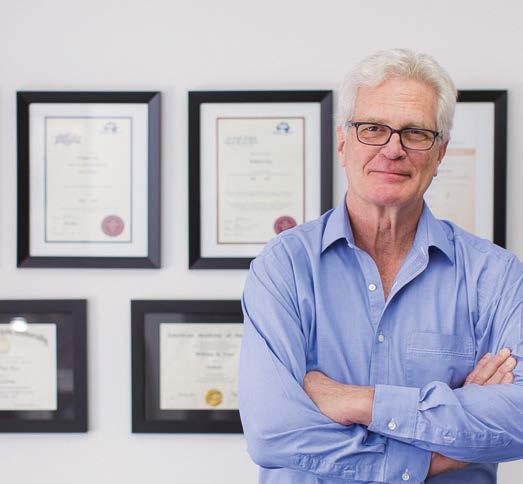
Across
4 Name an art movement, initiated in France in 1907. (6)
7 Name an aromatised wine in which flavourings have been steeped. (8)
8 What are substances composed of two or more metals? (6)
9 Which persons deny the existence of God? (8)
11 What are funeral vehicles called? (7)
13 Name a world champion tennis player, Roger ... (7)
15 Which other term describes atomic energy? (7)
17 Which binary compound contains two atoms of oxygen per molecule? (7)
20 To be suitable for use as food, is to be what? (8)
23 What is a more common term for a tyro? (6)
24 What are the final courses of meals? (8)
25 Name those who escort persons to their seats in theatres, etc. (6)
Down
1 With which hand does an orthodox boxer lead? (4)
2 What is the base unit of electric current called? (6)
3 Name the young of foxes, bears, etc. (4)
4 What is a flora and fauna reserve called? (5)
5 In which part of a steeple is a bell hung? (6)
6 What describes a fashionable mode of living? (5)
9 Name the historical overlord of England, known as “the Great”. (6)
10 What are the seats occupied by sovereigns? (7)
12 What is something that is hidden? (6)
14 Which inland duty is levied on tobacco, spirits, etc? (6)
16 Which plants have showy bell-shaped flowers? (6)
18 What do we call persons seen as being closest to admired stereotypes? (5)
19 What are exploits or achievements known as? (5)
21 Name a term for a barrel-like liquid container. (4)
22 What is a brief record of something? (4)
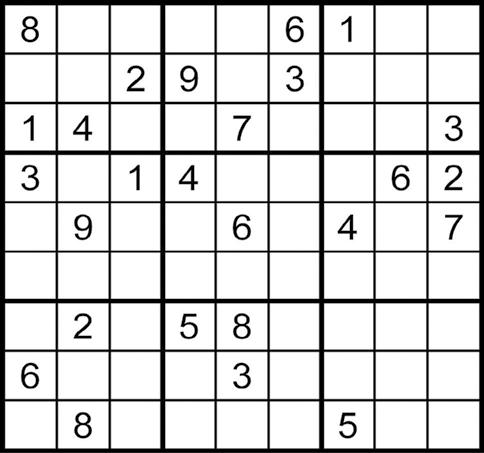
Most people think we hear with our ears. But that’s only part of the process. While the ears pick up sound, we actually hear with our brains. Sounds are transmitted to our brains where they are processed into what we recognize as speech or everyday noises like the doorbell or a dog barking. When a person has a hearing loss, sounds are not transmitted to the brain and the brain tends to lose the connection to the ear.
For most people hearing loss is a gradual process. In fact, the majority of people I see have had hearing loss over ten or more years. Because hearing loss worsens slowly the brain adapts to the hearing loss. After years of hearing loss the brain will “hard-wire” to the hearing loss and think that’s just the way things sound. I’ve seen patients with very bad hearing who just accept that is the way they are supposed to hear. I call this the “nothing wrong with my hearing syndrome.” Sadly, the patient is mostly fooling themselves as to the extent of the loss.
It is possible to reverse this ‘hard-wiring’ and I have found the most successful treatment is to stimulate the brain with input from correctly fitted hearing aids and professional advice. The first step in this process is to have a full hearing assessment. If you or a loved one is suffering from hearing loss and would like some more information on this topic or a comprehensive hearing assessment contact our office on: 6282 2717



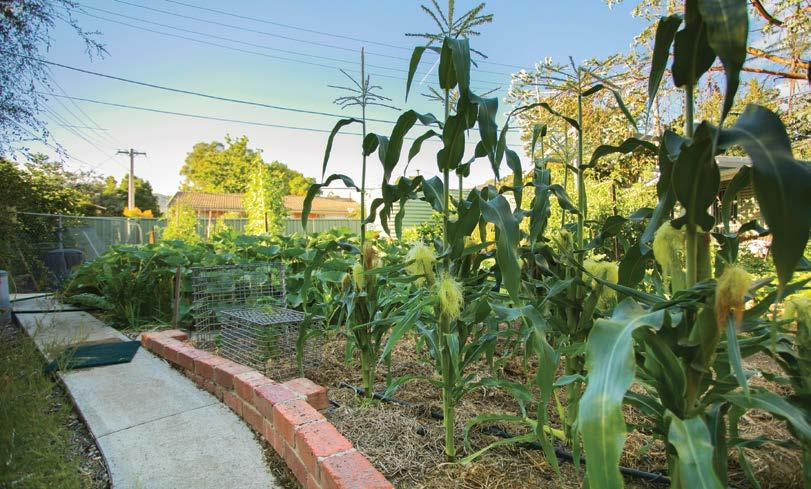


WHILE Isobel Crawford’s garden is densely screened from the street by wattles, tea trees and casuarinas, the cucumber and zucchini growing at the front door give a hint of what lies behind.
With predominantly veggies thriving in the back garden, garden owner and botanist Isobel says she created the garden in 2002 when the build of her solar-passive house was complete.
“In a way it was carte blanche to create whatever I wanted, because it’s very sad what happens to gardens when you build a house,” she says.
This lush, green Dickson garden will be open to the public for the first time through Open Gardens Canberra on the weekend of March 4-5.
Isobel says there wasn’t much in the garden to begin with, so she divided the space in the back into raised beds, with distinct paths laid with fake grass between them leading to the water tanks and the shed/studio, or “shedio”, in the back.
“I find that having manageable sections makes the garden feel less overwhelming,” she says.
“The raised beds are all different shapes, and even if it all needs doing you can complete one and it’s helpful, it lifts the burden somehow.”
Isobel says she’s self-sufficient for water, with 24,000-litre and 7000-litre tanks that also create thermal mass and have helped her orange tree survive winters.
Words: Kathryn Vukovljak
Photos: Maddie McGuigan
There’s broccoli, cabbages, potatoes, tomatoes, basil, capsicum, eggplant, pumpkin, corn, lima beans, snake beans, rosemary, as well as satsumas, plums, apricots – and chickens – in her nearby rental property.
Isobel says she loves being largely self-sufficient for veggies, but also enjoys the bird life that visit her garden. She says she has taken care to place bird baths in hidden-away spots so the smaller birds will come.
“I made an effort not to grow nectar-producing plants, so instead of honeyeaters we get brown thornbills, superb fairy-wrens and white-browed scrub wrens,” she says.
Gardening is therapeutic, Isobel says, and she likes nothing better than to escape to the garden and potter around.
“I find the most useful time in the garden is a gentle potter with a cup of tea, when you deal with any weeds or issues there and then,” she says.
18 Dutton Street, Dickson, open 10am-4pm, on Saturday, March 4, and Sunday, March 5. Admission $8; free to under-18s and Open Gardens Canberra members. It costs $25 to join Open Gardens Canberra and gain free entry to all open gardens until August 31. More information at opengardenscanberra.org.au/join
Also open March 3-4: 28 Marrakai Street, Hawker
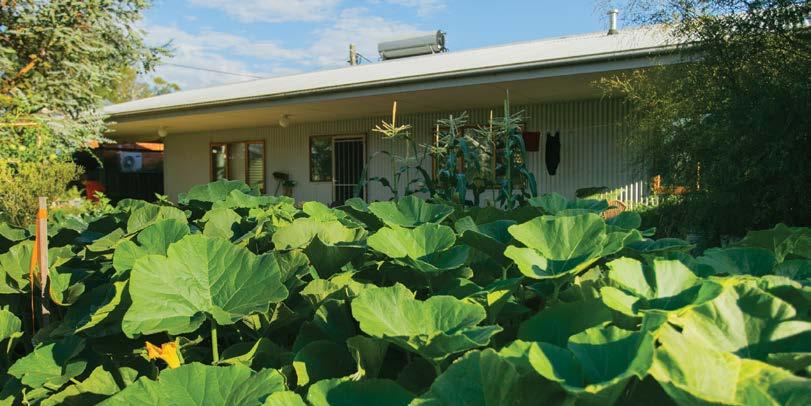
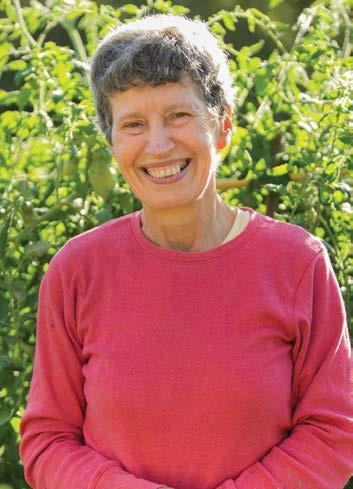




WHATEVER the weather, life in the garden goes on as it has done for millennia.
We lose a few and, being optimists, we pull out the dead plants and replant.
After the last nine months, maybe we now realise – too late –that certain plants are unsuitable for our climate; yet, do we give up? No!
Don’t blame only the exotic or introduced plants as many native plants, if not from the right area or planted in the right place, will succumb to our weather extremes.
Always consider where plants originate from with a similar variable climate as ours, which means they have to be super tough. All of the plants listed here originate from the Mediterranean region and can be considered drought tolerant. In reality, the only true Mediterranean climate here is in the south-west of WA.
Even many of the most delicate plants originate in the toughest

places in the world, such as tulips and daffodils from Iraq and Turkey. In this column, I am listing plants, mainly exotic (introduced), that can be grown with confidence. I have also provided the country of origin to indicate their hardiness:
• Although there are about 20 varieties of box hedging, Buxus sempervirens is possibly the toughest. Often referred to as English box, it was introduced into Britain by the Romans and makes a perfect small hedge bordering a rose garden or each side of an entrance path.
• Cistus or Rock Rose (although no relation to roses) is mainly from Turkey. A popular variety is Cistus “Gallipoli Rose” with white flowers. Also check out Cistus “Sunset” with pink flowers set against soft grey foliage.
• Lavender is one of the most popular plants in the world and there are hundreds of varieties, but the two most reliable and used for lavender oils for perfumes are Lavandula “Hidcote” and L. “Munstead”.
• In the kitchen, Rosemary is essential. For cooking, Rosmarinus “Chef’s Choice” is the strongest with a low, compact growth. But for flowering it’s hard to beat R. “Blue Lagoon” (all regions) with deep-blue to purple flowers.
• Also excellent for low hedges: Myrtus communis (Sardinia), Dianthus (all regions), winter flowering Iris unguicularis (Algeria) Phlomis (Israel) and Convolvulus cneorum.

• Ground covers include carpet thyme or culinary thyme and Convolvulus sabatius (Morocco), growing to 50-80cm tall is superb with its bright blue flowers. Finally, bearded iris (Spain).
There are sufficient hardy plants listed here, when grown in groups of three to five, to fill a small garden and provide colour at different seasons and many with delightful fragrances.