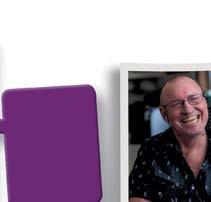
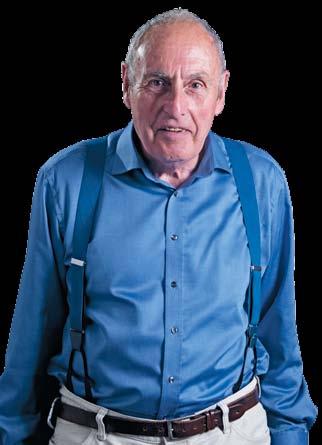
MICHAEL MOORE / WHY JOE HOCKEY IS BAD FOR YOUR HEALTH
The week the boots got kicking ROBERT MACKLIN
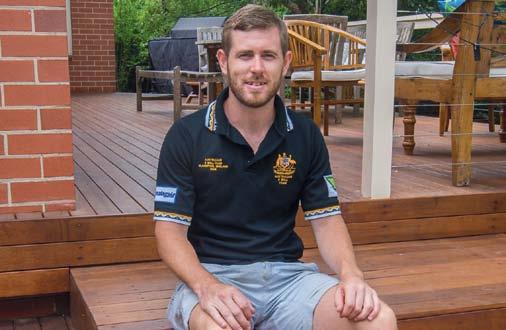
When blogging starts paying the rent JOHN GRIFFITHS
Hail the end to parking’s free ride CATHERINE CARTER
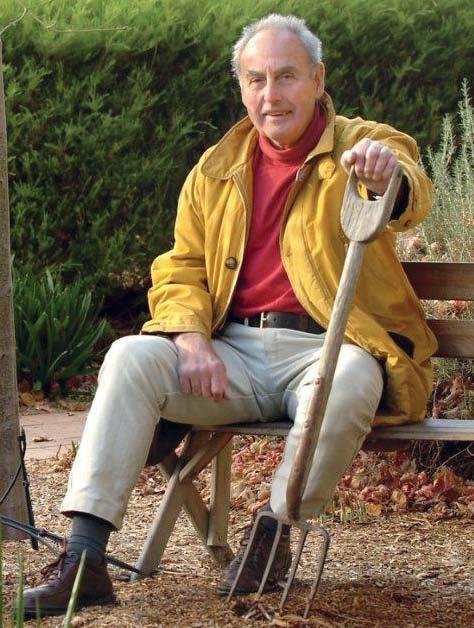
Coming up roses CEDRIC BRYANT
There’s no dough in pool, as world champ STEVE WOODS discovers
JULY 5, 2014 - 8.30pm
Auburn, Bankstown Airport, Bankstown Central, Bass Hill, Batemans Bay, Belconnen, Birkenhead Point, Blair Athol, Bondi Junction, Bonnyrigg, Bowral, Canberra Centre, Canterbury, Carnes Hill, Chisholm, Chullora, Conder, Cooma, Dapto, Eastlakes, Edgecliff, Engadine, Fairfield Central, Fairfield West, Fairy Meadow, Glenfield Park, Goulburn, Gungahlin, Holt (Kippax), Hurstville, Kogarah, Lakemba,
Pool champ’s empty pockets
CONSIDERING how common pool tables are and the amount of use they get, it’s strange how little the public knows about the players who compete at the elite level.
Plenty of Canberrans have spent countless gold coins playing the game, but how many realise the nation’s number one eight-ball player lives among them?
Steve Woods, 31, reached the top of the Australian Eight Ball Federation’s annual rankings at the end of 2012, and he’s on track to hold it for a third year running when the numbers are added up again at the end of 2014.
“I started playing when I was about six,” says Steve.
“A friend had a pool table and I played there, and loved it, so I played as much as I could. Anywhere I could find a table that I was allowed to play on, I wanted to play on it.”
He entered his first competition at age 14 and was representing the ACT less than a year later.
A young Steve soon tried his hand at the much more difficult game of snooker and became the ACT champion at 18, holding the title for 10 years in a row.
Steve first made the national eight-ball team in 2004, winning an automatic place as the national under-21 champion. Around the same time, reality called: it was time to get a job.
“I played all the time, pretty much every day until I was about 20, then I stopped; that was when I started working,” he says.
Nobody in Australia makes a living from winning pool tournaments, explains the national number-one, who works as a carpenter and is on the way to getting a building licence this year.
The prizemoney on offer for the English style of eight-ball
Nasty surprise for the fit man
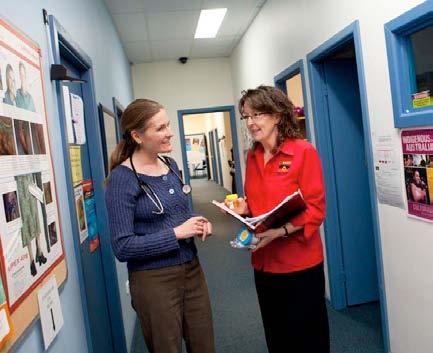
June is Bowel Cancer Awareness Month. It’s estimated that 14,000 lives a year in Australia are changed by its diagnosis. ‘CityNews’ gardening writer CEDRIC BRYANT was one of them and this is his story...
TO be diagnosed with bowel cancer, which claims the lives of 77 Australians every week, is a frightening experience.
I was fortunate and am a healthy survivor, unlike my sister who died in 2008 after battling the disease for three years.
Huge advances have been made in cancer research in recent years and, despite being second only to lung cancer as the country’s biggest cancer killer, bowel cancer is one of the most curable – if found early.
I have always been an extremely fit person and to be sick was almost unknown, as my previous doctor for more than 30 years would verify.
By chance, I was advising Dr. Cameron Weber on his garden one Friday afternoon nine years ago when he said he had to check on one of his patients who had cancer.
ist, Dr. Graham Kaye, who gave me the dreaded news; yes, this supremely fit person who had never been sick in all his life had bowel cancer.
My sister hadn’t wanted to worry me and had been treated for at least two years before she told me she had bowel cancer. This was a bad decision and could have been the difference on my early diagnosis between survival and being treated quickly.
Once the diagnosis had been made events moved swiftly. Dr Kaye referred me to surgeon Dr. Noel Tait and I was straight into hospital.
Fortunately, as the cancer was found early, I only lost a small part of my intestine. Believe it or not, I was out and about seeing my garden clients a week later.
Stephen Easton reports
that we play in Australia –around $2000-3000 for the winner – cannot hope to cover the cost of travel, accommodation, and time off work.
Steve’s top rank does not mean that he wins all the time, either. It reflects his incredible consistency over lots and lots of games but when it gets to the final 16 in a tournament, the matches could go either way.
“When you’re playing the top guys, if you’re not sinking balls off the break, you won’t win,” Steve says. “And if you miss a shot, you’ll lose. You have to think ahead through every shot and if you leave one at the end, that’s the worst thing you can do in a game, because it makes it really easy for your opponent.”
Going to the World Championships is even more expensive, since it’s always held in Blackpool, England, so even though Steve’s been eligible to represent Australia nine times, he’s only attended three World Championship tournaments, in 2004, 2008 and 2011.
“The best I’ve done at the World Titles was in 2008,” says Steve. “I made the World Team, which means I shot well. I came fourth out of everyone in the teams event, percentage wise, and they pick the top seven for the World Team.”
He says most of the top Australian eight-ball players decide whether to go to Blackpool in a particular year based on who else is going and Steve is there competing with the Australian contingent this week.
“We see each other at nationals and some years we sort of all agree we’re going to send the top team and everyone tries to go. It’s like a snowball effect. We’re all mates, and then we get a holiday together as well.”
I mentioned that my sister, then living in Ireland, was also being treated for bowel cancer.
“What about you?” he inquired.
“Oh, I’m fine, I never get sick,” I said. I was 65 at the time.
“When did you have your last colonoscopy?” he asked
“What on earth is a colonoscopy?” I replied, promising to report to my doctor first thing Monday morning.
From there, I was referred to a special-
briefly
Defence ideas
THE ACT United Services Institute is hosting a seminar on the 2015 Defence White paper at the Harmonie German Club, Narrabundah, 6.30pm for 7pm, on Tuesday, July 1.
“This seminar will probably be the only chance for members of the general Canberra public to have their say on what they think the Federal government needs to consider in setting out how Australia should be defended for the next 30 plus years,” says convenor Bill Stefaniak.
The seminar will feature a panel of five presenters – Liberal Senator David Fawcett; Member for Canberra and shadow parliamentary secretary for Defence, Gai Brodtmann; John Blaxland, senior fellow, Strategic and Defence Studies Centre ANU; Natalie Sambhi , analyst at the Australian Strategic Policy Institute and Scott Ferguson, Strategic Defence Studies Centre.
Support session
THE local members of Al Anon, an international support group for family and friends of alcoholics, is holding a drop-in information session for anyone worried about the drinking habits of their partner, family or friends. At Level 1, Room 11 of the Griffin Centre, Genge Street, Civic, any time between 5.30pm and 7pm on Wednesday, July 2.
I was so very lucky, for that chance discussion with Dr Weber was the difference between my sitting here writing this nine years later or being in another place.
I have had no recurrence of the cancer with regular colonoscopy checks. And, yes, I know what a colonoscopy is now!
My recovery was fast from a number of factors: I was relatively fit, not overweight and never smoked a single cigarette – plus a great team of doctors. And, importantly, the huge support of my wife,
Bowel cancer survivor
Gerdina and family.
The moral of this story is once you turn 50, or if you are at a higher risk of developing the disease, get a check up. For some reason men are more reluctant than women in being tested for any sort of cancer. The procedure is non-invasive and is very simple. See your doctor now.
More information at bowelcanceraustralia.org
Cedric Bryant… “I was so very lucky.”
Pool champ Steve Woods… “When you’re playing the top guys, if you’re not sinking balls off the break, you won’t win.” Photo by Gary Schafer
Distribution: Richard Watson, circulation@citynews.com.au
Phone 6262 9100 Fax 6262 9111
GPO Box 2448, Canberra City 2601
The week the boots got kicking
WHAT a week! The High Court kicks the chaplains out of our proudly secular schools, the Feds attack our public servants’ sacred 4.51 knock-off time, a local Liberal gets kicked out of a branch meeting for supporting light rail, Australia gets kicked out of the soccer World Cup and worst of all, the lovely Tash gets kicked out of “Masterchef”.
And they say Canberra is dull. Forget it. Canberra is where it all happens.
THE fact that those chaplains have been peddling their goods in our public schools is a reflection of the odd make-up of Parliament where recently there’s been a bigger proportion of God-bothering leaders than in the wider community.
Kevin Rudd as PM gave a doorstop as he left church each Sunday; and the Abbott front bench is replete with enough Catholics to start their own diocese.
Now it’s up to the States and Territories to fund the Christians if they wish. Frankly I can’t see it happening in our fair city.
THE 451 issue is a hottie. No coincidence perhaps that it’s the Fahrenheit
The claim that 40kph suburban speed limits across Canberra makes for safer travel by cyclists and pedestrians has yet to be demonstrated, but let’s make sure of it. Let’s ban cars altogether.
temperature at which books burst into flames, according to the 1966 movie masterpiece.
Not that I expect our public servants to spontaneously ignite, but it’s part of a trend to transform the service to the private enterprise mode. And it’s without the slightest public debate.
Do we really want the highly politicised American system? Some of our wisest men are against it, towering figures such as Allan Hawke who also opposes the ridiculous annual “bonus” that only encourages the lickspittles.
THE light rail debate is also heating up, but do the Libs really want to shut down dissenting voices from their own ranks? Sure, Damien Haas is a lobbyist for the project, but the NSW branch lays out the welcome mat for hordes of them at the highest levels.
AND what, pray, is the difference
between a lobbyist and a Green politician like Shane Rattenbury whose latest ministerial idea is to encourage the Nanny State folly of 40kph suburban speed limits across Canberra.
The claim that this makes for safer travel by cyclists and pedestrians has yet to be demonstrated, but let’s make sure of it. Let’s ban cars altogether.
Of course, we’d then have to reduce bicycle speeds… and what about the people who run too fast and might bump into an old gentleman with a cane. In fact, we should probably ban canes, because you never know…
SAD that our Tash Shan got the heave-ho from that TV cooking comp. However, there was something very odd about the show this week when the protégé of guest chef Marco – after 30 years’ experience – failed to get his dish ready in time and thus handed
ROBERT MACKLIN
an immunity pin to the cute little Italian lass. He missed by only five seconds, but left with his reputation intact. Gee, what a magical outcome.
AND to all those fans who objected to my calling soccer a cheat-fest, here’s a direct quote from Socceroo Tim Cahill reporting his on-field dialogue with Chilean left-back Eugenio Mena: “I called him a cheat and he said, “Yes, I’m a cheat, so what?’”
M’lud, my case rests.
robertmacklin.com
champion Steve Woods. Story Page 3.
Photo by Gary Schafer
Historian wearies of one-sided war
By Stephen Easton
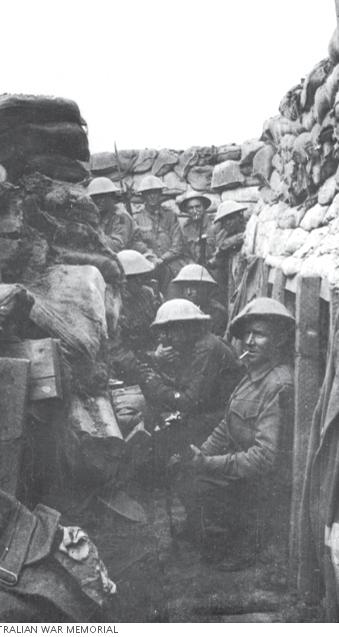
HISTORY is written by the winners, they say, and expatriate World War I historian Peter Barton is sick of it and plans to say so publicly at the War Memorial on Tuesday, July 1.
He will use the free public lecture to advocate historical research that actually compares our side’s version of events to the mountain of detailed records kept by the enemy, something he says had “simply never happened” before he did it recently.
“We don’t even look at the German side of things at all and what I’ve found is that Allied narrators and recorders have exaggerated and embellished and estimated to such an extent that it’s not valueless, but it has a greatly diminished value until you corroborate it with the German records,” says Barton, down the line from his UK home.
He says his latest book, which is published on the day of the Canberra lecture, does “something no other book has ever done, and that is to tell a corroborated story” about the battle of Fromelles on the Western Front, in which 5533 Australians were killed in 14 hours. It’s often called the worst day in our military history.
“What we’ve had for a hundred years now is one side of the story. Although the information from the German side exists and can corroborate what the Allies say, no-one has looked at their primary sources, and the Germans tell a very different story to the British and the Australians.”
Barton says his book contains a lot of groundbreaking new information about the fighting at Fromelles showing previous historians got the story wrong in lots of ways.
“For example the Australians did not adhere to their orders, that’s perfectly clear. In one part of the front they ended up with a line which was perpendicular to the one which they were ordered to take up. That’s not in any previous history.”
He says a popular view he once adhered to, that Allied commanders were incompetent, is also wrong.
“[The officers] were not to blame, really. The Germans were to blame. They were just very, very well organised.”
It seems the Germans were better organised in data collection as well and
Sometimes you’ve just got to cop it
did so more dispassionately. Barton says their “monumental” war archives are far more detailed than anything here or in the UK, allowing him to follow actions such as the battle of Fromelles literally minute by minute.
With the Centenary of World War I already upon us and not going anywhere for the next four years, the historian argues a wholesale revision of its history is “absolutely necessary”.
“I mean, I’ve looked at lots of other actions as well – tiny ones and bigger ones – and none of them seem to conform. You look at the Allied record and the German record and they’re very different; they tell a different story and in order for us to have a better form of truth then we must have this corroborated history. Without it we’re just fumbling around in the dark, really.
“I’ve been a World War I historian for a long time now and looking at the German records just tells me how little I know about it… they change your perceptions of the entire war.
“It’s as if for a century, we haven’t needed the German story, but once you start looking into it you realise how utterly essential it is to our understanding. We’ve got faulty perceptions of the operational side of World War I and it is the operational side that created the personal legacies that everybody commemorates today.”
“The Lost Legions of Fromelles” (Allen & Unwin) by Peter Barton is published on July 1.
CANBERRA has just experienced what was probably one of the most deliberate and expensive public vandalism acts in our short history.
“Animal activists” broke into the Parks and Conservation depot in Farrer and smashed up 10 cars, defaced the main building with a hammer, and left a note protesting the kangaroo cull along with a picturesque anarchy symbol. It was a very intentional act of protest in order to make a political and moral point.
The name for this is “positive civil disobedience”. “Positive” in the sense that it was an act of civil disobedience that broke the law with a positive action.
The alternative, “negative civil disobedience”, is when the law is broken by refraining from taking a legally required action.
My father is an example: during the Vietnam War he was arrested for deliberately disrupting a march when he sat in the middle of the street and again when he “negatively” broke the law by refusing to register for the National Service Draft (despite being exempt anyway).
As a Christian, I stand in a tradition of strong civil disobedience. Since Roman times, when Christians began to refuse to worship the Emperor/State as God, disobedience to the point of martyrdom has been evident. However, this appears in stark contrast to the Biblical mandate (Romans 13 in particular) to submit to the authorities – even if the authorities are killing innocent kangaroos.
Only if a requirement is made of us that is against God’s Natural Law may we refuse to obey, which is in the negative civil disobedience sense. Now I’m sure these animal activists would argue culling kangaroos is unjust and against Natural Law, but if everyone decided to pro-actively break laws they disagreed with (especially if with violence as the activists have done), the consequences would be far worse than the kangaroo cull.
So I would ask the activists who caused this damage to think deeply about their civil interaction. Even if you disagree with our ACT or Federal governments, they are legitimate and therefore opposition to their laws must also be legitimate. We must accept that authorities are the best vehicle in which to bring common good, however imperfect they may be. This is hard sometimes when people feel that bad decisions are made, but we must accept that legitimate governments, legal avenues and respect for authority are our best chance for peace and justice. This side
Nick Jensen is a directorian Christian Lobby.
Peter Barton.
politics Why Hockey is bad for your health
HEALTH is at a crossroads. Treasurer, Joe Hockey, recently told the Sydney Institute: “In health, it is more medical research combined with new technology and better global partnerships that will deliver better health outcomes”.
He is simply wrong.
Prevention is much more effective than cure. It is through this sort of ignorance that the Budget so strongly attacks primary and preventive health.
There have been great advances in health through medical research and technology. However, the most widespread advances have come through prevention. And prevention has been most successful when governments understand the extent to which health is socially determined and invest in efforts to improve health across the community.
This requires government intervention, an approach that is in direct contrast to the current reactionary political philosophy of small government, less intervention and strengthening personal rather than government responsibility.
Cholera is virtually unknown where there is clean water and sanitation. Following the discovery by the original epidemiologist, John Snow, and his colleague, Reverend Henry Whitehead, of the link between drinking water and cholera the British government embarked upon one of the greatest engineering feats of the 19th century – retro-fitting London with clean water and sanitation.
If our current “non-interfering” government was challenged with a cholera epidemic today the approach would be a media campaign advocating
Prevention is much more effective than cure. It is through this sort of ignorance that the Budget so strongly attacks primary and preventive health.
boiling water and proper disposal of faeces. Clean water and sanitation are basic to public health, and so is immunisation, an example that requires medical research, but also requires government intervention.
Immunisation rates in children in Australia are around 90 per cent with governments striving for 95 per cent. This is already a brilliant achievement compared to almost anywhere in the world, but there are still specific pockets and specific populations that are vulnerable to vaccinepreventable diseases.
Federal Health Minister Peter Dutton has made clear his strong support for immunisation. And the Liberals have a good track record in this area starting with an effective intervention by Howard government minister, Michael Wooldridge. Contrast this commitment with a Federal Budget that simply attacks public health and prevention.
The Australian National Preventive Health Agency has been dismantled. The National Partnership Agreement on Preventive Health has suffered a death blow with the withdrawal of Commonwealth funds. Both these actions are simply a process of cost (and responsibility) shifting to the States and Territories.
The $7 GP co-payments will provide a disincentive for young families, and the less well-off, to go to
their GPs for vaccinations. When the socioeconomically disadvantaged, such as self-funded retirees with a chronic condition, go to the doctor they have to find $7 again and again and again.
In Australia’s system of universal health care, wealth is irrelevant to appropriate care. The $7 copayment marks a start to dismantling this system. And the $20 billion research fund is a last-minute sop to justify this irresponsible co-payment policy. It is a “medical fund” rather than a “health and medical fund” consistent with Hockey’s view of health as a business with the potential for financial returns. Apparently, even medical research can put financial returns ahead of health and welfare.
Michael Moore’s column is based on his address, as CEO of the Public Health Association of Australia, to the National Immunisation Conference in Melbourne. He was an independent member of the ACT Legislative Assembly and was minister for health.
MICHAEL MOORE
Ron Friesen | Partner
Family Law is complex and you need an experienced law firm to guide you.
But what you need most is someone to listen to you. To hear your story.
At Watts McCray, we understand that.
wattsmccray.com.au
lowbrow
When blogging starts paying the rent
“AND in case you don’t know a blogger is a person with a laptop, an axe to grind... and their virginity” – Stephen Colbert
It’s a wonderful quote by the great Colbert, but wildly inaccurate.
At the very least, bloggers have quite a lot of sex with each other here in Canberra.
The term “blogger” is a contraction of website log, a log being much like a journal, so a blogger is never a million miles away from being a journalist.
Bloggers are not always socially awkward beardy men carrying too much camera equipment (although they can certainly be that, too).
As you might have guessed, I was once part of the blogging world, and only really ceased to be one when my blogging started paying the rent.
At this point I was best described as a journalist, which was handy as it was what I’d been doing before I started blogging.
Bloggers are in large part bitterly jealous of each other if for no other reason than there’s nothing like pouring your heart and soul into something that never gets read while someone dull but good looking has praise and attention
If the audience really grows, the tax office starts to ask questions about the money and a business structure is needed.
heaped on them.
Back in the late ‘90s the technology to run a blog crossed a threshold from being the sole preserve of deep nerd-dom into something anyone could be doing.
This led a great number of wide-eyed techno-utopians (the same types raving about digital strategies today) to predict a golden age of self-publication.
Freed from the tyrannies of the costs of newsprint and broadcasting towers just imagine what new media could spring?
As someone who, to some extent, drank that Kool-Aid I can tell you the major flaw in the thinking was figuring out how to pay the rent.
In theory, a blogger can (and frequently will) slave away in their spare time completely unpaid and largely unread.
But if they’re really unlucky they’ll gain an audience, which starts to bring costs. Whacking Google ads all over a site will bring in a trickle of money that covers those costs, but little else.
But if the audience really grows, the tax office starts to ask questions about the money and a business structure is needed.
Lawyers and accountants do not work for the love of it like a blogger does.
At this point the blog is a small media organisation and the whole thing risks not being fun anymore, particularly if the people being brought in to run the business side aren’t as reliable as the blogger might have hoped.
It turns out the internet was not as paradigm busting, at least in this field, as the bright-eyed ones enthused.
If you want to get rich in a gold rush
JOHN GRIFFITHS
don’t dig for gold, sell shovels. But it’s not doom and gloom for most bloggers, because no-one reads what they write.
So aside from the odd pang of jealousy that other bloggers are getting more recognition, exasperation that friends and family haven’t been reading, and the odd awkward flirtation through the comments pages with fellow bloggers of their gender preference perhaps leading to an intimate
Time to come clean on the trams, Mr Corbell
SIMON Corbell lectures us about “staying the course” with the increasingly suspect Gungahlin tram by rolling out the cliché it’s not about “what’s in it for me” – we need to say: “What’s in it for Canberra”!
He keeps up the rhetoric about high-rise developments lining the route and pots of gold at the end of the rainbow.
Mr Corbell, like so many, I like trams but we ask: If light rail is the way for the future and you reckon that the government is committed to delivering the first stage out to Gungahlin – and maybe an extension to Russell and the parliamentary triangle as “possibilities” – then tell us the facts, not just one little bit of an illusionary jigsaw.
Even drop a few simple crumbs for we citizens (taxpayers, electors) for whom it is all supposed to serve – like how many extra
dollars would those two little bitty extensions cost; how about the rest of Canberra – like out to the extremities of Tuggeranong or to Dunlop and Molonglo and other points east and west?
How many extra billions for the ultimate cost – even in today’s dollars (which we know would escalate considerably over the eons it would take).
Maybe the opposition’s $915 million may be right for the first of many network bits? How many billions – and, with certainty, who pays?
Tell us in plain terms, minus hype, how you would expect that Canberra’s limited population can get excited to the point of exclaiming “this is not just for me – we are doing this for Canberra!”.
Or if, on the other hand, you have an inkling that we cannot afford to “do it for all of Canberra” but we should all “do it for a selected
few” – then tell us!
But, please, stop lecturing us! We’ve heard it all before re other projects such as not taking expert advice on the size of the Alexander Maconochie Centre!
Len Goodman, Flynn
Chop the chopper
I NOTE that Canberra’s electricity prices are expected to increase by 4.3 per cent from July 1 with the impact upon Canberra residents being compounded by a 14.4 per cent rise in gas prices and an average 10 per cent rise in rates.
Anything that can reduce utility costs should be considered and in the case of electricity I have concerns about the use of helicopters to inspect vegetation impinging upon power-
lines. I note that the ACT government is also proposing the use of helicopters to discover illegal dumping sites.
Your readers may be interested to know that the small two-person Robinson 22 helicopter that I have been flying costs around 14 cents a second to operate. The large helicopter that the electricity authority uses must cost at least twice that, not including the cost of crew and observers. Why not use satellite imaging, drones or aerial photography from light aircraft to examine powerlines/dump sites, etcetera?
After all, the Forestry Department is proposing to use drones and BP will use them to inspect pipelines at Prudhoe Bay in Alaska. The use of helicopters for inspection purposes appears to be an expensive perk, but if the cost-benefits stack up, then I do not have a problem.
Ric Hingee, Duffy
property
Hail end of parking’s free ride
By Catherine Carter
AUSTRALIA is a car nation and Canberra was a capital built for cars.
We can accept this as a universal truth – and accept the consequences to our collective hip pocket, carbon footprint and waistline – or do something about it.
The ACT Government is doing something about it by introducing paid parking around the Hyatt and in the Kingston area, ahead of paid parking starting in the parliamentary triangle.
Free parking provides little incentive to use public transport, carpool or ride a bike.
In fact, 83 per cent of Canberrans continue to travel to work by car, which puts pressure on our road infrastructure. Subsidising ACTION buses last financial year cost the ACT taxpayer $111 million.
Aside from the cost, driving to work damages the environment; 22 per cent of the ACT’s greenhouse gas emissions come from transport. Just a third of us need to embrace sustainable transport to see our emissions drop by 14 per cent.
There are other less-visible consequences of free parking. It was a sign of inequity (dare I say, elitism) that some workers parked free while everyone else had to pay. And the reputation of our city suffers as visitors waste time circling national institutions, desperately seeking space in carparks overflowing with office workers’ cars.
The introduction of paid parking within the parliamentary triangle is not simply a cash grab. It presents an opportunity for us to build a city for the 21st century.
Property Council of Australia
Catherine Carter is ACT executive director of the
The National Disability Insurance Scheme is available in the ACT from 1 July 2014
Can I access the NDIS?
Can I access the NDIS?
What types of supports might I receive?
Will someone help me put my plan into action?
The NDIS is available in the ACT from 1 July for people up to age 65. It supports people with a permanent and significant disability that affects their ability to take part in everyday activities.
Use My Access Checker on the website to find out if you can access the NDIS and register your interest.
What types of supports might I receive?
The NDIS will work with you to identify the supports you need to live your life. Think about aspects such as health and wellbeing, independence, being involved in your community, education and employment. The planning workbook on the website can help you make a start.
What if our needs change?
What happens when I meet with someone from the NDIS?
What happens when I meet with someone from the NDIS?
You will meet with a planner to discuss your needs and goals and to develop your plan. This may take more than one meeting and you can bring someone with you. Watch the video diaries on the website to find out more.
Will someone help me put my plan into action?
You can decide what works best for you. Read the managing your supports information on the website or ask about this in your planning session.
What if my needs change?
You can review your plan at an agreed time or if there is a significant change to your circumstances.
Patty’s determined drive to succeed
IN 25 years of commentating on sport in Canberra, I reckon I’ve conducted at least a couple of thousand interviews with sportspeople in this city.
While many were with the same people, I like to think I can remember most of them, despite sometimes being flat out recalling what I did last week let alone 20 odd years ago!
However, one interview I do remember well was with Patty Mills. I literally bumped into him at Canberra Airport in 2006 while waiting to speak to footballers of a code I can’t remember. He was heading to the US to take up a scholarship with St Mary’s in California.
We had spoken many times over the years, the first probably when he was awarded a basketball scholarship at the AIS while still a year 10 student at Marist College. Then again, it could have been when he was playing for the AIS and was called into the Boomers’ side as a 16 year old.
I profess, at that stage, I knew little of his background except that he was an exceptional basketballer. That airport conversation was the first time I gained an insight into his determination to succeed and from then on I took a greater interest in his career.
Tim Gavel sport
League and broke many records competing for Woden in Little Athletics.
According to Benny, the multisport approach was simply part of the development process for the end game – basketball.
Benny and Yvonne started the Shadows Basketball Club more than 20 years ago to provide indigenous basketballers with an opportunity to play for a club in Canberra. As a four year old, Patty soaked up his surroundings and became part of the furniture.
As a 12 year old watching Cathy Freeman win gold in Sydney, Patty discovered the inspiration he needed to be a winner.
Apart from racism, which he often silenced by running rings around his opponents, Patty has faced other obstacles.
Last year with the Spurs he was very much a bench player, but this year after being told by coach Gregg Popovich to lose some weight, Patty didn’t throw in the towel. He approached it as he has overcome previous hurdles and returned to Australia in the off season with a personal trainer who made sure he was in shape by the time he returned to Texas.
Use My Access Checker to find out if you can access the NDIS. Visit australia.gov.au/ndis or call 1800 800 110 for more information.
For people with hearing or speech loss TTY: 1800 555 677
Speak and listen: 1800 555 727
What has become clear in recent times is his strong sense of culture and family. In fact, if it wasn’t for his family, it’s fair to say we wouldn’t be eulogising over his remarkable performance in the NBA finals series.
His father, Benny, a Torres Strait Islander and his mother Yvonne, part of the Stolen Generation, have instilled a sense of self belief in Patty without being over the top. He says it gives him inner strength, helping him deal with issues such as racism and discrimination.
Benny and Yvonne made sure that Patty was immersed in sport. He played Australian Rules, Rugby
As the Spurs progressed through the finals, coach Popovich made it clear that Patty was no longer a bench warmer but had become a key player. He said Patty’s sense of team and energy was pivotal to their success in the toughest league in the world.
That he has a sense of “team” should come as no surprise when you consider what he has gone through to achieve his dream. The sight of Patty draped in the Torres Strait Islander flag celebrating with the Spurs indicates that he is not about to forget his heritage any time soon. It should give strength to us all.
Patty Mills… “The multi-sport approach was simply part of the development process for the end game – basketball,” writes Gavel.
Erin Molan was lovely in lace… and ever elegant Suzie Mostyn in black with deco bling and Helen McCabe a class act.
WITH not a smidgen of scandal, outrageous behaviour or inappropriate attire, the 2014 Midwinter Ball was a fairly low-key affair where the most important thing was whether PM Tony Abbott could make us laugh and could Opposition Leader Bill Shorten match or better the memorable Julia Gillard performances.
Well, it was Shorten by a short half head on the night and Julia still leading the race.
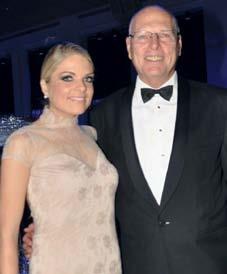
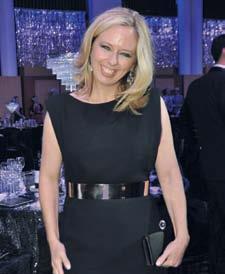
The décor was Gatsby inspired but it, too, was low key in comparison to a Baz Luhrmann production, and the best dressed on the night were the waiting staff in a Hollywood wardrobe of flapper frocks while most of the VIP ladies, Liberal and Labor opted for black, eschewing the opportunity to stand out in the crowd. But Erin Molan was lovely in lace accompanying her dad Jim Molan (Maj-Gen retired) and ever elegant Suzie Mostyn in black with deco bling and Helen McCabe a class act.
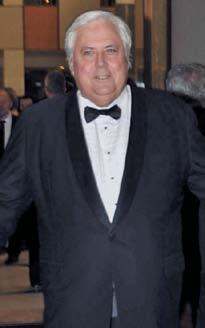
Standing out though was Clive Palmer for obvious reasons, and that larger-than-life attitude to convention as he chewed the ear of ABC chairman James Spigelman, but flying solo, like so many who work and play in this house of power and persuasion.
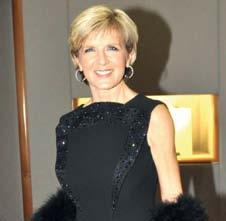
Foreign Minister Julie Bishop
MP Clive Palmer
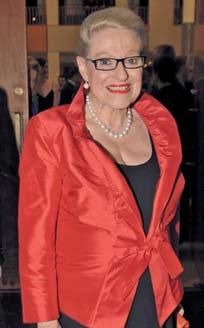
Speaker Bronwyn Bishop
Erin Molan and her father Jim
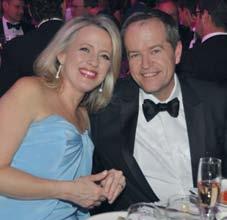
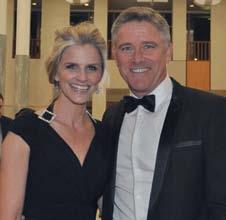
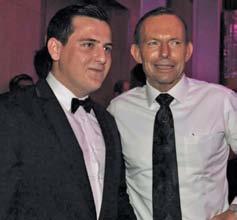
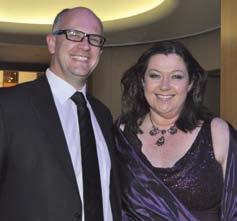
Chloe Bryce and husband Opposition Leader Bill Shorten Suzie Mostyn and Mark Riley Matthew Serafin and PM Tony Abbott
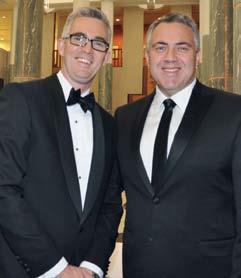
Helen McCabe David Speers and Treasurer Joe Hockey
Adam Stankevicius and Karen Middleton
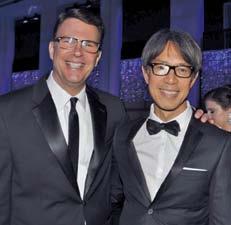
US ambassador John Berry and Curtis Yee
•
the fifteenth way we wear vintage fair
albert hall • canberra friday 4 july 6pm-9pm saturday 5 july 10am-5pm sunday 6 july 10am-4pm
two hundred years of fashion & fashion accessories for sale • jewellery • fashion art •textiles everything for the canberra ‘fashionista’
• free millinery workshops on weekend
• swing dancers saturday
• free rock and roll dance workshop
• vintage fashion movies
• ww1 centenary fashion talk
• cafe • door prizes
wear vintage sunday at 1pm and be in the running for $200 cash prize come-and-go tickets
adult $12.00 Conc: $10 Teen 12+ $6 Under 12 free info at www.frockupcanberra.com t:0408 380 524
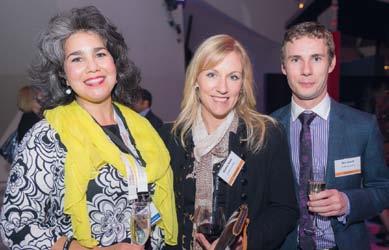
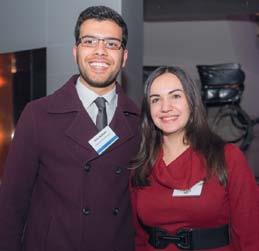
Alicia Doherty, Bianca Jones and Ben Jarrett
Nicole Haveic, Emelia Vimalasiri, Carol Scott and Sheree Kahlefeldt
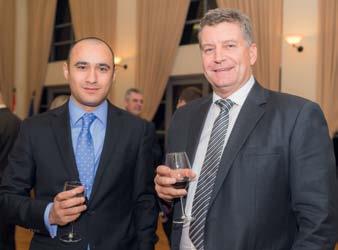
Michael Keating and Barbara Gilbert Araz Khasiyer and Chris Harrison
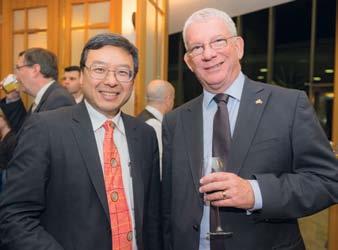
Jim Lee and James Galt
Maja Basic and Marlja Mustac
Jonathan Kobus and Murray Emerton Kim Ashton, Melinda Kibukamusoke and Kyira Cox
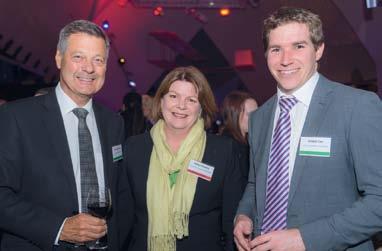
Allan Williams, Robyn Hendry and MLA Alistair Coe
Alannah Fox, Daniel Nicholas and Liesl Bouwer
Patricia Dias, Craig Beyerinck and Martina Milicevic
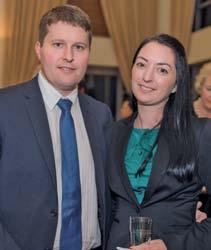
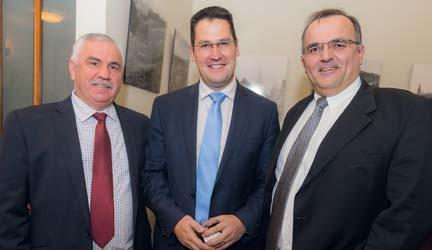
Drago Turcic, Senator Zed Seselja and Mladen Leko
Edita Colak, Anna Prosser and Anne Marie Dalseg
Terry Bakkum and Samires Hook
Photos by Andrew Finch
Warwick Beutler, Mandy Wheen, Julie Shaw and Sally Beutler
Emily Fisher, Jenny Noble and Libby Lloyd
Shane Rattenbury MLA and Tritia Evans
Rob Thompson and Robert Lisle
Margaret Callan, Kerri Elga and Anne Reece
Suzie Mostyn, Mark Riley, Patricia Lisle and Alex Sloan
Heather Chapman, Ruth Webber and Claire Byrne
Karen Wilkinson and Denice Swift Susie Close and Michael Tuite Victoria Cleary and Maurice Murphy
soon as you see the gowns, you can feel the love that has gone into them.”
Wedding dresses to angel gowns
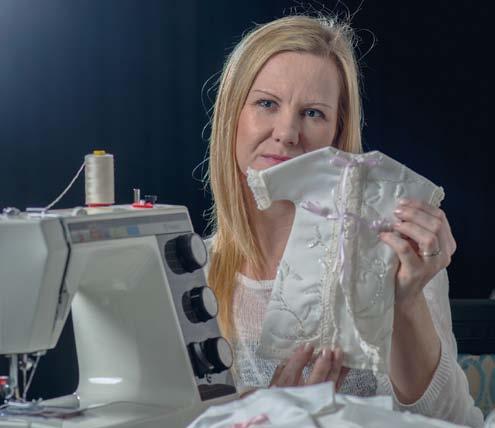
FIONA Kirk wants to help mothers who have experienced pregnancy loss, stillbirth or the loss of a young baby.
The founder of Angel Gowns Australia is using her sewing skills to handcraft donated wedding dresses into gowns for babies that she calls “sleeping angels”.
“Pregnancy loss is not often talked about – it seems we just don’t know how to talk about the loss of a baby,” she says.
“What’s worse is that many mums feel their baby didn’t matter. I want to show them they did, by helping in some small way at this awful time.”
Angel Gowns Australia started on March 27, when the child of a friend died at five months old. Fiona says the idea came from NICU Helping Hands, run by Lisa Grubbs in Texas.
“I wanted to help in some way, and I found out about a lady in America who was turning wedding dresses into angel gowns,” she says. “It spoke to me immediately, and I knew we needed something like this in Australia.”
The angel gowns are already available – for free – at many hospitals across the country, and the aim is for each one to be stored in an individual box, marked with one of three sizes.
“We make small, medium and large gowns, with small being for babies before 20 weeks, medium for 20-30 weeks, and large for full-term babies,” she says. “We also make to order if necessary.
“The idea is that a few boxes will be taken to the mother’s room, for her to choose the gown she wants.
“It’s a small way to make that
Drug’s unhappy aftermath
JUNE’S focus on DES (diethylstilboestrol) has raised awareness of the anti-miscarriage drug given to women during pregnancy from 1938 to 1971 (and sometimes beyond). Women given DES and their children of that pregnancy are at higher risk of certain types of cancer and reproductive problems. There are about 740,000 DES-exposed Australians, yet many are unaware of the fact and the potential adverse health effects. The support group contact is at 9875 4820 and the website is desnsw.blogspot.com
Kathryn Vukovljak reports
awful experience a little easier. It’s one less thing for the family to have to think about, and it’s also a way to help validate and bring to life the baby they lost.”
Fiona says the donated dresses have come from brides who kept the dresses because they loved them, but have parted with them because of what they’ll become.
“I’ve had people tell me they can’t imagine anything more beautiful for their wedding dress,” she says.
Fiona says she has very high standards when it comes to the stitching, because it’s so important that the gowns are perfect. Every single one comes to her for quality control. She says there are already around 180 volunteers involved in the program, from around Australia and NZ.
“As soon as you see the gowns, you can feel the love that has gone into them.
“I’m just so thankful for all the volunteer seamstresses who are doing this. Many are making the gowns in honour of their own lost child or grandchild.”
Fiona says it takes around four hours to make the beautiful gowns, some of which are heartbreakingly tiny.
“I feel calm and gentle while I’m sewing the gowns, with a sense of sadness, but it’s a beautiful thing to be doing, knowing where the gowns will go and what they will mean to someone,” she says.
Visit www.angelgowmsaustralia.com to donate a wedding dress or for more information.
Choir celebrates
THE Australian Rugby Choir’s annual concert will be held at the Southern Cross Club, Woden, 2pm, on Sunday, July 6, in what organisers promise will be an afternoon of special guest artists and wonderful entertainment. Tickets at $25 (concessions, $20 and under 15, $10) from the club, call 6283 7288.
Gang’s all here!
PRESENTED by Scouts and Guides, the annual “Canberra Gang Show” will this year be centred around the “Bean & Gone” cafe, where all of life passes through. It’s at the Tim Murray Theatre, Canberra Grammar School, Red Hill, July 12-19. Bookings and details to canberragangshow.com.au
Footy club birthday
THE Stirling-based Juggernauts AFL club is inviting past and present players, officials and supporters, families and friends to its 20th anniversary gala ball at the Canberra Southern Cross Club, Woden, on Saturday, July 26. Tickets are $100 and includes a three-course meal and drinks. RSVP by Friday, July 18 to jenw157@gmail.com or call 0434 249986.
Spring parade
CALVARY Hospital Auxiliary’s major fund-raising event for the year is its spring fashion parade, which will feature models drawn from hospital staff and members of the auxiliary. It’s at the Southern Cross Club, Woden, 7pm, on Saturday, August 30. Funds will be in aid of cancer diagnostic equipment and tickets are $60 (or $500 for a pre-booked table of 10). Bookings to 0407 835846 or 62599676.
Fiona Kirk... “As
Photo by Gary Schafer
Ramadan reveals deep history
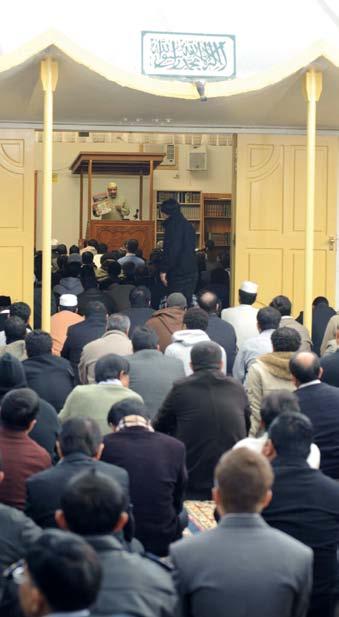
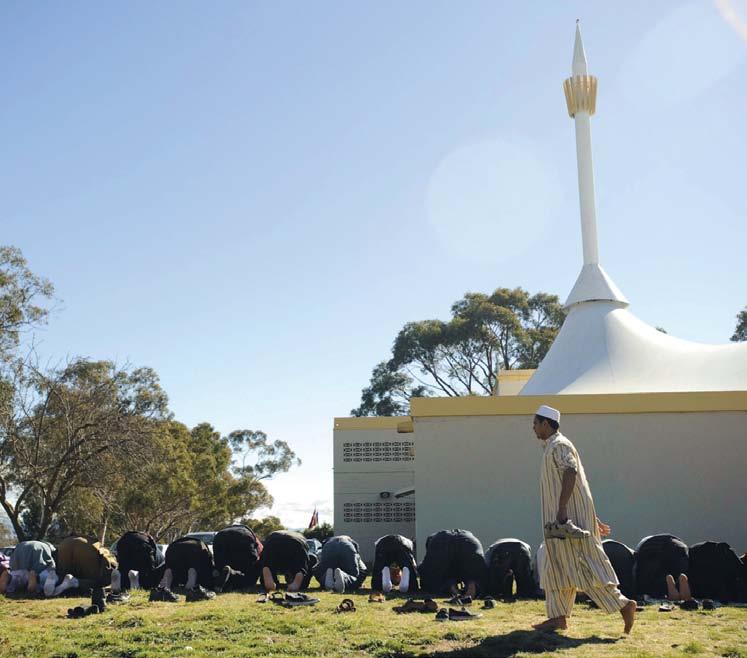
Canberra’s Muslim community is poised to join the rest of the Islamic world for a month of religious observation that includes daytime fasting and other personal constraints. Here STEPHEN EASTON explains the significance and traditions of Ramadan IF you look up to the sky over the weekend you should see a thin crescent moon, the observation of which is traditionally used to confirm the new month of the Islamic lunar calendar has begun, in this case the month called Ramadan.
Canberra’s Islamic community leaves the official announcement of the start of Ramadan to its local religious leaders: Imam Mohammed Swaiti from Canberra Mosque at Yarralumla; Imam Adam Konda from Canberra Islamic Centre at Monash and Imam Nouredine Lerabi, who leads the North Canberra Islamic Society in prayer at Spence Musallah.
Muslims believe it was during the same month more than 1400 years ago that the Prophet Mohammed first received messages from God, delivered to him by the archangel Gabriel as he prayed and pondered the world’s ills in a small cave on a mountain near the city of Mecca, where he lived.
In the most important of those revelations, the angel explained to The Prophet the meaning of Islam, or “submission” to God, by breaking it down into five precepts that are widely known as the Five Pillars of Islam and form the basis of living a good life for Muslims everywhere.
Fasting during Ramadan is the fourth of the Five Pillars, which begin with testifying there is one true God and Mohammed is His Messenger, and continue for the rest of a Muslim’s life with daily prayers, charity towards the less fortunate, and making the Hajj pilgrimage to Mecca at least once, if possible.
The revelations that continued for the rest of The Prophet’s life, and form the verses of the Koran, confirmed the devout religious people of the Middle East including Jews and Christians were already on the right track with pilgrimage to sacred sites, giving to the poor and fasting – a profound act of bodily purification that brings the devotee closer to God and helps them give
thanks, atone for sins, and think of those who are less fortunate.
In line with these ancient beliefs, observing Ramadan means a lot more than just not eating or drinking during daylight hours. Muslims also make extra effort during the holiest month of the year to refrain from smoking, sexual activity and speaking harshly to others, and to avoid things such as profanity, obscenity, violence, anger, envy, greed, lust and gossip. In short, they do their best for God, themselves and everyone around them.
ACT Islamic Society president Abdul Hakim says the yearly fast is not supposed to be easy, but points out there are exceptions for those who would find it impossible or difficult: prepubescent children, pregnant or breastfeeding women, travellers, older people and people with medical conditions that make fasting unsafe.
“Two things are very important about Ramadan,” he says. “During this month Muslims are very much encouraged to read the Koran and do the maximum of prayers, including special voluntary prayers, and second we are encouraged to undertake charity and humanitarian work.”
Mr Hakim says that personally, he sees fasting as very rewarding in a multicultural country like Australia, where people all around you are still eating and drinking, compared to a mostly Islamic country such as Indonesia, where non-Muslims generally avoid eating and drinking in front of people out of respect.
“I think sometimes you certainly feel hungry, sometimes you feel thirsty also, but you must have determination and once you have decided to do this, you don’t feel it so much,” he says, reflecting on his own experience over the years.
“In the last 10 days you become a little bit weak, definitely – physically it has an effect, but I think you have to put yourself in that situation and it is more often a mind game, and the other
things besides eating and drinking can be more difficult to control.”
When it’s over, it’s time for the festival of breaking the fast, Eid al-Fitr, a day for everyone to come together to celebrate unity and, of course, eat lots of delicious food.
Mr Hakim welcomes everyone – not just Muslims – to come along to a big Eid celebration on the Saturday after Ramadan ends, August 2, at Australia’s second oldest mosque in Yarralumla.
The Eid Celebration on Saturday, August 2 will be Canberra Mosque, 130 Empire Circuit, Yarralumla. All welcome.
Canberra Confidential
Best satisfaction money can buy
WELCOME to the happiest kingdom of them all. Ignore the flint hearted who fret about rising rates, spiralling Territory debt and an overpriced train set, the government is sensing nothing but enormous levels of love in all sorts of corners of the fiefdom. CC can’t help but wonder why Jerry and his Merry Liberal Men bother to oppose the statistically amazing levels of satisfaction the activities of our wise and knowing government is enjoying.
And how do we know how much we love the things they do for us? They pay undisclosed amounts for surveys, don’t reveal the questions asked and probably tell us only the good news. And what jolly spin it is!
In the past week we discovered:
• 95 per cent of people are satisfied with Canberra’s municipal services, an increase on last year’s 90 per cent, according to TAMS Minister Shane Rattenbury, who offered to do even better.
• 89 per cent of people are satisfied with the National Arboretum trumpted the Chief Minister Katy Gallagher in the TAMS annual satisfaction survey, a number drawn from the 61 per cent of the 1000 respondents who had visited the arboretum in the past 12 months. A sullen six per cent were ambivalent and a thankless 5 per cent dared to be dissatisfied.
• 72 per cent of people in favour emboldened Rattenbury to announce possible new slow-speed precincts following “community support” for 40 km/h speed limit zones. From a statistically fraught survey of only 450 respondents, he’s discovered that most felt pedestrians and cyclists were safer since the limits were introduced. You need a survey to tell you that, Shane?
• 96 per cent of attendees responding to the 2014 National Multicultural Festival Spectator Survey expressed a “high degree of satisfaction” at the event, according to Multicultural Affairs grand poobah Joy Burch, topping the survey pops and statistically outshining all before her. Believe it or not.
In a new League
HE barks all week for ACT Opposition Leader Jeremy Hanson and now Liberal media spinner and ex-radio journalist Joe Prevedello is calling Rugby League games here and in Sydney for 2CC.
“The calling is after hours only – because most of the games fall around the weekend there is no conflict and everything can be managed,” Joe tells CC. “Jeremy is happy with it.”
We look forward to his call of the next election grand final in October 2016.
Tactile art in the dark
BILLED “the best installation you’ll never see”, upcoming exhibition “Touch” is presented in total darkness by eight members of Canberra’s blind and vision-impaired community and led by artist Tony Steel. At Courtyard Studio, Canberra Theatre Centre, July 2-12.
Happy and glorious...
ROYAL Doulton ambassador Michael Doulton will be at DJs Woden on Sunday, July 20. The UK pottery company’s fifth-generation emissary’s national tour is “Celebrating Royalty”, which includes flogging what CC thinks is a funny looking royal baby figure.
Limited to only 4000 copies, the 22-centimetre, $299 model depicts the first appearance of Prince William, Catherine and the boy George on the steps of St. Mary’s Hospital, London, where the prince was born on July 22.
Though CC doesn’t feel it from the photo, the model apparently captures “the joyful expressions on the parents’ faces and the fine pinstripe on the Duke’s shirt to the white spots on the Duchess’ sky blue dress and the intense brilliance of the sapphire of her famous engagement ring.”
Tickets for two?
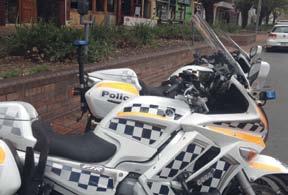
WHO’S going to issue the ticket and to whom? Two police motorcycles sharing a parking spot in Kingston the other day and the expired meter raises the question, when sharing a parking space do both offenders get a ticket or can they halve it back at the station?
Oh, come, all ye faithful
By Helen Musa
PAUL Eldon can hardly conceal his excitement as he conjures up visions of Christmas trees, mulled wine, mince pies, Christmas-themed music, including classic carols, upbeat numbers and more serious offerings.
For this year, Christmas is coming early for this enterprising young Englishman. Eldon and David McKay are co-founders of classical voice ensemble Coro, which is staging “Christmas in July”, a feast of food and music in the hall of All Saints, Ainslie, on Sunday, July 6 – all for the flat ticket price of $20 and designed to bring “some festive cheer to the traditionally cold, grim days of winter”.
A one-time chorister with Schola Cantorum of
Oxford, he lives and breathes music and enthuses about everything from “Deck the Halls” to “Good King Wenceslas”, “In the Bleak Midwinter” and “Frosty the Snowman”, noting how ridiculous they sound during a scorching Australian Christmas.
“People who sing have families,” says the optimistic Eldon. His dream is that the kids who come along “will be annoying their parents for months singing the tunes”.
But, as he says, “people also expect a bit of quality” so they’ve chosen special items such as three beautiful Poulenc Christmas songs to balance the rollicking carols.
I catch up with Eldon for a coffee at Braddon, where everybody knows him, and no wonder, he waits by day at Italian & Sons.
Eldon has a singularly unusual background for somebody who sounds British to the bootstraps.
He was born and raised in Hong Kong, though
Busy singers on the move
CANBERRA artists get around: countertenor, Tobias Cole is preparing for his title role in “Akhnaten” in the August production by the State Opera South Australia, part of the “Glass Trilogy” and, in Britain, soprano Amanda Forbes is waiting for Glass to put the finishing touches to his 27th opera, “The Trial”, in which she will have a role. It’s based on Franz Kafka’s novel and the production by Music Theatre Wales will premiere at the Royal Opera House.
MEANWHILE, artist Fatima Killeen has been in North Morocco at the Symposium International d’Art Contemporain Asilah, with a residency and exhibition.
RAAW may look like the sound a lion might make, but it stands for M16 Artspace’s “Residency: Aspiring Arts Writer”. The inaugural winner
is Claire Capel-Stanley. M16 has also announced, the 2014 Emerging Exhibition Prize has gone to curator Ellen V Wignell and artists Yasmin Masri, Jemima Parker, Kelly Hayes and video artist Oscar Capezio.
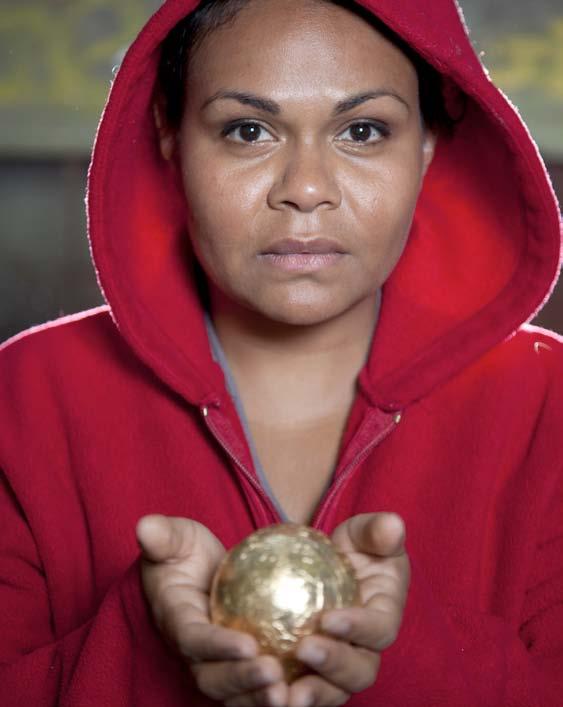
“THE Magic Hour”, by playwright Vanessa Bates and starring Ursula Yovich, celebrates the silent women in our Australian landscape and their imaginary, missing or suppressed counterparts in fairy tales from so long ago. At The Street Theatre, July 4-6, bookings to thestreet.org.au or 6247 1223.
NAIDOC Week’s theme is “Serving Country”. A group of our own “cultural warriors”, Duncan Smith from Wiradjuri Echoes, Linda
largely educated in England, and came to Canberra not from Britain, but from Beijing, where he achieved a lifelong dream to learn Mandarin.
Arriving in Canberra couple of years ago to join his partner, he gravitated towards the musical community and performed in Sandy France and Helen Nourse’s bushfire opera, “From a Black Sky.”
If McKay is the conducting genius behind Coro, Eldon is its mouth and he is quick to talk up the ensemble’s successes, with finalist positions at both the 2012 and 2013 MusicACT Annual Music Awards, the MAMAs, a sell-out concert last year with countertenor Toby Cole, and plans for a slap-up concert in August combining the Bach and Pärt Magnificats.
Coro Chamber Music, “Christmas in July”, 4pm, Sunday, July 6, All Saints Ainslie Hall, bookings to corocanberra.com or tickets at the door.
Huddleston from Burrunju Gallery, Jo Donovan from Bandu Catering and Michael Weir from Stik n Move will be at Belconnen Arts Centre in conversation with Cara Kirkwood from the NGA. Aunty Agnes Shea will open the 3pm-5pm event on Friday, July 4. Free, including afternoon tea.
THE Taipei Economic and Cultural Office has come up with a novel angle for its 2014 photographic exhibition, “A Narrative of Light and Shadow”, this time focusing on female photogra-
from
the Theo
FLAUTIST Teresa Rabe joins soprano Louise Page and pianist Phillipa Candy for an afternoon of what they’re calling “entrancement and enchantment, trills and thrills” –songs by Handel, Rodrigo, Corigliano and the song cycle “Secrets”. At Wesley Music Centre, 3pm, Sunday, June 29. Tickets only at the door.
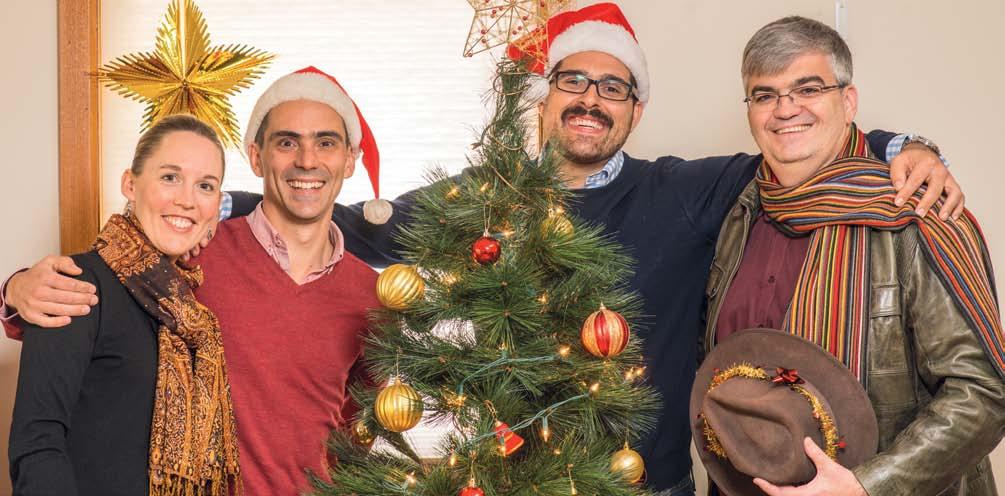
Getting into the spirit… from left, mezzo-soprano Veronica Thwaites-Brown, baritone Daniel Sanderson, tenor Paul Eldon and tenor Ian Mills.
Photo by Gary Schafer
phers
Taiwan. The show runs at
Notaras Multicultural Centre, 2nd Floor, North Building, London Circuit, Civic, until July 24.
Helen Musa arts in the city
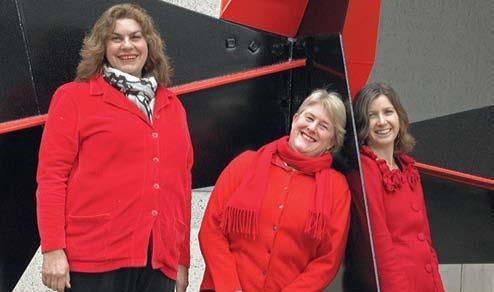
Louise Page, left, Phillipa Candy and Teresa Rabe… “trills and thrills” at Wesley Music Centre, 3pm, Sunday, June 29.
Solos snare a snappy cast
FEATURING around 40 of Jerry Herman’s best songs from eight of his most successful Broadway shows, this production of “Showtune” boasts a hard-working ensemble cast of 12 performers, including musical director Leisa Keen. The songs are presented, not as scenes from the shows for which they were written, but cleverly grouped to expose fresh nuances in the lyrics.
They’re performed, without connecting dialogue, on a stylish set designed by Andrew Kay, with lots of colourful costumes by Christine Pawlicki, and some impressive, well-rehearsed ensemble numbers, which have been cleverly staged by director Jordan Kelly to disguise the lack of dance skills in his well-drilled cast. The scene changes are imaginative and snappy.
However, “Showtune” is about the songs, and many of Herman’s songs were written to showcase the talents of highly skilled Broadway star performers. Despite their
musical theatre
“Showtune”
Canberra Repertory Society.
At Theatre 3 until July 5
Reviewed by Bill Stephens
best efforts, no-one in this cast possesses either the vocal skills or stage presence to do the solo songs justice. “Time Heals Everything” and “Shalom” expressively performed by Keen, accompanying herself at the piano, point the way.
Despite strong performances from Liz de Totth, Sarah Hull and Janelle McMenamin, and entertaining moments from Ben Hardy, Nathan Kellie and John Kelly, it is Jordan Kelly’s brilliantly staged and well-sung ensemble numbers that make this show worth braving the Canberra cold.
When pace is a casualty in this war
“THE Home Front” tells the story of three Australian women during November 1916.
The show is based on extensive research but has no definitive script. At the beginning of the performance, audience members attribute character traits and roles to the actors. The weaving of audience suggestions into the unfolding drama provides evidence of the improvised nature of the show.
We can see the actors responding with truth, in real time, to situations inspired by a particular setting (World War I) and which are also universal human experiences. However, improvisation places its own barriers between the audience and the story. It’s easy to find oneself becoming distracted from plot and character development into second-guessing what is pre-planned and what is improvised. And while it’s engaging to see genuine impulses and emotions from the characters,
theatre
“The Home Front”
The Street Theatre until June 28
Directed by Heidi Silberman
Reviewed by Simone Penkethman
pace is sometimes a casualty in this war.
“The Home Front” has a clear and satisfying plot, indicating that the elements of improvisation are contained within a distinct set of possibilities. It would be an interesting show to see again, as the similarities and differences between performances would offer further insight and the conventions used to bring it to the stage.
As we enter the centenary of World War I and living memory of that time fades, it’s pleasing to see a spotlight on women’s stories.
“A
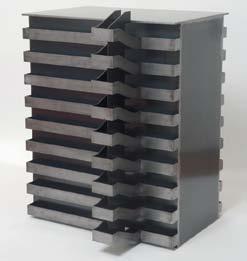
Height” 2006, mild steel.
Artistic impetus from nostalgia
visual art
“Kensuke Todo: A Survey”
Curated by Peter Haynes
At Drill Hall Gallery until June 29.
Reviewed by Johnny Milner
HERE is a series of steel sculptures and charcoal on paper pictures by Kensuke Todo, a Japanese-born artist, who lives in Canberra.
Todo’s work combines aesthetic principles of formalist and minimalist sculpture (manifested in the work of influential 20th century artists, such as Richard Serra and Tony Smith) with traditional Japanese architecture and design sensibilities, in particular the Japanese concept of Ma, which denotes empty or open space.
In the accompanying exhibition booklet, Todo speaks of the necessity to live outside his home country to experience a sense of nostalgia or longing, which in turn provides impetus for his artistic work.
We see evidence of such wistful affections in the exhibition’s centrepiece “Envelop”. Monumental in size, this piece features a steel futon mattress draped over an elongated cuboid object and is demonstrative of Todo’s ability to contrast hard and soft materials.
On entering the Drill Hall, one confronts a series of works that depict staircases leading nowhere: such as the pieces “Escalator” and “A Height”. These relate to the concept of ascension – another important motif within the work.
A further standout piece is “Junction two”, which portrays an isolated segment of an identified motorway.
Delicious surrender to University life
IT was a bargain. For a penny you could pop by to enjoy coffee, the company of people from all levels of society and access to the latest newspapers.
It was time to engage in serious discussion, indulge in a bit of gossip, and meet interesting, and often, eclectic people.
This was at a Penny University in 18th century London. Fast forward to November 2013 and a Penny University has popped up in Kingston, also inviting guests to settle in and enjoy the café’s offerings.
Six of us did just that – most of us had not been before. What would we discover with our dinner visit?
Penny University’s décor is unique. It features exposed red brick on which are funny looking woodland creatures (local artist), an old laundry tub, vases of perky flowers, and a wooden cabinet showcasing sensational sweets such as gluten-free lemon syrup cake ($5), all made with tender loving care by an aspiring 19-year-old friend of owners Ellie Raymond and Effie Kochinos.
Then there are communal tables, some with aged timber tops and chairs of all types, shapes and comfort levels. Nothing matches but everything goes together. It’s all designed to be homey and warm.
With the menu, starters hover around $18, mains range from $27 to $36 and desserts $16 to $24 (cheese board for two). Lots of gluten-free, dairy free and vegetarian options.
Our succulent Canadian scallops were pan seared and served with wilted baby beetroot leaves and a regional-style relish inspired by Chiu Chow in China.
We shared zucchini flowers stuffed with creamy goat’s
cheese and roast pork belly and appreciated how Penny University considered the size of our party and adjusted the number of pieces on each starter dish to accommodate everyone. This is often missed by cafés, which is inconvenient for customers.
The braised beef cheeks was a hero main dish. How can you go wrong with a honey and soy dish slow cooked for six hours and served with creamy roasted garlic mash? Equally delicious was the salad of “magic” pan-tossed truffled mushrooms, potato, baby chard, asparagus, chevre and a leek and parmesan pancake. It was creative and refreshingly different.
Also creative was the vegetarian roasted cauliflower and wattleseed tortellini with coffee-roasted Dutch carrots and sage noisette. Lovely to see Australian native ingredients on the menu. The Quack Quack (you guessed it, duck) stir fry was five-spiced. A tad sweet we agreed. Other mains scored well, but not as high.
The wine list is not extensive but thoughtful. Would love to see an ACT red on the list (there’s a white and a bubbly).
Penny University is also a coffee-roasting establishment. It is open for coffee, breakfast and lunch through the week and for dinner Thursdays, Fridays and Saturdays.
Celebrating 25 years of excellence and welcomed as an
member restaurant to The Academy of Italian Cuisine for accurately displaying Italian culinary traditions and innovations.
WENDY JOHNSON
arts & entertainment
With a ‘Glint’ Scott eyes the future
By Helen Musa
“GLASS is a collaborative activity,” says artist Scott Chaseling, “that’s a big part of why we like it so much and it’s just like that in Canberra.”
Chaseling is currently caretaker for Megalo’s 1927 heritage cottage on Dairy Flat, restored during the Stanhope era’s “repair, renovate, restore” phase and now home to visiting artists. But he won’t be there for much longer because he’ll soon be off to Berlin for six months via a university near Chicago.
That’s nothing new for him. “I don’t think I’ve ever stopped in the one place for more than four years,” he says.
Chaseling has already lived in Germany for four years and says it puts him in mind of Montmartre in the 1800s or SoHo, New York, in the 1950s, packed with cafes and artistic frisson.
During his previous time there he and some friends created a studio in an old Stasi car park. He introduced an American woman, Nadinia Idriss, to the location and there she built, amazingly, the first hot-glass workshop in Berlin, for which Chaseling became regional artistic director.
“It makes you realise that Canberra really is a major international centre of glass…we live in the most amazing glass community.”
As if to prove it, Chaseling is taking part in
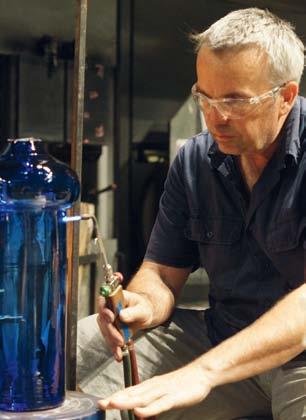
Artist Scott Chaseling… “We live in the most amazing glass community.”
the exhibition “Glint”, curated by Alison Alder and coming up soon at The Glassworks, which got together with Megalo Print Studio to give four glass and four print artists (Chaseling, Emilie Patteson, Ben Rak, Annika Romeyn, Dionisia Salas, Mark Thiele, Melinda Willis and Annie Trevillian) the chance to explore connections between their different forms.
So how do you mix glass and print? Easy, you find the point at which glass breaks and where you can introduce print, Chaseling says, or you can etch on glass, or you can make flat image prints and embed them into flat glass, or you can print images into blown glass.
“Glint”, at Canberra Glassworks, 11 Wentworth Avenue, Kingston, July 2-August 3.
Love
“Gabrielle” (M)
THE genetic disorder Williams syndrome occurs in perhaps one in 20,000 births.
Canadian francophone filmmaker Louise Archambault has made this fictional drama less to proselytise about it as a social issue than to tell how Gabrielle (Gabrielle Marion-Rivard) and Martin (Alexandre Landry) cope with it after love intrudes on their innocence.
The pair meet in a musical group (musicality characterises many sufferers). Martin lives with an overprotective mother. Living in a group home, Gabrielle craves independence and babies. Her sister Sophie (Mélissa Désormeaux-Poulin) ferries her around Montreal on the pillion of her moped.
The film gently guides us through Gabrielle’s yearnings, affectionately demonstrating her lack of competence once that first joyous rapture inevitably gives way to daily realities.
Martin defies his mother’s restrictions and rejoins the choral group preparing for an open-air concert under the tutelage of noted Canadian singer Robert Charlebois. Privacy under the temporary stage before the performance exposes the lovers’ vulnerability to unforeseeable consequences.
It’s gentle, credible, affectionate filmmaking, musically perhaps a little tentative, engrossing in its depiction of relationships and obstacles.
“Gabrielle” was Canada’s entry in this year’s Academy Awards foreign language category.
At Palace Electric
Dougal Macdonald cinema
“How To Train Your Dragon 2” (PG)
THE original award-winning “How To Train Your Dragon” (2010) had a charming innocence but I’m always leery of sequels.
Canada-born, Irish-trained animator Dean DeBlois has fallen into the trap of imitation. The result here tells the same story as a plethora of mostly live action films in which the good guys confront a bigger, nastier, better-equipped foe seeking to control the world. It’s been done before and it’s getting stale.
On the icy island of Berk, Stoick (voiced by Gerard Butler with a contorted Scottish accent) benignly rules a Viking community.
Stoick’s son Hiccup (Jay Baruchel) and his pet dragon Toothless win regularly at the dragon races. In another kingdom, Valka (Cate Blanchett) cares for sick, injured and orphaned dragons. And further out, Drago (Djimon Hounsou) is buying up dragons and training them to fight.
The film is well supplied with fanciful and generally charming dragons blessed with flight capability. One that isn’t is the Alpha, Drago’s secret weapon, an aerodynamicallyimpossible behemoth whose appearance suggests that his mama mated with a mastodon.
The attraction of this same-old same-old
story-telling soon palled. But small fry easily impressed by brightly-coloured movement and not yet conditioned by grown-up notions of good and evil may well find it acceptable.
At Palace Electric, Hoyts, Capitol 6 and Limelight
“Frank” (MA)
OFFICE worker Jon (Domhnall Gleeson) jogs along a suburban street composing as he goes and singing about what he sees, the people he passes.
This is preparation for a wonderful wacky comedy set among musicians and exploring the idiosyncrasies of an eccentric musical genius whose face none of the other players in the nascent band Soronprfbs has ever seen. Frank (Michael Fassbinder), a tortured soul loosely based on real-life British comic TV personality Frank Sidebottom (Chris Sievey), permanently wears a large papiermâché mask covering his head.
Learning that Jon can play C, F and G, Soronprfbs’ frontman Don (Scoot McNairy) recruits him to play keyboard in a house beside an Irish lake he has rented to make a recording in which Frank wants to incorporate all manner of wild sounds. The comedy is subtle, intelligent, unabashed, vigorous and pervasive. The plot none-too-subtly satirises social networking and the obsession for inventing a new musical style. While the music In “Frank” is not my style, the movie certainly is.
At Palace Electric
Coming up roses
Rose planting time is now in earnest and garden centres are overflowing with new varieties plus the old tried and tested favourites
UK breeder David Austin has taken the rose world by storm in recent years.
FRUIT TREES
Born in 1926 into a farming family in the Shropshire village of Albrighton, he just loved the roses in the garden and, after reading “Old Garden Roses”, a book published in 1936, he became almost obsessed with growing them.
Rose breeding is like most plant breeding, the skill of taking the pollen from one flower to another, which can produce roses completely different from the parents (as opposed to cuttings that are, in effect, clones).
But most of the existing roses in the ‘30s bloomed only once and this did not satisfy Austin. In 1969, after many years of breeding, he released his first repeat-flowering roses named after characters in Chaucer’s “Canterbury Tales”. One of his first was Rosa. “The Wife of Bath”.
Dissatisfied with just repeat flowering, Austin crossed perfumed, old-fashioned roses with
beautifully shaped modern roses that had virtually no fragrance.
Each year Austin’s nursery raises upwards of 150,000 seedling roses, of which 10,000 will be selected for further breeding. From these, 300 seedlings will be selected and after anything up to 10 years, a final selection of just four to six varieties are presented at the Chelsea Flower Show for public release.
I have seen the hectares of glasshouses, all sealed so that bees cannot get in to upset the breeding process. It is an amazing sight. Vital to the selection is disease resistance, including to mildew and the dreaded black spot. The breeding continues with the release every year of these special new varieties eagerly awaited by rose lovers worldwide.
A couple of my favourites are Rosa “Graham Stuart Thomas”, named after his early mentor, with rich golden-yellow flowers and R. “Mary Rose” named after Henry VIII’s flagship raised from the English Channel, with its myrrh-scented rosette-shape flowers.
In our garden, our favourite is R. “Gertrude Jekyll” with an abundance of large, rose-pink blooms and wonderful old-rose fragrance.
More than three million David Austin or English Roses are sold worldwide every year. His demonstration rose garden is considered the best in Britain. It’s open every day, entry is free, and worth a visit.
More information at davidaustinroses.com
Rose jottings…
• Always look for healthy roses with thick, twoyear old stems and kept in garden centres in outside natural daylight. Vitally important when transplanting in Canberra’s winter cold.
• It has now been proven by the Royal Horticultural Society that roses can be planted in the same place as previous roses.
• Do not use any chemical fertilisers in the planting hole. I recommend organic Healthy Earth fertiliser well mixed into the soil, preferably a week before planting.
• Examine and trim any broken roots with sharp secateurs and ensure the hole will accommodate the roots without bending.
Creating Sustainable Gardens
Glenbog Nursery and Landscaping
“Graham Stuart Thomas”... named after David Austin’s early mentor.
“Gertrude Jekyll”... one of Cedric’s favourite David Austin roses.
puzzles page
Joanne Madeline Moore
your week in the stars – June 30-July 6, 2014
ARIES (Mar 21 – Apr 20)
Are you annoyed that people aren’t behaving the way you want them to? Expect loved ones to be demanding and colleagues, clients or customers to be more defensive than usual. Cool compromise is the key. When it comes to joint finances, the more disciplined and focused you are, the more successful you’ll be. Don’t expect instant results – slow and steady wins the money race.
TAURUS (Apr 21 – May 20)
Avoid being a gullible Bull early in the week, when someone may try to pull the wool over your eyes. Stay alert. The more you dig your heels in and refuse to budge on Friday, the more frustrating the weekend will be. So be flexible and keep the lines of communication open. Your motto for the moment? Put on your adaptability hat, and expect the unexpected!
GEMINI (May 21 – June 21)
Hey Gemini – thank goodness Mercury (your ruling planet) goes direct on Tuesday so communication, conversation, business, education and travel should all start to improve. If you take the time to communicate clearly with family and friends, you’ll reap the rewards. But money matters and joint finances look complicated, as you disagree with someone over who owns what.
CANCER (June 22 – July 22)
A creative project finally takes off, as Mercury moves forwards and your imagination soars. Friday’s Sun/Pluto opposition exacerbates an existing problem in a relationship. Try not to take things too personally - the more defensive you are, the more difficult the day will be. Expect domestic dramas on the weekend, as a family member frustrates you with their boisterous behaviour.
LEO (July 23 – Aug 22)
Lions can be a selfish lot, as you become self-absorbed with your ambitions, dreams and daily dramas. But, with the Sun and Jupiter both jumping through your humanitarian zone, it’s time to finally roll up your sleeves and help those around you. Be inspired by birthday great Princess Diana (born on July 1, 1961): “Everyone has the potential to give something back.”
VIRGO (Aug 23 – Sept 22)
Your career gets a welcome boost, as Mercury moves forwards in your job zone. But don’t spend so much time looking at options and worrying about work that you lose motivation and momentum. Single Virgos – love and work are linked, as you view a colleague or client in a romantic new light. The stars favour networking with a wide range of friends and acquaintances.
LIBRA (Sept 23 – Oct 23)
Neptune confuses issues early in the week so be careful you’re not viewing situations and people through ridiculously rose-coloured glasses. Attached Librans – when it comes to a major goal, make sure you and your partner are on the same page. Singles – can you differentiate a dream date from a disappointing dud? Saturday is super for socialising in beautiful surroundings.
SCORPIO (Oct 24 – Nov 21)
This week Pluto gives you an energy surge that increases your desire to be in charge. But, if you want to avoid power struggles and unpleasant dramas, especially on Friday, then stop trying to control others. And avoid the temptation to stew on grievances. If you’ve got a problem, don’t bottle it up inside Scorpio – have the courage to speak up and say what’s on your mind.
SAGITTARIUS (Nov 22 – Dec 21)
Active Archers to the rescue! Positive aspects increase your generosity, plus your desire to help those around you. But, before you jump in, just make sure others require your assistance. If you are reckless with a close relationship this week, you could find yourself with a fractious friend – or livid lover – on your hands. When it comes to money matters, strive to be more organised.
CAPRICORN (Dec 22 – Jan 19)
Your perfectionist side is likely to go into overdrive this week, as Pluto amps up your obsession with perfection. The more you slip into Capricorn control-freak mode, the more problems you’ll encounter with others, and you certainly won’t win any popularity polls. Calm, considered compromise is the smart way to go – even though it’s the last thing you’ll feel like doing.
AQUARIUS (Jan 20 – Feb 18)
Be very clear in the way you explain things to a child, teenager or friend early in the week. Otherwise you are likely to get your wires crossed and your meaning will be scrambled. Adventurous Aquarians – don’t stay cooped up inside this weekend! The Moon and Mars activate your restless gene so it’s time to travel, exercise, play sport or explore the great outdoors.
PISCES (Feb 19 – Mar 20)
Creative inspiration is high, but don’t get so carried away that you delude yourself and head into the realm of pure fantasy. Keep it real. Plus, with Venus and Mercury moving through your domestic zone, strive to make family relations as pleasant as possible. Take your cue from birthday great the Dalai Lama: “A loving atmosphere in your home is the foundation of your life.” Daily astrology updates at www.twitter.com/JoMadelineMoore Copyright Joanne Madeline Moore
General knowledge crossword No. 458
Sarita is an IT contractor and came to see me about what she could claim against her income this year.
I said her enqiry was timely because the Australian Taxation Office had just issued its annual notification of areas of emphasis for the 2013-2014 year and this year it was a little different.
“Instead of focusing on occupations, the focus is on such things as the work-related proportion of use on electronic items such as computers, laptops, mobile phones, tablets and internet connections,” I told her.
Across
3 Which horse won the Melbourne Cup in 1974 and 1975 (5,3)?
7 To which country did Santa Anna belong?
8 Name a term that describes an answer or reply
9 Which particular gambling card game is also known as pontoon?
10 Name the ornamental shoulder pieces worn on uniforms
11 Disembodied spirits are more readily known as what?
14 Name the person who grants a lease
17 What do we call salts or esters of nitric acid?
18 In Scandinavian folklore, which supernatural beings are said to inhabit caves, etc?
19 What is another term for a pattern, mould, or the like?
20 Which word describes one who practises naturism?
21 Which well-known cagebirds are usually bright clear yellow?
Down
1 To corrupt by intemperance, etc, is to do what?
2 Name the childhood disease characterised by softening of the bones
3 Who introduced a bill simplifying land ownership, Sir Robert ...?
4 Name the planet beyond the orbit of Uranus
5 What, in golf, serves as hazards?
6 What, colloquially, is a toadying, sycophantic person?
11 Which term describes a relationship to origin?
12 Which empire held sway for more than six centuries?
13 Name a professional fishing boat
14 When one yields to advice, one does what?
15 What do we call those people who assist boxers in their corners, between rounds?
16 What is a tapering, four-sided shaft of stone? Solution next
Sarita said because she worked in IT, she had been told she could claim 100 per cent of her computer and home internet connection.
“That’s not quite right, Sarita,” I said. “You can claim the proportion of use that is for work purposes. The first question that you need to answer is: Do you need to use a computer at home? If the answer is ‘yes’ then you need to calculate the amount that you use it for work.”
Sarita said she had to deal with people in offices around the world in different time zones and often had to use her computer, after hours, from home.
“Well, that should be sufficient to confirm that you do need to use your computer at home,” I said.
“The next question is: How much of the computer’s use is for work purposes? As I recollect, you have two school-age children; do they use the same computer that you do?’
Sarita said she had one computer and one internet connection at home and that her children and partner used the internet connection.
“So how do I establish how much I use it for work?” she asked. I told her the ATO suggested keeping a log for at least a month each year to record when anyone logs on and whether they are using it for work or for private use.
“The laws require that it is up to you to substantiate your usage, so you need documentary evidence by way of receipts and logs,” I advised her.
Sarita said that keeping a log was going to be very inconvenient. “Trying to keep track of the kids’ usage will be very difficult,” she said. “Rafael, my partner, mentioned that his employer has said that he can salary sacrifice a computer. Would this make things any easier?”
I said if the computer is a salary packaged item your partner can’t claim for its work use.
“If the children have their own computer then you only need to keep a record of your personal computer use,” I said.
“This is obviously much easier. Apportionment of the internet connection may be a little harder, but as wireless connections often allow multiple users to be logged on simultaneously, claiming one quarter of the ongoing cost should be acceptable to the ATO.”
Sarita said: “Thank you, Gail. That’s so much clearer now. It shouldn’t be too difficult for me.”
If you require any information about your tax claims, contact the friendly team at Gail Freeman & Co.
If the unique comfort of natural gas heating is on your mind this winter, there’s never been a better time to connect or upgrade. ActewAGL’s hottest ever natural gas heater deal is on now, with up to $1,000 back on new natural gas heating systems and upgrades.
Plus, with a range of manufacturer incentives and finance options* across a wide range of gas heating appliances, you’ll save even more. It’s easy to see why natural gas is the natural choice.