

































































Villawood,
Strathfield, Nowra, Batemans Bay, Fairfield Central, Bonnyrigg, Queanbeyan, Edgecliff, Wollongong, Shellharbour, Fairy Meadow, Mt Annan, Bankstown Central, Minto, Leichhardt, Ulladulla, Dapto, Bowral, Eastlakes, Maroubra, Menai,


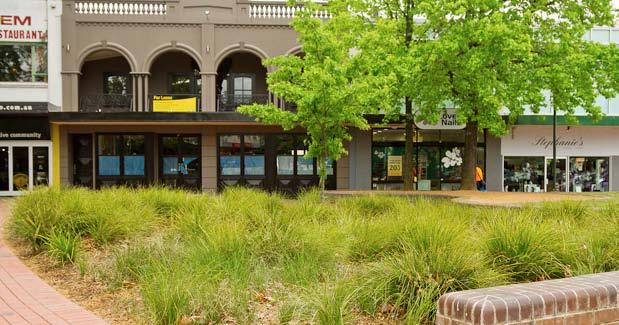
A LETTER from a Kingston traders committee sent in August offering to re-turf Green Square was “mislaid” by the ACT Government.
A “CityNews” inquiry to Chief Minister Katy Gallagher’s office revealed the letter had been “mislaid but is now with the Chief Minister being considered”.
In its letter, the committee had offered to fund the cost of reinstating grass to the square and adding hydra cell to the soil to help maintain water retention, after Territory and Municipal Services replaced it with drought-tolerant, native shrubs in 2010.
In July, “CityNews” reported on a petition by the committee requesting the shrubs be replaced with grass as business in the area was steadily declining.
At the time, the Government’s response was that enough money had been spent on the area, and that grass was difficult to maintain in Green Square due to its “high pedestrian traffic”.
Since 1993: Volume 19, Number 39
Arts&Entertainment 20-24
Canberra Confidential 14 Cinema 21
Crossword 25
Dining 24
Garden 26-27
Horoscope 25
News 3-12
Politics 10
Socials 15-17
Soduko 25
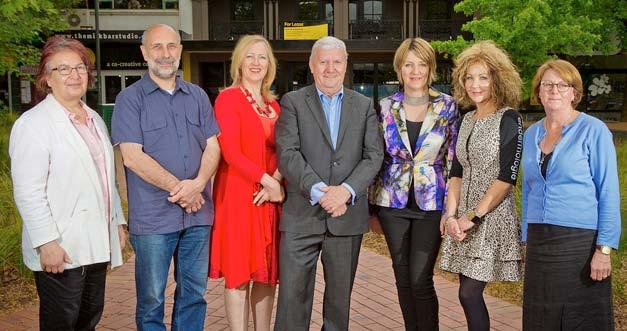
Committee spokesperson and owner of Kingston’s Radinger Jewellers, Gabi Radinger, says she feels like Green Square is a “forgotten area.”
“The paving is beautiful, we’re happy with the infrastructure, but we feel that if the shrubs could be replaced with grass again, it would bring the people back, and give it a real community feel,” she says.
“The way it is now is not inviting, it’s ugly, the plants look aggressive, kids run through them and slash their legs because the plants them-
selves are actually really sharp.”
Recently the committee of more than 30 traders has been backed by Liberal member for Molonglo Steve Doszpot in an effort to ramp up its campaign to restore the grass.
Mr Doszpot says the campaign to restore the grass is a “no-brainer”.
“It used to be such a nice area, and during these school holidays, the change was really evident –people used to come here with their families, but there’s a real absence of that now and the shopkeepers cater for the families, so they’re

missing business,” he says.
“The area itself isn’t being maintained, there’s cigarette butts and rubbish everywhere.
“Children can’t play in the grass with all the rubbish and if they did, they would be hidden behind the shrubs anyway as they’re so high and overgrown.
“We fought for the grass in Manuka, and it’s made a huge difference. That’s easily maintained and has crowds of people coming through, why can’t Kingston be the same?”

Introducing Four leaf Beauty & Massage to Canberra! MD Cos-medical Solutions will be on Monday 11th November for Injectables ($5 per unit). Book before 29th October – limited spots! Gift vouchers and other treatments available
Call Marie now on 6248 6454 or contact fourleaf.beautymassage@gmail.com

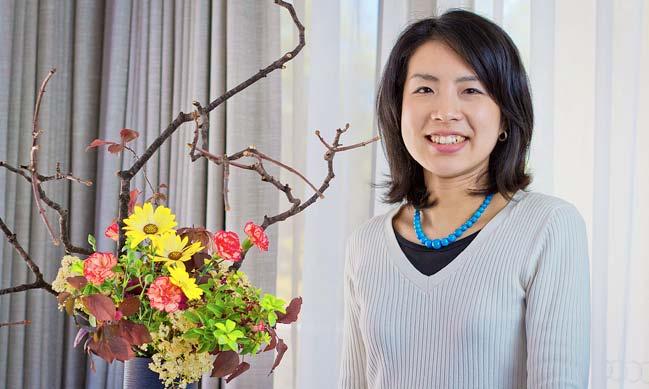
Sachie Terasaki… “We
By Stephen Easton
ONE of the more fascinating avenues of insight into Japanese culture provided by the upcoming Canberra Nara Candle Festival is ikebana, the traditional art of making cut flowers come alive.
Initial comparisons with the creative skills used by florists are hard to avoid, the most obvious difference being that in Western flower arranging, bigger is generally better while ikebana tends to favour a minimalist approach.
Ping Block, who has taught ikebana locally for more than 10 years, is probably Canberra’s foremost expert on the artform, although she politely deflects the suggestion.
“The word ikebana actually means to give life to the flowers, and it has been going on for the last 500 years,” says Ping.
Over the centuries, different traditions or “schools” have been established within the artform, the oldest of which, ikenobo, was developed by a priest in Kyoto, building on religious rituals thought to have come to Japan with Buddhism.
Flowers, branches and other materials are carefully selected, trimmed and arranged with close attention paid to how the parts relate to each other in terms of length and angle. Wide, shallow containers filled with water are often used, with
the stems supported by a metal weight covered in brass spikes called a kenzan.
Ping won’t be running workshops and demonstrations at the Candle Festival this year, due to illness, but taking her place will be ACT public servant Sachie Terasaki, who moved to Australia six years ago, and has lived in Canberra for about 18 months.
Sachie will be giving two demonstrations, each followed by a hands-on workshop.
“Actually it’s not about flower arranging,” she says. “We really try to create the space, with the flowers and branches. You don’t even need to have too many flowers. Usually the main structures are two stems, with only the leaves.”
Sachie was first introduced to ikebana as a teenager in Japan, where it was an activity at high school, and loves to share her hobby with others.
“We look at the flower and the branch and we see each leaf, and they all perform different roles in the arrangement,” says Sachie.
“Sometimes we go into minimalism. By pursuing that kind of ultimate beauty, we see that we don’t need this or we don’t need that, and it could be quite simple, so probably we’re more pursuing the core of the beauty.”
Canberra Nara Candle Festival, Lennox Gardens, Yarralumla, October 26, 4.30-9pm. More information at events.act.gov.au/nara
By Robert Macklin
CANOWINDRA has to be the most interesting and delightful country town in Canberra’s hinterland.
A visit there last week to give a talk at the town’s exciting bushranger festival revealed the countryside in all its glory… full dams, green pasture, golden crops of canola and stock in peak condition.
But there’s the rub. While the world is heading for climate collapse, much of Australia never looked better. So, naturally, we are not seized with need to take the necessary urgent steps to combat the disaster rolling our way.
This is very dangerous; and it really strikes home when you’re accompanied by lovely little granddaughters whose futures are in our hands.
During the last long drought we were really energised about action on climate change. As an issue it destroyed two popular political leaders – Kevin Rudd when he backed away from it and Malcolm Turnbull when he declined to. But since then we’ve had one great season after another on the land. In fact, our big problem is that we’ve had too much rain.
Will that continue? It just might. It’s possible that we’ll turn out to be the lucky country once again, but if we allow ourselves to become sanguine about the bigger picture, we would be making a terrible mistake.
Because when climate collapse really starts to punch home, hundreds of millions of our fellow human beings are going to be affected by drought and starvation on the one hand and loss of territory from rising sea waters on the other.
That’s the time when all across the planet we will see a massive movement of climate refugees. That’s the time when we’ll look back at our current “boat people” problem as the good old days. That’s when our empty north, lush with monsoon rains, will become a magnet for the displaced people of the Pacific, the Indian sub-continent and Asia itself. Not so lucky, then!
So, it is very much in our self-interest to take a leading role in the issue; and I would like to think that there was a natural consensus in Australia to protect and preserve the integrity of the scientific method and to put our collective shoulder to the climate change wheel.
But I do worry when our Prime Minister calls climate science “crap” and the opposing political champion is “Slippery Bill” Shorten, who gives the distinct impression that a contest between principles and pragmatism would find him sliding to the side of the latter before you could say, “Julia Gillard”.






Liverpool
THE annual Montessori Spring Fair will be held at the school’s Holder campus, 9am-2pm, on Saturday, October 26. The emphasis will be on family fun with lots of activities, including a petting paddock, reptiles, a bouncing castle, mini golf and sumo wrestling. There will be a pre-loved toy and kids’ clothing stall. More information from 0421 889164.
THE annual Canberra Girls Grammar School fete will be held at the school in Deakin, 10am-3pm, on Saturday, October 26. Among the 50 stalls will be hot food, cakes, salads, fairy floss, Greek sweets, trash and treasure, plants and fresh-cut flowers, high-quality pre-loved books and clothing. The National Zoo and Aquarium will also have an exhibit. Entry is free.
By Laura Edwards
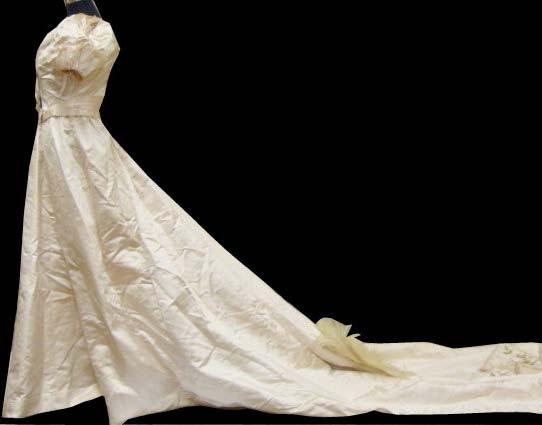
FROM luxurious gowns worn by European royalty in the 1800s to flapper-style frocks from the 1920s, a new exhibition at the Albert Hall will trace the history of bridal wear.
“Brideswear Revisited”, curated by Ballarat-based vintage collectors Fiona and Keith Baverstock, features vintage wedding gowns and accessories from as early as 1810 to the 1930s.
Fiona and Keith have spent the past seven years growing their collection of vintage wedding dresses, many bought from auctions all over the world.
A selection are from the Castle Howard bridal collection, the English country estate used in the TV series “Brideshead Revisited”, which once housed the largest costume and textile collection in Europe.
“From the auctions we learnt a lot about the history of the dresses, which is just fascinating,” says Fiona.
One of the most glamorous gowns is from 1900, worn by an Australian bride who lived on a homestead near the Victorian goldfields.
“The dress is made of clotted cream slipper satin, the skirt applied with lace motifs, pintucking and passementerie baubles,” Fiona says.
“The bodice is decorated with brussels
and guipure lace, again with passementerie baubles and the sash was added when a second family bride wore the gown.”
Another standout is a circa 1883 gown worn by an aristocratic bride from Europe’s minor royals.
“The swagged pleats over the hips and the puffed and ruched bustle serve to emphasise the bride’s tiny waist, as do the tight lacing and padding on the bodice,” Fiona says.
Some of the gowns are shrouded in mystery, says Fiona – “There’s a beautiful gown we were told a sad Scottish bride never got to wear, but we don’t know why – perhaps she was jilted at the altar!”
As for today’s would-be vintage brides, a selection of the dresses will be available for purchase at the exhibition.
“I think many of the vintage dresses could still be worn today as they are just so timeless and with such beautiful fabrics,” Fiona says.
“Girls seem to love the 1930s dresses with those wonderful cuts, or often if they’ve got lace, it’s the sort of lace you just don’t get today, the detailing is something you just don’t get anymore.”
“Brideswear Revisited”, as part of Frock Up Canberra, will be held at the Albert Hall on Friday October 25, 6pm - 9pm; Saturday, October 26, 10am- 5pm, and Sunday, October 27, 10am-4pm.
THE Kangara Waters Retirement Village Fete, 2 Joy Cummings Place, Belconnen, is being held, 9am-2pm, on Saturday, October 26. It will feature cakes, crafts, gifts, books, white elephant, photography, novelties, pickles, jams, preserves, plants, music, face painting and balloon twisting. There will be Devonshire teas and a sausage sizzle.
THE Canberra Lapidary Club’s annual Spring Gemcraft and Mineral Show will be held at Epic, 10am-5pm, on the weekend of November 2-3. Club members’ collections will be on display, and there will be free demonstrations on fossicking, gold detecting, cabbing, faceting and jewellery making. Entrance is $5 adults, $9 family, $2 children/concession. More information at canberralapidary.org.au/
ST Mary in the Valley Anglican Church, in Were Street, opposite the Calwell shops, is holding a community fair, 9am-2pm, on Saturday, November 16. The fair will feature a barbecue, cake, produce, plants, books, children’s craft, bric a brac and Christmas stalls. There will be musical entertainment and access to the church’s op shop.
MT Rogers Primary School, in Melba, promises a “not your run of the mill” family festival/fete to celebrate the school’s 40th birthday. Held between 10am and 2pm on November 10, the fete will promote healthy lifestyles and multiculturalism. There will be family activities and food stalls from around the world.

















...SPONSORS, says TIM GAVEL, who wonders why is it that women’s sport finds it so hard to attract corporate sponsorship
CANBERRA is the home of some of the country’s top sportswomen: swimmer, Alicia Coutts; rower, Kim Crow; cyclist, Caroline Buchanan; track and field athletes, Melissa Breen and Lauren Boden; soccer player, Michelle Heyman; and basketballer, Lauren Jackson.
But of the seven, Jackson is probably the only one making decent money from sport.
In fact, she is one of the few full-time sportswomen in Australia. There are women surfers, golfers and tennis players, amongst others, making a living on the world stage but very few in domestic sport, despite the fact that our sportswomen are winning more world titles than their male counterparts.
Despite organisations such as ActewAGL and the Tradies Group providing funding to women’s sporting teams, the majority of our local sportswomen combine work, training and competition.
The netball test and the women’s golf have shown there is a market for major women’s sporting events in Canberra.
The sight of so many young girls flocking to the netball to watch (and participate) is an indicator of the potential market that is often not recognised by sports journalists and the media in general. It is almost a sub-culture.


I have spoken to the ACT Government about the need to stage more major women’s sporting events in Canberra, but have been told it is cost prohibitive to have significant regular events.
Mind you, the Government does provide substantial funding to the football codes.
JUST on the Brumbies, the current financial woes at the Australian Rugby Union don’t bode well for the immediate future of the proposed club competition and the academy programs.
The ARU wants a Canberra club as part of the national competition, but with the ARU cash-strapped it will be up to the clubs to finance it themselves. The potential costs vary from $250,000 to $500,000 a season to field a team and most clubs in the Canberra competition are reluctant to commit because of the cost.
It’s the same story with the Academy program, which is now back in the control of the Brumbies, but without the financial support of the ARU.
THE Raiders are justified in their hard-line approach to the Anthony Milford saga. Milford has sought a release from the Raiders next year to play with the Broncos. His manager has cited Milford’s father, who is ill, as the reason behind the request.
The Raiders though, have been compassionate and have offered to help Anthony move his family down to Canberra and are prepared to offer a long-term deal.
The Raiders are saying if he doesn’t play for Canberra next year, he won’t be playing for anybody else. The club has done all it can to help him establish himself in Canberra and can’t afford to keep losing playmakers, having recently lost Dugan, Ferguson and Earl.















LAURA EDWARDS asks the questions:
QUESTION: Why did you choose Australia for your restaurants, and why was Canberra chosen specifically?
ANSWER: I’ve been lucky enough to visit Australia on a number of occasions and have always had an incredible time – it’s a stunningly beautiful country, the welcome I received was second to none, and there’s so much fantastic produce available, that, for me it was an obvious choice. We launched in Sydney and it’s just been an amazing experience. And with Canberra being the capital and such a community driven city, opening there was a no brainer – the whole team are very excited!
Q. Why was Italian initially chosen as the cuisine?
A. I’ve loved Italy since I was a teenager. I know it sounds a bit corny, but when I’m in Italy I feel Italian!
Italians have such a passion for life and this is definitely reflected in their food. When I was at catering college, I really wanted to learn how to make the perfect pasta – and one of the teachers told me that there was only one man to learn this from: [chef] Gennaro Contado. I managed to get a job on the pastry section and wangled my way in to meet Gennaro. I honestly don’t think there’s anything about Italian cooking that he doesn’t know – he’s an absolute legend,

LONG before “Masterchef” or “My Kitchen Rules”, there was Jamie Oliver. Since he burst on to the cooking scene almost 17 years ago, the British celebrity chef has been nothing short of a phenomenon, writing 18 cookbooks, starring in 25 television series and opening 40 restaurants around the world.
and has been my mentor and dear friend ever since.
Q. How involved do you get in planning the menus?
A. I’m all over the menus, the design, everything from the seats to the napkins to the mozzarella. We’re always trying to keep the menu fresh, so I have meetings with my team every few months to tweak it and add exciting new seasonal dishes. We’ll normally spend a day in the kitchen playing around with ideas, then we’ll cook them all up, play around a bit more, cook them up again and so on. Some dishes we’ll all agree on straight away and some take a bit more time to perfect.
Q. Do you often try to come down to visit your Australian restaurants?
A. Yes, of course, and hopefully it won’t be too long before I can come back again.
Canberra will soon get a piece of the action when the hotly anticipated Jamie’s Italian opens next month and, in the lead-up, Jamie spoke exclusively to “CityNews” about his passion for Italian cuisine and why opening a restaurant in the capital was a “no-brainer”.
It is tricky as it’s so far away, but I’ve got a cracking team based in Oz that I’m in regular contact with so I’m confident that you guys are in good hands. I’ll be in touch every day throughout the opening, too, to see how it’s all going.
Q. Are you using any product from this region for Jamie’s Italian Canberra?
A. The provenance and quality of our produce is, above everything else, the most important part of Jamie’s Italian. Where possible we’ll buy locally and we’ve established relationships with some really brilliant Australian suppliers and producers. We take time to find suppliers who care as much about the produce, right through the process, as we do.
Q. What do you believe are the key factors that make your restaurants so successful?










Celebrity chef Jamie Oliver… “I’m all over the menus, the design, everything from the seats to the napkins to the mozzarella.”
A. I think it’s got to be a good balance of all those things. I really believe it’s important to keep evolving and not stand still or become complacent. I’m sticking with my resolve of great value, higher-welfare local produce. But more importantly, I’m trying to instill these values in all my staff so that they can show our customers that great value isn’t about discounting or using cheaper ingredients and compromising on standards or flavour – it’s about using your ingredients wisely and at the right time, to get the very best out of them.
Q. What professional achievement are you most proud of?
A. I’d say how many people we have managed to employ over the years. We now have over 3500 people in the group and I’m very proud of what we’ve managed to achieve.
Q. What are you currently working on?
A. We’ve just started a new partnership with Woolworths, which is incredibly exciting. Together we’re going to work really hard to inspire Aussies to cook more fresh food from scratch, safe in the knowledge that they’re using quality, affordable ingredients they can trust. Woolworths have agreed to remove caged eggs from their stores and branded products by the end of 2018 and also to stock just higher welfare chicken, which is a really amazing commitment. I’m thrilled that we’re working together.
Q. How different is the Australian approach to food and dining compared to the British?
A. I personally haven’t noticed a huge difference, apart from the obvious – the weather! I think both countries love to eat out and have a good time. Perhaps Australians prefer a slightly more relaxed style of cooking, but that’s more my kind of food anyway, so I love that.
Jamie’s Italian, 125 Bunda Street, Civic, is expected to open on the second week of November.







































































































WHEN Nicola Roxon stood to deliver the John Button Oration she started with a compliment to that long-time Labor stalwart suggesting that she would emulate his “straight-talking style”.
This is the first time that the public was really given an insight into what went wrong with the Federal Labor government. Roxon was clear that she was presenting her own perspective and understood that many would see things differently.
The elephant in the room regarding Labor’s defeat since the election and throughout this speech is the concentration of power in the hands of the Prime Minister.
The political landscape is becoming more and more presidential, instead of Prime Ministerial, and the concentration of power and decision making is occurring without the checks and balances of a formal democratic presidential system.
With Labor’s new system of appointing their leader, this aspect has worsened. Roxon touched on the issue when she spoke about “this unhelpful personality/leadership prism” and “kamikaze politics”.
The interesting part about Nicola Roxon’s reflections, in the form of 10 “housekeeping tips” for Labor, is that they come from one of the highest-performing, most competent ministers of the previous six years of government as Health Minister
Michael Moore politics
and Attorney-General.

Her justification for what turned out to include a no-holds-barred attack on Kevin Rudd was “because Australia will need a stronger Labor Government next time, to repair the damage that will be inflicted by Tony Abbott and to pursue the next generation of positive reforms for the nation”.
On the one hand, her speech discussed where Labor should make a difference but, on the other, heavily criticised Rudd failing to really engage in the big issues such as climate change and health.
Cabinet was caught up on less significant matters, snowed with excessive detail and crippled by a failure to delegate. This failure to delegate, identified by Roxon as her third tip, is part of the bigger issue of the “messiah complex”.
So much is expected of the “president” that it has become difficult not to be the one fronting the media, answering all the questions and being seen to be on top of all the issues.
The Labor years were not all about solitary leadership. Much to the chagrin of Rudd followers, Roxon contrasted his leadership style with that of Julia Gillard, “the patient, consulting, discussing and convincing that were hallmarks of her style, but for which she got little credit”.
Disunity was the other undercur-

rent in the Roxon oration. While she framed the “housekeeping tip” in terms of putting the party first, understanding the team instead of the individual and knowing how to deal with disappointment with regard to such things as Ministerial appointments, the message was very clear.
Jointly setting direction and maintaining focus throughout the team is the stuff of real political leadership. Ironically, it is the very thing that Tony Abbott and the conservatives have managed, despite the significant philosophical differences within their ranks.
The contrast in political leadership styles with the strengths and weakness-
IS there a lost spirit that haunts the Queanbeyan cemetery? Are you brave enough to find out? Author Nichole Overall is organising the inaugural two-hour “Mysterious Queanbeyan by Moonlight Tour” through the city’s past on Halloween night, October 31. The walking tour explores some of Queanbeyan’s oldest and most interesting heritage buildings and sites. Tickets are $55, including refreshments, from qbn@ qbncityofchampions.com.au
es of the last two Labor Prime Ministers was summarised brilliantly by Roxon as:
“Kevin was great at cut-through, then struggled at follow through. In contrast, Julia was brilliantly thorough at delivering, but couldn’t always deliver the message”.
All political parties would be wise to take these 10 housekeeping tips as 10 commandments for effective governing.
Michael Moore was an independent member of the ACT Legislative Assembly (1989 to 2001) and was minister for health
The full text of Nicola Roxon’s speech is at abc.net.au/news/2013-10-16/roxon-tentips/5026972
THE Rotary Club of Jerrabomberra is hosting “A Night With Felix”, with Tanzanian visitors Felix Mollel and Kim Saville talking about St Judes School in Arusha. The school, which offers free education to the poorest children, was started by an Australian, Gemma Sisia, and has grown from three students to more than 1650. Felix began at the school as a maintenance worker and has developed his skills to speaking English and being a computer whiz. It’s at the Jerrabomberra School Hall, 7.30 pm, on Thursday, October 31. Entry is a $5 donation to St Judes on the night, but RSVP to chris.hunter@det.nsw.edu.au or call 6299 8860.


NOW is the right time to decide what we want for Canberra in the 21st century and, to mark the Centenary, the Property Council has released a manifesto for our city’s future that outlines an achievable vision of the capital city in 2023.
“A Declaration for Canberra’s Centenary Year” contains a series of actions that, the council believes, can be realised if government, industry and the community work together.
The paper calls for catalyst infrastructure projects to deliver economic, social and environmental benefits to the community. For instance, Civic should be developed as an activity precinct, design showcase and platform for artistic expression with strategic governance and a focus on renewal and re-use central to “making it happen”.
The council believes established suburbs can be made memorable and neighbourhoods re-energised in

a progressive regulatory environment with meaningful incentives for builders and buyers.
Together with affordable housing and right-sized spaces for older residents, these actions will make Canberra Australia’s most “green” and liveable city. Inspiring growth and fostering a diverse economy with investment incentives will secure a robust future and, as the city grows, we must be willing to embrace new ideas, big and small, encouraging and rewarding imagination in design and development.
The council believes that the Centenary year is the time to reaffirm our belief in Canberra, a city “laid out in the most perfect manner possible”.
Catherine Carter is ACT executive director of the Property Council of Australia
NOT-for-profit social enterprise Carpets for Communities will hold a fundraising “Night at the Races” at Uni Pub, London Circuit, Civic, October 30. Entry fees will include “gambling money” that guests are encouraged to spend throughout the evening and potentially win prizes. They are aiming to raise $1600, enough to send a young Cambodian woman to university for a year. Tickets are $12 from night-races.eventbrite.com/ or $15 at the door.
WINE critic Matthew Jukes returns to Canberra on Friday, November 4 to host a four-course fundraising dinner for Vinnies at Old Parliament House in aid of homelessness in Canberra. He will showcase a handpicked selection of Canberra’s best local wines and be joined by Australian winemaker of the year, Tim Kirk. Details and bookings to vinnies.org. au/matthew-jukes-dinner-act.

10,000 670 1,600 48 1
crucial she says. Positioned in the Parliamentary precinct, with an abundance of hotels within walking distance and only a few minutes drive to the CBD and airport Dialogue’s address is an attractive proposition for delegates and meeting attendees.
According to Sherice Kazzi, Business Centre Manager at Dialogue, Canberra’s newest meeting and conference venue located in the award-winning building of 4 National Circuit in Barton, choosing the right venue is the most important step.
“Because our centre has been designed specifically for conferences, meetings and hired office space, our sole purpose is to ensure your success,” she says. “That means we’re equipped with the latest technology, our rooms are designed to be configured to your needs and, most importantly, we have a dedicated support team to back you up throughout the whole process.”
The location of the venue is also
But what if you’ve never organised a conference before?
“That’s what we’re here for,” Sherice says. “Your designated Event Coordinator will oversee everything for you from organising your technical requirements, configuring the room and scheduling breaks, right through to greeting guests and ordering catering.”
From her experience in helping clients pull off great business events – whether it’s a small international video conference or a webcast for 150 delegates with online attendees, Sherice’s best advice is to book early.
Sherice also confi rms a fact that we probably all suspected: people remember

events from the quality of food and coffee they had.
“We’ve gone to great lengths to ensure our catering is of the utmost quality,” she enthuses. “We cater to every dietary need and also have a Nespresso and Twinings tea station for people to access throughout the day. Those details are important and when you combine that with beautiful décor,


the latest in audio-visual technology and a highly professional service, your guests will go home looking forward to the next one.”
Dialogue
4 National Circuit, Barton ACT 2600 dialoguebusiness.com.au T 02 6269 5700 E bookings@dialoguebusiness.com.au



ON October 9, Mark “Chopper” Read succumbed to liver cancer resulting from a hepatitis C infection he contracted in prison.
Regardless of how he is remembered (reformed criminal, anecdote, entertainer, father) Chopper’s demise demands reflection on what killed him.
Hepatitis C is a preventable, bloodborne virus that can be diagnosed, managed and cured before causing serious liver disease or liver cancer. Yet hep C is Australia’s leading viral killer.
The ACT’s overcrowded prison has high rates of hepatitis C and drug use. Hepatitis C is transmitted between detainees, yet we quibble still about access to evidence-based blood-borne virus prevention measures – including needle and syringe programs – already operating effectively elsewhere.
Some 226,700 Australians (3750 Canberrans) are living with hepatitis C, yet we treat fewer than two per cent of the affected population annually. Liver cancer will double by 2020 yet hepatitis remains under-diagnosed, under-treated, under-prioritised, and under-funded. When a handful of health professionals at the Alexander Maconochie Centre are conducting half of all hep C tests in the ACT, the rest of the community should ask questions of primary care. And when a promising Australian candidate hepatitis C vaccine is stalled because of inadequate funding and investment, we know this preventable, manageable, treatable condition will continue to claim lives unnecessarily.
Vale Mark Brandon Read.
John Didlick, executive officer, ACT Hepatitis Resource Centre
ALMOST simultaneously with a media announcement that crime had dropped away in Canberra, former Chief Minister Jon Stanhope expressed anxiety about human rights and overcrowding in the Alexander Maconochie Centre. Perhaps the overcrowding could be put down to more effective policing, and just maybe, a closer matching of sentencing to crime. It is manifestly unfair for Mr. Stanhope to accuse ACT Corrective Services of never fully embracing the ideals of a human rights compliant jail. Given that up to 70 per cent are in jail for drug-associated reasons, the ACT Government’s prime responsibility is to prevent drug use, consequent imprisonment and less stress on prison guards. Numbers on methadone are a primary indicator of how many are using opiates. To example how wretched our anti-drug efforts are, consider first that Sweden has 30 times the population of the ACT, which has around 900 on methadone. So, if Sweden had our policy, and on a per capita basis, it would have about 27,000 on methadone. It has approximately 1500. It doesn’t require a Higgs boson intellect to deduce that Sweden’s drug policy is far superior to ours in delivering human rights to its citizens – specially rights to be free of drugs and not in jail.
FURTHER to the article on the death of Don Allan OAM (CN, October 17) I wish to add another attribute to the extensive list of Don’s accomplishments.
Shortly after the newly established Community Alliance Party (CAP) was formally announced in “CityNews” in March 2008, Don approached me with an offer to assist in helping to promote the party and provide policy input.
Like a number of other luminaries such as Prof Jenny Stewart, Don saw a need for a party that represented community interests rather than big party machines.
Smaller issues like the current ones of solar farms on people’s
FYSHWICK is a buzzing hive of activity where just about everything under the sun is available. Here, “CityNews” takes a snapshot of this diverse trading hub.
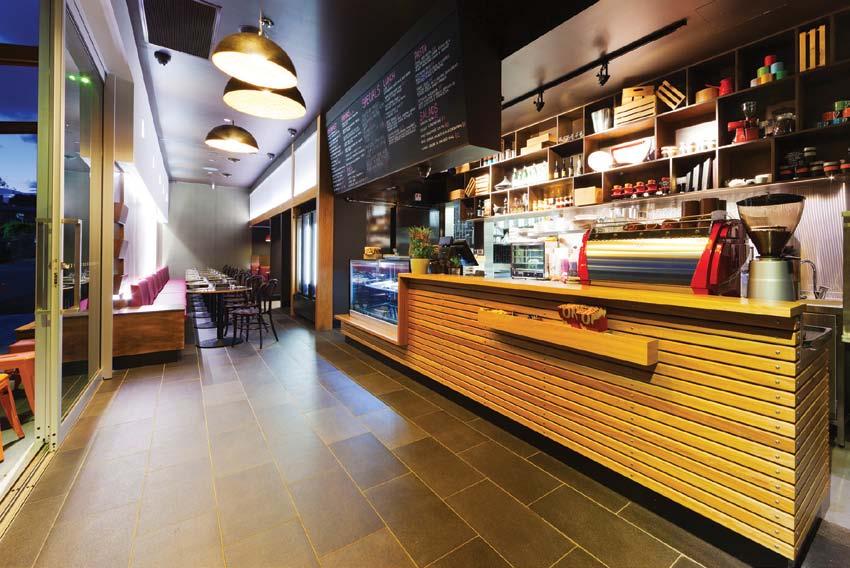
DON’T be fooled by the “diner” part of the name; Fyshwick’s Box Diner isn’t your typical take-away shop, although the service is quick.
Part of the Box Business Centre, the diner is located away from the noisy traffic, on the edge of farmland that slopes down to the Molonglo River.
Head chef Toby Boutland creates a modern menu using local produce for those craving good food at reasonable prices.
“We source local free-range eggs, beef from local Hereford cattle and Dorper lambs that thrive on tasty grass along the Murrumbidgee River,” says Toby. “Our jams and chutneys are made with regional fruits and vegetables, and artisan breads by a local bakery.”
At Box Diner customers get in early for coffees while Toby and his team get cracking serving breakfast. The menu includes spiced Turkish raisin toast with espresso creamed butter, croissants, light crepes and the big box breakfast for those who can pack it in.
For lunch, burgers include flame grilled beef, spicy peri peri chicken and a portobello mushroom stuffed with pesto.
Pastas feature a spicy arrabiata and a fettucini with seared prawns in garlic and white wine. Salads are popular for those after a lighter lunch, especially the champagne poached pear with blue cheese, walnuts and baby spinach.
Box Diner’s fitout features warm timbers, bench seating and funky lighting. Outdoor seating has heaters and shade sails.
Box Diner, 65 Tennant Street, Fyshwick. Call 6206 5555 or go to boxdiner.com.au
SCHIAVELLO, which has its local operations based in Fyshwick, is among Australia’s top 100 private companies and has been creating world-class environments for over 47 years.
“The company is internationally renowned for the design and manufacture of furniture, from highly intelligent workstations and task seating, to statement pieces and storage,” says the director of the ACT office, Luciano Fabrizio.
“Schiavello has worked with thousands of brands across a wide range of sectors including office, hospitality, health, education, residential and retail.”
At the core of the company’s business processes is a research-centric philosophy.
“This is supported by our in-house team of experts in workplace research psychology, sustainability, ergonomics and strategic design,” Luciano says.
In Canberra, Schiavello operates some 7000 square metres of manufacturing, warehousing and showroom facilities, with 100,000 square metres Australia-wide.
Schiavello’s manufacturing incorporates timber, glass, aluminium, steel, metal, plastic, solid surface, upholstery and electrical fabrication.
“In an Australian first, Schiavello (ACT) has launched its trademarked e-cycle plant, an environmental initiative that re-acquires Schiavello furniture to recycle or reuse as a way of minimising material consumption churn and therefore our carbon footprint,” says Luciano.
“The e-cycle program can ensure seamless integration of e-cycled and new product, as the process ensures there are no fundamental differences between up-cycled and new goods.”
Moreover, the incorporation of up-cycled product can achieve valuable Green Star points for a building project.
“It’s this range of in-house capabilities and competencies that supports the fundamental belief that ‘anything is possible’, and truly sets the company apart in the industry.”
Schiavello (ACT), 2-6 Collie Street, Fyshwick. Call 6124 0500 or go to schiavello.com
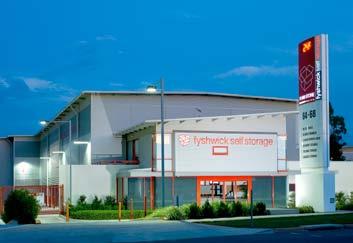
SELF STORAGE units are super useful in a variety of situations that call for a private, secure and affordable space, and can also be very helpful as an ongoing solution to space issues.
“Self storage can be really useful for small businesses, especially businesses that are operated from home and expanding, but not yet ready to commit to a long-term lease on a property somewhere,” says Paul Marshall, manager of locally owned business Fyshwick Self Storage.
“They can virtually work out of self storage or use it as a base for receiving and dispatching things. It’s a great place to get a container load of stock delivered.”
In a similar way, he says, local representatives for wholesalers often work out of storage units, taking advantage of the lower long-term rates.
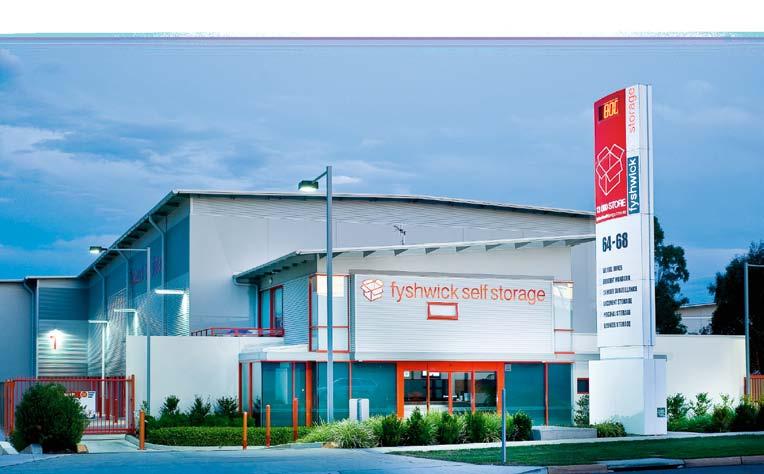
Fyshwick Self Storage has more than 900 units in a well-lit, architecturally designed building that meets the most stringent fire regulations, and has all the boxes, bags and packing materials on hand at reasonable rates.
“The level of security here is very good; every unit is individually alarmed and we have CCTV monitoring running throughout the facility 24 hours a day,” Marshall says.
“We’re the only facility in Fyshwick that has a resident manager, so we have someone on site 24 hours a day, which is great for customers coming in after hours.”
The units come in a vast range of sizes, too, from small lockers up to 70 square metres.
Fyshwick Self Storage, 64-68 Collie Street. Call 6162 0040 or go to fyshwickselfstorage.com.au
back fences or high-rise buildings shading community common areas, were to become the meat for such a party, which would represent smaller community interests.
Although the CAP helped get rid of majority Labor government, it missed out on getting a candidate into the Assembly to represent smaller interests. It appears that ACT voters are still too frightened to move away from voting for larger parties and to make the ACT a marginal seat. This is to their detriment, but perhaps one day they will see Don’s viewpoint and achieve his vision.
Ric Hingee, founding president, CAP, Duffy
I WAS slightly perplexed by a “Canberra Times” story that read, in part:
“Floriade spokeswomen Adelina La Vita said this year’s beautiful innovation theme had brought new experiences to the festival, including a competition for inspiring inventors. ‘And, of course, there’s the flowers,’ Ms La Vita said.”
Amazing. I thought the whole
idea of a spring floral festival WAS the flowers, not some add on to all the hype of computer-generated flowers and night entertainment? I must relay this to my Dutch relations in Holland, I am sure they will be highly amused. Especially as we plagiarised their original Dutch name, Floriade!
Cedric Bryant, Braddon


Saturday 26th October 7am-4pm
• Workstations – fixed and adjustable
• Mobile pedestals • Task chairs
• Visitor chairs and lounges
• Desks • Desking accessories • Meeting tables • Boardroom tables
• Personal storage units • Tambour units • Monitor arms • Screens and partitioning
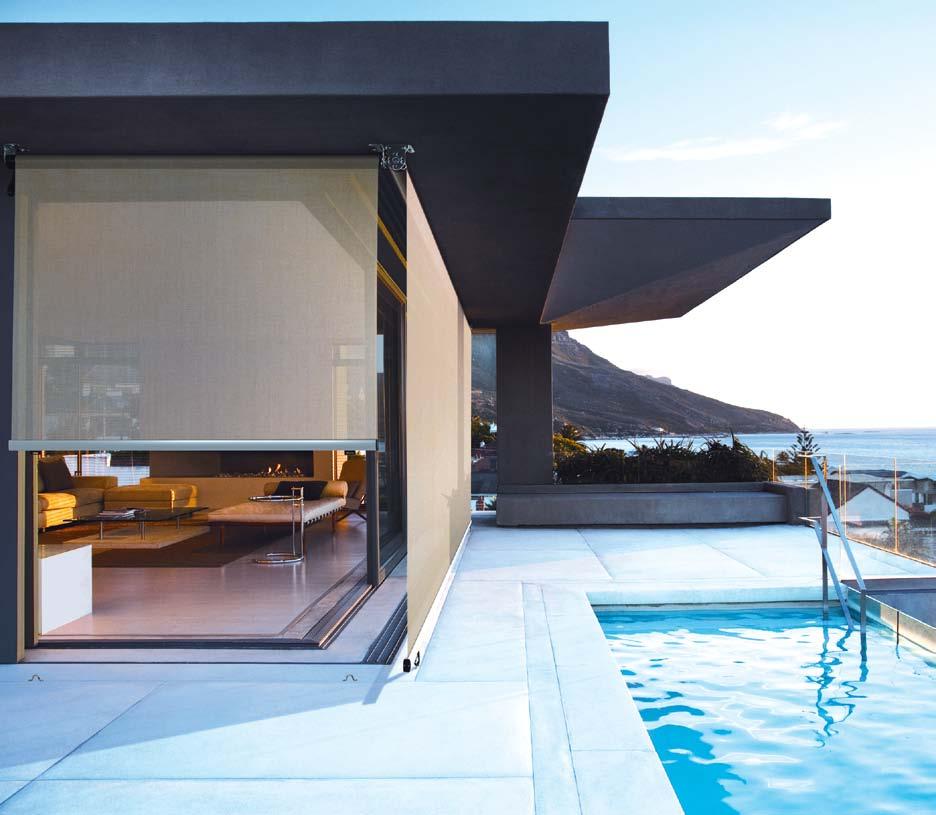
SHIELDING windows from the summer heat with awnings can make a huge difference to your comfort at home, as well as your power bills, explains Martin Smith, owner of Regency Knights Window Fashions.
“We’ve got a report from a Victorian Government department that says double glazing, for instance, reduces radiant heat from direct sunlight by about 10 per cent, and awnings stop 30 per cent,” he says.
“Double glazing is good for retaining heat in winter, but not so good for keeping radiant heat out in summer, according to that research.”
Martin says the new range of Alpha awnings offers a neat, modern look that complements the clean, angular lines of newer homes, marking quite a big change from the older style.
“It’s all about the outcome the customer is trying to achieve, so we have that discussion and that allows us to eliminate the types of awnings that won’t do what they want them to do and narrow the choices down,” he says.
“One of the benefits of the new Alpha system is that you can have two or three different types of awnings that look a lot more alike than with the older style so you’re going to get a much more integrated look.”
Regency Knights offers a wide range of fabric choices, depending on how much sunlight their clients want to block out.
Martin says one called Outlook blocks a lot of radiant heat and stops prying eyes looking through, but still lets people on the inside enjoy the view, meaning they can leave the awnings down all day.
“In the end that can work out to be a better result overall, especially if you’ve got a nice garden or a view to look out on; you can keep that heat out of your house but you’re not missing out on your view,” he says.
Regency Knights, 1/60 Wollongong Street, Fyshwick. Call 6280 0000 or go to regencyknights.com.au



GOLFER Virginia Deigan
apologised for the quality of the photo, but the blurring is perfectly reasonable when you realise Ginny, a member of Capital Public Golf Course, is a “speedgolfer” and of such skill that she’s the first Australian female to play at the Speedgolf World Championship at Bandon Dunes Golf Resort, Oregon, on Sunday.
Speedgolf may sound the death knell for caddies
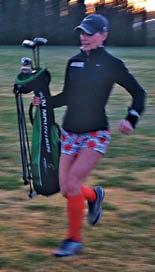
because it’s all about hitting the ball and running.
“Yes, it may ruffle some of the traditional golfers who like to take their time around the course!” she told CC.
“One of the issues with golf at the moment is that people are taking way too long to play and the sport is losing participants as a result.
“What speedgolf shows is that spending less time over a shot, playing more instinctively and not thinking about it so much can actually be good for your game – or at least won’t make it any worse.
“After playing speedgolf, playing traditional golf seems a lot easier, a lot less pressure.”
The format of speedgolf is simple: total strokes plus the total minutes and seconds it takes the player to complete his or her round. The speedgolf world record for a single round is 109.06 (65 in 44:06). Deigan, who plays off a handicap of 13 and 5km run time of 23 minutes, is aiming to beat her personal best speedgolf score of 84 strokes in 61 minutes, 10 seconds.
THE town’s once proud daily newspaper, “The Canberra Times”, wracked by falling circulation and advertising volumes, has now ignominiously been stripped of its metropolitan status and relegated to a community paper as its Sydney-based owner Fairfax continues to rearrange its corporate deckchairs.
What does it matter? Apart from a different divisional boss and the promise of another “most effective operating structure”, not much beyond the editorial humiliation of being grouped corporately with titles such as the “Illawarra Mercury”, “Newcastle Herald”, “Ballarat Courier” and “Launceston Examiner”.
Oh, and this bit of blather: “This move will bring a range of benefits to ‘The Canberra Times’ including the opportunity to put an even greater focus on the local Canberra market.’’ That would be, like “The Chronicle”?
Sally strikes again
THOUGH she looks decidedly gloomy in this picture, Canberra pianist Sally Whitwell has much to smile about having won her second ARIA, this time for her ABC Classics album, “All Imperfect

Things: solo piano music of Michael Nyman”, which won Best Classical Album.
As well, the album’s producer, Virginia Read, won Best Engineer in the Artisan category, the first woman to have done so. In 2011 Whitwell also won an ARIA for her album “Mad Rush: Piano Music of Philip Glass.”
WE are to be assailed by “the unmistakable voice of a generation” in March when the appropriately named former Righteous Brother Bill Medley performs at Canberra Theatre.

Next year marks the 50th anniversary of the duo’s enormous, most enduring hit “You’ve Lost That Lovin’ Feelin’”, apparently still the most played song in the history of American radio.
The other half of the “blue-eyed soul” Brothers was Bobby Hatfield. They recorded from 1963 through 1975, and continued to perform until Hatfield’s death in 2003.
Bill’s baritone also featured on the duo’s hits such as “(You’re My) Soul and Inspiration” and “(I’ve had) The Time of My Life”.
AWARD-award winning photographer Hillary Wardhaugh has had to cancel her community Photowalk, this weekend, another victim of the rapacious gnomes running the National Arboretum.
“I am seriously pissed off!” she says (and she’s not alone) at the publicly owned Arboretum’s “ludicrous demands”.
Hilary had the innocent idea of taking her Photowalk group, a “free community event just for the joy of creating photos”, for a gambol through the Arboretum. Sure, said the gnomes: that will be $200, thank you, for a permit.
“They agree that Photowalk is not a commercial enterprise, but still maintain that they need to charge $200 for a permit,” she says.
But it gets better: “They also asked if we were we willing to have our images used by them to promote the National Arboretum... for free!
“So they want free access to any images we capture and they want to charge us $200 for the privilege, so I am sorry to say, Photowalk Canberra will never be held at the National Arboretum.”
ALL of a tremble over the gay marriage debate in the Assembly, the canberratimes. com.au live blog managed to twice describe Labor stalwart Mary Porter as a Liberal MLA in the text and a picture caption, and Labor Minister Joy Burch was captioned as “Liberal MLA Vicki Dunne”. They sorted it as the blog went on.
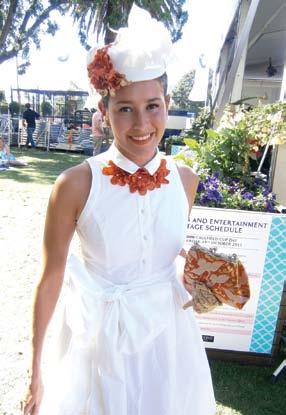
WELL done Viviana Parish, from nearby Bywong, who won the Caulfield Cup fashion on the field in Melbourne. Viviana, a recidivist who won the Black Opal fashions on the field in March, is poised to enter Derby Day on November 2, also in Melbourne.
“I love fashion and enjoy mixing colour and fashion trends to create eye-catching creations,” she says.
“My hats are handmade by my mum, who also has a flair for creative design.”


















THIS year Turkey celebrates the 90th anniversary of its republic, with a public holiday to commemorate its proclamation in 1923.
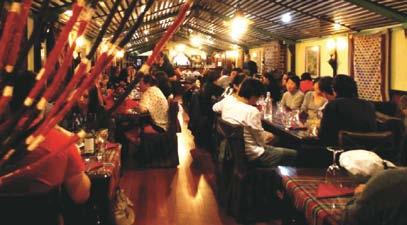
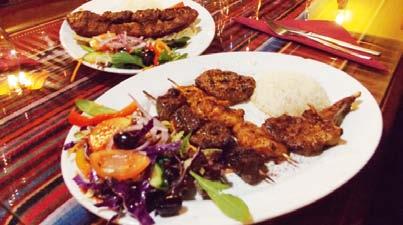
Turkish Delight Restaurant has been a pillar in Canberra’s Turkish community for more than thirty years, standing strong as Canberra’s very first Turkish restaurant.
Our precious restaurant first opened alongside one of the late waves of Turkish migrants in the 1980’s and in that time, became a second home to Turkish people newly settling in Canberra.
Over the years our restaurant has been both a second home to Canberran Turkish people as well as a symbol in our eyes of lasting friendship between Turkish and Australian people.
Open Monday to Sunday.
Belly dancer Saturday evenings.
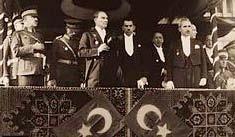
On October 29, 1923, the leader in the Turkish War of Independence and national hero, Mustafa Kemal, who was later honoured with the title Atatürk or “Father of the Turks”, declared that Turkey would be a republic, renaming it the Republic of Turkey, and proclaiming Republic Day as Turkey’s most important holiday.
A new constitution replaced the constitution of the Ottoman Empire and a unanimous vote in the Grand National Assembly of Turkey appointed Atatürk as the first president of the Republic of Turkey.
Under his authoritarian leadership, the country adopted wide-ranging social, legal and political reforms.
Turkey had effectively been a republic from April 23, 1920 (the establishment of the Grand National Assembly of Turkey) but official recognition of this came only three years later.
After a period of one-party rule, an experiment with multi-party politics led to the 1950 election victory of the opposition Democratic Party and the peaceful transfer of power.
Turkey joined the UN in 1945 and in 1952 it became a member of NATO.
In 1964, Turkey became an associate member of the European Community.
Over the past decade, it has undertaken many reforms to strengthen its democracy and economy; it began accession membership talks with the European Union in 2005.
REPUBLIC Day is an official national holiday and public administration buildings, schools, post offices and many small businesses are usually closed.
Many people in Turkey celebrate Republic Day by attending performances and participating in traditional processions with flags and musical bands.
Many people go to local stadiums to watch theatre, sketches, poetry readings and traditional Turkish dancing. School children take part in performances for parents and teachers.
Many people also lay wreaths at Atatürk’s monuments or visit his mausoleum in the country’s capital, Ankara.
In the evening, many cities have traditional processions with flags and musical bands. The processions usually end with fireworks.
The common symbols of Republic Day in Turkey are the Turkish flag and pictures of Mustafa Kemal Atatürk.
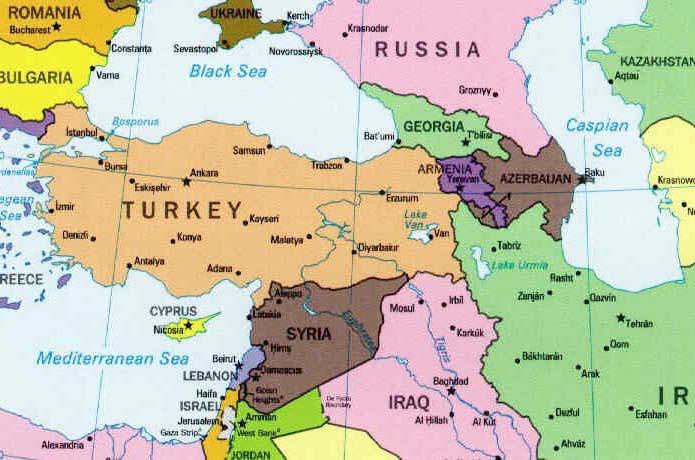







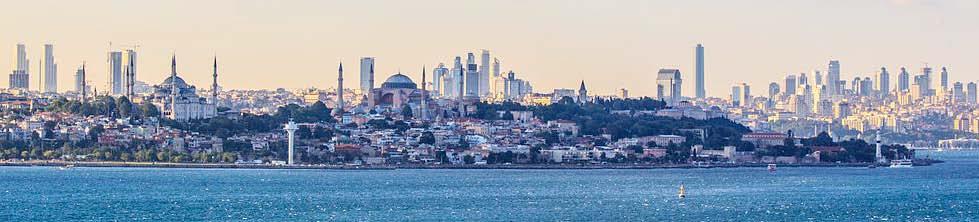
TOURISM in Turkey is focused largely on a variety of historical sites, and on seaside resorts along its Aegean and Mediterranean Sea coasts.
In recent years, Turkey has also become a popular destination for culture, spa and health care tourism.
In 2011, Turkey attracted more than 31.5 million foreign tourists, ranking as the sixth most popular tourist destination in the world.
In January 2013, the Turkish government announced that it will build the world’s largest airport in Istanbul. The operation has invested 7 billion euros and will have its first part of a four-part plan completed by 2017.

Turkey’s largest city, Istanbul, has many major attractions derived from its historical status as capital of the Byzantine and Ottoman Empires. These include the Sultan Ahmed Mosque (the “Blue Mosque”), the Hagia Sophia, the Topkapi Palace, the Basilica Cistern, the Dolmabahçe Palace, the Galata Tower, the Grand Bazaar, the Spice Bazaar, and the Pera Palace Hotel.
Istanbul has also recently become one of the biggest shopping centres of the European region with malls and centres such as Metrocity, Akmerkez and Cevahir Mall, which is the biggest mall in Europe and the seventh largest in the world.
Most Turkish beach resorts are located along the southwestern and southern coast, called the Turkish Riviera, especially along the Mediterranean coast near Antalya.
Antalya is also accepted as the tourism capital of Turkey. Major resort towns include Bodrum, Fethiye, Marmaris, Kusadası, Çesme, Didim and Alanya.
Capital city Ankara is an historic old town, and although it is not exactly a tourist city, is usually a stop for travellers who go to Cappadocia. The city enjoys an excellent cultural life, too, and has several museums. The mausoleum of Atatürk, the founder of the Republic of Turkey, is also in Ankara.
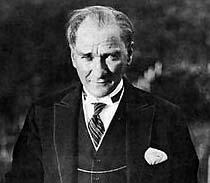
MUSTAFA Kemal Atatürk (May 19, 1881November 10, 1938), pictured, was a Turkish army officer in the Ottoman military, revolutionary statesman, and the first President of Turkey.
He is credited with being the founder of the Republic of Turkey. His surname, Atatürk (meaning "Father of the Turks"), was granted to him in 1934 and forbidden to any other person by the Turkish parliament.
Atatürk was a military officer during World War I.
Following the defeat of the Ottoman Empire in World War I, he led the Turkish national movement in the Turkish War of Independence.
Having established a provisional government in Ankara, he defeated the forces sent by the Allies.
His military campaigns led to victory in the Turkish War of Independence. Atatürk then embarked upon a program of political, economic and cultural reforms, seeking to transform the former Ottoman Empire into a modern, secular and democratic nation-state.
Under his leadership, thousands of new schools were built, primary education was made free and compulsory, while the burden of taxation on peasants was reduced.


















THE last time Bell Shakespeare staged “The Comedy of Errors” in Canberra in 2002, former ACT arts minister Bill Wood created a stir when he turned up with his identical twin, the late Peter Wood.
For director John Bell had been asking himself about The Bard’s fascination with twins and there, before him, was the real thing.
“That’s easy”, Wood jested to “CityNews” the other day when we asked for his explanation. “It’s because we are very special people.”
Maybe so, but when I catch up by phone to Tamworth with actor Renato Musolino, who plays Dromio of Syracuse in an extended touring production, he has another theory. He thinks it’s because Shakespeare inherited the formula of mistaken identity from classical Roman plays and improved on it.
Musolino pictures Shakespeare saying: “One set of twins is fun, why don’t we make it even more chaotic?”
“The element of extra twins is gold,” he says. “That’s the wonderful thing about Shakespeare, he’s very good at taking older plays and manipulating them in a much better way.”
In this very early Shakespearean comedy, Antipholus of Syracuse and his servant Dromio visit the fleshpots of Ephesus and are mistaken for the twins Antipholus and Dromio of Ephesus.
Director Imara Savage has captured the atmosphere of seediness, the dark underbelly of prostitution, drugs, quackery and even witchcraft in her interpretation of the sleazy town into which

the master and servant from Syracuse are thrown. Musolino gets to play the Syracuse half of the twin Dromios.
“My Dromio is slightly more innocent, more friendly, more happy-go-lucky,” he explains, and his master Antipholus is the same, more open to love.
“It’s as if you took two boys from the country and threw them into King’s Cross,” he says. Savage, though strictly observing the classical unity of time, has chosen to set the play not in the daytime, but over one night of chaos and drunkenness.
Unusually, Musolino likes touring.
“It’s been an epic tour, but thank God it’s a comedy”, he tells me, talking up the enjoyment of being on the road in good company and the “immediate feedback” that they’ve enjoyed from the wordplay and the slapstick.
It is made much easier by the fact that the play is what he calls “a real crowd pleaser”.
It’s Shakespeare’s shortest play but they’ve made it even a little bit tighter, so that it runs at a frenetic pace without an interval for about 105 minutes.
Have no fear, “the end is quite joyous, everything is resolved,” Musolino says.
“The Comedy of Errors”, a co-production of Bell Shakespeare and the State Theatre Company of SA, The Playhouse, October 29 to November 9, bookings to canberratheatrecentre.com.au or 6275 2700.
By Helen Musa
IN an amazing achievement, the 300th “Musical Offering” event for 2013 will take place from 1.30pm-4.30pm on Sunday, October 27, starting in the Sculpture Garden, NGA and moving via the High Court foyer to the Portrait Gallery. The hefty line-up includes Robyn Archer, Tobias Cole and The Trumpet Club. It’s free.
INDIE-folk group Sidney Creswick is collaborating with Tuggeranong Arts Centre’s hip-hop dance crew Fresh Funk for “I Thought I Was Not Alone” – featuring “melodic tales, passionate choreography and a modern love story”. It’s at The Street Theatre, November 1-2. Bookings to 6247 1223 or thestreet.org.au
SAMMY Moynihan is embarking upon a modern retelling of Ibsen’s massive epic “Peer Gynt” in, of all places, Smiths Alternative in Civic. Moynihan identifies with the questing Peer as he asks himself: “What do I do now?” It’s on at 8pm, October 31 and November 1-2. Bookings to 6247 4459.
THE fourth “Come Alive” Festival of Museum Theatre will run daily in the Visions Theatre of the National Museum, noon-6pm, from Monday, October 28, to Friday, November 1. Students from Orana School, Stromlo, Melrose and Calwell High as well as Merici, Dickson, Canberra and St. Francis Xavier Colleges and Girls’ Grammar, have chosen an object, character or event from the museum’s collection and created a play. It’s free, but bookings are recommended to 6208 5021 or email bookings@nma.gov.au
THE 17th Japanese Film Festival will be at the Capitol Cinema in Manuka, October 30-November 3. All eyes are on Japan’s contender for the upcoming Academy Awards, “The Great Passage”. Program and bookings at japanesefilmfestival.net
ON Sunday, October 27, at 3pm, 11 Wesley music scholars will perform a variety of works for voice, violin, cello, flute, oboe, bassoon, guitar and harp. Tickets at the door. Then, on Wednesday, October 30, the Royal Military College Brass Quintet will perform in the “Lunchtime Live Series”, 12.40pm-1.20pm.
ARIA Award-winning pianist Sally Whitwell has composed “a kind of humorous call-to-arms for feminists” to perform with soprano Nadia Piave and Kompactus called “Walk the Walk”. All Saints Anglican Church, Ainslie, 3pm Sunday, October 27. Tickets at the door.
By Helen Musa
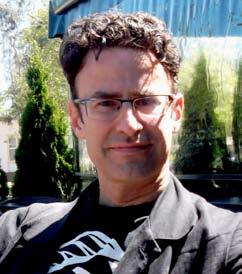
“IT’S been great,” singer
Tobias Cole says of the Canberra Choral Society, with the infectious enthusiasm that has made him one of this town’s most appreciated musicians.
He’s artistic director of the society, participated in the Canberra International Music Festival, hosted a nostalgic concert and a 1940s dance in Albert Hall and staged a blockbuster concert called “The Best Choral Music Ever Written by an Australian (with a Canberra Connection)”.
Now he’s embarking with them on one of the biggies, Carl Orff’s “Carmina Burana”, part of a Centenary gift program from the Embassy of the Federal Republic of Germany that also features works by Beethoven and that 200th birthday boy, Richard Wagner.
Cole’s job, as chorus master, is to ensure that his huge chorus of 230 singers has the language, the intonation and the rhythm right.
But there’ll be five percussion players on stage under the baton of the exacting Nicholas Milton and, given that “Carmina Burana” will be the finale of the evening, he needs to ensure as big a sound as possible.
To that end, he’s brought in the Llewellyn Choir, the Turner Trebles and the Canberra Children’s Choir, directed by Rowan Harvey Martin.
But there are also moments of extraordinary tenderness, as in soprano soloist Leanne Kenneally’s rendition of “Dulcissime”.
Cole, as one of Australia’s premier counter-tenors, will also take centre stage for the haunting “Olim Lacus Colueram – The Roasted Swan”, while Canberra-raised baritone, Jeremy Tatchell, gets the “killer” piece of music in the oratorio, “Estuans interius”.
Perfection is Cole’s aim.
Some choristers have said to him:
“I’ve done it before, can I come in for the last few rehearsals?”
“No” is the answer.
Cole has distributed “rehearsal discs” to choristers, or they can get it online. There’s also hardcopy, but these “technological aids,” he says, offer a new way in for those whose reading skills are average.
To him, choral singing should be
open to all.
“There’s something so special about resounding together,” he enthuses, telling me he’s a great fan of the choral section of the Australian National Eisteddfod, which he sees as “the perfect opportunity to bring all our choirs together to sing”.
And why does this celebrated counter-tenor base himself in Canberra?
“A big part of my life is my family,” he explains. “My children enjoy a series of activities – dance, soccer, music, and are served beautifully in Canberra, which is also extremely convenient for a family that doesn’t drive.”
As for the accusation that nothing ever happens in Canberra, he puts it down to ignorance – “That’s just a case of not knowing where the party is,” Cole says.
“Carmina Burana”, Llewellyn Hall, October 30-31, bookings to 1300 795012 or ticketek.com.au
“About Time” (M)
DURING the 21st birthday party for Tim (Domhnall Gleeson), Dad lets him into a secret. All the males in his family have the ability to time travel backward. Tim’s a bit of a nerd. There’s not a mean bone in his body. His driving desire is not success as a lawyer, but to get laid. After several unsuccessful wooings, he meets Mary (Rachel McAdams), pretty, smart, and deliciously woo-able.
Richard Curtis who, with “Four Weddings and a Funeral”, established a structural formula that he has kept fresh by ringing changes on the dramatic decoration, has crafted a lovely family into which Mary marries: Mother (Lindsay Duncan) manages their Cornwall coast house with charm and affection and Uncle (Richard Cordery) is an affable twit with polished good manners.
The element most likely to forgive whatever shortcomings you may find in “About Time” (they will be few) is the laid-back, cool, charming Bill Nighy as Dad. He’s a regular in Curtis’ films and the pair form a wonderful team. Enjoy.
At all cinemas

IVAN Sen’s outback detective thriller is something of a curate’s egg.
Aaron Pedersen is one of the good parts, playing Aboriginal Jay, back in town after qualifying as a detective.
The body of a young Aboriginal girl has been found in a culvert. Whodunnit and why?
In a community where everybody knows what’s going on but nobody is prepared to tell, Jay knows there is a crime to be solved, but not what it involves. Is it drugs, prostitution, alcoholism, or wild dogs or just about anything else lying beneath the town’s surface?
Sen’s taciturn screenplay interacts with a stark environment. The film’s style often evokes thrillers and B-Westerns from a long-gone Hollywood era. The final shootout on top of the only elevation for miles around is remarkable for how often each gun fires before reloading.
The strong cast includes Hugo Weaving as another detective, Tony Barry as the sergeant, Jack Thompson as an old grazier unable to remember (or so he says) and Tasma Walton as Jay’s ex-wife, now wedded to the bottle.
At Capitol 6 and Palace Electric


“Prisoners” (MA)
IN a small Pennsylvanian community, two little girls go for a walk while the Dover family celebrates Thanksgiving at the Birch family’s home.
They don’t return.
Director Denis Villeneuve’s detective thriller will take 150 minutes to find them, but it isn’t long before Keller Dover (Hugh Jackman) flips his lid and begins his own search.
Keller is convinced that Alex Jones (Paul Dano) who was driving the RV seen near the Birch house while the families were having their lunch, can tell him where the girls are. Detective Loki (Jake Gyllenhaal), on the other hand, wants evidence. Alex may be 25 but his intellectual age is around 10.
Keller and Franklin Birch (Terrence Howard) kidnap Alex and hide him in a derelict apartment block. It’s a bravura performance from all three actors. And it’s brutally un-nice.
Two high school kids sitting near me reckoned it was a good film let down by the ending, which I thought worked well. Its bleak weather enhances the tense complexity of its intertwining plot threads.
At Palace Electric, Capitol 6, Hoyts and Limelight

CANBERRA’S gearing up for the horse race that forces the whole country to take notice, the iconic Melbourne Cup, on Tuesday, November 5. “CityNews” looks at some of the best venues to have a good time and perhaps back a winner.
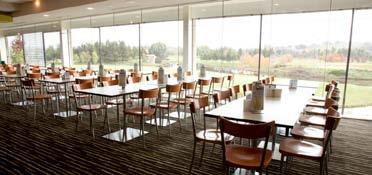
GUNGAHLIN Lakes Golf Club is going back to basics, with a classic, good-value lunchtime celebration for the running of this year’s Melbourne Cup, according to functions manager Alycia Kunze.
“This year we’ve decided to go back to what our members love, which is being out on the terrace and in the Spike Bar, looking out at the golf course and the lake,” Alycia says. “It’s just a really nice space, where you get to be outdoors but still under cover, and there’ll be three different big screens to watch the race on as well.”
The party starts with a complimentary drink on arrival and continues with musicians playing from midday through to 4pm, apart from during the main event, of course.
“We’re having a three-course menu with a seafood entree, then for the mains we’ve got an alternate serve of a
chicken dish and a beef one as well, and for dessert we’ve got a lemon and lime tart,” Alycia says.
“We’ve also got prizes for best dressed, and it’s $50 per person, so it’s pretty good value.”
All the normal club facilities will still be open, but members and guests who book for the Melbourne Cup lunch will be able to punt on the big race at exclusive TAB facilities inside the Spike Bar, she adds.
Gungahlin Lakes Golf Club, corner of Gundaroo and Gungahlin Drives, Nicholls. Call 6242 6283 or go to gungahlinlakes.com
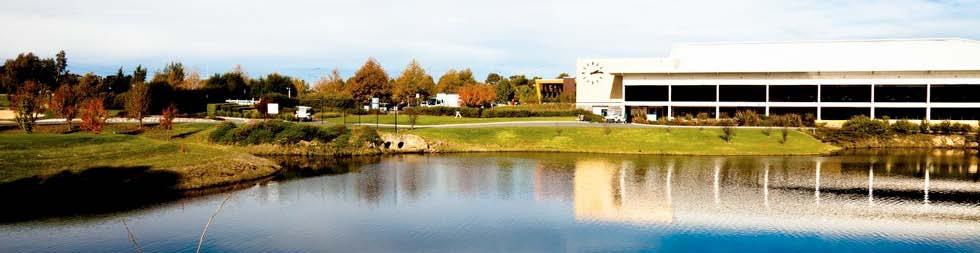
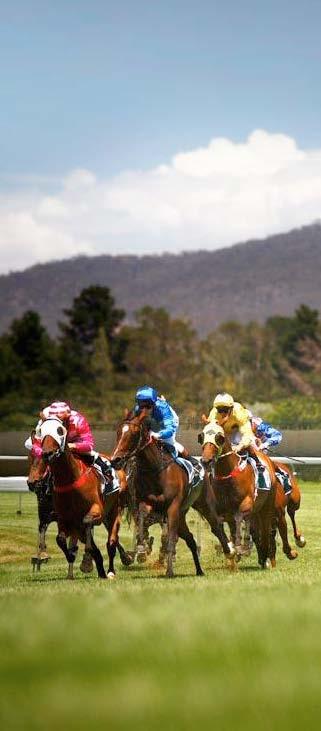
THERE is nothing quite like the atmosphere at the local track for the biggest race of the year.
Thoroughbred Park promises a massive day of entertainment, fashion, food and drinks for this year’s Melbourne Cup, with seven local races and some of the action from the rest of Australia screened live, adding to the excitement of the main event from
“You’re right on the track at the 3200m mark, so you can see the horses going past, you get an umbrella and you then have a base for the whole day,” she explains.
Costumed clowns will inject a bit of humour and an all-girls team will
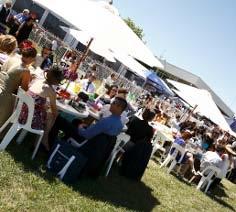

while staff from ZAIJA Studio will be roving around giving massages.
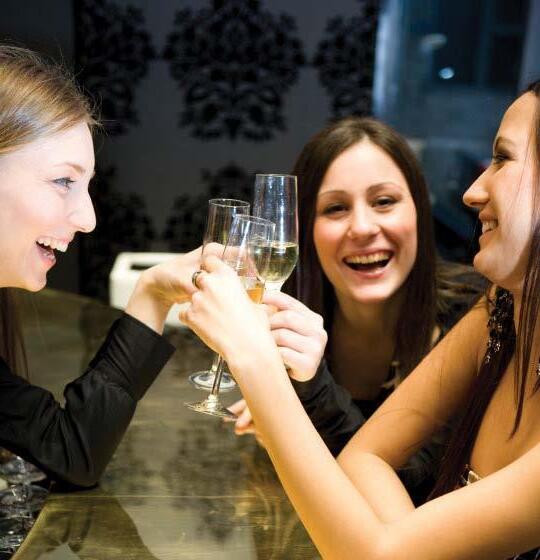
Champagne Bar for the first time,” says Briony. “It’s a champagne and wine bar that will be out on the front lawns, all decked out with couches. We’re only letting 100 people in there at a time so it’s going to be a beautiful, relaxing experience where you can just lounge around at the races.”
Thoroughbred Park, Randwick Road, Lyneham. Call 6204 0000 or go to thoroughbredpark.com.au

THERE are plenty of reasons to enjoy the great race at one of the Canberra Labor Club Group’s four locations around Canberra.
“Melbourne Cup Day at your local Canberra Labor Club is full of fun and excitement for everyone,” says promotions and functions co-ordinator Matt Michel.
“We have a delicious luncheon and free entertainment at Belconnen, as well as Cup Day lunch specials at City Labor Club, Ginninderra Labor Club and Weston Creek Labor Club, starting from only $9.50 per person.”
All lunch bookings include a complimentary glass of sparkling wine, and plenty of chances to try your luck with sweepstakes available for the main race and lucky door prizes given away during the day.
“Extra TAB facilities will be provided at all clubs and the big race will be shown live on big-screen TVs around each
venue,” Matt says. “Plus, join us at Belconnen the night before the big race for Canberra’s Best Calcutta, with a guaranteed $10,000 prize pool.”
Based on a phantom race call, the Calcutta is an exciting process that combines features of a sweepstakes draw and an auction, which starts at 7pm on Monday, November 4 with tickets at just one dollar each.
“Our friendly staff are a major part of the great atmosphere on Melbourne Cup day across the Labor Club Group, often dressed in jockey’s silks and always ensuring our patrons have a memorable experience,” adds Matt. “It’s all about you at the Canberra Labor Club!”
Canberra Labor Club, Chandler Street, Belconnen; 16 Petrie Plaza, Civic; Lhotsky Street, Charnwood; Teesdale Close, Stirling. Go to laborclub.com.au


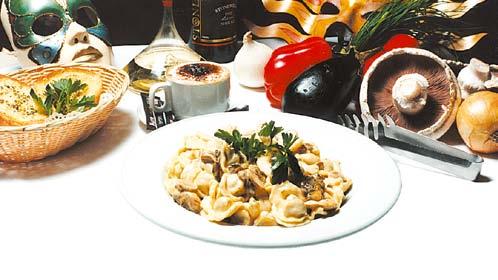



IT’S a year of big birthday bashes and not just Canberra’s Centenary. Some businesses are toasting many years in the nation’s capital, including La Scala, which is celebrating its silver anniversary (25 years) with the same family at the helm.
Many memories have been made. Many high-profile Canberrans have dined at La Scala… prime ministers, ambassadors, dignitaries and more. The security guards have hung around discreetly, well as discreetly as they can, with their pristine-pressed suits and coils from their ear pieces dangling like long, fancy earrings.
Many gatherings have been held in the “private” dining rooms – no doubt what goes on at La Scala, stays at La Scala.
What is the secret recipe given that many restaurants cannot stay open past a few years? What mix of ingredients makes La Scala – named after the famous, opulent Opera House of Milan – a stayer? Atmosphere is one ingredient. La Scala’s décor is warm and comforting; it wraps around you tightly like an Italian nonna giving you a massive hug.
The classic dishes created from



recipes steeped in history are another part of the secret recipe. Four of us settled into one of La Scala’s dining rooms, complete with glorious wine racks, a small bar and fireplace. Then the feast began. Love the depth of gorgonzola? Then order the risotto balls with pork ragu, fennel seeds, bocconcini cheese and a creamy, rich,

absolutely decadent gorgonzola sauce (entrée $16.80). It is a moment on the lips and lifetime on the hips, but did we care? No we did not!
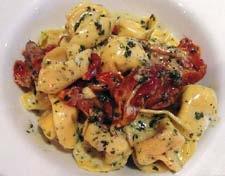
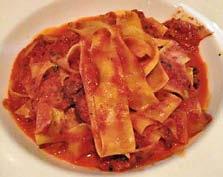
Can’t go past pasta? We shared three, each with their own personality. The spaghetti was light and clean – fresh seafood in seafood stock with gremolata, garlic and a nice hit of chilli ($26.80). My next favourite was the tiger prawn pappardelle. The prawns were sautéed and flamed with gin in a cream and Fontina cheese reduction ($28.80). While I adore saffron – the most expensive spice in the world – the saffron and poppy seed tortelloni was heavy for me, although the sundried tomatoes, pesto, cream and brandy combo was intriguing ($22.80).
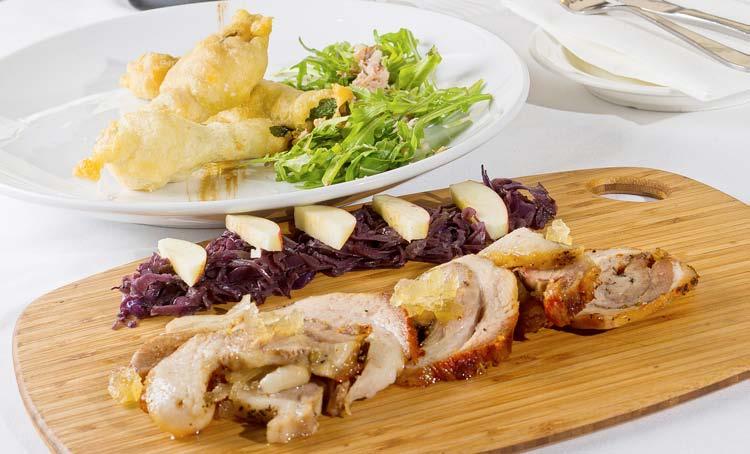
We all went “yum” with the warm caponata salad created with
roasted pine nuts and an aged Balsamic and apple reduction. It accompanied a thick and juicy piece of pork loin ($27.80).
The piece de resistance was the rich and very velvety white Belgian chocolate panna cotta. It sat beautifully in a ring of golden brown espresso coffee and Tia Maria reduction and was an OMG dessert.
La Scala’s wine list is extensive and impressive. And at La Scala it is attentive service with amore. For decades this multiple awardwinning restaurant has been serving customers under the watchful eye of brothers Gab and Enrico Saccardo. It does so with utter confidence.
La Scala, Garema Place, 6248 8338. Lunch, Monday-Friday (noon-2pm); dinner, seven days (6pm-10pm).





Joanne Madeline Moore
your week in the stars / October 28-November 3
ARIES (Mar 21 – Apr 20)

The buzz words for Rams this week are rebirth and renewal. So it’s a wonderful week to initiate dramatic changes in your world … but expect some feisty resistance from loved ones or work colleagues. Thursday’s Mars/Pluto trine gives you the confidence and determination to push through obstacles, as you pursue a course of action that’s right for you at this time in your life.
TAURUS (Apr 21 – May 20)
Resist the urge to be jealous and possessive this week, as retrograde Mercury and the Solar Eclipse shake up your romance zone. Close relationships are also in a state of flux so you’ll have to be flexible, and give loved ones plenty of room to move. Singles – have you been looking for love in all the wrong places? Sunday’s Solar Eclipse encourages you to cast your net wide.
GEMINI (May 21 – June 21)
Boredom is a big no-no for restless Twins this week! Mercury is still in retro mode (until November 11) so you need to keep your mercurial mind busy and out of trouble. Expect surprises, hiccups and hijinks along the way – especially involving communication, computers or cars. With Sunday’s Solar Eclipse activating your wellbeing zone, turn your attention to food and fitness.
CANCER (June 22 – July 22)
The Uranus/Pluto square could trigger some tension between your professional and personal relationships. Make sure you have your priorities sorted out. Sunday’s sultry Solar Eclipse stimulates your romance and creativity zone, so you’ll feel like declaring your love for someone special, or beginning a project you’re passionate about. Balance is the key to a satisfying week.
LEO (July 23 – Aug 22)
Have you been procrastinating about a health issue? It’s time to take action. And are you stuck in the middle of a family fiasco? You’ll go through many changes of heart, as the Solar Eclipse stirs up stormy emotions on the home front. With retrograde Mercury confusing communication, resist the temptation to over-react to perceived criticism. Strive to keep your cool Cats!
VIRGO (Aug 23 – Sept 22)
Your ruling planet Mercury is in retro mode so your mind’s buzzing with plans and schemes, but it will take patience and persistence to turn those ideas into reality. With Sunday’s Solar Eclipse in enigmatic Scorpio, you’re out to solve a mystery or uncover a secret. Communication will be complicated so don’t take what others say too literally – read between the lines.
LIBRA (Sept 23 – Oct 23)
Librans aspire to a luxurious lifestyle, but do you have the cold hard cash to finance your super-sized dreams? If you don’t have the required funds then you’d better apply for a promotion, get a second job, start saving, or find a cheaper dream. Don’t dither Libra! With the Solar Eclipse stimulating your money zone, your revised financial plan for the next 12 months starts now.
SCORPIO (Oct 24 – Nov 21)
This week Mercury reverses through your sign; Uranus squares Pluto (your ruling planet) plus there’s a Solar Eclipse in Scorpio on Sunday. So it’s all about endings and beginnings over the next few months. Some things will dramatically disappear from your life; but you will emerge stronger for the experience, as more suitable people and situations then fill the void.
SAGITTARIUS (Nov 22 – Dec 21)
With compulsive Pluto applying pressure in your money zone, you’ve got an urge to splurge! But don’t let a persuasive friend talk you into buying something that you really can’t afford. It’s time to tune into the wisdom of your inner voice (which will steer you in the right direction). Be inspired by birthday great Bill Gates “Often you have to rely on your intuition.”
CAPRICORN (Dec 22 – Jan 19)
Problems you had back in May could resurface. If you stubbornly hold onto the status quo, then you’ll just prolong the situation. Your motto for the moment? “What you resist persists” … so it’s time to shed your old skin and start afresh. Be inspired by fellow Capricorn, Simone de Beauvoir: “Change your life today. Don’t gamble on the future, act now, without delay.”
AQUARIUS (Jan 20 – Feb 18)
The ongoing Uranus/Pluto square fires up again on Friday. The best way to utilise this dramatic and disruptive energy is to examine your life in forensic detail; detox your body; and free your mind of limiting outdated beliefs. The next step is to keep what’s working in your life, and change what isn’t (the trick is knowing which is which). Out with the old and in with the new!
PISCES (Feb 19 – Mar 20)
Single Pisceans – you prefer to attract potential partners to you in subtle ways. But, with mighty Mars now racing through your relationship zone (until December 8) it’s time to be much more proactive. For many Fish, foreign shores beckon as Sunday’s Solar Eclipse activates your adventure zone. Just make sure you take the time to research and plan an upcoming trip carefully.
Across
1 “Weary” who, was noted for heroic service to fellow POWs in WWII?
8 What are crude representations of persons?
9 Name a less familiar term for snow leopards
10 What is a slight infusion, as of some element?
11 Which expression describes a subsequent course of affairs?
12 What is a particular British nobleman?
13 What, in electricity, is the unit of inductance?
16 Which word is applicable to “the one occasion”?
19 Name a renowned river in central England
21 What are natives of Baghdad called?
22 Name a large heavy kind of terrier
23 What is a colloquial term for particular anthropoid apes?
24 To decide against a plea etc, is to do what?
25 What is astral considered to describe?
Down
2 Which stringed instrument is much used in the Hawaiian Islands?
3 Name one of the various resinous varnishes
4 Which instrument is used to grind substances in a mortar?
5 Who was the 16th president of the US?
6 Which substance is used to seal roads?
7 What is the intrinsic nature of a thing?
13 Name a six sided figure
14 Name the members of the so-called black race of Africa
15 From which part of a ship were miscreants once hanged?
17 Which simple musical wind instrument is shaped like an elongated egg?
18 What is a sailing vessel built and rigged for speed?
20 Which relatives are the daughters of one’s siblings?
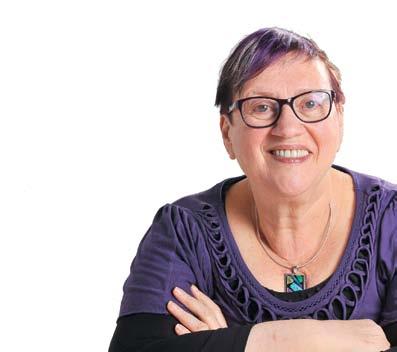
A NEW partner is causing Callie to worry about her health and she came to see me.
“I have been reading your articles in ‘CityNews’ and I notice that you have been writing about changes to medical expenses and health fund offsets,” she said.
“Well, I have a new partner, Boris, and he refuses to join a health fund. What impact does that have on me?”
I told her she was right to be concerned in that there have been many changes this year but, when the legislation was first introduced, it stated that all members of the family must have an appropriate level of health cover in order not to incur the Medicare levy surcharge of 1 per cent.
“The effect of this is that if you are in a health fund and Boris is not, for Medicare levy surcharge purposes, you are both treated as if you are not in a health fund even though you have an appropriate level of health fund cover,” I said.
“I always think it prudent to consider how much the surcharge will cost compared with health fund cover.
“Boris earns $120,000, so 1 per cent is about $1200. You also earn around the same amount, so your surcharge would be the same.
“A single person can join a health fund for about $800 a year before the rebate. So it will be cheaper for Boris to join a health fund than to pay the surcharge.”
Callie agreed that my advice made “good sense”.
I then asked if her children were covered by her policy.
“I didn’t know that they had to be covered under any policy,” she said. “Simon, my ex, doesn’t have health insurance cover and earns about $90,000 and I have full custody of the children.”
I reminded her that I had said that all members of the family must have an appropriate level of cover.
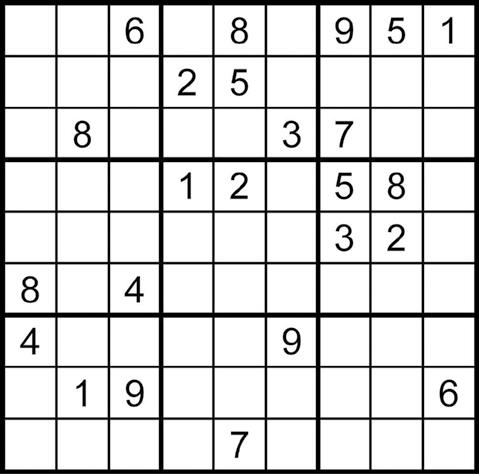
“This includes your children, so you need to have family cover to cover you and your children,” I advised her.
Callie said she would check with her health fund about the kids and wondered if or when Boris joined a fund, could he join a different one or should they both be in the same one?
“Really, Callie, it’s probably easier if you have a family membership because then either of you can claim the health fund offset and this may be beneficial in some years, if you don’t claim it progressively by reduced premiums., “ I told her.
“Also, if you are not covered under the same policy as Boris, you cannot claim his share of the private health insurance rebate. I should also remind you that if you do not have a medical expense offset claim in 2013 you will not be able to claim in 2014.”
Callie left my office saying: “This whole area is so confusing. Thank you so much for helping me.”
If you have any queries on medical offsets or any other tax related matter, contact the friendly team at Gail Freeman & Co Pty Ltd.
• Walcott garden, 10 Wickham Crescent, Red Hill.
• Burra Open Gardens will also be open from 10am-5pm on the weekend of October 26-27. “Aberfeldy”, 20 Wells Place, Googong; “Roselawn”, 1291 Old Cooma Road, Googong; “Glenbog”, 314 Plummers Road, Burra; “Tijara”, 100 Williamsdale Road, Burra; “Nankeen”, 28 Finlay Pl, Burra; and “Felix”, 1386 Urila Road, Burra. Single garden visit is $10; $25 to visit all gardens. Children under 15 are free. Funds raised go to the Lions Club of Queanbeyan. Visit www.burra.org.au for more information and to plan your visit.
Janet and Andy’s garden at 6 Gidabal St, Aranda, has been cancelled.
WITH a dance floor on top of a vast water tank, a secret garden full of flowers, sculptures and water features dotted amongst eclectic plantings and music speakers hidden in innocent-looking rocks, Peter Fletcher and Barbara Baikie’s garden is a journey of discovery, with something beautiful and unexpected around every corner.
“There are so many things to look at as you walk around,” says Barbara. “It’s a harsh climate garden, and once things are established they’re pretty much on their own, but we have a mix of natives, succulents, hardy fragrant roses and lavender, perennials, shrubs, bulbs and ornamental trees.”
Peter and Barbara have lived up on the hill in Wallaroo for seven years, and even got married in their gazebo overlooking the Brindabellas. Their fascinating, “everevolving” garden will be open to the public for the first time on the weekend of October 26-27.
Barbara says the garden means a lot to her and Peter.
“We have trees planted for each member of the family, a memorial garden, and many plants that were gifted by and planted with dear friends,” she says.
“The sandstone used in our pond is from Peter’s father’s garden. The fountain in the secret garden was a surprise gift from Peter. The archway, I gave him for his 60th birthday. Everywhere we turn there’s a happy memory.”
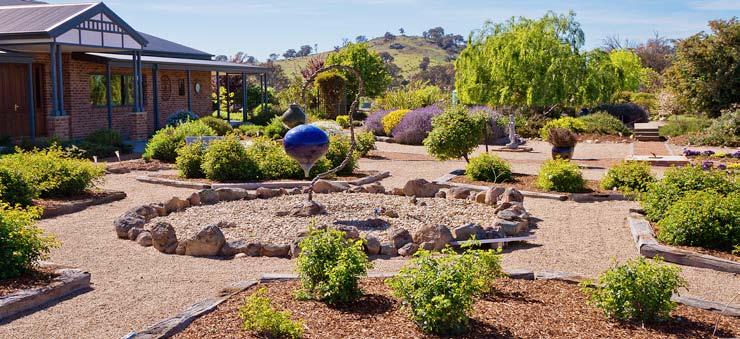

WORDS: Kathryn Vukovljak
PHOTOS: Brent McDonald
When the couple bought the 58-hectare property seven years ago it was a bare hilltop, and they have worked hard to get it to where it is today.
“We started by creating the pathways, and Peter used rocks found on the property to make garden beds, then things evolved naturally and intuitively from there,” says Barbara. “We didn’t have any master plan.”
There was barely even a tree on the property seven years ago, apart from a couple of gum trees, but Peter has since planted more than 6000 trees, including elms, oaks, native wattles and fruit trees, with help from two grants from Greening Australia. He even created a pathway lined with Manchurian pears for Barbara to jog through.
“Gardens should be beautiful and sustainable,” he says. “It’s easy to get absorbed in the building and planting, but it’s good to remind ourselves of where we are, and how lucky we are.”
There’s also a reflection pool, where Barbara loves to go to reflect on what’s important in life.
“I’d love people to look around and feel thankful,” she says. “There is such a magical sense of peace up here and we want to share that with others.”
Peter and Barbara’s garden at 88 Rochford Road, Hall, will be open on Saturday, October 26, and Sunday, October 27, 10am-4.30pm. Adults $7, children under 18 are free. Funds raised will go to the Wallaroo Rural Fire Service, Canberra Refugee Support and Open Gardens Australia. More information at opengarden.org.au.

STUNNING is a word that comes to mind with many trees and shrubs when in flower and the deciduous dogwood ranks as one of the best.
Of these, Cornus florida is possibly the most popular. Although it may surprise even longtime gardeners there are at least 60 varieties of dogwood, ranging from deciduous to evergreen varieties across the globe from Asia to North America.
The Cornus florida is a large shrub (or small tree) that was brought into cultivation in 1730 and the Royal Horticultural Society bestowed its prestigious Award of Merit in 1951, always a guarantee of plant excellence. Each of its flower heads has four conspicuous white bracts, rather than petals. The most popular is the pink-flowering Cornus florida “Apple Blossom” (pictured here in a Griffith garden I saw last week). In autumn, it develops a stunning, rich leaf colour.
CORNUS capitata is one of the most interesting evergreen dogwoods that grow well in this area. It is indigenous to the Himalaya and introduced into Western gardens by the early plant hunters in 1822.
The RHS gave it the Award of Garden Merit in 1922 for its flowers and, unusually, again in 1974 for its fruit.
The sulphur-coloured bracts over several weeks gradually change to pale lime-green and then to a bronze-pink. The fruit is almost identical to pale red strawberries.
However, I don’t recommend deciduous dogwoods for an exposed garden in new suburbs.

They need protection from hot summer winds and should be planted among well-established trees and shrubs to ensure adequate protection from the elements.
SPIRAEA was a popular shrub in the early gardens of Canberra as an individual shrub or a hedgerow. Also known as the May Bush, it is still popular today if the prolific mass of white flowers, resembling freshly fallen snow, seen in gardens at present is any guide.
One popular variety is Spiraea “Anthony Waterer”, raised at Waterer’s Knap Hill Nursery in England, which I visited when it was celebrating its 200th anniversary.
In my original 1894 edition of “The Garden” journal, the nursery announces: “In reply to the many inquiries and intending purchasers of our new release S. ‘Anthony Waterer’, I beg respectfully to say that it will not be distributed until November, 1894”. Such wonderfully quaint language.
THE Horticultural Society’s Iris, Rhododendron and Azalea Show is at the Wesley Church Centre, National Circuit, Forrest, on Saturday, October 26, from noon to 5pm, and Sunday, October 27, 11.30am-3.45pm.
Following a mild winter, these plants will be looking even more spectacular. There will be potted plants, plus floral art and the popular plant stall with all plants grown by members. Light refreshments available and the show is free.
More information at hsoc.org.au
FOR a great day out in the beautiful Southern Highlands, visit the Bundanoon Garden Ramble on October 26-27. Eight gardens will be open, plus garden workshops and guest garden speakers. Tickets from the Bundanoon Soldiers’ Memorial Hall.
More information at 4883 7812 or bundanoongardenramble.org.au
• Orchids do not like to be divided too often, but now is a good time.
• With continuing nights close to frosts, it is still too early to plant tomatoes in the garden.
• Transplant broccoli, cabbage, celery, lettuce and spinach seedlings.
• Plant dahlia tubers. First, dig in well-aged compost or cow manure. To prevent damage to tubers, put stakes in first for taller varieties.
• Do an environmental weed check on the whole garden, especially newly germinating privet seeds and ivy. Not sure which are environmental weeds? Collect the ACT Government’s list “Are your weeds going bush?” from the nearest shopfront.
BOOK WINNER: The winner of a copy of Jennifer Stackhouse’s book “Garden” is S.Fenton, of Queanbeyan East.