
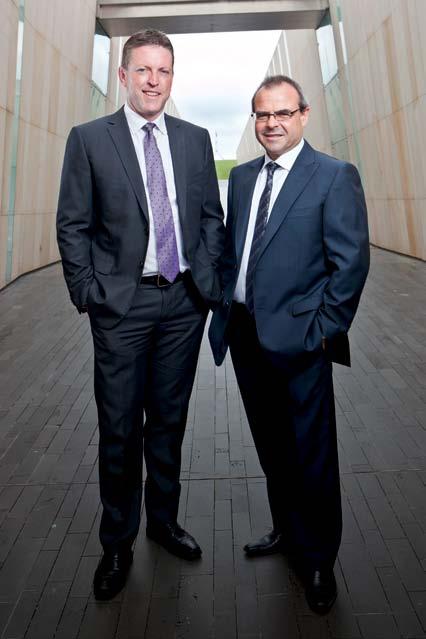




Where the economy goes after the ACT election is critical to the future of the Territory. Voters have two clear choices on October 20. Labor is sticking to its tax-reform package and the Liberal mantra is about improving the cost of living. LAURA EDWARDS reports
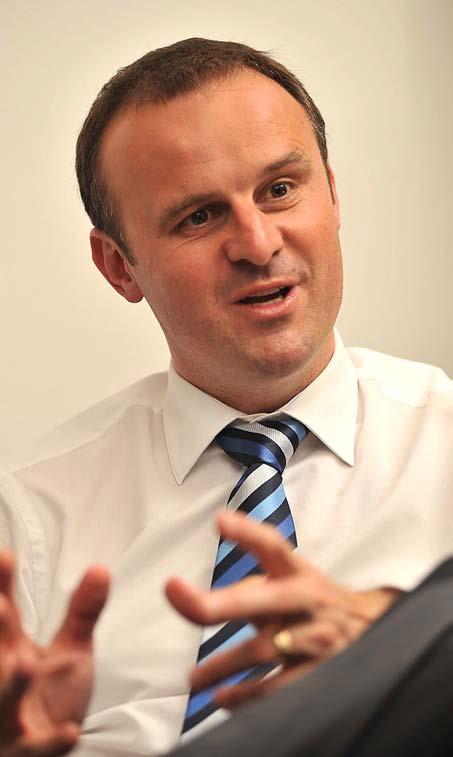
WHILE the future looks “relatively bright” for the ACT economy, Treasurer Andrew Barr sees a few “dark clouds on the horizon”.
“We’ve got one of the strongest economies in the country, second only to WA... but the challenges are the risk to employment from decisions by the Federal Government,” he says.
“We need to build off our strong public-sector base and to further develop sectors of our economy where we have a comparative advantage over other parts of the country.”
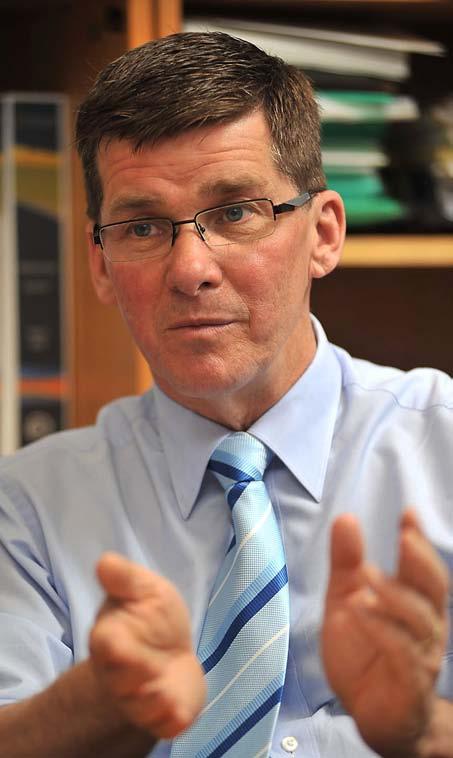
Shadow treasurer Brendan Smyth, agrees there are “struggles” ahead, but when it comes to economic directions, the two parties differ greatly.
While Labor places a clear focus on health, education and jobs, the Liberals stress the need to improve local services with lower rates and charges.
Smyth says the party’s main concern is “improving the cost of living”.
“You can get the economy right, but if you can’t afford to live here it’s not a very nice place to live,” he says.
“Water has tripled, rates have doubled, electricity has gone up – people are finding it hard.”
In an effort to tackle housing affordability the Opposition has pledged to halve the cost of stamp duty for first-home owners on properties up to $500,000 and abolish tax reforms, reinstating the first-home buyers’ concession scheme to include established homes and protecting homeowners from a ‘’tripling in rates’’.
Smyth says the party’s promises are achievable with “controlled spending” – but there will be some “tough choices” to make, and he admits that the party won’t match every individual tax cut from Labor.
“We’d love to give tax cuts to stamp duty and to payroll tax and those things – but not at the expense of tripling people’s rates,” he says.
“Tripling people’s rates is not a choice, so we won’t be matching every individual tax cut for that reason.
“We will make sure that we get our spending in control so that it’s not wasting money on capital works... it’s about making sure we get ahead of things and we build in a timely fashion so that you don’t pay extra funds to
catch up.”
Barr says Labor’s plan is to further develop sectors of the economy where the ACT has a comparative advantage over other parts of the country.
“We’ve sought to bring together education, health and the jobs agenda for the city in a coherent package that really goes to build on both strengths,” he says.
“We’ve currently got the lowest unemployment rate and we have a healthy level of growth.
“Our focus is also about encouraging small and medium-sized business to grow. One of our key reforms is to cut payroll tax.”
He waves off Smyth’s claims that housing is unaffordable in Canberra.
“Certainly, people have indicated if you can get properties below $400,000 particularly below $375,000 they sell very quickly,” he says.
“We’ve changed our affordable housing policy, we’ve put in place three thresholds so one to two bedrooms will
be under $290,000, two to three will be $340,000 and three and over will be $373,000.”
According to Barr, the purpose of Labor’s tax reform package was to phase out taxes that were ‘‘inefficient and expensive to collect’’.
He denies the Liberals’ claim that Labor will triple rates, accusing the Opposition of “misleading the community”.
“I think the important point is that, over a given period of time, rates increase and the size of the increase is capped,” he says.
“We are increasing those charges, but not at the rate that the Liberals are saying – no one’s saying the rates won’t go up, but they’re not tripling... the only thing that’s tripling is the size of Zed Seselja’s nose every time he repeats that lie.”
But Smyth believes the proof is in the Quinlan Review; and “it’s all down to simple mathematics.”
“Labor’s got three choices. They’ve either committed a fraud on tax reform and they can’t fund it because there’s a $384 million hole in their Budget, they’re either going to invent new taxes, or they have to triple people’s rates,” he says.
“Because at the end of the cycle the government has $384m in which to find funding for. If they can’t find that $384m, then there’s three or four taxes they can’t get rid of.”
Barr says Labor plan to increase the number of houses built, while Smyth says the Liberals aim to “make existing homes more affordable”.
Both parties have promised not to cut staff numbers in the ACT public service.
While Labor wants to grow their public-sector base, the Liberals are keen to build on the Territory’s “dwindling” private sector, which is currently sitting below 50 per cent, according to Smyth – but he is adamant they will be “hiring, not firing” in terms of the public service.
Election candidates, Pages 8 and 10. Knock knock. Who cares? Page 10. Pander power of the polls, Page 11. Please sir, whose policy is right? Page 12.

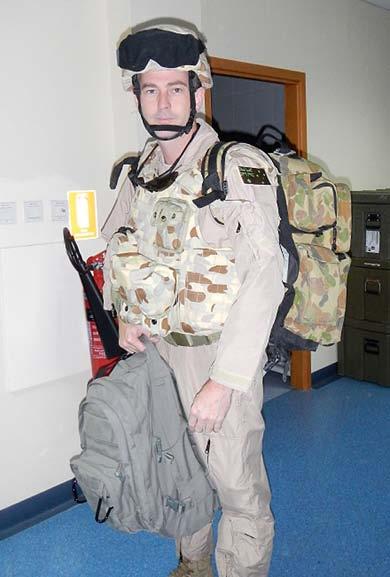
WORKING in war-torn surroundings thousands of kilometres from his young family presents a danger that can often play on Matt Luther’s mind –but it doesn’t take away the “honour” of serving his country.
For the last six months, Gordon resident Matt has been based in the Al Minhad air base, in the United Arab Emirates, working as a nursing officer – a world away from his hometown position as emergency practitioner nurse at Calvary Hospital in Canberra.
Matt took leave from Calvary for this six-month posting with the Royal Australian Air Force, where he’s been a specialist reserve officer for the last six years.
As a nursing officer, Matt provides full spectrum healthcare – from colds to broken bones and battle wounds – to “anyone who needs it”.
“It can be Australia, the coalition, or helping the Taliban – they may be our opponent, but we don’t discriminate,” he says.
“We look after everybody equally and provide them with the health care they require. Our aim is just to
keep everyone fit and healthy.”
Matt regularly “flies in and out” of Afghanistan.
“We’re working towards that goal of helping Afghani people and helping them stabilise their country,” he says.
“Providing healthcare in an aircraft is very complex if you don’t have access, vibration, low oxygen levels, lighting.”
But working in an atmosphere filled with conflict and pain can be “challenging,” says Matt.
“You’re in this conflicting environment where there’s beauty all around, history, magnificent mountains jutting up out of nothing, and then this conflict going on as well, so there’s no time to really appreciate it,” he says.
“There are times I don’t feel safe, when that plays in the back of my mind... but I feel honoured to be over here and serve my country.”
Treating injuries such as gunshot wounds or lost limbs can be a “confronting experience”.
“To know that some of these in-
juries were done by one human to another... that can be confronting,” Matt says.
“When you’ve got a young fit healthy person and they may lose a limb – you reflect on the change of that member’s life and what they’ve given as well.
“Everyone who comes over here knows the risk and that’s their job so that’s a lot to think about.”
Matt tries to keep in contact with his wife Bridget and two children “as much as possible”.
“It is difficult being away, but I think it’s harder for family back at home because when we’re here we’re immersed in the job. Here I’m 100 per cent in the job so don’t have time to wonder: ‘Oh, what if I get killed?’ – its all about the patients,” he says.
Matt plans to return to his Gordon home early next month when he fulfils his reserve duties, and return to his job at Calvary Hospital.
“I’m really looking forward to getting back and seeing my family – but I’m also incredibly grateful for this opportunity and feel quite honoured to be able to serve, and if I was asked again – yes, I would do it,” he says.
Phone 6262 9100 Fax 6262 9111
GPO Box 2448, Canberra City 2601 www.citynews.com.au twitter.com/city_news facebook.com/canberracitynews
Chief executive officer: Greg Jones 0419 418196, greg@citynews.com.au
Senior advertising executive: Ernie Nichols, 0421 077999
Advertising sales executives: Rebecca Darman 0411 225169 Sara Poguet, 0415 706758
Advertising sales co-ordinator: ad@citynews.com.au
Cover: The “alluring” and “hilarious” Miss Tiffany Blue.
Page 25.
Sydney advertising sales: Ad Sales Connect, 02 9420 1777
Responsibility for election comment is taken by Ian Meikle,
Since 1993: Volume 18, Number 36
Editor: Ian Meikle, editor@citynews.com.au
Journalists: Laura Edwards, laura@citynews.com.au Libby Hill, libby@citynews.com.au Kathryn Vukovljak, kathryn@citynews.com.au
Arts editor: Helen Musa, 0400 043764 helen@citynews.com.au
Design and photography: Silas Brown, 0412 718086
Graphic designer: Leonie Fox
Contributing photographer: Andrew Finch
Accounts manager: Bethany Freeman-Chandler accounts@citynews.com.au
Distribution and circulation: Richard Watson, circulation@citynews.com.au
CHIEF Minister Katy Gallagher has launched the Investors Can Help Project, which will source housing for migrants and refugee applicants who are temporary visa holders. It is a community initiative aiming to increase the number of rentals from the private rental market available to the migrant and refugee community. The project is an initiative of MARSS (Migrant and Refugee Settlement Services), ACT Chamber of Commerce and the ACT Real Estate Institute.
THE reception rooms of Government House will be open to the public from 10am to 4pm on Sunday, September 30, in celebration of the Queen’s Diamond Jubilee. There will be vintage and veteran cars on display in the grounds, a range of entertainment, and refreshments will be available to buy. Visitors will be welcome to picnic. Admission is $20 for a family with children, less for individuals and concession holders. Proceeds will be in aid of the Australiana Fund, which acquires decorative items of Australian provenance for display and use in the nation’s four official residences.
FREEMASONS NSW & ACT have launched an appeal in support of the Canberra-based SouthCare rescue helicopter. The appeal will encourage all lodges and districts to hold fundraising activities and events throughout the year. Donations will be sought from Freemasons’ private lodges, individual members, family and friends and private companies associated with Freemasons. The helicopter was established in 1998 as the primary helicopter service to the ACT and Southern NSW. Since that time the rescue helicopter has performed more than 4800 missions, and averages two missions a day.



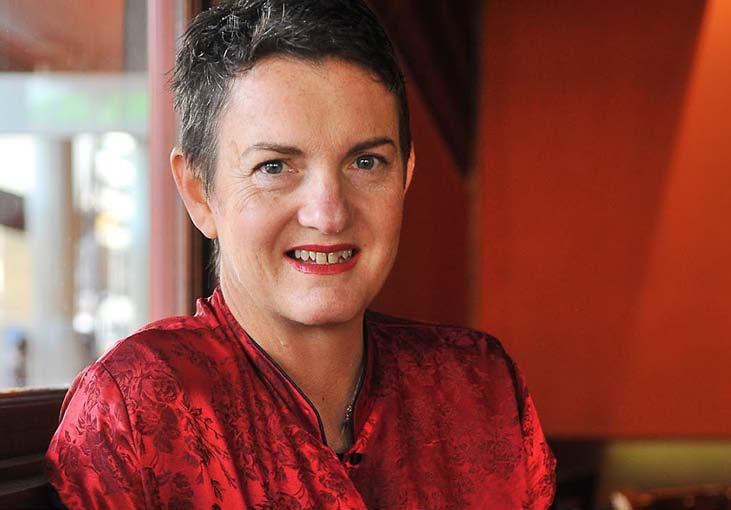

HILL meets a woman who has turned her triumph over crippling multiple sclerosis into an example of inspiration and hope to sufferers of chronic illness
M ULTIPLE Sclerosis crippled Lynette Dickinson to the point where she needed someone to come to her home and bathe her daily.
The mother of three young children was confined to a wheelchair and told she would never walk again.
In May, 2007, she started yoga teacher training so she could teach herself and others how to live in a state of peace.
“It was all about not being mad and teaching other people how not to be mad,” she says.
Lynette was only able to complete the first module by visualising yoga, meditation and relaxing. She practised that for a few months and when she went to complete the second module of the course, she discovered she was able to physically do the yoga she had been visualising.
By the beginning of December, 2007, Lynette was out of the wheelchair and able to walk with sticks.
For the past five years, Lynette has used Dru yoga, relaxation and meditation to manage her multiple sclerosis.
Now a professional yoga and meditation teacher, she teaches people with chronic illness.
“I’m kind of living my dream at the moment,” she says.
She believes she’s an inspiration to the people she teaches.
“Even when I’m not doing so well, I’m still calm and I smile so much that’s an inspiration in itself,” she says.
As well as teaching people with conditions such as Parkinson’s disease, autism and multiple sclerosis, she also teaches women suffering from post and ante-natal depression through the organisation PANDSI.
“That’s the most beautiful class,” she says. “I always walk away with tears in my eyes out of gratitude for being able to offer them something.”
In addition, she teaches people with mental illness, holds public classes at Om Shanti in Griffith and also offers one-on-one classes.
“I taught a woman through the final stages of lung cancer for two years and it was so beautiful to be with her during that time because it gave her such a sense of herself,” she says.
Yoga gives Lynette and her clients increased flexibility, balance, improved posture and lowers stress – all of which help with her relapsing and remitting multiple sclerosis.
“I’ve lost sensation in my tastebuds, in my skin, I have vision and hearing issues, pins and needles through my body, digestion and breathing issues, sometimes all at once,” she says.
Aside from the physical impacts, Lynette’s illness has affected her entire family. When Lynette was first diagnosed, she was married with three children – her youngest daughter was 11 months old. But her marriage has since broken down.
“MS is quite a mystery disease in that you can wake up in the morning and feel fine and be completely cactus by the afternoon and it’s a very difficult thing for partners to get a handle on,” she says.
“I think the stress of that and not knowing what our future was, and seeing me getting worse, just made it so difficult to maintain a relationship.”
Lynette says a lot of people support the person with the illness, but forget about the carer.
“If you’re a carer and you’re caring for someone with a chronic illness, it’s very difficult to talk about your issues around that. Emotionally, it’s a very difficult thing to do,” she says.
Lynette’s new book “A Journey to Peace Through Yoga” is available at her website asparkofsplendour.com
THE hardships of growing up in a disadvantaged family helped shape 19-year-old Adriana Clarke’s life philosophy: “All kids deserve to start out on the best possible foot.”
Having landed the role as ACT youth ambassador for UNICEF, Adriana will now have the chance to provide help and “a starting ground” for other disadvantaged youths.
The University of Canberra student was one of nine youth ambassadors aged between 15 and 24 selected from 180 applicants Australia-wide, who will work to support children’s rights and raise awareness of issues facing Australian children.
As the only UNICEF youth ambassador for the ACT, Adriana will work on Territory and national projects for a year, including participating in local advocacy campaigns, raising awareness by posting content on social media sites and helping to organise events.
“My national project I’ll be working on, with other ambassadors, is about Aboriginal reconciliation, getting the word out about improving the relationship between indigenous and non-indigenous communities, and hopefully working on travelling to the NT and teaching kids there about their rights,” Adriana says.
Her local campaign is teaching students about how to handle bullying situations, and what their rights are in
that situation.

Adriana says she’s always had “an eye for volunteering and helping the less fortunate” – she was previously involved in anti-bullying programs at her high school in Dubbo, and currently works in the student equity and disability office at UC.
She says she’s “really honoured and excited” about her new role.
“We’re all very passionate about getting out to our communities and helping children especially, because we can relate to their stories,” she says.
Adriana and her sister were sponsored children with The Smith Family from the age of eight, and she still receives sponsorship for her university costs.
“They helped put us in a better school, put us in clothes and uniforms and start off on a really good foundation,” she says.
“Now, when I am working with disadvantaged kids, it’s great to see their eyes light up when they realise they don’t have to struggle anymore or accept that this is their life – they can take what’s been given and share their own story the way I’ve shared mine.
“They can connect with someone who can understand them and what they’ve gone through.”
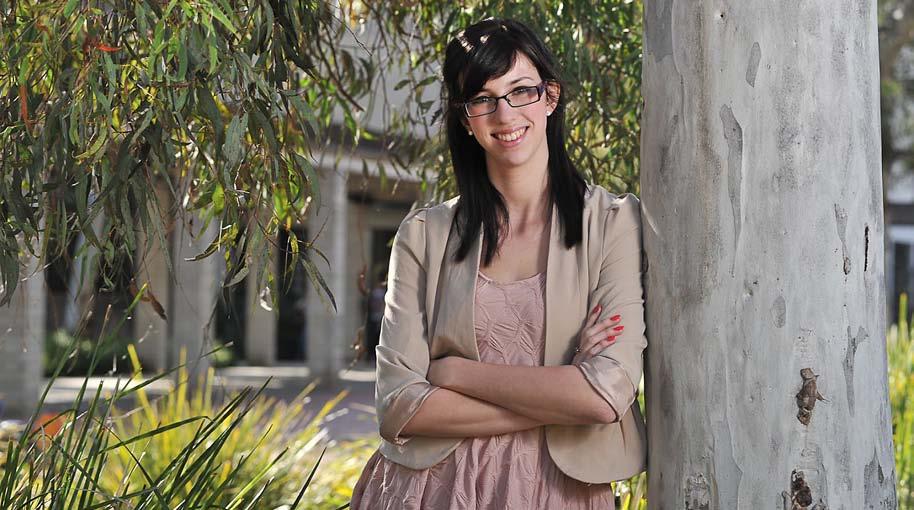
Apart from drugs and alcohol, Adriana says bullying is one of the biggest issues facing youth today, and she wants to work to “combat” the problem at local schools.
“I feel like it’s something that kindof goes unnoticed, like it’s something people perceive as just kids being kids,
but its definitely something that needs to be changed – you shouldn’t have to deal with it,” she says.
“I will be trying to raise awareness about people’s rights in that situation, especially for kids so they can handle it in a way that could perhaps break that cycle and they realise they don’t have to be bullied.”
Adriana will juggle her UNICEF role with studies in bachelor of politics and international relations/bachelor of laws at UC.
When she graduates, in about three years, she hopes to pursue a career in children’s rights.

Here “CityNews” continues its series of identifying candidates for the October 20 election and asking two questions: Why politics? Why should we vote for you? They throw up interesting answers.
Why politics?

I have been inspired by the educators and teachers I have worked alongside over the last 15 years. Their tireless dedication to their profession has helped to provide a high-quality early childhood sector for Canberra’s children and their families. This experience has made me proud to become a candidate for Labor and advocate the benefits of services like these to our community. Why should we vote for you?
I am grateful for the professional care and education that both of my children received through their early years and now as primary school students. I want to ensure that every ACT family and their children have the same opportunities and equal access to high-quality education as well as excellent health, early childhood services.

Why politics?
I am immensely proud to be the first indigenous member of the Legislative Assembly, and its first indigenous minister. I came to politics from a career as a dentist and I know from my own family experience that a good education can open up opportunities and change lives for the better.
Why should we vote for you?
Our recent announcements will dramatically improve education and employment opportunities for Canberra’s second century. I’d like nothing better than to continue to be a part of Katy Gallagher’s team as it makes a $250 million investment in schools and education over the next four years.
Why politics?
Born in Canberra, it has always been my home and I love this city. I started work in Canberra as a mechanic, built my business and sold it to put myself through a double degree at ANU in law and Australian politics. I now operate
a community law practice in Kippax. It is time to use my experience, business acumen and understanding of the law to fulfil my commitment to the betterment of my community.
Why we we vote for you?
I have life experience, expertise and strong work ethic. I am experienced in business and believe in community engagement and consultation followed closely by action. I am proud to be Labor and the combination of my business acumen, legal training and commitment to a progressive social agenda means that I am, unique amongst candidates in Ginninderra.
Why politics?
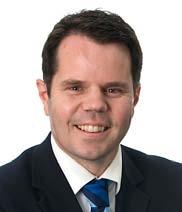
I’ve decided to stand for politics as it seems the most direct way to really help people and shape Canberra’s future. I think it is crucial that politicians help people with the local things that frustrate them, such as fixing street lights, removing trees, but also have the ability to
focus on the really big issues that can transform people’s lives, such as a National Disability Insurance Scheme, a world-class hospital system and an education system that recognises that one size doesn’t fit all.
Why should we vote for you?
I am a hard worker, with energy and enthusi-
asm to burn, and a strong family base to keep me balanced. I am an experienced economist who knows how important decisions are made, and the value of listening to the community’s views when making them. Having grown up with a brother with a disability, I understand just how important it is that we look after those in our community who are doing it tough.
Why politics?
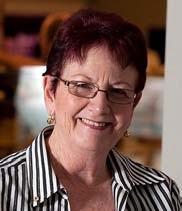
My parents taught my sister and I that we had an obligation to do our best to make the world a better place for everyone we came in contact with. My sister went on to become a teacher and I became a nursing sister. I spent many years nursing in remote indigenous communities, and, on coming to Canberra nearly 40 years ago, I began working in the community, doing what I could to make a difference.
Why should we vote for you?
To effectively represent people, you have to be available to them. That’s why since becoming an MLA I have conducted more than 600 mobile offices, and dealt with thousands of issues, large and small, but all important to the person who raised them with me. If re-elected, I will continue to be there for people, listening and assisting with their concerns.


Former candidate MARK PARTON remembers feeling nervous when he began his first political campaign doorknock
IT was my first political campaign and I was an independent candidate for the seat of Ginninderra at the last ACT election. The campaign launch was done, fundraising was progressing well and, finally, I was starting the grassroots part of the campaign.
It was a stunning blue-sky August morning. I’d parked my car just off Krefft Street in Florey. I grabbed a couple of hundred flyers and trudged off down Barnard Circuit.
As a political candidate, I remember feeling a bit like an impostor: What if they didn’t want to talk to me? What if they slammed the door in my face? What if we were on opposite sides of the political spectrum and locked horns at their front door?
I hesitated at the first door and, with my hand poised, the resident appeared before I knocked.
He was a passionate Greens supporter, but he read my flyer carefully and challenged me to provide details of my “policies” on public transport and road infrastructure. We had a spirited conversation about the future of Canberra for the best part of 15 minutes. We didn’t agree on much, but I think both of us enjoyed the exchange. He promised to preference me quite highly, despite our disagreements.
I couldn’t wait to get to the next door and do it all over again!
I ended up knocking on what seems like thousands of doors in Florey, Weetangera, McKellar, Nicholls, Kaleen and Dunlop. I had a few doors slammed in my face but, for the most part, I was greeted by friendly Canberrans, pleased that you bothered to turn up.
Door knocking was, far and away, the most enjoyable part of political campaigning. I lost some weight on the campaign trail and ended up with a nice spring tan as well. More than anything else though, I was convinced that I was genuinely converting people, house by house, street by street.
In 2008, I remember that pretty much every door I knocked on, Alistair Coe and his massive team had already been there. The Coe grassroots campaign was like a military operation. Many were surprised when the “boy wonder” found himself elected to the Assembly, but I wasn’t one of them. I consider Coe’s first-time high primary vote as proof that door knocking works. It’s a hard slog, but it works.
So, when the candidates come knocking, please be kind to them.
Maybe if I’d done a little more of it, I may out there now seeking re-election.
Why politics?
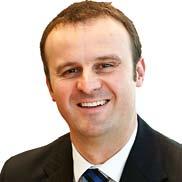
Serving the community as an MLA and minister is the best way I know to put into practice my beliefs in responsible economic management and progressive social reform.
Labor is showing it can deliver on both fronts. I want to keep working over the next four years on Labor’s root-and-branch reform of local taxes, which is delivering a fairer system for every Canberran.
Why should we vote for you?
Canberra has low unemployment and strong economic growth. Voting Labor is the best way to secure an even stronger future for our community and protect local jobs. As a mad-keen sportsman, I’m also looking forward to helping Katy Gallagher’s Labor team work with schools and sports clubs to really turn the tide on childhood obesity in our community.
Why politics?
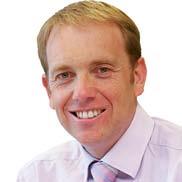
Perhaps my biggest ambition as a Minister is to ensure that we grow and develop as a city and offer opportunity and prosperity to future generations of Canberrans, without jeopardising our “bush capital” lifestyle. I believe the answer lies in new, clean, sustainable industries.
Why should we vote for you?
One of my big priorities over the next few years as a member of Katy Gallagher’s Labor team is to continue to improve community safety and health and get more Canberrans out of their cars and on to buses, bikes and footpaths. Better for our carbon footprint – and better for our health, too!
Why politics?

Canberra is one of the best cities in the world and I feel that I owe it to my children and my family to do whatever I can to preserve, protect and promote our beautiful city so that it remains as wonderful as it was for me growing up here. What better way to do this,
than run for a seat in public office. Why should we vote for you?
Over the last 10 years I have worked with the ACT government, the local community and relevant stakeholders on issues of women’s and health policy. I know how government works, I know how to listen to the community, and I know how to get things done. I’m keen to work alongside our Chief Minister Katy Gallagher to make Canberra even stronger. I’m hard working, honest and I love Canberra.
Why politics?

Politics is a way of contributing to the community and the city I love. It’s a wonderful privilege to be chosen by Canberrans to work in partnership with them to deliver quality city services, better schools, better hospitals, more jobs and a fairer society.
Why should we vote for you?
Over the next four years my vision is to drive job growth in new, clean industries, and cement Canberra’s position as the economic and service heart of the south-east, while protecting the things we love about this city and our way of life. I hope I’ve proven to Canberrans that I, and my Labor team, have the ideas, experience, the values and the work ethic needed to get the job done.
\Why politics?
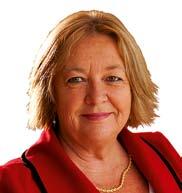
As a former nurse with over 30 years experience in health, education and childcare, I got into politics because I wanted to continue to serve the community. As a long-time Chisholm resident, I wanted to be, and have been, a passionate advocate for the Tuggeranong region.
Why should we vote for you?
Since being elected in 2008 I have established a strong record of serving our community as a Minister and as a Member for Brindabella in the Legislative Assembly. As Minister for Community Services, I have been proud to deliver more childcare places, record funding levels for disability services, and more services for older Canberrans, including the popular Tuggeranong Seniors Centre. Just recently, I secured ACT Government funding to support
the establishment of a bulk-billing GP clinic for Chisholm, which will be up and running early next year – this is what I stand for, and what Labor stands for, and why ACT Labor can be entrusted with another term of Government.
Why politics?
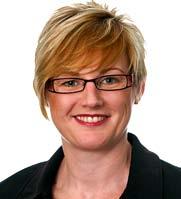
Because I was brought up to contribute to my community, to put in. I’m passionate about keeping the Tuggeranong Valley as a great place to live, to work and to bring up kids. And I’m very passionate about workplace safety, especially in the construction industry. I want to ensure that everyone comes home safely after a day’s work.
Why should we vote for you?
Because I’m “from the Valley for the Valley”! I know the issues that face working people; I’ve been in small business – I was a hairdresser for 20 years and now I’m working in the Public Service. I want to make sure that people in Brindabella have access to health services, educational and job opportunities and a great quality of life. And, I have the drive and dedication to advocate for, and represent the Brindabella community.
Why politics?
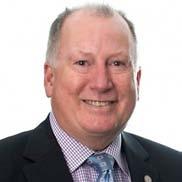
Canberra born, I’ve grown up with this city. I’ve always been involved and engaged in my community – in motorsport, in charity work, in business and in raising three wonderful children in Canberra. I’ve worked closely with our local community as president of the Tuggeranong Arts Centre, on the board of the Canberra Men’s Centre, and through the White Ribbon Foundation. I believe the possibilities for this city are limited only by our imaginations and appetite for hard work, and I want to devote my ideas and energy in the service of my community.
Why should we vote for you?
Labor’s recent record for local jobs growth and infrastructure delivery is unmatched by anything in our history and as a member of Katy Gallagher’s Labor team I would be there, at the table, delivering even better roads and even better health facilities for the people I represent. I want to see Canberra become an even stronger example for smart innovation, sustainability and fairness.

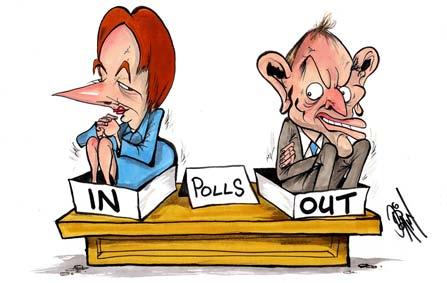

With the ACT election less than a month away and the Federal election likely in about a year, the pollsters are working overtime, says MICHAEL MOORE
WHILE voters should reward those politicians who really do stand up for what they believe and are not unduly influenced by polling, only the most “courageous” politician will ignore the polls.
Polling is a major feature of modern politics with large sums spent on pollsters by the political parties, the media and groups wishing to influence political outcomes.
Particularly with an election pending, polls do influence policy, behaviour, leadership and direction.
The two leading aspects of poll influence are on popularity and on policy. Popularity polling provides an insight as to the likely outcome of the next election. This sort of polling becomes more important the closer to an election. It is focused on the popularity of the party and the popularity of the leader.
There is an irony in the vulnerability of party leaders to popularity polling. Leaders such as Bob Hawke and John Howard turned election campaigns more to presidentialstyle leadership battles and less about the local members. In doing so, they have made the leaders much more vulnerable to execution by elected party members.
When asked about adverse polls there is a set of stock answers... “There is only one poll that counts”; “We are not paying attention to polls – we are getting on with the job”; “We are not poll driven”.
Such answers are not to be believed. All politicians – and none more so than the leaders – are acutely aware of each and every poll, whether conducted internally or externally.
Remember a year ago when Prime Minister Julia Gillard was polling appallingly, as was her party? The pundits were almost all predicting a Liberal victory. This is still the most likely outcome. However, I repeat what I wrote in March at Labor’s darkest hour
in the polls: “There are not many people putting money on Labor to win the next election. Provided they don’t keep tripping over their own feet Julia Gillard ought not be written off as a contender for the next election”.
At the time Labor was operating under the burden of introducing the carbon tax and Opposition Leader, Tony Abbott, threw all his eggs in the one basket warning of the dire outcomes. The gross exaggerations are now coming back to bite the conservatives. Enough political observers and ordinary voters can remember past the last TV news grab, even the last week, month or year, to recall the constant barrage and fear campaigns on carbon taxes and refugees to question the level of honesty of the alternative government. Perhaps that is what is now being reflected in their declining popularity in the polls.
Polling also plays a key part in the development and implementation of policy. While the parties may have used careful process based on sound academic rigour and broad discussion in their membership to adopt sound policies, the elected members may not move to implement them if the polls are unfavourable. Polling and focus groups are used so widely that elected members of the party become fearful of implementing controversial policies.
In the aftermath of a major fear and distortion campaign by the mining industry, the very sensible mining superprofit tax fell to adverse polling. How many more sensible policies have not seen the light of day because elected members are fearful that the introduction of a policy will impact on their chances of election?
Michael Moore was an independent member of the ACT Legislative Assembly (1989 to 2001) and was minister for health.


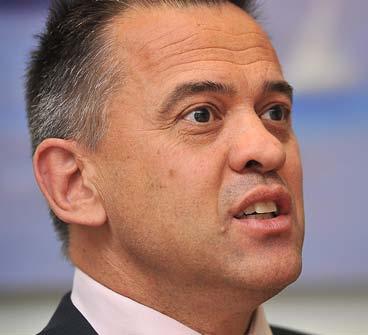
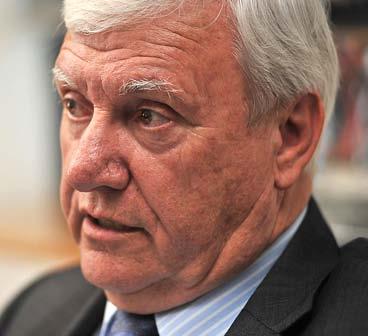

WHEN it comes to education, it’s important to have a vision that is “long term”, believes Education Minister Chris Bourke.
Bourke has “four clear goals” for the future of the ACT education system.
“First, I want not just to have the best system in Australia, but the best in the world,” he says.
“Secondly, I want more high-performance maths students, because we know these are students who will be going on to things like engineering, information technology, medicine and science, which are real growth areas for us as a community and economy.
“Thirdly, I want better vocation into educational training. Not just because we have skills shortages in those traditional areas, but also in that late high school area, which would be better with a focused vocational training pathway... than still floundering in that national obsession about Year 12 being completed and going off to university.
“Finally, to close the gap in indigenous education. Each one of those goals directly relates to the policies we put out... and that’s an articulation of a vision.”
So far, Labor has committed $70 million for school infrastructure in the ACT, with other key promises including $1.7 million for a student-focused Mt Stromlo Science Centre and Planetarium, $45 million for a new primary school at Coombs in the Molonglo Valley and $4 million for professional development for teachers.
Bourke says the party will push for a funding model that takes into account not only the initial recommendations of the Gonski Review, but also the need for a funding metric that goes beyond standardised testing for students.
However, the Liberal education spokesman, Steve Doszpot, says there isn’t enough focus on special-needs students, parents and “undervalued” teachers in today’s education system.
“In the special-needs area, we’ve got a lot of very good teachers who come through the system, but they get to the classroom situation and they find they are really challenged by what they face,” he says.
“I think it would help our overall success rate in schools if we were able to develop a professional plan for these teachers in schools to understand all the areas they have to contend
with once they get to class, so that’s one of our priorities.
“Secondly, in terms of professional development overall, it’s very important we give teachers who have been working in the system for quite a while, more opportunity for professional development so they can gain skills, retrain in some areas, and it’s very important we do that.”
Doszpot says one of the party’s policies is to “double the amount of money that’s available for teachers for professional development.”
“I think we need to value our teachers more –they do a very dedicated job,” he says.
“The other thing I think we need to address – and how we can make our education system better overall – is to try and engage with the parents more as well.
“I think it’s very important for us to show parents that while the schools are there to educate their children, parents have a part to play as well.”
The Canberra Liberals have promised to spend an extra $36 million to fund government school upgrades and have pledged to expand teacher training, introduce an independent education commissioner and increase school counsellors to target bullying.
The party has also promised to build Canberra’s first autism school, for up to 40 children with Autism Spectrum Disorder (ASD) aged between two and a half and six years.
Doszpot remains concerned with the Gonski Review, saying there is a lack of funding for non-government schools in the ACT.
“We want to bring non-government school funding in the ACT on par with NSW funding levels,” he says.
“At the moment, just 40 per cent of funds go to non-government schools. Our jurisdiction is the lowest funding to the non-government sector. So that just doesn’t seem to make sense.
“If Gonski was to be instituted, it would affect a lot of non-government schools, it would also affect government schools, I think 77 per cent would be affected, and there is a possibility of school closures.”
Bourke has denied that there will be any school closures, saying he “won’t be signing up for any agreement that disadvantages ACT schools.”
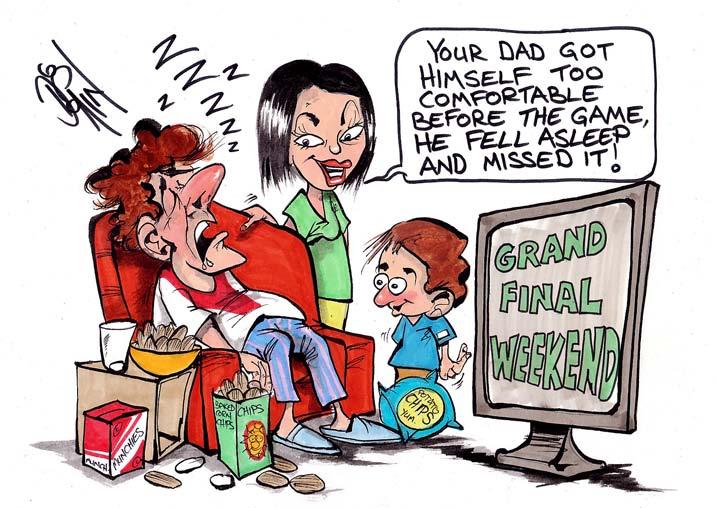
WITH regard to the recent argument and ensuing misinformation amongst the Labor and Liberal parties over rates in the ACT, there is one very important issue to consider.
This is the accuracy of individual unimproved land valuations in the first place, upon which the rates amount is calculated. When I recently compared my block’s UV to others in my immediate neighbourhood, I was shocked by the inconsistencies and inaccuracies of these. Block size and location could be directly comparable, but the UVs were not correlated at all.
An example of this is my own UV – for a block that is significantly larger and in a better position and solar orientation and with views –that was valued as being less than or equal to inferior (in both size and position) blocks in the immediate vicinity.
Other blocks in other areas are also, it seems, inconsistently valued. In the same street in my suburb, there were differences in UV of up to $200,000 on similar size blocks! Basing it partially on sales evidence, is not an accurate way to calculate UV, as inconsistent market forces affect widely varying results.
The current system is riddled with discrepancies and inconsistencies. As the UV in Canberra directly affects house values, not just rates, this is an important issue to address. We cannot afford to be so cavalier about valuing what, for many, is our single most important financial asset.
Tracey Smith-Jones, Pearce
ANY stumbling that Michael Moore attributes to Jim Wallace in “Christian soldier comes a cropper” (CN, September 13) is better ascribed to Moore himself.
Moore pontificates about same-sex marriage but skirts over the serious health dangers of homosexuality practices. In contrast, Wallace quoted studies that showed that homosexuality threatens lifespans. Moore has very little hard evidence to support his assertions. His quote of the president of the AMA makes no mention of sexuality, but rather to the deadliness of cigarettes.
HIV/AIDS may be classified as a “modifiable health risk” by the Australian Preventative Health Task Force, which suits Moore’s attack on Wallace, but it does not lessen the considerable concern of the APHTF about the disease
of HIV/AIDS. Moore conveniently fails to say that the APHTF’s main reference points were tobacco, alcohol and obesity.
Moore quotes Michael Kirby’s tragic experience with his homosexuality, but that is subjective and not scientific research.
It was up to Moore to prove Wallace wrong about the likelihood of homosexuality practices shortening lifespans. Moore failed. Indeed Moore may have done a disservice to gays by covering up the truth about the dangers of homosexuality practices when he should have known, as a long-ago health minister, of those dangers.
Greg O’Regan, Farrer
DAVID Stephens laments the retirement of his white TS Magna for $50 after 200,000 kilometres (“It’s goodbye to Magna-ficent memories”, CN, September 13).
In 1990, we bought our new TP white Magna and 18 years later, after 500,000 kilometres, a new engine, a new gearbox and the salvaging of body and other parts from my brother’s and my daughter’s white Magnas, we traded it in for $300. My brother’s Magna suffered its inglorious departure after being dropped from a great height on to the remains of another car on Ezy-Scrap’s truck and our daughter’s Magna was donated to the Queensland Fire Brigade for rescue practice.
Denis Wylks, Holder
ONE does not have to “read between the lines” to see that Ric Hingee is good at blowing his own trumpet (letters, CN, September 20) or that his views are more extreme than anything he could accuse the ACT Greens of (letters, CN, September 6).
The fact is that the Greens have been a responsible third party in the Assembly, putting forward a carefully considered agenda, supporting Government and Opposition Bills, where warranted, consulting widely to ascertain community needs and contributing to stable government.
I doubt Mr Hingee, with his plethora of qualifications, would be able to contribute as much.
Patricia Saunders, Chapman











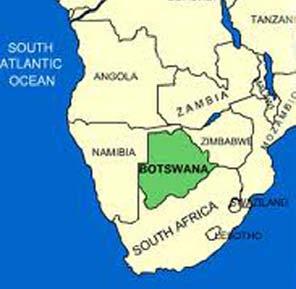
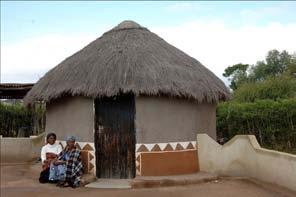
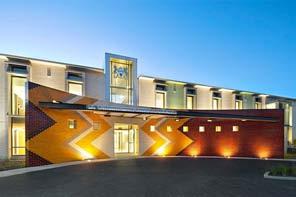
BOTSWANA, a landlocked country in the centre of Southern Africa, celebrates its 46th independence anniversary on Sunday, September 30.
The day is very special in the hearts of the people of Botswana and provides for opportunity for self-introspection, taking stock of how the country has fared. More importantly, it provides the opportunity for its citizens to rekindle their energies and sharpen their creative imaginations about the future and its boundless opportunities and possibilities.
Constant threats and invasions by the Zulus and the Boers in the early 1800s prompted the Tswana Tribal Chiefs to seek the protection of Britain.
The then Bechuanaland was declared a British Protectorate in 1885. Unlike the surrounding countries, Botswana peacefully attained independence in 1966, with the constitution providing for a republican form of government.
From the world’s poorest country at independence, Botswana has steadily grown, and developed, in an environment of sustained democracy, uninterrupted peace and stability, vibrant economic progress and enjoyment of human rights and fundamental freedoms by all.
At the beginning of the long and arduous journey, the country was semi-arid, droughtprone with 87 per cent of the population dependent on subsistence farming and subversions from foreign aid.
At that time, the country had only six kilometres of tarred road and a railway line to Rhodesia (now Zimbabwe) and less than a third of the population was literate.
The people of Botswana have a genuine cause to celebrate!
As a nation, they have successfully lived up to their roadmap of national principles and values that they set for themselves at independence, namely “Democracy, Development, Self Reliance and Unity”.
The diamond-mining industry, which started in 1971, dramatically changed Botswana from an agricultural-based economy to one of the fastest-growing economies in the world, with a rising per capita income in most subsequent years.
Botswana has graduated from being one of the least developed countries to a middle-income country, with a per capita GDP of more than $US14,700 by
2007 estimates, and enjoys the best credit risk in Africa, as assessed by two major and credible investment risk services (Moody’s and Standards and Poors). These ratings are a reflection of a well-managed economy with strict adherence to prudent fiscal and monetary policies that have boosted investor confidence.
Diamonds, popularly known as “Diamonds for Development”, and other mineral revenues, were used to build infrastructure such as roads, schools and hospitals, just but to mention a few.
Currently, there are more than 10,000km of tarred roads, an 82 per cent literacy rate and more than 300 secondary schools.
B OTSWANA provides a transit route to and from the rest of southern Africa for goods, services and people. These economic achievements are a result of the country’s past and present leaders’ realisation that only good governance, prudent economic management, effective and strategic use of its natural resources were indispensable to economic prosperity.
As a result, the country is best placed to do business with Africa and the world.
The country is strategically located in the centre of 10 countries that comprise the Southern African region. Botswana with a population of two million, also hosts the headquarters of Southern African Development Community, which comprise a total market of 247 million people.
The Government is committed to stimulating business by liberalising the economy, supporting entrepreneurial activities by fostering partnership with the private sector. The main objective is sustainable growth and economic diversification.
A PART from its mineral wealth and cattle ranching, Botswana relies heavily on ecotourism as an integral part of its economy, and the country is deeply committed to the conservation of environment and its wildlife and cultural heritage.
It is the home of one of the world’s striking wonders, the Okavango Delta – the largest inland river delta in the world.
This unique eco system covers an area of 15,000 square kilometres of the African wilderness, where crystal waters appear to float upon the desert making the area an African wildlife paradise. This wonder, and other abundant flora and fauna makes Botswana a must-visit tourism destination.
A deliberate decision was made that 17 per cent of land be set aside for national parks and game reserves, while a further 21 per cent surrounding these areas be designated for wildlife management. These unique and diverse eco-systems and culture combine to offer an opportunity to experience the vastness and the splendour of this unspoilt land.
TO date, Botswana has held seven successful general elections (1965, 1984, 1989, 1994, 1999, 2004 and 2009). It is a multi-party democracy with an executive president as head of state. The president is elected every five years for two terms.
The state is made up of three independent arms of government – the legislature, the executive and the judiciary. These institutions provide for checks and balances.
Over and above these three institutions is The House of Chiefs (Ntlo ya Dikgosi), which
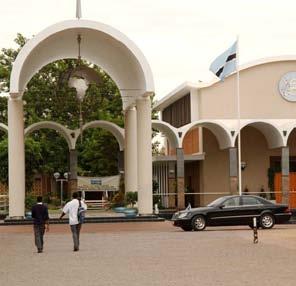
is composed of the traditional leaders from different tribes across the country. The House is the custodian of Botswana culture and advises parliament of customary matters.
I NTERNATIONALLy, Botswana is a member of, among others, Southern African Customs Union, SADC, African Union, the Commonwealth, the Non-Aligned Movement and the UN.
It has diplomatic relations with about 142 countries and has 20 diplomatic missions around the world.
The country’s achievements would not have been possible without the support and partnerships it continues to enjoy with the international community and friendly countries such as Australia.
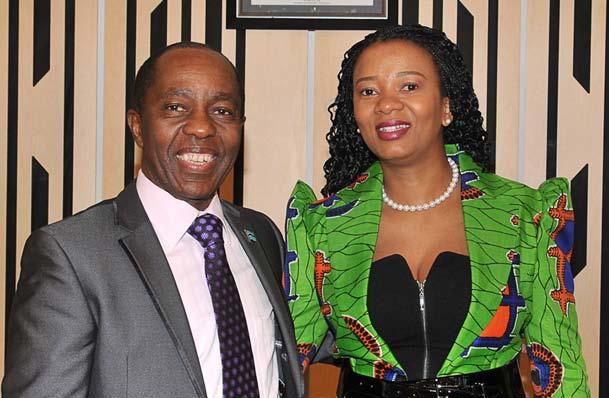
Under the leadership of the High Commissioner of Botswana to Australia, His Excellency Mr Molosiwa Selepeng, the bilateral relationship between the Botswana and Australia has continued to strengthen, underpinned by the warm and genuine friendship built on close co-operation in the Commonwealth, strong people-to-people links and increased trade and investment collaboration.
Australia and Botswana co-operate on a wide spectrum of areas, which include but are not limited to education, agriculture, health, mining and environment.



PEOPLE don’t need a lawyer – until they need one! But which one? Clients in crisis need advice from practitioners with cool heads and experience to get them through their issue with dignity and justice. Here “CityNews” showcases some of the passionate, professional practitioners of Canberra and their particular specialities.
BADGERy & Rafferty Lawyers aims to provide a confidential, flexible, high level of professional and friendly legal advice to individual and business clients, says co-principal Rod Badgery.
The partnership is a new, busy boutique-style law firm, incorporated and based in Canberra in 2010, and owned by two experienced lawyers offering a comprehensive range of legal services including business law and workplace relations and employment. The firm also handles commercial and property, commercial litigation, wills and succession planning, and corporate and private business matters.
The principals have long experience in their chosen fields of expertise, Mr Badgery in business and private, and Felicity Rafferty in workplace relations and employment.
“Clients know immediately who will be handling their matter and the firm’s aim is also to clearly explain the steps be taken to complete clients’ instructions, work out strategies and make the clients aware by disclosure (as required by the Legal Profession Act) of the professional costs,” says Mr Badgery.
“Clients also find they have immediate and direct access to the principals at all times.” www.badgeryrafferty.com.au
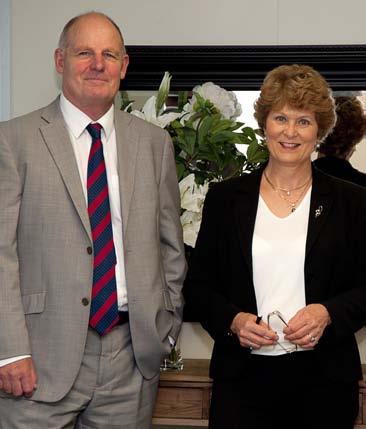



“WE’RE fighters and we will pursue things to the very end to get people the help they need to get their disrupted lives back on track,” says Maurice Blackburn’s general counsel Walter Hawkins.
“Our clients put their trust in us to make the most of their shot at justice, so we work hard as a team to get them a fair result – it’s the right thing to do.”
Maurice Blackburn is a leading national compensation law firm, however, according to Mr Hawkins, it’s the ability to have a real presence in local communities that helps make a big difference to many people who need legal advice.
“When people need help, they like to know that our expert lawyers sitting face to face with them also know the local community, they work here and they understand what makes Canberra unique compared to other parts of Australia,” he says.
“The work we do – whether it’s regarding personal injuries, work injuries, superannuation claims, product
and public liability, motor vehicle accidents or Comcare – might be the same on many levels as what happens in our offices throughout the other States, but some local nous goes a long way.
“In most cases we offer no-win-no-fee legal services and a free, no-obligation first consultation, so if you’ve been ripped off, wronged, stood over, exploited or hung out to dry, it’s time to fight back with Maurice Blackburn, because we fight for fair.”
He says that since opening its doors almost 100 years ago, Maurice Blackburn has been in the business of helping people; fighting to make a genuine difference to people’s lives.
“The firm is proud to have a strong presence in the nation’s capital, helping people from all walks of life access superannuation entitlements, and compensation they need as a result of suffering work injuries, personal injuries or motor vehicle accidents,” he says.
Maurice Blackburn Canberra, call 6120 5000.
PROMINENT Canberra law firms Bradley Allen Lawyers and Williams Love & Nicol have merged as Bradley Allen Love Lawyers.
The combined firm can trace its history back to 1953.
The new firm will have a strong focus on commercial and business law, property, local government, employment, dispute resolution, estate planning and insurance.
“I believe that a larger practice will allow us to provide a wider array of services and add more depth to our service offering”, said Susan Proctor, managing partner of Bradley Allen Lawyers.
“Even though both our individual firms have had a great deal of success in this area, a larger combined firm means our lawyers will benefit from even more and
stronger career and mentoring opportunities.”
Partner Mark Love, agrees, saying: “We had a very strong emphasis on culture and a single-minded zeal to provide the very best specialist service to our clients at WLN, so from that perspective combining our practice with a firm like Bradley Allen, who share these values, made a lot of sense to the partners.
“Additionally, we believe that combining the commercial acumen and specialist legal expertise of lawyers from both firms will create synergies that will enhance our capabilities to deliver outstanding results for our clients from both a value for money and outcomes perspective.”
Bradley Allen Love, call 6274 0999.

By the time you read this, Centenary creative director Robyn Archer, pictured, will have been to Lucknow, India, where she and historian, Dr David Headon, were to participate in graveside ceremonies to say, in Archer’s words, “Thanks, Wally” to Canberra’s architect Walter Burley Griffin. Then it’s on to an urban design conference in New Delhi (September 29-30) where Headon will present a paper.
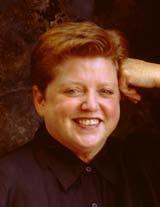
After that London’s calling where, on October 4, Archer will become the first woman to deliver the Arthur Boyd Memorial Lecture followed by a slap-up party at Australia House.
Then they’re off to the US, where ambassador Kim Beazley will be throwing a party for 200 to 300 guests at the Washington embassy. “Good press” is assured, he’s told Archer. Finally, they’ll head to Chicago, the spiritual home of Burley Griffin’s architectural practice.
THE Hyatt is elbowing its way back into the Friday night drinks ritual with a new Moet Bar in the garden. There will be a DJ from 5pm every Friday and $15 glasses of Moet & Chandon to celebrate the start of spring/summer weekends.
And also in the garden every Saturday, 11am-3pm, there will be a chef serving up freshly
shucked oysters, salads, a barbecue and decadent desserts. No start date yet, but soon.
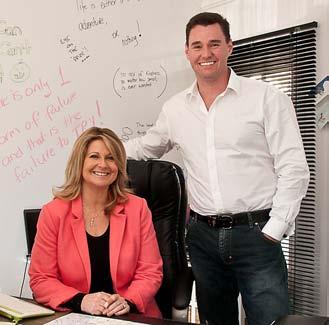
IT’S a big year for real-estate lovebirds Danielle Neale and Jason Davenport who, just months after starting their Manuka-based business Portfolio Collection, will marry in October.
The pair, pictured, met a couple of years ago at a charity function and are planning on “keeping it warm” by escaping to Hayman Island for the nuptials.
Real estate is a new career for Davenport, a former champion water polo player, who has 20 years’ experience in IT. But he’s in good company with the bride-to-be, who spent 15 years with then-hubby Richard building Richard Luton Properties.
PLASTIC surgeon Dr Tony Tonks has a big, glossy, full-page ad in another blah-blah concept magazine “The Canberra Times” put together this past week, extolling the virtues of his Barton practice on the promise, in big lettering, of this being the time to refresh and “rejuvinate”. And in smaller type there’s “non-surgical rejuvination” and “skin rejuvination”. Doubtless Dr Tonks, whose website has the correct spelling, will be keen to do some surgical rejuvenation on the alphabet-challenged individual who put this howler together.
THIS Sunday, September 30, the Kingston Old Bus Depot Markets will farewell long-time trader Material Pleasures.
The secondhand clothing stall has been a regular at the markets.
“I am looking forward to a lie-in after 26 years of regular Sunday work,” says owner Rebekah Griffiths, who has a shop on Barrier Street, Fyshwick. She says Material Pleasures will still have pop-up stalls at the market associated with theme days.
“CC” demurred an invitation through a leading business identity to an evening in support of the candidacy of Chic Henry, former rev head and Motorist Party dark-horse in Ginninderra. Chic is probably better known than his party, given he ran the annual Summernats festival until flogging it off a few years ago. Dinner, at a knee-trembling $500 a head, was held in the “elegantly intimate” International Room at Casino Canberra. Sounds more like the Rolls Royce Party!
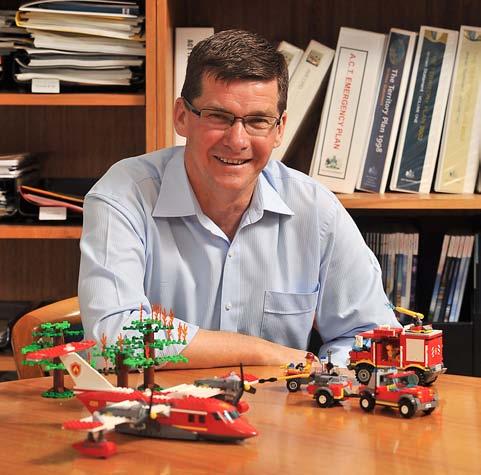
THERE, in the midst of Opposition Treasury spokesman’s tirade on triple rates, “CC” couldn’t help but notice how many bricks he had lying around his office. Not your actual building bricks, but an impressive Lego collection. And once we’d stopped Brendan Smyth talking, he was only too pleased to show off the creations, from a lightweight tank to a firefighter plane with tiny water bombs inside.
Turns out the pieces are a joint effort between Brendan and his six-year-old son David , when he comes into the office every now and then to visit dad.
“Lego was pretty basic when I was a kid – now you can make anything, really,” Brendan told “CC”, sighing longingly.
He says he keeps the Lego on display because it’s a “talking point,” and a far cry from the “dull and boring office”. And in a Peter Pan-esque way, Brendan, he of boyish good looks, reckons it means “a small part of you never has to grow up”.
“CC” hears that Latin American pop sensation, San Francisco-born Fran Valenzuela , pictured, is sneaking into the comfort of the Diamant Hotel a few days before her appearance at Stage 88 on Sunday, October 7, as part of the Floriade’s Pura Vida fiesta, a showcase of Latin music.
Organiser Frank Madrid describes the classically trained pianist, poet and published author Fran’s sassy, piano-driven pop/rock as reminiscent of Tori Amos and that her smoky voice echoes Fiona Apple
Who wants yesterday’s papers?
Who wants yesterday’s girl?
Who wants yesterday’s papers?
Nobody in the world.

REGULAR readers know “CC’s” love of using the power of popular music to taunt, and the Rolling Stones 1966 song “ yesterday’s Paper” sprung to mind when we heard from a local gadfly who wrote: “Last Wednesday, at lunchtime, I was flying to Sydney and at Canberra airport the newspaper giveaway stand was loaded with ‘Canberra Times’... unfortunately, they were all Tuesday’s edition.”

ALL that remains of the deserted Civic coffee spot Deja Brew, on City Walk, are covered windows and this incongruous seal of approval from radio duo Rod and Biggzy
In the 2012 poll of Rod and Biggzy’s “Best of Canberra”, Deja Brew was voted best coffee in Canberra. But, as the locked door attests, not Canberra’s best coffee shop.
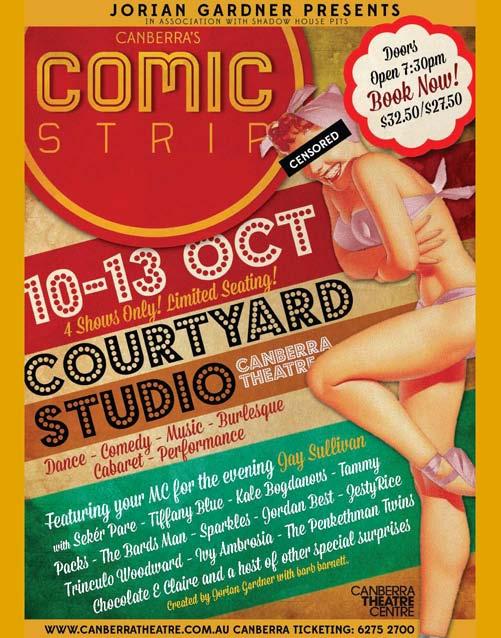
By day, he’s Canberra’s most controversial radio personality, but by night, Jorian Gardner has a soft side – he’s simply mad about burlesque, says arts editor HELEN MUSA
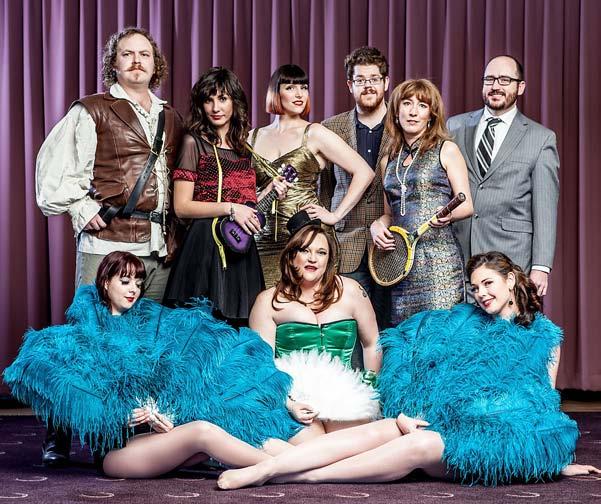
AFTER a gap of a couple of years, Jorian Gardner, former Multicultural Festival Fringe director, is about to descend on Canberra with a show to be called “Comic/Strip” – yes, that is a double entendre.
Gardner and director barb barnett have been busy transforming the Canberra Theatre’s Courtyard Studio at the Canberra Theatre into an exotic bar and cabaret space, and are not ashamed of indulging in music hall-style hyperbole to talk up the performers.
So we’ll be seeing “the delightful Miss Darby DeVotchka (Canadian-born bad girl)”, “the intoxicating Ivy Ambrosia (Penny Vaile)” and “the beautiful Chocolate E. Claire (Claire Prior)”, and so on.
“I wanted to get back in the game,” Gardner told “CityNews”, “I concentrated on other stuff for two years.”
That “other stuff”, including his radio work with 2CC, followed his departure from the Fringe after ACT Labor minister John Hargreaves gave the event’s
funding to the National Folk Festival, a decision recently reversed.
Now Gardner’s back with a vengeance.
“I love burlesque, I love comedy and there is so much talent in the Canberra region,” he says.
Gardner, who thrives on alternative theatre and cabaret, has noticed that, since around 2000, cabaret has been taking on the edginess of burlesque.
“I like absurdity, but maybe that’s just me,” he says.
In 2009 when Gardner’s season “A Stacked Deck Burlesque” packed in 1800 people over three days, there were complaints that Government money was being spent on striptease.
“It’s not just striptease,” he argues. “That’s the attitude I want to change, I’m presenting good old-fashioned variety, stand-up comedy, and musical performances… it has an edge to it, a bite to it, I love my comedy with a ‘bitey’ edge.”
Gardner reckons he’s snared the best of

the best, with stand-up comic Jay Sullivan – “the funniest man in Canberra” – hosting, drag queen Tammy Paks, “the alluring and the hilarious Miss Tiffany Blue” (who’s invented something called a “burlequeasaurus”), Ali McGregor’s “very messy” burlesque routine and a more erotic kind of burlesque from Miss Şeker Pare.
“At the end of the day, all I’m doing is putting together one fun night,” he says.
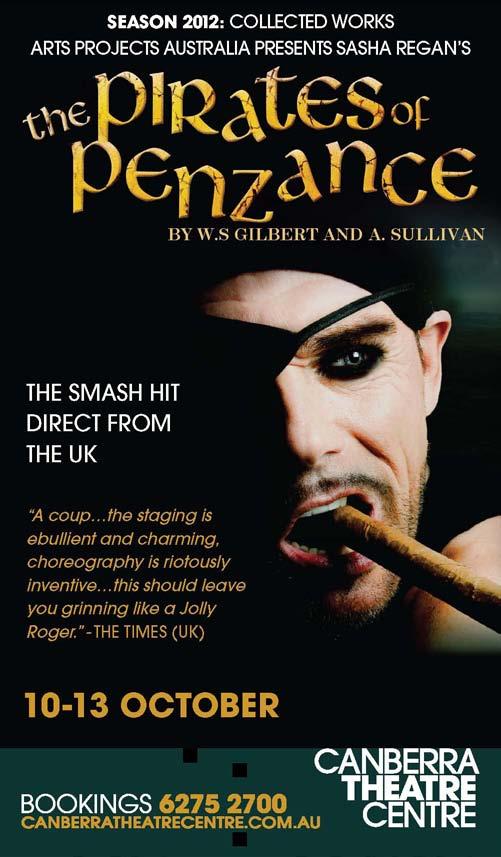
“Comic/Strip – The Burley Griffin Burlesque Variety Hour and a Bit”,The Courtyard Studio, 8pm, October 10-13, bookings to 6275 2700 or www.canberraticketing.com.au
Warning: the show is not suitable for children.
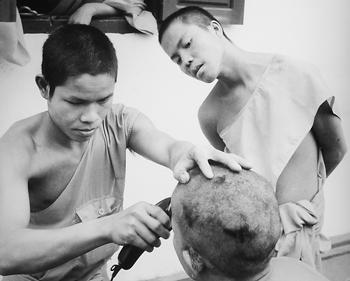
WELL-known Canberra photographer George Serras spent some months working as a volunteer with the Luang Prabang National Museum and lived next to the Vat Manorom temple. His B&W photo essay “Dharma: life in a Laotian temple” shows life behind the scenes there. Money raised from the exhibition will pay for prosthetics and rehabilitation services for Laotian children who have been victims to landmines. At PhotoAccess Huw Davies Gallery, Manuka Arts Centre, until October 14.

ALSO At PhotoAccess until October 14, presented at three different locations around Manuka Arts Centre, sound designer Lea Collins and writer-historian Mary Hutchison have “A Canberra Sound Album”, a collection of “places, moments and people,” conjuring up the suburb of Kingston.
THE 29-year-old Aeolus Wind Trio, David Shaw (flute), Liz Hoorweg (clarinet) and David Whitbread (bassoon), are playing their way into spring, with “Tiptoe through the Tulips” in the repertoire, from noon to 3pm on October 1 and October 14 at Tulip Top Gardens, 15 minutes north of Canberra on the Federal Highway.
Continued Page 22

THE “last will” of the title of this Swedish thriller is that of Alfred Nobel. In the ballroom at the banquet following the Nobel Prize medicine awards, the woman chair of the selection committee is shot dead just a couple of steps in front of reporter Annika (Malin Crepin) and the winner (for stem cell research) is wounded.
The cops and the media suspect that it was an in-principle protest against the research. Annika, writing a backgrounder about the dead woman’s private and professional life, begins to wonder whether everybody else is following a dead-end trail.
That’s the intro to a thriller with careful plotting, good pace, conflicts not hurrying to expose themselves and tensions not letting go after their causes pass.
Annika, whom Liza Markland created a decade ago for TV, is in real danger. The real villain is not the yellow-eyed professional hit-girl Kitten performing a train of murders, but her unidentified male employer.
The film’s device of women as hero (in the most real sense) and overt villain is effective. I also liked director Peter Flinth’s use of IT in a reallife manner, social networking as an important management tool transcending exchanges of irrelevant information from people with ill-informed opinions to others lacking the skill to read between the lines.
At Greater Union

OLDER filmgoers will recognise Zoe Kazan’s family name – her grandfather Elia collected an impressive assembly of cinema peer group awards.
THE location for this animation is the castle where Count Dracula provides resort facilities where all the fictional monsters, scarers and other nasties of literature can come for a weekend away from it all, unthreatened by their perceived common enemy, humans.
It’s colourful, vigorous, but unfortunately, the screenplay doesn’t quite know which age group is its target. The characters are not what kids of single-digit and perhaps early-double digit age are likely to have encountered in their reading or TV viewing. Even older folk might find it difficult to identify who they are. And the inclusion of most of its monstrous characters, especially Quasimodo, in the dramatis personae simply flies in the face of their fictional realities.
On the night of the bash Dracula is throwing for the 118th birthday of his daughter Mavis, whom he loves dearly, human hiker Jonathan enters the castle. What follows is predictable, delivered in a raucous, noisy, dramatic environment stinking with American cultural icons and values. I found that distasteful in a film exported to a world market. Not even the finale, with humans and monsters in reconciliation, outweighs that.
At all cinemas
Zoe wrote the screenplay for this romantic fantasy with a twist and plays Ruby opposite her partner Paul Dano who plays Calvin, author 10 years earlier of a successful novel, now afflicted with the dreaded writer’s block.
Calvin’s brother Harry (Chris Messina) pushes him back to work. Calvin gives it a go, creating a character whom he names Ruby. Then he meets a girl called Ruby. Then he discovers that what he writes on his well-kept manual Olympia typewriter determines what Ruby is and does.
The film’s dramatic thrust develops from Calvin’s concealment of this dangerous power. Its tension arises from wondering about the long-term effect that it portends for the relationship.
The idea works more credibly than one might expect. It’s tempting to suggest that Kazan and Dano have developed their characters by drawing from their off-camera lives. Their performances are both admirable. When things come totally unstuck and Calvin loses his cool in a big way, the acting goes ballistic on an impressive scale.
The film delivers its mix of feel-good and concern with a fresh and independent style.
At all cinemas

arts in the city
From Page 21
THE Iranian Film Festival Australia has returned for a second year and the Canberra screenings will run at the National Film and Sound Archive’s Arc Cinema from October 11-14. The program kicks off with Ali Mosaffa’s “The Last Step” and festival directors, Anne Démy and Armin Miladi, hope the films will improve our understanding of Iranian culture. Bookings to 6248 2000 or at the door.
THERE is only until October 1 to catch “Clay Presence”, the Canberra Potters’ Society’s 2012 Members’ Exhibition at Watson Arts Centre, Aspinall Street, Watson (Thursday to Sunday, 10am to 4pm and the public holiday on October 1).
REVERED Latin American band Inti-Illimani Histórico, whose name means “Sun of the Illimani”, was formed in 1967. Praised by guitarist John Williams as “one of the great music ensembles of our time”, they’ll be been performing in Llewellyn Hall, 7.30pm, on October 5. Bookings to www.ticketek.com. au
follow us on


MUSSELS – those sensational mollusks devoured daily around the world by those enamoured with the gazillion ways you can cook them –are the house specialty at Kingston’s Belgian Beer Café.
Each 1kg pot comes with fries and creamy mayo made in-house. Eight styles are available, including blue cheese, Thai, Stella (made with beer – why didn’t I try that kind?) and chilli, which is what I craved.
Balinese-inspired, my mussels were created around a tomato and capsicum sambal ($32). The chilli had kick, but my tastebuds were confused by the volume of chunky celery. And, although most of the mussels were pristine clean, some had nasty beards rudely protruding between their shells, which would turn the stomachs of diners who just want to eat, not wrestle with, their food. However, there was no stopping me. I just pulled the beards off and kept ploughing through. I ate the whole kilo all by my little, old, self, enjoying a glass or two of wine along the way. My friend went for the mussels on the specials menu ($30), made with spicy Spanish chorizo (a
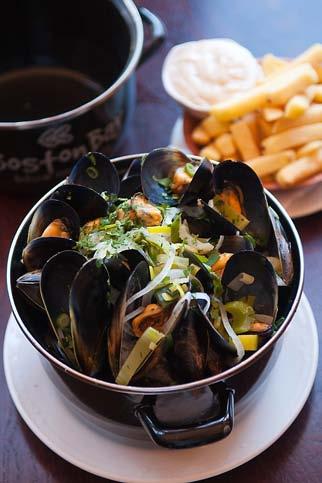
generous amount), vegetables (again, too much celery) and cream. She loved them. And once we finished eating the mussels, we grabbed our
spoons and finished off the soup left behind. My only wish was for fresh bread to soak up all the juices.
If you can’t stomach mussels don’t fear. The Belgian Beer Café’s other dishes will make you drool, such as the Belgian pork, veal and pistachio sausages served with good, old sauerkraut and beer jus ($25), or the roast confit pork belly, with Belgian stoemp ($28). Moments on the lips. Lifetimes on the hips, but oh-so-good for the soul.
Steak aficionados will hanker for the Black Angus scotch fillet and béarnaise sauce ($42 for 500 grams) or Wagyu Porterhouse with beer jus ($32). More moments on the lips. If you want a real treat, gather a group of four, call 24 hours in advance and order the Chateaubriand ($35 each).
But the beer here ain’t just for cooking. It’s for drinking and the long list of Belgium-imported exotic beers is impressive and all expertly poured the traditional way – amusing to watch.
The initial, very expensive fitout at Belgian Beer Café hasn’t changed much over the years. Mahogany-stained, solid oak features everywhere and the etched glass and engraved bar stools add a lovely touch. A small outdoor dining area soaks up the springtime sun.
The place has definitely aged a bit since I was last there several years ago, but that’s part of its sweet charm.
Belgian Beer Café, Jardine Street, Kingston. Open seven days. Call 6260 6511.
“ROLLING Home” is a production for children. It also highlights the work of some people at the heart of Canberra’s professional theatre industry, illustrated by the deftness in direction, the clarity and control in the performance, use of the Courtyard Theatre space, music, costumes and puppetry.
“Rolling Home”
Written, directed and produced by Greg Lissaman
Composed by John Shortis
At Canberra Theatre Centre, season ended.
Reviewed by Joe Woodward
Greg Lissaman’s highly tuned directional skills allowed the audience’s imagination to flourish through his simple understated staging. This allowed consummate performers, Chrissie Shaw and Catherine Hagarty, to engage audiences in the most economical and direct way. Without a hint of condescension, Shaw and
SET in the hippie counter culture of the 1960s sexual revolution, with its depictions of illegal drug use, strong anti-war messages and famous nude scene, “Hair” sparked outrage and protest when it first surfaced in 1968. Many will still find it a confronting experience.
Director Stephen Pike, perhaps wisely, has somewhat sweetened the pill in this confident, spectacularly-staged production and, while the issues remain relevant, the passion is somewhat diluted.
The nude scene is tastefully staged. All the familiar songs are superbly sung and danced by the large, attractive ensemble of hippies who make up “the tribe”.
Choreographer Jordon Kelly has devised a series of inventive, eyedazzling “happenings”, and though eschewing the familiar astringent guitar riffs for a more brassy sound, Geoff Grey’s tight band provides punchy accompaniment.
There are stand-out perfor-
“Hair – The American Tribal Love-Rock Musical”
At The Q, Queanbeyan, until October 6.
Reviewed by Bill Stephens
mances aplenty, particularly from Maigan Fowler as the pregnant, spaced-out Jeanie, quite wonderful in “Air”; Kitty McGarry, luminous in the poignant and silly “Frank Mills”; Joanna Licuanan singing up a storm in “I’m Black” and from James Court (Woof), Will Huang (Hud) Rebecca Harman (Sheila) and Laura Dawson (Jasmine).
However, “Hair” is essentially about the relationship between tribe leader Claude and free spirit, Berger. Despite engaging performances from Pete Ricardo and Tim Stiles in these roles, both have yet to discover the passionate fire at the core of their characters necessary to allow them to dominate the production.
Hagarty became gentle characters who told engaging stories in order to survive. The scenario allowed just the right amount of character and background to make the stories live.
Hilary Talbot’s puppets and Imogen Keen’s costumes added a sense of magic to the story.
The songs of John Shortis and Kimmo Vennonen’s soundscape added a special dimension to the work.
With such a professional team, no wonder “Rolling Home” is a highly effective piece of theatre.


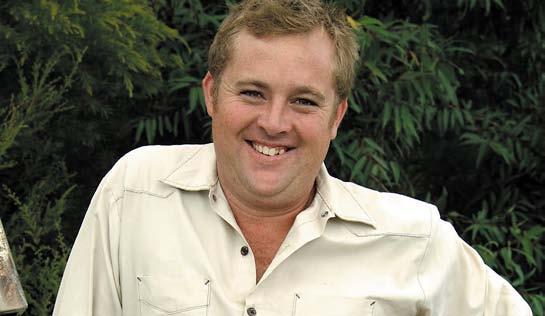
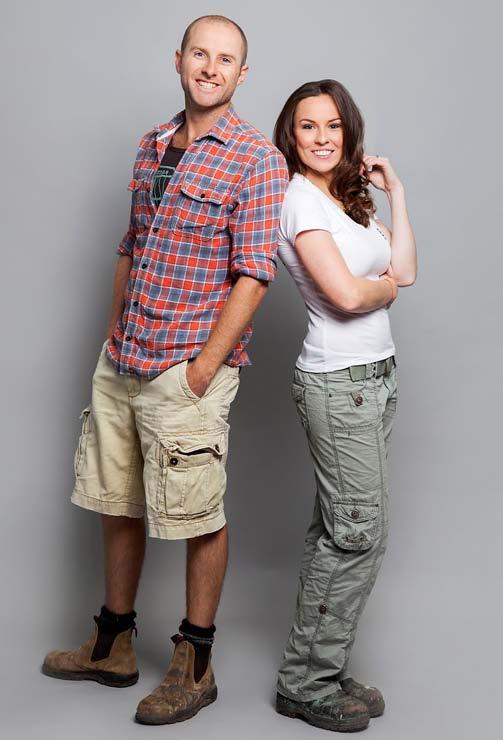
SOME well-known television personalities will be in the capital for week three of Floriade.
The week’s theme is all about “His and Hers DIy ” with
winners of “The Block 2011” Polly and Waz and “Better Homes and Gardens” presenter Jason Hodges onsite sharing their tips for how to make the home and garden gorgeous.
There will also be a panel of local gardening gurus, including Diana O’Brien, Merylyn Condon and Keith Colls to answer questions about gardening in the ActewAGL Look ‘n’ Learn Marquee.
Daily DIy presentations from Bunnings are also scheduled, and chefs and gardening experts will be in the Gourmet Garden for tips for growing and cooking food.
On Saturday, October 6, Jason Hodges will be in the Look ‘n Learn Marquee from 11am and on Sunday, October 7, he will be in the Gourmet Garden.
From October 2-5 Polly and Waz will be appearing daily in the Look ‘n’ Learn Marquee.
More information at floriadeaustralia.com

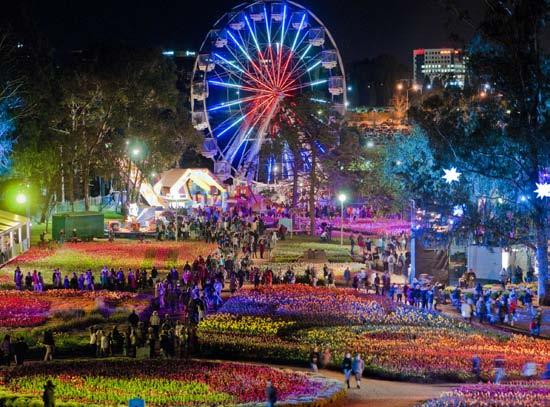
COMMONWEALTH Park will be transformed into an illuminated wonderland for five nights as part of NightFest 2012, until Sunday, September 30.
Here are some facts and figures about NightFest lighting:
• Up to six crews worked for a month onsite to install the lighting system.
• There are 29 lighting towers to hold up all of the lights required for the event. Each tower is specially built for NightFest.
• More than 90 per cent of the fixtures used this year use highly ef ficient, high-output LED light sources.
• In the main vista alone, almost 80 per cent less power will be required to run this year’s
New lighting designs will bathe the garden beds, pond waters and trees after dark, while guests enjoy food and wine, music, comedy, night markets and the Floriade blooms. Each evening will feature a variety of bands and stand-up comedy by popular acts.
lighting system compared with 2011.
• Just over 500 individual lighting fixtures are used at NightFest 2012.
• Almost 600 hand-dipped lighting globes are suspended over one bed.
• Nearly 500 purpose-made cranes hang above guests’ heads in the Rhododendron Garden, which is lit entirely by ultraviolet lights that make the hundreds of hanging birds (and everyone’s white clothing) glow in the dark.
• More than five kilometres of data and power
cabling has been installed under the park specifically for the NightFest lighting.
• The Kangaroo Pond has 300 individually controllable waterproof LED fixtures mounted underwater and was drained for the lighting installation, which took two days to install.
• Over the course of each night, the flower beds will change colour, patterns and brightness continuously.
• The main vista beds will briefly turn into a spectacular light show every 10 minutes.
• Each bed has a unique lighting design.





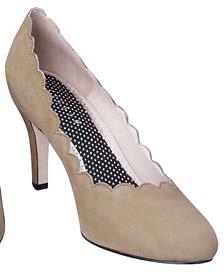
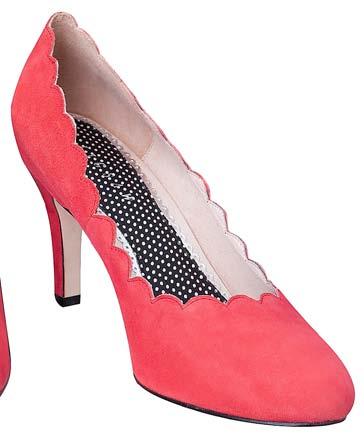

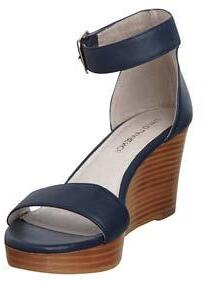
THE new season is the perfect time to be tempted to buy new shoes. In the freshest spring colours, these styles are classic, elegant and a little bit fun.
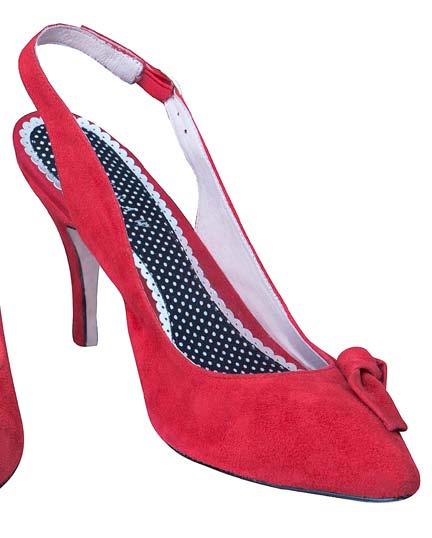
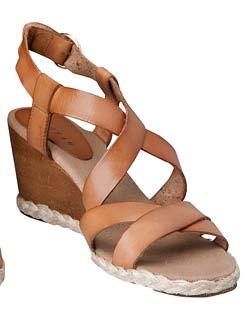
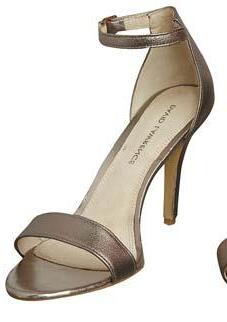
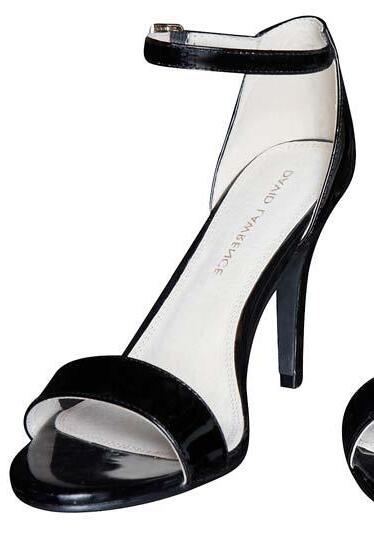

Joanne Madeline Moore
your
ARIES (Mar 21 – Apr 20)

Restless Rams – with Uranus in your sign and Mars charging into Sagittarius, you’re keen to shake up the status quo and get things moving. Use your fiery, passionate energy to initiate positive changes as you experiment with fresh approaches to old problems. Be inspired by birthday great Mahatma Gandhi: “ you must be the change you wish to see in the world.”
TAURUS (Apr 21 – May 20)
Bulls can be a lazy lot, but a rickety relationship will only improve if you get off your bovine behind and get to work! And romance will only blossom if you treat your partner like a Prince or Princess – and make a long-term commitment. If you’re not serious about the relationship, then it’s time to move on. Singles – look for love with someone who is clever and mature.
GEMINI (May 21 – June 21)
Geminis are the gadabouts of the zodiac – you’re always in such a rush. This week, with Mercury moving into Scorpio, slow down and take the time to listen and observe. Enjoy the company of family and friends on the weekend, but steer clear of superficial chit-chat, garrulous gossip and ridiculous rumors. Singles – if you’re looking for love, you’ll have to be proactive.
CANCER (June 22 – July 22)
As the Sun moves through your domestic zone over the next couple of weeks, home is definitely where the heart is. Focus on ways you can bring more happiness into your home, and more fun into your family relationships. Draw inspiration from Desmond Tutu (born on October 7): “ you don’t choose your family. They are God’s gift to you, as you are to them.”
LEO (July 23 – Aug 22)
Luxury-loving Lions – Venus moves through your money zone (from October 3-28) so resist the urge to be flash with cash and careless with credit. Instead of draining your savings, work on building up your core selfesteem. It’s also time to be proactive about friendships, as you expand your peer group to include people who are positive and passionate about life.
VIRGO (Aug 23 – Sept 22)
Partnerships are highlighted this week, as Venus moves into your sign (from October 3-28). However, if you don’t improve your communication skills, then your relationships will gradually disintegrate. It’s your responsibility to do all you can to facilitate open, two-way conversation. Strive to get others onside, as you charm the cynics and dazzle the doubters.
LIBRA (Sept 23 – Oct 23)
It’s time to get real about your financial situation. A little retail therapy is fine, as long as you can afford it. If you can’t, then cut up your credit cards and find ways to have fun at home – for free. And don’t feel you have to impress others. your motto for the moment is from birthday great Gore Vidal: “Style is knowing who you are, what you want to say, and not giving a damn.”
SCORPIO (Oct 24 – Nov 21)
Between October 3-28, Venus blesses group activities and all types of networking. On Saturday, Saturn starts a three year transit through your sign. So it’s a period when you need to accept responsibility for the decisions you make, consolidate your Scorpio strengths, and work on your weaknesses. With passion and purpose, you can make your dreams come true.
SAGITTARIUS (Nov 22 – Dec 21)
With Venus visiting your career zone (from October 3-28), it’s time to repair rickety professional relationships, plus beautify your work space. And some lucky singles will start a workplace romance. Mighty Mars marches into your sign on Sunday (until November 17), so you’ll be at your bright, breezy, buoyant best. Sock it to ‘em Sagittarius!
CAPRICORN (Dec 22 – Jan 19)
you have very high standards and expect a lot from yourself – and others. Don’t let your perfectionist streak get out of control this week and don’t take criticism too personally, especially on Friday. Saturn (your ruling planet) starts a three year journey through Scorpio on Saturday. This will increase your focus and ambition – plus your stress levels. Learn to relax.
AQUARIUS (Jan 20 – Feb 18)
you love talking about your grandiose goals for the future – but dynamic Mars is asking you to walk your talk and take action. Saturn shifts into your career zone on Saturday (where it stays for nearly three years). So, if you take shortcuts at work, you’ll pay the price. Patience, planning and persistence will get you a lot further than impulsive petulance.
PISCES (Feb 19 – Mar 20)
Mighty Mars charges into your career zone, so strive to be proactive about professional projects. And have you been having relationship problems? Clear communication and cool compromise will smooth over most disagreements, but you’ll have to swallow your pride and initiate peace talks. No procrastinating Pisces – it’s time to take the lead, at work and at home.
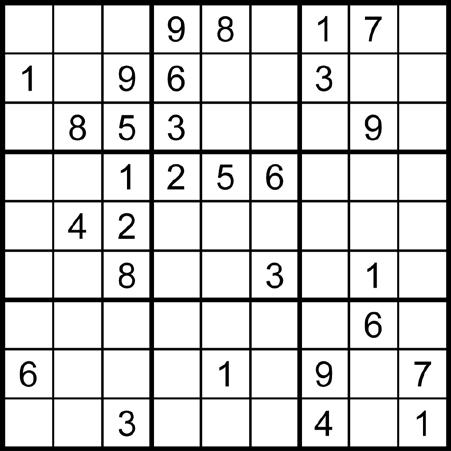
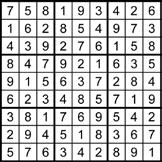
Cedric Bryant
Size matters with magnolias

Words: Kathryn Vukovljak
Photos: Silas Brown
A CLEVER solar-passive house, which owner Tim Woodburn says looks “superb” from the back, was the inspiration for a colourful native garden that frames and softens the house.
“It looks like a big cheese, or a pie chart, from the front!” says Tim, of the Anna Pender-designed house that was built six years ago.
“The house is oriented so that we don’t require any heating or cooling, with no windows to the west. It’s the perfect temperature year-round.”
The design of the home dictated the way the back garden was planned, says Tim.
“We placed the path away from the house to avoid reflecting radiant heat back in, and the ‘deciduous eaves’ have been planted with ornamental grape vines, to prevent summer sun from shining directly into the house,” he says.
“We needed small shrubs near the large, north-facing windows at the back so we didn’t block the sun, so there’s native grasses, daisies, bluebells and other low-growing plants that provide a mix of colours and textures.”
Tim and his wife Shane’s striking, textural garden will open as part of Open Gardens Australia on the weekend of October 6-7.
“It’s a garden of contrasts, with many different species of native grasses and vegetation types – there’s spiky plants, broad leaves, narrow strap-like foliage and lots of interesting little leaves,” says Tim. “Many of the plants have such lovely leaves that they don’t need to flower to look beautiful.”
A small stream weaves through correas, banksias, camellias, magnolias, daphnes and perennials, leading to a pretty pond near the paved outdoor living area. Hidden away in a cave of vegetation, Tim says it’s their favourite spot to spend time.
“I love to create interest with hidden sections in the garden, so you wonder what’s around the corner,” he says. “We planted three Chinese gooseberries, or kiwi fruit, around this area, which keeps it shady and cool, and we eat out here all summer.”
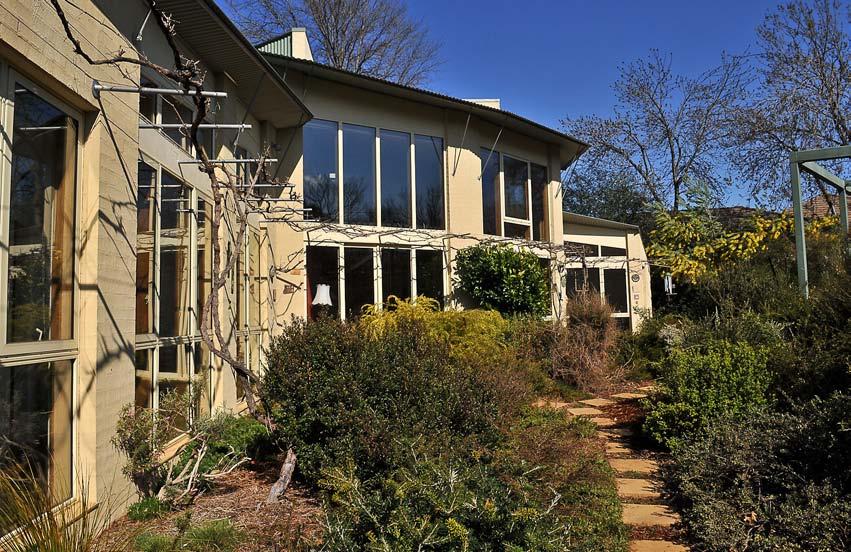

The garden at 20 Mulga Street, O’Connor, will be open on Saturday, October 6 and Sunday, October 7, 10am-4.30pm. Adults $7, children under 18 are free. Funds raised will go to the Open Garden Scheme. More information at www.opengarden. org.au.
“It’s a garden of contrasts, with many different species of native grasses and vegetation types – there’s spiky plants, broad leaves, narrow strap-like foliage and lots of interesting little leaves,” says Tim Woodburn.
A LSO open on the weekend of October 6-7 is a native garden with breathtaking views at 65 Gouger Street, Torrens, which features Australian native trees and shrubs, and a beautiful meadow of grasses, a chook run including olive trees, climbing roses on the back fence and a small household garden with legumes, berries, and potatoes. Four raised beds are devoted to herbs for the kitchen.


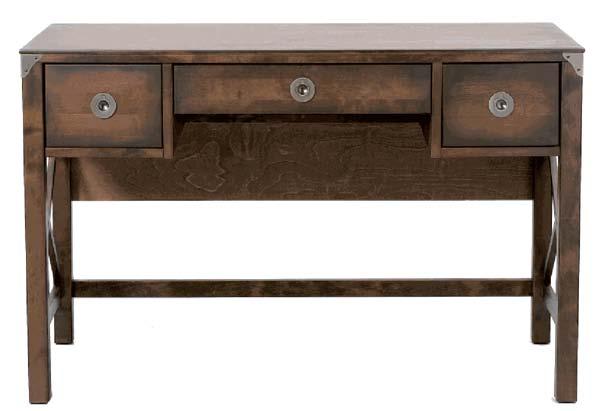
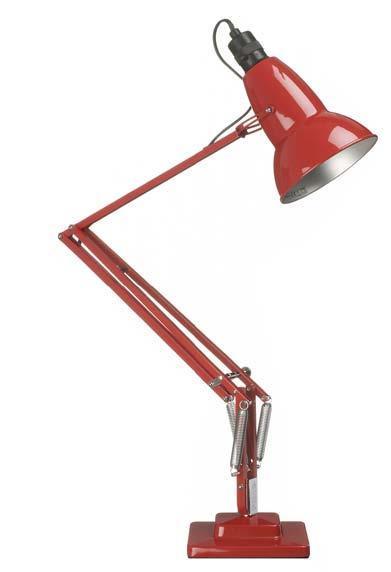


AS the season changes, the arrival of spring makes Pialligo a wonderful spot for home gardeners to pick up new plants or garden decor, or just a beautiful place to stroll through gorgeous nursery gardens.
Pialligo is Canberra’s own “country village” – a rural suburb built along Beltana Road that includes nurseries, garden and landscaping supplies, and a restaurant.
The name Pialligo has been used for the area since at least 1820, and is likely of Aboriginal origin. Streets in Pialligo are named with Aboriginal words.
A MUST-SEE on Beltana Road is Bliss Garden and Giftware with its range of pots, plants, gifts and accessories.
The new range of glazed pots come in modern shapes and vibrant colours such as red and jade.
The strong and hard-wearing, high-fired pots last for decades and are resistant to frosts.
Owner Iain Eaton says the outdoor environment there is beautiful, particularly now the weather’s warming up.
“We’ve just had our first load of water plants arrive and we are known for having the best range in Canberra,” he says.
Iain and his wife Kylie have recently taken ownership of nearby Tulips Cafe, also at 8 Beltana Road. They are busy giving the popular cafe a “bit of a makeover” with new furniture and some new additions to the menu.
Tulips now serves Adore loose-leaf teas and Ona coffee and offers mini high-tea for the little ones.
There’s heaps to keep the kids entertained during the school holidays with an enclosed play area and potting workshops.
On Tuesdays during the holidays kids can pot-up their own plant in a terracotta pot. Bookings to 6257 8358.
THE Hayshed Equestrian Centre is a family owned boutique agistment centre, located in Pialligo.
Owner Ivan Juric says they boast one of Canberra’s best riding surfaces for performance horses.

“It also has six large mirrors to assist with dressage training,” he says.
“We agist your horse, either long or short term and also provide a full boarding service to those requiring it.
“When you agist your horse with us, we provide comfortable large stables and yards, outdoor arena, indoor arena, grass jumping arena, round yard and paddocks.
“The overall well-being of your horse is of the greatest importance to us,” he says.
AT Living Simply, on Beltana Road, there is a large range of indoor and outdoor plants.
“Our horticultural team collaborate with our national growers to ‘handpick’ our plants
guarantee premium quality,” says owner Graham Holbrook.
“We can advise you on the right plant for your garden to achieve the best results all year round.”
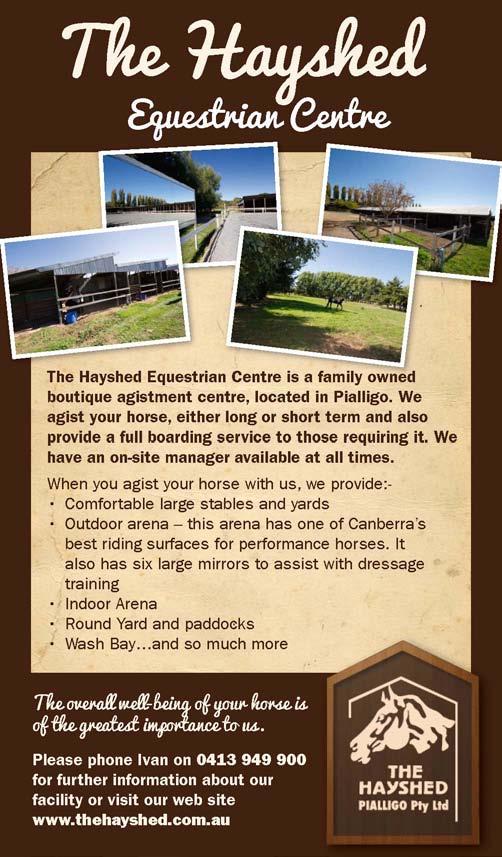






MAGNOLIAS present a stunning floral display at present. They are also incredibly hardy and mine survived the drought with very few losses, if any.
It is important to keep size in mind when selecting one for the garden, which raises the question: when is a plant a shrub or a tree?
Trees are termed with a single trunk, whereas shrubs have multiple stems. However, Magnolia x soulangiana (illustrated here) can easily grow to 6-7m, as tall as a tree.
Although established magnolias need little pruning, choose plants appropriate to your garden. If you need to prune existing magnolias, possibly under or near power lines, do this in mid-summer so that the cuts heal before winter. Plants pruned in spring or early summer “bleed” sap reducing the vigour of the plant.
THE weather people predict a hot summer ahead. At present, great gardening weather continues with regular rain. It is now 20 months since I activated the drip system and yet I see sprinklers going on lawns and gardens all the time, why?
Alan Titchmarsh, renowned English garden presenter, suggests that “rainfall is like money in the bank as far as plants are concerned. In spring, plants are putting on their greatest growth spurt and calling on plentiful water resources

from the earth”. Right now the only plants that need watering are those newly planted. There is absolutely no need to water lawns unless turf has just been laid.
FOLLOWING my comments last week of living in green surroundings, I read that Dutch researchers have coined the term “Vitamin G” to measure the impact of green space on people’s health. The research shows that the amount of green space in a person’s local environment was positively associated with perceived good health. The chance of feeling unhealthy being 1.5 times greater in environments with restricted green space. Depression was 1.3 times greater in areas with little green space.
AS part of ActewAGL’s Floriade sponsorship, the company is offering home owners a chance to win $1000 worth of tree surgery services. And if you don’t own a home in the ACT, you can go into a draw for a $500 hardware voucher. Winners will be drawn on Wednesday, October 17. Enter online at actewagl.com.au/floriade
ONE of the most popular features at Floriade is the Lindeman’s Open Garden. Visitors, including children, have been queuing to plant-up a hanging basket with flowers or herbs. For some,
this is possibly their first taste of gardening. Once complete, the planted-up basket can either be taken home or hung on the six-metre-high “Hanging Basket Tree”. Meredith Kirton, with more than 20 years experience in horticulture, is on hand to help. Of course, if you are growing herbs (the easiest plants in the world to grow), you will want to know how to cook with them. This is where the indomitable Dominique Rizzo (seen on Channel 10’s “Ready, Steady Cook”) will be demonstrating her culinary talent.
• DO not prune deciduous trees until the end of October. With sap rising the cuts, will bleed profusely, setting back the wounds healing process.
• With the prospect of frosts still to come, DON’T hurry to plant tomatoes, unless you cover them every night. Wait until after Melbourne Cup Day.
• DO not water bulbs at all at this time.
• DO spread mulch. What type? Go to www. cedricbryant.com, click on my Cedfacts Information Sheet “Mulch to Conserve Moisture”.
• DO think about reducing the number of pots that need hand watering. Can they be planted in the ground?
• AND snails are on the move, use organic Multiguard Snail and Slug Killer, safer for pets.
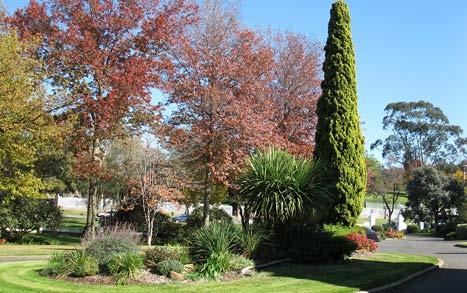

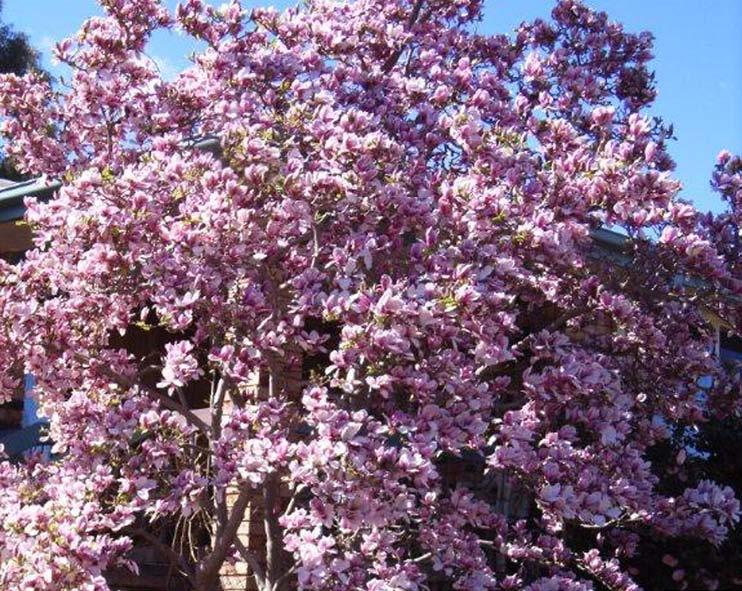
A VIBRANT spring display of flowering shrubs, bulbs and perennials at the front of the South African High Commission in yarralumla is surrounded by immaculately kept park-like lawns and imposing marble statues.
It’s been a lifetime of work for Canberra gardener Billy Hopkins, who has tended the garden for 43 years. Although notionally “retired” since earlier this year, like most passionate gardeners Billy can’t help himself – he still helps out a few mornings each week.
The beautifully designed and maintained garden at the high commission will be open on Saturday, September 29, as part of Open Gardens Australia.
South African species flourish in sheltered beds and the small pond and water fountain is surrounded by Proteas. A delightful formal herb garden is edged in English Box and the lime trees espaliered along the walls make a pretty display.
“Over the years, the garden has been visited by dignitaries from Australia and around the world,” says Billy.
“In fact, many of the specimen trees were planted by notable figures, including a willow by Sir Robert Menzies in 1958 and a blue spruce by pioneering heart transplant surgeon Dr Christiaan Barnard.
“A Chinese Elm was planted earlier this year by representatives of the Anti-Apartheid movement to honour those Australians who helped South Africa on its journey to democracy.”
The garden at the South African High Commission, State Circle (Perth Avenue), Yarralumla will be open on Saturday, September 29, 10am-4.30pm. Adults $7, children under 18 are free. More information at www.opengarden. org.au.