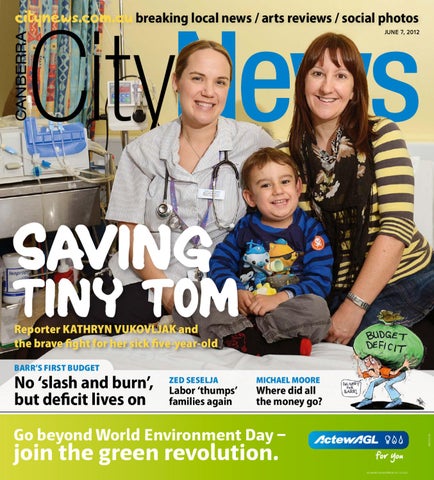
SAVING TINY TOM
Reporter KATHRYN VUKOVLJAK and the brave fight for her sick five-year-old
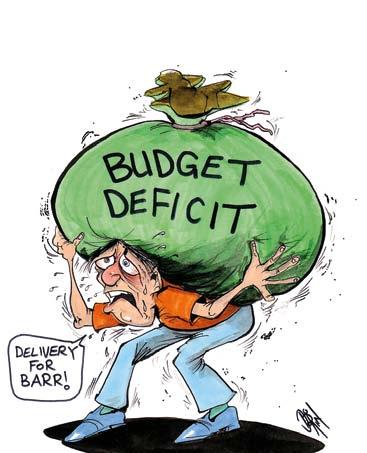
BARR’S FIRST BUDGET
No ‘slash and burn’, but deficit lives on
ZED SESELJA Labor ‘thumps’ families again
MICHAEL MOORE Where did all the money go?
Go beyond World Environment Day –join the green revolution.

Wanted: mentors to help kids take hold
YOUNG people all over Canberra are escaping homes filled with domestic violence, drug and alcohol abuse, and poverty, says Bryan Duke from Ted Noffs Foundation – an organisation that offers essential services for young people and their families who are experiencing drug and alcohol problems and related trauma.
“A high percentage come from a domestic violence background... a lot of young females, overall,” Bryan said.
“The kids either want to get out or they are kicked out or there is some issue at home.”
Bryan leads a new program at Ted Noffs called “Take Hold”, aimed at providing mentoring, life skills and eventually “social enterprise” for Canberra’s youth at risk.
Currently they are looking for volunteer mentors.
“These kids could be at home on the verge of getting kicked out or they can be placed in one of these [welfare] services and they need mentoring or they need life skills,” he said.
“A big part of our program is the mentoring program.
Freyla Ferguson reports

“That’s where we recruit volunteers, they get training... and we’ll match them one to one with the young person.”
Each volunteer will need to take part in mentor training sessions, the first to be held on June 19. Bryan will screen the volunteers, who will be matched with a young person.
And he says that anyone can be a volunteer, as long as they have some life experience and a willingness to help the community.
“I know personal time is tight, but it would really make a difference, not just to an individual but to the community,” Bryan said.
He said the social enterprise component is still in the very early stages but they hope to help young people develop their own business, whether it be advice or help with a business plan.
“I see some of these kids come up and they are completely lost,” Bryan said
“Their parents are supposed to be the ones that they look to for support and guidance and a lot of these people’s parents aren’t that at all and haven’t been for ages.
“I am talking two to three generations of this going on and parents
index / contacts
Arts&Entertainment 25 -29
Budget 15-17
Canberra Confidential 20
Cinema 26
Dining 28
Garden 30-31
News 5-13
Property 32-35
Puzzles 24
Social Scene 21-23
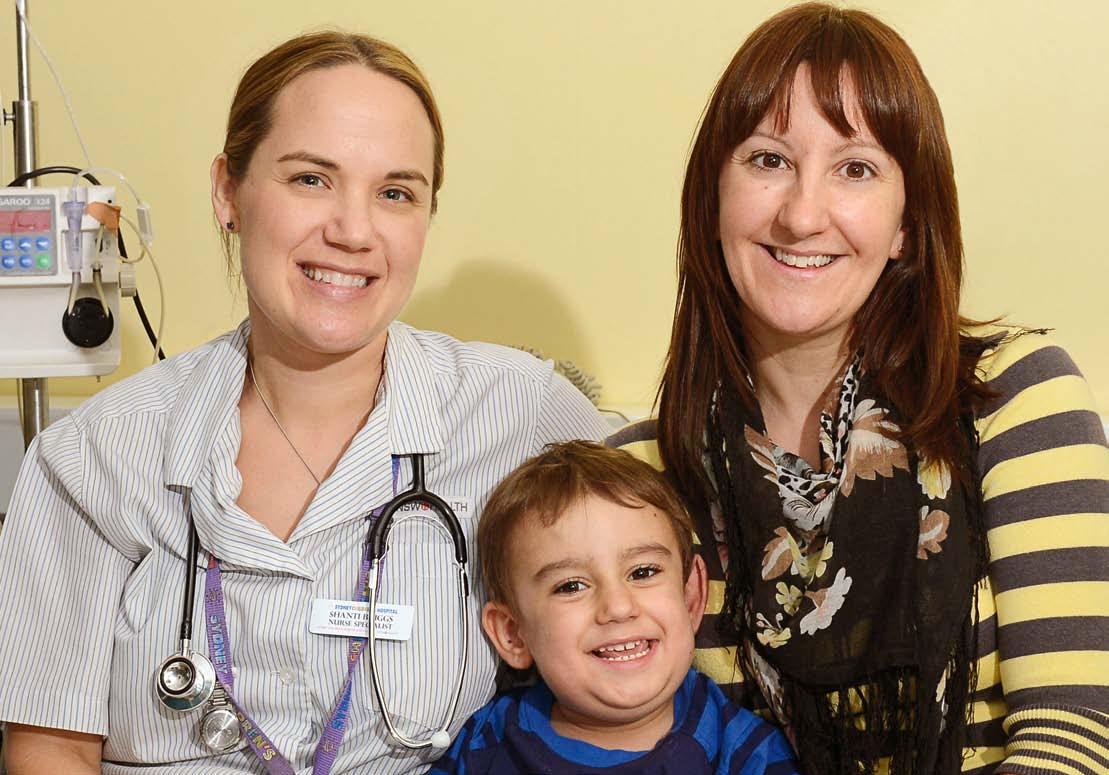
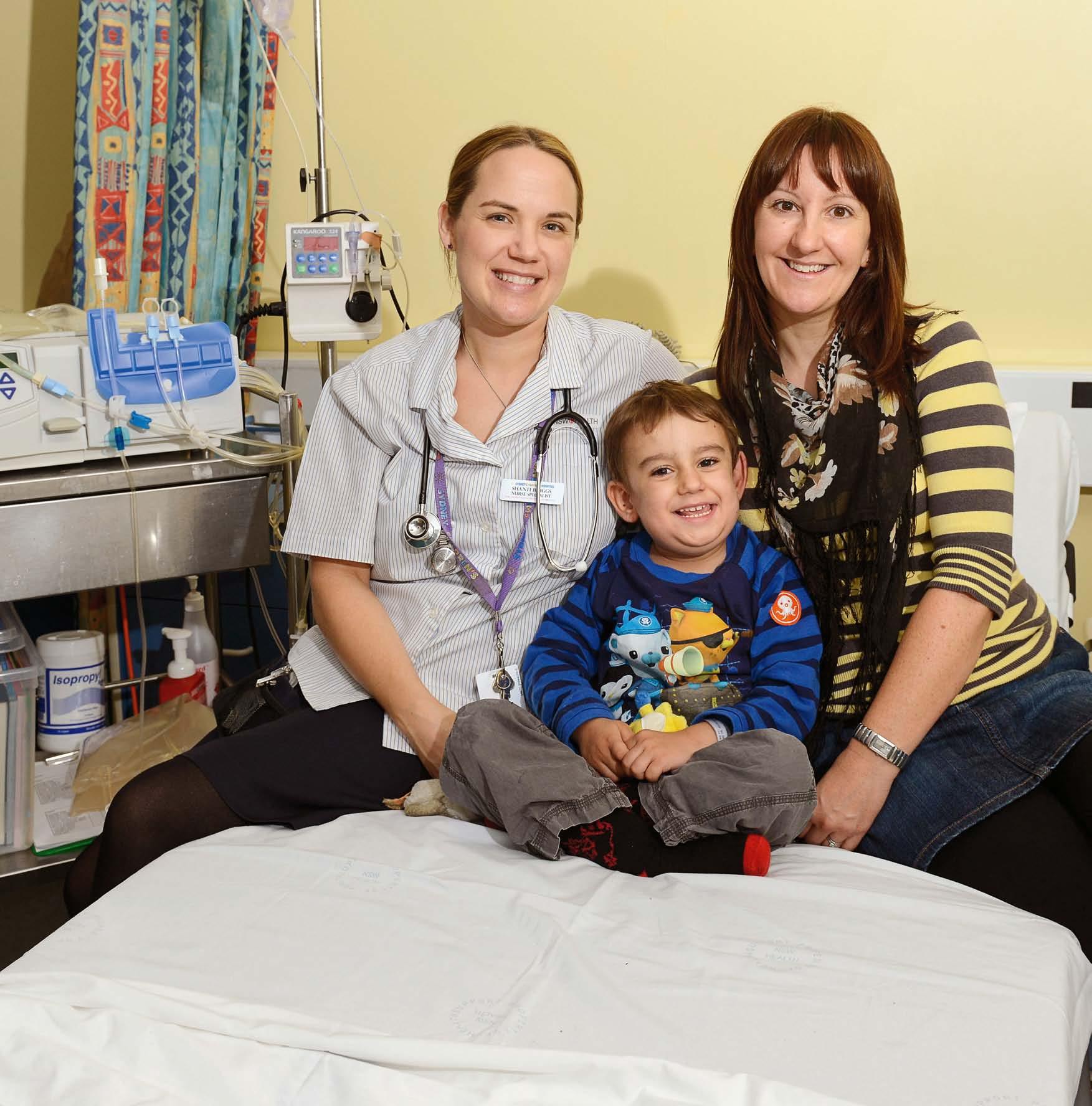
FRONT COVER: Clinical nurse specialist Shanti Briggs, left, with patient Tom and mum
Kathryn Vukovljak at the Sydney Children’s Hospital.
Story Page 12.
Photo by Israel Smith
Phone 6262 9100 Fax 6262 9111
GPO Box 2448, Canberra City 2601 www.citynews.com.au twitter.com/city_news facebook.com/canberracitynews
Chief executive officer: Greg Jones 0419 418196, greg@citynews.com.au
Senior advertising executives: Ernie Nichols, 0421 077999
Advertising sales executives: Mara Stroppa, 0431 245130
Rebecca Darman 0411 225169
Advertising sales co-ordinator: ad@citynews.com.au
Sydney advertising sales: Ad Sales Connect, 02 9420 1777
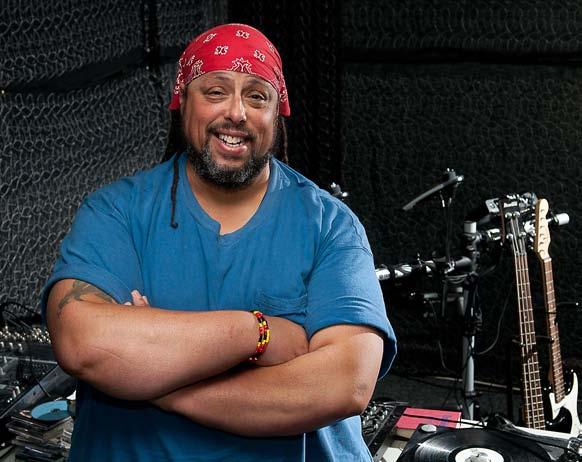
“Take Hold” program co-ordinator Bryan Duke... “A big part of our program is the mentoring program.”
don’t know how to parent anymore because they weren’t parented and it just get passed down and down...
“What we try to do is provide a platform for them to explore their inner strengths so they can have the resilience to deal with these things.
“You can’t change someone’s situ-
ation, but you can help support them through their situation.”
To become a Take Hold mentor contact Bryan Duke on 6218 6706 or email dukeb@noffs.org.au
For more information on the Ted Noffs Foundation visit noffs.org.au
Love for agents
EIGHTY four per cent of recent home buyers say the Canberra agent who sold them their home was honest, professional and always kept them informed, according to new research by internet real estate site allhomes. And 73 per cent would consider that same agent to sell their own home, which the researchers suggest indicates a high level of confidence and good relations between agents and buyers.
Crace Supabarn
SUPABARN Group will develop a supermarket at the emerging suburb of Crace. It will be the first Supabarn Express store in Canberra, and follows a format the company has used in Sydney. Crace project director Malcolm Leslie says the new development – known as Crace Central – will be located in the suburb’s urban precinct close to other community amenities including a retirement village which will be operated by Goodwin Aged Care Services, and a future childcare centre. Construction at Crace Central is expected to start later this year and open in 2013.
A day for kids
KINGSTON’S Old Bus Depot Markets will hold a “Kids in the Shed” theme day, 10am to 4pm, on Sunday, June 17. Visitors will be able to browse and buy from the range of handmade children’s items and there will be entertainment and face painting. There will be 30 additional stallholders focusing on things just for children. More information at www.obdm.com.au
Since 1993: Volume 18, Number 20
Editor: Ian Meikle, editor@citynews.com.au
Journalists: Freyla Ferguson, freyla@citynews.com.au
Libby Hill, libby@citynews.com.au
Kathryn Vukovljak, kathryn@citynews.com.au
Arts editor: Helen Musa, 0400 043764 helen@citynews.com.au
Design and photography: Silas Brown, 0412 718086
Graphic designer: Leonie Fox
Contributing photographer: Andrew Finch
Accounts manager: Bethany Freeman-Chandler accounts@citynews.com.au
Distribution and circulation: Richard Watson, circulation@citynews.com.au


Photo by Silas Brown

Hooray, circus takes a break

You know you’re in Canberra when you stroll into McDonalds and they’re showing Question Time on the TV, says MARK PARTON
I WAS at Macca’s Dickson last week and Question Time from the House of Reps was blaring out of not one, but all three TVs. And most people in the place were watching.
This is a funny old town isn’t it? It is a city like no other. This is the only place in Australia where “Q&A” makes it into the top 20 of most watched programs.
We thrive on parliamentary proceedings here, but I for one am most pleased that we’ve got a break from it for a fortnight now. Federal Parliament is a pantomime. It’s a cheesy, cringeworthy, theatre production and it’s getting worse.
The tone of May’s sitting weeks was set by the member for Dobell Craig Thomson with his hour-long “I haven’t done anything wrong” speech.
And things didn’t improve much for the rest of the fortnight with the cat fighting and name calling escalating to deplorable levels.
Question Time has descended into a complete farce. What annoys me most is the political grandstanding and oneupmanship that has crept into seemingly every single address by every elected member. Questions, answers and statements have all become nothing more than political propaganda and I’m sick of it.
There’s no point to this circus, so just put away the clown suit, guys, and have a go at running the country.
Mark Parton is the breakfast announcer on 2CC.
Susan helps Laos
PUBLIC servant Susan Newman is organising a trivia event for Saturday, June 16, from 6.30pm at Majura Hall, Dickson, to raise funds for ChildFund Australia to provide drinking water and better sanitation for communities in remote northern Laos. Over the next six months, she and two friends plan to raise $24,000 and will cycle 460km in November through Laos and Cambodia to meet some of the families the funds will help. Tables of eight are $200 ($25 per person) and include dinner. Bookings to teamlaos2012@gmail. com. Donations to www.everydayhero.com.au/ team_laos
Friends, indeed
RAMESH Paudel is this year’s president of the Australian Nepal Friendship Society. At its recent AGM, Binod Chapagai was elected vice-president and committee members include Nabin Dahal, Chudamani Sapkota, Dipendra Shrestha, Keshab Raj Goutam, Prakash Parsai, Pradip Adhikari, Yubaraj Khaniya, Sue Salthouse and Zeenat Burdick. Nepalese ambassador Rudra Kumar Nepal attended the meeting as a chief guest along with past and outgoing presidents of the society.
Happy Fellow
ARTIFICIAL intelligence researcher Dr Stephen Gould has been named a Microsoft Research Faculty Fellow. Dr Gould, a fellow with the ANU College of Engineering and Computer Science, will receive a total of $100,000 over two years to further his research. Dr Gould will be presented with his award at the 2012 Microsoft Research Faculty Summit in Redmond in July.
Buoys on bridges
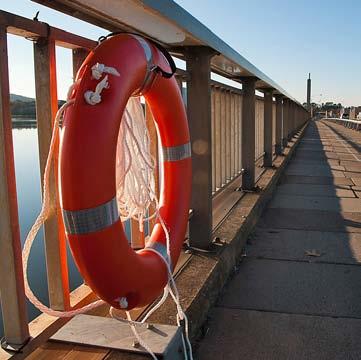
PEOPLE jumping off Commonwealth Avenue and Kings Avenue bridges, particularly university students, has resulted in the installation of lifebuoys on bridge railings by the National Capital Authority.
Two lifebuoys were installed on the Commonwealth Avenue Bridge and another two on the Kings Avenue bridge.
An NCA spokeswoman said the NCA will install an added measure of lifebuoy cabinets at each bridge by the lake.
The safety measures follow an incident in October, when the body of university student William Boyle, 21, was retrieved from the lake near Commonwealth Avenue Bridge by police.
A new lifebuoy on Commonwealth Bridge.
Photo by Silas Brown

mum in the city
The ‘danger’ on board
By Sonya Fladun

“IT’S stupid. Do you really think having a sign on the back of your car is going to make any difference to the way people drive around you?”
That was a friend’s comment when she spied the new “baby on board” sign I’d innocently stuck in the back window of our people mover.
I’d adopted it as a safety measure, hoping that telling the world that there was a small, defenceless, little person on board might make tailgaters back off, hoons go and mess with someone else, and those in a rush realise that our car was never going to travel more than a bit below the speed limit.
It didn’t make that much difference. People still overtook and honked their horns aggressively and when a bus sideswiped us, I concluded that my friend was probably right. No one really pays much attention to baby-on-board signs. But they should.
When you see the words “baby on board”, it should be taken as a sign of clear and present danger. It tells other drivers that there is an exhausted mum or dad behind the wheel with a small unpredictable, unexploded bomb in the back seat. If they are nervous first-time parents well, seriously, anything could happen. So it’s in everyone’s best interest to back right off.
These days, baby-on-board signs are old hat. Many family cars sport stick-figure representations of the whole family. At a glance, you can tell mum’s a shopaholic, dad likes a barbecue and they have two or three offspring who play

soccer, do ballet and maybe a baby with angel wings smiling demurely (I always assume that’s aspirational). There are also often dogs, cats, goldfish, a rabbit or guinea pig, horse or a chicken or two – hopefully, not all travelling in the car at the same time.
I find these signs very useful. I regularly have a car full of small and large distractions as I race to beat the school bell or get the kids to their various sporting or social activities or just get to work on time. So it’s good to know which other drivers may also be operating under suboptimal conditions.
L-plates warn people that they are learners, P-plates also tell us someone is new to the road. We’re also warned of wide loads and left-handdrive cars. So why not give fair warning to other drivers as to just what sort of family commotion and distraction is going on in the back of your car?
Here’s a car sign with a sense of humour... taken by a reader on a recent visit to Beijing.


Top prize for
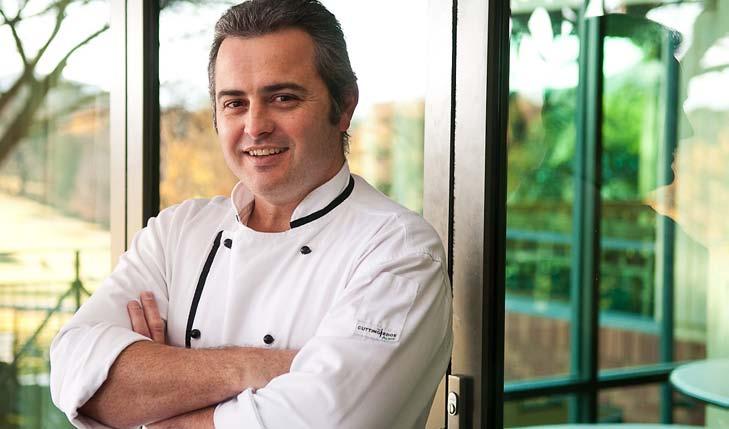
CANBERRA chef Neil Abrahams is at the top of his game having won the high-pressure Chef 2012 cooking competition and pocketed $10,000 prize money.
Despite a 25-year career working in hatted restaurants and 5-star hotels, his proudest moments have been in the competition arena.
The executive chef at Royal Canberra Golf Club has competed in national and international competitions and held a position on the Australian National Culinary team for six years and was co-captain at the 2008 Culinary Olympics.
The Chef 2012 event challenges individual chefs to use ingredients from a mystery box to create three different dishes for the judges in an hour.
“It’s about pushing yourself to do the best you can in a given time with the ingredients available,” Abrahams says.
“But I think what I gain most is that in one spot you get to see what the best are doing, otherwise you’d have to visit 50 restaurants.”
Abrahams says his long experience on the Australian Culinary team helped him when he competed on day two of the event at the Foodser-
Libby Hill
reports

vice Australia trade show in Sydney last month.
“It’s a tough competition,” says Abrahams. “You have to come up with three dishes in one hour and you’re doing that for 12 people, and with the judges standing over you, it’s pretty full on.”
He was initially taken aback when he opened his mystery box to reveal the ingredients he had to use in each dish – hoki, Jerusalem artichokes, spinach and samphire.
“I hadn’t used samphire a lot, maybe three or four times, and one of those times was when I was in Europe where I used fresh samphire and it was quite salty, so you had to wash it off,” he says.
“But this one was in a jar and had been washed through a brine and had pretty much been pickled so I thought: ‘That’s great, I can use it in a salad or could cook with it or sauté it.’ So I was pretty happy about it then.”
His dishes featured hoki in three different ways – wrapped in prosciutto, cooked sous vide and as a ceviche.
As well as being the executive chef, Abrahams manages food and beverage operations for the golf club, where he has

the masterful chef
worked for 10 years.
“We do all facets of food,” he says. “We could be making 100 sandwiches in the morning and we might put out 30 fish and chips for lunch and a few
steaks and turn it around for an eight-course degustation dinner at night.
“That’s our clientele and that’s what they become members here for – the ability to be
casual one minute and to be able to impress and be formal the next.
“I focus on the positives, it mixes up the day and it challenges the staff.”


Chef Neil Abrahams... “It’s about pushing yourself to do the best you can in a given time with the ingredients available.”
Photo by Silas Brown
The miracle survival of tiny Tom

“CityNews” reporter KATHRYN VUKOVLJAK’s life turned upside down when her five-year-old son had a mini-stroke over breakfast in September and Tom became one of the 383 acutely ill Canberra kids last year to need the life-saving help of the Sydney Children’s Hospital...
OUR family has spent so much time at Sydney Children’s Hospital in the past eight months that my five-year-old son Tom counts among his friends doctors, neurosurgeons, nurses, clown doctors, play therapists and several Captain Starlights. He even looks forward to going back to Randwick because he’s keen to see everyone again.
Tom’s endured hundreds of painful tests, two brain surgeries, months in hospital and is now on kidney dialysis, and despite his tiredness, he’s loving school and lives as normal a life as he can. He was fine until September last year, when over breakfast he held up his right hand and said it had “gone funny”. His hand flopped down from the wrist and he couldn’t grip anything. Then his speech became slurred.
Our GP thought Tom had suffered a TIA, or mini-stroke, and sent us to emergency at Canberra Hospital, even though he’d recovered within 20 minutes or so, and it was like nothing had ever happened.
Later that night, camped out next to Tom in the pediatric ward, we read books and I told him that we might just have a couple of sleeps in the hospital while the doctors made sure he was okay after his funny hand.
But an ultrasound and blood tests the next day
showed a problem with his kidneys. He was also found to have dangerously high blood pressure, and after a worryingly long MRI, a doctor told us that something in Tom’s brain was so very wrong that we’d be going straight to Sydney Children’s Hospital. It was 1am.
An issue with the weather meant that the chopper couldn’t make it, so a mobile-ICU road ambulance was sent for us and we spent the next couple of hours in intensive care waiting for it to arrive.
It didn’t seem like anything was wrong with Tom – he looked fine and was so happy, ignoring the cannula in his arm and the painful arterial line in his thigh monitoring his blood pressure. The nurses thought he may have been on a postanaesthetic high, but that’s just him – he’s a funny little guy who doesn’t stop talking.
Tom enjoyed the ambulance ride to Sydney because he got to watch movies – he was amazingly accepting of it all. My husband Dan met us there, and our daughter Rosie, then two, stayed with family. It felt strange to be leaving Rosie in Canberra, but she was safe and we had to focus on our boy.
There wasn’t much information we could give friends, family or work at this stage – we just had to drop everything and do a midnight flit,
and while it was obviously serious, it was also unclear what was wrong. One thing that stuck in my mind was that the doctor had said: “It’s not cancer.” Apparently, that’s the first thing that parents ask, so he wanted to rule it out upfront. But the not-cancer-news didn’t appear to be good news, and all we could think was, well, what is it, then?
At Sydney Children’s Hospital, Tom was monitored in intensive care for a few weeks and we were gently told he would need brain surgery because he has moyamoya disease, a rare condition where arteries in the brain are blocked, restricting blood flow. It was considered fairly miraculous that he’d made it until now without any issues, especially because his case is complicated – it also affects his kidneys,
so he would suffer renal failure, too. It’s been a long road, and will continue to be. We spent a few months in Sydney after that, in Ronald McDonald house, with Rosie joining us a week later. Thankfully, Tom recovered well from the operations. It’s fortunate that we witnessed the TIA, and that he was able to have surgery before any brain damage was done. However, our lives have been turned upside down; he requires a lot of care, bucketloads of medication, dialysis at home while he sleeps and frequent trips to Sydney.
Tom has taken everything in his stride though, and seems to cope with his situation by asking the doctors hundreds of insightful questions and facing every new challenge head on. He’s an inspiration to us.
Help the hospital on 1800 644336
FROM 9am on the Queen’s Birthday holiday, Monday, June 11, WIN Television will broadcast the Channel Nine Gold Week telethon to raise funds for Sydney Children’s Hospital in Randwick. To donate on the day call 1800 644336
Every year the hospital touches the lives of more than 326,000 children across NSW and beyond. Last year, 383 acutely ill children from Canberra needed its highly specialised help.
The telethon will feature TV personalities, inspiring stories from hospital families and staff, a studio audience and performances by some of Australia’s top music acts. Last year, the telethon raised $1.68 million to help the hospital buy life-saving equipment, refurbish wards and fund essential research.
More information at www.goldweek.org.au

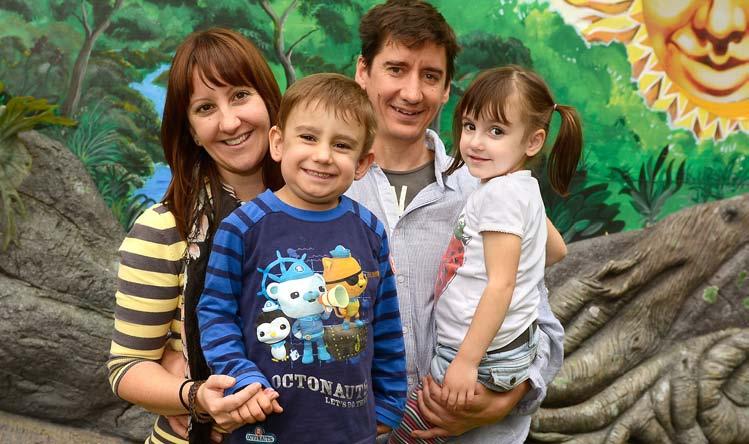
Kathryn, Tom, Dan and Rosie Vukovljak at the Sydney Children’s Hospital, Randwick.
Photo (and cover picture) by Israel Smith.
Plan to plan the future How sheets led Sarah to a life in linen
Catherine Carter property
THE debate that’s reignited again about whether Canberra should have a light rail system or improve our existing bus services seems strangely familiar.
Burst water pipes, roads without bike lanes, pot holes, and the lack of a public transport service when and where you need it – what do all these things have in common? They’re all a right pain in the posterior.
And they’re also all the result of a lack of investment in infrastructure.
Canberra has always been known for its strong investment in infrastructure. But that has been declining steadily, and it’s really starting to show. No longer is Canberra keeping up with the needs of the community.
So what’s the solution? Not just more investment in infrastructure, but smarter investment.
We need a plan; our city needs an overarching plan that maps out our whole city’s future for the next 30 years; a plan that would allow current and future generations to have access to the infrastructure we need.
Capital works take time to deliver, and to be ready when they are needed they must be planned and funded ahead of time. That’s where we’ve been going wrong – we’ve been playing catch up for too long.
Catherine Carter is ACT executive director of the Property Council of Australia
VINTAGE patterned sheets from the 1970s are the inspiration behind Oh Mabel – a little linen label by Canberran Sarah Power.
The 32-year-old public servant says she has a challenging and fulfilling career, but wanted to express herself creatively and create a business based on her own strengths.
“I have never been one to do one thing at a time and love that I am busy in two different worlds,” Sarah says.
Oh Mabel is a boutique brand of bed linen, selling organic and patterned bed sheets and quilted doona covers.
The idea for the range of bed sheets came about, Sarah says, after years of researching and looking for patterned bed sheets for herself.
“I always wondered why this trend had disappeared and why it couldn’t be brought back,” she says.
“I originally thought that I could open an online store selling different brands of bed linen, but after not being able to find any to sell, I thought that I would look into producing my own range.”
Every step of creating Oh Mabel has been on a small scale and Sarah has spent the last couple of years studying design, researching production methods and bed linen trends.
Libby Hill reports
“I chose to produce Oh Mabel using 100 per cent certified organic cotton as I believe that we are over-exposed to products on a daily basis and if I am going to bring a new product to consumers I wanted it to be sustainable and have minimal impact to the environment and the people who created it,” she says.
The cotton used for the sheets and quilts is a long-lasting cotton that softens with continued use and will last for years.
“I love creating bed linen that will hopefully become part of a family and be kept in people’s lives for years and years to come,” she says.
Sarah describes the Oh Mabel style as a little bit modern and a little bit vintage.
“Customers have said that the sheets have provided a point of difference in their bedrooms and are always getting comments about the uniqueness and how special they are from their guests,” she says.
Oh Mabel is stocked at Style Emporium located in Ginninderra Village, Gold Creek as well as at www.ohmabel. com.au


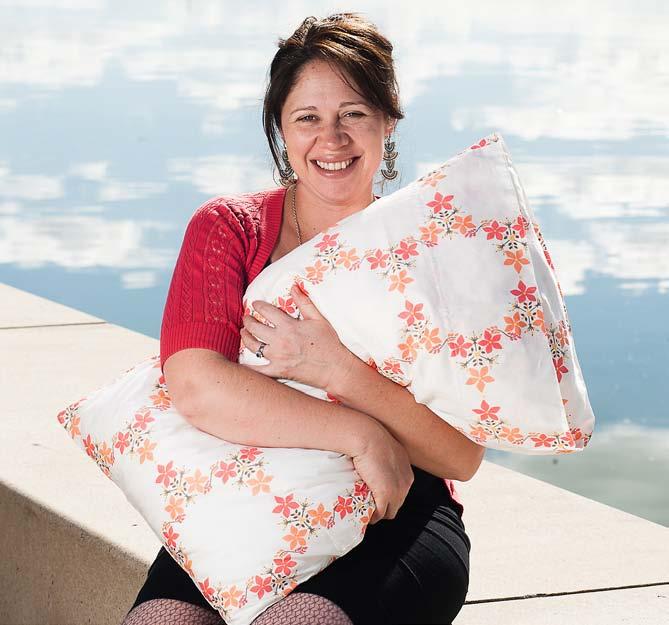

Sarah Power… “I chose to produce Oh Mabel using 100 per cent certified organic cotton”.
Photo by Silas Brown

budget 2012

Freyla Ferguson Tax reform ‘for the battlers’
‘We can’t save the city from the Federal Liberal Party’ UP THEY GO: PARKING 22%; RATES 9.6%; GAS 11.5%;
No
‘slash
TAX reform and private-sector stimulation sit front and centre of the ACT Government’s last Budget before the October election.
“It’s not a seat-warming Budget,” the Chief Minister Katy Gallagher brightly professed to journalists in the media lock-up at the Legislative Assembly building. Nor, she said, was it an election budget.
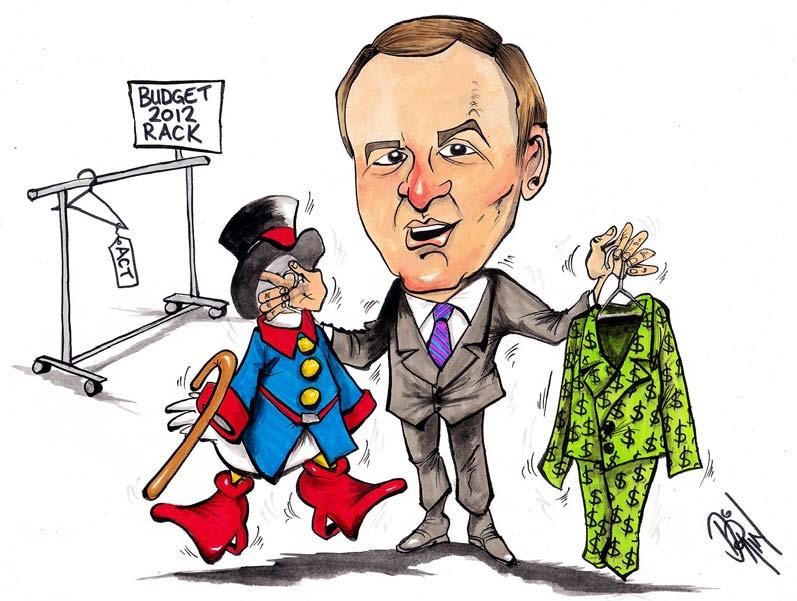
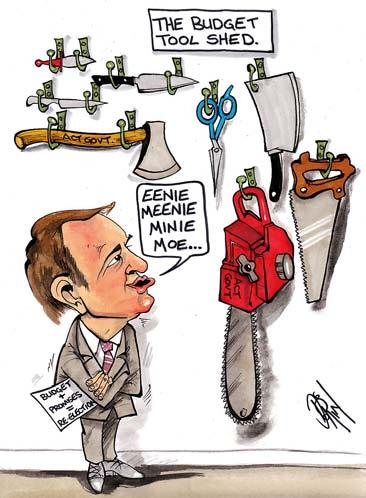
“We will not go down the path of slash-and-burn budgeting,” Treasurer Andrew Barr, said of his debut Budget, by way of explaining the Government’s decision to increase the deficit in 2012-13 to $318.3 million.
The deficit is projected to be $130.2 million in 2013-14 and $51.3 million in 2014-15. It’s not expected to return to surplus until 2015-16.
“The current surge in national economic activity, while welcome, is in sectors that do not contribute to the GST pool. And because of lower nationwide consumption, that pool is shrinking,” he told the House of Assembly.
“The Commonwealth’s recent Budget was constructed against this backdrop, and the spending decisions in that budget have knock-on implications for every State and Territory.”
These external factors, including Europe’s continuing, worsening sovereign debt woes and unstable financial markets are having flowon effects around the world, he said.
The decision to extend the deficit was, he said: “The right decision for this city and this community because it will let us absorb some of the impact of these external factors without risking unnecessary damage to local confidence, local business and local jobs.
“Our measures to grow the private sector, and to reform our taxation system, will indeed ensure that Canberra continues to have a strong and diverse economy.
“The five-year plan I outline today makes the ACT’s taxation system fairer, simpler and more efficient,” he told the Legislative Assembly.
“This plan is revenue neutral –the reforms are not about raising the overall amount of tax the Government receives.
“Many taxes will reduce, some will rise, and several will be abolished.
“The guiding principle has been that households who can least afford it should pay less, and those who can most afford it, should pay more.”
“The new-initiatives spend in this
and
burn’ as
Budget is $63.2 million in the 201213 financial year and $155.1 million over the four years.
“The 2012-13 capital works budget sees the ACT Government continuing to invest in a robust infrastructure program of over $900 million in 2012-13.”
In announcing a $20 million support package over four years for business, aimed at bolstering the economy and jobs, the Treasurer said: “We are committed to creating an environment in which the private sector can thrive, and we are committed to market-based policies and actions to broaden employment, business activity, growth and investment.
“These things are at the core of the Government’s recent business development strategy – jobs, growth and diversification.
“Importantly, the Business Development Strategy supports a better dialogue between the Government and business, including the establishment of a red tape reduction taskforce, that I will chair.
“In addition to the new funding, is the $30.1 million the Government is investing in cutting payroll tax – a major incentive for businesses in Canberra to grow and for businesses to establish themselves in Canberra.”
While admitting that the ACT was bearing the brunt of the Federal Government’s contraction in spending and employment, Mr Barr also said that his Government could not “save the city from the Federal
Liberal Party”.
“And while most Canberrans are prospering, the Government acknowledges some in our community are doing it tough through no fault of their own,” he told the Assembly.
“ACT Labor’s vision is to ensure that the ACT remains the happiest, healthiest, most sustainable community in Australia, with the country’s highest standard of living.
“The decisions taken in this Budget allow us to maintain the Government’s spending and employment.
“This will support our economy at a time when support is needed. It signals the confidence we have in our economy and our labour force. And it will deliver infrastructure that drives productivity.”
Mr Barr said the Government would continue to drive improvement in public service delivery.
“We are making responsible savings in travel, printing, consultancies and advertising. We expect our public service to embrace technological advances and perform their valuable roles more efficiently over time,” he said.
“Building on the work of the Hawke Review, our next step is to position the public service to achieve even greater value for money, provide even higher quality services, be innovative and manage change effectively.
“In order to achieve this, we will establish an advisory group from industry, community and government to assist Cabinet decision making on

Michael Moore
Where has the money gone?
deficit lives on
public sector reform.”
He said the Budget continued to fund programs and services for Canberrans with disabilities, children and young people at risk, and older Canberrans.
“To ensure everyone has access to quality and timely emergency care, we will increase funding for the ACT Ambulance Service, with an additional $9.5 million over four years and almost $4 million for new, modern on-board equipment,” he said.
“We will also be investing in a new fire station at Charnwood and in an upgrade of phone systems to better support triple-zero emergency calls.”
In justice, Mr Barr said the Government was investing in making the court system more efficient and in helping the courts address their backlog of cases.
“We will also be increasing funding to the Legal Aid Commission and supporting the relocation of the Women’s Legal Centre,” he said.
Funding of $67.8 million over four years would be allocated for the ‘Transport for Canberra’ initiatives, including improvements to the MyWay system, he said.
The Budget also included funding for town centres and villages.
“The Urban Improvement Fund will provide an additional $22 million to deliver footpath improvements, playground upgrades, improvements to the quality of our sportsgrounds, a dog park in the inner north and upgrades to the Belconnen dog park, and improvements to public toilet facilities across the Territory,” Mr Barr said.
Arts investment included funding for upgrading the Tuggeranong Arts Centre, refurbishing and upgrading the Canberra Theatre Centre and for kicking off phase II of the Belconnen Arts Centre. The Lanyon Heritage Precinct will also get extra funding.
Mr Barr said the Government would also invest $909 million in education and training.
In health, he said, the Budget delivered a record level of investment in of $1.3 billion.
“We are delivering more acute care beds and more hospital-in-thehome beds. There are more beds for Calvary Hospital, new pediatric, high-dependency beds and additional intensive care beds at the Canberra Hospital,” he said.
“We are expanding the Canberra Hospital’s emergency department with new treatment spaces and more beds.”
In sport, he said, there was funding to restore drought-ravaged ovals at Watson, Weetangera and Bonython.
reaction
Labor
‘thumps’ families again

Opposition Leader ZED SESELJA says
Canberrans have never paid more and never received less in return
T HIS ACT Budget is the biggest thump to cost of living in Territory history, with the ACT Labor Government now charging the average Canberra family $10,000 every year for core basic services.
This includes:
• A rise in car parking revenue of 22 per cent, potentially adding hundreds of extra dollars to many households’ bottom line.
• A rate increase of 9.6 per cent – on top of the doubling of rates that’s already occurred in many Canberra suburbs.
• A natural gas cost increase of 11.5 per cent
• An increase in sewerage costs of 8.2 per cent. This is on top of already doubled rates in many suburbs, tripled water costs and an increase in electricity prices by 85 per cent, with another 17 per cent increase to come in July. Soon, many households will be paying in excess of $1000 every month for the privilege of being governed by ACT Labor.
Canberrans have never paid more, and have never received less in return.
More reaction, Page 16
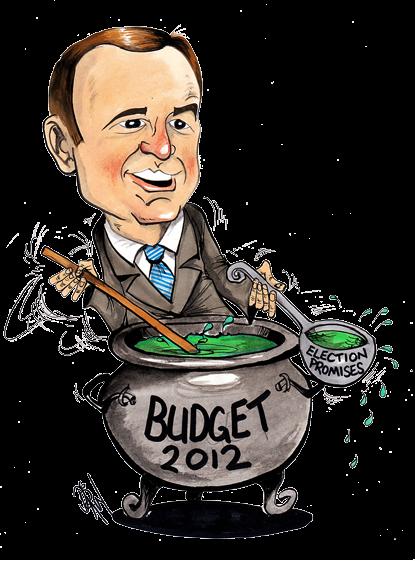
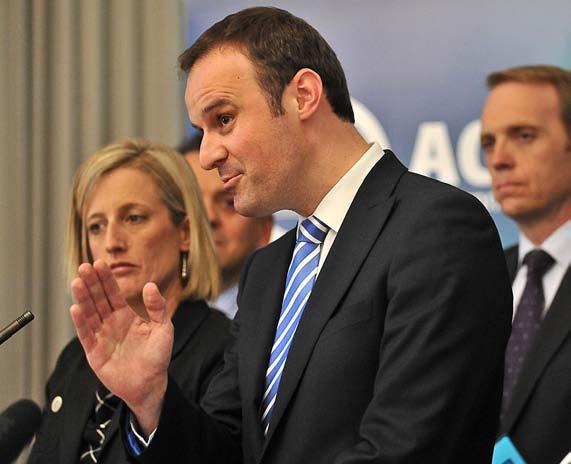
Treasurer Andrew Barr, surrounded by his Labor colleagues addresses the Budget media lock-up at the Legislative Assembly building.
Photo by Silas Brown
budget 2012 / reaction UP THEY GO: POWER 17.2%;
Tax reform good but worries ahead, warn Greens
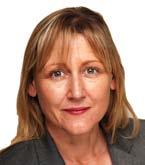
“THE Greens welcome the tax reform package as an important first step, making ACT taxes simpler, more efficient and fairer.
We are concerned that the Budget misses some opportunities to make significant investments that will ultimately deliver much more lasting economic benefits to Canberra.
The deficit is an unfortunate but necessary response to protect the ACT economy against the impacts of the Commonwealth Budget contraction. There is a plan to return to surplus in 201516, but this plan is at risk if the Federal Liberal Party takes Government and follows through with threats to slash ‘more than 12,000’ public sector jobs.”
Catherine Carter, ACT Property Council
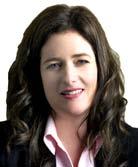
“T HE ACT Budget handed down today is bad for business, bad for the property sector and will discourage investment in the Territory. Dramatically increased levies on commercial property in Canberra, particularly increases in stamp duty, make the Territory an even less attractive place for investment.
Just as international investors immediately shelved plans to allocate funds to Australian property markets in the wake of the Federal Budget so, too, will interstate investors shun Canberra following the ACT Budget.”
Chris Peters, Chamber of Commerce & Industry
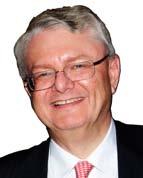
“MY main concern was to ensure the ACT Budget did its best to limit the damage done to Canberra by the recent ‘slash and burn’ Federal Budget. The ACT Budget achieves this and will protect the economy from recession.
The $900m in infrastructure is welcome and will continue to support employment. The focus on broadening our business community particularly with smart, hi-tech industry is strongly welcome. Ongoing support for newly evolving business is also welcomed.
The tax reforms contained in the budget are welcomed. New procurement arrangements will also support local Canberra businesses and encourage them to offer their goods and services to government as customers.”
Chris Faulks, Canberra Business Council
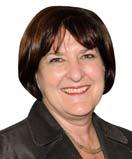
“IT is clear the ACT economic situation is going to be tough in coming years due to a significant drop in revenue, an increase in costs and cuts in Federal Government spending. Therefore, it is disappointing the majority of initiatives funded in today’s Budget are aimed at maintenance and upkeep rather than driving economic growth.
The $20 million for delivery of the ACT Government’s business development strategy is welcome. However, priorities must be questioned when the entire investment in business, the lifeblood of the ACT economy, is less than the funding going to ACTION to upgrade its fleet.”
Henderson, Conservation Council ACT

“WE welcome the $5 million capital fund to assist the ACT’s Government to be carbon neutral by 2020. This framework, will deliver reductions in greenhouse gas emissions from ACT Government operations, as well as providing a local model and leadership for other Canberra institutions, businesses and the community.
We are disappointed not to see an increase in funding for biodiversity and the ongoing lack of funding for biodiversity monitoring. We need to invest more in nature.”
Emma Robertson, Youth Coalition of the ACT

“T HE objectives of the ACT Budget include targeted investments to reduce future costs and address chronic disadvantage, consequently we were looking for investment in communitybased services to support young people and their families.
While we acknowledge additional funding in child protection and youth justice, the measures announced in the Budget do not invest enough in early intervention and prevention to break the cycle of disadvantage for the most vulnerable children, young people, and families in our community.
Until we prioritise funding support for families prior to statutory involvement, we will see continuing pressure on consecutive Budgets to allocate money to crisis response.”
Neil Evans, HIA
“T HE ACT Government is to be congratulated for taking serious steps towards reforming the taxation system.
In particular, we welcome the phase out of inefficient taxes such as stamp duty, to be replaced by more efficient and broad-based taxes – which was a measure argued for by the housing industry in our pre-Budget submission.
The lifting of the current exemption from stamp duty for new property to $385,000 – prior to its eventual abolition – is also a good move and should improve affordability at the lower-end of the market, and encourage new home building activity.
This is a good outcome for the residential building industry in Canberra, and will pay dividends to the local economy in the longer term.”
Glenn Fowler, Australian Education Union
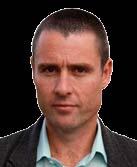
“T HIS AC T Budget sees a modest increase to education funding, and establishes two new ACT public schools. A significant part of the overall increase corresponds to improved salaries for the school teaching workforce which were welcome albeit long overdue.
Efficiency savings are present in the Budget, and the AEU will demand consultation to ensure that educational delivery is not affected.
More needs to be done in coming Budgets to provide specialist teachers in all schools so that the highest quality is guaranteed. This Budget does nothing to restore CIT’s recurrent funding levels of the late 1990s.”
Roslyn Dundas, ACT Council of Social Service

“T HE community sector was looking for some recognition on t he underpinning issues hurting our community.
Unfortunately, despite some tinkering around the edges, we are looking at more young people in out of home care, continuing high levels of incarceration rates for Aboriginal and Torres Strait Islander peoples and potential increases in social isolation due to rising transport costs with no increase in community transport support or the in-roads required to address housing affordability and security.”
It’s your money…
THE forecast Budget net operating balance in 2012-13 is a deficit of $318 million with a return to surplus in 2015-16
• $790 million in borrowings, $490 million more than previously forecast.
• 180 administrative public service jobs to be lost.
• More than $900 million for capital spending in 2012-13.
Key projects include:
• $43.6 million for new and enhanced hospital facilities.
• $19.9 million to extend the Mugga Lane landfill.
• $12.9 million to rectify and upgrade Taylor Primary School.
• $10.5 million to reconstruct the North Weston road intersections.
• $6.5 million to construct a grandstand at the Gungahlin enclosed oval.
• $5.3 million to upgrade lighting at Manuka Oval.
• $7.9 million for additional social housing including for people with complex disabilities to help them maintain their independence.
• $5 million to reduce greenhouse gas emissions from government operations.
• $3.5 million for carbon neutral schools.
• $3.1 million to upgrade the Canberra Theatre Centre.
• $26.8 million for improving the care and protection of children and young people, and address the needs of those at risk of entering the justice system or in Bimberi Youth Justice Centre.
• $24.6 million for a new fire station at Charnwood, concept design for additional future sites and Emergency Services’ facilities upgrades.
• $75.6 million for infrastructure in Molonglo, including the John Gorton Drive extension and the first stage of the Riverside Park, the Uriarra Road upgrade, trunk sewer and stormwater, a pedestrian bridge and paths.
• $5.9 million over four years to support the operation of the newly built Franklin Early Childhood School.
• $5.9 million over four years to support the operation of the new Bonner Primary School for preschool to year 6 students in 2013.
• $1.7 billion 2012-13 Infrastructure Investment Program over four years, that includes $119 million for projects to facilitate the continued land release in Gungahlin and Molonglo, and the investigation in rapid transport options for Northbourne Avenue.
• $25 million over four years for improved bus services, including MyWay, Nightrider, real time passenger information, and driver injury prevention and management.
• $58.2 million for new buses, upgrades to bus stops including a new station at Barton, continuing work on the Belconnen to City Transitway, design of a terminus at Erindale and West Belconnen and additional MyWay recharge agent facilities.
Meredith Hunter, ACT Greens
Clare
After a doubling of Government income over 10 years, MICHAEL MOORE wonders...
Where has all that money gone to?
IF you were earning double the pay you received just over 10 years ago, you would probably have a bigger house, a good car, kids doing well in education – perhaps some nice artwork.
You would not expect to see increased borrowings and not much to show for the increased earnings. This is where the ACT Government finds itself at Budget time in 2012.
The first Budget the Labor Government produced after it came to power was in 2002. In that year, the revenue was predicted at just over $2 billion. This year, the Budget predicts revenues approaching $4 billion.
Despite this, there is a considerable increase in borrowing of almost a half a billion dollars. This borrowing is not for short-term bills, but for capital infrastructure – similar to taking a mortgage out on the family home.
This explains, despite the borrowings, why Standard and Poor’s Rating Service will continue to rate the ACT at the highest level of AAA.
There have been pressures – not so different from a growing family.
For example, there are more people in the ACT than there were a dozen years ago and more babies being born. There are more people in jail, more police on the street and more streets for them to cover.
A growing family has bigger medical bills. As people age, the costs of treatment invariably increases.
Like the rest of Australia, the ACT faces an increase in preventable chronic disease associ-
ated with tobacco, inappropriate use of alcohol and poor eating habits.
The household that smokes, drinks too much and eats poorly will face similar problems.
The ACT health investment this Budget –largely driven by Commonwealth reforms – is
principally about fixing people when they are sick, with a minimal focus on prevention – although there is about $800,000 for a healthy weight action plan and the Heart Foundation’s Active Living along with increased efforts in sport and recreation.
Education is important to most families. Investment in education now will mean better ability to earn money in the future.
Governments need to build more schools for the growing population and make sure the quality of education meets the expectation of the community. Priorities for the Education Directorate are broadly based on curriculum, literacy and numeracy, but also focus on those most in need including Aboriginal and Torres Strait Islanders, disability education and “strengthening student engagement”. The real question is about how much better for the increased investment over 2002.
Families like to feel safe and do spend accordingly. For the ACT Government this is reflected in police, prisons and justice.
There will be a new fire and ambulance service based in Charnwood to improve access for people in this growing area. The court system will receive a boost at the same time as the Legal Aid Commission in an attempt to make the justice system “fairer and more efficient”. There was no jail in 2002 and it certainly was not a cheap structure.
No new car for this ACT family – not even a good second-hand one. The community equiva-
lent is light rail or faster more efficient dedicated busways. Instead we are seeing an investment in the sort of mobile apps that exist in other cities in Australia to assist people to use existing bus systems. And over the period, the Labor Government has bought public artwork that some consider quite nice.
Governments, like families, have to watch outside influences to understand what might impact on their constituents.
The Federal Budget, with its savage commitment to a surplus, is likely to have significant impact on employment in the ACT.
Treasurer Andrew Barr warned about the impact of a change of government for the ACT: “We cannot save this city from the Federal Liberal Party – the party of recession for the ACT – and particularly the cuts of Joe Hockey … Zed Seselja is tied to Tony Abbott and Joe Hockey and there is nothing he can do to untie himself.”
With about half of the ACT revenue coming from the Commonwealth, the out years of this Budget reflect the Government’s concern with a prediction of a flattening income over the next few years before the ACT revenue begins to fire up again.
The truth is that this is the first time any ACT Government has seriously shifted revenue priorities in reforming the tax system to make the system fairer and more equitable.
Michael Moore was an independent member of the ACT Legislative Assembly (1989 to 2001) and was minister for health.
Labor’s leading tax reform ‘for the battlers’
FIRST-time Treasurer Andrew Barr has described the 2012-13 ACT Budget as a “reform budget”, launching an overarching and “nation-leading”, five-year taxation reform for the Territory. It comes as no surprise after last month’s release of the Government’s response to Ted Quinlan’s ACT Taxation Review, when the Government agreed to 15 of the 27 recommendations, and agreed in principle to most of the rest.
Barr said ACT taxes were “inequitable, volatile and inefficient” and the reform is based on the redistribution of wealth to support the battlers – a reform that has been on the Government’s radar for years.
“We will be taking the steps… to reform our tax system, nation-leading reforms in tax, and to make some strategic investments to meet the service needs of this community and to ensure our community continues to grow,” he said.
According to the tax reform, from June 6, stamp duty will be reduced by up to 45 per cent over the next five years with hope of complete abolition in 20 years.
“From tomorrow a family buying a $500,000 home will pay $2450 less in stamp duty than they would pay today,” Barr said in his Budget speech.
“In five years time the stamp duty on a $500,000 home will have reduced by over $7000.
“This represents a 12 per cent reduc-
Freyla Ferguson reports
tion from tomorrow, rising to a 34 per cent reduction in five years time.
“This will deliver more affordable homes to more Canberrans.”
Also part of the reform is the abolition of commercial land tax, however it will come at a cost; it will now be absorbed into the current general rates.
Surburbs hardest hit include the most affluent; Forrest, Red Hill, Yarralumla, Deakin, O’Malley while suburbs including Casey, Tharwa and Lyneham will experience small increases in general rates with new suburb Bonner experiencing a small decline.
Barr said the land tax cut for landlords who rent low and medium priced properties, was to “put downward pressure on rents and encourage investment in the kinds of housing which are in the shortest supply”.
“Properties that will see the biggest reduction will be those with land valued at $300,000 – with up to $368 slashed off land tax,” he said.
“Based on averages, a rental property in Chisholm will see a reduction of $307 in land tax a year – good news for renters and good news for investors.”
However he said the change in rates will be introduced in a series of “progressive marginal tax rates to replace the existing flat valuation based charge”.
“The fixed charge paid by all Canberra households will remain the
same at $555,” he said.
“Under the new scale, rates will decrease for around a quarter of properties.
“The average increase will be $123 per year or $2.35 a week. This will be offset by the reductions in insurance costs, stamp duty and rents.”
The reform will also include the abolition of duties on general insurance – home, contents and motor
vehicle insurance – and life insurance, starting from October with an annual reduction of 20 per cent over the next five years.
“Every business in the ACT will see a reduction in their business insurance,” he said.
“Around one third of households on the most modest incomes – those earning up to $30,000 – do not have insurance. In contrast, almost 100 per cent
of households on the highest incomes do.”
Payroll tax for local businesses will be cut from July 1, with the tax-free threshold being increased from $1.5 million to $1.75 million for liable businesses.
“This will give the ACT the highest payroll tax threshold in the nation, and make us the lowest-taxing jurisdiction for businesses with a payroll of up to $4.7 million,” he said.
Barr said under the reform, 115 businesses will no longer pay any payroll tax and allows those bussinesses to employ up to five extra people before paying the tax.
“This will create the conditions for an extra 575 additional jobs in our private sector,” he said.
“In addition about 1865 businesses will get a tax cut as a result of the higher threshold, putting about $6.8 million back into local businesses, further boosting job growth and investment.”
Car registrations will also be affected by the new reform, with registration costs now based on the car’s environmental performance.
A number of legislative amendments will also be made to improve the functionality of various taxes including: the clarification that the dutiable value of a land rent lease has the same value as a normal crown lease; changes in wholesale unit trust schemes to be more aligned to NSW; the abolition of duty on transfers of subleases less with a term less than 30 years; and amendments to the Land Rent Scheme.
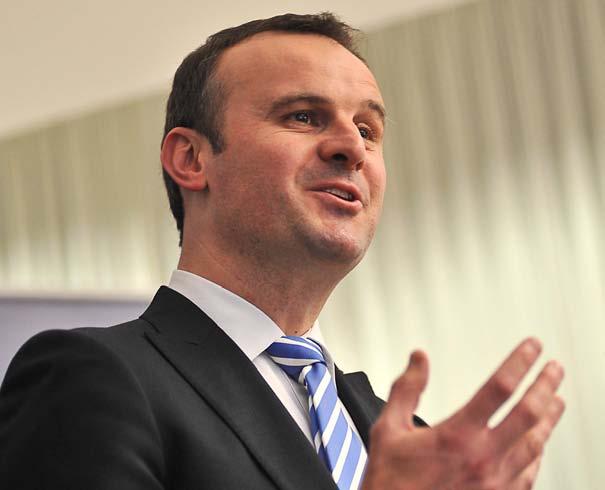
Treasurer Andrew Barr... ACT taxes were “inequitable, volatile and inefficient” and the reform is based on the redistribution of wealth to support the battlers.
Photo by Silas Brown
Russia Day, June 12
The day Russians celebrate their nation’s new start

RUSSIA Day, a holiday celebrated on June 12, marks the day in 1990 when the Russian Parliament formally declared Russian sovereignty from the USSR.
The holiday was officially established in 1992. Initially it was named Day of the Adoption of the Declaration of Sovereignty of the Russian Federation, but on February 1, 2002 it was officially
renamed Russia Day.
The First Congress of People’s Deputies of the Russian Federation adopted the Declaration of State Sovereignty of the Russian Soviet Federative Socialist Republic on June 12, 1990.
The idea of the declaration was born in the Democratic Russia movement, in which proponents of evolutionary

market reform and strong statehood based on Russia’s national interests started opposing the Communist monopoly on power.
The creation of the post of the President of the Russian Federation and the adoption of the new Russian Constitution to reflect the new political reality, along with the national flag, anthem and
emblem of the Russian Federation, were major landmarks in the consolidation of Russian statehood.
The country’s new name – the Russian Federation (Russia) – was adopted on December 25, 1991. The day when the declaration was adopted – June 12 – was proclaimed as a national holiday by the Supreme Soviet of Russia in 1992.
Russia takes the chair
RUSSIA has taken over the rotating chair of the Asia-Pacific Economic Cooperation forum in 2012 and will host this year’s APEC Leaders’ Week in Vladivostok.
For Russia, this honour comes with a great sense of responsibility.
Just as Russia is an integral part of the vast and forward-reaching Asia-Pacific region, that is crucial for the socio-economic development of Russia, especially Siberia and the Far East.
Therefore, one of the country’s top priorities is to promote trade and investment co-operation with Asia-Pacific countries and to actively participate in regional integration.
We have many proposals for our Asia-Pacific partners that seek to address problems in spheres of energy, transportation, research and technology, and environmental protection; to promote dialogue among civilizations and ensure military-political stability in the region; to boost co-operation in emergency response and in the fight against international terrorism.
The APEC leaders’ Honolulu declaration says: “Our region is now the vanguard for global growth”.
Russia, as the current APEC chair, will do its best to reinforce the region’s leading position.
Russia’s key objective is to further liberalise trade and investment and to facilitate economic integration in the Asia-Pacific region.

This is an edited version of an article by Russian Prime Minister DMITRY MEDVEDEV
We expect our co-operation in these fundamental APEC spheres to yield practical results.
Now that Russia has joined the World Trade Organisation, the country’s representatives will be able to fully participate in trade liberalisation discussions.
A consolidated position among APEC member economies should jumpstart multilateral trade talks and make them more constructive.
Following the successful conclusion of the WTO accession process, Russia is now ready to start talks on free trade agreements with APEC economies.
Russia also plans to promote APEC co-operation on food security.
Like all other member economies, we have a stake in ensuring that food is available, affordable, safe and of high quality. In light of the growing social commitments of governments in the post-crisis period, we must develop stable food markets and dampen price fluctuations.
Furthermore, we must continue to search for ways to ensure agricultural development based on rising mutual investments, modern technologies and compliance with quality standards.

The prospects of greater integration in APEC are closely connected to the need to improve logistics or (as it is often described within APEC) to ensure supply chains’ connectivity in the region.
Russia is prepared to offer access to its transport corridors, which are the shortest route between Asia and Europe. We have developed practical ways to use modern technology to resolve transportation issues, in particular organising cargo routes, cargo handling and vehicle tracking.
Innovation-based economic development is crucial for stable economic growth.
We will promote extensive interaction among universities, research centres and companies. Co-operation in education and developing human capital is vital, and the protection of intellectual property is becoming increasingly important.
We also see opportunities for advancing joint initiatives in these spheres within APEC.
The Asia-Pacific region is, unfortunately, prone to natural disasters and hazards. Earthquakes and tsunamis, anthropogenic catastrophes and epidemics demand that we redouble our efforts to better prepare APEC member economies for possible natural disasters and other emergencies.
During its tenure as APEC chair, Russia also will focus on co-operation in the fight against terrorism and transnational crime.
These are the main areas of Russia’s activity under the motto, “Integrate to Grow, Innovate to Prosper”.
There is no doubt that by common efforts in 2012 we will successfully deepen AsiaPacific integration in the name of economic growth and prosperity in the region.
APEC Leaders’ Week will be held in Vladivostok, September 2-9.
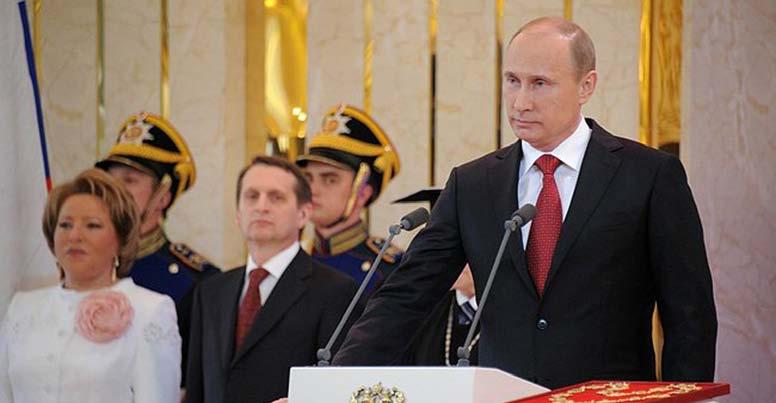
The inauguration of the Russian President Vladimir Putin on May 7.
special feature Winter Games debut for compact Sochi
THE Sochi 2014 Winter Games will take place February 4 to 23 in 2014; and promises to be the most compact in the history of the Olympics.
This will be the first time the Russian Federation has hosted a Winter Games, consisting of about 5500 Olympic athletes and team members from 80 countries.
The XI Paralympic Winter Games will take place between March 7 and 16 in 2014 and will include 1350 Paralympic athletes and team members.
The average thickness of snow cover in the mountainous region is two metres and in the winter temperatures are usually below zero, but severe frosts are rare.
The Sochi Games expects to become the most innovative and the “greenest” in the modern history of the Olympics.
A total of 235 new facilities will be constructed in Sochi by 2014; 11 of these are new, world-class Olympic competition venues and the other 224 facilities will consist of sites and venue infrastructure intended for Sochi’s development as an alpine resort.
There will be a unified ID system that will enable thousands of Games’ guests and participants to visit sports events, obtain information about the venues, time of competitions and directions to them.
There will also be special information booths which will offer guests information about shops and hotels and a smart-card system which will allow them to travel by public transport and pay for service.
Sochi will become an example of sustainable development for other Russian cities and the Games will help transform the town from a place known to Russians as almost exclusively a summer resort, into a year-round resort of the highest international rank.
The Games will help create the first international winter sports resort in Russia, which will later be used as a training centre for Russian athletes as well as for international competitions.
During the Games, 86 sets of medals will be awarded in seven Olympic sports and 64 sets of medals in five Paralympic sports.
Sochi, in coastal, south-west Russia, will be home to a unified Olympic Park that can accommodate more than 75,000 guests at a time.
All ice competition venues will be located within
Quick facts
Chief of state: President Vladimir Vladimirovich Putin (since May 7, 2012)
Head of government: Dmitriy Anatolyevich Medvedev (since May 8, 2012);
Land area: 17,098,242 sq km
Population: 138,082,178 (est.)
Major cities - population: Moscow (capital) 10.523 million; St Petersburg 4.575 million; Novosibirsk 1.397 million; Yekaterinburg 1.344 million; Nizhniy Novgorod 1.267 million.
walking distance of each other.
There will be venues for snow sports, the Mountain Olympic Village, hotels and other infrastructural buildings there.
Already complete is the “Iceberg” Skating Palace, which will host the Olympic events in figure skating and short track.
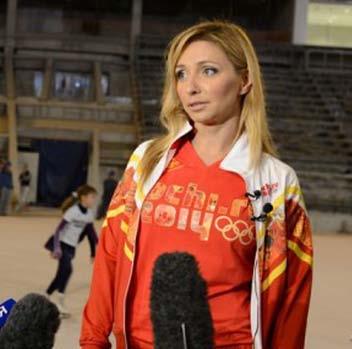
After 100 days of preparations, the ice rink was tested by Sochi 2014 ambassador Tatyana Navka, a former Olympic gold-medal figure skater, with students from a winter sports school in Sochi.
The first events to be held at the “Iceberg”, which has the capacity to seat 12,000 spectators, will be the Grand prix figure skating final in December and the Short Track World Cup Stage in February 2013.
“It was a special feeling, going out on the Olympic ice for the first time,” Navka said.
“In less than two years, I hope to see Russian figure skaters win not [just] one gold medal on this ice.”
Sochi is situated in a unique climate zone on the shore of the Black Sea, at the foot of the mountains of Krasnaya Polyana. The territory of Sochi covers 200,000 ha, including 30,000 ha of arboretums, botanic gardens and protected wilderness areas with unique flora and fauna.
More information at www.sochi2014.com/en/
Rise and rise of Russia
RUSSIA emerged as the Principality of Muscovy in the 12th century; after more than 200 years of Mongol domination.
By the early 17th century, a new Romanov Dynasty had expanded the state across Siberia and to the Pacific.
It was under Peter I, who ruled from 1682 to 1725, that the country emerged as the Russian Empire after it extended its rule to the Baltic Sea.
By the 19th century, the Russian Empire made more land acquisitions in Europe and Asia. However, after the country’s defeat in the Russo-Japanese War in 1904-05, Russia faced the
Revolution of 1905, and eventually a new parliament and reforms. In 1917, the imperial household was overthrown.
Shortly after, Communist leader Vladimir Lenin won power and formed the USSR.
But it was the rule of Joseph Stalin from 1928 to 1953 that strengthened Communist rule.
By 1985, General Secretary Mikhail Gorbachev introduced glasnost (openness) and perestroika (restructuring) to modernise Communism. In December 1991, the initiatives released forces that split the USSR into Russia and 14 other independent republics.

Former Olympic gold-medal figure skater Tatyana Navka is a Sochi 2014 ambassador.
Canberra Confidential
Woods to play
Canberra
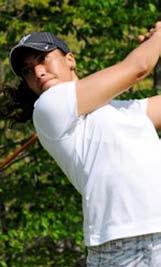
WORD is we might see Cheyenne Woods (pictured), the niece of Tiger Woods, in Canberra next year.
Cheyenne has signed with her uncle’s agent and is set to start playing in LPGA Tour events this year. The news comes as Royal Canberra Golf Club prepares to host the ISPS
Handa Australian Women’s Open for our Centenary in 2013.
The championship is an official event on the world’s global tour for women, the US LPGA Tour. It attracts the best golfers in the world looking to compete for their share of more than US$1 million in prize money.
In an action-packed week, golf and sport fans will see the best players from the United States, Europe, Australia, Africa and Asia battle it out at Royal Canberra Golf Club.
Royal in the running
ROYAL Canberra Golf Club member Brendan Jones has qualified to play in his second US Open, to be played at the Olympic Golf Club, San Francisco, June 14-17. Jones leads the money list on the Japanese tour and
takes some good form to the US with recent back-to-back rounds of 66 and 68.
Club GM Rick Coate (pictured) will be at the Olympic Club to cheer Jones on.
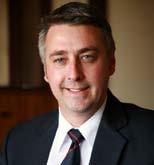
“I have a souvenir pin flag from the US Open at Shinnecock Hill, where BJ previously played and missed the cut. I’ll be giving it to him as a good-luck charm and I hope it motivates him to win!” said Coate.
Charity begins?
WHO is the larger-than-life local media person who booked a table at a recent charity fundraising dinner and now refuses to pay for it?
Speaker on the run
GREENS running machine and MLA Shane Rattenbury has completed the Everest Marathon.
Shane said via his Facebook: “Made it through the Everest Marathon in 6 hours, 54 mins. One tough day of racing.
“Started on the glacier at Everest Base Camp in the freezing cold, ran across a foot wide ice bridge, dodged yak trains, hopped over rocks, slid down hills, got baked in the sun later in the day.
“Unfortunately rolled my ankle a number of times, major job at 20km mark, hobbled to finish.
“Have very fat black and blue ankle this
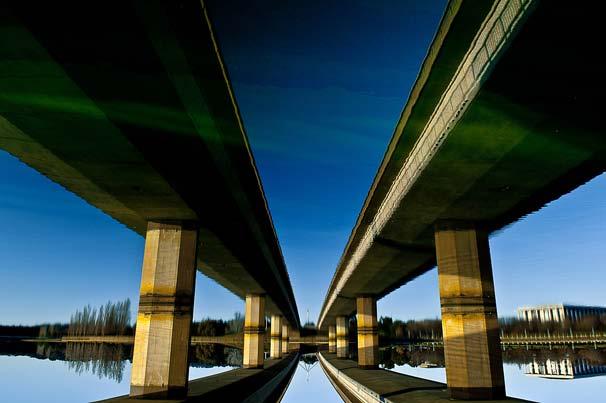
What’s wrong with this picture?
I T looks like the cliched tourist-brochure shot of Parliament House from between the bridge spans on Commonwealth Avenue – and it is, and it’s not. Snapper Silas Brown took this photo on a still,
morning, and two days walk to get to the plane! Race was great, am sore all over, but very satisfied.”
Shane did the 42km run at 5000m altitude, and raised $7715 for Karinya House – an organisation that works with vulnerable women and their children.

sunny, winter’s afternoon, came back to the office and – for reasons we can’t sensibly articulate – was inspired to turn it upside. What all that amounts to, “CC” isn’t sure except it looks kind of cool.
Guilt-free treats
GOOD to hear we’ll be able to get some guilt-free treats soon with an exciting new addition to the Realm precinct in Barton.
Maple and Clove is set to open and will offer breakfast, lunch, takeaway, freshly made
dinners and cooking classes. The emphasis is on wholefoods that will nourish the body and soul, using foods rich in antioxidants, natural low GI sweeteners and good healthy fats. All food will be freshly made on the premises daily.
To be located in Realm Park, we hear Maple and Clove is a special project for Doma Group managing director Jure Domazet and his wife Nicola
Gallery’s new welcome
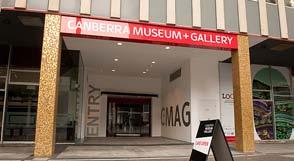
CANBERRA Museum and Gallery had its “dark cave” entrance replaced with a bright new “more-welcoming space” says director Shane Breynard; and it didn’t even have to pay for it!
As part of the ACT Government’s footpath refurbishment program, which we’ve heard was promised more than 10 years ago by then-Chief Minister Kate Carnell , CMAG got itself a refurbished London Circuit entrance that features new signage and lighting.
Despite closing off its main entrance for four weeks, there was a plus side; patrons using the side entrance on Civic Square discovered the new cafe, which Shane says will continue as a permanent fixture at CMAG.


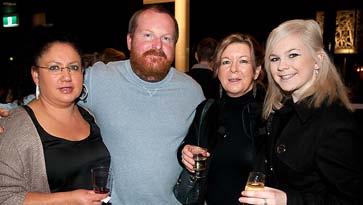
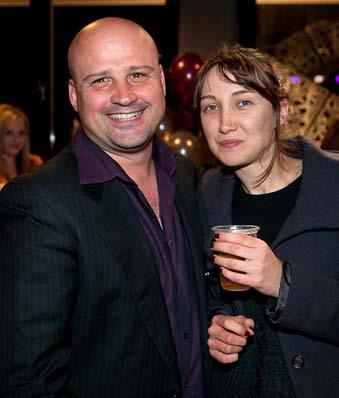
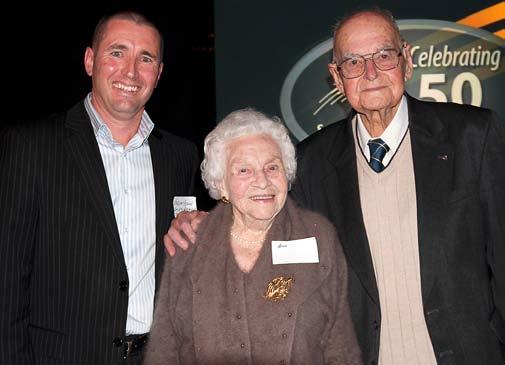
At the Good Minds Charity Trivia Night cocktail party, Barton
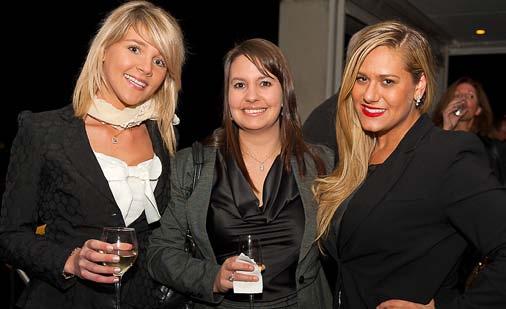
At Snowy Hydro SouthCare celebrates Women in Business Luncheon
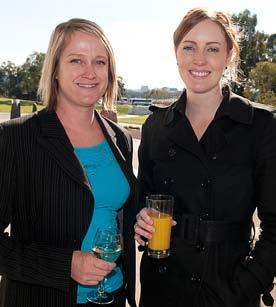
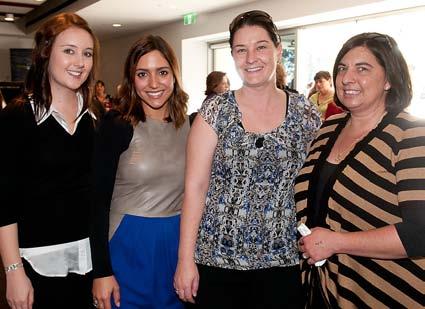
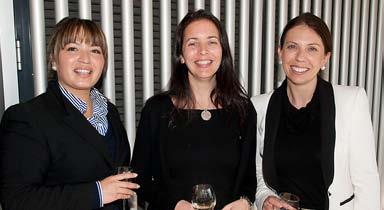
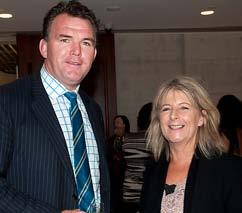
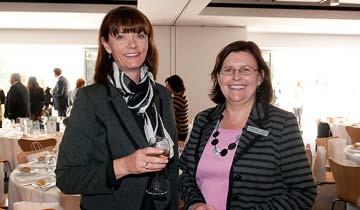
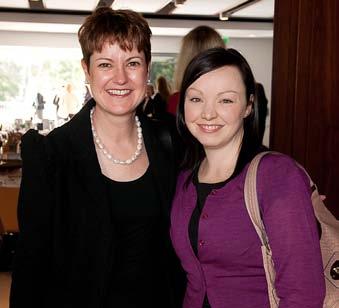
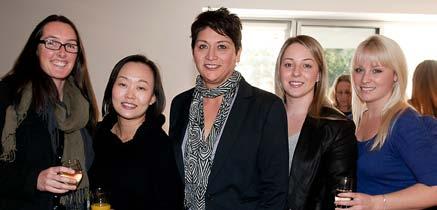
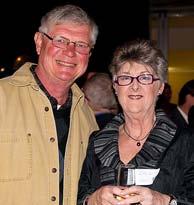
Kristin McDowall with Susan and Ashley Miller
Kirilly Dickson and Hannah Burns
Claudia Serrano, Rebecca Schell and Belinda Hedley
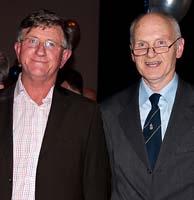
Owen Finegan and Liz Veitch
Shirley Eglitis, Belinda Sciberras, Sylvia Grimshaw and Melita Flynn
Helen Barton, Elanor Hughes and Gail Freeman
Kerri Hannaford and Helen Leayr
Briege Wilson, Sonia Constantin, Kylie McCaffery and Denise Clark
Shelley Thompson and Louise Johnson
Leon Buchanan, Melissa Miller and Nick Moufarrige
Jure Domazet, Melissa Gardner, Paul Powderly, Niki Tunstall and Tony Carey Richard and Debbie Rolfe
Suzi Morris, Rocco Schirripa and Naomi Hogie
Nat Clark, Leanne Chow, Cathy Munoz, Melissa Spaseska and Stephanie Norton

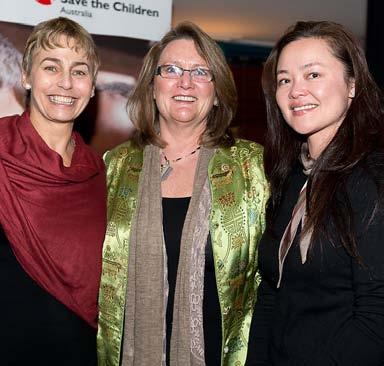
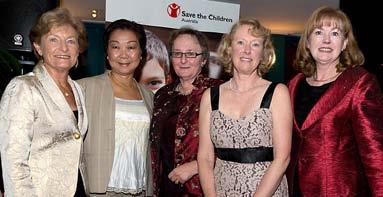
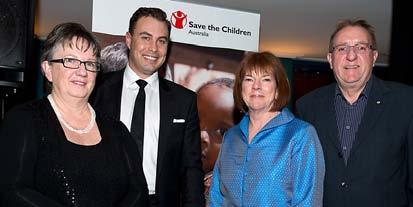
Celia Acworth, Tristram Gleeson and Rebecca Meyers
Peter Saunders, Carol Hope, Gery Beck and Jenny Howse
Greg Bayliss, Alan Scandrett and Alistair Coe MLA Judy Morris, Alec Brown, Kate Scandrett and Brian Acworth
Carol Taylor, Jen Lynch, Irena Jorclan, Penny Gardner and Rita Parker
Tanya Mark, Lynne Duckham and Geraldine Valez
Pino Gumina and Robert Indriolo
Francesca Szeremet, Andria Symons with Adela and Siena Russel
Sue Medway and Maria Dent
Mario Donda Jr, Roberto Corrielli and Angelo Daniano
Rita Martiniello and Maria Monteleone Ebonee and Angela Russo
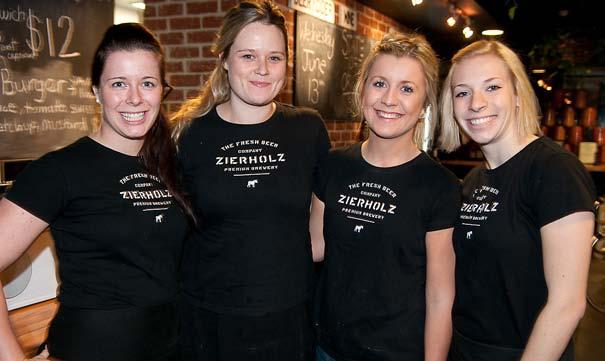
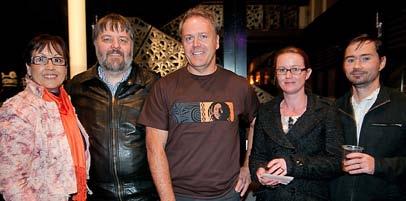
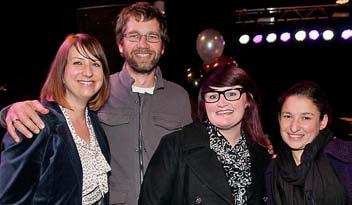
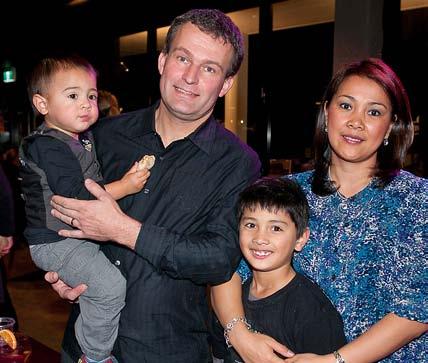
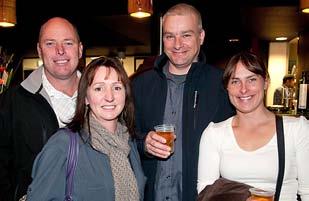
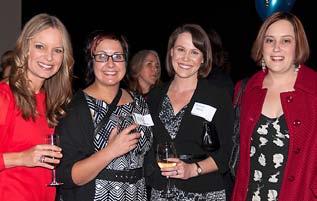

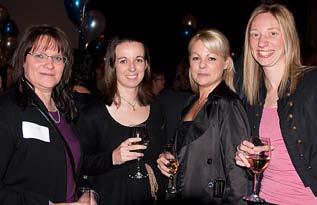

Libby Griffin, Lulu Schirmer, Connie Wright and Christine Tuomi
Hosts Liam, Christoph, Adrian and Cristina Zierholz
Moranda Stewart, Rob MacLean,
Peter Dahl with Kailee and Rob Fisher
Emma and Garry Pedon, Anna Wallace and Karina Leotta
Laura and Les Oxley with Robyn and Victoria Stowers
Dennis Gizas and Ayse Kocak
Host Jeremy Flynn with Iris and George Barlin
Penny Heath, Rosa Dacic, Bronwyn Kenny and Rebecca Coleman
Peter Jauncey and Jayle Hume Debbie Copper, Rebecca Gren, Rachel Downing and Alison Page
Phil O’Brien and Rodger Bean
Craig and Karena Webber, Richard Watkins and Tracy Margrain

Joanne Madeline Moore
your week in the stars / June 11 - 17
ARIES (Mar 21 – Apr 20)

Look out world! Rampaging Rams are in a gung-ho, take-no-prisoners kind of mood, and you won’t appreciate others telling you what to do. Unpredictable Uranus (moving through Aries) continues to send surprises your way. Be inspired by Donald Trump (born on June 14): “What separates the winners from the losers is how a person reacts to each new twist of fate.”
TAURUS (Apr 21 – May 20)
Wealth planet Jupiter jumps into your money zone, so you’re (potentially) in for a lucky financial year – as long as you don’t fritter away extra cash. If you are extravagant, you’ll quickly blow any benefits. (And hold off making major money moves until after Venus moves forwards on June 28.) Friday and Saturday are the days to indulge in the good things in life.
GEMINI (May 21 – June 21)
Loved ones will get a mega-dose of your quick-witted quips this week – but be careful that casual chatter doesn’t denigrate into damaging gossip. Over the next 12 months, it’s imperative that you capitalise on the lucky opportunities that prosperity planet Jupiter sends your way, as it moves through your sign. The next 12 months is the time to let your versatile talents shine!
CANCER (June 22 – July 22)
Using guilt, subversive tactics or emotional bribes to get what you want is never a good idea – especially this week. If you do, expect others to reciprocate with manipulative behaviour of their own. Saturday’s a super day for socialising, whereas Sunday favours spending time with a very special person – you. Solitude is soul food for stressed Crabs at the moment.
LEO (July 23 – Aug 22)
Don’t think small – it’s time for confident Cats to wish upon a star! With Jupiter (planet of abundance) moving into your hopes and wishes zone, make your dreams for the future as fabulous as possible. Saturn charges up your motivation levels mid-week, so you’ll need a challenging project to channel your energy into. With a disciplined approach, you’ll zoom ahead.
VIRGO (Aug 23 – Sept 22)
Tricky Mercury/Uranus/Pluto aspects will increase your tendency to worry and obsess this week. So take a chill pill and calm down, otherwise you’ll wear yourself out. With Jupiter visiting your career zone for the next 12 months, things are about to liven up at work. Some Virgos can expect a promotion or improved conditions, while others will just be very busy.
LIBRA (Sept 23 – Oct 23)
With vampy Venus reversing through flirtatious Gemini, you’re at your fabulously flirtatious best. Be careful what you pray for though – you might just get it! Jupiter jumps into your travel and adventure zone mid-week, so you can look forward to a fabulous trip sometime over the next 12 months. Love and travel are also lusciously linked (especially after June 28).
SCORPIO (Oct 24 – Nov 21)
You’ll feel compulsive mid-week, so it will be difficult to communicate in a clear and cohesive way. And, if you hold onto loved ones too tightly, they’ll try to escape from your stubborn Scorpio grip. However it is a suitable time to study, do research, or dig up a well-hidden secret that has others mystified. If you’re bored at work, aim to shake up your daily routine.
SAGITTARIUS (Nov 22 – Dec 21)
Prepare to be at your sexy Sagittarian best, as Jupiter (your ruling planet) powers into your partnership zone. So it’s time to up the romance factor and make your (neglected?) partner feel extra special. Singles – don’t sit around passively waiting for your soul mate to appear. You need to be passionately proactive as you get out on the prowl, looking for lasting love.
CAPRICORN (Dec 22 – Jan 19)
Positive Sun/Saturn aspects make for a pleasant and productive week (as long as you can keep your compulsive Capricorn side under control). Business deals and real estate transactions are favoured on Friday, as your instincts lead you in the right direction. If you are fair and flexible, then you’ll be able to patch up problems with a fractious family member.
AQUARIUS (Jan 20 – Feb 18)
With Jupiter energising your entertainment zone, you’re in the mood to mix and mingle to the max. Attached Aquarians – a little less resistance and a lot more romance are what’s needed at the moment. Singles – it’s the perfect week to take time off work so you can smell the roses and circulate socially. If a friend invites you on an adventure, don’t hesitate to say yes!
PISCES (Feb 19 – Mar 20)
Many Pisceans are in the mood to redecorate, renovate or relocate (preferably somewhere with more space). And have you been pulling your weight at home? Make sure you do your fair share of household duties, otherwise dirty dishes could lead to domestic dramas. Singles – don’t let a sudden dreamy attraction turn into a long-term nightmare. And don’t mistake lust for love.
Across
1 Aglaia, Euphrosyne and Thalia were known as the three what?
8 Name the stripes of NCO’s and police officers, etc
9 What is a motorless aeroplane?
10 What was dammed in 1970-72 as part of a WA irrigation scheme (3,5)?
11 What relates to financial matters in general?
12 Which term is the plural of locus?
13 What is often referred to as the opposite of cheese?
16 What nationality was Vincent Van Gogh?
19 Which non-human anthropoids have no tails?
21 Name British units of currency
22 What is another term for a traveller, especially on foot?
23 Name a tropical South American large lizard
24 Name the English painter and sculptor 1830-96, Baron Frederick ...
25 What is another name for a hot spring that sends up jets of water and steam?
2 Name a favourite of Elizabeth I, who was beheaded in 1618
3 What is a supplement to a will?
4 What is a roll of parchment with writing on it?
5 To tender higher than someone else is to what?
6 Francis Greenway came to Australia as a what?
7 Which two-toed African flightless bird is a sort of cousin to the emu?
13 Name the Labor politician from 1960 to 1967 who survived an assassination attempt in 1966, Arthur ...
14 What is a fabric such as orlon called?
15 Name the former capital of Pakistan
17
arts & entertainment
Growing up in the kitchen
By Helen Musa
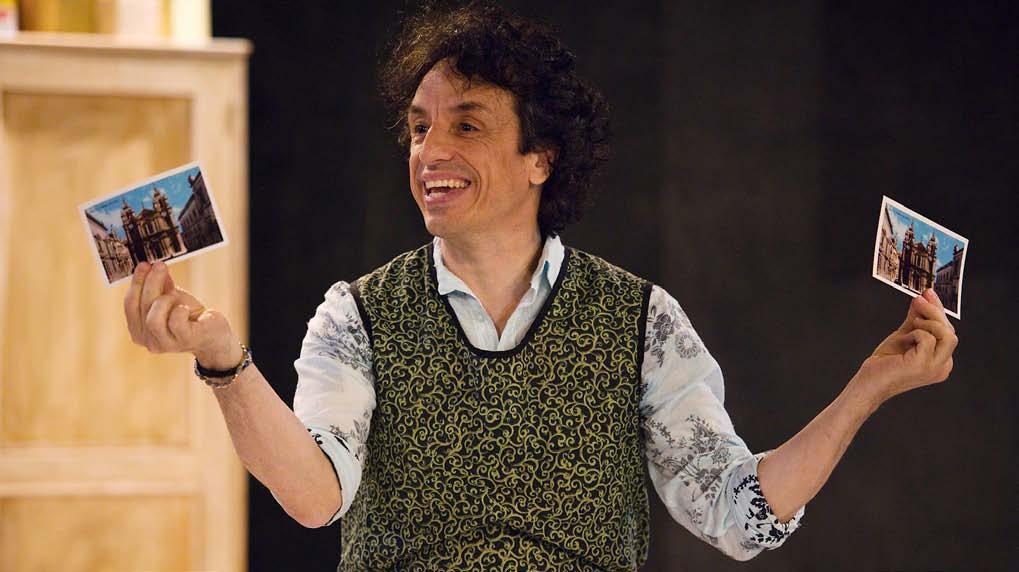
THERE’LL be more than a whiff of the old-fashioned Maltese household when actor and cabaret artist Paul Capsis brings his one-man show “Angela’s Kitchen” to The Street Theatre.
A sell-out show at Sydney’s Griffin Theatre, directed by Julian Meyrick and scripted by Hilary Bell, it’s to be part of the “Solo at The Street” series.
Capsis has been a favourite around these parts since he channelled Bette Midler, Diana Ross and Janis Joplin at the School of Arts Café in Queanbeyan back in the ‘90s.
My own fascination with his outrageously theatrical personality continued when he appeared as Johnny in Ana Kokkinos’ film “Head On”.
“I’m proud of that,” Capsis says. He’d read Christos Tsiolkas’ book “Loaded”, on which the


Winning Liam and all that jazz
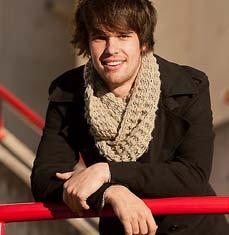
WITH all the bad press of recent weeks, it’s encouraging to see a good news story come out of the School of Music in Liam Budge.
Liam, a vocalist in his final year at the school, recently won the prestigious vocal scholarship at the annual Generations in Jazz festival held outside Mount Gambier, in the south-east of SA.
The national competition for jazz vocalists under 21 years old, was screened by James Morrison and Emma Pask, who listened to every application.
The prize included $5000; and for Liam, the cash will go towards his debut jazz album that will be recorded at Sing Sing Recording Studios in Melbourne.
“I was really lucky. I got an artsACT grant for part of the funding for that album and this is going to cover the other part,” he said.
However, it wasn’t until he was in high school that he really got a taste for musical performance.
“The main musical education I had was when I went to Oxford,” he said.
“I was at Magdalen College School which is a big chorister school, kind of really archaic and 100 years old.
“There was a music program there and I started playing cello. That’s where I got into singing.
“There was ‘Joseph and the Technicolor Dream Coat’ and I got Joseph and that was my first ever real singing gig.”
But it was in his gap year in England that he decided he really wanted to pursue a career in music.
film was based, and had “a fantastic experience”. Yet performing in film doesn’t totally grab him, since producers like to stereotype him into transsexual roles. He prefers to spread himself around, performing men and women in his current show.
Nowadays, Capsis doesn’t “choose” scripts, rather “things come to me”, as when academic and director Meyrick approached him to do a show about his Maltese origins.
Though on his paternal side he is EgyptianGreek, it is his beloved Maltese “nanna”, Angela, who has inspired this work. Raised by nanna, who “just let me be”, he enjoyed “a magical childhood”.
“My whole growing up was in the kitchen, we never sat in the lounge,” he says.
“Even when she was old, I can remember nanna sitting at the table with a rug over her knees.”
To know her better, Capsis became “almost bilingual” and, when he went to Malta, he found that his antiquated nanna-style Maltese worked perfectly.
He is amazed when I tell him MalteseAustralian muso Nicky Bomba told “CityNews” last week that Maltese people are top in the world happiness stakes, because he remembers nanna as one of the world’s great worriers. She had come to Australia after the war in 1948 with five children to Surry Hills in Sydney so had lots to worry about.
His 80-minute show will take us on a picture postcard trip to Malta, through the war, the Depression, the trip to Australia and living with grandpa. Capsis believes it’s “universal and accessible” and he’s quite certain Greeks, Macedonian, Lebanese and anyone with a strong traditional background will warm to “Angela’s Kitchen”.
Nanna died in 2007 and Capsis got the news while working in New York. In this play, she lives on.
“Angela’s Kitchen”, The Street, June 12-22, bookings 6247 1223 or www.thestreet.org.au
Liam, who also plays guitar, piano and cello, says he’s not from the “Michael Bublé mould” and describes his style as “contemporary jazz”.
“It draws on influences from stuff that’s not really very jazz; a lot of hip hop, some rock,” he said.
Liam first took up early learning music classes as a toddler.
“My parents wanted me to do law, and I was going to do law, but then I did this jazz class in Italy which was my first exposure to jazz as well and that was what hit it off for me,” he said.
Now as a School of Music student and part-time singing teacher, Liam plays regular gigs as part of his jazz band The Liam Budge Quartet and his pop folk band Sidney Creswick.
He hopes to travel to New York next year, sometime after taking part in the the Australian Talented Youth Project and the 2013 Generations in Jazz.
But back home in Canberra, as tensions at the School of Music take their toll, Liam says he wants to support his amazing teachers including his idol, jazz teacher Vince Jones.
“If it does happen, the Canberra music scene will disintegrate pretty rapidly,” he said.
Paul Capsis in his one-man show, “Angela’s Kitchen”… “My whole growing up was in the kitchen, we never sat in the lounge.”
Freyla Ferguson reports
Generations in Jazz vocal scholarship winner Liam Budge. Photo by Silas Brown.
arts & entertainment / reviews
Not so very great expectations
“What To Expect When You’re Expecting” (M)
APPROACHING Kirk Jones’ film without expectations, I should not have been disappointed by it. But I was, grievously.
Following five women from pre-begetting foreplay through copulation to gestation, parturition and the postpartum problems of parenting, it presents a mix of strained efforts at comedy, the clichés of primi-gravid pregnancy and its emotional consequences for relationships.
Its characters are caricatures in a social environment that does the reality of its American culture little credit. It’s reasonable to treat such a serious matter with a leavening of humour. But the film tries to squeeze laughs from every moment of the women’s travail, even when what’s happening isn’t funny.
At the session when I was the only male, the infrequent laughs were not loud. That says much about the film’s effect on an audience with more intimate experience of its theme than this mere male who’s attended the birth of numerous livestock, but not human beings.
Heading the cast are Cameron Diaz as a TV weight-loss program presenter and Elizabeth Banks as the wife of the son of a bumptious egoist whose trophy bride is carrying twins.
The film’s only moment of merit, filmed in South Africa standing in for Ethiopia, with American couples unable to have children receiving orphan babies for adoption, was marred by the fierce contrast between where those little people had come from and where they were going.
At Greater Union, Hoyts and Limelight
Dougal Macdonald cinema
“Get The Gringo” (MA)

MEL Gibson co-wrote and stars in this vigorous actioner directed by Adrian Grunberg and played out for the most part in a Tijuana jail, a vile stew of official corruption and social disorder for which the 18th century British prison of Bedlam might have been the model.
Carrying his years well enough, Gibson plays a career bank robber determined to survive in that Mexican horror until he can get out, recover the loot and retire at the beach. His screenplay, demanding a big cast, most not speaking, but all behaving convincingly, at Grunberg’s command, takes enough byzantine twists and turns to satisfy any action lover.
Of its kind, “Get The Gringo” displays a freshness that alleviates its dramatic improbability. The jail is a selfgoverning social structure under the suzerainty of Frank (Peter Stormare) who suffers from a rare liver disorder. Which is why he protects the 10-year-old boy with the same blood group against the day when he has to provide the transplant. The boy befriends the Gringo. And he has a handsome mother with high moral values.
Money, political power, an intimation of sex, megaviolence. Despite some blatant bloopers that don’t really detract from the film’s impact, it’s uninhibited, fair, average quality escapist fare.
At Dendy, Hoyts and Limelight
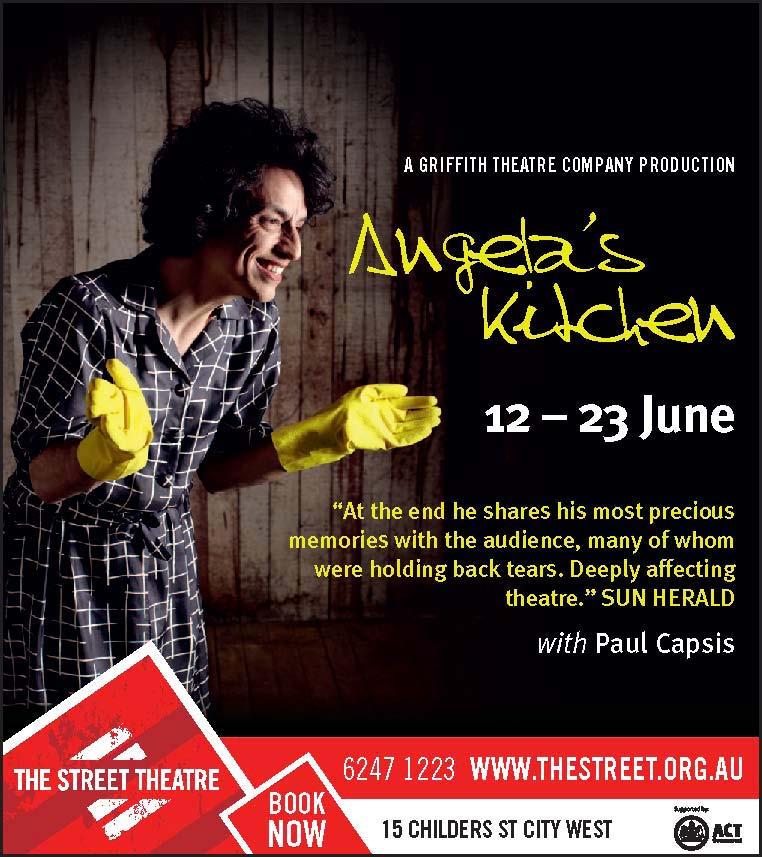
“Declaration of War” (M)
I CAN’T tell whether it was deliberate or merely a serendipitous coincidence that shortly after a failed satire on parenting, I watched this powerful French drama about a baby born with a massive brain defect. The huge contrast was emotionally cleansing.
Writers/directors and real-life parents Valerie Donzetti and Jeremie Elkaim play Juliette and Romeo who fell in love across a crowded room and eventually produced Adam, with a tumour pressing on his brain stem that took a while to diagnose then treat. Juliette and Romeo abandoned their professional and economic existence to devote their lives to his welfare.
“Declaration of War” pressed the right buttons for me. It delivers more than just the pair’s negotiation of the French health bureaucracy, at last coming to a surgeon with the skill and the courage to go into a little boy’s head and remove most of the bad stuff, only to learn later that it was malignant. Families and friends rallied in support. They tried to live a normal lifestyle.
In all this, the film portrays a verisimilitude not surprising when you remember that it tells, warts and all, what its makers actually experienced.
Adam at age eight looks like a boy strengthened by his experiences and facing the future, as we all must. The only certain thing in life is its uncertainty.
At Greater Union
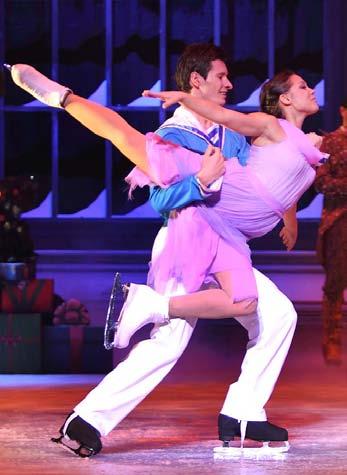
Thrills and chills
REMEMBER when the ice at the Canberra Theatre nearly split in Cinderella a few years back? It was altogether too exciting.
Now the Imperial Ice Stars are returning with a new production of “The Nutcracker on Ice”, promising us “breathtaking high-speed leaps and throws, and awe-inspiring acrobatics, coupled with the most graceful and sublime ice dancing”.
That’s pretty well it. With a 25-strong cast of international championship skaters on a new set by Australia’s Eamon D’Arcy and Tchaikovsky’s music, the thrills and chills will be back in town.
“The Nutcracker on Ice”, the Canberra Theatre, June 13-17, bookings to 6275 2700.
–Helen Musa
Star arts survivor celebrates
city

CONGRATULATIONS to a great arts survivor, the Canberra-based national art publication “Art Monthly Australia”, which celebrated its 250th edition this week at Electric Shadows Bookshop (the shop is marking its 25th year). The magazine was first published in June 1987 under its founding editor Peter Townsend, the editor of “Art Monthly” (UK). He was followed by Peter Timms, Philippa Kelly, Deborah Clark and today’s editor Maurice O’Riordan.
THE Canberra arts community has been saddened to learn that one of the giants of Canberra’s art community, Jörg Schmeisser, died on June 1 after a long illness. His work is highlighted in “Antarctica” at the Drill Hall Gallery and was recently featured in “The Legacy of Ruth Prowse” at the Canberra Museum and Gallery. There will be a public celebration of his life and work at University House on June 18.
CANBERRA playwright Bruce Hoogendoorn’s newest play, “The Underground Ark”, takes us into a post-climate change world where people are forced to live underground until it cools down. At the Courtyard Studio, June 13-23, bookings to 6275 2700.
COINCIDENTALLY, Claire Primrose’s Form Studio and Gallery is showing “ClimARTe Change – local arts responding to the theme of climate change”, with works by Julie Bradley, Heather Burness, John Pratt, Paul Summerfield, Primrose, Maxine Price, Nicola Dickson, Robyn Kinsela, Debra BoydGoggin, Chris Harman and others at 1/30 Aurora Avenue, Queanbeyan, until June 28.
“N O P L A C E” is a JUMP arts start experimental project themed around four women tracing “hypnogogia”, the disabling state between wakefulness and sleep. Choreographed by Adelina Larsson, with video art by Sarah Tamara Kaur and sound art by Shoeb Ahmad, the artists’ progress will be unveiled at QL2 Dance Theatre, Gorman House, 4pm, June 9 and 10. Free, but bookings to 6247 9103 or projects.act@ausdance.org.au
CANBERRA’S Gay & Lesbian Qwire joins the Sydney Gay & Lesbian Choir to stage “With A Little Help From My Friends” at Llewellyn Hall on June 16 under the baton of Sarah Penicka-Smith. The hope is to build a bridge between the queer and the non-queer communities through music. Bookings to ticketek.com.au.
CANBERRA Grammar School’s Gallery once again joins with the Ngukurr Arts Aboriginal Corporation from south-eastern Arnhem Land in exhibiting contemporary Aboriginal art until June 23 at the gallery in Monaro Crescent, Red Hill, 10am-4pm weekdays, and 11am-4pm Saturdays.
“SOMETHING Old, Something New, Something French, Something True Blue” is a lunchtime concert by the Telopea Chamber Players from Telopea Park School. At Wesley Music Centre, June 13, 12.40pm-1.20pm, $2 or paper note entry. No bookings required.
Helen Musa arts in the
arts & entertainment
In the company of the star with soul
WHEN you sit down with singer Christine Anu, the conversation can go anywhere, and does. But she leaves you in no doubt that you’re talking to a star.
She’ll be here soon with her new show “Rewind”, dedicated to the great soul singer Aretha Franklin in her 70th year.
And though she has big shoes to fill, she is just the girl for the job.
“I knew I could sing when I was seven, the only question was how I was going to get into the music industry,” the multi-ARIA recipient tells me in a discussion interspersed with bursts of song that don’t faze patrons at Tosolini’s Civic café.
Though deeply influenced by her island origins, she’s glad she’s not, like her fellow-singer Deni Hines, the child of a famous parent.
“I knew I would arrive at my destiny,” she tells me. “I knew I would be a singer.”
Born in Cairns to a Torres Strait Islander mother from Saibai and a father from Mabuiag Islands, Anu says she had a religious upbringing involving music, such as Aretha.
Vocally self-taught, she also did martial arts from seven to 13 and values physicality.
Helen Musa reports
“When your mind starts to dream, your body wants to follow,” Anu philosophises.
It was as a dancer that she first came to prominence, leaving home to study dance at the National Aboriginal and Islander Skills Association in Sydney. Dance taught her that “your body is your treatment, it tells the story”.
All the while she was listening to pop, jazz and soul, yet she “wanted to be unique”.
Anu’s singing career started as a back-up vocalist for songwriter Neil Murray’s group the Rainmakers. It was Murray who wrote, initially for the Warumpi Band, her trademark hit “My Island Home”, which was judged Song of the Year at the 1995 APRA awards and was the song she chose for the Sydney 2000 Olympics Closing Ceremony.
“It wasn’t so much about getting there, as staying there,” Anu says, so she diversified into acting, with screen roles in “Dating the Enemy”, Baz Luhrmann’s “Moulin Rouge”, “The Matrix Reloaded” and in 2012, in the Australian sci-fi television series “Outland”.
On stage she took big roles in “The Little Shop of Horrors”, “Rent” and “The Sapphires”.
She relished playing her first non-singing stage role in 2011, in Jane Harrison’s play “Rainbow’s End”, but reports that it was a bit disappointing for her fans – “we’ve been waiting for you to burst into song”, they’d complain.
Anu has been reflecting on what happens to the human voice as you get older. Encouragingly, she has observed, Judith Durham is approaching 70 and she’s still going strong. And “Aretha’s still giving it her all… the important thing is the ability to communicate with your audience,” she says.
So what will we see when she does her Aretha songbook here?
See? Oscar-winning designer for “Priscilla Queen of the Desert”, Tim Chappel has made the costumes for her show.
She’ll be backed by two guitars, a rhythm section, keyboard, trumpet and Women of Soul – Miss Min and Evie J Willie – as the Franklinettes.
But it’s what we’ll hear that will hit home, with numbers such as “Respect”, “(You Make Me Feel Like) A Natural Woman” and “Chain of Fools”. She’s kept Aretha’s arrangements, but adds: “This is my interpretation and I own it.”
“Rewind – The Aretha Franklin Songbook”, Canberra Southern Cross Club, dinner and show 6.30pm, show only 8.30pm, June 15. Bookings to 6283 7288.


Singer Christine Anu... “When your mind starts to dream, your body wants to follow.”
Photo by Silas Brown

ACCLAIMED classical ensemble Selby & Friends return to Canberra on July 2 with “Magical Miniatures”, and “CityNews” has four double tickets, valued at $116 each, to be won. Details and entry form at citynews. com.au/competitions CONCERT TICKETS TO BE WON

arts & entertainment / dining
Fantastic fresh food, served fast
Wendy Johnson reviews
WHEN we walked into Jimmy’s Place, in Dickson’s “little Chinatown”, my heart sank. The restaurant was packed, packed, packed and, having never visited before, I really, really, really wanted to give it a go.
A very busy woman behind the counter gave us a big grin and I found myself grovelling and asking for what seemed the impossible – a table for three. Little did I know that getting a seat at Jimmy’s is never a problem. You might need to walk through part of the kitchen to get to the large “secret” room at the back, but you will be seated.
The décor is not a feast for the eyes, but no one dining there cares. This popular Chinese restaurant, which has been on Woolley Street for a thousand years, is about fresh food, served fast. Correction: fantastic fresh food, served fast.
Speaking of a thousand years, give the spinach with the millennium egg – from the menu’s vegetable and bean curd section – a go. The
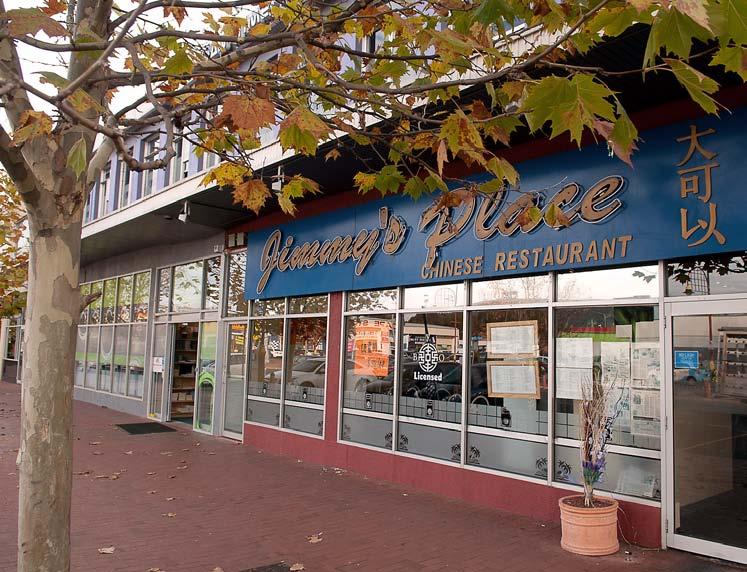
thought of it might make some shudder, especially those convinced the eggs are that old. But relax…

they’re more 100 days old.
Recipes vary but involve covering eggs (normally duck) with tea, garden lime, wood ashes and salt and burying them in a shallow hole for at least a few months.
The yolk transforms into a darkgreenish colour and the white into a dark brownish gel. The texture is soft and smooth and the egg doesn’t taste as strong as it looks. Some find it overwhelming, but we’d happily order it again.
This is one of many lesser-known, regional exotic dishes available at Jimmy’s, including some from the provincial specialty section ($17.30 to just under $20). The bone marrow dish is popular, as is the full-flavoured, duck-feet range (stir fried, created in a hotpot, served with sea cucumber and so on).
For those who don’t want to go that distance, there are many “more familiar” dishes, including the Sang-tung chicken ($17.80). Ours
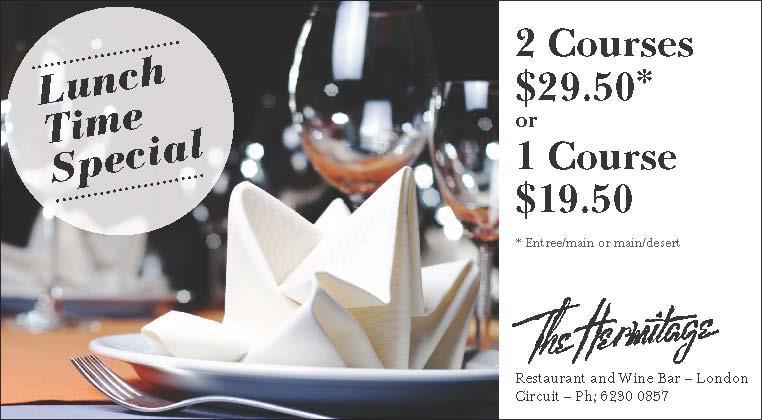
was super tangy, high on taste and the chicken tender.
Chefs who have created exceptional sang-tung chicken hold the recipes close to their chests. It’s a dish that is highly personal for diners and, while this was delicious, I’ve had better in Canberra.
Seafood is a star performer ($18.30 to $39.80) with abalone dishes making a grand appearance. You can even get abalone whole with oyster sauce. Our deep-fried prawns with spiced salt and chilli ($19.80) deserved a round of applause. The plump prawns were tender on the inside, the coating crispy and the seasoning beautiful. Jimmy’s has a reasonably sized take away menu although, understandably, some exotic dishes aren’t available. The place is licensed, although the selection somewhat limited. BYO is available.
Jimmy’s Place, 13-15 Woolley Street, Dickson. Call 6248 8188.

Get the latest news straight to your inbox each afternoon from the citynews.com.au newsroom. www.citynews.com. au/subscribe
Jimmy’s Place in Dickson... getting a seat is never a problem.
Photo by Silas Brown
garden Putting worms to work
WORM farming can help turn household food waste into nutrientrich fertiliser for plants and soils, says Sonya Tirtajaya, of the Canberra Environment Centre.
She says that Australians waste four million tonnes of food a year, equivalent to 178 kilos per person every year.
“Food waste is roughly 40 per cent of household waste, and affects our environment in many ways,” she says.
“When food waste is thrown into the bin, it is then sent to landfill where the lack of oxygen causes it to break down to release methane, a greenhouse gas 25 times more potent than carbon dioxide.
“Alternatively, if food waste is composted or put into worm farms, it will break right back down into soil or organic fertiliser for your gardens.
“As landfills are responsible for two per cent of Australia’s greenhouse gas emissions, why not step up to the challenge and commit to composting or worm-farming your food scraps?”
The Canberra Environment Centre runs worm-farming and composting workshops every quarter as part of the “Sustain Ability” workshop series, for those that would like to learn the “how to”, says Sonya.
To celebrate World Environment Day on Tuesday, June 5, the Canberra Environment Centre – in partnership with Tumbleweed – will be selling discounted compost bins, worm farms and accessories on an ongoing basis. Call 6248 088 or visit www.ecoaction.com.au for more details.

Worm farm facts
• Worms eat organic waste and turn it into liquid fertiliser and worm castings (the organic material that has been digested by the worms). Both of these can be used to help a garden thrive.
• Worms like food scraps, including vegetable and fruit peelings, tea leaves, crushed eggshells and bread. They also like small amounts of moistened paper and cardboard such as shredded egg cartons. Don’t feed worms on dairy, meat, fish, fat or bones. They also don’t like citrus peel, onion or garlic.
• Work out where you will locate your farm. Worms don’t like the heat or direct sun so choose a cool shady spot inside or outside.
• Choose the size of your farm. They can be as big or as small as you need, depending on how much organic waste you generate or how much space you have.
• You can look at the many types of ready-made farms, or make your own out of recycled plastic, polystyrene vegetable boxes or untreated wood. Information from www.livinggreener.gov.au


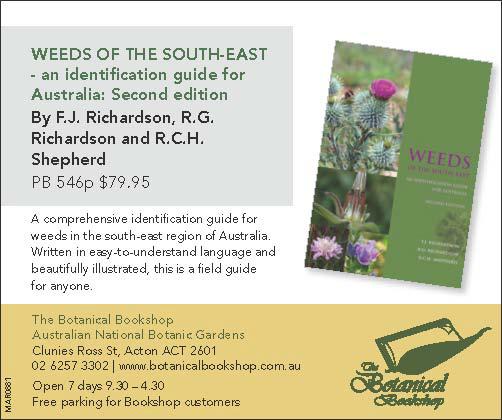



Getting into the winter garden, a
page at a time!

On cold, wet, miserable weekends when it is impossible to garden, curl up and enjoy a good garden book, says CEDRIC BRYANT.
THERE is nothing quite like the look and feel of books. This week I have a selection of new garden books to inspire you for the coming spring.
1. The history of ‘Heide’
“SUNDAY’S Garden – Growing Heide” (The Miegunyah Press, hardback, 233pp, $45), by Lesley Harding and Kendrah Morgan, is the fascinating story of the establishment of “Heide”, a property on the outskirts of Melbourne by Sunday and John Reid.
Intertwined into this world of gardening are such luminaries as Sidney Nolan, Charles Blackman, Albert Tucker and others, all of whom contributed in the development of this garden and the restoration of a derelict farmhouse. Over 50 years, the Reids turned a wilderness into their own Garden of Eden.
Incidentally, Nolan painted his “Ned Kelly” series on the dining room table at “Heide”. John Reid’s art collection formed the basis for what is now the Heide Museum of Modern Art.
This is the story of extraordinary hard work, combined with the pleasure of gardening. Detailed plant lists with historic and recent images of the garden complete this fascinating book.
2. Jewel in the crown
POSSIBLY the jewel in the crown of new garden books in this selection
is the “Encyclopedia of Flowering Shrubs” (Timber Press, hardback, 436pp, $59.95), by Jim Gardiner, director of horticulture at the UK Royal Horticultural Society, which features more than 1700 flowering shrubs with more than 2000 excellent photos.
Gardiner was curator of the society’s principal garden at Wisley, in Surrey, for 22 years and, before that, curator of the Sir Harold Hillier gardens and arboretum, of which I recently said its “Manual of Trees and Shrubs” was considered almost a bible of plants.
As this edition is printed in the US, each plant is rated in the climatic zones of that country. This is fully explained and is based on the lowest average winter temperatures that plants will tolerate. It is a must for every plant library.
Discussing magnolias last week, it is interesting to note that Gardiner’s “Magnolias – a Gardener’s Guide” is a classic on this genus.
3. Goodbye to lawns
“BEAUTIFUL No-Mow Yards” (Timber Press, paperback, 250pp, $29.95), by Evelyn J. Hadden, would have been a welcome addition to garden books during the drought.
So many lawns still look dead and forlorn. Other folk converted their lawns into beds of drought-resistant plants.
Not only does the book discuss reducing or eliminating lawns, but there are ideas galore on every page, including patio areas, eco-friendly garden beds and veggie gardens.

To complete the picture, there are chapters on garden maintenance and plant lists.
4. Room for fruit trees
WITH ever-decreasing block sizes, I still have clients asking if there is any room for fruit trees. “Fruit Trees for Small Spaces” (Timber Press, paperback, 256pp, $29.99) by Colby Eierman, will provide most of the answers. Also printed overseas, not all the varieties of fruit trees will be available here. However, referring to this book in conjunction with advice from your local garden centre will overcome this minor problem. Pruning, irrigation and a range of recipes are all included.
5. Kids in the garden
I ALWAYS feel there is a lack of children’s books on gardening. Children exposed to gardening early will generally continue this interest for the rest of their life.
“The Book of Gardening Projects for Kids” (Timber Press, paperback, 256pp, $22.99) by Whitney Cohen and John Fisher with 101 ways to get kids outside, dirty and having fun. This should be in every school library and every household with kids. This would have to be one of the best garden books for kids I have seen, every page is an adventure.
6. And then there’s...
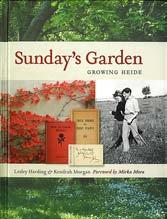
OTHER new books I recommend checking out include “Pest-repellent Plants” (Hyland Press, paperback, 150pp, $26.95), by Penny Woodward, which is an absolute gem. Also “The Lavender Lover’s Handbook” (Timber Press, hardcover, 192pp, $34.95), by Sarah Berringer Bader, lists more than 100 varieties of one of the world’s favourite plants. 1 2 3 4 5 6
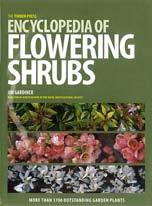
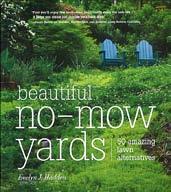
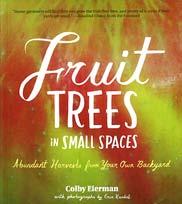
Silver prize for Aussie garden at Chelsea
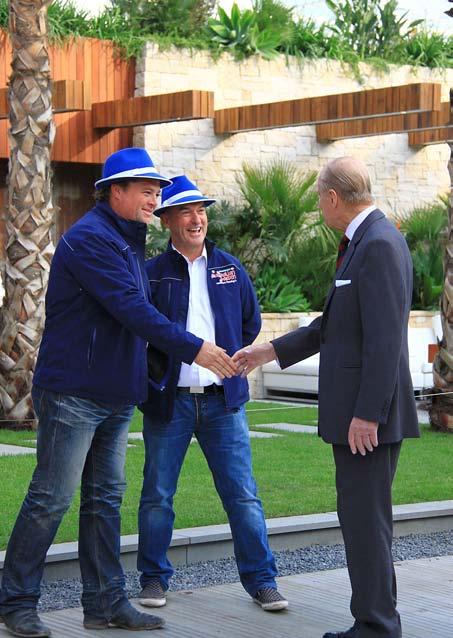
AN Australian-designed garden and outdoor room with a pizza oven, plunge-pool and deck, outdoor shower and bath, a gas fireplace and, of course, a barbecue, has won a prestigious silver gilt medal at London’s Royal Horticulture Society’s Chelsea Flower Show.
“Australian gardens are designed to live in, which sets us apart from any other garden at Chelsea,” says Wes Fleming, team leader of the project.
“The Poms are loving the quirky elements of the garden, like the outdoor bath that sits in contrast to the fireplace – but it works and the judges’ decision proves it resonates with them, too.”
The garden, designed by “Better Homes and Gardens” landscaper Jason Hodges, mixes native plants and exotic species.
Jason says he took inspiration from home, with the sandstone walls representing the pillars of the Sydney Harbour Bridge, while the bluestone tiling is reflective of Melbourne’s old bluestone buildings.
“To have designed an ‘Australian garden’ alongside the multiple Chelsea medal-winning Fleming’s Nurseries, is a once-in-a-lifetime opportunity,” he says.
“I’m emotional when I win a medal at the Melbourne International Flower Show – now this is just a whole new level and I’m humbled, proud and on an incredible natural high.”
Wes, of Fleming’s Nurseries in Monbulk, Victoria, says it took 12 Aussies, 17 days, 38 tonnes of tools, equipment, materials and plants sourced both locally and abroad, to transform what once resembled
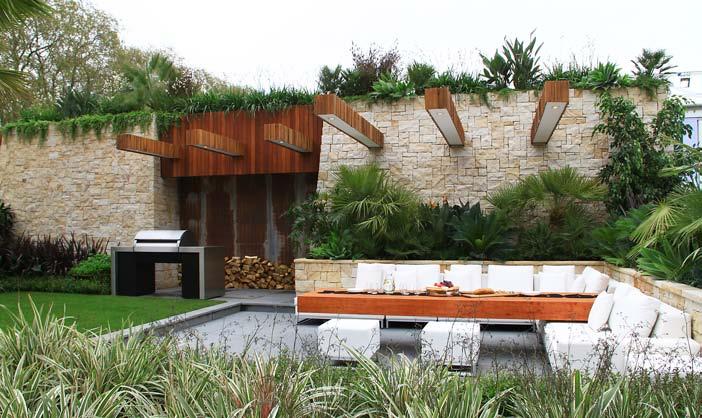
The prize-winning garden... “Australian gardens are designed to live in, which sets us apart from any other garden at Chelsea,” says Wes Fleming.
a bare soccer pitch into a lush garden retreat.
“The team have put together an amazing garden and their time and effort is outstanding –so it’s an award not only for Jason and Fleming’s, but for the entire team – and really it represents the Australian work ethic, skill and our talent, too,” he says.
Wes says the thrill of winning at Chelsea never grows old (the Fleming’s team has previously won three silver-gilt and four gold medals at the show) and continues to reinforce his belief that Australian
horticulture and landscape design are at the cutting edge of the world-wide industry.
“We are absolutely over the moon,” he says.
“It’s so humbling to have been awarded one of the highest honours at the crème de la crème of the gardening and landscaping world.”
The celebrity-studded VIP event has seen the Queen and Prince Philip descend on the show grounds to enjoy the garden displays, as well as entertainers Cliff Richard, Ricky Gervais, Ringo Starr among others.
Wes Fleming and designer Jason Hodges greet Prince Philip at the Chelsea Flower Show.