


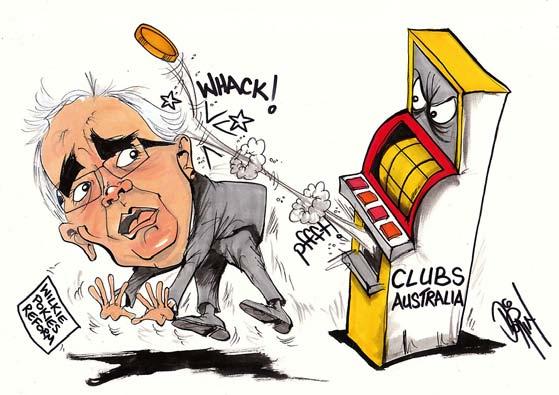
WHILE Australians lose about $12 billion a year through their addiction to pokies, Prime Minister Julia Gillard stands to lose government with a major factor being Labor’s addiction to pokie profits.
The Prime Minister is now gambling with the same conflict of interest that has plagued ACT Labor for years. The close relationship of the Labor Party to poker machines simply compromises its independence. There has to be a powerful force that could allow Gillard to distance herself from independent Andrew Wilkie, one of her key supporters, when her Government hangs by such slender threads. What could possibly have influenced the Prime Minister enough for her to announce that she could no longer maintain the numbers to meet Wilkie’s demands for a system of precommitment for pokie users? It is not just pokie profits going to Labor. There was the ongoing action of the clubs’ industry to defeat the move. They have taken a page from the book by Mitch Hook and the mining industry of using large sums of money in campaigns to influence the Government.
There are a number of other influ-
Michael Moore opinion

ences. The Prime Minister’s own backbench would be concerned about the impact that restrictions on poker machines will have on the hospitality industry. Backbenchers are being lobbied hard and will have even greater concerns about the impact that it might have on their own chances of reelection. However, they seem to miss that a weakened Prime Minister who softens at the threat of community action is a much higher risk for them – as was the case when Kevin Rudd backed down from taxing the super profits of the mining industry.
Poker machines in the ACT put large sums of money into Labor Party coffers. The returns identified through Elections ACT suggest that ACT Labor benefits from its involvement with pokies to the tune of more than $500,000 a year. In 2009-2010, the Labor Club alone donated over $660,000*.
And plenty of that gets funnelled into Federal election campaigns!
It is ironic that this should happen at a time that a report of the Joint Standing Committee on Electoral Matters recommends changes to the Commonwealth Electoral Act, so that: “Donations to ‘related political par-
Arts&Entertainment 14-17
Canberra Confidential 8
Cinema 16
Crossword 14
Fashion 18-19
Garden 20
Horoscope 14
News 3-11
Politics 3
Property 20-32
Social Scene 9-11
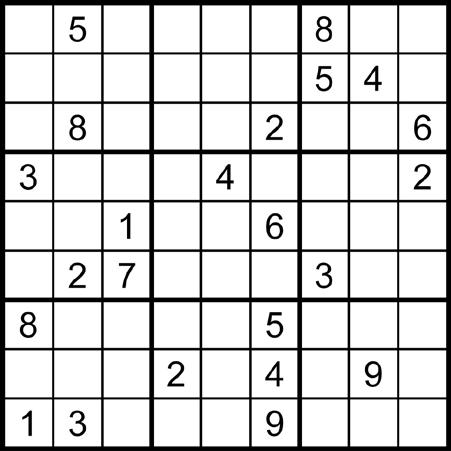
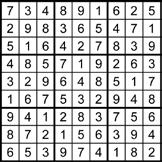
Sudoku 13
Phone 6262 9100 Fax 6262 9111
GPO Box 2448, Canberra City 2601 www.citynews.com.au twitter.com/city_news facebook.com/canberracitynews
Chief executive officer: Greg Jones 0419 418196, greg@citynews.com.au
Senior advertising executives: Melissa Delfino, 0415 137660
Ernie Nichols, 0421 077999
Advertising sales executives: Mara Stroppa, 0431 245130
Rebecca Darman 0411 225169
Advertising sales co-ordinator: ad@citynews.com.au
Sydney advertising sales: Ad Sales Connect, 02 9420 1777
ties’ should be treated as donations to the same political party for the purposes of disclosure requirements. This will combat the practice of ‘donation splitting’ where donations under the threshold are made to each branch of a political party, which then could total in the tens of thousands, but go undisclosed.”**
Even more appalling is that the Prime Minister has announced a $38 million package to compensate ACT clubs for their participation in a trial
Since 1993: Volume 18, Number 3
Editor: Ian Meikle, editor@citynews.com.au
Journalists: Freyla Ferguson, freyla@citynews.com.au
Kathryn Vukovljak, kathryn@citynews.com.au
Libby Hill, libby@citynews.com.au
Lisa Ridgley, lisa@citynews.com.au
Arts editor: Helen Musa, 0400 043764 helen@citynews.com.au
Design and photography: Silas Brown, 0412 718086
Graphic designer: Leonie Fox
Accounts manager:
Bethany Freeman-Chandler accounts@citynews.com.au
Distribution and circulation: Richard Watson, circulation@citynews.com.au
Contributing photographer: Andrew Finch

in the ACT Legislative Assembly and stood aside on a vote regarding poker machines in the ACT.
There was an attempt about two and half years ago by then-Chief Minister Jon Stanhope to have ACT Labor to divest itself from this thorny conflictof-interest situation by selling the Labor Club. The attempt was a failure with huge pressure being brought by Federal interests. Now it has come back to bite them.
of the pre-commitment system. A fair chunk of that will go into the clubs that make large donations to Labor. The conflict of interest is no longer a local issue – it is also one for the Prime Minister as taxpayers’ money feeds back into Labor coffers.
She will probably continue the approach of so many local Labor members of sticking their heads in the sand over this issue. Not one Labor member since self-government in 1989 has ever declared a conflict of interest
The obvious thing for the Prime Minister to do regarding pre-commitment on pokies was to fight the good fight on the floor of the Parliament. Andrew Wilkie would have had no choice but to accept the outcome of the Parliament. By pre-empting the move she has cast a doubt over her own sincerity and has once again raised the spectre of Labor’s appalling conflict of interest regarding pokies.
Michael Moore was an independent member of the ACT Legislative Assembly (1989 to 2001) and was minister for health.
*ACT Labor Annual Return: www.elections. act.gov.au/resources/uploads/pdfs/returns_10/ politicalparties/ALP.pdf
** “Report on the funding of political parties and election campaigns”, Joint Standing Committee on Electoral Matters, November 2011

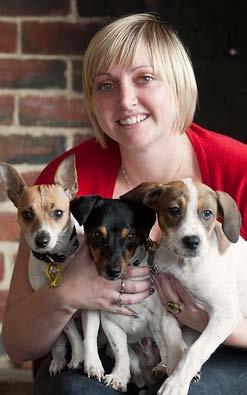
LAUREN Black is not your typical foster parent.
SHE’S a volunteer for Canberra Pooch Rescue, a local organisation that has saved the lives of 1479 dogs and cats since starting in November 2006.
“Rehabilitating dogs is one of the most rewarding things I have ever done,” Lauren said.
“Any dog can be rehabilitated.”
Every year, Canberra Pooch Rescue (CPR) rescues and rehabilitates about 300 dogs and cats from pounds from the ACT, Queanbeyan, Wagga, Temora, Griffith, Sydney and West Wyalong.
On average they have about 40 dogs and cats in their care on a daily basis.
The dogs are de-sexed, health checked, vaccinated, wormed and micro-chipped, then sent to a foster home, sometimes for up to a month, where they are treated as part of a family and taught basic manners, toilet training and exposed to new things such as car rides and meeting children and other pets.
It also gives the foster parent a chance to discover the dog’s temperament before being bought by their new owner or “forever home”.
All proceeds from “adoption fees” go directly back into the organisation.
Lauren became a foster parent after adopting her pet Jack Russell cross Fox Terrier, Alfie from CPR.
She had been watching the CPR website to find a friend for her miniature Fox Terrier
“Each foster parent is an expert on a breed,” said Lauren, who specialises in Terriers and small dogs.
At the moment Lauren is looking after Jack, a 10-yearold Terrier mix, who was saved from the Wagga pound.
“Dogs are able to live in a home environment and learn a proper structure,” she said.
“They eat at the same time, get good sleep, good walks. They start to become your own dog.”
All foster parents are volunteers with full-time work.
Although only new to CPR, Lauren is already feeling the rewards of giving a dog a new chance of life.
“There are a lot of dogs out there being put down around Australia,” Lauren said.
“And a lot of families that could benefit from having a dog.
By Freyla Ferguson
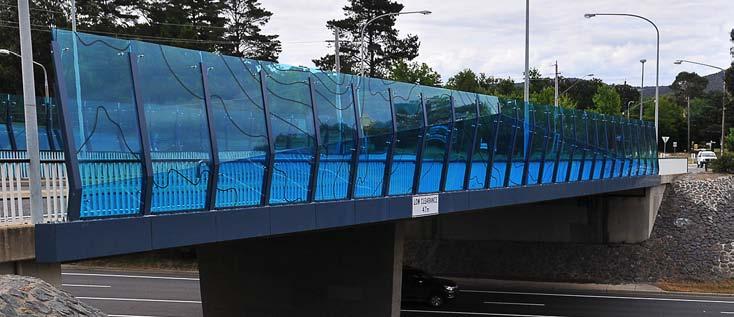
COMBINING the rich blue sky and the Brindabellas in the distance; the design of the new blue screens on the Kent Street bridge over Adelaide Avenue, are all about the aesthetics says Roads ACT director Tony Gill.
Urban design company Thylacine came up with the “site specific” design of the screens.
“It really is a response to the environment, and where the bridge is,” Thylacine creative director Caolán Mitchell said.
Lolli, who was saved from the Albury pound.
After meeting Alfie at his foster parent’s house, and a second “play date” with Lolli, Lauren knew Alfie was exactly what she was looking for.
“Lolli and Alfie have been best friends ever since they met,” Lauren said.
“They are just like brother and sister.”
It was after the adoption that she was invited to become a foster parent.
But according to Lauren, finding a “forever home” is not just about finding a family who say they are willing.
“Every family has a different energy,” she said.
“It’s about matching the personality of the dog with the personality of the family.”
She said previous experience with animals is also a big part of the process.
“The social benefits for a family are just enormous.”
And although she finds it rewarding, Lauren says the most difficult part of the job is facing the reality that some people are not respectful towards their animals.
“It’s not just physical abuse, it’s every day mental abuse; things like being left alone, no exercise,” she says.
“A dog’s a dog. You have to be aware that you’ll need to walk a dog every day.”
Currently, CPR are looking for more foster parents.
“We are looking for people who know the responsibilities of having a dog,” she says.
“You can tell when you first meet someone whether they are in it for the dog.”
To become a foster parent or to adopt a CPR dog visit www. canberrapoochrescue.org.au
Although the practical purpose of the bridge is safety, to “limit rocks and missiles” thrown off the bridge on to traffic, the new Plexiglass screen, that cost about $700,000, is the first of many to be installed on selected bridges in the city and town centres.
However bridges in outer suburbs will retain the metal wire mesh screens that cost about $500,000.
Mr Gill said the installation has been an ongoing project, in consultation with the National Capital Authority, as part of a policy introduced in 2008.
“As we got closer to the city, NCA thought the look of the treatment was a more important consideration,” Mr Gill said.
The National Capital Plan includes provisions that require: “…planning and development in Canberra Central in particular and generally throughout the Territory, should have high aesthetic and environmental quality. Planning controls should seek to ensure that development in all forms, including landscaping in urban and non-urban areas, complements and enriches its surroundings.”
Mr Gill said part of the NCA’s role was the urban design for the route into the national capital, and for that reason the screens needed a more aesthetic solution than the metal mesh.
“We’ve had a mixed reaction to it,” he said.
“Some people think it’s quite nice and other people think it’s ghastly.”

“In this case, when you drive over the hill, you see expansive sky.”
The company used a newly developed technology from German company Plexiglass for the screen. The acrylic sheet is stronger than glass and most paints can be washed off. It also can be produced into a custom-made colour.
Mr Mitchell said the company worked with a surveyor to map the typography of the area, then etched topographic line work on to the Plexiglass to create the pattern.
The company is also working on the Cotter Road bridge on Adelaide Avenue, that will see a site specific metal mesh design.
“Because the Kent Street bridge is so vibrant, the design on the second bridge is a bit more recessive,” he said.
Work has already begun on the next screen on the Chandler Street bridge in Belconnen. It will be of the same blue colour, keeping with the design of the Belconnen town centre improvements project. The installation is expected to be complete by the end of April.
The company is also developing designs for four more sites.
“We spend so much money on road infrastructure,” Mr Mitchell said.
“It doesn’t take much more to improve on that.
“Canberra has been quite safe for a while.
“So it’s is good to see people take risks on design.”



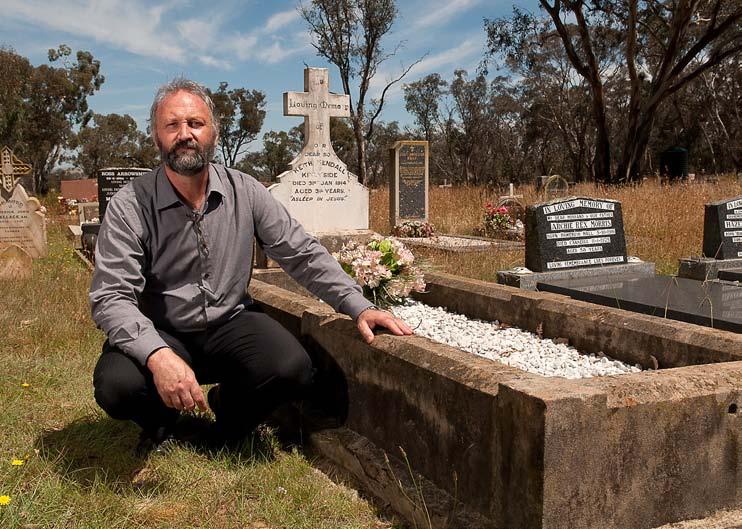
NEGOTIATIONS have begun to move burial allotments at the Hall Cemetery to save a rare orchid.
T HE Tarengo Leek Orchid can only be found in five locations in Australia, including the Hall Cemetery.
Mid-last year an ecological report from the ACT Government Environmental Research and Planning Unit recommended that the ACT Public Cemeteries Authority stop all sales of new allotments at the cemetery.
The rare orchid has been an issue for the cemetery since the early 1990s, but until the report, it was managed by seasonal, controlled mowing
The report found that the orchid was growing on unused, reserved allotments and suggested that owners be asked to move to an alternative site.
“There’s the potential for the orchid to pop up anywhere,” ACT Public Cemeteries Authority chief executive officer Hamish Horne said.
“If it does, we have problems. We would need to try and negotiate for [an allotment] to move to another spot where it isn’t.”
Mr Horne said it was a very difficult decision
for families to move to a new allotment.

And although Mr Horne won’t specify exact numbers of allotments in danger of being moved, he said at this stage owners have been contacted and are happy to enter negotiations.
“People understand that we have this ongoing issue,” he said.
“We do need to get it sorted. But we are allowing families as much time as they need.”
Over the past few months, an environmental survey has been conducted in an adjacent block, tipped for potential development to expand the cemetery to allow for burials, without interfering with the orchid.
The Public Cemeteries Authority is currently putting an application under the Environment Protection and Biodiversity Conservation Act, depending on the results of an environmental survey, for permission to move graves if necessary.
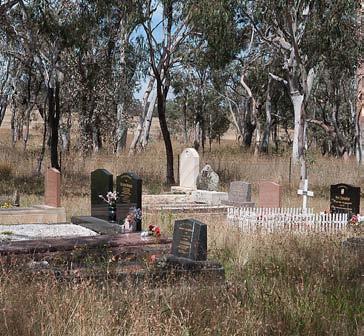
Hall Cemetery is not uncommon to other bush cemeteries found around Australia, in that it’s a “depository for rare plants”.
Mr Horne says there are about six wild flower varieties, plus grasses and forbs.
“It’s a little oasis here,” Mr Horne said of the four hectares that’s currently only one quarter full.
“There’s been no grazing in this area.”
According to Mr Horne, the Hall Cemetery is typical of what ACT’s central grassy woodland would have looked like before development.
“The orchid is the jewel in the crown of the whole grassy woodland,” he said.
“If we were to cause the death of an orchid, we could suffer a huge fine.”
The Tarengo Leek Orchid is listed as Endangered under the Threatened Species Conservation Act 1995 (TSC Act), the Commonwealth Environment Protection and Biodiversity Conservation Act 1999 (EPBC Act) and the ACT Nature Conservation Act 1980.

DON AITKIN is untroubled by the failure of Australian tennis players to succeed at the Open in Melbourne
AS Bernard Tomic took his master class from Federer, and Leyton Hewitt faded from Djokovic’s relentless pressure, I heard and read again the lament that we don’t seem to be producing the tennis champions of yesteryear.
As so often in Australia, when people make judgments like this there is an implied fault. Someone is to blame. Let’s find them, and deal with them, and then we’ll return to past glory.
I don’t think there is anyone to blame, either as an individual or as an organisation. But if you want a simple explanation, then we have lost some advantages we once had: lots of tennis courts, lots of sunshine, and a most democratic attitude to tennis – meaning that anyone could play, and it didn’t cost much.
I started playing tennis in about 1945, at the Reid courts in Canberra, and at Ainslie Primary, where there was (and still is) a tarred court. The school had racquets, and we kids could borrow them. We knew how to get the nets at the Reid Club; the price was that we put them back, and we did.
A few years later, in Armidale, we could play on a variety of courts, one at the back of the Methodist church, one in somebody’s backyard, four at our school. It cost a few dollars to join the tennis club, which had dozens of junior members. I ball-boyed once for a doubles exhibition in which John Bromwich and Ken McGregor played Mervyn Rose and Rex Hartwig. All of them won major titles, mostly in doubles.
What happened? Well, Australia got more prosperous, television took over some of the leisure time that once went to sport. We discovered surfing. The backyard tennis courts made way for blocks of home units. Other sports, such as soccer, became important. Sport moved from being a mainly amateur activity to one where the best performers
could make a great deal of money. New sports appeared. One of them was squash and there were a lot of squash players who had a tennis background.
The world changed. As a 15-year-old in Armidale, I could point to perhaps a dozen sports that were played on an organised basis in the town. Today’s Australian Sports Commission, unheard of in the 1950s, made grants of over $120 million last financial year to 53 sports.
We are not the only country at all to place a high value on sporting excellence, finding the best young ones, and funding their development. And tennis has been a sport where any country can get ahead with relatively little money: a few good coaches, good courts, a selection system and intense development. Switzerland was perhaps an odd country to have won the America’s Cup, given that it is entirely landlocked. But Roger Federer’s great record in tennis is not strange at all. Switzerland is rich, and has a fine tennis development system. Marc Rosset, another Swiss, won the 1992 Olympic Games gold medal in tennis. Tennis is now a truly international sport, and it will not be long before the Chinese demonstrate their own interest. At the moment most of the names on the results board in the Australian Open seem to have an Eastern European origin – and that applies even to some of our own players – Tomic, Jarmila Gajdozova, Jelena Dokic and Anastasia Rodionova. In five years, who knows? Much as I like tennis, I cannot be upset at our “failure” to win our own Australian Open. We do pretty well across the domain of sport. And there’s much more to life than sport, anyway.
Don Aitkin, political scientist and historian, served as vice-chancellor of the University of Canberra from 1991 to 2002.
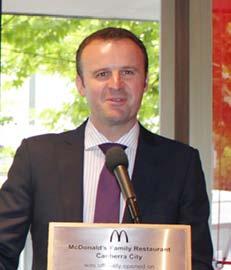
THE new McDonald’s restaurant in East Row, Civic has been officially opened by Deputy Chief Minister and Minister for Economic Development Andrew Barr (pictured).
The new store, with a fitout cost of about $2 million, will offer up to 125 new jobs.
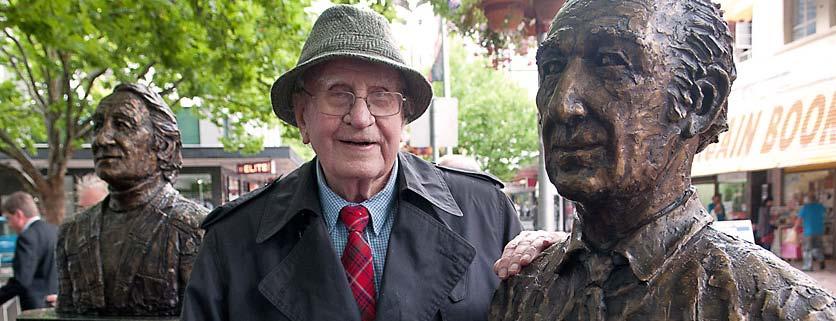
THREE years ago, Campbell resident Harold Grant publicly lobbied for Canberra to have a tribute to poetry and this week, he got to launch the Poets’ Corner in Garema Place.
“Jon Stanhope (then Chief Minister) supported the idea and has been a great supporter of the arts,” Mr Grant says.
“Now we will have three great poets represented in Garema Place and they’ll be a standing reminder – a place where people can go and express themselves.”
Poets’ Corner celebrates the lives and achievements of AD Hope, David Campbell and

Judith Wright, significant Australian poets who have a strong connection to Canberra and the region.
This new public art installation in Garema Place consists of three busts cast in bronze depicting the poets and mounted on stone plinths. “Private Poetry” by artist and poet Richard Tipping is located nearby as a contemporary addition to the traditional figurative sculpture.
Poets’ Corner was established in response to Mr Grant’s public lobbying for the project, mostly on ABC radio’s talkback program with the Chief Minister.
“I’ve loved poetry since I was a child. I think you can express more in poetry in one line than you can with prose,” Mr Grant says.
“I’ve written about 1000 poems and I have them all around the house about a whole range of topics from politics, war, peace and humorous ones. Recently, I have been writing them for friends and relatives though.”
Mr Barr said the opening not only helped the need for more private sector jobs, but also showed trading confidence in Civic.
“As Economic Development Minister and Treasurer I am
going to be here to support this type of investment that supports jobs for Canberrans,” he said.

IT was the end of an era as last drinks were served at All Bar Nun in O’Connor on Sunday. But “CC” can reveal two of the bar’s owners – the Kenny brothers – won’t be leaving the O’Connor shops anytime soon.
The boys acquired Marinetti’s (next to the IGA) in April and have been quietly transforming the little Italian restaurant into a hip and happening wine bar. Drew Kenny says the fit out has a “real grunge feel which is more along the lines of all the little intimate bars popping up in Sydney and Melbourne and I think Canberra needs more of these kinds of places.”
But Marinetti’s isn’t the Kenny boys’ only business project. The pair has combined with Upmarket Constructions’ Mark Whithear to open “Gryphons” – a new bar at the Griffith shops.
“It’s a great site backing on to the parkland and we are really excited about it... we can’t wait to open,” says Drew. “It will be a real lounge-about restaurant and bar serving breakfast right through to tapas and take-away pizza.
“It’s been really emotional closing The Nun... it was our second home, but we’re excited about the future and about new opportunities.”
All Bar Nun co-owners have been uncertain about their future since the lease came up for renewal in October last year. Failed lease negotiations with the new landlord required the co-owners to vacate the premises by Wednesday, February 1. All Bar Nun opened in 1996.
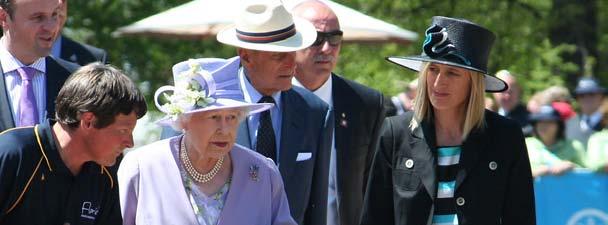
WORD has it the Canberra Racing Club team was out in force at the 2012 Inglis Classic Yearling Sale in Sydney last week.
“CC’s” heard Peter Stubbs, CEO of Thoroughbred Park, was in fine form hosting the club’s very own lavish marquee to promote the upcoming Kamberra Wine Company Black Opal Stakes.
Local owners and trainers were spotted; among them the likes of Barbara Joseph and her son Paul Jones, as well as Magic Millions winner and Karuta Queen owner, Neville Layt.
Whispers about local stables suggest owners had their eyes on a few impressive yearlings ahead of our $250,000 feature race on Sunday March 11.
Apparently Layt purchased five yearlings to add to his Queanbeyan stables, including a yearling by Not a Single Doubt, sire of Karuta Queen.
MEANWHILE, ladies gearing up for Myer Fashions on the Field at this year’s Black Opal Stakes will be excited to hear there’s a new milliner offering her services.
Rachael Henson is fast becoming the next big designer in town, after creating a hat for ACT Chief Minister Katy Gallagher to meet the Queen. The picture made papers around the country and Henson’s told “CC” she’s realised millinery is her calling.
“I was working full time as a public servant, but my dream is to be a milliner full time,” says Henson. “I love creating something beautiful that will make women feel good – like putting on a pair of shoes you love – you walk differently and you feel fantastic.”
Henson designs for women of all ages including brides, race-goers and diplomats. And she was commissioned to design a fascinator for an “unnamed” guest at the wedding of Prince Charles and Camilla Parker Bowles in 2005.
For further details www.rachaelhensonmillinery.com.au
THE Kambah Lions Club has read the riot act!
Members worked tirelessly hosting a giftwrapping service for Hyperdome shoppers in the lead-up to Christmas. But “CC’s” been told the blokes let the side down after failing to step up to the mark in wrapping and ribbon duties.
Sources close to club members say wives and partners picked up the slack with wrapping, cake sales and a trailer raffle – raising more than $17,000 for local causes.
Despite the mayhem, the club maintains its future gift wrapping services with the Hyperdome are certain, with plans already in place for December. But “CC” can reveal the women have warned the men their blokey excuses won’t be tolerated. And they’re offering the slackers gift-wrapping workshops throughout the year, in a bid to teach them a valuable lesson.
No doubt the club’s official Tale Twister will have enough fodder to make this one last the whole year.
In 2011, the Kambah Lions Club gave thousands of dollars to various charities including the Olivia Lambert Foundation, the
Snowy Hydro SouthCare Rescue Helicopter and the Queensland Flood Appeal!
IT’S been a long wait, but ERIC* the mobile Humidicrib, will soon be in action at the Canberra Hospital.
More than $180,000 was raised through the Newborn Intensive Care Foundation to purchase the life-saving equipment in 2009.
Peter Cursley, chairman of the Foundation, has told “CC” ERIC’s arrival will be an exciting day for everyone involved.
“It’s been a long wait because the crib had to be designed from scratch and we had to make sure it was right,” he says. “It’s currently undergoing the final stages of testing and certification and it will be here in February, almost three years since our community raised the money... it’s incredible and very emotional.”
Cursley has been instrumental in gathering support for Canberra Hospital’s Centre for Newborn Care after losing his baby daughter 20 years ago.
“Hannah was born blue... she had to be revived... with the help of all the doctors and nurses we had to make the very difficult decision to let nature take its course and turn off the equipment,” Cursley says. He pauses, apologises and takes a deep breath, “My baby girl died in my arms.”
Donations to www.newborn.org.au
*ERIC is short for emergency retrieval intensive care cot

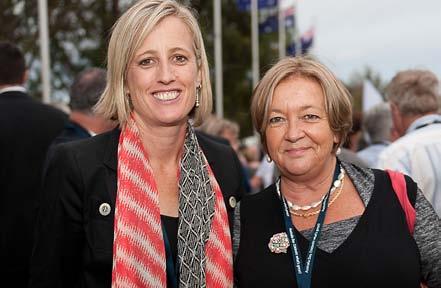
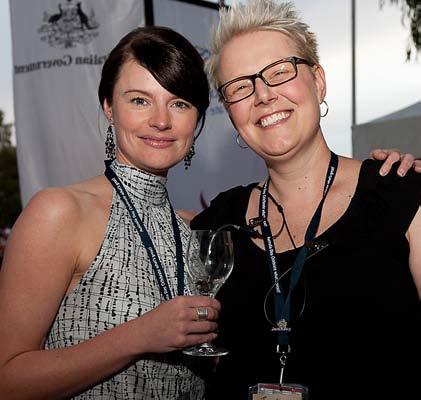
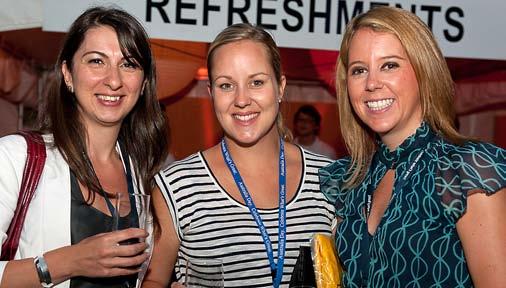
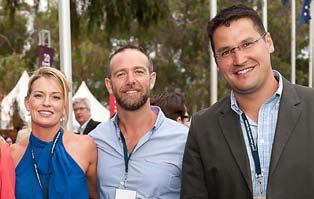
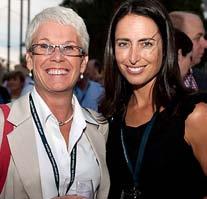
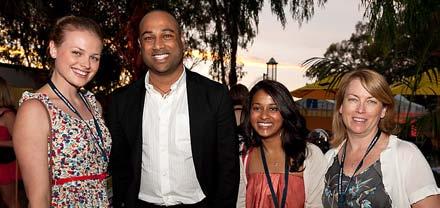
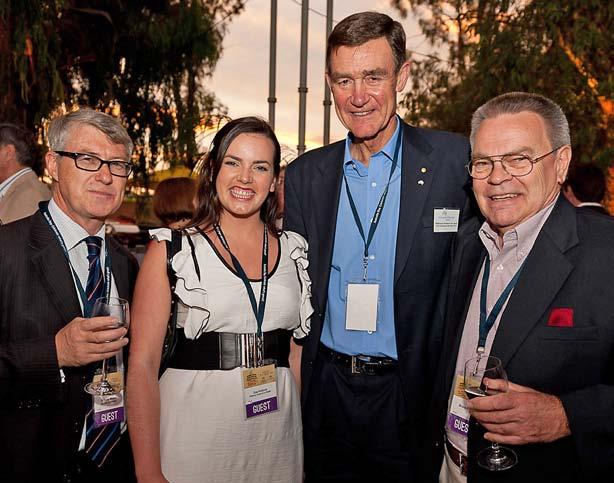
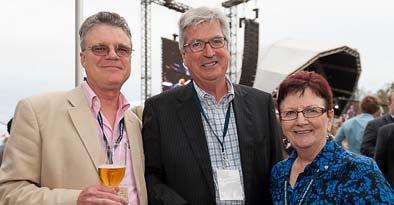
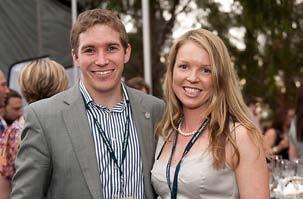

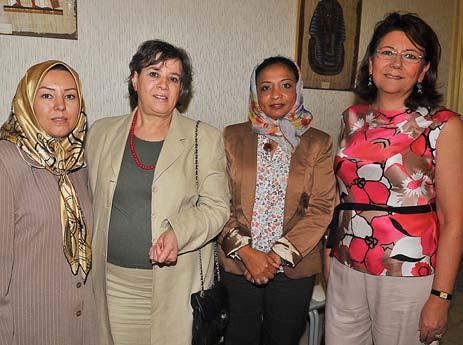
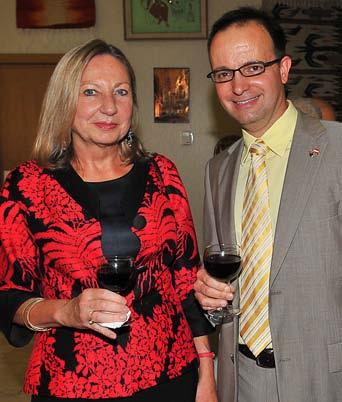
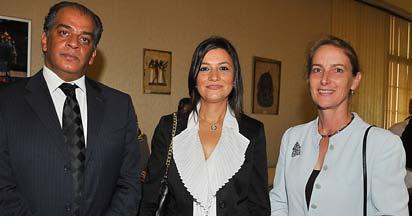
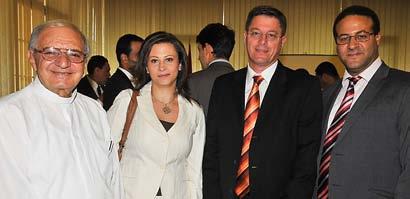
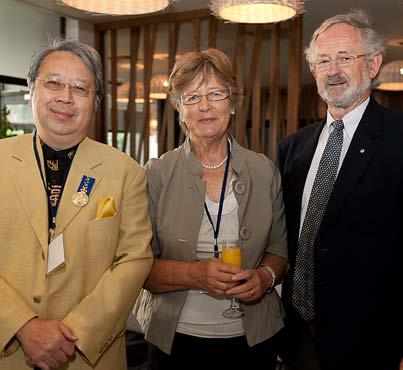
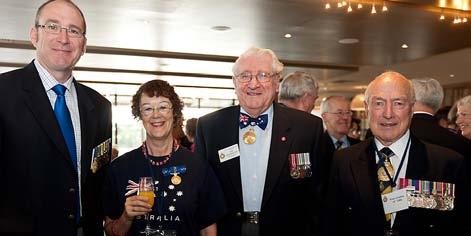
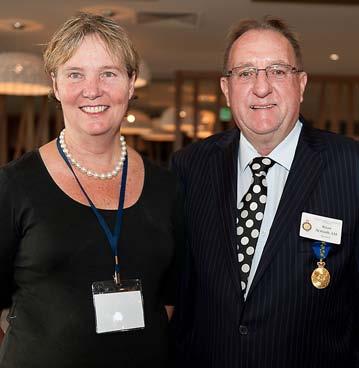
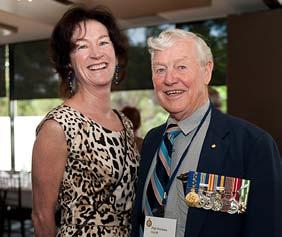
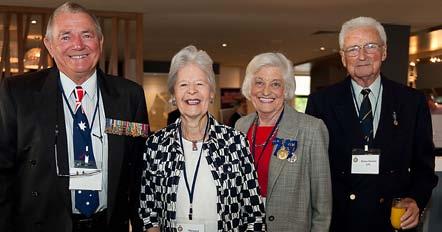
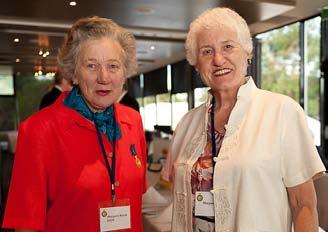
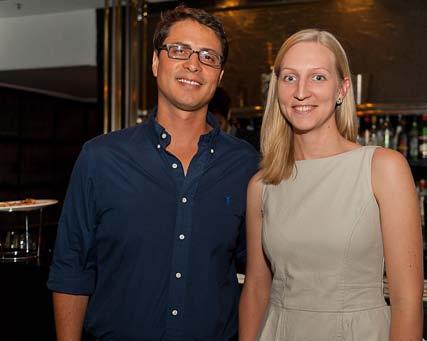
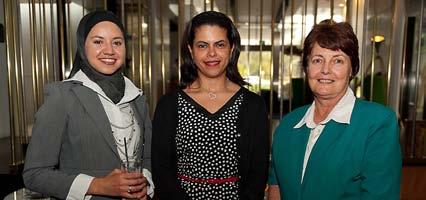
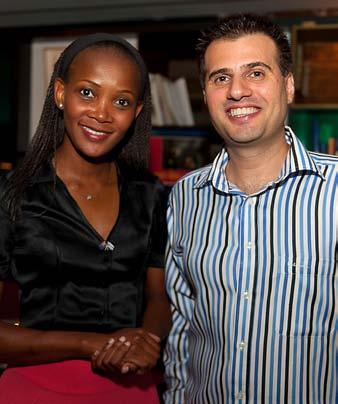
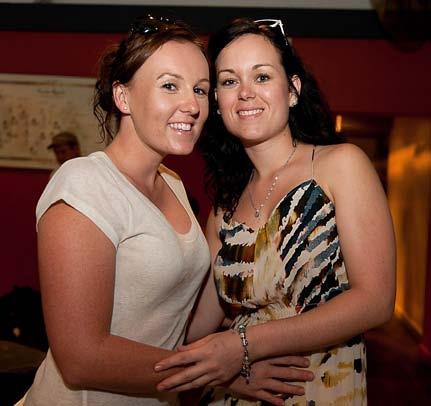
At the Order of Australia Association Australia Day breakfast, Southern Cross Yacht Club, Yarralumla



OVERCOMING tremendous obstacles, our forefathers obtained independence for Sri Lanka in 1948 from colonial domination.
In 2009, under the able leadership of President Mahinda Rajapaksa, we were able to defeat one of the greatest threats to the sovereignty and territorial integrity of the country since independence and place Sri Lanka on the path to peace and development.
Sri Lanka had suffered for 30 years from the threat posed by terrorism and, with its defeat, has now entered an era in which all its resources can be directed towards social and economic development of its citizens.
It is also a time to cast aside differences and rekindle the friendship and camaraderie that has existed amongst the many communities that make up multi-cultural Sri Lanka.
The different communities, religions and cultures that make up Sri Lanka have lived in peace and harmony for many centuries and all efforts must be taken to ensure the continuity of this phenomenon.
The resilience of the people of our country is amply demonstrated by our achievements over the last six decades of independence.
Sri Lanka is one of Asia’s oldest functioning democracies. From the time we gained independence a system of parliamentary democracy has firmly taken root.
Our electoral tradition is sustained by a vibrant multi-party system. Elections have been held without interruption since independence and the different political parties that have come

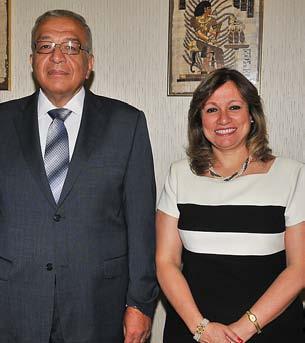
As Canberra welcomes the Sri Lankan cricket team to play the PM’s XI, high commissioner Admiral THISARA SAMARASINGHE reflects on his country’s 64th anniversary of independence
to power have striven to introduce political and economic policies that have demonstrated sensitivity to the aspirations of our people.
Sri Lanka also liberalised its economy in the late 1970s, the first in the South Asian region to do so, and has followed a consistent, liberal, free market economic philosophy.
The country’s social indicators such as life expectancy, and a literacy rate of 94.2 per cent are well above those in comparable developing countries and are, in fact, on par with many developed countries.
On our journey to progress through “Mahinda Chinthana”, the vision is to move on to a sustainable 8-10 per cent GDP growth rate, building on
the recent progress we have made, to achieve prosperity for all our citizens in the decades ahead.
In an era in which Asia’s importance in the global economy has been steadily rising, the Sri Lankan economy stands poised to achieve its full potential through a high-growth path.
The Sri Lankan economy grew at a rate of 8.3 per cent in 2011, which is the first time that an over 8 per cent GDP growth rate has been recorded in two consequent years.
External trade is on a buoyant path with a stable exchange rate.
Inflation steadied at mid-single digit level and in 2011 Sri Lanka recorded its lowest unemployment rate of 4.3 per cent.
Last year, Sri Lanka recorded its highest inflow in foreign direct investment, exceeding $US1 billion with ever-larger commitments for this year, particularly in the tourism sector.
As we move forward in this 64th year of Independence of our country, I call upon all Sri Lankan expatriates living in Australia to continue to support Sri Lanka as they have done in the past and to contribute their services for the betterment of the country and its citizens.
May the long-standing, deep friendship between Sri Lanka and Australia grow from strength to strength.

SRI Lanka graduated to a middle-income emerging market with a per capita income level of $US2380 (2011 estimate). The Northern Province achieved a remarkable growth rate of 22 per cent in 2010.
T h E country is well on track to achieve the Millennium Development Goals including reducing infant mortality rates and achieving universal primary education (96.7 per cent). Sri Lanka also has a literacy rate of 94.2 per cent.
ACCORDING to the world property index, Sri Lanka has escalated nine positions from 2009 to be ranked 59 amongst the 110 nations.
T h E country is strategically positioned at the crossroads of the eastern and western sea routes and along the key shipping routes between the Malacca Straits and the Suez Canal, which links Asia and Europe. The first phase of the new strategic port in Hambantota opened in 2010 and, when completed, the port will be the biggest constructed on land to date in the 21st century.
SRI Lanka is maximising the region’s potential for trade and development through strengthening and developing free trade agreements. The Indo-Lanka Free Trade Agreement and the Pakistan-Sri Lanka Free Trade Agreement are examples for strengthening inter-regional economic co-operation and the development of the national economies of South Asia.
A SECOND international airport is under construction in Mattala, in the Hambantota district and is expected to be completed this year. The new airport will expand
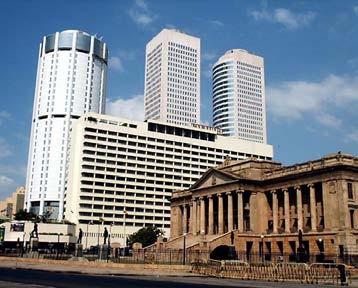
the local aviation industry, provide for vocational training and employment while being a catalyst for the country’s economic development and enabling international trade and tourism.
A KNOWLEDGE hub initiative will help develop Sri Lanka as a destination for investments in higher education and position the nation as a centre of excellence and a regional hub for learning and innovation. An IT sector delegation led by the Board of Investment of Sri Lanka recently took steps to facilitate developing Jaffna as a knowledge hub through encouraging investments in the IT sector in the area.
SEVERAL mega-energy initiatives in the thermal, hydro, coal, and wind sectors have been taken, while exploring oil and natural gas as well, to position Sri Lanka as an energy hub in the region.
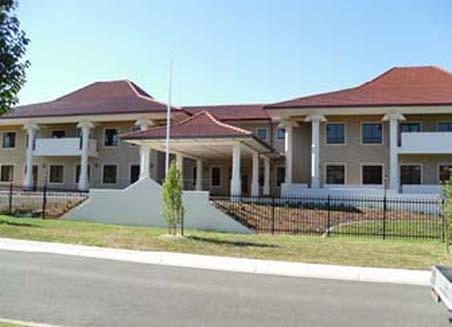
SRI Lanka has a striking, new, high commission building in Yarralumla. It was constructed by the ACT-based Iqon group, which has experience in a number of sectors including health, education, government, sports, recreation, community, environmental, commercial, industrial and residential.
The new chancery building provides a cultural showcase that presents and represents the people of Sri Lanka. High-quality external finishes provide many of the cultural features required by the high commission’s officials and this has been achieved by the skills of local tradespeople.

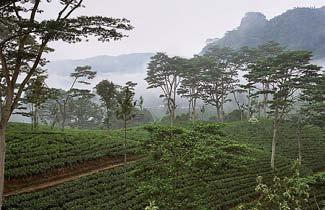
LYING in the Indian Ocean, in South Asia, the tropical island nation of Sri Lanka has a history dating back to the birth of time and a written history of more than 2500 years. It is a place where nature’s beauty remains abundant and unspoilt. Sri Lanka is a multi-ethnic, multi-cultural and multi-religious society which has been living in harmony for many centuries.
FEW places can offer the traveller such a remarkable combination of stunning landscapes, pristine beaches, captivating cultural heritage and unique experiences within such a compact location of 65,610 square kilometres, featuring eight UNESCO World Heritage Sites, more than 1300 kilometres of coastline, 15 national parks and a culture dating back over 2500 years.
SRI Lanka is one of the 25 biodiversity hotspots in the world and has a wide range of native species including elephants, leopards, sloth bears, the unique, small loris, a variety of deer, the purple-faced langur, the endangered wild boar porcupines and anteaters. Located at the South West of Sri Lanka is the famous Sinharaja Forest Reserve.
Th E GDP growth rate of Sri Lanka increased to 8.3 per cent in 2011, which is a record high. Unemployment was at an historic low of 4.3 per cent and in the assessment by the World Economic Forum in its “Global Competitiveness Report” for 2011-2012, Sri Lanka has moved from 79th position to 53 over two years.
T h E rapid development of infrastructure has begun with several key projects i.e. the recently opened Southern Highway from Colombo to Matara, the Colombo-Katunayaka and Colombo-Kandy expressways plus the upgrading of several railway lines.




Joanne Madeline Moore your week in the stars / February 6-12
ARIES (Mar 21 – Apr 20)

Wednesday’s fiery Full Moon and Moon/Mercury opposition are a combustible combination so avoid the temptation to overreact, and blurt out things that you later regret. Friday’s Venus/Uranus hook up (in your sign) encourages impulsiveness in relationships. Some Rams will fall in love at first sight – while others will break up a partnership.
TAURUS (Apr 21 – May 20)
You’ve got so much on your professional plate that the last thing you need is domestic dramas but that’s what you’ll get on Wednesday, as the Full Moon heats up your home zone. Thursday is all about divine indulgence as you shop-til-you-drop, or share the good times with family and friends. If you’re too stubborn on Saturday, you’ll meet resistance at every turn.
GEMINI (May 21 – June 21)
Full Moon energy sees gung-ho Geminis being busy all over the place. Travel is highlighted as you pack your bags, and jump in the car (or on a train or plane) and take off somewhere special. You’re also keen to chat but beware spreading unsubstantiated gossip – you could end up with egg on your face. Group activities are favoured until March 5.
CANCER (June 22 – July 22)
Cash-strapped Crabs – avoid going on a spending spree or lending money to others, as you’re liable to make decisions based purely on your emotions (which are fluctuating wildly under Wednesday’s fiery full moonbeams). With Venus in your career zone (until March 5) it’s the perfect time to spruce up your work space, plus socialise with clients and colleagues.
LEO (July 23 – Aug 22)
Wednesday’s Full Moon (in your sign) boosts your energy levels and gets your creative Cat juices flowing. So make sure you do something that makes your heart sing. Strive your best to be gregarious and generous (rather than pompous and pushy). Single Lions – you could fall for someone while travelling, or link up with a lover from another country or culture.
VIRGO (Aug 23 – Sept 22)
Your days are organised with military precision, as you squeeze every last drop out of the time available. But this week, the Full Moon tosses your timetable out the window and shakes up your routine. So you need to be flexible – and don’t worry about making mistakes. Be inspired by birthday great Jack Lemmon: “Failure won’t hurt you but fear of failure will cripple you.”
LIBRA (Sept 23 – Oct 23)
It’s the perfect week to set goals for the future as the Full Moon activates your hopes, dreams and wishes zone. Expect the unexpected on Friday, when Venus and Uranus shake up relationships. Attached Librans – take your partner for granted at your peril. Singles – your love life is unpredictable. The person you have your eye on may not be the one you end up with!
SCORPIO (Oct 24 – Nov 21)
The Full Moon sees you at your Scorpio best (and worst) as you swing between being dramatic and demanding; sexy and secretive; passionate and possessive. You’ll also be thrust into the public spotlight (hopefully for all the right reasons!). Uranus sends a curved ball in your direction on Friday. The more stubborn you are, the more disruptive the day will be.
SAGITTARIUS (Nov 22 – Dec 21)
You’re in the mood to socialise up a storm and party like a pro when Venus enters your entertainment zone from mid-week onwards. Moderation and common sense go out the window, as you overdo just about everything. Positive Moon/Jupiter aspects promise a delightful day on Thursday. Work and finances are favoured, as you make the most of lucky opportunities.
CAPRICORN (Dec 22 – Jan 19)
Expect dramatic developments involving the big two – sex and money – as the Full Moon stimulates your lust and loot zones. If you’re a clever Capricorn, you’ll resist the urge to control everything and everyone around you. Cool compromise is the smart way to go. Task-master Saturn is still stalling work plans (until June 25) so you’ll have to be super patient.
AQUARIUS (Jan 20 – Feb 18)
It’s your turn to shimmer and shine, as the Sun and Mercury join up in your sign. If you are proactive about promoting your talents and ideas, you’ll accomplish a lot over the coming month. The Full Moon amplifies your unpredictable Aquarian nature, so you’re keen to shake up a close relationship. But are you ready for the long-term consequences of your actions?
PISCES (Feb 19 – Mar 20)
The Sun and Mercury hook up in your reflection zone so you’re in the mood to reminisce about the past, ponder the present and peer into the future. Fish are friendly folk who love helping others but don’t overdo it or you’ll end up overworked and underappreciated. Avoid making major money moves on Friday, as Uranus stirs up your finance zone. Tread carefully.
4 Name a renowned Australian TV, film actor, and pop singer, Kylie ...
8 Which side of a coin bears the head?
9 To turn round, as on an axis, is to do what?
10 What is another term meaning to contract and wrinkle?
11 Which word describes a state of bad health?
12 Name the unusual collection of granite boulders near Tennant Creek, ... Marbles
14 What is an assumed of false name?
18 Name a small space or compartment partitioned of 21 Which term describes information about a particular person?
22 What is a tabular surface of high elevation?
23 Which is the short rifle for cavalry use?
24 Name another word for a body of attendants Down 1 What describes something
unexpected, but welcome and timely?
2 What are sets of six bowls, in cricket?
3 That which is of little consequence is considered what?
4 Who was the legendary Arthurian magician?
5 What is the more common term for the umbilicus?
6 Name a kind of sailing vessel formerly used by Spain
7 What are sharp-pointed duelling swords?
13 Moving to and fro rapidly is to be what?
15 Name a place where trees and plants are sold
16 To be united in wedlock is to be what?
17 Name another term for “infer” 18 What is a prank, or capricious action?
19 Name a former ACTU president who became a member of parliament, Simon 20 What do we call the NZ footballers?
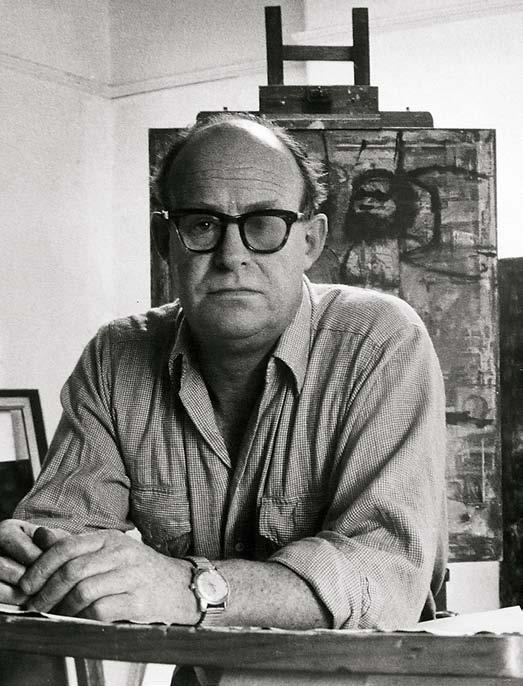
“RUSSELL Drysdale was like Titian compared to some of our other painters,” says biographer Lou Klepac.
On February 7, it will be 100 years since the great Australian painter Drysdale was born. Happily, two of Canberra’s leading cultural institutions, the Australian War Memorial and the National Library of Australia, plan to mark Drysdale’s contribution to our nation’s art.
As well, Albury Art Gallery, in the town where Drysdale spent his most formative years, will stage a Drysdale exhibition in March, while the S.H. Ervin Gallery in Sydney has joined Carrick Hill in SA to hold an exhibition of the artist’s drawings, curated by Klepac, which will tour to Sydney, Adelaide and the Mornington Peninsula.
There is immense serendipity in this regional focus, since Drysdale had his roots in the land.
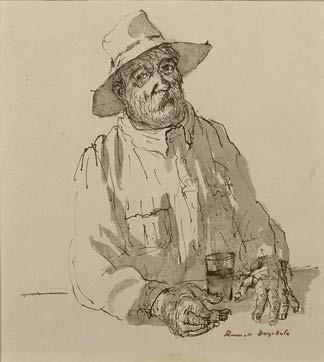
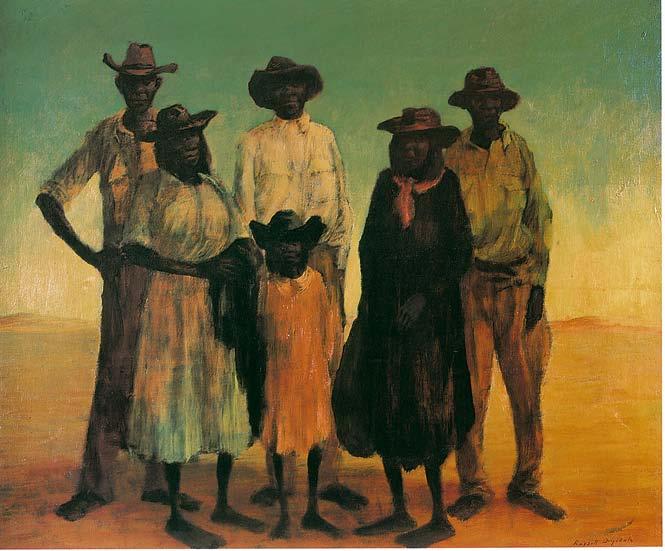
Like Sidney Nolan, his sensitivity to the Australian interior captured the imagination of ordinary Australians, who instantly recognised the indomitable figures in an arid landscape.
“So ironically Australian” is how the head of art at the War Memorial, Lola Wilkins, puts it.
Forty years ago, countless lounge rooms in Australia boasted a print of his 1948 Wynne prizewinner, “Sofala”, but Drysdale is half-forgotten these days.
“It’s a pity the major State galleries didn’t do anything,” his daughter Lynne Clarke notes, “but it’s terrific that he is being recognised.”
Helen Musa arts editor

A giant in the art world, Drysdale was held by the Museum of Modern Art in New York in 1941 even before the State galleries in Australia bought his paintings. The Queen, The Queen Mother, Sir Kenneth Clark, Sir Laurence Olivier and Evelyn de Rothschild bought Drysdales and Rupert Murdoch is mad about them.
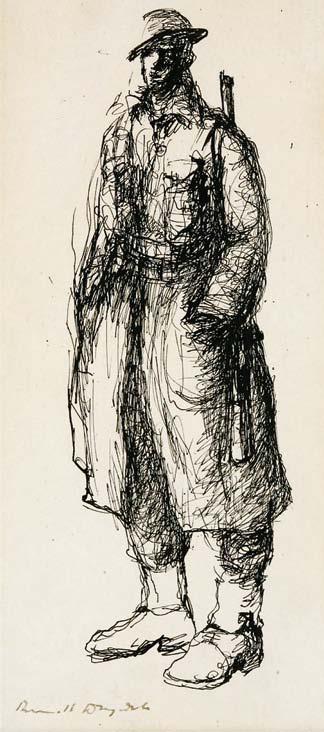
Wilkins says the War Memorial was lucky to acquire “A Soldier”, which “shows something about the experience of all those young soldiers”. Ironical, because Drysdale, plagued by a detached retina in one eye, was unable to enlist.
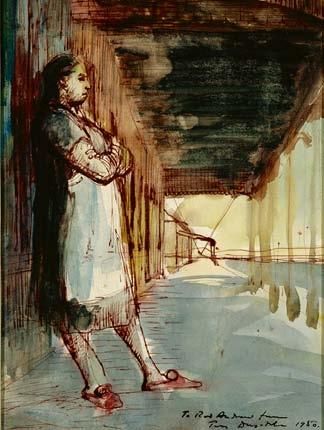
Returning from Europe at the outbreak of World War II, he was persuaded to do his bit by painting our soldiers, many moving through Albury railway station. In the 1970s, the artist gave the memorial many such illustrations.
By the time the Memorial belatedly tried to make him a war artist, he had moved on to become one of the giants of Australian art. Perhaps 2012 will be the year of his re-discovery.
“Russell Drysdale at War”, curated by Sally Cunningham, at the Australian War Memorial from February 7. “Russell Drysdale Drawings” is at the S.H. Ervin Gallery on Observatory Hill, Sydney February 17-March 25. Lou Klepac’s new book “Russell Drysdale the Drawings” will be launched by NSW Governor Marie Bashir at the National Library of Australia on March 14.
Images reproduced with permission of the artist’s estate.


“J Edgar” (M)

THE crime investigation principles upon which J Edgar Hoover founded and developed the US Federal Bureau of Investigation have few if any equals in the world.
But as a human being, he was a gravely flawed, pathetic, lonely, unlovable, selfish, arrogant, pitiless, paranoid failure, driven by hatred for the USSR and communism, a perception of black Americans as inferior beings and the corny Jewish joke “Oedipus, Schmoedipus, what does it matter as long as he loves his mother?”.
Clint Eastwood’s biographical film of Hoover is perforce a condensation of a life, career and private anguishes, structured around dictation of its main events to a ghost writer. In its bitsy to-and-fro dramatic structure, facial prosthetics worn by main characters and event references of which Australians may be only peripherally aware are often the only keys to what era it is.
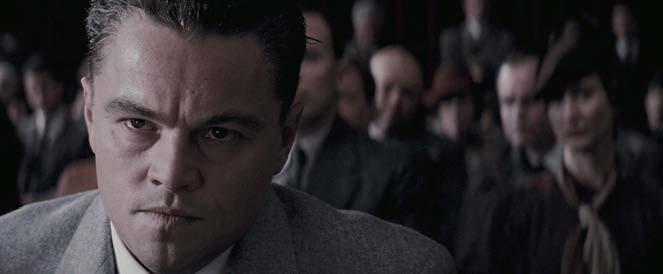
That’s sometimes annoying but not destructive to the impact of a film that was never meant to send us out wearing feelgood smiles.
Dustin Lance Black’s screenplay offers several invitations to read between its lines and pray that people who can influence decisions that make a difference in an inherently conservative society with economic, political, military and cultural tentacles spanning the globe, learn its lessons.
Leonardo di Caprio gives a first-class portrayal of Hoover. Naomi Watts plays his career-long private secretary Helen Gandy shielding an unquestioning loyalty from any emotional enquiry into the morality of the man and his deeds. Armin Hammer is the second love of Hoover’s life, Clyde Tolson. Judy Dench makes short work of Hoover’s first love, his mom.
At Dendy, Greater Union and Hoyts
“A
Few Best Men” (MA)
THE mind boggles. Stephan Elliott who wrote and directed the joyous, clever and delectably funny
“The Adventures of Priscilla, Queen of the Desert” directed this farrago of bad-tasting, low comedy.
David (Xavier Samuel) and three bogan mates fly to Oz where tomorrow he’s marrying Mia Ramme on her MP father’s sheep property on the edge of one of the spectacular chasms delineating the Blue Mountains. Dad’s electoral success rides on the back of his champion merino Rammse. As if that’s not an insult to the good sense of the Australian electorate, the film offers more and worse of the same ilk.
“A Few Best Men” certainly provokes laughter but it is screamingly unfunny. On Australia
Day, a moderate-sized audience (including, sitting beside me, a pre-pubescent girl-child who would have broken the law by being there except that she had
an accompanying adult!) laughed at every gag, pratfall and bad joke in Dean Craig’s crude, irrational, uninformed screenplay. I waited for even one joke that Oscar Wilde might have admired. It never arrived.
It doesn’t get any better than that. As Mia’s sister, the film’s only character with a grasp of reality, the joyously bigly-built Rebel Wilson gives its best performance. Olivia Newton-John plays the girls’ mother, not well. Laura Brent is a pallid bride. As the self-appointed bogan leader, Kris Marshall tries hard, but the screenplay gives him little support. Wondering what he’s saying back home about his Australian work experience and the quality of Australian films is a mildly frustrating exercise.
Despite giving a measured performance, the Merino playing Rammse does not get a credit.
At Dendy, Greater Union and Hoyts

THE Gallery of Australian Design in Commonwealth Place has a show for the hotter weather, running until March 12.
“Making Waves” comprises 12 hollow wooden surfboards crafted by Peter Walker using joinery, laminating, bending, shaping, inlay, burning, laser cutting, painting and fibre-glassing.
A feast for the historical experts, these surfboards draw on Tom Blake’s innovations with the hollow board and fin during the ‘20s and ‘30s, as well as Bob Simmons’ theories of hydro-dynamic flow from the ‘40s. Three boards are the result of collaboration with ceramicist Gerry Wedd, industrial designer Quentin Gore and painter Phil Hayes.
CONGRATULATIONS to veteran theatre director Carol Woodrow who received an AM in the recent Australia Day Honours List. From her radical beginnings in Canberra as the director of avant-garde plays and community theatre, she became the founding director of The Canberra Theatre Company and the director of “The Merchant of Venice”, for Bell Shakespeare’s original season.
THE recently formed “independent voice for
Helen Musa arts in the city
the arts”, The Childers Group, has added film maker Michael Tear and 2010 CityNews Artist of the Year David Pereira to its circle. What next? A forum, perhaps?
AFTER nearly three years at the helm, ArtsAbility officer Caro Roach is leaving the job for a position with Disability ACT. Last year we heard that the specialist community arts officers in Civic would be moved into Tuggeranong and Belconnen. We await news of the resulting community programs.
MUSICIAN Fred Smith emailed to say that his show, “The Dust of Uruzgan”, is returning to The Playhouse on February 4. He’s feeling pretty chuffed after several months of touring with accolades such as one from a Sydney reviewer who wrote: “An exceptional songwriter and certainly the equal of Bogle, Walker and Schumann.”
YOUNG people using the YWCA’s Scope Youth Services at the Mura Lanyon Youth and Community Centre worked with teachers
By Helen Musa
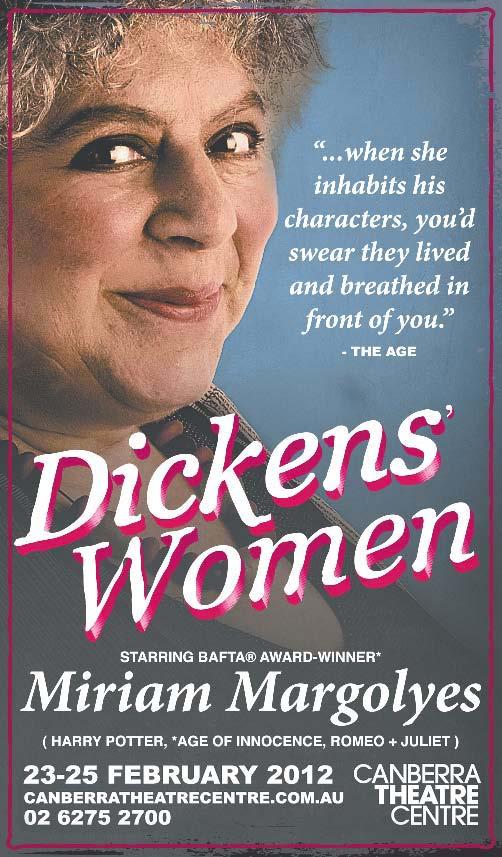
THE last time Canberra actor Adrian Flor had anything to do with the underworld, he was playing the charming gambler Sky Masterson in “Guys and Dolls”.
Now he’s back at it again in the more cynical role of criminal lawyer Billy Flynn in “Chicago”, the musical by John Kander, Fred Ebb and Bob Fosse set in the Jazz Age.
Flynn is the rogue attorney who makes his living by getting killers off and in this show, he teams up with the merry murderesses Roxie Hart and Velma Kelly.
Flor told “CityNews” he was “having so much fun in rehearsals”.
Free Rain Theatre director Anne Somes, choreographer Lisa Buckley and musical director Leisa Keen were all feeling so confident about the production that they took the whole cast out to the now-empty Quamby detention centre to get
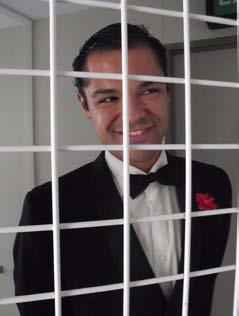
Adrian Flor... who plays smoothtalking lawyer Billy Flynn.
the feeling of what it was like to be behind bars.
Flor was just a little bit disappointed – it looked so squeaky clean. Not like the real Chicago at all.
“Chicago”, The Q, Queanbeyan, February 10-26. Bookings to 6285 6290.
from PhotoAccess to produce an exhibition of photography reflecting life in the Lanyon area. At 14 Foster Street, Queanbeyan, noon to 6pm, Wednesday-Sunday, until February 19.
NARELLE Phillips replaces Suzie Edwards as the new gallery co-ordinator for Tuggeranong Arts Centre. Phillips is a familiar face, having been gallery development officer at ANCA for nearly four years.
“NE W Horizons” marks an amazing 64 years of painting by members of Canberra Art Workshop and celebrates the move to its permanent studiohome at the fabulous M16 Artspace in Griffith, noon to 5pm, Wednesday-Sunday, February 4-12.
ANDREW Lorenz and Wendy Lorenz will perform a program on violin and piano that includes Martinu’s “Five Madrigal Stanzas for Violin and Piano” and Brahms’ “Sonata for Violin and Piano in G major, Op 78” at Wesley Music Centre, 12.40pm to 1.20pm, February 8. $2 or paper note entry.
OPERA Australia’s popular screenings at Greater Union Manuka continue with “Don Giovanni” on February 12 and 15. Baritone Teddy Tahu Rhodes plays the lascivious-but-doomed Don. Visit www.cinemalive.com for session times.






5
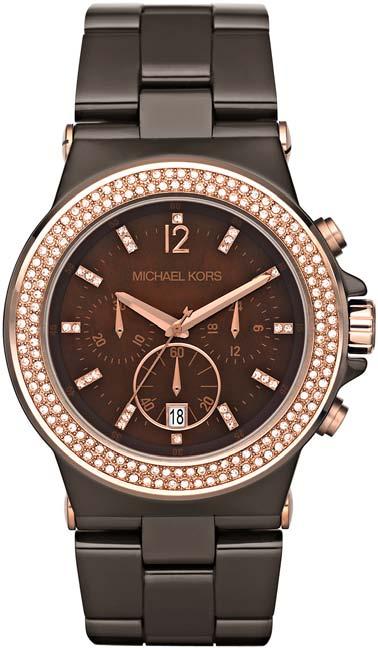
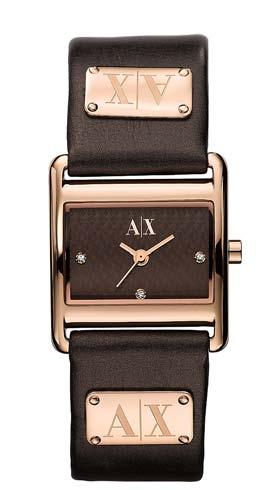
THIS season, make your timepiece chocolate, a rich and luxurious colour with added accents of rose gold to make your wrist candy look delicious. The mixed metal combinations of chocolate and rose gold are the must-have timepiece item in every wardrobe. Choose large, masculine styles to stay on trend.
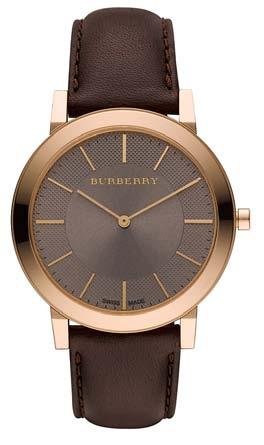
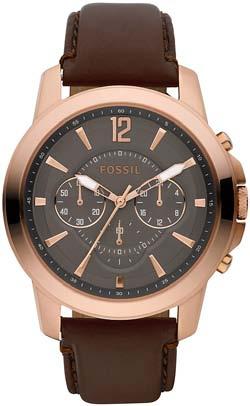
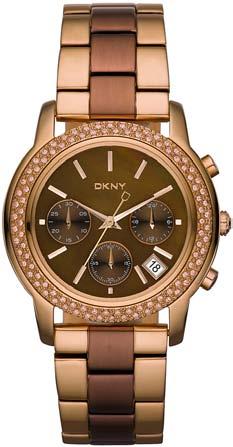
1. Michael Kors, $849, stockist: 1800 818 853 2. Burberry, $999. stockist: 1800 818 853 3. DKNY, $379, stockist: 1800 818 853 4. Armani Exchange, $179, stockist: 1800 818 853 5. Fossil, $189, stockist: 1800 818 853.
This week we’re loving...
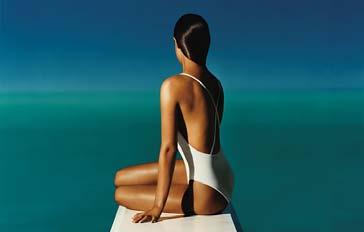
THE St Tropez Self Tan Bronzing Mousse is easy to apply and dries in 60 seconds. It’s infused with conditioning aloe vera for a long-lasting colour and depending on how much you apply, can give dark, dramatic results or a natural-looking glow. For the smoothest and sleekest results, prepare your skin by exfoliating with a body polisher. St Tropez Self Tan Bronzing Mousse is $39.95 for 120ml.
FOR an immediately elegant and chic look, NARS Joyous Red lipstick has a blend of conditioners and antioxidants to hydrate, nourish and protect lips for a long-wearing, full-coverage finish. François Nars says: “A red lip is always classic, and Joyous Red Lipstick is the perfect amber red that will update any look.” NARS joyous red lipstick is $45 from Mecca Cosmetica.
CELEBRITY stylist David Babaii’s Miracle Oil is a hair elixir that provides a conditioning treatment, colour protection, smoothing to reduce frizz and thermal protection. It contains exotic oils such as argan, sweet almond, Brazil nut, acai, pequi and immortelle essential oil. Miracle Oil contains no toxins, silicone, sulphates, parabens or petrochemicals, making it great for styling and finishing and providing a shine without the issue of chemical build-up or oily residue, which can be caused by silicone-based products. Miracle Oil Hair Elixir is $29.95.
Libby Hill reports
EVEN in summer almost 75 per cent of women don’t apply a sunscreen as part of their daily facial care routine, according to a new survey by Neutrogena.
In a study of 1000 Australian women aged 25-54 more than half admitted to not knowing anything about UVA. Even through clouds, 80 per cent of the sun’s rays pass through. UVA rays can even pass through glass, so when you’re sitting at your desk or in your car you’re still at risk of UV damage.
One of the easiest and most effective ways to help prevent sun damage is by wearing a moisturiser that incorporates a sunscreen in its ingredients.
“CityNews” has found some of the season’s best formulations that will nourish your skin and provide an excellent base for make-up, while protecting from sun damage.
1. Palmer’s Cocoa Butter Formula Daily Facial Lotion SPF 15, $12.99. 2. Skin Physics Cellugen Day SPF 15, $59. 3. Neutrogena Healthy Defence, $16.49. 4. Cetaphil UVA/UVB Defence SPF 30+, $19.45. 5. L’Oreal UV Perfect SPF 30, $17.95. 6. Hamilton Everyday Face Invisible Shield SPF 30+, $12.95. 7. Clarins UV Plus Day Screen High Protection SPF 30, $46. 8. L’Oreal Revitalift Day SPF 15, $30.95. 9. Estee Lauder DayWear Advanced MultiProtection Anti-Oxidant Creme SPF 15, $85.
THE first Fash ‘n’ Treasure market for 2012 is kicking off on Saturday, February 4, with a range of vintage, recycled and designer fashion stalls.
The market is held at the Old Bus Depot building in Kingston on the first Saturday of each month from 10am to 3pm.
As well as fashion there are stalls with collectable records, magazines, comics and books, food and coffee, and live music. More information at www. fashntreasure.com.au











STEPS and retaining walls are an extremely important part of the landscaping for the many homes creeping up the hills in outer areas of Canberra.
In response to reader requests, I am continuing the theme of landscaping aspects, having previously written about paths that tie in with steps in the garden.
I constantly see gardens’ steps far too narrow in width. Steps and paths ideally should be 1.2m or even preferably 1.5m wide. This enables two people to walk comfortably side by side.
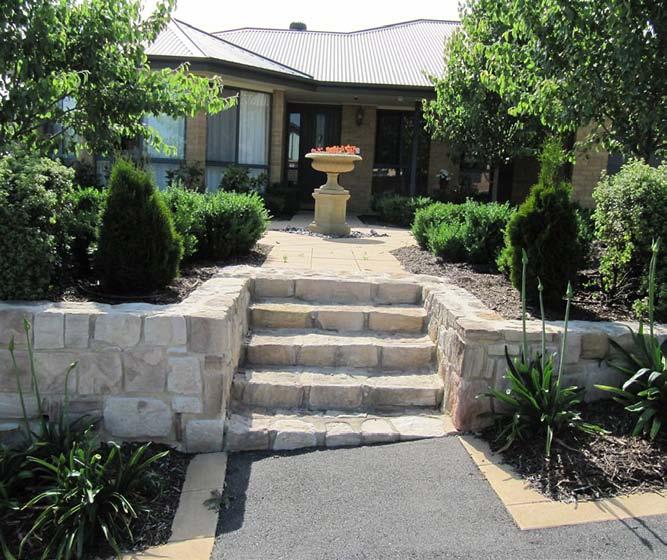
I have illustrated here three suggestions for materials for steps from stone to brick and slate, all of which are long lasting and remain stable, as opposed to timber steps, which can rot or warp with our extremes of climate.
When considering materials always consider that which is non-slip.
Materials such as pavers may look good in the glossy magazines or tile showrooms, but practicality and safety is vital. Particularly for the elderly or disabled people who may use the steps.
Equally important is the width of the tread and height of the step; how many times have you walked up steps in private gardens – or worse still in commercial buildings – with the tread far too narrow. Especially if you have big feet like me! Try negotiating a wheelbarrow or mower up or down those steps.
If you are building steps or engaging a builder or landscape contractor, make the tread a minimum of 36cm deep – or one and half bricks.
The height or riser of steps is bound by the building code and should be a maximum of 180mm or a minimum of 120mm.
I often use a 400mm x 400mm, non-slip, concrete paver such as are available from our local manufacturer Binks Pavers, of Mitchell, as the tread. This is an ideal size if the person is in any way disabled, such as using a walking frame.
Look at the design of the home and materials used. On one occasion, I was working on the garden of a home with large bay windows. I designed the steps to mirror the angles of the bay window facing the home and ascending to the raised garden and lawn. This in turn acted as a small amphitheatre and seating area when entertaining.
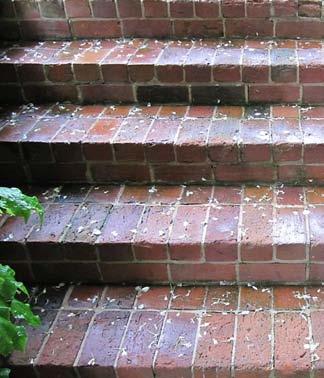
If
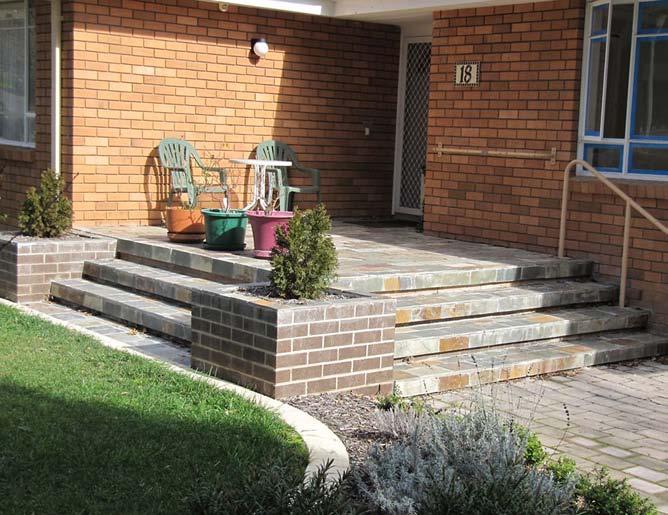
Slate... a very practical material for steps.
Paths and steps should preferably be the same width. Nothing looks more out of proportion than having a wide path and then narrow steps. Keep in mind not using too many materials and, if using stonework for the retaining walls, it is only natural to use stone for the steps to create a harmonious whole.
NEXT week marks my first year writing for “CityNews”. Twelve months ago, when I was no longer writing elsewhere, many readers thought I had retired. Nothing was further from the truth! I am still designing gardens and providing advice, talks to many organisations (besides garden clubs) and involved in everything gardening.
Now the holidays are over...
all plants in the garden with organic plant nutrients such as
Dead-head roses to encourage a flush of late summer/autumn blooms.
Black spot on your roses? Spray with Multicrop Kocide Blue Xtra, an organic copper spray for black spot, leaf curl, downy mildew and more.
Trim lavenders to remove old flower spikes and encourage new growth.
Raspberries fruit on the previous season’s canes. Once they have finished fruiting prune the old canes to ground level and tie in fresh new canes off the ground which will flower and fruit the following season. Remove any dead or weak shoots.





Before you list, insist on +