This CWRP has been prepared for the City of Kamloops PLAN AUTHOR
TRAINING
DATE SIGNED
I certify that the work described herein fulfills the standards expected of a registrant of the Forest Professionals British Columbia and that I did personally supervise the work
REGISTERED PROFESSIONAL FORESTER SIGNATURE & SEAL
SIGNATURE PAGE
Ken Uzeloc
Protective Services Director /Fire Chief
February 7, 2025
Date
Kamloops Fire Rescue
February 7, 2025
Date
Ryan Cail
Deputy Fire Chief
Kamloops Fire Rescue
Kathleen Cahoon
FireSmart Liaison
City of Kamloops
Kirsten Wourms
Crew Leader Natural Resources Parks
City of Kamloops
February 7, 2025
Date
February 7, 2025
Date
LIST OF FIGURES
Figure 1. Map of the neighbourhoods within the City of Kamloops. 47
Figure 2. The City of Kamloops Area of Interest and Eligible 1 km Wildland Urban Interface map. 48
Figure 3. Map of critical water infrastructure and resources within the City of Kamloops...................56
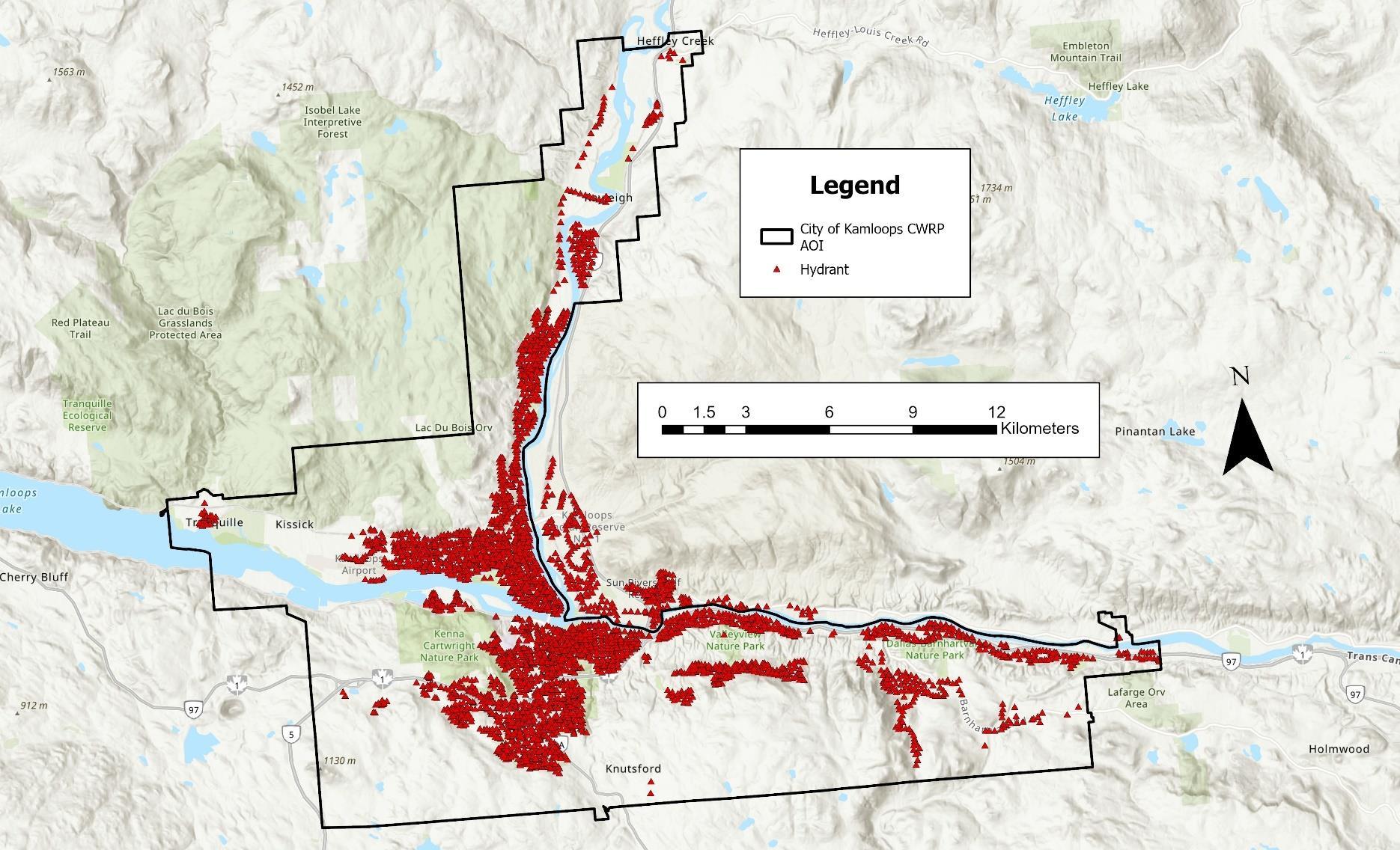
Figure 4. Map of fire hydrant location around the City of Kamloops...................................................57
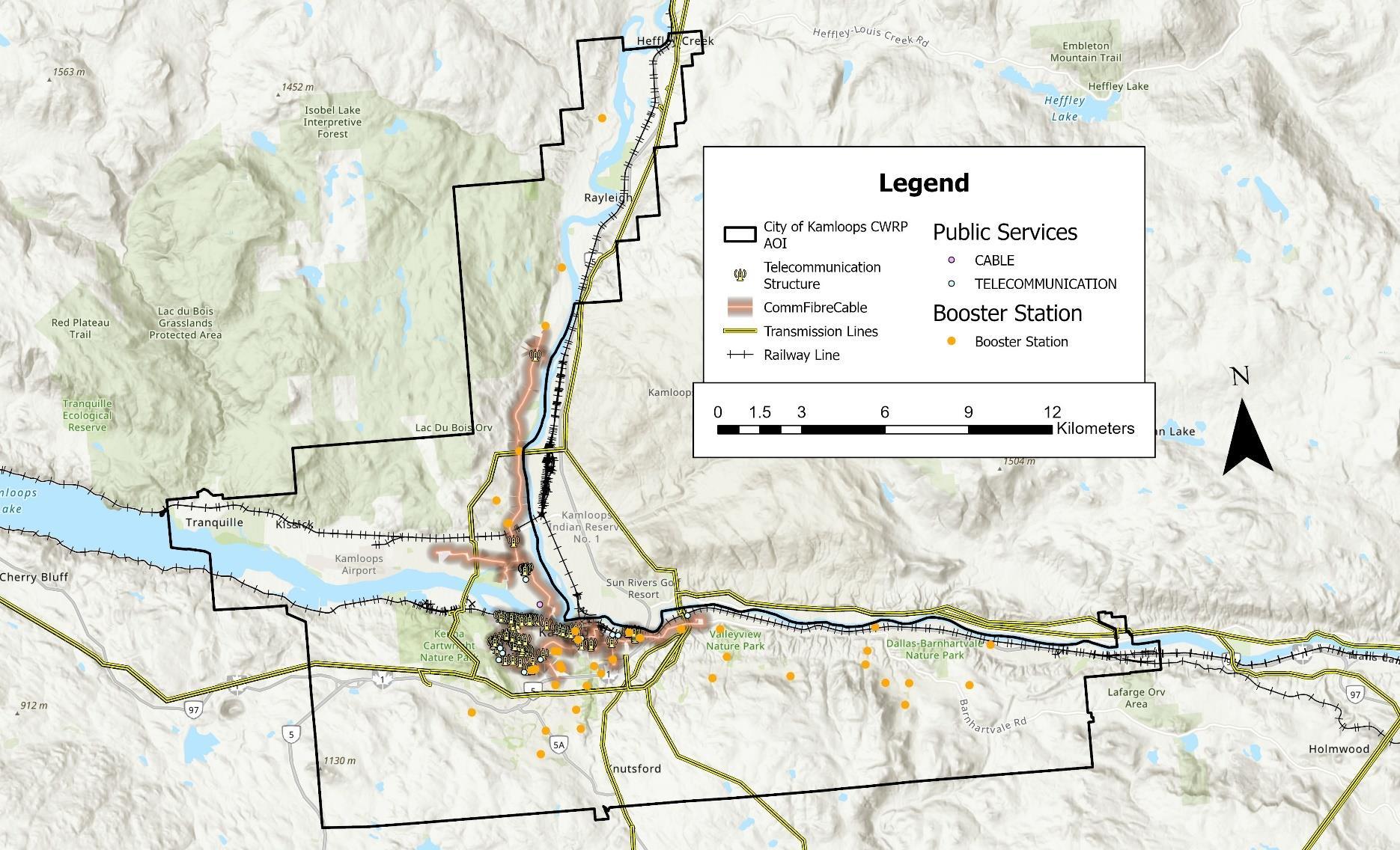
Figure 5. Map of critical electrical and communication infrastructure within the City of Kamloops. 58
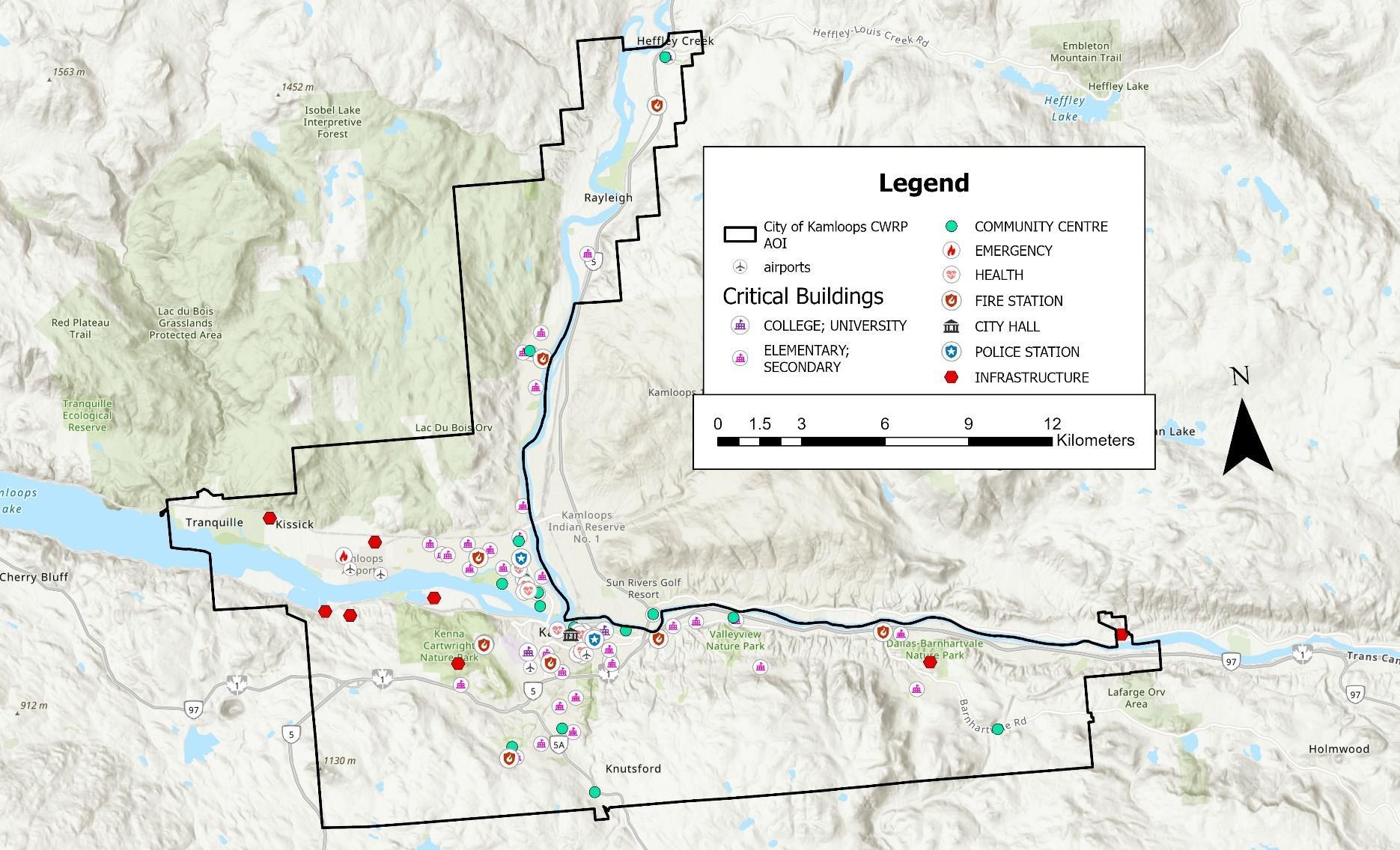
Figure 6. Map of critical buildings and structures within the City of Kamloops. 59
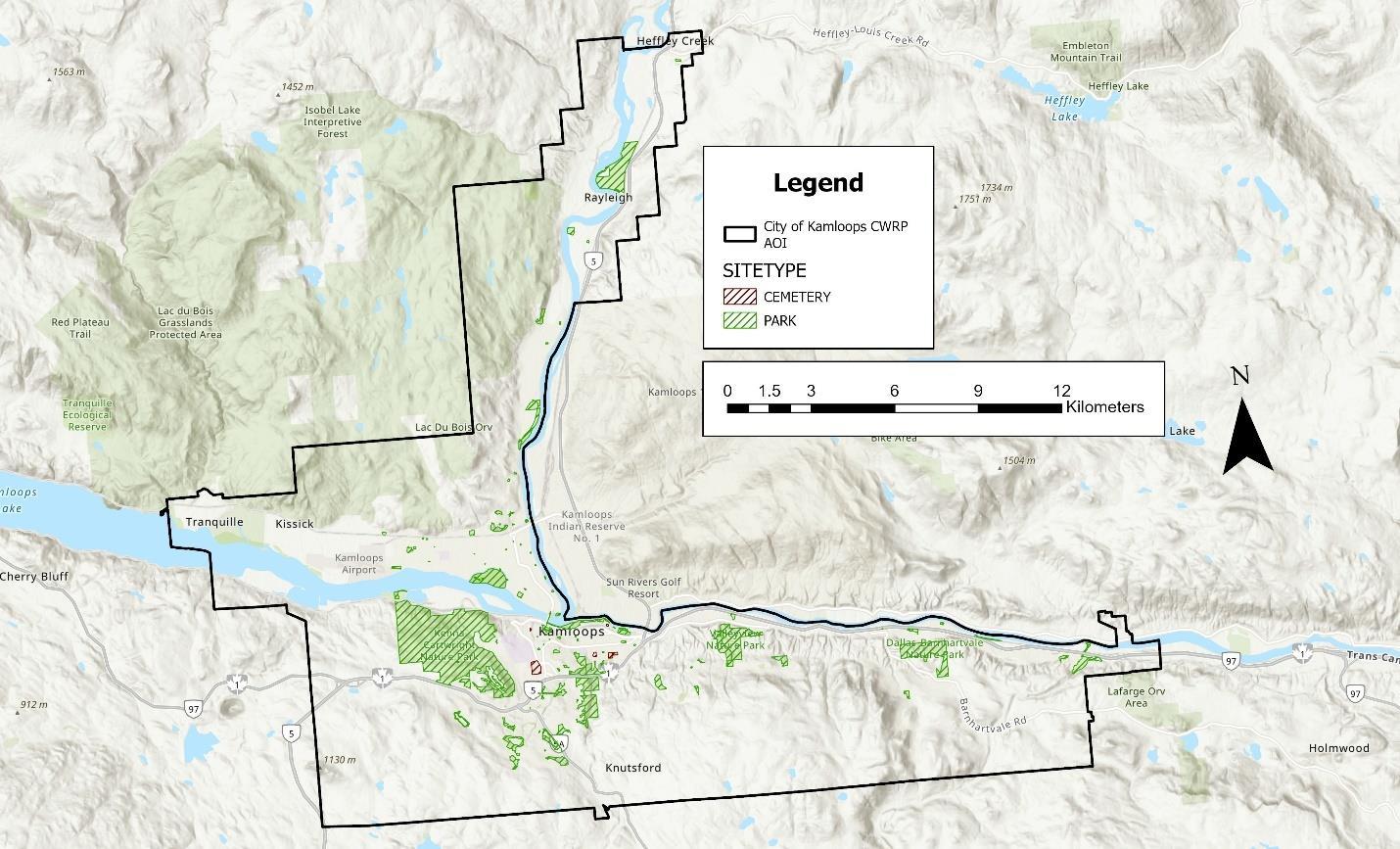
Figure 7. Map of City of Kamloops Green Spaces. ...............................................................................62
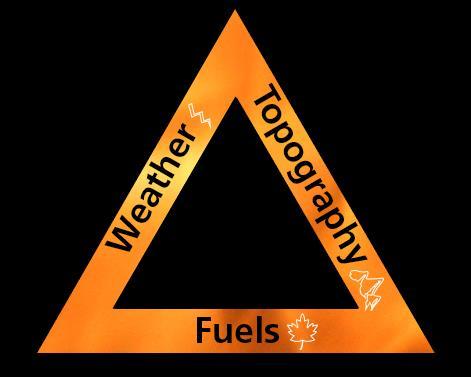
Figure 8. The fire triangle – interacting components that drive a wildfire 65
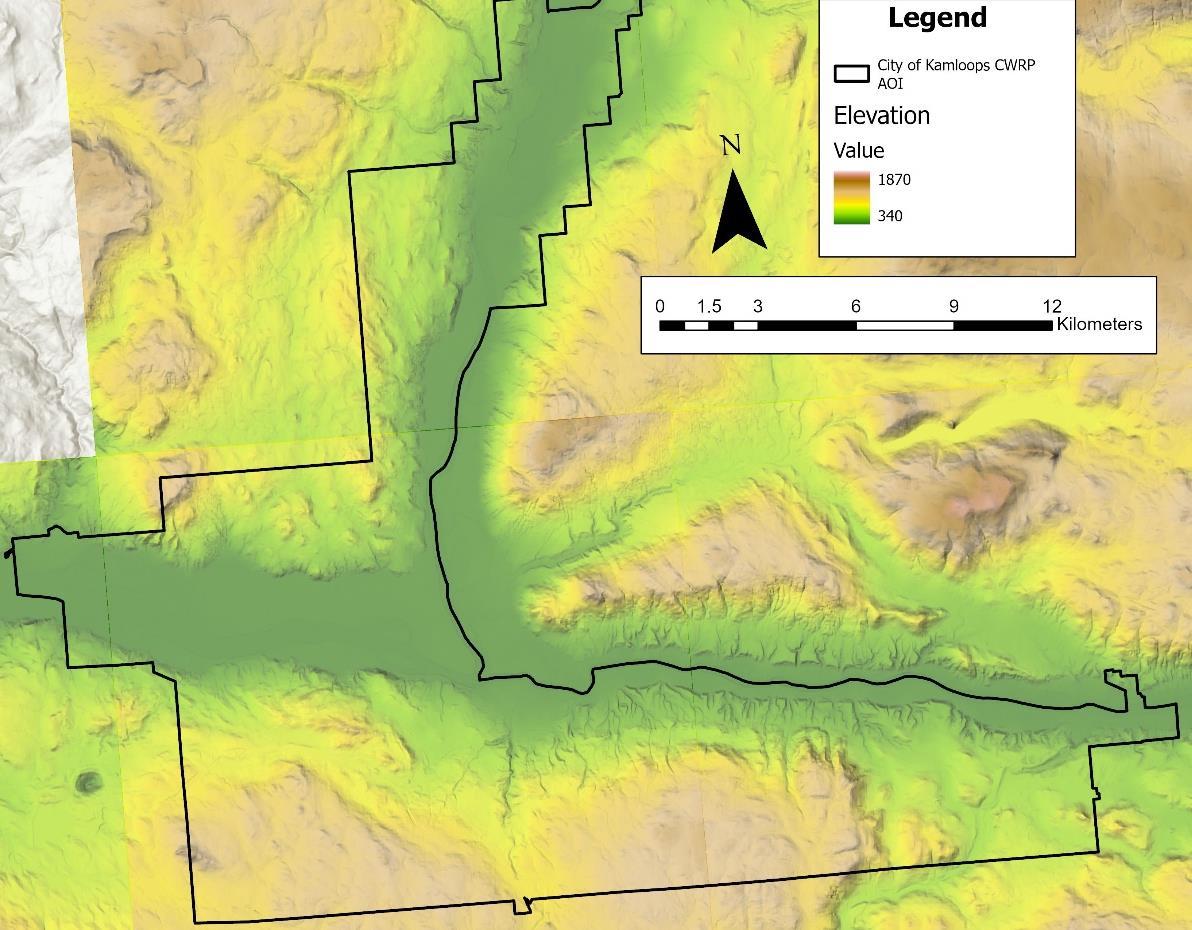
Figure 9. Digital Elevation Map (DEM) of the City of Kamloops Area of Interest. 66
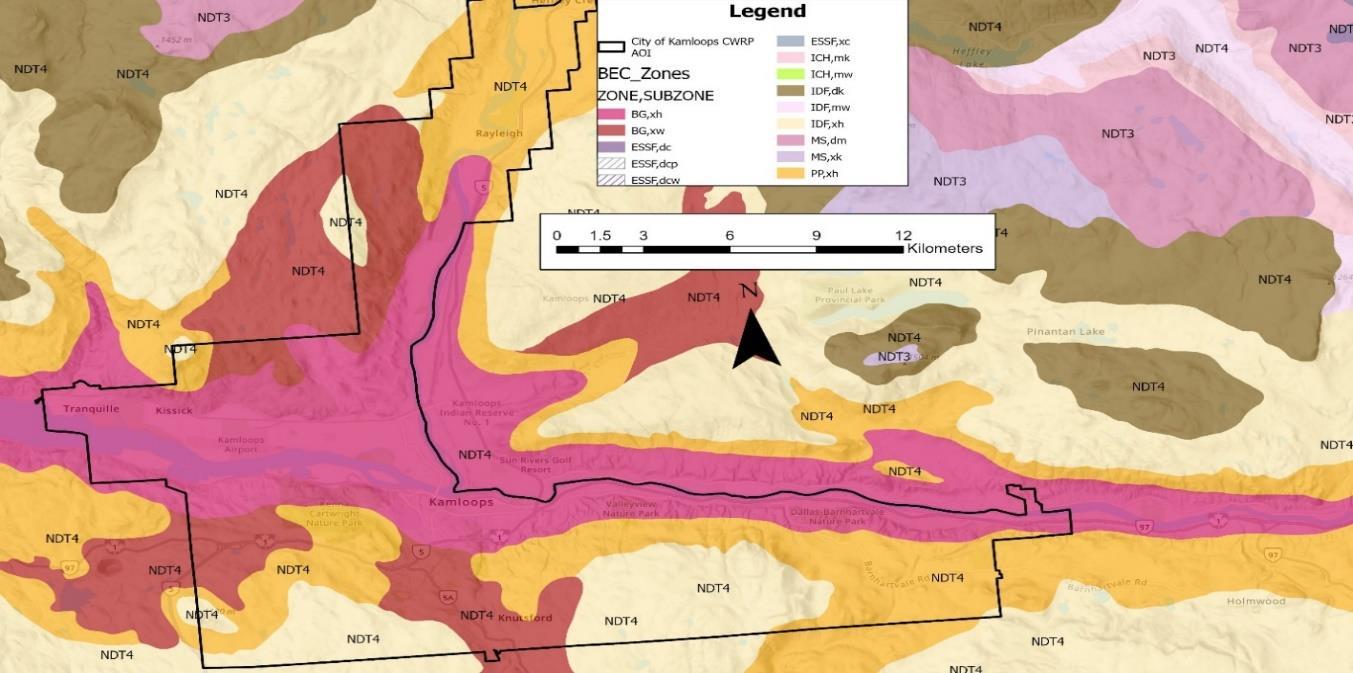
Figure 10. Biogeoclimatic (BEC) Zones and their associated Natural Disturbance Types (NDT). 68
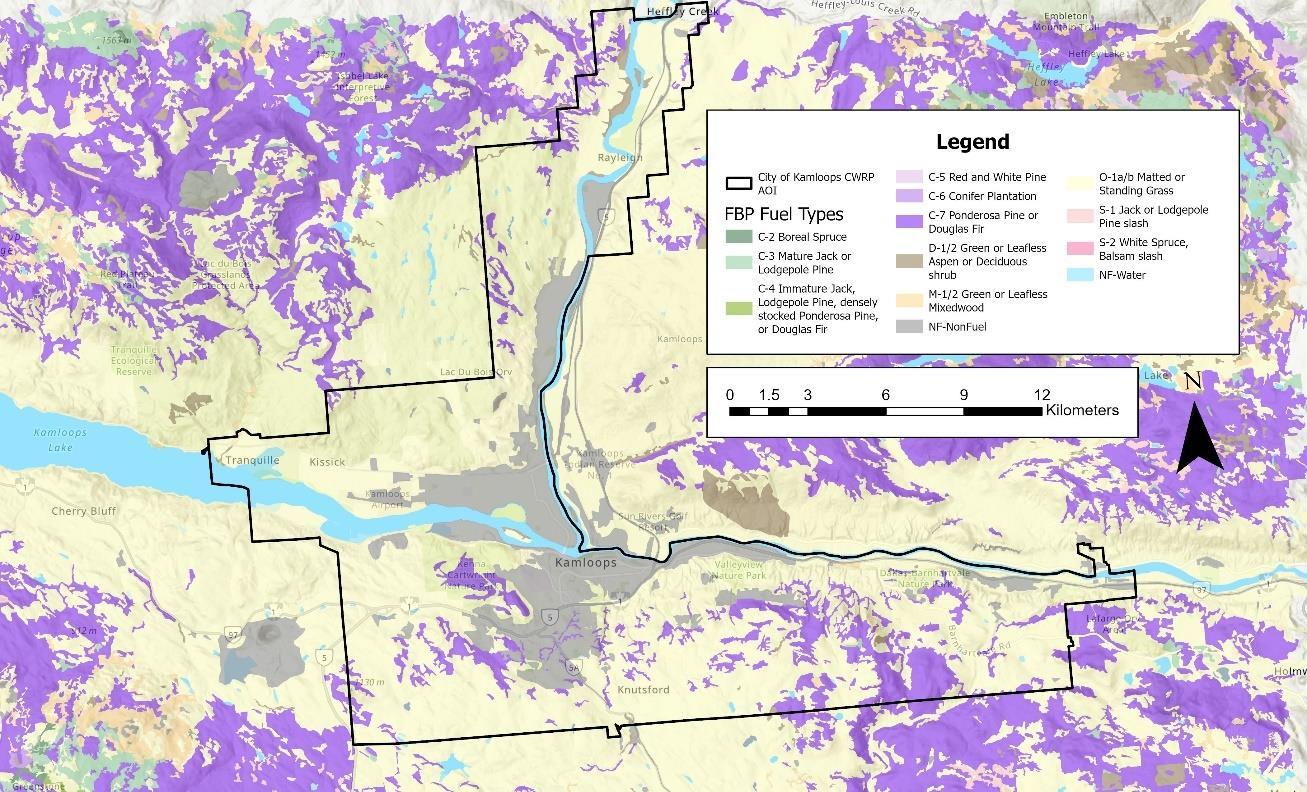
Figure 11. FBP Fuel Type map for the City of Kamloops. .....................................................................71
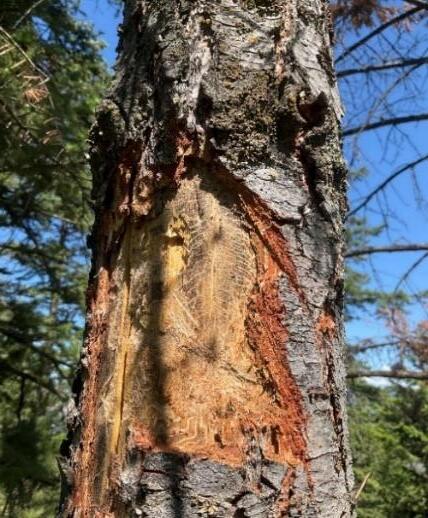
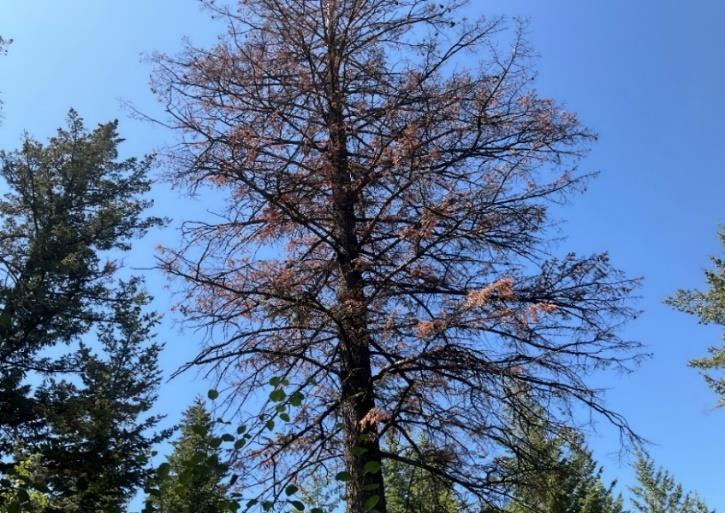
Figure 12. Left: Douglas-fir beetle galleries identified in a Douglas-fir tree during field work. Right: Douglas-fir tree in the 'red attack' phase.............................................................................................72
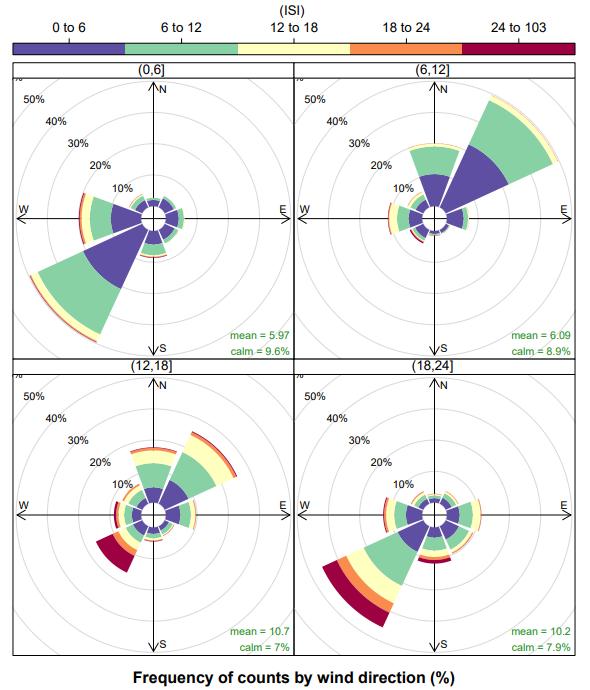
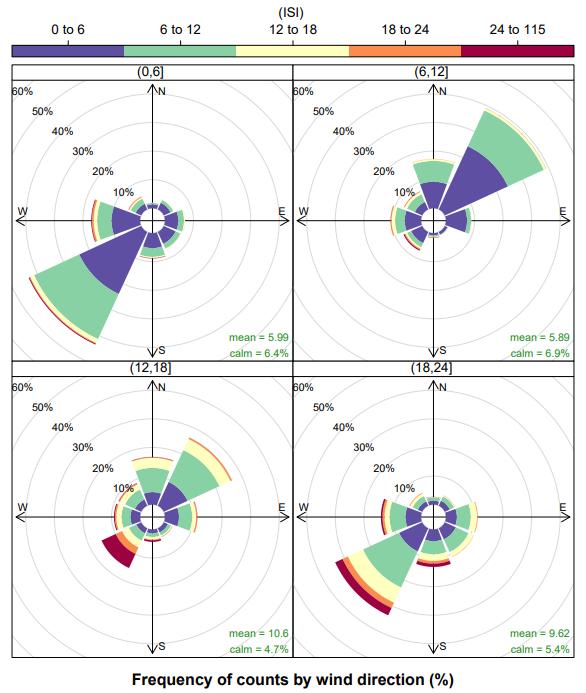
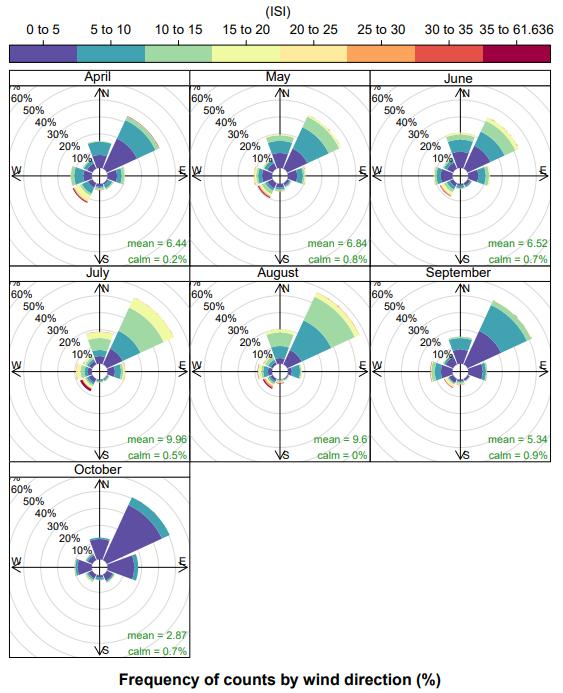
Figure 13. Initial Spread Index (ISI) Rose for the Afton weather station observations between 19962015. July hourly averages (top left), August hourly averages (top right), and Monthly averages (bottom). Hourly averages are binned into periods of six hours (00:00-06:00, 06:00-12:00, 12:0018:00, 18:00-24:00) ...............................................................................................................................74
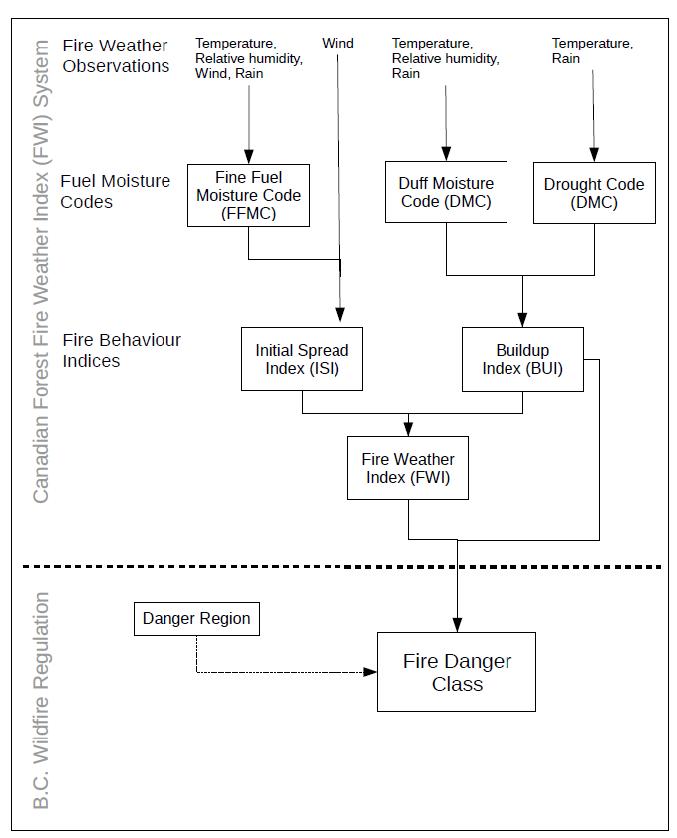
Figure 14. Fire danger Class methodology flowchart from the Canadian Forest Fire Danger Rating System (CFFDRS)...................................................................................................................................75
Figure 15. BC Wildfire Service Afton weather station Danger Class 4 and 5 graph (2016-2023). 76
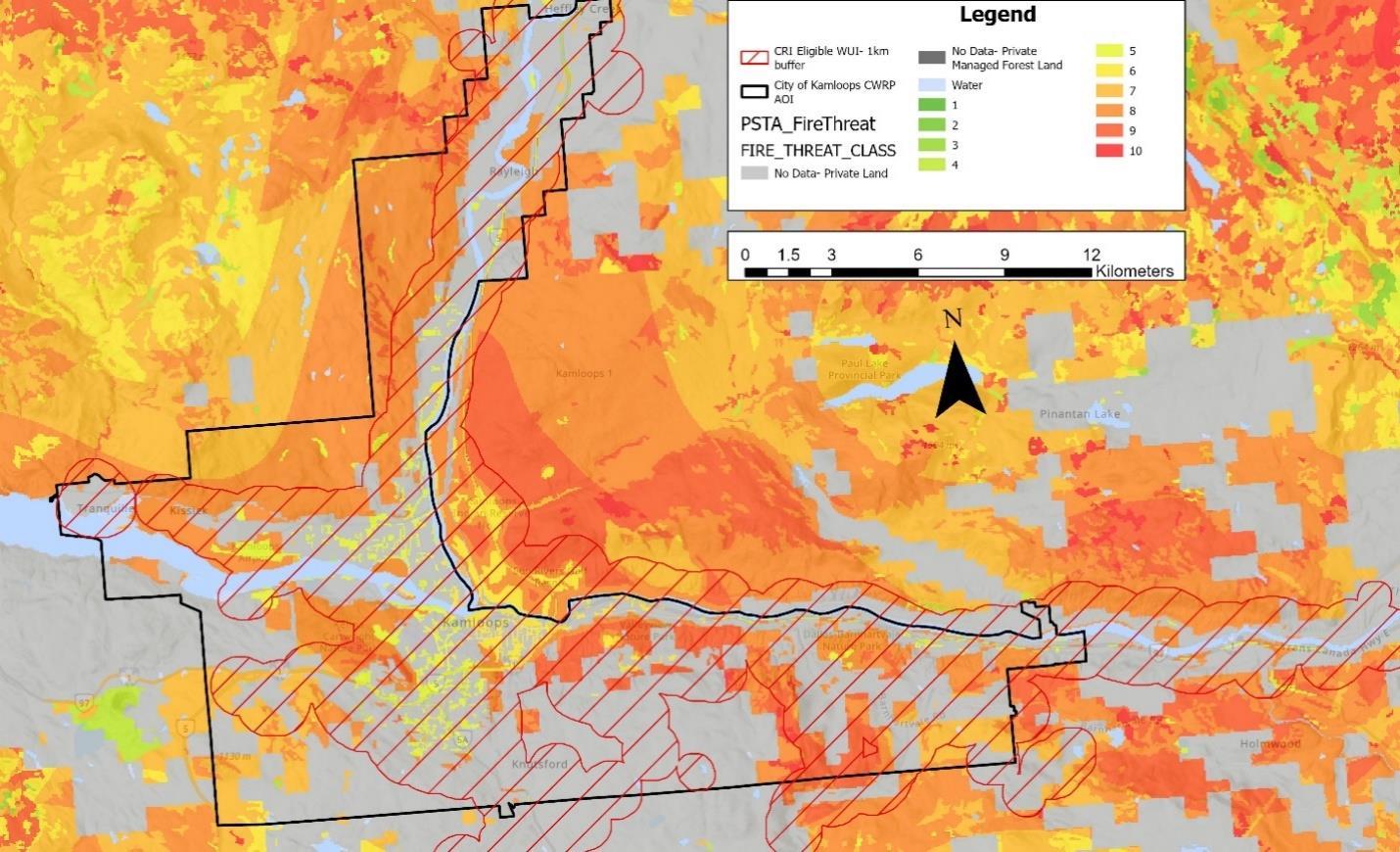
Figure 16. PSTA Fire Threat class for the City of Kamloops. 81
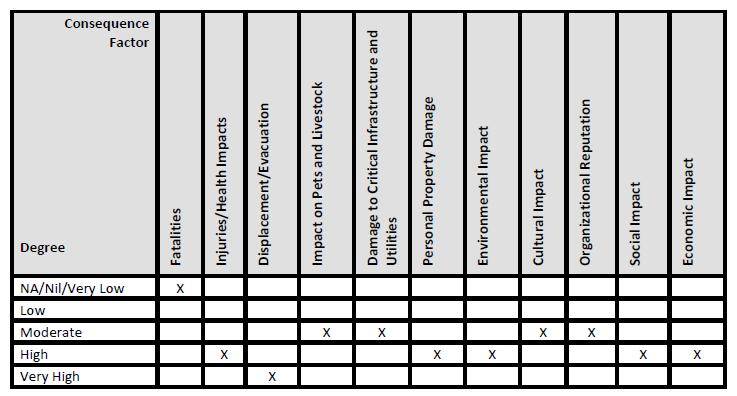
Figure 17. Consequence estimate for interface wildfire in the City of Kamloops. 82
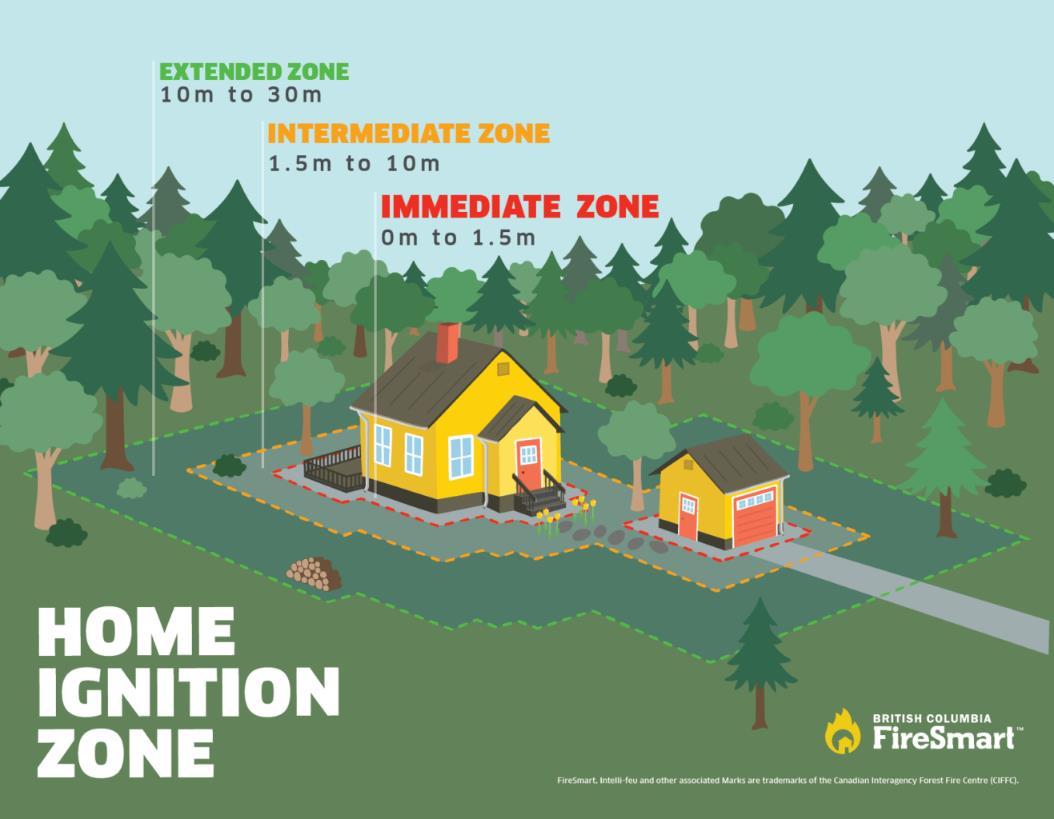
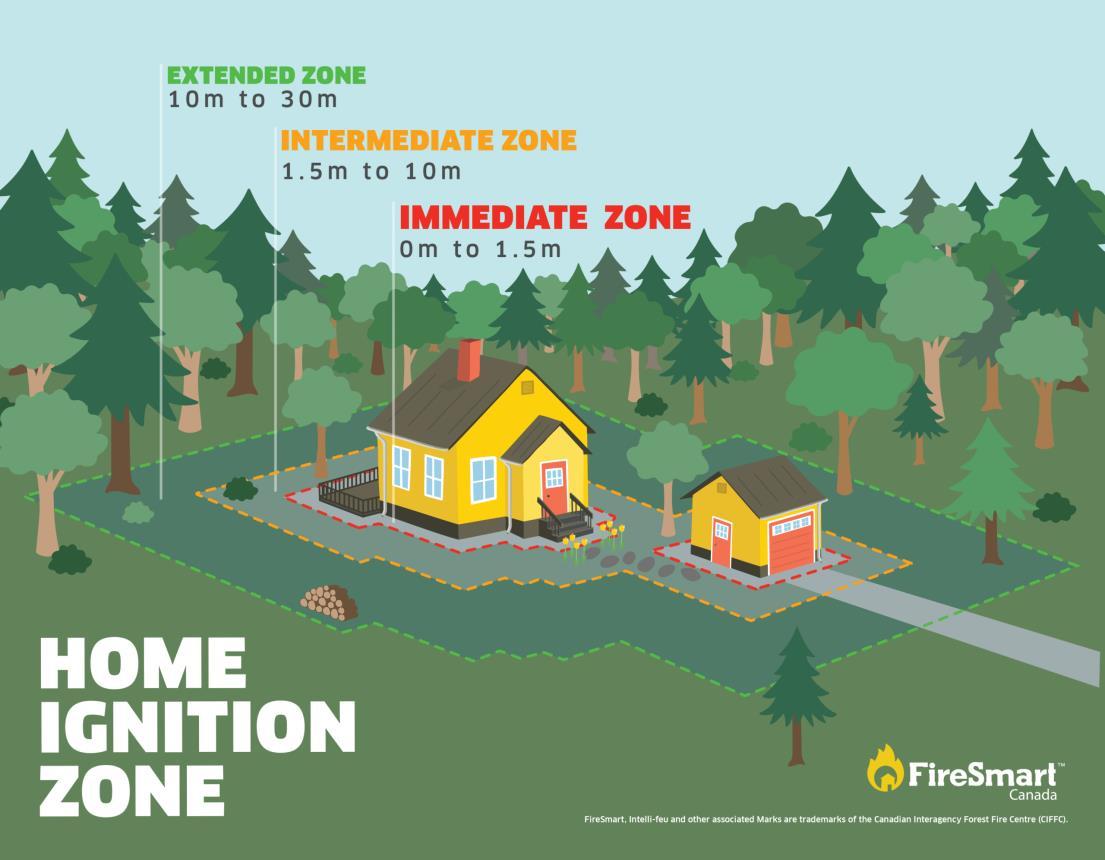
Figure 18. FireSmart Home Ignition Zone, which is comprised of three priority zones, as illustrated in the BC FireSmart Begins at Home Manual. 92
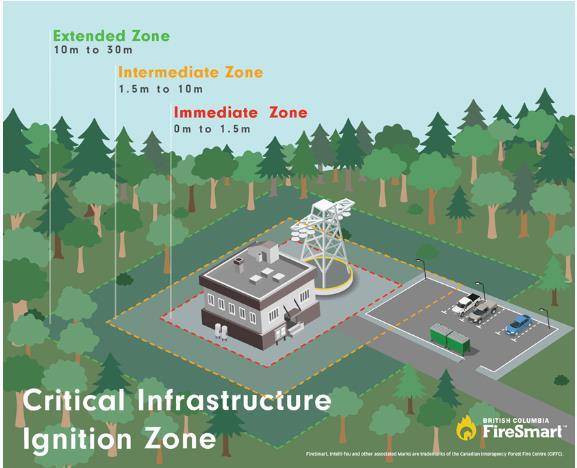
Figure 19. FireSmart Critical Infrastructure Ignition Zone graphic including the three ignition zones. ............................................................................................................................................................100
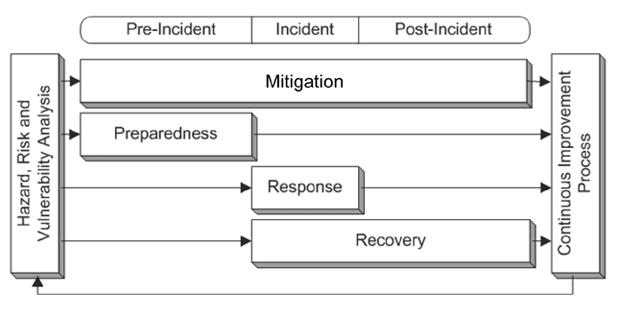
Figure 20. Emergency management is a four-phased, interconnected approach. Image credit: Province of BC. 107
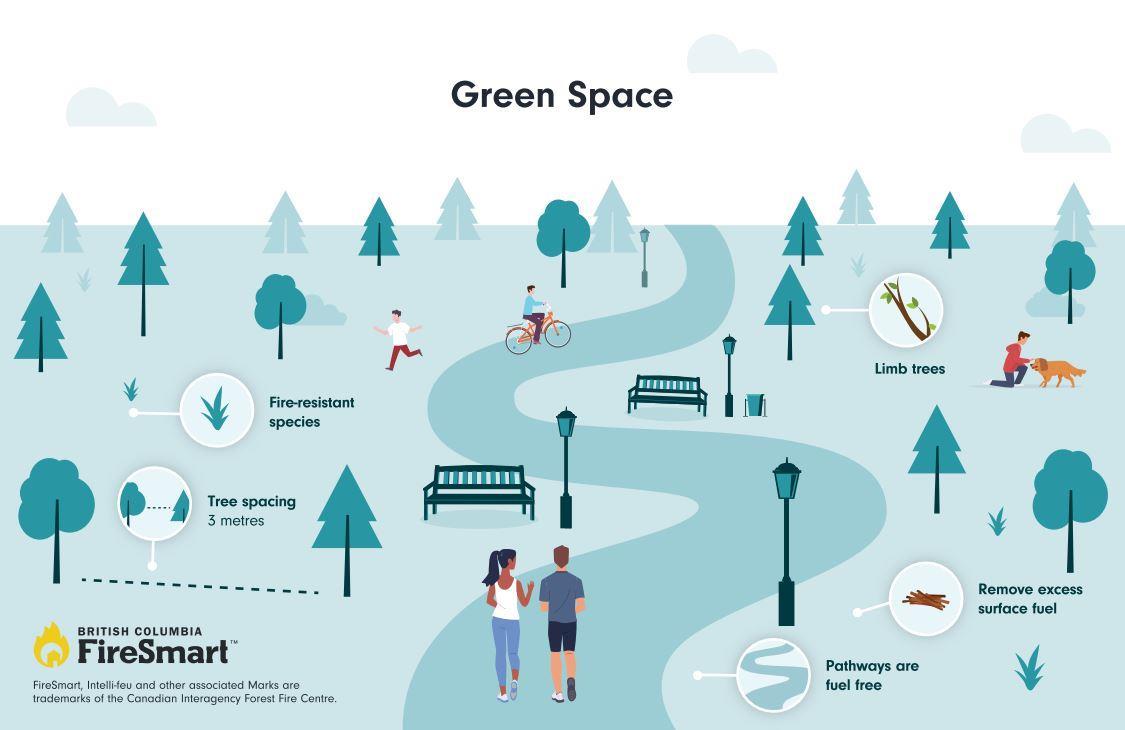
Figure 21. FireSmart Green Space Infographic. 113
Figure 22. FireSmart Home Ignition Zone, which is comprised of four priority zones, as illustrated in the BC FireSmart Begins at Home Manual 131
LIST OF TABLES
Table 1: Key Plans and Relationship to CWRP 39
Table 2. Key Bylaws and Relationship to CWRP 46
Table 3: Community profile for the City of Kamloops, comparing 2018 to 2021 statistics..................49
Table 4. Fire Station Locations and Deployment Models for Kamloops Fire Rescue. 54
Table 5. Red and blue listed species found in the City of Kamloops. 63
Table 6. Fuel types within the City of Kamloops AOI. This includes BEC variants, natural disturbance regimes, and FBP fuel types. 67
Table 7. Canadian Fire Behaviour Prediction (FPB) System Fuel Types present within the City of Kamloops AOI.......................................................................................................................................70
Table 8. Weather station information for the Afton BC Wildfire Service..............................................73
Table 9. The five Fire Danger Classes and the general description of how a fire would burn in this class. 76
Table 10. Summary of Fire Danger Class 4 and 5 days from BC Wildfire Service Afton weather station (2016-2023). 77
Table 11. Summary of projected changes in average (mean) temperature and precipitation in the Thompson-Nicola region from the historical baseline (1961-1990) to the 2050s (2040-2069). 78
Table 12. Historical lightning and person caused fires for the City of Kamloops and surrounding area. 79
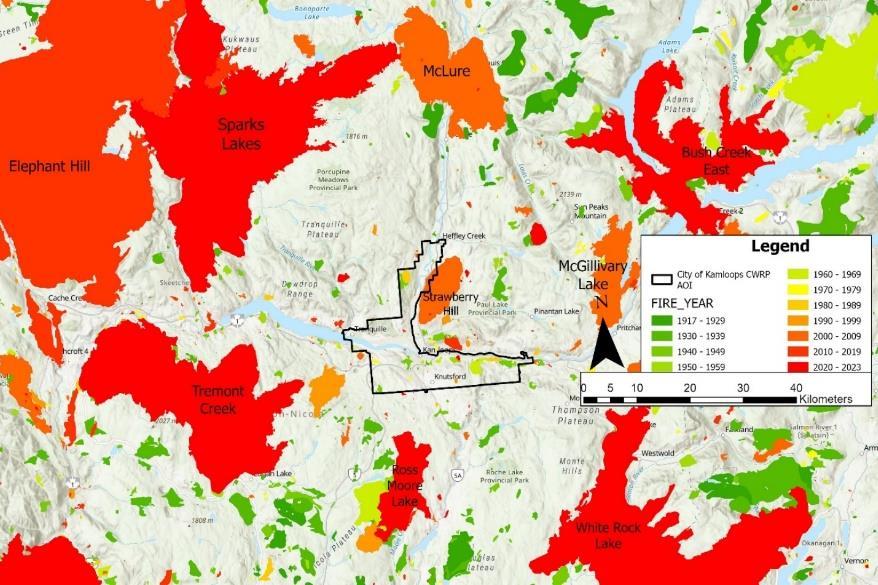
Figure 13. Historical fires that have occurred within and around the City of Kamloops since 1917. The larger fires occurring within 50 km around the city include Rossmore Lake, Bush Creek East, White
Rock Lake, Tremont Creek, Elephant Hill, Sparks Lake, McLure, Strawberry Hill, and McGillivary Lake wildfires. 79
Table 14. PSTA Fire Threat class and associated areas for the City of Kamloops WUI and AOI. 80
Table 15. Summary of the Wildfire Threat Assessments completed throughout the 1 km eligible Wildland Urban Interface within the City of Kamloops Area of Interest. 84
Table 16. Example of a pre-incident planning checklist. ....................................................................109
Table 18. Summary of Fuel Management Treatment Units in the City of Kamloops 114
Table 19. Proposed fuel treatments within the City of Kamloops AOI. 116
Table 20. City of Kamloops monitoring, tracking and update summary............................................128
ACKNOWLEDGMENTS
We would like to thank the individuals at the City of Kamloops for the time, effort, and feedback during the completion of this report. The Community Wildfire Resiliency Plan requires meaningful input from the community for this plan and the recommendations for this plan to be successful and make an impact on wildfire resiliency. We acknowledge the following for their assistance and support during the completion of the plan:
• Kristen Wourms, Natural Resource Crew Leader, City of Kamloops
• Kathleen Cahoon, FireSmart Liaison, City of Kamloops
• Ryan Strank, GIS Technician, City of Kamloops
• Ryan Cail, Deputy Fire Chief, Kamloops Fire Rescue
• Vanessa Purves, Prevention Specialist, BC Wildfire Service
• Julie Maxwell, Land and Resource Specialist, Wildfire Risk Reduction
This report was completed with the support from the following staff from Forsite Consultants Ltd:
• Madison Hughes, FIT, AAg, Fuel Management Technician, Report Preparation
• Adam Sullivan, RPF, Planning Forester, Project Manager
The City of Kamloops Community Wildfire Resiliency Plan (CWRP) assesses and identifies wildfire threats and vulnerabilities to the city and recommends actions that will help to increase overall community wildfire resiliency. As with many other parts of British Columbia, the City of Kamloops is situated within an active fire environment. In recent years Kamloops has been surrounded by large, recorded-breaking fires, and has been the center for emergency response. Wildfire resiliency, prevention, and mitigation should be a central focus of the community as fire seasons continue to worsen.
In addition to identifying areas of highest wildfire threat and risk within and adjacent to the City of Kamloops, this plan is intended to support the city and help provide better understanding of the seven FireSmart disciplines and how they contribute to wildfire mitigation actions at numerous levels.
The CWRP action plan includes the recommended actions intended to reduce the overall wildfire risk and strengthen overall wildfire resiliency. The City of Kamloops needs to lead and initiate these actions to effectively meet the objectives listed under each FireSmart discipline. The City should work to be a role model in FireSmart and wildfire resiliency as one of the lead cities in the province for wildfire emergency response.
The City of Kamloops will continue to face serious wildfire pressures, made worse by the effects of climate change. Maintaining a proactive focus on wildfire prevention and mitigation efforts and continuing to build upon current progress levels will enable the community’s residents to continually find ways to live safely in an active wildfire environment.
1. Read and understand the CWRP’s identified risk and recommended actions.
2. Share the CWRP on the Kamloops Wildfire Preparedness website.
FireSmart Liaison
City of Kamloops CWRP Action Plan
Very High Immediately
FireSmart Liaison
Very High Immediately
City of Kamloops 2025 CWRP
City of Kamloops 2025 CWRP
Read and understand the CWRP recommended actions.
N/A
The CWRP and associated information is uploaded to the Kamloops Wildfire Preparedness website.
The CWRP is a public document that should be made publicly available for community members to understand FireSmart, the wildfire environment within Kamloops, and what actions the City of Kamloops will be taking for mitigation and prevention work.
3. Promote FireSmart information and wildfire preparedness through social media and communication tools. FireSmart Liaison, Communications and Community Engagement Division
City of Kamloops CWRP Action Plan
Very High Ongoing
Access to webpages, access to FireSmart resources, CRI funding
From May 1 to September 30, average four posts a month regarding FireSmart material.
Use the FireSmart Social Media Handbook as guide for best practices.
Funding is available through the CRI program for promotion and distribution of FireSmart education resources, such as FireSmart 101, Wildfire Risk Reduction Basics, FireSmart Canada Ambassador training, FireSmart Begins at Home app, social media and FireSmart BC materials.1
1 For more information regarding funding opportunities, please refer to the 2025 FCFS Application-based Funding – Program and Application Guide
City of Kamloops CWRP Action Plan
4. Promote the Kamloops FireSmart program and disseminate information at current and future Kamloops community events to attract more people. FireSmart Liaison, Communications and Community Engagement Division Very High Ongoing
Access to webpages, access to FireSmart resources, CRI funding
Increase event attendance. This will vary per event as some may target specific neighbourhoods or the community as a whole.
Percentages of population targets should be set for each event.
The City of Kamloops has recently struggled to get participation in community events from residents. A new strategy should be developed to informed residents of ongoing events and get additional participation.
5. Hold an annual FireSmart event/open house to introduce concepts to community members and educate them on actions they can take on their properties to reduce wildfire risk. This could be a specific Wildfire Community Day in May prior to wildfire season.
FireSmart Liaison, Kamloops Fire Rescue
City of Kamloops CWRP Action Plan
Very High 2025-2030
Participation from community, participation from other agencies, location to hold event, CRI funding
Hold events annually in the spring and/or fall.
Hosting an event is an excellent opportunity to solicit participation from local community and for Kamloops Fire Resuce to engage and provide education for community. Look to solicit help from other agencies such as BCWS, and TNRD to host larger group events.
See Wildfire Community Preparedness Day, Farm and Ranch Wildfire Preparedness Workshop, and a Neighborhood Champion Workshop for resources.
6. Provide link to FireSmart 101 Course on Kamloops FireSmart webpage. This course is free and takes approximately one hour to complete.
7. Continue to offer free FireSmart home and property assessments on private property.
City of Kamloops CWRP Action Plan
FireSmart Liaison Very High Immediately FireSmart 101 Course FireSmart 101 course is uploaded onto the Kamloops FireSmart webpage. N/A
FireSmart Liaison High Ongoing
CRI funding Residents are requesting and getting assessments completed. Funding is available per the 2025 FCFS Applicationbased Funding– Program and Application Guide.
8. Support the FireSmart BC Education Program through School District No. 73 (Kamloops –Thompson).
FireSmart Liaison, School District No. 73 representative
City of Kamloops CWRP Action Plan
Moderate Ongoing
Relationship with School District No. 73, CRI Funding
Program is adopted by the 2025/2026 school year. This program includes promotional materials for contests, banners, and targeted education events at schools to promote the education program curriculum.
Funding is available per the 2025 FCFS Applicationbased – Program and Application Guide.
9. Encourage neighbourhoods to apply for FireSmart Canada’s Neighbourhood Recognition Program. Once recognized, annually renew for FireSmart Recognition. FireSmart Liaison
City of Kamloops CWRP Action Plan
CRI funding, Neighbourhood Champion and Local FireSmart Representative (LFR)
Have a minimum of one neighbourhood recognized by the end of 2026.
The program focuses on bringing neighbors together to address threats on their respective properties. For more details regarding FireSmart Canada Neighborhood Recognition Program and steps, towards recognition status please see here.
Funding is available per the 2025 FCFS Applicationbased – Program and Application Guide.
10. Ensure appropriate signage is in place for highly visible fuel-management activities. FireSmart Liaison, Parks and Street Section
City of Kamloops CWRP Action Plan
High Ongoing as fuel management is completed
Signage for before, during, and after fuel management activities are completed
Signage is in place before, during, and after fuel management work.
Signage should be located in a highly visible location at the start of trail heads. It should alert community members of what the current activities are and how they will reduce wildfire risk and threat.
Objective
City of Kamloops CWRP Action Plan
Legislation and Planning
11. As legislation is changed (Official Community Plan, bylaws, policies) incorporate FireSmart objectives, language, and terminology. Legislative Services, FireSmart Liaison High Ongoing
CRI funding Bylaws, policies, and, Official Community Plan reflects FireSmart principles.
Funding is available through the 2025 FCFS ApplicationBased Funding– Program and Application Guide to amend Official Community Plans and bylaws to incorporate FireSmart principles.
12. Amend the Fire Prevention Bylaw to incorporate a wildfire risk reduction section. This section should outline requirements for private property owners to upkeep vegetation and meet specific risk reduction targets around structures on private property. This section can also outline requirements for fuel management on municipal and Crown lands.
Legislative Services, FireSmart Liaison, Kamloops Fire Rescue
City of Kamloops CWRP Action Plan
High By end of 2026
Access to bylaw amendment, time with City Council to get amendments approved, CRI funding
New wildfire risk reduction section is added to Fire Prevention Bylaw No.10-37.
Currently, the Fire Prevention Bylaw outlines the different uses of fires and rules to prevent structural fires. However, the bylaw does not have any requirements or enforcement tactics to require community members to upkeep vegetation, structures, and property to prevent wildlife fire risk. A wildfire risk reduction section in this bylaw will allow the municipality to enforce a standard a fuel management and FireSmart principles on properties within the community.
13. Amend the Building Regulations
Bylaw to create requirements for FireSmart material to be used on new houses, and requirements for new developments to create FireSmart properties prior to any resident living on the property. An additional amendment to this bylaw should encourage people to use FireSmart materials on their home as properties are renovated and upgraded.
Legislative Services, FireSmart Liaison
High By end of 2026
Access to bylaw amendment, time with City Council to get amendments approved, CRI funding
Amendment to the Building Regulations
Bylaw that outlines requirements for FireSmart building materials.
This amendment to the Building Regulations Bylaw will allow the City to enforce the use of FireSmart building materials on newly developed houses, allowing properties to be FireSmart prior to any residents living in the house. This will set the community up for successful wildfire risk reduction within and surrounding the community from the start.
14. Establish a Wildfire Development Permit Area for wildfire protection on new developments and buildings within the identified interface areas to require fire resistant landscaping, FireSmart building materials, fuel management/ wildfire risk reduction treatments on lands that will become public, and other FireSmart considerations.
Legislative Services, FireSmart Liaison, Kamloops Fire Rescue
City of Kamloops CWRP Action Plan
Moderate By the end of 2030
Access to bylaw amendment, time with City Council to get amendments approved, CRI Funding
New Wildfire Development Permit Areas are established throughout the municipality where wildfire risk is the highest.
Funding is available through the 2025 FCFS Applicationbased – Program and Application Guide to amend Official Community Plans and bylaws to incorporate FireSmart principles.
See the FireSmart Wildfire Development Permit Areas guide.
15. Use the FireSmart Critical Infrastructure Guide and Hazard Assessment Form to assess critical infrastructure vulnerability to wildfire in the AOI.
16. Complete the mitigation actions recommended from the Critical Infrastructure Hazard Assessment to reduce vulnerability of the critical infrastructure to wildfire in the AOI.
FireSmart Liaison
City of Kamloops CWRP Action Plan
High 2026 – 2027
FireSmart HIZ
Assessment, FireSmart Critical Infrastructure
Assessment, FireSmart Wildfire Mitigation program
Assessment, CRI funding
All eligible infrastructure is assessed.
Funding is available for assessment of structures via the 2025 FCFS Applicationbased – Program and Application Guide.
FireSmart Liaison
High 2027 – 2029 CRI funding, materials, and labour
Complete recommended mitigation activities on top five priority structures by the end of 2030.
Costs to cover eligible structures, including building materials and labour, is available per the 2025 FCFS ApplicationBased Funding – Program and Application Guide.
17. Implement a FireSmart Rebate Program that gives an incentive to private property owners to participate in the City of Kamloops FireSmart program.
FireSmart Liaison
City of Kamloops CWRP Action Plan
Funding Rebates provided to eligible activities. Rebates are limited to a certain percentage of the total cost of the eligible activities and up to set amount per property of the 2025 FCFS Applicationbased – Program and Application Guide. This program offers an incentive to residential property owners to complete FireSmart activities.
18. Work with local plant stores to promote residents to purchase native FireSmart species. This can be in the form of a program to promote native FireSmart species at stores, show which species are FireSmart vs. nonFireSmart, or discourage planting of non-FireSmart species within the home ignition zone.
Liaison
City of Kamloops CWRP Action Plan
CRI funding, FireSmart resources on fire resistant plant species
Local stores are promoting native FireSmart plant species for homeowners to purchase.
FireSmart BC has a FireSmart Plant Program that partners with garden centres to promote FireSmart species. Currently, Art Knapp Garden Centre, Purity Feed Co. Ltd., and Lyons Landscaping Inc are already recognized by this program.
19. Provide off-site debris disposal for private landowners who have undertaken their own vegetation management by providing a dumpster, chipper, or other collection methods.
FireSmart Liaison
High Ongoing
CRI funding, tools and transportable disposal method
Neighbourhood events are hosted throughout the spring, summer, and fall that provide opportunities for residents to dispose of vegetation.
The City of Kamloops has previously conducted these events for neighbourhoods. Additional efforts will need to go into promoting these events and getting community involvement.
Objective
20. Restart the Community FireSmart and Resiliency Committees (CFRCs), inviting members from key departments within the City of Kamloops (FireSmart Liaison, Parks and Streets Section, Kamloops Fire Rescue) and external partners (BCWS, Ministry of Forests, TteS, TNRD).
FireSmart Liaison, parks and Streets
Section, Kamloops Fire Rescue
City of Kamloops CWRP Action Plan
Very High Immediately and ongoing
CRI Funding Continued participation in the committee The committee should meet quarterly to discuss FireSmart and emergency management.
Participation in a FireSmart Resiliency Committee is a requirement for CRI funding as of 2024.
21. Collaborate with the Ministry of Forests, BC Parks, TteS, and BCWS to share knowledge regarding ongoing wildfire risk reduction projects in the region and to strategize mid to long-term planning.
22. Coordinate with additional partners (BCWS, Kamloops Fire Rescue, TteS, etc.) to conduct prescribed burning as an interagency fuel management treatment.
FireSmart Liaison
City of Kamloops CWRP Action Plan
High Ongoing
FireSmart Liaison, Kamloops Fire Rescue, additional partners
High Ongoing
CRI funding, representatives from additional partners
CRI funding, connections with partners
Have a meeting with identified partners by the end of 2025. Considering working with the Thompson-Nicola Regional District, local First Nations, BC Parks, BCWS, and the Ministry of Forests WRR Program to address areas within and surrounding Kamloops.
Prescribed burns are conducted with insight from all partners of the area.
Fire is natural in the ecosystems surrounding the City of Kamloops. As communities begin to reintroduce fire to the landscape via prescribed and cultural burning, it should be done by coordinating all partners in the area to contribute, learn, and cooperate.
23. Promote interagency cooperation between Kamloops Fire Rescue and external fire departments in the surrounding area.
City of Kamloops CWRP Action Plan
Kamloops Fire Rescue Moderate Ongoing
Connections with additional fire departments outside of the City of Kamloops
Connections are made between Kamloops Fire Rescue and other fire agencies to promote interagency cooperation
Currently, Kamloops Fire Rescue does not have any mutual aid or reciprocal agreements with any adjacent fire departments. It will be beneficial for fire suppression and interagency cooperation for agreements to be established between other fire departments, including adjacent TNRD Fire Departments.
Cross-Training
Objective
City of Kamloops CWRP Action Plan
24. Host or send residents to the Wildfire Mitigation Training Program. FireSmart Liaison High Immediately, and ongoing CRI Funding Involved residents get sent to the Wildfire Mitigation Training. The Wildfire Mitigation Training Program will allow select residents within each neighbourhood to get trained as a Home Partners Mitigation Specialists. This will allow them to engage with homeowners in voluntary wildfire mitigation activities by offering a professional home assessment.
25. Send individuals to the Wildfire Resiliency and Training Summit, which is held annually in April to network and learn more about wildfire resiliency and FireSmart.
City of Kamloops CWRP Action Plan
FireSmart Liaison Very High Annually
26. Work with Kamloops Fire Rescue to understand what additional training courses may be needed for the firefighters to be adequately trained in structural fire, structural protection, and wildland fire fighting.
FireSmart Liaison, Kamloops Fire Rescue Very High Immediately
CRI funding for minimum two individuals to attend annually Two members from the City of Kamloops annually attend The intention of having multiple people attend the event from the City is to foster awareness and education regarding wildfire resiliency.
Funding for attendance is available through the 2025 FCFS Application-based –Program and Application Guide. Up to four staff per eligible applicant.
CRI Funding Structural Firefighters from Kamloops Fire Rescue being training in wildland fire courses.
See the FireSmart Crosstraining website for reference.
Funding is available through the CRI program to support participation in cross training. Please see the program funding guidance for a full list of eligible courses.
27. Provide opportunities for Kamloops residents to attend Local FireSmart Representative training, FireSmart 101 courses, and FireSmart Community Champion Training.
FireSmart Liaison
City of Kamloops CWRP Action Plan
Facility to hold any inperson training, FireSmart resources, communication, and promote to interested community members
Recruit residents to participate in Local FireSmart Representative training and FireSmart Community Champion Training These residents will continue to promote FireSmart throughout their neighbourhood and community
Funding is available per the 2025 FCFS Applicationbased – Program and Application Guide.
28. Provide opportunities for key City of Kamloops staff to get additional training in wildfire, FireSmart, emergency management, and incident command.
Relevant City of Kamloops divisions, FireSmart Liaison
City of Kamloops CWRP Action Plan
Registration in courses, CRI funding
All relevant staff receive ICS, and FireSmart, and wildfire training as needed.
ICS-100 is an introduction to an effective system for incident command, control, and coordination of response at an emergency site. This course is available online.
Participation in this course will improve the City’s ability to respond effectively to an emergency event.
Please see the 2025 FCFS Application-based –Program and Application Guide for funding details.
Emergency Planning
29. Encourage all community members to sign up for Voyent Alert! mobile application.
FireSmart Liaison, Emergency Preparedness Division, Communications and Community Engagement Division
30. Review the UBCM Community Emergency Preparedness Fund for annually for funding opportunities.
FireSmart Liaison, Emergency Preparedness Divsion, Kamloops Fire Rescue
City of Kamloops CWRP Action Plan
Very High Immediately
High Annually
Communication to public via posters, social media and other resources Aim to incrementally increase resident usage of app year by year, dictated by the Communications and Community Engagement Division.
Grant writer Annually review for eligible opportunities.
Voyent Alert! is used to communicate information to members of the public during emergency events. It is important that residents have access to trusted, timely and accurate information to ensure their own safety.
It is strongly encouraged the City to immediately apply for the following funding:
• Public Notification and Evacuation Route Planning
• Emergency Support Services Equipment and Training
31. All emergency response plans should remain up to date. Plans should be updated following an emergency event to address any flaws or lessons learned from the incident.
High Immediately following any emergency within the municipal boundaries
Emergency Response Plan
The Kamloops Emergency Response Plan is updated following every major emergency.
Updating the Emergency Response Plan following any major emergency with lessons learned will allow any flaws or improvements to be made before the next emergency and use of the plan. This will allow for continual improvement of emergency response within the city.
32. Develop and/or participate in crossjurisdictional meetings and tabletop exercises specifically focused on wildfire preparedness and suppression, including wildfire readiness meetings.
33. Assess, inventory, and purchase FireSmart structural protection equipment. Kamloops Fire Rescue, FireSmart Liaison
High Immediately, prior to 2025 fire season
Other interested groups, venue for meeting, CRI funding
Annual or biannual participation in meeting or tabletop exercises.
Funding for attendance is available per the 2025 FCFS Application-based –Program and Application Guide.
Consider hiring an emergency management consultant to facilitate an annual tabletop exercise that focus on a wildfire event impacting the City of Kamloops. Consider partnership with TNRD and TteS on this initiative.
CRI funding Purchase of FireSmart structural protection equipment.
Funding for structure protection equipment is available per the 2025 FCFS Application-Based Funding–Program and Application Guide.
34. Produce and release a shortened public-facing version of the Emergency Response Plan that outlines locations of evacuation routes and where citizens should look for information during an emergency event. Emergency Preparedness Division
City of Kamloops CWRP Action Plan
Immediately CRI Funding, Emergency Response Plan, Communications and Community Engagement Division for communications assistance
A public version of the Emergency Response Plan is released to the public and shared on the City of Kamloops Emergency Preparedness Page.
Currently, there is no publicly shared version of the Emergency Response Plan, and there is limited information available about how emergency operations occurs within the city or evacuation route locations. A small document for the public with this information can help direct residents where to turn to for information prior to or during emergency events.
35. Maintain and upkeep all evacuation routes. This includes adding signs identifying each entrance to the evacuation route, where the route will lead, and who to contact on more information about the evacuation route.
Signage, equipment for maintenance, CRI funding, Communications and Community Engagement Division for communications assistance
Signage put in place for secondary egress routes, and all vegetation removed surrounding the evacuation route.
Egress routes should be easily identifiable, and their location should be communicated to the public prior to an emergency taking place.
36.Conduct preincident planning to create a communityspecific pre-incident checklist and wildfire response preparedness condition guidelines, which should be reviewed prior to each fire season.
Kamloops Fire Rescue, FireSmart Liaison
City of Kamloops CWRP Action Plan
Moderate Immediately, then annually
Pre-incident planning checklist
Implement checklist to be reviewed annually prior to fire season.
Canada's National Guide for Wildland Urban Interface Fires is a valuable resource for facilitating the planning process.
2
Work with BCWS to establish predetermined trigger points for evacuation in case of a wildfire-caused evacuation.
2 National guide for wildland – urban – interface fires https://nrc-publications.canada.ca/eng/view/object/?id=3a0b337f-f980-418f-8ad86045d1abc3b3
Objective
37. Conduct FireSmart Cultural Sites and Green Space Hazard Assessments on local green spaces and parks within the City of Kamloops.
38. Complete mitigation activities in green spaces following recommendation actions from the FireSmart Cultural Sites and Green Spaces Hazard Assessments.
FireSmart Liaison
City of Kamloops CWRP Action Plan
High 2026 – 2027
FireSmart Liaison
Moderate 2027 – 2030
Cultural Sites and Green Spaces Guide and Assessment, CRI funding. All eligible Cityowned cultural sites, and green spaces are assessed an inventoried.
Funding is available via the 2025 FCFS Applicationbased – Program and Application Guide.
CRI Funding, materials, and labour
Complete recommended mitigation activities on three CSGS sites by the end of 2030.
Funding for each eligible location to cover building materials and labor is available per the 2025 FCFS Application-based –Program and Application Guide.
39. Work to create and implement fuel management prescriptions in the proposed fuel management treatment units.
FireSmart Liaison, Parks and Streets
Section
City of Kamloops CWRP Action Plan
40. Reintroduce prescribed fire back onto the landscape in areas previously treated which need a follow-up maintenance treatment.
FireSmart Liaison, Parks and Streets Section, Kamloops Fire Rescue
CRI funding Fuel management treatments are conducted around the community.
Eligible funding to cover planning and development for fuel management, fuel management treatments, maintenance treatments, and fuel management community demonstration projects is available per the 2025 FCFS Applicationbased – Program and Application Guide.
CRI funding Prescribed fire is used within the City of Kamloops as a form of fuel management or maintenance to reintroduce fire back to the ecosystem.
Eligible funding to cover the planning and development for prescribed fire, and to undertake prescribed fire for wildfire risk reduction is available per the 2025 FCFS Applicationbased – Program and Application Guide.
1.0INTRODUCTION
In recent years, the surrounding area to the City of Kamloops has experienced several record-breaking fires, including the 2021 Sparks Lake fire, the 2021 Tremont Creek fire, the 2023 Rossmoore Lake fire, and 2023 Bush Creek East. Although the City did not sustain any damage from these fires, the indirect impacts of the smoke, evacuation alerts, and the consistent state of emergency has impacted the community. The City of Kamloops has a large role to play during the wildfire season, with the Kamloops Fire Centre office and Provincial Wildfire Coordination Centre being located within the city along with many evacuees being sent here when displaced during evacuation orders.
The City of Kamloops has had two previously developed Community Wildfire Protection Plans (CWPP), which are the predecessors to this Community Wildfire Resiliency Plan (CWRP). The original plan was developed in 2008, followed by the second CWPP in 2016, which was a guide to the community for FireSmart and fuel management in the wildland urban interface (WUI). This plan will work off the previous recommendations to update, revise, and create new action items for the continual improvement of wildfire resiliency in the City of Kamloops.
1.1 OVERVIEW
The City of Kamloops is situated in the Southern Interior of British Columbia at the confluence of the North and South Thompson Rivers. Kamloops is one of the municipalities that is located within the Thompson-Nicola Regional District (TNRD). The Wildland Urban Interface (WUI) of the city extends beyond the municipal boundaries and into the neighbouring electoral areas of the TNRD. This CWRP will assess wildfire threat and provide action items and recommendations to reduce the overall wildfire risk within the municipal boundary of the City of Kamloops. The provincial goals of the CWRP processes are to:
• Increase communities’ capacity and understanding of wildfire threat and risk
• Foster greater interagency collaboration across administrative boundaries
• Be more responsive to the needs of different types of communities throughout British Columbia, and
• Develop achievable and accountable action items for reducing wildfire threat and risk
The CWRP is structured to provide information on the plan’s goals and development, including public engagement and how other plans relate to the CWRP. The wildfire risk assessment provides a thorough description and analysis of the local wildfire environment, local wildfire history, the Provincial Strategic Threat Analysis, and local wildfire threat assessments, including GIS and field analyses. Action items in the CWRP will leverage the seven FireSmart disciplines outlined by FireSmart Canada to develop a comprehensive strategy aimed at enhancing resiliency to wildfires.
1.2 PLAN GOALS
The main goal of the Kamloops CWRP is to increase the area’s resiliency to wildfire, promote community engagement through the FireSmart program, and continue to improve response capacity during the wildfire season. The CWRP will develop achievable action items that will keep the community accountable
to reduce wildfire risk, improve resiliency, and be more respective of the needs of the different communities long term. The wildfire threat of fuel management treatment unit areas should be brought down to moderate or low for all public lands. FireSmart actions and community involvement will help reduce wildfire risk throughout privately owned land. Consistent reviews and amendments to this plan should be created to respond to the changing dynamics of the community and wildfire.
Kamloops currently has seven established guiding principles for wildfire protection throughout the city:
1. Wildfires occur regularly in the natural environment surrounding and within the Kamloops City limits and will continue to occur regardless of the most successful prevention programs.
2. In some natural environments, planned prescribed fire (as opposed to wildfire) is desirable and effective in restoring ecological health and reducing the risk of wildfire losses.
3. Losses to wildfire cannot be eliminated; however, they can be significantly reduced with appropriate pre-planning and preparation.
4. Education, engineering, and enforcement are the pillars of wildfire risk reduction.
5. A comprehensive approach involving fuel management, infrastructure and structural design, presuppression preparedness, and emergency response must be taken to effectively reduce the risk of wildfire losses.
6. Mitigations must not only be planned for but carried out.
7. Due to the dynamic nature of wildland vegetation and community, ongoing maintenance must occur, and mitigations must be re-evaluated and adapted to changing situations.
These guiding principles and the goals for the overall CWRP program have shaped the desired outcomes for this CWRP and will continue to be used as the action items of this plan are implemented.
1.3 PLAN DEVELOPMENT SUMMARY
Forsite Consultants Ltd. (Forsite) was retained as the consulting firm to develop the 2025 CWRP for the City of Kamloops. As forest professionals qualified in all aspects of wildland fire management, Forsite staff conducted the field assessments, analysis, treatment recommendations design, and report compilation. This project commenced in spring of 2024.
Background information was gathered and summarized in conjunction with completing GIS analysis based on local fire weather information and applicable spatial data. In-report maps are included in Appendix E for quick reference. An office pre-work was conducted prior to fieldwork. Fieldwork included a reconnaissance of all municipal and Crown land within the city municipal boundaries as well as local wildfire threat assessment plots. These assessments guide the future fuel treatment activities within the city. Field work was conducted from May – September 2024.
An analysis of all background information, fieldwork data, and available guidance of FireSmart activities was conducted to develop key recommendations and actions for each FireSmart discipline. Actions are presented to support stated objectives, and were written in terms of SMART goal criteria, to ensure they are Species, Measurable, Achievable, Realistic, and Time-bound. Implementation of recommendations will be a community driven process with local champions driving actions and supporting fire resiliency at a local level. This plan is a dynamic document and should be reviewed and updated on an annual basis to stay informed of funding opportunities and any new knowledge on best practices for fire resiliency.
Community Engagement
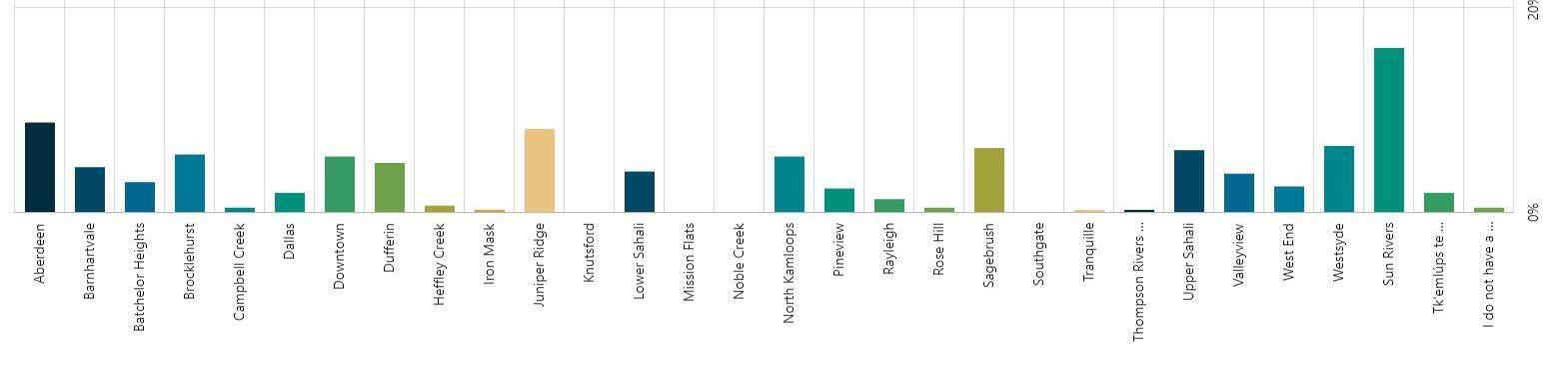
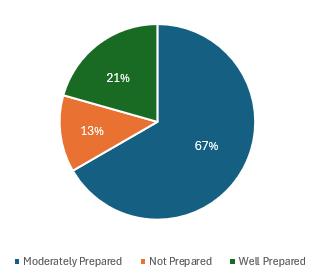
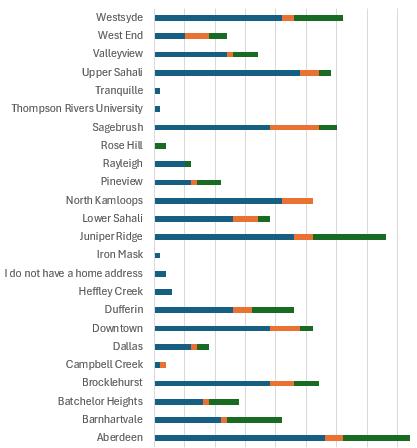
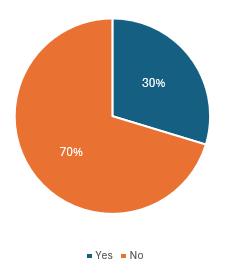
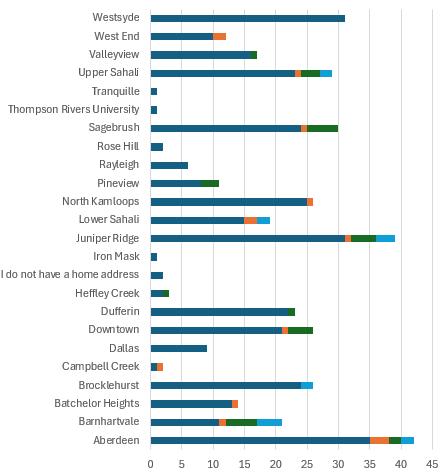
To conduct community engagement, the City of Kamloops developed a Community Wildfire Resiliency Plan Community Survey. The survey was available for public participation for two weeks in October 2024. During this time, feedback was collected from the community on their perception of FireSmart and opinions on wildfire mitigation activities to provide input into the plan. Feedback and ideas were incorporated into the plan where applicable. Results of the survey are located in Appendix F.
2.0RELATIONSHIP TO OTHER PLANS
Numerous plans offer valuable insights to inform the CWRP, providing essential background information and guiding its development. The plans listed in Table 1 were consulted during the CWRP development process to ensure alignment with existing community and land objectives.
Table 1: Key Plans and Relationship to CWRP
Key Plans and Relationships to CWRP
Plan Type Description
City of Kamloops
Official Community Plan, 2018
A comprehensive document that outlines the long-term vision, goals, and policies for development and sustainability in the City of Kamloops. It addresses various aspects, such as land use, transportation, housing, infrastructure, economic development, environment, and social services. The OCP serves as a guide for community planning, decision making, and development of bylaws to ensure coordinated and sustainable growth while preserving Kamloops’ unique character and quality of life.
Relationship to CWRP
The OCP provides essential information relevant to the CWRP, encompassing aspects such as environmental quality, wildfire protection, climate change impacts, emergency services, infrastructure, development zoning, health and safety, and city growth plans within the City of Kamloops. The following sections incorporate emergency management and wildfire environment considerations into land use policies and goals:
• Environment pg. D-12
o Natural Environment
o Hazard Lands
o Environmentally Sensitive Areas
o Climate Change
• Transportation and MobilityMovements of Goods and Emergency Services pg. D-19
• Infrastructure pg. D-20
• Health and Safety pg. D-31
o Police and Fire Protection
o Emergency Preparedness
Key Plans and Relationships to CWRP
Plan Type Description Relationship to CWRP
City of Kamloops Community Wildfire Protection Plan 2016
Kamloops Community Wildfire Protection Plan, 2008
The 2016 Community Wildfire Protection Plan (CWPP) aims to assess wildfire threat and risks to values within and around the City of Kamloops and propose strategies to mitigate these risks.
The 2008 Community Wildfire Protection Plan (CWPP) aimed to identify and reduce the risk of life, property, and environmental losses directly or indirectly to wildfire within or threatening City boundaries through effective pre-planning and preparation.
The recommendations from the 2016 Community Wildfire Protection Plan (CWPP) will serve as a foundational reference for the design of the 2025 Community Wildfire Risk Reduction Plan (CWRP). The 2025 CWRP will build off existing and completed recommendations from the CWPP.
This CWPP was the first for the City of Kamloops and serves as the basis for the recommended action items in the 2016 City of Kamloops CWPP. This plan will serve as background for this CWRP on previous FireSmart work and fuel management work.
Thompson-Nicola Regional District (TNRD)
Community Wildfire Resiliency Plans
The 2023 Community Wildfire Resiliency Plan (CWRP) aims to assess wildfire threat and risks to values within each of the 10 electoral areas of the Thompson-Nicola Regional District and propose strategies to mitigate these risks.
Tkemlúps te Secwépemc Community Wildfire Resiliency Plan, 2025
The 2025 Community Wildfire Resiliency Plan (CWRP) aims to assess wildfire threat and risk to values within the lands of the Tkemlúps te Secwépemc community.
These CWRP’s surrounds the outside of the City of Kamloops boundary. Action items and recommendations throughout these plans may be applicable to the Kamloops area. Action items in the Kamloops CWRP should work in conjunction with the TNRD CWRP’s to promote wildfire mitigation to the entire area.
This CWRP surround the outside of the City of Kamloops boundary. Action items and recommendations throughout this plan may be applicable to the Kamloops area. Action items in the Kamloops CWRP should work in conjunction with the Tkemlúps te Secwépemc CWRP to promote wildfire mitigation to the entire area.
Key Plans and Relationships to CWRP
Plan Type Description
City of Kamloops Emergency Response Plan
City of Kamloops Hazard, Risk and Vulnerability Analysis, 2019
The Emergency Response Plan is a comprehensive document outlining protocols and procedures for managing emergencies within the city, including natural disasters, industrial accidents, and wildland urban-interface fires, aimed at safeguarding lives, property, and the environment through coordinated response efforts.
The Hazard, Risk and Vulnerability Analysis (HRVA) is intended to provide a basis from which Kamloops can make risk-based decisions to address vulnerabilities, mitigate hazards, and prepare for, respond to, and recover from disasters and emergencies while maintaining continuity of operations.
Relationship to CWRP
The Emergency Response Plan includes information such as identified critical assets, emergency response protocols, protocols for evacuation events, and response guidelines for a wildland urban interface wildfire. Interface fires are listed as one of the top four high risk hazards included in the document.
• Interface Fire Checklist presented on pages 39 – 42.
The objectives of the HRVA are to anticipate problems and possible solutions to reduce the negative impacts of disasters on life and property, including from wildfire. Interface fires are listed as one of the four possible high-risk events leading to potentially disastrous consequences to the city (pg. 27).
Kamloops City Council Strategic Plan, 2023
The plan identifies five key strategic priorities for the 2023 – 2026 term of office.
Strategic priorities and areas of focus within the plan relating to wildfire resiliency include:
• Safety,
• Emergency Preparedness,
• Asset Management,
• Climate Action, and
• Advocacy for Fire Mitigation.
Key Plans and Relationships to CWRP
Plan Type Description
City of Kamloops
Extreme Heat Response Plan, 2024
Egress Route and Evacuation Plans
This plan outlines the impacts, risks, and response strategies for extreme heat events in Kamloops. The goal of the plan is to reduce negative health impacts during prolonged or extreme heat through strategic intervention.
Relationship to CWRP
This plan does not directly address wildfire risk or wildfire hazard; however, it lists Kamloops Fire Rescue as playing a key role in any heat-related emergency. The prolonged heat or extreme heat conditions that may lead to negative health impacts additionally increase wildfire risk, sometimes dramatically It should be noted that having Kamloops Fire Rescue responsible for key mitigation within the city may overburden critical firefighting resources during periods of prolonged or extreme heat.
Airshed Management Plan, 2012
The City of Kamloops possesses evacuation route plans and maps for various neighbourhoods throughout the city. These plans are to be implemented in case of an emergency requiring evacuation.
A plan outlining key strategies to ensure good air quality for residents within the City of Kamloops, as identified as a key component to sustainability in the Sustainable Kamloops Plan. The Airshed Management Plan mainly focuses on the health effects of poor air quality and outlines objectives, targets, and strategies for reducing air pollutants and promoting air quality improvement.
Emergency evacuation plans may be implemented during an interface wildfire event. Egress routes have been designed to allow multiple evacuation routes from neighbourhoods to ensure public safety.
Strategies within the Airshed Management Plan relating to wildfire management and resiliency include:
• Strategy 3, pg. 31-Open Burning and minimizing contaminant emissions
Recommended actions to reduce smoke pollutants include requiring the development of a smoke management plan for open/prescribed burning on all lands within the municipal boundary while recognizing the importance of prescribed fire as a tool for fuel management when appropriate.
Key Plans and Relationships to CWRP
Plan Type Description Relationship to CWRP
Community Climate Action Plan, 2021
This plan identifies Kamloops' current energy and emissions profile, outlines projected emissions and the anticipated effects of climate change on the city, and provides targets and strategies the City can take to reduce emissions, minimize its environmental footprint, and help mitigate the effects of climate change on the City
The Community Climate Action Plan includes steps to building a community that is resilient to the effects of climate change, including an increase in wildfires. The following strategies and actions within the Plan address vegetation and ecosystems within the city:
• Urban ecosystems for climate resilience: Actions pg. 64implementation actions are rated as a high priority and focus on increasing the City’s tree canopy, climate change adaptation for local ecosystems, and native plant/FireSmart landscaping education.
Oasis of Activity: City of Kamloops Parks Master Plan, 2013
The 2013 Parks Master Plan is a strategic document outlining Kamloops’ municipal parks and recreation services, including descriptions of existing conditions, an analysis of strengths and challenges and recommendations for future parks planning.
The Parks Master Plan includes an inventory and analysis of existing and future parkland needs, including recommendations for future park designs and planning. However, considerations for wildfire are not included in these recommendations.
Management of natural areas (pg. 67) includes information regarding the responsibility of the City’s Green Spaces and Natural Resources Unit to complete wildfire interface management, such as tree thinning, in these areas. However, wildfire interface management is not incorporated into general future recommendations for management of these natural areas.
Key Plans and Relationships to CWRP
Plan Type Description
Trails Master Plan, 2013
The 2013 Trails Master Plan is a comprehensive document describing Kamloops’ municipal trail networks. The plan outlines environmental conditions, access and staging points, existing conditions, and land acquisition for future trail development and management.
Relationship to CWRP
The Trails Master Plan includes a summary of natural environment trail conditions and identifies key issues to consider when developing and managing trails in natural environments, including riparian areas, ecosystem sensitivity, wildlife, invasive species, and public education. However, wildfire ignitions and education are not identified as key issues in the plan.
City of Kamloops
Urban Forest Management Strategy, 2016
Agriculture Area Plan, 2013
The Urban Forest Management Strategy highlights the importance of urban forests from both environmental and social perspectives and sets out to plan a path to an increase in urban canopy cover in Kamloops.
The Agriculture Area Plan is designed to protect and promote local sustainable agriculture, written under the recommendation of the Sustainable Kamloops Plan. The plan is intended to be taken into consideration when creating future land use plans.
The plan includes urban forests currently in Kamloops, relevant bylaws, and the value of urban forests and their challenges, including environmental concerns. The plan sets out goals and objectives for future urban forests.
The plan details current farmland in and in proximity to the City of Kamloops and includes future land use plans.
Tranquille on the Lake Neighbourhood Plan, 2012
Aberdeen Area Plan
The Tranquille on the Lake Plan outlines a path toward future development, including housing, municipal infrastructure, land use, parks and recreation, and economic development.
The Aberdeen Area Plan outlines a path toward future development, including housing, municipal infrastructure, land use, parks and recreation, and economic development.
The plan discusses a need to ensure community safety, including resilience to wildfire.
• 6.1 Water supply (including hydrants)
• 9.0 Environmental Management
The plan discusses a need to ensure community safety, including resilience to wildfire.
• 3.5 Hazardous Areas
• 3.6 References need for WUI assessment
Key Plans and Relationships to CWRP
Plan Type Description Relationship to CWRP
An Ecological Assessment for the Aberdeen Area Plan, 2008
Tkemlúps te Secwépemc: Strategic Plan 2022 - 2025
The report investigates the undeveloped/undisturbed natural area that falls within the Aberdeen boundaries. The aim is to provide baseline data on local ecological communities to use in future development plans.
The Tkemlúps te Secwépemc Strategic Plan defines how the current local government will address eight priority areas that will lead to improvements for all community members through new and improved services and programs.
The report acknowledges the need for fire to maintain certain ecosystems and discusses the role fire suppression has played in altering vegetation regimes in the area.
• 1.2 The Study Area and Ecological Context
• Pg. 34 Forested Ecological Communities
The plan includes important baseline information on the Tkemlúps te Secwépemc community and their traditional territories as well as priorities for the community moving forward.
• Priority 1: Communication and Engagement
• Priority 3: Education Kamloops Land and Resource Management (LRMP) Plan, 1995
Provincial LRMPs are sub-regional plans that provide high-level management objectives and strategic direction for land and resource use on Crown land. Within the Kamloops regional planning area, Resource Management Zones are identified and contain objectives and strategies for a variety of values including watersheds, ecosystems, wildlife, recreation/tourism, cultural heritage, resource development, etc.
The LRMP includes general management direction and area-specific management direction for identified Resource Management Zones (RMZ) and direction for implementation and monitoring. The following sections of the LRMP contain land use objectives and strategies that may indirectly relate to fire management and disturbance on the landscape:
• 2.1 RMZ’s
• 2.2 Settlement RMZs
• 2.3 Protection RMZs
• 2.5 Special Resource Management-Habitat/ Wildlife Management Areas
• 2.6 Special Resource Management-Recreation and Tourism
In addition to existing plans, community bylaws were reviewed for their relevance to the CWRP, as outlined in Table 2.
Table 2 Key Bylaws and Relationship to CWRP
Key Bylaws and Relationships to CWRP
Plan Type Description Relationship to CWRP
Fire Prevention
Bylaw No. 10-37, 2012
This bylaw is to secure public safety and is made in compliance with the British Columbia Fire Services Act and Regulations as well as the National Fire Code of Canada.
Parks and Public Lands Bylaw No. 35-66, 1998
Building Regulations Bylaw No. 11-80, 2006
This bylaw is intended to protect all parks and public lands (including vegetation) in the City of Kamloops and to maintain their accessibility to all citizens.
A bylaw to regulate construction within the City of Kamloops.
The bylaw claims jurisdiction over all burning and fire suppression within the City of Kamloops boundaries. It regulates Kamloops Fire Rescue, agricultural burning, and hazard abatement/fuel modification.
• 507. Open Air Fire Permit for Hazard Abatement/Fuel Modification
• 513. Controlled Burning
Outlines permitting requirements for burning in parks or on public lands.
Tree Protection
Bylaw No. 50-1, 2017
This bylaw regulates, prohibits, and imposes requirements concerning trees in the city.
Defines landscaping requirements for both industrial and residential developments, required infrastructure (water services), and fire prevention/mitigation within a new building.
Refers to any removal, alteration, damage, or replacement of trees in the City of Kamloops. The bylaw includes exemptions and reconsiderations.
3.0COMMUNITY DESCRIPTION
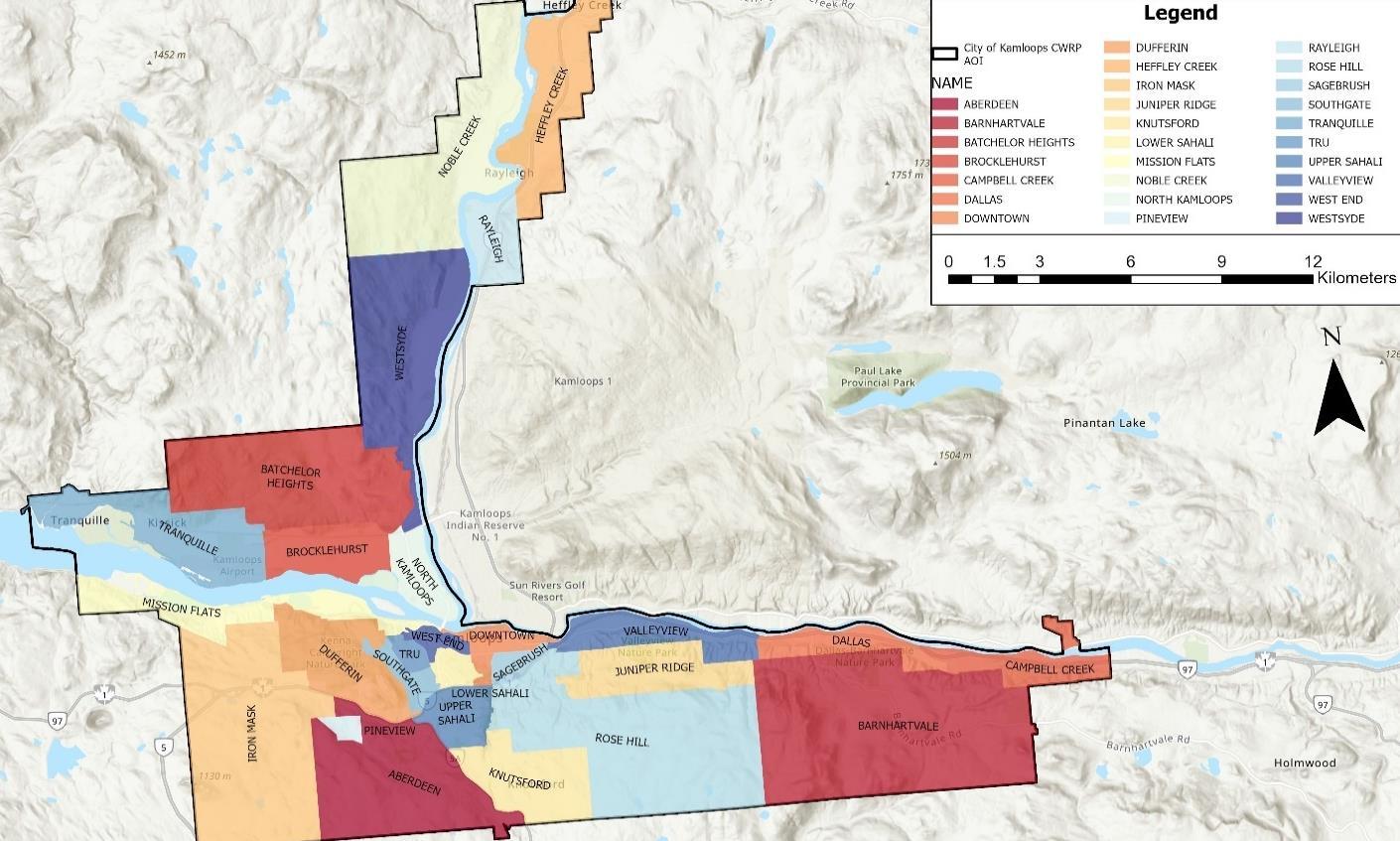
The City of Kamloops is the largest municipality situated within the TNRD, with an area just under 315 km2. The city is broken up into 27 neighbourhoods with spans along the Thompson Rivers (Figure 1). Several of the neighbourhoods back onto wildlands, making most areas at risk for interface wildfires.
3.1 AREA OF INTEREST
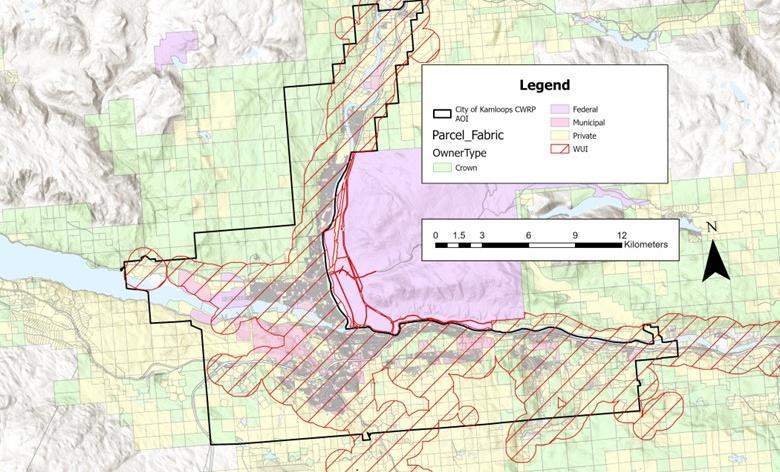
For the purpose of this CWRP, the Area of Interest (AOI) refers to the municipal lands situated within the boundaries of the City of Kamloops (Figure 2). This jurisdictional area exhibits a diverse range of land uses, encompassing residential, commercial, agricultural, industrial, and recreational zones, predominantly under private ownership. Situated at the confluence of the North Thompson and South Thompson Rivers in the southern interior of British Columbia, Kamloops resides within the traditional territory of the Tkemlúps te Secwépemc (TteS) First Nation. The name Kamloops was derived from the Secwépemc word Tkemlúps, meaning “where rivers meet” in TteS traditional language. The city is accessible via the Kamloops Airport (YKA), Canadian National Railway (CNR), Canadian Pacific and Kansa City Southern Railway (CPKC), Highway 1 and Highway 5. Both rail lines and both highways intersect in Kamloops. The municipal boundaries encompass approximately 297.3 km2
Figure 1. Map of the neighbourhoods within the City of Kamloops.
3.2 WILDLAND URBAN INTERFACE
The Wildland Urban Interface occurs where homes, structures, and critical infrastructure are found adjacent to or intermixed with combustible vegetated lands. The Wildland Urban Interface differs from the AOI in that historically in BC, the original Wildland Urban Interface was created by buffering an area where structure density is greater than six structures/km2 by 2 Km. The 2 Km buffered area was originally designed to represent a reasonable distance that embers from a wildfire can travel to ignite a structure. However, for the purpose of the provincial FireSmart Community Funding and Support (FCFS) program eligibility, the eligible Wildland Urban Interface within the CWRP is redefined as a maximum of one kilometer from where structure density is greater than 6 structures/km2 . For the remainder of this plan, the Wildland Urban Interface (WUI) is referring to this 1 km eligible area under the FCFS funding. Figure 2 illustrates the resulting eligible WUI for this CWRP. The size and shape of the development in Kamloops has resulted in an extensive WUI.
3.3 COMMUNITY INFORMATION
Kamloops has a long history, beginning with the Secwépemc and Nlaka’pamux Peoples roughly 10,000 years ago. Fort Kamloops was originally established as a trading post in 1812 and has since followed a classic boom and bust cycle brought on by a failed gold rush, early ranching, homesteading, and the
Figure 2. The City of Kamloops Area of Interest and Eligible 1 km Wildland Urban Interface map.
construction of two rail lines, the last of which was completed in 19123. At the end of World War II, economic development centred around the construction of an oil refinery, a natural gas pipeline, and later a pulp and paper mill.
Kamloops is now the largest city in Thompson-Nicola Regional District (TNRD) with a population of approximately 97,902 (2021). The Thompson River Valley is broad, and historically, development has been dispersed. However, land use constraints, including steep slopes, riparian areas, silt bluffs, flood plains, and provincial Agricultural Land Reserve (ALR) land, will significantly reduce available land for future development4. Kamloops has experienced a population growth rate of approximately 1.2% per year over the past decade, which is expected to continue, and highlights the need for responsible future development. Kamloops is known as Canada’s Tournament Capital, and the local economy is diverse. The current main industries are health care and social assistance, retail trade, and accommodation and food services5 .
3 City of Kamloops. (n.d.). History of Kamloops. Retrieved from: https://www.kamloops.ca/ourcommunity/about-kamloops/history-kamloops
4 City of Kamloops. (2018). City of Kamloops Official Community Plan 2018. Retrieved from: https://www.kamloops.ca/business-development/community-planning/official-community-plan-kamplan
5 City of Kamloops. (2022). City of Kamloops Annual Report 2022. Retrieved from: https://www.kamloops.ca/city-hall/strategies-plans/2022-annual-report
Table 3: Community profile for the City of Kamloops, comparing 2018 to 2021 statistics.
4.0VALUES AT RISK
The following section is a description of the extent to which wildfire has the potential to impact the values at risk (VAR) identified within the Area of Interest. VAR are the human or natural resource values that may be impacted by wildfire; including human life, property, critical infrastructure, high environmental and cultural values, and resource values.
In 2019, a Hazard, Risk, and Vulnerability Assessment (HRVA) was conducted for the City of Kamloops. The assessment lists interface fires as one of the top four hazards faced by the city with potentially disastrous consequences. Wildfires have historically caused large-scale damage to homes, infrastructure, and economic, cultural, and environmental values in British Columbia. Kamloops has not been immune to the threat of wildfire and will continue to be at risk from wildfires. Every summer, interface fires are ignited within Kamloops’ municipal boundary, and Kamloops is often exposed to poor air quality due to large fires on the landscape surrounding Kamloops. Recent notable wildfires in the area include the Juniper Ridge Fire (2021), Tremont Creek Fire (2021), and Rossmoore Lake Fire (2023).
4.1 HUMAN LIFE AND SAFETY
In a threatening wildfire, safeguarding human life and safety is paramount, often necessitating the evacuation of at-risk areas. Evacuations, while crucial, can be impeded by factors such as vehicle congestion, accidents, or the rapid and unpredictable behaviour of wildfires. The City of Kamloops is located at the crossroads of Highway 1 (east to west) and Highway 5 (north to south). Additionally, Highway 5A leads south from Kamloops toward Merritt. Although multiple evacuation routes are available for Kamloops, the city is sprawling and has an extensive wildland urban interface that could be at risk from wildfire. The topology of Kamloops may pose challenges to evacuation as there are many pinch points, such as bridges, throughout the city.
The 2019 Kamloops Hazard, Vulnerability and Risk Assessment and the 2022 City of Kamloops Emergency Response Plan identified interface fires as one of the top four high-risk events that could threaten the City of Kamloops. Wildfires have been noted in these reports to have potential negative consequences on human health, life, property, and infrastructure. Additionally, unwanted wildfires have historically had negative impacts on local economies and environmental, cultural, and social impacts in British Columbia.
Recent studies have shown that wildfire impacts are not solely limited to damage within the burn-affected area. Wildfire smoke contains several hundred compounds, including carcinogenic gases such as carbon monoxide, nitrogen oxides, and particulate matter (PM), a mix of microscopic solid particles and liquid droplets containing organic and black carbon6. In addition, smoke from boreal and temperate forests contain fine particles less than 2.5 micrometres (µm), referred to as PM2.5. Even short-term exposure to
6 Woodsmoke Health Effects: A Review. Inhalation Toxicology. https://doi.org/10.1080/08958370600985875
the PM2.5 found in wildfire smoke can be detrimental to public health due to its ability to infiltrate deep into the respiratory system7 .
The BC Centre for Disease Control summarizes the composition and health effects of wildfire smoke, how to protect yourself, and identifies the following groups as being most at risk:
• elderly people;
• women who are pregnant;
• infants and small children; and
• people with existing chronic respiratory conditions such as asthma.
More emergency information is made available from the City of Kamloops here: https://www.kamloops.ca/public-safety/emergency-preparedness
4.2 EMERGENCY RESPONSE
An Emergency Response Plan (ERP) was developed for the City of Kamloops in 2022 based on the findings of the 2019 Hazards, Risk, and Vulnerability Assessment. The Kamloops ERP is designed to provide structure to emergency response, including wildfire, by outlining the responsibilities and roles of all parties involved. The plan gives a detailed description of the actions to be taken by each party. The ERP is written in accordance with provincial and local legislation and follows the British Columbia Emergency Management System (BCEMS).
Section seven of the ERP describes the requirement of disseminating information from the Emergency Operations Center (EOC) to the public. Key to this role will be designated information officers and/or spokespersons from the beginning of the incident. It will be crucial to have clear, consistent messaging that may rely on commercial media outlets (television, print, commercial radio, etc.), social media, or the joint information center.
Section ten of the ERP describes the training requirements for an individual to hold various Incident Command System (ICS) positions during an emergency. Training may occur at a team or individual level or may be skills an individual brings to their department from previous work experience. Once training is complete, validation is required by the Local Authority Emergency Management Regulation Validation is generally a periodic exercise, a minimum of once a year, in one of the following forms:
7 Evidence Review: Wildfire smoke and public health risk. BC Centre for Disease Control.
In addition to the ERP, evacuation plans specific to certain Kamloops neighbourhoods have been created. The evacuation plans focus on neighbourhoods with limited access and egress routes or ones with pinch points such as bridges or limited numbers of access points to major highways.
Both documents are confidential, so specific information contained in these plans will not be shared in this public-facing document.
4.3 FIRE SUPPRESSION CAPABILITIES
The Kamloops Fire Rescue (KFR), operational since 1884, has seven stations throughout the City of Kamloops with a mix of career and paid-on-call firefighters (Table 4). As of the beginning of 2025, KFR is made up of dedicated personnel, including a mix of administration, dispatch, a fire prevention team, fleet and equipment specialists, training staff, and frontline firefighters. KFR does not only responds to firerelated calls, but also medical, rescue, and motor vehicle incidents. The fire prevention staff of KFR provides free FireSmart assessments to properties within the City of Kamloops. KFR completed 114 FireSmart assessments to properties in 2022 and an additional 87 in 2023.
In 2022, a total of 2,140 fire and fire-related responses were conducted by KFR, 26 of which were deemed interface fires. This is a 53% decrease from 2021, when there were 55 interface fires. This could be attributed to the milder wildfire season experienced in 2022 compared to 2021. Another decrease of 23.1% was seen in interface wildfires within the City of Kamloops in 2023 compared to 2022. Although there were significant wildfires across the province and immediately around Kamloops, the number of interface fires remained low at 20. Credit for the low interface fires is given to the citizens partake extra caution and preventative measures to reduce wildfire hazards. Interface fire statistics for 2024 were not available at time of CWRP completion to compare
Apparatuses and Fleet inventory available to KFR for response in 2024 include:
• 5 Engines (frontline), 5 Engines (reserve)
• 1 Rescuer (frontline), 1 Rescuer (reserve)
• 4 Bush Trucks (type 6)
• 3 Water Tenders
• 1 SPU Trailer
• 1 Jet Boat
• 1 Aerial Ladder
• 1 Aerial Tower
• 1 Fire Prevention Officer (FPO) Van
• 7 Pickup Trucks
• 1 Fire Prevention SUV
Kamloops is located within the BCWS Kamloops Fire Centre and Kamloops Fire zone, with the zone, fire centre, and provincial coordination centre being located in the city The Kamloops zone base contains Initial Attack crews, a Unit Crew, full-time and auxiliary officers that can be used for incident management teams8 . When on Red Alert for standby fires, the initial attack crews will fly out of the Kamloops Airport, where the base is located. Suppression efforts from this zone often include initial attack with helicopters and trucks. Utilizing natural features and dozer guards to suppress wildfires are the tactics for larger fires. Modified response or monitor only are used when fires are in challenging terrain where it would be unsafe for crews to work or in very remote areas where there are no values at risk.
4.4 CRITICAL INFRASTRUCTURE
Critical infrastructure (CI) assets are structures or facilities that are vital to a community's health, safety, security, and economic well-being. Protecting these assets during a wildfire event is crucial for emergency response preparedness, ensuring coordinated evacuations and maintaining or restoring essential services promptly afterward. Critical infrastructure encompasses emergency and medical services, electrical and gas utilities, transportation networks, water and wastewater systems, social support services, and communication infrastructure. Implementing FireSmart activities around critical infrastructure can significantly reduce wildfire losses and impacts.
8 For information on the different crews and incident management team refer to: https://www2.gov.bc.ca/gov/content/safety/wildfire-status/wildfire-response/wildfire-personnel-andresponse-tools
Table 4. Fire Station Locations and Deployment Models for Kamloops Fire Rescue.
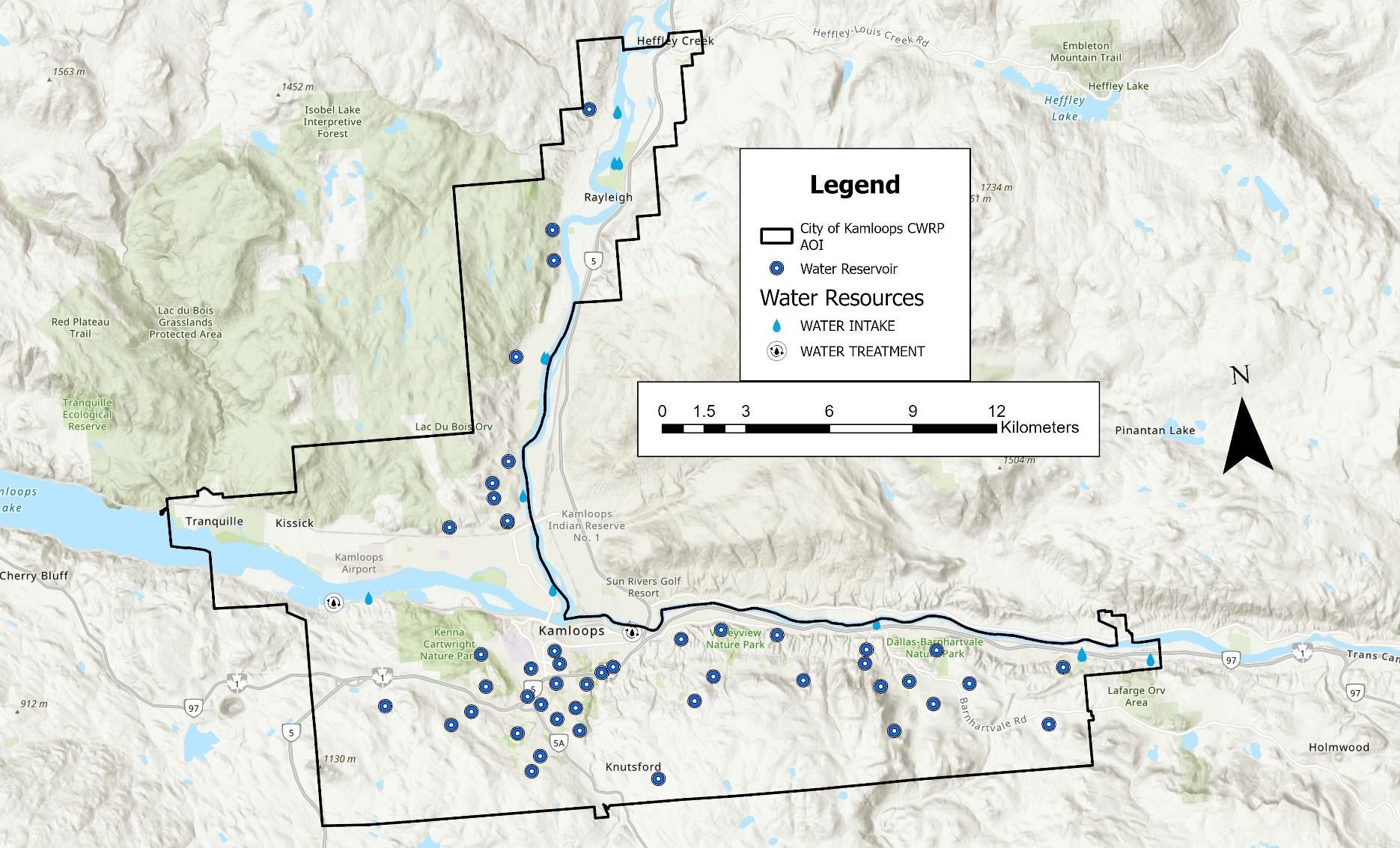
Kamloops is a large city with a variety of infrastructure and community buildings that provide service critical services to its citizens. Critical infrastructure found throughout the City of Kamloops include, but are not limited to, electrical services, communication lines, transmission lines, transmission structures, an airport, fire stations, a hospital, drinking water facilities, oil and gas lines, railways, and water reservoirs. Below is a collection of maps demonstrating locations of key infrastructure, including water resources (Figure 3), fire hydrants (Figure 4), electrical and communication services (Figure 5), critical buildings (Figure 6).
Critical Building - Infrastructure identified in Figure 6 and marked by a red hexagon includes the following facilities:
• Kruger Pulp Mill
• Suncor Energy
• Cinnamon Ridge Compost Facility
• Lafarge Canada Inc.
• Mission Flats Landfill
• Barnhartvale Landfill
• Radio Tower and Base in Kenna Cartwright Nature Park
Although not all these buildings are owned by the City cannot be funded for wildfire mitigation, these buildings can cause damage to the community if impacted from a wildfire (environmental, emergency response, etc.).
Figure 3. Map of critical water infrastructure and resources within the City of Kamloops.
Figure 4. Map of fire hydrant location around the City of Kamloops.
Figure 5. Map of critical electrical and communication infrastructure within the City of Kamloops.
Figure 6. Map of critical buildings and structures within the City of Kamloops.
The City of Kamloops is beginning the process of conducting FireSmart Critical Infrastructure Hazard Assessments on the identified critical infrastructure in the above maps. These will assess the vulnerability of systems, facilities, technologies, networks, assets, and services essential to the health, safety, and economic well-being of people within the City of Kamloops9 The assessments will rank the critical infrastructure into low, moderate, or high hazard. Following the assessments, mitigation measures will work to drop the hazard rating as low as possible by changing the factors that resulted in a higher score.
4.5 COMMUNITY WATERSHEDS AND WATER SUPPLY
The City of Kamloops pumps all raw water from the South Thompson River. The water is sent through a series of membrane tanks to be treated prior disinfection then distribution. The larger communities not supplied through this system are the Rayleigh Waterworks District and Heffley Creek, which have separate systems fed by the North Thompson River. The distribution system that supplies the water is complex due to the topography. The distribution system contains:
• 633.2 km of water mains
• 42 booster stations
• 45 reservoirs
• 2, 398 fire hydrants
• 25,379 connections
The City of Kamloops has an additional emergency water intake located on the North Thompson River. The City of Kamloops created a City’s Main Water System Emergency Response Plan in 2013 to implement a plan to manage emergency situations, such as power outages. Although there are over 2,000 fire hydrants located throughout Kamloops, the reservoir capacity may not be sufficient enough to keep sustained action with water on a wildland or interface fire within the municipal boundaries.
4.6 CULTURAL VALUES
The City of Kamloops and the area surrounding have a long history of cultural value, both Indigenous and non-Indigenous. The City of Kamloops is located on Tkemlúps te Secwẻpemc territory within the unceded ancestral lands of the Secwépemc Nation, Secwepemcúĺecw. This area was actively used by both the Secwépemc and Nlaka’pamux Peoples for close to 10,000 years. The fur trade was established in the area around 1811, followed by the establishment of Fort Kamloops the following year. The gold rush in the 1800’s brought people to the Kamloops area, where they eventually settled the area as homesteaders and began the ranching industry for the region.
Under section 35 of the Constitution Act, 1982, the Legal Duty to Consult First Nations is outlined to seek input on land and resource decisions of the traditional territories of these groups on Crown land. This is more than just a legal requirement, but a means to conduct a high standard of understanding the land and resources and create a collaborative approach to land use decisions. The following is a list of the First Nation organizations that may have a consultation area within the boundaries of the City of Kamloops. This list is not extensive and should not be relied on for legal decisions, but it acts as a starting point for
engagement when working on land use projects on Crown land. Depending on the plot of land, the First Nations that legally must be contact for the Duty to Consult may vary. For specific assistance and guidance, please contact the appropriate decision-making agency.
First Nation bands to consult:
• Adams Lake Indian Band
• Ashcroft Indian Band
• Boothroyd Indian Band
• Boston Bar First Nation
• Coldwater Indian Band
• Cook’s Ferry Indian Band
• Lower Nicola Indian Band
• Lytton First Nation
• Neskonlith Indian Band
• Nicomen Indian Band
• Nlaka’pamux Nation Tribal Council
• Nooaitch Indian Band
• Oregon Jack Creek Band
• Scw’exmx Tribal Council
• Shackan Indian Band
• Siska Nation
• Skeetchestn Indian Band
• Skuppah Indian Band
• Skwlāx te Secwepemcúĺecw
• Spuzzum First Nation
• Stk’emlupsemc te Secwepemc Nation
• Tkemlúps te Secwepemc
• Whispering Pines
4.7 CULTURALLY SIGNIFICANT SITES AND GREEN SPACES
The FireSmart Community Funding (FSCF) and Supports program through CRI now has funding for culturally significant sites and green spaces. The funding and associated assessments is intended for assessing the vulnerability of First Nations Cultural Sites and local government Green Spaces. For additional information on the FireSmart projects for Cultural Sites and Green Spaces and requirements review the following: https://firesmartbc.ca/resource/culturally-significant-sites-and-green-spaces-guideassessment/.
Indigenous cultural sites in BC are generally not shared with the public due to their sensitive and confidential nature. Local First Nations have the right to keep access to these resources private. Due to an extensive and uninterrupted First Nation presence throughout the region, wildfire and associated suppression operations have the potential to inadvertently impact or destroy cultural heritage resources. Any planned activities or treatments for the purpose of wildfire mitigation must be appropriately communicated to local First Nations. The City of Kamloops Archaeological Section can be contacted for additional information.
Green spaces include parks, gardens, cemeteries, naturalized spaces, trails and pathways, linear parks and greenways, rights-of-way, and boulevards. The Green Space designation for areas within the Kamloops municipal boundary allows the community to use FireSmart principles within these locations.
Green spaces play many important roles in the City of Kamloops, including aesthetic value, recreational opportunities, moderating fluctuations in temperature or minimizing the “urban heat island effect”, and trees provide noise-dampening effects to minimize ambient city noise. Although green spaces are critical features in cities, they create an interface fire hazard. Areas of forest fuels adjacent to structures or areas of fuel between structures can allow for rapid fire spread within the interface. To minimize the fire hazard created by green spaces, they must be well maintained and managed. Management activities include selecting fire-resistant vegetation, allowing for a non-vegetated buffer between values and green spaces, and continuous removal of dead vegetation to avoid fuel loading. The City of Kamloops has over 100
different parks and spaces that could qualify for the FSCF funding to help with wildfire mitigation work in these areas (Figure 7).
4.8 HIGH ENVIRONMENTAL VALUES
The Kamloops Land and Resource Management Plan (LRMP) overlap the City of Kamloops municipal boundary. For all Crown lands within the municipal boundary, the objectives and strategies within the general Resource Management Zone apply. In addition, other environmental values are identified on the landscape and additional objectives and strategies are to apply to the Crown land in which the value occurs. The Kamloops LRMP identified the following environmental values within the AOI:
• Critical Deer Winter Range
Figure 7. Map of City of Kamloops Green Spaces.
• Recreational and Tourism Special Resource Management Zone
o Thompson River
• Settlement Resource Management Zone
o Kamloops
o Heffley
o Rayleigh
• Visually Sensitive Area
• Lac du Bois Grassland Protection Special Resource Management Zone
Kamloops contains 20 larger city parks and nature parks. Of important note are the nature parks that include large areas of forest and grasslands that can affect the threat within the WUI. This includes DallasBarnhartvale Nature Park, the Kamloops Bike Ranch, Kenna Cartwright Nature Park, Peterson Creek Nature Park, and Valleyview Nature park. A portion of the Lac du Bois Grasslands Protected Area, which is managed by BC Parks, is also located within the municipal boundaries of the City of Kamloops.
The BC Conservation Data Centre provides information about species and ecosystems at risk through the BC Species and Ecosystems Explorer and Conservation Data Centre iMap. Recorded occurrences of Red and Blue listed animals and ecological plant communities at risk within the AOI have been summarized in Table 5 Red-listed species represent any species or ecosystem that is at risk of being lost (extirpated, endangered, or threatened). Blue listed species are any species or ecosystem that is of special concern.
Table 5. Red and blue listed species found in the City of Kamloops.
Pinus ponderosa/Pseudoroegneria spicataFestuca campestris Red
Puccinellia nuttalliana-Hordeum jubatum Red
Artemisia tridentata /Pseudoroegneria spicata Red
Leymus cinereus Herbaceous Vegetation Red
Festuca campestris-(Pseudorogneria spicata)-Achillea borealis-Cladonia spp. Red
Animals
Great Basin Spadefoot Spea intermontana Blue
Common Name
Lewis’s Woodpecker
American Badger
Painted Turtle – Intermountain –Rocky Mountain Population
Burrowing Owl
Melanerpes lewis
Taxidea taxus
Chrysemys picta pop. 2 Blue
Athene cunicularia
Louisiana Broomrape
Toothcup
Engelemann’s Spike-rush
Cut-leaved Water-parsnip
Western Low Hawksbeard
Hairy Water-clover
Aphyllon ludovicianum
Rotala ramosior
Eleocharis engelmannii Blue
Berula incisa Blue
Crepis modocensis ssp. rostrara
Marsilea vestita Blue
All site-level vegetation/fuel management activities and operational wildfire risk reduction treatment plans must follow any and all legal requirements set out in legislation, orders, and high-level plans or consider best management practices for identified environmental resources and species at risk and their habitats. Assistance and advice from a Registered Professional Biologist or other qualified professional may be required prior to the implementation of any wildfire risk reduction activities in the area to determine potential impacts and guide treatment activities.
Olive Clubtail
Stylurus olivaceus Blue
5.0WILDFIRE RISK ASSESSMENT
The wildfire risk assessment is a decision support tool intended to determine wildfire risk reduction activities and opportunities that will increase the City of Kamloops resiliency to wildfire.
It is important to understand the difference between wildfire risk and wildfire threat and their context for the wildfire risk planning process. A wildfire risk-based framework considers the likelihood of an unwanted wildfire event combined with the consequences to communities and high-value resources and assets. Overall wildfire risk can be defined as a combination of the following:
• Likelihood (or probability) of an unwanted wildfire event occurring;
• Associated fire behaviour; and
• Consequence-the resulting impact or damage to values.
Wildfire risk is measured as the product of likelihood and consequence, but multiple inputs are also required to effectively quantify risk, including potential wildfire behaviour severity, value type, and value vulnerability. Identifying wildfire risk levels through the wildfire risk assessment results in a wildfire mitigation priority list, while presenting opportunities to enhance community resiliency.
Wildfire threat refers to the potential for a wildfire to ignite, spread, and consume organic material, such as trees, shrubs, and woody debris, across the landscape. Three main components are used to define wildfire threat, as follows:
• Topography – slope (affecting wildfire rate of spread), and aspect (affecting fuel dryness);
• Fuel – loading, size/shape, arrangement (horizontal/vertical), compactness, chemical properties, and fuel moisture; and
• Weather – temperature, relative humidity, wind speed and direction, and rainfall.
Together, these three components interact to characterize the overall wildfire environment and influence wildfire behaviour (Figure 8)
5.1 LOCAL WILDFIRE ENVIRONMENT
5.1.1 Topography
8 The fire triangle –interacting components that drive a wildfire
Topography describes the landscape that can influence fire behaviour, including elevation, slope steepness, and slope direction (e.g. south-facing). Topography also includes prominent land features such as canyons and valleys. All these features can increase or slow wildfire spread. Elevation influences weather conditions (like air temperature). The slope aspect influences vegetation growth and dryness (south-facing slopes in the northern hemisphere have more heat from the sun and are drier). Slope also
Figure
influences how fast a fire moves-faster uphill due to pre-heating of vegetation from rising hot air and flame and slower downhill. Additionally, features such as valleys influence wildfire spread by directing wind flow.
The elevation of the City of Kamloops exhibits moderate variation due to its construction along the sides of the Thompson River valley. Positioned on the valley floor, which historically served as a floodplain for the Thompson Rivers, the city's core rests at an elevation of 340 metres above sea level (MASL) (Figure 9).
A majority of the city is built across the flats to the north of Kamloops or on a moderately inclined northfacing slope to the south of the downtown core, where elevations can reach up to 550 MASL. Kamloops' topography presents a diverse landscape, characterized by hills, valleys, and bluffs. Away from the riverbanks, the terrain ascends, either gently rolling hills or abrupt, steep inclines and bluffs. Erosion has sculpted deep, narrow gullies within the silty sand soils of the valley. This topographical complexity can pose challenges for firefighting efforts by restricting access and encouraging aggressive fire behaviour. Despite its location primarily being within the confines of the valley, the city faces the risk of large landscape-level fires approaching from the surrounding areas or small fires igniting in Kamloops' expansive urban parkland.
Figure 9. Digital Elevation Map (DEM) of the City of Kamloops Area of Interest.
5.1.2 Fuel, Ecosystems and Fire Regimes
Fuel refers to any flammable material, including vegetation (leaves, bark, trees, duff). It can also include manufactured fuels, such as buildings. The fuel type, dryness, size, and arrangement can influence a wildfire's speed, size, and severity. Fuel is the only component of a wildfire that we can control and the most significant (no fuel, no fire). Since different vegetation types and configurations burn with different speeds and intensities, it is crucial to have a firm understanding of the local fuel types to properly assess wildfire threat and wildfire risk.
This area is ecologically diverse and spans across three Biogeoclimatic (BEC) zones (five when including subvariants) but only one Natural Disturbance Type (NDT) (Table 6). The biodiversity of the BEC variants hosts a variety of fuel types. The Fire Behaviour Prediction (FBP) System of the Canadian Forest Fire Danger Rating System (CFFDRS) defines 17 standard fuel types10 , seven of which occur within the buffered area and are explained in further detail below.
and FBP fuel types.
Nicola Very Dry Warm Bunchgrass (BGxw1)
Thompson Very Dry Hot Bunchgrass (BGxh2)
Thompson Very Dry Hot Ponderosa Pine (PPxh2)
Thompson Very Dry Hot Interior Douglasfir (IDFxh2)
Thompson Very Dry Hot Interior Douglasfir – Grassland (IDFxh2a)
4
C-7, D-1/2, M-1/2
C-7, O-1a/b, D-1/2, M1/2
4 C-3, C-7, D-1/2, M-1/2
4 C-3, C-7, D-1/2, M-1/2
10 Hirsch KG. 1996. Canadian forest fire behavior prediction (FBP) system: user's guide. Vancouver (BC): UBC Press.
Table 6. Fuel types within the City of Kamloops AOI. This includes BEC variants, natural disturbance regimes,
5.1.2.1 Biogeoclimatic Zones
The vegetation (fuels) within any given area of BC can be summarized using the provincial Biogeoclimatic Ecosystem Classification (BEC) system. The BEC system in BC describes and categorizes ecological zones by vegetation, soils, and climate. Regional subzones are derived from relative precipitation and temperature. By understanding the vegetative communities of an area, we can better predict the natural disturbance regime of those ecosystems and the potential effects of wildfire.
The City of Kamloops municipal boundary encompasses three BEC zones, including five variants (Figure 10). The lower elevations of the Thompson River Valley fall within the Bunchgrass (BG) BEC zone, which includes the BGxw2 and BGxh2 subzones. The upper elevations of the valley, including the surrounding hilltops, are predominantly Ponderosa Pine (PPxh2) BEC zone, with interspersed pockets of Interior Douglas Fir (IDF) BEC zone, including subzones IDFxh2 and IDFxh2a, at higher elevations.
All of the listed BEC zones are categorized by warm to hot, dry climates with long growing seasons (five months or more). Soil moisture deficits are common in all three zones. Typically, increased elevations experience slightly cooler temperatures, marginal increases in precipitation, and a slightly shorter growing season compared to valley bottoms11. Common tree species in PP and IDF zones include ponderosa pine (Pinus ponderosa), Douglas-fir (Pseudotsuga menziesii), and trembling aspen (Populus tremuloides) in wetter areas, such as ravines or riparian areas. IDF zones occasionally include lodgepole pine (Pinus contorta). All three climatic zones exhibit a pervasive fire history. Burn intervals were short, likely every four to 50 years for surface fires with stand-replacing events occurring in forested areas every 150 to 250 years12 .
11 University of British Columbia. (n.d.). About BEC and BGC units. Retrieved from: https://cfcg.forestry.ubc.ca/resources/cataloguing-in-situ-genetic-resources/about-bec-and-bgc-units/ 12 Hall, Erin. (2010). Maintaining Fire in British Columbia’s Ecosystems: An Ecological Perspective. Wildfire Management Branch of British Columbia
Figure 10. Biogeoclimatic (BEC) Zones and their associated Natural Disturbance Types (NDT).
5.1.2.2 Natural Disturbance Type
In BC, fire regimes are broadly categorized according to Natural Disturbance Type (NDT) classifications, which consider the frequency and severity of disturbances at a landscape level. These classifications range from NDT1 to NDT5.
The City of Kamloops AOI and the surrounding area fall within Natural Disturbance Type Four, characterized by ecosystems experiencing regular (every four to fifty years), low-intensity, standmaintaining fires when not subjected to fire suppression and infrequent (150 – 250 years) stand-replacing events. Frequent fires in grasslands maintain the ecosystem by limiting encroachment of most woody trees and shrubs. The ponderosa pine and interior Douglas-fir areas are characterized by open forests of large, old trees with thick fire-resistant bark. Smaller, thick patches of forest exist in areas that have not had low-intensity surface fires in recent years. The frequent, varying intensity fires of the two forested BEC zones result in a natural mosaic of mostly uneven-aged forests interspersed with grassy and shrubby openings. Surface fires serve to consume woody surface fuel, thin younger stands, raise the height to the live crown of larger trees, and select for fire-resistant vegetation13. Due to fire suppression over the last century, many former grasslands are being encroached upon by forests. Existing forests have also become denser, resulting in more frequent crown fires which are harder to control.
5.1.2.3 Fuel Types
For fire behaviour prediction purposes, Canadian forests and grasslands are categorized into different Fire Behaviour Prediction (FBP) System fuel types. These fuel types have different vegetation species and structures (e.g. vegetation density); therefore, fire will behave differently in each fuel type. Table 7 outlines which fuel types are present in the Kamloops AOI and surrounding area. More detailed descriptions of these fuel types can be found on the Natural Resources Canada website. 14
Fuel types are named to reflect fire behaviour in different vegetation groups. However, since fuel types are used to describe expected fire behaviour, they may not actually reflect the tree species that are on the ground. For example, the C3 (Mature Jack or Lodgepole Pine) fuel type does not necessarily indicate there is mature Jack or Lodgepole Pine stands around the City of Kamloops. Rather, these fuel types correlate with the forest fuel complex and what fire behaviour could be expected in that fuel complex. Fuel types should be regarded as a best fit rather than strictly based on tree species since attributes such as stand structure also play a key role in categorizing fuel type.
13 Hall, Erin. (2010). Maintaining Fire in British Columbia’s Ecosystems: An Ecological Perspective. Wildfire Management Branch of British Columbia 14 FBP Fuel Type Descriptions. Natural Resources Canada.
C3 Mature Jack or Lodgepole Pine
C7 Ponderosa Pine – Douglas Fir
D1/D2 Deciduous (D1 leafless aspen, D2 green aspen)
M1/M2 25 Mixedwood –25% conifer
M1/M2 50 Mixedwood –50% conifer
M1/M2 75 Mixedwood –75% conifer
Fastest rate of spread overall, however requires high wind speeds and low fuel moistures to reach this faster rate of spread than other fuel types.
Lowest rate of spread and lowest fire intensity of the conifer fuel types.
Lower rates of spread, lower ember production, and lower fire intensity (than conifer) when trees have leaves. Often used in urban interface areas to reduce fire behaviour around values.
The rate of spread and intensity of fire depends on the conifer/deciduous mix. Higher conifer mix will have faster rates of spread, higher fire intensity and more embers produced.
*The remaining 22.6% of the AOI is made up of non-fuel components such as water bodies, buildings, paved areas, or mineral soil. Although buildings are flammable and can propagate fire spread, they do not have ‘characteristic fire behaviors’ and are not considered a fuel type.
The mapping of the FBP fuel types is created using an algorithm that will classify a polygon into the bestfit fuel type based on the BC Vegetation Resource Inventory (VRI) data. Although this forms a good starting point to create the FBP fuel type maps, there are limitations, and the FBP fuel type layers are verified during the fieldwork process. During the FBP field verification for the City of Kamloops, there were several discrepancies identified. Many of the smaller greenbelt areas on municipal land between residential areas were classified as no data-private land. This may be due to the small size of these areas, so the algorithm does not pick up the area of municipal land surrounded by the private land. It was also continually noted that several areas where denoted as the O1a/b grassland fuel type, when the area contained the stand structure and composition of the C-7 Ponderosa Pine – Douglas-fir fuel type. The
Table 7. Canadian Fire Behaviour Prediction (FPB) System Fuel Types present within the City of Kamloops AOI15
inaccuracies in the mapping have been adjusted to show what is on the landscape below (Figure 11). The completed FBP Fuel Type Change Forms can be located in Appendix D.
5.1.2.4 Forest Health
The City of Kamloops falls with the Kamloops Timber Supply Area (TSA), also known as the Thompson Rivers Natural Resource District. The Kamloops TSA has suffered from multiple beetle and budworm infestations, various diseases, drought, and large wildfires over the past two decades16. The Kamloops TSA Forest Health Strategy (2023) lists 10 high, 12 moderate, and 12 low-priority forest health factors. It is important to note that not all these forest health issues are currently an issue within the Kamloops AOI; however, diseases and pests are dynamic, present on the landscape, and should, therefore, be accounted for. The greater Kamloops area is expected to see a rise in beetle, defoliator, and disease occurrences in coming years, partly due to observed trends in other areas of the TSA and partly because of drought and fire stress imposed on local forests creating welcoming habitat for insect infestations17
Kamloops was hit by a large Mountain Pine Beetle and Western Pine Beetle infestation in the early 2000’s, which severely affected the Ponderosa Pine trees throughout the city. Fall and burn efforts were used as a
16 Dinicol, Mark. (2023). Kamloops TSA – Forest Health Strategy 2023. Report written for Government of British Columbia, Thompson Rivers Natural Resource District.
17 Dinicol, Mark. (2023). Kamloops TSA – Forest Health Strategy 2023. Report written for Government of British Columbia, Thompson Rivers Natural Resource District.
Figure 11. FBP Fuel Type map for the City of Kamloops.
response method on the affected trees with moderate success They were then used as fuel management to remove the dead fuel following the attacks. Spruce Budworm defoliation was present on the landscape in the mid 2000’s but have dropped significantly since 2014, with the worst infestation occurring in the Pineview area. The Douglas-fir Tussock Moth had a three-year cycle from 2009 to 2011 with the most impacts in Barnhartvale and Westsyde.
The City of Kamloops is actively supporting a program to identify, manage, and eliminate pests and disease in parks and green spaces around the city. The program includes cultural, mechanical, physical, biological, and chemical methods to control and remove pests and diseases. Methods, tolerances, and objectives can be read in depth in Integrated Pest Management Report, 202118. When unwanted species are affecting the functioning ecosystem of the nature parks and green spaces, City staff will conduct a risk assessment to determine the necessary course of action. The following are assessed to create tolerance levels for forest pests:
• Is the pest affecting the integrity of the host or is it just an aesthetic problem?
• Is the pest going to kill or take over large areas or will it target only small areas or individual plants/trees?
• What will the long-term affect be on the host?
• Is this a naturally occurring pest cycling though acceptable highs and lows?
Currently, the City of Kamloops is experiencing an increase of Douglas-fir beetle attacks, which is the principal killer of mature Douglas-fir. These beetles will attack in the early summer when the trees are weakened by environmental stressors such as drought or wildfire damage. The foliage of these trees will go from green to bright red the following year in spring. The delay in colour change can create complications in identifying the infected trees. The red attack phase of the Douglas-fir beetles can last up to two years, which can create a fuel loading hazard. The City of Kamloops conducted an egg mass survey in fall 2024, which will dictate management steps going forward.
18 City of Kamloops. (2021). Integrated Pest Management Report. Accessible: https://www.kamloops.ca/sites/default/files/docs/our-community/pks_integratedpestmanagementplan_85x11_sept2021_final.pdf
Figure 12 Left: Douglas-fir beetle galleries identified in a Douglas-fir tree during field work. Right: Douglas-fir tree in the 'red attack' phase.
5.1.3 Weather and Climate
Weather attributes, including temperature, relative humidity, precipitation, wind speed, and wind direction, are critical factors in the ignition, spread, and duration of wildfires. Weather is the most variable component of the wildfire environment, and it has a direct relationship to fuel moisture, which is a crucial determinant of combustibility. Local difference in aspect, topography, and vegetation will also influence fuel moisture at the site level. All weather forecasting for the AOI is dependent on observations from the Afton BC Wildfire Service weather station.
Network BCWS
Coordinates
Elevation
50.67333°N, 120.481667°W
780 m
This report used the Afton weather station due to its proximity to the AOI and available data for the weather analysis (Figure 13). The weather analysis focused on the period from May to September, which encompasses the typical length of fire season. The prevailing wind direction is from the northeast. However, during fire season, and especially through the peak months of July and August, wind direction may be southwest with a higher initial spread index (ISI). The major wind shifts during the day occur from 12:00-18:00 when the winds transition from northeast to southwest. This can have a major effect on fire behaviour in the area, as wind can change direction, and the rate of fire spread. Winds will stay in the southwest direction over the evening and shift back to the northeast direction by the morning (06:00). This wind direction information is valuable; however, it is also important to consider the diurnal wind patterns that may be influenced by local topography features. The ISI demonstrated by Figure 13 shows the expected rate of fire spread dependent on the wind speed and moisture within fine fuels. The higher the ISI, the greater the rate of spread of fire will potentially be depending on the fuel type. ISI is high in July and August during midday and into the evening (12:00-18:00, 18:00-24:00), so this is when the most growth on fires may occur. Actual rate of spread seen on fires can be influenced by several additional factors; however, this weather analysis can give an understanding on what can be expected on an average day.
Table 8. Weather station information for the Afton BC Wildfire Service.
Weather Station AFTON
Figure 13. Initial Spread Index (ISI) Rose for the Afton weather station observations between 1996-2015. July hourly averages (top left), August hourly averages (top right), and Monthly averages (bottom). Hourly averages are binned into periods of six hours (00:00-06:00, 06:00-12:00, 12:00-18:00, 18:00-24:00)
5.1.3.1 Fire Weather Analysis
Fire weather patterns for the Afton weather station are presented in terms of Fire Danger Class. The Wildfire Regulation (BC Reg 38/2005) defines Fire Danger Class as a derivative of Danger Region and indices from the Canadian Forest Fire Weather Index (FWI) System. The Canadian Forest FWI System is the primary subsystem of the Canadian Forest Fire Danger Rating System (CFFDRS), which uses weather observations to derive various rating based on fuel moisture content and windspeed. Fire Danger Class is normally used to restrict high risk activities; however, its use had been extended to the CWRP fire weather analysis to provide insight into relative risk of a fire start in the region. Fire Danger is classified into five classes based on numerical ratings for Buildup Index (BUI) and FWI. Figure 14 depicts how fire weather observations feed into the FWI System to derive the BUI, and FWI, eventually combining with Danger Region to determine Fire Danger Class.
Figure 14 Fire danger Class methodology flowchart from the Canadian Forest Fire Danger Rating System (CFFDRS).
Fire Danger Classes offer a relative index of how easily a fire can ignite and the anticipated difficulty in controlling it. The BC Wildfire Service and Ministry of Forests maintain a network of fire weather stations throughout the province that are used to determine the daily fire danger class. Table 9 describes the five fire danger classes.
Table 9. The five Fire Danger Classes and the general description of how a fire would burn in this class.
Fire Danger Description
Class 4 Fire Danger, High, occurs when fuels are very dry and fire risk is serious, thus caution should be taken while conducting forest activities Class 5 Fire Danger, Extreme, occurs when fuels are extremely dry, fire risk is very serious, and new starts will spread quickly, challenging suppression. Forest activities will be restricted during this time. The following fire weather analysis summarizes the days per year when the Fire Danger Class was 4, 5, or 4 and 5 combined, as recorded by the Afton weather station (Table 10).
Figure 15 BC Wildfire Service Afton weather station Danger Class 4 and 5 graph (2016-2023).
In addition to the graph, summary Table 10 provides an overall summary of Fire Danger Class ratings for the Afton weather station in terms of average, median, and maximum days as well as the year of maximum Fire Danger Class days. There were limited years of observation for the weather station, which are not sufficient for observing meaningful trends.
5.1.3.2 Climate Change
BC has witnessed its most severe wildfire seasons in the last half-century, occurring in 2017, 2018, 2021, and 2023. Theses seasons were all characterized by extreme weather conditions. The recent surge in fire activity is not entirely unexpected, given recent weather extremes. However, what is surprising is the early emergence of increased wildfire activity around the year 2000 decades earlier than anticipated from climate models and the magnitude of fire-season severity. For instance, three of the past seven years saw more than one million hectares burned, or more than 1% of the land area, compared to only three wildfire seasons from 1919 to 2016, exceeding a half a million hectares. Additionally, the average length of the wildfire season, as inferred from weather records (measured by the number of frost-free days) and the onset of fire activity (defined as the date when 2% of the year’s total area burned was reached), has increased by 26.7 and 27.1 days, respectively, since the early 20th century.19
The regional climate service center for the Pacific and Yukon Regions, located at the University of Victoria, is called the Pacific Climate Impacts Consortium (PCIC). This non-profit corporation conducts quantitative studies on the impacts of climate change and climate variability.20 Findings from these studies are incorporated into practical tools for end-user application. For example, the PCIC website offers a mapbased data portal for downloading information, analysis tools for the various regions in BC (Plan2Adapt, Climate Explorer, and seasonal anomaly maps), downloadable publications, and software for climate data interpretation.
19 Parisien, M. A., Barber, Q. E., Bourbonnais, M. L., Daniels, L. D., Flannigan, M. D., Gray, R. W., ... & Whitman, E. (2023). Abrupt, climate-induced increase in wildfires in British Columbia since the mid2000s. Communications Earth & Environment, 4(1), 309.
20 Pacific Climate Impacts Consortium. 2024.
Table 10 Summary of Fire Danger Class 4 and 5 days from BC Wildfire Service Afton weather station (2016-2023).
Projected climate change data from the PCIC present a comprehensive view of potential climate change risks and impacts due to inputs from many raw data sources (Table 11). Temperature will increase and precipitation as snow will decrease, which can lead to environmental impacts. However, precipitation may increase, which can present ecological benefits. From these changes, there will be ecological impacts, such as earlier spring melt and an extended dry season. Both of these can contribute to an increase in expected fire behaviour by removing moisture from the fuel and creating a longer fire season. It should be noted that this model covers a vast area (Thompson-Nicola), which varies greatly in geography, biology, and topography. The projected changes are not guaranteed to occur throughout the entire region.
Table 11 Summary of projected changes in average (mean) temperature and precipitation in the Thompson-Nicola region from the historical baseline (1961-1990) to the 2050s (2040-2069).
5.2 WILDFIRE HISTORY
Kamloops routinely experiences a mix of large and small fires on the surrounding landscape and within the municipal boundary AOI. Although a large proportion of these fires are human caused, fire is a frequent and natural disturbance in the local ecosystems. Aggressive fire suppression over the past century has greatly altered the frequency, size, and intensity of current fire regimes.
Within the boundaries of the City of Kamloops, several smaller fires have occurred over the recorded fire history. Of recent note is the Juniper Ridge Fire that occurred in the interface of the Juniper Ridge and Valleyview neighbourhoods in 2021. The fire advanced to the backyards of several homes, but no severe damaged was caused. Over the past 20 years, 114 fires have occurred within the City of Kamloops, 86 of which fell within the 1 km WUI. Of the fires started within the municipal AOI over the last 20 years, 70% have been human caused (Table 12). This includes all fires possibly started by humans, including cars and sparks from equipment and trains. This brings emphasis that individuals need to be aware that interface fires will occur within the municipal boundary.
*Not all the land within the municipal boundary of Kamloops is considered part of the eligible WUI. This row tabulates fires occurring within the AOI that directly and immediately threaten structure as defined by the eligible WUI guidelines.
Several significant wildfires have occurred in the Kamloops area over the past 25 years, causing numerous evacuations and millions of dollars in property damage. Most recently was the Rossmore Lake Fire (2023), which burned to within 10 Km of the City of Kamloops and totalled 11,413 ha. In 2003, the human-caused Strawberry Hill Fire burnt 6,228 ha adjacent to the western municipal boundary of Kamloops. Additional notable fires in proximity to Kamloops include the 27,137 ha McLure Fire (2003) north of Kamloops, which caused $8.2 million in property damage and resulted in 72 homes lost The Tremont Creek Fire (2021) burned 62,524 ha between Kamloops and Logan Lake, and the White Rock Lake Fire (2021) burned 83,047 ha between Kamloops and Vernon and caused the destruction of Monte Lake, resulting in over $77 million in insurable losses.
Table 12 Historical lightning and person caused fires for the City of Kamloops and surrounding area.
Figure 13. Historical fires that have occurred within and around the City of Kamloops since 1917. The larger fires occurring within 50 km around the city include Rossmore Lake, Bush Creek East, White Rock Lake, Tremont Creek, Elephant Hill, Sparks Lake, McLure, Strawberry Hill, and McGillivary Lake wildfires.
5.3 PROVINCIAL STRATEGIC THREAT ANALYSIS (PSTA)
The BC Wildfire Service developed the Provincial Strategic Threat Analysis (PSTA) and Risk Class framework as provincial spatial datasets to evaluate and forecast potential wildfire threats. Leveraging provincial fuel type mapping, historical fire occurrence data, topography, and historical weather station data, the PSTA generates a wildfire threat score. Outputs from the PSTA include information and maps delineating fuel types, historical fire density, the potential for embers to land in an area (spotting impact), head fire intensity, and wildfire threat. The threat ranking is assigned to 1 of 10 classes, with 1 being low, 10 being extreme, and 7 being the threshold of the potential for catastrophic losses. The 10 classes can also be ranked into low, moderate, high, and extreme. Water and no data are separate classes in which wildfire threat is not ranked. The no data class represents all private land, meaning there is no way to identifying the risk coming from each private parcel of land. The PSTA is a simple way of classifying the complex nature of wildfire threat which should be used to guide individuals for preparing for what may happen on the landscape. Further details regarding the derivation of the PSTA dataset are available through the BC Wildfire Service.21
A spatial analysis of the AOI, WUI, and PSTA data within the City of Kamloops is summarized in Table 14 and Figure 16. It should be noted that at least half of the area with both the AOI and the eligible 1 km WUI is private land, and fire threat cannot be determined. This places emphasis on the need for individual homeowners to use FireSmart principles on their properties and work together as a community to decrease the potential wildfire threat.
Table 14 PSTA Fire Threat class and associated areas for the City of Kamloops WUI and AOI.
5.4 WUI RISK CLASS ASSESSMENT
Using the WUI, the BC government created a risk-based framework to identify risk levels of each WUI polygon. The WUI Risk Class considers the likelihood of wildfires and consequence of the amount of damage to the community, to measure the potential risk. By identifying risk classes, prioritization can be made on wildfire threat mitigation activities and opportunities to increase community resiliency. For the WUI Risk Class framework, the WUI was defined as 2.75 km for structure classes with a density of more than 25 structures per hectare. This definition of the WUI takes into account the distance embers from a wildfire could reasonably be carried by the wind to ignite a structure and the large tracts of private land within the interface, which limits data availability. Five risk class ratings were developed for this assessment, 1 being highest risk and 5 being lowest. Not all WUI areas received a risk class but does not imply “no risk”.
Figure 16. PSTA Fire Threat class for the City of Kamloops.
5.5 HAZARD, RISK, AND VULNERABILITY ASSESSMENT
A Hazard, Risk, and Vulnerability Assessment (HRVA) plan22 was created for the City of Kamloops as part of the Emergency Management Program. In the plan, wildfires were identified as the highest risk for the community based on probability, social/human impacts, and economic/structural impacts The HRVA estimates a greater than 50/50 chance of an interface fire occurring within the next five years in the City of Kamloops. A detailed consequences estimate can be seen in Figure 17.
This plan also identified several areas in which the community may be vulnerable, so planners remain cognizant when planning, responding, and recovering from emergency events. Vulnerabilities include:
• Smoke;
• Burning buildings and infrastructure;
• Contamination;
• Evacuation restrictions; and
• Restricted access to isolated neighbourhoods.
The HRVA anticipates climate change will increase the length and severity of the wildfire season in the Interior of BC, increasing the likelihood of Kamloops being affected by interface fires. Following the major interface fires elsewhere in the province and across Canada during the 2023 wildfire season, Kamloops introduced significant fire mitigation strategies to reduce the city's vulnerabilities. Mitigation measures currently in use that are described in the HRVA include:
22 2022 Hazard, Risk, Vulnerability Assessment Plan
Figure 17. Consequence estimate for interface wildfire in the City of Kamloops.
• Implementation of FireSmart programs;
• Prescribed burns;
• Continued interface fuels reduction work on city and Crown lands; and
• Ongoing use of 5-, 10-, and 15-year treatment management plan to keep interface risk to a lowmoderate level.
5.6 LOCAL WILDFIRE THREAT ASSESSMENT
Part of the process of developing this CWRP involved on-the-ground verification and assessment of local vegetation types and the inherent wildfire threat of forested areas within and around communities. The local wildfire threat assessment for the WUI within the AOI was based on the 2020 Wildfire Threat Assessment Guide and Worksheets23 developed by BCWS. These surveys were completed in June and July 2024. This work was conducted within the 1 km eligible WUI within the City of Kamloops. Plot locations focused on areas were pervious fuel treatment units (TU) to develop a monitoring plan to retreat these areas. Many of these areas were surveyed in April 2016 for the previous CWPP. The previous CWPP had a larger area survey due to different requirements at the time of completion. Some of those plots were conducted outside of the 1 km eligible WUI to capture the wildfire threat in previously fuel treated areas outside of this boundary. Plots were also conducted on non-previously fuel treated Crown and municipal forested land that surrounds communities. This will develop an understanding of the potential threat to community houses and potential for new fuel treatment areas. Private land was not assessed through the wildfire threat assessments. The results of the assessment are available in Appendix D.
Overall, 94 wildfire threat assessments were completed in the 1 km WUI within the AOI boundaries (Table 15). These surveys revealed that the majority of the area scored moderate or low, with a few areas scoring high. It is crucial to note that these assessments do not consider the proximity to valuable assets or the potential consequences of wildfire damage to those assets. The assessments identified modifications in stand characteristics, such as surface fuels or crown base heights, resulting from any previous fuel treatments. The local wildfire threat classifications highlighted which areas should be fuel treated again. See Section 6.7 for more information on the proposed fuel treatments.
23 2020 Wildfire Threat Assessment Guide and Worksheets. https://www2.gov.bc.ca/assets/gov/publicsafety-and-emergency-services/wildfire-status/prevention/fire-fuel-management/fuelsmanagement/2020-wildfire-threat-assesment-guide-final.pdf
17 12-Jun-24 TU 15
18 12-Jun-24 TU 11
19 12-Jun-24 TU 13
20 12-Jun-24 TU 88
21 12-Jun-24 TU 84
22 13-Jun-24 TU 46
23 13-Jun-24 TU 47
50°39.635' N, 120°11.840' W 49 Moderate
50°39.203' N, 120°9.602' W 52 Moderate
50°39.377' N, 120°10.328' W 58 Moderate
50°39.372' N, 120°10.753' W 23 Low
50°39.688' N, 120°11.075' W 42 Low
50°51.680' N, 120°17.812' W 60 Moderate
50°51.550' N, 120°17.928' W 57 Moderate
24 13-Jun-24 TU 7 50°51.605' W, 120°17.903' W 56 Moderate
25 13-Jun-24 TU 45
26 13-Jun-24 TU 45
27 13-Jun-24 TU 7
28 13-Jun-24 TU 7
29 13-Jun-24 TU 4
30 13-Jun-24 TU 7
31 13-Jun-24 TU 7
32 13-Jun-24 TU 40
50°51.430' N, 120°17.883' W 59 Moderate
50°51.430' N, 120°17.858' W 49 Moderate
50°51.462' N, 120°17.873' W 52 Moderate
50°51.268' N, 120°17.857' W 62 Moderate
50°51.718' N, 120°17.500' W 51 Moderate
50°50.700' N, 120°18.390' W 48 Moderate
50°50.005' N, 120°19.153' W 51 Moderate
50°49.957' N, 120°19.158' W 55 Moderate
33 13-Jun-24 TU 40 50°49.910' N, 120°19.147' W 60 Moderate
34 13-Jun-24 Lac du Bois
50°43.360' N, 120°22.530' W 28 Low
35 13-Jun-24 Ord Rd.
36 13-Jun-24 TU 56
37 13-Jun-24 TU 54
38 13-Jun-24 TU 68
39 13-Jun-24 TU 65
40 20-Jun-24 TU 55
41 20-Jun-24 TU 58
50°42.737' N, 120°23.177' W
50°38.780' N, 120°22.632' W 49 Moderate
50°38.836' N, 120°22.715' W 50 Moderate
50°38.648' N, 120°22.025' W 60
50°38.417' N, 120°21.893' W 44
50°38.892' N, 120°22.602' W 44 Low
50°38.858' N, 120°22.042' W 61 Moderate 42 20-Jun-24 TU 59 50°38.773' N, 120°22.060' W
20-Jun-24 TU 67
45 20-Jun-24 TU 66
46 20-Jun-24 TU 64
50°38.712' N, 120°21.407' W
50°38.608' N, 120°21.430' W 46
50°38.118' N, 120°20.835' W 55 Moderate 47 20-Jun-24 TU 60 50°38.315' N, 120°21.850' W
48 20-Jun-24 TU 61 50°39.247' N, 120°21.112' W
49 20-Jun-24 TU 75
50 20-Jun-24 TU 62
51 20-Jun-24 TU 63
52 20-Jun-24 TU 70
50°39.407' N, 120°20.867' W 50 Moderate
50°39.172' , 120°21.285' W 52 Moderate
50°39.063' N, 120°20.667' W 45
50°38.658' N, 120°20.357' W 24
53 20-Jun-24 TU 72
54 20-Jun-24 TU 72
55 20-Jun-24 TU77
56 20-Jun-24 TU 74
50°38.810' N, 120°20.092' W 53 Moderate
50°38.975' N, 120°20.155' W 55 Moderate
50°39.590' N, 120°20.827' W 48 Moderate
50°39.215' N, 120°20.352' W 58 Moderate
57 20-Jun-24 TU 138Peterson Creek 50°39.588' N, 120°20.253 38
58 21-Jun-24 TU 136 - Kenna Cartwright
59 21-Jun-24 TU 135 - Kenna Cartwright
60 21-Jun-24 TU 80
50°40.292' N, 120°23.047' W 57 Moderate
50°40.520' N, 120°23.848' W 60 Moderate
W
61 21-Jun-24 TU 80 50°40.385' N, 120°25.213' W 51 Moderate
62 21-Jun-24 TU 80
63 21-Jun-24 TU 122
64 21-Jun-24 TU 80
65 21-Jun-24 TU 50
66 21-Jun-24 TU 99
67 21-Jun-24 TU 121
68 21-Jun-24 TU 120
69 21-Jun-24 TU 49
70 4-Jul-24 TU 123
50°40.103' N, 120°24.623' W 67 High
50°40.078' N, 120°24.392' W 46 Low
50°40.083' N, 120°24.028' W 68 High
50°40.047' N, 120°23.918' W 45 Low
50°40.167' N, 120°23.588' W 57 Moderate
50°40.248' N, 120°23.902' W 55 Moderate
50°40.075' N, 120°23.503' W 57 Moderate
50°40.042' N, 120°23.260' W 60 Moderate
50.662537,120.283011 49 Moderate
73
6.0FIRESMART DISCIPLINES
This CWRP is designed to comprehensively plan for all aspects of community wildfire planning by structuring strategies based on the seven FireSmart disciplines:
1. Education
2. Legislation and Planning
3. Development Considerations
4. Interagency Cooperation
5. Cross – Training
6. Emergency Planning
7. Vegetation Management
Each FireSmart discipline and their role in resiliency planning for the City of Kamloops is outlined in the subsequent sections below.24
24 For more information on the BC FireSmart program, visit: https://firesmartbc.ca/
6.1 EDUCATION
Public education and outreach efforts help community members learn about wildfire and its potential impacts to their communities. In addition, these efforts should be designed to help individuals understand their role in taking action to reduce risk. Education and outreach activities are designed for all groups to benefit, including elected officials, community planners, residents, visitors, businesses, land managers, first responders, and more.
Goal
The CWRP is only successful if community members and additional partners are engaged in taking action to reduce the wildfire risk. This CWRP aims to create a sense of empowerment and shared responsibility, which can only be created by effective communication and development of educational activities for community members.
FireSmart Goals and Objectives
FireSmart Canada has two key goals25:
1. “Improve communication with stakeholders; and
2. Organize programs and assets into a logical, manageable structure based on three pillars –homeowners, neighbourhoods, and communities”.
Generally, FireSmart aims to encourage communities and citizens to adopt FireSmart practices to help mitigate negative impacts of wildfire to assets on public and private property. FireSmart encourages homeowners to conduct FireSmart practices on their property to minimize fire hazard and reduce potential damage from wildfire. Key FireSmart actions and objectives include:
• Reducing the potential for an active crown fire to move through private land
• Reducing the potential for ember transport through private land and structures
• Creating landscape conditions around properties where fire suppression efforts can be effective and safe for responders and resources
• Treating fuel adjacent and nearby to structures to reduce the probability of ignition from radiant hear, direct flame contact, and ember transport
• Implementing measures to structures/assets that reduce the probability of ignition and loss
FireSmart described three Priority Zones around a building, collectively named the Home Ignition Zone (Figure 18, Appendix B) alongside descriptions of what these zones should look like, starting from the edge of a building and moving outwards.
• Immediate Zone (0 m – 1.5 m) Non-combustible surface should extend around the entire home and any attachments, such as decks.
• Intermediate Zone (1.5 m – 10 m) This should be a fire-resistant area, free of all materials that could easily ignite from a wildland fire.
• Extended Zone (10 m -30 m) Thinned and pruned coniferous trees alongside routine dead surface fuel cleanup.
Of particular importance are neighbourhoods where homes and buildings are situated close together in a relatively higher density than more rural areas. This means that FireSmart Priority zones frequently overlap with one another (i.e. Immediate Zone or Intermediate Zone from one building may encroach into an adjacent building’s Immediate or Intermediate Zone). This highlights the importance of community resilience towards wildfire by working together to reduce wildfire hazard, especially along the border of the WUI.
Currently, the City of Kamloops offers free FireSmart Home Assessments for home and private property owners. The assessment looks at each of the three home ignition zones and evaluates the fire resistance and wildfire risk of the house and material, combustible material, outbuildings, and vegetation on the
Figure 18 FireSmart Home Ignition Zone, which is comprised of three priority zones, as illustrated in the BC FireSmart Begins at Home Manual.
property26. Recommended mitigation action will be proposed following the assessment to help the landowner reduce the wildfire risk. Many properties within the City of Kamloops will have overlapping home ignition zones with their neighbours. The City of Kamloops currently cannot enforce wildfire risk reduction on private property. This highlights the importance of neighbourhoods working together to act on FireSmart principles.
FireSmart Canada has developed the Neighbourhood Recognition Program to recognize the neighbourhoods which have taken the critical steps to reduce wildfire risk27. This recognition will help property owners to work together to increase resilience, implement mitigation measures to reduce probability of structure ignition from wind-driven embers, and help firefighters concentrate efforts on fighting wildfires. The program will also help neighbourhoods immediately adjacent to forested stands on the boarder of the WUI and neighbourhoods with properties interlapping home ignition zones. The City of Kamloops previously received the Community Protection Achievement Award in 2016 but currently does not have any neighbourhoods with FireSmart Neighbourhood Recognition. The City of Kamloops should help promote neighbourhoods immediately adjacent to forested stands to work towards this recognition. Although an intensive community driven process, there is a FireSmart Canada Neighbourhood Incentive program to help communities with meeting the criteria for this program28 Neighbourhoods in the City of Kamloops to promote this program include:
• Aberdeen
• Barnhartvale
• Batchelor Heights
• Heffley Creek
• Juniper
• Knutsford
• Noble Creek
• Rayleigh
• Rose Hill
• Westsyde
Recently, the City of Kamloops has struggled with community engagement. Currently, the City of Kamloops has approached community engagement by interacting with the high wildfire risk neighbourhoods and tried to implement programs, such as free mulching and chipping days for cedars. Unfortunately, only a small number of community members participated in the program. Due to the size and population of Kamloops, reaching every community member is difficult. A survey was conducted as part of this CWRP, and feedback indicated that many citizens were not previously aware that Kamloops currently has a FireSmart Program or participates in wildfire risk reduction activities. The City of Kamloops
26 FireSmart BC. Home Ignition Zones. https://firesmartbc.ca/resource/home-ignition-zone-assessment/
will need to continue to think of create ways to interact with the community and disseminate information about the FireSmart Program, wildfire risk reduction, and fuel management.
Information about the FireSmart program and fire updates from the BC Wildfire Service is currently disseminated though the City of Kamloops and Kamloops Fire Rescue social media channels. The City of Kamloops Wildfire Protection webpage29 currently hosts the 2016 CWPP and will eventually make this CWRP publicly available. This webpage also has a separate FireSmart section where residents can request a free FireSmart home assessment, learn about the FireSmart Program and neighbourhoods, and find basic information on how to prepare for a wildfire. The vital information for the City of Kamloops FireSmart Program is all hosted in a single, easy-to-navigate site. The focus for Kamloops should be to draw residents to this site with the local community information.
The City of Kamloops is already a busy community with lots of community events with high attendance. If possible, these events should be attended by the FireSmart Liaison, FireSmart team, and/or Kamloops Fire Rescue to introduce community members to the Kamloops FireSmart Program and where to find key information. Current and ongoing public events where the City could have a FireSmart booth or similar outreach could be conducted include appearances at the Kamloops Farmer’s Market, Canada Day, Emergency Services Day, and other community events.
Once the information of the City of Kamloops FireSmart Program is distributed to the public, neighbourhood-specific events, such as chipping programs, may be more popular. Other avenues to enhance community engagement and education includes the use of several outreach tools and tactics including:
• Hosting community workshops or seminars on FireSmart principles and practices. This may include an in-person FireSmart 101 course lead by local FireSmart representatives.
• Utilizing social media platforms to share FireSmart tips and updates. These updates should also include information about the different Local FireSmart Representatives and Neighbourhood Champions.
• Organizing neighbourhood meetings or events focused on wildfire preparedness. This can be in collaboration with other neighbourhood or community events. Work with the Local FireSmart Representative or Neighbourhood Champion to better understand how to communicate with that neighbourhood.
• Collaborating with local schools to integrate FireSmart education into curriculum or extracurricular activities.
• Sharing the final CWRP through the City of Kamloops’ social media channels, and website. Community meetings should be conducted to support its implementation.
• Continuing to conduct home assessments and provide personalized recommendations for wildfire mitigation measures.
• Posting information about fuel management activities through communication avenues to show the efforts Kamloops is taking to address wildfire threat on public land. This should occur prior to fuel treatment, signs on site during active fuel treatment, and social media communication and sign on site following fuel treatment with an explanation of why the treatment was conducted.
29 City of Kamloops. Wildfire Protection. https://www.kamloops.ca/public-safety/kamloops-firerescue/wildfire-protection
• Working in conjunction with Kamloops Fire Rescue to promote structural and wildfire protection together. This can be in the form of joint events, Kamloops Fire Rescue helping with FireSmart activities, etc.
• Establishing a community FireSmart Committee to spearhead education and mitigation efforts. The City of Kamloops previously had a FireSmart Committee and has participated in other community committees. This committee should be re-established to ensure the action items from this plan and education efforts to the public are continued.
Action Planning
Action #1: Read and understand this CWRP’s identified risk and recommended actions.
Action #2: Share this CWRP on the Kamloops Wildfire Preparedness website.
Action #3: Promote FireSmart information and wildfire preparedness through social media and communication tools.
Action #4: Promote the Kamloops FireSmart program and disseminate information at current and future Kamloops community events to attract more people.
Action #5: Hold an annual FireSmart event/open house to introduce concepts to community members and educate them on actions they can take on their properties to reduce wildfire risk. This could be a specific Wildfire community day in May prior to wildfire season.
Action #6: Provide link to FireSmart 101 course30 on Kamloops FireSmart webpage. This course is free and approximately one hour to complete.
Action #7: Continue to offer free FireSmart home and property assessments on private property.
Action #8: Support the FireSmart BC Education Program through School District No. 73 (KamloopsThompson).
Action #9: Encourage neighbourhoods to apply for FireSmart Canada’s Neighbourhood Recognition Program. Once recognized, annually renew for FireSmart Recognition.
Action #10: Ensure appropriate signage is in place for highly visible fuel-management activities
Legislation and Regulation can be a very effective tool for reducing wildfire risk on provincial Crown lands and within the administrative boundaries of a local government or First Nation communities. Provincial acts and regulations provide the means for local governments and First Nation communities to implement wildfire risk reduction actions through bylaws.
Goal
Local, Provincial, and Federal legislation and planning can be an effective tool for reducing wildfire risk within the administrative boundaries of the City of Kamloops. This CWRP will facilitate an understanding of how these can either support or restrict the ability to implement local policies, bylaws, and other wildfire risk reduction activities.
Context
Several types of federal legislation, including acts and regulations, play a role in supporting or influencing the CWRP and wildfire risk management process. Although there is currently no federal legislation that provides direct guidance on FireSmart policies, legislation, or planning, there are documents that support wildfire risk reduction activities. The following is a non-exhaustive list of provincial and federal legislation and regulations that may directly or indirectly affect FireSmart action and wildfire risk reduction activities.
BC Building Act and Building Code – Theses are Provincial regulation that govern how new construction, building alterations, repairs, and demolitions are complete. The Building Act provides the ability for municipalities to create Development Permit Areas (DPA’s) that can include wildfire risk reduction measures, including technical building requirements.
BC Emergency Program Act – This Act provides the legislative framework for management of disasters and emergencies in BC. The Act requires local authorities to prepare a local all-hazard Emergency Management Plan that addresses mitigation, preparedness, response and recovery.
BC Open Burning and Smoke Control Regulations (OBSCR) – These regulations govern vegetation burning and the set of conditions under which the burning can be authorized.
BC Wildfire Act and Wildfire Regulations – These regulations define the legal responsibilities and obligations in terms of bans and restrictions, fire use, prevention, control, and rehabilitation as they relate to wildfire.
Canada Federal Fisheries Act – This Act applies to fish and fish habitat associated with freshwater rivers, streams, creeks, ditches, and seasonally wetted habitat. The Act prohibits any action that would result in harmful alteration, disruption, or destruction of fish habitat.
Canada Federal Species at Risk Act – This Act designates which wildlife species are at risk due to human activity and manages them to prevent further harm. With regards to the CWRP, action items may need to consider the requirements and prohibitions of the Act, especially in areas with species at risk.
A review of legislation and planning documents pertinent to the City of Kamloops was completed. Both of the previous Community Wildfire Protection Plans (2008 and 2016) made recommendations regarding legislation and planning. The main recommendation from these reports was to produce Wildfire Recovery Plan Guidelines. Although this has been built into the Emergency Planning document for Kamloops, there are no additional bylaws or policies that reflect or enforce FireSmart principles. As plans and bylaws are amended, they should incorporate FireSmart objectives and language. Plans that should include this are the Official Community Plan, the housing policy, and the Emergency Management Plan.
A review of the relative bylaws was conducted to outline changes that can be addressed to incorporate FireSmart and wildfire resiliency.
Fire Prevention Bylaw No.10-37, 2012
The Fire Prevention Bylaw mostly pertains to structural fires and the operations of Kamloops Fire Rescue Sections that relate to wildfires include the:
• Open Air Fire Permit for Yard Waste: The Fire Chief may issue an open-air fire permit for burning yard waste on certain terms and conditions. Only vegetative material may be burned and occur only on residential or farm property (no residential strata or condominium complexes). Specific conditions for dates, times, smoke ventilation indices, wind, and weather must be met.
• Open Air Fire Permit for Land Clearing: The Fire Chief may issue an open-air fire permit for land clearing on certain terms and conditions. Burning can only originate and be carried out on the property of the permit. Specific conditions for dates, times, smoke ventilation indices, wind, and weather must be met.
• Open Air Fire Permit for Hazardous Abatement/Fuel Modification: Permits can be approved by the Fire Chief
• Open Air Fire Permit for Municipal, Provincial, or Federal Purposes: Permits can be issued by the Fire Chief.
• Controlled Burning: Every person who starts any open-air fire or fails to extinguish a fire on their land, whether a permit was issued or not, shall be responsible for that fire. If the fire gets out of control, they will be liable for all costs and expenses incurred by the City in controlling and extinguishing the fire.
An amendment to the Fire Prevention Bylaw to allow for an addition of wildfire risk reduction section should be considered. This section could outline requirements for property owners to upkeep vegetation and meet specific risk reduction targets around structures and on their property. This section can also outline requirement for fuel management on municipal and Crown land.
Parks and Public Lands
Bylaw No. 35-66, 1998
The Parks and Public Lands Bylaw pertains to the use of municipal parks and municipal land within the City of Kamloops by the public. This plan dictates it is unlawful and an offence for any person to start, permit, or otherwise use any form of fire in any Park or Public Lands in the city without first obtaining a Facility Use Permit. In addition to this, FireSmart practices within Parks and Public Lands could be added to
the bylaw. However, this pertains more to the operations of the municipality and internal use rather than how the public uses the parks.
Building Regulations Bylaw No.11-80, 2006
The Building Regulations Bylaw does not specify any regulations concerning wildfire or forest fuels on building sites, around new builds, or on newly developed sites. The bylaw only references wood stoves and fire protection measures within a building including firewalls, smoke alarms, and sprinkler systems. This bylaw is currently in the process of being repealed and replaced.
Any amendment made to this bylaw should include requirements for new buildings to include FireSmart material, requirements for new developments and private property to be fuel treated prior to residence occupancy, requirements for older buildings to convert to FireSmart materials, and include FireSmart objectives, and language.
Tree Protection Bylaw No. 50-1, 2017
The Tree Protection Bylaw is related to cutting, limbing, removing, damaging, or replacing trees within the City of Kamloops. An amendment to this policy should include the consideration of removal of hazardous trees on both private and public land if the tree is considered a potential wildfire hazard during a FireSmart assessment. This will allow responsible removal of hazardous trees to occur where necessary. The Replacement Tree section in this bylaw should also encourage the use of FireSmart trees and species to be planted in replacement of any removed trees.
Action Planning
Action #11: As legislation is changed (Official Community Plan, bylaws, policies) incorporate FireSmart objectives, language, and terminology.
Action #12: Amend the Fire Prevention Bylaw to incorporate a wildfire risk reduction section. This section should outline requirements for private property owners to upkeep vegetation and meet specific risk reduction targets around structure and on private property. This section can also outline requirements for fuel management on municipal and Crown land.
Action #13: Amend the Building Regulations Bylaw to create requirements for FireSmart material to be used on new houses, and requirements for new developments to create FireSmart properties prior to any resident living on the property. An additional amendment to this bylaw should encourage people to use FireSmart materials on their home as properties are renovated and upgraded.
6.3 DEVELOPMENT CONSIDERATIONS
Development decisions, such as land use types, structure density, road patterns, and other considerations, shape the built and natural environments. These decisions can bring lasting impacts to the WUI and wildfire risk by affecting public and first responder safety and survivability of homes, critical infrastructure, and other community features. Considering these factors early in the development process can reduce wildfire risk to life, safety and property.
Goal
Community land use and development in wildfire-prone areas can be susceptible to different wildfire threats, depending on the scale. This CWRP will aim to develop a strategy for decreasing the chance of loss of the built environment within the City of Kamloops due to wildfire. The use of regulatory and administrative tools can reduce wildfire hazard while increasing the number of home and critical infrastructure compliant with FireSmart guidelines.
Context
In BC, communities can establish Development Permit Areas (DPAs) that account for wildfire risks during the early stages of construction. This tool effectively enhances wildfire preparedness and mitigation by addressing species like subdivision layouts, fire-resistant building materials, and landscaping and vegetation management.
Currently the City of Kamloops does not utilize wildfire DPAs, but an update to the Official Community Plan to implement them may be affective in addition to an update to the housing policy. When land is developed into a housing community, the land developers must donate 10% of the land back to the City to be converted into municipal land for public use. The implementation of the DPA will allow for the City to mandate fuel treatments of those area prior to the land is converted into municipal land.
Resources like the BC FireSmart Wildfire Development Permit Areas Guide31 can provide valuable examples and frameworks that other BC communities use to address wildfire resilience. Some examples taken from the guide include:
• Defensible Space – Create and maintain defensible space around structures by FireSmart guidelines, clearing flammable vegetation and materials within a specified distance to prevent wildfire spread.
• Building Materials – Utilize fire-resistant building materials and construction techniques recommended by FireSmart, such as non-combustible roofing materials, fire-rated siding, and ember-resistant vents.
• Roof Design – To reduce the risk of ember intrusion and flame penetration, opt for a fireresistant roof design recommended by FireSmart, such as a steep slope or metal roofing.
31 FireSmart BC. Wildfire Development Permit Areas Guide. https://firesmartbc.ca/resource/wildfiredevelopment-permit-areas-guide/
• Eaves and Vents – Design eaves and vents according to FireSmart recommendations to minimize embers' entry into the structure. Incorporate ember-resistant vents and cover eaves with noncombustible materials or metal flashing.
• Access and Water Supply – As per FireSmart guidelines, ensure adequate access for emergency vehicles and maintain a reliable water supply for firefighting efforts, including installing fire hydrants and water storage tanks at strategic locations throughout the community
• Community Planning – Integrate FireSmart principles into community planning and zoning regulations to promote wildfire-resilient design and minimize the overall risk of wildfire to neighbourhoods and developments.
The City of Kamloops contains many key infrastructure buildings and operational structures that are vital to the functionality of the city. These are all outlined in Section 4.4 Similar to homes, critical infrastructure also has FireSmart Ignition Zones (Figure 19) and a FireSmart Critical Infrastructure Assessment32 to identify mitigation efforts and fuel management needed around these resources.
Critical Infrastructure Assessments are eligible for publicly owned buildings critical for effective emergency response to wildfires, such as Emergency Support Facilities (e.g. reception centres, group lodging for evacuees), water pump stations, communication towers, etc. FireSmart projects for critical infrastructure and community assets can include:
• Completion of required initial FireSmart Assessment before mitigation work begins.
• Retrofitting existing structures/properties.
32 BC FireSmart. FireSmart Critical Infrastructure Guide. https://firesmartbc.ca/resource/firesmart-criticalinfrastructure-guide/
Figure 19. FireSmart Critical Infrastructure Ignition Zone graphic including the three ignition zones.
• New construction, provided that:
o Construction was completed within the past 12 months from the date of application
o Construction follows the Wildfire-Resilience Best-practices Checklist for Home Construction, Renovation, and Landscaping33 .
o Only incremental FireSmart expenditures are eligible.
o An eligible assessment is completed when construction is finished.
• Completion of a second required FireSmart Assessment after mitigation work is complete.
Private property owners also play a key role in the development of a FireSmart landscape. It is important to encourage private property owners and residents to contribute to the FireSmart landscape by booking FireSmart Home Assessments with the FireSmart Liaison, upgrading external building materials, removing hazardous vegetation and replacing it with native FireSmart species, etc. Tools and tactics that can be used to complete this includes:
• Implement a FireSmart Rebate Program, which gives an incentive to private property owners to participate in the City of Kamloops FireSmart Program.
• Work with local plant stores to promote residents to purchase native FireSmart species Currently, Art Knapp Garden Centre and Purity Feed signify which plants are FireSmart. A program at local stores and garden centres in spring/summer can help improve vegetation plants within the home ignition zones.
• Provide off-site debris removal like a free chipping day or haul away vegetation day.
Action Planning
Action #14: Establish a Wildfire Development Permit Area for wildfire protection on new developments and buildings within the identified Interface Areas to require fire resistant landscaping, FireSmart building materials, fuel management/wildfire risk reduction treatments on lands that will become public, and other FireSmart considerations.
Action #15: Use the FireSmart Critical Infrastructure Guide and Hazard Assessment Form to assess critical infrastructure vulnerability to wildfire in the AOI.
Action #16: Complete the mitigation actions recommended from the Critical Infrastructure hazard assessment to reduce vulnerability of the critical infrastructure to wildfire in the AOI.
Action #17: Implement a FireSmart Rebate Program, which gives an incentive to private property owners to participate in the City of Kamloops FireSmart program.
Action #18: Work with local plant stores to promote residents to purchase native FireSmart species. This can be in the form of program to promote native FireSmart species at stores, show which species are FireSmart vs. non-FireSmart, or discourage planting of non-FireSmart species within the Home Ignition Zone.
33 FireSmart Canada. Wildfire-Resilience Best-Practice checklist for home construction, renovation, and landscaping. https://firesmartbc.ca/wp-content/uploads/2022/01/Wildfire-Resilience-Home-ConstructionRenovation-and-Landscaping-Checklist.pdf
Action #19: Provide off-site debris disposal for private landowners who have undertaken their own vegetation managing, by providing a dumpster, chipper, or other collection methods.
6.4 INTERAGENCY COOPERATION
It takes the collaborative efforts of multiple agencies working together to achieve a fire resilient community. These people include the local fire departments, local government staff, elected officials, First Nations representatives, industry representatives and provincial government residents in your area. Individually they are responsible to their own organizations, but all the agency organizations are dependent upon each other to develop an effective Community Wildfire Resiliency Plan and undertake a successful wildfire response.
Goal
Wildfire community resiliency and risk reduction is a collaborative effort by not only the community members, but also the effort of all external partners working together. This CWRP will encourage the collaborative relationship among the City of Kamloops, Kamloops Fire Rescue, BC Wildfire Service, the Thompson-Nicola Regional District, the Ministry of Forests, Tkemlúps te Secwépemc, and other community partners to achieve a wildfire resilient community.
Context
Like other natural hazards, administrative boundaries themselves have little to no impact on the spread of wildfire. Addressing wildfire hazards requires a collaborative and shared understanding of jurisdictional responsibilities. From a wildland firefighting perspective, jurisdictional fire response falls within the Kamloops Fire Centre. Kamloops Fire Rescue is regularly involved in wildfire incidents within in municipal boundary. Kamloops does not have any mutual aid agreements with neighbouring fire departments.
The first step in addressing interagency cooperation is restarting the Community FireSmart and Resiliency Committee (CFRC). This group fills a key level of collaboration between organizations by allowing multiple partners to work together to achieve wildfire resilient communities. The City of Kamloops previously had a committee but is currently unactive. The committee should be restarted and run by the FireSmart Liaison and should include key internal individuals/department from the City of Kamloops (Parks, Kamloops Fire Rescue, etc.). Additional external partners should also participate in this committee to promote interagency cooperation. This should include the BC Wildfire Service, Ministry of Forests WUI Wildfire Risk Reduction (WRR) team, Tkemlúps te Secwépemc (TteS), the Thompson-Nicola Regional District (TNRD), and any additional community partners that exist within or just beyond the boundaries of the City of Kamloops. Suggested activities for the CFRC include:
• Collaborate on communication and public education strategy with multiple local governments.
• Participate in a government-led fuel management planning table to ensure fuel treatments goals are established across jurisdictional boundaries
• Develop/update, implement, and monitor the success of the Community Wildfire Resiliency Plan
• Provide collaboration and coordination on FireSmart Community Funding & Supports Program and Crown Land Wildfire Risk Reduction program.
• Identify funding sources to access and support priority projects from Provincial, Federal and Regional Programs.
• Ensure information sharing of project initiatives that span multiple jurisdictions and scale over space and time.
• Work with various agencies, partners, First Nations, and other local governments to collaborate on WRR fuel treatment opportunities and implementation.
• Share information to help identify Risk Reduction project initiatives that reduce risk to First Nation and Municipal communities and support critical infrastructure
Interagency cooperation does not just occur at the mitigation and prevention level of wildfire, but also during response. Currently Kamloops Fire Rescue only has a mutual aid agreement with TteS to respond to structural fires along East Shuswap Road within the TteS community. Kamloops Fire Rescue should work to continue to build additional relationships with neighbouring fire departments, including nearby TNRD Fire Departments. This relationship can bridge missing information sharing, interagency cooperation, collaboration for FireSmart and can expand into collaborative fire response through mutual aid agreements.
Action Planning
Action #20: Restart the Community FireSmart and Resiliency Committees (CFRCs), inviting members from key departments within the City of Kamloops (FireSmart Liaison, Parks, Kamloops Fire Rescue) and external partners (BCWS, Ministry of Forests, TteS, TNRD).
Action #21: Collaborate with the Ministry of Forests, BC Parks, TteS, and BCWS to share knowledge regarding ongoing wildfire risk reduction projects in the region and to strategize mid- to long- term planning.
Action #22: Coordinate with additional partners (BCWS, Kamloops Fire Rescue, TteS, etc.) to conduct prescribed burning as an interagency fuel management treatment.
Action #23: Promote interagency cooperation between Kamloops Fire Rescue and external fire departments in the surrounding area.
6.5 CROSS-TRAINING
Wildland Urban Interface resiliency planning, and incident response draws on many different professions who do not typically work in wildfire environment. Cross-training of fire fighters, public works staff, utility workers, local government and First Nations administration, planning and logistics staff, and other key positions will help support the development of comprehensive and effective wildfire risk reduction planning and activities, as well as a safe and effective response.
Goal
Wildfire risk reduction planning and response requires individuals who do not always work within the wildfire environment to be involved with management decisions, thus should understand wildfire management objectives. This CWRP aims to develop a diverse skill set within the citizens, Kamloops Fire Rescue, and BC Wildfire Service. This will allow for the development of comprehensive and effective CWRP activities, including safe and effective wildfire response.
Context
Kamloops Fire Rescue already has highly trained firefighters and staff to respond to structural and wildfires within the City of Kamloops. Additional training should be made available for other members of Kamloops Fire Rescue or City of Kamloops staff to understand the basics of wildfire prevention, mitigation, response, and recovery. Private property owners and residents should also be offered training course opportunities. This can include the Local FireSmart Representative training, Wildfire Mitigation Specialist Training34, and basic structural protection training.
Cross-training opportunities between agencies could include an emergency evacuation scenario, which would foster interagency relationships and help identify strengths and weaknesses in the current evacuation plan. Additionally local FireSmart Representatives and Kamloops Fire Rescue members should be encouraged to participate in available training courses. This will help build local capacity and enhance wildfire risk reduction and suppression tactics knowledge.
Some examples of available training courses include:
• Wildfire Risk Reduction Basics course
• Local FireSmart Representative training
• FireSmart Community Champion training
• Wildfire Mitigation Specialist training
• ICS-100 (introduction to effective system for command, control, and coordination of response at an emergency site; available online)
34 BC FireSmart. Wildfire Mitigation Training. https://firesmartcanada.ca/product/home-partnersmitigation-specialist/
• S-100 Basic fire suppression and safety
• S-185 Fire entrapment avoidance and safety (general knowledge course on wildfire safety and entrapment avoidance for local governments, contract crews and First Nations)
• S-231 Engine Boss (training for structure protection program in a WUI event)
• WSPP-115 (training for structure protection unit crews) and WSPP-FF1 (train the trainer)
• Task Force Leader (for structure protection only)
• Structure Protection Group Supervisor (GrpS) (for structure protection only)
• Wildfire Resiliency and Training Summit (held annually in April)35
More information regarding FireSmart training courses can be found on the FireSmart BC website36
Action Planning
Action #24: Host or send residents to the Wildfire Mitigation Training.
Action #25: Send individuals to the Wildfire Resiliency and Training Summit, which is held annually in April to network and learn more about wildfire resiliency and FireSmart.
Action#26: Work with Kamloops Fire Rescue to understand what additional training courses may be needed for the firefighters to be adequately trained in both structural fire, structural protection, and wildland fire fighting.
Action #27: Provide opportunities for Kamloops residents to attend Local FireSmart Representative training, FireSmart 101 courses, and FireSmart Community Champion Training.
Action #28: Provide opportunities for key City of Kamloops staff to get additional training in wildfire, FireSmart, emergency management, and incident command.
35 BC FireSmart. Wildfire Resiliency and Training Summit. https://firesmartbc.ca/upcoming-wildfireresiliency-and-training-summit/
36 BC FireSmart. Courses. https://firesmartbc.ca/events/category/course/
6.6 EMERGENCY PLANNING
Community preparations for a wildfire emergency requires a multi-pronged approach. Individuals and agencies need to be ready to react by developing plans, mutual-aid agreements, resource inventories, training, and emergency communication systems. All of these make it possible for a community to respond effectively to the threat of wildfires.
Goal
Preparedness for emergency events, such as wildfires, require multiple approaches to ensure the community can respond safely and effectively. This involves partnerships with local fire response agencies and the local authorities to wildfire events. This CWRP will ensure community members are aware of the actions required to take during the event of a wildfire emergency.
Context
As seen over the past several fire seasons, multiple wildfire emergencies across the province will strain resources, including BCWS staff, contractors, and equipment, creating constraints on firefighting operations and tension between the public and emergency response personnel. The scarcity of resources will lead to triage or prioritization of emergencies throughout the province, which may lead to local authorities handling the situation with limited assistance. Therefore, local governments, resources, and individuals must be prepared and proactive in their response efforts.
Emergency management in BC is centred around a four-phased, interconnected approach that consists of mitigation, preparedness, response, and recovery (Figure 20). It is important to recognize that a CWRP is not intended to replace a local government’s legally required emergency plan. Rather, the bulk of a CWRP primarily addresses two of the four phases of emergency management: mitigation and preparedness.
Figure 20. Emergency management is a four-phased, interconnected approach. Image credit: Province of BC.
The City of Kamloops has taken proactive measures to develop several planning documents related to Emergency Management, such as:
• City of Kamloops Emergency Response Plan, 2022
• City of Kamloops Extreme Heat Response Plan, 2024
• City of Kamloops Emergency Operations Centre Organizational Chart
• City of Kamloops Hazard, Risk, and Vulnerability Analysis, 2019
• Evacuation Maps
Most of these documents are internal to the City of Kamloops and are not released publicly.
As mentioned in Section 4.2, the Kamloops Emergency Response Plan is designed to provide structure to emergency response, including wildfire, by outlining the responsibilities and roles of all parties involved. This plan also includes a checklist for each Incident Command branch during the event of an interface fire, as shown in Table 16
• The EOC Director checklist outlines creating the Incident Command system post and notifying additional agencies and stakeholders involved
• Operations consider needed action at the event of the emergency, including actions completed by other agencies.
• Planning will assess evacuations, monitor wildfire situation, and work to plan other actions needed to be completed by the City of Kamloops Incident Command and other agencies
• Logistics will contact additional agencies for additional resources when needed
• Finance will deal with financial expenditure, costs, and reimbursements during and following the incident
In addition to the emergency response plan, pre-incident wildfire response planning is recommended for the City of Kamloops to guide wildfire suppression strategies and tactics. Also known as a pre-suppression plan, the pre-incident plan incorporates essential fire management knowledge and information into one place, which guides wildfire response tactics and increases fire suppression efficiencies. The plan may be developed with BCWS, and adjacent response partners to facilitate firefighting assistance. The plan should be reviewed before each fire season, and updates should be made if needed. Canada's National Guide for WUI Fires is a valuable resource for facilitating the planning process.37 The guide includes a planning checklist, which is listed Table 16, to help develop the plan and accompanying maps. Evacuation route planning and testing are high priorities for incorporating into the pre-incident plan.
37 National guide for wildland – urban – interface fires https://nrcpublications.canada.ca/eng/view/object/?id=3a0b337f-f980-418f-8ad8-6045d1abc3b3
Command
• Escape Fire Situation Analysis (if appropriate)
• Pre -positioning needs
• Draft delegation of authority
• Management constraints
• Interagency agreements
• Evacuation protection needs
• Closure procedures
Logistics
• Base camp locations
• Roads, trails (including limitations)
• Utilities
• Medical facilities
• Stores, restaurants, service stations, accommodations
• Transport resource locations
• Rental equipment sources (by type)
• Construction contractors
• Sanitary facilities
• Police, fire departments, forest service, ambulance
• Power utility companies (gas and pipeline companies)
• Communications (radio and frequencies, telephone)
• Sanitary landfills
• Potable water sources
• Maintenance facilities
Operations
• Heli-spot, Heli-base locations, flight routes, restrictions, water sources
• Control line locations
• Natural barriers
• Safety zone options
• Staging area locations
• Fuel caches
• GPS locations for helicopter access
Planning
• Community base map
• Topographic maps
• Infrared imagery
• Vegetation/fuel maps
• Hazard locations (ground and aerial)
• Archeological and cultural base map
• Endangered species and critical habitat
• Sensitive plant populations
• Water sources
• Land status
• Priority zoning
• Access and egress points and routes
• High risk facilities (e.g. schools, hospitals)
• Infrastructure
As part of pre-incident planning, the City may consider developing local daily action guidelines based on expected wildfire conditions. Table 17 provides a template that can be tailored specifically to the City outlining actions that staff, Kamloops Fire Rescue members, and other emergency staff can take as fire danger levels change throughout the year. Some of these actions are already undertaken annually (e.g. during extreme fire danger, EOC staffing availability information is updated, and natural area closures occur), while other actions have not yet been initiated. Year-round fire danger signs posted throughout the City should be updated to reflect the current fire danger.
Table 16. Example of a pre-incident planning checklist.
• All community staff on normal shifts.
• Staff will update fire danger signs.
• All community staff on normal shifts.
• All community staff on normal shifts.
• Daily detection patrols by staff.
• Regional fire situation evaluated.
• Daily fire behaviour advisory issued.
• Wildland fire-trained community staff and EOC staff notified of preparedness condition level.
• Establish weekly communications with local wildland fire agency contacts
• Hourly rain profile for all weather stations after lightning storms. update fire danger signs.
• Rain profile (see III).
• Daily detection patrols by staff.
• Daily fire behaviour advisory issued.
• Regional fire situation evaluated.
• EOC staff considered for standby.
• Wildfire Incident Command Team members considered for stand-by/extended shifts.
• Designated community staff: water tender and heavy machinery operators, arborists may be considered for standby/extended shifts.
• Consider initiating natural area closures to align with regional situation.
• Provide regular updates to media services members/community staff on fire situation.
• Update the City’s website as new information changes.
• All conditions apply as for Level IV (regardless of actual fire danger rating).
• Provide regular updates to media/structural fire departments/park staff on fire situation.
• Mobilize EOC support if evacuation is possible, or fire event requires additional support.
• Mobilize Wildfire Incident Command Team under the direction of the Fire Chief.
• Implement Evacuation Alerts and Orders based on fire behaviour prediction and under the direction of the Fire Chief.
Following the conducted community survey, input was received that residents within the city have a lack of knowledge on the City of Kamloops emergency response, preparedness, evacuation routes, or what to do during the event of an emergency. Information such as this can be provided on the emergency planning City of Kamloops website or during any FireSmart event hosted by the City. In addition to this, a shortened version of the emergency response plan should be created to release to the public. This should include the basics of emergency management and the incident command system, where citizens can find information during an emergency event, a checklist for citizens during an emergency event, any information from the emergency response plan that can be made public, and information and detailed maps of all evacuation routes for the municipality. Evacuation routes should also be continually maintained for public use in the event of an emergency and should be clearly identified with a sign indicating the area as an evacuation route and where the road will lead.
Action Planning
Action #29: Encourage all community members to sign up for Voyent Alert! mobile application.
Action #30: Review the UBCM Community Emergency Preparedness Fund annually for funding opportunities.
Action #31: All emergency response plans should remain up to date. Plans should be updated following an emergency event to address any flaws or lessons learned from the incident.
Action #32: Develop and/or participate in cross-jurisdictional meetings and tabletop exercises specifically focused on wildfire preparedness and suppression, including wildfire readiness meetings.
Action #33: Assess, inventory and purchase FireSmart structural protection equipment.
Action #34: Produce and release a shortened public-facing version of the Emergency Response Plan that outlines locations of evacuation routes and where citizens should look for information during an emergency event.
Action #35: Maintain and upkeep all evacuation routes. This includes adding signs identifying each entrance to the evacuation route, where the route will lead, and who to contact for more information about the evacuation route.
Action #36: Conduct pre-incident planning to create a community specific pre-incident checklist and wildfire response preparedness condition guidelines which should be reviewed prior to each fire season.
6.7 VEGETATION MANAGEMENT
The general goal of vegetation management is to reduce the potential wildfire intensity and ember exposure to people, infrastructure, structures and other values through manipulation of both the natural and cultivated vegetation that is within or adjacent to a community. A well-planned vegetation management strategy that is coordinated with development, planning, legislation and emergency response wildfire risk reduction objectives can greatly increase fire suppression effectiveness and reduce damage and losses to structure and infrastructure.
Goal
The goal of vegetation management is not to completely eliminate the risk of wildfire, but to decrease the potential wildfire intensity, severity, and ember exposure. This CWRP will recommend vegetation management at multiple scales to proactively reduce wildfire risk throughout the City of Kamloops. This includes the recommendation to retreat and monitor previously fuel managed areas to upkeep with past wildfire risk reduction activities.
Context
Within the context of wildfire risk reduction, vegetation management encompasses strategies aimed at manipulating vegetation fuels to mitigate the potential hazards they pose to valued societal features. These involve actions taken at various scales, prioritizing reducing fuels and potential wildfire behaviour that present the highest threat to the community’s homes, businesses, and critical infrastructure. Vegetation management is generally conducted with two primary levels of focus and responsibility:
1. Residential FireSmart Activities: These activities target the Immediate, Intermediate, and Extended Zones. These zones are strategically selected to maximize the reduction of fuel hazards around residential areas. Discussed in Section 6.1.
2. Green Space Treatments: These treatments work to create a FireSmart landscape within municipal green spaces and parks.
3. Stand or Landscape-Level Treatments: These interventions address fuel complexes that could pose hazards to the Wildland Urban Interface (WUI).
FireSmart Landscaping (Residential and Critical Infrastructure)
FireSmart landscaping is the removal, reduction, or conversion of flammable plants (such as landscaping for residential properties parks, open spaces, and critical infrastructure) in order to create more fireresistant areas in the FireSmart Non-combustible Zone and Priority Zones 1 and 2. Vegetation management at the residential scale is further delineated by the FireSmart priority zones, as described in
the FireSmart Home Ignition Zone (HIZ) and Priority Zones (refer to Appendix C). These treatments have been discussed in previous FireSmart discipline sections.
Green Spaces
As discussed in Section 4.7, green spaces include parks, gardens, cemeteries, naturalized spaces, trail and pathways, linear parks and greenways, rights-of-way, and boulevards. Implementing FireSmart activities in green spaces involves managing vegetation and implementing fire-resistant landscaping practices to reduce wildfire risk and enhance site and space resilience.
FireSmart Cultural Sites and Green Space Hazard Assessment forms should be completed to address potential mitigation action for the Green Spaces within the City of Kamloops. There are over 100 identified parks and green spaces within the City that could qualify for this funding to receive the initial assessment and follow-up with mitigation efforts. For additional information on the FireSmart Projects for Green Spaces and requirements review the following: https://firesmartbc.ca/resource/culturally-significant-sitesand-green-spaces-guide-assessment/
Figure 21. FireSmart Green Space Infographic.
Proposed Fuel Treatment Units
The City of Kamloops has been actively fuel treating public lands within the municipal lands for decades and is now actively moving into maintenance planning to retreat previously treated areas to ensure wildfire risk is continually reduced. Fuel Management Treatment Units (FMTUs) within the City of Kamloops boundaries have been divided into four separate categories, as shown in Table 18, and will be treated to the City of Kamloops Forest Fuel Reduction Guidelines previously established in the 2016 CWPP
The City of Kamloops will attempt to complete fuel management treatments on all Crown and municipal lands within the city boundary, as identified in this report, to all the following guidelines:
1. 200 m buffer around all structures where high wildfire behaviour threat polygons are identified. This applies to suitable City owned or Crown land only. Private land is not to be directly managed under this CWRP. The wildfire threat will be reduced from high or extreme to a moderated standard based on the WUI wildfire behaviour threat assessment worksheet as recommended by BCWS.
2. All treatments will be conducted by hand crews Immediately adjacent to homes and structures unless high tree mortality or other safety reasons determined that mechanized equipment should be utilized.
3. Fuel management activities will be limited to the treatment of conifers and dead deciduous trees and brush. Live deciduous trees and brush will only be removed for access and to manage for worker and fire fighter safety.
4. All fuel management treatments will respect biodiversity and stand resilience by maintaining a component of all the available tree and shrub species.
5. All fuel management work will respect wildlife habitat by retaining high value wildlife trees, coarse woody debris and degrees of visual and thermal cover where safe and prudent to do so.
18. Summary of Fuel Management Treatment Units in the City of Kamloops
6. All fuel management work involve live tree spacing activities up to a maximum of 17.5 cm at breast height diameter (dbh) unless there Is a site-specific forest health or wildfire hazard Issue that requires a more aggressive treatment. Where tree removal larger than 17.5 cm (merchantable timber) Is being considered, timber harvesting must be considered whenever possible.
7. Pruning activities will be limited to conifers in excess of 2 m tall. Pruning will Include all live and dead branches to a maximum of 50% of the tree's height or 3 m clear of the surface fuels, whichever Is lowest. Pruning stub length to be a maximum of 1 cm in length.
8. Surface fuel clean up Includes dead felled trees to a maximum of 15 cm in diameter unless high surface fuel loads required additional debris removal. Removal of all surface fuels from spacing activities and at least 95% of the pruned branches down to 1 cm in diameter. Surface fuel removal is to be completed by the most cost-effective method available. This debris is usually burned on site but can include removal and chipping or hauling away.
9. Coarse woody debris to be cut to lie in close proximity to the ground, with supporting limbs intact on slope for stability. Vertical and horizontal branches removed and at least 5 m apart wherever possible. Coarse woody debris fuel load not to exceed 15 tonnes per hectare unless removal is dangerous to workers or not practical.
10. All fuel management activities are to respect water values in the gullies through Aberdeen and Sahali neighbourhoods.
The M1 areas typically have dead standing trees or patches of thick regeneration that are immediately adjacent to private land. These areas do not meet the City of Kamloops fuel management guidelines and are identified as needing work in the short term to bring them to the established guidelines. The M2 areas have younger regeneration clumps or pruning that does not meet the standard but are not requiring direct action currently. These areas have been tentatively scheduled for fuel reduction treatments in five years or more. The M3 areas presently meet the City of Kamloops fuel management standard and do not require any action for the foreseeable future. The categories are used to align with the FMTU categories from the 2016 CWPP. These assessments are for present stand conditions as of July 2024. Impacts of further development, human activities, forest pests, disease, windthrow, or snow press can significantly change an area in a short time frame, changing its maintenance status and overall wildfire threat.
There are six new FMTUs that were not previously identified in the 2016 CWPP and were identified during the Wildfire Threat Assessment Surveys. Seven treatment units fall into M1, which were previously identified FMTUs that require maintenance treatments to meet City of Kamloops fuel management standards. All other treatments fall into either M2 or M3, which may require maintenance treatments in the future. Table 19 breaks down the recommended fuel treatments into the four categories and describes the area, treatment type, fuel threat, values, and rationale. Treatments in the new and M1 category are ranked by priority. Treatments in the M2 and M3 category are organized by numerical order.
NEW
TU_138 31.8
Initial Treatment –prescribed burn
Visual objectives, Species at Risk (American Badger), Peterson Creek Nature Park
TU_137 9.4
TU_134 90.8
Treatment –prescribed burn
Initial Treatment –prescribed fire can be utilized Moderate
TU_135 57.5 Initial Treatment –prescribed fire can be utilized
TU_136 23.2
TU_139 64.1
Initial Treatment –prescribed fire can be utilized
Initial Treatment –prescribed fire can be utilized
Visual objectives, Species at Risk (American Badger)
Current plan to conduct a prescribed burn through this grassland portion of Peterson Creek Nature Park and tie into previous treatment areas.
Forested area behind private property should be treated to tie into grasslands to the south. Site of potential prescribed burn.
Visual objectives, Species at Risk (American Badger), Dallas-Barnhartvale Nature Park, pipeline underground
Visual objectives, Species at Risk (American Badger), Kenna Cartwright Nature Park
Visual objectives, Species at Risk (Nugget Moss, American Badger, Lewis’s Woodpecker), Kenna Cartwright Nature Park
Visual quality objectives, Grazing Lease, Species at Risk (American Badger, Lewis’s Woodpecker), Pineview mountain bike trails
Treat the remainder of the untreated Dallas-Barnhartvale Nature Park and tie into treated section in the southern portion of the park, and private property along Dallas Road.
Treat untreated portion of Kenna Cartwright Nature Park and tie into treated areas. Potential for prescribed burn.
Potential for prescribed Burn to tie this untreated portion of Kenna Cartwright Nature Park into treated portions.
Treat this area to tie it into TU_9 to cover a larger portion of the landscape. This is a high-use area as the Pineview mountain bike trails are in the area. Can use are to showcase responsible fuel management practices.
Table 19. Proposed fuel treatments within the City of Kamloops AOI.
TU_82 30.2
TU_2 34.0
Maintenanceprescribed fire Moderate
Visual objectives, Species at Risk (American Badger)
TU_38 144.1
Maintenanceprescribed fire can be utilized Moderate
Visual objectives, Species at Risk (American Badger), transmission lines, evacuation route
Retreat area with the use of prescribed fire. Currently under prescription for prescribed fire.
The evacuation route between Juniper Ridge and Rose Hill should be treated to ensure vegetation is completely cleared from either side of the evacuation road. Area should be continually maintained in case of emergency.
TU_80 50.4
Maintenance and expand area Moderate to High
Visual objectives, Species at Risk (American Badger)
A portion of this treatment unit was recently treated. However, immediately adjacent to the area was untreated high fire threat. The previous TU_38 was expanded to cover the areas of high fire threat and back onto additional property lines along Pratt Road
MaintenancePrescribed Fire High
Visual objectives, Species at Risk (American Badger)
Retreat the area as some of the forested stands are reaching high fire threat. Area to tie into new treatments and previously treated areas. Potential for prescribed fire. The fuel treatment area is smaller then previous due to funding restrictions in treating areas outside of the WUI.
TU_54 4.6 Maintenance Moderate
Visual objectives, Species at Risk (American Badger)
Retreat an area that has been recently affected by Douglasfir Beetle, which has no killed trees in the area. Treatment should help prevent the
spread of the beetle and reduce potential fuel loading.
TU_57 2.5
TU_19 28.5 Maintenanceprescribed fire can be utilized
Visual objectives, Species at Risk (American Badger)
Visual objectives, Species at Risk (American Badger), Range Tenure, High-use area with dirt bike trails
Retreat an area that has been recently affected by Douglasfir Beetle, which has no killed trees in the area. Treatment should help prevent the spread of the beetle and reduce potential fuel loading.
Retreat the area as portions have high fire threat that qualify for retreatment. Highuse area with dirt bike access, which could create potential to ignite a fire during summer months.
Visual objectives, Species at Risk (American Badger)
Treatment may be required within the next 5 years.
Treatment may be required within the next 5 years. Potential for prescribed fire.
Treatment may be required within the next 5 years. TU_13 3.4
Visual objectives, Species at Risk (American Badger)
Visual objectives, Species at Risk (American Badger), High Canada Place Park
Treatment may be required within the next 5 years.
Treatment may be required within the next 5 years. TU_40
Visual objectives, Species at Risk (American Badger), Range Tenure, First Nation Woodlot
Treatment may be required within the next 5 years. Tie into areas the Ministry of Forests is currently treating.
TU_42 9.4
Maintenanceprescribed fire can be utilized
Visual objectives, Species at Risk (American Badger), First Nation Woodlot
Treatment may be required within the next 5 years. Tie
into areas the Ministry of Forests is currently treating.
TU_48 26.2
TU_49 13.9
Maintenanceprescribed fire can be utilized Low
Visual objectives, Species at Risk (American Badger), Kenna Cartwright Nature Park
Maintenanceprescribed fire Moderate
TU_50 33.7
Maintenanceprescribed fire Moderate
TU_58 5.0
Maintenance Moderate
Visual objectives, Species at Risk (American Badger), Kenna Cartwright Nature Park
Visual objectives, Species at Risk (American Badger and Great Basin Spadefoot), Kenna Cartwright Nature Park
Visual objectives, Species at Risk (American Badger)
Potential to conduct prescribed burn in conjunction with other fuel treatments within Kenna Cartwright Nature Park.
Potential to conduct prescribed burn in conjunction with other fuel treatments within Kenna Cartwright Nature Park.
Potential to conduct prescribed burn in conjunction with other fuel treatments within Kenna Cartwright Nature Park.
Treatment may be required within the next 5 years.
TU_60 1.0
Maintenance Low
TU_61 5.1 Maintenance Moderate
Visual objectives, Species at Risk (American Badger)
TU_64 11.5
TU_72 17.1
Maintenanceprescribed fire Moderate
Maintenanceprescribed fire Moderate
Visual objectives, Species at Risk (American Badger), portion within Gordonhorn Park
Visual quality objectives, Species at Risk (American Badger, Lewis’s Woodpecker), Skyline Park
Visual objectives, Species at Risk (American Badger), Peterson Creek Nature Park
Monitoring area and possible retreatment needed as that area was recently affected by Douglas-fir Beetle. Treatment should help prevent spread of the beetle and reduce potential fuel loading.
Treatment may be required within the next 5 years.
Treatment may be required within the next 5 years. Potential for use of prescribed fire.
Potential for prescribed fire. Tie into prescribed fire treatment TU_138.
TU_86 10.4
TU_89 0.5
TU_99 57.1
Maintenanceprescribed fire can be utilized Moderate
Visual objectives, Species at Risk (American Badger), Range Tenure
Visual objectives, Species at Risk (American Badger)
TU_118 18.2
Maintenanceprescribed fire Moderate
Maintenanceprescribed fire can be utilized Moderate
TU_126 17.6
TU_123 22.6
Maintenanceprescribed fire Moderate
Maintenanceprescribed fire can be utilized Moderate
Visual objectives, Species at Risk (American Badger), Kenna Cartwright Nature Park
Visual objectives, Species at Risk (American Badger)
Visual objectives, Species at Risk (American Badger), Dallas-Barnhartvale Nature Park
Visual objectives, Species at Risk (American Badger)
M3
TU_1 0.8
TU_6 5.2
TU_7 78.0
TU_8 37.4
Maintenanceprescribed fire can be utilized Low
Maintenanceprescribed fire can be utilized Moderate
Maintenanceprescribed fire can be utilized Moderate
Visual objectives, Species at Risk (American Badger)
Visual objectives, Species at Risk (American Badger)
Visual objectives, Species at Risk (American Badger), First Nations Woodlots, Grazing Lease
Visual objectives, Species at Risk (American Badger)
Treatment may be required within the next 5 years.
Treatment may be required within the next 5 years.
Potential to conduct prescribed burn in conjunction with other fuel treatments within Kenna Cartwright Nature Park.
Treatment may be required within the next 5 years. Split between TU118a to the east and TU118b to the west.
Some areas with the DallasBarnhartvale Nature Park can be retreated using prescribed fire and tie into TU_136.
Treat within the next 5 years. Previous treatment unit has been expanded to tie into newly developed private property.
Treatment not needed within the next 5 years.
Treatment not needed within the next 5 years. Area recently developed.
Areas that need treatments are currently being completed by the Ministry of Forests WUI WRR team.
Treatment not needed within the next 5 years.
TU_9 8
TU_10 0.2
TU_15 21.7
TU_36 0.7
TU_37 6.9
Maintenanceprescribed fire can be utilized Moderate
Maintenance Low
TU_43 9.6
Maintenanceprescribed fire can be utilized Low
Maintenanceprescribed fire can be utilized Moderate
Maintenanceprescribed fire can be utilized Moderate
Visual objectives, Species at Risk (American Badger)
Visual objectives, Species at Risk (American Badger)
Visual objectives, Species at Risk (American Badger and Nugget Moss)
Visual objectives, Species at Risk (American Badger)
Visual objectives, Species at Risk (American Badger)
Visual objectives, Species at Risk (American Badger)
Treatment not needed within the next 5 years.
Treatment not needed within the next 5 years.
Treatment not needed within the next 5 years.
Treatment not needed within the next 5 years.
Treatment not needed within the next 5 years.
Areas that need treatments are currently being conducted by the Ministry of Forests WUI WRR team.
TU_45 5.0
Maintenanceprescribed fire can be utilized Moderate
TU_46 14.6
TU_47 47.7
TU_51 10.2
Maintenanceprescribed fire can be utilized Moderate
Maintenanceprescribed fire can be utilized Low
Maintenanceprescribed fire Low
Visual objectives, Species at Risk (American Badger)
Visual objectives, Species at Risk (American Badger)
Visual objectives, Species at Risk (American Badger), Capilano Park
Visual objectives, Species at Risk (American Badger), Kenna Cartwright Park
Areas that need treatments are currently being conducted by the Ministry of Forests WUI WRR team. Split into TU45a and TU45b.
Areas that need treatments are currently being conducted by the Ministry of Forests WUI WRR team.
Treatment not needed within the next 5 years.
Treatment not needed within the next 5 years. Potential for prescribed burn to tie into adjacent fuel treatments within Kenna Cartwright.
TU_52 16.6
Maintenanceprescribed fire can be utilized Moderate
Visual objectives, Species at Risk (American Badger)
Treatment not needed within the next 5 years.
TU_53 0.9 Maintenance Low
TU_55 2.1 Maintenance Low
TU_56 1.7 Maintenance Moderate
TU_59 1.2 Maintenance Moderate
TU_62 4.0 Maintenance Moderate
TU_63 7.8 Maintenance Low
TU_65 0.6 Maintenance Low
TU_66 5.9 Maintenance Low
TU_67 4.8 Maintenanceprescribed fire can be utilized Low
TU_68 1.6 Maintenance Moderate
TU_69 0.9 Maintenance Low
TU_70 2.2 Maintenanceprescribed fire Low
TU_74 0.5 Maintenance Moderate
TU_75 4.2 Maintenance Moderate
Visual objectives, Species at Risk (American Badger)
Visual objectives, Species at Risk (American Badger), Hugh Allan Park
Visual objectives, Species at Risk (American Badger)
Visual objectives, Species at Risk (American Badger)
Visual objectives, Species at Risk (American Badger)
Visual objectives, Species at Risk (American Badger)
Visual objectives, Species at Risk (American Badger)
Visual objectives, Species at Risk (American Badger), Sifton Loop Trail
Visual objectives, Species at Risk (American Badger), Sifton Loop Trail
Visual objectives, Species at Risk (American Badger)
Visual objectives, Species at Risk (American Badger)
Visual objectives, Species at Risk (American Badger)
Visual objectives, Species at Risk (American Badger)
Visual objectives, Species at Risk (American Badger), Gordonhorn Park
Treatment not needed within the next 5 years.
Treatment not needed within the next 5 years.
Treatment not needed within the next 5 years.
Treatment not needed within the next 5 years.
Treatment not needed within the next 5 years.
Treatment not needed within the next 5 years.
Treatment not needed within the next 5 years.
Treatment not needed within the next 5 years.
Treatment not needed within the next 5 years.
Treatment not needed within the next 5 years.
Treatment not needed within the next 5 years.
Treatment not needed within the next 5 years. Potential for prescribed fire when retreated.
Treatment not needed within the next 5 years.
Treatment not needed within the next 5 years.
TU_77 2.1 Maintenance Moderate
TU_78 0.4 Maintenance Low
TU_79 2.7 Maintenance Low
TU_83 19.2
Maintenanceprescribed fire Low
TU_84 2.5 Maintenance Low
TU_87 2.1 Maintenance Low
TU_88 0.7 Maintenance Low
TU_93 5.1
TU_94 19.8
TU_100 11.6
TU_106 10.4
TU_115 8.1
TU_117 30.0
Maintenanceprescribed fire can be utilized Low
Maintenanceprescribed fire can be utilized Low
Maintenanceprescribed fire can be utilized Moderate
Maintenanceprescribed fire can be utilized Moderate
Maintenanceprescribed fire can be utilized Moderate
Maintenanceprescribed fire can be utilized Low
Visual objectives, Species at Risk (American Badger)
Visual objectives, Species at Risk (American Badger)
Visual objectives, Species at Risk (American Badger)
Visual objectives, Species at Risk (American Badger)
Visual objectives, Species at Risk (American Badger)
Visual objectives, Species at Risk (American Badger)
Visual objectives, Species at Risk (American Badger)
Visual objectives, Species at Risk (American Badger)
Visual objectives, Species at Risk (American Badger)
Visual objectives, Species at Risk (American Badger), Range Tenure
Visual objectives, Species at Risk (American Badger)
Visual objectives, Species at Risk (American Badger)
Visual objectives, Species at Risk (American Badger)
Treatment not needed within the next 5 years.
Treatment not needed within the next 5 years.
Treatment not needed within the next 5 years.
Treatment not needed within the next 5 years. Potential for prescribed fire when retreating.
Treatment not needed within the next 5 years.
Treatment not needed within the next 5 years.
Treatment not needed within the next 5 years.
Treatment not needed within the next 5 years.
Treatment not needed within the next 5 years.
Treatment not needed within the next 5 years.
Treatment not needed within the next 5 years.
Treatment not needed within the next 5 years.
Treatment not needed within the next 5 years.
TU_120 14.9
Maintenanceprescribed fire Moderate
TU_121 14.9
TU_122 10.0
TU_125 23.2
Maintenanceprescribed fire Moderate
Maintenanceprescribed fire Moderate
Maintenanceprescribed fire can be utilized Low
TU_131 0.4 Maintenance Low
TU_132 0.6 Maintenance Low
TU_133 1.6 Maintenance Low
Visual objectives, Species at Risk (American Badger), Kenna Cartwright Nature Park
Visual objectives, Species at Risk (American Badger), Kenna Cartwright Nature Park
Visual objectives, Species at Risk (American Badger), Kenna Cartwright Nature Park
Visual objectives, Species at Risk (American Badger)
Visual objectives, Species at Risk (American Badger)
Visual objectives, Species at Risk (American Badger)
Visual objectives, Species at Risk (American Badger)
Treatment not needed within the next 5 years. Potential use for prescribed fire.
Treatment not needed within the next 5 years. Potential use for prescribed fire.
Treatment not needed within the next 5 years. Potential use for prescribed fire.
Treatment not needed within the next 5 years.
Treatment not needed within the next 5 years.
Treatment not needed within the next 5 years.
Treatment not needed within the next 5 years.
A majority of the treatment unit areas are located in ecosystems where fires frequent the area every 5 to 10 years. Maintenance treatments for these areas can utilize prescribed fire, which will remove surface fuels, patches of heavy young regenerating trees and will allow nutrient cycling to continue. Additional preparation treatments, like pruning, may be needed prior to implementing prescribed fire in an area but will be site specific. Prescribed fires are not only beneficial to the ecosystem and allow wildfire risk reduction but they can be used as training opportunities for firefighters and allow for interagency cooperation and relationship building between jurisdictions.
Actions
Action #37: Conduct FireSmart Cultural Sites and Green Space Hazard Assessments on local green spaces and parks within the City of Kamloops.
Action #38: Complete mitigation activities in green spaces following recommendation actions from the FireSmart Cultural Sites and Green Space Hazard Assessments.
Action #39: Work to create and implement fuel management prescriptions in the above proposed fuel management treatment units.
Action #40: Reintroduce prescribed fire back onto the landscape in areas previously treated but need a follow-up maintenance treatment.
7.0IMPLEMENTATION
7.1 FIRESMART ROADMAP
No two FireSmart journeys are the same. However, FireSmart has created a roadmap to help local governments understand where to start and general steps to take on the way to community wildfire resiliency38. The roadmap is broken into four different phases and should be completed sequentially but will depend on previous FireSmart activities and the recommended action items in this CWRP. There are three fundamental elements that should be completed prior to beginning the FireSmart roadmap.
1. Establish a FireSmart position
2. Complete a Community Wildfire Resiliency Plan
3. Implement or participate in a Community FireSmart Resiliency Committee
FireSmart Roadmap Phases
Engagement Phase
In this phase, the primary objective is awareness. The focus is on building an understanding of the risk of wildfire and the benefits of developing and growing a local FireSmart program.
Suggested activities that should be completed in this phase include, but are not limited to:
• FireSmart Positions: Training.
• Education: Develop/update signage, social media, community websites, and/or newsletters; organize and host public information meetings and workshops; promote and distribute FireSmart educational materials and resources; host a Wildfire Community Preparedness Day.
• Interagency Cooperation: Participate in FireSmart and/or fuel management planning tables; attend the annual Wildfire Resiliency and Training Summit.
• Residential Areas: Undertake Home Ignition Zone assessments; offer off-site debris removal programs.
Initiative Phase
In this phase, the primary objectives are to act and implement local FireSmart activities. The focus is on building capacity both in people and the community to withstand wildfire events.
Suggested activities that should be completed in this phase include, but are not limited to:
• Education: Support neighbourhoods to apply for FireSmart Canada Neighbourhood Recognition Program.
• Community Planning: Complete FireSmart assessments for critical infrastructure, community assets, cultural sites sites and/or green spaces.
38 FireSmart. (2023). The FireSmart Roadmap. Referenced from: https://firesmartbc.ca/resource/thefiresmart-roadmap/
• Emergency Planning: Assess community water delivery ability, purchase or inventory and maintain FireSmart Structure Protection Trailers and continually update the emergency plan with lessons learned from pervious events.
• Training: Undertake training for other FireSmart positions (beyond initial FireSmart Liaison), Kamloops Fire Rescue, and emergency management staff; develop local Home Partners Wildfire Mitigation program.
• FireSmart Projects: Complete mitigation activities for critical infrastructure, community assets, cultural sites and/or green spaces following completed FireSmart assessments
• Residential areas: Offer local rebate programs.
Expansion Phase
In this phase, the primary objective is FireSmart activities within the Eligible WUI. The focus is on broader community planning.
Suggested activities that should be completed in this phase include, but are not limited to:
• Education: Support the organization of a Farm and Ranch Wildfire Preparedness workshop.
• Community Planning: Develop FireSmart policies and practices for the design and maintenance of publicly owned land and dwellings.
• Fuels Management: Develop prescriptions and/or burn plans and undertake treatments, including cultural and prescribed fire.
Integration Phase
In this phase, the primary objective is long-term and permanent changes to support community wildfire resiliency. The focus is on development considerations and collaboration with partners.
Suggested activities that should be completed in this phase include, but are not limited to:
• Education: Support the FireSmart BC Library program at local/regional libraries.
• Development Considerations: Amend Official Community Plans, Comprehensive Community Plans and/or land use, engineering, and public works bylaws to incorporate FireSmart principles; revise landscaping requirements in zoning and development permit documents; establish Development Permit Areas for Wildfire Hazard; amend referral processes for new developments to ensure multiple departments, including Kamloops Fire Rescue and/or emergency management personnel, are included.
• Interagency Cooperation: Support the FireSmart BC Plant Program at local garden centres or nurseries; partnerships with local landscapers, developers, real-estate agents, insurance, etc.
7.2 PLAN MONITORING TRACKING AND REPORTING
The CWRP action plan should be reviewed annually to capture any significant changes that could affect implementation or priority levels as well as to track which actions have been completed or are in progress. Completed actions should be summarized, including information on specific measurable outcomes that demonstrate reduced wildfire risk in the City of Kamloops. In addition, a five-year comprehensive review/update should take place in 2029, including specific updates on:
• How wildfire risk has changed based on recent wildfires,
• Which vegetation management activities have been completed; and
• Any significant changes to the built environment due to growth and development, economic changes, or other factors.
Table 20 provides an example monitoring plan, tracking, and update summary for the City of Kamloops CWRP. Annual updates should consider renaming the plan version as 3.1, 3.2, 3.3, etc. Five-year comprehensive updates should consider renaming the plan version as 4.0, 5.0, etc. Columns for actions in progress or completed actions may refer to the action numbers listed in the action plan. Annual tracking is useful for creating accountability as well as reporting accomplishments and successes. Summaries of specific measurable outcomes are useful for reporting to decision makers and applying for future funding.
Second version of the
First version of the CWRP structure. Plan is guided by the seven FireSmart principles.
As per the 2024 CWRP Instruction Guide, a five-year review should update the entire plan.
Table 20 City of Kamloops monitoring, tracking and update summary
8.0APPENDICES
Appendix A Glossary of Terms
Area of Interest: The Area of Interest (AOI) for a CWRP includes the area that lies within the municipal boundary, regional district boundary, or First Nations land, including First Nation reserve land, land owned by a Treaty First Nation (as defined by the Interpretation Act) within treaty settlement lands, or land under the authority of an Indigenous National Government boundary. The AOI should reflect how the community is organized and how it approaches other similar planning projects within its jurisdictional boundaries. When communities are located close together and are geographically aligned, a “regional” approach may be most effective.
Critical Infrastructure (CI): Critical infrastructure are assets owned by the provincial government, local government, public institution (such as health authority or school district), First Nation or Treaty First Nation that are essential to the health, safety, security or economic well-being of the community and the effective functioning of government, or assets identified in a Local Authority Emergency Plan Hazard, Risk and Vulnerability, and Critical Infrastructure assessment.
Fire Danger: Fire danger is a general term used to express an assessment of both fixed and changeable factors of the fire environment that determine the ease of ignition, rate of spread, difficulty of control, and fire impact.
Fire hazard: Fire hazard can be defined as the following:
• The risk of fire starting, and
• The hazard associated with an industrial activating; and
• If a fire were to start,
o The volatility of the fire’s behaviour
o The difficulty of controlling the fire, and
o The potential threat to values at risk
Fire Season: The fire season is the period(s) of the year during which fires are likely to start, spread, and damage values-at-risk sufficient to warrant organized fire suppression. It is a period of the year to set out and commonly referred to in fire prevention legislation.
FireSmart Landscaping: FireSmart landscaping is the removal, reduction, or conversion of flammable plants (such as landscaping for residential properties, parks, open spaces, and critical infrastructure) in order to create more fire-resistant areas in FireSmart Non-combustible Zone and Priority Zones 1 and 2 (refer to the FireSmart Guide to Landscaping).
Fuel Management Treatment: Fuel management treatment is the manipulation or reduction of living or dead forest and grassland fuels to reduce the rate of spread and fire intensity and enhance the likelihood of successful suppression, generally outside of FireSmart Non-combustible Zone and Priority Zones.
Values at Risk (VAR): Values at risk are the human or natural resources that may be impacted by wildfire. This includes human life, property, critical infrastructure, high environmental and cultural values, and resource values.
Wildfire Risk: Wildfire risk is a term that combines the probability of fire occurrence with the expected impacts from a fire and the associated fire behaviour during the burning.
Wildfire Threat: The ability of a wildfire to ignite, spread, and consume organic material (trees, shrubs, and other organic materials) in the forest. The major components used to define wildfire threat are fuel, weather, and topography.
Wildland Urban Interface (WUI): The WUI is defined in the FireSmart manual as any area where combustible forest fuel is found adjacent to homes, farm structures, or other outbuildings. This may occur at the interface, where development and forest fuel (vegetation) meet at a well-defined boundary, or in the intermix where development and forest fuel intermingle with no clearly defined boundary.
Appendix B Home Ignition Zone
FireSmart describes three Priority Zones around a building, collectively named the Home Ignition Zone (Figure 22) alongside descriptions of what these zones should look like, starting from the edge of a building and moving outwards.
• Immediate Zone (0 m – 1.5 m) Non-combustible surface should extend around the entire home and any attachments, such as decks.
• Intermediate Zone (1.5 m– 10 m) This should be a fire-resistant area, free of all materials that could easily ignite from a wildland fire.
• Extended Zone (10 m– 30 m) Thinned and pruned coniferous trees alongside routine dead surface fuel cleanup.
Of particular importance are neighbourhoods where homes and buildings are situated close together in a relatively higher density than more rural areas. This means that FireSmart Priority Zones frequently overlap with one another (i.e. Immediate Zone or Intermediate Zone from one building may encroach into an adjacent building’s Zone Immediate or Intermediate). This highlights the importance of community resilience towards wildfire by working together to reduce wildfire hazard, especially within the WUI.
Figure 22 FireSmart Home Ignition Zone, which is comprised of four priority zones, as illustrated in the BC FireSmart Begins at Home Manual
Appendix C Additional Resources for FireSmart Disciplines
Education
• FireSmart BC website
• BC Wildfire Prevention website
• First Nations' Emergency Services Society
• Programs FireSmart Canada
• Wildfire Preparedness Guide
• First Nations Forestry Council
• BC Wildfire Service
• BC Government - Wildfire
• Emergency Management in BC
• Destination BC - Emergency Preparedness
• Educational Messages Desk Reference (the National Fire Protection Association)
• BC Hydro - be prepared for emergencies
Local Bylaws
• Fire Prevention Bylaw No. 10-37, 2012
• Parks and Public Lands Bylaw No. 35-66, 1988
• Building Regulations Bylaw No. 80, 2006
• Tree Protection Bylaw No. 11-80, 2006
Provincial Acts and Regulations
• Emergency Management and Disaster Act (2024)
• BC Local Government Act (2015)
• BC Open Burning and Smoke Control Regulations (2023)
• BC Wildfire Act and Regulations (2005)
• Forest and Range Practices Act (2021)
Federal Acts
• Forestry Act (1985)
• Migratory Birds Convention Act (1994)
• Canadian Environmental Protection Act (1999)
• Species At Risk Act (2002)
• Fisheries Act (2019)
Development Considerations
• Information on Development Permit Areas is available at FireSmart BC - Development Considerations
• Additional guidance on land use planning tools and strategies for the Wildland Urban Interface include the American Planning Association’s PAS Report 594 Planning the Wildland Urban Interface (2019), which is available at no charge through the association’s website.
• The National Research Council (NRC) Wildland Urban Interface Technical Committee has also published National Guide for Wildland Urban Interface (WUI) Fires (2021); this guide provides guidance to Canadian local governments and First Nations on WUI land use planning and regulation implementation.
Interagency Cooperation
• FireSmart BC
• Indigenous Services Canada
o Emergency Management Assistance Program (EMAP), which supports communities in accessing emergency assistance services. Will provide funding for communities to build resiliency and prepare and respond to natural hazards.
• First Nation Health Authority
o Emergency Management Branch – ensures FN communities are effectively incorporated into emergency preparedness, prevention, response and recovery initiatives.
• First Nation Emergency Services Society
o Emergency Management department provides community-based emergency management guidance, support, and assistance to BC First Nation communities.
o Fire Services Department assists communities to increase level of fire protection.
o Forest Fuel Management Department liaises with governments and other agencies to assist with wildfire prevention activities.
• Emergency Management BC
o BC Wildfire Service and Emergency Management BC (EMBC), along with several other Ministries and agencies, are working in close collaboration to provide First Nation training, equipment, and capacity support
Cross-Training
• UNBC - Wildland Firefighting Training Certificate
• OH&S (06) - Fire Safety Planning & Systems
• FireSmart training courses
• Recognized British Columbia S-100 instructors
Emergency Planning
The following resources are available for reference and to assist with emergency planning:
• National guide for wildland urban interface fires - which provides guidance to Canadian local governments and First Nations on WUI land use planning and regulation implementation, as well as guidance on wildfire response preparedness planning.
• FireSmart BC Emergency Planning
• Emergency management in B.C. – which contains several valuable resources including fire services, education and toolkits, and preparedness and recovery information.
Vegetation Management
• The BCWS Fire and Fuel Management web page offers a number of tools that support fuel management planning and implementation and can be accessed here.
• Contact your local BC Wildfire Service Fire Centre office to learn more about, engage and collaborate on Landscape Zone vegetation management planning.
• FireSmart Guide to Landscaping
• Funding resources for fuel management treatments can vary from year to year as funding programs change over time.
Appendix D WTA
Please see separate Kamloops CWRP Appendix D-Wildfire Threat Assessment Document for the additional details.
Appendix E In-Report Maps
Please see separate Kamloops CWRP Appendix E-In-Report Maps document for the additional details.
Appendix F Community CWRP Survey Results
This survey was available for input from October 15 to 31, 2024, receiving 481 responses from residents. A hard-copy survey was made available. At the end of the survey period there were zero paper surveys returned.
The opportunity to participate was distributed to the public through a City news release, on the City social media channels, and made available on Kamloops.ca and LetsTalk.Kamloops.ca, direct email to neighbourhood associations, plus an enewsletter distributed to 2,684 recipients.
A total of 89 responses were received from residents of Sun Rivers Resort Community and Tkemlúps te Secwépemc communities. For the purpose of this report, these responses have been removed from the survey analysis to provide an accurate representation of activities within municipal boundaries. The 89 responses have also been analyzed and will be used in conversations with the Tkemlúps te Secwépemc and Thompson-Nicola Regional District FireSmart Liaison/Coordinators to create alignment and improve communication and awareness for these communities. Results of these responses can be found below.
The results received through the resident survey will be used to understand residents’ knowledge levels and needs and their involvement in applying FireSmart principles to private property. Ultimately the answers received will help develop our plan and the action items used for awareness and education.
Neighbourhoods
Of the 482 responses, 397 reside within the municipal boundary. A total of 89 responses were received from residents of Sun Rivers Resort Community and Tkemlúps te Secwépemc communities. Collecting data for the entire area allows an enhanced FireSmart partnership between jurisdictions. The responses in this report will focus on the 397 respondents with Kamloops city limits. Survey responses were received from across the community. The neighbourhoods with 30 or more responses were from Aberdeen, Upper Sahali, Sagebrush, and Westsyde. Neighourhoods that did not have any resident responses from include Knutsford, Mission Flats, Noble Creek, and Southgate. Overall, the responses provide a cross-section of neighbourhood’s concerns, insights, and ideas within this survey.
Emergency Evacuation Route Knowledge
Of the 397 responses, 197 residents indicated that they were not aware of an emergency evacuation route in their area, 60 were unsure. This equates to 65% of the respondents unaware of a route to safety in their neighbourhood which indicates a prime education opportunity.
Juniper Ridge indicated the most confidence in responding to knowledge of an emergency evacuation route in their neighbourhood with only 2 respondents indicating that they were not aware.
North Kamloops respondents showed the largest number of unawareness (20), followed by Sagebrush (19), Downtown (18), Brocklehurst (17), Dufferin (16), Aberdeen (15) and Lower Sahali (15). Analyzing both “unsure” and “no” responses indicates that the following neighbourhoods have the highest level of nonconfidence in an emergency evacuation route:
• Sagebrush (26)
• Aberdeen (23)
• Westsyde (23)
• Campbell Creek (21)
Wildfire Risk Perception
Of the 397 respondents, 189 view the current level of wildfire risk to their personal property as low, 117 moderate, and 88 high. Of the neighbourhoods who consider the risk to personal property high or moderate, these were the top areas of 15 responses or higher:
High Risk
• Juniper (18)
Moderate Risk
• Aberdeen (21)
• Juniper (19)
• Westsyde (19)
• Upper Sahali (15)
Wildfire Mitigation Activities
Of the 397 respondents, 67 are not responsible for mitigation duties around their home or property (e.g. cleaning gutters, pruning, clearing debris, etc. as they are a renter or live in a strata complex. Of those that are responsible, 302 indicated that they do complete mitigation duties, and 25 respondents indicated that they do not.
Respondents were asked to rate the activities by which they do on a regular basis to never. The data reflects the of the 302 respondents in the previous question, that regular maintenance on cleaning gutters; pruning; regular maintenance and cleaning of corners and crevices around the home/yard; removing items stored under decks and
porches (furniture and flammables); and sweeping and removal of organic materials from under the deck (leaf litter, needles etc.) are done once to twice a year.
Approximately 20% of respondents indicate that their gutters are cleaned every two years and a small number of respondents (under 20%) indicate that they never remove stored items under decks and porches. Without asking further questions related to this topic, the ‘never’ response may be because gutters, shrubs, or a deck/porch does not exist on the property or that this action is simply not taken.
When asked about deterrent or constraints for completing mitigation work the majority of respondents indicated that time was the biggest challenge.
A summary of ‘Other’ (open ended) responses indicated the following:
• External landscapers maintain property
• Overwhelmed with the amount of maintenance needed
• Financial incentive missing
• Feelings that the yard is already low risk
• Landlord/strata/owner responsibility
• Need to maintain privacy between neighbours
Wildfire Mitigation Support
Residents were asked to indicate the type of support they need to start or continue to reduce wildfire risks around their home. Respondents could select more than one or skip the question if it was not relevant to them. Of the responses received, the top request for support is physical labour.
• Physical labour (166)
• Education (154)
• Financial (135)
• Equipment (111)
City of Kamloops Mitigation Efforts
56% of respondents indicated that they are not aware of the wildfire mitigation activities and strategies that the City of Kamloops has completed. This indicates an opportunity to educate and showcase the efforts of the work that has been done from the previous Community Wildfire Protection Plan.
When asked if residents understood the role that wildfire management plays in reducing the wildfire risk to their community, 90% of respondents indicated yes.
For the 38 respondents who answered ‘No’, further prompt to inquire how the City can help communicate this effort revealed that education, communication, and hard copy information is the most desirable.
Question 12 Results: What Could Help Make this Clearer?
When asked if residents felt adequately informed about wildfire management in their community, 66% of respondents indicated that they were not. The top five neighbourhoods who feel that they are not adequately informed include Juniper Ridge (28), Aberdeen (24), Dufferin (21), North Kamloops (20), and Sagebrush (20). The top five neighbourhoods who feel that they are well informed include Aberdeen (18), Juniper Ridge (11), Brocklehurst (10), Upper Sahali (10), Westsyde (10).
The “no” responses have a larger contingent of responses and also cross over to the same neighbourhoods who have a higher proportion of “yes” responses. Regardless, the responses indicate that more communication and awareness of mitigation efforts in the community needs to be communicated.
Question 13 Results: Do you feel adequately informed about wildfire management in your community?
In the event of a wildfire, 21% of respondents indicated that they are well prepared to respond to an evacuation alert or order. 67% feel moderately prepared and 13% feel unprepared.
In a neighbourhood comparison, Juniper Ridge respondents feel the most prepared and Sagebrush feels the most unprepared.
Question 14 Results: In the event of a wildfire, how prepared are you to respond to an evacuation alert or order?
70% of respondents indicated that they do not know who to approach with questions about wildfire management in the community. This indicates that further education and communication is needed to fill this gap and share contact information
FireSmart BC Program
59% of respondents are familiar with the FireSmart BC Program. In the past 12 months, 72% indicated that they have seen advertisements for FireSmart.
A large proponent of respondents, 83%, indicated that they would like to see more FireSmart educational events.
When asked if respondents have had a FireSmart assessment in the past 24 months, 334 of 393 respondents indicated that they did not. 15 respondents indicated that they received an assessment in the past 12 months, 29 within the past 24 months, and 15 received an assessment in the last 6 months.
Question 19 Results: Have you had a free FireSmart Assessment conducted on your property?
FireSmart BC has many wildfire management programs available. This includes activities such as completing training, becoming a Neighbourhood Champion or local FireSmart representative, and hosting community education days. Respondents were asked to indicate their interest in participating. Of the 391 responses received, 137 indicated interest. From this group, 80% (126) indicated interest in training, 27% (43) in hosting a community or neighbourhood event, 23% (36) in becoming a local FireSmart representative, and 21% (33) in becoming a Neighbourhood Champion
Final Comments from Respondents
A final question (open ended response) asked respondents if they had any other comments about wildfire or wildfire risk that they would like to add. A summary of what was contributed is as follows:
• Lack of news sources for education opportunity. Be creative on how to reach neighbourhoods and share educational materials
• Concerns on cedars on neighbour properties
• Concerns of lack of fuel management in green spaces surrounding one’s property or a neighbourhood
• See work happen to create/maintain fire breaks within the community
• Implement a financial incentive to encourage removal of cedars
• Increase municipal treatments
• Communicate with homeowners attached to greens spaces on the work that is being done in that area, or work that homeowners can do to help maintain the space
• Communicate the measurable outcomes of the wildfire protection plan
• Educate and communicate on neighbourhood emergency evacuation routes, especially neighbourhoods that have one main road in/out
• Rural properties in City limits need support and help to reduce fuel on properties to help protect surrounding neighbours
• Mitigation in rural areas with acreage feels overwhelming
• Concerns of volunteer fire department in rural areas with limited response times and resources
• Work collaboratively with Indigenous partnerships, BC Parks, and BC Wildfire to maintain land
• Integrate Indigenous land management practice into City management plans
• Improve communication on work being done in the community
• Improve the lack of bylaw enforcement re: cedars
• Concerns about Peterson Creek Park and its fuel load
• Clarity on City responsibility, homeowner/strata responsibility, and other partners
• Communicate the city plan on areas of priority – what is high, medium, low and why
• Define the Builders/Developer role in clearing land and creating FireSmart neighbourhoods
• Provide annual - prior to fire season - updates to residents as to evacuation route status
• Provide regular communications to residents regarding City of Kamloops mitigation efforts
• Provide opportunities for additional community education
• Provide additional opportunities for residents to volunteer in FireSmart activities
• Explain fire suppression efforts and the use or non-use of rooftop sprinklers, FireBoxx and other methods
• Review City planning to include multiple access roads or emergency evacuation routes in new developments
• Concerns on fuel types and levels in ravines throughout the city that neighbour properties
• Concerns on rail activity sparking fires during seasonal high temperatures – what is the rail responsibility for maintaining brush along the tracks throughout the city. Communicate the rail efforts and acknowledge risk.
• Concerns on the unhoused population residing on riverbanks and ravines using fire as a heat source
• Use social media and paid advertising for FireSmart to reach younger audiences END OF RESIDENT SURVEY RESULTS