
Initium is a public benefit corporation committed to using innovation to improve human health.


Initium is a public benefit corporation committed to using innovation to improve human health.

August 20, 2025
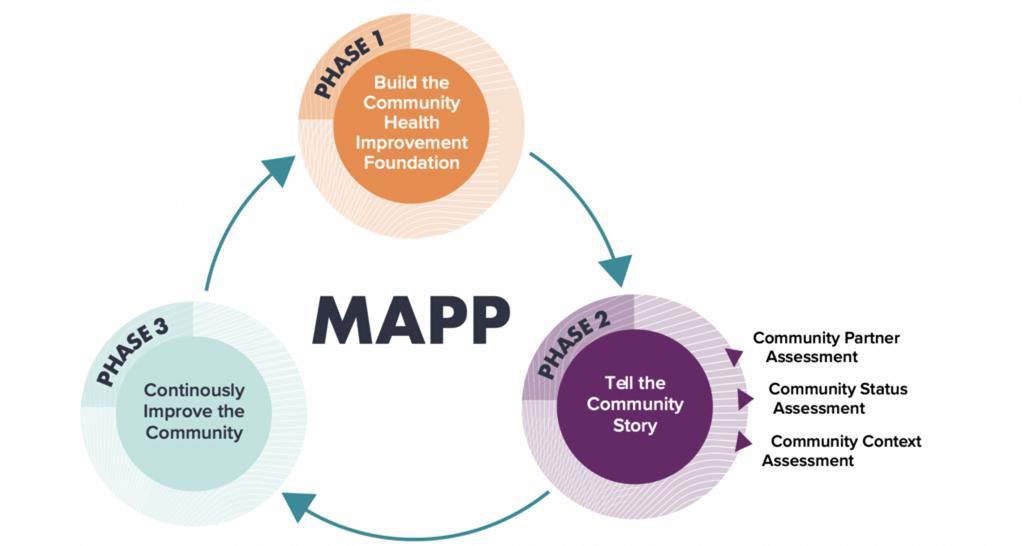
▪ Engages a wide variety of community stakeholders to assess strengths and challenges facing health in a community
▪ Generates community collaborations that can be continued to improve health in a community
▪ Allows generation of a Community Health Improvement Plan (CHIP)
▪ Shows changes that may have happened since the last assessment
Goal
To gather a comprehensive understanding of Amarillo residents' health and wellbeing through surveys, secondary data, and stakeholder interviews in order to identify the community's most pressing health needs and guide local organizations and leaders in creating targeted strategies that improve overall community health.
Comprehensive
Secondary Data Analysis
Community Survey with over 350 Respondents
43 Community Leader Interviews
Amarillo
Data for the Community Status Assessment was obtained largely from:
● Texas Department of State Health Services (DSHS)
● Centers for Disease Control and Prevention (CDC) data reports
● U.S. Census Bureau American Community Survey
● Texas Health and Human Services Commission reports
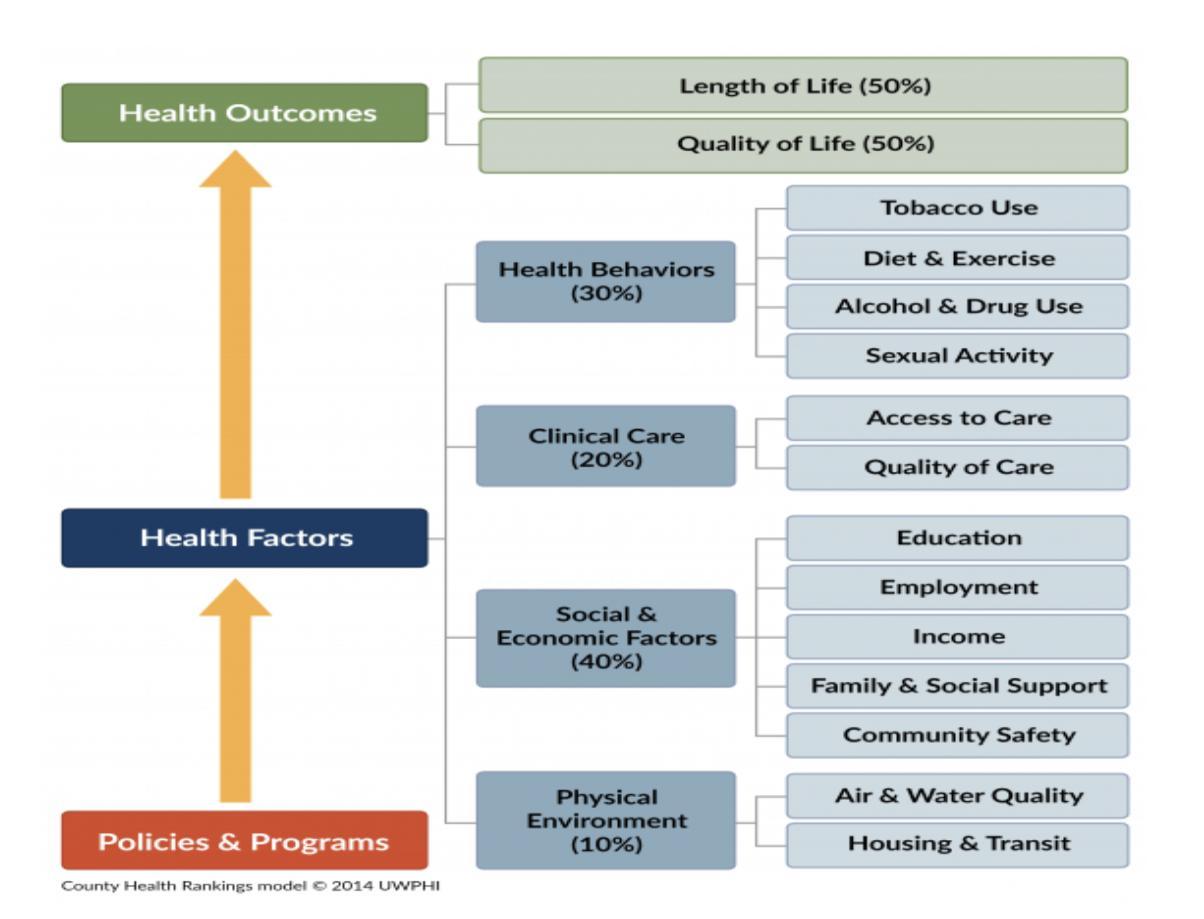
● County Health Rankings & Roadmaps →
● 357 eligible respondents (must be over 18 years old)
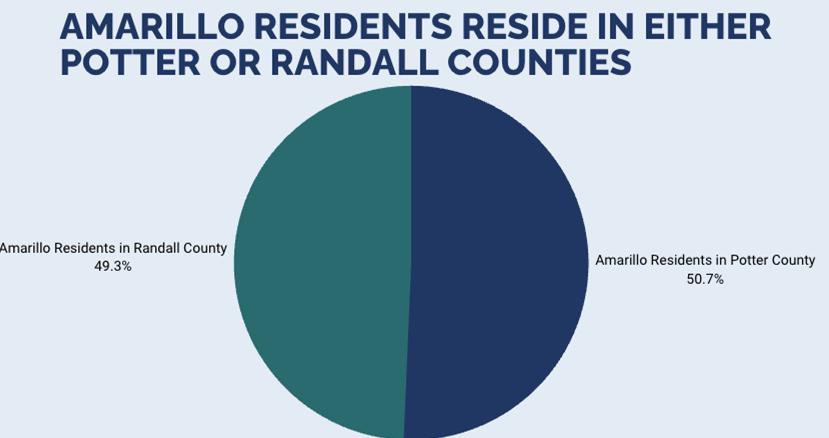
● Evenly distributed among Potter and Randall County
● Age Distribution: 46% aged 55+, 43% aged 35-54, 11% aged 18-34
● Gender: 75% female respondents (notable survey limitation)
● Race/Ethnicity: 78% White non-Hispanic, 18% Hispanic/Latino, 4% Black, 6% Other
● Education: 55.3% bachelor's degree or higher (vs 25.9% citywide - survey skewed higher)
● Income: Relatively even distribution across income brackets
Shari Medford, MD - Amarillo Children's Clinic Amarillo Police Department
Stormie Aguirre - Amarillo Public Health
Sheri Friemel - Amarillo Public Health
Shanna James - Amarillo Public Health
Carol Hill - Amarillo Public Health
Margie Schroeder - Amarillo Public Health
Teresa Kenedy - Barrio
Neighborhood Planning Committee
Laura Storrs - City of Amarillo
Grayson Path - City of Amarillo
Laci Scott - Amarillo Public Health
Cindi Wynia - Amarillo Public Health
Elizabeth Favela - Coalition of Health Services
Alan Keister, MD - Heal the City
Courtney Austin - Cenikor Foundation
Josh Craft - City of Amarillo
Rodney Young, MD - TTUHSC
Teresa Baker, MD - TTUHSC
Jason Riddlespurger - City of Amarillo
Andrew Freeman - City of Amarillo
Adam Leathers - United Way Amarillo and Canyon
Haley Stoddard - United Way Amarillo and Canyon
Will Hendon - North Texas, Global Medical Response
Keila Johnson - TX Dept of State Health Services/Public Health Region
Laura Street - Panhandle Behavioral Health Alliance
Kiley Murray - United Way Amarillo and Canyon
Maria Garcia - Uniting Parents
Christine Garner - TTUHSC
Jill Goodrich - The Opportunity School
Keralee Clayton - Amarillo Area Foundation
Debra King - Area Agency on Aging for the Texas Panhandle
Kathryn English - Area Agency on Aging for the Texas Panhandle
Anette Carlisle - Former positions in Amarillo College and Amarillo School District
Ryan Pennington - Refugee Language Project
Kim Pitney LCSW - Downtown Women's Project
Sridevi Veeramachaneni - Panhandle Behavioral Health Alliance
Population (15th largest city in Texas)
Regional Significance:
Amarillo serves as the essential healthcare and economic hub for the largely rural Texas Panhandle, providing critical services to the surrounding area.
Community Survey
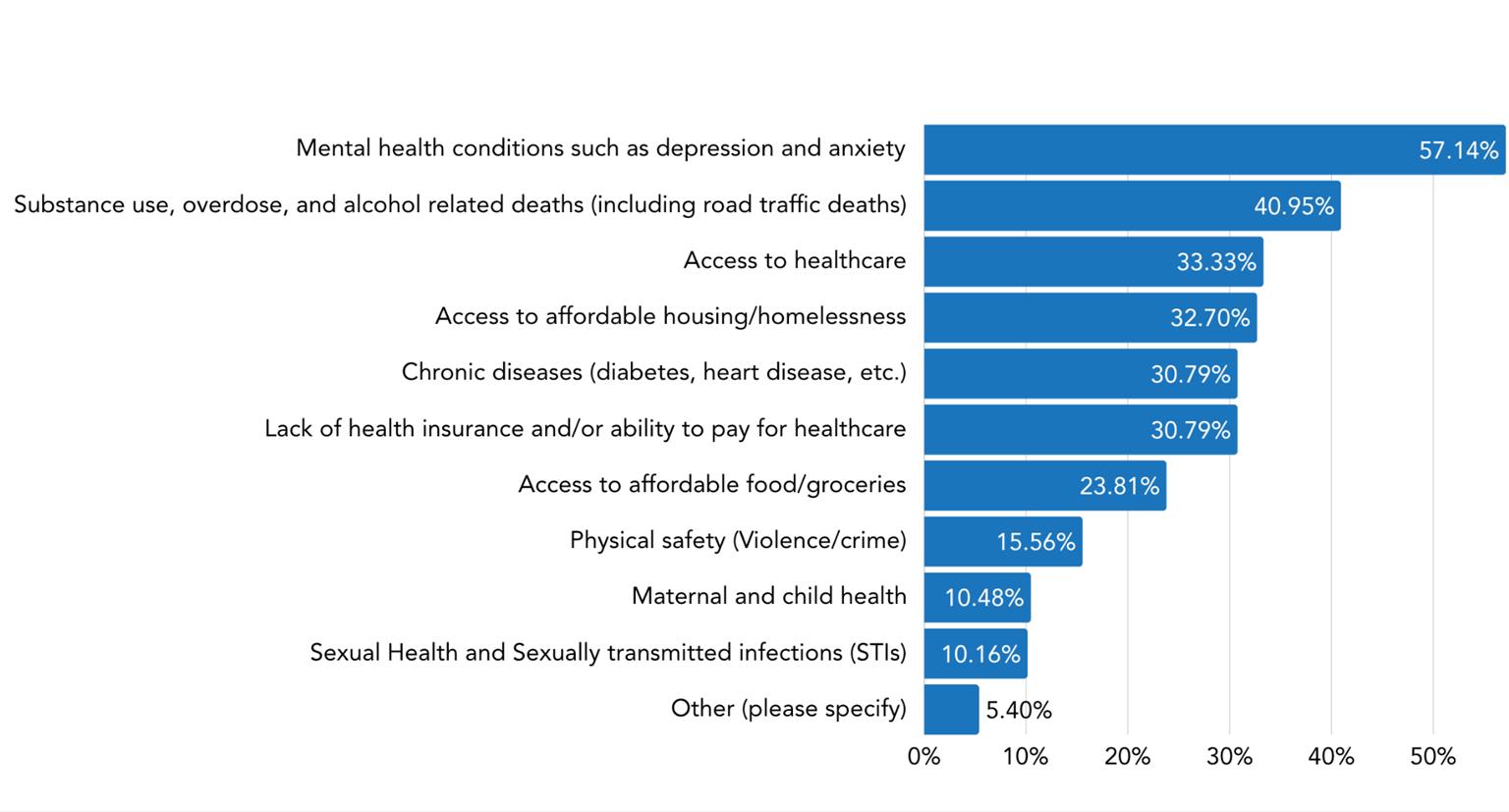
Respondents ranked Mental Health Conditions and Substance Use as their top 1 and 2 most concerning issues
“THINKING ABOUT YOUR COMMUNITY IN AMARILLO, WHAT ARE THE THREE HEALTH ISSUES THAT MOST CONCERN YOU?”
“HAVE
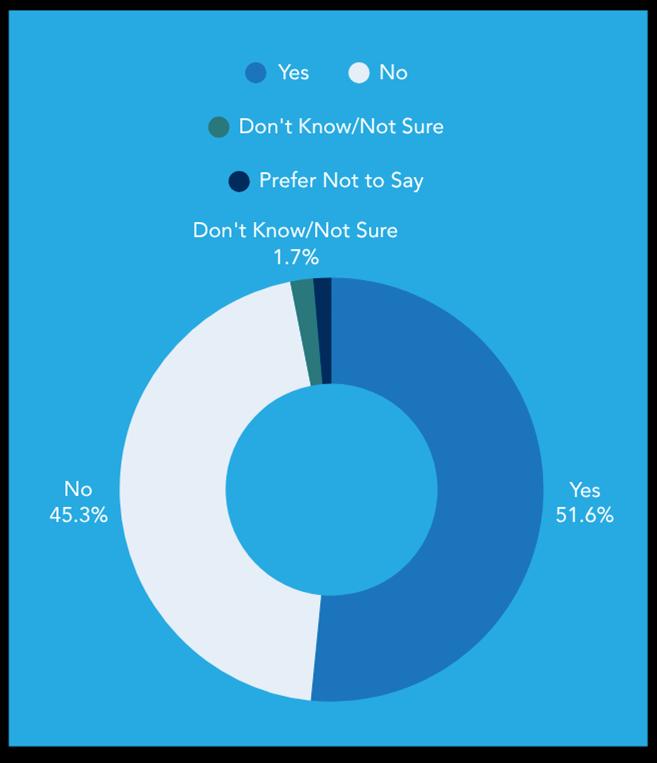
Comparison to Previous CHAs (n =287)
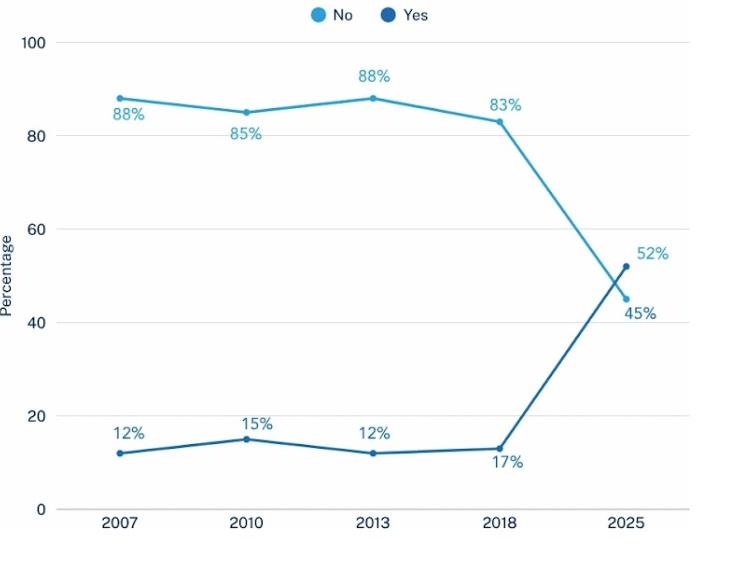
Increase in seeking mental health services compared to 2018 +246%
Households now report seeking mental health services in the past 2 years 1 in 2
“IF YOU OR AN ADULT MEMBER OF YOUR HOUSEHOLD WERE/ARE IN NEED OF
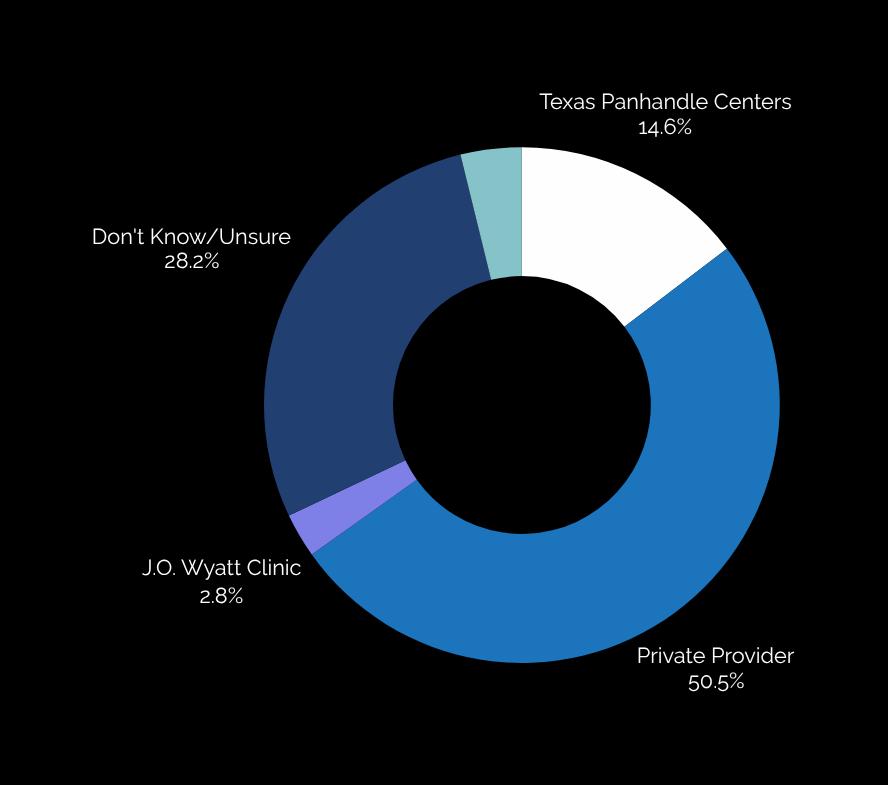

Comparison to Previous CHAs (n =287)
Twice more % of residents are unsure of where to go for mental health services than in 2018 +200%
“DID YOU EXPERIENCE ANY OF THE FOLLOWING WHEN YOU SOUGHT MENTAL HEALTH CARE?”
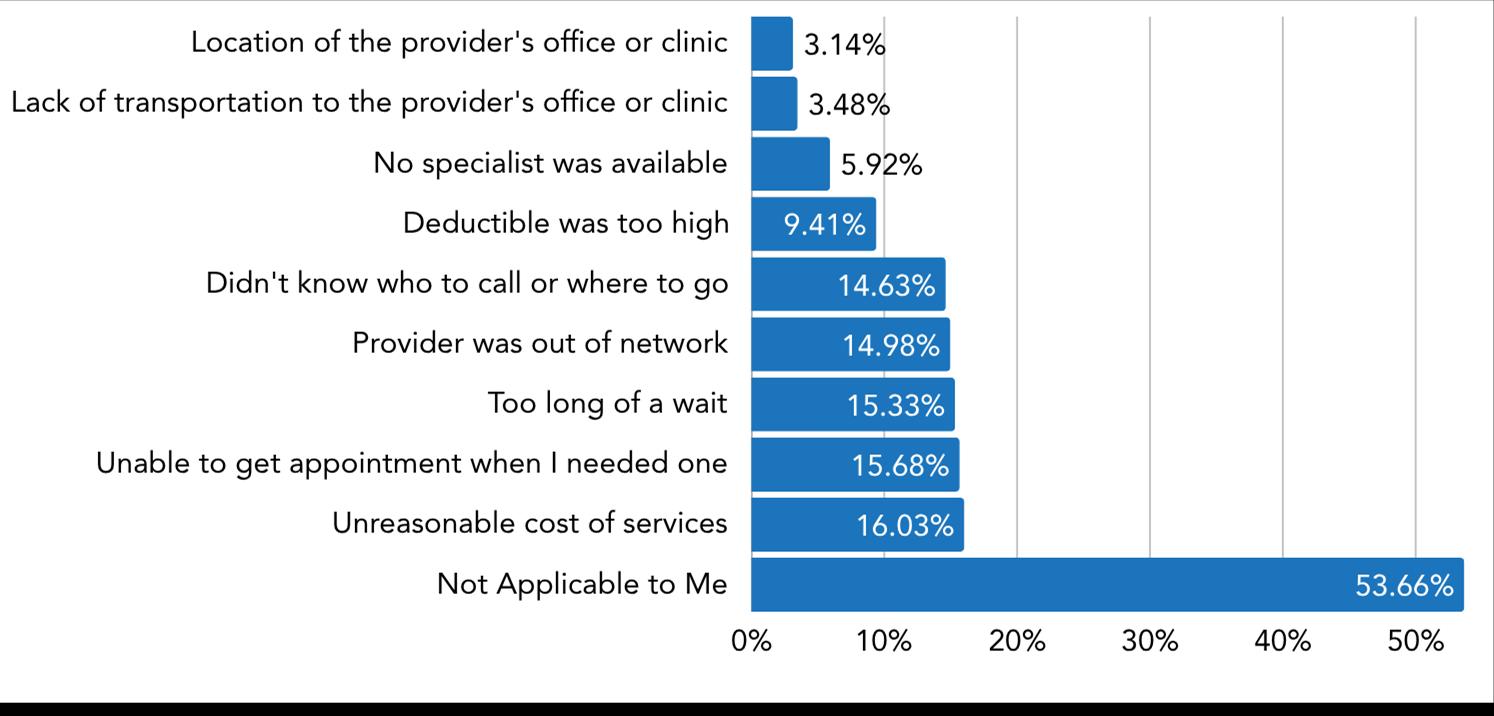
(n =287)
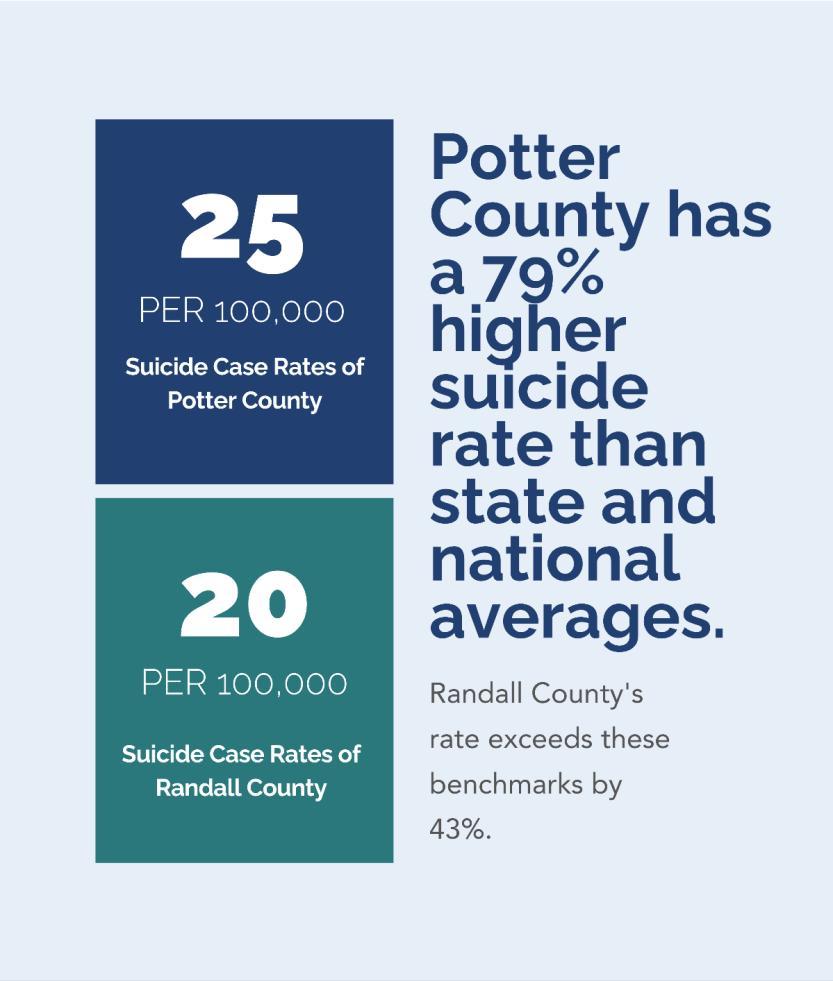
Source: Texas Department of State Health Services.
Psychiatrists
● 20 psychiatrists in Potter County; none in Randall County
● Both counties designated Mental Health
Professional Shortage Areas (HPSAs)
● Provider-to-population ratios:
○ Potter County: 1:390
○ Randall County: 1:780
○ Texas average: 1:640
Despite favorable ratios, both counties face high mental health needs due to shared regional demand
Potter County: Experienced population decline over recent years
Randall County: Consistent population growth
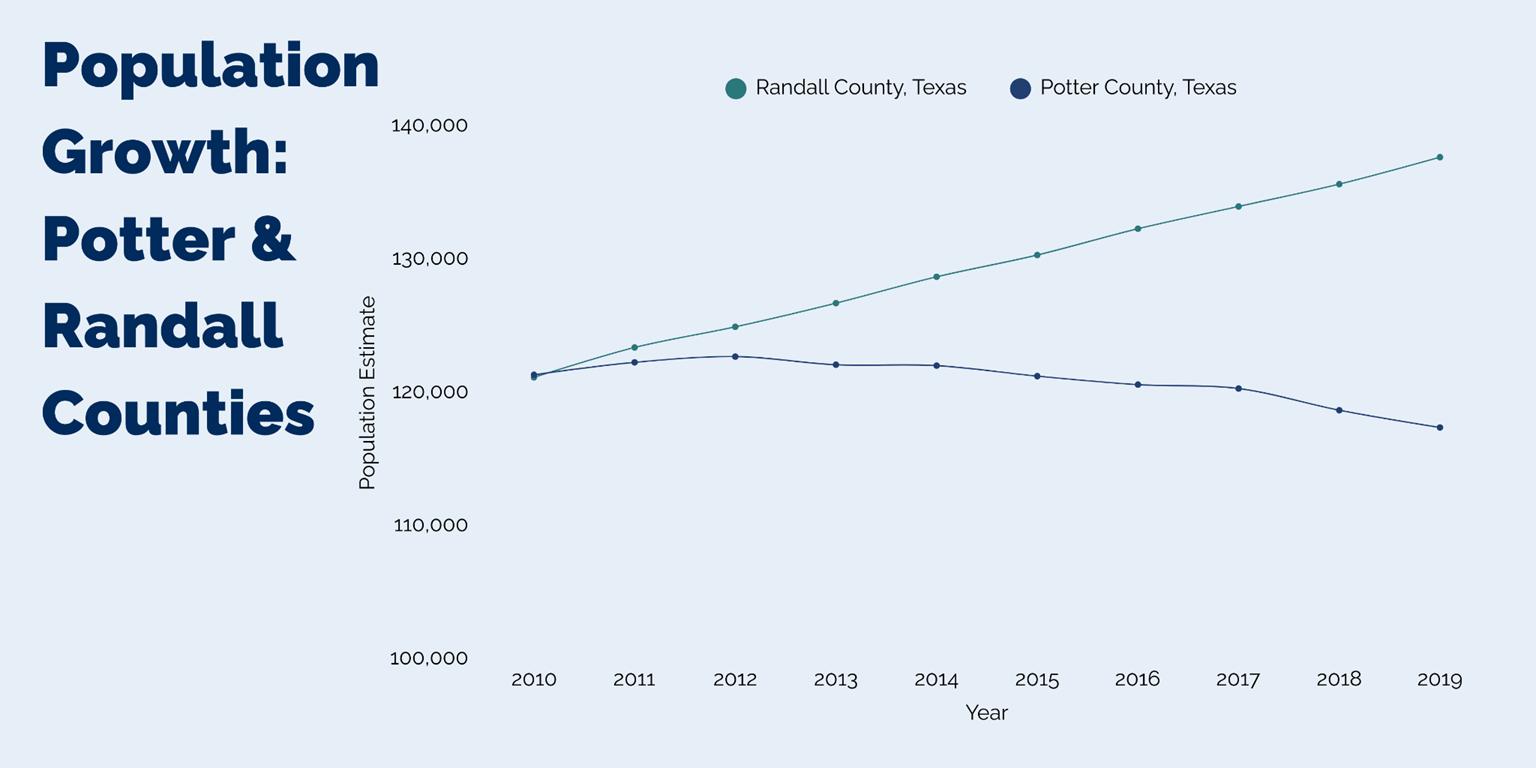
Development Pattern: New construction and residential growth concentrated in Randall County
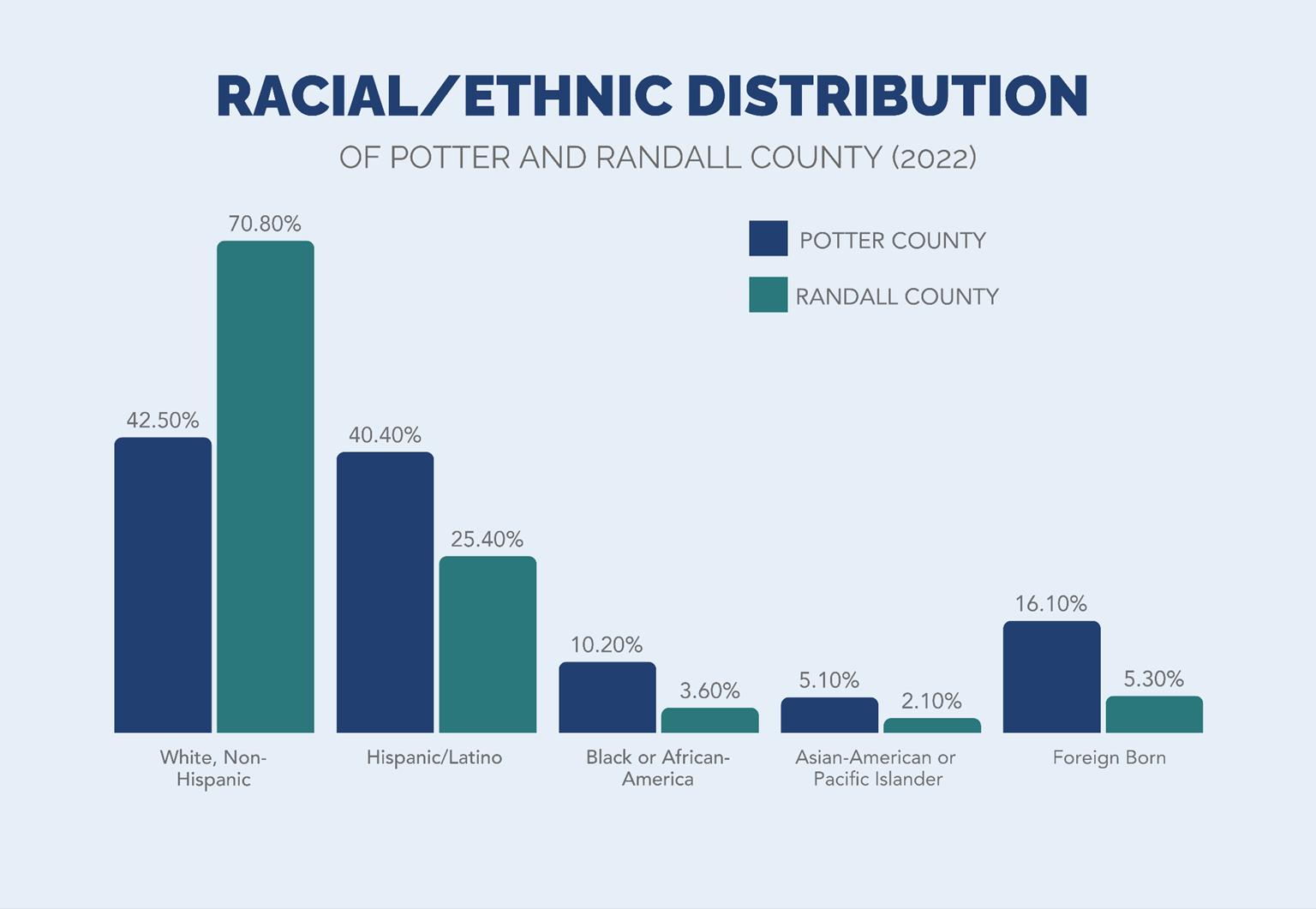
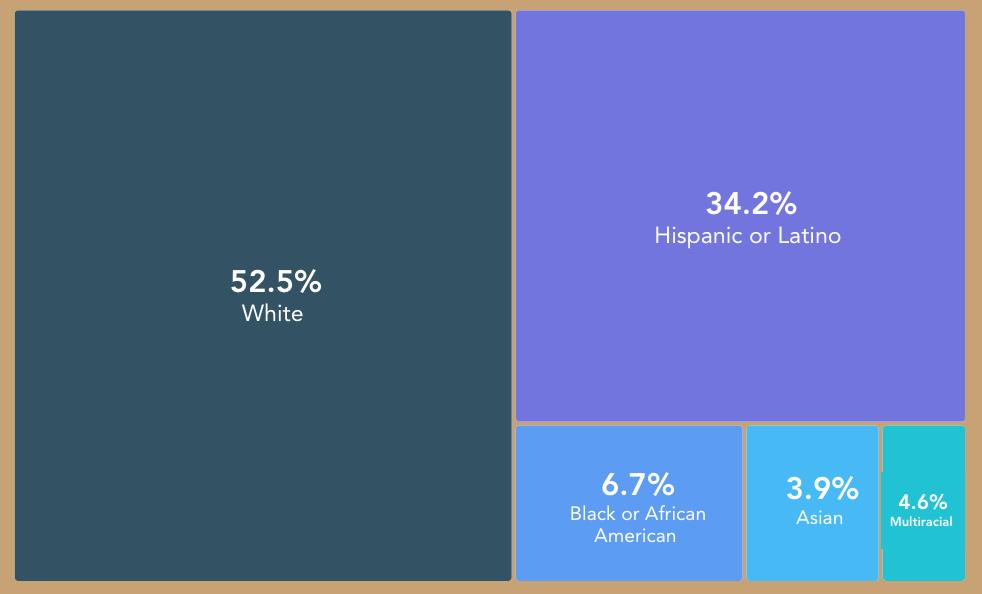
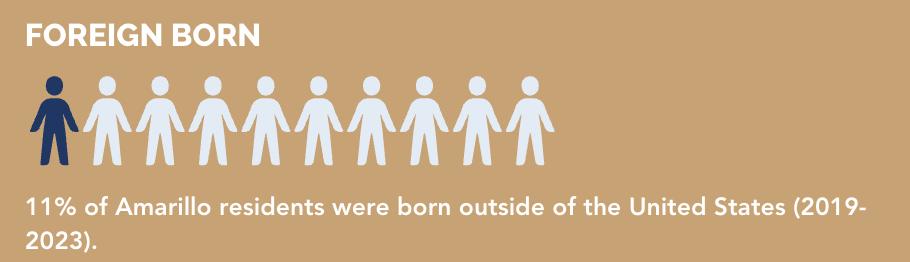
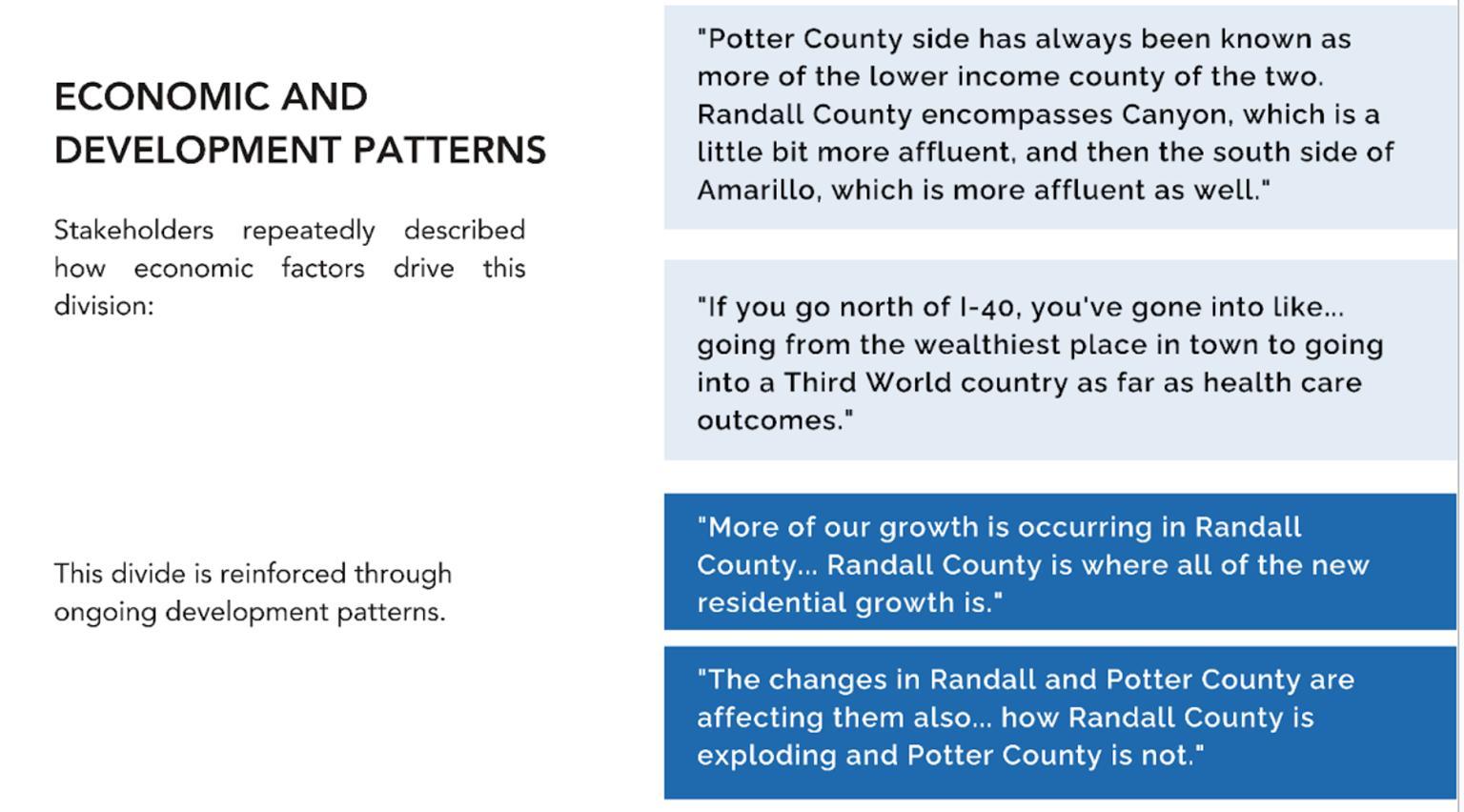
Potter County boasts majority BIPOC (Black, Indigenous, and other People of Color) residents. Potter County has 3x the number of foreign born residents than in Randall County.
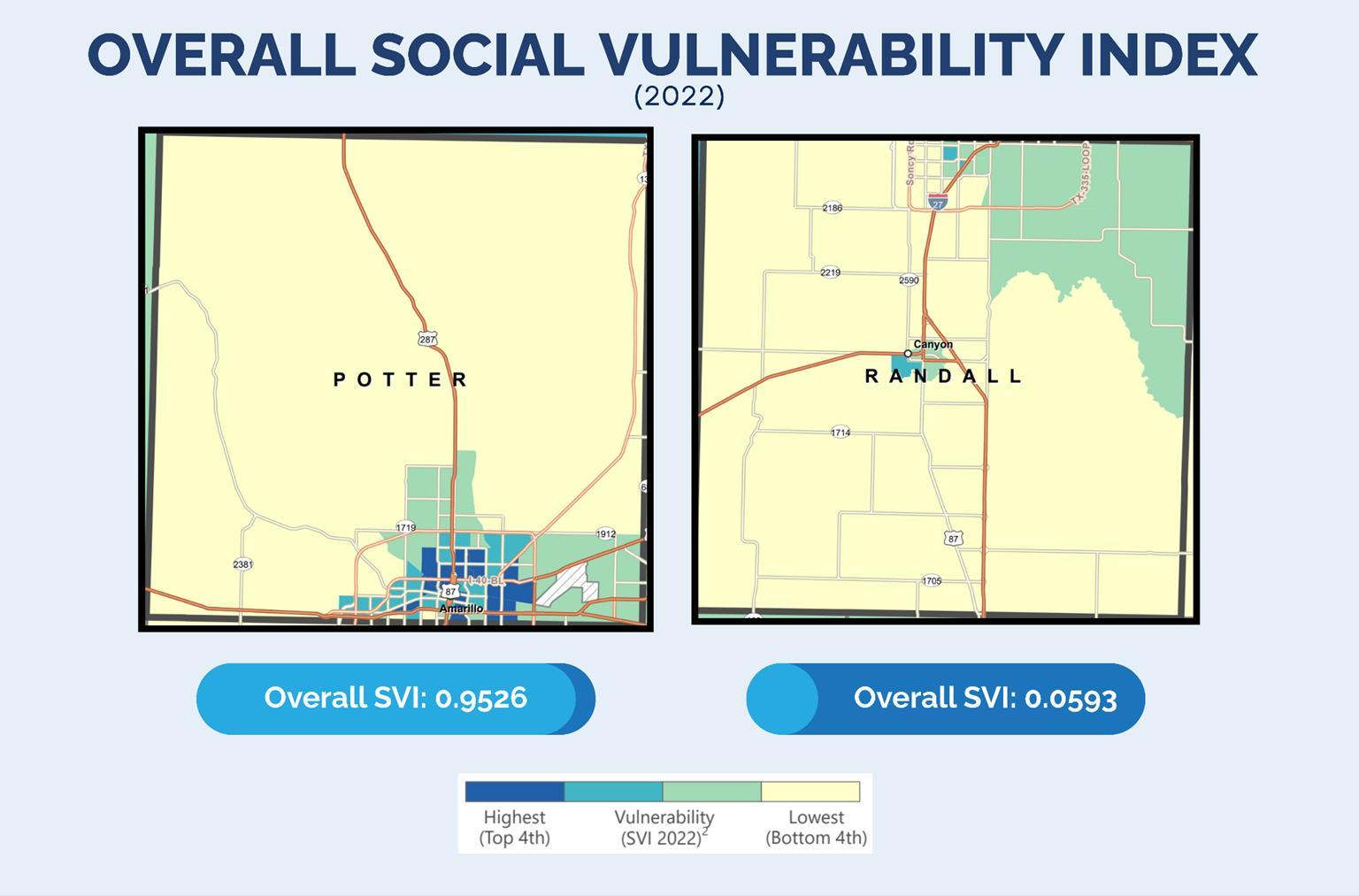
Potter County's SVI of 0.9526 (95th percentile) versus Randall County's 0.0593 (6th percentile).
Source: Centers for Disease Control and Prevention
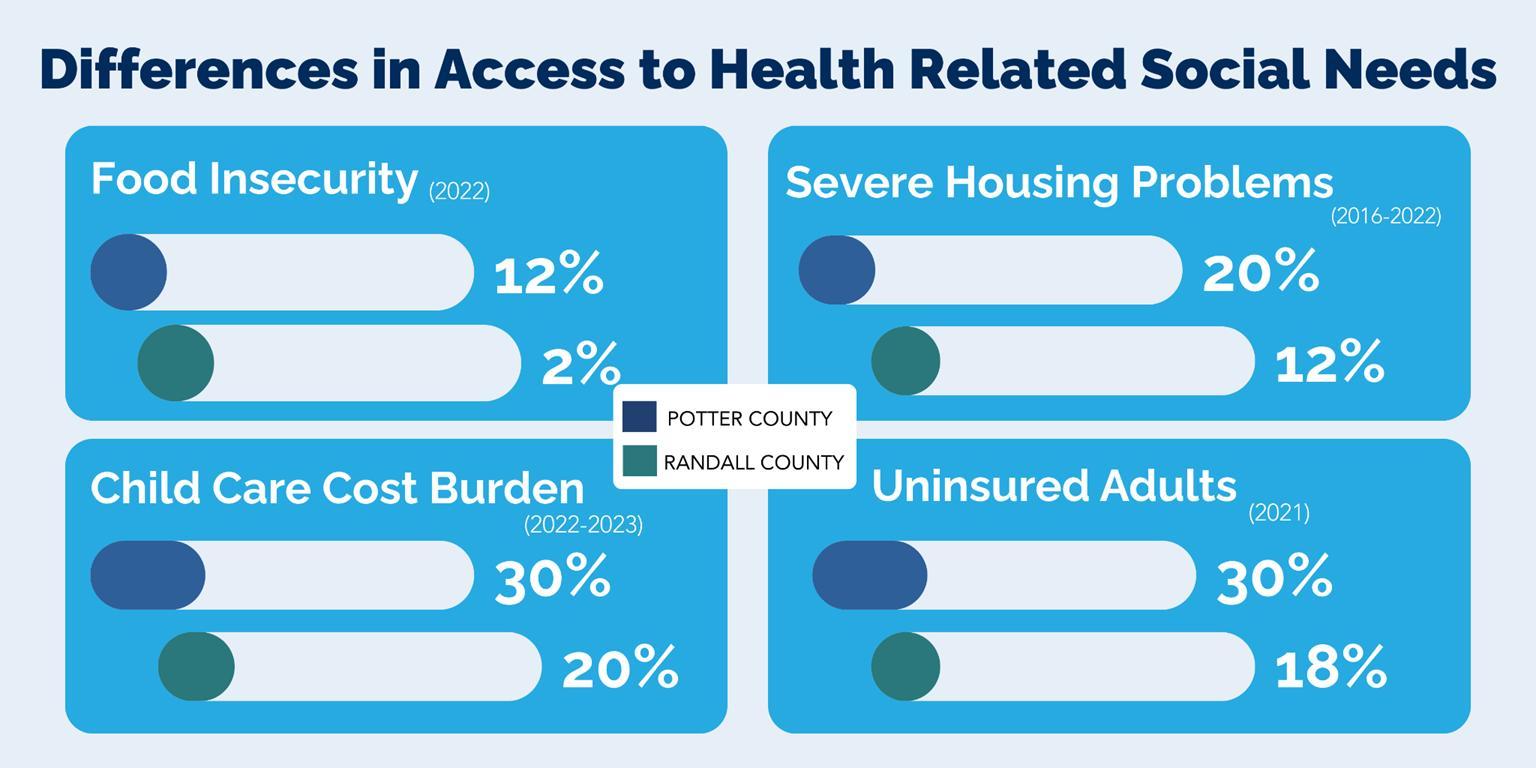
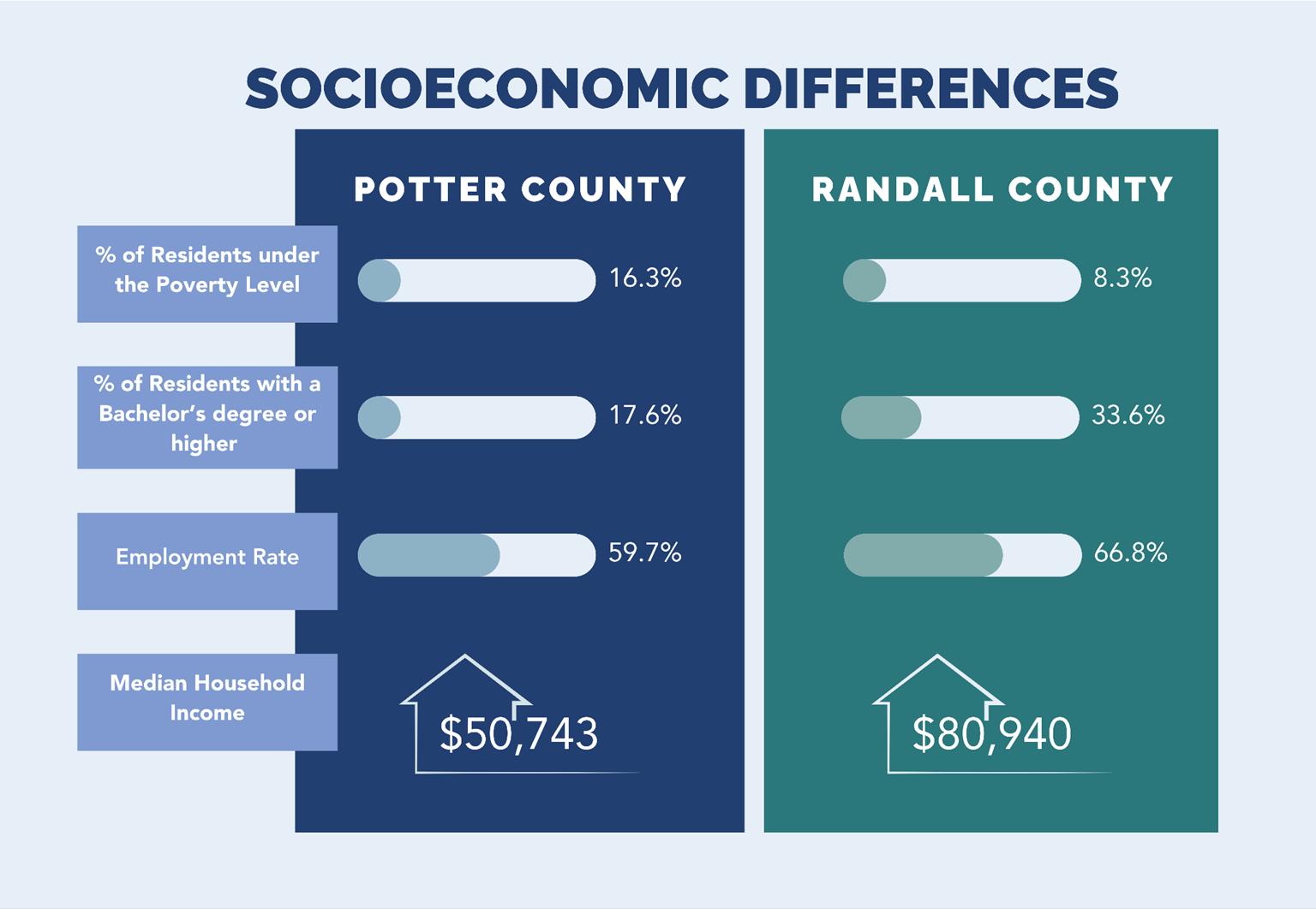
More residents in Potter County report facing difficulties in accessing health related social needs. The rate of uninsured adults in Potter County is almost twice the rate than in Randall County.
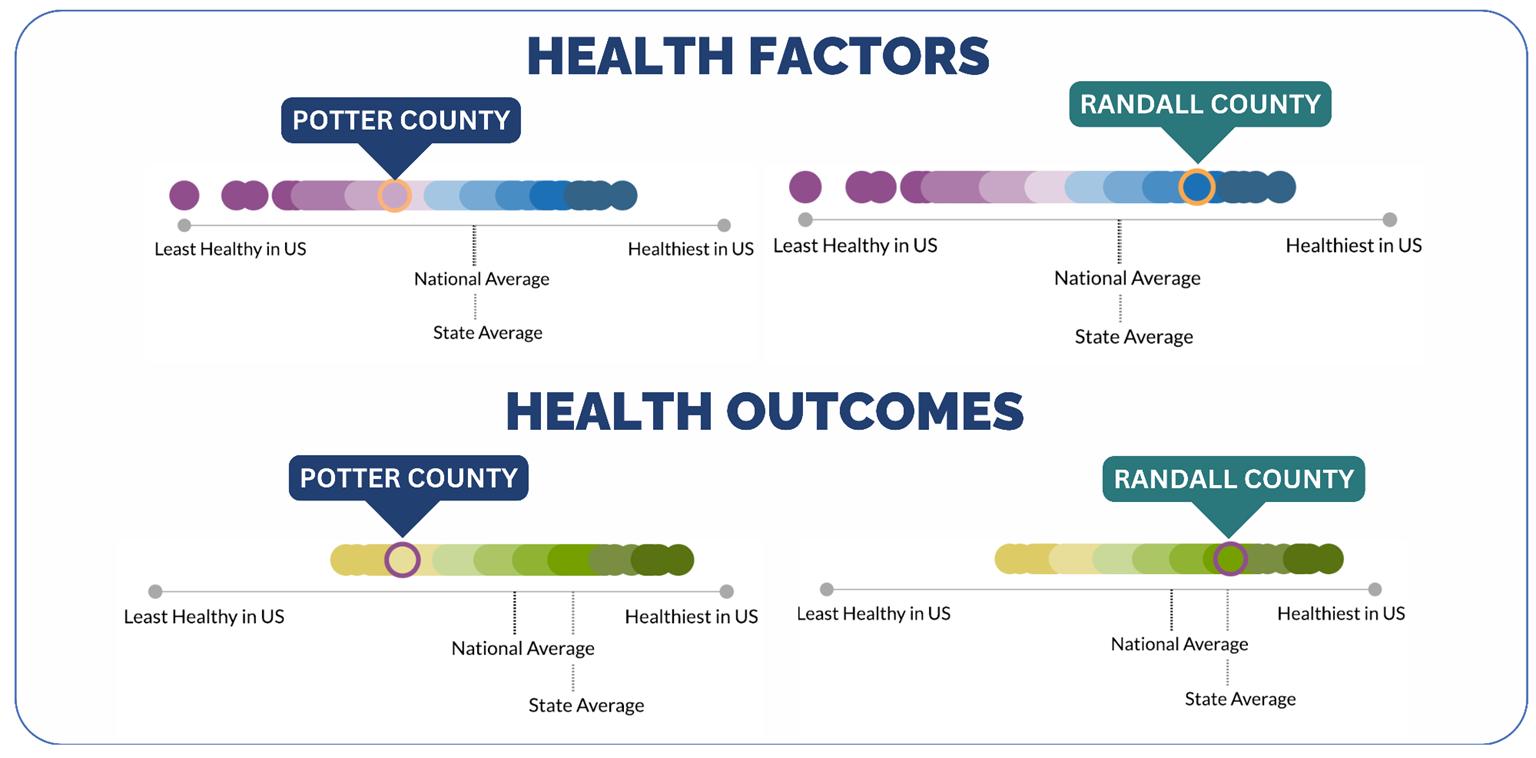
Potter County ranks in the bottom quartile for both health outcomes (182nd/244) and health factors (208th/244).
Randall County ranks in the top quartile for both health outcomes (27th/244) and health factors (14th/244).
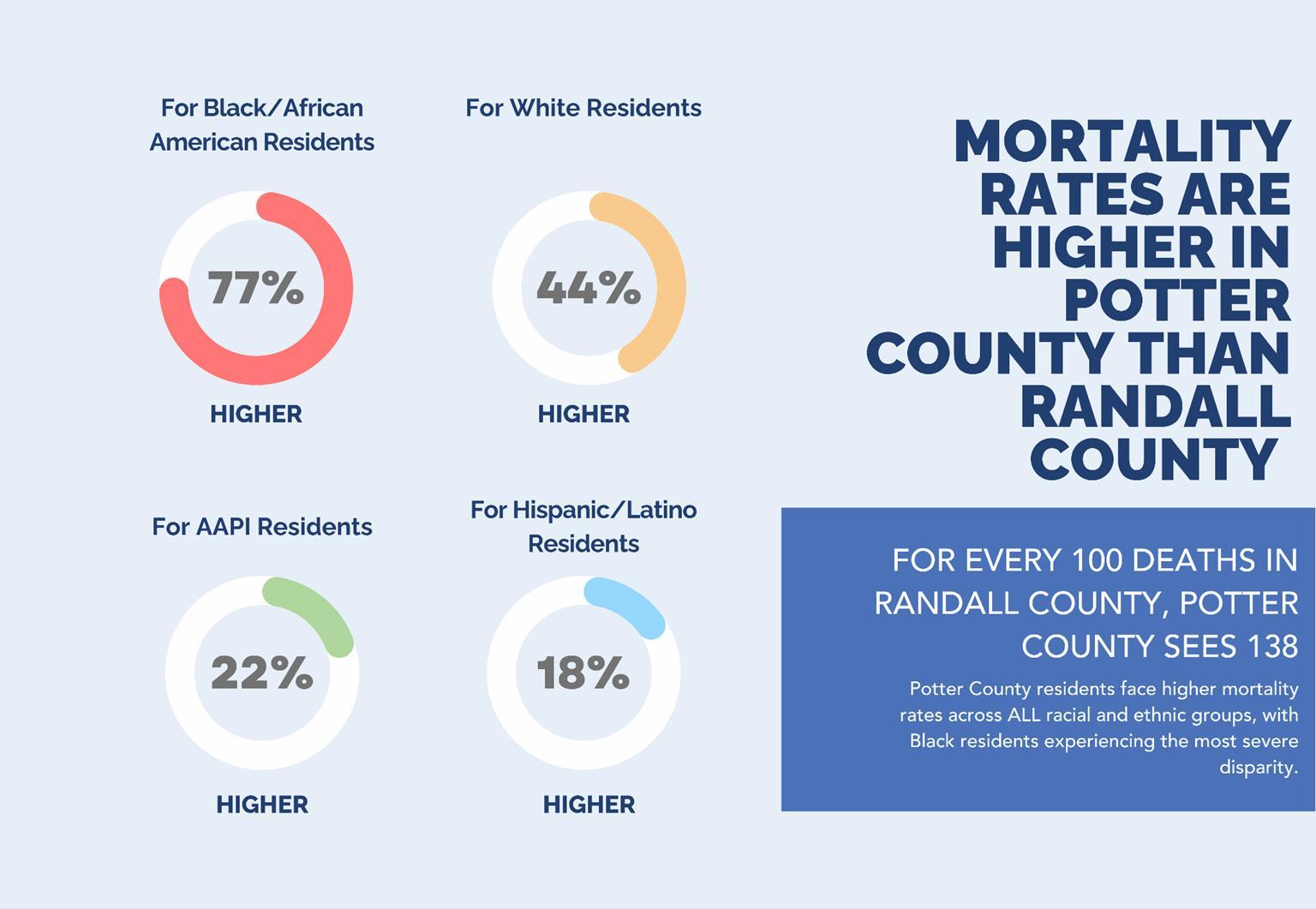
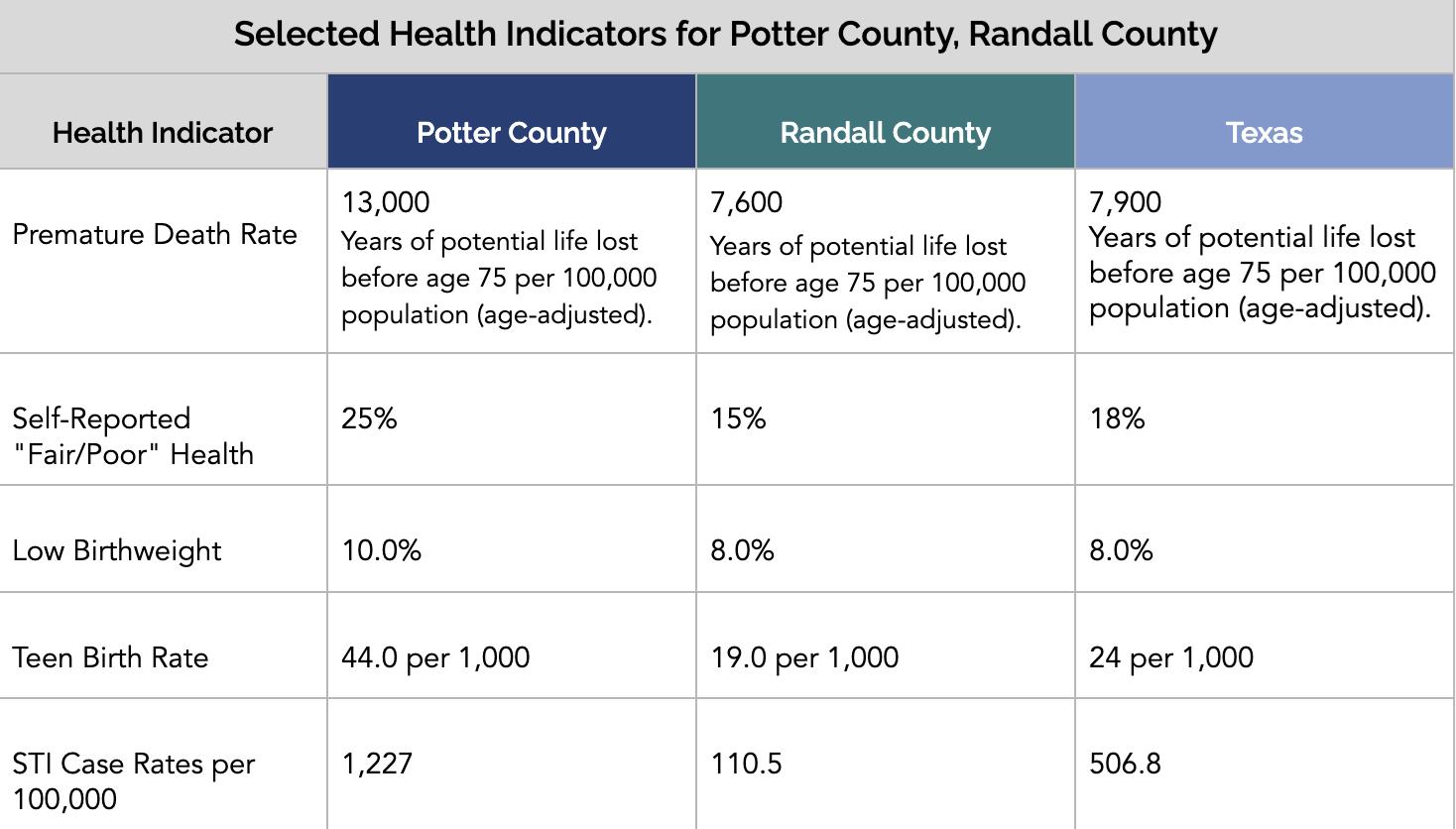

#3: Access to Healthcare
“THINKING ABOUT YOUR COMMUNITY IN AMARILLO, WHAT ARE THE THREE HEALTH ISSUES THAT MOST CONCERN YOU?”
#5: Lack of Health Insurance (n =315)
“WAS THERE A TIME IN THE PAST 12 MONTHS YOU COULD NOT SEE A DOCTOR BECAUSE OF COST?”
(n =309)
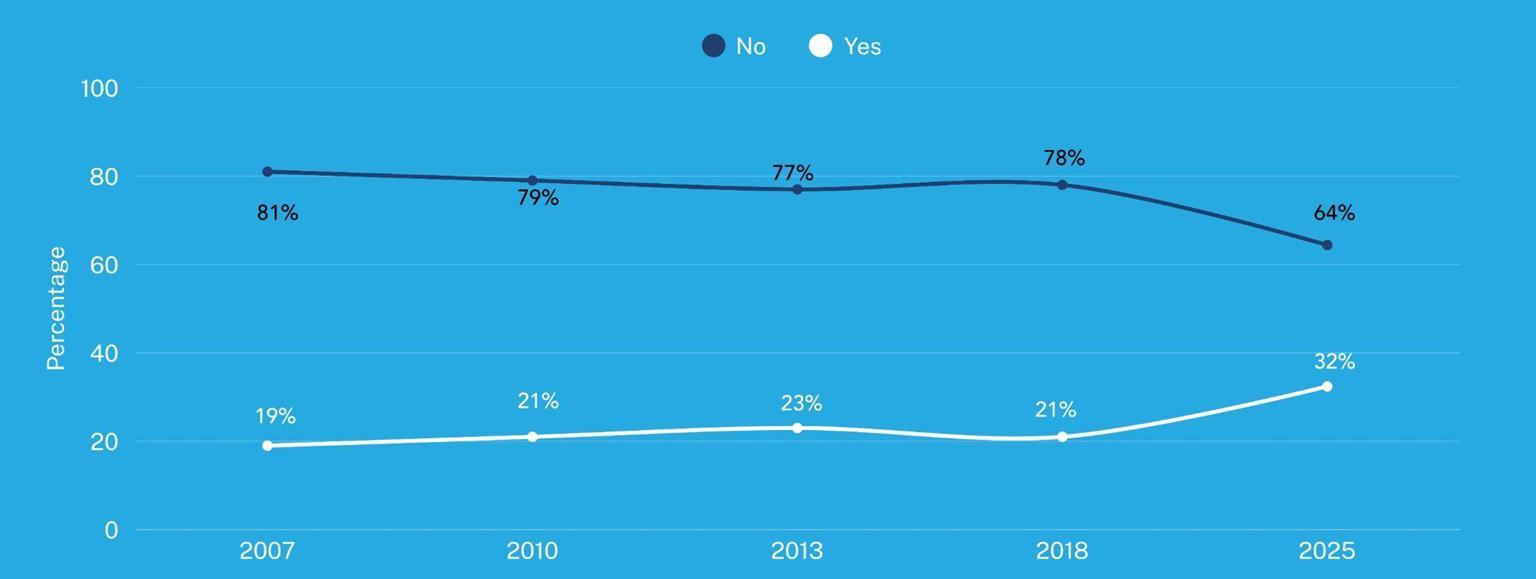
Increase from 2018 in cost-related healthcare access barriers +53%
Respondents now delayed care recently because of cost 1 in 3
“IN THE PAST 12 MONTHS, HAVE YOU DELAYED OR GONE WITHOUT NEEDED HEALTHCARE?”
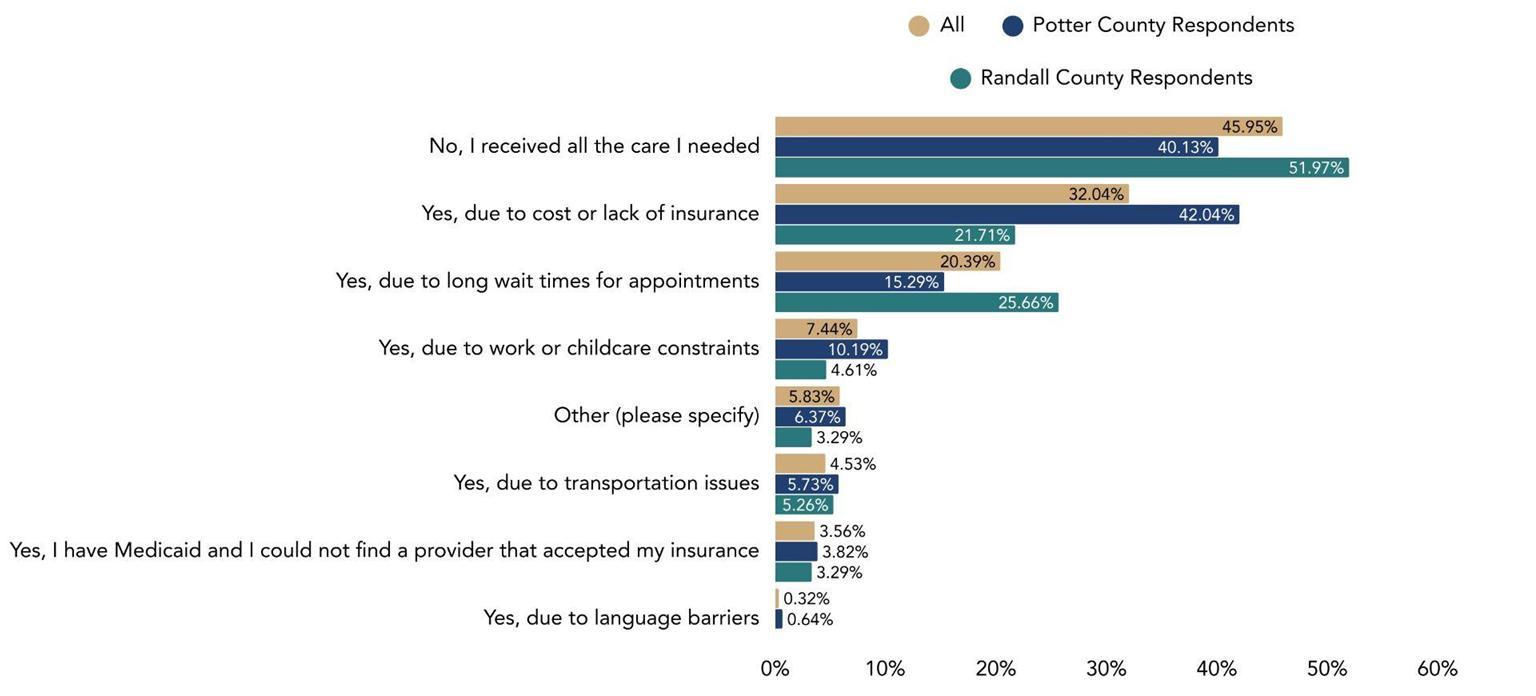
Respondents now report cost as a barrier to healthcare
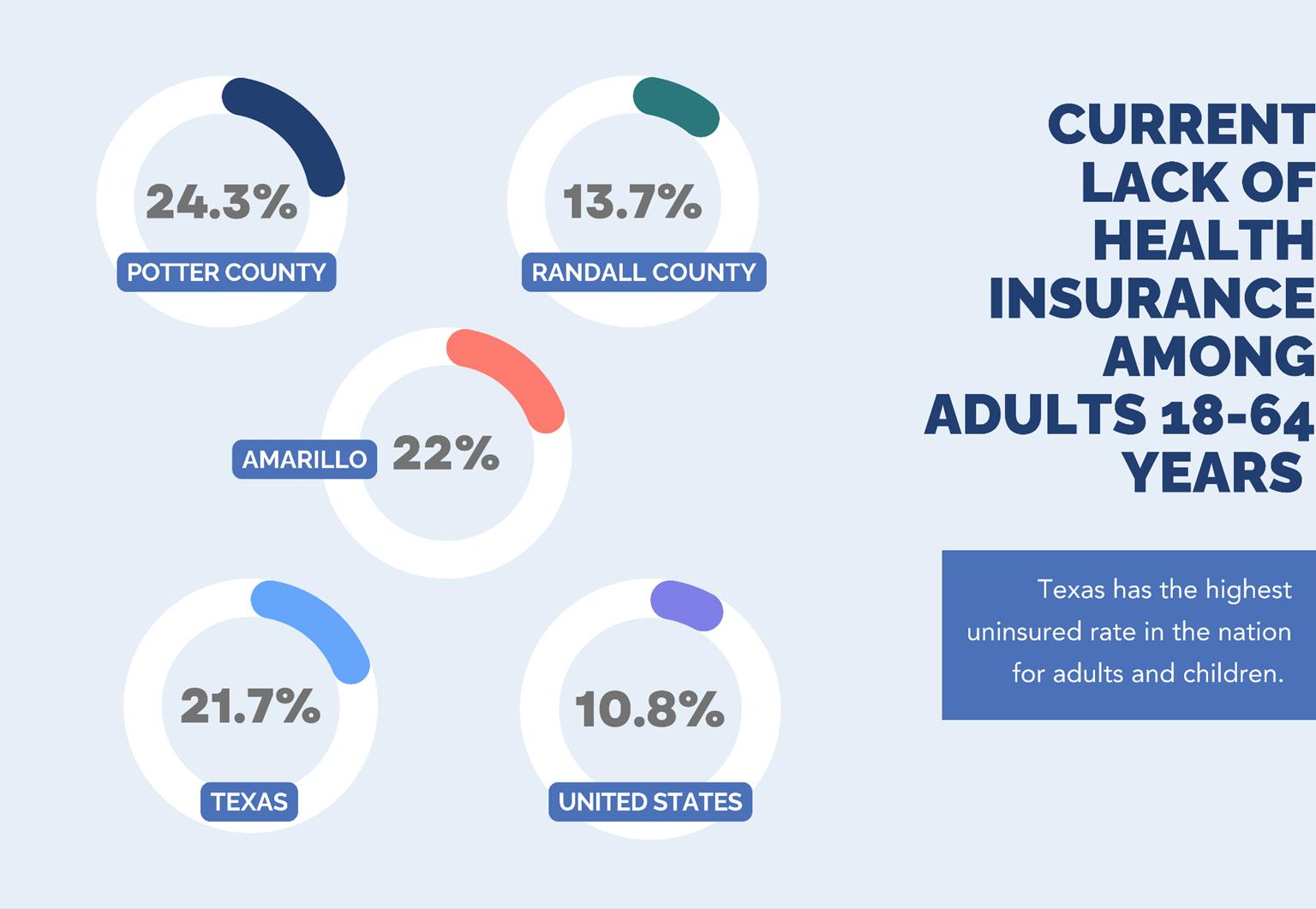
Source: PLACES Project, Centers for Disease Control. Data from 2022
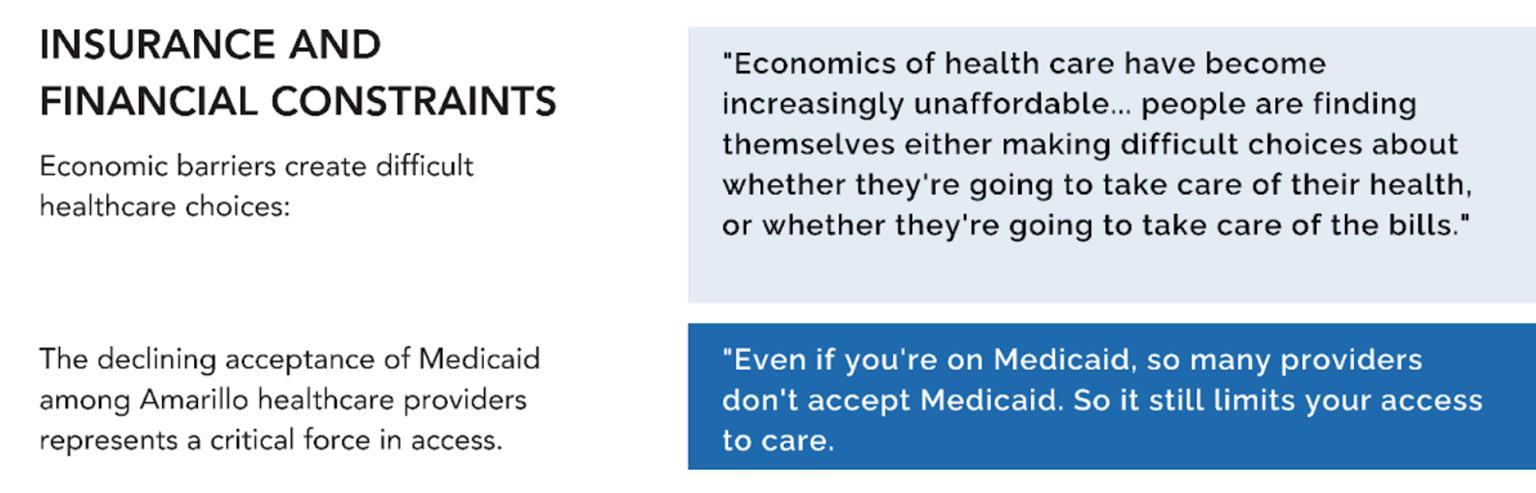
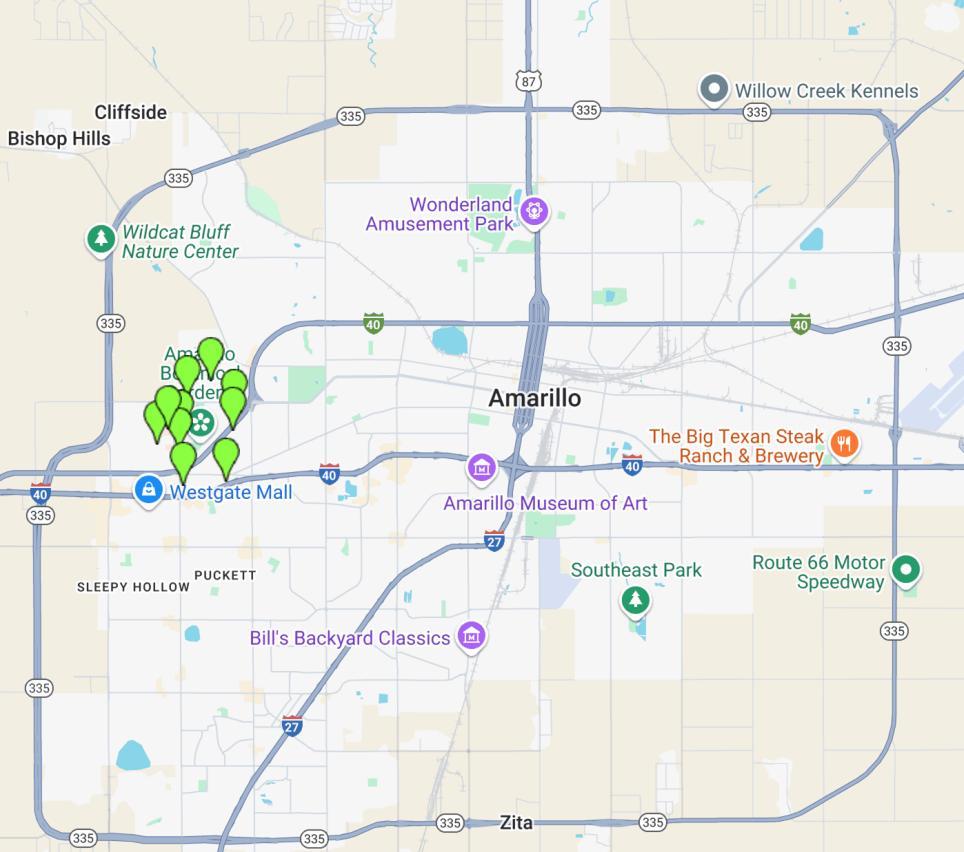
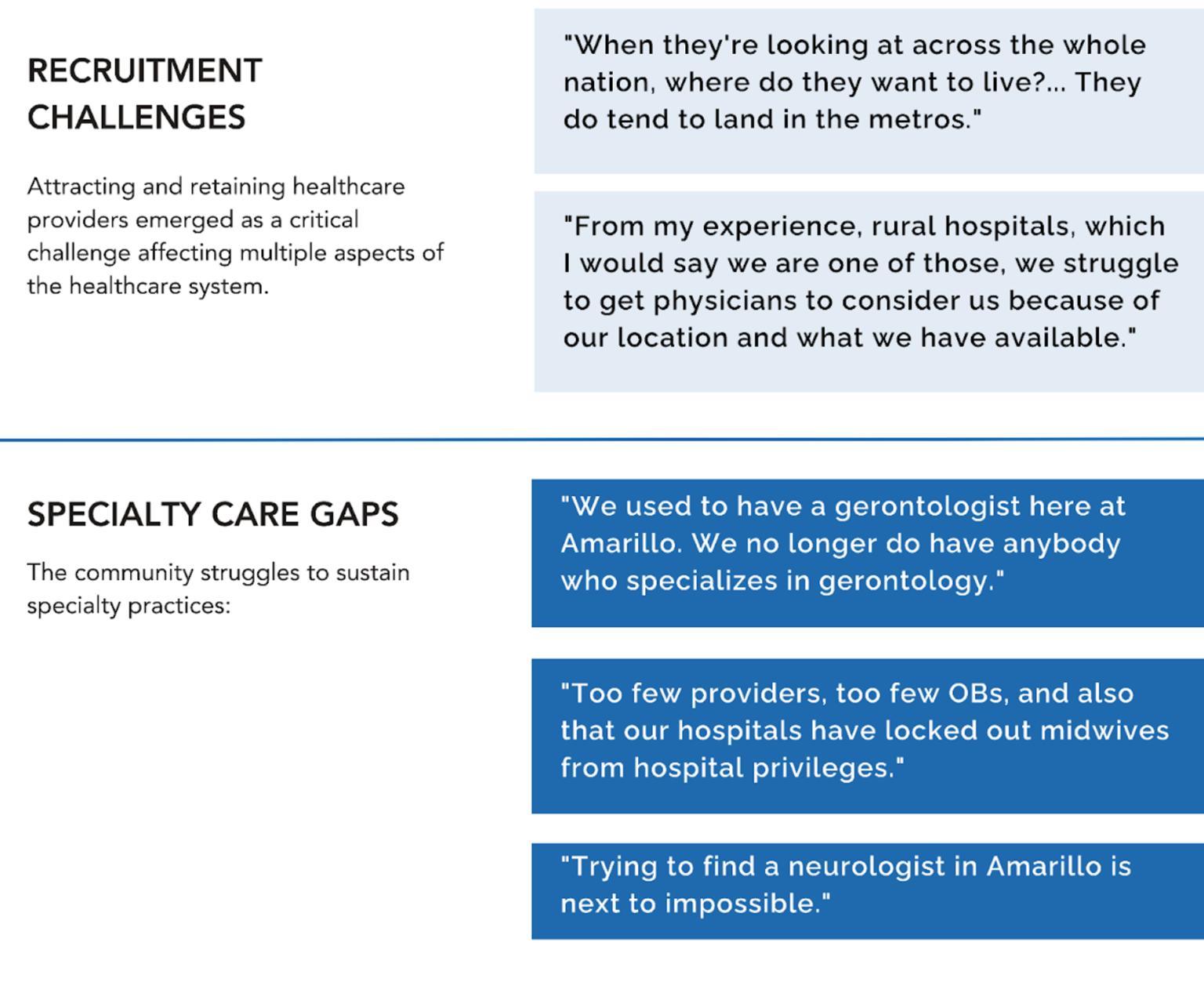
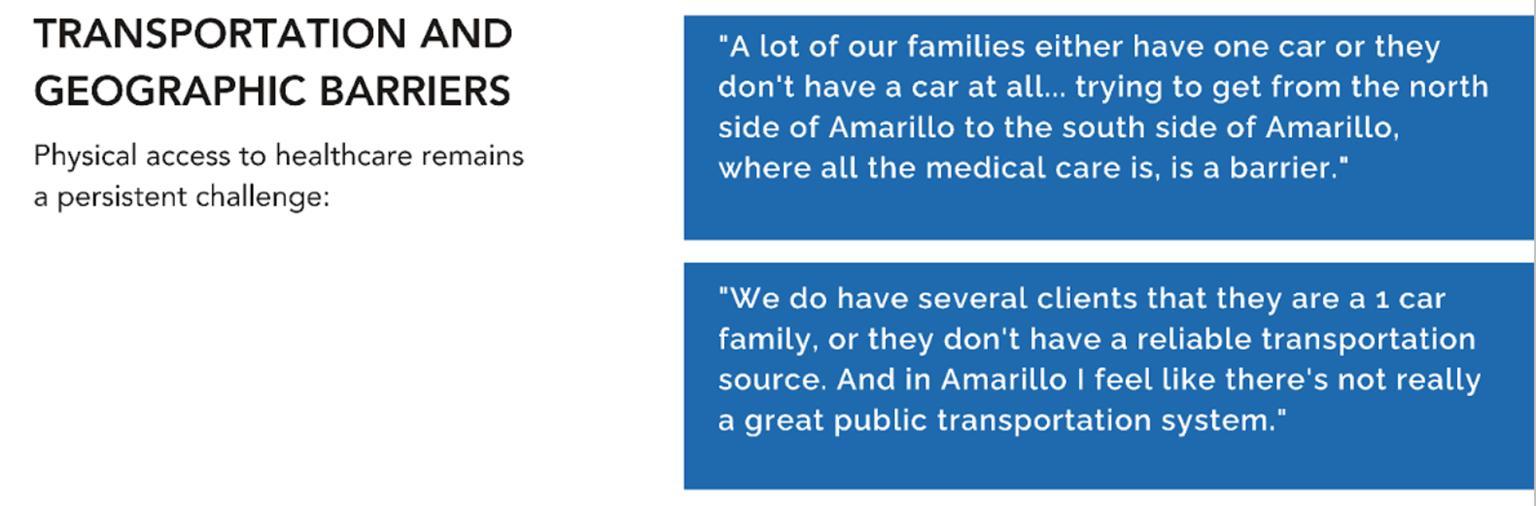
“Where our medical facilities are concentrated is on the west side of town, in a much more affluent general neighborhood."
(n =309)
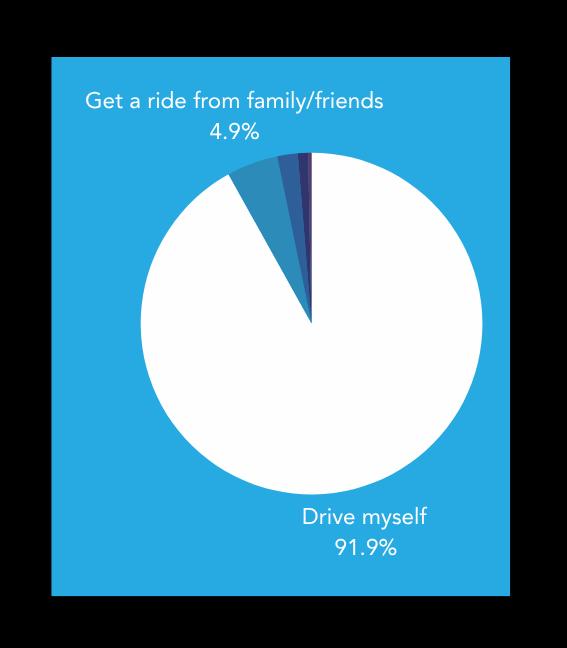
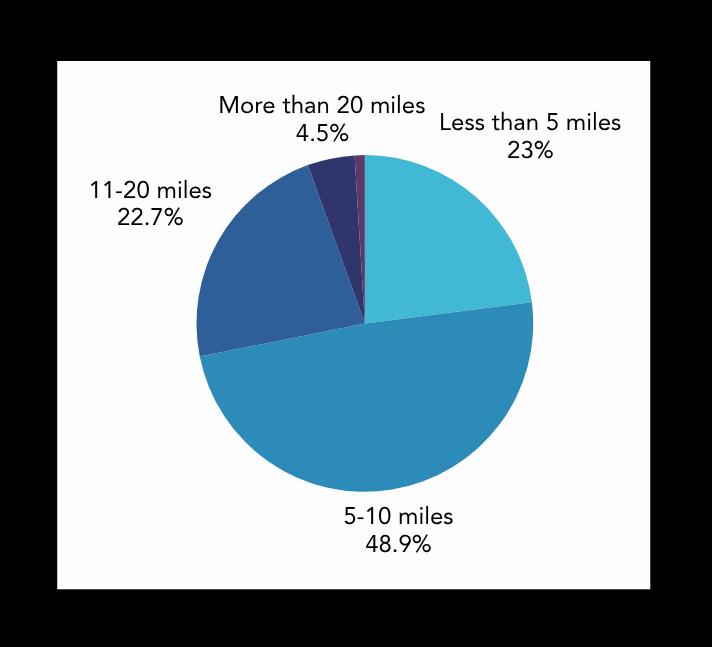
“HOW FAR DO YOU TYPICALLY TRAVEL TO ACCESS “HOW DO YOU USUALLY GET TO MEDICAL APPOINTMENTS?”
“WHICH
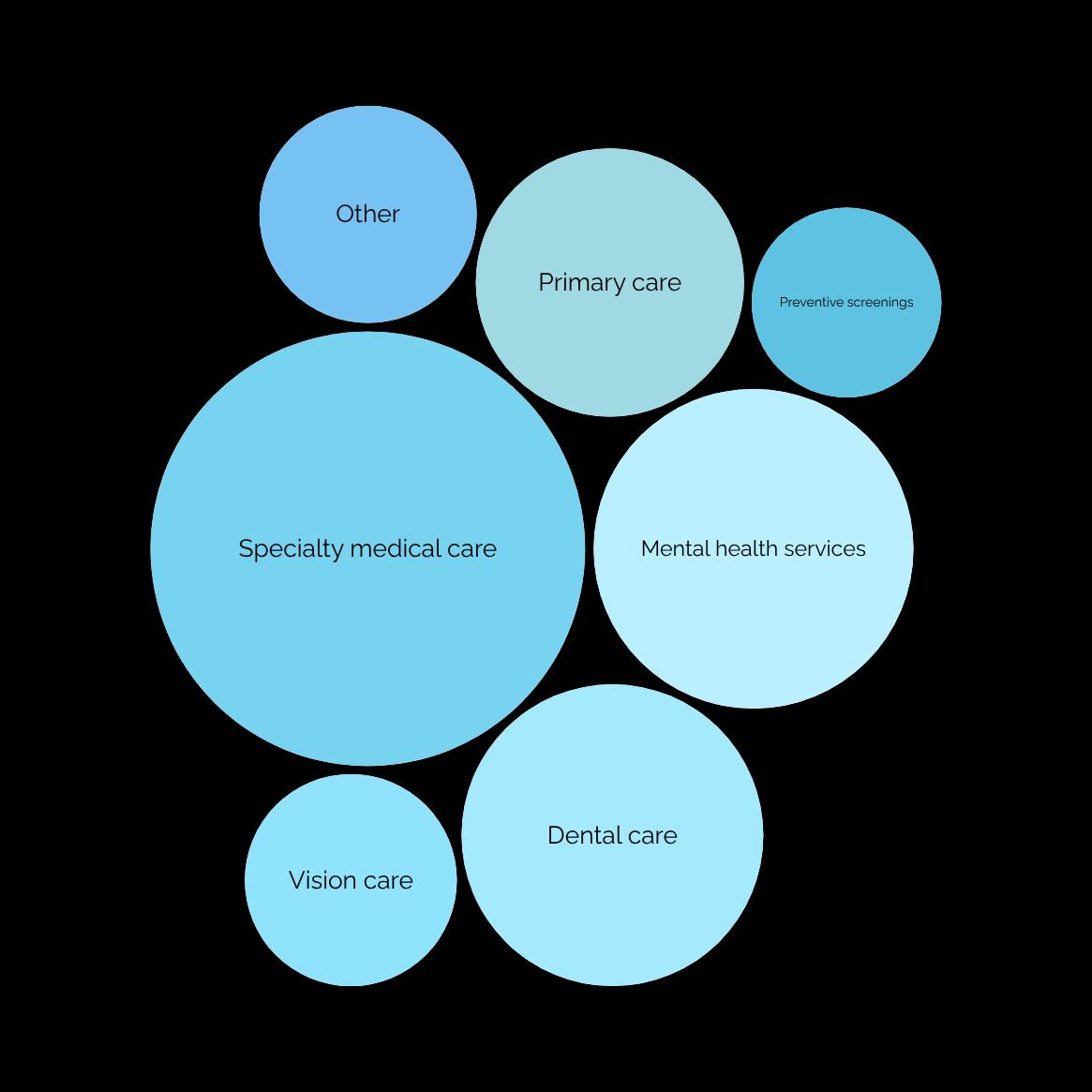
1. SPECIALTY MEDICAL CARE
2.MENTAL HEALTH SERVICES
3.DENTAL CARE
4.PRIMARY CARE
5.OTHER
6.VISION CARE
7.PREVENTIVE SCREENINGS
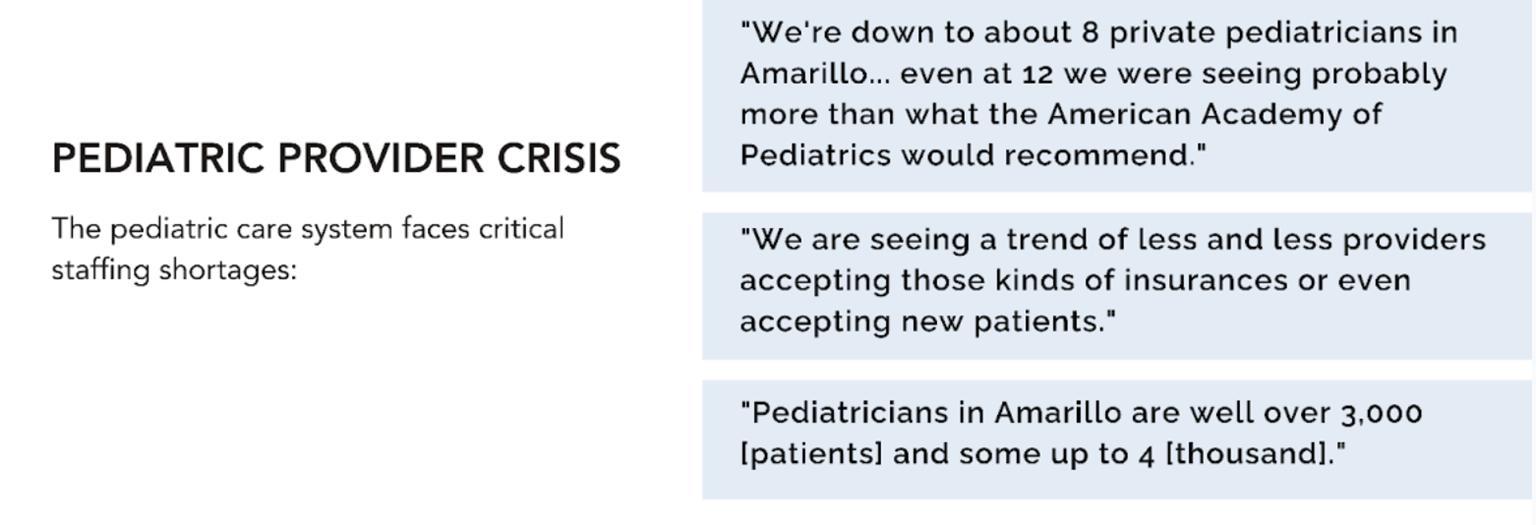
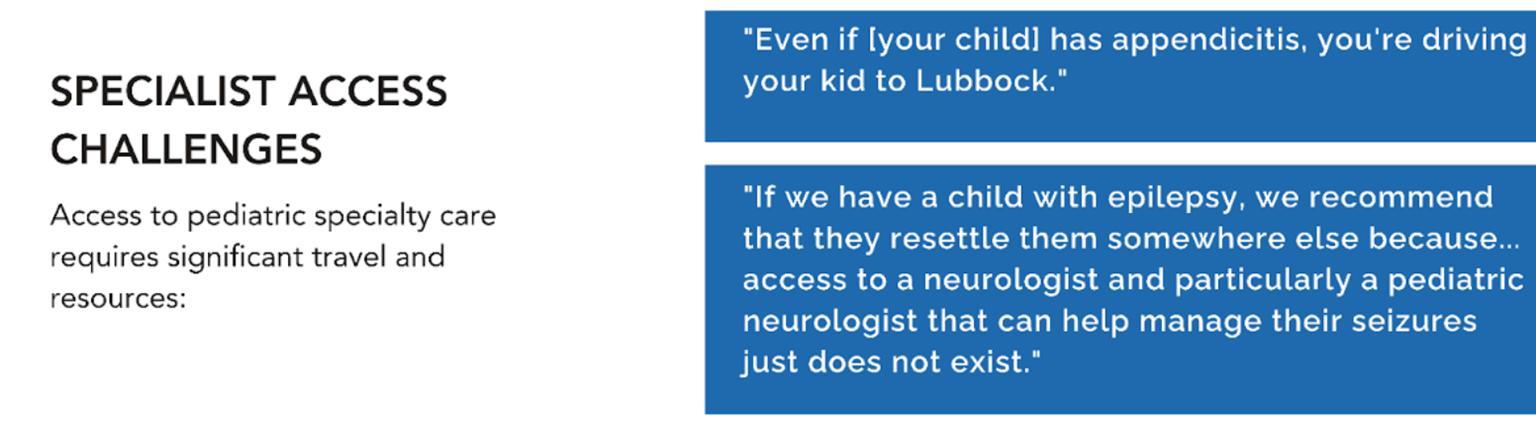
“HAVE YOU EXPERIENCED ANY DIFFICULTIES ACCESSING THE FOLLOWING SERVICES FOR YOUR CHILD/CHILDREN IN THE PAST 12 MONTHS?”
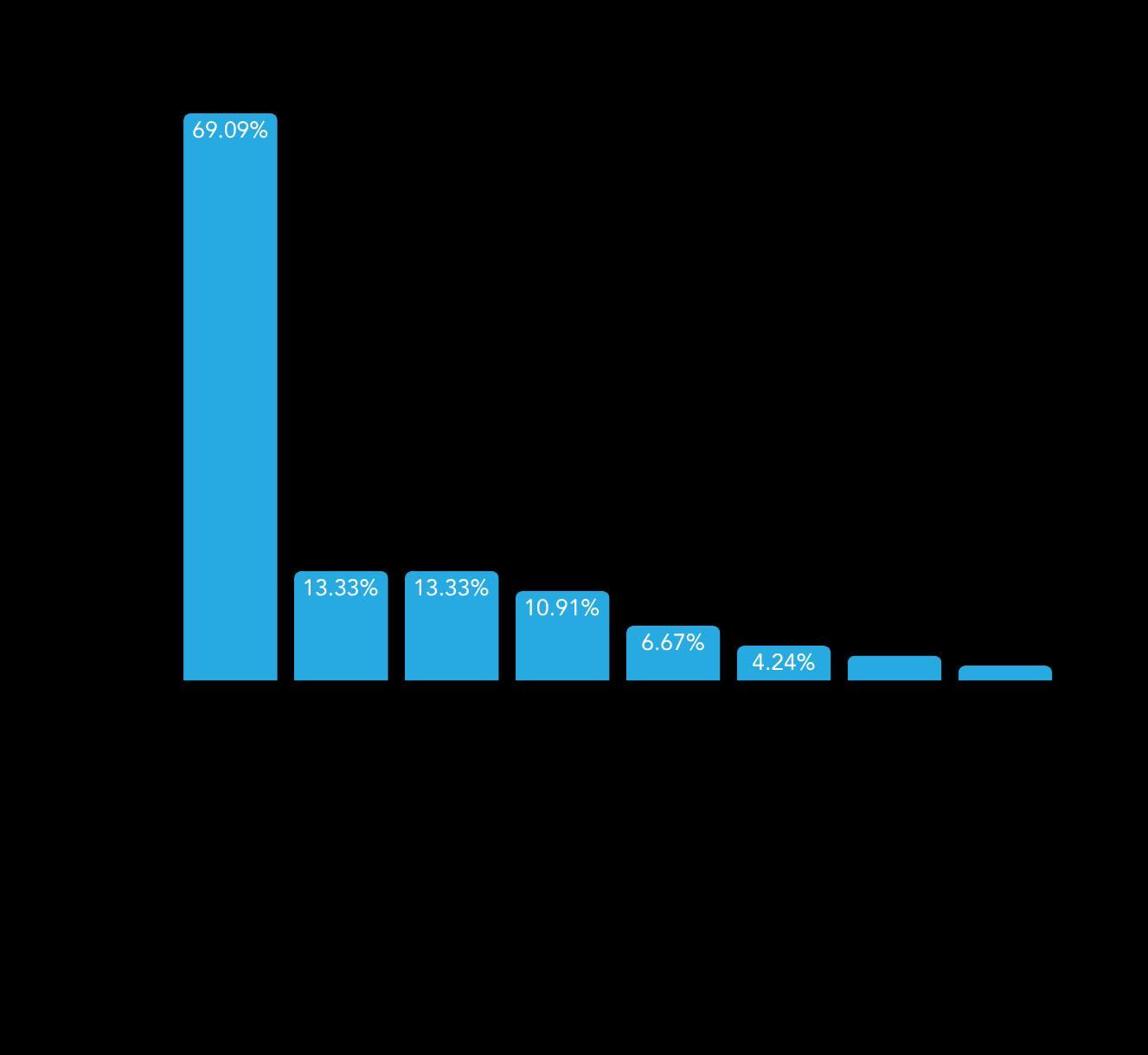
(n =165)
“DID ANY OF THE FOLLOWING REASONS PREVENT YOU FROM GETTING HEALTH CARE FOR YOUR CHILD?”

“WHAT
SERVICES FOR CHILDREN AND FAMILIES DO YOU BELIEVE ARE MOST NEEDED IN AMARILLO?” (SELECT UP TO THREE)
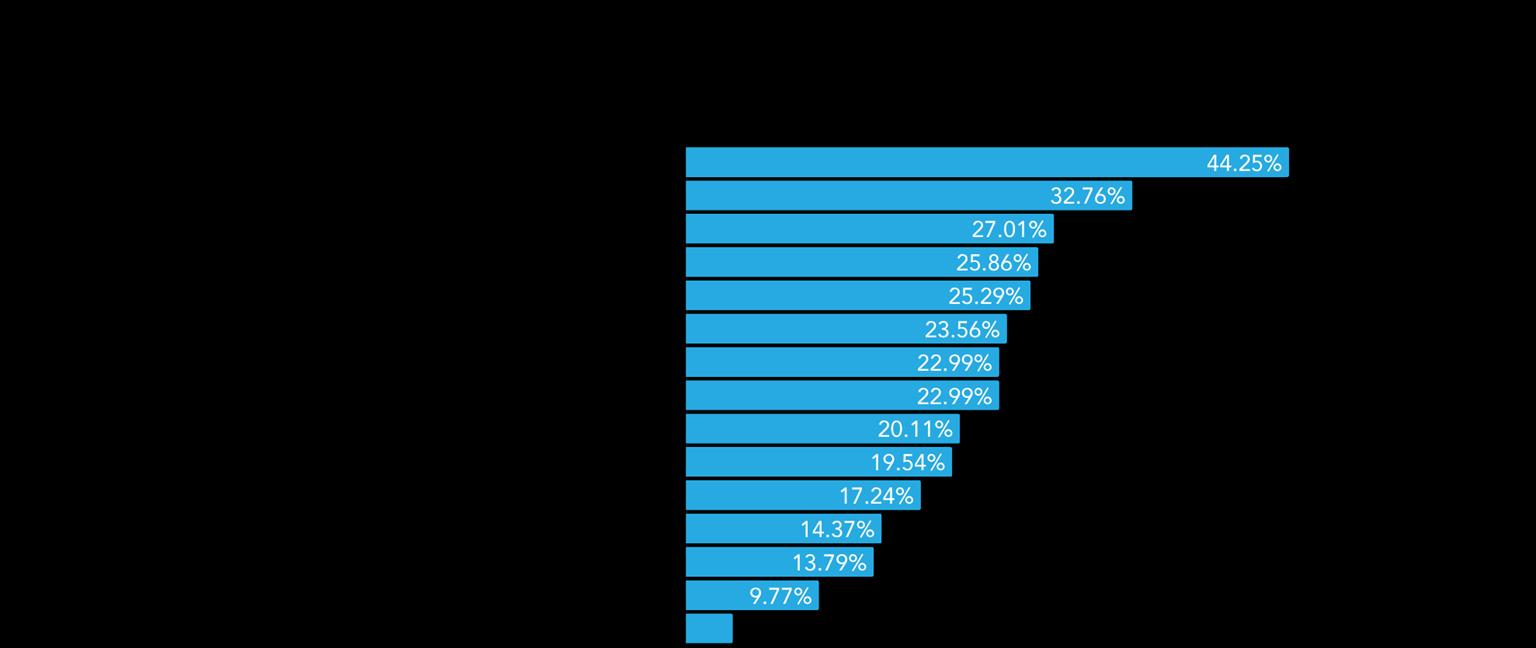
1. MENTAL/BEHAVIORAL HEALTH SERVICES
2.AFFORDABLE CHILDCARE OPTIONS
3.PEDIATRIC SPECIALTY CARE
2x
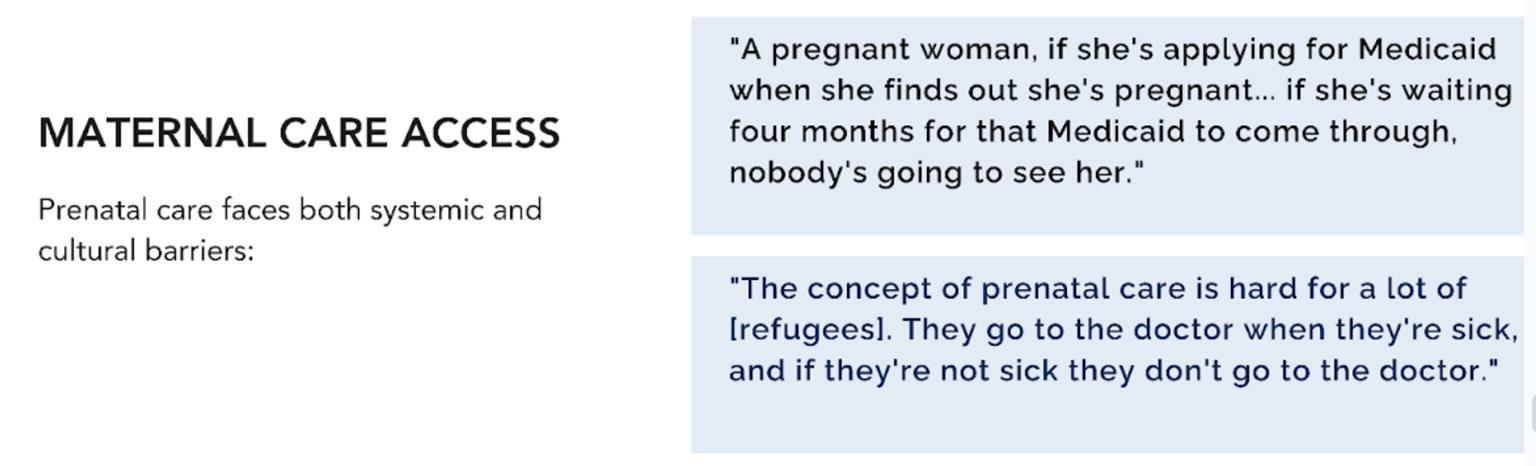
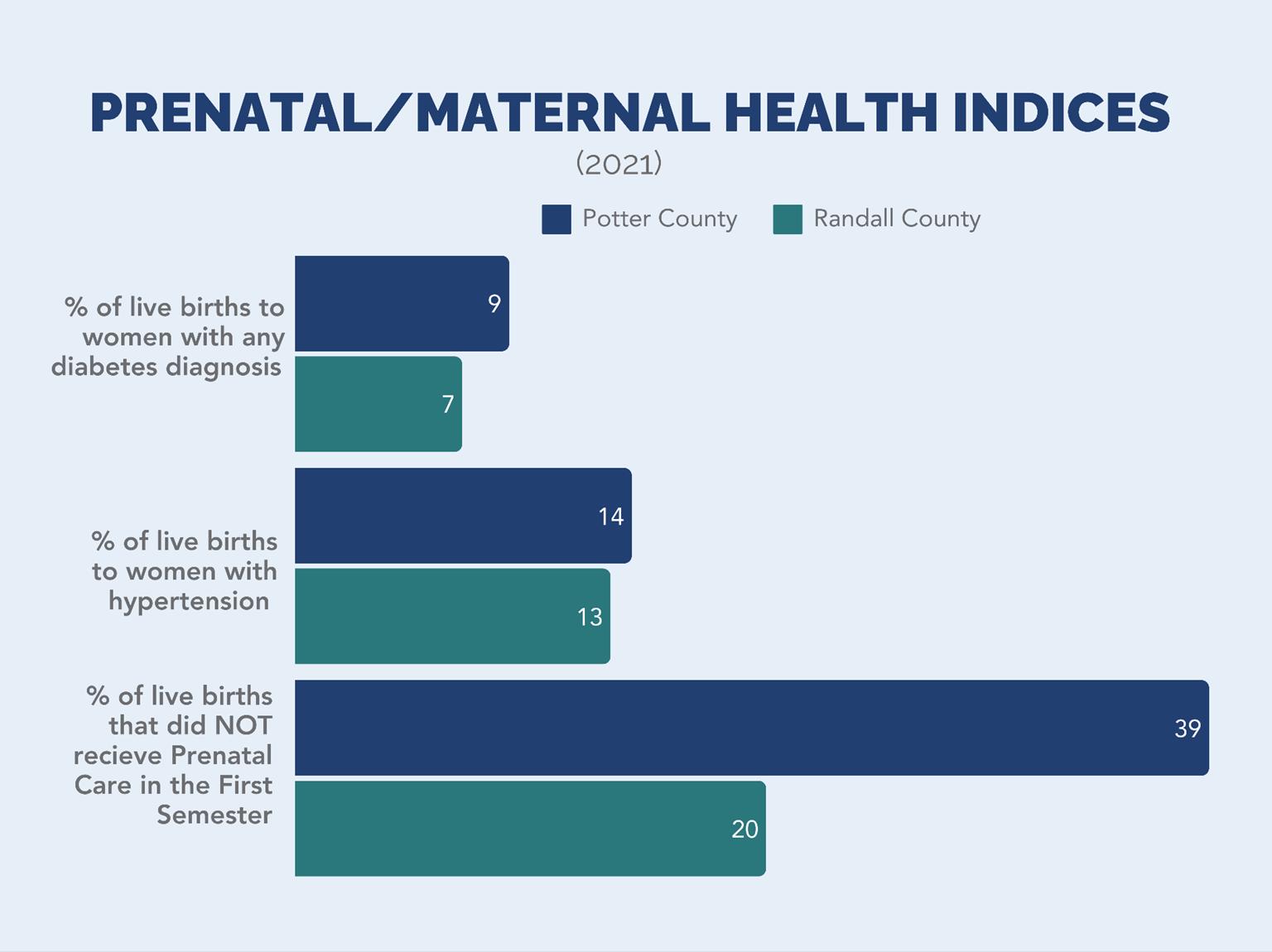
Potter County Mothers were nearly twice as likely to lack prenatal care compared to Randall County.
Source: Texas DSHS | Vital Statistics
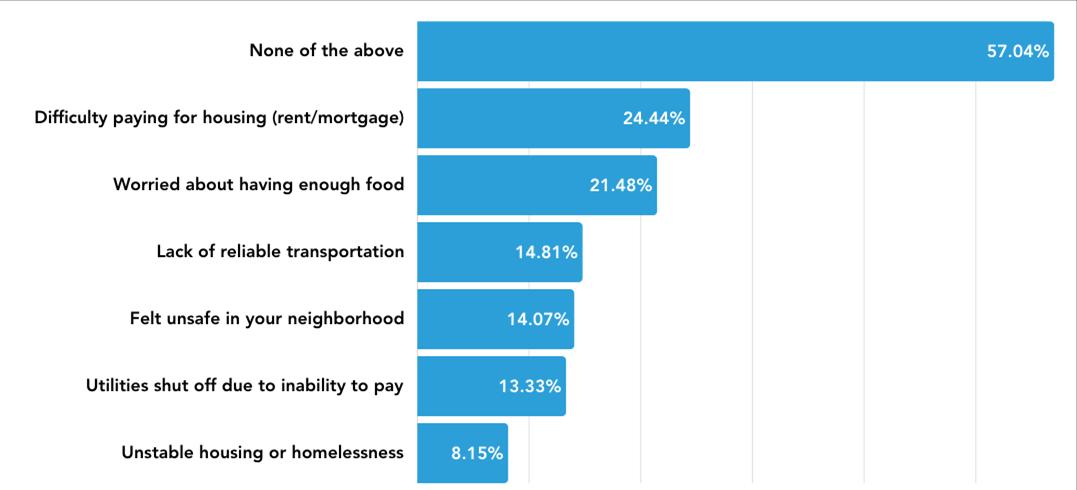
“IN THE PAST 12 MONTHS, HAVE YOU EXPERIENCED ANY OF THE FOLLOWING?”
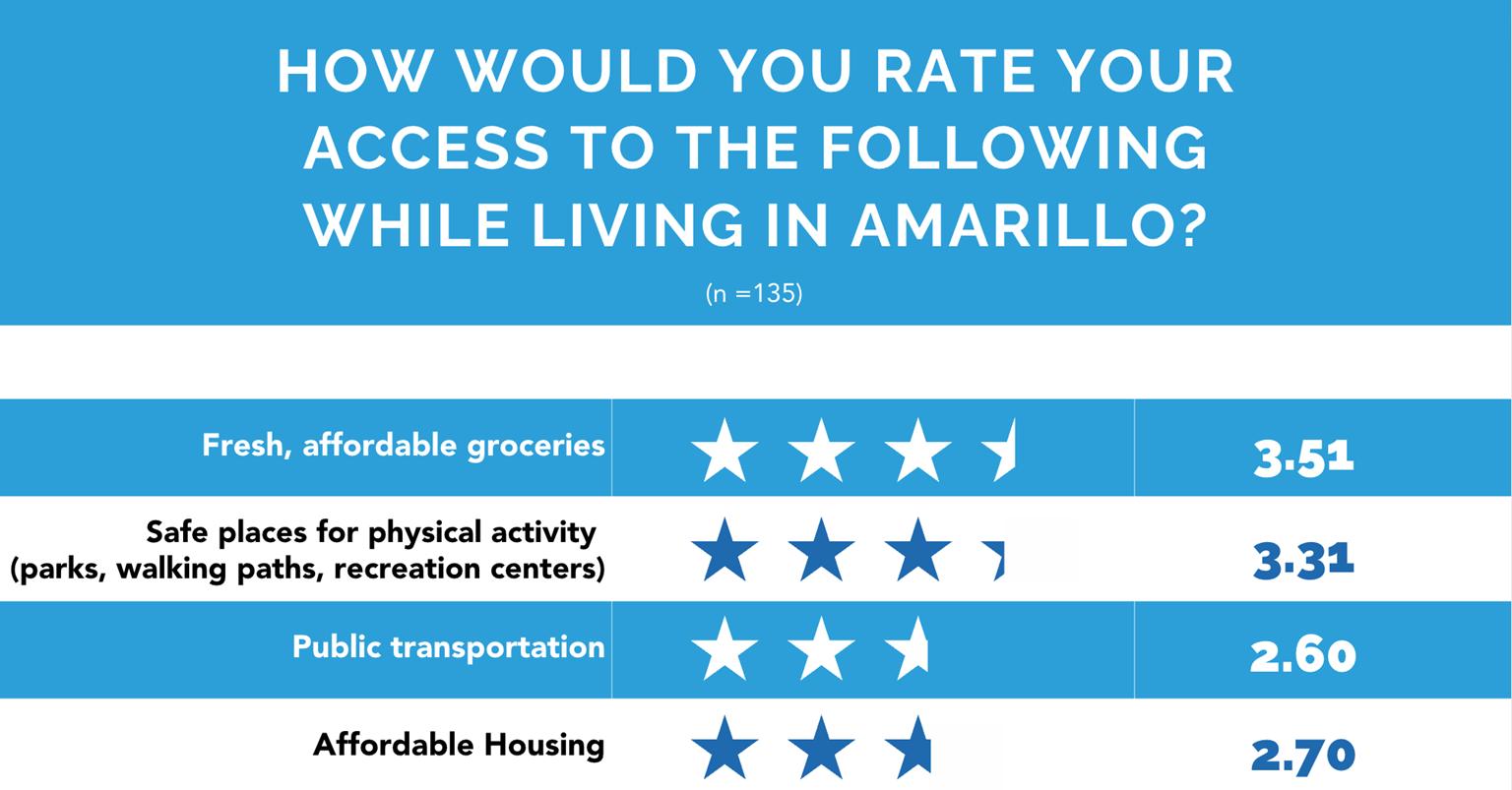
(n =135)
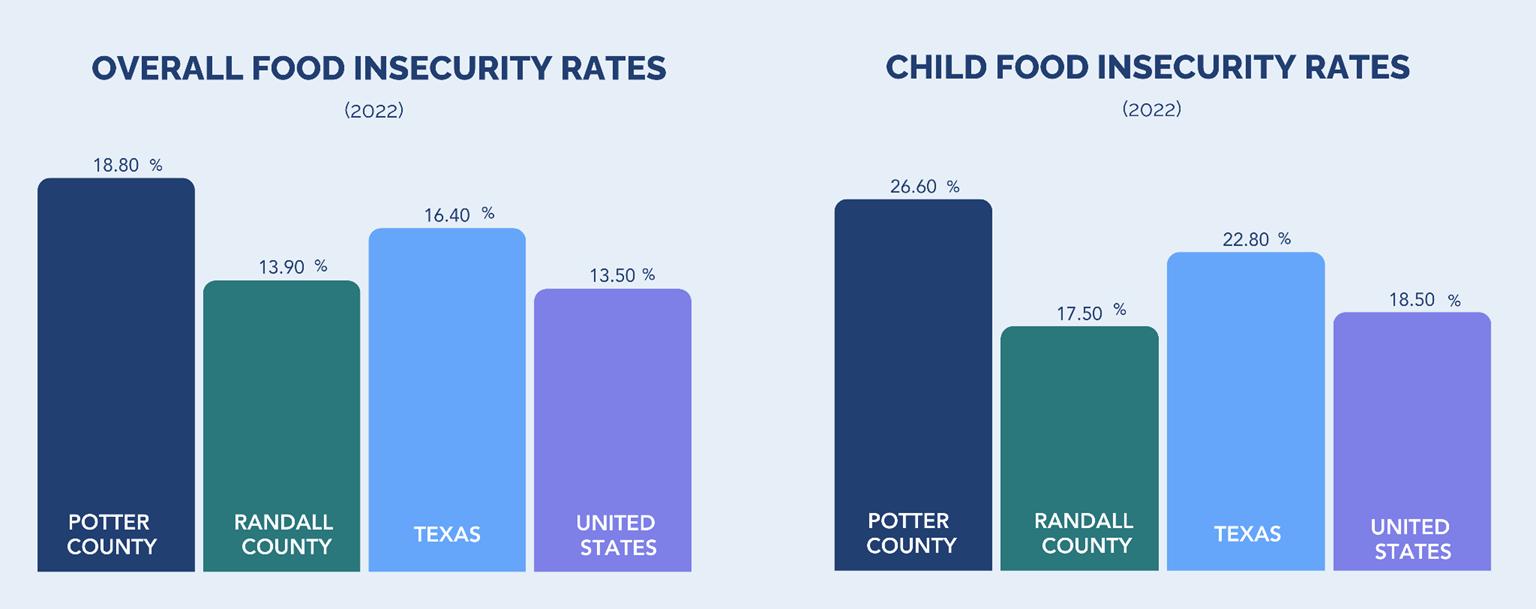
Source: Feeding America. (2022). Map the meal gap: County-level food insecurity data.
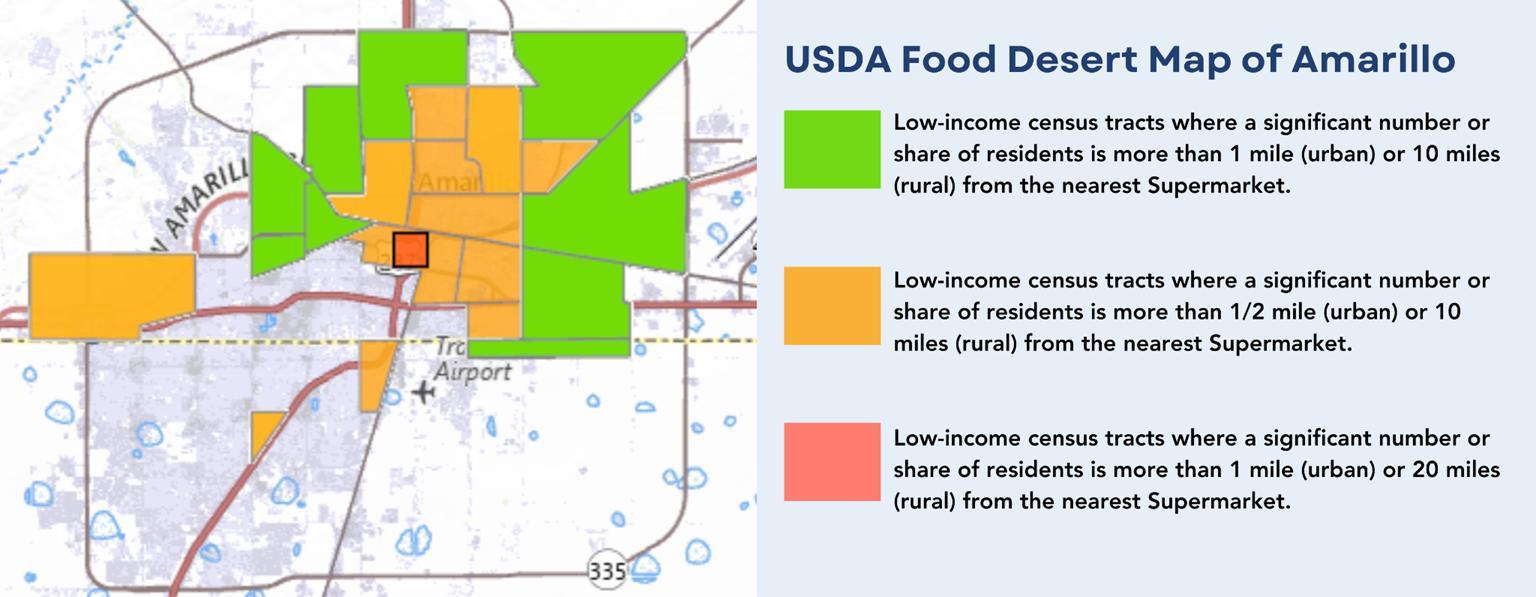
Source: U.S. Department of Agriculture. Food access research atlas.
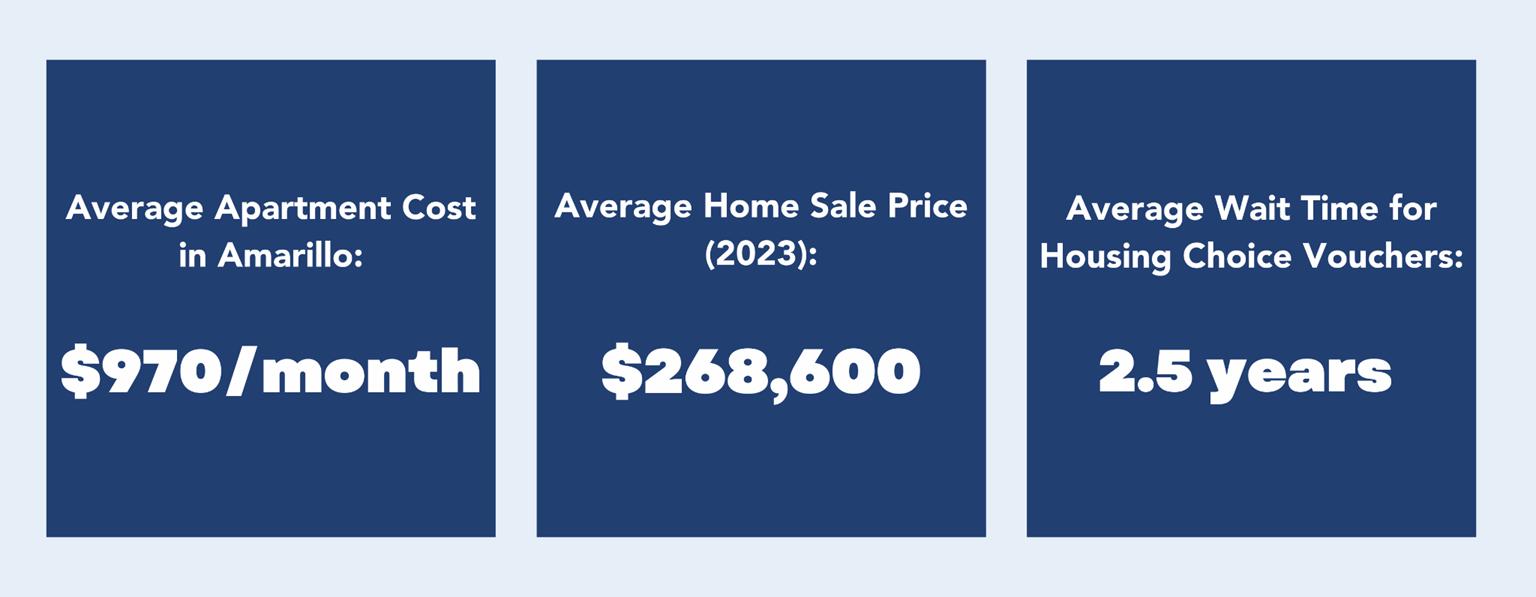
Source: U.S. Department of Housing and Urban Development. (2024). Comprehensive housing market analysis: Amarillo, TX.
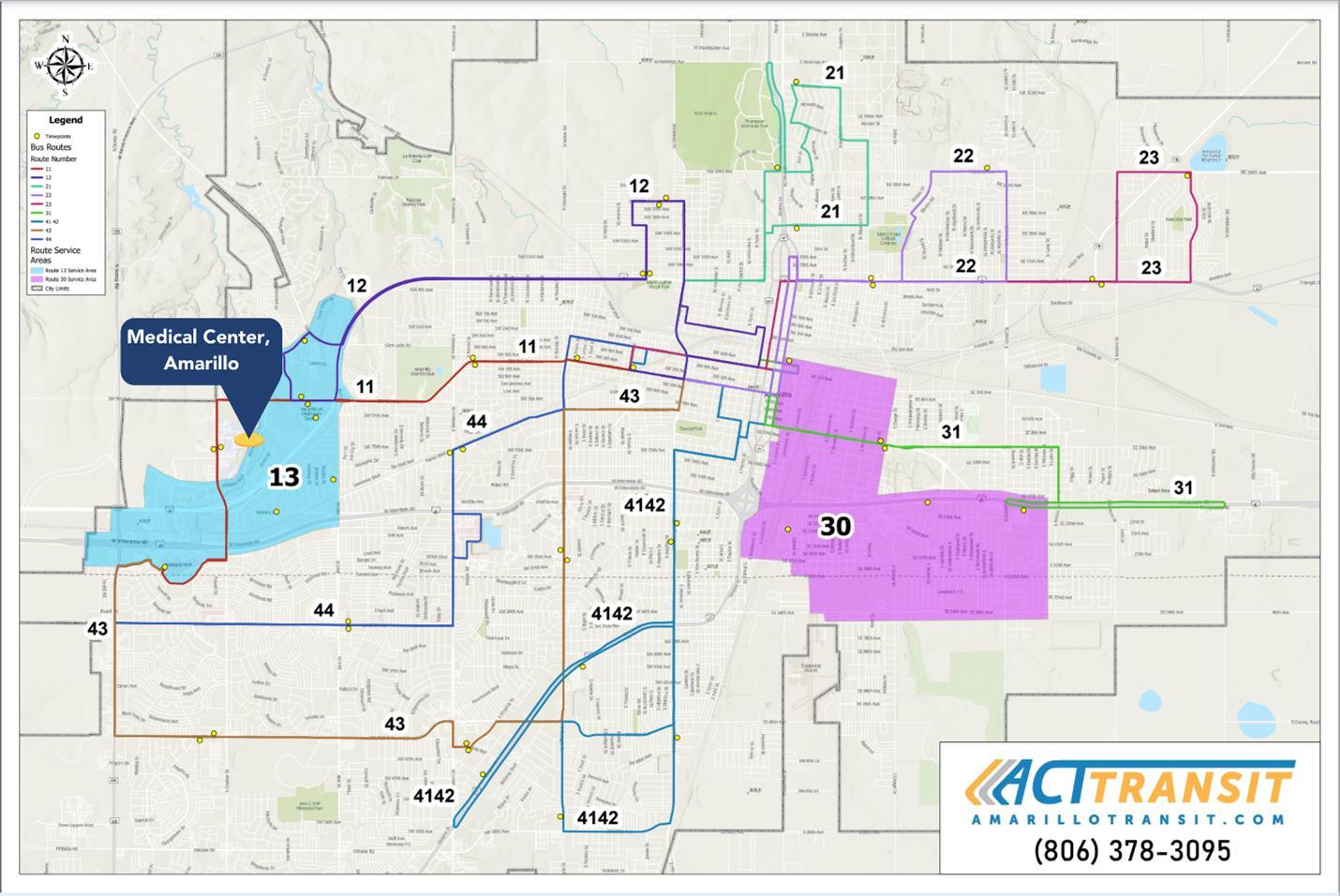
Amarillo’s Public Transportation runs Monday through Saturday between 6:20 am and 7:00 pm.
Only 1 route goes directly to where the healthcare facilities are located in the city

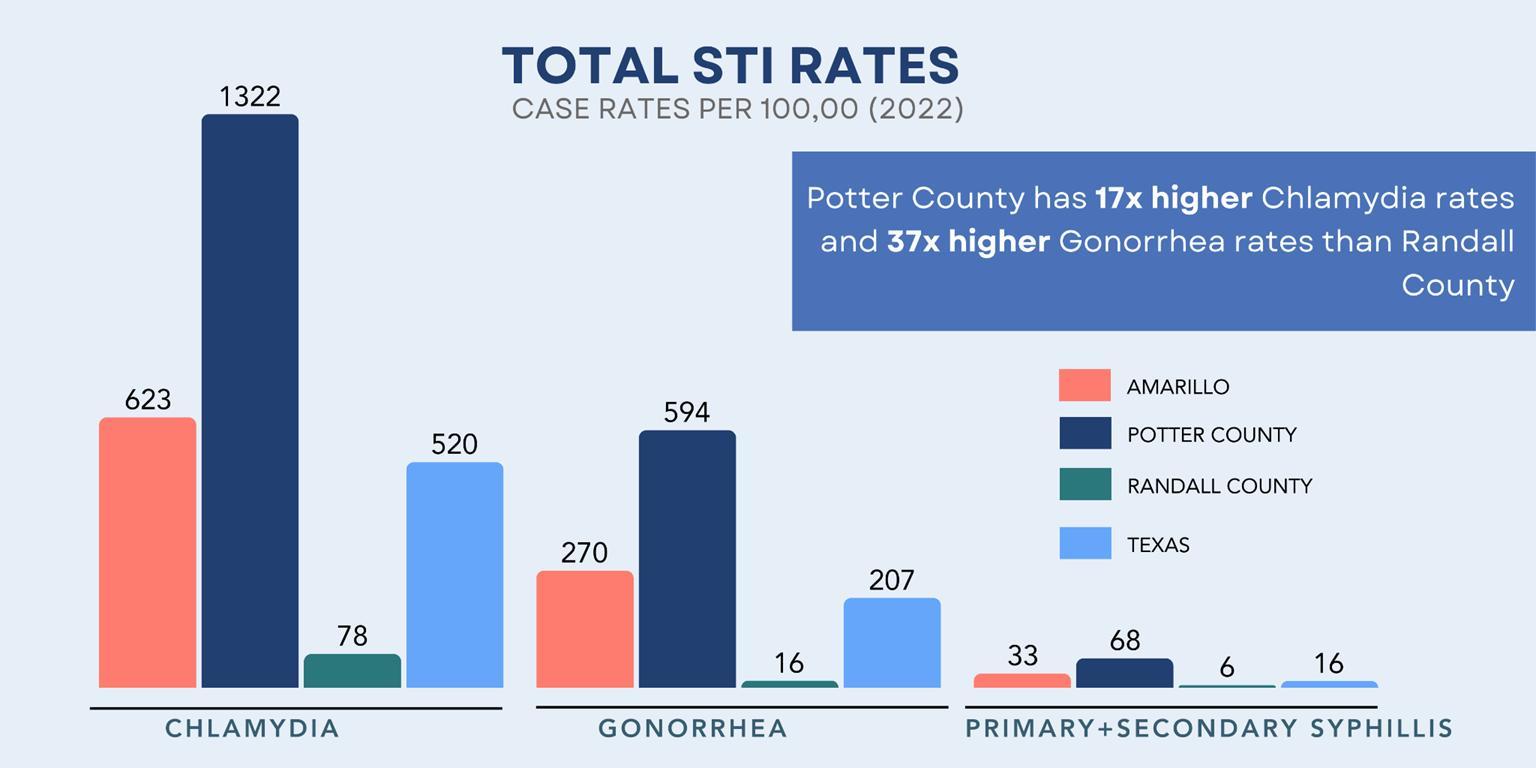
Source: Texas Department of State Health Services.
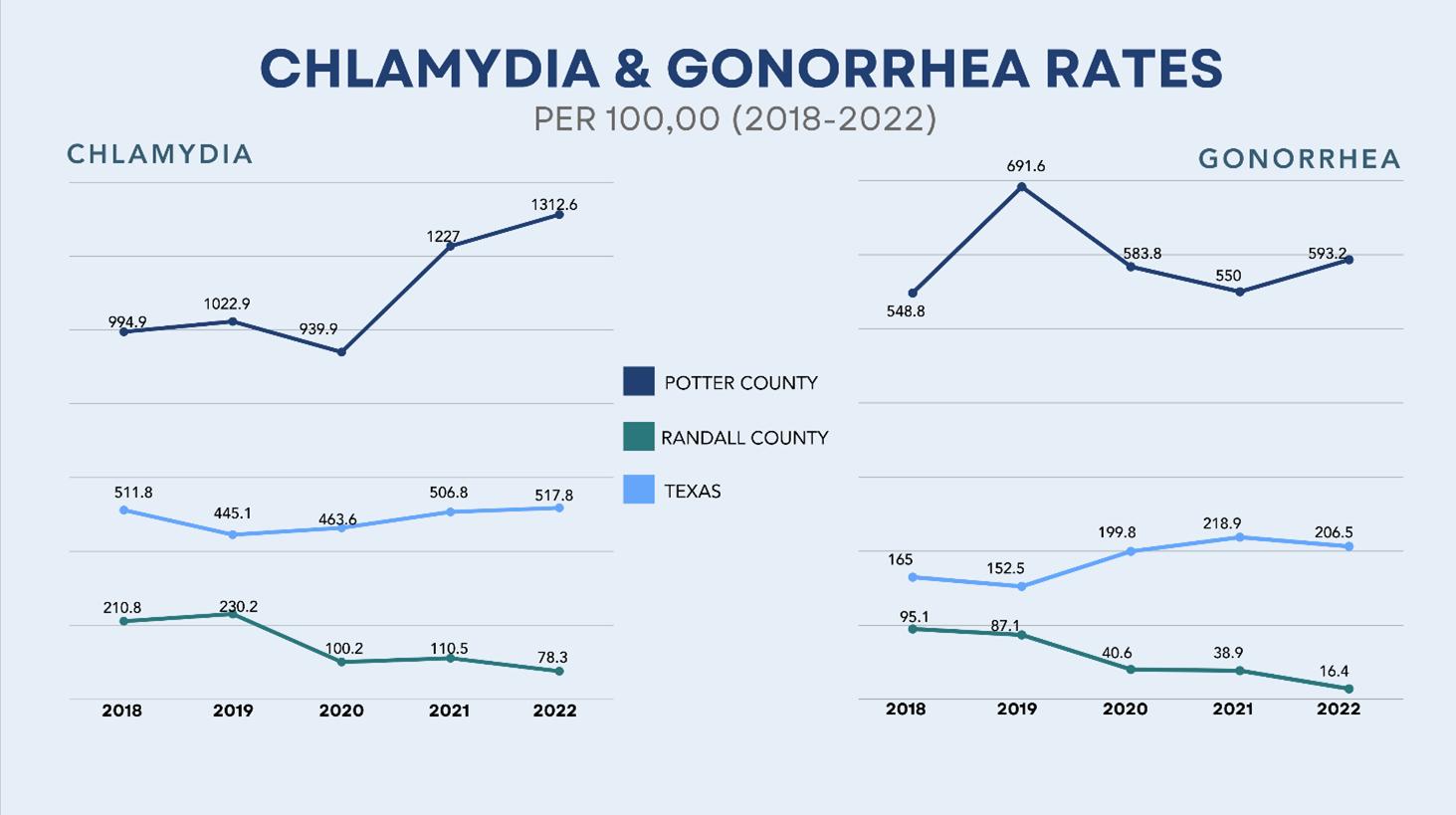
Source: Texas Department of State Health Services.
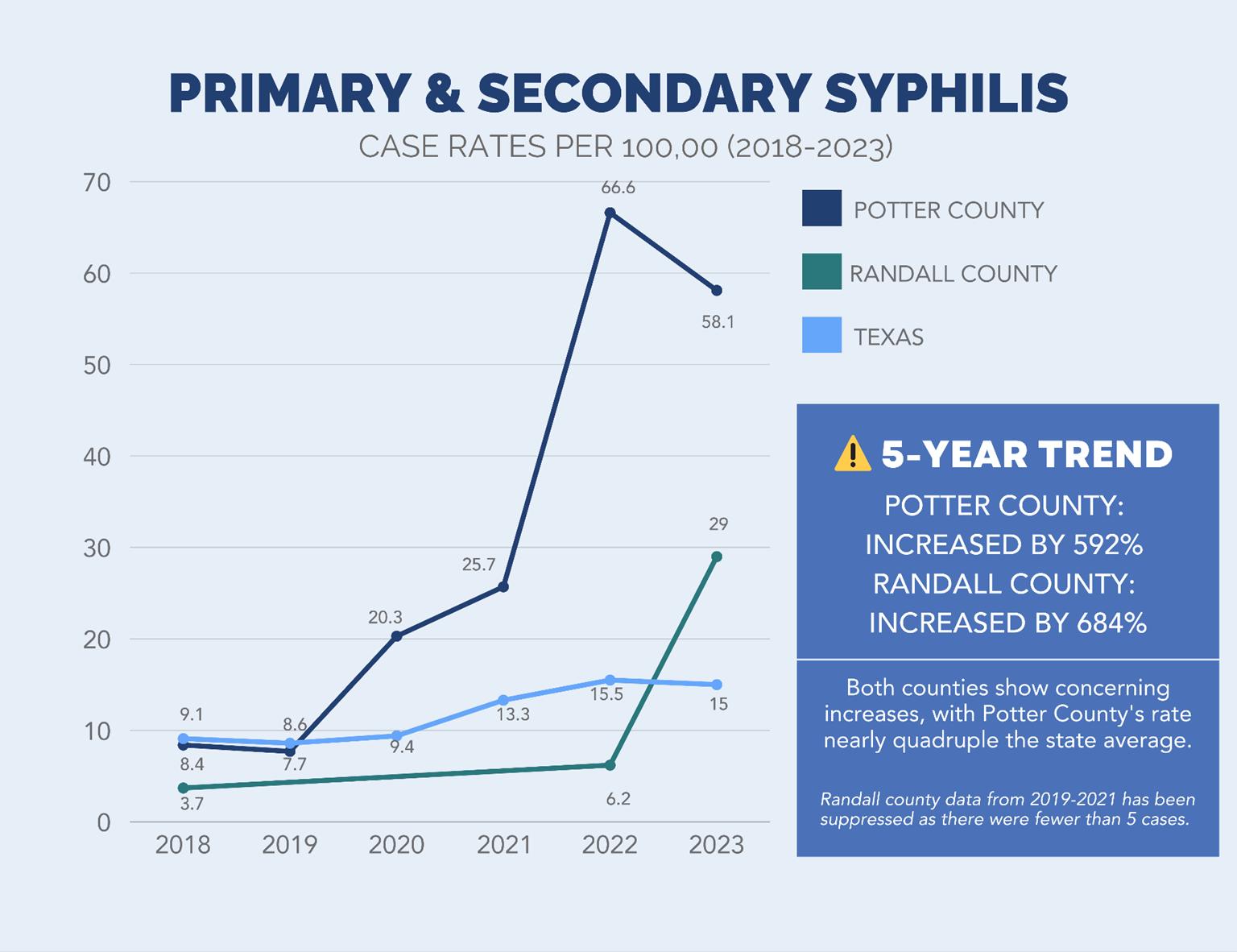
Source: Texas Department of State Health Services.
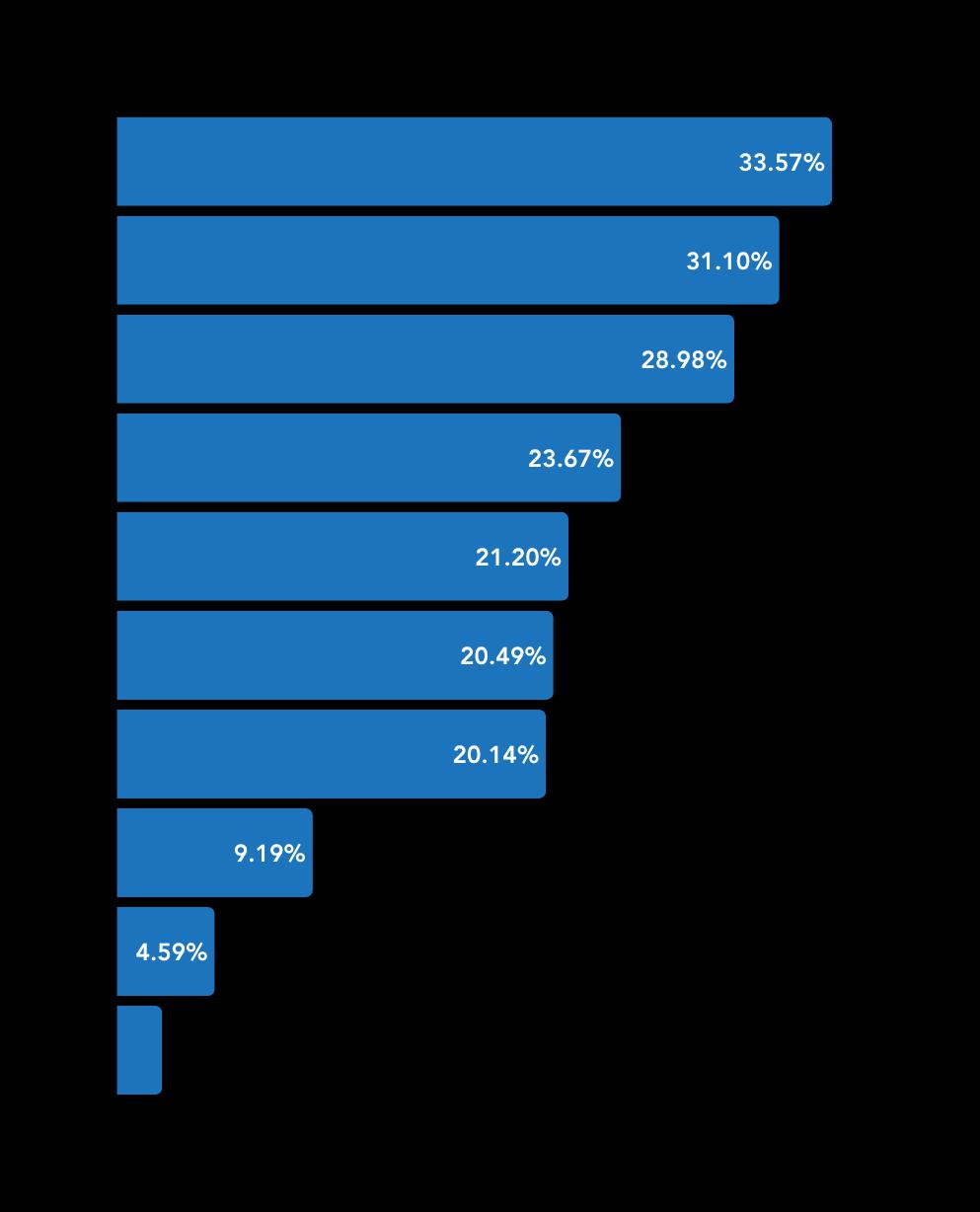
When asked the community, STIs and Sexual health was the lowest priority from survey results.
“THINKING ABOUT YOUR COMMUNITY IN AMARILLO, WHAT ARE THE THREE HEALTH ISSUES THAT MOST CONCERN YOU?”
Lack of sexual health education in schools
Alcohol and drugs leads to poor decisionmaking
Youth are starting to have sex too young, before they understand the risks
People don't want to talk about it, so it's hard to prevent it
People are not aware of the full range of sexual activities that pose risk of sexually transmitted infections
People are not getting tested
Culture of not using condoms
THIS?
CHOOSE UP TO TWO.
Difficulty accessing healthcare to test and treat
Other
(n =283)
People are having sex in situations without full consent

"We step up and take care of each other in troubled times. "
"People here are friendly and for the most part always willing to help others."
Community Support & Unity Generosity & Philanthropy Friendliness & Hospitality Strong Nonprofit & Service Network
"Small town atmosphere that still provides a larger variety of cultural amenities."
“Amarillo is a very giving community.”
"Generosity; lots of nonprofits to help those in need."
Small Town Atmosphere with Big City Resources
“What do you believe are the THREE most important factors that would improve the health of Amarillo residents?”

(n =283)
Create Health Improvement Zones in Potter County:
● Host Mobile Clinics and Health Fairs for screenings
● Expand Telehealth Capacity
Expand Community Health Workers
Build Health Improvement Zones Build bilingual Community Health Worker network to serve diverse refugee/immigrant groups Expand sustainable workforce pipeline from within refugee and immigrant communities
3 Mobilize and Strengthen Potter County Coalitions
Mobilize coalitions (faith groups, nonprofits, neighborhood associations) for co-designed solutions.
1 Scale Proven Crisis Intervention Success
2 Cultivate Mental Health Provider Networks
3 Strengthen Mental Health Care Navigation
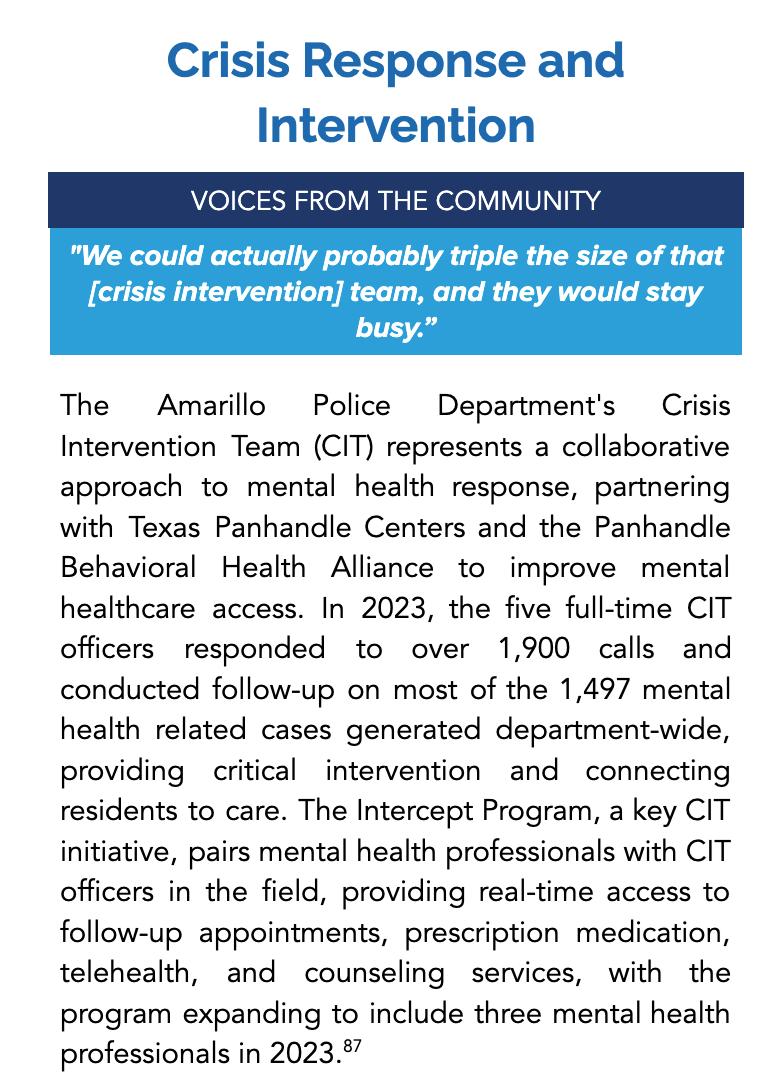
Expand Crisis Intervention Team from 5 → 15 officers; align with new $159M state mental health hospital. Integrate more mental health providers to work alongside CIT.
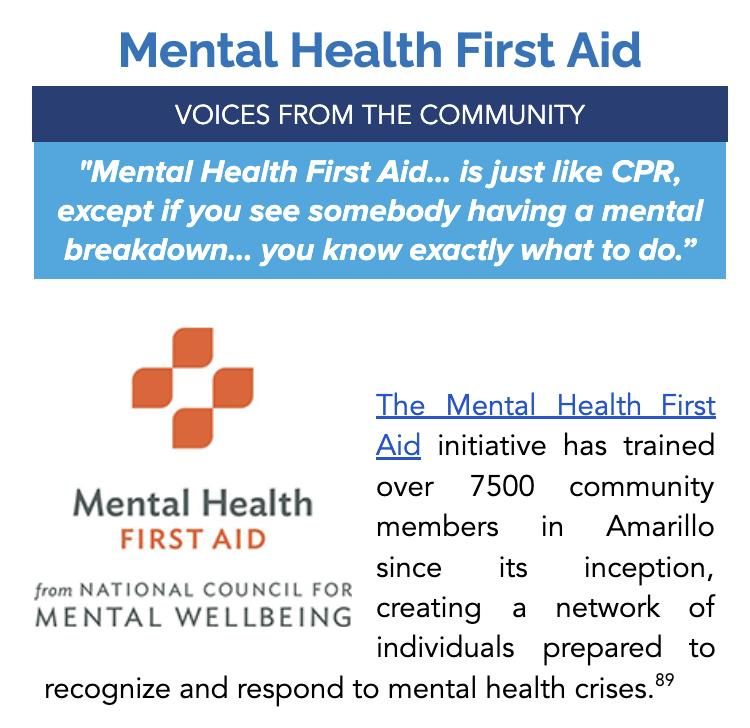
Grow workforce with loan forgiveness, housing support, peer certification for 7,500+ trained in Mental Health First Aid.
Improve care navigation: use 21-1 helpline, embed navigators in schools/clinics, build online hub, host resource fairs.
1 Establish Low-Barrier Access Points
2 Strengthen Insurance Navigation and Enrollment
3 Expand Comprehensive Primary Care Networks
Expand low-barrier clinics
(Heal the City, TTUHSC Free Clinic, school-based sites, rotating specialty clinics).
Establish dedicated enrollment sites to reduce uninsured rates.
Strengthen FQHC networks: extend hours, add services, apply for FY25 HRSA funding.
1 Enhance Prenatal and Maternal Health Initiatives
Deploy community health workers for pregnancy screenings at:
○ WIC appointments
○ Food pantries
○ Community centers
Implement San Antonio's Healthy
Start model to increase healthy births - home visiting and care coordination program .
2 Build Pediatric Specialty Networks
3 Strengthen Family Support Systems
Establish pediatric telehealth hub modeled after Children's Medical Center Dallas. Partner with Texas Tech for pediatric residency rotations
Implement Nurse-Family Partnership model.
Create community hotline like Tarrant County's Help Me Grow.
1 Launch Comprehensive Awareness Campaigns
2 Strengthen Testing and Treatment Systems
Run community-wide campaigns .
Utilize proven models:
○ Children's Hospital of Philadelphia's IKnowUShould2
○ CDC's STI Awareness Week
Toolkit
○ Initium Health: 2024 Syphilis Campaign in Lubbock County
Implement more point-of-care testing especially targeting hard-to-reach
populations
Expand 340B pharmacy access for affordable treatment
1 Revolutionize Transportation Access
3 Promote Housing Stability and Economic Opportunity
Expand transit routes, hours, and voucher programs to connect residents to care.
Improve food security with mobile markets, grocery incentives, and community gardens.
Promote housing stability: workforce training into health careers, employerassisted housing, transitional & rapid rehousing programs.