Executive Summary of the Amarillo Community Health Assessment (CHA)
The City of Amarillo Department of Public Health partnered with Initium Health from Fall 2024 to Spring 2025 to carry out a Community Health Assessment (CHA) for the Amarillo area. The goal was to identify and address the unique health needs of residents across Potter and Randall Counties. This process followed the Mobilizing for Action through Planning and Partnerships (MAPP) 2.0 process established by the National Association of County and City Health Officials (NACCHO)
The findings are intended to guide local organizations and stakeholders in creating a future that addresses Amarillo's top health priorities.
Assessment Approach and Methods
The MAPP 2 0 model emphasizes community engagement and uses three main assessments:
● Community Status Assessment: This assessment gathered quantitative data on Amarillo's health status, covering factors like disease rates, life expectancy, and risk behaviors, with particular attention to disparities between Potter and Randall Counties.
● Community Context Assessment: This part of the assessment explored the area ' s demographics, economic conditions, cultural aspects, and the non-medical factors that impact residents' wellbeing Qualitative data were incorporated here, including interviews with 43 community leaders and community survey with over 350 respondents.
● Community Partner Assessment: This assessment engaged local organizations, nonprofits, and healthcare providers to evaluate existing partnerships, identify community strengths, and determine areas where collaboration can support health goals
These assessments, combined with the County Health Rankings Model, provided a broad and comparative view of Amarillo's health status against state and national averages. The data collection process drew from publicly available resources like the Texas Department of State Health Services and U.S. Census data, along with community input gathered through surveys and in-depth interviews.
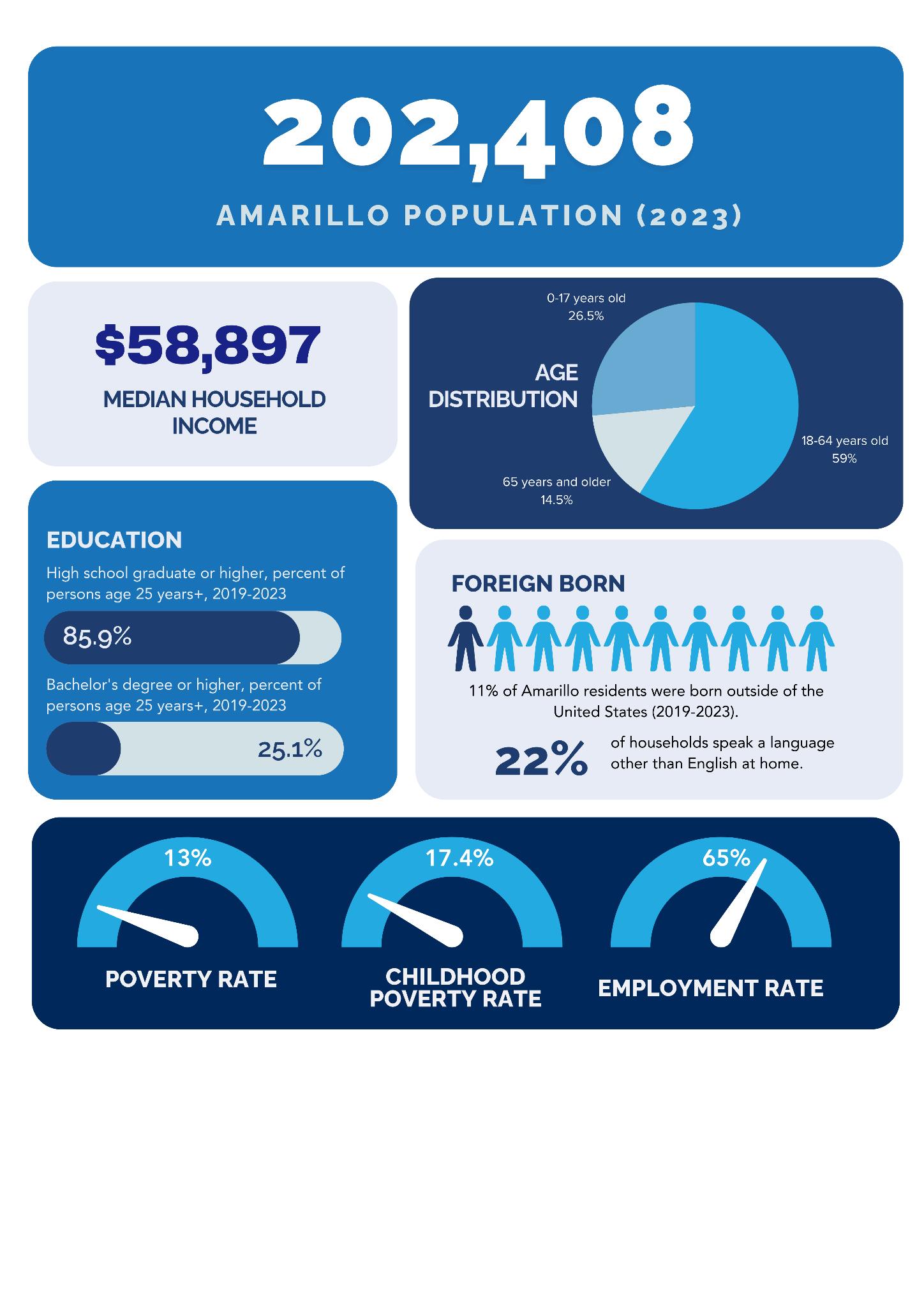
Amarillo's Community Health and Demographics
Amarillo, a city located in the Texas Panhandle, serves as a regional hub for healthcare, education, and
Priority Health Challenges
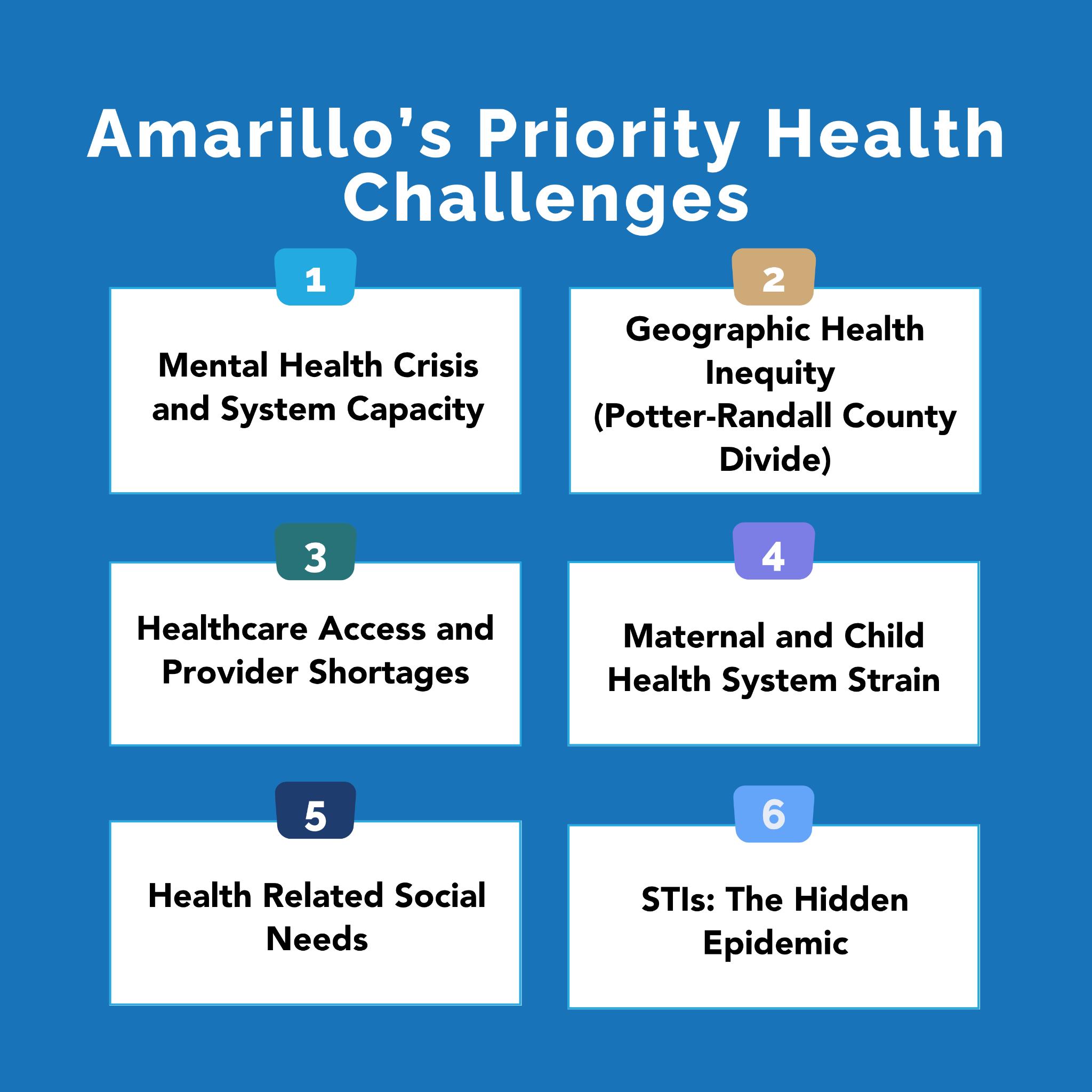
Based on comprehensive community input and data analysis, six critical health priorities emerged that demand immediate attention and coordinated community response:
Amarillo CHA
1. Mental Health Crisis and System Capacity
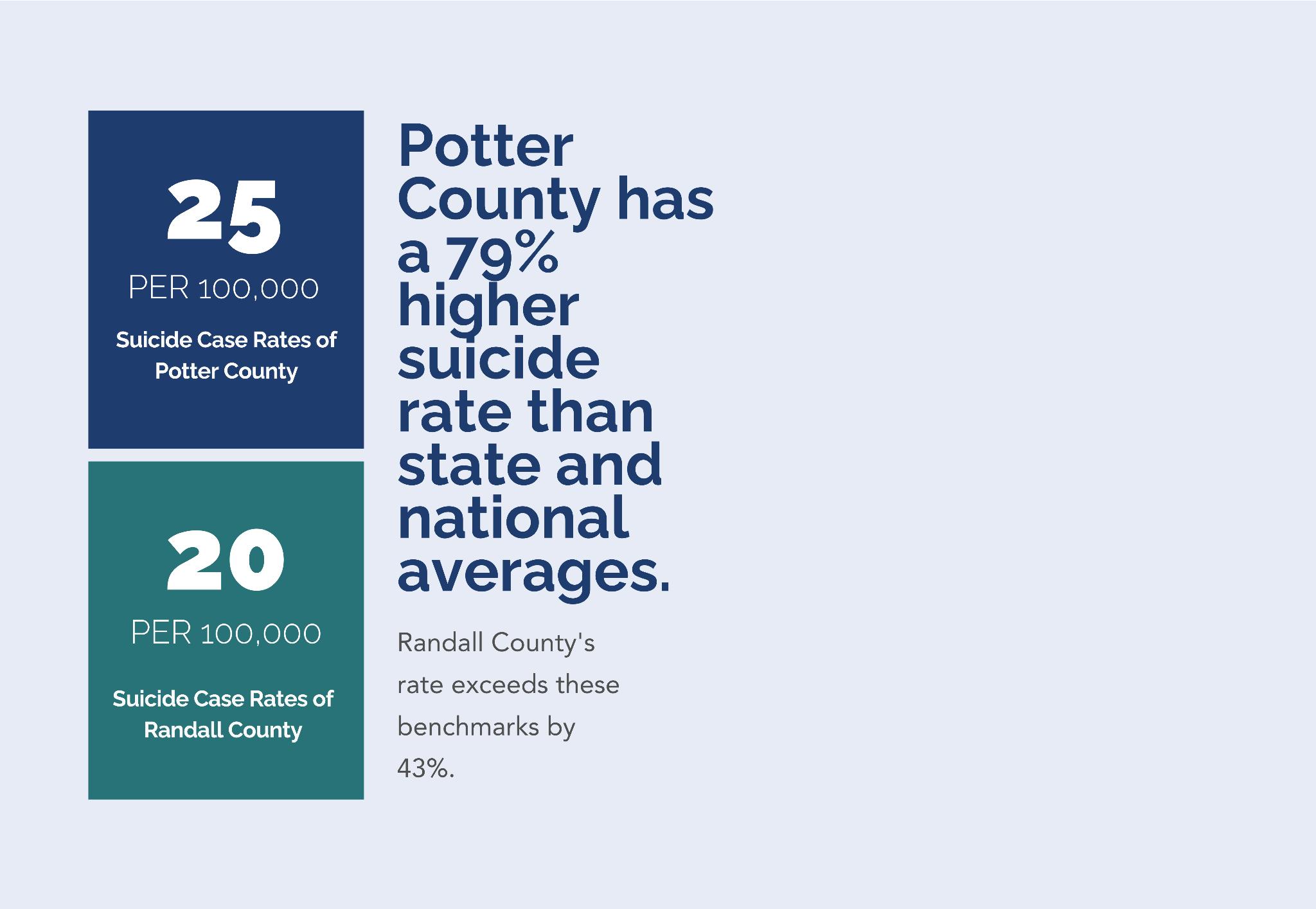
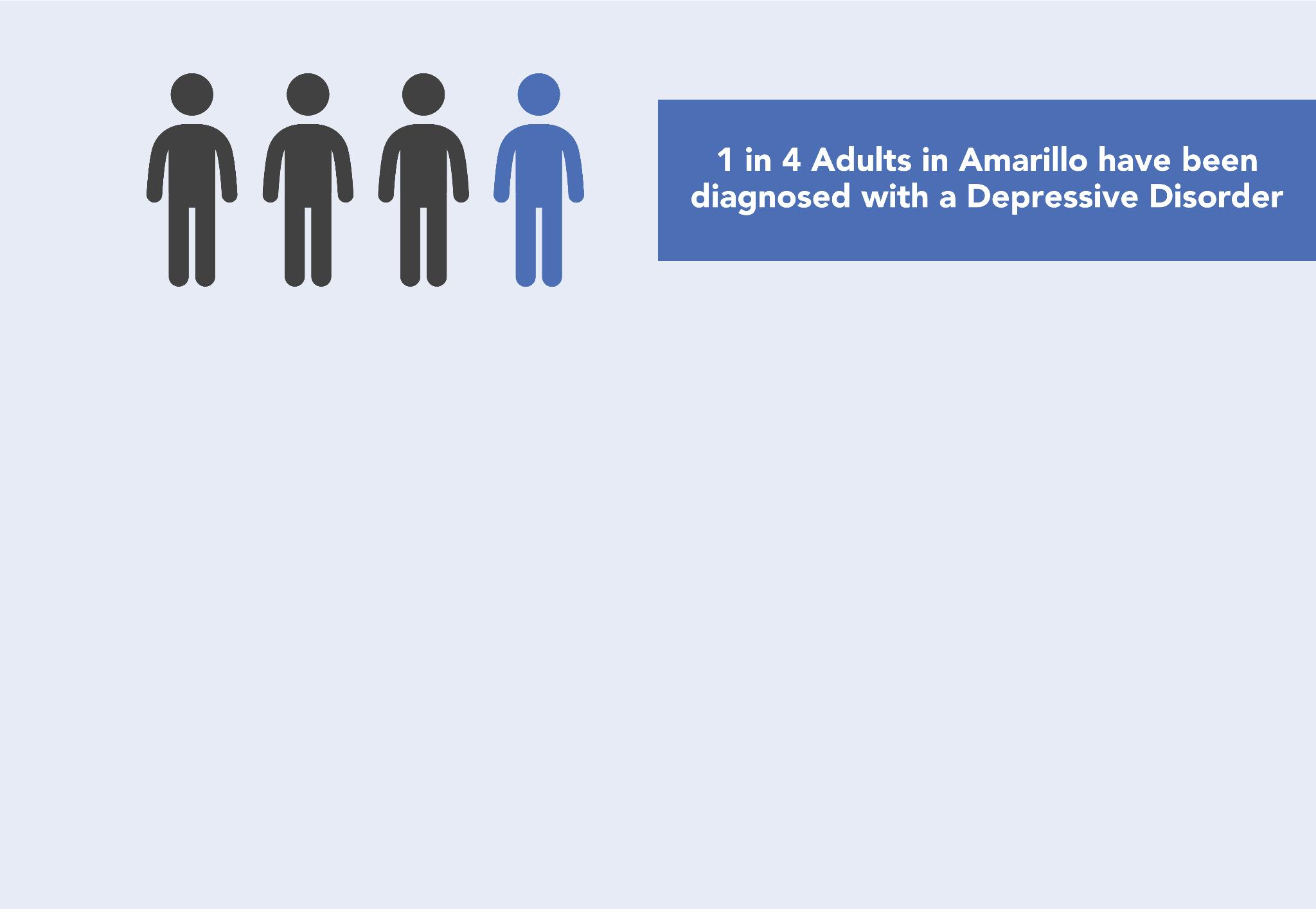
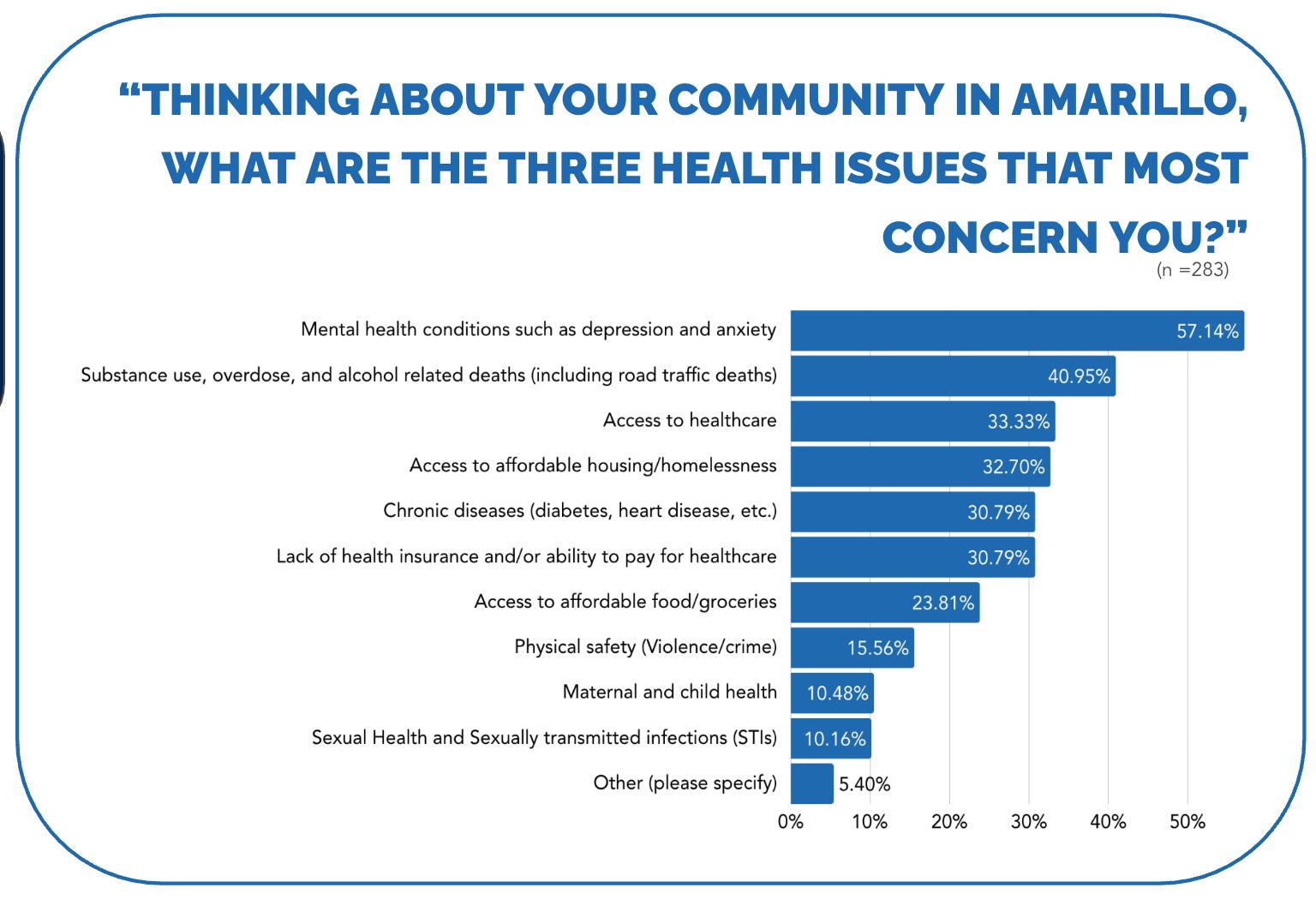
Mental health emerged as Amarillo's defining health challenge, representing a perfect storm of overwhelming demand and insufficient capacity From the Community Survey, 57% of residents identified mental health as their top concern. Suicide rates in both Potter and Randall counties are alarmingly high 43–79% above state and national averages with Potter County experiencing nearly double the national rate 2
In interviews with community leaders, stakeholders consistently described mental health as having "become the number one challenge of our nation over heart disease, cancer and we don't have providers, even in the big cities " The dramatic increase in service utilization quadrupling from 13% to 52% since 2018 as shown in the community survey demonstrates both growing community need and reduced stigma around seeking care, but has outpaced the system's ability to respond effectively.
2. Geographic Health Inequity
Amarillo is a city divided. Although Potter and Randall counties share t same municipal boundaries, the hea realities of residents differ star depending on their zip code. Pot County ranks in the 95th percent nationally for social vulnerability, wh Randall sits in the 6 percentile creating a 0 8933-po difference that represents one of t most extreme geographic hea disparities documented in the Unit States3 . The stark reality of this divi becomes apparent when crossing t city as one community leader noted: you go north of I-40, you ' ve gone in like... going from the wealthiest place town to going into a Third Wo country as far as health care outcomes.
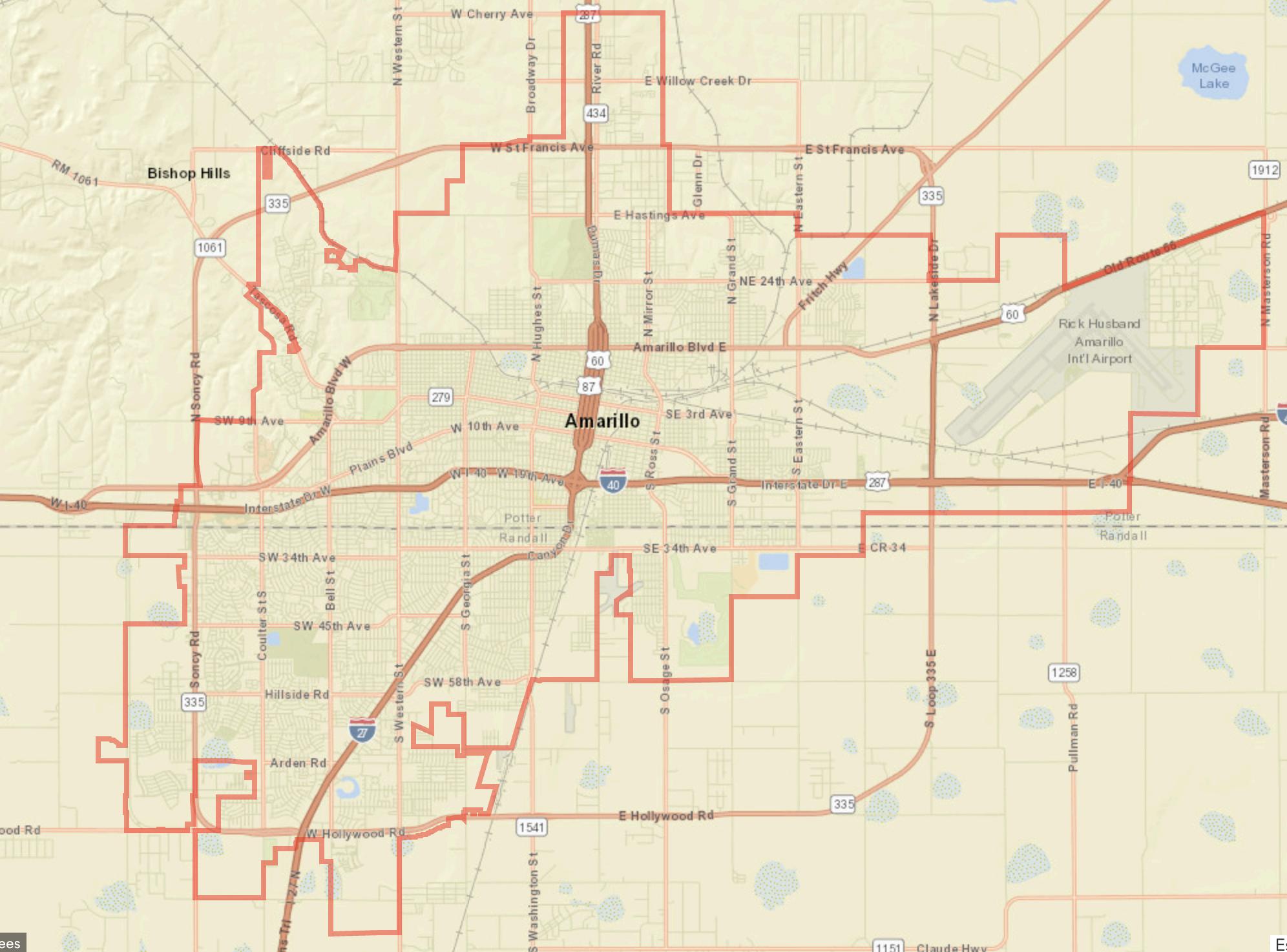
3 Centers for Disease Control and Prevention. (2024, July 26). SVI Interactive Map. Agency for Toxic Substances and Disease Registry. https://www atsdr cdc gov/place-health/php/svi/svi-interactive-map html
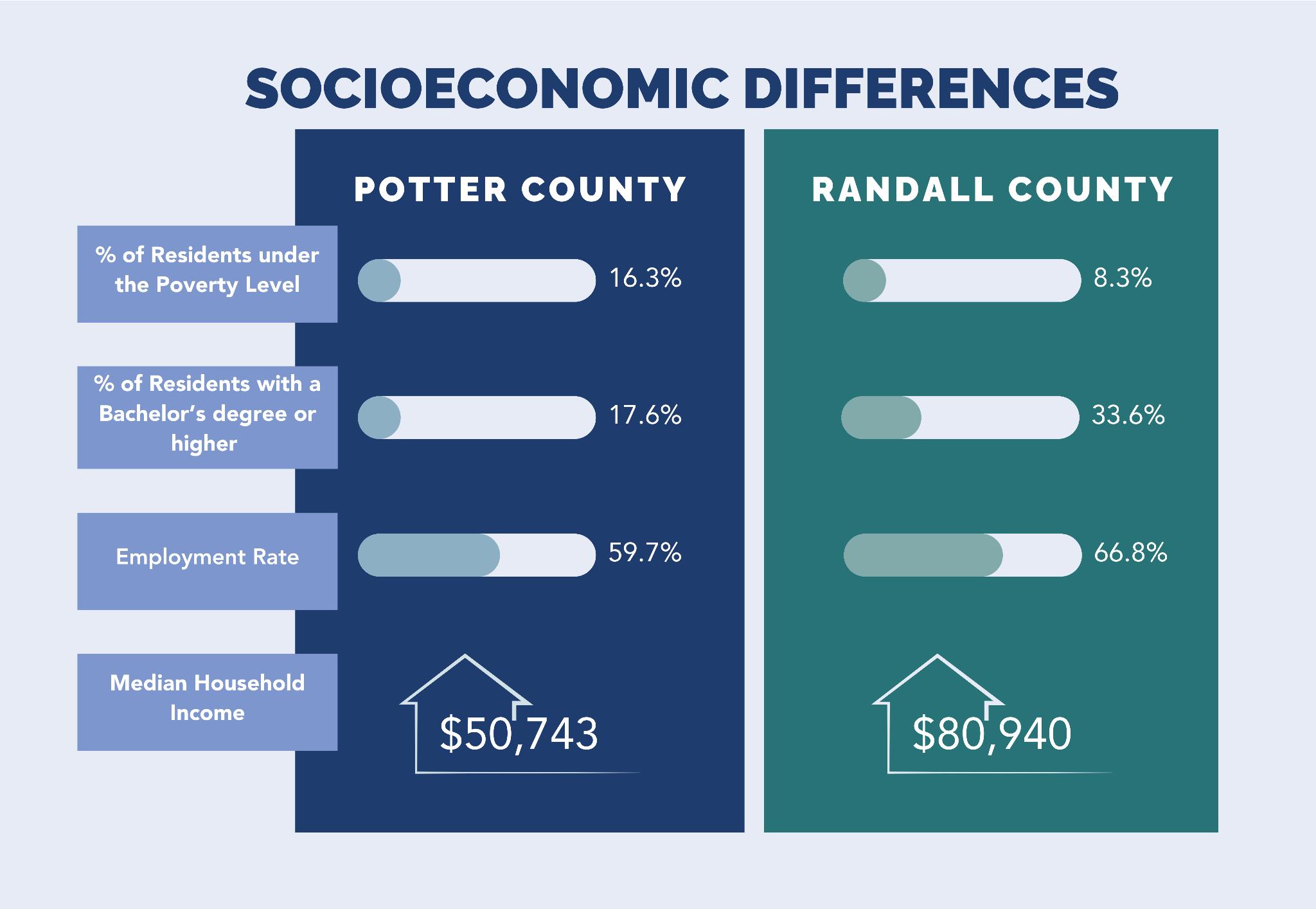
he economic and ocial gaps between ounties are striking. he median household ncome in Randall County is more than 30,000 higher than in otter County, and the ninsurance rate in otter is 77% higher.4 Educational attainment nd employment opportunities also diverge sharply, driving ong-term disparities in ccess to care and quality of life.
4 U S Census Bureau (2023) Potter County, Texas; RandallCounty, Texas data census gov https://data census gov/profile/Potter County, Texas?g=050XX00US48375 and https://data census gov/profile/Randall County, Texas?g=050XX00US48381
CHA Executive Summary |
Amarillo
Selected Health Indicators for Potter
County, Randall County5
Premature Death Rate
Years of potential life lost before age 75 per 100,000 population (age-adjusted). 7,600
Years of potential life lost before age 75 per 100,000 population (age-adjusted)
7,900
Years of potential life lost before age 75 per 100,000 population (age-adjusted).
Geographic location within Amarillo currently influences life outcomes, with children's neighborhoods shaping their access to quality schools, safe communities, healthcare services, and future opportunities While residents share the same municipal government and live within miles of each other, they experience different health realities that extend beyond healthcare to fundamental quality of life factors As one stakeholder summarized:
QUOTES FROM COMMUNITY LEADERS
"People who can afford to live in the houses in Randall County... enjoy the things that money provides for you, which is insurance, often time to go to the doctor, the ability to belong to a gym, access to grocery stores, more parks."
This geographic determinism highlights significant opportunities for place-based investments that can strengthen community foundations and expand access to health-promoting resources across both counties.
3. Healthcare Access and Provider Shortages
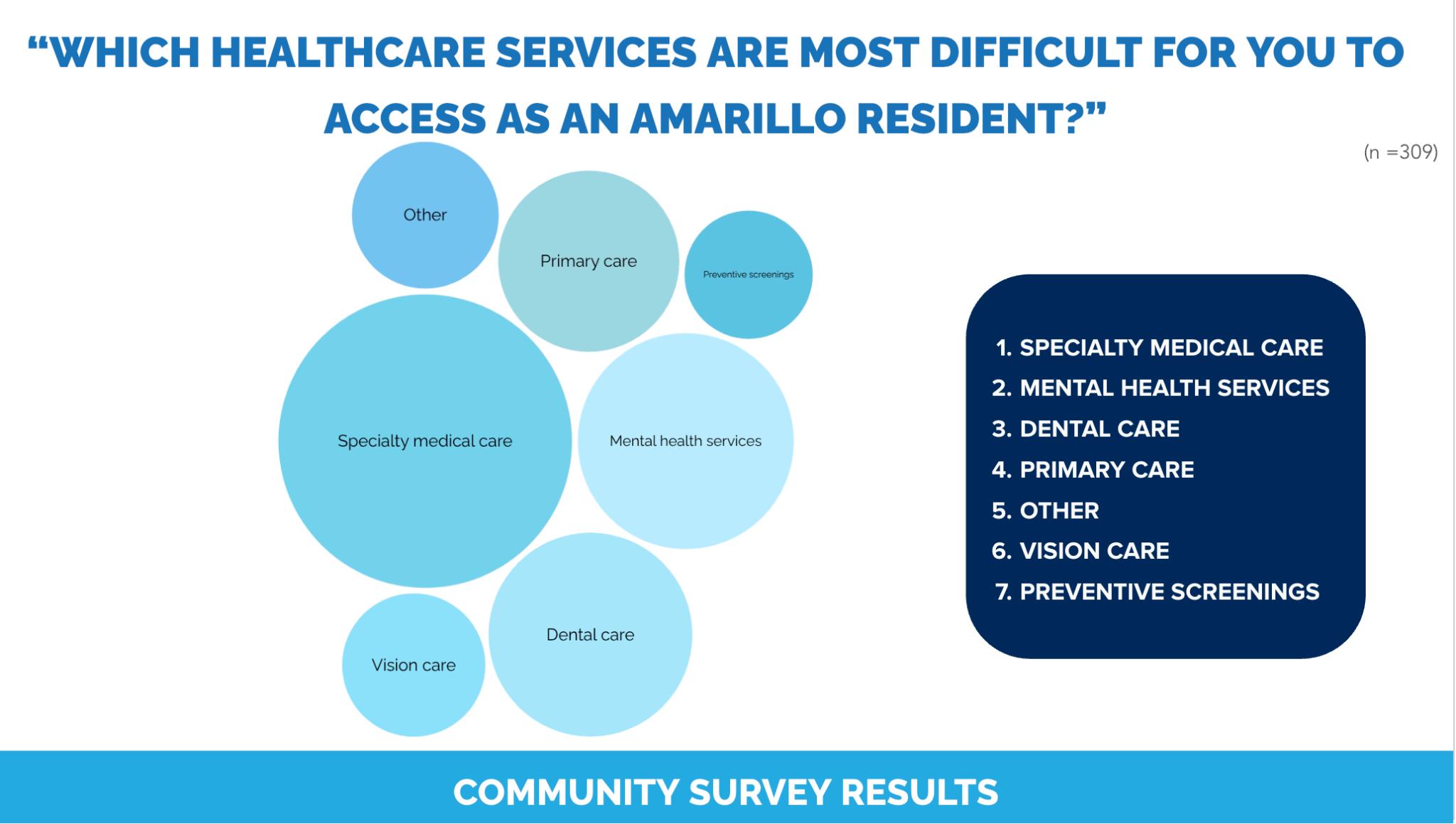
According to the community survey, over half of residents (54%) struggle to access specialty care despite Amarillo's status as a regional medical hub, revealing a healthcare system under significant strain from both regional responsibilities and internal access barriers. Amarillo serves as a healthcare destination for the broader Panhandle region, with stakeholders noting "We've got a population of about 200,000, but we really serve from a medical community, probably 500 plus thousand because people drive from out of state " This regional demand creates capacity challenges: "We need double of what you might think for a city our size in order to accommodate all of the people from surrounding towns " The affordability crisis has worsened dramatically, with one-third of residents from the community survey (32%) unable to see a doctor due to cost in 2025 a substantial increase from historical levels of 19-23%. As community members described, the economic reality means that "Economics of health care have become increasingly unaffordable... people are finding themselves either making difficult choices about whether they're going to take care of their health, or whether they're going to take care of the bills "
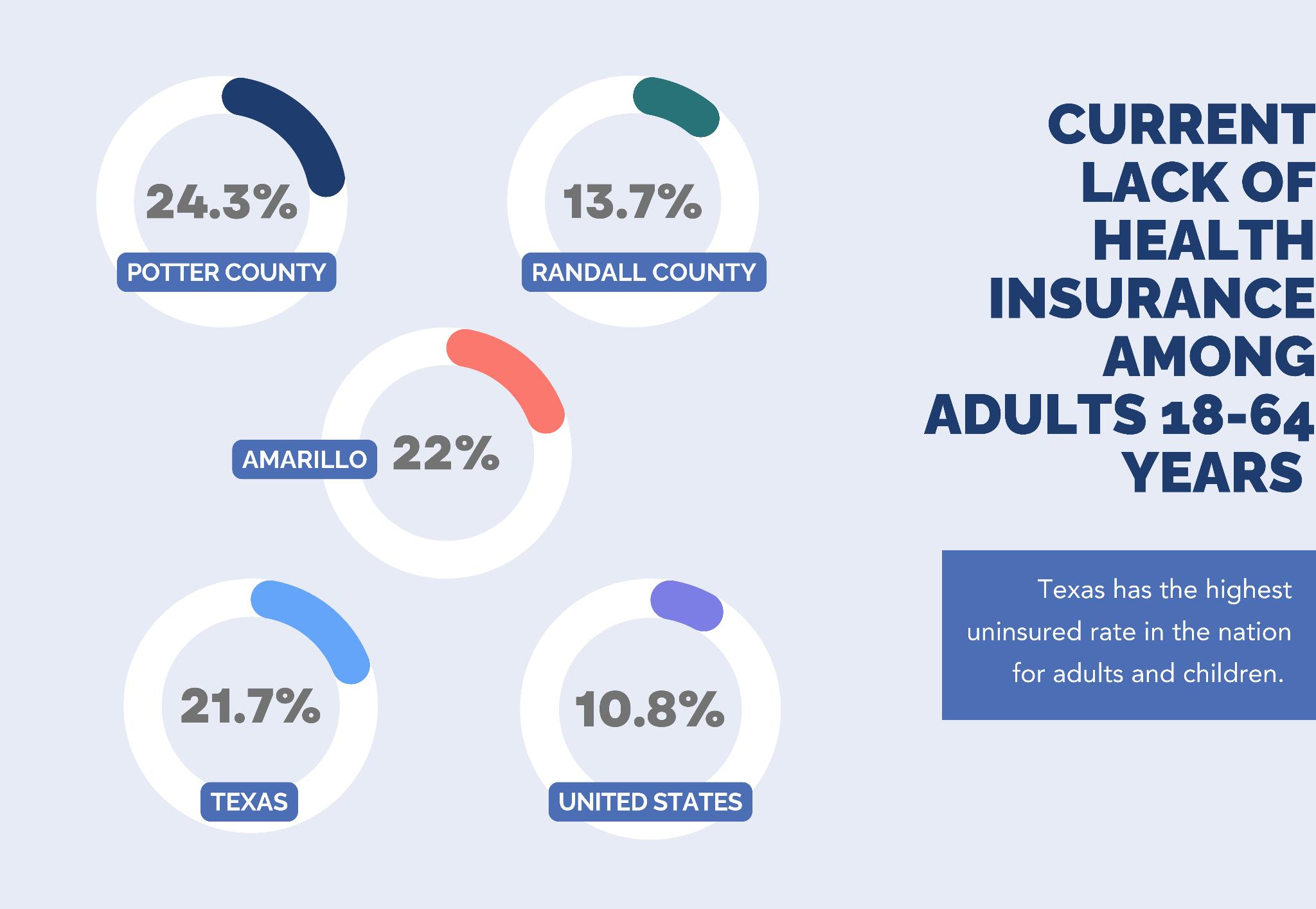
Uninsurance rates drive access barriers, particularly in Potter County where nearly one in four adults (24.3%) lack coverage ranking among the top 20 counties nationwide. Even Randall County's rate (13 7%) exceeds national benchmarks6 Critical provider shortages span multiple specialties, with stakeholders reporting "Trying to find a neurologist in Amarillo is next to impossible" and noting fewer providers "accepting those kinds of insurances [e.g. Medicaid] or even accepting new patients "
7
4. Maternal and Child Health System Strain
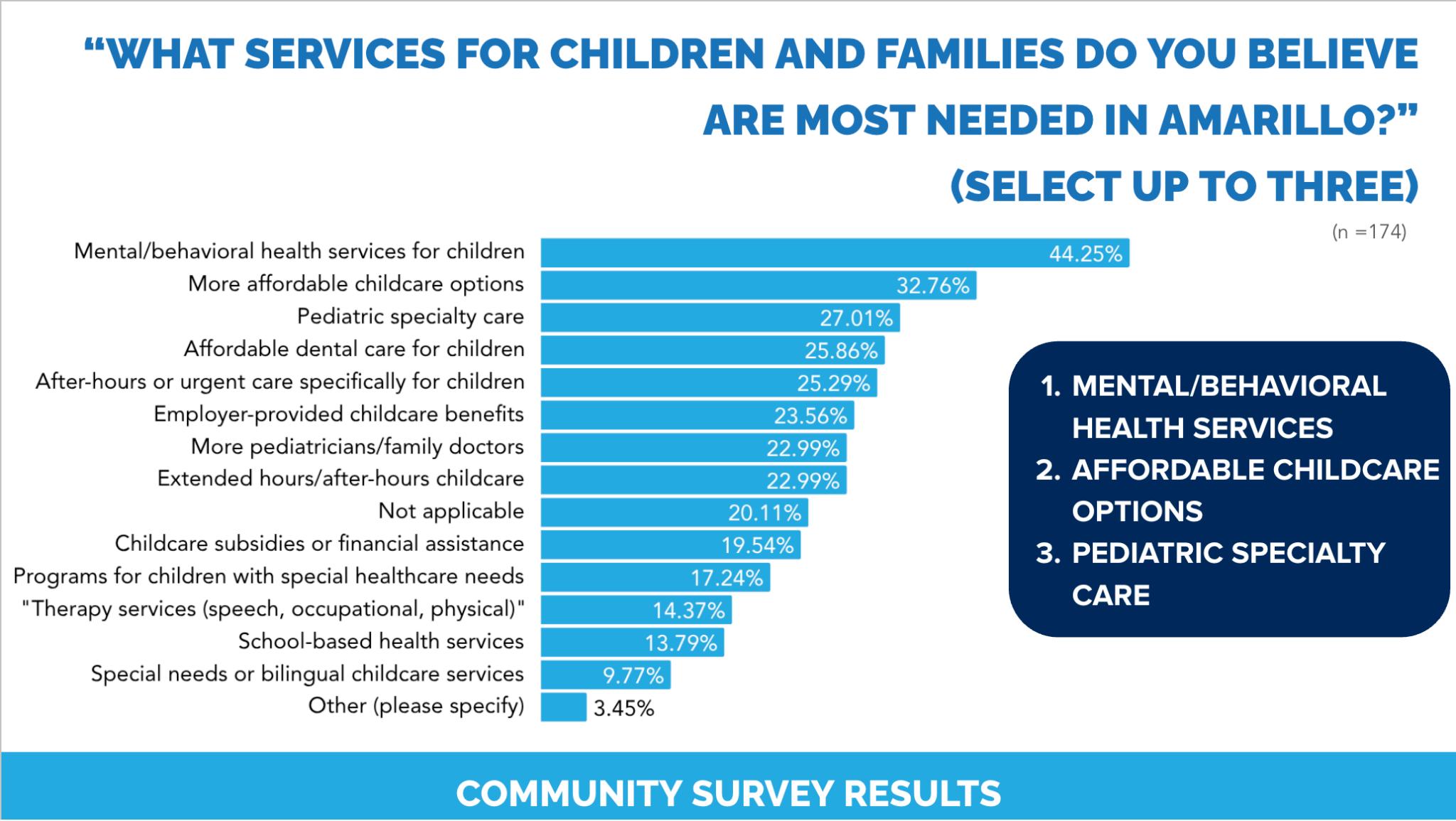
Amarillo serves as a vital maternal care resource for the 26-county Panhandle region but faces mounting capacity challenges that threaten the health of mothers and children across a vast geographic area. The pediatric care system faces critical staffing shortages, with healthcare leaders reporting "We're down to about 8 private pediatricians in Amarillo even at 12 we were seeing probably more than what the American Academy of Pediatrics would recommend " Additionally, the maternal health system shows concerning disparities, with Potter County mothers nearly twice as likely to lack prenatal care compared to Randall County (38.8% vs. 20% receiving no first-trimester care).7 Pediatric healthcare faces particular strain with critical specialist shortages requiring families to travel extensive distances for neurology, gastroenterology, endocrinology, and other subspecialty care. As one provider explained:
QUOTES FROM COMMUNITY LEADERS
"If we have a child with epilepsy, we recommend that they resettle them somewhere else because... access to a neurologist and particularly a pediatric neurologist that can help manage their seizures just does not exist [in Amarillo]."
Despite these significant challenges, Amarillo demonstrates remarkable community assets that provide a foundation for strengthening maternal and child health systems The city's recent $1 4 million investment in a new Women’s Health Clinic at Amarillo Public Health, which opened in Spring 2025, represents a direct community response to identified gaps in maternal care This comprehensive service model includes essential women ' s health services, STI testing and treatment, mental health services, and crucial Medicaid navigation assistance addressing multiple barriers identified in this assessment through an integrated approach.

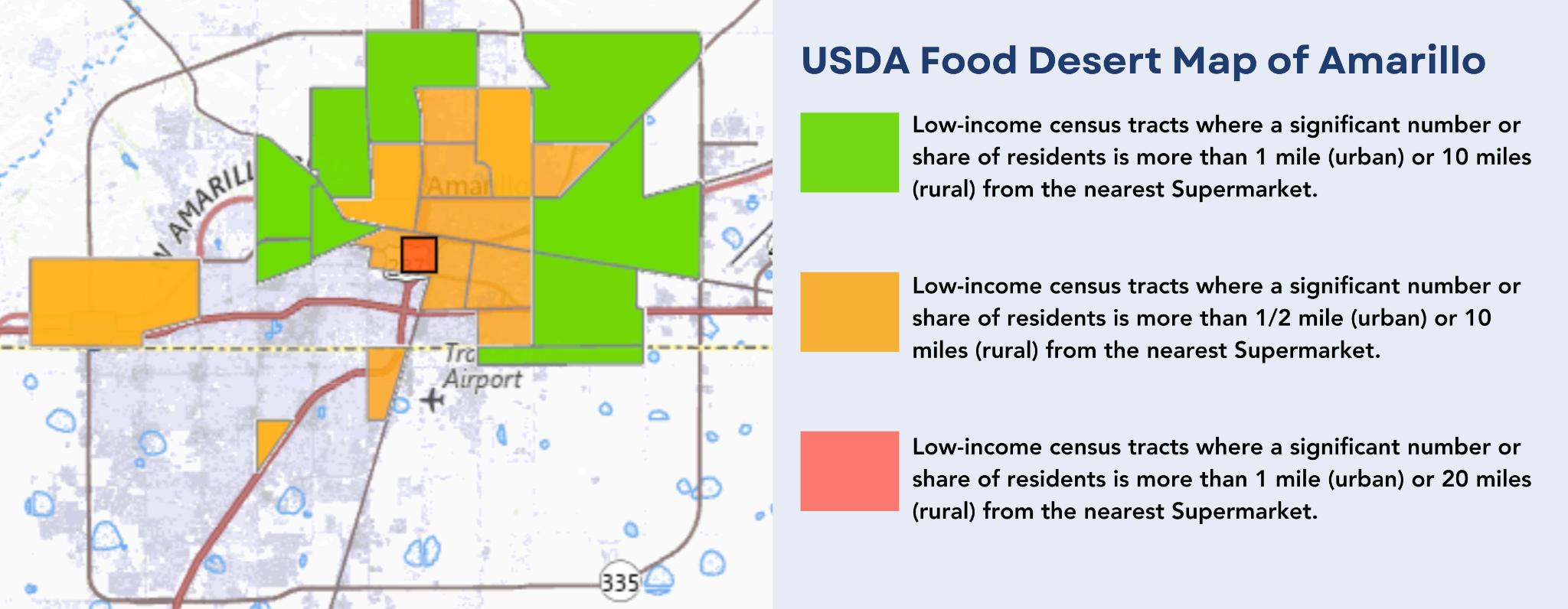
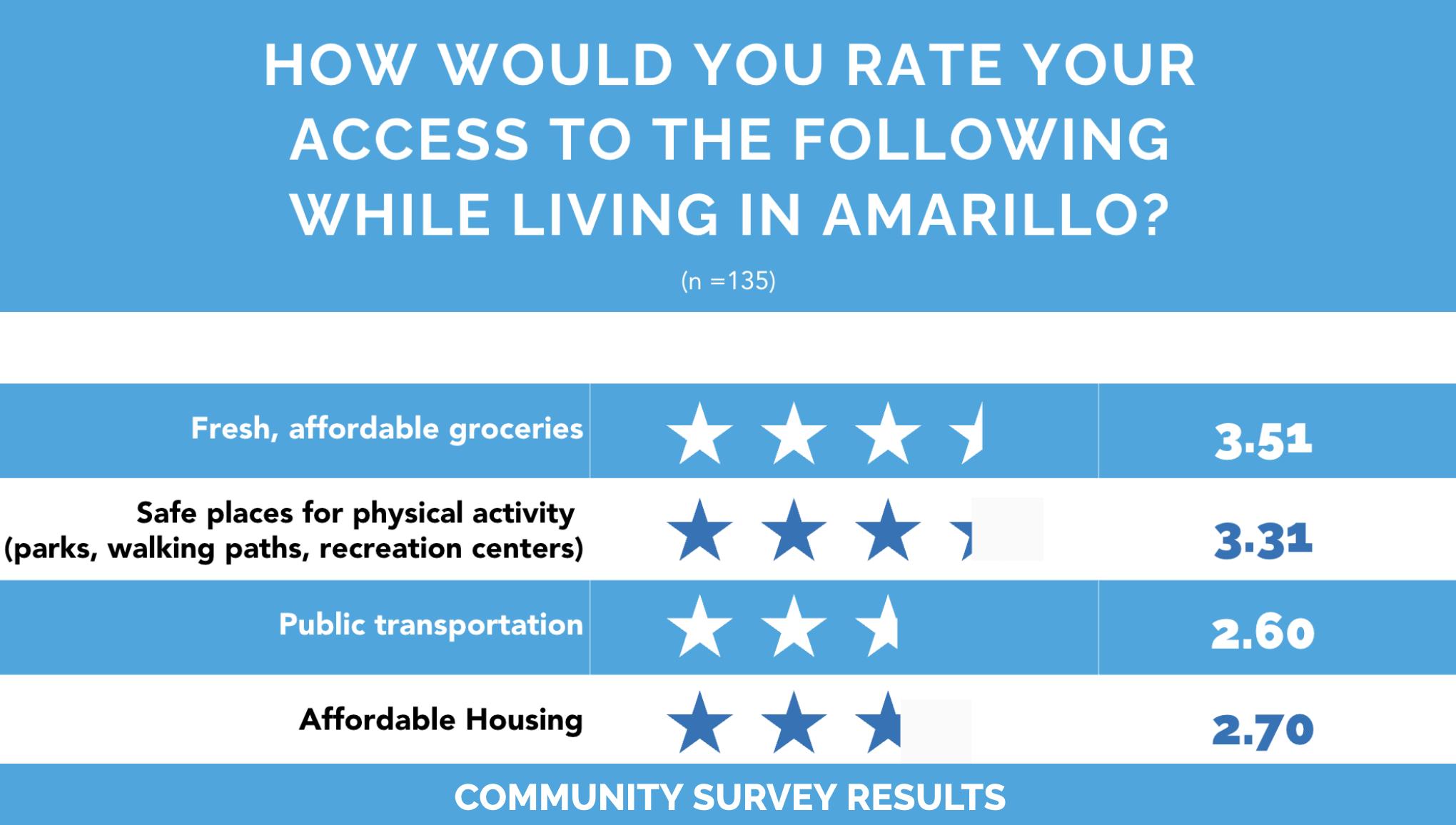
Food security challenges affect 1 in 5 residents based on the community survey, highlighting opportunities to expand access to nutritious, affordable food options Housing affordability concerns impact nearly half of households, creating a need for expanded affordable housing and financial support programs Transportation access limitations affect community members' ability to reach medical appointments, employment, and essential services.
8
USDA Food Desert Map of Amarillo by Census Tracts (2019)8
Community members describe the daily reality where basic survival needs take precedence over healthcare: "When people are struggling to figure out what they're going to feed their kids for dinner, they're not really thinking about getting health checkups." Economic pressures force difficult prioritization decisions, as one stakeholder explained:
QUOTES FROM COMMUNITY LEADERS
"Priority is getting food on the table and having a job, having a car that works... healthcare is just a byproduct. You put out the fire when the fire is blazing."
Social needs intersect with health outcomes, emphasizing the importance of addressing basic stability to support overall community wellness. Coordinated approaches to food access, housing stability, and transportation can strengthen the foundation for healthier families and communities, ensuring that meeting basic needs supports rather than competes with health-promoting activities
6. STI’s: The Hidden Epidemic
Potter County ranks second highest statewide for chlamydia and gonorrhea rates, with chlamydia rates seventeen times higher than neighboring Randall County.9 The geographic health divide is starkly evident in these statistics, reflecting the broader pattern of health inequities that characterize the Potter-Randall county disparity.
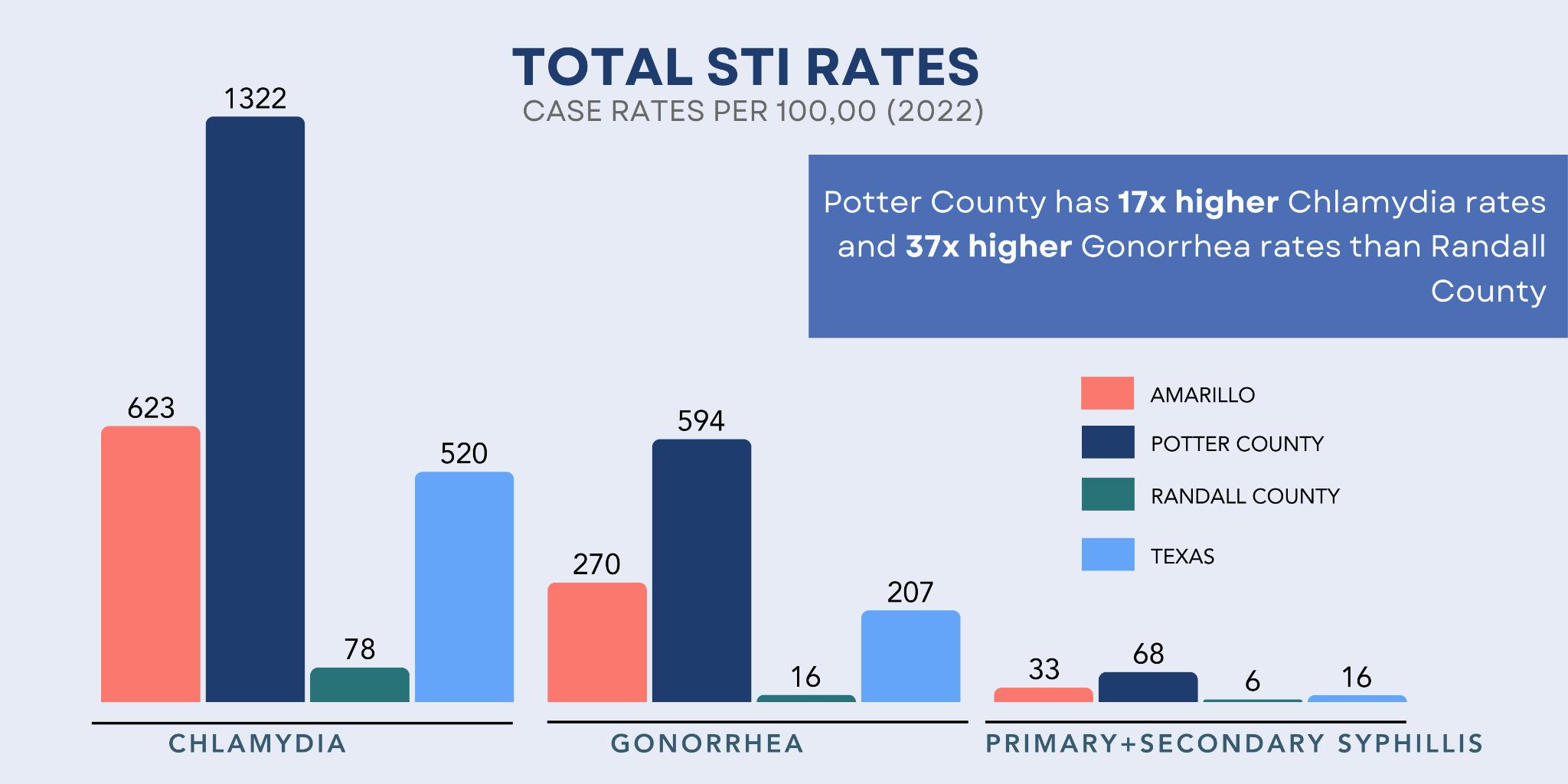
Despite these alarming epidemiological trends, sexual health and STIs ranked lowest among community health concerns in resident surveys. This disconnect between statistical reality and community perception creates a dangerous blind spot that allows the epidemic to persist and expand unchecked. The limited awareness of local STI severity among residents indicates that many may be unaware of their risk or the resources available for prevention and treatment This awareness gap reveals an urgent need for comprehensive community education campaigns, expanded prevention programming, and enhanced sexual health services The disconnect between data and perception suggests that effective intervention requires not only clinical services but also sustained community engagement to raise awareness about the scope of the challenge and available resources for prevention and care.
9 Texas Department of State Health Services (2024) Sexually transmitteddiseases dashboard Texas Health Data https://healthdata dshs texas gov/dashboard/diseases/sexually-transmitted-diseases
Community Survey Priorities
Top Health Concerns according to Amarillo Community Survey respondents:
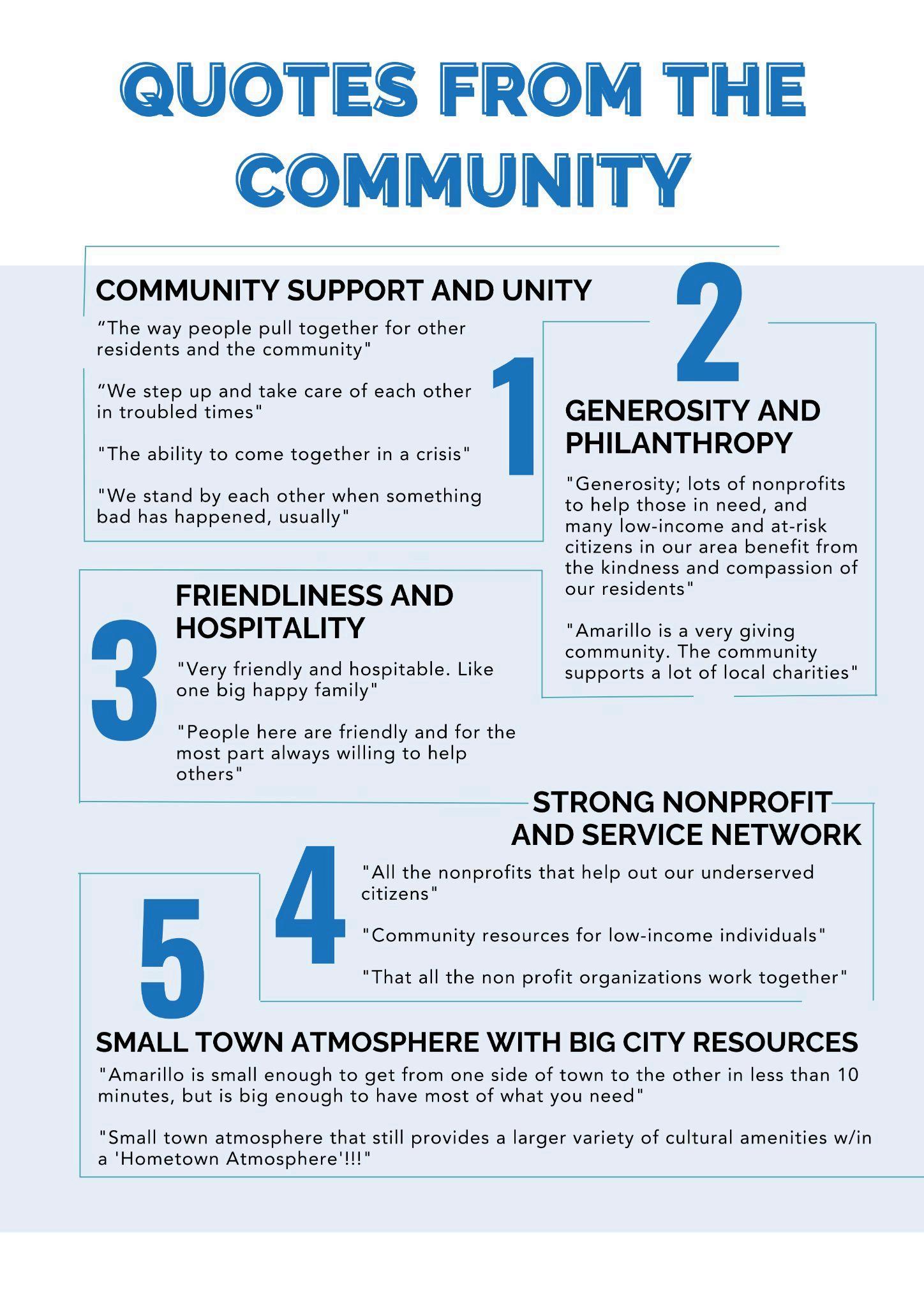
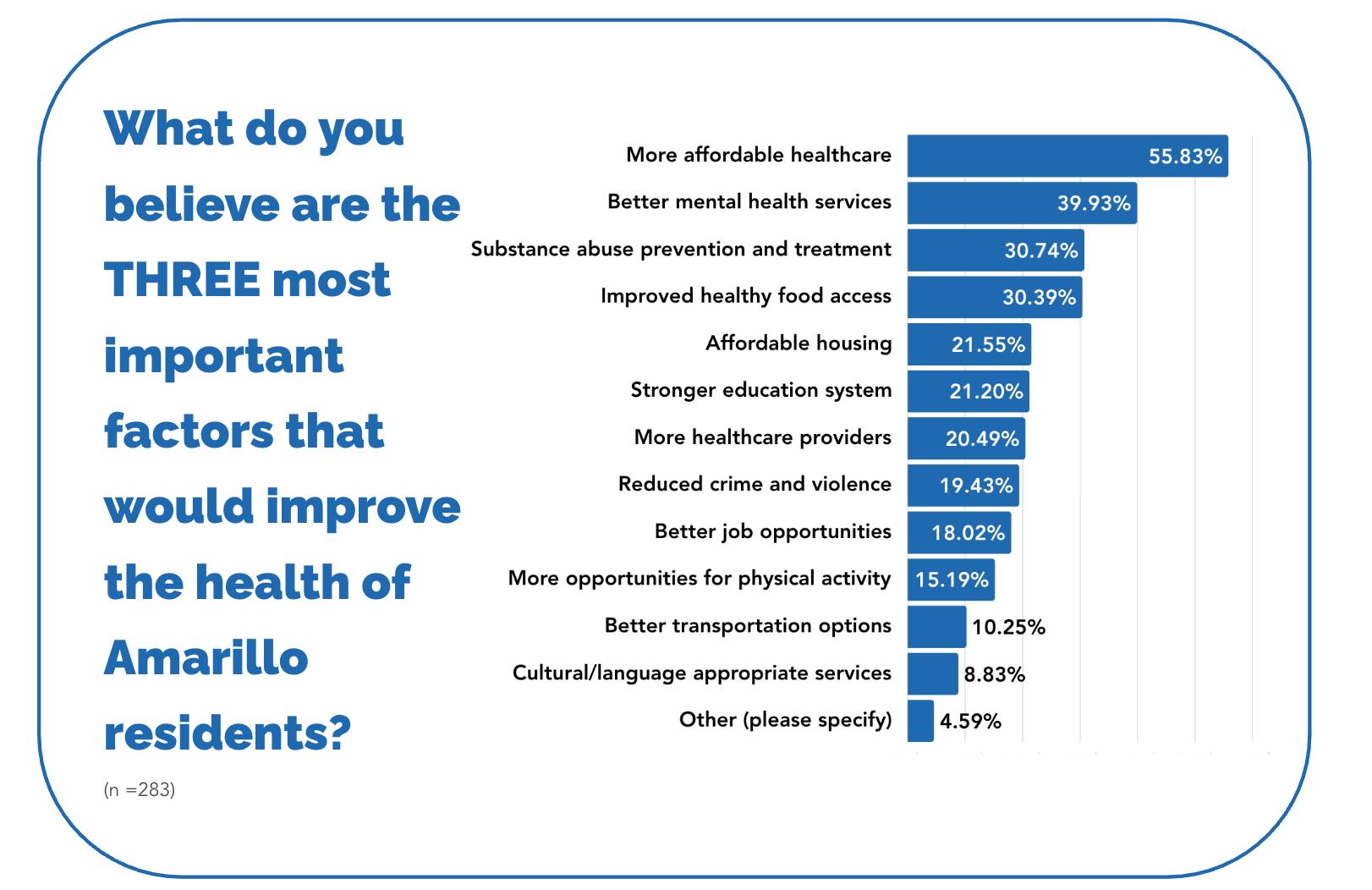
Top Factors to Improve Community Health:
Noted Innovative Approaches
Amarillo is implementing several innovative solutions to address identified health challenges that was noted by interviews with community leaders
QUOTES FROM COMMUNITY LEADERS
"We could actually probably triple the size of that [crisis intervention] team, and they would stay busy.”
The Amarillo Police Department's Crisis Intervention Team (CIT) represents a collaborative approach to mental health response, partnering with Texas Panhandle Centers and the Panhandle Behavioral Health Alliance to improve mental healthcare access The team has responded to over 1,900 calls in 2023, with the Intercept Program pairing mental health professionals with officers for real-time care access 10
The LOSS Team provides immediate support to suicide survivors, addressing the unique needs of those impacted by suicide loss 11
The Mental Health First Aid Initiative has trained over 7,500 community members to recognize and respond to mental health crises 12

A new Women’s Health Clinic opened in Spring 2025, offering comprehensive services including well-woman visits, contraception, and mental health support 13
Transformation Park, representing a $5-6 million investment, provides holistic homeless services including shelter, medical care, and case management for an estimated 600 unsheltered residents 14
10 Amarillo Police Department (2023) Annual report
https://www amarillopolice org/Resources/Amarill o%20Police%20Department%20Annual%20Repor t%20for%2020232023 pdf
11 City of Amarillo (n d ) Suicide survivors outreach
https://www amarillo gov/public-health/suicide-su rvivors-outreach/
12 Panhandle Behavioral Health Alliance (2025) Reportto the community 2025
13 Thompson, J (2024, September 13) City sets aside funds for new women ' s healthclinic Amarillo Tribune https://amarillotribune org/2024/09/13/amarillowomens-health-clinic/Amarillo Tribune
14 Amarillo Tribune (2024, August 8)
Transformation Parkaims togive hope and shelter https://amarillotribune org/2024/08/08/transform ation-park-aims-to-give-hope-and-shelter/
Additional promising developments include a planned $159 million state mental health hospital opening by 2026 with 100 beds for adult and adolescent patients, addressing longstanding inpatient psychiatric capacity gaps 15
The collaborative refugee support network, featuring The Place Multicultural Center, Catholic Charities, and the Refugee Language Project, expanded with two satellite locations in March 2025, training community health navigators to bridge cultural and linguistic divides.16
United Way's 211 helpline continues serving as a critical safety net, handling approximately 42,000 calls annually with trained problem-solvers who develop relationships with callers to navigate complex service systems
15 West Texas A&M University (2024, August) State leadersprovide update on state mental healthhospitalin Amarillo https://wwwwtamu edu/news/2024/08/state-lead ers-provide-update-on-state-mental-health-hospit al-in-amarillo html
16 Amarillo Tribune (2025, March 6) Amarillo community organizations collaborate to fill gaps in the needs of local refugee population Amarillo Tribune https://amarillotribune org/2025/03/06/amarillo-c ommunity-organizations-collaborate-to-fill-gaps-i n-the-needs-of-local-refugee-population/
Amarillo CHA Executive Summary | 14
Next Steps: Strategic Recommendations
Priority 1: Transform Geographic Health Equity Through Community-Driven Solutions
● Health Improvement Zones: Leverage Potter County’s community bonds to host quarterly mobile clinics (BP, cholesterol, diabetes) and expand telehealth access for rural residents
QUOTES FROM COMMUNITY LEADERS
“It would be more feasible to have doctors spread out through Potter County so that transportation wouldn't be an issue."
● Community Health Workers: Develop bilingual programs serving 30+ languages; train community members as cultural bridges.
● Coalition Mobilization: Unite civic groups, faith communities, and nonprofits to co-design culturally relevant health interventions addressing disparities between Potter and Randall Counties.
QUOTES
FROM COMMUNITY
LEADERS
"Having more connections within the communities... community leaders from the different cultural communities who can speak to that."
Priority 2: Strengthen Mental Health System Capacity and Crisis Response
● Expand Crisis Response: Grow Crisis Intervention Team from 5 to 15 officers; integrate with new $159M state mental health hospital; increase the number of mental health providers working with CIT
● Mental Health Workforce Development: Recruitment incentives, retention programs, and peer support specialist certifications.
● Care Navigation & Resource Awareness: Leverage 2-1-1 helpline, bilingual community health navigators, digital resource hub, and quarterly community resource fairs.
Priority 3: Enhance Healthcare Access Through Innovation and Partnership
● Low-Barrier Access Points: Expand school-based health centers, urgent care, and telemedicine specialist clinics
● Insurance Navigation & Enrollment: Increase access to federal, state, and private funding programs; support enrollment and eligibility guidance
● Primary Care Networks: Collaborate with FQHCs; pursue HRSA funding to expand services and increase patient capacity.
Priority 4: Advance Maternal and Child Health Systems
QUOTES FROM COMMUNITY LEADERS
"Getting women into prenatal care in a timely manner... I think that's so important."
● Prenatal & Maternal Health: Launch family wellness initiatives; deploy community health workers; integrate CenteringPregnancy models
● Pediatric Specialty Networks: Establish pediatric telehealth hub; partner with TTUHSC and other hospitals to expand for residency rotations.
● Family Support Systems: Expanding Nurse-Family Partnership and centralized early childhood resource access (Example: Help Me Grow model from Tarrant County).
Priority 5: Promote Sexual Health Education and STI Prevention
● Awareness Campaigns: Target adolescents and young adults; leverage mass media and social marketing
● Testing & Treatment: Expand point-of-care testing, robust follow-up, and access to affordable 340B pharmacies.
Priority 6: Address Social Drivers of Health Through Collective Action
● Transportation: Expand transit routes, extend service hours, and create medical transportation vouchers
● Food Security: Partner with food banks, deploy mobile markets, and develop
community gardens in food deserts
● Housing & Economic Opportunity: Workforce pipelines to healthcare jobs, employer-assisted housing, transitional housing, and rapid rehousing program
Implementation
Framework
Collaborative Leadership: Create a Community Health Improvement Coalition with balanced representation from both counties
QUOTES FROM COMMUNITY LEADERS
"We really need to have like a collective, like a health committee and then have subcommittees."
Strategic Partnerships: Coordinate healthcare providers, FQHCs, and social services to address social determinants of health
Sustainable Resources: Leverage municipal investments, philanthropic funding, and state/federal programs.
Cultural Excellence & Quality: Ensure cultural competency training and continuous feedback to align services with community needs.
Continuous Improvement: Track health indicators, reduce geographic disparities, expand mental health access, and improve maternal-child outcomes.
Conclusion
This Community Health Assessment reveals both significant challenges and remarkable opportunities. The dramatic health disparities between Potter and Randall counties represent a profound challenge requiring immediate action, yet Amarillo's strong collaborative culture, innovative community initiatives, and demonstrated capacity for collective action provide a foundation for transformative change
The path forward requires sustained collaboration among healthcare providers, community organizations, government entities, and residents working together toward shared health equity goals for all Amarillo residents. Through implementation of these evidence-based recommendations, Amarillo can demonstrate that health equity is achievable when communities commit to comprehensive, collaborative approaches that address both immediate needs and underlying causes of health disparities The vision of a community where zip code no longer determines health destiny is ambitious but achievable, building on the strong foundation of community assets and collaborative capacity documented throughout this assessment
For More Information: Complete assessment report available at amarillo gov Contact:City of Amarillo Department of Public Health at 806-378-9468