


Leadership in the modern corporate world cannot be limited to board rooms; it is an energy that
impacts on economy, culture, and dreams. What distinguishes the great leaders is that they are empowering others through opportunities that reach far beyond their immediate surroundings. Thesearetheleadersthatcancreatenewways,combiningvisionarythinkingwithresilience.Theyinspire change in various industries. Their impact is felt not just in terms of profit, but also in people's lives and future generations. Through challenging situations, they create the environment for innovations and progress.Work-life integration of these individuals is a balance between ambition and humanity, showing that there is more to leadership than results alone. Their accomplishments become the achievements of a biggercommunityandnottheirsalone.Thestandardsthattheseleadersaresettingwillberememberedfor generationstocome,asempowermentprovestobethekeytosuccess.
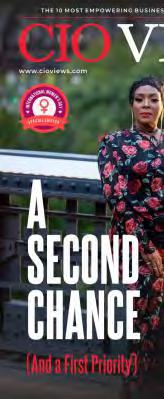
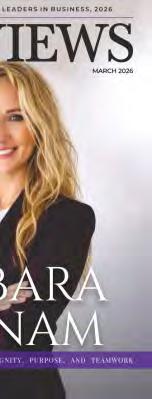
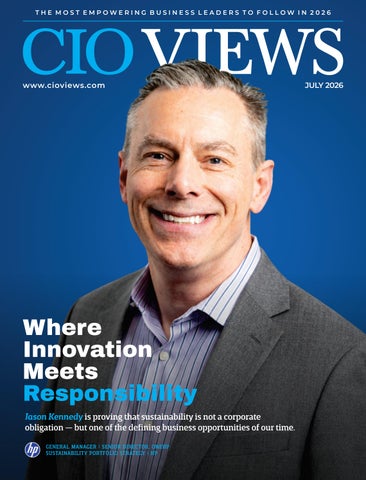
AtCIOViews,wehonortheseempoweringleadersbydedicatingthisissuetitled“TheMostEmpowering BusinessLeaderstoFollowin2026”tothem.Featuringasthecoverstory,wehavecoveredthesuccessful & motivating journey of Jason Kennedy, General Manager / Senior Director, OneHP Sustainability Portfolio Strategy at HP. We have also included the inspiring stories of Kestutis Pagalys, CEO of UAB Servermall;KileyFloyd,CEOofNemahaValleyCommunityHospital;VaniaJussara,ChiefTalentOfficer atTheBankofLondonGroup;andBrianRuddle,ManagingDirectoratImpactInnovationGroupPtyLtd.
CIOViews is a business magazine that mainly focuses on business leaders, their journey, views on current economic states, and all other relevant subjects that refer to the business world. Our goal is to be a leading sourceofinformationdedicatedtoprovidingourreaderswithdetailedperspectivesandviewsofsuccessful business leaders who are transforming the business outlook and redefining their goals. With exclusive editionsonvariousindustrieslikesoftware,education,healthcare,technology,realestate,andmanymore, CIOViewsisdriventopromoteexcellenceintheworldofbusiness.
Happy Reading!
Mousmi N. Mousmi
EDITORIAL QUERIES
editor@cioviews.com
Send comments and suggestions to info@cioviews.com
JOIN THE COMMUNITY
/cioviews
PHOTOCOPY POLICY
No written permission is necessary to make up to 25 photocopies of one CIO Views article as long as they are for local organizational use only. At the end of each article or item, add the words: Originally published in (volume/year) issue of CIO Views, copyright 2026 CIO Views. Reprinted/Used with permission. If you would like to reproduce more than what’s described above or if your copies aren’t for local organization use, send your request to info@cioviews.com.

“THE



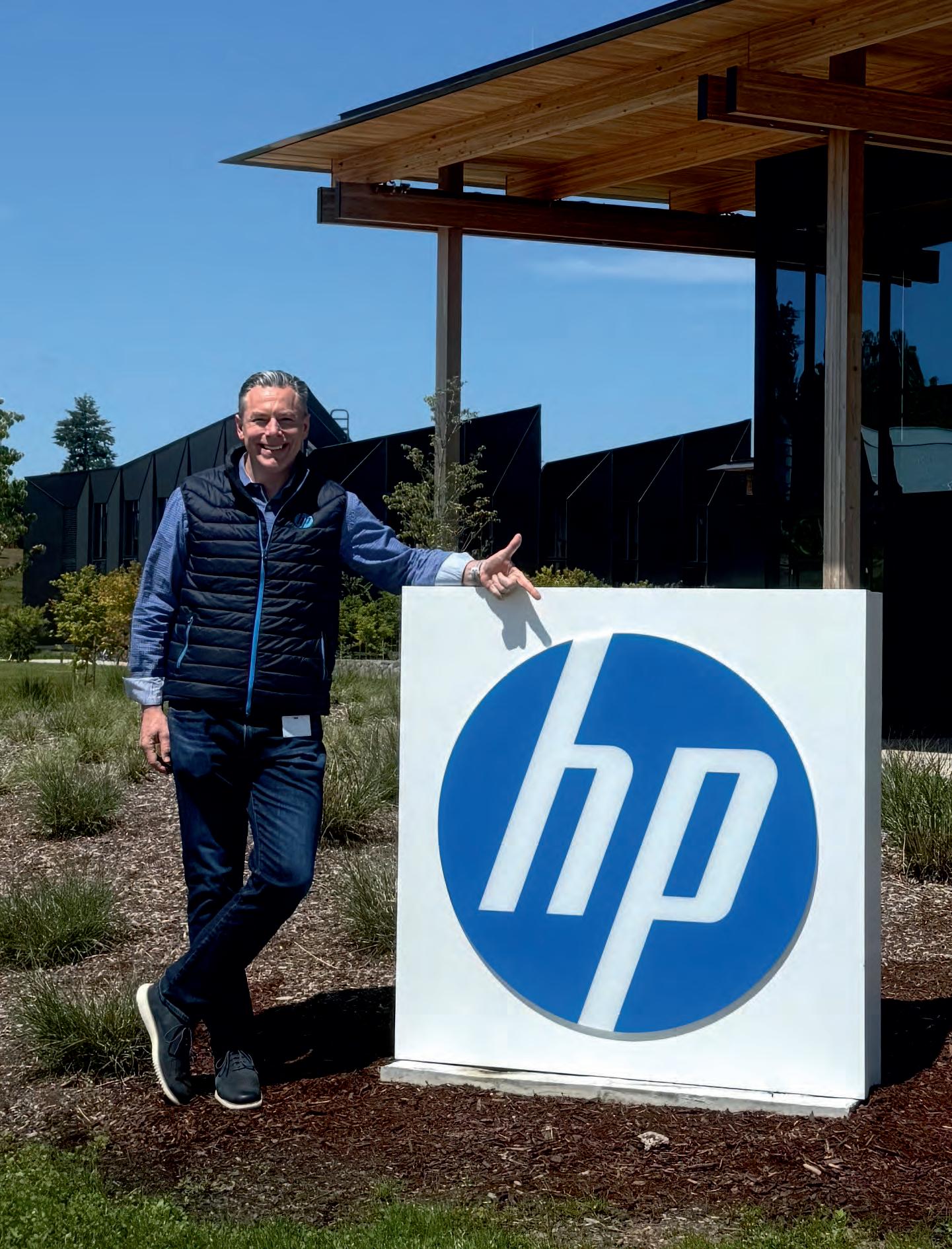

Today, as General Manager and Senior Director of OneHP Sustainability Portfolio Strategy at HP, Jason is helping shape how one of the world's most recognized technology companies approaches sustainability across products, services, and customer experiences. His work sits at the crossroads of innovation and responsibility, where decisions about design, operations, artificial intelligence, and business strategy have implications that reach far beyond the technology sector itself.
What makes Jason's perspective particularly compelling is that he does not view sustainability as a separate function or corporate obligation. Instead, he sees it as one of the defining business opportunities of our time. Having spent years leading product strategy, managing largescale technology initiatives, and contributing to breakthrough innovations, he understands that longterm success increasingly depends on an organization's ability to combine
performance, resilience, efficiency, and responsible growth.
His journey from engineering and product leadership to sustainability strategy reflects a broader shift occurring across industries.As businesses navigate rapid technological change, environmental expectations, and evolving customer demands, leaders like Jason are demonstrating that sustainability is no longer a conversation happening on the sidelines. It is becoming a central part of how organizations innovate, compete, and create lasting value.
Long before sustainability became a boardroom priority, Jason was fascinated by the challenge of understanding how systems work. His academic background in industrial engineering with an environmental focus introduced him to the concept of systems thinking, the idea that
individual decisions often create ripple effects across larger networks.
That perspective would later shape much of his professional philosophy.
“I've always been drawn to complex challenges, with the belief that human ingenuity and technology innovations can overcome the most daunting constraints,” he explains.
Early in his career, Jason developed an appreciation for the interconnected nature of product design, operations, supply chains, customer experiences, and business outcomes. Rather than viewing these elements in isolation, he learned to see them as parts of a larger ecosystem where one decision could influence economic performance, environmental impact, and societal outcomes simultaneously.
Over time, that understanding evolved into a deeper conviction about the role technology should play in the world.
“Technology should not only drive performance, but also resilience, efficiency, and better experiences for organizations, people, and the planet,” he says.
For Jason, sustainability became a natural extension of this mindset. It was not a departure from technology and business strategy but rather an expansion of them.As industries became more connected and stakeholder expectations grew, he recognized that responsible innovation would become one of the most important challenges facing modern organizations.
“What pulled me into this space was recognizing that sustainability is not a side initiative,” he says. “It's one of the most powerful business imperatives of our time.”
Before joining HP, Jas on built a significant part of his career at Intel, where he played key roles in advancing technology platforms, driving profitability, and helping launchAI-enabled computing solutions.Among his milestones, was leading the development, launch, and sales ramp of the Celeron platform, the first brand to follow the famous Pentium family and created a new segmentation category for valueconscious consumers, plus Jason introduced the first Xeon processor with built-inAI acceleration, achievements that reflected both technological advancement and changing market needs. Yet what stands out most to Jason are not specific product launches but the broader lessons that come from operating at scale.
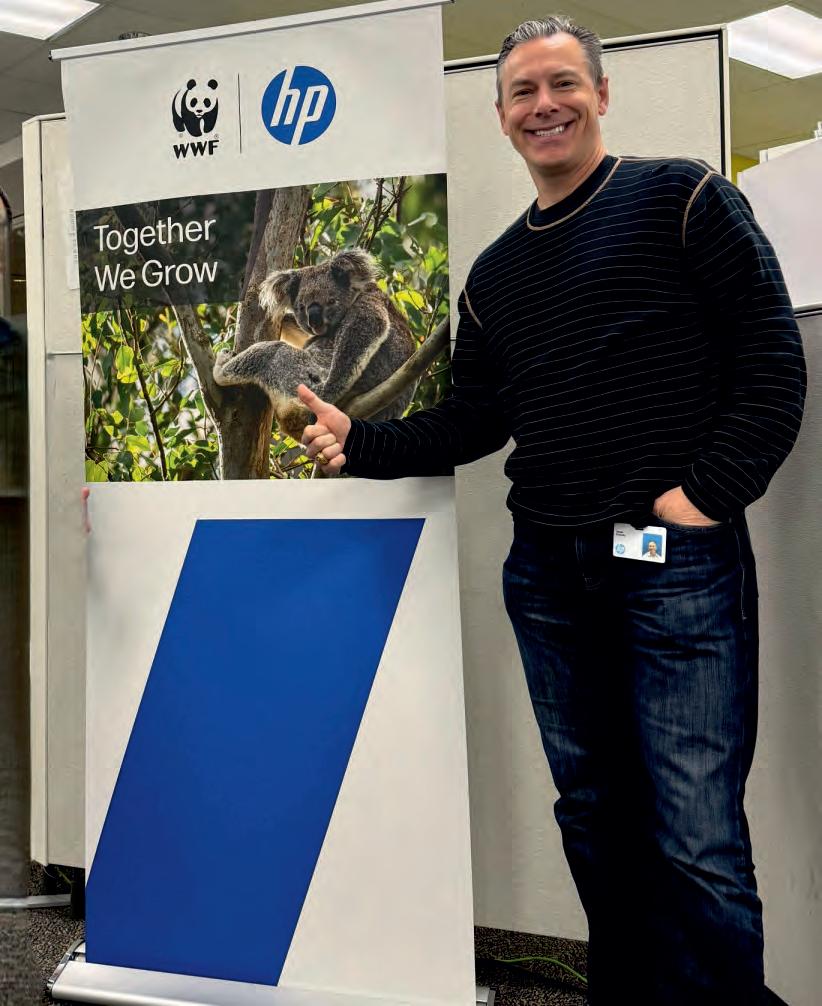
“My years at Intel taught me how to connect technology roadmaps to business outcomes at global scale, while addressing specific human needs,” he explains.
Leading large initiatives required balancing multiple priorities simultaneously. Technical innovation needed to align with customer requirements, ecosystem readiness, supply chain realities, geopolitical factors, and long-term market shifts. Success depended on bringing diverse
stakeholders around common objectives and ultimately win, together.
Those experiences proved invaluable as Jason's work increasingly intersected with sustainability strategy. “Success requires a similarly high level of discipline, agility, and resilient stakeholder engagement,” he says.
He points out that many of the same skills required to commercialize
emerging technologies are equally important when embedding sustainability into business operations. Both involve aligning engineering, product management, operations, customers, suppliers, and external stakeholders around a shared vision and persevering through roadblocks along the way.
His work at Intel also exposed him to initiatives involving eco-design, lifecycle management, energy efficiency, supplier engagement, and operational resilience. These experiences reinforced a lesson that continues to guide him today.
“Sustainability is most powerful when it is embedded in strategic decisionmaking, not layered on as an afterthought,” Jason asserts.
One of the themes that runs throughout Jason's work is the importance of translating strategy into practical outcomes.Ambitious goals may capture attention, but he believes real value emerges only when those ambitions truly improve experiences for customers and businesses.
“To me, it means translating broad sustainability ambitions into concrete outcomes that matter to customers,” he explains when discussing what it means to turn strategic insight into differentiated customer value.
That value can take many forms. It may mean lowering operating costs, reducing resource consumption, improving compliance readiness, strengthening supply chain resilience, or enhancing trust among customers and stakeholders. Regardless of the outcome, Jason believes strategy
becomes meaningful only when it produces tangible benefits.
“Strategy only becomes meaningful when it changes the customer experience or improves business performance,” he says.
This philosophy encourages organizations to ask deeper questions about how products and services are designed. How can technology be developed with lower lifecycle impacts? How can circular approaches improve both economics and resource efficiency? How can emerging technologies help customers become more productive while reducing complexity and waste?
For Jason, the answers often lie in making sustainability practical rather than theoretical. The more measurable and relevant sustainability becomes to everyday business priorities, the more effective it will be as success motivates others to join in and accelerate momentum further.
At HP, Jason approaches sustainability as a lifecycle discipline rather than a checklist item. For hardware, that means considering sustainability from the earliest stages of design. Decisions involving materials, repairability, reuse potential, energy efficiency, packaging, and end-of-life planning all influence the long-term impact of a product.
“Sustainability starts with design choices,” he explains.
This philosophy extends beyond products to the spaces and systems that support innovation.Anotable
example is HP's new LEED Goldcertified facility in Vancouver, WA, which incorporates mass timber construction and a solar-ready design, reflecting the company's commitment to embedding sustainability principles into both its operations and infrastructure.
The conversation extends beyond products themselves. Supplier engagement, documentation practices, regulatory requirements, and customer expectations all play important roles in shaping responsible outcomes. Software and services introduce a different set of opportunities. Rather than focusing solely on physical materials, the emphasis shifts toward smarter holistic decision-making and extending the value customers derive from technology.
“We look at how digital experiences drive resource efficiency, improve workflows, extend product utility, and help customers make smarter decisions throughout the full lifecycles,” Jason explains.
His role involves connecting these different dimensions into a coherent portfolio strategy that aligns engineering, product management, operations, and go-to-market teams around shared goals. He is particularly focused on ensuring that sustainability is communicated in ways customers can understand and appreciate.
“Our Sustainability Progress story should clearly show how intentional design and innovation can help customers reduce their environmental footprint while strengthening outcomes for their business, and reflect that success is a relentless journey, not a destination,” he says.



The impact of these efforts is reflected in the growing recognition HP has received for its sustainability leadership. More than 70 percent of HP's 2025 revenue came from products designed to help reduce environmental impacts, underscoring how sustainability has become embedded within the company's business strategy. HP was also named by Corporate Knights among the 2026 Global 100 Most Sustainable Corporations in the World. In addition, the company was ranked among the top 1 percent of companies globally by EcoVadis, recognized by Omdia as a Sustainability Ecosystem Champion, ranked among the top five on Forbes' 2026 Net-Zero Leaders list, and named the #1 Overall Most JUST Company inAmerica by JUST Capital.
Jason's commitment to innovation and impact has also been recognized
throughout his career.Among his notable achievements are a U.S. patent granted for enabling secure delivery of post-sale feature upgrades enhancing product capabilities, extending device lifecycles, and creating new services-based revenue streams and his receiving the Intel AchievementAward, Intel's highest honor, recognizing exceptional contributions and leadership in driving meaningful results.
As conversations around sustainability continue to evolve, Jason sees emerging technologies playing a central role in shaping future business models.Among the most significant are the Edge computing and artificial intelligence. These hybridAI technologies are creating new opportunities for
organizations to understand their operations, improve efficiency, and make better-informed decisions by utilizing capabilities at the point of use.
“PhysicalAI, with on-device intelligence, that may or may not extend out to the Cloud, can help organizations better understand how assets are being used, where inefficiencies or data vulnerabilities exist, and how maintenance, energy, and utilization can be optimized in real time,” he explains.
Edge to Cloud hybrid computing environments are enabling organizations to scale intelligence and transition from reactive decisionmaking to more predictive and efficient approaches. Yet Jason believes the greatest opportunity lies beyond operational improvements alone.
“These technologies are unleashing entirely new business models and support users in create work beyond their past limits,” he says.
Service-based offerings, predictive operations, digital workflows, and more accurate measurement of environmental impact are becoming increasingly possible because of these technological advances. Combined withAI, Jason believes this will help people and organizations improve productivity while reducing waste and friction to deliver growth, fulfillment, and ultimately their best work possible.
Communicating Complex Ideas with Clarity
As a public speaker and an industry thought leader with over 25,000 LinkedIn followers, who frequently discusses technology and
sustainability, Jason understands that even the most important ideas can lose impact if they are not communicated effectively. His approach begins with why it actually matters.
“I try to begin with relevance, not jargon,” he explains.
Topics likeAI and sustainability can quickly become overwhelming when discussed solely through technical language. Jason focuses instead on connecting these subjects to realworld decisions and outcomes.
“People connect more deeply when they understand how a topic affects business resilience, customer value, workforce experience, or societal progress. You must appeal to both the head and the heart,” he says.
At the same time, he believes
credibility requires balancing optimism with rigor. While innovation creates exciting possibilities, responsible leadership demands transparency about tradeoffs and limitations.
“The best communication combines strategic clarity, practical examples, and a genuine sense of urgency about what responsible innovation can unlock,” he notes.
Rethinking the Relationship Between Sustainability and Growth
One of Jason's strongest beliefs is that sustainability and business performance should never be viewed as competing priorities.
“I think that separation is one of the most outdated assumptions in business.Agrowth mindset starts with a “I wonder…” approach to
challenges and iteratively builds upon initial solutions with 'Yes, and' focus” he says.
Rather than functioning as a reporting exercise, sustainability can serve as a framework for innovation, resilience, efficiency, and long-term value creation. It can influence everything from product design and operational effectiveness to customer trust and market differentiation.
In his own work, Jason focuses on connecting sustainability directly to outcomes leaders already care about.
“Growth, efficiency, differentiation, resilience, and long-term value creation,” he says, listing the priorities that sustainability can support.
While sustainability often must overcome initial skepticism when it becomes embedded in strategic decisions and measurable outcomes, it transforms from a perceived constraint into a source of momentum.
While Jason has contributed to significant technology initiatives throughout his career, one of the achievements he values most involves people rather than products.
“I am proud to be known as a talent multiplier, but I am never satisfied with my abilities, nor do I hide areas
that I am working to improve. Vulnerability is a Superpower!” he says.
Helping others grow, aligning teams around meaningful goals, and creating environments where people can perform at their best are accomplishments, he considers just as important as business results.
“The business outcomes matter, but how you build them matters just as much because I want us to win today AND tomorrow,” Jason reflects.
This perspective has shaped his leadership style throughout his career. Whether leading product organizations, sustainability initiatives, or cross-functional programs, he believes strong teams create lasting impact. His own transition from product leadership to global sustainability strategy was not a dramatic career shift but rather a continuation of a broader mission.
“The transition into sustainability strategy was not a departure from that path. It was an expansion of it,” he explains.
Creating a Legacy of Responsible Innovation
When discussing the future, Jason returns repeatedly to a central idea: technology and responsibility should advance together.
“I hope to help prove that technology can be both high-performing and
deeply responsible,” he says.
He envisions a future where organizations design more intelligently, operate more resiliently, and create better experiences for customers, employees, and communities alike. Beyond technology itself, he hopes his leadership leaves a lasting impact on the people and teams he has worked alongside.
“I hope my legacy is that I helped people think bigger, move faster, and build with greater purpose,” he says.
As businesses continue navigating the opportunities and challenges created byAI, sustainability expectations, and rapid technological change, leaders like Jason Kennedy are helping redefine what progress looks like. His career demonstrates that innovation does not have to come at the expense of responsibility. In fact, the most meaningful advances often emerge when organizations pursue both together.
The future Jason envisions is not one where sustainability exists alongside business success. It is one where the two are inseparable. Through thoughtful leadership, practical innovation, a commitment to creating lasting value, and recognition that there are not easy straight lines to achievements, he continues to show that responsible growth is not only possible but increasingly essential for the world ahead.




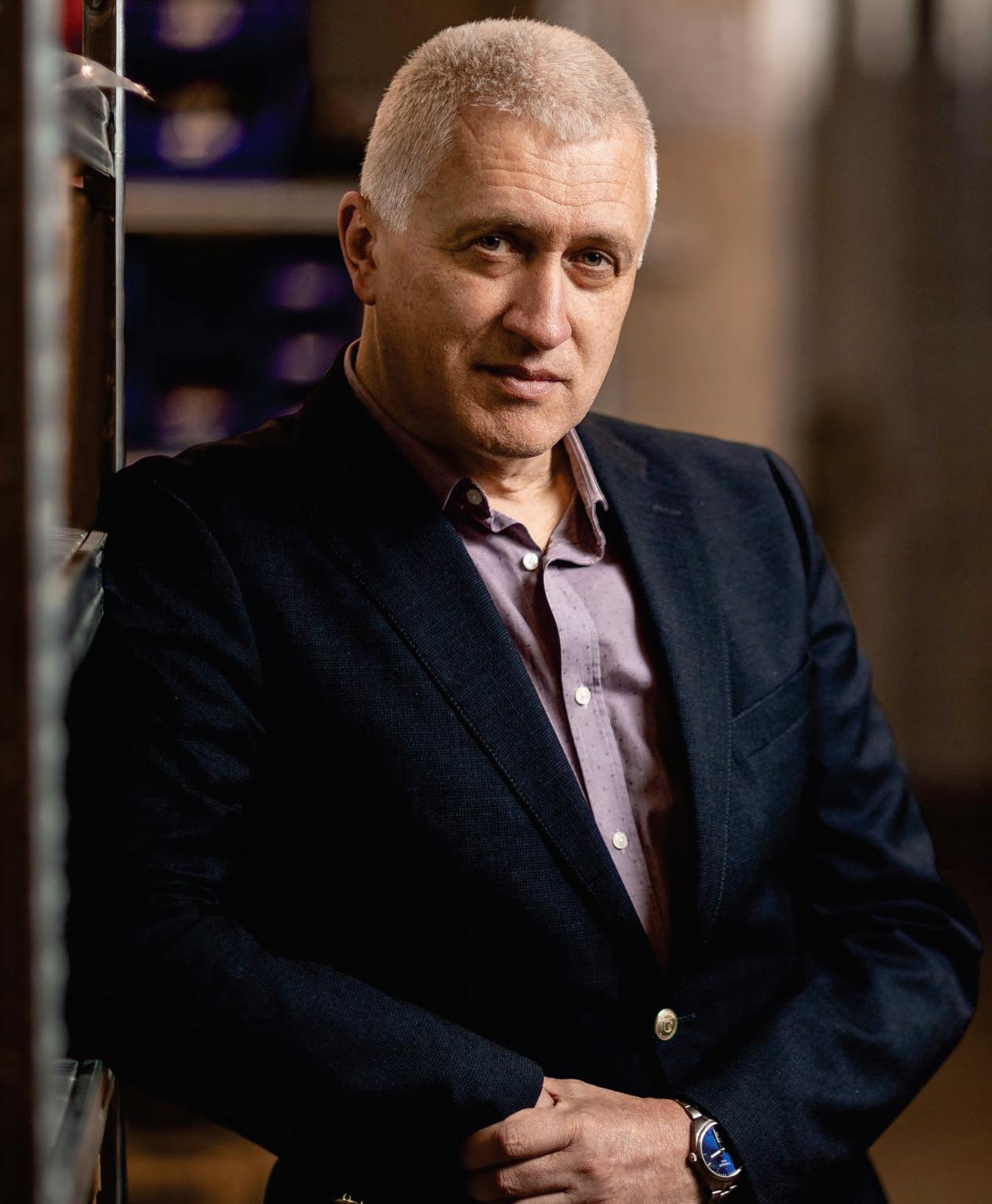
CEO - UAB Servermall
Kestutis Pagalys is an experienced CEO at Servermall, with a strong background in management and leading teams across various organizational levels. In his current role as Director - B2B, he actively contributes to the company's project management strategies and plans, overseeing the entire operation encompassing sales, e-commerce/sales management, services, and pricing/invoicing. His expertise lies in building and managing high-performing teams that cater to diverse client needs, with a focus on ensuring customer satisfaction and fostering repeat business.
Kestutis effectively balances his CEO responsibilities with hands-on involvement in procurement activities. His day typically starts by reviewing emails and setting priorities for himself and the staff. The fastpaced and demanding nature of his role requires him to be prepared for unexpected challenges and make the most of every minute. Kestutis thrives on the need to be both creative and technically proficient, leveraging these qualities to drive success in his position.
Throughout the day, Kestutis diligently oversees operations, with a particular emphasis on ensuring the timely dispatch of prepared orders.
This underscores his commitment to efficient execution and meeting customer expectations.
Kestutis' career journey before joining Servermall was characterized by unexpected turns. Initially working as an IT technician, he later transitioned to a sales role at Fujifilm.Although he achieved success in sales and eventually became a commercial director, Kestutis realized that sales was not his true passion. This realization marked the beginning of his return to the IT field.
His path back to IT included a position as an IT manager at a government exhibition center. While some may perceive his career path as convoluted, Kestutis believes that these experiences have actually reinforced his beliefs and professional aspirations. The twists and turns have provided him with valuable insights and a deeper understanding of his own goals and aspirations.
Kestutis believes that the most significant achievement for a business leader is establishing a trustworthy team. In order to foster unity, individuals must feel valued and understand the purpose behind their
actions. It is crucial for the team members to collaborate harmoniously. Rather than competing for individual success, they should strive to be part of a supportive community. Kestutis does not subscribe to the notion of transforming work into an amusement park, as he believes that work should provide a healthy level of challenge to drive progress. However, it is important to recognize that people have diverse preferences, and this approach may not be suitable for everyone, including potential employees. Hence, Kestutis and the HR manager have the responsibility to find a middle ground that satisfies both the company's requirements and the employees' needs.
Perspective on Leadership, Mental Barriers, and Effective Communication
According to Kestutis, the presence of challenges is what makes work interesting and engaging. He believes that leaders do not emerge in environments devoid of problems. From his personal experience, he has found that the most formidable obstacles often stem from individuals' own mental barriers. Egos and internal limitations can hinder progress and prevent these barriers from being dismantled. It is not only one's personal challenges that need to be addressed but also those present in the minds of the people one interacts with on a daily basis.

Effectively communicating with others is yet another challenge that Kestutis emphasizes. Skillful communication plays a crucial role in ensuring that everyone involved benefits from the interaction. By navigating these challenges adeptly, leaders can foster a conducive environment for growth and success.
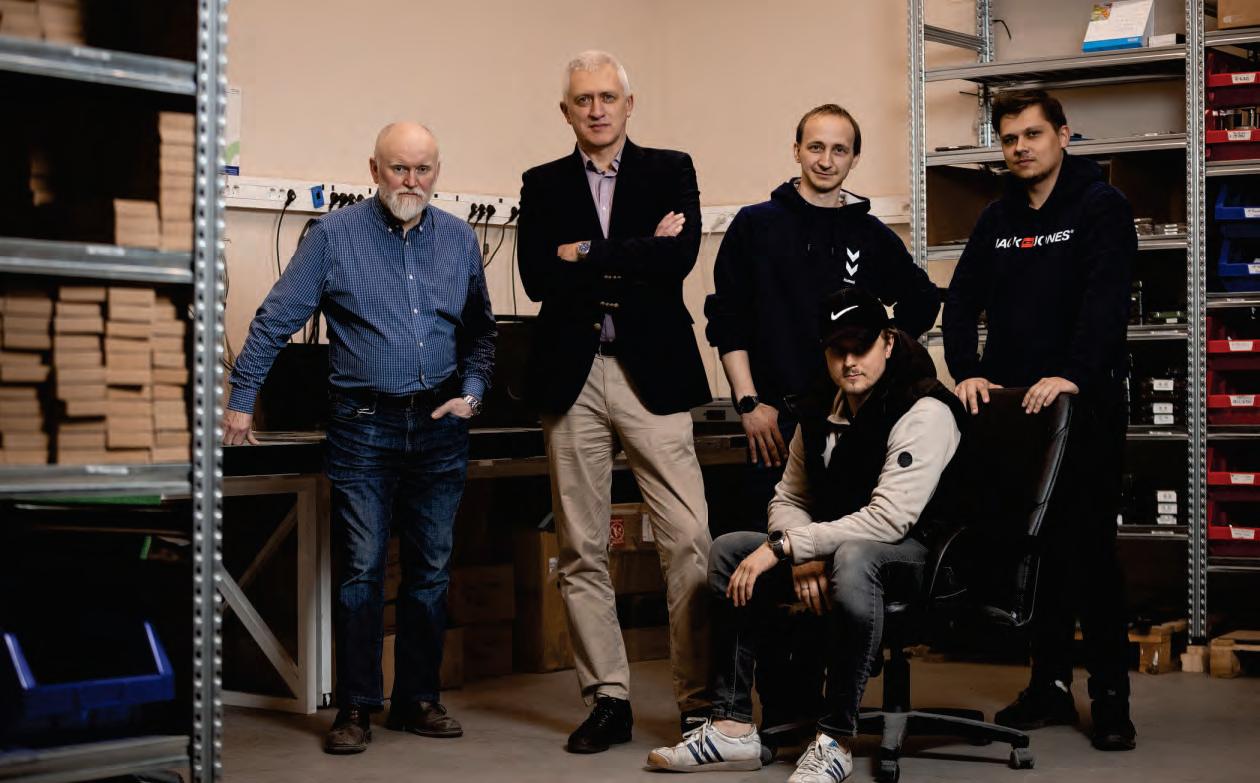
Servermall, a Lithuanian company, specializes in selling refurbished servers throughout Europe. It provides a wide selection of servers suitable for various tasks, offering a comprehensive range of IT equipment. With a strong focus on customer satisfaction, Servermall not only guarantees the highest quality of refurbished equipment but also strives to deliver exceptional service. From assisting customers in equipment selection to ensuring prompt delivery and providing post-sales support, the company aims to set new standards in terms of both product quality and customer service.
As a trusted distributor and supplier of server and networking equipment,
Servermall caters to the diverse needs and budgets of its customers by offering both brand new and refurbished options. The company's extensive services include remote or on-site support and maintenance, accompanied by a generous 5-year warranty on all products. Leveraging years of experience in refurbishing servers and possessing comprehensive knowledge of every component, Servermall fearlessly embraces projects of any complexity, demonstrating its expertise and dedication to meeting customer requirements.
The success of Servermall can be attributed to its exceptional workforce and a distinct, yet courageous vision. The foundation of this achievement lies in a simple yet crucial formula, where each component plays a vital role.At Servermall, the management adheres to a people-centric approach that encompasses both employees and customers.
Internally, this approach entails understanding and accommodating the challenges faced by colleagues when encountering difficult tasks, ensuring that their situations are
addressed without compromising overall productivity. Externally, Servermall demonstrates maximum flexibility in resolving customer issues, whether they pertain to technical solutions, delivery logistics, support, or other aspects.
By establishing clear objectives, Servermall upholds high levels of quality and transforms numerous ambitions into reality. This unwavering commitment to clarity empowers the company to fearlessly undertake new projects, leveraging its expertise and resources to deliver exceptional outcomes.
While it currently provides free shipping across the EU, Servermall is steadily expanding its reach beyond Europe to connect with new customers inAsia and the Middle East.
Kestutis, like many others in the IT industry, acknowledges the abundance of talented individuals and wonders if he has made any notable contributions. His approach to working with suppliers revolves around a modified win-win strategy. By prioritizing his company's needs and goals, Kestutis adopts a selective approach when it comes to potential partners, a cautious stance influenced by past unfortunate experiences. The presence of reliable suppliers brings about significant time savings, allowing him to focus on productivity rather than spending countless hours negotiating minor discounts. While this approach may not be universally applicable, it proves particularly effective in the dynamic IT industry, characterized by fluctuating prices, demand, and availability. Establishing early communication with new suppliers can be challenging, as it sometimes takes up to two years to reach
mutually beneficial terms, despite the fact that we are constantly trying to speed up and start processes as early as possible. However, partners who share a similar mindset and perspective appreciate the way Kestutis conducts his business, finding it suitable for their own endeavors.
Kestutis believes that Servermall has promising prospects as a rapidly growing market player. The company's ultimate aspiration is to achieve a global presence. While Servermall primarily operates within Europe, it is actively expanding its reach towards the east, gradually integrating into the Middle East and SouthAsia. This expansion wouldn't
be possible without the invaluable support and collaboration of its local partners in these regions. These partnerships play a vital role in facilitating Servermall's entry into new markets and establishing a strong foothold beyond its European origins. He says, “The European market is now challenging us every day with piles of jobs to be done. But we are doing well, as our sales statistics show.”
As a leader, Kestutis recognizes the importance of efficiently scaling processes and seeks guidance on how to achieve this goal. When a company reaches a certain level of maturity, it may appear to operate smoothly without requiring additional effort. However, during the transitional phase, critical decisions need to be made regarding what aspects of the
business to expand, when to expand, the appropriate size of expansion, and how to execute the expansion effectively. This journey of scaling is both lengthy and fascinating. It is important to note that each individual and company follows a unique path, making it challenging to provide definitive advice on what actions to take. Kestutis can only speak from personal experience and perspective. In his case, ambition, a human approach, self-discipline, and a desire to delve into the core of matters have proven invaluable. These qualities have allowed him to navigate challenges, maintain resilience over an extended period, and minimize susceptibility to manipulation.

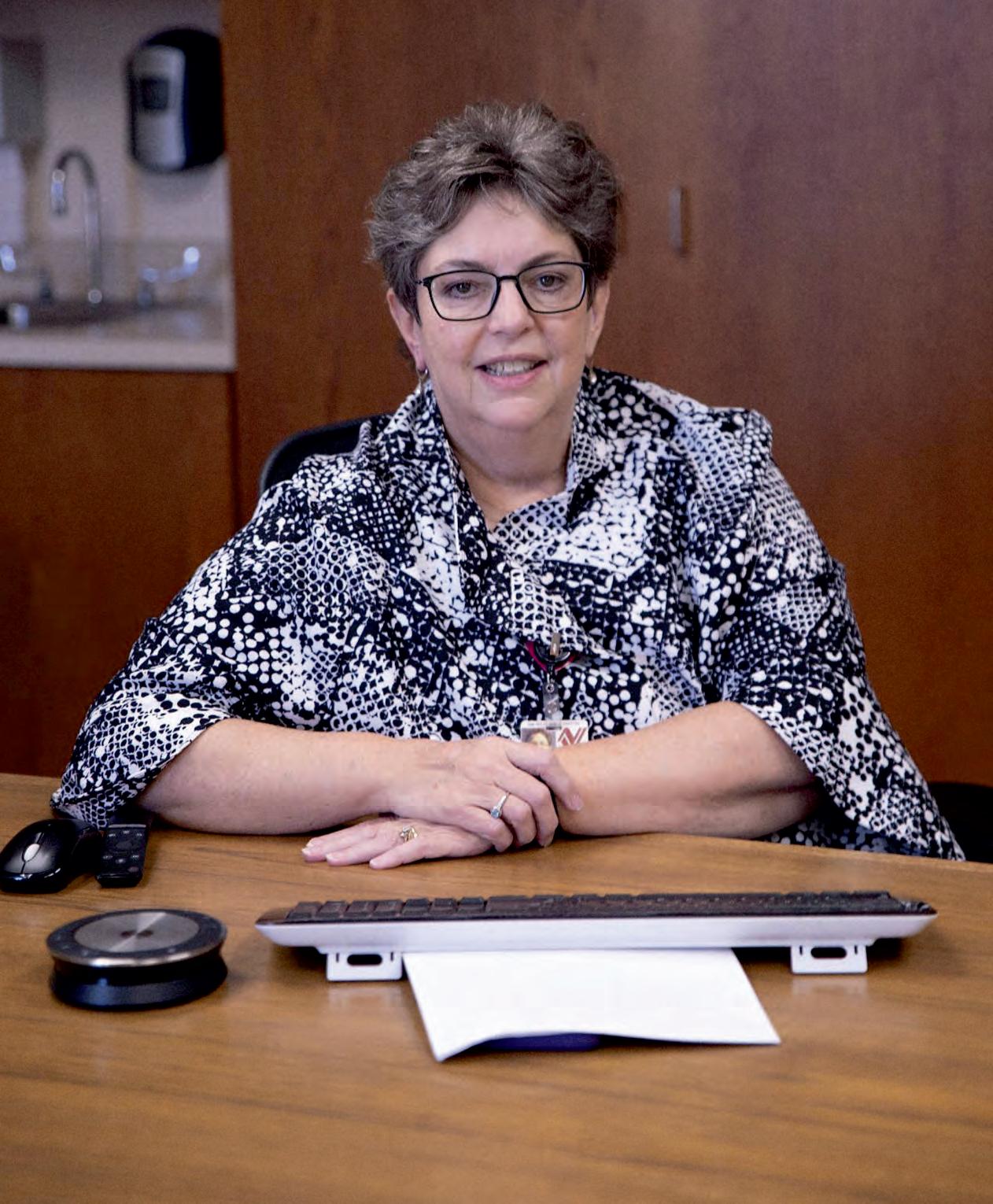
Great executives contribute to the success of businesses. In the healthcare industry, effective leaders inspire people to perform to the best of their abilities for the benefit of patients, their coworkers, and the business as a whole. In the fields of healthcare and public health, you need people who can both advocate for novel ideas and help spread awareness of certain concepts while motivating others to take part in the effort. Talented, successful health care executives are essential to organizational performance; they assist caregiving companies in managing the numerous daily corporate duties and obligations occurring throughout service delivery. One such leader who is creating a ripple in the business world through her experience and business acumen is Kiley Floyd, CEO of Nemaha Valley Community Hospital. She believes commitment and an ethical evaluation of any environment can create opportunities for challenge and change, and healthcare is the perfect
industry for anyone interested in constantly being challenged to do more with less, which eliminates any opportunity for status quo thinking.
Those who are familiar with Kiley would probably characterize her as a disruptor. She is not willing to accept the status-quo. She states, "This is the way we have always done it." is not acceptable in the organization. Kiley believes, "We have to constantly be looking for better ways to do what we do, even when our current plan is working. Our communities and patients are changing. Their needs are too." She wants to make sure the organization is flexible enough to adapt to every change that hits it.
Kiley didn't intend to work in the healthcare industry, but she thinks that God guided her there. Therefore, her entire career was a leap of faith. She needed to work at a young age in
order to support her family. She started working for a staffing firm and was given the Kansas CityArea HospitalAssociation as her employer. She began her career in health care with it. She started working full-time for the hospital association but resigned after twelve years to take a chance again and became the administrator of her hometown hospital. She devoted herself to upholding the dignity of patients and encouraging respect among the medical staff.
In Kiley's opinion, two kinds of acknowledgement have stood out for her. Being acknowledged as a mentor or as someone who has changed someone's life is what matters most in the first instance. The best prize she could possibly ask for is a card or message of appreciation. In terms of her career, she was really thrilled to have been selected for the Leadership Kansas class of 2018. She gained a great deal of knowledge about Kansas and its many sectors.
CEO - Nemaha Valley Community Hospital
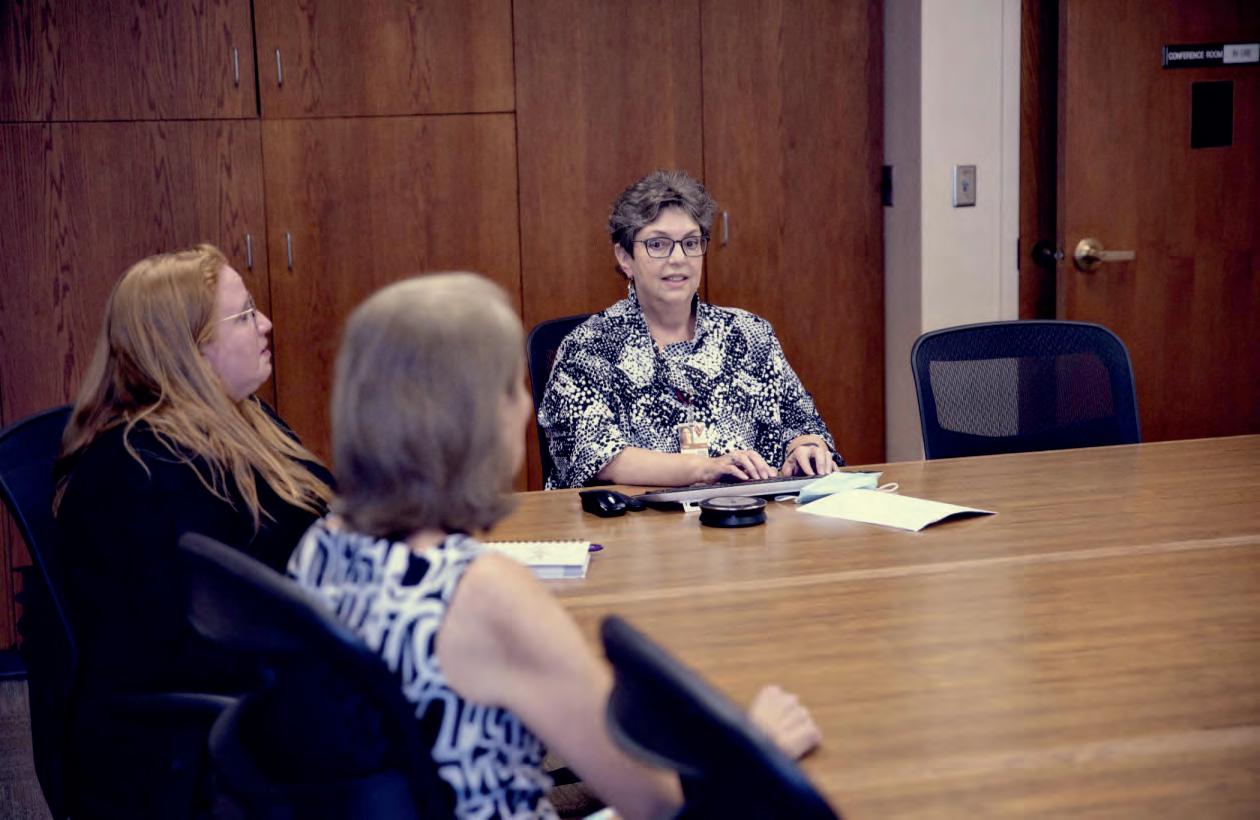
In the prosperous agricultural region of northeast Kansas, Nemaha Valley Community Hospital is a full-service critical access hospital. It is encircled by a lovely landscape with lakes and rolling hills of greenery. The communities that the hospital serves take great delight in caring for one another. Family farms have a long history, as do independent industrial triumphs. Both the organization's schools and the local population's demand for healthcare are expanding.
The community hospital in Seneca, Kansas is expanding.As a result of the current gap between demand and capacity for services.. For the organization, these are incredibly exciting times.As per Kiley, the
organization believes innovation is key in every part of the life. There is always a better way. The team believes, "We have to respect the history of our cultures. There may be a better way, but it might not be the right way for our patients. Balancing the need to be more efficient and a patient's experience is important."
For a rural CAH, innovation often means collaborating with the competitor down the road. The team can do much more for its patients when they work together. The hospital can share staff and even technology much more efficiently than it can by duplicating services. Kiley thinks this is key to the survival of rural medicine.
ACommitted Chief
As Chief Executive Officer, Kiley believes that the buck stops with her. So, on a daily basis, she checks in with a variety of departments to make sure they have the resources they need to do their job. She shares, "Some days the responsibility of talking to an unhappy patient or family member falls on me." She further shares that she ok with that as she does not want her staff to have to have these unpleasant conversations if they can be avoided.
According to Kiley, state and federal surveys are big parts of the hospital's lists of compliance, for which she works on policies and procedures and compliance. She is also the primary recruiter for its medical staff. She shares, "If I have a vacancy, have
When you talk, you are only repeating what you already know. But if you listen, you may learn something new.
-
plans for future growth, or need to adjust schedules, I manage those efforts as well." When she has the chance to interact with the patients at the hospital, that is Kiley's favorite time of the day. The most significant portion of her day is these private discussions. I enjoy taking part in this organization's growth.
According to Kiley's vision for it, the company should continue to be a patient-focused, financially independent rural health care provider. She says, "I can help by continually listening to our staff, working with them to identify a better way to do something; working with our peer organizations; and reinforcing accountability within our organization."
Kiley struggles to strike a decent work-life balance. She benefits from working with a fantastic team of professionals that help her love what she does. She looks forward to coming to work. Kiley says that her husband has always encouraged her in her professional endeavours and has made it simple for her to carry out her responsibilities.

"Like with any exercise, you have to stretch. It's nice to be comfortable, but you will not ever know or reach your full potential until you move outside your comfort zone; This isn't for everyone," opines Kiley. People who are content with where they are and do not feel the urge to change are respected by her. She recognizes the need for personal growth and regards obstacles as vital training for getting better at what one does.
Kiley claims that she does not face many obstacles different from any other small rural healthcare provider in the way of her profession. But she is aware of the difficulties she has faced. She asserts, "I learned what type of leader I do not want to be. I learned what type of leader individuals respond to and what type they do not respond to."
Nemaha Valley Community Hospital has a long, proud history of service to local communities.Although the healthcare industry has evolved over the years, its dedication to the people it serves has not. The group
understands that giving back to your community is the greatest opportunity someone can receive.
According to Kiley's plans, Nemaha Valley Community Hospital will continue to be a healthcare innovator in northeast Kansas. The organization has a fantastic workforce. They are exceptionally devoted to their patients and to one another. She continues by saying that she feels it is her duty as a leader to help the hospital's personnel become future-ready. She asserts, "To help them be the best they can be at whatever it is that is important to them. So, when a member of my team tells me they were successful and achieved their goal, I feel a great pride for their accomplishments. ." She feels successful when someone tells her she made a difference in their lives
Kiley's message to aspiring leaders is "listen". She states, "Don't assume you have answers because if you aren't listening to your staff, you don't know the questions."



Vania Jussara is the Chief Talent Officer and Chief People Officer of The Bank of London Group - a next-generation technology company building the world's first purpose-built global agency, clearing and transaction bank and. Vania is an insightful and influential business leader with experience in designing and setting up business units and operations worldwide. She continues to be fascinated by the relationship between behaviour and environment - the sweet spot where the desire to develop and contribute meets sustaining growth opportunities.
Inspiration to be an HR
“We invest most of our time awake during our life working. It is the best part of our days, the best years of our lives. However, for many people, working is not living. When they talk about the work-life balance, they have 'living' in opposition to 'working',” states Vania. She likes to think that working is part of living instead. It is the contribution you bring to the world around you in your sphere of influence. Vania chose HR and joined The Bank of London to
enable this experience to be meaningful and to enrich people's lives.
Anthony Watson, our CEO and Founder, has a clear ambition to be a different type of Bank. Having worked for fantastic big companies, Vania says that she has seen both, outstanding and poor experiences. She wants to be part of a team who will co-create a unique work experience.
Vania believes that: success is to look back and know and feel you had a rich and fulfilling life. The best way to identify what is important to you is to think about your 100 years birthday party. When you reflect on who will be there, what they will talk about and what will be your dearest memories, you gain perspective of what is success for you. We tend to live life believing it is eternal, albeit we know it is not. Thinking of the end brings us wisdom on how to use the most precious resources we have: our time and our attention.
Challenges make you stronger
At The Bank of London, they are always looking for exceptional talent. “If you reflect on your life, you will see that the moments you learned the most were the ones you were challenged—the ones you had to have the grit to overcome difficulties or barriers. But not everyone will learn through hardship; we all know people that have been through multiple experiences without changing. It is essential to believe you can grow and develop to do so,” says Vania.
Many situations in Vania's career were tricky. Once, she was hired to do a job in the UK, six months later, they were relocating to Denmark. The initial was hard, new language, culture, and industry. There were many moments when she asked herself, “What am I doing? Could I make that work?” Denmark ended up being one of her career highlights. She states that she learnt to love and cherish that beautiful country and culture, but first and foremost, she realised that they could do it, as it was a family experience; they had a fantastic experience there and learned a lot.

Vania Jussara
Chief Talent Officer - The Bank of London Group
Bank of London and its services
Bank of London has the world's first purpose-built global payments and clearing platform via a singleAPI. It extends its cutting-edge capabilities and technology directly and as a BaaS solution to all customer segments.
The Bank of London offers safe and frictionless payment and account solutions to financial and nonfinancial institutions for global money movements and cash management with a capital-efficient model.
Vania's contribution to Human Resources
You do the small things thinking about the big stuff. We think, design and implement people processes to enable the work experience to be meaningful and to enrich our colleagues' lives. Vania believes that the utmost objective is to understand what our external customers need and shape the organisation to deliver exceptional products or experiences.
“Let me give an example: In September, we will communicate our performance development approach. It is future-focused and acknowledges that every conversation a colleague has with their leader is a performance conversation about their contribution. We want to move away from unhelpful and unproductive performance reviews about something that happened 12 months ago,” she explains.
Importance of innovative ideas in business
Innovation is key.At The Bank of London, they have a value that says, 'We learn. Fast.' In doing so, they acknowledge that they will not get everything right, but they value scar tissue and the ability to change their minds and course correct.
“I am surrounded by exceptional talent that joined the bank of London to create their life's work. Rebecca Skitt, our Co-President and Chief Administrative Officer, talks about the ones that have challenged the status quo and brought in fresh ideas. We call them exceptional,” Vania notes.
Vania's vision for the company and influencing change
Vania states that at The Bank of London they want to create an inclusive culture.An environment everyone can bring themselves, contribute and be productive. “The best thing about creating something new is that you have no legacy to change. It is thinking from the start and designing how you would like to be. However, our colleagues and leaders come from different backgrounds and contexts,” she says.
The challenge, then, is to rethink your own experience and accept or welcome another way of doing it and continuing with the Performance example. They were trained on a reductionist approach: Describe five things; do five things - you have
performed. However, everyone knows this is not true. They want to take a holistic perspective and think of contribution instead. “What and how have you contributed to the team, the Bank of London, and the Society around you? It is more challenging and requires judgement, as all meaningful experiences do,” Vania further explains.
Beginning of Vania's career and recognition achieved
Vania started her career in market research. Human behaviour always fascinated her. The immense capability we have to create incredible things but also to cause significant harm. One of the many Mentors she had throughout her career invited her to join the HR team. He spotted Vania's passion for behaviour, her multiple questions and opinions about the colleague experience and asked her to come and join the team who was trying to solve it.
Vania has had great examples around her and she shared two that are no longer around.
1.Her grandfather had an unshakable belief in the human being. Their potential to change and to achieve great things. She learned kindness and generosity from him.
2.Her grandmother, who passed away this year, showed Vania with her life to have internal confidence - it is possible to do it, and change is always necessary.
“We have the privilege to touch many lives in our daily tasks,” Vania asserts. The best recognition she has received is the multiple individual conversations when a person's life is enriched, and they find themselves in flow. In other words, when the challenges they face meet the capabilities they bring. “We are back to doing the small things, thinking about the big stuff. When you touch one person, you are changing the world, one at a time,” she states.
Responsibilities as an inspiring leader
As Chief people officer Vania's responsibilities are - Three higher level goals: how they organise the work, what is the colleague experience they deliver and how it is to work there - culture.
As Chief Talent Officer Vania says her responsibility is: Talent - get to know people and plan the jigsaw over time: do we have the capability? Do we need to buy? Can we develop? Keep adjusting as the context keeps moving.
There is no typical day in a start-up. “You go from the strategic to the very operational on any single day. You can sign off payroll; do an interview; have a conversation with a leader who is struggling; discuss a succession plan; write documents for regulatory approval; attend a leadership session to discuss customers, commercials and risk, have a workshop, write a policy; review an announcement, etc,” Vania explains.
Maintaining balance and keeping others motivated
Vania not sure if she has a great work-life balance. However, she certainly feels she makes her own choices, and she is at peace with them.
She believes that you cannot motivate people. It is always an individual choice on how you want to spend your time and attention. What can be done, as leaders, is creating an environment where each individual chooses to stay and give their contribution.
Plans for the future of The Bank of London Group & personal goals
The Bank of London is the world's first purpose-built global payments and clearing platform. They claim to be here to disrupt a sector that for far too long has provided inadequate products and services.
Their ambition is to be the most efficient clearing bank in the world due to modern built-for-purpose, cloud-first patented technology, highly automated legacy-free processes, and multiregional licensees in a single ecosystem.
In other words:
1.Faster and more price competitive
2.Easy to access through a single API
3.Safe, transparent, and compliant; and
4.Scalable and proven core platform
It is a technology company in a bank wrapper; The Bank of London has already been licensed as the UK's 6th principal clearing bank, only the 2nd in the last 250 years. “We will be known as being a different type of bank, to have an inclusive culture. We want to provide exceptional products and services to our external customers, but you cannot give what you do not have. The customer and colleague experience are two sides of the same coin,” she says.
Her advice for aspiring business leaders is: Go back to the 100 days birthday and consider what success for you is. Develop your own brand. Be proactive and manage your choices, don't outsource your career or development to anyone. Always stay long enough to see the results of your work. Be the best on what you do. Develop three key capabilitiesgrowth mindset, learning agility and grit or smart resilience. Recognise when it is time to move on.

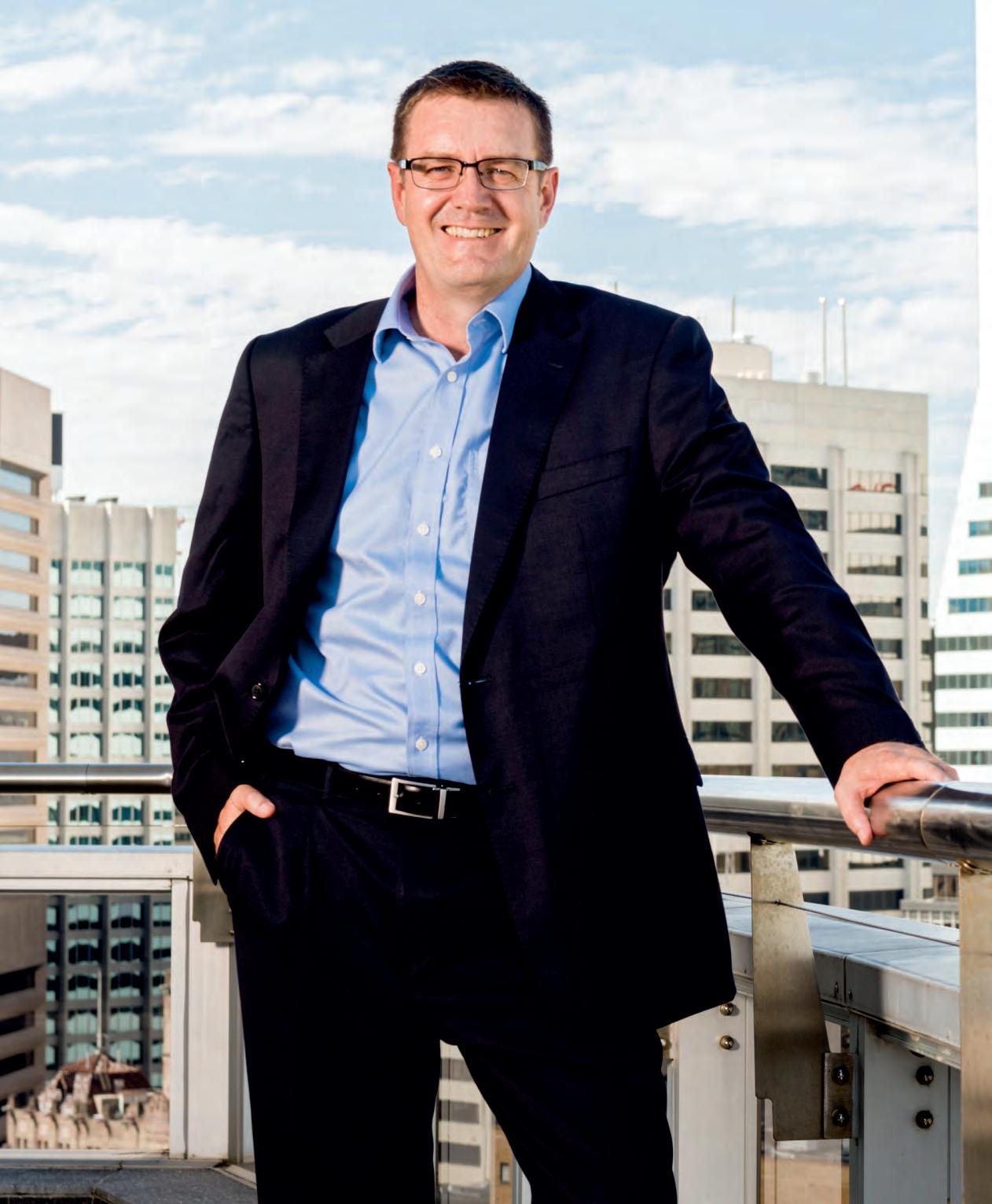
Brian Ruddle
Managing Director - Impact Innovation Group Pty Ltd
Leading a team of 25 innovation and commercialisation specialists acrossAustralia, Brian Ruddle provides strategic and implementation services to large corporations, research institutions, government agencies and small-to-medium-sized businesses throughoutAustralia and the widerAsia-Pacific region.
With his unique blend of skills and experience, he creates innovation systems for progressive firms, develops commercialisation strategies for next-generation technologies and designs high impact programs for government clients.
Brian founded Impact Innovation Group in 2006 in response to a gap in the market for independent professional commercialisation services. Since then, he and his team have developed more than 120 innovation systems, supported some 16,000 individuals and businesses through government initiatives and facilitated the commercialisation of almost 400 products and services.
Impact Innovation is the go-to innovation and commercialisation consulting group for organisations looking to run effective innovation systems that deliver value and a return on innovation investment.
Impact Innovation Group
Impact Innovation is a full service end-to-end innovation and commercialisation consultancy, helping clients acrossAustralia and Asia-Pacific with strategy and design through to implementation and deployment.
With an average client return on innovation investment of 377%, the group supports business innovators to bring new products and services to market faster, improve critical business processes, develop new business models, devise effective innovation strategies and processes and upskilling innovation teams.
The Impact Innovation team of inhouse professionals and associate specialists have collectively 360+ years of experience and leverage their
deep knowledge and connections across all industries and sectors to respond quickly to individual client needs.
Impact Innovation's key differentiators compared to other consulting groups include a clear focus on delivering actionable outcomes and transparent next steps for clients as well as a commitment to achieving a return on innovation investment.
Growth of Impact Innovation
Under Brian's Leadership
Impact Innovation was founded 16 years ago where Brian was the sole consultant for 7 years before deciding to grow the business through collaboration. He started this path to growth by partnering with an accounting firm by sharing space and resources and then progressed to collaborating with other organisations to design and implement multimillion dollar innovation capacitybuilding programs for government agencies.

“Collaboration was very important to the transition of the business from a solo operation model to one with the resources and expertise to effectively compete with the world's largest advisory firms,” Brian says.
Another significant step for the company was forming a relationship with US-based Brightidea, which developed the world's leading idea and innovation management platform.
Brian recalls, "Seven years ago, what started as a phone call about a client's need for an idea management platform resulted in us becoming their Premier Partner for the APAC region about six months later."
This is another example of how collaboration has transformed the breadth and depth of value that Impact Innovation offers clients.
In 2019, Brian's experience in designing and implementing innovation management systems was recognised when he was invited to chairAustralia's committee involved
in the development of global ISO standards for innovation management.
He states, "These standards are already proving to be a game changer for understanding how innovation contributes to business value when done properly. At Impact Innovation we have been using a systems approach for a number of years and it is now great to see a formalised systems approach for innovation world-wide.”
Brian thinks that innovation is the key to determining the growth and evolution of people's lives, organisations and societies. It disseminates information, ambition, creativity and enthusiasm across the world. It aids in navigating uncertainty and accelerates growth through impact-driven innovation management systems.
Prior to founding Impact Innovation, Brian worked in international development where he gained
experience dealing with government agencies and financial organisations such as the World Bank and theAsian Development Bank. This involved projects in South EastAsia, South Asia,Africa, the Middle East and the Pacific.
In these roles he implemented largescale capacity-building initiatives in complex ecosystems that transformed the way organisations functioned and influenced people's lives. He established impact monitoring and assessment methods and led project teams that included technical specialists from a variety of countries and backgrounds.
Reflecting on the opportunities that he was offered throughout his career motivates Brian to widen prospects for his team at Impact Innovation. This includes formal professional development as well as enabling team members to engage with all aspects of the business to understand how consulting firms operate and how their input makes tangible and real difference.
In addition to his role at Impact Innovation, Brian sits on several governance and advisory boards and committees and he also volunteers his time to support emerging innovation initiatives by speaking at events and assisting with the design of events to promote better innovation practices.
As the founder and managing partner, Brian is responsible for the company's strategy, direction and delivery of major transformation projects. He is excited to continue building an
innovation and commercialisation consultancy that makes a difference in the world by helping its clients achieve real impact.
“We bring an external voice to challenge and stretch thinking, authentic expertise to push through barriers and best practice tools to drive progress,” Brian says.
Designing new ways to help clients as well as his own company's operations is a key function of his role: “We design our own tools when we can't find approaches elsewhere that deliver impact,” Brian says “Examples include our internationally recognised Commercialisation Navigator, Innovation Navigator, and Skills Navigator tools."
He has a hands-on role in helping all of the firm's staff become the best consultants possible: "The team wants to implement very interesting projects, whether developing a commercialisation strategy for a new product or service, designing highimpact training programs or establishing new ways to manage large-scale R&D initiatives,” he says. “So one of the ways we harness that enthusiasm is to run fortnightly internal meetups with younger project coordinators and our more senior team members and consultants."
Brian views problems as opportunities to learn about oneself, the organisation or how others see a certain circumstance. He advises to
constantly embrace the mentality of "never stop learning". He suggests that, “When things don't work, figure out why and learn from it. As we strive to establish paths in circumstances with many assumptions, it is essential to comprehend the related system elements.”
Brian considers himself lucky to have spent so much of his professional services career working on complex capacity development initiatives focused on transforming systems and supporting people to create new products, services, processes and business models.
This taught him the benefits and pitfalls of predicting the future as well as ways to minimise risk. He asserts, "I was also fortunate to be involved in companies that understood that things don't always work out but that if you have the right people and communication structures in place, unexpected challenges can be quickly resolved."
For Impact Innovation, success is when clients achieve impact. This impact can be an innovation system that is identifying and delivering next generation products, services or processes, or a research team that successfully commercialises a new technology.
Brian shares, "Our clients reach out to us to solve complex innovation and commercialisation problems. If they weren't complex, then they wouldn't be engaging us." He further describes
the challenge of transitioning organisations from the 'fun' or 'exciting' elements of innovation to those that actually deliver value.
Brian asserts, "This is where innovation management systems come into play – while fun and creative innovation activities are important for team engagement, successfully validating the commercial or social value of ideas requires commitment, strategy and skill.”
Impact Innovation's focus is on further growth inAustralia, New Zealand and otherAsia-Pacific countries. He says, “Through conducting innovation projects in Singapore, Hong Kong, Malaysia, Philippines, Indonesia, Vietnam, India and Sri Lanka, we have realised the significant opportunity to collaborate with other organisations to grow across the region.”
His personal goal is to help organisations change innovation from a concept or cost centre to the driving force behind competitiveness and growth. The company remains committed to providing innovation managers, R&D teams and researchers with the tools and expertise they need to achieve long term value and a return on innovation investment.



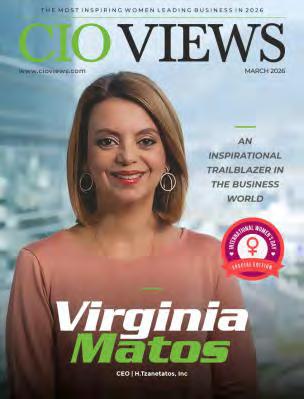
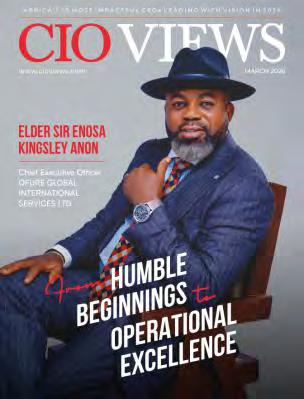
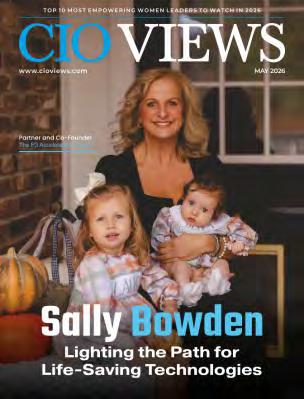

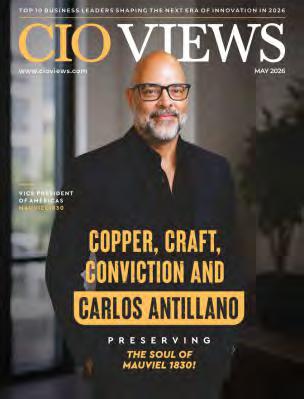

Read some awesome inspiring insights from the experts of the business worlds!
JOURNEY OF