A Voice in AI and Data Strategy
Some people carry with them a sense of direction that inspires others to follow.
The featured personality of this story has built that rare ability by combining vision with action. From early beginnings, their journey reflects persistence, discipline, and the willingness to take bold steps where others hesitated. Every milestone is a reflection of a deeper purpose, and every decision has been guided by a clear belief in shaping a better future.
The company they lead mirrors this same conviction. It was not built on shortcuts but on steady growth and meaningful progress. Challenges were seen not as barriers but as opportunities to innovate and create new paths. The workplace culture under their guidance reflects an environment where talent thrives, ideas grow, and every individual feels part of a bigger mission. That approach has allowed the company to stand apart in a competitive landscape while staying true to its values.
The impact of this leadership goes far beyond financial success. It lies in the ability to inspire others to think bigger, to stay grounded while reaching for excellence, and to see possibilities where most see limitations. This combination of vision and action is what makes this personality one of the most influential names to watch in 2025.
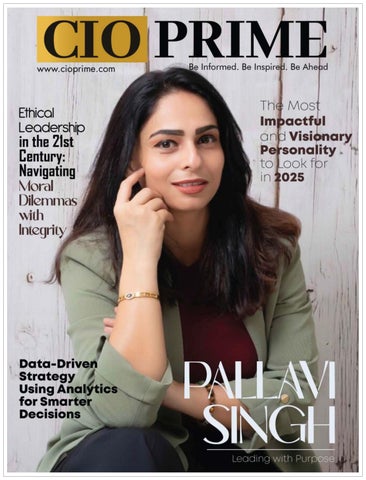
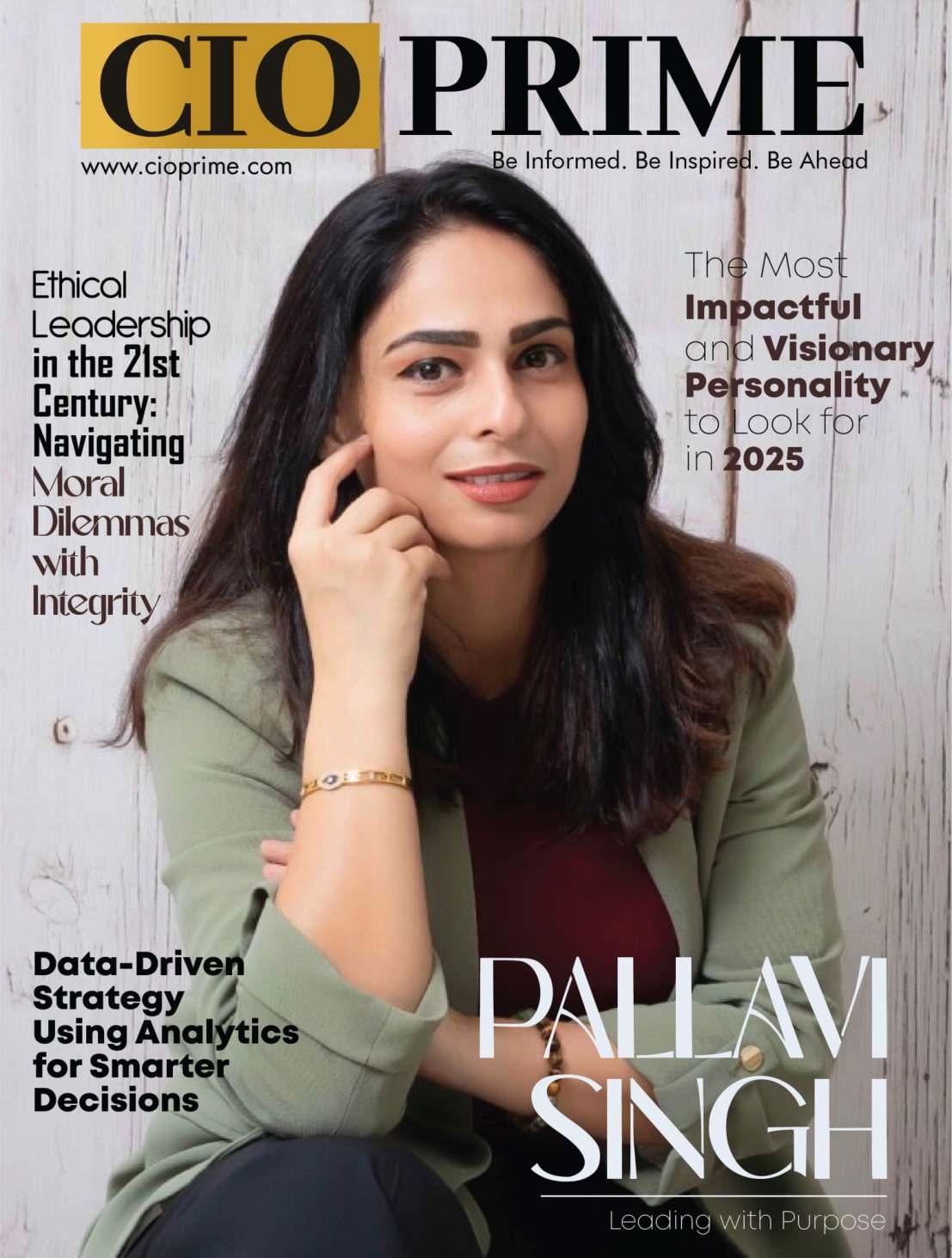
In this latest edition, The Most Impactful and Visionary Personality to Look for in 2025, we highlight Pallavi Singh, Executive Director in AI and Data Strategy , whose leadership continues to redefine innovation, strengthen trust in technology, and pave the way for a future where data serves people in the most meaningful way.
Have a great read ahead!


EDITOR'S NOTE
Kiran Kamble
Pooja Dalvi

Pallavi Singh
Executive Director in AI and Data Strategy
Data-Driven Leadership: Leveraging Analytics for Smarter Decision-Making
Ethical Leadership in the 21st Century: Navigating Moral Dilemmas with Integrity




















































Ethical Leadership in the 21st Century:
Navigating Moral Dilemmas with Integrity
Leadership has never been easy,
but in the 21st century, the pressure on leaders to act ethically is sharper than ever. Technology has made the world more connected, transparency has become a public expectation, and stakeholders demand more than just results. Leaders today are not only judged by the profits they deliver but also by the values they uphold and the choices they make in difficult moments. Ethical leadership is no longer a noble ideal. It is a necessity.
The Shifting Landscape of Leadership.
A century ago, leadership was often equated with authority, control, and efficiency. Decisions were made behind closed doors, and accountability was limited to a small circle. Today, things look very different. Information spreads instantly, and a single poor decision can damage

reputation within hours. Employees, customers, and communities now expect leaders to act with fairness and clarity. What this really means is that integrity is no longer optional. It is the currency of trust.
The 21st century also presents leaders with dilemmas that are more complex than before. Globalization, climate change, technological disruption, and rising social inequalities bring difficult trade-offs. Leaders face situations where there may be no perfect solution. Instead, they must weigh consequences, balance stakeholder interests, and stay true to their values. In such cases, ethical leadership becomes the compass that guides decision-making.
What Ethical Leadership Looks Like
At its core, ethical leadership is about consistency between words and actions. It is not about being perfect but about striving to do what is right even when it is uncomfortable or costly. Ethical leaders practice honesty, transparency, and respect. They recognize that their choices set the tone for their organizations.
An ethical leader also fosters a culture where people feel safe to raise concerns. This matters because silence in organizations can lead to ethical blind spots. When employees fear retaliation, misconduct can go unnoticed until it becomes a crisis. Leaders who create psychological safety encourage openness, which prevents small issues from turning into larger scandals.
Equally important is fairness. Ethical leaders avoid favoritism and ensure decisions are based on merit and principle rather than personal gain. Whether it is hiring, promotions, or business partnerships, fairness signals integrity. Over time, this consistency builds credibility both inside and outside the organization.
Common Moral Dilemmas Leaders Face
The theory of ethical leadership sounds simple, but the real test lies in moments of conflict. Consider a few scenarios leaders frequently encounter:
• Profit versus responsibility: A company discovers that cutting corners could increase profits but may also harm the environment. Choosing sustainability over shortterm gain requires courage.
• Transparency versus reputation management: When a mistake occurs, leaders must decide
•whether to disclose it openly or protect the brand image. Honesty may bring temporary backlash but fosters long-term trust.
• Loyalty versus justice: A senior executive contributes greatly to the company but engages in misconduct. Protecting them may seem convenient, but accountability demands action.
• Innovation versus privacy: With advances in data and AI, leaders must decide how to innovate without exploiting customer information. Respect for privacy is often the ethical line.
In each of these dilemmas, there is no easy answer. Ethical leadership is about finding a path that aligns with principles while considering broader consequences.
The Role of Integrity in Decision-Making
Integrity is the foundation that allows leaders to navigate uncertainty. It means acting in line with one's values regardless of external pressure. In practice, integrity often requires slowing down decision-making to ask tough questions: Will this action harm people? Is it consistent with our values? Would I be comfortable if this decision was made public?
Leaders who consistently apply integrity earn trust, and trust is the most valuable asset in today's interconnected world. Without it, relationships with employees, customers, and partners break down quickly. With it, organizations can withstand crises because stakeholders believe in the sincerity of their leaders.
Developing Ethical Leaders
The good news is that ethical leadership is not limited to a chosen few. It can be cultivated. Organizations can develop ethical leaders by prioritizing values in hiring and promotion, offering training on moral reasoning, and establishing clear codes of conduct. Mentorship also plays a role, as younger leaders often model the behaviors they see in their seniors.
Beyond organizational systems, self-awareness is critical. Leaders must reflect on their motivations and biases. Those who are willing to examine their own blind spots are better equipped to lead with fairness. Humility is also key. Ethical leaders admit mistakes, learn from them, and demonstrate accountability. This humility strengthens their credibility
and sets a powerful example for others.
Why Ethical Leadership Matters Now More Than Ever
The challenges of the 21st century will not ease. Artificial intelligence will raise new questions about accountability. Climate change will intensify debates about responsibility and resource use. Social movements will continue to demand inclusion and fairness. In this environment, leaders who prioritize ethics will not only survive but thrive.
Ethical leadership is not about avoiding mistakes but about how leaders respond to them. It is about having the courage to stand by principles when the easier option is to compromise. When leaders act with integrity, they do more than protect their own reputation. They build stronger organizations, contribute to healthier societies, and inspire others to lead with conscience.
Closing Thoughts
The 21st century demands leaders who can navigate complexity with moral clarity. Ethical leadership is not a luxury or a public relations strategy. It is the anchor that holds organizations steady when storms hit. By practicing honesty, fairness, and integrity, leaders can face dilemmas with confidence and guide their organizations toward a future where success is measured not just by profit, but by the values that shaped the journey.