rom an early age, Dr. Shital Pimpalkar (Dhande), B.A.M.S., knew that medicine was more than a profession it was a calling. Growing up in the footsteps of her father, a dedicated physician who served as her mentor, friend, and even friendly competitor, Dr. Pimpalkar learned that true clinical excellence stems from a blend of discipline, curiosity, and empathy.
Her journey into Ayurveda and holistic healing has been one of continuous growth. She views herself as a constantly evolving version of her professional self, embracing new policies, advanced treatment protocols, and innovative diagnostic perspectives to provide the best care for her patients. Observing senior women doctors, she absorbed invaluable lessons in time management, dedication with her into the clinician
At Dr. Pimpalkar experience into as a unique individual about the importance encouragement her openness to the foundation healing is not understanding, seek her care.
and the art of balancing lessons that have shaped channels this wealth of treating each patient striving to educate society wellness. The of her patients, and every experience form Dr. Pimpalkar, it is about empowering those who
One of the defining moments in Dr. Pimpalkar’s career came during a patient’s pregnancy, when a young mother placed her complete trust in Dr. Pimpalkar throughout her nine months of care. This unwavering confidence extended beyond delivery, as the patient continued to rely on Dr. Pimpalkar as the pediatrician for her child, exemplifying the profound impact of trust in the doctor–patient relationship.
Dr. Pimpalkar’s lifelong aspiration has been to serve society by addressing the health needs of her community. Over the years, she has come to understand that medical care extends beyond treating illnesses it involves raising awareness, promoting preventive health, and fostering strong relationships with patients. By listening attentively and building trust, she is able to understand patients more deeply, enabling her to provide care that is both effective and compassionate.
Dr. Shital views challenges as essential growth and professional evolution. As a practitioner managing an OPD setup, she demanding situations, including attending patients during late-night hours with limited safety concerns. Her unwavering dedication the community and providing timely care circumstances has consistently driven her her routine responsibilities. These experiences strengthened her confidence, sharpened decision-making skills, and deepened her to patient-centered care.
Dr. Pimpalkar also emphasizes the importance maintaining both physical and mental well-being foundation for professional success and fulfillment. She prioritizes self-care through mindfulness, adequate rest, regular exercise, reflection, and ongoing skill development.
Dr. Channing L. Collins
EDITORIAL Breaking Barriers, Building Legacies
In a world that is constantly evolving, leadership today is defined not only by success but by purpose, resilience, and the ability to inspire change. The Enterprising Women of the Year 2026 edition by CIO Business World celebrates women who are redefining the meaning of leadership across industries and geographies. These remarkable individuals are not just building successful enterprises; they are shaping ideas, influencing communities, and paving the way for a more inclusive and innovative future.
This special edition is dedicated to recognizing women whose entrepreneurial spirit, strategic vision, and unwavering determination have allowed them to rise above challenges and create meaningful impact. In a business landscape that often demands courage and adaptability, these women have demonstrated that leadership thrives where passion meets persistence. Across sectors such as technology, finance, healthcare, education, sustainability, and social enterprise, the women featured in this edition represent a diverse and powerful community of changemakers. Each story reflects a unique journey one filled with ambition, learning, resilience, and growth. While their paths may differ, they share a common thread: a commitment to excellence and a determination to turn ideas into transformative realities.
Entrepreneurship is rarely a linear journey. It involves taking risks, navigating uncertainties, and making decisions that shape not only businesses but also lives. The women recognized in Enterprising Women of the Year 2026 embody the spirit of enterprise in its truest sense. They have embraced innovation, challenged conventions, and built organizations that contribute meaningfully to economic growth and social progress.
y Dr. Channing L. Collins | Child Welfare & Public Policy Expert | Strategic Reform Leader | Founder, The Collins Institute for Child & Family Systems | Architect of the Family Systems Innovation Lab
Why Good Policy Fails: Lessons from Child Welfare on Implementation, Technology, and Systems Reform
The problem is not a lack of good ideas. It that policy design alone will produce meaningful
What makes these leaders truly exceptional is not just the success they have achieved, but the impact they continue to create. Many of them are mentors, advocates, and role models who actively work to empower the next generation of leaders. They understand that leadership is not merely about reaching the top it is about lifting others along the journey.
Every year, policymakers introduce new reforms intended to modernize public systems, improve outcomes, and respond to urgent social challenges. The ideas are often well researched and widely supported. Yet far too often, even promising reforms fail to produce the results they were designed to achieve.
In reality, policy is only the starting point. Execution reform succeeds or fails.
Through this edition, CIO Business World aims to spotlight voices that deserve recognition and celebration. These women represent the evolving face of global leadership confident, visionary, and deeply committed to creating lasting value. Their achievements remind us that progress becomes meaningful when it inspires others to dream bigger and aim higher. The stories within these pages are more than professional milestones; they are narratives of perseverance, courage, and possibility. They highlight how determination and vision can transform challenges into opportunities and ideas into thriving enterprises.
As we present the Enterprising Women of the Year 2026, we celebrate not only their accomplishments but also the spirit of innovation and leadership they represent. Their journeys stand as powerful reminders that when talent, ambition, and purpose come together, they can shape industries, empower communities, and influence the future of business.
When failure occurs, the explanation usually centers on politics, funding, or resistance to change. Rarely do we confront a more fundamental issue: many reforms fail because we underestimate how difficult it is to implement change inside complex human systems.
At CIO Business World, we are proud to honor these inspiring women leaders who continue to set new benchmarks of excellence. Their stories will undoubtedly motivate aspiring entrepreneurs, professionals, and leaders across the world to pursue their ambitions with confidence and determination.
Few systems illustrate this challenge more clearly than child welfare.
Child welfare agencies operate at the intersection of law, public policy, human behavior, and community services. Caseworkers make high-stakes decisions about child safety, family preservation, and placement stability under intense scrutiny and often with limited resources. Over the past two decades, policymakers have introduced numerous reforms intended to improve outcomes—expanding prevention services, modernizing data systems, and introducing new accountability measures.
Many of these reforms are thoughtful and necessary. Yet implementation often struggles.
In child welfare, implementation challenges immediately when policy meets practice. New require agencies to expand prevention services, providers may lack the capacity to deliver those Data systems may generate detailed dashboards, workers may not have the time or training to Leadership may introduce new decision-making but existing organizational structures may not consistent application.
These gaps are not simply administrative oversights. reflect a broader systems problem.
We invite our readers to explore this edition and discover the remarkable journeys of women who are not only leading enterprises but also redefining the future of leadership itself.
Public systems—particularly those involving services—are deeply interconnected. Technology workforce structures, policy mandates, and relationships all interact in ways that cannot separated. Changing one component without others can unintentionally create new barriers solving existing ones.
This is why technology alone cannot solve challenges.
In recent years, governments and organizations heavily in data modernization, predictive analytics, digital transformation initiatives. These tools promise. Improved data visibility can help
Enterprising Women of the Year 2026
Enterprising Women of the Year 2026
n the ever-evolving
where threats move silently and resilience defines leadership, belief: knowledge should never stand alone.
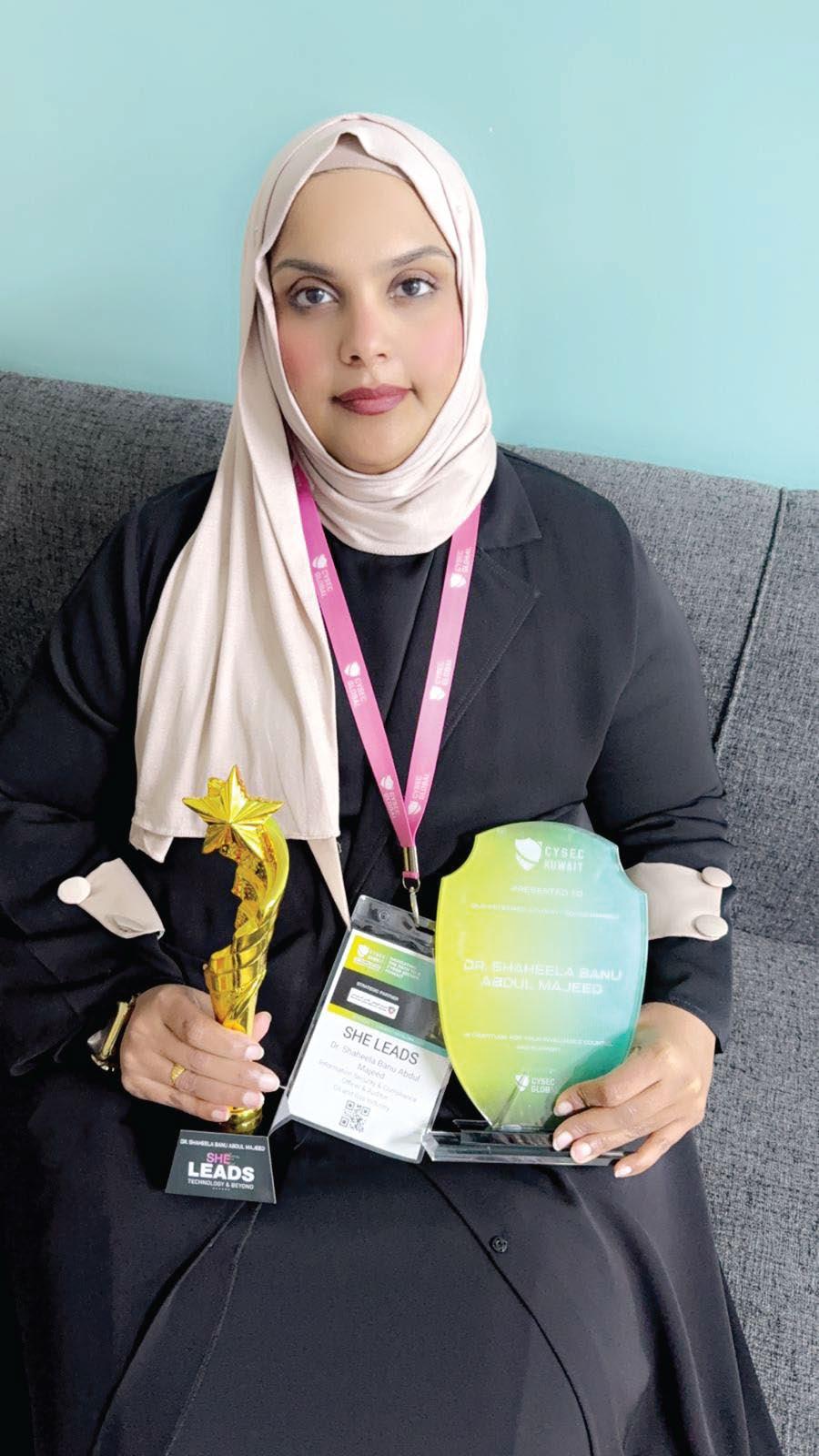
world of cybersecurity, where threats move silently and resilience defines leadership, Dr. Shaheela Banu Abdul Majeed has built her journey on a simple yet powerful belief: knowledge should never stand alone.
Today serving as an Information Security & Compliance Officer and Auditor in the Oil and Gas Industry in Kuwait, Dr. Shaheela’s path was not merely about mastering governance, risk, and compliance it was about transforming challenges into opportunities for others. At a time when women in cybersecurity often walked the road alone, she co-found IBBY Cyber Women Warriors and the Cyber Heals IBBY Mentorship Program, initiatives dedicated to ensuring that women entering the field never have to fight the same battles in isolation. Through mentorship,
Today serving as an Information Security & Compliance Officer and Auditor in the Oil and Gas Industry in Kuwait, Dr. Shaheela’s path was not merely about mastering governance, risk, and compliance it was about transforming challenges into opportunities for others. At a time when women in cybersecurity often walked the road alone, she co-found IBBY Cyber Women Warriors and the Cyber Heals IBBY Mentorship Program, initiatives dedicated to ensuring that women entering the field never have to fight the same battles in isolation. Through mentorship,
awareness, and advocacy, she continues community where support, knowledge, flow freely.
Beyond the world of cyber resilience, Dr. believes strength comes from balance spending with family, practicing mindfulness, reading, mentoring aspiring professionals. These her grounded and remind her why she leads: future where women in technology know and where guidance is always within reach.
For Dr. Shaheela, cybersecurity is not just protecting systems it is about empowering building resilience, and ensuring that whenever someone seeks guidance, there is always to say: ask, and I am here.
Dr. Shaheela Banu Abdul Majeed
Information Security, Compliance Officer, Auditor and Cybersecurity Mentor
Impact, Leadership, and Resilience
Cybersecurity
A Journey of Impact, Leadership, and Resilience in Cybersecurity
moments have shaped Dr. Shaheela’s journey, but the most transformative was that cybersecurity is not merely a discipline it is a mission-driven field where measurable impact can be created. career, she often found herself among the in security and compliance roles. feeling out of place, she viewed it as an lead, contribute, and pave the way for aspiring to enter the field.
Several defining moments have shaped Dr. Shaheela’s professional journey, but the most transformative was her realization that cybersecurity is not merely a technical discipline it is a mission-driven field where meaningful and measurable impact can be created. Early in her career, she often found herself among the very few women in security and compliance roles. Rather than feeling out of place, she viewed it as an opportunity to lead, contribute, and pave the way for other women aspiring to enter the field.
milestone in her journey came when she with the Cyber Woman of the Year 2024 in recognized at SheLeads Women in 2025 – Kuwait. These accolades her years of dedication, continuous strong commitment to promoting
cybersecurity awareness within organizations and the broader community. Yet, beyond the awards, it was the moments of responsibility that shaped her the most handling high-risk security incidents, conducting investigations, and protecting critical organizational assets.
cybersecurity awareness within organizations and the broader community. Yet, beyond the awards, it was the moments of responsibility that shaped her the most handling high-risk security incidents, conducting investigations, and protecting critical organizational assets.
Through these experiences, Dr. Shaheela strengthened her belief that women bring exceptional value to cybersecurity. Their ability to combine analytical precision with empathy, discipline, and resilience contributes significantly to strengthening security frameworks and building a more inclusive and forward-looking cybersecurity landscape.
A significant milestone in her journey came when she was honored with the Cyber Woman of the Year 2024 in Kuwait and recognized at SheLeads Women in Cybersecurity 2025 – Kuwait. These accolades acknowledged her years of dedication, continuous learning, and her strong commitment to promoting
Through these experiences, Dr. Shaheela strengthened her belief that women bring exceptional value to cybersecurity. Their ability to combine analytical precision with empathy, discipline, and resilience contributes significantly to strengthening security frameworks and building a more inclusive and forward-looking cybersecurity landscape.
Turning Challenges into Strength and Creating Pathways for Women in Cybersecurity
Turning Challenges into Strength and Creating Pathways for Women in Cybersecurity
One of the most defining challenges in Dr. Shaheela’s career came from stepping into roles where the level of
One of the most defining challenges in Dr. Shaheela’s career came from stepping into roles where the level of
responsibility was high, expectations were intense, and decisions often had to be made swiftly and confidently. In the world of cybersecurity, incidents rarely wait they require immediate action, clarity of thought, and emotional resilience.
responsibility was high, expectations were intense, and decisions often had to be made swiftly and confidently. In the world of cybersecurity, incidents rarely wait they require immediate action, clarity of thought, and emotional resilience.
Working in a field traditionally dominated by men also meant that she had to consistently demonstrate her capabilities. Rather than allowing this pressure to discourage her, Dr. Shaheela used it as motivation to sharpen her focus, deepen her expertise, and build a professional reputation grounded in competence, discipline, and integrity.
Working in a field traditionally dominated by men also meant that she had to consistently demonstrate her capabilities. Rather than allowing this pressure to discourage her, Dr. Shaheela used it as motivation to sharpen her focus, deepen her expertise, and build a professional reputation grounded in competence, discipline, and integrity.
These experiences strengthened her ability to remain composed under pressure, trust her training, and continually upgrade her skills to stay ahead of evolving cyber threats. The journey also inspired her to give back to the community by co-founding IBBY Cyber Women Warriors and launching the Cyber Heals IBBY Mentorship Program. Through these initiatives, she aims to ensure that women entering the cybersecurity field have access to the support, mentorship, and opportunities that she once had to pursue on her own.
Protecting Systems While Preserving Personal Balance
Protecting Systems
Preserving Personal
Balancing the demands of cybersecurity with personal well-being has been a conscious and disciplined effort for Dr. Shaheela. The nature of her work ranging from incident reports and compliance audits to investigations and continuous monitoring can be intense. To navigate these responsibilities effectively, she has cultivated a structured approach that prioritizes balance and clarity.
Balancing the cybersecurity well-being has conscious and effort for Dr. nature of her from incident compliance audits investigations monitoring can navigate these effectively, she a structured approach prioritizes balance
Dr. Shaheela relies on thoughtful planning, clear professional boundaries, and mindful pauses throughout her routine. She believes that excellence is not achieved through constant activity, but through focused and purposeful work. To recharge and maintain perspective, she dedicates time to meaningful activities such as connecting with family, practicing mindfulness, reading, and mentoring aspiring professionals in the
Dr. Shaheela thoughtful planning, professional boundaries, and mindful pauses her routine. She believes that excellence through constant activity, but through focused purposeful work. To recharge and maintain she dedicates time to meaningful activities connecting with family, practicing mindfulness, and mentoring aspiring professionals in cybersecurity field.
At the core of her philosophy is a simple but powerful belief: to protect others, one must first protect one’s own well-being. This mindset allows her to contribute at the highest professional level while maintaining emotional balance and personal health.
These experiences strengthened her ability to remain composed under pressure, trust her training, and continually upgrade her skills to stay ahead of evolving cyber threats. The journey also inspired her to give back to the community by co-founding IBBY Cyber Women Warriors and launching the Cyber Heals IBBY Mentorship Program. Through these initiatives, she aims to ensure that women entering the cybersecurity field have access to the support, mentorship, and opportunities that she once had to pursue on her own.
At the core of her philosophy is a simple belief: to protect others, one must first protect own well-being. This mindset allows her the highest professional level while maintaining emotional balance and personal health.
Throughout her journey, four key lessons have shaped her outlook and leadership approach. First, she believes that consistency is more powerful than intensity, as steady effort builds long-term mastery. Second, she values mentorship as a vital force, both in learning from experienced professionals and in guiding others. Third, she views adaptability as a critical strength, recognizing that cybersecurity evolves rapidly and requires constant curiosity and growth. Finally, she believes that integrity
Throughout her journey, four key lessons her outlook and leadership approach. First, that consistency is more powerful than steady effort builds long-term mastery. values mentorship as a vital force, both experienced professionals and in guiding she views adaptability as a critical strength, that cybersecurity evolves rapidly and requires curiosity and growth. Finally, she believes
legacy, particularly in a field built on trust, and credibility.
defines one’s legacy, particularly in a field built on trust, accountability, and credibility.
principles influence not only her decisions but also her leadership style and collaborates with colleagues, auditors, teams, and the broader cybersecurity
recognized her potential, encouraged her to pursue certifications, and supported her professional growth.
These guiding principles influence not only her professional decisions but also her leadership style and the way she collaborates with colleagues, auditors, management teams, and the broader cybersecurity community.
Others While Strengthening the Future
Cybersecurity
recognized her potential, encouraged her to pursue certifications, and supported her professional growth.
Equally impactful have been the shared experiences with other women in the field. These connections serve as a reminder that women navigating cybersecurity often face unique challenges from balancing multiple responsibilities to breaking stereotypes and establishing their identities in highly technical environments.
Empowering Others While Strengthening the Future of Cybersecurity
Shaheela, the meaning of success has evolved over the course of her career. In the early was defined by acquiring knowledge, professional certifications, and gaining the cybersecurity field. Today, however, deeper purpose one rooted in impact, contribution.
For Dr. Shaheela, the meaning of success has evolved significantly over the course of her career. In the early stages, success was defined by acquiring knowledge, earning professional certifications, and gaining recognition in the cybersecurity field. Today, however, it carries a far deeper purpose one rooted in impact, influence, and contribution.
Shaheela, now means strengthening maturity within organizations, helping secure environments, mentoring professionals, and contributing to a safer and digital ecosystem. She views her role as for change someone who works not cyber risks and protect critical assets but others, particularly women, to pursue cybersecurity careers.
Equally impactful have been the shared experiences with other women in the field. These connections serve as a reminder that women navigating cybersecurity often face unique challenges from balancing multiple responsibilities to breaking stereotypes and establishing their identities in highly technical environments.
Driven by this understanding, Dr. Shaheela invests deeply in women-focused initiatives such as IBBY Cyber Women Warriors and the Cyber Heals IBBY Mentorship Program. Through these platforms, she helps create supportive spaces for learning, confidence-building, and career advancement. For her, empowering women in cybersecurity is not simply a passion it is a responsibility she proudly carries forward.
Success, for Dr. Shaheela, now means strengthening cybersecurity maturity within organizations, helping teams operate in secure environments, mentoring aspiring professionals, and contributing to a safer and more resilient digital ecosystem. She views her role as that of a catalyst for change someone who works not only to reduce cyber risks and protect critical assets but also to empower others, particularly women, to pursue and thrive in cybersecurity careers.
success centers on enabling teams to work reducing organizational cyber risks, women in cybersecurity, and leaving defined by resilience, trust, and longer about personal milestones uplifting others and strengthening the cybersecurity community.
Driven by this understanding, Dr. Shaheela invests deeply in women-focused initiatives such as IBBY Cyber Women Warriors and the Cyber Heals IBBY Mentorship Program. Through these platforms, she helps create supportive spaces for learning, confidence-building, and career advancement. For her, empowering women in cybersecurity is not simply a passion it is a responsibility she proudly carries forward.
Shaping a Future Where Cybersecurity Becomes Culture, Leadership, and Opportunity for All
Shaping a Future Where Cybersecurity Becomes Culture, Leadership, and Opportunity for All
Looking ahead, Dr. Shaheela envisions expanding her leadership influence both within her organization and across the broader regional cybersecurity landscape. She remains committed to advancing strong frameworks in governance, risk, and compliance while strengthening cybersecurity awareness programs and initiatives that build long-term cyber resilience.
Her vision of success centers on enabling teams to work securely, reducing organizational cyber risks, empowering women in cybersecurity, and leaving behind a legacy defined by resilience, trust, and integrity. It is no longer about personal milestones alone, but about uplifting others and strengthening the entire cybersecurity community.
been a cornerstone of her journey both received and the support she now Navigating the complex cybersecurity daunting without experienced voices way. Dr. Shaheela credits the leaders who
Looking ahead, Dr. Shaheela envisions expanding her leadership influence both within her organization and across the broader regional cybersecurity landscape. She remains committed to advancing strong frameworks in governance, risk, and compliance while strengthening cybersecurity awareness programs and initiatives that build long-term cyber resilience.
In the years to come, she also sees herself growing as a mentor, speaker, and thought leader sharing practical insights, guiding the next generation of cybersecurity professionals, and actively advocating for greater representation of women in leadership roles within the industry.
Mentorship has been a cornerstone of her journey both the guidance she received and the support she now offers to others. Navigating the complex cybersecurity landscape can be daunting without experienced voices to guide the way. Dr. Shaheela credits the leaders who
In the years to come, she also sees herself growing as a mentor, speaker, and thought leader sharing practical insights, guiding the next generation of cybersecurity professionals, and actively advocating for greater representation of women in leadership roles within the industry.
Ultimately, Dr. Shaheela aspires to contribute to a future where cybersecurity is not viewed merely as a department or technical function, but as an organizational culture deeply embedded across every layer of an institution and embraced by every individual as a shared responsibility.
Ultimately, Dr. Shaheela aspires to contribute to a future where cybersecurity is not viewed merely as a department or technical function, but as an organizational culture deeply embedded across every layer of an institution and embraced by every individual as a shared responsibility.
Celebrating the Journey of Growth Through Time Celebrating the Journey Growth Through Time
rom an early age, Dr. Shital Pimpalkar (Dhande), B.A.M.S., knew that medicine was more than a profession it was a calling.
Growing up in the footsteps of her father, a dedicated physician who served as her mentor, friend, and even friendly competitor, Dr. Pimpalkar learned that true clinical excellence stems from a blend of discipline, curiosity, and empathy.
rom an early age, Dr. Shital Pimpalkar (Dhande), B.A.M.S., knew that medicine was more than a profession it was a calling. Growing up in the footsteps of her father, a dedicated physician who served as her mentor, friend, and even friendly competitor, Dr. Pimpalkar learned that true clinical excellence stems from a blend of discipline, curiosity, and empathy.
Her journey into Ayurveda and holistic healing has been one of continuous growth. She views herself as a constantly evolving version of her professional self, embracing new policies, advanced treatment protocols, and innovative diagnostic perspectives to provide the best care for her patients. Observing senior women
Her journey into Ayurveda and holistic healing has been one of continuous growth. She views herself as a constantly evolving version of her professional self, embracing new policies, advanced treatment protocols, and innovative diagnostic perspectives to provide the best care for her patients. Observing senior women
about the importance of health and wellness. The encouragement of family, the trust of her patients, and her openness to learning from every experience form the foundation of her practice. For Dr. Pimpalkar, healing is not just about treatment it is about understanding, guiding, and empowering those who seek her care.
management, decision-making, and the dedication with compassion lessons that she channels experience into every consultation, treating as a unique individual while striving to about the importance of health and wellness. encouragement of family, the trust of her her openness to learning from every experience the foundation of her practice. For Dr. Pimpalkar, healing is not just about treatment it is about understanding, guiding, and empowering seek her care.
Dr. Shital Pimpalkar (Dhande)
Architect of Compassionate Care and Medical Excellence
Lives Through Compassionate Care
Transforming Lives Through Compassionate Care
defining moments in Dr. Pimpalkar’s career patient’s pregnancy, when a young her complete trust in Dr. Pimpalkar nine months of care. This unwavering extended beyond delivery, as the patient rely on Dr. Pimpalkar as the pediatrician exemplifying the profound impact of trust doctor–patient relationship.
Well-Being in the Pursuit of Excellence
One of the defining moments in Dr. Pimpalkar’s career came during a patient’s pregnancy, when a young mother placed her complete trust in Dr. Pimpalkar throughout her nine months of care. This unwavering confidence extended beyond delivery, as the patient continued to rely on Dr. Pimpalkar as the pediatrician for her child, exemplifying the profound impact of trust in the doctor–patient relationship.
lifelong aspiration has been to serve addressing the health needs of her Over the years, she has come to understand care extends beyond treating illnesses it awareness, promoting preventive fostering strong relationships with patients. attentively and building trust, she is able to patients more deeply, enabling her to is both effective and compassionate.
Dr. Pimpalkar’s lifelong aspiration has been to serve society by addressing the health needs of her community. Over the years, she has come to understand that medical care extends beyond treating illnesses it involves raising awareness, promoting preventive health, and fostering strong relationships with patients. By listening attentively and building trust, she is able to understand patients more deeply, enabling her to provide care that is both effective and compassionate.
Well-Being in the Pursuit of Excellence
Dr. Shital views challenges as essential catalysts for growth and professional evolution. As a general practitioner managing an OPD setup, she has faced demanding situations, including attending to emergency patients during late-night hours with limited support and safety concerns. Her unwavering dedication to serving the community and providing timely care in urgent circumstances has consistently driven her to go beyond her routine responsibilities. These experiences have strengthened her confidence, sharpened her decision-making skills, and deepened her commitment to patient-centered care.
Dr. Shital views challenges as essential catalysts for growth and professional evolution. As a general practitioner managing an OPD setup, she has faced demanding situations, including attending to emergency patients during late-night hours with limited support and safety concerns. Her unwavering dedication to serving the community and providing timely care in urgent circumstances has consistently driven her to go beyond her routine responsibilities. These experiences have strengthened her confidence, sharpened her decision-making skills, and deepened her commitment to patient-centered care.
Dr. Pimpalkar also emphasizes the importance of maintaining both physical and mental well-being as a foundation for professional success and personal fulfillment. She prioritizes self-care through mindfulness, adequate rest, regular exercise, personal
Dr. Pimpalkar also emphasizes the importance of maintaining both physical and mental well-being as a foundation for professional success and personal fulfillment. She prioritizes self-care through mindfulness, adequate rest, regular exercise, personal
her professional duties with conscious efforts to sustain her health, she remains focused, resilient, and effective in her medical practice.
A Woman’s Journey in Holistic Patient Care
Dr. Shital believes that being a woman is a source of strength, empowering her to think beyond limits, multitask effectively, and approach challenges with creativity, patience, and resilience. She draws inspiration from personal values, lessons learned through experience, and the encouragement of family and friends, as well as the trust her patients place in her. Over the years, each challenge has imparted valuable insights, helping her remain composed and focused in uncertain situations.
Central to Dr. Pimpalkar’s philosophy are empathy, compassionate care, and a commitment to continuous learning. Recognizing that every patient arrives with unique circumstances, concerns, and expectations, she tailors her treatment and counseling strategies to individual needs, ensuring patient-centered care. By remaining receptive to new experiences, patient feedback, and evolving medical knowledge, Dr. Pimpalkar has strengthened both her professional expertise and personal perspective, cultivating a practice rooted in understanding, dedication, and excellence.
Healing with Compassion, Confidence, and a Commitment to Humanity
Dr. Shital embodies the philosophy famously articulated by William Osler: “The good physician treats the disease; the great physician treats the patient who has the disease.” Like many dedicated medical professionals, she began her journey with the aspiration to care for and treat patients in need. Over time, however, she came to understand that true excellence in medicine extends beyond treatment alone it lies in embracing the deeper humanitarian dimension of the profession. For Dr. Pimpalkar, success is defined not only by healing but also by supporting patients with empathy, building trust, and finding fulfillment in the meaningful work of serving humanity.
In clinical practice, there is little room for hesitation when decisions directly affect patient well-being. Dr. Pimpalkar emphasizes that self-confidence in such
situations develops through continuous learning, skill-building, and years of hands-on experience. While challenges and uncertainties inevitably arise, she believes in pausing, reflecting, and making decisions rooted in knowledge and sound clinical judgment. This cultivated confidence ensures that her patients receive care that is both responsible and effective, reflecting a commitment to excellence in every aspect of her practice.
Guided by Mentorship, Driven by Dedication
Throughout her journey, Dr. Shital has drawn inspiration from the example set by senior women doctors she observed professionals who demonstrated unwavering dedication, devotion, and excellence in their work. From them, she learned invaluable lessons in time management, clinical skills, and decision-making. Yet, the most influential mentor in her life has been her father, also a physician, who has played multiple roles: guide, friend, colleague, and even friendly competitor, shaping her approach to medicine and life.
Dr. Pimpalkar believes that while it is natural to want to prove oneself, true fulfillment comes from wholehearted dedication rather than constant validation. She advises that rather than seeking approval from the world, one should focus on working with determination, consistency, and integrity. Over time, it is the quality of one’s work that speaks for itself and sets a lasting example for others.
Commitment to Growth, Knowledge, and Community Health
Dr. Shital views her professional journey as a continuous evolution, always striving to become an updated and enhanced version of herself. She recognizes that the medical field demands constant adaptation to new policies, advanced treatment approaches, and evolving diagnostic perspectives. Motivated by a desire for professional growth, she remains committed to expanding her expertise while also educating the community and raising awareness about health and wellness.
Dr. Channing L. Collins Dr. Channing L. Collins
Why Good Policy Fails: Lessons from Child Welfare on Implementation, Technology, and Systems Reform
Why Good Policy Fails: Lessons from Child Welfare on Implementation, Technology, and Systems Reform
Founder, The Collins Institute for Child & Family Systems | Architect of the Family Innovation Lab
y Dr. Channing L. Collins | Child Welfare & Public Policy Expert | Strategic Reform Leader | Founder, The Collins Institute for Child & Family Systems | Architect of the Family Systems Innovation Lab
policymakers introduce new reforms intended to systems, improve outcomes, and respond to challenges. The ideas are often well researched supported. Yet far too often, even promising produce the results they were designed to
The problem is not a lack of good ideas. It is the assumption that policy design alone will produce meaningful change.
The problem is not a lack of good ideas. It is the assumption that policy design alone will produce meaningful change.
In reality, policy is only the starting point. Execution is where reform succeeds or fails.
Every year, policymakers introduce new reforms intended to modernize public systems, improve outcomes, and respond to urgent social challenges. The ideas are often well researched and widely supported. Yet far too often, even promising reforms fail to produce the results they were designed to achieve.
occurs, the explanation usually centers on or resistance to change. Rarely do we fundamental issue: many reforms fail underestimate how difficult it is to implement complex human systems.
When failure occurs, the explanation usually centers on politics, funding, or resistance to change. Rarely do we confront a more fundamental issue: many reforms fail because we underestimate how difficult it is to implement change inside complex human systems.
illustrate this challenge more clearly than child agencies operate at the intersection of law, human behavior, and community services. make high-stakes decisions about child safety, preservation, and placement stability under intense with limited resources. Over the past two policymakers have introduced numerous reforms improve outcomes—expanding prevention modernizing data systems, and introducing new measures.
In reality, policy is only the starting point. Execution is where reform succeeds or fails.
In child welfare, implementation challenges often emerge immediately when policy meets practice. New laws may require agencies to expand prevention services, but local providers may lack the capacity to deliver those programs. Data systems may generate detailed dashboards, but frontline workers may not have the time or training to interpret them. Leadership may introduce new decision-making protocols, but existing organizational structures may not support consistent application.
In child welfare, implementation challenges often emerge immediately when policy meets practice. New laws may require agencies to expand prevention services, but local providers may lack the capacity to deliver those programs. Data systems may generate detailed dashboards, but frontline workers may not have the time or training to interpret them. Leadership may introduce new decision-making protocols, but existing organizational structures may not support consistent application.
These gaps are not simply administrative oversights. They reflect a broader systems problem.
Few systems illustrate this challenge more clearly than child welfare.
Child welfare agencies operate at the intersection of law, public policy, human behavior, and community services. Caseworkers make high-stakes decisions about child safety, family preservation, and placement stability under intense scrutiny and often with limited resources. Over the past two decades, policymakers have introduced numerous reforms intended to improve outcomes—expanding prevention services, modernizing data systems, and introducing new accountability measures.
reforms are thoughtful and necessary. Yet often struggles.
These gaps are not simply administrative oversights. They reflect a broader systems problem.
Public systems—particularly those involving human services—are deeply interconnected. Technology platforms, workforce structures, policy mandates, and community relationships all interact in ways that cannot be easily separated. Changing one component without aligning the others can unintentionally create new barriers rather than solving existing ones.
Public systems—particularly those involving human services—are deeply interconnected. Technology platforms, workforce structures, policy mandates, and community relationships all interact in ways that cannot be easily separated. Changing one component without aligning the others can unintentionally create new barriers rather than solving existing ones.
This is why technology alone cannot solve systemic challenges.
This is why technology alone cannot solve systemic challenges.
Many of these reforms are thoughtful and necessary. Yet implementation often struggles.
In recent years, governments and organizations have invested heavily in data modernization, predictive analytics, and digital transformation initiatives. These tools hold significant promise. Improved data visibility can help leaders identify
In recent years, governments and organizations have invested heavily in data modernization, predictive analytics, and digital transformation initiatives. These tools hold significant promise. Improved data visibility can help leaders identify
patterns, allocate resources more effectively, and respond to emerging risks.
But technology cannot compensate for structural misalignment within a system.
If frontline staff are overwhelmed by caseloads, new dashboards will not improve decision quality. If leadership structures slow decision-making, real-time data will not accelerate action. And if communities do not trust the institutions responsible for delivering services, even the most advanced tools will struggle to produce meaningful impact.
Technology can support reform, but it cannot substitute for systems design.
What complex systems require is an implementation strategy that aligns policy, workforce capacity, decision-making authority, and operational workflows. Without that alignment, even well-intentioned reforms risk becoming another layer of policy guidance that never fully translates into practice.
Child welfare systems across the country are currently navigating exactly this challenge. Federal legislation has encouraged states to expand prevention services and reduce unnecessary family separation, while also maintaining strong child safety protections. Achieving both goals simultaneously requires more than compliance with new rules—it requires rethinking how systems operate day to day.
That includes examining how cases are prioritized, how workers are trained and supported, how conflicts are resolved within decision-making processes, and how community voices are integrated into system design. It also requires acknowledging that implementation cannot be treated as an afterthought.
Too often, reform conversations focus heavily on policy design while devoting far less attention to the operational realities of implementation. Yet it is in those operational details—staffing structures, decision authority, workflow design, and community engagement—where reform either succeeds or fails.
This lesson extends far beyond child welfare.
Across sectors, organizations are confronting increasingly complex challenges that cannot be solved through policy announcements or technology investments alone. Whether
addressing healthcare delivery, education reform, or social services modernization, leaders must recognize that meaningful change requires aligning multiple components of a system simultaneously.
Policy creates direction. Technology can provide tools. But implementation determines outcomes.
If we want reform efforts to succeed whether in child welfare or other complex public systems, we must begin treating implementation as the central challenge rather than the final step. That means investing not only in innovative ideas, but also in the organizational capacity, workforce support, and systems design required to carry those ideas forward.
Increasingly, this is where the conversation about reform must move from policy design to implementation strategy. Through my work with the Collins Institute for Child & Family Systems, I focus on exactly this intersection: helping leaders bridge the gap between policy ambition and real-world execution.
The Power of a Dream
The Power of a Dream
decision-making, real-time data will not communities do not trust the for delivering services, even the most struggle to produce meaningful impact.
structures slow decision-making, real-time data will not accelerate action. And if communities do not trust the institutions responsible for delivering services, even the most advanced tools will struggle to produce meaningful impact.
reform, but it cannot substitute for
Technology can support reform, but it cannot substitute for systems design.
If we want reform efforts to succeed whether in child welfare or other complex public systems, we must begin treating implementation as the central challenge rather than the final step. That means investing not only in innovative ideas, but also in the organizational capacity, workforce support, and systems design required to carry those ideas forward.
If we want reform efforts to succeed whether in child welfare or other complex public systems, we must begin treating implementation as the central challenge rather than the final step. That means investing not only in innovative ideas, but also in the organizational capacity, workforce support, and systems design required to carry those ideas forward.
require is an implementation strategy workforce capacity, decision-making workflows. Without that alignment, reforms risk becoming another layer of never fully translates into practice.
What complex systems require is an implementation strategy that aligns policy, workforce capacity, decision-making authority, and operational workflows. Without that alignment, even well-intentioned reforms risk becoming another layer of policy guidance that never fully translates into practice.
Increasingly, this is where the conversation about reform must move from policy design to implementation strategy. Through my work with the Collins Institute for Child & Family Systems, I focus on exactly this intersection: helping leaders bridge the gap between policy ambition and real-world execution.
Increasingly, this is where the conversation about reform must move from policy design to implementation strategy. Through my work with the Collins Institute for Child & Family Systems, I focus on exactly this intersection: helping leaders bridge the gap between policy ambition and real-world execution.
across the country are currently challenge. Federal legislation has expand prevention services and reduce separation, while also maintaining strong Achieving both goals simultaneously compliance with new rules—it requires operate day to day.
Child welfare systems across the country are currently navigating exactly this challenge. Federal legislation has encouraged states to expand prevention services and reduce unnecessary family separation, while also maintaining strong child safety protections. Achieving both goals simultaneously requires more than compliance with new rules—it requires rethinking how systems operate day to day.
how cases are prioritized, how supported, how conflicts are resolved processes, and how community system design. It also requires implementation cannot be treated as an
That includes examining how cases are prioritized, how workers are trained and supported, how conflicts are resolved within decision-making processes, and how community voices are integrated into system design. It also requires acknowledging that implementation cannot be treated as an afterthought.
Too often, reform conversations focus heavily on policy design while devoting far less attention to the operational realities of implementation. Yet it is in those operational details—staffing structures, decision authority, workflow design, and community engagement—where reform either succeeds or fails.
This lesson extends far beyond child welfare.
conversations focus heavily on policy less attention to the operational implementation. Yet it is in those operational structures, decision authority, workflow engagement—where reform either beyond child welfare.
organizations are confronting increasingly cannot be solved through policy technology investments alone. Whether
Across sectors, organizations are confronting increasingly complex challenges that cannot be solved through policy announcements or technology investments alone. Whether