CINEMA TECHNOLOGY



RICHARD MITCHELL, PRESIDENT, CINEMA

Whilst 2025 has been very much about solidifying the base, and there’s been many positive moments including a relatively strong flow of content, there’s no escaping the fact that as an industry we still face a number of challenges and we need to find collective answers.
Original IP is performing well and new genres such as anime appear to be succeeding at the box office, yet admissions are still trending down and at the time of writing, forecast to fall beneath 2025 expectations. Although it’s somewhat less of a fight for survival than it was two years ago, it is clear that the market continues to evolve and the speed at which we can adapt will dictate our collective ability to grow.
There are some major exhibitors that are now switching from post-pandemic defence to offence and identifying how they can improve the guest experience to drive admissions. Faced with the choice of investing and showcasing value in the cinematic experience, or lower ticket prices,
exhibitors are choosing to invest and movie-goers are responsive to this. We’re seeing this best through the further rolling out of premium formats which continue to perform strongly. But for the industry to become stronger, we need to ensure that normal cinema succeeds, it can’t just be left to a few tent poles and premium formats to do the heavy lifting and in making sure that succeeds, we need to understand our audience better including the unique local economics that some towns, cities and regions benefit from and be more targeted with content and marketing. And we still need more content, as one exhibitor told me, “it’s felt like feast or famine all year where we either have nothing for weeks or too much content at once to be able show everything given the limited number of screens we have.”
If together, we can establish a stronger value proposition (content plus experience), develop audiences and work out how to reach the younger generation, then we can make 2026 a good year with some real growth.
As we close out 2025, CT Magazine takes a deep dive in to the UK to look at how all parts of the industry are investing and adapting taking learnings not just from cinemas but also other industries that have diversified and grown. We hope, you find the magazine thought-provoking in helping to find answers to the challenges we face.
It’s always nice to finish on a happy note, so we’d like to take the opportunity to wish Peter Knight (our Chief Writer and Commissioning Editor) and his wife Catherine enormous congratulations on the birth of their son, who arrived just as we were going to press.
And of course, as we close out the year, the entire CTC team and our brilliant magazine team including the supremely talented Peter and Dean Chillmaid would like to wish you all a very happy Christmas and a healthy and prosperous 2026.


CTC PRESIDENT: RICHARD MITCHELL richard.mitchell@cinema-technology.com
ART DIRECTOR: DEAN CHILLMAID dean.chillmaid@cinema-technology.com
COMMISSIONING EDITOR: PETER KNIGHT peter.knight@cinema-technology.com
ADVERTISING: SANDIE CAFFELLE sandie.caffelle@ cinema-technology.com
SUBSCRIPTIONS:

VOL.38 NO.4 WINTER 25
EVENT ROUND-UPS
CT reviews the recent IMIS seminar on Metamerism and takes a detailed look at the Norwegian Cinema Conference in Kristiansand.
GREENSHOOTS: THE ODEON APPROACH
Tim Potter investigates Odeon Cinemas Group's approach to sustainability across their European territories. 22
LET THERE BE LIGHT, CONTRAST, BRIGHTNESS AND COLOUR
With HDR becoming a hot topic, Omdia's David Hancock takes a look at the available technologies and asks whether the time is right for its adoption.
WHAT EXHIBITION CAN LEARN FROM THE GARDEN CENTRE
8
CHRISTIE LAUNCHES NEW RGBH HYBRID LASER PROJECTORS AT CINE ASIA
New 15,000 and 20,000 lumen projectors for small to medium sized screens. 10
NATIONAL CINEMEDIA ACQUIRES SPOTLIGHT CINEMA NETWORKS
Acquisition expands footprint in major cities by 30% whilst onboarding art house and luxury cinemas across North America.
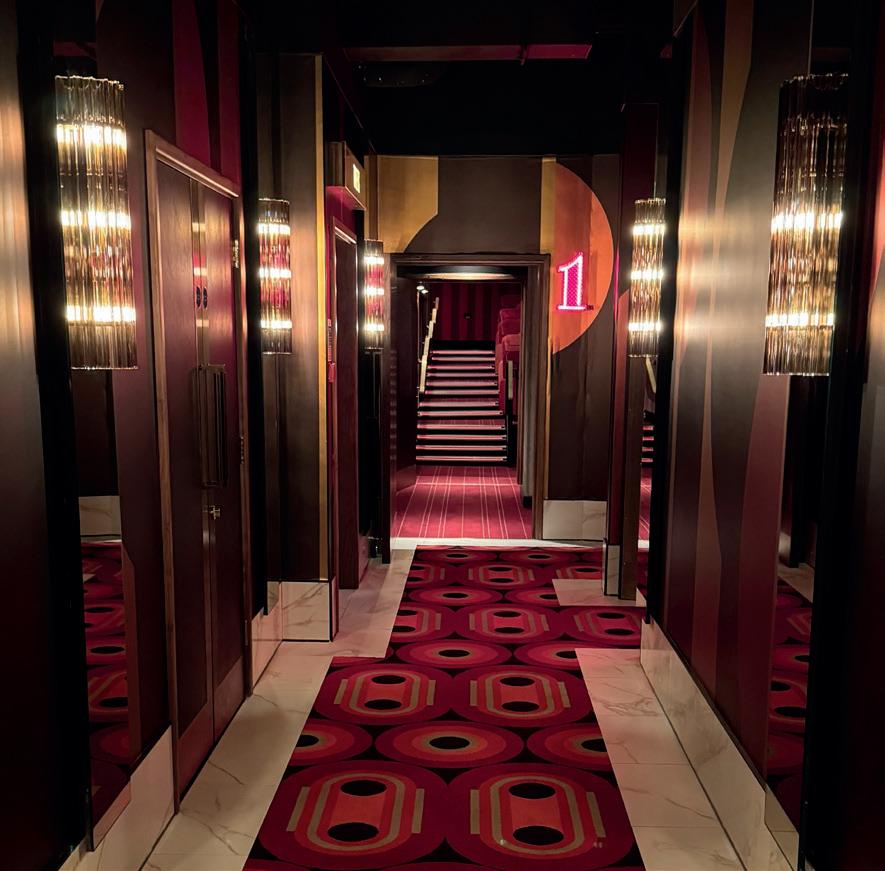
Peter Knight takes a look at the evolution of garden centres and how cinemas can apply the same diversification to create new revenue streams. 31
BEYOND SOFAS AND SPIELBURGERS
A look at the recently refurbished Everyman Whiteley cinema in London that delivers technical excellence beneath heritage elegance.
IT'S TIME TO TALK ABOUT PHASE
Mark Mayfield from Meyer Sound explains why accurate sound is more than just frequency response.
REEL INTELLIGENCE
Artificial Intelligence continues to evolve at such a rapid pace that we provide a snapshot of the latest developments.
MAINTAINING STANDARDS
Patrick Von Sychowski looks at how CinemaNext upgraded the BBFC’s screening infrastructure for the diigital age. 48
FEEL IT IN YOUR SEAT: A LOOK AT HAPTICS IN CINEMA
With ISO standards defined for haptics, Peter Knight investigates the possibility of this technology becoming part of the cinematic experience.
GEARING UP FOR A BILLION DOLLAR REVIVAL
Drive-In cinemas are set for a renaissance fuelled by technological upgrades, cultural cachet and global investments.
VISTAVISION LONDON SCREENINGS
IMIS's Mark Trompeteler travels to the Odeon Leicester Square to experience the VistaVision screening of One Battle After Another.

WORDS: RICHARD MITCHELL, PRESIDENT, CTC
As we look back on an incredibly busy and successful 2025, our team has been busy looking ahead to what promises to be an exciting 2026 with a host of invaluable outputs that we believe will enrich the industry. In June, we celebrated reaching the significant milestone of surpassing more than 1,000 members (across more than 90 counties), since we re-formed the organisation in late-2017.
Our focus today remains the same as it was eight years ago, to provide easy-to-access learning opportunities in various different formats to help support the cinema industry. Our team has always maintained that sharing knowledge and best practices supports the sector in driving better outcomes for movie-goers which in turn plays a part in growing both box office revenue and admissions.
To that end, the team has been steadfast in gather information about what our members want and need to help them succeed.
Over the past 18 months, there’s been increasing clamour regarding audio levels in cinemas and why this is becoming something of
CTC EXECUTIVE TEAM
RICHARD MITCHELL (PRESIDENT), GRAHAM LODGE (VICE PRESIDENT), JOSEPH BOUTROS, JESSE CHOW, MIKE BRADBURY, SANDIE CAFFELLE, CHRIS CONNETT, MARK KENDALL, PETER KNIGHT, ADAM MACDONALD, SAUL MAHONEY, JENNIFER MORGAN, ANDRE MORT, MARKUS OVERATH, LOYS PHILIBERT, DAVID POPE, TONI PURVIS, ULF QVICKLUND, SIMON TANDY, KRISTINA WARNER, PAUL WILLMOTT.
an issue of late. We first raised this issue at the Norwegian Cinema Conference in 2024 and have been gathering information during 2025. Next year the team will further investigate this subject through a range of in field testing and seek to raise awareness of the issue across the industry.
As laser projection reaches something of a tipping point, the issue of Metamerism hasn’t gone away, in fact it’s only likely to become more of a problem. Our work this year with colleagues at IMIS points to the need to focus beyond exhibition and look at raising awareness with post production and we intend to make this a significant focus in 2026.
It is also clear that exhibitors are seeking to streamline their operations and in some territories, there is a renewed focus on ticketing systems and digital signage and how the integration of these can help drive efficiencies. Our team are working on providing guidance on the systems available, how these connect to operational systems and the benefits of these.
This year we reinstated our training courses with a hugely successful event held at the Cinema In the Power Station in London. In the early Spring
CTC ADVISORY COUNCIL
MARK CHRISTIANSEN (PARAMOUNT PICTURES), BRIAN CLAYPOOL, JOHN DOWSLAND, THERESA ENGLISH (TK ARCHITECTS), MARK DE QUERVAIN (INDY CINEMA GROUP), JAN RASMUSSEN (NORDISK FILM), DOMINIC SIMMONS (BFI), ALICE TENTORI (DIGIMA), JULIA VINOKUROVA (REALD).
we’re planning to run another course in the North of England before we turn our attention to delivering these in local markets.
On top of this, you can expect another series of “Ten Things You Need To Know” - our landmark short audio series, the continuation of our brilliant “In The Pub” Podcast, video content, local market support with partner organisations and much more.
2026 promises to be an exciting year, you can guarantee CTC will be working tirelessly to support the industry.
Our focus today remains the same as it was eight years ago, to provide easy-to-access learning opportunities in various formats to help support the cinema industry.
WORDS: DAVID POPE, PRESIDENT, IMIS
IMIS is excited to launch "Behind The Lens" a new shortform interview series that shines a spotlight on the creative roles driving the moving image industry.
What a season it's been for the International Moving Image Society (IMIS)- full of insight, connection, and the quiet buzz of new ideas taking shape.
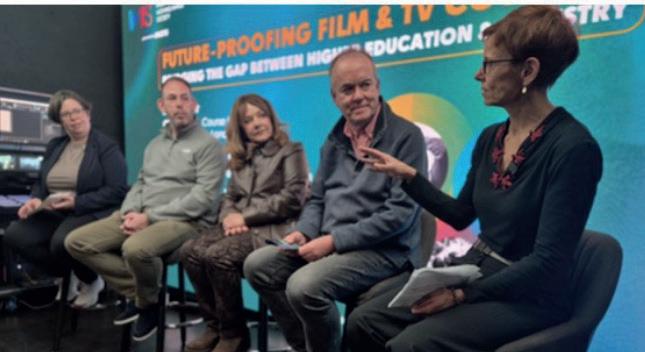
A standout moment this Autumn was our Bridging the Gap Between Education and Industry session at CVP. Educators, students, and industry professionals came together for an open, engaging conversation about skills, expectations, and the pathways that help emerging talent thrive. The energy and dialogue in the room were fantastic - a clear reminder of how important it is to strengthen collaboration across learning and professional practice.
As we head toward 2026, the IMIS team remains focused on creating spaces - online and in person - where creativity, technical craft, and collaboration can thrive. Here's to a season of curiosity, growth, and the stories we'll continue to shape together.
IMIS is excited to launch "Behind the Lens", a new shortform interview series that shines a spotlight on the creative roles driving the moving image industry. Each episode dives into the skills, workflows and mentorship that underpin success. Our first three videos explore the roles of a DIT, a DoP and a Colourist.

› Gain in-depth insight into key creative roles across production and post
› Learn the skills and workflows that top professionals rely on
› Discover mentorship lessons and practical tips for breaking into the industry
› Access evergreen content designed to support career growth and networking
Future-proofing film & TV courses: Bridging the gap between higher education & industry
In November 2025, we hosted a session at CVP's Education Festival, bringing together course leaders and industry employers to examine how higher education can remain relevant in an era of rapid transformation across the screen industries.
Hosted by: Charis Coke, Course Leader MA Filmmaking, London Film School, panellists included: Isabella Gray Forrest, Programme Leader BA (Hons) TV, University of Bournemouth; Muriel Tinel-Temple, Senior Lecturer, University of Roehampton; Aidan McCarthy, Audio Technology Team Leader, Warner Bros Discovery and Phil Dolling, Former Head of Events, BBC Studios
To watch videos of all this year's events, including the IMIS Student Showcase, Colour Truth: Metamersim in Cinema and Future-Proofing FIim + TV Courses: Bridging the Gap Between Higher Education and Industry, visit movingimagesociety.net.
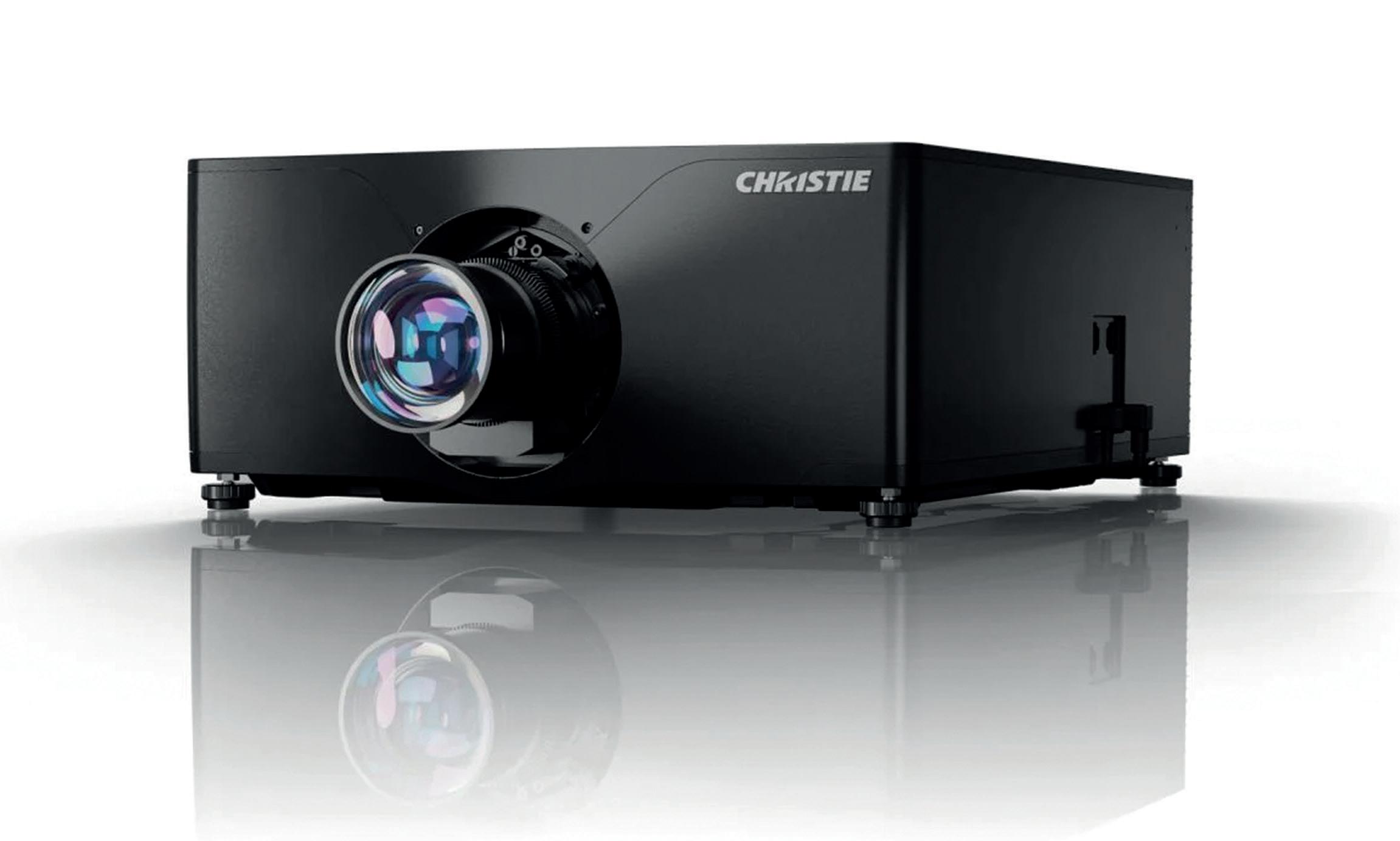
CHRISTIE recently announced the launch of two new RGBH cinema projectors, the CP4415m-RGBH and CP4420m-RGBH at CineAsia in Bangkok. Attendees were invited to experience the new CP4420m-RGBH lighting up the screen and view the CP4415m-RGBH on static display, both showcased in the Christie Theatre.
Featuring the latest 0.98" 4K SST DMD with CineLife+™ electronics and Phazer™ illumination, these new projectors are a compact and costeffective option to deliver bright, bold visuals for small-to-medium-sized screens. The new models are compatible with existing legacy lenses and accessories from lamp-based projectors, to further reduce costs for exhibitors transitioning from lamp to laser.
The CP4415m-RGBH and CP4420m-RGBH feature 15,000 and 20,000 lumens of brightness, respectively, and a configurable hybrid laser light source that is optimized for post-production and stunning visuals on all cinema screen types. The new models are also quiet, at less than 47 dBA, making them ideal for small spaces and boothless installations.
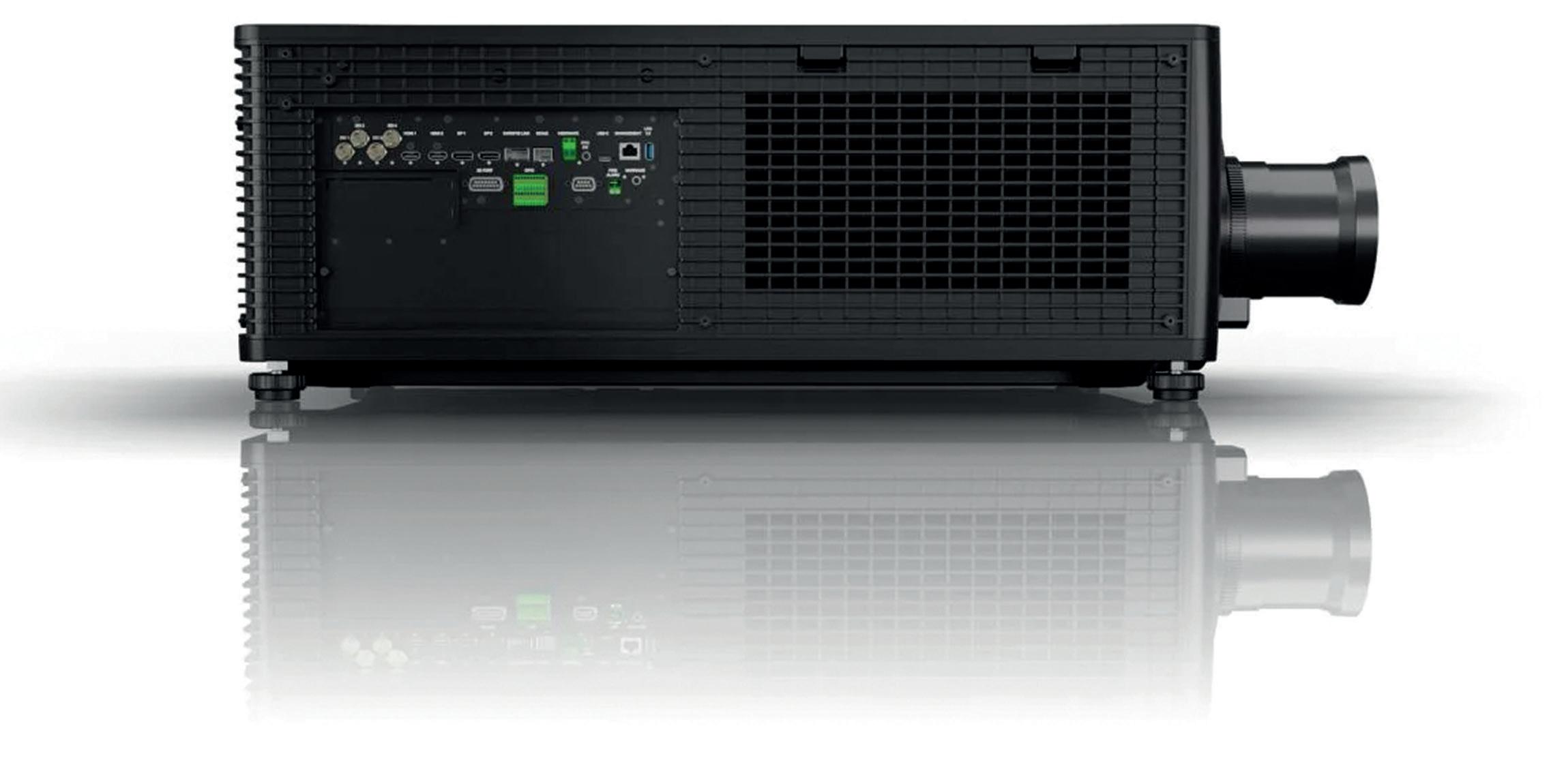
“We offer the widest range of cinema projectors on the market, and with the launch of these new RGBH models, we continue our commitment to exhibitors by developing effective solutions that meet the needs of every cinema screen,” says Allan Fernandes, senior product manager, cinema, Christie. “These new projectors are budget-friendly, feature-rich, and energy-efficient, at three times the efficiency of a comparable lamp-based projector.”
The CP4415m-RGBH and CP4420m-RGBH are available for order now.
Unique Digital Limited (Unique X), a leading provider of digital cinema software solutions, and Imagica Entertainment Media Services, Inc. (Imagica EMS), the market leader in Japan for postproduction and media services, announced the signing of an agreement and active partnership effective November 2025. This strategic partnership establishes the framework for an exclusive collaboration aimed at transforming and developing the cinema advertising business within the Japanese market.
Under the terms of the agreement, Imagica EMS, including its affiliated entities, plans to represent and assist Unique X in offering its sophisticated suite of products to sales agencies, exhibitors and consumer brands in Japan. The collaboration will initially focus on Unique X’s flagship advertising management solution, AdvertisingAccord (AA), along with its advanced Programmatic and Self-Service Portal modules. This technology is designed to bring new levels of efficiency, optimization, and monetization to the theatrical advertising supply chain. Furthermore, the partnership will explore the potential for
Imagica EMS to represent Unique X’s wider portfolio of cinemarelated solutions. This includes the RosettaBridge TMS (RB) (Theatre Management System), part of a comprehensive suite of products that provides powerful tools for film distributors and exhibitors to streamline digital cinema operations and content delivery.
Roger Harris, CEO of Unique X confirmed “We are delighted to announce our strategic partnership with Imagica EMS and enter the Japanese market with a partner of such prestige, market knowledge and excellence of reputation, we look forward to further expanding our business with Imagica EMS across our portfolio of software solutions.”
Masashi Nakamura, President & CEO of Imagica EMS said “This is an exciting collaboration that unites two industry leaders in digital cinema technology and services. By combining Unique X’s best-inclass solutions with our widely trusted cinema services, we can provide new value to the Japanese cinema community — strengthening opportunities for advertisers and enriching the experience for audiences.”
SHARP DISPLAY SOLUTIONS EUROPE, the audio visual technology business division of Sharp Europe, marks a new chapter in its long-standing dedication to the cinema industry with the full integration of Sharp/ NEC. This new positioning is an emboldened commitment to the future of cinema technology across Europe as Sharp builds on NEC’s legacy and expertise to deliver innovative solutions for the industry. Sharp/NEC has established itself as a leader in the cinema market, having delivered its solutions to about one in three screens across Europe and becoming a trusted partner to exhibitors of all sizes.
“Cinema is not just a business segment, it’s a cornerstone of our visual technology legacy and future,” said Christof Böhm, President and Managing Director, Sharp Display Solutions Europe GmbH. “Sharp remains deeply committed to the cinema industry, investing in innovation, partnerships, and long-term growth. We see cinema as a vital part of our
global strategy,” Böhm added. From early 2026, Sharp will rebrand the current NEC cinema projector line-up to Sharp, aligning with the new ‘One Sharp’ Digital Experience proposition and updated brand identity. This refreshed approach unifies Sharp’s expertise, commitment to innovation, and focus on supporting clients’ success in a dynamic environment. The rebrand will see the introduction of new product and model names in the portfolio by mid-2026.
“NEC introduced pioneering technologies to the cinema market including the first DCI-certified RGB laser, laser phosphor, and RB laser projectors,” said Jens Kayser, Head of Cinema Solutions Sales EMEA. “We are excited to launch new 2K and 4K laser projectors suitable for any kind and size of screen under the Sharp brand next year. We are also looking forward to introducing a technology that addresses the demand for better black levels and higher contrast,” added Kayser.
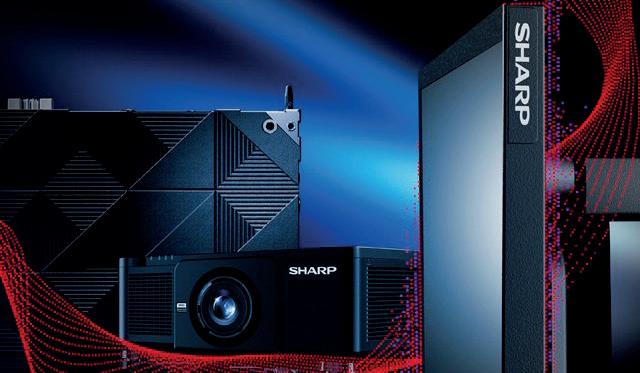
The transition to Sharp brings strength in continuity. The same trusted teams from Japan to Europe remain in place, delivering the same quality, reliability, and expertise partners expect. Sharp will continue to support the legacy of NEC cinema products with industry-leading technical services and a robust supply of spare parts, ensuring unwavering support for existing customers. As Sharp moves forward under its unified brand, it invites partners, customers, and industry peers to join the business in shaping the future of cinema technology, together.
BARCO, the global leader in laser-powered cinema, announced the expansion of its premium HDR by Barco format in Germany, launching this November with installations at select Cineplex Germany locations, and in Cinedom Cologne. This expansion marks a major footprint in European moviegoing, as Cineplex is a leading German exhibitor, and Cinedom Cologne is one of the country’s largest cinemas.
As part of the international expansion, HDR by Barco is launching at three Cineplex Germany venues - Cineplex Münster, Cineplex Paderborn Pollux, and Cineplex Goslar - available as “ULTIMATE. in HDR by Barco” at these locations. The initiative will bring premium large format cinema to Cineplex Goslar for the first time and build on the
current premium offerings at Cineplex Paderborn and Cineplex Münster to take the moviegoer experience to the next level of technological innovation. Cineplex Münster, also celebrating 25 years of operation this month, will be the first theater in the world with two HDR by Barco enabled auditoriums.
At Cinedom Cologne, the new HDR theater will launch the circuit’s new “CinedomX” experience, a freshly conceived premium cinema concept from the brand. Installations are now underway so moviegoers in Germany can enjoy major holiday tentpoles opening in HDR by Barco this holiday season.
“We’re proud to bring HDR by Barco to German audiences through our partnerships with Cineplex

and Cinedom—two of the country’s most respected cinema brands,” said Gerwin Damberg, EVP of Barco Cinema. “As someone who grew up in Germany, this milestone is personally meaningful. It’s exciting to see our vision and technology come full circle, enhancing the cinematic experience in the very theaters that once inspired my love of film.”
Based on the company’s patented Lightsteering technology, Barco’s approach to HDR works by strategically redistributing light on screen to produce highlights that are over 6x brighter than traditional projection, while retaining rich details in the darks for greater depth, clarity, and range. HDR by Barco delivers expansive creative possibilities for filmmakers, producing a wide color gamut with high-contrast images that captivate audiences.
National CineMedia announced in November that it had acquired Spotlight Cinema Networks, the only U.S. cinema advertising company dedicated to serving art house, luxury, and dinein exhibitors. The acquisition of Spotlight adds high-scale luxury screens and exhibitors that offer unique and engaging customer experiences to NCM’s platform, unlocking new advertising and preshow entertainment inventory across theaters nationwide.
Spotlight’s exhibitor partners, including Cinépolis Luxury Cinema, Landmark Theatres, Flix Brewhouse, and LOOK Dine-In Cinemas, complement NCM’s national theater network and extend NCM’s reach among culturally engaged premium audiences. The addition of Spotlight’s footprint increases NCM’s national
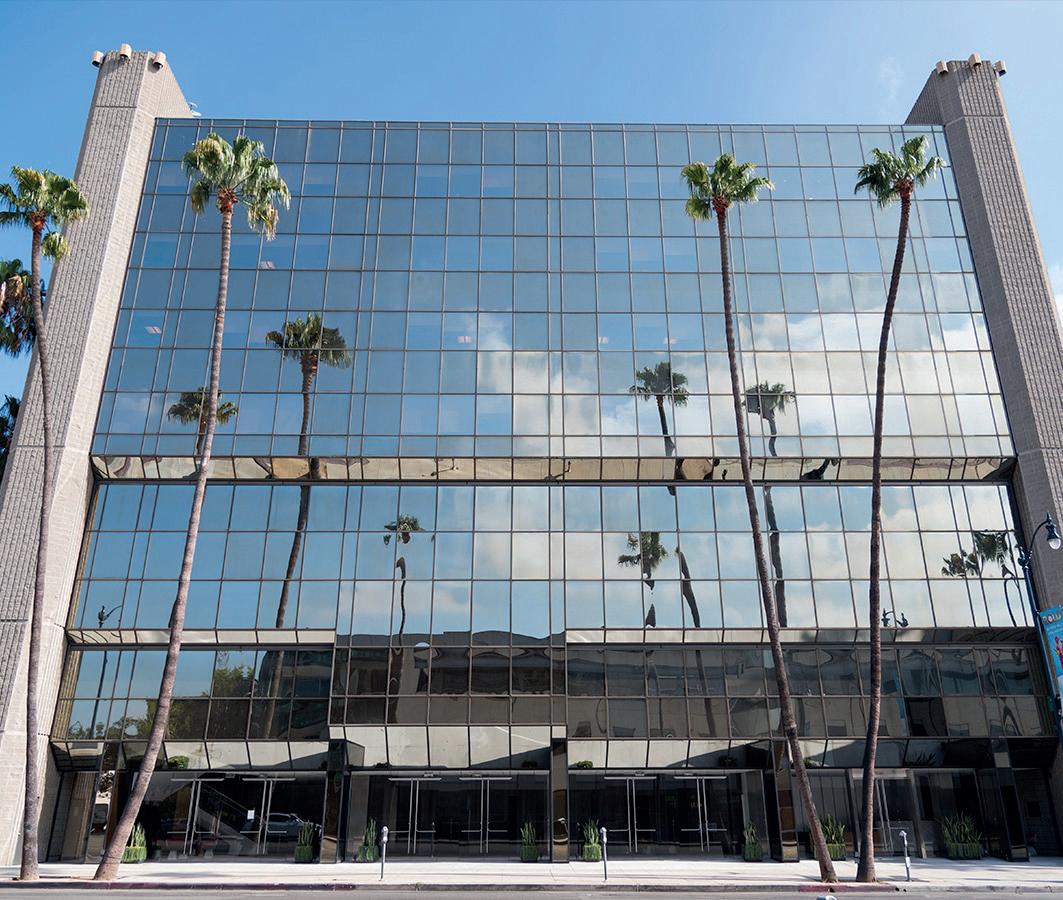
market share by approximately 6% and expands its theater presence by 30% in the critical New York and Los Angeles markets.
“The acquisition of Spotlight Cinema Networks strengthens our network and expands access to luxury audiences, enhancing the value of our platform for premium advertisers,” said Tom Lesinski, Chief Executive Officer of NCM. “With our differentiated targeting and measurement capabilities, we are wellpositioned to unlock the full value of Spotlight’s inventory, capture new revenue opportunities, and advance our leadership in the cinema advertising marketplace.”
NCM expects to realize the full run-rate synergies over the course of 2026. On a pro forma basis, the transaction is expected to be accretive to shareholders, with a purchase multiple of 4.5x pro forma EBITDA. This underscores the Company’s disciplined approach to capital allocation and management’s commitment to delivering longterm shareholder value. This transaction is aligned with NCM’s long-term growth strategy and supports near-term priorities, including reinforcing the Company’s commitment to strategic investment and sustainable growth.
MEYER SOUND was proud to be featured at the Samuel Goldwyn Theater in Beverly Hills, the Academy of Motion Picture Arts and Sciences’ premier screening venue, which recently completed a significant upgrade to its sound system. This upgrade includes five Meyer Sound ASTRYA-140 screen channel loudspeakers and reinforces the theater’s longstanding reputation as a leading reference environment for film presentations in the motion picture industry.
The Academy’s 1,000-seat Goldwyn Theater is regarded as one of the world’s most technically accurate screening rooms. Since opening in 1975, the venue has undergone just two other major screen channel upgrades, each marking a milestone in the evolution of cinema sound. The new Meyer Sound system continues that tradition, advancing the Academy’s commitment to presenting films exactly as their creators intend them to be heard.
“Our mission is to ensure that the Samuel Goldwyn Theater remains the gold standard for cinematic presentation,” says Brendan Connell, Jr., Chief Operating Officer of the Academy and General Counsel for the Academy Foundation. “Every upgrade is guided by a single principle: fidelity to the filmmaker’s vision. This latest installation reflects our continued investment in that ideal.”
Richard Martinez, the Vice President of Academy Theaters, emphasizes that maintaining the Goldwyn’s status as a leader in cinematic technology requires constant focus. “Consistency and evolution are considerations we evaluate daily,” he says. “The Goldwyn has always epitomized the state of the art, and we must continually address that. Technology doesn’t remain static, and neither can we.”
That commitment to progress was underscored during system evaluation and tuning. “When we played dialogue with no picture, the voices felt as if they were in the room with me,” Martinez recalls. “I’d never felt that before; it almost felt like the space between me and the screen disappeared.”
For Meyer Sound President and CEO John Meyer, the project carries both personal and professional resonance. “My fascination with cinema sound started early,” he says. “My uncle worked on “Fantasia,” and hearing that film as a child
showed me how sound could bring storytelling to life. Years later, collaborating with Francis Ford Coppola on the theatrical presentation of “Apocalypse” Now proved to me how far that idea could go. Experiences like these shaped my belief that sound should reach audiences exactly as the artist intended. That’s the essence of linearity, and it’s what we’ve achieved at the Goldwyn.”
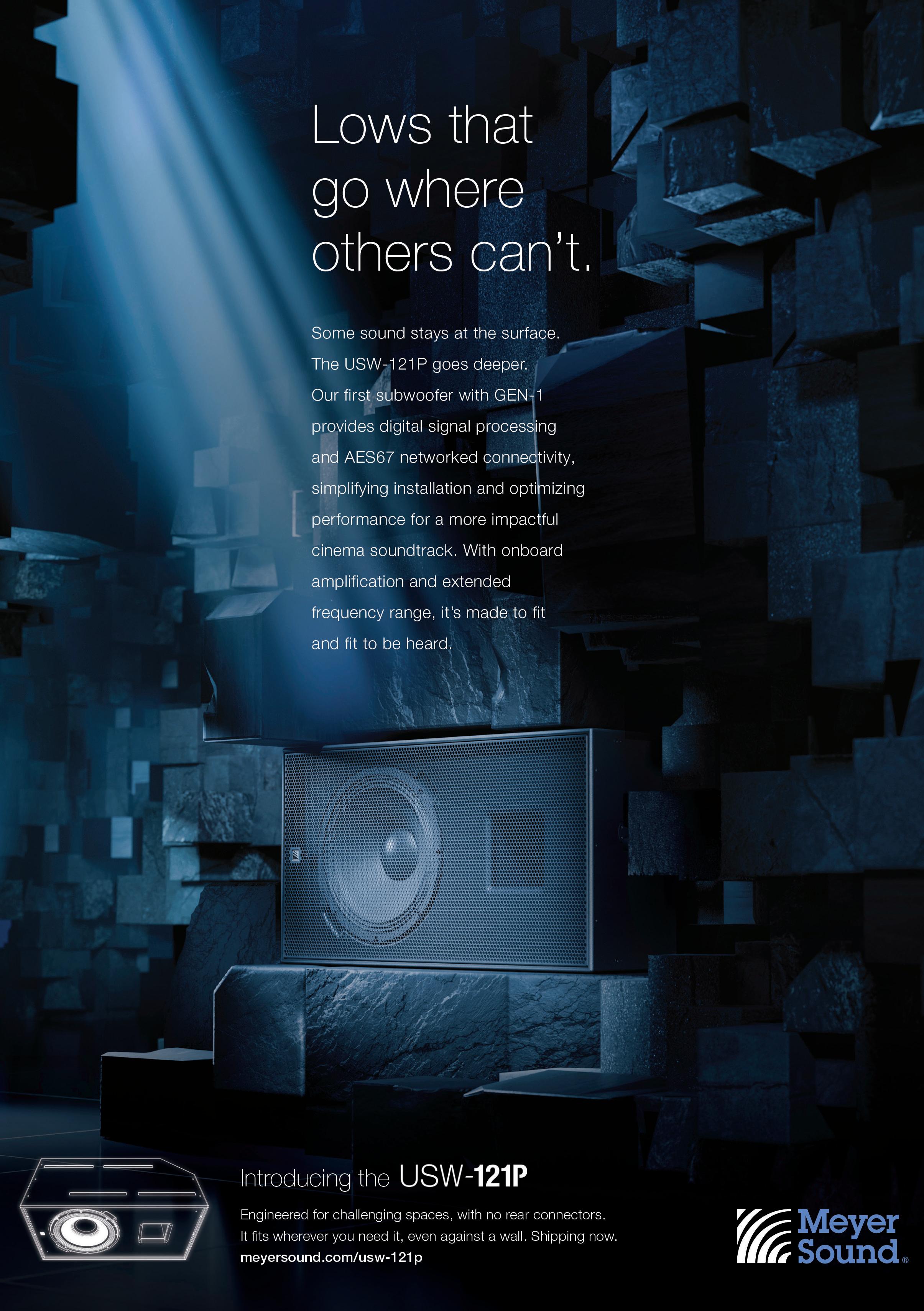
Linearity—consistent, accurate reproduction of sound across its entire range, at any amplitude—has defined Meyer Sound’s design philosophy since its founding. In cinema, where the mix is fixed and every dynamic and timbral detail must translate perfectly from the dub stage to the theater, linearity is essential. The new system features five ASTRYA-140 screen channel loudspeakers positioned behind the projection screen. The front array delivers wide dynamic range, exceptional clarity, and seamless tonal consistency across the full width of the screen, forming the foundation for the theater’s immersive playback environment. The installation also marks the first use of Meyer Sound’s new USW121P high-power subwoofers. Eight units reproduce the low-frequency effects (LFE) channel, and another two units supplement surround bass management.
“ASTRYA was developed through close collaboration with Hollywood’s leading postproduction engineers,” says Meyer Sound Senior Vice President John McMahon. “Its installation at the Goldwyn confirms that what mixers hear in their studios can now be experienced by audiences with the same precision and balance. It delivers a consistent, truthful sonic experience from creation to exhibition.”
For Meyer Sound, the installation at the Samuel Goldwyn Theater represents both an honor and an act of stewardship, notes Director of Cinema Marketing Mark Mayfield. “This is where filmmakers, mixers, and Academy members evaluate the work that defines cinema itself, and being entrusted with that environment sets an extraordinarily high bar. For Meyer Sound, meeting that expectation is not only a point of pride but a responsibility to deliver tools and technology that uphold the standards of the art form and help shape its future.”
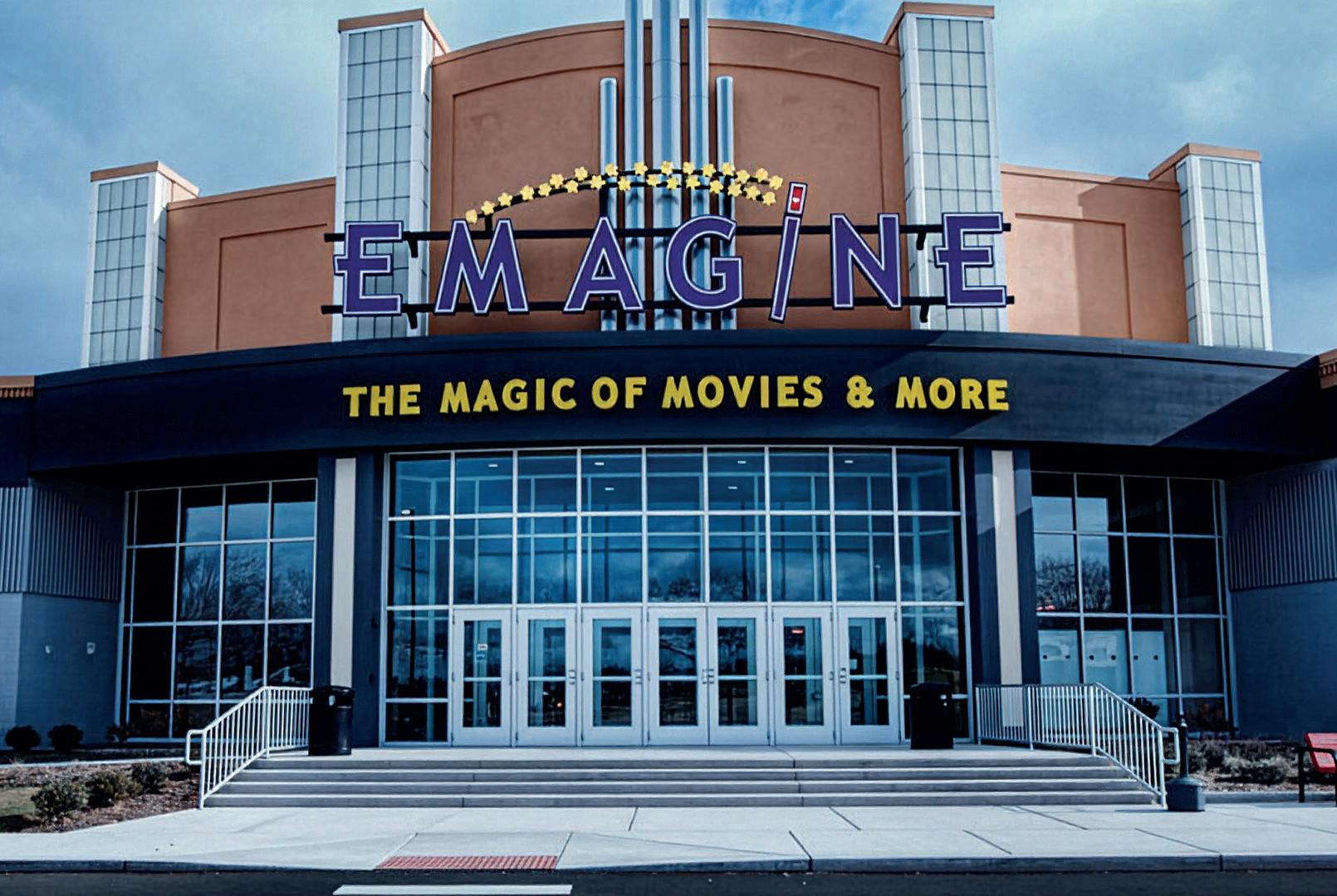
KINEPOLIS (EURONEXT: KIN) has reached an agreement to acquire the operations of the US movie theatre chain Emagine Entertainment. Kinepolis expects to complete the acquisition by the end of the year. As a result of this agreement, Kinepolis will add 14 cinemas to its portfolio, representing 177 screens and 18,000 seats, located in Michigan, Illinois, Indiana, and Wisconsin. Emagine Entertainment welcomes approximately 6 million visitors per year, generating nearly USD 129 million in revenue. The cinemas are equipped with recliner seats and offer their own Premium Large Format (PLF) under the names EMX (14 auditoriums) and Super EMX (3 auditoriums). EMX features wall-to-wall screens
with 4K laser projection and Dolby Atmos sound, while Super EMX takes the experience even further with an even larger screen and 64-channel Dolby Atmos sound for a truly immersive cinema experience.
Emagine Entertainment also provides support services to a chain of cinemas in Minnesota and Colorado, as well as Emagine Woodhaven and The Riviera in Michigan. These locations operate under the Emagine brand and are managed by third parties through a brand licensing agreement.
Eddy Duquenne, CEO of Kinepolis Group “With the acquisition of Emagine Entertainment, we are back on track with the execution of our expansion strategy since the pandemic. We do this
with a high-quality asset in a market where we have had positive experiences with our Kinepolis concepts. The location and size of the cinemas make them a valuable addition to the Group’s portfolio, allowing us to expand our presence in the US market and strengthen our national structure. We are excited to welcome the new teams to the Kinepolis family.”
Paul Glantz, Chairman and CEO of Emagine Entertainment: “Kinepolis has a reputation for operating exceptionally well-run cinemas both in Europe and in North America. Their commitment to providing guests with an unforgettable movie experience makes them the ideal suitor to continue the stewardship of Emagine into the future.”
SHOWTIME ANALYTICS RECENTLY ANNOUNCED AN agreement with leading Balkans multiplex chain BlitzCineStar, to provide them with a real time operational data and digital marketing platform across their 28 sites.
SHOWTIME ANALYTICS RECENTLY ANNOUNCED AN agreement with leading Balkans multiplex chain BlitzCineStar, to provide them with a real time operational data and digital marketing platform across their 28 sites.
Blitz-CineStar, founded in 2003, is the leading cinema operator in Croatia and the region, spanning Croatia, Bosnia and Herzegovina, Serbia and Kosovo.
Featuring 182 state-of-the-art halls, including IMAX, 4DX, Screen X and Gold Class, CineStar sets the standard for cutting-edge technology and premium cinema experiences. Recognised for innovation and quality, it has earned numerous awards, including “Best Cinema in Europe” by UNIC in 2019, and continues to deliver exceptional entertainment to over 4.5 million visitors annually.
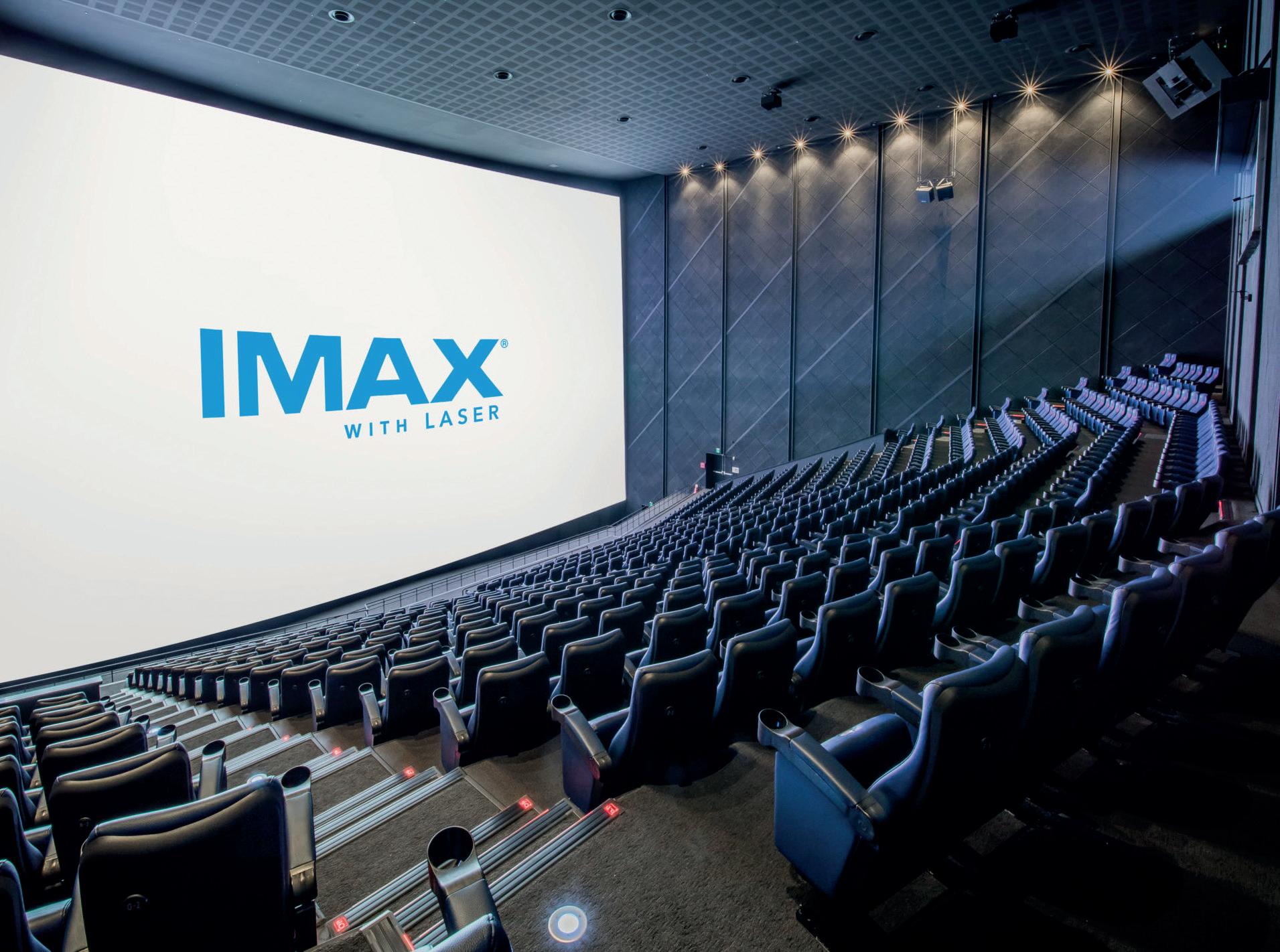
Blitz-CineStar, founded in 2003, is the leading cinema operator in Croatia and the region, spanning Croatia, Bosnia and Herzegovina, Serbia and Kosovo. Featuring 182 state-of-the-art halls, including IMAX, 4DX, Screen X and Gold Class, CineStar sets the standard for cutting-edge technology and premium cinema experiences. Recognised for innovation and quality, it has earned numerous awards, including “Best Cinema in Europe” by UNIC in 2019, and continues to deliver exceptional entertainment to over 4.5 million visitors annually.
IMAX AND CINEMARK announced in October an agreement spanning 17 Cinemark locations in the United States and South America, bringing new IMAX with Laser and IMAX 70mm film systems to the Cinemark network. Under the terms of the agreement, Cinemark will:
› Add 4 new laser systems in the USA and actively explore one additional location in South America
› Upgrade 12 existing systems to laser, making the entirety of Cinemark’s U.S. IMAX footprint laser enabled.
› Cinemark will also activate 3 additional 70mm film projection systems.
commitment to the very best of what IMAX has to offer — both IMAX with Laser and IMAX 70mm film — underscores the value we’re delivering for our exhibition partners in today’s marketplace,” said Rich Gelfond, CEO of IMAX. “With a tremendous slate ahead in 2026 highlighted by a number of Filmed for IMAX and IMAX 70mm film releases, we look forward to working with Cinemark to deliver the most immersive cinematic experiences to its customers and growing the value of our longstanding partnership.”
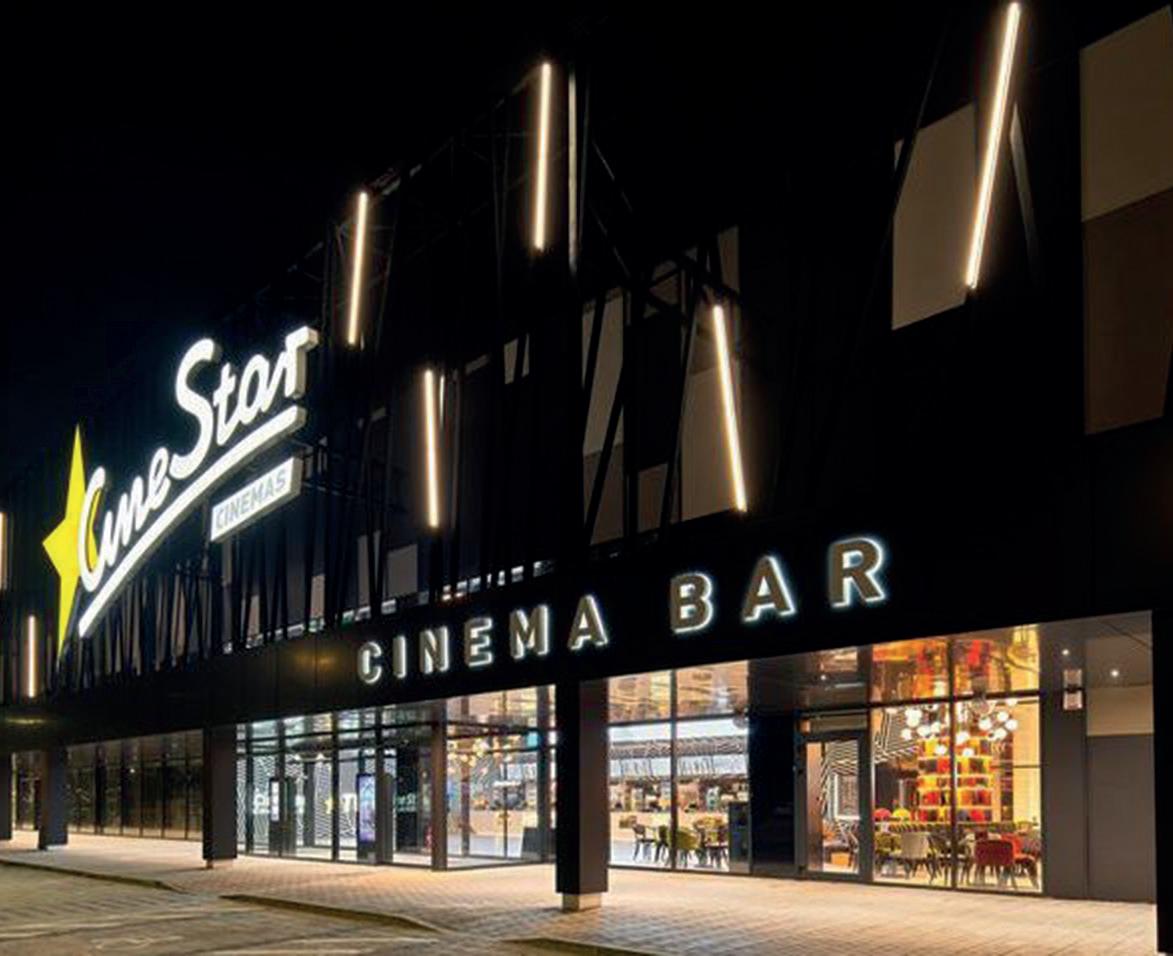
With their commitment to delivering an unparalleled theatre experience to their customer base, Blitz-CineStar wanted to use their first-party data to help them understand how their business was performing across the metrics that mattered to them, and use this data to drive customer engagement and loyalty. They reached out to Showtime Analytics to evaluate how their cloud platform could help them do this.
With their commitment to delivering an unparalleled theatre experience to their customer base, Blitz-CineStar wanted to use their first-party data to help them understand how their business was performing across the metrics that mattered to them, and use this data to drive customer engagement and loyalty. They reached out to Showtime Analytics to evaluate how their cloud platform could help them do this.
By migrating from their existing email marketing tool and integrating their customer data to Showtime Engage, it will allow them to bring individual customer behaviors, touch points and purchase activity together to create a single view of their identifiable movie-goers. Having all this information about their different customers and their shared behaviours, it will give them the ability to create and send targeted, personalised digital campaigns to different segments, driving customer engagement and loyalty. With the closed loop integration with their POS this will allow them to track conversions and revenue uplift from each campaign, putting them in better control of where to focus their marketing efforts.
By migrating from their existing email marketing tool and integrating their customer data to Showtime Engage, it will allow them to bring individual customer behaviors, touch points and purchase activity together to create a single view of their identifiable movie-goers. Having all this information about their different customers and their shared behaviours, it will give them the ability to create and send targeted, personalised digital campaigns to different segments, driving customer engagement and loyalty. With the closed loop integration with their POS this will allow them to track conversions and revenue uplift from each campaign, putting them in better control of where to focus their marketing efforts.
The 70mm film projection systems will be located in Cinemark Seven Bridges in the Woodridge suburb of Chicago, IL; Cinemark Carefree Circle in Colorado Springs, CO; and Cinemark Tinseltown in Rochester, NY. All three locations are set to be operational before Academy-Award winning director Christopher Nolan’s “The Odyssey” — the first theatrical release shot entirely in IMAX film — arrives in theaters in July 2026.
Mrs Jadranka Islamovic, CEO CineStar Cinemas said of the partnership:
Mrs Jadranka Islamovic, CEO CineStar Cinemas said of the partnership:
“As the best and largest cinema in our region with more than 22 years of operation, CineStar has become a synonym for cinema in our territory. We have a duty to provide each of our visitors with the best value for money through superior service and satisfaction, and to always provide the best and largest selection of films, in technologically superior halls and the most comfortable seats, the always constant quality of CineStar Cinemas. The values on which we base our long-term success are quality, service, trust, innovation and understanding of the needs of our visitors. We hope that with Showtime Analytics, we will now understand our visitors even better, all to improve our relationships with customers, their loyalty and ultimately increase visits.”
“Cinemark expanding its
“As the best and largest cinema in our region with more than 22 years of operation, CineStar has become a synonym for cinema in our territory. We have a duty to provide each of our visitors with the best value for money through superior service and satisfaction, and to always provide the best and largest selection of films, in technologically superior halls and the most comfortable seats, the always constant quality of CineStar Cinemas. The values on which we base our long-term success are quality, service, trust, innovation and understanding of the needs of our visitors. We hope that with Showtime Analytics, we will now understand our visitors even better, all to improve our relationships with customers, their loyalty and ultimately increase visits.”
“We’re pleased to expand our partnership with IMAX as part of our broader strategy to offer a range of elevated cinematic experiences across our circuit,” said Sean Gamble, Cinemark President and CEO. “Upgrading our IMAX locations to IMAX with Laser and activating additional 70mm film systems further expands and enhances the immersive options we offer our guests. These upgrades reflect our commitment to delivering high-quality, differentiated experiences that drive greater value perception, loyalty, and frequency across all types of films.”
www.cinema-technology.com
www.cinema-technology.com

really enjoy each new territory. Each one is so different, they work differently, films release differently. So it’s always exciting for me to learn something new.
really enjoy each new territory. Each one is so different, they work differently, films release differently. So it’s always exciting for me to learn something new.
My main expansion into the role has been to take on some bigger picture business, hopefully relieving some stress from my boss.
My main expansion into the role has been to take on some bigger picture business, hopefully relieving some stress from my boss.
CT: How have your previous experiences prepared you for your new role?
I’ll end on two pieces of advice I was given when I started, and I love to share them as I believe they are so invaluable.
I’ll end on two pieces of advice I was given when I started, and I love to share them as I believe they are so invaluable.
CT: How have your previous experiences prepared you for your new role?
I think because I’ve been so lucky to have had a varied career. From being on the studio side to growing in the tech side. I feel i understand the pain points that my customers face. Because I faced them.
QUBE WIRE, a global leader in cloud-based digital cinema distribution, recently announced the successful installation of 1,000+ Qube WireTAP electronic content delivery appliances across theaters in North America. With this expansion, the Qube Wire network now includes cinemas at the top 15 largest US cinema chains.
I think because I’ve been so lucky to have had a varied career. From being on the studio side to growing in the tech side. I feel i understand the pain points that my customers face. Because I faced them.
CT: As the newest member of the CTC board, what are you looking forward to most?
CT: As the newest member of the CTC board, what are you looking forward to most? Oh my gosh, the community. Sharing knowledge between this group of incredible people across the globe. Looking for better ways to work together that can help anyone. I hope I can bring something valuable to the table.
QUBE WIRE CINEMA, A LEADING PROVIDER of end-to-end digital cinema technology solutions, has signed a definitive agreement to acquire a 100% stake in MetaMedia (MMT Tech, Inc). MetaMedia is North America’s largest cloud-based content delivery platform to cinemas. With this acquisition, Qube Wire becomes the world’s largest cinema electronic delivery network with over 5,000 cinemas connected across 51 countries. In the United States, the merged network will provide coverage to 9 of the top 10 largest cinema chains. Qube will continue to execute MetaMedia’s existing deployment plans and service its customer agreements.
“...Sharing knowledge between this group of incredible people across the globe. Looking for better ways to work together that can help anyone. I hope I can bring something valuable to the table.“
“...Sharing knowledge between this group of incredible people across the globe. Looking for better ways to work together that can help anyone. I hope I can bring something valuable to the table.“
“Partnering with Qube Wire has truly transformed our operations through the service’s reliability and exceptional support,” said Regal’s Brandon Corrier, Film Buyer. “The efficiency of the Qube Wire system empowers us to focus more on strategic bookings and less on logistics.”
Oh my gosh, the community. Sharing knowledge between this group of incredible people across the globe. Looking for better ways to work together that can help anyone. I hope I can bring something valuable to the table.
“The acquisition of MetaMedia is a huge move for Qube’s North American operations,” said Harsh Rohatgi, CEO of Qube Cinema. “MetaMedia’s
CT: What’s your favourite aspect of working in the cinema industry?
Alan Vieyra, Projection and IT Support Services Manager of Cinépolis Luxury Cinemas, added, “Everyone at Qube Wire has been incredibly responsive, going above and beyond to help. We also utilize the Qube Wire network to deliver internal marketing and event information to our theaters, which has really helped us maximize our operational efforts. Our whole company has seen the benefits of partnering with Qube Wire.”
innovative network has consistently delivered faster, more cost-effective solutions for content delivery, saving millions compared to traditional methods. At Qube, we’ve leveraged this technology to bring Indian feature films to North American cinemas with speed and precision, expanding the size and number of Indian releases by 3x in the last five years. With the addition of MetaMedia, our combined strengths will set a new standard in cinema content delivery for many more distributors and create unparalleled value for the global movie industry.”
themselves,” said Kristin Kielpinski, Vice President, Exhibitor Relations. “Our team is available 24×7 to support exhibitors as they come online.”
CT: What’s your favourite aspect of working in the cinema industry?
Pick your battles… don’t die on your sword. A few years into my role at Warner Bros, I had just started taking over trailer negotiations. During a back-and-forth with one of my exhibitor friends over placement for a release that barely had any admissions, he said, “Pick your battles.” I understood immediately, and it resonated with me.
Pick your battles… don’t die on your sword. A few years into my role at Warner Bros, I had just started taking over trailer negotiations. During a back-and-forth with one of my exhibitor friends over placement for a release that barely had any admissions, he said, “Pick your battles.” I understood immediately, and it resonated with me.
In the new reality where movies are often booked on Monday for showtimes on Friday, reliable electronic delivery is critical. Qube will continue to expand across the United States to further simplify content delivery for both cinemas and distributors.
The cinemas of course! I love to visit my favourite places in town. I love to escape into a film, melt away any stress. It’s the best fun, even when I watch a horror. If you’ve ever sat next to me during a horror, you’ll know how ridiculous I am.
The cinemas of course! I love to visit my favourite places in town. I love to escape into a film, melt away any stress. It’s the best fun, even when I watch a horror. If you’ve ever sat next to me during a horror, you’ll know how ridiculous I am.
I’ve kept this in mind in everything I do ever since.
I’ve kept this in mind in everything I do ever since.
Globally, Qube Wire now has about 6,000 connected theaters. The service continues to set new industry standards for faster turnaround, uncompromising security, and unmatched flexibility for distributors worldwide.
Don’t burn any bridges. This industry is still quite small, and we all rely on the relationships we build. You never know what will happen, so it’s never worth burning those bridges down.
"Everyone at Qube Wire has been incredibly responsive, going above and beyond to help."
CT: What advice would you give to someone considering a career in this field?
CT: What advice would you give to someone considering a career in this field?
Since January 2025, Qube Wire has added an average of 17 new theatres per week. “We’ve simplified our installation process, and the results speak for
For nearly four decades, Qube Cinema has been a trailblazer in the global filmmaking and exhibition industries. Qube is one of a handful of companies in the world that has developed a DCI-certified digital cinema server. With a team of about 1,000 employees
Don’t burn any bridges. This industry is still quite small, and we all rely on the relationships we build. You never know what will happen, so it’s never worth burning those bridges down.
Ultimately, the connections you make and the experiences you gain can lead to incredible opportunities, so definitely embrace every moment and every interaction!
Ultimately, the connections you make and the experiences you gain can lead to incredible opportunities, so definitely embrace every moment and every interaction!
who are passionate about the domain, Qube continues to revolutionize cinema exhibition and distribution with cutting-edge, reliable, and costeffective solutions. With technology to service the world’s greatest content creators and exhibitors, Qube continues to introduce innovations to the cinema ecosystem that are reshaping the cinematic experience for audiences worldwide. Qube Wire has been growing consistently since launching as a global cloud-based distribution platform in early 2017. Today, Qube Wire powers the supply chain for many major content distributors, including all the major Hollywood studios. Qube Wire also delivers over 95% of all the Indian movies released around the world. With its regional partnerships and automated hard drive duplication hubs, Qube Wire provides

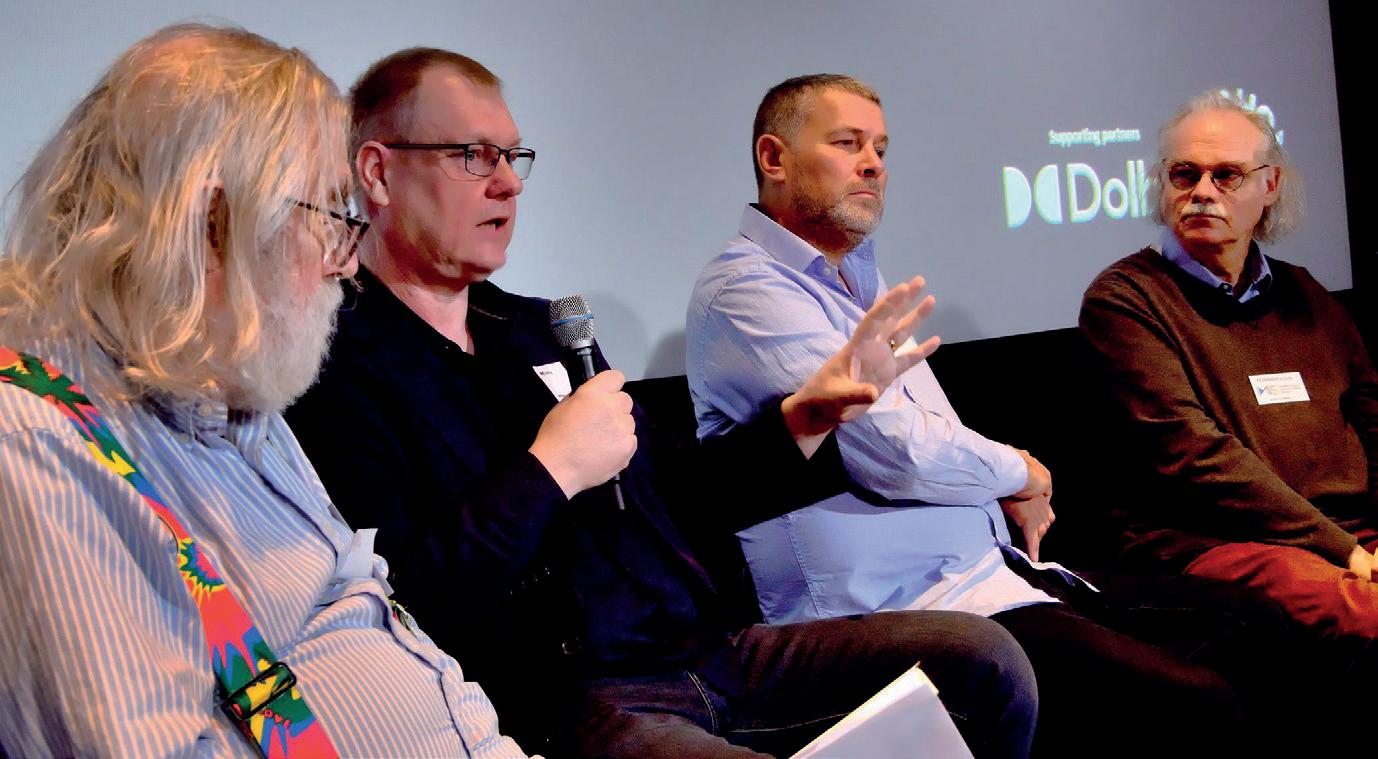
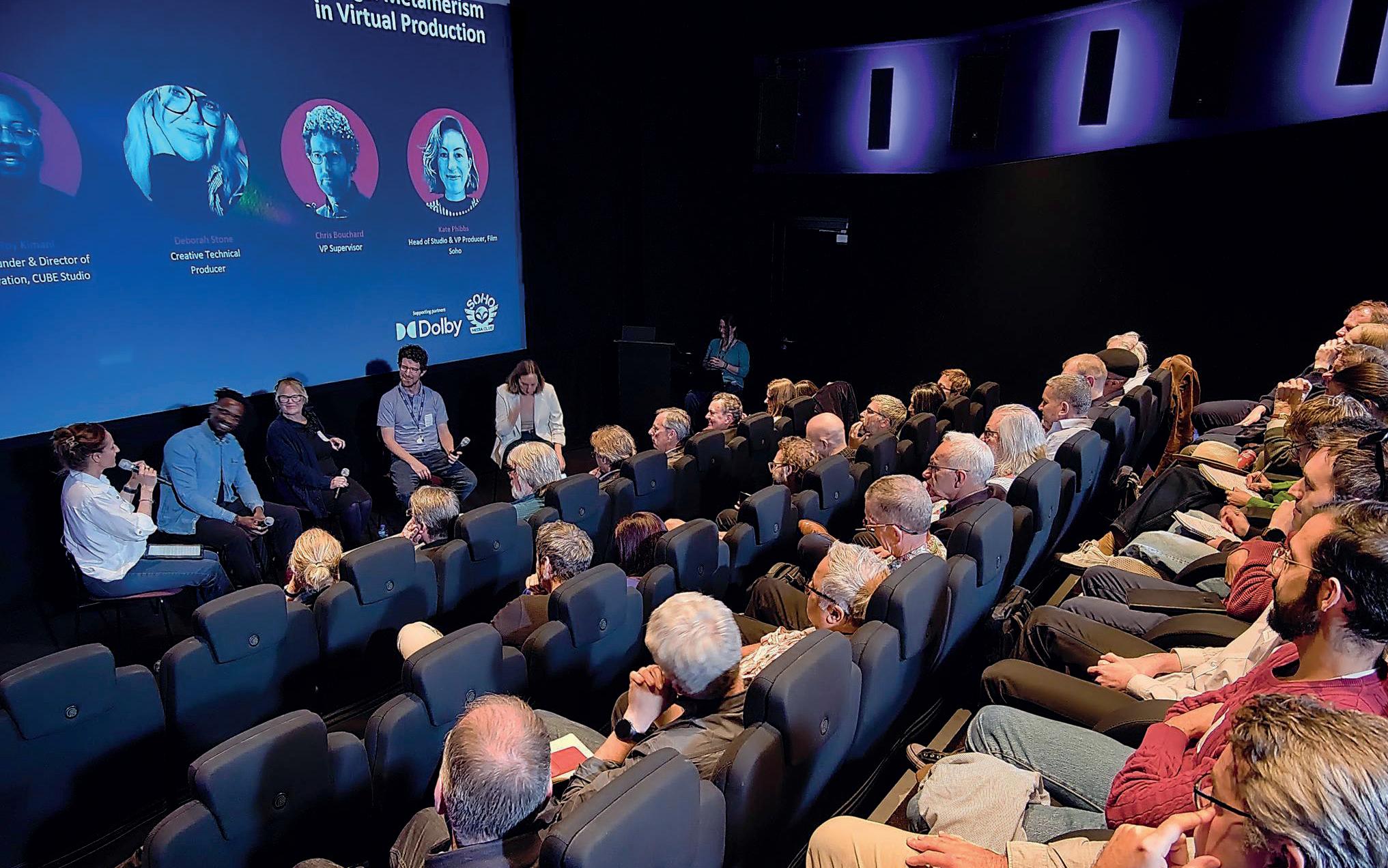
The afternoon of the 22nd October saw the International Moving Image Society bring together technologists and creatives at Dolby’s Screening room in Soho Square, London to spark a conversation around the phenomenon of metamerism, and the issues that it creates for viewers and screen professionals.
Dr David Simmons, an expert in cognitive perception, gave a scene-setting talk. Dimming the lights, he used on-screen images to show how we perceive colour differently depending on how images are presented and our own particular eyesight. Colour Perception Explained: A Playful Guide explored the role of colour in early human survival, concluding in the world of colour-critical cinema workflows and spotlighting flaws in any theory about “colour truth.”
Taking the baton, colour management and display consultant John Frith talked about the challenges that metamerism brings to display calibrations. He described “a calibration Wild West,” with most displays needing a white point offset, linked to standards set in 1931 when there were minimal light sources. Concerns have become focused on RGB laser projectors and wide gamut displays, and on monitors.
18 months ago the MPC theatre in London hosted an experiment to match RGB laser projection with Xenon lamp projection. After a day of testing, there had been broad agreement in the room that the two were matching. “Then ‘observer X’ walked in”, said Frith. Observer X saw two very different displays. The team realised that this exception was down to deuteranomaly, an eyesight condition which
makes it difficult to distinguish shades of red, green and yellow. It affects around one in 20 men, far fewer women.
With a metameric issue confirmed, it was time to move the conversation in the room towards standardisation. Is it possible, or desirable?
Peter Wilson, Digital Cinema Pioneer & Founder, HDDC, moderated a discussion looking at the technical, operational and commercial issues in the cinema industry caused by metamerism being manifested by narrow band direct laser projectors. He established that with EBU promotion of the Rec.2020 TV Colour Space, issues with colour perception extend from cinema to TV. He also raised issues from metamerism alongside other concerns, primarily speckle, the phenomenon of on-screen micro-reflections.
On the panel was deuteranomolous ‘observer X’ who sees footage projected with RGB laser as distinctly pinker. Observer X, also known as Adrian Bull, CEO, Cinelab Film & Digital who is now keenly aware about differing colour perception and always asks about the display technology explained that “I’ve come to the conclusion that I don’t comment on people’s grading anymore,”.
Mike Bradbury, Head of Cinema Technology for Odeon Cinemas Group has had concerns about RGB laser projectors for at least ten years and had steered the Group towards RB laser or laser phosphor “because we got much more accuracy.”
Mark Kendall, Regional Sales Manager, Christie Digital Systems countered that RB laser has limitations in terms of contrast ratio. “It’s been very challenging for any projector manufacturer to be able to achieve something that is affordable for the cinema on a commercial basis, but at the same time, be able to overcome all of the issues.” He gave a heads up that Christie has new projection technology coming in 2026 that will, in part, address concerns.
DoP Kommer Kleijn made a plea to the industry to address the integrity of colour as far as possible, adding that similar colour perception anomalies occur in older people. “When we make a movie, we invest huge energy, time and effort in controlling these colours exactly,” he said. “It’s a part of the essence of what we’re trying to do. We want this story to move your heart and your soul as a viewer in the most profound way.”
Senior Director of Engineering for Dolby, Trevor Davies, then shared the feedback that Dolby had collected about observer metamerism in the workflow with laser projectors. “Our internal studies show that using new colour matching functions does improve things, and we absolutely would love to move to new CMS in calibration equipment,” he said. “But don’t expect it to fix your observer metameric failure.” At the heart of Dolby’s exploration was the colourist’s experience. “One particular studio had calibrated their projector for their specific colourist,” related Davies. This pragmatic approach is one that Dolby is now exploring.
Equipped with insight from distinguished technologists and practitioners at the heart of the industry, it was time for the view of the film-maker. A panel that held perspectives from capture to postproduction was led by cinematographer Balazs Bolygo BSC.
What are the challenges of achieving consistent colour fidelity across varying lighting conditions, lenses, and display devices, on set and on location?
Cinematographer Mari Yamamura shared her concern about shifts in colour, from selecting the camera, lighting conditions and monitors. She explained how skin tones are a major concern. “Hopefully the new technology can produce better rendition,” she said.
“Probably our biggest fear or challenge is to make sure that the goals that we’re chasing are valid goals in terms of the creative environment, and not just technical goals,” said Kevin Shaw, Head of Colour, Mission Digital. He echoed a widely-held view that one person in the creative process –probably the DoP, director or colourist - needed to be responsible for the colour. “As a colourist, and in my position at Mission, where I’m overseeing workflows from production through to post-production, the most important thing is to have a single point of view."
“It’s quite an ask to expect everybody to have the same experience, no matter where they are, whatever device they’re on.” For Shaw’s work, colour management systems have been a game changer.
And he’s an advocate of deciding and testing technology as far as possible in advance of a shoot.
Zeb Chadfield, Chief Vision Officer at post house
The Finish Line explained that, “I’ve probably spent two decades yelling metamerism at my emails and then having to come up with a polite way to communicate that the screen that they’re looking at something on is by no means accurate or representative of what we have in our grading theatres.” The Finish Line has just one display technology in its rooms. “For us metamerism is a huge thing,” he said, mooting the idea of testing creatives for colour perception anomalies.
Rounding out the afternoon, the conversation was grounded by insight from Chief Analyst, Cinema and Movies, Omdia Insight, David Hancock. With the latest data (for 2023) showing record levels of production- 9,500 films made for cinema alone - his intelligence underscored the continued business case for investing in next-generation technologies.
Hancock also showed how the roll-out of laser projection has already passed a tipping point. The technology arrived in the market around ten years ago; by the end of 2024, one third of all screens had laser projection installed. With laser projection giving operational efficiencies and higher light output, it’s unlikely there will be any significant changes to the roll-out due to any metamerism issues.
However, as Dolby’s Trevor Davies indicated, there is a case for more help and awareness of the metamerism challenges in post-production.
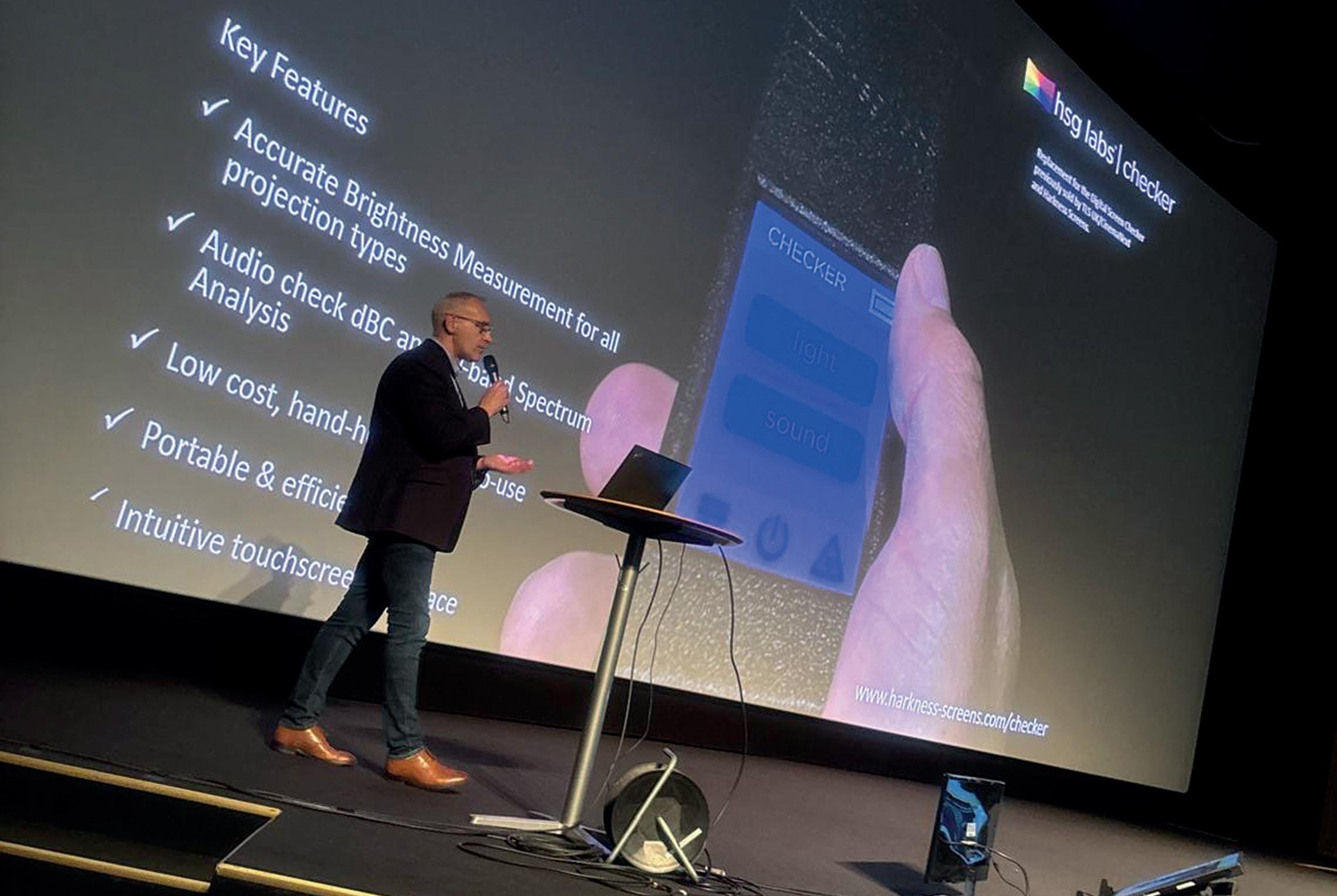
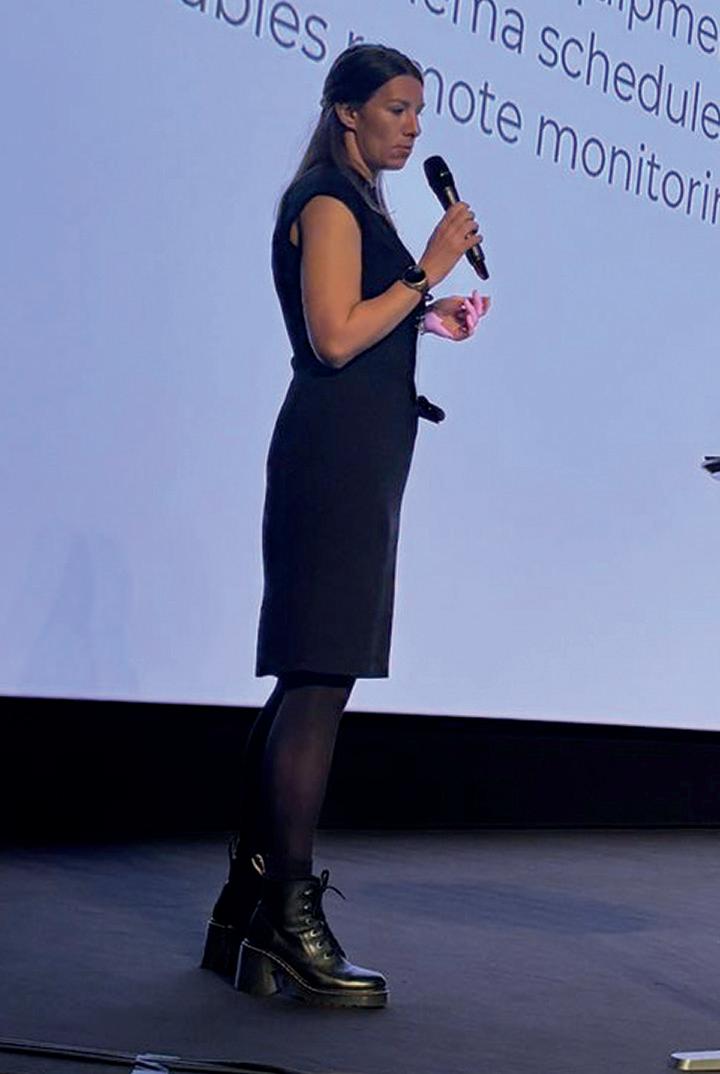
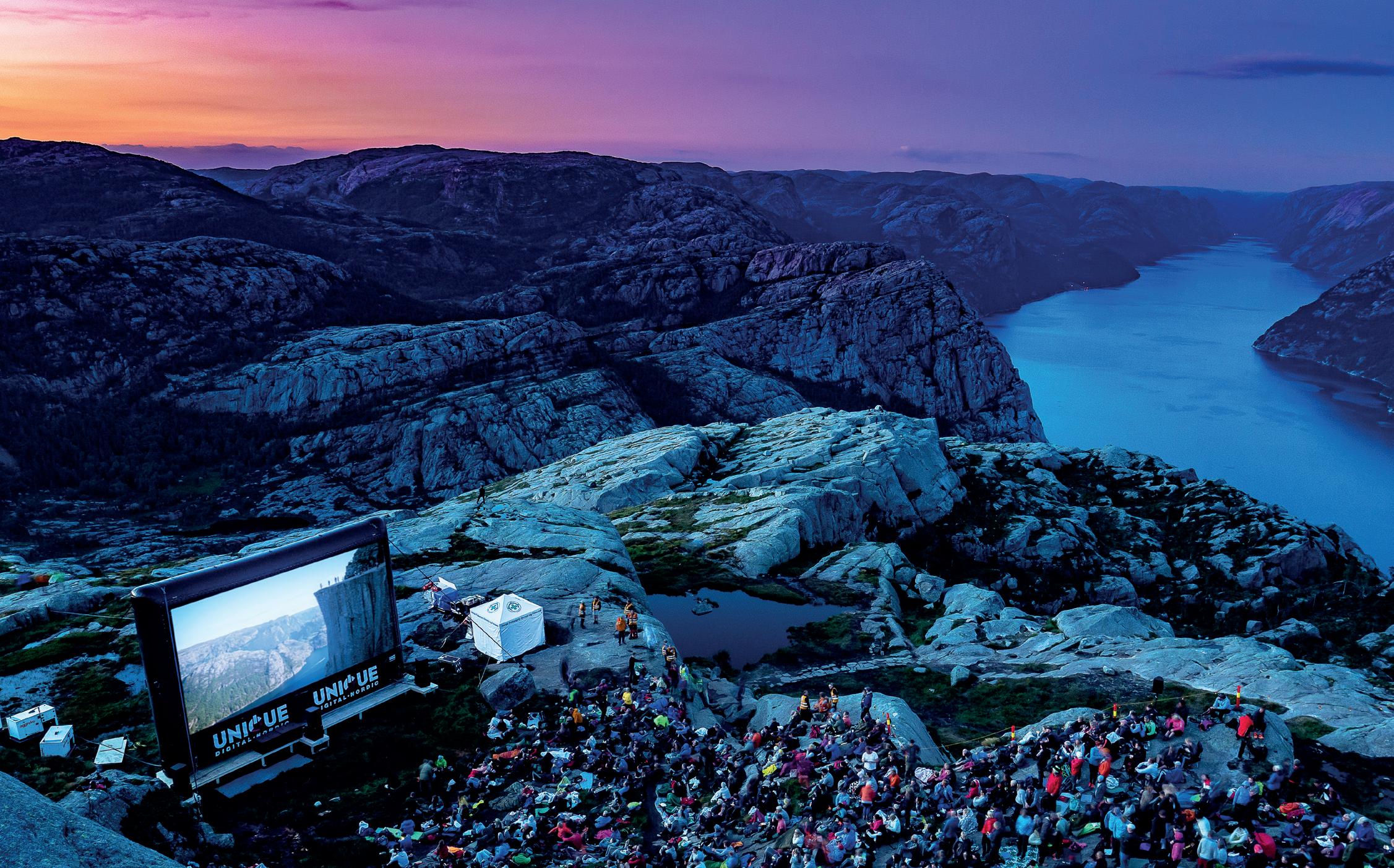
Kristiansand Cinema hosted the annual Norwegian Cinema Conference, organised by Film + Kino, bringing together exhibitors, technology providers, and industry leaders from across Europe. Split between a main programme and a technical conference, the event offered a comprehensive look at the challenges and opportunities facing the sector today.
The main conference began with keynote presentations and youth-focused sessions, while the technical conference opened midweek — shifting the conversation decisively toward innovation, design, and technology.
The opening keynote by Tim Richards, CEO of Vue International, underscored the resilience of cinema
in a rapidly changing market. His remarks framed the industry as adaptable and forward-looking, setting a confident tone for the days ahead. Patrick Von Sychowski followed with a detailed exploration of audience behaviour, charting how viewing habits have shifted in recent years. His analysis provided valuable context for exhibitors seeking to understand and respond to evolving consumer expectations.
The technical conference began with two exhibitor case studies that demonstrated how creativity and operational improvements can directly impact admissions and revenue.
Kadri Kaldma of Apollo Cinemas in Estonia presented a model built on customer convenience and choice. Self-service kiosks streamlined the
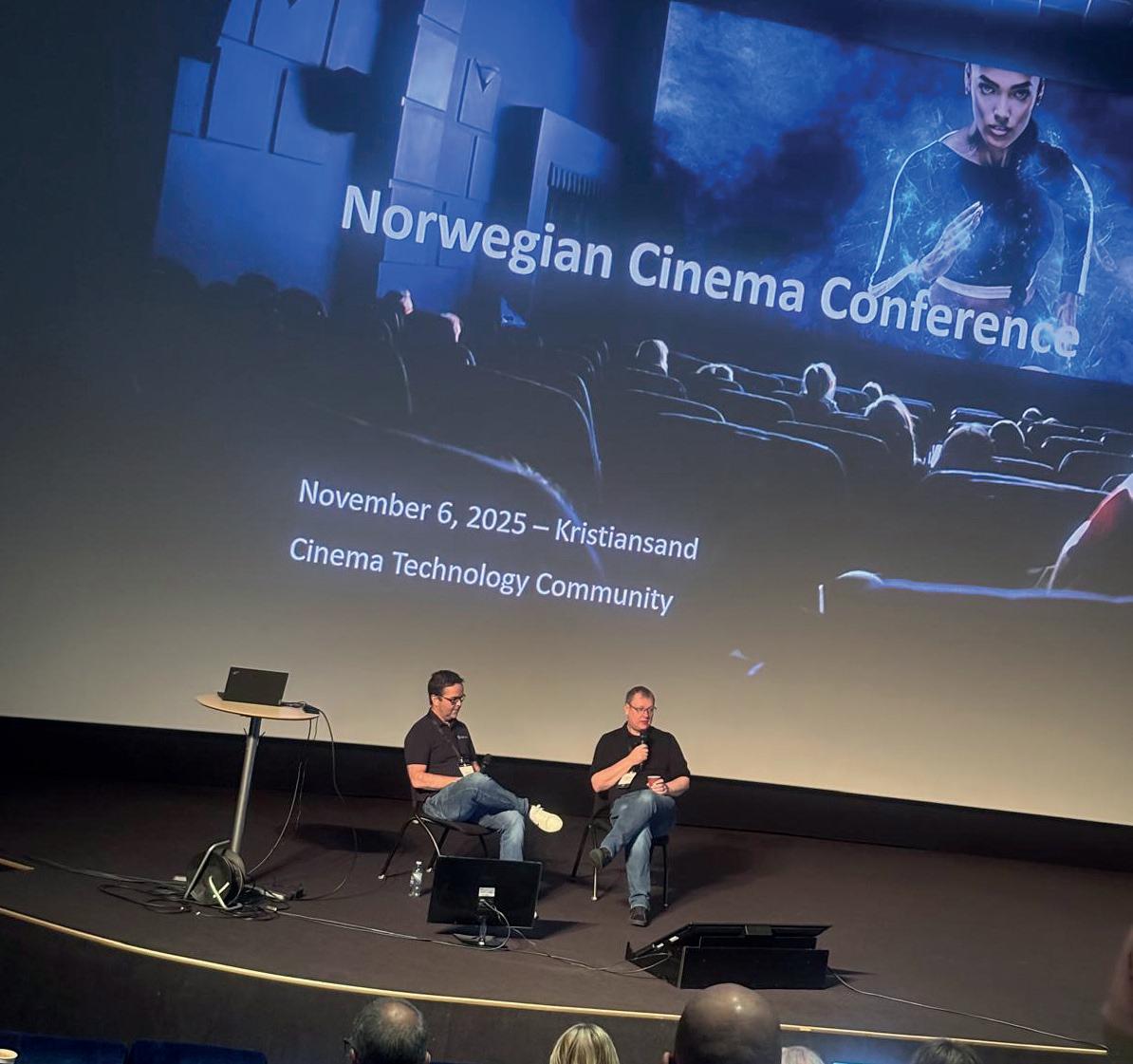
ticketing process, while varied seating options catered to different audience preferences. The result was clear: increased admissions and stronger revenue. Thomas Ruettgers of Emotion Kino in Monheim (Germany) offered a contrasting but equally compelling vision. His team focused on atmosphere, using lighting and architectural design to create a cosy, welcoming environment. The cinema became not just a place to watch films, but a community hub where visitors could drop in for coffee. Ruettgers also highlighted the success of a targeted social media campaign, which attracted 5,000 new followers in a short period — outperforming traditional advertising in print media.
The technical programme continued with presentations from Dolby, Christie, and Barco, each showcasing their latest developments in the premium cinema space. Discussions centred on contrast ratios, peak luminance levels, and dynamic range — technical parameters that directly influence the quality of the cinematic experience.
These sessions highlighted the ongoing commitment of technology providers to push the boundaries of presentation standards. For exhibitors, the message was clear: maintaining technical excellence is essential to differentiating
cinema from home viewing and ensuring audiences continue to value the big-screen experience.
Continuing a partnership that has blossomed over many years, CTC once again took over the programming from the first evening of the technical conference.
The evening featured a live edition of In The Pub With Mike Bradbury, joined by regular contributors Kevin Markwick and Toni Purvis, alongside guest Ørjan Taule from Unique X. The lively discussion encouraged audience participation, with topics ranging from readiness for Avatar 3 to the merits of RB versus RGB laser technology.
Thursday morning continued with a practical demonstration by CTC Governor David Pope, building on his 2024 presentation on sound levels. He explored the challenges of playing back content at reference level and invited questions from the audience, ensuring the session was both informative and interactive.
This was followed by a trio of presentations from CTC Directors and Governors Adam MacDonald (Sharp), Mark Kendall (Christie), and Toni Purvis (Barco), which highlighted practical technologies that could serve as quick wins on the
road to a more sustainable future in cinema. MacDonald introduced the UK Cinema Carbon Calculator, Purvis focused on automation both inside and outside the booth, and Kendall outlined the operational and cost differences between lamp and laser projection.
Mike Bradbury then led an open discussion on equipment upgrades, which highlighted the different considerations for smaller operators compared to larger chains such as Odeon.
The programme then shifted focus to cinema design and architecture. Piotr Gieraltowski presented striking before-and-after photographs of past projects, demonstrating the transformative impact of design — whether through simple interventions such as a fresh coat of paint or fullscale rebuilds.
This session set the stage for a series of presentations on acoustics in cinemas and cultural buildings. Best practices were shared to ensure that sound quality is optimised across different environments, reinforcing the importance of design not only for aesthetics but also for technical performance.
The Norwegian Cinema Conference once again proved itself a vital forum for discussion and exchange. The main conference addressed strategic themes such as audience behaviour and youth engagement, while the technical sessions showcased exhibitor ingenuity, advances in the premium cinema space, and topics such as sound and architecture.
Film + Kino’s organisation ensured a wellstructured and engaging programme, and Kristiansand Cinema provided a fitting stage for the discussions. Overall, the conference offered a positive and constructive contribution to the ongoing dialogue about cinema’s role as both a cultural institution and a commercial enterprise.
CTC were once again honoured to play such a prominent role in delivering content to the Norwegian market, and would like to sincerely thank the Film + Kino team for their generous support and warm welcome.
WORDS: TIM POTTER, FOUNDER, TRIGAGE.
As we head into the winter months after a summer full of European heatwaves and high AC energy bills, the spotlight remains firmly on cinema sustainability, both environmental and economic. In this issue, we turn to Odeon Cinemas Group (OCG), Europe’s largest cinema operator, to explore how they’re approaching energy management, emissions reduction, and wider environmental responsibility — across borders, brands and building types.
We recently spoke with Lee Gullick, Group Sustainability & Energy Senior Manager at OCG, about their strategic and operational progress. What emerged was a refreshingly holistic approach — combining smart technology, local empowerment, and a culture of transparency.
In 2024 OCG completed a major move in Spain, shifting their Cinesa circuit onto a 100% renewable electricity contract via a power purchase agreement. It’s a strong statement of intent — but also one part of a much broader strategy.
Solar PV is now in place in some recent new builds and some older cinemas (e.g. Italy, Spain and UK), with plans to expand further whenever they can. On that note, OCG also embed a number of internal sustainable design elements into their new builds and Luxe refurbishments. And behind the scenes, they have developed remote access to HVAC and Building Management Systems (BMS), allowing them to track energy use and auditorium temperature in real time.
A particularly smart innovation is the roll out of integration with VISTA POS scheduling, starting with the UK & Ireland and Italy. This integration means HVAC systems follow film schedules — cooling and heating only when required. The next step from there? Integrating ticket sales data to optimise climate control based on guest occupancy numbers — a clever way to balance comfort with carbon.
Odeon’s data strategy goes deeper still. OCG is now investigating AI devices and Internet of Things (IoT) solutions for some F&B equipment and are looking more widely at how AI can play a part in achieving greater business efficiency, particularly in energy management. Data will feed into a centralised hub to support operational decisions at both country and group level, aligned with set energy reduction targets.
"It's clear that OCG isn't just focused on reducing emissions, they're building systems and cultures that will scale. From BMS integrations to branded cups, it's the kind of joinedup thinking our industry needs a lot more of"
This isn’t just a top-down effort. The ‘Power Protectors’ initiative puts responsibility into the hands of cinema teams, giving them live dashboards and base-load comparisons to take ownership of energy performance. In short: it’s operational accountability, gamified.
OCG’s waste management review is scheduled for 2026, but progress is already underway. The challenge? Waste regulation is fragmented — differing not just between countries, but between individual local authorities. To tackle this, they’re trialling various recycling bin models alongside awareness campaigns, including an in-cinema DCP ident to promote guest engagement.
Textile recycling is also in play in the UK, with old staff uniforms being kept out of landfill through specialist contracts.
In terms of packaging, trials are ongoing for low-carbon alternatives, such as more sustainable nacho trays. In Germany and the Nordics, reusable drinks cups are in place (with all the expected shrinkage and cleaning logistics), while deposit return schemes are live in Finland, Sweden, Norway and Ireland and due to roll out in Portugal next year. Swedish guests can even buy branded cups to use on future visits.
OCG is also trialling two types of waterless urinals, looking not just at water savings but at the long-term maintenance cost reductions — a sensible double win.
They have also partnered with Too Good To Go (TGTG) in the UK, Spain and Italy to reduce food waste (i.e. unsold food going to landfill). Our
research suggested that the TGTG app is now the 3rd most popular food and drink app in the UK (iOS), ahead of McDonalds, Starbucks and Just Eat. OCG will continue to trial and find the best solutions for waste, ultimately some will work and some won’t.
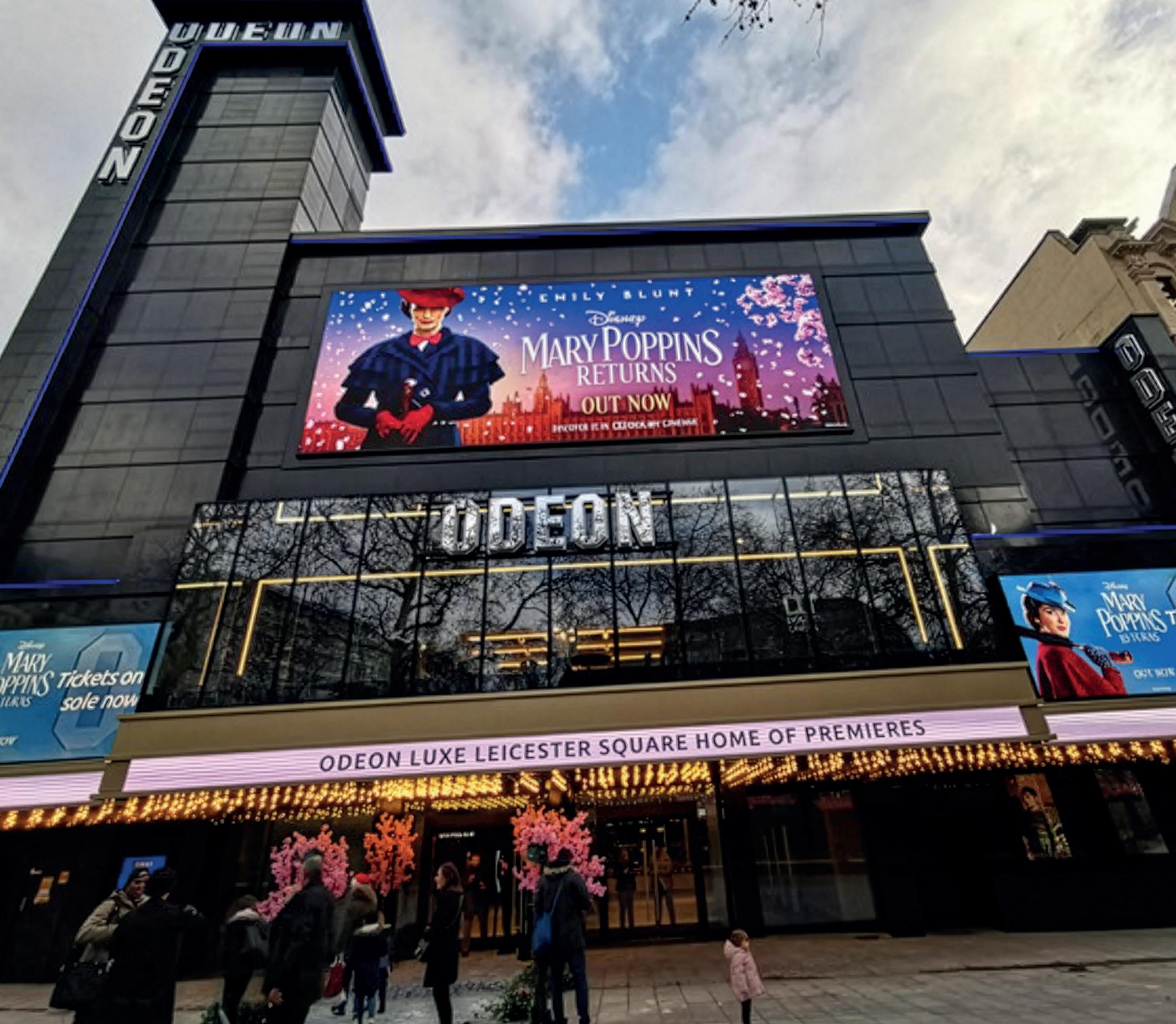
In the UK and Ireland, three of OCG’s high-profile venues — including Odeon Luxe Leicester Square — have achieved Greengage ECOsmart certification, marking them out as sustainable venues to guests and for events.
The next target market? Finland, where the group’s Finnkino-branded event cinemas are on track
for certification.As cinemas evolve into flexible, event-capable venues, eco-certification is increasingly becoming a differentiator for B2B clients.
OCG is aiming to get a holistic group wide view of Scope 1, 2 and 3 carbon emissions by the end of 2025. This will help inform them on their carbon hotspots and supplier engagement approach with the objective of addressing their most carbonintensive areas with targeted action.
Raising awareness and building their sustainability communications across all employees is a key objective for 2026 and OCG is currently reviewing ways to achieve this.
At a governance level, an Environmental, Social and Governance (ESG) Steering Group has been established with representation across their three core European territories, helping to embed accountability at the top.
It’s clear that OCG isn’t just focused on reducing emissions — they’re building systems and cultures that will scale. From BMS integrations to branded cups, it’s the kind of joined-up thinking our industry needs a lot more of.
SCALES OF BRIGHTNESS TOWARDS A STANDARDISED VIEW OF CINEMA HDR
In late 2022, the Digital Cinema Initiatives (DCI) group published the first document outlining the specifications required to achieve HDR in cinemas. This followed a long period of testing and discussion to understand what technical levels were needed to reach HDR cinema. The upshot of the Addendum Version 1.0 was that no projector could actually hit Cinema-grade HDR, but LED screens could. With an industry standard now in place, manufacturers know what to work towards to deliver HDR-capable technology. And in 2025, Barco launched HDR by Barco, based on its light steering technology that it has been developing for a decade. The technology continually analyses content to move light around where it is needed, which is why it can achieve HDR in a projector whereas others can’t yet viably.
BRIGHTNESS ON SCREEN (NITS)
BRIGHTNESS LEVEL OF IMAX WITH LASER, AVAILABLE IN 32% OF IMAX COMMERCIAL CINEMA LOCATIONS WORLDWIDE.
THIS IS WHERE DOLBTY CINEMA SITS. CONTRAST RATIO IS SIGNIFICANTLY ELEVATED COMPARED TO OTHER FORMATS. EVEN THOUGH NOT TRUE HDR, IT'S PITCHED AS EDR.
108 NITS
SCREENS &
BY BARCO PROJECTORS, WHICH ARE FEWER THAN 400 SCREENS WORLDWIDE.
300 NITS STANDARD 2D THIS IS WHERE THE DCI STANDARD (2D CINEMA) SITS, THE EQUIVALENT OF 14 FOOT-LAMBERTS IN THE 35MM DAYS.
The precursor to HDR has been Extended Dynamic Range (EDR), and we also now have Variable Dynamic Range (VDR) by Christie which can be activated in over 3,000 projectors (currently). Several branded formats come under the heading of EDR, such as IMAX and Dolby Vision. In true cinema fashion, there has been an accumulation of acronyms, none of which the general public will recognise, to describe attempts to improve the image on screen. Given that LED screens were the only ones to hit Cinema HDR before HDR by Barco, the number of HDR screens in cinema is limited, around 400 by the end of 2025. This is one quarter of the total number of EDR/VDR/HDR screens in cinemas. The ability for projector-delivered HDR by Barco is a turning point for HDR take-up in cinemas, building on HDR-capable LED. For me, the HDR label is key for the premiumisation of cinemas and to keep cinema audiences coming back, given that most people won’t be aware of the nuances of image quality, brightness and contrast. This is clearly a view shared by Vue Cinemas, who launched the EPIC format in summer 2025, choosing HDR by Barco and Dolby Atmos to become the first HDR format for cinemas. Vue is
Several branded formats come under the heading of EDR, such as IMAX and Dolby Vision.
targeting 11 screens in 2025 and a further 50 across the Vue estate (international) in 2026–27. The group may also license the format to noncompeting cinemas in the longer term.
Omdia’s Consumer Survey research shows that across all countries, the quality of image (including HDR) was the second most important criteria for buying a TV (mentioned by 33.5% of respondents). Those who spend more also want more in terms of high-end functionality. It is also worth noting that people who go to the cinema frequently also over index on subscribing to and watching streaming services. These are the same people who will be watching HDR in the home. However, consumers will also value some genres/content types in HDR
more than others. In creation terms, HDR is particularly suited to animation, action, adventure, certain documentary types, fantasy, horror and sci-fi movies. Creators have more of a colour palette to play with and can also play with whites and blacks more effectively.
Streaming platforms regularly offer both 4K and HDR to their customers to watch content, and have leapfrogged cinema in quality terms, which for many years was the apex in on-screen image quality. Improving quality in the home doesn’t permeate people’s perceptions immediately, but over time viewers will subconsciously expect higher quality images in cinema if they are regularly experiencing HDR quality in the home. The expansion of tech options for cinemas means that technology is now a key differentiator between cinemas but also the foundation for building a more premium sector and upping the bar all round. HDR is key for the premiumisation of cinemas, which in itself is important, but it is also key for the whole sector’s long-term health.
However, there isn’t much point having HDR screens if the movies supplied aren’t provided in
THE PRECURSOR TO HDR HAS BEEN EXTENDED DYNAMIC RANGE (EDR), AND WE ALSO NOW HAVE VARIABLE DYNAMIC RANGE (VDR) BY CHRISTIE WHICH CAN BE ACTIVATED IN OVER 3,000 PROJECTORS
3,000 80% 33.5% 400 0.1%
GIVEN THAT LED SCREENS WERE THE ONLY ONES TO HIT CINEMA HDR BEFORE HDR BY BARCO, THE NUMBER OF HDR SCREENS IN CINEMA IS LIMITED, AROUND 400 BY THE END OF 2025
HDR. So, studios, distributors and producers need to follow the market expansion of EDR/VDR/HDR screens with suitable movies to play on them. While HDR remains restricted on a few screens, the reality is that only certain movies will make their way onto HDR screens, likely to be the tentpoles that dominate the first two-weeks in the cinema. At some point soon, these need to be supplied at an HDR grade to cinemas. Only Pixar has committed to providing HDR grade movies for cinemas, the first was Elementals which was mastered at 4K HDR. All subsequent Pixar movies have also been provided in the same grade but Pixar are the only ones. This may well be down to the lack of auditoriums to play such a mastered version in but as this evolves so must the studio view. The chicken has clucked, the egg needs to follow.
Of course, HDR rollout isn’t going to happen overnight for a number of reasons. The principal one is cost: HDR, whether by acquiring LED or HDR by Barco is expensive and money is not awash in the cinema sector at present. The global box office is at 80% of the figure of 2019 and costs have risen across the board. Investment needs to be strategic and long-term for these technologies. Such an investment would probably also require extra expenditure on associated equipment, audio, screen, branding and marketing, as well as operational costs (higher energy usage maybe). At these early days, exhibitors do not know for certain if audiences will pay more for
% OF THOSE WHO SAIDIMAGE QUALITY IS THE 2ND MOST IMPORTANT CRITERIA FOR TV PURCHASING
HDR quality, although the experience with premium formats is a good indicator that they will. As the installed base of HDR-grade cinemas grows, there is more reason to provide content (think back to digital cinema and providing digital prints) in the correct master, but it may take time for that to filter back to content providers.
LED Direct-View screens have some clear advantages over traditional projectors, in terms of brightness and image quality, and they also offer HDR capabilities. There are some very distinct use cases for LED in cinemas, especially where light is useful (for example, in-seat dining, kids’ screenings) and these sections of the market are growing. Projectors have many trade-offs to balance to achieve very high brightness, making HDR difficult on them, with only HDR by Barco able to do it. While LED screens make up a tiny fraction of global market for cinema screens (around 0.1% of the 218,000 screens worldwide), they will not drive HDR capacity in cinemas any time soon, at least not outside China, which is likely to embrace LED, a country without the long history of 35mm projection, but also with no licensed projector manufacturer and with a government that would like its own solution in the cinema technology sector. However, the market for Direct-View is as ready as it has ever been to grow, especially at larger screen sizes and for those exhibitors seeking HDR. The price differential with projection is not as wide at this size and image level, and the case for investing is
LED SCREENS MAKE UP A TINY FRACTION OF GLOBAL MARKET FOR CINEMA SCREENS (AROUND 0.1% OF THE 218,000 SCREENS WORLDWIDE)
THE GLOBAL BOX OFFICE IS AT 80% OF THE FIGURE OF 2019 AND COSTS HAVE RISEN ACROSS THE BOARD
easier to make. It can be a selling point for LED screens for those exhibitors looking to offer HDR to their customers now. The only way LED grows is to take a long-term approach with gradual yearly gains, given the long lifespan of a cinema projector and the installed base of projectors, and this is one more weapon on their armoury of arguments to switch to LED. Technology manufacturers can hedge their bets by being involved in both types of image delivery although this actually works one way only as cinema projection is based on existing licenses. Projector companies need a foot in the LED camp, which all three do to differing degrees.
However, the lack of LED growth to date means having a projector-capable HDR solution ready for the market is important, offering the established method to cinemas that are set up for projection.
Technology is a business-critical element of the cinema exhibition sector, and HDR is one of the most important areas within that. Cinemas need to invest in projection equipment that helps them stand out from the crowd, be that other cinemas or movie (content) watching alternatives not in the cinema. Giving the customer a reason to stay at home is not an option, so investing in HDR technology is a catalyst (not the only one) to delivering a must-see experience. It may be a slow burn, but incremental improvements in image quality are a fundamental plank in the future of cinemagoing.
WORDS: PETER KNIGHT, COMMISSIONING EDITOR
There is something wonderfully British about the garden centre. A place to pick up a pot of petunias, enjoy a slice of Victoria sponge, and perhaps browse a surprisingly wellcurated range of homeware. But the story of the garden centre is far more than a weekend outing. It is a fascinating example of retail reinvention. From modest horticultural beginnings to their modern guise as multi-layered leisure destinations, garden centres have redefined what it means to be a place of commerce and community.
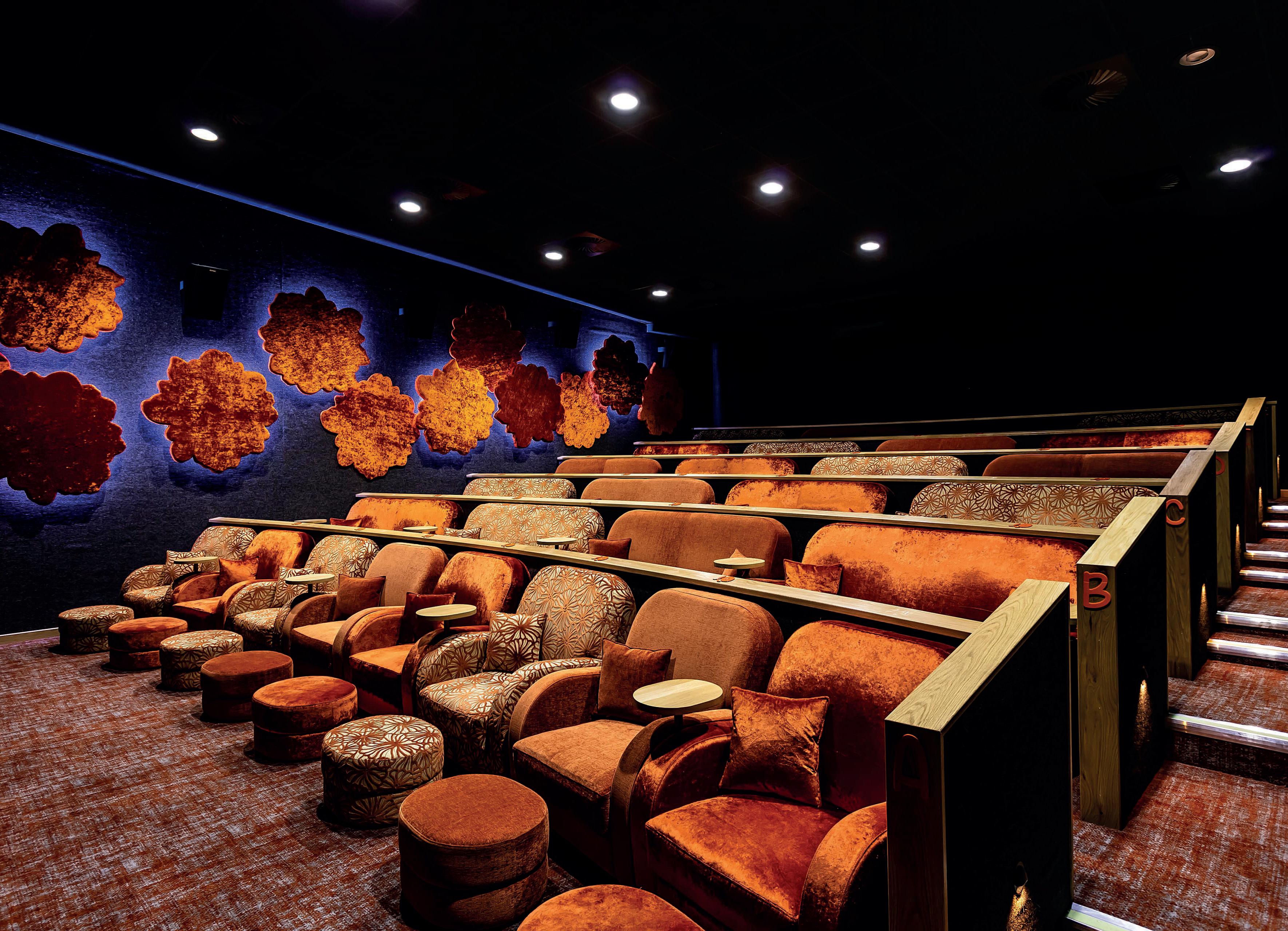
That transformation did not happen by accident. Faced with economic pressures, changing consumer habits, and the shifting seasons, garden centres adapted. They found ways to stay relevant and attractive, expanding their offerings and embracing the experiential economy. It is a journey that might sound familiar to anyone in the cinema industry.
Cinema operators are asking the same question: what else can we be? As the sector wrestles with issues such as declining footfall and the streaming revolution, the story of the garden centre offers valuable clues. What if cinemas, like garden centres, became places to linger, not just to watch a film but to eat, shop, play and connect? Before we explore that future, let’s take a look at where the garden centre came from and how it blossomed into what it is today.
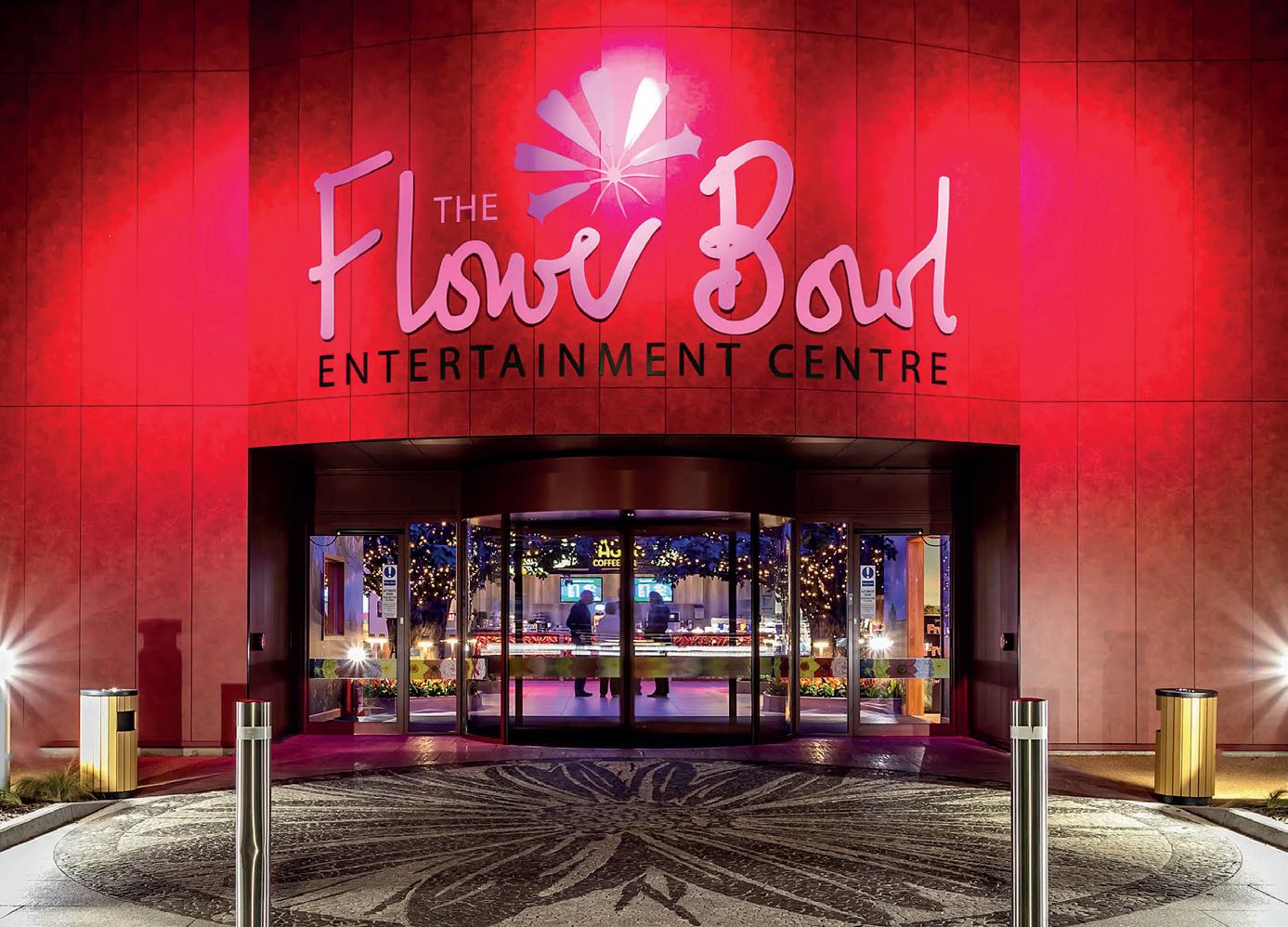
The idea of cultivating and selling plants dates back centuries, but the modern garden centre as we know it is a relatively recent phenomenon. Its roots lie in the traditional nursery, a grower’s business often attached to an estate or market garden, supplying plants directly to customers or local markets. These were working sites, focused on production rather than presentation.
It wasn’t until the post-war era, particularly the 1950s and 60s, that things began to change. Britain was rebuilding, suburban housing was on the rise, and people were investing in their homes and gardens. Inspired in part by developments in the United States and continental Europe, British horticulturists began experimenting with purposebuilt retail sites that could showcase plants attractively, year-round. These were the first true garden centres, combining the stock of a nursery with the customer-friendly layout of a department store. The 1970s saw steady growth, but it was the 1980s and 90s that brought real expansion. Car ownership was up, and consumers were willing to travel for a better experience. Out-of-town sites offered ample parking and room to grow. It was during this period that cafés started to appear, first as modest tearooms, then evolving into restaurants and full-scale catering operations.
As retail habits shifted again in the 2000s, with online shopping rising and high streets declining, garden centres leaned harder into experiential value. They became year-round attractions, offering Christmas wonderlands, Easter trails, craft fairs, cookery demos and gardening workshops. Product lines diversified too: home furnishings, gifts, fashion, books and pets joined the mix. Today, in many large centres, plants occupy only a third of the floor space.
The modern garden centre is not just a shop. It is a curated environment designed to maximise dwell time, drive impulse purchases, and foster a sense of community. Visitors might come for a hanging basket but stay for lunch, a gift for a friend, and wander through a curated display area. The model is built around versatility, hospitality, and comfort. And it works. According to the Horticultural Trades Association (HTA), garden
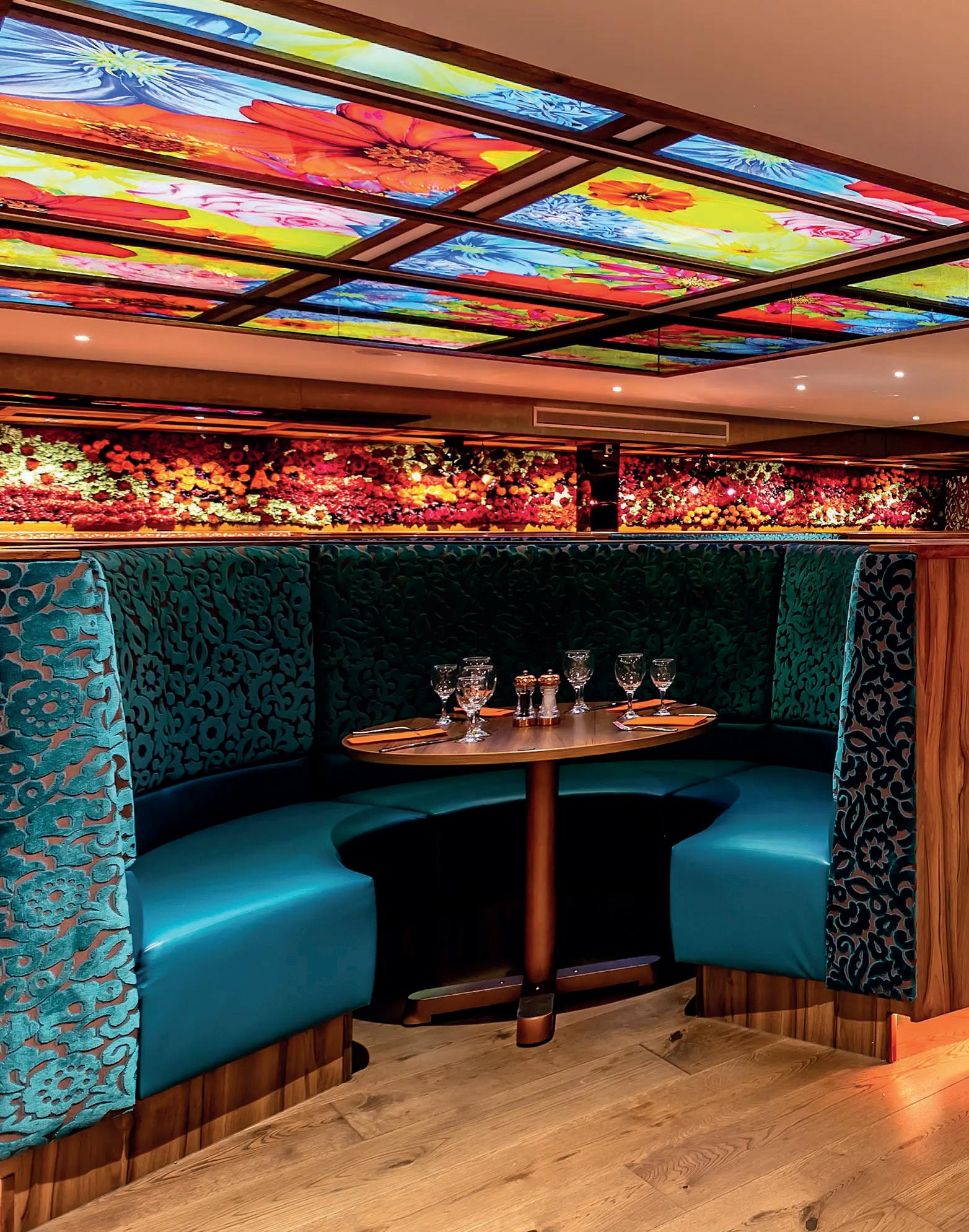
centre visits continue to rise, with over 70% of UK adults visiting at least once a year. There are around 2,300 garden centres and retail nurseries in the UK, generating an annual turnover of more than £6 billion. Importantly, food and beverage offerings now account for up to 15% of revenue in some centres, with many operators reporting stronger performance outside the traditional springsummer peak. Diversification has not just kept garden centres afloat, it has allowed them to thrive. Internationally, the model holds up. Across Europe, jardineries in France, Germany and the Netherlands follow similar approaches, with brands like Truffaut, Dehner, and Intratuin leading the charge. In Asia, rooftop plant cafés in Tokyo and lifestyle-led nurseries in Seoul show how the concept adapts even in high-density urban environments. Globally, the garden retail sector is estimated to exceed £75 billion, driven increasingly by non-horticultural sales and leisureoriented experiences. The garden centre has gone
from muddy boots and seed trays to a full-scale leisure business. Its success is a case study in adaptability. And that is where the cinema industry might start to pay attention.
The journey from a nursery-based plant retailer to a multifaceted leisure destination did not happen overnight. It was the product of incremental innovation, often driven by necessity. Garden centres learned that a wet bank holiday weekend could wipe out footfall, and that offering a warm café and dry indoor shopping could help offset those losses. In time, they came to understand that experiences, not just products, brought people through the door. This shift has seen the emergence of venues that bear more resemblance to department stores or family attractions than traditional garden outlets. Today, it is common to find indoor play areas for children, craft workshops, cookery demos, art exhibitions, and
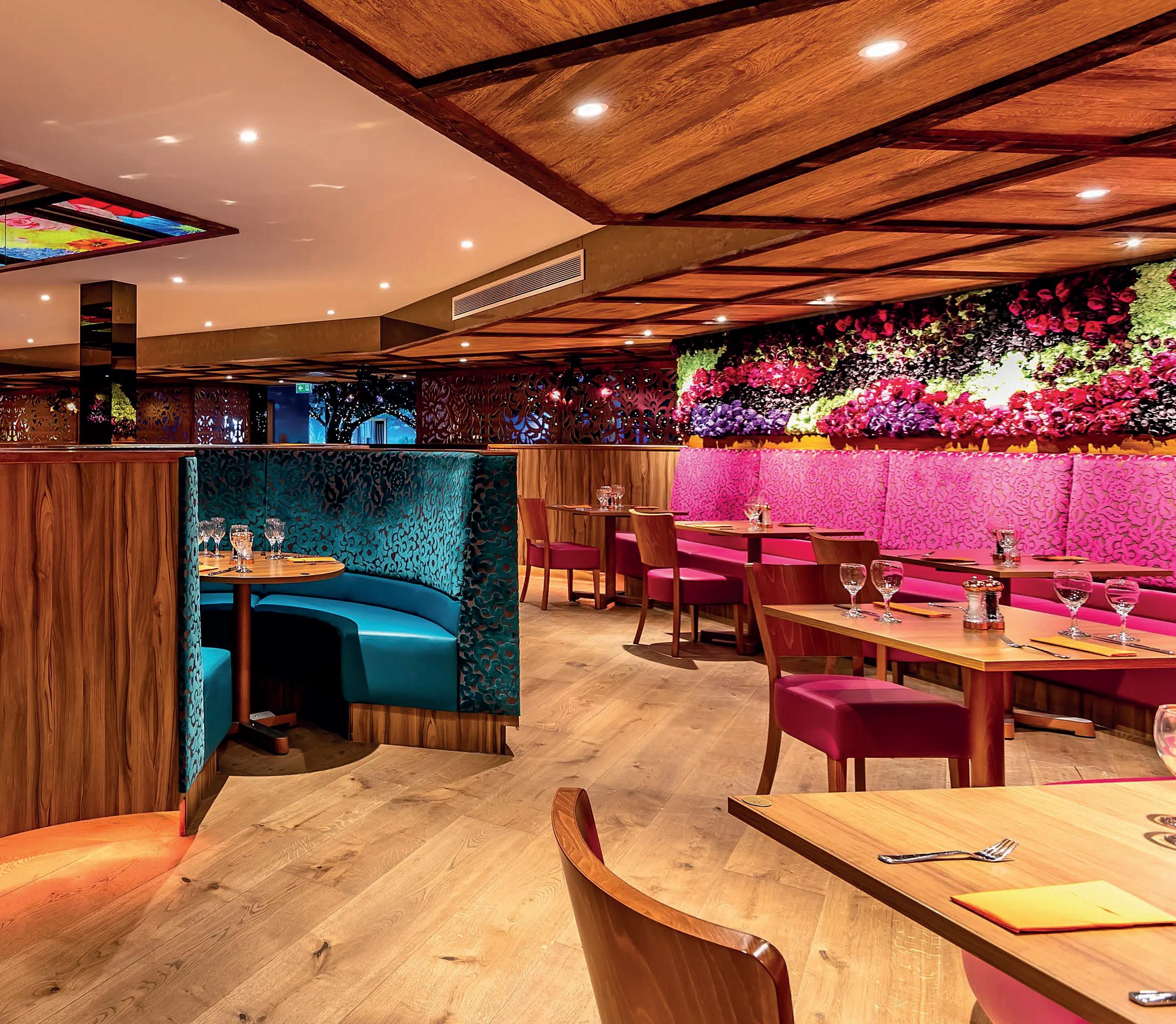
themed seasonal events, all under the garden centre roof. Each element is designed to extend dwell time, broaden appeal, and increase per capita spend.
Catering has become a powerhouse. Where once a modest tearoom sufficed, many centres now boast full-service restaurants, patisseries, or even food halls. This food and beverage offer not only boosts margins but also supports longer visits and repeat custom.
For the cinema sector, the parallels are striking. Much like garden centres once did, cinemas now face the challenge of remaining relevant in an experience-driven economy. The average filmgoer wants more than a ticket and a screen. They want an evening out, a comfortable setting, perhaps a cocktail and a meal, or something unexpected to share on social media. Some operators are already experimenting with boutique models, pop-up events, and extended F&B. But there is room to go further. What if cinemas, like garden centres, repositioned themselves as lifestyle venues? Places
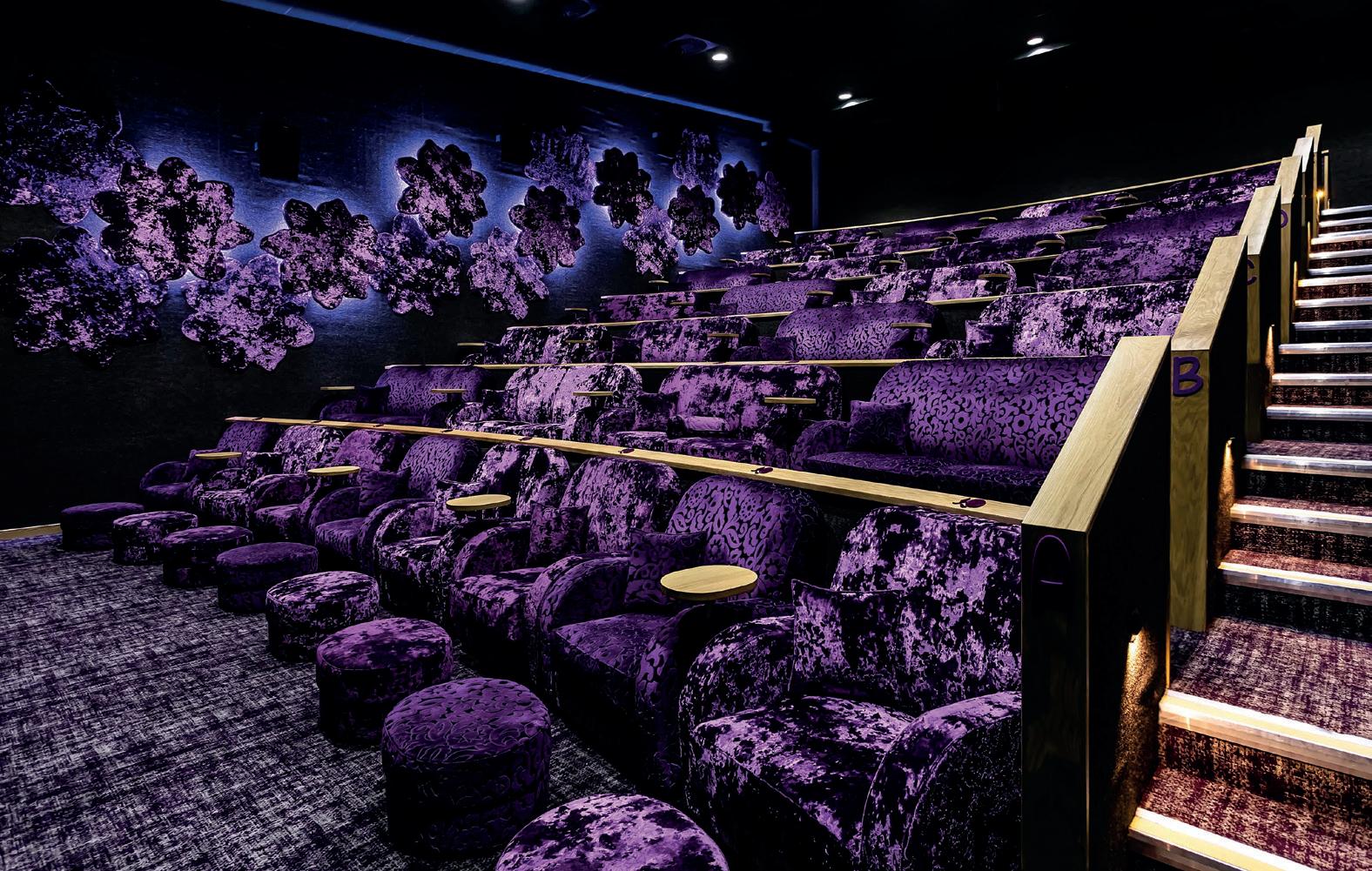
where entertainment, dining, leisure, and even light retail coexist in a well-branded, harmonious space. The idea is not to dilute cinema’s core product, but to reframe the visit as part of a broader experience economy.
It would be wrong to suggest that cinemas have not already walked a similar path. In many ways, the cinema industry has a long tradition of expanding beyond pure film exhibition.
Historically, the roots of cinema in the UK were entwined with theatre. Cine-variety venues in the early 20th century offered a mixture of live acts and
film screenings. Cinemas were cultural landmarks, often adorned with ornate architecture and imbued with a sense of occasion. Going to the cinema was never just about the film, it was about the experience. The advent of the multiplex in 1985 redefined cinema once more. These out-of-town, multi-screen venues were a response to changing urban geographies and consumer demand. And with them came new additions: cafés, fast food, soft play areas, and even amusement arcades, particularly popular through the 1990s. This diversification was not dissimilar to what garden centres would later adopt. In more recent years, cinemas have experimented further. Premium seating, in-auditorium dining, cocktail bars, private hire spaces, and themed experiences are now
commonplace. Virtual reality installations, gaming lounges, and event cinema (from live theatre to esports) have all found space in modern venues. Operators like Everyman, The Light, and Backyard Cinema have leaned into the boutique, lifestyle-led model, much as garden centres did when shifting from retail to day-out destination. One only needs to look through the pages of this magazine over the last few years to find examples: from Vue’s trials of gourmet concessions to independent venues hosting supper clubs and yoga screenings.
The sector has not stood still. But what remains elusive is a fully integrated, branded ecosystem that blends entertainment, retail, dining, and leisure under one roof. A garden-centre-style transformation, deliberate, diversified, and experience-driven, is still more the exception than the rule. Which bringsus, naturally, to the Barton Grange Garden Centre and Flower Bowl that has arguably gone further than any other in embracing this model.
So, what does all of this mean for the cinema sector at large? Beyond inspiration, what can garden centres, and venues like The Flower Bowl, teach exhibitors looking to future-proof their business?
EXPERIENCE DRIVES FOOTFALL
Retail alone is no longer enough to justify a trip out. Consumers are increasingly motivated by experiences, and that starts from the moment they walk through the door. Cinemas that can create memorable, multi-sensory, and multi-purpose spaces, think rich interior design, comfortable social zones, photo opportunities, and food that excites, will gain competitive advantage.
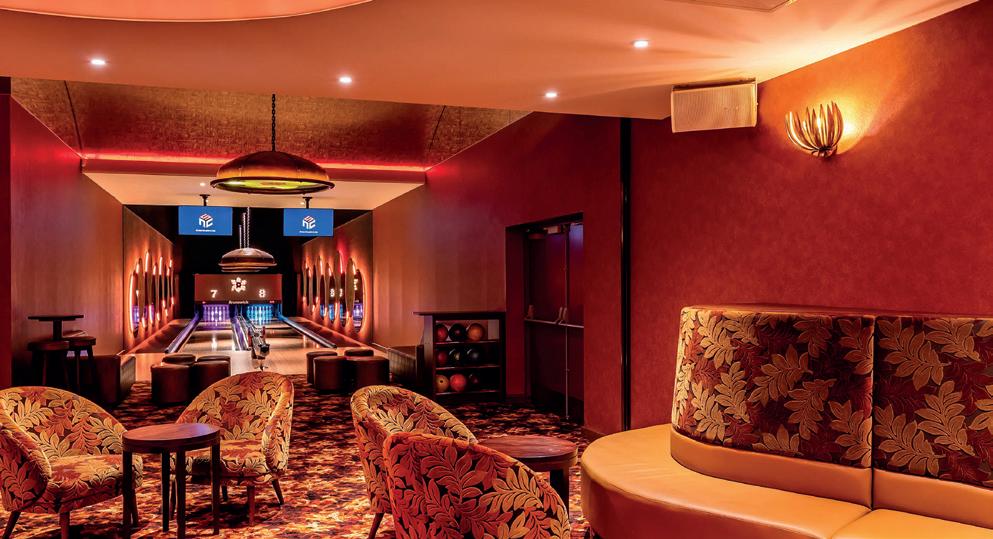
The garden centre model is clear: the longer you can keep someone on site, the more likely they are to spend across multiple categories. Cinemas that offer pre- and post-film dining, child-friendly zones, boutique retail or lifestyle add-ons can capture extra revenue that goes beyond the ticket.
Garden centres have learned to embrace the calendar. From autumn décor and Halloween pumpkins to summer BBQ ranges and Christmas wonderlands, they have created annual rhythms that bring people back. Cinemas, too, can do more with themed programming, events, and spatial decoration to tap into seasonal behaviour.
COMMUNITY
Perhaps the most compelling lesson from the garden centre playbook is the importance of belonging. The best garden centres serve as social spaces, not just shops. They host events, support local makers, and build loyalty through familiarity. Cinemas can harness that same ethos by becoming cultural hubs: showcasing local talent, providing space for community gatherings, or simply offering warm, human-centric environments.
BARTON GRANGE GARDEN CENTRE & THE FLOWER BOWL
Nowhere is this evolution more visibly realised than at Barton Grange in Lancashire. Founded in 1945 by Edward Topping as a landscaping firm, the company expanded into plant growing and retail in the 1960s. In 2008, Barton Grange Garden Centre moved to a new, purpose-built facility at Brock, featuring an award-winning design and significant investment in hospitality. The truly eyecatching move came in 2018, with the opening of The Flower Bowl Entertainment Centre, located directly next to the garden centre and built at a cost of £8 million. The project was spearheaded by the second generation of the
Topping family and marks one of the UK’s boldest attempts to blend leisure, cinema, and retail into a unified offer. The Flower Bowl is unlike any cinema complex you have seen. It houses three boutique cinema screens with luxurious sofa seating, a curling rink (the only one of its kind in England), a bowling alley, a crazy golf course, VR rides, golf simulators, and multiple eateries. The entire building is designed around botanical themes, including a living grass roof, floral motifs in lighting and seating, and a seamless flow between entertainment zones.
It is, in essence, a destination, a place where a morning of plant shopping can morph into a family bowling match, a fish and chip lunch, and an afternoon movie, all underpinned by a consistent brand story and customer journey.
What makes The Flower Bowl so instructive is not just the breadth of its offer but the thoughtfulness of its design. It is a case study in integrated leisure: clear theming, multi-generational appeal, and operational synergy with the adjacent garden centre.
Running a site that houses everything from a film screen to a curling rink is not simple. But The Flower Bowl shows that with careful branding, good design, and operational alignment, it is possible to build a multifaceted business that works in harmony. The lesson? Diversification is not dilution, it is potential unlocked.
CONCLUSION:
At their best, both cinemas and garden centres are places of escape. They offer respite, inspiration, connection, and increasingly, sustenance and entertainment. The success of the modern garden centre lies not in abandoning its core offering, but in expanding around it. The same can be true for cinema. This is not a call to install hanging baskets in the lobby. It is an invitation to rethink what a cinema could be: not just a darkened room with a screen, but a vibrant, flexible space that adapts to audience needs and evolves with the times. In a world of endless streaming and short attention spans, the big screen must fight for relevance, and it can win that fight by offering something that no algorithm ever could: a real place, for real people, with real experience at its heart.
How the UK’s leading boutique cinema chain delivers technical sophistication beneath heritage elegance in its landmark 49th venue.
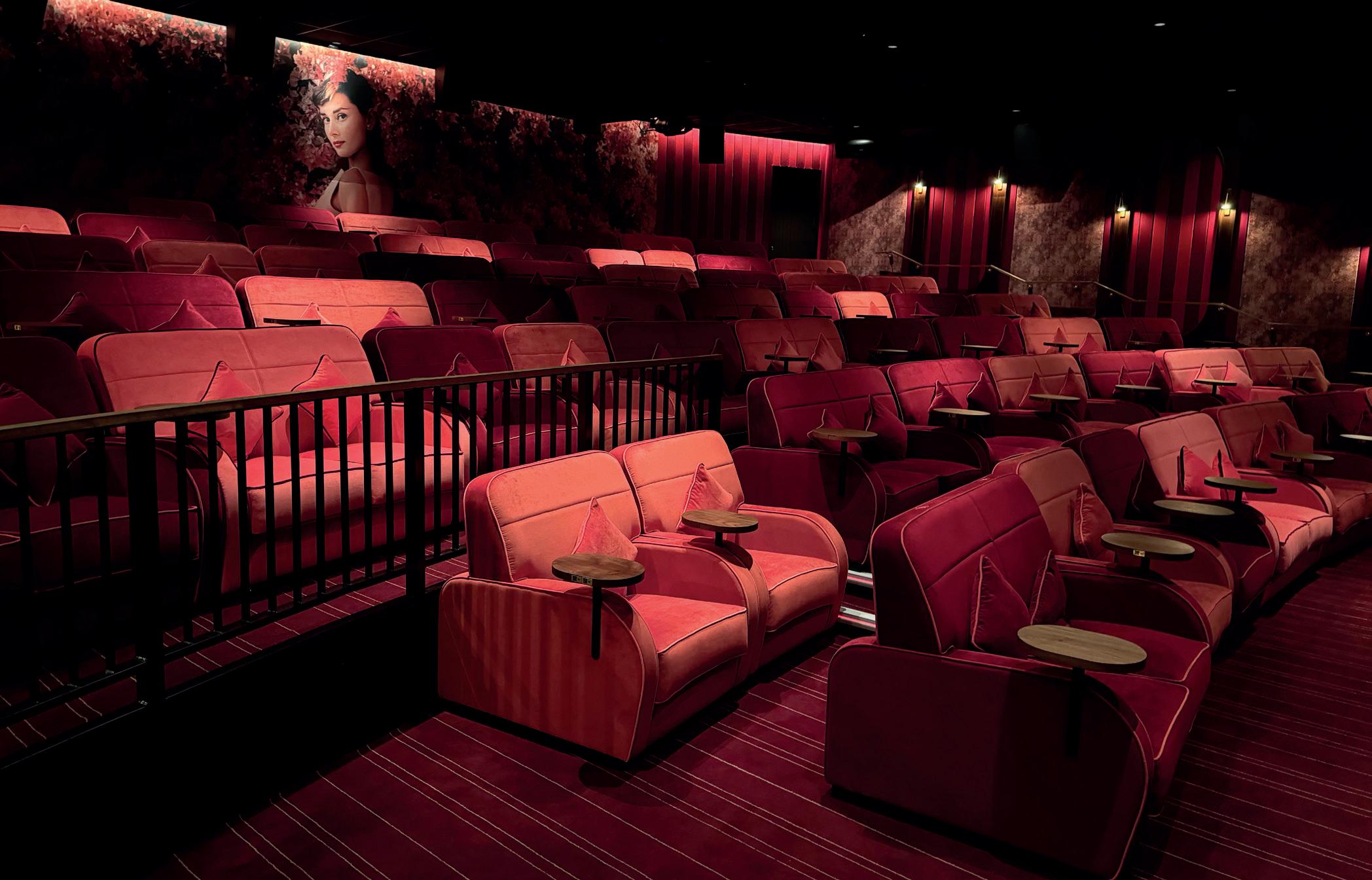
WORDS: PATRICK VON SYCHOWSKI, CINEMANEXT
Everyman Cinemas has long been synonymous with comfort, cocktails and conversation - a place where audiences settle into plush velvet sofas, enjoy a “Spielburger” and sip a Picanté before the lights dim. But with its 49th venue, Everyman at The Whiteley, the brand best known for boutique indulgence has quietly delivered its most technologically advanced cinema to date. Housed within a meticulously restored Grade II-listed building that once served as London’s first department store, this five-screen, 332-seat
cinema represents Everyman’s most technically advanced installation to date.
“We don’t really like to burden a venue with the title ‘flagship’ site, but this one comes close,” explains Nick Davey, Everyman’s Chief Technology Officer, during an exclusive walkthrough of the venue. “With apartments above us being some of the most spectacular you could imagine and the Six Senses Hotel positioning the building as one of the most prestigious addresses in London, we needed our cinema to match that level of luxury whilst being
suitable for high-end events.” This is the why and how Everyman’s commitment to customer experience now extends deep into the technical backbone of cinema presentation, event production, and system control.
The path to creating this technical showcase wasn’t straightforward. Bell Theatre Services (BTS), the integration partner responsible for the installation,
faced extraordinary challenges working within the constraints of the historic building shell, two levels below ground.
“One of the biggest obstacles was Screen 1,” reveals Steffan Laugharne of BTS. “When you look up, the ceiling bulkheads hide a huge number of concrete downstand beams. Trying to fit equipment around those, plus fire-alarm sprinkler pipes, was one of the toughest fit-outs we’ve ever done.”
The complexity extended beyond mere spatial constraints. Above the ceiling, a maze of ductwork, sprinkler pipes, and rainwater and soil pipes from the luxury residences above created what Laugharne describes as an “extremely busy” environment, all requiring careful navigation and coordination. The team had to visit the site once or twice weekly during pre-installation to ensure space was preserved for speakers and proper alignment. Adding to the challenge, curtain tracks for the tabs in Screen 1 required an additional 300mm of height clearance.
“Maximising the picture sizes under those constraints was tricky,” Laugharne notes. The result pushes screen sizes to within 50mm of the walls in some auditoriums whilst ensuring no more than a maximum 45-degree viewing angle - a testament to precise engineering within tight tolerances. The auditorium is a fan-shaped beauty of stylish decor and comfort, something that is taken for granted these days with every new Everyman venue, but still worth highlighting.
At the heart of The Whiteley’s technical prowess lies a comprehensive Q-SYS implementation - the fourth such installation for Everyman and their most advanced iteration yet. The system, supplied and integrated by Bell Theatre Services, represents a fundamental shift from traditional cinema infrastructure toward networked, IP-based control.
“Q-SYS allowed us to bring everything under one ecosystem,” Davey explains. “Through it, we can monitor projector pod temperatures, power states, playback status, automation controls for masking and dowsers, and even audio routing - all from a single interface.” The system runs on dual Q-SYS Core 110f processors in redundant configuration. “Every automation command is sent four times - once to each core and each network,” Laugharne details. “So no matter what fails, the system keeps running.” This level of redundancy ensures the venue can maintain operations even during component failures - critical for high-profile premieres and live events. The shift to
EVERYMAN AT THE WHITELEY — AT A GLANCE
OPERATOR
Everyman Cinemas (49th venue)
LOCATION
The Whiteley, Bayswater, West London
OPENED Summer 2025
SCREENS
5 auditoria
TOTAL CAPACITY
332 seats
DESIGN PARTNER
Fusion Design & Architecture
TECHNICAL INTEGRATION
Bell Theatre Services Ltd
SYSTEM SUPPLIER
Bell Theatre Services Ltd
CONTROL & NETWORKINGQ-SYS integrated audio-video-control platform
PRIMARY USE
Premium cinema, private hire, live events, and streamed Q&As
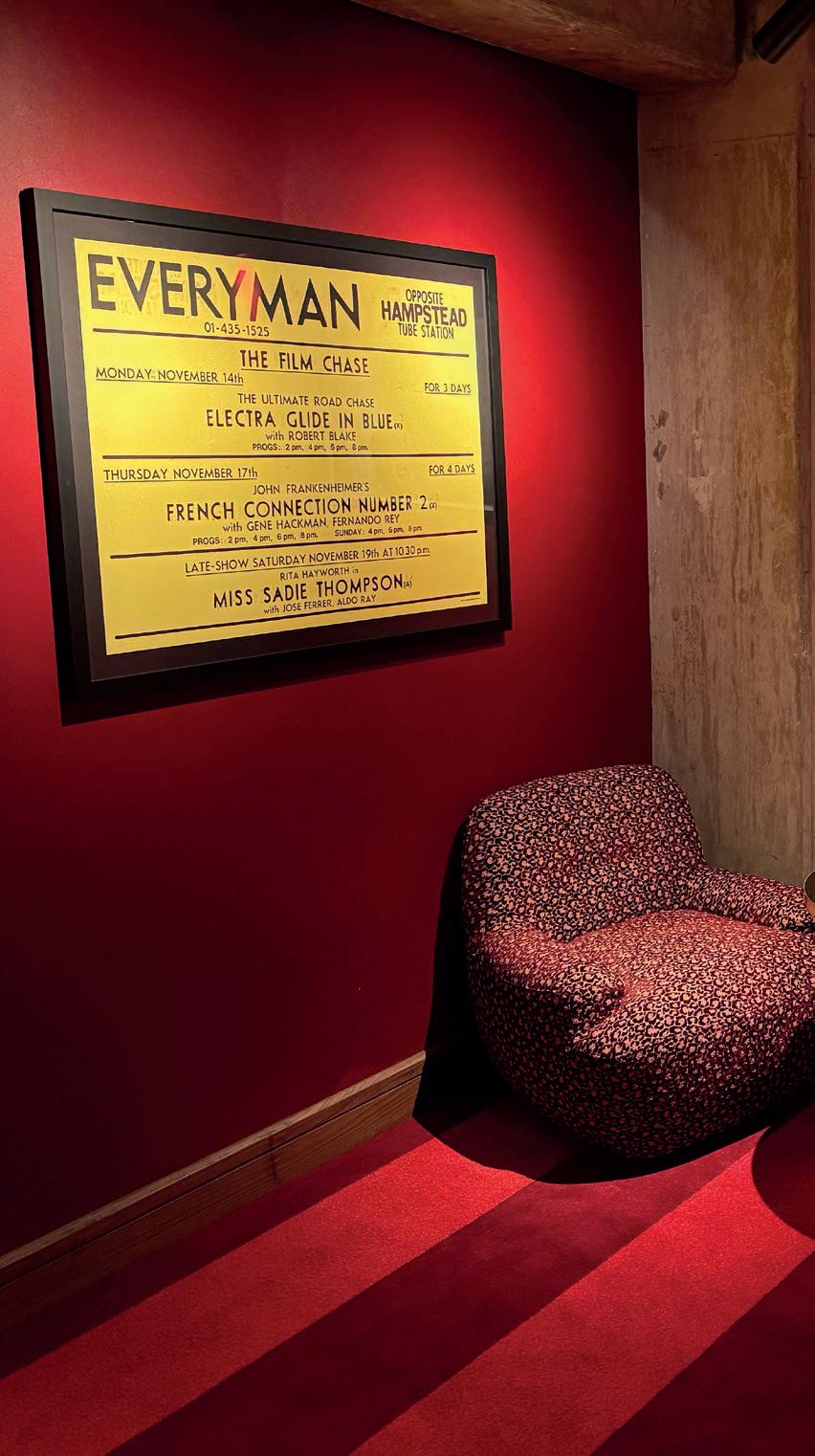
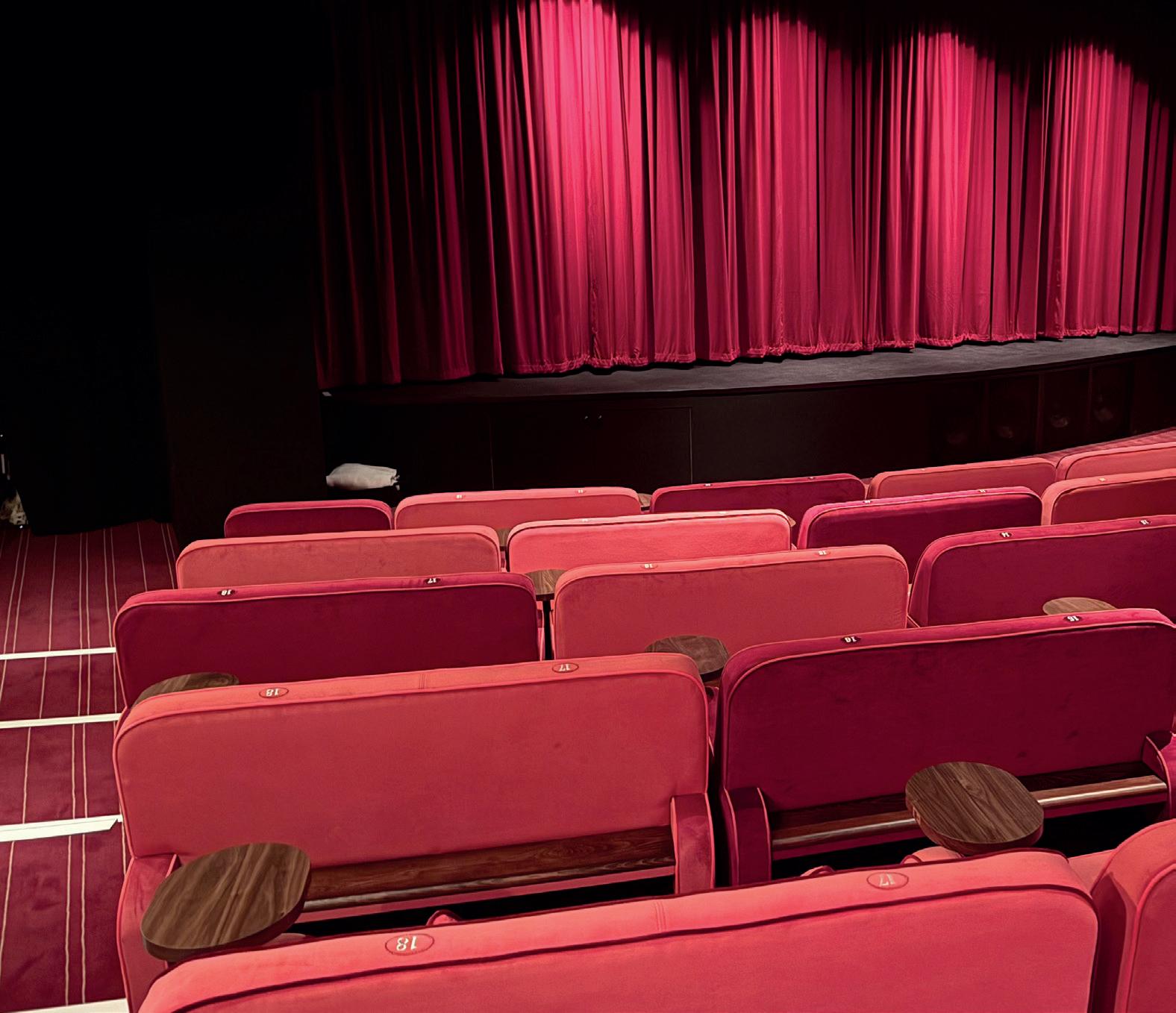
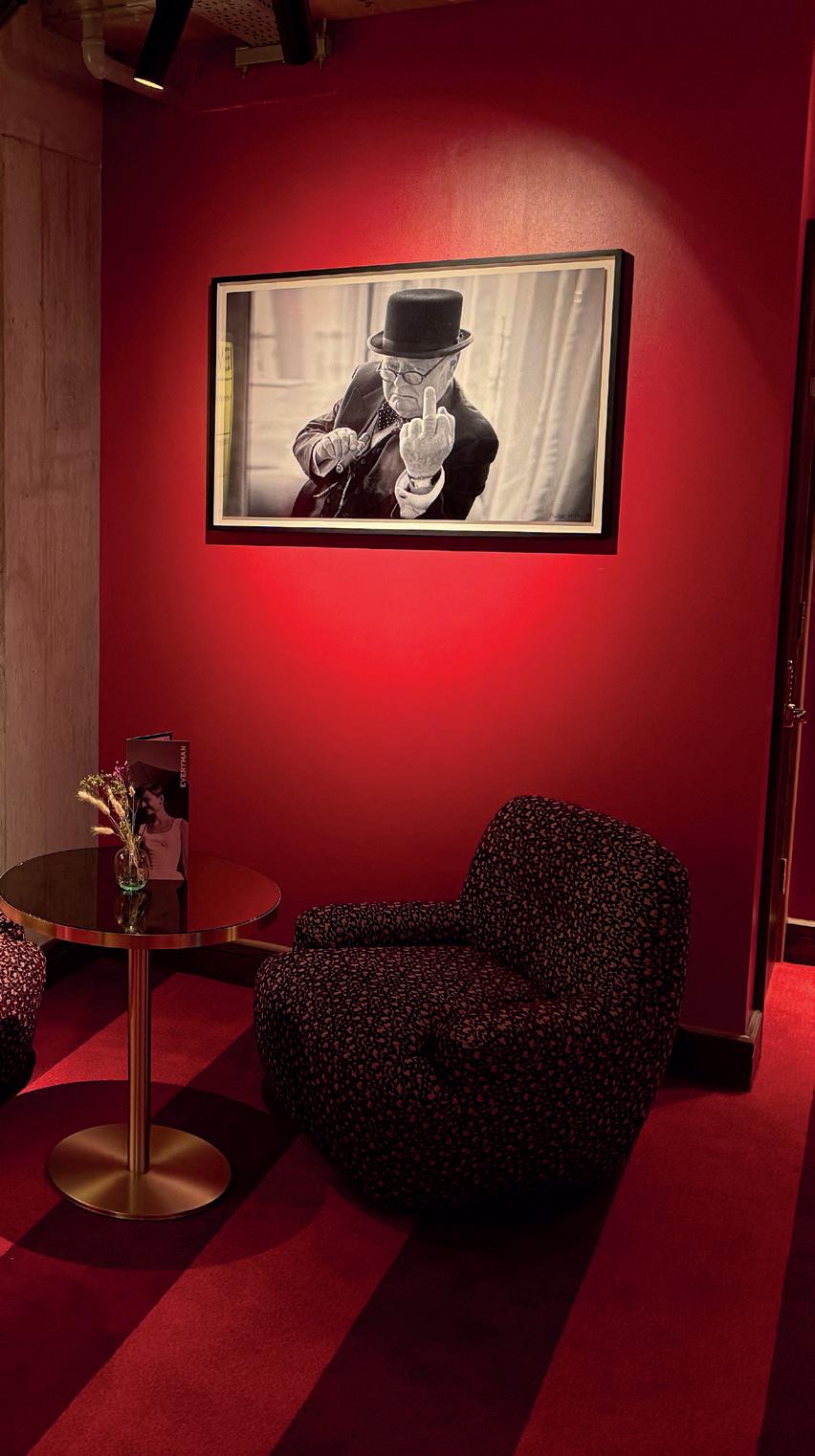
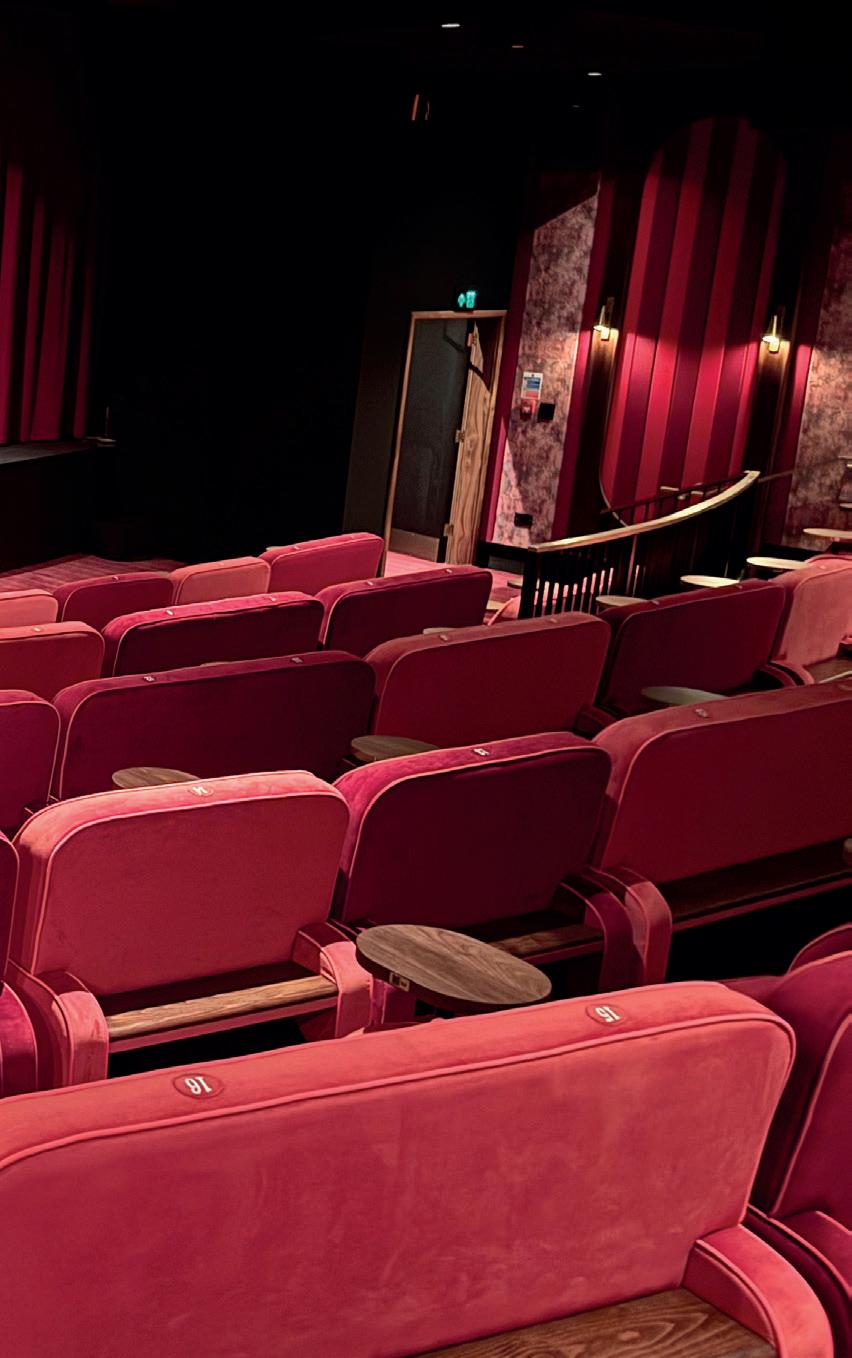
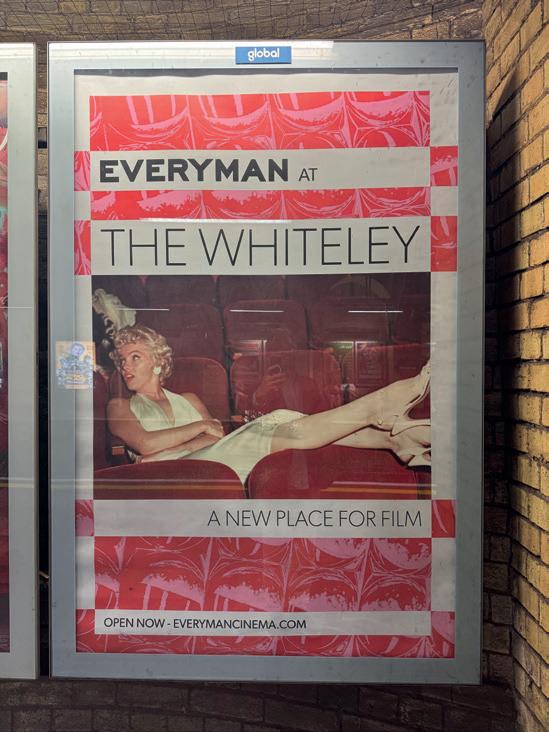
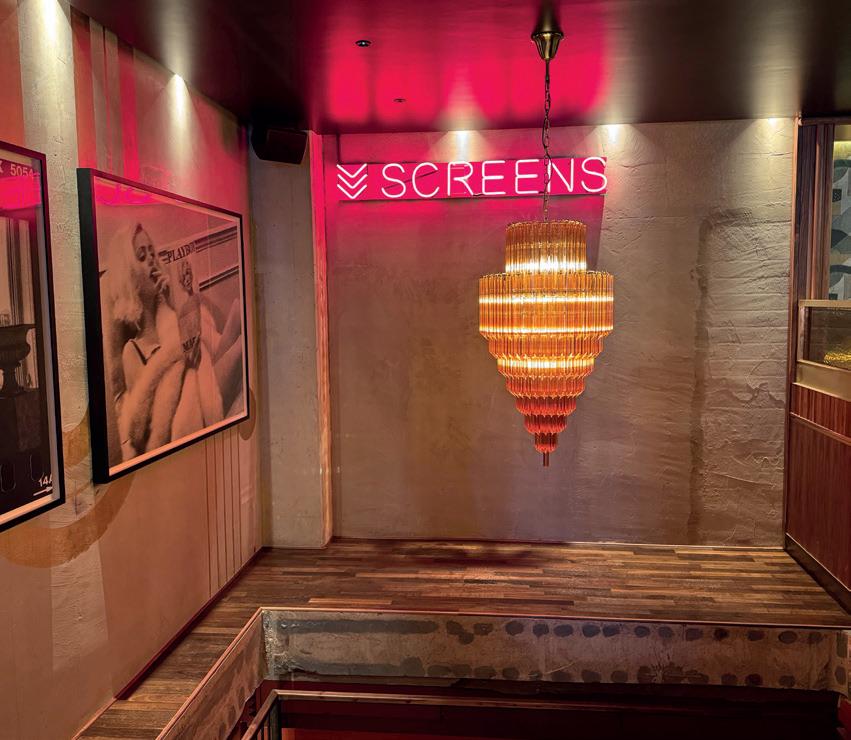
4k
7.8m
network audio has yielded both cost savings and operational benefits. “We’re saving on copper cabling and simplifying the infrastructure,” Davey notes. The team has even developed portable PeliCase units housing NV-1 wall-plate endpoints, allowing staff to connect laptops anywhere with a network port for instant connectivity.
Premium Projection and Sound
SCREEN 1 — THE PREMIUM BENCHMARK
SEATING
117 velvet sofas and armchairs
PROJECTION
4K RGB laser with high-contrast lens
SERVER
Dolby IMS3000
SOUND
Dolby Atmos immersive system
SCREEN
Harkness Matt Preview Mini Perforated
MASKING
Multi-stop motorised masking with full tabs
POD DESIGN
BTS & Everyman Design Team
EVENT READY
Direct Dante inputs, local production booth, live mixing suite
Screen 1 serves as the technical centerpiece, featuring a 4K laser projector with high-contrast lens, Dolby Atmos sound, and a Dolby IMS3000 server. The projector, housed in a ventilated auditorium pod, designed by BTS and other members of the Everyman Design Team, features a scissor lift to allow the projector to drop to seating level for easy maintenance access. The level throw to the screen provides an image with zero keystone distortion. Multi-stop masking and traditional tabs complete the premium presentation capabilities.
“In Screen 1 we used JBL C222 speakers because the shallow space required a slimmer cabinet design,” Laugharne explains, highlighting how equipment selection had to accommodate the physical
“We can log in remotely and diagnose faults from anywhere in the world”
NICK DAVEY, CTO, EVERYMAN CINEMAS
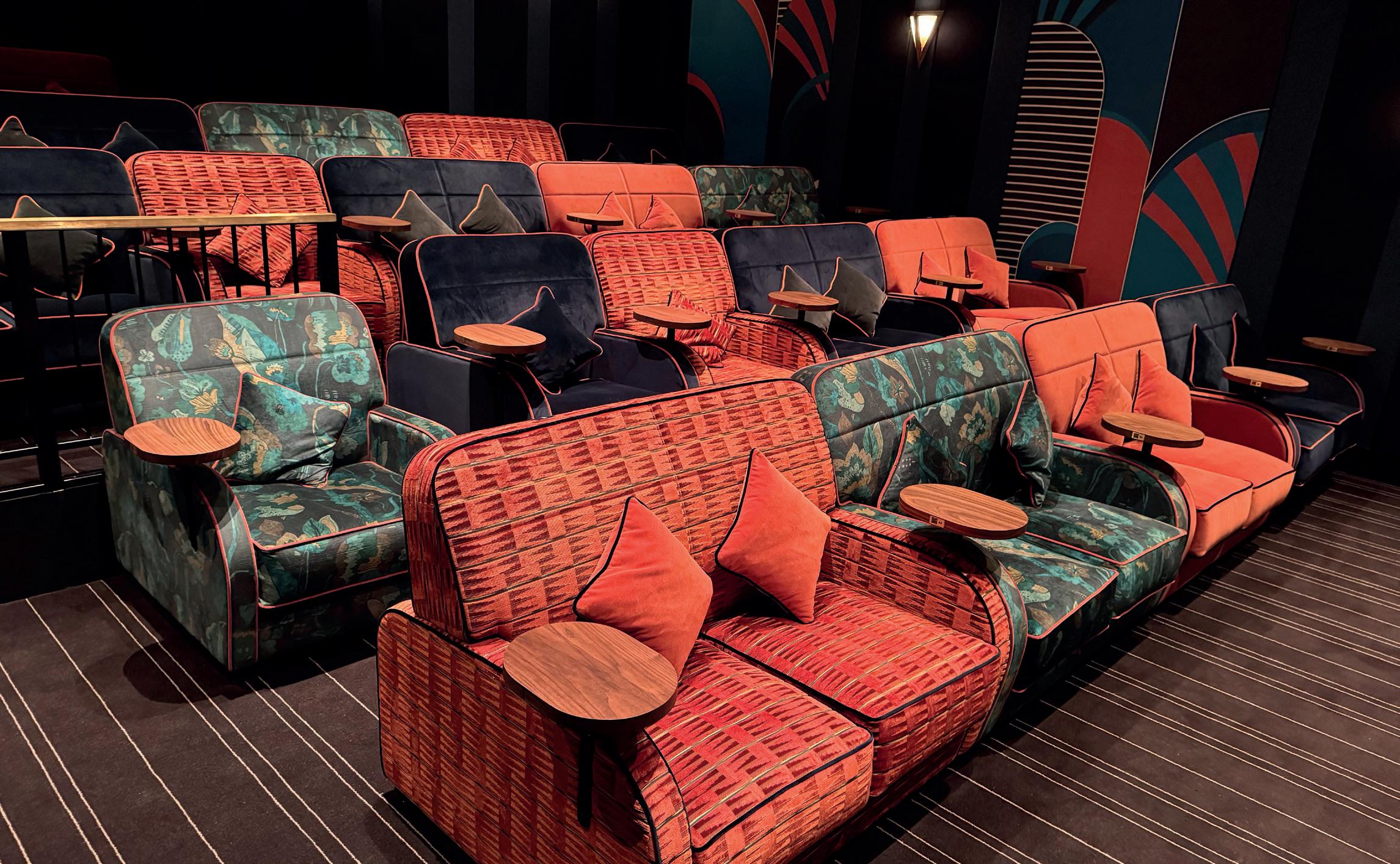
constraints whilst maintaining audio quality. Screens 2-5 utilise QSC SC-2150 screen speakers, with audio configurations ranging from 5.1 in the unusuallyshaped Screen 3 to 7.1 in Screens 4 and 5.Screens 1,2 & 5 feature Harkness Screens’ Matt Preview, Perlux HiWhite 1.4 and 1.8 gain respectively while auditoria 3&4 feature Severtson SAT 4K woven screens with 1.18 gain - acoustically transparent fabric that delivers excellent audio-visual quality even at the close seating distances characteristic of Everyman’s intimate auditoriums. Screens 2 through 5 employ 2K laser projectors, all running on Dolby IMS3000 servers, with screen widths ranging from 5.2 to 7.8 meters.
THE POWER OF Q-SYS
Q-SYS (BY QSC AUDIO) SERVES AS THE DIGITAL BACKBONE OF THE WHITELEY.
Unified control of projection, audio, lighting, automation, and building systems
Integrated HDMI — one connection in/out eliminates handshake failures
Real-time monitoring of temperatures, power, dowser, masking, and audio levels
Remote engineer access for fault diagnoses and remedy
Custom GUI interface built by Bell Theatre Services for intuitive operation
Supports Sennheiser SpeechLine Dante microphones, Allen & Heath mixers, and NV-21 video endpoints
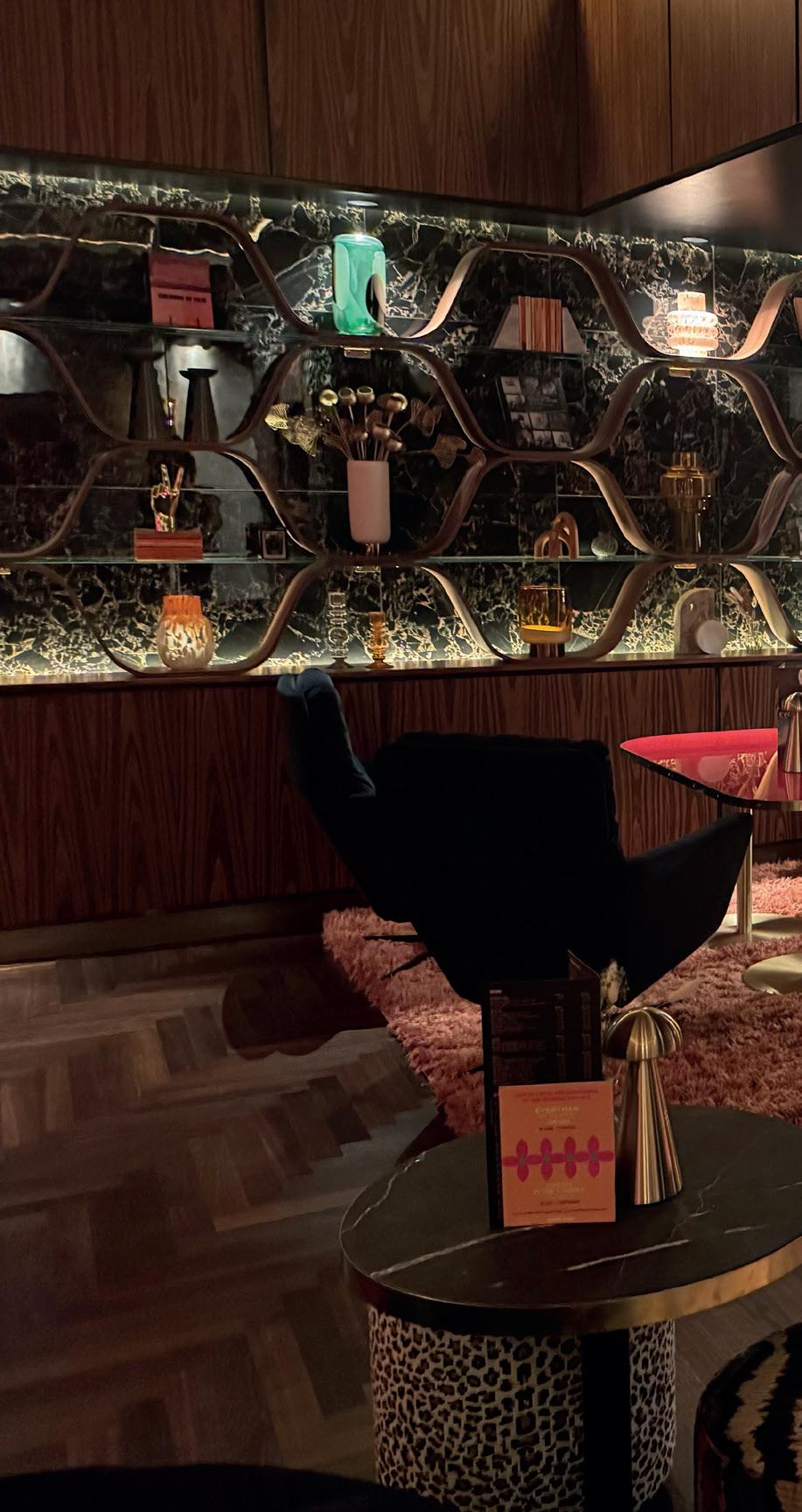
“It’s full-venue integration - not just projection and sound, but networking, control and user interface - all unified.” STEFFAN LAUGHARNE, BELL THEATRE SERVICES
Sennheiser SpeechLine
Dante wireless microphones 4 per base unit)
Auto-mix mode ensures clean, feedback-free audio for Q&As
Q-SYS network audio links every room and input across the venue
Integrated control of foyer and bar music with timed presets
“Voice of God” button for all-house announcements
Allen & Heath mixers for multi-track live recording
Rosetta Live platform for simultaneous streaming to other Everyman cinemas
What truly distinguishes The Whiteley is its comprehensive event capabilities, particularly crucial given its Soho-adjacent location and premium positioning. The venue regularly hosts premieres for Apple TV, live Q&A sessions for Edith Bowman’s Soundtracking podcast, and streams events nationwide via Rosetta Live.
“We’ve integrated Sennheiser SpeechLine wireless microphones directly into Q-SYS via a Dante network,” Davey explains. “Each base unit handles up to four mics, and we can assign them to any screen remotely via the GUI.” The system includes an intuitive PA mixer interface with gain control, EQ, and auto-mix functionality that shares gain across active microphones to reduce feedback - allowing staff to handle events without extensive audio engineering knowledge.
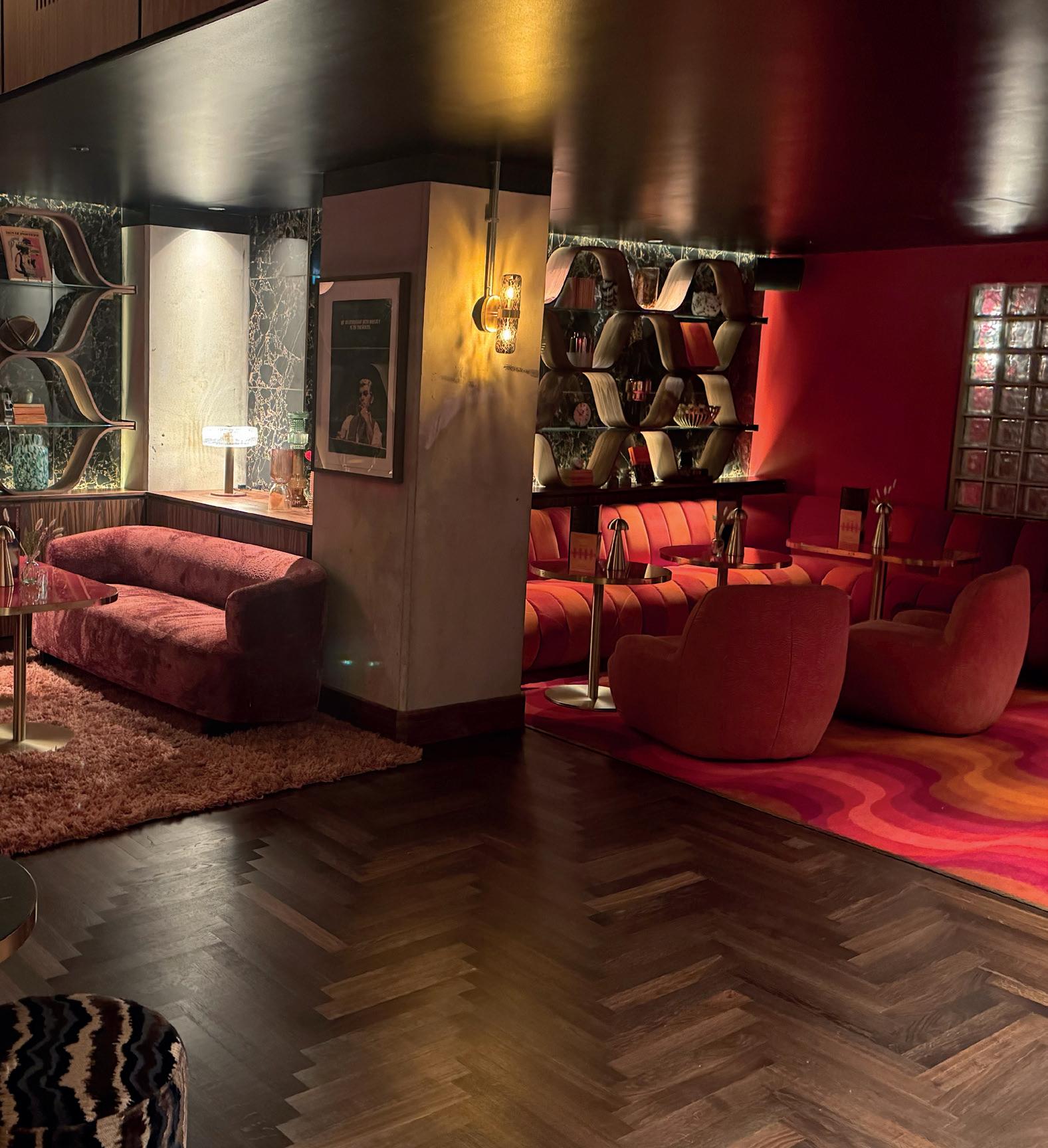
Behind Screen 1, a small production room functions as a control center with a stable door design allowing discrete operation during events. “We handle live sessions, recording and mixing Q&As on site,” Davey notes. “We’ve hosted events like a joint Q&A with Ken Loach and Mike Leigh - the first they’ve ever done one together, plus on wider scale we were able to invite our guests around the country to be part of the Premiere for Luca: Seeing Red, with a live streamed pre-film musical performance and post-film Q&A .” Cinema history is clearly already being made at this site. The venue’s IP-based satellite receiver system allows remote control and channel tuning through Q-SYS, while DMX-controlled spotlights provide theatrical lighting control. Even the bar areas feature integrated announcement buttons for a “Voice of God” system-venue-wide PA capabilities built into the infrastructure.
One of the most practical innovations addresses a persistent industry pain point: HDMI reliability. “HDMI handshakes are notoriously unreliable, especially when juggling Blu-ray players, satellite streaming boxes, and conferencing devices,” Davey explains. “Since implementing Q-SYS with NV-21 video endpoints - starting at our Bury St. Edmunds site -we’ve had almost no HDMI dropouts.”
By minimizing handshakes to just one in and one out within the Q-SYS ecosystem, Everyman has effectively eliminated a major source of technical failures during presentations and events - crucial for maintaining the premium experience expected at The Whiteley.
Perhaps most impressive are the remote engineering features built into the Q-SYS implementation. Engineers can log in remotely to access any aspect of the cinema system, without interfering with normal operations from a single interface.
“We’ve shown this to various other technical teams, and they were impressed with the flexibility,” Davey reveals. “As Q-SYS becomes more common in cinema, features like this will be essential.” The
team at Bell Theatre and Everyman have built a close relationship with Q-SYS themselves, with the company sending delegations to study how Everyman has implemented whole-venue integration beyond traditional cinema sound applications and doing a case study on how the system is being developed for specific needs.
The five-week installation, conducted during a punishing mid-summer period in the basement without air conditioning, represents more than just another cinema opening. It demonstrates how boutique cinema operators can leverage advanced technology to enhance rather than replace their hospitality-focused approach.
“Each Everyman project has challenges - often ceiling height restrictions - but being two basement levels down added extra complexity,” Laugharne reflects. The logistics alone were demanding, with no lift access during construction and strict health and safety rules preventing staff from using lifts when carrying food and drinks even after opening.
Yet the results justify the effort. EASE audio modelling ensures even audio coverage throughout public areas, with subwoofers in bars capable of “pushing levels almost to nightclub standards” for private events. The foyer audio system, also designed
toward modern laser projectors as standard reflects a pragmatic approach to standardisation without compromising quality.
“NEC laser projectors are a better fit for our needs,” Davey explains, noting how they have developed the pods with Bell Theatre and Powell’s in order to take advantage of previously unviable venue constraints. As The Whiteley becomes fully operational, it stands as a testament to what’s possible when boutique cinema hospitality meets cutting-edge technology. The venue doesn’t just screen films; it provides a complete technical platform for live events, streaming, corporate presentations, and traditional cinema - all wrapped in Everyman’s signature comfort and style.
“The results speak for themselves,” Laugharne concludes. Indeed, The Whiteley proves that pushing the technology envelope doesn’t mean abandoning the sofas and Spielburgers - it means ensuring they’re supported by infrastructure worthy of a £1.5 billion development that’s reshaping one of London’s most prestigious neighborhoods. In achieving this balance, Everyman has created not just its 49th venue, but arguably its most important technical showcase for the future of premium cinema exhibition in the UK.
Q-SYS now fully deployed at Bury St Edmunds, Stratford, Cambridge, Brentford and The Whiteley
and managed by BTS, creates sonic zones that staff can adjust independently; another example of technology serving operational flexibility.
Dolby Atmos installed in select premium auditoria
Q-SYS being rolled out group-wide for unified control
Bell Theatre Services supports system supply, calibration, and maintenance
The Whiteley represents a significant evolution in Everyman’s technical capabilities, building on lessons learned from previous Q-SYS installations at Bury St Edmunds, Stratford, Cambridge, and Brentford. The move away from legacy projector dependencies
Bell Theatre Services oversees complex installations and technical design
Event partnerships: Apple TV, Edith Bowman’s Soundtracking podcast, The Academy Museum of Motion Pictures
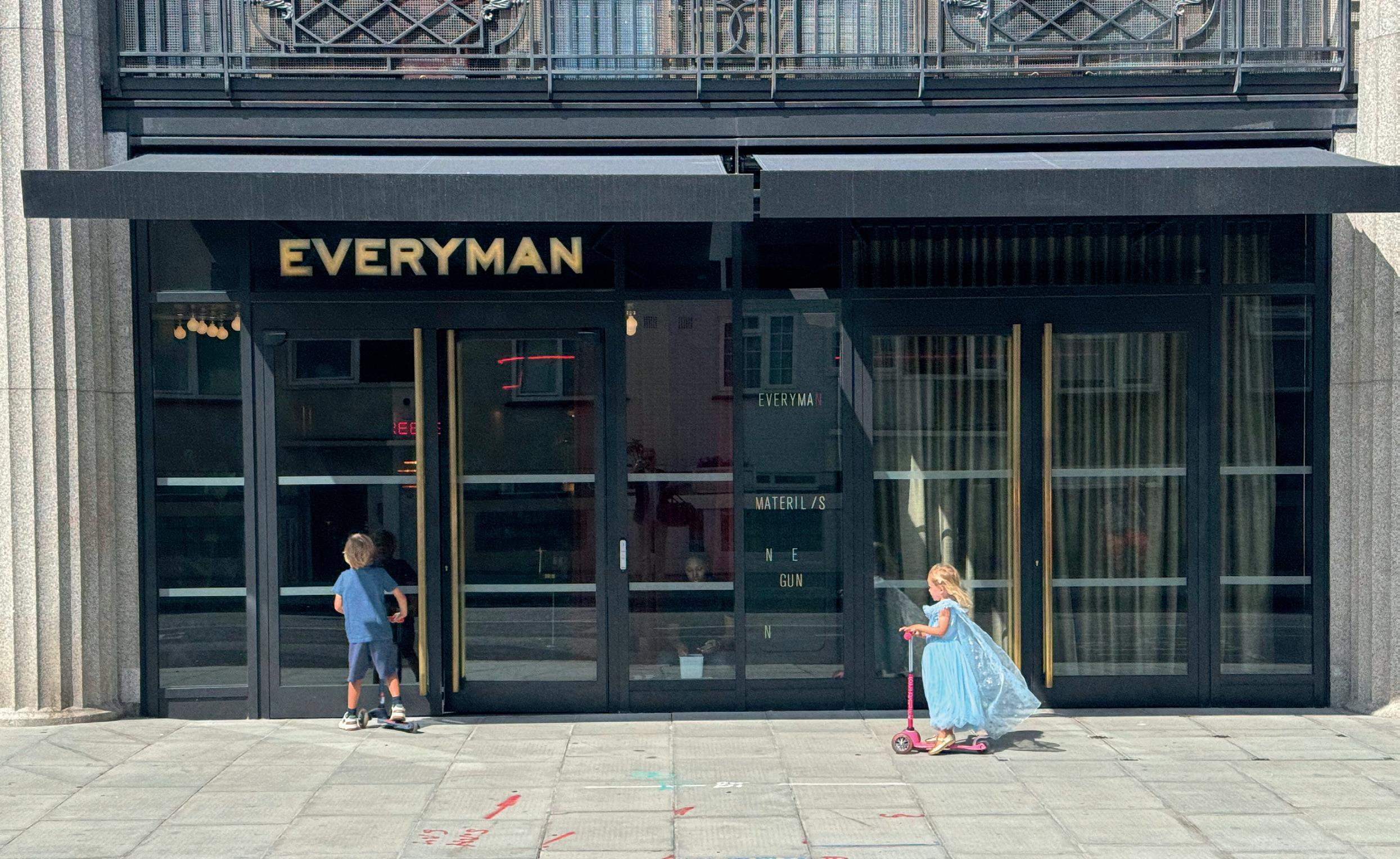



FLAT FREQUENCY RESPONSE FIGURE 2
A cinema loudspeaker has one job, and one job only: to take the film soundtrack and pass it on the audience loud enough so audiences can hear it at reference level. It should do nothing to the soundtrack – it should add no distortion or coloration of its own. Yet any time the input signal is altered in any way, that’s exactly what happens. The result is that the audience will not hear as the filmmakers did when they created it.

You wouldn’t add your own colour to the Mona Lisa, so why would you alter the sound of a great movie? The goal is to make the output from the loudspeaker the same as the input from the DCP server, or as close as possible. This is what the quest for “phase linearity” is all about.
One of the most common ways to describe how a loudspeaker “sounds” is by referring to its frequency response. Frequency response describes the range of frequencies delivered by the loudspeaker and the level (or magnitude) at each frequency. Most loudspeaker manufacturers provide this data, which is often used to compare one loudspeaker versus another. An approximately “flat” response curve on the diagram is assumed to indicate a good quality loudspeaker, since it means that it can reproduce all the sound it receives at the same level, without artificially boosting or cutting arbitrary frequencies. But that’s not enough.
The problem is time. Sound is relatively slow to propagate, and every frequency has a different wavelength. Except for a pure sine wave, program content like a film soundtrack is comprised of many frequencies, all mixed together. When reproduced
by a loudspeaker, high frequencies (which have short wavelengths) develop quickly with tight spacing, but low frequencies (with their much longer wavelengths) take more time and are spaced further apart. The highs are shipped next-day air; the lows are shipped via ground freight. When the sound leaves the loudspeaker, high frequencies complete their cycle before the low frequencies. This is typical. When one band of frequencies in a signal is early or late relative to the others, it creates “phase shift”, which means that all the frequencies are not leaving the loudspeaker in exactly the same time sequence as they went into it. Phase shift can create the perception that the sound is “smeared” – dialog is less articulate, a sense of “presence” is lost. This is especially noticeable on dialog with many short bursts (vocal “fricatives”) or musical sounds with many transients (such as a snare drum). Another common source of delay is caused by the physical alignment of different driver types in a multi-way loudspeaker; think of an unfair start to a horse race where the gates are not aligned in a straight line. For loudspeaker systems, this can be somewhat addressed with mechanical design — intentionally offsetting the physical spacing of the drivers — or with electronic digital delay. But even that only works for a small range of frequencies. There are many other sources of delay. Crossovers (frequency dividers that send the highs to the tweeter and lows to the woofer) are a common source of phase shift. So are equalizers, or most filters in the signal chain for
The vertical lines indicate the continuation of phase shift (called a “wrap”), and each wrap indicates a full cycle (or 360 degrees) of phase shift. Note that it changes at every frequency, thus the amount of delay is also frequency-dependent.
TYPICAL LOUDSPEAKER UNCORRECTED PHASE RESPONSE FIGURE 3
DRIVER PHYSICAL DEPTH FIGURE 4

that matter. Sometimes this is intentional. A guitarist’s phase shifter pedal modulates a phaseshifted signal with a low-frequency oscillator to achieve a desired effect on the sound of the electric guitar. But when a loudspeaker’s task is to reproduce sound faithful to the original source (as in cinema), phase shift is something that should be minimized. So frequency response really has TWO characteristics relative to frequency that describe a loudspeaker’s performance – magnitude (energy) and phase (time). Real world program material like music or a film soundtrack is highly complex and constantly changing, with many, many frequency combinations all moving the same air molecules. Magnitude describes the level (loudness) of each frequency, and phase describes when that frequency reaches our ear relative to the other frequencies in the signal.
A well-known and often cited source on this topic describes the problem this way1:
“Let’s apply this principle to a musical event: a piano key is struck and the transient pressure peak contains a huge range of frequency components, arranged in a distinct order that our ear recognizes as a piano note. To selectively delay some portions of that transient peak rearranges the sequences in a waveform that is very definitely not the original and is less recognizable as a piano note.” (see footnote).
The bottom line: Sound can only be accurately reproduced by loudspeaker systems with both flat
My initial venture into professional audio was to follow my dream of becoming a record producer.
I soon learned that many of the most successful producers began as recording engineers. So I spent 5 years working as a recording engineer, even producing a few records along the way. Attending an Audio Engineering Society Convention in New York around 1989, I happened upon a demonstration set up in a hotel suite. The person who greeted me had a wild look of fascination on his face, and I recognized that face as Roger Nichols (famed Steely Dan recording engineer and producer). I wanted to ask a million questions, but he moved quickly into demonstrating these small black speakers sitting on top of a console, which was set up to play discrete tracks from digital recordings. He played a track by Rickie Lee Jones – whose recordings I knew very well, having studied her albums among many others. I think my jaw literally dropped. I had never heard such clarity, along with the sense that the speakers and the room had somehow disappeared, and the singer and acoustic piano accompaniment were right there in the room with me. I learned that the speakers were Meyer Sound HD-1 selfpowered loudspeakers – a model that was built as a reference device for testing microphones, not a commercialized product. But somehow they produced the most accurate, natural sound I’d ever heard from any studio monitor before or since. Flash forward a few decades, and I’m now working for Meyer Sound. During my orientation I’m treated to a demo of their acclaimed Bluehorn reference monitor system. Flash back, and it’s “déjà entendu”: I’m experiencing the same epiphanal listening moment I heard at AES. The common factor – both are designed to deliver flat frequency and phase response. I didn’t know what it meant at the time, but I know for sure that I experienced it, and nothing else sounds the same.
PHASE SHIFTER FIGURE 5
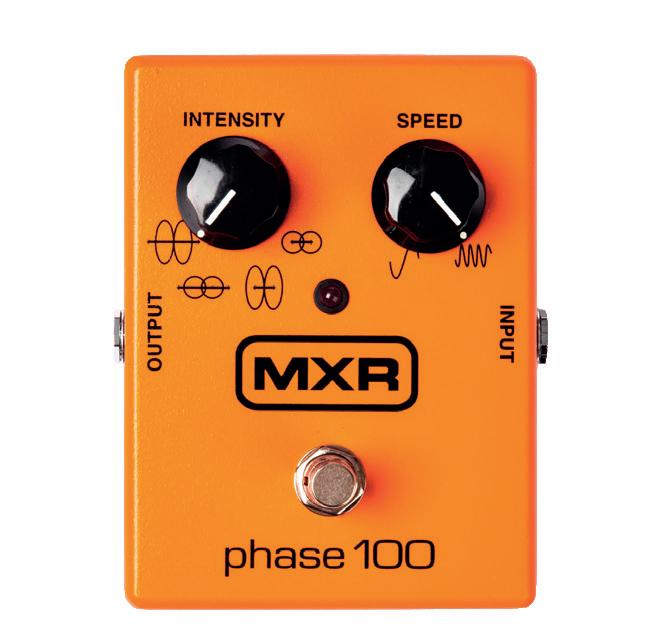
magnitude and flat phase response. What do we mean by “accurate”? This simply means true to the source; ideally, the loudspeaker itself should do nothing to the sound except make it louder. The signal coming out is the same as the signal going in.
To reproduce the sound from a loudspeaker the same way it was delivered from the source requires a flat frequency response, then correcting for phase shift across the entire frequency range of the loudspeaker system just before the signal goes to the transducers (loudspeakers).
Phase correction is not a trivial matter. Despite the complexity, with detailed lab measurements of a loudspeaker system it is possible to create computer algorithms that anticipate and address the phase anomalies of a well-designed and accurately measured loudspeaker model. This approach requires extensive loudspeaker analysis and modeling using sophisticated DSP technology.
Is it worth the effort, you might ask. Most of us have been listening to loudspeakers with lots of phase shift all our lives, and it seems normal, especially when there’s nothing to compare it to. Consider that film sound designers and mixers spend months creating a soundtrack in an attempt to sonically depict the “vision” of the director as closely as possible. Every element of every sound is critically evaluated and blended together to create the perfect dialog, music and sound effects mix that delivers the artistic intent of the filmmakers. The final mix is auditioned on the dub stage and other wellcalibrated, well-known listening spaces. The best possible moviegoing experience is one where the final product is presented to the moviegoer as close to this same experience as possible – both visually and aurally.

WORDS: PETER KNIGHT, COMMISSIONING EDITOR, CT MAGAZINE
...from new legal frameworks to hands-on tools that can genuinely help independent cinemas market and manage their venues more effectively.
Artificial intelligence has continued to develop rapidly through the final months of the year, and the conversation around it has grown more complex. For the cinema industry, the implications stretch far beyond the occasional novelty headline. As AI becomes part of the creative, legal and operational landscape, exhibitors need to understand both the opportunities and the risks.
Recent months have seen several major shifts. In the UK, the new Data (Use and Access) Act came into force in August, tightening controls on how AI systems can use creative material such as images, sound, and text. The move followed increasing concern from artists, authors and studios over how their work is being scraped and repurposed by machine-learning systems. For cinemas this has one clear implication: anyone using AI-generated imagery, soundtracks or video in promotional material must take care to ensure the source data is properly licensed. The age of freely generated “found” content is quickly closing.
The debate over ownership and fair use is also intensifying internationally. A growing number of studios have begun adding statements to the end of films declaring they may not be used for AI training. Warner Music and several major AI music companies have now reached the first licensing
deals covering the use of recorded music for model training. This new, more regulated environment will affect how AI content is created and distributed, and cinemas will need to stay alert to what they can safely use in marketing and in-venue material.
While the legal framework tightens, the technology itself continues to move forward. OpenAI, Anthropic, Google, and Mistral have all released improved models over the past quarter, with greater ability to handle images, audio and video alongside text. The focus is shifting from headline-grabbing novelty to practical applications. Across the creative industries, AI tools are being embedded into design suites, scheduling systems and analytics platforms rather than sitting apart as gimmicks.
For cinemas, the question is how to use this technology responsibly and effectively. Marketing is an obvious starting point. AI-assisted copy tools can help create social media posts, newsletters and event

blurbs in a fraction of the usual time. They are particularly helpful for independent cinemas that lack dedicated marketing teams. The key is to use these systems to produce first drafts rather than finished material, keeping the human voice and local personality intact. AI design software such as Canva’s Magic Studio or Adobe Firefly can generate poster layouts, abstract background art and social graphics quickly. The safest and most creative approach is to use them for original, non-film imagery rather than relying on copyrighted stills. This not only avoids potential legal problems but can also give campaigns a distinctive and recognisable house style.
Another useful area is data analysis. A growing range of affordable tools now use AI to identify audience trends, track engagement across channels and even suggest which genres perform best at certain times. For smaller venues, this can support programming decisions and help target marketing spend more
effectively. Some cinemas are beginning to use conversational AI on their websites to handle routine customer queries about showtimes, accessibility and ticket availability. These systems are inexpensive to set up and can operate continuously, freeing up staff to focus on customers in the building. Whatever the application, the same principles apply - be transparent with audiences when AI is used, check the licensing of any generated material, and always retain human oversight. Treat these tools as a way to extend capacity rather than replace staff.
Artificial intelligence is now a permanent part of the cinema ecosystem. Used carelessly, it risks eroding trust and creating legal headaches. Used thoughtfully, it can help independent venues compete with bigger chains, enhance communication, and save time behind the scenes. The coming year will be about finding that balance: combining technological efficiency with the creativity, judgement and warmth that make cinema so distinctive.
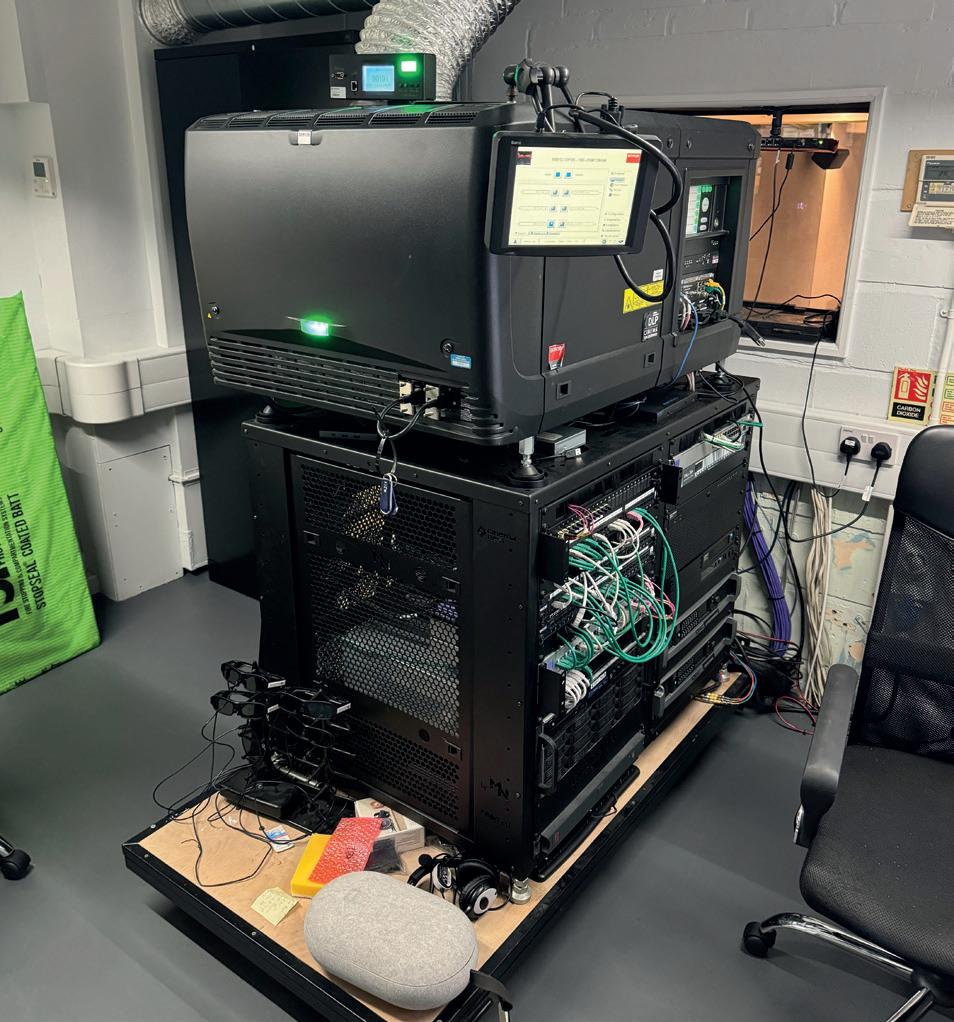
or over a century, the British Board of Film Classification has served as the guardian of cinema standards in the UK. Established in 1912, the BBFC remains the independent, not-for-profit regulator responsible for classifying content before it reaches British cinema screens. With rare exceptions for one-off screenings and film festivals (which can be approved by local councils), virtually everything shown in UK cinemas must first pass through the BBFC’s screening rooms in Soho Square. It’s a remarkable responsibility. In 2024 alone, the organisation classified 1,256 films and 1,047 trailers, screening between 20 and 30 unique titles each week. But unlike commercial cinema operations, the BBFC faces distinct technical challenges. Their compliance team must scrutinise content with forensic attention to detail, often reviewing sequences multiple times to ensure ratings accurately reflect what audiences will experience.
“We need to view cinema content in the same way that the public will see it,” explains Joe Slatter, Infrastructure and Workflows Team Lead at the BBFC. “This ensures that our ratings accurately reflect the experience that cinema audiences will have. The technology we use therefore needs to match that found in cinemas. However, we also scrutinise films viewed in our theatre in much more
detail than regular viewers might.” Individual sequences might have to be watched and rewatched several times, before the evaluation goes into the overall report for the film or the trailer.
The BBFC’s technical requirements extend well beyond standard cinema exhibition. Content arrives at different points in the production cycle and through various channels. Whilst the majority comes as a DCP (Digital Cinema Package), the team must also handle video files, streaming links, and 3D titles. Formats such as IMAX and ScreenX require screening at external facilities, but the core screening rooms at Soho Square must accommodate
everything else, which means between four and six films, plus trailers and ads, each day between 9am and 6pm. The daily workflow involves ingesting different slates of films into the projection system, with content arriving via dedicated services like LANsat and Qubewire, as well as downloads from numerous other sources. This creates significant data transfer demands across the network. The organisation has responded by installing 10Gb network switches to handle the volume, but the screening infrastructure itself needed modernisation to keep pace with both the industry and the workload. This is where the BBFC turned to the CinemaNext UK team for the second time in two years.
Working with CinemaNext, the BBFC recently completed a substantial upgrade to Screen 1, their main screening theatre. The project centred on three key objectives: upgrading the audio system to match modern cinema standards, extending the life of their projection equipment whilst improving image quality, and streamlining the operational workflow through intelligent automation. The audio transformation represents perhaps the most significant change for the compliance team. The
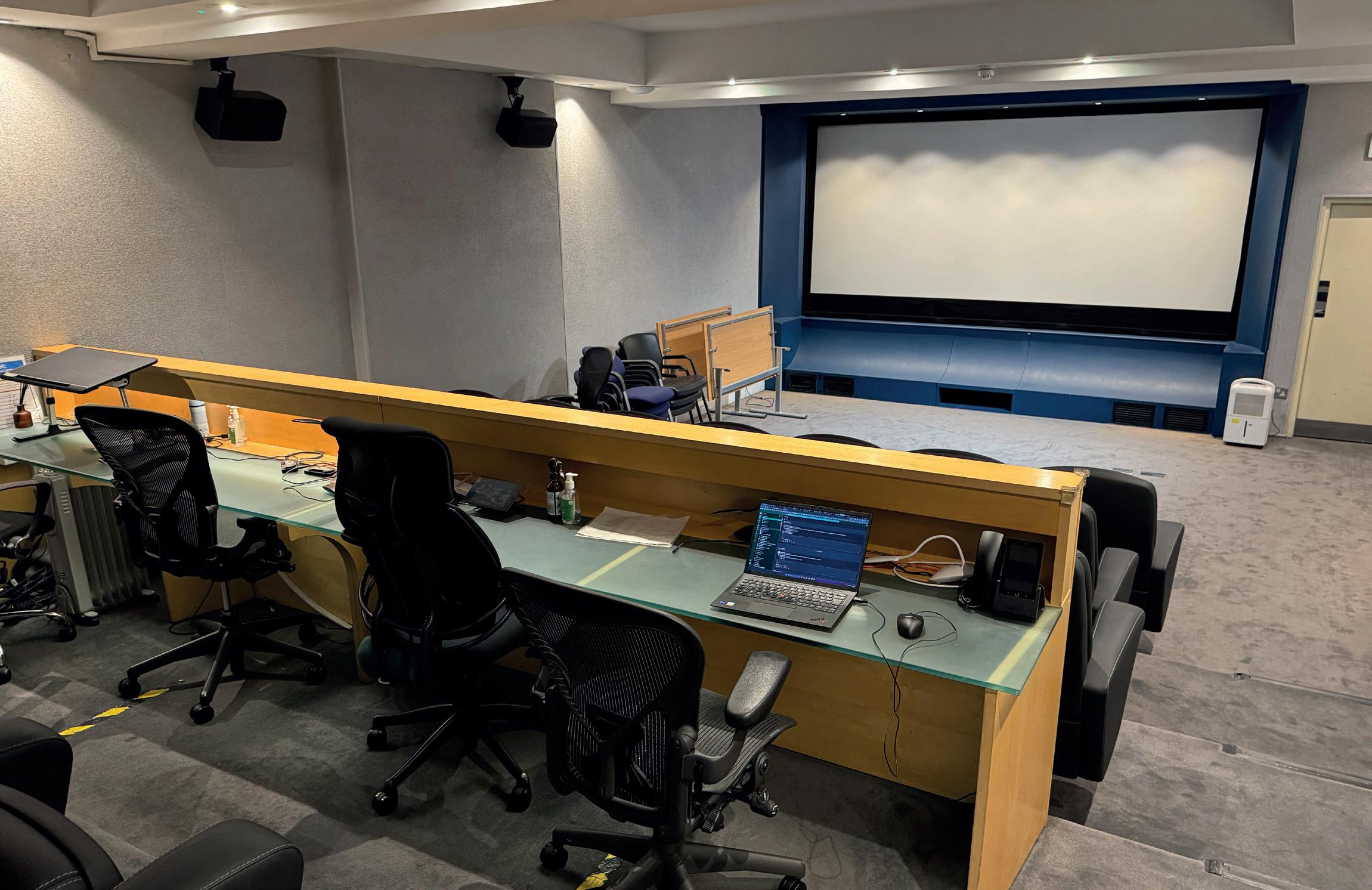
previous 5.1 sound system has been replaced with a full QSC Q-SYS Core 8 Flex processor delivering 7.1 audio processing.
“The Q-SYS system is 7.1, enabling our compliance team to review films in a format consistent with commercial cinema audiences,” notes Slatter. The system includes three QSC SC2150 three-way screen speakers, twelve QSC ADS6T surround speakers with custom ceiling brackets, two QSC SB-2180 dual subwoofers, and two QSC CX-Q 4K8 amplifiers providing 8 x 500W of power.
Beyond the audio hardware, the Q-SYS platform enables a fundamentally different way of working, unique to the BBFC. Two QSC TSC-70-G3 touchscreen controllers were installed, one in the projection booth and one in the screening room itself, each with custom menus tailored to specific use cases. These allow users to control sound, playback, and lighting, with additional controls available in the projection booth.
“The touchscreens have been very useful as they allow those in the screening room to control the sound and lighting themselves, cutting out a lot of unneeded communication between viewing staff and the projection team,” Slatter explains. “The ability to control DCPs from within the screening room has also been very useful when we have
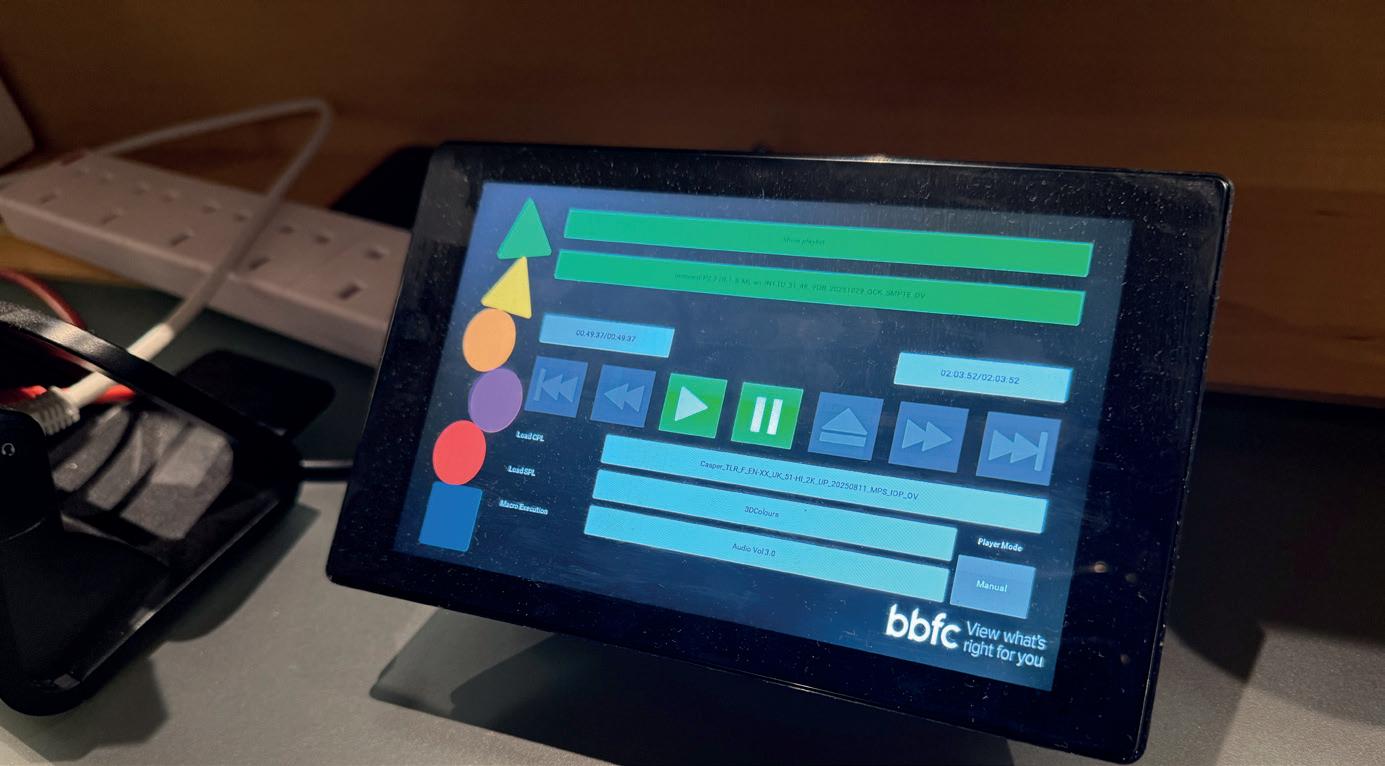
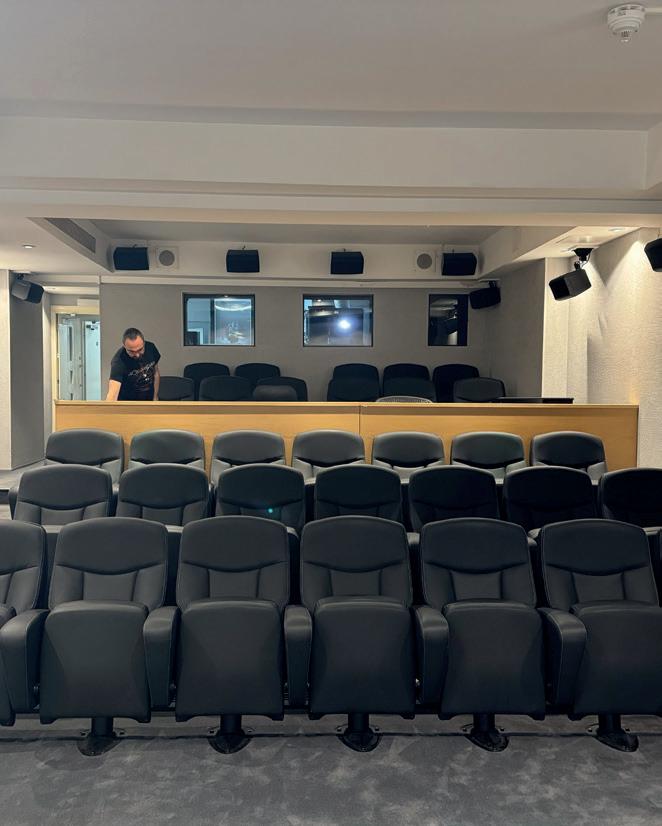
needed to review specific sections of a film for the compliance team. As we can now be in the same room, communication becomes much easier.” Previously the reviewers had to wave to the projectionist/technical operator through the porthole glass. The CinemaNext PAA20+ automation adapter serves as the integration hub, connecting the Q-SYS audio platform with the projection and lighting systems. Crucially, this means the LED house lighting system (part of the broader infrastructure upgrade) can now be controlled directly via the Q-SYS touchscreens from either the projection room or the screening room itself. The BBFC need to be able to not just see the film on the screen, but also their notes and laptops.
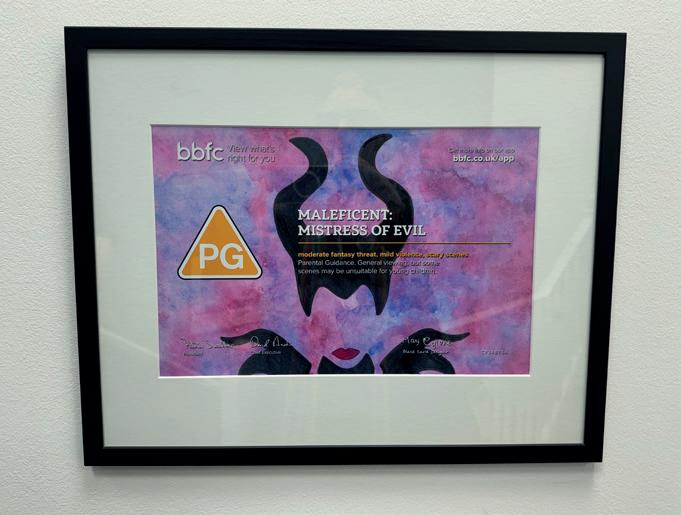
Rather than replacing their seven-year-old Barco DP4K-17B projector entirely, the BBFC opted at CinemaNext’s suggestion for Barco’s laser light upgrade kit. It proved an astute decision for a nonprofit organisation mindful of both capital expenditure and ongoing operational costs.
“Adding the laser upgrade made sense in that it extended the life of the projector, improved the picture quality and reduced costs in terms of power consumption and new lamps no longer being needed,” Slatter points out.
The laser system also delivers improved brightness and consistency whilst eliminating the recurring expense of lamp replacements. For an organisation that screens 20-30 films per week, the operational savings add up quickly, and the enhanced image quality ensures the compliance team can examine content with the clarity it demands.The technology upgrade formed part of a wider refurbishment of the cinema infrastructure, including a complete reinstallation of the projection booth with new power and network cabling. The aging screening room lighting system was replaced with LED fixtures, integrated with the Q-SYS control system to enable management from within the screening room itself. Network switches and projection equipment was reinstalled in the projection booth allowing for a fresh installation of cabling. Emergency lighting was also installed in Screen 1, alongside LED lighting on the viewing benches, for screening sessions where examiners need to take detailed notes whilst maintaining focus on the content.
The Screen 1 upgrade follows CinemaNext’s installation of a second screening room in 2024, which has dramatically improved the BBFC’s operational capacity. Film distributors require quick
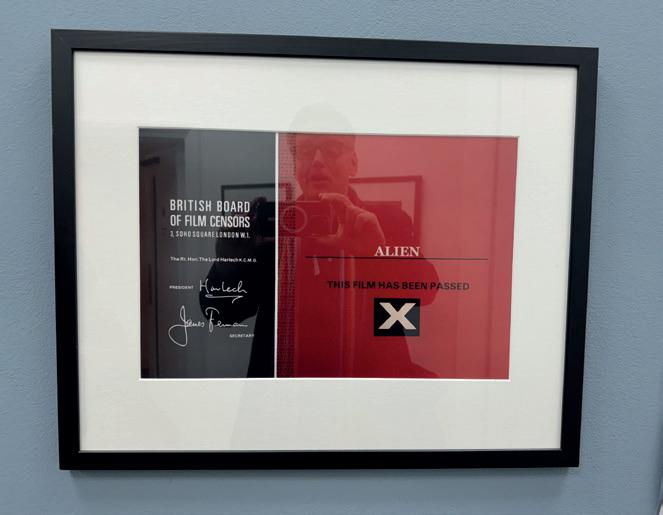
turnaround times before theatrical release, and the organisation had previously relied on external screening rooms during busy periods, incurring both costs and logistical complications, not least given the security requirements of handling completed pre-release Hollywood blockbusters.
“The addition of a second screen has vastly improved the BBFC’s workflow,” Slatter confirms. “Investing in a second screening room in our offices allowed us to increase screening capacity and so reduce turnaround times. We also ultimately reduced costs by removing the need to go to external screening rooms.” The second screen has also proven invaluable for senior staff who need to review specific scenes or trailers that have been referred to them. Rather than waiting for the main theatre to become available, they can quickly set up and send content to Screen 2, enabling faster response times for time-sensitive decisions.
The BBFC’s approach to technology mirrors the pragmatism of the wider UK exhibition sector. As Slatter explains, “The BBFC is led by the film industry and so we upgrade our cinema equipment as new formats emerge.”
Previous examples include the transition from 35mm to digital projection, and the introduction of 3D and high frame rate cinema capabilities when selecting their current Barco projector. Whilst physical constraints thus prevent them from accommodating special formats like ScreenX (which requires larger auditoriums), the organisation remains responsive to industry developments.
The modular nature of the Q-SYS audio platform and the automation infrastructure mean the system can evolve alongside emerging formats such as immersive audio and HDR, ensuring the BBFC’s classification decisions continue to reflect
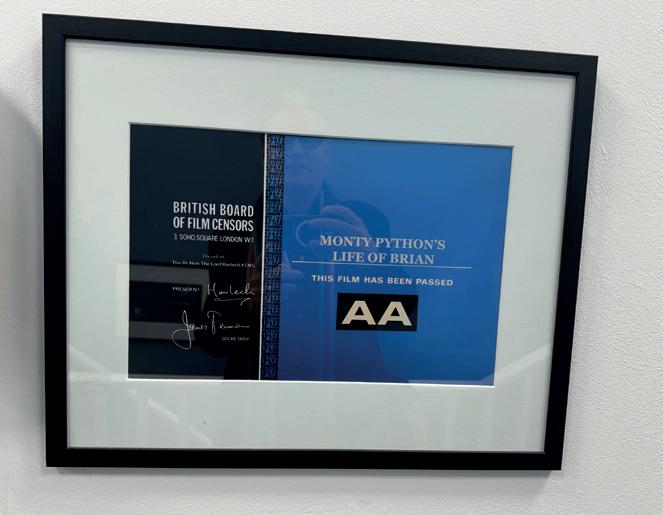
the actual cinema-going experience (minus the popcorn).
Andre Mort, Technical Director at CinemaNext UK, reflects on the successful collaboration: “We were delighted to deliver the recent technology upgrade to BBFC Screen 1, which included a full transition to a Q-SYS audio system and the installation of a laser light upgrade kit into the existing Barco 4K projector. The new Q-SYS platform allows certifiers to easily control playback and routing throughout the room, whilst the PAA20 ensures seamless automation and operational efficiency. Combined with the laser upgrade, these improvements enhance brightness, consistency and long-term sustainability, whilst also maximising the value of BBFC’s existing equipment,” making the project more cost-effective. Mort adds: “It was fantastic working once again with Joe Slatter, Felix Hockey and the wider BBFC team, particularly following the successful installation of their second grading screen last year. We are proud to continue supporting BBFC in maintaining world-class screening environments for their internal teams and industry partners.”
For an organisation that has safeguarded cinema standards for 113 years, the technology upgrade represents more than just new equipment. It’s about ensuring the BBFC can continue fulfilling its mandate with precision and efficiency, viewing content exactly as audiences will experience it, whilst adapting to the technical demands of modern film production and exhibition.
The combination of reference-quality projection and audio, intelligent automation, and flexible operational control means the classification process can focus on what matters most: protecting audiences whilst supporting the creative freedom of filmmakers.
Your Exhibitor Portal just got an upgrade — now capturing a broader range of technical capabilities.
Designed to streamline operations and enhance efficiency for exhibitors and distributors globally.
Check your MPS KDM emails for your cinema login details.
Thank you.
* over 4,000 screen capability updates a week by cinemas globally
This summer Apple turned heads with a marketing stunt that did more than create a buzz in the press: it created one in people’s hands. The trailer for F1: The Movie was billed as the world’s first “haptic trailer”, and for once the claim rang true. Viewers with iPhones didn’t just see and hear the images of cars thundering around a racetrack, they felt them. Vibrations from the phone’s built-in “Taptic Engine” echoed the growl of the engine, the surge of acceleration and the ticking countdown clock of a driver on the grid.
WORDS: PETER KNIGHT, COMMISSIONING EDITOR, CT MAGAZINE
It was a clever way of sparking conversation, but more importantly it introduced many in the cinema business to a concept they may not have encountered before. Haptics – the ability to reproduce touch sensations in sync with digital media – is quietly maturing into a creative layer that could change how audiences engage with films.
To understand what this means in practice, Cinema Technology spoke with Philippe Guillotel of InterDigital, a company that has been working on haptics for more than a decade and now chairs the MPEG Standardisation Group behind its development.
InterDigital is not a name most exhibitors will know. Based in the US, with a major research lab in Rennes, France, the company specialises in the technologies that make immersive media possible – wireless, video, AI – and is a long-standing contributor to international standards. In Rennes, Guillotel leads the New Media Coding Group, where his team has been investigating how touch can be added to the cinema experience without breaking established workflows.
› Haptics is the use of vibrations or force feedback to create a sense of touch in digital media.
› Everyday examples include the buzz of a phone, the click feedback on a touchscreen, or the rumble in a games controller.
› In cinema, haptics can underline the roar of an engine, the impact of a crash or the tension of a countdown clock.
› It is not the same as 4D. Haptics is purely tactile feedback, while 4D also uses motion, air, water and scent effects.
“We started looking at haptics in 2011,” he explains. “The goal was to see how this technology could improve cinema. Over time we built the whole pipeline: creation, distribution and rendering, so that haptics would fit with the way films are already made and shown.”
That long R&D journey has now reached a turning point. In January 2025, the first international standard for haptics, ISO/IEC 23090-31, was published. Guillotel also leads the MPEG group responsible for it. At first glance this might sound like technical housekeeping, but in reality it is the crucial step that could bring haptics into the mainstream. Until now, haptics in cinemas has been tied to specific vendors, each with their own proprietary formats. Content created for one platform could not easily be used on another. The new standard provides a common way of describing and carrying haptic data, opening the door to interoperability across suppliers, devices and distribution channels.


For exhibitors, the importance lies in choice. A recognised standard reduces the risk of being locked into one ecosystem and makes it more likely that haptic content will eventually arrive in the same way as picture and sound.
But what exactly are we talking about? Most people already encounter haptics daily without thinking about it – the click feedback from a phone screen, the vibration of a games controller, the buzz of a smartwatch. In a cinema context, haptics means carefully designed tactile effects: a vibration echoing the rumble of an engine, a pulse that underlines the impact of an explosion, or a low tremor to heighten suspense. Crucially, this should not be confused with 4D cinema. Motion seats, water sprays, gusts of air and scents are part of the broader 4D experience. Haptics can be included within those systems, but on its own it refers purely to the sense of touch.
The distinction matters because haptics can be offered without the full 4D package. It can be delivered through motion seats, but also through cushions, seatbacks or headrests, and increasingly through consumer devices. “Haptics is a new creative layer, like sound,” Guillotel says. “You don’t need it everywhere, but used in the right places it can support the story and make the experience more powerful.”
The F1 trailer illustrated this well. A film about high-speed racing is almost tailor-made for haptics. “Driving a fast car is something you feel in
To promote F1: The Movie, Apple released a “world-first” haptic trailer in 2025. Viewers with iPhones felt vibrations from the phone’s “Taptic Engine” that matched the on-screen action. The haptics echoed the rumble of engines, acceleration, and the driver’s countdown clock. It was a limited mobile release rather than a cinema-wide rollout, but it showed how touch can support storytelling and generated significant buzz.
WHAT IS ISO/IEC 23090-31?
Published in January 2025, this is the first international standard for coding and representing haptics. Developed by MPEG (the same group behind video standards such as MPEG-2 and HEVC). Allows haptic data to be carried in familiar formats like MP4, and distributed using standard protocols such as RTP and DASH. For cinemas, it means haptics can eventually be ingested, checked and played back alongside picture and sound, rather than relying on proprietary systems. InterDigital’s Philippe Guillotel chairs the group responsible for the standard.
your body,” Guillotel points out. “The rumbling of the car, the intensity of speed, even the anxiety of the driver – all of these can be conveyed through haptics.” It showed how touch can emphasise what is happening inside the story world and amplify emotions at the same time. So how are haptics actually created? There are two main routes. A haptic track can be authored once a film is finished, in much the same way a score is added after the picture is locked. Specialist “haptographers” study the film and design tactile effects to match the scenes. Alternatively, haptics can be considered from the start of production. Guillotel argues this is the ideal approach. “When you create a movie you think about sound design from the beginning. It should be the same for haptics. Why do you need it here? How does it serve the story? Where will it have the most impact?”
Haptics is already part of the premium cinema landscape through established 4D providers. D-BOX, MediaMation Mx4D and CJ 4DPLEX 4DX all integrate vibrations into their systems alongside motion, wind and other effects. These are proven, popular formats, but each has until now operated as a proprietary island. “Usually proprietary formats and specific playback devices are used,” Guillotel explains. “Having standards to represent the data eases interoperability between providers, manufacturers and content creators who would no longer be tied to one technology.”
The potential goes further. MPEG’s new format has been designed to fit into the ISOBMFF container that underpins common formats such as MP4 and 3GP, and to travel across familiar distribution protocols including RTP and DASH. In practice, this means that haptic cues could one day be carried in the same file as audio and video, timestamped and synchronised so that cinemas can handle them using their existing workflows. For exhibitors, that would take haptics out of the “special case” category and into everyday practice. Keeping everything in sync is essential. If the vibration lags behind the action, immersion is lost. Proprietary systems manage this today within their own ecosystems. Standards, however, promise a future where haptic cues can be QC’d and
monitored just like a sound track. That kind of reliability will be essential if audiences are to take haptics seriously.
So what does this mean in practical terms? One lesson comes from recent experience. Twisters was shown in haptic-enhanced 4DX theatres worldwide, with effects simulating the storm. It drew strong audiences and exceeded box office expectations. Guillotel notes that the success underlined three key needs: interoperable formats to make deployment easier, training for creatives to design good haptic tracks, and more affordable consumer devices to broaden access. That affordability question is key. Not every cinema can justify a full 4D installation, nor will every market support it. A number of lower-cost options are emerging. Cushions such as Razer’s Freyja contain multiple actuators that create spatialised vibrations. Simply placed on existing seats, they can deliver tactile effects without any permanent refit. “Cushions could easily augment existing seating, much like 3D glasses once did,” Guillotel says. “They are easier for theatres and less expensive to set up.” Similar developments are underway in vibrotactile seatbacks, armrests and headrests, opening different levels of investment.
The advantage is flexibility. Exhibitors can experiment with haptics at relatively low cost, offering them selectively for particular films or events, and scaling up if demand grows. The experience is not identical to a motion platform, but
it gives audiences a taste of what touch can add to storytelling. Audience response is another critical factor. The F1 trailer worked partly because it was a surprise. Nobody expected their phone to vibrate in time with a trailer, and the novelty sparked conversation. In cinemas the situation is different. Premium 4D tickets come with clear expectations, while audiences encountering subtler haptic addons will judge them by how well they serve the film. “For the best outcome the focus should be on making sure the audience has a comfortable experience where haptics supports the story and creative intention,” Guillotel emphasises.
Comfort is also about restraint. Haptics should not be constant. Used selectively, it can draw audiences deeper into the narrative. Used too heavily, it risks feeling like a gimmick.
The final challenge is skills. Technology alone will not deliver good haptics. “There is a clear need for education in creative schools, to train new creatives – haptographers – on how to create good haptic experiences,” Guillotel says. Just as sound design became a craft of its own, haptics requires creative judgement. Without well-designed tracks, audiences may dismiss the effect. With them, haptics can become a natural part of the cinematic language. Looking to the future, Guillotel expects different levels of adoption. Some theatres will continue to invest in premium 4D auditoriums, where haptics is part of a high-end package. Others
will offer lighter solutions such as cushions or vibrotactile seating. “Depending on the movie, audiences might prefer one or the other,” he says. “Just as today they choose between 2D, 3D, HDR or spatial sound.”
More broadly, he believes haptics sits alongside panoramic screens, HDR and immersive sound as part of the reinvention cinemas need. “Streaming has made content easy and cheap to access. The cinema industry can respond by offering something more immersive and engaging. Haptics is one of the ways to do that.”
The bottom line is that haptics is moving from experiment to usable tool. The F1 trailer showed what is possible, but the deeper story is the progress on standards, the growth of hardware options, and the recognition that new creative skills are needed. For exhibitors the message is not that haptics will transform every screening, but that it is becoming another option – a way of adding value, testing new formats and giving audiences fresh reasons to come back.
Used well, haptics won’t be a gimmick. It will be one more brush on the canvas, binding what people see and hear to what they feel.
How outdoor cinema is bouncing back with tech upgrades, cultural cachet, and fresh global investment.
PETER KNIGHT, COMMISSIONING EDITOR
As cinemas globally adapt to shifting audience habits and competitive entertainment options, one form of exhibition has found a surprising second wind: the humble drive-in. Once a nostalgic footnote in the history of cinema, new data suggests that drive-in theatres are mounting a robust comeback.
Recent forecasts from Market.us and Global Market Insights (GMI) indicate the global drive-in cinema market could grow from approximately US$4.9 billion in 2023 to around US$8 billion by
2033, with a compound annual growth rate of about 5%. While definitions vary, what is clear is that this sector is capitalising on a unique combination of retro charm, digital reinvention, and outdoor enthusiasm
Driving the Revival?
The COVID-19 pandemic undeniably catalysed the resurgence of the drive-in. But its continued growth owes much to broader societal trends. The 2024 Outdoor Participation Trends Report, published by the Outdoor Industry Association, revealed that
over 57% of Americans aged six and above engaged in outdoor activities last year—a rise of over 4% compared to previous years. In an age of hyper-connectivity and indoor fatigue, drive-ins offer a rare blend of communal experience and physical distance. The success of drive-ins is also a testament to their ability to innovate around the core cinematic experience. Pre-show entertainment, local food vendors, seasonal programming, and carbased novelty add-ons are all part of the contemporary drive-in offering. Families attend in pyjamas, couples on date nights enjoy retro kitsch, and cinephiles find joy in cult classics screened under the stars. It’s a throwback—and a reinvention.
Notably, the format’s flexibility has proven key to attracting new demographics. Urban planners and local authorities increasingly view drive-ins as low-cost tools for revitalising disused spaces. Car parks, fairgrounds, and abandoned lots have all been transformed into temporary cinemas, sparking community engagement and often doubling as platforms for public health messaging, local art showcases, and educational programming.
In North America, where the format was born, the drive-in has found fresh momentum. Operators like
Alamo Drafthouse and local independents have leaned into nostalgia, combining vintage aesthetics with high-quality digital projection and contactless ticketing. A 2023 report by the National Association of Theatre Owners (NATO) noted a 5% increase in drive-in market share in the US.
Canada, too, has sustained a healthy niche market. Venues like the Mustang Drive-In in Ontario and the Starlight Drive-In in British Columbia have upgraded to digital projection while keeping analogue charm intact. Regional film festivals have started incorporating drive-in legs into their programming—one more indicator that these spaces are seen as legitimate venues for serious cinematic presentation.
Across Europe, the picture is more fragmented but equally inventive. In the UK, Adventure Cinema leads a growing movement of open-air screenings, offering hundreds of events annually. In Wales, Woodside Drive-In (near Welshpool) has built a loyal following by combining traditional drive-in features with in-car food delivery and flexible screening formats. A newer operation in South Wales has already claimed the title of “UK’s No. 1 drive-in” on social media, underlining both consumer appetite and the power of grassroots branding.
Pop-up drive-ins have also proved a success story across urban Europe. In Sweden and Denmark, jumbotron-style LED screens have allowed for flexible, often mobile cinema installations. These are often timed to coincide with public holidays or major sports events, blurring the line between cinema and festival.
Elsewhere, drive-ins have found their place in diverse markets. Rooftop cinemas in Mumbai launched by Indian multiplex chain PVR bring Bollywood blockbusters to urban audiences under the open sky. In Australia, a country once home to over 300 drive-in sites, stalwarts like Dromana and Yatala continue to modernise their operations while preserving tradition.
Technological innovation has been critical to the survival, and now the growth, of drive-in cinema. Gone are the days of creaky 35mm reels and tinny speakers. Today, most drive-ins use digital projectors with FM radio transmission for audio. Some are even experimenting with augmented reality overlays or app-based interactivity.
According to GMI, this segment generated approximately US$2.4 billion in revenue in 2024. Screen sizes vary widely. Smaller screens (under 7m) account for a significant share of the market. Mid-size screens (7–15m) continue to dominate due to their flexibility and balance of scale. Meanwhile, larger venues are introducing LED walls or inflatable screens to bypass traditional infrastructure challenges.
Digital ticketing and concessions apps have improved accessibility. Venues now offer QRcode ordering, on-site GPS-based car locating,
and even real-time interaction during screenings. It’s part cinema, part digital playground.
In addition, innovations in screen materials, weather-resistant audio systems, and even drone-based projection experiments are gradually filtering into the market.
The aim is to enhance image clarity, widen accessibility, and minimise environmental disruption. Partnerships with mobile tech firms are helping venues collect data on audience preferences, opening the door to smarter programming and targeted marketing.
Naturally, the drive-in model has its limitations. Weather dependency remains a perennial concern, particularly in Northern Europe. Licensing for outdoor screenings can be complex and costly. And while digital projection has improved quality, the capital expenditure for equipment and setup still represents a hurdle for newcomers.Yet these are challenges, not barriers. The cost profile remains significantly lower than traditional cinema builds, and the potential for multi-use venues (pairing films with live music, markets, or community events) opens up new revenue streams. Market.us reports that venues operating from restaurant parking lots alone are projected to see a 6.8% CAGR over the next decade.
There’s also a growing appetite for themed screenings. Horror nights, car-themed classics, 1980s retro evenings, and seasonal programming like Halloween and Christmas specials are helping venues extend their operational calendar and deepen audience engagement.
In England and Wales, drive-ins continue to flourish, albeit unevenly. Adventure Cinema has established itself as a major force, while smaller operators such as Woodside Drive-In bring a strong sense of community to rural areas. The latter in particular has demonstrated how digital projection and modest infrastructure can still deliver high-impact experiences. Wales appears especially receptive. In addition to the above, at least seven new drive-in projects are in development, some with public sector support. One venue in South Wales has been named the best drive-in experience in the UK by several online review aggregators and social media rankings. It’s a trend that reflects both the cultural appetite for cinema and a broader push towards reimagining public space. There’s growing interest from educational and cultural bodies in using drive-in formats for more than just movies. Touring art installations, science programming for schools, and even community news broadcasts have been trialled. In one recent example, a local arts trust partnered with a regional council to deliver a mobile drive-in showcasing short films created by Welsh filmmakers. The event was free to attend and saw a turnout of over 500 cars across three nights. Other initiatives include bilingual screenings and drive-in debates, reflecting the region’s cultural diversity and ongoing innovation. These projects highlight how drive-in cinema can support language preservation, community dialogue, and grassroots creativity.
OF AMERICANS AGED SIX AND ABOVE ENGAGED IN OUTDOOR ACTIVITIES LAST YEAR—A RISE OF OVER 4% COMPARED TO PREVIOUS YEARS.
57% 300 us$8bn
IN AUSTRALIA, A COUNTRY ONCE HOME TO OVER 300 DRIVE-IN SITES, STALWARTS LIKE DROMANA AND YATALA CONTINUE TO MODERNISE THEIR OPERATIONS WHILE PRESERVING TRADITION.
Importantly, drive-ins offer greater adaptability for cultural programming. Several venues across Europe and the U.S. have hosted drive-in theatre plays, live opera simulcasts, and experimental art films. These events draw different demographics and demonstrate how drive-ins can support a broader cultural ecosystem beyond mainstream cinema.
Looking to the future, the drive-in is poised to do more than merely survive. Expect to see greater investment in hybrid events, expanded programming (including live sports, streamed concerts and festivals), and even integration with on-demand platforms. The next phase may see drive-ins becoming year-round destinations,
RECENT FORECASTS FROM MARKET.US AND GLOBAL MARKET INSIGHTS (GMI) INDICATE THE GLOBAL DRIVE-IN CINEMA MARKET COULD GROW FROM APPROXIMATELY US$4.9 BILLION IN 2023 TO AROUND US$8 BILLION BY 2033,
supported by pop-up architecture and weatherproof tech.Sustainability could also play a part. With solar-powered LED screens and battery storage systems becoming more viable, drive-ins may even set benchmarks for energyefficient exhibition. There’s also a noticeable uptick in interest from brands and sponsors. Auto manufacturers, outdoor clothing companies, and local hospitality businesses are recognising the alignment of their values with the drive-in ethos. Branded content and bespoke co-hosted evenings are becoming more common, bringing commercial resilience to independent operators.
And as climate change prompts more reflection on how we use space, the minimal footprint and multi-functionality of drive-ins may offer a model worth replicating. Cinema, in this open-air form, becomes not only a screen but a community platform, a cultural beacon, and a shared ritual. In a world increasingly geared toward personalised, screen-based consumption, the drive-in cinema reminds us that the shared experience of film still holds powerful allure—especially when wrapped in nostalgia, delivered with technological finesse, and staged under an open sky.
Technological innovation has been critical to the survival, and now growth, of drive-in cinema.
VistaVision Projected as Photographed at the Odeon
Leicester Square
Paul Thomas Anderson is the kind of filmmaker that committed fans of cinema will surely want to celebrate. He is a director known for a love of analogue celluloid film. Anderson is a filmmaker who admires and exploits the techniques, beautiful aesthetics, image properties, colours and subtle impact of analogue cinematography. He is also known for his deep collaboration with cinematographers, his advance testing of film stocks, and choosing the right cameras and lenses to get the look and effect that he is trying to achieve in films. Some readers might remember “The Master” (2012) shot in 65mm. with presentations using 70mm. prints internationally.
With “One Battle After Another” Anderson’s perfectionism in exploring and using celluloid in a digital age has reached a new historic milestone.
VistaVision Re-Awakened
Collaborating again with cinematographer Michael Bauman, they have shot an entire modern feature film on 35mm VistaVision using VistaVision cameras. They previously worked together on “Licorice Pizza”. Their new collaboration is a significant milestone for enthusiasts of large format film and quite an achievement for a feature film production in this modern cost conscious age of digital production. The recent film “The Brutalist” was celebrated for its amazing visual style and cinematography, and parts of that film were shot in VistaVision, alongside a number of other analogue and digital formats. The cinematographer, Lol Crawley, won the Oscar for Best Cinematography for “The Brutalist.” Anderson’s, and the production company’s
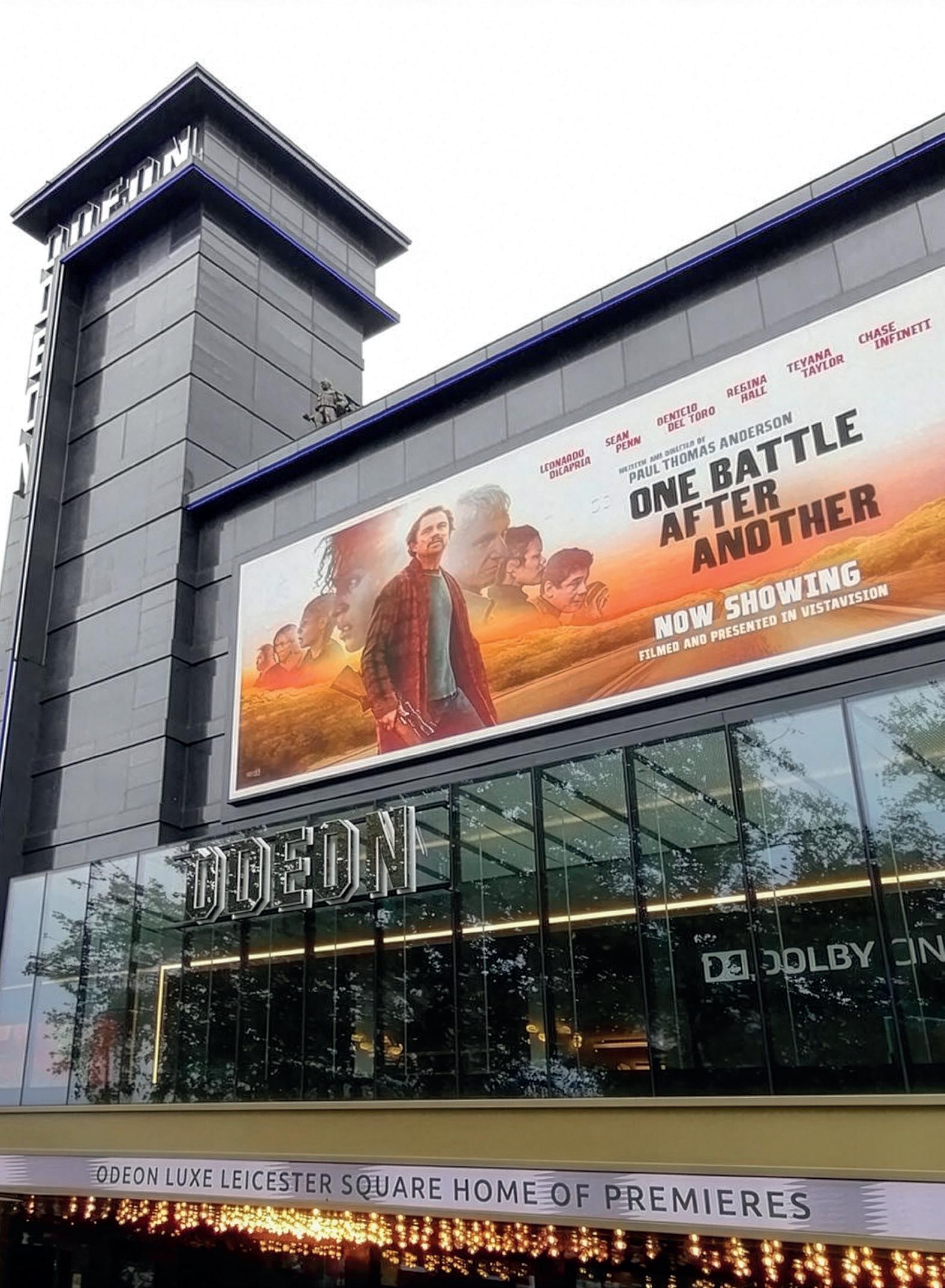
milestone is truly historic when you consider that the last feature film shot entirely in VistaVision was the Marlon Brando film “One Eyed Jacks” back in 1961.
(Some web sources seem to indicate that parts of “One Battle After Another” were shot using super 35mm – a format where the camera uses the full width of the 35mm film including the part of the film normally reserved for the optical track on the side of the film.)
Readers may know that VistaVision involves 35mm film travelling horizontally through the 35mm camera and projector. The image is captured on a piece of film bordered each side by 8 perforations.
A VistaVision camera records the image on a surface area of film that is more than twice the size of a conventional vertical frame of 35mm film bordered by four perforations on each side.
Furthermore like IMAX, VistaVision doesn’t use anamorphic lenses to achieve its imaging and projection. It is often projected with an aspect ratio of 1.5:1. Modern fine grain films and increased frame size continue to make it truly a “motion picture high
fidelity” format. It is a natural precursor to IMAX and in these respects related to it. The origination of this milestone in VistaVision has also facilitated the production of IMAX 70mm analogue prints for the release of the movie, alongside its much wider digital release.
Paul Rayton, in a recent “in70mm.com” article, reported on two “one off” VistaVision recent screenings of classic VistaVision film prints at the TCL Chinese Theatre in Los Angeles as part of the Turner Classic Movie Festival. Paul Thomas Anderson might be considered by some as more of an auteur or film maker with a personal subtle style. He is not known for mass appeal box office “blockbusters”. It is another remarkable achievement that Anderson and the film’s production company secured a season of screenings in VistaVision using VistaVision prints and projectors at four locations. It is a testament to the support and determination of Warner Bros, and other companies involved in cinema exhibition, in achieving this feat. The locations were The Vista Theater in Los Angeles, the Regal Union Square 17 in New York, the Coolidge Corner Theatre in Brookline, Mass., and the Odeon Luxe Leicester Square in London.
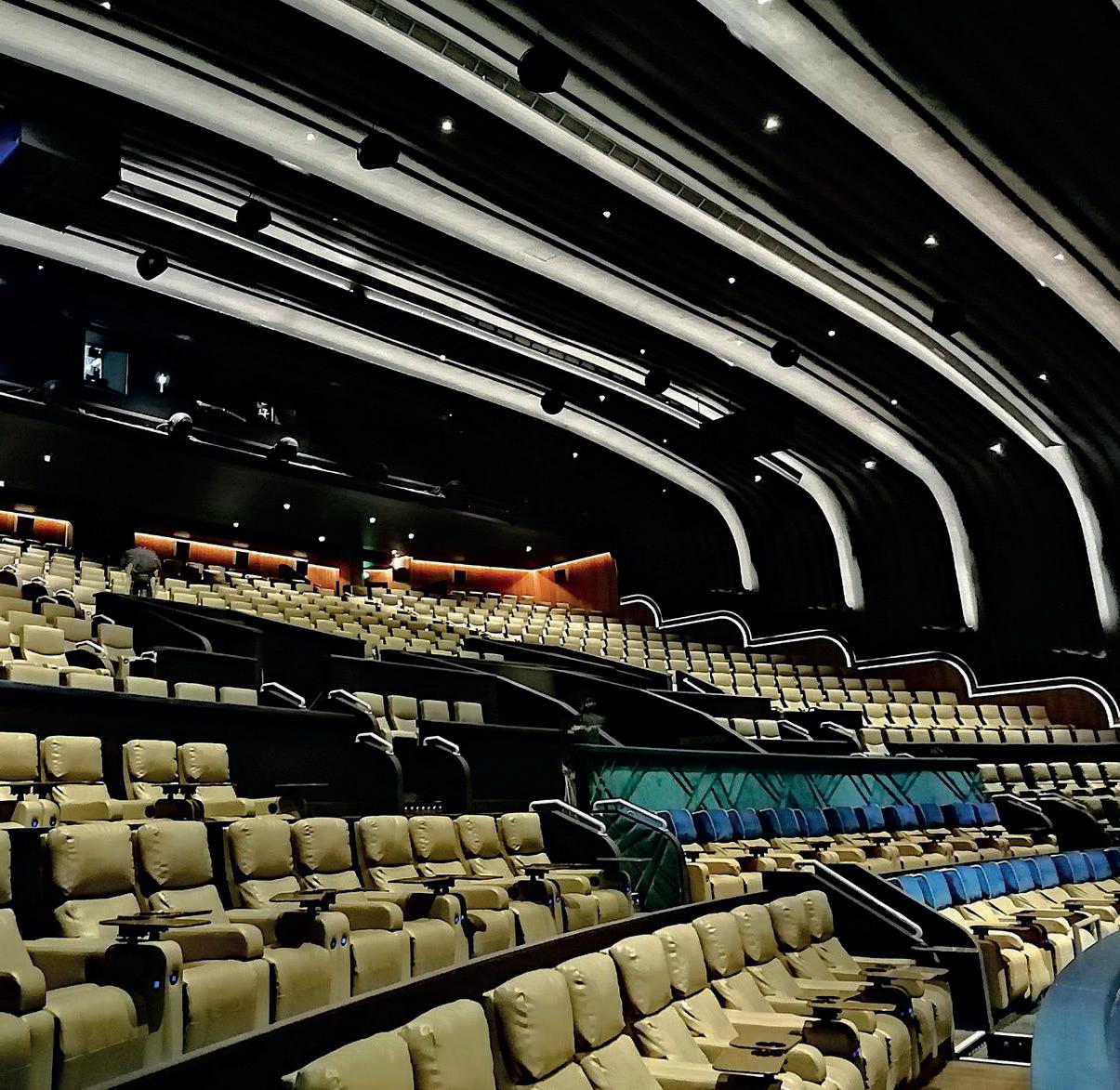
At the beautifully refurbished iconic Art Deco Odeon Leicester Square in London, the public screenings in VistaVison started on Friday 26th September, the first day of the UK release of the film. The film’s London première, screened in VistaVision, was on Tuesday 16th September, with a cast and crew VistaVision screening the previous day. I understand there was a preview screening on 24th September. It was with great excitement that we attended the second public screening on the opening day. Michael Mannix the projectionist, afterwards told me that it was the seventh run of that print through the VistaVision projector.
The screenings were all held in the main 800 seat screen. On opening day the cinema was busy, particularly for the third evening screening. A member of staff told me they were expecting and hoping for a run of some three weeks of screenings in VistaVision with the most popular weekend days running three screenings per day. However, like all modern cinemas, they would adapt and alter the number of VistaVision screenings according to box office demand, advance booking trends and anticipated attendances. Some evening screenings would also include a short recital of music showcasing the Odeon’s classic Compton cinema organ, this short recital taking place between the advertisements and the trailers. The VistaVision prints (from FotoKem in L.A.) in all four locations
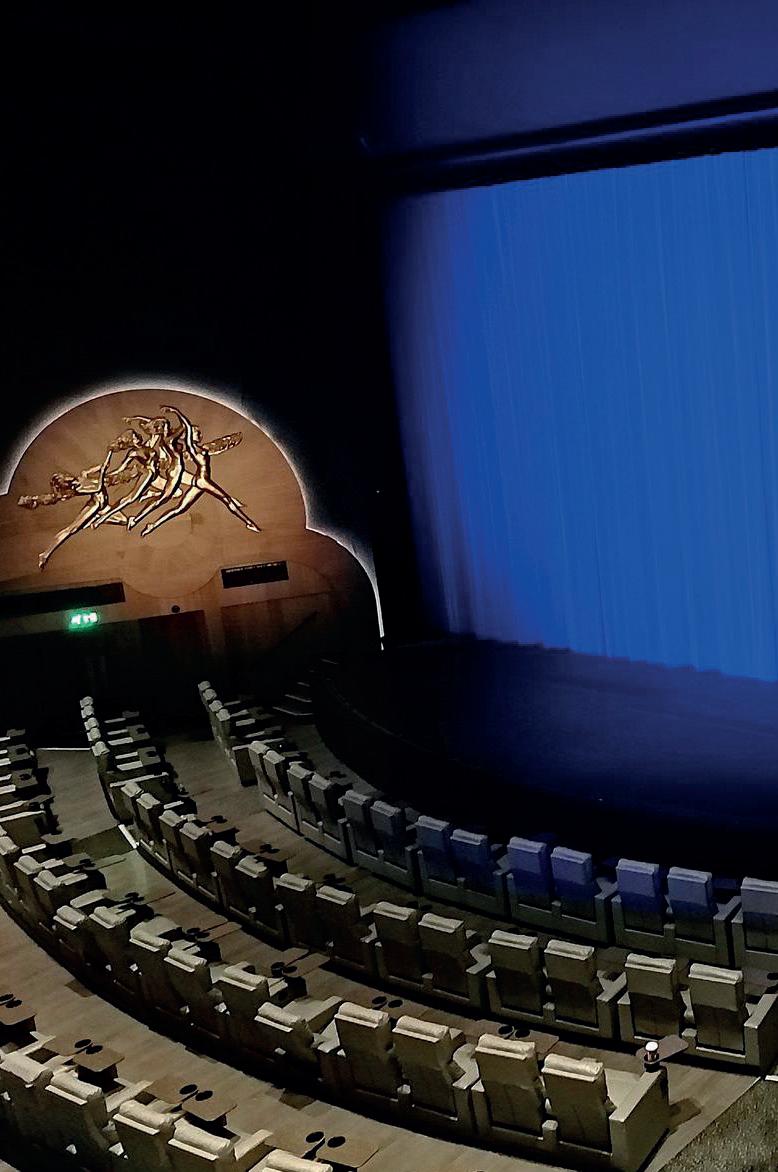
feature DTS sound with the time code on the edge of the film print. It is important to note that the prints made were contact prints made from the original camera negative!!
So, what was the experience of a lifelong film fan watching a VistaVision print “projected as photographed” on modern film stock? It was truly remarkable! The image quality was beautiful. We sat in the Royal Circle and during some quiet moments in the film we could very faintly hear that memorable “purring” of the mechanical projector in the distance.
There was an initial shock at seeing images from such a very modern film projected in the 1.5:1 aspect ratio. At first it seemed strange seeing such an aspect ratio in such a large auditorium where much wider aspect ratios were the expected norm. I was concerned as to whether I could cope with watching a near 2 hour 50 minute film (no intermission) in such an old aspect ratio in such modern surroundings. Within minutes the film captured your attention and you became engrossed in it. The nature of the aspect ratio became irrelevant as the cinematography, aspect ratio and framing were all integral to the telling of the story. The images were rock steady – not a hint of unsteadiness – even in the stark high contrast main title and end titles. The images were as steadfast as from any digital projector. In the pale highlight areas of some scenes there was a very feint flicker in
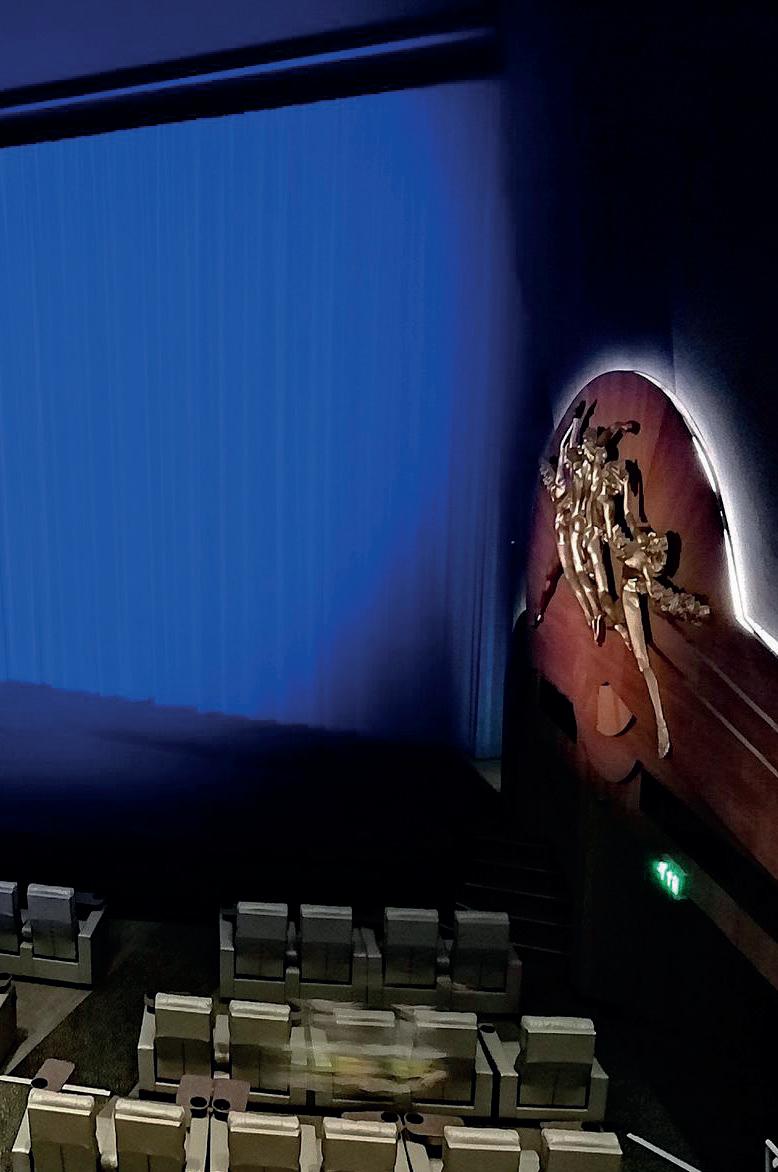
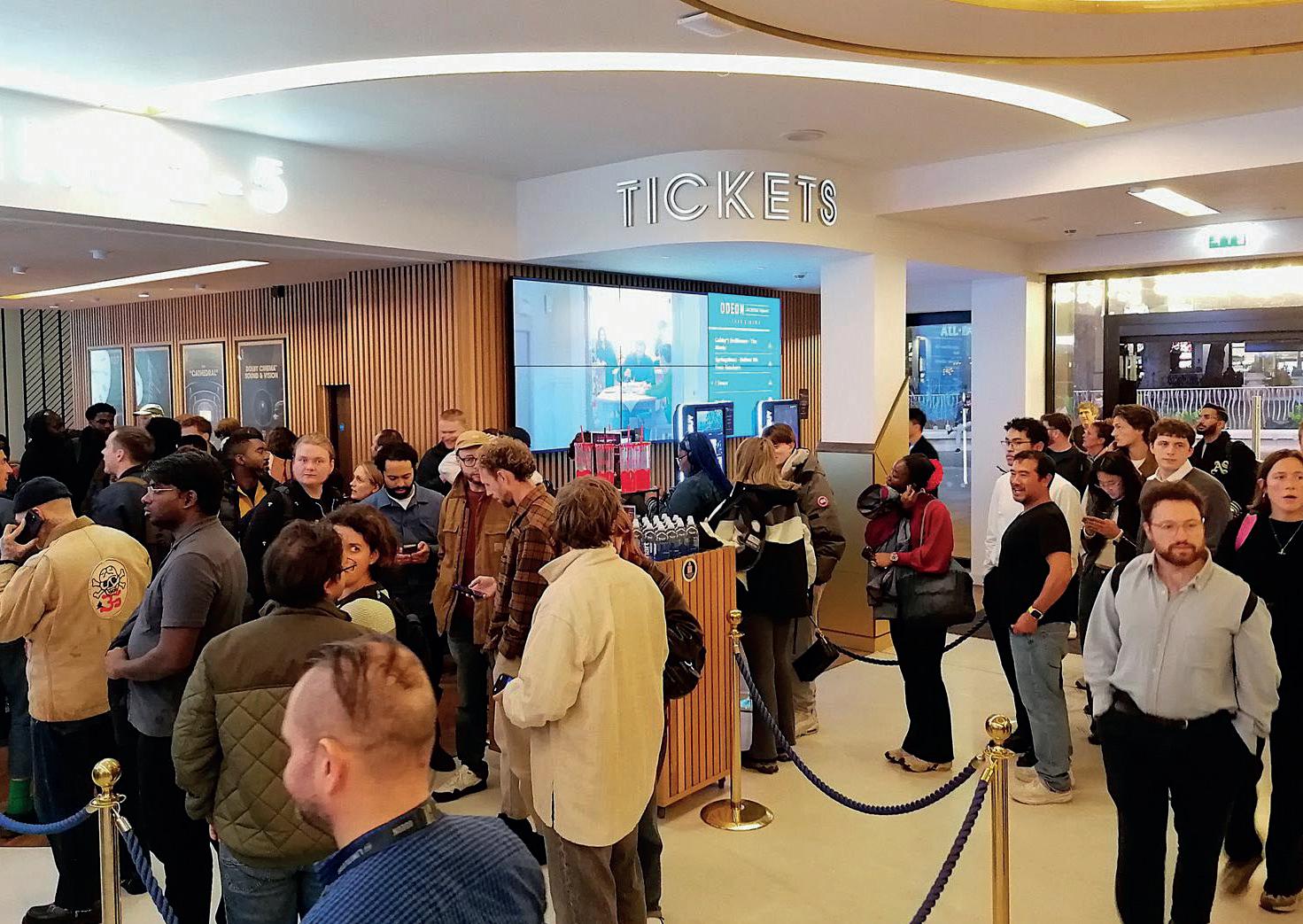
those parts of the image, probably wholly undetected by the majority of the very much younger audience members. The richness and depth of the photographed colours and sharp details and textures just drew me into the screen. It was such a contrast to the often more colder, over detailed clinical appearance that digital can appear to have when compared to the warmer more mellow image appearance of high quality celluloid imagery.
Even at that size of screen, at our viewing distance, there was absolutely no hint of grain. Sometimes in certain lighting situations film can create images of potentially too high contrast, and this was the case in some shots. This is where digital copes with high contrast situations much better. But that is all part of the overall celluloid experience. The whole experience for me was stunning. VistaVision projected as photographed yielded image quality of such detail, richness, luxuriousness, and depth all at once. To me the contrast between the VistaVision quality and look, compared to the look of the digital trailers and advertisements that preceded the feature film was considerable.
The fact that filmmakers are increasingly considering utilising celluloid film as a tool in such a digitally dominated cinema environment is so refreshing. In terms of signage, not much emphasis was being made of the fact that the film was being presented in VistaVision. All that really existed was the reference
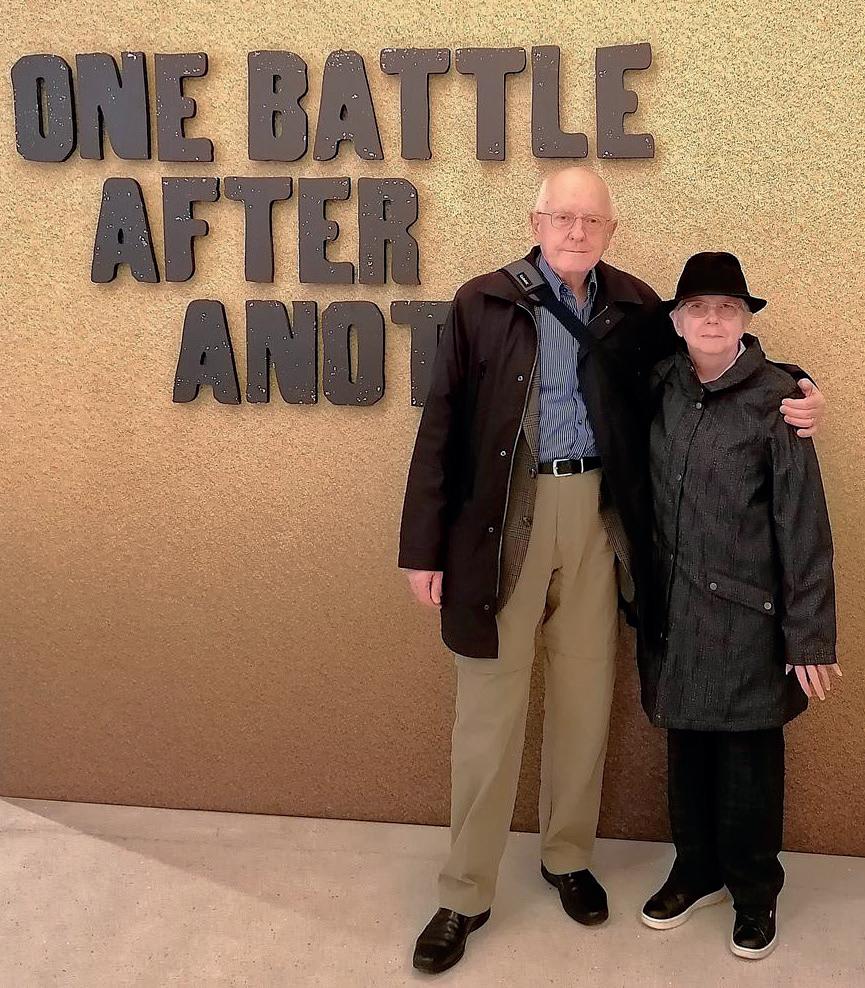
at the bottom of the digital posters around the cinema. Michael Mannix did mention that some screenings might have a short introduction alerting the significance of the projection format to the audience.
To this aging film fan, it seemed a little sad that possibly the considerable size audience attending the first three screenings of this opening day, may contain a significant proportion that have little or no knowledge of the significance of the particular presentation they were seeing. They were there to enjoy the film, and how it was being presented may not be of interest. To me it was without doubt the best presentation of 35mm. film that I can ever remember seeing.


THE WORLD GOES TO THE MOVIES. THE MOVIE WORLD GOES TO CINEMACON.
The Official Convention of