CINEMA TECHNOLOGY




As the global cinema industry continues its remarkable evolution, 2026 is shaping up to be potentially the defining year for exhibitors, distributors, and filmmakers alike. Against a backdrop of technological innovation, changing audience habits, and renewed investment in the theatrical experience, the industry enters the summer season with optimism and growing momentum.
Recent months have highlighted the resilience of our industry. Strong performances and often stronger than expected performances from movies and premium format releases have reaffirmed the enduring appeal of moviegoing – as if we needed it reaffirming. Audiences continue to demonstrate that when presented with compelling content and a premium cinema experience, they are willing to leave the comfort of home and embrace the magic of the cinema and in these challenging times, escapism likely forms something of a driver to our audiences. This upward trend has encouraged exhibitors to further invest in their cinemas from luxury seating, immersive audio, laser projection, and so much more, whilst also recognising the need to manage increasing costs through the latest energy crisis.
We’re also now seeing something of a maturation
between theatrical exhibition and streaming platforms. Rather than viewing one another as competitors, many industry stakeholders are increasingly exploring complementary strategies that maximise audience reach while preserving the value of the theatrical window. The result is a more balanced ecosystem that recognises the unique strengths of each distribution channel.
Artificial intelligence and data-driven technologies are also becoming more prominent across the cinema landscape. From personalised marketing campaigns and audience analytics to operational efficiencies within cinemas themselves, technology is helping businesses better understand and serve their customers. While the industry remains committed to protecting creativity and human storytelling, these tools are opening new opportunities for innovation and growth. Internationally, cinema markets continue to recover at varying speeds, but the overall trajectory remains upward. The diversification of cinema offerings is creating new revenue streams and strengthening the industry’s long-term prospects. As we look ahead, all eyes turn to CineEurope, the premier gathering of cinema exhibition professionals in Europe. The event promises to provide a valuable platform for discussion, collaboration, and inspiration at a pivotal moment for the industry. Delegates can expect insights into upcoming film slates, the latest technological developments, and strategies for navigating an increasingly dynamic entertainment environment.
Perhaps most importantly, CineEurope offers an opportunity for the industry to come together and celebrate the shared passion that drives our businessdelivering unforgettable experiences to audiences on the big screen. While challenges remain, the creativity, adaptability, and determination demonstrated across the sector provide every reason for confidence. We look forward to engaging with colleagues, partners, and innovators from around the world at CineEurope and to exploring the opportunities that will shape the next chapter of cinema exhibition. The future of cinema continues to be written—and it remains an exciting story.
Cinema Technology Community (CTC) 124 City Road, London EC1V 2NX E: info@cinema-technology.com
CTC PRESIDENT: RICHARD MITCHELL richard.mitchell@cinema-technology.com
ART DIRECTOR: DEAN CHILLMAID dean.chillmaid@cinema-technology.com
COMMISSIONING EDITOR: PETER KNIGHT peter.knight@cinema-technology.com
SUBSCRIPTIONS: Cinema Technology is mailed to IMIS Members. For subscription details and to read the magazine online, visit www.cinema-technology.com or email info@cinema-technology.com

CURZON ANNOUNCES NEW FLAGSHIP:
CHELSEA
A new three screen cinema and creative hub in the heart of London opening in late 2026.
DOLBY EXPANDS VISION + ATMOS FOOTPRINT IN ASIA
New installations with existing partners and new roll-outs in Vietnam and Taiwan including Shin Kong Cinemas and Galaxy Cinemas.
GREENSHOOTS: NEXT GAINS IN SUSTAINABILITY
Tim Potter looks at how sustainability is reaching a maturation point in the cinema industry and where it might be headed to next.
THE IMPORTANCE OF A SMART ENERGY STRATEGY IN CINEMA
Rising energy costs are once again forcing cinemas to look at one of the largest controllable line items - electricity.
WHY GEN Z AUDIENCES ARE RETURNING TO CINEMAS
Omdia's David Hancock explains why Gen Z audiences are seeking meaning and friendship and how the cinema is helping them to find it.
FEMALE AUDIENCES + FEMALE-LED HITS
Comscore's Nena Loncar looks at the growth in female-driven storytelling and female-led films and how these are driving box office growth.
ACCESSIBILITY IN UK AND USA CINEMAS.
Accessibility barriers in cinema typically arise from the AV nature of the medium — CTC's Paul Willmott looks at how cinema operators on both sides of the Atlantic are tackling the challenges.
FOH TECHNOLOGY - TRANSFORMING CINEMA EXPERIENCES
LED signage and data-driven concession upsells are quietly changing the technology inside cinemas, Peter Critchley from Trison explains how. 40
POWERSOFT UNICA ROLL-OUT IN SCANDINAVIA
Nordisk Cinemas Jan Rasmussen explains how the compact form factor is driving more efficient installations whilst preserving the magic of cinema.
42
THE NEXT EVOLUTION FOR EVENT CINEMA DISTRIBUTION?
A look at UniqueX's RosettaLive Multicast and how this innovation will help cinemas remove the limitation of "one-screen" going forward.
THE CHANGING NATURE OF CINEMA OPERATIONS
Bar Karniel from Pres Global looks at the cloud, hybrid and infrastructure options available to cinema operators along with the impact of AI.
IS QUANTUM COMPUTING THE NEXT BIG THREAT?
Industry veteran Michael Karagosian looks at the potential threat of quantum computing and why we cannot afford to ignore it.
INDY BECOMES PART OF FANDANGO
Ian Brown explains why this logical move provides a holistic platform for efficient cinema operations.
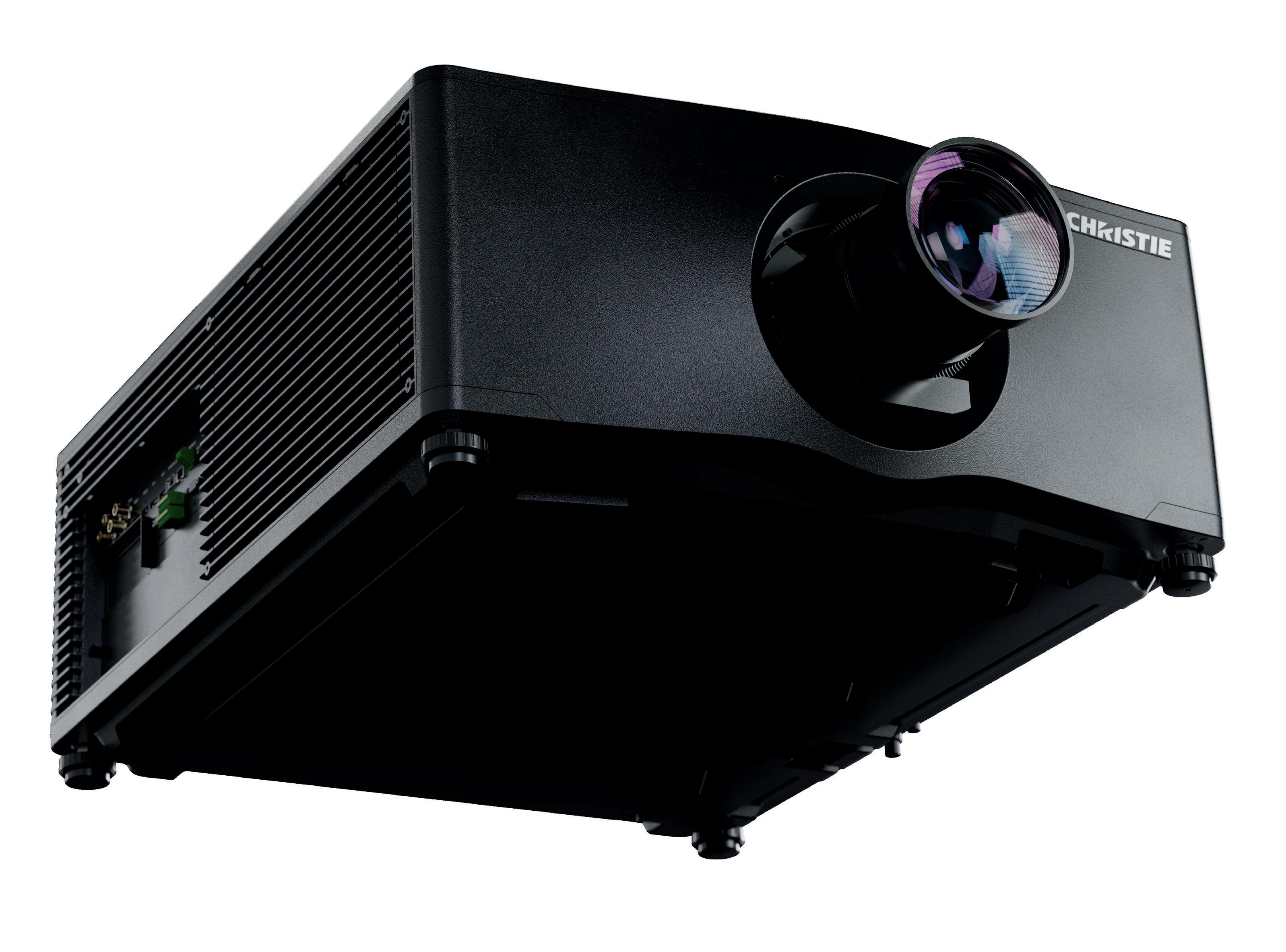
Hybrid laser illumination built for color accuracy and consistently better visuals on every screen.
See it at CineEurope MR133


WORDS: DAVID POPE, PRESIDENT, IMIS
The Student Showcase continues to grow as an important platform for emerging talent giving students the opportunity to present their work in a professional cinema environment while offering industry attendees a chance to discover fresh perspectives, innovative ideas and future collaborators.
The second quarter of 2026 has showcased exactly what IMIS exists to champion: bringing creative and technical professionals together, creating opportunities for emerging talent, and strengthening the connections that shape the future of the moving image industry. From celebrating student filmmakers at London’s Odeon Tottenham Court Road to preparing for our upcoming event at Pinewood Studios, IMIS continues to create spaces where learning, collaboration and industry insight thrive. As technology, workflows and audience expectations continue to evolve, the importance of understanding not only your own craft, but the roles and expertise surrounding you, has never been greater. Through our events, interviews and member initiatives, IMIS remains committed to supporting the people and partnerships behind exceptional productions.
In May, IMIS welcomed students, educators and industry professionals to the Odeon Tottenham Court Road for the IMIS Student Showcase 2026: Framing Your Future.
networks early in a career. The Student Showcase continues to grow as an important platform for emerging talent, giving students the opportunity to present their work in a professional cinema environment while offering industry attendees a chance to discover fresh perspectives, innovative ideas and future collaborators. IMIS would like to thank all participating universities, students, speakers and attendees for making the event such a success.
Following a successful Student Showcase, IMIS continues its 2026 programme with a series of events focused on collaboration, innovation and professional development across the moving image industry.

The event celebrated the next generation of moving image talent, with standout student projects screened on the big screen from Bournemouth, Roehampton and Surrey Universities. Throughout the afternoon, students had the opportunity to showcase their creativity and technical skill while connecting directly with professionals working across the industry today. Hosted by journalist and presenter Omar Mehtab, the showcase combined screenings, keynote insights, panel discussions and networking opportunities designed to bridge the gap between education and industry. A major focus of the event was collaboration across disciplines, highlighting how creative and technical roles work together throughout the production process. Discussions explored career pathways, emerging technologies, industry expectations and the importance of building strong professional
On Friday 3 July, IMIS heads to Pinewood Studios for Studios, Technology & Vision, bringing members and industry professionals together for an afternoon focused on the future of studio-based production. Hosted at the iconic Pinewood Studios, the event will begin with lunch and networking in the Pinewood Ballroom before moving to the John Barry Theatre for presentations exploring the evolving UK studio landscape, emerging production technologies and future industry trends. Attendees will hear insights from Pinewood representatives alongside additional industry contributors discussing the technologies, workflows and creative vision shaping modern production environments.
Additional upcoming IMIS events include:
› September 2026: Colour Truth: Metamerism Part II
› Autumn 2026: Social Media’s Impact on the Broadcast World
› October 2026: Soho Media Club’s BE YOU Festival
Through these events and initiatives, IMIS continues to create opportunities for knowledge sharing, collaboration and stronger industry connections across both creative and technical disciplines.
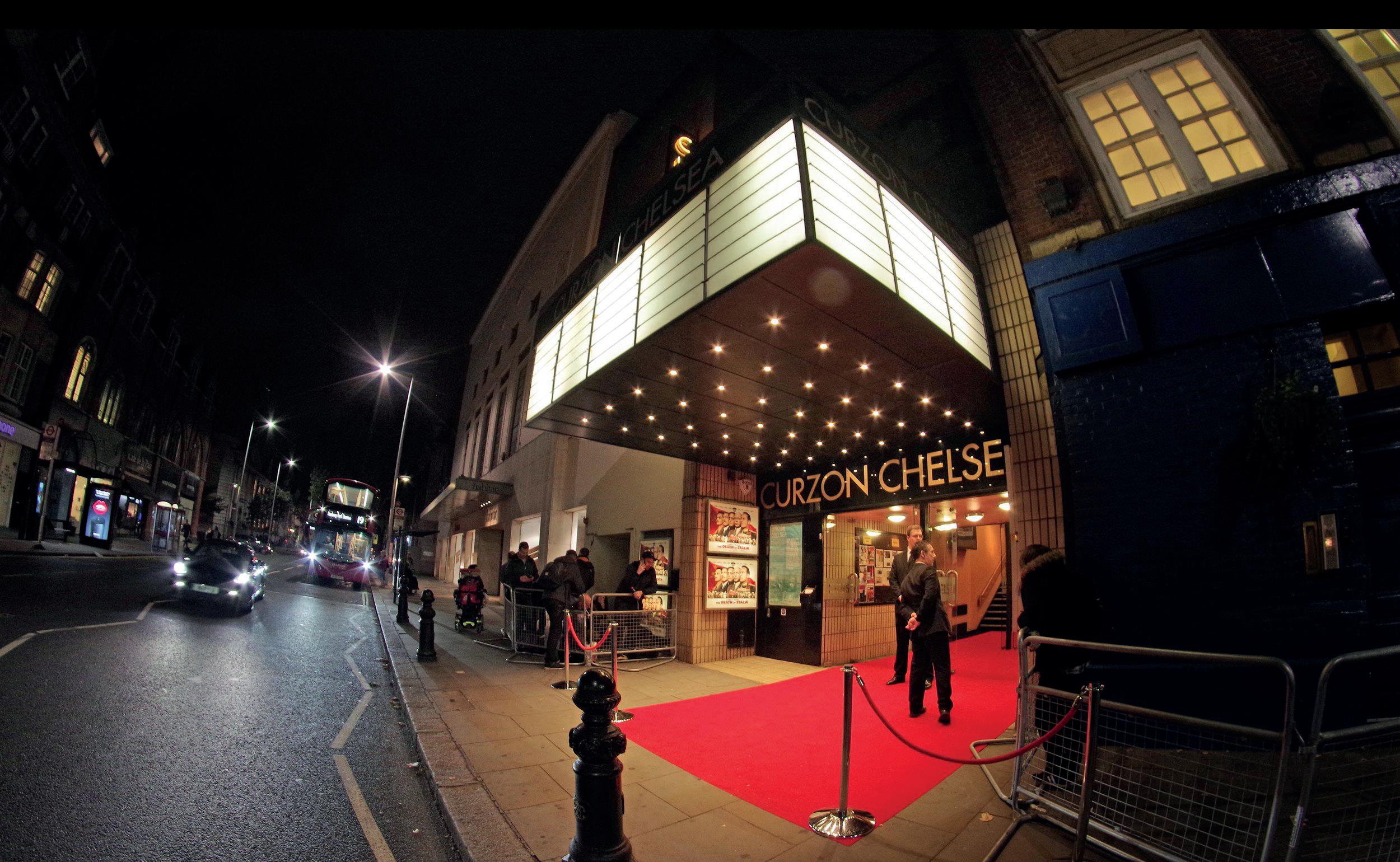
IN MID-MAY, UK OPERATOR CURZON announced its new flagship venue, Curzon Chelsea, located on the iconic King’s Road, London. Following completion of the site’s impressive redevelopment by Cadogan, work has commenced on the fit-out of the 20,000 sq ft shell, ahead of its opening in Q4 2026.
The new flagship marks an evolution for the iconic BAFTA-winning cinema and film company, which plans to use Curzon Chelsea as a platform to build on their expertise in hospitality, curation and community-
building to establish Curzon as a broader cultural and lifestyle brand. Curzon has long operated across the full lifecycle of film, from development and production to distribution and exhibition. Curzon Chelsea will combine every aspect of Curzon’s offering in one location, incorporating custom spaces designed to reflect the evolution of the industry – including shifting viewing habits, the growth of multi-format consumption and the opportunity to engage new audiences in different ways.
It also marks a return to one of the company’s most historic locations, where it first opened in the same location in 1983. A longstanding part of the local cultural fabric, the cinema closed in 2018. The redevelopment retains the original Art Deco cinema façade, while reimagining the space behind it.
The main spaces at Curzon Chelsea will include · The Main Stage – a 300-seat auditorium with Dolby Atmos sound and 4K projection, designed for premieres, screenings and large-scale events.
› The Atrium – a central, flexible space for gatherings, receptions and live programming, with capacity for up to 300 guests.
› Studio A – a highly adaptable studio supporting podcasts, writers’ rooms, workshops and experimental screenings.
› Studio B – a flexible screening and event space for up to 60 guests.
› The Pod – a dedicated, fully equipped audio and video recording studio.
› The Gallery – a bar, café and creative social space designed for informal working, meetings and dayto-day use.
Curzon chairman and CEO Philip Knatchbull said “Curzon Chelsea reflects a rethinking of the role that Curzon holds at the cutting edge of the industry by creating a multi-purpose environment for the wider creative community. Our flagship location will span film, art, storytelling, content creation, podcasting, live performance and conversation-led events. In this sense, Curzon Chelsea brings together everything we have been envisioning for the future of Curzon, and creative culture more generally.
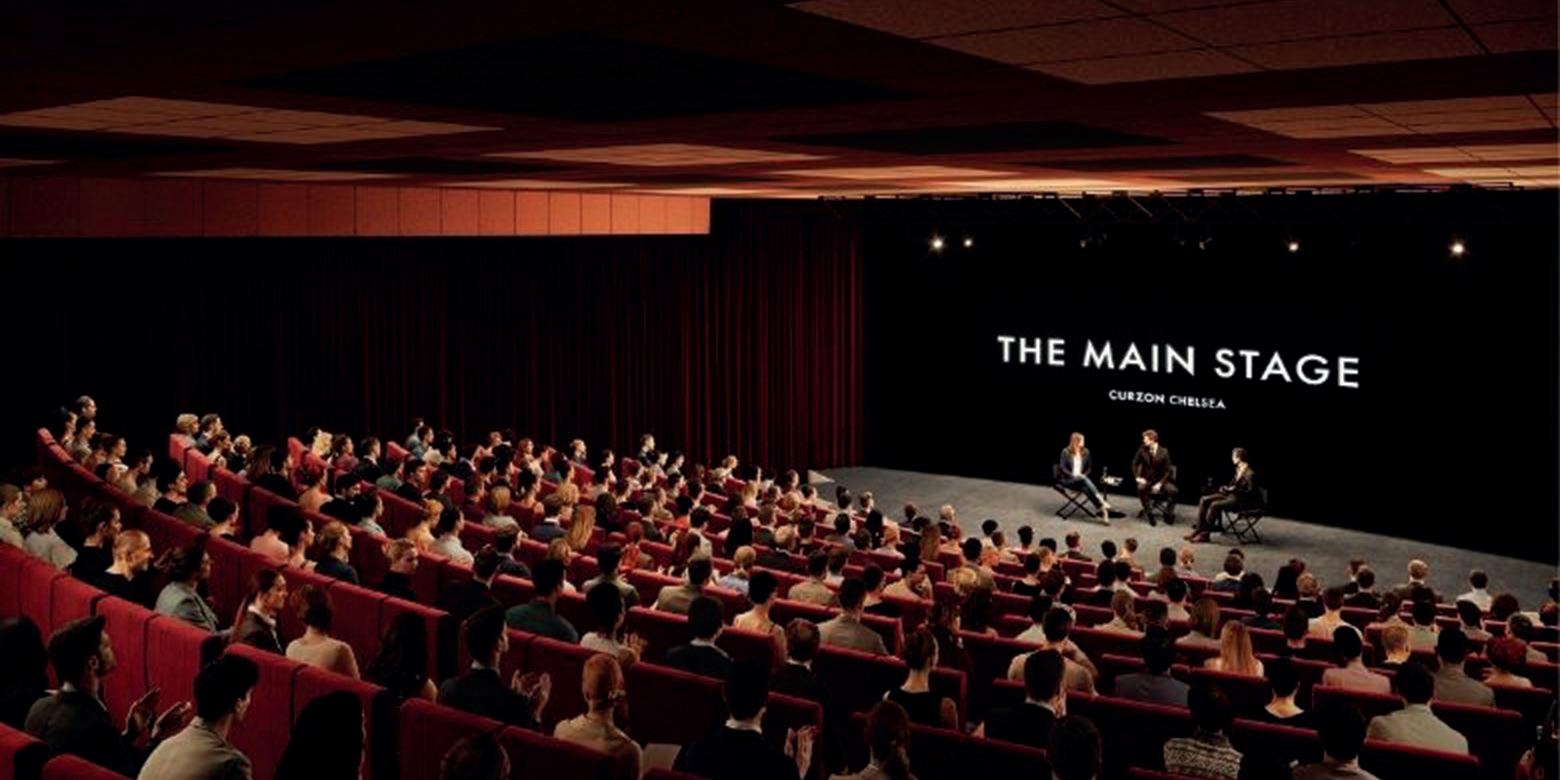
“Curzon has long operated across production, distribution and exhibition, but those boundaries are increasingly overlapping. Curzon Chelsea creates a space where ideas can be developed, tested and experienced in a more connected way, and where audiences can move fluidly between formats – film, audio and live events – for a truly immersive experience.
“We’re excited to return to such an historic location with a new flagship that will actively promote the creation and exhibition of the very best of British and international art and culture.”
Curzon Chelsea will operate as an all-day destination, maximising the use of the flagship
location. Screening rooms, studios, production facilities, a restaurant and bar, and flexible event spaces will operate concurrently within a single, interconnected site, enabling people to meet, collaborate and develop in real time.
Curzon Chelsea is designed to support a generation of creatives whose work spans platforms, from film to audio, digital content and live formats. This reflects a deliberate strategic shift as Curzon builds closer, earlier relationships with emerging talent –including those working outside traditional cinema industry structures – and creates new pathways from creation through to distribution and exhibition.
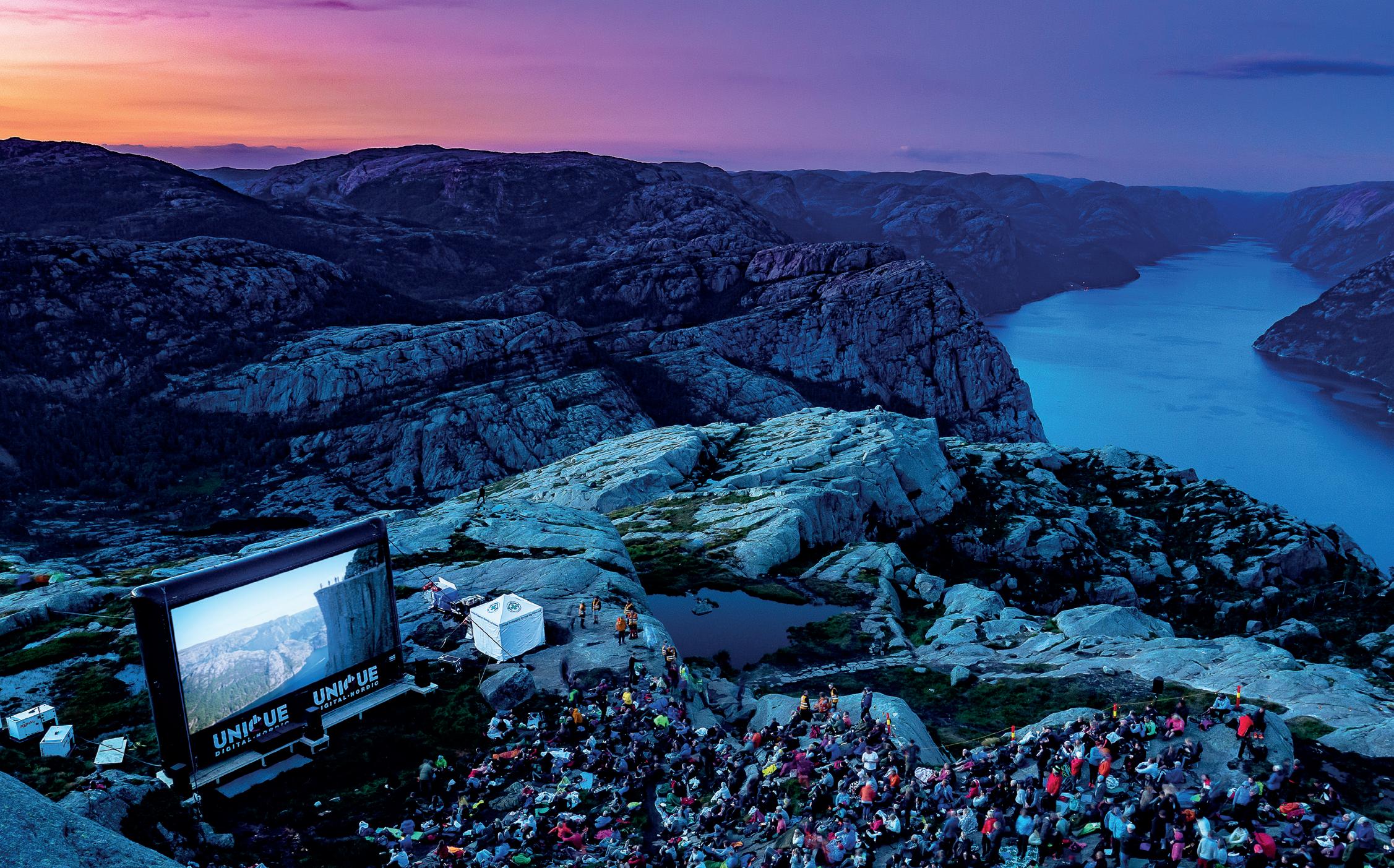
A BUILDING WITH NEARLY A CENTURY-LONG connection to cinema exhibition is once again screening films after more than 20 years, thanks to Christie® RGB pure laser projectors. The historic Cine Productor, located in Albacete in southeastern Spain, has reopened following a full renovation as Odeon Productor, a four-screen complex operated by Spanish exhibitor Odeon Multicines and equipped with four Christie CineLife™ CP2309-RGB projectors
Equipo de Cine, a long-standing Odeon partner, carried out the projection system integration. Odeon Multicines operates 18 cinema complexes across Spain, totalling 161 screens.
The reopening brings cinema back to central Albacete, after more than two decades without screens in this area, restoring a landmark venue whose history dates back to the early days of film exhibition in the city. The building began hosting screenings in the late 1920s and, after the Spanish Civil War, reopened as Cinema Productor, and was one of Albacete’s main cultural meeting points for decades.
The new Odeon Productor has been fully
redesigned to meet modern exhibition standards while preserving the building’s historic character. The main auditorium seats approximately 120, and also hosts presentations, events, and cultural gatherings, while the remaining three auditoriums provide more intimate capacities ranging from 70 to 90 seats.
“We have worked with Christie for many years and are very familiar with the reliability and performance of their equipment. We have around 80 Christie projectors installed across our cinemas, which gives us great confidence in the brand,” says Juan García, operations manager at Odeon Multicines. “Christie technology allows us to deliver consistent image quality and strong operational stability, which is essential for cinema exhibition.”
All four auditoriums at Odeon Productor are equipped with Christie CineLife CP2309-RGB projectors. “We selected this model because it combines a compact footprint with pure RGB laser technology, enabling excellent image quality even in mid-sized auditoriums. It also offers high energy efficiency and reduced maintenance compared to
previous technologies,” García explains.
The Christie CP2309-RGB is a DCI-compliant projector featuring Christie RealLaser™ illumination technology, which uses solid-state laser modules to deliver 9,000 lumens of brightness, a 2,000:1 contrast ratio, and more than 95% coverage of the Rec. 2020 color space, producing images with more accurate colors, deeper blacks, and outstanding onscreen uniformity.
For Odeon Multicines, the reopening of this historic cinema represents a balance between technological innovation and cultural preservation. “For Odeon, it is very important to recover venues with a strong cinematic heritage and return them to the public with state-of-the-art technology,” García adds. “The goal is to respect the cinema’s historical value while delivering a fully modern audiovisual experience.”
García concludes: “Our objective is to continue offering the best possible image quality to audiences. The gradual adoption of RGB laser projection is part of that strategy, and Christie is a key technology partner in achieving it.”
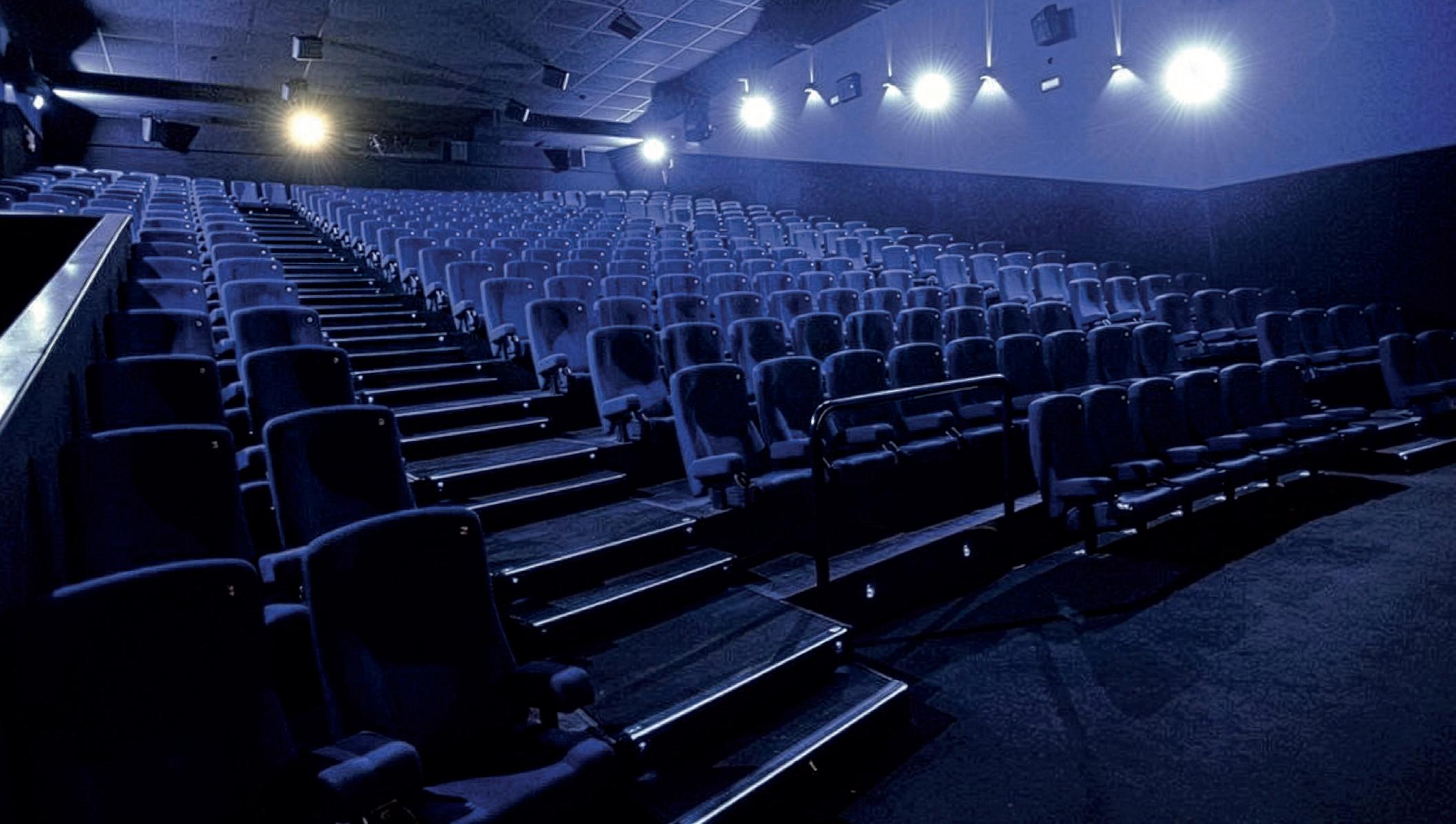

ON JUNE 2ND, US EXHIBITOR ALAMO DRAFTHOUSE AND SONY INTERACTIVE ENTERTAINMENT teamed up to bring the upcoming State of Play broadcast into cinemas for the first time. Select Alamo Drafthouse locations across the US hosted a live screening event featuring the latest PlayStation news and new game reveals in real time alongside streaming audiences worldwide.
Commenting prior to the event, Michael Kustermann, Alamo Drafthouse CEO said “We’re incredibly excited to bring PlayStation’s State of Play to theaters for the very first time and continue expanding what audiences can experience at Alamo Drafthouse. This partnership represents a unique opportunity to bring fans together in a communal setting to celebrate
gaming culture on the big screen, while also showcasing the incredible synergy between Sony’s entertainment businesses. As the lines between gaming, film, and live events continue to evolve, we see enormous potential in creating new theatrical experiences like this for passionate fan communities.”
State of Play is Sony Interactive Entertainment’s signature broadcast presentation showcasing upcoming titles, new trailers, and updates from top studios around the world. This special theatrical presentation transformed the digital premiere into a shared cinema experience, complete with a themed menu of bites and drinks and other surprises.
“State of Play has become a major flashpoint for the global PlayStation community and we’re thrilled for the
opportunity to bring that experience into select theaters for the first time with Alamo Drafthouse,” said Jill Erb, Senior Director, Marketing Partnerships, Sony Interactive Entertainment. “PlayStation is about incredible games and the shared experiences that connect fans through the stories and characters that mean so much to us. This effort allows us to celebrate gaming culture in a new way and team up to showcase the excitement, surprises, and energy that State of Play has become known for.”
The event was part of an ongoing partnership between Alamo Drafthouse and Sony Interactive Entertainment, which has previously included the exclusive Ghost of Yōtei Popcorn Bucket and a Way of the Samurai screening series with themed menu.
In late May, Unique X confirmed a prestigious new collaboration with Cinemateca Uruguaya, one of Latin America’s most respected film institutions, to deploy its RosettaBridge TMS at the organisation’s Montevideo headquarters.
Founded in 1952, Cinemateca Uruguaya is internationally recognised for its vital role in film preservation, exhibition and education. As a member of the global film archive community and a cornerstone of Uruguay’s cultural landscape, it has long championed independent cinema and safeguarded thousands of works, making it a key institution for filmmakers, historians and audiences alike.
Through this agreement, Cinemateca Uruguaya will implement RosettaBridge TMS to support its day-to-day cinema operations. The system will streamline scheduling, playlist creation and technical management, while enhancing operational oversight across its screening venue.
RosettaBridge TMS will underpin daily activity, enabling efficient management of diverse programming that spans classic cinema, international festival titles and contemporary independent releases. The platform’s flexibility will support the organisation’s unique
programming needs, ensuring seamless delivery while maintaining the integrity of its carefully curated screenings.
Roger Harris, CEO of Unique X said “We are incredibly proud to be working with Cinemateca Uruguaya, an institution that holds such an important place in the global film community. Its commitment to preserving and celebrating cinema aligns closely with our own values. Supporting their operations with RosettaBridge TMS is a privilege and we look forward to contributing to their continued success.”
A spokesperson for Cinemateca Uruguaya commented “For decades, Cinemateca Uruguaya has been dedicated to preserving film heritage and presenting diverse cinema to our audiences. Implementing RosettaBridge TMS allows us to modernise our operational workflows while continuing to focus on what matters most: the films themselves and the experience we provide to our community.”
This collaboration reflects Unique X’s ongoing commitment to supporting not only commercial exhibitors but also leading cultural institutions, ensuring that world-class technology underpins the presentation and preservation of cinema in all its forms.
AMERICAN CINEMA EQUIPMENT ANNOUNCES
NEW OWNERSHIP
TRANSITION LED BY INDUSTRY VETERANS
Long-time cinema professionals Dave Ballew and Scott Kimber have recently taken the helm of ACE. The partnership between Ballew and Kimber traces back to their teenage years at Luxury Theatres, where both began their careers in hands-on service roles. Those early experiences laid the groundwork for decades of industry leadership. Scott Kimber later advanced his career with Moyer Theaters before joining American Cinema Equipment in early 1996 as the company’s first employee, helping establish the foundation of the organization in its formative years.
Dave Ballew brings a broad background in exhibition, design, and development leadership, having worked with ACT III Theatres, Wallace/ Hollywood Theatres, Hodges Architects, iPic Theatres, and Alamo Drafthouse Cinemas. Most recently, he represented Hamilton Commercial, a developer specializing in multi-family residential, industrial, and commercial projects, including the Palace Poker card house in Grand Prairie, Texas. Together, Ballew and Kimber bring a rare combination of operational, technical, and development expertise to ACE’s next chapter of growth.
“As new owners of the company, we are proud to build upon the strong foundation established by Scott Hicks and Patty Boucher,” Scott Kimber said. “We are committed to carrying their legacy forward with the same dedication and high standards that have defined the company’s success. The ACE organization—including sales leadership under Doug Sabin and
DOLBY LABORATORIES RECENTLY
announced new commitments from leading exhibitors in Taiwan and Vietnam for their Dolby Vision+Atmos theater solution, as well as continued expansion with existing exhibitor partners across the region. Shin Kong Cinemas, a major exhibitor in Taiwan, plans to open two Dolby Vision+Atmos auditoriums this summer.
With that, Shin Kong Cinemas will become the first exhibitor in Taiwan with both Dolby Cinema and Dolby Vision+Atmos auditoriums. Galaxy Cinemas, one of the top exhibitors in Vietnam, plans to open five Dolby Vision+Atmos auditoriums over the next three years, with the first auditorium to open this summer. In the past six months, MixC Cinemas opened its first Dolby Vision+Atmos auditorium in mainland China; SHOWTIME Cinemas introduced two Dolby Vision+Atmos auditoriums at its flagship Taipei Dome multiplex in Taiwan; Megabox expanded its Dolby Vision+Atmos footprint in South Korea with its fourth and fifth auditoriums, with the sixth set to open in May, and Major Cineplex launched the first Dolby Vision+Atmos auditorium in Thailand.
“The adoption of Dolby Vision+Atmos in Asia reflects a clear trend—moviegoers are seeking out premium audiovisual experiences that bring them closer to the story,” said Michael Archer, the vice president of worldwide cinema sales and partner
Spencer Chao, as well as operations and technical support—will remain fully intact, ensuring continuity and a seamless experience for our customers.”
Patty Boucher shared, “I am proud to have kept the company within the family—it means the values and relationships we’ve built over the years will continue to shape its future. I have full confidence in the future success of the business under this next chapter of leadership.”
“I am excited to be part of the American Cinema Equipment family,” added Dave Ballew. “Prior to the company’s founding, I had the opportunity to work alongside both Scott
management, Dolby Laboratories. “We are proud to partner with a growing number of leading exhibitors across the region to allow more audiences to enjoy movies they love in a more vivid, captivating, and unforgettable way.
“Shin Kong Cinemas has always been committed to bringing the world’s most advanced cinema innovations to our patrons,” stated Shin Kong Cinemas. “Dolby is synonymous with premium quality – our audiences trust it and actively seek it out. By bringing together Dolby Vision’s stunning visuals and Dolby Atmos’ immersive sound, we’re able to deliver a more vivid, engaging moviegoing experience. By building on the success of Taiwan’s first Dolby Cinema, we are excited to expand our collaboration with Dolby and offer Dolby Vision and Dolby Atmos in more auditoriums, bringing premium picture and sound to even more moviegoers across Taiwan.”
“We are excited to become the first exhibitor in Vietnam to introduce Dolby Vision+Atmos to moviegoers,” said Nguyen Thi Mai Hoa, the chief executive officer of, Galaxy Cinemas. “The combination of Dolby’s stunning image quality and multidimensional sound will completely transform how audiences in Vietnam experience movies. This is a major step forward in our mission to offer the most advanced and immersive cinema experiences in Vietnam.”
Hicks (Founder) and Scott Kimber. Although our paths eventually took different directions, I’ve maintained strong relationships with them—as well with Patty—as both an exhibitor and customer of ACE, and as a friend—and I have always been proud to see their continued success. Now, after nearly four decades in the industry, partnering with Scott Kimber in ownership of ACE marks a meaningful new chapter. I look forward to carrying forward the legacy of the previous owners, while also expanding our capabilities into areas such as kitchen and bar design and sales, lounge and bar furnishings, and network, security, and access control design.”
really enjoy each new territory. Each one is so different, they work differently, films release differently. So it’s always exciting for me to learn something new.
really enjoy each new territory. Each one is so different, they work differently, films release differently. So it’s always exciting for me to learn something new.
My main expansion into the role has been to take on some bigger picture business, hopefully relieving some stress from my boss.
My main expansion into the role has been to take on some bigger picture business, hopefully relieving some stress from my boss.
I’ll end on two pieces of advice I was given when I started, and I love to share them as I believe they are so invaluable.
I’ll end on two pieces of advice I was given when I started, and I love to share them as I believe they are so invaluable.
CT: How have your previous experiences prepared you for your new role?
CT: How have your previous experiences prepared you for your new role?
I think because I’ve been so lucky to have had a varied career. From being on the studio side to growing in the tech side. I feel i understand the pain points that my customers face. Because I faced them.
I think because I’ve been so lucky to have had a varied career. From being on the studio side to growing in the tech side. I feel i understand the pain points that my customers face. Because I faced them.
CT: As the newest member of the CTC board, what are you looking forward to most?
Oh my gosh, the community. Sharing knowledge between this group of incredible people across the globe. Looking for better ways to work together that can help anyone. I hope I can bring something valuable to the table.
QUBE WIRE CINEMA, A LEADING PROVIDER of end-to-end digital cinema technology solutions, has signed a definitive agreement to acquire a 100% stake in MetaMedia (MMT Tech, Inc). MetaMedia is North America’s largest cloud-based content delivery platform to cinemas. With this acquisition, Qube Wire becomes the world’s largest cinema electronic delivery network with over 5,000 cinemas connected across 51 countries. In the United States, the merged network will provide coverage to 9 of the top 10 largest cinema chains. Qube will continue to execute MetaMedia’s existing deployment plans and service its customer agreements.
“...Sharing knowledge between this group of incredible people across the globe. Looking for better ways to work together that can help anyone. I hope I can bring something valuable to the table.“
CT: As the newest member of the CTC board, what are you looking forward to most?
Oh my gosh, the community. Sharing knowledge between this group of incredible people across the globe. Looking for better ways to work together that can help anyone. I hope I can bring something valuable to the table.
“The acquisition of MetaMedia is a huge move for Qube’s North American operations,” said Harsh Rohatgi, CEO of Qube Cinema. “MetaMedia’s
MDI Screen Systems announced at CinemaCon 2026 its official transition to MDI. This news was accompanied by the launch of a refreshed global brand identity, including a new logo, visual system, and market-facing branding. This evolution reflects the company’s commitment to honouring its heritage by positioning itself for continued growth across cinema, simulation, attractions, and professional AV sectors as well as its intention to expand into untapped markets. By returning to the name MDI, the company reinforces the strength of its original foundation— recognized worldwide for engineering excellence and innovation in large-scale projection surfaces— while embracing a more streamlined and futurefocused identity.
“...Sharing knowledge between this group of incredible people across the globe. Looking for better ways to work together that can help anyone. I hope I can bring something valuable to the table.“
CT: What’s your favourite aspect of working in the cinema industry?
“This is both a return to our roots and a step forward,” said François Barrette, President. “The name MDI carries decades of expertise, trust, and technological leadership. By bringing it back to the forefront, we are reaffirming who we are at our core, while evolving to meet the opportunities ahead.”
The cinemas of course! I love to visit my favourite places in town. I love to escape into a film, melt away any stress. It’s the best fun, even when I watch a horror. If you’ve ever sat next to me during a horror, you’ll know how ridiculous I am.
innovative network has consistently delivered faster, more cost-effective solutions for content delivery, saving millions compared to traditional methods. At Qube, we’ve leveraged this technology to bring Indian feature films to North American cinemas with speed and precision, expanding the size and number of Indian releases by 3x in the last five years. With the addition of MetaMedia, our combined strengths will set a new standard in cinema content delivery for many more distributors and create unparalleled value for the global movie industry.”
Pick your battles… don’t die on your sword. A few years into my role at Warner Bros, I had just started taking over trailer negotiations. During a back-and-forth with one of my exhibitor friends over placement for a release that barely had any admissions, he said, “Pick your battles.” I understood immediately, and it resonated with me.
Pick your battles… don’t die on your sword. A few years into my role at Warner Bros, I had just started taking over trailer negotiations. During a back-and-forth with one of my exhibitor friends over placement for a release that barely had any admissions, he said, “Pick your battles.” I understood immediately, and it resonated with me.
CT: What’s your favourite aspect of working in the cinema industry?
The cinemas of course! I love to visit my favourite places in town. I love to escape into a film, melt away any stress. It’s the best fun, even when I watch a horror. If you’ve ever sat next to me during a horror, you’ll know how ridiculous I am.
The new visual identity modernizes the MDI brand through a redesigned logo, updated typography, and a cohesive system of market-facing logos that better reflect the company’s expanding portfolio. This includes clearer positioning across its core sectors, from cinema to professional AV, as well as emerging attractions and experiential applications.
CT: What advice would you give to someone considering a career in this field?
CT: What advice would you give to someone considering a career in this field?
For nearly four decades, Qube Cinema has been a trailblazer in the global filmmaking and exhibition industries. Qube is one of a handful of companies in the world that has developed a DCI-certified digital cinema server. With a team of about 1,000 employees
“Our business has grown well beyond its original scope,” added Jean-François Gagnon, Senior Vice President, Sales & Marketing. “The new brand
architecture allows us to better communicate the full scope of what we do while staying anchored in the values that built MDI—precision, reliability, and partnership.”
I’ve kept this in mind in everything I do ever since.
I’ve kept this in mind in everything I do ever since.
The global rebrand will be rolled out gradually across all communications, product lines, installations, and digital platforms in the coming months.
Don’t burn any bridges. This industry is still quite small, and we all rely on the relationships we build. You never know what will happen, so it’s never worth burning those bridges down.
Don’t burn any bridges. This industry is still quite small, and we all rely on the relationships we build. You never know what will happen, so it’s never worth burning those bridges down.
Ultimately, the connections you make and the experiences you gain can lead to incredible opportunities, so definitely embrace every moment and every interaction!
Ultimately, the connections you make and the experiences you gain can lead to incredible opportunities, so definitely embrace every moment and every interaction!
who are passionate about the domain, Qube continues to revolutionize cinema exhibition and distribution with cutting-edge, reliable, and costeffective solutions. With technology to service the world’s greatest content creators and exhibitors, Qube continues to introduce innovations to the cinema ecosystem that are reshaping the cinematic experience for audiences worldwide. Qube Wire has been growing consistently since launching as a global cloud-based distribution platform in early 2017. Today, Qube Wire powers the supply chain for many major content distributors, including all the major Hollywood studios. Qube Wire also delivers over 95% of all the Indian movies released around the world. With its regional partnerships and automated hard drive duplication hubs, Qube Wire provides
SAMSUNG ELECTRONICS CO., LTD. announced a new 14-meter (46 feet) standard size for its Onyx (ICD model) cinema LED lineup at CinemaCon 2026, expanding the platform into larger premium auditoriums. The new model is designed for Premium Large Format (PLF) theaters and delivers the same picture quality, reliability and scalability that define the Onyx platform at a larger scale. Samsung’s new 14-meter format aims to meet the PLF demand and enable greater immersion, optimized seating layouts and more efficient use of theater space.
Following last year’s launch of the 5-meter (16-feet) model for boutique theaters and the 10-meter (33-feet) model for premium auditoriums, Samsung is now expanding the lineup with a 14-meter standard size designed for larger theater environments. The new
model brings the same core Onyx experience— including support for up to 4K 120Hz,3 exceptional clarity and ultra-smooth motion—while introducing two distinctions tailored to the 14-meter format: including 3mm pixel pitch—optimized for the 14-meter format to deliver sharp, consistent image quality on a larger screen—and flexible scaling support—enabling the 14-meter format to expand up to 20 meters (66 feet). Individual LED cabinets can be added to the sides and bottom to achieve the desired size, creating a seamless, floor-to-ceiling visual experience. As the world’s first DCI-certified cinema LED display, Onyx supports both scope (2.39:1) and flat (1.85:1) aspect ratios. Samsung’s HDR technology delivers peak brightness of up to 300 nits, which is approximately six times brighter than conventional cinema standards.
Onyx also achieves 100% color volume at peak brightness, while its infinite contrast ratio enables true black levels for deeper immersion and greater detail in dark scenes. Compatibility with Dolby and GDC media servers also helps support streamlined theater management. Since launching the latest Onyx lineup (ICD model) last year, Samsung has expanded its presence in premium cinema installations. One of the latest examples is Pathé Dar Essalam in Rabat, Morocco, where the latest Onyx has been installed as part of a newly developed premium cinema complex in the city’s luxury district. Designed in collaboration with Pathé’s headquarters, the venue is positioned as a flagship destination comparable to Pathé Palace in Paris, with all four auditoriums equipped with Onyx displays in 10-meter, 5-meter and scaled 6.4-meter (21 feet) configurations. With 12 Onyx screens in total— including four of the latest Onyx screens—Pathé now operates more Onyx screens than any other cinema company in Europe.

CINEMA UNITED released ‘Built By Fandom: How TikTok Audiences Are Powering Modern Theatrical Success’, a new report examining how engagement on TikTok correlates with theatrical performance. Developed with box office data from Comscore, the report finds that TikTok activity is not just a measure of cultural buzz; it is a leading indicator of box office staying power. Across four films representing a deliberate cross-section of the modern theatrical landscape—The Housemaid, Sinners, Wicked: For Good, and Zootopia 2—the report identifies a consistent pattern: as TikTok engagement grew week-overweek, so did box office receipts. The findings hold across a thriller based on a best-selling book; a singular genre-bending film that weaves together culture, music, family, and the supernatural; the epic conclusion of a global cinematic cultural sensation; and a record-breaking animated feature sequel, strengthening the case that the dynamic is not genre-specific and the marketplace succeeds when there is something for everyone.
Sinners posted the best second-weekend hold of any wide release in 2025, dropping just 5%, following a 459% surge in TikTok posts during its first week and an additional 7% increase the next week. The Housemaid earned more in its second week than its first—a rare outcome—as TikTok activity rose 13%. Wicked: For Good peaked at nearly 60,000 TikTok posts per day, more than any other 2025 film measured. Zootopia 2 saw TikTok posts surge 163% in its second week, adding $58 million domestically as fan conversation continued to build long after opening weekend. For exhibitors, the report offers something beyond marketing insight with actionable intelligence for programming decisions. By using TikTok momentum as an indicator, theatre operators gain an additional data point for hold decisions, identifying which films are building audiences beyond opening weekend. The report also highlights TikTok’s role earlier in the funnel. According to surveys conducted by TikTok, nearly 50% of users say they have discovered a new movie on the platform. Of those, 42% looked up
showtimes and 36% purchased a ticket, demonstrating TikTok’s ability to convert online engagement into real-world moviegoing. “This report reinforces what we know to be true: that moviegoing is a cultural experience that resonates deeply with audiences,” says Michael O’Leary, the president and chief executive officer of Cinema United. “The data shows that when films connect with communities on TikTok, people come to theatres. That is good for our members, good for Main Streets around the world, and good for the movie industry.”
“This report underscores that fandom on TikTok isn’t just a cultural force; it’s a business driver. When audiences discover a film on the platform, they don’t just watch it—they participate, create, share, and show up in person,” says Dennis Papirowski, the global head of entertainment and news at TikTok. “Our global FilmTok community has a unique ability to mobilize that passion into real, measurable momentum, and we’re proud to partner with exhibitors and studios to keep translating that energy into audiences in seats.”
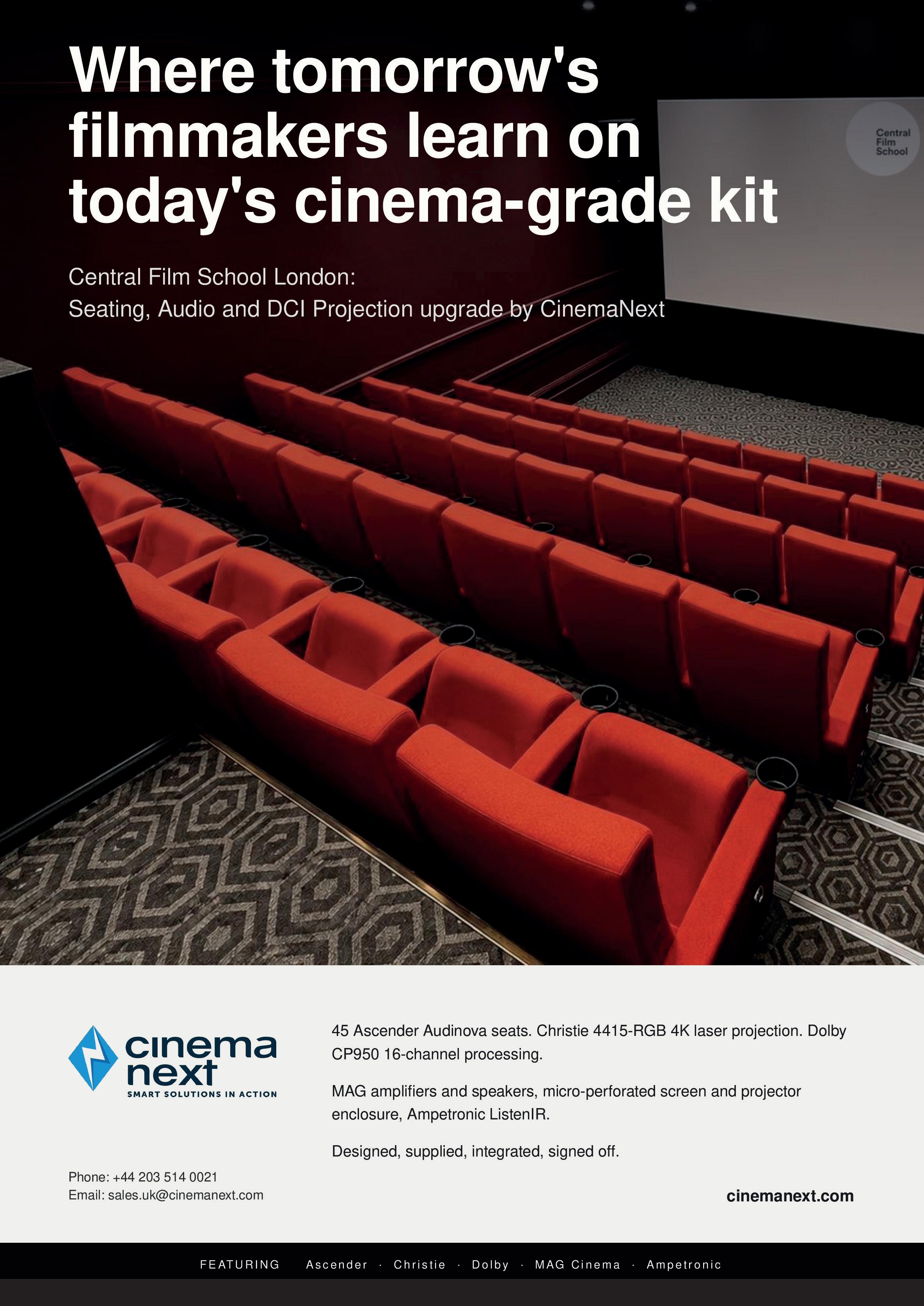
In late April, CinemaNext announced the appointment of Richard Mitchell as UK & Ireland Country Manager.Richard arrives at CinemaNext with more than 15 years of experience in the cinema industry, most recently serving as SVP Innovation – Cinema at Harkness Screens, and as President of the Cinema Technology Community (CTC).
In his new role, he will lead CinemaNext’s UK & Ireland activities, focusing on strengthening client relationships, expanding market presence, and supporting the company’s continued growth in the
region.His appointment reflects CinemaNext’s commitment to investing in local leadership and delivering high-quality solutions and services to exhibitors across the UK & Ireland.
“We are delighted to welcome Richard to the team. He is widely recognized for his industry expertise, customer focus, and collaborative approach,” said Donald McGarva, Group CEO of CinemaNext. “His expertise and industry knowledge will be key as we continue to develop our UK business.”
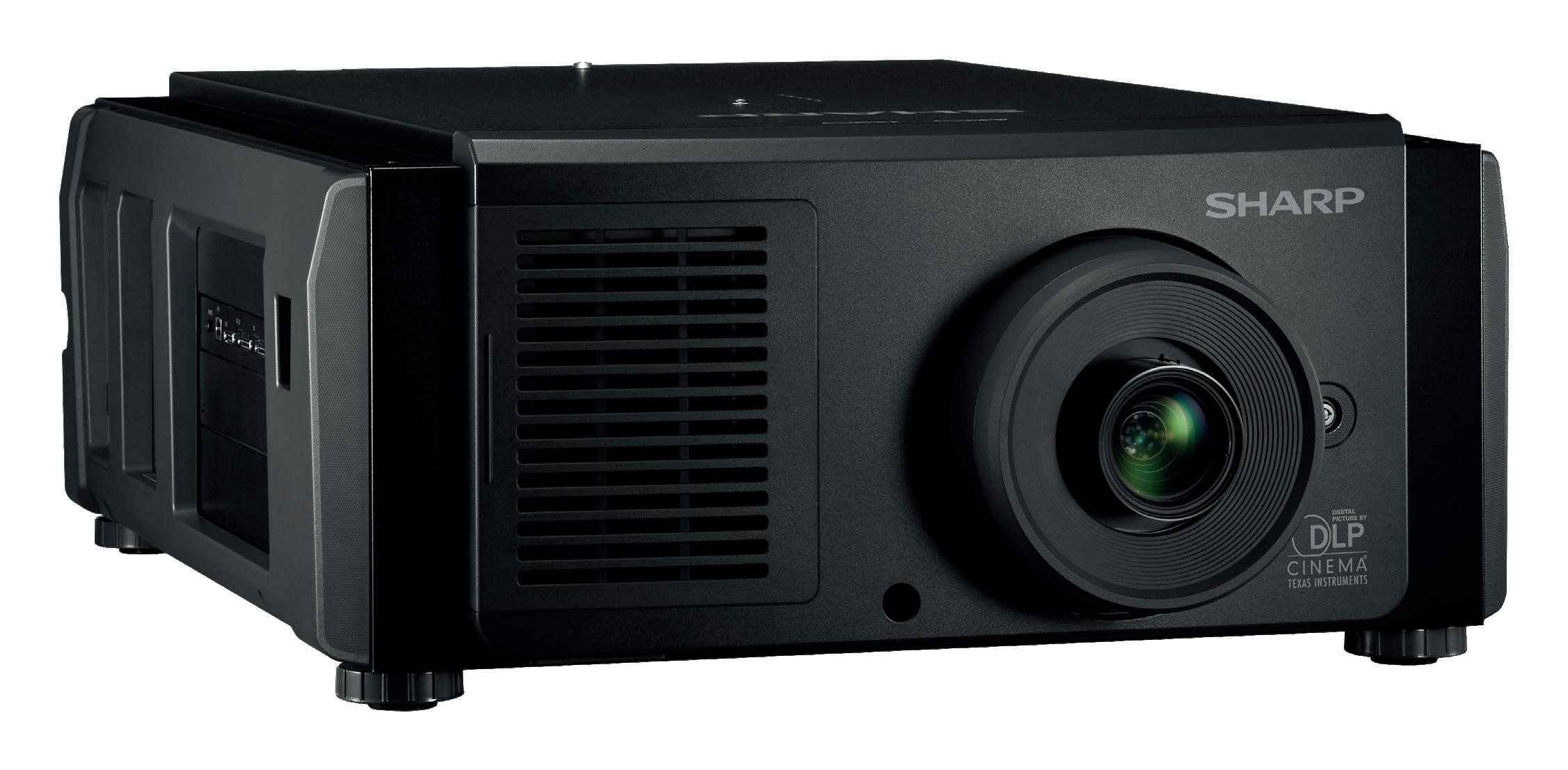
Sharp has introduced its first ‘Sharp branded’ DCI-compliant cinema projector, marking a significant milestone as the company extends its brand into professional cinema technology.
The new NC-1224 projector is designed for mid-sized theatre screens and promises a combination of ultra-quiet operation, low maintenance, and high-quality laser projection. The launch signals Sharp’s continued commitment to cinema following its integration with NEC’s established cinema heritage, bringing a fresh generation of projection solutions to exhibitors worldwide.
Key Highlights:
› First new Sharp branded DCI-compliant cinema projector
› Enhanced Dynamic Range (EDR) included in the projector
› Exceptionally quiet performance for mid-sized screens
› RB laser light source with near speckle-free image quality
› Almost maintenance-free operation with 50,000 hours lifespan
› No exhaust system required for easy installation flexibility
› Lower total cost of ownership (TCO) for cinema operators
At the core of the NC-1224 is Sharp’s latest RB laser light source technology, which delivers exceptionally bright, high-contrast images while minimising speckle—an issue prevalent in RGB laser projection. This advancement allows cinemas to pair the projector with high-gain screens without compromising image quality, resulting in immersive viewing experiences for audiences. The NC-1224 is the first Sharp digital cinema projector to ship with Enhanced Dynamic Range (EDR) included. This ground-breaking new technology uses dynamic laser control based on the APL (average picture level) data within each frame to vary the laser power throughout a film, delivering visibly deeper blacks with a standard DCP. As well as
enhanced image quality the EDR solution also benefits cinema owners with significantly reduced energy consumption (and costs!) and at the same time extending the laser lifetime.
Designed with flexibility in mind, the NC-1224 can be installed in a variety of configurations, including ceiling-mounted, floor-based, or mobile setups. Crucially, the system does not require a dedicated exhaust system, simplifying installation and making it particularly attractive for smaller projection booths or the growing era of boothless cinema designs.
The projector’s compact and lightweight build further enhances its versatility, enabling easy transportation for mobile cinema applications and reducing infrastructure constraints for independent theatres and boutique operators.
The NC-1224 features a sealed optical engine, protecting internal components from dust contamination and ensuring consistent performance over time. The system has virtually zero maintenance requirements—a significant advantage in reducing ongoing operational costs.
Cinema operators are expected to benefit from a lower total cost of ownership, driven by the projector’s energy-efficient performance and long-lasting laser light source, rated for 50,000 hours of use. This translates into reduced downtime, lower service requirements, and improved revenue potential per seat. As cinemas continue to adapt to changing audience expectations and economic pressures, solutions like the NC-1224 highlight a growing emphasis on efficiency, reliability, and visual excellence—hallmarks that Sharp is now bringing to the forefront of digital cinema projection.
RICHARD
Cinema Technology Community (CTC) continues to expand its role as a leading source of knowledge, professional development and industry collaboration for cinema professionals across the world. Recent months have seen significant progress in several key areas, reflecting the organisation’s commitment to supporting exhibitors, technology specialists and cinema practitioners during a period of ongoing change and innovation. One of the most important initiatives has been the production of a comprehensive white paper examining accessibility in cinemas across the UK and the USA. Developed with input from industry experts, exhibitors and accessibility advocates, the document aims to provide practical guidance and strategic recommendations to help cinemas create more inclusive experiences for all audiences. The white paper explores both technological and operational approaches to accessibility, covering areas such as assistive technologies, captioning and audio description. By drawing on experiences from bot h sides of the Atlantic, the publication seeks to encourage knowledge exchange and support best practice throughout the global cinema community. Alongside this work, CTC members have continued to share valuable insights and experiences relating to film festivals and special events programming. As festivals increasingly play a vital role in audience
development and community engagement, members have been exchanging expertise on technical delivery, event operations, content management and audience expectations. These discussions have provided practical learning opportunities for those seeking to maximise the impact of festival screenings and create memorable experiences for attendees.
Education remains a cornerstone of the Community’s activities, and preparations are well advanced for the next cinema presentation training course scheduled to take place in the North of England during mid-September. These highly regarded courses are designed to strengthen technical and operational skills among cinema staff, projectionists and managers. Covering key aspects of cinema presentation, sound, image quality and auditorium performance, the training sessions will offer participants the opportunity to learn from experienced industry practitioners while sharing challenges and solutions with peers from across the sector. Further information will be available via the CTC web site in due course.
Another welcome development is the imminent
return of our popular podcast "In The Pub With Mike Bradbury". Following a brief hiatus, the podcast will once again provide a platform for conversations with cinema professionals, technology experts and industry leaders. Listeners can look forward to discussions covering emerging technologies, operational best practices, industry trends and the people shaping the future of cinema exhibition. The podcast has previously proven to be a valuable resource for professionals seeking accessible and engaging insights into the rapidly evolving cinema landscape. Looking ahead, CTC will also continue its long-standing support of the Norwegian Cinema Conference, taking place in November. The event remains one of the most significant gatherings for cinema professionals in the Nordic region, providing opportunities for networking, knowledge sharing and discussion of future developments in exhibition technology and audience engagement.
Through its involvement, CTC reinforces its commitment to international collaboration and the exchange of ideas across different cinema markets. Together, these initiatives demonstrate the Cinema Technology Community’s ongoing dedication to ensuring it supports the cinema industry and it’s 1,000+ strong member base.
CTC EXECUTIVE TEAM
RICHARD MITCHELL (PRESIDENT), GRAHAM LODGE (VICE PRESIDENT), JOSEPH BOUTROS, JESSE CHOW, MIKE BRADBURY, SANDIE CAFFELLE, CHRIS CONNETT, MARK KENDALL, PETER KNIGHT, ADAM MACDONALD, SAUL MAHONEY, JENNIFER MORGAN, ANDRE MORT, MARKUS OVERATH, LOYS PHILIBERT, DAVID POPE, TONI PURVIS, ULF QVICKLUND, SIMON TANDY, KRISTINA WARNER, PAUL WILLMOTT.
CTC ADVISORY COUNCIL
MARK CHRISTIANSEN (PARAMOUNT PICTURES), BRIAN CLAYPOOL, JOHN DOWSLAND, THERESA ENGLISH (TK ARCHITECTS), MARK DE QUERVAIN (INDY CINEMA GROUP), JAN RASMUSSEN (NORDISK FILM), DOMINIC SIMMONS (BFI), ALICE TENTORI (DIGIMA), JULIA VINOKUROVA (REALD).
WORDS: TIM POTTER, FOUNDER, TRIGAGE.
It’s been a quieter few months for sustainability in cinema. There have been fewer announcements, fewer bold claims, and less visible momentum. But that silence is slightly misleading. The work hasn’t stopped — it has simply shifted. If anything, sustainability in cinema is now being shaped from both ends of the value chain.
At one end, production, distribution, advertisers and agencies — represented through organisations such as the Global Cinema Advertising Association (SAWA) — are beginning to treat media as part of their carbon footprint. Cinema is increasingly included within Scope 3 emissions, meaning it sits alongside supply chains and logistics in corporate reporting. At the other, technology bodies such CTC are focusing on the practical realities of how cinemas operate — equipment lifecycles, energy use, and the day-to-day decisions that determine both cost and carbon.
Together, these forces are quietly redefining what sustainability in cinema actually means.
We recently attended SAWA’s biennial convention, and it’s clear there has been a shift in mindset. Sustainability is no longer a voluntary exercise or a marketing narrative — it is becoming embedded in financial reporting. Global frameworks are emerging, regulation is expanding, and advertisers are increasingly required to account for emissions across their full value chain. For many, that now includes media spend — and therefore cinema.
This creates a new challenge. It is no longer enough to say that cinema is efficient or lower carbon — it has to be measured in a way that is consistent, comparable and credible. Within cinema itself, tools such as the UKCA’s carbon calculator are beginning to provide
straightforward, practical ways for operators to understand their emissions. But upstream, within the wider advertising and media supply chain, the picture is far more fragmented. Dozens of carbon calculators exist, often using different methodologies, making comparisons difficult and, at times, unreliable or misleading. The direction of travel, however, is clear. Cinema will be measured — the question is, how well the industry can align around a shared approach?
While measurement frameworks evolve, the operational side of the industry is moving in a more pragmatic direction. Updates from the Cinema Technology Community suggest that the focus has shifted away from major technology transitions and towards lifecycle management and optimisation.
Laser projection remains central to the sustainability conversation, and its benefits are now well understood: lower energy consumption, reduced maintenance, modular components, improved light efficiency, and the removal of lamp disposal and recycling challenges. However, deployment across many markets is still below 50%, meaning the majority of projectors in operation remain xenon-based. The challenge is no longer awareness, but affordability. For many operators, the cost of conversion remains a barrier, and in some regions additional support will be needed to accelerate adoption. At the same time, the emphasis is shifting beyond simple replacement.
As highlighted in recent CTC sessions, most cinemas benefit more from optimisation than from moving to new formats. That might mean running existing equipment more efficiently, extending asset life, or making targeted improvements rather than wholesale upgrades. It is a more measured, and often more financially viable, approach.
What is emerging is a gap — but also an opportunity. On one side, advertisers are demanding clearer, more consistent carbon data. On the other, operators are focused on practical, cost-driven improvements that do not always translate neatly into standardised metrics. In effect, the industry is being asked to measure something it is still learning how to optimise. There is also a broader dimension to consider. Initiatives such as The People’s Emergency Briefing — a film designed to communicate the urgency of climate action through clear, accessible storytelling — are a reminder that cinema’s role is not purely operational. As a medium, it has the ability to shape understanding and influence behaviour at scale. While much of the current focus is rightly on measurement and efficiency, the cultural impact of what is shown on screen remains part of the wider sustainability equation. Bridging the gap between measurement, operation and influence will be critical. Better data should not just validate performance — it should help guide it.
If the last phase of cinema sustainability was defined by upgrades, the next will be defined by understanding. Less about what has been installed, and more about how it performs. Less about broad commitments, and more about consistent, comparable data. Less about visibility, and more about integration into everyday decision-making. That may not generate headlines. But it is how lasting change tends to happen.
Sustainability in cinema has not disappeared. It has simply grown up.

Rising electricity costs have forced cinema operators to look again at one of their largest, and most controllable, line items. Araceli Vaello, VP Solutions at CinemaNext, on what energy now has to do with retention, reach and revenue.

For most of the last decade, energy was the line on a cinema P&L that operators looked at once a year, sighed about, and moved on from. That has changed. According to the Office for National Statistics, UK electricity costs at the end of 2024 were around 75 per cent higher than at the beginning of 2021. Energy is no longer a fixed overhead. It has become one of the largest controllable costs in the business, and one of the most direct levers an operator has on margin.
The shift in mindset matters because cinemas are unusually energy-intensive environments. Heating, ventilation and air conditioning typically account for the majority of a venue’s energy demand, with industry analyses placing HVAC at up to 70 per cent of total cinema energy use. Add projection, sound, booth equipment and lighting, and energy moves to the centre of operational performance, not its edge.
The UK Cinema Association (UKCA) has been making this point publicly for some time. Through its long-standing partnership with consultancy Energise, the UKCA has benchmarked member sites and concluded that meaningful savings are available to most cinemas with relatively modest investment and a few changes to working practice. The conference theme for the UKCA's annual conference, “Retention, Reach, Revenue”, captures the question that every operator now has to answer: how do you protect those three things while costs keep rising?
Yesterday, energy sat quietly on the P&L as a fixed overhead, reviewed annually and considered largely outside the operator’s control. Today, it sits inside the three commercial outcomes that define a cinema’s success. Retention is the first. Cinema is an experienceled business in a market where audiences have more entertainment options than ever before. Repeat attendance depends on consistency: stable temperatures, reliable sound, calibrated projection, dependable lighting. Every kilowatt-hour consumed contributes to that experience in some way. When energy is managed intelligently, the saving is not only on the bill, it is on the consistency of the guest experience that produces loyalty.
Reach is the second. Modern venues are no longer limited to traditional film programming: live broadcasts, alternative content, gaming events, opera, sport and corporate hire all increase what a
screen can earn per seat. None of that flexibility is possible if every change of programme requires a technical callout. Smart energy and booth systems support flexibility by allowing equipment to be activated, adjusted and powered down efficiently as the schedule demands. Revenue is the third. Energy waste is largely invisible. Equipment runs overnight, HVAC services unused space, booth technology stays powered on between screenings. Every unnecessary watt is margin leaving the building. Identifying and eliminating that waste protects profitability without reducing output, which in current market conditions is one of the most useful things an operator can do.
The first lever is reducing consumption at the source. The clearest example in cinema is the transition from xenon lamp projection to laser. Speaking at a previous UKCA conference, Mark Williams of WTW-Scott Cinemas demonstrated that on similar-sized screens, laser projection used around 70 per cent less power than lamp-based equivalents, a figure broadly in line with manufacturer claims for projector lifetime savings. Christie’s published efficiency analysis points in the same direction. The benefits extend beyond the projector itself. Laser systems generate considerably less heat, reducing the load on HVAC, the largest energy demand in the building. Light source life of tens of thousands of hours removes the cycle of lamp replacements, callouts and disposal. At current electricity prices, the economics increasingly justify the upfront investment.
Better equipment is necessary, but it is not sufficient. The second lever is operational: running only what is needed, only when it is needed. A recent example illustrates the point. At a 13-screen multiplex in Spain, monitoring of the booth revealed that the sixteen Dolby Atmos amplifiers driving one of the premium auditoriums consumed almost the same power overnight as they did during a sold-out screening. Whether anyone was watching or not, the amplifiers were having their own private screening. The equipment had simply never been switched off, and the issue only became visible once the site began measuring real-world consumption. This pattern is not unusual. Many sites cannot improve what they cannot
see. Booth automation and monitoring systems address it directly, powering equipment up and down between shows and outside operating hours, with no compromise on operational readiness. In some deployments the reduction in booth energy use has been very substantial. The principle is simple: the cheapest kilowatt-hour is the one that is never used.
The third lever is the one operators most often underestimate. Identifying savings is straightforward. Implementing them consistently across an estate is not. A single screen audit produces useful insight, but limited commercial impact. Optimising one site delivers measurable savings, but those results are difficult to replicate without standardised equipment, monitoring, automation and reporting. Real transformation comes when an energy strategy is deployed systematically across every site. This is where the role of the integrator has shifted. Cinema technology partners are no longer judged solely on what they can supply, but on whether they can implement complex change consistently across geographies and venue types. For a multi-site operator, the difference between a strategy that exists on paper and one that shows up in next quarter’s energy bill is almost entirely a question of deployment.
The future of cinema is not defined only by what happens on the screen. It is defined, increasingly, by how intelligently everything around the screen runs. As electricity prices remain elevated and audience expectations continue to climb, operators who treat energy as a strategic lever, rather than a fixed cost, will be in a stronger position to protect margin, sustain experience quality and create flexibility for whatever the next decade asks of the cinema business.
Smart cinemas will not simply consume energy more efficiently. They will use it strategically, to improve performance across the whole operation. That move from passive consumption to active optimisation is one of the defining operational opportunities for the industry in the years ahead.
Amongst the gloomerati, there is a commonly held narrative that young people have the attention span of a goldfish,onlywanttowatchTikTokand cinemaisnottheirthing.Thepremisegoes that this means the cinema audience is ageingandthereforedwindlingawayto irrelevance over the next few years. I profoundlydisagreewiththis.


Firstly, from a statistical sample of one teenager, I do not see this at all. I see a highly engaged, intelligent person with an interest in all forms of content, short and long. More scientifically (and you can’t really get less scientifically), there is an increasing body of research that highlights the habits of Gen Z and Alpha and how they are living that strongly suggests cinemas are a part of their lives.
Younger audiences, specifically the generation known as Gen Z, are seeing cinema in a different way to audiences of the past. They are highly engaged with the films, watching other related content online (trailers, interviews, behind the scenes clips, discussion programmes) and engaging about the films on sites such as Letterbox’d. The fear of missing out on early viewings, and fear of being exposed to plot spoilers on social media, is a major driver behind their early attendance at cinemas to watch movies. According to a recent Dentsu/IGN Entertainment report
Generations in Play, 2026, Gen Z is 13% more likely to attend the opening weekend of a movie than other generations. On top of this, they are likely to be good ambassadors for the cinema. In a recent Global Cinema Federation survey, 59% of customers under 25 years old said they would highly recommend going to the cinema to a colleague or friend. And Gen Z doesn’t go to the cinema necessarily with a date, the most frequent accompanier (according to research from Comscore) is a family member/adult. The act of going out is increasingly a shared family moment. The next most frequent is amongst friends, underlining how social the cinema is for Gen Z, and how they seek out the social in a world where the virtual is such an ever-present part of their life.
This explains why the content that Gen Z watches at home is also making its way into cinemas: YouTubers, anime, IP based on video games and literature popular among them. But they aren’t just watching their small-screen heroes or current major releases, they are seeking out films by their big screen heroes too, both major and arthouse, and they are exploring film history via re-releases. YouTube creators have some history of engaging with cinemas, and bringing their enthusiastic fans into the cinema space. It doesn’t always work, but it has worked for many. Tapping into content creators and artists is a potentially very interesting way to attract younger cinema audiences back into cinemas, something that Taylor Swift: The Eras showed very clearly. Several YouTubers have used cinemas for event screenings of project they have developed but
few have ventured into the world of cinema releases.
The earliest example in in Germany when the film Kartoffelsalat was released in cinemas in 2015, bringing together an ensemble cast of German YouTubers. In September 2024, French YouTuber Inoxtag created a sensation when he released a documentary film Kaizen into cinemas about his ascent of Mount Everest, partnering with French indie cinema group MK2. The film attracted 350,000 visitors in one day across 1,000 screenings (310,000 in France and 40,000 in other territories), and was subsequently released for free on YouTube the next day, where it has now reached 47m views. In Asia, YouTubers have also made it into cinemas. Several Asian YouTubers are also making regular appearances on cinema screens (Hikakin and Fischers in Japan, Yang Pang in South Korea, and in India, Bhuvan Bam, the creator of the YouTube channel BB Ki Vines).
Most recently, and most successfully, the American YouTuber Markiplier (Mark Fischback) wrote, directed, co-produced, and financed a sci-fi horror film Iron Lung which was released into cinemas on 30 January 2026. The film’s budget was made back over 16 times over, as the film has grossed nearly $50m in cinemas across the world. The project is based on a video game of the same name and was not conceived as a Markiplier video but a genuine theatrical release. Initially planned to be released on a handful of screens, fans began contacting cinemas to ask if they
were screening it at which point the dynamic changed and it ended up on 3,000 screens in the US, before being released into a further 22 countries. The success of the Markiplier points to a new way of working within the film industry. It highlights that creativity and innovation are not the preserve simply of the established film players but can be leveraged by other creative people. They also highlight the power of fan engagement, of harnessing existing fan bases, in a way that some film genres already do (e.g. horror, anime). The success of Youtubers in cinema also highlights how Gen Z is driving the return to cinemas, how they like to see their heroes on the big screen, how ready they are to watch long-form content. The success of Markiplier also shows that self-distribution can work; effectively his fans did the job of persuading cinemas to screen his movie. The fan engagement acted as a marketing budget, meaning that distribution was not all about raising awareness of a project. This was already done via the millions of Markiplier’s millions of subscribers. Iron Lung also tapped into a genre that already punches above its weight in cinemas; horror is often at the lower end of the budget range, and taps into an enthusiastic and identifiable fan base, often younger. There are lessons in these examples for all type if filmmakers, big and small, about connecting with audiences. Far from lacking a sufficient attention span to engage with movies, Gen Z is turning into the generation that engages the most with cinema. The expectations of a social life for younger people have evolved, moving away from bars, pubs and
clubs, towards such shared experiences that create memories and start relevant discussions. They seek authenticity and meaning.
In the US, since the pandemic, research by Cinema United (Strength of Theatrical Exhibition, survey by NRG) and UCLA (Teens and Screens) shows the audience make-up of the cinema has shifted to become significantly younger. The share of 0-24 year olds amongst moviegoers has gone from 33% in 2019 to 40% in 2025. The proportion of Gen Z going to the cinema at least 6 times a year has increased from 33% to 41% and the average frequency of movie visits for Gen Z in 2025 was 6.1 (against 4.9 a year previously). Cinema’s attempts to refresh itself are working in bringing in younger people. The investment made into the cinema, the technology on screens, new food and drink offerings are all making the cinema more attractive to younger people.
In addition, the films being made and screened are skewing to Gen Z, with horror and anime particularly popular and growing. The Cinema United Research shows that teens are almost split 50/50 on favouring live-action or animation (48.5% vs 51.5%), which is up from 42% for animation last year: 85% of the anime audience is aged between 13 and 34 and animation is growing older and not just for young kids anymore. Premium screens, ordering food at your seat and deluxe seating are all cited as the most popular reason for going to the movies by this age group. But it is more than this: UCLA (Teens and Screens 2025) gives going to the
cinema as the number one Experience for Gen Z, ahead of playing a new video game and going to a music concert.
Maybe surprisingly, research by McKinsey (The Attention Equation Study) found that the number one reason given by Gen Z in US to choose a movie theatre is the ‘Concessions’ (23%), with the ‘immersive experience’ chosen by 18%. They also engage with movies, with 53% of adolescents saying they discuss TV and movies more than social media. When they want to watch something with their friends, teens choose movies more than any other type of content (31.2%) and this is twice as much as social media (15.6% will choose this).
Regular cinemagoers have always over-indexed on other leisure, media and platforms, as Omdia research consistently shows, which makes them very interesting consumers for brands.
What teens want to see on screens is also evolving, and shows a reflective and interested generation, that is looking for authenticity and meaning and not shallowness.
In the UCLA survey, 32.7% of teens said that they wanted to see relatable stories on screen, compared to 25.2% for fantasy. While only 11% had no preference, 18.6% wanted to see realworld issues on their screens, and a further 12.3% favoured aspirational stories. The statement that came in at number 1 for those surveyed was ‘People with Lives Like my Own’ reflecting a
desire for self- understanding, and a need to care for the characters. In the online world, where friendships have particular dynamics, almost 60% of those surveyed in the UCLA report wanted to see more narratives where friendships as “central relationships were the principal theme”. At the same time, 54.1% were uninterested in romance. Indeed, 54.9% of adolescents wanted to see different gender characters ‘prioritise their friendship instead of turning it into a romantic relationship’. It seems romance is not what Gen Z wants, but friendship and the issues that lie within friendship: of the 19 topics given as possible choices, Friendship came third while Romance came 17th. Truly, a new generation of cinemagoers is being born but they don’t want the same things we took for granted in the past. Gen Z have never known a world without devices, unlimited content and choice, and for them, the cinema is playing a role in discovery of ideas, people and cultures. It is a way to get off the small screen that governs much of their life. The big screen may have been an appointment for us, but it is fitting into a flexible, sociable, accessible world for younger people, where each screen fulfils a part of their daily lives. Cinemas in general have to cater for all audiences, old and young, but the long term health of the sector relies on them attracting and retaining my statistical sample of one teenager, not me.

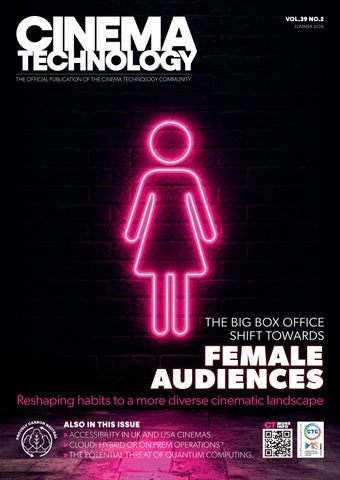
The Box Office Shift: In recent years, female-driven storytelling has progressed significantly, boosting the global box office and reshaping moviegoing habits. Female-led films are not only achieving strong commercial successes but are also reaching historic levels of representation, with women playing central roles both on screen and in audiences, contributing to a more diverse cinematic landscape.
WORDS: NENA LONCAR, CLIENT INSIGHTS MANAGER, COMSCORE MOVIES.
The first quarter of 2026 marks a significant moment for female-driven storytelling, representing the culmination of a trend that has been building steadily over several years. In the first three months of the year alone, three of the top five releases have been female-skewing titles: Wuthering Heights, The Housemaid and Hamnet. Collectively, these films aimed primarily at female audiences account for nearly a quarter of the total
box office during this period. This momentum has not emerged overnight. It has been built on years of growth in both the number and diversity of female-led films. Earlier franchise successes such as Mamma Mia!, Frozen and Bridget Jones’s Diary showed that women-centered storytelling succeeds commercially. In the animation genre, Frozen and Frozen II co-directed by Jennifer Lee and driven by strong female characters became global hits, each surpassing $1 billion worldwide. Alongside audiences, critics have also recognised the strength of many titles led by women. Titles such as La La Land and Black Swan received extensive critical acclaim as well as being highly successful at the box office. Nomadland, starring Frances McDormand and directed by Chloe Zhao, won Best Picture and Best Director; Greta Gerwig’s directorial debut Lady Bird became a standout coming-of-age film. These films

genres. Other critically-acclaimed titles show the expanding scope of female-driven storytelling. Recent examples include the Oscar-nominated body horror The Substance starring Demi Moore and Margaret Qualley, the romantic thriller Love Lies Bleeding directed by Rose Glass and featuring Kristen Stewart, and Anora starring Mikey Madison which won the Palme d’Or and five 2025 Academy Awards. Films such as Babygirl, directed by Halina Reijn and starring Nicole Kidman, and Die My Love directed by Lynne Ramsay, reflect a shift toward more psychologically-complex female protagonists. This is also seen in Everything Everywhere All At Once, led by Michelle Yeoh, which received major critical acclaim for its genre-defying performance.
One of the key drivers of growth is the impact of adaptations of novels by female authors. These stories come with built-in audiences and strong emotional
stands out, grossing more than £32m to date in the UK & Ireland and exceeding $398m worldwide. Freida McFadden’s novel adaptation became Lionsgate’s second-biggest release in the UK & Ireland and marked a career high for its lead Sydney Sweeney. The film attracted a 65% female audience with many viewers attending with friends, reinforcing cinema as a shared social experience. Awareness was driven by TikTok (23%) and strong word of mouth (26%). Its success highlights a clear pattern: a popular book, a strong female cast, and word of mouth that turned the film into a FOMO event. Following its success, Sydney Sweeney will reprise her role in sequel The Housemaid’s Secret, releasing in December 2027.
Other recent adaptations include It Ends With Us, based on the bestselling novel by Colleen Hoover. Starring and produced by Blake Lively, the film grossed over $350m worldwide. Other recent
adaptations of Hoover’s work include Regretting You and Reminders Of Him, each attracting over 70% female audiences and delivering solid returns despite having no major star names attached. The pipeline of Colleen Hoover adaptations remains strong, building ongoing demand. The highly anticipated Verity starring Anne Hathaway and Dakota Johnson is set for release this October. Johnson also recently starred in Materialists, directed by Celine Song, which surpassed $100m worldwide – an impressive result for an original romantic drama. Together these results show a market where female audiences are not just participating but actively shaping box office outcomes, with their support for stories in one medium flowing into the cinema.
Barbie was a major milestone in this shift. Released in 2023, it became a cinematic event, achieving commercial and cultural success. Directed by Greta Gerwig and starring Margot Robbie, it grossed over £95m in the UK & Ireland and $1.44 billion worldwide, making it the most successful film directed by a woman. In the UK & Ireland, it ranks among the Top 5 releases of all time, alongside major franchise sequels such as No Time to Die, Spider-Man: No Way Home, Star Wars: The Force Awakens and Skyfall. More importantly, it strengthened industry confidence in female-led storytelling and demonstrated the full commercial power of female audiences.
The shift is not just about commercial success; it indicates a bigger change in storytelling, with more complex and diverse characters across genres. Female-led films have always been strong in romance, drama, musicals and animation, but the biggest change in recent years is the move into action and blockbuster cinema - areas where women were previously on the sidelines. At the same time, more female directors are working across a wider range of genres beyond traditional spaces, though there is still more progress to be made here. Recent successes show that audiences support female-led stories in both large franchises and smaller films. Wonder Woman, directed by Patty Jenkins, and Captain Marvel, Marvel’s first female-led superhero blockbuster co-directed by Anna Boden, proved superhero films can succeed without male leads. Both were major global hits, with Wonder Woman grossing over $800m and Captain Marvel surpassing $1 billion, proving the commercial power of femaleled films in non-traditional genres. In 2025, this expansion became even more pronounced. Jurassic
FROZEN AND FROZEN II CO-DIRECTED BY JENNIFER LEE AND DRIVEN BY STRONG FEMALE CHARACTERS BECAME GLOBAL HITS, EACH SURPASSING $1 BILLION WORLDWIDE.
TAYLOR SWIFT: THE ERAS TOUR DEMONSTRATED THE POWER OF FEMALE-LED EVENT CINEMA. SWIFT DELIVERED THE BIGGEST EVENT CINEMA RELEASE IN THE UK & IRELAND OF ALL TIME, GROSSING OVER £12M
THE HOUSEMAID GROSSED MORE THAN £32M TO DATE IN THE UK & IRELAND AND EXCEEDING $398M WORLDWIDE.
MATERIALISTS, DIRECTED BY CELINE SONG, HAS SURPASSED $100M WORLDWIDE
$1bn $398m $100m $1.44bn
BARBIE GROSSED $1.44BN, MAKING IT THE MOST SUCCESSFUL FILM DIRECTED BY A WOMAN
World Rebirth led by Scarlett Johansson grossed over $869m worldwide and similarly, Ballerina from the world of John Wick, starring Ana de Armas, added over $140m worldwide, showing how established action franchises can transition to female leads. This change was already taking shape in 2024, with films such as Alien: Romulus starring Cailee Spaeny grossing $350m worldwide, and Twisters co-led by Daisy Edgar-Jones earning $372m worldwide. Female-led horror continues to perform strongly, with franchises like A Quiet Place, Smile, M3GAN, The Nun, Evil Dead, Scream and Halloween demonstrating the commercial power of female-led stories. A notable example of a female director in this space is Emma Tammi, whose Five Nights At Freddy’s films have grossed a combined $530m worldwide. Additionally, both films were well-received by audiences and scored above average for the horror genre, achieving 84% and 79% Total Positive scores respectively in PostTrak UK exit polls (Excellent or Very Good rating). Animation and family films remain a key area of strength for both female characters and audiences. Inside Out 2, centered on a young female character, became the third-highest grossing animated film of all time in the UK & Ireland (£59m) and
TAYLOR SWIFT: THE ERAS TOUR POSTESD A 77% FEMALE AUDIENCE ACCORDING TO POSTTRAK UK DATA.
grossed over $1.69 billion worldwide. Similarly, Moana 2 co-led by Aulioi Cravalho surpassed $1 billion, and The Little Mermaid starring Halle Bailey grossed over $570m worldwide. The latest Disney release Zootropolis 2 continued this momentum, driven by the return of its female lead Judy Hopps voiced by Ginnifer Goodwin, and became Hollywood’s highest-grossing animated film of all time with $1.86 billion worldwide.
As well as box office success, PostTrak exit poll data shows the importance of female decisionmakers in family cinemagoing, with mothers making up a growing share within family visits. In 2025, they accounted for a record 59% of parents, up from an average of 54% between 2018-2024.
The fast-growing genre of Anime is also starting to evolve, with more female-led stories and greater female engagement. KPop Demon Hunters reflects this trend, featuring female characters combining pop star and action-hero roles. Similarly, The Lord Of The Rings: The War Of The Rohirrim placed a female lead character at the centre of a traditionally maledominated story. SPY x FAMILY CODE: White attracted 51% female audience, showing how anime can appeal across audience segments.
As well as boosting female attendance generally, legacy sequels bring opportunities for different generations of women to socialize together at the cinema. The follow-up to Freaky Friday, reuniting Jamie Lee Curtis and Lindsay Lohan, grossed $149m worldwide, driven by audiences who grew up with the original and are now returning with a new generation. Meanwhile, Bridget Jones: Mad About The Boy added £46m to bring the franchise’s UK & Ireland total to £170m, highlighting the enduring appeal of established character-led IP. A fresh take on Mean Girls, reimagined by Tina Fey, grossed more than $104m worldwide. Continuing the trend, almost 20 years after the original, Meryl Streep, Emily Blunt and Anne Hathaway are returning in The Devil Wears Prada 2. Releasing in May 2026, it created a massive global social media buzz across platforms. It will be followed by A Practical Magic Film, as Sandra Bullock and Nicole Kidman return for a spooky sequel this September. Musicals continue to be a key area of strength, with Wicked, starring Cynthia Erivo and Ariana Grande, emerging as one of the most successful female-led musicals in recent years. The first film grossed £61m in the UK & Ireland and $758m worldwide, ranking as the third-biggest musical in the UK & Ireland and among the top five worldwide. Its sequel Wicked: For Good reinforced the genre’s strong appeal to female audiences, adding a further £47m at the UK & Ireland box office and over $532m worldwide.
Titles such as Taylor Swift: The Eras Tour demonstrated the power of female-led Event Cinema. Swift delivered the biggest Event Cinema release in the UK & Ireland of all time, grossing over £12m (and $249m worldwide), with 77% female audience according to PostTrak UK data.
In recent years, the industry has seen a clear shift towards wider and more complex representation of women, with female-led stories across genres from blockbuster hits like Barbie to psychological drama and horror. Audiences are not only showing up but driving success across genres, budgets and formats, turning cinema into a shared social experience. The appeal of cinema as a “girls’ night out” continues to boost attendance, repeat viewing and cultural momentum. As a result, female-driven storytelling is no longer an occasional breakout but an established part of global box office success. Continued investment in female audiences, female leads and women behind the camera will be key to sustaining and expanding this progress.
WORDS: PAUL WILLMOTT, SAFFRON SCREEN AND CTC GOVERNOR
Cinemas have a legal duty under the Equality Act 2010 (UK) and the Americans with Disabilities Act (ADA) (USA) to provide reasonable adjustments and auxiliary aids for disabled audiences. The US Department of Justice’s 2016 Final Rule specifically mandates the provision of closed captioning and audio description in digital cinema. Accessibility barriers in cinema typically arise from the audio-visual nature of the medium — notably for people with hearing loss, sight loss, neurodivergent needs, mobility impairment, and sensory sensitivities. A combination of on-screen content enhancements, personal assistive technologies, and sensoryfriendly screening practices delivers a more inclusive cinema experience globally.
Landscape
In the UK, the Equality Act 2010 requires 'reasonable adjustments'. In the USA, Title III of the ADA is more prescriptive following the 2016 DOJ Final Rule. This rule requires movie theaters showing digital movies to provide closed captioning (CC) and audio description (AD) equipment to patrons upon request. Movie theaters must provide a minimum number of devices based on the number of screens in the facility.
Technologies such as smartphone or bring-your-owndevice (BYOD) accessibility solutions may complement these tools but do not remove the current regulatory requirement for cinemas to provide physical devices.
Audiences may require:
Visual access to dialogue and non-dialogue audio (for deaf/hard of hearing).
Auditory access to visual information (for visually impaired).
Reduced sensory impact (for neurodivergent or sensory-sensitive audiences).
Ease of physical access (for mobility impairments).
Films may include subtitle/caption tracks that display dialogue plus non-dialogue sounds. Most DCPs include SDH/caption tracks, but in order to show a film with subtitles it is usual to have a separate version (with a Key Delivery Message (KDM) indicating it is a subtitled version). Augmented reality (AR) glasses, such as the WatchWord system piloted by the UK Cinema Association, display real-time captions for individual users, allowing them to sit anywhere without imposing captions on all viewers. The subtitles are obtained automatically from any DCP with captions included and are broadcast over Wi-Fi, projecting dialogue and audio descriptions into the wearer’s line of sight without diverting attention from the screen. They are designed to fit over prescription glasses and work alongside hearing aids or cochlear implant processors, making them suitable for a wide range of users. A handheld touchscreen controller lets users customise subtitle size, colour, position, focal distance, and brightness. Some systems use small
screens that the user inserts into their seat’s cup holder. These devices have a limited viewing angle to minimize disruption to adjacent customers. As with the AR glasses, the captions are streamed via the cinema’s Wi-Fi to the receiver. The receiver can be configured to show the subtitles in a variety of colours and text sizes. Audio description and audio enhanced tracks can also be received by attaching headphones or earbuds. An example of this type of device is the Dolby Accessibility Solution. In the USA, widely adopted systems include CaptiView (consisting of a small OLED display screen on a bendable arm that fits into a theatre seat's cup holder, featuring a privacy visor for minimal distraction to others) and Sony Entertainment Access Glasses, which project holographic captions onto the user's lenses in a similar way to the UK’s WatchWord system. Note that numerous technology providers offer accessibility solutions for cinemas. The examples referenced in this document are illustrative only and do not constitute endorsement of any specific product or supplier.
Audio description (AD) provides a narrative voice-over describing visual elements for blind or partially sighted audiences. AD is carried as a separate soundtrack on the DCP and delivered through wireless headsets via infrared or RF systems.
Assistive listening systems support audiences with hearing aids or via headphones/ earbuds through induction loops, infrared (IR), or FM systems. Induction loops (t-coil) transmit audio directly to hearing aids (or via a separate receiver worn by the user), while IR and FM provide flexible wireless transmission for headset users.
T-coil systems have been in use for around 50 years and most hearing aids have the ability to receive these
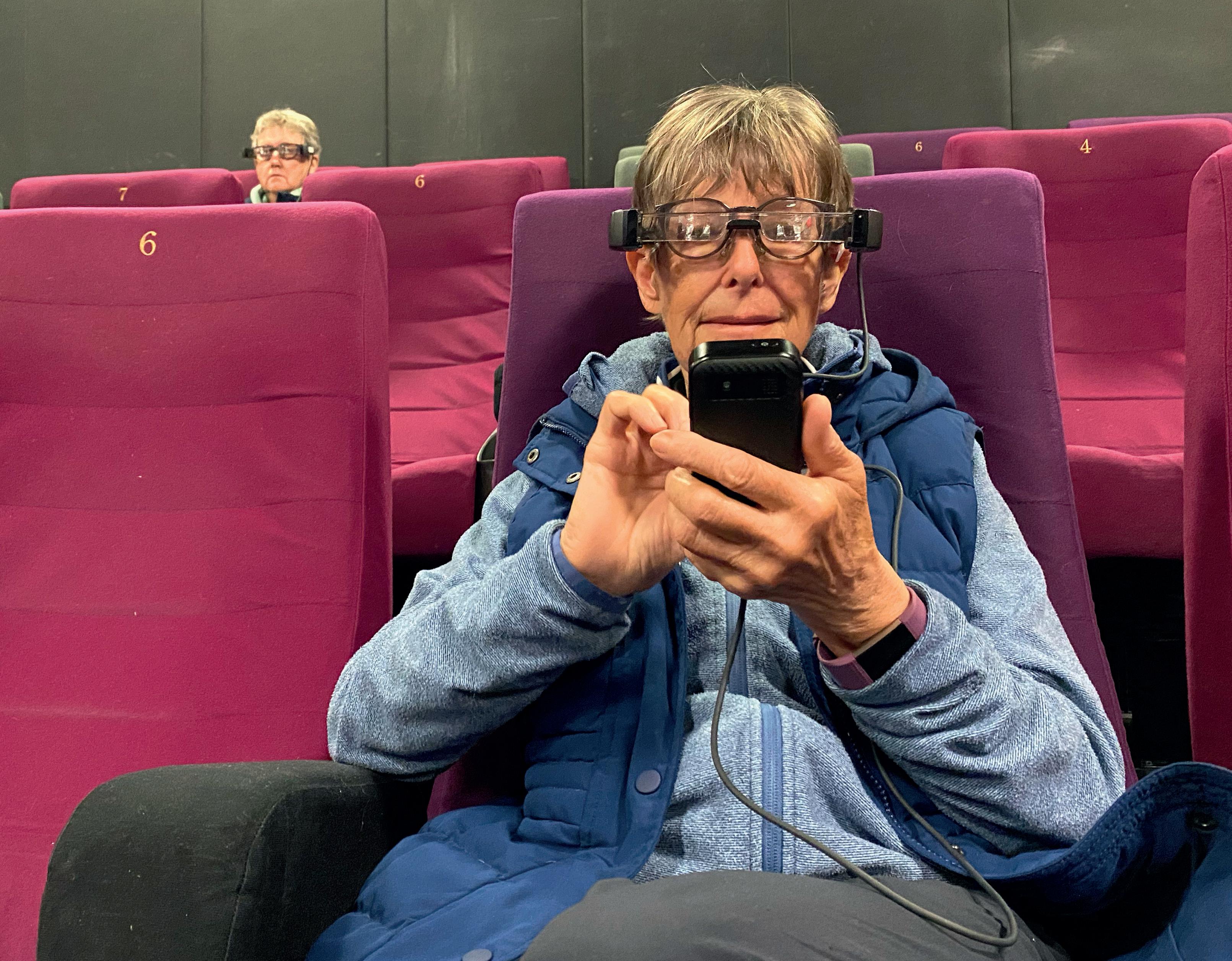
transmissions. However, an alternative system, Auracast, using a new variant of Bluetooth, is becoming widely available and many of the latest hearing aids are compatible with this system. There are two main advantages of Auracast, the range of a transmitter is around 100m (compared to 10m with conventional Bluetooth) and the sound quality is appreciably better. Headphones are available that can receive Auracast transmissions and separate receivers are also available which allow the connection of earbuds or non-compatible headphones.
Auracast systems can also be used to transmit audio description soundtracks.
Accessibility also depends on programming. Cinemas can promote inclusion by offering accessible screenings at popular times, and websites such as Accessible Screenings UK and YourLocalCinema can be used to advertise them. In the USA, major chains
often partner with organisations like the Autism Society to offer dedicated sensory-friendly screenings, where lights are turned up and sound is turned down.
It should be noted that the use of AR glasses should not mean that cinemas do not have to show films with open subtitles. These glasses may not be suitable for everyone and cinemas may have limited numbers of the glasses due to their cost. Although subtitled/ open captioned screenings have traditionally been disliked by the general public, resulting in reduced numbers for these screenings, there are an increasing number of customers that like to see the subtitles, both young and old alike!
Some cinema operators offer sensory-adjusted screenings designed to accommodate audiences with sensory sensitivities. Implementation varies by exhibitor based on operational considerations and audience demand, but these screenings may include
some of the following adjustments:
House lights are left on a low level, and the volume is reduced.
No adverts or trailers are shown before the film. Guests are free to move around, make noise, and take breaks from the screen in a designated "chillout" space if needed, without judgment.
Unallocated seating allows individuals to choose where they feel most comfortable.
Films are often scheduled during quieter times of day and chosen to avoid excessive fluctuations in light and sound.
Provision of free tea/coffee/cake etc.
Use of the CEA card (UK) or specific theater-chain passes (USA) for carers to attend for free.
In addition to the provision of technical accessibility equipment, it is essential that front-of-house staff are trained on how to assist guests in the use of the equipment.

LED signage and data-driven concession upsells are quietly changing the technology behind cinema foyers and concourses. These updates directly affect both guest satisfaction and operator revenue.

WORDS: PETER CRITCHLEY, CEO, TRISON
In many multiplexes today, the foyer experience often falls short. Long lines form in front of formulaic and cluttered menus, and promotions compete for attention without much context. The excitement of a new release risks fading as soon as a guest goes to order food. However, the tools to improve this are already available. The data and screens exist, and new integrated front-of-house technology is starting to bring everything together. In this article, Peter Critchley, UK CEO of TRISON explores the evolution of front-of-house (FOH) technology in cinema - what best practice looks like today, where genuine innovation is emerging, and why the foyer deserves to be treated as a strategic asset rather than a transit space with sales tacked on.
Before exploring innovation, it's worth defining what a well-functioning FOH technology environment actually looks like, because industry standards remain uneven. At a foundational level, a modern cinema foyer should have reliable, centrally managed digital signage capable of displaying dynamic content - wayfinding, now-showing listings, contextual promotional offers, and operational messaging. Screens should be networked and updatable in real time. The shift towards integrated platforms marks the dividing line between basic digital signage and genuinely smart FOH technology.
If one technology shift defines the current era of FOH investment, it is the rapid adoption of LED display technology. LED canvases are increasingly replacing LCD screens in premium and high-traffic foyer installations due to brightness, impact, lifespan, and lower maintenance costs.
Let me make an observation: concession technology is letting operators down. Given what is at stake commercially, that matters enormously. Concessions account for up to 30% of total cinema revenue - and unlike ticket sales, where roughly half goes to studios, operators keep all of the concession margin. For items like popcorn and soft drinks, those margins can exceed 80% at item level. With average spend per head at around $7.59 reported in recent filings at AMC and $7.98 reported by Cinemark in recent quarters, even modest improvements in conversion or ATV translate into significant revenue at scale.
Yet menu boards are often overloaded and confusing, resulting in slower queues and missed revenue opportunities. The problem is not appetiteguests are willing to spend. The problem is friction. Poorly structured displays create hesitation at the one moment in the visit when purchasing intent is highest.
The answer is not to add more screens, but to use smarter and more contextual ones. Other industries show strong results: retailers with strategically deployed digital signage have seen double-digit increase in sales and significant improvements in recall and queue efficiency. In quick-service restaurants, which share similarities to cinema concessions, dayparted and context-led digital menu boards are reported by industry studies to increase order volume by up to 20%, depending on implementation and industry research suggests perceived wait times can be reduced by up to ~30–35%. These benefits come from using screens in smart, relevant ways, not just having them.
Every booking and purchase generates valuable data, yet much of it is often underutilised. Consider the scale of what operators already hold: the majority of cinema tickets are now reportedly purchased via mobile devices or online platforms, meaning the vast majority of guests have already identified themselves, their group size, their film choice, and their visit frequency before they set foot in the building. Every EPOS transaction adds another layer - preferred products, average spend and upsell acceptance. This is a rich and largely untapped asset. Linking booking, EPOS, and signage systems enables more personalised, effective communication.
The foyer is cinema’s most commercially valuable
underperformer - with the right use of technology and integration, it can become a powerful driver of revenue and guest satisfaction.
For an industry that has spent decades perfecting the auditorium experience, the path to a smarter, more effective foyer is surprisingly straightforward. It does not begin with a wholesale reinvention of cinema technology, nor does it require speculative, future-facing innovation. Instead, it starts with a more pragmatic shift: connecting the systems that already exist and using them with greater intent.
Most cinemas already have plenty of technology.
Ticketing platforms collect detailed booking data, EPOS systems track every concession sale, and digital signage is common in foyers and at concession stands. The problem is not a lack of tools, but a lack of coordination. These systems usually operate independently, so they rarely deliver a seamless guest experience.
The first meaningful step forward, then, is integration. When booking systems, EPOS platforms, and digital signage begin to communicate, the foyer becomes responsive rather than static. Screens can reflect real-time show availability and tied in with concession content, displays can adapt to audience type, time of day, or demand patterns. Operational messaging becomes accurate, immediate, and valuable. This is the point at which digital signage stops being decorative and starts becoming intelligent and adding to the guest experience.
From there, the focus shifts to context. A foyer that shows the same content to every guest, at every hour, is missing a fundamental opportunity. The needs of a family arriving for a morning children’s screening are different from those of a couple attending a late-evening premium showing. Technology allows for this distinction to be recognised and acted upon. Menus can be simplified during peak periods to reduce queue friction, automatically or by the cinema team. Promotions and LTO’s can align with the films being shown. Content can be tailored not just to what is playing, but to who is coming to watch.
Importantly, this does not require collecting more data. Cinemas already have all the details they need, like booking information, film, time, group size, and visit frequency. Concession sales add even more insight. However, this data is often underused. The key is to use what’s already there to improve the guest
experience in real time. Nowhere is this more important than at the concession counter, where the gap between potential and performance is often most visible. Poorly structured menus, cluttered displays, and slow decision-making processes create friction precisely at the moment when revenue is generated. Clear hierarchy, focused choice prompts, and context-aware messaging can significantly reduce hesitation, speed up queues, and increase average spend - all while making the experience feel easier. Alongside these functional improvements sits a more experiential opportunity. The foyer is not simply a waiting area; it is the first physical expression of the cinema experience. Studios invest heavily in building anticipation for their films, yet too often that energy dissipates on arrival. With the right use of display technology - particularly large-format LEDoperators can extend that sense of occasion into the venue itself. Content becomes immersive, the environment becomes expressive, and the journey into the screen begins earlier.
This is not about spectacle for its own sake, but about aligning the physical space with the emotional promise of the film.
Everyone benefits from this approach. For the operators, the financial gains are clear. When guests face fewer obstacles and see more relevant messages, they are more likely to buy, upgrade, and do it quickly.
For customers, the impact is more subtle but no less important. The experience becomes smoother, more intuitive, and more enjoyable. Decisions feel easier. Queues feel shorter. The environment feels considered rather than chaotic. And perhaps most importantly, the excitement of going to the cinema, the very thing that draws people out of their homes in the first place, is sustained rather than diminished.
What emerges is a different way of thinking about the foyer. Not as a transitional space, but as a strategic asset. Not as a cost centre, but as a driver of both revenue and experience. The technology required to enable this shift is already in place across much of the industry. The real challenge is not access, but application, using these tools in a way that is connected, contextual, and deliberately designed around the customer journey.
The cinemas that do best will not always be the ones with the newest technology, but those that use what they have in the smartest way.
Your Exhibitor Portal just got an upgrade — now capturing a broader range of technical capabilities.
Designed to streamline operations and enhance efficiency for exhibitors and distributors globally.
Check your MPS KDM emails for your cinema login details.
Thank you.
* over 4,000 screen capability updates a week by cinemas globally
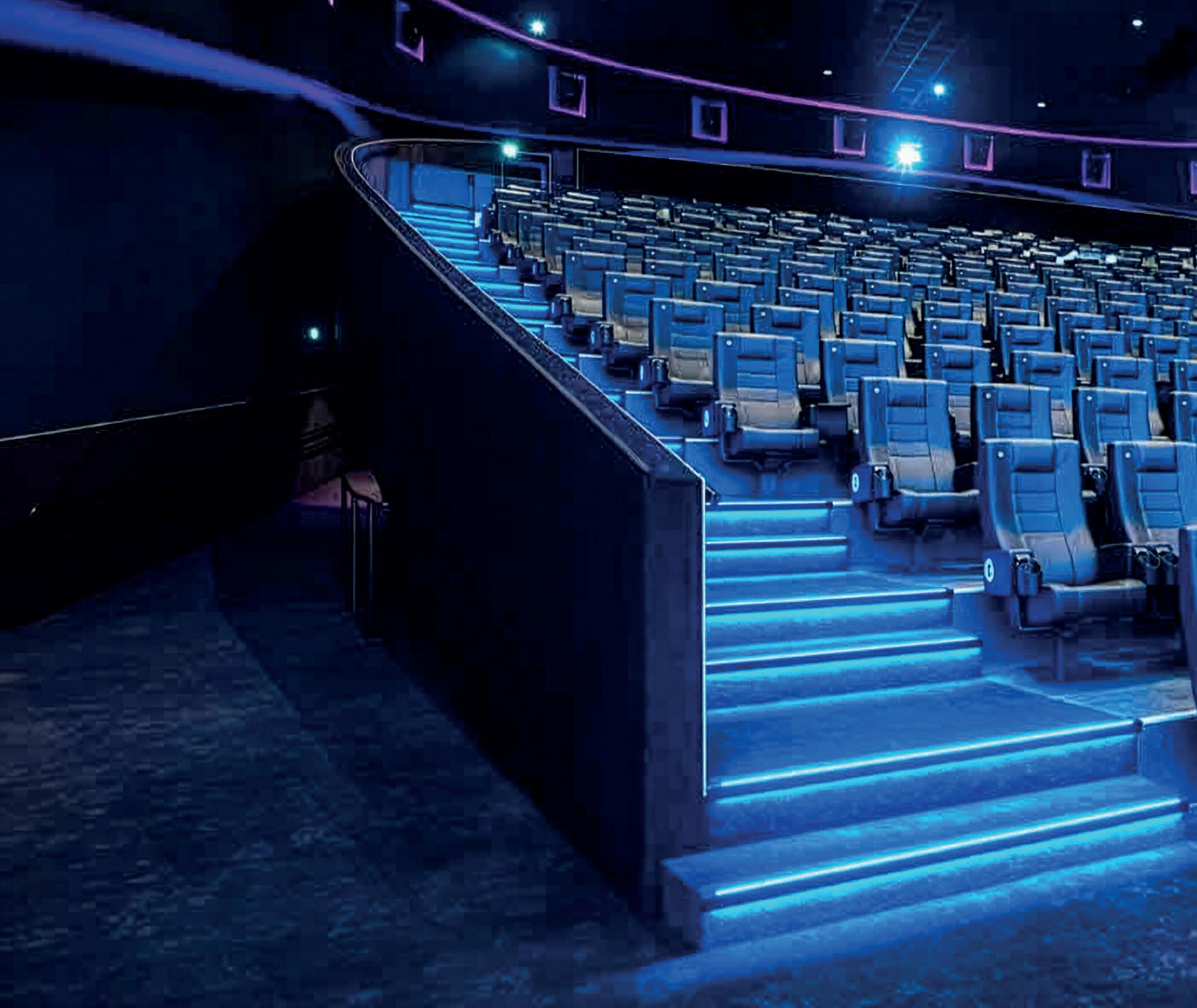
Jan Rasmussen, Head Of Screen Technology at Nordisk Film Cinemas, discusses the magic of the cinema experience and how immersive sound has evolved throughout the 25+ years he’s been in the industry.
WORDS: JAN RASMUSSEN, NORDISK FILM CINEMAS.
My journey into cinema began long before I ever touched a processor or installed an amplifier. It started in 1978, as an 11-year-old sitting nervously in Copenhagen’s Imperial cinema, hoping the usher wouldn’t notice I was half a year under the age limit for Star Wars: A New Hope. They let me in and that moment changed the trajectory of my life.
I remember leaving the cinema with my mind filled with all the imagery and John Williams’ score still ringing in my ears. It was the first time I realised that good cinema sound isn’t about equipment, it’s about being transported. It’s about forgetting the room entirely. Cinema has always been about two equal halves: image and sound. The suspension of disbelief is about taking the audience away from the
fact that they’re sitting in a cinema and making them part of the movie.
It’s the idea that the audience allows itself to believe in the impossible to enjoy the narrative, putting disbelief aside to lose themselves in the story. It only works if we engineer an environment with no obstacles – where the sound feels natural, immersive, and enjoyable. It can’t be too loud or too soft.
It must work flawlessly, so the audience forgets they’re in a room and become absorbed in the action. True immersion happens when technology becomes invisible, and that requires an audio environment with clarity and consistency.
Cinema sound has seen changes beyond recognition since I started as a projectionist, with the
roll out of digital sound in film. Lucasfilm and Tomlinson Holman’s revolution behind THX brought acoustics to the forefront. Digital sound on film in the 1990s closed the gap between audio and rapidly improving image quality. The move to digital projection sharpened the entire experience, while immersive audio formats like Dolby Atmos redefined premium cinema.
Technological advancements did not just stop with the introduction of digital sound and improving the viewers’ experience. Professionals have also benefited from improved technology – most recently, networked amplifiers and processors, which were introduced less than a decade ago, and have transformed our technical workflows and how we build cinemas.
Thanks to networked systems, we are now able to centralise processing, reduce cabling, shrink installation footprints, and gain fine-grained control over how rooms behave. Audio is no longer tied to bulky analogue chains; it is integrated, flexible and intelligent.
Three things make a great cinema amplifier: reliability, efficiency and flexibility. Cinema is a business where everything must work all the time, ‘the show must go on’ so to speak. If something fails, you lose trust and revenue, so reliability is essential.
Efficiency matters – not just for sustainability but for operating costs. And finally, flexibility. We like amplifiers that let us route signals freely and handle voicing internally, rather than relying on separate processors. Multi-channel amplifiers that can handle power distribution between channels make room design easier.
We introduced Powersoft’s Unica series into Scandinavian cinemas because it solved real problems for us. Its compact form factor – just one rack unit – makes installations much more efficient. In
our Atmos rooms, everything fits inside the projector pedestal, no separate racks. When we did the first Atmos installation back in 2013 at Imperial, we needed a dual rack over 2.5 meters high. Now, we can fit everything in one compact pedestal. It’s cleaner, smaller, and allows for boothless installations, which is where the industry is going.
We also appreciate being able to monitor amplifier health remotely and do voicing directly in the amp through ArmoníaPlus. Plus, Unica is highly energy efficient. Over several years of continuous operation, we haven’t had a single amp failure. In cinema terms, that reliability is worth its weight in gold.
These features of newly introduced and advanced technologies do not necessarily define the cinema experience, rather they enable the experience, the same way well-designed acoustics, calibrated rooms and quiet HVAC systems do.
If I could take a regular moviegoer “behind the scenes”, I’d want them to appreciate two things: how a perfectly tuned room allows dialogue to
sound natural and effortless, allowing the story to take over. Secondly, that chest-thumping bass moment that shakes your body, or the suspenseful sound that surrounds the audience just before everything erupts. These moments aren’t accidents, they’re engineered experiences.
It’s difficult to sell sound. You can describe premium audio all day long, but until someone sits in the room and feels it, the words fall flat. Cinema sound is experiential. It’s visceral. You can’t put that sensation into a pitch, the audience needs to feel it.
Yet that is also the magic of our industry. The audience doesn’t need to understand the technology to benefit from it. In fact, the less they think about it, the better.
When we do our jobs right, people leave the cinema not talking about amplifiers, arrays or processing, but about characters, stories and memories. Just like I did in 1978. Who knows, we might just be the new George Lucas, inspiring the next generation to consider their own career paths in cinema.
For years, one of event cinema’s most stubborn limitations has not been audience demand, but how far a successful event could practically travel inside a cinema.
Exhibitors know the audience is there for opera, theatre, concerts, sport, gaming and other premium live or near-live content. They know these customers often book early, arrive in groups and treat the visit as an occasion rather than an impulse trip. They also know that the right title can command a premium price and generate valuable spend beyond the ticket itself.
And yet, for most sites, live event cinema has usually meant one event, one screen.
That was not because a second or third screen could not have been sold. More often, it was because expanding a live event beyond a single auditorium brought enough extra technical effort to make caution feel sensible. If each additional screen meant another box, another signal path, another set of checks and another call on local technical confidence, the practical ceiling arrived before the commercial one did. Infrastructure stopped being an enabler and started acting like a booking cap.
That is the old world Unique X is trying to change with RosettaLive Multicast.
The basic point is simple, but commercially important. Instead of treating live event cinema as something that naturally stops at one screen, multicast allows one incoming live stream to be distributed across multiple compatible screens within the same cinema. A successful live title no longer has to stop at the first auditorium simply because that has traditionally been the easiest place to run it. For years, many cinemas have worked on the assumption that event cinema is, by its nature, a one-screen category. In reality, that has often been a technical compromise rather than a programming truth. Where demand exists, multicast gives exhibitors a more practical way to respond.
RosettaLive itself is not new. Unique X already positions it as an IP-based live event streaming
platform for cinemas, with a booking portal, support model, a dedicated device option and a softwareonly route for MovieTransit customers. RosettaLive is already connected to more than 2000 cinemas in over 50 territories, which matters because multicast is being introduced as the next step in an existing delivery ecosystem rather than as a completely separate proposition.
That existing base is part of the appeal. Exhibition is full of ideas that sound clever until they arrive with another installation plan, another piece of hardware and another operating method for site teams to absorb. Unique X is clearly trying to frame multicast differently. RosettaLive already sits within a wider platform that includes the online booking portal and support structure, and the product page makes clear that some MovieTransit customers may be able to benefit from a software-only option rather than a new dedicated unit. At the same time, Unique X still offers the small dedicated RosettaLive device, which is important because it reflects the real shape of the market: not every cinema estate is uniform, and not every screen will be multicast-ready on day one.
That mixed-estate reality needs to be part of any honest article about multicast. This is not a magic wand that makes every auditorium instantly capable of doing the same thing in the same way. Compatibility matters. Some server and projector combinations will support the multicast model more readily than others. Some sites will still need boxes. Some circuits will almost certainly end up using a blend of multicast and box-based delivery while the estate catches up.
That does not weaken the argument. It places multicast in the real world. The point is not that boxes disappear overnight. The point is that, where compatible equipment exists, one of the old practical limits on event cinema starts to loosen.
The most useful way of thinking about the technical change is not in terms of networking jargon, but in terms of operational effort.
In the current model, putting a live event into more than one screen usually meant building the event screen by screen. Each auditorium could mean its own box or delivery path, its own test, its own support burden and its own chance for something to go wrong. A cinema might know perfectly well that a second
screen would sell, but adding that second screen also meant another layer of preparation and another call on local knowledge. A failed playlist is annoying. A failed live event is public. That is why live events have traditionally been handled so cautiously. A conventional feature can often absorb a small issue without the audience fully understanding what has happened. A live event is different. The audience knows it is happening now. Staff know it is happening now. The pressure around testing, support and recovery is simply higher. Multicast changes that balance, because the event is no longer being assembled auditorium by auditorium in the same way. The stream arrives once and is then distributed across compatible playback systems within the site. In practical terms, it behaves much more like another available source within the cinema’s playback environment rather than a one-off technical arrangement that has to be rebuilt for every projection room. That has support implications as well as playback ones. Because the model is network-based, monitoring, configuration and troubleshooting can be handled more centrally and more remotely than under a purely box-per-screen approach. That reduces the strain on local resources and local skills. It does not remove the need for proper preparation, but it does make multi-screen live-event delivery less dependent on intense local intervention every time a title expands beyond one screen.
If a successful live deployment depends on one person in one projection box knowing the exact sequence of checks that keeps everything calm, the model is not really scalable. One person remembering the quirks of one particular auditorium is not a strategy. That point matters at circuit level as well as site level. Central technical teams are not looking for products that work beautifully only when a local expert is standing beside them. They are looking for workflows that can be documented, monitored, supported and repeated across an estate with a reasonable degree of consistency. What multicast potentially offers is not the removal of technical responsibility but a better return on technical discipline that should already be in place.
The commercial case follows directly from that operational change. Event cinema already attracts premium audiences in many markets. The issue has not usually been whether exhibitors can sell the event. The
This is where multicast begins to look less like a technical feature and more like an operational improvement.
Traditional multi-screen live-event setups have often involved duplicated effort before the audience even arrives. If the old model requires a separate route into each auditorium, then each route has to be checked. Each screen has to be tested. Each point of failure has to be thought about in advance. That can be manageable for one screen and still manageable, just about, for two. It does not encourage routine scale.
Multicast does not make those responsibilities disappear. It changes their shape. Instead of every extra screen bringing a fresh mini-project with it, the cinema is dealing with a site-level delivery model that can be extended to the compatible screens chosen for that event. That makes scaling less labour-intensive and less dependent on inherited local workarounds.
It also alters the support conversation. When support teams can see more clearly what is happening across the site, they are in a better position to intervene early, standardise responses and reduce the amount of ad hoc problem-solving left to the local team under pressure. For circuits operating across mixed estates and mixed skill levels, that is part of the point.
Compatibility still draws the line. Some auditoria will be multicast-ready. Others will continue to rely on boxbased delivery for now. But even in a mixed environment, multicast can reduce the amount of duplicated effort where it is available, while the more traditional route continues to serve unsupported parts of the estate.
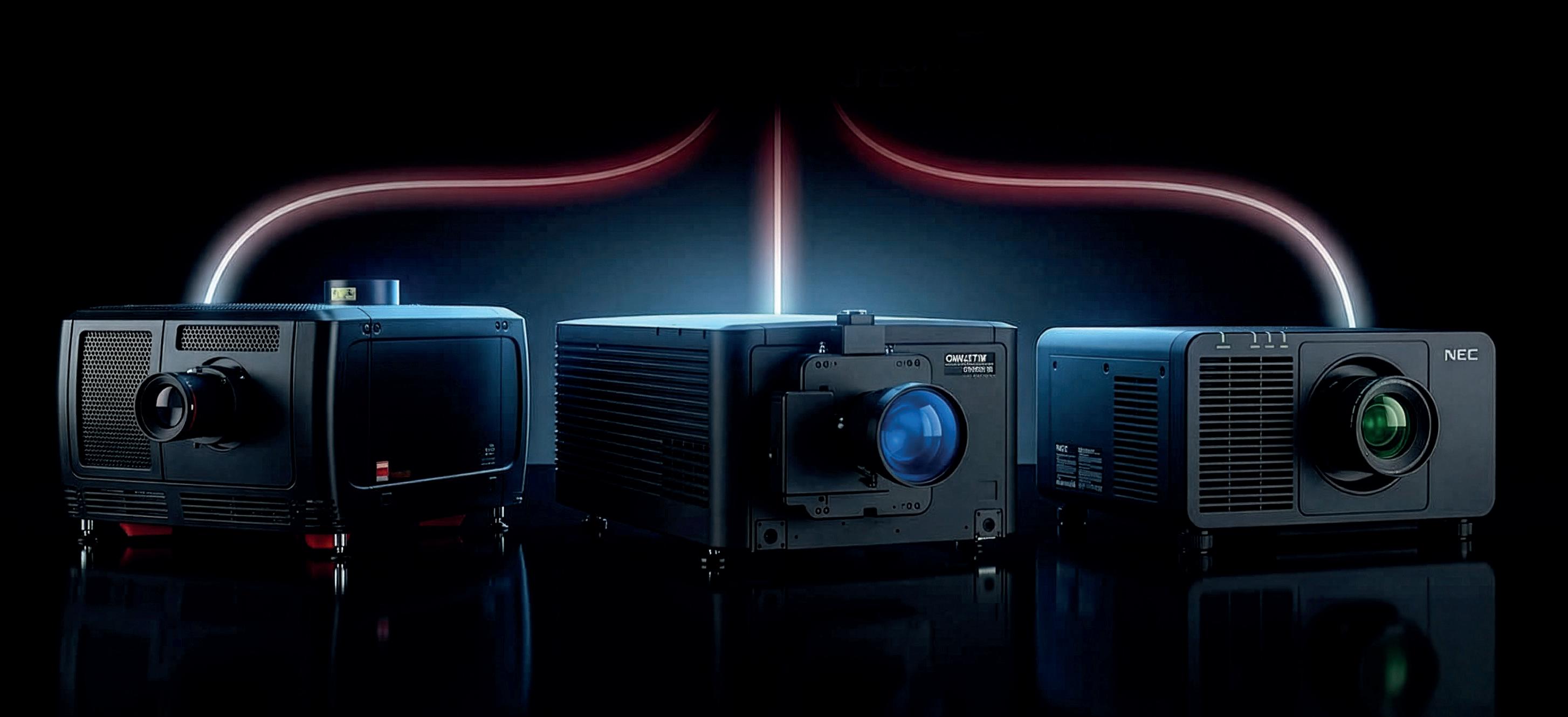
issue has been whether they can expand it without the technical and support burden growing out of proportion to the opportunity. If a major live title sells out one screen quickly, the obvious commercial instinct is to add another. Historically, that instinct has too often run into operational drag. Multicast changes the question. It moves the conversation away from, “Can we justify the extra engineering to put this into another screen?” and towards, “How many seats can we sensibly put on sale?” That is a healthier question for exhibition to be asking. Those audiences also tend to be purposeful customers: less price-sensitive, more socially motivated and more willing to spend on the visit as a whole. The upside is not only ticket revenue, but total visit value across the site. In a business where margins are contested across every part of the visit, that matters. Room allocation is one of the quiet engines of exhibition performance. A title that can only sit in one specific auditorium is a constraint. A title that can move across multiple screens when demand warrants it is an option. Options are valuable.
One of the frustrations with live events has always been that success in principle does not automatically translate into confidence in execution. Sites may know a second screen could probably sell, yet still hesitate because the overhead of adding it feels out of proportion to the upside. If that hesitation eases, the result is not simply more capacity. It is more agility. Strong live titles can be managed more like opportunities and less like technical exceptions.
Group operators are rarely making decisions on the basis of one building alone. They are asking whether a workflow can be trusted across an estate, whether central support can stand behind it, and whether local teams can execute it without needing a minor technical adventure every time a live title overperforms. In
practical terms, that may mean opening cautiously with one screening in some locations while moving straight into multiple auditoria in others where demand history already justifies it. Equally, it gives programmers more freedom to decide where event cinema sits in the weekly schedule instead of always protecting the same room because that has historically been the safest option. None of this substitutes for the right content or the right marketing. A poor event will not be rescued by a better delivery model. But a good event that previously hit a technical ceiling may suddenly have more headroom. Multicast does not create demand from nowhere. It gives exhibitors a better chance of serving demand that was already there.
In EMEA, Cines Yelmo is among the first exhibitors to upgrade to RosettaLive Multicast across multiple sites. That matters because it moves the discussion beyond theory and into operational use. Unique X has been careful to position RosettaLive as a platform that simplifies the process of sourcing, booking and receiving non-feature content, and a multi-site exhibitor deployment is the sort of test that shows whether that promise holds up under real conditions. The practical questions are the right ones: can circuits scale live events more routinely, do support workflows hold up across a mixed estate, and does that consistency give venues more confidence to react when demand outstrips the capacity of a single auditorium? A real deployment is where those questions start to receive proper answers.
The real issue is how effectively cinemas can serve liveevent demand without turning each expansion step
into a technical project of its own. Multicast feels timely because event cinema has matured. In many territories it is no longer an occasional novelty used to prove that cinemas can do something other than mainstream film programming. It is a serious premium category with an audience that understands the offer and is willing to pay for it. Once a category reaches that point, the delivery model comes under greater scrutiny. What was acceptable as a one-off workaround becomes less acceptable as a routine limitation. That is why the one-screen question matters. For years, the industry has often behaved as if one auditorium was simply the natural home of a live event. In reality, that was usually a technical compromise. If multicast proves itself in the field, that compromise starts to loosen. Event cinema no longer has to stop at the first successful screen. It can expand across the site in a more deliberate and commercially intelligent way. It will not remove every technical challenge, and it will not make every screen in every estate instantly multicast-ready. Box-based solutions will still have a place, especially in mixed environments and on unsupported equipment. But where compatibility exists, multicast offers exhibitors a cleaner way to use the screens they already have, while making support and monitoring easier to handle from the centre. If RosettaLive Multicast proves itself in the field, it will not change what event cinema is. It will change how far it can go inside a building. In business terms, that may prove more important: a cleaner way to turn one-screen event cinema into a site-wide opportunity instead of watching a successful title stop at the door of the first screen.

Cinema has always been shaped by technology. Projection, sound, premium formats, online booking, loyalty, selfservice, mobile payments and data have all changed the way audiences discover, book and enjoy films. Cinema is all about the Experience. Yet one of the most important technology decisions for exhibitors is often hidden behind the scenes: the system that powers ticketing, point of sale, concessions, customer data and daily operations.
WORDS: BAR KARNIEL, VP PRODUCT, PRES GLOBAL
For many years, cinema ticketing relied heavily on on-premise infrastructure.
Multiple software solutions, local servers, venue-based installations, manual updates and sitespecific maintenance were normal parts of running a cinema. That approach was understandable in a different era. But exhibition has changed. Cinemas now manage online-first audiences, high-demand presales, dynamic operational pressures, complex concessions, memberships, festivals, private events, mobile staff, kiosks and multiple payment channels.
Experience is a top priority. The customers interactions begin on-line and continue with many interactions being digitized, hence the interface between the customer and the ticketing system becomes more and more substantial in the overall experience. In this environment, cloud-based ticketing is no longer simply an IT choice. It is becoming a strategic advantage. The question, however, is not as simple as “cloud or on-premise”.
For cinema, the future is more nuanced. The most effective model is one that combines the flexibility and intelligence of the cloud with the operational resilience needed on the ground. That is where a hybrid cloud approach becomes powerful.
Cloud: where it moves forward
The greatest strength of cloud ticketing is agility. A modern cloud platform allows cinema operators to launch new capabilities and respond to an increasingly dynamic industry much faster, manage multiple locations centrally, connect online and invenue sales, and make changes without relying on heavy local infrastructure. For a large circuit, this can mean more consistent operations across the whole circuit. Pricing, programming, reporting, permissions, promotions and integrations can be managed with much greater control. New features can be rolled out across sites without treating every location as a separate technical project. For a small

independent, the benefit is different but just as important. Cloud reduces the need to own and maintain complex local infrastructure. A smaller team can access tools that previously felt available only to larger operators: online sales, customer insight, reporting, vouchers, memberships, mobile access, integrations and professional-grade operational controls. That matters because ticketing is no longer just a transaction layer. It is the operating system of the cinema.
Hybrid cloud: answering the real-world concern
For all the advantages of cloud, cinema operators have a practical and valid concern: what happens if the internet connection goes down, or if connectivity is unreliable at exactly the wrong moment? This is not a theoretical issue. Cinemas operate under pressure.
A Friday evening queue, a major release, a school screening, a festival rush or a private event cannot
simply pause while a network problem is investigated. That is why a hybrid cloud approach is important. The goal is not to force cinemas into a fragile online-only model. The goal is to combine the best of both worlds: the scalability, speed and intelligence of the cloud, with local operational continuity where it matters most. In practice, hybrid cloud allows critical cinema functions to remain responsive on site, while still benefiting from centralised management, cloud reporting, online sales, customer data and remote support. It helps address two of the biggest worries exhibitors have about cloud adoption: internet outages and inconsistent network performance. For major cinemas, this means resilience at scale. For independents, it means confidence that moving to cloud does not mean giving up control of the venue floor. The right cloud strategy should make a cinema more dependable, not more vulnerable.
The next major shift is artificial intelligence. In many industries, AI is discussed in abstract terms. In cinema, its value will be measured by something much more practical: does it help managers, staff and decisionmakers run the venue better? This is where Pres Global has introduced Oscar, its AI assistant for cinema operations. Oscar is designed around the reality that cinema teams often need answers and actions immediately. During peak periods, managers do not have time to search through reports, dashboards or back-office screens. They need to know what is happening, what requires attention and what action can be taken now.Oscar can sit alongside the ticketing and management platform as a practical assistant: helping teams ask questions, surface information, understand performance, support daily workflows and act faster during busy moments. For a large circuit, that can mean improved visibility across locations. For an independent cinema, it can feel like adding another layer of operational support without adding another person to the back office. The best use of AI in exhibition is not to replace experienced cinema teams. It is to amplify them.
The cinema industry is not one uniform market. A major multiplex circuit and a single-screen independent may both sell tickets, but their operational realities are very different. A major exhibitor needs scale, consistency, enterprise reporting, permission structures, integrations, central configuration, payment flexibility and reliability across many venues. Downtime,
fragmented data and slow deployment can become expensive very quickly. An independent cinema needs many of the same capabilities, but without unnecessary complexity. Small teams need systems that are easy to manage, cost-effective, flexible and supportive. They need technology that helps them compete, not technology that creates another administrative burden. This is one of the strongest arguments for modern cloud and hybrid cloud ticketing. The same underlying platform can serve different types of operators in different ways. A circuit may use it to standardise and scale. An independent may use it to modernise quickly, improve the guest journey and reduce technical overhead. The message is clear: modern cinema technology must be strong enough for the largest operators, but accessible enough for independents. From the audience’s perspective, the cinema experience is already connected. A guest may see a trailer online, book from a mobile device, use a membership benefit, collect a ticket at a kiosk, buy concessions in advance, pay with a digital wallet and receive follow-up communication afterwards. The guest does not think in terms of ticketing, POS, CRM, payments and operations. To the guest, it is one experience. That is why the platform behind the experience matters. When ticketing, concessions, payments, customer data, reporting and operational workflows are connected, cinemas can serve guests faster and understand the business more clearly. Payment flexibility is part of that picture. A modern cinema platform must support eCommerce, box office, POS stations, kiosks and mobile devices, while also accommodating global and local payment methods. This supports the wider argument: the cinema platform is becoming a connected operational ecosystem, not a standalone ticket printer.
The move to cloud should not mean cinemas give up resilience, control or accountability. In fact, a serious cloud platform should strengthen all three. Operators should expect clear data ownership, reliable backups, strong security, robust support, transparent escalation and practical continuity planning. They should also expect the provider to understand the specific operational rhythm of cinema: the peaks, the queues, the presales, the festivals, the local teams and the pressure of showtime. Cloud should not be presented as a leap of faith. It should be delivered as a dependable operating model.
Cloud ticketing is often discussed in terms of convenience: easier updates, remote access and reduced local infrastructure. Those benefits are real, but the bigger advantage is decisionmaking. When data is live and centralised, operators can see what is happening across sales, attendance, concessions and performance. When AI is added thoughtfully, that data becomes easier to use. Instead of asking teams to dig through multiple reports, the system can help surface the answer or guide the next action. For a head office, that may mean clearer visibility across an estate. For a venue manager, it may mean faster answers during a rush. For an independent owner, it may mean having better insight without hiring a large analytics or IT team. The future of ticketing is not only about processing admissions. It is about helping cinemas operate intelligently.
Cinema remains a physical, communal and emotional experience. Technology does not replace that. It supports it. The role of modern ticketing software is to remove friction: for guests buying tickets, for staff serving customers, for managers making decisions and for operators scaling their business. Cloud provides agility. Hybrid cloud provides confidence. AI provides a new layer of operational intelligence. For major exhibitors, the edge is scale, visibility and control. For small independents, the edge is access to modern tools without unnecessary complexity. For both, the goal is the same: to run better cinemas and deliver better experiences. As the industry prepares for its next wave of conventions, releases and audience expectations, the ticketing platform deserves to be seen not as a back-office system, but as a strategic foundation. The future of cinema technology will belong to platforms that are connected, resilient and intelligent - and to operators ready to use them.

Is it possible that YouTube and Netflix are investing more in the future of their content than the motion picture industry? The coming emergence of quantum computing presents a unique and massive threat to digital security. It is not a matter of if, but when. The damage it can inflict on media distribution is already being set in motion. But as technology giants race to address the problem, the motion picture industry risks being left behind.
WORDS:MICHAEL KARAGOSIAN, MKPE CONSULTING
Infrastructure companies including Apple, Google, and Microsoft have taken public steps toward post-quantum solutions across their platforms, and this will include the DRM utilized by the home entertainment industry. However, these are not the companies that provide the security infrastructure for motion picture exhibition. Digital cinema distribution and exhibition relies on a security architecture defined and maintained by the motion picture industry itself, and for this reason, the post-quantum solution for cinema will also need to be driven by the movie industry. The solution is not simply a matter of flipping a switch at a later time. The time to take action is now.
Quantum computing is not a replacement for classical computing: it is a completely different tool unlike anything commonly available today. A simple analogy is to think of a librarian in search of a specific quote from a book. The classical librarian must search the entire library, shelf-by-shelf, bookby-book, to find the quote. The process is painfully slow. In contrast, the “quantum librarian” operates
very differently, spreading out across all the shelves and pages like a mist, all at once. The quantum librarian quickly finds the quote.
The quantum challenge to digital security is the breaking of classical encryption algorithms. Encryption is a mathematical process whose security rests on the difficulty of reverseengineering the math. The Digital Cinema Package (DCP) that arrives in a cinema carries multiple files that comprise a movie, each content file protected by AES symmetric encryption. These are very large collections of files, typically ranging in size from 100GB to as much as 500GB. Consequently, when a version of a movie is encrypted, it is encrypted once and the identical encrypted movie files are distributed to many locations in the form of a DCP. While AES encryption is the lock on the movie itself, a different algorithm, RSA, is used to lock the AES content keys in a separate carrier. This carrier is called a Key Delivery Message, or KDM.
GOOGLE RECENTLY ANNOUNCED THE AMBITIOUS GOAL OF BEING FULLY PQC COMPLIANT BY 2029.
NETFLIX RECENTLY ANNOUNCED THE END OF SUPPORT FOR AN ESTIMATED 90M DEVICES AS IT INCORPORATES UPGRADES THAT INCLUDE DRM.
SUCH QUANTUM COMPUTERS WILL LIKELY NOT EXIST FOR ANOTHER 10 TO 15 YEARS. BUT IT WOULD BE A MISTAKE TO THINK “WE HAVE TIME.”
2029 90m 10-15 2048
BREAKING THE MATHEMATICS BEHIND 2048-BIT RSA ENCRYPTION WITH CLASSICAL COMPUTERS IS ESTIMATED TO TAKE HUNDREDS OF MILLIONS, IF NOT BILLIONS, OF YEARS.
Each KDM carries a uniquely encrypted set of AES keys directed to both a specific player and a DCP. The 2048bit RSA encryption is termed asymmetric encryption. The keys carried in the KDM can only be unlocked by the projector’s media block in the cinema to which it is directed, effectively locking the movie to that projector. This method of protecting motion picture content in the first release window has worked brilliantly for over 20 years. It is the technology that underwrites the value of the first release window.
But the security of today’s KDM will change when viable quantum computers emerge. Asymmetric
encryption algorithms are at risk. Breaking the mathematics behind 2048-bit RSA encryption with classical computers is estimated to take hundreds of millions, if not billions, of years. Without PQC, RSA appears invincible in distribution. However, just as our mythical quantum librarian can find the right quote in an instant, it is estimated that a capable quantum computer will crack the RSA encryption of a KDM in a matter of days, if not hours. And if Gordon Moore’s law has any applicability to quantum computing, that time factor will rapidly shrink. In short, it is the very property that made KDMs feel unbreakable in the past that quantum computing now puts at risk.
Such quantum computers will likely not exist for another 10 to 15 years. But it would be a mistake to think “we have time.” The threat posed is very much present today with the attack called “harvest now, decrypt later.” In cinema, this means copying the blockbuster DCP to a $100 portable SSD drive, along with at least one KDM that targets the movie. And then wait. Eventually, this most pristine version of the movie will be decrypted and in the hands of parties that will not benefit the motion picture industry.
“Harvest now, decrypt later” is taken very seriously by those who provide digital messaging services. Signal first implemented its post-quantum cryptography (PQC) solution in 2023. Apple introduced PQC iMessage in 2024, and the latest iOS and macOS operating systems now carry PQCcompliant tools to enable the eventual transition to full PQC security. Microsoft has taken similar steps with its operating systems, which it first publicly outlined in 2025. Meta has begun its PQC transition for Facebook, Instagram, and WhatsApp. Google recently announced the ambitious goal of being fully PQC compliant by 2029. This will include YouTube. Google researchers have been actively publishing papers on both advancements in quantum computing and the threat posed by PQC non-compliance. (See the list of references at the end of this article.) Netflix recently announced the end of support for an estimated 90M devices as it incorporates upgrades that include DRM. Netflix does not specifically state PQC security as the reason for these cuts, but the direction is clear. If looking for a canary in the coal mine, there is always Bitcoin, having over $200B worth of coins with lost keys, whose underlying cryptography is even easier for quantum computers to attack than RSA.
The technology itself deserves some words. NIST, the US government body upon whose work current-day digital cinema security is based, has now defined the PQC algorithm known as ML-KEM in FIPS 203. NIST’s efforts provide a trusted and consistent path for digital cinema to follow. This does not override the need for discussion within the industry as there are significant details to work out, such as a possible change from long-term to ephemeral key pairs in media blocks.
The immediate challenge for the cinema industry is to commit to a process of migrating to a full PQC solution. A new equipment specification is needed that not only addresses PQC, but includes the manner in which the crossover from classical KDM to PQC KDM takes place. The solution needs to address the crossover period in distribution, and the performance of the crossover-capable equipment in the cinema. A test plan will be needed. The multiple independent manufacturers of DCI-compliant media blocks must be onboard to perform the engineering needed to create these new products and/or upgrades to existing products. Manufacturers also will need to invest in new product assessments, both FIPS validation and DCI compliance testing, which impose significant cost. And importantly, exhibitors must sign up to pay for the new equipment and/or upgrades.
In short, it is the very property that made KDMs feel unbreakable in the past that quantum computing now puts at risk.
While the technology and underlying workflow for PQC are substantially different, from a user stand point, much should remain the same. A PQC KDM is possible, and as with the current KDM, it can safely travel untrusted channels, meaning that third-party services for managing KDMs in cinemas can continue to provide support. For exhibitors, that fact should provide the comfort needed to know that the PQC transition does not have to be disruptive to operations.
The transition to PQC will not happen overnight. It took approximately 12 years from the initiation of work on the DCI Digital Cinema System Specification, through the formalization of a test plan, to the design and testing of equipment, and finally the installation of DCI-compliant equipment in around 90% of global cinemas. Maybe cinema will meet NIST’s ultimate timeline of 2035 for US federal migration to PQC solutions. That’s only nine years from now. (This article was written in April 2026.) But it will take effort. The work to secure the rest of the media ecosystem has already begun. Cinema can either lead its own PQC transition—or watch other platforms set the standard for protecting highvalue content in the quantum era.
For the transition from film distribution to digital distribution, the Hollywood studios stood up to subsidize the purchase of digital projection equipment because of the imbalance between what would be saved in distribution from the elimination of film prints and the investment required in new equipment by exhibitors. The agreement was to transfer much of the per-print savings toward the purchase of digital projection equipment through a subsidy mechanism called the Virtual Print Fee. To mimic the cost of a film print, the VPF subsidy was paid per booking. But that imbalance does not exist with a PQC solution. Just as investment will be needed in new exhibition equipment and/or secure firmware upgrades, investment will also be needed at the distribution head end. Importantly, the transition will deliver no net savings to any party. The benefit of a PQC transition, and the reason exhibitors should embrace the cost on their end, is the preservation of the first release window. DCI security is the critical infrastructure that supports first release. For distributors, the very worst case is the loss of confidence in theatrical as a trusted firstrelease platform. If PQC-capable Apple TV and Roku players in cinemas become a more secure platform than the current solution, it opens the door to dayand-date distribution for both cinema and home entertainment. That would be an effective path forward for distributors, but for exhibition this worst-case scenario would be catastrophic. It may seem impossible today — but will it be impossible ten years from now?
The cinema industry has never lacked creativity, but it has often been constrained by the technology available to support it.
Over the past decade, many operators have found themselves working around systems rather than being supported by them. Platforms have evolved incrementally, shaped by legacy infrastructure and long development cycles. While individual systems may perform well in isolation, the broader reality has been one of fragmentation, multiple tools across ticketing, concessions, loyalty, and reporting, with limited integration between them. This has made even relatively simple operational improvements more complex than they should be. It was within this environment that INDY Cinema Group was founded.
Ian Brown, founder of INDY, built his career across the cinema industry, from independent venues through to major international circuits such as Cineworld. Brown found that a consistent pattern emerged, regardless of scale or geography, operators were facing many of the same challenges, limited visibility within their business, inefficient workflows, and systems that struggled to adapt to changing needs. In many cases, progress was possible, but it relied on workarounds rather than the technology itself. INDY was developed with a different approach. From the outset, the aim was to create a cloud native, integrated platform that could support the full operational and commercial landscape of a cinema within a single environment. Rather than layering new functionality onto existing structures, the focus was on building a system designed for flexibility and continuous iteration.
This approach quickly resonated across multiple markets. As the platform expanded internationally, it became clear that the need for better integration, clearer insight, and more efficient operations was not specific to any one region. At the same time, expectations across the industry were evolving.
Operators were placing greater emphasis on improving per capita spend, optimising labour, enhancing the customer experience, and making more effective use of data. Technology was no longer a supporting function, it had become central to performance. While INDY’s growth reflected this shift, it also highlighted a key limitation. Scaling a modern platform globally, while maintaining the pace of development and level of support required, demands a different level of infrastructure, investment, and reach than can typically be achieved independently. It is within this context that INDY became part of Fandango for Business, the broader platform that brings together Fandango, Rotten Tomatoes, and INDY within a single, connected ecosystem. From this point forward, the platform evolves as INDY, powered by Fandango, combining INDY’s operational depth with the scale and reach of a global entertainment leader.
Alongside this, one of the most persistent structural challenges within the industry remained the lack of connection across the wider cinema journey. From the moment a customer decides to see a film, through to their experience in the cinema and their ongoing relationship with that venue, the journey is often segmented. Different systems hold different pieces of information, with limited ability to connect them in a meaningful way.
The opportunity, therefore, was not simply to improve individual systems, but to bring them closer together. The decision to join Fandango for Business was driven by this opportunity.
Fandango operates at the front end of the cinema journey, where audiences discover content and make decisions about what to watch and where. Increasingly, that discovery is influenced not only by
showtimes, but by trusted, globally recognised sources such as Rotten Tomatoes, widely regarded as one of the most definitive cinema ranking and review platforms worldwide. As one of the most influential indicators of audience sentiment and film quality, Rotten Tomatoes plays a direct role in shaping demand and intent, influencing which films audiences choose to see and when.
INDY, powered by Fandango operates within the cinema environment, supporting transactions, operations, and service delivery. Bringing these capabilities together creates a more connected platform, linking audience intent with operational execution and commercial performance, supported by a broader focus on building integrated, technology led platforms. In practical terms, this combination enables access to a broader and more connected view of the cinemagoer.
For operators, this means moving beyond fragmented data toward a more unified understanding of audience behaviour across the full journey. This has clear commercial implications. A connected view of the customer enables more effective targeting and marketing, better alignment between demand and scheduling, and more informed pricing and promotional strategies. It also supports improved operational efficiency, from labour planning to inventory management, ultimately contributing to increased revenue and stronger overall performance.
Importantly, this is not about replacing existing approaches, but about improving how they work together. One of the longstanding challenges within cinema technology has been the pace at which improvements can be delivered at scale. Operating within a broader platform allows for faster deployment of new functionality and more consistent implementation across locations, while also enabling proven approaches to be shared more effectively between operators.
At the same time, maintaining a close connection to the realities of cinema operations remains essential. Technology must continue to reflect how cinemas actually operate on a day-to-day basis. The challenges that led to INDY’s creation are not unique to any one market. Cinemas globally are balancing cost, experience, and audience engagement in an increasingly competitive environment. A more connected platform provides an opportunity to address these challenges at scale, while still allowing for local flexibility. By enabling insight and innovation to move more freely across markets, it becomes possible to reduce duplication of effort and accelerate the adoption of effective solutions. While the structure and scale of the platform have evolved, the underlying approach remains consistent. INDY, powered by Fandango continues to be guided by the principle that technology should make it easier for cinemas to operate effectively and to serve their customers well. The combination of Fandango, Rotten Tomatoes, and INDY, powered by
Fandango strengthens the ability to deliver on this principle, bringing together audience engagement, operational capability, and data-driven insight in a way not previously possible at this scale. The focus remains on reliability, ease of use, clear reporting, and continuous improvement aligned with operator needs, supported by the scale required to deliver long-term development. The cinema industry does not lack ambition. What it has needed is the infrastructure to support that ambition more effectively. By bringing together audience engagement, operational capability, and data-driven
Technology must continue to reflect how cinemas actually operate on a day-to-day basis.
insight within a more connected ecosystem, there is an opportunity not only to improve efficiency, but to unlock new commercial value across the cinema experience. For INDY, this represents the next phase of development, extending a platform built to address practical challenges into a broader ecosystem capable of supporting cinemas at scale. For the industry, it represents a continued step toward a more integrated, datainformed, and commercially effective operating model.
With more than 1,000 members in over 90 countries, Cinema Technology Community (CTC) is the world’s leading independent, not-for-profit trade organisation providing valuable educ ational resources to the global cinema industry
With a highly engaged global community and a regular stream of content including white papers, podc asts, video content, web seminars, training, presentations and networking events, CTC is the go to resource for cinema industry professionals
We’re passionate about the industry and creating the best cinematic experience for movie-goers We believe educ ation is key and that we ’ re stronger and better when we learn and share together, so we continue to remove the biggest barrierthe cost!

Join our global community today for FREE by visiting
As the global exhibition industry prepares to gather in Barcelona once again, CineEurope 2026 arrives at a fascinating moment for cinema. The challenges of the postpandemic recovery are increasingly giving way to a new phase of growth and reinvention, driven by technological innovation, evolving audience expectations, and a renewed confidence in the theatrical experience. For four days, exhibitors, distributors, technology providers and industry leaders from across Europe and beyond will come together to discuss the opportunities and challenges shaping the future of the big screen. More than just a convention, CineEurope has become a barometer for the health of the industry—a place where key trends emerge, major announcements are made, and partnerships are forged. This year’s event promises to be one of the most significant in recent memory.
Just a few years ago, there were widespread questions about the future of theatrical exhibition. The rapid growth of streaming services, changing consumer habits, and production disruptions created uncertainty throughout the business. Yet cinema has demonstrated remarkable resilience.
Audiences continue to prove that they value the unique experience of watching films on the big screen. Blockbuster releases, premium formats and event cinema have all contributed to a sustained recovery in admissions and box-office performance across many
territories. While admission levels vary by market, the broader trend is encouraging. Consumers are becoming increasingly selective about their entertainment choices, but when cinemas deliver a premium experience, audiences respond positively. This has reinforced a lesson many exhibitors have long understood: cinema is at its strongest when it offers something that cannot be replicated at home.
The conversations at CineEurope 2026 are therefore likely to focus less on survival and more on growth, innovation and long-term sustainability.
One of the defining themes expected to dominate this year’s convention is premiumisation.
Across Europe, exhibitors have invested heavily in luxury seating, immersive audio systems, laser projection and premium large-format screens. The
goal is simple: create an experience that justifies a trip to the cinema and encourages repeat visits.
Premium formats have become increasingly important revenue drivers. Audiences have shown a willingness to pay more for enhanced presentations, particularly for major franchise titles, action spectacles and event films. The continued expansion of these formats is expected to feature prominently throughout the convention programme.
Technology suppliers will also be showcasing the latest advances in projection, sound and auditorium design. From next-generation LED cinema screens to more efficient projection systems, exhibitors are constantly seeking ways to improve presentation quality while managing operational costs.
For cinema owners facing competitive pressures and rising expenses, the ability to deliver a superior customer experience remains a key differentiator.
A healthy exhibition sector depends on a healthy film slate, and there is considerable optimism surrounding the upcoming release calendar. Major Hollywood studios are expected to use CineEurope as a platform to showcase their forthcoming line-ups and provide exclusive previews for delegates. Studio presentations have long been among the highlights of the convention, offering exhibitors an early glimpse at the films that will drive audience attendance over the coming months. Alongside major franchise releases, there is growing recognition of the importance of diversity within the theatrical slate. Family films, horror, animation, independent productions and locallanguage content all play crucial roles in sustaining cinema attendance throughout the year. European productions continue to demonstrate their ability to attract audiences and strengthen local markets. The balance between global tentpole releases and regional content is likely to remain a key topic of discussion. The industry’s challenge is no longer simply producing content; it is ensuring that audiences are aware of and excited by the films available to them.
The relationship between cinemas and their customers is becoming increasingly sophisticated. Today’s exhibitors have access to more audience data than ever before, enabling highly targeted marketing campaigns and personalised customer experiences. Loyalty programmes, mobile apps and digital engagement tools are helping operators better understand viewing habits and consumer preferences. At CineEurope 2026, discussions around data-driven decision-making are expected to take centre stage. Industry leaders will explore how analytics can support everything from programming decisions to concession strategies and customer retention efforts. Artificial intelligence is also becoming an increasingly important part of the conversation. While AI remains a subject of debate across the industry, many exhibitors are already exploring practical applications in, scheduling and operational efficiency. The key question is not whether technology will transform exhibition, but how it can be used to enhance rather than replace the human elements that make cinema special.
Modern cinemas are evolving into multi-purpose entertainment destinations. Alternative content has become an increasingly valuable part of the exhibition
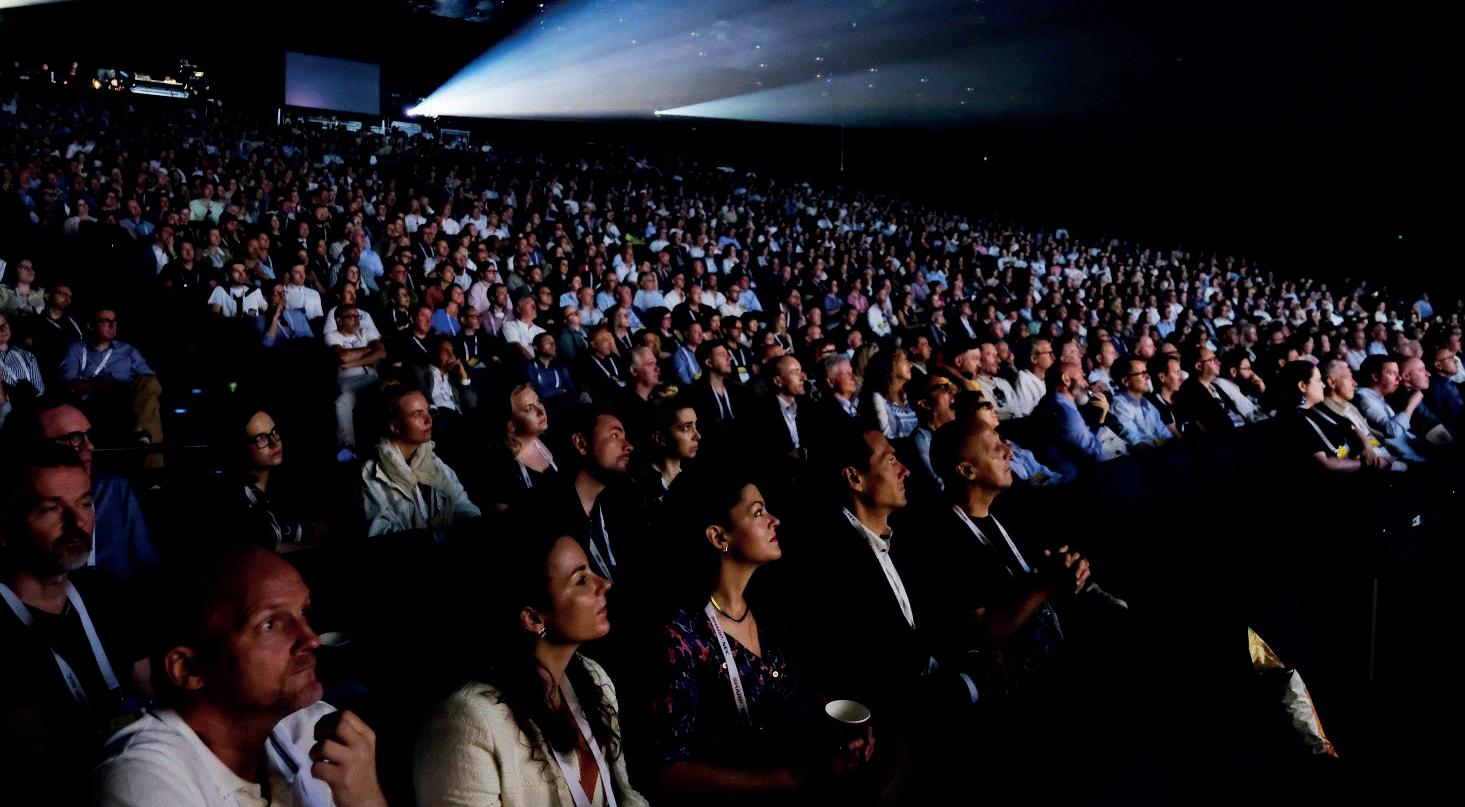
business, attracting audiences beyond traditional filmgoers. Live concerts, sporting events, gaming tournaments, theatre performances and special fan events have all demonstrated their ability to generate additional revenue and expand audience reach.
Many exhibitors are also rethinking the role of their venues within local communities. Cinema spaces are being used for corporate events, educational programmes and cultural initiatives, helping operators maximise utilisation throughout the week. This broader approach reflects a growing understanding that the future of exhibition may involve a more diverse range of experiences than ever before. Delegates attending CineEurope will undoubtedly be exploring how these alternative programming opportunities can complement traditional film exhibition.
Environmental responsibility is becoming a strategic priority across the cinema sector. Rising energy costs and growing environmental awareness have encouraged exhibitors to examine every aspect of their operations. From energy-efficient projection systems and LED lighting to waste reduction initiatives and sustainable building practices, cinemas are increasingly incorporating environmental considerations into long-term planning.
Sustainability is no longer viewed simply as a corporate responsibility issue. It is becoming an operational necessity and, increasingly, a factor that resonates with consumers. Industry suppliers attending CineEurope are expected to highlight new technologies and solutions designed to help exhibitors reduce their environmental footprint while improving efficiency. The challenge will be balancing sustainability goals with the financial realities facing operators in different markets.
One of CineEurope’s greatest strengths is its uniquely international character. Unlike many industry gatherings that focus primarily on a single territory, CineEurope brings together voices from across a
diverse range of markets. Delegates represent large multinational circuits, independent operators, technology companies and distribution partners from dozens of countries. This diversity creates opportunities for knowledge-sharing and collaboration that are increasingly valuable in a rapidly changing business environment. Markets across Europe continue to recover at different rates, with each facing its own opportunities and challenges. The ability to exchange ideas and learn from successful initiatives elsewhere remains one of the convention’s most important benefits. Whether the topic is premiumisation, audience engagement, technology adoption or operational efficiency, the European exhibition community has much to learn from one another.
As CineEurope 2026 approaches, there is a sense that the industry is entering a new chapter. The debates of recent years have largely centred on recovery and adaptation. Today, the conversation is increasingly focused on opportunity. Cinema has weathered extraordinary disruption and emerged with a clearer understanding of its strengths. Audiences continue to value shared experiences. Studios continue to invest in theatrical releases. Exhibitors continue to innovate. Technology continues to enhance the moviegoing experience. Challenges remain, of course. Economic uncertainty, changing consumer behaviour and intensifying competition for leisure spending will continue to test operators across the industry. Yet the overall mood heading into CineEurope appears markedly more optimistic than it has been for several years. For delegates gathering in Barcelona, the convention will offer more than a preview of upcoming films and technologies. It will provide a glimpse of what the next decade of cinema exhibition may look like. If the industry’s recent resilience is any indication, that future promises to be dynamic, innovative and firmly centred on the enduring appeal of the big screen. For four days in Barcelona, the global exhibition community will come together to celebrate that future—and to help shape it.