DARO STUDIO ANNOUNCES THE ACQUISITION OF CINEMA &VIDEO INTERNATIONAL
DARO
Studio LLC is honored to take the baton from Paolo Di Maira, founder of Cinema & Video International, who has dedicated over 30 years to promoting Italian cinema on the international stage.
Building on this solid foundation, Cinema & Video International is committed to supporting the industry with renewed energy— strengthening collaboration on a global scale, while continuing to serve its long-standing readership and partners.
“Cinema & Video International is made by professionals for professionals,” states DARO Studio, “going beyond the news to provide a global perspective and a clear point of view on trends, opportunities, and market developments.”
Connecting the Dots of the Industry
Our goal is to transform Cinema & Video International into a professional platform that connects the dots across film, audiovisual, documentary, animation, and emerging technologies. We aim at fostering the dialogue and enhancing opportunities between professionals, companies, and institutions in the entire global industry highlighting trends, opportunities, and market developments.
The cinema.video Website
News and timely updates will be published on the cinema.video website: a digital portal for Financing, Production, Distribution, Education, Industry Events and Archives.
The Magazine
The printed issue of CVI will evolve into a curated industry publication—designed as a long-lasting reference tool expanded to reflect the status of the global industry.
A Bridge for the Independent Industry
While the entertainment industry undergoes rapid consolidation in the hands of a few players, opportunities for independent creators are narrowing and space for mid-budget content is disappearing. We believe this part of the industry must be represented by Cinema & Video International: a platform that brings visibility to independent players, relevant content, and projects with high potential, acting as a bridge between sectors, and offering a clear, informed point of view on the transformations shaping the audiovisual landscape.
The official debut of this new era will take place during the Cannes Film Festival and the Marché du Film 2026. This milestone represents the first step in a long-term strategy to revitalize the magazine’s presence at major international events.
Integrity and Transparency
Our editorial and advertising teams operate independently, ensuring the integrity and transparency of our publication. Any advertorial content will be clearly labeled as Sponsor Content.
Share your stories with our Editorial Team: news@cinema.video
Connect to our Advertising Team to get digital and printed visibility.
Global partnerships: advertise@cinema.video
Exclusive representation in Italy: APS Advertising info@apsadvertising.it
A Bold Wave of Independent Voices
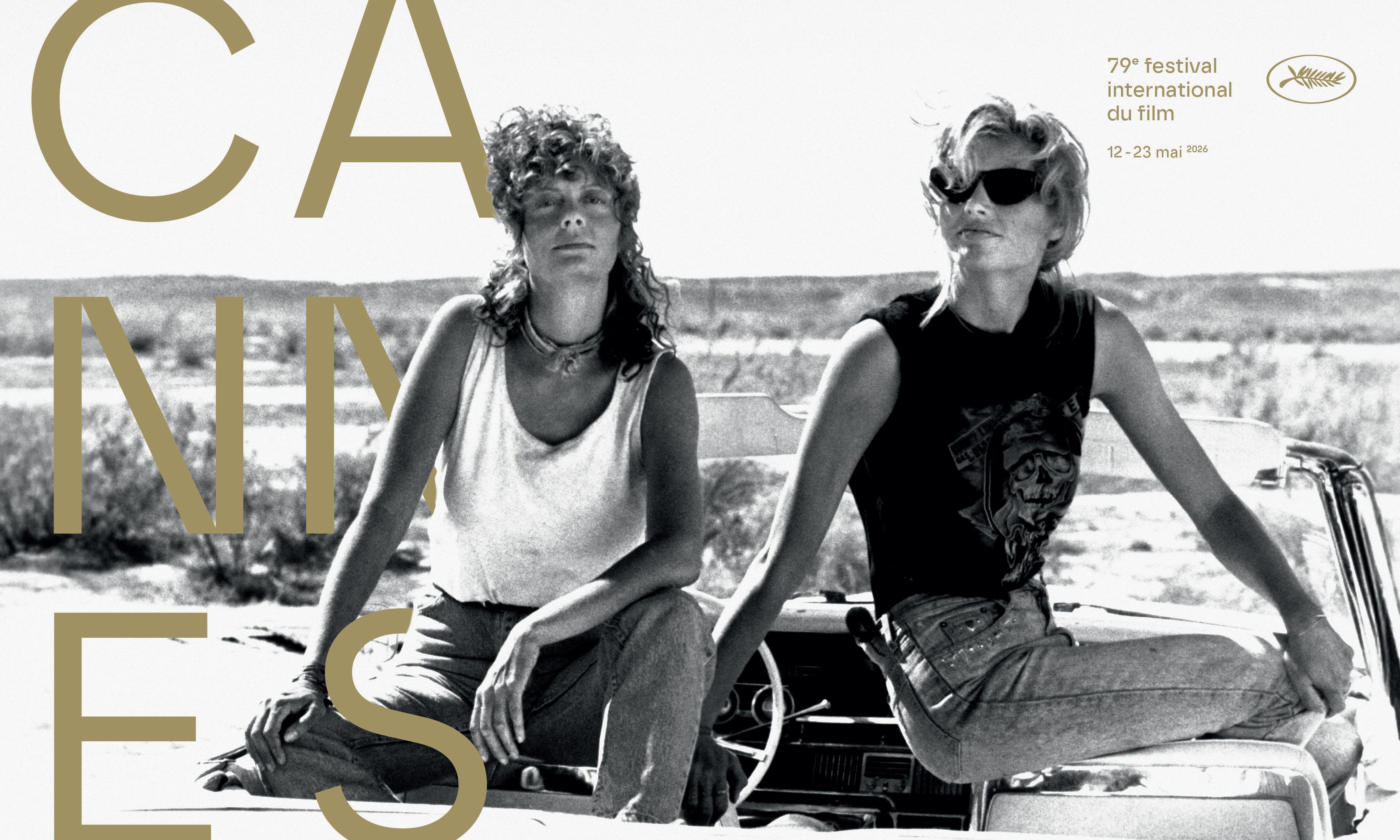
Set in the dazzling Paris of the Roaring Twenties, La Vénus Électrique by Pierre Salvadori will open the 79th Cannes Film Festival. Cinema was born in Paris just a few years earlier, but more than France’s historical primacy in the sector, the festival aims to celebrate that spirit of artistic energy and popular entertainment from the era. As Cannes’ General Delegate Thierry Frémaux stated, “This is not a French festival, but a festival of cinema in France.”
“In the 1980s, people talked about the death of the language of cinema. Today, that language has won—because it’s everywhere, from Instagram to TikTok—proving the vitality of global creativity.” Frémaux adds.
He promises a lineup rich in intelligent films and a strong presence of newcomers. There will also be significant space for documentaries, animation, and American independent films—though notably not for major studio productions.
Among the 22 films in Competition, after
the four French entries, Spain and Japan lead the way with three titles each.
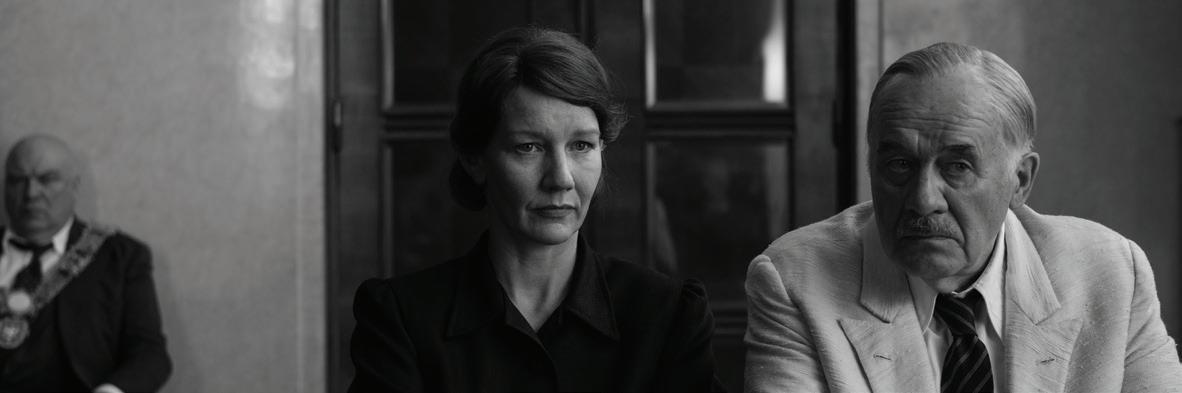
Spain is represented by Pedro Almodóvar with Amarga Navidad, alongside the dynamic duo Los Javis with La Bola Negra , and the widely acclaimed Rodrigo Sorogoyen, who now enters the main Competition with The Beloved , after his 2022 Cannes Premiere debut with As Bestas
Japan , Country of Honor at the Marché du Film, is represented into the selection by Hirokazu Kore-eda (Palme d’Or in 2018 for Shoplifters) with Sheep in the Box, Ryusuke Hamaguchi with All of a Sudden, and Koji Fukada, making his first appearance in the main Competition with Nagi Notes
In the 1980s, people spoke about the death of the language of cinema. Today, the language of cinema has won.
By Carolina Mancini
Eastern Europe makes a strong showing, marked by three major returning filmmakers: from Poland, Paweł Pawlikowski (Best Director at Cannes 2018 for Cold War) with Fatherland; from Hungary, László Nemes (Grand Prix winner in 2015 for Son of Saul) with Moulin; and from Romania, Cristian Mungiu with Fjord, a Romanian story shot in Norway. Mungiu previously won the Palme d’Or in 2007 for 4 Months, 3 Weeks and 2 Days Three of the five female directors in Competition are French: Léa Mysius with Stories of the Night, Jeanne Herry with Garance, and Charline Bourgeois-Tacquet with Life of a Woman. Also representing France are The Unknown by Arthur Harari—“a story
Thierry Frémaux celebrates the vitality of global creativity
about schizophrenia, adapted from a graphic novel, one of the films that sparked the most discussion,” Frémaux notes—and Parallel Stories by Asghar Farhadi, who was unable to shoot the film in his home country.
There are two American films in Competition, both from directors returning to contend for the Palme d’Or: Ira Sachs with The Man I Love, starring Oscar winner Rami Malek and Tom Sturridge (already sold in France by mk2 to Memento), and,— announced at the last minute—James Gray with Paper Tiger, his sixth film in Competition. Paper Tiger is a gangster movie starring Adam Driver, Miles Teller, and Scarlett Johansson. It is also the sixth Competition title whose North American distribution rights have been acquired by Neon, alongside All of a Sudden, Nagi Notes, Sheep in the Box, Fjord, and The Unknown
Female representation—highlighted by festival president Iris Knobloch as one of the core values (“visibility is not enough; access is essential”)—is even more prominent in the Un Certain Regard lineup, which includes 11 women directors and 8 men. It’s a section worth watching closely. “We’ve reoriented it to support first features and emerging talent,” says Thierry Frémaux.
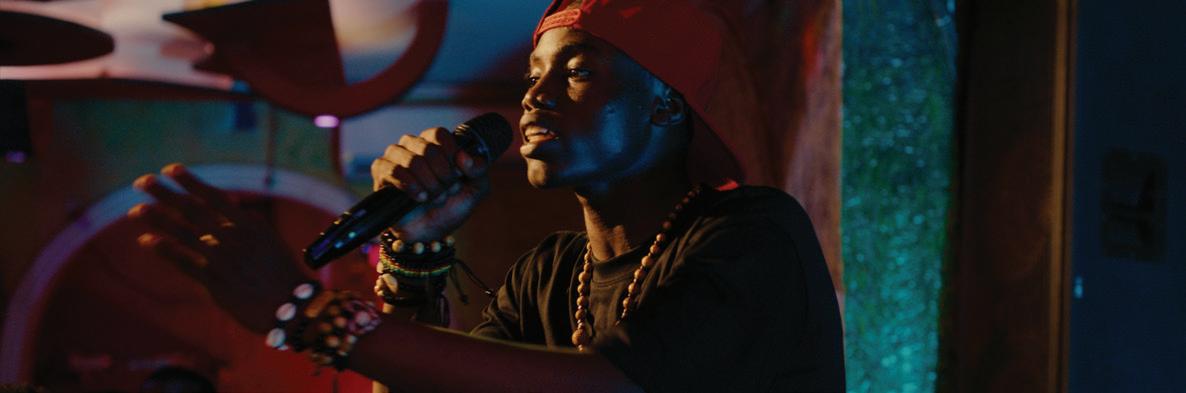
The two films from Africa, Congo Boy by Rafiki Fariala and Ben’Imana by MarieClémentine Dusabejambo, reflect one of the festival’s key missions: supporting film industries around the world and helping inspire their growth.
The Rwandan debut Ben’Imana also represents a broader shift in African cinema. While much of the industry was once concentrated in sub-Saharan countries like Côte d’Ivoire, Mali, and Mauritania, there is now growing momentum further east: in English-speaking countries such as Nigeria— represented here by Akinola Davies Jr.—as well as Somalia, Kenya, Ethiopia, and Rwanda, from which comes Ben’Imana, a story of reconciliation after the genocide.
This year also marks Costa Rica’s firstever appearance at Cannes, with Valentina Maurel making her directorial debut with Forever Your Maternal Animal. Other highlights include the Japanese film All the Lovers in the Night by Yukiko Sode, and a European–Japanese co-production, Titanic Ocean, the first feature by Greek director Konstantina Kotzamani, set in a Japanese boarding school that trains girls to become professional mermaids. Un Certain Regard will close with Ulysse by Laetitia Masson, known for her work as a screenwriter during the French New Wave. Documentaries dominate the
Special Screenings section, with portraits of major cultural figures taking center stage. These include Avedon by Ron Howard; John Lennon – The Last Interview by Steven Soderbergh; Les Survivants du CHE, the debut feature by Christophe Dimitri; and Cantona by David Tryhorn and Ben Nicholas. Eric Cantona also appears as an actor in another film in the section, Les Matins Merveilleux
This year’s lineup also includes an animated debut, Tangles by Leah Nelson, and A Mouthful of Ash by Diego Luna, a migration drama shot between Mexico and Spain and based on the novel by Brenda Navarro.
During an edition that honors with the Palme d’Or Barbra Streisand—actor, director, musician, and more—it is interesting to witness the directorial debuts of two other Hollywood stars: John Travolta, whose Propeller: OneWay Night Coach will premiere in the Cannes Premiere section before its global release on Apple TV+ on May 29, and Andy Garcia with Diamond, shot in Los Angeles across the legendary noir locations of Raymond Chandler
and also starring Garcia himself (Out of Competition). Also in Cannes Premiere, Japan returns with Kokurojo by the prolific Kiyoshi Kurosawa.
Other highlights include The End of It, debut feature of Maria Martinez Bayona, a British production shot mainly in the Canary Islands and set in a future where aging has been overcome—the protagonist is 250 years old and has the face of Rebecca Hall, alongside Noomi Rapace and Gael García Bernal. There is also Aquí by Tiago Guedes, based on the “Jesus Trilogy” by J. M. Coetzee and starring, among others, Sergi López and Patricia López Arnaiz, who won the 2026 Goya Award for Best Actress for Sundays (whose rights have already been acquired by Film Boutique).
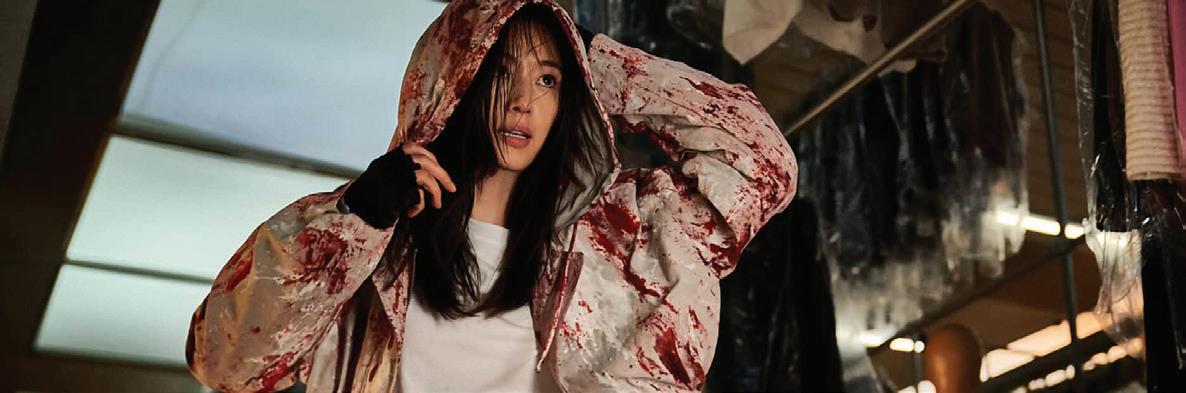
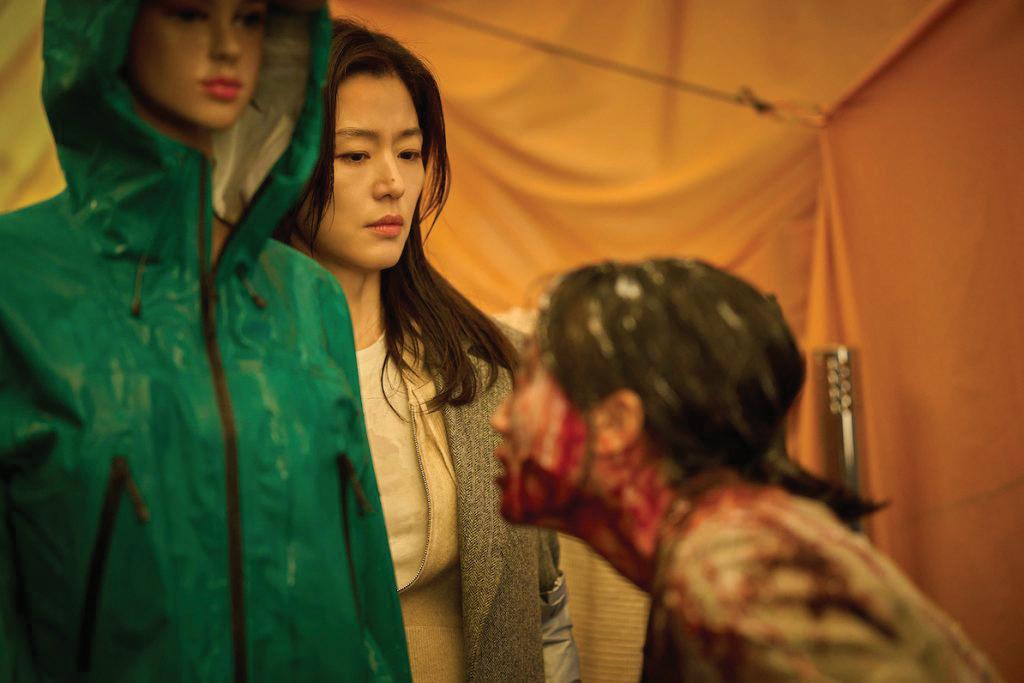
Horrors are a must in the Midnight Screenings lineup. Leading the charge is Yeon Sang-ho, the South Korean filmmaker behind the box office hit Train to Busan, with his new film Colony, alongside Sanguine – No More Good in Doctor, the debut feature by Marion Le Corroller, where horror invades the emergency room.
Richard Avedon, 1994
There’s also plenty of eccentricity, entrusted to Quentin Dupieux with Full Phil Dupieux will also close the Quinzaine des Cinéastes with the animated film Vertiginous and to the Fellini-inspired Roma Elastica by Bertrand Mandico.
Italy is present with a limited but meaningful selection. Roma Elastica is one of the films co-produced by Rai Cinema, along with the previously mentioned Congo Boy and L’Inconnue. Several co-productions involve Italy as a minority partner, including Fatherland , by Academy-Award winner
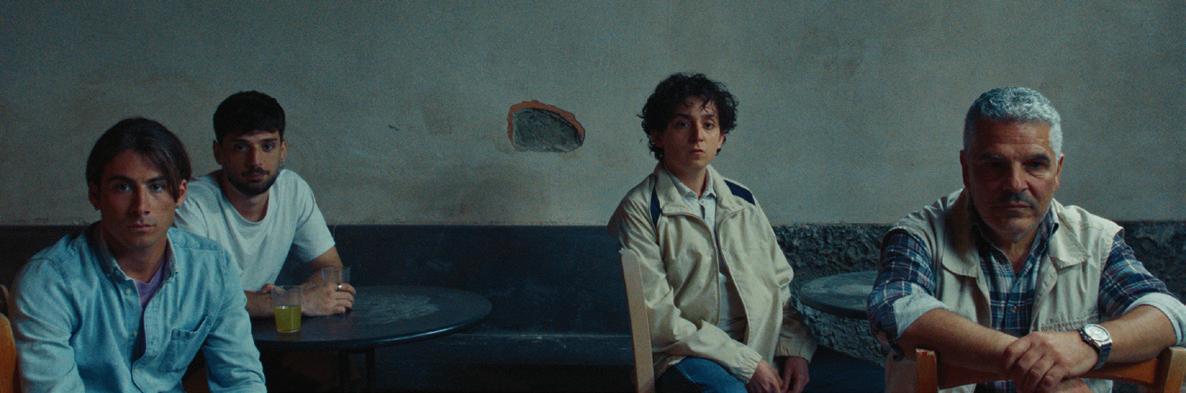
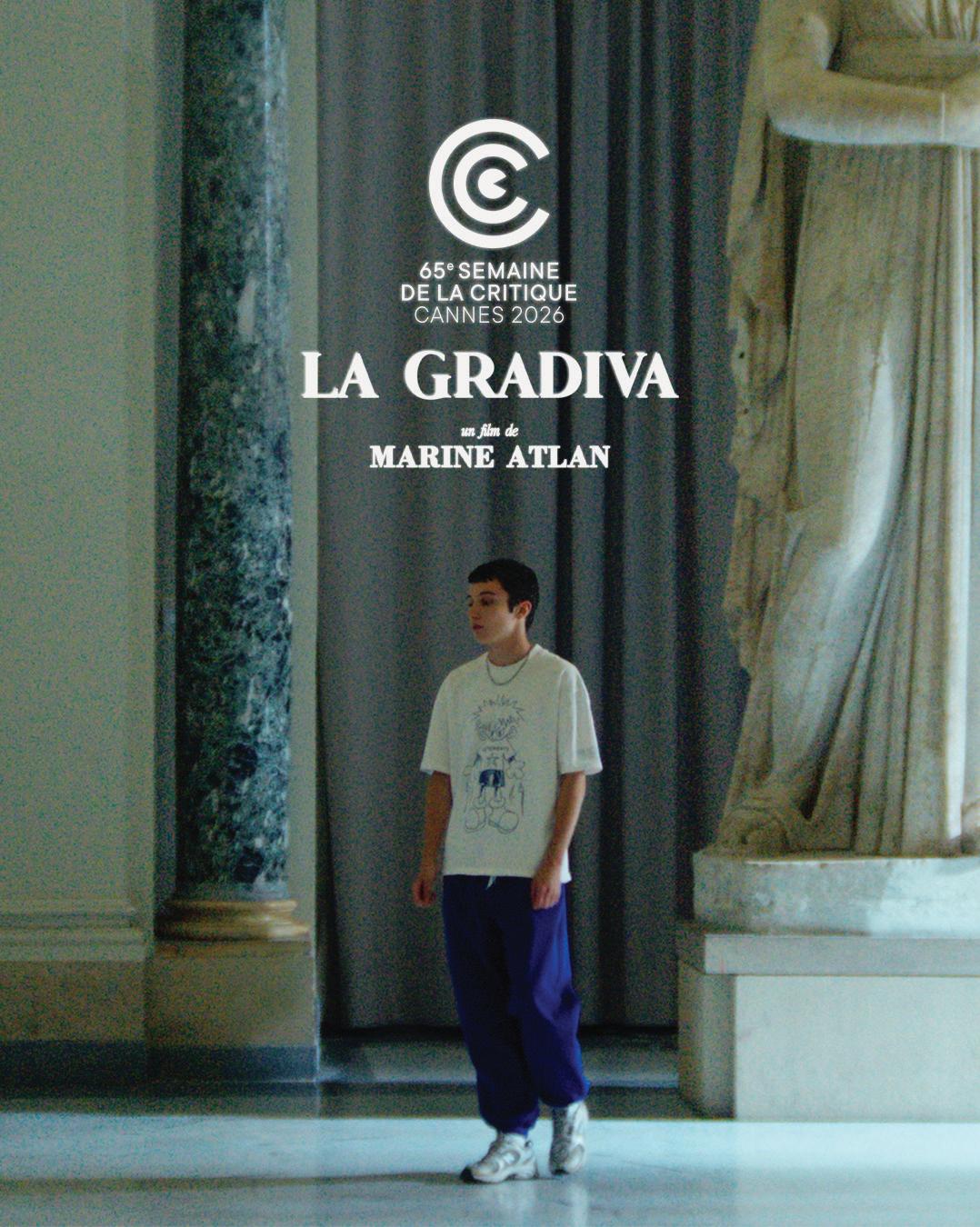
Paweł Pawlikowski, and Parallel Stories. One young Italian filmmaker stands out: Milanborn Antonio Donato, who brings to Cannes an Italian-British coproduction, Oh Boys (Quinzaine des Cinéastes), that blends local and international elements. Italy is also present with its stunning locations. Beyond Roma Elastica, shot at Cinecittà Studios, and Oh Boys (filmed in Campania), La Gradiva, the debut feature by Marine Atlan (Semaine de la Critique), follows a group of students on a trip to Pompeii. Also in Semaine de la Critique is the short film City of Owls by Zhenia Kazankina.
At the Quinzaine des Cinéastes, there is another notable double Italian presence with Death Has No Master by Jorge Thielen Armand. The film is an international co-production involving Venezuela, Italy, Canada, and Luxembourg.
The Quinzaine des Cinéastes features another presence from Romania: director Radu Jude—a two-time Golden Bear winner at the Berlin International Film Festival—with The Diary of a Chambermaid
Produced by Les films du poisson, Bibi Film, Arte Distributed by Fandango - Sales Mk2 films
With financial support from the Regione Campania and Film Commission Regione Campania production fund. With financial support from Cnc, Eurimages, CanalPlus, CinePlus, Fondo di coproduzione France - Italie, Fondo per le coproduzioni minoritarie, Fondo cinema e audiovisivo, Fondation Gan Pour le Cinema, Ciclic-Région Centre-Val de Loire.
Regione Campania
Film Commission
FROM TURIN TO CANNES
Five Films Developed With TorinoFilmLab Premiering at Cannes 2026
Five films developed thanks to the TorinoFilmLab will premiere at the Cannes Film Festival 2026, across the sections Un Certain Regard, Semaine de la Critique, and the Quinzaine des Cinéastes. Four out of five are made by female directors, confirming the Lab’s attention to gender balance. The TFL is the National Cinema Museum’s Feature Film and TV Series Development Lab supported by Creative Europe – MEDIA Subprogram of the European Union.
UN CERTAIN REGARD
The Meltdown ( El Deshielo ) is the second feature by Chilean director and actress Manuela Martelli. The film was developed during the 2023 TFL FeatureLab with producer Alejandra García (Wood Producciones). Together they won the €50,000 Coproduction Award (supported by Creative Europe). Martelli made her Cannes debut with her first feature film, 1976, at the 2022 Quinzaine des Cinéastes. As actress, she received the Pardo for Best Performance at the Locarno Film Festival 2025 for God Will Not Help (Bog Neće Pomoći) by Croatian director Hana Jušić, coming out of 2020 TFL ScriptLab. The Meltdown is a murder mystery set in an isolated mountain hotel in 1992, in post-dictatorship Chile. Inés, a nine-year-old girl, befriends teenager Hanna, a German skier whose sudden disappearance brings to light long-hidden secrets.
The film is a co-production between Elastica Films (ES), Cinema Inutile (US),
Titanic Ocean is the debut feature film of Greek director Konstantina Kotzamani, developed at the 2018 FeatureLab with producer Maria Drandaki. The film was supported by the 2023 TFL Co-Production Fund and participated in the 2023 Next Step Vol.II, organized by the Semaine de la Critique. The film is set in the glittery, pop world of a Japanese boarding school that trains teenage girls to become professional mermaids. 17-yearold Akame learns to hold her breath, perform in front of adoring crowds and swim alongside sharks. Underneath the silicone mermaid tail, Akame will find her mermaid voice, discover her first love and experience a metamorphosis, turning performance into transformation. The international sales are handled by Paradise City Sales.
SEMAINE DE LA CRITIQUE
Viva is the debut feature by Spanish director and actress Aina Clotet, who developed the screenplay through 2021 TFL Next –Feature Film. The film is a Spanish production by Ikiru Films and Funicular Films, world sales are handled by Loco Films (FR). Viva is a bittersweet comedy set in a Catalonia suffocated by an extreme drought. The protagonist, Nora, is consumed by an urgent need to feel alive. She plunges into overwhelming relationships with Tom and Marx, two very different men whose opposite natures reflect her inner conflict. But when neither can fill the void, Nora is forced to face reality and the deeper fear that feeds her hunger for life. Clotet previously directed the TV series This Is Not Sweden, which partecipated to the 2021 TFL (Next – TV Series), and to the 2022 Green Film Lab. The title was also
awarded at Prix Europa 2023 (Best Fiction for TV) and Cannes Series 2024.
QUINZAINE DES CINÉASTES
9 Temples to Heaven (9 Wat Su Sawan), is the second feature film (first fiction) by Thai director Sompot Chidgasornpongse. The film follows a family taking their grandmother to visit 9 temples in one day, hoping to prolong her life. As time passes, their relationships are tested along the way. The project received €50,000 from the 2025 TFL Co-Production Fund. The film is produced by Kick the Machine (TH), coproduced by E&W Films (SG), Petit Chaos (FR) and Needle in the Haystack (NO). Playtime (FR) handles international sales.
Too Many Beasts (L’Espèce Explosive) is the debut feature film by Italian-Swiss director Sarah Arnold, who worked at the screenplay during the 2019 ScriptLab program. The story takes us to the French countryside, where farmers and hunters are at war. Wild boars –too large and too numerous – are devastating crops. Brun, a grain farmer pushed to the limit, loses control and then disappears. A year later, Fulda, an impulsive policewoman, and Stéphane, a barely poised psychologist, begin investigating. What they discover is bigger than anything they could have imagined. And what arises between them is, too. The film is a French production involving 5à7 Films, France 3 cinema and Playtime – which is also handling the sales.
Piano (MX), Ronda Cine (CL), Río Fundación (CL), and Wood Producciones (CL). World sales are handled by Losange Films.
Viva
The Transmedia Shift Driving Marché du Film 2026
Expanding Across IP, AI and the Creator Economy
With the new Creator Economy Summit and the Japan IP Market, the Marché du Film is betting on transmedia.
The Creator Economy Summit (May 17th, 10 am, Plage des Palmes), will explore the opportunities arising from the intersection of traditional cinema and content produced by digital creators who are expanding into long-form storytelling and film production.
The topics discussed will be: digital IPs adaptation into film projects, emerging talent scouting, audience engagement aimed at bringing “communities” into theaters, and the most innovative and recent marketing strategies.
Connected to the presence of Japan as the Country of Honour for the 2026 edition, the Marché du Film will inaugurate the Japan IP Market , a new strategic gathering co-organized with TIFFCOM (Tokyo International Film Festival Content Market).
The Japan IP Market will take place from 15th to 17th May, hosted aboard the prestigious
Art Explora catamaran located at Cannes’ “Vieux-Port”.
This event will focus on Japanese intellectual properties with strong potential for film adaptation, with pitch sessions and targeted one-on-one business meetings, complemented by a curated program of conferences and presentations.
With the launch of the Japan IP Market, in addition to long-standing initiatives such as Shoot the Book! (May 14-15, Palais) and Cannes Remakes (May 18th, CNC Pavillion at Gray d’Albion), the Marché du Film is strengthening its position as a leading international platform for the circulation, adaptation, and valorization of IP across creative industries.
The important presence of Japan this year will reflect also on Cannes Animation, which will shine a light on the global influence of anime, with keynotes and panels exploring international successes, distribution strategies, and the creative vision of leading studios such as Toei Animation that celebrates its 70th
By Carolina Mancini
anniversary this year (Toei Animation: Scaling a Global Animation will take place on May 17th at 3pm, Main Stage - Riviera).
The Annecy Animation Showcase will take place on May 17th (10 am, Palais - K Screening Room), presenting five standout animated work-in-progress to an audience of sales agents, distributors, and festival programmers. The event is co-organized by the Marché du Film and Annecy International Animation Film Festival, taking place later in June (21st - 27th).
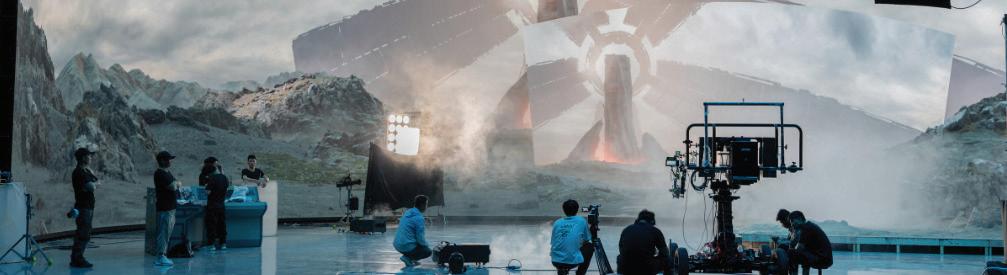
The Innovation Village will return for the second year in a row to the Pantiero side of the Village International, featuring its stage for XL virtual production demos: it will be the main hub for Cannes Next, the Marché du Film’s innovation-focused program.
The virtual production stage will be powered by global VP leader ROE Visual, VP Catalyst Orbital Studios and with the support of Megapixel, Chaos, Antitalent, FBR, Omnio, RED, Seismiq, and Stype, will offer a hands-on introduction to the creative
possibilities with which virtual production is transforming the way stories are made and reshaping productions.
The second edition of the AI for Talent Summit will also take place on the mornings of May 15 and 16 (by invitation only), bringing together leading technology companies and talents to explore the latest applications of artificial intelligence in creative and business processes. This edition will focus on the introduction of AI into the production workflow, the ethical and responsible use of AI, and education.
The Immersive Competition also innovates its format. This 2nd edition is specifically designed for collective viewing, in a space reconfigured to accommodate 80 to 225 spectators simultaneously. Selected works will be presented on rotation in this 450 m² venue, suitable for hosting a wide range of formats, from cutting-edge VR experiences to large-scale video mapping. All this is happening at the Carlton Hotel: this space will also be where the 150 producers and catalog owners participating in the Immersive Market can screen demos of their works to 90 major distributors and curators. The market, which will run throughout the 11 days of the Immersive Competition, aims to be the most effective platform for location-based immersive distribution, and will schedule pitch sessions, networking events, and business opportunities.
Finally, the new, enhanced Marché du Film Online platform becomes Marché du Film by Cinando, migrating to the completely rebuilt system of the famous database and networking platform created by the Marché. This evolved version will include online screenings, conference videos, and networking tools in a single market environment.
Cannes Investors Circle
The 4th edition of Cannes Investors Circle, the Marché du Film program which connects private investors with high-quality films, will take place on May 16th and 17th at the Plage des Palmes. The pitches of the selected projects will be preceded, on Saturday the 16th, by a series of panels around financing, with a focus dedicated to brands and their growing importance in the world of film investment.
Céline Dornier, Content Executive, IPR. VC, is part of the selection committee, that, together with the program director, Alexandra Zakharchenko, chose the 8 participants of this year. IPR.VC is the London and Helsinki based investment fund which has raised over $200 million across three content funds that supported over 60 productions across North America, the UK, and Europe. Two films in Competition at Cannes this year have been supported by the fund. The first one, Gentle Monster, directed by renowned author-director Marie Kreutzer (The Corsage), starring Léa Seydoux, was the first investment in the mk2 Films entity – a challenging film about love, trust and deception. This was also one of the projects finding investment at last year’s Investors Circle, together with Poeta Chileno by Sebastián Lelio, as Guillaume Esmiol, Executive Director of the Marché du Film, recalls, adding: “We are considering extending the initiative beyond Cannes through activities throughout the year, following the example of the recent workshop organized in Trieste during When East Meets West.”
The second film is Fatherland, by Oscar winning Paweł Pawlikowski (Ida, Cold War), focusing on the relationship between Thomas Mann, laureate of the Nobel Prize in Literature,
Immersive Competition Selection
KEY DATES & SUMMITS
Japan IP Market
May 15th–17th
Art Explora Catamaran / Vieux-Port
Creator Economy Summit
May 17th - 10:00 AM
Plage des Palmes
AI for Talent Summit
May 15th – 16th
Cannes Investors Circle
May 16th–17th
Plage des Palmes
Annecy Animation Showcase
May 17th - 10 AM
Palais / K Screening Room
Shoot the Book!
May 14th - 15th
Palais
Cannes Remakes
May 18th
CNC Pavillion / Gray d’Albion
and his daughter Erika. The film is object of a recently announced partnership between IPR. VC and MUBI.
As part of the 2026 Investors Circle, ArteKino International will offer a €20,000 prize to the main producer of one of the selected projects. The winner will be chosen by a jury of five cinephiles from diverse backgrounds. Last year’s winner was Gentle Monster
In 2024, the winner of the ArteKino International prize was One Year of School by Italian director Laura Samani now in theaters in Italy. Samani will be in Cannes this year as part of the Un certain Regard Jury.
Another film running in Competition and coming from last year’s Investors Circle is Coward by Lukas Dhont.
Gawd V. The People by Yamil Rodriguez, Ivan Alejandro Diaz Cardenas, Stephen Henderson
Produced by Nilor Studio (UK)
Katábasis by Ugo Arsac
Produced by Zorba (France)
Lúcido by Vier
Produced by COLA Animation (Portugal)
Playing
with Fire by Pierre-Alain Giraud
Produced by VIVE Arts, Atlas V (UK, France, Taiwan)
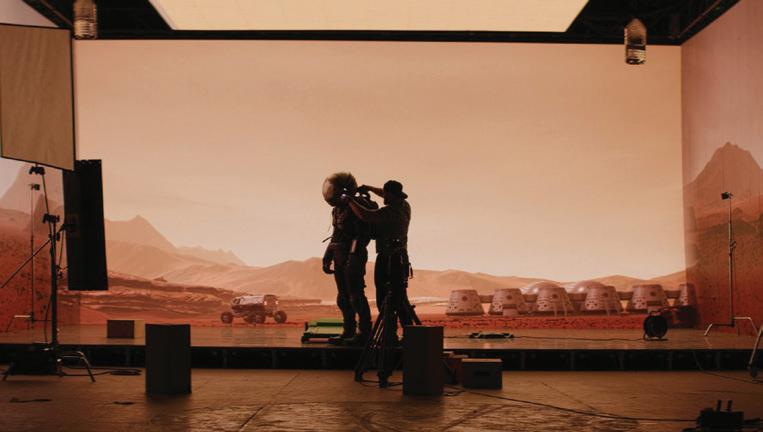
Red Planet 3009 by Mariano Leotta and Francesco Fiore
Produced by Alter Agent (Italy)
The Black Mirror Experience by David Bardos and Damià Ferràndiz’s. Produced by Banijay Live and Univrse (Spain)
The Pirate Queen: No Safe Waters by Eloise Singer
Produced by Singer Studios (UK)
VOOOOOO—PEEEEEE— by Hyeunjoo Woo, Jiyun Park.
Produced by Ubac Studio (South Korea)
Yellowfin by E del Mundo
Produced by Screen Asia, Create Cinema (Philippines)
GENRE TAKES CANNES
Key Events, Platforms and Projects
to Watch
Alively selection of genre titles is set to energize the Festival this year, extending well beyond the Midnight Screenings section, where standout entries include Full Phil by Quentin Dupieux, Sanguine from Marion Le Corroller, and Colony by Yeon Sang-ho.
South Korea continues to play a key role in the genre landscape. In Competition—where the jury is chaired by acclaimed filmmaker Park Chan-wook—the lineup includes the sci-fi thriller Hope, directed by Na Hong-jin.
In Un Certain Regard, the opening film is Teenage Sex and Death at Camp Miasma, an American slasher written and directed by Jane Schoenbrun. Meanwhile, in the Out of Competition section, Nicolas Winding Refn returns with Her Private Hell, described as “an edgy, hypnotic, and unhinged thriller” built on an original story promising a heady mix of glamour, sex, and violence.
Genre cinema also takes center stage at the Marché du Film through panels, project showcases, and networking initiatives gathered under the Cannes Fantastic umbrella. Its flagship programs, Frontières and Fantastic 7, spotlight high-potential projects in the fantastic genre, offering emerging talents a platform to present their work, connect with industry partners, and gain international visibility. The initiative is anchored by the Fantastic Pavilion, the central hub for the global genre community, while Fantastic Night extends the momentum into the evening with a dedicated networking event. This year’s edition, which sees Japan strongly represented across both the Festival and the Market, will feature Takashi Miike as the event’s “godfather.”
Presented in partnership with the Fantasia International Film Festival, Frontières highlights some of the most innovative genre projects through two targeted pitching sessions: Proof of Concept and Buyer Showcase.
Proof of Concept focuses on projects in advanced stages of financing:
Aulken by Didier Konings (The Netherlands)
Baldoon by Gwynne Phillips & Briana Templeton (Canada)
Duppy by Ajuan Isaac-George (UK, Jamaica)
Magai-Gami by Norihiro Niwatsukino (Japan)
Read the Bones by Oan Hostench (Spain) Spiral by Kourtney Roy (Canada, France, Belgium)
You’ve Been Chosen by Viljar Bøe (Norway)
The Buyers Showcase is dedicated to films in post-production:
Astrolatry by David Gordon (USA) Grind by Peter Collins Campbell (USA) Queen of Malacca by Angga Dwimas Sasongko (Indonesia)
The Glorious Dead by John Adams & Toby Poser (USA)
The Wrath by Shayne Putzlocher (Canada) Tracking: The Cyprus Tigers by Andreas Kyriakou (Cyprus, Croatia)
Fantastic 7, organized in collaboration with the Sitges Film Festival, presents 7 “fantastic” projects selected by the 7 partner festivals. Presented as work-in-progress—either in post-production or recently completed—the projects are pitched live (May 17, 12:00 PM, Palais K).
The Sitges Film Festival presents La zona sombra (Dead Ground), directed by Marta Medina del Valle and produced by Luis Ferrón and Alejandro Millán. Country: Spain. Budget: €2.2M.
The Cairo International Film Festival presents Rock, Paper, Sea (Ser Ekhtefaa’ Baba) from Egypt, directed by Randa Ali and produced by Norah Elkhateeb. Budget: $832K. Country: Egypt, Greece.
The Bucheon International Fantastic Film Festival presents Last Mankind (South Korea), directed by Huh Gun and produced by Heo Gyu-beom, Baek Si-won, and Kim Dongmin. Country: South Korea. Budget: $300K.
The Guadalajara International Film Festival presents Metalhead vs The Witnesses (Metaleros vs Testigos de Jehová), directed by Wicho Rivera and Cabe Tejeda, produced by Hiram Chaparro. Country: Mexico. Budget: $1.8M.
The Hong Kong International Film Festival presents The Veil (O Véu), directed by Gabriel Motta and produced by Aletéia Selonk. Country: Brazil. Budget: $940K.
The SXSW Film & TV Festival presents The Coward at Kettle Creek (USA), directed by Noah Stratton-Twine and Jake Kuhn, produced by Right-Off Films. Country: UK. Budget: not disclosed.
The Tallinn Black Nights Film Festival presents Ting, directed by Maximilien Dejoie and produced by Roberto Cavallini, Wilfried Gufler, Mattia Puleo, and James Heath. Country: Italy/UK. Budget: €3M.
Ting and The Veil stand out as the only two titles presented by festivals outside their countries of origin.
The Fantastic Round Robin is another key international pitching forums within the Cannes Fantastic program at the Marché du Film. The lineup reflects a strong global outlook, with projects from Europe and the Americas highlighting both established markets and rising creative territories. The selection showcases 7 titles from Europe (including 4 from Italy, 2 from Spain and 1 from the UK), 10 from the Americas (including 6 from Latin America, 2 from the U.S. and 2 from Canada).
Animal Heart (Sahra Bhimji, USA / science fiction, horror)
Chronicles of Nature and City (Aurora Ovan, Italy / science fiction, fantasy)
Little Death (Stefano Mutolo, Italy / horror)
Llegó con ella (It Came With Her) (Alicia Albares and Paco Cavero, Spain / horror, drama)
Italy stands out as the most represented country at the Fantastic Round Robin with 4 projects. At the core of this “Italian cluster” is the Derry Social Club, an international network of 100+ professionals founded by Berta Film CEO Stefano Mutolo to elevate European genre cinema. The Club makes its global debut at the Fantastic Pavilion, alongside the launch of Berta Fear—a new label dedicated to international sales of horror and genre films.
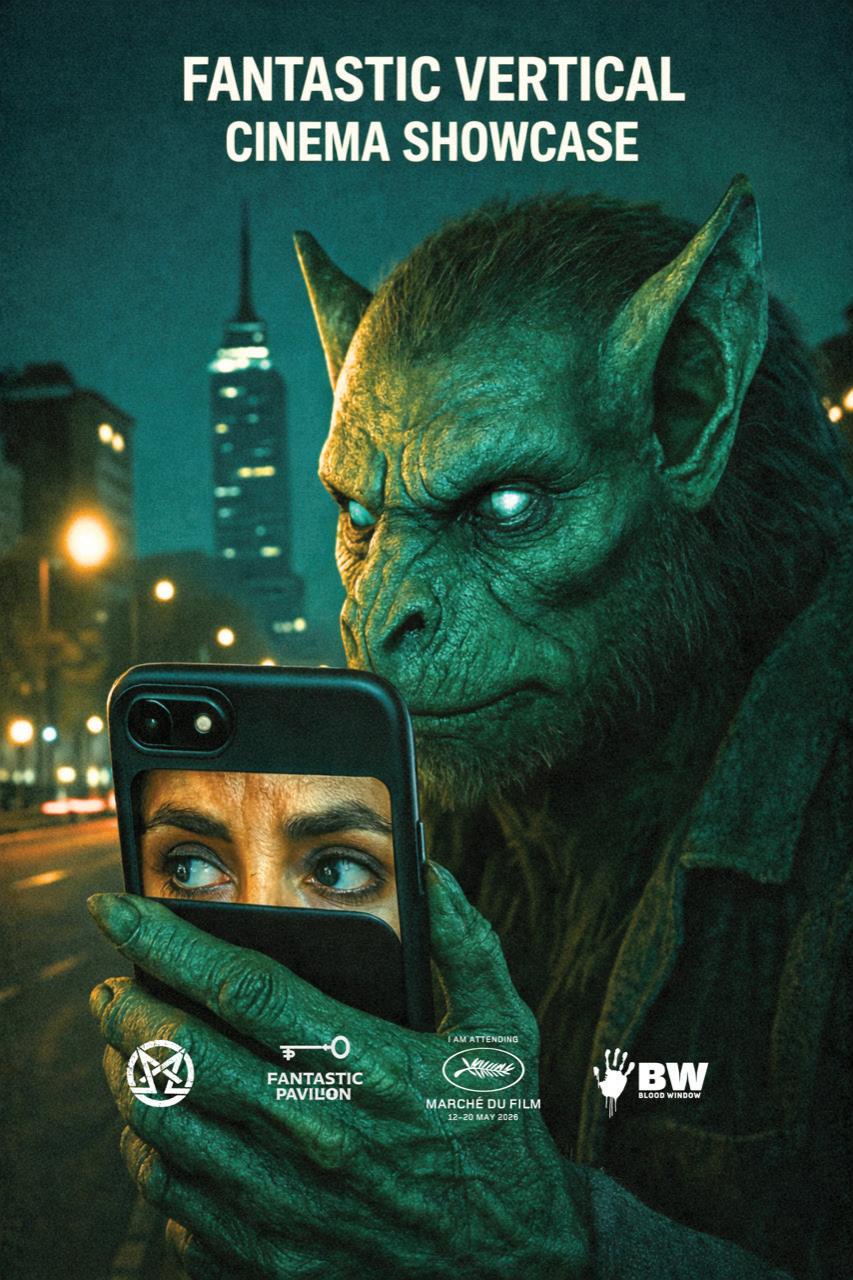
GENRE GOES VERTICAL
The Fantastic Pavilion Vertical Cinema introduces a curated selection of vertical-format works exploring horror, fantasy, and science fiction through a mobile-first lens. The initiative creates a dedicated exhibition space for creators experimenting with genre storytelling beyond traditional screens, embracing formats designed specifically for smartphone viewing.
How The French Industry Stays Relevant
Interview with Daniela Elstner, Managing Director of Unifrance
Cinema & Video International met Daniela Elstner, Managing Director of Unifrance, at the opening of the 16th edition of Rendez-Vous in Rome.
As the industry navigates consolidation, shifting distribution models, and growing competition from global players, the event offered a timely opportunity to discuss the role of European cinema, its international circulation, and the evolving strategies behind its promotion, bringing together authors, producers, and industry professionals at a moment of profound transformation for the sector. With over 70 years of history, Unifrance’s relevance lies in its heritage, the diversity of its output, its ability to adapt institutionally, and its role as a unifying platform for the entire industry.
Considering the current global industry landscape, with increasing consolidation among major groups and the dominance of large franchises, how can an organization like Unifrance remain central in promoting independent European content?
I think this is not only a question about Unifrance, but about how independent production can survive and continue to provide the films we promote. France has a very strong system that supports a wide diversity of productions—animation for children and adults, documentaries, feature films, genre films. This diversity is key. It allows us to offer a broad range of content and to remain relevant.
Another important aspect is adaptation. The merger of Unifrance with the organization promoting television content was a strategic
By Federica Pazzano
move. It allows us to support both large companies and smaller independent players under one roof. We can work with major companies, but also help smaller producers and sales agents. At the same time, we are open to all players, including platforms like Netflix or Disney, if they want to collaborate with us on promotion. This flexibility is part of our response to a rapidly evolving industry.
Do you think Unifrance can play a role in fostering connections between different sectors—film, TV, animation, gaming— and encouraging more transmedia storytelling in Europe?
Unifrance is an association with more than 1,000 members, and one of its strengths is that it creates a space where all these professionals can meet without pressure. It’s often the only
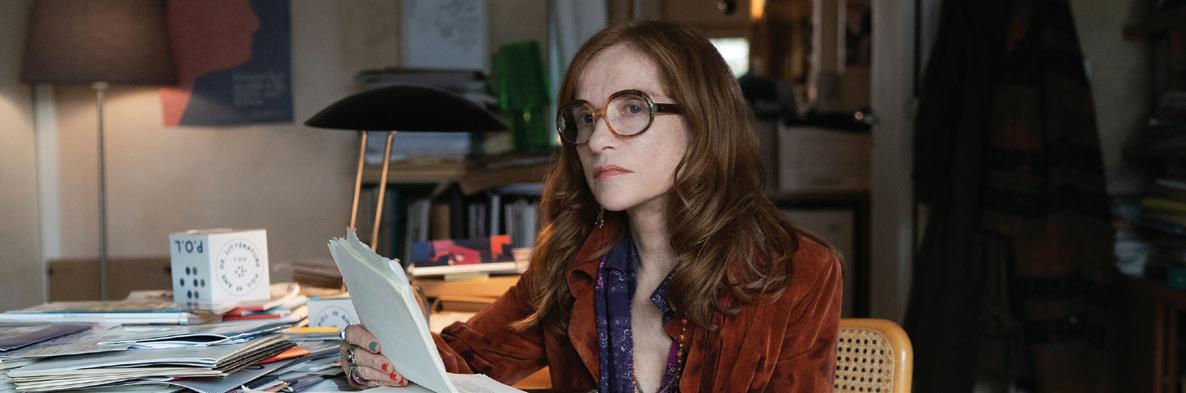
Isabelle Huppert in La Femme La Plus Riche Du Monde byThierry Klifa (Out of Competition, Cannes 2025)
place where people from different parts of the industry can sit together and discuss how to be stronger internationally, rather than focusing on internal differences.
But we also need to go beyond our own sector. It’s essential to engage with other cultural industries—video games, design, museums, publishing. The more we connect across sectors, the stronger we become. We’ve already experimented with initiatives like a festival inside Minecraft, which shows how we can expand our reach and explore new audiences.
How do you see the relationship between European storytelling and largescale global successes?
We need to stop putting films into rigid categories. What matters is that strong films—whatever their origin—can travel and succeed. If one European film performs well internationally, it benefits the entire ecosystem. I don’t think we should oppose different types of content. A film like Anatomy of a Fall shows that a more “arthouse” project can reach a wide audience.
How can European films remain culturally specific while also being accessible to international audiences?
This is part of the magic of cinema. Films don’t always need to be designed for international success from the beginning. Sometimes unexpected films resonate globally—like Parasite. We should trust our creative voices more. At the same time, awareness of audiences is growing. Filmmakers understand that connecting with viewers is essential, but we should not lose authenticity in the process.
between the two countries. Italy is one of the key markets for French films in Europe, alongside Germany and Spain. We also try to encourage direct exchanges between professionals, such as inviting Italian directors to participate in discussions and screenings. These initiatives help foster collaboration and mutual understanding.
Do you think there are still opportunities for European audiovisual content in the United States?
The U.S. is a challenging market, but also a very important one. It’s less about market share and more about presence. Even if individual films have limited theatrical results, they gain visibility across platforms—SVOD, TVOD, and other channels. It’s essential to maintain a strong presence through festivals, university programs, and initiatives like Young French Cinema. The audience is there, especially among younger generations and academic communities.
We should aim for more coordinated releases when possible, while adapting strategies to each territory.
What about opportunities beyond major hubs like New York and Los Angeles? There is definitely potential in smaller cities, but there are also structural challenges. Distribution in the U.S. is complex, especially for independent European films. Negotiating rights with multiple sales agents can be difficult for smaller exhibitors. The issue is often logistical rather than audience-driven. There is interest from audiences, but the system makes access complicated. This is something we need to continue working on.
Latin America has been a particularly successful market for French cinema. How was this achieved?
Yes, the strikes had an impact, particularly on theatrical releases. However, French films remained relatively stable globally. We are now seeing a strong recovery, with promising titles and a solid pipeline. Cinema is resilient. There may be fluctuations year to year, but overall, I remain optimistic about the future.
The Rendez Vous in Rome, organized by the French Embassy in Rome / Institut Français Italy, co-organized by Unifrance, is aimed at promoting the New French Cinema and fostering the dialogue between France and Italy.
Iconic French actress Isabelle Huppert was the guest of honor of this 16th edition. She was also the protagonist of La Femme La Plus Riche Du Monde by Thierry Klifa, presented Out of Competition at the 2025 Cannes Film Festival.
Do you think increasing marketing budgets is the key to improving the international performance of European films?
It’s not only about increasing budgets— it’s about being more strategic and inventive. Coordination between producers, sales agents, and distributors is essential, especially on a European level. Compared to the U.S., where releases are often coordinated globally, European films are still released over long periods, sometimes up to two years. This creates challenges.
We should aim for more coordinated releases when possible, while adapting strategies to each territory. It’s a complex balance, especially with factors like awards campaigns and overlapping release windows.
How would you describe the current relationship between the French and Italian industries?
The relationship is very strong and historically important. There are many coproductions and institutional collaborations, and there is a genuine appreciation
This success is the result of long-term engagement. French cinema has always had strong support in countries like Mexico and Argentina. Over time, local initiatives—such as touring festivals—have taken ownership of this relationship, which is the ideal outcome. Affordable ticket prices and strong local partnerships also play a role. It’s about building sustainable ecosystems rather than short-term success.
What is your view on genre cinema and its development in France?
France has always supported a wide range of genres, and that diversity is its strength. Some filmmakers, like Luc Besson, have built strong international brands, which helps certain projects travel globally. But overall, success depends on many factors—different genres perform differently across territories. Animation, for example, performs very well in certain markets. The key is to maintain diversity and adapt to each audience.
Do you think the 2025 market figures were influenced by the Hollywood strikes, and what are your expectations for 2026?
Daniela Elstner Managing Director of Unifrance
Inside Italy’s 2026 Film & Audiovisual Fund
Italy Strengthens Foreign Production Incentives with €100 Million Allocation
By Monica Sardelli
Italy’s 2026 Budget Law (Law No. 199 of December 30, 2025) introduced several amendments to the Italian Cinema & Audiovisual Law (Law No.220/2016).
THE CINEMA & AUDIOVISUAL FUND
The Cinema & Audiovisual Fund (established by the Italian Ministry of Culture pursuant to Law No. 220/2016, Article 13), changes from €700 million in 2025 to €610 million in 2026 and is expected to stabilize at €500 million in 2027 (Article 1, paragraph 554 of the 2026 Budget Law). The final allocation for 2026 amounts to slightly over €606 million, taking into account the reduction provided for under Article 1, paragraph 805 of Law No. 145 of December 30, 2018 (2019 Budget Law and multi-year budget for the 2019–2021 period).
TAX CREDIT
The Law introduces spending caps on production tax credits, aligning this segment with the framework already applicable to distribution, technical industries, and exhibition. The introduction of such caps effectively eliminates the possibility of granting tax credits beyond the allocated budget. In addition, oversight is enhanced through the introduction of a quarterly monitoring system across all funding lines.
Pending the issuance of the new Ministerial Decree setting out the applicable limits
and eligibility conditions, tax credits continue to account for the largest share of the Fund, increasing from just over €412 million in 2025 to €441 million in 2026. Approximately half of this allocation is attributable to production tax credits, which rise from €188 million to €220 million in 2026. Allocations for production increase to €80 million for cinematographic works (+€14 million compared to 2025) and €130 million for audiovisual and web works (+€20 million compared to 2025), while €10
million is allocated to video game production.
Across the remaining segments of the value chain, €30 million is allocated to distribution, €5 million to exhibition, and €1 million to technical industries and post-production. Nearly one quarter of the total allocation—more than double the 2025 level—is dedicated to the attraction of foreign film and audiovisual investment into Italy.
SELECTIVE GRANTS
The Italian incentive system provides additional selective grants for international co-productions. The 2026 allocation decree earmarks €41.7 million for this funding line (just over half the 2025 level), aimed at supporting—subject to evaluation by a dedicated commission—various stages of the value chain and the production of works across all genres. Specific funding lines are dedicated to projects by emerging talent, first and second feature films, works of particular artistic quality, and projects focusing on Italian cultural heritage, including historical figures and events.
The decree allocates 90% of selective grants to production across all types of works, maintaining this share broadly in line with 2025 (when production accounted for 92% of the total allocation under this form of incentive).
Minority Coproductions
The call for minority co-productions will receive an allocation of €5 million in 2026, in line with the funding level at the program’s launch in 2019. In recent years, this funding line has enabled Italian production companies to participate in leading international coproductions, many of which have been selected and awarded at major festivals. Berlinale’s Silver Bear for Best Screenplay, Nina Roza, written and directed by Geneviève Dulude-De Celles, was among the minority coproductions funded by the Italian Ministry of Culture. The film received €170,000 through the 2024 call
PROMOTION AND EDUCATION
The decree allocates just over €103 million to promotional activities, along with an additional €20 million for the Cinema for Schools Program, which supports film education initiatives in collaboration with the Italian Ministry of Education. Overall, the 2026 allocation remains broadly in line with the 2025 funding.
2026 SELECTIVE GRANTS COMPOSITION
PRODUCTION TYPES
Young TalentsÕ Films 19%
First&Second Features 18%
Artistic&Cultural Heritage Docs 10%
Short Films 2%
Artistic&Cultural Heritage Animations 12%
Artistic&Cultural Heritage Features 18%
Minority Coproductions 12%
Shot in Italy
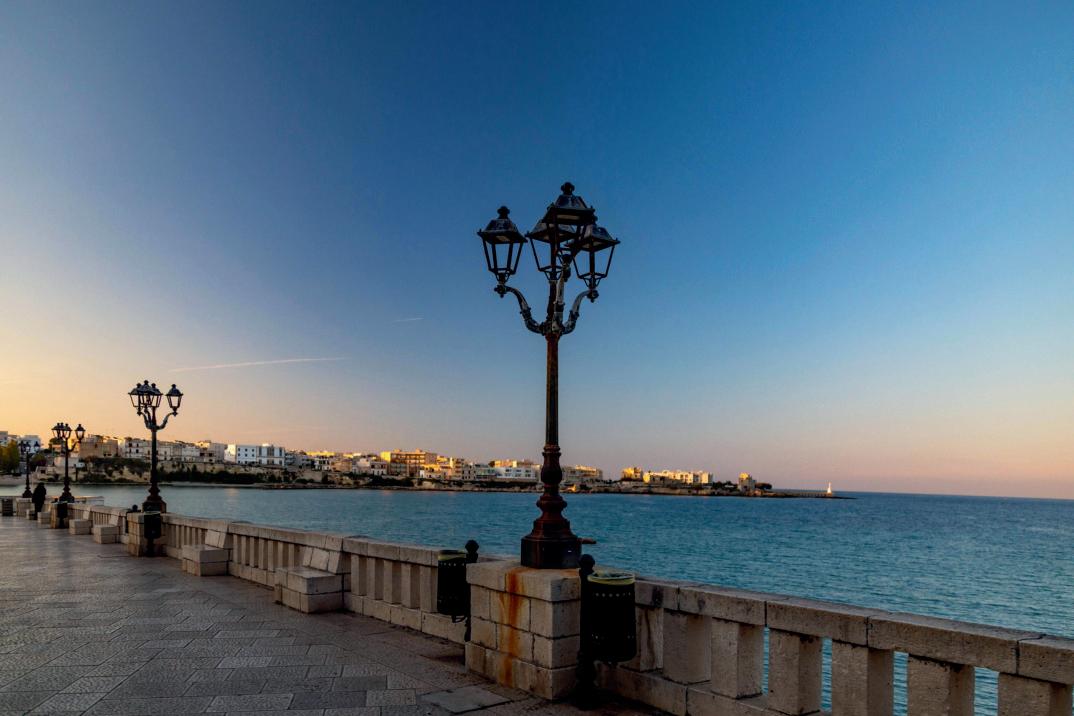
The International Tax Credit has attracted major productions to Italy in recent years. The Resurrection of the Christ, directed by Mel Gibson—a two-part sequel to The Passion of the Christ—has recently completed filming in Italy with a crew of approximately 500 people. The production was shot between Cinecittà Studios and locations in Southern Italy, including Basilicata (Pisticci, Craco, and the Murgia of Matera) and Puglia (Gravina and the northern Salento coast of the Torre Guaceto).
Source: Calculations based on the Allocation
The Fund’s allocation could increase thanks to additional resources. Recently, the Italian Minister of Culture, Alessandro Giuli, announced an additional €20 million contribution toward the Cinema Fund in order to strengthen the film sector.
All information regarding the shooting mentioned above and guidelines of Italian grants and tax credits are available on the Italy for Movies portal. www.italyformovies.com
Oliver Stone shot in Rome his latest film White Lies, starring Josh Hartnett as a man marked by divorce. Filming took place during six weeks between April and May, employing a crew of over 120 people, and involved additional weeks of shooting in Thailand and Bulgaria.
On the series front, filming is underway in Rome for the Netflix production Assassin’s Creed, set in Rome in 64 AD, with a base at Cinecittà Studios, where the existing Ancient Rome set will be expanded. The six episodes series will involve a crew of around 400 people, including 360 Italians, who will be working between Rome, Viterbo, and Arezzo until next October.
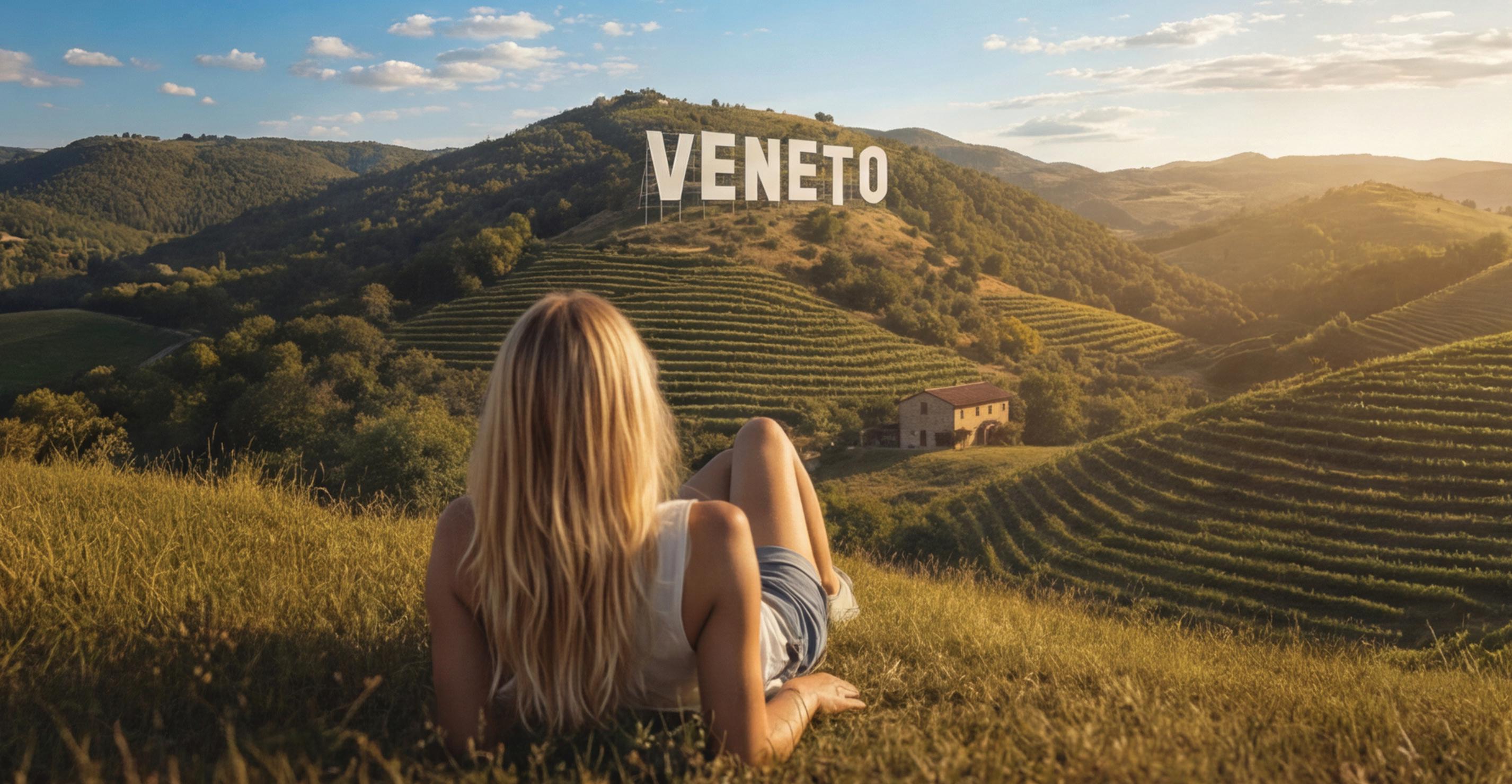
Filming In Veneto
The Italian region - home to Veniceattracts major productions, from Ridley Scott’s latest film to international series like Emily in Paris, The Beauty and FBI: International
Veneto Film Commission, backed by funding from the Veneto Region (PR FESR 2021–2027 call), continues to support internationally recognized productions, including three films nominated for the David di Donatello Awards—the Italian equivalent of the Oscars, set to take place on May 6: The Last One for the Road – Le città di pianura by Francesco Sossai (16 nominations), Duse by Pietro Marcello (8), and Primavera by Damiano Michieletto (7).
“We had the honor of supporting three auteur films with international ambition that have screened at major festivals and collectively earned 31 nominations at Italy’s most prestigious awards,” comments Jacopo Chessa , Director of the Veneto Film Commission. “This is a groundbreaking result for the Veneto Region. Our ambition is to make this the new normal.”
Chessa points in particular to The Last One for the Road and Primavera—two titles deeply rooted in the region that are nonetheless connecting with international audiences and beginning to build momentum beyond Italy.
Premiering in Cannes’ Un Certain Regard section last year to strong reviews, The Last One for the Road is directed by Veneto-born filmmaker Francesco Sossai, who trained in Berlin. Shot
in the Venetian countryside with largely local crews and non-professional actors, the film unfolds as a “boozy” road movie steeped in the region’s alcohol making culture—“a film about the social ritual of drinking,” as Sossai has described it, “which remains central to life in Veneto.”
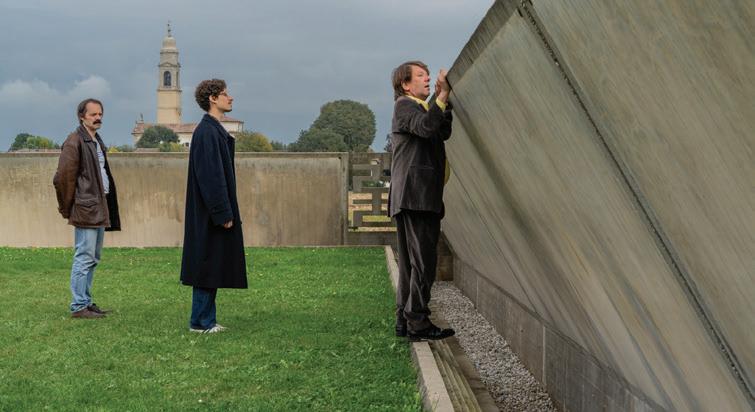
The story follows its characters in a restless search for the last “ombra”—a small glass of booze—moving from bar to bar across the region, from the Dolomites to the Venetian Lagoon. Among its standout locations is the Brion Memorial in Altivole, the final work of renowned architect Carlo Scarpa, a striking concrete structure influenced by Japanese design that also featured in Denis Villeneuve’s Dune: Part Two.
Following a strong theatrical run in Italy last autumn, bolstered by word of mouth, The Last One for the Road has begun its international rollout. The film is sold worldwide by Lucky Number, with distribution deals including New Story (France), Bulldog Film Distribution (U.K.) and La Aventura (Spain). Its 16 David
by Paolo di Maira
nominations place it ahead of Grace, the latest film from Oscar winner Paolo Sorrentino, which earned 14.
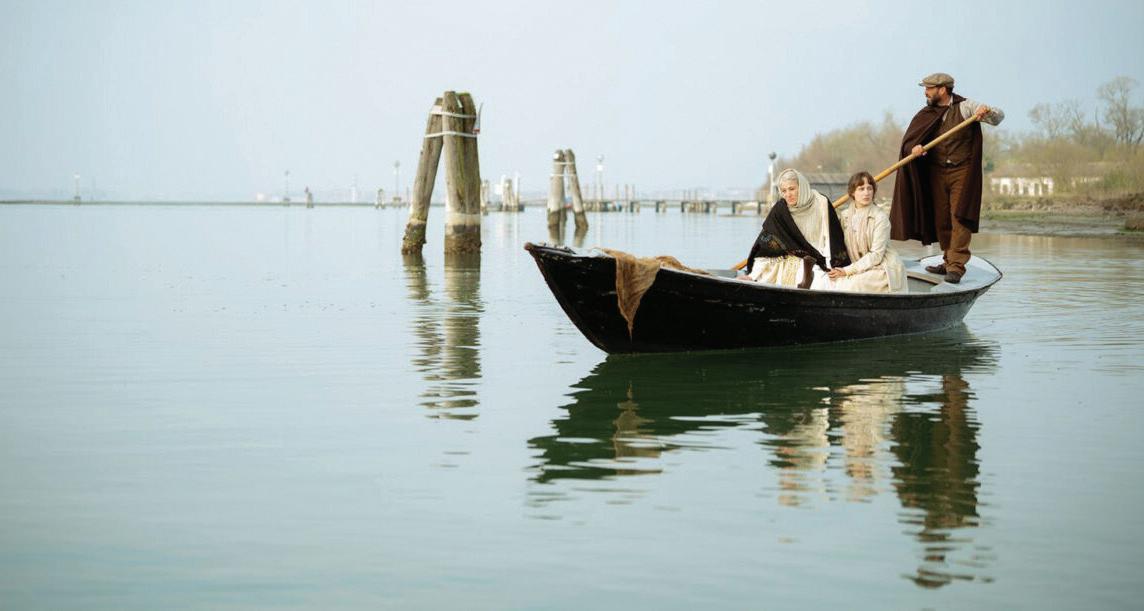
Michieletto’s Primavera, his feature debut after a career in theater, is also making a notable international push, having been sold to more than 50 territories by Paradise City Sales. Loosely adapted from Tiziano Scarpa’s Strega Prize–winning novel Stabat Mater, the film is set in early 18th-century Venice and centers on Cecilia, a young orphan violinist whose life is transformed by the arrival of composer Antonio Vivaldi.
Produced by Warner Bros. Entertainment Italia and Indigo Film, Primavera premiered at the Toronto International Film Festival in 2025 before launching theatrically in the U.K. and Ireland on April 24, followed by France, Switzerland and South Korea on April 29. Additional releases include Belgium (May 6), Germany (May 21), Japan and Norway (May 22), with Austria, Sweden and Spain set for later dates. Key distribution partners include Diaphana (France), Curzon (U.K.), Cineart (Belgium), Frenetic (Switzerland), A Contracorriente (Spain), X-Verleih (Germany) and Happy Song (South Korea).
Veneto’s growing international profile extends well beyond independent cinema.
This article is sponsored by The Veneto Film Commission
Jacopo Chessa
While Venice’s streets, canals and palaces have recently hosted productions such as FBI: International, The Beauty and Netflix’s Emily in Paris, Ridley Scott selected Pian del Cansiglio—on the border between Veneto and Friuli Venezia Giulia—to shoot scenes for The Dog Stars, the upcoming Twentieth Century Fox/Disney feature.
"We had the honor of supporting three auteur films with international ambition that have screened at major festivals and collectively earned 31 nominations at Italy’s most prestigious awards."
And it’s not limited to large-scale productions. Filming is nearing completion along the Veneto coastline between Jesolo and Caorle on Morgen Ist Jetzt, a remake of Mañana es hoy, directed by Tarek Roehlinger and produced by W&B Television and Viola Film.
“Veneto has become an increasingly soughtafter filming destination, from the Dolomites to the Po Delta, from the Prosecco hills to the coastline—no longer defined solely by the iconic Venice and Verona,” said Luigi Bacialli, president of the Veneto Film Commission.
A key role in facilitating these productions is played by line producers, who act as essential intermediaries in accessing incentives and
coordinating local operations, working closely with the territory and its institutions bringing the expertise required to oversee complex productions. The region boasts a strong network of such professionals, including 360 Degrees Film (Nicola Rosada), Kplus Film (Nicola Fedrigoni) and Mestiere Cinema (Guido Cerasuolo).
The region’s appeal is further strengthened by the Veneto Film Fund. “The next call will launch in mid-May,” Chessa noted, adding that the funding framework continues to prioritize high-quality projects with strong promotional potential. The Film Commission also supports international productions through its location scouting fund, working closely with international productions to promote the discovery of the territory.”
This process has been significantly streamlined since last year through a database whose IT infrastructure was upgraded in partnership with
the German company Filmaker System. The platform enables an immediate match between production needs and local resources, resulting in clear savings in both time and costs for producers.
This focus on international productions is shared by Valeria Mantovan, Regional Councillor for Education, Training, Labor, Equal Opportunities and Culture of the Veneto Region, who said: “Veneto aims to position itself as a hub of excellence for global cinema.
Through targeted incentives, Film Commission services, and a unique combination of art, nature and UNESCO heritage, we welcome international productions as a strategic driver of promotion and economic development across the region.”
For information regarding the next call of the Veneto Film Fund visit venetofilmcommission.com.
Primavera
Duse
Valeria Mantovan
Le città di pianura
How Many Moviegoers Are Missing To Reach 2019
The New Geography of Theatrical Performance
Article by Elisabetta Brunella
Data collection by Silvia Mancini
EUROPE
France, the United Kingdom, Germany, Italy, and Spain: in descending order by number of admissions, these are the five main European markets recording a total of 506 million admissions in 2025, marking a 6.5% decline compared to 2024, despite Germany’s positive result - the only market going against the trend (+2%).
A comparison with 2019 - not only a prepandemic year but also an exceptionally strong one - shows that about 29 out of every 100 cinema-goers have yet to return to theaters. The same figure applies to the other 24 European territories where MEDIA Salles recorded admissions in 2025.
This is a highly demanding challenge that has not yet been overcome, despite at least three years having passed since the end of Covid-related restrictions.
This challenge is not limited to Europe: it affects cinemas worldwide.
Let us therefore begin an overview of the main markets across different continents.
AUSTRALIA
Starting with Australia: closing the year with 54.2 million admissions, the country recorded a 2.2% decrease compared to 2024, alongside an increase in box office revenuemeasured in local currency - of roughly the same magnitude.
The gap compared to admissions in 2019 has thus widened to -36%.
SOUTH KOREA
The gap compared to 2019 has also increased in South Korea, where admissions declined again in 2025.
The nearly 14% drop compared to the previous year has led industry analysts to speak of a decline that may be difficult to reverse in a country that once had one of the highest per capita attendance rates in the world. In 2019, each resident purchased an average of 4.4 tickets; in 2025, only 2. As a result, 53% of pre-Covid audiences are still missing.
The decline in revenue is less pronounced, falling by about 5%, meaning that the average ticket price - again in local currency - has risen slightly, as also seen in Australia.
JAPAN
Japan recorded a remarkable increase in admissions in 2025 (+30.7%), bringing it close to the excellent 2019 result (only 3% of spectators still missing). Thanks to an average ticket price increase of about 8.5%, revenues surpassed those of that year, setting a new record (+5.1%).
CHINA
2025 was also a successful year for China, where admissions rose by 22.7% and revenues slightly less (+22.0%). This indicates that, unlike in other territories analyzed so far, the average ticket price experienced a slight decline.
However, despite the increase in attendance, the gap compared to 2019 remains significant: 28 out of 100 spectators are still missing.
Remaining in Asia, India presents yet another scenario: admissions declined by nearly 6%, but the gap compared to 2019 is less pronounced at -19%.
THE AMERICAS
Across the Americas, the situation is highly varied: while North America (USA and Canada) recorded a slight increase in admissions in 2025 (+1% compared to 2024) and a more noticeable rise in GBO (+4.4%), Argentina and Mexico experienced sharper declines in attendance, down 6.6% and 14.3% respectively.
Despite these differences, all three markets share a significant gap compared to prepandemic attendance levels: Argentina is missing 30 out of every 100 spectators, North America 37, and Mexico as many as 46.
The 2025 data reveals marked heterogeneity across territories, while also confirming that the gap with pre-Covid attendance levels remains significant.
FILMS
A look at the most successful films internationally confirms a trend toward concentration of audience interest on a relatively limited number of titles, such as Lilo & Stitch, How to Train Your Dragon, and Jurassic World: Rebirth, which generated around 60% of their total box office outside North America, or Mission: Impossible – The Final Reckoning and F1, for which international distribution accounted for as much as 70%.
In 2025, another recurring phenomenonseen in both large and small territories - was the extraordinary appeal of domestic films, capable of attracting even occasional moviegoers. This trend was particularly evident in Asian markets.
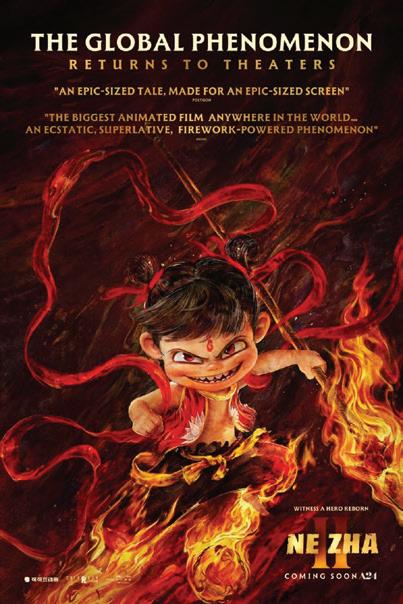
Beyond the now almost legendary case of Ne Zha 2, the Chinese film that surpassed 2 billion dollars in box office revenue, Japan also saw films such as Demon Slayer: Infinity Castle and Chainsaw Man highlight the exceptional appeal of anime, while the ambitious Kokuho capitalized on the allure of kabuki theater, becoming a cultural phenomenon that attracted over 12 million viewers.
Similarly, the Indian box office benefited from the remarkable success of Dhurandhar, the Hindi-language film that achieved the highest global revenue of 2025.
In Latin America as well, domestic productions proved to be a strong draw, as demonstrated by the comedies Homo Argentum and Mesa de Regalos, the most successful national films in Argentina and Mexico respectively.
It is therefore not surprising that several observers of cinema consumption trends have begun to question whether Hollywood productions - often relying on proven but not particularly innovative formulas - are losing ground to films more deeply rooted in local sensibilities.
in collaboration with
INDIA
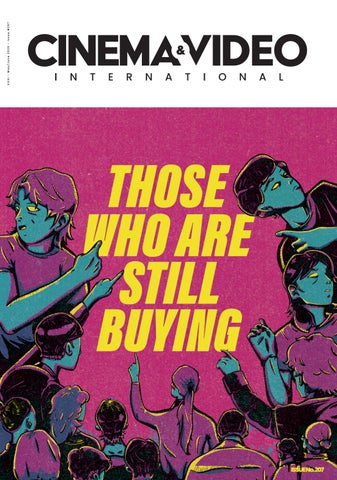
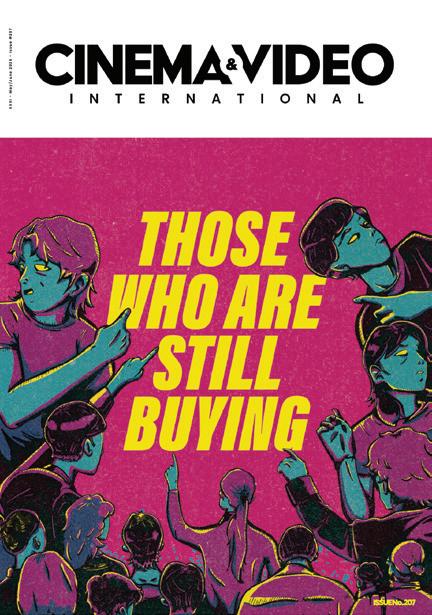
THOSE WHO ARE STILL BUYING
Inside the new economics of film acquisition
By Federica Pazzano
While everyone in the industry seems concerned about their job and future, the market is already adjusting without really giving us a clear perspective on what it will look like in 5 years. The early-2026 is beginning to reveal clear patterns: film exploitation is bottlenecked, with fewer buyers and tougher deals, content stopped flowing naturally across windows, each title requires a stronger proof of value before getting considered by a buyer. This pictures clearly indicates that there is no more a correct release strategy. Sales people might wonder around market’s hallways like zombies with no clear direction while wondering who could potentially sign them a deal.
The viewer’s perspective
Looking at it from the viewer’s perspective, this is not necessarily a bad thing. There was a time when we could not keep up with all the relevant releases we wanted to watch, and still ended up missing some.
In 2023, global film production reached a historic high, surpassing pre-pandemic levels with 9,511 films produced, compared to 5,656 in 2020 and 9,328 in 2019 (Source: WIPO World Intellectual Property Organization).
At the same time, peak production did not mean peak exploitation. Most of these titles were not reaching profitability, and the box office had still not returned to pre-pandemic levels.
Things have changed since then. With around four streaming subscriptions per household in the U.S. and 2.35 in Europe (Deloitte), have you ever spent 15 minutes scrolling and still felt like there’s nothing you really want to watch? Well, that’s the feeling many viewers we know have today. And some of them are taking a step back, cancelling subscriptions to figure out which platform actually feels most relevant to them.
So back to my point: maybe content could actually benefit from this situation? If fewer titles are being picked up, if fewer deals are being closed, then not everything automatically finds a place anymore. And that changes the way projects are developed, packaged, and positioned in the market.
For years, the system was built on volume. There was always another buyer, another window, another platform that needed content. Today, that logic is no longer guaranteed. Buyers are fewer and much more focused on what actually works.
And this is where things get interesting.
Because while the system is tightening, it is not stopping. Deals are still happening. Films are still being financed and acquired all over the world (maybe less in Hollywood). But not in the same way, not at the same pace, and not for the same reasons as before.
So the real question becomes: who is still buying?
The same old soup
Large players are focusing on big franchises, and that’s a fact. Nothing new. The same old stuff, warmed over like leftover soup, moving from one medium to another. Toy franchises become major movie releases, old movies become new ones, TV shows turn into films, books into series, and so on.
Amazon MGM Studios and Mattel Studios are planning a massive rollout of Masters of the Universe, starting June 5, 2026. While hitting big screens worldwide, MOTU will also land across retail with toys, gaming, collectibles, apparel, and more, with additional drops throughout the year.
The market is less willing to believe in potential alone. A film now has to arrive with evidence. That evidence can come from theatrical performance, festival validation, awards momentum, cast, filmmaker reputation, or genre clarity.
So the question is: how can indie films compete with that?
And yet, even during the long, hot Barbenheimer summer of 2023—when both films dominated theaters for months— there were indie jewels here and there that held their ground, and in some cases even broke through being defined “unlikely box office successes”, like Jim Caviezel’s USindie religious thriller Sound of Freedom which made $251M worldwide, or There Is Still Tomorrow which surpassed both Barbie and Oppenheimer in Italy, but still remained a domestic success. While the list still remains in large part US driven, with A24 waving the Indie flag, Asian titles are getting more ground with China leading the way at the top of the global 2025 box office (Ne Zha 2 in 2025 made $2.216 billion) and Europe clearly losing ground being represented only by the UK, particularly with Conclave in 2024 that was defined “a godsend for audiences who crave intelligent entertainment.”
Fewer buyers, stronger purpose
With buyers becoming more selective and less willing to take soft bets, and with big companies still serving the same old soup, indie companies might want to explore better what “intelligent entertainment” means.
This is not the moment to show your cards too early at the exploitation poker game, if the hand is not strong enough. In a fragmented market like this one, every film has to prove its value again and again, across every window
and in every territory. Distribution is no longer the relatively fluid, demand-driven system it once was. It has become a more cautious game, where buyers commit later, compare more, and rarely move unless they see something solid on the table.
What is changing is not the existence of the market, but the way a film gets recognized.
The stronger the evidence, the easier it is for buyers to defend the acquisition internally. Fewer titles are dominating domestic markets, and not all successes generate the same kind of deals. When the market was more lively, and especially during the peak-streaming phase of 2020 to 2022, domestic theatrical success was not the only ingredient a film needed. Today, though, the distribution potentiality of a title seems to count on four necessary ingredients:
1. Local theatrical success as a legitimizing base for international distribution
2. Festival or award validation accompanied by a side of good strategy
3. Auteur or cast to give that hot flavor
4. Genre capable of getting the soup out of the kitchen (exportability)
Domestic success outside the U.S. does not automatically turn into global success. Theatrical itself, however, is clearly still alive. Global box office is projected to reach $34.7 billion in 2026, according to Gower Street Analytics, up 3% year on year, even if still 13% below pre-pandemic levels.
Sundance dominates the scenes of the US indie acquisitions schedule and spice up the market. While relevant titles not only come out from Venice, Toronto, Berlin, Cannes, and other major Festivals throughout the year, but also from genre events.
On the international side, the system is active, although more project-driven than before. At the territorial level, buying activity is still very much alive—but it is more granular, more strategic, and often more cautious. Also by analyzing those companies that are picking up independent and auteur films outside their country of origins, we can spotlight certain trends and companies particularly interested in distributing this type of content in today’s market.
Those who are still buying are no longer one homogeneous class of buyers, but a diverse ecosystem of world-sales companies, domestic distributors, and hybrid players operating across different functions.
The answer becomes clearer when looking at who is still actively buying across the recent festival cycle.
At an international level, The Match Factory catalogue travels fast, the company now fully integrated into Mubi, remains one of the clearest examples of active world-sales work in 2026. — The Match Factory announced the acquisition of Das Geträumte Abenteuer/ The Dreamed Adventure by Valeska Grisebach international sales rights ahead of Cannes Competition. It also featured an excellent Berlin Line-Up which included, the Silver Bears winners Queen at Sea and Rose, plus Home Stories, and Rosebush Pruning. Paradise City Sales, the Paris-based company formerly known as Memento International, is arriving at Cannes with three titles: A Girl’s Story/Mémoire de fille by Judith Godrèche, the multiterritory coproduction Titanic Ocean by Konstantina Kotzamani in Un Certain Regard, and The Station by Sara Ishaq (Samaine de la Critique). The slate confirms the company’s positioning around auteur-driven international cinema, following the strong sales trajectory of Primavera, Damiano Michieletto’s debut feature, which premiered at Toronto and was sold in 50 territories. Paradise City will also continue sales at the Marché du Film on recent festival titles including We Are All Strangers and Wolfram, both from Berlinale Competition, A Family from Berlinale Generation, and Tell Me Everything from Sundance, while also presenting upcoming titles in post-production such as Martin Provost’s Love Lessons mk2 Films (France) continues to operate at the high end of the auteur market. After Sentimental Value won an Academy Award for Best International Feature, the company arrives in Cannes with seven titles. In Competition, Minotaur by Andrey Zvyagintsev, The Birthday Party by Léa Mysius, Gentle Monster by Marie Kreutzer, Nagi Notes by Koji Fukada, and The Man I Love by Ira Sachs; in Un Certain Regard, Ben’Imana by Marie-Clémentine Dusabejambo; and in Critics’ Week, La Gradiva by Marine Atlan. The company also secured worldwide rights to Céline Sciamma’s complete filmography in early 2026 and is getting ready to distribute Juliette Binoche’s Directorial Debut.
Charades is also active on multiple fronts. Arriving in Cannes with Kokurojo: The Samurai and the Prisoner by Kiyoshi Kurosawa (Cannes Premiere), it already secured the US distribution for the film with Janus Films. The company’s line up also features two films in competition: Parallel Tales by Asghar Farhadi with Isabelle Huppert and Vincent Cassel and A Man Of His Time by Emmanuel Marre. In the Un Certain Regard section: Club Kid by Jordan Firstman (US) and Everytime by Sandra Wollner (Germany). In the Quinzaine des cinéastes: UK drama I See Buildings Fall Like Lightning by Clio Barnard, the french-japanese animated film We Are Aliens by Kohei Kadowaki. At the Semaine de la Critique: In Waves, animation romance from France, The Blow/Stonewall (Original Title: La Frappe) by Julien Gaspar-Oliveri. A good example of a sales company that is diversifying across genres.
The company Film Factory from Barcelona (Spain) competes with Amarga Navidad (Bitter Christmas) by Pedro Almodóvar. Goodfellas takes to market other two spanish productions: El Ser Querido/The Beloved by Rodrigo Sorogoyen with Javier Bardem and La Bola Negra/The Black Ball by Javier Calvo and Javier Ambrossi, inspired by an unfinished work by Federico García Lorca and featuring among the other Penélope Cruz and Glenn Close.
Belgian International Sales company Be For Films represents A Woman’s Life by Charline Bourgeois-Taquet after representing several titles at the Berlinale.
Film Boutique is presenting portuguese drama Aquí by Tiago Guedes (Premiere), and the doc Tin Castle (Semaine de la Critique).
Piperplay sold to AF Films (Spain) the remake rights for Buen Camino, Italy’s highestgrossing film of all time.
In North America, companies such as A24, Neon, Sony Pictures Classics, Focus Features, IFC Films, Magnolia Pictures, and Kino Lorber continue to acquire films for theatrical release and downstream exploitation, each with a clearly defined editorial identity.
Sony Picture Classic is still pretty much active on the indie movies front signing multiterritory deals, including one for Saudi thriller Unidentified (TIFF Premiere). The same film also distributed to: KMBO (France), Eagle Pictures (Italy), TriArt Film (Sweden), and Alfa Pictures (Spain). Swedish distributor TriArt also picked up Sirāt and Silver Bear Grand Jury Prize Turkish drama Salvation. Bir Film (Turkey) which was also producer and distributor for Salvation and attached to Couture, recently distributed domestically Ozon’s The Stranger
Leading US producer and distributor A24 rarely shows some sparks of non-american indie interest releasing some very selected titles in the US, like Pillion in 2026.
Another prominent US independent, Neon, has acquired James Gray’s Paper Tiger with Adam Driver, Scarlett Johansson and Miles Teller (in Competition). Neon is also the producer and US distributor for the thriller Her Private Hell (Out of Competition). Kino Lorber picked coming
of age drama Filipiñana, debut film by Rafael Manuel which premiered at Sundance.
Black Bear acquired rights for Sundance Film Festival indie movie Wicker. The company is active on both the international and the domestic front in US, UK, Ireland and Canada.
Madman picked The Beloved for Australia and New Zealand after bringing Sentimental Value and Grace on the other side of the world.
While spanish cinema is shining on the croisette, domestic distributors like Elastica Films and BTeam Pictures are still playing safe giving relevance to established auteurs, local talent, and genre-driven titles with clear theatrical potential. A Contracorriente in Spain is distributing resonant arthouse including Primavera and Yellow Letters, while Alfa Pictures distributed Unidentified, pointing to a slightly more venturesome approach in select acquisitions.
In Italy companies such as Eagle Pictures, Lucky Red, iWonder Pictures, and BIM continue to acquire foreign content for domestic distribution.
Curzon in UK/Ireland also shows a strong appetite for European auteur films like Primavera, Yellow Letters, and Queen at Sea Yellow Letters was also distributed in switzerland by Filmcoopi Zurich, together with Rose, while another swiss player, Frenetic Films which also bet on Queen at Sea out of the Berlinale award. Cineart in Benelux was among those betting on Primavera A-One Films in Russia chose Ozon’s Venice Premiere The Stranger and Calle Malaga, also at Venice FF.
Aurora Films is bringing to Poland a strong and curated selection of Festival films. Other players that are worth mentioning are Aerofilms in Czech Republic, Imagine Film Distribution in The Netherlands, Angel Films in Denmark, and Film4you in Portugal.
In France, the role of domestic distributors remains central to the circulation of international auteur cinema. Companies such as Diaphana, Haut et Court, Pyramide Distribution, KMBO, and Les Films du Losange continue to acquire non-French independent titles early in their festival lifecycle, often acting as first validators after major events. Their editorial positioning allows them to take on films from Asia, the rest of Europe, or Latin America and successfully anchor them in the French theatrical ecosystem, which remains one of the strongest for arthouse cinema worldwide.
In Germany and the broader Germanspeaking territories, distributors such as X Verleih and Alamode Film maintain a steady interest in international festival films. These companies regularly pick up nonGerman auteur titles, particularly those with strong festival backing or clear thematic positioning. Germany continues to function as a key secondary market, where films that have already proven themselves in France or at major festivals can further consolidate their international trajectory.
Beyond Europe, several Asian distributors are also increasingly active in acquiring non-Asian independent films. In South
Korea, companies like Challan Film and Entermode are picking up certain European and U.S. festival titles with a strong charm, while in Japan, distributors such as Bitters End continue to bring international auteur cinema to local audiences. These players operate in highly competitive domestic markets, yet still carve out space for curated international content, often focusing on directors with strong festival recognition or films with a distinct artistic identity. On the LATAM front: Pandora Filmes in Brazil, Imagem Film in Argentina, and Cinépolis in Mexico.
Perhaps the most interesting category today is the hybrid one. Companies like Mubi, Netflix, and Apple do not fit neatly into a single role. Mubi is the best example: it can act as a territorial distributor, a global rights buyer, and increasingly a co-financing / supply-shaping player. StudioCanal is another example of this hybrid model, combining production, financing, international sales, and distribution within a single structure. Even more traditional players such as Sony Pictures Classics occasionally operate across multiple layers, acquiring broader rights packages rather than strictly territorial ones. These hybrid players reflect a deeper shift in the market: the boundaries between production, sales, and distribution are becoming increasingly fluid, and the ability to operate across multiple stages of a film’s lifecycle is becoming a competitive advantage.
Smaller companies are following restructuring - when they have the strength to do it - with international and domestic distribution teams to gain territory in the market.
Can we predict what the industry will look like? The result is a more selective market, not an absent one. The circulation of independent and auteur cinema still relies on a core network of committed domestic distributors, each playing a crucial role in validating films across borders. Buyers are still present, but they are asking a different question. Not simply: “Is this a good film?” Not even: “Did it work locally?” But: “Can this film’s value be explained across territories, windows, and audiences?”. That is where the new market logic sits. Local theatrical success matters again, but it works best when it is reinforced by festival legitimacy, recognizable creative strength, and a genre identity powerful enough to travel.
The Active Buyers Landscape
The Match Factory — Germany / International
Paradise City Sales — France / International
mk2 Films — France / International Charades — France / International Film Factory — Spain / International
Goodfellas — France / International
Be For Films — Belgium / International
Films Boutique —France-Germany / International
PiperPlay — Italy / International
A24 — USA
Neon — USA
Sony Pictures Classics — USA
Magnolia Pictures — USA
Kino Lorber — USA
Janus Films — USA
Black Bear — USA / UK / International Curzon — UK / Ireland
Diaphana — France
Haut et Court — France
Pyramide Distribution — France
KMBO — France
Les Films du Losange — France
X Verleih — Germany / Austria
Alamode Film — Germany
Eagle Pictures — Italy
Lucky Red — Italy
iWonder Pictures — Italy
A Contracorriente Films — Spain
BTeam Pictures — Spain
Elastica Films — Spain
Alfa Pictures — Spain
Cineart — Benelux
Filmcoopi — Switzerland
Frenetic Films — Switzerland
TriArt Film — Sweden
A-One Films — Russia
Aurora Films — Poland
Aerofilms — Czech Republic
Imagine Film Distribution — Netherlands
Angel Films — Denmark
Film4you — Portugal
Challan Film — South Korea
Entermode — South Korea
Bitters End — Japan
Pandora Filmes — Brazil
Imagem Film — Argentina
Cinépolis Distribución — Mexico
The Road to the Oscars How to Get Your Film Academy Qualified
by Rebekah Louisa Smith
Navigating 181 Festivals and the New US Theatrical Rules
There are 2 different ways you can qualify your film for Oscar submission: 1. Winning an Academy Qualifying Award at an Oscar Qualifying Film Festival. This applies only to Short Films & Feature Documentaries. 2. Publicly exhibit the film for paid admission in a commercial motion picture theater in one of the 6 qualifying US cities.
What Types of Films are Eligible?
The first question to always ask is: Do I have a film that is eligible for the Oscars? The types of film eligible for Oscar submission are Animated, Live Action, Documentary Short & Feature Films. Music videos, Adverts, Branded Content, VR, Trailers, Episodic & Web Series are not eligible.
If you are a student and have a student film, you will need to submit to the Student Oscars. This is a separate competition exclusively for Students. The Student Academy Awards (SAA) recognize and honor student filmmakers who demonstrate excellence in motion picture creation. Further information can be found here - https://www.oscars.org/saa
The Academy considers a short film to be 40 minutes or less and a feature film to be over 40 minutes. For those with mid-length short films (i.e. 43 minutes long) I’d strongly advise trimming it to 40 minutes as it will be much more economical to qualify it as a short film instead of a feature film.
The Qualification Process Step by Step
As I mentioned at the beginning of this article, there are 2 ways you can qualify your film. You do not need to do both options; you only need to choose one.
1. Win an Award at an Oscar Qualifying Film Festival.
Currently there are 181 Oscar Qualifying Film Festivals for Short Films. These Festivals are based all around the world. Films that win an award at a qualifying festival are eligible to submit to the Oscars. It’s important to remember that being selected for an Oscar qualifying Film Festival does not mean you can submit your film to the Oscars.
If you win one of these awards between October and June 30th your deadline to submit will be in August. If you qualify between July 1st and September 30th your deadline will be in October.
Let’s take HollyShorts for example. They have 4 Oscar qualifying awards: Best Documentary, Best Animation, Best Live Action and Best of Festival. If you win one of these awards you can submit your film to the Oscars. Winning Best Director, Best Actor or Best Sound for example will not make you eligible to submit to the Oscars, it must be one of their Oscar qualifying awards.
There are just under 40 Oscar qualifying film festivals for Documentary feature films. None of these festivals are based in the USA they are all based outside of the USA. For example, there is Visions Du Reel in Switzerland, Doc Edge in New Zealand and Doc Fest in the United Kingdom.
And the same rules apply: you must win their Oscar qualifying award to become eligible to submit your film.
The festival will give you an official letter confirming your win and once you have this you are now officially eligible to submit! You will need to add this letter to your submission to complete it.
2. Theatrical Release in an Oscar Qualifying US Cities
There are no awards on the festival circuit that Animated Features and Narrative Features have the opportunity to win; it is only open to short films and documentary feature films.
Therefore, if you have an animated or narrative feature film or if you don’t win an Oscar qualifying award on the circuit you must do option 2 – qualifying your film via a weeklong theatrical release in a commercial motion picture theatre in one of the Oscar qualifying cities in the USA. The period of eligibility for Feature films is January 1st– December 31st each year. For short films it is January 1st until September 30th.
This option is open to international films; it’s not just limited to local filmmakers or USbased filmmakers—it’s 100% global.
First thing you need to do is select which Oscar qualifying city you want to screen your film in and there are currently 6 cities. It used to be only 2: New York and Los Angeles. Now, the San Francisco Bay Area, Atlanta, Chicago and Dallas Fort-Worth are part of the group of qualifying cities.
The film must be screened in a commercial motion picture Theatre – for example AMC, Odeon or an independently run Theatre like the Texas Theatre in Dallas. It must not be screened in a conference room or a bar or a private members club – it needs to be a theatre which is dedicated to exhibiting films for public entertainment.
You screen your film for 1 week – specifically 7 consecutive days in a row in 1 Theatre. Short films are required to have 1 screening per day at any time. Feature films need to screen 3 times per day and 1 of these screenings must take place between 6 pm and 10 pm every single day. Failure to do so will make the film ineligible to submit. Qualifying a feature film is much more expensive than a short film, therefore it’s important to shop around and find the best deal.
All films need to be screened off a DCP and have a 5.1 sound mix. You are no longer required to do any expensive marketing and PR to promote your qualifying release, all you need to do is ensure that the Theatre advertises your screening times on their website and provides the option to book tickets for your screenings.
When the film has finished its theatrical release, you then need to obtain a letter from the theater confirming the dates and showtimes of your film's release. Once you have this you are now officially eligible to submit! You will need to add this letter to your submission to complete it.
What Happens After I submit?
Academy members view the submitted films and vote for their 15 favorite films from each category. Oscar shortlists for some categories (which includes short films and documentary features) are announced mid-December. Nominations are announced in January. The 5 films from each category that received the highest number of votes receive a nomination. If nominated, it is important to hire a film publicist who specializes in Oscars PR to get your film on everyone’s radars (Variety, Deadline, etc.) and host private screenings for Academy members.
THE FILM FESTIVAL DOCTOR
Rebekah Louisa Smith aka The Film Festival Doctor, is an awardwinning Film Festival Strategist & Academy Awards strategist. So far, she has helped clients win over 3,000 awards on the circuit and 4 Oscar success stories. The most recent success was Ali Cook’s film ‘THE PEARL COMB’ which was shortlisted for the 2026 Best Live Action Short film category.
To find out how Rebekah can help you qualify your film for the Oscars, take a look at
www.thefilmfestivaldoctor.com
Drop an email to
rebekah@thefilmfestivaldoctor.com
Via Instagram @rebekahfilmdr
AFCI Strategies for Global Incentives
Under the label of The Power of Place, the AFCI (Association of Film Commissioners International) will bring in Cannes a mix of conversations and targeted sessions, happening between May 15th and 16th at the Marché du Film, between the Main Stage (Riviera) & The Viewpoint (Lérins). From major international co-productions to stories produced beyond their country of origin, the program examines how projects move from creative ambition to execution, highlighting the strategic importance of incentives, local partnerships, and production ecosystems.
Stories Without Borders (May 15th, 3pm, The Viewpoint) will explore how filmmakers bring stories to life in places they cannot access, through a collaboration between international co-productions, location strategy, and production design.
One session will be dedicated to Japan, this year's country of honor—The Power of Place: Made in Japan (May 16th, 3.30 pm, Main Stage). It will bring together leading Japanese filmmakers, producers, and policymakers to discuss how creative vision and production infrastructure intersect. From local incentives to global partnerships, the panel examines how Japan is positioning itself as a dynamic hub for international production.
EUFCN Powering European Co-productions
Fjord by Christian Mungiu and Fatherland by Pawel Pawlikowski, two European coproductions running in Competition, will be in focus in From Unique Places to Cross-Border Productions: European Film Commissions Driving Impact Beyond Location the panel organized at the Marché du Film by EUFCN - European Film Commissions Network (May 16th, 10 am, Palais Stage -Palais -1). The discussion will center on how European film commissions help stories find their identity while shaping impact beyond locations.
Sigmund Elias Holm, from Western Norway Film Commission, and Marika Sundqvist, from Åland Film Commission, will talk about Fjord 's co-production between Romania, Norway, Sweden, Finland, Denmark and France.
Magdalena Klich-Kozłowska, Director of Lower Silesia Film Centre, will discuss the involvement of the film commissions in the making of Paweł Pawlikowski's film, which was shot in the Silesia region of Poland, with a co-production structure involving MUBI, Italy (Our Films, Circle 2), France (Nine Hours, Chapter 2), Poland (Extreme Emotions), Germany (The Match Factory).
The panel will also cover the case study of the environmental thriller Black Water by Aga Woszczyńska, a Polish production set on an island on the Baltic Sea.
EUFCN is one of the partners of the Marché du Film Producers Network where, on May 13th, it will co-organize a Brunch Meeting (open only to Producers Network badge holders), presenting 10 spotlighted film commissions. They are: Austrian Business Agency – FILM in AUSTRIA; Catalunya Film Commission; Film Basque Country; Fondazione Roma Lazio Film Commission; German Film Commissions; Netherlands Film Commission; Portugal Film Commission; Southern Sweden Film Commission; Spain Film Commission; Vienna Film Commission.
The film La Gradiva by Marine Atlan, shot in Campania with support from the Campania Region and the Regione Campania Film Commission, will be presented at the 65th edition of La Semaine de la Critique at Cannes 2026.
Filming took place at major sites including the Archaeological Park of Pompeii, the National Archaeological Museum of Naples, and the municipalities of Torre del Greco, Ercolano, and Portici.
La Gradiva is produced by Les Films du Poisson, Bibi Film, and Arte France, distributed in Italy by Fandango and internationally by mk2 Films.
Preparations for the third season of Vincenzo Malinconico, Avvocato d’Insuccesso will take place in Salerno between May and September, while preparations for Mare Fuori 7, produced by Picomedia, will begin in June.
EMILIA-ROMAGNA The Home of Production Grants
Barracuda , directed by LithuanianAmerican filmmaker Tomas Vengris, is ready to begin its theatrical run. The film was also shot in Italy, in Forlimpopoli (Forlì–Cesena province). Supported by the Emilia-Romagna Film Commission, it tells the true and dramatic story of Loreta Gedvilaite (played by Rasa Samuolytė), a Lithuanian immigrant who in 2019 sued her husband’s murderer after being a victim of violence herself. It is an Italian-Lithuanian-Latvian co-production by Samarcanda Film, Austrè Studio, and SIA Studija Lokomotīve.
The Manetti Bros have returned to Bologna, where they will shoot their new action-comedy series L’Ombra until July, coproduced by Rai Fiction and Mompracem. Meanwhile, filming is wrapping on Piove col Sole, the new feature by Kristian Gianfreda, shot between Rimini and Riccione and produced by Coffee Time Film and Meclimone Produzioni.
Other regional fund-supported features nearing completion include Un Peu Avant Minuit , directed by Nicolas Parisier and starring Chiara Mastroianni and Melvil Poupaud (an Italian-French co-production by Bizibi and Dimanche Soir with Italian Line Production by Apapaja), shot between Ferrara, Copparo, and Bondeno; Piercing, the new film by Margherita Ferri, a coming-of-age story set in Bologna’s Pilastro district, produced by Tempesta and Rai Cinema in co-production with Switzerland’s Tellfilm; and E Se Venisse Anche l’Inferno by Samuele Rossi.
From May 8, Rosa Elettrica, a six-episode action thriller by Sky Studios and Cross Productions, directed by Davide Marengo, is available on Sky and streaming on Now. Adapted from Giampaolo Simi’s bestselling novel, it is an on-the-road series filmed across several regional locations, including Ferrara, Copparo, Comacchio, and Ravenna.
The call for the 2026 Development Grant of the Audiovisual Fund closes at the end of May, supporting regional companies in scriptwriting and participation in labs, workshops, training, work-in-progress sessions, and co-production markets.
Proven Efficiency, Expert
Crews
Filming has wrapped in Friuli Venezia Giulia for Libera 2, the second season of the series produced by 11 Marzo Film in collaboration with Rai Fiction and directed by Gianluca Mazzella, made with the support of the Friuli Venezia Giulia Film Commission – PromoTurismoFVG.
The shoot, which lasted seven weeks between Muggia and Trieste, confirmed the strong connection between the series and the region, already a key setting in the first season.
“The filming of the first season – which took place between September and December 2023, with over three months of production in the area – involved 36 local crew members employed daily, more than 700 extras, and over 4,000 overnight stays in local facilities. The production now returns to Friuli Venezia Giulia, confirming its confidence in the strength of the regional audiovisual sector and in collaboration with local institutions.” This was the comment from the Regional Councillor for Productive Activities and Tourism, Sergio Emidio Bini.
Lunetta Savino has returned to the set in the role of protagonist Libera, alongside Matteo Martari and Daisy Pieropan.
LAZIO
Ten Million Euro Annual Fund
Fondazione Roma Lazio Film Commission will attend the Cannes Film Festival and Marché du Film with a renewed identity and a strategy aimed at strengthening the region’s international profile.
On May 15 at 12:00 PM, at the Italian Pavilion hosted by Cinecittà at the Hotel Majestic, the Film Commission will present its activities and regional support opportunities— Fondazione Roma Lazio Film Commission: activities and opportunitie s.
The Cannes market will also be an opportunity to promote the Lazio Cinema International fund, which allocates €10 million annually to support international coproductions.
This initiative is linked to the ongoing Matching Point program, scheduled in Cannes on May 14, through which the foundation supports Lazio-based producers in major global markets by organizing co-production meetings in collaboration with foreign film commissions, with the aim of strengthening the international profile and competitiveness of companies based in the region.
On May 13, RLFC will also be among ten European film commissions featured in a spotlight event organized by EUFCN at the Marché du Film Producers Network.
PUGLIA
CO-PRODUCTIONS & FUTURE PROSPECTS
On Saturday, May 16, as part of the 79th Cannes Film Festival, the Apulia Film Commission will hold a press conference dedicated to the development of the second edition of the Apulia Film Forum, organized in collaboration with the EPC – European Producers Club, at the Salon Marta – Le Barriere of the Italian Pavilion (Hotel Majestic).
The meeting, scheduled for 10:30 a.m. to 11:20 a.m., will feature the participation of Director General Antonio Parente and the Foundation's Representative, Cristina Piscitelli.
The conference will be an opportunity to present the initial results of the co-productions initiated through dialogue with European producers, with a focus on the projects already born from these collaborations and on future prospects.
SARDEGNA
Unique Landscapes, Regional Funding
In April, the region hosted filming for Luigi, directed by Eliška Kováříková and Adam Struhala, a Czech-Slovak co-production with Italian executive production by Karel Films.
Also in April, filming wrapped on Zustissia, produced by Palomar, directed by Francesco Piras, and written by Lisa Nur Sultan and Niccolò Gentili.
Later this year, Sardinia will host projects supported by the regional fund, including Lo Sconsegnato by Margherita Paninzon (set in the Asinara National Park, produced by Dorje Film) and La Cava, directed by Gianfranco Cabiddu and produced by Matrioska.
TUSCANY
Vetted by Global Majors
A major U.S. Netflix series has just begun filming between the provinces of Lucca and Florence and will shoot until June 19. Casting for extras and supporting roles took place in April in Florence at the Scuola Nazionale Cinema Indipendente and in Lucca at the Auditorium San Romano.
Meanwhile, Florence is buzzing with TV sets. In April, filming took place for Fashion Empires, a five-episode doc series distributed on German broadcasters 3sat and ZDF, telling the story of major fashion houses. This first season focuses on Chanel, Dior, Gucci, Versace, and Yves Saint Laurent.
Giacomo Leopardi will be the focus of an episode of the Italian format Una Giornata Particolare, airing on LA7, produced by Stand By Me.
Destination X will arrive at the end of May— a British reality show produced by Two Four for NBC.
Between May and June, the former psychiatric hospital in Volterra hosts the set of the documentary Volterra Il manicomio perduto produced by the Tuscan company 39Films and supported by the Tuscany Region’s 2024 Cinema and Audiovisual Fund.
The Island of Elba remains in the spotlight (until May 30) as the setting for the 14th season of I Delitti del Barlume, produced by Sky and Palomar and directed by Roan Johnson. Meanwhile, between March and April, the Island of Giglio hosted filming for the German romantic comedy The Origin of Love, directed by Sarah Blaßkiewitz, produced by Rat Pack Filmproduktion with Italian executive production by Titanus.
On April 10, the American romantic comedy You, Me & Tuscany, starring RegéJean Page (Bridgerton) and Halle Bailey (The Little Mermaid), was released in U.S. theaters. The film, produced by Will Packer (Girls Trip) and directed by Kat Coiro (Marry Me), was shot in the summer of 2025 in the province of Siena, particularly in Pienza, Monticchiello, and Montalcino.
From May 8, Non è un paese per single is available on Prime Video. Based on the bestselling novel by Felicia Kingsley, the film is co-produced by Amazon MGM Studios and Italian International Film – Lucisano Media Group. Filming took place at the end of 2024 in Tuscany, in the Siena area, between Montalcino and its hamlet Sant’Angelo in Colle.
VALLE D’AOSTA
Alpine Locations, International Co-proS
Filming will take place in May at Verrès Castle for the feature film Snowman, a coproduction between Macedonia’s Dream Factory and Italy’s The Box Film, directed by Stojan Vujicic. The story follows Lily, a rebellious teenage math prodigy who, on a sun-drenched island, dreams of snow she has never seen and seeks a way to remember her father lost at sea. While defending herself from bullying peers and the mistrust of locals, she finally gets a chance to fulfill her dreams.
The crew will return to Valle d’Aosta in winter to shoot on the Mont Blanc massif. The project received support from the Film Commission Vallée d’Aoste Film Fund in October 2024.
Another castle, Montmayeur, will be the setting for the short film Un Castello, written and directed by Carlo Pellegrini. This London Film School project will be shot this summer with logistical support from the film commission. Locations will also include the abandoned Aosta–Pré-Saint-Didier railway line and the village of Fornet.
The film commission also supported the recently completed shoot of the short film Glowrum, directed by Federico Barni and produced by Section80. It was filmed in the village and mines of Cogne. Director of photography is Giuseppe Favale.
Filming is ongoing until the end of May for Rocco Schiavone 7, with Marco Giallini returning in the lead role. Locations this year include the city of Aosta—its historic center, monuments, and iconic series locations— as well as the Cogne area and scenes shot at the newly inaugurated scenic site of the Stella di Pila.
VENETO
The Hub for Global Remakes
Jesolo and Caorle are the locations for Morgen Ist Jetzt, the remake of the Spanish series Mañana es Hoy, produced by W&B Television and Viola Film and directed by Tarek Roehlinger. Filming will wrap on May 25, roughly at the same time as another series shot in Treviso: Stucky 2, centered on the cases of a commissioner played by Giuseppe Battiston, directed by Ivano De Matteo and produced by Rosamont.
Also returning for a second season is Costanza, a Banijay series directed by Fabrizio Costa, with filming scheduled in Verona from May 18 to June 13.
Between late March and April, filming wrapped on three films: Astrea by Davide Manuli, shot in the Po Delta area, particularly in Porto Tolle (Rovigo province) and produced by Dugong; Il Sopravvissuto by Claudio Cupellini (Indigo Film), filmed in the Taglio del Po and Porto Viro area; and E Se Domani Non Torno, directed by Paola Randi, inspired by the femicide case of Giulia Cecchettin and loosely based on the book Cara Giulia (screenplay by Lisa Nur Sultan). The cast includes Filippo Timi (as Gino Cecchettin), Sabrina Martina, Tecla Bossi, and Tommaso Allione. It is produced by Notorious Pictures in collaboration with Mediaset and Sky.
CZECH REPUBLIC
Chosen by Scorsese and Apple
What Happens at Night, the highly anticipated film by Martin Scorsese, starring Leonardo DiCaprio and Jennifer Lawrence, is part of a broad wave of major productions being filmed in Czech Republic this year.
This was shot between Prague (at various locations and in studios), and the Central Bohemian and Ústí regions. Produced by Apple Studios in collaboration with StudioCanal, the film tells the story of a married American couple traveling to a small, snowy European town to adopt a child, and is based on the novel by Peter Cameron.
The fourth season of the series Foundation (Apple TV+) is among the big-budget titles which will be soon shot in the country. In the meantime, Czech Republic continue to host a wide range of international productions, with a particularly strong presence of German projects.
Production has begun on the feature film Fellinger, directed by Ed Herzog and produced by Producers at Work Film, as well as the fifth season of the historical series Charité Further German productions include the series Mabuse, directed by Boris Kunz, Breakthrough (directed by Christian Alvart and produced by Odeon Fiction for Apple TV+), and Die Burg (produced by W&B Television for Amazon).
Additional German series in production include Pope Joan, directed by Kathrin Gebbe and produced by Constantin Film, and Wondering Harlot for Disney+. Alongside these, a German-Swiss co-production, the series Davos 1923, is also filming, produced by Letterbox Filmproduktion and Contrast Film.
A British TV series is currently in production as well—an adaptation of Legacy of Spies by John le Carré, produced by The Ink Factory. Meanwhile, location scouting is underway for the American project Birdwatcher, produced by Legendary Television and Apple.
French company Radar Films is preparing the project Loups-Garous 2: Renaissance, while the Korean fiction series Four Hands is being produced by KNT Production and Studio N.
POLAND Strategic Partner for Co-productions
The Polish Film Commission will be present at the Marché du Film in Cannes, where, inside the Polish Film Institute's stand, it will be promoting Pavel Pawlikowski’s Fatherland , together with producers and commissions from the Silesia region, where the film was shot.
The networking event Co-Production Matchmaking: Poland & DACH (May 15th at 3pm) aims to enhance the initiation of new film projects in collaboration with partners from Austria, Germany, Switzerland and Luxembourg. It will be attended by producers, representatives of institutions and regions, distributors, broadcasters and sales agents.
Together with the Austrian Film Institute, the Polish Film Institute will organize the panel How to Develop Stories with Co-Production Potential (May 17th, 11.30 am, The ViewpointLérins), where producers and industry experts will discuss early-stage project development strategies, international collaboration and positioning projects on the global market, focusing on what makes a project attractive for international co-production.
“Poland is making an increasingly strong impression as a film destination with every passing year. And this is no coincidence. We have what is most valuable: diverse locations, skilled crews, and competitive production conditions. The strength of the Polish film brand is built day by day, region by region, project by project. Because Poland is a unique country with incredible potential hidden in its people, with whom you simply want to work.”
Comments Anna Ruszczyńska, Director's representative for the Polish Film Commission.
The film commission has a brand new website, which will serve as a comprehensive guide to the possibilities for film production in Poland, whilst also providing easy access to the websites of regional film commissions and funds (pisf.pl).
ROMANIA Europe’s Bold New Cinematic Stage
While Romanian films and filmmakers are highly anticipated at the Cannes Film Festival, the local industry get ready to celebrate the 25th edition of Transilvania International Film Festival. Romania’s most important film event will take place from June 12 to 21, 2026, transforming Cluj-Napoca into a vibrant hub of cinema and culture. TIFF celebrates its anniversary edition with a showcase of bold new voices in fiction and documentary cinema, cult classics released 25 years ago and a tribute to Marilyn Monroe. This landmark edition will bring together more than 200 films, alongside cine-concerts, live music performances and a wide range of related events. At the heart of the festival remains its international competition, dedicated to first and second-time feature filmmakers, presenting both fiction films and documentaries. This year’s program will also revisit remarkable films released 25 years ago, that have since gained cult status, and will pay a special tribute to Marilyn Monroe, honoring 100 years since the birth of the legendary screen icon.
SPAIN A STRATEGIC PRODUCTION HUB
In an increasingly competitive global landscape, Spain has reinforced its position as one of the most solid destinations for audiovisual production. The country combines a highly attractive system of tax incentives with a strong creative offering, a well-established local industry, and a logistical framework capable of meeting the needs of all types of productions.
The fiscal framework remains one of its key strengths. International productions can benefit from rebates of up to 30% on the first €1 million and 25% on the remaining local spend, with a cap that can reach €20 million per project for films and €10 million per episode for series.
Additional, highly advantageous schemes are available in specific territories such as the Canary Islands, Navarra, or the Basque provinces, where incentives can increase significantly. This model is not only competitive on a global scale, but has also demonstrated a strong economic impact, boosting foreign investment and consolidating the audiovisual sector as a driver of national growth.
Beyond financial incentives, Spain offers a diversity of locations that is hard to match. Within short travel distances, productions can access deserts, high mountains, beaches, historic cities, or contemporary architecture. This versatility is supported by top-tier technical infrastructure and highly experienced crews used to working on both domestic and international projects.
The country’s appeal is also reflected in its selection as a filming location for major recent productions such as the latest installment of The Hunger Games and The Walking Dead: Daryl Dixon. At the same time, Spanish cinema is enjoying a moment of strong international visibility, with three films selected for the Official Competition at the Cannes Film Festival—clear evidence of the maturity and global reach of the audiovisual sector made in Spain.
Spain is no longer just a backdrop; it is increasingly positioned as a strategic partner in international audiovisual production.
JAPAN
2026
Country of Honour
Japan has been named Country of Honour for the 2026 edition of the Marché du Film. The announcement was made during the Tokyo International Film Festival. As Country of Honour, Japan will co-host the Marché du Film’s Opening Night and will be featured across several flagship market programs. The 2026 edition will include panels, networking events and project showcases dedicated to Japanese cinema, with a special focus on animation, genre films and the broader Japanese film and content industry. A dedicated industry summit and a special screening day will also be part of the program.Japan’s presence in Competition and across the other sections highlights several auteurs already celebrated at Cannes. Ryūsuke Hamaguchi returns to Competition with All of a Sudden, his film Drive My Car was the first Japanese production to be nominated for Best Picture at the Academy Award. Hirokazu Kore-eda with the sci-fi Sheep in the Box. Koji Fukada with Nagi Notes, the author was celebrated back in 2016. Kiyoshi Kurosawa, who collected multiple awards at the Cannes Film Festival over the years, presents Kokurojo (The Samurai and the Prisoner) in Cannes Premiere. The selection also includes Yukiko Sode’s All the Lovers in the Night in Un Certain Regard.
ABU DHABI
The Fifty Percent Cashback Opportunity
Abu Dhabi is one of the most competitive filming destinations in the Middle East. The Abu Dhabi Film Commission has increased its base cashback rebate from 30% to 35% on eligible production and post-production spend in Abu Dhabi, with the possibility of reaching up to 50% through an enhanced points-based system. Qualifying expenditure focuses on below-the-line spend in the Emirate, including crew, extras, production and post-production services, locations, studio hire, equipment, transport, sets, costumes, international travel, hotels, accommodation and per diems. The enhanced rebate rewards productions that feature Abu Dhabi, reflect UAE national history, culture, identity and values, carry out full post-production in Abu Dhabi, employ UAE nationals in selected above-the-line roles, or deliver agreed marketing benefits. The program applies to feature films, high-end television drama, scripted TV, animation, short-form content, TVCs, music videos and selected entertainment formats.
FILM USA Connecting Global Industry with AmerIca
Across the U.S., several state film commissions are strengthening or expanding production incentives as competition to attract film and TV shoots intensifies. Under the FilmUSA umbrella at Cannes, these commissions gather to connect with the international industry and attract producers, filmmakers, and creatives. The program opens on May 13 with the Moab to Monument Valley Film Commission (Southeastern Utah), widely regarded as one of the longestrunning film commissions in the world, with over 75 years of filming history. The event highlights the spirit of the American West and the region’s iconic landscapes, long associated with classic american productions. May 14 is fully dedicated to New Mexico, offering a full day of conversations and networking opportunities focused on one of the fastestgrowing production ecosystems in the U.S. May 15 marks Florida Day, with a series of sessions and networking events presenting the sunny state’s production environment, including incentives, climate advantages, and skilled workforce. On May 16, California takes center stage, showcasing its production model and incentive system, including one of the most competitive and scalable structures in the U.S., alongside discussions on the evolving independent film landscape. May 17 focuses on Georgia, with a full day of programming exploring its ecosystem from IP and funding to incentives, infrastructure, and talent. The Savannah Regional Film Commission will also host a dedicated networking event led by Film Commissioner Walker Dalton. The program continues on May 18 with a case study on the war film Atonement (Quinzaine des Cinéastes), filmed in Dallas and presented by the the Dallas Film Commissioner Katie Shuck, offering insight into the project’s journey from development to its premiere at Cannes, followed by a Happy Hour hosted by the Houston Film Commission, the 4th largest US city. Discover more at filmusa.org
CALIFORNIA
The Gold Standard of Incentives
The California Film Commission administers the Film & Television Tax Credit Program 4.0, which provides tax credits based on qualified expenditures for eligible productions produced in California. The $3.75 billion program runs for five years, with a sunset date of June 30, 2030. Each fiscal year, from July 1 to June 30, the $750 million annual allocation is divided among TV projects, relocating TV series, independent features, and non-independent features. Eligible non-independent feature films, new TV series, recurring TV series, pilots, limited series, reboot TV series, secondseason TV series, animation projects, and large-scale competition shows may receive a 35% refundable tax credit. Independent films are eligible for a 35% transferable or refundable tax credit, applied to a maximum of $20 million in qualified expenditures. Relocating TV series are eligible for a 40% refundable tax credit on up to $120 million in qualified expenditures; subsequent seasons receive 35%.
GEORGIA Uncapped Incentives & Long-term Stability
The Georgia Film, Music & Digital Entertainment Office offers transferable tax credits of up to 30% on qualified instate expenditures, combining a 20% base credit with an additional 10% Georgia Entertainment Promotion (GEP) uplift, available to productions that meet specific branding requirements.
The program applies to a wide range of qualifying projects, including feature films, television series, commercials, music videos, animation, and game development.
A key strength of the Georgia model is its flexibility. There is no cap on total production spend and no sunset clause, providing longterm stability for producers. Both resident and non-resident labor costs qualify, including payroll and associated taxes, as long as work is performed in Georgia. To access the incentive, expenditures must be made within the state through Georgia-based vendors.
Within this ecosystem, the Savannah Regional Film Commission plays a significant role, offering dedicated local support, diverse historic and coastal locations, and a growing production infrastructure that complements the state-wide
NEW MEXICO
A Top Tier Production Destination
New Mexico has become one of the most competitive U.S. production hubs, combining a strong refundable tax credit with expanding infrastructure, experienced crews, and highly adaptable locations. The state offers a 25% refundable tax credit on qualified production and post-production expenditures, with possible uplifts that can bring the incentive up to 40%. These include a 10% uplift for filming at least 60 miles outside the Santa Fe and Albuquerque city halls, plus additional uplifts tied to qualifying production facilities and certain TV projects. The state reports more than $5.75 billion in production spend generated by the screen industry, positioning film and television as one of New Mexico’s fastest-growing sectors. The appeal is not only financial. New Mexico offers desert, mountain, rural, urban, period, and Southwestern landscapes, while Albuquerque and Santa Fe have developed a mature production base.
OHIO Efficiency and Thirty Percent Credits
Ohio, represented at FilmUSA in Cannes through Film Columbus, offers a 30% refundable Motion Picture Tax Credit on eligible in-state production expenditures. The incentive supports the state’s efforts to attract film and television production, while regional offices such as Film Columbus promote local crews, locations, and production services. It was created in 2009 to encourage and develop a strong film industry in Ohio.
TEXAS Generous Cash Rebates for Producers
The Texas Moving Image Industry Incentive Program administered by the Texas Film Commission provides qualifying film, television, commercial, video game, animation, VFX and XR (AR, VR, MR) productions the opportunity to receive a cash rebate based on a percentage of a project’s eligible Texas expenditures. Texas productions can qualify for an incentive of up to 31%, a figure also promoted by the Dallas Film Commission and Houston Film Commission. These cities are strengthening their production services and local support. To access the incentive, projects must meet specific eligibility thresholds. The minimum Texas spend is $250,000 for film and television projects and $100,000 for commercials. The base rebate is structured progressively: projects spending $250,000 to $1 million are eligible for a 5% rebate, those spending $1 million to $1.5 million qualify for 10%, while productions exceeding $1.5 million can access a 25% rebate on all eligible Texas expenditures. Additional stackable uplifts can bring the incentive up to the max 31%. Projects must also meet local production requirements, including completing at least 60% of filming days in Texas and ensuring that at least 35% of paid cast and crew are Texas residents.