




Powered by
Powered by

In partnership with Medical Mutual, we are offering an expanded ChamberHealth® program to provide you – our members – with premium health insurance coverage while saving you money through group buying power. Through this partnership, we are now able to offer ChamberHealth insurance plans to businesses from 1 to 500 employees in the state of Ohio – an expansion of the program that was previously only available to companies from 2 to 99 employees.
*ADDITIONAL PLAN OPTIONS INCLUDE:
• Prescription drug coverage
• Wellness programs
• Identity theft resolution and remediation services are offered at no additional cost.

Through ChamberHealth, small businesses and sole proprietors – a first for the ChamberHealth program – can partake in a self-funded insurance plan. Being self-funded has many benefits, including:
• The ability to keep costs low since MEWAs are not subject to some of the Affordable Care Act’s (ACA) mandated benefits and taxes
• The cost of benefits reflects the unique health of the company and its employees, recognizing that a healthier team should create a better benefits cost outcome
• All benefit options are tied to Medical Mutual’s large network of doctors and hospitals, including TriHealth, the Christ Hospital Health Network, and Mercy Health



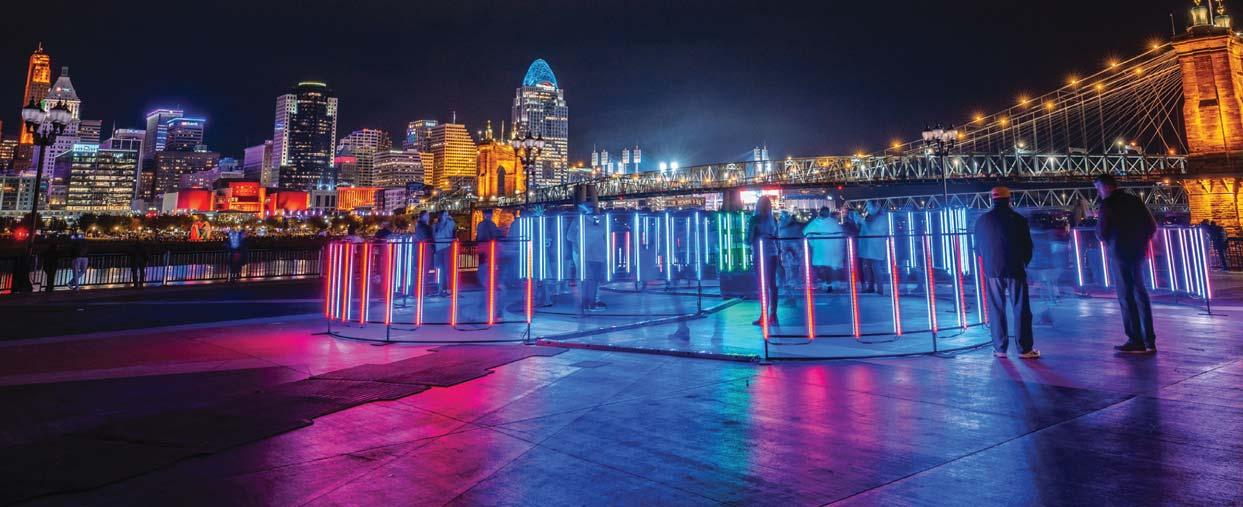
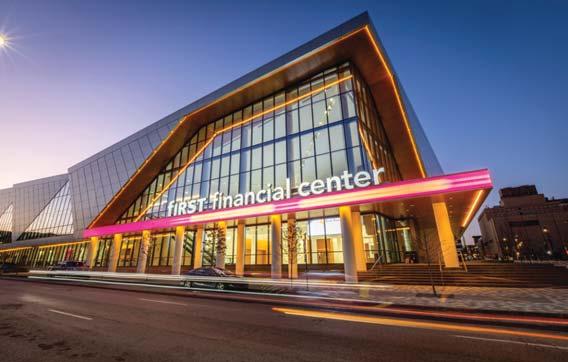
Host your next meeting right here in the Cincy Region and make a bigger impact - on your attendees and on our local economy. With reinvented venues like the First Financial Convention Center, Sharonville Convention Center, incredible dining, unique attractions and everything you need to turn meetings into memorable experiences.
2026 MARQUEE EVENTS & CONVENTIONS IN CINCY
• Handbell Musicians of America - July 12-18
• Black Tech Week - July 14-16
• Cincinnati Music Festival presented by P&GJuly 23-25
• Cincinnati Black Music Walk of Fame Induction Ceremony - July 25
It’s the same energy that brings visitors here for ballgames, festivals and weekend getaways, and your attendees will love it too.
And when you keep your events local, you keep your dollars local, supporting jobs, small businesses and the continued momentum of our region.
Bring your next meeting home to Cincy. Contact us today and let’s create something exceptional for your team and our community.
• 85th Omega Psi Phi Grand ConclaveJuly 30-August 3
• 50th Oktoberfest Zinzinnati - September 17-20
• Blink | A Festival of Light and Art - October 8-11
Nonstop Destinations





04 LETTER FROM BRENDON CULL
08 BY THE NUMBERS
Breaking down Cincinnati State’s $1.3 billion annual economic impact on the region.

10 ECONOMIC DEVELOPMENT
BRENT SPENCE BRIDGE BREAKS GROUND
Governors, senators, mayors, and others celebrated a milestone on May 8.
12 PHILANTHROPY
BUILDING A BETTER FOUNDATION
Bengals star Ted Karras and his Cincy Hat Foundation create housing in Madisonville.
14 HEALTHCARE
GIANT STEPS FOR GROWTH
Mayfield Brain & Spine

attributes expansion success to its surgeonowned model.
16 ARTS & CULTURE
OKTOBERFEST TURNS 50
How one Covington restaurant family has celebrated its German heritage since 1976.
18 LEADERSHIP BLACK HISTORY IN THE MAKING
The seven We Are Making Black History honorees for 2026 focus on being servant leaders.
50 ASK ME ABOUT
Get to know Adam Gelter of Rhine Civic Partners; Michelle Hopkins, who splits duties between Greater Cincinnati Foundation and WCPO-TV; and Myron Hughes, board chair of the Workforce Council of Southwest Ohio
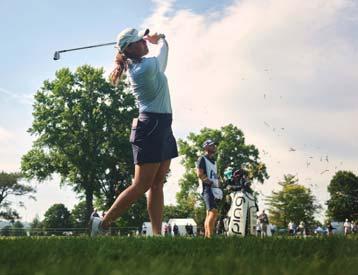
52 PHOTO ESSAY: KROGER QUEEN CITY CHAMPIONSHIP
See the sights of Cincinnati’s fifth annual LPGA tournament, hosted this year by Maketewah Country Club
THE PORT HITS A HOME RUN
Laura Brunner’s big gamble on housing has boosted distressed neighborhoods and economic activity throughout Hamilton County. 30
BUILDING A BRIDGE TO NEWPORT’S FUTURE City, county, state, economic development, and private business leaders are coming together to drive Newport’s turn in the spotlight.
36
RAISING THE BAR IN HOSPITALITY
Despite a Covid hit, 4EG’s multi-city bar portfolio continues to thrive.
42
LAW FIRMS GROW THEIR NATIONAL FOOTPRINTS
The legal industry sees mergers hit a record pace nationally, and Cincinnati firms get in on the action.
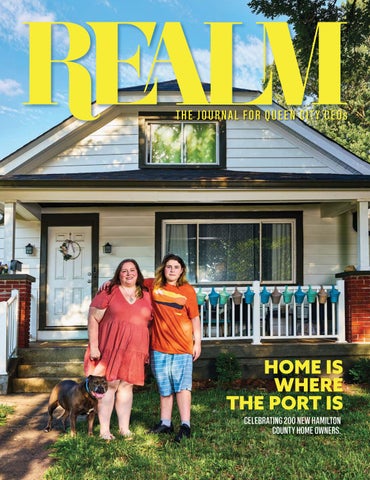
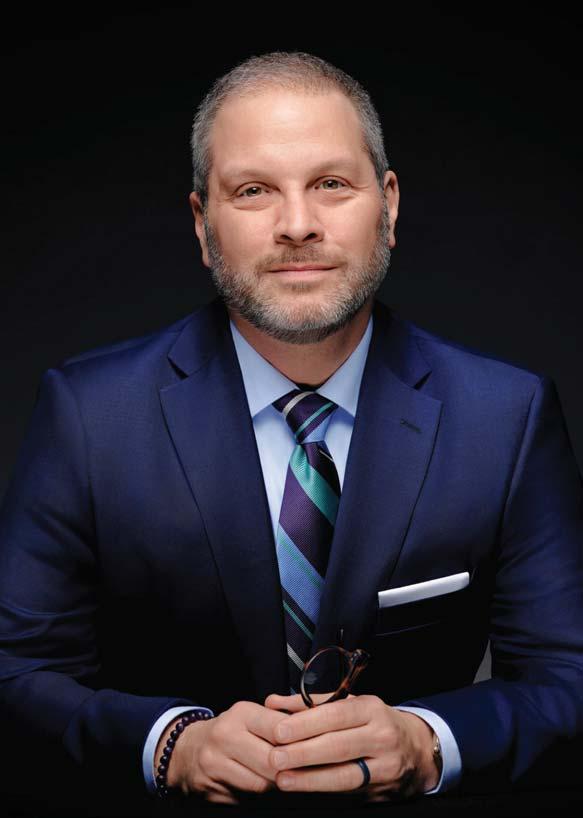
My mom is an enormous fan of The Wizard of Oz, so Dorothy’s simple but powerful words, “There’s no place like home,” were heard often in our house growing up. That phrase became a maxim for many, and in some ways the phrase is a guiding inspiration behind the work of The Port of Greater Cincinnati Development Authority.
In the pages of this issue of Realm, you can read about the efforts of Laura Brunner and her team at The Port to help connect Cincinnatians to their dream homes. This magazine has frequently covered issues related to housing, and we’ll continue to do so. Our region’s intense focus on growing population by building more housing and making housing more affordable will continue to be front and center.
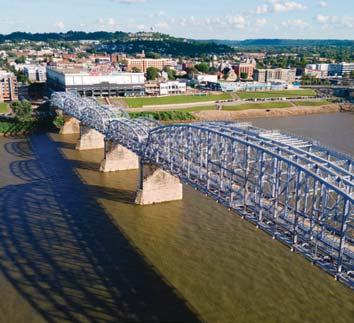
The Purple People Bridge isn’t quite the yellow brick road, but it certainly leads to a great city, Newport. I love the story about how our purple pedestrian bridge, though less frequently in the news compared to the Brent Spence Bridge (also covered in Realm this month), will help connect communities and encourage growth and vibrancy in our urban core.
You can also read about the brilliant team of owners and entrepreneurs at 4EG, about some key Cincinnati leaders making news, about Cincinnati State’s economic impact, about recent law firm mergers, and about how a Bengals player is investing his own money in affordable housing.
This issue of Realm is certain to give you a sense of possibility and promise for great things to come. Have a great summer!
BRENDON CULL
BCull@cincinnatichamber.com





































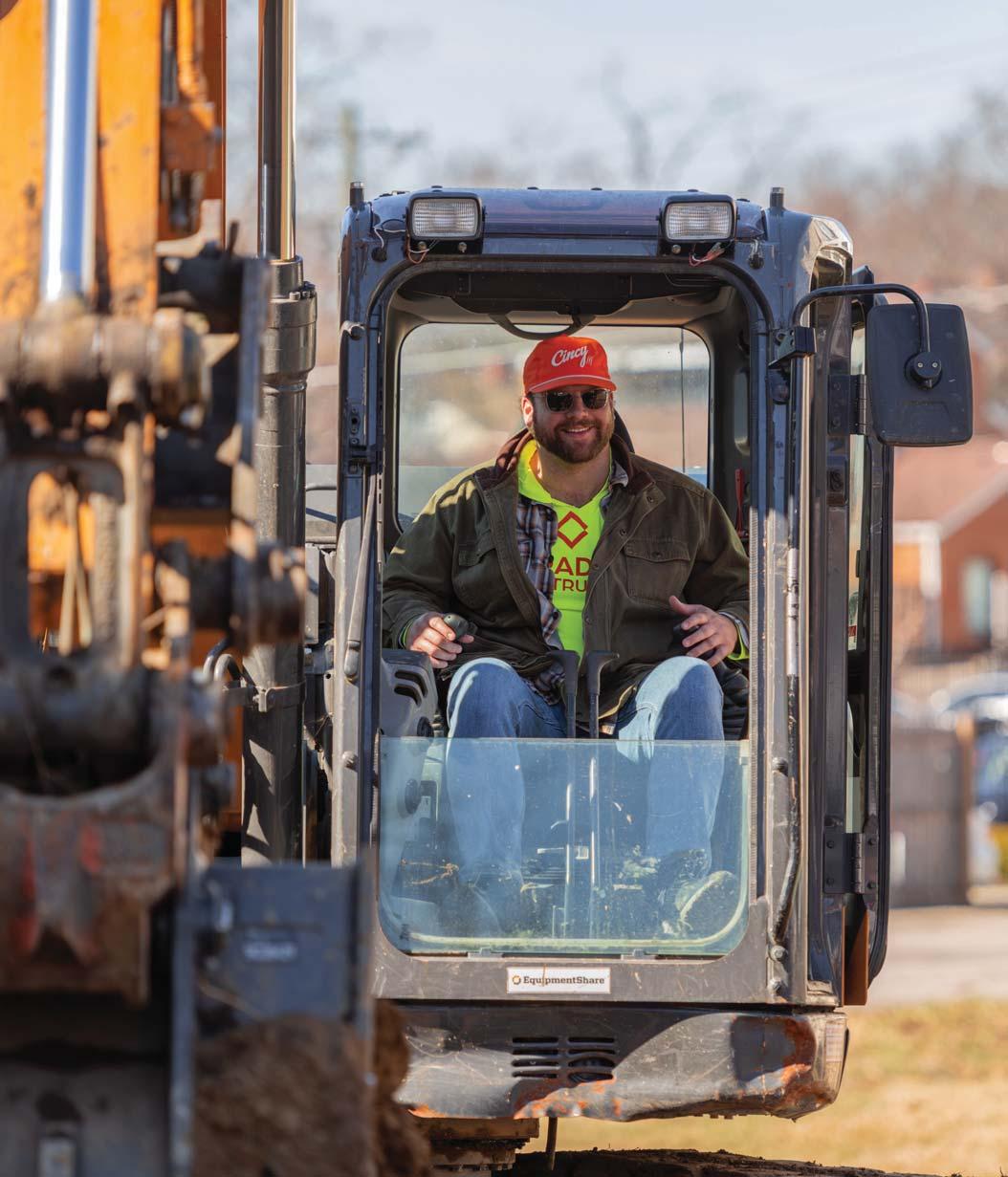
BENGALS STAR TED KARRAS HELPS BUILD HOUSING IN MADISONVILLE.
Get a jump on who helped break ground for the new Brent Spence Bridge, why Mayfield Brain & Spine is expanding again, and family memories behind 50 years of Oktoberfest. And catch up on the details around Cincinnati State’s economic impact and this year’s Making Black History honorees.
Cincinnati State has been providing the region with highly educated and trained graduates since 1969, when thenCincinnati Technical Institute launched a small number of technical degree programs. Today the school has four campuses (Clifton, Evendale, Harrison, Middletown) and offers 130 degree and certificate programs as well as workforce development training, with more than 10,000 students enrolled each year. Cincinnati State had $1.3 billion in total economic impact across the region in 2025 and supported a total of 8,449 jobs. Statistics provided by the Cincinnati Regional Chamber’s Center for Research & Data.
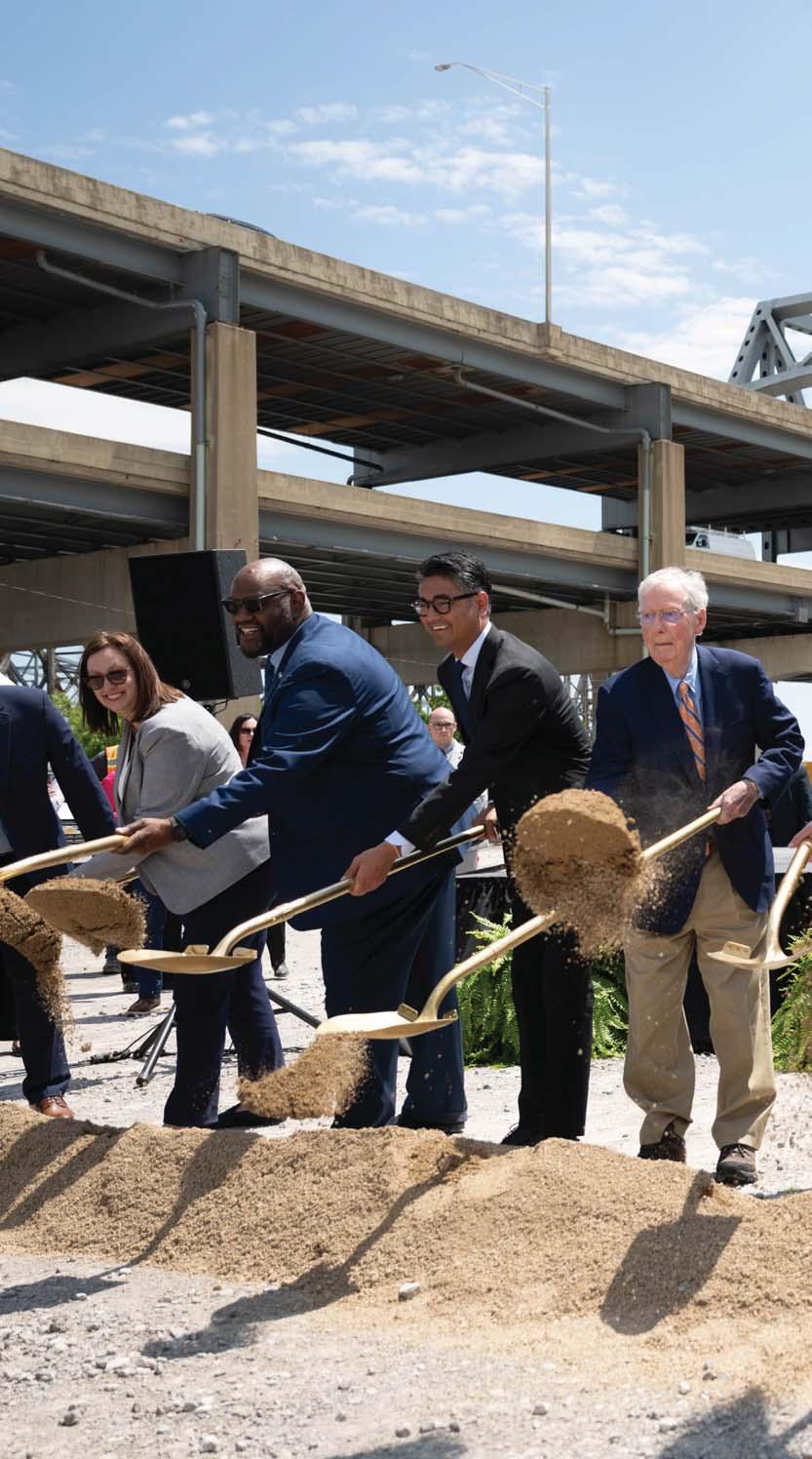
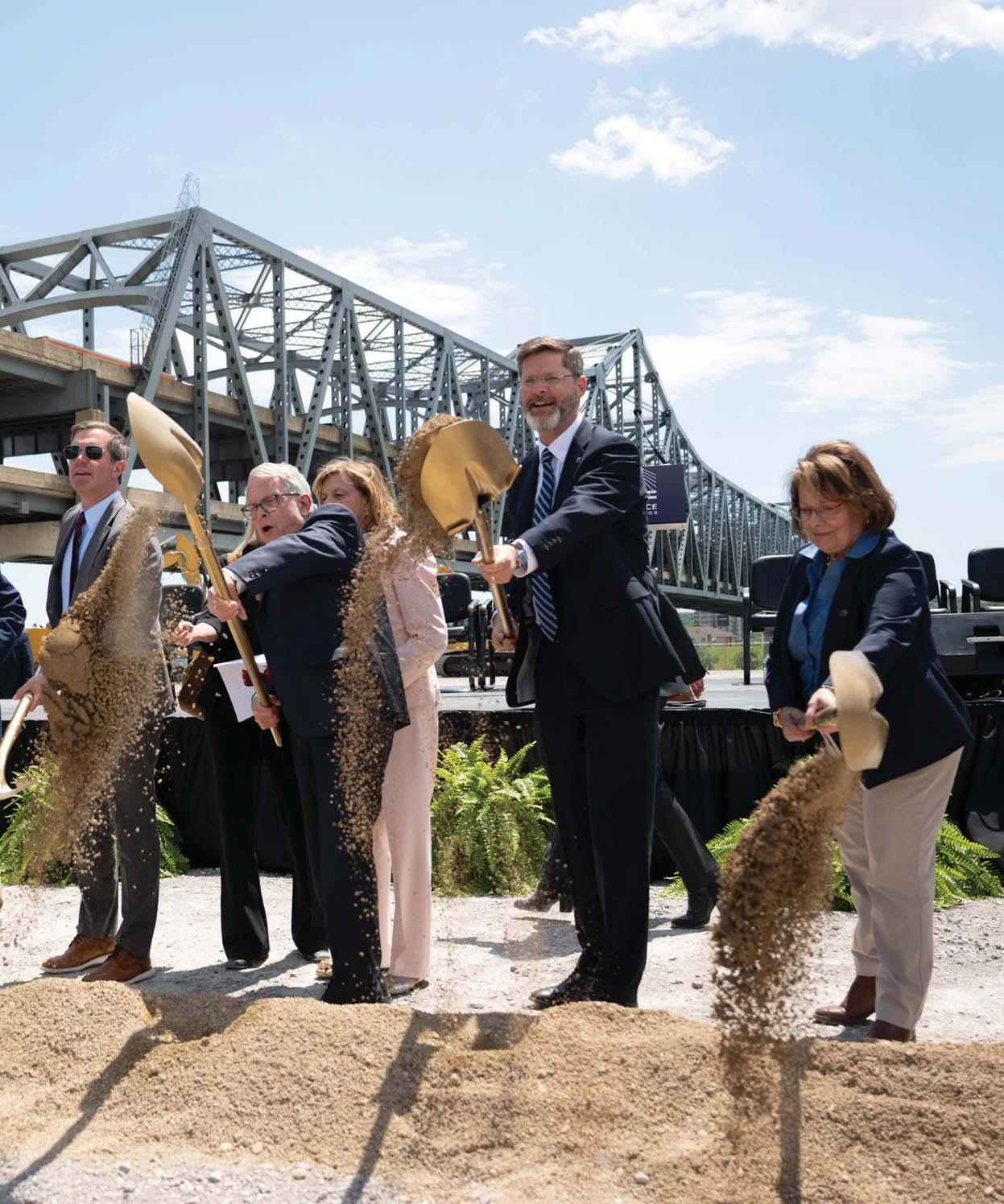
The Brent Spence Bridge Corridor Project officially got underway May 8 with a groundbreaking event near the current bridge, though work has been going on for months on the Cincinnati side of the river. The new “companion” bridge is expected to be completed by 2031.
The new state-of-the-art cable-stayed companion bridge will carry I-71 and I-75, which transport more than $1 billion in freight daily across the Ohio River. The existing bridge will be redesigned to handle local traffic between Cincinnati and Covington.
The Brent Spence Bridge opened in 1963 and was designed to handle 80,000 vehicles per day. Extra lanes were added in each direction over the years to eventually carry 160,000 daily vehicles today.
The $4 billion project will also overhaul five miles of highway approach in Kentucky and one mile in Ohio, including more than 40 total overpasses or underpasses. Federal grants are funding $1.63 billion of the project, with remaining costs split between the two states.
Helping kick off construction May 8 were (from left) Kentucky Transportation Cabinet Project Manager Stacee Hans, Covington Mayor Ron Washington, Cincinnati Mayor Aftab Pureval, U.S. Senator Mitch McConnell, Kentucky Governor Andy Beshear, Ohio Governor Mike DeWine, Federal Highway Administration Administrator Sean McMaster, and Kentucky Transportation Secretary Rebecca Goodman.

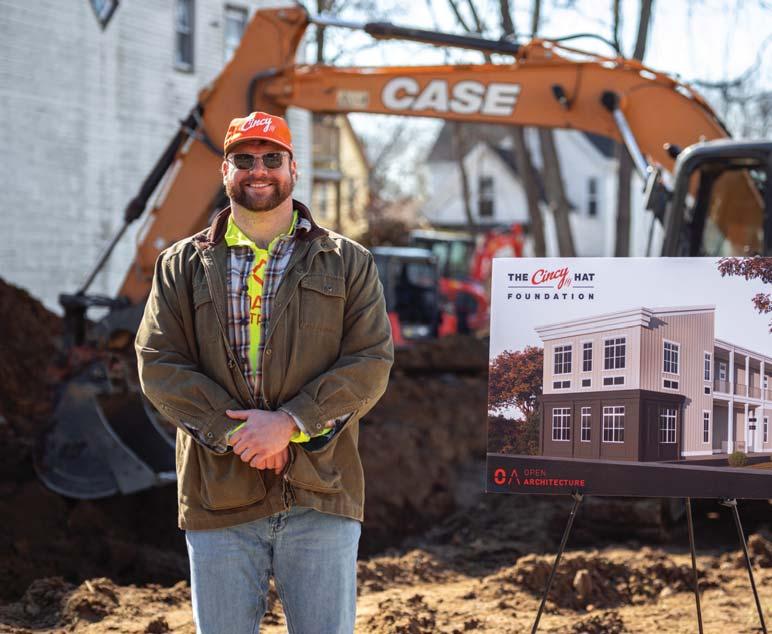
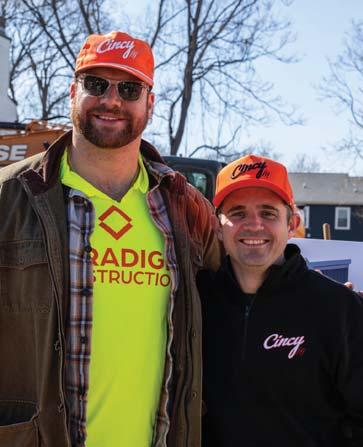
Ted Karras and his Cincy Hat Foundation help create housing in Madisonville. —ELIZABETH A. LOWRY
For Cincinnati Bengals center Ted Karras, creating housing opportunities for adults with intellectual and developmental disabilities has always been a top priority. Now, thanks to the efforts of his Cincy Hat Foundation—along with other local organizations, donors, and community leaders—the first of what he hopes are many such projects is set to open in the fall in Madisonville.
“From day one, our mission has been to create opportunities for adults with intellectual and developmental disabilities, and housing is one of the greatest needs facing this community,” says Karras. “This building is more than bricks and mortar. It’s a place where people can build independence, find belonging, and create
a life of their own. That’s the kind of lasting impact we’re striving for.”
Founded by Karras and his childhood friend Matt Renie, Cincy Hat Foundation began as a way raise money for the Village of Merici, a Medicaid services organization co-founded by Renie’s mother in the Indianapolis area. What started as an idea to raise money via co-branded custom hats quickly became a hot commodity, with more than $4 million in hats sold to date. As a result, the foundation has been able to focus its mission on expanding opportunities in this region for adults with intellectual and developmental disabilities.
“We’ve heard from so many families in Cincinnati that there is a massive need for safe, affordable, supported housing, and we hope to
fill that critical gap,” says Renie.
With help from The Port of Greater Cincinnati Developmental Authority, Renie and Karras were able to narrow down a location for their housing project from among several landbank properties The Port maintains. They settled on Madisonville after community leaders there conveyed a desire for more affordable housing in the neighborhood and off ered to support the project.
While The Port and Hamilton County Landbank were key in helping secure land for the five-unit apartment building, Karras bolstered fundraising efforts with his own $500,000 donation. The team at Hamilton County Developmental Disabilities Services and several other local service and housing providers off ered constructive feedback and guidance to ensure the housing model would adequately serve the desired population.
For Karras and Renie, the project is the first step in a long-term plan to invest in affordable, independent housing opportunities for adults with intellectual and developmental disabilities and to help build a sustainable nonprofit housing portfolio that serves Cincinnati for years to come.
“My greatest joy comes from seeing big-hearted Cincinnatians rally around a mission that, in many cases, may not directly impact them or their own families,” says Karras. “Yet they still choose to show up, give back, and support their neighbors. I’m consistently inspired by the generosity in this city and am proud to call Cincinnati home.”

















Mayfield Brain & Spine attributes expansion success to its surgeon-owned model.
—ALEXANDRA FROST
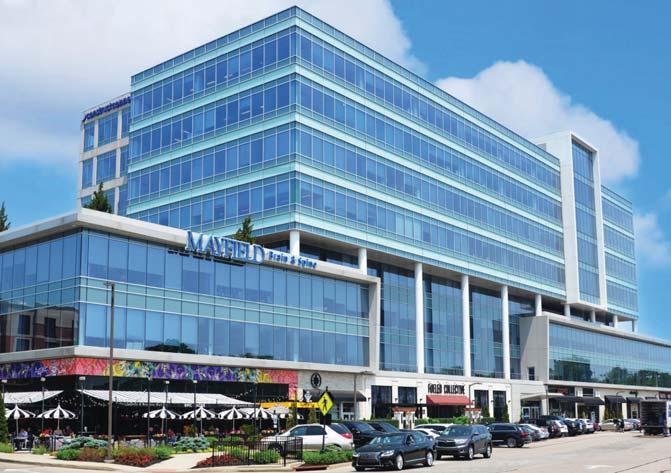
The name “Mayfield” on his white coat had more meaning for patients than Juan Meija, M.D., expected when he first started working as a neurosurgeon at Mayfield Brain & Spine. “It imparted in them a degree of trust which I didn’t earn immediately,” he says. “As they say, it was on the backs of giants,” such as neurosurgeon Frank Mayfield, who founded the practice in 1937.
Just a decade before its centennial, Mayfield is celebrating unprecedented expansion across the region and deeper dives into innovative treatment breakthroughs. The company is bringing in three new neurosurgeons and its first-ever neuro-oncologist this year and increasing its total physician count by 15 percent. It treated 36,601 patients in 2025, an all-time high.
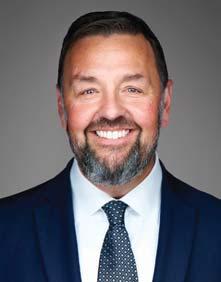
Mayfield leaders credit the growth to their 100-percent surgeon-owned model. Board Chair Vince DiNapoli, M.D., and CEO Mark Vorherr say the ownership style breeds innovation and healthy competitiveness between surgeons to stay innovative and relevant, compared to other models where a non-medical board runs a practice. “There’s something to be said for physicians who report to themselves and the accountability that brings,” says Vorherr.
The practice is divided into three “centers for
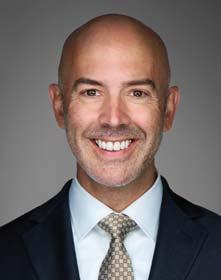
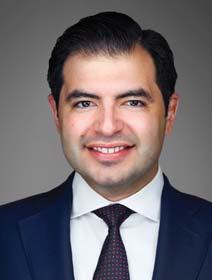
excellence:” spine care, brain tumor care, and vascular systems of the brain. Each is led by a surgeon. “So not only is the company owned and led by surgeons, so are the individual service lines,” he says. “When specific cases are reviewed, they discuss them openly from a perspective of educating one another and constantly learning with one another.”
Mayfield expanded its reach to the Dayton area in 2024, opening an office in Springboro. The practice purchased just under five acres of land there, putting a prominent building on I-75 in Warren County, Vorherr says, to ensure patients who needed them would be able to spot their presence in the area. “We’ve hired Dayton area people, so we want to be visible there, and I think that separates us from others that have done expansions into those markets,” he says, adding that Premiere Health in Dayton is Mayfield’s fifth area hospital system partnership in addition to TriHealth, St. Elizabeth, Christ, and Bon Secours Mercy.
Mayfield’s nearly 100-year legacy has started impacting multiple generations as well as single patients over the course of a lifetime. Mejia says he recently operated on a woman in her 90s who’d had her first operation in her 20s with one of the practice’s original founders. “It’s pretty cool to meet a patient in the ER and have them and their family completely trust you because a family member or loved one had surgery at Mayfield,” says Mejia, a Cincinnati native and St. X graduate. “A lot of our patients bring up those connections when we see them because we’ve been in the community for so long.”
—ELIZABETH A. LOWRY
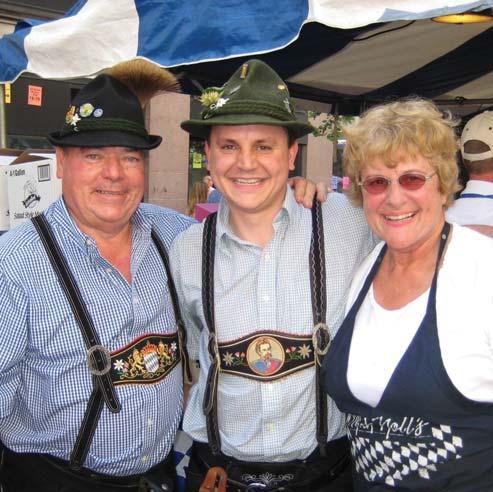
Oktoberfest Zinzinnati turns 50 this year, having grown from its humble street festival beginnings in 1976 into the biggest Oktoberfest party outside of Munich. From traditional events like the World’s Largest Chicken Dance and stein hoisting to modern additions like an exclusive Sam Adams brew and a dedicated VIP experience, it’s become an annual can’t-miss event on the region’s social calendar.
The number of Cincinnatians who lay claim to
German ancestry rises significantly during Oktoberfest, when more than 800,000 people flock to the free four-day event held at Sawyer Point and Yeatman’s Cove to share in the Gemütlichkeit, or the German concept of warmth and belonging. And while some residents simply attend the festival, others tend to it year after year as a family tradition.
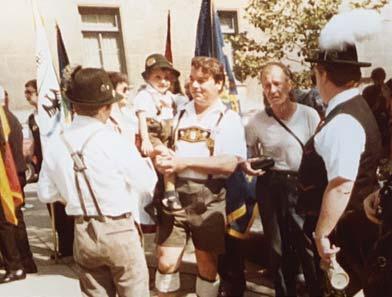
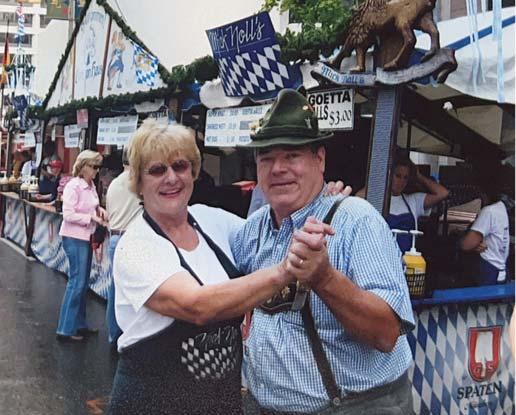
Northern Kentucky resident Ludwig
restaurant opened in 1975. Both Mick and his wife Pat spent time in the Peace Corps before moving to Covington, having kids, running the restaurant, and working around town to celebrate Oktoberfest. “They were a small part in helping to start the celebration, and they put in endless effort and work into being authentic and celebrating German heritage to the fullest,” says Ludwig.
goetta balls, and potato pancakes.
Noll could even say he was born for Oktoberfest. Named after the king of Bavaria, to whom Munich’s Oktoberfest was dedicated, he grew up around the earliest festivities and remembers playing under the tables downtown as a child.
His father was the original owner of Mick Noll’s Covington Haus (in the spot now occupied by West Sixth Brewery), a German-style
The Noll family’s booth has been an Oktoberfest Zinzinnati staple since the beginning as well as a cornerstone of Oktoberfest in MainStrasse, and Mick’s passion for building the best booth possible helped it stay in continuous operation. After his death in 2016, booth operation remained a family affair as relatives and close friends helped cook and serve popular German street fair favorites like bratwurst, mettwurst, currywurst,
Even though maintaining the booth and getting food ready for hundreds of thousands of people is hard work, Ludwig says he looks forward to it every year.
“It’s really a lot of pride for me,” he says. “My parents worked so hard for so many years to do things the right way, so I feel privileged to do this and be part of one of the largest parties in the world.”
This year’s golden anniversary Oktoberfest is September 17-20 and features signature events such as the Running of
the Wieners, the World’s Largest Chicken Dance, the Gemütlichkeit Games, the 14K/7K Brewery Run, and 30-plus live music performances, according to Chelsea York, the Cincinnati Regional Chamber’s vice president of events and experiences.
“Oktoberfest Zinzinnati has always been the moment every year when the whole community gathers together to celebrate its heritage,” she says. “Keeping the event free, authentic, and rooted in Cincinnati’s story is at the heart of the Chamber’s commitment to it.”







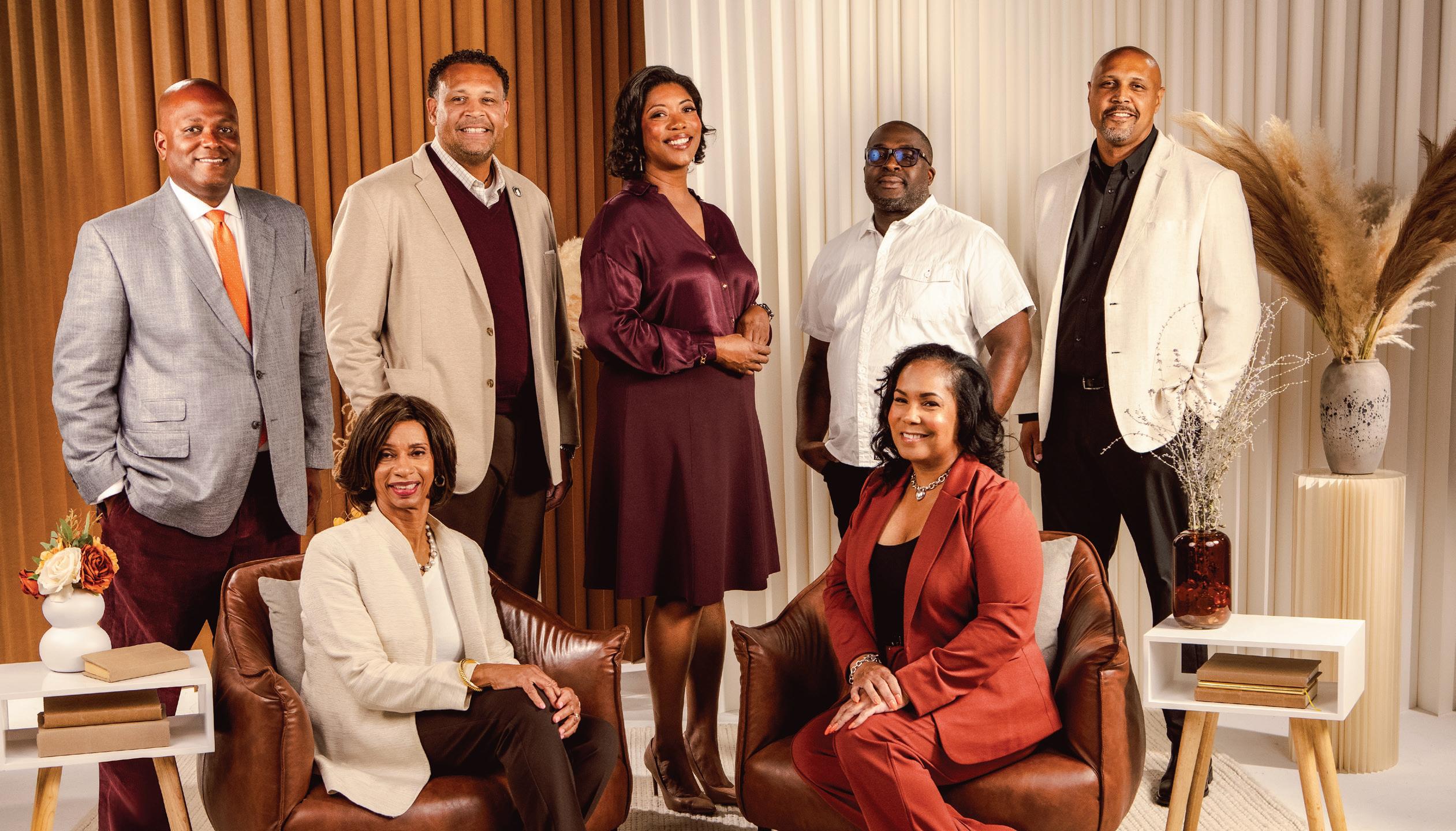
The seven We Are Making Black History honorees for 2026 focus on being servant leaders.
—ELIZABETH MILLER WOOD
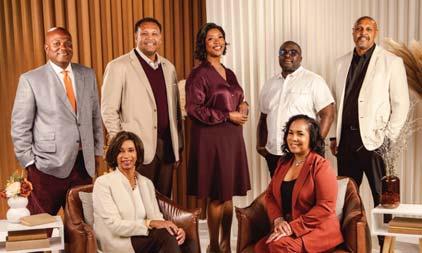
Annually since 2019, the Cincinnati Regional Chamber has recognized and celebrated outstanding Black leaders making a difference. This year’s honorees are business influencers, educators, nonprofiteers, and culinary professionals who lead with passion and bring depth and innovation to their industries and communities. Meet this year’s We Are Making Black History honorees, who were celebrated at the Chamber’s Annual Dinner on February 26.
JEFFERY HARRIS
CHEF/OWNER OF NOLIA KITCHEN
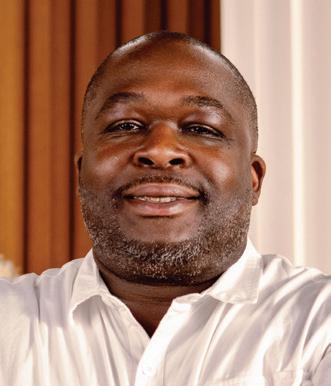
A New Orleans native, Harris relocated to Cincinnati following Hurricane Katrina. His James Beard Award-nominated Nolia Kitchen in Over-the-Rhine delivers elevated Southern cuisine inspired by his grandmother and was named one of the 50 Best New Restaurants in 2023 by Esquire. “I wanted to change the perception of what Black restaurants look like. I want to bring something new to the city.”
MAX LANGENKAMP
SENIOR VICE PRESIDENT OF HUMAN RESOURCES AT CINTAS CORPORATION
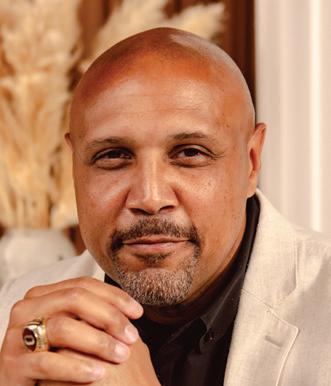
Born and raised in Cincinnati, Langenkamp was deeply impacted by a brief period of childhood homelessness. After serving as senior counsel at Cintas, he transitioned into human resources with a desire to help others reach their career goals. “Service isn’t something I schedule; it’s something I strive to live out every day.”
“I consider myself a servant in this work, and I don’t forget about that servant mindset.”
CHIEF OPERATING OFFICER AT MSA DESIGN
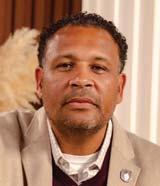
A graduate of Moeller High School, Langenkamp has forged a legacy of community service, from helping increase Black and Brown student enrollment at Moeller to serving as a CASA volunteer through ProKids. “I want to be seen as a fountain of hope for every person that I encounter on my journey in life.”
SUPERINTENDENT OF CINCINNATI PUBLIC SCHOOLS
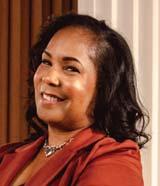
A passionate educator for nearly four decades, Murphy has been superintendent of Cincinnati Public Schools for 29 years. She also volunteers for her sorority, Alpha Kappa Alpha, and serves as superintendent of Christian Education at Southern Baptist Church. “I consider myself a servant in this work, and I don’t forget about that servant mindset.”
PRESIDENT OF CINCINNATI STATE TECHNICAL AND COMMUNITY COLLEGE
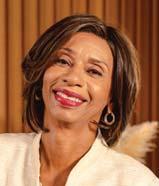
Posey taught statistics for many years at the University of Cincinnati before joining Cincinnati State, a path that would later lead to her presidency. She also serves on the boards of GRAD Cincinnati, Cincinnati Works, and the United Way of Greater Cincinnati. “I want to be remembered as someone who used her gifts to open doors for others.”
EXECUTIVE DIRECTOR AT FARMER FAMILY FOUNDATION
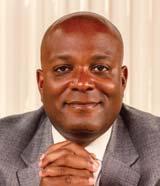
Stone worked in private banking at Fifth Third Bank for two decades before taking the reins at the Farmer Family Foundation in 2025. He has served on the boards of the Cincinnati Ballet, Summit Country Day School, and the Cincinnati Children’s Hospital Medical Center. “I feel a deep responsibility to help make Greater Cincinnati a tier one community that we are all proud to call home.”
PRESIDENT AND CEO OF DRESS FOR SUCCESS CINCINNATI
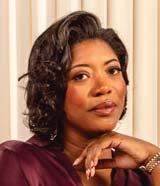
A Cincinnati resident for 27 years and a 2023 Cincinnati Business Courier 40 Under Forty honoree, Thompson helms Dress for Success Cincinnati with a passion for service and excellence. “My goal is for every client and team member who passes through our doors to be sought after across industries because they’ve been shaped by an environment rooted in high standards and genuine care.”
September 18–20 | September 25–27 | October 2–4
Visit extraordinary homes, earn points, win luxury prizes!
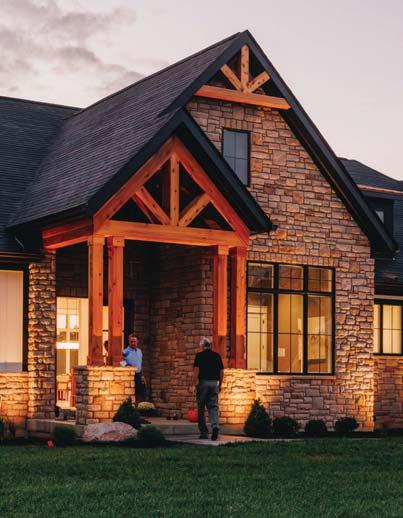
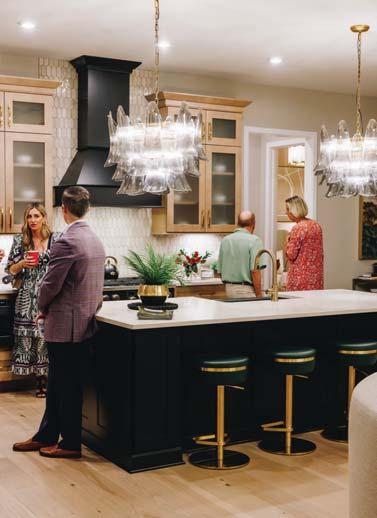
Explore more than 10 luxury homes and along the way enter to win over $5,000 worth of luxury prizes! Whether you’re looking to buy, upgrade, or explore the best luxury living out there, this tour has it all.






September 17, 2026 6–8:30 p.m. at

LAURA BRUNNER’S BIG GAMBLE HAS BOOSTED DISTRESSED NEIGHBORHOODS AND ECONOMIC ACTIVITY THROUGHOUT HAMILTON COUNTY.
BY DAVID HOLTHAUS PHOTOGRAPHS BY ANDREW DOENCH
The words “moral imperative” and “economic development” are not often featured on the same PowerPoint slide. But that’s what Laura Brunner was contemplating five years ago when she reached out to community leaders seeking advice on a big outside-thebox idea: Should the not-for-profit economic development organization she leads, The Port of Greater Cincinnati Development Authority, make a bid to buy nearly 200 houses owned by a private out-of-town real estate company that were going up for auction?
Such a move would be a major expansion in The Port’s work scope and turn it in to a landlord in about a dozen neighborhoods, most of which had experienced decades of disinvest-
ment. But it could also rescue these houses from further decline, support and encourage home ownership, and maybe spark investment in those neighborhoods.
Hamilton County Commissioner Denise Driehaus took one of the calls. “Laura asked me, What do you think about this? It’s risky. It’s a lot of properties. It’s way more than what we’re used to. Do you think we should do this?” Driehaus says she responded with a one-word answer: “Absolutely.” Brunner got similar answers from other business and nonprofit leaders. “The theme we heard was You have a moral imperative to do this,” she says.
So The Port outbid a dozen other prospective buyers to purchase 194 homes in Hamilton County from a for-profit Los Angeles-based investment company that had gone under. It broadened the organization’s mission and garnered attention around the
country, including articles in The Wall Street Journal and Forbes.
Housing had for years been a piece of The Port’s strategy to reinvest in distressed neighborhoods, but this $14.5-million purchase was a stretch, putting the public agency in the position of rehabbing neglected houses with the goal of reselling to buyers who intended to live in them. The move also called attention to the predatory trend of big real estate companies buying up single-family homes and turning them into rentals.
So far, Brunner’s plan appears to be working. In April, The Port announced a milestone in its long-term strategy to revive blighted and vacant properties and expand access to housing. It closed on its 200th home sale throughout Hamilton County, most of them in neighborhoods where home ownership opportunities have historically been limited.
It was the latest example of the work of a not-for-profit organization with a community mission to revive neighborhoods and jobs that also has the financial wherewithal to make significant progress toward meeting those goals.
Established in 2000 and expanded in 2008, The Port Authority has become a key player in development in Hamilton County largely through three efforts: expanding housing and home ownership, returning old industrial sites to productive use, and financing big private projects. It also manages three entities focusing on the development puzzle: Hamilton County Landbank, which acquires and repurposes vacant or abandoned properties; Homesteading and Urban Redevelpment Corp., which has a similar mission but focuses on hous-
ing; and Uptown Consortium, leading development in five neighborhoods around the University of Cincinnati.
“Our goals are increasing population, increasing good-paying jobs, and increasing capital investment,” Brunner says. “Those are the three top bills.”
THE PORT STEPS INTO neighborhoods that have been hollowed out by foreclosures and buys old industrial sites that need cleaning up, always with the goal of sparking new investment. In some of its target neighborhoods, “There’s frankly no market demand right now for housing or for jobs in these areas,” says Mark Jeffreys, chair of Cincinnati City Council’s Housing and Growth Committee. “They can help create demand.”
Sitting between the public sector and the private sector, Brunner says The Port is focused on the long-term highest and best use of real estate, “though our goal is to turn that real estate over to the private sector and to attract private investment.”
The Port enjoys broad powers to catalyze economic development under the enabling legislation that authorized such bodies. Despite their name, port authorities in Ohio don’t necessarily have anything to do with ports, harbors, rivers, or other waterways. That’s led to some confusion about what it is the organizations actually do. “I used to think The Port had something to do with the Ohio River, and then quickly I learned Oh no, that isn’t its role,” says Driehaus.
But it could be, under The Port’s wide-ranging authority. Ohio law
states that port authorities may pursue “activities that enhance, foster, aid, provide, or promote transportation, economic development, housing, recreation, education, governmental operations, culture, or research.”
Since The Port Authority was established in Hamilton County, its scope has expanded significantly, as has the agency itself. It runs on an operating budget of $13 million, owns assets worth about $160 million, and enjoys a net position (assets minus liabilities) of $60 million. When Brunner was appointed CEO in 2011, The Port employed six people; today it employs about 50.
At the beginning, its work was largely limited to cleaning up old industrial sites using state grants. Around 2008, Cincinnati and Ham-
ilton County leaders wanted to jumpstart investment and growth in some of the county’s older communities. A study called “GO Cincinnati” (for Growth Opportunities) conducted by economic and real estate experts led by The Brookings Institution identified strategies to pump up Cincinnati’s tax revenues and increase jobs by targeting six neighborhoods for revitalization.
Brookings researchers recommended creating a “catalytic development corporation,” a not-for-profit organization to assemble the land, assist in remediating contaminated sites, and be the revitalization strategy’s champion. City and county officialsand business leaders realized they already had one of those in The Port Authority, which had the poten-
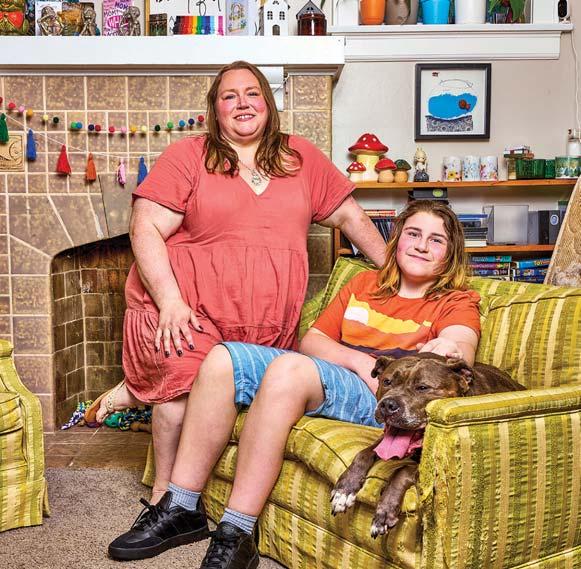
HOME SWEET HOME
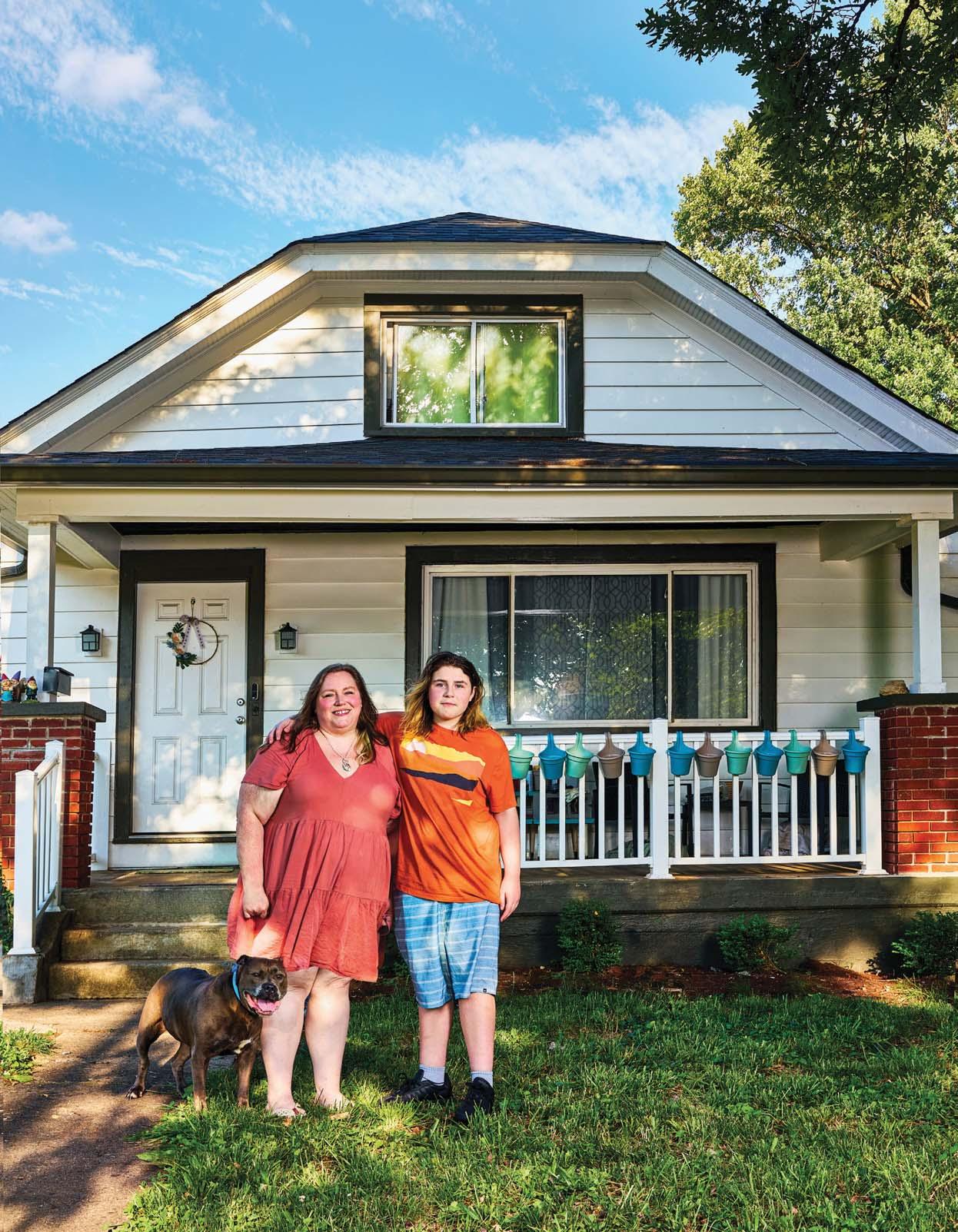
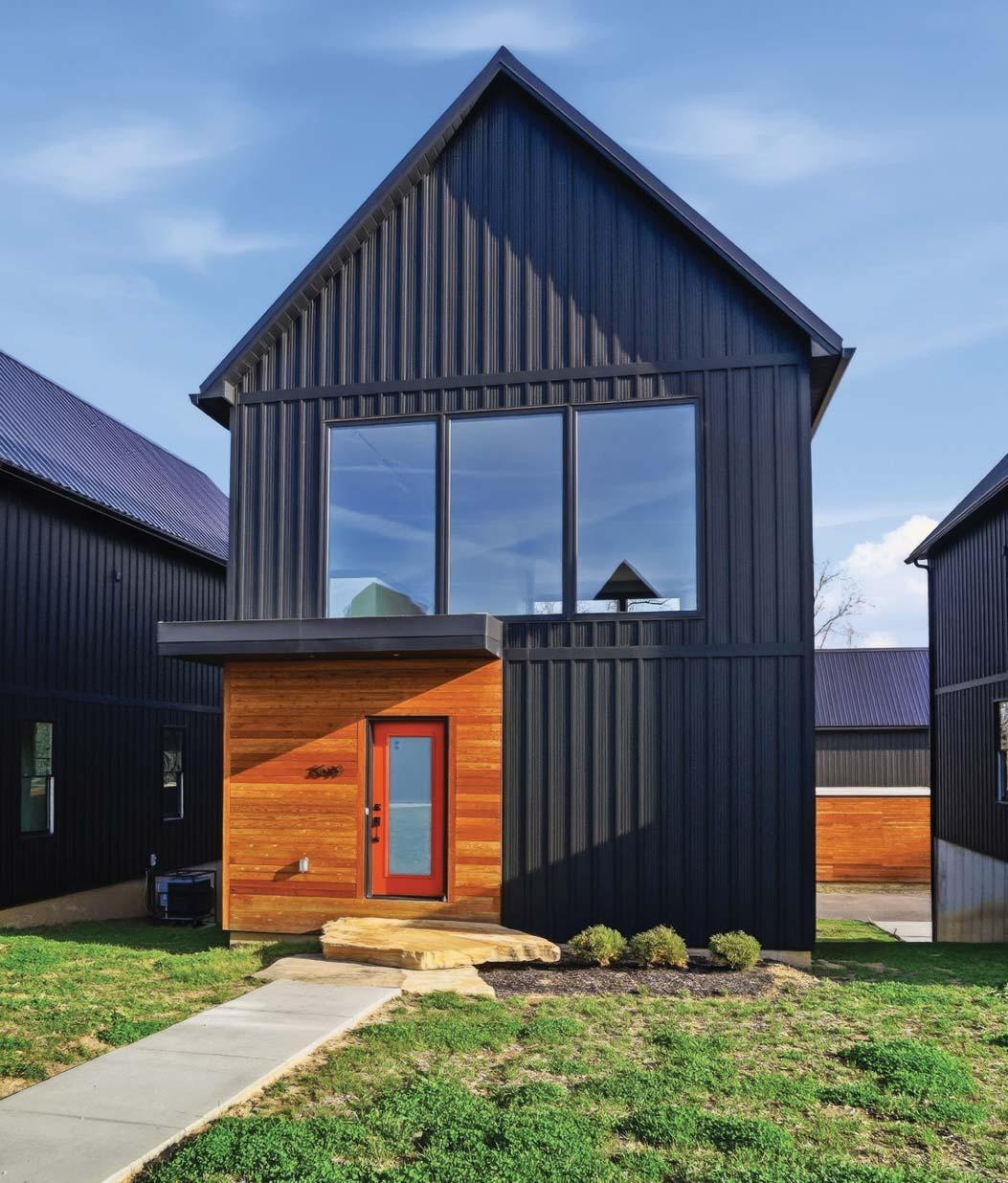
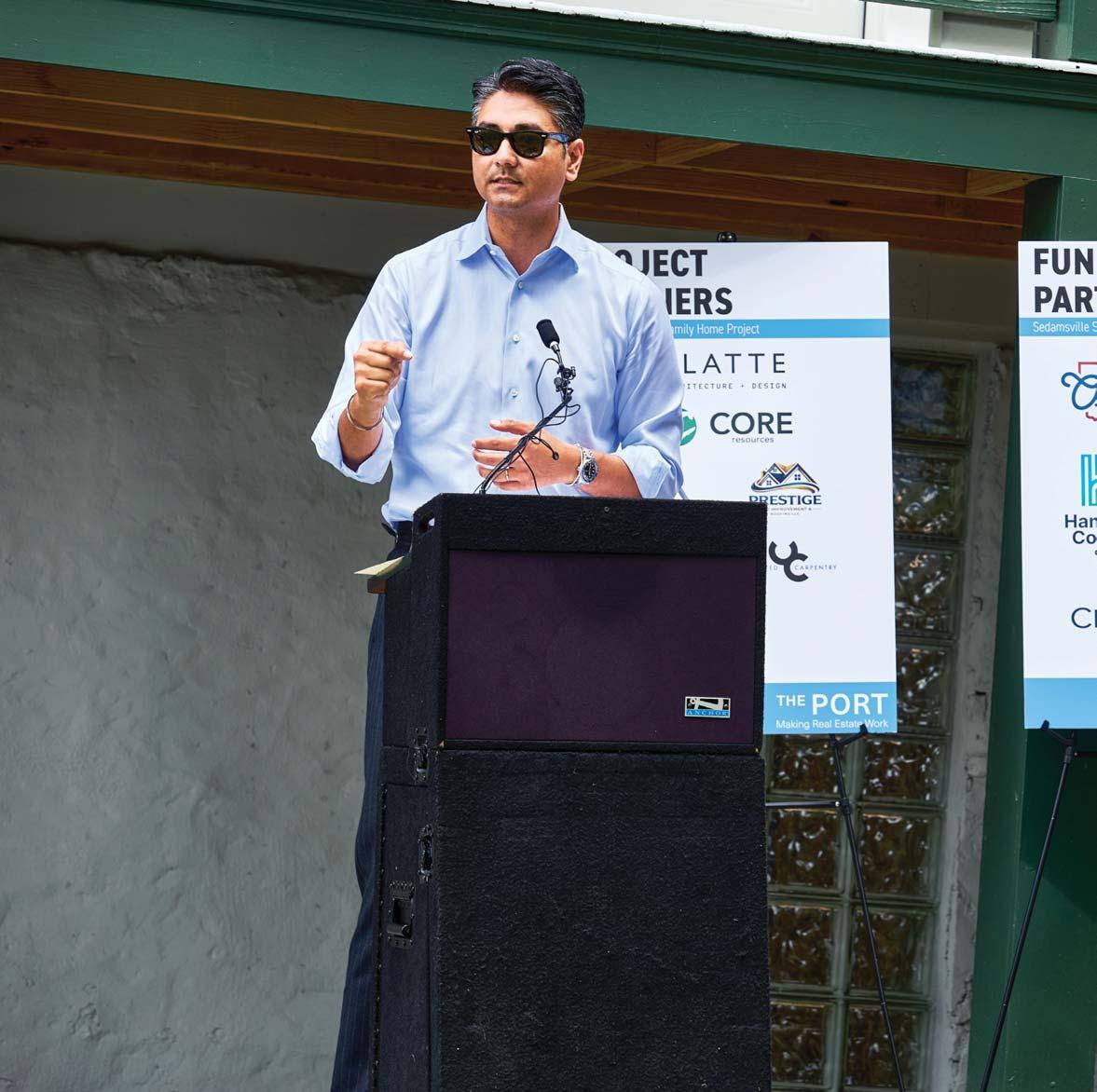
The Port CEO Laura Brunner (opposite page and previous spread with Cincinnati Mayor Aftab Pureval) has led a push to buy, rehab, and sell single-family homes. Julie McGuire, with son Sam and friend Fiona, bought her house in East Westwood from The Port.
tial under state law to play a central role. Its scope was expanded as the city and county agreed to grant the organization “substantially all powers permitted under the Port Act.”
Brunner was appointed at a time when the agency was focused on buying and demolishing vacant, blighted properties, a problem that had increased in low-income neighborhoods following the Great Recession and foreclosure crisis of 2008-09. The authority was asked to manage the Hamilton County Landbank and through it
nati neighborhoods of East Price Hill, West Price Hill, and Walnut Hills in addition to Evanston. In the village of Lincoln Heights, where about half of the residents live below the poverty level, it’s built a handful of new homes, with more planned.
“Central to our work is the acknowledgment that many neighborhoods in the city of Cincinnati and Hamilton County at large do not have quality, stable housing as a foundation of the community fabric,” says Port Executive Vice President Philip Denning.
“WE WANT ALL KINDS OF HOUSING, BUT WE WANT HOME OWNERSHIP AS A HIGH PRIORITY AND WANT TO REBUILD NEIGHBORHOODS.”
began acquiring vacant houses. “That’s when we decided to start redeveloping homes,” says Brunner.
The Cincinnati neighborhood of Evanston was where The Port owned the highest concentration of such houses, and the agency closed its first home sale there in 2015 for $99,900. It was part of a rehabilitation of 30 houses designed to re-establish a housing market in a neighborhood that hadn’t seen a home sale in nearly a decade.
Since then, The Port has developed housing in more than 30 neighborhoods and communities in Hamilton County, many of them in the Cincin-
In 2022, The Port made a major purchase of homes in Sedamsville, where only about 1,000 people live and the poverty rate is double the rest of Cincinnati. One landlord controlled an inordinate number of housing units, had been sued by the city and the federal government, and was ultimately forced to sell. The Port purchased 64 homes from the owner and is in the process of rehabbing them.
In the 194-home purchase from the Los Angeles investment company and in Sedamsville, “these tenants have been abused and the properties were not being taken care of,” says Brunner. “There was a high eviction rate, and all the things you hear about bad landlords doing.”
The Port’s goals with these houses are, she says, “Be a good landlord, invest and fix up the real estate, and then have a strategic path toward home ownership, first for the renters if they’re interested and able. We want all kinds of housing, but we want
home ownership as a high priority and want to rebuild neighborhoods,” says Laura Brunner.
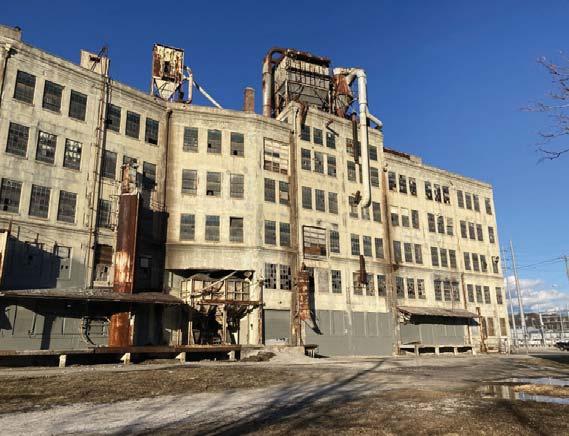
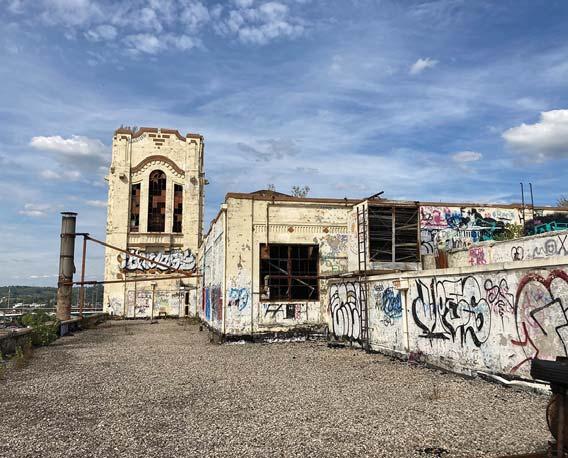
IN SEDAMSVILLE, EVANston, East Price Hill, and other areas, The Port can take risks that private developers will not. The organization doesn’t have quarterly profit targets to hit, so it can be patient. In the interest of preserving affordability, it typically sells houses for less than it invested in them. Its leadership team is appointed, so they don’t face the pressure of the next election. Brunner reports to a 10-member board appointed by Cincinnati City Council and Hamilton County commissioners. Because it can accept risks that private developers don’t, The Port can buy old industrial sites that may need environmental cleanup or have simply sat vacant for so long it would be economically risky for a private developer to renovate them or tear them down. That’s the case in Cincinnati’s South Fairmount neighborhood with the Lunkenheimer foundry, a former valve factory that’s now a rusting hulk at the entrance to that community.
Through the Hamilton County Landbank, The Port acquired the Lunkenheimer property as well two other buildings whose history dates to the dawn of the 20th century. In addition to the old foundry, there is a former company office building on Waverly Avenue and the Midwest Textiles Building on Beekman Street. These three buildings, all in various states of decay, are now owned by The Port and are being dubbed the
Lunkenheimer District.
For the neighborhood of South Fairmount, The Port’s ownership represents hope of new development. Its Landbank owns “a couple hundred” lots in South Fairmount as well as land along the west side of the Mill Creek. In 2023 it completed the demolition of longstanding eyesores there, the so-called Beekman silos, and owns the surrounding land.
Brunner has a long-term vision for that part of the city of a “vibrant mixed-use community.” The old foundry may be converted to apartments, with possibly a maker space as a nod to its manufacturing history or some type of artist-oriented space. Moving north along the Mill Creek, there are potential sites for manufacturing, linking to the historic industrial neighborhoods of Queensgate and Camp Washington. Brunner says there is opportunity to bring back 500 housing units to those neighborhoods.
“There are multiple phases of work to be done there,” she says. “If you look at the amount of investment that’s been in that quarter over the last 50 years, it’s almost zero.”
Brunner’s vision earned a boost in January when the Lunkenheimer District was added to the National Register of Historic Places, the U.S. government’s official list of buildings, sites, and structures considered worthy of preservation for their historical significance. The Port and its Landbank sponsored the nomination, which Brunner says will aid in their rehabilitation and preservation. Jim Casey, South Fairmount’s Community Council president, called the recognition “a major step in transforming the Lunkenheimer District
into a positive community asset.”
The Port has also begun environmental cleanup of the foundry, as well as stabilization of the structure and the neighboring office buildings. Bringing manufacturing jobs back to South Fairmount, Camp Washington, and Queensgate is a major part of The Port’s strategy.
“About a third of the land in the Mill Creek valley is empty,” says Jeffreys. “The Port can play a role through the Landbank of buying
that property and holding it, which enables us to make sure, as it gets developed, that we can shape the development.”
The Port owns 49 acres in Camp Washington, including the highly visible Crosley Building, which has been abandoned for at least 20 years. Over the years, the state of Ohio has granted The Port roughly $30 million to demolish and clean up properties in the neighborhood.
“If you drive up Spring Grove
NEW HOPE
The Port acquired the vacant but historic former Lunkenheimer valve factory in South Fairmount (above) and the similarly significant Crosley Building (below) in Camp Washington, with plans to finally jumpstart redevelopment.
BUY, FIX, SELL, OWN
The Port Authority invested $14.5 million five years ago to buy single-family houses from an outof-town real estate group, rehab them, and sell them to firsttime home owners. It recently closed on its 200th home sale.
WORKING ALL OVER
The Port has now developed housing in more than 30 communities in Hamilton County, including East Price Hill, Evanston, Lincoln Heights, Sedamsville, Walnut Hills, and West Price Hill. It’s clearing and rehabbing industrial sites in Camp Washington, Queensgate, and South Fairmount.
It’s also assisted in funding and advancing challenging real estate deals involving the downtown cenvention center, Carew Tower, the former Macy’s headquarters, and the Uptown Innovation District.
Avenue, where two years ago there were literally burned-out buildings and caved in roofs there’s now grass,” says Brunner. “So we’re starting to build pad-ready sites for the future and to work with the community and the city of Cincinnati to imagine what could be there in the future. Our goal is to turn the real estate over to the private sector. But for almost every single piece of real estate we own, we need public investment before we need private investment.”
PERHAPS THE ASPECT
of The Port’s practice that’s farthest under the radar but arguably the most impactful is its financing of major projects. It has a number of programs to assist developers in financing expensive, complicated projects. One of its most recent investments is $17 million in bond financing for The Lockard development in Overthe-Rhine, which calls for a major redevelopment of the southeast corner of Liberty and Walnut streets with 129 apartments and 3,500 square feet of commercial space, including restoration of the historic Grammer’s bar and restaurant.
Center District. “The Port has been instrumental in helping us finance a lot of the large economic development work that we do, and I think the best example of that is the Convention Center District,” says Driehaus.
The Port approved a major financing package, issuing $330 million in bonds, to cover renovation of what’s now known as the First Financial Center. It acquired and demolished the outdated Millennium Hotel and agreed to sell $130 million in tax-exempt bonds to help finance the new Marriott headquarters hotel being built across from the converntion center. It also has acquired and cleared old parking garages and other sites around the center to ensure they’re redeveloped to further the creation of a district that will attract big conventions and meetings.
“THE PORT HAS BEEN INSTRUMENTAL IN HELPING US FINANCE A LOT OF OUR LARGE ECONOMIC DEVELOPMENT WORK,” SAYS HAMILTON COUNTY COMMISSIONER DENISE DRIEHAUS.
The Port’s role in financing and controlling key properties to further a public goal was crucial to overhauling the convention center and the surrounding southeast quadrant of downtown now known as the Convention
Another financing tactic often deployed is its capital lease program, in which The Port technically owns a development property but leases it back to developers. Its not-for-profit ownership allows for an exemption from sales tax for construction materials, which can amount to hundreds of thousands of dollars for a big project.
The Port has provided public financing as part of the transformation
of two highly visible downtown office buildings: the former Macy’s corporate headquarters, converted into apartments, and Carew Tower, Cincinnati’s iconic skyscraper that The Port has taken formal title to and is leasing it back to a private developer to also transform it into apartments.
“We’re a layer in the complicated capital stack that it takes for any of these big projects to move forward,” says Brunner. While the agency receives a modest amount of funding annually from Cincinnati and Hamilton County, its operations are supported mainly through fees generated from its financing deals.
The Port’s track record of consummating challenging real estate deals led to its latest expansion—management of Uptown Consortium, the coalition of big employers like the University of Cincinnati, Cincinnati Children’s Hospital, and Cincinnati Zoo that’s trying to generate growth, jobs, and development in surrounding neighborhoods.
Ambitious plans to redevelop hundreds of acres around Martin Luther
King Boulevard and Reading Road just west of Interstate 71 into the Uptown Innovation District have stalled for various reasons. The Port assumed management of the not-for-profit Consortium in January 2025 with a goal of bringing more vibrancy, more housing, more employment, and more private investment there, says Brunner.
The Port is working with a consulting firm to figure out where to focus its development efforts. It’s received funding to prepare a large site in the district for development and is working with state and local economic development organizations to market the property. “We want to use that site as a poster child for a location for investment for an advanced R&D technology company,” Brunner says.
The expansion of The Port’s scope, the national attention it’s earned, and the successes it’s achieved in pursuing a public mission have made Brunner and her team thought leaders on the topic of urban land use strategies. “We’re specifically sought out by organizations trying to understand what
they need to do in their cities to replicate what we do, and that’s been an increasing part of our time and commitment,” she says.
Earlier this year, members of The Port of Cleveland traveled to Cincinnati to meet with Brunner’s staff and learn how Cincinnati uses its financing and development tools. In 2025, The Port hosted a national gathering organized by the Lincoln Institute for Land Policy on strategies to promote equitable development. Brunner has presented at events organized by Milken Institute, the California-based think tank. In 2024, the Washington, D.C.-based Urban Land Institute chose to highlight The Port’s Camp Washington industrial strategy as part of a three-day session for other economic development professionals.
The professionals at these events undoubtedly hear about what could well be called The Port’s moral imperative: Support affordable housing, economic mobility, neighborhood rebirth, and good-paying jobs, and build a community where everyone can prosper.
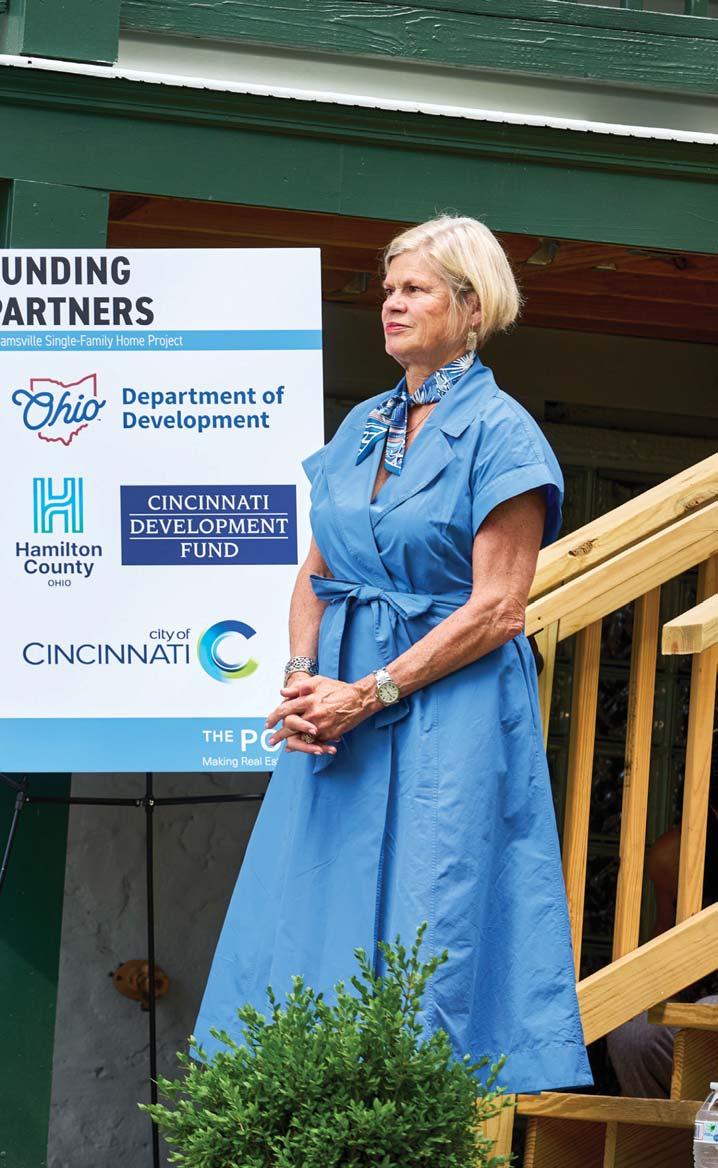
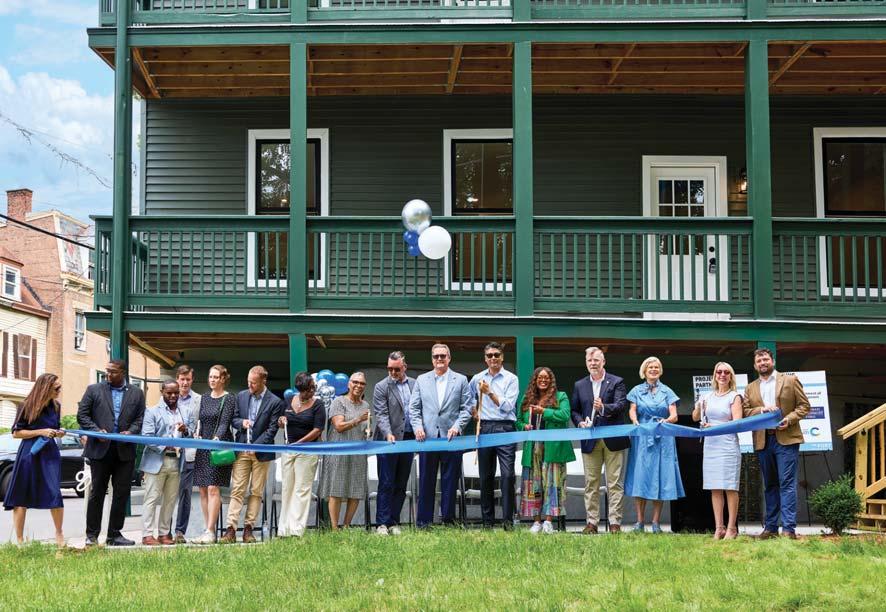
The Port celebrated the first of 18 newly rehabbed singlefamily homes in Sedamsville with a ribbon-cutting on June 11. Partners included the city of Cincinnati, Hamilton County, state of Ohio, and Cincinnati Development Fund.
BY LEYLA SHOKOOHE
America is full of river cities where the proximity to water facilitates a fluid exchange of individuals and economy. But not many have as symbiotic and beneficial a relationship as Cincinnati and Newport, except perhaps Cincinnati and Covington.
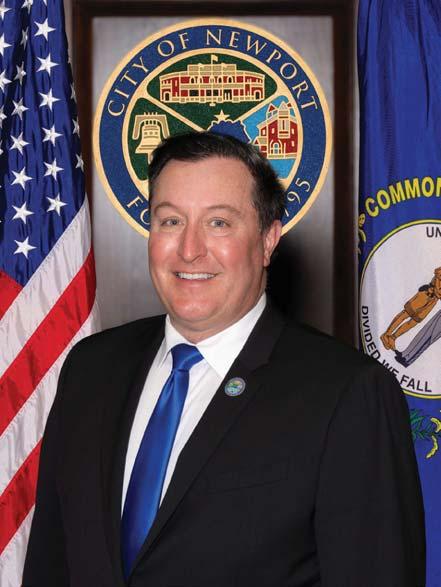
Kentucky’s northernmost river city has its own rich waterfront history, and with a number of ongoing development projects coming online it’s time for the city to step into the spotlight. “We’re all incredibly proud of Newport because it has a rich history and great people and we have momentum,” says Newport Mayor Tom Gui-
dugli Jr., a lifelong resident and member of a prominent Newport family.
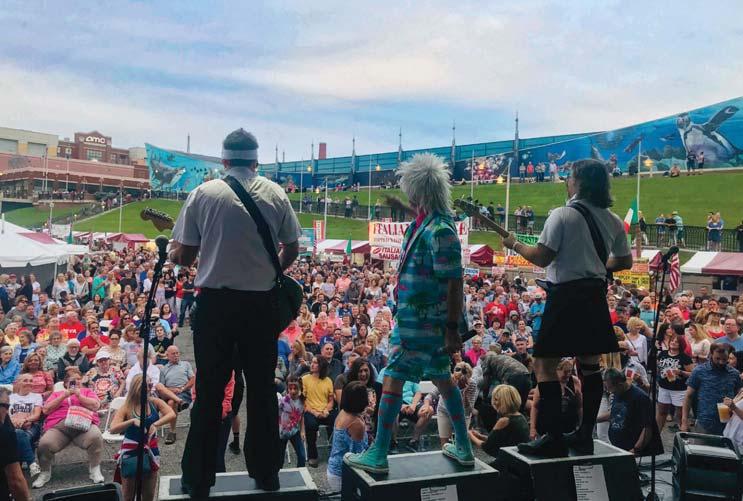
City government is spearheading renovation of the 154-year-old Purple People Bridge and transformationing Festival Park, the asphalt lot below Newport on the Levee that hosts favorite festivals like Italianfest and Goettafest. Ovation, a 25-acre mixed-use development at the western edge of Newport, continues to expand its housing options.
“If you look at the city of Newport and how it was built, it was originally one of the first walking cities built in an era when walking and even cycling
was popular,” says Guidugli. “The basin area is very flat and very walkable, which interestingly are attributes that newly-designed communities copy in a modern way.”
Guidugli, elected as mayor in 2020 and serving as vice mayor before that, travels a fair amount for his position, scoping out how other cities in the country have made their specific infrastructure work. Take Carmel, Indiana, for example, one of his most recent stops. The Indianapolis suburb’s emphasis on careful planning that accommodates pedestrian and bike access is something he wants Newport to emulate.
“We can reintegrate some of the things that are making their community successful on our Monmouth Street corridor,” he says. “It’s possible to make Newport more walkable and more connected through bump outs and other opportunities.”
Monmouth Street was originally a two-way street until retail and growth and increased traffic lead to its conversion to a one-way street heading north toward the river, but talk of conversion back to two-way has been floated for several years now. A feasibility study was greenlit in 2025 to explore its potential. “We’re trying to evaluate how that becomes more walkable as a two-way street with the challenges of it also being a state route (Route 27),” says Giudugli.
ic district 30 years ago in 1996, Monmouth runs through the heart of Newport and connects to Cincinnati via the Taylor Southgate Bridge. Parallel to Monmouth is Saratoga Street, which connects to Ohio via the Purple People Bridge.
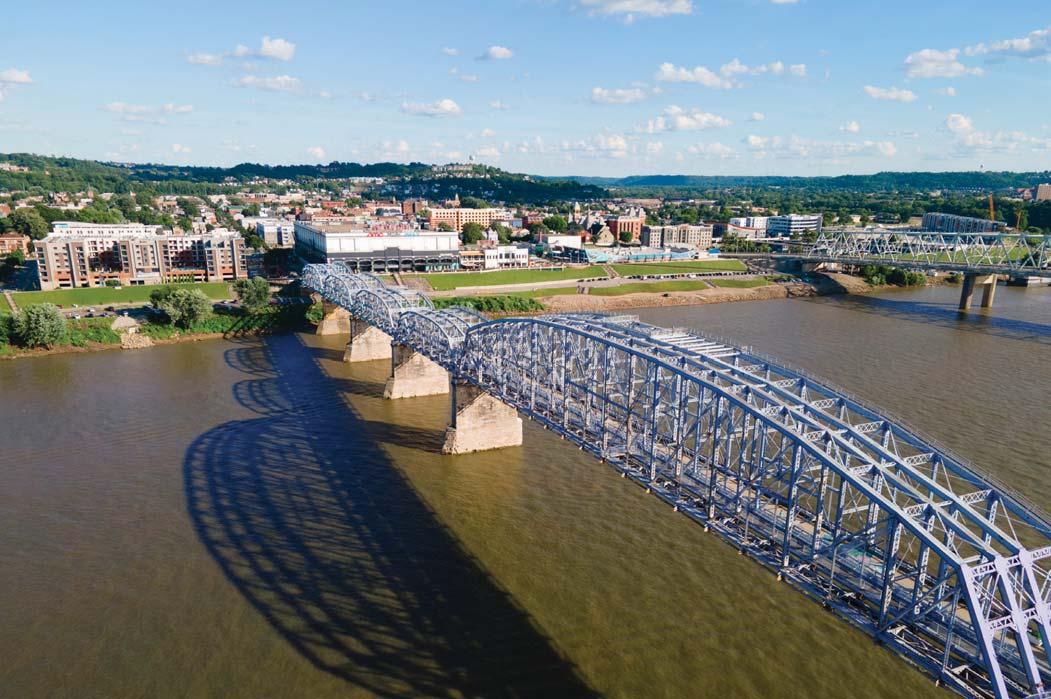
The bridge, opened in 1872, was the first railroad bridge on the Ohio
River here and a key facilitator in stitching together Cincinnati, Newport, and Covington. It was reconstructed and modernized in 1896 to accommodate heavier and more frequent train trips. Originally called the Newport and Cincinnati Bridge, it’s changed ownership and purpose several times over subsequent years, reconfigured to accommodate streetcar tracks, a pedestrian sidewalk, a carriage road, and eventually automobiles.
By 2001, the bridge had permanently closed to automobile traffic. Known then as the Louisville & Nashville Railroad Bridge, it was owned jointly by the state of Kentucky and CSX Railroad. The state briefly explored demolishing it, which would have cost around $5 million. Instead, the city of Newport and Southbank Partners, a nonprofit economic development group focused on regional interests in Northern Kentucky’s urban core, came together to request ownership and keep the bridge standing.
CSX donated its ownership portion to Southbank Partners, and Kentucky donated its portion to the city.
The Purple People Bridge (opposite page) and Festival Park (above) are popular among Newport residents and visitors alike.
Together, the two new owners formed a nonprofit, the Purple People Bridge Company, to take over maintenance and operations. The Kentucky Legislature agreed to paint and restore the bridge, to the tune of $4 million. For more than two decades, the Purple People Bridge Company operated the bridge as pedestrian-only.
Southbank Partners handled dayto-day maintenance, but closures of the bridge in 2021 and 2024 resulted in a strong community reactions. It became clear that Newport residents loved and utilized the Purple People Bridge on a daily basis. City numbers show that around 700,000 people cross the bridge every year, which works out to roughly 1,800 to 2,000 people per day.
“We knew there needed to be more investment in the bridge, so we put it under a microscope to say, What does it need? How do we get to a point where it’s sustainable and enhanced for us and for the whole region?” says John Willis, Newport’s economic development coordinator.
Conversations began in early 2025 between Newport and the Purple People
Bridge Company about the bridge’s future. The groups ultimately decided that it would be best to have the city in charge in order to obtain necessary funding, and so Newport took over full ownership of the bridge in September 2025. “It was a big day for us, and we really got to work right away,” says Willis. “Literally that week we knew there were some housekeeping items we could go in and take care of.”
Newport convened a steering committee of regional leaders in both Cincinnati and Newport to usher in the bridge’s next chapter of life. The
“WHEN ECONOMIC DEVELOPMENT WORKS WELL, IT’S A TEAM GAME,” SAYS BE NKY CEO LEE CRUME. “PARTNERS SUPPORT EACH OTHER AND PICK EACH OTHER UP.”
improvements that we would likely want to do, treating it as an event center is probably not going to get it done,” he says. “So the concept we’ve been rolling with is that it’s a park with a purpose. A park in the sense that you know it’s a community space owned by public entities, but in reality that means it’s owned by every single person who walks on it.”
The Purple People Bridge is the longest pedestrian bridge in the U.S. It currently has an 18-foot-wide multi-use path, a 6-foot-wide walking path, and an additional 17-foot-wide unused space. The committee is reimagining the empty stretch as a flex space suitable for activities and activations.
“The Purple People Bridge has a protected bike path and is one of the most activated corridors in the entire region for walkers and bikers,” says Guidugli. “We’re really excited about reinvigorating our partnership with the city of Cincinnati and all the agencies that are going to be available to support and make this a truly special place.”
of priorities.
“We think bridge usership could be one million people a year with more activation around,” says Willis. “People rely on it to get to things over in Cincinnati, like Bengals and Reds games, they’re walking over to festivals in Cincinnati and vice versa, and they’re also walking to work.”
BE NKY Growth Partnership contributes research and analysis to help Newport, Campbell County, and all Northern Kentucky jurisdictions make the case for new investment from prospective businesses. The economic development organization has helped Newport align major projects with broader regional growth goals, including the Purple People Bridge. “When economic development works and works well, it’s a team game,” says BE NKY CEO Lee Crume. “Partners support each other and pick each other up, including working with Newport on the bridge. We have a channel of work we call Data-Informed Community that creates content or research and data.”
committee introduced the People’s Bridge Project as a collaborative campaign to “reinvest in infrastructure that connects us,” according to a presentation the group gave to MeetNKY, Northern Kentucky’s tourism bureau, last year.
During the Purple People Bridge Company era, the bridge’s business model entailed hosting various private and public events. Anyone could host an event on the bridge for a fee. The process worked, but Willis says it isn’t practical to use that model at the scale necessary for long-term sustainability and success.
“With the level of infrastructure
That partnership began with much-needed permanent repairs on the Cincinnati side. As a measure of goodwill, according to Guidugli, Newport stepped forward to secure partners and dollars to make that permanent fix. Newport was then able to secure $2 million in funding from Kentucky’s state budget for fiscal year 2027-28, specifically for an LED lighting concept on the bridge.
The Cincinnati Regional Chamber is in the early steps of commissioning a lighting study of all Ohio River bridges, and Willis reached out to bring Newport into the conversation. He says a full-scope engineering study of the bridge is also on Newport’s list
During the Purple People Bridge closure in 2024, NKY Port Authority Executive Director Christine Russell came away from a community meeting with real enthusiasm for accelerating the bridge’s reopening. It was just before Riverfest, the start of the Bengals season, and the latest iteration of BLINK. The bridge was vitally important to keep Northern Kentucky in the conversation among the region’s key cultural events.
“She brought some focus and attention to it and got the initial dollars to get it shored up and get it opened,” says Crume. “BE NKY, Greater Cincinnati Foundation, MeetNKY, Procter & Gamble, Western & Southern, Eastern Row Historic Foundation, and RJE Furniture all
contributed dollars to get the bridge reopened. I think that process brought it to the city of Newport’s attention saying, Hey, we need to think of this thing as an amenity in a different way. And credit to Newport for picking up the ball at that point and saying, OK, now we’re going to run with it.”
Bridge renovation isn’t the first time Newport has made an effort to redefine itself, of course. To many regional leaders, Newport on the Levee served as the first positive catalyst for change in Northern Kentucky.
“Once the Levee was built, you saw the East Side Historic District really pick up in Newport,” says Justin Otto, Campbell County’s assistant county administrator who worked for Newport on the Levee when it first launched. “You
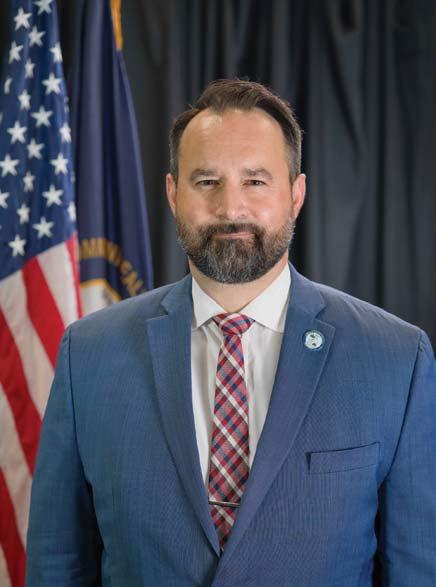
saw other developments on the river after that, including The Banks on the Cincinnati side and Covington’s riverfront redevelopment. I feel that the Levee was really the first time we collectively said, We can do this.”
Campbell County has 15 different municipalities, with Newport the largest. The county prioritizes assisting all cities with incentives for businesses and developments. “The relationship between Newport and Campbell County is that all economic development projects start at a local level,” says Otto. “The city takes charge and has the vision, but when they need assistance or incentives they come to us.”
Just to the west of the Purple People Bridge you’ll find Festival Park and then a tad further west, at the confluence of the Licking and Ohio rivers, General James Taylor Park. When not occupied
with festivals, programmed by ColdIron Events (which the Cincinnati Regional Chamber recently acquired), Festival Park can feel rather lonesome and empty. Greenery is scarce at the unassuming stretch of asphalt and concrete, other than hillside grass. General James Taylor Park features a bit more opportunity for engagement with benches, picnic tables, and a playground. It also has direct proximity to the massive Ovation development.
“We don’t want to just do one-off projects here and there to beautify the Newport riverfront, we really are looking for a coordinated strategy,” says Willis. “We want more seamless connection between the riverfront and Newport’s residential areas, including Ovation. The official scope of our riverfront project is going to be a $16 million investment running from where the old Fourth
Newport was originally built in an era when walking and cycling were popular, says Mayor Tom Guidugli Jr., and the city is focusing on a number of development projects to enhance its walkability and connectivity, from the Purple People Bridge and Riverfront Commons to Festival Park and General James Taylor Park.
The city of Newport took full ownership of the Purple People Bridge in 2025 and has been working on critical maintenance repairs as well as a long-term vision for how to fund operations. The state of Kentucky is investing $2 million for LED lighting on the bridge.
The city is remaking its two riverfront parks to be community assets instead of event-focused spaces, investing a total of $16 million. The projects are expected to be completed in 2028 to coincide with completion of the Fourth Street Bridge replacement on the Licking River.
Street Bridge was on the Licking all the way to the Purple People Bridge.”
That investment allocates $8.5 million for a design-build agreement to overhaul Festival Park and $7.5 million to refresh James Taylor Park. Funding comes via multiple sources, including grants from OKI and the state of Kentucky as well as direct Newport funding.
“We’ve talked for decades about revitalizing and revamping these parks, and it’s exciting to see it all come together at once,” says Willis. “Festival Park has been home to Newport’s festivals for decades and that will continue, but instead of it being a gravel lot it’s going to be a beautified green space with a multi-use path throughout. It’s a great example of a public-private partnership and that’s unlocking multiple funding sources.”
overhaul is estimated to take about 18 months to complete. Newport led a number of community engagement sessions with local constituents to get their perspective on how these parks should be reimagined.
“Costs are always the top prohibitor when it comes to these things,” says Willis. “But in terms of how our communities are connected to the riverfront and what people wanted to see in the riverfront, the message that came through those sessions was that people wanted the parks to feel like a place where they could go enjoy as a community space, not just a place where festivals can set up.”
Guidugli agrees. “The green space, the investment in trees, and the beauty that occurs on the Cincinnati side of the river is finally going to be matched
from Newport,” he says. “We hope that at the conclusion of these projects we’re going to hear that our riverfront parks collectively between Newport and Cincinnati are the best walking and cycling environment in the country. We’re on our way.”
The transformation aligns with Riverfront Commons, the Southbank Partners project aiming to unite Northern Kentucky’s riverfront communities. The 20-mile paved riverwalk stretches from Devou Park to Pendery
“WE’VE TALKED FOR DECADES ABOUT REVITALIZING AND REVAMPING OUR PARKS, AND IT’S EXCITING TO SEE IT ALL COME TOGETHER,” SAYS JOHN WILLIS.
Park and touches the cities of Bellevue, Bromley, Covington, Dayton, Ft. Thomas, Ludlow, Newport, and Silver Grove. The project’s goal is to connect these communities and bring more visitors to each.
“Newport’s riverfront is a big chunk of that trail system,” says Willis. “It should come online a little bit before, but around the same time as, the Fourth Street Bridge is completed to reconnect Newport over to Covington.”
The Fourth Street Bridge was demolished in early March. As part of its $100-million replacement project, slated to be completed in 2028, the new bridge will feature two driving lanes in each direction as well as a 12-foot-wide path for bikes and pedestrians.
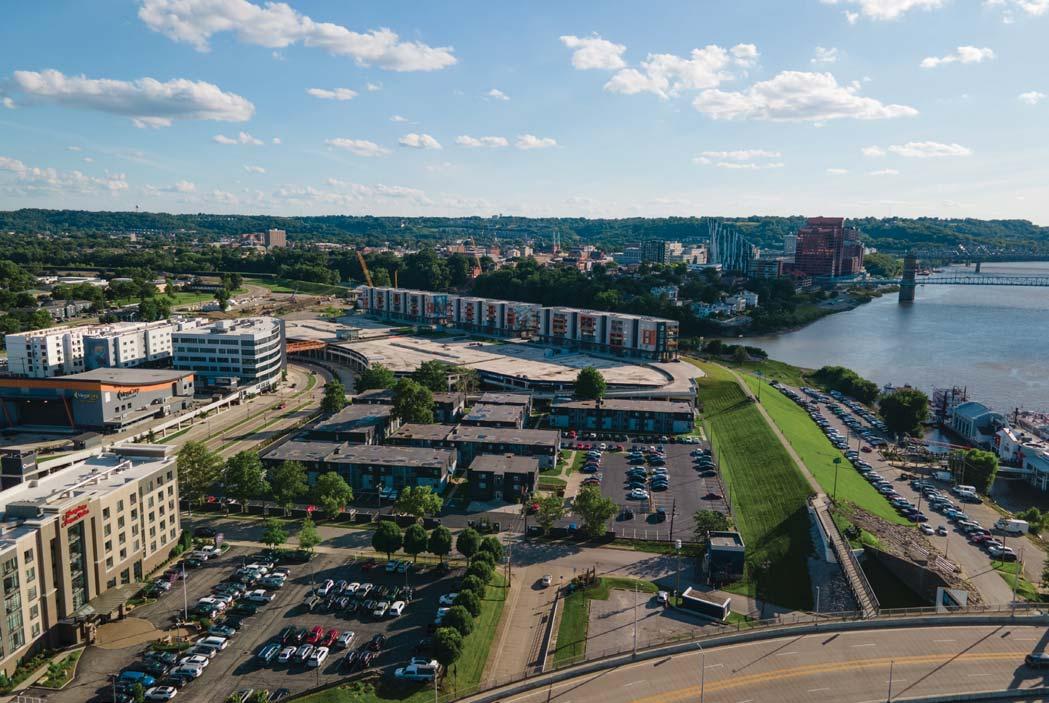
“It’s going to dramatically improve our connectivity, walkability, and cycling,” says Guidugli. “The idea is continuous improvement of all of our assets and investment, but not doing it alone as the city. The state is heading up the Fourth Street Bridge. We’re adding enhancements, but they’ve taken over the entire expense of that project, which is significant.”
The Ovation development is one of the largest mixed-use developments curently underway in Kentucky. Billed as a 25-acre waterfront resort, it’s from the Corporex real estate development firm headquartered in Covington. Across the five blocks that comprise Ovation are MegaCorp Pavilion, three condominium buildings collectively called the Boardwalk residences, a Homewood Suites by Hilton, a Class A office building, plaza-level retail, two bars, and a St. Elizabeth’s Physicians office.
“What’s come out of the ground is amazing, and there is so much potential still to come,” says Guidugli.
“These are brand new concepts that weren’t available in our riverfront footprint, and it all sits on the pedestal of parking. The area around it isn’t even halfway complete to its potential, and there will be new projects announced soon.”
A Residence Inn by Marriott from local developer Keystone Hotel Groups is being located be just south of the Ovation development on Central Avenue. A new apartment building at the former World Peace Bell site at Fourth and Monmouth streets will break ground in the fall. Further south, Norwood-based developer PLK Communities (Factory 52) is transforming the long-vacant Newport Steel industrial site into a 342-unit community of townhomes and apartments. The city of Newport
approved a $100 million industrial revenue bond for the development.
“Initially PLK was going to include a commercial aspect and a resident aspect, but we pushed a little bit to have more residential density,” says Willis. “It’s going to bring a lot more residents to the neighborhood and more people who are wanting to spend money at our businesses in Newport, so we’re just really excited.”
While the next several years will transform the face of Newport, Guidugli hopes his city’s spirit and sense of community remain constant. “None of it happens without our residents, our businesses, our staff, our community partners, and all the volunteers helping shape our future,” he says.
“We work as a team on all fronts, and I think that’s what makes Newport a place businesses want to invest in and residents feel connected in. I think our best days are ahead of us.”
The Ovation development continues to fill out at the confluence of the Ohio and Licking rivers. General James Taylor Park on the riverfront is scheduled for an overhaul.
DESPITE A COVID HIT, 4EG’S MULTI-CITY BAR PORTFOLIO CONTINUES TO THRIVE.
BY ELIZABETH WOOD
It’s a Saturday evening in May. Pilar, a rum-forward Ernest Hemingway-themed bar on downtown’s Court Street, is thrumming with an eclectic crowd: some pre-game FC Cincinnati fans, a long-haired pirate-esque man with a laptop at the bar, a young couple with a baby on the patio, and two fiftysomething men perched casually in the open-air window frames who could have just stepped out of a Key West open-mic night.
Reggae music hums in the background. The bowels of a wooden sailboat hang over the bar (a bit precariously) and are draped in fishnets. Candles flicker at the corner tables, inviting the type of brooding conversation Hemingway himself might have indulged in after a few drinks.
The bartenter greets me with a warmth that shouldn’t be unusual but nonetheless strikes me as refreshing. I order a lime-and-grenadine ditty that tastes like sunshine and seabreeze. I am utterly transported to the surf and sensibilities of Hemingway’s tropical paradise.
This vibe, of course, isn’t by accident. The colorful monkey wallpaper and weather-worn walls walk
a delicate line between authentic and charicature, exactly as it was intended—as is every drinking hole in the 4EG family.
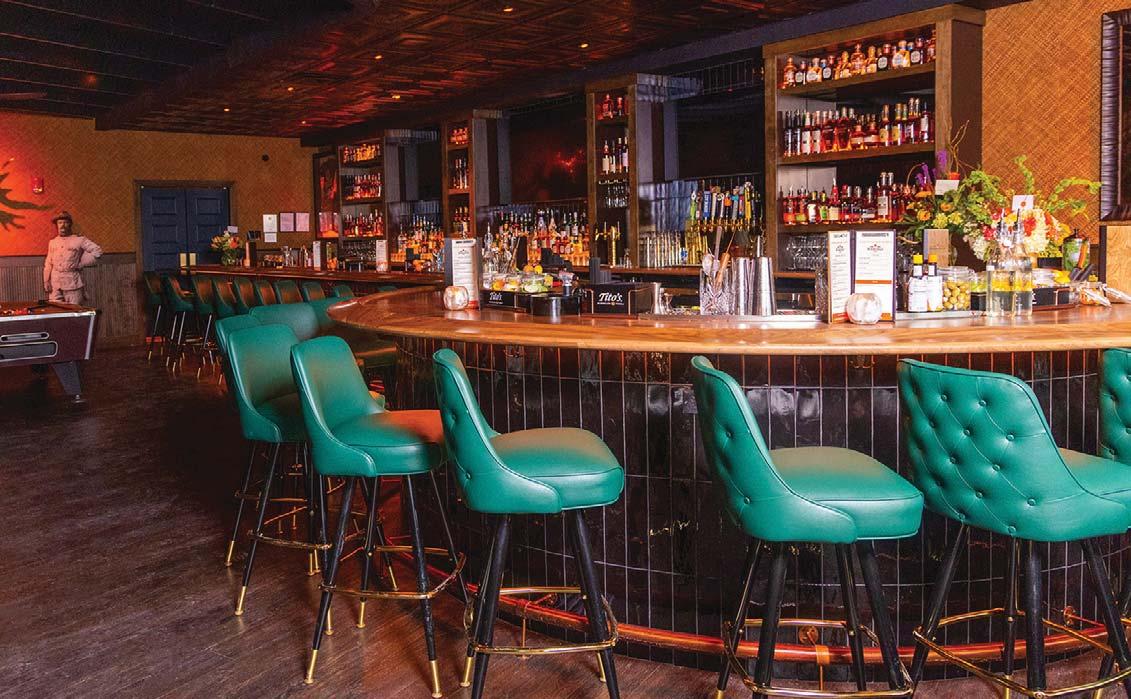
Unique, well-designed bars have become a hallmark of the 4EG group over the past three decades. Iconic spots like Igby’s, Japp’s, and The Lackman are household names for young and older professionals alike, while newer bars such as Over-the-Rhine’s Nice Life and Rosedale attract the next generation of social seekers.
But 4EG’s success isn’t built on good design alone—or even creative cocktails, market savvy, or capital capacity. It’s about something much simpler, yet much more challenging: the art of hospitality.
Impressive as Pilar’s tropical vibes are, it’s one simple detail that could have easily been glazed over that’s most notable: a bucket of free ponchos on the bar. The sign reads Need one, take one
Rain had been drowning the region for days, and this subtle kindness is the artful mark of a thoughtful host. It’s the signature of a proprietor who truly understands the art of hospitality. Perhaps it is that ethos, more than any market timing or providential investment, that’s kept the 4EG family of bars largely alive and well over the past 30 years.
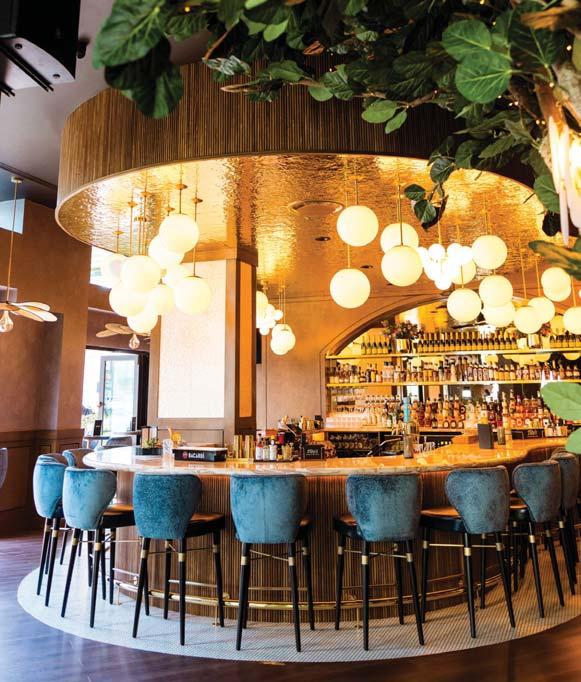
Pilar is one of 13 Cincinnati bars currently under the 4EG umbrella, which also includes seven bars in Chicago, two in Columbus, and one in Naples, Florida.
The group has evolved into a bit of an anomoly in the hospitality business. Not only did it survive the turbulance of Covid, but in a post-Covid era when many bars are still struggling to rebuild their core clientele, 4EG is not only thriving but aggressively expanding across geographical markets
and product verticals.
While there’s no single ingredient that makes the team’s hospitality successful, a few foundational tenets have kept the group grounded. But before we get there, we have to understand how 4EG got here. That story begins in Oxford, Ohio.
ACOUPLE YEARS AF-
ter graduating from Miami University, a few friends floated a question among themselves: Could we open a bar? Bob Deck, Ben Klopp, and David Halpern had been bartenders in Oxford while in school, manning the doors and drafts at then-iconic haunts like First Run and Skipper’s Pub & Top Deck. The part-time bar jobs were fun and flexible at the time, but in hindsight they were laying the foundations of good business acumen.
“We took bits and pieces from everything we learned, the good and the bad,” says Deck, one of three managing partners of 4EG. “To this day, we always let our staff comp whatever
they want. We’ve never not allowed them to do that. It’s just one of those things, from us working in bars for so long, to recognize how much better it would be for them and the customer experience.”
While Oxford’s lively High Street had provided good gigs in college, the troupe of twentysomethings weren’t sure they could make bar life into a business. Klopp had been a finance major, Halpern had a sociology degree, and Deck was a practicing chiropractor in Charlotte, North Carolina. None of them expected to embark on a career-long journey into hospitality.
“We saw it as a way to pay the rent and have fun,” recalls Klopp, a managing partner who helped launch Chicago’s aliveOne bar in 1996. This was before “4EG” had established itself as an entertainment group. At the time, the bar was intended to be a one-off project. “The plan wasn’t to get into the bar business for 30 years,” says Klopp.
Come 2001, now with Deck on
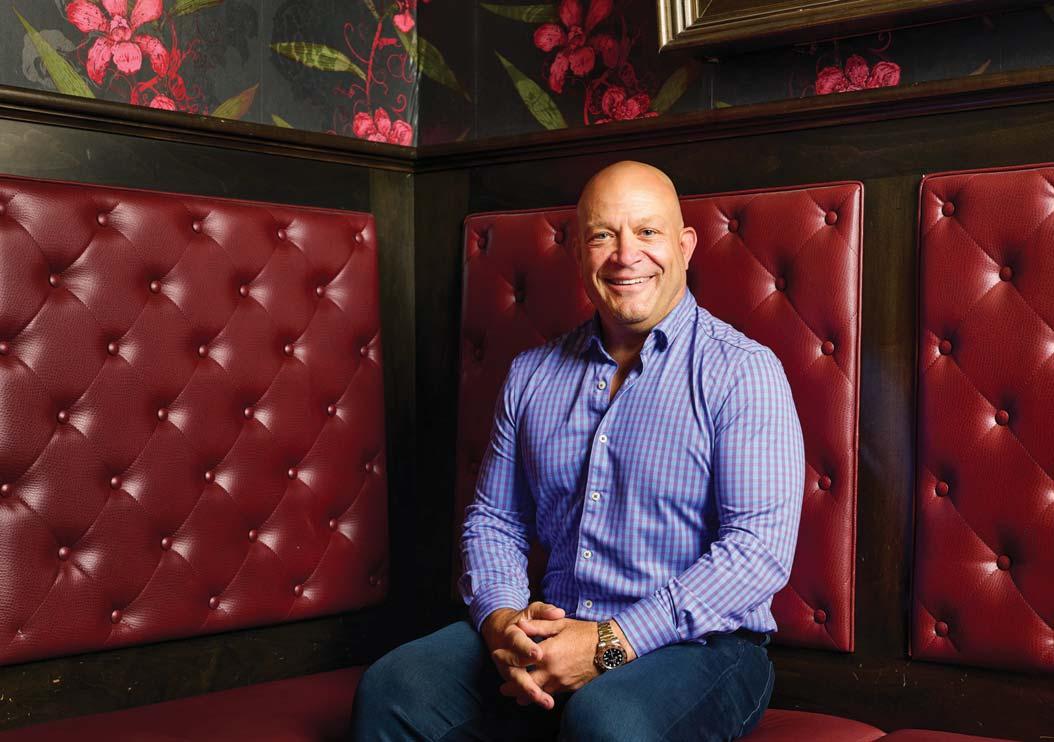
4EG Managing Partners Ben Klopp (above) and Bob Deck (opposite page at The Righteous Room) now have more than 20 bars in their portfolio.
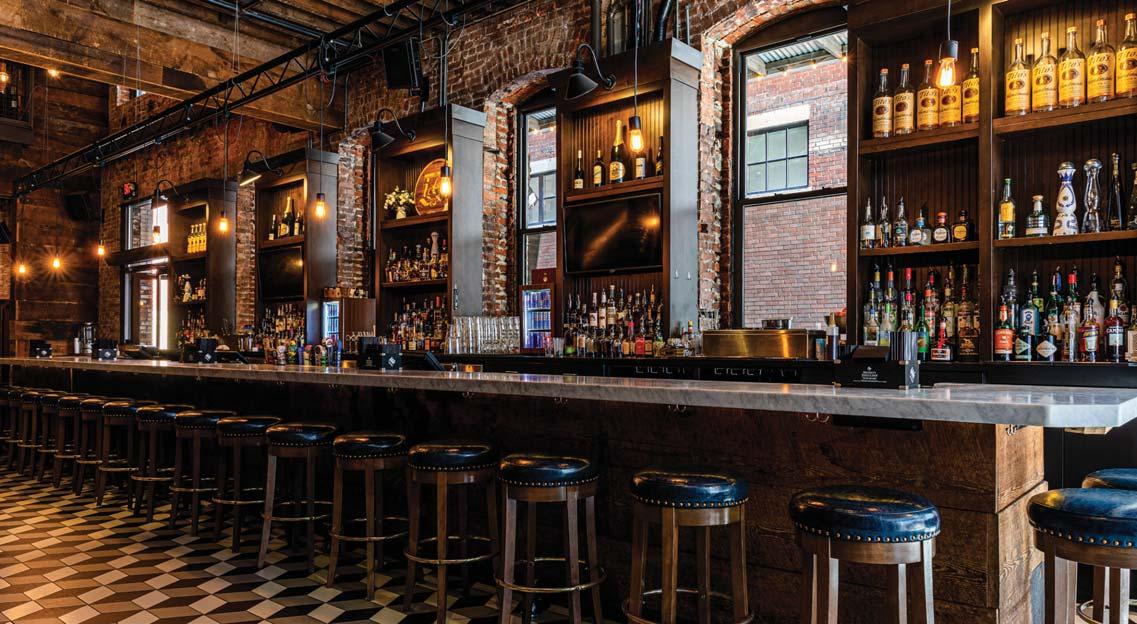
4EG opened Igby’s in 2012 next door to Boca and Sotto restaurants downtown.
board, 4EG opened a second aliveOne in Mt. Adams and took over ownership of Mt. Adams Pavilion. Even at that point, “we had no intention really that it was going to set out to be 4EG or this big company,” says Deck. “It was really about opening up small, individual, very cool bars that we knew our friends and the neighbhorhood would enjoy.”
In fact, much of 4EG’s early customer base consisted of fellow Miami grads who had transplanted to Cincinnati and Chicago post-graduation, he says.
In those early days on shoestring budgets, the ownership crew rolled up their sleeves to get the work done, purchasing dilapidated bars and zhuzhing them up to become their own. They hand-painted the walls and scoured second-hand light fixtures. At night, they took turns managing and operating the establishments.
Word spread. People came. One bar turned into two. Two bars became three. Within a few years, those “one-offs” were officially a network of nightlife destinations. “Every one of
them was unique,” says Deck. “We built them for the neighborhood they were in.”
Eventually, the owners made their first leadership hire outside of bar staff: an event coordinator to help market and manage larger events. The portfolio was expanding, but the operation still felt largely homegrown. Deck and Klopp oversaw the growth of the Cincinnati locations, while Halpern helmed expansions in Chicago, which were slightly outpaced by the buzz of Cincinnati’s urban-core growth. Then, everything changed when 3CDC entered the conversation.
Call it kismet or just lucky timing, but the 4EG guys had hit their groove at the same moment development juggernaut 3CDC was looking to revitalize downtown Cincinnati’s central business district. Around 2007, the nonprofit organization approached 4EG about a vacant location across from the Aronoff Center for the Arts.
It was a risk for both parties: 3CDC had a big vision, and 4EG
was still a relatively scrappy group of young professionals. “No normal bank was going to fund that,” says Klopp.
And yet the two groups took a chance on each other. For 4EG, it was their first foray into a ground-up entertainment concept that relied on architects and construction companies.
“We fell in love with that because you’re creating stuff from a blank slate at that point,” says Deck.
The vacant space became The Righteous Room, a concept catering to the downtown after-work business crowd. “I wanted to have the best happy hour in the city,” says Deck. Seventeen years later, The Righteous Room is still known for luxe leather seating and half-price drinks 4-7 p.m.every weekday.
Quick on its heels came The Lackman in 2010, a gamble in then-largely undeveloped Over-the-Rhine but a golden opportunity nonetheless. Its location at 12th and Vine streets was prime real estate in what would eventually become a buzzing hub of high-concept restaurants and bars. Once again, the vision for this new
bar was to align with the burgeoning population of the neighborhood— casual enough for nearby apartment renters to pop down for a drink before dinner but also classy and quiet enough for a tete-a-tete between professionals.
Soon after, in 2012, came Igby’s on Sixth Street downtown, designed to complement David Falk’s Nada around the corner and Boca next door, which was followed immediately by Sotto in the space below Boca. Notably, those Boca Restaurant Group restaurants still experience monthlong waitlists for reservations, reflecting a kindred spirit of hospitality that propelled 4EG.
Over the next few years, the wins kept coming for 4EG, with expansions into “lifestyle” centers like Liberty Center’s The Roosevelt Room in 2017. Before long, 4EG had grown from a band of fraternity brothers to full-scale entertainment empire. Then Covid hit.
LIKE EVERY BAR AND restaurant, the Covid pandemic sent 4EG spiraling. There was the immediate shutdown, of course, but there was also the ongoing and ever-changing restrictions across three different states—Ohio, Illinois, and Kentucky—that intensified an already herculean challenge
to survive.
“In Covid, what saved us is we were very decisive,” Klopp says. The leadership team met via Zoom every morning and scavenged for every loan and grant available, divvying up research and application processes to cover as much ground as possible.
“It was every day waking up and having convserations about how to get through the next day,” says Deck.
Barriers were erected between tables. Mask and social distancing protocols were communicated to staff. To-go drinks were offered to customers. The founders stayed positive, buoying spirits among the furloughed staff even when they themselves felt
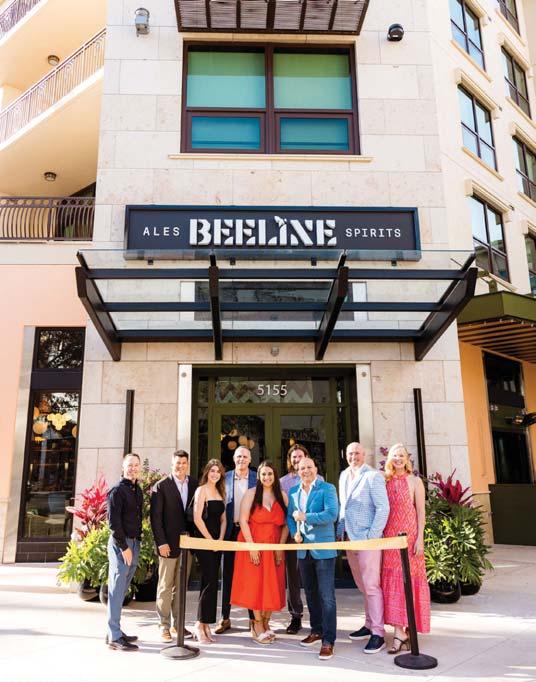
4EG owners and staff helped celebrate 4EG’s first bar in Florida, Beeline Mercato in Naples.
BAR FLIES
Bob Deck, Ben Klopp, and David Halpern bartended in Oxford while attending Miami University and, after graduating, kicked around the idea of opening their own place together. They launched their first bar in Chicago in 1996 and first Cincinnati spot in 2001, and today 4EG owns more than 20 bars in four cities.
EMPLOYEE FOCUSED
Like all public-facing businesses, 4EG bars were crushed by the Covid pandemic, but the company managed to retain much of its staff thanks to a collective culture of employee support and growth. Company leaders know that staff satisfaction flows into quality customer service.
NEXT GEN 4EG continues to stay on top of hospitality trends, offering options for Gen Z’s new “sober-curious” push as well as the rising popularity of THC beverages.
like they were drowning. “They all were fearful,” Deck says. “You’re the person that they look up to. You’re their employer and the leader, and you didn’t have all the answers other than just trying to talk to them about staying positive.”
It was when bars were allowed to re-open, even if only as shells of their former selves, that the 4EG leadership team fully realized the strength of their staff—and not just their staff, but their collective culture. The culture had kept the business going, not just for its customers but for its employees. Despite the turbulence, many of the 4EG staff stayed.
Even before Covid, 4EG had established a culture that cared about its workers, knowing that employee satisfaction would flow into quality customer service. Unlike most bar conglomerates, 4EG offers staff a 401(k) plan and health insurance along with flexible part-time work for students paying their way through college. The owners have also designed upward career paths for those with families to support and aspirations to advance in the hospitality industry.
That said, Covid caused casualties to the 4EG portfolio. Its Keystone Bar and Grille locations in Hyde Park and Covington collapsed. The extra pressure of food—and all the staffing and storage required to keep food service up to par—just wasn’t worth it in 4EG’s post-Covid plan. In fact, that realization was a silver lining in an otherwise trying season. “We realized what we do best and who we are, and that’s where we set our sights on growth,” says Deck.
To this day, almost none of the 4EG bars serve food. Deck notes that colleagues in the food business still struggle more in the post-Covid
world due to frequent fluctuations in food pricing. That’s not to say 4EG will never serve food, but for now the company finds steadier ground in sticking to its strengths in bars.
In the end, hospitality won for 4EG. Or rather, hospitality is winning. The leadership team continues to be dogged about treating team members with respect and giving them ownership in the collective success of representing a company they can be proud of. It all harkens back to those lessons
“HOSPITALITY IS ALWAYS JUST THE BUSINESS OF MAKING PEOPLE FEEL GOOD,” SAYS 4EG CO-OWNER BEN KLOPP. “PEOPLE WANT TO BE TREATED WELL.”
from undergrad at sticky-floor bars in Oxford—every member of the 4EG founding team remembers what it’s like to be on the other side as hourly staff working for tips.
“Hospitality is always just the business of making people feel good,” says Klopp. “When people come in, they just want to be treated well.”
TODAY’S BAR SCENE IS shifting yet again, and not just for 4EG but for everyone in the drinking industry. According to alcohol marketing agency OhBEV, Gen Z is the most alcohol-aware generation to date. Generally speaking, Gen Z is highly attuned to wellness trends such as clean eating, fitness, and mental health and recog-
nizes the potential negative effects of alcohol on long-term mental and physical health.
For many, adapting “sober-curious” seasons have become trendy. Heavy drinking is no longer viewed as rite of passage; rather, self-awareness and individual health priorities are viewed as aspirational. Studies also show that because Gen Z was raised in a decade of economic uncertainty they’re more fiscally aware than previous generations, making their spending habits more tightly controlled.
The bottom line: When Gen Zers do imbibe, they’re highly selective about where and how they spend their dollars. “After Covid, we saw with this new generation that they’re more into the experience,” Deck confirms. “If they were going to go out and spend money, they wanted to be intentional about it.”
To adapt to these changing behaviors, 4EG has added full-scale mocktail menus designed with the same
intentional curation as a traditional cocktail menu. They’ve also doubled down on selections of THC beverages and non-alcoholic beers. And 4EG recognizes now, more than ever, the power of providing a holistic hospitality experience.
Going forward, 4EG is pouring heavily into two brand lines—Beeline and The Roosevelt Room—that do well in suburban lifestyle centers such as Liberty Township and Easton Towne Center in Columbus. The company’s fourth Beeline location is currently under construction in Deerfield Township.
4EG established a test stake in the Florida market last year with the opening of Beeline-Mercato. It was a fortuitous connection made through the large commercial developer North American Properties, which owns Newport on the Levee, who foresaw 4EG’s Beeline concept as a perfect fit for its new development in Naples.
The 4EG Chicago arm remains
largely dedicated to high-end urban neighborhood haunts primly placed in desirable alcoves like Lincoln Park, Wicker Park, Logan Square, and Bucktown. They aren’t nightclubs per se, but nor are they dives. “Just well-designed, comfortable, friendly neighborhood bars with a great cocktail program,” says Klopp.
Regardless of market trends and consumer behavior, 4EG’s nonnegotiable tenet will always be the genuine spirit of hospitality. It’s the warm greeting from the bartender, the thoughtful stool selection at the bar, and the intentionally designed menu that’s both fresh and familiar.
“We have to be that place they pick and know they’re going to have a good time,” Deck says. “When they do have a drink or two with us, we want them to leave with a better experience than when they came in.”
Sometimes, successful hospitality is as simple as a bucket of ponchos on the bar.
The Roosevelt Room concept is in Rookwood/ Norwood (above), Liberty Township, and suburban Columbus.
BY SARAH M. MULLINS
Across the U.S., the legal industry has been reshaping itself through mergers, acquisitions, and expansions at an aggressive rate. The activity is driven by clients who are growing faster, operating in multiple markets, and expecting their outside counsel to keep pace.
According to law firm consultant Fairfax Associates, there were 59 completed law firm mergers in 2025, representing an 18 percent year-over-year increase from 2024. Its merger research team tracked 31 completed mergers in the first quarter of 2026 alone.
Fairfax reports that this push for mergers is fueled by clients concentrating their spending on larger firms with broader capabilities, as well as the demand for firms to increase practice depth and efficient resources, including investments in talent and AI. Firms nationally are feeling pressure to merge in order to remain competitive and stay relevant.
Many of these trends are playing out at Cincinnati region law firms. Graydon Head & Ritchey kicked off the recent round of mergers in 2023, combining with Columbus-based Bricker & Eckler. Frost Brown
James Zimmerman

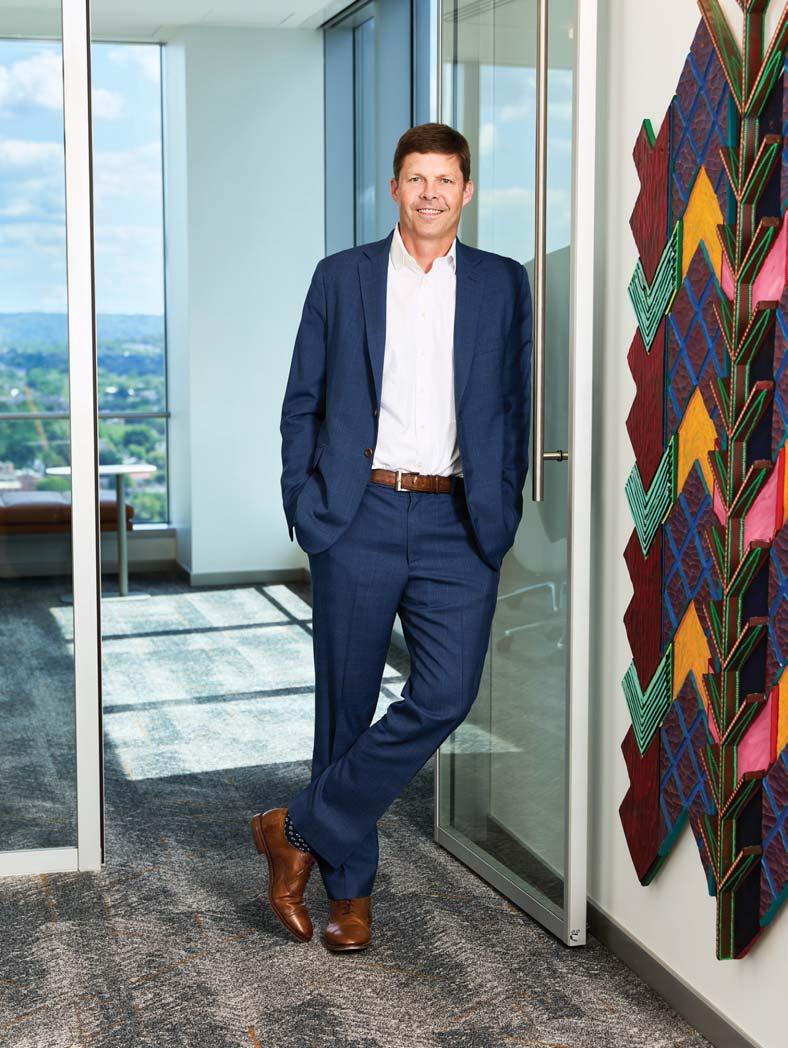
Todd followed in 2025 by announcing a merger with New Jersey-based Gibbons to form FBT Gibbons.
Hundreds of attorneys have been added collectively in recent years at area practices, though the moves look different from firm to firm. Some choose mergers, some are organically hiring, and others are entering new markets from New York City to Tampa, Florida. The moves reflect a shared recognition that the firms best positioned to serve Cincinnati’s business community are the ones that can follow clients wherever they go.
None of the expanding firms describe growth as an end in itself. When leaders are asked why they merged or acquired, the answer almost always loops back to where clients are moving, what clients are asking for, and what clients used to request and now simply expect.
Cincinnati is home to a cluster of law firms that have grown significantly in scale while putting company culture and client service are at the center of growth decisions. Here is how three of them are growing their footprints in the region and beyond.
As the region’s largest law firm, Dinsmore is focused on the idea that size doesn’t mean much unless you can show up where your client needs you. The firm’s merger with Tampa-based Shankman Leone in early 2025 was a move to expand its Florida presence and establish what Managing Partner Joshua Lorentz describes as the only Cincinnati-based law firm with a true coast-to-coast footprint. The firm also made new partner appointments and hired the former chief legal officer of Fifth Third Bank, a move that deepens its leadership bench at the same moment it’s widening its reach.
Lorentz says the Florida decision wasn’t random but a logical next step after watching where clients are going. He says Florida has attractive metro markets where businesses are relocating and where individuals are putting down roots, drawn by the state’s pro-business economy. “If you’ve got an opportunity to follow those clients and be there as they need it, we can also be part of an economy that’s growing itself,” he says. “It just makes a lot of sense to be in that region.”
The merger with Shankman Leone fit that thinking, as did the earlier merger with Orlando-based Mateer and Harbert—both followed the same logic of finding a firm that’s served its community well. Lorentz says Dinsmore’s approach to clients and culture is critical, and with similar cultures the combined teams can accomplish more.
The Florida mergers opened doors to new areas and strengthened existing ones. Dinsmore was already strong in healthcare and real estate, central industries in Florida’s economy, and the mergers deepened its bench. Shankman Leone also brought expertise in franchising, a significant industry in Florida in which Dinsmore had limited prior experience.
Lorentz describes the firm’s expansion philosophy as a combination of getting deeper in areas where they’re already strong and adding capabilities they didn’t previously have. The Florida mergers did both. “We always try to get deeper of what we’re already good at,” he says, “and try to expand into new areas that maybe we don’t have a lot of expertise in.”
In addition to Florida, the firm made its Texas debut in early 2024 with a Houston office marking entry into one of the largest U.S. cities that’s a hub for major industries like oil and gas, technology, and healthcare.
For a Cincinnati-area business that already has a relationship with Dinsmore, Lorentz says the firm’s national footprint is an advantage. “We’re Cincinnati-based but we’re operating outside of Cincinnati,” he says. “We’re a law firm that has your back all over the country, not only geographically but in all practice areas.”
It’s a claim multiple law firms could make, but Lorentz says Dinsmore is not just a national firm with a Cincinnati office—it’s a Cincinnati-managed Cincinnati firm that happens to operate coast to coast. That point of view makes a difference when firm leaders are planning for growth. Lorentz is straightforward about what Dinsmore is looking for in a merger. “Are you talented and likable? Do you fit culturally?” he says.
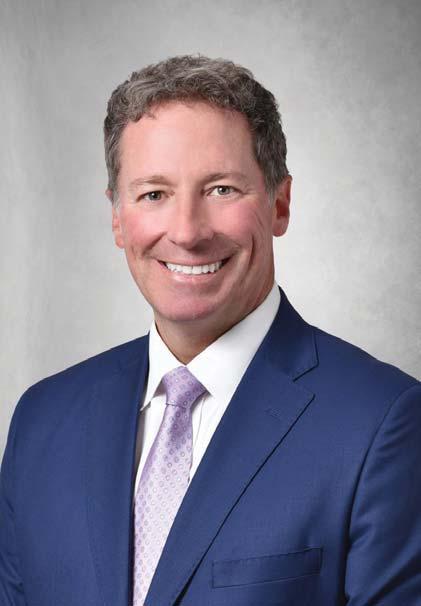
“At least 50 percent is whether you believe there’s a cultural fit.”
He describes the firm’s company culture as focused on conservative budgeting, investing in what matters for the long term, and a positive Midwestern approach to how you treat clients and communities. Firms that share those values are the cultural alignment Lorentz looks for and has shaped both of the Florida mergers.
Talent growth has followed company growth. This year, the firm welcomed back Susan Zaunbrecher, who served as chief legal officer at Fifth Third Bank, as director of special projects and strategic initiatives; she had previously worked at Dinsmore for
“WE’RE CINCINNATI-BASED BUT WE’RE OPERATING OUTSIDE OF CINCINNATI,” SAYS JOSHUA LORENTZ. “WE HAVE YOUR BACK ALL OVER THE COUNTRY, NOT ONLY GEOGRAPHICALLY BUT IN ALL PRACTICE AREAS.”
strength of partnerships—and defining its next chapter.
Taft has enjoyed a busy year, with three mergers in a short amount of time: Sherman and Howard, the oldest firm in Denver; Mrachek in Florida; and Morris, Manning and Martin in Atlanta. The firms added attorneys to Cincinnati’s second largest law practice and gave Taft a presence in markets it had long been serving from a distance.
The firm also opened an office in New York. The Manhattan office was done through deliberate hiring instead of a merger, though the strategy is the same that’s guided the firm’s growth over the last several years, says James Zimmerman, partner-incharge of Taft’s Cincinnati office.
“Our business is so specialized now,” he says. “In order to really provide top-level services to the kind of clients we want to serve and to be able to attract and retain top talent, we need to have a size and a scale that allows us to have really deep expertise in a lot of different areas.”
adding trade regulation expertise that’s become newly relevant in the current tariff environment. Mrachek is a litigation firm that provides Taft access to attorneys already familiar with Florida courts and judges. “We’ve done a lot of business in Florida for many years,” says Zimmerman. “As is the case with many Midwestern law firms, we’ve got a number of clients who are retiring down there, and we felt it was important to have a presence in Florida.”
The approach to each merger followed the same framework, even if the opportunities came about differently. Zimmerman says the firm never sets hard targets—like a goal to be in Denver by a certain date—because that’s a good way to end up in the wrong deal.
28 years. Lorentz was also reelected managing partner.
Company growth has also happened at the brand level. Dinsmore unveiled a new logo and redesigned website earlier this year, its first significant rebrand in several years. The logo update was built around three “Dinsmore diamonds,” each representing what the firm stands for—sophistication, regality, and the
Zimmerman says that the three recent mergers came about in different ways, but still under that same vision to grow in size and expertise in order to attract top talent and clients they want to serve. Denver, Atlanta, and Florida were strategically chosen markets that had been on Taft’s radar and, in many cases, Taft was already working with before merger conversations ever started.
Sherman and Howard brings a deep public finance practice and a presence throughout the Mountain West. Morris, Manning and Martin is a well-regarded Atlanta firm with a strong office in Washington, D.C.,
When deciding on a merger, emphasis is placed on culture fits, and that part of the due dilligence process takes the longest. Taft will consider a potential partner firm’s leadership alignment, how attorneys treat staff and clients, and whether the firm is built around teamwork or individual performance. “The financial terms are obviously important,” says Zimmerman, “but the more important part, and the harder part, is the culture. And with all three recent mergers, it was clear that there was a great fit there and that they care about the same things we care about.”
Opening the New York office was a different approach from how Taft entered the other markets. Taft already had 80 attorneys licensed to practice in New York before the office opened. “It was a little more of an evolution than a revolution,” says Zimmerman. The office formalized a presence that was already there and positioned the firm to compete for the middle market and upper middle market companies with
sophisticated needs.
For Cincinnati businesses that already have a Taft relationship, Zimmerman says the day-to-day service doesn’t change, but if they have a situation in one of the new markets, the firm is there now. “If you have sophisticated needs, we’re a firm that’s deeply embedded in the community,” he says. “We’ve also got the ability to go get the expert wherever that person might be in the country to get your issue addressed.”
Bricker Graydon completed its merger with Wyatt, Tarrant, and Combs, Kentucky’s oldest law firm, in order to add cities, attorneys, and capabilities to its existing offerings. But Cincinnati/ NKY Market Leader and Partner Kent Wellington says the merger was less about expansion and more about deepening the talent bench. “It was not just growth for growth’s sake,” he says. “The combination was much more about fit rather than size.”
The merger resulting in the new firm, now known as Bricker Graydon Wyatt, having roots in major cities like Cincinnati, Columbus, Cleveland, Louisville, Lexington, Memphis, and Nashville. Wellington says the move didn’t just add office space, but was focused on adding attorneys who have spent careers embedded in the communities.
“We have those deep roots that go back generations in the community,” he says. “These aren’t some Johnny-come-latelys to a new city. These are places where we have lived and our parents have lived and our grandparents have lived and are home to the institutions our families were part of. From churches to sports teams to businesses to the arts, we know the people.”
Cincinnati-based Graydon Head
& Ritchey’s merger with Columbus-based Bricker & Eckler added public-sector expertise to the local firm through Bricker’s work with nonprofit organizations, governmental agencies, healthcare entities, school districts, and municipalities. The Wyatt, Tarrant, and Combs merger deepens the bench further by adding strength in healthcare, education, and corporate work. Wyatt’s status as the oldest law firm in Kentucky is a significant credential that signals the kind of long-standing community trust Wellington was looking to align with.
“Deeper bench, broader reach, same commitment to high-quality relationship-driven service,” he says.
That’s their story, and Wellington
says the firm applies it consistently. The mergers didn’t create a new kind of firm, he says, but created a bigger one that can now staff a team across multiple offices, share capacity between markets, and bring specialized expertise to clients who previously might have needed to look elsewhere.
What made the second merger possible, says Wellington, was the success of the first. “Part of the reason we were able to do this second merger as quickly as we did was almost psychological,” he says.
The Bricker & Eckler merger went better than expected, not because of careful planning alone but because of cultural alignment. “We’re real disciplined about culture,” says
Managing Partners Franklin Jelsma of Wyatt, Tarrant, and Combs (left) and Chris McCloskey of Bricker Graydon brought their staffs together.
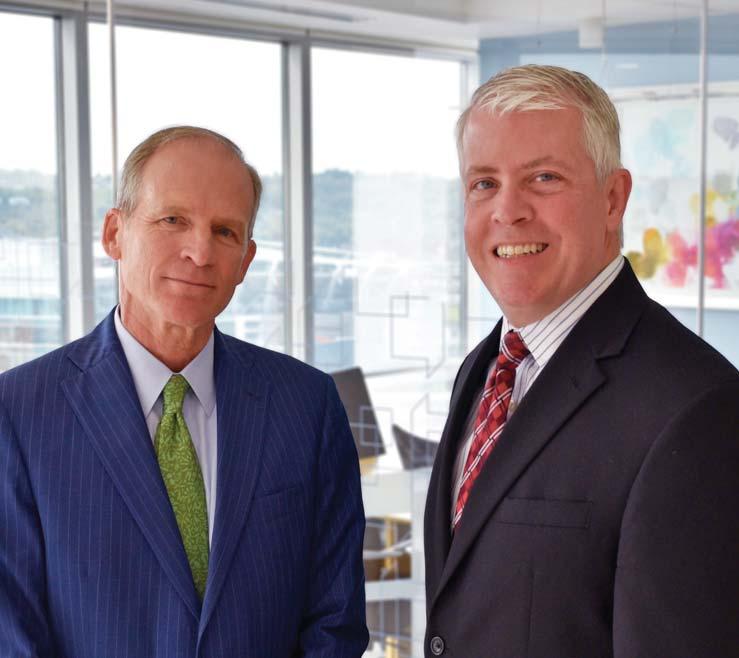
FOLLOW CLIENTS
Dinsmore & Shohl, Taft Law, and Bricker Graydon Wyatt are part of the national trend of legal firm mergers, acquiring access to new markets and new attorney talent.
The moves reflect a shared recognition that the best firms serving Cincinnati’s business community must follow clients wherever they go.
DEEPER EXPERTISE
Merging with outof-town practices allow firms to get deeper in legal areas where they’re already strong and add capabilities they didn’t previously have.
“We need to have a size and a scale that allows us to have really deep expertise in a lot of different areas,” says Taft Partner-in-Charge James Zimmerman.
CULTURE IS KING
Cultural fit might be the No. 1 factor in determining if a law firm merger is going to work. When Bricker Graydon looked to merge with Kentucky’s oldest law firm, leadership found that the new attorneys fit their same profile: good people who are active in their communities, with families and community.
Wellington. “We were confident about the first merger, but I think it exceeded all of our expectations, and a lot of that had to do with culture. There was a lot of humility, a lot of objectivity, giving others the benefit of the doubt, searching for those ways to serve clients differently and then picking the one that serves the clients the best regardless of whether it comes from Columbus, Cleveland, Cincinnati, Louisville, Lexington, or another city.”
Wyatt attorneys fit that same profile, he says: good people, active in their communities, with families and community ties that mirrored what Bricker Graydon valued. “I have thoroughly enjoyed meeting some wonderful people, lawyers and non-lawyers alike, who were part of these merged entities,” says Wellington. “It makes these business deals a lot easier when you like these people and they share common values.”
Existing healthcare and education clients benefit with a significant add to the depth Bricker Graydon already had, and corporate clients gain access to attorneys who can handle sophisticated work across state lines. For clients with legal matters in Kentucky and Tennessee, the firm now has staff who know those communities and have relationships that matter.
“Deeper bench, broader reach” is the throughline, and Wellington underscores that the firm’s reach doesn’t stop at its legal work. The practice has hosted a monthly community forum called the Bridge Series where community leaders, nonprofits, and others come together to share stories and solutions that impact local communities. It’s also been involved in helping keep the ATP tennis tournament in Cincinnati and keep the
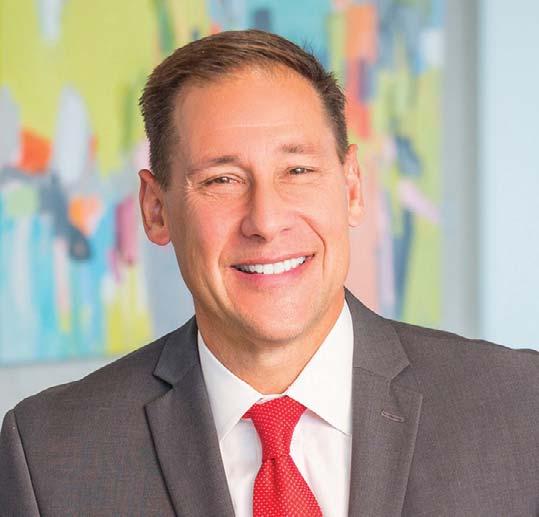
“WE’RE REAL DISCIPLINED ABOUT CULTURE,” SAYS KENT WELLINGTON. “IT MAKES THESE BUSINESS MERGER DEALS A LOT EASIER WHEN YOU SHARE COMMON VALUES.”
MLS Crew franchise in Columbus and is currently engaged in questions around the future of where the Cleveland Browns will play home games. Wellington says community impact is a core value that all firms shared before they merged. “We’re not just impacting the clients,” he says. “Community impact matters. We’re trying to make the cities we’re part of better places to live.”









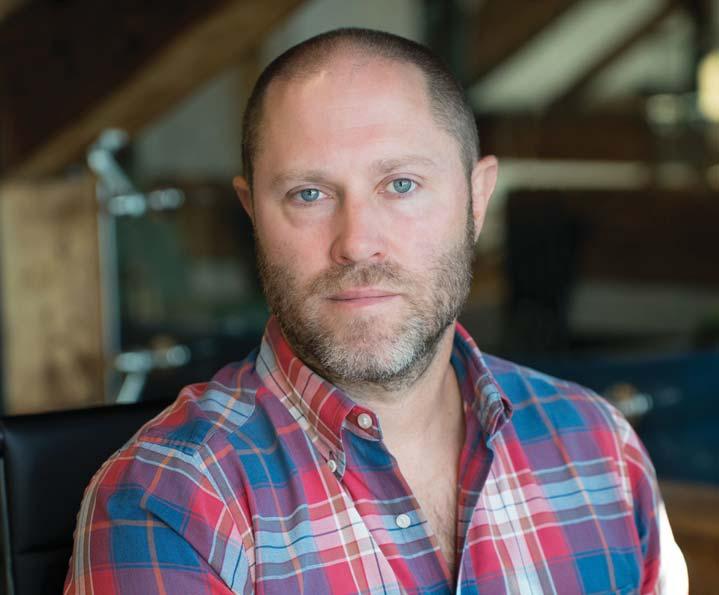
FOUNDER AND PRINCIPAL
RHINE CIVIC PARTNERS
HOW HAS THE COMPANY GROWN AND MATURED SINCE ITS FOUNDING IN JANUARY 2025?
We’ve grown into a sevenperson team and become much clearer about where we add the most value. In that time, our work has broadened geographically and our focus has sharpened into two areas: transformative public and private projects, and communityand neighborhood-scale revitalization efforts supported by patient capital funds. Across both, we’ve matured from being “advisors” to being partners and helping align stakeholders, structuring complex multisource financing, and carrying projects to completion through on-the-ground execution.
ASK ME ABOUT Our development company’s recent rebrand and future goals.
HOW DOES THIS REBRAND REFLECT A NEW ERA FOR THE COMPANY?
Rhine Civic Partners reflects both our roots in Over-theRhine and more importantly how we work—not as a traditional consulting shop, but alongside civic institutions, municipalities, developers, and community organizations to turn ambitious visions into
implementable projects. The name is new, but our leadership and mission are the same. It’s a sharper, more accurate description of what we’ve become.
WHAT TYPES OF PROJECTS DO YOU SEEK TO EMBRACE IN THIS NEXT CHAPTER? We’re focused on projects that sit at the intersection of strategy, capital, and
ASK ME ABOUT My new appointment to board chair, and how workforce investment supports communities.
execution where the challenge isn’t dreaming up ideas but getting them delivered. That includes largescale civic projects and public spaces as well as neighborhood revitalization work that can be accelerated through patient capital and strong local partnerships.
–ELIZABETH WOOD
HOW DO YOU JUGGLE YOUR TWO ROLES WITH GREATER CINCINNATI FOUNDATION AND WCPO? It’s a very intentional rhythm to my day. My mornings start at WCPO, where I’m in the studio for Cincy Lifestyle and filming my “Come Have Coffee” interviews, usually wrapping around noon. Then I head to the Greater Cincinnati Foundation, where the focus turns to philanthropy: connecting people, resources, and ideas to the community in meaningful ways.
HOW DO THESE ROLES COMPLEMENT EACH OTHER? They really come together through people and purpose. Many of the individuals I interview are CEOs, changemakers, and leaders at the top of their fields. I love highlighting not just their success but their journey and how they give back. That’s where the connection to the nonprofit world
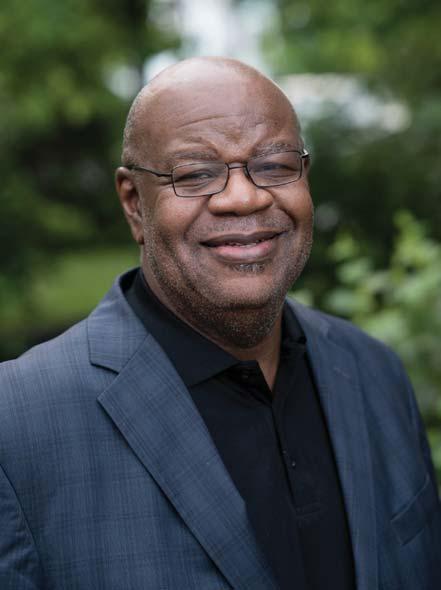
becomes so clear, especially in a community like Cincinnati where generosity runs deep. I get to connect those two worlds—amplifying stories on one side and helping channel impact on the other—and it often starts with a simple conversation over coffee.
WHAT CAUSES ARE YOU MOST PASSIONATE ABOUT? I’m a bridge builder, helping people see that we’re often more alike than we are different. That’s one of the reasons I serve on the board of the Nancy & David Wolf Holocaust & Humanity Center, where the work centers on empathy, understanding, and our shared humanity. I’m always looking for the common thread in someone’s journey. It also shows up in my focus on housing stability and education, because when people have a strong foundation and access to opportunity it opens the door for connection, dignity, and long-term change.
–E.W.
HOW WILL YOU CONTINUE THE WORKFORCE COUNCIL’S MISSION?
I’m focused on partnership, collaboration, and culture to drive more awareness of the Workforce Council’s mission to provide employers with a prepared workforce and connect job-seeking customers to opportunities that build their career readiness. We have an excellent opportunity to foster alignment across our
WCPO 9 TV HOST
COMMUNITY ENGAGEMENT DIRECTOR OF GREATER CINCINNATI FOUNDATION
ASK ME ABOUT The art of straddling the media and nonprofit worlds.
region’s workforce ecosystem to address challenges and opportunities outlined in our recent reports on apprenticeships, youth career readiness, and the construction workforce.
HOW DOES THE WORKFORCE COUNCIL EMPOWER LOCAL EMPLOYERS AND JOB SEEKERS?
We have federal funds to send job seekers to training and help employers upskill or reskill their
staff. During our last fiscal year, we turned $1.5 million of those federal dollars into over $10.6 million in income for the job seekers we trained. We host workshops, seminars, and job fairs where local employers and job seekers have opportunities to connect.
AS MANAGING DIRECTOR OF BLUEROSE SUPPLY, WHAT ARE SOME ESSENTIAL COMPONENTS OF EFFECTIVE WORK -
FORCE TRAINING AND UPSKILLING?
I’m a former economic development professional and now entrepreneur, so I think it’s essential that we have a well-trained and well-developed workforce if we’re going to continue to retain local businesses and attract companies to the area. It’s critical that our schools and local employers maintain a stronger relationship with one another.
–E.W.
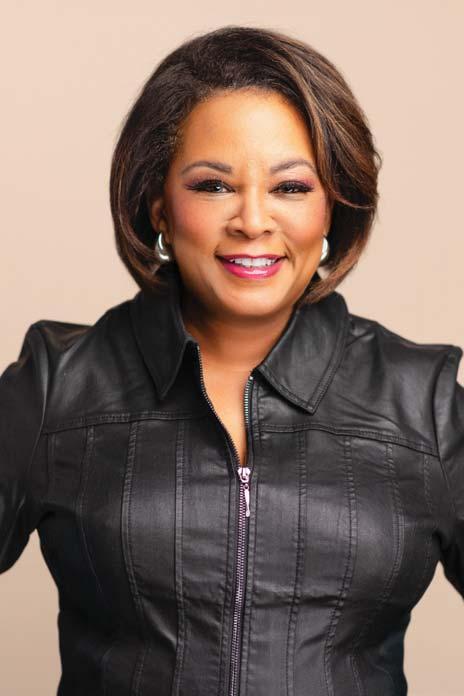
Cincinnati captured the golf world’s attention May 14-17 at the Kroger Queen City Championship
Presented by P&G. –JOHN FOX
PHOTOGRAPHS BY DEVYN GLISTA
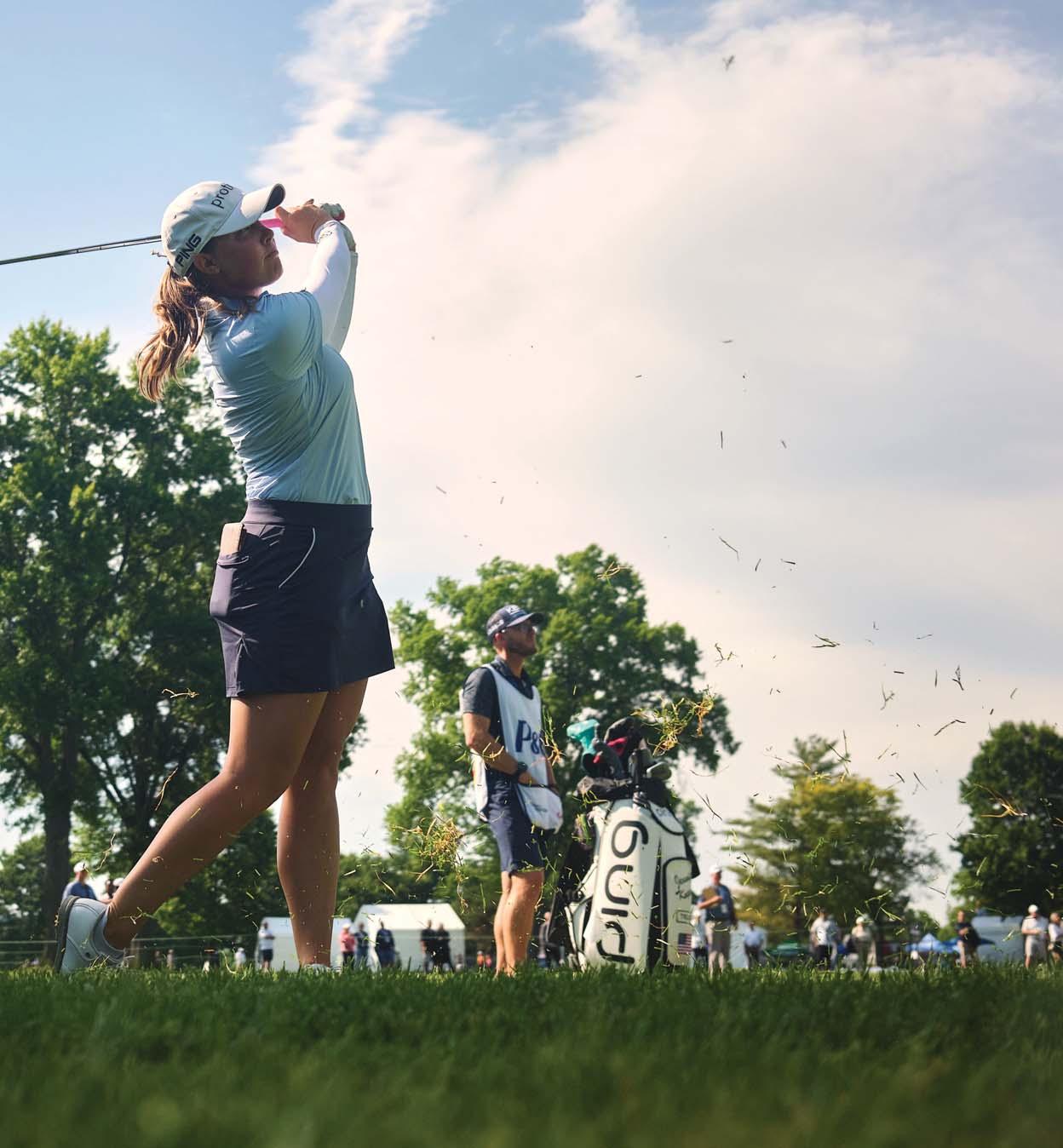
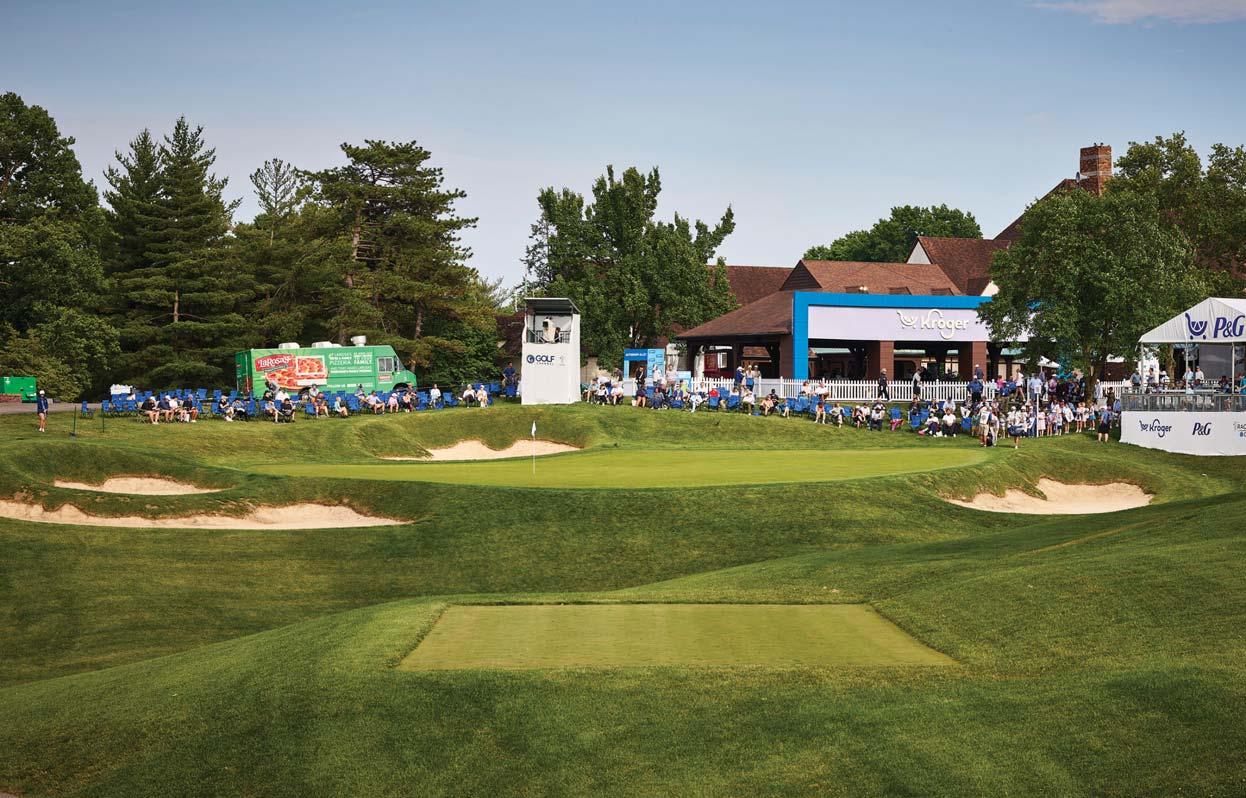
English golfer Lottie Woad, 22, won her second career LPGA tournament May 17 by taking the Kroger Queen City Championship Presented by P&G. She finished at -12, beating Haeran Ryu by two strokes. Woad took a three-stroke lead into the final round, though she briefly fell into a tie with Ryu on the final day.
Maketewah Country Club hosted the tournament for the first time in its five-year run, following Kenwood Country Club and TPC River’s Bend. Maketewah traces its roots to 1897, when it opened as the Avondale Athletic Club, and the club moved to its present location between Reading and Paddock roads in Bond Hill in 1911. A multi-million-dollar renovation and restoration was completed in 2023.
The popular Fan Zone featured Kroger Freshest Putt (right), a 30-foot challenge that would earn lucky participants a $250 Kroger gift card, and P&G’s Beauty on the Green, offering free drystyling with products from Pantene, Head and Shoulders, and Aussie Hair Care.
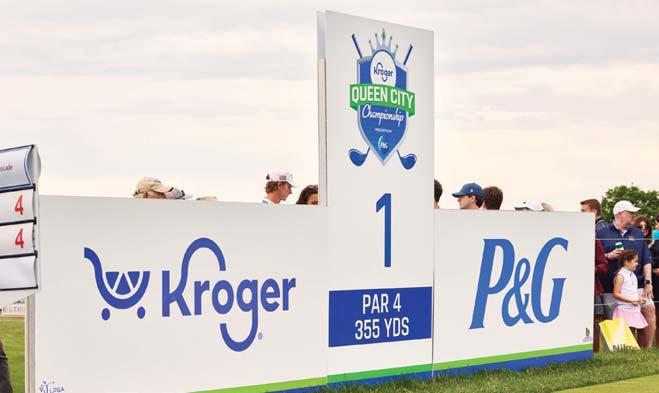
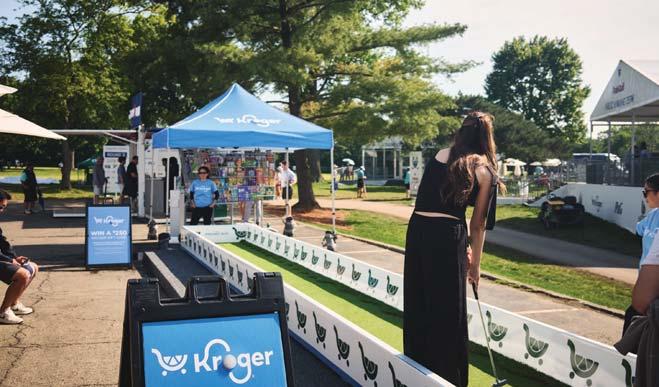

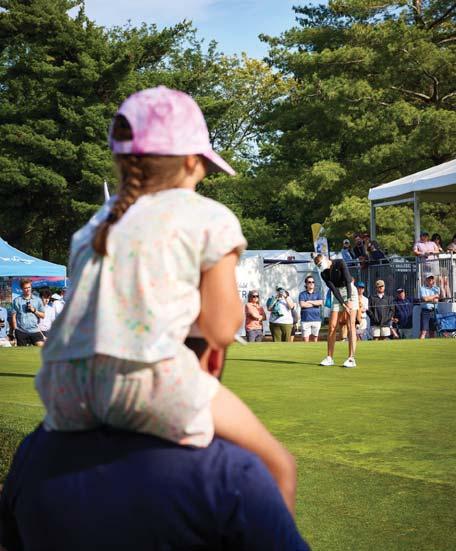
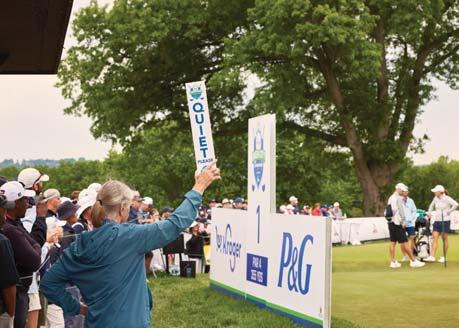
Sixteen of the top 20 women’s professional golfers entered the Kroger Queen City Championship, headlined by World No. 1 Nelly Korda (putting at left), No. 2 Jeeno Thitikul (below), and No. 4 and defending tournament champion Charley Hull. The 144-player field featured seven players who have been ranked No. 1: Korda, Thitikul, Ariya Jutanugarn, Jin Young Ko, Lydia Ko, Lilia Vu, and Ruoning Yin.
Xavier University alumna and LPGA rookie Emma McMyler (teeing off below) finished in a tie for 64th at +4. Xavier senior golfer Madison Reemsnyder entered as a sponsor invitation, but she did not make the cut after the first two rounds.
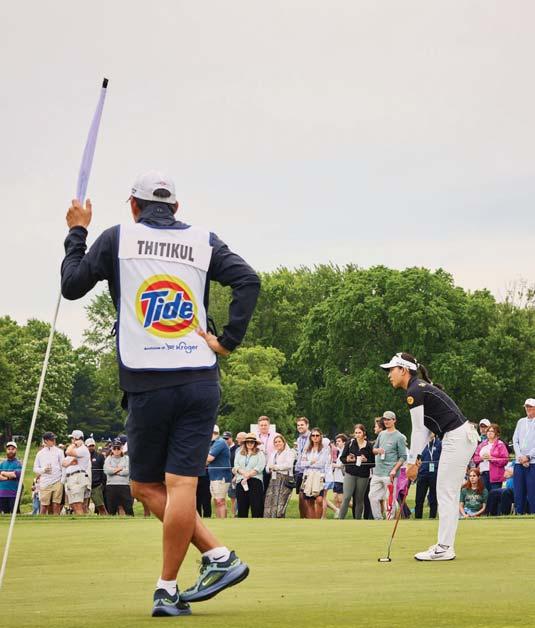
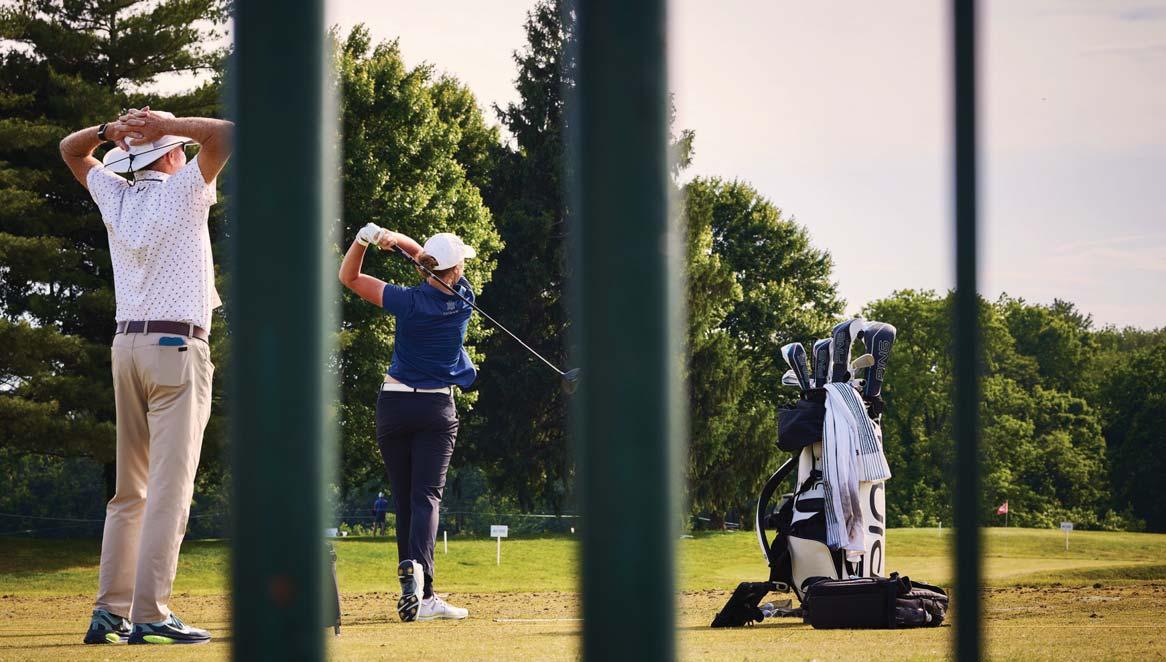
This fall, Cincinnati State reached its highest fall enrollment in 12 years–up 12.7% from last year. At the same time, the Ohio Department of Higher Education ranks our graduates #1 in Ohio for community college earnings–averaging $54,308 a year!




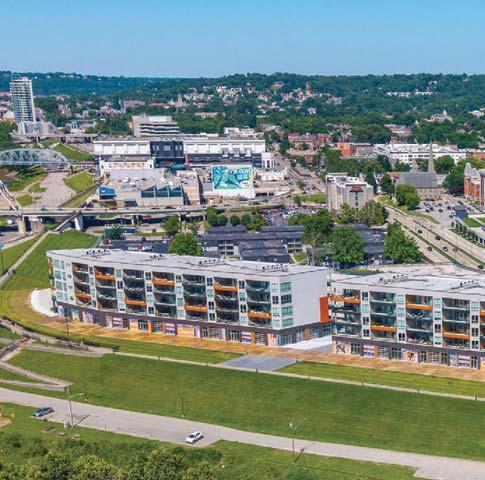
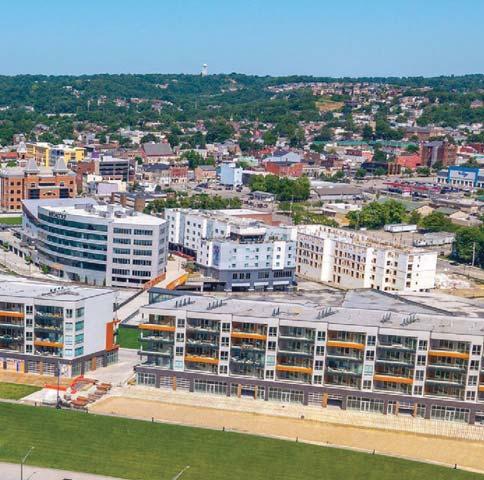















Smarter tools mean smarter writing. The Howe Center for Writing Excellence at Miami University is helping faculty and students navigate a new world of AI. Increased capabilities of tools like ChatGPT require ethical and innovative integration into the classroom. Howe provides research-based practices for implementing these tools as well as additional resources and further reading on the implications of AI and writing.