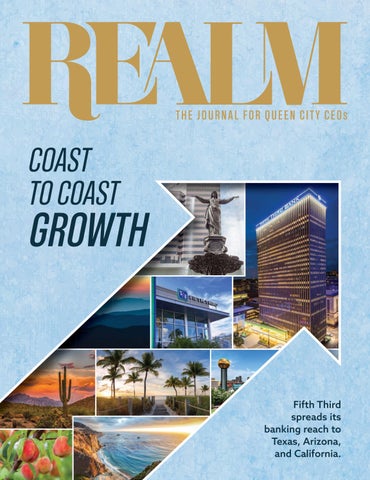
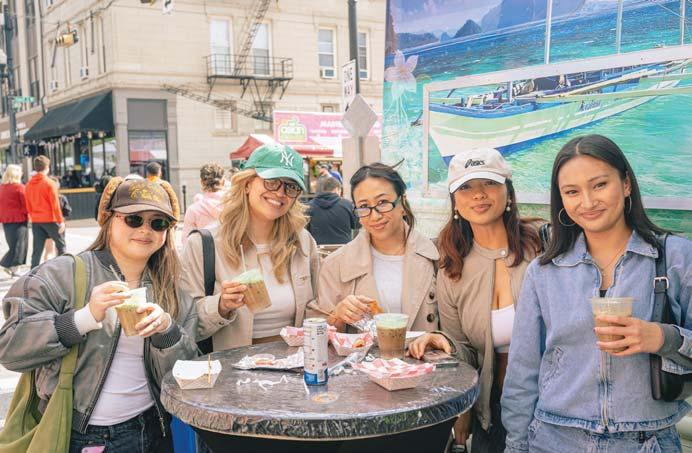
12 FOOD & BEVERAGE NOSTALGIA IS THEIR SECRET SAUCE
A century old, Zip’s Cafe offers simplicity, consistency, and free burgers for life.
14 REAL ESTATE RAISING THE ANCHOR
The new Marriott hotel will offer a more complete convention experience.
The Chamber’s acquisition of ColdIron expands the region’s events energy.
18 LEADERSHIP A TRUE LOVE OF COMMUNITY
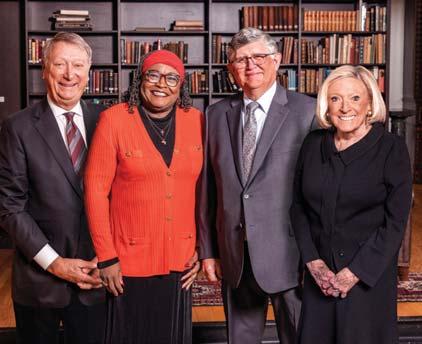
Four new Great Living Cincinnatians exemplify vision, tenacity, and leadership.
DEEP DIVES
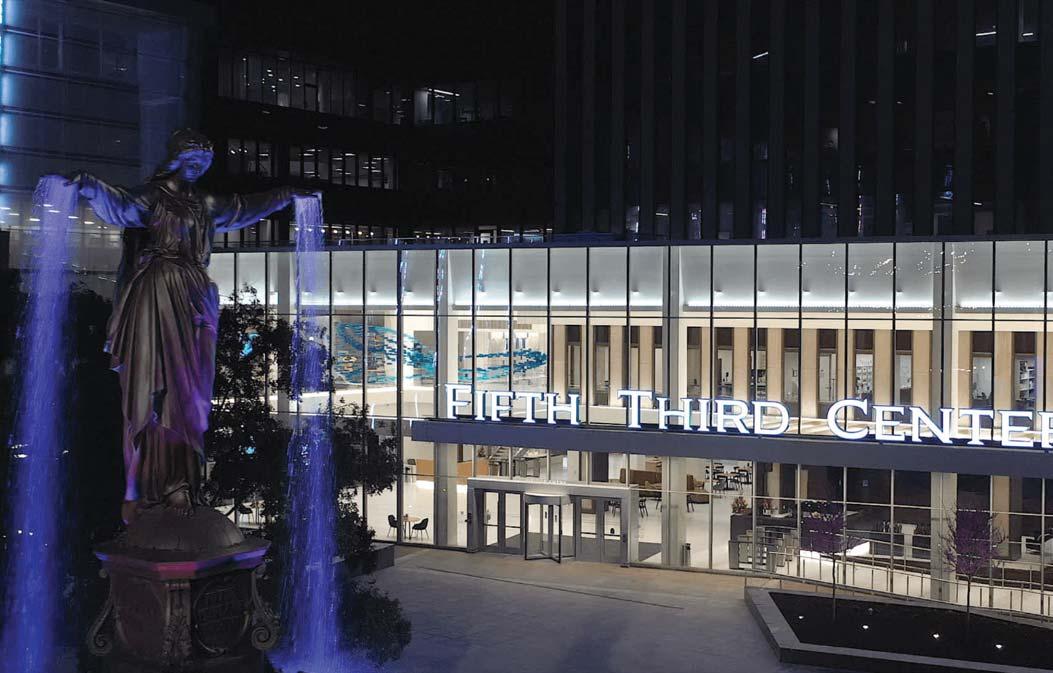
WASN’T FIFTH THIRD’S FIRST RODEO
50 ASK ME ABOUT
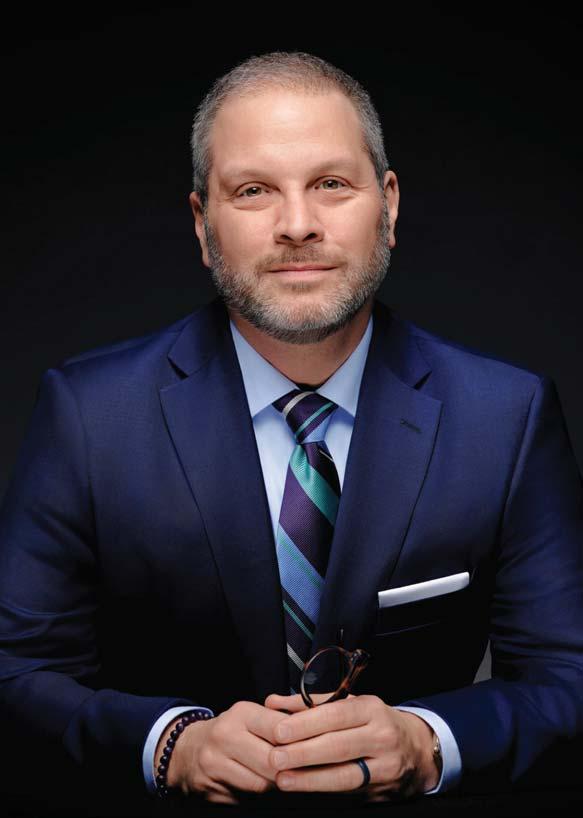
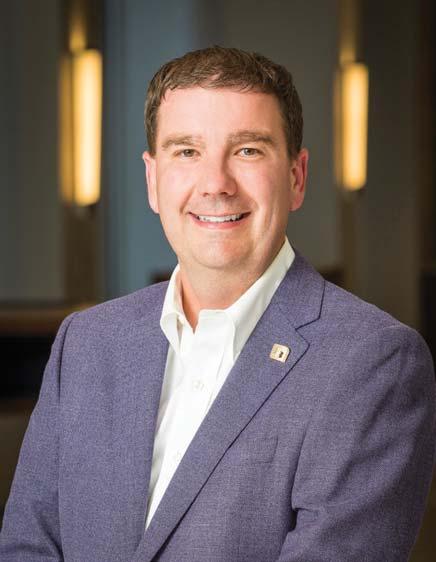
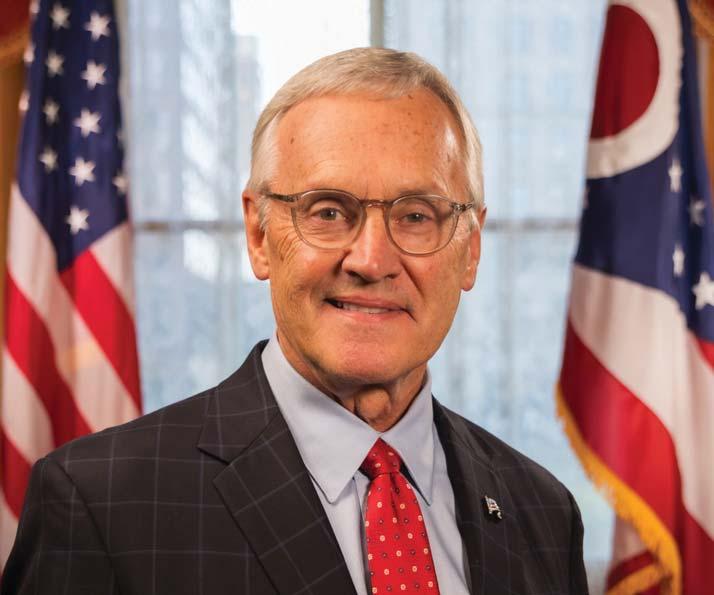
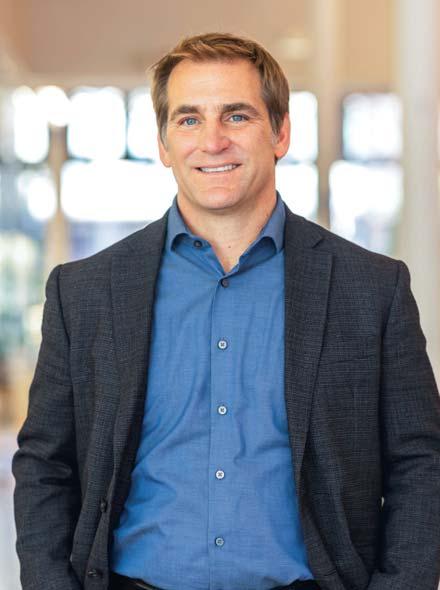
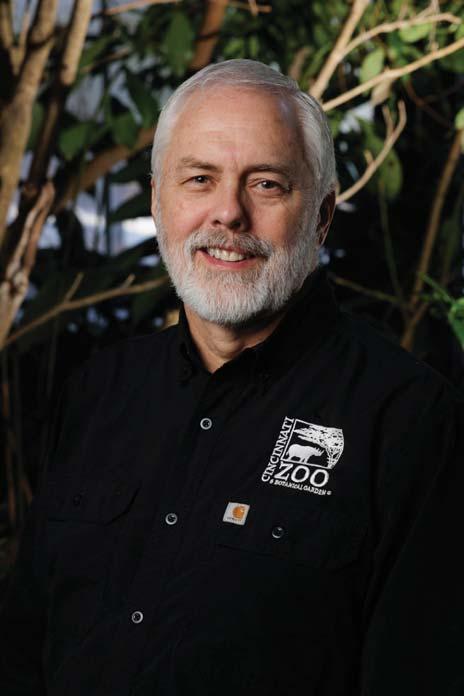
Get to know Ohio Lt. Governor Jim Tressel; Cincinnati Development Fund CEO Joe Huber; and Dave Jenike, new Director of the Cincinnati Zoo & Botanical Garden
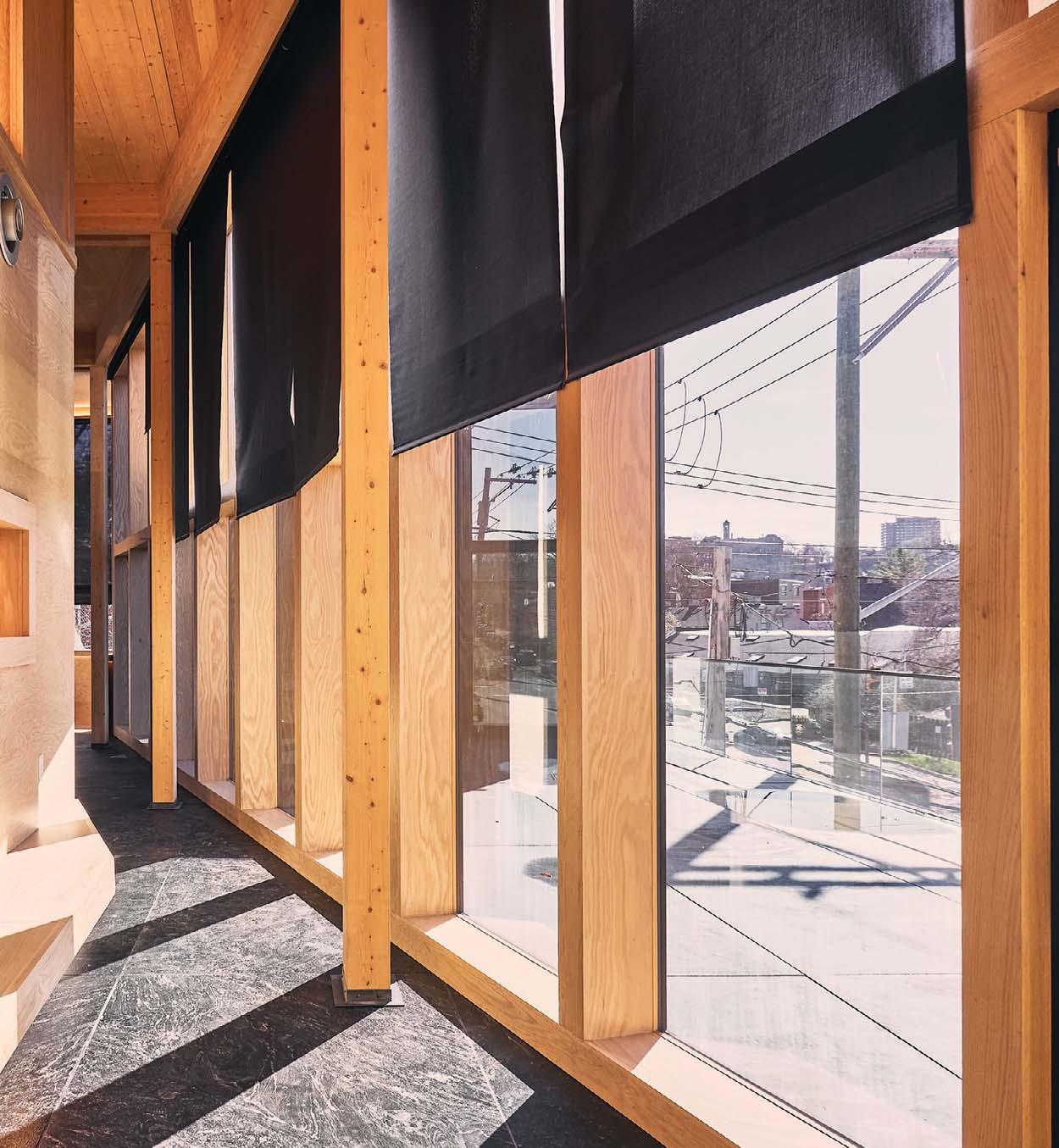
52 PHOTO ESSAY: FOTOFOCUS CENTER
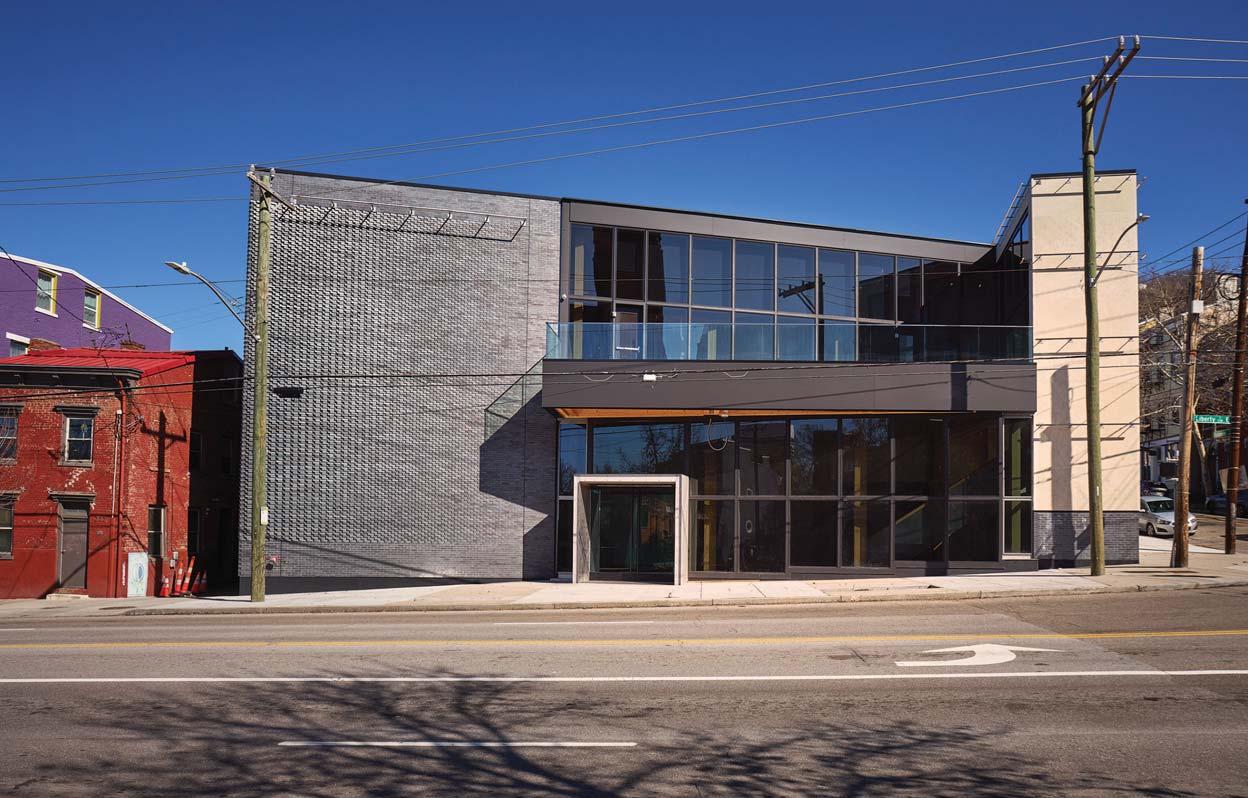
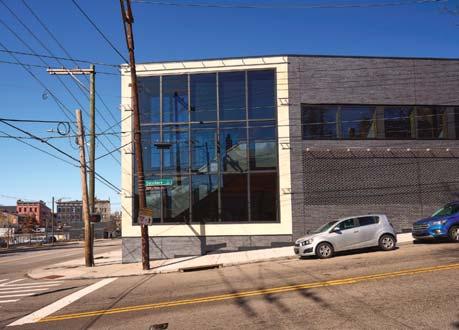
Take a sneak peek inside Cincinnati’s new headquarters for photography and lens-based art, opening May 29
The bank leaned on its past expansion success to acquire Comerica and spread into more growing markets.
THE STAGE IS SET
On the cusp of outdoor concert season, Cincinnati showcases its wide variety of music venues and keeps adding more.
BREAKING THE CYCLE OF POVERTY
Cincinnati Works has spent 30 years proving that stable employment is our most powerful tool.
WELCOME TO FLAVOR TOWN
Here’s why so many players in the flavorings and fragrances industry call Cincinnati home.
PG.
Recently, I spoke at an Alloy Development Co. event and I said to the attendees, “I want you to understand that we cannot take growth for granted. As a matter of fact, we have to defend growth, advocate for growth, and take action to spur growth.”
The people in these pages are those who are taking action to spur growth across our region. Tim Spence and the team at Fifth Third have positioned the bank that proudly counts Fountain Square as its headquarters to grow coast to coast, which will have dramatically positive benefits for our region. And you’ll read about the new music venue coming to Riverbend to expand our thriving concert infrastructure, the region’s growing food flavorings and frangrances industry, and how Cincinnati Works breaks the cycle of poverty through stable employment, as well as the brand new downtown hotel that will accelerate our visitor strategy.
Growth in a region like ours doesn’t just happen. It takes the leadership of people like you, in businesses and leading civic organizations, to take action and be advocates for a better, bustling region.
We are proud to be your partner in that growth and hope that you find the stories inside this quarter’s Realm magazine to be both inspiring and instructive.
BRENDON CULL
BCull@cincinnatichamber.com
STAY, PLAY, MEET
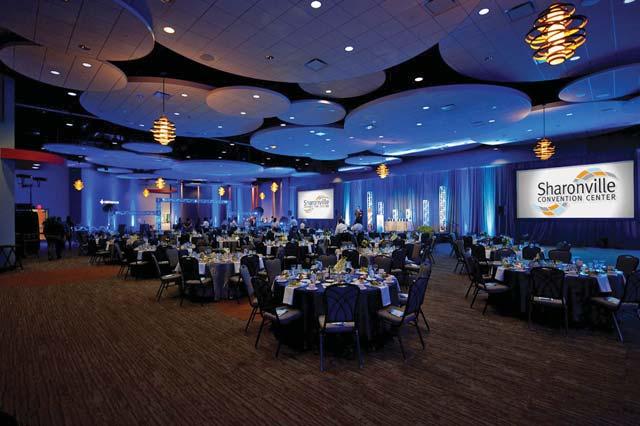
Host your next meeting right here in the Cincy Region and make a bigger impact - on your attendees and on our local economy. With reinvented venues like the First Financial Convention Center, Sharonville Convention Center, incredible dining, unique attractions and everything you need to turn meetings into memorable experiences.
2026 MARQUEE EVENTS & CONVENTIONS IN CINCY
• Midwest Homeschool Convention - April 9-11
• Flying Pig Marathon Weekend - May 1-3
• Madtree Red, White & Blue Ash - July 4
• Handbell Musicians of America - July 14-18
• Black Tech Week - July 14-16
• Cincinnati Music Festival presented by P&GJuly 23-25
It’s the same energy that brings visitors here for ballgames, festivals and weekend getaways, and your attendees will love it too.
And when you keep your events local, you keep your dollars local, supporting jobs, small businesses and the continued momentum of our region.
Bring your next meeting home to Cincy. Contact us today and let’s create something exceptional for your team and our community.
• Cincinnati Black Music Walk of Fame Induction Ceremony - July 25
• 85th Omega Psi Phi Grand ConclaveJuly 30-August 3
• 50th Oktoberfest Zinzinnati - September 17-20
• Blink | A Festival of Light and Art - October 8-11
Credit: Ross Van Pelt
Credit: BLINK: Rhine Media “Radiant Rose”
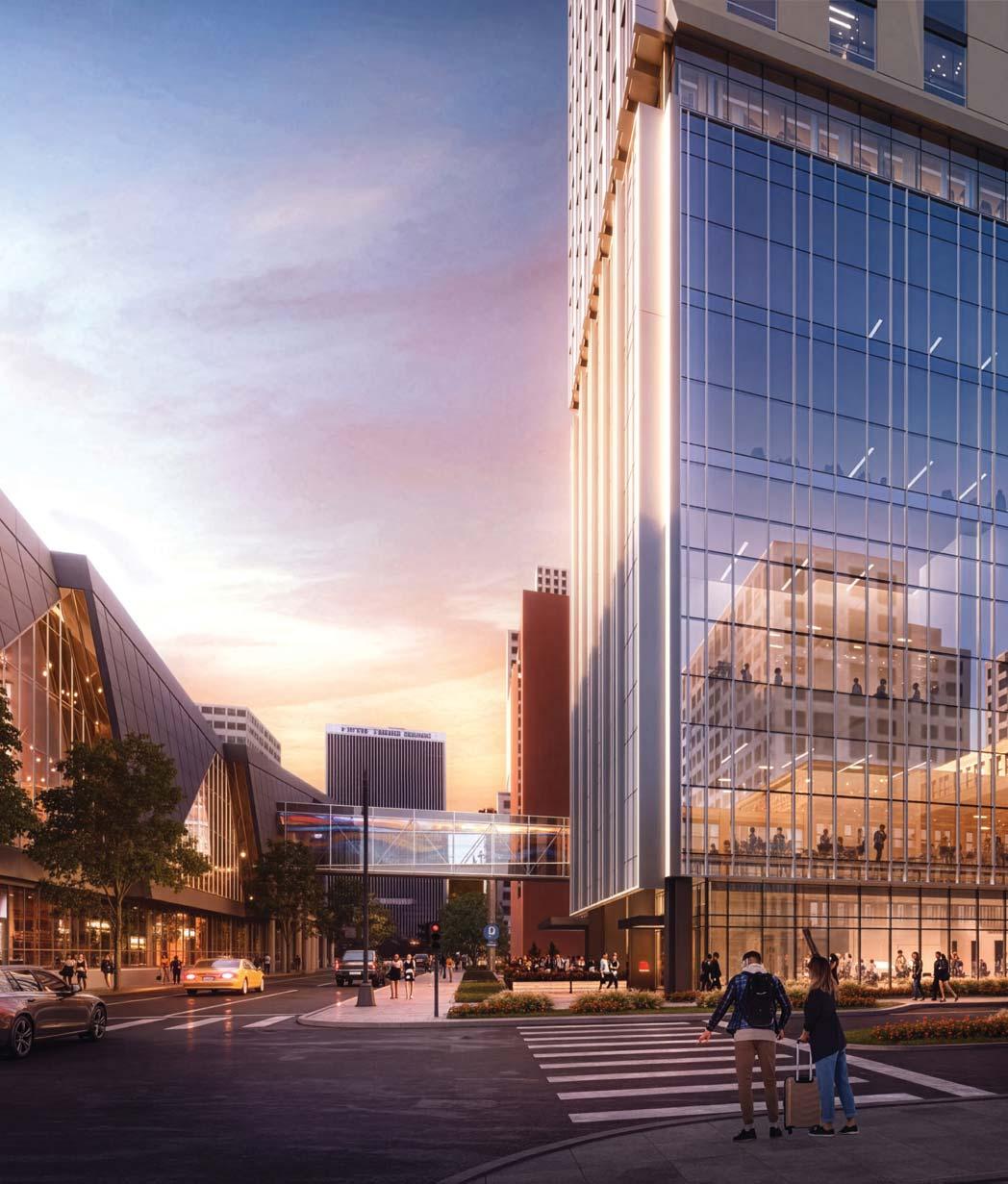
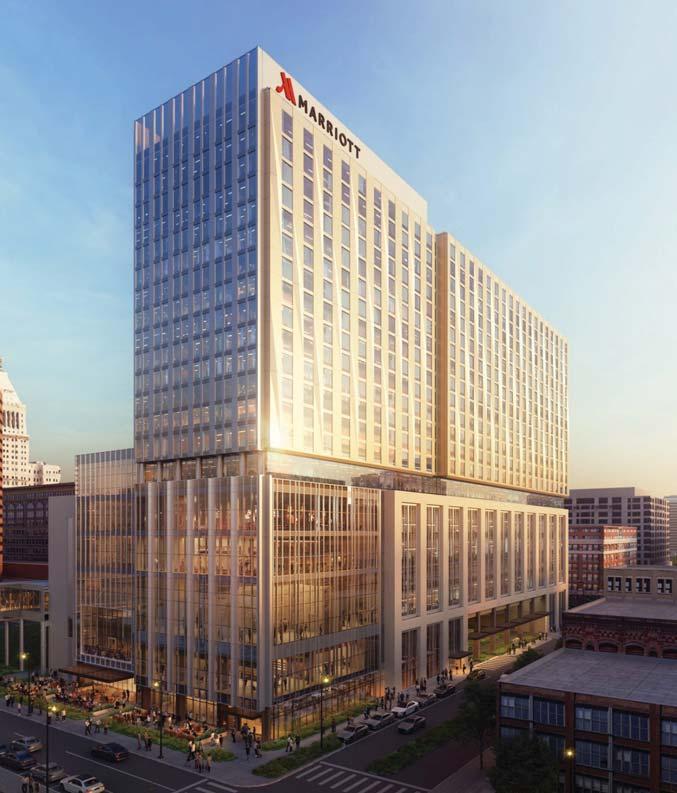
WORK IS UNDERWAY ON THE NEW CONVENTION HEADQUARTERS MARRIOTT HOTEL.
THE JUMP
Get a jump on new food and drink options at Great American Ball Park and the Reds’ place in baseball history. And catch up on the Cincinnati Chamber’s plan for ColdIron Events, the 100th anniversary of Zip’s Cafe, and the new class of Great Living Cincinnatians.
Cincinnati cherishes its place in U.S. history as the birthplace of professional baseball, thanks to the Red Stockings’ undefeated 1869 season. Harry Wright eventually moved that club to Boston, and Cincinnati became a charter member of the National League in 1876, though the franchise would soon be kicked out because it wouldn’t stop selling beer at the ballpark. Undaunted, Cincinnati helped launch the American Association in 1882, winning the first championship, and that’s the year Major League Baseball considers the franchise’s first official season. They rejoined the NL in 1890.
A NEW SEASON AT THE BALLPARK
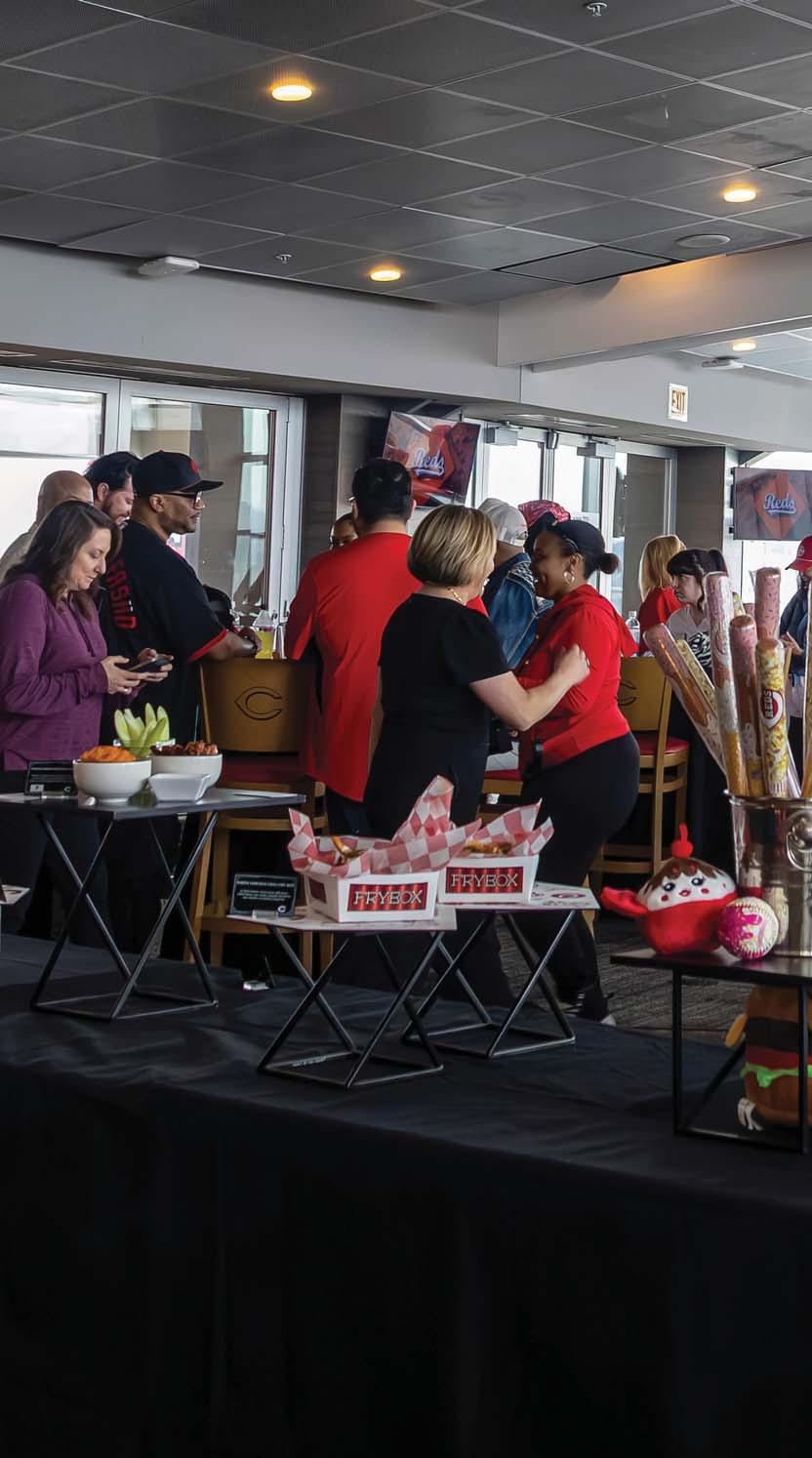
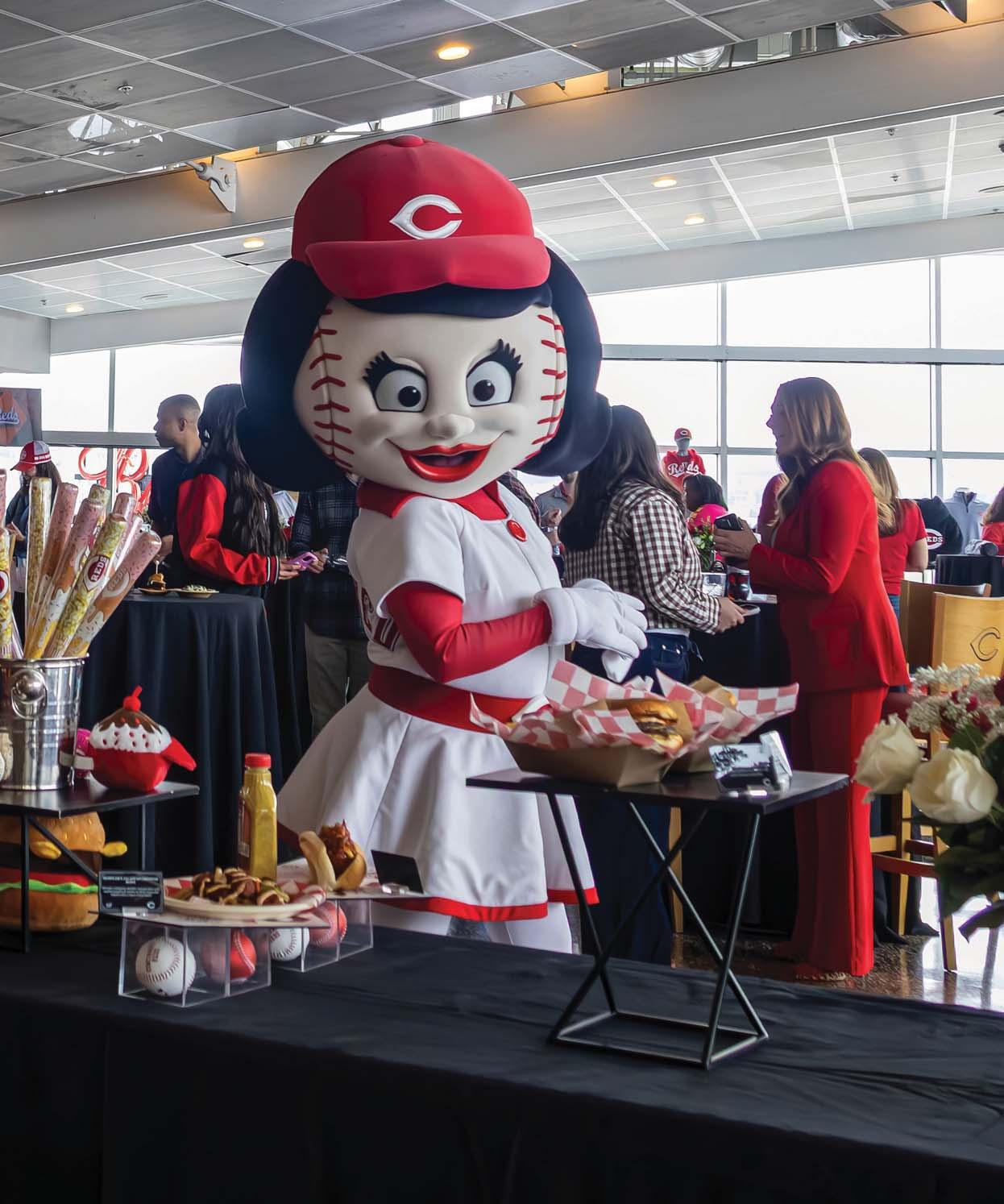
The Cincinnati Reds recently opened their 145th Major League Baseball season with high hopes for a winning record and a playoff appearance. But not all of the action is happening on the field; the team unveiled lots of new food and drink options at Great American Ball Park.
FAN ZONE FOOD HUB
Everyone who enjoys letting the kids stretch their legs in the first-base-side Fan Zone now has a refreshment zone featuring Skyline Chili, LaRosa’s Pizza, other snacks and drinks, and self-service checkouts. You may never get back to your seats.
SOFT SERVE AND GLIER’S GOETTA
These two Cincinnati favorites will now be served at select concession stands. But not together; that would be gross. Try the goetta nachos or the soft-serve sundaes topped with Baby Ruth pieces.
FRY BOXES AND TOFU TACOS
Grab a Fry Box filled with vegetarian Frito chili, cheese sauce, crushed Fritos, pickled jalapenos, and ranch sauce on french fries. Or try the Tofuego Tacos with chipotle shredded street tofu, jalapeno aioli, cilantro, pickled red onions, and Cotija cheese.
AND THEN DESSERT
Why not celebrate the seventh-inning stretch with a Double Play Donut Parfait, 12 cinnamon sugar donuts with house-made banana pudding, vanilla wafers, Cinnamon Toast Crunch, whipped cream, and caramel sauce? And this one belongs to the Reds!
NOSTALGIA IS A SECRET SAUCE
THE 100-YEAR-OLD ZIP’S CAFE OFFERS SIMPLICITY, CONSISTENCY, AND FREE BURGERS FOR LIFE.
–ELIZABETH MILLER WOOD
While other centennial businesses tout innovation as the secret to long-term success, Zip’s Café has embraced the opposite. For generations, the cozy burger cove on Mt. Lookout Square has offered little variation to its triedand-true staples: burgers, beer, and a friendly “third space” atmosphere for casual connection. “What we do best is consistency and simplicity,” says Mike Burke, Zip’s sixth owner and a Mt. Lookout native.
Burke began working at Zip’s at 15 years old—peeling onions, cleaning bathrooms— working his way up to management and eventually ownership in 2015. Though he ventured off to the University of Dayton for a fine arts degree, he returned to his Zip’s roots to tend bar and serve tables for beer money during summers and holidays. “There’s not a piece in here I haven’t touched at some point,” he says. When the previous owner was ready to sell, Burke was in the right place at the right time—and with the right ethos to carry the Zip’s legacy forward. Ironically, the beer-and-burger joint was founded at the height of prohibition in 1926. It opened as a covert horse-betting spot, serving simple burgers as somewhat of an afterthought. As culture skewed toward diner-style experiences in the 1930s and 1940s, Zip’s broadened its menu a bit to gradually include more burger toppings (from pickles and onions to later lettuce, mayo, and eventually tomato) and a few sides.
What changes have been made over the decades since have been subtle. A better blend for burger meat, now sourced locally by Avril Bleh. The addition of a kid’s menu, which is just smaller portions of adult offerings. The now-iconic model train that chugs around the perimeter of the ceiling, a whimsical addition made in the 1980s. “As much as I love it, it can be a huge pain,” Burke says of the train, laughing.
Above all, the restaurant’s approachability and predictability keep people coming back. Patrons can walk through the doors and anticipate the same experience they had when they visited as children with their parents and grandparents. It’s a place where the phrase “comfort food” is as much about the hospitality as it is the meal. “I’ve met some people on their worst days and also people on their best days,” says Burke, whose most treasured memories have been behind the bar.
To celebrate its 100th birthday, Zip’s is selling $5 raffle tickets until July for a chance to win a free burger each month for 50 years. All proceeds will be funneled to the company’s long-time nonprofit partners, including La Soupe, Freestore Foodback, and Talbert House. The fundraiser is a nod to the people and communities that have contributed to the fabric of its century-long success. “If not for the community to support us, we would have never made it this long,” says Burke. “I love Mt. Lookout. I’m not going anywhere.”
Opened in 1926, Zip’s is a place where the phrase “comfort food” is as much about the hospitality as it is the meal.
REDHAWKS ARE LEADING THE WAY
RedHawk50 celebrates the 50 fastest-growing Miami-led businesses
RedHawk50, in collaboration with Ernst & Young LLP (EY US), recognizes alumni success and provides a forum to celebrate the crucial role that Miamians play in their communities. Miami graduates and former students who founded, own, and lead thriving businesses pass valuable lessons to the next generation of Miami entrepreneurs. Meet our honorees at MiamiOH.edu/RedHawk50.
CONGRATULATIONS TO OUR CINCINNATI-AREA HONOREES:
1809
Capital
Mark Richey ’80, Managing Partner
John Gardner ’84, Partner
Kim Walker ’80, Partner
Kevin Mendelsohn ’96, Partner
3D Color
Bob Jennings ’92, CEO
All-In Cincinnati Coalition
Denisha Porter ’03, Executive Director
Brandience
Brian McHale ’88, CEO and Owner
Clear Advantage Logistics
Ryan Ward ’04, President and Owner
Curiosity, LLC
Gregory Livingston ’82, Co-Founder, Partner, and COO
Eleeo Brands
Richard Palmer ’92, Co-Founder and CEO
HOMEstretch
Derek Shewmon ’05, Founder
Interlink Cloud Advisors
Matt Scherocman ’97, Co-Founder andCEO
Kinettix
Chad Mattix ’93, Founder and CEO
Kruger and Hodges
Hometown Injury Lawyers
Joshua Hodges ’11, Co-Founder and Managing Partner
Remote Vans
Tony Alexander ’99, Co-Founder
Ronald McDonald House Charities of Greater Cincinnati
Jennifer Loeb ’92, CEO
FC Cincinnati
Jeff Berding ’91, President and Co-CEO
Rooted Grounds Coffee
Dave Knopf ’90, Co-Founder and President
Patsy Knopf ’88, Co-Founder and CEO
Kris Chari ’92 , EVP
Verdant Commercial Capital, LLC
Mike Rooney ’78, CEO
John Merritt ’85, EVP
RAISING THE ANCHOR
The new Marriott hotel will offer a more complete convention experience. —ELIZABETH A. LOWRY
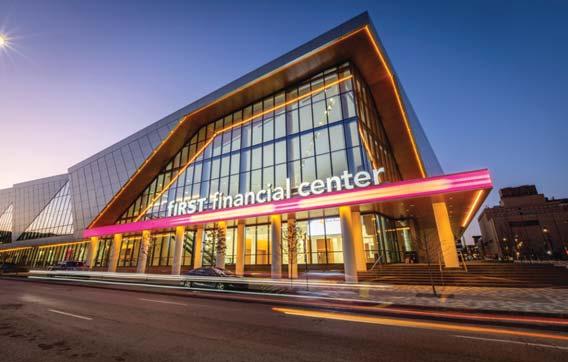
Cincinnati’s downtown convention center has operated without an anchor hotel for years, one of a number of drawbacks that resulted in missed economic investment opportunities in the form of tourism, shows, events, and conventions that similar-sized cities were able to attract more easily. With the renovated First Financial Center now opened and the Elm Street Plaza making its debut, attention moves across Fifth Street to construction of the new Marriott headquarters hotel.
As convention-goers know, easy access to a hotel room is a must-have. Not only do you want a convenient spot to sleep and store your belongings, but you also need a place to unwind between meetings, change clothes, exercise, or grab a bite to eat with clients and colleagues. Having a hotel connected to the convention center also eases the logistics of reserving rooms, hiring caterers, coordinating events, and dealing with transportation, parking issues, and inclement weather.
Once completed in 2028, the new hotel will boast 700 rooms, 36 suites, a full-service restaurant with an outdoor bar, an outdoor event terrace, 62,000 square feet of flexible meeting spaces, and one big, beautiful skybridge across Fifth Street linking all of it to the First Financial Center.
The hotel, developed by Atlanta-based Portman Holdings and 3CDC, will sit in the heart of the Convention District where a surface parking lot used to be. Together with the convention center renovation, Hamilton County, the city of Cincinnati, the state of Ohio, and private partners are investing almost $1 billion into this area of downtown, dubbed the Convention District. Portman’s managing director of hospitality, Kaunteya Chitnis, is excited by not only the grandness of a new, modern Marriott but also by the growth, excitement, and tourism the project brings to downtown Cincinnati.
“Having almost a billion dollars going into a convention center with a brand-new hotel next to it opens up a whole variety of new business avenues for the convention center, the hotel, and for Cincinnati as an economic investment,” he says.
The new Marriott hotel will serve as a modern offering in a city flooded with “vintage stock,” says Chitnis. The hotel’s novelty and its physical connection to the convention center will help open up the city to more convention and tourism opportunities. “Convention center hotel development is so important to get right,” he says. “It can be foundational for a city’s main entertainment center and be the urban product that can raise the tide for all boats.”
In addition to constructing the new Marriott, Portman Holdings will also renovate and modernize the existing Westin Hotel across from Fountain Square and bring it up to today’s convention hotel standards. The Westin will remain open during the renovation, says Chitnis, and the plan is to complete both hotels in 2028. The two assets together will offer 1,200 new or newly renovated rooms ready to anchor a more competitive convention destination.
BRING THE HEAT
The Chamber’s acquisition of ColdIron expands the region’s event energy.
–ELIZABETH A. LOWRY
The Cincinnati Regional Chamber’s recent acquisition of ColdIron Events and Rentals is a win/win/win for the city’s business community: expanding the area’s vibrant special events scene, offering new benefits to Chamber members and area businesses, and solidifying the Chamber’s financial outlook by adding a new revenue stream.
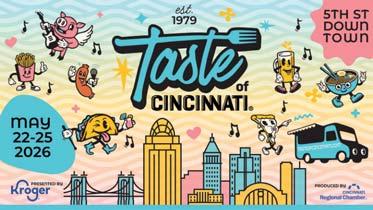
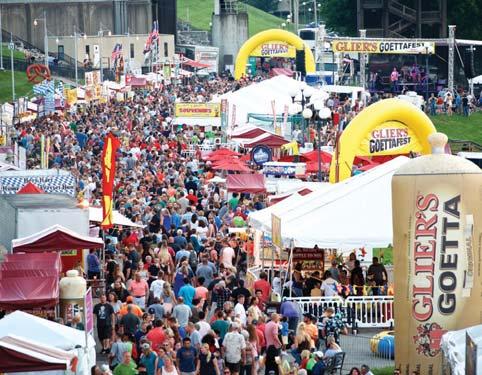
Founded in 1983, ColdIron has provided tables, chairs, and tents to signature Chamber events like Taste of Cincinnati, Oktoberfest Zinzinnati, and BLINK while also producing festivals in Newport and Covington (Smoke on the River BBQ Fest, Great Inland Seafood Festival, Glier’s Goettafest, and others). These event productions will now merge under one umbrella, a move that WCM Holdings CEO Tim Fogarty says will help raise the bar for local events.
“The Chamber is already heavily involved in the events business, so this acquisition is a natural extension of one of its areas of expertise,” says Fogarty, a veteran advisor for mergers and acquisitions. “Much like the Cincinnati Symphony’s ownership of MEMI (Music & Entertainment Management Inc.), it presents a source of funding that can be reinvested in the Chamber’s efforts to make the Cincinnati region a better place to live and work.”
Because the Chamber has partnered with ColdIron for almost 30 years and is familiar with the
company’s core strengths, Fogarty says the the transition should be fairly smooth. “Aside from the additional profits this acquisition should make available for reinvestment to grow our region, it presents an opportunity to grow the Chamber’s events management business,” he says. “The Chamber can offer events management expertise and economies of scale like no other entity in the region.”
The addition of a successful company like ColdIron will boost the Chamber’s mission of supporting community initiatives and projects, says Fogarty, while also creating new efficiencies by integrating the two organizations’
events staffs.The combined company will be able to strengthen existing event offerings while focusing on innovation, growth, and new experiences, and ColdIron’s portfolio of tent, chair, linens, electric, booth, flooring, lighting, and catering rentals will become even more accessible across the regional.
The Chamber’s vice president of events and experiences, Chelsea York, says this partnership will help expand and improve Cincinnati events. Her team will now program 50 days of community events each year in both Ohio and Kentucky and employ nearly 120 people during peak festival season.
“ColdIron has done a great job fulfilling desires for a variety of experiences, flavors, and fun that are different from the Chamber festivals,” says York. “Bringing those events into the Chamber family allows us to continue growing and evolving these festivals people already love. This acquisition brings together decades of event production expertise with the infrastructure needed to support festivals of this scale. At the end of the day, it allows us to bring even more memorable experiences to the community.”
Smoke on the River BBQ Fest (top) and Glier’s Goettafest (bottom) will now join the Chamber’s roster of BLINK, Oktoberfest Zinzinnati, and other public events.
A TRUE LOVE OF COMMUNITY
Great Living Cincinnatians exemplify vision, tenacity, and leadership. —ELIZABETH MILLER WOOD
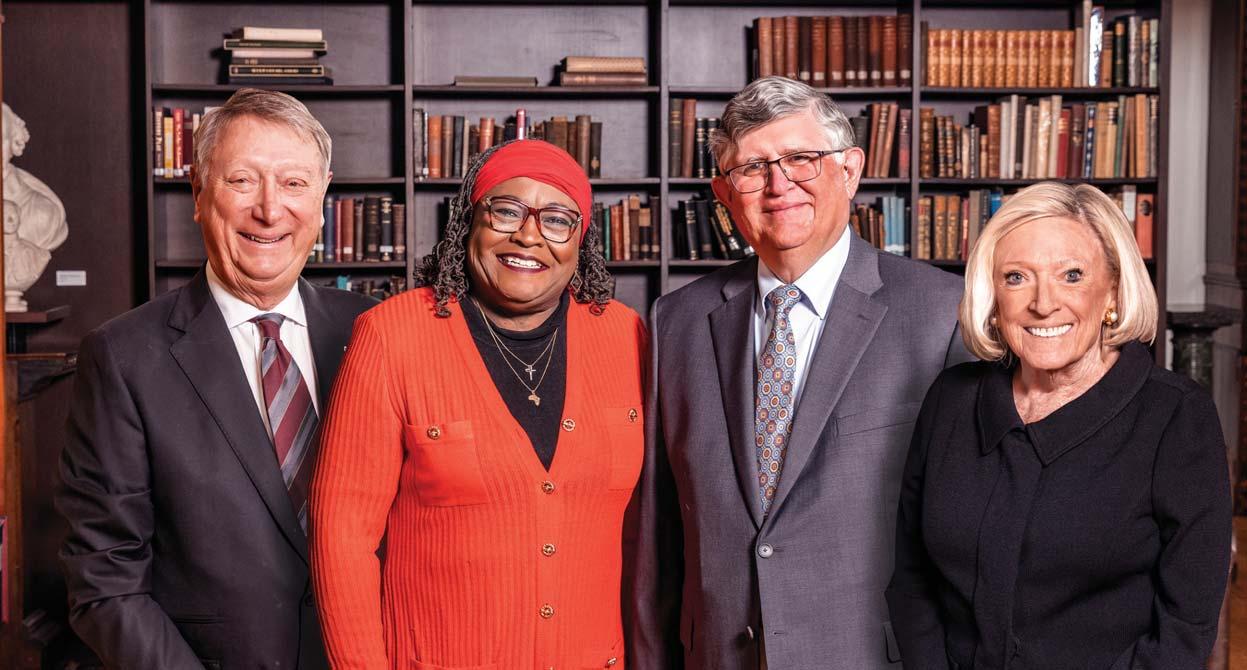
Since 1967, the Cincinnati Regional Chamber has recognized remarkable individuals who have left an indelible mark on the region at large. Meet the four 2026 honorees, along with their selected remarks from the Chamber’s annual dinner on February 26.
Karen Bankston began her career as an emergency nurse, which taught her the essential skills of quick assessments and decision-making. She earned advanced degrees while raising two sons as a single mother and rose into healthcare leadership, serving as Vice President of Patient Care Services and Chief Nursing Officer at University Hospital, Senior Vice President for External Relations for the Health Alliance, and CEO of the Drake Center. Her career culminated with a prestigious induction into the American Academy of Nursing. “I’m so grateful for the people along the way who saw something in me that I didn’t always see in myself. … Those moments of stretching opened doors for me to serve in ways that I would have never, ever imagined.”
Francie Hiltz carved a powerful and prolific career in philanthropy. From early beginnings as a volunteer at St. Joseph Orphanage for Children to later leadership on boards for the Cincinnati Symphony Orchestra, Cincinnati Museum Center, Cincinnati Zoo & Botanical Garden, National Conference for Community and Justice, and National Underground Railroad Freedom Center, she demonstrated a lifelong commitment to doing good. Hiltz continues to be renowned as an intelligent, connected, and effective leader. “Francie would like to thank the leaders, volunteers, and many friends in the room tonight. … You have done the work and continue to give of yourselves in so many ways to make our Cincinnati community the exceptional place that we all call home.”
—Allison Kropp, daughter
Pete Strange began helping on construction sites at age 6. He majored in engineering at the University of Cincinnati, then completed a co-op at Frank Messer and Sons Construction Company, where he spent his entire professional career. As president of Messer, he helped
transition the company into an ESOP. Strange also served as a volunteer and board member for organizations including the Greater Cincinnati Foundation, ArtsWave, Minority Business Accelerator, and University of Cincinnati Foundation. “The real competition is for the next generation of talent. The only way we win that real competition is if we’re willing to put our arms around brash young people who are without portfolio, without connections, without resources. … If we can create a circle of support for their leadership growth, then together we can create the future that our grandchildren need and deserve.”
Jeff Wyler has been a mainstay of the Cincinnati car dealership sector since 1973. He self-funded an education that culminated in a finance degree from the University of Cincinnati, then started his professional career with the Chevrolet Division of General Motors. Today, the Jeff Wyler Automotive Group is ranked No. 24 among the largest dealerships in the U.S. The Wyler Family Foundation was established in 2009 and grants over $1 million annually, and Wyler remains deeply involved in the University of Cincinnati community. “Tonight reminds me of a quote from my father from when I was about 9 years old. He said, ‘Son, conduct your life so that your funeral will be well-attended even if it’s on Opening Day.’ ”
(From left) Jeff Wyler, Karen Bankston, Pete Strange, and Francie Hiltz
The essential guide to living your best life here.
The city’s most respected and award-winning magazine, highlighting the region’s most interesting people, cultural issues, food, arts, fashion, and history. SUBSCRIBE NOW!
This Wasn’t Fifth Third’s First Rodeo
The most expensive acquisition in Fifth Third’s history will undoubtedly transform the future of Cincinnati’s biggest bank. But one impact is already apparent: busier workers in Post Offices across Texas.
Fifth Third is dropping millions of direct mail flyers to homes and businesses in the communities served by Comerica, the big Dallas-based bank it just acquired. The Fifth Third brand is a relative unknown there, but that’s expected to change quickly.
In February, Fifth Third closed on the Comerica acquisition, an all-stock deal valued at $10.9 billion. It was the biggest bank acquisition announced in the U.S. in 2025. The deal brings a big regional bank with $80 billion in assets and 350 branches in Texas, California, Arizona, Florida, and Michigan under the Fifth Third banner. With the deal sealed, the bank’s marketing team went to work to keep existing Comerica customers in the fold and recruit new ones.
“We’re going to drop a million pieces of mail within the first two weeks,” Fifth Third Chairman, CEO, and President Tim Spence said in January when he announced the bank’s 2025 financial results. “It’ll be the first million of what will probably be 13 or 14 million pieces of mail that will go out over the course of the year.”
The combination of the two brands immediately created one of the top 10 largest banks in the country, with $294 billion in total assets. That will grow, as the mail bombardment is one page of the Fifth Third playbook to accelerate deposit growth and deepen customer relationships across Comerica’s markets.
USING PAST EXPANSIONS AS A GUIDE, THE BANK ACQUIRED COMERICA TO ACCESS GROWING MARKETS WHILE ALSO BENEFITTING ITS CINCINNATI HOMETOWN.
BY DAVID HOLTHAUS
PHOTOGRAPH ILLUSTRATION BY BRITTANY DEXTER
Fifth Third says the acquisition means it will operate in 17 of the 20 fastest-growing U.S. markets. Comerica had gained a reputation for serving midsized businesses and a practice offering financial services to corporate customers, entrepreneurs, and professionals in the technology and life sciences sectors.
Fifth Third has identified more than $500 million in revenue opportunities from the acquisition over the next five years, Chief Operating Officer Jamie Leonard told analysts at a banking conference in February. Much of that will come through bringing revenue from Comerica’s existing branch network up to Fifth Third
standards for financial performance.
While Comerica branches in its founding state of Michigan are performing up to par, its branches in the Southwest are generally underperforming at roughly $30 million in deposits per branch, according to Leonard. Fifth Third will apply the principles of its growth playbook to those banking centers. “We need to bring the Fifth Third process, technology, products, and marketing to the Comerica branches,” he said. “We’ve got to get them from being a $30 million per branch franchise to being a $70 million or $80 million per branch franchise. That’s one of the big deposit opportunities ahead of us.”
That’s where that direct mail blitz comes in. “Comerica will see its first major consumer deposit campaign in more than a decade,” Leonard said. “Direct mail remains one of the highest performing tools in our customer acquisition toolkit.”
The combined company also plans to seek $850 million in “expense synergies,” or cost reductions, over the next few years, with many of the cuts coming in technology roles, as the bank consolidates its systems and eliminates duplicative functions. It’s unlikely that job reductions will occur in Cincinnati, where Fifth Third employs about 6,750 people, says Dan Feldmann, president of the Cincinna-
ti market. Over time the acquisition could add jobs here, particularly in the Madisonville operations center, which supports Fifth Third operations around the country.
He says a bigger bank will benefit the headquarters city simply by having more capital to invest in area mortgages, commercial loans, and other financing tools. With the bank’s overall assets growing by more than a third, “We’re going to have more capital at the corporate level to continue to invest in our communities, including right here in Cincinnati,” says Feldmann. “Scale definitely matters.”
Beyond the dollars and cents, Fifth Third’s ascension to a top 10 U.S. bank will have a significant impact on its hometown, says Cincinnati Mayor Aftab Pureval. “The acquisition elevates the city’s profile as a business center that’s focused on growth,” he says. “I’m energized by Tim Spence’s bullish approach to his company’s future and, more specifically, to its future in downtown.”
LEARNING FROM PREVIOUS DEALS
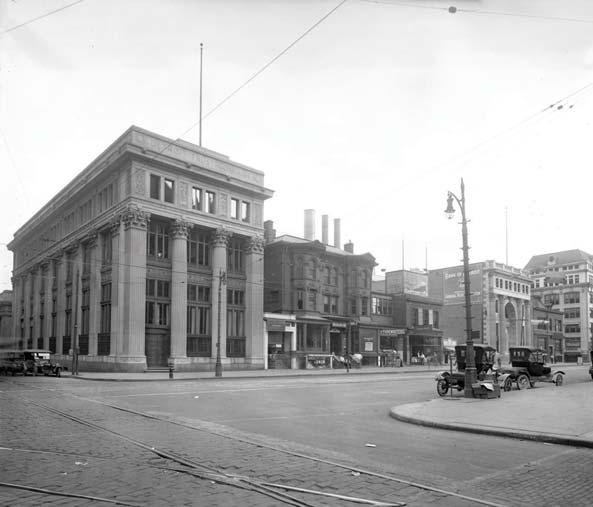
COMERICA WAS FOUNDed in the 19th century as the Detroit Savings Fund Insti-
tute and, through mergers with other Michigan-based banks, evolved into the Detroit Bank & Trust Co. in the 1950s. The company created a bank holding structure in the 1970s, enabling its growth beyond Michigan, and began an aggressive expansion in the early 1980s into Florida, California, and Texas. The name Comerica was adopted in 1982 to represent its presence beyond its home state of Michigan. It purchased the naming rights to the Detroit Tigers baseball stadium in 2000, Comerica Park. (“It’s too early to discuss any potential changes to facility names,” Fifth Third says.)
es across Texas through 2029, with an emphasis on the Dallas, Houston, and Austin markets. More than a quarter of those sites have already been secured, Leonard said.
That’s partly due to continuing to work with developers in the Southeast building grocery-store anchored strip centers that could accommodate new bank branches. “Because of the success we’ve had with them in the Southeast, they came to us after the (acquisition) announcement and gave us a lot of early opportunities,” Spence said. “The brick and mortar will actually come out of the ground faster in Texas than it did when we started the Southeast expansion.”
The Fifth Third brand is now a significant presence in Florida, the Carolinas, Georgia, and Tennessee, thanks to a combination of relative-
MOTOR CITY ROOTS
Comerica was founded in the 19th century in Detroit (left) and relocated its corporate headquarters to Dallas in 2017.
“WE’RE GOING TO HAVE MORE CAPITAL AT THE CORPORATE LEVEL TO CONTINUE TO INVEST RIGHT HERE IN CINCINNATI,” SAYS FIFTH THIRD’S DAN FELDMANN.
Comerica grew significantly in the early 2000s through acquisitions and organic growth, and in 2007 it relocated its corporate headquarters from Detroit to Dallas, chasing population growth in the Sunbelt.
In addition to seeking growth in Comerica’s existing financial centers, Fifth Third is planning a major expansion of its branch network in the Southwest, particularly in Texas, which leaders see as one of the nation’s most attractive banking markets. The bank plans to open 150 new branch-
ly small acquisitions and then sustained expansion. Since launching its Southeast expansion campaign in 2018, Fifth Third has opened 182 new branches, upgraded 22, entered 16 new markets, and added more than 700 employees in the region. The expansion is expected to grow deposits by $15 billion to $20 billion over the next seven years.
That’s the pattern it now plans to
employ in the Lone Star State. “We’re bringing that formula to Texas at scale with these 150 new branches,” said Leonard. “We are positioned to achieve top-four brand share in Dallas, Houston, and Austin by the end of the decade.”
By then, the bank that traces its origin to the 1908 merger of Fifth National Bank and Third National Bank in Cincinnati will have more than half of its retail network located across the Southeast and in Texas, Arizona, and California.
An expanded branch network pro-
vides entry points for Fifth Third to offer depositors other products such as auto loans, wealth management services, and business lending. “Getting somebody in the door is just the beginning,” Leonard said. “We don’t bring them in to open an account and leave it alone. Our sales process is highly interactive with the customer.”
The bank plans to offer its small-business lending services across the Comerica network. And Comerica’s experience lending to midsized businesses, generally those with revenue between $10 million and $500
million, was attractive to Fifth Third. “They were a powerhouse in what we consider middle-market banking,” says Feldmann. “Pre-Comerica, we had about 350 commercial bankers at the end of 2025. With Comerica, we now have more than 600.”
The bank is reviewing Comerica’s commercial clients one by one to identify where its heftier balance sheet could offer opportunities to provide expanded services to existing business customers. Comerica also employed a specialized banking group with experience supporting
NEW MARKETS
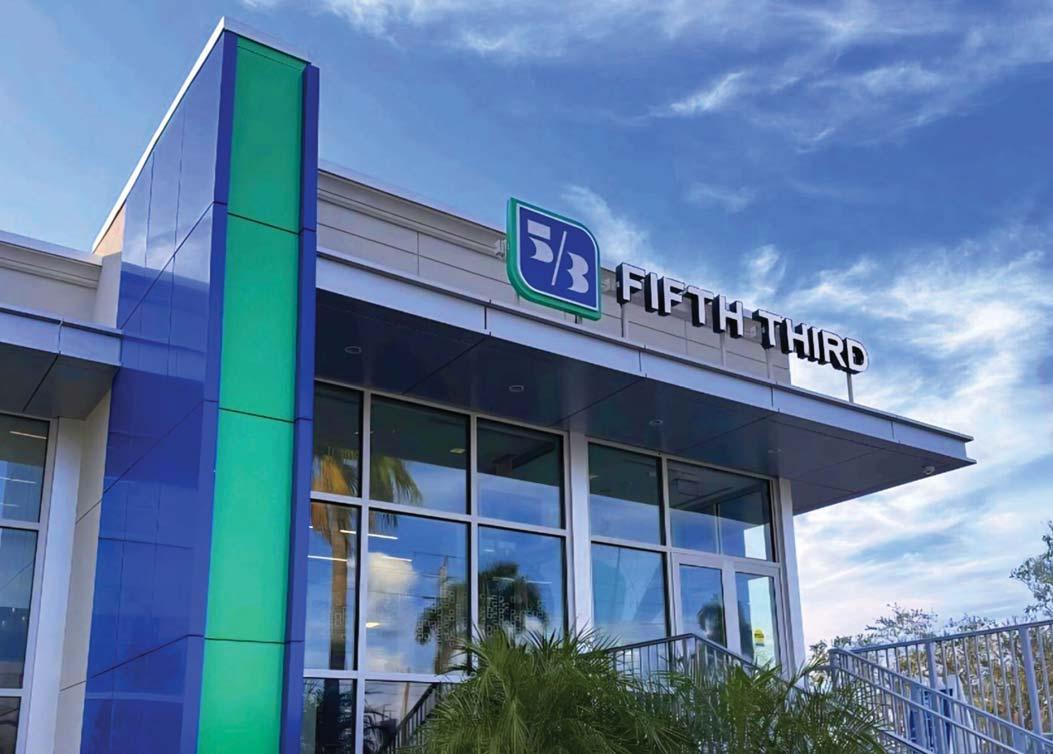
Fifth Third’s success in expanding throughout the Southeast, including in Florida (below), informed its plans to acquire Comerica.
Fifth Third Expands to More Top Markets
startups and venture-backed companies in tech and bioscience. Fifth Third plans to integrate its Newline electronic payments platform with the tech and life sciences group “to build a scaled, innovation economy franchise,” Leonard said. Beyond the basic blocking and tackling of branch expansion, executives say, that’s where the long-term growth opportunities lie.
“The blue-sky opportunity here is innovation banking,” Spence told an-
With the Comerica acquisition, the bank’s chairman, president and CEO, Curtis Farmer, takes on the role of vice chair at Fifth Third, while Peter Sefzik, Comerica’s chief banking officer, will lead Fifth Third’s wealth and asset management business. Three members of Comerica’s board have joined the Fifth Third board. Farmer will join when he retires, the company announced.
Other long-term senior Comerica leaders are staying on in signif-
“THE BLUE-SKY OPPORTUNITY HERE IS INNOVATION BANKING TO SUPPORT TECHNOLOGY, AI, SOFTWARE, AND LIFE SCIENCES, THE DRIVERS OF THE AMERICAN ECONOMY,” SAYS CEO TIM SPENCE.
alysts. “That will continue whether it’s technology, AI, software, the things that are coming out of Silicon Valley, or life sciences and the transformation that’s going to go on in health care over the course of the next decade. Those sectors really are the drivers of the American economy.”
The Comerica acquisition was the first for Fifth Third since its 2019 purchase of Chicago-based MB Financial, a $4.7 billion deal. Leonard said the MB acquisition and integration succeeded largely because some of the MB leaders were retained, including CEO Mitchell Feiger, who was named chairman and CEO of Fifth Third’s Chicago region and then joined Fifth Third’s board upon his retirement.
icant roles as regional presidents in Michigan, Southern California, and North Texas. “When you keep the right leaders from the franchise you’ve acquired, you ultimately do a better job with relationship manager retention and therefore customer retention,” Leonard said.
PREPARED TO POUNCE
FIFTH THIRD’S LARGest acquisition ever immediately grew its total assets by more than a third. The bank’s merger and acquisitions team prepared the enterprise for an acquisition of this magnitude following its unsuccessful effort to take over San Francisco-based First Republic Bank
According to the U.S. Census Bureau, these are the nation’s 20 fastest-growing markets based on population change from 2020 to 2024. With its Comerica acquisition, Fifth Third now operates in 17 of them. 1. Lakeland/Winter Haven, Florida
Provo/Orem, Utah
Ft. Myers/Cape Coral, Florida
Bradenton/Sarasota, Florida
Austin/Round Rock, Texas
Fayetteville, Arkansas
Daytona Beach/Ormond Beach, Florida
Boise, Idaho
Raleigh/Cary, North Carolina
Orlando, Florida
Jacksonville, Florida
Dallas/Ft. Worth, Texas
Houston, Texas
Charleston, South Carolina
Melbourne/Titusville, Florida
Charlotte, North Carolina
San Antonio, Texas
Tampa/St. Petersburg, Florida
Greenville, South Carolina
Phoenix, Arizona
TAKEAWAYS
SOUTH BY SOUTHWEST
Fifth Third’s acquisition of Dallas-based Comerica creates one of the country’s top 10 banks, with total assets near $300 billion. The company will focus much of its marketing energy on establishing the Fifth Third brand in Texas, California, and Arizona.
SUCCESSFUL BLUEPRINT
Firth Third’s successful expansion into Florida, North and South Carolina, Georgia, Tennessee, and Alabama will provide a blueprint for how the bank approaches converting Comerica branches in the Southwest and boosting per-branch revenue.
READY TO GO
Following an unsuccessful effort to take over San Francisco-based First Republic Bank in 2023, Fifth Third leadership stress-tested bank systems and manual processes to see how they’d handle integrating another major acquisition. They were ready when the Comerica opportunity came along.
in 2023. That bank was seized by regulators and sold to JPMorgan Chase following a massive run on its deposits.
Fifth Third was one of four banks that submitted bids for First Republic in a weekend auction conducted by the Federal Deposit Insurance Corp. Although the Cincinnati-based bank lost out, the experience sparked an internal exercise to ready the institution for an acquisition of a similar size. (The First Republic sale was valued at $10.6 billion.)
“When First Republic didn’t work out for Fifth Third, we decided we were going to make sure that in the event another opportunity materialized we’d be ready,” Spence told analysts in January, explaining that the team stress-tested the bank’s systems and manual processes to see how it would handle integrating a major acquisition. “The real question being: Would anything break if the bank doubled in size?”
As Bank of America analyst Ebrahim Poonawala said, “Whenever we have banks go through a merger or a large transaction, I think the question is, Will management be spread too thin? Does it take the focus away from organic growth?”
The Comerica acquisition doesn’t double Fifth Third’s size, but Spence said the work done after the First Republic bid prepared leadership to move quickly to absorb Comerica. “The things that we needed to make sure that we got done in order to support that were already done,” he said.
That work, as well as getting the necessary regulatory approvals by mid-January, contributed to the transaction closing earlier than expected, on February 1. That, in turn, has led the bank to move up the timeframe for
fully converting Comerica’s network, signage, and branding from mid-October to early September. Fifth Third executives are practiced at integrating newly acquired banks. Much of the bank’s growth over the last three decades has come from acquiring established local banks, integrating their operations, applying Fifth Third’s performance standards and incentives, extending consumer and business relationships in those communities, and then expanding in
FIFTH THIRD EXECUTIVES ARE PRACTICED AT INTEGRATING NEWLY ACQUIRED BANKS, APPLYING FIFTH THIRD’S PERFORMANCE STANDARDS AND INCENTIVES, EXTENDING CONSUMER AND BUSINESS RELATIONSHIPS IN THOSE COMMUNITIES, AND THEN EXPANDING.
those markets.
In the 1990s and early 2000s, under the 16-year tenure of CEO George Schaefer, Fifth Third rolled up banks to extend its reach well beyond Cincinnati. Many were relatively small acquisitions that provided the bank platforms for growth in new markets. It was a steady march north to Dayton, Columbus, and northeastern Ohio; south to Kentucky; and west to Indiana. The company entered Michigan in a big way in 2000 with the purchase of Old Kent Financial, at the time its
largest acquisition, valued then at $4.9 billion. It entered Florida in 1989, following snowbird Cincinnatians there, and amplified its presence in 2004 with the purchase of First National Bankshares of Naples, a deal valued at the time at $1.6 billion.
Under Schaefer, Fifth Third made more than two dozen acquisitions, growing from a regional bank into a “super-regional” operating in 10 states. But the rapid-fire acquisitions created its own issues, and federal regulators placed a temporary moratorium on acquisitions for several months in 2002 and 2003 to allow Fifth Third time to upgrade its internal controls.
Kevin Kabat succeeded Schaefer as CEO in 2007 on the eve of the biggest financial crisis since the Great Depression. Fifth Third, like
most financial institutions, saw the price of its shares fall dramatically. Kabat improved the bank’s efficiency and upgraded its technology and left the bank in a much stronger position when he stepped down in 2015. He was succeeded by Greg Carmichael, who committed to the growth strategy in the Southeast markets.
In 2022, the board gave the CEO title to Spence, who joined Fifth Third in 2015 as chief strategy officer and led the bank’s consumer bank, payments, and strategy work before being named president in 2020. Prior to Fifth Third, Spence was a senior partner in the financial services practice at Oliver Wyman, a global strategy and consulting firm.
A successful integration of Comerica is tops on his to-do list at the
moment. When a financial analyst asked if he would consider another acquisition, Spence replied, “The focus really is on making sure that we get the Comerica customers converted and taken care of and that we make the company, from an employee perspective, feel like one company and that we get the expanded capabilities that both Fifth Third legacy customers and Comerica customers are going to benefit from.”
Although the bank’s growth focus now shifts to the Southwest, it continues to grow in Cincinnati, where it already holds a large share of the consumer financial market. The largest commercial lender in this region, Fifth Third has gained five percentage points in market share since 2019, says Feldmann.
FOCUSED ON THE FUTURE
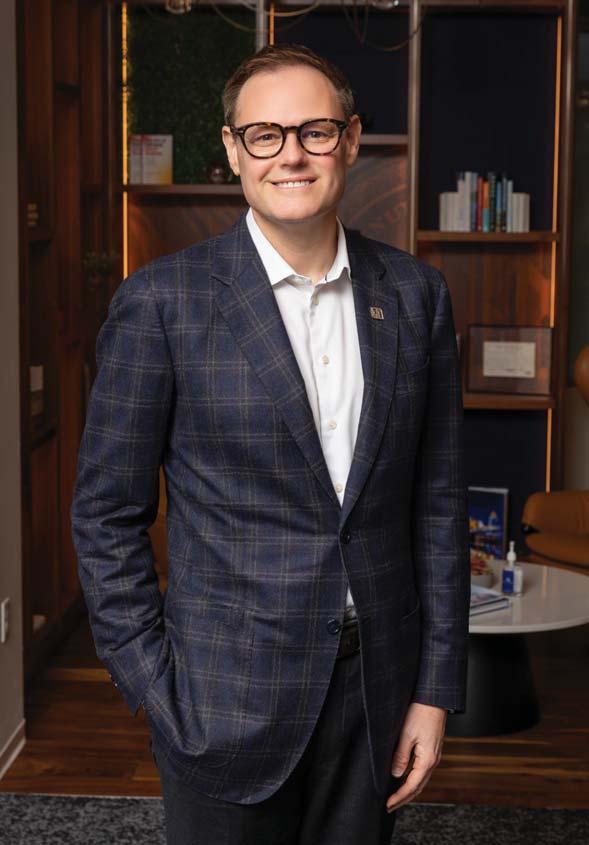
Tim Spence (left) and Dan Feldmann have raised Fifth Third’s profile in Cincinnati while expanding into new markets out west.
The Stage Is Set
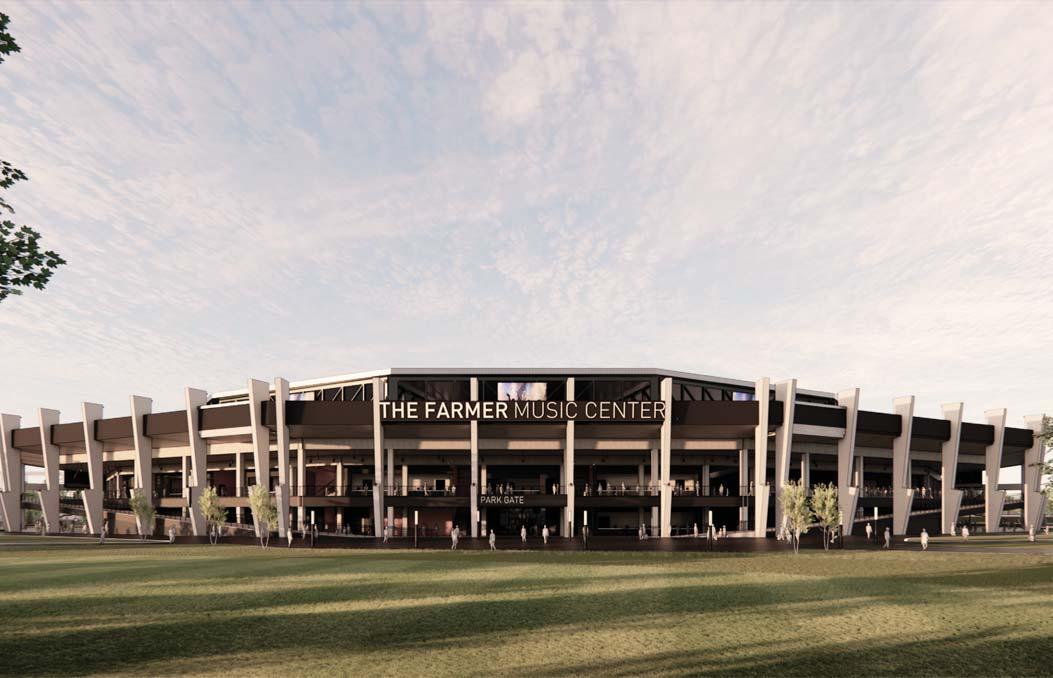
ON THE CUSP OF OUTDOOR CONCERT SEASON, CINCINNATI SH OWCASES ITS WIDE VARIETY OF MUSIC VENUES, INCLUDING THE NEW FARMER MUSIC CENTER.
BY JOHN STOWELL
The stage has already been roughed out in rebar and 200 tons of concrete. As its columns rise above the Ohio River where a three-million-gallon recirculating pool once stood, the Farmer Music Center signals a new chapter in the evolution of Cincinnati’s dedication to melodies and harmonies and economic growth.
“We are routinely told by artists and their agents that Cincinnati is a place they want to play and, especially for a city our size, we’re one of the most competitive music markets in the country,” says Mike Smith, chief executive officer of Music and Event Management Inc. (MEMI), the region’s largest promoter of live entertainment.
A subsidiary of the Cincinnati Symphony Orchestra, MEMI manages concert facilities at the Riverbend Music Center, PNC Pavilion, Taft Theatre, and Brady Music Center here, as well as Rose Music Center in Huber Heights. But the Farmer Music Center will, when it opens a year from now, be the area’s crown jewel.
Smith promises a “unique and mem-
orable customer experience” from the new $160-million venue, which will accommodate up to 8,000 in reserved seating and an additional 12,000 on the massive synthetic lawn. In addition to better sight lines and acoustics, Farmer will host several new restaurants and bars, private clubs, more and larger restrooms, and quick-serve concession stands.
“Customers have been around and seen other venues, and they demand more,” says Smith. So do the artists and agents, and already he’s seen a lot of interest in the project even before this summer’s concert tours come through town. He believes the new venue—being built adjacent to Riverbend and PNC Pavilion on the former Coney Island amusement park grounds—will attract the best touring talent, adding jobs and millions of dollars to the region’s economy.
There’s no doubt the music business is a solid contributor to the economy activity, says Pete Metz, vice president of civic strategy and policy for the Cincinnati Regional Chamber, who cites a 2024 study projecting an impact of as much as $2.7 billion. And that number does not include Farmer, which Smith expects will add an additional $100 million to the economy.
“It’s really clear that our cultural vibrancy is an asset to the region,” says Metz. “When we have a big event, the hotels are full and the restaurants are packed.” The vibe created by a big show like Taylor Swift, for example, brings in diverse audiences—including out-of-towners who come away with a positive experience and a new look at Cincinnati. “And we know that most people come to the city to visit before they decide to move here.”
JOHN MADDEN HAD BEEN A big music fan for years, but the acts that were coming to town back in the mid-1990s didn’t really appeal to him. Metallica, Beastie Boys, and Lollapalooza just weren’t his thing. Even the more mellow tones of Phil Collins and Crosby, Stills & Nash didn’t cut it. Not even Ol’ Blue Eyes himself, Frank Sinatra, who performed at Riverbend on a hot September Saturday night.
Madden loved folk and blues music. Attending a Chris Smithers concert at Dayton’s Canal Street Tavern, he met the singer’s agent, who gave him his card and encouraged him to try his hand at promotion. He founded JBM Promotions and, at age 76, is still working his client list, but he says he’s no longer looking for new talent.
“I don’t think people realize how unique Cincinnati is in terms of the number of venues we have here,” he says, noting Cincinnati has more per capita than San Francisco. “I work with a lot of the smaller venues like Southgate House Revival that host niche acts, and they do that without the benefit of having a local radio station playing their music.”
Madden still mourns the loss of WNKU-FM, which catered to unique folk and blues artists. “That was a major blow, locally, to good indie music,” he says. “Commercial radio plays the Billboard 100 but not the kind of music you hear on the club scene.”
Still, he says with glee, there is a market in Cincinnati for indie music, as evidenced by crowds drawn to venues like Clifton’s Ludlow Garage, Mt. Lookout’s Redmoor Event House, Newport’s Southgate House Revival, Covington’s Madison Theater, and Memorial Hall, Woodward
MEETING DEMAND
Music promoters, acts, and consumers all expect bigger and better concert venues, says Mike Smith, CEO of Music and Event Management Inc. (MEMI)
Theater, and MOTR Pub in Over-theRhine.
What’s really changed in the music business, says Madden, is consolidation of the major national agencies, many of which gobbled up smaller competitors along the way and focused on the lucrative festival season. Those shows, typically running from May through September, pack the largest venues but also have made inroads into the mid-level arenas where indie acts used to have a better shot of gaining exposure.
Madden calls these mega-promoters, such as Live Nation or AEG, “musical travel agents” who plan the routes for major touring groups, line up the venues, and take care of details such as housing, transportation, ticketing, promotion, and who gets paid, when, and how much. “Used to be that I’d line up an act with a three-page contract,” Madden recalls. “But with the consolidation of these agencies, now you get a 25-page contract from an artist and you need a lawyer to check the small print with a fine-tooth comb.”
The promoter’s life is a little easier in the smaller venues, and Cincinnati’s abundance of these smaller venues makes our market attractive to up-andcoming artists. The key to commercial success, Madden says, is finding your niche and building on it by booking acts you love and marketing your lineup effectively. Ludlow Garage, for instance, knows its audience is older and so you’ll see artists that match up. Judy Collins was there in November, and the schedule this year boasts tribute bands to Phil Collins, Ricky Nelson, and Pink Floyd. Patrons sit in comfortable highback seats, many sipping mixed drinks. Just a mile and half away, no one sits and you’re more likely to order a craft IPA than a gin and tonic. Bogart’s skews to a younger college crowd, with Gen Z patrons standing shoul-
der-to-shoulder while high-energy rock groups like Teenage Bottlerocket or Violent Vira prowl the stage.
Southgate House Revival tries to hit all the notes with multiple stages. You might have a bluegrass band strumming banjos on the first floor, punk rockers on the second, and a solo country artist performing on the third. Located in a renovated 160-year-old Newport church, the venue recently partnered with Northern Kentucky University to host a series of performances by their jazz orchestra. They also brought in
“YOU’RE BLESSED WITH A LOT OF GREAT LARGE VENUES, ESPECIALLY FOR A CITY YOUR SIZE,” NOTES MUSIC JOURNALIST AND OBSERVER DAVE BROOKS.
Florence’s School of Rock in February for the school’s Winter Showcase.
“The community connection is important to us, and our community seems to support a wide variety of music,” says Morrella Raleigh, owner and president of Southgate House Revival. Live music is in her blood. Her father, Ross, founded and ran the original Southgate House for decades, and Morrella was around for every note. When she returned from college, she jumped into the local music business, working at almost every entertainment venue in town in ticketing, logistics, marketing and
public relations. That experience, she says, prepared her for fall 2012, when Southgate Revival House opened its doors.
Eclectic music choices, she says, work for her primarily because of the building’s size and design. But, she’s quick to say, it wouldn’t work as well without the exciting musical talent available locally. This town, she says, is blessed with great musicians playing a variety of genres and—especially for artists early in their careers—the smaller venues provide a perfect showcase. Southgate can accommodate 600 in the Sanctuary Room while in the more intimate Revival Room, with tables and chairs, a concert can be set for as few as 30.
Tastes change, Raleigh says, and venues need to keep abreast of what’s hot today and what might be hot next year. She cites the re-emergence of the protest song, a byproduct of today’s dizzying news cycle. A relic of the 1960s, artists like Taylor Swift, Bruce Springsteen, Bad Bunny, and Zach Bryan have sparked controversy with biting lyrics in new songs, a trend that’s filtered down into the local music community as well. “They may not be household names, but they produce good music and they’re culturally relevant,” Raleigh says of up-and-coming Cincinnati musicians. “We are blessed to have a lot of really good venues where they can play.”
AVIBRANT CLUB MUSIC scene in a metropolitan area the size of Cincinnati is good for everyone, attracting a broad group of artists who are aware there’s not just a market for their talent but also a healthy choice of stages they can play. Many of those venues also help prime a neighborhood’s eco-
nomic engine.
Redmoor has its own restaurant, for example, but Madden says three Asian restaurants a short walk away on Delta Avenue appreciate patronage from concert-goers. The same energy is present on Ludlow Avenue in Clifton before and after Ludlow Garage shows, both in the Garage’s own restaurant and in neighboring eateries and coffeeshops. Unlike large arenas that may have just a few shows per month, the stages at most smaller venues are active every weekend and sometimes on a weeknight, providing the business district with steady business.
But it’s the big blockbuster shows that mark our warm summer nights. This season, Rod Stewart, The Black Crowes, Tim McGraw, Train, and Hilary Duff are among the artists packing Riverbend’s schedule. MegaCorp Pavilion, with both indoor and outdoor stages, counters with The Black Keys, Courtney Barnett, and a joint concert featuring Spoon and The Beths.
Journey, Eric Clapton, and Barry Manilow are set to play Heritage Bank Arena. Trombone Shorty and Vince Gill will grace the Taft Theatre stage, while you’ll find acts like Sting, O.A.R., and Hot Mulligan performing at the Brady Music Center.
At Great American Ball Park, Noah Kahan’s June concert is already a tough ticket. The Reds also have scheduled post-game concerts featuring artists such as Ludacris, country star Jon Pardi, and EDM maestro Marshmello.
Chris Stapleton will perform at Paycor Stadium, which also hosts the annual Cincinnati Music Festival in July, this year featuring Mary K. Blige, Charlie Wilson, and Trey Songz. The two-day festival is pro-
jected to bring nearly 100,000 fans to the home of the Bengals with a projected regional economic impact of about $110 million.
“You’re blessed with a lot of great large venues, especially for a city your size,” notes Dave Brooks, who writes for Puck Media and The Los Angeles Times, hosts a music podcast, and is a frequent guest on National Public Radio. Those large venues are attractive to touring artists, he says, and when you have more than one large venue seating thousands the competition can be fierce.
“It’s all about the money, because it’s a business after all,” Brooks says. It’s also a science. A band decides to
THE NEXT GENERATION
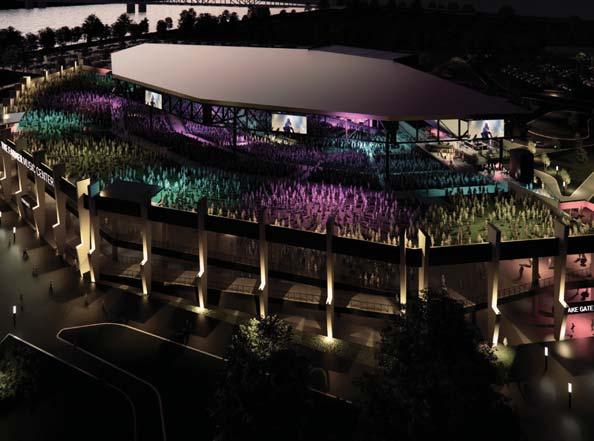
The state-ofthe-art Farmer Music Center will open adjacent to Riverbend in spring 2027.
TAKEAWAYS
HUMMING ALONG
Live concerts provide a huge economic boost across the Cincinnati region, contributing as much as $2.7 billion in direct and indirect spending. Now under construction adjactent to Riverbend, the Farmer Music Center is expected to generate an additional $100 million in activity.
VARIETY IS THE SPICE
Cincinnati’s diversity in concert venue sizes is a plus, say music industry leaders. Small independent venues provide an economic boost in neighborhood business districts, while medium-sized and larger indoor and outdoor stages allow musical acts to step up audience numbers as they get more popular.
TOO MANY VENUES?
Besides Farmer Music Center and another venue planned next to TQL Stadium, studies suggest the city needs a modern, high-tech downtown arena to better compete for top tours against cities like Columbus, Louisville, and Indianapolis.
“From my perspective,” says industry expert Dave Boorks, “it’s not possible to have too many venues.”
tour for a variety of reasons—perhaps to promote a new album, to reconnect with their fans, or to experiment with a new sound. Maybe it’s simply to make money. Whatever the reason, he says, superstar bands and solo artists don’t schedule a city by chance.
Brooks says promoters spend millions of dollars in data collection to help them decide where to play and when. Spotify downloads, YouTube views, social media posts, previous ticket sales, regional population density, demographic analysis, travel time, and venue availability all contribute to the recipe of a successful summer tour. Sometimes the artist is recruited as an anchor for a major event—think Blige for the Cincinnati Music Festival—but typically they either hire their own promoters or use big national companies like Live Nation/Ticketmaster to take care of the details.
“And I mean everything from ticketing, promotion, advertising, and the logistics of moving maybe 12 truckloads of sound equipment from place to place,” says Brooks. Often there are two advance teams—one handling the concert taking place that day, the other setting up for the next night in a city hundreds of miles away.
It’s a costly enterprise that impacts ticket prices, which, especially since the pandemic ended, have soared well beyond the average inflation rate. Madden calls concert pricing “ridiculous” and blames ticket agencies that have used their industry’s consolidation to demand greater returns. Raleigh agrees, calling out behemoths like Live Nation/Ticketmaster for disrupting the market and “making it their goal to put the small folks out of business.”
Brooks notes these agencies had
been grumbling for years about the lucrative independent secondary market (aka “scalpers”), whose entrepreneurs would patrol the streets with a fistful of tickets and walk away with a bigger fistful of dollars. “They saw people would pay more than face value and got tired of leaving money on the table,” he says.
The ticket agencies jumped into the secondary market, and many venues today use them as their frontline ticketer. In fact, Live Nation/
JOHN MADDEN CALLS CONCERT PRICING “RIDICULOUS” AND BLAMES TICKET AGENCIES USING THEIR INDUSTRY’S CONSOLIDATION TO DEMAND GREATER RETURNS.
Ticketmaster itself owns more than 400 concert venues, including the Blossom Music Center in Cuyahoga Falls. AEG, Live Nation’s chief competitor, owns more than 150 venues and operates many others, including MegaCorp Pavilion in Newport. You go through them, or you don’t go to the show.
“The concert ticket industry today is broken and, in fact, the concert industry itself is broken,” argued Department of Justice attorney David Dahlquist in February at a trial charging Live Nation/Ticketmaster had violated antitrust laws and used its monopoly status to overcharge captive customers. The trial was
short-lived, as the federal government and Live Nation/Ticketmaster settled the case. But Ohio Attorney General David Yost blasted the settlement as “a terrible deal” for consumers, and he vowed to continue the fight along with more than two dozen other state attorneys general. Raleigh is rooting for more sanity in the concert ticket market, lamenting that “going to a concert now feels more like an investment.” Over time, she worries, exorbitant ticket prices may chill the fervor for live entertainment, especially among younger, less affluent customers. Brooks agrees but then wonders how much
the grumbling matters. “You’d be surprised what people will pay,” he says. “Kids who you wouldn’t think would have a lot of money somehow find a way to get in the door.”
CINCINNATI’S FUTURE concert industry may well depend on new venues that will be available in the years to come, including Farmer Music Center. Will Heritage Bank Arena be expanded or replaced? Will FC Cincinnati’s planned multi-use development north of TQL Stadium include a concert facility? If so, how large? Metz says the Chamber has noted
that a number of high-profile touring acts have bypassed Cincinnati over the years, favoring larger modern concert facilities in Columbus, Indianapolis, Pittsburgh, Cleveland, and Louisville. The Chamber commissioned a study in 2024 that showed Cincinnati has averaged 18 major concerts a year since 2018 versus 24 for our regional peers. The lack of a modern, technologically-updated downtown arena is a major reason why—and civic leaders, Metz says, are focused on creating what he calls “a new live event hub.”
“But the reality is we have to figure out where we would put it and how we’d pay for it,” he says. There is no timetable and no single “arena czar” in charge, but Metz says city, county, and business leaders are all supportive and the Chamber “puts this issue at the forefront of every conversation we have.”
Can a city our size support a new outdoor concert venue at Riverbend, a new or expanded 20,000-seat downtown arena, and a new concert venue at TQL Stadium as well as dozens of incumbents ranging from Brady Music Center and Memorial Hall to Southgate House Revival and MOTR Pub?
MEMI’s market analysis shows the region has a healthy mix of large venues and intimate settings, but keeping that diversity is key. “If you have too many of the same size, all you end up doing is cannibalizing one another,” says Smith. “That may work in L.A. or Chicago, but there’s no point of duplicating the venues we already have here.”
Brooks, who considers the question from the artists’ point of view, counters that the market will decide. “But from my perspective, it’s not possible to have too many venues.”
SUMMER BREEZE
The Cincinnati Music Festival brings 100,000 fans to Paycor Stadium every July.
Breaking the Cycle of Poverty
CINCINNATI WORKS HAS SPENT 30 YEARS PROVING THAT STABLE EMPLOYMENT IS OUR MOST POWERFUL TOOL.
BY SARAH M. MULLINS
Cincinnati is an economic powerhouse, home to Procter & Gamble, Kroger, GE Aviation, Children’s Hospital, Fifth Third Bank, University of Cincinnati, and other large employers. The region markets itself as a hub of industry and opportunity. And yet daily life here can be complicated. According to the most recent U.S. Census data, about one in four Cincinnati residents lives below the poverty line. The cost of living in the Cincinnati region runs about 3 percent below the national average, but the MIT Living Wage Calculator puts the living wage for a single adult with no children at $20.77 per hour.
The affordability advantage is shrinking, impacting families whose wages can’t keep pace with basic needs. The reality is the job someone holds, and keeps, is one of the greatest determinants of whether they escape poverty—and that reality lives at the very core of Cincinnati Works.
In 1996, Dave and Liane Phillips researched organizations across the country that addressed
poverty through employment. They found that the most successful ones focused beyond just supporting people get a job—they also supported retention and advancement. They then built a model centered on oneon-one coaching, and Cincinnati Works was born.
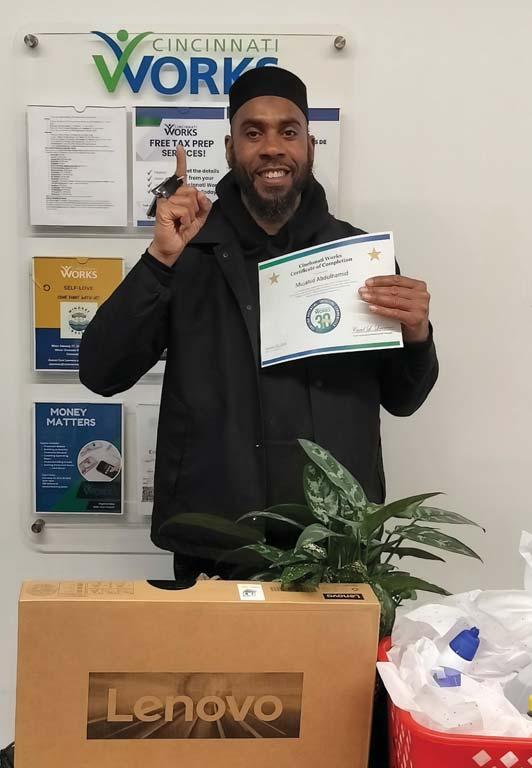
Thirty years later, clients are considered members and employers partner with the organization to provide quality jobs and support longterm retention. Cincinnati Works staff help members identify goals to support their job search and follow their journey beyond the job offer. Partner employers provide coaching services to employees to help individuals grow and stay with the company and achieve their goals.
According to the organization’s newly released 2025 Economic Impact Report, produced in partnership with the Cincinnati Regional Chamber, Cincinnati Works placed more than 600 individuals in jobs over the past three years, driving retention rates that consistently outpace industry averages. Those placements supported or created more than 1,300 jobs and generated nearly $11 million in local, state, and federal tax revenue, with an overall impact of $136 million in economic output.
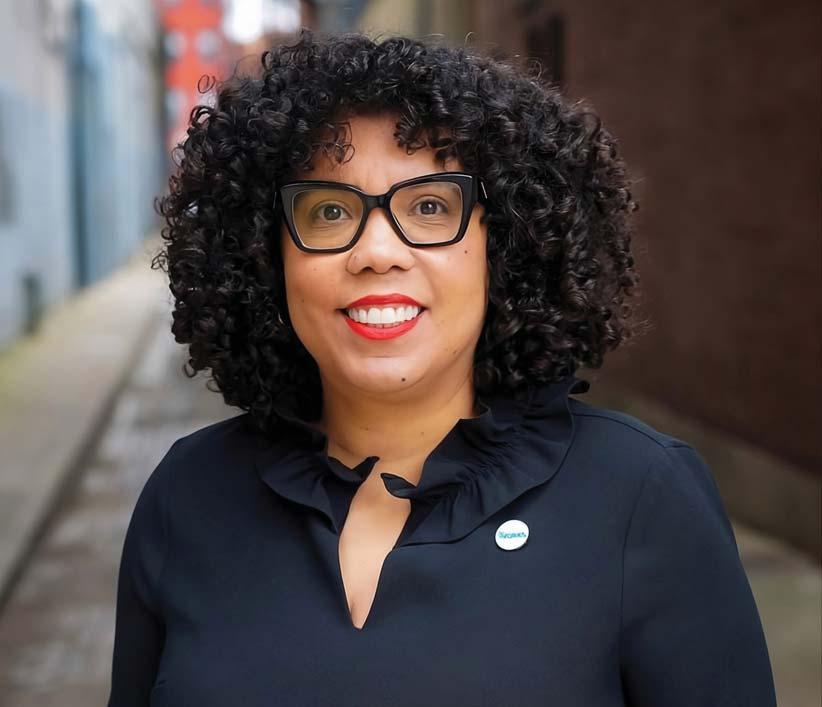
Behind every statistic, though, are real people and real stories, says President and CEO Tianay Amat. “The data tells us the scale of the impact, but the story reminds us why the work matters,” she says.
Amat tells the story of Audrey, who connected with Cincinnati Works while attending Gamble Montessori knowing she was interested in a healthcare career but not having a clear pathway to land a job in the field. Through personalized coaching, the team explored career
options and helped Audrey build confidence and develop a plan for her future. She eventually landed a supply chain management role with Cincinnati Children’s and built a solid career foundation. “She now knows she has a community and a support system that truly cares about her future,” says Amat. “And that’s the essence of Cincinnati Works. We meet people where they are and walk alongside them as they build a future of stability and opportunity.”
People like Audrey prove community building is a critical component of reducing poverty in Cincinnati and strengthening the workforce, says Amat. “Meaningful change requires not only data but compassion, coming to the table without judgment, and having an open heart and a plan. Progress requires patience, persistence, and the belief in people’s potential.” retention and advancement.
WALK INTO CINcinnati Works headquarters at 708 Walnut Street downtown, and you’ll find an unusual approach to nonprofit work. There’s no one-size-fits-all program or job board. Instead, each member is paired with a coach who sits down, listens, and helps build a plan together. “A potential member can walk in and say, Hey, I need a service,” says Amat. “We work with them and coach them up to get ready for opportunities.”
That one-on-one relationship is how the organization was founded in 1996, and today it remains the backbone of everything Cincinnati Works does. It’s different from the typical workforce approach, and it’s also supported by employers.
Through the Workforce Connection Program, launched in 2017, Cincinnati Works extends its coaching model directly into the
MEET PEOPLE WHERE THEY ARE CEO Tianay Amat says the essence of Cincinnati Works is that “we walk alongside our members as they build a future of stability and opportunity.”
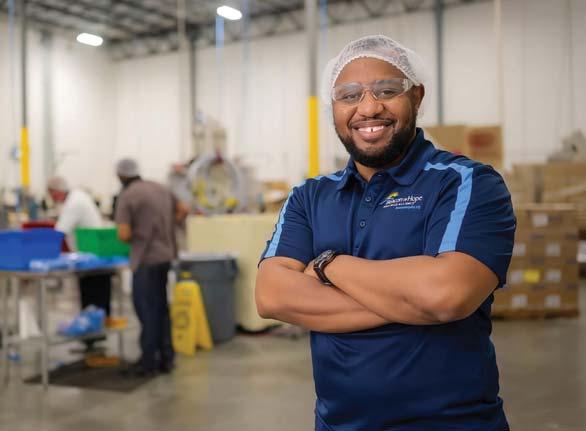
workplace. Workforce coaches are embedded on-site at partner companies to provide guidance, support, and connections to resources that help employees stay on the job, build stability, and advance in their careers. Employers, in turn, benefit from improved retention, engagement, and overall productivity.
Interested companies initially engage with the program when they need talent or are struggling to retain existing employees. An employer might reach out looking to fill open positions or might need help building internal growth plans for leadership advancement. Cincinnati Works serves 1,592 members across its employer partner network, where coaches support the employee and also lead on-site workshops covering
budgeting, stress management, and leadership development.
The on-site coaches aren’t there on behalf of the employer but serve as a confidential resource for employees, and personal information never makes its way back to management. A coach catches problems early—things like a transportation or health issue that might impact attendance or a housing crisis that might affect performance.
Amat says this arrangement is valuable to both the employer and the employee, especially in sensitive situations. Mental health concerns are something coaches hear quite often and something employees typically don’t share with their supervisor. That reality reflects Cincinnati Works’ understanding of the barriers standing between an individual and stable
employment—and it’s rarely just job readiness.
From 2022 to 2025, Cincinnati Works completed more than 2,450 service plans with members, which are individualized roadmaps built around each person’s specific situation. The most common barriers addressed in service plans were financial instability, housing, and transportation. But the list also included legal barriers, education and skills gaps, childcare, healthcare coverage, and food security, all appearing in the plans Cincinnati Works coaches build alongside their members.
A member who can’t get to work because they don’t have reliable transportation or misses shifts because they can’t find affordable childcare are challenges that require someone
“WE WANT TO HELP YOUNG PEOPLE UNDERSTAND THAT OPPORTUNITY IS ACCESSIBLE TO EVERYONE IN CINCINNATI WILLING TO WORK TOWARD IT,” SAYS TIANAY AMAT.
who sees the full picture of a person’s life. Cincinnati Works connects members to a wide network of community partners that can fill the gaps the organization doesn’t cover directly—organizations like Freestore Foodbank, Legal Aid, City Gospel Mission, and Dress for Success. “Do what we do best and partner with the rest,” says Amat, emphasizing the importance of bringing in other organizations when necessary.
The proof that this approach works is in the numbers. Members who engaged with Cincinnati Works’ financial coaching program increased their net worth by an average of 12 percent. For Amat, moments like a member purchasing his or her first home or making their first 401k contribution indicates something bigger than financial progress. “It’s a great indicator that they’re thinking about the future,” she says, “and moving away from the day-to-day.”
When young people secure quality jobs that pay a living wage, offer benefits, and build skills, Amat says, they don’t just earn a paycheck—they launch a financial trajectory. That access is especially transformative for individuals experiencing poverty, which is why Cincinnati Works coaches visit area high schools to
discuss the process of going straight into the workforce after graduation for those interested.
Too many students reach graduation without a clear path forward, says Amat, and the support they had in school disappears the moment after graduation. “We want to let them know that we have coaching here that can help you secure your dreams, help you think about your dreams, and map out a plan in Cincinnati where opportunity is accessible to everyone willing to work toward it.”
During the 2024–2025 school year, the Cincinnati Works’ Next Generation Program introduced the program to 505 students across Hamilton County and Campbell County schools, with 375 students engaging in the program and 53 students connecting with coaches after graduation.
THE BEST PARTNERships with outside vendors become part of company culture at Graeter’s Ice Cream and JTM Food Group, two area companies that have embraced their partnerships with Cincinnati Works. In fact, when the on-site Cincinnati Works coach at Graeter’s was briefly out recovering from an illness, “the entire team felt it,” says Vice President of Human
ECONOMIC IMPACT OF CINCINNATI WORKS 2022-2025
1,592
Total members served.
1,319
Total number of jobs created or supported. 80%
Average employee retention with on-site coaching.
$96,558,207
Total change in earnings resulting from the job placements.
$136,333,019
Total economic output from members earning wages, paying taxes, and spending their income.
$10,884,021
Total local, state, and federal taxes generated from economic activity, goods, and services produced by the job placements.
Statistics provided by the Cincinnati Regional Chamber’s Center for Research & Data.
TAKEAWAYS
PROCESS = PROGRESS
Cincinnati Works staff help clients, or members, find stable jobs by coaching during the job-seeking process as well as on-site at employers once members have been hired. “Progress requires patience, persistence, and the belief in people’s potential,” says CEO Tianay Amat.
FOCUS ON THE FUTURE
Members who engaged with Cincinnati Works’ financial coaching program increased their net worth by an average of 12 percent. For Amat, moments like a member purchasing his or her first home or making their first 401k contribution indicates something bigger than financial progress. “They’re thinking about the future.”
SOLVING PROBLEMS
Graeter’s Ice Cream and JTM Food Group have had great success giving employees access to Cincinnati Works coaches, who “provide the middle ground where employees can solve problems before those problems lead to poor work habits or even a resignation,” says JTM’s Sonia Pereira.
Resources Alex Wilson. That kind of presence isn’t built overnight—it’s the result of building trust and a shared belief that everyone wins when employees are supported.
Graeter’s has partnered with Cincinnati Works for several years, specifically for coaching services. A coach is on site two days a week, and Wilson says they’ve become an extension of the company’s HR and management staff. “They empower our employees to be their best selves when they show up to work every day,” she says. “They’re able to support our teams in ways neither I nor other managers can, and that has allowed our team members to grow personally and professionally.”
The on-site coach is a trusted advisor to the Graeter’s leadership team and has created a space for employees that is free from judgment. That neutrality is why employers are attracted to the Cincinnati Works model, a safe space for both employers and employees. “In our first year of partnering with Cincinnati Works, we experienced a huge decrease in turnover,” says Wilson. “The partnership has been one of our most stable strategies and is still being used all these years later.”
Wilson says coaching has supported situations like helping team members achieve home ownership or simply getting team members on a personal budget. “They show up to our facility without passing any judgment on our employees,” she says. “They’re completely open and approachable and integrate themselves into our teams as a true support network. Our teams know they’re here to listen and to hold people accountable—to me that’s the program’s biggest strength.”
At JTM Food Group, the belief
that team members are the company’s greatest asset isn’t just a line in a mission statement but the foundation of how the business operates. When the opportunity to partner with Cincinnati Works came up, the decision wasn’t difficult. “Partnering with an outside organization that aligns with our values only strengthens our onboarding process,” says Sonia Pereira, JTM’s human resources benefits manager. “It allows us to provide even more meaningful support to our new hires from day one.”
“THE CINCINNATI WORKS COACHES ARE HERE TO LISTEN AND TO HOLD PEOPLE ACCOUNTABLE,” SAYS ALEX WILSON AT GRAETER’S. “TO ME THAT’S THE PROGRAM’S BIGGEST STRENGTH.”
JTM is a compelling example of what a Cincinnati Works partnership looks like when there’s buy-in from day one. The Mason-based food manufacturer operates with a simple principle that they don’t just hire for a role but invest in the person. “As a family-owned company, our family extends to every team member who walks through our doors,” says Pereira. “Our partnership with Cincinnati Works reflects this identity, because they mirror our heart-centered culture.”
That shared mission helped create a straightforward partnership, with JTM
utilizing both job placement services and on-site workforce coaching. Currently, a Cincinnati Works coach is on site one day a week at JTM’s facility, with the intention of ensuring they aren’t an outside vendor that just shows up once and leaves. Pereira says the coach is deeply integrated into company culture, meets with new hires, and gets to know the team as individuals. “The approach means that when a team member faces a challenge, they aren’t reaching out to a stranger but to a partner they already know and trust,” says Pereira.
Pereira says the coach acts as a trusted third party who can provide specialized resources and follow-through that the JTM team
couldn’t manage on its own. Since partnering with Cincinnati Works, the company has seen measurable increases in retention and attendance, Pereira says. Employees who use coaching services stay at the company longer because they have the tools to navigate personal challenges. “We are so proud of our partnership with Cincinnati Works,” she says. “We’re making a commitment to walk alongside our team members and help them navigate whatever comes their way.”
For HR leaders who are skeptical that a nonprofit partnership can impact retention and turnover, Pereira says it starts with the proper approach. “The uncertainty usually comes from thinking a nonprofit is just an out-
side vendor,” she says. “But when you work alongside them, they become a retention resource. They provide the middle ground where employees can solve problems before those problems lead to poor work habits or even a resignation.”
Wilson’s advice to any organization considering a similar partnership is to go in with trust and be prepared to celebrate wins that don’t always show up on a balance sheet. “When we show up in our personal lives as our best selves, we show up in our professional lives as our best selves,” she says. “At Graeter’s, that philosophy isn’t just good HR strategy, it’s how we walk the walk.”
Welcome to Flavor Town
HERE’S WHY SO MANY PLAYERS IN THE FLAVORINGS AND FRAGRANCES INDUSTRY CALL CINCINNATI HOME.
BY CARRIE BLACKMORE
Standing inside a laboratory in Lebanon, Ohio, MANE’s Senior Vice President for Research and Development Rob Wieland grabs a jar off a shelf in front of him and unscrews the lid.
“What do you smell?” he asks. A scent of almond wafts from the jar. He opens another. Butter. And another. Banana.
Flavorists at MANE use powdered essences to build new flavors every day, he says, because he and thousands of others in the flavor industry in the Cincinnati region are in the business of capturing consumers’ senses. Billions of people around the globe consume
their creations daily. They may be flavoring your favorite potato chip or seltzer or enhancing the taste of your coffee or yogurt. Maybe even adding a boost of protein, energy, or probiotics.
“The flavor industry is in an exciting period of transformation,” says Mindy Kucks, president of North America Commercial for Givaudan, the world’s largest manufacturer of flavorings and fragrances that placed its North American headquarters in Cincinnati. “Consumers are looking for great taste that also supports their well-being and sustainability goals. And this motivates us
to keep innovating.”
Flavor is big business. Valued between $16 billion and $21 billion per year, market forecasts predict the industry will expand at a compound annual growth rate of about 5 percent over the next decade. “Increasing demand for processed food and beverages acts as a primary catalyst for this financial trajectory,” a January forecast from Future Market Insights reads. “Product developers are shifting focus from synthetic additives to plant-based extracts, redefining procurement habits in major global economies. Such behavioral changes encourage ingredient suppliers to introduce comprehensive natural flavor portfolios utilizing advanced extraction technologies.”
These shifts are playing out today across Cincinnati, home to almost a dozen flavor companies. The regional ecosystem includes powerhouse Givaudan, the Swiss multinational corporation whose flavors and fragrances touch a whopping 70–80 percent of global households every day; MANE Inc., an affiliate of the largest privately-owned flavor company in the world, headquartered in France, with flavor operations based in Lebanon and Woodlawn; and Archer-Daniels-Midland (ADM), based in Chicago but with its flavor and color business in Erlanger. Several other medium- to small-sized flavor houses pepper the region from Hamilton to Walton.
The industry developed in this region for many reasons, past and present, says Kimm Lauterbach, chief executive officer at REDI Cincinnati, the region’s economic development initiative. Key motivations include Cincinnati’s location, less than a day’s drive to 60 percent of the U.S. population; its long history in food and beverage manufacturing (we’re not called Porkopolis for nothing); and access to talent. “We’re
fortunate because we have all these great assets for a business decision, but you can have great assets and not have a really livable region,” says Lauterbach. “When we’re recruiting our foreign companies, they’re always blown away. They say, I had no idea about Cincinnati’s arts, the culture, the food, the nightlife, the entertainment, the neighborhoods, the feel.” Many of these companies have doubled down of late. MANE opened a $100-million facility in Woodlawn in spring 2025 to expand its ability to produce liquid flavors, and ADM is in the midst of a $46-million expansion on its Erlanger campus. Givaudan is exploring a project, also focused on producing liquid flavors, at the former Dow Chemical plant in Reading. Smaller companies are making moves, too. ZoomEssence completed a $1-million expansion to its operations in Hebron last year, a couple of miles from the Cincinnati and North-
FOOD FOR EXPERIMENTING
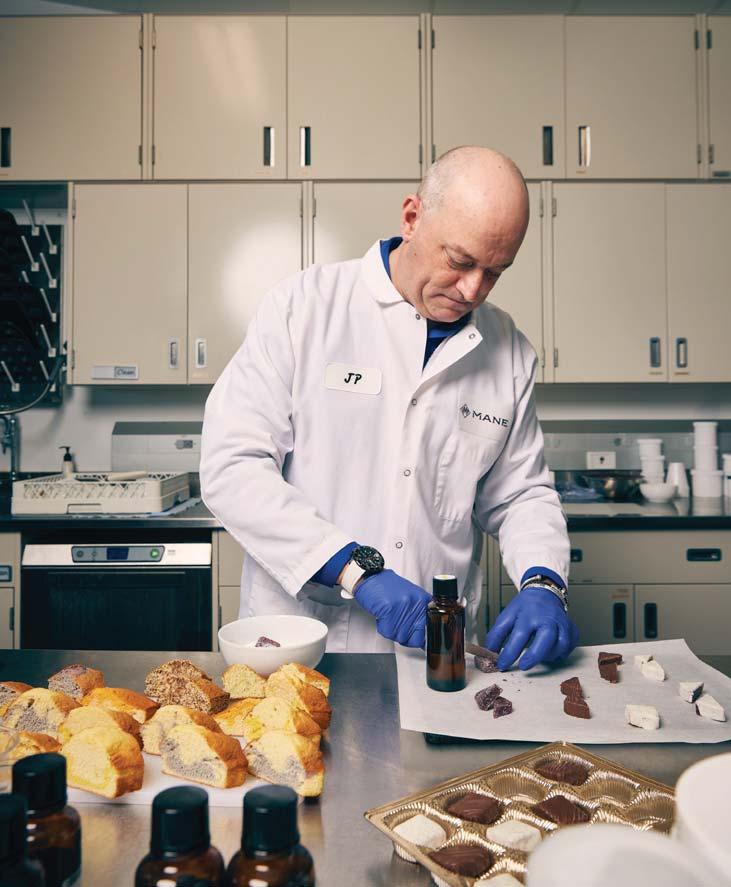
Jean-Philippe Solnom, an applications technologist at MANE, adds new flavor profiles to finished products for taste-testing.
ern Kentucky International Airport. The company makes flavor products with its own patented and trademarked Zooming technology, which it recently began marketing under the brand name AmbiDry.
One factor everyone in the broader food and beverage industry is dealing with is a changing consumer, says ADM’s President of Global Flavors Calvin McEvoy. “Twenty or 30 years ago, you tried to design a product for a mass market to appeal to many, many consumers at once,” he says. “We’re seeing that very much go away. People want purposeful innovation and a product specific to them.”
FLAVOR IS A COMBINATION of taste and aroma—the two defining features of how we experience food, according to a landmark paper on flavor chemistry by the American Chemistry Society published in 2013. “Flavor is caused by receptors
“WE’RE HELPING BRANDS RESPOND TO EVOLVING PREFERENCES, FROM SUGAR REDUCTION TO THE SHIFT AWAY FROM SYNTHETIC COLORS,” SAYS MINDY KUCKS OF GIVAUDAN.
in the mouth and nose detecting chemicals found within food,” the paper explains, “and these receptors respond by producing signals that are interpreted by the brain as sensations of taste and aroma.”
Creating a flavor, as one might imagine, isn’t an easy task. It involves a lot of science that rapidly developed during World War II. In 1938, the U.S. Congress passed the Agricultural Adjustment Act, which authorized the U.S. Department of Agriculture to
conduct research “to develop new scientific, chemical, and technical uses” for farm commodities. With troops to feed, the agricultural supply chain tightened, so government scientists focused first on creating new and improved ways of preserving fruits and vegetables beyond their natural harvest season.
After the war, those scientists “began the long process of investigating flavor compounds, and in doing so they developed numerous techniques
SWEET SMELL OF SUCCESS
Research at the legendary Givaudan Perfumery School in Argenteuil, France helps inform flavor chemists at its Cincinnati facilities.
that improved the capabilities of flavor analysis. The rapid increase in knowledge of flavor science beginning in the 1940s was powered by advances in chemical analysis.” Over the following decades, scientists built new equipment and refined methods to determine the compounds that went into flavor, like gas chromatography (to separate the compounds), static headspace analysis (testing a food’s vapor), and odor thresholds (to quantify the sensory impact).
Alex Fries gets a lot of credit as a founding father of the flavor industry in Cincinnati. He was a Bavarian-born immigrant and chemist when he began selling flavorings to whiskey makers in Kentucky in 1854, according to 2002 Associated Press feature story. Fries sold flavors and bitters out of a building on East Second Street until his death in 1907, but the business was carried on by his brother and family descendants, eventually splintering into different companies over the years. Some of the original Fries enterprise would eventually become part of Givaudan, while another offshoot would eventually become Wild Flavors, which was acquired by ADM in 2014.
“When I describe what we do, people usually have that Oh right moment when they realize how essential flavor is to everything we eat and drink,” says MANE’s North American President Amy McDonald. “It’s a surprisingly under-the-radar industry, but in this region there’s a real awareness of it, which makes a big difference when it comes to attracting talent.”
Becoming a flavorist is an arduous process. There’s an undergraduate or graduate degree in chemistry, biology, or food science, followed by a seven-year apprenticeship with a senior or master flavorist, and then a certi-
fication process with the Society of Flavor Chemists. “Few people recognize the science behind the food they consume,” reads Purdue University’s webpage about becoming a food and flavor chemist. “Food chemists focus on the chemistry of foods, their deterioration, and the principles underlying the improvement of foods for consumers.”
Cincinnati has a rich pool of graduates and experts in the field, McEvoy says. “We primarily hire food scientists, food chemists, chemistry degree graduates, biology degree graduates, culinary graduates,” she says. “So Cincinnati State, UC, Xavier, Ohio State, University of Kentucky, Purdue are all a feeder network in terms of talent within this area.”
Over the past 50 years, Cincinnati and New Jersey have emerged as the two major hubs for the global flavor industry because of their proximity to customers in the food and beverage industry, which is concentrated in the Midwest and on the East Coast, McDonald says. “Speed is incredibly important for food and beverage developers today,” she says. “They bring products to market faster than ever while navigating growing consumer pressure for more affordable options.”
MANE has thousands of customers, says Wieland, and one might call in the morning and need an ingredient manufactured, packaged, and on its way by 5 p.m. that day. “That’s the level of speed we’re moving,” he says. “We will ship out hundreds of high-value flavors today.”
MANE (PRONOUNCED “man”) employs about 900 people in the region. Its Lebanon campus focuses on dry technologies, blended technologies, and capsules, while the Woodlawn
campus houses a new $100-million plant that opened last year, upping the company’s capacity to produce of liquid flavors fivefold.
“We support the full food and beverage development process from A to Z,”McDonald says. “In our development center we collaborate closely with customers to ideate around what consumers will want next, then bring those ideas to life. We conduct sensory and consumer insight work to
SPEED AND COST
MANE North American President Amy McDonald and Senior Vice President Rob Wieland say Cincinnati’s central location helps them react quickly to customer demands.
TAKEAWAYS
WHY HERE?
This region is home to almost a dozen flavor companies, including international powerhouses Givaudan, Mane, and Archer-Daniels-Midland. Key reasons include Cincinnati’s central location in the U.S., our long history in food and beverage manufacturing, and access to talent.
CUSTOMERS ARE ALWAYS RIGHT
Flavor companies are working with their food and beverage manufacturing partners to respond to changing consumer demands such as sugar reduction, cleaner product labels, a shift away from synthetic colors, and the emergence of functional blends like juices with added vitamins or foods that deliver extra fiber or protein.
GROWING SECTOR
Flavor companies are just one component of the regional economy’s growing food and beverage sector, which employs more than 24,000 people with a 19 percent increase in job growth between 2019 and 2024.
validate emerging trends, and once concepts are approved we’re able to manufacture them right here in the Cincinnati area.”
Givaudan expects to add 300 new jobs over the next 15 years in this region. “We’re helping brands respond to evolving preferences, from sugar reduction and cleaner labels to the shift away from synthetic colors,” says Kucks. “By listening closely to our customers and investing in responsible sourcing, advanced technologies, and creative collaboration, we have the opportunity to deliver more mindful flavor experiences for people everywhere.”
ADM is one of the world’s largest processors of agricultural commodities, creating ingredients for a slew of products from foods and beverages to biofuels and home insulation. Its flavor and color business is part of its human nutrition division and is headquartered at the Erlanger campus, which it shares with the company’s global information technology division.
The company invested $48 million in upgrades in Erlanger across three projects: construction of two new customer creation and innovation centers, expansion of its manufacturing footprint, and an update to its manufacturing software system. “It’s not just about making more but making more in a more efficient, higher quality, and safer environment in terms of how we manufacture as an enterprise,” says McEvoy.
ADM employs around 1,200 people locally and has an advantage over competitors, he says, because it creates many of the base ingredients that go into making flavors. “Whether it be citrus ingredients, botanicals,
natural extracts, aroma ingredients, colors, or vanilla, we have vertical integration in all those areas, which gives us more supply chain resilience,” says. Industry leaders have cited multiple supply chain disruptions, from COVID to tariff-related and war-related issues, as challenging the industry to be innovative and keep their clients nimble.
“Food and beverage 30 years ago was a way of putting calories in your body and a way of making you feel
“COMPETITORS PROBABLY DON’T WANT TO BE ACROSS THE STREET FROM EACH OTHER, BUT BEING IN THE SAME COMMUNITY HAS REAL ADVANTAGES,” SAYS BE-NKY’S LEE CRUME.
happy and good about what you eat,” says McEvoy. “Today’s consumers are looking for a huge amount of return in terms of what they put in their bodies.”
They’re seeking out foods and beverages that contain what are known has functional blends—a juice with added vitamins or an energy drink, for instance. Some consumers want a food or beverage to deliver extra fiber or protein, perhaps prebiotics, probiotics, or postbiotics.
Since its founding in 2008, ZoomEssence has produced about 8 million pounds of flavor at its Hebron location, which underwent a $1-million expansion last year. Their trademarked Zooming technology
dries materials at a lower temperature than the common methods and is protected by 31 patents, leading to maximum delivery of flavor actives, less oxidation, more dense flavor particles, and improved retention of top notes.
“We design and engineer the machines we use with physicists and engineers,” says ZoomEssence CEO Steve Hardek. “You will see us coming out with a new brand shortly called AmbiDry. We want to welcome people into the innovation center and say, What else can benefit from this low temperature drying technique that we invented?”
ZoomEssence was incubated in New Jersey but ultimately chose to locate in Northern Kentucky, says Hardek, because it was where “the smart one,” Chief Science Officer Charles Beetz, lived. Today the company has 65 employees here.
“Honestly, the state of Kentucky was great and Duke Energy came in early on to help us out,” Hardek says. “As we’ve gotten bigger over time, we found people who really wanted to challenge the industry from an innovation standpoint.”
COMPETITION KEEPS
building our regional talent pool, says Lee Crume, CEO of BE-NKY Growth Partnership, the economic development company for Kenton, Campbell, and Boone counties. “Competitors probably don’t want to be across the street from each other, but being in the same community has
real advantages,” he says. “If people are going to move to a community, they often don’t want to work for the only employer in that sector.”
And flavor is just one component of the regional economy’s growing food and beverage sector, Crume says, which employs more than 24,000 people in the area and experienced a 19 percent increase in regional job growth between 2019 and 2024.
“Companies looking to grow, expand, or locate in Cincinnati’s 15-county region should reach out to us,” says Lauterbach. “Not because my team knows everything, but we’re that credible convener. We’ve spent 12 years now building the trust of the reputa-
N AV I GAT I N G NAVIGATING F L AVO R FLAVOR
T OW N TOWN
tion to be able to bring together all of the right partners.”
Competition means businesses are always raising the bar, says McDonald of MANE, which recently announced a partnership with Arzeda, a U.S.-based biotechnology leader and global pioneer in intelligent protein design. That company’s generative AI technology is helping MANE explore sweetness with less sugar.
As the consumer landscape shifts, the food and beverage industry will transform. “Innovation can be an inch or a mile,” says Wieland, standing in MANE’s lab. “Making something taste better is what flavorists do every day.”
Givaudan
Givaudan
Lyons Magnus ZoomEssence
JIM TRESSEL
LIEUTENANT GOVERNOR
STATE OF OHIO
HOW IS WORKOHIO DIFFERENT FROM OTHER EMPLOYMENT PROGRAMS?
WorkOhio is built around a community-centered approach. Over the past year, I’ve traveled to every corner of the state to sit down with local business, education, and community leaders. We learned that Ohio has a lot of momentum, but too many Ohioans simply aren’t aware of
the opportunities available or how to take advantage of them. WorkOhio acts as a “front door” for anyone who wants to take the next step in their career journey. Through our new website (WorkOhio.gov) Ohioans are connected directly with a real person at one of our WorkOhio Regional Job Hubs, bringing together existing resources and
ASK ME ABOUT The launch of WorkOhio’s new employment hub.
streamlining the job search or skill-seeking process.
JOE HUBER
CEO
CINCINNATI DEVELOPMENT FUND
ASK ME ABOUT
How we plan to use $70 million from the federal New Markets Tax Credit program.
WHY IS NOW THE BEST TIME TO LAUNCH SUCH AN INITIATIVE?
Ohio’s economy is on the move!
In partnership with the General Assembly, our administration has worked hard to make Ohio one of the most
WHAT TYPES OF OPPORTUNITIES ARE AVAILABLE THROUGH WORKOHIO? Every region of Ohio has different strengths, which is why WorkOhio is structured regionally. Depending on the region, it may include careers in manufacturing, construction, agriculture, healthcare, energy, aviation and aerospace, research and technology, and many other growing sectors.
business-friendly states in the country—and people are taking notice. As more companies put down roots in Ohio, they’re bringing great jobs with them. WorkOhio brings those pieces together at the right moment, ensuring Ohioans can take full advantage of the jobs being created in their communities.
–ELIZABETH MILLER WOOD
HOW WILL YOUR DECADESLONG EXPERIENCE WITH THE ZOO ENHANCE YOUR LEADERSHIP? Over the years, I’ve worked with every department and know almost every staff member. We are fortunate to have an exceptional team that’s dedicated to every detail of operating a world-class zoo. My job is to support their work and shine a light on the impact they create. I do that by remembering to be kind, be curious, and work hard.
WHAT MAKES THE CINCINNATI ZOO & BOTANICAL GARDEN UNIQUE? We’ve been a member of the Association of Zoos and Aquariums since 1978. The bar is high to be accredited by the AZA, so all member organizations are exceptional. Our commitment to animal and plant excellence creates a beautiful park for visitors to be inspired by wildlife. But
the true magic lies with creating memorable experiences that lead to lasting impact for people and wildlife both across the street and across the globe.
WHAT ARE YOUR PRIORITIES FOR THE ZOO’S FUTURE? For 150 years, this Zoo has stood for more than a visit. It stands for care. For science. For education. And, most importantly, for hope—for wildlife and for the people who believe their actions can shape a better future. I’m focused on creating a future where people and wildlife can thrive together. Much of our conservation work focuses on human/wildlife coexistence and partnering with communities to protect species that share the same space. We’re thrilled to begin construction soon on Giraffe Tower, a state-of-the-art facility that will allow us to double our giraffe herd and double the excitement. –E.M.W.
DO YOU HAVE A GENERAL DIRECTION FOR HOW YOU’RE PLANNING TO USE THESE FUNDS? As a mission-driven Community Development Financial Institution (CDFI), Cincinnati Development Fund strengthens underserved neighborhoods and improves lives through innovative financing. Our New Markets Tax Credit work supports neighborhood revitalization, nonprofit facilities, and
DAVE JENIKE
CINCINNATI ZOO & BOTANICAL GARDEN
ASK ME ABOUT
My new role as the Zoo celebrates its 150th anniversary. DIRECTOR
job creation while driving and leveraging capital where it is most needed. We’re currently evaluating our pipeline of projects in need of this capital.
WHY IS IT IMPORTANT TO INVEST IN “RISKY” COMMUNITY PROJECTS? As an unregulated nonprofit lender, we can take risks on projects that a traditional bank might not be able to support. We offer technical assistance, flexible terms, and local
oversight, all of which set up the developer and the project for success. CDFIs serve neighborhoods and populations often deemed too high-risk for traditional banks. We fill a gap not covered by these lenders.
WHAT’S AN EXAMPLE OF A PREVIOUS CDF PROJECT THAT PROVED SUCCESSFUL?
Since 1988, CDF has financed hundreds of successful, high-impact
projects. We’re proud of the neighborhood revitalization work we’ve facilitated in places like Walnut Hills with Paramount Square, in College Hill with KeyMark, in Price Hill with ARCO, in Avondale with the Avondale Town Center, and many more. Nonprofit facilities like CityLink, Freestore Foodbank, and Clifton Cultural Arts Center are a few that come to mind for their significant impacts. –E.M.W.
PICTURE YOURSELF HERE
Get a sneak peek inside FotoFocus Center, Cincinnati’s new headquarters for photography. – JOHN FOX
PHOTOGRAPHS BY DEVYN GLISTA
The new FotoFocus Center officially opens in Over-the-Rhine on May 29.
HOME FOR PHOTOGRAPHY
FotoFocus Center is the new physical headquarters for the nonprofit organization that in 2010 launched FotoFocus programming to celebrate photography and lens-based art. Located on the corner of Sycamore and Liberty streets in Over-the-Rhine, the building opens to the public on May 29.
CAMERA READY
Designed by Cincinnati-based Jose Garcia Design + Construction, the building features an exterior of steel window grids and marble frames that mimic a camera’s viewfinder and bring natural light into the warm wood-finished interior. It includes space for public art exhibitions, meetings, events, and offices as well as an 835-square-foot outdoor terrace.
STAFFING UP
FotoFocus currently has eight full-time staff who will be moving into the building, with one new hire planned. Artistic Director and Curator Kevin Moore is based in in New York City.
PUBLIC GALLERIES
FotoFocus Center has two exhibition spaces: a 3,000-square-foot gallery on street level and a 1,500-sf gallery on the second floor. Five or six exhibits will rotate in the spaces throughout a typical year, and all shows will be free to the public Thursdays through Saturdays.
ENTER THE TENT
The inaugural exhibition, Big Tent, opens May 29 and runs through August 22. In spirit with the nation’s 250th birthday, the show features past and present FotoFocus artists celebrating democracy, creativity, and experimentation. The building will also serve as a venue for the FotoFocus Biennial, which returns in October.
The Highest Paid Grads in Ohio!*
This fall, Cincinnati State reached its highest fall enrollment in 12 years–up 12.7% from last year. At the same time, the Ohio Department of Higher Education ranks our graduates #1 in Ohio for community college earnings–averaging $54,308 a year!
No. 2 in the Nation Among Public Universities for Writing in the Disciplines
Miami University Sets a Higher Standard
Since 1996, Miami’s Howe Center for Writing Excellence has had a singular focus on collaboration and innovation in the teaching of writing. We’re proud to be ranked No. 2 among public schools for Writing in the Disciplines, one of only two public universities recognized nationwide. Schools granted this distinction make the writing process a priority in their curriculums — which the Howe Center has always done with research and evidence-based principles that serve Miami students across the university.