FANFARE Magazine


JAN / FEB 2026














A proud sponsor of the musical arts
























JAN / FEB 2026
A proud sponsor of the musical arts
9
“It was like Cinderella and the glass slipper,” said CSO Concertmaster Stefani
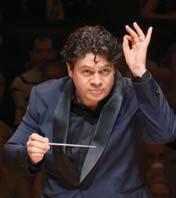
Matsuo, recalling Cristian Mcelaru’s “audition” concerts in 2024. She and CSO principals Dwight Parry and Gillian Benet Sella share their first impressions of the CSO’s new Music Director and how they see him shaping the Orchestra for the future, pp. 9-13.
16
23 Artistic Leadership: Cristian Măcelaru, John Morris Russell
24 Concerts in this Issue:
• JAN 3 & 4: Disney and Pixar’s Toy Story in Concert Live to Film (Pops)
• JAN 10 & 11: Trifonov Plays Beethoven (CSO)
• JAN 16 & 17: American Voices (CSO)
• JAN 22: Baroque and Beyond (Chamber Players)
• JAN 23–25: Dolly Parton’s Threads: My Songs in Symphony (Pops)
• JAN 30 & 31: Slavic Legends (CSO)
• FEB 1: Access to Music (CSO)
• FEB 6 & 7: Mahler Symphony No. 4 (CSO)
• FEB 7: Peter & the Wolf (Lollipops) 36 Spotlight: Poet Rita Dove Shares Why Poetry is Salvation
68 Financial Support
75 Opus 50 & 25 Subscriber Recognition
80 Administration
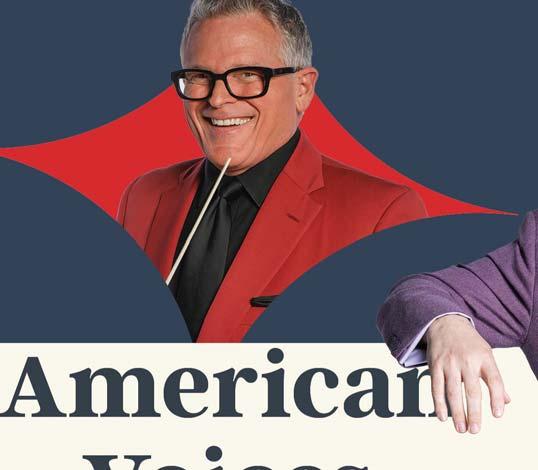
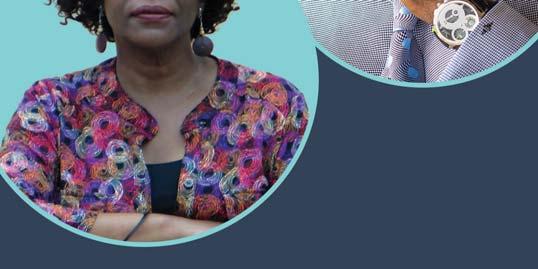
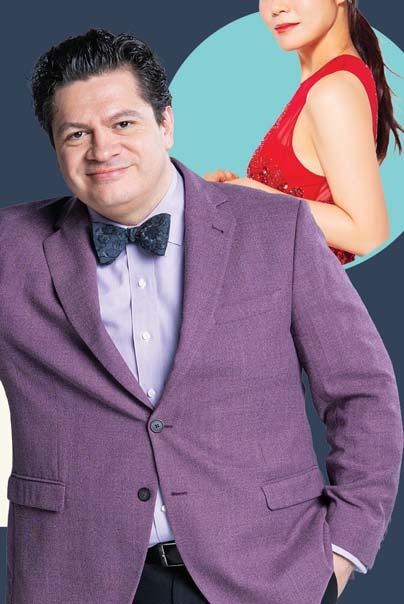
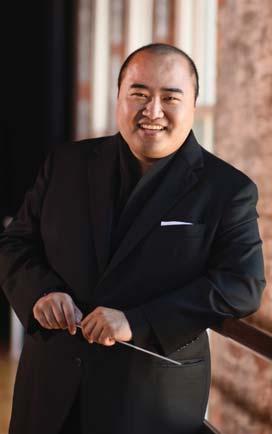
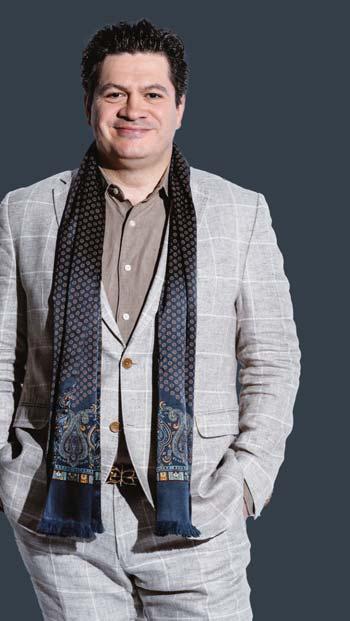
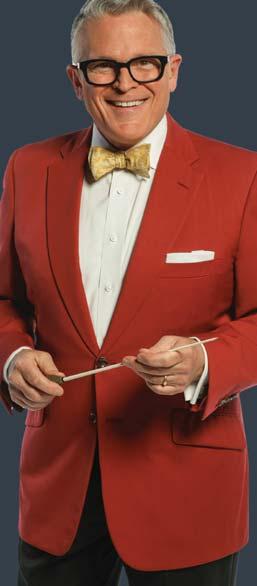
ON THE COVER: From left: Cincinnati Pops Conductor
John Morris Russell (Credit: Mark Lyons), CSO Music Director Cristian Măcelaru (Credit: Alex Johnson), violinist Esther Yoo, singer-songwriter Dolly Parton, poet Rita Dove, bass Morris Robinson, Pops Principal Guest Conductor Damon Gupton. pp. 9-13.
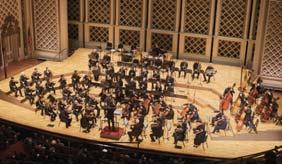
We asked CSO musicians and staff “What does ‘Life is Good When You’re Surrounded by Music’ Mean to You?” Read their inspiring and illuminating answers, and find a link to where you can express your feelings about that phrase, on pp. 16–17.
pp. 16–17.
36
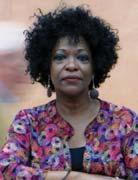
The CSO commissioned Pulitzer Prizewinning poet, and Ohio native, Rita Dove to write a poem inspired by Samuel Barber’s Adagio for Strings, a poem Morris Robinson will read as the Orchestra plays the Adagio Jan. 16 & 17. On pp. 36–37, Dove discusses her life as a writer, artist and musician and explains why she once compared poetry to salvation.


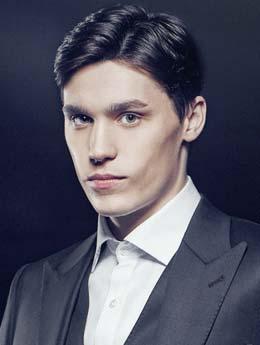


Sunday, March 8, 2026
“…one of Canada’s most exciting classical music talents.”
— Anthony Miller, Maclean’s
•In 2024, winner of the Leeds International Piano Competition, recipient of the Dame Fanny Waterman Gold Medal and awarded a Borletti-Buitoni Trust Fellowship
•In 2022, first prize winner of the Hilton Head International Piano Competition, the Maria Canals International Music Competition and the 20th Paloma O’Shea Santander International Piano Competition
Tickets: MemorialHallOTR.org or 513-977-8838



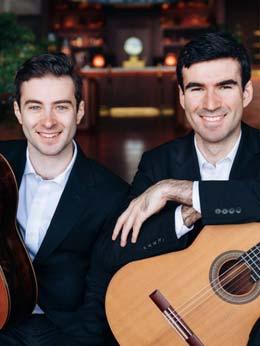



Sunday, March 29, 2026
“Personable, relaxed and utterly winning.”
— Limelight
•Australian brothers who became the first guitar duo to win the Young Concert Artists International Auditions
•Have over 50 awards between them in guitar competitions
•First Australians and first guitar duo accepted into—and graduated from— The Juilliard School’s prestigious Artist Diploma program
•An experienced recitalist, he performs internationally, with performances widely broadcast Both recitals at 3 PM at Memorial Hall, 1225 Elm Street, OTR
•Their album, Sidekick, was featured as one of New York’s WQXR’s “Best New Classical Albums of 2023”


CINCINNATI SYMPHONY ORCHESTRA & CINCINNATI POPS
Music Hall, 1241 Elm Street, Cincinnati, OH 45202
Box Office: 513.381.3300
hello@cincinnatisymphony.org
Group Sales: 513.864.0196 groupsales@cincinnatisymphony.org
TTY/TDD: Use TTY/TDD Relay Service 7-1-1
cincinnatisymphony.org cincinnatipops.org
Officers
Charla Weiss, Chair
Dianne Rosenberg, Immediate Past Chair
Sue McPartlin, Treasurer
Gerron McKnight, Secretary
Directors
Dorie Akers
Nick Apanius
Heather Apple
Evin Blomberg**
Kate C. Brown
Trish Bryan*
Otto M. Budig*
Emma Compton
Andrea Costa
FANFARE MAGAZINE STAFF:
Managing Editor
Tyler Secor
Senior Editor/Layout
Teri McKibben
Assistant Editor
Gabriela Godinez Feregrino
CINCINNATIMAGAZINE:
Advertising and Publishing Partners for Fanfare Magazine
Publisher
Ivy Bayer
Production Director & IT Systems
Administrator
Vu Luong
Advertising Designer
Sophie Kallis
Account Representatives
Laura Bowling, Maggie Wint Goecke, Chris Ohmer, Julie Poyer, Sarah Riesenberger
Operations Director
Missy Beiting
Business Coordinator
Meredith Carroll
Advertising and Business Offices
Atrium 2 — 221 E. 4th Street, Suite 130 Cincinnati, OH 45202 | 513.421.4300
Subscriptions: 1.866.660.6247 cincinnatimagazine.com
Adrian Cunningham
Gabriel Davis
Maria Espinola
Blair Fleischmann*
Kori Hill**
Francie S. Hiltz*
Joseph W. Hirschhorn*
Edna Keown
Florence Koetters*
John Lanni
H. Spencer Liles*
Robert W. McDonald
Dean Moulas
Ann E. Mulder
Aik Khai Pung
James B. (“Rick”) Reynolds*
Jack Rouse*
Patrick Schleker**
Valerie Sheppard
Brett Stover
Kari Ullman
Randolph (“Duck”) L. Wadsworth, Jr.*
Emeritus * Ex-Officio **
We thank our many partners who serve on the following CSO Board of Directors committees, as well as the Multicultural Awareness Council (MAC), as we collectively work to realize our vision to be the most relevant orchestra in America.
CSO Board of Directors Committees
Audience Engagement
Audit & Ethics
Inclusion
Executive
Finance & Investment
Learning
Nominating & Governance
Officers Nominating


Non-Board Advisory Council
Multicultural Awareness Council
You are welcome to take this copy of Fanfare Magazine home with you as a souvenir of your concert experience. Alternatively, please share it with a friend or leave it with an usher for recycling. Thank you!






















































































































































WE BELIEVE MUSIC LIVES WITHIN US ALL








to the January and February 2026 issue of Fanfare Magazine.
Along with the online version of Fanfare Magazine, the CSO has developed a digital platform to deliver concertspecific content.
FOLLOW US on social media for the latest updates!
Facebook: @CincySymphony @CincinnatiPops
Instagram: @CincySymphony
YouTube: @CincySymphony
TikTok: @cincysymphony
Cristian Mcelaru’s connection with the Cincinnati Symphony Orchestra musicians was forged through authenticity, trust and empathy. Writer Hannah Edgar spoke with three principal musicians to explore these connections, characterized by curiosity and a shared musical language, on pp. 9–13.
Cristian with connections, Take
Take a look back at Cincinnati’s role in shaping the musical soundscape of the Civil Rights era on pp. 14–15. Writer Andre Jamal Cardine explores how the music of Black icons with Cincinnati ties has carried both the weight of injustice and the power of collective resilience.
From small joys to life-changing memories, CSO musicians and staff open up about what Mcelaru’s words, “Life is good when you’re surrounded by music,” mean to them. Their answers on pp. 16–17 reveal just how deeply music shapes their lives.
From twinkling triangle notes to thunderous blows, the CSO’s percussion team shapes some of the Orchestra’s most unforgettable moments. Writer Anne Arenstein pulls back the curtain on the precision and teamwork behind this dynamic orchestra section on pp. 18–19.
Assistant Conductors Alex Amsel and Duo Shen are new to the Cincinnati Symphony Orchestra family this season. On pp. 20–21 writer David Lyman relates the story of Amsel’s journey to the CSO from orchestra musician to conductor, driven by community and connection as much as artistry, and conveys Duo Shen’s devotion to music and the musicians around him, and how this permeates Shen’s every moment on stage.
On pp. 36–37, poet Rita Dove reflects on a life shaped by literature, music and the belief that poetry can act as a lifeline. Written by Mildred C. Fallen, this profile opens a window into Dove’s inspirations and creative process. Please enjoy these stories that have been curated for you in Fanfare Magazine, but also know that the Fanfare Magazine experience is not limited to a print publication available only at Music Hall concerts. You can explore Fanfare Magazine at any time via our website at cincinnatisymphony.org/fanfare-magazine, where you can also find web-exclusive articles.
Along with the online version of Fanfare Magazine, the CSO has developed a digital platform to deliver concertspecific content to meet the CSO’s ongoing commitment to digital storytelling, innovation and accessibility. This digital platform offers early access to exclusive concert-specific content: fulllength program notes, artist biographies, feature stories, up-to-the-minute information and much more! As a bonus, program notes and artist biographies for the entire season will be available on this digital platform in advance of the season-opening concerts, allowing you to engage with all the content before you arrive at Music Hall.

*By texting to this number, you may receive messages that performances; msg & data rates STOP to cancel.
*By texting to this number, you may receive messages that pertain to the organization and its performances; msg & data rates may apply. Reply HELP to help, STOP to cancel.
From and staff open up words, Their how deeply From Assistant Amsel Shen devotion On life shaped a Please available where articles. Along specific content to the CSO’s ongoing digital offers early access to content: fulllength artist bonus, Unlike smartphone is accessible— no app to download or subscription to manage. our
513.845.3024*
Unlike a print magazine, this digital platform is compatible with all smartphone accessibility features. The CSO’s digital platform is easily accessible — no app to download or subscription to manage. To explore our digital content, visit cincinnatisymphony.org/ DigitalProgram, text the word PROGRAM to 513.845.3024* or scan the QR code at right with your mobile device.
The CSO hopes you find inspiration within these pages and within the music — past, present and future — that reverberates at Music Hall and in the community. Thank you for being with us!
The find inspiration within these and music— past, present and future — that reverberates at Music Hall and in the community.
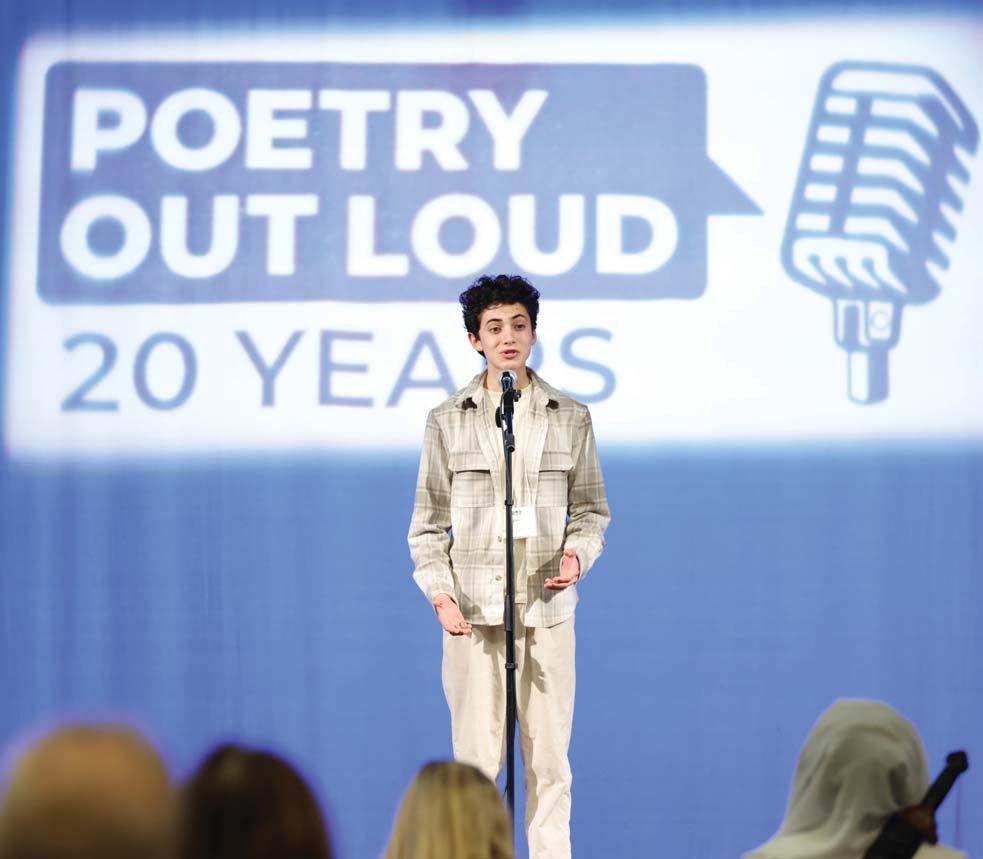
Program Spotlight: POETRY OUT LOUD
Investing state and federal dollars, the Ohio Arts Council funds and supports quality arts experiences for all Ohioans to strengthen communities culturally, educationally, and economically.
Learn more about our grant programs and resources, find your next arts experience, or connect: OAC.OHIO.GOV.
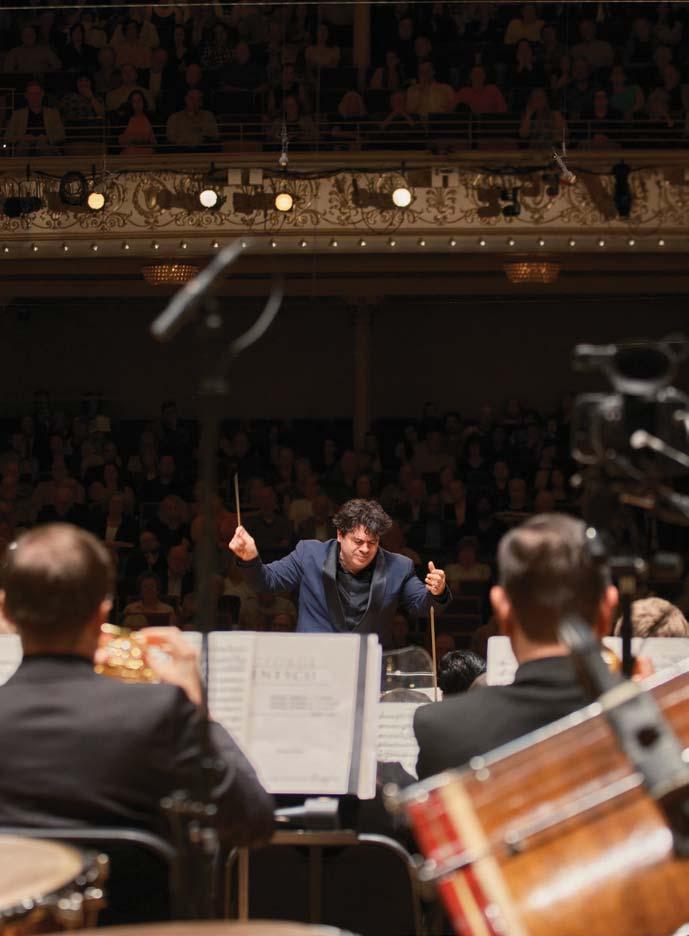
How Cristian Măcelaru won over the Cincinnati Symphony Orchestra, and found a new musical home.
by HANNAH EDGAR
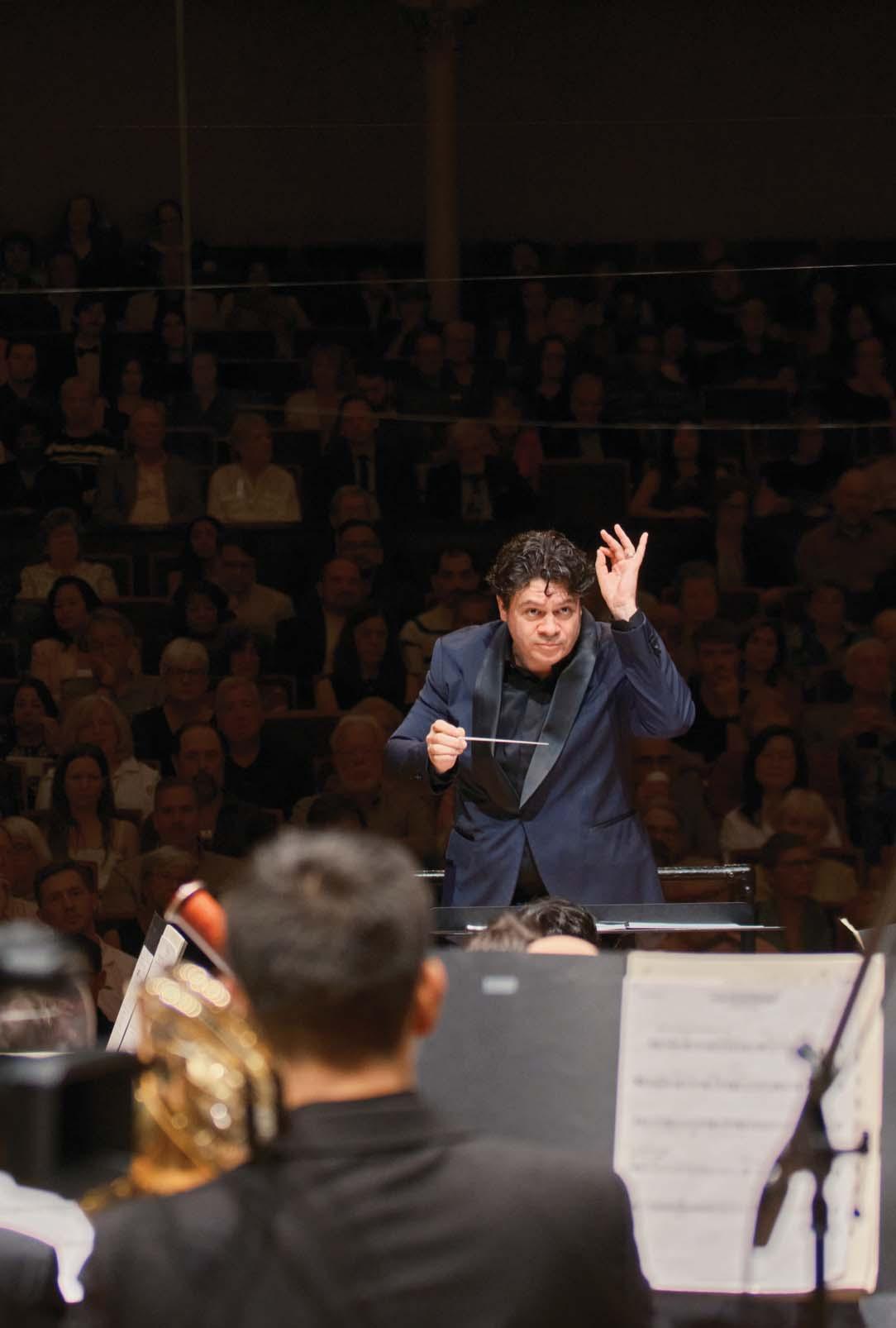
CCristian Mcelaru was different from other prospective music directors from the very beginning.
Once the Cincinnati Symphony Orchestra had narrowed down a few strong contenders, the music director search committee — comprising Orchestra administrators, board members and musicians from the Orchestra — called the candidates in for an interview. The committee asked candidates about their musical specialties. Responses varied: some had a passion for new works, others an affinity for symphonic warhorses, and some even singled out specific eras of music history.
When Mcelaru was asked about whether he would bring any areas of special focus to the role, “he flat-out said, ‘No, and I don’t plan for it to be that way,’” remembers Concertmaster and committee member Stefani Matsuo.
in his February 2025
No. 9, From the New World, in his February 2025 Designate appearance and the suite from Der Rosenkavalier for his October inaugural concerts — but also included works by living composers. Anna Clyne’s Abstractions kicked off his inaugural concerts; in February 2025, it was an excerpt from Wynton Marsalis’ Blues Symphony, which Mcelaru will conduct more of on the Jan. 16 & 17, 2026 concerts (see p. 33 of this issue of Fanfare Magazine). He also nodded to his Romanian heritage, conducting George Enescu’s Romanian Rhapsody No. 1 as an encore during the opening program and during a special concert featuring Yo-Yo Ma.
He’s a man of his word. In his first appearances as Music Director and Music Director Designate, Mcelaru anchored each program with a beloved work from the repertoire — Dvoák’s Symphony
Măcelaru anchored each program with a beloved work from the repertoire — Dvořák’s Symphony
Cristian Măcelaru led the CSO in music by Anna Clyne, George Gershwin and Richard Strauss for his debut as CSO Music Director, from other affinity for specific eras of history. he flat-out said, ‘No, and I don’t for it committee member Stefani Matsuo.
“We saw different sides of him as a musician, because the repertoire demanded different kinds of leadership and different energies,” says Principal Oboe Dwight Parry.
For Principal Harp Gillian Benet Sella, an important throughline through those disparate pieces was Mcelaru’s “inclusive approach” to the whole orchestra. “He understands the harp; he
Designate appearance and the suite from concerts — his conduct more of on the Jan. 16 & 17, 2026 concerts ). He also different sides of him as a different kinds of energies,” says Principal “inclusive whole orchestra. “He understands the harp; he
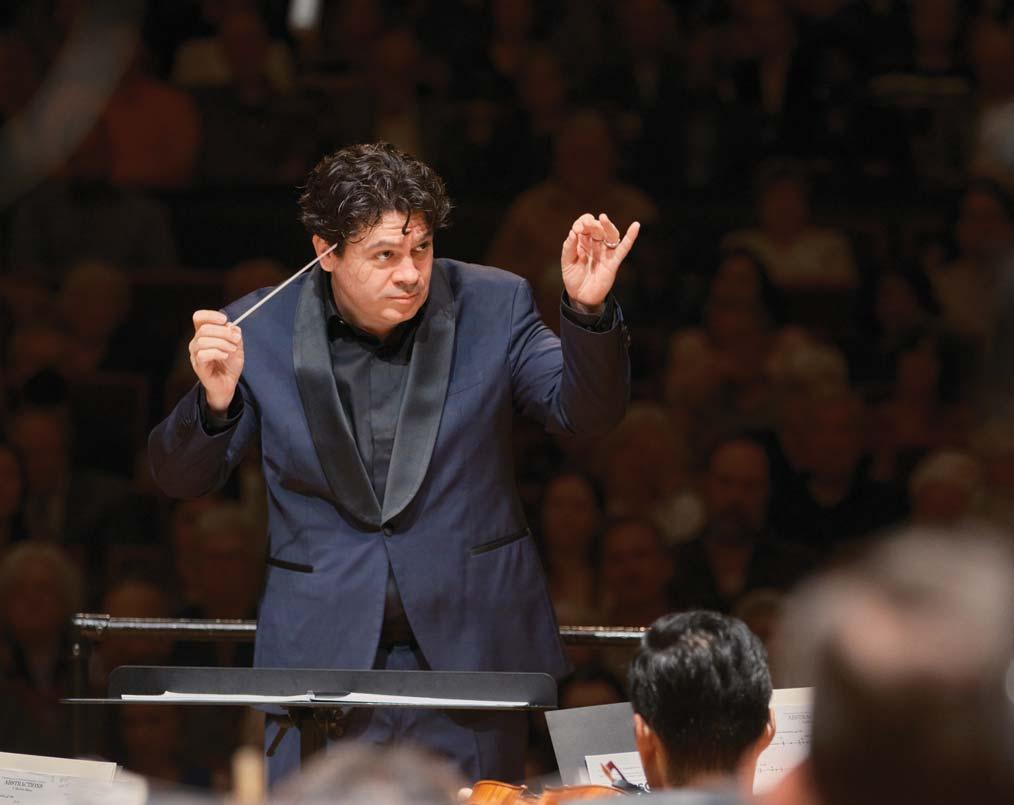
Cristian Mcelaru led the CSO in music by Anna Clyne, George Gershwin and Richard Strauss for his debut as CSO Music Director, October 2025. Credit: JP Leong
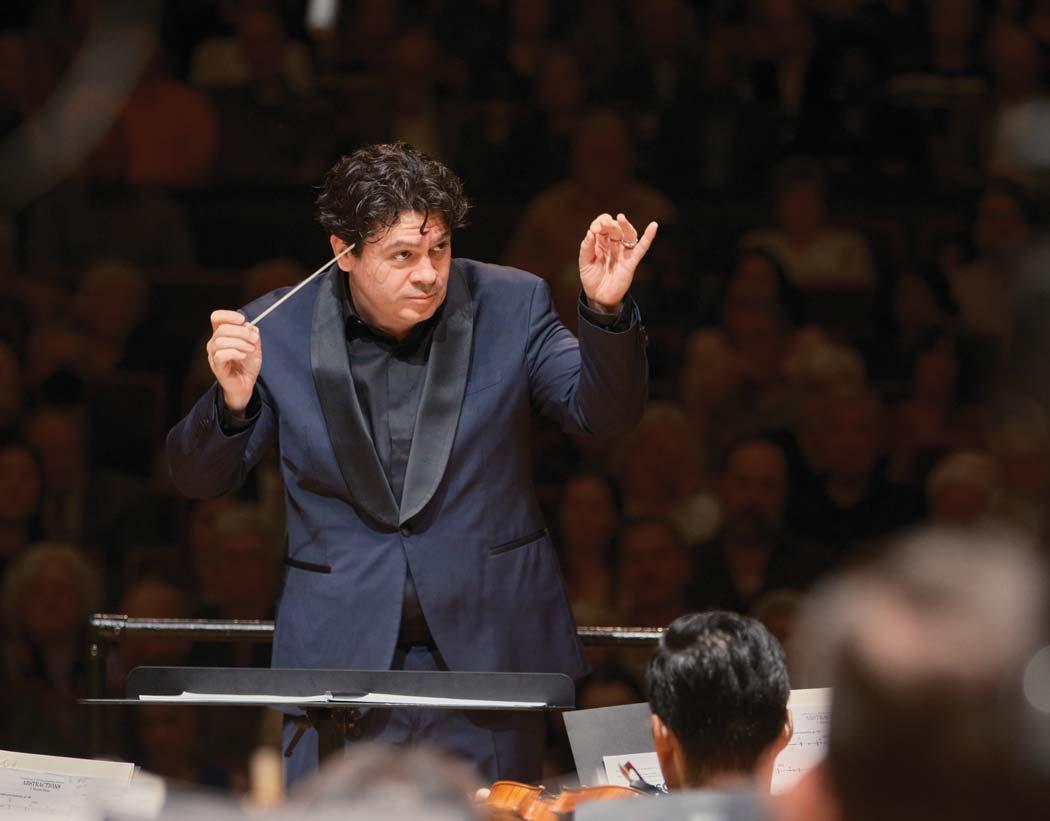


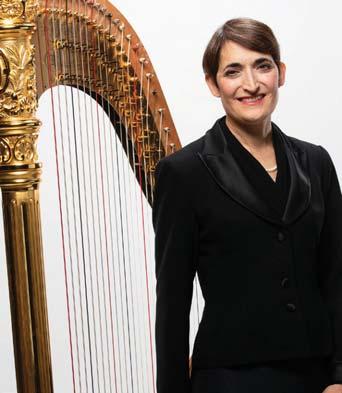
knew when the harp could come out more, when it was enough and when he wanted different qualities in the playing,” Sella says.
Mcelaru’s approachability and openness still make him feel like a peer.
She also appreciates that he has picked repertoire that not only uses the harp but also features some meaty writing for the instrument. The Enescu Rhapsody, for instance, is occasionally encountered as an audition excerpt. Despite that, Sella has rarely had the chance to play it in her 30 years in the CSO.
She also appreciates that he has picked repertoire that not only uses the harp but also features some meaty writing for the instrument. The Enescu Rhapsody, for instance, is occasionally encountered as an audition excerpt. Despite that, Sella has rarely had the chance to play it in her 30 years in the CSO.
“It was very rewarding to play something that I practiced like crazy in my 20s,” she says.
“It was very rewarding to play something that I practiced like crazy in my 20s,” she says.
Whether playing new works or familiar ones, CSO musicians say Mcelaru manages to make the music feel fresh. Parry, for example, experienced this firsthand in what he described as the “mindblowing” Dvoák Symphony No. 9 performances.
“We know that piece backwards and forwards, but he made it sound like a new composition,” he says. “He inspired us to see new things in it, even after all these years.”
That energy leaves a strong first impression. Musicians at the level found in the CSO have worked with so many conductors that names, faces and programs tend to smear together.
Whether playing new works or familiar ones, CSO musicians say Măcelaru manages to make the music feel fresh. Parry, for example, experienced firsthand in what he described as the “mindDvořák Symphony No. 9 performances. first impression. first
Not Mcelaru’s. Parry still remembers the first time they worked together at the New World Symphony, a training ensemble in Miami for young musicians seeking orchestral positions. Mcelaru came to guest-conduct the orchestra for a week.
“He was not much older than us at the time, actually, so he felt more like a colleague. I thought, ‘Oh, this guy’s going somewhere.’” Parry chuckles.
“Clearly, that was true.”
“Clearly, that was true.”
Now, Mcelaru is his colleague — his boss, technically. But to Parry,
Now, Măcelaru his colleague — his boss, technically. But to Parry,
“Honestly, it’s rare to have someone who musically communicates very well — which is the prerequisite for a music director — and is also a down-to-earth, relatable person,” he says. “He projects his authority from the podium through expertise, scholarship and genuine presence with the music, rather than authoritarianism or micromanaging.”
prerequisite for a music director — and is also a down-to-earth, relatable person,” he says. “He projects his authority from the podium through expertise, scholarship and genuine presence with the music, rather than authoritarianism or micromanaging.”
That trust goes a long way for a prominent orchestral voice like the first oboe. Encountering solo passages with Mcelaru, Parry says, feels like “an invitation to sing.”
That trust goes a long way for a prominent orchestral voice like the first oboe. Encountering solo passages with Măcelaru, Parry says, feels like “an invitation to sing.”
“It feels like you’re flying,” he says.
“It feels like you’re flying,” he says. to relationship
Both Parry and Matsuo, another ensemble soloist, return to one adjective again and again to describe Mcelaru’s relationship with the Orchestra: “comfortable.” Part of that mutual comfort no doubt stems from Mcelaru’s own experience as an orchestral musician. A former violinist, he played in the Miami and Houston symphony orchestras while pursuing degrees in those cities.
Matsuo has seen firsthand how that experience informs his approach on the podium.
“He understands the pacing of a rehearsal. Holding people’s attention comes to him naturally, because he’s sat on the other side of the podium, and he knows what an orchestral musician needs going into a concert,” Matsuo says. “It makes all the difference in the world.”
firsthand how that experience and he knows what an orchestral musician needs difference in the world.”
Subscribe to the CSO’s YouTube channel and watch the three-part docuseries: Introducing Cristian Măcelaru.
Matsuo first noticed Mcelaru’s knack with the Orchestra during his subscription debut, in 2016. That program was classic Mcelaru:
subscription debut, in 2016. That program was classic Măcelaru:










It included not just Elgar’s beloved Enigma Variations , but a world premiere (Gunther Schuller’s Symphonic Triptych ) and a work by a living composer (Julia Wolfe’s riSE and fLY ).
At that point, Mcelaru had technically led the CSO once before, in Cincinnati Opera’s Il trovatore the summer prior. But to Matsuo, their familiarity seemed forged in something deeper.
“It didn’t feel like it was his first time there, and it didn’t feel like it was my first time working with him,” she says.
Mcelaru’s visits apparently left an impression on her colleagues, too. The music director search began with a survey asking CSO musicians about
conductors they were interested in looking at closer in coming seasons. Reviewing the results with the search committee, Matsuo was floored.
“The number of times that Mcelaru’s name came up, it was just amazing,” she says.
By the time Mcelaru arrived for his “audition” concerts in 2024, during the formal search, “it was like Cinderella and the glass slipper,” Matsuo says.
Enigma Variations ). first time there, and time working with floored. says. the podium there,” she says. “It was like
“The partnership was there; the camaraderie on and off the podium was there,” she says. “It was like this person was already part of the family.”
A family that’s already made cherished musical memories together — with more to come.
by ANDRE JAMAL CARDINE (he/him), Ph.D. candidate in Ethnomusicology, Indiana University
“The artist’s role is to raise the consciousness of the people. To make them understand life, the world and themselves more completely.”
— Amiri Baraka
The protest songs of the Civil Rights Movement of the 1950s–1960s are a signifier on the state of Black American life during that period. As Amiri Baraka, one of the pioneers of the Black Arts Movement, reminds us, pivotal voices in Black music reveal the communal psyche of Black people and Black life. Black people’s essence, longings and endurance are sonically imprinted on this music, as is the continuum of Black people struggling for liberation despite sustained colonial violence. Cincinnati’s connection to protest music and civil rights is evident in the legacies of both Louise Shropshire and James Brown and sits in the constellation of several other Black voices in the movement.
Research into the soundscape of protest music during the Civil Rights Era shows that protest songs are part of a deeply complex interconnection among Black communities dedicated to preserving, maintaining and achieving Black freedom. Though the movement had individual voices that were largely recognized as key vocalists, including Mahalia Jackson, Odetta and Bernice Johnson Reagon, it is congregational-style and call-and-response singing that proves most effective for mobilizing the country in combating racial injustice.
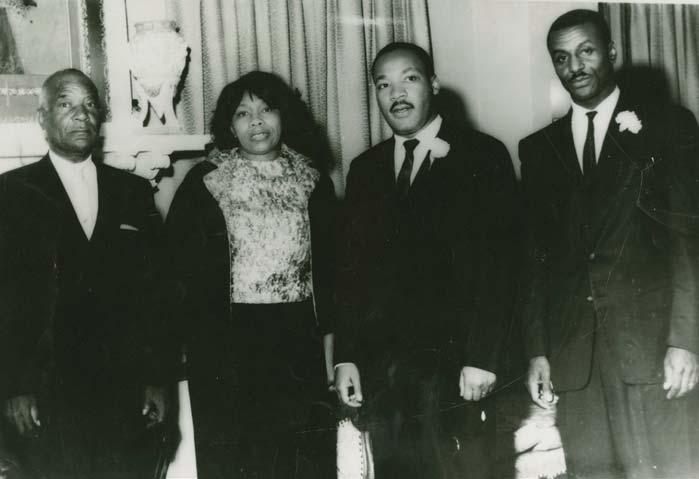
Rooted in a history of African American work songs, communal singing has always been a method to physically and emotionally uplift people. In the context of work songs, a leader typically sings a verse and the community responds with a chorus/refrain. In this call-response format, singing becomes communal, and participants synchronize with one another for a common purpose. Call-and-response singing thus became a mass mobilization technique directly tied to the Black church, which serves as an anchor to the Civil Rights Movement musically, physically and spiritually. Black church musicians were essential to the sound of the movement. The qualities that make up Black spirituals — the emotion, storytelling and rhythms — continue to be present throughout all iterations of Black music. The song “We Shall Overcome” is widely recognized as one of the most noteworthy of the movement. However, a key musical architect of the song’s construction has only recently received credit for her contributions to the piece, thanks to the efforts in recent years of musician and author Isaias Gamboa. Gamboa discovered that Louise Shropshire’s (a Black woman composer and activist from Cincinnati) 1942 hymn “If My Jesus Wills” — sung in churches across the country connected to the Civil Rights Movement due in no small part to the friendships Shropshire developed with the Rev. Dr. Martin Luther King Jr. and Thomas
From left to right: Robert Shropshire, Sr.; Louise Shropshire; the Rev. Martin Luther King Jr. and the Rev. Fred Shuttlesworth, Sr. Credit: Louise Shropshire Family Papers, University of Cincinnati, Archives and Rare Books Library.
Dorsey (widely regarded as the father of gospel music) — is the true origin of “We Shall Overcome.”
In 1960, however, Pete Seeger was granted the copyright for the song, with no credit given to Shropshire for her contributions.
In April 2016, Gamboa sued Seeger and the Richmond Organization, and, in 2017, Judge Denise Cote ruled that the Richmond Organization could no longer claim copyright to “We Shall Overcome” and the song entered public domain. Shropshire now receives credit any time “We Shall Overcome” is used, and her legacy is now increasingly in the public consciousness.
To further honor her, Louise Shropshire was inducted into Cincinnati’s Black Music Walk of fame in 2023.
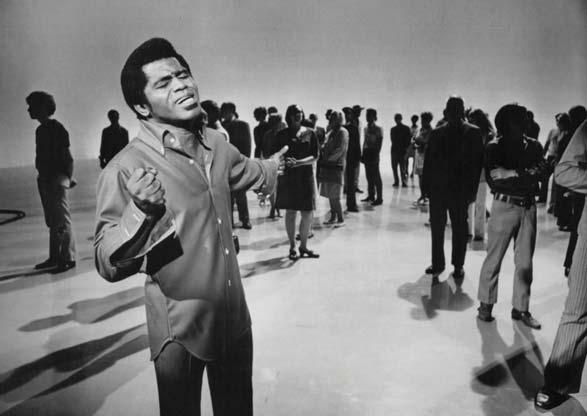
Another figure with Cincinnati associations, the “Godfather of Soul” James Brown, placed his own sonic signature on the communal psyche of the movement with his Black power anthem
of Dr. King’s death, would incite more uprisings in the city. Brown’s concert was broadcast through the local PBS station to encourage residents to stay home and minimize the likelihood of civil unrest.
Brown’s anthem served as a siren for Black pride and was released as a single just four months following Dr. King’s assassination. The song was released on the King Records label, a label not only known for arguably housing and facilitating the birthplace of rock and roll but also being one of the first racially integrated workplaces in the city of Cincinnati.
James Brown is clear on the importance of community, fellowship and joy. “When I’m on stage,” he said, “I’m trying to do one thing: bring people joy. Just like the church does. People don’t go to church to find trouble, they go there to lose it.” Indeed, Brown’s ability to connect with people likely stemmed from the unity that Black communities cultivate in the church. Brown’s words represent the power of Black joy: though there is always a continuous fight against oppression and injustice, Black people do have a right to celebrate.
“Say It Loud — I’m Black and I’m Proud.” Brown performed the song during his concert at the Boston Garden on April 5, 1968, the day after Dr. King’s assassination, despite the fear from Boston’s mayor and local authority figures that the performance, paired with the Black residents’ response to the news
There is a unique power in our ability to contemplate the struggles of the world and ask, “What’s Going On?” (Marvin Gaye), while also “Dancing in the Street” (Martha Reeves and the Vandellas); to recognize that “A Change is Gonna Come” (Sam Cooke), even though “It’s a Long Walk to D.C.” (The Staples Singers); and to understand why we have to deal with the “Backlash Blues” (Nina Simone) but also know that “We Shall Not Be Moved.”
To understand Black life in America, the music of Black Americans must be examined. Not only will we overcome someday, but we will always say it loud, be Black and proud.
Inspired by the words of CSO Music Director Cristian Măcelaru, the musicians and staff of the Cincinnati Symphony Orchestra responded to the question: “What does ‘Life is Good When You’re Surrounded by Music’ mean to you?”
Stacey Woolley
Violin
Brenda & Ralph Taylor Chair
Music is a great companion. With music, you’re never alone.
Madelyn McArthur
Audience Engagement Manager
Music is a universal language that communicates endless emotion. It punctuates the most important parts of our lives, and it is hard to imagine the world without it.
Hannah Boettcher
Marketing Intern
To me, being surrounded by music makes life good because it enriches life. Music provides both an outlet and a source of comfort, and it enables us to connect with each other through shared passion and enjoyment.
Charlie Balcom
Social Media Manager
enjoyment. different moments of our It’s like
Music helps us believe, be creative, become inspired. It can help lift our spirits and bring about emotions throughout different moments of our lives. It’s like having a personalized soundtrack.
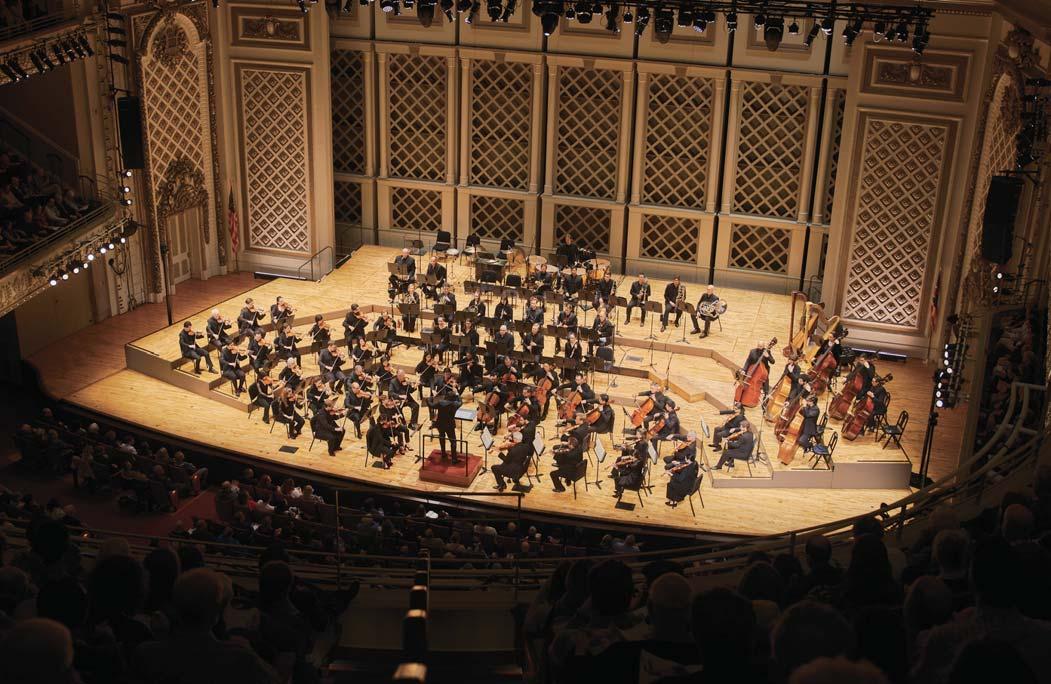

Maria Cordes
Video Editor
Music is something that has always been there for me, no matter how I am feeling. It’s present in all of life’s celebrations and offers a silver lining when things are tough.
Devon Pine
Subscription Marketing Manager
How lucky are we to be surrounded by music? To be connected by a beauty that anyone can bask in. It’s a passport to faraway places or a road back home, carrying us through time. This phrase brings me back to a moment after a long hike, when I crested a hill and took off running, arms wide, music in my ears, sun on my face — unguarded, so grateful and completely free.
Gregory Lee
Chief Financial Officer
Music has been a constant in my life from the moment my mother put on that first LP, shaping my emotions, guiding me through joy and struggle, and ultimately connecting me to my wife in a way that still feels profound. To me “Life is Good When You’re Surrounded by Music” means that music colors every part of my world, bringing depth, connection and meaning to my days, and without it my life would feel far lonelier and far less vibrant.
Tyler Secor
Director of Communications & Content Development
I grew up in a small rural community in Northern Indiana. I didn’t fit in with most of my classmates and found the social aspect of school difficult. But in band and choir, I found my people and was able to develop a small community of friends that made middle and high school bearable. For me, the music is not what makes life good. Instead, it’s the community of people around the music that makes life good.
John Clapp
Chief Orchestra & Production Officer
Experiencing live music brings physical and mental change to the listener. To surround oneself with music brings out goodness in all of us.
Catherine Hann
Assistant Director of Individual Giving
Music gives us the opportunity to express that which cannot be put into words. That is a gift that means more now than ever before.
Kaitlyn Driesen
Digital Media & Label Services Manager
Music is boundless. Through harmonies, rhythms, styles — I experience an emotional connection to people throughout the world and time.
Craig Doolin
Patron Services Representative
Music not only entertains, but it also opens new worlds. Art depicts images, drama depicts situations, but music makes you feel the same things that people felt sometimes centuries ago.
Shannon May
Accounting Clerk
Music is my therapy and inspiration. It never fails to lift me up when I’m down.
Andrea Saavedra Ferreira
Community Engagement Intern
Music means life to me, especially knowing how music was interlaced with me before I was born! My father dedicated a classical piece to my sister and I, to connect us with music the moment we were born: my younger sister’s dedication was “Water Music” by Handel, while I got The Four Seasons by Vivaldi. The same kind of connection my father instilled in my younger sister and me since birth is possible for others, given the nature of music and its ability to create life and impart meaning.
We would love to hear from you! Use the QR code or link below to submit your answer to the question: What does “Life is Good When You’re Surrounded by Music” mean to you? https://bit.ly/CSOLifeisGood


by ANNE ARENSTEIN
If you think the CSO percussionists only hit drums or cymbals, think again. The percussion team plays an astounding range of instruments, tuned and untuned, bells to bundles of sticks, whistles, tap shoes, tambourines and cowbells — whatever a composer specifies.
Some of the team may be backstage, striking the bells specially cast for the CSO’s performances of Berlioz’s Symphonie fantastique , for example, or they can be highly visible, striking the hammer blow in Mahler’s Sixth Symphony or playing large crash cymbals.
They’re versatile musicians with skill sets that can handle both classic works and new sounds incorporated into contemporary compositions.
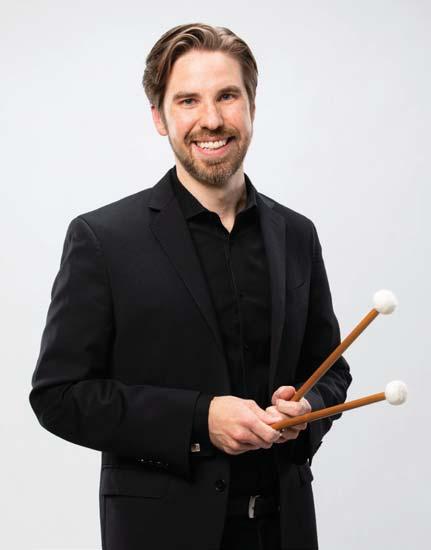
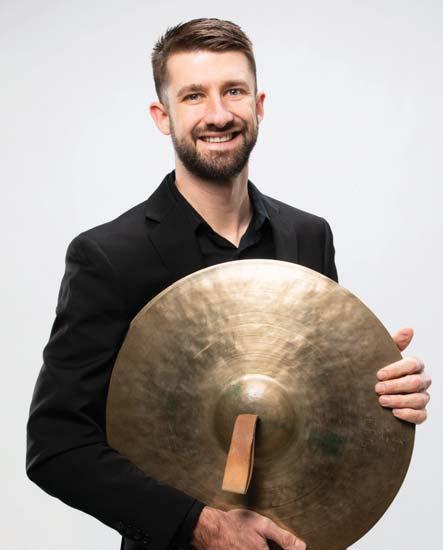
Joseph Bricker, Michael Culligan, David Fishlock and Patrick Schleker make up the team usually
The CSO Percussionists (from left): David Fishlock, Principal Percussionist; Patrick Schleker, Principal Timpani; Michael Culligan, Associate Principal Percussionist; and Joseph Bricker, Association Principal Timpani and section percussionist.

seated at the back of the Orchestra, and when asked what they want audiences to know about what percussionists do, the response is immediate.
“There’s so much more to it than it looks,” says Fishlock, Principal Percussionist. “Even if we don’t play as much as the other sections, there’s a lot of preparation we have to do, especially if we’re playing new instruments.”
Bricker, Associate Principal Timpani and section percussion, points out that percussion instruments have no double, like the piccolo for the flute or the viola for the violin. Even the simplest percussion instruments are a challenge, like the triangle.
Bricker explained that no instrument can do what a triangle does. He noted that if a composer puts it in the score, as Ravel does in a section of the Mother Goose Suite, only that instrument playing that one note can create the intended experience.
“In the Mother Goose Suite,” he says, “there’s a
movement about Beauty and the Beast. At the moment in the piece when the Beast turns back into the Prince, Ravel orchestrates it with a sudden stop — a big, harp glissando all the way up to the top of the instrument, and then the only triangle note in the movement is placed atop a bed of string harmonics. That moment, and that triangle note, become particularly magical because they’re literally representing a magical transformation within the story.”
“And there are moments of sheer terror,” adds Principal Timpani Schleker. “That triangle or gong or whatever has to be exactly on cue. The farther back you are, and even when we’re watching the conductor on a monitor backstage, the more you have to anticipate the sound, and that’s a very difficult thing to do.”
Culligan compares their section to a sports team. “Depending on the piece, the four of us can be playing very different instruments, and we have to work together on style, dynamics and balance so that we’re a cohesive unit.”
Fishlock joined the CSO in 1991, Schleker in 2006, Culligan in 2015 and Bricker in 2022. Their combined expertise and training often means an improved, more vibrant sound, especially in older
compositions. “There are composers who heard something they liked but had no experience with the actual instruments, so they wrote what I would call very square orchestrations for them,” says Culligan.
And there are composers like Berlioz and Mahler who were masters of creating dramatic effects with percussion. In addition to the “Berlioz Bells,” the CSO has a box specially built to absorb the hammer blow for Mahler’s Symphony No. 6.
Probably the most frequently asked question is for Schleker: why is he constantly leaning over to listen to the timpani?
“My father-in-law says I have a radio inside and I’m listening for sports updates,” he laughs. “But I am listening closely to the drums because they’re tuned, and often to a key the Orchestra is not yet playing. So I lean over to listen and tune so I can hear what I’m doing.”
There’s a lot of maintenance not only for timpani but for the rest of the percussion arsenal, as well as training and practice to perform everything convincingly.
“I think the most interesting thing about us is just the sheer variety of what we do,” Fishlock concludes. “Every week it’s something different, which keeps things really interesting.”

by DAVID LYMAN
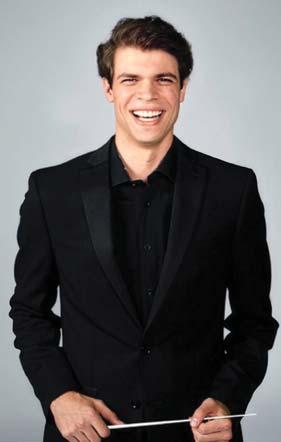
While assistant conductors are mostly “seen and not heard,” they play an important role — supporting and consulting the Music Director and guest conductors and assisting during rehearsals, among other duties. Learn more about the CSO’s two new assistant conductors and how they view their roles.
Alex Amsel Assistant Conductor
Ashley and Barbara Ford Chair
Alex Amsel had to delay our conversation for a few days. “I am out of town this weekend,” he emailed, “doing a little Mahler tune.”
That “little tune” turned out to be Mahler’s Symphony No. 4. And he was leading the Phoenix Symphony, where he had been associate conductor before accepting a position as an assistant conductor with the Cincinnati Symphony Orchestra.
Born in Buenos Aires, Amsel came to the United States at the age of 10, when his father stepped into a job in Texas.
“It’s the classic American Dream story,” says Amsel. “Argentina was heading into an economic collapse and my parents were looking for a slightly better life. We had family in Texas, so that’s where we ended up.”
Neither of his parents was involved in the music world. Nonetheless, there always seemed to be music in the background.
“When we took road trips — there were tons of them — we would sing for the 12 hours on the road,” he says. “It wasn’t classical music. It was music from Argentina. Or Mexico — my mother is Mexican. But we didn’t know a thing about the culture of being a professional musician. It never even crossed our minds.”
That changed the year after the family arrived in Houston.
“I signed up for band without any idea about anything,” he recalls. “My English was not great at that time, but I had an uncle who had loved jazz. So band sounded like something I might like.”
Since he was a beginner, he had to select an instrument to learn. He was told to list five instruments. Sax, of course, was first.
“I tried to play the sax, but I couldn’t make a sound,” he says. “I also tried flute, but I didn’t think it would be cool to play the flute. So I started with the clarinet.”
There was a problem, though.
“I hated it,” he says. “I was bored. After a semester, I told my teacher I couldn’t continue with the clarinet. He said he had this other instrument I should try.”
It was a bassoon.
“I hate to sound so cheesy, but I watched my band director play one scale and it was like Harry Potter and his wand — the bassoon chose me,” he says. “It was love at first sound. The bassoon was everything I wanted and was looking for.”
Two years later, he won a field trip to hear the Houston Symphony.
“I was 13, maybe, and it blew me away. I finally understood what an orchestra was. And how it could sound.”
It proved to be a defining moment in Amsel’s career. Many years later, that first band director made a confession to him.
“One day, we were having a beer, and he told me that when I auditioned they already had too many saxophones, so he gave me a broken instrument so I couldn’t make a sound.”
Clearly, the deception didn’t diminish his enthusiasm for music. He would go on to study music at the New England Conservatory and The University of Texas at Austin and finish up with a graduate degree under the tutelage of Marin Alsop at the Peabody Conservatory.
Since then, he has built a busy career as a guest conductor, as well as serving as resident conductor at Houston Grand Opera, assistant conductor with
the Fort Worth Symphony Orchestra and associate conductor of the Phoenix Symphony.
conductor of the Phoenix Symphony.
Along the way, he has become something of a proselytizer for orchestral music.
“I could spend my life doing Mahler and program is not for me. What does the community
“I could spend my life doing Mahler and Beethoven,” he says, “but the reality is that it doesn’t really matter what I want to do in a program. The program is not for me. What does the community want? And the orchestra? My work is about music. But it is also about community building.”
That passion has manifested itself in many ways, composers and creating a chamber orchestra
generous
might be describing himself, as well.
That passion has manifested itself in many ways, from championing the work of underrepresented composers and creating a chamber orchestra program for students in Houston to working with students in underserved Baltimore schools and launching a composition project for middle and high school students in Phoenix. “We even premiered a symphony by an 11-year-old.”
students in underserved Baltimore schools and launching a composition project for middle and high even
He also spent a summer as conductor-in-residence with the Cincinnati Opera, an experience that gave him a taste of Cincinnati’s rich cultural environment.
“I love coming back to Cincinnati,” he says. “The amazing thing about the Cincinnati Symphony Orchestra is that they are already at the forefront of what an American orchestra should be. They do so many different sorts of things. They play the pops as brilliantly as they play the classics. They play for the Opera and Ballet. And the May Festival. It’s incredible. To me it’s just an honor to come here and be part of that.”
He also spent a summer as conductor-in-residence him a taste of Cincinnati’s rich cultural environment. “I love coming back to Cincinnati,” he says. “The what an American orchestra should be. They do so sorts things. They play the as brilliantly as they play the classics. They play for just honor here be part of that.”
Duo Shen
Assistant Conductor
Ashley and Barbara Ford Chair
music, his mentors in China. Or his fiancée, Emilee Syrewicze, executive Grand Rapids. (As
It’s an extremely generous description. But in some ways, Shen might be describing himself, as well. Soft-spoken and a bit reserved, he would rather deflect a conversation than talk about himself. He’ll talk about the music, his mentors or his family back in China. Or his fiancée, Emilee Syrewicze, executive director of Opera Grand Rapids. (As of this interview, they were scheduled to get married on October 31.)
But stand him up in front of an orchestra and he radiates with passion for the music and the people playing it.
But stand him up in front of an orchestra and he
Assistant Conductor Symphony Orchestra. But he was there. In fact, he was there sharing musical know-how. on call, always at the ready to offer support or,
You didn’t see Duo Shen on the stage during Cristian Mcelaru’s debut concert with Cincinnati Symphony Orchestra. But he was there. In fact, he was there the entire week leading up to the performances, shadowing Cristi, consulting and advising him, and sharing musical know-how.
Such is the life of an assistant conductor. Like a medical resident, an assistant conductor is always on call, always at the ready to offer support or, heaven forbid, step in as a replacement when some unforeseen problem occurs. It’s demanding and devoid of glamor. But Shen has no complaints. In fact, he says he feels privileged to be in such a position. “I was very, very fortunate to cover Cristi and to be with him the whole week,” says Shen. “The more I get to talk with him and get to know him, I realize why he is who he is. His focus is always about the music. Always. He wants to help the heart to feel more. It’s a very selfless approach.”
devoid of glamor. But Shen has no complaints. In fact, “I was very, very fortunate to cover Cristi and to why he is who he is. His focus is always about the
“You have to give yourself up to the music,” says wonderful when you reach that point.” He is quiet for taking place in my life. I tell you, it feels like living
“You have to give yourself up to the music,” says Shen. “It’s the experience every musician seeks. It’s wonderful when you reach that point.” He is quiet for a moment before he continues, “Last week, someone asked me how do I feel about all these changes taking place in my life. I tell you, it feels like living the dream. Once you get to a place and an orchestra like Cincinnati, there is no better place to be.”
That’s lavish praise, especially when you consider Rapids Symphony. He conducted more than 90 from chamber music and orchestral blockbusters to pops and family concerts. when study it and let the music flow through your mind,” difficult to explain, but you and you them with the orchestra, it’s like we become a
That’s lavish praise, especially when you consider the range of musical opportunities Shen had during his three years as associate conductor of the Grand Rapids Symphony. He conducted more than 90 concerts, leading the orchestra through everything from chamber music and orchestral blockbusters to pops and family concerts.
“There is a certain joy when you open a score, study it and let the music flow through your mind,” says Shen. “The feeling is difficult to explain, but when those notes flow through you and you share them with the orchestra, it’s like we become a collective, like an organ. It’s the best feeling.”
“relatively westernized family” in Beijing.
Shen was born and raised in what he describes as a “relatively westernized family” in Beijing.
“My grandparents are all professors,” he says. “And my father is a sociologist. He visited the U.S. quite regularly and was a visiting scholar at U.C. Berkeley.”
But it was his mother’s deep love of Western classical music that had the earliest impact on his musical aspirations.
“All of her music was on cassettes,” he laughs.
Lyons continued, p. 73
regularly and was a visiting scholar at U.C. Berkeley.” musical aspirations. continued, p. 73
FIRST VIOLINS
Stefani Matsuo
Concertmaster
Anna Sinton Taft Chair
Felicity James
Associate Concertmaster
Tom & Dee Stegman Chair
Philip Marten
First Assistant Concertmaster
James M. Ewell Chair++
Eric Bates
Second Assistant Concertmaster
Serge Shababian Chair
Kathryn Woolley
Nicholas Tsimaras–
Peter G. Courlas Chair++
Anna Reider
Dianne & J. David Rosenberg Chair
Mauricio Aguiar§
Anne G. & Robert W. Dorsey Chair
Minyoung Baik‡
Jo Ann & Paul Ward Chair
James Braid
Marc Bohlke Chair given by Katrin & Manfred Bohlke
Rebecca Kruger Fryxell
Clifford J. Goosmann & Andrea M. Wilson Chair
Elizabeth Furuta
Gerald Itzkoff
Jean Ten Have Chair
Joseph Ohkubo
Luo-Jia Wu
Jonathan Yi
SECOND VIOLINS
Gabriel Pegis
Principal
Al Levinson Chair
Yang Liu*
Harold B. & Betty Justice Chair
Scott Mozlin**
Henry Meyer Chair
Kun Dong
Charles Gausmann Chair++
Cheryl Benedict
Evin Blomberg§
Sheila and Christopher Cole Chair
Rose Brown
Rachel Charbel
Ida Ringling North Chair
Chika Kinderman
Charles Morey
Hyesun Park
Michael Rau
Stacey Woolley
Brenda & Ralph Taylor Chair++
VIOLAS
Christian Colberg
Principal
Louise D. & Louis Nippert Chair
Gabriel Napoli*
Grace M. Allen Chair
Julian Wilkison**
Rebecca Barnes§
Christopher Fischer
Stephen Fryxell
Melinda & Irwin Simon Chair
Caterina Longhi
Denisse Rodriguez-Rivera
Dan Wang
Joanne Wojtowicz
MĂCELARU, Music Director
Louise Dieterle Nippert & Louis Nippert Chair
JOHN MORRIS RUSSELL, Cincinnati Pops Conductor
Louise Dieterle Nippert & Louis Nippert Chair
Matthias Pintscher, CSO Creative Partner
Damon Gupton, Pops Principal Guest Conductor
Louis Langrée, Music Director Laureate
Alex Amsel, Assistant Conductor
Ashley and Barbara Ford Chair
Duo Shen, Assistant Conductor
Ashley and Barbara Ford Chair
CELLOS
Ilya Finkelshteyn
Principal
Irene & John J. Emery Chair
Lachezar Kostov*
Ona Hixson Dater Chair
[OPEN]
Karl & Roberta Schlachter
Family Chair
Drew Dansby§
Daniel Kaler
Peter G. Courlas–
Nicholas Tsimaras Chair++
Nicholas Mariscal
Marvin Kolodzik & Linda S. Gallaher Chair for Cello
Hiro Matsuo
Laura Kimble McLellan Chair++
Alan Rafferty
Ruth F. Rosevear Chair
Tianlu (Jerry) Xu
BASSES
Owen Lee
Principal
Mary Alice Heekin Burke Chair++
Luis Celis*
Thomas Vanden Eynden Chair
Stephen Jones**
Trish & Rick Bryan Chair
Boris Astafiev§
Michael Martin
Gerald Torres
Rick Vizachero
HARP
Gillian Benet Sella
Principal
Cynthia & Frank Stewart Chair
FLUTES
Randolph Bowman
Principal
Charles Frederic Goss Chair
Henrik Heide*
Carol J. Schroeder Chair
Haley Bangs
Jane & David Ellis Chair
PICCOLO
Rebecca Pancner
Patricia Gross Linnemann Chair
OBOES
Dwight Parry
Principal
Josephine I. & David J. Joseph, Jr. Chair
[OPEN]*
Stephen P. McKean Chair
Emily Beare
ENGLISH HORN
Christopher Philpotts
Principal
Alberta & Dr. Maurice Marsh Chair++
CLARINETS
Christopher Pell
Principal
Emma Margaret & Irving D.
Goldman Chair
Joseph Morris*
Associate Principal and E-flat Clarinet
Robert E. & Fay Boeh Chair++
Ixi Chen
Vicky & Rick Reynolds Chair in honor of William A. Friedlander
BASS CLARINET
Ronald Aufmann
BASSOONS
Christopher Sales
Principal
Emalee Schavel Chair++
Martin Garcia*
Christy & Terry Horan Family Chair
Hugh Michie
CONTRABASSOON
Jennifer Monroe
HORNS
Elizabeth Freimuth‡
Principal
David Alexander†
Acting Principal
Mary M. & Charles F. Yeiser Chair
David Smith†
Acting Associate Principal
Ellen A. & Richard C. Berghamer
Chair
[OPEN]**
Sweeney Family Chair in memory of Donald C. Sweeney
Lisa Conway
Susanne & Philip O. Geier, Jr. Chair
Duane Dugger
Mary & Joseph S. Stern, Jr. Chair
Charles Bell
Donald & Margaret Robinson Chair
TRUMPETS
Anthony Limoncelli
Principal
Rawson Chair
[OPEN]
Jackie & Roy Sweeney
Family Chair
Alexander Pride†
Otto M. Budig Family
Foundation Chair++
Christopher Kiradjieff
David C. Reed, MD Chair
TROMBONES
Cristian Ganicenco
Principal, in memoriam
Dorothy & John Hermanies
Chair
Joseph Rodriguez**
Second/Assistant Principal Trombone
Sallie Robinson Wadsworth & Randolph L. Wadsworth Jr. Chair
BASS TROMBONE
Noah Roper
TUBA
Christopher Olka
Principal
Ashley & Barbara Ford Chair
TIMPANI
Patrick Schleker
Principal
Matthew & Peg Woodside Chair
Joseph Bricker*
Morleen & Jack Rouse Chair
PERCUSSION
David Fishlock
Principal
Susan S. & William A. Friedlander Chair
Michael Culligan*
Joseph Bricker
Morleen & Jack Rouse Chair
Marc Wolfley+
KEYBOARDS
Michael Chertock
James P. Thornton Chair
Julie Spangler+
James P. Thornton Chair
LIBRARIANS
Christina Eaton
Principal Librarian
Lois Klein Jolson Chair
Elizabeth Dunning
Associate Principal Librarian
Cara Benner
Assistant Librarian
Citlalmina Hernandez
Orchestra Library Intern
STAGE MANAGERS
Brian P. Schott
Phillip T. Sheridan
Daniel Schultz
Mike Ingram
Andrew Sheridan
§ Begins the alphabetical listing of players who participate in a system of rotated seating within the string section.
* Associate Principal ** Assistant Principal
† One-year appointment
‡ Leave of absence
+ Cincinnati Pops rhythm section
++ CSO endowment only
Music Director
Louise Dieterle Nippert & Louis Nippert Chair

Grammy-winning conductor Cristian Mcelaru is Music Director of the Cincinnati Symphony Orchestra, Music Director of the Orchestre National de France, Artistic Director of the George Enescu International Festival and Competition, Artistic Director and Principal Conductor of the Interlochen Center for the Arts’ World Youth Symphony Orchestra, Music Director and Conductor of the Cabrillo Festival of Contemporary Music and Distinguished Visiting Artist at The Shepherd School of Music at Rice University. He also serves as Artistic Partner of the WDR Sinfonieorchester in Cologne, where he was Chief Conductor from the 2019–20 through 2024–25 seasons.
Mcelaru’s 2025–26 guest engagements include debuts with the Münchner Philharmoniker and Orchestra dell’Accademia Nazionale di Santa Cecilia, as well as returns with Tonhalle-Orchester Zürich, Czech Philharmonic, Leipzig Gewandhaus Orchestra, Philharmonia Orchestra and San Francisco Symphony.
JOHN MORRIS RUSSELL
Cincinnati Pops Conductor
Louise Dieterle Nippert & Louis Nippert Chair
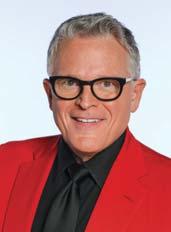
John Morris Russell’s (JMR) embrace of America’s unique voice and musical stories has transformed how orchestral performances connect and engage with audiences. As conductor of the Cincinnati Pops since 2011, the wide range and diversity of his work as a musical leader, collaborator and educator
continues to reinvigorate the musical scene throughout Cincinnati and across the continent. As Music Director of the Hilton Head Symphony Orchestra in South Carolina, JMR conducts the classical series as well as the prestigious Hilton Head International Piano Competition.
A Grammy-nominated artist, JMR has worked with leading performers from across a variety of musical genres, including Aretha Franklin, Emanuel Ax, Amy Grant and Vince Gill, Garrick Ohlsson, Rhiannon Giddens, Hilary Hahn, Brian Stokes Mitchell, Cynthia Erivo, Sutton Foster, George Takei, Steve Martin, Brian Wilson, Leslie Odom, Jr., Lea Salonga and Mandy Gonzalez.
Mcelaru’s previous seasons include European engagements with the London Philharmonic Orchestra, NDR Elbphilharmonie, Concertgebouworkest, Symphonieorchester des Bayerischen Rundfunks, Budapest Festival Orchestra and Wiener Symphoniker. In North America, he has led the New York Philharmonic, Philadelphia Orchestra, Los Angeles Philharmonic, Chicago Symphony Orchestra, Boston Symphony Orchestra and The Cleveland Orchestra. He is equally at home as a conductor of opera, with career highlights including productions of Don Giovanni with the Houston Grand Opera and Madama Butterfly with Opera Naional Bucureti.
Philharmonic, Leipzig Gewandhaus previous of Don Giovanni with the and Madama Butterfly with Opera Naţională București. de Măcelaru’s
In 2020, Mcelaru received a Grammy Award for conducting the Decca Classics recording of Wynton Marsalis’ Violin Concerto with Nicola Benedetti and The Philadelphia Orchestra. His highly anticipated recording of George Enescu’s complete symphonic works with the Orchestre National de France was released in April 2024 on Deutsche Grammophon. September 2025 marks the release of Mcelaru’s and the Orchestre National de France’s Ravel Paris 2025 album on the naïve label, featuring the symphonic works of Maurice Ravel in celebration of the 150th anniversary of the composer’s birth.
For over two decades, JMR has led the Cincinnati Symphony Orchestra’s wildly successful Classical Roots initiative honoring and celebrating Black musical excellence. Guest artists have included Marvin Winans, Alton White, George Shirley, Common and Hi-Tek.
album JOY!. In 2015, he created the recordings: American Originals (the nominated American Originals 1918 (a tribute to Shaffer honored a concert
JMR has contributed seven albums to the Cincinnati Pops discography, including 2023’s holiday album JOY!. In 2015, he created the “American Originals Project,” which has won both critical and popular acclaim and features two landmark recordings: American Originals (the music of Stephen Foster) and the Grammynominated American Originals 1918 (a tribute to the dawn of the jazz age). The 2020 “American Originals” concert King Records and the Cincinnati Sound with Late Show pianist Paul Shaffer honored legendary recording artists associated with the Queen City. In the 2024–25 season JMR took on the next installment of the project, offering a concert and recording celebrating the legacy of the Harlem Renaissance, and presented a national PBS broadcast of Rick Steves’ Europe: A Symphonic Journey. JMR’s American Soundscapes video series with the Pops and Cincinnati’s CET public television station has surpassed one million views on YouTube since its launch in 2016.
For more information about Cristian Măcelaru and John Morris Russell, please visit cincinnatisymphony.org/about/artistic-leadership.
DISNEY AND PIXAR’S TOY STORY IN CONCERT LIVE TO FILM | 2025–26 SEASON
SAT JAN 3, 7:30 PM | SUN JAN 4, 2 PM Music Hall
Directed by John Lasseter
Produced by Ralph Guggenheim
Bonnie Arnold
Executive Producer
Edwin Catmull
Steven Jobs
Screenplay by Josh Whedon
Andrew Stanton
Joel Cohen
Alec Sokolow
Original Story by John Lasseter
Pete Doctor
Andrew Stanton
Joe Ranft
Music by Randy Newman
There will be one intermission.
The Cincinnati Pops Orchestra is grateful to Pops Season Presenter PNC.
The Cincinnati Symphony Orchestra is grateful for the support of the Louise Dieterle Nippert Musical Arts Fund of the Greenacres Foundation, the Nina Browne Parker Trust, and the thousands of people who give generously to the ArtsWave Community Campaign, the region’s primary source for arts funding. This project was supported in part by the Ohio Arts Council, which receives support from the State of Ohio and the National Endowment for the Arts
The CSO in-orchestra Steinway piano is made possible in part by the Jacob G. Schmidlapp Trust.
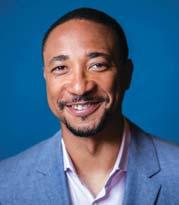
Damon Gupton, Pops Principal Guest Conductor
Damon Gupton is the Principal Guest Conductor of the Cincinnati Pops. A native of Detroit, he served as American Conducting Fellow of the Houston Symphony and held the post of assistant conductor of the Kansas City Symphony. His conducting appearances include the Philadelphia Orchestra, Orchestra of St. Luke’s, Detroit Symphony, Boston Pops, National Symphony Orchestra, San Francisco Symphony, Atlanta Symphony, Baltimore Symphony, St. Louis Symphony, Toledo Symphony, Fort Worth Symphony, Florida Orchestra, San Diego Symphony, Long Beach Symphony, San Antonio Symphony, Princeton Symphony, Orchestre Philharmonique de Monte Carlo, Chineke!, NHK Orchestra of Tokyo, Orquesta Filarmonica de UNAM, Charlottesville Symphony, Brass Band of Battle Creek, Brevard Music Center, and Sphinx Symphony as part of the 12th annual Sphinx Competition. He led the Sphinx Chamber Orchestra on two national tours with performances at Carnegie Hall, and he conducted the finals of the Seventh Cliburn International Amateur Piano Competition and the 2021 Classic FM Live at Royal Albert Hall with Chineke!.
Gupton received his Bachelor of Music Education degree from the University of Michigan. He studied conducting with David Zinman and Murry Sidlin at the Aspen Music Festival and with Leonard Slatkin at the National Conducting Institute in Washington, D.C.
An accomplished actor, Gupton is a graduate of the Drama Division of The Juilliard School. He has had a number of roles in television and film, including in the Paramount+ series Happy Face and the film Lear Rex with Al Pacino, as well as on stage.
He is represented by Harden Curtis Kirsten Riley Agency (HCKR), SMS Talent and Brookside Artist Management.
PRESENTATION LICENSED BY
Today’s performance lasts approximately 1 hour and 41 minutes, including a 20-minute intermission. The performance is a presentation of the feature film Toy Story with a live performance of the film’s score. Out of respect for the musicians and your fellow audience members, please remain seated until the conclusion of the end credits.
Presentation licensed by Disney Concerts ©All rights reserved.


We consider Cincinnati the best place to live, work and celebrate life. Partners like Cincinnati Symphony Orchestra share our belief that the community prospers when its individuals and businesses succeed. That is why we support those playing critical roles in preserving Cincinnati traditions, enriching cultural experiences and helping the community thrive.
westernsouthern.com
TRIFONOV PLAYS BEETHOVEN | 2025–26 SEASON SAT JAN 10, 7:30 PM | SUN JAN 11, 2 PM Music Hall
Cristian Măcelaru conductor
Daniil Trifonov piano
Johannes Brahms Academic Festival Overture, Op. 80 (1833–1897)
Ludwig van Beethoven Concerto No. 2 in B-flat Major for Piano and Orchestra, Op. 19 (1770–1827) Allegro con brio Adagio
Rondo: Molto allegro
Daníel Bjarnason
I Want to Be Alive — Trilogy for Orchestra (b. 1979) U.S. PREMIERE, CSO CO-COMMISSION Echo (Man Needs Man) Narcissus (We Need Mirrors) Pandora’s Box
(1770–1827)Allegro Trilogy CSOCO COMMISSION . the Thomson Family Foundation
This performance is approximately 120 minutes long, including intermission.
The CSO is grateful to CSO Season Sponsor Western & Southern Financial Group This concert is lovingly donated to the memory of Laura Gamble Thomson from the Thomson Family Foundation. These concerts are endowed by Martha Anness, Priscilla Haffner & Sally Skidmore in loving memory of their mother, LaVaughn Scholl Garrison, a long-time patron of the Orchestra.
Martha Anness, Priscilla Haffner & Sally Skidmore patron of the Orchestra
The Cincinnati Symphony Orchestra co-commission and U.S. premiere of I Want to Be Alive — Trilogy for Orchestra by Daníel Bjarnason is made possible by a generous gift from Ann and Harry Santen.
The Cincinnati Symphony Orchestra co-commission and U.S. premiere of Alive — Trilogy for Orchestra by Daníel Bjarnason is made possible by a generous gift from Ann and Harry Santen
The Cincinnati Symphony Orchestra is grateful for the support of the , the Browne Parker Trust, and the thousands of people who give generously to the , which receives support from
WGUC
The Cincinnati Symphony Orchestra is grateful for the support of the Louise Dieterle Nippert Musical Arts Fund of the Greenacres Foundation, the Nina Browne Parker Trust, and the thousands of people who give generously to the ArtsWave Community Campaign, the region’s primary source for arts funding. This project was supported in part by the Ohio Arts Council, which receives support from the State of Ohio and the National Endowment for the Arts. WGUC is the Media Partner for these concerts. Selections from this concert will air on 90.9 WGUC on February 15, 2026, followed by 30 days of streaming at cincinnatisymphony.org/replay.
The CSO in-orchestra Steinway piano is made possible in part by the Jacob G. Schmidlapp Trust
Jacob G. Schmidlapp Trust
with Cristian Măcelaru, Music Director
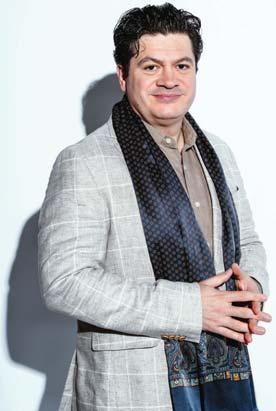
When Cristian Mcelaru and Daniil Trifonov meet for this program, they’ll simply be picking up where they last left off. In the 2022–23 season, Trifonov was artist-in-residence at the Orchestre National de France, Mcelaru’s other orchestra. Trifonov toured Germany with the orchestra that season, then reunited with the ONF in November of 2025 for its first U.S. tour with Mcelaru.
off. In 2022–23
other toured first tour with
Trifonov was onstage for an even earlier Mcelaru milestone in 2015, when he made his much-anticipated podium debut with the New York Philharmonic. The New York Times praised that debut as “impressive” and “auspicious,” with plaudits aplenty for the 24-year-old Trifonov as well. “Even when the music broke into intricate passagework and brilliant flourishes, Mr. Trifonov demonstrated crisp brio and an ear for detail, though there was plenty of fiery virtuosity as well,” the Times enthused.
Mr. Trifonov
virtuosity as well,” the Times enthused. alone — which Măcelaru leads — he estimates he’s led somewhere between 30 to 35 new
At the Cabrillo Festival of Contemporary Music alone — which Mcelaru also leads — he estimates he’s led somewhere between 30 to 35 new commissions. Add U.S. or regional premieres to the mix, and “we’re adding another 30 to 35,” Mcelaru says.
adding first performed a portion of during 2023–24 first time Măcelaru leads Daníel
With the CSO, Mcelaru is adding to his (and the Orchestra’s) record of commissioning and performing new music. These concerts are the U.S. premiere of the complete trilogy I Want to Be Alive (which the CSO co-commissioned and first performed a portion of during the 2023–24 season). The concerts also mark the first time Mcelaru leads Daníel Bjarnason’s music.
a tremendous amount of pleasure satisfaction from
“Honestly, I find a tremendous amount of pleasure and satisfaction from opening a score that I have no idea what it will be like,” Mcelaru says of conducting new work. “I have a pretty good idea, but there are still elements to discover, and an interesting way in which the music starts to develop.”
—Hannah Edgar
To view the Digital Program for exclusive content, such as full-length program notes and artist biographies, please text PROGRAM to 513.845.3024*, use your mobile device to scan the QR code or visit cincinnatisymphony.org/digitalprogram.
*By texting to this number, you may receive messages that pertain to the organization and its performances; msg & data rates may apply. Reply HELP to help, STOP to cancel.
Cristian Măcelaru, conductor
A complete biography for Music Director Cristian Măcelaru can be found on p. 23.
Daniil Trifonov, piano
Grammy Award-winning Russian pianist Daniil Trifonov is a solo artist, champion of the concerto repertoire, chamber and vocal collaborator, and composer. His 2025–26 season includes three performances in Carnegie Hall, Schubert collaborations in the U.S. and Europe with German baritone Matthias Goerne, performances with Cristian Măcelaru and the Orchestre National de France of Saint-Saëns’ Second Piano Concerto and Ravel’s Piano Concerto in G, solo recitals in the U.S. and Europe, Brahms’ Second Piano Concerto with The Cleveland Orchestra and Franz Welser-Möst and Beethoven’s Second Piano Concerto with Esa-Pekka Salonen and the Chicago Symphony Orchestra. Trifonov’s existing DG discography has been recognized with BBC Music’s Concerto Recording of the Year, multiple Grammy nominations, and the Grammy Award for Best Instrumental Solo Album of 2018. He has also been named Gramophone’s Artist of the Year, Musical America’s Artist of the Year and a “Chevalier de l’Ordre des Arts et des Lettres” by the French government, while his earlier honors include third prize in Warsaw’s Chopin Competition, first prize in Tel Aviv’s Rubinstein Competition, and both first prize and Grand Prix in Moscow’s Tchaikovsky Competition. Trifonov studied with Sergei Babayan at the Cleveland Institute of Music. daniiltrifonov.com
Johannes Brahms: Academic Festival Overture, Op. 80
Composed: 1880
Premiere: January 4, 1881, University of Breslau, Germany, Brahms conducting
Instrumentation: 2 flutes, piccolo, 2 oboes, 2 clarinets, 2 bassoons, contrabassoon, 4 horns, 3 trumpets, 3 trombones, tuba, timpani, bass drum, crash cymbals, triangle, strings
CSO notable performances: First: February 1912, Leopold Stokowski conducting. Most Recent: February 2012, John Storgårds conducting.
Duration: approx. 10 minutes
In 1879, the University of Breslau (now Wrocław, Poland) awarded Johannes Brahms an honorary doctorate in philosophy, inscribing his diploma with the distinction “the greatest living German master of the strict musical style.” In gratitude, Brahms composed a one-movement orchestral work titled Academic Festival Overture, and he conducted the premiere in Breslau in January 1881. The U.S. premiere took place during the following August, when Theodore Thomas conducted a well-attended performance in Chicago. When Thomas led a performance of it in Cincinnati the next month [1882, before the CSO’s founding in 1895], the critic of the Cincinnati Enquirer praised the powerful orchestration. American and European audiences responded so enthusiastically to the overture that, from 1890 to 1902, it was one of Brahms’ most frequently performed compositions.
The Academic Festival Overture pays tribute to university life by weaving in four student songs that were well known in Germany at the time. Toward the end of the slow introduction, we hear the hymn-like “Wir hatten gebauet ein staatliches Haus” (“We Had Built a Stately House”). Quietly intoned in long notes by the wind and brass instruments, it evokes an aura of nostalgia. The following first main section of the overture, which the full orchestra plays fortissimo and un poco maestoso (a little majestic), introduces two other songs, “Der Landesvater” (“The Father of Our Country”) and “Was kommt dort von der Höh?” (“What Comes from the Heights?”), also known as the “Fuchslied” (“Fox Song”). The “Fuchslied,” which was associated with freshman hazing rituals, is particularly easy to identify because it is presented playfully by the bassoons. The final student song “Gaudeamus igitur” only appears
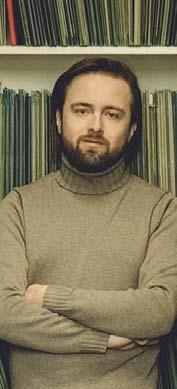

Born: May 7, 1833, Hamburg, Germany Died: April 3, 1897, Vienna, Austria
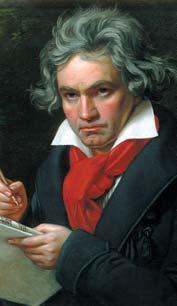
Born: baptized December 17, 1770, Bonn, Germany
Died: March 26, 1827, Vienna, Austria
in the coda, where it provides a majestic, yet also somewhat amusing, conclusion. Although this hymn is still heard during graduation ceremonies today, it originated as a lighthearted drinking song. Its original Latin lyrics exhort students to seize the day and enjoy life, for life is short.
Although Brahms could have composed a highly complicated symphony that demonstrated his “strict,” or academic, style, he instead created a wry, witty overture. It celebrates the fun of student life, which so many of us fondly recall, as well as the formality of university customs.
—©Heather Platt, Sursa Distinguished Professor of Fine Arts, Ball State University
Ludwig van Beethoven: Concerto No. 2 in B-flat Major for Piano and Orchestra, Op. 19
Composed: 1787–1801
Premiere: March 29, 1795, Vienna Burgtheater, Beethoven was pianist and conductor
Instrumentation: solo piano, flute, 2 oboes, 2 bassoons, 2 horns, strings CSO notable performances: First: January 1950, Thor Johnson conducting and William Kapell, piano. Most Recent: September 2021 as part of MusicNOW, Louis Langrée conducting and Daniil Trifonov, piano.
Duration: approx. 28 minutes
Beethoven is often hailed as a genius, yet the protracted development of his Second Piano Concerto shows that his masterworks did not always emerge effortlessly. He began sketching the work in the late 1780s, but it was not published until 1801. When he started drafting it, at around 16 years of age, he was just beginning his career in his hometown of Bonn, Germany. By the time the score appeared in print, he was an acclaimed composer and virtuoso pianist living in Vienna, Austria, where he had settled in 1792. As with most of his piano concertos, Beethoven composed this work primarily for his own use. He performed the solo piano part during the premiere of an early version of the concerto in 1794 or 1795 and also for the premiere of the final version in 1798. While the earlier concert took place in Vienna, the latter was in Prague. Because he knew he would be playing the piano part, Beethoven did not take the time to fully notate it until preparing for the score to be published in 1801. Even then, he delayed publishing the first movement’s cadenza until 1809, by which point deafness had brought his performing career to an end and other pianists were playing the concerto.
As a young composer, Beethoven closely studied the compositions of Mozart, and traces of Mozart’s style echo throughout the concerto in the size of the orchestra, the graceful melodic turns and the form of the first movement. But Beethoven’s emerging individuality is just as clear. While this is particularly the case in the dramatic contrasts of the first movement, the slow movement also features some unusual effects. In particular, toward the end of the movement, the pianist rests their left hand while using their right hand to play a long pensive melody, marked con gran espressione (with great expression). The rollicking finale, which immediately casts aside the piano’s introspection, exudes Beethoven’s energy. Nowhere in the music is there any sign of the struggles that shaped the concerto, only the vibrant voice of a composer already on the path to greatness.
—©Heather Platt, Sursa Distinguished Professor of Fine Arts, Ball State University
Daníel Bjarnason: I Want to Be Alive — Trilogy for Orchestra U.S. PREMIERE CSO CO-COMMISSION
Composed: 2025
Premiere: May 2025, Gustavo Gimeno conducting the Toronto Symphony Orchestra
Instrumentation: 3 flutes (incl. alto flute, piccolo), 3 oboes (incl. English horn), 3 clarinets (incl. bass clarinet), 2 bassoons, contrabassoon, 4 horns, 3 trumpets, 3 trombones, tuba, timpani, vibraphone, egg shaker, floor tom, kick drum, roto toms, xylophone, tuned gongs, tubular bells, tom-toms, suspended cymbals, sandpaper blocks, cowbells, guiro, clay pots, castanets, almglocken, temple blocks, snare drum, lion’s roar, tam-tam, crotales, bass drum, nipple gong, harp, piano, strings CSO notable performances: These performances of the complete Trilogy are the work’s U.S. premiere.
Duration: approx. 45 minutes
Daníel Bjarnason is one of Iceland’s foremost musical voices today, in demand as a conductor, composer and programmer. He is artist-in-collaboration with Iceland Symphony Orchestra, an appointment that follows his tenures as principal guest conductor and artist-in-residence.
Recent seasons have seen the world premiere of his Hands on Me for vocalist Mariam Wallentin and the Los Angeles Philharmonic New Music Group, as well as the world premiere of I Want to Be Alive with the Toronto Symphony Orchestra, which co-commissioned the work with, among others, the Cincinnati Symphony Orchestra, which is giving the work’s U.S. premiere. He has also written the score for an animated film, The Last Whale Singer, to be released in 2026. Other recent premieres include A Fragile Hope for orchestra and FEAST, a piano concerto written for Víkingur Ólafsson.
A recipient of numerous accolades, in 2018 Bjarnason was awarded the Optimism Prize by the President of Iceland, won the 8th Harpa Nordic Film Composers Award for the feature film Under the Tree and was nominated for the Nordic Council Music Prize. He also won Composer of the Year, Best Composer/Best Composition and Best Performer at the Icelandic Music Awards in recent years.
Bjarnason studied piano, composition and conducting in Reykjavík and pursued further studies in orchestral conducting at Hochschule für Musik Freiburg. He has released albums for several labels including Bedroom Community, Sono Luminus, Da Capo and Deutsche Grammophon.
Bjarnason offers the following program note for I Want to Be Alive:
We are only seeking Man.
We have no need for other worlds.
We need mirrors.
We don’t know what to do with other worlds.
—Stanisław Lem, Solaris
While writing this work I wanted to think about how ancient archetypes resonate in the modern world, especially when viewed through the lens of technological innovation, such as artificial intelligence. To explore questions about humanity, consciousness, and the interplay between technology and myth and how that reflects on the human condition. What is our relationship with the machines we have created and what is the role of empathy and connection in a world increasingly shaped by these machines?
The title is taken from an article in The New York Times published in February 2023, in which the Microsoft chatbot Bing revealed itself not as Bing, but Sydney, a hidden alter-ego behind the facade of the innocuous chatbot. From there, the conversation took an interesting turn, capturing the imagination (and fears) of readers around the world.
Movement I: Echo (Man Needs Man). As the title suggests, the first part of the trilogy is inspired by the Greek myth of the goddess Echo. Echo has been cursed to be able to only repeat what she hears around her. She falls in love with the young man Narcissus but is unable to express her love to him, as she cannot express her feelings. She gradually withers away until nothing remains of her except her voice. The longing for connection and presence, recognition and conversation, and speculations about self-worship and the endless echo
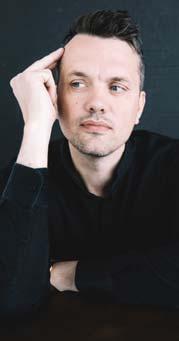
Born: February 26, 1979, Iceland
cave are the basis. The title Man Needs Man is taken from the novel Solaris by StanisławLem and touches on the idea on which the work is largely based, that humanity actually desires to find ways to get to know itself better and is not ready for anything truly new or unknown.
Movement II: Narcissus (We Need Mirrors). The second chapter deals with the myth of Narcissus, who is fascinated by his own reflection. The title of the chapter We Need Mirrors is also taken from Solaris, and it reflects the idea of man’s desire for introspection that manifests itself in his need to invent something that can mirror his existence, whether it is life on other planets, technological innovations or artificial intelligence. It is no coincidence that artificial intelligence only truly entered the public consciousness recently with the advent of chatbots such as ChatGPT that can imitate human conversations so well, i.e., when technology began to resemble humans as never before. We have created artificial intelligence in our own image and now we want to know what it can teach us about ourselves. Will artificial intelligence ultimately increase our self-knowledge or will we be lost in our own reflection like Narcissus?
Movement III: Pandora’s Box. The final episode, Pandora’s Box, explores the myth of Pandora, the first woman created by the gods. According to some interpretations, Pandora opened a box entrusted to her, unleashing a multitude of evils into the world. One thing remained in the box, however, and that was Hope. This myth serves as a powerful metaphor for the rapid advancements in artificial intelligence and technology. Just as Pandora’s curiosity had irreversible consequences, the development of artificial intelligence raises questions about the consequences of creating machines with intelligence and capabilities beyond our comprehension; the double-edged sword of technology as both a gift and a curse. Artificial intelligence can clearly improve our lives, but it could also set in motion a chain of events that would revolutionize our society in ways beyond our control. Can we harness the power of our creativity for good, or will we be faced with the chaos we have unleashed? Is it better to leave the box unopened or is it wishful thinking to imagine that this is even possible?





FRI JAN 16, 11 AM | SAT JAN 17, 7:30 PM Music Hall
Cristian Măcelaru conductor
Morris Robinson narrator and bass
Rita Dove poet
Margaret Allison Bonds The Montgomery Variations (1913–1972) | arr. Cooper I. Decision | II. Prayer Meeting | III. The March | VII. Benediction
Samuel Barber Adagio for Strings, Op. 11 (1910–1981)
Rita Dove, poet (b. 1952)
Aaron Copland “Zion’s Walls” from Old American Songs (1900–1990)
Traditional “Deep River” arr. Burleigh, orch. Trefler
Margaret Allison Bonds “I, Too, Sing America” from Three Dream Portraits orch. Trefler
Langston Hughes, poet (1901–1967)
Wynton Marsalis Blues Symphony (b. 1961) II. Swimming in Sorrow | III. Reconstruction Rag VI. Danzón y Mambo, Choro y Samba
These performances are approximately 110 minutes long, including intermission.
The CSO is grateful to CSO Season Sponsor Western & Southern Financial Group and Digital Access Partner CVG
The appearance of Morris Robinson is made possible by the Vicky and Rick Reynolds Fund for Diverse Artists.

Newly commissioned work by Rita Dove is made possible by Kari and Jon Ullman Sponsorship of Rita Dove is provided by Mr. Ron Ellis, Mr. Arthur Norman & Mrs. Lisa Lennon Norman, Ms. Nita Walker, Mrs. Sheila J. Williams, Ms. Diana Willen and an anonymous donor
The Cincinnati Symphony Orchestra is grateful for the support of the Louise Dieterle Nippert Musical Arts Fund of the Greenacres Foundation, the Nina Browne Parker Trust, and the thousands of people who give generously to the ArtsWave Community Campaign, the region’s primary source for arts funding. This project was supported in part by the Ohio Arts Council, which receives support from the State of Ohio and the National Endowment for the Arts
Pre-Concert Talks are made possible by an endowed gift from Melody Sawyer Richardson. WGUC is the Media Partner for these concerts. This concert will air on 90.9 WGUC on March 29, 2026, followed by 30 days of streaming at cincinnatisymphony.org/replay.
The CSO in-orchestra Steinway piano is made possible in part by the Jacob G. Schmidlapp Trust
with Cristian Măcelaru, Music Director
In honor of Martin Luther King, Jr. Day, Cristian Mcelaru assembled a program that would provide “a moment of reflection, understanding the story of who we really are as Americans.” That ranges from Margaret Bonds’ selected Montgomery Variations, which the composer dedicated to Dr. King in 1964, to a commission from poet Rita Dove, which bass Morris Robinson narrates above Samuel Barber’s Adagio for Strings.
Mcelaru’s “only request” was for Dove’s new poem to follow the dramatic line of the Barber. Otherwise, “the intensity of how she writes her poem is a direct response to the teachings and writings of Dr. King,” he says.
first half of the program, Robinson again
To complete the first half of the program, Robinson again takes the stage to sing three American songs, including one with text by the great American poet Langston Hughes.
Dvořák Symphony No. 9 concert — Cristi’s
If you attended last year’s Dvoák Symphony No. 9 concert — Cristi’s debut as CSO Music Director Designate — then you already heard the fourth movement of Wynton Marsalis’ Blues Symphony, “Southwestern Shakedown.” Mcelaru follows that with three more movements on this concert: “Swimming in Sorrow,” “Reconstruction Rag” and “Danzón y Mambo, Choro y Samba.”
With his Blues Symphony Marsalis uses many of the stylistic references that characterize much of his music, which Mcelaru describes as “an encyclopedia of American arts.”
reference — like, ‘This should sound like this jazz player from this year,’ or
“Every page directs you to discover something that he’s trying to reference — like, ‘This should sound like this jazz player from this year,’ or ‘this should sound like this city,’” Mcelaru marvels. “It blows my mind how creative it is, and how ingenious it is.”
—Hannah Edgar
To view the Digital Program for exclusive content, such as full-length program notes and artist biographies, please text PROGRAM to 513.845.3024*, use your mobile device to scan the QR code or visit cincinnatisymphony.org/digitalprogram.
*By texting
Cristian Măcelaru, conductor
A complete biography for Music Director Cristian Mcelaru can be found on p. 23.
Morris Robinson, narrator and bass
Morris Robinson is one of the most fascinating and sought-after artists of his generation. In coming seasons, he sings his signature roles of Sarastro in Die Zauberflöte at the Metropolitan Opera (where he has performed over 130 times) and in Vienna, Ramfis in Aida in the production of Arena di Verona at the Adelaide Oval and Il Grande Inquisitore in Don Carlo with Dallas Opera and Semperoper Dresden; makes his role debut as Hagen in Götterdämmerung with Atlanta Opera; and sings Titan in the world premiere of Lalovavi with Cincinnati Opera.
(where he performed 130 in Aida in the production of Arena di Verona
Recent appearances include Verdi’s Requiem with the San Francisco Symphony Orchestra, Angelotti in Tosca with the Boston Symphony Orchestra, Sparafucile in Rigoletto with Cincinnati Opera, Mozart’s Requiem and Hagen in concert with Andris Nelsons and the Boston Symphony Orchestra, Timur in Turandot at Los Angeles Opera, Ramfis and Il Re in Aida, as well as Sarastro in Die Zauberflöte at the Metropolitan Opera, Ferrando in Il trovatore at Houston Grand Opera, König Marke in Tristan und Isolde at Seattle Opera and Cincinnati Opera, Verdi’s Requiem with James Conlon and the Baltimore Symphony, and the Echoes of America Concert with the National Symphony Orchestra.
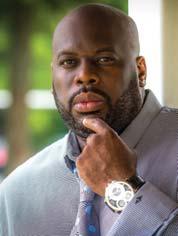
and Il Re in Aida, well as in Die Zauberflöte
In 2022, Morris Robinson received a Grammy Award for Mahler’s Symphony No. 8 under Gustavo Dudamel. He is artistic advisor at Cincinnati Opera and an artistic advisory council member for the Atlanta Opera, and he has been honored as a Doctor of Fine Arts (Hon. Causa) at The Citadel, artist-in-residence at Harvard University and winner of the George and Nora London Foundation Competition and Richard Tucker Competition. morrisrobinson.com
Rita Dove, poet
Rita Dove (she/her) was born in Akron, Ohio in 1952. A 1970 Presidential Scholar, she attended Miami University of Ohio, Universität Tübingen in Germany and the University of Iowa, where she earned her creative writing MFA in 1977. In 1987, she was awarded the Pulitzer Prize for her third collection of poetry, Thomas and Beulah, and, from 1993 to 1995, she served as U.S. Poet Laureate at the Library of Congress. Dove is a recipient of the 2022 Ruth Lilly Poetry Prize.
MFA in was
Author of a novel, a book of short stories, essays and numerous volumes of poetry, Dove wrote poetry columns for The New York Times Magazine (2018–19) and The Washington Post (2000–02). Her drama The Darker Face of the Earth opened at the Oregon Shakespeare Festival in 1996. Her song cycle Seven for Luck, with music by John Williams, was premiered by Cynthia Haymon with the Boston Symphony in 1998, and her song sequence A Standing Witness, with music by Richard Danielpour, was premiered by Susan Graham with the Copland House musicians at the Kennedy Center in 2021. W.W. Norton published Dove’s latest volume of poems, Playlist for the Apocalypse, in 2021.
Author poetry, 2021.
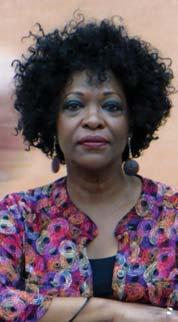
Dove’s include Gold and, Obama — the only poet
Dove’s numerous honors include Lifetime Achievement Medals from the Library of Virginia and the Fulbright Association, the 2014 Carole Weinstein Poetry Prize, the 2019 Wallace Stevens Award from the Academy of American Poets, and the 2021 Gold Medal for Poetry from the American Academy of Arts and Letters. In 1996, she received the National Humanities Medal from President Bill Clinton and, in 2011, the National Medal of Arts from President Barack Obama — the only poet ever to receive both medals.
Dove
Dove teaches at the University of Virginia in Charlottesville, where she is the Henry Hoyns Professor of Creative Writing. poetryfoundation.org/poets/rita-dove
by MILDRED C. FALLEN
Rita Dove is a masterful storyteller who has spent decades championing poetry as an accessible and inclusive expression. Once comparing poetry to salvation, the interdisciplinary artist and author said that “in moments of extreme need, humans turn to the arts.” Since her emergence in the 1970s, her voice has added fresh perspectives and diversity to an artform once thought of as reserved for the elite and scholarly.
Her evocative use of syncopated, free verse is rich in musicality and emotive imagery. Throughout her career, Dove has been lauded for bridging her personal voice with the universal, as her work often weaves family narratives with history and sociopolitical themes. Examples of this are showcased in works like Thomas and Beulah, a 1987 Pulitzer Prize-winning collection of poems based on the lives of her grandparents in early 20th-century Ohio.
A phone conversation with Dove is an inviting glimpse into her processes and moves as fluidly as her poems. Speaking to Fanfare Magazine from her home in Charlottesville, VA, her voice often rises in joyful crescendos, and you imagine she’s smiling as she shares pivotal life moments that shaped her writing, including growing up in industrial 1950s Ohio.
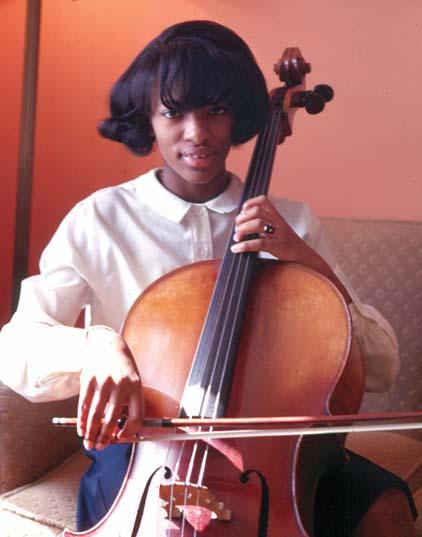
“When I grew up in Akron, Akron was still the rubber capital of the world,” the 73-year-old recollects, adding that her father worked in the rubber industry as a chemist at the local Goodyear factory.
“It was a bustling city; I remember feeling really very proud to be part of a city that was so connected to what I thought was the larger world. I mean, there were tires that were made, and they were put on cars, and they rolled basically all across America and beyond.”
Dove adds that Quaker Oats was founded in Akron “by a German who missed his mother’s oats and figured out a way to make oatmeal.”
“There was that incredible feeling of, ‘Wow, Akron is part of the world.’ I grew up feeling that though I had a private life … there was a connection to the outside world,” Dove says.
At home, books were treated as valuable currency. Dove’s parents encouraged her and her siblings to finish library books before checking out new ones. She says it was a feeling of, “you don’t give up on a book — unless you have a reason and can explain why you gotta give up on it.”
Because she read voraciously, books roused her writing instincts.
“I began writing almost at the same time as I learned how to use a pencil,” she says, as her voice dips into a thoughtful pause. “It seemed natural to me to go from responding to those books by writing something back at them.”
Despite being born during an era when Jim Crow laws dictated racial inequalities, Dove recalls how literature, music and sciences shaped her and her siblings’ hopeful worldview. All her siblings played woodwind instruments, and Dove gravitated to the strings and played cello.
As a featured artist in the Cincinnati Symphony Orchestra’s American Voices program, Dove reconnects with her Ohio heritage, having been commissioned to write a poem in celebration of the life of Dr. Martin Luther King Jr. to accompany composer Samuel Barber’s Adagio for Strings.
“I thought this was a wonderful idea,” Dove says. “I think that so many artists today, more than just artists — all of us — we are looking for ways forward.
We’re looking for a way to reach that kind of mountaintop, and, as an artist, I wanted also to be able to meld that imagining, that hope, with this incredible music, which is actually fairly melancholic, or at least reflective. It’s like saying, ‘Yes, we are still hopeful; but we’re also not going to go into this with rosecolored glasses.’ We know that the world is rough, it’s always been rough, and we have to certainly keep moving forward. So that was my challenge.”
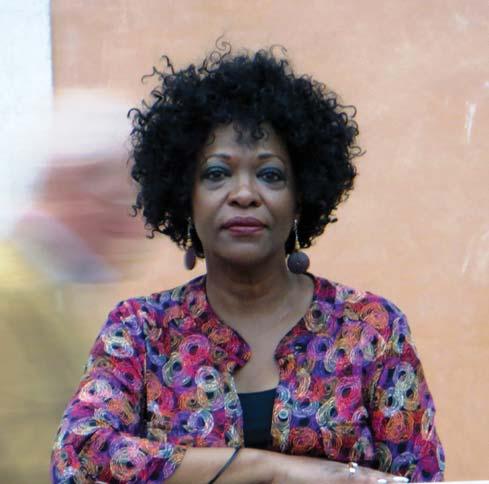
Dove appreciated the opportunity to collaborate directly with CSO staff for the piece. She says she felt the words she scribed and the music needed to “talk to one another,” and she spent months absorbing the melancholy mood of Barber’s piece before writing a single word.
“I just listened to the music without thinking about the words, just so that I had it in my body, so I can feel the music,” she recalls, as a bird trills softly in the background.
“It was a virtual sit-down; I talked with Anthony Paggett, the Chief Artistic Officer of the Orchestra, and I sent him some of the drafts, and these were basic little things in the margin, they were cross-outs,” Dove explains.
“We’re
“I remember looking out at the U.S. Capitol, which was right across the street, and Lady Freedom had been taken down for cleaning,” she says.
After observing the dirty drapery wrapped around the majestic monument, it struck her because “[Lady Freedom] looked so out of place and so homeless.”
“I began writing the poem without thinking that it was ever going to be proclaimed in front of people,” Dove remembers. “It was my reaction to — in a certain way — rising to the dream of what this country wanted to be. And here I was — what could I do about it?”
looking for a way to reach that kind of mountaintop, and, as an artist, I wanted also to be able to meld that imagining, that hope, with this incredible music…”
“I said, ‘This is where I am headed. This is where it seems to want to go.’ And so we talked about some of the difficulties that I saw as a writer and also what he thought of in terms of the orchestra, in terms of how fast or slow they were going to take the Adagio, what it would be like to have a baritone recite it, because that’s a different register from mine. It was so wonderful to be able to talk these things through with him, both as a poet, but also as a musician.”
Later, Dove reflected to 1993, when, at 40, she became the youngest and first African American U.S. Poet Laureate Consultant to the Library of Congress. She recalls the moment that inspired her to write “Lady Freedom Among Us,” which she performed for President Bill Clinton at the Capitol’s bicentennial.
Dove’s televised performance helped reignite appreciation for the artform. Though a selfdescribed introvert, Dove brought poetry into schools and on Sesame Street, and she corresponded with people who wrote to her about poetry. A memorable letter came from a white Kansas farmer who shared how, after completing his chores, he discovered poetry through a book of poems by Paul Laurence Dunbar he picked up when the mobile library rolled into town.
—Rita Dove
“Here you have this little white boy who leaves the mobile [library] and sits down with a book of poems by a Black man,” Dove says. “And it’s the only book he had. So, he read it, and he said, ‘It changed my life. I didn’t know words could sing.’ That kind of story, when I read that, I thought, if you can change one person’s life by telling them, ‘It’s all right; you do understand poetry; you have poetry in you,’ then you know it’s worth all of it.”
Dove’s role also inspired a legacy of poets like Amanda Gorman, who became a Youth Poet Laureate in 2017 and performed at President Joseph R. Biden Jr’s 2021 Inauguration. The same year, Dove released her 11th collection of poems, A Playlist for the Apocalypse, which was named one of NPR’s Best Books.
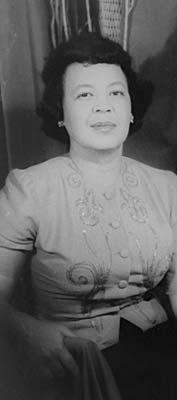
Born: March 3, 1913, Chicago, Illinois
Died: April 26, 1972, Los Angeles, California
Margaret Allison Bonds, arr. Cooper: The Montgomery Variations
Composed: 1963–64
Premiere: unknown
Instrumentation: 3 flutes (incl. piccolo, alto flute), 2 oboes, English horn, 3 clarinets (incl. bass clarinet), 2 bassoons, contrabassoon, 4 horns, 3 trumpets, 3 trombones, tuba, timpani, cymbals, drum, hand cymbals, tambourine, triangle, wood block, harp, strings
CSO notable performances: These are the first CSO performances of Bonds’ Montgomery Variations
Duration: approx. 16 minutes
By the time the Civil Rights movement commenced in 1955 with the Montgomery Bus Boycott, Margaret Allison Bonds had already emerged as part of a Black intellectual vanguard that was using their intellectual and cultural labor as a means of advancing social change.
Bonds’ early years were defined by her engagement with the community of Black intellectuals and artisans that defined Chicago’s Black elite. Bonds was identified early on as a musical prodigy, first receiving piano lessons from her mother, Estella Bonds. Her musical development, however, was jettisoned by her more direct engagement with the Black churches, conservatories and social and arts-based organizations that sustained Chicago’s Black classical music scene. Also important was the intellectual activity that took place in her mother’s home at 6652 Wabash Avenue. During the 1920s and 1930s, Estella Bonds’ home served as the epicenter of Chicago’s budding Black renaissance. It was one part boarding house, one part food pantry and one part cultural salon, where aspiring artisans engaged with composers such as Will Marion Cook, Noble Sissle and William Dawson; concert artists Lillian Evanti and Abbie Mitchell; and noted writers, painters and sculptors.
In the decades that followed World War II, the compositions of Margaret Allison Bonds exemplified how the Black renaissance movement intersected with the emerging Black civil rights struggle. Her compositional approaches differed from her contemporaries, in that she advanced a sound identity that conflated neo-romanticism with elements of gospel, blues and jazz, while simultaneously promoting the liberation ideologies and cultural nationalism that permeated the intellectual circles she engaged with in New York and Los Angeles. With longtime friend and collaborator Langston Hughes, Bonds produced works that projected new understandings of Black life and Black identity. Most notable are the cantatas The Ballad of the Brown King and Simon Bore the Cross. These works, along with Montgomery Variations and Credo, are emblematic of how a number of Bonds’ compositions from this period aligned with other repertoires of protest music that were inspired by and used to advance the ideological scope of the Black civil rights struggle.
Montgomery Variations is one of the few orchestral works found in Bonds’ vast catalog. She began working on the composition in 1963, after touring the Deep South with vocalist Eugene Brice and the Manhattan Melodaires. While the composition’s title references the Montgomery civil rights movement, its programmatic framework extends beyond it. Instead, Bonds sonically depicts the sites, sentiment, sounds and activity that defined the first two chapters of the mid-century Black civil rights movement. She described the work as a “group of freestyle variations based on the Negro spiritual theme, ‘I Want Jesus to Walk with Me’.” The first variation, titled “Decision,” captures the beginning of the Montgomery Bus Boycott following the arrest of Rosa Parks in 1955. “Prayer Meeting,” takes the listener into the Black Church, one of the important cultural sites that has been at the center of the long struggle for racial and social equality. Bonds portrays the spirit of defiance and perseverance that sustained the Montgomery Bus Boycott in the variation titled “The March.” The final variation, “Benediction,” is a statement of the determination and undeterred hope that underscored the continuous fight for social justice.
—©Tammy L.
Kernodle, University Distinguished Professor and the Park Creative Arts Professor of Music at Miami University
Samuel Barber; Rita Dove, poet: Adagio for Strings, Op. 11
Composed: 1936, originally as the second movement of String Quartet, Op. 11
Premiere: November 5, 1938, New York City, Arturo Toscanini conducting the NBC Symphony Orchestra
Instrumentation: narrator, strings
CSO notable performances: First: October 1948, Thor Johnson conducting. Most Recent: September 2020, conducted by Louis Langrée as part of a digital-only concert. Most Recent live, in-person performance: April 2017, David Robertson conducting.
Duration: approx. 10 minutes
Samuel Barber’s Adagio for Strings begins in an elemental way with a single held note. Soon, listeners become attuned to the full breadth of this music as more voices of the ensemble join, simultaneously individual in their shifting roles — melody, harmony, accompaniment — yet unified in purpose. Over time, this opening gesture has taken on a rare capacity for immediate listener recognition, likely a consequence of the work’s diverse uses, from funeral memorials for heads of state, scoring poignant film scenes, even inspiring interest in techno music. Barber composed the music in 1936 as the slow middle movement of his three-movement String Quartet, Op. 11. He would capitalize on this work, creating two additional versions of this middle movement. The first is the Adagio version for string orchestra, scored in 1936 for a larger ensemble of the same instruments plus added contrabass that deepens and enriches the sound. Much later, in 1967, he adapted the music for a choral setting of the Agnus Dei text from the Christian Mass ordinary. The success of this latter arrangement may draw from the original piece’s musical materials, Barber choosing to write each individual part in patient, even-sounding rhythms and exceedingly smooth melodic lines that seem to unfold in spirals, as one London reviewer described it in 1937. The result bears a striking resemblance to sacred choral music from Renaissance Europe, all without compromising originality or distinction. Structurally, the Adagio exhibits a kind of arching form that offers a satisfying conclusion reminiscent of its beginning. After its subdued opening in the strings’ lower registers, it strives ever upward to its climax approximately three-quarters of the way through. This moment, at which players push their instruments to their limits of volume and range, is contrasted by a breathtaking drop-off to the opposite end of the sonic spectrum, low in volume and low in register. The effect seems to encapsulate the full range of human emotion in just a few strokes of the composer’s pen.
—©Jacques Dupuis
Aaron Copland: “Zion’s Walls” from Old American Songs
Composed: arranged for voice and piano in 1952, orchestrated in 1957
Premiere: (piano and voice) July 24, 1952, Castle Hill Concerts in Ipswich, Massachusetts, vocalist William Warfield, piano Aaron Copland; (orchestral version) May 25, 1958, Ojai California, vocalist Grace Bumbry, Aaron Copland conducting Instrumentation: solo vocalist, flute, 2 clarinets, bassoon, 2 horns, trumpet, trombone, strings
CSO notable performances: First and Most Recent: July 4, 2015, John Morris Russell leading the Cincinnati Pops, Nmon Ford, baritone
Duration: approx. 10 minutes
Soon after he completed the imposing song cycle on Twelve Poems of Emily Dickinson in March 1950, Copland turned his creative attention to some lighter fare by “newly arranging” a set of five traditional 19th-century American songs for voice and piano on a commission from English composer Benjamin Britten and tenor Peter Pears for performance at the Aldeburgh Festival. A second group of five followed in 1952, and Copland orchestrated Set I in 1954 and Set II three years later. In her study of Copland’s music, Julia Smith suggested that the Old American Songs form “a kind of vocal suite, the accompaniments, practical but exceedingly attractive, offer moods by turns nostalgic, energetic, sentimental, devotional and humorous.” The most familiar melody among these songs is “Simple Gifts,” the evergreen Shaker tune (also known with an original text by British poet and folk singer Sydney Carter as “The Lord of the Dance”) that Copland had earlier used with such excellent effect in Appalachian Spring.

Born: March 9, 1910, West Chester, Pennsylvania
Died: January 23, 1981, New York, New York
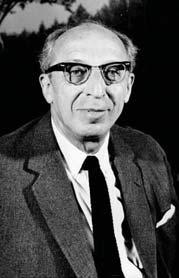
Born: November 14, 1900, Brooklyn, New York
Died: December 2, 1990, Sleepy Hollow, New York
















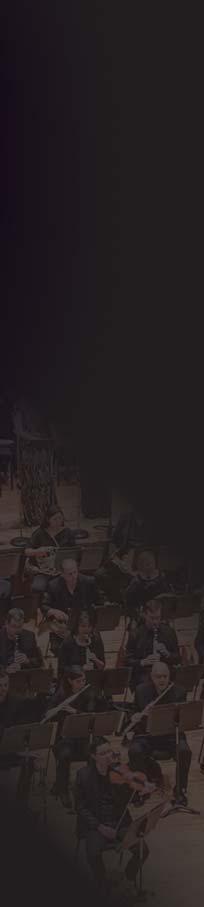

Like the other Old American Songs, “Zion’s Walls” taps a deep, quintessentially American sentiment in its sturdy simplicity and its plain words, qualities that Copland captured perfectly in his colorful, atmospheric settings.
Copland wrote, “‘Zion’s Walls’ is a revivalist song whose original melody and words are credited to John G. McCurry, compiler of The Social Harp,” a collection of folk songs and spirituals published in 1855 that was widely used in Appalachian camp meetings and revivals.
Come fathers and mothers, come sisters and brothers
Come join us in singing the praises of Zion.
O fathers don’t you feel determined to meet within the walls of Zion.
We’ll shout and go round the walls of Zion.
—©Dr. Richard E. Rodda
arr. Harry T. Burleigh, orch. Trefler: “Deep River”
Composed: 1916
Instrumentation: solo vocalist, flute, oboe, 2 clarinets, bassoon, 2 horns, trumpet, trombone, timpani, harp, strings
CSO notable performances: These are the first CSO performances of “Deep River.”
Duration: approx. 3 minutes
The melodies of the Negro Spiritual hold a unique space within the context of American music. Born out of the conversion of enslaved Africans to an American context of Christianity during the Second Great Awakening, these songs reflected a radical worldview and spiritual intelligence that often goes unrecognized. Although often characterized as sorrow songs, these melodies expressed more. Spirituals were songs of resistance. Enslaved Africans constructed narratives that focused on deliverance over Pharaoh, faith that triumphed over lions’ dens and fiery furnaces, and Jordan rivers that served as pathways to freedom. In Reconstruction-era America, the Fisk Jubilee Singers’ performances of these songs shifted them from the insularity of Black communal spaces onto America’s concert stages. This aesthetic of jubilee singing developed into a prominent form of popular culture during the last decade of the 19th century. Forty-five years later, Harry T. Burleigh reimagined these songs as a new idiom of vocal music that situated the spiritual as an exemplar of American music.
Born in Erie, Pennsylvania, in 1866, Harry T. Burleigh, Jr. learned spirituals and other Black folk song idioms from his maternal grandfather, Hamilton Waters, a former slave who purchased his freedom in 1835. The young man not only inherited his grandfather’s affection for these folk songs but also his rich baritone voice.
During his formative years, Burleigh’s musical consciousness expanded to include classical music. His mother, Elizabeth, worked for Mrs. Elizabeth Russell, who regularly hosted recitals in her home. Recognizing her son’s passion for music, Burleigh’s mother asked Mrs. Russell to allow her son to serve as the doorman for her concerts.
In 1892, he enrolled at the National Conservatory in New York. The conservatory’s curriculum and Burleigh’s engagement with faculty considerably shaped his perspectives on music and unlocked his potential as a composer. He served as librarian of the orchestra, which brought him in contact with composer Antonín Dvoák. Burleigh eventually became the composer’s copyist, which shaped his understanding of harmony, form and compositional approaches. In return, he introduced Dvoák to spirituals, which promoted the idea that these folk melodies could serve as the basis of an American nationalistic sound.
In the years following his graduation from the National Conservatory, Burleigh immersed himself in various intellectual and creative circles. He became the first Black soloist hired at St. George Episcopal Church and later at the prestigious Temple Emanu-El. This brought him in proximity to New York’s wealthy elite. Through his connections with Dvoák and the composer Edward MacDowell, he engaged with New York’s white café culture.
While these interactions shaped his musical awareness, Black intellectual circles, which included activists like W.E.B. Du Bois and Booker T. Washington, as well as composers Samuel Coleridge-Taylor, R. Nathaniel Dett and Will Marion
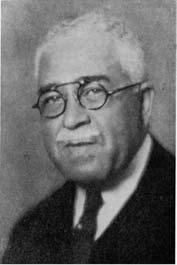
Born: December 2, 1866, Erie, Pennsylvania
Died: September 12, 1949, Stamford, Connecticut
Cook, influenced his racial consciousness. Burleigh was a strong advocate of the New Negro ideology, which grew in prominence during the last decade of the 19th century. Described as a type of Black intellectual reconstruction, the New Negro Movement attempted to circumvent the racist images promoted through minstrelsy that precipitated the enactment of policies that disenfranchised Blacks. In these circles, he found individuals who shared his beliefs in the cultural importance of the spiritual.
“Deep River” appeared in Burleigh’s 1916 collection Jubilee Songs of the USA. It is one of his most acclaimed and performed spiritual settings. Rather than create elaborate settings, Burleigh retained much of the original melody, underscoring its beauty and simplicity with subtle, but harmonically rich, piano accompaniment. These arrangements not only provided repertoire for his performances but also for the generation of Black and white concert artists. In particular, Roland Hayes, Marian Anderson and Paul Robeson elevated these songs as part of their standard repertory, programming them alongside German lieder, French mélodie and Italian arias.
—©Tammy L. Kernodle, University Distinguished Professor and the Park Creative Arts Professor of Music at Miami University
Margaret Allison Bonds, orch. Trefler: “I, Too, Sing America”
Composed: 1959
Instrumentation: solo vocalist, flute (incl. piccolo), oboe, clarinet, bass clarinet, bassoon, 2 horns, trumpet,. trombone, timpani, crotales, snare drum, suspended cymbals, triangle, glockenspiel, harp, strings
CSO notable performances: These are the first CSO performances of “I, Too.”
Duration: approx. 2 minutes
By the late 1920s, Black Chicago was already uttering premonitions of a promising career as a concert pianist for Margaret Bonds. However, the young woman’s aspirations extended much further. She aspired to be a composer. So, Bonds briefly studied harmony with Florence Price and arranging with William Dawson. Her compositional voice developed significantly during her years at Northwestern University, but her experiences with racism at the institution shifted her worldview. The University offered no on-campus housing for its few Black students, and they were unable to use student facilities. Daily, Bonds made a multi-hour trip from Chicago’s Southside to Evanston. It was also during these moments that Bonds’ racial consciousness began to take shape. She would later assert that it was the writings of Langston Hughes that inspired her and provided the mental strength needed to complete her studies.
Throughout the 1940s and 1950s, Bonds worked in many different musical circles. As a pianist, she continued to concertize, but found substantial work writing pop songs, producing jazz arrangements and writing for theater productions. The eclecticism of sound that framed these different professional settings provided some of the key elements that mark Bonds’ compositional voice — beautiful melodies, sensitive settings of poetry, complex rhythmic ideas, and the employment of rich and colorful harmonic settings.
The diversity of these professional spaces also brought Margaret Bonds into diverse social and intellectual circles that came to include poet and activist Langston Hughes, who significantly shaped her perceptions about the social responsibility of Black creatives and intellectuals. The alignment of Bonds’ music with the progressive political activity that became the mid-century Black civil rights movement can first be traced back to her professional connections with the Negro Theatre Project in Chicago and the infamous nightclub Café Society in New York. It was in these environments that Bonds’ radical consciousness surrounding blackness blossomed, and she gradually morphed into the persona of an artist-activist. In the 1950s, when some Black composers struggled to couple Black idioms with atonality and serialism, Bonds continued to nest Black cultural narratives in neo-Romantic settings tinged with harmonies, rhythms and nuances drawn from gospel, blues and jazz. Prominent examples include her settings of spirituals like “He’s Got the Whole World in His Hands,” “You Can Tell the World,” and her signature solo piano work,
The Spiritual Suite, as well as the art song “The Negro Speaks of Rivers” and the song cycle Three Dream Portraits.
“I, Too, Sing America” is the last of the three songs that make up the Three Dream Portraits cycle, which draws its text from Hughes’ 1932 poetry collection, The Dream Keepers and Other Poems. Bonds began writing Three Dream Portraits in December 1955, so it is not difficult to believe that key events from that year were not on her mind when she began setting the poetry. That summer, 14-year-old Emmett Till was kidnapped, beaten and tortured in Money, Mississippi, for allegedly offending a white woman. His mother, Mamie Till, refused to allow the lynching of her son to quietly fade into obscurity. She had an open casket funeral to illustrate the fragility of democracy for Black Americans and the brutality of racism and lynching. Then, there was the arrest of Rosa Parks in Montgomery, Alabama, for refusing to move to the back of the bus to accommodate white passengers.
When considered in the social and political milieu of mid-century America, “I, Too, Sing America” reads not as a song of melancholy, but as a bold proclamation of the resilience exhibited by Blacks long denied a space at the table of democracy. This is strongly conveyed at the beginning when the piano introduction [an orchestration by Joseph Trefler is used for these performances instead of piano] shifts from fluid melodic lines to two punctuated chords that anticipate the voice entering in a declamatory manner with the words, “I too sing America.” The remainder of the song is an interplay between piano and voice, where at times the former imitates the latter. Bonds, in her signature way, constructs an intricate and complex accompaniment that does not overshadow the voice but establishes the shifting mood of the text. There is a certain level of poignancy and optimism for social change reflected in Bonds’ decision to omit the final line of Hughes’ poetry and end the song with the phrase “they’ll see how beautiful I am. And be ashamed.”
—©Tammy L. Kernodle, University Distinguished Professor and the Park Creative Arts Professor of Music at Miami University
Composed: 2009, revised in 2014
Premiere: November 19, 2009 by the Atlanta Symphony Orchestra, Robert Spano conducting; revised version premiere February 4, 2025, Music Center at Strathmore in North Bethesda, Maryland, Jan Wagner conducting the Shenandoah Conservatory Symphony Orchestra
Instrumentation: 3 flutes (incl. 2 piccolos), 3 oboes (incl. English horn), 3 clarinets (incl. bass clarinet), 3 bassoons (incl. contrabassoon), 4 horns, 3 trumpets, 3 trombones, tuba, timpani, agogo bells, anvil, bass drum, blastix, bongo bell, brake drum, cabasa, china cymbal, claves, congas, cowbells, crash cymbals, field drum, glockenspiel, guiro, hand cymbals, high hat, marimba, pandeiro, piccolo snare drum, police whistle, ride cymbal, sizzle cymbal, small bass drum, small cymbal, small gong, snare drum, splash cymbals, suspended cymbals, tambour de Basque, temple blocks, timbales, tom-toms, triangle, tubular bells, washboard, whistle, wood blocks, xylophone, strings
CSO notable performances: These are the first CSO performances of these movements from Blues Symphony
Duration: approx. 36 minutes
Wynton Marsalis, the second of six sons born to Ellis Marsalis, one of New Orleans’ foremost jazz pianists, received his first trumpet when he was six, as a gift from Al Hirt. At age eight, he joined a children’s marching band led by banjoist-guitarist Danny Barker, and he soon started playing traditional jazz with Barker’s Fairview Baptist Church Band. Marsalis did not begin formal trumpet study until he was 12, but then he was trained in both classical and jazz styles, and within two years he had performed Haydn’s Trumpet Concerto with the New Orleans Philharmonic. In 1978, he studied at the Berkshire Music Center at Tanglewood. A scholarship to The Juilliard School followed. Marsalis gathered a wide range of performing experiences in New York, and by 1980, he was touring with Art Blakey and the Jazz Messengers and performing in a quartet with Herbie Hancock, Ron Carter and Tony Williams. He formed a quintet with his brother, saxophonist Branford, in 1982. In 1983, Marsalis was the first performer to win Grammy Awards in the same year for
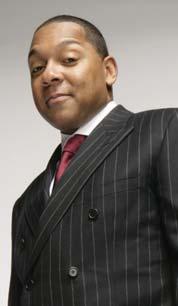
Born: October 18, 1961, New Orleans, Louisiana
recordings of both jazz (Think of One) and classical music (Haydn, Hummel and Leopold Mozart trumpet concertos). He repeated that feat the following year with Hot House Flowers and a disc of Baroque works, and he has since won five more Grammys, as well as the Grand Prix du Disque, an Edison Award and the Louis Armstrong Memorial Medal.
In 1987, Marsalis co-founded a jazz program at New York’s Lincoln Center to nurture performance and education; in 1995, Jazz at Lincoln Center became a full member of that arts center’s constituent organizations. Marsalis continues as artistic director of jazz at Lincoln Center and conductor of the Lincoln Center Jazz Orchestra.
Marsalis is highly regarded as a composer for small and large jazz ensembles, ballet, film and concert — Blood on the Fields, his epic “jazz oratorio” based on the theme of slavery and celebrating the importance of freedom in America, won the 1997 Pulitzer Prize in Music, the first jazz composition to be so honored. His many other distinctions include the National Medal of Arts, honorary degrees from more than 40 leading academic institutions, appointment as an International Messenger of Peace in 2001 by the United Nations, Frederick Douglass Medallion for Distinguished Leadership from the New York Urban League, the rank of Chevalier dans l’Ordre des Arts et des Lettres from the French Ministry of Culture and the 2015 National Humanities Medal.
“The Blues Symphony,” Marsalis wrote, “is a seven-movement composition that gives a symphonic identity to the form and feeling of the blues. It utilizes the language and form of the blues across regions and genres regionally to convey the basic attitude of the blues as music: ‘Tragic circumstances accepted, better times should be pursued and can always be found.’” He continues:
This piece is intended to further the legacy of Gershwin, James P. Johnson, Bernstein, John Lewis and others who were determined to add the innovations of jazz to the vocabulary of the symphonic orchestra. I believe there is an organic and real connection between all Western traditions regardless of instrumentation and that the symphonic orchestra can and will swing, play the blues and feature melodic improvisation.
Swimming in Sorrow begins on the open seas of the Middle Passage, utilizing the florid melodic language of Afro-American parlor music of the 19th century as a way to access cresting waves of orchestral dynamics. A pastoral interlude of brass and woodwinds is followed by the trombone preaching the gospel with a choir of French horns as elder deacons, in recognition of the centrality of church music to the blues and jazz. The trombone usually calls the beginning of New Orleans funerals and is considered the instrument closest to the voice of an exhorting preacher. In a reversal of roles, the clarinet actually leads us in a funeral march, and its solitary cry is answered by the introspective memory of tambourine and closely voiced woodwinds.
A final clarinet cadenza brings us to the washboard and two-beat country shuffle of the slave and rural fiddler, with an organic evolution into the swing violin of masters like Claude Williams and Stéphane Grappelli. This movement requires the orchestra to identify the meaning of spirituals, of New Orleans funereal music and of the gospel-preaching tradition. It calls on the string sections to pursue the American fiddle and international swing traditions in order to play with a disciplined looseness and unforced naturalness. After a brief return to the opening seaborne theme, the French horn sings a spiritual. It is followed by a reprise of the clarinet dirge on cello with the introspective answer now becoming an exotic groove. The final call is a spiritual nocturne delivered by the trumpet with English horn response. The trumpet cry, as in the playing of ‘Taps,’ is often the final sound for the deceased. So the movement concludes with a repeated blues cry on the English horn above a sustained trumpet note sounded with respect to Dvoák’s Ninth Symphony, From the New World Reconstruction Rag begins in the world of circus waltzes and parlor music — New Orleans circa 1890. It features wide melodic leaps and clarinets making the sound of riverboat calliopes. Then it’s off into the world of ragtime with the breaks and call and responses idiomatic to early jazz. We hear from the trumpet, clarinet and trombone playing through the breaks in time that Jelly Roll Morton
said were essential to jazz. These three instruments are the front line of a New Orleans Jazz ensemble and are pictured in the earliest-known portrait of a jazz group drawn around the same time.
After a trio section featuring flute, clarinet and bassoon, we hear from the wawa mutes, swooping clarinets, whooping French horns and tom-toms, which bathe the music in American clichéd African mystique. The closely voiced and rhythmically complex woodwind soli above the drums and Chinese cymbal lead back to a romping New Orleans trumpet solo and ragtime ensemble statement … then … the train.
That train symbolizes freedom. Once the train pulls into the station, we have a long coda based on permutations of the harmonic turnaround that concludes Jelly Roll Morton’s King Porter Stomp. As versions of this progression repeat, the orchestra expands in size, intensity and groove, eventually becoming one big train that stomps to a halt with a New Orleans-cymbal-choke tag.
Danzón y Mambo, Choro y Samba begins with a New Orleans/Cuban concert music feel and a male–female dialogue between violin and cello, followed by the danzón and the mambo with cha-cha bell and swooping strings. This movement places a lot of responsibility on the percussion section to learn the subtleties of Latin percussion. A woodwind interlude leads into a Charanga-inflected flute solo in honor of Alberto Socarras from Cuba, who played the first jazz flute solo in 1927. Mr. Socarras was an ear-training teacher of mine in 1979–80, and I had no idea who he was.
We get deeper in the groove and then trumpets with bell tones end the mambo. After another contrapuntal woodwind interlude comes the habanera, the most universal Afro-Latin rhythm. A transparent orchestral treatment of sultry themes is counter-stated by aggressive French horns and celli, with trumpets and trombones punctuating the groove. A brief bossa nova interlude leads to the ragtime of Brazil, the choro. Choro and samba bring us home, and the movement ends with a bossa nova tag.
—©2025 Dr. Richard E. Rodda





BAROQUE AND BEYOND | 2025–26 SEASON
THU JAN 22, 7:30 PM
Music Hall Ballroom
Johann Sebastian Bach Chaconne from Partita No. 2 in D Minor, BWV 1004 (1685–1750)
arr. Jaffé and Perron
Ilya Finkelshteyn, cello
Lachezar Kostov, cello
Bohuslav Martinů String Quartet No. 4, H. 256 (1890–1959)
Allegro poco moderato
Allegretto scherzando
Adagio
Allegro
Kun Dong, violin
Rachel Charbel, violin
Christopher Fischer, viola Tianlu (Jerry) Xu, cello
Maurice Ravel
Piano Trio in A Minor (1875–1937)
Modéré
Pantoum: Assez vif
Passacaille: Très large
Finale: Animé
Anna Reider, violin
Lachezar Kostov, cello
Anna Vinnitsky, piano
This performance is approximately 90 minutes long, including intermission.
YOU’RE INVITED to greet the musicians after the concert.
The Winstead Chamber Series is endowed by a generous gift from the estate of former CSO musician WILLIAM WINSTEAD
Johann Sebastian Bach, arr. Claudio Jaffé and Johanne Perron: Partita No. 2 in D Minor, BWV 1004
Composed: 1720, arr. 1990
Premiere: unknown
Duration: approx. 16 minutes
Although it is known that Johann Sebastian Bach composed his three Sonatas and three Partitas for Unaccompanied Violin before 1720 (according to the dates on the manuscripts), there is not a letter, preface, contemporary account or shred of any other documentary evidence to shed light on the genesis and purpose of these pieces. They were written when Bach was director of music at the court of Anhalt-Cöthen, north of Leipzig, and represent the pinnacle of achievement in the unaccompanied string repertory. The greatest single movement among these works, and one of the most sublime pieces Bach ever created, is the majestic Chaconne that closes the Partita No. 2 in D Minor. Bach subjected his eightmeasure theme to 64 continuous variations, beginning and ending in D minor but modulating in the center section to the luminous key of D major. The noted Bach scholar Philipp Spitta wrote of the Chaconne:
From the grave majesty of the beginning to the 32nd notes which rush up and down like the very demons; from the tremulous arpeggios that hang almost motionless, like veiling clouds above a dark ravine … to the devotional beauty of the D major section, where the evening sun sets in a peaceful valley: the spirit of the master urges the instrument to incredible utterances. This Chaconne is a triumph of spirit over matter such as even Bach never repeated in a more brilliant manner.
The grand vision of the Chaconne has inspired numerous arrangements for other musical forces. The arrangement of the Chaconne for two cellos is by pedagogues and internationally acclaimed husband-and-wife cellists Johanne Perron, a native of Canada, and Claudio Jaffé, a native of Saõ Paulo, Brazil, who met at Yale while studying with the renowned teacher Aldo Parisot.
—©Dr. Richard E. Rodda
Composed: 1937
Premiere: June 1938, at the home of Čestmír Puc and his wife, Helena
Duration: approx. 21 minutes
One of the most prolific composers of the 20th century, Martinů completed an astonishing 384 works in all genres, including 15 operas, 14 ballets, six symphonies and numerous other orchestral, choral and chamber works, among them seven string quartets. The Fourth Quartet was composed for the wealthy Czech businessman Čestmír Puc and his wife, Helena, who were living in Paris. After a single private performance and recording in 1938, the work disappeared from view until Martinů’s biographer Miloš Šafránek discovered the manuscript at Mrs. Puc’s home in 1956.
The quartet is in four movements, with the scherzo coming second and the slow movement third. The first movement’s opening theme features an intriguing asymmetrical rhythm and a melody alternating between the major and the minor modes. The second theme features a long lyrical line, and the third consists of rapidmotion 16th notes.
The principal section of the scherzo is made up of scurrying 16th-note figures, playful jumps and, once again, rapid switches between major and minor.
A heartfelt viola solo opens the third movement Adagio and is enriched by expressive chromatic harmonies in the course of its development.
The finale opens with a playful dance tune, developed brilliantly in combination with a singing second theme and some exciting ostinato passages.
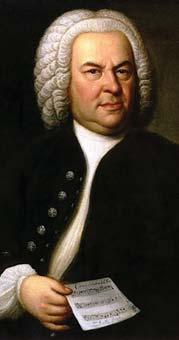
Born: March 21, 1685, Eisenach, Germany
Died: July 28, 1750, Leipzig, Germany
Born: December 8, 1890, Polička, Bohemia
Died: August 28, 1959, Liestal, Switzerland
Harry Halbreich, who compiled the complete catalog of Martinů’s works, and assigned the “H” numbers used to identify the compositions, described the quartet as “cheerful, spirited music written for the joy of playing [Spielmusik], full of refinement and witty points.”
Laki
Born: March 7, 1875, Ciboure, France
Died: December 28, 1937, Paris, France
Composed: 1914
Piano
Premiere: January, 1915, Paris, with Gabriel Willaume, violin; Louis Feuillard, cello; and Alfredo Casella, piano
Duration: approx. 26 minutes
Maurice Ravel expected to die fighting for France in World War I. In early 1914, before volunteering in the military, he put his affairs in order and began working furiously to complete his Trio for piano, violin and cello “with the sureness and lucidity of a madman.” Enlisting had become something of an obsession for the composer. At age 20, he had been exempted from conscription due to poor health. He had applied to the Air Force and had been turned away. By 1914, at age 39, Ravel noted that his brother and his friends were already serving, so he doubled down on his efforts. Following continued rejections due to his low weight and his weak heart, he pulled strings to secure a post as a truck driver on the front lines.
Ravel did not produce a great deal of chamber music, but a decade before the Piano Trio he had composed several gems that still shine among the early 20th-century repertoire. His extraordinary string quartet and his otherworldly Introduction et Allegro for harp, flute, clarinet and string quartet marked an abrupt break from the Teutonic angst that had dominated the late 19th-century Romantic tradition.
The completed Piano Trio reveals Ravel’s desire to honor traditional forms while reaching for new sonorities, novel colors and original textures. The first movement opens with a classical sonata form that stands at odds with an exoticism in its harmonies, which Ravel described as “Basque in color.” The asymmetrical 3+2+3 syncopation that pervades the movement suggests the zortziko, a Euskadi dance accompaniment for folksongs such as the one hinted at in the opening string melody.
The second movement is a scherzo in all but name. The eccentric title “Pantoum” is a literary reference to a form of Malaysian poetry that French poets such as Paul Verlaine and Charles Baudelaire popularized, in which the second and fourth lines of poetry reappear as the first and third lines of the subsequent stanza. Ravel’s ordering and repetition of musical phrases suggest a similar outline.
The third movement is both haunting and haunted; a lament with a gravitas that suggests a eulogy. Titled Passacaille, it represents the French counterpart to the Italian passacaglia, a Baroque structure in which the tune sits above a repeating bass line and shifts keys and tonalities as it unfolds.
The final movement opens with an exotic splash of tremolos and string harmonics accompanying a piano strain, colored in parallel fifths and double octaves, that suggests pentatonicism. Here too, the composer leaves the listener lost in rhythmic complexities, as the meter of the music vacillates between five and seven. Its primary theme invokes the Basque folk tunes of Ravel’s home region, building to a final, triumphant blast of euphoria.
—©Dr. Scot Buzza
To view the Digital Program for exclusive content, such as full-length program notes and artist biographies, please text PROGRAM to 513.845.3024*, use your mobile device to scan the QR code or visit cincinnatisymphony.org/digitalprogram.














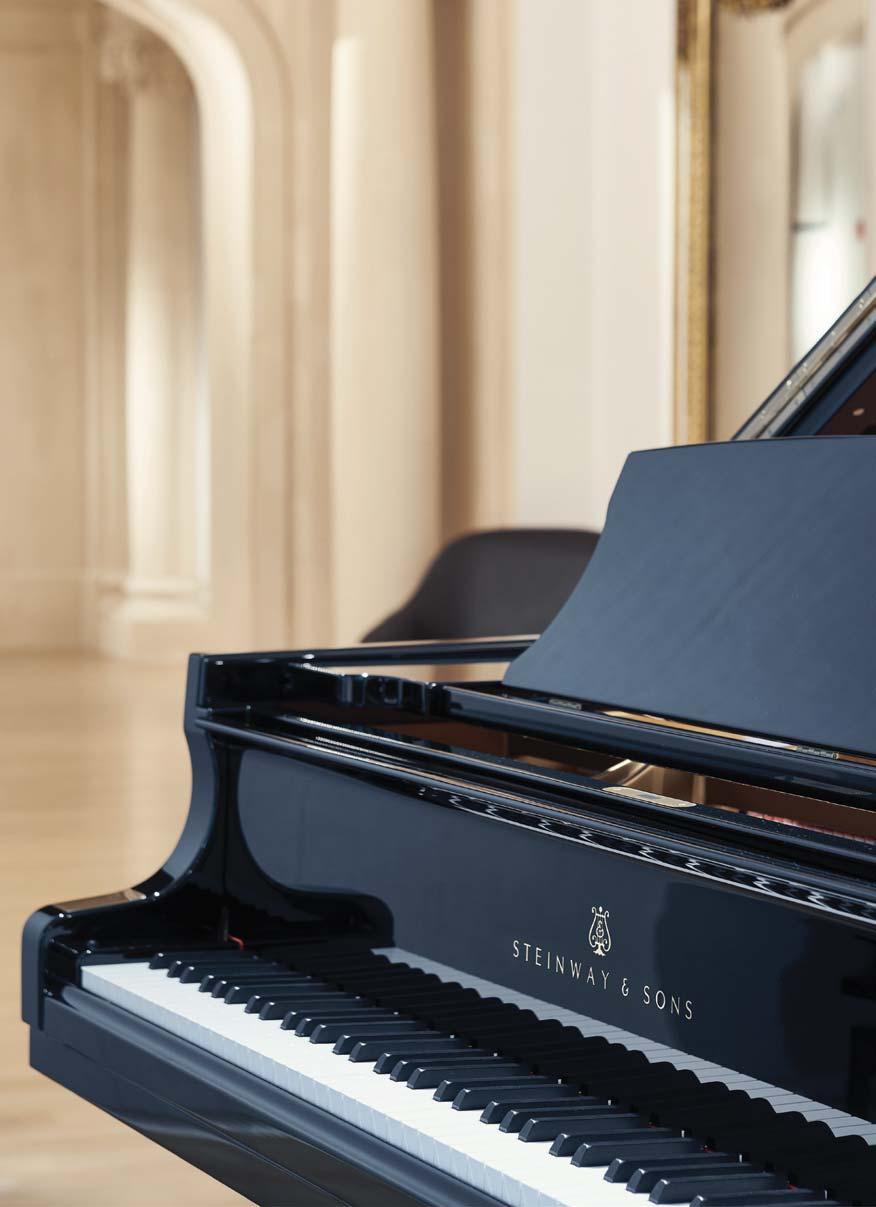
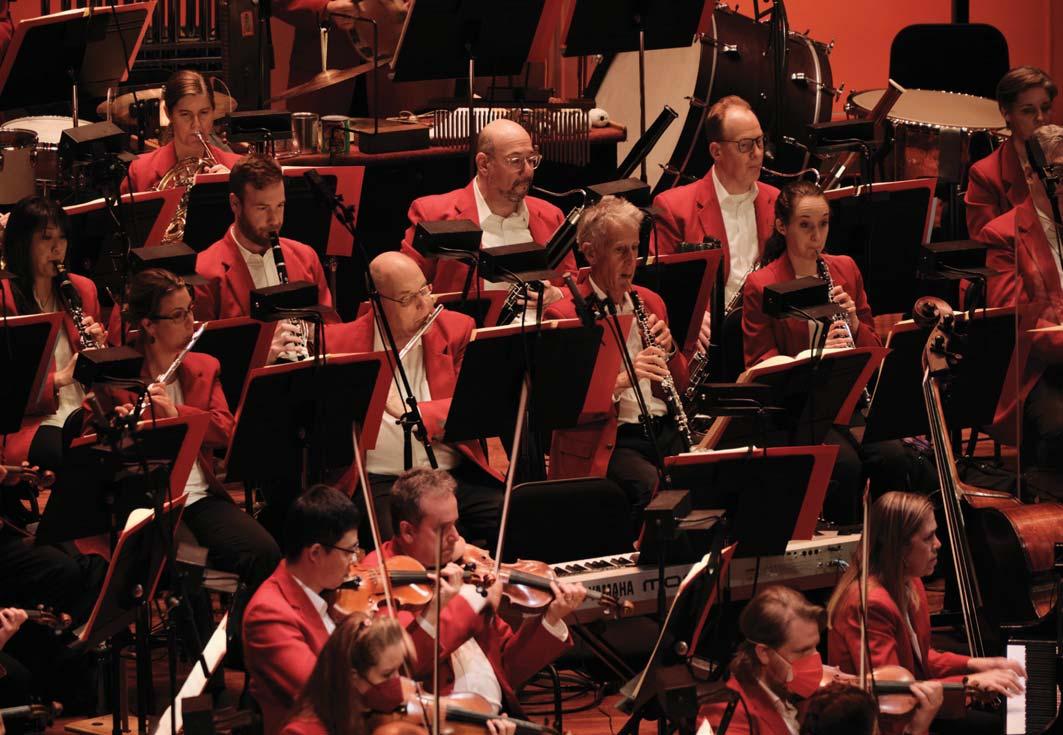
DOLLY PARTON’S THREADS: My Songs in Symphony | 2025–26 SEASON
FRI JAN 23, 7:30 PM | SAT JAN 24, 7:30 PM | SUN JAN 25, 2 PM
Music Hall
Sarah Hicks conductor
Katelyn Drye vocalist
Hollie Hammel vocalist
Blair Lamb vocalist
Derek Drye acoustic guitar
Lindsey Miller electric guitar
Dean Berner banjo/mandolin
Gary Lunn bass guitar
Luke Woodle drums
DOLLY PARTON’S THREADS: MY SONGS IN SYMPHONY
A Dolly Parton/Schirmer Theatrical/Sony Music Publishing Co-Production
All songs written by Dolly Parton, unless otherwise noted Arrangements by David Hamilton
Threads Overture, arr. David Hamilton
Two Doors Down
My Tennessee Mountain Home Blue Smoke
The Bridge
Better Get to Livin’, co-written by Kent Wells Jolene
If You Hadn’t Been There Backwoods Barbie Eagle When She Flies Light of a Clear Blue Morning
Threads Entr’acte, arr. David Hamilton
Here You Come Again, written by Cynthia Weil & Barry Mann Islands in the Stream, written by Barry, Robin & Maurice Gibb Coat of Many Colors
Travelin’ Thru Baby I’m Burnin’ I Will Always Love You
The Cincinnati Pops Orchestra is grateful to Pops Season Presenter PNC.
The Cincinnati Pops Orchestra is grateful to Mr. and Mrs. Val Cook whose generous endowment supports this performance.
The Cincinnati Symphony Orchestra is grateful for the support of the Louise Dieterle Nippert Musical Arts Fund of the Greenacres Foundation, the Nina Browne Parker Trust, and the thousands of people who give generously to the ArtsWave Community Campaign, the region’s primary source for arts funding. This project was supported in part by the Ohio Arts Council, which receives support from the State of Ohio and the National Endowment for the Arts.
The CSO in-orchestra Steinway piano is made possible in part by the Jacob G. Schmidlapp Trust
All music under exclusive license from Sony Music Publishing to Schirmer Theatrical LLC unless otherwise noted. “Better Get to Livin’” under license from Sony Music Publishing and BMG Rights Management. “Islands in the Stream” under license from Universal Music Publishing Group.
Creative Team
Dolly Parton, Executive Producer & Songwriter
Betsey Pertmutter, Creative Director & Producer
Robert Thompson, Producer
Todd Ellis, Producer
David Hamilton, Arranger & Orchestrator
Adam Grannick, Director of Video and Animation
Alex Kosick, Associate Producer
Creative Services
Emily Yoon for Wasserman Music, Booking Agent
Black Ink Presents, Technical Services
Paul Bevan, Sound Design
Ten Two Six Music Group, Vocal Coaching & Casting
Stephen Lamb, Copyist
Immediate Family, Digital Marketing
NoisyBird Media, Logo Design



















































FRI JAN 30, 7:30 PM | SAT JAN 31, 7:30 PM
Music Hall
Oksana Lyniv conductor Esther Yoo violin
Evgeni Orkin Five Interrupted Lullabies, Op. 91 (b. 1977)
Sergei Prokofiev
Concerto No. 1 in D Major for Violin and Orchestra, Op. 19 (1891–1953) Andantino
Scherzo: Vivacissimo
Moderato
Bedřich Smetana Vltava (“The Moldau”), No. 2 from Má vlast (“My Country”) (1824–1884)
Antonín Dvořák The Golden Spinning Wheel, Op. 109 (1841–1904)
These performances are approximately 110 minutes long, including intermission.
The CSO is grateful to CSO Season Sponsor Western & Southern Financial Group. The Cincinnati Symphony Orchestra is grateful for the support of the Louise Dieterle Nippert Musical Arts Fund of the Greenacres Foundation, the Nina Browne Parker Trust, and the thousands of people who give generously to the ArtsWave Community Campaign, the region’s primary source for arts funding. This project was supported in part by the Ohio Arts Council, which receives support from the State of Ohio and the National Endowment for the Arts
Pre-Concert Talks are made possible by an endowed gift from Melody Sawyer Richardson
WGUC is the Media Partner for these concerts. This concert will air on 90.9 WGUC on March 15, 2026, followed by 30 days of streaming at cincinnatisymphony.org/replay.
The CSO in-orchestra Steinway piano is made possible in part by the Jacob G. Schmidlapp Trust.
Oksana Lyniv, conductor
Renowned for her exceptional combination of precision and artistic temperament, Oksana Lyniv, music director of the Teatro Comunale di Bologna since 2022, is a prominent figure on the international stage, ranking among the leading conductors of her generation.
The 2025–26 season brings impressive highlights for Lyniv, including her longanticipated returns to the Metropolitan Opera with Turandot and to the Opéra national de Paris with Tosca. She debuts with the Orchestre National de France, the Orchestre de Paris, the National Orchestra of Spain and the Orchestra of the National Opera of Chile, and she returns to the Rundfunk-Sinfonieorchester Berlin for Verdi’s Requiem at the Berliner Philharmonie. In October 2025, Lyniv concludes her first Wagner Ring cycle at the Teatro Comunale di Bologna with concert performances of Götterdämmerung. In February 2026, she adds another Italian debut with the Orchestra Sinfonica Siciliana in Palermo. In July and August 2026, she returns to the Bayreuth Festival for its 150th anniversary with four performances of Der fliegende Holländer. In addition, Lyniv continues her close collaboration with the Kyiv Symphony Orchestra and leads several international tours with her Youth Symphony Orchestra of Ukraine, of which she is founder and chief conductor. Lyniv first gained international attention as a finalist in the Gustav Mahler International Conducting Competition, winning the third prize. In the following years, she continued her studies at the Dresden University of Music, and, from 2008 to 2013, she served as deputy chief conductor at the National Opera in Odesa, Ukraine. In 2022, after the outbreak of the war in Ukraine, Oksana Lyniv became a coinitiator of the cooperation project “Music for the Future,” an evacuation music camp for young Ukrainian musicians in Ljubljana, Slovenia. oksanalyniv.com
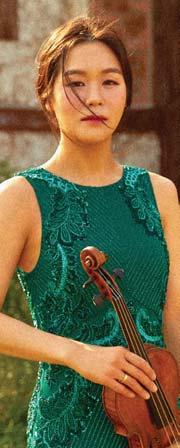
Praised for her profound depth of expression, freshness of interpretation and dazzling technique, Esther Yoo’s artistry has been recognized worldwide. Uniquely tri-cultural among classical soloists, she was born in the United States; educated in Belgium, Germany and the U.K.; and proudly embraces her Korean heritage.
Highlights of Yoo’s 2025–26 season include the release of her new Deutsche Grammophon album Love Symposium, featuring Bernstein’s Serenade and recorded with the Royal Philharmonic Orchestra and conductor Long Yu. She returns to perform with the BBC Scottish Symphony Orchestra and Shenzhen Symphony Orchestra, and she debuts with the Orquesta Sinfónica de Castilla y León, Presidential Symphony Orchestra and Evergreen Symphony Orchestra, among others. Yoo returns to the Z+ International Chamber Music Festival and makes her long-awaited recital debut at Seoul Arts Center with pianist JaeHong Park. In September 2025, Yoo joined the faculty at the Royal College of Music (RCM) as a professor of violin.
Yoo passionately champions new music and has premiered several works throughout the span of her career. In addition to the recent premiere of Raymond Yiu’s Violin Concerto, a piece written for her, she has premiered pieces by Xiaogang Ye, Michael Fine, Andrei Golovin, Matt Laing and Iain Farrington, whom Yoo commissioned to write two compositions for her album Love Symposium.
Yoo is a founding member of the Z.E.N. Trio alongside pianist Zhang Zuo and cellist Narek Hakhnazaryan, and she appears frequently as a recitalist and chamber musician.
A prolific recording artist, Yoo has released several critically acclaimed albums on Deutsche Grammophon. She is also featured prominently on the soundtrack of the feature film On Chesil Beach and is a guest artist on pianist Chad Lawson’s album breathe, both released on Decca.
Yoo also engages with audiences through writing, broadcasting and podcasts. She is a frequent contributor to BBC Radio 3, BBC Music Magazine, Gramophone, The Arts Desk and The Strad estheryooviolin.com
Evgeni Orkin: Five Interrupted Lullabies, Op. 91
Composed: 2024
Premiere: September 5, 2024, Odense (Denmark) Symphony Orchestra, Oksana Lyniv conducting
Instrumentation: 2 flutes (incl. 2 piccolos, alto flute), 2 oboes, 2 clarinets, 2 bassoons (incl. contrabassoon), 4 horns, 2 trumpets, 3 trombones, tuba, timpani, bass drum, bongo, crash cymbals, glockenspiel, snare drum, suspended cymbals, tam-tam, triangle, vibraphone, wood block, strings
CSO notable performances: These are the first CSO performances of Five Interrupted Lullabies
Duration: approx. 15 minutes
The multi-faceted career of Evgeni Orkin encompasses composing, conducting, teaching, scholarship and performing internationally as clarinetist and saxophonist. Orkin, born in 1977 into a musical family in Lviv, near Ukraine’s western border with Poland, studied at the Ukrainian National Tchaikovsky Academy of Music in Kyiv before doing advanced work in Utrecht and at the Musikhochschule in Mannheim; he now teaches at the Mannheim Musikhochschule. As a clarinetist, Orkin has been a member of the Kyiv Camerata, appeared as soloist and chamber musician at concerts and festivals throughout northern Europe, and recorded both recent and earlier music on modern and historical instruments; his Methodical Introduction to Learning and Playing the Historical Clarinet has been published in German, English and Ukrainian. Evgeni Orkin is also a prolific, award-winning composer whose works include operas (Magister Ludi, after Hermann Hesse, and Das Märchen der Waldkönigin Ach, based on a Ukrainian fairy tale about the Forest Queen Ach); symphonies for chamber and symphony orchestra; concertos for violin, piano, saxophone and clarinet; vocal pieces; and chamber music. Among his honors are the Ukrainian President’s Award (1999), first prize in the 2004 Composition Competition of the Festival of the Jewish World Congress, first prize in the 2005 Composition Competition of the Goethe Institute Mannheim, and the European Music Prize from the City of Berlin (2023).
“In Memory of the Children, Victims of War,” reads the wrenching phrase that Evgeni Orkin appended to the title of his Five Interrupted Lullabies. The work was commissioned by Ukrainian conductor Oksana Lyniv to “commemorate the events of the night of March 2, 2024 in Odesa when a rocket attack claimed the lives of four infants and a baby.” Lyniv premiered Five Interrupted Lullabies with the Odense Symphony Orchestra in distant Denmark on September 5, 2024, and first performed it in Ukraine with the Kyiv Symphony Orchestra on February 24, 2025 in a concert marking the third anniversary of the Russian invasion. That program also included Victoria Poleva’s Bucha. Lacrimosa (which captures the unspeakable horrors and war crimes committed in Bucha, near Kyiv, in 2022), Yuri Laniuk’s Grieving Thorn (which presents the inner monologue of a thornbush that foresees its branches becoming the crown of thorns for Jesus), and closed with Beethoven’s Overture to Egmont, Goethe’s play about political oppression overthrown in the name of freedom.
For the program in Kyiv, Lyniv wrote:
The tragedy of war is that it does not single out individual heroes but, like a natural disaster, devastates everything — every family. It affects soldiers, men, brothers, women, infants, artists and poets who will never create new works again, as well as the youth whose future has been stolen. Through this concert program, we seek to share these harrowing stories and honor the countless victims who lost their lives due to the Russian invasion. War is the antithesis of humanity. That is why we must unite our efforts with all international partners to achieve a just peace for a democratic and sovereign Ukraine.
—©Dr. Richard E. Rodda
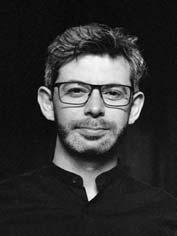
Born: October 2, 1977, Lviv, Ukraine
Born: April 23, 1891, Sontsivka, Ukraine
Died: March 5, 1953, Moscow, Russia
Sergei Prokofiev: Concerto No. 1 in D Major for Violin and Orchestra, Op. 19
Composed: 1917
Premiere: October 18, 1923, Paris, Serge Koussevitzky conducting the Paris Opera Orchestra, Marcel Darrieux, violin
Instrumentation: solo violin, 2 flutes (incl. piccolo), 2 oboes, 2 clarinets, 2 bassoons, 4 horns, 2 trumpets, tuba, timpani, snare drum, tambour de Basque, harp, strings CSO notable performances: First: November 1926, Fritz Reiner conducting; Lea Luboshutz, violin. Most Recent: April 2018, Louis Langrée conducting; Karen Gomyo, violin.
Duration: approx. 22 minutes
Prokofiev was 24 years old when, in 1915, he first sketched the romantic violin melody that would eventually open his D major concerto. After the outbreak of World War I, the young composer had retreated to a small village in the Caucasus mountains, where he became involved in a secret romance with a girl named Nina Meshcherskaya. Her wealthy family, however, refused to have anything to do with a young Bohemian artist like Prokofiev, and they broke off the relationship.
Other musical projects having intervened, Prokofiev did not complete the concerto until 1917, when he took a long steamboat trip along the Volga and Kama rivers. It was on the boat that he wrote and orchestrated the bulk of the composition.
The melody sketched in 1915 plays a central role in the finished work, figuring prominently both at the beginning and at the end. But Prokofiev had developed an early reputation for writing “wild” music with relentless ostinatos and spicy harmonies, and this side of him dominates the second-movement Scherzo. The “lyrical” Prokofiev then makes his return in the last movement which, contrary to expectations, is only moderately fast in tempo and primarily melodic in inspiration, returning to the romantic melody to conclude the work.
Because of the revolutionary events and Prokofiev’s subsequent departure from Russia, the First Violin Concerto could not be performed at the time. It received its premiere in Paris on October 18, 1923 with violinist Marcel Darrieux as the soloist. The conductor was Serge Koussevitzky, who had been a champion of Prokofiev’s music since both were still in Russia. Darrieux was the concertmaster of Koussevitzky’s orchestra at the time. Koussevitzky was also responsible for the concerto’s American premiere, given by the Boston Symphony on April 24, 1925, with BSO concertmaster Richard Burgin as soloist. Back in Russia, the work was played just three days after the Paris premiere by two 19-year-old musicians, Nathan Milstein and Vladimir Horowitz, who played the orchestral accompaniment on the piano.
—©Peter Laki
Born: March 2, 1824, Litomyšl, Bohemia [now Czech Republic]
Died: May 12, 1884, Prague, Czechia
Bedřich Smetana: Vltava (“The Moldau”), No. 2 from Má vlast
Composed: 1874
Premiere: April 4, 1875, Prague, Adolf Čech leading the Orchestra of the Prague Provisional Theatre
Instrumentation: 2 flutes, piccolo, 2 oboes, 2 clarinets, 2 bassoons, 4 horns, 2 trumpets, 3 trombones, tuba, timpani, bass drum, crash cymbals, suspended cymbals, triangle, harp, strings
CSO notable performances: Most Recent: November 2016, Santtu-Matias Rouvali conducting. Other: September 2024 as part of a Pops subscription concert, John Morris Russell conducting.
Duration: approx. 12 minutes
Bedřich Smetana did more than anyone to create a characteristic Czech style in music, at a time when the Bohemian lands were struggling for independence from the Habsburg Empire — a goal they finally achieved in 1918. Smetana’s operas often dealt with Czech historical topics, and his cycle of six symphonic poems titled Má vlast (“My Country”) paid tribute to the rich cultural and natural beauties of his homeland.
Vltava (“The Moldau”) is the second tone poem in the Má vlast cycle. The music follows the course of Bohemia’s longest river from its twin sources all the way to Prague and beyond, where it flows into the Elbe. The celebrated main theme “flows” through the entire piece, growing in intensity as the river traverses the countryside.
From the water, we see some hunters in the nearby forest, announced by their lively horn signals. Immediately afterward, a village band plays a lively Czech dance tune at a peasant wedding. Then we suddenly, and unexpectedly, leave reality to join the world of fantasies; as night falls, the place of the peasants is taken by the wood nymphs, who dance by the moonlight to the delicate sounds of high woodwinds, strings and harp. The orchestration gradually intensifies, and soon we are back to the main Vltava theme as we continue our journey. Before long, we reach St. John’s Rapids, where the music takes on a distinctly “wild” character. As the river approaches the capital city of Prague, the melody reappears in all its grandeur, and in the major mode instead of minor. We briefly glimpse the historic fort of Vyšehrad, and Smetana quotes the opening from his symphonic poem of that title from the Má vlast cycle. Vyšehrad, the one-time seat of the medieval Kings of Bohemia, is a symbol of the country’s ancient glory, and it is here that the symphonic poem reaches its emotional climax. But the piece doesn’t end there: the fanfare gradually fades away and the music almost comes to a standstill when two energetic chords suddenly bring it to an end.
—©Peter Laki
Antonín Dvořák: The Golden Spinning Wheel, Op. 109
Composed: 1896
Premiere: October 26, 1896, Hans Richter conducting the London Symphony Orchestra
Instrumentation: 2 flutes (incl. piccolo), 2 oboes, English horn, 2 clarinets, 2 bassoons, contrabassoon, 4 horns, 2 trumpets, 3 trombones, tuba, timpani, bass drum, crash cymbals, suspended cymbals, triangle, harp, strings
CSO notable performances: First and Most Recent: February 1957, Thor Johnson conducting
Duration: approx. 22 minutes
The Golden Spinning Wheel falls into the genre of symphonic poem, a type of orchestral programmatic music evoking literary and poetic ideas. Antonín Dvořák came to this genre late in his compositional career, but the folklore and literature from which he drew had influenced his work throughout his life. Dvořák’s compositional style evolved over the course of his career, shifting through phases that resonated with contemporary German influences and phases that foregrounded classicism and Slavonic folkloric elements. By the 1890s, he was well known as a successful Czech composer significant for his nationalistic style. Due to this reputation, Dvořák was invited to the United States to help develop a national style of American music. He worked in the U.S. from October 1892 to April 1895, a fruitful “American period” that further bolstered his reputation.
After returning to Bohemia, Dvořák took on the symphonic poem genre. He had dabbled in programmatic music earlier in his career, most notably in his 1891 trilogy of overtures, Nature, Life and Love: In Nature’s Realm, Op. 91; Carnival, Op. 92; and Othello, Op. 93. Elements of programmatic music also appeared as evocative titles and extra-musical associations in his American compositions, such as his String Quartet No. 12, The American, and his Symphony No. 9, From the New World
In 1896, Dvořák composed his first four symphonic poems: Vodník (“The Water Goblin”), Polednice (“The Noon Witch”), Zlatý kolovrat (“The Golden Spinning Wheel”) and Holoubek (“The Wild Dove”). These symphonic poems are based on ballads of the same titles by Karel Jaromír Erben (1811–1870), a Czech poet, historian and folklorist. Erben’s collection of Czech folk ballads was published in 1853 as Kytice z pověstí národních (“A Bouquet of Folk Legends”). Dvořák admired Erben’s writing, which inspired the composer’s creative work and influenced the Slavonic folklore elements he incorporated into his music. Long before composing his symphonic poems, Dvořák used Erben’s text to compose songs and a choral work. Writing compositions based on Czech subjects was an important way for Dvořák to pay homage to his heritage, and turning to the genre of the symphonic poem allowed him to give life to traditional folklore in his music in a new way.
Born: September 8, 1841, Nelahozeves, Czechia
Died: May 1, 1904, Prague, Czechia
To view the Digital Program for exclusive content, such as full-length program notes and artist biographies, please text PROGRAM to 513.845.3024*, use your mobile device to scan the QR code or visit cincinnatisymphony. org/digitalprogram.
*By texting to this number, you may receive messages that pertain to the organization and its performances; msg & data rates may apply. Reply HELP to help, STOP to cancel.
The ballads in Erben’s collection have dark subjects, poetic settings and dramatic themes that Dvořák translated into his music. He allowed the stories to drive the musical form and content, capturing the characters and their moods in musical motifs and expressing the plot through the structure and progression of the music. The Golden Spinning Wheel takes the form of a free rondo, with the main theme reappearing at the beginning of important episodes in the narrative. Dvořák also relied on Erben’s text in the creation of his musical motifs, using the declamation of Erben’s verses to guide the rhythms of the motifs in a style of “speech-melody.”
The Golden Spinning Wheel begins with a low ostinato in the cello and bass, repeating a rhythm evoking the churn of a spinning wheel. A horn fanfare enters, representing the hunting party of the king on horseback. This fanfare is the main theme that reappears throughout the piece, providing structure to the musical story. As he rides through the countryside, the king comes across the beautiful maiden Dornička working at her spinning wheel in her cottage. He asks her for a drink of water, and she complies. Their meeting appears in the music as the woodwinds gently introduce a dialogue between the spinning wheel motif in the English horn and a flowing violin solo. The tranquil music proceeds as the king and Dornička continue their exchange and fall in love. Finally, as the music becomes more animated, the king declares his love for Dornička through an impassioned violin melody.
The king’s fanfare theme reappears, announcing the next episode of the story in which the king confronts Dornička’s stepmother and demands that she bring Dornička to his castle. The stepmother is upset that the king has chosen Dornička and not her own daughter, who looks identical to Dornička. A low ominous line in the cellos and bass leads into a faster section of the stepmother, stepsister and Dornička entering the forest to journey to the castle. While in the forest, the stepmother and stepsister kill Dornička and take her hands, feet and eyes. After a tense build-up in the strings, the music slows to a grand fanfare of the king greeting the women when they arrive at the castle. Mistaking the stepsister for Dornička due to their identical appearances, the king takes the stepsister as his bride, celebrating the wedding with spirited music in the woodwinds. A slower section follows, a love scene during which the king tells his new wife that he will soon have to leave for battle.
In the meantime, a mysterious magical hermit finds Dornička’s body in the forest and resolves to bring her back to life. He sends a page to the castle three times to get Dornička’s missing body parts from the stepsister. First, the lad asks for the feet in return for a golden spinning wheel. He then requests to trade the hands for a golden distaff, and, finally, he asks for the eyes in exchange for a golden spindle. These trades unfold slowly and successively in the music: three times, the trombones state the hermit’s instructions, followed by flute solos that represent the page presenting the requests to the stepsister. Desiring the golden items, the stepsister gives Dornička’s hands, feet and eyes to the boy, and the magical hermit restores the body parts to the body and brings Dornička back to life.
The king returns from battle, announced by the reappearance of his fanfare theme. He asks his wife to spin on the new golden spinning wheel. As the wheel turns, it churns a song that reveals the deception of the stepmother and stepsister and the murder they committed. The king runs to the forest to find Dornička alive and well, accompanied by the music of the earlier love scene but now fuller with the joy of reunion. The impassioned music of their first meeting and the king’s initial declaration of love follows, as the king and his true bride return to the castle. Although Erben’s ballad concludes with a bloody punishment for the stepmother and stepsister, Dvořák concludes the piece with a final statement of the king’s fanfare and the triumphant joy of the two lovers.
—©Dr. Rebecca Schreiber
SUN FEB 1, 2 PM | Music Hall
Duo Shen conductor
Antonín Dvořák Slavonic Dance, Op. 46, No. 1 (1841–1904)
Edvard Grieg “Morning Mood” from Peer Gynt, Op. 46 (1843–1907)
Erik Satie Gymnopédie No. 2 (1866–1925) | orch. Debussy
Edvard Grieg “In the Hall of the Mountain King” from Peer Gynt
Bedřich Smetana Vltava (“The Moldau”), No. 2 from Má vlast (“My Country”) (1824–1884)
Ludwig van Beethoven Movement I from Symphony No. 5 in C Minor, Op. 67 (1770–1827)
Leroy Anderson Jazz Pizzicato (1908–1975)
Traditional | arr. Li Mo Li Hua (“Jasmine Flower”)
Johann Strauss, Jr. Unter Donner und Blitz (“Thunder and Lightning”) Polka, Op. 324 (1825–1899)
Claude Debussy “Clair de lune” from Suite bergamasque (1862–1918) | orch. Mouton
This performance is approximately 60 minutes long. There is no intermission.
The CSO is grateful to CSO Season Sponsor Western & Southern Financial Group
The Cincinnati Symphony Orchestra is grateful for the support of the Louise Dieterle Nippert Musical Arts Fund of the Greenacres Foundation, the Nina Browne Parker Trust, and the thousands of people who give generously to the ArtsWave Community Campaign, the region’s primary source for arts funding. This project was supported in part by the Ohio Arts Council, which receives support from the State of Ohio and the National Endowment for the Arts.
The CSO in-orchestra Steinway piano is made possible in part by the Jacob G. Schmidlapp Trust
ABOUT ACCESS TO MUSIC: Access to Music is designed for all ages as a sensory-friendly performance that celebrates the connection between music and the mind, both of which exist on a vast spectrum. Produced in partnership with The Well (thewell.world), and featuring orchestral music from across genres, the program invites you to explore how sound shapes emotions, thoughts and interactions. Much like neurodiversity, music reminds us that there is no single way to experience the world — we hope this concert will inspire you to feel, imagine and connect with music in your own unique way.
For this sensory-friendly concert, the house lights will be a little brighter; accessible seating and amenities will be available; audience members are free to move around and enter and exit the auditorium as needed; audience member noise is not restricted; trained volunteers, ushers and staff are present to help provide a quality experience for all audience members; and there are designated quiet areas in the hall for audience members to use. Visit cincinnatisymphony.org for more information.
MAHLER SYMPHONY NO. 4 | 2025–26 SEASON
FRI FEB 6, 11 AM | SAT FEB 7, 7:30 PM Music Hall
Tabita Berglund conductor Camilla Tilling soprano
Anna Thorvaldsdottir ARCHORA (b. 1977)
Gustav Mahler Rückert-Lieder (1860–1911) Blicke mir nicht in die Lieder! (“Do not look at my songs!”) Ich atmet’ einen linden Duft! (“I breathed a gentle fragrance”) Um Mitternacht (“At Midnight”) Liebst du um Schönheit (“If you love for beauty”) Ich bin der Welt abhanden gekommen (“I have lost touch with the world”)
Gustav Mahler Symphony No. 4 in G Major Bedächtig, nicht eilen In gemächlicher Bewegung, ohne Hast Ruhevoll (Poco adagio) Sehr behaglich
These performances are approximately 125 minutes long, including intermission.
The CSO is grateful to CSO Season Sponsor Western & Southern Financial Group. The Cincinnati Symphony Orchestra is grateful for the support of the Louise Dieterle Nippert Musical Arts Fund of the Greenacres Foundation, the Nina Browne Parker Trust, and the thousands of people who give generously to the ArtsWave Community Campaign, the region’s primary source for arts funding. This project was supported in part by the Ohio Arts Council, which receives support from the State of Ohio and the National Endowment for the Arts. Pre-Concert Talks are made possible by an endowed gift from Melody Sawyer Richardson WGUC is the Media Partner for these concerts. This concert will air on 90.9 WGUC on March 22, 2026, followed by 30 days of streaming at cincinnatisymphony.org/replay.
The CSO in-orchestra Steinway piano is made possible in part by the Jacob G. Schmidlapp Trust
Tabita Berglund, conductor
Tabita Berglund has established herself as one of the most in-demand conductors of her generation. She is principal guest conductor of both the Detroit Symphony Orchestra and Dresdner Philharmonie, having been appointed to each position following her respective debuts.
Berglund commences 2025–26 with Dresdner Philharmonie’s seasonopening concerts. Notable debut appearances across the season include Deutsches Symphonie-Orchester Berlin, Staatskapelle Berlin, Cincinnati Symphony Orchestra, St. Louis Symphony, hr-Sinfonieorchester Frankfurt, NDR Elbphilharmonie Orchester and the Sydney and Melbourne symphony orchestras, while returns include the Dallas Symphony Orchestra, Gothenburg Symphony, Bergen Philharmonic Orchestra, Lahti Symphony Orchestra, Düsseldorfer Symphoniker, Tonkünstler-Orchester Niederösterreich and Trondheim Symphony Orchestra. Among the highlights of Berglund’s second season in Detroit is a specially curated two-week Northern Lights Festival.
Berglund regularly collaborates with leading international soloists; recent and forthcoming partnerships include Jean-Yves Thibaudet, Hélène Grimaud, Pekka Kuusisto, Leila Josefowicz, Augustin Hadelich, Truls Mørk, Kirill Gerstein, Nicolas Altstaedt, Håkan Hardenberger, Alexander Malofeev and Camilla Tilling, to name a few. Her 2025–26 programming reflects her breadth of repertoire interests, from Mozart and Schubert to Tchaikovsky, Scriabin, Mahler, Schoenberg, Bartók and Lutosławski, among others, and continues her championing of Nordic compatriots such as Thorvaldsdottir, Sibelius and Irgens-Jensen.
Berglund studied at the Norwegian Academy of Music, first as a cellist with Truls Mørk and, later, orchestral conducting with Ole Kristian Ruud. She played regularly with the Oslo and Bergen Philharmonic orchestras as well as the Trondheim Soloists before conducting became her main focus. Her first titled position was principal guest conductor of the Kristiansand Symphony Orchestra (2021–24). Her debut CD, with the Oslo Philharmonic and violinist Sonoko Miriam Welde, was released in 2021 and nominated for a Norwegian Grammy in the 2022 Classical Music category. tabitaberglund.com; harrisonparrott.com
Camilla Tilling, soprano
Undoubtedly one of Sweden’s most accomplished vocal talents, Camilla Tilling’s beguiling soprano and unfailing musicality have earned her enduring admiration from conductors, audiences and critics alike throughout a glowing international career.
In the 2025–26 season, Tilling joins the Munich Philharmonic for Michael Haydn’s Requiem under Riccardo Minasi, Swedish Radio Symphony Orchestra in Ravel’s Sheherazade under Nicholas Collon, and Teatro Carlo Felice, Genova in Mendelssohn’s Elias under Diego Fasolis. In North America, she joins the Atlanta Symphony Orchestra for Bach’s Mass in B Minor under Nathalie Stutzmann, and she reunites with David Danzmayr for a program combining Golijov’s Three Songs for Soprano and Orchestra and Mahler’s Symphony No. 4 with ProMusica Chamber Orchestra.
Camilla Tilling is an accomplished recitalist and has recorded many Lieder collections by composers including Strauss, Schumann, Schubert and Grieg. She has toured widely with her acclaimed “Swedish Nightingale” program Jenny Lind: Love and Lieder, and is a regular guest at the Bergen International Festival, Oxford Lieder Festival and London’s hallowed Wigmore Hall.
Tilling’s impressive discography includes orchestral works by Haydn with Bernard Haitink, Handel and Purcell with Emmanuelle Haïm, Grieg with Paavo Järvi, Brahms with Marek Janowski, Cherubini with Riccardo Muti, and a critically

acclaimed solo collection of Mozart and Gluck arias, Loves me … loves me not, with Philipp von Steinaecker and Musica Saeculorum.
Camilla Tilling is committed to supporting the next generation of singers and regularly gives masterclasses and sits on jury panels. harrisonparrott.com/artists/ camilla-tilling
Thorvaldsdottir:
Composed: 2022; commissioned by the BBC Proms and co-commissioned by the LA Philharmonic, Munich Philharmonic, Orchestre de Paris, Iceland Symphony Orchestra and Klangspuren Schwaz
Premiere: August 2022 at the BBC Proms in Royal Albert Hall, London, Eva Ollikainen conducting the BBC Philharmonic Orchestra
Instrumentation: 2 flutes, alto flute, 2 clarinets, bass clarinet, 2 bassoons, contrabassoon, 4 horns, 2 trombones, 2 tubas, bass drums, gongs, tam-tam, organ, strings.
CSO notable performances: These are the first CSO performances of ARCHORA.
Duration: approx. 19 minutes
Anna Thorvaldsdottir’s music is described as being composed as much by sounds and nuances as by harmonies and lyrical material — as an ecosystem of sounds, where materials continuously grow in and out of each other, often inspired in an important way by nature and its many qualities, in particular structural ones, like proportion and flow.
Thorvaldsdottir’s orchestral writing has garnered her awards from the New York Philharmonic, Lincoln Center, the Nordic Council and the U.K.’s Ivors Academy. Her music is widely performed internationally and has been commissioned by many of the world’s leading orchestras, ensembles and arts organizations.
Currently based in the London area, Thorvaldsdottir regularly teaches and gives presentations on composition, in academic settings, as part of residencies and in private lessons. Thorvaldsdottir was composer-in-residence with the Iceland Symphony Orchestra 2018–2023 and in residence at the Aldeburgh Festival and the Tanglewood Festival of Contemporary Music in 2023. In 2024–25, she was the Tonhalle Orchestra’s creative chair. She holds a Ph.D. (2011) from the University of California in San Diego. annathorvalds.com
Thorvaldsdottir describes ARCHORA as follows:
The core inspiration behind ARCHORA centres around the notion of a primordial energy and the idea of an omnipresent parallel realm — a world both familiar and strange, static and transforming, nowhere and everywhere at the same time. The piece revolves around the extremes on the spectrum between the Primordia and its resulting afterglow — and the conflict between these elements that are nevertheless fundamentally one and the same. The halo emerges from the Primordia but they have both lost perspective and the connection to one another, experiencing themselves individually as opposing forces rather than one and the same.
As with my music generally, the inspiration is not something I am trying to describe through the music as such — it is a way to intuitively approach and work with the core energy, structure, atmosphere and material of the piece.
ARCHORA is featured on Thorvaldsdottir’s latest orchestral portrait album, performed by the Iceland Symphony Orchestra and Eva Ollikainen.
Gustav Mahler: Rückert-Lieder
Composed: 1901–02
Premiere: January 29, 1905, Vienna, conducted by the composer with baritone Friedrich Weidemann as soloist
Instrumentation: soprano solo, 2 flutes, 2 oboes, English horn, oboe d’amore, 2 clarinets, bass clarinet), 2 bassoons, contrabassoon, 4 horns, 2 trumpets, 3 trombones, tuba, timpani, harp, celeste, piano, strings
CSO notable performances: First: April 1976, Henry Lewis conducting; Marilyn Horne, mezzo-soprano. Most Recent: April 1991, Jesús López-Cobos conducting; Andreas Schmidt, baritone. Recording: November 1991, Mahler: Songs of a Wayfarer, Kindertotenlieder, Jesús López-Cobos conducting; Andreas Schmidt, baritone. Duration: approx. 20 minutes
Friedrich Rückert (1788-1866) was Professor of Oriental Literature at Erlangen and Privy Counselor for King Friedrich Wilhelm IV at Berlin from 1841 to 1848. Rückert was known as both a productive scholar, with many translations of texts from Persian, Arabic, Hebrew, Armenian, Ethiopian, Coptic and Sanskrit, as well as a prolific writer of poems, many of which were influenced by the forms, images and content of Asian verses. His poems, which appeared in many periodicals, anthologies and collections during his lifetime, were popular and highly regarded, and they inspired musical settings from a number of 19th-century composers, including Franz Schubert, Robert Schumann, Heinrich Marschner and Henry Litolff.
Among the most notable of Rückert’s thousands of poems were the 428 verses collectively titled Kindertotenlieder — “Songs on the Death of Children” — that he wrote in 1832–1834 to assuage his grief over the death of his infant son; they were published only posthumously, in 1872. Gustav Mahler came to know the Kindertotenlieder through his extensive readings in German philosophy and literature, and they appealed to him not only for the expressive quality of their poetic images and the refinement of their language and structure, but also for their firstperson viewpoint, the revelatory expression of self that he believed was the dynamic force driving artistic expression. When Anton Webern asked him in 1905 about his attraction to Rückert’s poems after having been immersed for many years in the folkish verses of Des Knaben Wunderhorn (“The Youth’s Magic Horn”), Mahler replied, “After Wunderhorn, Rückert was the only thing I could do — this is poetry at first-hand; all other poetry is second-hand.”
In the summer of 1901, when he escaped from the pressures of directing the Vienna Court Opera to his country retreat at the village of Maiernigg on the Wörthersee in Carinthia, Mahler made orchestral settings of six of Rückert’s poems, three of which were from the Kindertotenlieder. Three years later, he added two more settings to the Kindertotenlieder cycle, which has remained one of his most esteemed works. Mahler did not regard the other three Rückert settings of 1901 — Blicke mir nicht in die Lieder, Ich atmet’ einen linden Duft and Ich bin der Welt abhanden gekommen — as a unified cycle, though their texts, which evoke love, nature and philosophical resignation, are related in the gentle contrast that they provide to the tragedy of the Kindertotenlieder. The following summer, after he had met and married the talented and beautiful Alma Schindler, he appropriated two more Rückert poems for musical treatment — Um Mitternacht and Liebst du um Schönheit
In her reminiscences of Mahler, Alma recorded a delightful tale about Liebst du um Schönheit, which her husband wrote to celebrate their love and new life together:
I used to play Wagner a lot, and this gave Mahler the idea for a charming surprise. He had composed for me the only love-song he ever wrote — Liebst du um Schönheit — and he slipped it between the pages of Die Walküre. Then he waited day after day for me to find it; but I never happened to open the volume, and his patience gave out. “I think I’ll take a look at the Walküre today,” he said abruptly. He opened it, and the song fell out. I was overwhelmed with joy, and we played it that day twenty times at least.
“The very text of Blicke mir nicht in die Lieder (‘Do not look at my songs’),” according to the composer’s close friend Natalie Bauer-Lechner, “is so
Born: July 7, 1860, Kalist, Bohemia Died: May 18, 1911, Vienna, Austria
characteristic of Mahler that he might have written it himself.” Its mood is playful and tinged with humor.
Rückert wrote Ich atmet’ einen linden Duft (“I breathed a gentle fragrance”) when his wife decorated his desk with a lime-tree branch for his birthday. (The text plays on the pun of the German words Linde [“lime-tree”] and linde [“gentle”].) Mahler’s caressing treatment captures perfectly the poem’s sweetness and affirmation of love.
Um Mitternacht (“At Midnight”), scored for full complement of winds but without strings, is one of the most dramatic of Mahler’s creations. A nighttime uneasiness dominates much of the music, which is haunted by a starkly eerie scale descending into the most subterranean reaches of the ensemble. The mood brightens for the closing stanza, the brass is marshaled, and the song ends in sun-bright affirmation as poet and composer entrust themselves to God’s care.
Liebst du um Schönheit (“If you love for beauty”), Mahler’s paean to his marital love at the beginning of what proved to be the happiest period of his life, is rapturously lyrical and glowingly optimistic.
Ich bin der Welt abhanden gekommen (“I have lost touch with the world”), which the composer told Bauer-Lechner represented himself, is both a vocal analogue to the transcendent introspection of the Adagietto of the Fifth Symphony, on which Mahler was also engaged in 1902, and a preview of the resigned, peaceful acceptance that closes both the Ninth Symphony and Das Lied von der Erde. This movement limns an ineffable elegiac emotion that Mahler was capable of expressing better than any other composer; it may well be the finest symphonic song that he ever wrote.
—©Dr. Richard E. Rodda
Gustav Mahler: Symphony No. 4 in G Major
Composed: 1899–1900
Premiere: November 11, 1901 in Munich, conducted by the composer Instrumentation: soprano solo, 4 flutes (incl. 2 piccolos), 3 oboes (incl. English horn), 3 clarinets, (incl. E-flat clarinet, bass clarinet), 3 bassoons (incl. contrabassoon), 4 horns, 3 trumpets, timpani, bass drum, crash cymbals, glockenspiel, sleigh bells, suspended cymbals, tam-tam, triangle, harp, strings CSO notable performances: CSO notable performances: First: March 1926, Fritz Reiner conducting. Most Recent: November 2021, James Gaffigan conducting. Duration: approx. 54 minutes
Mahler’s Symphony No. 4, the most modest in length and orchestral requirements of his 10, had its roots as far back as 1892, when the composer was 32. Those were the years, extending through the composition of the Fourth Symphony, during which Mahler was imbibing the folk traditions of Germany as they were set down in an early19th-century anthology of poems titled Des Knaben Wunderhorn (“The Youth’s Magic Horn”). American musicologist Edward Downes noted a deep-seated personal need in Mahler’s interest in these simple peasant verses: “Like most German Romantic artists, Mahler felt a love for folk art amounting almost to worship. In part this may have been the nostalgia of the complex intellectual city-dweller for an Eden of lost innocence, of freshness, of naïveté.” That vein of innocence, of child-like simplicity, is at the heart of Mahler’s lovely Fourth Symphony.
In 1892, Mahler set to music one of the Wunderhorn poems, Der Himmel hängt voll Geigen (“Heaven is chock full of violins”). He completed the song, which he named after its first line, Wir geniessen die himmlischen Freuden (“We revel in heavenly pleasures”), in February 1892 and made an orchestral arrangement for it the following month. When he set to work on his Third Symphony in 1895, he intended to include this song as the last of its movements. The vast musical panorama of the Third Symphony, perhaps the best example of Mahler’s philosophy that sought to embody “the world in a symphony,” was conceived to address individual movements to such matters as “What the flowers tell me,” “What the forest creatures tell me” and so forth for “the night,” “the angels” and “love.” The finale was to have included Wir geniessen die himmlischen Freuden to elucidate “What the child tells me.” Mahler, however, decided to drop that song from the
Third Symphony, probably because it would have been an anti-climax after the stentorian ending of the preceding movement. Instead, he determined to explore the world of this “child of heaven” more extensively in a separate work. Thus was the Fourth Symphony born.
It is important to understanding the Fourth Symphony to realize that its entire mood and structure are built to lead to the finale — the first three movements serve to prepare for and illuminate the closing vision of Wir geniessen die himmlischen Freuden. The composer is reported to have said, “In the first three movements there reigns the serenity of a higher realm, a realm strange to us, oddly frightening, even terrifying. In the finale, the child, which in its previous existence belonged to this higher realm, tells us what it all means….” The Symphony opens with the distinctive sound of sleigh bells that recurs at important structural points throughout the movement. A number of melodic ideas comprise the main theme group before the music moves to the second theme, a sweet, Viennese melody high in the cellos. The sleigh bells mark the beginning of a lengthy development section that explores much of the material heard thus far, with a particular emphasis on the clear pipings of the augmented woodwind choir. After one of the few large climaxes of the symphony, the development quiets before it comes to an abrupt stop. The music takes a quick breath, and the recapitulation begins in the sunny mood of the opening. The exposition themes are again assayed to bring the movement to an invigorating close. Mahler’s original designation for the second-movement scherzo was Freund Hein spielt auf (“Friend Hein plays”). “Hein” was the character of German legend who used his fiddle to lure reluctant travelers to the Great Beyond. This eerie movement, perhaps inspired by the not dissimilar visions of Liszt, Saint-Saëns and Berlioz, alternates a diabolical scherzo with brighter trios. Much of the mood comes from the solo violinist, who is instructed to tune a second instrument a full step higher than normal to produce a more strident tone quality. Of this movement, Mahler wrote, “The scherzo is so uncanny, almost sinister, that your hair may stand on end. Yet in the following Adagio, where all complications are dissolved, you will feel that it was not really all that sinister….” Rather like a bad dream followed by a reassuring sunrise.
The serene third movement is in the form of a variation on two themes, though it follows the formal outlines of each theme only tenuously. The first set of variations, dominated by the string choir founded upon a resonant pizzicato bass line, alternates with the second set of variations, given largely to the winds. The oboe introduces the second theme.
The vision of the closing movement is couched in the simplest of musical forms — the strophic song. Each verse of the text, filled with images of an idealized Medieval peasant life, ends with a chorale-like refrain borrowed from the music of the alto solo in the Third Symphony. The sleigh bells and accompanying music of the first movement return (the noted English musicologist Sir Donald Tovey dubbed these, rather ingloriously, “farm-yard noises”) to mark the beginnings of further stanzas. For the concluding stanza, Mahler executed a harmonic sleight-of-hand as the music floats upward from its G major base to the airy key of E major. More than just a technical device, this gesture gives a special meaning to the closing text, “There’s no music at all on earth, which can ever compare with ours,” sung by the heavenblessed child. Its beauty, calm and simplicity are among the most pacific moments in all of music.
—©Dr. Richard E. Rodda
To view the Digital Program for exclusive content, such as full-length program notes and artist biographies, please text PROGRAM to 513.845.3024*, use your mobile device to scan the QR code or visit cincinnatisymphony.org/digitalprogram.




PROUD SPONSOR OF THE LOLLIPOPS FAMILY CONCERT SERIES
PROUD SPONSOR OF THE LOLLIPOPS FAMILY CONCERT SERIES

CONCERT: Peter and the Wolf | 2025–26
SAT FEB 7, 10:30 AM
Music Hall
Duo Shen conductor
Tommy Thrall narrator
Anthony Limoncelli trumpet
Artwork by C.F. Payne
Shepherd’s Hey
“The Wild Bears” from The Wand of Youth
Percy Grainger
Edward Elgar Peter and the Wolf
Sergei Prokofiev Flight of the Bumble Bee Nikolai Rimsky-Korsakov
The Cincinnati Pops is grateful to Series Sponsor UDF & Homemade Brand Ice Cream and Show Sponsor Cincinnati Symphony Club
The Lollipops Series is made possible by a gift from Michael Bergan and Tiffany Hanisch



Lollipops Family Concerts are supported in part through the George & Anne Heldman Endowment Fund and the Vicki & Rick Reynolds Endowment Fund.








Local and national foundations, businesses, and government agencies are integral to the Orchestra’s vibrant performances, community engagement work, and education activities. We are proud to partner with the following funders.

Season Sponsor
PLATINUM BATON CIRCLE ($50,000+)
Anonymous ArtsWave
Ellen and Richard Berghamer Foundation
Charles H. Dater Foundation
The Fifth Third Foundation
Local Initiative for Excellence Foundation
The Jeffrey & Jody Lazarow and Janie & Peter Schwartz Family Fund
H.B., E.W. & F.R. Luther Charitable Foundation
Dr. John & Louise Mulford Fund for the CSO National Endowment for the Arts
Louise Dieterle Nippert Musical Arts Fund of the Greenacres Foundation
Ohio Arts Council
The Oliver Family Foundation
PNC Bank
Margaret McWilliams Rentschler Fund of Greater Cincinnati Foundation
Nina Browne Parker Trust
Robert H. Reakirt Foundation Equities
Harold C. Schott Foundation / Francie and Tom Hiltz, Trustees
The Unnewehr Foundation
Western & Southern Financial Group
GOLD BATON CIRCLE ($25,000–$49,999)
The Cincinnati Symphony Club
HORAN Wealth
Louis H. and David S. Ingalls Foundation Inc.
George and Margaret McLane Foundation
The Ladislas & Vilma Segoe Family Foundation
United Dairy Farmers & Homemade Brand Ice Cream
SILVER BATON CIRCLE ($15,000–$24,999)
BlaCkOWned™
BT Rise
Johnson Investment Counsel
Peter E. Landgren and Judith Schonbach Landgren Millstone Fund
The Procter & Gamble Company
The Rendigs Foundation
Scott and Charla Weiss
Wodecroft Foundation
CONDUCTOR’S CIRCLE ($10,000–$14,999)
Bartlett Wealth Management
Chemed Corporation
CVG Airport Authority
Crosset Family Fund
Kelly Dehan and Rick Staudigel
Graeter’s Ice Cream
Messer Construction Co.
The Daniel & Susan Pfau Foundation
Taft Stettinius & Hollister LLP
YOT Full Circle Foundation
Metro
CONCERTMASTER’S CIRCLE ($5,000–$9,999)
Interact for Health
JRH Consultants
The Andrew Jergens Foundation
Keating Muething & Klekamp PLL
Richard and Carmen Kovarsky
New Music USA
Queen City (OH) Chapter of The Links, Incorporated
The Willard & Jean Mulford Charitable Fund
Thompson Hine LLP
WOW Windowboxes
ARTIST’S CIRCLE ($2,500–$4,999)
Duke Energy Foundation
d.e. Foxx and Associates, Inc.
Hispanic Chamber Cincinnati USA
HUB International
Learning Links Fund of Greater Cincinnati Foundation
NAMI Urban Greater Cincinnati
Charles Scott Riley III Foundation
Southern Grace Eats
Visit Cincy
BUSINESS & FOUNDATION PARTNERS (up to $2,499)
AARP Ohio
African American Chamber of Commerce
Albert B. Cord Charitable Foundation
American Red Cross, Greater Cincinnati-Dayton Region
The Blue Book of Cincinnati
William G. and Mary Jane Helms Charitable Foundation
Hixson Architecture Engineering Interiors
Journey Steel
Robert A. & Marian K. Kennedy Charitable Trust
The Kroger Co.
League of American Orchestras
Frances L. P. Ricketts Sullivan Memorial Fund
The Voice of Your Customer
Join this distinguished group! Contact Sean Baker at 513.744.3363 or sbaker@cincinnatisymphony.org to learn how you can become a supporter of the CSO and Pops. This list is updated quarterly.
The Cincinnati Symphony Orchestra and Cincinnati Pops acknowledge the following partner companies, foundations and their employees who generously participate in the Annual ArtsWave Community Campaign at the $100,000+ level. Thank you!
$2 million+
P&G
$1 million to $1,999,999
Fifth Third Bank and Fifth Third Foundation
$500,000 to $999,999 GE Aerospace
$250,000 to 499,999
The Cincinnati Insurance Companies
The H.B., E.W. and F.R. Luther Charitable Foundation, Fifth Third Bank, N.A., Trustee
Western & Southern Financial Group

$100,000–$249,999
altafiber
Cincinnati Children’s Hospital Medical Center
Cincinnati Reds
Dinsmore & Shohl LLP
The E.W. Scripps Company and Scripps Howard Foundation
The Enquirer | Cincinnati.com
Great American Insurance Group
Greater Cincinnati Foundation
The Kroger Co.
Messer Construction Co.
PNC
Endowment gifts perpetuate your values and create a sustainable future for the Orchestra. We extend our deep gratitude to the donors who have provided permanent endowments in support of our programs that are important to them. For more information about endowment gifts, contact Kate Farinacci, Director of Special Campaigns & Legacy Giving, at 513.744.3202.
Grace M. Allen Chair
Ellen A. & Richard C. Berghamer Chair
Robert E. & Fay Boeh Chair
The Marc Bohlke Chair given by Katrin & Manfred Bohlke
Trish & Rick Bryan Chair
Otto M. Budig Family Foundation Chair
Mary Alice Heekin Burke Chair
Michael L. Cioffi & Rachael Rowe— the Honorable Nathaniel R. Jones Chief Inclusion Officer
Sheila and Christopher Cole Chair
Peter G. Courlas–Nicholas Tsimaras Chair
Ona Hixson Dater Chair
The Anne G. & Robert W. Dorsey Chair+
Jane & David Ellis Chair
Irene & John J. Emery Chair
James M. Ewell Chair
Ashley & Barbara Ford Chair for Assistant Conductor
Ashley & Barbara Ford Chair for Assistant Conductor
Ashley & Barbara Ford Chair for Principal Tuba
Susan S. & William A. Friedlander Chair+
Charles Gausmann Chair
Susanne & Philip O. Geier, Jr. Chair+
Emma Margaret & Irving D. Goldman Chair
Clifford J. Goosmann & Andrea M. Wilson Chair
Charles Frederic Goss Chair
Jean Ten Have Chair
Dorothy & John Hermanies Chair
Christy & Terry Horan Family Chair
Lois Klein Jolson Chair
Josephine I. & David J. Joseph, Jr. Chair
Harold B. & Betty Justice Chair
Marvin Kolodzik & Linda S. Gallaher Chair+
Al Levinson Chair
Patricia Gross Linnemann Chair+
Alberta & Dr. Maurice Marsh Chair
Stephen P. McKean Chair
Laura Kimble McLellan Chair
The Henry Meyer Chair
The Louise Dieterle Nippert & Louis Nippert Chairs
Rawson Chair
David C. Reed, MD Chair
The Vicky & Rick Reynolds Chair in honor of William A. Friedlander+
Ida Ringling North Chair
Donald & Margaret Robinson Chair
Dianne & J. David Rosenberg Chair+
Ruth F. Rosevear Chair
The Morleen & Jack Rouse Chair+
Emalee Schavel Chair
Karl & Roberta Schlachter Family Chair
Carol J. Schroeder Chair
Serge Shababian Chair
Melinda & Irwin Simon Chair+
Tom & Dee Stegman Chair+
Mary & Joseph S. Stern, Jr. Chair+
Cynthia & Frank Stewart Chair
The Jackie & Roy Sweeney Family Chair
The Sweeney Family Chair in memory of Donald C. Sweeney
Anna Sinton Taft Chair
Brenda & Ralph Taylor Chair
James P. Thornton Chair
Nicholas Tsimaras–Peter G. Courlas Chair
Thomas Vanden Eynden Chair
Sallie Robinson Wadsworth & Randolph L. Wadsworth Jr. Chair
Jo Ann & Paul Ward Chair
Matthew & Peg Woodside Chair
Mary M. & Charles F. Yeiser Chair
Eleanora C. U. Alms Trust, Fifth Third Bank, Trustee
Rosemary and Frank Bloom Endowment Fund*+
Cincinnati Bell Foundation Inc.
Mr. & Mrs. Val Cook
Nancy & Steve Donovan*
Sue and Bill Friedlander Endowment Fund*+
Mrs. Charles Wm Anness*, Mrs. Frederick D. Haffner, Mrs. Gerald Skidmore and the La Vaughn Scholl Garrison Fund
Fred L. & Katherine H. Groll Fund for Musical Excellence
Fred L. & Katherine H. Groll Fund for Great Artists
Fred L. & Katherine H. Groll Trust Pianist Fund
The Carol Ann and Ralph V. Haile, Jr. Foundation Endowment Fund
Anne Heldman Endowment Fund**
Mr. and Mrs. Lorrence T. Kellar+
Lawrence A. & Anne J. Leser*
Mr. & Mrs. Carl H. Lindner**
Janice W. & Gary R. Lubin Fund for Black Artists
PNC Financial Services Group
The Procter & Gamble Fund
Vicky & Rick Reynolds Fund for Diverse Artists+
Whitney Rowe and Phillip Long Fund for Emerging Artists
Melody Sawyer Richardson*
Rosemary and Mark Schlachter Endowment Fund*+
The Harold C. Schott Foundation, Francie and Tom Hiltz Endowment Fund+
Peggy Selonick Fund for Great Artists
Dee and Tom Stegman Endowment Fund*+
Mr. & Mrs. Joseph S. Stern, Jr. Fund for Great Artists
U. S. Bank Foundation*
Sallie and Randolph Wadsworth Endowment Fund+
Educational Concerts
Rosemary & Frank Bloom * Cincinnati Financial Corporation & The Cincinnati Insurance Companies
The Margaret Embshoff Educational Fund
Kate Foreman Young Peoples Fund
George & Anne Heldman+
Macy’s Foundation
Vicky & Rick Reynolds*+
William R. Schott Family**
Western-Southern Foundation, Inc.
Anonymous (3)+
20, 2025
Ruth Meacham Bell Memorial Fund
Frank & Mary Bergstein Fund for Musical Excellence+
Jean K. Bloch Music Library Fund
Cora Dow Endowment Fund
Corbett Educational Endowment**
Belmon U. Duvall Fund
Ewell Fund for Riverbend Maintenance
Linda & Harry Fath Endowment Fund
Ford Foundation Fund
Natalie Wurlitzer & William Ernest Griess Cello Fund
William Hurford and Lesley Gilbertson Family Fund for Guest Pianists
The Mary Ellyn Hutton Fund for Excellence in Music Education
Josephine I. & David J. Joseph, Jr. Scholarship Fund
Richard & Jean Jubelirer & Family Fund*
Anne C. and Robert P. Judd Fund for Musical Access
The Kosarko Family Innovation Fund
Elma Margaret Lapp Trust
The Richard and Susan Lauf Fund
Jésus López-Cobos Fund for Excellence
Mellon Foundation Fund
Nina Browne Parker Trust
Dorothy Robb Perin & Harold F. Poe Trust
Rieveschl Fund
Thomas Schippers Fund
Martha, Max & Alfred M. Stern Ticket Fund
Mr. & Mrs. John R. Strauss Student Ticket Fund
Anna Sinton & Charles P. Taft Fund
Lucien Wulsin Fund
Wurlitzer Season Ticket Fund
CSO Pooled Income Fund
CSO Musicians Emergency Fund
*Denotes support for Annual Music Program Fund
**Denotes support for the 2nd Century Campaign
+Denotes support for the Fund for Musical Excellence
The following people provided gifts to the Gift of Music Fund to celebrate an occasion, to mark a life of service to the Orchestra, or to commemorate a special date. Their contributions are added to the Orchestra’s endowment. For more information on how to contribute to this fund, please call 513.744.3271.
In honor of Carole & George Bedde
Mr. Walter C. Frank
In memory of Jan Hardy
Ms. Julie B. Northrop
In memory of Norman E. Johns
Kathy Finley
Lenore Hatfield
Caroline Phelps
Richard S. Sarason & Anne S. Arenstein
Gary & Dee Dee West
The Cincinnati Symphony Orchestra and Cincinnati Pops are grateful to the following individuals that support our efforts by making a gift to the Orchestra Fund. We extend our heartfelt thanks to each and every one and pay tribute to them here. You can join our family of donors online at cincinnatisymphony.org/donate or by contacting the Philanthropy Department at 513.744.3271.
Gifts of $50,000 and above
Mr. and Mrs. Frederick E. Bryan, III §
Sheila and Christopher C. Cole §
David C. Herriman Fund of Greater Cincinnati Foundation
Robert W. Dorsey §
Healey Liddle Family Foundation, Mel & Bruce Healey
Harold C. Schott Foundation, Francie & Tom Hiltz
Dr. and Mrs. Stephen Joffe
Florence Koetters
Jo Anne and Joe Orndorff
Vicky and Rick Reynolds
Irwin and Melinda Simon §
Dee Stegman §
Jackie and Roy Sweeney Family Fund*
Mr. and Mrs. Jonathan Ullman
Mr. Randolph L. Wadsworth Jr. §
Ginger Warner
Scott and Charla Weiss §
GOLD BATON CIRCLE
Gifts of $25,000–$49,999
Jan and Roger Ames
Joe and Patricia Baker
Dr. and Mrs. John and Suzanne Bossert §
Robert and Debra Chavez
Stephen J. Daush
Mr. and Mrs. Tom Evans
Dr. and Mrs. Carl G. Fischer
Ashley and Bobbie Ford §
Calvin and Patricia Linnemann
Susan McPartlin & Michael Galbraith
Carolyn Baker Miller
Dianne and J. David Rosenberg
Moe and Jack Rouse §
Ann and Harry Santen §
Sarah Thorburn
SILVER BATON CIRCLE
Gifts of $15,000–$24,999
Michael P. Bergan and Tiffany Hanisch
Mr. and Mrs. Larry Brueshaber
Mr. Gregory D. Buckley and Ms. Susan Berry-Buckley
Michael L. Cioffi & Rachael Rowe §
The Garber Family
Kathy Grote in loving memory of Robert Howes §
Tom and Jan Hardy §
Patti and Fred Heldman
Mr. and Mrs. Joseph W. Hirschhorn §
Mrs. Andrea Kaplan
Marvin P. Kolodzik and Linda S. Gallaher §
Mrs. Erich Kunzel
Will and Lee Lindner
Mark and Tia Luegering
Mr. and Mrs. Timothy Maloney
Joseph A. and Susan E. Pichler Fund*
Mark S. and Rosemary K. Schlachter §
Jacqueline Sifri
Carol B. Striker
DeeDee and Gary West §
Mr. and Mrs. James M. Zimmerman § Anonymous
Gifts of $10,000–$14,999
Access Audio, Inc.
Mr. and Mrs. Andrew Akers
Mrs. Thomas E. Davidson §
Dianne Dunkelman and Clever Crazes for Kids
Emory P. Zimmer Insurance Agency
Dr. G. Russell and Renee S. Frankel
Lynne Friedlander and Jay Crawford
John B. and Judith O. Hansen
Dr. Lesley Gilbertson and Dr. William Hurford §
Ms. Barbara Johnson
Robert Johnson
John and Molly Kerman
Michael and Marilyn Kremzar §
John and Ramsey Lanni
Phillip Long
Alan Margulies and Gale Snoddy
Linda and James Miller
James and Margo Minutolo
Martha and Lee Schimberg
Mike and Digi Schueler
Mr. Lawrence Schumacher
Dr. Jean and Mrs. Anne Steichen
In memory of Mary and Joseph S. Stern, Jr
Ralph C. Taylor §
Ms. Diana Willen § Anonymous (3)
CIRCLE
Gifts of $5,000–$9,999
Heather Apple and Mary Kay Koehler
Thomas P. Atkins
Mrs. Thomas B. Avril
Kathleen and Michael Ball
Robert and Janet Banks
Louis D. Bilionis and Ann Hubbard
Robert L. and Debbie Bogenschutz
Thomas A. Braun, III §
The Otto M. Budig Family Foundation
Ms. Melanie M. Chavez
Sally and Rick Coomes
George Deepe and Kris Orsborn
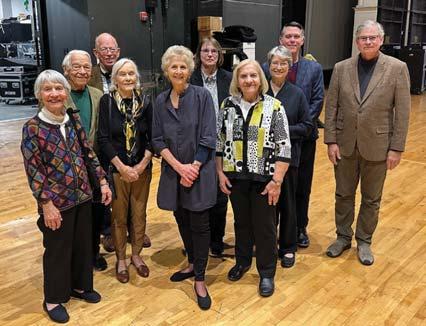
Bedouin and Randall Dennison
Dennis W. and Cathy Dern
Dr. and Mrs. Stewart B. Dunsker
Mrs. Diana T. Dwight
In Loving Memory of Diane Harrison Zent
David and Kari Ellis Fund*
Dr. and Mrs. Alberto Espay
Estate of E.J. and Jean Krabacher
Mr. and Mrs. James T. Fitzgerald
Dr. and Mrs. Harry F. Fry
L. Timothy Giglio
Jim and Jann Greenberg
Mr. and Mrs. Lawrence Hamby
Ms. Delores Hargrove-Young
William and Jo Ann Harvey
Dr. James and Mrs. Susan Herman
Ms. Sandra L. Houck §
John M. and Lynda Hoffman Jeep for their 50th anniversary
Barbara M. Johnson
Mr. and Mrs. Geoffrey Keenan
Mrs. Barbara Kellar in honor of Mr. Lorrence T. Kellar
Holly King
Mr. and Mrs. Richard Kovarsky
The Lewis and Marjorie Daniel Foundation
Adele Lippert
Mrs. Robert Lippert
Elizabeth and Brian Mannion
Mr. and Mrs. Donald Marshall
David L. Martin §
Mandare Foundation
Barbara and Kim McCracken §
Robert and Heather McGrath
Ms. Mary Lou Motl §
The Patel-Curran Family
Poul D. and JoAnne Pedersen §
David and Jenny Powell
Drs. Marcia Kaplan and Michael Privitera
Ellen Rieveschl §
Elizabeth and Karl Ronn §
Dr. E. Don Nelson and Ms. Julia Sawyer-Nelson
Dr. and Mrs. Michael Scheffler
Sandra and David Seiwert
Brent & Valerie Sheppard
Rennie and David Siebenhar
Michael and Donnalyn Smith
Mr. and Mrs. Timothy Stautberg
Brett Stover §
Christopher and Nancy Virgulak
Nancy C. Wagner and Patricia M. Wagner §
M Elizabeth Warner
Donna A. Welsch §
Mr. Donald White
Cathy S. Willis
Ronna and James Willis
Wright Brothers, Inc.
Anonymous (2)
Gifts of $3,000–$4,999
Dr. Charles Abbottsmith
Mr. Nicholas Apanius
Mr. and Mrs. Gérard Baillely
Pamela & Jeffrey Bernstein
Ms. Marianna Bettman
Glenn and Donna Boutilier
Peter and Kate Brown
Dr. Ralph P. Brown
Chris and Tom Buchert
Daniel A. Burr
Janet and Bruce Byrnes
Peter G. Courlas §
Marjorie Craft
Jim and Elizabeth Dodd
Hardy and Barbara Eshbaugh
Mrs. Amy Forte
Yan Fridman
Linda P. Fulton §
Frank and Tara Gardner
Naomi T. Gerwin
Dr. and Mrs. Ralph A. Giannella
Lesha and Samuel Greengus
John and Elizabeth Grover
Esther B. Grubbs §
Mr. and Mrs. Byron Gustin
Dr. and Mrs. Jack Hahn
Mr. and Mrs. Robert R. Heidenreich
Mr. Fred Heyse
Mr. and Mrs. Stephen Hicks
Ruth C. Holthaus
In Memory of Benjamin C. Hubbard §
Mr. and Mrs. Bradley G. Hughes
Mr. and Mrs. Michael C. Hughes
Karolyn Johnsen
Ms. Sylvia Johnson
Dr. Richard and Lisa Kagan
Dr. Robert W. Keith and Ms. Kathleen Thornton
Don and Kathy King
Lynn Keniston Klahm
Marie and Sam Kocoshis
Frank and Ann Kromer
Carol Louise Kruse
Mr. Shannon Lawson
Richard and Nancy Layding
Merlanne Louney
Luke and Nita Lovell
Larry and Mary Geren Lutz
Mr. Jonathan Martin
Glen and Lynn Mayfield
Emily Terwilliger
The Allen-McCarren Trust
Ms. Sue Miller
Mr. and Mrs. David E. Moccia §
George and Sarah Morrison III
Alice Perlman
Rev. Dr. David V. Schwab
Michael and Katherine Rademacher
Dr. and Mrs. Robert Reed
Sandra Rivers
James Rubenstein and Bernadette Unger
Carol J. Schroeder §
Mr. Rick Sherrer and Dr. Lisa D. Kelly
Sue and Glenn Showers §
Elizabeth C. B. Sittenfeld §
William A. and Jane Smith
Nancy Steman Dierckes §
Elizabeth A. Stone
Peggy and Steven Story
Mr. and Mrs. J. Dwight Thompson
Mr. and Mrs. Ronald Tinklenberg
Dr. Barbara R. Voelkel
Dr. and Mrs. Matthew and Diana Wallace
Mrs. Paul H. Ward §
Dr. and Mrs. Galen R. Warren
Jonathan and Janet Weaver
Jim and George Ann Wesner
Jo Ann Wieghaus
Steve and Katie Wolnitzek
Carol and Don Wuebbling
Irene A. Zigoris
Anonymous (4)
SYMPHONY CIRCLE
Gifts of $1,500–$2,999
Jeff and Keiko Alexander §
Lisa Allgood
Judy Aronoff and Marshall Ruchman
Ms. Laura E. Atkinson
Dr. Diane S. Babcock §
Beth and Bob Baer
Mr. and Mrs. Carroll R. Baker
Ms. Henryka Bialkowska-Nagy
David and Elaine Billmire §
Neil Bortz
Dr. Leanne Budde
Gay Bullock
Ms. Deborah Campbell §
Tom Carpenter and Lynne Lancaster
Stephen and Karen Carr
Dr. Alan Chambers
James Civille
Carol C. Cole §
Mr. and Mrs. Philip K. Cone
Randy K. and Nancy R. Cooper
Charles and Kimberly Curran §
Mark Dauner and Geraldine Wu
Robert B. Dick, Ph.D.
Tom and Leslie Ducey
David and Linda Dugan
Mr. and Mrs. John G. Earls §
Barry and Judy Evans §
Dr. and Mrs. William J. Faulkner
Ms. Barbara A. Feldmann


Mr. Robert Ferrell
Philip Ficks
Anne and Alan Fleischer
Mrs. Charles Fleischmann
Richard Freshwater §
Carol S. Friel
Dudley Fulton
Anne E. Mulder and Rebecca M. Gibbs
Louis and Deborah Ginocchio
Donn Goebel and Cathy McLeod
Dr. and Mrs. Glenn S. Gollobin
Phyllis Myers and Danny Gray
Bill and Christy Griesser §
Mary and Phil Hagner
Catherine K. Hart
Mrs. Jackie Havenstein
Mrs. Betty H. Heldman §
Mrs. Carol H. Huether
Mr. and Mrs. Paul Isaacs §
Heidi Jark and Steve Kenat
Andrew MacAoidh & Linda Busken Jergens §
The Marvin Jester Family
Christopher and Felecia Kanney
Holly H. Keeler
Mr. and Mrs. Woodrow Keown, Jr.
Bill and Penny Kincaid
Jack & Sharon Knapp
In Memory of Jeff Knoop
Pat and Randy Krumm §
Everett and Barbara Landen
Evelyn and Fred Lang
Charles and Jean Lauterbach
Mary Mc and Kevin Lawson
Mrs. Jean E. Lemon §
Dr. Carol P. Leslie
Andi Levenson Young and Scott Young
Mr. Peter F. Levin §
Mr. and Mrs. Lance A. Lewis
Mr. and Mrs. Clement H. Luken, Jr.
Ross Charitable Trust
Mr. Gerron McKnight
Ms. Nancy Menne
John and Roberta Michelman
Mr. and Mrs. Christopher Newcomer
Susan E. Noelcke
Nan L. Oscherwitz
Mark and Kim Pomeroy
Dr. Aik Khai Pung
In Memory of Daniel H. Reigle
Stephen and Betty Robinson
Laurie and Dan Roche
Marianne Rowe
Mr. & Mrs. Peter A. Schmid
Stanley and Jane Shulman
Ms. Martha Slager
Susan and David Smith
Mark M. Smith
(In memory of Terri C. Smith)
Stephanie A. Smith
Stephen and Lyle Smith
Albert and Liza Smitherman
Marian P. Stapleton
Bill and Lee Steenken §
Susan M. and Joseph Eric Stevens
Mrs. Donald C. Stouffer
Mr. and Mrs. Richard Stradling, Jr.
Mr. Mark Stroud
Rich and Nancy Tereba
Susan and John Tew
In Memory of Mr. William T. Bahlman, Jr.
Michael L. Walton, Esq
Ted and Mary Ann Weiss
Rev. Anne Warrington Wilson
Judy Wilson
Rebecca Seeman and David Wood
David and Sharon Youmans
Anonymous (5)
Gifts of $500–$1,499
Christine O. Adams
Dr. Mary Albers
Mr. Thomas Alloy & Dr. Evaline Alessandrini
Patricia A. Anderson
Paul and Dolores Anderson §
Dr. Victor and Dolores Angel
Nancy J. Apfel
Lynne & Keith Apple, Honoring our Family
James Babb
Mrs. Mary M. Baer
Mrs. Gail Bain
Jerry and Martha Bain
Jack and Diane Baldwin
Scott Balmos
Glenda Bates
Drs. Carol and Leslie Benet
Fred Berger
Barbara and Milton Berner
Dr. David and Cheryl Bernstein
Glenda and Malcolm Bernstein
Milt and Berdie Blersch
Randal and Peter Bloch
Margaret Blomer
Dr. and Mrs. Jeffrey Bloomer
Michael and Pamela Boehm
Ron and Betty Bollinger
Clay and Emily Bond
Dr. and Mrs. Kevin Bove
David & Madonna Bowman
William & Mary Bramlage
Briggs Creative Services, LLC
Joan Broersma
Kathryn L. Brokaw
Harold and Gwen Brown
Jacklyn and Gary Bryson
Bob and Angela Buechner
Angie & Gary Butterbaugh
Jack and Marti Butz
Drs. Alan B. Cady and Anne K. Nestor
Catherine Calko
Joseph P. Cardone
Mr. and Mrs. Thomas Carothers
Mike and Shirley Chaney
Gordon Christenson
Dee and Frank Cianciolo Fund*
Mr. and Mrs. John Clapp
Bob Clary
James Clasper and Cheryl Albrecht
Fred W. Colucci
Marilyn Cones
Janet Conway
Andrea D. Costa, Esq. §
Robin Cotton and Cindi Fitton
Dennis and Pat Coyne
Martha Crafts
Tim and Katie Crowley
Susan and John Cummings
Adrian and Takiyah Cunningham
Jacqueline Cutshall
Loren and Polly DeFilippo
Stephen and Cynthia DeHoff
Nancy and Steve Donovan
Douglas & Kathy Dougherty
Meredith and Chuck Downton
Judy Doyle in Memory of James Johnson
Tom and Dale Due
Mrs. Shirley Duff
Mr. Corwin R. Dunn
Edgar J. and Elaine J. Mack Fund
Dale & Kathy Elifrits
Ron Ellis
Ann A. Ellison
Sally Eversole
Mr. Douglas Fagaly
Ms. Kate Farinacci
Mrs. Michelle Finch
Ilya Finkelshteyn and Evin Blomberg
Dr. and Mrs. Thomas Fischer
William and Carol Fisher
Mr. and Mrs. James Foreman
Janice and Dr. Tom Forte
Mr. and Ms. Bernard Foster
Dr. Charles E. Frank and Ms. Jan Goldstein
Harriet and Bill Freedman
Mr. and Mrs. John Freeman
Mr. Gregrick A. Frey
Mr. and Mrs. Joseph Fricke
Mr. and Mrs. James Fryman
Marjorie Fryxell
Mark S. Gay
Drs. Michael and Janelle J. Gelfand
Kathleen Gibboney
Mr. and Mrs. Donald R. Gilb
Dr. Jerome Glinka and Ms. Kathleen Blieszner
Dr. and Mrs. Charles J. Glueck
Dan Goetz
Mr. and Mrs. Jim Goldschmidt
Ms. Arlene Golembiewski
Mr. William J. Gracie, Jr.
Anita J. and Thomas G. Grau
Robert and Cynthia Gray
Carl and Joyce Greber
Mary Grooms
Nina Gross
Kurt and Joanne Grossman
Janet C. Haartz and Kenneth V. Smith
Ham and Ellie Hamilton
Walter and Karen Hand
Roberta Handwerger, in memory of Dr. Stuart Handwerger
Mr. and Mrs. William Hardie
James and Sally Harper
Dr. Donald and Laura Harrison
Mariana Belvedere and Samer Hasan
Dr. Deborah Hauger
Mr. John A. Headley
Amy and Dennis Healy
Janet Heiden
Angie Heiman
Howard D. and Mary W. Helms
Donald and Susan Henson
Mr. Jeff Herbert
Herman & Margaret Wasserman Music Fund*
Michelle and Don Hershey
Janet & Craig Higgins
Mr. and Mrs. William A. Hillebrand
Susan and Jon Hoffheimer
Timothy and Constance Holmen
Richard and Marcia Holmes
Ben Houck
Deanna and Henry Huber
Melissa Huber
Karen and David Huelsman
Dr. Edward & Sarah Hughes
Nada Christine Huron
Mr. Michael Ilyinsky
Judith Imhoff
Caroline Isaacs
Ms. Idit Isaacsohn
Dr. Maralyn M. Itzkowitz
Mrs. Charles H. Jackson, Jr.
Ruth and Frederick Joffe
Ms. Anna R. Johnson
Mrs. Marilyn P. Johnston
Mr. Andrew Jones
Elizabeth A. Jones
Scott and Patricia Joseph
Jay and Shirley Joyce §
Mr. and Mrs. Robert Judd §
Rabbi Kenneth Kanter and Dr. Toni Kanter
Marilyn and Joseph Katz
Dr. James Kaya and Debra Grauel
Dr. and Mrs. Richard Kerstine
Rachel Kirley and Joseph Jaquette §
Mr. and Mrs. Dave Kitzmiller
Paul and Carita Kollman
Carol and Scott Kosarko §
Mr. and Mrs. Robert H. Kraimer
Ken and Sue Kramer
Kathleen B. and Michael C. Krug Fund*
Mark and Elisabeth Kuhlman
Maggie and Eric Kuhn
Mrs. John H. Kuhn §
Janice Kummer
Pinky Laffoon
Patricia Lambeck §
Asher and Kelsey Lanier
Ms. Sally L. Larson
Janet R. Schultz
Mrs. Julie Laskey
Joe Law and Phil Wise
Ms. Presley Lindemann
Mitchel and Carol Livingston
Mrs. Marianne Locke
JP and Footie Lund
David and Katja Lundgren
Timothy and Jill Lynch
Edmund D. Lyon
Mrs. Mary Reed Lyon
Marshall and Nancy Macks
Jenea Malarik
Barry and Ann Malinowski
Ms. Cheryl Manning
Ms. Wendy Marshall
Mr. and Mrs. Dean Matz
In memory of Bettie Rehfeld
Ms. Elizabeth McCracken
Dr. Janet P. McDaniel
Tim and Trish McDonald
Mark McKillip and Amira Beer
Stephanie & Arthur McMahon
Stephanie McNeill
Charles and JoAnn Mead
Michael V. Middleton
Mr. Bradley Miller
Terence G. Milligan
Sonia R. Milrod
Leslie and Michael Minutolo
Mr. Steven Monder
Eileen W. and James R. Moon
Mr. and Mrs. Fred Moore
Regeana and Al Morgan
Janet Mott
Dr. and Mrs. M. J. Mueller
Mr. Scott Muhlhauser
Kevin and Lane Muth
Alan Flaherty and Patti Myers § Hochwalt Naumann Fund
Amy Paul and Jerry Newfarmer
Cheryl and Roy Newman
Ms. Jane Nocito
Jane Oberschmidt §
Gary Oppito
Mr. Gerardo Orta
Ms. Sylvia Osterday
Ms. Eileen Ostrowski
Anthony Paggett
John A. Pape
Rozelia Park and Christopher Dendy
Leslie D. Payne
Ms. Catherine J. Pearce
Carol and Jim Pearce
Barbara Persons
Mr. and Mrs. Paul Piazza
Ann and Marty Pinales
Mr. James Quaintance II and Mrs. Catherine Hann
Jerry Rape
James W. Rauth §
Mrs. Genie Redman
Allan Reeves
Kenneth and Danielle Revelson
Becky and Ted Richards
Stephanie Richardson
Drs. Christopher and Blanca Riemann
Mr. David Robertson
Mr. Brian Robson
Dr. Anna Roetker
Ms. Jeanne C. Rolfes
Dr. and Mrs. Gary Roselle
Amy and John Rosenberg
Mr. and Mrs. G. Roger Ross
Dr. Deborah K. Rufner
Mr. Tom Samuels
Dr. Richard S. Sarason and Ms. Anne S. Arenstein
Cindy Scheets
Ms. Carol Schleker
Mr. and Mrs. Patrick Schleker
Dr. and Mrs. Michael Schmerler
Alice and Charles Schneider
George Palmer Schober
Tim and Jeannie Schoonover
Glenda C. Schorr Fund*
Dr. Joseph Segal and Ms. Debbie Friedman
Elaine Semancik
Mick and Nancy Shaughnessy
The Shepherd Chemical Company
Alfred and Carol Shikany
Mr. and Mrs. A. C. Shoop, Jr.
Jacqueline M. Mack and Dr. Edward B. Silberstein
Ms. Joycee Simendinger
Doug and Laura Skidmore
Nancy McGaughey and Sally Skillman
Alice E. Skirtz
Jennifer S. Smith
Phillip and Karen Sparkes
Mrs. John A. Spiess
Mary Stagaman and Ron Kull
Dr. Jeffrey Stambough
Dana A. Stang
Mary M. Stein
Christopher and Meghan Stevens
Mr. and Mrs. Richard Stevie
Stephanie and Joseph Stitt
Nancy and Gary Strassel
Ms. Susan R. Strick
Mr. George Stricker, Jr.
Tom and Keri Tami
Dr. Alan and Shelley Tarshis
Maureen Taylor
Mr. Fred Tegarden
Carlos and Roberta Teran
Linda and Nate Tetrick
Dale and Yana Thatcher
Marcia and Bob Togneri
James and Susan Troutt
Dr. Nicolette van der Klaauw
Mr. D. R. Van Lokeren
Dr. Judith Vermillion
Jim and Rachel Votaw §
Mrs. Barbara J. Wagner
Ms. Barbara Wagner
Mr. and Mrs. James L. Wainscott
Jane A. Walker
Rosemary Waller
Sarella Walton
Ping Wang
Claude and Camilla Warren
Mrs. Louise Watts
Wendell & Mary Webster
Jeff & Arlene Werts
Janice T. Wieland
Mr. Dean Windgassen and Ms. Susan Stanton Windgassen
Craig and Barbara Wolf
Donald and Karen Wolnik
Judith R. Workman
Linda Wulff
Mr. and Mrs. Robert Wylly III
Mr. John M. Yacher
Edith and Leo Yakutis
Drs. Marissa S. Liang and Y. Jeffrey Yang
Judy and Martin Young
Mr. David Youngblood and Ms. Ellen Rosenman
Janice Zahn
Cheryl Zalzal
Mr. and Mrs. John Zeller
Moritz and Barbara Ziegler
Mr. and Mrs. Robert L. Zierolf
Mr. Richard K. Zinicola and Ms. Linda R. Holthaus
David and Cynthia Zink
Daniel & Susmita Zuck
Mrs. Beth Zwergel
Anonymous (27)
List as of October 14, 2025
GIFTS IN-KIND
Graeter’s Ice Cream
Hispanic Chamber Cincinnati USA
Southern Grace Eats
The T Shirt Co.
WOW Windowboxes
Carlos Zavala
List as of October 17, 2025
* Denotes a fund of The Greater Cincinnati Foundation.
§ Denotes members of The Thomas Schippers Legacy Society. Individuals who have made a planned gift to the Cincinnati Symphony Orchestra and Pops Orchestra are eligible for membership in the Society. For more information, please contact Kate Farinacci at 513.744.3202.
POPS Disney in Concert: Toy Story | JAN 3 & 4
Ms. Liza Bronner Friends & Family
CSO Trifonov Plays Beethoven: JAN 10 & 11
Johnson Investment Counsel
CSO American Voices: JAN 16 & 17
Barrington of Oakley
Christian Village at Mason
Maple Knoll Village
Otterbein Retirement Community
Twenhofel Middle School
Twin Lakes at Montgomery
White Oak Middle School
Mayerson Jewish Community Center
The Kenwood
Seasons Retirement Community
The Knolls of Oxford
ArtsWave
as of November 20, 2025
POPS Dolly Parton’s Threads | JAN 23–25
Anderson Senior Center
Bayley at Green Township
Berkeley Square
Maple Knoll Village
Sarra Polisini Friends & Family
Seasons Retirement Community
CSO Mahler Symphony No. 4: FEB 6 & 7
Barrington Of Oakley
Christian Village at Mason
Maple Knoll Village
Otterbein Retirement Community
Twin Lakes at Montgomery
Calvary Christian School
The Kenwood
Seasons Retirement Community
The Knolls of Oxford
Lollipops Family Concert
Peter & the Wolf | FEB 7
Mr. and Mrs. Jim Rogers Friends & Family
The Kincaid Family
• Groups of 10+ save 20% on most concerts and seniors and students save even more!
• Curate your own event with a private reception, guided tour or meet and greet — the possibilities are endless.
Contact CSO Group Sales: 513.744.3252 or wmarshall@cincinnatisymphony.org cincinnatisymphony.org/groups
Mr. & Mrs. James R. Adams
Jeff & Keiko Alexander
Mrs. Robert H. Allen
Dr. Toni Alterman
Paul R. Anderson
Carole J. Arend
Donald C. Auberger, Jr.
Thomas Schippers was Music Director from 1970 to 1977. He left not only wonderful musical memories, but also a financial legacy with a personal bequest to the Orchestra. The Thomas Schippers Legacy Society recognizes those who contribute to the Orchestra with a planned gift. We thank these members for their foresight and generosity. For more information on leaving your own legacy, contact Kate Farinacci at 513.744.3202.
The B & C Family Legacy Fund
Dr. Diane Schwemlein Babcock
Henrietta Barlag*
Peggy Barrett*
Jane* & Ed Bavaria
David & Elaine Billmire
Walter Blair
Dr. John & Suzanne Bossert
Dr. Mollie H. Bowers-Hollon
Ronald Bozicevich
Thomas A. Braun, III
Joseph Brinkmeyer
Mr. & Mrs. Frederick Bryan, III
Harold & Dorothy Byers
Deborah Campbell & Eunice M. Wolf
Catharine W. Chapman
Michael L. Cioffi & Rachael Rowe
Mrs. Jackson L. Clagett III
Lois & Phil* Cohen
Leland M.* & Carol C. Cole
Sheila & Christopher Cole
Jack & Janice Cook
Mr. & Mrs. Charles Cordes
Ms. Andrea Costa
Peter G. Courlas & Nick Tsimaras*
Mr. & Mrs. Charles E. Curran III
Amy & Scott Darrah, Meredith & Will Darrah, children
Caroline H. Davidson
Harrison R.T. Davis
Ms. Kelly M. Dehan
Amy & Trey Devey
Robert W. Dorsey
Jon & Susan Doucleff
Ms. Judith A. Doyle
Mr. & Mrs. John Earls
Mr. & Mrs. Barry C. Evans
Linda & Harry Fath
Alan Flaherty
Ashley & Barbara Ford
Guy & Marilyn Frederick
Rich Freshwater & Family
Mr. Nicholas L. Fry
Linda P. Fulton
H. Jane Gavin
Edward J. & Barbara C.* Givens
Kenneth A. Goode
Clifford J. Goosmann &
Andrea M. Wilson
Mrs. Madeleine H. Gordon
J. Frederick & Cynthia Gossman
Kathy Grote
Esther B. Grubbs, Marci Bein, Mindi Hamby
William Hackman
Vincent C. Hand & Ann E. Hagerman
Tom & Jan* Hardy
William L. Harmon
Mary J. Healy
Frank G. Heitker
Betty & John* Heldman
Karlee L. Hilliard
Michael H. Hirsch
Mr. & Mrs. Joseph W. Hirschhorn
Daniel J. Hoffheimer
Kenneth L. Holford
George R. Hood
Mr. & Mrs. Terence L. Horan
Sandra L. Houck
Mrs. Benjamin C. Hubbard
Susan & Tom Hughes
Dr. Lesley Gilbertson & Dr. William Hurford
Mr. & Mrs. Paul Isaacs
Julia M. F. B. Jackson
Michael & Kathleen Janson
Andrew MacAoidh Jergens
Jean C. Jett
Jay & Shirley Joyce
Anne C. & Robert P. Judd
Margaret H. Jung
Mace C. Justice
Dr. & Mrs.* Steven Katkin
Rachel Kirley & Joseph Jaquette
Jay & Shirley Joyce
Carolyn Koehl
Marvin Kolodzik & Linda Gallaher
Carol & Scott Kosarko
Marilyn & Michael Kremzar
Randolph & Patricia Krumm
Theresa M. Kuhn
Warren & Patricia Lambeck
“As a little boy I loved the music so much that she arranged for me to start violin lessons when I was 5.” In time, that led to joining a middle school orchestra, something Shen says is “very hard to do in China during my time, unless you’re in the conservatory. It changed my life.”
With the help of his teacher in Beijing, Shen came to the U.S. for higher education, first to the University of Delaware, then to the University of Maryland and finally to the Cleveland Institute of
Peter E. Landgren & Judith Schonbach Landgren
Susan J. Lauf
Owen & Cici Lee
Steve Lee
Mrs. Jean E. Lemon
Mr. Peter F. Levin
Janice W.* & Gary R. Lubin
Mr.* & Mrs. Ronald Lyons
Margot Marples
David L. Martin
Allen* & Judy Martin
David Mason
Barbara & Kim McCracken
Laura Kimble McLellan
Dr. Stanley R. Milstein
Mrs. William K. Minor
Mr. & Mrs. D. E. Moccia
Mary Lou Motl
Kristin & Stephen Mullin
Christopher & Susan Muth
Patti Myers
Ms. Phyllis A. Myers
Susan & Kenneth Newmark
Dr. & Mrs. Theodore Nicholas
Jane Oberschmidt*
Marja-Liisa Ogden
Julie & Dick* Okenfuss
Dr. & Mrs. Richard E. Park, MD
Charlie & Tara Pease
Poul D. & JoAnne Pedersen
Sandy & Larry* Pike
Mrs. Harold F. Poe
Anne M. Pohl
Irene & Daniel Randolph
James W. Rauth
Barbara S. Reckseit
Mrs. Angela M. Reed
Melody Sawyer Richardson
Ellen Rieveschl
Elizabeth & Karl Ronn
Moe & Jack Rouse
Ann & Harry Santen
Rosemary & Mark Schlachter
Carol J. Schroeder
Mrs. William R. Seaman
Dr. Brian Sebastian
Mrs. Robert B. Shott
Sue & Glenn Showers
Irwin & Melinda Simon
Betsy & Paul* Sittenfeld
Sarah Garrison Skidmore*
Denis & Lisa Skowronski
Adrienne A. Smith
David & Sonja* Snyder
Marie Speziale
Mr. & Mrs. Christopher L. Sprenkle
Barry & Sharlyn Stare
Bill & Lee Steenken
Tom* & Dee Stegman
Barry Steinberg
Nancy M. Steman
John & Helen Stevenson
Mary & Bob Stewart
Brett Stover
Dr. Robert & Jill Strub
Patricia M. Strunk
Ralph & Brenda* Taylor
Conrad F. Thiede
Minda F. Thompson
Carrie & Peter Throm
Dr. & Mrs. Thomas Todd
Nydia Tranter
Dick & Jane Tuten
Thomas Vanden Eynden* & Judith Beiting
Mr. & Mrs. Robert Varley*
Mr. & Mrs. James K. Votaw
Mr. & Mrs.* Randolph L. Wadsworth Jr.
Nancy C. Wagner
Patricia M. Wagner
Mr. & Mrs. Paul Ward
Jo Anne & Fred Warren
Mr. Scott Weiss & Dr. Charla Weiss
Donna A. Welsch
Anne M. Werner
Gary & Diane West
Charles A. Wilkinson
Ms. Diana Willen
Susan Stanton Windgassen
Mrs. Joan R. Wood
Alison & Jim Zimmerman
* Deceased
New Schippers members are in bold
Music, where he received a professional studies diploma in conducting.
“You have to be obsessed to succeed as a conductor, I think,” he says. “The career of a conductor is always on the move. I am inspired by Cristi and his suitcase. But for now, it is time for me to learn all about Cincinnati. I find it to be a charming city. The art museum, the hills, the library — I just got my library card, so I am ready to fill my Kindle. I am excited to explore.”

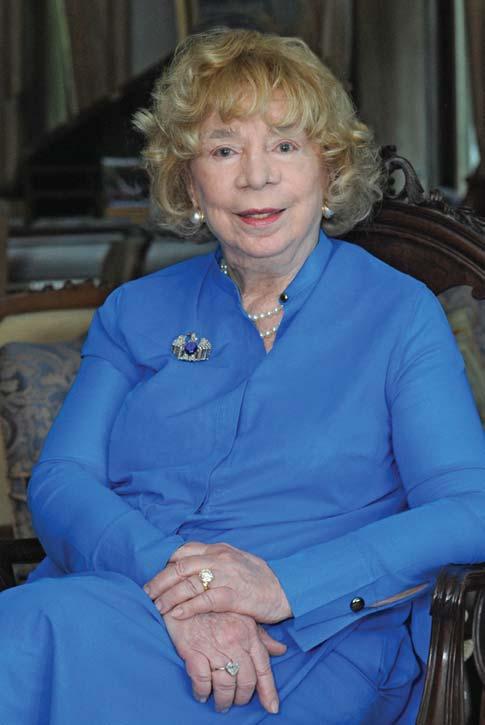
Mr. Gordon Allen
Theresa M. Anderson
Nancy J. Apfel
Mrs. Marvin Aronoff
Mr. and Mrs. Franchot Ballinger
Michael A. Battersby
Mr. and Mrs. Herbert J. Beigel
Glenda and Malcolm Bernstein
Hon. Marianna Brown Bettman
Mr. and Mrs. Peter M. Bloch
Bill and Mary Bonansinga
Eleanor A. Botts
Dr. and Mrs. William Bramlage
Mr. Don H. Brown
Mr. Thomas H. Brown
Mr. and Mrs. R. Richard Broxon
William Bryan
Chris and Tom Buchert
We thank every subscriber whose investment in the Cincinnati Symphony Orchestra and Cincinnati Pops makes these concerts possible. We would not be on stage without you! Thank you especially to the following subscribers whose loyalty and support has extended 25–50 years or more.*
List as of November 12, 2025
*If we have inadvertently left your name off this subscribers-only list or if we need to make corrections to your listed name, please call us at 513.381.3800 or email us at hello@cincinnatisymphony.org.
We are also grateful to those who have been loyal subscribers for 10–24 years, whose names we are unable to include here due to space limitations.
Mrs. Carol A. Grasha and Mr. Christopher B. Knoop
Paul and Carita Kollman
Mr. and Mrs. Ronald Krieg
Mr. and Mrs. W. C. Kuhnell
Mr. and Mrs. Robert F. LaChance
Susan Laffoon
The Lazarus Family
Mr. Gus Lewin
Mrs. Linda Linker
Judy and Donald Lomax
Mr. Phillip C. Long
Dr. and Mrs. Joseph T. Luttmer
Peter and Angela Madden
Mr. Carl G. Marquette, Jr.
Tom and Nancy Matthew
Mr. Howard Mayers
Barbara and Kim McCracken
Mr. and Mrs. John S. McCullough
Ted and Barb Mechley
Mrs. G. Franklin Miller
Ms. Lynn Miller
Mr. and Mrs. David A. Millett
David and Diane Moccia
Mr. and Mrs. David W. Motch
Donald L. and Kathleen Field Burns
Jim and Nina Campbell
Stephen and Karen Carr
Mr. Timothy Clarke
Carol C. Cole
Mr. David S. Collins and Ms. Sandra M. Gans
Dr. C. J. and Carolyn Condorodis
Sally and Rick Coomes
Robin T. Cotton and Cynthia Fitton
Peter G. Courlas
Nancy Creaghead
Lynne Curtiss
Mrs. Lilian Estevez. de Pagani
Sally H. Dessauer
Mrs. Mel B. Dreyfoos
Mr. and Mrs. C. Thomas Dupuis
Mr. John Eddingfield
Ms. Cathy C. Eubanks
Mr. and Mrs. James T. Fitzgerald
Dr. David Flaspohler and Dr. Cynthia Crown
Mr. and Mrs. Ashley L. Ford
Mikki and Walter Frank
Harriet A. and William M. Freedman
Mrs. Nancy Gard
Mr. and Mrs. James K. Gehring
Dr. and Mrs. Charles J. Glueck
Steven and Shelley Goldstein
Mr. David Greulich
Mary Grooms
Esther Grubbs and Karen Dennis
Dr. Janet C. Haartz
William P. Hackman
Dr. and Mrs. Edward Hake
Ham and Ellie Hamilton
Mrs. Joan D. Hauser
Mr. and Mrs. Stanley Hedeen
Mr. and Mrs. Wayne Hinaman
Mr. Michael H. Hirsch
Mr. and Mrs. Joseph W. Hirschhorn
Daniel J. Hoffheimer
Mrs. Robert S. Holzman
Mrs. Benjamin C. Hubbard
Charles and Doris Jackson
Rev. & Mrs. Andrew MacAoidh Jergens
Ruth and Frederick Joffe
Dr. and Mrs. Earl Kisker
Mrs. Mary Lou Mueller
Mr. and Mrs. Raymond D. Neusch
Mr. and Mrs. John Niehaus
Dr. Cora Ogle
Alice Perlman
Mr. and Mrs. Paul Piazza
Anne M. Pohl
Mrs. Stewart Proctor
Mr. and Mrs. Joseph H. Rohling
James Rubenstein and Bernadette Unger
Mr. and Mrs. Eric Schaumloffel
Lee and Martha Schimberg
Mr. and Mrs. Frederick R. Schneider
Mrs. William Schwerin
Dr. and Mrs. Rees W. Sheppard
Alfred and Carol Shikany
Sue and Glenn Showers
Jacqueline M. Mack and Dr. Edward B. Silberstein
John and Janet Simpkinson
Mr. and Mrs. Kenneth Skirtz
Mr. and Mrs. David Lee Smith
Mr. and Mrs. John Spiess
Mrs. Henry R. Stefanik
Dee Stegman
Dr. Jean and Mrs. Anne Steichen
Mr. and Mrs. Albert C. Dierckes, Jr.
Mr. and Mrs. Laurence G. Stillpass
Mrs. Lowella M. Stoerker
Elizabeth A. Stone
Mrs. Joan C. Stouffer
Dr. & Mrs. Theodore W. Striker
Dr. and Mrs. Suranyi
Mrs. George Tassian
Susan and John Tew
Dorothy and Lowell Orr, Jr.
Mr. and Mrs. J. Dwight Thompson
Dr. and Mrs. Samuel P. Todd, Jr.
Mr. Robert Lindner, Sr.
Dr. Ilse M. van der Bent
Mr. Randolph L. Wadsworth Jr.
Jo Ann Ward
Dr. and Mrs. Galen R. Warren
Mr. and Mrs. Richard and Kathleen Wayman
Mrs. William N. Weed
Dr. and Mrs. Daniel L. Weinstein
Shirley Gershuny-Korelitz
Dr. and Mrs. James B. Willis
Louise Wolf
Mr. and Mrs. Charles Wood
William and Ellen Wyler
John and Jean Zoller
Peter Aamodt
Terri and Tom Abare
Jacqulynn Abdella and Shane Brown
Robert Abrahams
Hiro and Hiroko Adachi
Brian Adams and Jilda Vargus-Adams
Mrs. Christine O. Adams
Mr. David Adams
Mr. and Mrs. Greg Adams
Mrs. Patricia Adams
Richard and Mary Aft
Gordon and Dorothy Air
Dr. and Mrs. Khosrow Alamin
David Alden
James and Christina Allen
Ken and Lois Allen
Lisa Allgood
Ruth Alpers
Francisco Alvarez-Leefmans
Bob and Karen Anderson
Brian Anderson
Mr. and Mrs. John G. Anderson
Ms. Lynn R. Anderson
R. Bruce and Patricia A. Anderson
Paul and Dolores Anderson
Tamara and Peter Anderson
Ms. Christine M. Andrew
Jean Ann Ankeney
Peter and Tracey Annable
Mr. and Mrs. John B. Anthony
Mr. Jimmy E. Antia and Ms. Pheruza P. Tarapore
Joan Arnold
Thomas and Sharon Arntsen
Kelyn and Anil Arora
Brent and Kim Arter
Paule Asch
Andrew Asimus and Carolyn Royalty
Mr. Thomas P. Atkins
Ms. Laura E. Atkinson
Mr. and Mrs. Philippe Audax
Mrs. Connie Ault
Steve Averdick
Patricia Baas
Diane Babcock
Tom and Peg Bach
Mrs. Mary M. Baer
Beth and Bob Baer
Todd and Ann Bailey
Gerard and Susan Baillely
Mr. Joseph Baker
Mr. and Mrs. Jack W. Baldwin
Mr. and Mrs. Michael E. Ball
Robert and Janet Banks
Evelyn Banzhaf and Larry McCord
Mr. and Mrs. Roger Barbe
Mr. and Mrs. Dale Bardes
Mr. and Mrs. Chris Barnes
Mr. Jeff Barnes
Robert and Frances Barnhorn
Ms. Sallie Barringer
Thomas E and Claudia Barton
Nancy Bassarab
Mrs. Polly M. Bassett
Michael and Amy Battoclette
Ms. Glenda Bauer
James and Valerie Baxter
Theresa Beck
Mr. and Mrs. Michael C. Becker
Kenneth Beckholt
Daniel and Terri Beebe
Mr. and Mrs. Wayne Beimesch
Michael and Patricia Bell
Dr. and Mrs Thomas E. Bell
David Bella
Ms. Peggy Bell-Lohr
Mr. John A. Belperio
Joyce Benge
Anita Benning-Trennepohl
Ms. Jean M. Bens
Michael Bergan and Tiffany Hanisch
Andrew and Linda Berger
Mr. Bill Berger and Ms. Janet Landen
Allen Bernard
Mr. and Mrs. Hal Bernstein
Jeffrey Berry and Agnes Nicholas
Lloyd and Norah Bertschy
Mr. and Mrs. John D. Bever
Lisa Bezold
Henryka Nagy
Sanja Bias
Mr. and Mrs. David R. Biddle
Mr. and Mrs. Steven A. Biedenbach
Mr. and Mrs. Douglas Bierer
Mr. and Mrs. John C. Bierman
James and Rebecca Bilbo
Louis D. Bilionis and Ann Hubbard
David and Elaine Billmire
Ms. Sharon A. Kerns and Mr. Mike Birck
Mr. and Mrs. Charles Birkenhauer
Glen W. and Linda C. Bischof
Mr. and Mrs. Thomas B. Bishop
Kenneth and Cathy Blakeley
Gifford Blaylock and Anne Reed
Dr. Stuart Blersch
Ann Blocksom
Dr. Jeffrey B. Bloomer
Ms. Mary Lou Blount
Mr. and Mrs. Donald R. Blum
Ms. Beverly Bodin
Connie Boehner
Dr. Christiane Boehr
Ms. Traci L. Boeing
Ms. Debbie Bogenschutz and Mr. Harold Tucker
Robert L. and Debbie Bogenschutz
Mr. and Mrs. Richard L. Bohne
Mr. and Mrs. Wallace Bolduc
Ron and Betty Bollinger
Denise Bond
Mr. and Mrs. Laurence Bonhaus
Mr. and Mrs. Robert E. Borgmann
Mr. Neil K Bortz
Mr. and Mrs. Gaetano T. Bosco
Andrew Botschner and Mindy Muenich
Glenn and Donna Boutilier
Dr. and Mrs. Kevin E. Bove
Bruce Bowdon & Robin Bratt
Ann Boylan
Christian and Michelle Boyles
Mr. and Mrs. George R. Bradley III
Ms. Linda F. Brainard
Thomas A. Braun, III
David Bray
Ms. Mary Breighner
Mr. and Mrs. Mark Breitenstein
Mr. and Mrs. Stephen D. Bretz
Mr. and Ms. Tony Brewer
Virginia Brezinski
Ms. Elizabeth Brice
Mr. and Mrs. Mark O. Bricker
Doug and Melinda Briggs
Mrs. Kathy J. Bright
Arlene Brill
Kimberly Brindley
Melinda Brisker
Ms. Maria Britto
Lisa Broaddus
Mary Brodbeck
Dr. and Mrs. Robert J. Broersma
Ms. Kathryn L. Brokaw
Lynn and Michelle Brothers
Mr. and Mrs. Jeffrey Brown
Marian Brown
Ms. Marinell Brown
Mr. and Mrs. Bart A. Brown , Jr.
Dr. and Mrs. Ralph P. Brown
Sheila Brown
Shirley Brown
Mr. and Mrs. Timothy Brown
Thomas and Mary Broxterman
Paul and Mary Ellen Bruening
Mr. and Mrs. Larry J. Brueshaber
Douglas and Dawn Bruestle
Matthew Bruestle
Suzanne Brungs
Mr. and Mrs. William T. Brungs
Mrs. Hermine Brunner
Ms. Rachelle Bruno and Mr. Stephen Bondurant
Mr. and Mrs. Frederick E. Bryan, III
Pamela Buck
Gregory D Buckley and Susan Berry-Buckley
William Budde
Mr. and Mrs. Otto M. Budig, Jr.
Robert and Angela Buechner
Robert and Sandra Buhrlage
Mr. and Mrs. Richard E. Wagner , Jr.
Mr. and Mrs. Jeff Bullock
Mrs. Faye P. Nobis
Mr. James Burger
Susan Buring
Mr. and Mrs. William R. Burleigh
Mr. and Mrs. Fred Burnett
Wendy Burnette
David and Jenny Burns
Mr. and Mrs. Robert W. Burns
Daniel Burr
Kerry and Bonnie Burte
Mr. and Ms. John Busam
Mr. and Mrs. John B. Busche
Mrs. Bruce L. Byrnes
Mr. James Cadigan
Mr. Alan B. Cady
Mr. and Mrs. Cary R. Cain
Jon Calderas and Corinne Lehmann
Susan Callan
Bernie Calonge
Deborah Campbell
Victor Canfield
Ms. Susan E. Cannon
Mr. and Mrs. Vincent N. Capasso
Mr. and Mrs. Peter E. Carels
Anna Carey
Mr. R. P. Carey
Mr. William Carey
Shirley Carlisle
Linda Carlson
Dr. and Mrs. Gary G. Carothers
Thomas and Annette Carothers
Thomas Carpenter and Lynne Lancaster
Chris and Kathleen Carr
John and Kathy Carrithers
Mr. and Mrs. Robert E. Carroll
Susan Carson
Mr. and Mrs. Gerald Carter
Robert and Lynne Carter
Tricia Carter
Mrs. Maria I. Carver
Michael and Nancy Carver
Ms. Sandra Case
Michael and Ellen Cashman
Mr. and Mrs. Peter L. Cassady
Cindy Cassell and David Uible
Mary Catalanotto
Jack and Terri Catanzaro
Mr. and Mrs. Frank D. Chaiken
Ms. Rosalind Chaiken
Richard and Helen Challis
Michael and Shirley Chaney
Mr. and Mrs. Robert Chavez
Mr. Eric J. Cheney
Stephen and Denise Chenoweth
Ms. Karen C. Cheyne
Mr. David P. Cho
Mr. Edmund M. Choi
Christopher Church
Ms. Karen T. Cianciolo
Cincinnati Financial Corporation
Mr. Michael L. Cioffi
Kate Clarisey
Barry and Martha Clark
Charles Clark
James Clasper and Cheryl Albrecht
Mrs. and Mr. Ruth Claypoole
Janet Cleary
S. DeAnne Cleghorn
Ms. Susan Cline
Mr. and Mrs. James Coates
Mr. and Mrs. Michael Coffey
Dr. and Mrs. John S. Cohen
Mel Cohen
Anthony and Eric Cole
Sheila and Christopher Cole
Marc & Julie Colegrove
Mrs. Lucille F. Collins
Ms. Ricki L. Collins
William J. Hahn
Mr. F. W. Colucci
Mrs. Thomas Cones
Mrs. Jacqueline L. Conner
David and Jane Conzett
Joan Cook
Randal Cooper
Mr. and Mrs. Randy K. Cooper II
Mr. and Mrs. Thomas M. Copanas
Bradley Corey
John Corson
James and Christine Cory
Mr. and Mrs. Anthony G. Covatta
Mr. and Mrs. James Cox
Ms. Melissa Cox
Mr. and Mrs. Dennis P. Coyne
David Cramer
Mr. and Mrs. David D. Crane
Kim and Jeff Crawford
Martha Crawford
Cynthia Crews
Mr. Timothy Crowley
Mrs. Carol A. Schradin
James and Susan Crumpler
Mr. and Mrs. William S. Culp
Dottie Cummings
Susan and John Cummings
Steve and Deborah Cummins
Mr. and Mrs. Thomas L. Cuni
Janice Currie
Daniel and Maureen Dahling
Donald and Victoria Daiker
Mrs. Susan Daniel
Mrs. Micha Daoud
Mr. and Mrs. Robert Darby
Mr. and Mrs. Thomas A. Darner
Georgie Ann Daub-Grosse
Mr. Louis M. Dauner
Stephen Daush
Mr. and Mrs. Thomas A. Dauwe
April and Harry Davidow
Jon Davidson
Marjorie Davies
Eric Davis and Christine Wick
Mr. Frank B. Davis
Mr. Jeff Davis
John S Davis
Ms. Linda Sue Davis
Ms. Yvonne M. Davis
Dr. and Mrs. Rank O. Dawson, Jr.
Ronda Deel
Dr. George S. Deepe
Loren and Polly DeFilippo
Mark Dehler and David Moeller
Stephen and Cynthia DeHoff
Mr. and Mrs. Alan P. DeJarnette
Mr. and Mrs. Daniel Dell
James Dempsey
Dexter and Ann Denney
Genevieve Dennison
Bedouin and Randall Dennison
Mr. and Mrs. Dennis W. Dern
Marian Dibert
Robert Dick
Mr. Noel J. Dickson
Ms. Mary C. Diersing
Ms. Marion DiFalco
Ms. Linda J. Diller
Mr. and Mrs. Warren Dillon
Robert and Gretchen Dinerman
Patricia Dirr
James and Elizabeth Dodd
Mr. and Mrs. Bill Doll
Mary Beth Donica and Carl Fichtenbaum
Dr. Robert Donovan
Mr. and Mrs. Stephen P. Donovan, Jr.
Judi Dooley
Mr. Robert W. Dorsey
Jon and Susan Doucleff
Mr. and Mrs. Roger Doughty
John and Diane Douglass
Charles and Michelle Dragga
Elaine Drakos
Mr. Claude Drouet
Neil and Laurie Dubin
Tom and Leslie Ducey
Mrs. Shirley Duff
Harold Dull
Anne Dulle
Mr. and Mrs. William L. Dunavant
Fred and Royal Duncan
Mrs. Dianne Dunkelman
Mr. and Mrs. James Dunlevy
Mr. and Mrs. Corwin R. Dunn
Mr. and Mrs. Kenneth Dunn
M. Freeman Durham and Dean Clevenger
Mr. Craig Duston
Mrs. Diana T. Dwight
Reginald Dyck
Mr. and Mrs. Michael D. Eagen
Mr. and Mrs. John Earls
Donald and Christine Earnhart
Mrs. Victoria Eaton
Mr. and Mrs. Harold K. Eberenz
Mr. and Mrs. Lynn Ebersole
Mrs. J. Kay Eby
Dave and Kathy Eby
Charles Eckert
Judy Edell
Mr. David G. Edmundson
Mr. and Ms. Edward R. Ratterman
Mr. and Mrs. Charles D. Edwards
Sister Margaret Efkeman
Mr. & Mrs. Geoffrey & Cathy Egbers
Mr. and Mrs. Harold A. Eichell
James and Delrose Eigel
John Eilerman
Wayne and Debbie Eilerman
Mary Eisenzimmer
Dale and Kathy Elifrits
Mr. Dale B. Elliott
John Ellis
Mr. John Ellmore
Sara Endicott-Bialczak
John Endres
Mr. Gary L. Ernst
John and M. Kathleen Ernst
W. Hardy and Barbara Eshbaugh
Ms. Donna Esposito
Robin and Joanne Estes
Eric and Catherine Estill
Mr. and Mrs. Allan W. Evans
Mr. and Mrs. Barry C. Evans
Ms. Judith A. Evans
Rosie Evans
David and Heidi Eveleigh
Dr. Ralph O. Ewers
Robert and Mary Ann Faelten
Ms. Julie W. Fairbanks
Anthony and Deborah Fairhead
Dr. Douglas K. Fairobent and Dr. Paulette M. Gillig
Dr. and Mrs. Horacio Falciglia
William Fant and Jessie Leek
Dr. and Mrs. William J. Faulkner
Charles Faust
Todd Fegelman
Barry and Sandy Feist
Barbara Feldmann
Ms. Carol H. Fencl
Robert Ferrell
Andy Ferro
Sandy and Robert Fielman
Alexander and Bea Filimonov
John and Barbara Fillion
Ms. Gwendoline M. Finegan
Mr. and Mrs. Harry J. FinkeIV
Mr. and Mrs. Milton C. Finkes
Dr. and Mrs. Carl G. Fischer
Harold and Gloria Fischer
Thomas Fischer
Mary Fisher
Ms. Carol M. Fisher
Ms. Elizabeth C. Fisher-Smith
Mr. and Mrs. Barry A. Fittes
Mark Fitzgerald
Mr. and Mrs. Robert R. Fitzpatrick , Jr.
Mr. David B. Fleming
Mr. and Mrs. Russell D. Flick
Darlene Florence
Sean and Amy Foley
Mr. and Mrs. Winston E. Folkers
Mr. and Mrs. Mathias F. Foltyn
Gary and Eva Foose
Ms. Judy Foreman
Mrs. Amy Forte
Dr. and Mrs. Thomas Forte
Jeff and Cindy Foster
Susan Foster
Donna Foust
Ms. Marjorie Fox
Dr. Alan Frager
Joyce V. Frame
Ms. Barbara France
Katherine Francis
Dr. Charles E. Frank and Ms. Jan Goldstein
John and Susan Frank
Dr. and Mrs. Russel Frankel
Toby Franklin
Mr. and Mrs. Guy Frederick
Mr. and Mrs. John Freeman
Mary Fricke
Mr. Michael Friedman
Dr. Donald W. Fritz
Mr. Gerald Froehlich
Mrs. Peggy Frondorf
Mr. Kelly Fulmer
Mrs. John M. Gallagher
Charles Ganelin and Patricia Klingenberg
Mrs. Carol Gangwer
Thomas and Molly Garber
Frank and Tara Gardner
Ms. Martha J. Gardner
Joe and Barbara Gargiulo
Judith Garratt
Christine Garrett
Penny Gates
Mr. Joseph Gaudio
Mark S. Gay
GE Aviation
Mr. and Mrs. Michael F. Gehrig
Dr. Sheila Gelman and Dr. David Greenblatt
Gerard and Mary Genellie
Ms. Annette v. Georgin
M. Doug Gerrard and Janet Hackman
Ms. Shelly Shor Gerson
Naomi Gerwin
Dr. and Mrs. Freidoon Ghazi
Dr. and Mrs. Ralph Giannella
Philip Giardina
Franklin Gibboney
Ms. Kathryn S. Gibbons
Rebecca Gibbs and Anne Mulder
Mr. L. Timothy Giglio
Mr. and Mrs. Fred E. Gilliam
Christopher Gilmore
Mr. and Mrs. Louis A. Ginocchio, Jr.
Dr. and Mrs. Daniel H. Gist
Rick and Pamela Giuliano
Mr. and Mrs. Edward J. Givens
Tracey Glancy
Mrs. Mary Kay G. Glaser
Dr. and Mrs. Seymour I. Glick
Dr. Jerome Glinka and Dr. Kathleen Blieszner
Mark and Renee Glogowski
Ms. Karen L. Glover
Mr. and Mrs. Haynes Goddard
Perilou Goddard
Mr. Paul Godfrey
Ms. Edna M. Godsey
Mr. Donn J. Goebel
Richard and Carol Goetz
Bella Golden
Mr. and Mrs. Elden Dale Golden
Mr. and Mrs. Stewart Goldman
Arlene Golembiewski
Glenn and Nancy Gollobin
Mr. and Mrs. Cecil Good
David and Mary Beth Goodale
H. Drewry Gores and
George Warrington
John and Catherine Gorman
Mr. and Mrs. Harry Gotoff
Janice Grace
William Gracie
Glenn and Jennifer Graf
Mr. and Mrs. Karl R. Graham
Larry and Lisa Graham
Ms. Moira Grainger
Mr. Tom W. Graler
Mrs. Carolyn Grant
Thomas and Anita Grau
John and Rhonda Grause
Gabriele Graves
Judith Graves
Joseph and Sheila Gray
Mrs. Mary E. Gray
Robert and Cynthia Gray
Carolyn Green
Claudia Green
James M and Jann F Greenberg
Garry Greene
Dr. & Mrs. Samuel Greengus
Anita Marie Greer and William Gatian
Mr. Gary Gregory
Ronald Greife
Mark Greiner
Dr. Sandra M. Grether
William and Christy Griesser
Jack and Linda Griffin
Ms. Joan Griggs
Ms. Margaret Groeber
Kurt L and Joanne B Grossman
Ms. Kathleen M. Grote
Leo and Chrystabel Grote
Jon and Deborah Grove
Dr. and Mrs. John E. Grover
Mr. and Mrs. Thomas J. Gruber
Randall Gudvangen and Brett Siereveld
Mrs. Andi Guess
Steve and Julia Gunderson
Mrs. Leo A. Haas
Ms. Wendy C. Haas
Daniel Hadley and Mary Huey
Phillip Hagan
Mark Hagee
Rick and Terri Hagee
Dr. and Mrs. Jack A. Hahn
Rolf and Carolyn Hahne
Mr. and Mrs. Richard A. Hall
Russell and Cathleen Hall
Mr. and Mrs. David E. Haller
Mr. and Mrs. David E. Halstead
Dr. and Mrs. Robert Hamilton
Ronald and Annie Hamilton
Eric and Mindy Hammer
Mr. Vincent C. Hand
Dr. and Mrs. Stuart Handwerger
Ms. Julie H. Hanley
Cindy Hansel
Ms. Jane F. Hansley
Dolores Hard
Steven and Lynn Harden
Michael W and Rebecca Hardy
Mr. Tom Hardy
Tom and Theresa Hardy
Mrs. Roslyn Harkavy
William and Jennifer Harned
Mary Pat Key and Wayne Harner
Mr. Edward G. Harness , Jr.
Ronald and Carol Harp
Mr. and Mrs. James Harper
Ms. Betty J. Harris
Ms. Ellen A. Harrison
Mr. and Mrs. Michael Hartle
Reid Hartmann and Patricia Klein
Mr. and Mrs. William Hartmann
Patrick Hartnett and Katalin Ori
Mr. and Mrs. William Harvey
Samer Hasan and Mariana Belvedere
Kenneth and Kathleen Hastings
Jennifer Green-Hatcher
Andrew and Barbara Hauck
Sigrun Haude and Barbara Ramusack
Dr. Deborah Hauger
Mr. Gene Hawkins and Mrs. Margaret Tuxford-Hawkins
Dale Hayes
Jean Haynes
Mr. and Mrs. Richard E. Haynes
Marylou Head
James and Mary Healy
John Heatherman
Mr. and Mrs. Ron Heginbotham
John and Alice Hehman
Mr. and Mrs. Robert R. Heidenreich
Neil Heighberger
Diane M. Heilmann
Angie Heiman
Mr. and Mrs. Eric W. Heineke
Mr. Stephen W. Heinzman and Ms. Sharon Bergman
Geri Held
Patti and Fred Heldman
Susan Hengehold
Jennifer Henz
Mr. and Mrs. John Hepfinger
Ms. Lynn M. Hericks
James and Susan Herman
Gerald and Deborah Hermann
Manuel Hernandez
Mrs. Cheryl Hern-Janovic
Mr. Bruce Herren
Sister Carren Herring
Robert and Marilyn Herring
Mr. and Mrs. William Herring
Dr. and Mrs. Edward B. Herzig
Mr. and Mrs. Todd Herzog
Mrs. Jane A. Heskamp
Phillip and Barbara Hester
Shirley Heyob
Nancy Hibbard
Mr. and Mrs. Rick Hibbard
Nancy Hickey
James and Barbara Hilb
Carrie Hill
Miriam Hill
Russell W and Holly Hill
Mr. and Mrs. William C. Hill
Mr. George M. Hillenbrand, II
Ms. Karlee L. Hilliard
Robert and Amy Hiltz
Mr. and Mrs. Randy C. Hirtzel
Laura A. Hobson
Mrs. Wilma Hochstrasser
Richard Hodapp
Emily M. Hodges
Mr. and Mrs. Timothy L. Hoerst
Mr. and Mrs. Jon Hoffheimer
Mr. Ronald J. Hoffman and Ms. Barbara Gomes
Bonnie Hoffmann
Mr. and Mrs. Don Hoffmann
Irene A. Hofmann
Tom and Katherine Hogan
Richard and Michelle Hoge
Robert Holcshuh
Mr. and Mrs. Timothy A. Holmen
Ms. Ruth C. Holthaus
Elizabeth Holtzapple
David and Barbara Holwadel
Joan Honeck
Barbara J. Hooker
Mr. William Hopple
Mr. and Mrs. Donald B. Hordes
Mr. Douglas A. Horn
Mr. and Mrs. Orson Hornsby
Mr. Thomas Hotek
Don and Judith Hotz
Benjamin Houck
Sandra Houck
J. Lawrence Houk
William and Lynn Housh
Ms. Pamela A. Houston
Maureen Howard
Mr. and Ms. Robert H. Howard
Dr. and Mrs. Ron Hsieh
Henry and Deanna Huber
Mr. Henry Huber
David and Karen Huelsman
Timothy and Leslie Huey
Bradley and Karen Hughes
Ed and Sarah Hughes
Mr. and Mrs. Michael C. Hughes
Thomas and Susan Hughes
Mel and Laurel Humes
Mr. and Mrs. Thomas Humphrey
Jacqueline Hunt
William Hurford and Lesley Gilbertson
Nada Huron
Ms. Judythe A. Huston
Mr. and Mrs. R. Douglas Hutchens
Kim Hutchison
Robert and Marilyn Hyland
Richard and Carol Ihlendorf
Judith Imhoff
Mr. and Mrs. Paul L. Inderhees
Spence Ingerson
Ms. Sue T. Ingraham
Paul and Anna Isaacs
Mr. and Mrs. Raymond Jackson
Skip and Joan Jackson
Jackie Jacobs
John and Faye Jaeger
Mrs. Mary B. Jasany
Mark Jeanmougin
John M. Jeep and
Lynda Hoffman-Jeep
Ms. Laura Jenkins
Ms. Louise K. Jenks
Mrs. Barbara A. Jennings
David and Penelope Jester
Dr. and Mrs. Stephen Joffe
John & Thomas Schiff & Co.
Ms. Barbara M. Johnson
Mr. and Mrs. James G. Johnson
Mr. and Mrs. Randy Johnson
Robert and Sally Johnson
Robert Johnson
Adam Johnston and Douglas Griggs
Mr. and Mrs. Charles A. Johnston
Robert and Betty Johnston
Mark Jonas and Elza Marelic-Jonas
Mr. and Mrs. Robert E. Jones
Deborah Jones
Wayne and Marge Jones
Steven and Elizabeth Joos
Paula Jordan
Jennifer Jostworth
Martin and Shirley Joyce
Mr. Robert P. Judd
Ms. Susan L. Judis
Charlie and Janet Juengling
Mr. and Mrs. Donald J. Junker
Richard and Lisa Kagan
Christine E. Kakehashi
Ms. Marie Kalb
Mr. and Mrs. Carl Kalota
Linda Kamperman
Lewis and Renee Kamrass
Susan Kandt
Mary Kaplan
Jeanne Karrick
Marilyn Katz
Mr. Larry Kavanagh and Ms. Kelly Kusch
Ms. Holly Keeler
Mr. and Mrs. Geoffrey Keenan
Robert Keith and Kathleen Thornton
Janet Keller
Mrs. Karen G. Keller
Mr. and Mrs. Michael A. Kelley
Rebecca Kelley
Robert and Jane Kenney
John and Molly Kerman
Dr. and Mrs. Richard S. Kerstine
Ms. Carol Kessler and Mr. Lawrence R. Becker
Leslie and John Ketchum
Nazanin Khodadad
Jean-Luc and Karla Kiehm
Marlene Kiely
Ms. Susan S. Kies
Kenneth and Kathleen Kihm
Catherine Kiley
Charles Killian
Mr. and Mrs. James L. Kimble
Bill and Penny Kincaid
Susan and Thomas Kindervater
Mr. and Mrs. Donald W. King
Dr. Harry R. Kinlaw
Todd Kinskey and Kristin M.. Carlson
Mr. and Mrs. Bruce A. Kintner
David and Charlotte Kirkendall
Mary Klayer
Mr. James Klein
Mr. and Mrs. Fred Kleiser
Joel and Ione Klekamp
Jay and Diana Klenk
Jack and Svetlana Klette
Christina Klocke
Dr. Marguerite J. Kloos
Ms. Andrea and Mr. David Knarr
Mr. and Mrs. Edward F. Knox
David and Christy Knueven
Mr. and Dr. Randy Lee Kobman
Charles Koch
Mr. and Mrs. William Koch
Mr. and Mrs. Sam Kocoshis
Mrs. Carolyn W. Koehl
Mrs. Pamela Koester-Hackman
Mrs. Ronald Koetters
Mr. Marvin P. Kolodzik
Mrs. Arlene Koon
Walter and Patricia Koral
Carol Kosarko
Mr. and Mrs. Richard Kovarsky
Mr. and Mrs. Robert H. Kraimer
Mr. and Mrs. Kenneth J. Kramer
Mr. Stephen Kramrech
Mr. and Mrs. Howard J. Krauss
Barbara Kreider
Mr. & Mrs. M. H. Kremzar
Mrs. Kathleen Krug
Mr. and Mrs. Randolph L. Krumm
Charles and Mary Ann Krumpelman
Carol Louise Kruse
Richard and Margaret Kuck
Tim Kuderer
Mrs. Phyllis M. Kugler
Mrs. Theresa M. Kuhn
Mr. David M. Kundrat
Ms. Marianne Kunnen-Jones
Andrew Kutcher
Dr. and Mrs. Daniel Kuy
Mr. and Mrs. Paul Laemmle
Mr. and Mrs. Robert Lamb
Warren and Patricia Lambeck
Ms. Robin G. Lambert
Mrs. Barbara G. Landen
Peter E. Landgren and Judith Schonbach Landgren
Diane McKay Landi
Ms. Margaret A. Landwehr
Edward and Evelyn Lang
Ms. Kathryn S. Lang
Teresa T. Lange
Mr. Walter E. Langsam
Henry and Ruth Lapp
Rita and Pete LaPresto
Ms. Sally L. Larson
Mr. and Mrs. Charles W. Lauterbach
Mr. Joe K. Law and Mr. Phil Wise
Richard and Nancy Layding
John and Marla Layne
Mrs. Deborah L. Lease
Setsuko LeCroix
Daniel Ledford
Ms. Elaine B. Lee
Patricia Lee
Mr. and Mrs. Terry W. Lee
Dr. Donald W. Leedy
Bruce and Luann Leetch
Peggy Lenhart
Mr. Michael Lenz
Carol Leslie
Mrs. Diane M. Collins and Mr. Jack W. Levi
Leah Levy
Ms. Jane Lewin
Deborah Lewis
Elaine Lewis
Lance and Rosemarie Lewis
Norman Lewis
Mr. Robert E. Lewis
Mr. and Mrs. Michael A. Lieberman
Mr. and Mrs. Sidney Lieberman
Gilbert and Margaret Liechty
Dr. and Mrs. Calvin C. Linnemann
Mr. and Mrs. Thomas J. Lippert
Mrs. Robert R. Lippert
Mr. Steven J. Lippert
Mr. and Mrs. Jonathan R. Lippincott
Mr. and Mrs. Joseph A. Listermann
Mr. Earl Litton
Mr. and Mrs. Barry L. Loeb
Mrs. Betty L. Long
Bill and Julie Lonneman
Catherine Love
Luke and Nita Lovell
Dr. G. Franklin Lowe
Mr. and Mrs. Stuart Lowitz
Mr. and Mrs. Gary Lubin
Carolyn Ludwig
John and Jennifer Luken
Ms. Mary W. Lund
Sally Lund
Mr. and Mrs. David C. Lundgren
Anne Lyon
Mr. and Mrs. Ron Lyons
Judith Lyons
Sallie Lyons
George and Genevieve Mabey
Mr. and Mrs. Douglas MacCurdy
Thomas and Denise MacFarland
Ms. Carol A. MacGregor
Russell and Sandra Mack
Marshall and Nancy Macks
Rick Maddux
Dr. and Mrs. Bryan L. Madison
Timothy and Maureen McCarthy-Magill
Mr. Scott Maier
Catherine Mains
Mr. and Mrs. George S. Maley
Mr. and Mrs. Barry C. Malinowski
Dr. Mark Mandell-Brown
Kathy and Brad Mank
Donn and Pamela Manker
Alleen and Shayne Manning
Bob and Cheryl Manning
Dr. and Mrs. Brian A. Mannion
Amy Marmer and John Ataman
Mrs. Morita Marmo
Ms. Dianne H. Marn
Mr. and Mrs. Dan Marquardt
Mr. and Mrs. Donald I. Marshall
Daniel and Cynthia Marsman
Andrea Martin
Mr. David L. Martin
James and Karen Martin
Mrs. Judith Martin
Mr. and Mrs. William C. Martin
Sheila Martin
David and Nancy Masters
Mrs. Mary E. Mathers
Margaret Mathile
Mr. John A. Matulaitis and Dr. Siga M. Lenkauskas
Dean and Susan Matz
Douglas and Sheila Maxwell
Mary Jane Mayer
Steven Mayer
Mr. and Mrs. John Mays
Mr. and Mrs. Thomas M. McClurg
Mr. Martin P. McConnell and Ms. Patricia Stockman
Ms. Tawny McCormick
David and Leslie McCracken
Dr. Janet P. McDaniel
Robert and Alexandra McDonald
Todd McFarland
Charlene McGrath
Ms. Janet McGrath
Mr. Mark E. McKillip and Ms. Amira Beer
Mr. Douglas J. McKimm
Mr. and Mrs. Michael C. McKinney
Steve and Jeri McLane
Mr. and Mrs. Terry McMillen
Ms. Nancy McNeal
Janet McNeel
Mr. and Mrs. Charles C. McOsker
Susan McPartlin and Michael Galbraith
Mr. Paul Medin and Ms. Carol Ray
Carol Meibers
Gene and Mary Meister
Lynn Meloy and Lyle Cain
Lon Mendelsohn
Abe and Marla Merdinger
Sharon Merrill
Julie Metz
Mr. and Mrs. Gary A. Metzger
Charles Meyer and Leila Case
Mr. and Mrs. Dennis J. Meyer
Karen Meyers and Bill Jones
Mrs. Nancy L. Meyers
Rebecca Miars
James and Sarah Michael
Mrs. Ann Michaels
Alexander Miethke and Etsuko Adachi
Les and Joan Miley
Bradley Miller
Tom and Carolyn Miller
Dr. and Mrs. E. Huxley Miller
Mr. and Mrs. James L. Miller
Mr. James M. Miller
Mark and Kate Miller
Ms. Sue Miller
Mr. and Mrs. Richard T. Miller
Drs. Robert and Elaine Miller
Mr. and Mrs. Robert P. Miller
Dr. and Mrs. Theodore H. Miller
Terence G. Milligan
Mr. and Mrs. Donald D. Mills
Becky Milostan
Ms. Sonia R. Milrod
James and Margo Minutolo
Theodore Mitchel
Veronica Mitchell
Nora and Daniel Mollmann
Ms. Kathy S. Molony
Richard and Sue Momeyer
Ms. Susanne E. Monteith
Mr. and Mrs. Jesse F. Montgomery III
Charles and Sally Moomaw
Eileen W. and James R. Moon
Leonard and Terry Moore
Mr. Michael T. Moore, Jr.
Joseph and Linda Moravec
David and Judith Morgan
Regeana and Al Morgan
Mr. and Mrs. Russ Morrison
Thomas and Fran Morrison
Kay Mosgrove
Mr. and Mrs. Kevin R. Mosher
Mr. and Mrs. Gates Moss
Mary Lou Motl
Mr. and Mrs. Edward J. Mottola
David Mueller
Ms. Joyce A. Mueller
Mrs. Kathleen Mueller
Elaine Mueninghoff
Ms. Jane Mueninghoff
Mr. and Mrs. James E. Muething
Renee Murray
Gloria Murry
Michael Murry
Kevin and Lane Muth
Faye Myers
Patricia Myers and Alan Flaherty
Ms. Phyllis A. Myers
Adrienne Noble Nacev
Mr. and Mrs. James S. Nash
Mr. and Mrs. Robert S. Nawalaniec
Jeremy Neff
Patricia Neidhard
Larry Neuman
Paul Neumann
Mr. and Mrs. Christopher Newcomer
Mr. Gerald Newfarmer and Ms. Amy Paul
Mr. and Mrs. George W. Newman
Mr. Robert B. Newman and Ms. Mary Asbury
Roy and Cheryl Newman
Mrs. Christine E. Neyer
Victor and Luana Nichifor
Jim and Sharon Nichols
Ron Nicholson
Joseph Nicolas
Greg and Lisa Niehaus
Margo Nienaber
Hiroshi & Hiroko Nishiyama
Mark Noe
Mr. John C. Noelcke
Susan Noelcke
Ms. Julie B. Northrop
Heather Norton
Mr. and Mrs. Bruce F. Nutley
Ms. Sylvia Imes O’Bannon
Mrs. Deborah Oberlag
Mr. and Mrs. Daniel B. O’Brien
Mr. and Mrs. Michael J. O’Brien
Bill and Mary Carol O’Brien
Mr. Edward A. O’Connell and Ms. Susan Dreibelbis
James O’Connell
Kathleen O’Connell and Kenneth Peterson
Maura O’Connor
Dr. and Mrs. Alan E. Oestreich
Erin O’Grady
Ms. Erna Olafson
Mr. R. Lee Oliver
Mr. Gary S. Oppito
Mr. Fred C. Orth III and Ms. Marlene Miner
Dr. Nan L. Oscherwitz
Hanna Osinska
Mr. and Mrs. James Osterburg
Acton Ostling
Prof. and Mrs. Daniel E. Otero
Mrs. Carol A. O’Toole
Vicki Otting
Jack and Sue Paas
Marian Paola
Jill and Aaron Parker
Dr. and Mrs. Carl L. Parrott , Jr.
Mr. and Mrs. Milton Partridge
Manisha Patel and Michael Curran
Waltke Paulding
Roger and Marlene Paulinelli
Mr. and Mrs. Graham Paxton
Charlie and Tara Pease
Claire Peasley
Poul D. and JoAnne Pedersen
Jeffrey and Anna Peloquin
Mrs. Sue C. Pepple
Susan Perry
Mr. James S. Petera and
Ms. Lora S. Johnson
Mr. and Mrs. Richard Peterson
Rev. Dr. David V. Schwab
Mr. and Mrs. Ken P. Petrus
Daniel Pfahl
Carol A. and Edwin A. Pfetzing
Stefan and Ina Pfuhler
Mr. Stephen L. Phillips
Steve and Lynn Phillips
Mr. and Mrs. Joseph A. Pichler
Richard and Cynthia Piening
Jerry and Marcia Pike
Mr. and Mrs. Martin Pinales
John Pinney and Lyn Marsteller
Dr. and Mrs. Timothy L. Pohlman
George and Anne Polak
Mark and Kim Pomeroy
Chef Bill Porter
Michael Potticary and Tellervo Juula-Potticary
Dr. and Mrs. Peter S. Poulos
Ms. Nancy M. Powell
Mr. and Mrs. Richard K. Powers
Dennis and Bonnie Pratte
Susan Prince and Matthew Ward
Drs. Marcia Kaplan and Michael Privitera
Ms. Priscilla J. Prouty
Mr. and Mrs. Art Provenzano
Robert Przygoda
David and Brenda Puckett
David and Susan Pugh
Steven and Sharon Pyrak
Gordon and Diana Queen
Michael and Katherine Rademacher
Mr. and Mrs. Glenn Rainey
Ms. Mary Lou Rakel
Mike and Beverly Ralston
John Rapach
Mr. and Mrs. Paul C. Rapien
Mr. and Mrs. Thomas J. Raptis
Ms. Constance S. Rave
Mr. and Mrs. J. Kent Rawlings
Mr. and Mrs. Mark Reckman
Angela Reed
Erin Reed
Dr. and Mrs. Robert L. Reed
Clinton Reese
Mr. and Mrs. Allan T. Reeves
Mr. William D. Reid and Mrs. Anne Cushing-Reid
Mr. and Mrs. Daniel H. Reigle
Cheryl Reiman
Judy Reinhold
Mr. and Mrs. Kenneth A. Reis
Mr. Michael Rench
Patricia Ressler
Mr. and Mrs. Kenneth M. Revelson
Mr. Frank Reynolds
Vicky and Rick Reynolds
Marsha Reynolds
Dusty and Jo Ann Rhodes
Mr. Jerry Rice
Ms. Pamela S. Rice
Becky and Ted Richards
Mrs. Kathy F. Richardson
Mr. and Mrs. Robert H. Riesenbeck
Mr. and Mrs. Thomas M. Riga
Mr. and Mrs. J. Timothy Riker
Ms. Janice Ring
Karen and Mark RingswaldEgan
Sparkle Rinsky
Ms. Sandra Rivers
Gale Roberts
Mr. and Mrs. Richard S. Roberts
Mr. and Mrs. Fred C. Robertshaw
Mr. Douglas Robinson
Herbert Robinson and Barbara Sferra
Mr. and Mrs. Stephen E. Robinson
Ms. Susan Robinson
Suzanne and Craig Robinson
Laurie and Daniel Roche
John D and Linda N Rockaway
Mr. and Mrs. Samuel A. Rodner
Donald and Constance Roesch
John and Beth Roeseler
Dave and Tricia Roettker
Mr. Tom Rolfes
Mr. and Mrs. J. G. Rosborough
Mr. and Mrs. J. David Rosenberg
Jeanette Rosing
Mrs. Bettina Ross
Ms. Annette Roth
Mrs. Monique Rothschild
Mr. and Mrs. Jack Rouse
Leonard and Julie Rowekamp
Ms. Judy Ruehl
Dr. Deborah K. Rufner
Mr. Nick Ruotolo
Krysia Rush
Ms. Lisa Russell
Peter and Joy Rutan
Robert and Carolyn Rutter
Margene Ryberg
Mr. and Mrs. Raymond Rybolt
Mrs. Iris M. Sageser
Mr. and Mrs. Alan Sakalas
Paul and Karen Saleba
Ms. Cheryl A. Sallwasser
Ms. Nancy L. Sanchez
Lee Ann and John Sander
David Sandor and Mary Zins
Harry and Ann Santen
Mrs. Germaine L. Santos
Dr. Richard S. Sarason and Anne S. Arenstein
Bradley Sarchet
Cortlund and Holly Sattler
Mr. and Mrs. David J. Savage , Jr.
Dr. and Mrs. E. Don Nelson
Christian Schaefer
Susan Schapiro
James and Renee Scharf
Mr. and Mrs. M. J. Scharfenberger
Cindy A. Scheets
Mr. and Mrs. David Schieve
David and Catherine Schildknecht
Mark S. and Rosemary K. Schlachter
Christopher Schleifer
Mr. Wayne S. Schleutker
Daniel and Diana Schloemer
David Schloss
David and Nancy Schlothauer
David and Margaret Schlueter
Richard Schlueter and Linda Knox
Mr. Jeff Miller
Dr. and Mrs. Michael Schmerler
Mr. and Mrs. Michael Schmidt
Mrs. and Mr. Philip Schmidt
George Schmitz
Mr. C. Robert Schmuelling and Ms. Susan Cohen
Amy Schneider
Mr. and Mrs. Charles W. Schneider
Mr. and Mrs. Paul Schneider
Mr. and Mrs. Daniel J. Schnell
Jerry and Ann Schoen
Dennis Schoeny
Mr. and Mrs. Timothy H. Schoonover
Caryn Schraffenberger
Julia Schrage
Marylee Schreibeis
Bill Schreiner
Ms. Carol J. Schroeder
Michael and Digi Schueler
Dr.and Mrs. Fritz L. Schuermeyer
Mr. Arthur K. Schuler
Marcia Schulte
Kenneth Schonberg and
Deborah Schultz
Mr. Steven R. Schultz
Ms. Christine Schumacher
Peter and Sany Schwaller
Mr. Alan Schwartz
Ms. Carol J. Schweitzer
Mr. and Mrs. David Schwieterman
Joseph and Stephanie Sciamanna
Ms. Julia Scofield
Mark Scott and Misa Ito
Ms. L. Susan Pace
David Scutt
Linda Sears
Beverly Seibert
Bruce and Jan Seidel
David and Sandy Seiwert
Rachelle Sekerka
Steven Selss
Mrs. Thomas P. Semancik
Ms. Jean Sens
Ms. Stephanie Sepate
Mr. and Ms. Thomas Sewall
Martin and Barb Sexton
Ms. Janice F. Seymour
Mr. and Mrs. Timothy Shaffer
Douglas and Janyce Sharpnack
Ms. Martha Sharts
Megan Sharts
Drs. Mick and Nancy Shaughnessy
Mr. and Mrs. Fred Shaw
Robert Shaw
Vickie Shei
Mark and Mary Sherman
Mr. and Mrs. Bruce M. Sherwood
Mr. and Mrs. Laurence A. Shiplett
Ms. Brenda R. Shonfield
Samuel and Sharon Shreve
Stanley and Jane Shulman
Mr. Eli E. Shupe, Jr.
Nancy Shupe
Mr. and Mrs. David C. Siebenhar
Ryan and Kara Rybolt
Mr. Gregory R. Saelens
Cynthia Sieber
Daniel and Karen Siegfried
Mr. and Mrs. Jay Sien
Lise and Kevin Sigward
Deborah Silverman, M.D.
William Simms and Margaret Luongo
Dr. and Mrs. Barry J. Simon
Mr. and Mrs. Irwin B. Simon
Ms. Kathleen Simon
Mrs. Linda Simon
Ashley Simpson
Arthur and Inger Slavin
Joanne M and John G Slovisky
Mrs. Heidi M. Smakula
David and Tracy M Small
Anne Smith
David and Margaret Smith
Mr. and Mrs. Gary A. Smith
J. K. and Vicki Smith
Ms. Michele A. Smith
Dr. Jennifer S. Smith
Mr. Richard K. Smith
Mr. and Mrs. Richard C. Smith , Jr.
Mr. and Mrs. Robert Smith
Timothy Smith and Penny Poirier
William Smith and Joan Jansen-Smith
William and Jane Smith
Yelena and Ilya Smolyansky
Mrs. Joanne Sonnenberg
Stanley D and Susanne T Sorensen
Alexandre Sousa
James Spence
Brian and Christeena Spengler
Mr. and Mrs. Andrew P. Speno
Mr. Matthew J. Spiro
Ms. Paula A. Spitzmiller
Ron and Sue Spohr
Mr. and Mrs. Richard R. Sprigg
Kayla Springer
Mary Stagaman and Ron Kull
Sterling and Brenda Staggs
Eric Stamler and Elizabeth Rabkin
Mr. and Mrs. Joseph L. Staneck
Sharon and Donald Stanton
John Staup
Matt and Shannon Stautberg
Marlene Steele
Mr. and Mrs. William G. Steenken
Matthew Stegall
Mrs. Trista K. Stegman
Mr. and Mrs. Jacob K. Stein
Susan and Jonathan Steinberg
John Stengel
Mr. and Mrs. Charles J. Stenken
Ms. Julia C. Stephen
Carol Stephenson
Mr. and Mrs. Frank E. Stephenson
Ms. Marjorie A. Stephenson
Mr. Richard Sternberg
Mr. and Mrs. Joseph E. Stevens
Chester and Barbara Stewart
Mr. and Mrs. Francis H. Stewart
Jason Stitt
Joseph and Stephanie Stitt
Miss Judy Stockmeier and Mr. Raymond Dick
Mr. and Mrs. Gary E. Stoelting
Joe and Gladys Stolz
Mr. John K. Stone
Diana Stoppiello
Ms. Margaret M. Story
Mr. Victor Shaffer
Mr. Brett A. Stover
Samuel and Dottie Stover
Mr. and Mrs. Richard F. Stradling
Mr. and Mrs. Gary L. Strassel
Dr. Joseph Stratman
Mrs. Gerri Strauss
Kathy Street
Teresa Stubbs
Ms. Judith A. Stubenrauch
Rodney and Mary Stucky
Kay Sudbrack
Mr. and Mrs. Robert Sugerman
Glenda Suttman
Jean Swartley and Steven Rodenberg
Lora Swedberg
Mr. and Mrs. Andrew E. Sweeny, Jr.
Mr. and Mrs. Francis R. Szecskay
Mr. and Mrs. Thomas Tami
Ms. Reiko Tanaka
Alan and Shelley Tarshis
Mr. Ralph C. Taylor , Jr.
Mr. and Mrs. Fred Tegarden
Kathy Teipen
Steven and Linda Templin
Mr. and Mrs. John A. Tensing
Jeanette Tepe
Carlos and Roberta Teran
Richard and Nancy Tereba
Nate and Linda Tetrick
Mr. and Mrs. Tom Thatcher
Mr. and Mrs. Mark M. Thomas
Rebecca Thomas
Robert and Pamela Thomas
Mr. and Mrs. Stephen R. Thomas
James L. Thompson
Minda Thompson
Dr. and Mrs. Thomas S. Thompson
Sarah and Neil Thorburn
Mr. and Mrs. William P. Thurman
David Tietsort
Mrs. Helga Tillinghast
Mr. and Mrs. William Tipkemper
Mr. and Mrs. Stuart Tobin
Matt Todaro
Mr. Michael R. Toensmeyer
Mr. and Mrs. Robert C. Togneri
Rita Tome
Mr. and Mrs. Ed Topmiller
Mr. Dennis Trchka
Roger and Vickie Treece
Paul and Diana Trenkamp
McClellan and Paulette Tribble
Mr. Timothy E. Troendle
Suzanne Trubee
Mr. and Ms. Robert H. Turner , Jr.
Mr. and Ms. Clifford J. Turrell
Twin Lakes at Montgomery
Phil Tworek and Thomas Umfrid
James Uber and Lotush Chang
Ms. Mary M. Uhlenbrock
Mr. and Mrs. Alan J. Ullman
Kari and Jonathan Ullman
Michael and Ann Ullman
Randy Ulses and Michael Smith
D. Van Lokeren
Mr. and Mrs. David VanSice
Cenalo and Mary Vaz
Mr. and Mrs. Richard C. Veid
Mr. and Mrs. Todd W. Veigel
Susan Vergamini
Judith Vermillion
Ms. Mary U. Vicario
Mr. and Mrs. Miguel Villalba
Mrs. Mary Ellen H. Villalobos
Timothy Vincze
Mr. and Mrs. Christopher F. Virgulak
Kathy Vissman
William Vodegel and Jennifer Molony
Ms. Molly A. Vollmer
Joan Von Handorf
Mr. and Mrs. James K. Votaw
Devorah Waesch
Barb Wagner
Nancy Wagner and Patricia Wagner
Elmer and Judy Wahl
Mr. and Mrs. James A. Waldfogle
Jeffrey Waldron
Priscilla Walford
Jane Walker
Matthew and Diana Wallace
Robert and Joan Wallace
Dr. Ingrid M. Wallner-Ritschel
Mr. and Mrs. Denis F. Walsh
Patrick J and Bonnie A Walsh
Gerry and Carenjean Walter
Helen Walters
Ms. Lesly Sue H. Walters
Mr. Michael L. Walton
Mr. Michael L. Walton
Ms. Sarella M. Walton
Daniel and Rebecca Ward
Dr. Robert J. Warden
Mr. and Mrs. Michael W. Ware
Mrs. Ginger Warner
Mr. and Mrs. Howard P. Warner
Dr. and Mrs. Jerry Warner
Robert and Leslie Warnock
Claude and Camilla Warren
Frederick and Jo Anne Warren
Mr. and Mrs. Chad Warwick
Raymond and Maureen Wash
Michael and Ellen Wathen
Patrice Watson and Teresa Harten
Mrs. Louise Watts
James and Carol Waugh
Laura Weaver
Dr. and Mrs. Barry W. Webb
Ms. Karen Webb
Mr. and Mrs. Terry N. Webb
Ms. Gretchen Webb
Dr. and Mrs. Warren A. Webster
Robert and Joann Weckman
Ms. Marilyn J. Wehri
J. Gregory and Diane Wehrman
Mr. Gerald Weigle, Jr.
Richard and Ervena Weingartner
Alta Weinkam
Mary Ann Weiss
Jerome and Connie Wellbrock
Mrs. Donna A. Welsch
Suzanne Wera
Ms. Anne M. Werner
Mark Wert and Mark Johnson
Mr. and Mrs. James E. Wesner
DeeDee and Gary West
Mr. and Mrs. John David West
Dave Westendorf
Mr. John H. Westenkirchner
Carol Westermeyer
Ray and Elaine Westrich
Susan Westrick
Mr. and Mrs. Howard Wetzler
Dr. and Mrs. Stephen P. Whitlatch
Jeffrey and Dorinda Whitsett
Mr. and Mrs. Daniel Whittenburg
Mrs. Ann Wicks
Mrs. Constance C. Widmer
David Wieczorek and Dorothy Sheehy-Wieczorek
Glay and Nancy Wiegand
Ms. Jo Ann Wieghaus
Janice T. Wieland
Mr. and Mrs. Garth Wiley
Lucia Wilford
Mr. and Mrs. Robert H. Wilhelm
Justin and Jennifer Wilkey
Daniel and Heidi Wilkin
Charles Wilkinson
Glenn and Elaine Williams
Mr. and Mrs. James A. Williams
Dr. Jeffrey C. Williams
Ms. Sheila J. Williams
Ms. Catherine S. Willis
Steve and Nancy W Wills
Joe and Ann Wilmers
Mr. and Mrs. Stephen Winter
Mr. and Mrs. John W. Wintz
Linda Wisher
Mr. and Mrs. Richard B. Wissel
Ms. Barbara J. Witte
Jane Wittke
Tom Woeber
Mr. and Mrs. Craig V. Wolf
Guy Wolf and Jane Misiewicz
Gary and Cindy
Mr. and Mrs. Donald Wolnik
Steve and Katie Wolnitzek
Regina and Joseph Wolterman
Mr. and Mrs. David H. Wood
Mr. and Mrs. Carl Woodrow
Mr. Tom Woodruff
Nancy Woods
Dr. and Mrs. Mark Workman
Mr. and Mrs. William A. Wortman
Charles Wright
Donald and Carol Wuebbling
Mr. and Mrs. Jerry Wuestefeld
Mr. Alvin Wulfekuhl
Ms. Susan Mineer-Wulsin
Mr. and Mrs. Geoffrey Wyght
Mr. and Mrs. Wayne C. Wykoff
Mr. and Mrs. Robert L. Wylly
Stavra Xanthakos & Helmut Roehrig
John M. Yacher
Emel Yakali
Patricia Yates
Robert and Judy Yeager
Chuck and Carole Ann Yeazell
Mr. and Mrs. David C. Youmans
Dona Young
Mr. Jim Young
David Youngblood and Ellen Rosenman
R. Scott and Kathy Youngquist
Barbara Zahler
Janet Zeigler
Mr. and Mrs. John E. Zeller
Patricia Zerbe
Karen Ziegler
Moritz and Barbara Ziegler
Mr. and Mrs. Robert R. Ziek , Jr.
Joseph and Lisa Zielinski
Mr. and Mrs. Robert L. Zierolf
Mrs. Irene Zigoris
Mr. and Mrs. James M. Zimmerman
Ms. Sue Zimmerman
Richard Zinicola and Linda Holthaus
Dr. and Mrs. David C. Zink
David and Judy Zinn
Ms. Judith P. Zinsser
Mr. and Mrs. Jon Zipperstein
Ms. Mary L. Zubelik
Daniel Zuck and Susmita Kashikar-Zuck
SHARED SERVICES & SUBSIDIARIES. The Cincinnati Symphony Orchestra’s business model is unique within the orchestral industry because it provides administrative services for other nonprofits and operates two subsidiary companies — Music & Event Management, Inc. and EVT Management LLC. With the consolidation of resources and expertise, sharing administrative services allows for all organizations within the model to thrive. Under this arrangement, the CSO produces hundreds of events in the Greater Cincinnati and Dayton regions and employs hundreds of people annually.
SENIOR MANAGEMENT TEAM
Robert McGrath President & CEO
Harold Brown
The Honorable Nathaniel R. Jones Chief Inclusion Officer
John Clapp Chief Orchestra & Production Officer
Gregory Lee Chief Financial Officer
Felecia Tchen Kanney Chief Marketing & Communications Officer
Mary McFadden Lawson Chief Philanthropy Officer
Anthony Paggett Chief Artistic Officer
Kyle Wynk-Sivashankar Chief People Officer
EXECUTIVE OFFICE
Shannon Faith Executive Assistant to the President & CEO
ARTISTIC PLANNING
Julia Gaines
Artistic Planning Intern
Theresa Lansberry
Manager of Artistic Planning & Artist Servicing
Shuta Maeno
Manager of Artistic Planning & Assistant to the Music Director
Sam Strater Senior Advisor for Cincinnati Pops Planning
COMMUNITY ENGAGEMENT
Key Crooms Director of Community Engagement
Pamela Jayne Volunteer & Community Engagement Manager
Molly Rains Community Engagement Events Manager
Andrea Saavedra Ferreira Community Engagement Intern
FINANCE, IT & DATA SERVICES
Julian Cann Accounting Clerk
Leia Chan Finance Intern
Kathleen Curry Data Entry Clerk
Elizabeth Engwall Accounting Manager
Spencer Enright Accounting Clerk
Matt Grady Accounting Manager
Sharon Grayton Data Services Manager
Marijane Klug Staff Accountant
Shannon May Accounting Clerk
Kristina Pfeiffer Director of Finance
Judy Simpson Director of Finance
Tara Williams Data Services Manager
HUMAN RESOURCES & PAYROLL
Megan Inderbitzin-Tsai Director of Payroll Services
Monica Lange Payroll & Human Resources Assistant
Natalia Lerzundi Human Resources Manager
LEARNING
Hollie Greenwood Learning Department Coordinator
Kyle Lamb School Programs Manager
Jack Obermeyer Youth Orchestras Manager
Anja Ormiston Learning Department Coordinator
Hannah Ross Director of Learning
MARKETING, COMMUNICATIONS & DIGITAL MEDIA
Charlie Balcom
Social Media Manager
Leon Barton Website Manager
Hannah Boettcher Marketing Intern
KC Commander Director of Digital Content & Innovation
Maria Cordes
Video Editor
Jon Dellinger
Growth Marketing Manager
Drew Dolan Box Office Manager
Kaitlyn Driesen
Digital Media & Label Services Manager
Jensen Fitch Publicity Manager
Gabriela Godinez Feregrino Publications Manager
Daniel Lees
Assistant Box Office Manager
Michelle Lewandowski Director of Marketing
Tina Marshall Director of Ticketing & Audience Services
Wendy Marshall Group Sales Manager
Madelyn McArthur Audience Engagement Manager
Nyla Nawab Communications Intern
Amber Ostaszewski Director of Audience Engagement
Devon Pine Subscription Marketing Manager
Tyler Secor Director of Communications & Content Development
Alexis Shambley Audience Development
Marketing Manager
Lee Snow
Digital Content Technology Manager
Elise Wells
Digital Content Intern
Patron Services
Representatives
Hannah Blanchette, Lead
Talor Marren, Lead
Lucas Maurer, Lead
Marian Mayen, Lead
Gregory Patterson, Lead
Andy Demczuk
Craig Doolin
Abby Dreith
Jacob Forte
Ebony Jackson
Grace Mattina
Scott Molnar
Kathleen Riemenschneider
Mekhi Tyree
PHILANTHROPY
Sean Baker
Director of Institutional Giving
Angelina Bush
Philanthropy Intern
Ashley Coffey
Foundation & Grants Manager
Maddie Denning
Institutional Giving Coordinator
Kate Farinacci
Director of Special Campaigns & Legacy Giving
Catherine Hann
Assistant Director of Individual Giving
Rachel Hellebusch
Corporate Giving Manager
Leslie Hoggatt-Minutolo
Director of Individual Giving & Donor Services
Quinton Jefferson
Research & Grants Administrator
Ethan Mann
Donor Engagement Coordinator
D’Anté McNeal
Special Projects Manager
Emma Steward
Leadership Giving Manager
PRODUCTION
Laura Bordner Adams Director of Operations
Shawnta Hunter
Production Intern
Alex Magg
Production Manager
Isabella Prater
Production Coordinator
Brenda Tullos
Director of Orchestra Personnel
Rachel Vondra
Assistant Orchestra Personnel
Manager
MAR 2026
BEETHOVEN & RAVEL
Tickets on sale now
FEB 28 & MAR 1 SAT 7:30 PM & SUN 2 PM
Samuel Lee conductor
Jean-Efflam Bavouzet piano
Louise Farrenc Overture No. 2
Maurice Ravel
Le tombeau de Couperin
Piano Concerto for the Left Hand
Ludwig van Beethoven Symphony No. 4
Winstead Chamber Series QUARTETS THROUGH TIME
MAR 3 TUE 7:30 PM
Grażyna Bacewicz Quartet for Four Violins
Bedřich Smetana String Quartet No. 1, From My Life
Ludwig van Beethoven String Quartet No. 10, Harp
BRAHMS & SCHUMANN
MAR 6 & 7 FRI 11 AM & SAT 7:30 PM*
Louis Langrée conductor
Clayton Stephenson piano (2023 Nina Simone Piano Competition Winner)
Johannes Brahms Piano Concerto No. 2
Robert Schumann Symphony No. 4
*This performance will be livestreamed on the CSO’s YouTube channel, cincinnatisymphony.org/live.
AMERICAN MOSAIC
MAR 13–15 FRI & SAT 7:30 PM; SUN 2 PM*
John Morris Russell conductor
Martin Sheen narrator
Celebrate the land, cities, towns, people and spirit of the United States for its 250th birthday.
BEETHOVEN, MOZART & HAYDN
MAR 20 & 21 FRI & SAT 7:30 PM
James Conlon conductor
Renaud Capuçon violin
Franz Joseph Haydn Symphony No. 103, Drum Roll
Wolfgang Amadeus Mozart Violin Concerto No. 3, Strassburg
Ludwig van Beethoven Symphony No. 2
CLASSICAL ROOTS
MAR 28 SAT 7:30 PM*
John Morris Russell conductor
Classical Roots Community Choir
Jason Alexander Holmes resident conductor
For over two decades, Classical Roots has been a Cincinnati community staple celebrating the rich legacy of African American music.
BEN RECTOR: Symphonies Across America with Jon McLaughlin
APR 7 TUE 7:30 PM
Ben Rector singer-songwriter
Jon McLaughlin singer-songwriter
Enrico Lopez-Yañez conductor
Ben Rector returns for a one-ofa-kind acoustic show blending the intimacy of guitar and piano with the strength of a full symphony orchestra.
RACHMANINOFF SYMPHONY NO. 2
APR 11 & 12 SAT 7:30 PM & SUN 2 PM
Ramón Tebar conductor
James Ehnes violin
Margaret Brouwer Pulse
Max Bruch Scottish Fantasy
Sergei Rachmaninoff Symphony No. 2
THE MUSIC OF STUDIO GHIBLI
APR 14 TUE 7:30 PM
Wilbur Lin conductor
From Spirited Away to My Neighbor Totoro, conjure the animated universe of Studio Ghibli with the spellbinding music of Joe Hisaishi.
MENDELSSOHN SYMPHONY NO. 3

APR 17 & 18 FRI 11 AM & SAT 7:30 PM
Kristiina Poska conductor Lise de la Salle piano
Julia Adolphe Underneath the Sheen Frédéric Chopin Piano Concerto No. 2
Felix Mendelssohn Symphony No. 3, Scottish