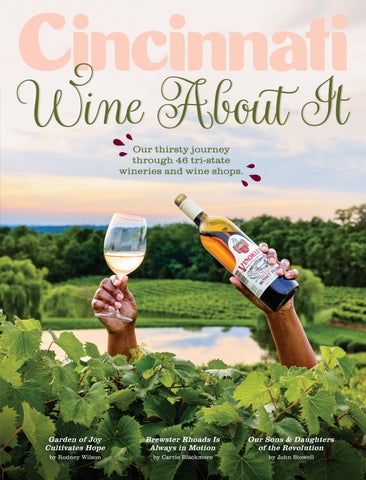
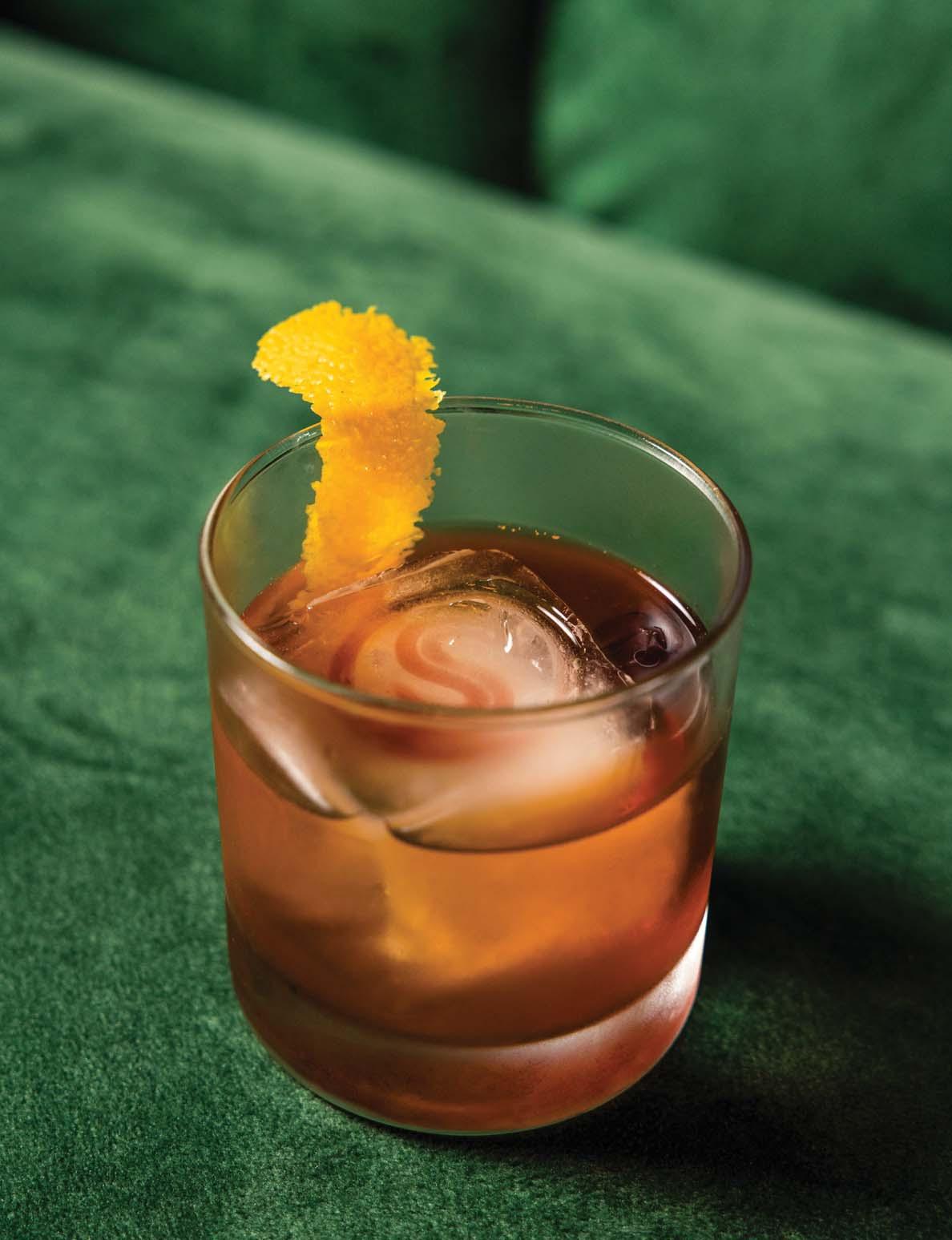
Our thirsty journey through 46 tri-state wineries and wine shops.
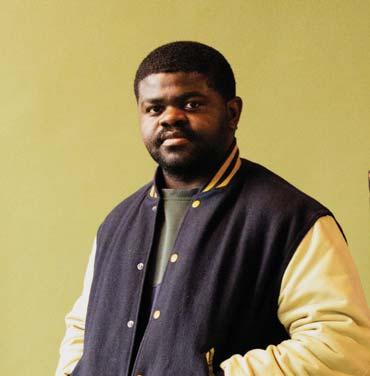
by Rodney Wilson
Our
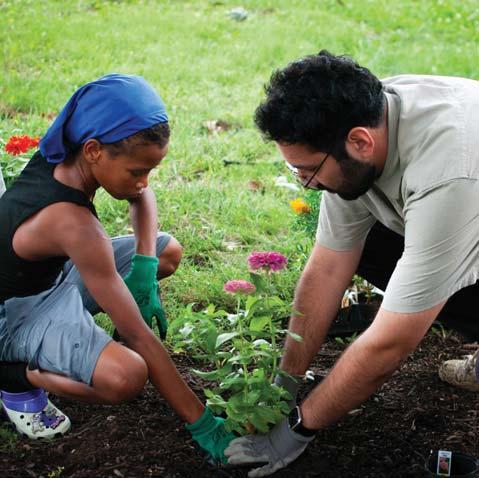
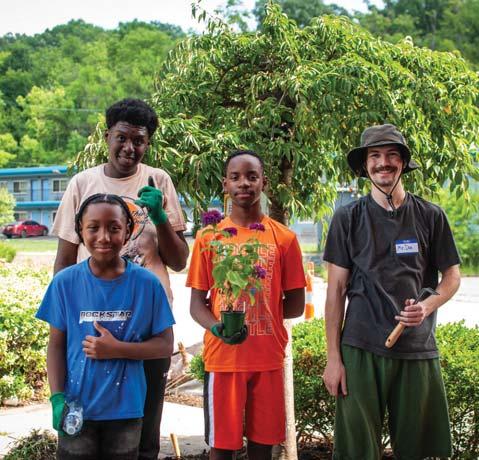
Garden of Joy Cultivates Hope
Brewster Rhoads Is Always in Motion
by Carrie Blackmore
Sons & Daughters of the Revolution by John Stowell
Uncovering Hair Loss
What Causes It and What Can Actually Help
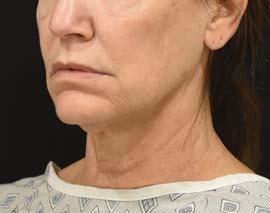
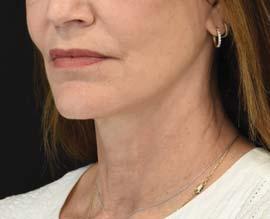
It usually starts small: a little more hair in the shower drain or a part that looks slightly wider than it used to. Whether hair loss is progressing quickly due to medical treatments such as chemotherapy or more gradually due to age and hormone shifts, these changes to your appearance can significantly impact your confidence. In honor of Hair Loss Awareness Month, board-certified dermatologist Dr. Mona Foad is sharing the science behind what’s actually causing your hair loss and what you can do to help support healthy growth.
Types & Causes of Hair Loss
Female & Male Pattern Hair Loss (Androgenic Alopecia)
This is the most common type of hair loss and is primarily caused by the hormone DHT, which binds to the hair follicles, causing them to shrink and eventually stop producing hair over time. In men, it tends to show up as a receding hairline or thinning at the crown. In women, it could show up as a widening part, overall thinning across the top of the scalp, or simply less density over time. This type of hair loss is genetic and tends to progress slowly.
Stress-Induced Hair Loss (Telogen Effluvium)
1. Short Term: When the body goes through a major physical or emotional stressor, such as pregnancy, illness, rapid weight loss, or a prolonged period of stress, it can push a large number of hair follicles into a resting phase all at once. About two to four months later, those hairs shed. The good news is that this is typically temporary: Once the triggering event resolves, hair usually regrows on its own.
2. LongTerm: If the trigger is ongoing, the shedding can continue and require an intervention to support healthy hair growth. Common examples include chronic stress, an unresolved nutritional deficiency (often low ferritin or iron), certain medications (GLP1s, hormonal contraceptives), or an underlying health issue (like thyroid dysfunction or anemia).
Diseased or Damaged Scalps
The health of your scalp directly affects the health of your hair. Conditions like dandruff (seborrheic dermatitis), scalp psoriasis, and scarring alopecias (such as lichen planopilaris or frontal fibrosing alopecia) can all interfere with normal hair growth. Traction from tight hairstyles or hats worn repeatedly over time (traction alopecia), excessive heat, and chemical damage can also disturb hair follicles and cause hair loss.
Treatment Options
Oral Medications & Supplements
1. Oral Minoxidil: Low-dose oral minoxidil has quickly become a go-to treatment for both pattern hair loss and telogen effluvium. Originally a blood pressure medication, minoxidil was found to promote hair growth as a side effect. At very low doses, the hair benefits are real, although you should still use caution if you have low blood pressure.
2. Finasteride & Spironolactone: Finasteride is an FDA-approved medication for men that works by blocking the conversion of testosterone to DHT. For women, spironolactone offers a similar effect and is particularly helpful for hormonal hair loss related to perimenopause or PCOS. Both of these are medications that should be taken under the direct supervision of a qualified health care provider.
3. Nutrafol: For those looking for a supplement-based approach, Nutrafol is backed by clinical data and formulated to address multiple root causes of hair thinning, including stress, hormones, nutrition, and inflammation. It comes in formulations for men, women, and postpartum patients, and works well as a complement to other treatments or as a starting point for milder concerns. Viviscal is another oral supplement option that is available. For either, plan on at least 6–12 months of consistent use before
evaluating results
4. CollagenPowders: Hydrolyzed short-chain collagen can be found in many over-the-counter powder formulations and is easy to add to water, coffee, or your favorite beverage. Studies show that consistent use of 10–20 grams of collagen powder daily can help to promote keratin in the hair and support hair strength, thickness, and shine.
Topical Treatments
1. Topical Minoxidil: Available over-the-counter as Rogaine and generic topical Minoxidil, this treatment works by prolonging the hair growth phase and improving blood flow to the follicles. Consistent use is key for results: It needs to be applied to a dry scalp daily and left on. Give it at least 4–6 months before evaluating results. You may notice some initial shedding in the first few weeks, which is actually a sign that the treatment is working.
2. Hair Growth Serums: A number of topical serums can support scalp health and complement medical treatment. Nutrafol offers a hair growth serum that can be used alone or in combination with their supplements, and several other brands offer similar products to support the scalp. These serums shouldn’t be used as a replacement for medical treatment in cases of significant hair loss, but they can be a helpful complement to your hair growth routine, particularly for maintaining results over time.
In-Office Treatments
1. LED LightTherapy: Low-level LED light therapy uses specific wavelengths of light to stimulate follicle activity and extend the hair growth cycle. It’s non-invasive, painless, and requires no downtime. It works best as a complement to other treatments, especially for early-stage pattern hair loss or maintaining density over time.
2. PRP(Platelet-RichPlasma): After drawing a small amount of your own blood, it is spun in a centrifuge to concentrate the growth factors found in your platelets. This is then injected into the scalp to help stimulate follicle activity and improve blood supply to the area. A series of 3-6 treatments, each spaced one month apart, is recommended.
3. HairTransplant: For patients with more advanced hair loss, a transplant is the most permanent solution available. Modern techniques are minimally invasive, leave minimal to no scarring, and can produce very natural-looking results in experienced hands. That said, it is still a surgical procedure that requires significant financial investment and downtime, which may not be the right fit for some patients. Hair transplant may also not be an option if you have hormonal or medical reasons for hair loss and are continuing to lose hair. Make sure to have a consultation with a surgeon or medical professional who specializes in hair transplantation.
Hair loss may be common, but that doesn’t mean you have to accept it as an inevitable part of life. The best results for fostering healthy regrowth often come from addressing it early with a combination of treatments. If you’re concerned about hair loss or hair thinning, start by scheduling an appointment with a board-certified dermatologist to get to the bottom of what’s causing your hair loss and create a plan that’s best for you. You can schedule with the team at Mona Dermatology by visiting monadermatology.com or by calling 513.984.4800
P. 34
GRAPE EXPECTATIONS
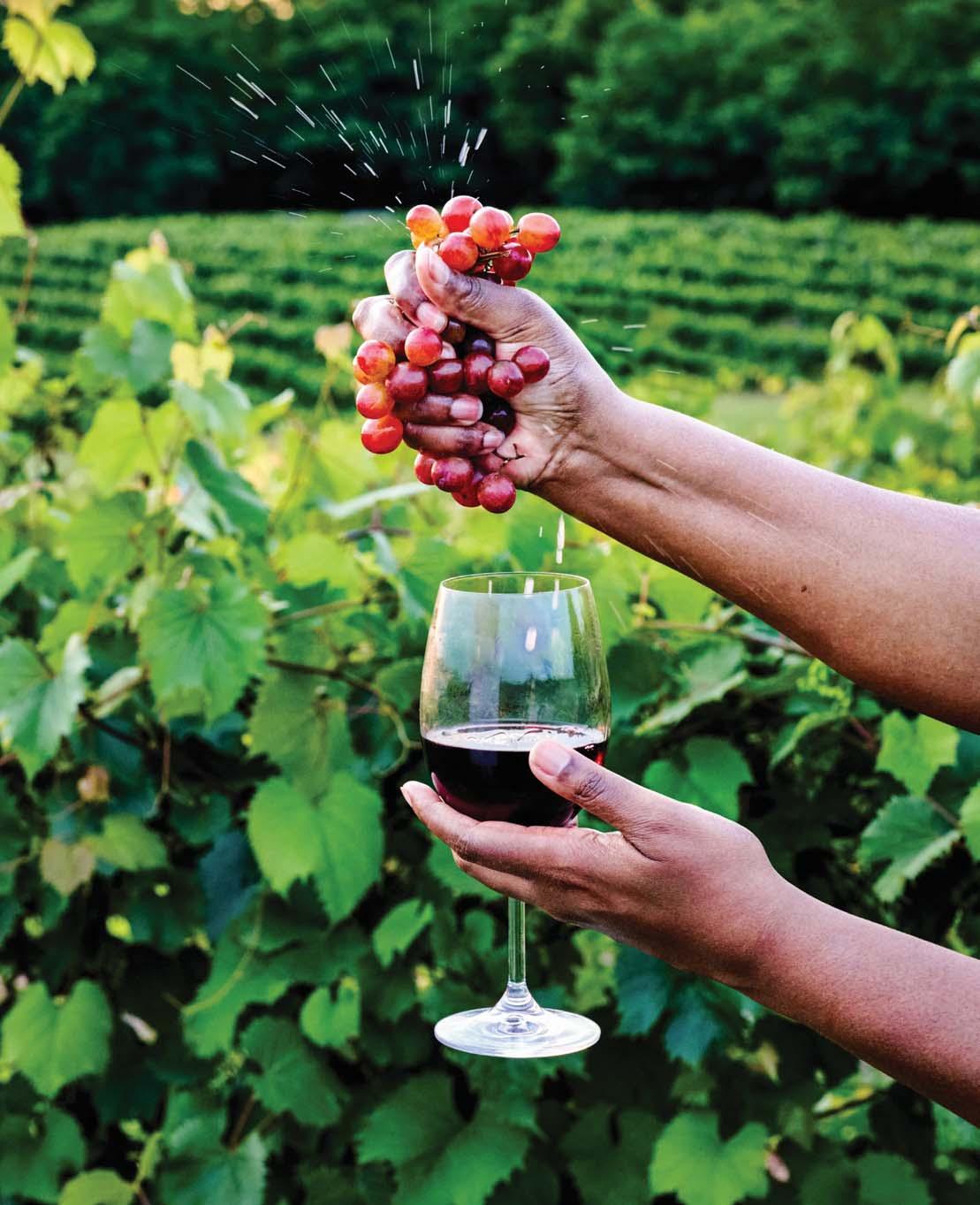
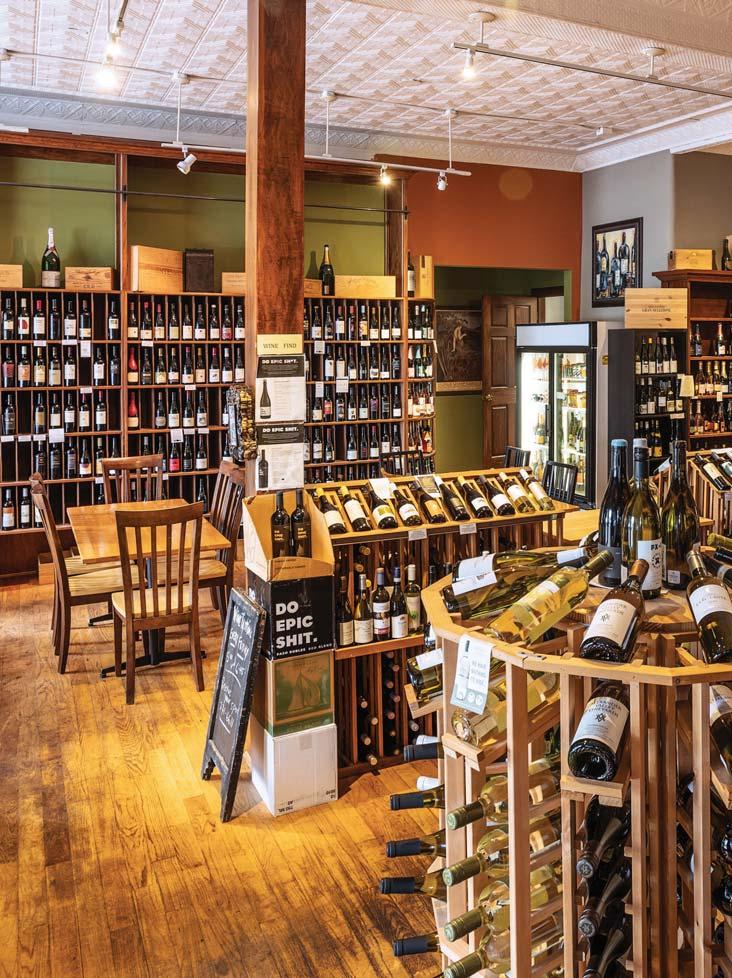
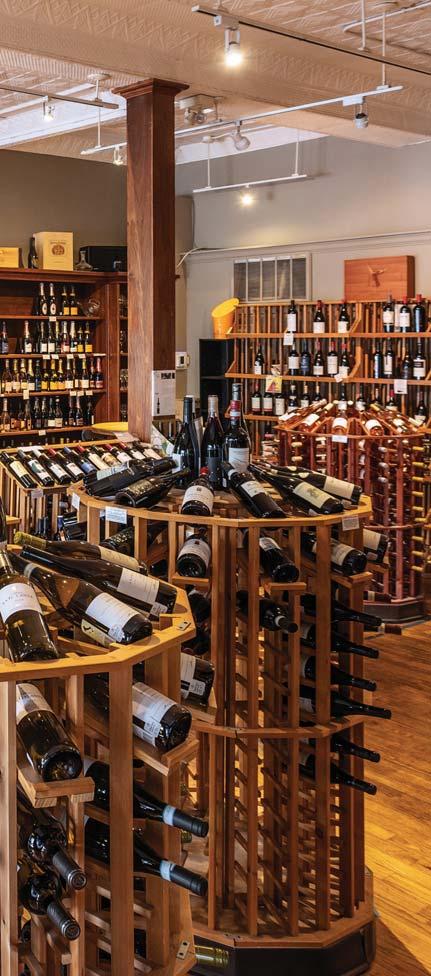
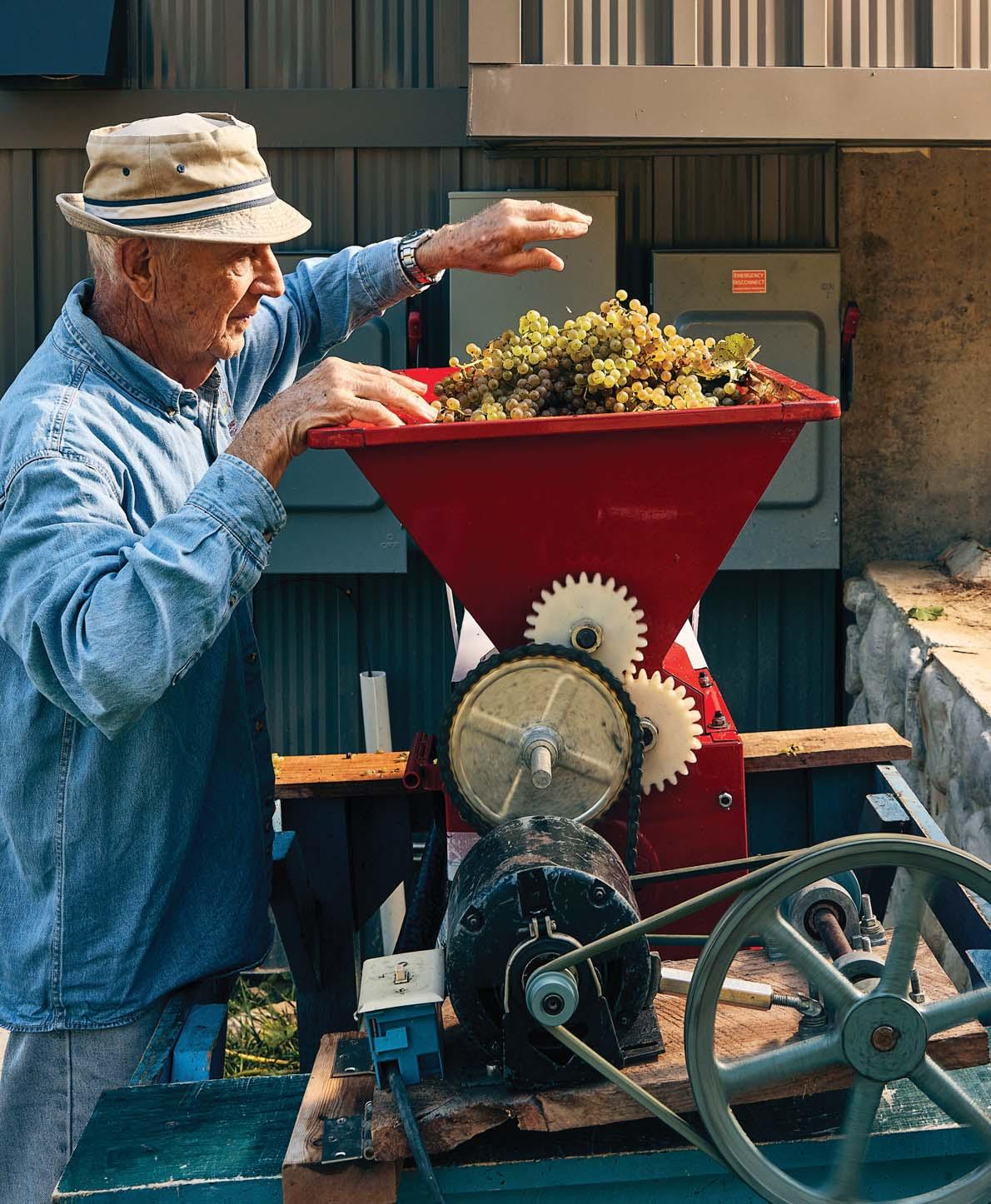
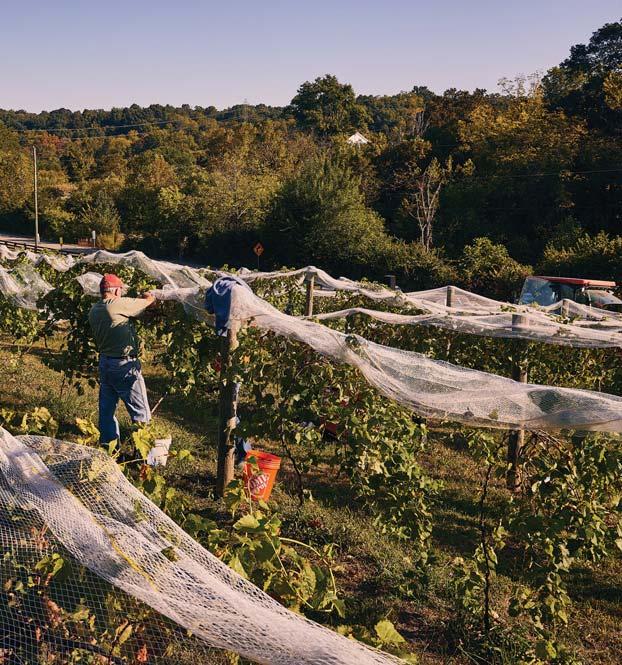
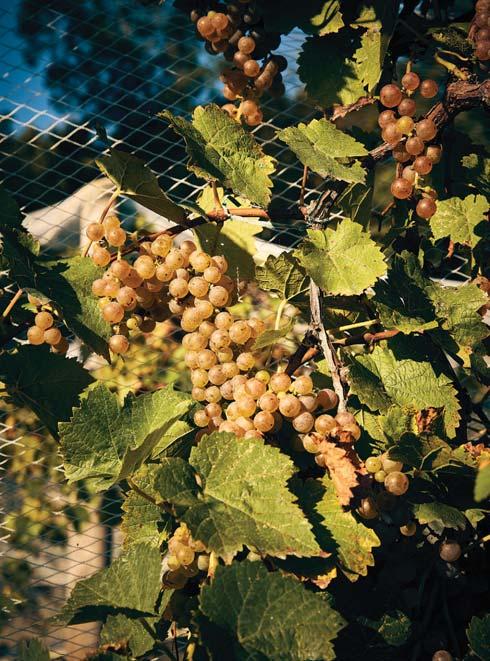
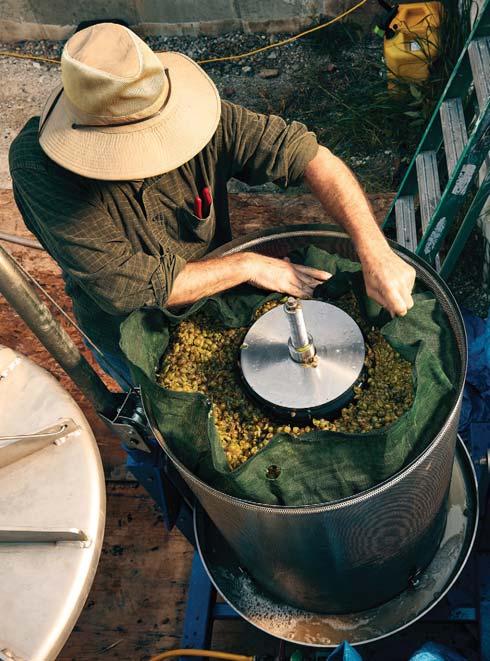
Cab. Chard. Sauv blanc. Whatever your preference, you’ll find it in dozens of wineries, wine shops, and wine bars throughout the Queen City. Oenophiles, watch your glass runneth over.
PERPETUAL MOTION P. 50
Brewster Rhoads, Cincinnati’s favorite river rat, seeks new adventures as his annual Paddlefest event turns 25.
BY CARRIE BLACKMORE
HONOR ROLL P. 54
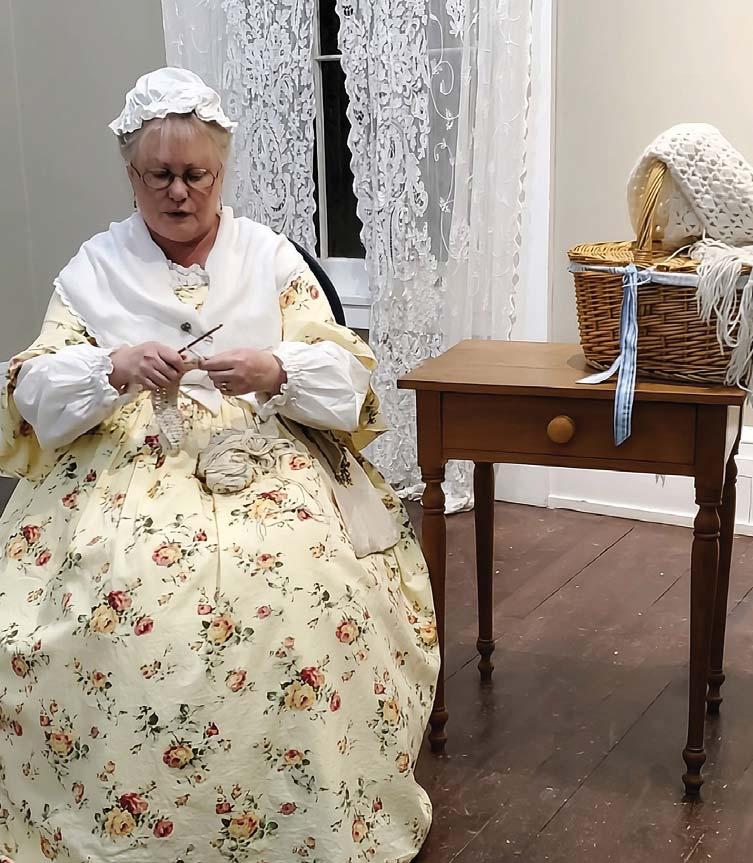
Remembering the American Revolution’s sons and daughters who founded and settled Cincinnati.
BY JOHN STOWELL
/ CONTRIBUTORS
12 / LETTER FROM THE EDITOR
FRONTLINES
15 / DISPATCH
Orchestral world premieres at Summermusik
16 / SPEAK EASY
Supporting young women’s education
16 / SPORTS
Leagues Cup at TQL
18 / STYLE COUNSEL
Eccentric styling with Sarah Day Featherstone
20 / HOMEGROWN
Gift Mayambi’s art masks movement
22 / POP LIFE
Run clubs and community
24 / GREAT ROOM
Basement bar noir
26 / DR. KNOW
Your QC questions answered
COLUMNS
28 / LIVING IN CIN
Replaying my crazy bicentennial at WEBN
BY JAY GILBERT
128 / OBSCURA
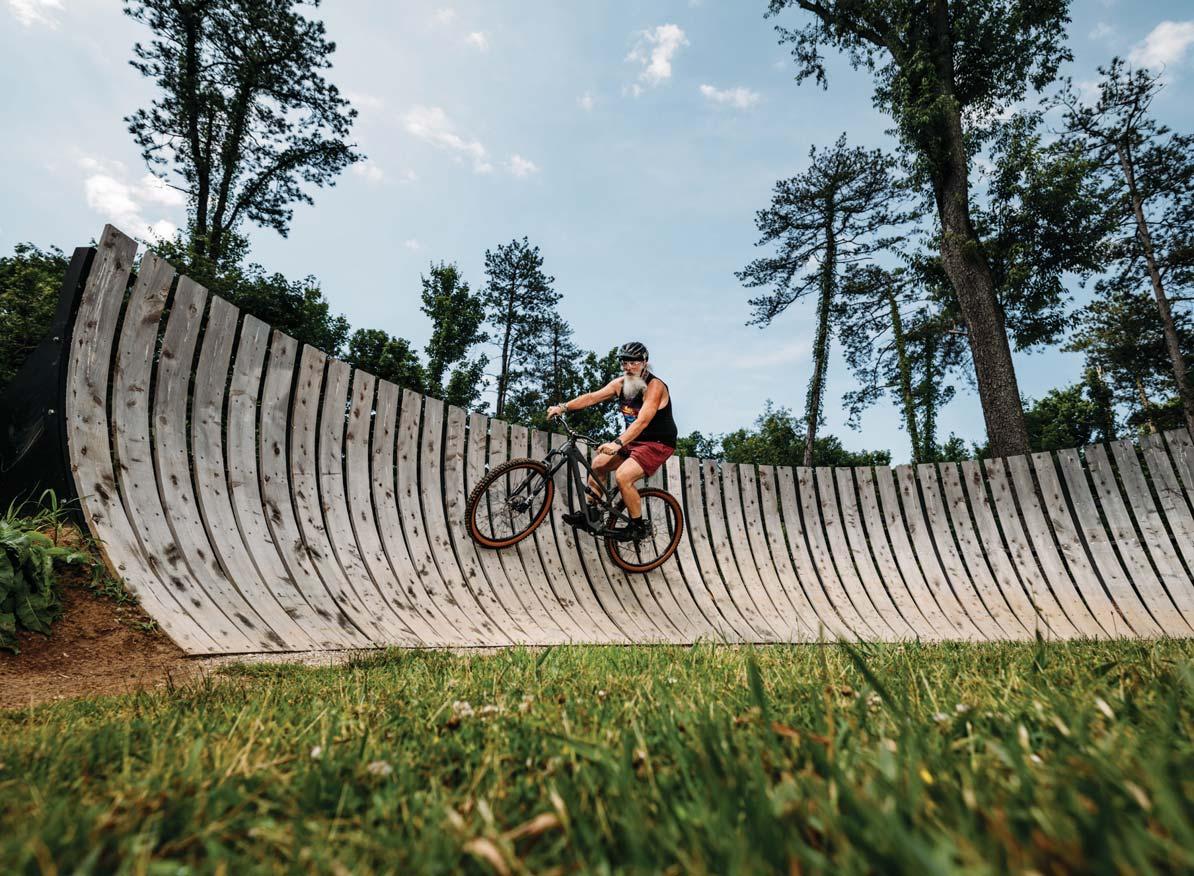
Mitchell Memorial Forest skills course teaches mountain bike safety BY CLAIRE LEFTON
DINE
112 / OFF THE MENU
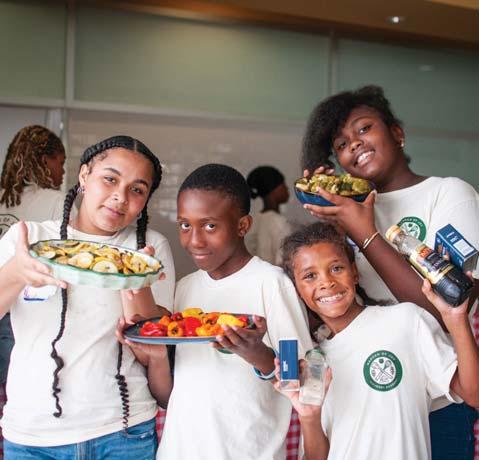
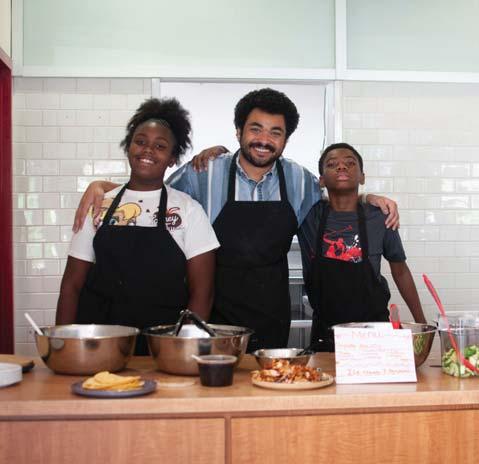
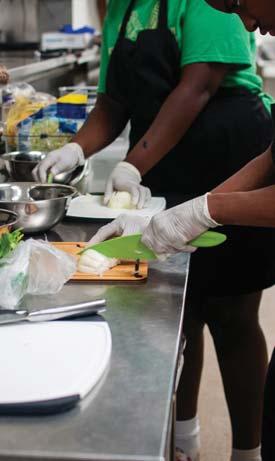
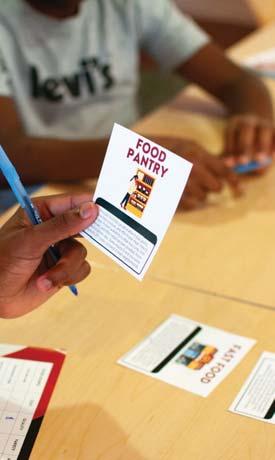
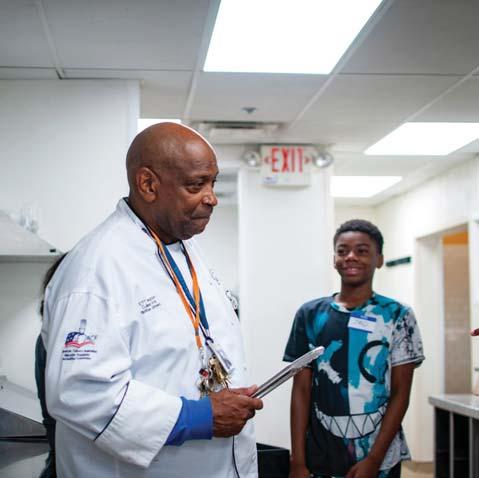
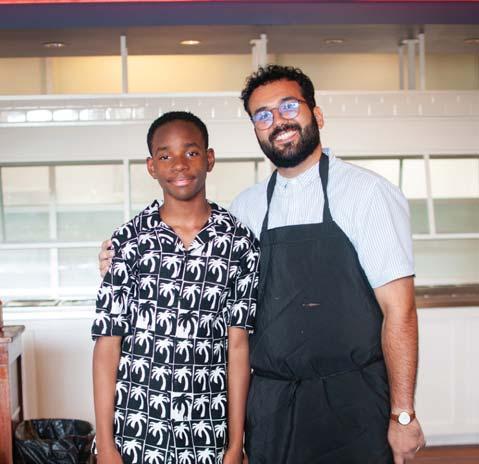
Culinary academy teaches life lessons
116 / HOT PLATE
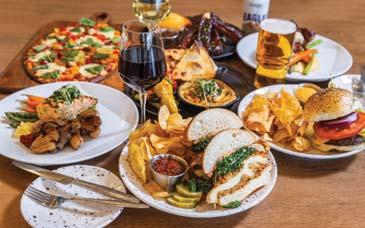
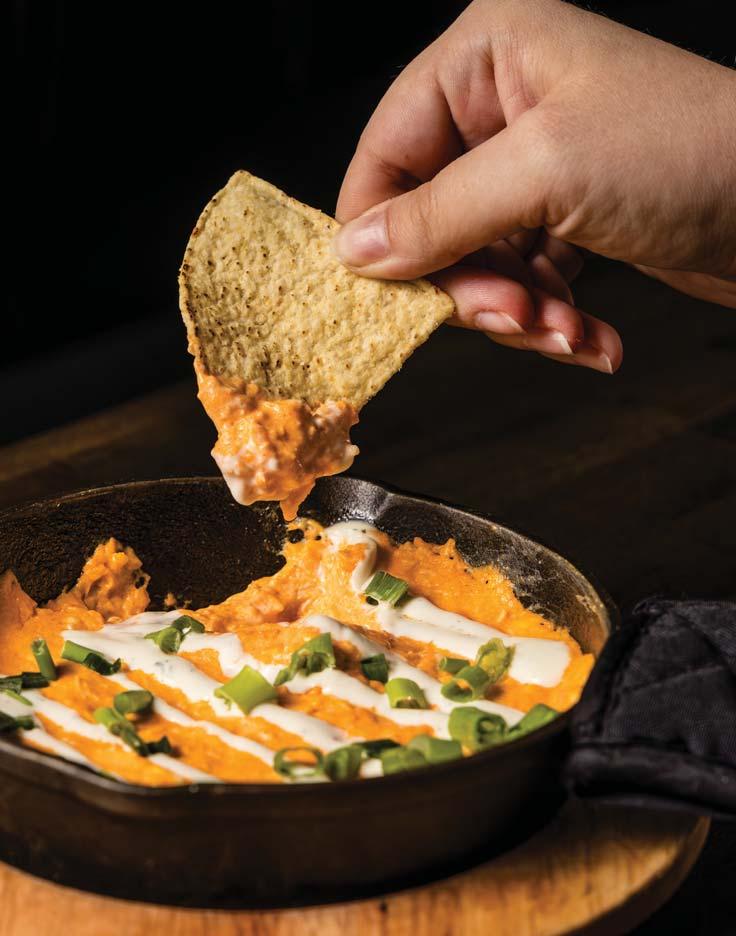
Elevated bar food at Sanctuary Social, Villa Hills
116 / TABLESIDE
Parody songwriter Hot Dog Harv
118 / TRY THIS Vegan fare at Herbistro, Norwood
119 / DINING GUIDE
Greater Cincinnati restaurants: A selective list
Extra servings of our outstanding dining coverage.
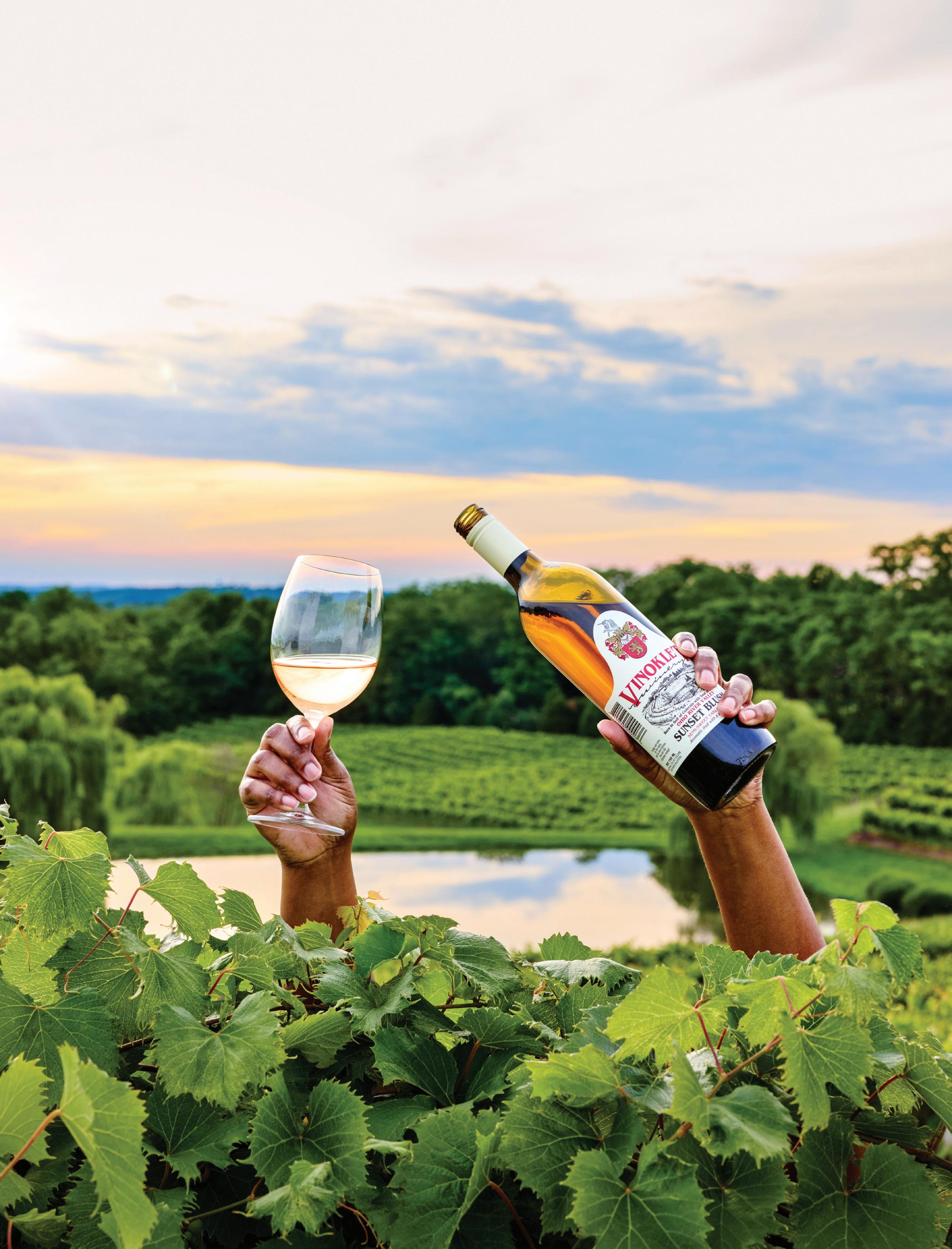
ON THE COVER photograph by JEREMY KRAMER hand modeling by AIESHA D. LITTLE
Decoding our civic DNA, from history to politics to personalities.
+
Tracking what’s new in local real estate, artisans, and storefronts.
Insight and analysis on the Reds, Bengals, and FCC.
FOOD NEWS
ROCK ISLAND
Learn
The
50% of profits to support local farming communities, healthcare organizations, and causes close to us.
Together with Olé & Obrigado, our charitable giving has surpassed $1 million since 2013.
Thank you for being part of our mission.
EDITOR-IN-CHIEF John Fox
DESIGN DIRECTOR Brittany Dexter
DIRECTOR OF EDITORIAL OPERATIONS
Amanda Boyd Walters
SENIOR EDITOR
Aiesha D. Little
ASSOCIATE EDITOR
Emma Balcom
DIGITAL EDITOR
Claire Lefton
LEAD DIGITAL STRATEGIST
Brianna Connock
CONTRIBUTING EDITORS Carrie Blackmore, Jay Gilbert, Lisa Murtha, Laurie Pike, John Stowell, Linda Vaccariello, Jenny Wohlfarth, J. Kevin Wolfe
EDITORIAL INTERNS Helena Hennessy, Hannah Kremer, Zachary Shultz, Lauren Stidham
SENIOR ART DIRECTOR Emi Villavicencio
ART DIRECTORS Jessica Dunham, Stef Hadiwidjaja
ADVERTISING DESIGNER Matthew Spoleti
MARKETING DESIGNER Mikayla Dixon
PRODUCTION DIRECTOR & IT SYSTEMS ADMINISTRATOR Vu Luong
CONTRIBUTING ARTISTS Lance Adkins, Hailey Bollinger, Andrew Doench, Devyn Glista, Catherine Grace, HATSUE,Chris von Holle, Jeremy Kramer, Ryan Kurtz, Lars Leetaru, Marlene Rounds, Jonny Ruzzo, Dola Sun
PUBLISHER Ivy Bayer
DIRECTOR OF BUSINESS DEVELOPMENT Tony Frank
SENIOR ACCOUNT MANAGERS
Maggie Wint Goecke, Joe Hoffecker, Julie Poyer
SENIOR MANAGER, SPONSORSHIP SALES
Chris Ohmer
SENIOR OUTSIDE ACCOUNT REPRESENTATIVE
Laura Bowling
ACCOUNT REPRESENTATIVE
Sarah Riesenberger
VICE PRESIDENT OF EVENTS AND SPONSORSHIP SALES
Tasha Stapleton
EVENTS ASSISTANT
Charlie Jaeb
BUSINESS
OPERATIONS DIRECTOR Missy Beiting
BUSINESS COORDINATOR Meredith Carroll
CIRCULATION
AUDIENCE DEVELOPMENT DIRECTOR Geralyn Wilson
CIRCULATION MANAGER Riley Meyers
EDITORIAL/ADVERTISING OFFICES
221 E. Fourth St., Suite 130 Cincinnati, OH 45202 (513) 421-4300
E-MAIL cmletters@cincinnatimagazine.com WEB cincinnatimagazine.com
SUBSCRIPTIONS
1-866-660-6247
E-MAIL Cincinnati_Service@hourmediagroup.com
PUBLISHED BY CINCINNATI MEDIA, LLC
CEO Stefan Wanczyk
PRESIDENT John Balardo
BEST MAGAZINE IN OHIO
2008-2012, 2016-2017, 2020-2022
Ohio Excellence in Journalism Awards
BEST MONTHLY IN OHIO 2021, 2023, 2025 Ohio Society of Professional Journalists Awards
Treating Common Conditions to the Most Complex - One Successful Outcome at a Time
Whether removing a herniated disc from a patient’s neck, or removing a tumor from a patient’s brain, or removing a blockage in a cranial artery to prevent a stroke, surgeons at Mayfield Brain & Spine provide life-altering care for difficult medical challenges.
Founded in 1937, Mayfield is a nationally known independent neurosurgery practice, meaning surgeons operate at multiple hospital locations. In 2025, Mayfield treated a record 36,601 patients. The practice is experiencing one of its largest growth years in 2026, with a neuro-oncologist and three neurosurgeons joining this year.
“From common conditions to the most complex, Mayfield surgeons have treated generations of Greater Cincinnati patients with expertise and compassion.”
– DR. VINCENT DINAPOLI A MAYFIELD NEUROSURGEON AND CHAIRMAN OF THE BOARD OF DIRECTORS
Mayfield physicians and providers treat:
Spine disorders
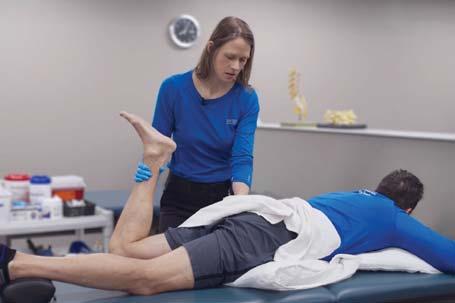
“We offer the entire suite of spine treatments, beginning with nonsurgical options like physical therapy, extending to outpatient surgeries to ease pressure on spinal nerves, and including complex scoliosis or spinal deformity surgery to strengthen and stabilize multiple layers of a patient’s spine,” Dr. Michael Kachmann said.
Brain tumors
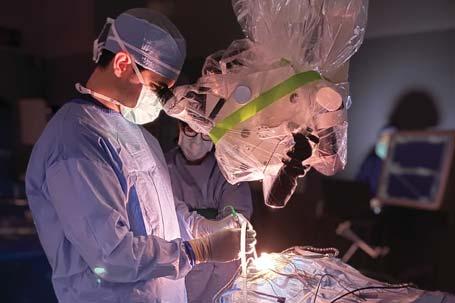
“We create a personalized plan for patients with brain tumors,” Dr. Yair Gozal said. “Options can include radiation or open surgery, and we also serve patients who have malignant tumors with chemotherapy and other medical therapies.”
Neurovascular disorders, including strokes and brain aneurysms
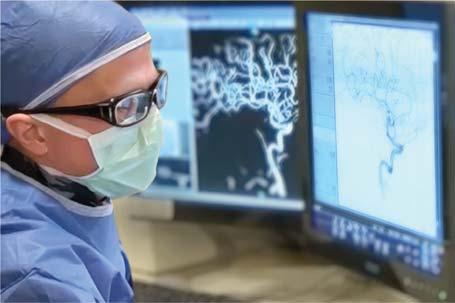
“Every minute matters when a patient is having a stroke, and our mobile neurovascular team is ready near you with expertise in endovascular treatment where we access a blockage in a brain artery and pull it out,” Dr. Andrew Ringer said.
Mayfield continues to add services and access points for patients. The practice offers physical therapy at all six patient offices and interventional pain treatment at several offices – plus the Mayfield Spine Surgery Center for outpatient procedures, overlooking I-71 in Norwood.
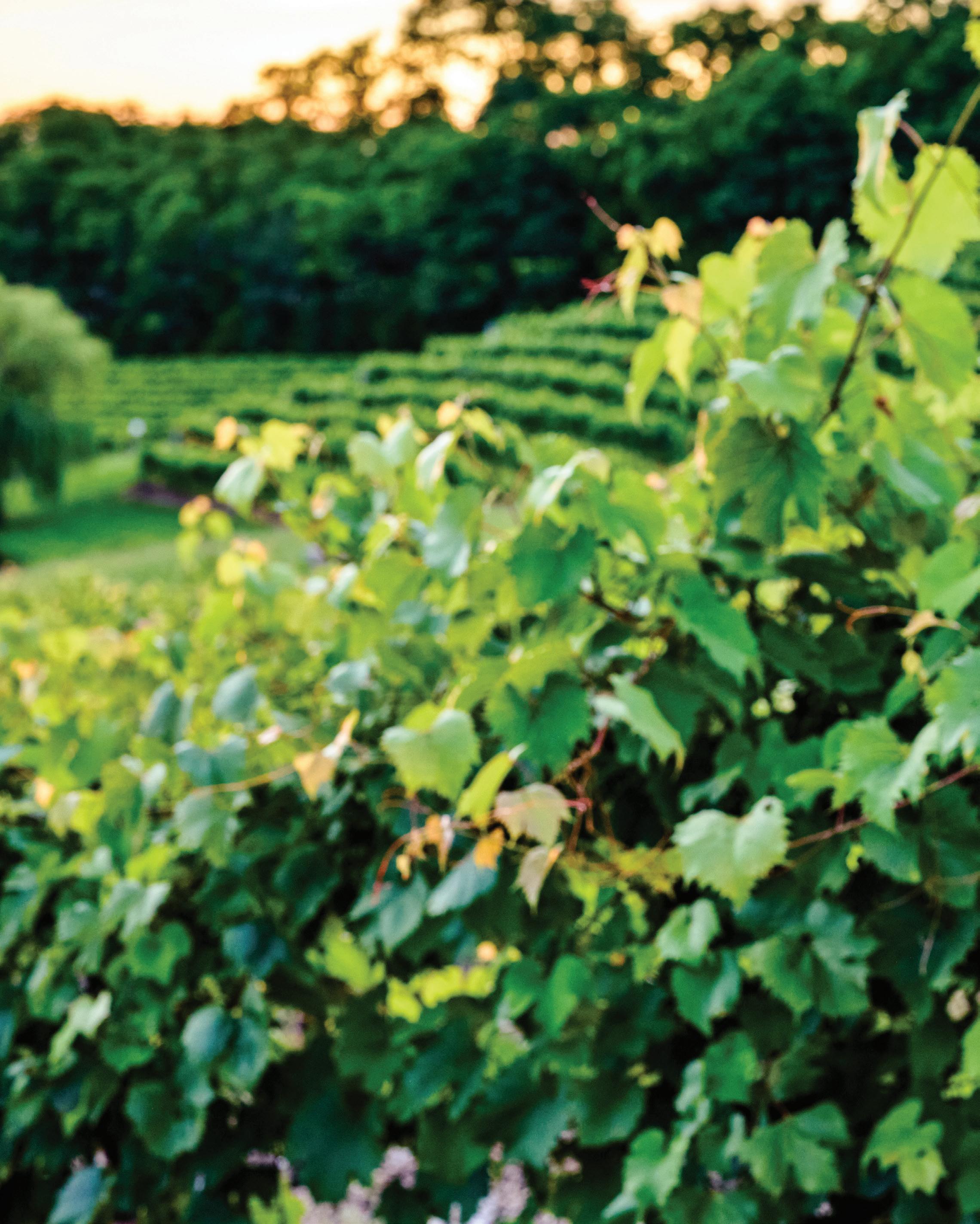
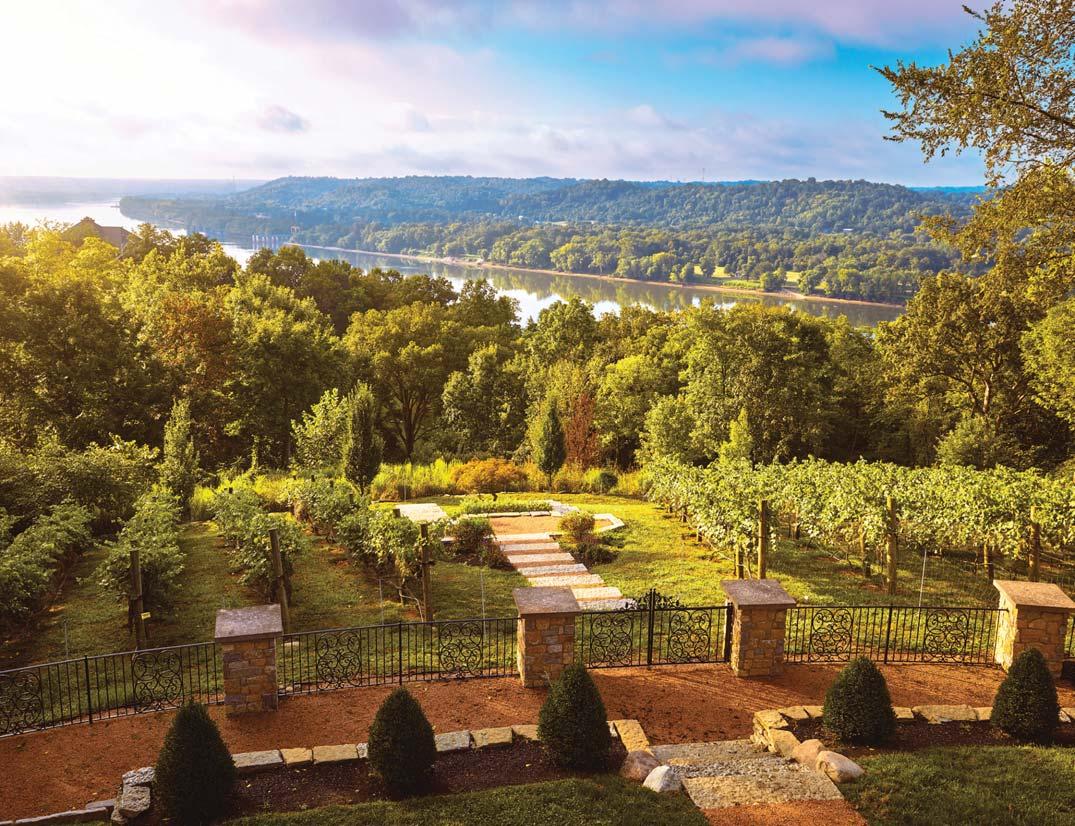
LLET YOUR GAZE LINGER ON THIS MONTH’S COVER OR ON THE OPENING SPREAD of our “Grape Expectations” section (page 34). As you see the sun set over these vineyards, can you imagine you’re in a fabulous wine region of Italy, France, or Portugal? Or you’re stopping by a family-owned winery in the Napa or Sonoma valleys? Or you’re just about any place other than Colerain Township?
If you think about it, drinking wine can be like a mini vacation. We’re fortunate to have dozens of retail outlets around town offering wines from far corners of the globe, exotic places like New Zealand and Chile and upstate New York. Take a sip of sparkling white Cava wine and taste crisp apple flavors from the Catalonia region near Barcelona, then transport yourself to late afternoon at a small sidewalk café in Spain. Can you feel the warm breeze? Much cheaper than an international flight and hotel reservations, with no TSA hassle.
You can also enjoy a staycation by checking out wine produced in this part of the world. We’re all trying to buy local as often as possible, so why not bring home Midwestern versions of chardonnay, Riesling, and merlot bottled in our necks of Ohio, Indiana, and Kentucky? You’ll probably be surprised to learn there are more than 25 working wineries in our region, many of which offer tours and tasting rooms. It’s a thriving little industry that—like everyone who tends the land and supplies our food—could use more support.
Lots of us love local history, so you can focus on the fact that these wineries are heirs to a rich history of wine production in Cincinnati, especially with Nicholas Longworth and his vineyards in Mt. Adams, Walnut Hills, and Columbia-Tusculum. There was a time in the mid-1800s that Cincinnati was the country’s winemaking capital, until the hillsides were developed for housing (and Eden Park) after Longworth’s death.
Of course, you can just pour a glass of your favorite wine, kick back, not think about any of these geography or history lessons, and forget the problems of the day. There doesn’t have to be a reason to partake. No whining, just wining.
JOHN FOX EDITOR-IN-CHIEF
Contributing writer Sarah McCosham loves “sharing all of the secret, unexpected things that make Cincinnati such a gem,” and the local wine scene is one of them. Her writeups on Greater Cincinnati wineries and wine shops (page 34) share spots offering unique experiences, accessibility, and stellar service, and she says her conversations with owners of these longtime establishments led to “questions or discoveries I wouldn’t have thought to ask.”
When it occurred to him that much of Cincinnati’s landscape has been shaped by land granted to Revolutionary War soldiers in lieu of payment for their service, longtime history buff John Stowell dug into those early years for “Honor Roll” (page 54). Tracing back to when the Queen City was famously called Losantiville, he weaves together the stories of Cincinnati’s first sons and daughters of the Revolution.
For his illustrations representing Greater Cincinnati wineries, sommeliers, and oenophiles (page 34), award-winning artist James O’Brien drew inspiration from folk and children’s art. His portraits take influence from comic book and cartoon artists he admired as a child, including Alex Toth (Hanna-Barbera), Milton Caniff (Terry and the Pirates), and Mœbius (Blueberry), and aim to convey the personality of the local wine community.
JAMES O’BRIEN
SARAH McCOSHAM
JOHN STOWELL
Congratulations!
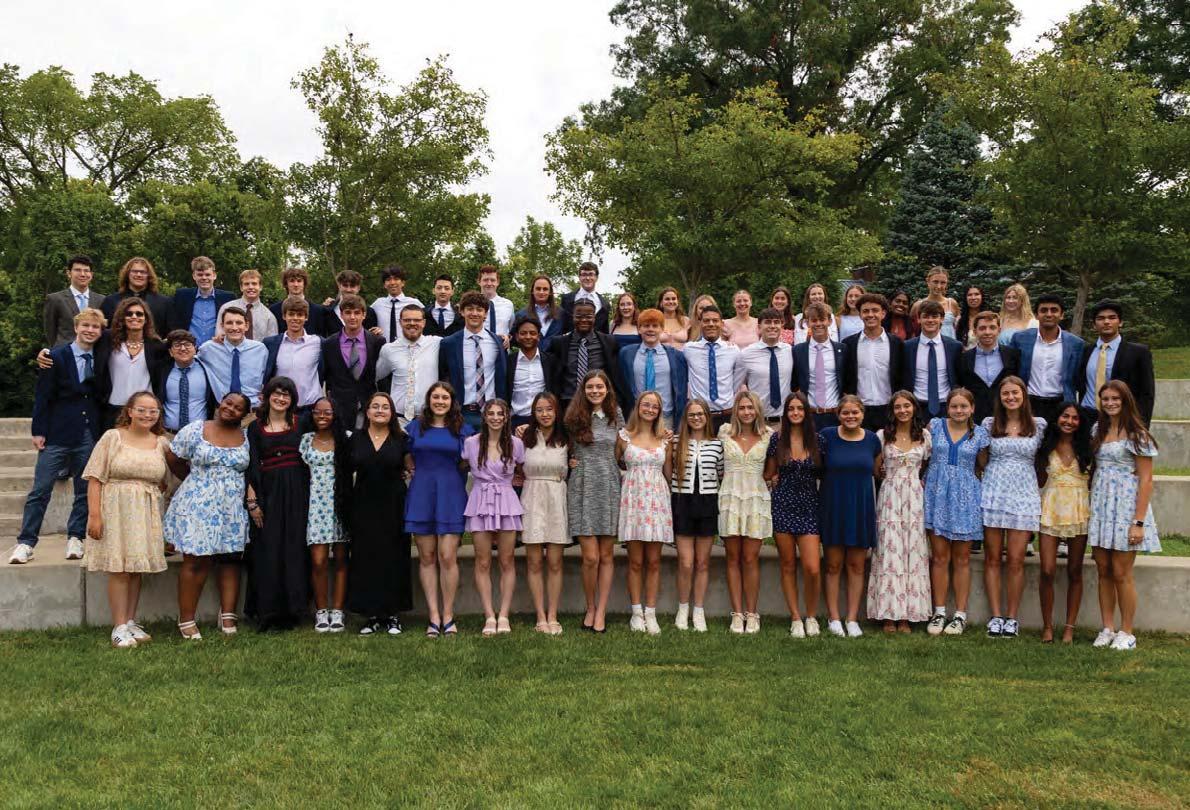
CLASS OF 2026
Accepted to universities with admit rates below 10%
Boston College
Brown University
University of California-Los Angeles
California Institute of Technology
University of Cincinnati
Colgate University
Colorado State University
University of Dayton
Denison University
Earlham College
Attending institutions in 12 states across the country
24% will attend universities nationally recognized for STEM or research excellence
GRADUATES WILL ATTEND THE FOLLOWING COLLEGES AND UNIVERSITIES:
Elon University
Good Samaritan College of Nursing
Kenyon College
University of Louisville
Marietta College
Miami University
Michigan State University
Mount St. Joseph University
University of New Haven
Northeastern University
Northwestern University
Ohio Northern University
Ohio State University
Ohio University
Purdue University
University of South Carolina
Virginia Tech
Washington University in St. Louis
College of William & Mary
Worcester Polytechnic Institute
21% will attend Top 50 national liberal arts colleges and universities KNOWN. NURTURED. INSPIRED.
Northern Kentucky University
Xavier University
ORCHESTRAL MANEUVERS
The 12th annual Summermusik Festival features the world premiere of three compositions celebrating American diversity.
RODNEY
WILSON
WHEN SUMMERMUSIK KICKS OFF ON AUGUST 4, IT WILL MARK its 12th year as the region’s premiere chamber orchestra festival, featuring a month of thrilling performances from the Cincinnati Chamber Orchestra. This year’s festival draws from a variety of inspirations, from the 250th anniversary of the signing of the Declaration of Independence to musical appreciation for pet companions to a rowdy commemoration of rebellious visionaries (Frank Zappa’s work gets paired with compositions by Wolfgang Amadeus Mozart), and more.
The first big weekend event is The Soundtrack of America on August 8, which celebrates the anniversary of U.S. independence by spotlighting the country’s legacy of collaboration and innovation. The first Mainstage performance takes place at the School for Creative and Performing Arts, featuring three world premiere pieces commissioned by Summermusik, giving the audience an exclusive first listen to an array of orchestral work.
“In looking at America250, we wanted to celebrate it in a different way from what many others are doing,” says Summermusik Executive Director Evan Gidley. CONTINUED ON P. 16
“ There’s a lot of patriotic poptype programs being presented. We really wanted to look at America250 through the eyes of the many different cultural identities that make up the country. That’s the through line of the entire program.”
To realize this goal, festival organizers pulled together a trio of new pieces ( and a couple of established compositions) that convey the expansive experiences contained within the idea of “America.” A collaborative work between five composers, “Visions of Humanity and Unity” embodies this vision of diversity in collaboration. “The ‘Visions of Humanity and Unity’ project was something that Eckart Preu, our music director, brought forth, and we ultimately decided to be the lead commissioning organization on this project,” says Gidley. “There are five different composers that we’ve engaged. They’re each writing a five- to sevenminute movement for cello soloist Zuill Bailey, and the goal is for them to reflect on their own cultural background and the significance of America250 within that context.”
voice. Enrico Chapela brings a Mexican American angle, while Zhou Tian is a Chinese American composer. “They’re all writing independently—they don’t know what the other ones are writing,” says Gidley. “The prompt was basically, look at the Declaration of Independence. Is there a line of text that maybe resonates with you? How do you envision this historical document and the impact it’s had on your particular culture?”
Kick-off Concert
Check out the August 8 kick-off at HighGrain’s Brentwood Brewpub featuring violinist Manami White.
Another premiere will be of local composer Kanniks Kannikeswaran’s “The Indian American Experience.” “He is very well respected as a writer of Asian-Indian classical music,” says Gedley. The composition opens and closes with spoken narration.
Those five composers span a wide range of perspective and experience, with each bringing musical elements of their own cultures into the work. Avner Dorman is Israeli American, while Chanda Dancy provides an African American lens. Mark O’Connor represents the Appalachian/Americana
The fi nal premiere is the winner of the second-annual Kreitler Commission Competition, “Ocean of Quiet” by Simon Rivet, a Montreal-based composer. Though not explicitly tied to the America250 theme, Gidley maintains the piece fits well within an evening featuring numerous performance debuts. “ ‘Ocean of Quiet’ is going to be meditation related,” he explains. “There’s going to be a guided meditation with the audience prior to the piece being performed.”
The Soundtrack of America event will open with a performance by Native American flutist and composer Darren Thompson, and the evening will end on a familiar note, closing with Aaron Copland’s “Appalachian Spring.”
LEAGUE LEGENDS
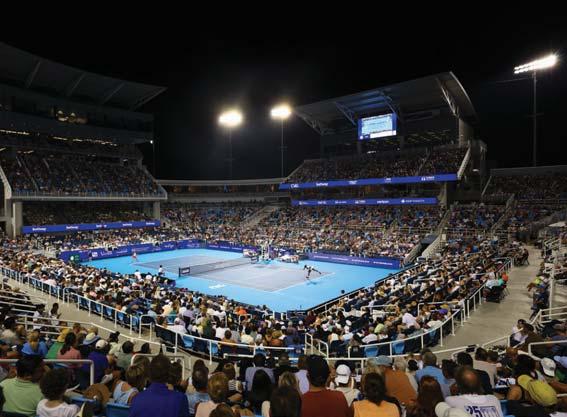
Watch FC Cincinnati take on Mexico’s CF Pachuca in the fi rst match of the Liga MX Leagues Cup—the annual interleague competition between all 18 Liga MX teams and 18 qualifi ed MLS clubs. Kickoff is at 7:30 p.m. on August 4 at TQL Stadium. fccincinnati.com
ENCOURAGING EDUCATION
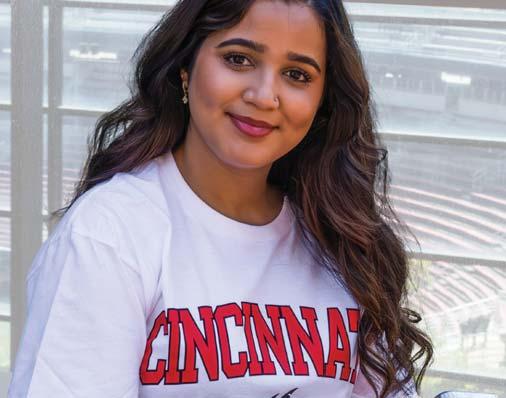
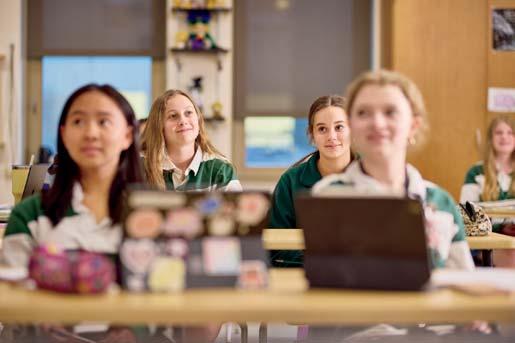
This year, Cincinnati’s Women’s Alliance celebrates 60 years as an organization. In 1966, in the midst of the Civil Rights Movement, Carol Braddock cofounded the organization to financially support underprivileged children and develop their education through local art and culture. Since then, Women’s Alliance has become a pillar for youth education across Greater Cincinnati and Dayton, providing annual scholarships, offering mentorship opportunities, and hosting fundraisers to financially support young women’s education. Braddock is one of the only founding members to remain actively involved with the organization.
Why was it important to found Women’s Alliance and make a difference in young women’s education? When Stokely Carmichael came to town, he at that time was the chairman of SNCC [Student Nonviolent Coordinating Committee]. He came to our church…and the essence at that time was Black power, and he was urging everybody to unite and recognize our heritage, and we were doing that in our church. One of the things that he said was that we needed
to form our own Black organizations and take leadership roles in our community and make things happen.
Where are you currently seeing a need for this organization the most? [In the beginning] we did all kinds of things for children. I remember we took children in groups to the theater. at [UC’s] Corbett Center for the Performing Arts. We felt it was our obligation to do the cultural aspect, the arts aspect, the educational aspect for children. Now, most of our money goes to young women for scholarships for college.
What kind of legacy are you hoping Women’s Alliance leaves in its community? I think that a number of Cincinnati’s great African American women have been members of Women’s Alliance for a period of time. We were a young group, and we grew up together, and we have a smaller group now, but it’s OK, because they are young, they are exciting, they are wonderful. I’m excited for them, and I’m there because I want to help. We’re here for the future.
—LAUREN STIDHAM
READ A LONGER CONVERSATION WITH CAROL AT CINCINNATI MAGAZINE.COM
Great wines aren’t created overnight. They reflect vision, craftsmanship, and an understanding that the best results often come with time. At The Celestial Group, we bring that same long-term mindset to wealth management — helping executives, business owners, retirees, and families navigate life’s complexities with thoughtful strategies designed to evolve over time.
Our Approach
•Carefully Balanced — Thoughtful portfolio construction aligned with your investment goals, risk tolerance, and tax considerations.
•Curated — Custom financial planning designed around the people and priorities that matter most.
•Built To Age — Legacy planning strategies intended to help support family, philanthropy, and future generations.
ANNA KOHLEM, MATT HARRIS
John Gould: Senior Vice President. Financial Advisor. CERTIFIED FINANCIAL PLANNER®. Certified Private Wealth Advisor®. Chartered Portfolio Manager®. Certified Exit Planning Advisor®. Alternative Investment Director. Workplace Advisor - Equity Compensation. Portfolio Management Director. 30+ years of experience. Matt Harris: Financial Advisor. Certified Exit Planning Advisor®. 28+ years of experience, including two decades on Wall Street managing various international and domestic institutional equity groups. Janie Shaffer: Business Development Director. Certified Divorce Financial Analyst®, Duke University graduate. Former attorney. 8+ years of experience. Anna Kohlem: Assistant Vice President. Wealth Management Associate. Financial Planning Specialist. 38+ years of experience. Kim Wright: Registered Client Service Associate. 6+ years of experience. Brooke Faxon: Client Relationship Analyst. 2+ years of experience.
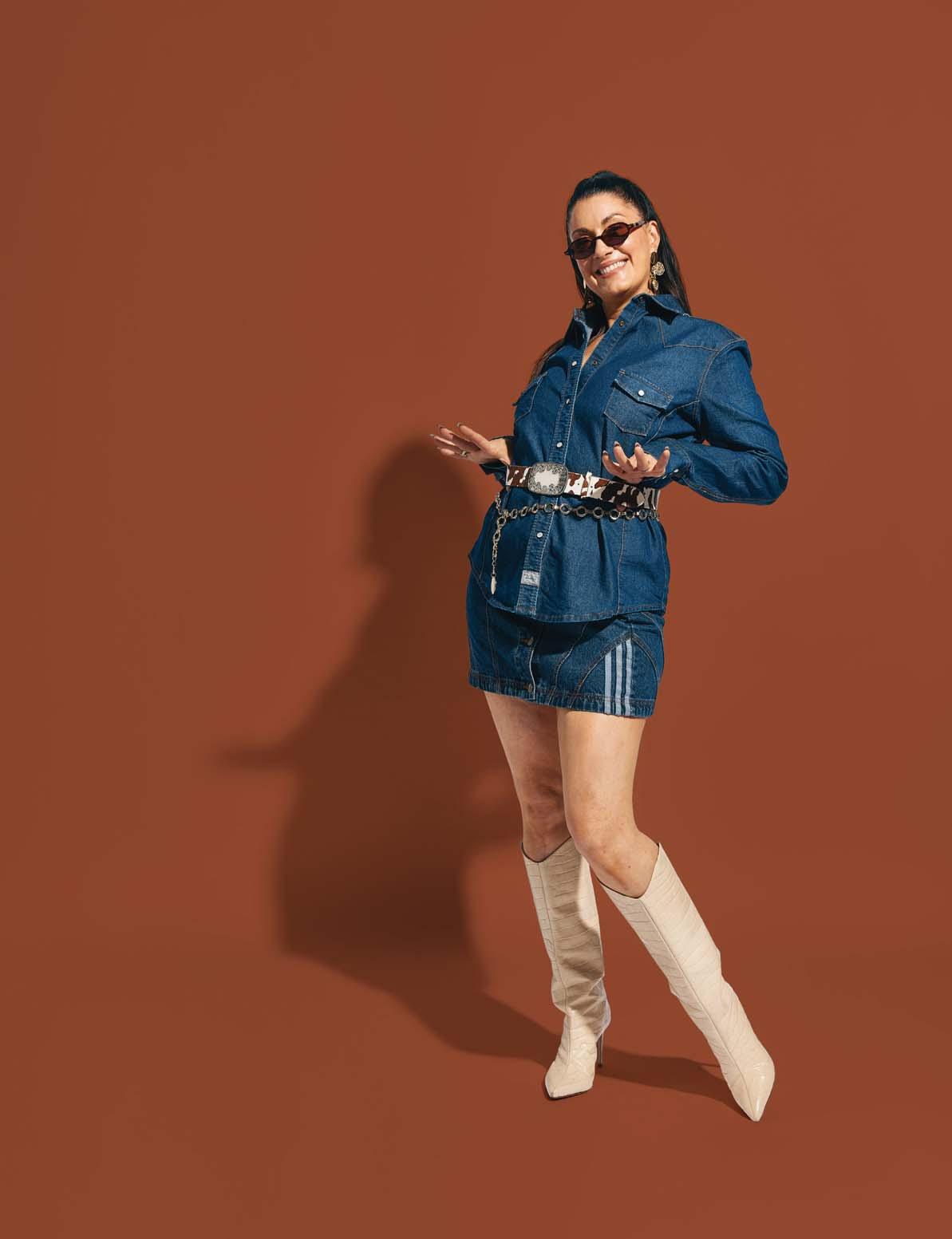
Sarah Day Featherstone
OCCUPATION: Wardrobe stylist
STYLE: Eccentric, glamorous, everevolving, focused on sustainability
Where do you start when styling someone? First, I meet with them and determine whether we’d even be a good fit for each other. It’s a very personal experience, so I try to determine upfront, “Is this client somebody that I’m going to be able to serve well, and do we have the same objectives?” Does your personal style influence your consulting work? I want people to feel unique and feel like they found things that really make them come alive and not just turn them into a clone of me. Who are some of your style icons? 1990s super models, Elsa Schiaparelli, and Brenda Cooper—she was the costume designer and stylist on the TV show The Nanny. Her take on things, especially because she’s an older woman, and seeing how she doesn’t let age or other people’s opinions sway her— she’s such a badass. I am in my 40s, and one of the things I always try to preach to people [is] not getting caught up on age. You’ve lived in Asia and Europe and traveled a lot. Where do you take your style inspiration from the most? I try to glean a little bit of inspiration from everywhere I go, watching how much the environment really influences people’s style—not just the physical environment, but the political and social environment. What is the most rewarding part of your career as a stylist? Styling is about dealing with a lot of inner stories that people tell themselves—about their body or their age or about how to dress and what looks good on them. I feel so gratified helping people break out of that and feel confident and feel good.
—LAUREN STIDHAM
JENNY BIRD
MASKING MOVEMENT
Congolese artist Gift Mayambi explores complexities of culture through painted masks and pen scribbles. —ELLA RINEHARD
TCHED INTO THE PAPER’S GROOVES, ink lines spiral and swirl. Up close, the scribbles are loose and abstract, but from far away, a picture forms: Bulbous baobab trees rising from the earth and figures whose faces are hidden by masks.
“In life, it’s not a straight line,” Gift Mayambi says. Online, the artist describes himself as a painter and “scribbler.” According to his digital portfolio, this haphazard method of drawing is reflective of his journey and the uncertainty of where different roads in life may lead. “We’re always trying to do the next thing. But in my childhood, we moved, and it was kind of chaotic because as a kid you have friends, you build relationships, but you tend to leave them behind, and so it feels in the moment like you’re just spinning in circles.”
Mayambi is originally from the Democratic Republic of the Congo. Growing up, he and his family moved across Africa before settling in Cincinnati in 2014. This constant relocating is reflected in his artwork, where pen scribbles represent the twisting, unpredictable paths people take through life.
Mayambi graduated from the University of Cincinnati’s College of Design, Architecture, Art, and Planning in 2023. Now an industrial designer, he uses his free time to create and exhibit artwork alongside his brother, photographer Romain Mayambi. Working in mediums such as acrylic, marker, and pen, Mayambi’s art is an exploration of childhood, intertwining fragments of memories with a recurring element: masks.
When Mayambi immigrated, he learned the local language to adapt. He finds this comparable to wearing different masks, where the faces people show can vary depending on where they are or who they are with.
“When we moved to Zambia as kids, we tried to blend in [with] language,” Mayambi says. “It’s like I’m trying to mask myself, trying to fit in whatever environment I’m in at the moment, and I relate that to our childhood.”
In his artwork, masked figures are seen in joyful acts such as dancing or braiding hair. The vibrant hues and subject matter reflect the colorful experience of childhood, while also acknowl-
edging the universal pressure to fit in.
“We’re always hiding another side of ourselves,” Mayambi says. “It’s a core thing that we just have to face, and a lot of us are not courageous enough or don’t have the will to.”
In Cincinnati, the Mayambi brothers share
a studio space for photography, painting, and fashion design. They include musicians in joint exhibitions as well, playing traditional African music to fully immerse viewers into history and culture. For Mayambi, this “storytelling” brings a piece of home to the Queen City. » @giftmaya_
RUN CLUB CRAZE
From track workouts to taco runs, Cincinnati’s run clubs are less about miles and more about community. —EMILY KRINTZ
I didn’t expect to become a runner. In fact, I was probably one of those people making faces at joggers on an early morning run. Then someone invited me to a run club, which, if you’ve never been, sounds like peak punchline material for a group of non-runners. A run club disguised as a social outing, though? One that ends with a coffee at Urbana Café? Or tacos at Pata Roja? You’d be hooked too. Cincinnati has a thriving run club culture—diverse groups, each with its own vibe, its own pace, and its own reason for lacing up. Below are five of our favorites. Compare and contrast to find your favorite, or give each one a shot; you might just find the group that turns you into a runner.
Track workouts that actually work for you.
Different distances, different drills, same goal: Getting better every week, no matter your pace.
The run is just an excuse. Cincy Run Club is really about meeting people, exploring the city, and grabbing a drink after. Miles optional, good vibes mandatory.
Mondays at 6:30 p.m.
Gettler Stadium, University of Cincinnati, West Corry St., Corryville
They believe there’s an athlete in everybody, and they’re here to prove it. Community, competition, and creativity, all in two free weekly workouts.
Tacos, good music, and a 5K through downtown with strangers who become friends. Area 513 is proof that running is way more fun than you think. Not your average run club, it’s a movement. Faith, community, and Saturday morning run. All paces, all people, one purpose.
Explore more than 10 luxury homes and along the way enter to win over $5,000 worth of luxury prizes! Whether you’re looking to buy, upgrade, or explore the best luxury living out there, this tour has it all.
September 17, 2026 6–8:30 p.m. at Ovation
PUTTING
ON THE RITZ
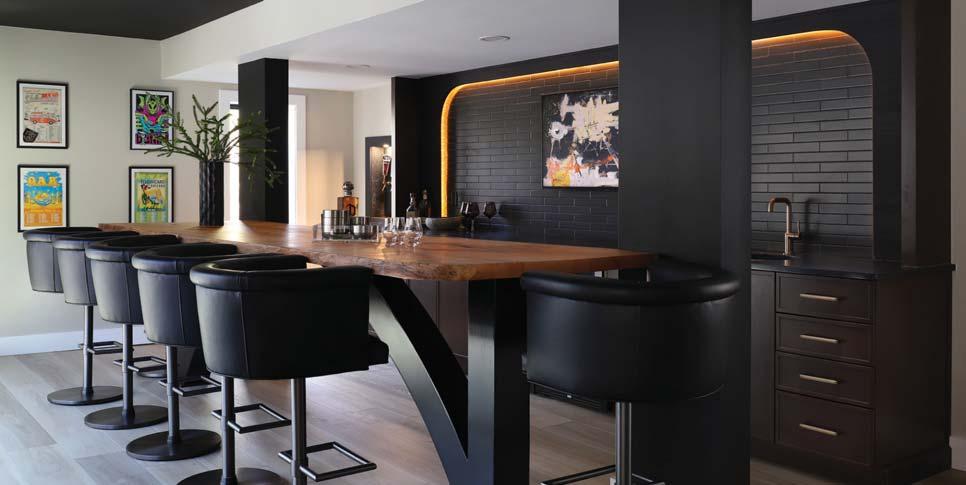
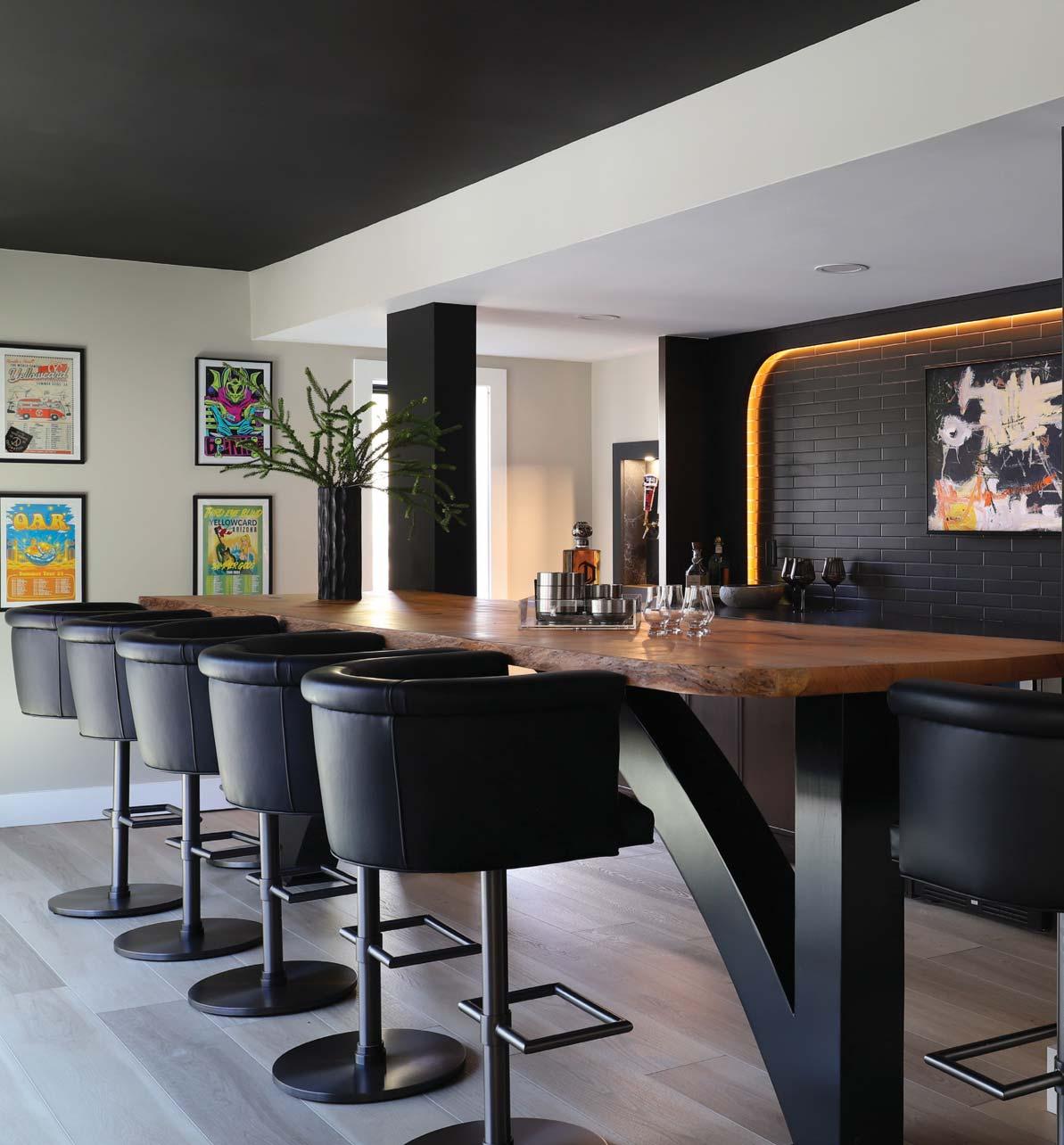
1 To create high-end luxury touches, Youngblood arranged for a backlit bar wall that casts a luminous glow for crafting cocktails. “Low lighting is important for creating a chic but inviting atmosphere,” she says.
COZY CORNER
2 A custom-made walnut bar top rivals real bars in terms of its size. Here, family and friends can meet for a round of drinks while playing board games or entertaining the kiddos.
DAPPER SPEAKEASY
3 Youngblood leaned into the basement’s speakeasy quality— but with a dapper twist. Darkened nickel cabinet pulls offer some glam, and black leather barstools with rolled arms bring in comfort.
DARK MODE
4 Moody hues abound from floor to ceiling. Midnight black paint drenches the walls, while matte black backsplash tiles usher in a dash of mystery and intrigue while creating a low-key focal point.
DOWN UNDER
SWANKY TOUCHES AND MOODY SHADES MAKE FOR A HIP HOME
HANGOUT.
—MICHELLE MASTRO
A STYLISH BASEMENT BAR MAKES staying at home better than a night out on the town. That was the thinking behind this Anderson Township space, designed by Amy Youngblood, designer and owner of Amy Youngblood Interiors. “The wife wanted the space to be as moody and dark and as clubby as possible,” Youngblood says.
This isn’t your grandparents’ home bar. Part of this space’s sophistication comes from the deep, rich, fully saturated shades. The dark palette creates a stylish contrast with the crisp white ceiling, which anchors the design and instantly elevates this at-home watering hole into the toast of the neighborhood. “The bar is a real departure from other homes in the area,” says Youngblood. “You might see this style in posh bars and trendy restaurants, but rarely if ever in a home.”
As a young couple with young kids, the homeowners wanted a convenient space for themselves and close friends (the bar can easily accommodate 10) to relax and unwind. Instead of a hotel lounge or wine bar, the homeowners can get the party started under their own roof.
QMy apartment in Hyde Park is across from Madison Park, a modest triangle of greenery. My neighbor says her grandfather used to talk about fishing in the lake at Madison Park as a kid, but we both agree that there can’t possibly have been a lake at that little corner. Was the park bigger at one time?
—FISH STORY
DEAR FISH:
Yes, Madison Park was many, many times larger than the humble patch of grass and trees across from your apartment. That’s because your neighbor’s grandfather spent his childhood fishing at a completely different Madison Park in a completely different place that’s been
Dr. Know is Jay Gilbert, radio personality and advertising prankster. Submit your questions about the city’s peculiarities at drknow@cincinnati magazine.com
completely obliterated and completely forgotten. His Madison Park was between Oakley and Fairfax, stretching roughly from today’s MadTree Brewing Taproom over to the Walmart on Red Bank Expressway. It existed from about 1910 to 1928, with 30 lush acres and a large lake where many people fished, boated, and swam— and a few drowned.
The people of Cincinnati somehow managed for decades to live with two Madison Parks: the small one near you and the large one further east. Yours, however, has emerged triumphant. It survives, while the other one got filled in and covered with subdivisions. Dozens of homeowners over there have no idea that they live atop a watery ghost. Feel free to start rumors about the Loch Oakley Monster.
Old office buildings used to have mail chutes on the wall at each floor’s elevators. Letters went into a slot and were collected at the bottom. The chutes are mostly sealed off now, but I saw that the Mercantile Library’s is open. Does mail still get picked up at the bottom? I’d be surprised. —PLEASE MR. POSTMAN
DEAR PLEASE:
The Mercantile Library enthusiastically (and slightly embarrassedly) thanks you for your inquiry. In 1997, U.S. mail chutes were designated as fire hazards and banned in new construction. Some old buildings do still use them, but most have voluntarily sealed them off. The building on Walnut Street housing Cincinnati’s beloved Mercantile Library at the top stopped using their chutes long ago, but someone apparently did not seal the one you noticed on the 12th floor (plus two others they found elsewhere). These have now been addressed, thanks to you.
The Doctor suggests we cut these folks a break. When you have a 10,000year lease and have been occupying the top floors of your building for more than 120 years, you’re entitled to a senior moment. The only questions remaining now are ob-
vious ones: How much mail has been mistakenly dropped in the slot? And what became of it? The Doctor has been assured that this topic is under investigation and the librarians will get back to us sometime in the next 10,000 years.
Now that Marty Brennaman no longer does play-by-play for the Reds, I enjoy hearing his voice at the airport. I don’t really need luggage advice, but hearing him at CVG is a comfort. Is this Marty’s post-retirement job now? Does he go back occasionally to record updates? —THAT’S A LONG FLY
DEAR FLY:
Ears are funny things. Especially yours. They enjoyed Marty Brennaman calling Reds games, but only after Marty retired did they seem to notice him in the ceiling at CVG. He’s been up there for years. Try some QTips.
Marty himself couldn’t quite remember when he recorded those travel reminders. “I would say probably 12 years ago,” he told the Doctor. “I’m kind of proud of the fact they came to me and asked me to do it.” Joe Zerhusen, however, has the receipts. He’s been the voice at Great American Ball Park since its first Opening Day in 2003, and he also runs recording sessions in the stadium’s broadcast booth. His records show that Marty recorded for CVG in February 2012. Marty did some updates during the COVID-19 era, such as “After stealing someone’s luggage, don’t touch your face!” Just kidding. But most of his advice is eternal. Common-sense pointers like “Don’t accept luggage from strangers,”“Don’t leave your luggage unattended,” and “Please do not use the Baggage Claim carousel as a kiddie ride; this is not Kings Island” will always be wise counsel.
LIVING IN CIN
BY JAY GILBERT
I Spirit of ’76 (Plus 50)
timing is good, because we’re currently going through much the same orgy of patriotic excess in 2026 as happened a halfcentury ago. Back in 1976, though, WEBN was staying true to its reputation as a rebellious brat by aggressively avoiding that year’s circus. We aired no bicentennial events, sketches, or contests.
It felt good being an oasis from the craziness, but toward the end of June we realized that we ought to do something for America’s 200th birthday. How about making a soundbite collage celebrating our favorite things about the nation, lasting five minutes or so? Fine, we said, let’s do it.
And then, as we began, something weird happened. We couldn’t stop. We became possessed for more than 72 sleepless hours. Snippets of recording tape flew around like we were making a U.S. flag out of confetti. Simultaneously, we raced around town searching for the countless iconic soundbites we needed. That’s right, kids: Today you can download iconic soundbites in seconds, but in 1976 we had to walk five miles in the snow for them. In July.
And now, the punchline: The finished piece turned out to be more than three times as long as our original concept. More than 15 head-spinning minutes. It would have been even longer had the clock not run out and forced us to broadcast it at exactly midnight on July 4, 1976. Here, then, is the story of our marathon to create a tribute to America and of the American ingenuity that got it done. But first—right now, dammit—you must hear this thing. Dim the lights. Silence the phone. Stop reading. And listen here: tinyurl.com/26ynb93k.
AMERICA’S BICENTENNIAL WAS EVEN WILDER THAN THIS YEAR’S CRAZINESS. FOR ME, ANYWAY.
I WANT YOU TO STOP READING THIS LIVING IN CIN COLUMN AT THE END OF THIS OPENING section. More words are obviously waiting down below that point, but ignore them for now. Just stop when I tell you, and here’s why.
Half a lifetime ago at WEBN, Cincinnati’s historically rebellious radio station, I took part in an audio project that became one of the best—hell, maybe it’s the very best—piece of work of my career. But almost no one has ever heard it. I’m frustrated. The work was so connected to a specific moment in history that it was broadcast in its entirety only once: on July 4, 1976, for the U.S. bicentennial. After all that sweat, just one frigging time! At midnight!
Now, 50 years later, a brief window has opened for you to appreciate this work. The
THANKS FOR LISTENING. IT’S A LOT, I know. Depending on your age, you perhaps didn’t recognize that old Pepsi commercial or that Chuck Berry song or the Mexican outlaw saying he ain’t got no stinking badges or WEBN’s original musical logo at the end. (If you didn’t make it to the end, that’s OK. Try again later). That’s why I am hereby providing you with a playlist identifying every single soundbite in the collage: tinyurl.com/ mpta3ep6. You’re welcome.
Using today’s resources, you can now assemble the whole thing yourself in hours instead of days, or simply get an AI agent
CONNECT:
with inspiring, diverse women making a difference in Greater Cincinnati.
to a mission that is improving lives through collective giving.
with an organization turning charitable donations into a powerful force for good.
“… I find myself lifted up by my participation in Impact 100. It gives me hope for our society and makes me feel like I am doing something very worthwhile. In addition, I have met so many intelligent, accomplished, compassionate women and enhanced my knowledge of nonprofit organizations in our community.” - Impact 100 Member
TAKE 2 MINUTES TO LEARN MORE!
LIVING IN CIN
to scoop up the soundbites and finish everything in 20 minutes (including all of the same subtle crossfades instead of blunt edits, you lazy bastard).
It took three people four days and nights to create “The WEBN Bicentennial Collage,” which we nicknamed “Life, Liberty, and the Purfuit of Happineff.” Most of
WE CELEBRATED
stuff ? Part of it, I think, was almost biological. We’d chosen careers as audio professionals because the media sounds we heard since childhood are forever swirling in our heads. It’s not a choice for people like us; those earworms are always playing. We were born to do this.
WEBN had thousands of records, so
AMERICA’S 200TH
BIRTHDAY
BY DOING THE MOST AMERICAN THING POSSIBLE: FLYING FREEDOM’S FREAK
FLAG FOR NO OTHER REASON THAN BECAUSE WE WANTED TO.
the work came from WEBN’s production guys, Tom Sandman and me. Jim Cavanaugh, a member of our news department, also contributed in a signifi cant and unusual way which I’ll explain in a bit.
Why couldn’t we stop at five minutes? What made the three of us keep adding
grabbing the clips from songs was easy, with certain exceptions. A rock station doesn’t have artists like Frank Sinatra, Merle Haggard, or John Philip Sousa laying around, and we wanted to drop in those kinds of surprises. Various WEBN staffers brought us records from home, as did
family and friends who were understandably annoyed at having to search for LPs while planning their big holiday weekend. I don’t think we had to stoop to visiting a record store, but maybe I’ve suppressed the memory.
The truly steep mountain was finding audio from movies and TV shows. That’s right, kids: Hollywood didn’t start selling video cassettes until 1977, so we had almost nothing. If Thomas Jefferson had put off writing the Declaration of Independence until 1780, our job would have been so much easier! WEBN’s library did have some spoken-word LPs with pieces we needed, but our biggest stroke of luck was Cavanaugh, who had a part-time job at WCPO-TV.
Back then, a lot of late-night and weekend TV consisted of old movies, and WCPO had a large film library. Was Jim willing to sneak in there, thread up the relevant reels on their 16-millimeter projector, record the soundbites, rewind the reels, and bring the
Private Banking¹ and Wealth Management & Trust²
Growing WealthBuilding Legacies
Stock Yards Bank & Trust’s Private Banking and Wealth Management & Trust divisions offer expert and personalized financial guidance. Scan the QR code to download a complimentary copy of “Tying Up Loose Ends: Record of Personal Affairs” and to learn more.
audio back to us? Do you have to ask? Have I mentioned that the three of us were possessed?
I haven’t even brought up the most obvious obstacle we faced: our regular jobs. Radio newscasts and commercials don’t write and produce themselves, you know. (Well, now they do, but they didn’t back then.) And, for me personally, topping all that stress was the fact that I was about 10 weeks away from becoming a father. No pressure.
SANDMAN AND I, WITH IDEAS SPEWING like a firehose, installed ourselves in separate studios wrangling records, turntables, tape machines, and splicing equipment. Hanging strips of tape around the room like decorations. By the way, I’m lying about the “separate studios” part. WEBN had only one production studio in 1976, forcing the two of us to figure out ways of working independently in the same room. We re-routed certain equipment to send audio to just Tom’s headphones and
other gear to send audio to just mine. Two guys recorded and edited alone, feverishly, while never more than two feet apart. Our only communication was the occasional Excuse me as we climbed over one another.
Cavanaugh worked across the hall in the even smaller WEBN news studio, assembling about one-quarter of what you hear in the collage and providing almost all of the movie soundbites stolen from WCPO. I wanted to get ahold of Jim to share memories for this article, but I couldn’t fi nd him. Anybody know if he’s still around?
As darkness fell on July 3 and midnight approached, we had to let go. Razor blades down. Thread it up. Roll tape. One broadcast, and that was it.
I worked various jobs at WEBN for 38 years, longer than anyone. My thousands of radio shows are mostly gone, but lots of fake and real commercials, song parodies, Fools Parades, and random oddities still exist. Some of it—the early stuff—I would
never, ever let you hear now. “It has not aged well” is an understatement.
But this one piece from 50 years ago? Sandman and I agree that it remains one of our proudest achievements. We remember what we went through to get it done. If Jim is still out there, I’m sure he feels the same way. We were three guys who slugged away for days at something that nobody had ordered us to do and worked Godknows-how-many hours without sleep, never expecting a dime of extra pay. That must mean we were working at Cincinnati’s WEBN, the luckiest jobs of our lives, celebrating America’s 200th birthday by doing the most American thing possible: flying freedom’s freak flag for no other reason than because we wanted to.
Thanks for adding yourself to the still-tragically small number of people who have heard our forgotten masterpiece. Without a doubt, you missed some of our clever juxtapositions the first time through. Listen to it again!
FEEL GOOD ABOUT FEELING GOOD
Ategrity Specialty Insurance Company, carrier of the Heartland, is proud to sponsor Cincinnati Magazine’s Discover Local Spotlight and champion the small businesses that power Cincinnati and the Midwest.
Reach out to your agent for an Ategrity insurance quote for your business and let us protect what you’re building! PRESENTED BY
DRESS STORE
The Queen’s Lace
A dress boutique focused on mothers-of-the-bride / groom.
320b W. Benson St., Reading https://thequeenslace.com
SENIOR LIVING
St. Theresa Village Senior Living
Providing safe, quality low-income housing and affordable resident services for seniors in need. 6783 Siebern Ave., Cincinnati, OH 45236 https://www.mercyhousing.org/southeast/
Fleet Feet
Cincinnati’s local running specialty store since ’01. 9525 Kenwood Rd., Blue Ash https://fleetfeetcincy.com
CHILDCARE
Mini Miracles Learning Center
Where every child is a miracle worth nurturing. 1832 E. Seymour Ave., Cincinnati, OH 45237 Minimiracles710@yahoo.com
Breadsmith
Breadsmith produces artisan, preservative-free bread from scratch, daily.
3500 Michigan Ave., Hyde Park 315 Fairfield Ave., Bellevue https://www.breadsmith.com/cincinnati/
BAR/RESTAURANT
Brew House
A friendly neighborhood bar with good burgers. 1047 E. McMillan St., Cincinnati, OH 45206 https://www.brewhouse.com/
Expectations Grape
Expectations Grape
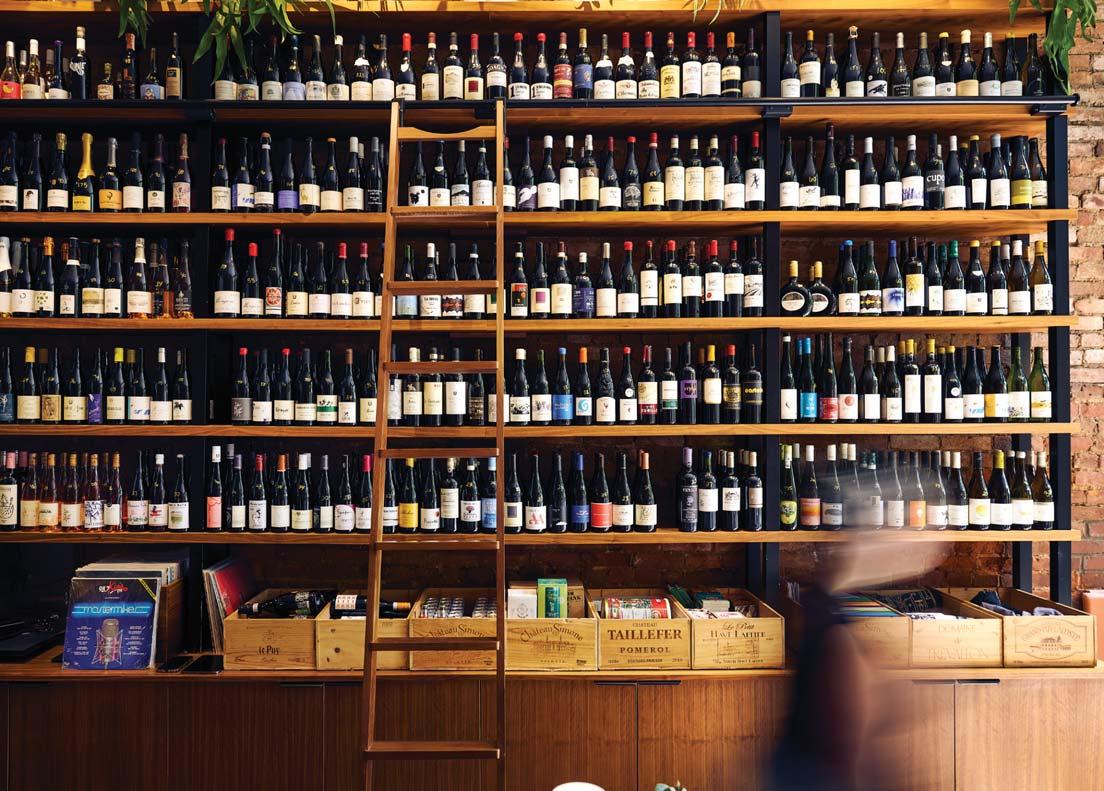
Cab. Chard. Sauv blanc. Whatever your preference, you'll find it somewhere in the many wineries, wine shops, and wine bars throughout the Queen City. Oenophiles, take your fill and watch your glass runneth over.
By Emma Balcom, Brianna Connock,
Kennedy Dudley, John Fox, M. Leigh Hood, Claire Lefton, Aiesha D. Little, Elizabeth A. Lowry, Tiffany Luckey, Sarah McCosham, Amanda Boyd Walters, Rodney Wilson, and Elizabeth Wood
A BOTTLE OR TWO
Owner David Pustinger says his wine shop’s Thursday night tastings are “like Cheers.” It serves as a stop for wine enthusiasts from both near and far who enjoy discovering and purchasing unique and familiar wines from a welcoming and knowledgeable staff. Shop red, white, sparkling, sweet, rosé, and more wine varietals online or in-store.
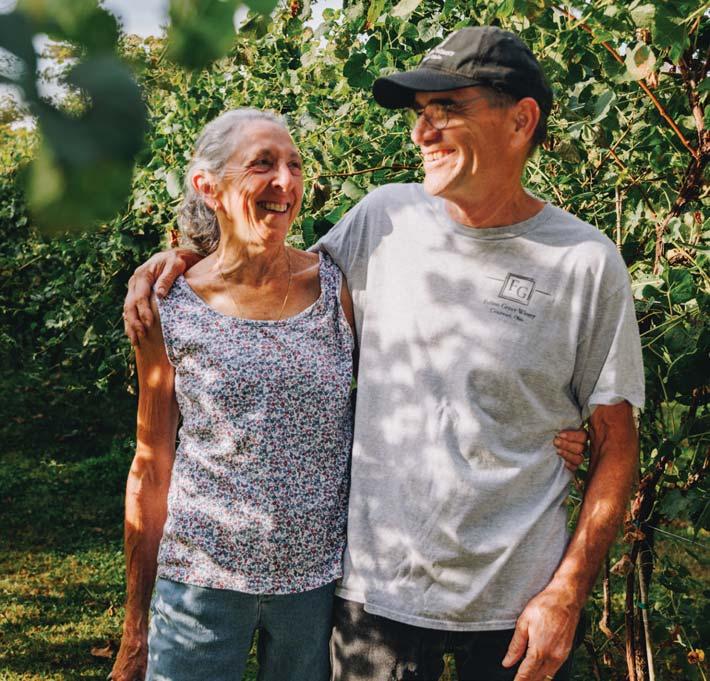
This winery is all about special touches: Wines named after the owners’ grandchildren. Bottles printed with personalized labels for that special occasion. A name derived from a crooked Sycamore tree that winemaker John Keller and his wife Charnie would pass on every trip to the property. Plus, wine tastings on the third Saturday of (almost) every month. 7405 Industrial Row Dr., Mason, (513) 204-6060, benttreewinery.com
DILLY BISTRO, BAR & BOTTLE SHOP
Pop in for a bottle and carryout or stay for a meal inside Dilly’s spacious dining room or on the patio while sipping on a bottle from its shop (for a corkage fee). From hosting the Xavier men’s basketball coach’s live radio show to local musical acts on its stage, this is a full-service, one-stopshop for wine lovers and foodies alike. 6818 Wooster Pike, Mariemont, (513) 561-5233, dillybistro.com
FINE WINE O’CLOCK
Specializing in wines from Macedonia and the Balkan region, Fine Wine’s wine club will supply you with two bottles every month. If you like to drink with others, stop in to sip on a glass at the bar while perusing the food menu, featuring
wineries wine shops
charcuterie, flatbreads, and more. And don’t forget to check out the discounted Wines of the Week or the Thirsty Thursday weekly tastings. 6223 Montgomery Rd., Pleasant Ridge, (513) 429-2822, finewineoclock.com
IRIS READ
Iris Read stocks the latest natural wines for you to try at the bar or purchase by the bottle. The East Walnut Hills shop also regularly hosts tasting events and pop-ups, and natural wine fans can join the “Wine Clique,” a monthly subscription box with tasting notes and descriptions. 733 E. McMillan St., Walnut Hills, (513) 493-2270, irisread.wine
THE LOON: WINE BAR & SHOP
Northside’s wine lovers know the beloved Loon (formerly The Listing Loon) is the perfect place to get cozy with a tall glass. Loonies frequent the bar not just for the excellent curated vino selection—it also has a wine club for Northside’s oenophiles— but for intimate music performances and monthly community-building events like book clubs, writers’ meetings, and watercolor nights. 4027 Hamilton Ave., Northside, (513) 429-2010, theloonwinebar.com
Village Wines of Glendale
Tucked away in Glendale’s Village Square, Village Wines has a wide selection of wines for all budgets and tastes. Enjoy a glass at the bar in the Piccolo Wine Room (which also features a small plates menu) or stop by for the weekly Friday night tastings.
23 Village Square, Glendale, (513) 771-6611, villagewinesglendale.com
Ignition Wines
How did you get started in the wine industry?
What made you take the leap and start Ignition Wines?
So what is your perception on wine?
What does your day to day look like?
What do you look for when selecting the wines?
What’s your favorite wine?
What’s unique about Cincinnati’s wine community? ignitionwines.com
LUDLOW WINES
When you shop at this familyowned wine store in the Clifton Gaslight District, owner Mike Anagnostou will ensure you have a great personal experience. He and his friendly staff members will be more than happy to guide you and help find the perfect bottle. There are also popular tastings on Fridays and Saturdays and free delivery is provided to any shoppers in the neighborhood. 343 Ludlow Ave., Clifton, (513) 751-3727, ludlowwines.com
MARKET WINES FINDLAY MARKET
Frequent Findlay Market shoppers know that this is the place to go when you need to find that perfect wine to pair with fresh local food. Owner Michael Maxwell offers about 700 wines from all over the world, but if the selection is overwhelming, you can always try some curated picks at the beloved weekly tastings or enjoy a single glass pour while watching the hustle and bustle outside. 128 W. Elder St., Over-the-Rhine, (513) 744-9888, market-wines.com
MARKET WINES WALNUT HILLS
Owner Lynn Love worked for and was mentored by Michael Maxwell for several years before opening the Walnut Hills location of Market Wines so you’ll get the same top-notch service to help you find a favorite, whatever your preferences. Weekend wine tasting experiences are available by reservation. 767 E. McMillan St., East Walnut Hills, (513) 221-0287, marketwineswalnuthills.com
REVEL OTR URBAN WINERY
Delectable handcrafted smallbatch wines put this tiny but mighty urban winery on the map. Since opening in 2016, the Revel team has earned 10 medals at the Cincinnati International Wine Festival, including continued on page 41
wineries wine shops
Lush Life Brands
How did you get started with Lush Life?
What’s been the reception for the Black Wine Fest so far?
What lessons have you learned in the past four years about community while running events?
Why do you think having an event like yours is important to the community?
Hart & Cru
Wine is curated just for you at Hart & Cru. Pick personalized selections tailored to your palate or choose from expertly crafted selections, and have it all delivered directly to your door. Visit for a taste of Europe and enjoy a menu perfectly paired by experienced sommelier and Hart & Cru founder Kevin Hart. 1206 Broadway St., Pendleton, (513) 725-7525, hartandcru.com
Check out these wine bars around the tri-state.
golds for its sangiovese, Black Sheep Blanc, and malbec. Plus, the winery’s frequent events, live performances, and social gatherings make it a great place to hang out with friends while sharing a bottle or two. 111 E. 12th St., Over-theRhine, (513) 579-9463, revelotr.com
THE SKELETON ROOT
2021 Madison Rd., Evanston, (513) 871-8788, annatawinebarandcellar.com
This woman-owned winery helps you drink local by crafting unique wines from largely forgotten American heritage grapes. The company focuses on revitalizing regional growing and paying homage to the city’s history of urban wine production. Sample the dry grape-to-glass wines in the cozy-yet-industrial tasting lounge. 38 W. McMicken Ave., Over-the-Rhine, (513) 918-3015, skeletonroot.com
VALLEY VINEYARDS
Fifty years in, Valley Vineyards entered a new era last fall with Matt Cox and Rachel Sackenheim taking over as its owners. The popular spot continues to host grill nights, live music, and more within an expanded dining area, added pavilions, and a new stage, all to provide an elevated experience that includes a wine dinner in partnership with Golden Lamb. 2276 US-22, Morrow, (513) 899-2485, valleyvineyards.com
VINOLOGY
Home to a polished wine bar, an expansive cellar with more than 400 bottles for purchase, and the Cincinnati Wine Academy, Vinology is the place to taste, buy, and learn about wine under one roof. The tasting bar features more than 20 wines as well as a build-your-own charcuterie board menu. 3181 Linwood Ave., Mt. Lookout, (513) 376-9394, vinology.club
VV EXPRESS
This summer, VV The Italian Experience in Mt. Lookout jumped into the wine shop game with VV Express. The new store—located next door to its older sibling—carries wines from all 20 regions of Italy, representing the country’s regional varietal diversity. Drop by after dinner and you’re sure to find a special bottle of vino to pair with your next Italian meal at home. 1028 Delta Ave., Mt. Lookout, (513) 485-4007
WATER TOWER FINE WINES
Come for one of the largest selections of Champagne in the country and stay for the wine tastings, events, and good company. Water Tower also plays host to private and group events, specializing in the curation of selections for weddings, birthdays, showers, and other special occasions. 6136 Campus Ln., Mt. Washington, (513) 231-WINE (9463), watertowerfinewines.com
THE WINE CELLAR OUTLET
You can procure 10- to 20-year-old wines in a historical setting at this outlet located within Longworth Hall. Here, you can find unique selections of many varietals from all over the world at near-unbeatable prices. For more adventurous drinkers, you can also get 12-bottle mystery cases for around $100. And keep an eye on the store’s event calendar for frequent complimentary sampling events. 700 W. Pete Rose Way, Unit 1-E, Suite 124, downtown, (513) 929-0651, thewinecellargroup.com
THE WINE MERCHANT
If you’re looking for the perfect wine to match your meal, The Wine Merchant specializes in food pairings and even has a tab on its website with suggestions. In addition to the large bottle selection (local delivery and curbside pickup available), the shop offers ticketed tasting events and multiple wine club subscription options. 3972 Edwards Rd., Oakley, (513) 731-1515, winemerchantcincinnati.com
WOODSTONE CREEK WINERY & DISTILLERY
Part winery, part meadery, part distillery, Woodstone Creek is Ohio’s first licensed microdistillery, handcrafting everything from fruit wines and honey-based meads to bourbon, whiskey, gin, and vodka. Adventurous drinkers will appreciate the constantly changing lineup and the opportunity to sample wine and spirits under one roof without sacrificing quality or craftsmanship. 4712 Vine St., St. Bernard, (513) 569-0300, woodstonecreek.com
Vinoklet Winery
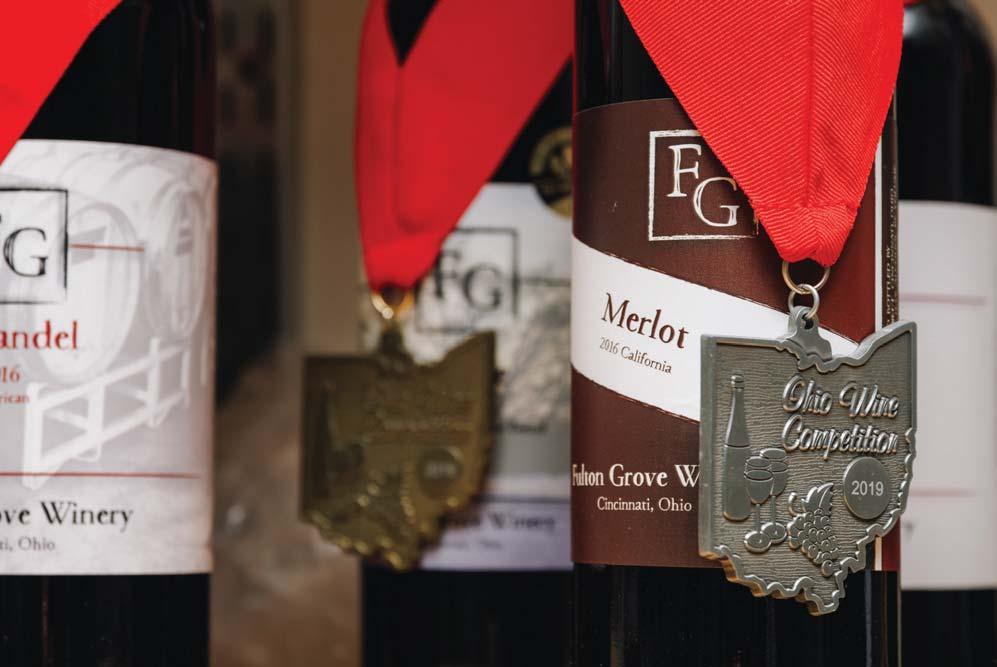
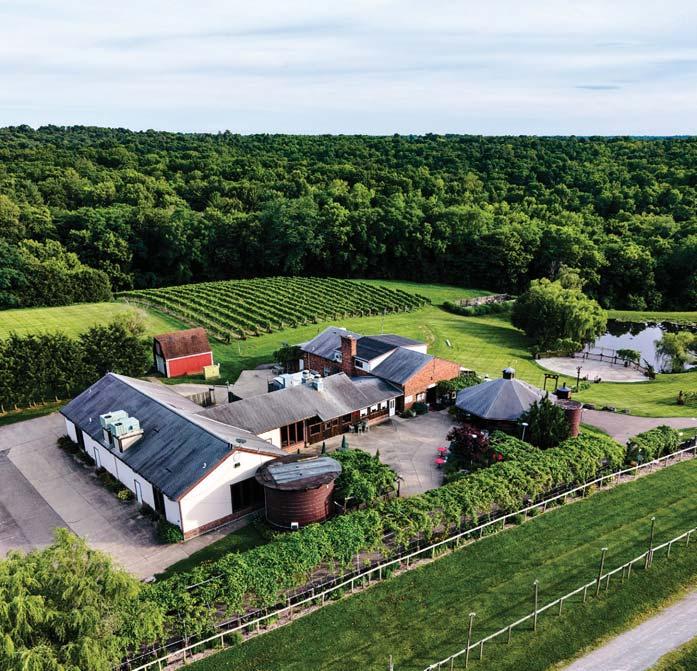
Among the rolling hillsides of Colerain Township sits Vinoklet Winery, Hamilton County’s only working winery. Founder Kreso Mikulic planted the first seeds back in 1986 and watched his creation grow to include more than 30,000 vines over 30-plus acres. The winery currently produces 13 red, white, and fruit varietals, including the dry white Tears of Joy, which took home the gold in the 2019 Ohio State Wine Competition. 11069 Colerain Ave., Colerain Twp., (513) 385-9309, vinokletwines.com
kentucky
4 MILE WINE CO.
In a rural area of Northern Kentucky known for sweet fruit wines, 4 Mile Wine Co.’s Ben and Holly Studer took a different path. The couple’s mead uses different varieties of honey plus whole fruit to create a drier, less sweet drink. Camp Springs Tavern, located near the Studers’ winery, serves as its tasting room, and if you’re lucky, you can nab a Honey Slush made from one of the four available varieties. 7009 Stonehouse Rd., Melbourne, campspringstavern.com
ATWOOD HILL WINERY
Nostalgic family mementos grace the grounds of this former tobacco farm, now in its sixth generation of ownership. The beloved 1930s farmhouse has been modernized to host gatherings while the spacious patio spoils sippers with sweeping views. Three acres of French and American grape varieties yield 14 distinct wine selections. 1616 Spillman Rd., Morning View, (859) 356-1936, atwoodhillwinery.com
BRIANZA GARDENS & WINERY
Turn your visit into a vacation with three charming, rentable on-site cottages nestled among rolling vineyard vistas. Classic tours and tastings across a deep menu of wine selections, plus plenty of picturesque gathering spaces, make this an ideal locale for intimate excursions and sizeable celebrations alike. 14611 Salem Creek Rd., Verona, (859) 445-9369, brianzagardens.com
CRAFTS & VINES
This small neighborhood spot fits perfectly in MainStrasse, offering eight wines and eight craft beers on tap, plus cocktails, by-the-glass wine pours, and local craft beer cans. It has a small food menu featuring meat and cheese charcuterie boards, small plates, and desserts. Stop by for wine tastings and wine and cigar pairings and take home your new favorite bottle. 642 Main St., Covington, (859) 360-0476, craftsandvines.com
GOOD SPIRITS WINE & TOBACCO
With multiple Northen Kentucky locations, this mini-chain stocks wines from across Europe, South America, Australia and New Zealand, and South Africa as well as 15 U.S. states, including Kentucky, Indiana, and Ohio. There’s a big selection of Japanese sake, too. 584 Buttermilk Pk., Crescent Springs, (859) 261-8333, and other locations, goodspiritsky.com
GUNPOWDER CREEK VINEYARDS
Antique farm charm abounds at this quaint winery on the Ohio River. A wood-burning stove anchors the cozy tasting parlor, which snugly seats about 20, plus a gravel patio makes room for more revelers. Located across from the famous Rabbit Hash General Store, this winery is the perfect complement to a day trip. 10046 Lower River Rd., Burlington, (859) 468-3298
wineries wine shops
Cincinnati Wine Academy
Seconda Volta Vineyards
Nearly hidden on an Anderson Township hillside, this micro-vineyard salutes Greater Cincinnati’s winemaking past. Eric and Lauren Lombardo produce just two wines, Laurentia, a blend of pinot grigio and vidal blanc, and Carlotta, a Bordeaux-style blend. While there is no tasting room onsite, you can find Seconda Volta at Market Wines at Findlay Market, Country Fresh Farm Market, or Water Tower Fine Wines. secondavolta.com
ROSE HILL FARM WINERY
For five generations, the Campbell family has farmed the land that today hosts vines for six grape varieties and crops of juicy Triple Crown blackberries, which are used to make the winery’s signature blackberry dessert wine. Public tastings aren’t offered, but bottles can be purchased by appointment and at select local retailers. 199 Highway 17 North, Butler, (859) 640-8239, rosehillfarmwinery.com
SEVEN WELLS VINEYARD & WINERY
With its rolling bluegrass hills and verdant foliage, Seven Wells reminds you that you are indeed still in Kentucky, not the actual state of California. Pop into the tasting room Fridays through Sundays for samples, and if you’re into a dry wine with a touch of oaky nuance (because, Kentucky), be sure to give the Howling Coyote a try. 1223 Siry Rd., California, (859) 816-0003, sevenwellswinery.com
SCHOOLYARD WINERY
Aptly named, this veteran-owned hobby-turned-business is housed in a historic schoolhouse and oozes with eclectic hospitality. Regular vendor markets make the venue a thrumming community hub, and a selection of 15 wines—six reds, six whites, a couple rosés, a blueberry, a spiced apple, a jalapeño, and a seasonal Christmas blend—makes for an approachable imbibing experience. 14923 Walton-Verona Rd., Verona, (859) 814-4126, schoolyardwinery.com
W ineries & S hops
Over the last decade, Steve and Sandy Compston Scott rehabbed a two-room schoolhouse and planted Noiret and vidal blanc vines on about a dozen acres of Campbell County hillside. Their charming tasting room has a full bar and a food menu that you can enjoy during monthly dinners, along with plenty of room outside. 8292 Stonehouse Rd., California, (859) 653-7595, stonehousesettlementwinery.com
STONEBROOK WINERY
On your way to StoneBrook Winery, keep your eyes peeled for the small signs pointing the way to this farmhouse tasting room. Sample a wide variety of fruit wines, grape wines, mead, and cider in the farmhouse or out back on the covered patio. Pack a picnic, grab a cheese tray, or check the winery’s calendar for one of its occasional dinners. 6570 Vineyard Ln., Camp Springs, (859) 635-0111, stonebrookwinery.com
TASTE CELLAR & PANTRY
A new addition to the local wine scene, Taste opened inside a former art gallery last November. Challis and Lauren Hodge are no strangers to the Cincinnati food scene, and here you’ll find everything needed for the ultimate wine and cheese spread: wines from small producers, spirits, craft beers, cheeses, charcuterie, pantry essentials, and gifts. 16 N. Ft. Thomas Ave., Fort Thomas, (859) 916-8488, tastecellarandpantry.com
UNION WINE & BOURBON HOUSE
If your idea of the ideal pairing includes a libation and cigar, this is your spot. In addition to an extensive array of liquor that includes Kentucky mainstays like Maker’s Mark and Jim Beam, the store’s shelves always feature new wines worth trying. The shop has an impressive cigar inventory sure to please even the most discerning aficionado. 10358 US-42, Union, (859) 869-0006, unionwineandbourbonhouse.com
VALLEY WINE & SPIRITS
Edgewood locals know Valley Wine & Spirits as the place to go for a casual bourbon or bottle tasting with little pretention (and great pairings—doughnuts or Reese’s are perfectly acceptable). From wine to whiskey, you’ll find Valley Wine’s shelves fully stocked with anything
your heart could desire and maybe some new-to-you pours, too. 152 Barnwood Dr., Edgewood, (859) 360-3134, facebook.com/valleyws
VERONA VINEYARDS
Family owned and operated, Verona has a rustic, charming farm feel that’s laid-back and welcoming—and this ethos expands beyond the wines, too. From handcrafted beers and Kentucky bourbon to farm-inspired food and live music, this Kentucky vineyard is a place to carve an entire day around. Or weekend. Verona Vineyards has a guest house on the property that transforms a wine tasting or dinner out into an entire experience. 13815 Walton-Verona Rd, Verona, (859) 485-3544, veronavineyards.com
indiana AT THE BARN WINERY
A restored barn serves as the centerpiece of this charming, rustic Indiana small-town winery, where visitors escape the city for an afternoon (or evening) of wine tasting, scenic views, and live music in the summer. Signature fruit wines remain popular, though the winery’s lineup includes something for nearly every palate. 4152 N. Dearborn Rd., Logan, (513) 519-8745, atthebarnwinery.com
ERTEL CELLARS WINERY
Nestled in the lush rolling hills of southeast Indiana, Ertel Cellars combines sweeping countryside views with one of the region’s most established vineyards, which produces seven varieties of grapes. And while the winery’s hilltop setting is reason enough to visit, its restaurant, lounge, and wine market elevate it beyond a standard tasting room. 3794 E. County Rd., 1100 N., Batesville, (812) 933-1500, ertelcellars.com
HOLTKAMP WINERY AND VINEYARDS
Holtkamp offers a laid-back countryside experience that encourages you to linger. The family-owned operation produces and bottles its wines using grapes grown in its vineyards alongside carefully sourced fruit from premier growing regions. Holtkamp also pairs awardwinning wines with brick-oven pizzas (weekends only), outdoor seating, and frequent live events. 10868 Woliung Rd., Sunman, (513) 602-5580, holtkampwinery.com
POUR HOUSE BOTTLE SHOP
In Aurora, Indiana, this local gem known for a small but solid selection of aged beers, imports, and spirits. Folks praise the shop’s customer service and prices, and if you don’t find what you need on the shelf, ask and ye shall (probably) receive, according to regulars. 612 Green Blvd., Aurora, (812) 964-5284
THE RIDGE WINERY
The Ridge embraces an easygoing spirit that has made Indiana wine country increasingly popular with locals. The winery offers a tasting room and is looking to expand with an event space in the future, while the surrounding Lawrenceburg area offers plentiful entertainment. Its wine list spans sweet and fruit wines as well as a few dry varietals, making it approachable for newcomers and enthusiasts alike. 202 Vine St., Lawrenceburg, (812) 532-2222, theridgewinery.com
Available
Available locally at Jungle Jim’s in Eastgate.
locally at Party Town in Florence.
Available locally at Ripple Wine Bar in Covington.
Available locally at Ripple Wine Bar in Covington.
Available locally at The Party Source in Bellevue.
Brewster Rhoads, Cincinnati’s favorite river rat, seeks new adventures as his annual Paddlefest event turns 25.
BY CARRIE BLACKMORE
PHOTOGRAPH BY JEREMY KRAMER
IN HIS WAKE Brewster Rhoads photographed on the Ohio River on June 30, 2026.
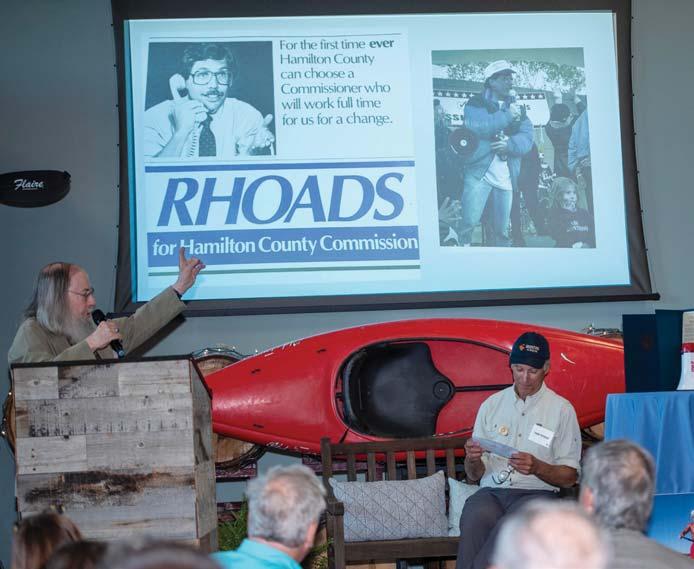
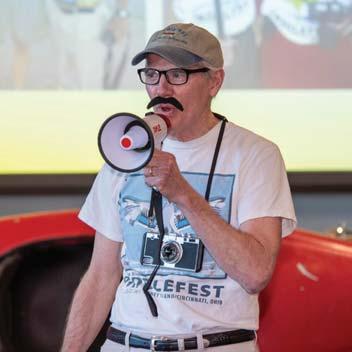
Standing on stage at MadTree Brewing in Oakley in May, former U.S. Senator Rob Portman described his first time paddling past Brewster Rhoads’s houseboat on the Ohio River. “Tied to my left, I saw an ancient houseboat with a grill on the back, ” said Portman, impersonating Rhoads in a fake mustache, a Paddlefest T-shirt, and ball cap. “I found out it’s 70 years old. Brewster had never taken it out on the Ohio River— good thing, because it was without an engine. Brewster calls it his vacation home, but what I saw had been there so long the ropes tying it to the dock had grown roots. Classic Brewster. He’s so frugal he should be a Republican.”
The audience, attending a “rhoast” of Rhoads to celebrate his years of service, erupted with laughter. “My experience with this wily Democratic strategist,” continued the famously Republican Portman, “is that he has become a respected nature strategist precisely because he sees past party labels. He’s a proud Democrat who believes in the Big Tent as well as the Green Umbrella.”
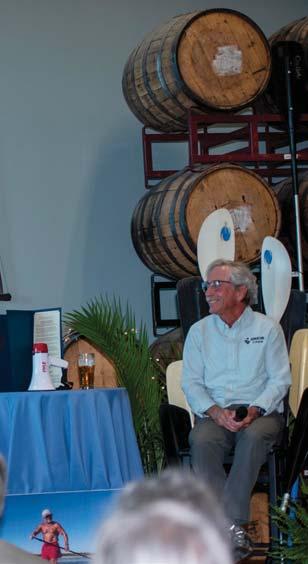
The roast, emceed by former Cincinnati Zoo Director Thane Maynard, featured three former Ohio governors and a throng of local elected officials, along with some of Rhoads’s friends, family, and coworkers. Even Jane Fonda sent a video message. The evening also raised more than $100,000 for one of Rhoads’s passion projects, the nonprofit organization Adventure Crew, which helps local youth get active in the outdoors, be it hiking, mountain biking, skiing, or kayaking.
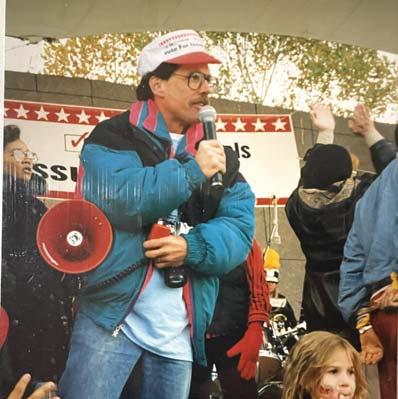
Rhoads has spent more than 50 years in public service, often behind the scenes and on the other side of a megaphone or a camera. Through the decades, he’s organized some 150 campaigns for political candidates and issues, before becoming the region’s
pied piper around environmental issues and goals as the first executive director of Green Umbrella and, for decades now, one of the Ohio River’s biggest fans.
Slowing down goes against the nature of this 5-foot-6 Energizer Bunny. But with a new grandchild, his first, having arrived in June and his 75th birthday approaching in October, even Rhoads admits it’s time to pull back a bit and enjoy life more.
At the roast, Kylie Johnson, managing director of field advocacy for the Ohio Environmental Council, shared her first experience meeting Rhoads. She was opening an Ohio office for a national climate nonprofit and giving a presentation to a group in Cincinnati. She noticed a short man in attendance smiling from ear to ear throughout her talk.
“I remember thinking this might be the happiest man that I have ever met. What is his deal?” Johnson said.
“I would learn that is just the joy that’s Brewster. I know my story is not unique. Many of us have had our careers and confidence shaped because he took the time to connect with us, to champion us, and to cheer us on.”
CARROLL BREWSTER RHOADS III WAS BORN IN 1951 and named after his grandfather, a prominent attorney in Philadelphia. His father was a manager at the telephone company, while his mother stayed at home to care for Brewster and his two younger siblings. Their home sat on three acres of land at the edge of suburbia and farmland, he says, about 15 miles outside of downtown Philly.
“I grew up making lean-tos and building fires,” says Rhoads. “It was the sort of deal where on a Saturday or a Sunday or vacation day Mom would say, Just come back when you hear the dinner bell ring.”
His father had served in World War II. Having spent many unpleasant nights in a tent in the French countryside during the war, he was hesitant when his children begged to go camping. But, led by Brewster, the children succeeded in twisting their father’s arm and the family took a trip to Nova Scotia.
“The first night, it was pouring rain, and of course we hadn’t read the instructions to raise the tent,” Rhoads recalls. “But the good news is the sun came out the next day and we had a wonderful trip.”
The family camped regularly from then on, and his father kept up the pastime for the rest of his life, Rhoads says.
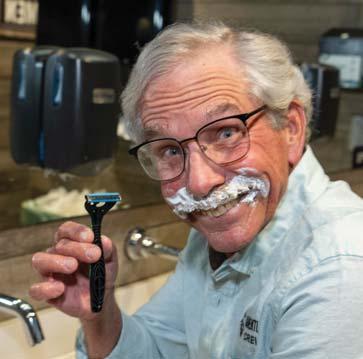
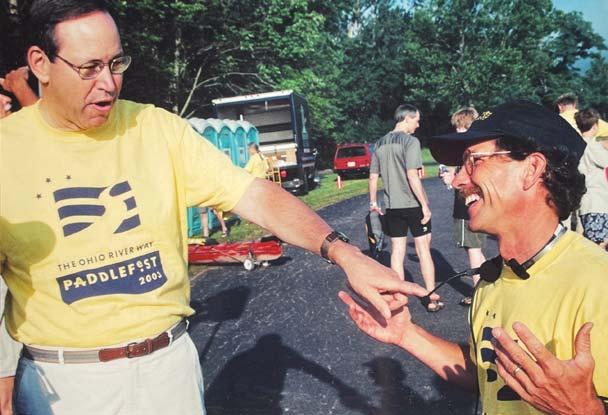
RIVER RUNS THROUGH HIM Brewster Rhoads will do anything to help improve his community, from managing political campaigns (including his own) to launching Paddlefest (with former Governor Bob Taft below) to shaving off his iconic mustache. Former Senator Rob Portman (top at left) helped lead tributes to Rhoads on May 7.
Rhoads attended William Penn Charter School, a Quaker school founded by William Penn in 1689 and one of the longest continuously operating schools in the U.S. By 1969, the year Rhoads graduated, he says the student body was mainly secular, with a handful of students identifying as Quaker, but many of the school’s ideals appealed to him, like the slogan “Good instruction is better than riches.”
Rhoads was unsurprisingly an active teen, confirms his younger brother Ste-
phen. Brewster adored sports and played as many as he could until a series of serious concussions led doctors to recommended that he no longer participate in contact sports.
“He was a good tennis player, and that didn’t seem to bother his headaches and things, but he couldn’t continue wrestling, which is probably what he would have really excelled at,” says Stephen. “Instead, he became the manager of all things sports. He managed the
THE
Remembering the American Revolution’s sons and daughters who founded and settled Cincinnati.
By JOHN STOWELL
By JESSICA DUNHAM
Collage
Peering to the west as his surveying party paddled through the muddy waters, John Cleves Symmes saw an opening in the tree canopy along the shoreline.
It was just as he’d pictured it in his mind. This bow of land marking the confluence of the Great Miami and Ohio rivers is where he imagined placing the capital city of the million acres he’d bought from the new government of the United States of America.
When Symmes splashed ashore in the fall of 1788, he became Cincinnati’s first west-sider. He was just one of many Revolutionary War veterans who had staked their lives and fortunes in the cause of freedom and hungered for a piece of the new Northwest Territory.
The treaty ending the American Revolution had doubled the size of the original 13 colonies, placing the new nation’s western boundary at the Mississippi River. No one had consulted the Shawnee or the Miami people already living here, but the land rush was on. Access to Ohio was the reward for soldiers whom Congress hadn’t paid and couldn’t pay. And speculators like Symmes gobbled it up, re-selling to anyone wanting to start a new life on the frontier.
There are more than 1,200 Revolution-
ary War veterans that we know of buried in southwest Ohio, specifically in Warren, Butler, Hamilton, and Clermont counties, says Michael Gunn, past president of the local chapter of Sons of the American Revolution. They’re scattered in large cemeteries like Spring Grove and small family plots. Dozens are probably buried under Washington Park in Over-the-Rhine. There are likely at least two buried under the Smith/ Edwards exit ramp off of I-71.
Gunn, a retired chemist with a Ph.D. in safety management, became interested in his genealogy 20 years ago and got hooked when he discovered he was descended from two Revolutionary War soldiers. He’s now one of Ohio’s foremost experts on identifying the burial sites and histories of these patriots. “My goal is simple,” he says of his quest. “Find them, mark them, and honor them.”
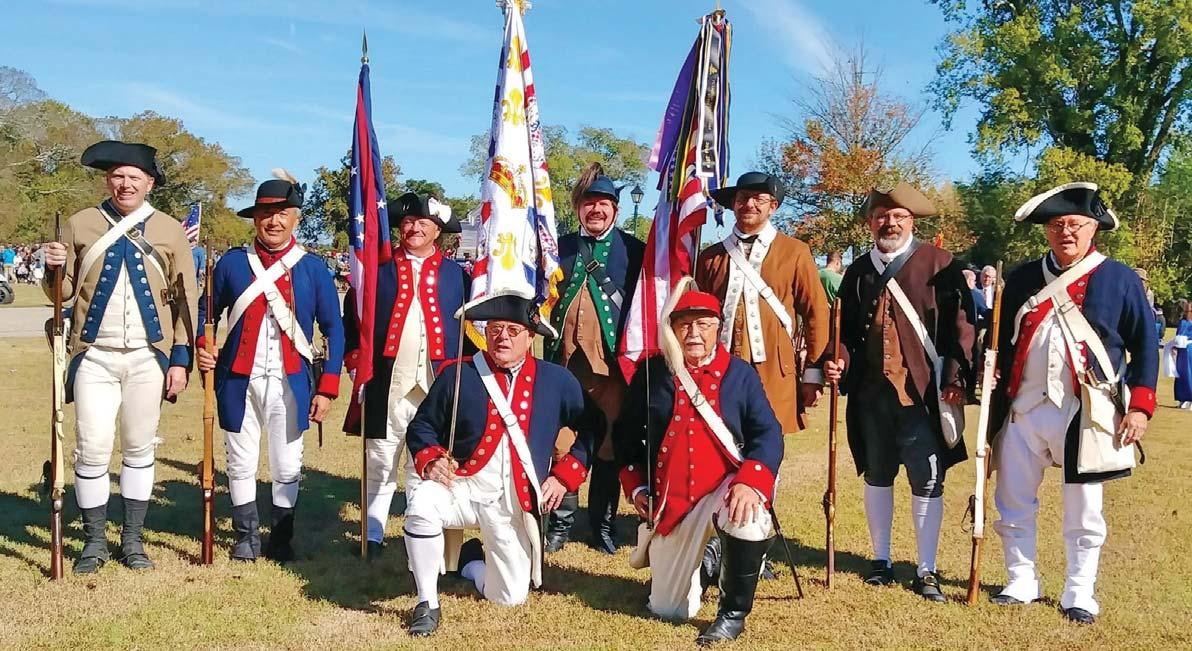
To that end, the local Sons of the American Revolution chapter marks and honors five patriots each year with a ceremony, a plaque, and a musket salute. It’s recogni-
tion, Gunn says, of the sacrifices these men made in war and the adventurous spirit they brought here in settling Ohio.
When the war formally ended in September 1783, thousands of American soldiers were expected to return to their homes and resume life as it had been. But the world had changed for the better and the worse—they’d won their freedom from the British monarchy, but many possessed only the tattered clothes on their backs and had no money in their pockets.
“Not only had they sacrificed their time, but they’d also sacrificed their opportunity,” says John Zimkus, historian and educational director at Harmon Museum in Lebanon. “All those years away from home meant they hadn’t farmed. They hadn’t learned a trade. They hadn’t saved any money, and the money that was circulating out there wasn’t worth anything.”
The United States was independent and broke, but the treaty with Britain added roughly 430,000 square miles of land to the new nation. For the soldier who had lost all
those years carrying a musket, Ohio was a good place to start over.
The British cannonball hit with an explosive force that rocked the small gunboat and sent splintered wood across the lake. Benjamin Rue, then 24, knew his USS Philadelphia was doomed to sink to the bottom of Lake Champlain. He swam to shore, evaded capture, and went on to fight in future battles at Trenton and Princeton. America lost its first-ever naval skirmish, the Battle of Valcour Island in upstate New York, but it delayed the British just enough to thwart their plans to sail down the Hudson River to New York City and isolate the rebellious New England colonies.
After the war, and a few years after the Native Americans in Ohio had been forced to cede their homelands, Rue, now in his early 50s, made the leap. The Treaty of Greenville “guaranteed” peace, and with it came an influx of settlers. Rue reasoned they’d need a place to sleep, drink, and eat, so why not go too?
He would build the Crossed Keys Tavern, a building that still exists about six miles east of Lebanon on the grounds of Camp Kern. “It was mostly just a sleeping place,” says Zimkus. “You were just getting a piece of the floor or, if you got a room, you were sharing it with strangers.”
A few years later, with the nearby Golden Lamb Inn suffering from management and financial issues, Rue accepted an offer to manage it back to health. He was an esteemed community leader and, when he died, received a full military funeral. But where?
“No one knows where he’s buried,” says Zimkus, who has spent a lot of time poring over records in search of the veteran’s grave. “The obituary that ran in the local newspaper doesn’t say.”
Rue had a family, but their gravesites are unknown as well. “My guess is it’s within five miles of here [Lebanon], and there was
a cemetery next to Crossed Keys, so they could be there,” he suggests.
Zimkus believes it’s more likely that Rue is buried in another church cemetery that, years later, was purchased by the city and subsequently sold to a car dealership. Is it possible that Benjamin Rue, a patriot who fought in our nation’s first naval battle, is buried under a Chrysler showroom?
When Mary Dunlevy’s widowed mother took a British officer as her husband, Dunlevy was disgusted. Though barely a teenager, she detested the Crown’s control of New York City and was appalled at what she viewed as her mother’s betrayal. Determined to cut ties, Dunlevy left her family to live with a young New Jersey doctor and his family, never to see her mother again.
Joyce Browning likes to talk about the American Revolution’s “herstory.” While
the men fought, the women nursed, farmed, spied, and raised families. They were indispensable, holding a stressed society together, she says, and when the war ended they weren’t deterred by further hardships in the Ohio wilderness.
Browning, a retired naturalist and unofficial historian with Great Parks of Hamilton County, channels that spirit when, dressed in period attire, she presents Dunlevy to civic and church organizations. “She was a strong woman with a lot of grit who knew what she wanted and weathered many a storm that came her way,” she says. “Maybe it was because she was born at sea emigrating from Scotland. Even then, she was picking the time when she was to be born.”
Dunlevy followed that New Jersey doctor, Caleb Halstead III, to the war’s front lines and assisted him in treating diseases, extracting
GO WEST Joyce Browning (right) enjoys telling the “herstory” of Mary Dunlevy’s pioneering life in early Cincinnati. Local members of Sons of the American Revolution (opposite page) honor early settlers as well, many of whom bought land from John Cleves Symmes (opening spread).
Sunday, September 6, 2026
Anderson Pavilion at Smale Riverfront Park
Join us for the one of the tri-state’s largest fundraising events. Every dollar goes towards improving the lives of youth in our community.
THANK YOU TO
Jill & Rick Warman
Nicole & Melvyn Heard
Tammy & Lars Andersson
BILL TONNE
COLLEGE GUIDE | 2026
EDUCATION INDEX
ArtAcademyofCincinnati62
BowlingGreenStateUniversity76
ButlerTechAdultEducation64
TheChristCollegeofNursing &HealthSciences77
CincinnatiState78
DePauwUniversity79
EarlhamCollege80
GoodSamaritanCollegeofNursing andHealthScience81
GreatOaksCareerCampuses-Adult Education82
HanoverCollege83
IndianaStateUniversity66
KetteringUniversity68
AndreB.LacySchoolofBusiness atButlerUniversity70
MiamiUniversity72
MoreheadStateUniversity84
MountSt.JosephUniversity74
NorthernKentuckyUniversity85
SouthernState CommunityCollege61
ThomasMoreUniversity86
UniversityofCincinnati87
WilmingtonCollege88
XavierUniversity89
ART ACADEMY OF CINCINNATI
1212 Jackson St. • Cincinnati, OH 45202 (513) 562-6262 • https://artacademy.edu
Founded in 1869, Art Academy of Cincinnati is one of the nation’s oldest private, nonprofit independent colleges of art and design, and Ohio’s oldest college of art and design. For 157 years, AAC has cultivated a living network of artists, designers, and writers who contribute to culture through creative practice and innovation. AAC alumni influence the world—creating artwork exhibited internationally, held in museum collections, leading creative organizations, and advancing contemporary art, design, and visual culture.
Located in Cincinnati’s historic Over-the-Rhine neighborhood—one of the Midwest’s most vibrant creative hubs—students are immersed in a community where art, design, and culture extend far beyond the classroom. With a 9:1 student-to-faculty ratio, students are seen, challenged, and mentored by practicing artists and designers while engaging in rigorous artistic develop-
ment and professional studio practice.
AAC’s curriculum combines intensive studio learning, contemporary liberal arts theory, and experiential learning opportunities that connect creative practice to life beyond the studio. Through exhibitions, internships, community partnerships, and professional practice experiences, students are challenged to think critically, question deeply, and create work that reflects, critiques, and influences contemporary culture. Whether pursuing careers in the creative industries, building an independent studio practice, or advancing social impact through the arts, students develop the experience, perspective, and professional practice to shape culture and contribute meaningfully to their communities.
Become part of a living network of artists, designers, and writers—and carry forward a legacy of creativity, innovation, and cultural impact.
THE STATS YEAR FOUNDED: 1869 // CURRENT ENROLLMENT: 213 // STUDENT-FACULTY RATIO: 9:1 // UNDERGRADUATE DEGREES OFFERED: 9 // MASTER’S DEGREES OFFERED: 1 // SUBJECT MATTER EXPERTISE: Creative Writing, Design, Digital Arts Animation, Illustration, Graphic Design, Painting & Drawing, Photography, Print Media, Sculpture, Master of Arts in Art Education // IN-STATE TUITION: $38,625 // OUT-OF-STATE TUITION: $38,625 // PERCENTAGE OF STUDENTS ON FINANCIAL AID: 100% // TOP AWARDS/RECOGNITIONS: 2026 Best Colleges of Art & Design • 2026 #2 City for street art in the country - USA Today’s 10BEST • 2025 ArtsWave Catalyzing Impact Grant with support from National Endowment for the Arts (NEA)
Butler Tech Adult Education helps adults launch careers, advance professionally, and build new skills through accelerated, hands-on training. With programs in Healthcare, Public Safety, Industrial Technology, and Transportation, students learn from industry professionals while earning credentials valued by employers. Many programs can be completed in less than one year and include clinical experiences, externships, or work-based learning opportunities. With 98% of graduates entering careers
in their field of study, Butler Tech is transforming lives by helping students turn ambition into opportunity. Credits obtained through Butler Tech Adult Education articulate to any public College or University in the state of Ohio.
Butler Tech: Transforming Lives
THE STATS YEAR FOUNDED: 1975 // CURRENT ENROLLMENT: 1,927 yearly // STUDENT-FACULTY RATIO: 12:1 // SUBJECT MATTER EXPERTISE:
Adult career training programs designed to help students launch new careers, advance in their current fields, or build new skills through hands-on, industry-focused education. Programs are available in Healthcare, Public Safety, Industrial Technology and Transportation, with many completed in less than one year and leading to industry-recognized credentials. Healthcare programs include Licensed Practical Nursing (LPN), LPN to RN Bridge, Medical Assisting, Medical Billing and Coding, Phlebotomy and Nurse Aide. Industrial Technology programs include HVAC/R, Industrial Welding, Industrial Maintenance Technology, Current Good Manufacturing Practice (cGMP) Fundamentals and Robotics & Systems Automation. Public Safety programs include Basic Police Academy, Fire Rescue Academy, Firefighter 1 & 2, EMT and Paramedic. Transportation training includes Commercial Driver’s License (CDL). // DISTANCE FROM DOWNTOWN CINCINNATI: 34 miles // IN-STATE TUITION: Varies by program // PERCENTAGE OF STUDENTS ON FINANCIAL AID: 75% // TOP AWARDS/RECOGNITIONS: 98% of graduates land a career in their field of study • 91% student completion rate • Butler Tech is accredited by the Commission of the Council on Occupational Education // AFFILIATED COLLEGES/SATELLITE CAMPUSES: Miami University, Indiana Wesleyan University, Sinclair Community College, Cincinnati State
SO MUCH MORE THAN EDUCATION
The future you've been thinking about may be closer than you realize.
Designed for individuals ready to take the next step, Butler Tech connects adult learners to in-demand careers through hands-on, skills-driven training aligned with today's workforce. Whether you're looking for a fresh start, a new opportunity or a faster path toward your goals, students gain
Train for careers in healthcare, industrial —they leave with a clear path toward a —and from possibility to purpose.
INDIANA STATE UNIVERSITY
200 N. 7th St. • Terre Haute, IN 47809 (812) 237-2121 • indianastate.edu
Indiana State University has been guiding students toward successful careers since 1865. Our close-knit learning community combines the personal attention of a smaller campus with the life-changing opportunities of a comprehensive public university. Located in downtown Terre Haute, Indiana State serves nearly 8,000 students through more than 100 undergraduate and nearly 70 graduate degree programs. Areas of study range from business and healthcare to education, aviation, STEM disciplines, social sciences, and the arts and humanities. A 16:1 student-faculty ratio helps professors provide students with individualized support and mentorship.
Outside the classroom, Sycamores engage with 260+ student organizations, cheer on NCAA Division I athletics, and partici-
pate in campus activities and traditions that highlight campus and community spirit.
Indiana State focuses on students’ complete educational experience, including hands-on activities like internships, research, community projects, and clinical placements, along with immersive experiences like study abroad. The Indiana State Advantage provides a one-time Experience Grant valued up to $3,000 to help support these opportunities.
A 97 percent placement rate illustrates the confidence employers have in Sycamore graduates, who join an alumni network 100,000+ strong. Indiana State students plant roots, stand tall, and branch out into successful futures, creating meaningful change in their communities along the way
THE STATS YEAR FOUNDED: 1865 // CURRENT ENROLLMENT: 7,864 // STUDENT-FACULTY RATIO: 16:1 // UNDERGRADUATE DEGREES OFFERED: 116 // MASTER’S DEGREES OFFERED: 56 // DOCTORAL DEGREES OFFERED: 13 // SUBJECT MATTER EXPERTISE: Indiana State University offers programs in its College of Arts & Sciences, Bailey College of Engineering & Technology, Bayh College of Education, College of Health & Human Services, and Scott College of Business. It is particularly noted for excellent programs in teaching, nursing, aviation, business, criminology and criminal justice, cybercriminology, psychology, insurance and risk management, and a variety of pre-professional programs (medicine, dentistry, veterinary, law, physical therapy, etc.) and engineering technology programs, among others. Additionally, the Honors College enrolls more than 1,000 students. // DISTANCE FROM DOWNTOWN CINCINNATI: 184 miles // IN-STATE TUITION: $9,978 // OUT-OF-STATE TUITION: $13,970 // PERCENTAGE OF STUDENTS ON FINANCIAL AID: 82% // TOP AWARDS/RECOGNITIONS: Best of the Midwest – Princeton Review • #1 for Social Mobility in Indiana – CollegeNet; #47 Best Online Bachelor’s in Business Programs – U.S. News
TAKE ROOT AND RISE
Sycamores See Results
At Indiana State, we believe an exceptional foundation supports extraordinary possibilities. Here, personalized support, practical learning experiences, and attainable opportunities will help you
15.6M in Scholarships Awarded Each Year
100+ Undergraduate Programs and Credentials
“Indiana State has not only prepared me for my career through academics; I’ve also met my best friends here and experienced things I never expected. I had the opportunity to travel to Ireland on a faculty-led trip. It was an amazing experience!”
Abigail Crane, ’26, Linton, IN
KETTERING UNIVERSITY
1700 University Ave. • Flint, MI 48504
(810) 762-9500 • www.kettering.edu
Kettering University isn’t for everyone. It’s for those who rebuild an engine at home because shop class isn’t moving fast enough. For those who embrace rigor and reap the rewards. For those who expect more from their education and from themselves.
What began in 1919 as a night school for automotive engineers and technicians has grown into a university that produces leaders across industries, including automotive, biotechnology, finance, energy, robotics, and more.
At Kettering, students don’t just study. They alternate every 11 weeks between rigorous on-campus learning and full-time Co-op employment. One term is spent mastering concepts in classrooms and labs. The next is spent applying those skills on the job with one of our 570+ employer partners across the coun-
try. By graduation, students can earn $55,000 to $75,000, often more, while gaining up to 2.5 years of professional experience long before most of their peers enter the workforce.
Built on over a century of industry-embedded education, Kettering continues to lead in next-generation technologies, including advanced mobility, new energy vehicles, intelligent manufacturing, artificial intelligence, and sustainability. Our legacy lives on in students who turn “what if” into “what’s next.”
Kettering has built a STEM learning experience where students work shoulder to shoulder with professors and industry leaders, testing ideas and solving complex problems. Our students don’t wait for opportunity. They build it. They graduate miles ahead, and they never look back.
earnings by Business Insider • Top 15 Colleges for Launching Your Career by Forbes
is Is Your Proving Ground
Kettering is more than you think— it exceeded my expectations. I had hands-on work and real responsibilities beyond training. You can’t really see the full value until you come here and make that jump.
CHRISTIAN LOPEZ ’25
CO-OP: BorgWarner/PHINIA
MAJOR: Industrial Engineering
Christian Lopez’s Kettering experience unlocked incredible opportunities: a full-ride BorgWarner scholarship with a Co-op offer, hands-on experience designing assembly line parts and optimizing a warehouse, and Co-op roles that took him from Dearborn, MI to Ithaca, NY — to Blois, France.
BorgWarner sent Christian to Europe, expenses paid, where he gained valuable insights into global operations. This is the advantage of Kettering: meaningful connections, hands-on learning, and opportunities that open doors worldwide. $55 - $75K OVER 4.5 YEARS
One-Of-Its-Kind Co-op Program
Scan the QR Code to learn more about Kettering and our unique Co-op program and research initiatives that prepare students to lead in industry.
The Wall Street Journal, Best Colleges 2025
ANDRE B. LACY SCHOOL OF BUSINESS AT BUTLER UNIVERSITY
625 Butler Way • Indianapolis, IN 46208 (317) 940-9221 • www.butler.edu/lacy-business
At the Lacy School of Business at Butler University, academic rigor is intentionally paired with real-world experience. From their first days on campus, students are immersed in authentic business environments that transform theory into practice and prepare them not just for careers—but for immediate impact. The Lacy curriculum is built on an experiential learning model that connects students, faculty, and more than 5,000 corporate partners. Signature programs such as the First-Year Business Experience and Sophomore Real Business Experience place students on collaborative teams to solve sustainability challenges, launch and manage real companies, and pitch ideas to industry professionals and mock investment panels. These experiences
build résumés with tangible results long before graduation. Career development is woven throughout the four-year journey, including two required internships and personalized mentorship through Butler’s structured career program. Students also gain hands-on experience through student-led enterprises, global study opportunities, and nationally recognized initiatives such as the Student-Managed Investment Fund, which oversees millions of dollars from Butler’s endowment.
With a 99% graduate placement rate, international opportunities across six continents, and a philosophy rooted in learning by doing, the Lacy School of Business puts students in the real world—before they ever leave campus.
THE STATS YEAR FOUNDED: 1855 // CURRENT ENROLLMENT: 1,062 (degree-seeking, undergraduate, primary majors only) // STUDENT-FACULTY RATIO: 17:1 // UNDERGRADUATE DEGREES OFFERED: 9 // MASTER’S DEGREES OFFERED: 4 // SUBJECT MATTER EXPERTISE: The Lacy School of Business specializes in experiential, real world business education paired with career ready professional development, ensuring students graduate with both practical experience and proven skills. // DISTANCE FROM DOWNTOWN CINCINNATI: 118 miles // IN-STATE TUITION: $48,900 // OUT-OF-STATE TUITION: $48,900 // PERCENTAGE OF STUDENTS ON FINANCIAL AID: 97.7% // TOP AWARDS/RECOGNITIONS: 2026 USASBE Model Re-Emerging Program Award • U.S. News &World Report No. 21 Best Online MBA Program • Poets&Quants Best Undergraduate Business School Rankings (2025), No. 23 in academic experience, No. 29 in career outcomes, one of only eight business schools nationwide where 100% of students complete internships
Prepared to lead FROM DAY ONE.
Most business students study theory. Ours put it to work.
At Butler University’s Lacy School of Business, students work alongside executives, entrepreneurs, and industry leaders to solve real challenges before they graduate.
The result? Graduates who show up ready—confident, capable, and built to contribute immediately.
MIAMI UNIVERSITY
501 E. High St. • Oxford, OH 45056 (513) 529-1809 • miamioh.edu
Established in 1809, Miami University is consistently ranked among the top 50 national public universities by U.S. News & WorldReport for providing students with an Ivy League-quality education at a public school price.
Located in quintessential college town Oxford, Ohio—with regional campuses in Hamilton and Middletown, a learning center in West Chester, and a European study center in Luxembourg—Miami serves more than 20,000 undergraduates across more than 100 areas of study, and more than 2,000 graduate students through 75 master’s and doctoral degree programs. At this comprehensive research university, students engage
and conduct research with premiere teacher-scholars. All undergraduate students benefit from a well-rounded liberal arts foundation, developing lifelong skills for any career. In 20242025, 51% of Miami students graduated with at least one minor or additional major, and 93% participated in at least one high-impact, experiential learning experience.
Miami adds $2.3 billion each year to Ohio’s economy through innovative partnerships and job creation. Miami is a NCAA Division I school, serving more than 500 student athletes across 19 varsity sports.
THE STATS YEAR FOUNDED: 1809 // CURRENT ENROLLMENT: 22,281 // STUDENT-FACULTY RATIO: 16:1 // UNDERGRADUATE DEGREES OFFERED: 100+ areas of study with over 200 majors and minors // MASTER’S DEGREES OFFERED: Over 60 // DOCTORAL DEGREES OFFERED: 15 // SUBJECT MATTER EXPERTISE: Business, Marketing, Quantum Computing, Entrepreneurship, Communication, Media, Art and Design, Education and Community, Engineering, Computer Science and Technology, Human Behavior, Culture, Languages and Literature, Law, Government, Global and Public Policy, Math, Stats and Data Analytics, Medicine, Health and Well-Being. // DISTANCE FROM DOWNTOWN CINCINNATI: 30 miles // IN-STATE TUITION: $15,161 // OUT-OF-STATE TUITION: $38,682 // PERCENTAGE OF STUDENTS ON FINANCIAL AID: 90% // TOP AWARDS/RECOGNITIONS: No. 2 for Undergraduate Teaching - U.S. News &World Report • No. 15 public university for producing Fortune 500 CEOs - Academic Influence • No. 10 for Internships - The Princeton Review // AFFILIATED COLLEGES/SATELLITE CAMPUSES: Miami University has two regional campuses in Hamilton and Middletown, a learning center in West Chester, a European study center in Luxembourg, and Miami Online.
MOUNT ST. JOSEPH UNIVERSITY
5701 Delhi Rd. • Cincinnati, OH 45233-1670
(513) 244-4200 • www.msj.edu
For more than a century, Mount St. Joseph University has enabled students to reach New Heights—in their education, careers, and lives. As a Catholic university rooted in the values of the Sisters of Charity, the Mount is dedicated to the success and well-being of each student, empowering them to become competent, compassionate, critical thinkers who make a meaningful impact on the world with the Heart of a Lion. Each student is given the opportunity to unleash their potential: our students receive personal attention from some of the world’s leading scholars, who know their students by name; the MSJ Career & Experiential Education Center prepares students for
success with real-world and leadership experience; and students gain vital problem-solving skills through the Mount’s liberal arts core curriculum. A rock-solid experience is available on our suburban campus—just 15 minutes west of downtown Cincinnati. Our Centennial Field House was designed for all students, featuring the latest exercise equipment, indoor practice areas, and the only indoor NCAA regulation-size track in the region. Students can get involved through 19 NCAA DIII programs (now including Women’s Wrestling), Cheer, Dance, and Esports, through the visual & performing arts, campus ministry, or a diverse range of student activities and organizations.
THE STATS YEAR FOUNDED: 1920 // CURRENT ENROLLMENT: 1,994 // STUDENT-FACULTY RATIO: 10:1 // UNDERGRADUATE DEGREES OFFERED: 33 // MASTER’S DEGREES OFFERED: 9 // DOCTORAL DEGREES OFFERED: 3 // SUBJECT MATTER EXPERTISE: Doctoral: Nursing, Physical Therapy, Reading Science; Graduate: Business, Education, Nursing, Physician Assistant, Speech Language Pathology; Undergraduate: Computer Science, Primary/Special Education, Graphic Design, Health & Exercise Science, Nursing, Social Work, and Sport Management // DISTANCE FROM DOWNTOWN CINCINNATI: 8 miles // IN-STATE TUITION: $39,750 // OUT-OF-STATE TUITION: $39,750 // PERCENTAGE OF STUDENTS ON FINANCIAL AID: 99.7% // TOP AWARDS/RECOGNITIONS: The National Leader in Reading Science • #2 in Ohio Best Catholic College • 100 Years of Preparing Healthcare Leaders // AFFILIATED COLLEGES/SATELLITE CAMPUSES: Mount St. Joseph University continues to foster partnerships with several Greater Cincinnati colleges, universities, businesses, and hospitals for bachelor’s and master’s degree programs.
BOWLING GREEN STATE UNIVERSITY
1001 E. Wooster St. • Bowling Green, OH 43403
(419) 372-2478 • www.bgsu.edu
Bowling Green State University is a public university for the public good, created to improve lives and strengthen communities across Ohio and beyond. Students benefit from the right programs, right size, and right place: in-demand academic programs shaped by what employers and communities need; the opportunities of a large university with the access, mentorship, and support of a smaller campus environment; and a true college-town experience connected to major regional career markets.
As the world changes, Bowling Green is preparing students for an AI-enabled future by focusing on the human-centric skills technology cannot replace: communication, collaboration, adaptability, leadership, and ethical decision-making. Through Career and Life Design, available to every undergraduate student, students connect their education to purpose, confidence, and lifelong success.
THE STATS YEAR FOUNDED: 1910 // CURRENT ENROLLMENT: 20,395 // STUDENT-FACULTY RATIO: 18:1 // UNDERGRADUATE DEGREES OFFERED: 200 // MASTER’S DEGREES OFFERED: 58 // DOCTORAL DEGREES OFFERED: 19 // SUBJECT MATTER EXPERTISE: What makes BGSU special is the combination no competitor can fully replicate: in-demand programs, a right-sized student experience, a true college-town campus with major career networks, and Career and Life Design at full scale helping students build the human-centric skills, confidence, and adaptability to thrive in a changing, AI-enabled world. // DISTANCE FROM DOWNTOWN CINCINNATI: 180 miles // IN-STATE TUITION: $14,342 // OUT-OF-STATE TUITION: $22,330 // PERCENTAGE OF STUDENTS ON FINANCIAL AID: More than 90% of new BGSU students // TOP AWARDS/RECOGNITIONS: Top 5 in the nation and No. 1 in Ohio as a student-recommended university, Bowling Green also ranks No. 1 among Ohio public universities for career preparation, learning facilities and learning opportunities, according to The Wall Street Journal // AFFILIATED COLLEGES/SATELLITECAMPUSES: BGSU Firelands
The Christ College of Nursing & Health Sciences is a private, nonprofit, fully accredited college affiliated with The Christ Hospital Health Network for nearly 125 years. The hospital-based campus offers degrees in nursing and the health sciences with Career Pathways that allow students to work alongside their undergraduate studies with pay, tuition benefits, and scholarships, all while building career connections. Accepted students have a clinical seat reserved for them with personalized, hands-on learning at Cincinnati’s most preferred hospital.
THE STATS YEAR FOUNDED: 1902 // CURRENT ENROLLMENT: 807 // STUDENT-FACULTY RATIO: 6:1 or 8:1 clinical classes; 30:1 didactic classes // UNDERGRADUATE DEGREES OFFERED: 5 // SUBJECT MATTER EXPERTISE: Our healthcare programs: Bachelor of Science in Nursing, Accelerated Bachelor of Science in Nursing (ABSN), 3-year BSN, 4-Year BSN, Nights and Weekends BSN, Online RN-BSN Completion Program, Online Bachelor of Science in Healthcare Administration, Associate of Applied Science in Sonography, Associate of Applied Science in Radiography, Associate of Science in General Studies, 15-Week Medical Assisting Clinical Certificate // DISTANCE FROM DOWNTOWN CINCINNATI: 3 miles // IN-STATE TUITION: $625 per credit hour // OUT-OF-STATE TUITION: $625 per credit hour // PERCENTAGE OF STUDENTS ON FINANCIAL AID: 99% // TOP AWARDS/RECOGNITIONS: Awarded Cincinnati’s Top Workplaces 2026 by The Cincinnati Enquirer • Ranked No. 2 Best Colleges for Nursing in Ohio by Niche • Ranked No. 2 Best Value Colleges in Ohio by Niche • Ranked No. 3 Best College Location in Ohio by Niche
Cincinnati State is the regional leader in career education and one of its best higher education values. Cincinnati State offers a wide variety of online, in-person, and hybrid education options that are geared to local employment needs and flexibility for students. Many programs lead directly to well-paid careers and include paid co-op experience with one of over 600 business and industry partners. More than 150 unique career credentials including bachelor’s degrees, associate degrees, and certificate programs are offered in healthcare, business, culinary, engineering and information technologies, and humanities and sciences. For bachelor-bound students, Cincinnati State is a smart start with tuition less than half the cost of traditional universities and credits that transfer seamlessly to other colleges and universities. Custom training is available through its Workforce Development Center.
THE STATS YEAR FOUNDED: 1969 // CURRENT ENROLLMENT: 9,500 // STUDENT-FACULTY RATIO: 13:1 // UNDERGRADUATE DEGREES OFFERED: 78 // SUBJECT MATTER EXPERTISE: Cincinnati State offers more than 150 unique career credentials including bachelor’s degrees, associate degrees, and certificate programs in healthcare, business, culinary, engineering and information technologies, and humanities and sciences. // DISTANCE FROM DOWNTOWN CINCINNATI: 5 miles // IN-STATE TUITION: $208 // OUT-OF-STATE TUITION: $416 // PERCENTAGE OF STUDENTS ON FINANCIAL AID: 70% // TOP AWARDS/RECOGNITIONS: #1 amongst 22 Ohio community colleges for post-graduate earnings. • Nationwide leader for Cooperative Education as college founded on mandatory-faculty supervised Co-Op (as well as other experiential learning programs, like clinicals). • College President Monica Posey recently awarded national co-op award from Cooperative Education and Internship Association (CEIA). // AFFILIATED COLLEGES/SATELLITE CAMPUSES: Erlanger, KY: Aviation Maintenance Program • Evendale: Workforce Development Center • Harrison: Aviation Maintenance Program and Cincinnati West Airport • Middletown: at Miami University Regional Middletown Campus
DEPAUW UNIVERSITY
204 E. Seminary St. • Greencastle, IN 46135 (765) 658-4800 • https://depauw.edu
DePauw University has prepared students for consequential lives since 1837. A private liberal arts university of 1,900 students in Greencastle, Indiana, DePauw offers an education that is both rigorous and professionally practical. Students choose from three distinct schools—the College of Liberal Arts and Sciences, the Creative School, and the School of Business and Leadership—while accessing all three regardless of major. Every class is taught by a professor, not a graduate assistant. Seven honors and fellows programs, including Management Fellows, embed students in applied learning paths pairing coursework with real internships, mentors, and professional networks from the first year. DePauw alumni rank in the top 7% of lifetime earners nationally among college graduates. The DePauw Promise commits to meeting 100% of calculated financial need for every incoming student, making an ambitious education possible for families across the income spectrum.
THE STATS YEAR FOUNDED: 1837 // CURRENT ENROLLMENT: 1,900 // STUDENT-FACULTY RATIO: 11:1 // UNDERGRADUATE DEGREES OFFERED: 52 // SUBJECT MATTER EXPERTISE: DePauw offers 75+ majors, minors, and pathways across three schools: the College of Liberal Arts and Sciences, the School of Business and Leadership, and the Creative School. Popular majors include economics, biology, communication, computer science, psychology, and business analytics. // DISTANCE FROM DOWNTOWN CINCINNATI: 156 miles // IN-STATE TUITION: $62,710 // OUT-OFSTATE TUITION: $62,710 // PERCENTAGE OF STUDENTS ON FINANCIAL AID: 90% // TOP AWARDS/RECOGNITIONS: Named a “Dream School” by Jeff Selingo • #9 in “Most Innovative Schools” by U.S. News &World Report • Top 7% of colleges for Lifetime Career Earnings of alumni by the Center on Education and the Workforce
EARLHAM COLLEGE
801 National Rd. West • Richmond, IN 47374 (765) 983-1200 • https://earlham.edu
At Earlham, we don’t gatekeep exceptional opportunities. The depth and distinctiveness of the advantages you’ll own here will set you up for a great career—but beyond that, they’ll prepare you for a fulfilling life.
Here, you’ll gain the skills to pivot when the world changes—critical thinking, perspective, communication, and collaboration. You’ll partner with a dedicated career coach from day one to prepare for not only an impactful career, but the right one for you. You’ll have opportunities for hands-on, global, resume-ready experiences before you graduate—and up to $5,000 guaranteed for an Epic Experience. And you’ll do it in a tight knit community of high standards and high support.
This is the Earlham Advantage. Make it yours. THE STATS YEAR FOUNDED: 1847 // CURRENT ENROLLMENT: 656 // STUDENT-FACULTY RATIO: 7:1 // UNDERGRADUATE DEGREES OFFERED: 28 // MASTER’S DEGREES OFFERED: 4 // SUBJECT MATTER EXPERTISE: Liberal Arts and Sciences Education featuring Pre-Med/Pre-Health, Engineering, Business, Psychology, Peace and Global Studies, and more in the Humanities, Natural Sciences, Social Sciences, and Visual and Performing Arts // DISTANCE FROM DOWNTOWN CINCINNATI: 72 miles // IN-STATE TUITION: $56,784 // OUT-OF-STATE TUITION: $56,784 // PERCENTAGE OF STUDENTS ON FINANCIAL AID: 99% // TOP AWARDS/RECOGNITIONS: One of only 45 CollegesThat Change Lives • Best Classroom Experience according to The Princeton Review • Best Value College according to The Princeton Review and U.S. News &World Report
THE Earlham
Advantage
Top
100
National Liberal Arts College (#76) — U.S. News & World Report
82% medical school acceptance rate — nearly double the national average
4th in the nation for study abroad participation according to the Institute of International Education
GOOD SAMARITAN COLLEGE OF NURSING AND HEALTH SCIENCE
Good Samaritan College of Nursing and Health Science is a private, nonprofit, Catholic college founded by the Sisters of Charity and located inside Good Samaritan Hospital. We have been educating healthcare professionals for 130 years and are part of the TriHealth network. Students have priority clinical and practicum placement within the TriHealth system. In addition to our nursing programs, we offer surgical technology, radiologic technology, health science, medical assisting, and practical nursing. Students take classes while building connections at the hospital, so that they are prepared for their career upon graduation.
THE STATS YEAR FOUNDED: 1896 // CURRENT ENROLLMENT: 800 // STUDENT-FACULTY RATIO: 8:1 // UNDERGRADUATE DEGREES OFFERED: 5 // SUBJECT MATTER EXPERTISE: Associate of Applied Science in Nursing, Associate of Applied Science in Radiologic Technology, Associate of Applied Science Surgical Technology, Associate of Science in Health Science, Bachelor of Science in Nursing Completion Program, LPN to RN Program, Medical Assistant Program and Practical Nursing Program. // DISTANCE FROM DOWNTOWN CINCINNATI: 4 miles // IN-STATE TUITION: Tuition per credit hour for AASN, AAS-ST, AS-RT, PN and General Education courses: $570. Tuition per credit hour for BSN Degree and MA Certificate courses: $285. // OUT-OF-STATE TUITION: Same as in-state. // PERCENTAGE OF STUDENTS ON FINANCIAL AID: 94% // TOP AWARDS/RECOGNITIONS: Good Samaritan College of Nursing and Health Science has been ranked #3 nursing school in Ohio by RNCareers.org.
Since 1970, Great Oaks has been one of the nation’s largest career and technical education districts, serving 36 school districts across southwest Ohio. Each year, thousands of high school students and adults benefit from our programs—ranging from K–12 career development to technical training in high-demand fields like healthcare, information technology, aviation, and construction. We also partner with employers to provide customized training that strengthens the region’s workforce and economy.
We are proud of our students, who contribute their skills in businesses, hospitals, schools, and communities, and of our staff, whose expertise and leadership have built Great Oaks’ strong reputation nationwide. We invite you to explore our website, visit our campuses, and see how Great Oaks can help you take the next step toward your future.
THE STATS YEAR FOUNDED: 1970 // CURRENT ENROLLMENT: 577 // STUDENT-FACULTY RATIO: 12:1 // SUBJECT MATTER EXPERTISE: Industry Training and Certifications for Adults: Auto Service, Construction, Heavy Equipment Operations, HVAC, Welding, Certified Nurse Aide, Certified Clinical Medical Assistant, Licensed Practical Nursing, Firefighter I and II, EMT, Police Academy // DISTANCE FROM DOWNTOWN CINCINNATI: 19 miles // IN-STATE TUITION: Varies depending on certification // PERCENTAGE OF STUDENTS ON FINANCIAL AID: 53% // TOP AWARDS/RECOGNITIONS: Great Oaks Career Campuses is accredited by the Commission of the Council on Occupational Education • Great Oaks Police Academy is a Certified STAR Academy
HANOVER COLLEGE
517 Ball Dr. • Hanover, IN 47243 (812) 866-7000 • www.hanover.edu
Hanover College, founded in 1827, is a nationally recognized liberal arts institution and Indiana’s first private four-year college. Set on a scenic 650-acre, pet-friendly campus overlooking the Ohio River, Hanover is known for strengths in the natural and life sciences, education, and business. The College fosters a challenging, supportive community focused on transformative learning, meaningful service, and lifelong inquiry. Students take ownership of developing their talents while pursuing more than 35 undergraduate majors. Hanover also offers accelerated, hybrid doctoral programs in physical and occupational therapy. Nearly 100 percent of undergraduates receive some form of financial aid.
THE STATS YEAR FOUNDED: 1827 // CURRENT ENROLLMENT: 1,250 // STUDENT-FACULTY RATIO: 12:1 // UNDERGRADUATE DEGREES OFFERED: 35 // DOCTORAL DEGREES OFFERED: 2 (occupational and physical therapy) // SUBJECT MATTER EXPERTISE: Business, education, humanities and sciences // DISTANCE FROM DOWNTOWN CINCINNATI: 79 miles // IN-STATE TUITION: $49,727 // OUT-OF-STATE TUITION: $49,727 // PERCENTAGE OF STUDENTS ON FINANCIAL AID: 100% of undergraduates // TOP AWARDS/RECOGNITIONS: Ranked #115 national liberal arts college by U.S. News and World Report. • Listed among the best colleges in Midwest and most green colleges by Princeton Review // AFFILIATED COLLEGES/SATELLITE CAMPUSES: Hanover College South Campus, Jeffersonville, Indiana
MOREHEAD STATE UNIVERSITY
150 University Blvd. • Morehead, KY 40351 (800) 585-2781 • www.moreheadstate.edu
Morehead State University, founded in 1887, stands out for its commitment to accessible, student-centered education rooted in Appalachian heritage. Guided by a mission to foster academic excellence and regional impact, MSU integrates advanced technology—such as its Space Science Center and innovation initiatives—into handson learning. The University offers strong academic and athletic programs, emphasizing leadership, research, and community engagement. Signature programs in space systems engineering and health sciences highlight its forward-thinking approach. MSU prioritizes personalized support, experiential learning, and career readiness, creating a supportive environment where students thrive academically, professionally, and personally while contributing to their communities.
THE STATS YEAR FOUNDED: 1887 // CURRENT ENROLLMENT: 8,000 // STUDENT-FACULTY RATIO: 16:1 // UNDERGRADUATE DEGREES OFFERED: 65 // MASTER’S DEGREES OFFERED: 34 // DOCTORAL DEGREES OFFERED: 2 // SUBJECT MATTER EXPERTISE: Biomedical Sciences/Pre-Medicine, Communications and Media, Education, Engineering Technology, Music, Imaging Sciences, Nursing, Space Systems Engineering, Veterinary Science & Veterinary Technology // DISTANCE FROM DOWNTOWN CINCINNATI: 100 miles // IN-STATE TUITION: $5,096 per semester // OUT-OF-STATE TUITION: $7,681 per semester (with reciprocity agreements for some Southern Ohio Counties) // PERCENTAGE OF STUDENTS ON FINANCIAL AID: 98% // TOP AWARDS/ RECOGNITIONS: No. 12 in public regional universities in the South by U.S. News & World Report • Carnegie Classification as a Research College & University and as a Community-engaged Institution by U.S. News • 2025-26 College of Distinction, including ranking as a Kentucky College of Distinction, and Public College of Distinction // AFFILIATED COLLEGES/SATELLITE CAMPUSES: MSU at Ashland, 1400 College Drive, Ashland, KY; MSU at Mt. Sterling, 3400 Indian Mound Drive, Mt. Sterling, KY; MSU at Prestonsburg, 6 Bert Combs Drive, Prestonsburg, KY
OHIO STUDENTS:
Ohio residents from Adams, Athens, Brown, Gallia, Jackson, Highland, Lawrence, Meigs, Pike, Scioto, or Vinton counties qualify for MSU’s Regional Tuition Advantage, a reciprocity-based program offering in-state tuition rates for eligible students.
NORTHERN KENTUCKY UNIVERSITY
1 Nunn Dr. • Highland Heights, KY 41099 (859) 572-5100, www.nku.edu
Located just seven minutes from downtown Cincinnati, Northern Kentucky University offers the opportunities of a thriving metropolitan region with the personalized experience of a student-focused campus. Recognized by The Wall Street Journal as a Best Value university, NKU offers more than 100 academic programs, including nationally ranked nursing and business programs. Students gain real-world experience through internships, research, faculty mentorship, and hands-on learning in state-ofthe-art facilities, including the Center for Simulation Education and the new $86 million Herrmann Science Center expansion opening in 2027. Through the Three States, One Rate tuition program, undergraduate students from Ohio, Indiana, and Kentucky pay the same affordable in-state tuition rate. With flexible learning options, strong employer partnerships, and Direct Admit for eligible students, getting started is easier than ever. At NKU, your success is our purpose. THE STATS YEAR FOUNDED: 1968 // CURRENT ENROLLMENT: 15,186 //
FERED: 90 // MASTER’S DEGREES OFFERED: 29 // DOCTORAL DEGREES OFFERED: 5 // SUBJECT MATTER EXPERTISE: Arts & Sciences, Business, Education, Health & Human Services, Informatics and Law // DISTANCE FROM DOWNTOWN CINCINNATI: 7 miles // IN-STATE TUITION: $11,712 (undergraduate students from Kentucky, Ohio, and Indiana) // OUT-OF-STATE TUITION: $15,696 (undergraduate students outside of the tri-state area) // PERCENTAGE OF STUDENTS ON FINANCIAL AID: 86% of undergraduate students // TOP AWARDS/RECOGNITIONS: Ninth Safest Campus in America by Academic Influence • 47th on Newsweek’s list of America’s Top Online Colleges for 2026 • 62nd in the nation for Best Value by The Wall Street Journal // AFFILIATED COLLEGES/SATELLITE CAMPUSES: University of Kentucky College of Medicine - Northern Kentucky Campus
you live in Kentucky, Ohio or Indiana, you'll pay the same undergraduate tuition rate at NKU.
you'll find your people, your path and your purpose.
building your future today while staying connected to the Greater Cincinnati region.
THOMAS MORE UNIVERSITY
Founded in 1921, Thomas More University is dedicated to providing a high-quality, liberal arts education rooted in the Catholic Intellectual Tradition. We challenge students to examine the ultimate meaning of life, their place in the world, and their responsibility to others.
Students learn by doing with immersive, hands-on opportunities at the Biology Field Station on the Ohio River, Thomas More Observatory, clinical and skills labs, and more. In 2024 the new state-of-the-art Academic Center opened, housing the Robert W. Plaster College of Business, Zembrodt Center for Entrepreneurship & Innovation, the Center for Faith, Mission, and Catholic Education, and the Ziegler Auditorium.
A beacon of academic excellence and innovation, Thomas More University encourages students to Make It More. The University supports a transformative educational experience guided in the pursuit of knowledge, ethical leadership, and the integration of faith and reason. THE STATS YEAR FOUNDED: 1921 // CURRENT ENROLLMENT: 2,361 // STUDENT-FACULTY RATIO: 15:1
//
Ranked Top College in Kentucky for Best Salaries for the second year in a row by the Wall Street Journal/College Pulse • Ranked #1 Safest College Campus in Kentucky and #4 Best College Location by Niche • Only NCAA DII University in Northern Kentucky/Greater Cincinnati
Tour campus · Tour campus
Explore majors ·
SCHEDULE HERE
· Learn about scholarships
· Learn about
· Meet professors, coaches, and admissions staff
· Meet coaches, and admissions staff
· Check out our band, choir, and theatre programs
· Check out our band, choir, and theatre programs
UNIVERSITY OF CINCINNATI
2600 Clifton Ave. • Cincinnati, OH 45221
(513) 556-1100 • www.uc.edu
At University of Cincinnati, students find the flexibility, support and opportunities to create a college experience that’s uniquely their own. With nationally ranked academics, 400+ degree programs, multiple campuses and online pathways, UC makes it possible for students to explore their passions while finding the path that fits their goals and lifestyle. As a top-tier R1 research university and home to one of the nation’s leading cooperative education (co-op) programs, students gain hands-on learning in their field, participate in groundbreaking research, and complete up to 1.5 years of real-world career preparation before graduation. Beyond the classroom, students discover a vibrant community filled with school spirit, Division I athletics, 600+ student organizations and the energy of city life in Cincinnati—creating connections, confidence, and a sense of belonging that lasts long after graduation. At UC, students don’t just earn a degree; they become part of a global network of more than 330,000 Bearcats for Life.
THE STATS YEAR FOUNDED: 1819 // CURRENT ENROLLMENT: 53,682 // STUDENT-FACULTY RATIO: 19:1 // UNDERGRADUATE DEGREES OFFERED: 350+ // MASTER’S DEGREES OFFERED: 196 // DOCTORAL DEGREES OFFERED: 101 // SUBJECT MATTER EXPERTISE: UC is a pioneer and global leader in experiential learning with a long history of integrating paid, professional work experiences into our curriculum. The Bearcat Promise takes it a step further so that when students graduate, they have a degree, a plan for the future, and a network of over 300,000 professional Bearcats to support them. // DISTANCE FROM DOWNTOWN CINCINNATI: 3 miles // IN-STATE TUITION: $14,394 // OUT-OF-STATE TUITION: $29,728 // PERCENTAGE OF STUDENTS ON FINANCIAL AID: 66% // TOP AWARDS/RECOGNITIONS: #4 for co-ops and internships - U.S. News & World Report, 2026 • No. 50 public research university - National Science Foundation • No. 1 Best City for New College Graduates - SmartAsset, 2019–2022 // AFFILIATED COLLEGES/SATELLITE CAMPUSES: University of Cincinnati Blue Ash College, University of Cincinnati Clermont College
YOUR FUTURE IS WAITING.
IT STARTS WITH A
See how UC blends big opportunities with a close-knit community in the heart of a vibrant city. Whether you’re exploring majors, searching for your perfect campus vibe, or picturing where you’ll make lifelong memories, there’s no better way than to experience it first-hand.
At Wilmington College, we believe that Purpose Can’t Wait. The future isn’t something you wait for; it’s something you build. Your path to purpose starts now. Students can leave with hundreds of hours of practical application—now that’s learning by doing. WC believes in our students’ ability to change the world. Alumni working in careers ranging from NASA and Broadway to soil science and literature are proof. Wilmington College is an independent college in Wilmington, Ohio, with a hallmark for hands-on learning opportunities. Quakers founded the College in 1870 and the institution embraces the universal values of community, diversity, integrity, excellence, peace and social justice, respect for all persons, and service and civic engagement. WC’s mission is to educate, inspire, and prepare each student for a life of service and success.
We are Dub-C. Experience Wilmington College! THE STATS YEAR FOUNDED: 1870 // CURRENT ENROLLMENT: 1,117 // STUDENT-FACULTY RATIO: 14:1 // UNDERGRADUATE DEGREES OFFERED: 2 (Bachelor of Science and Bachelor of Arts) // MASTER’S DEGREES OFFERED: 3 (Master of Organizational Leadership, Master of Science in Occupational Therapy, and Master of Science in Agriculture) // SUBJECT MATTER EXPERTISE: Agriculture, Business, Online, Sport Sciences, Biology/Chemistry, Psychology, Education // DISTANCE FROM DOWNTOWN CINCINNATI: 50 miles // TUITION: $32,762 // PERCENTAGE OF STUDENTS ON FINANCIAL AID: 99% // TOP AWARDS/RECOGNITIONS: Member of Colleges of Distinction • U.S. News &World Report ranking among Best Midwest Colleges and among Best Midwest Colleges for Social Mobility
ALL FOR ONE. Xavier University was founded in Cincinnati nearly two centuries ago. As a community of educators firmly grounded in Jesuit Catholic tradition and values, we prepare students for an increasingly complex future by always striving to be better. How do we do it? By believing in the power of magis—that more is always possible. Our focus on developing intelligent minds and compassionate spirits inspires us to do more in the tradition of learning, serving and achieving. We care about success and about one another. We give students the tools to live a life with meaning and purpose, and to shape our world’s future for the better. Learn more at xavier.edu.
THE STATS YEAR FOUNDED: 1831 // CURRENT ENROLLMENT: 4,989 // STUDENT-FACULTY RATIO: 11:1 // UNDERGRADUATE DEGREES OFFERED: 80+ // MASTER’S DEGREES OFFERED: 30+ // DOCTORAL DEGREES OFFERED: 5 // SUBJECT MATTER EXPERTISE: Business, Health, Education, Liberal Arts // DISTANCE FROM DOWNTOWN CINCINNATI: 5 miles // IN-STATE TUITION: $54,840 // OUT-OF-STATE TUITION: $54,840 // PERCENTAGE OF STUDENTS ON FINANCIAL AID: 99% // TOP AWARDS/RECOGNITIONS: One of the Nation’s “Most Innovative Schools” (U.S. News & World Report) • Among the top 200 National Universities in America (U.S. News &World Report) • One of the best 378 colleges in America (The Princeton Review) • One of America’s Top Colleges (Forbes) • Military Friendly Gold Award (Military Friendly Survey) // AFFILIATED COLLEGES/ SATELLITE CAMPUSES: Our Accelerated Bachelor of Science in Nursing has downtown Cincinnati, Cleveland, and Columbus locations; online program options available for MBA, M.Ed., MSN and more
HOSTED IN MASON
EXPERIENCED AROUND THE WORLD
Mason welcomes over fans and million global viewers to experience our world class City!
The City of Mason is a world-class city with a unique and historic sense of place. Mason has earned a reputation as a progressive and innovative community and is recognized for its high quality of life, dynamic services and culture of wellness. Located in the heart of Southwest Ohio, Mason is home to top-ranked schools, world-class amenities, vibrant parks and a dynamic business environment for ambitious entrepreneurs to international corporations. Mason truly is More Than You Imagine
To learn more, visit www.imaginemason.org
Welcome to the Cincinnati Open!
The Cincinnati Open is back – and it’s for you. Every year, the Cincinnati Open brings together the best players in the world. But what has always made this tournament special is something else entirely: the people who fill our stadiums, walk our grounds and create the energy that makes this event unlike any other. That’s why, in 2026, we’re focused on creating our most fan-centered tournament yet.
If you joined us last summer, you witnessed a remarkable moment in our history. We welcomed record crowds, celebrated an incredible two weeks of tennis and unveiled a transformed campus designed to elevate every part of the fan experience. The response was extraordinary. It also inspired us to keep raising the bar.
This year, the experience begins before the first official match is played. Community Weekend (August 8 & 9) is your chance to experience the Cincinnati Open in a completely different way. On Saturday, families can enjoy Kids Day, featuring interactive on-court activities, player autograph sessions and entertainment throughout the campus. That night, the energy shifts as Red Bull BassLine brings six of the world’s top women’s players together for a fastpaced, music-fueled competition unlike anything else in tennis.
On Sunday, fans can take part in the inaugural Cincinnati Open 5K before spending the day getting closer to the game than ever before. From player Q&As and autograph sessions to up-close practice access, it’s an opportunity to experience the tournament from a perspective usually reserved for insiders. Even before match play begins, there’s already a feeling that something special is happening. Once the tournament gets underway, every day offers its own unique experience. You might discover the sport’s next breakout star on an outer court, catch a marquee showdown under the lights or spend an afternoon exploring everything happening around the grounds.
The action extends well beyond the courts. Our new indoor Kroger Fan Zone will become one of the tournament’s coolest (literally) and most vibrant gathering places, featuring live music and entertainment, an indoor practice court, drinks and demonstrations and spaces to relax, connect, and enjoy the atmosphere. Whether you’re attending with family, friends, colleagues or on a date night, you can create an experience that’s entirely your own.
And then there’s Finals Weekend. On August 22 & 23, the energy across the campus reaches another level. The crowds are larger, the stakes are higher and every point feels bigger. It’s the culmination of two unforgettable weeks as the world’s best players compete for the coveted Rookwood Cup. It’s elevated, exciting and surprisingly accessible—a chance to experience the Cincinnati Open at its very best. Regardless of who takes the court, there’s a sense that you’re witnessing something you’ll be talking about long after the final point is played. If there’s one weekend to circle on your calendar this summer, this is it.
That’s what makes the Cincinnati Open special. Around every corner, there’s a moment you didn’t expect, a memory waiting to be made and an experience you can’t quite replicate anywhere else.
We can’t wait to welcome you to this year’s Cincinnati Open.
Sincerely,
Bob Moran Tournament Director Cincinnati Open
Planning Your Tournament Visit
The Cincinnati Open isn’t just one event; it’s two weeks of completely different experiences. Whether you’re looking for family fun, player access, marquee matchups, or the electric atmosphere of Finals Weekend, there’s a perfect day waiting for you.
Community Weekend
Aug. 8 & 9
The Cincinnati Open experience starts before the first official match. Community Weekend offers fans of all ages a chance to experience the tournament in a more relaxed,
interactive setting. Saturday’s Kids Day features familyfriendly entertainment, on-court tennis activities, player autograph opportunities, and fun throughout the grounds. On Saturday night, the energy shifts as Red Bull BassLine takes over Grandstand Court. Featuring six of the world’s top women’s players, this fast-paced event combines elite tennis, music, and entertainment for a one-of-a-kind experience. Sunday begins with the inaugural Cincinnati Open 5K before fans enjoy “All-Access Sunday” featuring player Q&As, autograph sessions, open practices, and unprecedented opportunities to get closer to the stars of the game.
Qualifying Rounds
Aug. 11 & 12
Every great tournament run starts somewhere. The Cincinnati Open’s qualifying rounds offer fans a first look at the next generation of tennis stars as players battle for a coveted spot in the main draw. With dozens of matches taking place across the campus, it’s one of the best opportunities to see high-level tennis up close and discover players before they become household names The access is unmatched and every match carries added urgency as players fight to keep
their tournament dreams alive. For tennis fans looking to get closest to the action, qualifying is one of the tournament’s hidden gems.
Main Draw Action
Aug. 13-16
This is when the Cincinnati Open energy intensifies. With matches and practices across 31 courts, the opening rounds off er more action than any other point during the tournament. Hop from court to court and watch future stars, rising contenders, and Grand Slam champions all in the same day. This is when you’ll catch the biggest names in the game like Carlos Alcaraz, Iga Swiatek, Coco Gauff, Novak Djokovic, Jannik Sinner, Aryna Sabalenka, Jessica Pegula, Frances Tiafoe, and more. It’s also a great opportunity to get closer to the players and experience the campus at your own pace. Every walk around the grounds can lead to a new match, a surprise player sighting or an unforgett able moment.
Road to the Finals
Aug. 17-21
As the draws narrow, the stakes rise. The tournament’s second week delivers compelling tennis as players battle for a spot in Finals Weekend. Every point carries more weight, every match feels bigger and every session features elite competition. Off the court, the atmosphere continues to build. Fans can enjoy live entertainment, local food and beverage offerings and the brand-new indoor Fan Zone, complete with live music, on-stage programming, gathering spaces and an indoor practice court. Go ahead, take the day off and head to the Cincinnati Open.
Finals Weekend
Aug. 22 & 23
This is your “can’t miss” weekend of the summer. Finals Weekend, presented by Credit One Bank, brings an entirely diff erent energy to
the Cincinnati Open. Featuring the tournament’s most anticipated matches and elevated fan experiences, the campus transforms into one of the region’s premier summer events. It all starts with the semifinals on Saturday followed by the championship matches on Sunday. Worldclass tennis and VIP-worthy experiences for every fan make this an unforgett able conclusion to the tournament.
No matter when you visit, every day at the Cincinnati Open off ers a different way to experience the tournament. The only question is: which experience will you choose?
Cincinnati Open Named “Tournament of the Year” by WTA and ATP
Late last fall, the Cincinnati Open was named “Tournament of the Year” for the ATP Masters 1000 and the WTA 1000, largely due in part to an impressive $260 million investment in upgrades at the Lindner Family Tennis Center.
The tournament lived up to its considerable hype after doubling its footprint to more than 40 acres, turning its grounds into an unforgett able campus that blends elite tennis with the atmosphere of an amusement park. Last year’s event welcomed more players than ever—96 in the singles main draw and 32 in doubles—as it expanded to 12 days, while also creating one of the most fan-friendly environments on tour.
The WTA and ATP awards are determined by the players and recognize the excellence of the staff and organization, dedicated fans, and wider support to the sport and its athletes.
“This recognition is a refl ection of the vision and commitment of Ben and Kelly Navarro, who set out to create a best-in-class experience not just for fans, but for the players who make this sport so special,” says Bob Moran, tournament director for the Cincinnati Open.
At Decal Impressions, we are much more than just another Print-Service Provider. For over 50 years we have been a trusted partner for individuals and businesses across every industry. Committed to adding value to your organization, we aim to be a resource to help you make a lasting impression on your customers. With our expanding range of products and services, we empower you to broaden your reach, maintain control over your brand, and market your CONTACT US TODAY AND LEARN HOW WE CAN HELP YOU MAKE A GREAT IMPRESSION!
Let’s Get Digital
Go-to features include:
• Live scores and results
• Practice, match, and entertainment schedules
• Site maps
• News and updates
Plus, check out these new features:
• The “Happening Now” feature shows who’s on court or on stage, and what’s happening around the grounds
• The interactive map features realtime location tracking to help you find your way
Download the Cincinnati Open mobile app by searching “Cincinnati Open” in your phone’s app store!
Cincy Serves Winners
Tournament program celebrates those making a difference in the community.
The Cincinnati Open and cornerstone partner Fifth Third are proud to announce the 2026 Cincy Serves honorees, which recognizes area residents for their positive impact and outstanding contributions to the Greater Cincinnati community.
The 2026 Cincy Serves honorees are:
Jennifer Arena
William Barnhill
Shannon Berry
Michael Cotrell
Mark Haggard
Jeff Hightchew
Vernon Jackson
Kim Nuxhall
Payton Obert
Herb Robinson
Meggan Thompson
This year’s honorees range from a youth with a lemonade stand and a barber giving free haircuts to a water rescue volunteer earning lieutenant rank and a hospital volunteer guiding survivors of sexual assault and abuse. Their impact reaches hospitals, shelters, schools, disability programming, tax resources, women in need and much more. Each will receive a $5,300 donation to the charity of their choice and be celebrated during the Cincinnati Open with four courtside seats, access to the 1899 Club, instadium recognition, and a VIP tour of the venue.
Nominations for the next class of Cincy Serves honorees will open in the months following the 2026 Cincinnati Open. Nominees must reside in Butler, Clermont, Hamilton, or Warren counties in Ohio or Boone, Campbell, or Kenton counties in Kentucky. To learn more about Cincy Serves, the honorees, and their chosen charities, visit cincinnatiopen.com/about/community/ cincy-serves.
Mehvish Safdar: FromTennis to Pickleball
STATS
Gender: Female
Doubles
Age: 29
I#64#61#45
Turned Pro: 2025
Plays: Right-Handed Height: 5’ 4” Resides:
n fall 2010, high school freshman
Mehvish Safdar and her sister, senior Komal, stood on Center Court at the Lindner Family Tennis Center, just points away from winning their Ohio State Girls Division I district match. Fast forward to 2025 when Mehvish returned at age 29, this time as a pickleball pro.
After a successful tennis career— three-time Ohio state champion, top 10 U.S. junior, fi ve-star college recruit, and nationally ranked Division I player at the University of Minnesota—Mehvish felt she’d run her course in the sport. “I played tennis for 20 years and really enjoyed it, but I was kind of tapped out after college tennis,” she says. “I took a bit of a break from any racquet sports.”
By the time the COVID-19 pandemic hit, she was immersed in Ph.D. studies in sport psychology. In need of some familiarity, she picked up pickleball. Almost instantly, her years of tennis translated to her newfound hobby and propelled her to even more success, this time trading in a racquet for a paddle.
Mehvish played pickleball at Indiana University where she captured two national titles, rose to No. 1 in collegiate rankings, and became the first college player drafted into Major League Pickleball’s premier division. She went on to rank among the top 50 in singles and top 100 in doubles on the Pro Pickleball Association (PPA) Tour world ranking in 2024 before offi cially signing with the PPA Tour as a pro player in 2025.
Last September, she returned home for the PPA Tour’s Veolia Cincinnati Showcase at the Lindner Family Tennis Center.
“Competing here and having family and friends come watch me compete at this PPA Tour stop was just really special and refl ective,” she says. “I grew up watching tennis here at the Cincinnati Open, so it was really just a surreal, full circle moment.”
After years of playing on court, Mehvish is only gett ing started. In her debut PPA Tour season, she ranks No. 45 in singles and No. 64 in doubles.
Cincinnati Open Sporting Club Debuts
The new facility offers year-round access for racquet sports of all kinds.
In March, the Cincinnati Open Sporting Club opened to the public, bringing racquet sports, golf, dining, and event spaces to the Lindner Family Tennis Center as part of a $260 million campus transformation completed in 2025, extending its use to a year-round community asset beyond the annual tennis tournament.
“The Cincinnati Open Sporting Club was created as a place for people to come together and feel a true sense of community,” says Jansen Dell, chief operating officer of the Cincinnati Open. “From racquet sports and golf to dining and events, our focus is on providing a welcoming environment and a consistently high level of hospitality for everyone who walks through the doors.”
The club includes access to 31 outdoor tennis courts, six indoor tennis courts, six outdoor pickleball courts, and two padel courts, offering tennis, pickleball, and padel memberships. Members can get indoor and outdoor court reservations, venue access, and special programming, playing on the same courts as the world’s top professional players.
Cincinnati Tennis Foundation serves as the program-
ming partner, with its team of pros providing opportunities for tennis, pickleball, and padel. As a nonprofit organization dedicated to impacting lives through sports and education, the foundation manages the Junior Academy, which creates opportunities for young athletes in Greater Cincinnati to excel on and off the court. Available to school-aged children, the academy features group and individual training sessions, access to the Sporting Club’s courts and facilities, mental and physical fitness support, college process guidance, and team building experiences. In addition to racquet sports, the venue also serves as the clubhouse and shop for the Grizzly Golf Course.
If you need nourishment after your sessions, the club’s restaurant is open to the public for lunch and dinner. Led by Executive Chef Andrew Alcid, the upscale-casual eatery features elevated American cuisine with a focus on simple, familiar dishes.
Visit cincyopensportingclub.com for more information.
wrestling team, he managed the football team, and most importantly he started the Spirit Committee at Penn Charter.”
The committee cheered on athletes and held pep rallies but also organized events like films and speakers for students to learn about the issues of the day, says Rhoads. The Vietnam War, for example, had been going since the 1950s, with an unpopular military draft starting in 1964. Some progress had been made in the Civil Rights Movement, with the 1964 passage of the Civil Rights Act. Women’s rights, work-
Yale University organized by student and civil rights leader Tom Hayden on the topic of a national student strike to protest the war. The group voted in favor of a strike, resulting in the May Day protests.
“All of us went back to organize our campuses, and then that Monday afternoon was Kent State,” Rhoads says, referring to May 4, 1970, when student protesters clashed with Ohio National Guardsmen who opened fire, killing four students and wounding nine. “That was the moment we said, We’ve got to shut this whole damn system down. They’re shooting American students in the streets. This is no time for wasting and doing schoolwork.”
Stephen Rhoads remembers his brother calling home from college on Sundays. Being that their father was a telephone executive, they had all the latest gadgetry, including a speaker phone in the kitchen. On one such call, Brewster reported he was on strike and not going to class.
“THAT WAS THE MOMENT WE SAID, WE’VE GOT TO SHUT THIS WHOLE DAMN SYSTEM DOWN,” SAYS BREWSTER RHOADS, REFERRING TO THE KENT STATE SHOOTING IN MAY 1970.
ers’ rights, and environmental movements were heating up, too, and at his school there was “an encouragement to have a social conscience,” Rhoads says.
“Every day the names of people from your community who died in Vietnam were published in the paper,” he says. “So to sit on my hands and not be engaged was not an option.”
After high school, Rhoads attended Williams College, a liberal arts school in Massachusetts. He initially intended to pursue a degree in geology but finished with a degree in social psychology, which he calls a great major for a budding organizer.
At Williams, he linked up with similarminded classmates and helped organize a 24-hour candlelight vigil against the war that lasted a month following the October Moratorium to End the War in Vietnam. He attended protests in Washington, D.C., and, after President Nixon expanded the war into Cambodia, attended a meeting at
“My father, who was a World War II vet at Normandy and all that, said to my brother, Let me get this straight. You are on strike and I’m paying to send you to college?” his brother recalls. “That was the beginning of a really fascinating evolution of understanding between them, and I think my brother started to learn about how to deliver a message and communicate with people.”
By graduation, Rhoads was working as a regional organizer for Hayden’s and Jane Fonda’s Indo-China Peace Campaign. Following the Paris Peace Accords in 1973, which officially ended U.S. military involvement in Vietnam but did not entirely stop U.S. involvement or spending there, Rhoads moved to Washington, D.C., to work as an outreach organizer for the Coalition to Stop Funding War, which consisted of 55 religious, peace, and labor organizations opposed to continued U.S. military engagement in Southeast Asia.
“AT LEAST THE OLDER ONES IN THE AUDIence may remember The Whistleblower,” said Tim Burke, former chairman of the Hamilton County Democratic Party, at Rhoads’s roast. “That was a daily faxed newsletter that made fun of virtually everyone involved in local politics. Rob Portman, I’ll warn you, you’re in this issue, too.”
The January 4, 2006, edition contained a description of a swearing-in ceremony for the new Hamilton County commissioners. “Punky Brewster Rhoads was there taking pictures,” Burke read from the newsletter, opining that “Spunky may have been a better name.”
Spunk certainly applied to Rhoads’s move to Cincinnati in 1980. He’d been in D.C. for six years at that point, but Ronald Reagan was running for president and Rhoads didn’t see Reagan furthering his anti-war/civil rights agenda. Many of his activist comrades had started working for citizen action agencies around the country to focus on mobilizing people around civil and individual rights. One of them, Ohio Citizen Action, remains active today, advocating on issues like access to work, voter rights, and clean energy.
The first director of Ohio Citizen Action had worked with Rhoads in D.C. and offered him a job in Cincinnati. By then Rhoads was dating a young lawyer, Ann Lugbill. “The real deal,” he says, and she was his height. They knew a couple who had moved to Cincinnati and decided to visit them to check out the city.
“We went out in Mt. Adams and looked out over the river and said, Hey, this is pretty cool,” Rhoads recalls. They learned homes were affordable, in the $40,000 to $50,000 range, and thought Cincinnati could be a nice place to raise a family.
Rhoads and Lugbill got married in May 1980 and moved here that August, buying their first home in Oakley. Reagan won the 1980 election, of course, but for the subsequent decades Rhoads kept up the pressure, organizing dozens and dozens of political campaigns for candidates and issues and one failed attempt at getting elected himself to the Hamilton County Board of Commissioners.
One of Rhoads’s early victories was Right to Know, legislation that, among other standards, required companies to
Atul Gawande, M.D.
BESTSELLING AUTHOR, ACCLAIMED SURGEON, & PUBLIC HEALTH LEADER
TUESDAY, OCTOBER 27 | 7 P.M.
Aronoff Center for the Arts
($5-$15)
Libraries are so much more.
It’s easy to think of libraries as places and things: buildings, shelves, books, computers, CDs, DVDs – but the truth is, libraries are so much more.
The Library Foundation is dedicated to ensuring a great library system by raising, managing and allocating funds to expand and enhance the Cincinnati & Hamilton County Public Library’s programs.
Help us today, by learning more and making a gift to support one of the best and busiest library systems in the United States.
The Mary S. Stern Lecture Series is possible through an endowment to The Library Foundation. chpl.org/stern
PERPETUAL MOTION
inform their employees and local fire and emergency service agencies what kinds of toxic chemicals were being stored or used on a property where people worked.
It was a public safety and an environmental issue, Rhoads says, and in order to champion the cause he led the reelection campaign for Cincinnati City Councilman Tom Brush, who agreed to sponsor the legislation at the municipal level. They were successful in passing the law.
Rhoads worked for former Ohio Governor Dick Celeste, who supported and signed Ohio’s statewide Right to Know legislature into law. He then campaigned for U.S. Senator Howard M. Metzenbaum, who introduced federal Right to Know legislation, which eventually became the law across the country. “It all started here in Cincinnati,” says Rhoads.
Another proud moment was the 1983 election of Marian Spencer, the first Black woman voted to Cincinnati City Council. Rhoads served as her campaign man-
vote on ballot issues and tax levies. His wins included children’s services, mental health, and developmental disability levies in Hamilton County; a Cincinnati Museum Center levy; a couple of Cincinnati Zoo levies; multiple elderly services levies in Hamilton, Butler, and Warren counties; and his final campaign to date, Preschool Promise.
Looking back, he says the work he did for Cincinnati Public Schools was among his most rewarding, including passing the “do or die” 1991 levy that raised property taxes substantially but maintained local control of the school district. He’s also proud of the successful 2003 bond issue he organized that resulted in $1 billion in new school construction.
“I’m a doer, not a contemplator or an armchair critic,” says Rhoads. “In addition, it’s fun. I really enjoy working with people around a common objective, strategizing together, and thinking through tactics that hopefully draw broad support.”
One of his two daughters, Caroline
“IT’S IRRESISTABLE TO ME TO BE INVOLVED IN A GOOD CAMPAIGN THAT MAKES A DIFFERENCE,” RHOADS SAYS. “NOT JUST TO ELECT SOMEBODY YOU KNOW.”
ager and, among other highlights of that campaign, estimates her camp registered around 9,000 new voters.
“It’s irresistible to me to be involved in a good campaign that people understand makes a difference,” Rhoads says. “Not just to elect somebody who you know, but to elect somebody who’s going to advance a set of issues and make a difference when it comes to public policy and people’s lives.”
Riding on the high of those early successes, he ran for county commissioner the next year and lost. “I’d been in Cincinnati only four years. How stupid could I have been?” says Rhoads. “Regardless, we had a great campaign, I met all kinds of people I’d never met before, and I learned a lot about what not to do.”
He went on to lead election campaigns for Cincinnati Mayor Roxanne Qualls, Ohio Governor Ted Strickland, and many others before becoming mastermind of the “yes”
Rhoads, became a teacher and currently works at a Montessori elementary school in Berlin, Germany. “He’s taught me that there is always another idea, solution, or person around the corner to help when something needs to be changed,” she says. “In my classroom, I am constantly thinking about what I can do differently to support each student better while also making sure our community as a whole can function safely for everyone.”
RHOADS NEVER ANTICIPATED THAT HE’D fall deeply in love with the Ohio River. Ann’s family had introduced him to kayaking before the couple came to Cincinnati, and early in their marriage they rented a small space at a campground on the Whitewater River in Indiana for $900, with a little trailer to keep their kayaks. He loved paddling because it helped him get exercise to calm his mind.
But Rhoads was also a busy guy, and he wanted that experience closer to home. So he started driving from Oakley to downtown to put in his kayak at the Public Landing or down some stairs leading to the water’s edge near Montgomery Inn Boathouse. Sometimes, after driving home from a workday in Columbus, he wouldn’t get on the river until after 10 p.m. But it became a bit of an obsession, which he tracked in a notebook. He paddled 326 days one year, 90 percent of the time in the Ohio River.
“A, the convenience, and B, the ease with which I could put in one spot, paddle around, and come back to the same spot,” says Rhoads. “If you get out where you put in, that’s easy. It’s like paddling in a lake.”
He still tries to paddle most days (his sister Nan jokes he’s the only 74-year-old with six-pack abs) and always marvels at how the Ohio River is alive and ever changing—be it the current, water level, floating debris, or wildlife. Among his favorite sightings are a family of four beavers, a 10-point buck and a doe swimming across the river, and bald eagles. “It’s like a little mini vacation,” Rhoads says. “I just feel so renewed being out in the river.”
In 1999, there came a call from the corporate community to “reset Cincinnati,” Rhoads says. An agency was hired to study the metro region and determine what was working and what wasn’t. One of its findings suggested embracing the opportunities offered by the Ohio River, says Rhoads. The agency recommended the creation of a nonprofit to help foster better collaboration among towns up and down the river in order to promote recreation, protect the natural asset, and bring it to life.
Recognizing Rhoads’s river rat status, he was recruited to help organize that effort. Unsure where to start, he sat down with some of his paddling buddies, drank beer, and dreamed up the first Paddlefest. The idea was to get more people experiencing the river at a time when the public perceived it to be dirty and dangerous. “Ideally they fall in love with it,” says Rhoads, “which in turn motivates them to become stewards of it.”
The first Paddlefest in 2000 registered 99 people in advance, and about 240 people showed up to float three miles downstream. In recent years, more than 2,000 people
have signed up to spend the morning of the first Saturday in August paddling up to 13 miles downriver. This year, the 25th annual event, there will be an attempt to clinch the title of “largest paddle craft party” with the Guinness Book of World Records.
“He touches everybody in some way that’s just so down to earth and gives them a piece of himself,” says his sister, Nan.“He believes that he can make something happen. If it’s not going to work the first way, he’s going to find a Plan B.”
Rhoads remains board chair of Ohio River Way, the nonprofit he and his friends formed. Last year, after many years of effort, the organization successfully earned National Water Trail designation for a 308-mile stretch of the river. The distinction is granted by the National Parks Service and the U.S. Department of the Interior, which has recognized 40 such trails across the country.
“It means that we’ve met a very high standard for safety information, for trip planning, and information in digital online guides,” says Rhoads, “so you can figure out where you are on the river at any given time.” Where the barges are. Where to fuel up. Where to find a boat ramp, marina, rest stop, campgrounds, bathrooms, and unique historical attractions, plus all of the required signage.
Jenny O’Donnell met Rhoads in 1996, when they were both working on Bill Clinton’s presidential campaign. She was drawn to his positivity and his energy and feels lucky to have been mentored by the best networker in town. Whenever Rhoads made a call to action, she—like so many others—raised her hand. That’s included volunteering to help organize Paddlefest nearly every year since its inception.
“Brewster has brought to life the idea that we can rescue the river,” says O’Donnell. “We can make it accessible to everyone and rescue it from the damage we’ve done. And, in general, he has encouraged so many people to find their path to be politically active. You don’t have to run for office. You don’t have to be a campaign manager. You can just put a sign in your yard.”
Rhoads’s Rolodex is a gold mine,
says Bill Hopple, who recruited him to be Green Umbrella’s first executive director and get the organization off the ground. “One of his greatest legacies is the fact that in his environmental work he’s been really apolitical,” says Hopple. “He worked for Democratic governors, but he can also pick up the phone and call Governor Mike DeWine, who sees him as an asset and an ally.”
At the roast, many of Rhoads’s supporters also wore fake mustaches and wooden buttons that said, “Brew Crew.” Rhoads promised he wouldn’t disappear into the sunset entirely but would stay involved in his corners of the world: the Ohio River, of course, but also Lake Erie (he and Ann own a one-bedroom cottage in Marblehead) and Big Pine Key in the Florida Keys (which he started visiting in 1971 and where he’s owned property for 27 years).
Rhoads plans to remain on the board of the Florida Keys Wildlife Society, leading a monthly moonrise paddle. He’ll also make time to visit his daughter’s growing family in Germany as well as his other daughter, Elizabeth, an assistant professor of human rights focused on Southeast Asia at the University of Gothenburg in Sweden.
“We went to Vietnam together just before the pandemic, and that was very moving for me and for him,” she says. “He was visiting a place that was part of his daily life as an anti-war activist 45 years earlier but where he’d never been before.”
Rhoads vows to continue to use his First Amendment rights to protest actions by the Trump administration, like when he organized weekly honk-ins against ICE last winter. “I am in perpetual outrage about what’s happening politically in America today,” he says.
Back at MadTree, the roast was wrapping up when Rhoads made a wager. If the crowd could pull together the final few thousand dollars to reach his $100,000 goal, he’d shave off his mustache, which he’d had since 1969. They did, and the ’stache came off. Anything for a good cause.
“Look, I guess my motto is to work hard, to make a difference, and to have fun,” he then said.
bullets, amputating limbs, and evacuating the most seriously wounded. On return trips to the front, she was a supply officer, bringing as much food and ammunition as her buckboard could handle.
Browning, who has done extensive research on Dunlevy’s life, tells the story of her defense of the Halstead home when British troops barged in and began looting. “She held her ground and demanded they leave when one of the soldiers pulled out his sword,” says Browning. Dunlevy, not yet 16 years old at the time, stared him down.
She was in New York City when General
lumbia, the area’s first permanent outpost (roughly the site of Lunken Airport today). But his work over the freezing winter took a toll. Shortly after bringing Dunlevy and their daughter to the settlement and fathering a second daughter, Carpenter died, leaving Dunlevy alone in the wilderness with two small children.
“She could have left the cabin and moved inside Ft. Washington [downtown Cincinnati today], but she didn’t trust the soldiers there,” says Browning. “It was no place for a single woman and certainly not for her daughters, so she was bound and determined to stay in her cabin no matter how dangerous it was to be so far from the fort.”
Shawnee attacks on the Columbia settlement weren’t uncommon, so Dunlevy converted a vegetable cellar below her cabin’s floorboards into a subterranean bedroom, putting her children there each night. She would stay up most of the night listening for trouble. Her plan was to run six miles to the fort for help in case of an attack, and
“IT WAS THE BEGINNING OF LAND FEVER IN THE 1780S AND ’90S,” SAYS TOM RATTERMAN. “KENTUCKY WAS ALREADY SETTLED AT THAT POINT, BUT OHIO WAS WILD.”
George Washington entered after the British evacuated the town at war’s end, joining hundreds who threw flowers in his path as he rode triumphantly down the streets. Independence won, it was time to settle down—and for Dunlevy that was in Ohio.
James Carpenter was an American soldier in the unit commanded by John Cleves Symmes, so it was natural that he joined Symmes’s mission to survey the new lands between the Great Miami and Little Miami rivers. Carpenter had married Dunlevy the year before and, awed at what he saw in Ohio, rushed back to New Jersey to gather her and all their belongings for a trip over the Allegheny Mountains. They got as far as Limestone, Kentucky (now Maysville), but Dunlevy was in the late stages of pregnancy and could go no further.
Carpenter, who was an actual carpenter, continued on to join the Symmes group and would help build the settlement of Co-
the children were instructed to stay below the floorboards.
“Cabins all around her were hit,” says Browning, “but I have a feeling the Native tribes thought Mary was just a little crazy and left her alone.”
Dunlevy met her second husband, Francis Dunlevy, at the fort when he started a school for boys there. He had something practically no one else in Ohio country possessed: a college degree. They married and decided to move to Lebanon to start a second school in what is now Warren County. Francis would become a circuit judge, an ardent abolitionist, and one of the drafters of Ohio’s state constitution.
Mary Dunlevy rests now beside him in Lebanon’s Pioneer Cemetery, recognized as one of the first women to live in the land between the Miami rivers. “Mary was a witness to history,” Browning says. “That’s why our ‘herstory’ is so important to remember.”
ISAAC ANDERSON WAS A BATTLEscarredsurvivor and a master escape artist who would have made Houdini proud. Luckily for historians, he was also a disciplined writer, journaling much of his turbulent life.
The Irish immigrant enlisted as a Continental soldier when just a teenager and fought in dozens of battles, the most notable being the pivotal 1777 American victory at Saratoga, New York. He spent his last 40 years of life as one of Cincinnati’s first merchants and Butler County’s earliest farmers.
Two months after Saratoga, Anderson was lying on a snowy battlefield and presumed dead. A musket ball had ripped through his cheek and out the other in a skirmish near Philadelphia. When the British came back the next day, they took him prisoner and treated his wounds. Six months later, as the British hastily evacuated Philadelphia, Anderson feigned illness and took advantage of the confusion to escape. Within 10 days, he was firing a musket at his former captors in the Battle of Monmouth.
Anderson saw the Ohio country early as a soldier, part of a 107-man battalion mustered by George Rogers Clark, who was intent on ending British rule of the west by taking Ft. Detroit. But Clark’s larger force got a head start floating down the Ohio from Wheeling, West Virginia, and Anderson, part of an ill-fated smaller force, was ambushed near what is now Aurora, Indiana. It was a massacre, but Anderson survived and once again was held as a prisoner of war, this time by a confederation of Native warriors aligned with the British.
Anderson was taken by land, canoe, and sloop to Montreal over a three-month journey and spent six months in a British jail there. He once again escaped his captors and walked through hostile territory back to Pennsylvania. You couldn’t keep Anderson down.
But that march at gunpoint through Ohio country to Montreal got him dreaming. He’d seen the lush forests, the rich soil, and the navigable rivers. After the war ended, Anderson packed up his family and moved to Losantiville, the settlement next to Ft. Washington, where he bought a log cabin at the corner of Walnut and Front streets (now part of Smale Park) and became
an 18th century entrepreneur. He opened a general store and a tavern, went into the brick manufacturing business, and started a moving company for the steady stream of new settlers arriving by flatboat at the Public Landing.
When the Symmes Purchase was finalized and land sales opened up, Anderson was in line, claiming his piece of the American dream at the confluence of Indian Creek and the Great Miami River near what is now Ross. He farmed there with his wife and 11 children and is buried in nearby Venice Cemetery.
SYMMES COULD HAVE RETIRED COMfortably to his New Jersey home after the Revolutionary War and resumed his career as a distinguished lawyer. And he did for a while, eventually serving on the New Jersey Supreme Court. But the restlessness and risk-taking that led him to foment rebellion in his community before the first shots were fired at Lexington and Concord beckoned him to a new adventure, and he saw an opportunity in Ohio real estate. No matter that the land belonged to the Shawnee and the Miami people.
The U.S. government sold Northwest Territory land for two-thirds of a cent per acre, which seemed like a good deal to Symmes, even if he hadn’t yet laid eyes on it. He put together a group of politicallyconnected investors, ditched his judicial robes, and aimed for the setting sun.
“It was the beginning of land fever, so I think it’s fair to consider him the father of the western movement in the old Northwest Territory and certainly the Cincinnati land rush,” says Tom Ratterman of the Harrison-Symmes Memorial Foundation Museum. “Kentucky was already settled at that point, but Ohio was wild.”
Ratterman notes that Symmes had a conciliatory view of the Native Americans living on “his” land. His surveyors described especially rich soils in the northern part of his purchase around what is now Hamilton, and Symmes dreamed of transporting those crops down the Great Miami River to his settlement at the Ohio River. For that to happen, he would need peace.
“But some of his surveyors were Kentuckians,” says Ratterman, “and when they came across an Indian village, they
just wanted to kill them.” When Symmes wouldn’t allow it, many headed back home to where, sadly, there was an established legacy of violence between settlers and the Native population. John Filson, the surveyor who had laid out the Losantiville settlement, stayed on briefly but, after another disagreement with Symmes, also left for Kentucky. Filson didn’t make it home, and his body was never found.
Symmes, like all land speculators, was controversial in his time. His surveys were less than exacting, his contracts were somewhat imprecise, his record-keeping would make any auditor blush, and he occasionally sold the same parcel of land to multiple people. He spent a lot of time in his later years in court litigating claim disputes, and with the interruption of settlements due to the Indian Wars and a reduced land agreement written after the Treaty of Greenville was signed, he was never able to secure the full million acres he’d initially purchased.
The east-west Symmes Line runs just north of Lebanon on what is now Monroe Road. Symmes’s original purchase got cut back to approximately 311,000 acres when his money ran out. And his capital city at the confluence of the Great Miami and Ohio rivers didn’t work out either. “It was the geology,” says Ratterman. “The last Ice Age cut a low valley there that looked good, but it constantly floods.”
Symmes moved his settlement north of the confluence and built his personal home in what is today Cleves. The home is gone now, consumed by a fire in 1811 that destroyed many of the records and contracts that provided legal fodder for early 19th century litigants.
Ratterman, who studied literature about Symmes and owns one of his original signatures, notes that the arrival of General William Henry Harrison to the region, just a soldier at the time, provided not only security from Shawnee attacks but family drama as well. Harrison fell for Symmes’s daughter, Anna, but Symmes refused to grant permission for them to be married. “He can neither bleed, plead, or preach, and if he could plow I’d be satisfied,” Symmes reportedly said. The couple married without Symmes’s permission, and while the relationship eventually improved, Symmes
was less than pleased with his new son-inlaw, the future ninth President of the United States.
Symmes’s dream of a bustling city on the Ohio River was eclipsed by the growing metropolis alongside Ft. Washington, where Losantiville, rechristened Cincinnati, became the Queen City of the West. But there’s one more story about Symmes that Ratterman says is left uncredited.
Ratterman produces a book with the original letter printed inside, dated June 19, 1791, from Symmes to fellow land speculator and Speaker of the U.S. House of Representatives Jonathan Dayton, asking his opinion as to whether Losantiville should be renamed Cincinnata or Cincinnati. Schoolkids studying Ohio history are taught that the name change came from General Arthur St. Clair, governor of the Northwest Territory. But was it actually Symmes who came up with the idea?
“He and St. Clair didn’t get along, but they were together often,” says Ratterman. “It’s clear that Symmes, either jointly or as a nomination to St. Clair, did in fact name Cincinnati. St. Clair simply made it official.”
Maybe, but for one sentence in the letter: “…as far as my little acquaintance with cases and genders extends, I think the name of a town should terminate in the feminine gender.” It seems that Symmes was lobbying for Cincinnata. St. Clair, an original member of George Washington’s Society of Cincinnati during the war, apparently thought otherwise.
Ohio would officially become a state in 1803, and Symmes died 11 years later and was buried in Congress Green Cemetery in North Bend, a west-sider to the end. His daughter and son-in-law are buried nearby at what is now the William Henry Harrison Tomb State Memorial.
Earlier this spring, more than 300 people attended a ceremony at Venice Cemetery in Ross honoring Anderson and three other American Revolutionary War veterans who defeated the British and then settled the newly won lands in Ohio. “This is important,” says Gunn. “These patriots gave us a chance, and we need to honor them. It makes us stronger when we see all the colors of the kaleidoscope of our beginnings. It helps us realize we are still one people.”
DNE
CULINARY SCHOOL FOR KIDS
Pull up a seat at Sanctuary Social and grab a classic Old Fashioned.
P. 112
VILLA HILLS EATERY P. 116
PARODY SINGER Q&A P.116
NORWOOD VEGAN FOOD P. 118
POUR CHOICES
Growing Hope
GARDEN OF JOY CULINARY ACADEMY TEACHES IMPORTANT LESSONS IN THE GARDEN, THE KITCHEN, AND LIFE.
—RODNEY WILSON
WHEN A SLEW OF FRISCH’S BIG BOYS shuttered in late 2024, many wondered what would happen to those iconic redand-white structures populating the tristate. While some of those buildings suffered through the ensuing Dolly’s debacle, the abandoned Central Parkway site in Clifton found a meaningful second life as Garden of Joy Culinary Academy. It’s more than a place to learn how to cook a burger. The organization leverages food literacy to teach kids powerful messages about nonviolence and restorative practices.
“Our goal is to get students to become successful, safe adults who graduate from high school,” says Ali Rizvi, executive director of programs and nonviolence education. “We want kids to leave our program knowing how to cook, how to garden, and how to live a more sustainable life.”
The idea for the program grew out of a friendship between Rizvi and Rev. Todd E. O’Neal, pastor at House of Joy Christian Ministries and a music educator for Cincinnati Public Schools. Rizvi, a social worker at Hayes Porter Elementary School, organized the Walk to End Gun Violence event with O’Neal in 2024. Following that, O’Neal had an idea, telling Rizvi he wanted to buy the vacant Frisch’s next to his church.
“He said, ‘Let’s turn it into a culinary school,’ ” recalls Rizvi. “I said, ‘Rev, you can’t cook. How’s this going to work?’ But Rev is such a dreamer that you don’t even question it. I basically just told him, ‘Whatever help you need, I’ll help.’ ”
Garden of Joy started small but quickly evolved, and Rizvi soon found himself buying a pickup truck on Marketplace to fetch
food orders. The pair dreamed up a gardening program to teach kids garden-to-table concepts, soon realized via student-built raised beds along the front of the building.
O’Neal introduced the idea of implementing arts and music education into the mix. “We wanted to create this multidimensional program that’s a safe space after school where we’ll find something to make sure we grab every kid’s attention,” he says.
Following months of preparation, the summer-long pilot program kicked off last year, inviting kids to tend gardens, learn about nutrition, and cook delicious meals.
During the school year, the program serves as free after-school education open to students ages 12 to 20 or kids enrolled in grades 7 through 12. Each day concludes with a group meal they call “family dinner.” This summer, Garden of Joy also ran two sessions structured around rotating learning stations designed to build practical skills, confidence, and community.
“Having a base knowledge of food and foodways is one of the most important life skills a person can have,” says Dominic Bley, director of culinary arts education. “We call this food literacy, a term educators use to describe a combination of competencies that properly equip someone to navigate our modern food system.”
Bley came to the program while earning his master’s degree in art education, stumbling across a flyer while working on his thesis. He reached out to learn more and realized Garden of Joy’s mission deeply aligned with his own beliefs. “I knew I wanted to teach kids about the power of food,” he says. “Now I finally have a place to make that happen.”
Bley reached out to an old friend, Nicole Curley, who was in D.C. finishing studies in elementary education, about helping him develop materials and lesson plans that tackled large topics through fun and engaging classroom activities. Eventually, Curley joined Garden of Joy as director of curriculum and instruction to lead the program’s classroom component.
“The time in the classroom consists of several units where
LEARN, COOK, GROW
Participants in Garden of Joy Culinary Academy’s program receive a well-rounded culinary education to build practical skills, confidence, and community.
students learn about food and its importance,” she explains. “We have lessons where students evaluate how food builds community identity, where students learn about different vitamins and macronutrients, and where students learn about the history and value of free food.”
Writing these lessons is Curley’s responsibility, with Bley providing input to bridge the classroom to the kitchen. “In our last program, students spent the first week learning about what the body needs, different places to source food, and how to shop for value,” she says.
“When a student suggested Chipotlestyle bowls, we worked it into our mock grocery shopping lesson and then made the bowls together,” Bley notes, “Suddenly, budgeting and sourcing ingredients became a lot more fun and delicious for everyone.”
At the end of the day, Garden of Joy’s imperative is creating and maintaining an interest in food to keep students engaged with the curriculum. And that requires a creative culinary approach that’s both challenging and accessible.
“We want to cook things that excite kids,” Rizvi says. “It has to be not only practical but also feel relevant to them.”
Supported by volunteer gardening and culinary instructors as well as visits from chefs and other industry professionals, Garden of Joy is dedicated to sharing the joy of cooking with area students. Individual stories emerging from the program’s early days prove that Garden of Joy is already impacting lives.
“We had a kid, I remember the first day he walked up to our culinary instructor and said,‘I’m not a chef. I don’t want to be here,’ ” recalls Rizvi. “He ended up being the most involved person in the kitchen.”
“One of our students even brought in a potato he grew to show the rest of the class how he was taking our gardento-table practices home with him,” Bley adds. “We love watching our students strengthen their unique skills and interests. Food always has been, and always will be, the single greatest tool for creating human connection.”
Gimme Shelter
TUCKED INSIDE VILLA HILLS’S QUIET SANCTUARY VILLAGE PLANNED COMMUNITY, Sanctuary Social feels less like a standard suburban bar and more like the kind of upscale hideaway Northern Kentucky didn’t know it needed. The mood is equal parts cocktail lounge and polished neighborhood hangout, but it’s the food that makes the place feel elite. This is elevated bar food with real intention. Smoked wagyu brisket appears throughout the menu, from the tender brisket sammie layered with peppers, onions, provolone, and horseradish mayo to the smokehouse flatbread topped with tangy yet peppery habanero bacon jam. And the shareables are indulgent. The buffalo chicken dip has a familiar spicy kick, and the hearty smoked chicken wings arrive coated with your choice of six housemade sauces.
The bar has a serious cocktail menu and an equally extensive bourbon and whiskey list. Classic twists on espresso martinis and Old Fashioneds as well as seasonal spritzes and curated wine pours make it easy to linger longer than planned, especially from one of the plush lounge seats indoors or on the patio on a warm summer day. On the weekends, the spot gains another layer of energy thanks to live music, which turns dinner service into something closer to an event without losing the restaurant’s intimate charm.
—TIFFANY LUCKEY
HOT DOG HARV
THIS LOCAL KID SONGWRITER pens parody tributes to hometown foodstuffs.
You named yourself after hot dogs. Is that your favorite food? Hot dogs aren’t my all-time favorite, but I love them! It’s like wherever hot dogs are, fun is there!
What made you want to write foodrelated parodies? It’s always fun to rave about different foods. It’s even more fun in song form!
How did you get started writing songs? My older sister was always listening to Chappell Roan, so to mess with her, I would sing her songs with the words changed. I have always like to change the words in songs to make them funnier.
Who are your inspirations when it comes to songwriting and why? Weird Al! He’s just so funny and I love that he’s willing to be silly. It takes a lot of courage to be silly in front of others, and I think he’s so cool.
You’ve had some fun experiences since starting this songwriting adventure. What’s your favorite experience so far? Last summer, I got to ride in the Oscar Mayer Wienermobile. It was so cool that it was a surprise. I had no idea they were coming, and the drivers were so fun and friendly.
You’ve written odes to Skyline and Graeter’s. What’s next? I’m not sure yet. My sister wants it to be about Taco Bell, so maybe I’ll write a taco song! AIESHA D LITTLE
Sanctuary Social, 1090 Walburg Ave., Villa Hills, (859) 331-0715, sanctuarysocial.com
hotdogharv.com
Read a longer interview with Harv at cincinnatimagazine.com
JUMPING JACKFRUIT
hether you’re vegan or just looking to make more healthy choices, eating a plant-based meal shouldn’t mean compromising on flavor. Enter Herbistro: a 100 percent plant-based eatery in The Gatherall food hall at Factory 52. Opened by Herban Vegans owner Danielle DeLaine, Herbistro is full service and makes everything in-house. The BBQ jackfruit flatbread will satisfy your cravings whether you’re an herbivore or a meat-eater. Crispy flatbread is piled with tender, seared jackfruit that’s tossed in house-made barbecue sauce and topped with grilled peppers and onions, melted cheese, and finished with pickled onions for a pop of bright flavor. Flatbread fans will also enjoy the Caribbean jerk “chicken” (your choice of grilled seitan or mushrooms) and the Mediterranean, topped with hummus and mushrooms. —BRIANNA
CONNOCK
Herbistro, 2750 Park Ave., Norwood, herbistro.com
DINING GUIDE
CINCINNATI MAGAZINE’S dining guide is compiled by our editors as a service to our readers. The magazine accepts no advertising or other consideration in exchange for a restaurant listing. The editors may add or delete restaurants based on their judgment. Because of space limitations, all
of the guide’s restaurants may not be included. Many restaurants have changing seasonal menus; dishes listed here are examples of the type of cuisine available and may not be on the menu when you visit.
To update listings, e-mail: cmletters@cincinnati magazine.com
AMERICAN
BOOMTOWN BISCUITS & WHISKEY
Boomtown leans hard into the Gold Rush theme and the dense grub isn’t for the faint of heart. Arrive with an empty belly, ready for a carbo load. The biscuits are all they’re cracked up to be, and the gravy’s not playing around, either. Sample its biscuits and gravy styles with a gravy flight. Or try The Yukon, an anytime breakfast sandwich, featuring fried chicken on par with the best the city has to offer. By the end of the meal, you’ll feel a little out of place without your own denim getup. 9039 U.S. Route 42, Ste. H, Union, (859) 384-5910, boomtownbiscuitsandwhiskey. com. Breakfast, lunch, and dinner Wed–Sat. Breakfast and lunch Sun. MCC. $$
COPPIN’S
With wine on tap and a local beer list, Coppin’s is an ideal place to meet for drinks. In addition to plenty of Kentucky bourbon, much of the produce, meat, and cheese comes from local growers and producers. House-cured meat and cheese from Kenny’s Farmhouse and cheese from Urban Stead populate the “Artisanal Meat and Cheese Board,” which dresses up the main attractions with honey, dips, house pickles, and Sixteen Bricks purple barley bread. The steak frites with beef fat fries, and your choice of peppercorn demi, bearnaise, or chimichurri are a must-try item. Or snag the seared scallops with Parmesan risotto, local mushrooms, and Pedro Ximenez sherry vinegar.
638 Madison Ave., Covington, (859) 9056800, hotelcovington.com/dining/coppinsrestaurant. Breakfast, lunchand dinner seven days, brunch Sat & Sun. MCC, DS. $$
EMBERS
The menu here is built for celebration: poshly priced steak and sushi selections are meant to suit every special occasion. Appetizers are both classic (shrimp cocktail) and Asian-inspired (shrimp tempura); fashionable ingredients are name-checked (micro-greens and truffles); a prominent sushi section (nigiri, sashimi, and rolls) precedes a list of
EYE SPY BREW
The Cincinnati Association for the Blind & Visually Impaired and West Side Brewing launched their seventh annual Braille Ale, the limitededition Raspberry Gose (a light sour ale complimented by coriander and raspberry flavors), in June. A portion of all four-pack sales and tap purchases at the launch and throughout the summer will go to CABVI’s services to help individuals adapting to vision loss.
archetypal salads; Kobe beef on sushi rolls sidles up to steaks of prime; non-steak entrées (Chilean sea bass or Dover sole with haricots verts and almondine) make for high-style alternative selections. Talk about a party.
Back in the streetcar days, this roughly 100-yearold roadhouse was at the end of the Dixie Highway line, where the cars turned around to head north. The place was called the Dixie Tea Room then, and they served ice cream. The fried chicken came along in the 1930s, and they’re still dishing it up today. Families and regulars alike pile in on Mondays and Tuesdays for the fried chicken special. While the juicy (never greasy) chicken with its lightly seasoned, crisp coating is the star, the side dishes—homemade biscuits, coleslaw, green beans, mashed potatoes, and gravy—will make you ask for seconds. Call ahead no matter what night you choose: There’s bound to be a crowd. Not in the mood for chicken? Choose from steaks, seafood, sandwiches, and comfort food options that include meatloaf and a Kentucky Hot Brown. Or just try the onion rings. You’ll wonder where onions that big come from.
2500 Dixie Highway, Ft. Mitchell, (859) 3313767, greyhoundtavern.com. Lunch and dinner seven days, brunch Sun. MCC, DS. $$$
MR. GENE’S DOGHOUSE
Cumminsville is home to arguably the best hot chili cheese mett and chocolate malt in Greater Cincinnati. A family-owned business that began as a simple hot dog stand more than 50 years ago, Mr. Gene’s still attracts lines of loyal customers at its windows. Can’t stand the heat? Order the mild chili cheese mett—more flavor, fewer BTUs. And if you still haven’t embraced Cincinnati-style coneys, try the Chicago-style hot dog with pickles, onions, relish, mustard, tomato, sport peppers, and celery salt; a pork sandwich; or wings. Although the chocolate malt is the biggest seller, we love the $4.75 pineapple shake, made with real pineapple.
3703 Beekman St., South Cumminsville, (513) 541-7636, mrgenesdoghouse.com. Open Feb–Oct for lunch and dinner Mon–Sat. MC, V. $
IVORY HOUSE
The menu here generally doesn’t reinvent dishes or introduce outlandish flavors, but simply pays attention to enough little things to make the results unusually good. All steaks are premium and hand-selected, the star player being the Japanese A5 Wagyu. The Ultimate Surf & Turf is a date night favorite with a 34-ounce Angus Tomahawk, four shrimp, four scallops and two lobster tails. Bluefin tuna steak is complemented by cilantro lime rice, a vegetable medley, chimichurri, and a soy ginger vinaigrette. Confit duck leg, an Ivory House specialty, is served with parsnip mash, confit beets, and berry gastrique. The cocktails are ones you’ve probably seen before, but everything—from the Death Valley Farm Old Fashioned to the Best West Lemon Drop—has an extra dash of liveliness from a house-made element, like the rosemary syrup. 2998 Harrison Ave., Westwood, (513) 3890175, ivoryhousecincy.com. Dinner seven days, brunch Sun. MCC. DC. $$$
SOUL SECRETS
You no longer need an event to celebrate with a fish fry. At Candice Holloway’s restaurant, Soul Secrets, fried chicken and fish are always on the menu. Servers wearing T-shirts that read “my ancestors sent me” introduce guests to a trim menu full of the best soul food. You can’t go wrong with the fried fish platters. The whiting is good, but the catfish is divine. The cornmeal breading is so perfectly seasoned you won’t need salt, and the light crunch it adds doesn’t hide the star of the show. So soft it’s nearly fluffy, the catfish melts in your mouth. Each catfish platter delivers two enormous pieces of fish along with two sides and a cornbread muffin that may be the best in Cincinnati. This is the kind of meal you take home with you—not just in your heart but in a box—because chances are low you’ll conquer all the fish and sides in one go.
Wildflower Café is not the sort of place that tries to wow anyone with feats of inventiveness. Its formula is simple but satisfying: meat and produce sourced from its own farm, a menu that continuously changes with available ingredients,
a nice selection of wine and beer, and well-made, homey food. The small, focused menu has a classic American quality (salads, steaks, burgers) with enough surprises to keep things interesting. Many of the dishes are designed with open spaces to be filled with whatever is available in the kitchen that day, an advantage of an unfussy style. You don’t go to Wildflower expecting a certain kind of perfection; you accept that your favorite dish from last time might be made differently tonight, or no longer available. Like the farmhouse that Wildflower occupies, the imperfections are part of the charm.
207 E. Main St., Mason, (513) 492-7514, wildflowermason.com. Dinner Mon–Sat. MCC. $$$
BARBECUE
STAR-BOUND
After announcing its inaugural MICHELIN Guide
Great Lakes Edition in early April, the coveted travel guide creator is expanding its reach to include the Queen City. This means restaurants in the tri-state will be visited anonymously by MICHELIN inspectors for that famous starred designation. Restaurant selections for the region will be unveiled during an official MICHELIN ceremony next year.
ELI’S BBQ
Elias Leisring started building his pulled pork reputation under canopies at Findlay Market and Fountain Square in 2011. Leisring’s proper little ’cue shack along the river serves up ribs that are speaking-in-tongues good, some of the zazziest jalapeño cheese grits north of the Mason-Dixon line, and browned mashed potatoes that would make any short-order cook diner-proud. The small no-frills restaurant—packed cheek-by-jowl most nights—feels like it’s been there a lifetime, with customers dropping vinyl on the turntable, dogs romping in the side yard, and picnic tables crowded with diners. The hooch is bring-yourown, and the barbecue is bona fide.
3313 Riverside Dr., East End, (513) 533-1957; 133 West Elder St., Over-the-Rhine, (513) 5331957, ext. 2, elisbarbeque.com. Lunch and dinner seven days. MCC. $
WALT’S HITCHING POST
A Northern Kentucky institution returns. Roughly 750 pounds of ribs per week are pit-fired in a small building in front of the restaurant, with a smaller dedicated smoker out back for brisket and chicken. Walt’s ribs begin with several hours in the smokehouse and then are quick-seared at the time of service. This hybrid method takes advantage of the leaner nature of the baby-back ribs they prefer to use. Each rib had a just-right tooth to it where soft flesh peeled away from the bone. One hidden treasure: Walt’s homemade tomato and garlic dressing. Slightly thicker than a vinaigrette yet unwilling to overwhelm a plate of greens, the two key elements play well together.
3300 Madison Pike, Ft. Wright, (859) 3602222, waltshitchingpost.com. Dinner seven days. MCC. $$$
CAJUN/ CARIBBEAN
SWAMPWATER GRILL
At first blush, this place is a dive where homesick Cajuns can find a good pile of jambalaya. But thoughtful details like draft Abita beer and char-grilled Gulf Coast oysters on the half shell signal its ambition. Bayou standards like jambalaya, gumbo, and fried seafood also make an appearance. But the extensive menu also features amped-up pub-style items for those who may be squeamish about crawfish tails (which can be added to just about anything on the menu). You’ll also find a roundup of oyster, shrimp, catfish, and alligator po’boys, as well as a selection of hardwood-smoked meats.
3742 Kellogg Ave., East End, (513) 834-7067, swampwatergrill.com. Lunch and dinner Wed–Sun, brunch Sat & Sun. V, MC, DS, AMEX. $$
KNOTTY PINE ON THE
BAYOU
The Pine serves some of the best Louisiana homestyle food you’ll find this far north of New Orleans. Taste the fried catfish filets with their peppery crust, or the garlic sauteed shrimp with smoky greens on the side, and you’ll understand why it’s called soul food. Between March and June, it’s crawfish season. Get them boiled and heaped high on a platter or in a superb crawfish etouffee. But the rockin’ gumbo—a thick, murky brew of andouille sausage, chicken, and vegetables—serves the best roundhouse punch all year round. As soon as you inhale the bouquet and take that first bite, you realize why Cajun-style food is considered a high art form and a serious pleasure. And you’ll start planning your return trip.
A sense of energetic fun defines this tiny Chinese spot with a robust beer list. The glossy paper menu depicts Master Chef Rich Chu as a “Kung Food” master fighting the evil fast-food villain with dishes like “fly rice,” “Brocco-Lee,” and “Big Bird’s Nest.” Freshness rules. Potstickers, dumplings, and wontons are hand shaped. The Dragon’s Breath wontons will invade your dreams. Seasoned ground pork, onion, and cilantro meatballs are wrapped in egg dough, wok simmered, and topped with thick, spicy red pepper sauce and fresh cilantro. Noodles are clearly Chef Chu’s specialty, with zonxon (a tangle of thin noodles, finely chopped pork, and mushrooms cloaked in spicy dark sauce and crowned with peanuts and cilantro) and Matt Chu’s Special (shaved rice noodles, fried chicken, and seasonal vegetables in gingery white sauce) topping the menu’s flavor charts. 521 Madison Ave., Covington, (859) 261-6121, kungfood.online. Lunch and dinner Mon–Fri, dinner Sat. MCC. $
ORIENTAL WOK
When Mike and Helen Wong opened Oriental Wok in 1977, the couple wanted to recreate the glamor and refinement of the Hong Kong-Cantonese cuisine they knew. Today, locals and expats alike enjoy authentic Chinese and Chinese-American dishes in dining rooms reminiscent of Beijing. Beyond the elephant tusk entryway and fish ponds and fountains is the warmth and hospitality of the Wong family, service on par with the finest establishments, and very, very good food. Best are the fresh fish: salmon, grouper and sea bass steamed, grilled or fried in a wok, needing little more than the ginger-green onion sauce that accompanies them. Oriental Wok is the tri-state’s longest-running family-owned Chinese restaurant for a reason.
317 Buttermilk Pke., Ft. Mitchell, (859) 331-3000; 2444 Madison Rd., Hyde Park, (513) 871-6888, orientalwok.com. Lunch Sun–Fri (Ft. Mitchell; buffet Sun 11–2:30), lunch Tues–Sat (Hyde Park), dinner seven days (Ft. Mitchell) dinner Tues–Sun (Hyde Park). MCC. $$
UNCLE YIP’S
Long before sushi somehow un-disgusted itself to the Western World, China had houses of dim sum. Uncle Yip’s valiantly upholds that tradition in Evendale. This is a traditional dim sum house with all manner of exotic dumplings, including shark fin or beef tripe with ginger and onion. As for the seafood part of the restaurant’s full name, Uncle Yip has most everything the sea has to offer. The menu has more than 160 items, so you’ll find a range of favorites, from moo goo gai pan to rock salt frog legs.
10736 Reading Rd., Evendale, (513) 733-8484,
uncleyips.com. Lunch and dinner seven days. MCC, discount for cash. $$
ECLECTIC
ABIGAIL STREET
Top 10
Most people who’ve eaten at Abigail Street have favorite dishes that they order every visit: the Moroccan spiced broccoli, for example, or the mussels charmoula, with its perfect balance of saffron, creaminess, and tomatoey acidity. Many of the new items on the menu have the same perfected feeling as these classics. Working within a loose framework of Middle Eastern and North African flavors, Abigail Street has never fallen into a routine that would sap its energy. Offerings like the lamb spaghetti with grana padano feel just as accomplished as old favorites like the falafel. The restaurant is always watching for what works and what will truly satisfy, ready to sacrifice the superficially interesting in favor of the essential.
With its grand staircase, chandelier, and floor-to-ceiling draperies, Boca has an atmosphere of grandeur and refinement. There is a sense of drama not only in the decor but in everything it serves. In some dishes, there is a painterly sense of contrast and surprise, like the maple tuile served with the maple mascarpone cheesecake. In others, there is a dramatic suspense, like the whole egg yolk quivering in the center of the beef tartare waiting to be broken. While staying mostly grounded in the fundamentals of Italian and French cuisine, Boca has an air of international sophistication that sets its food apart with extraordinary creativity and flair. 114 E. Sixth St., downtown, (513) 542-2022, bocacincinnati.com. Dinner Tues–Sun. MCC, DS. $$$
CHÉ
This spot draws on authentic Argentine recipes, including the empanadas. Choose from a dozen different crispy, perfectly cinched dough pockets, with fillings ranging from traditional (a mixture of cumin-spiced beef, hard-boiled egg, and olives) to experimental (mushrooms, feta, green onion, and mozzarella). There are also six different dipping sauces to choose from, but you need not stray from the house chimichurri.
This Milford restaurant playfully elevates diner classics. Sandwiches get an inventive twist here. The “Governor Tso’s chicken”—a crispy, glutenfree fried chicken breast glazed with a General Tso’s–inspired sauce, topped with apricot slaw and served on a toasted brioche bun—is a gigantic, happy mess of a sandwich, but the sweet glaze faintly evokes the namesake “General” while letting the sublimely fried chicken lead the charge. Order a side of bowling alley fries and ask for the red dip. (You’ll thank us later.)
231 Main St., Milford, (513) 239-8298, governordiner.com. Breakfast, lunch, and dinner Mon–Sun. Breakfast and lunch Sun. Brunch seven days. MCC. $
MARIGOLD
To understand what this restaurant offers, you must first learn what it does not. It isn’t a replacement for your favorite Indian take-out or an Irish pub repainted with the Union Jack. This is the
fusion of Anglo and Indian cuisines that grew from multicultural neighborhoods, where immigrants from colonized nations served meals that appealed to all of their new neighbors. The English curry is more sweet than spicy. Try the butter chicken (a mellow reflection of tikka masala with tender, cubed chicken) or the vegetarian korma chickpea and squash. If you aren’t feeling terribly adventurous, don’t worry. The Marigold burger is a blend of tenderloin, rib-eye, and striploin dolled up with Welsh rarebit (imagine a very thick, very cheesy roux), and served on a house-made English muffin. 60 W. Fifth St., downtown, (513) 996-0210, marigoldcincy.com. Dinner seven days. MCC. $$
METROPOLE
Metropole has been remarkably stable since it opened in 2012. Even when chefs have left, the restaurant has kept popular dishes on the menu and maintained a certain vibe, a balance between sophistication and rusticity. Its vegetarian fare contains many of its most inventive and delightful creations. Showcasing housemade pastas, house-cured meats, and more, the menu honors the region’s ingredients for a fun and whimsical meals rooted in careful execution of deep and satisfying flavors. 609 Walnut St., downtown, (513) 578-6660, metropoleonwalnut.com. Breakfast, lunch and dinner seven days. V, DS, MC, AMEX. $$
Top 10 MITA’S
It’s fitting that Chef/Owner Jose Salazar named this restaurant after his grandmother, because there is something deeply homey about the food at Mita’s. With a focus on Spanish and LatinAmerican tapas, it always feels, in the best possible way, like elevated home cooking. Its sophistication is modestly concealed. The flavors are bold and direct, like the spicy freshness of the ceviche de camarones with poached gulf shrimp, sour orange, fava beans, and jalapeños. The tacos de lengua, which come in pairs, are made with beef tongue, watermelon pico de gallo, watermelon radish, salsa roja, and mint, and are served on housemade corn tortillas. But what mainly comes through is the warm-hearted affection a grandmother might have put into a meal for a beloved grandson. It’s the kind of big hug everyone needs from time to time. 501 Race St., downtown, (513) 421-6482, mitas.co. Dinner Mon–Sat. MCC. $$$
NOLIA KITCHEN
Top 10
Chef/Owner Jeffery Harris, a New Orleans native, prepares the cuisine of his beloved city with sophistication and flair, drawing on all the influences that have contributed to the cuisine of the Big Easy—from West African to French to Japanese to Haitian. The menu changes seasonally, with almost a complete overhaul each time. If classic New Orleans dishes do show up on the menu, they’re likely to get delightfully unexpected touches. The smoked chicken, for example, comes with peach Alabama barbecue sauce, greens, mirliton, and charred peach. It’s exquisitely prepared food served in a funky, laid-back atmosphere. 1405 Clay St., Over-the-Rhine, (513) 384-3597, noliakitchen.com. Dinner Tues–Sat. MCC,DC. $$$
PENNYFLOWER
BISTRO & BAR
While Pennyflower Bistro & Bar celebrates Fountain Square’s past life as an open-air market with its name, the restaurant offers farm-to-table goodness with its menu. Chef/Owner Jacob Benavides and his team butcher proteins in-house, make sauces from scratch, and even shred their own hash browns, but also work with local businesses to source bread (Sixteen Bricks), gin (Northern Row Distillery), and microgreens (Fort Thomas Microgreens). These and other details are showcased in dishes like the carbonara croquettes, the sweet house pickles on the hot Nashville chicken sandwich, and the Amish chicken pressade. But some of the best parts of the menu hide at the end of the meal, like the “deconstructed” s’mores dessert featuring Italian meringue, vanilla bean ice cream, chocolate ganache, graham racker crumbs, and dates.
101 Main St., Milford, (513) 831-2749, 20brix. com. Lunch and dinner Mon–Sat. MCC, DS. $$
Top10
SACRED BEAST
Sacred Beast advertises itself as a kind of upscale diner, but the real gems are the oddball dishes that don’t quite fit the diner mold. The menu can be disorienting in its eclecticism: Parisian-style gnocchi is next to fries with lobster gravy, and a king salmon is next to a diner breakfast and deviled eggs. Winners are scattered throughout the menu in every category. On the cocktail list, the New Fashioned, which features Ritual Zero Proof whiskey, demerara, and Tabasco sauce, is oddly satisfying. The service is good, and there is some flair about the place—including vintage touches, from the facsimile reel-to-reel audio system to the mostly classic cocktails—even within its rather chilly industrial design. In short, go for the unique grub; stay for the elegant, shareable twists on classic snacks.
1437 Vine St., Over-the-Rhine, (513) 213-2864, sacredbeastdiner.com. Lunch and dinner Wed–Sun. MCC, DS. $
20 BRIX
This restaurant mixes Mediterranean influences with homespun choices, and he comes up with some marvelous food. Lamb meatballs with melted onions and romesco sauce are sweet and peppery, and their simplicity partners well with a lush Zinfandel. The excellent wine list, arranged by flavor profiles within the varietals, features dozens of varieties by the glass in five-ounce or twoounce pours, which makes it easy to try several.
WILDWEED
Before it opened as a restaurant, Wildweed developed a loyal fan base through the hundreds of pasta pop-ups that Chefs David and Lydia Jackman held around the city. Even today, it retains some of the freewheeling quality from its pop-up era with a palpable sense of restlessness in the food. Part of the menu changes from week to week, based on what’s available in the woods and from local farms. What makes Wildweed a place to return is its sense of adventure. This place is always pushing itself to try something different.
At this “mostly French” restaurant, which occupies the former Zula space across from Washington Park, Chef Danny Combs has built a more laid-back home for his focused, pristine cooking. While there is classic bistro fare, like steak frites, on the concentrated menu, there are also less familiar but equally classic French dishes, like the poulet frit a la moutarde (chicken with Dijon and crème fraîche) and the tagliolini aux champignons (egg yolk pasta with ragout and Parmesan). One can turn to the extensive drink menu (also “mostly French”) to find a wine or cocktail to go with any dish on offer. Like Zula,
Colette would function just fine as a wine and cocktail bar, though we can’t imagine coming to a place this good and not eating something.
If it’s been a couple of years since you’ve been to Le Bar a Boeuf—the late Jean-Robert de Cavel’s fun-yet-refined French bistro located on the first floor of the Edgecliff Private Residences in East Walnut Hills—it may be time for a revisit. The formerly burger-centric menu now approaches the full repertoire of bistro classics. The menu reads like a greatest hits list of bistro fare, with escargot, beef tartare, duck leg confit, steak frites, and French onion soup all making appearances. As France’s influence on American fine dining has waned, it’s refreshing to see a restaurant committed to not only preserving the French classics but reinvigorating them.
2200 Victory Pkwy., East Walnut Hills, (513) 751-2333, decavelgroup.com. Dinner Tues–Sat. MCC. $$
LUCA BISTRO
This unabashedly French restaurant, with its French posters, bright red outer paneling, and chalkboard menu proclaiming its specials to passersby, fits into its Mt. Adams environs so perfectly that it’s hard to imagine Hatch Street without it. That, combined with warm service, timeless French fare, and relaxed joie de vivre makes this a true neighborhood establishment. Chef Frederic Maniet grew up in the south of France and has done an excellent job transporting his native cuisine to a quiet corner of Cincinnati. These are the dishes that culinary Francophiles often crave, prepared in a straightforward, time-
GOODBYE AND HELLO
In early June, upscale eatery Alara at the Madison Square mixeduse development in Madisonville abruptly closed its doors. It had been in operation for two years. By the end of the year, Fabio Viviani’s Lorena Mediterranean Brasserie will take over the space.
Homeowners
honored way. The Bouchées à la Reine, a buttery, flaky puff pastry filled with chicken, mushrooms, peas, Gruyère cheese, and béchamel sauce, is so warm and comforting it makes chicken pot pie seem aloof by comparison. It’s a warm, gentle reminder that French food can be convivial and affordable.
Muthu Kumar Muthiah serves traditional southern Indian and Indo-Chinese vegetarian cuisine, but with a sizable Orthodox Jewish community nearby, Muthiah saw an opportunity: If he was going to cook vegetarian, why not also make it kosher? Muthiah prepares every item—from the addictively crunchy gobhi Manchurian, a spicy Chinese cauliflower dish, to the lemon pickle, tamarind, and mint sauces—entirely from scratch under the careful eye of Rabbi Michoel Stern. Always 80 percent vegan, the daily lunch buffet is 100 percent animal-product-free on Wednesdays. Tuck into a warm and savory channa masala (spiced chickpeas) or malai kofta (vegetable dumplings in tomato sauce) from the curry menu. Or tear into a crispy, two-foot diameter dosa (chickpea flour crepe) stuffed with spiced onions and potatoes.
7633 Reading Rd., Roselawn, (513) 821-2021, cincinnati. ammaskitchen.com. Lunch buffet (all vegan on Wed) and dinner seven days. MCC, DS. $
BRIJ MOHAN
Order at the counter the way you might at a fast food joint, except the shakes come in mango and there’s no supersizing
your mint lassi. The saag, full of cream in most northern Indian restaurants, is as intensely flavored as collard greens in the Deep South—real Punjabi soul food. Tarka dal is spectacular here, the black lentils smoky from charred tomatoes and onions, and the pani puri, hollow fried shells into which you spoon a peppery cold broth, burst with tart cool crunch. Follow the spice with soothing ras malai, freshly made cheese simmered in thick almond-flavored milk, cooled and sprinkled with crushed pistachios.
Al-Posto is an upscale southern Italian spot that reflects the same commitment to quality ingredients and delicate preparation that made its predecessor Dear such a gem. Appetizers include classic sharables like marinated olives (prepared with orange zest, rosemary, and Calabrian chile) and burrata with grilled focaccia, but it’s the pasta (which can be ordered as an entrée or a first course) that’s not to be missed. We recommend the cacio e pepe, a seemingly simple dish comprised of bucatini (similar to spaghetti, but thicker), black pepper, and a sharp pecorino Toscano. Since you’re probably wondering, “Al-Posto” roughly translates to “at the spot.” Located in the middle of Hyde Park Square, this eatery seems poised to become the culinary focal point of the neighborhood.
2710 Erie Ave., Hyde Park, (513) 321-2710, al-posto.com. Dinner Tues–Sat. MCC, DC, DS. $$
FORNO
Cristian Pietoso’s second restaurant has all the bones of
an upscale eatery, but the menu is infused with enough Italian soul to make nonna proud. In most instances, raving about a side of creamed corn wouldn’t bode well for the rest of the menu. Here, that side dish—kernels swimming in a pool of truffle-laced heavy cream that demands sopping up—is evidence that each component is purpose-driven. The “bone-in” pork chop Milanese, and the tagliatelle Bolognese with traditional beef and veal sauce are examples of the elevated, adventurous comfort food that Pietoso strives for. 3514 Erie Ave., East Hyde Park, (513) 818-8720, fornoosteriabar.com. Dinner Mon–Sat. MCC. $$
NOCHE
This restaurant’s setting embodies what Chef Alfio Gulisano set out to achieve: An elegant but approachable restaurant where pasta, cocktails, and conversation blend with ease. The bourbon wagyu brisket burrata, with its hand-pulled mozzarella filled with slow-braised wagyu brisket and topped with a drizzle of hot honey, is decadent yet disciplined. The short rib sliders, braised for five hours after a quick grill that locks in flavor, then packed within soft buns with provolone and garlic aioli, make them both familiar and refined. While Gulisano plays up creativity with the appetizers, pasta dishes stay closer to classic Italian roots. The prime tenderloin gnocchi, the pulled brisket BBQ ravioli, and the pan-seared lasagna all have an abundance of richness without being too heavy. Gulisano’s cooking has always been rooted in heart and tradition, but at Noche the flavors of Argentina and Italy, once parallels in his life, now meet on the same plate.
As with all of Thunderdome’s restaurants, you get a sense that they want to deliver a meal that satisfies many different kinds of people. The prices are reasonable, with pasta entrées about $15. The dishes are familiar in their flavors, but everything feels balanced, modulated and gradually
has 80 years of experience, nationally recognized attorneys, and, most importantly, a strong commitment to helping our clients achieve
No matter the situation, we’ll guide you every step of
perfected. There is lovely variety: the limone pasta is zippy with lemon and chili flakes, and just the right mixture of tart and creamy; and the heat in dishes like the eggplant involtini is just enough to wake up the sauce without overwhelming the flavor. The menu has a wealth of excellent vegetarian and pasta-alternative options.
There are certain books and movies that you can read or watch over and over. Eating at Sotto is a similar experience: familiar, but so profound and satisfying that there is no reason to ever stop. Unlike other restaurants, where the techniques are often elaborate and unfamiliar, the magic at Sotto happens right in front of you, using ordinary elements and methods. When you taste the results, though, you realize that some mysterious transmutation has taken place. The wood-fired branzino with broccolini, matched with the warm, smoky taste of the Calabrian pepper, offers a flavor that you could go on eating forever. From the texture of the chicken liver mousse to the citrusy lemon aioli on the tartare di fassone, most of the food has some added element of soulfulness.
118 E. Sixth St., downtown, (513) 822-5154, sottocincinnati.com. Lunch Mon–Fri, dinner seven days. MCC, DS. $$$
JAPANESE
KIKI
Your best bet here is to share plates or simply order too much. Start with the edamame and the chicken karaage. The selection of sauces (from tare to ponzu to chili oil) makes each dish better. And, of course, the ramen is the main reason for visiting. The shio features pork belly and tea-marinated soft-boiled egg, but the kimchi subs in tofu and its namesake cabbage for the meat. Be sure to try something from the sushi bar which offers nigiri, sashimi, and roll options.
Owner Jason Shi seems to know everybody’s name as he chats up diners, guiding them through the extensive sushi and sashimi menu. Four young sushi chefs, all part of Shi’s family, work at light speed behind the bar, a choreography backlit by rows of gleaming liquor bottles. Dinner proceeds with glorious chaos as a feisty Carla Tortelli–like server delivers one dish after another—combination of crab, fish, shrimp, scallop, and vegetable tempuras, a volcanic tower of chopped fatty tuna hidden inside overlapping layers of thin avocado slices, crispy chicken katsu with a mayo sauce,, and delicate slices of a samurai roll—all between shots of chilled sake.
12082 Montgomery Rd., Symmes Twp., (513) 583-8897, kyotousa.m988.com. Lunch and dinner seven days. MCC, DS. $$
ZUNDO RAMEN & DONBURI
A stark contrast to Styrofoam cup soup, chef Han Lin’s ramens are a deep and exciting branch of cuisine, capable of subtlety, variation, and depth. The simplicity of the dish’s name hides a world of complexity. Zundo uses the traditional Japanese building blocks of flavor—soy sauce, miso, sake, mirin—to create something freewheeling and timetested. Bowls of ramen come with a marinated soft-boiled egg half, roast pork, green onion, and a healthy serving of noodles. Each has a distinct identity, like the milky richness of the tonkotsu, the rich and buttery miso, or the light and faintly sweet shoyu ramen. A transformative add-in is the mayu, or black garlic oil. Dripped on top of one of the subtler broths, it adds a deep, mushroom-y richness, with the hint
of burned flavor that makes barbecue so good. 220 W. 12th St., Over-the-Rhine, (513) 975-0706, zundootr.com. Lunch and dinner Tues–Sun. MCC. $$
KOREAN
RIVERSIDE KOREAN RESTAURANT
Come for the jham bong—a seafood soup with flour noodles in a spicy broth with pork, shrimp, squid, mussels, and vegetables. Revered for its medicinal properties, the dinnersized soup will leave your eyes glistening and your brow beaded with sweat. It’s a detox for your overindulgence, rejuvenation for when you’re feeling under the weather. Expect crowds on weekends. Expect too, that dozens of them have come for dolsot bibimbap, the hot stone pots filled with layers of rice, vegetables, meat or tofu, egg, and chili paste. Characterized by its electric color and addictive flavors, Riverside Korean’s version is a captivating bowl of heaven. 512 Madison Ave., Covington, (859) 291-1484, riversidekoreanrestaurant.com. Dinner Tues–Sun. MCC, DS. $$
MEDITERRANEAN
ANDY’S MEDITERRANEAN GRILLE
In this lively joint with a burnished summer lodge interior of wood and stone, even the food is unrestrained: rough-cut chunks of charbroiled beef tenderloin, big slices of onion and green pepper turned sweet and wet in the heat, skewers of marinated and charbroiled chicken perched on rice too generous for its plate.
No matter how much restraint you go in with, meals at Phoenician Taverna quickly become feasts. There is just too much that’s good, and everything is meant to be shared. With fresh pita bread continuously arriving from the ovens, and a table of quickly multiplying meze (hummus, falafel, muhammara), there is a warmth and depth to the cooking that envelops you. With such traditional cuisine, you may think there isn’t much left to discover beyond simply executed classics prepared according to time-tested methods. But there are always new discoveries, like the tabbouleh with the hummus, mixed with a touch of harissa, or the smoky baba ghanoush spooned onto falafel. Phoenician Taverna keeps taking these classics a little further.
Watch the rotating wheels of beef and lamb, and you understand how Greek food has escaped the American tendency to appropriate foreign cuisines. Sebastian’s specializes in gyros, shaved off the stick, wrapped in thick griddle pita with onions and tomatoes, and served with cool tzatziki sauce. Whether you’re having a crisp Greek salad with house-made dressing, triangles of spanakopita, or simply the best walnut and honey baklava this side of the Atlantic, they never misses a beat, turning more covers in the tiny restaurant on one Saturday afternoon than some restaurants do in an entire weekend. 5209 Glenway Ave., Price Hill, (513) 471-2100, sebastiansgyros.com. Brunch, lunch and dinner Mon–Sat. MCC. DS. $
tamales arrive swaddled in a banana leaf, the shredded pork filling steeped in a sauce fiery with guajillo and ancho chilies yet foiled by the calming sweetness of raisins. The fried fish tacos are finished with a citrusy red and white cabbage slaw that complements the accompanying mangohabañero salsa. With this level of authentic yet fast-paced execution, a slightly greasy pozole can be easily forgiven. Don’t miss the Mexican Coke, the margaritas, or the nonalcoholic horchata.
5207 Madison Rd., Madisonville, (513) 785-0000, mazuntetacos.com. Lunch and dinner seven days. MCC. $
TAQUERIA MERCADO
On a Saturday night, Taqueria Mercado is a lively fiesta, with seemingly half of the local Hispanic community guzzling margaritas and cervezas or carrying out sacks of burritos and carnitas tacos—pork tenderized by a long simmer, its edges frizzled and crispy. The Mercado’s strip mall interior, splashed with a large, colorful mural, is equally energetic: the bustling semi-open kitchen; a busy counter that handles a constant stream of take-out orders; a clamorous, convivial chatter in Spanish and English. Try camarones a la plancha, 12 chubby grilled shrimp tangled with grilled onions (be sure to specify if you like your onions well done). The starchiness of the rice absorbs the caramelized onion juice, offset by the crunch of lettuce, buttery slices of avocado, and the coolhot pico de gallo. A shrimp quesadilla paired with one of their cheap and potent margaritas is worth the drive alone.
6507 Dixie Hwy., Fairfield, (513) 942-4943; 100 E. Eighth St., downtown, (513) 381-0678, taqueriamercado. com. Lunch and dinner seven days. MCC, DS. $
SEAFOOD
MCCORMICK & SCHMICK’S
The daily rotation here reads like a fisherman’s wish list: lobster tails from Australia and the North Atlantic, ahi tuna from Hawaii, clams from New England. But high-quality ingredients are only half the equation; preparation is the other. Herb-broth sea bass, served with roasted fingerling potatoes, makes the taste buds dance. The spacious digs and attentive waitstaff bring a touch of class to Fountain Square and make it a sophisticated destination.
21 E. Fifth St., downtown, (513) 721-9339, mccormickandschmicks.com. Lunch and dinner seven days. MCC, DC, DS. $$
STEAKS
JEFF RUBY’S
Filled most nights with local scenesters and power brokers (and those who think they are), everything in this urban steakhouse is generous—from the portions to the expert service. Waiters deliver two-fisted martinis and mounds of greens dressed in thin vinaigrettes or thick, creamy emulsions. An occasional salmon or sea bass appears, and there’s a small but decent assortment of land fare. But most customers are there for the slabs of beef (dry aged USDA prime). The best of these is Jeff Ruby’s Cowboy, 22 ounces of 70-day dry-aged bone-in rib eye. This is steak tailor-made for movers and shakers.
Mazunte runs a culinary full-court press, switching up specials to keep both regulars and staff engaged. Pork
A bit more upscale than its sister restaurant, Crown Republic Gastropub, Losanti is also more conservative in its offerings. Service is friendly and informal, and though the meal feels like a special occasion, prices and atmosphere are right for, say, a date, rather than a wedding anniversary. The filet mignon, rib eye, and New York strip are cut to order for each table (there are a few available weights for each). The steaks themselves are totally irreproachable, perfectly seasoned, cooked to precisely the right point. Losanti even makes the steakhouse sides a little special. Sweet and smoky caramelized onions are folded into the mashed potatoes, a nice dusting of truffles wakes up the mac and cheese, and the sweet corn is at least freshly cut off the cob and recalls elote with lime and chile.
Part of the appeal of the Ruby restaurants is their ability to deliver deep, comfort-food satisfaction. And the steaks. The meat is tender with a rich mineral flavor, and the signature seasoning provided a nice crunch, not to mention blazing heat. The supporting cast is strong—the basket of warm Sixteen Bricks bread with a mushroom truffle butter, the addictive baked macaroni and cheese, the creamy garlic mashed potatoes, the crisp-tender asparagus with roasted garlic and lemon vinaigrette—and dinner ends on a sweet note with a piece of Ruby family recipe cheesecake. It’s a lovely slice of restraint.
Inside this simple dining room, replete with soothing browns and greens and handsome, dark wood furniture, it takes time to sort through the many curries and chef’s specialties, not to mention the wide variety of sushi on the somethingfor-everyone menu. Have the staff—friendly, attentive, and knowledgeable—help you. When the food arrives, you’ll need only a deep inhale to know you made the right choice. The Green Papaya sushi rolls are as delicious as they look, with a manic swirl of spicy mayo and bits of crabstick and crispy tempura batter scattered atop the spicy tuna, mango, cream cheese, and shrimp tempura sushi—all rolled in a vivid green soybean wrap.
greenpapayacincinnati.com. Lunch and dinner seven days (Oakley), Lunch and dinner Mon–Sat (Mariemont). MCC. $$
TEAK SUSHI & THAI
Owner Chanaka De Lanerolle has said that he decided to bring back Teak’s take on Thai food because of the renewed vibrancy in Over-the-Rhine, which he compared to the energy he felt in Mt. Adams during his time there. But for all of the hype around the restaurant’s re-emergence on the scene, it’s probably best to consider it a reimagining rather than a reopening. While long-time favorites show up on the menu, prepared by many of the same kitchen staff members from Mt. Adams, some adaptations have been made to better meet expectations of modern diners. Letting go of preconceived notions about Teak will serve you well. With a two-sided, standalone sushi menu and a wide variety of main plates ranging from small bites to signature dishes, you have plenty of room to craft your own dining experience.
1200 Race St., Over-the-Rhine, (513) 421-8325 ; 110 S. Second St., Loveland, (513) 583-8325, teakotr.com. Lunch and dinner Tues–Sun. MCC. $$
WILD GINGER
The ability to satisfy a deep desire for Vietnamese and Thai fusion cuisine is evident in Wild Ginger’s signature Hee Ma roll—a fortress of seaweed-wrapped rolls filled with shrimp tempura, asparagus, avocado, and topped with red tuna, pulled crab stick, tempura flakes, a bit of masago, scallions, and of course, spicy mayo. It’s tasty, even though the sweet fried floodwall of tempura and spicy mayo overpowered the tuna completely. The spicy pad char entrée was a solid seven out of 10: broccoli, carrots, cabbage, succulent red bell peppers, green beans, and beef, accented with basil and lime leaves in a peppercornand-chili brown sauce.
3655 Edwards Rd., Hyde Park, (513) 533-9500, wildgingeroh.com. Lunch and dinner seven days. MCC, DS. $$
VIETNAMESE
PHO LANG THANG
Owners Duy and Bao Nguyen and David Le have created a greatest hits playlist of Vietnamese cuisine: elegant, brothy pho made from poultry, beef, or vegan stocks poured over rice noodles and adrift with slices of onions, meats, or vegetables (the vegan pho chay is by far the most flavorful); fresh julienned vegetables, crunchy sprouts, and herbs served over vermicelli rice noodles (again, the vegan version, bun chay, is the standout); and bánh mì. Be sure to end your meal with a cup of Vietnamese coffee. 1828 Race St., Over-the-Rhine, (513) 376-9177, pholangthang.com. Lunch and dinner seven days. MCC, DS, DC. $$
GREAT PARKS OF HAMILTON COUNTY IS HELPING THE CITY’S MOUNTAIN BIKERS TRAIN AND practice more safely and accessibly with the specially built bike skills course at Mitchell Memorial Forest. “It’s a really easy way for someone who’s never been on a mountain bike to just learn to roll over mounds and get used to the balance,” says Great Parks CEO Todd Palmeter. “The day we opened, I watched kids who’d never done it start and struggle, and within an hour they’re zipping around.” While the small course was built in 2025, MMF’s biking infrastructure has been around for two decades and was created by Palmeter himself (a former competitive mountain biker) alongside Cincinnati Off-Road Alliance. “I went to trail-building school to learn how to build sustainable nature surface trails,” he says. “The entire first phase we built was four miles with 100 percent volunteer labor.” The trail’s popularity grew, and in keeping with Great Parks’s 2019 master plan to increase adventure-based recreation, MMF had its mountain biking program enhanced. “It’s easy to get to, the ramps are wide, the mounds are easy, and if you feel comfortable on the skills course, it’s a great way to move over to the actual mountain bike trail.”
—CLAIRE LEFTON
ONE OF THE TOP “SCHOOLS OF THE STARS”
*MAY 2024
RUSSIAN GIANTS | CONCERT
Sept. 15
BRIGADOON IN CONCERT | WITH MUSICAL THEATRE SINGERS
Sept. 25-26
INTIMATE APPAREL | PLAY
Oct. 1-3
LA BOHÈME | OPERA
Oct. 29-31
Experience tomorrow’s PERFORMING & MEDIA ARTS stars today
Performance dates and details subject to change. UC College-Conservatory of Music’s 2026-27 performance season highlights
RENT | MUSICAL
Nov. 12-14
DUKE ELLINGTON’S JAZZ NUTCRACKER | CONCERT
Learn more about our upcoming season and purchase tickets online at ccm.uc.edu/onstage Questions? Email boxoff@uc.edu
Nov. 22
FEAST OF CAROLS | CONCERT
Dec. 5-6
CABARET | MUSICAL
March 4-6
STAR WARS X THE PLANETS | CONCERT
April 6
This is just a small preview of what’s coming up next at CCM!