
MEPCA March 2026

Page 1


P 50 - The Health & Safety Event will return bigger and better than ever on 28-30 April 2026 at the NEC Birmingham.

Encoderless control

The NORD CFC open-loop injection function offers powerful synchronous motor (PMSM) control without the need for any feedback.

► The injection method provides performance comparable to closed loop controls with encoder

► Reduced costs on installation and components - no encoder, cable or connection required

Application Specific Drives

NORDAC FUSION

Decentralised drive solutions with NORDAC ON inverter

Systems with IE3 and IE5+ motors

► IE3 ASM technology with optimised winding to provide constant torque to 50 or 87Hz

► IE5+ PMSM with constant torque over entire speed range to standstill - Highest efficiency

► 200% overload capacity for dynamic performance

► Open and closed loop operation

Integrated PLC

► Monitor inputs, evaluate drive operating conditions, execute preprogrammed logic and control functionality in real-time

► POSICON motion control

Multi-protocol Ethernet interface

► Parameter selectable

► PROFINET

► EtherCAT

► EtherNet/IP Onboard Safety

► PROFIsafe

► FSoE

NORDCON Software

Download from our website Free of charge

► PLC programming

► Inverter parameterisation

► Diagnostic tools including real-time oscilloscope

Editor

Oliver Batt oliver@cimltd.co.uk

Publication Manager

James Burke jb@mepca.com 01795 509105

Head of Brand Development

Jim Bearden jim@mepca.com 01795 509105

Design & Production

Grant Waters grant@cimltd.co.uk

James Taylor james@cimltd.co.uk

Administration Manager

Natalie Woollin admin@cimltd.co.uk 01795 509103

Credit Facilities Manager

Gwen Lee creditcontrol@cimltd.co.uk 01795 509103

Head of Digital

Xhulio Bishtaja digital@cimltd.co.uk

Marketing Manager

Lucas Payne lucas@cimltd.co.uk

Director

Tom Woollin tom@cimltd.co.uk

Managing Director

John Denning

© 2026 Cogent Multimedia Limited, 1st Floor, Saphir House, 5 Jubilee Way, Faversham, Kent, ME13 8GD. No part of this magazine may be reproduced or stored in a retrieval system or transmitted in any form – electronic, mechanical or physical – without express prior permission and written consent of the publisher. Contributions are invited and when not accepted will be returned only if accompanied by a fully stamped and addressed envelope. Manuscripts should be typewritten. No responsibility can be taken for drawings, photographs or literary contributions during transmission or in the editor’s hands. In the absence of an agreement the copyright of all contributions, literary, photographic or artistic, belongs to Cogent Multimedia Limited. The publisher accepts no responsibility in respect of advertisements appearing in the magazine and the opinions expressed do not necessarily represent the views of the publisher. The publisher cannot accept liability for any loss arising from the late appearance or nonpublication of any advertisement.

16

MARCH 2026

Welcome to the March issue of MEPCA magazine.

As I write this, the UK has been subject to 40 consecutive days of rain, yet the hosepipe ban has only just lifted. With the water shortages experienced last year still fresh in mind, it evokes the struggles of our ailing utility infrastructure and the challenges of water management more broadly. This vital resource is increasingly subject to scarcity and rising cost, an effect keenly felt in the processing industries, the subject of this month’s Process Technology focus, within which is an exclusive feature examining the crises facing industrial water management (page 24).

Spearheading this extensive section of processing solutions and case studies, DMN-WESTINGHOUSE demonstrates the value of diverter valves in dry bulk solids processing before providing a practical guide to purchasing the right valves (pages 19-22).

This issue’s Cover Story reveals details of the 2026 edition of HANNOVER MESSE; turn to page 16 to learn the new features of the trade fair and why it’s focusing on AI.

Our March Manufacturing Champion is a rising star at Make UK and has been instrumental raising the sector’s profile amongst underrepresented demographics (page 12). Also in this issue, you’ll find the latest thought leadership pieces from Lloyds and AEMT, and plenty more stories to occupy you on a rainy day. Enjoy!

@Mepca-magazine

To subscribe to MEPCA visit our website www.mepca.com or scan the QR code.

ABB ACQUIRES PREMIUM POWER

ABB has entered into an agreement to acquire Premium Power, a leading electrical engineering consultancy headquartered near Dublin, Ireland. For more than two decades, Premium Power has established its reputation as a trusted advisor to large customers, particularly in data centres, pharmaceutical manufacturing and other mission-critical sectors where electrical resilience, uptime and regulatory compliance are essential.

Stuart Thompson, President of ABB’s Electrification Service division, said: “The acquisition of Premium Power strengthens our ability to advise customers on complex power systems, grid connection and compliance challenges. This expertise is increasingly essential for critical industries such as data centres and pharmaceutical manufacturing, where reliability is paramount Expanding and modernising electrical systems — from grid connection through to on-site infrastructure — is central to energy resilience, ensuring reliable power as demand grows and energy networks become more complex. Combined with ABB’s execution and service capabilities, we can help customers design, de-risk and deliver better energy systems that are built to perform today and adapt for tomorrow.”

Paula O’Neill, Managing Director of Premium Power, said: “For more than two decades, Premium Power has built its

reputation by helping customers solve complex electrical challenges with technical rigor and independence. Joining ABB allows us to take that expertise further, scaling system-level impact across Europe while preserving the engineering depth and customer focus that define our business. Together, we can support customers earlier, more consistently and with greater impact as their electrical systems and requirements continue to evolve.”

The transaction is expected to close in the first quarter of 2026. Financial terms were not disclosed.

abb.com premiumpower.ie

RAEON AND HIDRIA FORM STRATEGIC BATTERY PRODUCTION PARTNERSHIP

Raeon, a leading innovative UK custom battery manufacturer, announces a transformative investment partnership with Hidria, a European industrial technology corporation backed by the global powerhouse Gonvarri Industries.

Announced on World Battery Day (18 Feb), this collaboration solves the critical “scaling gap” for the specialised vehicle market.

Tom Brooks, COO and co-founder of Raeon said: “Historically, manufacturers in sectors like Marine Defence, Motorsport, and Niche Automotive have faced a binary choice: force-fit standard “off-the-shelf” modules that compromise vehicle performance, or pay unpalatable costs in non-recurring costs for bespoke mass-market solutions that become uncompetitive as battery technology evolves.

“This partnership offers a solution and avoids the need to compromise.”

Raeon utilises its patent-pending FloLock™ resin encapsulation technology to deliver application-optimised, production-grade battery modules at low-to-medium volumes (1 to 10,000 batteries per year) from their UK HQ. Uniquely, this architecture is fully agnostic to cell format and chemistry.

Through this alliance, customers gain a de-risked pathway to growth. Raeon provides the agility to enter

the market quickly with optimised, UK-manufactured packs. As demand scales into the thousands, production transitions seamlessly to Hidria’s high-volume European facilities, which already supply millions of parts to OEMs.

With the UK-EU Rules of Origin deadlines tightening, this partnership offers a timely solution: “Global Chemistry, Local Industrialisation.” The model allows customers to utilise the best cell chemistry from global Tier-1 suppliers while ensuring the high-value battery assembly is performed within the UK and Europe, safeguarding tarifffree trade.

raeon.com hidria.com/int/en/

PULS UK APPOINT GARY DOYLE AS NEW UK MANAGING DIRECTOR

PULS, an innovation leader in power supply technology, announces the appointment of Gary Doyle as their new UK Managing Director.

Gary has nearly 20 years of experience working with German companies in the industrial components sector, with a strong track record in building sales and marketing streams in emerging markets. Digitalisation has been central to his success, and he thrives on crossfunctional collaboration and hopes to utilise this to support the growth of PULS in the UK.

His experience in leading OEM and Distribution sales teams takes into consideration the entire sales process, from concept development to implementation, ensuring that company strategies are not only well-defined but also executable. He has a proven track record of leadership, achieving strategic goals, demonstrating commitment to excellence and a results-oriented mindset.

Gary is focussed on continuous improvement which will ensure PULS is positioned to navigate market challenges, obtain new opportunities and ensure consistent year-onyear growth.

Founded over 40 years ago PULS is a global leader in DIN rail power supplies and supplementary devices, PULS

has been setting new standards in industrial power supply for over 40 years. As an innovation driver for decentralised Field Power Supplies and a pioneer in inductive charging systems, we are also committed to technologies beyond the control cabinet, providing our customers with outstanding solutions.

pulspower.com/uk/

SEW-EURODRIVE UK EXPANDS WITH FIVE NEW TEAM MEMBERS

Normanton-based industry-leading specialist in drive technology, SEW-EURODRIVE UK, has appointed five new team members across business development, health and safety, electronic engineering and customer service. The appointments come as SEW-EURODRIVE UK looks to expand its market share across automation and electronics due to increased customer demand for software-led automation.

Simon Parkin joins the firm as health and safety compliance officer to oversee the UK’s operations and ensure compliance with health and safety legislation and best practices, while proactively identifying and reducing workplace risks and developing and implementing policies and procedures across the site.

To strengthen its presence in Scotland, SEW-EURODRIVE UK has appointed Gary Simpson as area sales manager for the Cumbernauld region. Simpson has almost 20 years of sales experience, working with European weighbridge supplier, Weightron Bilanciai Ltd.

Joining the progress department, is customer service advisor, Lexie Evans, who has a background in transport and aggregates.

SEW-EURODRIVE UK has also welcomed two electronic automation engineering apprentices, Jack Addinall and

Alex Hobson, who are both completing the NVQ Level 3 Apprenticeship in Electro-Technical Systems.

Two role changes have also been made to help upskill the team and drive stronger cross-department collaboration and knowledge sharing. Former SEWEURODRIVE UK apprentice and works operative, Ellis Morewood, has moved into a permanent administration and condition monitoring role to build on his skills after completing his apprenticeship and taking on a full-time role as a service engineer. Chris Blankley, repairs administrator, has also changed roles to become production planning and logistics chargehand.

Sew-eurodrive.co.uk

REPAIR, RESILIENCE AND RESPONSIBILITY

Thomas Marks, Director General at The Association of Electrical and Mechanical Trades, outlines the changing drivers behind repair versus replace decisions and explains how the Association is evolving to meet them.

At the start of a new year, it’s tempting to focus on plans and priorities. But as we move through 2026, it feels more useful to pause and look at what is actually changing around us, and how those changes are influencing everyday decisions about rotating electrical equipment.

Supply chains remain unpredictable. Lead times are longer than they used to be. Prices move around. Energy costs are still volatile. At the same time, sustainability expectations continue to rise.

What is striking is that many of these pressures are pushing in the same direction. The focus has shifted from optimisation to simply making sure existing assets keep running.

Not long ago, repair was often seen mainly as a costsaving exercise. That view is changing. Increasingly, repair and overhaul are becoming strategic decisions, tied to resilience, availability and long-term risk.

Geopolitics plays a part in this. Trade tensions, regional instability and changing industrial policy all affect how quickly new equipment can be sourced, and at what price. Keeping existing assets in good condition is often the most reliable option available.

Alongside this, the sustainability conversation is maturing. The emphasis is moving away from broad commitments and towards evidence. Engineers, asset managers and procurement teams are being asked to justify decisions more clearly.

This is where repair, done properly, has a strong case. Extending the life of existing equipment avoids the emissions associated with manufacturing and transport. It preserves materials and embedded energy. But those benefits only hold if the repair itself is carried out to a high standard, with the right controls, testing and documentation in place. That brings standards into sharper focus.

Over the past year, one thing has stood out to me when reviewing industry award entries and site-based case studies. The strongest examples are not the most complicated or the most expensive. They are the ones where good practice is embedded as part of everyday work: clear procedures, competent people, and a willingness to invest in doing the job properly.

This is exactly the area that the AEMT’s newly launched

verification scheme is designed to address.

The AEMT Codes of Practice set out what good looks like across quality, expertise, integrity, sustainability and safety. Verification goes a step further. It involves an independent, onsite review of a service facility to confirm that those principles are genuinely embedded. For users of rotating electrical equipment, verification provides reassurance that a repair partner has been assessed against agreed industry expectations and supports more informed decisionmaking.

I see a quiet shift taking place. Repair and overhaul are moving from being reactive responses to failure, to proactive tools within asset strategy. With that shift comes higher expectations – and rightly so. From the AEMT’s point of view, our role is to support that direction of travel. Verification is not about policing the industry. It is about raising confidence; for end-users, for engineers, and for those making long-term asset decisions.

theaemt.com

SKILLS IN 2026

Dave Atkinson, UK Head of Manufacturing SME & Mid Corporates, Lloyds, considers if 2026 could be the year the UK starts to close its manufacturing skills gap.

IS THE TIDE TURNING?

Regular readers will know I’ve been writing about skills for many years.

Manufacturers are struggling to attract and retain talent amid increasing competition from other sectors, despite there being almost a million young people not in work, education or training1

And it’s a particular issue when it comes to the digital skills needed to integrate advanced technologies, including Artificial Intelligence.

STRATEGIC SUPPORT

In November, we marked a major milestone in our strategic partnership with Manufacturing Technology Centre (MTC), which plays a key role in developing skills and driving innovation across the sector.

Our collaboration gives manufacturers access to high‑quality training in electrification, digitalisation and clean energy systems, and we celebrated the 10‑year anniversary in 2025. More than 5,000 apprentices, engineers and graduates have been trained across its centres in Coventry, Oxfordshire and Liverpool. The newly announced MTC North Tyneside, opening in 2026, represents the next step in this partnership.

We’ve now extended our support to more than £18.5 million, with a goal to help upskill over 6,500 people by the end of 2029.

MTC’s Apprentice Support Service Programme helps SME manufacturers recruit apprentices and access salary support through the government’s Apprenticeship Levy, and it’s worth exploring how MTC can support you too.

THE EVOLVING APPRENTICE OPPORTUNITY

The last Budget included a welcome reform to the Levy, which comes into effect from April. The Levy is paid by employers with an annual wage bill topping £3 million, who pay 0.5% of their payroll each month, which is ringfenced for apprenticeship training.

The employer paying the Levy can either use the cash themselves, or transfer up to 50% to their suppliers that don’t pay the Levy, to upskill employees or hire apprentices.

Before the reforms, the Levy expired after two years, which will now be reduced to one year. And while non levy paying SMEs previously had to contribute 5% of training costs, that will now be completely covered by the government. SMEs also receive a £1,000 Apprenticeship Incentive for each young apprentice, who are exempt from Employers National Insurance during their apprenticeship.

The shorter timeline should focus minds on making the

most of the Levy money, accelerate the scheme’s uptake and get more employers signing up for apprenticeships.

COLLEGES AND COLLABORATION

I also continue to be impressed by the important work being done by University Technical Colleges (UTCs). There are now 44 UTCs across the country, which work closely with employers to deliver the skills they need. Students engage with real world challenges set by employers using industry standard equipment, alongside a core academic curriculum.

UTCs are a natural feeder to manufacturing apprentices; a fifth of year 13 UTC leavers became apprentices in 2025, and they have proved highly effective at producing work ready young people.

I’d urge any manufacturer to look at the opportunity to join the more than 400 employers who are collaborating with UTCs. Together, these initiatives give hope that the effort to close the manufacturing skills gap is starting to gather momentum.

Find out more about MTC’s Apprentice Services at: lloydsbank.com/mtc/apprentices

1. bbc.co.uk/news/articles/c62920440m2o

MANUFACTURING CHAMPION

MANUFACTURING CHAMPION OF THE MONTH

This month we celebrate rising star at Make UK, Rose Sargent, Policy Adviser EDI Lead and TAF Women’s 30 Under 30 award winner. Here, she talks to our editor about the strategic importance of diversity, the perception of manufacturing, and her work with SMEs in Kent and Medway.

After studying law at Cambridge, Rose Sargent joined prominent trade body Make UK as an intern, before being offered a permanent role as Policy Advisor. Excelling within this role, Rose now works on employment and skills, and leads on EDI policy in manufacturing.

Speaking with our editor, Rose admitted that her exposure to manufacturing had been limited prior to Make UK: “I don’t think I really had a meaningful understanding of exactly how much the manufacturing sector contributes to the UK.”

Today, her role involves challenging outdated perceptions of the sector to encourage women and other underrepresented demographics into manufacturing. While there is an ethical responsibility to ensure fair opportunity for all, Rose pointed out that diversity is also a strategic advantage.

Quoting Alexia Williams, who she described as a phenomenal woman in engineering, Rose said, “We have to start fishing from both sides of the pond” because women make up just 28% of the manufacturing workforce and yet comprise 50% of UK population. For a sector with over 50,000 vacancies, women represent an underutilised resource.

In her work with SME manufacturers in the Kent and Medway area as part of the Local Skills Improvement Plan (LSIP), she’s found manufacturers to be very receptive to EDI initiatives, but “actually being able to recruit more women and people from other underrepresented backgrounds is quite tricky.”

This stems from outdated perceptions of manufacturing, as well as societal expectations and biases, sometimes preserved by parents who continue to be more likely to encourage their sons into manufacturing careers than their daughters.

Rose believes that there’s still a lot of work to be done in raising manufacturing’s profile amongst unrepresented demographics, and as a lack of representation is preventative, positive role models are vital. Rose knows of at least one instance a student quitting her engineering and tech apprenticeship because she was the only woman and had felt isolated. Sadly, based on her discussions with women across the industry, “it’s not an uncommon story,” she reflected.

She believes it’s vital to continue having these conversations and feels privileged to be able to do so. “I think it’s really fulfilling. Because when you can have those discussions, you are making a genuinely tangible difference, both in my capacity as an EDI lead, but also because I’m very keen on opening up access for people in all kinds of spaces.”

On top of the numerous initiatives the Make UK team will lead this year, including National Manufacturing Day and the government sponsored Equality Taskforce, they have published an Industrial Strategy tracker, which Rose explained is for “holding the government to account” on implementation of promises made in the industrial strategy. To find out more about these initiatives and the Industrial Strategy tracker, visit Make UK’s website.

makeuk.org

We’re with you every step of the way. Why do

Because the relationships we build with our customers are at the heart of everything we do.

We don’t just sell policies. We build partnerships.

We don’t just cover risks. We can help you avoid them.

We don’t just show up when something goes wrong.

TECHNICAL SUPPORT FROM LAB TO SITE

Six months since taking the helm at Fluke, Group President Parker Burke reflects on his renewed appreciation of how trusted the company is amongst technicians, and discusses Fluke’s innovation strategy in the face of rapidly evolving technology and customer requirements.

As a leading manufacturer of industrial test, measurement and diagnostic equipment,

Fluke has earned a reputation as a company for technicians. Headquartered in Everett, Washington, Fluke is part of American technology conglomerate, Fortive.

Fluke’s new Group President, Parker Burke, has worked across the Fortive family for 16 years and had long admired Fluke. Now, having the privilege of working at its forefront, he is ever more appreciative of what the company does: “This is a group of people who wake up every morning with a desire to bring our customers incredible technologies and high-quality service.”

Parker has seen the full spectrum of how Fluke supports its customers from laboratories, where its products “define primary standards,” to their use in data centres, and commercial and residential applications. Common to each case, he said, is “how much they trust and believe in Fluke.”

How does Parker intend to build on Fluke’s reputation? With an increased focus on innovation. “The biggest opportunity that Fluke continues to have,” he insisted, “is to increase the pace of bringing new innovations to market.”

Rapid changes in technology “require us to think about technologies, capabilities and serving customers in a totally new way,” he continued.

Alongside the build out of data centres, Fluke is also expanding into the electric vehicle market, a further example of this increasing requirement of power.

“Whatever the growth rate looks like of electric vehicles, the infrastructure build remains an imperative, and that’s where [Fluke] are extremely well positioned,” he explained.

In the manufacturing sector, Parker sees the requirement for evermore reliable equipment increasing, particularly in fast-growing and cutting-edge industries. As factories become smarter, more connected, the data collated by technicians is becoming more diverse, increasing the requirement for solutions that help simplify the interplay between Operational Technology (OT) and Information Technology (IT).

Parker used “dark factories” as an example of the evolving requirement of Fluke instruments. These fully-automated factories have little to no human intervention and therefore require next level connectivity. At this scale, the interplay

of Fluke’s technology is “critical” to running automated systems and assets reliably, preventing downtime.

In closing, Parker proudly introduced one of Fluke’s most recent innovations – the CertiFiber™ Max. This handheld measurement device enables centre installers and certifiers to test 24 fibres at once, simply and effectively, increasing productivity in the build out of data centres, he explained. Thanks to a “plug and play” design suited for use by technicians of all experience levels, the reception of the CertiFiber™ Max has already been phenomenal. It serves as fine example of Fluke’s commitment to delivering solutions that will support its customers in the face of rapid technological change.

fluke.com/en-gb

HANNOVER MESSE 2026: MASTERING CHANGE

Industry is undergoing a historic transformation, driven by global competition, rising costs and artificial intelligence (AI). HANNOVER MESSE 2026 the world’s leading industrial trade fair returns to Hannover, Germany, 20 – 24 April, to show how companies can turn these pressures into opportunities.

With a new thematic structure, optimised visitor navigation, fresh networking formats, and a strong focus on AI, HANNOVER MESSE 2026 will offer even greater value and a more targeted experience for exhibitors and attendees alike.

Global competition, increasing cost pressure and the rapid development of artificial intelligence are presenting industry with its biggest transformation challenge yet. In this phase of change, manufacturing companies need a platform to showcase innovation, share knowledge and highlight best practices. HANNOVER MESSE 2026 will take on precisely this role, demonstrating how automation, digitalisation, energy systems and research can work together to strengthen competitiveness.

A new thematic area will focus on production technologies for the defence sector. Exhibitors will present solutions that enable defence manufacturers to scale up production rapidly while meeting the highest standards of security and quality.

“At HANNOVER MESSE, decision-makers will learn how companies can succeed in this phase of rapid industrial transformation,” says Dr. Jochen Köckler, Chairman of the Managing Board of Deutsche Messe. “From mechanical engineering to the automotive and electrical industries, they will find solutions that drive efficiency, sustainability, resilience and competitiveness. In short: HANNOVER MESSE highlights the path to the automated, digital and AI-driven factory.”

Around 4,000 companies from the mechanical engineering, electrical, digital and energy sectors are expected to present solutions for the production and energy supply of today and tomorrow, with AI playing a central role.

“AI is the decisive technological lever of our time and opens up new opportunities for industrial companies of all sizes,” says Köckler. “The show offers visitors hands-on AI applications and direct insights into how AI can boost productivity.”

Exhibitors include global technology leaders such as AWS, Microsoft, SAP, Schneider Electric, and Siemens, as well as leading small and medium-sized enterprises including Beckhoff, Festo, HARTING, ifm, LAPP, Phoenix

Contact, Rittal, Schaeffler, and SEW. Prominent research institutions such as Fraunhofer and the Karlsruhe Institute of Technology (KIT) will present the industrial solutions of tomorrow, while more than 300 startups from a wide range of technology fields will showcase innovations with disruptive potential.

NEW THEMATIC STRUCTURE AND OPTIMISED VISITOR GUIDANCE

A key innovation for 2026 is the realigned thematic structure and new hall layout. For visitors, this means

COVER STORY

HANNOVER MESSE highlights the path to the automated, digital and AI-driven factory.
Dr. Jochen Köckler, Chairman of the Managing Board of Deutsche Messe.

clearer orientation and shorter routes; for exhibitors, greater visibility in a relevant environment.

Automation and digitalisation will be brought closer together, both spatially and in terms of content. This reflects the increasing convergence of software and hardware, from AI-controlled robots and data-driven manufacturing to digitalised supply chains. The updated structure will be divided into three main exhibition areas: Automation & Digitalisation, Energy & Industrial Infrastructure, and Research & Technology Transfer.

“The new layout makes visible what has long been reality in factories: processes and technologies are no longer separate, but interconnected,” explains Köckler.

NEW NETWORKING FORMATS FOR MORE BUSINESS CONTACTS

Alongside the new hall concept, HANNOVER MESSE 2026 will introduce fresh knowledge-sharing and networking formats that deliver greater depth of content. These formats allow experts and users to exchange ideas on specific challenges and solutions in a practical, handson way. From masterclasses and expert forums to matchmaking and the Center Stage, the new offerings strengthen the fair’s role as a central hub for business, innovation and networking.

The Center Stage will bring together leading minds from industry, politics and science. Through keynote speeches and panel discussions, it will address major questions of our time: how can industry achieve carbon-neutral production? What role does AI play in industrial value creation? And how can Europe and its partners secure technological sovereignty?

Companies from sectors including automotive, food, furniture, and chemicals will provide insights into their factories, demonstrating how they successfully implement automation, digitalistion and energy efficiency in realworld production.

NEW THEMATIC AREA: DEFENSE PRODUCTION PARK

The new Defense Production Park will showcase how modern production technology can meet the requirements of security-critical manufacturing while remaining highly scalable. In the current geopolitical environment, defense companies must rapidly expand production capacities, and this new exhibition theme will focus on how they can do so without compromising security, quality, or compliance.

“With the Defense Production Park, we are for the first time creating a dedicated platform to demonstrate how automation, digitalisation, and scalability interact in this sensitive environment,” says Köckler.

PARTNER COUNTRY BRAZIL: A STRATEGICALLY IMPORTANT GROWTH PARTNER

Brazil, Latin America’s largest economy, will be the partner country of HANNOVER MESSE 2026. The country offers vast potential, from renewable energy and raw materials to a fast-growing industrial market. More than 1,500 German companies are already active there, accounting for around ten percent of Brazil’s industrial output.

“Cooperation with Brazil goes far beyond trade – it is a strategic partnership,” says Köckler. “In times of global uncertainty, reliable partners are more important than ever. HANNOVER MESSE is the ideal platform to strengthen these ties.”

HANNOVER MESSE

HANNOVER MESSE will take place in Hannover, 20-24 April 2026, with Brazil as the partner country. Around 4,000 exhibiting companies will present solutions for a more competitive and sustainable industry. For more information and to secure a ticket, visit the website below.

hannovermesse.de/en/

FOCUS ON: PROCESS TECHNOLOGY

Sponsored By

PROCESS TECHNOLOGY

FUTURE-PROOF THE DRY BULK SOLIDS PROCESS

Dave Howell, General Manager of DMN-WESTINGHOUSE, producer of rotary and diverter valves, explains how Multiport Tube Diverters ensure a higher ROI for dry bulk solids processors.

As longstanding producers of diverter and rotary valves, we often discuss valve performance with users in the field, whether they work with our valves or those of a competitor. One unhappy dry bulk solids processor referred to his diverters as a ‘necessary evil’. Understandable, perhaps, but also a bit harsh.

Diverter valves are crucial for the transport of raw material, but they can also cause a loss of product quality, a loss of factory real estate, and even a loss of line potential. We want to tell you what we told this unhappy processor: it does not have to be that way.

THE THREAT OF PRODUCT DEGRADATION

For many dry bulk solids processors, the physical state of their raw material is as critical as its chemical composition. Especially industries that handle friable solids – from specialised pharmaceutical granules and infant formula to ceramic catalysts and high-value polymers – struggle with retaining material integrity. They are fighting a fight with a silent thief of value: mechanical product degradation. Every time a fragile material changes direction within a pneumatic conveying system, it is at risk. Traditional diverters often feature sharp bends that damage the raw

material when transported at a high speed. The product disintegrates, with potentially disastrous results. This is the cost of dust:

• Degradation of a valuable resource: When you reduce breakage of your valuable raw materials, you can use them fully; not 87%, not 92%, but up to 99%.

• Heightened risks of fire and explosions: Friables that crumble and break cause dust clouds (also known as fines). This increases the risk of fire and explosions – and that should really be your first reason to consider an alternative.

• Reduced system efficiency: Another disadvantage of excessive dust is that it can drive up backpressure and make your system less efficient.

• Inconsistent bulk density: Broken particles will pack more tightly, which can cause problems with volumetric dosing and batch weights down the line.

THE ANSWER: SMOOTH GEOMETRY

By replacing a series of diverter valves with a single multiport tube diverter, you already diminish the number of collision points in your installation. But if you choose a well-designed multiport, like DMN-WESTINGHOUSE’s M-TDV Multiport Tube Diverter, your flow becomes truly smooth.

The M-TDV is a multiport valve without sharp bends. Its design centres around ‘full bore’ architecture that features a swan neck: a continuous, curved internal pipe. This pipe automatically aligns with the desired outlet, so instead of a hard collision, the transported dry bulk solids experience a sliding transition.

WINNING THE FIGHT FOR FACTORY REAL ESTATE

Diverter valves are big boys – but you know that already. They are so large that many dry bulk solids processors struggle with their legacy footprint: the surface taken up by their existing equipment. Manifolds and forests of piping can take up a lot of space, while moving or even expanding your facilities is never easy, if even feasible. Having insufficient room can hamper innovation and impede efficiency.

This is where a multiport valve can breathe new life into your facility. To illustrate this, consider the M-TDV. Say you want to replace five diverters that take up a surface of 4.31 m2 together (see Fig. 1 image for the setup). The single M-TDV that replaces them, has a footprint of 1.24 m2. This multiport frees up 3.06 m2, and the more diverters you replace, the more space you win.

Any producer will be happy with more space, but dry bulk solids processors with cleanrooms benefit especially. The high costs per m2 of a cleanroom makes for an even more convincing argument in favour of multiports.

HYGIENE TO THE HIGHEST STANDARD

Gone are the days of “clean enough”. Authorities issue ever stricter food safety protocols, while multi-ingredient recipes frequently feature allergens. This makes hygiene by design a matter of legal compliance and brand reputation for dry bulk solids processors. Traditional valves often feature dead zones: small pockets or crevices where material can build up, ferment, or cross-contaminate the next batch.

Circling back to the M-TDV, you will find that its design is a direct response to the increasingly strict food safety protocols. With its enclosed product path, the tube-to-tube design inherently eliminates these contamination pockets.

The M-TDV even exceeds current requirements, making it a future-proof solution that is EC 1935/2004- and FDAcompliant, with ATEX 2014/34/EU-certified and USDAaccepted versions available.

THE BUSINESS CASE FOR A MULTIPORT TUBE DIVERTER

A multiport is a long-term investment. When evaluating its business case, your focus must shift from initial capital outlay to Total Cost of Ownership (TCO). The return on investment is found in a series of quantifiable areas. We already had a look at some advantages, including yield recovery by reducing product degradation; regaining factory real-estate due to the space-saving design of the multiport; and risk mitigation through hygienic design.

But a multiport diverter has more to offer:

• Less and simpler maintenance: replacing 10+ valves with a single unit means your maintenance team only has one set of actuators and one set of seals to monitor. This

PROCESS TECHNOLOGY

1 The M-TDV is a real space-saverbox

reduces your spare parts inventory, the repair mean time, and maintenance labour costs.

• More uptime: with fewer components to fail, your system is operational for a longer time, and thereby more productive. A diverter like the M-TDV is designed to ensure that changeovers between different products are significantly faster.

• Energy efficiency: a more direct and smoother product flow also means your solids encounter less overall resistance during transport, resulting in measurable savings in kWh.

A FUTURE-PROOF APPROACH TO DIVERTING DRY BULK SOLIDS

With dry bulk solid materials becoming more complex and safety standards getting increasingly strict, the equipment that routes these products must evolve as well. The multiport tube diverter represents this evolution at the crossroads of fluid dynamics, spatial efficiency and hygienic integrity. With a premium multiport diverter, engineers can ensure that the product leaving the facility is of the exact same quality as the product that entered the line. In the world of high-value processing, that consistency is the ultimate value proposition.

dmnwestinghouse.com

Fig.

PROCESS TECHNOLOGY

A GUIDE TO DIVERTER

VALVE SELECTION

DMN-WESTINGHOUSE always advises a holistic selection process that goes beyond the initial financial outlay, to focus on long-term wins. To ensure an installation remains reliable and efficient for years to come, consider these five focal points when scouting for a new diverter valve.

1. MATERIAL CHARACTERISTICS AND ABRASIVENESS

The physical nature of your product dictates the valve’s internal metallurgy. Are you processing non-abrasive plastic pellets or highly erosive fly ash? For abrasive materials, a standard flap diverter will quickly fail; instead, specify valves with ceramic linings or hardened steel wear zones. Insight into the Mohs hardness and particle shape of your material will help you choose a diverter that can withstand the impact of high-velocity conveying.

2. HYGIENE

Food, pharma, dairy, along with pigments, plastics and chemicals are examples of industries where hygiene is non-negotiable to prevent bacterial growth and/ or cross-contamination. Selecting a diverter valve with polished internal surfaces and geometric integrity ensures complete cleanability. Look for designs supporting CIP (Cleaning-In-Place) and USDA compliance. These standards guarantee that the materials and construction meet the highest sanitary safety requirements

3. CONVEYING PHASE: LEAN VS. DENSE

The method by which your product moves is decisive for your internal pressure requirements. A valve designed for lean phase (high speed combined with low pressure) often lacks the structural integrity and sealing power needed for a dense-phase system (low speed and high pressure). Always match the valve’s pressure rating to the maximum ‘dead-head’ pressure your blower or pump can produce.

4. TEMPERATURE AND THERMAL EXPANSION

Many industrial processes require that material is conveyed at higher (or lower) temperatures. Remember to consider the thermal expansion that will occur between the valve body and the internal plug or tube. If a valve is tight at room temperature, it may seize once it reaches an operational temperature of 100 °C. Specifying hightemperature seals and ensuring the tolerances account for thermal growth is essential for 24/7 reliability.

5. ACCESS FOR MAINTENANCE AND INSPECTION

Ease of access is a vital aspect of your diverter. Downtime is the enemy of profit, so assess the serviceability of the valves you consider. Can the seals be inspected without removing the entire unit from the pipeline? If you need to detach it, how long does that take? Can you clean in place? Choosing a design with dual-sided access or quick-release internals ensures that routine inspections are always a minor task.

CONCLUSION

Choosing a diverter valve means striking a balance between initial capital outlay and total cost of ownership. Focus on material compatibility, hygiene, conveying dynamics, product temperature and ease of maintenance to avoid common points of failure. When uptime is the real KPI, your diverter can be the real MVP.

dmnwestinghouse.com

MANAGING INDUSTRY’S UNQUENCHABLE THIRST

Following one of the UK’s dryest years on record, MEPCA explores the impact of escalating water scarcity on manufacturing. While viewed by many as a concern of the future, the effects are already being felt across the industry – complacency over this invaluable resource could be catastrophic.

As difficult to imagine as it is given that the UK has begun 2026 with over 40 consecutive days of rain, but our water supply faces an uncertain future. By 2055, it is estimated that there will be a 5 billion litre a day shortfall in public water supplies.

Published by the Environment Agency (EA) in June of last year as part of the National Framework Water Resources 20251, the report also predicts that a further 1 billion litre a day water-deficit is attributed to the wider economy, including industrial production. That’s an overall shortfall of 6 billion litres a day, the equivalent of a small lake.

Reasons cited by the EA for this predicted deficit include “Climate change, population growth, and environmental pressures.” Also accounted for are emerging technologies, namely data centres and hydrogen production, which both

require vast amounts of water.

In regions most acutely affected by water scarcity, suppliers have been forced to refuse requests for new connections, threatening industrial site developments and expansions.

THE FORECAST FOR UK INDUSTRY

Water scarcity is not just a barrier to growth, but an existential threat to UK industry. Water is essential for all UK industry, and in particular the UK’s largest manufacturing sector: Food and Drink, which uses high volumes of water in processing ingredients, regulating the temperature of plant and machinery, and for washdown and hygiene.

A lack of contingency planning paints a gloomy picture for UK industry. Last year, Alpheus, a water services and

treatment company, revealed the results of its survey of 18 of the largest Food and Drink manufacturers in the UK, and 61% of those surveyed do not have a contingency plan for water supply at their UK sites2

More concerning still, those surveyed said the limits imposed by local authorities on water supply and effluent discharge had already caused increases to development costs and planning delays, with 22% claiming that they had cancelled projects entirely as a result.

Water scarcity also jeopardises the UK’s net zero ambitions. National water retailer Wave partnered with Durham University to evaluate whether regional water supplies could meet the demand of decarbonisation activities. The findings were concerning.

Reviewing the decarbonisation plans of the seven industrial clusters in the UK, the six water regions that supply them, and the latest data on emerging decarbonisation projects – hydrogen production, green hydrogen production and CO2 carbon capture – Wave quantified the increase in water volume required to meet net zero commitments and analysed whether supply could sustain the demand.

The result varied by region, with vulnerable regions more acutely affected, but overall, it was revealed that the daily water requirements for decarbonisation activities are estimated to reach an additional 860 million litres.

WATER STEWARDSHIP AND SMART TECHNOLOGIES

It makes for alarming reading, but sounding the klaxon now gives the UK the best chance to plan, adapt and innovate for the challenges ahead. Fortunately, neither the government nor industry have been idle.

Laid out in Water White Paper3 released January, the government cemented its water strategy plans, securing £104 billion in private investment to transform water infrastructure. This is supported by initiatives like the Performance Improvement Regime, which empowers regulators to hold underperforming suppliers accountable. “These are once-in-a-generation reforms for our water system – tough oversight, real accountability, and no more excuses,” said Emma Reynolds, Environment Secretary.

However, as demonstrated by Alpheus’ research, water scarcity is already impacting UK manufacturers, many of whom do not have the luxury of waiting for water infrastructure improvements. What can they do now to safeguard a steady water supply? The short answer is Water Stewardship.

Defined as using water in a way that is socially equitable, environmentally sustainable and economically beneficial, Water Stewardship encourages manufacturers to take responsibility for planning and managing water. In practice, it means moving from wasteful, linear models to circular economy principles of reuse and recycle, such as closed-loop system to re-circulate waste water, reducing water consumption and effluent discharge. This in turn reduces costs and increases operational resilience.

Practices of circular economy work best when supported by cutting-edge technologies.

Both manufacturers and water suppliers stand to benefit

PROCESS TECHNOLOGY

Water scarcity is not just a barrier to growth, but an existential threat to UK industry.

from adopting the latest sensor technology. IoT-based meters and sensors enable the monitoring of water usage in real-time. These smart technologies can identify water inefficiencies and optimise water use. Operated as part of a smart monitoring system, they make it possible to track water flow, identify leaks, and analyse usage patterns for data-based decision making. By incorporating Artificial Intelligence (AI) and automation, water flow can react to changing requirements without manual intervention and proactively adjust for predicted issues.

Other solutions include containerised water treatment systems, which provide flexible on-site purification, enabling facilities to desalinate sea water, or purify rain, river and even waste water. While suitable for both longterm and short-term solutions, the flexibility of these system makes them a strong choice for manufacturers seeking contingency plans should their water supply face disruption.

WATER, WATER, EVERYWHERE, BUT NOT A DROP TO WASTE

Industry’s thirst is unquenchable, and emerging technologies are thirstier still. As climate change reveals the weaknesses in our water infrastructure, the speed at which we can adapt will be put to the test. Caught between extremes, with droughts and floods becoming more common, the UK’s water management solutions must be dynamic, innovative and future proof to secure a reliable water supply for the industry of tomorrow.

1. gov.uk/government/publications/national-framework-for-water-resources-2025water-for-growth-nature-and-a-resilient-future

2. alpheus.co.uk/news/more-than-half-of-uk-food-and-drink-manufacturers-have-nocontingency-plan-to-deal-with-water-shortages

3. gov.uk/government/publications/a-new-vision-for-water-white-paper

PROCESS TECHNOLOGY

STREAMLINING HYGIENE & MAINTENANCE

In the following case study from ProSpare, discover how a pet food manufacturer streamlined maintenance & increased hygiene significantly with a BFM® fitting connector system.

ABritish manufacturer specialising in delivering high-quality, dry pet food that complies with the British Retail Consortium Global Standards (BRCGS) and European Pet Food Federation Code of Practice (FEDIAF) certification, ensuring the utmost safety and hygiene, encountered process issues.

THE CHALLENGE

During production, pet food is pneumatically conveyed from the extruder to the dryer. Due to a “dogleg” configuration in the pipework, a 1.5m flexible sleeve was required to connect the two pieces of equipment. The team tested multiple flexible connectors, but these failed because of the negative pressure encountered. Instead, the team settled on using a heavy-duty corrugated hose. Though functional, the hose presented many challenges. It was difficult to handle, Ill-fitting and prone to leaks.

The hose was clamped to the pipework with jubilee clips, but the corrugated properties and inflexible media made it difficult to obtain an effective seal. This led to frequent leaks. Product residue would then accumulate in crevices between the clips, increasing risk of contamination.

Consequently, the hose required monthly maintenance, taking up to two hours. This was exacerbated by the location, which was inaccessible without a mobile elevating work platform, at around 3m high.

A combination of the faulty hose and misaligned pipework also meant that product would sometimes hit internal edges of the pipe, causing deformation, which may then result in a quality fail.

THE SOLUTION AND IMPROVEMENT

A member of the ProSpare team recommended replacing the corrugated hose with a BFM® fitting flexible connector system.

For this installation, the solution consisted of:

• Two BFM® Spigots welded onto existing pipework

• Quick-release BFM® Lipped Spigots on modular sections

• Ø300mm x 100mm long Seeflex connectors, snapped securely into place

This innovative design eliminated the need for jubilee clips, providing a dust-tight seal.

After installing BFM® fitting, the benefits were immediate.

The Engineering Manager said that BFM® fitting “is easier to remove and reinstall, streamlining maintenance tasks and reducing downtime.” It now takes just 15 minutes, effectively reducing downtime by almost 90%.

Further to this, they continued, it “provides a tight, consistent seal, preventing product loss and ensuring a cleaner work environment. The new fitting eliminates crevices where product could accumulate, reducing the risk of contamination.”

Product deformation previously experienced is now a thing of the past. “With a better-fitting, leak-free design, the new system optimises airflow and transport efficiency, leading to smoother operations and improved throughput.”

They concluded, “With BFM® on the extract hood, it’s the best it has ever been. The investment in a new system has significantly improved cleanliness, operational efficiency, and overall hygiene on site. By eliminating leakage points, accommodating the dogleg configuration and reducing maintenance demands, the upgrade supports a safer and more efficient production environment, ensuring consistent product quality for pet food manufacturing.”

ProSpare Ltd is UK distributor for BFM® fitting. For more information visit the website below.

prospare.co.uk

PROCESS TECHNOLOGY

PROCESS TECHNOLOGY IN ACTION

In this enlightening case study, discover how a supplier to the demanding aerospace and aviation sectors overcome throughput and productivity constraints to advance its operational performance through intelligent digital solutions.

Across modern manufacturing and distribution environments, process technology is playing an increasingly central role in driving efficiency, resilience and performance. As customer expectations continue to rise, particularly around speed, accuracy and transparency, organisations are being pushed to rethink traditional operating models and adopt technology-driven solutions that deliver measurable results. Silmid, a leading supplier to the aerospace and aviation sectors, offers a strong example of how process optimisation, automation and digitalisation can transform operations while maintaining a people-first mindset. Silmid’s value proposition centres on the on-demand supply of small-volume orders through its full-service B2B ecommerce platform. A long-time partner to major suppliers such as PPG Aerospace, Shell Aviation, and 3M Aerospace, the company sources from more than 400 vendors to meet highly specialised customer requirements. From its Coleshill facility, Silmid manages over 5,000 SKUs and processes approximately 60,000 orders annually, serving customers worldwide.

In the aerospace and aviation sectors, speed of

delivery and product quality are non-negotiable. Tight cut-off times for same-day shipping and consistently high accuracy standards are baseline expectations in a demanding, highly regulated environment. These service levels have helped position Silmid as a trusted partner to its customers. However, as order volumes increased and growth targets surpassed 25% annually, maintaining these standards became increasingly difficult without changes to underlying processes and technologies.

Like many fast-growing organisations, Silmid began to experience throughput and productivity constraints. Process inefficiencies, limited real-time visibility and longer fulfilment cycles began to impact key performance indicators. These challenges were further compounded by the company’s diverse and specialised product mix, which required unique packing workflows and limited the effectiveness of traditional wave-based batching and picking approaches.

To address these challenges, Silmid sought a more intelligent, technology-led approach to process optimisation and partnered with Lucas Systems. With more than 25 years of experience applying voice and

PROCESS TECHNOLOGY

AI-driven optimisation technologies in warehouse and distribution environments, Lucas Systems brought a strong focus on operational excellence, alongside deep expertise in advanced picking, staging and packing processes. Before implementation, Silmid was managing significant order backlogs, often in the range of 300 to 400 orders, and relying heavily on overtime to meet demand. Following deployment of the new solution, fulfilment performance improved dramatically, enabling next-day delivery as a standard outcome rather than an exception. This marked a major improvement in operational efficiency and demonstrated the impact of strategically applied digital process control.

At the core of the solution is Jennifer™, Lucas Systems’ warehouse AI engine and voice-enabled orchestration platform. Rather than relying on static workflows or fixed waves, the system enables continuous optimisation across picking, staging and packing activities. Silmid implemented a multi-modal picking strategy that combines voice direction with RF scanning, improving accuracy while increasing worker productivity. Continuous order prioritisation ensures urgent and high-value orders are addressed immediately, without the delays typically associated with batch processing.

Intelligent, on-demand batching dynamically balances workloads across labour and equipment, while optimised pick paths reduce unnecessary travel and handling time. These capabilities are supported by a real-time management console that delivers operational visibility through integrated dashboards, enabling faster, datadriven decision-making for supervisors and managers. Beyond picking, the solution introduced greater structure and visibility into staging and packing processes. Pickers digitally confirm staging locations, while live displays show how long each order has been staged and its current status. Packers select and confirm orders electronically, with productivity metrics, such as orders, lines and pieces packed, automatically captured and

reported. This closed-loop process improves traceability, supports compliance requirements, and ensures consistent execution across shifts.

Silmid and Lucas Systems worked closely to tailor the solution to real operational conditions, resulting in a smooth go-live and rapid time to value. Within months, Silmid achieved efficiency gains exceeding 35%, throughput improvements of 60% and an accuracy rate of 99.9%. Backlogs that previously stretched three to four days were reduced to less than half a day, restoring the ability to reliably meet same-day and next-day delivery commitments.

The benefits extended well beyond operational metrics. Training time for new employees was reduced from several days to just two hours, highlighting the role of intuitive, user-centric technology in workforce enablement. Employee feedback has been highly positive, with picking roles becoming more engaging rather than a source of friction. This outcome aligns with Silmid’s broader philosophy of using technology to augment human capability, not replace it.

Building on these results, the organisation is now exploring additional automation and digitalisation initiatives as part of a longer-term process technology roadmap. The success of the initial deployment has laid a strong foundation for broader site digitalisation, reinforcing the value of automation that complements human expertise.

Silmid’s journey demonstrates how modern process technology, encompassing automation, control systems, digital workflows and AI-driven optimisation, can deliver tangible improvements in efficiency, accuracy and customer satisfaction. More broadly, it illustrates how manufacturers and distributors can future-proof their operations by aligning people, processes and technology around shared performance goals.

lucasware.com

Photos: Lucas Systems

PROCESS TECHNOLOGY

POWERING PERACETIC ACID DISPENSING

In modern medical, pharmaceutical and hygiene applications, peracetic acid (PAA) is one of the most trusted liquid disinfectants available, but its efficacy rests on precise concentration control. Introducing Titan’s 800 Series Flowmeters.

As a powerful oxidising agent with broadspectrum antimicrobial activity, PAA rapidly eliminates bacteria, viruses, fungi and spores, even at low temperatures. Its fast action, short contact times, and environmentally friendly by-products (acetic acid, oxygen and water) make it a cornerstone of sterilisation and safety protocols across healthcare, food and industrial environments.

However, PAA’s effectiveness depends on precise concentration control. Underdosing compromises disinfection, while overdosing can cause equipment corrosion, material degradation and unnecessary chemical exposure. Achieving this balance requires accurate, chemically resistant flow measurement; qualities that define Titan Enterprises’ NSF-Approved 800 Series flowmeters.

THE ROLE OF PAA IN CRITICAL HYGIENE ENVIRONMENTS

PAA plays several important roles in decontamination workflows:

• High-Level Disinfection of Medical Instruments. PAA is widely used in automated endoscope reprocessors (AERs) and washer-disinfectors for flexible endoscopes, surgical instruments, and other heat-sensitive devices. These systems rely on precision dosing to ensure PAA is delivered at the correct concentration for effective disinfection without damaging delicate components.

• Surface Disinfection in Clinical Facilities. Hospitals and laboratories use diluted PAA sprays or mists to disinfect operating rooms, isolation areas and critical patient-care surfaces. Accurate dilution control is essential to maintain efficacy and safety.

• Low-Temperature Chemical Sterilisation. For instruments unsuitable for steam autoclaving, liquid PAA sterilisation provides a reliable alternative. Consistent flow and dosing control ensure sterilisation cycles remain safe and effective.

• Pharmaceutical, Bioprocessing, and Food Processing. Beyond healthcare, PAA is used in CIP and SIP systems within pharmaceutical manufacturing, biotechnology and food production environments. Applications include produce washing, meat and poultry processing and packaging line sanitation, delivering reliable microbial control without chemical residues.

ENGINEERING FOR CHEMICAL RESISTANCE AND PRECISION

Titan’s 800 Series flowmeters are constructed from materials selected for compatibility with aggressive chemicals like PAA and are NSF-approved for specialpurpose food equipment. Key features include PVDF bodies for excellent chemical resistance, seal options such as Viton™, EPDM, and Kalrez®, and sapphire bearings for low friction and long service life.

A proprietary turbine design with fully encapsulated magnetic components eliminates corrosion risks common in conventional flowmeters, providing reliable, contamination-free performance at a competitive cost.

ACCURACY AT LOW FLOW RATES

PAA dosing often requires fine control at low flow rates. Titan’s 800 Series delivers high sensitivity, fast pulse output, and repeatable performance, ensuring accurate dispensing, reduced chemical waste, extended equipment life, and regulatory compliance.

From hospital sterilisation systems to industrial CIP installations, Titan’s NSF-Approved 800 Series flowmeters support safe, efficient and dependable PAA dosing in today’s most critical hygiene environments.

flowmeters.co.uk

PROCESS TECHNOLOGY

ERP PRESERVES YORK’S CHOCOLATE LEGACY

In this case study, a small chocolate manufacturer’s manual planning tools could not keep pace with its ambitions, so it implemented an ERP designed for small manufacturers, transforming its operations.

York Cocoa Works is a bean-to-bar chocolate manufacturer in the historic centre of York, a city once synonymous with confectionery giants like Rowntree’s and Terry’s. After crafting chocolate for nearly 10 years, founder Sophie Jewett opened a fully operational chocolate factory in 2018, now supported by a team of 18 employees and a visitor centre.

The company’s growth, however, brought increasing operational strain. Planning production, forecasting demand and managing resources became progressively difficult, particularly during the COVID-19 period when demand fluctuated unpredictably. As the business scaled, spreadsheets could no longer keep pace with Jewett’s ambitions.

“We had significant challenges around anticipating demand and resourcing,” Jewett recalls. “We were building our modelling on paper and Excel spreadsheets. We needed something that could help us visualise our resources and unlock capacity.”

A MINIMAL-RISK SYSTEM FOR A SMALL FOOD MANUFACTURER

The search for a digital solution began with a simple requirement: the system needed to integrate with Shopify, which the company already depended on. MRPeasy surfaced during this search, and unlike other solutions, it presented clear pricing, minimal risk, and an affordable subscription model that suited the realities of a small food manufacturer.

“I spoke to other regional producers who shared similar frustrations,” Jewett remembers. “MRPeasy stood out as the only tool that met our needs without requiring a massive investment.”

Implementation began in April 2025 and was planned as a phased rollout. This approach allowed the team to adopt the system without overwhelming operations, particularly during peak periods.

ACCESSIBLE DATA HELPS THE BUSINESS THRIVE DURING BUSY PERIODS

With less than a year into the rollout, York Cocoa Works has already gathered accurate data that is now informing business planning for the following year. According to Jewett, the most valuable benefit of the new system is the

clarity it has brought to their operations.

Crucially, the York Cocoa Works team now has a clear understanding of its ingredient and product inventory. They know exactly what they have in stock and what they need to purchase to fulfil orders.

“As a small business, we need to be agile, responsive and lean,” Jewett says. “MRPeasy has enabled us to become much more efficient in our use of resources and deliver in a more timely manner.

“MRPeasy is a great tool for enabling a business to map out its potential ambitions,” she concludes. “Its modelling allows you to visualise the impacts of growth and opportunities, and to understand how to allocate costs and resources across the business.”

For more information, please visit:

mrpeasy.co.uk

PROCESS TECHNOLOGY

HOW TO SOLVE TUS PYROMETRY CHALLENGES

Today’s heat treatment industry is faced, daily, with the challenges of complying to regulatory standards. In this article, PhoenixTM, thru-process temperature profiling and surveying specialist, addresses compliancy challenges in heat treatment temperature uniformity surveys.

In automotive manufacturing heat treated materials and parts are governed by CQI-9 and in aerospace AMS2750H (Issued 07/24 NADCAP AC7102/8). A key requirement of the pyrometry standards is to perform a Temperature Uniformity Survey (TUS) of the heat treat furnace. The aim of the temperature uniformity survey is to provide evidence that the furnace technology is providing accurate and uniform temperature conditions over its working volume.

The furnace is tested at critical temperature setpoints against target temperature tolerances to reflect the furnace classification and material/product heat treat processing certification requirements.

Traditionally, a TUS is performed using a field test instrument accurate to ±0.6 °C or ±0.1% of temperature reading. The data logger is located externally to the furnace with thermocouples trailing into the furnace heating chamber. The PhoenixTM PTM4220 external data logger (accuracy ±0.3 °C) is connected directly to a TUS frame used to measure the temperature uniformity with up to 20 thermocouples.

For continuous (belt & pusher) furnaces, the PhoenixTM ‘Thru-process’ TUS principle overcomes the problems of trailing thermocouples. A multi-channel data logger (PTM1220/1210) travels into and through the heat treat

process protected by a thermal barrier. The thermal barrier design and specification is customised to suit the process being monitored (Time/Temperature/Pressure etc). Accurate cold junction compensation technology provides a data logger accuracy of ±0.3 °C over the whole data logger operating range of 0 to 80 °C / 110°C. This is essential, as the operating temperature of the data logger in use will change from its original calibration temperature. Available with a RF Telemetery option, the TUS temperature data can be transmitted direct from the furnace to an external monitoring PC during the survey.

The PhoenixTM Survey software is a custom designed software package developed specifically to address CQI9 and AMS2750 requirements. The software allows full live data review (numerical & graphical), during the data collection step against the pre-set tolerance limits.

To maximise accuracy, data logger and thermocouple correction factors can be applied automatically in the software. Following TUS data collection, the survey software allows full TUS data analysis, furnace class assessment and creation of a fully compliant report against the specific deliverables of the pyrometry standards.

phoenixtm.com

Thru-process TUS

• No trailing thermocouples so quick, safe and effective

• Measure from up to 20 thermocouples with a single data logger

• Ideal for surveying semi-continuous, continuous or modular furnaces

• Live RF telemetry TUS data collection options

• Oil, salt and water quench thermal barrier options

Batch TUS

• Efficient real time TUS of static furnaces

• Robust compact external data logger design

• Easy to transport and set-up

• Thermocouple type and plug connection options for quick installation

• Cold junction compensation to give accurate data in changing environmental temperatures

Thermal View Survey Software

• Fully compliant with AMS2750 & CQI-9

• Full 0.1 °C / 0.1 °F resolution/readability

• Apply accurate data logger and thermocouple correction factors with ease

• Full control over real time data collection and TUS analysis

• Generate your complete TUS reports with efficiency and confidence

PRECISION MEASUREMENT MATTERS IN ASTRONOMY

While operating at the edge of the atmosphere, astronomists face challenges familiar to anyone operating measurement science. Here, David Southworth, Temperature Calibration Specialist & Technical Trainer, Isotech, explains why ultra-stable temperature measurement matters in astronomy.

High on remote mountain peaks, far from cities and artificial light, some of the most advanced scientific instruments ever built are quietly at work. These observatories, perched above much of the Earth’s atmosphere, exist for a single reason: to measure faint signals from the universe with the least possible interference and atmospheric turbulence. What is less obvious is that alongside telescopes and spectrographs, precision temperature instruments play a critical role in making these measurements meaningful. In recent years, instruments such as the Isotech microK precision thermometer bridge have found their way into astronomical observatories across the world. At first glance this may seem surprising. The microK was developed for the exacting demands of temperature metrology, for laboratories concerned with traceability, uncertainty

and long-term stability. Yet its presence on mountain tops tells an important story about how modern science increasingly depends on the same principles that underpin good measurement practice in industry and calibration laboratories.

THE PROBLEM ASTRONOMERS ARE TRYING TO SOLVE

One of the most successful methods for detecting planets outside our solar system is the radial velocity technique. Rather than observing the planet directly, astronomers look for tiny shifts in a star’s spectrum caused by the gravitational pull of an orbiting planet. These shifts are extraordinarily small. In the pursuit of Earth-like candidates, they correspond to changes in velocity of just a few centimetres per second.

To detect such signals, spectrographs must remain exceptionally stable over long periods, sometimes months or years. Any drift in the instrument itself can masquerade as a planetary signal or hide a real one. Among the many factors that can cause instability, temperature is one of the most influential. Even minute thermal changes can alter optical paths, mechanical dimensions, or electronic behaviour, enough to compromise the measurement.

As a result, modern astronomical spectrographs are often housed in vacuum chambers, pressure-controlled environments, or elaborate thermal enclosures. These systems are designed to isolate the instrument from the external environment and hold it at a constant temperature. But controlling temperature is only half the story. The other half is knowing, with confidence, what that temperature actually is and how stable it remains over time.

WHERE PRECISION THERMOMETRY ENTERS THE PICTURE

This is where the instrument becomes relevant. In temperature metrology, the microK is known for its ability to measure resistance ratios with exceptionally low noise and long-term drift that is effectively negligible. It was designed to support standard platinum resistance thermometers and thermistors at the highest levels of accuracy, often where uncertainties are measured in millikelvin or below.

In an observatory environment, those same characteristics are invaluable. Thermal control systems can only be as good as the measurements they rely on. A sensor may appear stable on its own display, but standard electronics are prone to internal thermal voltages and component aging. Without a measurement system that eliminates these sources of error to offer proven stability and low uncertainty, long-term confidence is difficult to maintain.

By using a metrology bridge as part of the temperature monitoring system, astronomers gain a reference they can trust. It provides continuity over long observation campaigns and helps distinguish genuine environmental stability from apparent stability that may be masking slow drift or noise.

LESSONS FAMILIAR TO METROLOGISTS

For anyone involved in measurement science, this scenario will sound familiar. It echoes the same issues faced in industrial and laboratory environments, where a process may appear to be under control until closer scrutiny reveals hidden variability. Resolution alone is never enough. What matters is stability, repeatability, and an honest understanding of uncertainty.

In the case of astronomical instruments, the consequences of poor temperature knowledge are not failed audits or rejected products, but lost scientific opportunity. A false signal or an undetected planet represents months or years of work compromised by an unrecognised measurement weakness.

The choice to use metrology-grade instrumentation in this context reflects a growing recognition within

PROCESS TECHNOLOGY

astronomy that measurement principles do not change simply because the application is exotic. Whether calibrating a sensor in a factory or stabilising a spectrograph on a mountain, the same fundamentals apply: know your measurement, understand its limitations, and ensure it can be defended.

A QUIET ROLE IN MAJOR DISCOVERIES

The microK is now used in a number of leading astronomical projects, including the Habitable-Zone Planet Finder (HPF), NEID, iLocater, and PARAS-2. It also supports instruments like SPIRou at the Canada-FranceHawai’i Telescope and the upcoming G-CLEF for the Giant Magellan Telescope in Chile. In these installations, it rarely draws attention. It does not collect light or generate images. Its role is quieter, but no less critical, maintaining confidence that the thermal environment supporting the measurement is genuinely stable.

This is often the nature of good measurement practice. The most important instruments are not always the most visible. They are the ones that allow everything else to function as intended, providing a foundation of trust beneath more complex systems.

MEASUREMENT CONFIDENCE, WHEREVER IT MATTERS

As science and technology push towards ever finer limits, the distinction between laboratory metrology and applied measurement continues to blur. The need for traceable, stable, well-understood measurements extends into fields that once relied more heavily on relative or assumed accuracy.

In astronomy, as in industry, confidence in results depends on confidence in measurement. The presence of instruments like the microK in these environments is not about prestige or specification, but about applying sound measurement principles wherever they are needed.

From controlled laboratories to remote observatories under dark skies, the lesson is the same: when the signal sought is vanishingly small, the quality of measurement matters more than ever.

Isotech.co.uk

PROCESS TECHNOLOGY

NULOGY LAUNCHES QMS AND EHS SOLUTIONS

Nulogy launches QMS and EHS software to strengthen quality management, safety and audit readiness for manufacturers. Discover how these purpose-built solutions can enhance operations in highly regulated environments.

Nulogy, a leading provider of manufacturing operations software, has announced the launch of Nulogy QMS and Nulogy EHS, two complementary solutions designed to help manufacturers manage quality, safety and compliance as part of day-to-day operations rather than through disconnected systems and manual processes.

Delivered as part of Nulogy’s Manufacturing Operating System (MOS), Nulogy QMS and Nulogy EHS help manufacturers reduce risk, support regulatory and customer audits and strengthen consistency across plants, teams and partners. Both solutions are purpose-built for manufacturers operating in highly regulated environments, including discrete and process manufacturing operations as well as logistics providers.

Nulogy QMS helps manufacturers standardise quality processes, detect issues early, manage non-conformances and corrective actions, and stay audit-ready without slowing production. Nulogy EHS enables teams to manage safety programs, incidents, inspections and environmental controls with the same level of structure and visibility. The solutions support offline mobile access, can be deployed quickly across sites and integrate with existing enterprise software.

Through Nulogy QMS and Nulogy EHS, Sysco has digitised food safety, quality, and supplier compliance across more than 180 sites, driving a 4× increase in audit efficiency. “Nulogy has been a game-changer for us,” says Emily Nguyen, FSQA Director at Sysco. “With real-time data,

we can provide immediate feedback on food safety and quality, and audit preparation is now effortless, no more scrambling for documents.”

Other customers using Nulogy’s quality and safety solutions include leading manufacturers such as Autoliv, Cranswick, Bushmills, and McCloskey International.

“Quality, safety and compliance can’t live in spreadsheets if manufacturers want to operate with confidence,” said Bill Ryan, CEO of Nulogy. “By embedding these disciplines into daily operations through Nulogy QMS and Nulogy EHS, manufacturers reduce risk and make audit readiness part of normal operations instead of a fire drill.”

Nulogy helps manufacturers, packagers and brands run operations more predictably by connecting how work is executed across their manufacturing and supply chain networks. With more than 20 years of experience supporting hundreds of contract packaging, contract manufacturing and discrete manufacturing operations worldwide, Nulogy is trusted by leading manufacturing organisations.

To learn more about Nulogy QMS and Nulogy EHS, visit:

nulogy.com

PROCESS TECHNOLOGY

HYGIENIC BY DESIGN

Minimising food contamination risks starts with the way production equipment is designed, built and maintained. Fortress Technology explores how hygienic design choices in equipment and factory align with the “sanitation first” priorities identified by processors in the PMMI 2025 Food Safety and Sanitation Trends report.

In an industry where a single recall can redefine a brand’s future, excellence in hygiene is foundational to business resilience. Phil Brown, Fortress Technology’s European Sales Director.

Food inspection equipment supports product safety by identifying contamination and production errors, but their performance depends heavily on hygienic design. The PMMI Food Safety and Sanitation Trends report, published in November 2025, shows that ease of cleaning is now the main factor users consider when assessing new food processing and inspection equipment. The report also notes a growing focus on automated functions that reduce manual intervention during sanitation1

KEEPING PACE WITH SANITATION TRENDS

With the industry’s growing focus on preventive food safety, maintaining hygiene standards and product integrity depends on how equipment is designed, built and maintained. When production equipment

incorporates thoughtful design and the right technology, it supports regulatory compliance while making cleaning easier and production conditions safer.

This has increased demand for features such as cleanin-place systems and corrosion-resistant stainless-steel surfaces that simplify sanitation and reduce contamination risks.

At the same time the regulatory landscape is evolving. Since 1995, all machinery placed on the UK market must meet the Supply of Machinery (Safety) regulations (SMR08 and its preceding regulations), which includes safety by design. Specifically, these UK regulations require that machinery used in any aspect of food production, packing and inspection are designed and constructed in such a way to avoid any risk of infection, sickness or contagion.

“These hygienic design principles extend to critical

inspection equipment such as metal detectors, checkweighers, X-ray and combination systems, all of which must be built to withstand harsh washdown conditions and prevent residue or debris accumulation. In an industry where a single recall can redefine a brand’s future, excellence in hygiene is foundational to business resilience,” states Fortress Technology’s European Sales Director Phil Brown.

CLEANING STRATEGIES TO ADDRESS LABOUR SHORTAGES

According to the 2025 PMMI report, nearly three quarters (73%) of end users surveyed rely solely on internal teams to execute their sanitation processes. Using a combination of Clean in Place (CIP) and Clean Out-of-Place (COP) techniques is most common, with only 13% of survey respondents saying they use just one of these sanitation methods. Three quarters of those surveyed (75%) also use a combination of wet and dry sanitation processes.

Labour shortages and employee turnover is repeatably cited in the PMMI report as the number one operational challenge by food processors. Constant changes in personnel, including frequent onboarding of new team members, can make it especially challenging to ensure all staff are consistently meeting Sanitation Standard Operating Procedures (SSOP).

For this reason, Fortress Technology intentionally concentrates its efforts on developing smarter designs to support processors to enhance hygiene and safety measures. This includes meeting the core four design principles of cleanability and accessibility, material selection, avoidance of crevices and functionality.

Self-draining surfaces and angled frames on Fortress Technology’s stainless steel metal detector and X-ray systems, for example, eliminate pooling, promote water runoff and faster drying. Hollow areas are sealed, and continuous welds, smooth finishes and rounded edges prevent contaminant harbourage points.

Other hygienic and time saving features include eliminating the use of tools on the company’s newest range of food inspection systems. This allows food processing personnel to quickly and easily lift conveyors off frames to facilitate deeper and faster cleaning by trained operatives. Improving line efficiencies, the belt tension and alignment are instantly restored when reassembled after maintenance and cleaning.

Special attention should also be paid to automated functionality and HMI features, notes Phil. Survey respondents indicate that automated functions, sanitation safe HMIs and digital reporting capabilities are the top three features they want to see on all future machines.

The hygiene benefits of automatic testing are multiple, highlights Phil. Halo Automatic Testing, for example, minimises manual handling of test samples. On pipeline systems especially this can be a messy and timeconsuming process. Pipes must be flushed and cleaned thoroughly to retrieve test balls or wands, often disrupting production and requiring additional sanitation staff.

Additionally, improper cleaning between manual tests can lead to cross-contact contamination. For example,

PROCESS TECHNOLOGY

residue from test wands and balls after each use could contaminate multiple surfaces if they are not thoroughly disinfected.

Automated testing eliminates these risks, performing precise, mess-free validation without interrupting production or compromising hygiene.

For added traceability and food safety assurance, Halo Automatic Testing can be combined with Fortress Technology’s Contact 4.0 reporting software to support processors in building a stronger and irrefutable datadriven food safety culture.

CLEANABILITY IN PRACTICE

Huuskes, one of the most trusted convenience meal suppliers in Europe, built its production around hygienic design and advanced inspection technology. Its automated facility features more than 20 Fortress Technology metal detection systems, including six ultra-hygienic, CIP Stealth metal detectors that inspect over 15,000 meals daily. Each IP69K-rated unit allows for full washdowns without removing conveyor belts, cutting cleaning time, preventing cross-contamination and supporting Huuskes’ stringent sanitation and HACCP protocols.

“Food safety and cleaning efficiency are crucial for our consumer’s needs. Given that we work with meats, vegetables and cooking oils, all our equipment must be easy to clean and disinfect,” notes Huuskes’ Convenience Manager Geert Dimmendaal.

Although hygienic design is crucial, equipment should also be practical for routine operations affirms Phil. “Fortress Technology recommends that processors achieve an optimal balance between hygiene and functionality, so that design decisions support serviceability, cleaning effectiveness and production uptime without introducing undue complexity. All of this requires operation-wide engagement and ensuring personnel are fully trained on all aspects of sanitation protocols and the latest and most up-to-date SSOPs.”

For more information, download Fortress Technology’s newest whitepaper The Role of Hygienic Equipment Design in Meat and Poultry Processing.

bit.ly/4rYFW1y

1. https://www.pmmi.org/report/2025-food-safety-and-sanitation-trends-end-useroem-and-supplier-perspectives

PROCESS TECHNOLOGY

WORRY-FREE PROCESS TECHNOLOGY PROJECTS

Here, NORD DRIVESYSTEMS describes how virtual commissioning, using techniques such as advanced simulation models and digital twins, can mitigate complexities and risks inherent in process technology projects.

Process technology projects are rarely simple; they’re intricate, interdependent, and full of variables that can shift unexpectedly. Coordinating equipment specifications, predicting system behaviour and ensuring compatibility across components all introduce risk. Even minor oversights can cascade into delays and added cost. Fortunately, modern engineering tools are reducing that burden. Advanced simulation models, intelligent drive technologies and digital twins now give engineering teams clearer insight, greater control and more confidence as they manage these demanding projects.

NORD DRIVESYSTEMS has expanded its support for system development by offering digital twins based on customer specific myNORD configurations. Engineers can request simulation models of fully customised drive systems, enabling them to verify early in the planning phase whether a selected drive concept is suitable for their application. This virtual commissioning capability significantly shortens project timelines, even for complex installations.

Since the introduction of the FMI (Functional Mock‑up Interface) standard in 2010, simulation models have become increasingly common in system planning. NORD has long used data‑driven simulations to develop its own components and drive solutions. Now, the company is applying this expertise to help customers improve efficiency and system availability from the outset by providing digital twins as a new virtual commissioning service.

Configuration is straightforward. Users specify their required drive systems or components through the myNORD customer portal, selecting performance parameters, mounting options and outputs. They can then request a simulation model for the configured system. This capability was developed in partnership with Machineering, a Munich‑based specialist in virtual commissioning.

The primary advantage of NORD’s digital twins is the dramatically accelerated path from design to commissioning. Simulation models can be integrated into a virtual representation of the customer’s system, allowing extensive testing of drive configurations. Adjustments can be made quickly using simulation data, and potential

errors can be identified and resolved early, preventing costly issues later. Once validated, NORD manufactures and delivers the drive system. Because the drives have already been integrated into the system control virtually, on‑site commissioning can be completed in a fraction of the usual time. Overall, the process from configuration to commissioning can be reduced from several months to just a few weeks.

Virtual commissioning is especially valuable for demanding applications. NORD has initially focused on components critical to automated production, including high‑efficiency IE5+ and IE4 motors, matching gear units, and frequency inverters. These lines are already available virtually, with additional product lines to follow.

nord.com

✓ Peristaltic Pumps – Ideal for abrasive, corrosive and shear-sensitive media.

✓ Diaphragm Pumps – Handles aggressive, viscous and solids-laden fluids with safe dry-run capability.

✓ Lobe Pumps – Hygienic, low-shear pumping with smooth, pulsation-free flow for sensitive and high-viscosity applications.

✓ Dosing Pumps – Accurate, repeatable chemical dosing delivering precise flow control and reduced chemical consumption.

DRIVES, MOTORS & CONTROLS

LATERAL THINKING IN ACTION

Martin Preece, Head of UK Subsidiary for STOBER, explains the improvements to STOBER’s KS right-angle servo gearboxes, and how this significantly widens the scope of their application.

Featuring robust bearing technology and highquality gearing, STOBER’s KS right-angle servo is available not only in two- and three-stage versions, but also a one-stage version.

Compared to other variants, the one-stage version enables a higher output speed and delivers power without compromise. The gear ratio range has been extended on both the low and high ends for all variants, so customers benefit from receive precise, low-backlash and maintenance-free solutions for highly dynamic requirements.

“Our one-stage right-angle servo gearboxes are not only more compact, but they are also more robust thanks to the reduced number of components. And since there is only one gear ratio stage, this has a positive effect on energy efficiency,” explains Martin Preece, Head of UK Subsidiary for STOBER.

With their robust bearings and high-quality gearing, KS gearboxes are extremely durable making them suitable for continuous operation, even at high speeds. This series also features very high torsional stiffness with the one-stage version available in ratios 2 and 4.

Martin continues: “By combining the KS right-angle servo gearbox with compact STOBER planetary gearboxes, it can be further expanded into multi-stage gearboxes with ratios from 6 to 400. This more than doubles the previous gear ratio range we have been able to offer so it covers an even wider range of applications.

“This solution is also robust, rigid with low backlash making it suitable for dynamic requirements. We have also standardised the type of designation and adapted the design of the right-angle servo gearbox to the new, round shape of our planetary gearboxes.”

FLEXIBLE AND COMPACT

“Just as with the two- and three-stage versions, designers can choose between three shaft designs,” Martin adds. “Thanks to these customised output geometries, KS gearboxes can be used for a variety of applications. The two- and three-stage gearboxes can be combined with various STOBER motors via direct attachment. The spacesaving drive ensures operators benefit from less weight in addition to high torque and the resulting increased power density. Because the mass moment of inertia of the

has further developed its KS right-angle servo gearbox and offers it in a two-, three- and now one-stage version.

gearbox is lower due to the absence of the motor adapter, users can take advantage of the full dynamics of the drive.

“We continue to support the consistent optimisation of our very broad product portfolio, which also includes the KS right-angle servo gearbox. Thanks to low-friction bearings in the input, higher speeds can be realised, whilst most competitors rely on preloaded tapered roller bearings, which are less efficient.”

HIGHER OUTPUT SPEEDS REALISED

Martin concludes: “We’ve increased the nominal torques by up to 20 percent and increased the permissible input speed. Together with the smaller gear ratios, our customers can realise significantly higher output speeds – a clear advantage in the market.”

“Another highlight is the modular design throughout. By adding planetary gearboxes, multi-stage variants can be implemented flexibly, according to the customer’s exact requirements. Successful lateral thinking in action!”

For more information, visit: stober.co.uk

STOBER

The power of ONE

One Controller. One Network. One Software.

Maximize your freedom to innovate

#MakeitIntegrated

THE HIDDEN SUSTAINABILITY LEVER

Predictive and condition-based maintenance are crucial components of sustainable manufacturing, says Paraic O’Lochlainn, VP of eMaint at Fluke Corporation.

As COP30 fades from view, the pressure on manufacturers to deliver measurable decarbonisation has only increased. There is no longer room for vague pledges or hopeful targets; companies are expected to show how sustainability is delivered on the factory floor. The question becomes: which parts of the plant are still consuming

avoidable energy, and what would it take to reduce that without trading off reliability?

ENERGY DRIFT LEAVES A TRAIL

Most plants already generate the clues that energy is being wasted; the problem is that they are rarely treated as early warning signals. You see it when motor current creeps up

on a stable load. Sometimes you catch it when operating temperatures rise without a change in throughput, or when the same assets keep generating small corrective jobs that never quite go away. These are operational signals that equipment is working harder than it should. None of them prove the root cause on their own, but together they point to “extra load” building into the system. Read that way, maintenance data stops being a record of what broke and becomes a way to spot inefficiency before it becomes downtime.

To make those signals usable, the plant needs a simple measurement discipline. You don’t need perfect instrumentation across every asset; you need consistent baselines, trend lines, and a routine of asking what has changed when they start to move.

BREAKING THE REACTIVE CYCLE

Many organisations still treat maintenance as a cost line and a service function, measured by keeping production running and a lid on spend when failures happen. If you want energy baselines and early-warning signals to translate into lasting improvement, maintenance can’t sit on the periphery of performance management. It has to be part of how the site runs.

Maintenance ends up in that reactive posture for understandable reasons. When production is under pressure, routine inspection work and condition checks slip, because they don’t feel urgent. Backlogs then fill with “small” defects that look safe to defer, right up to the point they stop being small. The costs surface later in overtime, expedited parts, lost capacity, and repeat problems that never get properly resolved.

Predictive and condition-based maintenance can break that cycle, but only if they are treated as a way of working, not a bolt-on project. The core shift is simple: intervene because the asset is showing signs of deterioration, not because the calendar says it is time or because it has already failed. That means using routine checks and condition signals to prioritise the next jobs, planning the work with production before it becomes urgent, and using each intervention to remove a cause rather than resetting the clock until the next breakdown.

That shift also changes what the maintenance team contributes to the wider operation. When condition signals are trusted and acted on, it stops being judged mainly by how fast it responds. It starts to influence planning, risk and performance: which assets are drifting, and where a small defect is likely to become a larger disruption. Over time, the team moves from protecting uptime in the moment to protecting the health of the system.

CONNECTING COST, CARBON AND RELIABILITY

The business case for better maintenance is usually made in financial terms, and for good reason. Consider a piece of rotating equipment that starts to drift out of tolerance. Energy demand rises because the system is working harder than it should. Temperatures increase, vibration worsens and wear accelerates. Over time, the likelihood of sudden failure rises and when failure does occur, the costs

spread quickly. The emissions impact is also cumulative: more electricity is consumed and more waste created when production stops and starts.

When the same assets are kept within tolerance, the pattern looks different. In the long run, that steadiness compounds. With fewer breakdowns, the plant spends less time recovering and less time generating avoidable waste created by stop-start production.

PwC’s 2025 State of Decarbonization1 reports that only 46% of companies are on track to hit Scope 1 targets and 54% for Scope 3. The report’s framing is that outcomes depend on whether climate goals are governed and funded as part of normal decision-making, not treated as a parallel programme. Maintenance is one place where that shows up quickly.

THE METRICS THAT MATTER

After COP30, proof should show up in plant performance over time. Energy intensity is the obvious one, because it connects directly to emissions, but it won’t move sustainably if reliability is sliding. The point is not to invent new reporting; it is to treat efficiency and reliability as performance variables, reviewed with the same seriousness as throughput and cost.

None of this reduces the importance of cleaner power or electrification. Those shifts are essential for deep decarbonisation, but day-to-day losses can dilute their impact if assets are running off-condition.

THE LEVER HIDING IN PLAIN SIGHT

The next phase of sustainable manufacturing will be decided less by what companies announce and more by what sites can sustain. Maintenance sits in the work that determines whether assets stay within tolerance, and whether efficiency gains hold after the initial push. That’s why it matters as a decarbonisation lever. It protects the day-to-day conditions that shape energy use and the stability of production.

fluke.com/en-gb

1. pwc.nl/nl/themas/sustainability/documents/annual-state-ofdecarbonization-2025.pdf

BUSINESS OPERATIONS

FROM FACTORY FLOOR TO FINANCE

According to recent research, high-street banks no longer support established UK manufacturers as they once did. Fortunately, as John Harrison, Head of Relationship Management, Allica Bank, explains here, with challenger banks, business banking can be done differently.

After a tough year of rising costs and uncertainty, many UK manufacturers are pausing to regroup. With all hands on the factory floor, keeping production moving and managing day-today pressures, there’s often little time left to plan for the year ahead. Even so, in the conversations I’ve been having with manufacturers, one point keeps coming up: despite the challenges, businesses want to invest. Whether it’s upgrading equipment, improving efficiency or expanding facilities, investment is key to staying competitive.

But in many cases, this ambition isn’t met by highstreet banks, who no longer provide the level of support they once did. This is especially the case for established businesses of between 5 and 250 employees, which comprise the majority of the manufacturing sector and account for a third of UK GDP and employment.

Despite British Business Bank research showing that 60% of SME lending last year came from challenger banks, what some don’t yet realise is that there are other options out there and business banking can be done differently.

BUILT FOR GROWTH

To illustrate the point, my team at Allica Bank recently conducted research into business lending to established manufacturing businesses. We discovered that lending to these businesses is around £760m lower than it would have been if it had continued at levels seen between 1997-2004. High-street banks have turned their backs on established businesses leaving viable, innovative manufacturers struggling to secure the backing they need to grow, and leaving the UK with the lowest levels of business investment in the G7.

However, with the right business bank, these businesses can thrive. One manufacturer we recently worked with, Rainbow Productions, needed additional storage to meet growing demand. After approaching Allica for funding, we were able to turn around an offer in just 10 days, allowing the business to secure the space it needed and continue growing without delay.

Banking is changing faster than ever, with challenger banks, including my own, increasingly stepping in to fill the gap left by traditional lenders.

BANKING MADE TO MEASURE

If you’re asking what better business banking looks like, there’s no one-size-fits-all answer, and that’s exactly the point, it looks different for every single business. This means banking tailored to the specific needs of each business, and a relationship manager who listens, understands your business and your industry and can provide the advice and support that will truly support growth.

The impact of this approach to banking is already clear. A report by Oxford Economics into Allica’s lending revealed that for every £1 million we lend to an established business, it generates £2.4 million in GDP, 35 jobs and £600,000 in tax revenue. It means in 2024 alone we unlocked £5.8 billion in GDP.

As businesses work towards achieving their ambitions for 2026, now is the right moment to reassess whether their banking is truly set up to support their business, because having the right banking partner really can make a difference.

EVENTS

THE HEALTH & SAFETY EVENT UNITES SECTOR

The Health & Safety Event will return bigger and better than ever on 28-30 April 2026 at the NEC Birmingham. This large-scale event will reunite 14,500+ health & safety professionals, featuring a wide range of exhibitors, valuable networking opportunities and CPD-accredited content.

The latest and innovative products and services across the industry will be showcased, with 400+ exhibitors providing visitors the chance to find out what’s new on the market and source new suppliers. Exhibitors will include Draeger, JSP, Mascot Workwear, Milwaukee, Portwest, RS, U-Power and many more.

Over the course of three days, attendees will have access to 60+ hours of free CPD-accredited content across multiple theatres, alongside live demonstrations, interactive workshops and exclusive networking opportunities.

CPD ACCREDITED CONTENT

The Keynote Theatre (supported by IOSH) is the main stage at The Health & Safety Event will welcome key industry speakers who will be providing the latest news and updates as well as regulations, guidance and training within the health and safety industry.

Visit the Practical Safety Theatre to hear from the experts on how to create a safe and compliant working environment. Gain the practical tools and knowledge to protect you and your employees from danger, whilst helping to look after the future of your business or organisation.

Our Knowledge Exchange Theatre will feature a series of sessions covering the challenges faced by health and safety professionals and practitioners. Hear from industry experts who are making a difference in the workplace and safety culture.

A popular theatre is The Driver Safety Theatre (in partnership with Driving for Better Business). Hear from leading experts share a series of presentations and panel discussions covering legislation updates, driver fatigue, distraction, staff culture, vehicle safety and much more. Finally, our Lone Worker Safety Live will be bring bitesize interactive sessions, experts, and those with practical experience will share their knowledge to bring you best practice ways to manage the key issues of wellbeing, safety and security for lone and remote workers.

INDUSTRY PARTNERSHIPS

In partnership with British Safety Industry Federation and

their Registered Safety Supplier Scheme, this dedicated trail will help visitors navigate around the show to meet BSIF members who have signed a binding contract to offer safety equipment and services that meets the appropriate standards, fully complies with the PPE regulations and are appropriately marked.

The event is continually backed by the leading associations in the sector including the British Safety Industry Federation, NEBOSH and UK Asbestos Training Association and more.

CO-LOCATED EVENTS

The Health and Safety Event 2026 will be co-located with The Security Event, The Fire Safety Event, The Workplace Event, and the National Cyber Security Show. Access all shows with just one pass.

Find out more at:

healthandsafetyevent.com

CHEMUK: HEARTBEAT OF THE UK SUPPLY CHAIN

CHEMUK returns to the NEC, Birmingham, on 20–21 May as the UK’s largest event dedicated to the full chemical supply chain. Discover what to expect at this year’s expo.

With the sector undergoing rapid transformation driven by innovation, regulation and the pressure to deliver more resilient, sustainable operations, it is vital for manufacturers, suppliers, formulators and logistics leaders to use this rare opportunity to access every part of the industry ecosystem under one roof.

Described by Tim Doggett, CEO of the Chemical Business Association (CBA), as the “go-to event of its kind in the UK, and arguably even in Europe, for the complete chemical supply chain”, CHEMUK brings delegates from across the UK and further afield for two days centred on creativity, collaboration and innovation. What really makes the event special is its community. It has a unique ability to bring together the whole chemical supply chain, combining a strong exhibition with a high-quality conference programme, and keeping people at the heart of the experience.

Across its expanding show zones, CHEMUK presents over 600 specialist exhibitors representing raw materials, ingredients, intermediates, specialty chemicals, process technologies, engineering solutions, packaging, handling, distribution, waste management and regulatory compliance. This breadth is what sets the event apart: it is not just a marketplace for products, but a complete crosssection of the UK’s chemical value chain.

For operations, supply chain and compliance professionals, CHEMUK offers clear and immediate value. The Chemicals Management and Process & Chemical Engineering zones provide practical insights into improving

safety, reducing operational risk and meeting tightening regulatory requirements. Exhibitors demonstrate advancements in hazard mitigation, labelling, transport, storage, automation, data management, emissions monitoring and waste-to-resource processes.

Upstream and downstream players benefit equally. Raw material suppliers connect with formulators and brand owners through the Chemicals Supply Show and the Formulated Product Manufacture Show, enabling efficient sourcing, faster product development and stronger supplier–customer integration. For R&D teams and analytical specialists, the Chemicals Laboratory Show brings together the latest laboratory technologies, instrumentation, testing services and analytical solutions.

The CBA, which has been closely involved with CHEMUK since its earliest days, now acts as a central networking hub at the event, reflecting its role as an interface between industry and government. As Doggett notes, each year builds momentum through new feature areas, innovation zones and deeper political engagement; and it is vital not to lose “the magic of CHEMUK” as it grows.

In a sector where efficiency, safety and innovation are inseparable, CHEMUK has become a cornerstone event and a catalyst for collaboration. For leaders across the full supply chain, attendance is where the industry unites to solve today’s challenges and shape tomorrow’s opportunities.

Discover more and register for your free ticket:

chemicalukexpo.com

Turn static files into dynamic content formats.
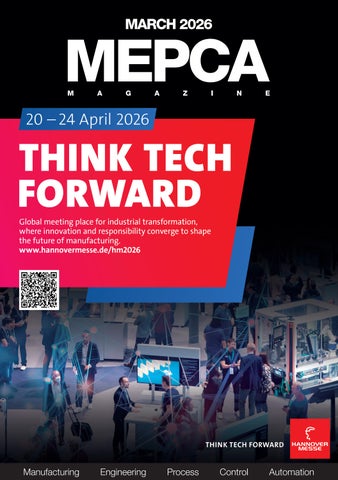
Create a flipbook