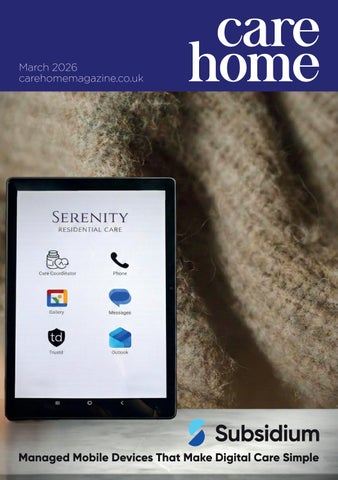
Don’t let unmanaged devices steal valuable time from your residents.
Trust the experts.
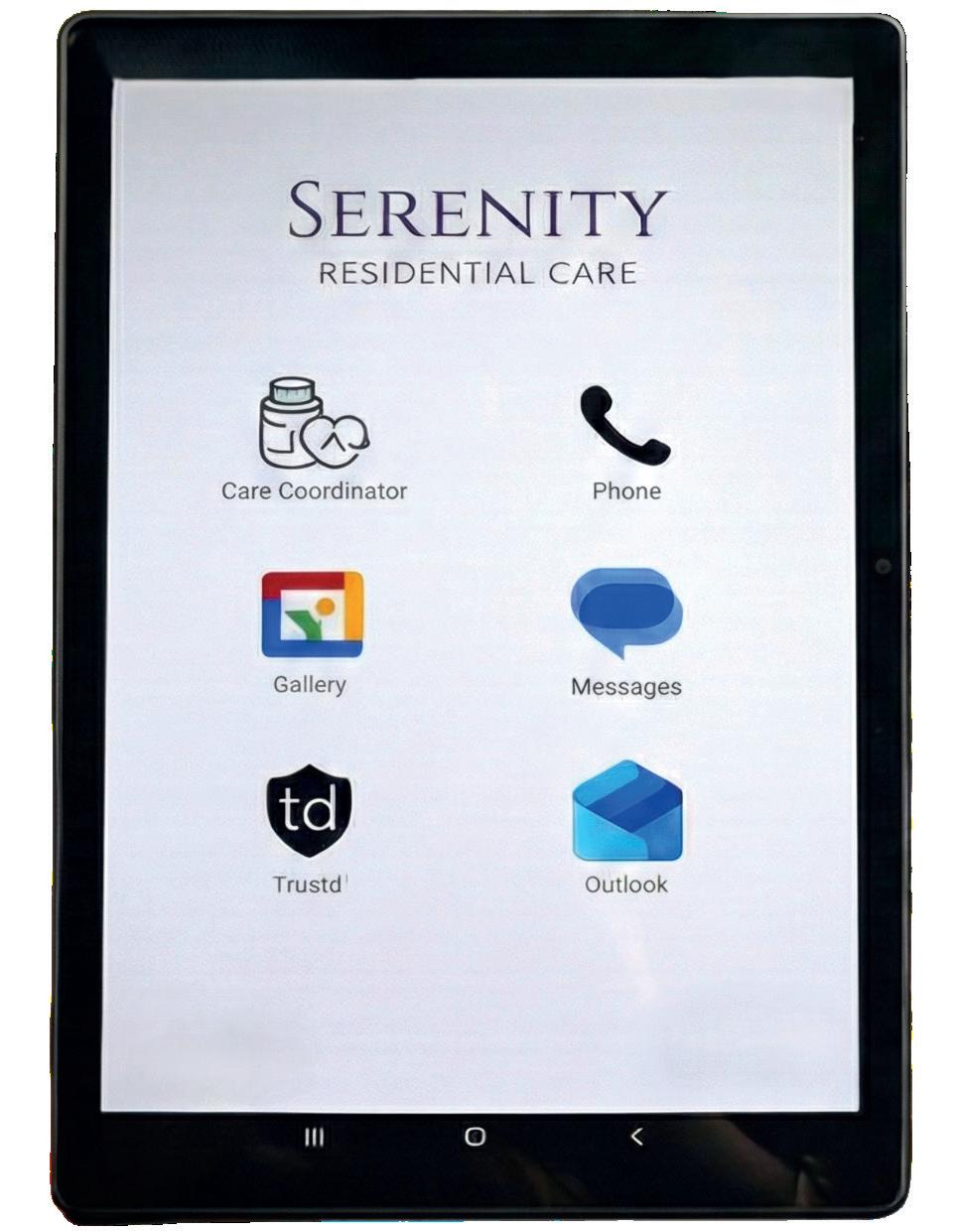
Subsidium currently manages over 50,000 devices across the care sector. We turn chaotic, vulnerable tablets into secure, clinical tools instantly. From Kiosk Mode to overnight updates, we handle the entire lifecycle behind the scenes.
No distractions. No data risks. Just technology that works, so your team can too.
Book a demo today
Chief Editor
Tani Johnson tj@carehomemagazine.co.uk
Publication Manager
James Davies james@carehomemagazine.co.uk Tel: 01795 509 112
Credit Facilities Manager
Gwen Lee creditcontrol@cimltd.co.uk Tel: 01795 509 103
Design and Production
James Taylor james@cimltd.co.uk
Grant Waters grant@cimltd.co.uk
Administration
Manager
Natalie Woollin admin@cimltd.co.uk
Head of Digital
Xhulio Bishtaja press@carehomemagazine.co.uk
Marketing Manager
Lucas Payne lucas@cimltd.co.uk
Social Media Manager
Lily Lawson press@carehomemagazine.co.uk
Director
Tom Woollin tom@cimltd.co.uk
Managing Director
John Denning
Editor’s Letter March 2026
As we move further into 2026, the care sector continues to navigate a landscape shaped by rising expectations, tighter compliance requirements and ongoing workforce pressures. In this issue, we turn our focus to two operational pillars that quietly underpin quality care every single day: Facilities Management and Cleaning, Hygiene & Infection Control.
Both areas are often most visible when something goes wrong, yet the homes delivering the strongest outcomes are those where prevention, consistency and culture are firmly embedded long before problems arise. This month, we hear from a range of industry experts who share practical, experience-led guidance on maintaining safe, efficient and welcoming environments. From sustaining that vital “new home” feel through proactive maintenance to strengthening infection prevention across kitchens, laundry, and housekeeping teams, the message is clear: systems matter, but so do people, training, and attention to detail.
Alongside our core features, we continue to spotlight the innovation and dedication happening across the sector. Our Care Home of the Month shines a light on a provider making a meaningful difference to residents and families, while Editor’s Day Out offers a closer look at the people and thinking shaping care today.
With Valentine’s season freshly behind us, our Activity of the Month explores how themed, whole-day programming can boost engagement, connection and wellbeing far beyond a single calendar date. Meanwhile, Dishing Up serves a comforting, care-friendly recipe designed with both nutrition and nostalgia in mind; a reminder of the powerful role food continues to play in resident experience.
As always, our aim is to bring you practical insight you can apply in your own homes, alongside ideas that inspire fresh thinking. My thanks, as always, to the contributors and operators who consistently share their expertise openly with the wider care community to help improve the care residents receive.
Tani Johnson, Chief Editor
Table of Contents
10 Cover Story
How Subsidium’s Kiosk Mode removes digital friction, strengthens CQC compliance and frees care staff from becoming accidental IT technicians.
18 SCIE
Deborah Rozansky of the Social Care Institute for Excellence explains why national care standards must move beyond compliance metrics to focus on the lived experiences that define quality care.
21 Facilities Management
Why sustaining the “new home” feel in care homes depends on proactive, preventative facilities management embedded into everyday operations.
37 Cleaning, Hygiene, and Infection Control
Why maintaining consistent kitchen hygiene in care homes depends on robust systems, smart design and well-trained teams, not just inspection readiness.
48 Dishing Up
Head Chef Adam King of Herne Bay Manor shares a comforting, care-friendly recipe for braised feather blade steak with dauphinoise potatoes and nostalgic gypsy tart.
50 Editor’s Day Out
A visit to Barchester’s Rose Water Place, located near Maidstone, showcases a home grounded in transparency, resident autonomy, and authentic community spirit.
Industry update
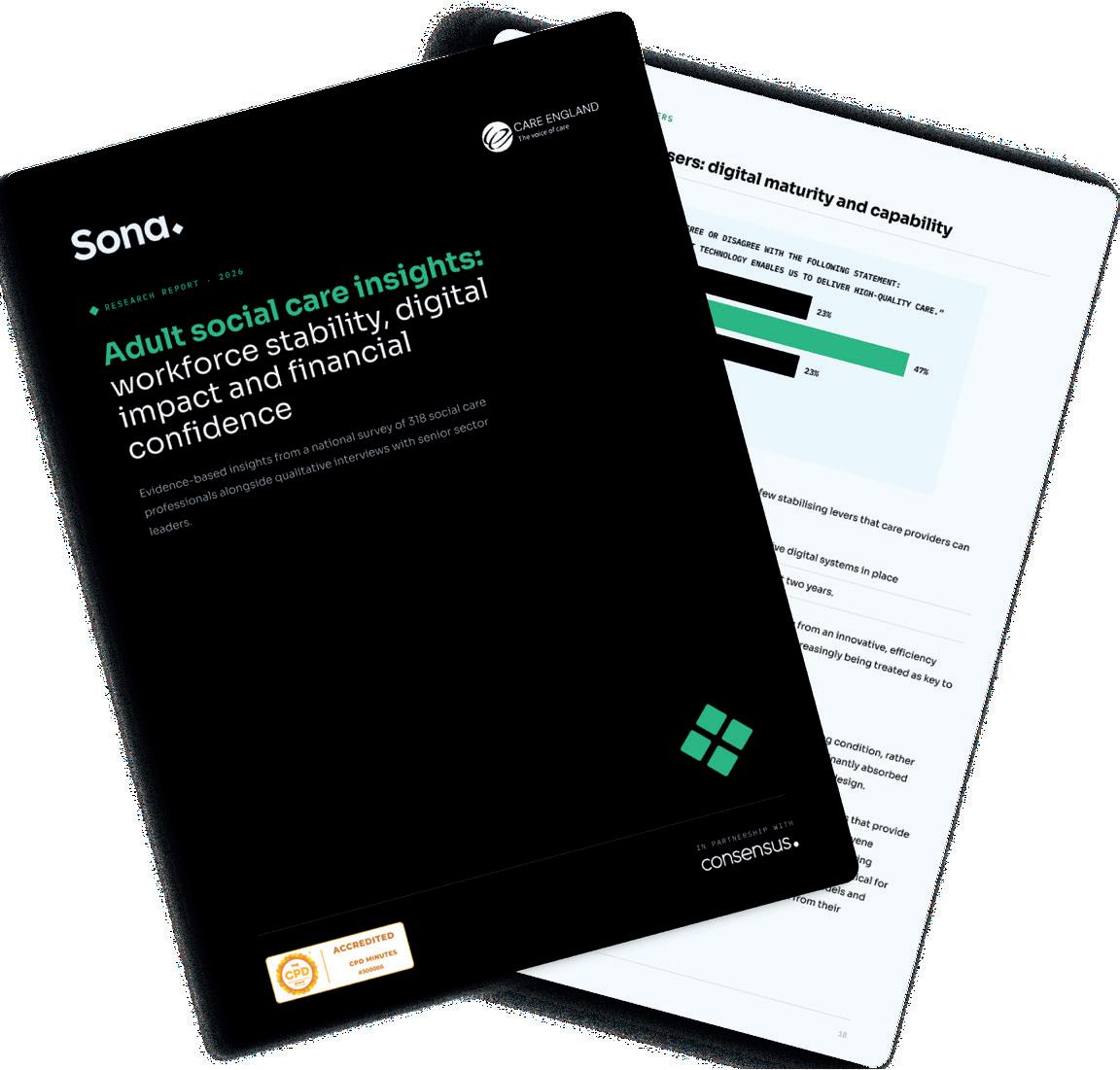
Care England launches new national report in partnership with Sona, revealing adult social care is being sustained by workforce goodwill rather than system design
Care England, in partnership with Sona, today launches new national research exposing the reality of adult social care in England. The findings show that services continue to deliver high-quality care despite sustained workforce, financial, and system pressure. The report highlights that resilience across the sector is increasingly driven by the professionalism, commitment and goodwill of staff, rather than by systems that are designed for the realities providers now face.
The report, Adult social care insights: workforce stability, digital impact and financial confidence, draws on a national survey of social care professionals alongside in-depth interviews with senior leaders across the sector. It paints a clear picture of services operating in an environment where short staffing, the rising complexity of need, and financial strain are no longer exceptional challenges but the everyday operating context for many providers.
Professor Martin Green OBE, Chief Executive of Care England, said:
“This research provides a powerful and evidence-based picture of the reality facing adult social care. Services continue to deliver highquality care, but too often they do so by relying on the goodwill, professionalism and resilience of their workforce rather than on systems properly designed to withstand the pressures they face. Short staffing, rising complexity of need, and financial strain are no longer exceptional challenges; they are the everyday operating environment for many providers.
What this work makes clear is that the answer is not simply more recruitment, but better design: smarter workforce deployment, greater visibility of real demand, and systems that support staff rather than stretch them. It also underlines the growing importance of digital capability as essential infrastructure for sustainability, not an optional add-on.
This is not about fixing individual providers. It is about recognising that the current system is no longer aligned to reality. If we are serious about protecting quality, supporting the workforce and securing the future of adult social care, we must move from coping to building long-term resilience, underpinned by fair funding and evidenceled reform.”
Care England and Sona are calling for a shift in focus from shortterm crisis management to long-term system resilience,
including fair and sustainable funding, better alignment between commissioning and delivery, smarter workforce deployment and treating digital capability as core infrastructure rather than an optional enhancement.
Key findings from the research include:
1. Short staffing has become a baseline operating condition for many providers, even when services remain compliant with commissioning and regulatory requirements.
2. Services are increasingly reliant on overtime, agency use, task redistribution and managers stepping in on shift to maintain continuity of care, driving burnout, cost escalation and long-term fragility.
3. Workforce commitment to the sector remains high, but this loyalty is masking underlying system fragility and is not a sustainable substitute for proper system design.
4. Pressures differ by service type and funding model, but structural strain is universal across the sector.
5. Digital maturity is emerging as one of the strongest controllable stabilisers available to providers, improving visibility of demand, staffing risk and cost pressures, and supporting more sustainable workforce deployment.
6. The workforce is broadly ready for digital adoption, where technology reduces duplication, saves time and improves safety, but constrained funding and fragmented systems limit progress.
Care Home of the Month Keymer Hall: Boutique Care Homes
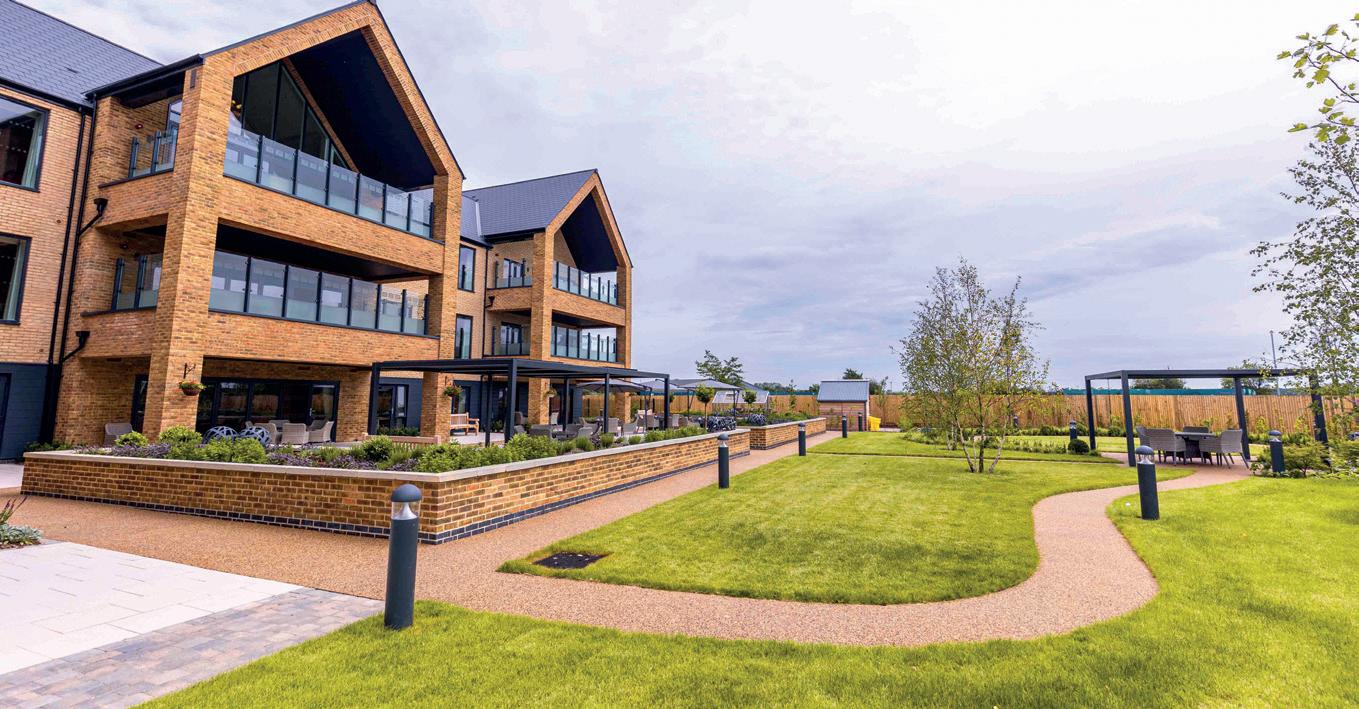
Keymer Hall officially opened its doors on 8 December 2025, marked by a deeply emotional moment as founding residents Hazle and Danny cut the ribbon and stepped into their new home. For Boutique Care Homes, the launch represented far more than the completion of a new build. It was the realisation of a personal, carefully developed vision shaped by experience, values, and a clear understanding of what later-life care should feel like.
The inspiration behind Keymer Hall is rooted in the personal motivation of founder Ameet Kotecha, who has often wished his parents had experienced a richer quality of life in their later years. That belief continues to drive the organisation’s direction. When the team identified Burgess Hill as the location for their fourth home, they saw an opportunity to deliver something meaningfully different to the local care landscape.
Today, Keymer Hall stands as a 68-bed, purpose-built home designed to feel domestic and welcoming from day one. The underlying philosophy is straightforward but ambitious: care should not simply be delivered as a service; it should be experienced as comfort, security and genuine human connection.
A structured approach to meaningful living
What most clearly differentiates Keymer Hall in a competitive regional market is its structured Life Enrichment Programme. Built around six principles of wellbeing, Contribute, Grow, Reflect, Feel, Move and Connect, the framework shapes both daily programming and the broader culture of the home.
Sponsored
By
Rather than relying on generic activity schedules, the home is piloting More Days Studio, a professional activity planning platform designed to support truly personalised engagement. This allows the lifestyle team to tailor experiences to individual interests and abilities, whether through chair yoga, reminiscence work, creative workshops or quiet garden time.
The objective is simple but powerful: every resident should wake up to something meaningful to look forward to. For operators across the sector grappling with engagement fatigue and tickbox activity provision, the model demonstrates how digital planning tools can support more personcentred delivery when properly embedded in practice.
Stability as a quality driver
Boutique Care Homes places significant emphasis on workforce stability as a core quality indicator. Across the group, the organisation reports 98.5% staff retention and zero agency usage, metrics that
remain notably strong in a sector still facing persistent recruitment and retention pressures.
The operational philosophy is clear: continuity of staff directly supports continuity of care and relationship-building. Residents at Keymer Hall see familiar faces each day, fostering trust and emotional security over time.
From a business perspective, this stability also supports cost control, cultural consistency and improved family confidence, all critical factors for providers seeking to differentiate in an increasingly scrutinised market.
Intergenerational work in action
One of the most distinctive aspects of life at Keymer Hall is its commitment to intergenerational engagement. Boutique Care Homes was recognised with the NAPA Award for Intergenerational Engagement in January 2026, and the Burgess Hill home is already bringing this ethos to life in practical, community-facing ways.
A standout example is Fred,
Bedroom
the home’s seven-year-old Youth Ambassador. Living locally, Fred became fascinated with the build programme while Keymer Hall was under construction, regularly watching progress from nearby. Before Christmas, he visited dressed as an elf alongside his grandfather Howard, delivering chocolates to staff and residents, a small gesture that sparked a much bigger relationship.
Following this visit, Helen Lewis, Head of Lifestyle and Wellbeing, discovered through Girlguiding connections that Fred was the son and grandson of friends. She subsequently invited him to participate in the home’s RSPB Big Garden Birdwatch event alongside children from Dicker House Nursery.
Residents, children and Fred sat together in the gardens with binoculars, sharing observations and conversation. Home Manager Christine Bunce later presented Fred with his official Youth Ambassador badge, formalising what had already become a meaningful connection.
Importantly, the story continues to evolve. Fred’s grandfather, Howard, who lives with aphasia following a stroke, runs the local Say Aphasia support group. After learning about Keymer Hall’s Stroke Friendship Café, he visited the home and is now in discussions about potentially relocating his group there permanently.
Investing in people and culture
Workforce development at Keymer Hall is intentionally values-led. The recruitment approach prioritises emotional intelligence and compassion, with the leadership team operating on the principle that technical skills can be taught but genuine care cannot.
Home Manager Christine Bunce brings more than 20 years of experience alongside a Doctorate in Clinical Psychology, and her leadership style sets the tone across the home.
Training remains continuous through My Learning Cloud, which offers modules in 190 languages with audio support to reflect the workforce’s diversity. All senior team members are dementia-qualified,
and care staff are supported in pursuing further professional qualifications.
Design that independenceenables
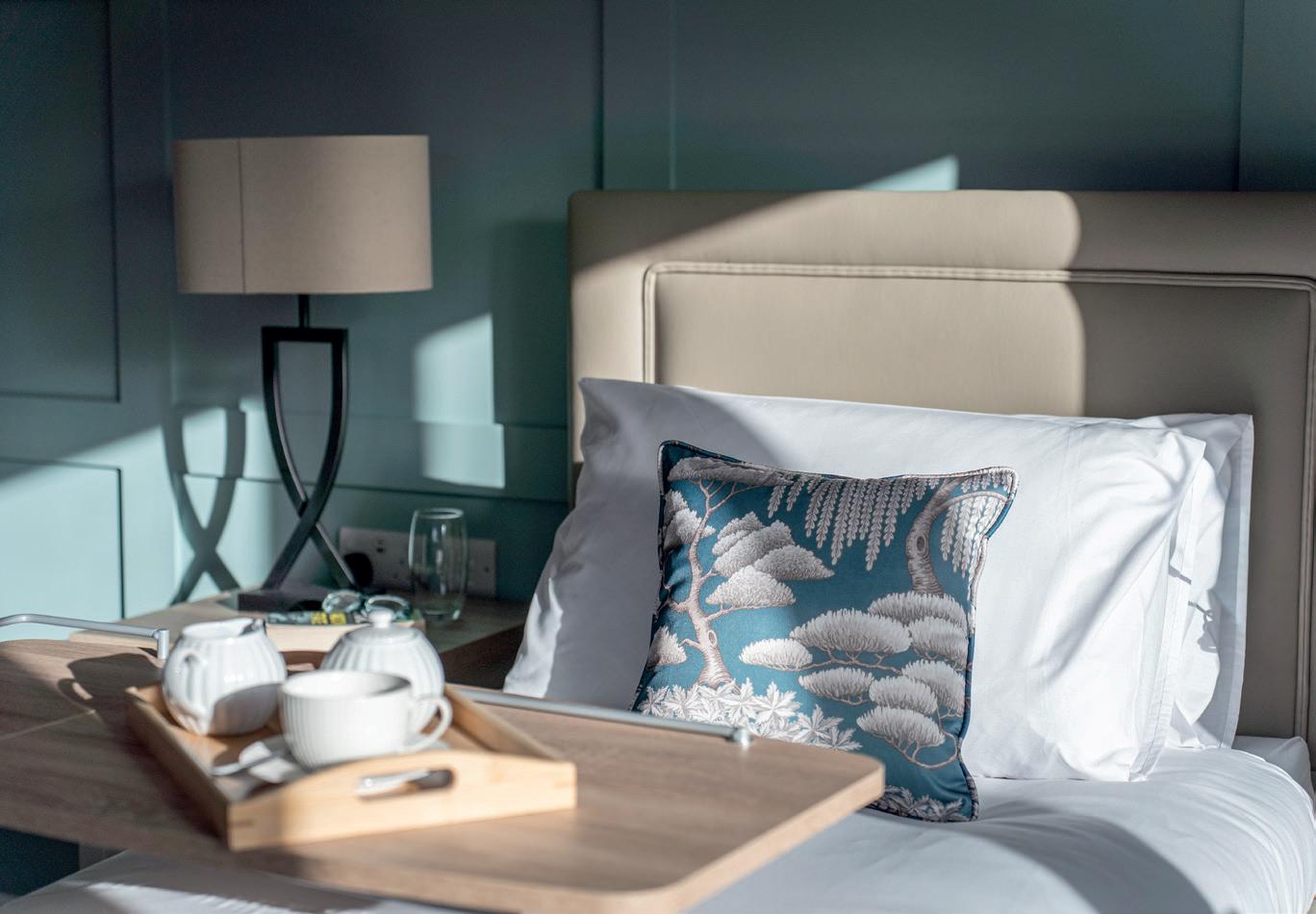
As with all Boutique Care Homes developments, design plays a central role in the Keymer Hall model. The interiors draw inspiration from the surrounding South Downs landscape, using warm tones and abundant natural light to create a domestic atmosphere.
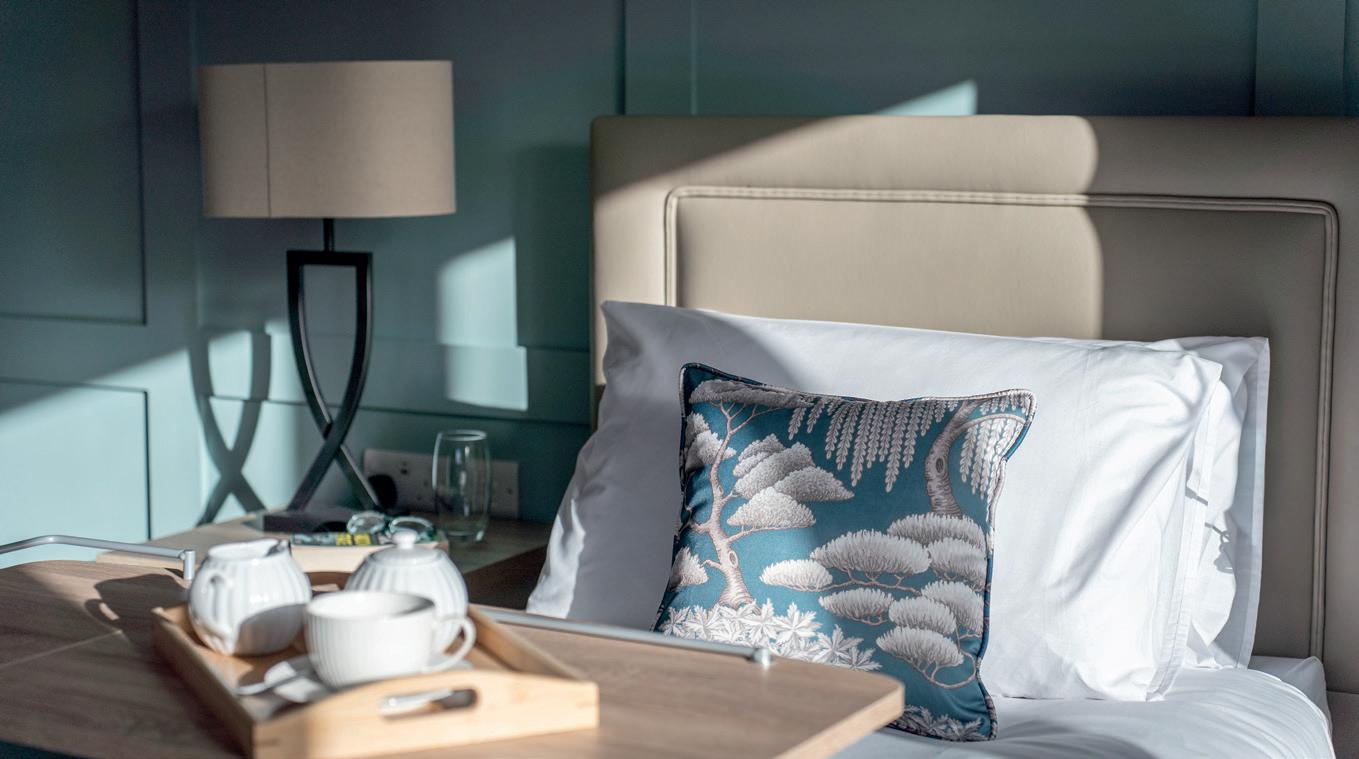
All 68 bedrooms are en-suite to support privacy and dignity, while selected ground-floor rooms have private patios with direct garden access.
Communal areas encourage both activity and relaxation, while landscaped gardens host barbecues, gardening clubs and seasonal planting. Sustainability is embedded in modern energyefficient systems.
Recognition and early impact
Despite opening recently, Keymer Hall has already secured a five-star Food Hygiene Rating and Veteran Friendly Accreditation. Across the group, 98% of residents and families recommend the service, highlighting strong early confidence in the home’s quality and direction.
For Boutique Care Homes, the focus remains firmly on delivering consistently exceptional care as the home continues evolving.
Hallway Reception Area
Securing Care Through Simplicity
As care homes become increasingly digital, poorly managed devices are creating hidden pressures for staff and compliance risks for providers. This article explores how Kiosk Mode simplifies technology use, improves governance, and supports CQC expectations while giving carers valuable time back.
The “Accidental IT Technician”
In our introduction last month, we spoke about the “Tech Ceiling”: the point at which outdated or unmanaged hardware prevents care homes from delivering the next generation of care. But there is a more immediate, human cost to poor technology: the “Accidental IT Technician.”
Picture a dedicated carer, exhausted after a long shift, standing in a corridor trying to get a tablet to connect to Wi-Fi, or a nurse losing twenty minutes of valuable time because the single app they need is hidden inside a folder of irrelevant icons.
As we move toward a fully digital social care sector, we risk overwhelming our teams with unnecessary complexity. At Subsidium, we believe the best technology is the kind you barely notice. It should be invisible. It should just work.
This is where Kiosk Mode becomes one of your most valuable assets.
What Is Kiosk Mode and Why It Matters
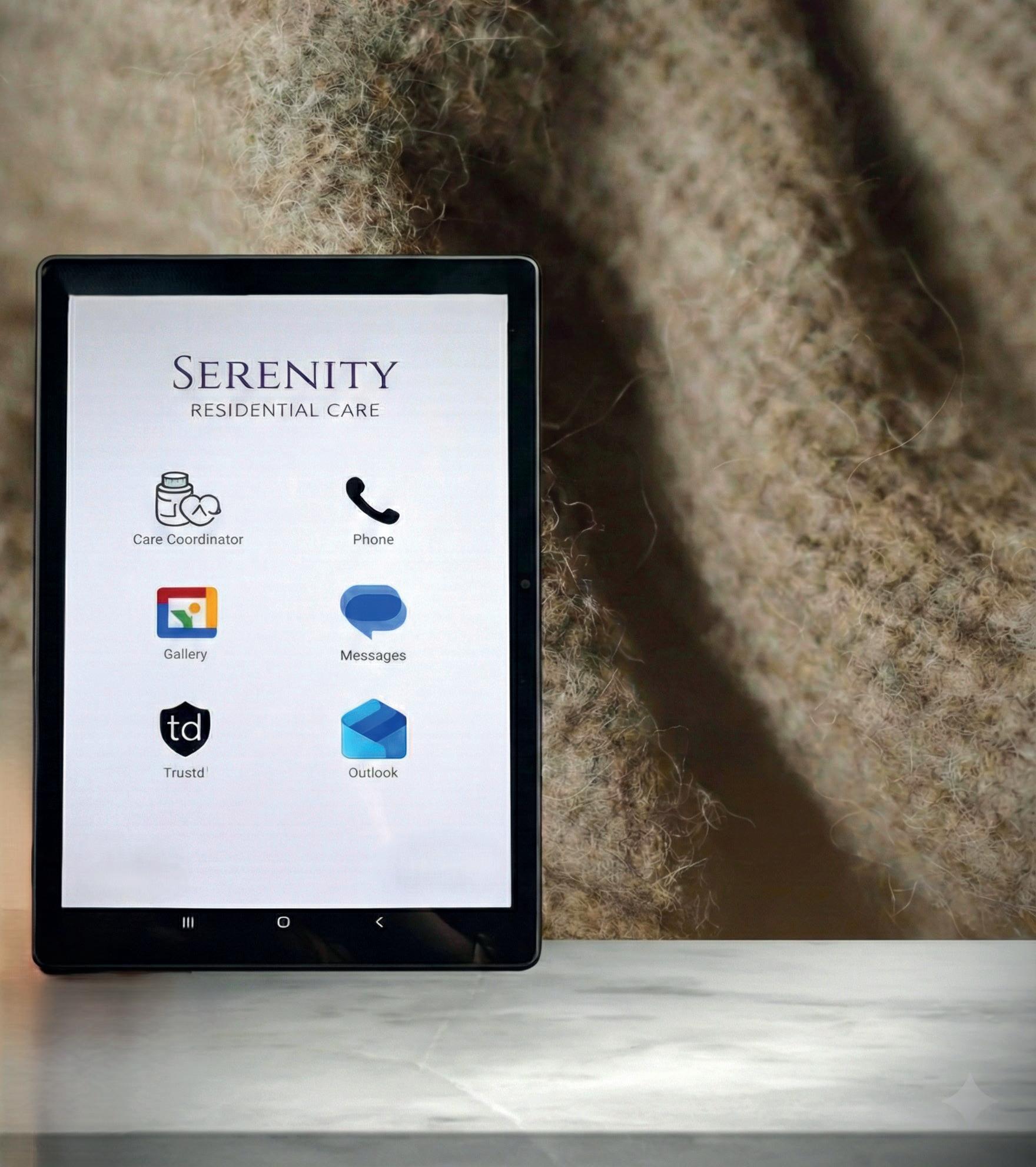
Kiosk Mode is a feature of Enterprise Mobility Management (EMM) that allows a device to be locked to a specific purpose. When staff pick up a Subsidium-managed tablet, they don’t see a confusing operating system. They don’t see settings menus, web browsers, or games. They see exactly, and only,
Kiosk Mode transforms that liability into an asset.
what they need to do their job. By stripping away the unnecessary, you immediately lower the barrier for staff who may be less technologically proficient. There is no way to accidentally delete an app, press the wrong button, or change language or system settings.
This simplicity facilitates and enhances digital care. When a device is easy to use, care notes are recorded more quickly and accurately. When friction is removed, staff feel less stressed and are able to focus on the residents in front of them rather than on the screen in their hands.
The
CQC GovernanceAdvantage:
and Security
Beyond improving resident care, Kiosk Mode is also a powerful tool for meeting Care Quality Commission (CQC) expectations, particularly Regulation 12 (Safe Care and Treatment) and Regulation 17 (Good Governance).
From a CQC perspective, an unmanaged tablet is a risk. It is an open device that can be used to leak data, install unapproved apps, and access malicious websites.
Kiosk Mode transforms that liability into an asset.
By locking down browsers and preventing unauthorised downloads, Kiosk Mode ensures resident data cannot physically leave the approved environment. Providers have a clear, confident answer when inspectors ask how data access is controlled on mobile devices.
You can show exactly which apps are being used and when. If a device goes missing, it can be tracked and remotely wiped within seconds, preventing reportable data breaches while maintaining a clear audit trail.
Distractions matter too. If a staff member receives notifications from news or social media apps on a work device, care is compromised. Kiosk Mode enforces a professional environment, ensuring devices are used solely for care delivery.
Managed vs. Unmanaged: The Hidden Costs
Many care providers attempt to manage devices in-house. They purchase tablets from a highstreet retailer and hand them out to staff. Six months later, screens are cracked, chargers have gone
missing, and half the devices are running different software versions. This “unmanaged” approach is a false economy.
Subsidium acts as your dedicated support team. We don’t just supply hardware; we configure it, secure it, and maintain it throughout its lifecycle.
Zero-Touch Deployment
Devices arrive at your care home fully charged, pre-configured in Kiosk Mode, and ready to use. Managers don’t lose hours setting them up.
Remote Troubleshooting
If a care worker encounters a problem, they don’t call you; they call us. With permission, we can remotely view their screen and resolve issues in real time.
Battery MonitoringHealth
We alert you when a device’s battery is starting to fail, so it can be replaced before it causes disruption to care delivery.
Let Carers Be Carers
Technology is essential to the future of care, but it should never become a burden. By using Kiosk Mode through a fully managed service like Subsidium, you are buying more than tablets; you are buying peace of mind.
You give your staff the gift of simplicity, and your organisation the robust governance framework the CQC expects. Let us handle the technology, so you can focus on what matters most: the care.
subsidium-ms.com
Jamie Lee, Mobility Solutions Specialist
Excellence in Dementia Care
The National Dementia Care Accreditation Scheme aims to define what exceptional dementia care really looks like in practice. Through its structured, evidence-informed framework and supportive accreditation process, the scheme helps providers strengthen quality, build workforce confidence and deliver more consistent, person-centred experiences for people living with dementia.
Exceptional dementia care is not defined by policies or paperwork, but by moments of recognition, comfort, dignity, and connection. For people living with dementia, those moments shape daily life. For care teams, they define purpose.
Across the UK, providers are working harder than ever to deliver safe, compassionate, consistent and truly person-centred care. Families want reassurance, regulators want evidence, and leaders want confident, capable teams. The sector needs a clear, credible way to demonstrate what exceptional dementia care really looks like.
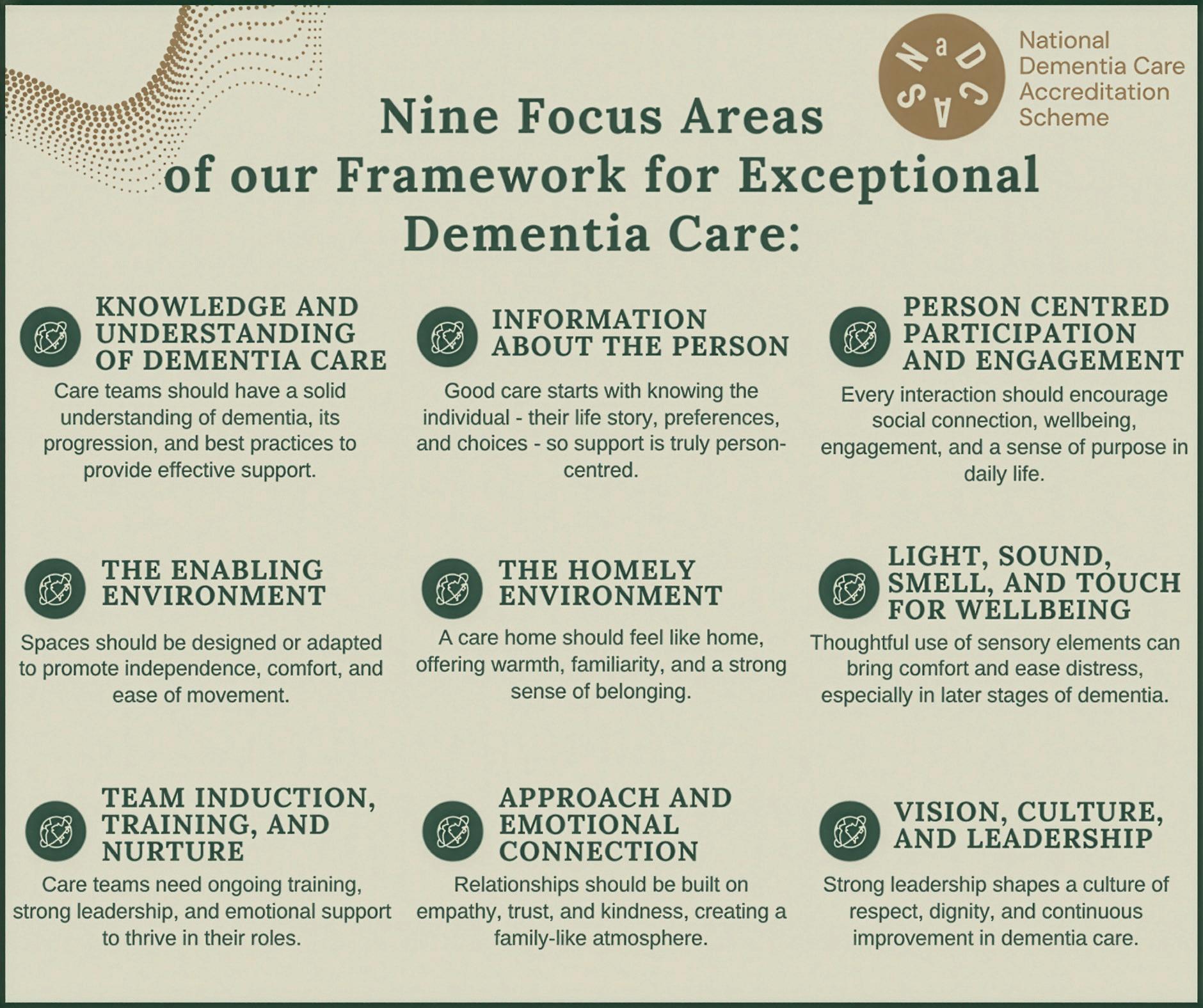
This is why the National Dementia Care Accreditation Scheme (NaDCAS) exists. The UK’s dementia-specific national accreditation scheme was built to raise the standard of dementia care and improve everyday experiences for people living with dementia. The process is a structured, supportive journey that helps organisations reflect, refine, and continuously improve - building sustainable change that benefits people living with dementia, their families, and the teams supporting them.
A Framework Shaped by Expertise and Experience
The NaDCAS Framework for Exceptional Dementia Care was developed with dementia care experts, leading research universities, and people with lived
experience. With 140 standards across 9 focus areas that help build clear, sustainable roadmaps for improvement while allowing each service to retain its individuality, it unites lived experience, emotional intelligence, and evidence-
informed practice within one cohesive structure for meaningful improvement.
Raising standards should be accessible to all, which is why the framework is free to access and explore for all care providers.
Why AccreditationMatters
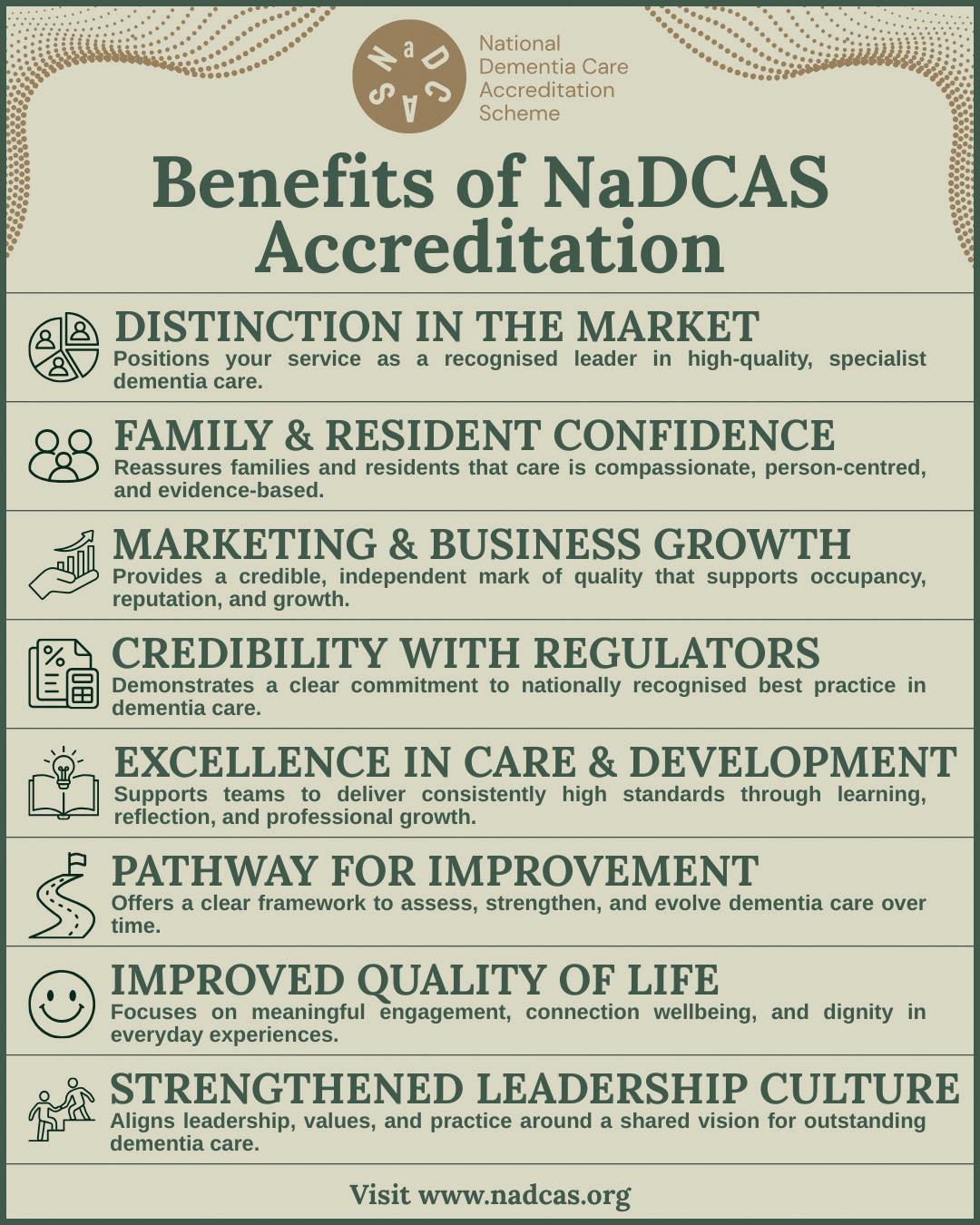
Accreditation provides independent recognition of dementia care quality - reassuring families, strengthening credibility with commissioners, and supporting alignment with regulatory expectations.
The benefits extend across organisations: stronger governance, clearer quality assurance, enhanced reputation, improved staff confidence, greater consistency, workforce development, leadership focus, competitive differentiation, and, most importantly, better lived experience for people with dementia.
Here to Support and Guide
Alongside independent assessment and accreditation, we offer structured training and learning
tools to help teams embed best practice in meaningful, achievable ways. Our focus is progress and nurture, not an aim of perfection. Wherever dementia care happens, we work alongside teams who are committed to doing it well. Our approach is collaborative and bespoke. We build tailored accreditation pathways that reflect the size, setting, and unique identity
of each service. Everything we do is grounded in partnership, continually evolving to ensure that the standards we champion translate into improvements for people living with dementia.
Exceptional dementia care is intentional, it is cultural, and it is measurable.
nadcas.org.uk/framework
Spring into Sport
There’s nothing much better than live sport for bringing people together – and there’s much on the way this March. The TNT Sports schedule is jam-packed with options for sports fans of all ages, giving residents plenty of reasons to get together, watch the action and discuss the latest talking points.
March gets underway with a bumper schedule of live sport, led by an action-packed run of Premier League fixtures; ideal for care homes looking to bring residents together around shared viewing experiences.
The month opens with a Midweek Takeover in the first week of March, featuring 10 live Premier League matches and every top-flight side in action. Coverage begins on Tuesday, 4 March with four fixtures, including champions Liverpool FC travelling to relegation-threatened Wolverhampton Wanderers FC (8.15 pm).
Momentum continues on Wednesday with five further live games. Highlights include Champions League hopefuls Aston Villa FC and Chelsea FC meeting at Villa Park (7.30 pm), while title contenders Arsenal FC travel to face Brighton & Hove Albion FC. There is also a London derby between Fulham FC and West Ham United FC, before the pick of the evening sees Newcastle United FC host Manchester United FC at St James’ Park (8.15 pm).
The midweek programme concludes with another capital clash as Tottenham Hotspur FC welcome Crystal Palace FC (5 March, 8 pm).
Two additional Premier League fixtures follow later in the month in the popular Saturday lunchtime slot: West Ham United FC hosts Manchester City FC on 14 March, and Brighton & Hove Albion FC faces Liverpool FC on 21 March.
Football remains a major draw throughout the spring, with TNT
Sports now the home of the FA Cup through to the May final. Immediately following the midweek Premier League fixtures, the FA Cup Fifth Round takes place across 7–9 March.
There is also significant British interest in European competition, with Round of 16 coverage from the UEFA Champions League, Europa League and Conference League providing further opportunities for communal viewing.
However, football is far from the only entertainment for residents. March also brings two full rounds of live action from Premiership Rugby, arriving hot on the heels of the Six Nations, alongside the start of the new MotoGP season.
For homes seeking lowerintensity viewing, golf fans can follow every LIV Golf event after TNT Sports secured the rights, while cue sports enthusiasts can
track the World Snooker Tour throughout the season, culminating at the World Championship at Crucible Theatre.
Alasdair Collis, Director of Commercial Customers, TNT Sports, said: “Live sport is something that can be enjoyed at every stage of life. There’s nothing quite like it for bringing people together to share the communal pleasure of watching the action and then discussing the calls and controversies afterwards. Our March line-up is packed with something for everyone. Whether it is football, rugby, golf, or motor sport, there are many reasons for residents to watch live sport together and share passions that last a lifetime. Live sport is for everyone at every stage of life, and there is something for all sports fans to enjoy in TNT Sports this spring.”
www.tntsportsbusiness.co.uk
Empowering Reading for Pleasure
As reading habits change, older adults remain highly engaged readers. This article explores how Digi-Hub and DLT help care homes support wellbeing, cognitive stimulation and meaningful daily engagement.
In the UK, leisure reading is changing rapidly. National research shows that regular reading for pleasure has declined across the adult population, with only around half of adults reporting they read regularly, a noticeable drop compared to ten years ago. Yet one group continues to stand out. Adults aged over-55 remain among the most frequent readers, with higher engagement in weekly reading activities than younger age groups.
This demographic trend matters. Reading for pleasure is more than a pastime; it supports wellbeing, cognitive engagement and social connection, particularly for older adults who often value meaningful, low-stress activities and familiar routines.
DLT Media’s Approach: Digital and Print Working Together
DLT Media addresses the needs of readers over 55 through two complementary solutions: Digi-Hub, its digital entertainment platform, and DLT Magazines, its tailored print magazine service. Together, they create an inclusive reading environment that respects differing preferences, abilities and comfort levels with technology.
The Role of DLT Magazines in Care Homes
While digital access is growing, print remains highly valued by many. DLT Magazines supplies care homes with custom monthly print
magazine packs, tailored to resident interests and designed for shared or individual use. In care home settings, DLT Magazines supports:
• Communal reading and conversation starters
• Independent leisure for residents who prefer print
• Familiar, tactile experiences that encourage calm and focus
Digi-Hub Support for Over-55 Reader Engagement
Digi-Hub is a digital entertainment platform designed to boost reading and engagement in commercial and community settings. It consists of a wide range of magazines and newspapers, with complimentary access to puzzles, games and audio content - all through a simple QR code, with no app required and optimised for handheld devices.
Digi-Hub provides an easy way for older adults to shift to digital reading. Users can quickly browse content tailored to their interests, such as lifestyle, health, current events, and leisure, all without facing technical hurdles. Features like text-to-speech and audio articles help residents with visual or mobility issues access the content
more easily. The main advantages include:
• Easy, no-app access, removing friction and complexity
• Diverse, familiar content that appeals to habitual readers
• Wellbeing support, combining reading with light entertainment and mental stimulation
• Games and puzzles maintain and improve cognitive function in older adults
Why This Matters for Care Homes
Care homes are frontline communities where engagement and social connection are essential to quality of life. By combining DigiHub and DLT Magazines, DLT Media enables care homes to:
• Enhance daily engagement with accessible reading options
• Encourage social interaction and shared experiences
• Support resident wellbeing through purposeful leisure activities Whether in shared spaces or private rooms, DLT Media enables care homes to enrich daily life through accessible reading experiences - reassuring families they’ve made the right choice. dltmedia.co.uk
Level 2
Adult Care Worker
Level 3 Lead Adult Care Worker
Level 4 Lead Practitioner in Adult Care
Level 5 Leader in Adult Care
The Change Care Needs
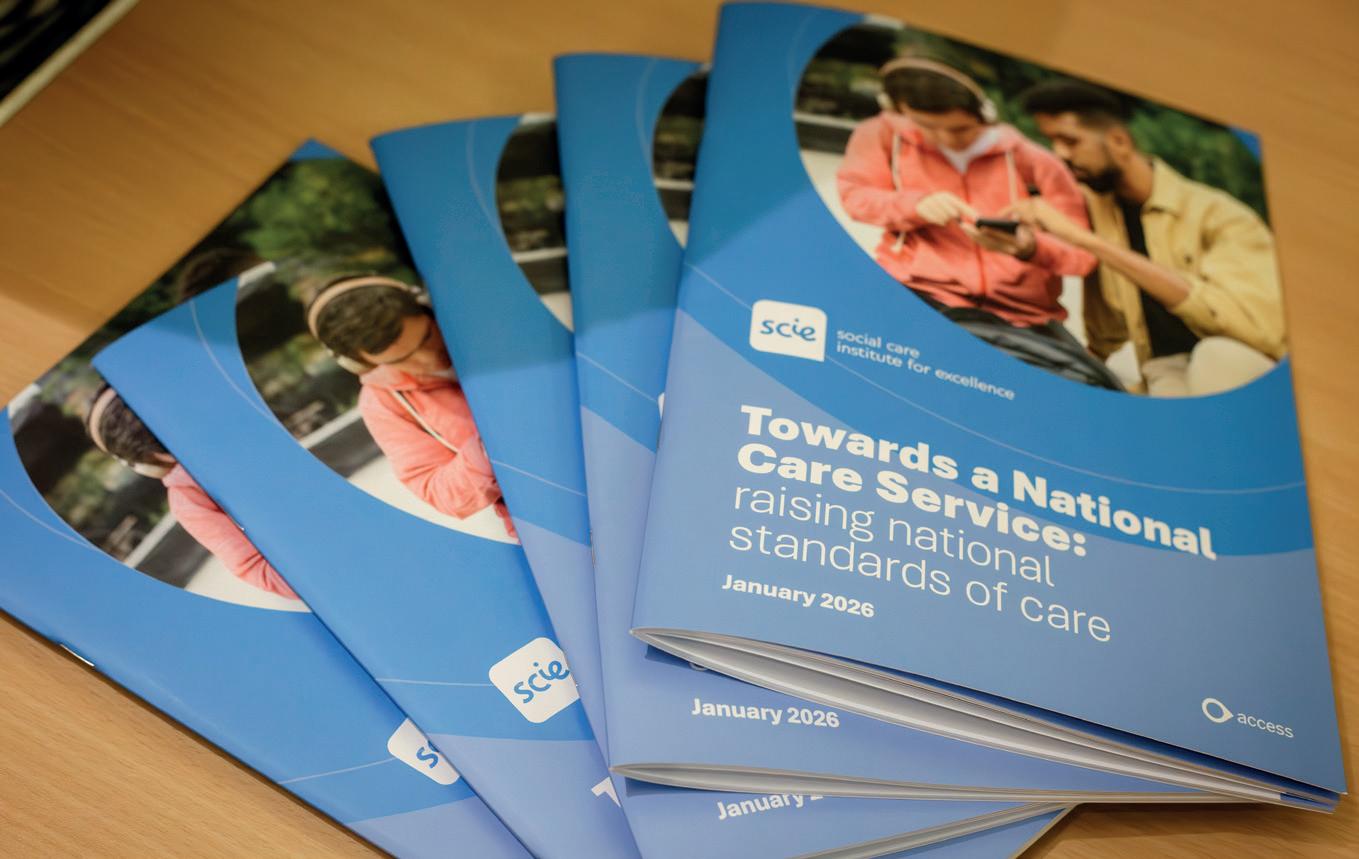
Care Home Magazine interviewed Deborah Rozansky, Director of Policy, Research and Information at the Social Care Institute for Excellence (SCIE), about their latest report, “Towards a National Care Service: raising national standards of care”, supported by The Access Group.
Deborah Rozansky emphasises that national care standards require a fundamental rethinking. According to SCIE’s recent report, standards should not be mistaken for inspections or strict rules; they should serve as a shared blueprint guiding focus on what truly matters in people’s lives.
The report stems from roundtable discussions that revealed a persistent issue in social care: much of what is measured is easily quantifiable, such as visits, time, tasks, and compliance. However, the most valued outcomes, like independence, personal choice, dignity, safety, belonging, relationships, and person-centred care, are qualitative. Rozansky notes that the challenge is to enhance the sector’s ability to manage and document these lived experiences rather than relying solely on traditional metrics.
SCIE believes individual stories are crucial, providing context and truth beyond data alone. The opportunity is to link these narratives with formal datasets to form a clearer picture of quality. Care providers are well placed to lead this innovation, especially with the ongoing digitisation of records, which offers a solid foundation. The next step is to use this data more effectively and improve data collection.
Variations in care quality across the country remain a concern. National standards aim not to lower expectations but to raise
ambitions without hindering innovation. Responsibility for improvement mainly lies with local care leaders, but success depends on collaboration among public bodies, local authorities, and independent providers. Together, they should define achievable goals for communities and move beyond transactional relationships.
The report highlights several areas for systemic change, including prevention and early intervention, where success is often measured by NHS-centric metrics such as avoided hospital admissions rather than individual well-being. Data interoperability is another focus; care records should follow individuals through complex journeys across health, social care, community services, and home, ensuring continuity and coordination.
Commissioning is also critical.
Confidence that care quality isn’t determined by postcode, clarity about what’s being commissioned, and shared standards of excellence are essential. However, SCIE stresses that standards alone won’t solve workforce shortages, financial pressures, or longstanding commissioning issues without aligned funding and skills.
Ultimately, Rozansky sees national care standards as a “North Star,” anchoring ambitions in people’s experiences and providing a long-term roadmap for system change. Success requires avoiding quick fixes, securing cross-party support, and tackling tough problems. If achieved, standards can clarify what good social care should look like and help the public understand what social care can enable: people living their best lives with dignity and choice.
Essential 5
Maintaining a care home’s fresh appearance involves more than just décor. Effective facilities management, including scheduled maintenance, compliance inspections, and landscaping, ensures residents’ safety, comfort, and dignity, while also supporting staff and minimising stress.
Get the Basics Right
Fire safety, water hygiene, gas, electrics, and lifts are fundamental to a safe care home. Regular inspections, proper documentation, and clear responsibilities ensure compliance, safeguard residents, staff, and visitors, and help prevent minor problems from escalating. These essentials reduce inspection stress and foster confidence that the home is safe and well-managed. A strong foundation supports all other aspects of facilities management and care quality.
Plan, Don’t Just React
Reactive maintenance is costly, stressful, and disruptive. Fixing issues only after failures occur leads to emergency calls, rushed repairs, and increased stress. In contrast, planned maintenance allows for regular inspections, anticipation of repairs, and even distribution of costs throughout the year.
Control Energy Without Cutting Comfort
Heating, lighting, hot water, and ventilation are major operational costs. Managing these expenses is important, but overly aggressive cuts can harm residents’ comfort and wellbeing. Simple efficiency upgrades such as installing LED lighting, using thermostatic controls, implementing timed systems, and raising staff awareness can significantly lower bills without compromising daily comfort.
The Building Affects Care
The physical environment impacts residents and staff. Factors such as lighting, noise, flooring, temperature, signage, and layout influence mobility, safety, and overall wellbeing. Even minor adjustments can greatly enhance confidence and independence for residents with dementia. Facility decisions go beyond routine tasks; they directly influence care quality by improving comfort and dignity for everyone.
5 4 3 2 1
Treat FM as a Leadership Issue
Facilities management must be a priority at the senior level. Strong leadership ensures risks, costs, and future projects are visible and actively managed, supporting safety, compliance, and efficiency. A strategic approach to FM enables confident planning for refurbishments, lifecycle maintenance, and investments. Engaged leadership also promotes staff accountability, consistent standards, and the sustainability of the care environment.
Optimising Heating Efficiency
Heating and hot water are essential services in any care home. Ensuring these systems run efficiently is a key priority for proactive operators aiming to balance resident comfort with financial sustainability. Andy Green, head of technical solutions at Baxi, outlines practical steps to help providers boost performance while keeping energy costs under control.
Understand your building
The first step is to move beyond basic compliance and assess whether the system is truly working for the home. Where there are warning signs such as unusually high bills, overheated rooms, draughty areas, or inconsistent temperatures, it’s important to get to the root cause.
Rather than relying on open windows to regulate heat, operators should review thermostat settings and thermostatic radiator valves to optimise temperature control.
Fabric issues should also be addressed early. Measures such as improved insulation, triple glazing and proper pipe lagging can significantly reduce heat loss. Bare pipework, Green notes, effectively means heating plant rooms and floor voids instead of resident spaces.
Plan maintenancepreventative
Understanding the condition of the plant and heating system enables operators to plan remedial works and future replacements strategically. If equipment is approaching 20 years old and struggling, waiting for failure often leads to rushed, like-for-like replacements that perpetuate inefficiencies. A simple quarterly walkaround can help identify early warning signs without requiring engineering expertise.
Check the controls
Efficiency gains are often hidden in system controls. Panels may be overridden manually, causing systems to run continuously at maximum output. Adding weather compensation and zonal heating, where appropriate, allows systems to respond to external conditions and heat only occupied areas.
Improve water management
Use of hot water should also be reviewed. Flow restrictors, such as push-button taps and low-flow showerheads, can reduce water waste. In certain areas of a home, point-of-use heaters may be more efficient than relying solely on a central cylinder.
Educate staff
Operational efficiency depends heavily on user behaviour. Training teams to understand how systems
work and why energy efficiency matters helps embed good habits that support long-term savings.
Seek manufacturer support
Finally, providers should draw on specialist expertise. Recent research highlights that many care home managers want more technical guidance to support heat decarbonisation and efficiency goals. Working with experienced heating and hot water specialists can help operators identify practical opportunities to improve performance, enhance resident comfort and reduce bills.
For care homes facing rising energy pressures, a structured, proactive approach to heating efficiency is no longer optional; it is an essential facilities management discipline.
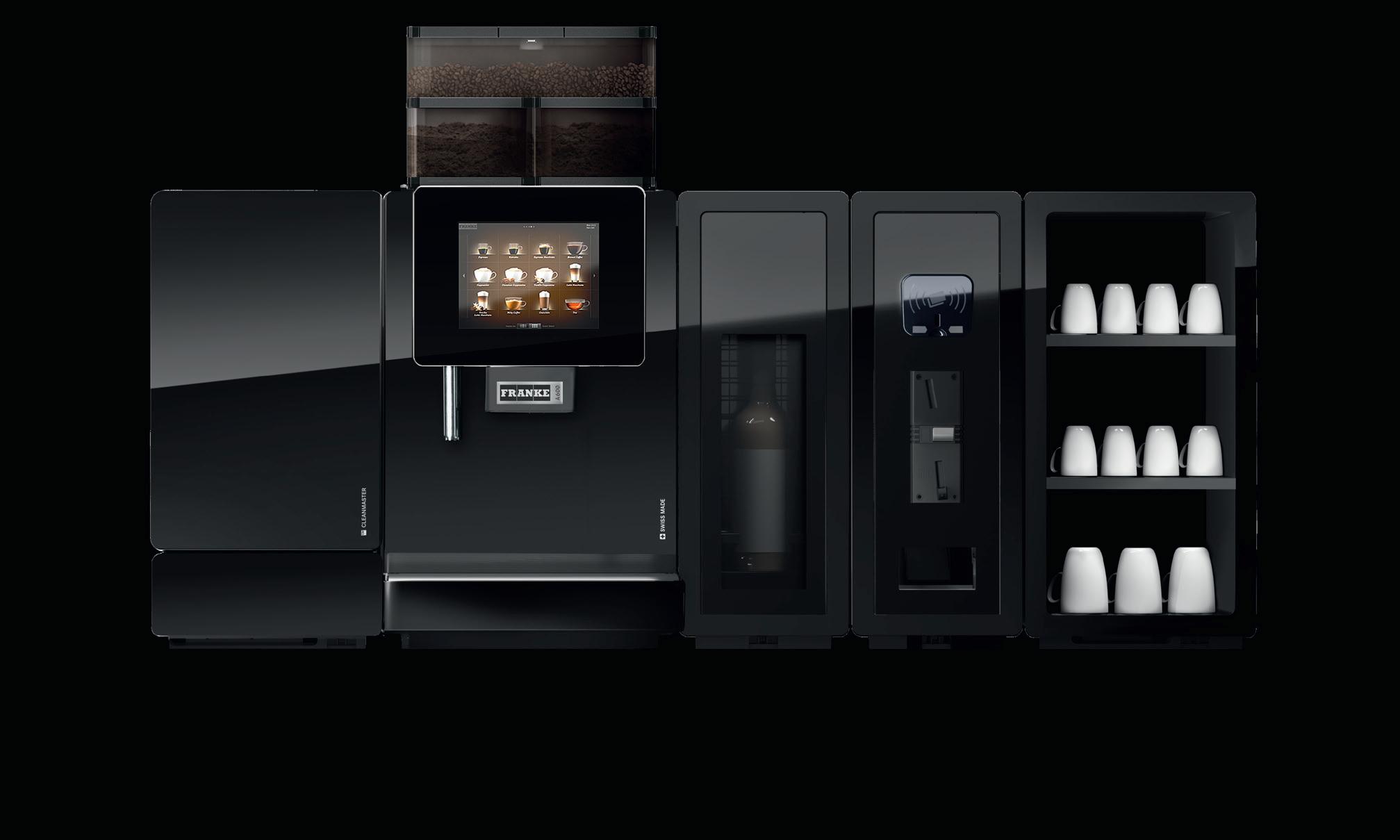
Upgrade your beverage service with the Classic A Line: Franke’s automatic coffee machine range, designed to simplify and elevate care home catering operations.
Latte, cappuccino, iced coffee, hot chocolate, and more... the Classic A Line crafts over 80 to 300 cups a day with effortless precision.
Featuring customisable add-ons such as milk fridges, cup warmers, and automated cleaning systems, rely on the Classic A Line to ensure drinks are consistently delicious –and every shift runs seamlessly.
But that’s not all. Monitor and optimise fleet performance in real-time thanks to Franke Digital Services (IoT) access, alongside ongoing maintenance support from over 100 Franke engineers across the UK and Ireland.
Maintaining the New Home Feel
A care home might look immaculate when it first opens, but keeping that “new home” feeling requires ongoing, preventative facilities management. Hazel McGwyne, Home Manager at Woodland View Lodge, and Laura Clegg, Commissioning Manager at Manor Park Care Home, share practical insights into maintaining high standards long after opening day.
When a care home first opens or completes a refurbishment, there is a natural sense of pride. Décor is fresh, furnishings are immaculate, and every space reflects careful planning. The real challenge, however, is not achieving that “new home” feel once, but sustaining it year after year.
For Laura Clegg, that longevity depends on consistency. Drawing on her experience commissioning Manor Park, she argues that maintaining standards is less about reactive repairs and more about embedding preventative facilities management into daily operations.
“The real test,” she notes, “is maintaining that standard year after year.”
Across the sector, operators increasingly recognise that facilities
management must be proactive rather than reactive: structured, measurable and integrated into the culture of the home.
Environment and experience inseparableare
Both contributors emphasise that the physical care environment is more than just cosmetic; it plays a crucial role in shaping comfort, dignity, and wellbeing.
Hazel McGwyne points out the importance of thoughtful design and careful maintenance in promoting safer care and supporting independence. Practical features like private ensuite wet rooms and fitted furniture offer convenience and privacy, while also helping maintain dignity. Allowing residents to personalise their rooms is equally vital, as it preserves identity and emotional stability during significant life changes. Communal areas are equally
important. Well-maintained lounges and shared spaces foster connection and a sense of community. When they are organised and clean, they enable residents to move freely and structure their day with autonomy. Clegg also emphasizes that comfort extends beyond temperature and furniture. Emotional comfort is affected by the environment’s atmosphere. A calm, welcoming, and homely setting makes residents feel safe and reassured. Conversely, environments that seem institutional or poorly kept can subtly undermine confidence and morale. In care environments, the building isn’t just a background; it is integral to the care approach.
In-house versus outsourced: striking the right balance
Facilities management structures differ among providers, but both contributors highlight the
importance of strong internal oversight. McGwyne believes that, where possible, keeping facilities management in-house offers clear benefits. On-site teams can resolve issues promptly, reducing disruptions and preventing minor defects from becoming bigger problems. However, she emphasises that in-house provision must be well-structured to succeed. Training, digital logging systems, compliance portals, and regular audits are vital for maintaining high standards that are organised and transparent. Clegg supports a blended approach. While a dedicated maintenance lead within the home ensures daily checks and early detection of minor issues, external partners offer expert support for statutory inspections and servicing. Fire safety systems, water hygiene routines, and electrical compliance all demand accredited expertise and thorough documentation. Combining internal responsibility with external assurance builds resilience.
Planned maintenance as risk management
The central theme is the importance of planned preventative maintenance. Clegg emphasizes that regular servicing prevents faults from becoming costly and disruptive issues. Scheduling maintenance at convenient times minimizes disruptions to residents, cuts emergency call-out expenses, and prolongs asset life. From a regulatory perspective, thorough maintenance enhances compliance and mitigates enforcement risks. McGwyne agrees, highlighting that preventative care ensures systems function smoothly and helps identify faults early. Properly maintained equipment tends to operate more efficiently and reduces energy waste, an increasingly important factor with rising operational costs. Overall, prevention safeguards budgets and improves residents’ daily lives.
The small details that define perception
Maintaining a sense of a ‘new
home’ rarely fails due to a single major flaw. More commonly, standards decline because of the accumulation of small, often overlooked details. McGwyne notes that visitors subconsciously judge based on subtle cues: an overgrown hedge, chipped paint, poor signage, or crumbs on tables. In a competitive market where families may visit several homes, these signals are significant. Spaces that are calm, fresh, tidy, and smell clean give families confidence that personal care is thoughtfully provided. In care settings, numerous small details collectively convey a message of quality. Clegg also warns that unresolved minor issues, like scuffed walls or faulty lighting, can negatively impact morale over time. Therefore, daily walk-rounds and straightforward reporting processes are essential.
Landscaping as an extension of care
McGwyne emphasises that landscaping goes beyond mere decoration. The outside environment often acts as the initial contact point for potential residents and their families, shaping their perceptions and trust even before they enter. Well-kept gardens reflect professionalism and pride. More than just first impressions, carefully designed outdoor spaces with accessible pathways, strategic seating, and seasonal plants show that residents’ comfort is a priority. These gardens serve as places for relaxation, bird feeding, planting, and even growing food, functioning
as an extension of community life. Clegg adds that properly maintained outdoor areas add warmth and colour, fostering social interactions and gentle exercise. Conversely, neglected grounds can quickly diminish the perceived quality of the interior.
Systems and culture: sustaining standards
Clegg highlights the role of structured checklists, electronic schedules, and measurable processes for cleaning, infection control, and maintenance. Regular team meetings create opportunities to address concerns and uphold accountability. Environmental champions or infection prevention leads can support the reinforcement of standards across different departments. McGwyne similarly highlights the importance of documenting compliance checks and conducting periodic audits to prevent issues from being overlooked. However, maintaining the “new home” standard ultimately depends on creating a strong culture.
Facility management must be integrated into daily routines and regarded as essential to care quality, rather than as an afterthought. As these experts illustrate, preserving a welcoming environment isn’t about perfection but about consistent prevention, shared responsibility, and meticulous attention to detail. This ongoing effort ensures that the environment residents call home continues to uphold their dignity and the care they deserve.
Love is in the Care
Valentine’s Day offers care homes the perfect opportunity to deliver a full day of meaningful, relationship-focused activities. By taking a whole-day approach, providers can boost wellbeing, strengthen the community and create a model that can be replicated throughout the year.
Designing a day, not a session
For activity teams, themed events are a familiar part of the calendar. Yet Valentine’s Day presents something more distinctive: a natural platform for delivering a fully immersive programme that supports emotional wellbeing, reminiscence and social connection across the entire home.
What is becoming increasingly clear across the sector is that residents benefit most when engagement is sustained throughout the day. Rather than relying on a single session, successful homes are designing layered programmes that build momentum from morning through to evening. This approach not only increases participation but also creates a shared sense of occasion that residents and families remember long after the decorations come down.
Why activitieslove-themed work
The themes of love, friendship and companionship are particularly powerful in later life settings because they tap directly into personal history. Conversations about courtship, marriage, first dates and lifelong partnerships can unlock rich memories and encourage residents to share stories that might otherwise remain untold. When these conversations are embedded within purposeful activities, the impact is even stronger.
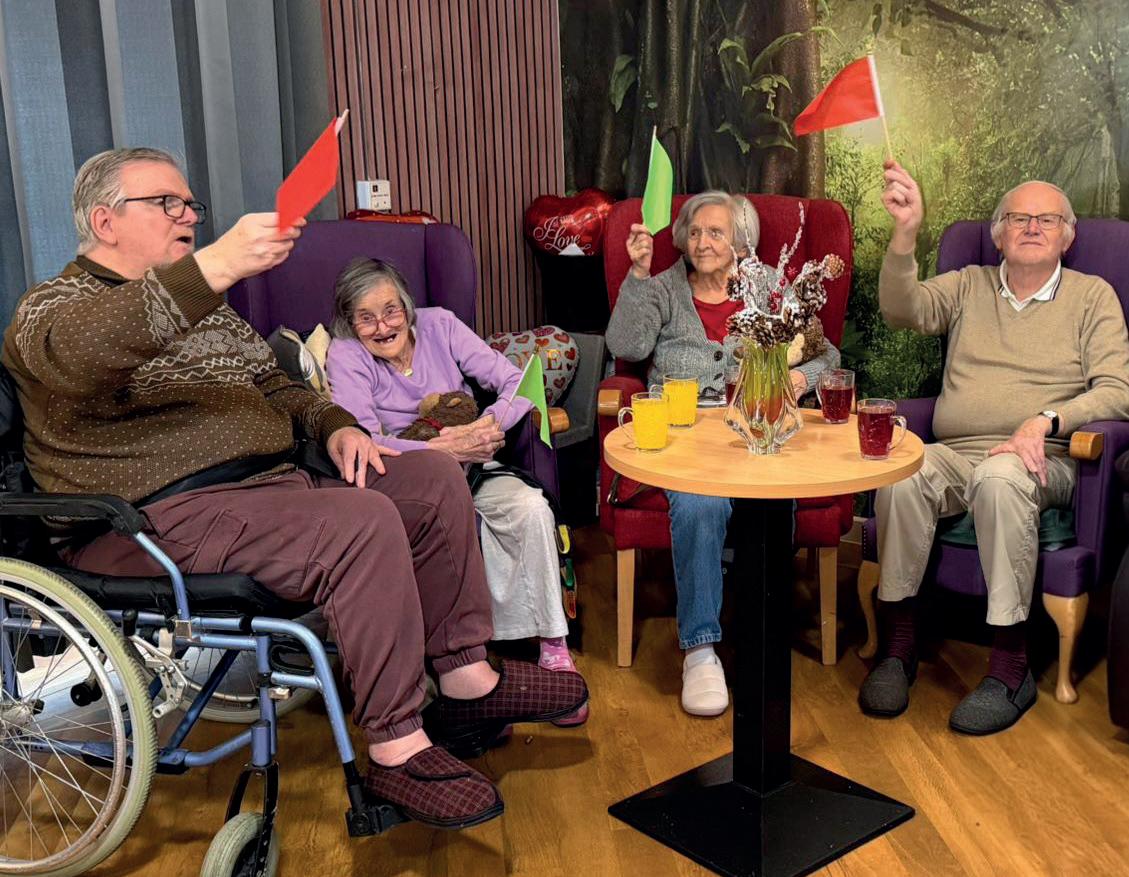
At The Dell in Lowestoft, for example, residents recently took part in a lively “green flag/red flag”
session exploring modern dating behaviours. The activity was simple in format but highly effective in practice. Residents were invited to respond to different dating scenarios, sparking animated discussion across the group.
What made the session particularly valuable was the way it combined cognitive stimulation with social interaction. Residents reflected on their own experiences while also offering advice for younger generations. Many championed traditional values
such as kindness, attentiveness and politeness, while one resident noted that being distracted on a date was an immediate red flag. The conversation flowed naturally, creating moments of humour alongside thoughtful reflection.
This kind of discussion-led activity illustrates why Valentine’s programming works so well. It is inherently inclusive and can be easily adapted for different cognitive abilities, group sizes and care settings. It also reinforces identity and life story work, both of
which remain central to high-quality person-centred care.
What residents tell us about relationships
Insight from LifeCare Residences further underlines the importance of relationship-focused engagement. Their Valentine’s survey of residents aged 60–90+ found that four in five still believe true love exists. Perhaps more telling for activity planners was the finding that communication ranked as the most important ingredient in a happy relationship, significantly ahead of romance alone. Kindness, mutual respect, trust and laughter also featured strongly.
For activity coordinators, these findings are instructive. They suggest that the most effective Valentine’s programmes are those that broaden the theme beyond romantic love to include friendship, humour and everyday acts of kindness. This wider framing helps ensure that all residents feel included, regardless of their relationship status or personal history.
A whole-home approach in action
A strong example of this wholeday philosophy in action comes from Bernard Sunley care home in Woking, where the team designed Valentine’s Day as a carefully paced experience rather than a single event.
The morning began with a collaborative arts and crafts session, with residents working together to create a large love-heart artwork for display in the home. Starting the day with a creative group task helped set a positive tone and gave residents a visible sense of contribution and achievement.
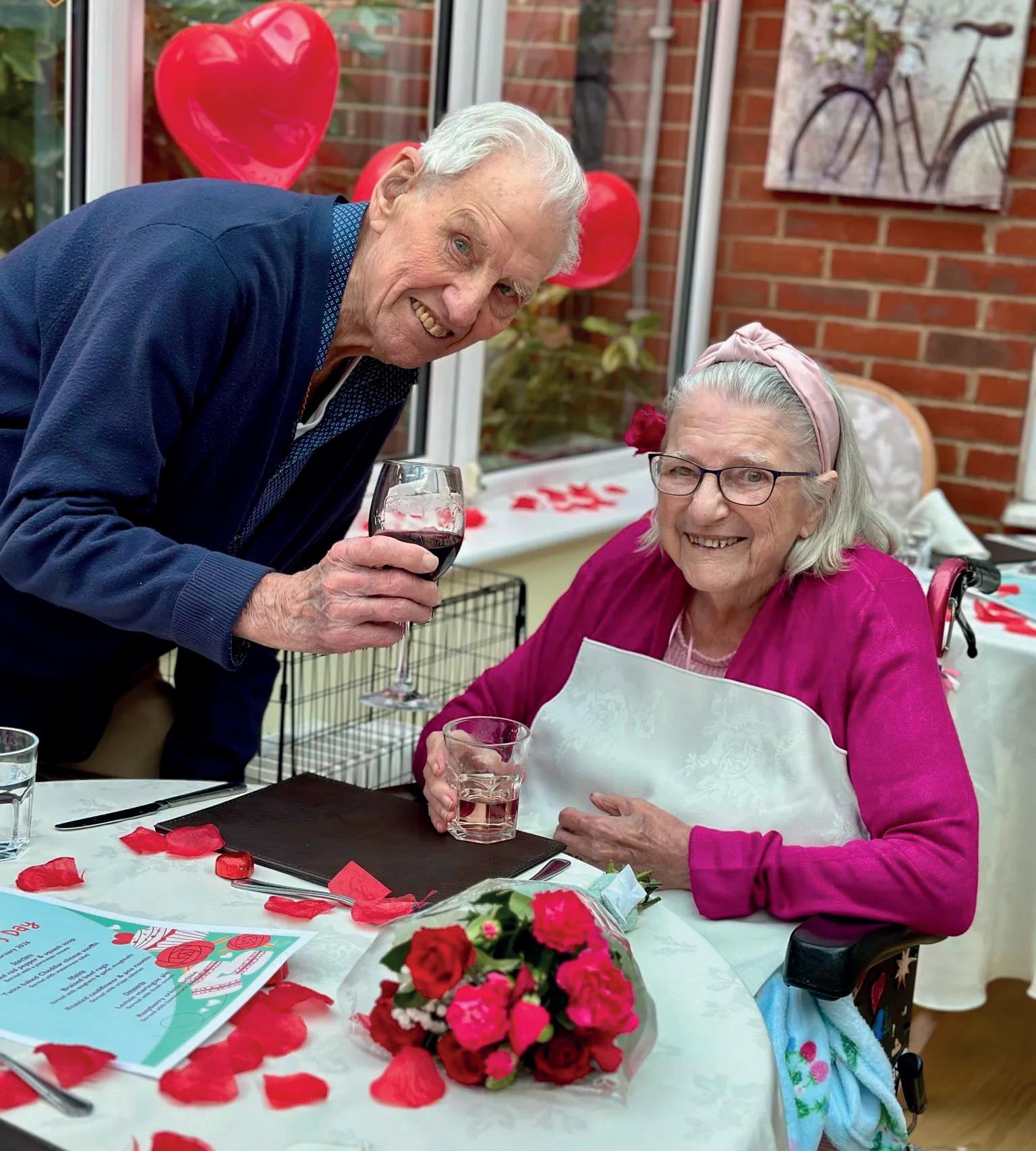
The celebrations then moved to a standout centrepiece: a romantic pop-up restaurant set up in the conservatory. Residents, families and friends were invited to enjoy a specially prepared Valentine’s menu, transforming an ordinary lunchtime into a hospitality-led experience. Thoughtful touches, such as themed décor and carefully
presented dishes, elevated the occasion and reinforced the sense that this was genuinely special.
Importantly, the team ensured that residents who were unable to attend the restaurant were not excluded. Romantic in-room dining set-ups meant everyone could participate in the day in a way that suited their needs, reflecting strong inclusive practice.
As the afternoon unfolded, the focus naturally shifted to reminiscence, with residents relaxing together and sharing their own romantic memories. These quieter social moments often prove just as valuable as structured activities, providing space for storytelling, emotional expression and peer bonding.
The day concluded on an energetic note with a dance session that encouraged residents to sing along, move to music and enjoy the collective atmosphere. Ending with movement and music helped maintain engagement levels while also supporting physical wellbeing.
Creating a narrative arc
What these examples demonstrate is that Valentine’s Day works best when it is treated as a narrative arc rather than a standalone activity. The most successful homes are thoughtful about pacing, variety and emotional flow, ensuring that
different types of engagement are woven together throughout the day.
Beyond February
The wider opportunity for providers is to replicate this model across the year. Themed full-day programming does not need to be reserved for February. Friendship celebrations, seasonal events, cultural festivals and reminiscence days can all benefit from the same structured approach.
For busy activity teams operating under ongoing workforce pressures, this model also offers practical advantages. A well-planned, themed day can generate higher engagement without requiring constant reinvention, as the core framework can be adapted and reused.
Ultimately, Valentine’s Day serves as a timely reminder that meaningful activity is about more than filling the timetable. When homes design experiences that honour residents’ histories, relationships and shared humanity, the results are visible in mood, participation and overall wellbeing. By focusing on the day as a whole, not just the individual session, care homes can create moments that truly resonate, not only in February but throughout the year.
Bridging the Civility Gap
Subtle workplace incivility is quietly undermining retention and culture across care homes. As intergenerational teams become the norm, providers must take deliberate steps to align expectations, strengthen communication and build truly respectful working environments.
Workplace incivility in care homes is rarely loud or obvious. It is more often found in tone than in policy, in raised eyebrows rather than raised voices. Yet its impact is deep, particularly in a sector now reliant on one of the most intergenerational workforces in the UK. Today’s care homes often bring together Baby Boomers, Gen X, Millennials and Gen Z on the same rota. Each generation brings different values, communication styles, and expectations for leadership. Without intention, those differences can quickly be misread as disrespect, laziness, arrogance or oversensitivity. This is the civility gap, where intent and impact quietly diverge.
In many homes, experienced staff pride themselves on resilience, loyalty and “learning the hard way”. Younger workers, particularly Gen Z, value psychological safety, feedback and inclusion. When these worldviews collide, miscommunication is almost inevitable. Instruction can feel dismissive. “Banter” can feel belittling. Silence from a manager can feel like indifference. Research across health and social care consistently shows that poor workplace culture is a key driver of turnover, particularly among younger staff. While pay and workload matter, younger workers are far more likely to leave because of how they are treated, not the work itself. In an age where
experiences are shared openly on social media and employer review platforms, incivility no longer stays within the walls of the home.
For care homes, this matters deeply. The CQC’s Assessment Framework places increasing emphasis on culture, leadership, staff engagement and learning environments. Psychological safety, respectful communication, and inclusive leadership are not “soft” extras; they are squarely within the expectations of well-led, responsive services.
So what can we do?
First, we must stop assuming that civility is understood. Care homes need explicit, shared standards of respectful behaviour across all roles and generations. This includes naming subtle behaviours, eyerolling, dismissive language, public criticism, that undermine dignity at work, just as we would name poor practice in care delivery.
Second, managers need support to intervene early. Addressing incivility does not require confrontation; it requires confidence. Simple, neutral
language that focuses on impact rather than blame can prevent small moments from becoming cultural norms.
Third, we must actively create space for intergenerational communication. Short, facilitated conversations about “what respect looks like to me” or “how I prefer feedback” can transform assumptions into understanding. Reverse mentoring, where learning flows both ways, helps dismantle hierarchy and builds mutual respect.
Finally, we need to recognise that retention is cultural, not generational. Younger workers are not leaving because they lack resilience; they are leaving because they refuse to work in environments where incivility is normalised.
Care homes that bridge the civility gap will not only retain their workforce but also strengthen it. Intergenerational teams, when led well, are one of the sector’s greatest assets. The future of care depends not just on who we recruit, but on the culture we invite them into.
thecivilitygap.com
Inside easyResidences
In this exclusive interview, Vinay Patel, CEO and Co-Founder of easyResidences, outlines the vision behind easyResidences and explains how data-led design and responsible AI aim to make high-quality care more accessible.
Tell us about the philosophy and history behind easyResidences.
easyResidences was founded on the core belief that exceptional care should never be a luxury. Over the last ten years, we’ve observed a widening gap in social care: older, non-purpose-built homes have become more costly and difficult to manage, while modern, purposebuilt residences often charge high fees and have underutilised facilities. Increased operational and regulatory demands have made many older homes struggle to stay open, with some closing completely.
Our goal has been to challenge this pattern and envision a future where compassion, dignity, and innovation work together for everyone’s benefit. Leveraging our experience as award-winning care providers, developers, and tech innovators, we combine welldesigned care environments, strong clinical governance, and modern technology to offer dependable, high-quality care at accessible prices. Our focus is on excelling in fundamental practices daily, and creating a sustainable model for residents, families, staff, and the entire health and social care system. We are creating not just places to live, but places where people truly thrive.
How will easyResidences differ from homes?competitor
easyResidences is fundamentally built around systems and intelligent data, not just buildings. We adopt a seamless, end-to-end approach that covers everything from land
sourcing and construction to daily operations, ensuring staffing, training, care delivery, data, and outcomes function together as a unified model. Our focus is on how the entire operation performs. Our homes are designed for modern care, with layouts that promote vibrant communities and foster connection and belonging. By embracing a holistic view from the beginning, we maintain strong commercial discipline, providing modern amenities and maintaining high standards of care while keeping prices affordable without sacrificing quality.
What role will AI play in the
day-to- day operations of the homes, and how will it be managed?
At easyResidences, AI acts as a silent supporter, enhancing human care without replacing it. It works quietly behind the scenes to help teams spot risks sooner, lessen administrative tasks, and make improved decisions based on realtime data. Whether it’s predicting falls, responding to health changes, easing staffing issues, or streamlining compliance, AI helps us shift from reactive to proactive, fostering safer and more positive environments.
Governance is essential. We deploy AI responsibly, ensuring clinical oversight, transparency, and the retention of human decisionmaking. Our aim is straightforward: to free up more time for carers to focus on care, give managers better oversight, and provide families with greater peace of mind. This commitment led us to partner with the multi-award-winning
PredicAire, the only AI-native care management platform built specifically for care settings.
What is one misconception easyResidencesabout you want to clarify?
A common misunderstanding is that affordability implies sacrificing quality. However, at easyResidences, it signifies the opposite. We offer affordable luxury: serene, well-thought-out environments maintained to strict clinical standards and supported by highly efficient operations. Our cost-effectiveness results from smart land choices, valueoriented construction, and scalable, technology-driven systems, ensuring no corners are cut. This vision aims for a future where exceptional care is accessible to many, not just a privileged few.
Vinay Patel
Banking the Care Sector
Virgin Money explains how its specialized relationship strategy, flexible lending options, and commitment to quality are supporting care home operators in managing financial challenges while gearing up for a more innovative and consolidated future.
Virgin Money actively supports care homes in the health and social care sector. Can you share your approach and what makes your team unique in this area?
We see our role as an important partnership with the sector, working with customers who share our values and purpose. All our customers have dedicated relationship managers who focus solely on the care market. As a mutual organisation with no shareholders or stock market to report to, we are philanthropic in our outlook. A recent example is our landmark initiative to return some of our income directly to support care workers in crisis through the Care Workers Charity. This helps individuals and care businesses directly.
What common financial challenges do care home operators face today, and how does Virgin Money help address them?
The challenges are well documented and relate to staffing, rising costs, regulation and the lack of an integrated health and social care pathway. By understanding these issues and supporting organisations in seeking a better future for the sector, we can better appreciate the impact on their businesses. This enables our team to navigate the specific challenges individual customers face and
work closely with management and owners to ensure support is in place when inevitable bumps in the road occur.
Can you outline Virgin Money’s business loans or commercial mortgages for care home operators?
Flexibility is key. We actively seek feedback from providers on what will work best for them. Rigid products do not effectively serve the ever-evolving sector, so we regularly review our product offerings. One example was the launch of our development finance loan on a single-home basis. At the time, no High Street lender offered this, and it was introduced in direct response to market demand.
How does Virgin Money evaluate and support the sustainability of care home businesses in lending decisions?
Quality, quality, quality. We aim to work with the most successful operators who provide consistent, high-quality care from wellinvested, fit-for-purpose premises. We also consider staff welfare, working conditions, and strategies around ESG fulfilment. Much of this comes down to thorough diligence, often involving getting to know the key people in a business and walking the premises with management and staff. Financials form part of the process but are far from the be-all and end-all.
Looking ahead, what trends do you foresee in the care home sector, and how is Virgin Money preparing for care providers’ evolving needs?
Continued innovation and diversification will feature strongly. Technology must be an integral part of the sector’s future and will require sustained investment. Better staff terms and conditions are already emerging, and the ERB and FPA debate will likely accelerate this. We also expect further consolidation and increased mid-market activity as providers reset and seek expansion in local geographies without the complexity of new developments, which often land in areas of greater wealth.
Derek Breingan, Head of Health and Social Care Sector at Virgin Money
Experience matters
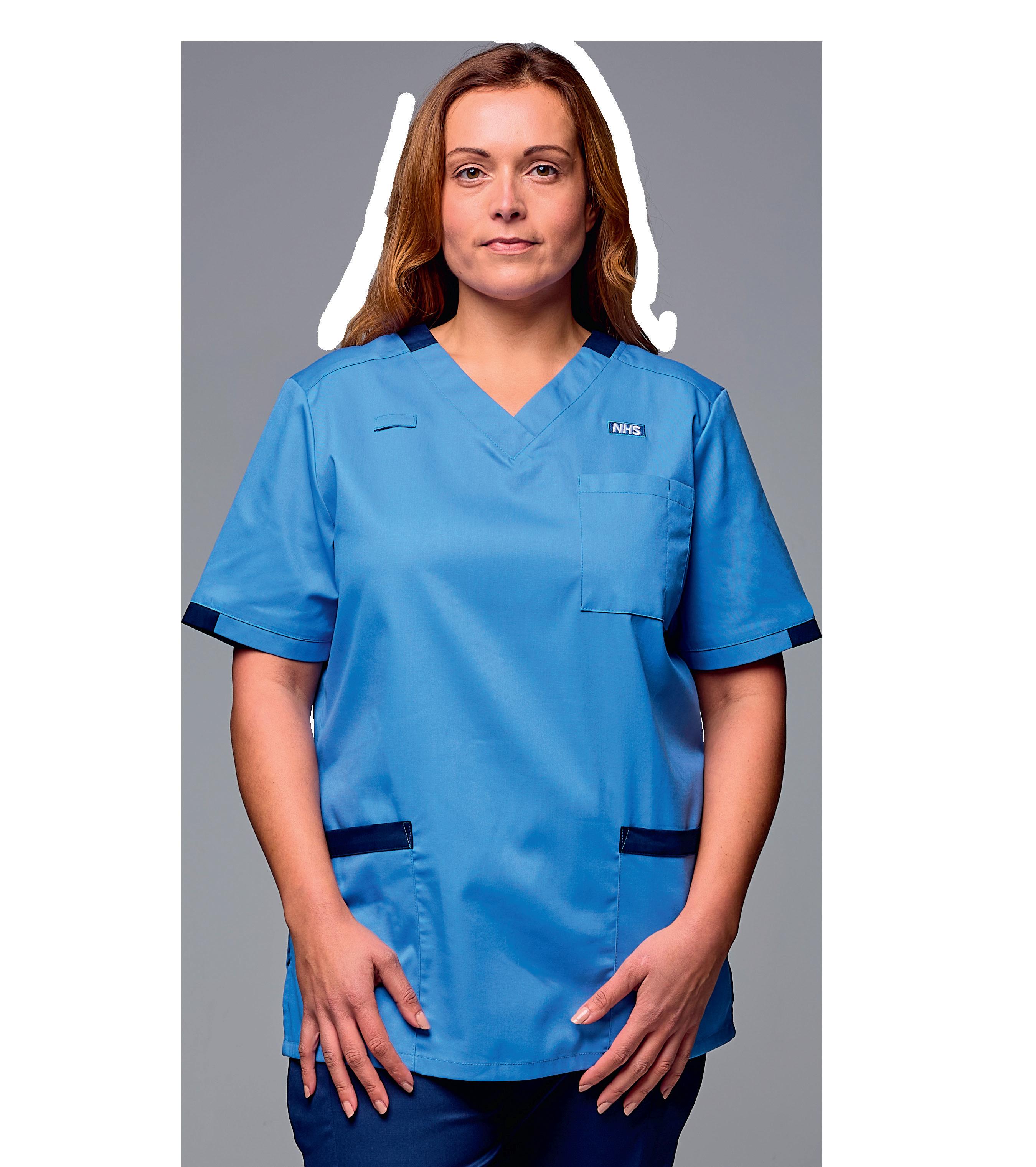
Designing, manufacturing and delivering the UK’s largest uniform projects
Scan
Come and visit us at the Care England Conference 12th March | Stand 26
Cleaning, Hygiene and Infection Control
Essential 5
Even the most meticulously maintained care homes contain unseen hygiene blind spots. In this article, we highlight the five most overlooked areas where infection control can fail and explain why they matter.
Staff Only Spaces
Staff rooms, lockers, toilets, and offices are often overlooked in cleaning routines, yet they are high-touch areas where infections can spread rapidly between shifts. Poor hygiene in these staff-only zones can compromise resident-facing procedures, especially during outbreaks. Keeping these areas clean demonstrates that infection control is a universal priority, not limited to visible areas, for families and inspectors.
Shared Equipment
Hoists, wheelchairs, blood pressure monitors, and mobility aids are frequently moved between residents and rooms. When it’s unclear who is responsible for cleaning them, they pose a significant transmission risk. Good hygiene relies on having clear ownership, visible cleaning routines, and easy-to-use cleaning products that can be applied between tasks, not only at the end of the day.
Soft Furnishings and Upholstery
Chairs, cushions, curtains, and fabric headboards are often excluded from routine cleaning because they are more difficult to clean than hard surfaces. However, they readily absorb spills, droplets, and odours, especially in dementia and nursing environments. Regularly scheduled cleaning of soft furnishings is crucial to prevent hidden hygiene problems that can be difficult to address later.
Touchpoints Outside Bedrooms
Handrails, lift buttons, door plates, light switches, and nurse call systems are frequently touched but often cleaned inconsistently. These areas fall between scheduled cleaning and care routines and may be overlooked. Infection control is enhanced when high-touch surfaces are clearly identified, prioritised, and included in daily cleaning routines rather than relying on chance.
5 4 3 2 1
Waste and Laundry Transition Areas
The movement of waste and laundry poses significant hygiene risks, particularly in corridors, sluice rooms, and holding areas. When workflows intersect or space is tight, contamination can rapidly spread. It is essential to keep these transition zones well separated, clean them regularly, and ensure proper ventilation to prevent infections.
Raising Hygiene Benchmarks
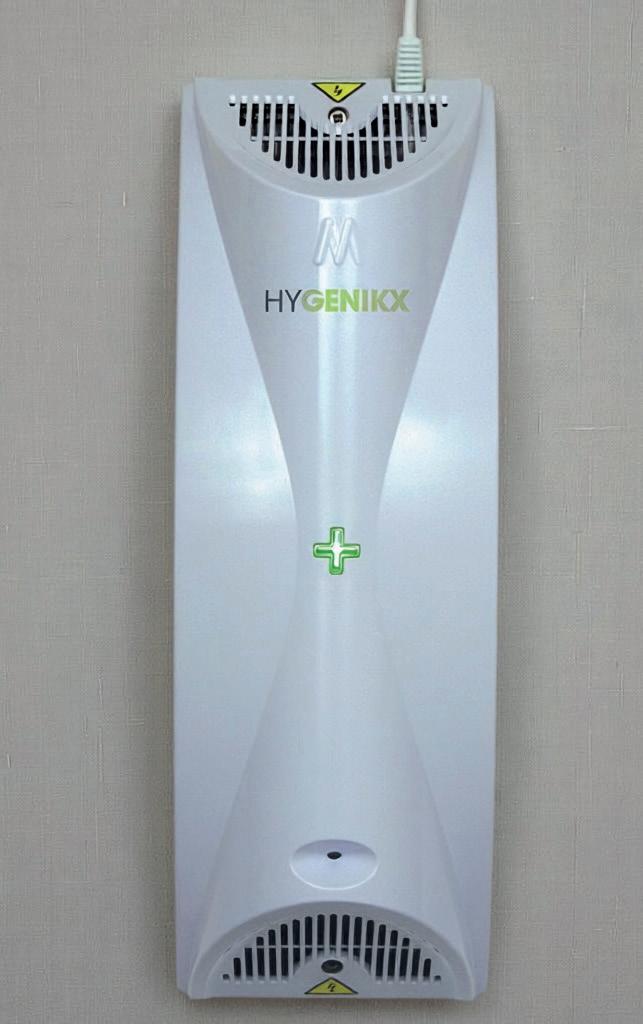
Nick Falco, Product & Technical Director at Mechline Developments, speaks to Care Home Magazine about how care homes can elevate hygiene standards and strengthen protection with HyGenikx, the company’s award-winning air and surface sanitiser.
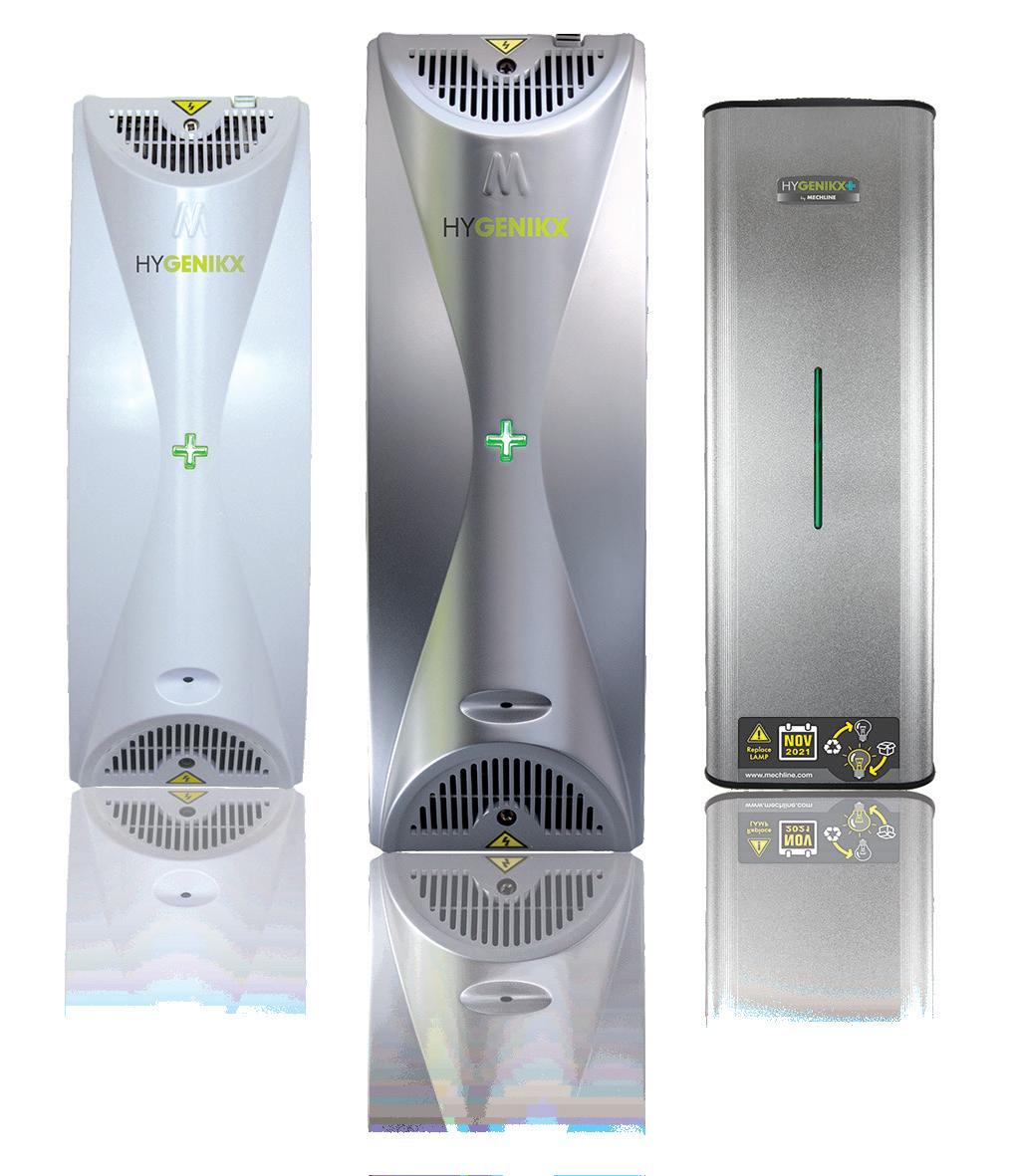
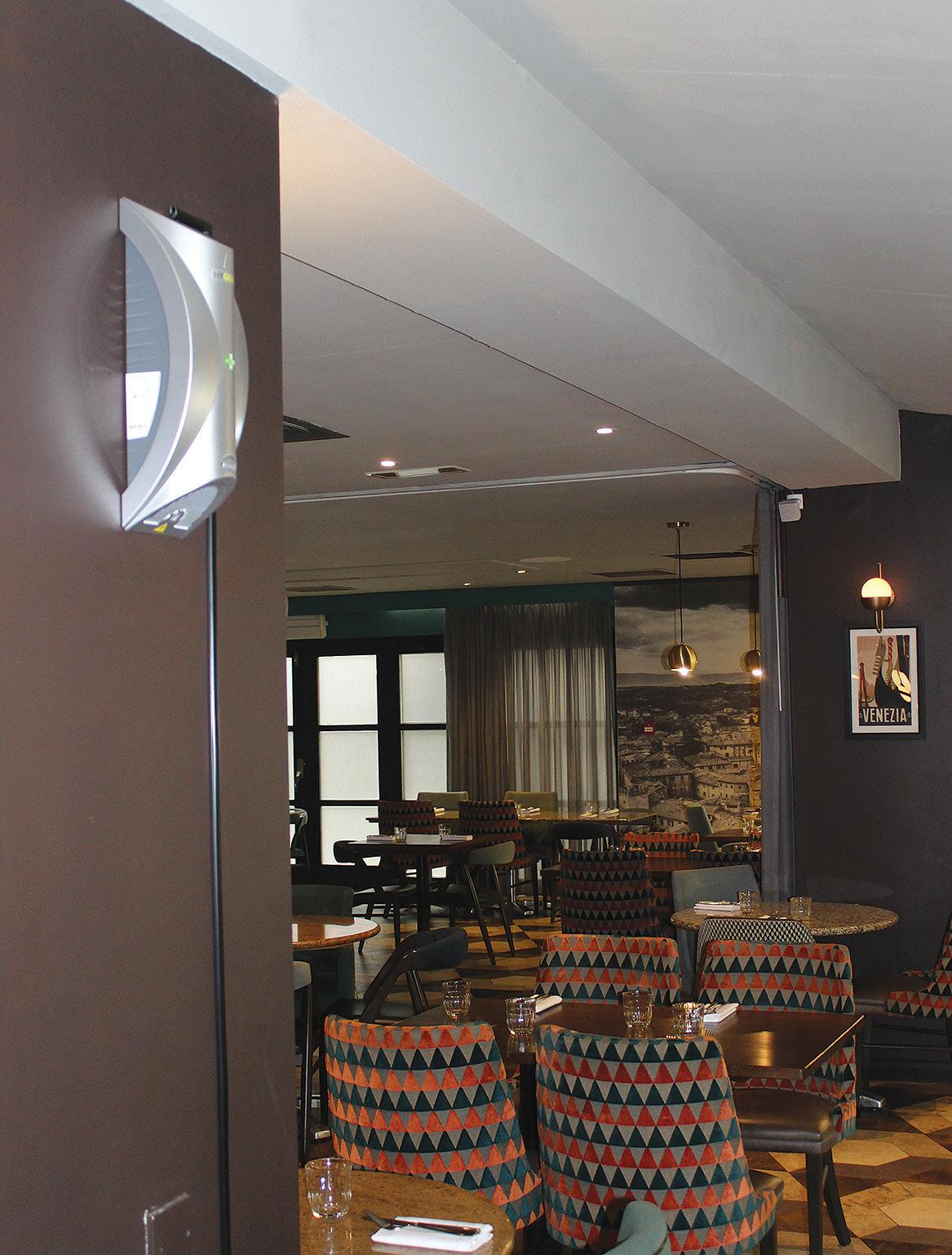
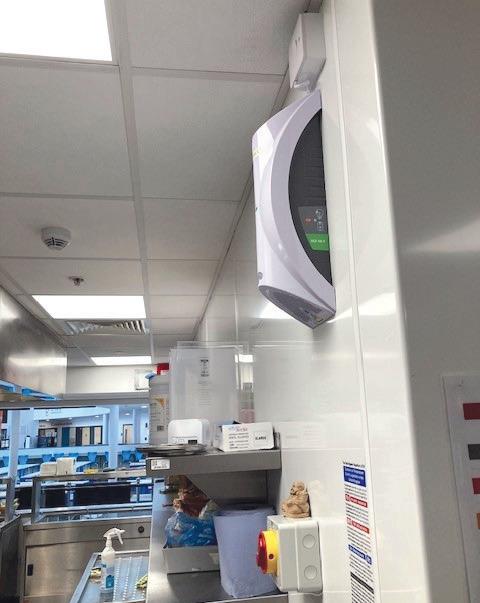
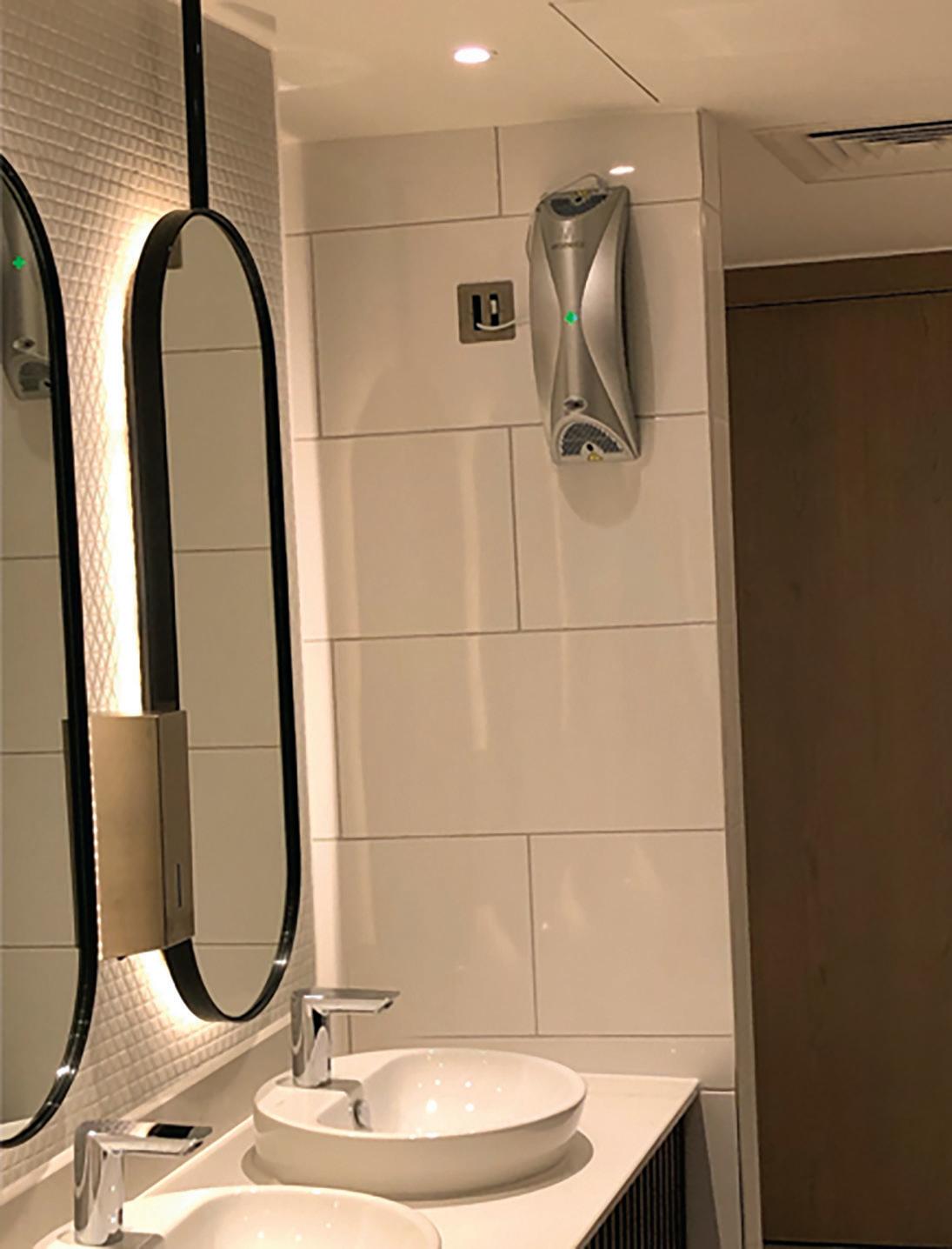
From washrooms, food prep areas, communal spaces, staff rooms, and even refuse areas, Mechline offers models suitable for various spaces within the care home environment.
What is HyGenikx?
HyGenikx is an advanced, wall-mounted air and surface sanitiser that employs specialised UV-C germicidal technology to eradicate viruses and bacteria. This technology has undergone rigorous testing and validation in top independent laboratories worldwide, giving care homes full confidence in its effectiveness. Additionally, we have proven its advantages in real-world operational settings.
Let this real-world trial speak for itself:
Mechline Developments recently demonstrated that the HyGenikx air and surface sanitiser can reduce microbial activity by up to 89% in a real kitchen setting. In an ATP testing trial at Bedford Academy, three HyGenikx units were installed: two in the main prep kitchen and one in the staff changing room. ATP samples were gathered from 7 designated test points both before installation and one week afterwards. All samples were collected during regular operational hours using a Kikkoman Lumitester Smart – Portable ATP luminometer. Like many catering facilities,
especially in the healthcare and care home sector, Bedford Academy keeps its setting spotless. However, no matter how well staff perform their day-to-day cleaning duties, it is well known that this can only offer a temporary solution. This is why care homes are now considering investing in supporting systems to complement staff best practices and minimise the risk of viruses and bacteria spreading.
The results in this trial showed reductions in microbial counts in all points tested after HyGenikx was installed. On average, levels of contamination had reduced by 77%, and up to 89%.
The units helped to improve hygiene levels in an already clean kitchen and has reduced potential risks.
So impressed with their results with HyGenikx, Bedford Academy has since decided to install HyGenikx units at all sites within the Trust, as Russell Abbey, Head of Catering Services, Heart Academies Trust, details: “We have now installed HyGenikx at our other sites. What I like is that you can feel, sense, and smell the difference in the air when you walk into the staff changing room. It used to be stale, musty old air as there was low ventilation, but since having the HyGenikx unit installed in there, it is like a completely different room.”
Considering these conclusions for Care
These results are key for care home
caterers to consider, given ATP testing is widely used in the food industry to monitor the cleanliness within HACCP systems, and alert those responsible to high-risk areas and where preventative action is needed.
Competitively priced, consuming very little energy, and requiring no training to use, these small but mighty systems plug into a standard socket and operate 24/7 without human intervention.
Ultimately, HyGenikx by Mechline Developments provides care homes with a simple solution for effortlessly and effectively tackling tough-to-handle challenges related to ATP, microbial counts, viruses, and beyond.
IMPROVING HYGIENE ACROSS HOSPITALITY
Eradicate viruses and bacteria with HyGenikx air and surface sanitiser.
Smarter Hygiene Management
Ela Hedges, Business Development Manager at Miele Professional, explains that maintaining consistent hygiene in care homes, whether in kitchens or laundry rooms, requires the right equipment, strong processes, and confident, well-trained teams.
Hygiene sits at the very centre of every decision a care home makes. Behind the scenes, teams are working continuously to reduce the risk of infections, protect residents and meet regulatory expectations, all while managing busy kitchens and the laundry room.
Achieving consistency across these areas is so important, yet often it can be quite a challenge. Especially when we’re seeing staff levels fluctuate so much in recent years, or when facilities rely on equipment or processes that struggle to keep pace with demand.
But how can care homes get the most out of their processes?
The role of the kitchen
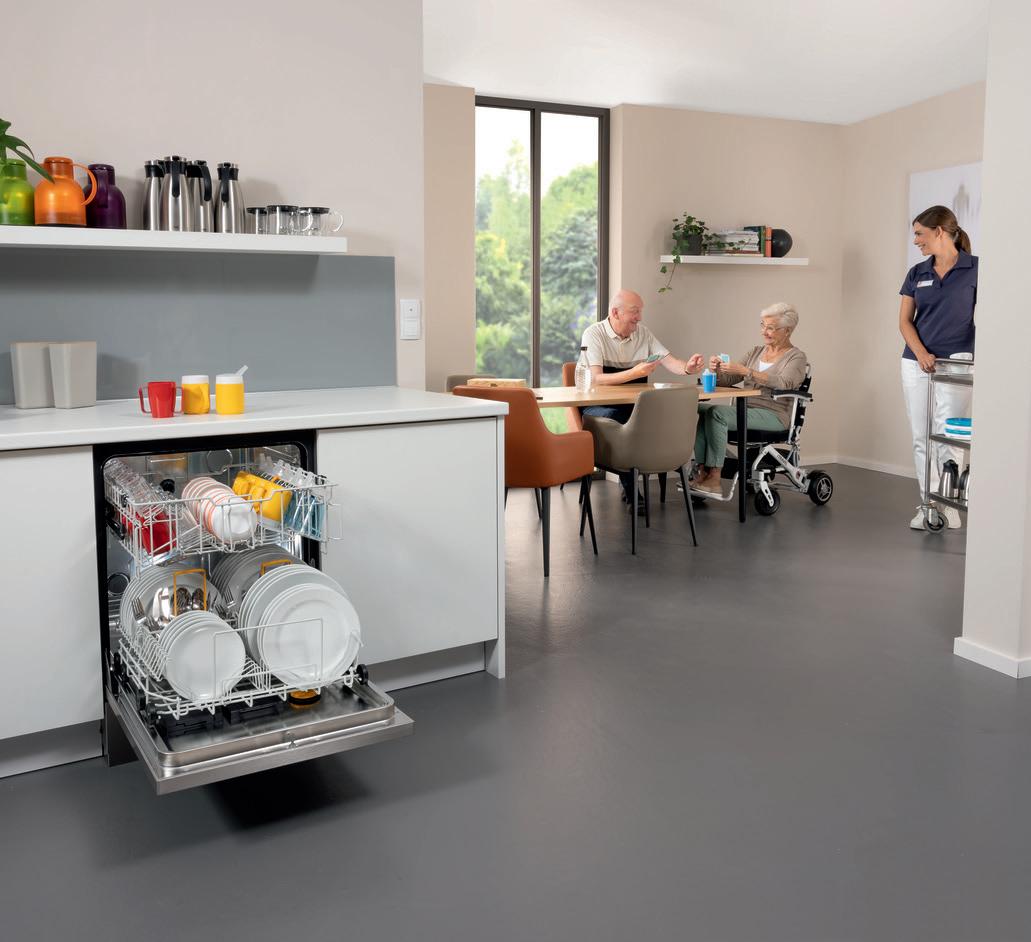
In busy care home kitchens, whether it’s making a round of teas or loading up the dishwashers, hygiene and efficiency must work hand in hand. With multiple meals served to residents every day, dishwashing systems need to deliver consistently safe, hygienically clean crockery, cutlery and glassware. Domestic dishwashers, despite their lower upfront cost, can be prone to breakdowns when used at the pace required in most care settings, which ultimately creates disruption and potentially higher long-term costs.
Commercial dishwashers on the other hand are designed for continuous use, and provide the
reliability needed to maintain hygiene standards. Hightemperature programmes help remove harmful microorganisms, giving kitchen teams confidence that the equipment supports infection control measures, especially for vulnerable residents. Fast-cycle options also help staff stay on schedule, reducing manual handling and the risk of crosscontamination. With dependable performance and consistent servicing, these systems support smoother operations, allowing teams to focus more fully on the
part of the job they love, taking care of their residents.
The role of the laundry room
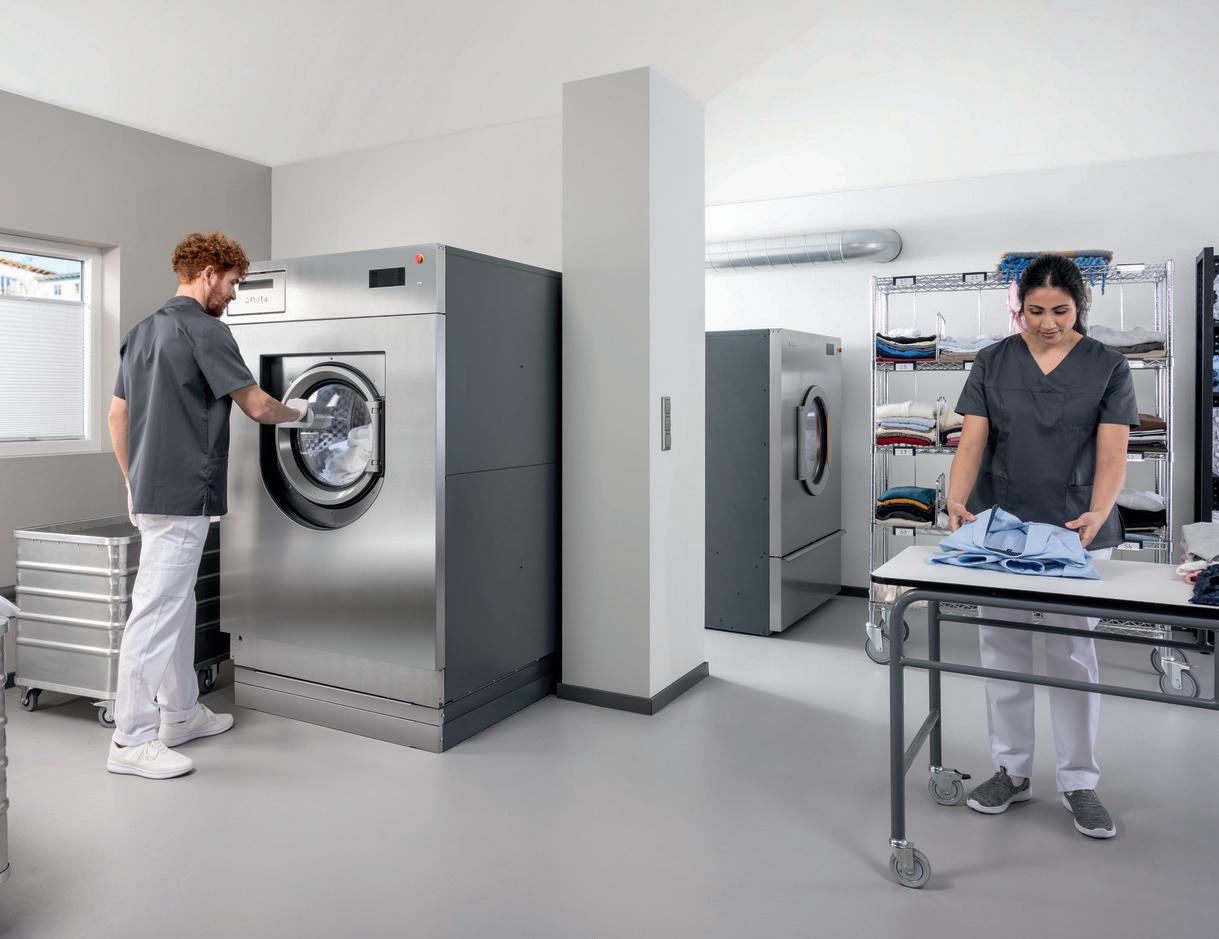
Laundry plays an equally important role in infection prevention. For residents with weakened immune systems, correctly disinfected linens and clothing are an absolute nonnegotiable. Keeping laundry on site rather than outsourcing gives care homes greater oversight of each stage of the process, from sorting to washing and drying. By avoiding external transportation, the risk of
contamination between facilities is significantly reduced, and staff can monitor wash cycles to ensure temperatures meet the standards needed to eliminate harmful microorganisms.
This impact extends far beyond controlling infections. Many residents value familiar scents, textures and routines just like everybody else. These feelings can help uphold dignity and create a sense of continuity, which can be so important for their day-to-day wellbeing. On-premise laundry gives teams the flexibility to honour these preferences by using chosen detergents, protecting delicate items or responding quickly when specific garments need attention.
From an operational standpoint, modern commercial laundry equipment supports efficiency through faster cycles, lower energy consumption, and features such as automated detergent dosing, which can offer long-term savings for care homes processing daily laundry volumes.
The role of proper training
Even with robust equipment, infection prevention standards ultimately rely on those using it. Staff need confidence in managing hygiene risks, running disinfection
programmes correctly, and understanding how small changes in processes can affect resident safety.
To help address this, a free online infection-prevention training by Miele Professional (accredited by the Infection Prevention Society) is readily available for care home teams. The training covers core topics such as preventing the spread of infection, understanding common infections in care settings and applying correct laundry-room protocols.
Hosted online, it can be completed at a pace that suits staff availability and includes a knowledge-check quiz and certificate on completion. Its purpose is to help ensure that teams can stay aligned with best practice, not just in their care homes, but industry-wide, and feel confident using their equipment effectively as part of wider infection control processes.
A connected approach to hygiene excellence
Care home hygiene cannot be treated as a single-issue challenge. It requires a coordinated effort across kitchens, laundry rooms and frontline teams. Commercial dishwashing and laundry systems provide the resilience and performance needed to maintain standards under daily pressures. Whilst training helps staff make informed, confident decisions that support not only the resident’s safety and wellbeing, but also their own.
As regulatory scrutiny intensifies and residents’ expectations evolve, care homes that take a balanced approach to hygiene will be best positioned to protect their communities and uphold excellence in the care they provide.
www.miele.co.uk/p/
Inside the Kitchen
The care home kitchen is among the highest-risk areas in the in a care home. Ensuring strict hygiene standards involves more than just occasional cleaning; it relies on effective systems, proper training, and reliable supplier support, especially during peak service times.
The care home kitchen is a fast-paced environment where safety margins are thin, and expectations are high. Multiple meal services, vulnerable residents and a steady flow of different staff groups create conditions in which even minor lapses in hygiene can have serious consequences.
For operators, the challenge is rarely a lack of intent. Instead, it is sustaining consistent standards day after day, particularly during busy service windows when attention is divided, and shortcuts can creep in unnoticed. As sector specialists emphasise, strong outcomes depend on embedding hygiene into culture, workflow and equipment not relying on inspection readiness alone.
A uniquely high-risk setting
Care home kitchens operate under pressures that differ markedly from mainstream catering environments. According to Steve Gibson, managing director at Greetwell Purchasing Solutions, these spaces serve “some of the most vulnerable people in society” several times a day, every day of the year. Residents may have weakened immune systems, allergies, or complex dietary needs, which means tolerance for error is extremely low.
The risk profile is also heightened by the mix of personnel moving through the kitchen. Catering teams, care staff and agency workers may all enter the space, increasing the likelihood of inconsistent hygiene behaviours.
Maintaining a shared understanding of standards across this blended workforce is therefore critical.
Martin Murphy, director of operations at Boutique Care Homes, stresses that success depends on translating regulation into meaningful daily practice. A home in the group achieved a five-star food hygiene rating; this was viewed not as an endpoint but as confirmation that “systems and culture were working as intended.” The emphasis, he notes, is on helping teams understand why procedures exist, so hygiene becomes embedded behaviour rather than a tick-box exercise.
Where standards most often slip
Breakdowns in hygiene rarely occur during scheduled cleans. More often, they happen in the gaps between tasks when kitchens are at their busiest.
Gibson highlights several recurring pressure points: missed hand hygiene between activities, reuse of cloths or utensils, and overlooked surface wipes during service. These micro-lapses can accumulate quickly in a fast-moving kitchen.
Physical blind spots also play a role. Duplex Cleaning identifies commonly missed areas, including floor edges, textured safety flooring, under counters, equipment legs, and high-touch points. When left unattended, these zones allow grease, bacteria, and food debris to accumulate, increasing the risk of cross-contamination and pest activity.
The implication for operators
is clear: hygiene systems must be designed around real working conditions, not idealised workflows.
Designing out contaminationcross-
One of the most effective riskreduction strategies is visual clarity. Zoning and colour coding provide immediate cues that reduce reliance on memory and help staff make the right decision quickly.
Gibson notes that when equipment, cloths and chemicals are clearly assigned to specific areas, the chance of crosscontamination drops significantly. However, these systems only work when they are simple, consistently applied and reinforced through training.
Workflow design is equally important. Murphy emphasises that kitchen processes should “reduce risk and support good hygiene naturally, rather than relying on
corrective action.” In practice, this means structuring food flow, storage and cleaning routines so that safe behaviour is the path of least resistance.
For many homes, the goal is to move from reactive hygiene management to preventative design.
The training challenge in mixed workforces
Staff competency remains one of the biggest variables in kitchen hygiene. Care homes often rely on agency staff or team members whose primary role is not catering, making consistent training essential. Murphy argues that training must go beyond procedural instruction. Teams need to understand how food safety connects to individual resident needs, particularly for those requiring texture-modified diets or managing allergies. This approach builds professional ownership and strengthens accountability.
Specialist equipment providers also see training as central to risk reduction. Duplex notes that mechanised and steam-cleaning systems can help standardise outcomes regardless of operator skill level, a significant advantage in environments with high turnover. Superheated steam, for example, can kill pathogens instantly while cylindrical brushes reach deep into textured flooring that traditional mops may miss.
By reducing dependence on manual technique, technology can help close the consistency gap.
Choosing products that support behaviour
Cleaning products themselves can either reinforce or undermine good practice. In high-pressure kitchens, complexity is the enemy of compliance.
Gibson advises that products should be clearly labelled, appropriate for food environments and supplied with straightforward instructions that staff can follow confidently. Ease of use is critical: when products fit naturally into workflow, teams are far more
likely to use them correctly under pressure.
Safety considerations also matter in care settings. Products must be suitable for use around residents and staff who may be sensitive to strong chemicals. Heat-based or chemical-free cleaning systems can offer advantages here by eliminating pathogens without leaving residues on food-contact surfaces and reducing COSHH risks.
Reliability of supply is another often-overlooked factor. If products are unavailable or substituted at short notice, even well-designed routines can quickly unravel.
Monitoring that builds confidence
Robust internal assurance is what sustains standards between external inspections. Murphy describes internal monitoring as “assurance, not surveillance,” with regular audits and documented checks used to encourage learning and early intervention.
When documentation is treated as a tool for improvement rather than bureaucracy, it becomes easier to identify emerging risks and address them proactively. This mindset helps ensure that inspection outcomes reflect everyday reality rather than shortterm preparation.
Specialist suppliers can
strengthen this process by providing usage guidance, training support and audit-ready documentation. Gibson notes that close supplier partnerships reduce stress during inspection periods because routines are already embedded and staff understand expectations.
From compliance to culture
Across the sector, the message from operators and suppliers is consistent: high kitchen hygiene standards are the by-product of strong systems and informed teams.
For Murphy, the key advice to peers is to move beyond compliance as the primary goal. When staff feel supported, understand the purpose behind procedures and work within welldesigned systems, high standards follow naturally.
In today’s care homes, where kitchens are busier than ever and workforce models are more fluid, that cultural foundation is what ultimately protects residents. Cleaning regimes, equipment and audits all play their part, but the homes achieving the strongest outcomes are those that design hygiene into everyday practice and make safe behaviour the easiest behaviour to sustain.
Convenience vs. Care
In this article, allmanhall discuss how ready-made meals should not be taking over from freshly prepared meals and why freshly prepared food remains important in care homes for resident wellbeing and dignity.
Food is one of the few interventions in care that impacts every resident, three times a day, making it too important to reduce to a convenience decision. Freshly prepared meals, when planned properly and supported by expert procurement, deliver better nutrition, higher resident satisfaction and more resilient cost control. This is the approach allmanhall help care providers achieve every day.
Yet across the sector, care homes are under unprecedented pressure. Rising food inflation, staffing shortages and operational complexity have made ready meals appear like a safe, predictable option. Promoted as nutritionally compliant and cost-controlled, pre-packed meals can seem to offer reassurance at a time when certainty feels scarce. However, what looks convenient on paper often carries hidden risks in practice.
Heavy reliance on ready meals can dilute nutritional quality by prioritising shelf life and standardisation over freshness, nutrient density and sensory appeal. Meals lacking aroma, texture and visual interest can reduce intake, particularly among residents already at risk of malnutrition. One-size-fits-all solutions also limit cultural choice, complicate allergy management, and restrict catering teams’ abilities to respond to individual needs.
Sector leaders are increasingly urging providers to take a more considered view. As Rachael Venditti, allmanhall’s Development Manager & Registered Nutritionist, explains: “While ready-meal
solutions can play a role, they should not replace fresh food as the foundation of care catering. Freshly prepared meals support dignity, choice and long-term health, and with the right procurement approach, they can be delivered sustainably.”
Fresh food is sometimes viewed as a ‘nice to have’. In reality, it is a must-have. Nutritionally, freshly prepared meals enable better protein quality and retention, improved micronutrient availability, and greater adaptability for special diets and fortification. Just as importantly, they put catering teams back in control, allowing them to cook for residents rather than reheating instructions.
Cost remains a central concern, but freshness alone does not drive spend. Cost is shaped by procurement structure, supplier access and transparency. Through allmanhall’s food procurement solution, care providers gain access to a broad supplier network and market insight, enabling menus to
be built around fresh, nutritious, and cost-effective ingredients without increasing financial risk.
Care organisations working with allmanhall are already demonstrating that a fresh food model can succeed, even in challenging conditions. By strengthening procurement, improving visibility of spend and supporting catering teams with expert insight, they are delivering better nutrition while maintaining commercial control.
In a sector under pressure, food decisions matter. Freshly prepared meals, backed by intelligent procurement and real expertise, offer a more resilient path forward for care homes focused on quality, compliance and long-term sustainability.
allmanhall.co.uk
Dishing Up
Adam King, Head Chef at Herne Bay Manor - the flagship home at Dunham Care –shares his delightful recipe for braised feather blade steak in red wine sauce, served with dauphine potatoes and fresh green beans, followed by a traditional gypsy tart for pudding.
As the colder, wetter months start to fade, Adam has selected a dish that combines comfort, flavour, and practicality: important factors in a care home setting. Feather blade steak is particularly well suited to slow braising, a method that breaks down connective tissue to create tender, easy-to-chew meat. This is especially important for older adults and residents with dental challenges. The red wine sauce adds both depth and moisture, helping to stimulate appetite and prevent dryness.
The bourguignon-style garnish of mushrooms, onions and bacon enhances both the nutritional value and sensory appeal of the dish. Mushrooms provide fibre and essential B vitamins, while onions contribute antioxidants and natural sweetness. Used in moderation, bacon adds a savoury richness that can encourage food intake, a key focus in care environments where residents may have reduced appetites. Together, these elements create a familiar, traditional flavour profile that supports not only nutrition but also emotional wellbeing.
Adam King, Head Chef
Braised Feather Blade Steak in Red Wine Sauce
Dauphinoise potatoes provide a valuable source of carbohydrates for energy, while milk or cream adds calcium and protein to support bone health. Their soft, creamy texture makes them particularly suitable for residents requiring softer foods. Fresh green beans add colour and balance to the plate, providing vitamin C, vitamin K, and fibre to support overall health and digestion.
Importantly, the dish is highly adaptable. The braised steak can be chopped, minced or blended with sauce for modified diets while retaining both flavour and nutritional value. Seasoning, fat content and alcohol elements can also be adjusted to meet specific dietary requirements.
A Taste of Kent
Finally, a gypsy tart, a beloved dessert strongly associated with Kent, where it was originally created and eventually became a common
Ingredients
Braised feather blade steak
180g feather blade steak
2 x carrots chopped
2 x celery sticks chopped
2 white onions chopped
4 gloves garlic chopped
1 litre beef stock
300 ml red wine
Thyme, rosemary and bay leaf to flavour
Salt and pepper
2 tablespoons flour
2 rashers of smoked bacon
Bunch chives finely chopped for garnish
Button mushrooms 200g
Dauphinoise potatoes
8 large potatoes
Bulb of fresh garlic
800 ml double cream
200 ml whole milk
Thyme and rosemary to flavour
milk and cream
Salt and pepper.
300g grated cheddar cheese
fixture in school dinners. For many, it is a pudding that instantly evokes memories of childhood and shared mealtimes.
According to local legend, the tart’s origins lie in an act of kindness. An elderly woman reportedly saw a group of undernourished gypsy children playing in nearby fields and wanted to make them something
Gypsy Tart
380 g dark brown sugar
Tin evaporated milk
Pastry base
50 g icing sugar
200g
Plain flour
100 diced butter
Pinch salt
1 egg
Water if needed
Recipe
Braised feather blade steak
• Season the steak and dust with flour
• Sear in a hot pan until nice and brown
• Remove from heat, place in ovenproof dish
• Brown all vegetables and place them in the meat dish with herbs.
• In the same pan, reduce red wine by half and add beef stock
• Pour onto steak dish and cover
• place in oven at 180c for 50 minutes.
• Garnish with chives, mushrooms and onions.
nourishing to eat. With only a few simple ingredients in her pantry, she created what would become the traditional gypsy tart.
Today, its sweet, nostalgic appeal makes it a fitting dessert in care settings, not only satisfying the appetite but also helping to spark conversation, reminiscence and connection around the dining table.
Dauphinoise Potatoes
• Bring to a boil cream, milk, garlic herbs
• Remove from heat, leave to infuse
• Peel potatoes and slice thinly
• Grease oven proof dish
• 2 layers of potatoes in dish
• Sprinkle with cheese
• Repeat 2 more times
• Pass cream mixture through a fine sieve
• Pour oven potatoes until just covered.
• Sprinkle remaining cheese on top.
• Cover and cook in oven
50–60-minute 180c until potatoes are cooked.
• Remove cover and replace in oven for a further 10 minutes to gratinate.
Gypsy tart
• Make pastry case
• Whisk sugar and cream together until light brown in colour (do not over-whisk)
• Pour into pastry case
• Cook for 10 minutes 160c
Gypsy Tart
Barchester: Rose Water Place
Barchester Rose Water Place is located in the countryside just outside Maidstone, in Kent. Care Home Magazine was invited for a tour by the Home Services Advisor, Reece Brooks, and had a discussion with the home’s manager, Hadrian Rodriguez.
Rose Water Place lies on the outskirts of Maidstone within a community of new developments. It features tasteful design, landscaped gardens, and large windows that fill the space with natural light, even on rainy days like the one when I visited. Upon entering, you find a central area that resembles a cosy coffee shop, with self-service tea, coffee, and freshly baked cakes. While waiting, I found a free table with a cup of tea, and a lovely resident asked if she could join me. She shared her story about moving from Wales to be closer to family now living in Kent. Though she mentioned nothing beats her homeland, she genuinely enjoys her time at Rose Water Place - rain and all! Our conversation was warm and personal, giving me insight into her life. Moments like this aren’t often available, and I truly appreciated it.
Soon after, Hadrian came over to introduce himself, and we discussed
the home’s daily operations. What struck me immediately was his open-door policy; encouraging staff, residents, and relatives to drop by any time for a chat. Feedback is welcomed and acted upon, with visible improvements throughout the home.
Resident choice is central to life at Rose Water Place. Hadrian mentioned that residents requested drag bingo, which was not seen as a novelty but became a reality: led by a resident with prior bingocalling experience, keen to reprise the role. This simple example highlights dignity, autonomy, and supporting residents to continue engaging in activities they love.
The home offers a variety of rooms suitable for everyone, including couples wishing to stay together. The spaces are highly adaptable; if the private dining room isn’t large enough for a family gathering, the upstairs bar area can be closed off and transformed into
a larger space, allowing celebrations to adapt to residents’ needs.
Outings are frequent thanks to the home’s minibus, enabling trips not just for special occasions but also for everyday needs, like visiting Tesco for a newspaper or a snack.
Even the assisted bathrooms are thoughtfully designed, featuring dimmable lighting and ceilings that resemble a starry night sky, creating a calming, non-clinical environment.
Hadrian expressed strong support for career development, a personal value reflected in his work as he rose through the sector. Supporting staff growth is a core priority, deeply linked to the warm, stable atmosphere that prevails in the home.
By the end of my visit, it was clear I was genuinely welcomed, not just as a visitor but as a person. The openness and pride shared by both staff and residents made Rose Water Place feel more like a community than a care home.