January 2026 carehomemagazine.co.uk
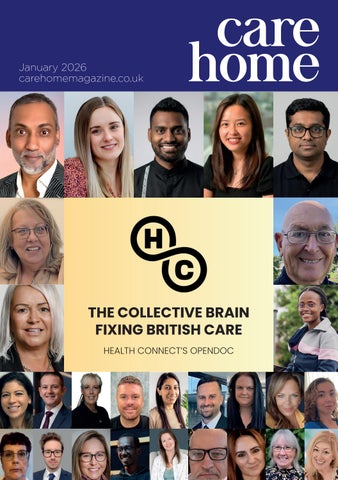
THE COLLECTIVE BRAIN FIXING BRITISH CARE HEALTH CONNECT’S OPENDOC
Signature Senior Lifestyle works in partnership with
Care Campaign for the Vulnerable
RESIDENTIAL
SIG_ADV_TK_0125_CareHomeProfessional_04.indd All Pages
|
NURSING
|
DEMENTIA CARE
|
RESPITE
Innovating Care Home Safety: Partnership for Transparency and Trust
The partnership between Signature Senior Lifestyle, Care Campaign for the Vulnerable (CCFTV), and Care Protect is transforming care home safety. By integrating advanced monitoring technology with advocacy and a commitment to dignity, this collaboration enhances transparency, safeguards residents, and supports care teams. Together, they’re setting a new standard for trust, accountability, and quality in social care.
Signature offers luxury residential, nursing and dementia care in a range of locations across London and the home counties. Find out more about how Signature can provide total peace of mind at:
signature-care-homes.co.uk
07/01/2025 11:15
Chief Editor
Tani Johnson tj@carehomemagazine.co.uk
Publication Manager
James Davies james@carehomemagazine.co.uk Tel: 01795 509 112
Credit Facilities Manager
Gwen Lee creditcontrol@cimltd.co.uk Tel: 01795 509 103
Design and Production James Taylor james@cimltd.co.uk Grant Waters grant@cimltd.co.uk
Marketing Manager Lucas Payne lucas@cimltd.co.uk
Head of Digital
Xhulio Bishtaja press@carehomemagazine.co.uk
Social Media Manager
Lily Lawson press@carehomemagazine.co.uk
Director
Tom Woollin tom@cimltd.co.uk
Managing Director John Denning
Editor’s Letter January 2026
A
s 2026 begins, we have an opportunity to look ahead and explore exciting advancements in the care sector, supported by industry insights experts. Our January issue is dedicated to two of the most critical aspects of the care sector, Resident and Staff Wellbeing, which have the potential to shape the year ahead. Beginning with Resident Wellbeing, our Essential 5 focuses on simple, low-cost ways care homes can support and further improve residents’ wellbeing through small, thoughtful changes that enhance daily lives. It is important to remember that actions do not have to be overhauls of existing patterns; they can be inconsequential changes for staff, resulting in a significant improvement in residents’ quality of life and well-being. The feature dives deeper into resident wellbeing, drawing on examples of activities and management decisions from industry experts that have significantly improved residents’ lives across the country. The focus then shifts to Staff Wellbeing, with the Essential 5 examining the foundations of staff treatment and rights whilst at work. The main feature then dives further into why staff wellbeing matters and the results care homes can expect from focusing on improving it, such as increased retention and better care. In addition to the feature, Ameet Kotecha, the Founder and Managing Director of Boutique Care Homes, provides insight into the importance of caring staff and how team culture shapes the care residents receive, as well as the joy experienced by staff whilst at work. Of course, you can expect to find our other regular features on these pages, such as Dishing Up, which features the recipe for Chicken Supreme from award-winning chef Charmaine Taylor, Editor’s Day Out, and Care Home of the Month. It is hoped that this issue of Care Home Magazine establishes the standard for the coming year, providing new inspiration and emphasising the importance of individuals.
Tani Johnson, Chief Editor © 2026 Cogent Multimedia Limited, 1st Floor, Saphir House, 5 Jubilee Way, Faversham, Kent, ME13 8GD. No part of this magazine may be reproduced or stored in a retrieval system or transmitted in any form – electronic, mechanical or physical – without express prior permission and written consent of the publisher. Contributions are invited and when not accepted will be returned only if accompanied by a fully stamped and addressed envelope. Manuscripts should be type written. No responsibility can be taken for drawings, photographs or literary contributions during transmission or in the editor’s hands. In the absence of an agreement the copyright of all contributions, literary, photographic or artistic, belongs to Cogent Multimedia Limited. The publisher accepts no responsibility in respect of advertisements appearing in the magazine and the opinions expressed do not necessarily represent the views of the Publisher. The Publisher cannot accept liability for any loss arising from the late appearance or non publication of any advertisement.
4
carehomemagazine.co.uk
Table of
Contents
12 Health Connect
An overview of how Health Connect Global and its opensource OpenDoc platform are integrating data, governance, and daily operations to minimise duplication and enhance safer, more personalised healthcare.
10
15 Resident Wellbeing
Explore a sector-wide perspective on how everyday interactions, meaningful connections, and attention to small details shape resident wellbeing, with practical insights for care home leaders on embedding these principles into daily life.
24 Activity of the Month
A practical guide to animal-centred activities, exploring how carefully planned interactions with animals can lift mood, encourage gentle movement, and create meaningful moments for residents and staff alike.
26
32
29 Staff Wellbeing
Follow a detailed exploration of why staff wellbeing has become essential for care homes, focusing on how mental health, inclusion, physical comfort, and speakingup cultures impact retention, performance, and care quality.
40 Dishing Up
This showcase features awardwinning care home catering and illustrates how Charmaine Taylor’s Chicken Supreme recipe exemplifies carefully prepared, nutritionally balanced meals that improve residents’ health, dignity, and enjoyment during mealtimes.
36 carehomemagazine.co.uk
5
Industry update
Community Connections: A Special Visit from Spelthorne Police Cadets
A
Surrey care home has highlighted the value of community engagement after welcoming local police cadets for an intergenerational visit designed to build connections and shared experiences. The Burlington recently hosted a group of Spelthorne Police Cadets as part of its ongoing Life Enrichment Programme, which focuses on strengthening links with the local community and supporting residents in maintaining social relationships and meaningful activities. The visit was facilitated by Caroline Barnes, Police Constable and Youth Engagement Officer, who is exploring opportunities for cadets to engage with community organisations to support their development. During the visit, cadets supported the home’s team with serving refreshments before spending
the evening with residents in the piano bar. Activities included conversation, board games, and sharing personal stories, creating an informal setting for crossgenerational interaction. A particularly poignant moment arose when residents met Gerry, a former police cadet who later served as a police constable, offering a unique opportunity for shared reflection and understanding between residents and cadets. Margielyn Gonzaga, Home
Manager at The Burlington, said the visit demonstrated the impact of intergenerational activities on residents’ well-being and community cohesion. Caroline Barnes added that the cadets valued the opportunity to engage with residents and gain insight through direct interaction. The Burlington says it hopes to build on the success of the visit with further community partnerships, reinforcing the role of care homes as active, connected parts of their local communities.
Balnacarron Care Home Welcomes MP Visit Showcasing Outstanding Resident Support
A
Fife care home has welcomed a visit from a local MP to recognise the quality of care being delivered and the home’s role in the broader community. On 19 December 2025, Wendy Chamberlain MP for North East Fife visited HC-One Scotland’s Balnacarron Care Home in St Andrews. During the visit, she spent time with residents over afternoon tea, heard directly about their experiences of life at the home, and discussed plans for an upcoming Regeneration Community Project to strengthen local community links. Ms Chamberlain was given a tour of the 33-bed home’s facilities, including its tearoom, hair salon,
6
carehomemagazine.co.uk
ensuite bedrooms and landscaped gardens. She also met with team members to learn more about Balnacarron’s approach to personcentred residential and dementia care, as well as the activities programme supporting residents’ wellbeing. The visit provided an opportunity to acknowledge the commitment and professionalism of the care team, whose work has helped establish Balnacarron as a valued part of the St Andrews community. Olga Jankovska, Home Manager at Balnacarron Care Home, said the visit highlighted the dedication of colleagues delivering highquality, compassionate care. Wendy Chamberlain MP added that it was encouraging to see residents
and staff enjoying a positive and supportive environment, particularly during the Christmas period.
Go digital. Go safely. But don’t go alone. Free, expert support on digitisation, data protection, cyber security and AI Guidance Step-by-step guides on key issues like cyber security and AI
Tools and templates Practical checklists, audit tools and Data Policy Builder
Training and elearning eLearning, interactive games, and training materials.
Direct support 28 local support organisations plus national team.
Events and webinars Free events with digital and data experts
Research and information Emerging evidence, case studies and news updates
digitalcarehub.co.uk
help@digitalcarehub.co.uk
Industry update
Digital Revolution in Care Saves Millions of Admin Hours
T
he Department of Health and Social Care reports that 80% of healthcare providers in the United Kingdom have transitioned from traditional paper-based records to digital social care record systems. This transformation is integral to the government’s strategic objective of establishing a Single Patient Record, as outlined in the 10 Year Health Plan. The record, designed to adhere to national security standards, consolidates patients’ data and medical histories within a secure environment, accessible solely to authorised healthcare professionals across the system. With the adoption of digital records, caregivers can efficiently access pertinent information and securely document updates, thereby reducing repetitive discussions and enhancing productivity. The implementation of a digital-first approach is expected to conserve approximately
30 million hours annually in administrative tasks, thereby enabling caregivers to dedicate more time to patient care and providing each caregiver with at least 20 additional minutes per shift. Digital care records facilitate caregivers’ ability to monitor
changes and respond promptly to factors such as weight variations or risks, including fall risks. In certain instances, family members or friends may also be granted access to these records to review vital information regarding a loved one receiving care.
Care England backs major new research into social care investment and survival strategies
A
new research initiative drawing on the views of 300 UK care professionals is set to provide fresh insight into how care providers are responding to ongoing pressures while planning for future growth. The project is led by workforce management platform Sona, in partnership with Care England and specialist care provider Consensus Support Services. It combines a nationwide survey of frontline carers, managers, and senior leaders with in-depth interviews with C-suite executives, exploring issues such as business expenditure, investment priorities, and growth strategies for the year ahead. Early findings underline the continued impact of workforce
8
carehomemagazine.co.uk
shortages, financial constraints and local authority fee rates that fall below the true cost of care. The research also identifies opportunities for providers to improve efficiency, leadership oversight, and operational resilience by increasing technology use. Alongside the research, Sona is rolling out its workforce management system across Consensus services to improve communication and collaboration between teams. Care England is supporting the project to ensure the findings reflect real provider experience and offer practical value for decisionmakers. The final report, due to be published in January 2026, will present a data-led picture of how the sector is adapting and where
investment is being focused to support sustainable care delivery.
From £24
Discover Your Perfect Marketing Solutions From £24 per month, feature your care homes, retirement properties, supported living options and generate enquiries from local care seekers.
Meet
BUSINESS
onth M e h t f o e Care Hom Court ld e fi r e p p o C
Sponsored By
S
ituated in the charming coastal town of Broadstairs, Copperfield Court provides high-quality, all-inclusive residential, dementia and respite care for up to 66 residents. Opened in April 2024, this purpose-built care home offers personalised care tailored to each individual’s needs, ensuring comfort, dignity, and a sense of wellbeing in a homely setting. Copperfield Court is thoughtfully designed to encourage both independence and community connection, with modern amenities including: beautifully furnished ensuite bedrooms, peaceful garden rooms, a hair salon, a well-stocked library, and a plush cinema. Bright communal lounges and elegant dining areas create a welcoming space to enjoy freshly prepared, locally sourced meals and to socialise with friends and family. Supporting its ESG commitments, the home is designed to be able to operate as a carbon-free, green facility, featuring solar panels, ground-source heat pumps, and battery storage for sustainable, energy-efficient living. At Copperfield Court, their distinctiveness lies in their warm, family-focused culture. They take pride in creating a home-like setting where residents, relatives and staff feel connected as one extended community. The team understands residents well beyond their care plans, enabling Copperfield’s staff to provide truly personalised, respectful and meaningful care daily. High standards are upheld through ongoing quality monitoring, strong clinical oversight, and open communication with residents and families. Regular feedback sessions, daily walkarounds, and proactive engagement help anticipate issues
10
carehomemagazine.co.uk
Ensuite Bedroom
Each team member receives comprehensive induction, ongoing training, and regular supervision focused on both skills and professional growth. and embed excellence in daily practice. Above all, the team at Copperfield Court never lose sight of the fact that it is the residents’ home; this principle guides every decision they make. Recently, Copperfield Court introduced a programme which ensures at least one intergenerational visit each month with a local school, and it has had an incredibly positive impact on residents’ wellbeing. These visits vary and have included children’s choir performances, storytelling sessions led by librarians, and joint community projects, such as supporting the school’s harvest festival collections. Residents have enjoyed being actively involved in the community, including the knitting group, who created handmade knitted leaves for the school’s autumn performances.
Copperfield Court invests heavily in their team’s development and wellbeing. Each team member receives comprehensive induction, ongoing training, and regular supervision focused on both skills and professional growth. They hold reflective practice sessions, provide open-door support from the leadership team, and offer opportunities to pursue specialist training in areas such as dementia and end-of-life care with external professionals, like the local PCN team. Additionally, they celebrate achievements, award employees of the month, actively promote career development by offering opportunities for their teams to earn qualifications through Paragon and PLG, and cultivate a culture where staff feel valued
BUSINESS and empowered. When their team members feel supported and confident, the quality of care they provide naturally reflects that. Copperfield Court takes great pride in its strong sense of community. The team is motivated by observing the connections between residents and staff, the laughter in the lounges, and families’ pride in choosing their facility. Looking forward, Copperfield Court aims to improve the resident experience through new therapeutic programs, environmental upgrades, and stronger community ties. They are dedicated to maintaining highquality care, fostering innovation, and making Copperfield Court a place where residents can fully enjoy life. Having a variety of spaces, such as garden rooms, a hair salon, a library, a cinema, and beautifully landscaped gardens, plays a vital role in supporting resident wellbeing within Copperfield Court. Garden rooms and outdoor areas encourage gentle activity, fresh air and contact with nature, all proven to boost mood. The hair salon promotes dignity and self-expression, helping residents maintain reassuring routines. The library offers quiet moments for reflection and reminiscence, while the cinema creates shared experiences that strengthen social bonds. Complementing these spaces is their resident-led, daily activities schedule, thoughtfully organised by dedicated Lifestyle team members. Their personalised
Lounge
Entrance & Bistro
EPC A-rated, Copperfield Court was built with sustainable materials that improve thermal efficiency, creating comfortable indoor temperatures while reducing environmental impact. approach ensures every resident can engage in hobbies, social events and creative sessions. Together, these facilities and programmes enrich daily life, and support emotional, physical and social wellbeing, making Copperfield Court a very nurturing place to live. Incorporating eco-friendly features into Copperfield Court’s build benefits both the residents and the environment. Solar panels provide a significant portion of the home’s electricity, decreasing
dependence on conventional energy sources, while advanced battery storage maximises the use of clean energy. This guarantees power availability when needed, and greatly reduces the home’s overall carbon footprint without sacrificing the quality of care provided. EPC A-rated, Copperfield Court was built with sustainable materials that improve thermal efficiency, creating comfortable indoor temperatures while reducing environmental impact. The ground source heat pump technology utilises the earth’s natural heat, providing reliable warmth with fewer emissions. LED lighting with movement sensors conserves energy by only turning on when needed, producing minimal heat and enhancing both comfort and safety. Together, these eco-friendly features support a healthier living environment, promote long-term sustainability, and demonstrate a genuine commitment to responsible, futurefocused care.
carehomemagazine.co.uk
11
COVER STORY COURTESY OF
Connecting Care
Fragmented systems, increasing regulatory demands, and overstretched teams still characterise daily social care. Health Connect Global and its open-source governance platform, OpenDoc, are part of a broader movement aiming to rethink how data, policy, and practice intersect. This shift moves away from administrative tasks and duplication toward a focus on personalised care, safety, and sector-wide consistency.
What is Health Connect Global?
Health Connect Global describes itself as an AI-native operating system for care. It aims to unify various aspects of modern care delivery- such as daily care records, clinical insights, compliance, and leadership oversight- into a single, connected platform, rather than offering another standalone digital tool. This approach is based on the idea that systems should be integrated, as patients expect healthcare and social care to remember preferences and anticipate needs, allowing information to flow seamlessly across visits, teams, and settings. This enables care teams and managers to focus more on delivering personalised care instead of searching for data. The mission of Health Connect Global is to enhance health and wellbeing by developing technology that respects its users. Providers often say they entered the sector to care for people, not to spend hours on bureaucracy. The platform aims to reduce administrative burdens, support compliance, and empower teams to make proactive decisions. Unlike many systems that target specific tasks like care planning or medication, Health Connect Global serves as an infrastructure connecting clinical data, daily notes, incidents, and governance across an organisation. This creates a unified view accessible to staff, managers, and leadership. The platform is built with AI at its core, enabling pattern analysis, risk
12
carehomemagazine.co.uk
Devan Moodley, Co-founder and CEO of Health Connect
Their goal has been to establish a unified, regulator-grade standard freely accessible to the entire sector. detection, and insight generation. It was developed with input from care professionals: managers, nurses, support workers, and operators whose workflows and daily practices helped shape the system, ensuring it aligns with real-world care environments.
What is OpenDoc?
OpenDoc is heralded as the world’s first open-source policy and governance platform for health and
social care. Unlike traditional policy libraries, it serves as a sector-wide collaboration aimed at resolving long-standing issues in governance and compliance. For the first time in UK care history, experts from across the sector have united to develop a shared governance framework. Contributors include ex-CQC inspectors, governance specialists, clinical leaders, safeguarding authorities, and turnaround
COVER STORY COURTESY OF consultants. Their goal has been to establish a unified, regulator-grade standard freely accessible to the entire sector. OpenDoc encompasses a broad spectrum of governance topics, such as safeguarding, medicines, clinical governance, incidents, digital systems, information governance, workforce, quality, and risk. It aligns fully with CQC’s Single Assessment Framework, enabling providers to easily see which regulations each policy supports and how evidence is gathered in practice. Each policy in OpenDoc is authored and reviewed by experts, with transparent documentation of version history, updates, and rationale. Unlike static policies, OpenDoc functions as a dynamic platform. It employs AI to monitor changes in laws, guidance, NICE publications, DHSC outputs, and international evidence, allowing experts to suggest updates in real time. This approach removes reliance on yearly refresh cycles and minimises the risk of outdated or non-compliant documents. Most importantly, OpenDoc is open-source and free to use. Anyone can read, utilise, adapt, and learn from the policies without cost. It is accessible without a paywall, consultancy contract, or organisational membership. The goal is to eliminate duplication, cut waste, and replace isolated efforts with shared intelligence across the sector.
What are the benefits of care homes using Health Connect Global and OpenDoc?
Governance and policy failures significantly impact inspection outcomes, with about 40% of CQC inspections citing these issues. These problems are not due to negligent staff but result from outdated, incomplete, or confusing policies. Providers often spend hundreds of hours rewriting similar documents, costing approximately £250 million annually in policy administration and consultancy fees.
OpenDoc tackles this challenge by creating a level playing field. Smaller providers lacking in-house governance teams or regular consultancy support can access the same high-standard framework as larger, well-funded groups. For example, a care assistant in a 20-bed facility can now rely on governance standards equivalent to those used by a multi-site operator. When used with Health Connect Global, governance becomes integrated with daily operations. Policies are linked directly to actual workflows and supporting evidence within the platform, enabling realtime compliance and inspection preparedness. This integration allows managers to understand not only the policy content but also its daily application. For residents, this holistic approach enables truly personalised care. By consolidating daily notes, risk assessments, observations, and incident data, the system detects patterns and early warning signs, such as changes in mobility, nutrition, mood, or sleep, that might otherwise be missed. This reduces avoidable harm and enhances consistency, ensuring all staff know what good care looks like for each individual. For staff, benefits include
reduced duplication, more time with residents, and ready access to accurate, real-time information during handovers, supporting confident decisions. Over time, this fosters a calmer work environment with fewer last-minute paperwork rushes and a system designed to support, not just monitor, care. Implementation is practical and phased. Health Connect Global typically begins with a discovery phase to assess existing systems, regulatory challenges, and specific issues. Providers are advised to start with a small scope of testing in one home or workflow and expand at their own pace. Training includes coaching to help teams use insights to improve care, not just navigate the platform. At its core, the combination of Health Connect Global and OpenDoc signifies a paradigm shift in how technology and governance are approached in the sector. It moves away from siloed systems and duplicated efforts towards shared standards, connected data, and collective intelligence. The goal is not just digital transformation but creating a sustainable, equitable foundation for care; one that prioritises staff, safety, and the needs of those supported.
carehomemagazine.co.uk
13
Stand Out as a Specialist Dementia Care Provider
Raise the Standard of your Dementia Care in 2026 with NaDCAS NaDCAS is the UK’s dementia-specific national accreditation framework, designed to support care services to evidence, strengthen and continuously improve the care they provide for people living with dementia. Developed by leading experts, research institutes and people with lived experience, the NaDCAS framework creates a clear, holistic picture of what truly high-quality dementia care looks like. For care providers, NaDCAS: Provides clear, meaningful standards grounded in values
Recognises services delivering high-quality dementia care
Builds confidence, consistency and professional pride
Registrations for the 2026 Accreditation Cohort are Now Open! Register Your Interest: www.nadcas.org/register Contact: claire@dementiaaccreditation.org | 07982 368163 In Partnership With
Resident Wellbeing carehomemagazine.co.uk
15
RESIDENT WELLBEING
Essential 5
Resident wellbeing isn’t only about grand initiatives or packed activity programmes; sometimes, the most profound differences come from small, thoughtful changes to everyday environment and routines. These five practical ideas are easy to implement, cost very little, and deliver measurable improvements in mood, sleep and quality of life for the residents of care homes in the UK.
1
Natural Lighting
Circadian rhythm disruption is a common but often overlooked challenge in care settings. Natural light plays a vital role in regulating the body’s internal clock, with morning light promoting wakefulness and evening light supporting rest. For older people, reduced light sensitivity can mean rooms feel darker than intended, even during the day. Opening blinds each morning should be a routine priority, while soft, light-coloured or linen curtains can help diffuse daylight without glare. Consistent exposure to natural light supports sleep quality, mood, and overall wellbeing, assisting residents to feel more alert during the day and more settled at night.
2
Reduce Noise at Night
Uninterrupted sleep is essential for physical health, emotional regulation, and cognitive function. While not all disturbances can be avoided, care homes can focus on reducing unnecessary noise during the night. Introducing informal quiet hours encourages staff to be mindful of conversations in corridors, door closing, and equipment use. Although very low noise levels are not always practical in a busy care environment, collective awareness and small behavioural changes can significantly improve sleep quality. Better rest often leads to improved mood, greater engagement in activities, and smoother daily routines.
3
Nature
Spending time in nature is widely recognised for its calming and restorative effects. As residents may have fewer opportunities to go outdoors, care homes should maximise access to gardens and outdoor areas whenever possible. When outdoor time is limited, bringing nature indoors can still offer benefits. Live plants have been shown to improve wellbeing and lower systolic blood pressure, but they can be difficult to maintain in care environments. In infection-controlled or high-traffic areas, artificial plants offer a practical alternative, providing visual comfort without added maintenance.
4
Consistency is Key
Moving into a care home can feel disorientating, involving the loss of familiar routines, environments, and faces. Maintaining consistency helps residents feel safe and settled. Allocating consistent staff to specific areas, preserving daily routines, and encouraging residents to personalise their rooms with familiar belongings all contribute to a sense of continuity. This stability reduces anxiety and can help prevent agitation linked to confusion or discomfort.
5
Personalisation
Personalised care strengthens both physical and emotional wellbeing. When staff understand residents’ life stories, interests, and family connections, conversations become more meaningful and engaging. These deeper interactions allow residents to reconnect with positive memories and long-held passions, reinforcing identity and fostering genuine human connection within the care setting.
16
carehomemagazine.co.uk
Taking the stress out of digital care
Goodbye paper. Hello real-time care Give carers the tools they need – fully managed, fully secure, fully compliant
support@subsidium-ms.com 02036175525 www.subsidium-ms.com
FOOD & NUTRITION
Simplifying
Catering Procurement White Oaks has launched Catering Procurement Plus, a procurement service that demonstrates how digital systems, supplier networks, and sector expertise can support in-house catering teams within the senior living sector.
C
atering procurement combines nutrition, compliance, cost control, and resident satisfaction. Many providers find balancing these elements challenging, especially as dietary needs become more complex and budgets shrink. White Oaks, the senior living division of Compass Group UK & Ireland, has introduced Catering Procurement Plus, a specialised service designed to support these issues. The service integrates procurement expertise, industry insights, and a robust infrastructure, along with a deep understanding of how catering teams operate in this sector across the UK. Its goal is to offer a more structured and manageable way for providers to handle food service procurement while maintaining in-house catering. Catering Procurement Plus consists of three key components. First is digital technology: an easyto-use food service procurement platform that supports menu planning, ordering, and stock control to minimise manual work which takes up cooking time. It also features tools for dietary management, providing instant access to nutritional and allergen data to help teams plan and adjust menus to residents’ needs. The second component is ingredient sourcing. The service connects to a network of local, regional, and national suppliers offering responsibly sourced, high-quality ingredients. Collective
18
carehomemagazine.co.uk
buying power secures competitive prices and supports consistency and cost control without limiting menu options or impacting quality The third element is professional support from White Oaks subject experts. Award-winning chefs, dietitians, and operational managers collaborate with catering teams, providing advice on menu development, nutritional compliance, and cost management. This support complements existing roles, helping teams address operational challenges without replacing their expertise. Laura Tighe, Business Director at White Oaks, describes the service as a way to give catering teams more confidence in managing
quality, compliance, and budgets simultaneously. She states that it enables teams to leverage specialist knowledge, allowing them to focus on delivering enjoyable meals for residents. Overall, the launch exemplifies White Oaks’ approach to food and service across the sector, with their teams creating catering options tailored to residents’ specific needs, emphasising quality, choice, and flexibility. To deliver this, White Oaks is working in partnership with EFgroup, the leading procurement and menu management partner to the care and senior living sector. compass-group.co.uk
How Could Smarter Catering Support Your Catering Team and Boost your Bottom Line? Catering Procurement Plus from White Oaks, empowers your in-house catering team to to deliver nutritious, homestyle meals while cutting costs and streamlining daily operations. With Catering Procurement Plus, you get: All-in-one digital platform
Specialist support from catering & operations specialists
Sustainable & highquality ingredients
Resident engagement support
Ready to elevate your food service? Book your free consultation today:
Procurement-driven cost savings
whiteoaks@compass-group.co.uk white-oaks.co.uk 0121 457 5200 whiteoaks@compass-group.co.uk
0121 457 5200
RESIDENT WELLBEING
Wellbeing Lives in the Details
From everyday conversations to thoughtful activities and inclusive environments, resident wellbeing is shaped by the small moments that define daily life in care. Drawing on insights from across the sector, this feature explores why offering choice, fostering connection, and paying attention to detail matter more than ever for care home leaders.
I
n care homes, wellbeing isn’t usually changed by a single large project. Instead, it develops through everyday moments: conversations, activities residents feel able to participate in, environments they can comfortably engage with, and a sense of belonging built over time. For care home managers and owners, enhancing wellbeing is more about recognising what genuinely matters rather than simply doing more. One of the most consistent drivers of resident wellbeing is connection. Despite living in close proximity to others, many older people still experience profound loneliness. Bailey Greetham-Clark from Be Great Fitness has spent years working in care settings and believes that community is often the missing piece. He points out that, while exercise is often promoted as a solution for improving mood, it is the human connection around it that makes the real difference. Residents, like people of any age, need to feel part of something: a group, a shared identity, a “tribe”. In practice, this might mean a seated session that prioritises conversation over movement, or an activity designed to spark recognition rather than physical effort. Bailey notes that he would rather run a lowintensity class full of laughter and engagement than a highly active session that feels cold or isolating. This emphasis on connection is
20
carehomemagazine.co.uk
He points out that, while exercise is often promoted as a solution for improving mood, it is the human connection around it that makes the real difference. particularly crucial when assisting residents who arrive withdrawn or distressed. New surroundings can feel overwhelming, and wellbeing increases when staff truly take the time to build relationships with residents. Bailey explains that genuine person-centred care
involves understanding residents beyond surface preferences; it’s not sufficient to know what someone used to enjoy, what truly matters is how those interests shaped their identity. He recalls working with a resident who had been an amateur boxer
RESIDENT WELLBEING before suffering a stroke at a young age. Rather than offering a generic activity, he brought boxing pads and gloves and treated the session seriously and with respect. The resident responded not just physically, but emotionally, feeling seen, understood and trusted. That trust became the foundation for improved wellbeing. This principle of patience and human understanding is echoed at The Dell, part of Wellbeing Care. Deputy Manager, Amanda Colvin, describes welcoming a resident who initially remained in her room, distressed and reluctant to accept help. Rather than rushing the process, staff allowed her to express her feelings in her own way, offering steady reassurance and consistent presence. Over time, she began to relax, venture out and form friendships. Today, she moves independently around the home, a transformation that Colvin describes as deeply rewarding for the team. At The Dell, one of the most effective wellbeing practices costs almost nothing: protected oneto-one time between staff and residents, led by the residents’ choice. Whether that time is spent chatting, reading or simply sitting together, it reinforces dignity and inclusion, particularly for residents who may otherwise become isolated. Colvin stresses that wellbeing culture starts with leadership. When managers model compassion, and work alongside their teams, it sets the tone for the entire home. Wellbeing is also influenced by factors that can easily be overlooked, such as hearing and communication. When residents struggle to hear clearly, whether due to untreated hearing loss or poor acoustics, they often withdraw socially, lose confidence and feel fatigued by group interactions. Over time, this can significantly affect emotional and cognitive wellbeing. Symphony Hearing work with care homes to address these issues holistically, combining hearing care with improved sound environments.
Their experience shows that, when residents can hear conversations, activities and announcements clearly, they are far more likely to participate in daily life. Improved hearing reduces frustration and anxiety, while clearer sound in communal spaces supports calmer, more inclusive environments. This approach has been particularly impactful in partnership with St Monica Trust, where improved hearing support and sound systems have helped residents engage more confidently in group settings. Staff have also reported smoother communication and fewer repeated instructions, reinforcing the idea that resident wellbeing and operational efficiency often go hand in hand. At a strategic level, embedding wellbeing into everyday systems helps ensure no one is overlooked. Suzy Cooper, Group Head of Activities and Wellbeing at Porthaven Care Homes, emphasises the importance of structure alongside compassion. Programmes such as ‘Together We Shine’ are designed to give residents more control over how
they spend their time, while providing teams with tools to spot early signs of disengagement. Initiatives such as wellbeing heat maps and risk registers enable staff to respond proactively and compassionately, while programmes such as ‘Hearts and Minds’ focus on residents who are unable to attend group activities. These initiatives ensure personalised moments of connection still occur daily across the care home group. Suzy Cooper also advocates for closer collaboration between care and activities teams, noting that activities colleagues often have vital insight into what brings residents joy, comfort or distress. Ultimately, improving resident wellbeing is not about a single intervention or budget. It is about offering choice, paying attention to small details and creating environments where residents feel known, heard and included. For care home leaders, the challenge and the opportunity lie in recognising that these everyday moments are not peripheral to care. They are the care.
carehomemagazine.co.uk
21
STAFF TRAINING
Raising Standards in Dementia Care
With a growing focus on improving everyday experiences for people living with dementia, we explore the National Dementia Care Accreditation Scheme (NaDCAS) and how its person-centred framework supports care providers to reflect on practice, strengthen standards and embed what truly matters into daily care.
T
he National Dementia Care Accreditation Scheme (NaDCAS) is a nationally recognised accreditation designed to support care providers to evidence, strengthen and celebrate excellence in dementia care. NaDCAS works with care providers across the UK to improve the quality of life for people living with dementia. Accreditation is practical, reflective, and valuesled, focusing on understanding what truly matters to people with dementia and embedding that understanding into everyday practice. The mission is simple: to raise standards and recognise excellence in dementia care, while empowering teams to keep learning, developing and improving.
Our Framework for Exceptional Dementia Care
At the heart of NaDCAS is the Framework for Exceptional Dementia Care, an up-todate resource developed with sector experts, leading research institutions, and people with lived experience of dementia and caring. It is built around nine key focus areas to provide a clear, structured pathway for services to assess their current practice, demonstrate what they do well, and identify where further development will make the greatest difference. Most importantly, the Framework
22
carehomemagazine.co.uk
keeps the person at the centre. It supports care providers in creating environments where people living with dementia experience comfort, connection, dignity, and moments of joy in everyday life.
Why Become NaDCAS Accredited
NaDCAS accreditation offers a clear distinction in an increasingly competitive market. It provides independent recognition of highquality dementia care and builds confidence for families choosing a service for a loved one. Accreditation also supports marketing and business growth by clearly demonstrating commitment to excellence. It also strengthens regulatory preparedness, with best practice aligned to CQC expectations and the direction of travel ahead of the forthcoming CQC dementia strategy.
For teams, the accreditation process validates good practice, supports professional development, and helps build pride, confidence and consistency across services. In a sector facing real challenges with recruitment and retention, having a shared framework and clear values makes a tangible difference. Most importantly, for people living with dementia, accreditation means care that goes beyond safety and routine. It means being seen, heard and supported to live well. It is reflected in small moments that matter, shared laughter, familiar routines, meaningful relationships and a sense of belonging.
What Our Partners Say Care providers already working towards accreditation tell us that the process encourages reflection, strengthens leadership and deepens the quality of care.
STAFF TRAINING Athena Care Homes UK is one such partner, with multiple homes engaged in the accreditation journey. Their teams describe NaDCAS as a catalyst for continuous improvement, helping them embed compassion, individuality and emotional connection into everyday practice.
Join the 2026 Accreditation Cohort
Since registrations for NaDCAS accreditation open only once annually, this is the sole opportunity to join the 2026 Accreditation Cohort, with limited places available. Exceptional dementia care changes lives and supports teams to be the best and NaDCAS supports you to becoming the main choice for people living with dementia and their families.
If you are committed to raising standards, supporting your teams, and delivering dementia care that truly enhances quality of life, we
invite you to register your interest, and a member of our team will be in touch to discuss next steps. nadcas.org.uk
carehomemagazine.co.uk
23
ACTIVITY OF THE MONTH
Animal Companions At Care Home Magazine, we understand that implementing regular activities and events is vital to enhancing residents’ well-being. While traditional activities such as flower arranging remain popular, January’s focus will be on the benefits of animal-centred activities in care homes, with insights from Connaught Care, Spotty Paws, Principle Care Homes, and Barchester Healthcare.
J
anuary is often a quiet month as we come down from the highs of the Christmas period, and the importance of continuing enriching activities is often overlooked as care homes attempt to return to their normal routines. It is essential to remember that activities do not have to be challenging to organise or overwhelming for staff and residents; they can be beneficial and straightforward for everyone in the home, such as spending time with animals.
Preparing
Before starting an animal-focused
24
carehomemagazine.co.uk
activity, it’s crucial to consider several key factors. While these are quick to address, they significantly improve the experience for staff and residents. At Willowbrook View, a Connaught Care Home, all animals used in activities undergo risk assessments in advance and are brought in by a specialised therapyanimal company familiar with care-home policies and procedures. These assessments include evaluations of animal temperament, suitability for group settings, and safe handling instructions. For hygiene and infection control, residents are encouraged to wash
or sanitise their hands before and after contact with animals. The housekeeping team should ensure a routine high-standard cleaning of the home and refresh specific areas used for sessions afterwards. Care homes should maintain transparency with external providers about any infections or concerns, allowing sessions to be paused or adapted if needed. Connaught Care Homes requires new residents to complete a pre-assessment to identify their preferences and dislikes, and discusses their life stories and backgrounds with families. This information guides the planning of
ACTIVITY OF THE MONTH person-centred activities instead of generic options. Spotty Dogs, a dog therapy provider, emphasises the need to customise animal visits to each resident to maximise benefits, whether through lively group interactions or quiet one-onone sessions. Farley Gardens, a Barchester home, recommends reaching out to local dog owners, animal charities, or volunteer pet therapy groups to invite friendly, well-socialised dogs. Simple activities like baking dog treats, setting up a “pup station” with water bowls, or engaging in small craft activities can create structure and foster engagement. Homes like Principle Care Homes can start by informing families that they are welcome to bring wellbehaved pets for visits.
Emotional Benefits
Interacting with animals can help residents reconnect with cherished childhood memories of pets and animal companions, making these moments deeply meaningful for them. The bond between people and animals often feels instant and vivid; even residents who are typically quiet or withdrawn tend to brighten when an animal comes near. Homes have observed noticeable improvements in residents’ moods: more smiles, laughter, and visible signs of comfort and calmness during animal visits. The visits naturally spark interest and storytelling. Animals often trigger memories of pets people have had, farms they worked on, or family experiences, and that quickly turns into conversation between residents. Activities like this may encourage people who don’t typically engage in group chats to begin reminiscing and sharing stories when an animal arrives. At Willowbrook View, residents can choose how engaged they are with animals and step away when necessary to benefit most from them. Staff also benefit from animalcentred activities, which boost morale and create shared moments of calm and laughter. Dogs have
a natural way of softening the atmosphere and making a home feel truly homely.
Physical Benefits
Whilst there are numerous emotional benefits residents can experience from engaging with animals, it is easy to overlook the physical benefits that can further enhance their day-to-day experience. Spending time with animals can reduce stress markers such as cortisol and heart rate by releasing oxytocin, serotonin, and dopamine. When residents are more relaxed, they tend to sleep better and feel less lonely, which can improve overall resident wellbeing long after the activity has taken place. The sessions encourage gentle movement and engagement for residents by allowing them to stroke, brush, or feed the animals, supporting hand and arm mobility in a natural, enjoyable way. Even watching the animals move can stimulate attention and alertness
in residents who are usually withdrawn. Overall, the visits create a sense of warmth and wellbeing that lasts beyond the session itself.
“One of our ladies is often quite emotional day-to-day, but on a particular visit, we had chickens visit the home. She had one sitting calmly on her knee, and she began speaking fondly and in detail about keeping chickens during the war. She discussed collecting eggs and how important it was for feeding her family at the time. It was a lovely moment because her mood visibly softened, and she seemed grounded and proud as she shared that memory. Moments like that are precisely why animal therapy is so valuable: it unlocks stories, identity, and comfort that might otherwise stay hidden.” Willowbrook View’s General Manager, Jane Edwards.
carehomemagazine.co.uk
25
RESIDENT WELLBEING
Why Footwear Matters Jessica Silver, co-founder of Friendly Shoes, explains why adaptive footwear deserves greater attention in care homes and how thoughtful shoe choices can support residents’ comfort, independence and mobility.
I
n care homes, footwear is rarely top of the agenda, but it plays a quiet and important role in residents’ daily lives. Changes in foot shape, swelling, the use of orthotics, or reduced hand strength can all make standard shoes difficult to manage. As a result, many residents spend most of their time in slippers, even though these may not provide the support needed for longer-term foot health or mobility. Friendly Shoes were developed to address some of these practical challenges. The focus is on shoes that are easier for both residents and staff to manage without compromising comfort or appearance. They offer styles which are wide-fitting and lightweight, with soft, cushioned linings designed to reduce pressure on fragile skin. Wide-opening zips allow the shoe to open fully, making it easier to place the foot inside and remove it, particularly when swelling or orthotics are involved. Zip pulls are designed to be easier to grip, supporting people with limited dexterity. A key feature across the range is the removable insole. This allows extra depth in the shoe when needed and accommodates custom orthotics or AFOs. Being able to wear prescribed supports within everyday footwear can help residents feel more stable and confident when moving around, which may contribute to better balance and fewer falls. For care staff, footwear that opens fully can reduce the time and effort required for dressing. Instead of struggling with tight openings or ill-fitting shoes, the foot can be positioned more easily. In some
26
carehomemagazine.co.uk
cases, residents can manage their own footwear, supporting independence and reducing reliance on staff for simple daily tasks. The range includes several styles that suit different needs within a care setting. The Force is often used as an alternative to slippers, offering a more supportive option suitable for indoor or outdoor use. Other styles provide additional width or depth, or discreet zip placements, giving flexibility depending on individual foot concerns. All shoes can be spot cleaned and, if needed, machine washed on a cool cycle. Friendly Shoes is accredited by the Healthy Footwear Guide, which assesses features such as toe
box space, width, depth and sole design. The company also provides care homes with informational materials and samples to support conversations with families, who are often responsible for purchasing footwear. One practical step care home managers can take is to introduce a routine footwear check. Feet and mobility needs change over time, and shoes that once fitted well may no longer be suitable. Ensuring residents have footwear that reflects their current needs can support comfort, confidence and quality of life, making footwear a small but meaningful part of overall care. friendlyshoes.co.uk
Making good business accessible According to RNIB, over 50% of care home residents are blind or have low vision. Are your services meeting their needs? Be My Eyes transforms accessibility into a strategic advantage, reducing operational burden and delivering measurable results.
Get started today: bemyeyes.com/business/request-a-demo/
grahamegardner.co.uk
UNIFORMS DESIGNED FOR THOSE THAT CARE.
@gguniforms
@ g r a h a m e g a rd n e r u n i f o r m
Staff Wellbeing carehomemagazine.co.uk
29
STAFF WELLBEING
Essential 5 When it comes to keeping your team happy, healthy and staying longer, warm words and an occasional thank-you only go so far. Real retention and morale often hinge on practical, structural changes that respect staff time, reduce physical strain and hand back a sense of control. These five straightforward ideas focus on what actually makes the working day feel fairer and more manageable.
1
Breaks
UK employment law requires staff to take an uninterrupted rest break after six hours of work, yet in busy care environments, this is often missed due to competing demands or a strong sense of duty towards residents. Regular breaks are essential for both physical and mental health, allowing staff to rest, reset, and recover after long periods on their feet. Developing a structured break plan that ensures appropriate cover is a low-cost intervention that can significantly improve wellbeing, job satisfaction, and morale. When breaks are protected, staff are better able to sustain performance and are more likely to remain in their roles.
2
Predictability
Care staff have lives beyond the workplace, including family responsibilities, appointments, and social commitments. Providing rotas at least eight weeks in advance supports wellbeing by offering greater certainty and control over personal time. Predictable scheduling reduces stress and helps staff plan childcare, healthcare, and rest more effectively. It can also reduce unplanned absences, as staff are better able to arrange routine appointments around known shifts, benefiting both individuals and operational continuity.
3
Maintenance
Faulty or missing equipment is a frequent source of frustration and risk in care settings. Broken hoists, missing slings, malfunctioning mattresses, or poorly stocked cupboards increase physical strain and slow daily tasks. Prompt maintenance and reliable access to essential supplies support safe, efficient working practices and reduce the risk of injury. Just as importantly, they demonstrate that staff concerns are taken seriously. When basic tools are readily available and equipment works as intended, staff experience less daily stress and are more likely to feel valued and remain with the organisation.
4
Respect
Requests for additional shifts or overtime can place staff under significant pressure, particularly when refusal feels uncomfortable or guilt-inducing. Overtime should always be genuinely voluntary. Using neutral sign-up systems rather than direct appeals allows staff to opt in without fear of judgement. Where gaps remain, employing additional contracted staff may be more sustainable than relying on overtime. Respecting boundaries helps prevent burnout, supports work–life balance, and improves retention, ultimately benefiting resident care.
5
A Staff Space
A dedicated, comfortable break space is essential for effective rest. Staff rooms should include comfortable seating, space to eat, basic kitchen facilities, and access to natural light where possible. A calm, welcoming environment allows staff to properly decompress. Breaks should be protected from interruption whenever possible, ensuring staff have uninterrupted time to recharge before returning to their duties.
30
carehomemagazine.co.uk
BUSINESS
Why Care Home
Culture Matters Most Ameet Kotecha, Founder & Managing Director of Boutique Care Homes, provides insight into employee culture and the importance of supporting staff.
Y
ou can have the best policies, the most detailed procedures, and a filing cabinet full of care plans and compliance documents. But if your team doesn’t genuinely care, none of that matters. I realised this early on. You can teach someone how to assist with medication or mobility, and you can train clinical skills. However, you can’t teach heart. That’s what sets a service apart from a feeling; in care, emotion is everything. At Boutique Care Homes, our success depends not just on what we do, but on who does it. Our team’s warmth and commitment are why residents and their families choose us. That’s why cultivating the right culture isn’t just important; it’s the foundation of all we do.
Culture Starts With Values, Not Rules
As we grew from one home to three, then four, I faced a challenge I hadn’t anticipated. How do you take something as intangible as a feeling, that warmth you sense the moment you walk through the door, and turn it into words everyone understands? It took time. We listened closely to feedback from colleagues, residents, families, and our wider community. Their insights helped us formalise what became our BOUTIQUE values: belonging, openness, united, trust, involvement, quality, uniqueness, and embrace. These aren’t posters on a wall. They’re demonstrated daily through how our teams engage with
32
carehomemagazine.co.uk
Ameet Kotecha
residents, families, and one another. When you hire with heart and reinforce it through values, culture naturally develops.
Hire for Heart, Train for Skills
I’ve seen it time and again, team members who go beyond their job descriptions simply because of who they are. During the pandemic, one of our Home Managers was struggling with Covid herself but still picked up the phone daily to check on residents, making certain they were safe and cared for. That’s not something you can put in a training manual. More recently, when one of our managers got married, something remarkable happened. The team brought the celebration to the care home, recreating the wedding day. A
resident who’d been with us from the beginning walked the manager down the aisle and delivered a speech that brought everyone to tears. Those moments happen because of people who genuinely care, not just policies. That’s what I focus on when hiring. Does this person share our vision? Will they see residents as individuals? Do they understand this isn’t just a job, but about creating a home where people feel valued, respected, and loved? When you get the people right, everything else follows.
The One Team Approach
Our team embodies collaboration through our “one team” approach, engaging in activities, care, housekeeping, and management
BUSINESS
Keymer Hall Opening Day
to foster a relaxed, welcoming environment that enhances residents’ lives. This isn’t just empty words: it’s practical. If housekeeping notices a resident is quieter than usual, they inform care staff. When activity coordinators see someone having mobility difficulties, they involve the care team. Everyone looks after each other. Visitors often say they immediately feel like part of the Boutique family upon entering. This warmth isn’t just a scripted smile; it’s genuine warmth that shines through everything we do.
Recognition and Growth Fuel Culture
You can’t expect people to stay passionate if you don’t recognise their contributions or invest in their development. We’ve built recognition into the fabric of how we operate. A “thanks” app where colleagues celebrate each other. WOW Cards for exceptional care moments.
Team recognition awards that highlight outstanding contributions. These aren’t HR initiatives, they’re genuine celebrations of the people who make magic happen every day. We also focus on nurturing internal talent through upskilling programs and career development opportunities. I’m consistently impressed by the range of projects and qualifications our colleagues pursue. Many of the most innovative ideas originate from our team members, insights and contributions that wouldn’t have occurred to me without their input. The results speak for themselves. Our team retention is among the highest in the sector, 98% at the time of writing this. When people feel valued and supported, they stay, and they do their best work.
Culture Is What Residents Experience Here’s the truth: residents don’t experience our policies. They experience our culture.
They experience it when a team member takes time to chat rather than rushing through tasks. When their favourite song gets played because someone remembered. Culture is what turns a care home into a home. It’s what makes families look forward to visits rather than dread them. It’s what makes residents wake up with purpose, not just routine.
The Bottom Line
Policies matter. Procedures matter. Compliance matters. But they’re the baseline, not the goal. Excellent care occurs when you hire genuinely caring individuals, foster a culture based on shared values, acknowledge their efforts, and support their growth. That’s when true magic happens: residents flourish, families place their trust in you, and teams remain committed. Ultimately, care isn’t just about actions; it’s about how you make people feel. And that begins with the caregivers themselves.
carehomemagazine.co.uk
33
STAFF WELLBEING
Why Staff Wellbeing Matters
In a sector under relentless pressure, staff wellbeing is no longer a secondary concern, but has become a business-critical priority. From mental health and inclusion to uniforms and speaking-up cultures, supporting staff properly improves job satisfaction, stabilises teams and, ultimately, delivers better outcomes for residents.
I
n every care home, residents’ experiences depend on the staff who support them daily. Their patience, attentiveness and consistency transform care plans into meaningful, real-life interactions. However, staff face ongoing pressure due to sector challenges like recruitment shortages, increasing complexity of needs, and tighter regulation. In this context, staff wellbeing has become a core focus, essential to the overall quality of care. When wellbeing is overlooked, problems quickly arise: stress and fatigue reduce job satisfaction, absenteeism rises, and valued staff may leave. As workforce strain grows, continuity of care declines, impacting residents. Conversely, when staff feel physically, emotionally and psychologically supported, they are more likely to stay, perform well, and build trusting relationships vital for excellent care.
The hidden toll of emotional and mental strain
The mental health challenges faced by care workers are substantial. Long hours, heavy workloads, and exposure to distressing situations like end-of-life care increase the risk of stress and burnout among staff. Lee Knifton, Director of Research and Lived Experience at the Mental Health Foundation, notes that this stress can quietly harm both well-being and the quality of care. Prolonged stress
34
carehomemagazine.co.uk
may cause compassion fatigue, impair attentiveness, and eventually lead to more mistakes. As sick leave and staff turnover grow, homes can become stuck in a cycle of understaffing and mounting pressure. Warning signs, such as persistent fatigue, irritability, emotional withdrawal, or declining performance, are often present, but staff may hesitate to voice concerns. Although awareness of mental health is increasing, stigma persists, and many care workers fear being seen as weak, or worry about repercussions for shifts or job security. Building a psychologically safe environment where staff can freely raise concerns is one of the most effective strategies for managers.
Inclusion as a driver of morale and retention
Wellbeing goes beyond just mental health. Feeling included, understood, and supported as an individual is essential for staff to thrive at work. At Millcroft Care Home, becoming a Disability Confident Committed employer led to adopting person-centred principles not only for residents, but also for colleagues. Home Manager, Lyndsay Sard, notes that this approach has improved team relationships and morale. Practical adjustments, especially in technology and training, have helped staff feel more confident and capable, reducing frustration and boosting job satisfaction. Additionally, guaranteeing interviews to disabled
STAFF WELLBEING
applicants who meet the criteria has expanded the talent pool, aiding recruitment and retention during sector-wide staffing shortages.
Why physical comfort should not be overlooked
In discussions about wellbeing, physical comfort is often underestimated. Yet, for care staff working long, physically demanding shifts, what they wear can significantly affect how they feel and perform. Sara Catanzaro, Design Manager at Alsico, notes that many care workers link uniform fit directly to their ability to perform daily tasks. Uniforms that restrict movement, trap heat, or fail to accommodate the realities of care work can contribute to cumulative discomfort and fatigue. This is particularly relevant for women experiencing menopause, many of whom report that their uniform does not help them regulate temperature
or recover after hot flushes. Thoughtful design choices such as breathable fabrics, engineered stretch and adaptable layering can have a meaningful impact on comfort, focus and wellbeing.
Creating cultures where staff feel safe to speak up
Feeling supported is strongly connected to feeling heard. Shaun Keep and Paul Adams, founders of Say So, have observed that care staff often notice issues like cornercutting, declining standards, or poor practices well before serious incidents happen, but they do not always raise concerns. Fear of being dismissed, bullying, or the stress of reporting can stop staff from voicing their concerns. When care homes provide trusted, independent ways for staff to raise concerns safely, workplace culture begins to change. Issues can be addressed earlier, leadership gains greater insight into dayto-day pressures, and staff feel
more respected and protected. This openness not only improves wellbeing and retention, but also plays a vital role in safeguarding residents.
A strategic investment with long-term returns
Collectively, these views emphasise a simple fact: staff wellbeing isn’t just about a single policy or initiative, but is cultivated through daily choices. The way managers listen, the inclusiveness of practices, the design of work environments, and the way concerns are managed all send crucial messages to staff. For care home owners and managers, focusing on wellbeing is a highly effective strategy to stabilise teams and maintain care quality. As Shaun Keep notes, staff are the most valuable and expensive asset of a care home. When staff feel secure, supported and valued, residents receive better, more consistent care, and services are more equipped to face future challenges.
carehomemagazine.co.uk
35
BUSINESS
Retention Through Connection
Lucy Atkinson from Church Farm Care explores how to scale a care group whilst maintaining staff wellbeing and retention.
S
caling a care group is all about balance. As a genuine place for people to live, it’s important to stay aligned with your core values and maintain the heart of the home as you grow. This is essential when it comes to staff too. Many care homes refer to themselves as being like a family, and this becomes increasingly more important as you bring more homes and staff members on board. Over the past 20 years, our care group has grown exponentially – yet we’ve managed to maintain a strong core team, with some members in the group for the full 20 years and even 20 years before we took over. Strong foundations for growth come from a stable, wellsupported workforce, and without that, no amount of strategy can create genuine quality. As we’ve taken on new homes and begun developing a sixth, the focus has remained on building communities where people feel part of something rather than simply receiving care. Growth has only been possible because we’ve protected the characteristics that make each home feel personal. That means removing barriers that create distance, encouraging emotional connection, and nurturing an environment that feels more like an extended family than a workplace.
Creating a culture that puts people first
Staff retention is often spoken about as a challenge, yet it can also be a measure of whether your
36
carehomemagazine.co.uk
Lucy Atkinson
organisation genuinely reflects its values. A loyal team happens when people feel trusted and understood, when their work carries meaning, and when their environment allows them to contribute fully without losing themselves in the process or the pressure. One of the earliest decisions we made as a group was to remove uniforms and other markers that can create a sense of hierarchy or separation. The intention was to reduce the feeling of formality and to dispel the idea of staff on one side and residents on the other. Although it seemed like a small gesture at the time, it helped shift the culture towards connection, encouraging colleagues to build
relationships based on warmth rather than task. Recruiting for emotional intelligence has also been vital. Practical skills can be taught, whereas kindness comes from within. When a team is built around empathy and authenticity, the atmosphere of a home transforms – instead of simply completing jobs, staff support people to live with both dignity and choice.
Investing in people beyond the job description
A strong team needs more than professional development. It requires an environment where people feel that their wellbeing
BUSINESS
Church Farm Care Home in Cotgrave
matters. Over the years, we’ve increased our focus on the personal and practical aspects of staff support, recognising that life outside work affects how people feel within it. Providing free hot meals on shift ensures that no one goes hungry, and having access to early wage release through financial wellbeing tools reduces the pressure of unexpected expenses. Public transport support also helps team members travel to work in a way that is both affordable and practical. We’re also proud to say we’re a living wage employer – meaning we pay above minimum wage to ensure our teams are genuinely supported with the true cost of living. These measures ease the everyday burdens that can otherwise leave staff feeling overwhelmed, because when people feel secure and respected, they’re more likely to remain part of the organisation in the long term.
Supporting progression and nurturing talent Retention is also shaped by the opportunities a workplace can offer. When people see a future for themselves within a care group, they invest more deeply in their role. Developing pathways for individuals to advance has been essential to sustaining a motivated team. We continue to support
staff completing their Level 3, Level 5 and Level 7 diplomas, recognising that ambition should be encouraged at every stage. By nurturing talent from within, the organisation grows alongside its people rather than above them. Seeing staff members progress from early roles into leadership positions is one of the most rewarding aspects of care. It affirms that the culture you create genuinely empowers others and reinforces stability, as people who rise from within carry the home’s history and ethos with them.
Creating environments that support wellbeing and connection
Physical environments influence how people feel and how they interact. Investment in the layout and design of a care home helps sustain wellbeing, such as easy access to gardens to support mood and motivation, as well as lots of quiet intimate spaces to offer a place to breathe and reset – particularly after a challenging experience. Wellbeing support has also become a key part of our culture. Our wellbeing mentor, along with mental health first aiders across the group, offers a space where staff can seek guidance and talk openly, while accessing help without feeling judged.
This year, we strengthened our learning culture through initiatives led by our training and development manager, who is also a Women’s Workplace Wellness Advocate. Sessions such as menopause awareness training have provided not only information but also validation for colleagues who may have felt unseen or reluctant to raise their concerns. These efforts remind staff that their experiences matter and that their workplace is somewhere they can be open and honest.
Long-term success
After two decades of development, the lessons that stand out are not about scale, they’re about staying grounded, investing in staff and remaining true to your values even as the sector changes. The long-term success of any care group rests on the wellbeing of its staff. Buildings, strategies and systems can shape a service, but the heart of a home is carried by the people who work within it. A loyal team is created when staff feel supported and respected in both their everyday lives and in their work. If a care organisation can nurture its people with the same commitment it gives to its residents, it creates a culture strong enough to expand without losing its identity.
carehomemagazine.co.uk
37
BUSINESS
Care Home Finance and Technology
Emma Palmer and Steve Fergus from Barclays Bank share their perspectives on how care home operators are building financial resilience, using AI in practical ways and planning for continued uncertainty across the sector.
D
espite ongoing cost pressures, many care providers have increased their cash buffers over the past year. According to Steve Fergus, the strongest results are coming from operators who combine disciplined cost control with forward-looking financial planning. He points to renegotiating supplier contracts, smoothing agency spend, and optimising rotas as practical measures that protect margins without compromising care quality. What makes the difference, Fergus explains, is pairing these actions with 12–18-month cashflow forecasts. By modelling scenarios around wage uplifts, energy exposure and occupancy, care home owners gain greater clarity over future risks and opportunities. Strong cash reserves, he notes, do more than protect liquidity in the short term; they create the confidence to invest in improvements, whether that is upgrading facilities or piloting new technology. In a sector where funding cycles can be unpredictable, this financial resilience allows operators to move from firefighting to shaping their future. Technology is increasingly part of that conversation, particularly where it can deliver clear operational or care benefits. Emma Palmer highlights two AI-enabled applications already showing measurable impact. The first is fall detection and acoustic monitoring,
38
carehomemagazine.co.uk
Emma Palmer, Barclays UK Business Banking’s Head of Healthcare
which can help reduce incidents, speed up response times and cut avoidable hospital admissions. The second is the use of digital social care records combined with workflow automation. When configured effectively, these systems streamline handovers and documentation, enabling staff to reclaim time for face-to-face care. Palmer emphasises that these tools are pragmatic to implement and generate complex data on outcomes. Just as importantly, they send a clear signal to teams that technology is there to support and amplify the human side of care, rather than distract from it. Concerns about privacy, ethics, and training remain barriers for many providers. Fergus suggests starting with transparency and governance. A clear, one-page notice on AI use for residents and families, outlining what a tool does, why it is used, and how data is
Steve Fergus, Barclays Corporate Bank’s National Head of Healthcare
safeguarded, can help build trust early on. Pairing this with a short staff onboarding module ensures teams understand when and how AI supports clinical judgement. Staffing pressures continue to dominate the sector, and Palmer sees AI’s long-term value in reducing burnout rather than replacing roles. Digital documentation, smart rostering and predictive staffing models can remove administrative burden and optimise scheduling. Over time, this allows staff to spend more time with residents, improving satisfaction on both sides. Looking ahead to 2026, Fergus’s advice is consistent: plan ahead wherever possible. Homes that stay aligned with real costs, maintain strong liquidity, and invest selectively in technology and staff development are likely best placed to navigate uncertainty and emerge stronger.
YOUR CARE TEAM DESERVES DEVELOPMENT. GET RECOGNISED FOR INVESTING IN THEM. Free 'Committed to CPD' quality mark. Prove to staff, families and CQC you're serious about training.
☑ 100% FREE Service ☑ Demonstrate to employees that you value their professional development ☑ Showcase that your staff are fully equipped to deliver the very best care ☑Display that you meet the standards required for CQC Registration and the Care Inspectorate
SCAN TO LEARN MORE
thecpd.group
0300 3732 528
FOOD AND NUTRITION
Dishing Up
Award-winning Head Chef Charmaine Taylor demonstrates how thoughtfully prepared, nutritionally balanced dishes such as Chicken Supreme can transform mealtimes in care homes, supporting residents’ health, dignity and enjoyment while placing choice and wellbeing at the heart of the dining experience.
M
ealtimes are a central part of daily life in a care home. Beyond nourishment, they provide comfort, routine and enjoyment, and play a vital role in supporting residents’ overall wellbeing. At Rectory Court and Leah Lodge in Blackheath, South London, food is approached with this understanding at its core, combining nutritional balance, choice, and presentation to deliver a dining experience second to none. This commitment was recognised on 20 November 2025, when Charmaine Taylor, Head Chef at Rectory Court and Leah Lodge, was announced as a regional winner at the Great British Care Awards in the Care Home Chef category. The awards celebrate excellence across the care sector, recognising individuals who have made an outstanding impact within their field. For Charmaine, the accolade reflects a much deeper purpose. “I was amazed to receive this recognition; however, the real award is seeing our residents thrive,” she says. “I put my heart and soul into our cooking, and it is important that our residents enjoy their meals, as well as having their nutritional and dietary needs supported.” Her role involves working closely with her team and residents to deliver menus that are both healthy and appealing. Menus are nutritionally balanced and change seasonally, ensuring variety throughout the year. At the start of each season, residents are invited to take part in a food forum, allowing their likes and dislikes to
40
carehomemagazine.co.uk
Chicken Supreme
For Charmaine, the accolade reflects a much deeper purpose. “I was amazed to receive this recognition; however, the real award is seeing our residents thrive,” she says. “I put my heart and soul into our cooking, and it is important that our residents enjoy their meals, as well as having their nutritional and dietary needs supported.”
FOOD AND NUTRITION shape menu planning. This personcentred approach ensures that residents feel heard and respected, while nutritional value remains a priority. Care homes increasingly support residents with a wide range of dietary requirements, allergies and medical needs. At Rectory Court and Leah Lodge, flexibility is key. Alternative menus are provided where required, with dishes adapted to suit individual needs, whether that means modified textures, fortified meals or adjusted salt and fat levels. This helps protect residents’ health, manage medical conditions, prevent weight loss linked to reduced appetite and support dignity, choice and emotional wellbeing. A dish that perfectly demonstrates this approach is Chicken Supreme. As a main course, it offers both familiarity and versatility, making it well-suited to elderly residents. The chicken breast is pan-roasted until golden, with the wing bone left attached for elegance and flavour. The crisp, evenly coloured skin is topped with a golden crumb made from toasted breadcrumbs enriched with butter, herbs and chicken fat, adding
Method Prepare the chicken - French-trim the chicken breast, cleaning the wing bone and removing sinew. - Season generously with salt and pepper. - Allow the chicken to come to room temperature before cooking. Cook the chicken - Heat a pan with a small amount of neutral oil. - Place the chicken skin-side down and cook gently until the skin is deeply golden and crisp. - Turn the chicken in the pan and add butter, and baste. - Finish in the oven at 180°C until just cooked (internal temp ~65°). - Rest the chicken well.
texture and savoury depth. The dish is served with a silky onion sauce, pale and glossy, created by slowly cooking onions until softened and sweetened, then finishing with stock, cream or butter. Roasted potatoes, lightly caramelised, provide substance, while green peas and fresh microherbs add balance and colour to the plate. The result is a meal that looks inviting and tastes comforting, helping to stimulate appetite and enjoyment. Chicken Supreme is an excellent choice for elderly residents’ nutrition; it is high in protein, supporting muscle mass and aiding healing, while its tender, moist texture makes it easy to chew. The dish can be easily adapted to meet a range of needs: it can be lower in salt or fat, chopped or puréed, or fortified to increase calorie and protein density. Even smaller portions can deliver significant nutritional value to residents who struggle with consuming large amounts of food. Sue Hill, General Manager at Rectory Court and Leah Lodge, highlights the importance of this work. “Mealtimes play a vital role in supporting the wellbeing of our
residents. The work carried out by Charmaine and her team is central to the health and wellbeing of our residents and reflects a deep commitment to nutrition, respect and quality of life.” For care home managers and owners, this award-winning approach demonstrates how thoughtful menu planning, resident engagement and adaptable dishes like Chicken Supreme can elevate dining from a daily task into a meaningful part of care.
Onion sauce - Finely slice onions and cook slowly in butter with a pinch of salt until soft, translucent, and lightly golden. - Add a splash of white wine and reduce. - Add chicken stock and simmer gently. - Finish with cream or beurre monté (cold butter whisked in). - Season, and strain before serving if a smooth sauce is desired.
Plating - Spoon the onion sauce into the centre of the plate. - Arrange potatoes and peas, and place the rested chicken on top. - Finish with a crumb and fresh herbs.
Garnish & sides - Prepare fondant or roasted potatoes until golden and tender. - Blanch peas briefly and glaze with butter. - Make a crumb by toasting breadcrumbs in butter (optionally with herbs or garlic).
Charmaine Taylor, Head Chef at Rectory Court and Leah Lodge
Ingredients
- Supreme cut of chicken - White Onions - White Wine - Cream - Potatoes - Peas - Neutral Oil - Butter - Salt - Pepper - Breadcrumbs - Herbs
carehomemagazine.co.uk
41
EDITOR’S DAY OUT
Broomfield Village:
Principle Care Homes
At the end of November, the team at Care Home Magazine were invited for a tour of Principle’s first home, Broomfield Village, which is located in Chelmsford.
W
hen we arrived, I initially thought the home’s proximity to Broomfield Hospital might cause noise disruptions for residents, even though the location is very convenient. Despite these concerns, Broomfield Village proved to be a peaceful retreat, set behind Broomfield Hospital, with tranquil countryside views from the rear of the property. We were instantly greeted by the staff in the home’s central area, which was lively, with residents reading books, using the garden café with their friends and families, and even visiting with their dogs. We often hear homes described as having a central hub, yet we seldom see it in action as we did during this visit. The space felt welcoming and friendly to people of all ages, designed to serve both visitors and residents, with dedicated areas for adults’ and children’s books and a help-yourself sweet shop adjoining the cinema room. We sat down with Holly, the Customer Relationship Assistant at Broomfield, who told us all about the home and the Principle’s ethos towards resident care. It was a genuinely inspiring conversation, as her passion for the home and its residents was evident throughout. The home features a variety of tastefully decorated rooms that enable residents to easily personalise their space. Some ground-floor residents even have direct access to the gardens, which include planter boxes for those with green thumbs and putting greens for keen golfers.
42
carehomemagazine.co.uk
During our tour, a celebration of life was held for a resident who recently passed away. I appreciated that Principle Care Homes honours and celebrates residents’ lives, giving friends in the home a chance to pay their respects and grieve, rather than avoiding the topic. Before we departed, we were invited to join the residents for lunch which was a delightful experience. A three-course meal is available for each meal, along with lighter choices. The entire experience made us feel as if we
were in a restaurant, with each course ordered separately and drinks regularly topped up. At Broomfield, residents’ families are welcome to join mealtimes at no charge, and the room was filled with chatter from residents, and from families who had come to join their loved ones for lunch. This is especially lovely as it allows all generations to spend time together, stay connected, whilst also enriching residents’ lives in the home.
2026 Media Information
We’re very excited to share our refreshed media pack, but 2026 isn’t just about us – it’s about YOU. We want to share your stories, celebrate your successes, and involve you directly in our content. From case studies and Q&As to editorial features and care home spotlights, your voice is what brings Care Home Magazine to life. Looking to work with us? Request a media pack.
www.carehomemagazine.co.uk/media-pack-request