
Care Home April 2026

Page 1


Protecting Residents, Supporting Families and Carers: Safety Through Monitoring, Technology, Risk and Transparency

Care Campaign for the Vulnerable (CCFTV) champions safer care through independent, choice-led safety monitoring and modern technology. Working with valued partners and care providers, we promote best practice that protects residents, supports families and staff, and strengthens trust.

Alongside this, CCFTV has proudly partnered with risk and insurance specialists to help providers reduce risk, improve governance, and build safer, more resilient care services.

Together, these practical measures enhance care quality, accountability and transparency because everyone in care deserves to feel safe, respected and protected.

Chief Editor

Tani Johnson

tj@carehomemagazine.co.uk

Publication Manager

James Davies

james@carehomemagazine.co.uk

Tel: 01795 509 112

Credit Facilities Manager

Gwen Lee

creditcontrol@cimltd.co.uk

Tel: 01795 509 103

Design and Production

James Taylor james@cimltd.co.uk

Grant Waters grant@cimltd.co.uk

Administration Manager

Natalie Woollin admin@cimltd.co.uk

Head of Digital

Xhulio Bishtaja press@carehomemagazine.co.uk

Marketing Manager

Lucas Payne lucas@cimltd.co.uk

Social Media Manager

Lily Lawson press@carehomemagazine.co.uk

Director

Tom Woollin tom@cimltd.co.uk

Managing Director

John Denning

Editor’s Letter April 2026

Spring is in the air, bringing with it a wonderful sense of renewal, growth, and fresh opportunities to spread joy to those we care for. This April, we’re excited to present our biggest issue of Care Home Magazine yet, filled with inspiring stories, practical insights, and a showcase of incredible contributors dedicated to enhancing the care residents receive.

This month, our main features focus on Technology and Cost Management, but there’s truly something for everyone, whether you’re interested in Resident Lifestyle, Business, or Marketing. We delve into the latest innovations, helpful tools, and effective strategies that enable care homes to provide exceptional support while managing resources effectively.

Our cover story features Jayne Connery from CCFTV, who shares how choice-led safety monitoring tools can help protect residents, support staff, and elevate the quality of care when used thoughtfully and transparently. Our Care Home of the Month is Meadowbrook by Connaught Care, a wonderful example of resident-focused care in action. And if you’re a fan of sweet treats, Dishing Up celebrates the artistry and joy of pastry…because who doesn’t love a sweet treat?

I hope you enjoy this issue and that it inspires new ideas, sparks engaging conversations, and opens up fresh ways to enrich your residents’ lives.

Tani Johnson, Chief Editor

Table of Contents

12 Cover Story

Jayne Connery discusses choiceled safety monitoring technology and how it can protect residents and support staff, strengthen risk management in care homes, and transform visibility into reassurance rather than surveillance.

15 Technology

The Technology feature looks at ‘The Connected Care Home’ and how the careful implementation of technology can improve both staff and residents’ lives.

35 Cost Management

Discover how home operators can safeguard margins and enhance efficiency by addressing hidden costs through improved spend visibility, organised procurement processes, and proactive management of suppliers and labour.

46 Activity of the Month

Discover an Easter-themed activity that offers opportunities for multiple generations to get involved, spend some much-needed time in the sun, and share a springtime laugh.

56 Dishing Up

Broomfield Village Care Home elevates mealtimes with pâtisseriequality desserts that delight residents, spark memories, encourage social connection, and support nutrition and wellbeing.

66 Editor’s Day Out

KYN Hurlingham saw renowned royal photographer Hugo Burnand captivate residents with fascinating stories, career highlights, and rare insights from behind the lens of the Royal Family.

Industry update

Energy Costs Remain a Key Financial Risk for Care Sector

Care England has advised care providers to approach energy procurement cautiously and strategically due to ongoing market volatility causing uncertainty in the sector. Its latest update notes that wholesale gas prices remain significantly high, roughly three times pre-Ukraine invasion levels, though they have dropped from their peak crisis levels.

This instability is partly driven by geopolitical issues, such as restrictions on liquefied gas routes through the Strait of Hormuz, which have increased costs and delayed deliveries to Europe. For care homes, this has serious implications.

As 24/7, energy-intensive environments, they are vulnerable to price fluctuations with limited protection compared to domestic users. Rising utility costs are adding

to existing financial pressures on staffing, food, and operations.

Care England recommends that providers with contracts expiring before March avoid hasty decisions. Instead, it suggests three main options: short-term contracts to manage short-lived volatility, longer-term agreements for price certainty at higher rates, or postponing decisions in hopes of market stabilisation.

The update emphasises the importance of detailed energy

analysis and expert brokerage, especially as procurement options grow more complex. New electricity purchasing strategies are also emerging to help control rising costs.

Ultimately, for care homes, energy procurement is now vital to financial stability. With prices expected to stay volatile in the near future, providers need to carefully weigh risk, flexibility, and sustainability in their procurement strategies.

CQC Research Shapes Future of Dementia Care Guidance

The Care Quality Commission released new research highlighting best practices for supporting people with dementia, providing valuable insights for care home providers. As part of its broader dementia strategy, the report, created in collaboration with IFF Research and Leeds Beckett University, draws on UK and international evidence and input from experts, regulators, and individuals with lived experience.

The findings emphasise the importance of truly personcentred care, including working with residents and their families to develop care plans instead of making decisions for them. The report also stresses the value of organised, meaningful activities to promote wellbeing and reduce dementia symptoms. For care homes, the research highlights the significance of community,

connection, and familiarity. Smaller, homely environments and opportunities for social interaction foster a sense of belonging and help residents maintain independence, choice, and control.

Cultural understanding is another key focus, with recommendations to support staff who can speak residents’ first languages and relate to their cultural backgrounds, thereby building trust and preserving identity.

These findings will shape the

CQC’s ongoing dementia strategy, including the creation of new guidance for providers, which will be co-produced from autumn 2026. This guidance aims to promote consistent, high-quality dementia care across health and social care settings.

The message for operators is clear: incorporating personalised, inclusive, and relationship-based care is vital for improving outcomes and experiences for people living with dementia.

Industry update

Nellsar Care Homes champions sustainable dining during Food Waste Action Week 2026

Nellsar Care Homes has marked Food Waste Action Week across its 13 homes in Kent, Surrey and Essex, encouraging teams to reduce food waste both professionally and at home.

Aligned with this year’s theme of “making food go further”, the initiative focused on prevention, reuse and recycling, alongside practical measures such as improved stock control, menu planning and portion management. The campaign has been led by Nellsar’s Head of Nutrition and Head of Catering, working with senior leaders to embed more sustainable practices across kitchens and dining services.

A newly reviewed food waste management log has also been introduced to help teams

Howard House shines with an exceptional Care Inspectorate report

Sanctuary Care’s Howard House Care Home is celebrating a strong Care Inspectorate report, achieving ‘Very Good’ ratings across key areas following an unannounced inspection.

The report recognised the home’s performance in supporting residents’ wellbeing and the quality of its staffing team, highlighting a “kind and compassionate” approach to care. Inspectors praised the team for delivering consistently personcentred support that promotes comfort, dignity and choice.

Feedback from residents and their families reinforced the findings, with relatives noting

consistently track surplus, reuse and disposal. The data will be analysed monthly and quarterly to identify trends, including overproduction or portion mismatches, enabling evidence-led improvements.

Luminita Mandache, Quality Development and Innovation Manager, said the initiative is about “strengthening the full journey of food” while supporting both environmental responsibility and resident wellbeing.

Residents continue to play a key role through feedback tools that shape menus and portion sizes, helping ensure meals are both enjoyed and consumed, naturally reducing waste. Wider developments, including a Development Chef role and Resident Mealtime Experience

Lead, are further enhancing dining quality.

Education remains central, with sustainability training integrated into staff learning, while activities such as composting and cooking clubs are fostering engagement. Looking ahead, Nellsar plans to expand seasonal sourcing, improve energy efficiency and introduce water-saving initiatives.

the consistency of staff and the welcoming atmosphere. Comments praised the team’s attentiveness, the variety of available activities, and confidence in the home’s leadership.

The inspection also found that residents feel respected and listened to, with their preferences shaping how care is delivered. Staff were commended for their knowledge of each individual and for valuing residents’ contributions, helping to enhance both wellbeing and sense of purpose.

Maintaining community connections and meaningful engagement were other standout features. Residents are supported to take part in activities aligned with their interests, creating a strong sense of enjoyment, connection and belonging.

Susan Orr, Home Manager, said the results reflect the team’s “devotion, compassion and consistency”, adding that she is proud to see their commitment to enriching residents’ lives recognised in such positive feedback.

Level 2

Adult Care Worker

Level 3 Lead Adult Care Worker

Level 4 Lead Practitioner in Adult Care

Level 5 Leader in Adult Care

Care Home of the Month Meadowbrook: Connaught Care

Creating a True Home- from-Home

For many providers, the ambition to move beyond the traditional institutional model of care is familiar. At Meadowbrook in Bishop’s Stortford, however, this aspiration sits at the heart of the home’s identity and has guided its development from the very beginning.

The original vision for Meadowbrook was to move away from the conventional idea of a “care home” and instead create a genuine home-from-home environment. The goal was to build a place where residents feel safe, comfortable, and connected, while continuing to enjoy fulfilling experiences and meaningful relationships with both their families and the wider community.

Today, this vision is evident in daily home life and measurable results for residents. Over 90% of residents engage regularly in personalised activities suited to their interests, such as music sessions, arts and crafts, and organised local outings. Resident feedback also emphasises the comfort, enjoyment, and confidence fostered by the home. For the Meadowbrook team, these outcomes showcase how a clear philosophy, when consistently applied, creates a positive living environment for residents.

Building CommunityStrong Connections

Community engagement plays a central role in life at Meadowbrook. The home has developed partnerships with local charities, schools, arts organisations, and healthcare services to ensure residents remain connected with the surrounding community.

By

A popular activity is the weekly visit from Happy Kids Childminders Service. During these visits, local toddlers come to the home to interact with residents. They share stories, play games, sing songs, and enjoy each other’s company. These intergenerational interactions bring joy to both groups and add lively energy to the home.

Looking ahead, Meadowbrook is strengthening its community involvement through a partnership with the Bishop’s Stortford Arts Museum. In late 2026, the museum will host a special exhibition featuring fifty artwork pieces created by Meadowbrook residents. These works were made with the help of Debbie, a local artist who spends several days each week working with residents at the home. Her guided sessions have encouraged residents to explore their creativity and learn new artistic skills. The upcoming exhibition will offer a chance to showcase their work publicly and emphasize the creative potential within the home.

Partnerships such as these play a dual role. They enhance residents’ daily lives by creating opportunities

for social engagement and creativity, while strengthening Meadowbrook’s reputation as a vibrant, community-focused home. The team notes that when residents feel connected to the life of the town, they often become more energetic and confident in themselves and in their relationships with others.

Delivering PersonalisedMeaningful Activities

At Meadowbrook, person-centred care begins with understanding each resident as an individual. From the moment someone joins the home, the team works closely with them and their families to capture life stories, interests, and personal preferences through detailed assessments and care planning. These insights are then translated into personalised activity plans that reflect residents’ hobbies, experiences, and social interests. The aim is to ensure that activities remain meaningful rather than simply filling time.

An example of this method involved a special outing for a resident named Doug. Prior to relocating to Meadowbrook, Doug

was an aeroplane engineer for several years, specializing in aircraft maintenance and mechanical engineering in the British aviation fleet. He always had a strong interest in aviation and military history. Recognizing this, the Meadowbrook team arranged a trip to the Imperial War Museum in Duxford, which hosts many historic aircraft. This visit gave Doug the chance to reconnect with the aircraft he had worked on and revisit a passion that had greatly shaped his life.

The activities team works closely with care staff to ensure that this kind of personalised engagement remains embedded in the daily programme of events. By reflecting each resident’s background and interests, the home aims to support a strong sense of identity, purpose, and enjoyment in everyday life.

Prioritising Wellbeing in 2026

As Meadowbrook looks ahead to 2026, its wellbeing priorities centre on ensuring the home continues to be recognised as a place defined by warmth, respect, and personcentred care.

Several initiatives are being introduced to support both physical and emotional wellbeing. These include Falls and Moving & Handling forums, which aim to strengthen safe mobility practices within the home, as well as a dedicated nutrition programme designed to support residents’ overall health.

Alongside these initiatives, the home continues to place strong emphasis on personalised activities and maintaining meaningful family involvement. By encouraging friends and relatives to remain actively engaged in the life of the home, the team hopes to reinforce the sense of community that contributes so strongly to resident wellbeing.

Investment in staff development also forms part of the strategy. Ensuring that team members have the knowledge, confidence, and support needed to deliver highquality care remains a key priority for the coming year.

Strengthening Dementia Care Expertise

Another major focus for the team has been developing a comprehensive Dementia Strategy. This framework brings

together different elements of Meadowbrook’s dementia care approach and reinforces its commitment to person-centred support.

Enhanced staff training plays a central role in this strategy. Team members receive guidance on understanding behaviours, improving communication techniques, and supporting residents’ individual cognitive and emotional needs. Regular audits of dementia care services are also carried out throughout the year to help the team continually refine its approach.

Over the next few months, Meadowbrook will join other Connaught Care Collection homes in offering Dementia Perspectives Training sessions. These trainings are crafted to simulate the experience of living with dementia, aiding staff and families in better understanding the challenges faced by residents. The knowledge gained will help shape care plans and activity programmes, ensuring residents with dementia get support that is compassionate, patient, and respectful.

For the team at Meadowbrook, maintaining this positive culture is essential. By supporting staff, fostering strong community links, and continuing to prioritise personalised care, the home aims to build on its founding vision and ensure residents continue to experience a genuine home-fromhome.

Living Room
Dining Room

Technology, Risk and Culture

the Care Campaign for the Vulnerable, who explains why choice-led safety monitoring technology, used with consent and transparency, can protect residents, support staff and strengthen risk management in modern care settings.

Why should more care providers consider cameras?

For me, safety monitoring has never been about surveillance or ‘big brother’. It is about safeguarding and reassurance for those we love and the dedicated professionals who care for them. For many years now, I have supported families devastated by unanswered questions and also supported carers who face being ostracised for raising issues. I have also worked with conscientious-led providers who deliver excellent care but sometimes struggle under the weight of suspicion when something goes wrong.

Transparency changes that dynamic. When implemented under a clear, choice-led framework, safety monitoring provides clarity. It offers reassurance to families and protection to staff and shifts the narrative from mistrust to openness. Consent and dignity must always come first and when done properly, safety monitoring strengthens trust rather than weakens it.

Supporting staff, not just residents

One of the most important and often overlooked benefits of technology is its ability to protect our dedicated staff.

Care workers operate in highly pressured environments, and allegations, even when unfounded, can be career-ending. An objective record protects good staff.

I have seen footage clear carers of false claims. I have also seen it used constructively to improve practice, identify training needs and refine procedures. Technology should never be used as a punitive tool. It should be used as a learning and safeguarding tool.

If we want to attract and retain high-quality staff, we must create environments where they feel supported and protected.

Why 2026 is different

Technology has moved on significantly. Systems are now encrypted, secure and far less intrusive. This is not about someone watching a screen all day, but about smart alerts and proportionate response.

Costs have reduced. Integration with digital care systems is

smoother - the practical barriers that once made providers hesitant are far less significant today.

Improving standards of care

Where consent is clear, cameras in communal areas and in some cases bedrooms, can support:

• Faster fall response times

• Review of manual handling techniques

• Medication administration accuracy

• Monitoring hygiene and dignity standards

• Managing peer-to-peer incidents

It is not about catching staff out either. Where care is good, it validates good care, and where improvements are needed, it provides clarity. Families consistently tell me that visibility

brings reassurance and peace of mind and reassurance matters deeply.

Understanding risk properly

Care homes face complex risks: safeguarding scrutiny, litigation, workforce shortages, rising acuity and financial pressure. Yet surprisingly, few organisations place “risk” at the centre of strategic planning. This is why I value our partnership with ERA Group.

In three decades of working with care sector clients, ERA Group report that only a tiny minority truly put Risk at the forefront of strategy. And yet Risk touches every part of a care business: from legal liabilities and physical assets to culture, people and reputation.

The ERA Group’s Insurance and Risk Division work as strategic advisors to management, helping them understand risk on every level and, crucially, understand the Total Cost of Risk (TCoR); not just the cost of insurance.

Technology plays an important role here.

Traditional insurance brokers often focus solely on premiums. ERA Group explores how AI, safety monitoring cameras, and broader technology solutions can reduce incidents, improve culture, and sustainably lower TCoR, including insurance premiums, when aligned with strong leadership and a positive culture.

People risk management

One of the most overlooked risks in care is people risk. Retention and attraction of high-quality staff are fundamental to safe, sustainable growth. Long-serving staff who feel valued and aligned to organisational goals make fewer mistakes and provide better care.

The ERA Group incorporate culture and employment structure into every TCoR review. In many cases, the savings achieved through reducing staff turnover and recruitment costs exceed annual insurance premiums. When organisations invest in

both people and technology, the benefits are not just financial. They are cultural. An organisation that understands risk, supports its workforce and embraces appropriate transparency becomes more attractive to insurers and underwriters. Competition increases. Premiums reduce. Investment becomes self-financing. Technology alone does not solve problems - the culture does. But technology can strengthen culture when deployed thoughtfully.

Visibility and accountability

Visibility builds confidence. Families feel reassured. Staff feel protected. Providers feel clearer about risk. Accountability is not about blame. It is about stability. Homes that embrace transparency often find that it strengthens their reputation rather than damages it.

Where should providers begin?

If a care home is just beginning its digital journey, the first priority should not be equipment. It should be a mindset.

Ask:

• What risks are we trying to mitigate?

• What does transparency mean in our culture?

• How will we ensure consent and dignity?

• How do we bring staff with us on this journey?

Only then should technology be introduced as a support, not a substitute for compassionate care.

Safe care and sustainable business are not competing objectives. When risk, people and technology are aligned thoughtfully, they reinforce each other. In 2026, the question is not whether technology belongs in care.

The question is whether we are prepared to use it wisely: to protect residents, support staff and build organisations that are safe, resilient and transparent.

As a daughter who had a mother in care, and now someone working within the sector, I have a deep respect for the sterling work providers and care teams deliver every day.

I also remain clear that the sector can strengthen safety and confidence through consistent oversight that protects everyone: residents, families, staff and leaders. The risk of operating without the right technology is not abstract; it is real, and it is felt most in the moments that are unwitnessed, unclear or later disputed.

Used properly, technology is not about mistrust. It is about transparency, learning and reassurance. It can help providers establish facts quickly, support quality improvement, protect good staff from unfair allegations, and give families the confidence that safety is embedded rather than assumed.

Good care deserves visibility. The most vulnerable people deserve robust safeguards, and those delivering care deserve the tools that support accountability and fairness.

Don’t let unmanaged devices steal valuable time from your residents.

Trust the experts.

Subsidium currently manages over 50,000 devices across the care sector. We turn chaotic, vulnerable tablets into secure, clinical tools instantly. From Kiosk Mode to overnight updates, we handle the entire lifecycle behind the scenes.

No distractions. No data risks. Just technology that works, so your team can too.

Book a demo today

Technology

Essential 5

Investing in healthcare technology requires more than reviewing brochures or comparing feature lists. Syndora Alto suggests five practical considerations that help care providers cut through marketing noise, avoid hidden costs, and select solutions that genuinely strengthen the care home.

Always get a live presentation of the solutions – no smoke and mirrors

When investing in healthcare technology, insist on seeing the system live rather than relying on polished slide decks or edited videos. A live demonstration shows how the solution behaves under real conditions, including speed, usability, and how staff actually interact during busy shifts. Ask suppliers to walk through scenarios mirroring your home’s day-to-day operations, from nurse call alerts to incident reporting. Encourage your team to ask questions and try tasks themselves.

Understand your requirements and needs

Before looking at products, take time to define what you really need the technology to achieve. Involve key stakeholders to build a clear picture of current pain points, such as delayed responses, poor visibility of noisy alerts, or manual paperwork. Agree on measurable outcomes, such as improved response times or better regulatory reporting. Consider your home’s size, layout, staffing model, and resident acuity. A clear requirements list will keep evaluations focused.

Research your suppliers

Choosing healthcare technology is also choosing a long-term partner, so research suppliers as carefully as the products themselves. Look for a proven track record in care homes, not just general healthcare. Ask for case studies, references, and, where possible, visits to existing customer sites. Explore their training, onboarding, and upgrade processes so you understand how they will support you through change. Strong, reputable suppliers are more likely to support successful implementation.

Consider compatibility

New technology must work alongside your existing systems, infrastructure, and culture. Check compatibility with your current nurse call, care planning, Wi-Fi, and telephony, as well as any sensor or monitoring devices you already use. Integration should ensure information flows seamlessly between systems and teams. Think beyond technical interfaces to include data standards, reporting formats, and alert escalation. Ensuring compatibility from the outset reduces disruption, avoids hidden costs, and supports a coherent digital ecosystem.

5 4 3 2 1

Plan for maintenance, support, durability and ease of use

Healthcare technology must be reliable and practical in real-world care environments. Ask how often software is updated, how security patches are handled, and what happens if something stops working out of hours. Devices will be used frequently and must be robust, easy to clean, and simple for busy staff to use. Involve frontline carers and nurses in testing. Clear workflows, predictable support, and durable hardware help ensure consistent, effective use.

AV for Better Care

Cinema rooms, background music, and shared experiences are helping care homes enrich residents’ daily lives. Discover how Modal AV designs integrated AV systems that deliver films, music and themed audio environments throughout the home, creating welcoming spaces that support wellbeing and social interaction.

How does Modal AV design systems that meet the operational demands of care homes?

Everything we design starts with the end user, and in a care environment, that means both residents and the people looking after them. We specify commercialgrade platforms like Crestron and Lutron that are built for 24/7 operation without the need to reboot or manage locally, removing the trend of using consumer-grade DIY products repackaged for professional use. Modal AV avoids using Bluetooth or wireless devices and instead centralises all our AV systems, enabling our engineers and maintenance programme to provide ongoing remote monitoring and support, so issues are identified and resolved proactively rather than reactively. We don’t install and disappear; we partner for the long term.

How can integrated AV and smart automation systems residentenhancewellbeing?

Music brings people together, so Modal AV focuses on providing the simplest and most reliable ways to deliver audio in communal areas.

Themed playlists are far more than just background noise in a care setting; they are a powerful tool for emotional regulation, social connection, and nostalgia. When managed through a professional system like Crestron, these musical atmospheres become a low-effort, high-impact part of daily life. For residents, especially those living with dementia, music is often the last door to stay open when other forms of communication fade; music is medicine.

Another big impact comes from lighting. Human-centric lighting systems, where colour temperature shifts from cool, energising tones in the morning to warm, restful tones in the evening, have a measurable effect on sleep quality, mood and

circadian rhythm; Lutron allows us to automate this seamlessly across communal areas and individual rooms.

When a resident can adjust their own lighting or choose their own music without asking for help, that’s not just convenience, it’s independence and dignity.

In what practical ways can smart technology reduce workload or improve efficiency for care teams?

Staff are often stretched thin, and manually searching for CDs or fighting with a finicky Bluetooth speaker is a distraction they don’t need. Control of music can be as simple as using a light switch. Staff can tap a single button labelled “Morning Exercise” or “Dinner Time” on a wall-mounted tablet. The system instantly plays the right playlist at the perfect volume in the correct rooms.

Automation removes repetitive manual tasks. Scheduled lighting

scenes mean staff aren’t walking through corridors adjusting switches. Automated climate control maintains comfortable temperatures without constant manual intervention. Occupancyaware systems can adjust environments in real time, dimming lights in unoccupied communal areas, for example, which also reduces energy costs. Centralised monitoring means a single member of staff can oversee building-wide systems from one screen rather than conducting physical checks.

How can integrated access control, surveillance, and monitoring systems support safer environments without feeling institutional?

In care environments, security should feel like a safety net rather than an institutional barrier. Modal AV integrates discreet technology that protects residents while preserving the comfort and appearance of a residential setting.

Smart access systems allow staff to move through the building using electronic fobs that grant entry only to authorised areas, removing the need for traditional keys and making it easier to manage permissions as staff roles change. Surveillance is also designed to remain unobtrusive, with small, high-quality cameras integrated into ceilings in communal spaces so they blend into the décor. Intelligent monitoring systems alert staff only when something unusual occurs, reducing the need for constant screen monitoring.

Lighting automation also supports safety. Using Lutron systems, pathway lighting can softly illuminate when residents get out of bed at night, helping prevent falls without waking them with bright overhead lights.

What does consultationyourand installation process look like in live care environments?

We understand that a care home

cannot simply close for renovations. Our process begins with a thorough site survey and consultation, where we collaborate with your operations team to understand daily routines, resident needs, and any limitations. We then develop a detailed system design and a phased installation plan to minimise disruption, working room by room or zone by zone, often during quieter times. Our experienced engineering team is skilled in working within occupied environments and leveraging existing cable infrastructure to reduce disturbance. We coordinate with other trades as necessary and manage all cable installations, commissioning, and staff training before handover. This ensures a seamless transition with meaningful improvements for residents and staff.

What role do you see smart playingtechnology in future- proofing careprovision?

As the luxury care and retirement sector moves toward more personalised, lifestyle-first models, smart AV technology is shifting from being a “bonus” feature to becoming a foundational necessity.

For new builds and luxury communities, Modal AV uses suitable platforms to ensure that the technology installed today can handle the demands of tomorrow.

Smart AV systems are helping future-proof the next generation of care homes by shifting from reactive to proactive care. Integrated platforms can use ambient sensing and pattern recognition to detect subtle changes in behaviour, such as slower movement or increased nighttime bathroom visits, and discreetly alert staff to potential health concerns before an incident occurs. Because these sensors can be embedded within infrastructure like lighting or acoustic systems, monitoring can take place without intrusive cameras or wearable devices.

Technology is also evolving to meet the expectations of a new generation entering retirement communities, many of whom are comfortable with smartphones and streaming services. Personalised environments could allow residents’ preferred lighting, music and digital content to follow them between spaces.

For operators, integrated systems can also reduce staff workload by consolidating multiple building controls into a single interface and automatically logging environmental data for compliance. Smart automation supports energy efficiency too, ensuring lighting and heating respond to occupancy while remaining adaptable through software upgrades as technology evolves.

The Connected Care Home

Many care providers have invested in digital systems, yet full integration remains the next step. Drawing on insights from KYN Luxury London Care Homes, Siemens, Subsidium and Symphony Sound, we explore how connected technologies, from sensors and smart buildings to device management and communication tools, are beginning to transform modern care homes.

From digital adoption to digital integration

Digital technology is now embedded in many aspects of care home operations. From electronic care planning and building automation to sensors and communication tools, providers have invested heavily in systems designed to improve both efficiency and resident wellbeing; while adoption has accelerated, full integration remains less common.

A truly connected care home is not simply one that uses multiple digital tools. It is one where systems communicate, data flows between platforms, and technology quietly supports both residents and staff without disrupting daily routines. Across the sector, providers and technology partners are beginning to demonstrate what this level of digital maturity can look like in practice.

Smarter monitoring and more proactive care

One of the most visible areas of transformation is in resident monitoring and proactive care. At KYN, sensor technologies are helping teams move away from reactive responses towards earlier intervention. Acoustic monitoring systems can detect subtle disturbances or changes in breathing patterns overnight, alerting staff to potential issues before a resident even wakes.

Thermal imaging and infrared sensors further support night-time

care by monitoring movement within residents’ rooms. When someone gets out of bed, a pathway light can activate to assist with navigation, while alerts notify staff if a resident does not return to bed within a set time. The result is fewer routine checks that might disturb sleep and more responsive care that reflects each resident’s individual routine.

This type of sensor data can also highlight early signs of health changes. Increased movement during the night, for example, may indicate discomfort or the early stages of infection, allowing staff to investigate before symptoms escalate. By identifying these subtle changes earlier, care teams can reduce the risk of falls, hospital

admissions, and more serious complications.

Technology supporting connection and social engagement

Beyond individual rooms, technology is also playing a role in improving everyday communication and social engagement within communal spaces. Hearing challenges are a common but often overlooked barrier to participation in care home activities. When conversations become difficult to follow, residents may withdraw from lounges, mealtimes or social events.

Digital hearing systems are addressing this by focusing on speech clarity rather than simply increasing volume. Wireless

microphones and intelligent speakers can distribute clear speech throughout a room during activities, talks, or exercise sessions, allowing residents to hear activity coordinators, guest speakers, and other residents more comfortably.

Importantly, these systems are designed to support multiple listening preferences. Residents may listen through room speakers, discreet headphones, or neckloops connected to hearing aids, ensuring that both hearing-aid users and those without hearing devices can participate equally. Many homes report that improving sound clarity in communal areas leads to increased attendance at activities and more natural conversations during meals and social gatherings.

The digital infrastructure behind care delivery

While resident-facing technology often attracts the most attention, digital infrastructure behind the scenes is equally important. Tablets and mobile devices are now central to many care workflows, supporting tasks such as medication rounds, care documentation and staff handovers. However, the benefits of these tools depend on reliable device management.

Enterprise Mobility Management providers such as Subsidium are helping providers ensure that devices remain secure, consistent and ready for use, often alongside a fully managed system that removes much of the day-to-day administrative burden for care teams. By placing tablets in kiosk mode, staff see only the care applications they need, reducing the risk of accidental changes to settings or of using unrelated apps. Automatic updates and zero-touch login processes help maintain compliance while minimising disruption to frontline teams. Real-time monitoring of devices also enables early identification of technical issues. If a battery begins to fail or connectivity drops, systems can flag the problem before staff encounter it during a busy shift. In environments that

operate around the clock, this level of reliability is essential to ensure that digital tools support rather than interrupt care delivery.

Creating healthier and more efficient buildings

The physical environment of a care home is another area where digital systems are becoming increasingly connected. Building management systems, such as those offered by Siemens, allow operators to control heating, ventilation, lighting and air quality from a central platform, creating a more comfortable and healthier environment for residents.

Indoor air quality is particularly significant in care settings, where residents spend the vast majority of their time indoors. Airborne pollutants such as dust, mould spores and fine particulate matter can aggravate respiratory conditions and may even affect cognitive function. Monitoring systems can measure these environmental factors in real time and automatically adjust ventilation to maintain healthy conditions.

In addition to improving wellbeing, building automation can deliver significant operational benefits. Demand-based control of heating and ventilation systems can reduce energy consumption while

maintaining comfort levels. For staff, simplicity remains critical. Even the most advanced technology must be easy to interpret and act upon in busy care environments. Some environmental monitoring systems now use simple visual indicators, such as trafficlight signals, to show when air quality levels require attention. This allows staff to respond immediately without needing specialist knowledge.

The next stage of connected care

Despite these advances, combining multiple technologies into a single care setting is often complex. Retrofitting sensors or integrating systems into existing properties may involve installing new cabling and careful planning to prevent disturbing residents or changing the warm atmosphere of living spaces. Additionally, staff training is crucial to ensure effective understanding and confident use of new tools.

When technology is carefully integrated into the environment, care routines, and workflow, it can enhance safety, boost resident engagement, and create a more efficient work environment for staff.

Sensio in Action

Following an in-depth interview with Trisha King, Home Manager at Herne Bay Manor, this article explores the home’s highly positive early experience of implementing Sensio’s safety monitoring solutions and the impact it is already having on care delivery.

A Strategic Approach to Implementation

At Herne Bay Manor, the introduction of Sensio has not been treated as an optional add-on, but as a core part of how care will be delivered moving forward. As a newly opened service, the home has had a valuable window of opportunity to embed the system from the outset, allowing the team to learn, test and refine its use in a controlled and supportive environment.

This early phase has been instrumental in shaping

how the technology fits into daily practice. Importantly, the system itself has proven flexible and easy to adjust, allowing the team to make changes quickly without disrupting care.

Resident Engagement and Informed Consent

A defining feature of the rollout has been the open and transparent way in which the technology has been introduced to

It’s been a fantastic journey so far with the team at Herne Bay. Working with people who are engaged, motivated, and open to new ways of working makes a real difference. I’m looking forward to continuing our collaboration, refining and tailoring the system to further enhance the delivery of truly person-centred care.

Herne Bay Manor Living Room

residents and their families. Often, early assumptions are that the system uses cameras; this was quickly addressed through clear communication, with reassurance that Sensio RoomMate uses discreet infrared technology rather than intrusive video monitoring.

The home has taken a fully opt-in approach, supported by a robust informed consent process. The response has been strikingly positive. All current residents, including those who are fully independent, have chosen to use the system, largely because of the reassurance it provides to both residents and their families, whilst maintaining dignity. What is particularly notable is how quickly the technology becomes part of the background. Initial curiosity or awareness has, in many cases, faded as residents settle into daily life, with the system quietly supporting their safety without feeling intrusive.

Enhancing ManagementRiskand Responsiveness

From a care perspective, Sensio’s RoomMate sensor is already

making a difference by enabling quick, proactive responses. The system monitors movement and behaviour patterns, issuing realtime alerts that enable the team to intervene at the earliest possible stage.

This has clear benefits in areas such as falls prevention and

Mike Wilson – Chief Operating Officer at Dunham Care

We believe Sensio is a more effective solution as it is a proactive, non-intrusive system. RoomMate focuses on prevention rather than detection, monitoring patterns such as sitting up, getting out of bed, periods without movement and time spent in the bathroom. This enables staff to intervene before a fall or incident occurs, rather than responding after the fact.

Through liaison with other providers, we understand that when implemented effectively, Sensio can reduce falls by 50–80%. This evidence was a key factor in our decision to choose Sensio over similar systems. The system’s non-intrusive nature also supports our approach

to dementia-friendly care. It provides continuous monitoring without compromising privacy or dignity, unlike more traditional camera-based solutions. Alerts are sent directly to staff devices via a silent nurse call system, removing the need for disruptive call bells and helping to create a calmer, more homely environment, particularly beneficial for residents living with dementia or cognitive impairments.

Sensio also gives our teams greater oversight of resident activity, reducing the need for unnecessary ‘just in case’ checks, which can be intrusive especially at night and enabling a more discreet, person-centred approach to care.

managing nighttime activity. Early experiences within the home have shown how alerts can support timely intervention, preventing situations from escalating and reducing potential distress for residents.

The addition of digital supervision, allowing the team to check in remotely when needed, adds another layer of reassurance; it enables oversight without unnecessary disruption, which is particularly valuable for residents living with dementia, where maintaining consistent sleep patterns is essential.

Creating a Calmer Care Environment

One of the more immediate and tangible benefits has been the impact on the home’s overall environment. Unlike traditional systems that rely on audible alarms, Sensio RoomMate operates silently, notifying the team when intervention is required.

Alerts are sent directly to handheld devices, meaning residents are not subjected to constant noise or interruptions. The result is a noticeably calmer, less institutional atmosphere, particularly at night.

This quieter approach supports

Herne Bay Manor Bedroom with Sensio RoomMate

better rest and contributes to a more homely, dignified living environment: an important consideration in modern care settings.

Strengthening Accountability and Operational Insight

Alongside its clinical benefits, the system is also providing valuable operational insight. Teams use their devices with NFC technology to log their movements, creating a clear, transparent record of response times and care interactions.

This level of visibility supports both accountability and protection. It allows managers to clearly demonstrate how quickly team members respond to alerts, while also reassuring teams that their actions are accurately recorded.

The availability of real-time data also enhances consistency across the team. For new or temporary team members, it provides immediate access to relevant resident information, supporting safer, more informed care delivery.

Supporting Dignity and Reducing Restrictive Practices

A key strength of Sensio technology lies in its ability to support independence without compromising safety. By enabling discreet monitoring, the system

Lisa Delaney – UK Country Director Sensio

It’s been an absolute pleasure working with the team at Dunham Care as we’ve implemented our technology into their beautiful home in Herne Bay. From day one, the team has embraced the new system with real energy and optimism, setting a strong standard for truly personcentred care from the outset. I’m excited to see how our partnership continues to grow.

reduces the need for frequent physical checks and more disruptive interventions.

This has practical implications for everyday care. Residents can carry out personal activities, such as using the bathroom or moving around their room, without feeling watched or interrupted, while staff can step in if needed.

The reduced reliance on measures such as bed rails or crash mats further supports a more dignified approach, aligning with best practice around least restrictive care.

Crucially, the system is highly adaptable. Alerts can be tailored to individual routines and behaviours, allowing care to be shaped around the person rather than the process.

Continuous Refinement and Positive Early Indicators

As with any new technology, the implementation process involves ongoing refinement. The team is actively reviewing how the system performs in practice, including monitoring instances such as false alerts to ensure settings remain appropriate.

Despite this, early indicators are highly encouraging. Team members’ response times are improving, workflows are becoming more efficient, and engagement with the system has been strong across the team.

Importantly, the technology has not replaced human interaction. Instead, it is enabling staff to use their time more effectively, focusing

on meaningful engagement rather than routine or unnecessary checks.

Looking Ahead

As Herne Bay Manor continues to grow and welcome residents with increasingly complex needs, Sensio RoomMate is expected to play an even more central role in supporting care delivery.

The next phase will focus on scaling the system across the home, refining its use in a busier environment, and evaluating its impact through measurable outcomes such as falls reduction, response times and resident wellbeing.

A Model for Future Care Delivery

Herne Bay Manor’s early experience highlights the potential for technology to enhance, rather than replace, the human aspects of care. By combining real-time insight with a non-invasive, personcentred approach, Sensio is helping to create a model of care that is both safer and more respectful of individual dignity.

As the sector continues to evolve, this kind of intelligent, responsive system is likely to become an increasingly important part of delivering high-quality care, particularly in settings that support dementia, complex needs, and residents at higher risk of falls.

Sensio.com

Resident wearing Sensio Alarm Bracelet

Experience matters

Designing, manufacturing and delivering the UK’s largest uniform projects

Scan here to discover why the UK’s largest healthcare organisations trust alsico

eMAR: Transforming Medication Management

Discover how Excelcare’s transition from paper MAR charts to digital medication management in 2022, and its later move to the Camascope eMAR platform in 2025, have reduced medication errors, enhanced governance, improved communication with GPs and pharmacies, and boosted resident safety through real-time monitoring and proactive clinical oversight.

“Excelcare first moved from paper MAR charts to a digital eMAR system in 2022 as part of our wider digital transformation. While this significantly improved medication management, over time we identified several limitations with our previous provider, particularly around PRN functionality, barcode scanning and the risk of duplicate medication profiles.

In 2025, we selected Camascope as our new eMAR provider because its integration with our care planning system and improved functionality addressed these challenges and strengthened medication governance.” Zoe Halliday, Head of Care and Personhood at Excelcare.

Medication management before eMAR

Like many other care providers, prior to introducing digital medication management in 2022, Excelcare relied entirely on paper MAR charts, which were either handwritten or printed and required manual updates. This relied heavily on clear handwriting, crossreferencing and human vigilance. Any modifications from the GP had to be physically recorded, which often caused delays between receiving new instructions and updating records to accurately reflect them.

The potential risks included transcription errors, missed signatures, unclear handwriting, and delays in communication with pharmacies or GPs. Auditing was mostly reactive, with discrepancies typically found during monthly checks rather than in real time. Additionally, senior team members faced substantial pressure to double-check charts, follow up on missing signatures, and manually track stock levels.

Another concern was safeguarding and compliance. During inspections, obtaining a clear, auditable medication history took time and involved manual cross-referencing. Although every

effort was made to maintain safe practices, the system itself introduced avoidable risks.

eMAR has significantly reduced risks by digitalising the medication process. It eliminates issues caused by handwriting or late chart updates. Medication modifications are reflected instantly, with alerts highlighting missed doses right away. The system mandates completion before signing, ensuring that all MAR entries are complete.

Auditing has become a continuous process instead of a periodic one. Managers can now identify omissions, trends or issues immediately, rather than weeks later. This proactive approach has

decreased medication errors and strengthened governance, shifting medication management from reactive correction to preventative oversight.

Impact on resident safety and care quality

Safety has improved significantly. Barcode scanning, real-time alerts, and the structured administration process reduce the likelihood of errors. PRN protocols are clearly visible, which supports safer decision-making and documentation.

Beyond safety, quality of care has improved because medication information is more accessible and contextual. Team members can see clear histories, patterns, and notes. If a person declines medication or experiences side effects, these patterns can be tracked accurately and escalated appropriately. This strengthens clinical conversations with GPs and pharmacies.

Most importantly, people benefit from consistency. Whether it is a regular team member or agency support, the digital guidance ensures the same safe process is followed.

Team adoption and training

As with any digital transition, there was initial anxiety, particularly among team members who were less confident with technology. However, once training began and they saw how structured and supportive the system was, confidence grew quickly.

The training was practical and hands-on. Team members were able to practise in real scenarios, which made the transition smoother. Within a short period, even those who had been hesitant at first recognised that the system actually reduced stress during medication rounds.

Leadership visibility and reassurance were key. The change was framed around safety and support rather than surveillance. Champions within the team were identified as early adopters and encouraged to support their

colleagues. Ongoing technical support from Camascope also reassured the team that the implementation was supported throughout the process.

Communication with pharmacies and GPs

Communication is more structured and traceable. When medication changes occur, updates are reflected in the system immediately, reducing delays and misunderstandings; clear audit trails show when changes were made and by whom.

When liaising with pharmacies or GPs, teams are able to provide precise information about administration times, omissions, refusals, or PRN usage patterns. This improves clinical conversations and speeds up problem resolution.

The system has strengthened collaboration between teams, pharmacies and GPs by enabling everyone to work from clear, consistent data rather than handwritten interpretations.

Stock management and re-ordering

Stock management is significantly more efficient. The system tracks medication quantities and usage trends, making it easier to identify when reordering is required. Instead of manually counting and

estimating, the system provides real-time visibility into stock levels.

This reduces waste, prevents lastminute shortages, and supports safer, uninterrupted medication continuity. It has also reduced the time spent on manual stock reconciliation.

Usability of the platform

The platform is intuitive and logically structured. Medication rounds follow a guided workflow that reduces cognitive load for team members. The layout is clear, with prompts and safeguards built into the process.

Even team members who were initially hesitant have found that after a short adjustment period, it feels more straightforward. The structured process reduces uncertainty and supports consistent practice.

While Excelcare had already introduced eMAR in 2022, the move to Camascope improved functionality, integration and clinical oversight compared with the organisation’s previous system.

Introducing digital care planning and eMAR

Introducing digital care planning focused more on narrative documentation and holistic care recording, whereas eMAR

implementation was more operational and safety-driven.

Care planning required cultural change in how team members documented daily care. eMAR required a procedural change in how medication was administered. Both required training and reassurance, but eMAR had a more immediate, visible impact because it directly altered a high-risk clinical task.

Integration and oversight

Having both systems integrated provides a complete picture. Medication administration is no longer isolated from the wider care narrative.

If a person’s behaviour changes, appetite reduces, or sleep patterns shift, this can be easily crossreferenced with medication adjustments.

From a management perspective, this creates true oversight, and patterns can be identified earlier. It supports clinical decision-making and ensures that medication is viewed within the context of the person’s holistic wellbeing rather than as a standalone task.

Medication errors and risk reduction

Excelcare has seen a reduction in missed signatures, timing discrepancies, and transcriptionrelated errors. Near misses are identified earlier because alerts are immediate.

While no system can remove

all human error, eMAR has added multiple layers of safety that significantly reduce risk exposure.

Management oversight

Remote access provides realtime oversight. Managers can monitor medication rounds, omissions and alerts without being physically present. This strengthens governance and provides reassurance that standards are consistently maintained.

It also allows faster intervention. If a pattern is identified, it can be addressed immediately rather than waiting for a scheduled audit.

Initially, rounds may take slightly longer while team members adjust. However, once confident, the process becomes more efficient. Less time is spent double-checking paperwork, chasing signatures, or correcting errors.

Over time, this translates into more meaningful time with the people who live in Excelcare’s homes because administrative burdens are reduced and confidence during rounds is higher. The onboarding process was structured and supportive. Training was clear and practical, and ongoing support has been responsive. Having access to guidance and assistance after implementation is essential, and that continued support has helped embed the system successfully.

Excelcare’s advice for other providers

“From our experience at Excelcare, eMAR transforms medication management from a reactive, paper-based risk into a proactive, transparent and clinically safer system that protects people living and working in care homes.

When implementing eMAR, it is essential to engage teams early and clearly communicate the reasons behind the change. Identifying internal champions and providing hands-on practice time makes a significant difference. We approached implementation as a cultural shift rather than simply a technical installation.

Most importantly, we see eMAR as a clinical safety investment rather than just a digital upgrade.” Wendy Cowell, Director of Care Quality & Governance at Excelcare.

A Connected Care Environment

As expectations for care quality and transparency increase, providers are adopting integrated digital infrastructure to improve responsiveness, simplify operations, and assist frontline teams. Syndora Alto supports care homes in modernising by creating connected technology ecosystems tailored to the realities of care delivery.

Care providers are facing increasing pressure to demonstrate safe, responsive care while navigating workforce challenges and rising expectations around digital transparency. Regulators, families, and operators alike are seeking clearer evidence of quality and responsiveness. To meet these demands effectively, care organisations need technology that is dependable, integrated, and designed to support the people delivering care every day.

Syndora Alto works with care homes to modernise their digital infrastructure by focusing on connected ecosystems rather than isolated systems. Its core offering combines digital nurse call, mobile alerting, care-grade Wi-Fi, telephony, and ongoing technical support into a unified operational platform. By prioritising robust networks and interoperability, the company enables providers to strengthen response coordination, improve staff visibility, and minimise the operational risks associated with downtime.

At the centre of this approach is CHARIS, Syndora Alto’s in-house digital nurse call system. Designed with integration and scalability in mind, CHARIS supports intuitive day-to-day use for care teams while enabling more advanced capabilities behind the scenes. Data-driven workflows, remote system updates, and flexible integration options allow providers

to maintain modern functionality without frequent hardware replacement, helping reduce the risk of technological obsolescence.

For care homes that are not yet ready to replace their entire nurse call infrastructure, the altoEnhance platform offers a practical, phased pathway to digital transformation. By integrating with existing nurse call systems and securely delivering alerts to smartphones, altoEnhance enables providers to move away from traditional pagers and introduce mobile workflows. This approach allows organisations to modernise gradually while continuing to leverage their current investments.

Modern nurse call platforms also provide valuable operational insight. Through reporting on response times, alert trends, and peak activity periods, care managers gain meaningful data to support compliance, workforce planning, and continuous service improvement. Integration with leading digital care planning systems further reduces task duplication while strengthening oversight across care operations.

Recognising that every care environment is different, Syndora Alto designs each deployment around the specific needs of the facility. Factors such as building layout, resident acuity,

staffing structures, and existing technology all inform the design process. Residential homes may prioritise communication flow and staff visibility, while nursing environments often require systems capable of handling higher alert volumes, escalation pathways, and increased infrastructure resilience. Direct access to engineers who understand both technical architecture and the realities of care delivery is central to this model.

As digital adoption continues to accelerate across the sector, care providers are increasingly seeking long-term technology partners rather than one-off product suppliers. Syndora Alto’s continued growth reflects its focus on reliability, integration, and sustainable digital modernisation across the UK and beyond.

Ultimately, the goal is simple: technology should enhance human response, not replace it, because in care, seconds matter.

syndoraalto.com

AI in Social Care

As digital adoption grows across adult social care, platforms such as PredicAire are showing how artificial intelligence can turn everyday care data into meaningful insight, helping teams deliver more proactive, personalised, and efficient support for residents.

The Second Brain in Social Care: How AI Is Transforming the Way We Care

The digital transformation of adult social care has accelerated rapidly in recent years. According to the 2025 Adult Social Care Provider Technology Survey, adoption of digital social care records (DSCR) has risen from 41% in December 2021 to 80% by July 2025. The Government aims for full digitisation by the end of this Parliament, defined as using an assured DSCR solution and meeting the ‘standards met’ level on the Data Security and Protection Toolkit (DSPT).

This shift did not happen overnight. Rising demand, increasing operational costs, and growing regulatory pressure have pushed care providers toward technology. In 2021, the Conservative Government announced £150 million to drive digitalisation across the sector. This commitment continued through leadership changes, culminating in the launch of the Digitising Social Care (DiSC) programme.

The first wave got us online. It did not make us smarter.

The first wave of digital tools helped providers get online, but they did not make the sector smarter; early systems were often just digital replicas of existing paper processes.

Care providers found themselves juggling multiple standalone systems for care planning, rota management, maintenance, HR, finance, and more. These

fragmented solutions were costly and created risks such as duplicate data entry, conflicting records, and the loss of a true ‘single source of truth.’

Even when more integrated content management solutions became available, many still lacked the advanced analytics and artificial intelligence (AI) capabilities that were already common in other industries. Providers had the data, but not the intelligence needed to interpret it.

The Second Wave: AI That Thinks with You

Today, AI is reshaping social care, making services more proactive, personalised, and efficient. Rather than replacing staff, AI acts as a ‘second brain’, supporting teams with insights that improve outcomes for residents and give staff more time to focus on

meaningful interactions.

Imagine a nurse who has cared for residents for years. She instantly notices when someone is quieter than usual, recalling that similar behaviour once signalled a urinary tract infection. AI mirrors this intuition, remembering patterns and spotting subtle changes, and is available across every shift, for every staff member, and for every resident.

PredicAire, the sector’s first AI native care management platform, exemplifies this shift. Its built-in modules, covering care planning, incident management, compliance, nutrition, activities, staffing, maintenance, enquiries, and family communication, pull together data to form a complete resident 360-degree picture. Using this data, the system identifies early warning signs, highlights patterns, and prompts timely interventions.

Designed by Freepik

A Game Changer for Dementia Care

Why choose My Life TV?

• First on-demand streaming service designed for people living with dementia

• Hundreds of hours of carefully curated, dementia-friendly content

• Supports cognitive, emotional, and physical wellbeing

• Calm, engaging programmes – never overwhelming

What’s included?

• Nature films and reminiscence programmes

• Music, sing-alongs and quizzes

• Creative activities

• Gentle movement sessions and chair yoga

Perfect for care homes

• Ideal for group sessions or one-to-one engagement

• Helps spark conversation and connection

• Easy to use for activity coordinators and care teams

Get started today

• Seven-day free trial

• Full onboarding and ongoing support

“My Life TV is a complete game changer for our residents – we use it daily. Our residents are mesmerized, so focused!”

Warren, St Mary’s Care Home, Hampton

– meaningful moments, made simple

Purchasing support that really hits the sweet spot

Tired of wasting time, energy, and purchasing solutions for your business? Let us do the work for you! Our free, tailored ser vice makes it simple so you can spend more time focusing on what’s important: your residents’ well-being

We are delighted to have Greetwell Purchasing Solutions as a partner and the peace of mind this brings. The ability to contact them at a moment’ notice, prompt replies, and willingness to go above and beyond ensures we receieve great service and competitive pricing.

Get a free, no obligation review of how we can help you today:

Call: 01522 244680

Email: support@greetwell.co.uk

Visit: www.greetwell.co.uk

Cost Management

Essential 5

Managing costs in care homes is rarely about a single big saving. More often than not, it comes down to consistent operational habits that help providers control spending while maintaining high standards of care. By focusing on a few key practices, managers can reduce financial pressure without compromising resident wellbeing.

Plan staffing with demand in mind

Staffing is typically the highest cost in any care home, so careful workforce planning is essential. Regularly reviewing occupancy levels, resident dependency, and peak workload periods can help managers create rotas that reflect real operational demand. Using this information to align staffing levels more closely with resident needs can reduce unnecessary overtime, minimise inefficiencies, and limit reliance on expensive agency workers while maintaining safe staffing levels and quality care.

Invest in staff retention

Recruitment, onboarding, and training can quickly become expensive when staff turnover is high. Investing in retention strategies such as strong induction programmes, ongoing professional development, and clear career progression opportunities can make a significant difference. Supporting wellbeing and creating a positive workplace culture also helps. Over time, a more stable workforce reduces recruitment spending and agency use while improving continuity, team cohesion, and overall quality of care.

Monitor utilities and energy usage

Energy costs have become a growing concern for care providers, particularly with large buildings operating around the clock. Monitoring heating patterns, reviewing insulation, maintaining boilers, and ensuring equipment runs efficiently can make a meaningful difference. Encouraging staff to switch off unused lighting and devices also helps reduce waste. Small operational changes, combined with regular monitoring, can lead to steady long-term savings without affecting resident comfort or safety.

Prioritise preventative maintenance

Delaying repairs may appear to save money in the short term, but it often leads to higher costs later. Establishing a preventative maintenance schedule for key infrastructure, including plumbing, heating systems, lifts, and safety equipment, can help identify issues early. Routine inspections and timely servicing reduce the risk of major failures, emergency call-outs, and disruption to residents, while also protecting the long-term value of the building and its assets.

5 4 3 2 1

Track the right operational data

Effective cost management relies on accurate, accessible information. Monitoring indicators such as food cost per resident, agency hours, overtime levels, maintenance spending, and occupancy trends helps managers understand where money is being spent. Reviewing this data regularly allows providers to spot patterns, identify inefficiencies, and make informed decisions. When used well, operational data becomes a powerful tool for controlling costs while maintaining high standards of care.

ONLY £24 per month, per property

Smarter procurement for care homes

In this article from Greetwell, the case is made for moving procurement off autopilot. With rising costs and growing operational pressures, a structured, transparent approach gives care homes greater visibility, stronger financial control and practical support, without disrupting trusted supplier relationships.

A practical approach to procurement in care

Care homes are operating in an increasingly demanding environment. Rising costs, staffing pressures and regulatory expectations mean that managers are constantly balancing quality, compliance and financial control. In that context, purchasing is often something that simply needs to work. Orders are

placed, suppliers are trusted, and day-to-day delivery takes priority over strategic review. It’s understandable. Procurement rarely feels urgent, until costs rise sharply or service levels drop.

But left unchecked, purchasing can quietly become one of the largest areas of uncontrolled spend.

The challenge isn’t a lack of attention. It’s a lack of time.

Why procurementdrifts over time

In many care homes, supplier relationships have developed over years. Loyalty and familiarity create stability, and no one wants unnecessary disruption. However, pricing structures change, product ranges evolve and market conditions shift. Without regular benchmarking and review, it becomes difficult to know whether

arrangements remain competitive. Internal resource is another constraint. Reviewing invoices, analysing trends and questioning price increases all take time, time that care managers often don’t have. As a result, procurement becomes reactive rather than proactive.

A practical approach recognises this reality. It doesn’t require wholesale change. It simply introduces structure and visibility where they may be missing.

What independent procurement support looks like

Effective procurement support should feel like an extension of the care home’s own team. It should work alongside existing suppliers when they are performing well, while identifying areas for improvement.

Independent support brings an external perspective. By reviewing current arrangements, benchmarking pricing and monitoring trends over time, care homes gain clarity on where they stand. Often, improvements can be achieved without switching suppliers or disrupting established routines.

Flexibility is essential. Care homes do not need rigid systems or longterm commitments. They need practical, ongoing support that responds to real-world pressures.

A model built around transparency

A common question is how procurement support can be delivered without adding cost. In many cases, this is achieved through supplier rebate arrangements, meaning care homes receive ongoing review, benchmarking and support without direct fees.

The important element is transparency. Care homes should clearly understand how the model works and retain full visibility over pricing and supplier relationships. When structured properly, the arrangement aligns interests: the focus remains on maintaining

competitive pricing and reliable supply, not pushing product. This approach removes much of the perceived risk of engaging external support. It allows care homes to explore opportunities for improvement without contractual pressure.

Day-to-day impact

Procurement support is not a oneoff exercise. Its value is found in the ongoing detail.

That can include: Reviewing pricing changes and flagging anomalies

Supporting conversations with suppliers

Monitoring category spend Helping resolve supply issues quickly

It also includes providing straightforward insight into purchasing data. Clear reporting, including category trends and spend movement over time, allows managers to make informed decisions without being overwhelmed by spreadsheets. Clarity reduces uncertainty. When managers can see where money is going and how it compares month to month, conversations become easier and planning becomes more confident.

Support typically covers key operational areas including food, housekeeping and hygiene, categories that directly affect both resident wellbeing and financial performance.

Evidence of improvementsteady

Where structured review is introduced, care homes often see measurable improvement. Initial savings of around 10 per cent are common, with some achieving reductions of 10–15 per cent depending on their starting point. However, the longer-term benefit is consistency. Pricing is monitored, supplier performance is reviewed, and adjustments are made steadily rather than reactively. Over time, this creates greater stability and control.

Across millions of pounds of carerelated spend, the greatest gains are often found not in dramatic change, but in steady attention to detail.

A sensible starting point

Procurement in care does not need to be complex. Nor does it need to be disruptive. A structured review can provide clarity on where improvements may exist and where current arrangements are already working well.

For care homes under pressure, practical, independent support can reduce uncertainty and strengthen financial control, allowing leadership teams to focus on delivering highquality care.

For providers looking to introduce more structure into purchasing, a no-obligation review can be a practical starting point.

Hidden Costs in Care Homes

Steve Gibson, Managing Director of Greetwell Purchasing Solutions, provides insight into the hidden costs that care homes face and how operators can begin mitigating their financial impact.

Beyond rising wages and energy prices, care home operators are increasingly recognising that some of the most damaging financial pressures are less obvious. While headline costs attract attention, hidden or incremental costs can quietly erode margins if left unchecked. These pressures are rarely dramatic or headline-grabbing, yet over time their cumulative effect can be significant. Hidden costs often reveal themselves through everyday operational activities.

Everyday Purchasing Habits That Leak Costs

From a procurement perspective, several recurring behaviours consistently create financial leakage for care home operators.

Fragmented ordering is a common example. Placing multiple small orders throughout the week rather than consolidating needs can lead to a series of inefficiencies: higher delivery costs, increased risk of substitutions, stock inconsistencies, and ultimately greater expense. While these costs may appear minimal individually, the cumulative effect over months can be notable.

Specification creep is another risk. Care homes may gradually migrate to higher-cost products or brands without a deliberate decision-making process. Often this occurs through habit rather than strategy: consistently choosing the more premium option because it is familiar or perceived as better, rather than evaluating cost versus benefit. Over time, this subtle drift in procurement decisions can significantly impact margins.

Perhaps the most pervasive

behavioural risk is a simple lack of regular review. Many procurement processes become transactional: orders are placed, deliveries are received, and invoices are processed without ongoing evaluation. Without active management, inefficiencies multiply and opportunities to identify savings or negotiate better terms are missed.

The Role of Spend Visibility

Clear visibility of spend is critical in identifying operational waste and managing procurement effectively. While most care homes track their total monthly expenditure, fewer have the systems or capacity to examine detailed purchasing trends, category shifts or line-level price movement. Without structured reporting, it is difficult to pinpoint where costs are drifting or where

Steve Gibson

operational inefficiencies exist. Small inefficiencies only become visible when data is consistently captured, structured and reviewed in a comparative format. For example, reviewing top spend lines month on month can reveal incremental price increases or emerging patterns of overspending. Where many care homes fall short is not due to a lack of intent; operators simply do not have the time or tools to undertake a structured review of procurement activity. Developing a simple data-driven visibility routine can transform procurement from a reactive process into a proactive one, enabling early identification of waste and targeted corrective action.

Practical Steps to Improve Supplier Management

Operators seeking to tighten supplier management and maintain value without compromising quality can take several practical steps. Regular benchmarking is an essential starting point. This does not necessarily mean changing suppliers, but it ensures that current pricing remains competitive and aligned with market expectations.

Introducing a simple monthly review of top spend lines and category totals can also be highly effective. Even focusing on the top ten items by value provides a clear view of potential inefficiencies or opportunities for cost optimisation. Patterns often emerge that would otherwise go unnoticed in day-today transactional activity. Finally, maintaining open communication with suppliers is crucial. Healthy supplier relationships should include transparency and constructive challenge, not just continuity. Discussing pricing trends, potential efficiencies or alternative product options can unlock savings and prevent gradual cost creep.

Labour Drift and OperationalInefficiencies

Labour drift is an increasing

concern across the sector. Contrary to common perception, it is not always linked solely to rota planning. Operational inefficiencies often exacerbate labour costs, particularly through timeconsuming administrative tasks. Teams may spend significant time chasing credits, resolving invoice queries, managing substitutions or correcting delivery errors. Each of these activities represents hidden labour cost that reduces operational efficiency.

Fragmented or unclear ordering structures can amplify these inefficiencies. Introducing clearer procurement processes, supported by improved spend visibility, can reduce administrative friction. The resulting time savings allow staff to focus on care delivery rather than procurement administration, improving both operational efficiency and resident outcomes.

Emerging Cost Pressures to Watch

Looking ahead, care home leaders should anticipate several emerging cost pressures over the next 12 to 24 months. Beyond the ongoing challenge of wage inflation, volatility in food supply chains remains a concern. Even if headline inflation stabilises, pricing structures within supply chains can lag behind, meaning incremental cost increases continue to surface.

Operators should therefore focus on areas within their control: visibility of spend, regular supplier review and disciplined operational management. While headline pressures such as energy and labour costs often dominate attention, small, consistent improvements in procurement oversight can provide meaningful protection to margins.

In a sector where margins are tight, disciplined oversight often provides greater protection than dramatic interventions, enabling operators to navigate market volatility while maintaining highquality care delivery.

Conclusion

Care home margins are affected less by single large costs and more by a series of small, incremental pressures. By understanding the hidden costs embedded in everyday purchasing behaviours, improving visibility of spend and implementing structured procurement and supplier management processes, operators can safeguard margins while maintaining quality and operational efficiency.

Small, steady improvements in oversight, applied consistently, build resilience and long-term sustainability in a challenging financial environment.

The Search for Care

Finding a care home, nursing home, or supported living property can be challenging. Online searches often provide lists of local residential care facilities, but they don’t indicate whether vacancies are available. You may need to contact five or ten care homes to find one that fits your needs. Nathan Coowar, and Lucy Henson Clark explain how Find Your Room simplifies this process.

Find Your Room displays real-time availability in care homes, nursing homes, and supported living schemes.

You don’t have to call dozens of care facilities; instead, a quick search on the Find Your Room website or app will bring up local care home vacancies.

For years, people have been able to see what’s currently available in the general property market, thanks to sites like Rightmove and Zoopla. Now, Find Your Room is making that a reality for care seekers, offering real-time searches- a

facility that has never before been available for those seeking a home for their loved one.

How Find Your Room helps hospitals and social care professionals

Find Your Room can be an important tool for health and social care professionals. You might be urgently looking for a residential facility so a patient can be discharged from the hospital, or you may need to find a care home for someone who can no longer live independently.

Whatever the situation, you want

to find the right property for your client - and quickly. Let’s look at how Find Your Room can help you, whether you’re a hospital discharge co-ordinator, social worker, or carer.

Hospital discharge teams

If you’re a hospital discharge co-ordinator or work in the discharge team, you know how time-consuming it can be to find care home vacancies for your patients.

When you have multiple patients with complex needs, you’ll spend a long time contacting residential

facilities and waiting for care managers and care coordinators to return your calls, with no guarantee that they even have a room available.

Find Your Room can help streamline this process. Simply download the app or visit the website to find available residential care placements, so you can focus your search on services with the capacity to help your patient.

Social workers

As a social worker, you probably have a long client list, and some of them need urgent help.

You might spend much of your work day emailing and calling care services, waiting on responses, and chasing up care managers. When they do get back to you, it’s often to say that they don’t currently have any vacancies. So, even if it looked like the perfect care service for your client, you need to start again.

With Find Your Room, you can narrow your search to care homes with vacancies. Download the app, and save yourself time.

If your clients want more independence, they can even use Find Your Room themselves to find care homes near them with vacancies. They can find their perfect residential care facility, and know that they had significant input

into decisions affecting their life and care.

Care workers

Whether you’re a front-line carer or a care manager, you might have realised that a client can’t live safely in their current property.

Perhaps they live in their own home in the community, and domiciliary care can no longer meet their needs. Alternatively, they might live in a supported living scheme, but their care needs have increased, and they would be safer in a care or nursing home.

As a care professional, you might be turned to by your client and their family for support and advice. Rather than simply giving them a list of local care facilities or suggesting nearby properties that may not have rooms available, you can use Find Your Room to show them how to find care homes with vacancies near you.

How Find Your Room helps you to find a care home

It’s stressful when you’re looking for a care home. Whether it’s for you or a loved one, finding a care home is an emotional experience. No one wants to make multiple phone calls, repeatedly explaining a painful situation, only to learn that

there are no rooms available. Care seekers deserve better.

When you’re trying to juggle hospital visiting, managing increased care needs, and finding care funding, the last thing you need is extra admin work. That’s why Find Your Room is here: to simplify the process of finding a care home.

If you don’t have any prior experience in social care, finding a care home can feel scary and mystifying. How do you find a nearby care home with vacancies? Can you simply look up “Care homes near me with vacancies”? With Find Your Room, you can.

Find Your Room can help you filter out care homes that are already full. Use the site’s search feature to find care facilities near you – and contact those locations, safe in the knowledge that they have space for you or your loved one.

Find Your Room can also give you more independence. Rather than waiting for your social worker to suggest appropriate care home vacancies, you can find them yourself.

Providers nationwide can promote their properties & vacancies on findyourroomk.co.uk, regardless of size, for £24.00 per property, per month.

The Future of Food in Senior Living

Mealtimes in care homes are more than just scheduled nourishment; they are moments for joy, connection, and familiarity. At White Oaks, the senior living division of Compass Group UK & Ireland, we understand food’s vital role in shaping daily life. Darren Neal, Head of Culinary at White Oaks, shares insights on the trends shaping the future of senior living dining.

Personalisation and Resident Voice

Food has a unique ability to spark memories, prompt conversations, and foster a sense of belonging. Today, personalisation is the most significant shift in senior living dining. Residents expect choice, involvement and responsiveness; through regular food forums and surveys with residents and their families, we gather meaningful feedback that helps shape our menus.

Traditional favourites such as pies, roast dinners and classic desserts remain central to many residents’ favourites. Alongside these, we like to introduce gentle twists or new flavours to keep menus interesting without losing familiarity.

Diversity and Specialist Diets

Our Dietitians and Chefs collaborate to ensure menus are inclusive, nutritious and tailored to cultural, medical and texturemodified requirements.

A good example is at one of our sites with a large Caribbean community, where dishes such as jerk chicken and Caribbean stews were introduced to reflect residents’ heritage and tastes. This flexible, resident-led approach mirrors wider demographic changes and evolving food expectations.

A Growing Shift Toward Plant-Forward Eating

Plant-based and blendedprotein dishes are becoming more common in senior living. Ingredients such as lentils, beans and chickpeas provide fibre, protein and essential minerals, supporting both health and sustainability. Dishes such as Lentil Cottage Pie and Chickpea Curry deliver familiar formats with improved nutritional profiles and reduced environmental impact.

The Gut–Brain Connection

Emerging research highlights links between gut health, inflammation, frailty and cognitive decline. As understanding grows, fibre-rich ingredients and diverse plant sources are becoming more intentional in menu planning. At White Oaks, we prioritise gutfriendly choices that enhance wellbeing without compromising taste or enjoyment.

Sustainability as Standard

As part of Compass Group UK & Ireland’s Our Planet Promise, sustainability is embedded in menu development. We emphasise seasonal British produce, reduce food waste through training and tracking, and utilise ingredients with lower carbon footprints, such as our use of UK-sourced wild venison.

Looking Ahead

As an industry, we continue to invest in our colleagues to maintain high standards and continually evolve. Through initiatives such as the specialist apprenticeship for care chefs, we equip teams with the skills to support clients and customers.

Mealtimes will remain moments of nourishment and connection, increasingly enriched by global flavours, innovation and sustainability. In senior living, food has always mattered. Now, more than ever, how we create it matters too.

The White Oaks team will be at the Care Show, 29–30 April, at London Excel, Stand B60, and will be sponsoring the Catering, Nutrition & Hydration Theatre.

How Could Smarter Catering Support Your Catering Team and Boost your Bottom Line?

Catering Procurement Plus from White Oaks, empowers your in-house catering team to deliver nutritious, homestyle meals while cutting costs and streamlining daily operations. With Catering Procurement Plus, you get:

Support from catering & operations specialists Resident engagement support

Meaningful Easter Moments

Painting Easter eggs and hosting an intergenerational egg hunt can bring colour, creativity and connection into the care home. With insights from Loveday, this feature explores how a few simple materials and thoughtful adaptations can help residences create inclusive Easter bespoke lifestyle programmes that engage residents, families and the wider community.

Seasonal activities give care homes an opportunity to create moments of joy and connection throughout the year, and Easter is one of the most popular celebrations in the activity calendar. While there are many ways to mark the occasion, two activities consistently prove successful: painting Easter eggs and hosting an Easter egg hunt with visiting grandchildren.

These activities combine creativity, reminiscence and intergenerational interaction, helping residents feel connected both to the season and to their families.

Painting Easter eggs

Decorating Easter eggs is a simple activity that can be adapted for a wide range of residents, including those with limited mobility or

cognitive impairment. The activity encourages creativity, provides gentle hand movement and creates a festive atmosphere within the home.

Staff can prepare the activity by boiling the eggs in advance and setting up a painting station where residents can sit comfortably. Using egg cups or small stands helps stabilise the eggs and makes the activity easier for residents with limited dexterity.

Some residents may enjoy painting detailed patterns or designs, while others may prefer simple colour blocks or adding stickers and decorations. Offering different options allows each resident to participate at their own pace and ability.

For residents who find holding a paintbrush difficult, adaptations such as larger-handled brushes, sponges or stamp tools can make

the activity more accessible. Some residents may also enjoy choosing colours or directing staff or volunteers as they help complete the decoration.

Once finished, the eggs can be displayed around the home as part of an Easter display. Creating a communal table or window display allows residents to see the results of their work and share it with visitors.

At Loveday Abbey Road, creative bespoke lifestyle programmes are designed to give residents a strong sense of accomplishment. The team notes that completing a craft project can give residents a genuine sense of participation and pride, particularly when their work is displayed in the residence.

Making the activity accessible

Accessibility is a key consideration

when planning any activity in a care home setting. Not all residents will feel comfortable participating in a busy group session, and some may require additional support.

Offering the egg painting activity in smaller groups or as a one-toone session can help residents feel more relaxed. Sensory engagement can also play a role; residents may enjoy feeling the texture of the eggs, choosing colours or discussing Easter traditions even if they are not actively painting.

The team at Loveday emphasises the importance of adapting bespoke lifestyle programmes to suit individual needs, explaining that lifestyle programmes are designed so residents can participate if they wish, with one-to-one sessions available for those unable to join larger group activities.

Hosting an Easter egg hunt

Alongside creative activities, an Easter egg hunt can bring energy and excitement into the home, particularly when families and local children are involved. Inviting grandchildren, staff children, or local school groups to take part creates an intergenerational experience that residents often find extremely rewarding.

An egg hunt can be organised in a garden, courtyard or even inside the home if outdoor space is limited. The painted eggs can be hidden around the space, with children encouraged to search for them while residents watch or help guide them.

At Loveday, family involvement plays an important role in seasonal celebrations. The team explains that each year they organise an Easter event featuring an egg hunt around the residence garden for the younger members of residents’ families. This type of event helps create a lively and joyful atmosphere within the home. Residents often enjoy watching the children search for eggs, offering clues or simply sharing in the excitement of the moment.

Creating connectionsmeaningful

Intergenerational activities are particularly valuable in care settings because they help strengthen emotional connections and reduce feelings of isolation. Seeing children playing and celebrating can bring back memories of residents’ own family traditions and past Easter celebrations.

Even residents who prefer not to participate directly often enjoy observing the activity and interacting with visiting families. Music, refreshments and spring decorations can further enhance the event. Simple additions such as playing seasonal music, serving tea and cake or decorating communal areas with residents’ painted eggs can transform the activity into a small Easter celebration for the entire home.

Bringing the season to life

Seasonal celebrations help provide structure and rhythm throughout the year in care homes. For many residents, Easter is associated with family meals, springtime gatherings and childhood traditions.

Recreating elements of those experiences through simple activities such as painting eggs and hosting an egg hunt can help residents feel connected to those memories while creating new shared experiences with family and staff.

With minimal materials and thoughtful planning, care can turn these simple activities into meaningful moments that support wellbeing, creativity and connection for residents and their families.

‘Our bespoke lifestyle programmes not only enrich the lives of our residents but also strengthen our connection with the local community by opening our doors and sharing meaningful experiences together. We’re really looking forward to celebrating this Easter in our garden, and spending time together as one communityit promises to be a fun, vibrant and joyful occasion for everyone! We had such a great time last year.’’ Izabella, Loveday Abbey Road’s General Manager

Items needed:

• Hard-boiled eggs or artificial craft eggs

• Acrylic or poster paints

• Paint brushes in various sizes

• Paint palettes or small plates

• Water pots for rinsing brushes

• Protective tablecloths or newspapers

• Aprons or disposable gloves

• Stickers, glitter or decorative gems (optional)

• Egg cups or small stands to hold eggs while painting

Bringing Sport Home

Discover how Dunham Care is working with TNT Sports, part of Warner Bros. Discovery, to bring live sport into its care homes, starting at Herne Bay Manor, creating shared experiences designed to boost wellbeing and social connection.

Herne Bay Manor, the flagship of Dunham Care, is proud to announce that it is working with TNT Sports to bring live, premium sports directly into their care homes.

This collaboration marks a new chapter for the UK care sector. TNT Sports, one of the UK’s leading live sports broadcasters under the Warner Bros. Discovery umbrella, is working with Dunham Care as an inaugural collaborator. This collaboration represents a sector-first innovation, challenging outdated perceptions of later life and raising expectations of what care can and should offer.

Why Live Sport in Care Homes Changes Everything

For Dunham Care, this is far more than just entertainment. Live sport sparks anticipation, focus, memory recall, and storytelling, effects that are especially powerful for residents living with dementia. Friendly rivalries and shared excitement lift spirits, reduce isolation, and create moments of genuine joy. Sport naturally brings people together: residents who may not usually socialise find common ground, conversation, and camaraderie. Families are also welcomed for special match-day events, turning every game into a shared, multigenerational experience.

From Fixtures to Full Experiences

This initiative has been thoughtfully embedded into Dunham Care’s activity and wellbeing planning, transforming live sport into immersive, meaningful experiences

through event-led activity planning aligned with major sporting calendars, themed food and drink menus for match days, pre-match quizzes, debates and predictions, and post-match discussions, storytelling, and reminiscence sessions.

Measuring What Matters: Wellbeing at the Heart

This initiative is not about screens, it’s about impact.

Together, TNT Sports and Dunham Care are measuring and reviewing wellbeing outcomes to ensure this initiative genuinely enhances residents’ lives.

This includes:

• Monitoring engagement and participation levels

• Tracking mood, emotional response and social interaction

• Observing cognitive stimulation and reminiscence outcomes

• Gathering family feedback and satisfaction

• Continuously adapting programming based on resident preferences

The goal is simple but powerful:

to make life more meaningful, more connected and more joyful for every resident.

This initiative redefines what life in a care home can look like, proving that moving into care should never mean leaving behind the passions, rivalries and moments of excitement that shape who we are.

“I’m pleased to announce that TNT Sports is now available at our first Dunham Care home. This new service allows residents to watch live broadcasts of key sporting events – from football and rugby to tennis and more. We expect this addition to significantly improve daily life, fostering shared experiences, group activities, and lively discussions about their favourite teams and games.

Sports have a special ability to unite people, and we believe this will boost social interactions and overall wellbeing for our residents. This marks the beginning of what we hope will be a broader implementation across more homes, reaffirming our dedication to enhancing residents’ quality of life.” – Mike Wilson, COO at Dunham Care

Residents at Dunham Care

A Sensory Approach to Care

Scent is an often-overlooked component of the care home environment, yet it plays a measurable role in shaping mood, behaviour and memory. This article explores how structured scent strategies, from ready-to-use fragrances to bespoke blends, can support wellbeing, reinforce brand identity and enhance the overall experience for residents, staff and visitors.

Smell is one of our most vital yet often neglected senses. An average person breathes about 20,000 times a day, so the scents around us significantly influence our behaviour, much like colours set the mood of a room. Lavender is recognised for inducing calm and relaxation, whereas citrus scents, for instance, can make us feel more energetic and adventurous. EcoScent develops customised scent profiles to help our clients evoke specific emotional and behavioural responses from visitors and residents across various sectors. Small details such as scent are particularly important in care homes, where residents have a wide range of experiences and often require various types of support. Scent can aid in helping residents feel more relaxed, socialise more easily, or promote a sense of familiarity and comfort.

Supporting wellbeing through scent selection

EcoScent offers a range of scents suitable for care homes. For residents who may be feeling down, citrus fragrances are often recommended. Fresh Mandarin Spice is a warm, invigorating scent with a lively, energising aroma. In relaxation areas, such as spas or wellbeing rooms, White Tea & Thyme and Lavender Deluxe are frequently chosen to enhance the calming, restorative setting.

One of the more adaptable additions to the collection is Black Tea and Jasmine. Developed to promote relaxation without creating a sedative atmosphere, it can help to reduce agitation and encourage comfortable social interaction, making it well-suited to communal areas within care settings.

Creating a consistent sensory identity

Many organisations, including hotels, retail environments and private members’ clubs, use scent as part of their wider brand strategy. Care homes share a similar objective: to create an environment that feels distinctive, reassuring

and recognisable to residents and visitors. EcoScent works with clients to design fragrances tailored to individual venues, helping to establish a consistent sensory identity.

Research suggests that people are significantly more likely to remember something they associate with a smell, and that scent recognition is highly developed compared with other senses. Introducing a carefully selected fragrance can therefore add a subtle but meaningful layer to the overall experience of a care home.

EcoScent has also worked with organisations in healthcare settings.

In one project with the NHS, scent solutions were introduced to address persistent odours and to contribute to a more welcoming environment for patients and staff.

Care homes, dental practices and other healthcare providers have reported positive responses from residents, teams and visitors. For residents, familiar aromas can trigger recognition and positive associations, which may be particularly valuable for those living with dementia. For staff and visitors, seasonal fragrances can help create a sense of occasion and shared experience during busier times of the year.

Bespoke developmentfragrance for care homes

In addition to a collection of more than 500 ready-to-use scents, EcoScent offers a bespoke fragrance service for care homes seeking a more tailored approach. This enables providers to develop a scent that reflects the character of their home and aligns with their values and environment.

The process typically begins with a consultation to explore the home’s priorities. These may range from strengthening brand consistency to supporting a calmer atmosphere in specific communal areas.

Following this, the team develops a selection of tailored scent concepts and shares them as samples. This allows care home teams to evaluate options and select a fragrance that supports

Familiar aromas can trigger recognition and positive associations, which may be particularly valuable for those living with dementia.

their intended objectives while remaining acceptable and pleasant for residents and staff.

Delivery, equipment and ongoing support

EcoScent offers a range of scent diffusion systems for rental or purchase. One widely used option is the Titania, designed to scent spaces of up to 2,000 cubic metres. It is straightforward to operate and suited to larger rooms or openplan areas. Installation support is provided, along with guidance on appropriate intensity settings

to ensure fragrance levels remain balanced and unobtrusive.

Recognising that no two care homes are the same, EcoScent provides a structured service designed to minimise operational impact on on-site teams. This includes developing a scenting profile, supplying fragrance samples, overseeing installation and, where required, providing ongoing maintenance.

Fragrances are formulated to be sustainable and crueltyfree, and diffusion systems are designed to be discreet within care environments. Seasonal adjustments can be made throughout the year, from lighter spring and summer blends to warmer autumn and winter profiles. When implemented thoughtfully, scent can contribute to atmosphere, staff morale and emotional connection, forming part of a broader approach to environmental wellbeing within care settings.

ecoscent.co.uk

Brewing Better Care

Quality refreshments play a surprisingly important role in the daily life of a care home. From morning routines to family visits, a well-made coffee can enhance hospitality, social interaction and resident wellbeing. Franke Coffee Systems explains how modern coffee technology is helping care providers deliver consistent drinks, streamline operations and create a more welcoming environment for residents, staff and visitors alike.

Coffee ConvenienceBeyond

In today’s care home environment, expectations around hospitality have risen significantly. Residents, visitors and staff increasingly expect the same quality of refreshments they might experience in a café or hotel. Delivering that standard consistently, however, can be challenging in a busy care setting.

According to Daniel Clarke, Head of Strategic Accounts at Franke Coffee Systems UK & Ireland, the right equipment can make a substantial difference. The company manufactures automatic and semi-automatic coffee machines designed specifically for highvolume commercial environments where between 80 and more than 300 cups may be served each day.

Their range spans entry-level machines producing classic drinks

such as cappuccino and latte through to advanced systems capable of delivering dual milk options, flavoured syrups, iced coffee and a wider range of caféstyle beverages.

At the core of these systems is a focus on consistency and simplicity. Clarke explains that technologies such as the company’s iQFlow intelligent extraction process are designed to optimise flavour and aroma in every cup, while automated cleaning functions and intuitive touchscreen menus keep operations straightforward for staff.

Accessibility is also a design priority. Machines include large touchscreens and optional accessibility touchpads, allowing wheelchair users or residents themselves to easily select drinks.

While the company’s global headquarters are based in Switzerland, its UK operations are

located in St Albans, supported by customer service teams, logistics facilities and a nationwide network of engineers and trainers. This infrastructure allows the company to provide rapid on-site support when required, helping to minimise disruption to service.

Meeting the Challenges of Care Settings

Providing quality coffee in care homes is not simply about installing a machine. Care environments present unique operational challenges, particularly around staff time, consistency and varying drink preferences.

One of the most common issues is maintaining consistent drink quality throughout the day. Care staff are focused primarily on resident wellbeing rather than becoming trained baristas, so complex equipment or manual

Dan Clarke

brewing methods can quickly become impractical.

Automatic coffee machines offer a solution by delivering baristastyle drinks at the touch of a button. Once correctly configured, they ensure that each beverage is produced with the same flavour, strength and temperature every time.

Drink variety is another factor. Residents, visitors and staff all have different preferences, and these can change depending on the time of day or season. A single automated machine can support a wide menu including cappuccinos and lattes in the morning, halfcaf or decaffeinated blends in the afternoon, iced coffee during warmer months, and alternatives such as matcha, chai or hot chocolate.

In many homes, the drinks menu extends beyond the residents themselves. Family members visiting loved ones, children and grandchildren, and members of the wider community all contribute to the demand for flexible beverage options.

To ensure smooth implementation, Clarke emphasises the importance of careful preparation before installation. This often includes configuring drink menus, cup sizes and coffee dosing in advance, as well as ensuring compatibility with the operator’s chosen coffee supplier.

Reducing Pressure on Care Teams

Automation offers significant operational benefits in care settings where staff time is already under pressure. Modern coffee machines now automate far more than just beverage preparation.

One example is automated cleaning. Maintaining hygiene standards is essential in care homes, and equipment that requires complex cleaning routines can add to the daily workload. Integrated cleaning programmes reduce this burden by guiding staff through simple processes that may require little more than inserting a cleaning tablet to begin the cycle.

Automated cleaning not only improves efficiency but also helps maintain consistent beverage quality, as residue build-up inside machines can affect flavour if left unmanaged.

Digital monitoring is another area where technology is increasingly supporting operators. Through connected systems, care providers can access real-time information about machine performance, drink popularity and usage patterns.

This type of data can reveal which drinks are most popular with residents, identify peak serving times, and highlight potential maintenance issues before they escalate. Alerts can also notify staff if a machine has not yet been switched on or if cleaning cycles have been missed.

For larger operators managing

multiple sites, this visibility can support more effective planning and ensure beverage services remain reliable across the organisation.

Supporting Sustainability Goals

Energy consumption is an increasingly important factor for care providers, especially as they aim to cut costs and meet environmental goals.

Coffee machines are typically used sporadically during the day rather than continuously, and modern models address this with energy-saving modes that lower power use during slow periods and allow quick recovery to full operation when needed.

Operational efficiency also involves logistics and maintenance; efficient logistics and well-stocked service networks also minimise downtime, ensuring that beverage services are always available for residents and visitors.

Choosing the Right Partner

For care home operators considering upgrading their beverage offerings, Clarke recommends looking beyond the machine’s specifications.

Reliable equipment, training support, and quick servicing are vital for long-term success. A good system should deliver high-quality drinks and be easy for staff to operate and maintain. In the care sector, coffee means more than refreshment; it fosters comfort, routine, and social bonds. Whether during morning activities, shared with visiting family, or part of the home’s hospitality, beverages play a small yet meaningful role in daily life.

For providers wanting to create a warm, inviting atmosphere, investing in consistent, high-quality coffee can enhance resident satisfaction and overall hospitality.

As Clarke concludes, the goal should always be to build long-term partnerships that combine reliable equipment with ongoing support, ensuring that every cup served contributes positively to the home’s community atmosphere.

Dementia-Friendly TV

In this Q&A, discover how My Life Films is helping people living with dementia reconnect with memories and experiences through My Life TV, an on-demand streaming platform designed to support wellbeing, engagement, and person-centred care in care homes.

What does My Life Films do and how does it support people living with dementia in care homes?

My Life Films is a UK charity dedicated to improving the lives of people living with dementia by using the power of film, storytelling and media to create moments of recognition, joy and connection. Our work is rooted in a simple belief: that a dementia diagnosis should never mean losing sight of the person behind it.

One of our key innovations is My Life TV, the first on-demand streaming service designed specifically for people living with dementia. The platform offers hundreds of hours of carefully curated programming created with the cognitive, emotional and physical needs of people with dementia in mind, particularly those in the mid-to-late stages of the condition.

Our content is intentionally different from mainstream television; it includes calming nature films, reminiscence programmes, music and sing-alongs, quizzes, creative activities and gentle movement sessions such as chair yoga. Each programme is thoughtfully paced and designed to be engaging without being overwhelming, helping residents remain stimulated, relaxed and socially connected.

Our recent report, The Inclusive Screen, explains why this matters: mainstream television often

challenges those with dementia due to fast pacing or complex stories. Content created with cognitive accessibility in mind can help ease anxiety, promote participation, and foster meaningful interactions. For care homes, My Life TV is a powerful tool for individual and group engagement. Activity coordinators and care teams can use it for group sessions, themed activities, and one-on-one moments that inspire conversation and connection. Many homes report that My Life TV helps evoke memories, boost participation, and foster shared experiences that strengthen bonds among residents, staff, and families.

How does My Life TV work in practice within a care home environment?

My Life TV is designed to fit

seamlessly into daily life in a care home. Accessible via smart TV, tablet, or computer, it lets staff choose programmes on demand, based on residents’ interests, mood, or energy levels.

My Life TV is equally effective for one-to-one engagement. Staff can select films tied to a resident’s hobbies or past experiences, such as gardening, animals, music, or travel, creating meaningful moments that help residents reconnect with memories that matter. This can be particularly helpful for residents who may find large group activities overwhelming or who benefit from more personalised engagement.

Research shows that slower pacing, familiar themes, music, and reminiscence-based storytelling significantly improve accessibility and engagement for people living with dementia. Because

the content is already dementiafriendly and easy to access, it requires minimal preparation, enabling even busy care teams to deliver meaningful experiences throughout the day.

What measurable difference have you seen in residents’ wellbeing or engagement?

We’ve been very encouraged by the growing evidence showing that creative, person-centred engagement can make a real difference for people living with dementia.

Independent research published in the Journal of Clinical Psychology found that My Life TV programmes can reduce dementia symptom levels, improve quality of life, and support care teams in delivering more person-centred care. In some cases, it also contributed to a reduction in medication use.

Alongside this clinical evidence, feedback from care homes using My Life TV highlights consistent improvements in residents’ mood, engagement, and social interaction.

In surveys across care settings and families, over 80% of respondents reported a positive impact on mood and mental wellbeing, 78% said it created a shared and meaningful activity, and 74% noted it helped manage challenging behaviours. Care staff also reported stronger relationships between residents and improved participation in activities. Indeed, the real impact is often seen in the everyday moments: a resident singing along to a familiar song, recalling a memory sparked by a film, or simply relaxing and feeling at ease.

What does implementation look like for a care home that’s new to My Life TV?

Implementation is designed to be straightforward, supportive, and collaborative, so care homes can start benefiting from My Life TV quickly and confidently.

When a new home joins, the process begins with a guided

orientation session for activity providers and care teams. This introduction explains how the platform works, how the content is organised, and provides practical ideas and examples of how other homes have integrated My Life TV into daily routines. This might include themed activity sessions, reminiscence programmes that spark conversation, or gentle movement and wellbeing activities.

A crucial aspect of implementation involves fostering confidence and creativity among staff. Since the content is already dementia-friendly and wellorganised, teams are freed from material preparation, allowing them to concentrate on designing meaningful experiences that boost residents’ engagement and wellbeing. For us, implementation increasingly centres on communitybuilding, transforming care homes using My Life TV into part of an expanding network that shares ideas, feedback, and best practices.

What are ambitionsyour for working more closely with the care sector over the next few years?

We see My Life TV not just as a platform but as a means to build communities of practice where care professionals can exchange insights, experiences, and evidence on effective strategies for residents, learning from one another.

A key aspect of this strategy is strengthening collaborations with organisations like the National Activity Providers Association, which already advocates for meaningful activities in care. Partnering with sector leaders like NAPA enables us to support activity coordinators, exchange best practices, and highlight engagement and wellbeing as essential components of quality care.

We aim to broaden our collaborations with care providers, training organizations, and researchers to ensure that frontline experiences shape our content and services. This includes co-creating new programs, exploring innovative digital media solutions within care settings, and strengthening the evidence supporting creative engagement.

Ultimately, we want to collaborate closely with the care sector to create environments where people with dementia are not defined solely by their diagnosis but are supported to live with dignity, connection, and joy. Through enhanced partnerships, shared learning, and a culture of collaboration, we are committed to turning this vision into reality for care homes across the country.

Sweet Moments Matter

At Broomfield Village Care Home, a devoted pastry chef demonstrates that outstanding food significantly enhances resident wellbeing. Christopher Pilgrim’s desserts, ranging from pâtisserie-quality treats to thoughtfully adapted dishes for special diets, are creating joy, rekindling memories, and fostering stronger social bonds at mealtime.

The Sweet Impact of a Dedicated Pastry Chef at Broomfield Village

In care, discussions often centre on compliance, team levels and regulatory standards. These factors are essential to safe and effective care. Yet the everyday experience of residents is shaped just as much by the smaller details of daily life, particularly food.

At Broomfield Village Care Home, hospitality is treated as a core part of care rather than an added extra. One of the most distinctive ways this approach comes to life is through the work of the home’s dedicated Pastry Chef, Christopher Pilgrim. While it may seem unusual to have a pastry specialist working full-time in a care home, the impact on residents is significant.

Bringing Joy Back to the Dining Table

Food is closely linked to memory, comfort and identity. Residents entering later life care settings have spent decades building traditions around meals, celebrations and favourite desserts. Maintaining

those experiences can help preserve a sense of normality and personal history.

Christopher Pilgrim’s role enables Broomfield Village to offer pâtisserie-level desserts and refined afternoon teas that exceed the expectations of typical care home catering. From elegant choux swans to beautifully presented seasonal desserts, his creations bring an element of theatre and enjoyment to the dining experience.

For residents, these small moments can have a powerful emotional impact. A carefully presented dessert may remind someone of a wedding celebration, a birthday treat, or a favourite café visited years ago. These memories often spark conversations around the table, encouraging residents to share stories and engage with one another.

Supporting Nutrition Through Creativity

The benefits of this approach go beyond enjoyment. For many older adults, maintaining appetite can be a challenge. Visually appealing food that feels indulgent rather than

clinical can make a real difference in encouraging residents to eat well.

Christopher’s expertise also plays an important role in adapting desserts for residents who require texture-modified diets. These meals can sometimes appear plain or unappealing, which may discourage residents from eating. By applying pastry techniques and careful presentation, desserts can still look attractive and feel special while meeting dietary requirements.

High-calorie desserts can also support residents who may be at risk of weight loss or malnutrition, offering a more engaging alternative to nutritional supplements.

Creating ExperiencesShared

Dining is not just about nutrition; it is also a social experience. At Broomfield Village, food is used to bring residents, the team, and families together.

Dishes such as a whole baked Camembert served at the table create a sense of theatre and encourage residents to gather, share and talk. Moments like these

turn a simple meal into a communal experience that strengthens relationships within the home.

The home also includes guest dining within residents’ fees, allowing families to join meals whenever they wish. Removing additional charges helps maintain the traditional role of mealtimes as opportunities for connection and conversation.

Elevating Everyday Life

While governance and clinical care remain fundamental to any care setting, Broomfield Village demonstrates that hospitality can play an equally important role in quality of life. Through the creativity and dedication of its Pastry Chef,

Choux Swan

Ingredients (12 portions)

• 150ml cold water

• 65g salted butter

• 75g plain flour, sifted

• 3 eggs

• 1 teaspoon sugar

Method

1. Preheat the oven to 200°C.

2. Place the water, sugar and butter in a saucepan and bring to the boil.

3. Add the sifted flour to the boiling liquid and beat vigorously until the mixture becomes a thick paste that leaves the sides of the saucepan. This mixture is now called a panade.

4. Remove from the heat and leave the panade to cool slightly.

5. Gradually add the eggs while beating continuously until a smooth dough forms.

6. On a lined baking tray, use a piping bag fitted with a small plain nozzle (3–4mm). Pipe a figure “2” shape with a thicker section at the top to resemble the swan’s head. Repeat 12 times. Bake for 8–10 minutes until golden brown.

7. On a separate lined baking tray, use a larger plain nozzle (10–12mm). Pipe teardrop-shaped buns by squeezing the piping bag gently to form a ball, then pulling

the home shows that dining in later life can still feel special, comforting and full of joy.

For residents, it is not simply

the nozzle horizontally towards you while continuing to squeeze slightly.

8. Bake for 20–25 minutes until crisp and golden.

9. Once cooled, cut each teardrop bun in half horizontally. Then cut the top half lengthways to form two wings.

10. Pipe whipped cream, mousse or another firm filling of your choice onto the base.

11. Place the wings on top, slightly crossed, and insert the swan head at the front to complete the shape.

Baked Camembert with Plums and Thyme

Ingredients (Serves 4–6)

• 1 whole Camembert

• 4–5 sheets filo pastry

• 40g melted butter (or olive oil)

• 2 ripe plums, thinly sliced

• 1–2 teaspoons clear honey

• 1 teaspoon fresh thyme leaves (plus extra for garnish)

• Freshly cracked black pepper

• Pinch of sea salt

Optional

• Splash of balsamic glaze

• Handful of toasted walnuts

Method

1. Preheat the oven Set to 180°C (160°C fan).

about dessert. It is about the memories, conversations and sense of community that great food can bring to the table.

2. Prepare the Camembert Remove any plastic wrapping and take the cheese fully out of the box.

3. Wrap in filo pastry

• Lay one sheet of filo on a clean surface and brush lightly with melted butter.

• Layer the remaining sheets, brushing each with butter.

• Place the Camembert in the centre.

• Fold the filo up and over the cheese, pleating gently to fully enclose it.

• Turn over so the folds are underneath.

4. Top with plums and thyme

• Arrange the plum slices neatly on top.

• Drizzle lightly with honey.

• Sprinkle with thyme leaves, black pepper and a pinch of sea salt.

5. Bake

Place on a lined baking tray and bake for 20–25 minutes, until golden and crisp.

6. Rest briefly

Allow to sit for 5 minutes before serving. The centre should be beautifully molten.

For an elevated finish, drizzle with balsamic glaze and scatter over a few toasted walnuts before serving.

Christopher Pilgrim

Proactive HR in Care

In this exclusive interview with Mike Markham, the Managing Director at Cavell HR, we explore tailored, proactive support that helps small care providers prevent workforce issues, ensure compliance, and foster stable teams amid rising sector pressures.

What does Cavell HR do, and who do you typically support?

Cavell HR is a dedicated HR consultancy for smaller businesses, focusing on the UK’s Health and Social Care sector. We offer bespoke, integrated HR support that becomes part of the client’s team, not an external service. Unlike reactive call-centre models, we work proactively to prevent workforce issues.

We support independent care homes, which are often ownermanaged or family-run and lack in-house HR, operating in a highly regulated, people-intensive industry. Our personalised approach excels here.

What inspired Cavell HR’s specialisation in health and social care?

It’s personal. At 20, I lost my grandmother to Alzheimer’s, deeply affecting my family. My mother later became a dementia carer in a Portsmouth care home, showing me the commitment, pressures, and impact of well-supported teams on residents.

As a family-run business, Cavell places family at its core. Knowing the importance of entrusting loved ones to care motivates our focus on effective workforce management in this sector.

What are the biggest workforce challenges for care home operators today?

Vacancy rates hover around 10%, turnover nears 29%, and by 2040, one in four UK residents will be over 65, with demand outpacing supply. Financial strains, including higher

Employers’ National Insurance and the Employment Rights Act 2025, add complexity. Funding limits prevent easy cost pass-through. Staff are the biggest cost and asset; proactive management is essential for quality care.

What practical steps can providers take for more stable teams?

Retention trumps recruitment in impact but gets less focus. Replacing staff costs thousands via agency cover, lost time, and training. Many prioritise hiring over understanding leavers.

Exits often stem from feeling unsupported, poorly managed, or undervalued in demanding roles, not just pay. Start with regular supervision, equipped leaders, and a sense of belonging. Proactive HR builds these early, preventing issues.

How does external HR help care homes without dedicated departments?

Compliance is uniform, but the

application must fit each business. Generic approaches fail in care settings.

External HR like Cavell’s provides full expertise affordably, with intimate knowledge of your team and operations. It anticipates issues, prevents tribunals through solid processes, legislative awareness, and year-round guidance, not crisisonly support.

How do you see workforce management evolving in social care?

Pressures from demographics, regulation, and finances persist. Strong workforce management will distinguish thriving providers.

Data will become key: analysing turnover, absence, and productivity to inform evidence-based decisions and improve staff and resident outcomes. The 2025 Act will drive smaller providers to professional HR for compliance.

Ultimately, investing in people management must be seen as foundational, not a cost. Cavell HR supports this vital sector with understanding and tailored HR.

Mike Markham, Managing Director at Cavell HR

Risk Protection Solutions

This article examines the distinct risk landscape facing care home operators and outlines how Sanus Shield’s specialist, sector-focused approach is designed to support compliance, resilience and long-term sustainability in an increasingly complex care environment.

A Distinct Risk Profile

Care homes support residents with complex medical, mobility, or cognitive needs, heightening risks around safeguarding, medication errors, neglect, abuse claims, and professional negligence. Operators face strict accountability to regulators such as the Care Quality Commission (CQC).

Beyond typical business challenges, the sector contends with staffing shortages, reliance on agency workers, supervision challenges, mental health crises, infectious disease outbreaks, and the secure handling of sensitive personal and clinical data. Insurance policies must therefore address the unique complexities of care delivery rather than apply a one-size-fits-all approach.

Insurance as Part of Operational Resilience

Amid persistent financial pressures and regulatory scrutiny, insurance forms a key element of broader risk management. Early identification of vulnerabilities in medication management, employment records, and data protection bolsters resilience and business continuity. Sector-tailored policy language helps prevent coverage gaps, delivering financial security and greater confidence when engaging with regulators, commissioners, and families.

Supporting Risk Prevention

Sanus Shield goes beyond

arranging cover, prioritising preventive risk management. This includes support for safeguarding frameworks, structured staff training, employment practices, and incident reporting. Focus areas such as infection control, medication handling, and resident safety help reduce the frequency and severity of claims while strengthening compliance.

Claims Trends and Mitigation

Recent claims frequently involve safeguarding allegations, medication errors, serious falls, employment disputes, infectioncontrol failures, data breaches, and historic abuse. Reputational damage and regulatory investigations often prove more damaging than direct financial losses.

Effective mitigation relies on thorough documentation, transparent reporting, continuous staff training, regular medication audits, fall-prevention protocols, and up-to-date HR procedures. Proactive oversight is vital.

Underwriting evaluates resident profiles, staffing ratios, governance, and regulatory history to align coverage with operational realities.

Technology and Workforce Support

Sanus Shield leverages advanced insurance technology to streamline coverage. Operators use a selfservice digital portal to obtain quick quotes, customise policies,

and activate coverage without traditional delays or administrative burdens. The platform offers tiered bronze, silver, and gold plans tailored for individual care workers.

Through partnership with Shoorah, Sanus Shield also supports workforce wellbeing via Employee Assistance Programmes, mental health resources, and a rewards-based platform that incentivises healthy lifestyles with perks and discounts. Combining specialised insurance, user-friendly technology, and staff-resilience support, Sanus Shield delivers a modern, comprehensive approach to risk management in care.

sanusshield.com

Improve quality in any care setting

Build trust and confidence for residents and families.

BICSc training helps care providers maintain safer, cleaner environments by reducing infection risks and ensuring consistent, professional cleaning that meets recognised healthcare standards.

HOW CAN TRAINING BENEFIT YOU?

• Professional development

• Confident cleaning operatives

• Infection prevention control

HOW CAN TRAINING BE COMPLETED?

• Online via BICSc Virtual Training Suite or the app

• Face-to-face at BICSc Training Suite or at your own site

BICSc makes professional development accessible anytime, anywhere, for every sector.

Why Reputation Matters

Dan Chappell, Strategic Communications Advisor at Against All Currents, explains why reputation is the care sector’s most valuable asset, and how trust is earned through people-centred, consistent communication.

Moving a relative with dementia into a care home is one of the most emotionally difficult decisions a family can make. It is often their first direct encounter with the realities of the care sector. What should be a process grounded in reassurance and trust can instead become confusing and stressful; the result for care home operators is a reputationally damaging experience. That reality is why reputation remains the most decisive asset in care home selection and a key priority for care sector leaders.

Families do not approach care homes as ordinary customers. They arrive anxious, often exhausted, aware that they are entrusting a loved one’s safety, dignity, and quality of life to strangers, often in a for-profit setting. Every interaction, from the first call to admissions and finance, shapes perception. When communication is slow, inconsistent, or transactional, it does more than frustrate; it erodes trust at the very moment it is needed most.

Many families, including my own, find that formal indicators such as inspection ratings, brochures, and websites feel insufficient compared with real-world experience. Ratings may be outdated, and marketing materials inevitably idealise. Families seek reassurance from independent, credible sources: earned media coverage, recent verified reviews, word-of-mouth, and evidence of daily care.

This gap between official messaging and lived experience

has reputational consequences. Even where care quality is strong, a poorly managed admissions journey can leave families feeling unsupported or pressured. That emotional residue travels quickly through communities, reviews, and networks, shaping perceptions far beyond a single home.

Reputation in care cannot be manufactured through advertising alone. Paid media may create awareness, but trust is earned through independent validation. Families increasingly see websites and brochures as the “sales pitch,” while placing greater weight on verified reviews, local media, and peer recommendations. Without credible earned proof, a home risks being overlooked.

For care leaders, earnedfirst communications are not a marketing tactic but a leadership responsibility. Reputation is built through consistent, peoplecentred behaviour, transparent conversations, clear expectations, timely updates, and genuine empathy. These actions generate

authentic testimonials, positive community sentiment, and sustained review performance. Owned communications support these efforts, offering honest, practical content: manager walkthroughs, real family stories, clear explanations of dementia care, and open channels for questions, but only build confidence when aligned with independent sources.

The lesson is clear: trust is determined not by what a care home claims, but by what others confirm. In a sector where decisions are emotionally charged, reputation functions as a filter long before a viewing is booked. Improving it requires recognising admissions journeys as defining moments of trust. Leaders who prioritise earned credibility through consistent, compassionate communication support families better while strengthening occupancy, staff morale, and longterm resilience. In care, reputation is not abstract; it is the lived experience people carry and share.

Dan Chappell

A Family in Care

Claire Richardson, Director of Coxbench Hall, explains how the family-run model continues to shape care, blending personal attention, long-term staff, and community connections in an era dominated by corporate homes.

In an era where the care sector is dominated by large care groups, the family-run home is becoming a rarity. Across the UK, small providers are being absorbed by groups, often resulting in a shift from person-centred care to head-office mandates.

At Coxbench Hall, we’ve spent 42 years proving that there is a different way. Founded in 1984 by my Dad, Brian Ballin, the home has evolved from his vision into a shared family mission. Today, my four siblings and I work on-site daily to carry forward his legacy. This means we’re present for the significant financial planning, but also for the quiet, personal moments, like sitting with a resident who needs a bit of extra support that day.

Dad believed that moving into care shouldn’t mean losing your identity, and carrying that ethos into 2026 is a challenge

we embrace. While regulations have become more complex and technology has modernised medical systems, the fundamental human need to be seen and valued remains unchanged.

Eventually, Dad’s journey came full circle as he lived in the very rooms he once built. When you view the quality of a meal or the kindness of a night check through the eyes of a son or daughter, ‘good enough’ is never an option. That personal standard remains the blueprint for how we run the home every single day.

And it’s a standard our team takes to heart; because we lead with hands-on devotion, many of our staff have been with us for over 20 years. This consistency means we never rely on outside agencies; our residents are cared for by faces they know and trust. For us, care also means being a part of the community. Whether we are

hosting toddler mornings, opening our gardens to the public, or supporting local schools, we aren’t just a residence; we are a home.

The beauty of a family model is the lack of a chain of command. In corporate settings, a simple request for a garden bench might require three board meetings. Here, a resident can tell us directly, and we can make it happen that afternoon.

As we look to the future, people often ask if the independent model can survive rising costs. My answer is that it has never been more essential. By staying true to my Dad’s mission, we aren’t just managing a facility; we’re protecting a way of life. We are proud to provide the care that our father didn’t just envision, but eventually experienced himself, and it’s that standard of excellence we promise to every family who joins ours.

Hugo Burnand: A Royal Photographer

On February 25th, I was delighted to be invited to KYN Hurlingham to take part in a Life Enrichment session with residents, where Royal Photographer Hugo Burnand reflected on his career and his experiences working with the Royal Family.

My recent visit to KYN Hurlingham revolved around a talk from Hugo Burnand, and it proved to be one of the most sophisticated and genuinely stimulating afternoons I have encountered within a care environment.

Burnand’s career places him firmly among the most distinguished portrait photographers of his generation. Over decades, and through his longstanding association with Condé Nast titles including Tatler and House & Garden, he has documented an extraordinary range of cultural and political figures. His lens has captured Elizabeth II, Bill Clinton, Mikhail Gorbachev, Margaret Thatcher, Lucian Freud, Victoria Beckham and Michael Jackson, among many others.

Holding a Royal Warrant since 2010 from Charles III, Burnand has also recorded defining moments in modern royal history. He photographed the 2005 marriage of the then Prince of Wales to Camilla, the 2011 wedding of William, Prince of Wales and Catherine, Princess of Wales, and in 2023, he documented the first digitally recorded coronation, a historic commission marking a new chapter for the monarchy.

Yet the plethora of achievements was only part of the appeal. What truly resonated was his insight into the craft itself. Burnand spoke with candour about the psychology behind portraiture: the importance

of establishing trust in minutes, reading body language, and understanding how subtle shifts in posture or light can transform an image from merely formal to profoundly revealing. He described the meticulous preparation that underpins each sitting and the discipline required to deliver under intense public scrutiny.

His delivery was engaging and frequently humorous, balancing reverence for the occasions he has photographed with a grounded appreciation of the human dynamics involved. The atmosphere in The Great Room reflected that tone. Residents were attentive throughout, visibly absorbed and often laughing along at wellplaced anecdotes. There was a palpable sense of shared focus, not passive entertainment, but active intellectual engagement.

Crucially, this was an unapologetically adult cultural experience. Too often, activities in care settings can drift towards being overly simplistic, inadvertently diminishing the intelligence and lived experience of residents. This event did the opposite. It respected the audience, assumed curiosity and offered substance.

Enrichment, when delivered at this level, is not a diversion; it is an affirmation of identity and dignity. By welcoming a speaker of Burnand’s calibre, KYN demonstrated that later-life living should remain culturally ambitious. It was inspiring to see and a powerful illustration of how carefully planned, deliberate activity programming can significantly improve residents’ lives.

Hugo Burnand at KYN Hurlingham
The Great Room

Turn static files into dynamic content formats.
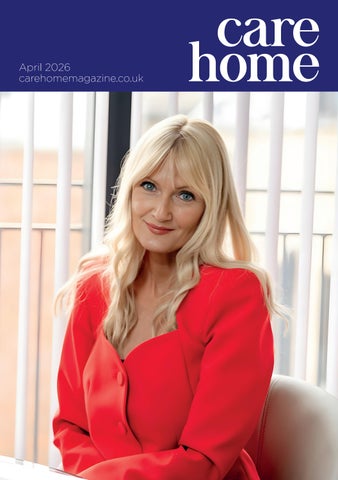
Create a flipbook
Care Home April 2026 by Cogent Multimedia Ltd - Issuu