Widener University School of Law Volume 16 Number 2 Fall 09













Widener University School of Law Volume 16 Number 2 Fall 09





Harrisburg Campus Commemorates Two Decades
Harrisburg Campus Commemorates Two Decades
Clinics and Institutes Mark Anniversaries
Clinics and Institutes Mark Anniversaries
Hugh Pearce Competition Turns 20
Hugh Pearce Competition Turns 20



In the S


No. 05-1120
In the Supreme Court of the United States OMMONWEALTH__________ OF MASSACHUSETTS,et al., v. NVIRONMENTAL PROTECTION AGENCY
NVIRO forUniteD

Respondents __________ On Writ of Certiorari to the United States Court of Appeals for the District of Columbia Circuit __________ AMICI CURIAE CLIMATE SCIENTISTS
DAVID BATTISTI, WILLIAM E. EASTERLING, CHRISTOPHER FIELD, INEZ FUNG, JAMES E.
HANSEN, JOHN HARTE, EUGENIA KALNAY, DANIEL
KIRK-DAVIDOFF, PAMELA A. MATSON, JAMES C.
DAVID BATTIS HANSEN,CHRISTOPHER KIRK-DAVIDOFF,HAR P MA SHESCOTT JOH
MCWILLIAMS, MARIO J. MOLINA, JONATHAN T. OVERPECK, F. SHERWOOD ROWLAND, JOELLEN
RUSSELL, SCOTT R. SALESKA, EDWARD SARACHIK, JOHN M. WALLACE, AND STEVEN C. WOFSY IN SUPPORT OF PETITIONERS__________
JOHN C. DERNBACH ROBERT B. MCKINSTRY, JR.*
KIRSTEN H. ENGEL
WIDENER UNIVERSITY PENN STATE UNIVERSITY LAW SCHOOL 432FOREST RESOURCES 3800VARTAN WAY BUILDING HARRISBURG, PA 17106UNIVERSITY PARK,PA 16802 (717)541-1933
*(484)467-3207 Counsel of Record
TAI









Eugene D. McGurk, Esq. ’78, Chairman of the Board
Dean Linda L. Ammons, J.D., Ex Officio Overseer
Renae B. Axelrod, Esq. ’91, Ex Officio Overseer
Steven P. Barsamian, Esq. ’75
The Honorable Raymond A. Batten ’79
C. Grainger Bowman, Esq.
The Honorable M. Jane Brady
The Honorable Peter John Daley II ’93
Michael G. DeFino, Esq. ’75
The Honorable Susan C. Del Pesco ’75
Geoffrey Gamble, Esq.
Jacqueline G. Goodwin, EdD
The Honorable Philip A. Gruccio
President James T. Harris III, DEd, Ex Officio Overseer
Richard K. Herrmann, Esq.
The Honorable Randy J. Holland
Andrew McK. Jefferson, Esq. ’93
Vice Dean J. Patrick Kelly, Ex Officio Overseer Delaware
Peter M. Mattoon, Esq.
Kathleen W. McNicholas, MD, JD ’06
Vice Dean Robyn L. Meadows, Ex Officio Overseer Harrisburg
Edward B. Micheletti, Esq. ’97
George K. Miller, Jr., Esq. ’81
The Honorable Charles P. Mirarchi, Jr.
Kathryn J. Peifer, Esq. ’02
Joanne Phillips, Esq. ’87
Thomas L. Sager, Esq.
The Honorable Thomas G. Saylor
John F. Schmutz, Esq.
The Honorable Gregory M. Sleet
The Honorable Lee A. Solomon ’78
The Honorable Joseph T. Walsh
John A. Wetzel, Esq. ’75
Douglas M. Wolfberg, Esq. ’96
Marc R. Abrams, Esq. ’78
Michael J. Aiello, Esq. ’94
Howard K. Alperin, Esq. ’90
Miriam Benton Barish, Esq. ’92
Carl W. Battle, Esq. ’82
Kyle D. Bowser, Esq. ’91
Alexander Bratic
Michael A. Brown, Esq. ’91
Claire M. DeMatteis, Esq. ’92
Dr. Robert D. Gober ’79
Ronald P. Goldfaden, Esq. ’76
Mitchell Gurwicz, Esq. ’95
N. Lynne Hughes, Esq. ’89
Wayne D. Kimmel, Esq. ’95
Alan B. Levin, Esq. ’80
Robert O. Lindefjeld, Esq. ’93
Kenneth J. Lopez, Esq. ’95
James J. Maron, Esq. ’85
Eugene D. McGurk, Jr., Esq. ’78
Franklin A. Miles, Esq.
U.S. Rep. Patrick J. Murphy ’99
Cynthia R. Ryan, Esq. ’79
Leif R. Sigmond, Esq. ’90
Timothy J. Snyder, Esq. ’81
Alice W. Strine, Esq. ’92
Leslee Silverman Tabas, Esq. ’79
CAPT Robert P. Taishoff, JAGC, USN ’89
James J. Veneruso, Esq. ’75
Richard P. Zaretsky, Esq. ’75

Contributing Writers: Mary Allen, Ashley Barton, Stephen Carroll, Walter Derricotte, Tom Durso, David King, Todd Lineburger, Mary K. Marzolla, Rosemary Pall, Nancy Ravert-Ward
Photography: Mary Allen, Cynthia Barger, Ashley Barton, Walter Derricotte, Dave Jackson, Todd Lineburger, Deborah McCreery, Rosemary Pall, Nancy Ravert-Ward
Magazine Advisory Board: Mary Allen, Linda Ammons, Ashley Barton, Andy Fichter, Ann Fruth, Paula Garrison, John Gedid, Susan Goldberg, J. Patrick Kelly, Todd Lineburger, Deborah McCreery, John Nivala, Nancy Ravert-Ward, Constance Sweeney
“If I were to pick a theme to describe the 2009-2010 academic school year, it would be ‘Celebrating the milestones achieved, with an eye toward the future in legal education and the profession.’”
GREETINGS: Another school year has begun as it has many times before. Just a few nights ago, I engaged in, for the fourth time, the ritual of orientation for our incoming classes on both the Delaware and Harrisburg campuses. We call this ceremony, “Welcome to the Profession.” I, along with the faculty and staff, saluted the successful 582 applicants from across the country in achieving admission. As I talked with the students about the importance of starting the journey on the right foot, the history of the law school, and this wonderful opportunity afforded them, I also told them that this school year holds special significance on both Widener campuses for a variety of reasons. If I were to pick a theme to describe the 2009-2010 academic school year, it would be “Celebrating the milestones achieved, with an eye toward the future in legal education and the profession.” This year, Widener Law will set aside time to reflect upon and honor the achievements of specific program areas that have reached notable maturity. The highlight of these commemorations will be the founding of the Harrisburg campus twenty years ago. It is important to recognize this progress, not only for its institutional value, but because we must express our gratitude to those who have dedicated their time, talent and/or treasure to this enterprise. The following pages only begin to summarize the work of the faculty, students, staff, alumni, and friends who have made it possible for us, in less than forty years, not only to become the foundation of legal education in the state of Delaware and in the city of Harrisburg, but also to proudly continue to provide innovation and leadership for legal education.
HAPPY ACADEMIC NEW YEAR, LINDA L. AMMONS, JD
ASSOCIATE PROVOST AND DEAN

“With your time, you can truly make a difference for law students and alumni alike.”
DEAR ALUMNI AND FRIENDS: I would like to take this opportunity to introduce myself to you as the president of the Widener University School of Law Alumni Association. On June 2, 2009, after seven years of devoted service as board president and vice president before that, Steven P. Barsamian passed the torch to me. I am not sure I can put into words the admiration I have for Steve’s dedication and commitment to our alma mater. Not only was he a member of the first graduating class, but he also went on to serve as a member, and ultimately the president, of our board for so many years. He has worked tirelessly to promote our Law School. Steve, my cap goes off to you, and I look forward to your continued board membership, contributions, and guidance. I would also like to congratulate Damian Jackson on his election as board secretary. I look forward to working with Damian along with Frank DePasquale, Jr., vice president, and the rest of the board in the years to come. I graduated as a full-time day student from our Delaware Campus in 1991. I have served on the Alumni Board, most often as its secretary, since graduation. I have worked for many years planning the Philadelphia Alumni Reception, co-chairing the silent auction committee, and co-chairing the Delaware golf outing, to name just a few activities. I am pleased to report that the Philadelphia Alumni Reception, which was held on March 19 at the Crystal Tea Room, was a huge success. I know that distance prevents many of you from participating in this event, and it is my hope that we will be able to enjoy similar success in other regions. The Alumni Relations Office has been working diligently to schedule a gathering in or near your hometown. Please attend! I want to wish heartfelt congratulations to our most recent graduates, the Class of 2009! Congratulations on your wonderful accomplishments. As you go out and start your professional lives, please try to make Widener Law an important part of them. During my term as president, I am sure I will reach out to many of you asking for your support. I encourage you to give of yourself in any way you can. In addition to financial contributions, which are as important now as ever, there are so many ways you can help our Law School. For example, you could become a mentor, a class agent, or a firm representative. With your time, you can truly make a difference for law students and alumni alike. I look forward to the opportunity to meet and to work with many of you during my term as president. I hope that with all of your support, our Alumni Association can continue to contribute in a significant way to our Law School’s continued growth under the leadership of Dean Ammons.
RENAE B. AXELROD ’91 PRESIDENT, ALUMNI ASSOCIATION
WIDENER UNIVERSITY SCHOOL OF LAW ALUMNI ASSOCIATION
EXECUTIVE COUNCIL
Renae B. Axelrod ’91, President
Frank C. DePasquale, Jr. ’86, Vice President
Damian S. Jackson ’96, Secretary
DIRECTORS
Thomas R. Anapol ’91
Steven P. Barsamian ’75
Hon. Raymond A. Batten ’79
Scott E. Blissman ’97
Christopher Cabott ’05
Hon. Richard M. Cappelli ’81
John Cirrinicione ’07
Anna M. Darpino ’06
Kenneth D. Federman ’93
Catherine N. Harrington ’88
W. Bruce Hemphill ’84
Christopher A. Iacono ’04
John F. Kennedy ’01
F. Kevin Lynch ’79
Anne M. Madonia ’94
Lynn M. Martosella ’92
Cecilia M. McCormick ’91
Jeffrey W. McDonnell ’94
Frank J. McGovern ’95
Maria C. McLaughlin ’92
James F. Metka ’80
Noelle Palazzo ’05
Hon. Paul P. Panepinto ’76
Jonathan E. Peri ’99
Charles W. Proctor III ’76
Larry S. Raiken ’75
Stephen W. Ries ’07
Joseph J. Santarone ’85
Jennifer Stonerod ’05
Karen Ann Ulmer ’95
Eighteen years after the establishment of Delaware’s only law school, a new campus across the border in Pennsylvania’s state capital dramatically expanded the institution’s size, scope, and potential. It was 1989—twenty years ago—and while this undertaking was nearly unprecedented, the impulses that drove it—an innovative spirit and a desire to serve—were not. Indeed, the Harrisburg Campus, while certainly the most visible of Widener Law’s groundbreaking endeavors, was but one of many in that year alone, each in its own way embodying the institution’s unique character.
A second campus featuring new specialty areas that were germane to its location and student body was not the Law School’s first innovation. In 1984, Delaware Law School had already set the benchmark for service with the founding of the Delaware Civil Clinic. Moreover, the Harrisburg Campus’s establishment coincided with that of the Environmental Law & Natural Resources Clinic, the Health Law Institute, and the Hugh B. Pearce Competition, three hallmarks of the engagement, sophistication, and intensive preparation for which the Law School’s programming
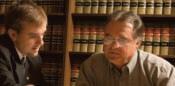



has become known. They were followed by a number of others, several of them also celebrating important anniversaries this year: the Legal Education Institute, the Law & Government Institute, three graduate programs in health law, and the Public Interest Resource Center.
This issue of Widener Law not only celebrates these programs, but also honors those who founded, grew, and participated in them. These faculty members and administrators, students and alumni, all have combined their talents and dedication in forming this institution’s core principles and setting in motion the programs that impart them so effectively. The voices you will hear in the stories that follow are united in their commitment to Widener Law and its mission. Their efforts have resulted in the growth and success of the programs highlighted here.
In marking these programs’ milestone anniversaries, we acknowledge their vision, longevity, and impact. We celebrate the diversity of their focuses and the commonality of their spirit. As an institution, we pledge to “promote service to the legal community and the public by our faculty, students, and staff for the betterment of the communities we serve.” In countless ways these programs enable us to fulfill that pledge.




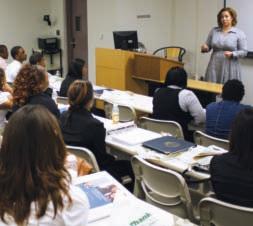
For two semesters last year, Juliette Lewis ’09 interned in Widener Law’s Delaware Civil Clinic. Those nine months served as a vividly rendered lesson of the power of attorneys to improve people’s lives—and of the necessity of preparation in order to do the job right. Lewis represented victims of domestic violence and related family-law matters, an experience that brought her not only face-to-face client interaction but also actual courtroom time.
“Knowing what I learned, I can’t imagine going into the workforce not having that experience,” she says. “Having to learn as a licensed attorney would have been embarrassing. Even in the substantive law courses, you
“YOU REALLY HAVE TO LEARN ON YOUR FEET. AT LEAST, HAVING HAD THIS EXPERIENCE, I KNOW WHAT I DON’T KNOW.”
don’t get everything. You re ally have to learn on your feet. At least, having had this experience, I know what I don’t know.”
Celebrating its 25th anniversary, the Delaware Civil Clinic was formed to provide civil legal services to indigent clients in the First State and to instill in Widener students a lifelong commitment to pro bono service. Today the clinic focuses a great deal of its resources on serving survivors of domestic violence who seek protection from their abusers, as well as enforcement of court orders. Over the last quarter-century, it has aided hundreds of people with critically important needs but no other means to address them.
“With regard to service-learning, our greatest volunteers are typically clinic students who learn t his lifelong commitment to pro bono service,” says associate professor Dana Harrington Conner, director of the Delaware Civil Clinic. “They learn they can use their legal skills to effect change positively in individual lives, particularly people who but for their assistance would not have help. They truly are in physical danger, and students help them and in some cases save their lives and protect their children. It’s a wonderful way that the students can l earn how to help people using the skills they’re l earning while they’re still in law school.”
Clinic students are certified as legal interns under the Delaware Supreme Court’s Rule 56, which grants them limited admittance to practice under Professor Harrington Conner’s license.
“They are able to learn how to practice law in a protected but real environment,” Professor Harrington Conner says. “They have their own clients, drafting briefs, litigating.”
Civil Clinic interns are required to write a “lessons learned” memo, and those reflections typically feature very candid thoughts. Two-semester intern Christopher Cooper ’09, for example, noted the necessity of mixing legal skills with people skills.
“It is our job to be the calming influence, the voice of reason, and the one who says, ‘Slow down and take a deep breath.’”
Cooper wrote. “I learned t hat clients are truly looking to us for guidance, and it is our job to balance everything for them, to navigate them through this crazy and difficult time in their life.”
by
• Clients assisted: 3,082
• Hours worked: 34,637
• Value of work per client: $1,124
Law School to memorialize Professor Christine McDermott (1947-2007)
In September 2007 the Law School lost a great friend, its students a warm and accomplished mentor, and Delaware’s poor a skilled and uncompromising advocate. Following a distinguished career as a prosecutor in the Delaware Attorney General’s office, Professor Christine McDermott served on the Widener Law faculty, as supervising attorney for the Delaware Civil Clinic, and as the managing attorney for Delaware Volunteer Legal Services, Inc. (DVLS). Her clinic students filled an essential need for representation of victims of domestic violence in the Family Court of Delaware. An accomplished soprano and dedicated volunteer to a number of local causes, she personified excellence personally and professionally and demonstrated the value of service to the many students she taught and infl uenced. She retired in 2004 and passed away in 2007. Efforts are underway to memorialize Professor McDermott on the Delaware Campus. If you are interested in supporting this effort, please contact Rosemary Pall (302.477.2169/rrpall@widener.edu).
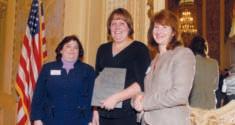
A year after the Delaware Civil Clinic was launched (see opposite page), Delaware Volunteer Legal Services (DVLS) and Widener Law joined forces to expand pro bono legal services to Delaware residents. DVLS, the pro bono arm of the Delaware State Bar Association, moved into office space on the Delaware Campus and for 24 years has provided quality pro bono legal services.
Aided by Delaware Civil Clinic interns, DVLS volunteers and staff assist clients with family law (for victims of domestic violence and those with severe disabilities), guardianship, wills/advanced-care directives/power of attorney (for those over 60 or terminally ill), personal-injury defense, bankruptcy, housing, and consumer law. Widener students serve DVLS attorneys by conducting research, drafting legal documents, and serving subpoenas.
“The relationship between DVLS and Widener has meant a lot to DVLS over the years,” says executive director and supervising attorney Janine N. Howard-O’Rangers. “It allows DVLS to operate in a cost-efficient manner so that more of our resources can go towards fulfilling our mission of providing free legal services to indigent Delawareans with meritorious civil legal problems. We are also able to educate future generations of lawyers on the importance of giving back to their community by providing pro bono services to the needy.”


The students, faculty members, and administrators who came to Harrisburg 20 years ago to open a new law school campus did not—could not—see the trail they were blazing. They had no way of knowing that their legacy over the next two decades would include several state legislators, a United States congressman, a prestigious Institute focused on law and government, and nationally renowned scholarship in myriad areas.
No, the prevailing feeling among the men and women who gathered to launch Widener Law’s campus in Pennsylvania’s capital in 1989 was one of excitement.
“It was great fun,” recalls associate professor Katharine F. Nelson, one of the campus’s founding faculty members. “We were building this new branch of the law school, and we were all young and energetic. It was great fun building this institution.”
What they built together has not only educated thousands of students in Widener Law’s signature style of service-oriented preparation but also strengthened the state government by providing resources—human and intellectual—to assist the executive, legislative, and judicial processes. (See story on page 18.)
“We have provided an opportunity for many people to attend law school and to become lawyers,” says John L. Gedid, the campus’s founding vice dean. “Our statistics have steadily improved to the point where we’re turning out lawyers with a high pass rate on the Pennsylvania bar examination. We are also turning out many lawyers who go into government work, or who are in government work and advance as a result of their work here.”
In 1986, the Pennsylvania legislature, interested in bringing a law school to Harrisburg, convened a committee of lawmakers to study the issue. Widener officials, intrigued by the prospect, conducted a feasibility study to see whether the school could expand to the Keystone State.
“We concluded that a dual-division law school could thrive in the Harrisburg area,” says Anthony Santoro, then Widener Law’s dean. “There was a dearth of full-time seats and no part-time law seats in the Harrisburg area. The lack of part-time seats especially affected access to legal education for those with primary child-care responsibilities and those who had to work full-time. We also concluded that the capital of one of America’s most populous states also lacked the research resources of a law school that would enhance the delivery of legal services, provide the area with a focal point for law reform, and stimulate the continuing education of the bench and bar.”
Dean Santoro and others began meeting with state and local leaders to hash out details, but it wasn’t until they met John Vartan, a major developer in the Harrisburg region, that aspirations turned into reality. After arduous negotiations, the Law School acquired Vartan’s private residence and 17 acres of adjacent land on which to build. From groundbreaking to opening convocation, with special guests Robert Casey, then Pennsylvania’s governor, and F. Eugene Dixon, Jr., Chairman of Widener University’s Board.
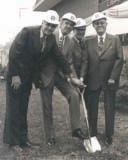
With permission granted, a site chosen, and funding in place, Dean Santoro set about staffing the new campus. His first step was to recruit Professor Gedid from Duquesne Law. While Vartan worked feverishly to complete construction in time for the campus’s Fall 1989 opening, Professor Gedid was doing some building of his own.
“It was interesting,” he says dryly. “We had to hire faculty from scratch. There was no assistance from existing faculty because there really weren’t any, so we hired the first faculty and we worked with admissions on getting the word out about the new campus and admitting the first group of students.”
Nearly 300 students were enrolled in that first class, evidence that demand in the region was indeed high. From the beginning both students and faculty were fully aware of the historical nature of their undertaking.
“The first few classes of students shared a sense of the fact that it was a new enterprise, and they were very committed as well,” says Professor Robert C. Power, who joined the faculty in 1990.
“They perceived that since we were putting in a lot of time and effort, they would put it into their studies, as well—for their own benefit, but also for the benefit of the school. They were quite interested in helping the school make a name for itself. So a lot of little things came together.”
For their part, the students found themselves liberated from having to measure up to the demands of legacy. Because everything was new, it was they who could create what others would follow.
“It was nice not having all those traditions,” says Ann Fruth ’92, a member of the first Harrisburg class. “We weren’t bound by tradition; we could make the tradition.”
Fruth brings a unique perspective to the history and evolution of the Harrisburg Campus. A few years after helping to blaze the campus’s trail as a student and alumna, she returned as an administrator and faculty member, serving as director of admissions and dean of students at various times over the last 14 years, along with teaching legal writing. Those early days, she points out, were marked by a mutual respect among all at the campus.
“We were very much appreciated as a class by the faculty and by the administration. They were very interested in what we thought about things,” Professor Fruth notes. “We didn’t really think of it in terms of why the faculty was that committed, but we realized they were extremely committed to our legal education and were very focused on their teaching, and we very much appreciated that.”
That dedication and good feeling never left. With all parties fully engaged in getting the new institution up and running, the campus almost immediately began the process of maturation and evolution.
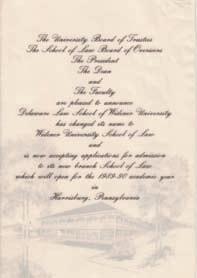
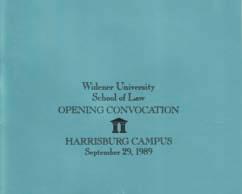
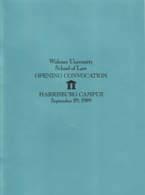
Clockwise from far left: Cover of the opening convocation program; Dean Santoro; Page 1 of the first issue of the Widener Journal of Public Law; artist’s rendering of the new building; the former Vartan residence
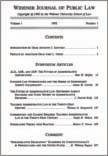







A year after the campus opened its doors, renovation work to the Student Services building was completed. The Civil Law Clinic opened; its first client requested that Widener students prepare power-of-attorney paperwork. And the Widener Journal of Public Law was formed, with Fruth appointed its first editor-in-chief; it would publish its first issue the following year.
Over the next several years, the campus’s physical space improved, thanks to renovations to existing spaces and the acquisition of new buildings. The launch of symposia and lecture series brought to Harrisburg an accomplished roster of guest speakers presenting on the law’s most pressing topics. At the same time, the faculty was growing to include teacher-scholars whose work would go on to have national influence.
“In addition to the excellence in teaching, there is an emphasis on scholarship that is just remarkable,” Professor Gedid says. “Our publication rate is amazing for a small school. We have people, especially our younger faculty, just writing furiously. We are more competitive in terms of cutting-edge contributions to scholarship. I also think we’re leaders in teaching professional skills. That is one thing that the rest of legal education is just discovering; we’ve been doing it for 20 years.”
Those changes have added up to a far more comprehensive educational experience for students, according to Associate Professor J. Palmer Lockard II, one of Harrisburg’s founding faculty members.
“There are so many more things to do on this campus now than there were when we opened; we’ve got the honor societies, we’ve got Law Review, we have additional buildings where students

can go that weren’t present when we first opened,” he says. “There are many, many more opportunities for our students than we had initially. The clinics are another area that didn’t exist when we first opened. So all those opportunities make a huge difference for students.”
The very creation of those opportunities played a major role in the entrepreneurial, we’re-all-in-this-together vibe that permeated the campus in those early days. While the physical infrastructure was in place, the underpinnings of a law school community had to be constructed from the ground up.
“Everybody involved had voluntarily come to this brand-new campus,” says Michael Goldberg, whom Professor Gedid hired as his first associate dean. “Everyone was excited about helping to establish the culture of the place and the tone and the atmosphere. It was a small faculty, and we all got along and all felt part of this common project.
“Everything had to be created from scratch,” he continues. “The Law Review, which is now called the Widener Law Journal. The moot court honor society. The trial advocacy program. All those kinds of student organizations and activities. At an established law school these are pretty much student-run; there’s an institutional history of how things work that is handed down from one generation of students to the next. At a brand-new law school campus, there were no upperclassmen to establish anything. The faculty were very, very involved in getting the moot court and Law Review off the ground. There was a lot more dean and faculty support for that kind of thing that doesn’t usually exist in an ongoing operation. We all knew that; that was part of the esprit de corps.”
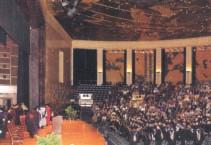
From commencement in the state capitol to socializing at Harrisburg Senators games, the campus’s students and alumni have come together in many ways over the years.

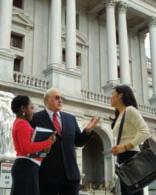

The story of Widener Law’s Harrisburg Campus is, yes, the story of thousands of alumni and students and faculty members and administrators. But it is also about so much more.
Widener’s expansion to Harrisburg brought the School of Law’s long-standing emphases on hands-on experience and service to an entirely new region—and a state capital at that.
“Being in Harrisburg is very, very important for a number of reasons,” states founding faculty member James W. Diehm, a professor of law. “When you are in the state capital, a number of things happen. One is that you build up a relationship, and hopefully a synergy, with the local and state governments. We’ve had alumni go to both houses of the legislature and also the administration and the judiciary. There’s been a close relationship with the state Supreme Court, with Commonwealth Court, and with Superior Court. People in the school attempted to develop those relationships and hopefully the people on the other side in the three branches of state government have found it equally productive as well.”
That would seem to be the case. As Professor Power points out, there have been countless instances of Widener Harrisburg faculty
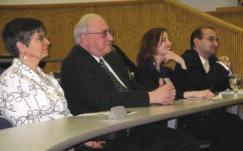
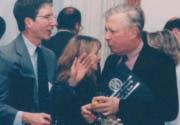
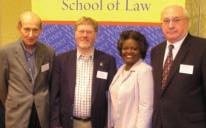
The Harrisburg Campus has hosted numerous distinguished gatherings, including (clockwise from left) the John Gedid Lecture Series, named for the campus’s founding vice dean; a symposium on Pennsylvania immigration laws; and an annual meeting of the nation’s administrative law judges. At bottom, Harrisburg graduates who passed the Pennsylvania Bar Exam in 2008 gathered with Dean Linda Ammons.
providing counsel to and services for elected and appointed government officials. In testifying before legislative committees and advising officials, these instructors have lent their expertise to the very complex process of making equitable, effective laws.
“I’ve taken calls from policy makers in state government on maybe 15 to 20 occasions,” he notes. “They could do it through research, but they would rather do it through talking to someone who teaches in the area. There has been a fair amount of work in that regard.”
The governmental relationships developed by the faculty have increased opportunities for students to participate in internships, externships, and summer clerkships, giving them invaluable experience and improving their career prospects. And, of course, as graduates they go on in large numbers to public-service law jobs, government posts, and government-related private-practice careers, making important contributions to the profession and the community in the process.
“I was a partner in a law firm, I ran a U.S. Attorney’s office, and I’ve had a little bit of experience in a number of different geographic areas,” Professor Diehm says. “I’ve told the students that the externships and internships and getting some experience is so important, and we have that because we’re in the state capital.”
Indeed, for 20 years, Widener Law has had Harrisburg. And Harrisburg has had Widener Law.
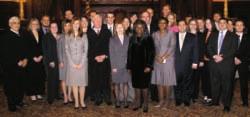
Nineteen eighty-nine seemed like a good time for Widener Law to start an institute focused on health law. The AIDS epidemic was running rampant, managed-care programs were gaining traction, and biomedical science was on the upswing. As it turns out, the Institute’s organizers hadn’t seen anything yet. Twenty years later, exploding costs have led the country’s recently elected president to declare health care a priority of his new administration. New epidemics, such as swine flu and SARS, have come to the fore. And genetic research has opened up vast new treatment possibilities—and chances for abuse.
Widener’s Health Law Institute has provided context and expertise for students, government officials, and the health-care system to rely on for two decades. With a mission of promoting the knowledge and understanding of health-care law and policy, and thereby serving individuals and institutions concerned with health care throughout the community, region, and country, the Institute well reflects the law school’s emphases on education, scholarship, and service.
“What we hope is that we’re part of the dialogue and that people know us and can count on us as a resource,” says Professor of Law John G. Culhane, the Institute’s director, who took the reins from founding director Barry Furrow four years ago. “Our graduates have found themselves in health-care leadership positions throughout the Delaware Valley. Anybody would point to our law school and say that people who come out of here have really made a difference and come out well prepared to deal with the complex challenges health law presents in the 21st century.”
The Health Law Institute readies these students through a four-pronged approach.
First, it provides a first-rate educational experience in numerous programs, from the standard JD track to several graduate programs for students who want to do advanced work in health law.
“We have a very robust and complete program of health-law courses taught by our full-time faculty and an array of adjuncts with experience they bring to bear in the classroom,” Professor Culhane observes.
The full-time faculty comprise Professors Culhane, Andrew Fichter, Thaddeus Pope, Jean Eggen, Nicholas Mirkay, Thomas Reed, and Susan Goldberg. Among the many notable adjuncts are prominent health law attorney and consultant Michele Forzley and author and lecturer Roseann Termini, a former regulatory affairs attorney and pharmaceutical company corporate counsel.
Second, the Institute has built a reputation for significant scholarship, sponsoring a yearly health-law symposium and presenting the annual Raynes McCarty Lecture, both of which bring to campus prominent researchers to discuss their work and stimulate conversation. These researchers include Ellen Lawton of the National Medical-Legal Partnership, Michele Goodwin of University of Wisconsin Law School, and Timothy Jost of Washington and Lee Law School. In addition, the faculty are copious publishers, with numerous books, articles, and commentaries to their credit.
“If you want to be a serious Institute you need to have people doing serious academic work. We have a faculty that really keeps us out
A decade ago, with the Health Law Institute nicely established as a center of scholarship and service, Widener Law officials realized that the field remained so complex and continued to grow so rapidly that there existed an untapped market of professionals who could use the school’s specialized training.
Exploiting the expertise developed through the Institute, the Law School in 1999 launched three new graduate programs in health law. Ten years later, the school’s master of jurisprudence, doctor of juridical science, and doctor of laws programs, all in health law, have given hundreds of professionals vital additional training and helped them attain leadership positions in one of the region’s most dynamic fields.
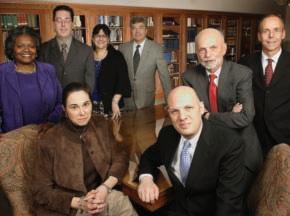
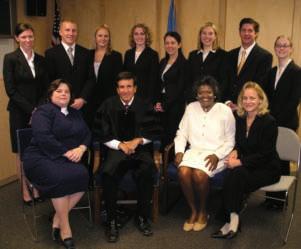
Standing (l-r): Dean Linda L. Ammons and Health Law Institute faculty members Nicholas A. Mirkay, Susan L. Goldberg, Andrew J. Fichter, Thomas J. Reed, and Institute director John G. Culhane; seated (l-r): Institute faculty members Eileen Grena-Piretti ‘92 and Thaddeus M. Pope (not pictured: Professors Jean Macchiaroli Eggen and Michelle Forzley)
there and involved academically,” notes Professor Culhane, citing Professors Pope, Eggen, Mirkay, Fichter, Forzley, and Termini.
The third and fourth tenets are related. Thanks to a focus on community involvement, students and faculty members assist local residents with health-care decisions in such areas as living wills and power of attorney. And the Institute is supplementing such involvement with formal and informal partnerships with other institutions involved in health law. Partners include Thomas Jefferson University and Christiana Care Health System; faculty members also are collaborating with the National Institutes of Health on a public health-law information project.
“The whole growth direction of the Institute has been to reach out and expand from the JD base to train other sectors of the health-care community,” notes Andrew J. Fichter, associate professor of law and executive director of Widener Law’s Institutes.
These degrees don’t allow for the practice of law. Instead, they prepare graduates in such areas as compliance, risk management, and case management, in such institutions as government agencies, hospitals, pharmaceutical companies, and more. The changing nature of health law makes this type of preparation ideal for the non-attorney.
“Corporate law is a well-defined mature area,” Professor Fichter says. “Securities law and tort law are the same. But health law
According to Professor Fichter, associate professor of law and executive director of Widener Law’s Institutes, the Law School’s geographic location, amidst a host of institutions focused on health care, makes it a terrific place to learn about the intricacies of such a complex, important area.
“We have more than 100 hospitals in the Pennsylvania, Southern New Jersey, Delaware, and Northern Maryland region,” Professor Fichter says. “At least fi ve major pharmaceutical companies are here, as are a whole host of nonprofi ts and businesses focused on health care. It’s one of the few sectors in the region that continues to expand. It’s where the jobs are; it’s where the skill areas are required. We feel it’s our responsibility to educate in that area. We’d be negligent if we didn’t.”
He points out that even beyond the local ties, health care occupies such a central place in national policy discussions that the Health Law Institute is well positioned to be a significant player.
“We approach health care as a matter of law and policy on all levels we teach it,” Professor Fichter says. “We’re keenly aware it’s a problem of national priority we need to solve, but within legal and policy frameworks.”
“Flexibility of approach and thought is one of the things we impart to students during their time here,” Professor Culhane adds. “We also seek to influence, through symposia and writings and community service, the national discussion on a whole host of issues.”
is still finding its shape. There’s a lot of theoretical activity going on all the time. It’s an evolving area of the law.”
Twenty years of contributions by the Health Law Institute and 10 years of graduate education in health law have given Widener Law alumni significant advantages in the region, where numerous institutions in various sectors and industries are aligned around health care.
“We have an edge when it comes to placing our students in the local markets to the extent that we have a good name in health care,” says Professor Fichter. “If a student can say that in addition to the fact that he has good grades from Widener, he also concentrated in health law, that’s a door opener and conversation starter.”
After several years as a private-practice litigator, David Hodas returned to law school in the late 1980s to earn an LLM in environmental law, which he hoped to leverage into a new phase of his career, public-interest environmental litigation. His timing was good: The Delaware Riverkeeper Network had just been launched, and officials at the environmental law center at the law school Hodas was attending asked him to consider establishing a similar center in the Philadelphia region.
He didn’t need to think long. Hodas prepared a proposal and sent it to Anthony Santoro, then Widener Law’s dean; after several months Dean Santoro was able to come up with funding, and the Environmental Law and Natural Resources Clinic was established in 1989 with Hodas as its founding director and professor of environmental law.
Over the last two decades, the clinic has grown into a nationally recognized hub of education and advocacy. Its impact on the evolving field of environmental law has been signifi cant and far-reaching, not only in the field of sustainability but also for
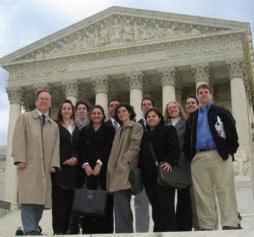
OVER THE LAST TWO DECADES, THE CLINIC HAS GROWN INTO A NATIONALLY RECOGNIZED HUB OF EDUCATION AND ADVOCACY.
the many students who have learned first-hand what it takes to practice in this area of the law.
“It’s been a remarkable training ground for law students who want to learn about environmental law, how courts work, and how to litigate major cases in federal court,” Professor Hodas says.
These alumni include William Wehrum ’93, formerly the Environmental Protection Agency’s top climate-change and air-pollution official; Lisa Jaeger ’90, a former acting general counsel at EPA; Delaware Riverkeeper Maya van Rossum ’94; and C. Russell H. Shearer ’92, deputy chief for enforcement and technical matters in the Office of Health, Safety and Security at the U.S. Department of Energy.
The education imparted by the clinic began with small steps, such as representing citizens in lawsuits against companies violating their Clean Water Act permits. To cite just one recent example, last spring, in Delaware Audubon Society v. Salazar, a judge for the U.S. District Court for the District of Delaware ruled on behalf of clinic clients that had challenged the allowance of farming in general and farming with genetically modified crops in particular at Prime Hook National Wildlife Refuge in Sussex County, Delaware. Clinic interns and officials had played prominent roles in drafting the federal complaint on behalf of the Delaware Audubon Society, Public Employees for Environmental Responsibility, and the Center for Food Safety.
Admitted as student attorneys in the U.S. District Court for Eastern Pennsylvania, Widener students were able to learn the ins and outs of state agencies, get a feel for the permit process, and hone their skills against very able opposition.
“I loved working on real cases with real clients and having direct contact with those clients,” says Lori E. Hood ’04, an
associate in the environmental practice group at Drinker, Biddle & Reath, in Philadelphia.
Hood’s experiences illustrate how clinic students truly roll up their sleeves and get to work. Among other activities, she prepared witnesses for their testimony at a hearing of the Delaware Environmental Appeals Board regarding the dredging of a canal in the southern part of the state and assisted Professor James May in preparing for an oral argument before the Ninth Circuit Court of Appeals in Atlanta, which she also attended.
In addition to providing invaluable hands-on opportunities for students, the clinic has been tremendously successful in ameliorating environmental woes. With understaffed government agencies unable to pursue every pollution case, Widener has stepped in to fill the gap. Thanks to the clinic’s efforts, serious polluters have been halted, new, cleaner technology has been placed into use, and much-needed site remediation has taken place.
After three years under Professor Hodas’s direction, the clinic passed to Professor May. During his tenure, it expanded its scope and gained an enviable reputation for winning court judgments and successful settlements. In the process it has become an influential player not only regionally but also nationally.
Among its accomplishments was filing the first case related to what are known as new source review regulations under the Clean Air Act. That case was consolidated with a number of other cases that were argued before the District of Columbia Circuit Court of Appeals, resulting in some significant changes in interpretation of the act. Professor Hodas and the Environmental Law Clinic also spearheaded lawsuits meant to refocus states on assessing their polluted waters and developing plans to bring their waterways into compliance with the mandates of the Clean Water Act.
Today about a dozen students staff the clinic annually. Its influence has been felt up and down the East Coast, from Maine in the north to Florida and Puerto Rico in the south. The clinic’s work continues to lead to the setting of new precedents. Recent decisions resulting from the clinic’s work have forced the Pennsylvania Department of Environmental Protection to reassess its processing of applications for waterway discharges and compelled agriculture companies to comply with federal laws requiring environmental assessments when seeking to farm on national wildlife refuges.
“For 20 years the clinic has been at the cutting edge in bringing about new developments in environmental law that help to protect the environment,” says current director Kenneth Kristl, who took the reins five years ago. “Twenty years of making a difference in
protecting the planet. Since the clinic started we’ve adopted a little motto: preparing to practice while protecting the planet. We help students become better lawyers while they help us to protect the environment by helping us litigate these cases.”
According to Michael Viscuso ’04, an associate in the Real Estate Department and a member of the Zoning and Land Use Group at Ballard Spahr Andrews & Ingersoll, in Philadelphia, participation in the clinic taught him the importance of acquiring knowledge in the subject matter of a particular case before any “legal” work could be done. In his case that meant exploring complex biologic, hydrologic, and other scientific principles. It also, he says, exposed him “to what it feels like to draft the various legal and other documents expected to be generated by an associate—and sometimes a partner.”
“To say that it was a valuable experience is an understatement,” Viscuso notes. “Being an intern enhanced my experience at Widener and did much to transition me into practice.”
Scholarship
Five books published or under contract
• John Dernbach, Stumbling Toward Sustainability and Agenda for a Sustainable America
• David Hodas, Climate Change Law: Mitigation and Adaptation
• James May, Constitutional Environmental Law
• Jean Eggen, Toxic Torts in a Nutshell
Twelve book chapters
Thirty articles
One hundred fifty presentations
Three hundred citations
Legal Activity
• James May filed an amicus brief with the U.S. Supreme Court on behalf of environmental law professors in Entergy et al. v. Environmental Protection Agency, regarding the role of economics in legislation.
• John Dernbach filed an amicus brief with the U.S. Supreme Court on behalf of 18 prominent climate scientists in Massachusetts v. EPA, regarding the regulation of greenhouse gas emissions from motor vehicles.
• Professor May is the founder of the Mid-Atlantic Environmental Law Center, Delaware’s only public-interest law firm.
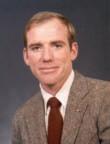
In June 1989, Hugh Bryan Pearce, a helicopter pilot with the Delaware National Guard, died along with five others when the UH-1 Iroquois they were flying on maneuvers crashed in dense nighttime fog near Yarmouth, MA.
Mr. Pearce had enrolled as a Widener Law student two years before, and his death struck the law school hard because of his tremendous, tragically unfulfilled potential.
“He was a very special kind of guy,” recalls Professor Thomas Reed, who taught Mr. Pearce. “He showed great promise as an advocate when he was a student. We felt that had he lived he would have been an outstanding trial lawyer. He was meticulous and well prepared and managed to do very well in simulations.”
Seeking a way to honor Mr. Pearce, Professor Reed and John Wherry, who then headed Widener’s Intensive Trial Advocacy Program, launched a trial advocacy competition named for him.
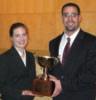
The Hugh B. Pearce Competition turns 20 this year.
Initially pitting Professor Reed’s students against Professor Wherry’s, the competition has evolved over two decades, growing larger and more inclusive. Today competitions in Harrisburg and Delaware are held to determine each campus’s finalists; these students then square off in the finals of the Pearce Competition. Students from all Widener Law programs are eligible to compete.
In addition, direction of the competition has passed from faculty members to the Moe Levine Trial Advocacy Society on the Delaware Campus and the Trial Advocacy Society of Harrisburg. Distinguished jurists from Delaware, Pennsylvania, and New Jersey—such as Honorable Gene E. K. Pratter, federal district court judge in the Eastern District of Pennsylvania, and Delaware Supreme Court
Justices Randy Holland and Henry duPont Ridgely—serve as judges. They evaluate the competitors on intelligent and creative advocacy skills as well as courtesy and respect to colleagues and opponents.
Former winner Riki Redente ’02, who went on to a successful career as trial lawyer, says the competition was an invaluable learning experience.
“Although grueling, I learned a great deal, both from the experience itself as well as from the invaluable feedback and critiques by the judges,” she says. “Not only did this experience cement the rules of evidence into my brain, which was quite handy when it came time to take the bar, but also I learned about teamwork in working with my trial partner, which ultimately prepared me to take second chair—as well as first chair—in trials after graduation from law school. I also learned about the values of civility, confidence, persistence, humor, hesitation, anxiety and angst, criticism, self-consciousness, and showmanship. All of these lessons have served me well, not only in my professional career, but also in my personal life.”
According to Professor Reed, the competition is a natural way to remember a gifted student who was taken far too early, before he had the chance to contribute his talents to the law.
“When Hugh Pearce died, we thought we should do something to commemorate him,” Professor Reed says. “We thought it would be appropriate to name a program after him that reflected his strengths as a student.”
After 20 years, the program is still going strong, and fundraising for another effort to honor Mr. Pearce—a scholarship in his name to assist a deserving student—is currently underway by family, friends, and classmates, led by Leif Sigmond ’90.
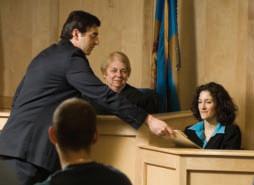
As a comprehensive law school, Widener augments its professional and graduate degree offerings with a bachelor’s program in paralegal studies. Fifteen years ago, the School of Law’s first class of paralegals, educated by the Legal Education Institute, graduated with their B.S. degrees.
The program had come about thanks to Widener University’s decision in the early 1990s to phase out its Brandywine College, which had been running an associates program in paralegal studies. With Brandywine closed, Widener brought the School of Law and LEI together under a Law Center that included professional and paraprofessional studies. For 15 years, LEI has educated graduates to assist attorneys in both the private practice of law and in public law situations.
LEI’s primary goal is the education of qualified individuals in the theory and philosophy of law and ethical responsibility under the supervision of attorneys. Students are trained for their paraprofessional role in the delivery of legal services and skills that enable them to assist attorneys in all phases of private and public law. The overall goal of the paralegal studies program is the educational training and development of students to foster an understanding and appreciation of the law, ethical responsibilities, and practical training that enhance personal and professional ability to adapt and grow with changes in the legal environment.
The program accomplishes these objectives through the imparting of a variety of skills. From legal research and writing to interviewing and investigating to countless other duties, LEI prepares students to assist lawyers in virtually every field of law. The common foundation is an understanding of and appreciation for the role of the paralegal that reflects the prevailing ethical and educational standards set forth by the American Bar Association. Widener paralegal alumni contribute in a variety of ways, and for a variety of reasons. Meghan Gorman ’05, for example, earned her bachelor’s because she was tired of hearing people complain about the system. Today she is at the Wilmington office of Doroshow, Pasquale, Krawitz & Bhaya, where she assists everyday clients— “average Joes,” as she calls them—as part of the firm’s personal injury and workers’ compensation practice areas.
Ms. Gorman’s classmate Erika Ewing ’05’s intent was to gain the power to fight injustice and help make positive social changes. Combining that drive with an interest in the law led her to pursue
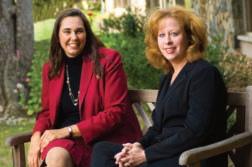
her bachelor’s at LEI. Ms. Ewing went on to enroll in Widener Law’s JD program, and she cites her LEI training as a key reason she landed a coveted judicial externship with a judge in the Delaware County (PA) Courthouse.
For Carol Graber ’06, the motivation to enroll was rooted in professional advancement; she joined the program to gain an understanding of legal terminology, procedures, and research techniques. LEI offered her a chance to learn skills that helped Ms. Graber with her day-to-day work handling workers’ compensation claims, and upon graduation, she earned a promotion. She enjoyed the experience so much that she is now pursuing a master of jurisprudence in health law at Widener.
For 15 years LEI’s bachelor’s program has imparted skills that stick. Whether in professional settings or further legal schooling, alumni return again and again to what they were taught in Widener’s paralegal program.
“I always apply the checklists from undergrad,” Ms. Ewing says. “They are what has given me the edge.”
The Legal Education Institute also offers a Legal Nurse Consultant Certificate Program, designed for nurses holding a current RN license who wish to expand their career options. Graduates work as consultants or experts in a variety of settings, including law firms, insurance companies, hospitals, government agencies, risk management departments, and health maintenance organizations. They serve as liaisons among attorneys, health-care providers, and clients.
The first evening class to graduate from Widener Law’s Harrisburg Campus included five state legislators. That was certainly at the forefront of John L. Gedid’s mind a few years later when the then-vice dean was considering what direction to take the campus. His brainstorming led to perhaps the only natural conclusion:
With Widener established as the only law school in Pennsylvania’s capital, why not refine and enhance its position with a special emphasis on law and government?
Initially conceived at the program level, the effort grew over time and eventually was recast as Widener’s Law and Government Institute. Ten years after its founding, the Institute thrives as a hands-on laboratory in which students study and research how legal topics interact with governmental concerns, and faculty members help to improve that interaction.
“The Law and Government Institute has been the catalyst that has focused us and enabled us to plan and execute our strategy and carve out our niche in Harrisburg,” Professor Gedid says.
Through the Law and Government Institute, Widener Harrisburg has forged very strong ties with state government and administrative law judges. One notable aspect of this symbiotic relationship is that students work on legislative drafts that are sent to the Pennsylvania General Assembly for consideration. Such invaluable training helps both the students and their eventual employers—in many cases, local, state, or federal government bodies.
“Our people come out with more preparation to do government law and to do it well,” notes Professor Gedid. “We educate people to do government law well and we work as a scholarly institution to improve government law.”
According to associate director Wesley Oliver, most law school experience involves the examination of judicial opinions in appellate cases. The Institute supplements that education by highlighting governmental areas that aren’t typically represented in the curriculum.
“What the Institute does is recognize the fact that there are three branches of government,” says Professor Oliver. “We look at the
governing branches—the legislature and the executive branch and agencies. Our focus is on bringing speakers in and holding symposia and having classes that are tailored toward outside speakers who are involved in this often overlooked component of the law school curriculum, the executive branch.”
Symposia topics have included such present-day areas as sustainable energy and Pennsylvania immigration law. The many distinguished speakers who have come to Harrisburg to present include Harvard Law’s Kenneth Mack, Yale Law’s Heather K. Gerken, and Melissa Waters of Washington and Lee University School of Law, all of whom have addressed the campus as part of a lecture series named for Professor Gedid.
Certificate programs in administrative/constitutional law, consumer law, environmental law, and legislation give students extra insights in specific areas that overlap with the legislative process. The Institute also has conducted numerous training sessions for administrative law judges and practicing attorneys. And, from judicial internships and externships to working in the office of the general counsel of the governor to assisting legislators, students have nearly limitless opportunities to roll up their sleeves and benefit from experiential learning. All of these engagements are made possible because of both the Institute’s expertise and its location.
“For example, we’re starting a public utility commission program where our students will have the opportunity as interns to actually represent clients before Public Utility Commission administrative law judges,” says Professor Gedid. “That’s not something you get just anywhere, but because we’re here, it happens. All of state government is here, which of course means that our students can go out and work in any area. They work for all three branches of government. ... It’s just amazing the opportunities that are here. If we had 5,000 students, we could find externships for all of them; we cannot satisfy the hunger of agencies for externs. Students love it, and they l earn e normous amounts.”

Another important aspect of the Institute is the exposure it gives students to nontraditional legal careers. The variety of speakers the Institute welcomes to campus, the different topics it explores in and out of the classroom, and the special efforts it has undertaken—including the installation of Pennsylvania Supreme Court Justice Thomas G. Saylor as jurist in residence—combine to demonstrate that legal education can be applied in myriad ways. These different perspectives are important for students to understand, according to Professor Oliver.
“Every day they hear from legal academics who teach the standard casebook method,” he says. “But in the Institute we have people who use legal tools in their work in ways that rarely involve direct interfacing with courts.”
Professor Gedid recently stepped down from the vice dean’s office for a second time and hopes to devote considerably more time to expanding the Institute’s programming. A legislator in residence program and legislative lecture series are being planned, and more numerous government ties are under discussion. Strong support from Dean Linda Ammons, the appointment of Professors Oliver and Jill Family as associate directors, and the input of a board of visitors and faculty board, are helping him to conceive of and execute plans for growth and increased visibility.
“We have great plans,” Professor Gedid says with enthusiasm. “You’re going to be hearing from the Institute in the next year or two.”
Actually, sooner than that. Looking for a more integrated approach to its offerings, the Institute this year will begin coordinating a fall seminar for students based on the topic of the following spring’s annual symposium. Attorneys, government officials, and other speakers will make seminar presentations on the effects legal regulations have in everyday situations and then help to organize the symposium, which benefits lawyers and judges seeking differing perspectives, attorneys needing CLE credits, and, as Professor Oliver puts it, “folks who want a learning experience beyond law school.”
“With case law, it’s easy to open up a case and question students about what the judge and the lower court said,” he says. “It’s always been done. There’s a relative ease in working with the materials of ordinary judicial opinions. What we’re trying to do is something much harder. There’s no standard operating procedure for how you go about bringing in someone from the trucking industry on how he positions his company before the regulatory agencies, but that’s exactly what lawyers have to do in real life. We’re trying to mesh the real-life experience with the academic experience with regard to administrative agencies and the legislative bodies.”
Could there be a better place than a major state capital for that kind of combination to happen?
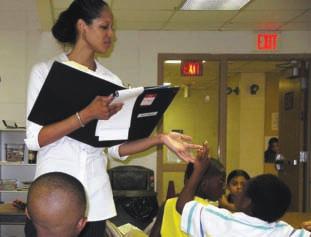
Widener Law students, working through PIRC, have taught children about financial literacy, among many other activities. Kelly McGriff ’08 is pictured here with her young students.
Each year, Widener Law students who have performed at least 60 hours of pro bono legal service during their time in law school are recognized at commencement. In addition to being singled out by name, they are distinguished by the honorary red cords they wear over their gowns.
Each year for the past five years, the number of red cords at commencement has grown ever larger.
It’s no accident.
“We hope to impress on our students that purposeful recognition of humanity in legal work and a conscious commitment to social justice are equally important objectives for new graduates of any law school,” Sydney Howe-Barksdale, Esq., Ph.D., director of the Public Interest Resource Center, says.
One might think that after opening and growing clinics in such service-oriented areas as civil law, veterans’ law, and environmental law, Widener would have exhausted the interest among faculty members and students for public-service law.
Instead, in faculty meetings five years ago, instructors continued to discuss how to create opportunities for students to do publicinterest work. Encouraged by the American Bar Association, which had been calling for law schools to take such steps, Widener’s faculty formed a committee, debated ideas, and pitched to the school’s leadership the formation of a freestanding, voluntary public-interest program that would help students find places to do public-interest law work throughout the academic year.
The faculty took to the concept with vigor. Embracing the notion that part of the School of Law’s mission was to inculcate an appreciation of an attorney’s obligation to serve the greater good, they agreed that Widener Law should have a mechanism to teach this valuable lesson to students so that they could gain the valuable rewards of doing pro bono work.
Douglas Ray, then the dean of the Law School, concurred, authorizing the creation of the Public Interest Resource Center and naming Arlene Rivera Finkelstein, a former public defender, as its founding director.
For five years, PIRC, located on the Delaware Campus, has teamed Widener Law students with public-interest agencies and lawyers to help those in need. Students have put their legal skills to practical use while learning from experienced professionals eager to share their expertise. The center also tracks volunteer hours and grants the pro bono graduation distinction noted above.
That distinction has been a critical component of the program’s success, say PIRC offi cials, who cite the recognition of pro bono efforts as a major factor in building word-of-mouth among students.
While the placements are non-paying and not for credit, they nonetheless confer valuable post-graduate benefits: Public-interest placements enable students to help others, and provide them opportunities to build their résumés and network with legal professionals.
Perhaps the most important opportunity PIRC gives students is the chance to make a difference. Public-interest law encompasses legal services that benefit charitable, civic, community, religious, educational, or government organizations that assist those of limited means, as well as legal services offered to groups that
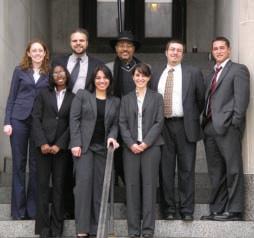
protect civil liberties or public rights. Thanks to PIRC, Widener Law students have provided a range of services, from teaching young children about finances and helping low-income individuals apply for much-needed earned income tax credits, to helping Delaware residents apply for pardons and helping survivors of domestic violence navigate through the legal system.
In the most visible example of public-interest engagement, Widener Law students traveled to New Orleans over winter break in early 2007 to participate in the Katrina-Gideon Interview Project, through which they worked with pretrial detainees in the Crescent City whose cases were delayed due to Hurricane Katrina. Pairing up, the students assisted the city’s Public Defender’s Office for five days by making contact with detainees, conducting interviews, doing investigations, contacting family members and potential witnesses and, where appropriate, writing up motions to leave behind in the case files for public defenders to file in court. Because Katrina had left so much of New Orleans’s legal infrastructure in a shambles, there was a striking lack of paperwork on many open court cases, compelling the students to work hard to document information that could be helpful in getting those cases moving.
“I really felt the time crunch and the pressure. It felt like a real job and it helped me see the big picture,” said participant Rachel Ramsay ’07 soon after returning. “We’ll have a lot of files cross our desks as attorneys and we have to remember every file is a person, and now we’ll respect all the work that went into that file. We’ll be better lawyers because of this experience.”
According to Dr. Howe-Barksdale, Widener Law’s commitment to public-interest law both reflects an institutional culture of service and addresses the needs of the whole student.
“Many of our students are first-generation and find themselves between the worlds of their families and their profession,” she observes. “These students express a strong need to connect with populations that have traditionally been underserved by the legal profession.”
In PIRC those students have a dedicated, strongly supported resource. Finkelstein, now assistant dean and executive director of the Toll Public Interest Center at the University of Pennsylvania Law School, points out that thanks to atypically keen faculty interest, along with vocal advocacy from current dean Linda L. Ammons, PIRC grew steadily, with more students participating in more opportunities each year.
“The faculty and administrative support has been extraordinary,” Finkelstein says. “It sets Widener apart and has been a very strong factor in the success of the program.”
As noted earlier, PIRC is voluntary. To Dr. Howe-Barksdale, that status only strengthens the School of Law’s immersion in publicinterest efforts.
“Reflection on these values is lost in a mandatory program,” she says.
The red cords don’t lie.
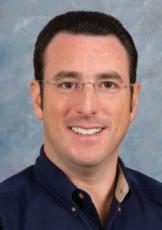
After years riding in ambulances and assisting people in distress as an emergency medical services provider, Douglas Wolfberg thought his path was set: Med school, then a long, satisfying career as a physician.
But then, as an undergraduate at Penn State, he interned at the Pennsylvania Emergency Health Services Council, an independent advisory body to the state Department of Health and other agencies on EMS matters. The immersion in regulations and laws regarding paramedics and emergency medical technicians sparked an interest in the field’s legal side. After graduating he began working as an EMS administrator, serving at the county, regional, state, and federal levels, including at the United States Department of Health and Human Services, and after a while the notion of medical school was set aside.
Mr. Wolfberg enrolled as a full-time student at the Harrisburg Campus, studying health law in both day and evening classes and gaining experience at summer internships and part-time positions at area law firms.
“I liked that it was flexible with evening classes, and I liked the campus,” he recalls. “It seemed to fit into everything I was looking for at the time.”
After earning his JD in 1996, Mr. Wolfberg was hired at Duane Morris, where for four years he worked as an associate in the litigation and health-care departments. That’s when his prior career caught up with him.
Thanks to the many contacts he had made as an EMS provider and administrator, he began to field calls
from those in the industry asking if he could assist them with regulatory issues and approvals.
“It started as a side thing I was interested in doing because of my background, and it became really a full-time practice,” he says. “I ended up having so much work even as a new associate in that industry that I was feeding work up the chain and giving some work to partners and other associates.”
Mr. Wolfberg had two friends from the emergencyservices industry who, like him, had gone to law school and become attorneys. In 2000 the trio linked up professionally and formed Page, Wolfberg & Wirth. Located in Mechanicsburg, PA, PWW provides legal and consulting services to EMS, ambulance, medical transportation, and public safety organizations nationwide. It is one of the very few firms in the country to fill such a niche. Despite the narrow focus, PWW offers an extensive line of services, from reimbursements and billing to training and development, to compliance, licensing, and regulatory work, alongside legal efforts in the areas of personal injury, negligence, malpractice, and labor and employment.
“It’s really a broad range of issues focused on one industry,” Mr. Wolfberg explains. “We have about 13 people now. We’re still a small firm, but for being focused in one industry we have a staff that’s well rounded out to handle a wide range of matters.”
On the legal side, PWW’s focus is on preventive measures—helping clients to avoid legal troubles rather than dealing with them after they’ve happened, though the firm also represents clients in Medicare audits, investigations, and other adversary matters. Meanwhile, there is plenty of business and transactional work to keep the firm growing. Mr. Wolfberg credits his Widener Law experience for putting him in a position to thrive.
“It was indispensable. The quality of the education I got at Widener was second to none,” he says. “I certainly learned at Widener that what my parents told me for years was true: The more you put into it, the more you get out of it. When you’re prepared to work hard and not afraid to do the work and learn it and master it, there’s a group of professors at Widener who will do everything they can to help you succeed.”
Widener Law’s National Advisory Council has added four new members whose experience and expertise will benefit Dean Linda L. Ammons as she continues to chart the institution’s course. The new members are Carl W. Battle ’82, Claire DeMatteis ’92, Wayne D. Kimmel ’95, and Robert O. Lindefjeld ’93.

MR. BATTLE is senior vice president and chief intellectual property counsel for Elan Pharmaceuticals, Inc., a biopharmaceutical firm in South San Francisco, CA. Previously he held senior-level IP positions with Pharmacia Corp., Schering-Plough Corp., Novartis Corp., Warner-Lambert Co., and Rohm and Haas Co.
Mr. Battle, who is admitted to practice in three states, two U.S. Courts of Appeal, and two U.S. District Courts and before the federal Patent and Trade Office, has written several self-help legal and business books and is a former president of the New Jersey Intellectual Property Law Association and former director of the American Intellectual Property Law Association Scholarship Fund. He earned his bachelor’s degree from Dartmouth College.

MS. DEMATTEIS is executive vice president and general counsel for Catalina Marketing Corporation. She is responsible for managing all legal matters related to the organization. Prior to joining Catalina, she was a partner with Stradley Ronon Stevens & Young, LLP, leading the Delaware office as the partner-in-charge with additional chair responsibilities for the gaming practice group and government and public affairs practice group. She also served as senior counsel to former U.S. Senator Joseph R. Biden, Jr., and as assistant legal counsel to former Delaware Governor Michael N. Castle. Ms. DeMatteis holds a bachelor’s degree from the University of Delaware.

MR. KIMMEL is a managing partner of ETF Venture Funds. He sits on the boards of several of ETF’s portfolio companies, including OrganizedWisdom, Patria, SeamlessWeb, and Philadelphia Media Holdings, and has been cited by Philadelphia magazine, the Philadelphia Business Journal, and PhillyTech magazine for his leadership and influence. Active in philanthropy, Mr. Kimmel serves on the boards of the Albert Einstein Healthcare Network, the Jewish Federation of Greater Philadelphia, the Jewish Relief Agency, and Powered By Professionals. His bachelor’s degree is from the University of Maryland.

MR. LINDEFJELD is general counsel and chief intellectual property counsel for Nantero, a Massachusetts-based nanotechnology company. He previously was a partner at Jones Day, where he was in charge of the Pittsburgh office Intellectual Property Group; senior vice president and general counsel at iVentureLab.com; and a law clerk for the U.S. Court of Appeals for the Third Circuit. He is currently secretary for the American Bar Association Section of Intellectual Property Law, chair of the Local Patent Rules Committee for the U.S. District Court for the Western District of Pennsylvania, and chair of the American Intellectual Property Law Association Inventor Issues Committee. At Widener Law Mr. Lindefjeld was editorin-chief of the Law Review. He holds a bachelor’s degree from Norwich University, Military College of Vermont, where he enrolled in the ROTC program before serving as a lieutenant in the U.S. Army.
BARNETT, LARRY D., The Financial Sector Upheaval of 2008: Sociological Antecedents and Their Implications for Investment Company Regulation, 5 HASTINGS Bus. L.J. 229 (2009).
BARROS, D. BENJAMIN, Property and Freedom, 4 N.Y.U. J. L. & LIBERTY 36 (2009).
Legal Questions for the Psychology of Home, 83 TULANE L. REV 645 (2009).
Toward a Model Law of Estates and Future Interests, 66 WASH & LEE L. REV 3 (2009).
Berman v. Parker, 348 U.S. 26 (1954), in 1 ENCYCLOPEDIA OF THE SUPREME COURT OF THE UNITED STATES 140 (David S. Tanenhaus ed., Gale 2008).
Hadacheck v. Sebastian, 239 U.S. 394 (1915), in 2 ENCYCLOPEDIA OF THE SUPREME COURT OF THE UNITED STATES 239 (David S. Tanenhaus ed., Gale 2008).
CAPOWSKI, JOHN J., Editorial, Nation Could Use Dose of Meritocracy, PATRIOT NEWS (Harrisburg, PA), February 20, 2009., at A9.
DERNBACH, JOHN, et al., Progress Toward Sustainability: A Report Card and a Recommended Agenda, 39 Envtl. L. Rep. (Envtl. L. Inst.) 10,275 (2009).
Book Review, 27 LAW & HIST REV 230 (2009) (reviewing KENNETH P. MURCHISON, THE SNAIL DARTER CASE: TVA VERSUS THE ENDANGERED SPECIES ACT (2007)).
Editorial, Smart Use of Resources Makes Good Economic Sense, PATRIOT NEWS (Harrisburg, PA), March 8, 2009, at F1.
Editorial, Sustainable America is Achievable in Our Lifetime, PATRIOT NEWS (Harrisburg, PA), March 15, 2009, at F1.
et al., Transcript of Panel Discussion, Environmental Law: The Policy Implications of the Reaction to Climate Change, 33 WM & MARY ENVTL L. & POL’Y REV 549 (2009).
DIMINO, MICHAEL, Accountability Before the Fact, 22 NOTRE DAME J.L. ETHICS & PUB POL’Y 541 (2008).
EGGEN, JEAN MACCHIAROLI, The Synergy of Toxic Tort Law and Public Health: Lessons From a Century of Cigarettes, 41 CONN L. REV 561 (2008).
EPSTEIN, JULES, Avoiding Trial By Rumor: Identifying the Due Process Threshold for Hearsay Evidence After the Demise of the Ohio v. Roberts ‘Reliability’ Standard, 77 UMKC L. Rev. 119 (2008).
GARFIELD, ALAN E., Finding Shared Values in a Diverse Society: Lessons from the Intelligent Design Controversy, 33 VT L. REV 225 (2008).
Editorial, Foul Language and Free Speech, THE NEWS J. (Wilmington, DE), May 7, 2009, at A15.
GOLDBERG, MICHAEL J., Editorial, The Way to Save Card Check, PHIL INQ., May 28, 2009, at A15.
HAYMAN, JR., ROBERT L., CHOOSING EQUALITY: ESSAYS AND NARRATIVES ON THE DESEGREGATION EXPERIENCE (Robert L. Hayman Jr. & Leland Ware eds., with a foreword by Vice President Joe Biden, Penn State Press 2009).
& Nancy Levit, The Stories of American Law, in ON PHILOSOPHY IN AMERICAN LAW 88 (Francis J. Mootz III ed., Cambridge Univ. Press 2009).
KOTLER, MARTIN A., Shared Sovereign Immunity as an Alternative to Federal Preemption: An Essay on the Attribution of Responsibility for Harm to Others, 37 HOFSTRA L. REV 157 (2008).
LEE, GREG RANDALL, Editorial, Voters Need to Realize Importance of Selecting Judges, PATRIOT NEWS (Harrisburg, PA), May 14, 2009, at A21.
LIPKIN, ROBERT JUSTIN, We Are All Judicial Activists Now, 77 U. CIN L. REV 181 (2008).
MAY, JAMES R., The Next Generation: The 38th Annual Conference on Environmental Law, 39 ABA TRENDS 15 (Jan/Feb 2009).
& Jared A. Goldstein, Brief of Environmental Law Professors as Amici Curiae in Support of Respondents, in Entergy Corp. v. Riverkeeper, Inc., in CLEAN WATER ACT; LAW AND REGULATION 263 (ALI-ABA Course of Study, Apr. 23-24, 2009).
Constitutional Law: 2008 Annual Report, in ENVIRONMENT, ENERGY, AND RESOURCES LAW: THE YEAR IN REVIEW 2008 349 (ABA Section of Envt., Energy and Resources 2009).
MIRKAY, NICHOLAS A., Losing Our Religion: Reevaluating the Section 501(c)(3) Exemption of Religious Organizations that Discriminate, 17 WM & MARY BILL RTS J. 715 (2008-2009).
MORINGIELLO, JULIETTE M., & William L. Reynolds, Electronic Contracting Cases 2007-2008, (Survey—Cyberspace Law) 64 BUS LAW 199 (2008).
& Michael F. Fleming, Cyberspace Law Survey: Introduction, 64 BUS LAW 153 (2008).
Our Mini-Theme: O Canada, BUS LAW TODAY, Jan.-Feb. 2009, at 8.
MGM Studios, Inc. v. Grokster, Ltd., 545 U.S. 913 (2005), in 3 ENCYCLOPEDIA OF THE SUPREME COURT OF THE UNITED STATES 285 (David S. Tanenhaus ed., Gale 2008).
POWER, ROBERT C., Just the Facts: Detective Fiction in the Law School Curriculum, in MURDER 101: ESSAYS ON THE TEACHING OF DETECTIVE FICTION (Edward Rielly ed., 2009).
SMITH, AMANDA, Why I Teach, THE LAW TEACHER (Inst. for L. Sch. Teaching, Gonz. U.), Spring 2009, at 19.


KEITH E.
DARLENE L.
Dean Linda L. Ammons announced several changes to Widener Law’s faculty and staff, effective July 1:
ROBYN L. MEADOWS was named vice dean of the Harrisburg campus, overseeing day-to-day operations at the school. Professor Meadows joined the Widener faculty in 1991 and teaches and writes in the areas of contracts, secured transactions, sales and leases, and payment systems. She earned her law degree from the University of Louisville Louis D. Brandeis School of Law in 1983 and an LLM from Temple University’s James E. Beasley School of Law in 1991. She replaces John L. Gedid, who returned to teaching and directing the Law & Government Institute.
ROBERT C. POWER , the former H. Albert Young Fellow in Constitutional Law, took over as Harrisburg’s associate dean for faculty research and development, focusing on the needs of the faculty relative to scholarship, teaching, and professional development. Professor Power joined the Widener faculty in 1990 and teaches and writes in the areas of constitutional law, administrative law, criminal law, and professional responsibility. He earned his law degree from Northwestern University School of Law in 1975. He replaces Susan Raeker-Jordan, who returned to full-time teaching.
RANDLE B. POLLARD joined the Harrisburg faculty as an associate professor of tax law. Professor Pollard served as senior counsel at Ice Miller LLP in Indianapolis from 2004 to 2008, when he left to be a field organizer for Barack Obama’s presidential campaign. He was
domestic tax counsel for Eli Lilly and Co. for five years before going to Ice Miller. Professor Pollard earned a law degree from the Georgetown University Law Center in 1988 and an LLM in taxation from the school in 1996.
KEITH E. SEALING joined WidenerHarrisburg as dean of students after working in student affairs at the University of Louisville’s Louis D. Brandeis School of Law and at the Syracuse University College of Law. Mr. Sealing replaces Ann E. Fruth, who held the position for two years and will return to her role as a legal writing professor. He earned his law degree from Temple’s Beasley School of Law in 1985.
DARLENE L. KENNEDY joined the Delaware Campus as a visiting associate professor, with a focus on tax law. She came to Widener from the Baltimore City Planning Commission, and had also been a consultant for numerous Washington, DC, law firms. Prior to her consulting work, Professor Kennedy taught at the Catholic University of America’s Columbus School of Law and at Regent University School of Law. Between her academic appointments, she worked as counsel and chief of staff to the assistant attorney general in the tax division of the U.S. Department of Justice and as special assistant to the assistant secretary for public and Indian housing at the U.S. Department of Housing and Urban Development. She holds a B.A. from John Jay College of Criminal Justice, a J.D. from Syracuse University College of Law, and an LL.M. in tax law from the University of Baltimore.





DAVID R. HODAS
KATHERINE MASON JONES
LINDA L. AMMONS was named a Fellow of the American Bar Foundation and was appointed for a third year as chair of the Curriculum Committee of the American Bar Association’s Section of Legal Education & Admissions to the Bar.
JOHN J. CAPOWSKI moderated and presented at a panel on child witnesses and hearsay at the Delaware Campus’s symposium on “The Child Witness.” He presented at the Second International Symposium on Evidence Law in Beijing and at the ABA National Conference on Children and the Law in Washington, DC.
and another paper at a human rights conference at the University of South Carolina on how constitutional courts implement international human rights law through the constitutional right to dignity.
JOHN C. DERNBACH’S new book, Agenda for a Sustainable America (Environmental Law Institute Press), was published in January.
JULIET M. MORINGIELLO
NATHANIEL C. NICHOLS
FRANCIS J. CATANIA, JR. , was selected as a 2009 fellow of the National Institute for Teaching Ethics and Professionalism. In that capacity, he participated in the April NIFTEP workshop in Georgia and presented on self-directed learning in Widener’s Judicial Externship Program. Professor Catania also presented on professionalism in the program at the Association of American Law Schools conference “Clinical Legal Education: Clients, Complexity and Collaboration in a Cross-disciplinary Lens.”
Professor Dernbach delivered papers and presentations at events presented by the University of Houston Law Center, the University of Oregon Law School, Hofstra University Law School, Vanderbilt University Law School and the Environmental Law Institute, the National Association of Environmental Professionals, the Pennsylvania Bar Institute, and the ABA Section on Environment, Energy, and Resources.
Professor Dernbach moderated and co-planned Widener Law’s “Symposium on Sustainable Energy: The Intersection of Innovation, Law, and Policy” and served as a judge for the Nature Conservancy’s Investing in Nature Awards, both in February.
THADDEUS M. POPE
ANN E. CONAWAY is ABA Business Law Section Planning Chair and moderated a CLE program at the ABA annual meeting on “Series Interests in Limited Partnerships, LLCs and Business Trusts: Cutting-Edge Issues.” She became a Life Member from Pennsylvania for the National Conference of Commissioners on Uniform State Laws. Professor Conaway is a member of the joint editorial board for Uniform Unincorporated Business Acts and is the board’s past president and secretary.
DANA HARRINGTON CONNER was appointed by the Delaware General Assembly to a new three-year term on the Delaware Family Law Commission.
MICHAEL J. COZZILLIO was the chief organizer for the third annual Dean’s Leadership Forum on Diversity, held in March, in which experts from some of the nation’s leading law schools spent the day discussing sports, minorities, and the press; disability and sports; the Negro leagues of baseball; and domestic violence and athletes.
ERIN DALY presented a paper at the International Studies Association’s annual convention in New York on the right to dignity in transitional constitutions
ALICE EAKIN spoke at Widener’s Academic Support and Bar Programs Conference on current issues related to note-taking in the law classroom.
JULES EPSTEIN headed a panel discussion on the Pennsylvania death penalty at Drexel Law and led a two-day training on the death penalty for Pennsylvania judges, prosecutors, and defense counsel under the auspices of the National Judicial College. He lectured to California judges on cutting-edge issues in capital cases, also presented by the National Judicial College. Professor Epstein co-chaired the Widener Law Review symposium “The Child Witness” with Professor JOHN NIVALA , presented an “Evidence Update” to judges of the Court of Common Pleas of Philadelphia, designed a day-long CLE on litigation skills for the Pennsylvania Association of Criminal Defense Lawyers, presented at a Department of Justice-funded national conference on mitigation and forensics for prosecutors and defense counsel handling capital cases, is serving on a National Institute of Standards and Technology task force on latent fingerprint evidence standards, delivered an evidence
training to the federal bench and bar in Delaware, planned a course for and presented at a daylong capital case training session in Harrisburg as part of the Pennsylvania Bar Institute’s Annual Criminal Law Symposium, and trained judges from across the United States for the National Judicial College in West Yellowstone, MT, in subjects including hearsay, the child witness, forensics, eyewitness identification, and DNA.
TONYA M. EVANS-WALLS in February participated in a panel discussion as part of West Virginia University College of Law’s symposium The Evolution of Street Knowledge: Hip Hop’s Influence on Law and Culture and was a featured speaker on the panel “When MCs Meet JDs: Hip Hop’s Complex Relationship with Intellectual Property.” Professor EvansWalls also spoke at Widener Law’s Dean’s Leadership Forum on Diversity and Sports in Harrisburg, where she delivered introductory remarks for the keynote presentation. She continues to contribute to the HipHopLaw.com blog, blogging about intellectual property issues affecting the hip-hop community.
JILL E. FAMILY was appointed Chair of the Immigration and Naturalization Committee of the Section of Administrative Law and Regulatory Practice of the American Bar Association. She is now also the liaison from the Ad Law Section to the ABA’s Commission on Immigration.
ALAN E. GARFIELD was quoted in “When Does a Non-Disclosure Agreement Cross the Line,” published in the online version of New York magazine.
JOHN L. GEDID was named chair of the Dauphin County Common Pleas Court Restructuring Resolution Committee and was appointed by the Pennsylvania legislature to a second five-year term as Pennsylvania Commissioner to the National Conference of Commissioners on Uniform State Laws. He spoke at the Pennsylvania Bar Institute’s CLE symposium on municipal and state authorities in February and attended a drafting meeting for revision of the Model State Administrative Procedure Act in March.
Professor Gedid delivered the introductory comments at the Dean’s Leadership Forum on Diversity in March and in April was the
keynote speaker and planner of the PBI’s symposium on procedural due process.
MICHAEL J. GOLDBERG was quoted in a News Journal story about the Employee Free Choice Act in April. He discussed the act at a faculty development presentation, a meeting of the Labor & Employment Law Section of the Delaware State Bar Association, and a meeting of the Labor Relations Committee of the Delaware Chamber of Commerce.
SUSAN L. GOLDBERG was appointed to the board of directors of Alumni Supporting Kids (ASK), which provides funding, mentoring, and transportation to economically disadvantaged children in the WallingfordSwarthmore School District to enable them to participate in extracurricular enrichment activities. Professor Goldberg has been an ASK mentor for the past year.
RUSSELL A. HAKES served on the panel “How to Get into Law Teaching” at the annual conference of the J. Reuben Clark Law Society, held at the Harvard University School of Law in February.
LAWRENCE A. HAMERMESH, Ruby R. Vale Professor of Corporate and Business Law, was involved in the development of significant recent amendments to the Delaware General Corporation Law relating to proxy access, proxy reimbursement, and separation of notice and voting record dates for stockholder meetings.
Professor Hamermesh was quoted in news reports in The New York Times, the ABA Journal, and the BNA Securities Regulation and Law Report and on WHYY-TV. He presented at the NYU/Penn Conference on Law and Finance, the 2009 Norman J. Shachoy Law Review Symposium at Villanova Law School, and the spring meeting of the ABA Section of Business Law. His article “Loyalty’s Core Demand: The Defining Role of Good Faith in Corporation Law,” co-authored with Vice Chancellor Leo E. Strine, Jr., R. Franklin Balotti, and Jeffrey Gorris, was among the 10 most downloaded legal research papers on ssrn.com during February and March. It will be published in the March 2010 issue of The Georgetown Law Journal
ANNA P. HEMINGWAY and JENNIFER M. LEAR presented two CLE programs: “Editing Your Own Drafts,” on improving
skill and efficiency in self-editing, in March, and “Editing Other Writers’ Drafts,” on improving confidence, skill, and efficiency in editing others’ drafts, in April.
Professor Hemingway delivered “First Year Academic Support Courses” at Widener Law’s Academic Support and Bar Programs Conference in April.
DAVID R. HODAS completed drafting the 2009-2014 Delaware Energy Plan and delivered it to Governor Jack Markell in April. He also presented at the environmental law experts’ meeting “The European position towards Copenhagen: A global outlook” at the Law Faculty, Maastricht University, the Netherlands.
KATHERINE MASON JONES presented her work-in-progress, “Federalism and Concurrent Jurisdiction in Global Markets: Why a Combination of National and State Antitrust Enforcement Provides a Model for Effective Economic Regulation,” at a scholars’ workshop in April.
ALISON DONAHUE KEHNER and MARY ANN ROBINSON were awarded a grant from the Association of Legal Writing Directors to create a DVD about professionalism issues for law students and lawyers.
ALICIA BROKARS KELLY presented “Images of Women in Politics” at the University of Pennsylvania Feminist Law Conference. She serves as the chair-elect and program chair of the AALS Family and Juvenile Law Section, and on the executive board of the AALS Section on Women in Legal Education.
J. PATRICK KELLY was named vice dean of the Delaware Campus.
KENNETH T. KRISTL led the Widener Law Environmental Law Clinic to a resounding victory in a federal district court in Delaware, in Del. Audubon Soc’y, Inc. v. Sec’y of the United States DOI, C.A. No. 06-223-GMS, UNITED STATES DISTRICT COURT FOR THE DISTRICT OF DELAWARE, 2009 U.S. Dist. LEXIS 24746 (March 24, 2009).
Professor Kristl was quoted in a February News Journal front-page story on the challenges facing the next secretary of Delaware’s Department of Natural Resources and Environmental Control. He presented at a
Delaware Riverkeeper Network workshop and a CLE program at the Delaware Valley Environmental Inn of Court.
GREG RANDALL LEE and DANIEL R. SHUCKERS presented “The Constitution and You” at April’s YMCA Youth in Government Conference in the courtroom of the Pennsylvania Supreme Court in the Pennsylvania State Capitol. Also in April, Professor Lee presented an ethics CLE program, “Harry Potter and the Lawyer’s Curse,” for the Pennsylvania Bar Institute in Mechanicsburg, Pittsburgh, and Philadelphia on April 30th. From February through April, he served as a volunteer water safety instructor for the Red Cross’s Level I-V courses at the Harrisburg Area Community College.
ROBERT JUSTIN LIPKIN presented “Two Kinds of Political Discourse” at the University of Delaware’s Academy of Lifelong Learning.
JAMES R. MAY was named Widener Law’s H. Albert Young Fellow for 2009-2011 and was named associate director of the Law School’s new Environmental Law Center.
Professor May delivered presentations at Drexel University School of Law, the ABA Annual Conference on Environmental, Energy and Resources Law, which he also chaired, the National Constitution Center, the American Law Institute-American Bar Association, the Pennsylvania Bar Institute, the University of Oregon School of Law, and the Environmental Law Institute of the University of California-Berkeley. He also participated on a panel discussion, “Presidential Inaugurations and You,” at an elementary workshop at a Montessori School.
Professor May was quoted in news stories on WHYY-TV, WPVI-TV, and WILMAM and in The Philadelphia Inquirer
ROBYN L. MEADOWS served as a peer reviewer for the Business Lawyer, a peerreviewed law review published by the ABA Section of Business Law. She also edited a student resource outline, “Remedies for Kaplan Publishing.”
NICHOLAS A. MIRKAY was invited to be a member of the planning committee of the Delaware Tax Institute. He spoke at the Institute’s January program, “Developments Affecting Discharge of Indebtedness & Utilization of NOLs,” along with co-panelist
Jennifer Noel, a Widener Law alumnus and senior associate at Young Conaway Stargatt & Taylor in Wilmington.
JULIET M. MORINGIELLO
participated on a panel, “Targeting Individuals Online: What Every Lawyer Should Know About the New Technologies and Marketing Practices of Behavioral Advertising,” at the American Bar Association Section of Business Law’s spring meeting in Vancouver, BC, in April. The same month, she presented her work in progress, “Balancing the Bankruptcy Code Towards the Honest But Unfortunate Creditor” at the University of Georgia Faculty Colloquium Series.
H. GEOFFREY MOULTON, JR., took a leave of absence from the Law School to serve as the chief counsel to U.S. Senator Ted Kaufman of Delaware.
NATHANIEL C. NICHOLS received a $10,000 grant from the American College of Bankruptcy to fund summer fellowships for two students to help with the work associated with the increase in the average age of Widener Law’s Civil Law Clinic’s bankruptcy clients and to assist elderly persons who are dunned and harassed by debt collectors.
THADDEUS M. POPE’S Medical Futility Blog (medicalfutility.blogspot.com) has averaged more than 100 visits per day, plus many more visits through wellsphere.com and some other syndicators. Professor Pope also launched Delaware Healthcare Decisions (delawaredecisions.org), a consumer resource for advance-care planning. He joined the ethics committee of Christiana Care Health System and the advisory board of Caring Advocates, Inc., and began chairing the Public Policy Committee of the Delaware End-of-Life Coalition, working with a multidisciplinary team to improve the implementation of advance directives.
Professor Pope presented at a Campbell University School of Law symposium and to the New Jersey Department of the Public Advocate’s Office of the Ombudsman for the Institutionalized Elderly.
LAURA K. RAY received the Douglas E. Ray Faculty Scholarship Award for 2009. She also was invited to join the board of advisers of The Green Bag Almanac, an annual compilation of the year’s best legal writing.
THOMAS J. REED, Taishoff Professor of Law, presented a paper at the AALS Clinical Education Conference in Cleveland in May to an affinity group for those interested in starting a veterans law clinic at their schools.
PAUL L. REGAN organized and chaired a conference on Chinese Company Law in February with visiting members of the faculty from Southwest University of Political Science and Law in Chongqing, China. Conference participants from the Delaware bench and bar included Judge Kent A. Jordan of the U.S. Court of Appeals for the Third Circuit and Justice Randy J. Holland of the Delaware Supreme Court.
CHRISTOPHER J. ROBINETTE covered the ALI’s conference on the Restatement (Third) of Torts at Wake Forest University in April for the TortsProf blog.
MICHAEL J. SLINGER participated as a speaker and panelist at the Delaware Campus’s “Lincoln and the Law” program, held in February in honor of the bicentennial of Abraham Lincoln’s birth.
AMANDA SMITH appeared on the publictelevision program IssuesPA in January.
ANDREW L. STRAUSS presented “Insights from Normative Theory: International Law as Democratic Law” at the annual meeting of the American Society of International Law in March. He presented “Is the World Ready for a Parliamentary Assembly?” at the annual meeting of Citizens for Global Solutions in Washington, DC.
SERENA M. WILLIAMS was a panelist at the AALS Workshop for Pretenured Minority Law School Teachers in June, when she presented “Teaching: Strategies to Success.” She also was elected to the board of directors of the Delaware Housing Coalition, an organization that advocates for affordable housing in the state of Delaware.
STARLA J. WILLIAMS appeared on WITF-FM’s Radio Smart Talk in February to address the origins, success, fairness, and future of affirmative action. She discussed such topics as the election of President Barack Obama, United States Supreme Court decisions in Grutter v. Bollinger and Gratz v. Bollinger, business hiring practices, and the idea of moving away from all privileged classes in college admissions, including legacy.
Mr. Carroll practices with Carroll & Karagelian LLP, in Media, PA. His areas of practice include estate and tax planning law; estate administration; guardianship; asset protection; trusts and estates; wills; probate; Orphans’ Court litigation; and real estate, corporate, and business law.
By Stephen Carroll ’76
With interest rates as low as they have been in decades, a shift of focus in charitable giving options may yield benefits. Historically, charitable remainder trusts may have received more attention than their cousins, charitable lead trusts. With a charitable remainder trust, assets are transferred into trust with a current financial benefit paid annually to you or your designated non-charitable beneficiary, in the form of either a fixed annuity payment arranged at the trust’s creation (a charitable remainder trust, or “CRAT”) or a unitrust payment, which is based upon a fixed percentage return calculated annually on the trust’s fair market value, re-valued each year (a charitable remainder unitrust, or “CRUT”). At the end of the trust’s term (either a period of years or the life of your non-charitable beneficiary), the assets pass to the charity.
However, with interest rates at historically low levels and because of something known as the 5% test, the tax benefits of CRATs and CRUTs may be compromised. In a CRAT and CRUT, the charitable remainder interest is measured by an actuarial calculation that takes into account the length of the trust term and the Section 7520 rate, an interest rate tied to market rates that is declared monthly by the Secretary of the Treasury. Generally, a lower trust term and lower 7520 rate reduce the value of the remainder interest. In a CRAT and CRUT this reduces the charitable deduction and in a CRAT could also risk the CRAT failing the 5% test,* making charitable remainder trusts less attractive.
However, these same factors point to a charitable lead trust as an attractive alternative. With a charitable lead trust the annual financial benefit, either annuity payments (in the case of a charitable lead annuity trust, or CLAT) or unitrust payments (in the case of a charitable lead unitrust, or CLUT), is made to the charitable beneficiary throughout the trust term. At the end of that trust term, the assets remaining in the trust are then paid to your non-charitable beneficiaries (i.e., your children).
Because of the current low 7520 rate (in June it was 2.8%), the calculation of the remainder interest referred to above can have a beneficial consequence when applied to a charitable lead trust. Here, the remainder interest represents the taxable portion of your gift to your non-charitable beneficiaries. If the assets held in a CLT during the trust term appreciate at a rate in excess of the 7520 rate effective at the time of the creation of the trust, the difference between the two measures (the actual appreciation over the 7520 rate) will be a tax-free gift to your beneficiaries. In effect, a meaningful portion of your total gift to your beneficiaries avoids transfer taxes, while also providing a valuable interim benefit to your charity.
While the donor to a charitable lead trust does not receive an income tax deduction, the income generated is likewise not taxed to the donor, since it, or at least the annuity or unitrust amount, passes to the charity. However, the charitable lead trust may be structured so that the income from the trust is taxable to the donor. If this is done, the actuarial value of the charitable portion of the gift may be deducted by the donor for income tax purposes when the trust is created.
Note: As with charitable remainder trusts, charitable lead trusts are highly technical in nature. All aspects should be reviewed by you or your clients carefully with the appropriate tax advisor before committing to any course of action.
*A detailed discussion of the 5% test is beyond the scope of this article, but the 5% test imposed by Rev. Rul. 77-374 essentially requires that there be no more than a 5% probability that a CRAT will be depleted by the annuity payments before the charitable remainder interest vests. With interest rates and 7520 rates as low as they have been, this test has become problematic for CRATs. CRUTs are not affected by the 5% test.
The 368 graduates who received degrees in Widener’s two law commencement ceremonies last spring were advised to “follow your gut and follow your heart.”
U.S. Rep. Patrick J. Murphy, a 1999 Widener Harrisburg alumnus, was the honored speaker at both the Delaware and Harrisburg ceremonies. Congressman Murphy, an Iraq War veteran, harkened back to his days as a student in the Harrisburg Civil Clinic.
“You should leave here knowing you’ve been taught by the best,” Congressman Murphy said. “…Remember that drive and determination, when you leave here today, will get you where you want to go. You have what it takes to succeed.”
The Delaware Campus commencement, held Saturday, May 16, on the school green, also featured remarks by regular-division valedictorian Courtney Liliane Schultz and extended-division valedictorian Bonnie Egan Copeland. Student Bar Association President Matthew H. DeNucci IV gave the outstanding faculty award to Associate Professor Jules Epstein. Dean Linda L. Ammons presented the Douglas E. Ray Excellence in Faculty Scholarship Award to Professors Laura Ray and Ann E. Conaway.
The Harrisburg Campus commencement, held Sunday, May 17, at the Forum in Harrisburg’s Capitol Complex, also featured remarks by valedictorian Adam L. Santucci. Student Bar Association President Kenneth C. Robinson announced a class gift of five trees and a general scholarship fund donation. He also gave the outstanding faculty award to Associate Professor Michael J. Hussey. Dean Ammons gave the Ray Award to Associate Professor Christopher J. Robinette.
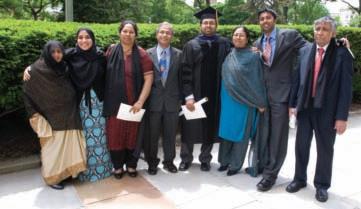
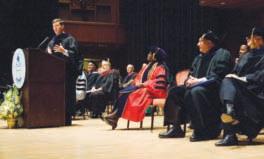
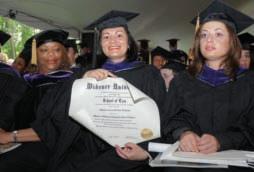
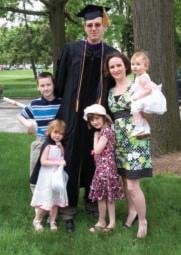
Delaware graduate Ada Ogbonna-Chiejina carried her son on stage when she received her diploma from Widener University President James T. Harris III.
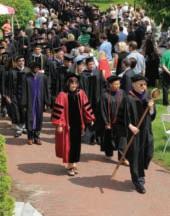
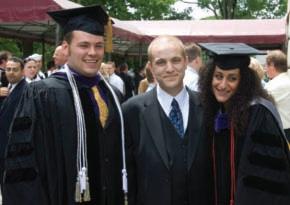

Officials on the Delaware Campus hosted their academic counterparts from Southwest University of Political Science and Law in Chongqing, China, in February. The six-person group of visitors included law professors, the vice president of the university, and a senior judge of the Chongqing Higher Court, who is also a visiting professor at the university. They came to the United States to exchange ideas on corporate law with the legal academic community and made Widener’s Institute of Delaware Corporate and Business Law their first stop. Professor Larry D. Barnett (middle) escorted the group on a brief campus tour.

The Harrisburg Campus hosted a daylong symposium, “Sustainable Energy: The Intersection of Innovation, Law and Policy,” in February that included an exhibition of alternative-energy technology. In addition to hearing from an array of speakers, participants had the opportunity to drive or ride in a General Motors hydrogen fuel-cell vehicle, view a bio-fuel-powered Harley Davidson motorcycle, and see a photo-reactor used to encourage the growth of algae that has a high yield of alternative fuel.
The program, conceived and organized by Distinguished Professor John C. Dernbach and Associate Professor Wesley M. Oliver, was sponsored by the Widener Law & Government Institute and the Widener Law Journal
The Delaware Campus presented the Delaware Tax Institute program “Current Developments, Planning Ideas and Hot Topics” in January 30 in the Ruby R. Vale Moot Courtroom. The daylong program was co-sponsored by Wilmington Family Office and the Delaware chapter of the Society of Financial Services Professionals. Topics included 2008 income tax developments, developments in estate planning, and legislation affecting Delaware trusts.
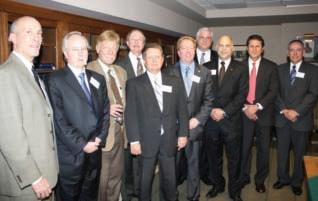
WELCOMES OVER 20
The second-annual Judges Day brought more than 20 jurists from four states to the Delaware Campus for an event designed to nurture the important relationship between the Law School and the bench. Organized by Professor Erin Daly, associate dean for faculty research and development, Judges Day brings members of the bench onto campus for classroom visits, meetings with Dean Linda L. Ammons and her staff, talks with the faculty about their research, and opportunities to discuss their thoughts about the legal profession and legal education. Law clerks to the judges also held an informational session with Widener students who were interested in learning more about clerking opportunities.

The Delaware Supreme Court convened en banc in the Ruby R. Vale Moot Courtroom on the Delaware Campus in April to hear oral arguments in two cases. In the first case, a civil matter involving uninsured motorist coverage, the court heard arguments from 1979 alumna Beverly L. Bove, who represented the appellant. In the second case, the appeal of a capital murder conviction and death sentence, the court heard from attorneys Joseph A. Gabay ’82 and Jennifer Kate Aaronson ’95, who both argued for the appellant.
Top right: From left, Justices Jack B. Jacobs and Randy J. Holland, Chief Justice Myron T. Steele, and Justice Carolyn Berger
Bottom: Jennifer Kate Aaronson ’95 speaks at the podium as colleague Joseph A. Gabay ’82, just to her right, listens from his seat.
The third annual Dean’s Leadership Forum on Diversity drew more than 100 people to the Harrisburg Campus in March for stimulating discussions on diversity in sports. Topics included sports, minorities, and the press; disability and sport; the Negro leagues of baseball; and domestic violence and athletes. In addition to hearing from numerous expert panels, participants were addressed by keynote speaker University of New Mexico School of Law Professor Alfred Dennis Mathewson. His remarks were preceded by introductory words from Widener Law Assistant Professor Tonya Evans-Walls, an African-American who once competed on the women’s professional tennis circuit.
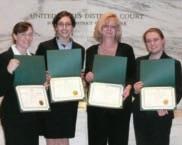
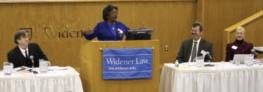
Linda L. Ammons opens the Dean’s Leadership Forum on Diversity with panelists (from left) Widener Law Professor Robert L. Hayman, Jr.; California State University Professor Daniel Frankl; and Penn State University Associate Professor Marie Hardin.
A three-woman student team from the Delaware Campus finished second in the nation at the prestigious Saul Lefkowitz Moot Court Competition, held in March in Washington, DC. At the competition, the only one in the country with a focus on trademark and unfair competition law, the team of Sylvia Siegel, Adrienne L. Robertson, and Angelina Weeks Freind also took home the competition’s Dolores K. Hanna National Best Brief award. The women’s strong finish came after they swept teams from schools from 13 states in the East Region competition, held in New York in February. Associate Professor Leslie A. Johnson (second from right) was the team’s coach.
The role of government lawyers during wartime and how they interpret the Constitution was the subject of the 2009 H. Albert Young Lecture. Professor Robert C. Power, the H. Albert Young Fellow in Constitutional Law, delivered the lecture in the du Barry Room of the Hotel du Pont in April. The H. Albert Young Fellowship in Constitutional Law was endowed in 1998 by the Young Foundation of Wilmington in honor of the late Mr. Young, a highly respected attorney and former Delaware attorney general. The fellowship enables a Widener Law professor to conduct and publish research in the area of Delaware or U.S. constitutional law. Professor James R. May succeeded Professor Power in holding the fellowship July 1.
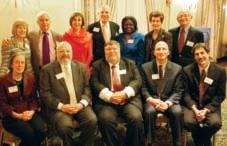
Sarah Distanislao, Ryan Stark ’07, and Leigh Wray ’07 enjoy the annual Harrisburg Alumni Reception, held at the Fire House in downtown Harrisburg in May.

Widener Law alumni and their guests joined Dean Linda Ammons for a delicious brunch at XIX, followed by an afternoon at the opera to see Puccini’s Turandot at the Academy of Music in Philadelphia in February. After the performance, thanks to alumna Alice Strine ’92, the group was treated to a personal backstage tour of the set, where they met some of the cast members.
Dean Linda Ammons (right) and her guests on the stage where Turandot was just performed
The Class of 2009, spearheaded by the Class Gift Challenge committee (pictured), was able to raise enough funds to purchase and plant five shade trees on WidenerHarrisburg’s campus. From left, Kenneth Robinson, chairwoman Catherine Dotto, James Curry, Trista Boyd, Brandon Pierce, Karli Gouse, Erin Grady, Elizabeth Ruby, and Amy Slobozien; not pictured: Mary Khellah
From left, Pennsylvania Supreme Court Justice Thomas Saylor, Dean Linda Ammons, and Dauphin County Court of Common Pleas President Judge Richard Lewis at the Harrisburg swearing-in ceremony in November 2008 for Widener Law alumni

With a score of 59, Jeff Watson ’03, Nate Giunta ’03, Matt Monaghan ’05, and Greg Mills ’03 won first-place honors at the annual Alumni & Friends Golf Outing for LRAP. The event was held in May at Dauphin Highlands Golf Course in Harrisburg.
Widener Law hosts chapter events in various geographic areas to build a relationship between the Law School and its alumni and to provide an opportunity for alumni to come together in a local community for social and intellectual enrichment. Recently, Widener Law chapter events were held in Wilmington, DE, Delaware County, PA, Mount Laurel, NJ, and Lancaster, PA.
Top: From left, Edwin Colon ’02, Angela LaManna ’02, and Amanda Brinton ’00 at the Wilmington Alumni Chapter reception in April
Bottom left: Jeremy Montgomery ’07, Kara Donoghue ’08, and Michelle Groleau ’08 mingle at the regional alumni event in Lancaster, held in March at Annie Bailey’s
Bottom right: Ivan Lee ’08 and Sarah Kaplan ’08 at the New Jersey alumni chapter reception held at the Double Tree Guest Suites in Mount Laurel in January


More than 240 alumni, judges, faculty, and staff gathered at the annual Philadelphia Alumni Reception, held this year in March in the beautiful Crystal Tea Room in Philadelphia’s Wanamaker Building. The reunion and networking event is the Alumni Association’s largest event of the year.
From left, Vincent Giusini ’86, Judge George Overton ’86, and Douglas DiSandro ’81

In early May the Law School classes of 1979, 1984, 1989, 1994, 1999, and 2004 gathered on the Delaware Campus to celebrate their milestone reunions. The classmates reminisced at a cocktail reception and had the chance to tour the campus. Those who had not been back to the school for at least 15 years were especially pleased with the many physical updates since their days as students.
Top left: From left, Richard Ambro ’84, Kevin O’Connell ’84, and Judge Calvin Scott ’89
Top right: Widener Law’s Class of 1989
Left: Dennis Weldon ’99 (left) and Karen Weldon ’98
1975
The Honorable Susan Del Pesco received the Widener Law (DE) Women’s Law Caucus inaugural Women’s Advocate Award. The award honors an individual for his or her achievements and contributions that directly advance women in the legal profession and advocate for women in the community. In addition to serving as a Law School Overseer and adjunct member of the faculty, Judge Del Pesco is director of the Division of Long Term Care Residents Protection program within the Delaware Department of Health and Social Services. Judge Del Pesco retired from the Superior Court bench in June 2008.
Gary C. Linarducci was awarded the Delaware State Bar Association’s Community Service Award in May. Mr. Linarducci is the founder of Linarducci & Butler, PA, and dedicates most of his practice to Social Security disability claims, but also assists clients with personal injury claims, wills, and probates.
1979
Charles T. DeTulleo was elected chair of the Pennsylvania Bar Association’s Criminal Law Section. His term began in June.
1981

Karen Aldridge Crawford was named a fellow of the Litigation Counsel of America, a distinction afforded to less than one-half of one percent of American lawyers. Ms. Crawford is a partner based in Nelson Mullins Riley & Scarborough’s Columbia, SC, office. Ms. Crawford, who also practices in Washington, DC, leads a team of attorneys in the areas of environmental law and litigation, toxic torts, and product liability. In 1997, the Institute of Professional Environmental Practice certified Ms. Crawford as a Qualified Environmental Professional, a distinction awarded after 15 years of experience and examination on a specific technical environmental project. She also is an invited member of the first class of the American College of Environmental Lawyers, a professional association of distinguished private-sector lawyers who practice in the field of environmental law.
1983
Robert J. Krapf was named the 2009 Delaware Real Estate Lawyer of the Year by Best Lawyers, the oldest
peer-review publication in the legal profession. The attorneys named as Lawyers of the Year have received exceptional ratings in the Best Lawyers surveys, earning a high level of respect among their peers for their abilities, professionalism, and integrity. Mr. Krapf’s practice focuses on a variety of transactional matters in the areas of real estate and land-use law, and his clients include many regional and national developers, landlords, banks, conservation organizations, businesses, and industries operating in Delaware. Mr. Krapf is president-elect of the American College of Mortgage Attorneys and chair emeritus of the Real Estate Practice Group of Lex Mundi. Mr. Krapf is recognized in Who’s Who of Business Lawyers, Chambers USA, and Delaware Super Lawyers, and he was named to the “Best Lawyers in Delaware” list in Delaware Today magazine.
1984
David C. Weiss was named Acting U.S. Attorney for Delaware.
1985
Marion Rothbart Newbold joined Just Legal, Inc., formerly Exclusively Legal, Inc., Hockessin, DE, as director of attorney placement. She is spearheading the
legal staffing firm’s new Attorney Placement Division, specializing in the placement of attorneys in permanent and contract positions. She lives in Yorklyn, DE, with her husband, Michael, and daughter, Sarah.
1986

Frank C. DePasquale, Jr., current vice president of the Alumni Association, was named a member of Pennsylvania Super Lawyers 2009. He also received the 2009 Man of the Year award from the Saint Monica’s Fathers and Sons Association, for which he serves as vice president of the executive board. His 14-year-old son, Michael, was named Boy of the Year.
Richard A. DiLiberto, Jr., was awarded second prize in the Delaware State Bar Association’s Fiction Writing Contest for his short story “The World Series Ring.” The story was published in the Bar Association’s publication, In Re., in March. Mr. DiLiberto is a partner in the personal injury section of Young Conaway Stargatt & Taylor, with offices in Wilmington, Middletown, and Georgetown, DE.
Ann Massey Badmus was named one of the 2009 Outstanding Minority Business Owners of North Texas by the Dallas Business Journal Ms. Badmus practices immigration law and founded Badmus Law Firm in 1993.
The Honorable Robert W. Flynn was sworn in as a U.S. Administrative Law Judge for the Social Security Administration in May 2008 in Cincinnati. Prior to this appointment, he served as Special Assistant U.S. Attorney with the criminal division of the U.S. Attorney’s Office for the Eastern District of Pennsylvania, where he prosecuted cases of government and insurance fraud, identity theft, and firearms offenses. Before that, Judge Flynn served as Assistant Regional Counsel for the Social Security Administration, Office of the General Counsel, in Philadelphia, and was a litigation attorney in Albany, NY, where he handled cases involving personal injury, medical malpractice, construction accidents, products liability, and insurance coverage.
Michael S. Munger was named a partner at the firm of Nelson Levine
de Luca & Horst. Mr. Munger is a member of the firm’s subrogation practice group, where he focuses on large-loss property recovery. An experienced litigator, he has tried more than 75 jury and non-jury matters to verdict. Mr. Munger resides in Oreland, PA.
Walter F. Lober, with the law firm of Edgar Snyder & Associates, was named to Pennsylvania Super Lawyers magazine’s Pennsylvania Rising Stars list last December. Rising Stars are nominated by their peers as being among the best up-and-coming attorneys age 40 and under or who have been practicing 10 years or less. Mr. Lober is the immediate past president of the workers’ compensation section of the Allegheny County Bar Association.

Katelyn Carina Wack
Anne M. Madonia and her husband, Jeffrey Wack, welcomed their second child, daughter Katelyn Carina Wack, on May 14 at Pennsylvania Hospital. Katelyn weighed 6 pounds, 9 ounces, and was 20 inches long.
Matthew E. McGuire and his wife, Melani, are the proud parents of John Thomas McGuire, who joined the family last November. Little John will look up to big sister Hailey, 4-1/2, and big brother Connor, 2-1/2. An associate at Buckley, Brion, McGuire, Morris & Sommer, Mr. McGuire has extensive experience in the insurance industry, litigating cases involving product liability, environmental damage, motor vehicle law, contract, premises liability, service/ hotel industry, construction/ contractor, automotive/ trucking industry, bad faith, coverage, Pennsylvania One Call, governmental immunity, and eminent domain issues.
Kevin I. Bagatta is president and CEO of Real Alternatives, a statewide administrator for the award-winning Pennsylvania Alternative to Abortion Services Program, which provided support services to a record 19,747 women in 2008.
Philip M. Intrieri of Intrieri & Associates was named solicitor for the Capital Area Constables’ Association. Constables are elected and appointed law enforcement officers with specific duties serving judicial papers and arrest warrants for the Pennsylvania Common Pleas and Magisterial District Courts.
Min S. Suh was elected to the Widener University Board of Trustees. Ms. Suh is a partner with Fox Rothschild, Philadelphia. Her practice focuses on business immigration law, discrimination and workforce diversity issues, and employment verification compliance. In 2006 and 2007, Ms. Suh was named a Super Lawyer by Law & Politics Magazine In 2004, The Legal Intelligencer recognized her as one of 30 statewide Lawyers on the Fast Track. In 2008, Ms. Suh was named to the prestigious 40 Under 40 list by the Philadelphia Business Journal, which honors individuals under the age of 40 who are proven performers in their respective industries and communities. In 2004, she was appointed to a threeyear term on the Disciplinary Board of the Supreme Court of Pennsylvania. She is a board member of the Empowerment Group, Friends of the Children’s Crises Treatment Center, and the 21st Century Society of the Philadelphia Orchestra.

Technologies, Inc., and Digital Reporting Service, LLC, as vice president of client development. These three sister companies provide a wide range of litigation support services utilizing cutting-edge technologies.
Ms. Aisenstein most recently was vice president for sales and marketing for RecordTrak and previously practiced with Anapol, Schwartz, Weiss, Cohan, Feldman & Smalley, P.C., with a focus on products liability, premises liability, motor vehicle, and other personal injury matters. She is licensed to practice law in Pennsylvania and New Jersey.
Christopher M. Miller, with the law firm of Edgar Snyder & Associates, was named to Pennsylvania Super Lawyers Magazine’s Pennsylvania Rising Stars in December 2008. Rising Stars are nominated by their peers as being among the best up-and-coming attorneys age 40 and under or who have been practicing 10 years or less. This is the fourth consecutive year that Mr. Miller has been selected as a Pennsylvania Rising Star. While attending law school, he was president of the Student Bar Association and a recipient of the Dean Arthur Weeks Outstanding Service Award.
Craig Wolfson, a partner at Rosicki, Rosicki and Associates, P.C., of Plainview, NY, received the 2009 Breaking
Barriers Award from the Metropolitan Placement Consortium and Baruch College Computer Center for Visually Impaired People. The award honors those companies that recognize the skills and talents of employees who are blind, visually impaired, or deaf-blind. Mr. Wolfson was recognized for hiring and developing positions for four individuals from Helen Keller Services for the Blind.
Michael R. Lettrich, with Meyer Darragh Buckler Bebenek & Eck, PLLC, was elevated to the level of non-equity partner, effective last January. Mr. Lettrich’s practice centers on civil litigation defense work, including the defense of employment discrimination and civil rights claims.
Mr. Lettrich has also developed a strong professional liability practice, defending claims against laboratories, healthcare providers, and medical device manufacturers and distributors. Mr. Lettrich and his wife, Judi, reside in the South Hills area of Pittsburgh.
Robert S. Stickley was named a partner at the firm of Nelson Levine de Luca & Horst. Mr. Stickley practices in the firm’s complex litigation, national coverage, and institutional litigation and consulting practice
groups. He focuses on the defense of various insurers involving insurance coverage and other issues. Mr. Stickley also represents numerous regional and national corporations and represents insureds in catastrophic personal injury cases, as well as toxic tort and environmental claims.
Richard J. Boyd, Jr., was named a partner in the firm of Nelson Levine de Luca & Horst. Mr. Boyd practices in the firm’s subrogation practice group, where he concentrates on large-loss property subrogation matters. Mr. Boyd has litigated cases throughout the country for major insurers and has extensive knowledge of the practices and procedures employed by product manufacturers and their insurers in the litigation context. He resides in Maple Glen, PA.
Kristopher T. Starr joined Ferry, Joseph & Pearce P.A., Wilmington, DE. Mr. Starr will practice in the areas of guardianship, elder law, insurance, and personal injury litigation. He comes to the firm from the government sector, where he worked as deputy attorney general, hearing officer, and counsel to the Industrial Accident Board. Most recently, he was risk manager and assistant county attorney for New
Castle County, DE. In addition to his legal career, Mr. Starr is a faculty member of the School of Nursing at the University of Delaware, where he teaches health services administration and organizational governance. A 19-year member of Hockessin Fire Company, he is a registered nurse in the ED/Trauma Center at Nemours/Alfred I. du Pont Hospital for Children.
Clifford L. Hammond, Nemeth Burwell, P.C., Detroit, led a seminar in January on the proposed Employee Free Choice Act (EFCA). The seminar was aimed at management, in-house counsel, and human resource professionals and drew participants from health care and other service areas. Prior to joining Nemeth Burwell, Mr. Hammond served for four years as labor counsel for the Service Employee International Union.
Aaron S. Jayman was elected shareholder at Dickie, McCamey & Chilcote, P.C. Mr. Jayman concentrates his practice in the area of medical malpractice defense and insurance litigation.
James B. Urie was elected partner at MacElree Harvey. Mr. Urie came to MacElree Harvey in 2004 after working
for the Internal Revenue Service’s Office of Chief Counsel for the Small Business/Self-Employed Division. He is a member of the firm’s business transactions group. In addition to tax law, he handles banking, financing, and non-profit-related matters.

Matthew DiClemente (above on left), a partner at Stradley Ronon in Philadelphia, was chosen as a Rising Star of Mutual Funds in 2009. The award, given by Institutional Investor News, was presented at the 16th annual Mutual Fund Industry Awards in New York. The Rising Star award is given to up-and-coming professionals in the mutual fund investment community who have achieved a high level of success and shown a commitment to continued growth and contribution to the industry. As a partner in the firm’s investment management/mutual funds practice group, DiClemente focuses his practice on the representation of investment companies, investment advisers, fund fiduciaries, and broker-dealers in a wide range of regulatory, corporate, and transactional matters. He is the founder and current chairperson of the
Philadelphia Young ’40 Act Lawyers Roundtable, and formerly worked in the legal department of a registered investment adviser engaged in the management of mutual funds, hedge funds, and institutional assets.

Patrick M. McKenna of the West Chester law firm Gawthrop Greenwood was named a Rising Star by the publishers of Law & Politics and Super Lawyers This marks the second consecutive year he has been recognized as a top up-and-coming attorney who is 40 years old or younger or has been practicing for 10 years or less. After working with the insurance defense firm of McKissock & Hoffman, P.C., in West Chester, Mr. McKenna joined Gawthrop Greenwood in 2004. There, his practice focuses on municipal law, land use, real estate, and business litigation. Also a graduate of the Chester County Leadership Connection, he serves as secretary of the board of directors of Safe Harbor of Greater West Chester. He is a former chair of the Young Lawyers Division of the Chester County Bar Association and currently serves on the CCBA’s board of directors.
Class Notes invites alumni to write to the Development/Alumni Office with news of interest. If your name has not appeared recently in Class Notes, take a moment to share some news about yourself for an upcoming issue. If you wish, include a photograph with your information (digital 300 dpi or hard copy).
Send your Class Note to: Alumni Office
Widener University School of Law P.O. Box 7474 Wilmington, DE 19803-0474
Or use our handy online form at law.widener.edu/go/notes.aspx
Gail M. Conner published her first book, Healing Parties, which was inspired by a trip to Africa with her daughter, a volunteer in Zambia with the International Justice Mission, in 2006. Ms. Conner is available for book clubs and speaking engagements and can be contacted though her website, www.GailMConner.com. She is a resident of Newtown Square, PA, and the president of G&C Environmental Services, Inc.
Scott W. Reid, an associate with Cozen O’Connor, Philadelphia, has been honored by the Barristers’ Association of Philadelphia with the Outstanding Young Lawyer Award, which is given to a young attorney who has demonstrated both competence in the practice of law and concern for his community. Through service and leadership, Mr. Reid has improved the perception of lawyers and has exemplified
the association’s dual role as both passionate advocates and concerned citizens. Mr. Reid served as the president of the Barristers’ Association in 2007-2008, and is a member of the American Bar Association, National Bar Association, and Philadelphia Area Defense Counsel. Additionally, he currently serves on the board of advisors of the State of Delaware ACLU, and on the board of directors of the Conscious Thoughts Initiative. In 2007, Mr. Reid was named a Pennsylvania Lawyer on the Fast Track by American Lawyer Media and The Legal Intelligencer, and a Pennsylvania Super Lawyer Rising Star by Law & Politics
Jonathan S. Comitz announced the opening of his new firm, Comitz Law Firm, LLC. Mr. Comitz is the managing partner of the firm, which is located in Forty Fort, PA, a suburb in the greater Wilkes-
Barre/Scranton metropolitan area. The firm specializes in personal injury litigation and commercial litigation.
Patrick A. Hughes joined Nelson Levine de Luca & Horst as an associate in the firm’s property subrogation practice group. He focuses his practice on large-loss property subrogation, including products liability and contractor negligence matters. Mr. Hughes came to NLdH with five years of legal experience concentrated on the defense of products liability, premises liability, motor vehicle liability, and commercial liability cases. He has handled all aspects of defending cases from their inception through trial, and has successfully arbitrated and mediated cases throughout Pennsylvania and New Jersey. At NLdH he will prosecute large-loss property subrogation matters of all kinds, especially products liability and contractor negligence matters.
Glenn C. Mandalas, a solicitor for Rehoboth Beach and Dewey Beach, DE, formed his own firm, Baird Mandalas. The new firm, which will have a principal office in Dover and a satellite office in Sussex County, DE, intends to open a full-service Sussex County office in the future. Mr. Mandalas will continue to represent Rehoboth and Dewey, and the firm will focus on estate planning, business law, and civil litigation, including Mr. Mandalas’ areas of expertise:
municipal law, land-use law, and commercial litigation.
Maribel Valentin was featured in the May 2009 issue of Compliance Today, a publication of the Health Care Compliance Association. She was interviewed about her role as Temple University Health System’s corporate compliance and privacy officer.
Bryan Cutler joined the law firm of Nikolaus and Hohenadel, located in Lancaster, PA. He also published a commentary, “Rebuilding the Republican Message: Choosing Hope Over Fear,” in the March 17 issue of the Lancaster New Era. The piece was posted on the Lancaster Newspapers Talkback feature, where users are able both to read it and to post comments regarding it.
Benedict Heinz and Jessica Verdecchio ’07 were engaged last February 7. They plan to wed in Spring 2010.
George C. Morrison joined White and Williams LLP in the firm’s Allentown, PA, office as a new associate in the commercial litigation department. Prior to joining White and Williams, Mr. Morrison was a judicial clerk to Justice J. Michael Eakin of the Supreme Court of Pennsylvania. He also
served as a judicial clerk to the Honorable Robert E. Simpson of the Commonwealth Court of Pennsylvania, a distinctive court that has original and appellate jurisdiction over cases involving Pennsylvania state and local government. Mr. Morrison is an associate of the James S. Bowman American Inn of Court and a member of the Pennsylvania and Lehigh County bar associations. He is a board member of the Congress of Political Economists, an international organization devoted to the advancement of economic policy. Originally from White Haven, PA, Mr. Morrison currently resides in Allentown.
Nikhil Patel joined the intellectual property law firm of Hamilton Brook Smith Reynolds, Concord, MA, as an associate. Mr. Patel practices in the areas of computer software, computer hardware, optic technology and systems,
wireless technology, and medical device industries. Before entering law school, Mr. Patel was employed by Textron Systems as a computer engineer, and he also worked as a computer programmer with Electric Insurance Company.
Troy A. Riddle joined LSAC Diversity Initiatives as an assistant director. Mr. Riddle is no stranger to law school admissions, having worked as a seasonal recruiter at Widener University School of Law. In addition to an extensive and varied work history in the for-profit and non-profit sectors, he most recently led diversity initiatives for the International Association of Black Actuaries and was responsible for program development, outreach, and education.
1976 Henry John Costa, Jr.
1991 Sandra F. Robbins Tabron
1998 Lara B. Sweat
A student who traveled across the globe to receive a Widener education.
A student who puts his beliefs into practice through the Environmental Law and Natural Resources Clinic.
A student who carries a full course load, volunteers as part of the Martin Luther King Semester of Service, and still finds time to hold a part-time job.
A student who spent a semester studying trade and intellectual property law in Chongqing, China.
A student who relies on your support and the support of others to make her dreams a reality.