
Policy Brief No. 223 — February 2026
Policy Brief No. 223 — February 2026
S. Yash Kalash, Vaman Desai and Karishma Maniar Shah
Key Points
→ Global supply chains are being reconfigured due to COVID-19 disruptions, US-China trade tensions and geopolitical decoupling.
→ India is emerging as a credible alternative to China in global production networks due to its scale, policy reforms, digital infrastructure and demographic dividend. It has progressively moved toward export-led growth and foreign direct investment (FDI) facilitation. The emphasis is on supply chain resilience, technology partnerships and sustainability.
→ India has strong global value chain (GVC) presence in services. Manufacturing integration remains weak due to the lack of lead firms, limited component ecosystem and import dependence. However, there is promising growth in electronics, pharma and engineering goods.
→ Industrial growth is at an inflection point. With coordinated reforms and strategic partnerships, India can become a central node in global production. The transition requires systemic policy alignment, institutional coherence and commitment to innovation-driven growth.
The international industrial landscape is undergoing a profound transformation. Disruptions to global supply chains exacerbated by the COVID-19 pandemic, geopolitical tensions, trade wars and strategic decoupling between major economies such as the United States and China have triggered a realignment of GVCs. This reconfiguration has created new pressures as well as fresh opportunities for emerging economies seeking to reposition themselves within the global production architecture. Among these, India is gaining prominence as a potential alternative manufacturing hub and digital-industrial platform. As multinational firms diversify production networks away from a historically China-centric model, India’s scale, large consumer base, policy reforms and digital infrastructure have captured the attention of global investors and strategists.
However, India’s industrial ascent must be understood in the context of its historical trajectory. The country’s economic model, initially rooted in post-colonial selfreliance, and protectionism, has evolved through phases of structural transformation, policy liberalization and
S. Yash Kalash is a senior fellow at CIGI and an expert in strategy, public policy, digital technology and financial services. He has experience in emerging markets across India, MENA (Middle East and North Africa) and the Asia-Pacific and a distinguished track record advising governments and the private sector on emerging technologies. His expertise spans various industries, including fintech, AI and digital assets, and their impact on geopolitics. His career includes key roles at Roland Berger, the Government of India, Adani Group and KPMG, where he spearheaded strategic digital projects, advised clients on their digital assets and AI strategy, and informed policy and regulatory developments. With an M.Sc. in management from Imperial College London and a B.Sc. in international relations and politics from the University of Bath, Yash combines deep strategic insight with strong training, making him a versatile and impactful leader in the field of digital economy.
Vaman Desai is a senior director at BowerGroupAsia (BGA) India and works with BGA clients across the Asia-Pacific to help them navigate and understand the public policy and strategic communications landscape in the countries where they operate. Based in Mumbai, India, he serves as a linchpin for engagement in Maharashtra and surrounding states. Prior to joining BGA in its Washington, DC office, Vaman served as a marketing executive with the Commercial Wing of the Indian Embassy in Washington. Vaman has also served as a policy analyst to India’s minister of state for finance, where he identified investment and business opportunities in India for global executives and companies. Earlier, Vaman worked as a LAMP (Legislative Assistants to Members of Parliament) fellow, serving as a legislative aide to a member of Parliament on public policy issues, making him well versed with the intricacies of India’s parliamentary procedures and federal polity.
Karishma Maniar Shah is a director at BGA India with more than 15 years of experience in industry and consulting. Karishma is a seasoned strategy and public policy advisor across defence, technology, fintech, data centres and cybersecurity sectors. She has advised global and Indian companies on navigating India’s regulatory and government affairs landscape, driving market entry and long-term growth. Formerly with Economic Laws Practice and the Tata Group, she brings deep industry experience in advocacy, government relations, corporate strategy, stakeholder engagement, investment strategy and policy advocacy. She has also served as the lead negotiator in many large defence contracts between the Indian Ministry of Defence and multinational corporations. She has represented industry as a member of defence and homeland security committees in different industry associations. An engineer with an executive M.B.A., she blends industry insights with policy acumen to shape winning India strategies.
strategic experimentation. Today’s discourse on manufacturing competitiveness and GVC integration reflects not only current imperatives, but also the institutional, ideological and infrastructural legacies of past development choices.
A long-term perspective is essential to situate current industrial ambitions within the broader arc of India’s developmental journey — from the inward-looking import substitution industrialization (ISI) regime to the liberalization of the 1990s, and the recent push under the government of Narendra Modi toward manufacturing revival and digitalindustrial convergence. This historical lens clarifies both the structural challenges that have limited India’s manufacturing dynamism and the policy innovations that could enable a more strategic integration into evolving global production networks.
This policy brief sets the stage for understanding India’s industrial evolution through three interlinked dimensions: the policy shifts that have shaped each phase of industrial development; the structural factors influencing global economic integration; and a focused analysis of high-tech manufacturing as a
reflection of contemporary industrial aspirations. This retrospective sets the analytical foundation for forward-looking strategic assessments, which will be developed in a subsequent policy analysis.
India’s industrial policy has undergone significant transformation since the country’s independence, reflecting shifts in economic priorities, global dynamics and domestic imperatives. This evolution — from a state-controlled, inwardlooking model to a more liberalized and globally integrated framework — can be broadly categorized into four distinct phases (see Figure 1).
1947–1980s: State-Led Industrialization
• ISI model
• Socialist ideals
• State-owned enterprises
• Complex licensing regime
• Sluggish growth and fiscal deficits
1991–2000s: Liberalization and Global Integration
• New industrial policy, 1991
• Guided by principles of liberalization, privatization and globalization
• Industrial deregulation, reduced tariffs and eased FDI norms
2000–2014: Consolidation and Inclusive Growth
• Market-driven economy
• Export promotion
• Infrastructure development through public-private partnerships (PPPs)
• Liberalizing FDI norms
Source: Authors.
2014–Present: Manufacturing Revival and Digital Transformation
• Make in India
• Startup India
• Digital India
• Skill India
• Production Linked Incentive (PLI) Scheme
• Fostering a digital industrial infusion
• Employment Linked Incentive Scheme
• Research Development and Innovation Scheme
• Ease of Doing Business (EoDB) reforms
In the post-independence period, India adopted an ISI model, rooted in socialist ideals and economic self-reliance. The strategy prioritized state-owned enterprises (SOEs) in core sectors such as steel, chemicals and power, supported by high tariffs and stringent import controls. A complex licensing regime, known as the Licence Raj, heavily regulated private sector activity.
While this model initially spurred industrial growth, it eventually led to inefficiencies, low productivity and technological stagnation. By the 1980s, India faced sluggish growth, rising fiscal deficits and a balance of payments crisis. Overregulation stifled entrepreneurship and deterred foreign investment. These challenges culminated in the 1991 economic crisis, triggered by a foreign exchange shortage, prompting a fundamental rethinking of India’s industrial policy.
The 1990s marked a watershed moment with the introduction of the 1991 New Industrial Policy, which dismantled the socialist-era framework. The reforms abolished the Licence Raj, liberalized trade and opened the economy to private and foreign investment. Guided by the principles of liberalization, privatization and globalization, the policy introduced industrial deregulation, reduced tariffs and eased FDI norms.
These changes fostered entrepreneurship, enhanced competitiveness and integrated India into global markets. The reforms also catalyzed rapid growth in the services sector, particularly in information technology (IT) and telecommunications (telecom), laying the foundation for India’s emergence as a dynamic, market-driven economy with a growing global footprint.
In the early 2000s, India’s industrial policy focused on consolidating the gains of liberalization while addressing the dual imperatives of globalization and inclusive development. The government promoted a market-driven economy, encouraging private enterprise, foreign investment and innovation.
Key initiatives included deregulation, export promotion and infrastructure development through PPPs. This period witnessed the rise of globally competitive Indian firms, especially in IT, telecom and pharmaceuticals. However, manufacturing growth remained subdued, prompting targeted interventions such as the National Manufacturing Policy (2011), which aimed to increase manufacturing’s share of GDP to 25 percent and generate 100 million jobs (Press Information Bureau [PIB] 2011). Other initiatives included expanding special economic zones (SEZs), supporting micro and small and medium enterprises, liberalizing FDI norms and investing in infrastructure. These efforts laid the groundwork for a more inclusive, globally integrated and innovation-driven industrial economy.
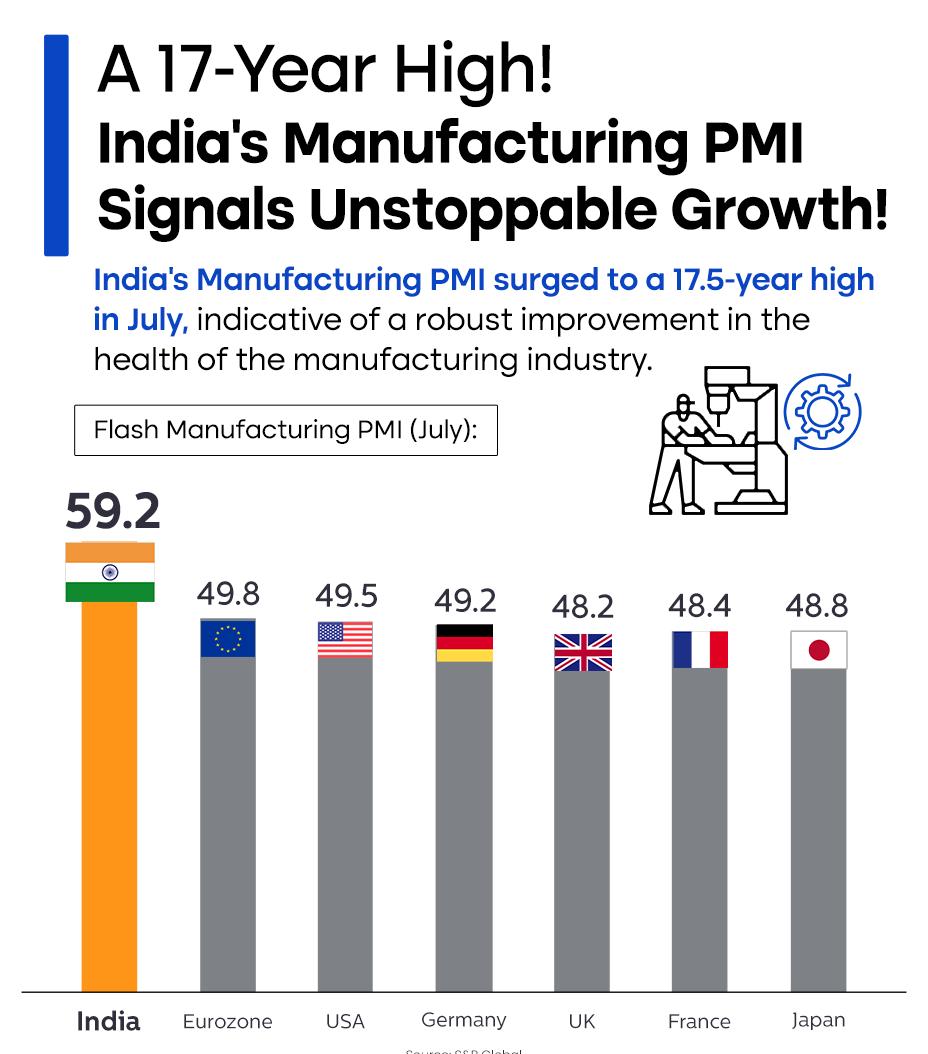
Since 2014, India’s industrial policy landscape has undergone another strategic transformation under the Modi government, emphasizing manufacturing revival, digital infrastructure and ease of doing business (see Figure 2). Flagship initiatives such as Make in India, Startup India, Digital India and Skill India were launched to boost domestic production, attract foreign investment and modernize the industrial ecosystem.
Figure 2: India’s Manufacturing Purchasing Managers’ Index (PMI) vis-à-vis Other Nations
Source: www.pmindia.gov.in/en/infographics-1/ #prettyPhoto[‘inforgraphics’]/7/.
The introduction of the PLI scheme, coupled with FDI and EoDB reforms, provided targeted support to high-potential sectors such as electronics, semiconductors, and renewable energy. India has also embraced industry 4.0 technologies —including artificial intelligence (AI), the Internet of Things and automation — fostering a digital-industrial convergence.
Strengthened PPPs and regulatory reforms have improved India’s global business ranking to 63 in 2019 from 142 in 2014, as per the World Bank’s Doing Business 2020 report (World Bank 2020). Combined with the Atmanirbhar Bharat initiative, these efforts have positioned India as a key player in GVCs, especially amid post-COVID supply chain shifts and the global China Plus One strategy.
India aims to become a preferred manufacturing hub for both low-cost assembly and high-value innovation. To achieve this, a two-pronged strategy is being implemented that includes moving up the GVC and investing in emerging technology skills. Complementing the PLI, Employment Linked Incentive (ELI) and Research, Development and Innovation (RDI) schemes are designed to drive the next phase of India’s industrial transformation.
India has progressively embraced openness and competitiveness in the global economy through a series of transformative policy reforms. Key among these are trade liberalization, facilitation of FDI, and a strategic pivot toward export-led growth. These initiatives are central to India’s ambition of becoming a leading manufacturing hub.
While India has established itself as a global powerhouse in services-oriented GVCs — notably in IT and business process outsourcing — its manufacturing footprint remains relatively limited, contributing only 3.3 percent to global output (NITI Aayog 2024). In contrast, services now account for more than 50 percent of India’s gross value added, driven by the scalability and borderless nature of digital services (PIB 2024a).
The post-pandemic global landscape, shaped by geopolitical realignments and supply chain restructuring, presents India with a unique opportunity. As countries prioritize resilience and diversification, GVCs are being reconfigured, offering India a chance to expand its manufacturing base and attract global capital.
India’s free trade agreement (FTA) strategy has undergone a structural transformation. Initially shaped by the “Look East” and later “Act East” policies, India focused on strengthening trade ties with Eastern economies such as countries within the Association of Southeast Asian Nations, as well as Japan, Malaysia and South Korea. These efforts aimed to embed India within regional value chains and reduce trade barriers in high-growth markets.
Following a period of stagnation between 2012 and 2021, including India’s withdrawal from the Regional Comprehensive Economic Partnership, a renewed momentum has emerged. Since 2021, India has shifted focus toward Western economies, signing FTAs with Australia, the European Free Trade Association, Mauritius, the United Arab
Emirates (UAE) and the United Kingdom, and engaging in active negotiations with the European Union, Israel, New Zealand and the United States.
This pivot reflects a strategic realignment toward markets where India enjoys trade surpluses and seeks expanded access for competitive sectors such as electronics, textiles and services. Recent FTAs such as those mentioned above now encompass broader themes, including digital trade, integration in GVCs, intellectual property rights and sustainability. However, India remains cautious about non-trade-related obligations that could adversely impact domestic industries.
This evolution marks a shift from a regionally focused to a more comprehensive, globally integrated trade strategy.
India is rapidly emerging as a preferred investment destination in a shifting global economic order, driven by its expanding market size, demographic dividend, policy stability and growing technological prowess. The 2024 World investment report (United Nations 2024) underscores a global pivot in FDI flows toward economies that exhibit these strengths — areas where India has made significant progress.
Key sectors such as electronics, semiconductors and digital public infrastructure are at the forefront of this transformation. The electronics sector, in particular, is evolving from low-value assembly to high-value manufacturing and design. With robust support through the PLI scheme, infrastructure development and digital innovation, India has become a competitive hub for mobile phones, constituting 43 percent of total electronics production in FY23 (CRISIL 2024, 50). India has already surpassed China in being the largest smartphone exporter to the United States. Rising domestic demand and deeper integration into GVCs are unlocking new opportunities in component manufacturing, research and development (R&D) and sustainable production.
Simultaneously, India’s semiconductor sector is gaining strategic importance. Backed by initiatives such as the Semicon India Programme, the country is attracting investments in chip fabrication, outsourced semiconductor assembly and test, and display fabs. With increasing demand from automotive, telecom and consumer electronics, and a focus on building a resilient supply chain, a
skilled workforce and an R&D ecosystem, India is aiming to position itself as a credible alternative in the global semiconductor value chain.
India’s manufacturing sector, while undergoing a significant transformation, continues to face several structural challenges that the government is actively addressing through targeted reforms. One major hurdle is regulatory complexities, with overlapping norms across central and state levels. To address this, the government is implementing reforms such as the National Single Window System and EoDB initiatives to streamline approvals and reduce compliance burdens. However, these systems are still works in progress as they are accessible in limited states and face delays due to bureaucratic inefficiencies.
Another critical challenge is the limited private sector investment in R&D, which hampers innovation and restricts the sector’s ability to move up the value chain. The recently launched RDI scheme aims to bridge this gap by offering long-term, low or zero interest refinancing to support innovation in critical and emerging technologies. Additionally, the perception of manufacturing jobs as low status compared to service sector roles has led to a shortage of skilled labour. To counter this, initiatives such as Skill India, the Pradhan Mantri Kaushal Vikas Yojana youth skill certification scheme and the ELI scheme are promoting vocational training and incentivizing formal job creation, especially in the manufacturing sector to hire first-time workers.
Amid these reforms, geopolitical realignments present India with a strategic opportunity to position itself as a global manufacturing hub.
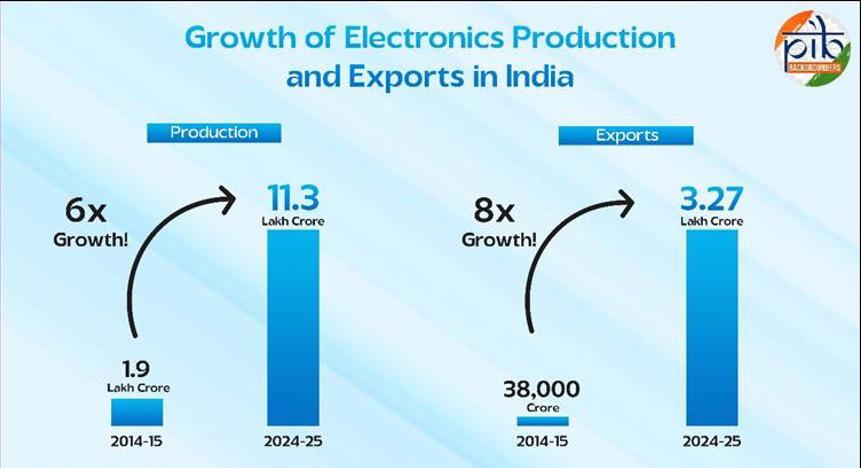
India’s electronics sector has emerged as a key driver of economic growth and expansion in exports (Mishra 2024; see also Figure 3). Between 2020–2021 and 2023–2024, electronics production surged from
Source: PIB (2025d).
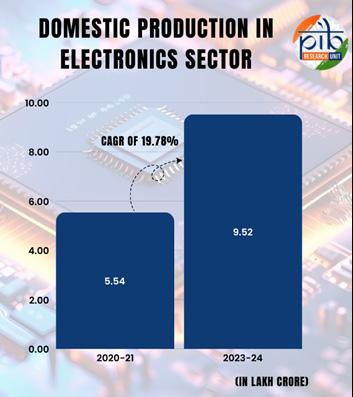
approximately $76 billion1 to $115 billion, registering a compound annual growth rate of 19.78 percent (see Figure 4), with a projection of reaching $300 billion by 2026 (Indo-Asian News Service 2025). This growth is primarily fuelled by the mobile phone segment, which now contributes around 43 percent of total electronics output, positioning India as the secondlargest manufacturer globally by volume (PIB 2025b). Electronics exports surged to more than $25 billion in FY23 (PIB 2024a), with mobile phone exports alone exceeding $15 billion in FY24 (PIB 2025a).
Once heavily reliant on imports, especially for finished electronics goods and components, India is rapidly transforming into a global hub for export-oriented electronics assembly. This shift is fuelled by strategic government initiatives such as the PLI schemes for large-scale electronics, IT hardware, and “white goods” (large kitchen appliances), as well as the Scheme for Promotion of Manufacturing of Electronic Components and Semiconductors, the India Semiconductor Mission (ISM) and the Electronics Component Manufacturing Scheme. These initiatives aim to position India as a competitive and selfreliant player in the global electronics value chain.
1 All dollar figures are in US dollars.
Source: Authors.
These efforts have attracted major players such as Samsung and Apple to establish manufacturing units in India.
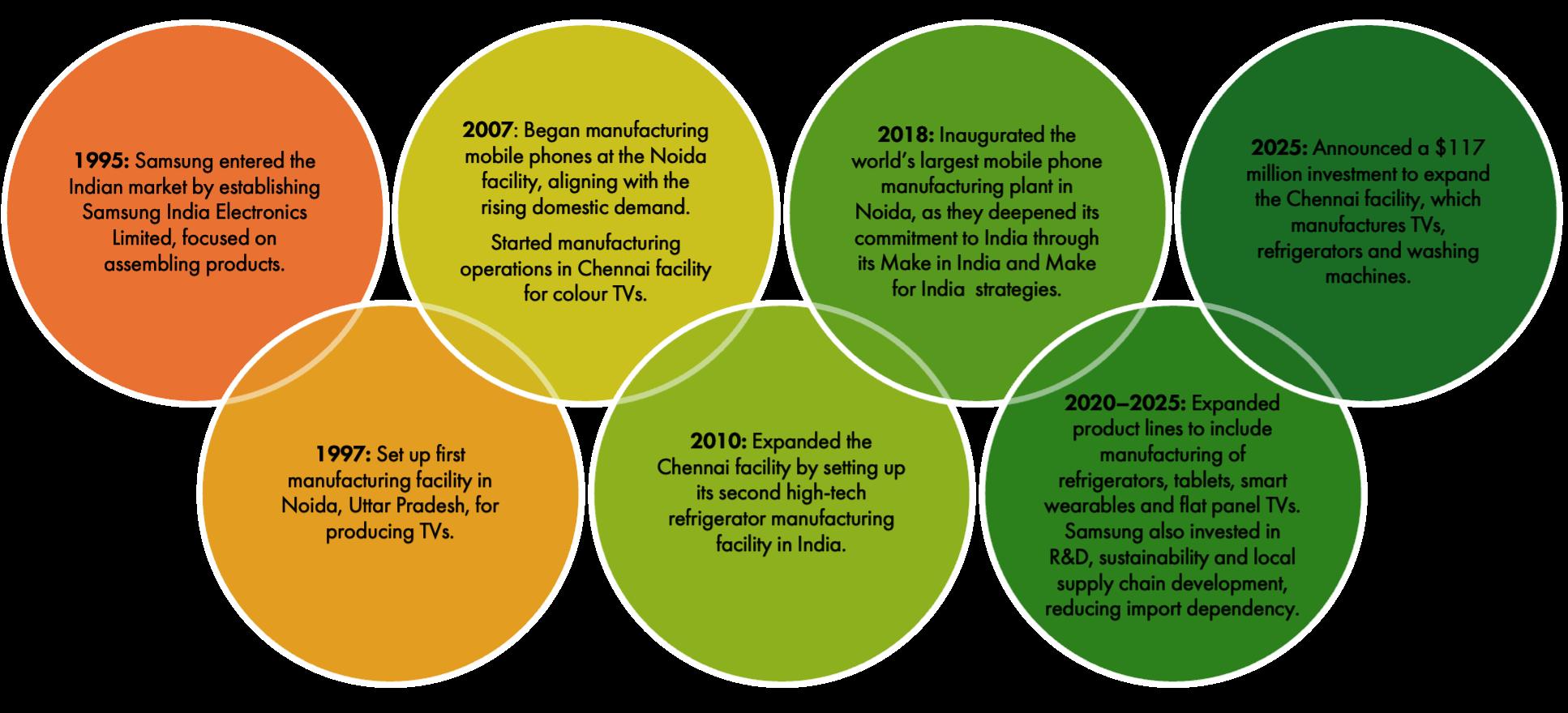
Samsung: Samsung, which entered India in 1995, has become a cornerstone of the country’s electronics manufacturing landscape (see Figure 5). With major facilities in Noida (Uttar Pradesh) and Sriperumbudur (Tamil Nadu), Samsung produces smartphones, TVs and home appliances locally. Its Noida plant, one of the world’s largest mobile factories, caters to both domestic and export markets. Aligned with the Make in India and Make for India initiatives, Samsung has invested significantly in R&D, local sourcing and skill development, creating thousands of jobs and a robust supply chain. Its long-term commitment has made Samsung a model for hightech, large-scale manufacturing success in India.
The Government of India has played a pivotal role in supporting Samsung’s manufacturing journey through a range of strategic initiatives. Under the Make in India campaign, Samsung significantly expanded its local production footprint, aligning with the country’s vision of becoming a global electronics hub. The company also benefited from the PLI scheme, which promotes largescale electronics manufacturing and exports. Through the Phased Manufacturing Programme, Samsung localized key components such as printed circuit boards, reducing import dependence.
Additionally, the government facilitated land, logistics and regulatory clearances for Samsung’s $572.70 million Noida expansion (Samsung Newsroom India 2017). In parallel, Samsung partnered with national skill development programs to train youth in electronics manufacturing and innovation.
Apple: Apple began its India journey in 2017 with iPhone SE assembly via Wistron. Since then, it has expanded rapidly through partners such as Foxconn, Pegatron and Tata Electronics. Tata’s 2023 acquisition of Wistron’s Karnataka plant marked the first Indian firm to manufacture Apple devices (Figure 6 illustrates the chronological progression of Apple’s manufacturing and supply chain expansion in India). Apple now assembles iPhones at multiple sites, exports more than $12.8 billion worth annually and plans to source most US-bound iPhones from India by 2026 (Dezan Shira & Associates 2025).
Supported by the PLI scheme and SEZ reforms, Apple is also investing in R&D and after-sales services. With rising local value addition and investments, Apple is reinforcing India’s position as a global electronics manufacturing hub.
The Government of India has played a pivotal role in accelerating Apple’s manufacturing footprint through strategic policy interventions, particularly the PLI scheme launched in 2020. This initiative has incentivized Apple’s suppliers to scale production and boost exports. By the first seven months of FY24, Apple had already achieved more than $7.19 billion in production value — 81 percent of its annual target of
Source: Authors.
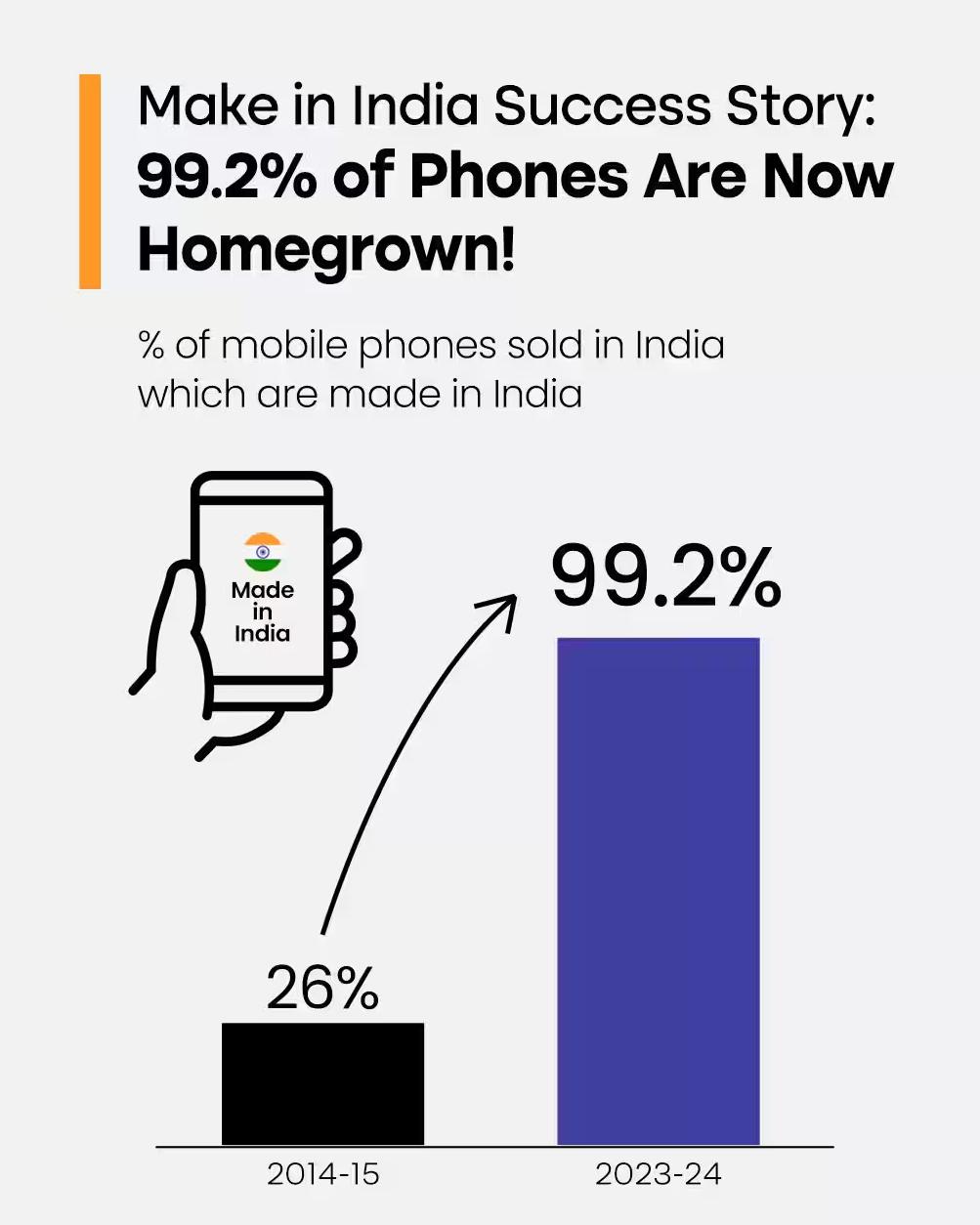
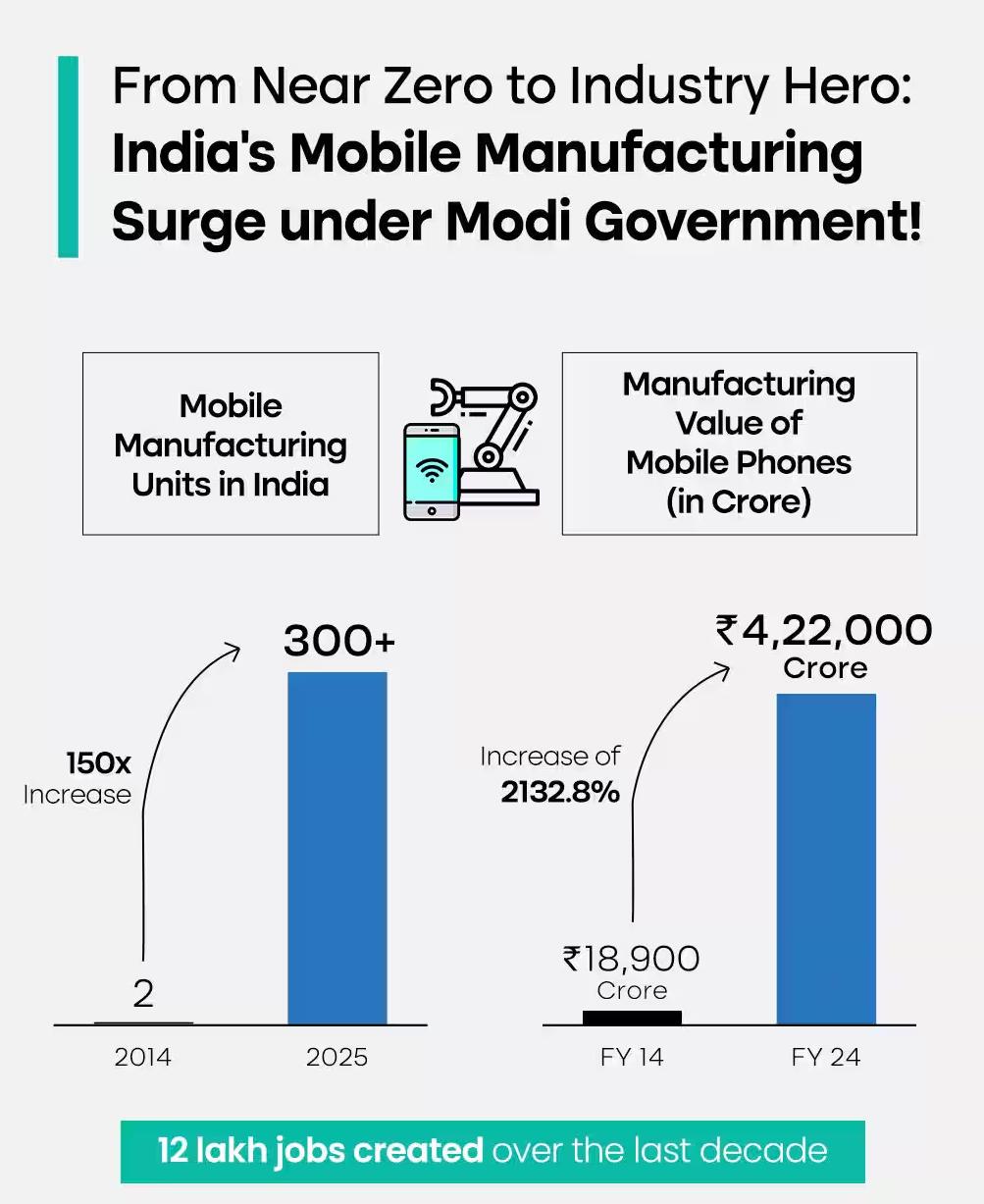
$8.62 billion and crossed the $11.65 billion benchmark by year end; notably, 68 percent of this output was export-oriented (India Brand Equity Foundation 2023). The infographics in Figures 7 and 8 show the growth in India’s mobile phone production.
Collectively, these figures underscore India’s evolution from an import-dependent market to a global manufacturing hub, driven by policy support and significant job creation.
As of March 2025, the government has disbursed $2.51 billion in PLI incentives across sectors, with Apple’s vendors among the top performers, likely qualifying for maximum benefits. The scheme has attracted total investments of $20.51 billion and generated more than 1.2 million jobs nationwide (Gupta 2024). While Apple-specific employment data remains undisclosed, its rapid expansion — bolstered by Tata’s acquisition of Wistron — indicates the creation of skilled jobs, particularly in Tamil Nadu and Karnataka, reinforcing India’s emergence as a global electronics manufacturing hub.
Additionally, the broader Make in India initiative created a favourable environment for foreign investment and streamlined regulatory processes. The development of industrial corridors and electronics manufacturing clusters offered robust infrastructure, while state-level incentives facilitated land acquisition, utilities and fast-track approvals.
India’s Mobile Manufacturing Transformation — Growth in Domestic Production and Industry Scale (2014–2024)
Source: www.narendramodi.in/category/infographics.
Source: www.narendramodi.in/category/infographics
The visible growth in the electronics sector has strengthened private players’ confidence in expanding their global supply chains, particularly in advanced manufacturing areas such as semiconductors — as demonstrated by the following investments:
→ Micron Technology Inc. received approval to set up a 37.64 hectare SEZ in Sanand, Gujarat, with a $1.51 billion investment (ET Online 2025). Supported by the modified Assembly, Testing, Marking, and Packaging scheme, the project will receive fiscal support covering 50 percent of project costs from the union government and 20 percent from the state. The facility will assemble and test DRAM (dynamic random-access memory) and NAND (Not AND) products, with a weekly capacity of 40 million units, serving both domestic and global markets. Recent SEZ reforms — such as reduced land requirements and easing domestic supply norms — aim to attract capital-intensive semiconductor investments. The SEZ is also designated as an inland container depot, boosting India’s high-tech manufacturing and job creation.
→ In May 2025, the Government of India approved the establishment of its sixth semiconductor manufacturing facility under the ISM (VisionIAS 2025). This new plant, a strategic joint venture between HCL and Foxconn, will be set up in Uttar Pradesh. The facility is designed to manufacture advanced display driver chips, which are essential components in a wide range of devices, including mobile phones, laptops, automotive systems, personal computers and other display-enabled electronics. This initiative marks a significant step forward in strengthening India’s position in the global semiconductor supply chain.
→ India is on track to produce its first domestically manufactured semiconductor chip by the end of 2025, according to the union minister for electronics and IT, Ashwini Vaishnaw (The Hindu 2025). As of May 2025, six chip fabrication units are under development, marking a significant milestone in the country’s ambitious semiconductor mission launched in 2022. This initiative focuses on a critical segment that accounts for nearly 60 percent of global semiconductor demand, with targeted applications across key sectors such as automotive, telecom, power and railways. The effort underscores India’s commitment to building a resilient and self-reliant semiconductor ecosystem.
→ The ISM signed a fiscal support agreement with Tata Electronics and Tata Semiconductor Manufacturing to establish a semiconductor fabrication facility in Dholera, Gujarat (PIB 2025c). Tata has partnered with Taiwan’s Powerchip Semiconductor Manufacturing Corporation to serve global demand across automotive, computing, communications and AI sectors. Backed by an investment of $10.44 billion, the plant will get 50 percent of eligible project costs under the ISM by the central government and is expected to generate 20,000 skilled direct and indirect jobs.
India’s position in GVCs reflects a landscape of asymmetry: strength in services, modest gains in manufacturing and a pattern of underutilized potential shaped by historical inertia and structural constraints. A critical examination of this baseline is essential to understanding both the opportunities and limitations that define India’s industrial future. It also underscores the urgent need for strategic realignment if India is to transition from peripheral integration to a position of centrality in global production networks.
India’s dominance in services trade is widely acknowledged. As of 2025, it stood as the seventhlargest exporter of commercial services globally, commanding approximately 4.3 percent of world services exports (BW Online Bureau 2025). The backbone of this success is the IT and business process management sector, which alone generated close to $224 billion in export revenues during FY25 (Chakraborty 2025). This sector not only underpins a sustained services trade surplus but also demonstrates India’s capacity to integrate into highvalue segments of global economic activity. However, this integration has remained largely circumscribed within intangible, digital-intensive services, with limited spillovers into the broader industrial economy.
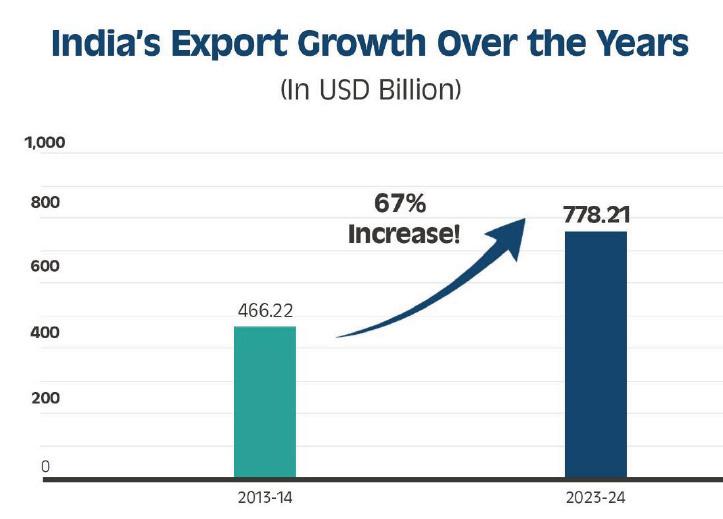
In contrast, the manufacturing sector presents a markedly different picture. Despite ambitious national campaigns such as Make in India, manufacturing’s share of GDP has hovered around 16–17 percent for decades, far below the 25 percent target articulated in policy frameworks (Drishti 2025). This stagnation persists even as India has become the fourth-largest economy in nominal terms, reflecting deep-rooted structural limitations. While India’s overall exports, encompassing both goods and services, grew from approximately $466.22 billion in 2013–2014 to $778.21 billion in 2023–2024, marking a 67 percent increase (see Figure 9), the growth in goods exports, though notable, lacks the technological depth and value-chain sophistication seen in East Asian economies.
Figure 9: India’s Export Growth from 2013–2014 to 2023–2024
Source: PIB (2025a).
Measured by traditional GVC indicators, India has made incremental progress. According to the Organisation for Economic Co-operation and Development’s trade in value-added data, India’s GVC participation index improved from a rank of 57 in 1995 to 45 in 2009, with the foreign valueadded component of exports increasing from under 10 percent to approximately 24 percent (Ministry of External Affairs, Government of India 2018). Yet, this progress remains limited in scale and concentrated in a few sectors. High levels of import dependence for intermediate inputs, a lack of vertical specialization, and minimal presence of Indian firms as lead firms within global production networks continue to constrain deeper integration.
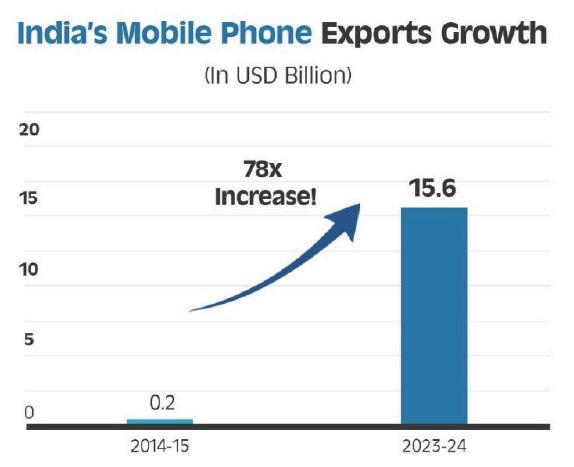
Notwithstanding these systemic constraints, recent developments offer signs of India’s growing industrial potential, particularly in the electronics sector. Mobile phone exports, for instance, have surged from a negligible $0.2 billion in 2014–2015 to $15.6 billion in 2023–2024 (see Figure 10). This shift reflects the impact of targeted PLIs and the strategic entry of multinational assemblers such as Apple, Foxconn and Samsung. Between March and May 2025, Foxconn alone exported $3.2 billion worth of iPhones assembled in India, with nearly 97 percent destined for the US market (Kalra and Vengattil 2025). Similarly, India’s broader electronics exports grew by 54.1 percent year-on-year from $2.97 billion in May 2024 to $4.57 billion in May 2025 (PIB 2025e), indicating the sector’s responsiveness to global reshoring and de-risking trends.
Figure 10: India’s Mobile Phone Export Growth from 2013–2014 to 2023–2024
Source: PIB (2025a).
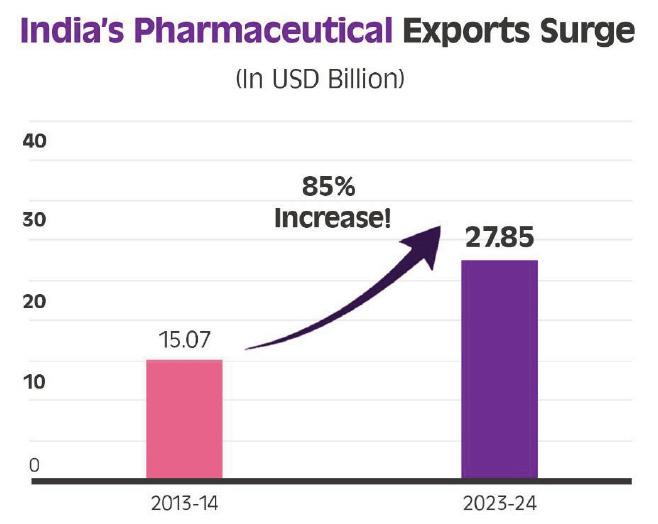
India’s export composition is also gradually diversifying. Pharmaceutical goods exports have risen from $15.07 billion in 2013–2014 to $27.85 billion in 2023–2024 (see Figure 11), positioning the country as the third-largest globally in drug and pharmaceutical production by volume (PIB 2025a).
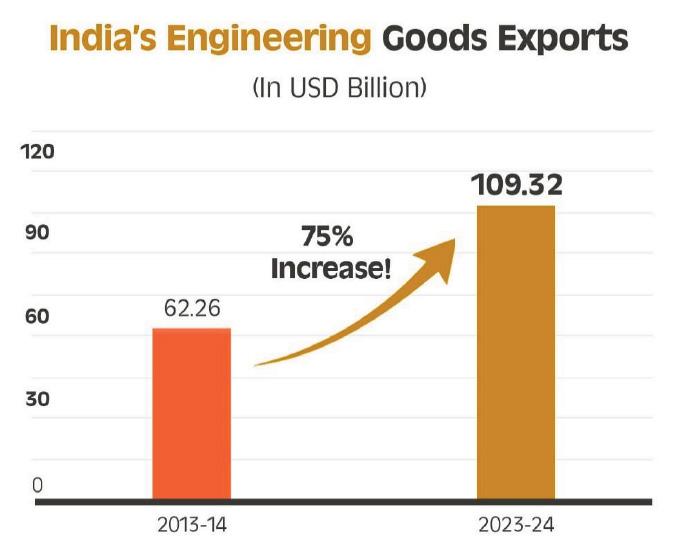
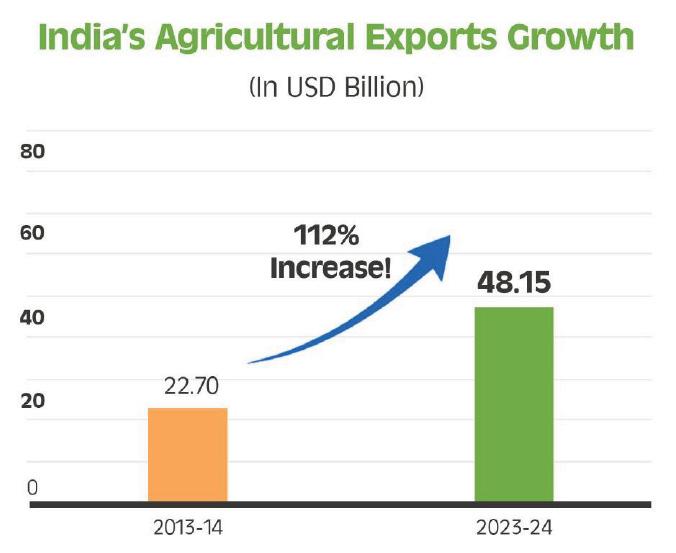
Engineering goods exports rose from $62.26 billion in 2013–2014 to $109.32 billion in 2023–2024 (see Figure 12), and agricultural exports reached $48.15 billion in 2023–2024 from $22.70 billion in 2013–2014 (see Figure 13). These figures underscore latent capabilities in multiple sectors that could, with the right policy mix and infrastructural support, form the basis for deeper GVC integration.
Figure 11: India’s Pharmaceutical Export Growth from 2013–2014 to 2023–2024
Source: Ibid.
Figure 12: India’s Engineering Goods Export Growth from 2013–2014 to 2023–2024
Source: Ibid
Figure 13: India’s Agricultural Export Growth from 2013–2014 to 2023–2024
Source: Ibid.
Nonetheless, formidable challenges remain. Regulatory rigidities, inadequate logistics infrastructure and high transaction costs inhibit the competitiveness of Indian manufacturing. Furthermore, India’s industrial firms remain predominantly oriented toward domestic consumption rather than export-driven production. This domestic-market-centric orientation limits their exposure to international quality standards, innovation networks and value chain governance structures. The absence of globally competitive Indian lead firms within GVCs further compounds this limitation, relegating most domestic firms to subordinate supplier roles in global hierarchies.
Taken together, India’s current position in GVCs is one of partial integration and missed opportunities. The services sector exemplifies successful insertion into high-value activities, while manufacturing continues to struggle with structural inertia. However, the electronics sector’s recent performance suggests that policy, scale and geopolitics can align to produce meaningful change. To capitalize on this moment, India must transcend its legacy of underperformance and adopt a strategic industrial vision that builds capabilities, attracts lead firms and positions Indian enterprises not merely as participants but also as architects of future GVCs.
India’s industrial journey so far reflects a dynamic interplay of historical legacies, policy transformations and emerging global opportunities. From the postindependence era of state-led industrialization to the liberalization wave of the 1990s and the current push toward digital-industrial convergence, India’s industrial policy has evolved in response to both domestic imperatives and global shifts.
Today, the global industrial landscape is undergoing a profound transformation. The restructuring of GVCs, driven by geopolitical realignments, technological disruption and the pursuit of supply chain resilience, presents India with a strategic opening. With its demographic scale, digital infrastructure and reform-oriented policy environment, India is wellpositioned to transition from a peripheral player to a central node in global production networks.
However, this transition is far from automatic. India’s current position in GVCs is marked by asymmetry — global leadership in services, but modest and uneven gains in manufacturing. While sectors such as electronics and semiconductors have shown promising growth, structural challenges such as high input costs, inadequate infrastructure, limited R&D and a weak electronic component ecosystem continue to constrain broader industrial competitiveness.
The case studies of Samsung, Apple and Micron illustrate that with the right mix of incentives, infrastructure and policy clarity, India can attract global leaders and scale high-tech manufacturing.
Yet, to sustain and deepen this momentum, India must address foundational issues:
→ Enhance manufacturing depth: Move beyond final assembly to build robust subassembly and component ecosystems.
→ Invest in innovation: Increase R&D spending and foster industryacademia collaboration to drive product development and design capabilities.
→ Improve infrastructure and logistics: Strengthen industrial clusters, reduce logistics costs and modernize trade facilitation systems.
→ Foster global integration: Expand and strategically negotiate FTAs to secure market access, while aligning with global standards and sustainability norms.
→ Support domestic firms: Nurture Indian firms to become lead players in GVCs, capable of setting standards and driving innovation.
India’s industrial future depends on its ability to translate potential into tangible outcomes. Achieving this will require more than just visionary policies — it demands strong institutional coordination, effective implementation and a sustained commitment to inclusive, innovation-driven growth. By aligning domestic reforms with global industrial shifts, India has the chance to strengthen its role in GVCs as well as actively shape their future direction.
AI artificial intelligence
ELI Employment Linked Incentive
EoDB Ease of Doing Business
FDI foreign direct investment
FTA free trade agreement
GVC global value chain
ISI import substitution industrialization
ISM India Semiconductor Mission
IT information technology
PIB Press Information Bureau
PLI Production Linked Incentive
PMI Purchasing Managers’ Index
PPPs public-private partnerships
R&D research and development
RDI Research, Development and Innovation
SEZs special economic zones
SOEs state-owned enterprises
UAE United Arab Emirates
BW Online Bureau. 2025. “India Emerges As Global Services Export Hub: NSE.” BW Business World, October 21. www.businessworld.in/article/indiaemerges-as-global-services-export-hub-nse-576310.
Chakraborty, Subhayan. 2025. “IT exports climb 12.5% to $224 billion in FY25: MeitY.” The Economic Times, August 7. https://economictimes.indiatimes.com/ tech/technology/it-exports-climb-12-5-to-224-billionin-fy25-meity/articleshow/123150339.cms?from=mdr.
CRISIL. 2024. India Progress Report. November. www.crisil.com/content/dam/crisil/our-analysis/ reports/corporate/documents/2024/11/ india-progress-report.pdf.
Dezan Shira & Associates. 2025. “Apple, Foxconn Boost iPhone Output in India as US Tariffs Reshape Supply Chains.” India Briefing, April 7. www.india-briefing.com/news/apple-foxconnboost-iphone-output-in-india-36817.html/.
Drishti. 2025. “The Rise of Indian Manufacturing Sector.” Drishti, September 23. www.drishtiias.com/ daily-updates/daily-news-editorials/therise-of-indian-manufacturing-sector.
ET Online. 2025. “Micron to invest Rs 13,000 crore in Gujarat SEZ; Aequs to set up Rs 100 crore facility in Karnataka after govt reforms.” The Economic Times, June 9. https://economictimes.indiatimes.com/ industry/cons-products/electronics/micron-toinvest-rs-13000-crore-in-gujarat-sez-aequs-toset-up-rs-100-crore-facility-in-karnataka-aftergovt-reforms/articleshow/121728085.cms.
Gupta, Surajeet Das. 2024. “Apple makes iPhones worth Rs 1 trillion in FY24; exceeds PLI target.” Business Standard, March 21. www.business-standard.com/ companies/news/apple-makes-iphonesworth-rs-1-trillion-in-fy24-exceeds-plitarget-124032101119_1.html.
India Brand Equity Foundation. 2023. “Boost to Make in India: Apple way ahead of PLI scheme commitments.” India Brand Equity Foundation, December 12. www.ibef.org/news/boost-to-make-in-indiaapple-way-ahead-of-pli-scheme-commitments.
Indo-Asian News Service. 2025. “India cruising towards $300 billion electronics production by 2026: Centre.” ETManufacturing, March 27. https://manufacturing.economictimes.indiatimes.com/ news/hi-tech/india-cruising-towards-300-billionelectronics-production-by-2026-centre/119569033.
Kalra, Aditya and Munsif Vengattil. 2025. “Exclusive: Foxconn sends 97% of India iPhone exports to US as Apple tackles Trump’s tariffs.” Reuters, June 13. www.reuters.com/world/china/ foxconn-sends-97-india-iphone-exports-usapple-tackles-trumps-tariffs-2025-06-13/.
Ministry of External Affairs, Government of India. 2018. “Manufacturing – India’s improving position in Global Value Chains.” June 21. https://indbiz.gov.in/manufacturing-indiasimproving-position-in-global-value-chains/.
Mishra, Ashutosh. 2024. “Electronics production must grow at 22% to hit $500 billion target.” Business Standard, September 17. www.business-standard.com/industry/ news/electronics-industry-plans-strategy-to-meet-pms-500-bn-production-goal-124091701098_1.html.
Mitra, Shubha. 2025. “India’s Electronics Manufacturing Hits ₹9.52T In 2024, MeitY Recalls Milestones.” Electronics for You Business, March 27. www.electronicsforyou.biz/eb-specials/industryreport/indias-electronics-manufacturing-hits%e2%82%b99-52t-in-2024-meity-recalls-milestones/.
NITI Aayog. 2024. Electronics: Powering India’s Participation in Global Value Chains. Delhi, India: NITI Aayog.
PIB. 2011. “National Manufacturing Policy.” Press release, October 25. Government of India, Ministry of Commerce and Industry. www.pib.gov.in/ newsite/PrintRelease.aspx?relid=76843.
———. 2024a. “Services Sector Continues to Contribute Significantly to India’s Growth, Accounts for about 55 Per Cent of Total Size of the Economy in FY24.” Ministry of Finance. Press release, July 22. www.pib.gov.in/PressReleasePage.aspx?PRID= 2034920.
———. 2024b. “Report on ‘Electronics: Powering India’s Participation in Global Value Chains’ by NITI Aayog released today.” Press release, July 18. www.pib.gov.in/PressReleaseIframePage.aspx?PRID= 2034096.
———. 2025a. “India’s Exports Reach Historic Heights.” Ministry of Finance. Press release, February 1. www.pib.gov.in/PressReleaseIframePage. aspx?PRID=2098447&utm.
———. 2025b. “Make in India’s Leap in Electronics Manufacturing & Exports.” Ministry of Electronics & IT. Press release, March 26. www.pib.gov.in/ PressReleasePage.aspx?PRID=2115171.
———. 2025c. “India Semiconductor Mission, Tata Electronics, and Tata Semiconductor Manufacturing Sign Fiscal Support Agreement for Semiconductor Fab.” Press release, March 5. www.pib.gov.in/ PressReleaseIframePage.aspx?PRID=2108602 ®=3&lang=2.
———. 2025d. “India’s Electronics Leap: Production soars to ₹11.3 lakh crore in 2024–25, six-fold over the decade.” Press release, October 11. www.pib.gov.in/PressReleasePage.aspx?PRID= 2177755®=3&lang=2.
———. 2025e. “The cumulative exports (merchandise & services) during April-May 2025 is estimated at US$ 142.43 Billion, as compared to US$ 134.69 Billion in April-May 2024, an estimated growth of 5.75%.” Ministry of Commerce & Industry. Press release, June 16. www.pib.gov.in/ PressReleasePage.aspx?PRID=2136680®= 3&lang=2.
Samsung Newsroom India. 2017. “Samsung Reaffirms Commitment to India, Will Invest INR 4,915 Crore in Noida Unit.” June 7. https://news.samsung.com/ in/samsung-reaffirms-commitment-to-indiawill-invest-inr-4915-crore-in-noida-unit.
The Hindu. 2025. “India’s first semiconductor chip to be unveiled in 2025: Union Minister Ashwini Vaishnaw.” The Hindu, July 19. www.thehindu.com/ sci-tech/technology/indias-first-semiconductorchip-to-be-unveiled-in-2025-union-ministerashwini-vaishnaw/article69830516.ece.
United Nations. 2024. 2024 World investment report: investment facilitation and digital government. New York, NY: United Nations. https://unctad.org/ system/files/official-document/wir2024_en.pdf.
VisionIAS. 2025. “Cabinet Approves India’s 6th Semiconductor Unit in Uttar Pradesh Under India Semiconductor Mission.” News Today, May 15. https://visionias.in/current-affairs/newstoday/2025-05-15/science-and-technology/ cabinet-approves-indias-6th-semiconductor-unit-inuttar-pradesh-under-india-semiconductor-mission.
World Bank. 2020. Doing Business 2020: Comparing Business Regulation in 190 Economies Washington, DC: World Bank. https://doi.org/ 10.1596/978-1-4648-1440-2.
The Centre for International Governance Innovation (CIGI) is an independent, non-partisan think tank whose peer-reviewed research and trusted analysis influence policy makers to innovate. Our global network of multidisciplinary researchers and strategic partnerships provide policy solutions for the digital era with one goal: to improve people’s lives everywhere. Headquartered in Waterloo, Canada, CIGI has received support from the Government of Canada, the Government of Ontario and founder Jim Balsillie.
Le Centre pour l’innovation dans la gouvernance internationale (CIGI) est un groupe de réflexion indépendant et non partisan dont les recherches évaluées par des pairs et les analyses fiables incitent les décideurs à innover. Grâce à son réseau mondial de chercheurs pluridisciplinaires et de partenariats stratégiques, le CIGI offre des solutions politiques adaptées à l’ère numérique dans le seul but d’améliorer la vie des gens du monde entier. Le CIGI, dont le siège se trouve à Waterloo, au Canada, bénéficie du soutien du gouvernement du Canada, du gouvernement de l’Ontario et de son fondateur, Jim Balsillie.
BowerGroupAsia (BGA) is a strategic advisory firm that specializes in the Indo-Pacific. We apply unmatched experience and expertise to help our clients navigate the world’s most complex and dynamic markets, providing actionable insights and analysis to implement strategies, mitigate risk, expand business, and do great things in Asia. By great things, we mean finding paths that are good for people, the countries they live in and our clients’ businesses. The BGA team combines top-level strategic input with onthe-ground granular support. BGA’s staff comprises over 200 experts located in more than 30 markets across the region including Washington, D.C.
Senior Fellow S. Yash Kalash Director, Programs Dianna English Senior Program Manager Ifeoluwa Olorunnipa Manager, Publications Jennifer Goyder Graphic Designer Sami Chouhdary
Copyright © 2026 by the Centre for International Governance Innovation and BowerGroupAsia
The opinions expressed in this publication are those of the authors and do not necessarily reflect the views of the Centre for International Governance Innovation, its Board of Directors or BowerGroupAsia. For publications enquiries, please contact publications@cigionline.org.
The text of this work is licensed under CC BY 4.0. To view a copy of this licence, visit http://creativecommons.org/licenses/by/4.0/.
For reuse or distribution, please include this copyright notice. This work may contain content (including but not limited to graphics, charts and photographs) used or reproduced under licence or with permission from third parties. Permission to reproduce this content must be obtained from third parties directly. Centre for International Governance Innovation and CIGI are registered trademarks.
67 Erb Street West Waterloo, ON, Canada N2L 6C2 www.cigionline.org