INT_Osozai_REV SI.indd 1
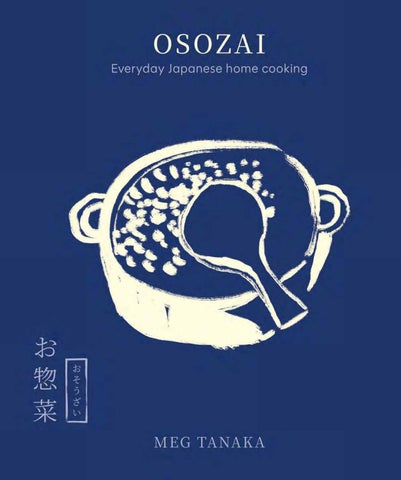
おそうざい
お 惣 菜
4/5/2026 3:41 pm
INT_Osozai.indd 2
14/4/2026 2:20 pm
Everyday Japanese home cooking
おそうざい
INT_Osozai_CiderMill_Title_Imprint.indd 3
14/4/2026 2:41 pm
INT_Osozai_REV SI.indd 4
4/5/2026 3:42 pm
Contents
Preface About CIBI CIBI food philosophy Osozai How to enjoy this book
INT_Osozai_REV SI.indd 5
7 11 16 21 25
Mains Sides Salads Soups
29 99 153 203
Specialty ingredients About the author Arigato Index Recipe image index
220 223 227 230 236
4/5/2026 3:42 pm
INT_Osozai_REV SI.indd 6
4/5/2026 3:42 pm
Preface Just one more dish can change everything. Adding a single plate – a small side, a colourful salad, a dish of vegetables – can bring new balance, joy and nourishment to the table. It turns an ordinary dinner into something more delicious, more satisfying, more connected. That is the spirit behind this book. The recipes gathered here are rooted in Japanese home cooking – the food I grew up with, and the food that continues to shape my everyday life. Some are dishes we serve at CIBI. Others are the simple meals I prepare at home when friends come over. Many are the classics that always seem to bring comfort and smiles, no matter how often they are made. They are not elaborate or difficult. They are everyday dishes meant to be shared, enjoyed and cooked again and again. I believe food is at its best when it fits easily into daily rhythms: today’s dish may become tomorrow’s bento or be reborn with new flavours the next day. This is part of Japan’s mottainai spirit – a deep appreciation for food, and the instinct to find another way to enjoy it. In that way, these recipes are not only about nourishment, but also about imagination and care. This book is for you. For you who already loves Japan and wants to host a little Japanese home party in your own kitchen. For you who dreams of travelling to Japan one day and wants to bring a taste of it home through simple recipes. For you outside of Japan, discovering miso, shoyu or mirin for the first time, and learning how these flavours can quietly transform everyday ingredients. And if you are in Japan, I hope this book inspires you to invite friends from abroad into your kitchen and share the warmth of Japanese home cooking together. Food is one of the simplest ways to cross borders. It speaks when words cannot, and it brings people together no matter where they come from. To me, eating well means more than just taking care of the body. It’s about how we live with food. It means laughing together at the table, discovering the possibilities each season brings, enjoying a glass of wine or sake with friends, and finding joy in the everyday rituals of cooking and eating. Good food is nourishment, yes, but it also makes us happy. The recipes in this book are meant to help create those moments. There are no strict rules – you are free to adapt them and make them your own. What matters most is not perfection, but the feeling that your table is full of flavour, colour and warmth. My hope is that these pages encourage you to add just one more dish, one more vegetable, one more smile to your table. This is my wish – that through these recipes, your everyday life becomes just a little more joyful, a little more delicious and a little more connected. From my home to yours, welcome to CIBI Osozai.
7
INT_Osozai.indd 7
14/4/2026 2:22 pm
INT_Osozai_REV SI.indd 8
4/5/2026 3:42 pm
「あともう一品」 で、食卓は変わります。
はじめに
小さなおかずや彩り豊かなサラダ、旬の野菜を使った一皿を加えるだけで、食卓に調和が生ま れ、喜びが広がり、滋味深い豊かさが加わります。普段の夕食がぐっと豊かで美味しく、 より満た されそして誰かとつながる時間へと変わるのです。 これが、 この本に込めた思いです。
この本に集めたレシピは、日本の家庭料理をベースにしています。
私が育った味であり、今も日々の暮らしを支えてくれるもの。CIBIで提供している料理もあれば、 友人を招いたときに作る料理、 そして何度作っても喜ばれる、みんな大好きな定番レシピも盛り 込みました。 どれも特別に難しいものではなく、繰り返し作り、分け合い、楽しむための‘日々のご はん’です。
食べものは、毎日のリズムに自然に溶け込むのが一番。今日の夕食のメインにもなれば、明日の お弁当に形を変えて登場することもある。 あるいは翌日には違う味わいで楽しむこともできる。 そ こには 「もったいない」 という、日本ならではの心があります。食べ物への深い感謝の気持ちと共 に、工夫しながら最後まで美味しくいただくこと。 ここにあるレシピは、体を養うだけでなく、創造 力と感謝を日々の食卓に添えてくれるのです。
この本はいろいろなあなたに向けて書きました。日本が大好きなあなたへ。 この本を開いて、小 さなホームパーティーをしてみませんか。いつか日本に行きたいと夢見るあなたへ。 まずはこの 本から、日本の家庭の味を感じてみてください。味噌や醤油、みりんを初めて手に取るあなたへ。 この本をきっかけに、普段の料理に少し和の風味を加えてみてください。 そして、日本に暮らすあ なたへ。海外からの友人とこの本を開き、一緒に日本の家庭料理を作って楽しんでいただけたら 嬉しいです。 食は国境を越え、人と人をつなぐ、 もっともシンプルな方法のひとつです。言葉がなくても伝わり、 どこから来た人とも一緒に笑顔になれる。私にとって 「よく食べる」 とは、体を整えることだけでは ありません。食とともに、 どう生きるかということ。食卓を囲んで笑い合い、旬の食材とともに季節 や自然を感じること。 ワインや日本酒を片手に友人と語らい、料理と食事という日々の営みに喜 びを見つけること。美味しい食べものは、体を養うだけでなく、心まで豊かに、幸せにしてくれる のです。
このレシピ集が、 そんな瞬間をつくる手助けになりますように。完璧に作る必要はありません。自 そこにいる人が 分なりにアレンジしても構いません。大切なのは、食卓に彩りと温かさが生まれ、 少しでも笑顔になることです。
「CIBIのお惣菜」が、みなさんの日常を少しでも楽しく、美味しく、 そしてつながりのあるものにし てくれますように。私たちの食卓から、 あなたの食卓へ。 どうぞ、 この本を楽しんでください。
INT_Osozai.indd 9
9
14/4/2026 2:22 pm
INT_Osozai.indd 10
14/4/2026 2:22 pm
About CIBI CIBI is a lifestyle concept store where design, food and space come together as part of everyday living. Since opening our first store in Melbourne in 2008, we have grown to Tokyo and Okayama, always with the same vision: to enrich everyday life through the CIBI lifestyle we create. In Japanese, cibi (chi-bi) means ‘a little one’. Children approach the world with wonder; looking closely, touching freely, asking endless questions and finding delight in the smallest things. They fill every space they enter with energy and curiosity. At CIBI, we want to hold on to this feeling. Our name reminds us to stay playful and full of discovery and to create spaces and experiences that nurture this mindset in others. From the very beginning, CIBI has been rooted in the Japanese idea of ishokuju – clothing, food and shelter – the three essentials of daily life. We interpret these essentials through our own lens: thoughtful design (衣), nourishing food (食) and welcoming spaces (住). When these three come together in harmony they create a lifestyle that is warm, inspiring and meaningful. Design at CIBI is never just about objects. It is about how something is made, how it feels in the hand and how it becomes part of daily life. A favourite bowl, a tenugui cloth, a chair or table – these things enrich our everyday rituals. Food, too, is central: simple, seasonal, balanced meals that leave you feeling lighter, happier and more connected. And space ties it all together – our stores are designed not just to serve food or showcase products, but to welcome people, to give them a sense of belonging and to create moments of calm and joy. Over the years, CIBI has grown, but its essence remains the same. People come to CIBI for a meal and return with family and friends. Travellers visit once and years later come back carrying the memory of a meal, a conversation or a smile. Children who grew up eating at CIBI now bring their own friends. Each connection begins with something simple – a coffee, a plate of food, a piece of design – and grows into something lasting. CIBI is an invitation to live thoughtfully. This book is part of that invitation – a way of sharing our spirit with you, so the joy we create at CIBI can continue at your table and into your everyday life.
11
INT_Osozai_REV SI.indd 11
4/5/2026 3:42 pm
12
INT_Osozai_REV SI.indd 12
4/5/2026 3:42 pm
INT_Osozai.indd 13
14/4/2026 2:22 pm
INT_Osozai.indd 14
14/4/2026 2:22 pm
15
INT_Osozai_REV SI.indd 15
4/5/2026 3:43 pm
CIBI food philosophy – nourishing body and soul
At CIBI, food is not only about filling the stomach – it is about how we live, how we connect and how we care for one another. Cooking, eating and sharing food are among the simplest and most joyful rituals of everyday life. They shape our health, our spirits, our relationships and our memories. Our food philosophy is grounded in simplicity. We believe good food doesn’t need to be complicated. A dish made from fresh, seasonal, carefully chosen ingredients can provide deep nourishment. When you start with good produce, natural flavours come alive. A tomato in summer, asparagus in spring, mushrooms in autumn – each ingredient speaks for itself when prepared with honesty and care. Equally important is balance. At CIBI, our plates are always designed to bring together variety – a main dish alongside vegetables, salad, pickles and grains. This balance reflects the Japanese idea of eating a little bit of many things, rather than too much of one. It keeps the body light and the heart happy. Food at CIBI is also guided by the spirit of mottainai – a way of thinking that begins with appreciation. It recognises that each ingredient has value and that by appreciating it fully we not only reduce waste but also uncover new possibilities. Leftovers are opportunities to reimagine and create something new. In this way, cooking becomes a way of respecting the care and effort behind every ingredient – a quiet way to say thank you to the farmers who grew the produce through to the hands that prepared the meal and to nature itself. We also believe in the importance of moderation. In Japan there is a saying: hara-hachi-bun-me – eat until you are 80 per cent full. It is a reminder that eating is not about excess, but about feeling nourished, satisfied and light. At CIBI, food is designed to leave you feeling better after you’ve eaten, not heavy or tired. This way of eating creates energy for the day and leaves space for joy.
16
INT_Osozai_REV SI.indd 16
4/5/2026 3:43 pm
Our philosophy extends beyond the food itself to the way it is shared. A meal is never just what is on the plate; it is the experience of gathering, the feeling of being welcomed, the conversations and laughter that happen around the table. At CIBI, this spirit is closely connected to omotenashi – a quiet, thoughtful approach to hospitality. Omotenashi is about paying attention to the small things, caring without being asked and creating a sense of ease around the table. In this spirit, food becomes a gift, shared from one person to another. This philosophy is present in every CIBI dish – from our traditional Japanese breakfast passed down from my grandmother, to our signature CIBI lunch plate in which rice, vegetables, salad and pickles come together. It is food that leaves you with a lightness in your body and warmth in your heart. Over the years, we have come to see that our customers understand this too. Many people say they come to CIBI not only for the taste, but because eating here makes them feel good. They notice that they leave refreshed. That is the greatest compliment we could hope for, and the truest expression of our philosophy. This cookbook carries these same values. The recipes here are not about elaborate cooking or strict rules. They are about enjoying fresh produce, finding balance, avoiding waste and sharing with joy. They invite you to slow down, cook with intention and eat with gratitude. In the end, food is about more than nourishment – it is about connection, care and happiness. That is the heart of CIBI food.
17
INT_Osozai_REV SI.indd 17
4/5/2026 3:43 pm
INT_Osozai.indd 18
14/4/2026 2:22 pm
19
INT_Osozai_REV SI.indd 19
4/5/2026 3:43 pm
INT_Osozai_REV SI.indd 20
4/5/2026 3:43 pm
Osozai The title of this book, Osozai, comes from a word deeply rooted in Japanese home cooking. In Japan today, many people use osozai to describe the prepared foods sold in supermarkets – convenient dishes ready to take home. But at its heart, osozai refers to something simpler and closer to home; the small, everyday dishes that sit alongside rice, soup and a main dish at the family table. They are the foods that nourish and bring balance to daily life. For me, osozai is more than a category of food. It is a way of eating and a way of living. A meal becomes richer when there are many small dishes on the table – a bright salad, a quick pickle, a plate of simmered greens. Eating in this way ensures the body receives variety, the eye enjoys beauty and the heart feels cared for. At CIBI, this spirit lives in our food. Our signature lunch plate is, in truth, an osozai plate: brown rice, a main dish, cooked vegetables, fresh salad, a small side and pickles, all arranged together. Each element is simple, but together they create harmony. It is not about one dish dominating the table but about balance across the whole meal. This is the essence of osozai. Osozai is also deeply practical. These dishes fit into busy lives. They are quick to prepare, easy to combine and endlessly adaptable. Make one or two on a weekday evening to add to your dinner. Cook a little extra on the weekend and you’ll have food ready for the next day. Use what you have on hand and let the seasons guide you. And if something is left over, give it a new life with different seasoning. This is osozai thinking – flexible, sustainable and joyful. It is rooted in the Japanese spirit of mottainai, it is a way of treating ingredients with care, letting nothing go to waste. The recipes gathered here carry that philosophy. Many are classics of Japanese home cooking; others are dishes I make when friends come to visit; some are CIBI favourites. You’ll notice that not every recipe is strictly Japanese. These are simple, everyday dishes – cooked often, adapted freely and shared widely. They reflect the way my generation grew up in Japan, where Western influences and international flavours found their way into daily meals, often adapted to be eaten with chopsticks. Modern Japanese home cooking is full of openness and curiosity. My cooking blends Japanese roots with Australian produce and global inspiration. This mix is part of my identity, and part of what makes osozai a living, evolving tradition. Good food has a way of travelling, crossing countries and bridging generations, passed from person to person. That is what I hope this book gives you – a way to bring Japanese cooking into your own life, wherever you are. And a reminder that one small dish – one osozai – can make life richer and more delicious.
21
INT_Osozai_REV SI.indd 21
4/5/2026 3:43 pm
22
INT_Osozai_REV SI.indd 22
4/5/2026 3:43 pm
INT_Osozai.indd 23
14/4/2026 2:23 pm
INT_Osozai.indd 24
14/4/2026 2:23 pm
How to enjoy this book
This book is designed to bring a few simple dishes together to create a table full of colour and comfort. Instead of choosing just one big main dish, Japanese home-style cooking builds a meal from smaller plates that complement one another. 主菜(main osozai)+ 副菜(side osozai)+ サラダ (salad osozai) Start by choosing a main osozai, then add one or two side osozai and a salad osozai. If you like, finish with a small bowl of soup. And of course, you can add your preferred carb – rice, noodles or bread – to complete the meal in a way that suits your day. This is not a rule, just a gentle guide to help you enjoy more variety and seasonal ingredients every day. Some main osozai are hearty or a little indulgent because joy in eating is important. When you pair them with side osozai and salad osozai, the whole table stays in balance: variety, flavour, nutrition and pleasure working together. There will be days when you make only a salad and a side to go with something already on the table, and days when you feel like creating a fuller spread to share. Both are wonderful. Think of these recipes as pieces you can mix and match to suit your rhythm. Have fun discovering your favourite combinations of dishes. I’ve also included some suggested menu pairings throughout the book in case you need a little guidance. I hope this book helps bring more colour, seasonality and warmth to your table – in your own way, and at your own pace. * Note this book uses Australian 250 ml, 8½ fl oz cups and Australian 20 ml, ⅔ fl oz tablespoons. If using standard US cups (240 ml) and tablespoons (15 ml), slight adjustments may be needed.
* Note oven temperatures throughout the book are set to oven bake. * Some ingredients have different names in different countries, notably, capsicum (bell pepper), rocket (arugula), spring onion (scallion) and coriander (cilantro).
25
INT_Osozai.indd 25
14/4/2026 2:23 pm
INT_Osozai.indd 26
14/4/2026 2:23 pm
INT_Osozai.indd 27
14/4/2026 2:23 pm
INT_Osozai_REV SI.indd 28
4/5/2026 3:43 pm
主菜 MAINS
INT_Osozai.indd 29
14/4/2026 2:23 pm
鶏 の 唐 揚 げ﹁ 種類のフレーバー﹂
2
Chicken kara-age (two flavours) You may already know how to make kara-age, but if you try a couple of variations, it becomes so much more fun and your repertoire will grow. Who knows, maybe one day you’ll even have your own signature kara-age! Here are two of my favourite versions. My style is simple, focusing on clean flavours. For the first recipe, I only use ginger, sake, salt and pepper. When I eat this, I want to taste the chicken itself. I even stop my kids when they try to dip it in mayonnaise or sauce! The second flavour is soy and garlic for those who prefer a stronger, punchier taste. Both are classics, and both will bring a smile to your face. Serve kara-age with coleslaw (page 178) or shredded cabbage – the crisp freshness is part of the experience, so please don’t skip it!
30
INT_Osozai.indd 30
14/4/2026 2:23 pm
500 g, 17½ oz chicken thigh (skin on, if possible, for crispiness) ¼ tsp salt Pinch of black pepper 4-cm, 1½-inch piece fresh ginger, grated ⅓ cup sake 50 g, 2 oz potato starch 50 g, 2 oz plain flour (all-purpose flour) (or potato starch as a gluten-free option) 1L vegetable oil, for frying
Serves 3–4
Cut the chicken into 6-cm, 2½-inch pieces. In a bowl, combine the chicken with the salt, pepper, ginger and sake. Mix well, cover and marinate for 20–30 minutes. In a shallow dish, combine the potato starch and flour. Lightly coat the chicken pieces in the flour mixture, shaking off the excess. Heat oil in a deep pan to 170–180°C, 340–355°F. Fry chicken in batches until golden brown and cooked through, about 4–5 minutes.
生姜と酒のシンプルな唐揚げ
Simple ginger and sake kara-age
Drain chicken on a wire rack or paper towels and serve hot with coleslaw or shredded cabbage.
Coleslaw (page 178) or shredded cabbage, to serve
500 g, 17½ oz chicken thigh (skin on, if possible, for crispiness) ¼ tsp salt 4-cm, 1½-inch piece fresh ginger, grated 1 tsp grated garlic 2 tbsp soy sauce 50 g, 2 oz potato starch 50 g, 2 oz plain flour (all-purpose flour) (or potato starch as a gluten-free option)
Cut the chicken into 6-cm, 2½-inch pieces. In a bowl, combine the chicken with the salt, ginger, garlic, soy sauce and sake. Mix well, cover and marinate for 20–30 minutes. In a shallow dish, combine the potato starch and flour. Lightly coat the chicken pieces in the flour mixture, shaking off the excess. Heat oil in a deep pan to 170–180°C, 340–355°F. Fry chicken in batches until golden brown and cooked through, about 4–5 minutes. Drain chicken on a wire rack or paper towels and serve hot with coleslaw or shredded cabbage.
2 tbsp sake
Serves 3–4
醤油とにんにくの唐揚げ
Soy and garlic kara-age
1L vegetable oil, for frying Coleslaw (page 178) or shredded cabbage, to serve
mains
INT_Osozai.indd 31
31
14/4/2026 2:23 pm
Serves 3– 4
If you ever have leftover kara-age (though in my house it doesn’t happen often!) this is the perfect way to give it a second life. Reheat the chicken and toss with chicken nanban sauce and seasonal vegetables. At CIBI we sometimes make this into a Japanese-flavoured chicken sandwich and it’s always popular. Chicken nanban is commonly served with tartare sauce, but I keep it simple and serve it with sautéed vegetables. Of course, if you love tartare, feel free to add it (page 84), but I find the balance of sweet and sour sauce and fresh vegetables delicious just as it is.
300 g, 10½ oz cooked kara-age (or freshly fried chicken thigh or breast) 1 tbsp olive oil ½ onion, thinly sliced ½ red capsicum, thinly sliced 1 tbsp finely chopped spring onion Chicken nanban sauce 2½ tbsp caster sugar (superfine sugar) 2½ tbsp rice vinegar 2½ tbsp soy sauce 1 tbsp sake 1½ tbsp cornflour (cornstarch)
32
INT_Osozai.indd 32
チキン南蛮
Chicken nanban
To make the chicken nanban sauce, combine the caster sugar (superfine sugar), rice vinegar, soy sauce, sake and 4 tablespoons water in a small saucepan. Bring to a gentle boil. Mix the cornflour (cornstarch) with 1¾ tablespoons water then add to the saucepan. Stir and cook until slightly thickened and glossy. Set aside. Preheat the oven to 180°C, 355°F. Pour olive oil into a frying pan and lightly sauté the sliced onion and capsicum until softened but still a little crisp. Warm up the leftover kara-age in the oven for 5–7 minutes or pan-fry the chicken gently until hot and crisp again. Place reheated chicken on a serving plate, generously pour over the chicken nanban sauce and top with sautéed onion and capsicum and the spring onion. Enjoy as is. This is great for the next day’s bento or lunch dish with steamed rice and salad.
osozai
14/4/2026 2:23 pm
INT_Osozai.indd 33
14/4/2026 2:23 pm
Osozai Copyright © HarperCollinsPublishers Australia Pty Limited 2026. This is an officially licensed book by Cider Mill Press Book Publishers LLC. All rights reserved under the Pan-American and International Copyright Conventions. No part of this book may be reproduced in whole or in part, scanned, photocopied, recorded, distributed in any printed or electronic form, or reproduced in any manner whatsoever, or by any information storage and retrieval system now known or hereafter invented, without express written permission of the publisher, except in the case of brief quotations embodied in critical articles and reviews. The scanning, uploading, and distribution of this book via the internet or via any other means without permission of the publisher is illegal and punishable by law. Please support authors’ rights, and do not participate in or encourage piracy of copyrighted materials. 13-Digit ISBN: 978-1-40035-801-4 10-Digit ISBN: 1-4003-5801-9 This book may be ordered by mail from the publisher. Please include $5.99 for postage and handling. Please support your local bookseller first! Books published by Cider Mill Press Book Publishers are available at special discounts for bulk purchases in the United States by corporations, institutions, and other organizations. For more information, please contact the publisher. Cider Mill Press Book Publishers “Where good books are ready for press” 501 Nelson Place Nashville, Tennessee 37214 cidermillpress.com Any internet addresses, phone numbers, or company or product information printed in this book are offered as a resource and are not intended in any way to be or to imply an endorsement by Cider Mill Press, nor does Cider Mill Press vouch for the existence, content, or services of these sites, phone numbers, companies, or products beyond the life of this book. Without limiting the exclusive rights of any author, contributor or the publisher of this publication, any unauthorized use of this publication to train generative artificial intelligence (AI) technologies is expressly prohibited. HarperCollins also exercise their rights under Article 4(3) of the Digital Single Market Directive 2019/790 and expressly reserve this publication from the text and data mining exception. HarperCollinsPublishers Macken House, 39/40 Mayor Street Upper Dublin 1, D01 C9W8, Ireland (https://www.harpercollins.com) Image Credits: Photography by Mark Roper, unless otherwise credited Page 14 photo courtesy of CIBI; page 15 photo by Toshiyuki Sugai Illustrations by Leo Greenfield Printed in Malaysia 26 27 28 29 30 PJM 5 4 3 2 1 First Edition
INT_Osozai_CiderMill_Title_Imprint.indd 240
14/4/2026 2:41 pm