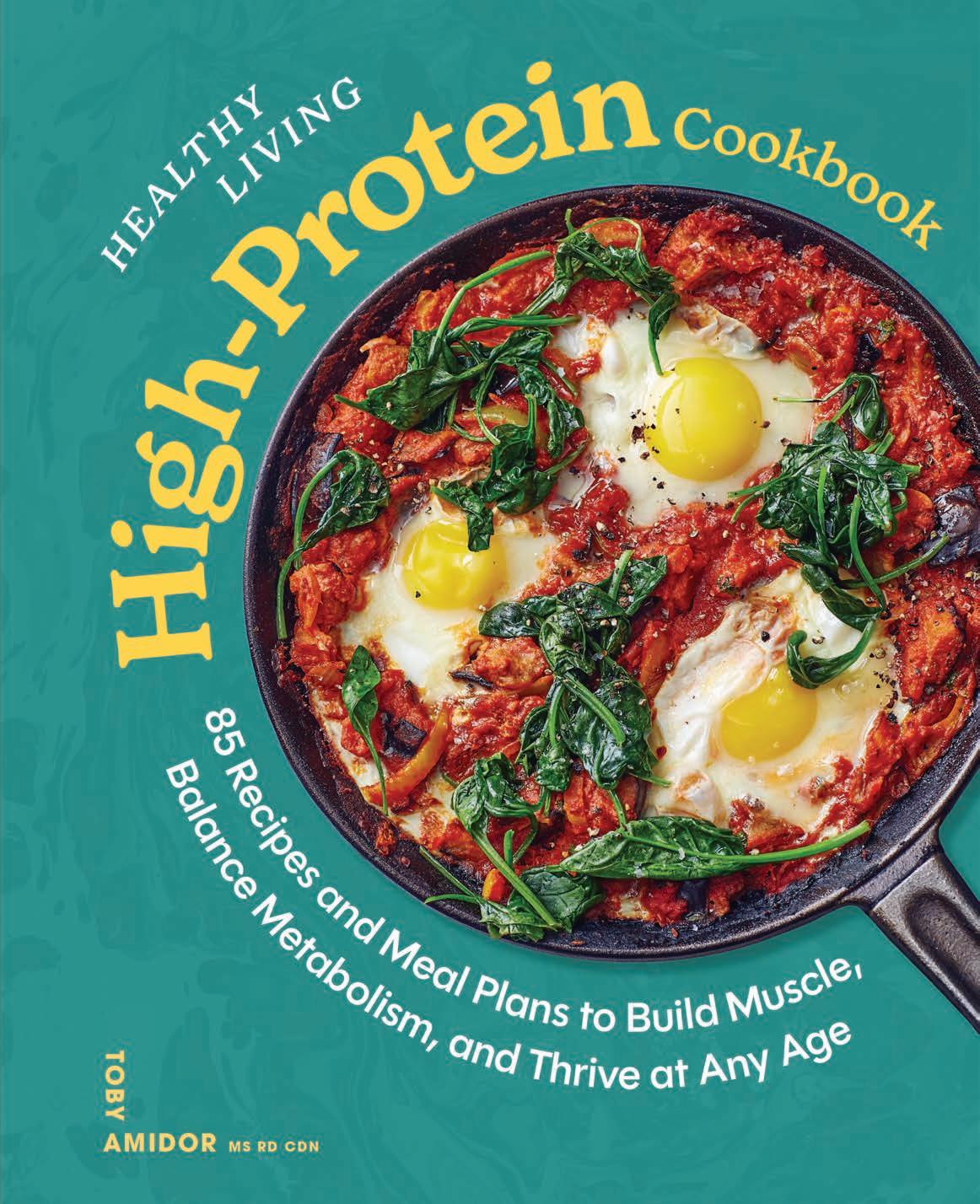

85 Recipes and Meal Plans to Build Muscle, Balance Metabolism, and Thrive at Any Age
For my three children — Schoen, Ellena, and Micah — you are the constant catalysts for my personal growth. I love you.
This book is also dedicated to everyone who seeks to improve their health through the power of protein. You deserve to feel your best.
Healthy Living High-Protein Cookbook
Copyright © 2026 by HarperCollins Focus LLC.
All rights reserved. No part of this book may be reproduced in whole or in part, scanned, photocopied, recorded, distributed in any printed or electronic form, or reproduced in any manner whatsoever, or by any information storage and retrieval system now known or hereafter invented, without express written permission of the publisher, except in the case of brief quotations embodied in critical articles and reviews.
Published by Cider Mill Press, an imprint of HarperCollins Focus LLC, 501 Nelson Place, Nashville, TN 37214 USA.
The scanning, uploading, and distribution of this book via the internet or via any other means without permission of the publisher is illegal and punishable by law. Please support authors’ rights, and do not participate in or encourage piracy of copyrighted materials.
13-Digit ISBN: 978-1-40035-524-2
10-Digit ISBN: 1-40035-524-9
Books published by Cider Mill Press Book Publishers are available at special discounts for bulk purchases in the United States by corporations, institutions, and other organizations. For more information, please contact the publisher.
cidermillpress.com
Any internet addresses, phone numbers, or company or product information printed in this book are offered as a resource and are not intended in any way to be or to imply an endorsement by Cider Mill Press, nor does Cider Mill Press vouch for the existence, content, or services of these sites, phone numbers, companies, or products beyond the life of this book.
Without limiting the exclusive rights of any author, contributor, or the publisher of this publication, any unauthorized use of this publication to train generative artificial intelligence (AI) technologies is expressly prohibited. HarperCollins also exercise their rights under Article 4(3) of the Digital Single Market Directive 2019/790 and expressly reserve this publication from the text and data mining exception.
HarperCollins Publishers, Macken House, 39/40 Mayor Street Upper, Dublin 1, D01 C9W8, Ireland (https://www.harpercollins.com)
Typography: New Spirit by Newlyn and Polymath by OH no Type Co.
Image Credits: Cover photo and photos on pages 116, 172, 188, and 200 used under official license from StockFood.com; photo on pages viii–1 from Pexels.com; photos on pages 136, 226–227, 240–241, 250 used under official license from Adobe Stock. All other photos used are under official license from Shutterstock. com. Background textures from texturelabs.org.
Printed in Malaysia
26 27 28 29 30 SEA 5 4 3 2 1
First Edition
iv INTRODUCTION
PART ONE: PROTEIN FOUNDATIONS
3 Chapter 1: Strength and Satiety: Why Protein Matters
17 Chapter 2: Building a Protein-Rich Life
33 Chapter 3: Cooking and Planning for Protein Success
PART TWO: ESSENTIAL RECIPES
93 Chapter 4: Smoothies and Shakes
107 Chapter 5: High-Protein Breakfasts
129 Chapter 6: Salads, Sandwiches, and Wraps
155 Chapter 7: Plant-Based Mains
181 Chapter 8: Fish and Seafood Mains
207 Chapter 9: Poultry and Meat Mains
245 Chapter 10: Side Dishes
261 Chapter 11: Higher-Protein Snacks and Sweets
282 APPENDIX
284 INDEX
295 ACKNOWLEDGMENTS
295 ABOUT THE AUTHOR
I have been working as a registered dietitian for twenty-five years, and I love carbs. Yes, carbs. I know you opened this book wanting to read about protein, but I just can’t deny my love for carbs. So, what’s the problem with being a carb-lover? If I want my body to work as efficiently as possible, I can’t eat all the carbs I want and love. I need to choose my carbs carefully and balance them with healthy fat and protein. This has become especially important since I reached the age of fifty and have begun to feel the natural changes that occur with age.
Throughout my life I have experienced the many changes in the human body. At age forty, I gained some weight but was able to lose it by balancing my diet, incorporating enough protein, exercising regularly, and maintaining an overall healthy lifestyle. But now at fifty, in the middle of perimenopause, I gained even more weight due to my life phase and decline of estrogen, and am in need of a bit more protein to help maintain my muscle mass. My protein needs are even greater because I also play competitive USTA tennis on about nine teams throughout the year and even captain a few of them. This means that I am on the tennis courts at least four days—if not more—every week. I also practice reformer Pilates and hike with my dogs regularly. Protein certainly plays an important role in my diet, helping to keep my body in tip-top shape.
Although I don’t practice privately anymore, I do help friends who ask me for guidance. A few years ago, a physician I dated wanted to lose about twenty pounds, and he was committed to making healthy changes in his life. At the beginning of his weight loss journey, he texted and called me regularly asking me nutrition questions and wanting help selecting healthier choices at each meal. Protein played a huge role in my guidance. I educated him on better protein choices, portion sizes, and also the proper way to eat protein throughout the day for maximum efficiency and balanced meals. Ultimately, it took him about six months to lose the weight, which aligns with the National Institutes of Health’s recommendation for healthy weight loss of one to two pounds per week. He’s also kept the weight off for nearly two years and now makes his own healthy choices and understands what his body needs.
But nutrition isn’t always as straightforward as “eat more protein,” and that really isn’t what this cookbook is about. As I mentioned above, when you eat protein is the big secret. Regardless of how much the media may recommend it
or you may hear your friends and family say that they are trying to eat loads of protein, it’s important to understand that more isn’t necessarily better.
Over the past twenty years as a registered dietitian, I have seen nutrition fads come and go, and today, misinformation is at its peak due to the rapid speed at which information spreads on social media. Looking back at my freshman year in college in the 1990s, low fat was all the rage—everyone in my dorm stocked up on “fat-free” Snackwell’s cookies. That fad came in strong and passed within a few years. Over time, however, we began to recognize that fat plays an important role in the diet, and recommendations evolved to emphasize eating “healthy fats.” With meat and poultry, the focus shifted toward choosing lean protein with less saturated fat.
When it comes to protein, a lot of misinformation is swirling around.
High-protein diets, which began with the Atkins Diet, have been popular over the past few decades. The founder of the diet, Dr. Atkins, was the original ketogenic diet advocate; he recommended cutting out most carbs and focusing on protein and fat as a fuel for energy. The funny thing is that Dr. Atkins never meant for someone to stay on the ketogenic diet forever. In the last section of his diet plan, he recommends adding carbs back into the diet. Interestingly, when the keto diet was at its peak popularity, people were convinced they needed to stay in a ketogenic state (a state where your body’s energy is fueled by fat and not carbs) in order to lose weight and stay healthy. However, most people realized that the diet wasn’t sustainable long term and that sipping on olive oil and eating meat, eggs, fish, or chicken all day really wasn’t tasty. If you take away one piece of advice from this book, make it this: Every meal you eat—especially healthy meals balanced with protein—should always be tasty!
Today, protein is a hot topic. The 2025 International Food Information Council’s Food and Health Survey found that people are as keen on protein as ever. The survey also found that, for the fifth straight year, protein is the nutrient Americans say they are most focused on consuming. And for the third straight year, a high-protein diet is the most common eating pattern Americans are following. Interestingly, the survey also found that 2025 marks the first time a “good source of protein”—a label you can find on food packaging—is the most common criterion Americans use to define a healthy food 1 .
So, how will protein fit into your healthy eating plan? Whether you’re looking to build muscle mass, lose weight, maintain weight, or just become healthier overall, protein plays an important part of your diet. In this book, you’ll find science-based information from a credible registered dietitian (that’s me!) with
a master’s degree in clinical nutrition and dietetics from New York University. I have spent my career doing a “salad” of things, including educating chefs about nutrition, mentoring new registered dietitians trained at various universities, counseling clients, and educating consumers through my media writing, helping them cut through misinformation and providing information backed by credible scientific research.
Within the first three chapters of this book, I break down what protein is and its many roles in the body. In addition, because everyone has individual needs, I discuss different protein requirements depending on who you are, what your goals are, and how you prefer to consume your daily protein. (Hint: it’s all about when you eat your protein and how much.) I also dispel numerous myths about protein—please do sit down before reading that section!
In chapter 2, I discuss the various sources of protein. Although I am omnivorous (I eat both plant and animal foods), I include information about protein that those following a vegetarian eating plan should know. And, with grocery prices at an all-time high, I also share budget-friendly protein tips, easy higher-protein swaps, and one of my favorite topics—meal prepping.
I also want to set you up for success. That’s where chapter 3 comes in: You’ll find information on cooking and planning for protein success. This includes techniques for preparing various animal and plant proteins, as well as guidance on proper internal cooking temperatures. The recipes throughout this cookbook indicate doneness using internal cooking temperatures, as this is the most reliable way to ensure your food is fully cooked. You’ll find a section on purchasing the best thermometers too.
And don’t worry! I didn’t forget about snacks. These mini-meals are an important part of meeting your daily protein goals. You’ll find guidance on the ideal amount of protein to include in a snack, as well as which foods can help fill some of the nutrient gaps common among Americans.
At the end of chapter 3, you’ll find four one-week meal plans. The first is designed for a woman in perimenopause who is an omnivore and eats animal and plant proteins and exercises 45 minutes, 3 to 4 days a week. The second is for a woman in postmenopause who is a vegetarian and exercises 45 minutes, 3 to 4 days a week. The third is designed for an adult man who is an omnivore and exercises 1 hour, 4 to 5 days a week. The last is designed for an adult woman who is an omnivore and exercises most days of the week for 1 hour. All the meal plans are balanced with carbs and fat. I’ve provided both because everyone has individual goals and eating preferences. As I always say: you do you!
When you get to the recipe chapters, you’ll find that each recipe provides a lot of useful information. And, importantly, every recipe uses easily accessible ingredients that don’t break the bank. I know what it is like to cook for a family or even for one or two people—it takes a lot of time and planning—so I’ve tried to provide simple yet tasty recipes that are easy to cook.
Every recipe identifies whether it is vegan, vegetarian, gluten-free, and/or dairy-free. I also indicate if a recipe is freezer-friendly, good for meal prepping, can be whipped up in thirty minutes or less, and if it is a one-pot or one-pan meal (something I always look for in recipes!).
Each recipe lists the number of servings and the serving size. It’s easy to serve yourself as much as you can fit on a plate or what feels like the right portion, but that may not match the calories and protein listed in the recipe. After making the dish, measuring the correct portion size is essential to ensure you’re getting the amount of protein you want. You’ll also find nutrition information for each recipe, including calories, total fat, saturated fat, protein, total carbohydrates, fiber, total and added sugars, and sodium. Everyone values different information, so I wanted it all at your fingertips. Lastly, each recipe includes one “Toby’s Tip,” where I offer substitutions, complementary recipes, and other culinary or nutrition information you may find useful.
I recommend trying a handful of recipes that look appealing, and if they’re a hit, add them to your weeknight rotation. Most people rotate about ten recipes in their regular repertoire, so I hope you use this opportunity to swap some of your older, lower-protein dishes out for some new ones or use the tips in this cookbook to boost the protein in some of your tried-and-true favorites.
In this cookbook, I’ve aimed to make your life as easy as possible by providing useful information and recipes that are higher in protein, tasty, budget-friendly, and simple to prepare. I can’t wait for you to dig into this protein-rich content and get started on your journey toward better protein intake within your balanced diet and overall health.
I wish you lifelong healthy, happy, and protein-filled eating.

Protein is one of three essential macronutrients, along with carbohydrates and fat. Understanding protein on a structural level (don’t worry, I won’t get too technical) and the various roles it plays in your body is important for gaining a solid understanding of how foods support your body in staying healthy.
So, let’s start with the chemistry. Protein is similar to carbohydrates and fat, as they are all made from carbon, hydrogen, and oxygen. However, unlike the other macros, protein contains nitrogen and provides much of the body’s nitrogen.
The building blocks of protein are amino acids. Proteins are formed when long chains of amino acids are linked together. The specific order of the amino acids within these chains determines the protein’s structure and function. There are twenty amino acids in total, nine of which are essential, meaning the body cannot produce them or cannot produce them in sufficient amounts. These essential amino acids must be obtained through food. The remaining eleven amino acids are considered non-essential because the body can synthesize them. However, under certain circumstances (such as illness), the body may not produce enough of these nonessential amino acids. In these cases, they are referred to as conditionally essential amino acids.
I won’t list all of the amino acids because you don’t select protein based on individual amino acids. Rather, it’s best to eat a variety of proteins to ensure you take in a full range of amino acids that your body needs.
When amino acids connect to each other, they form a peptide bond. Protein fragments with ten or more amino acids are called polypeptides. Your body contains more than fifty thousand different proteins, each with a unique number and sequence of amino acid. This number and sequences of amino acids in a protein chain is called its primary structure. However, proteins cannot function in the body as long, straight chains. Instead, the protein chain bends in different ways, forming what is called the protein’s secondary structure. Then the chain folds and twists further, creating its tertiary structure. Imagine a coiled cord— like the old-school phone cords from phones that plugged into the wall. The way a protein folds and twists allows it to function properly. This also helps explain why protein takes longer to digest. The body must unravel and break down these complex structures into their basic amino acids, a process that takes extra time. As a result, eating protein leaves you feeling fuller because of all the work your body does to break it down.
Protein has many functions in the body, as do carbohydrates and fat. That is why a balanced diet is essential, so you can get everything your body needs to support all its functions. Here are nine important roles that protein plays in your body:
1. PROTEIN IS PART OF THE BODY’S STRUCTURE.
Protein is critical to maintaining the elasticity and shape of cells and tissues in the body. You can find protein in muscles, but also in many other places in the body, such as your bones, hair, skin, fingernails, blood vessels, blood, and the digestive tract.
2. PROTEIN IS USED FOR BUILDING AND MAINTAINING THE BODY’S TISSUES.
Found in every cell, protein has been called the building block of life. Most of the body’s cells are constantly broken down and rebuilt, including the protein within them. For example, the cells lining your gastrointestinal system are replaced every few days, and skin cells live for only about thirty days. In addition, during pregnancy or periods of growth, the body is continuously building new tissue. Protein is also needed to help repair tissue that is lost or damaged, such as during infection, burns, surgery, or age-related loss of muscle mass.
3. PROTEIN HELPS CELLS COMMUNICATE.
Protein is a component of some hormones, which are chemical messengers that help the body communicate. Hormones also regulate certain bodily activities, helping maintain homeostasis—a constant internal environment—such as body temperature.
4. PROTEIN IS A COMPONENT OF MANY ENZYMES.
Enzymes help speed up numerous reactions in the body. For example, they aid in breaking down food and in building substances such as bone and muscle.
5. PROTEIN IS A PART OF ALL ANTIBODIES.
If you’re looking to support your immune system, adequate protein is essential. Antibodies are blood proteins whose job is to attach to foreign invaders—such as bacteria, viruses, and toxins—and help destroy them.
6. PROTEIN ACTS AS A TRANSPORTER THROUGHOUT THE BODY.
Your blood carries oxygen from your lungs to the rest of your body, and protein is needed to produce the cells that do this. Other substances—such as minerals, certain vitamins, fats, and oxygen—are also carried through the blood by various protein cells.
7. PROTEIN HELPS YOUR BLOOD CLOT.
When you cut yourself, protein fibers help form a clot so you stop bleeding.
8. PROTEIN HELPS MAINTAIN FLUID BALANCE AND ACID–BASE BALANCE.
Your body maintains fluid balance by attracting and retaining water in the bloodstream, preventing excess fluid from moving into tissues and causing swelling (known as edema). In addition, your body is constantly maintaining its proper pH, balancing foods and other processes in your body that produce acids and bases.
9. PROTEIN PROVIDES ENERGY.
Protein serves as an energy source when needed. Protein provides four calories per gram.
Depending on age, activity level, and health, some people need more protein than others.
Perimenopausal women have increased protein needs due to declining muscle mass and a slower metabolism, which can lead to weight gain—protein can help regulate metabolism and promote satiety, as well as support bone health. In addition, post-menopausal and older adults require more protein to help prevent sarcopenia, the age-related loss of muscle mass and strength. Consuming more protein daily can help preserve muscle mass, mobility, function, and overall movement.
People who are more active need more protein, especially athletes. If you strength train regularly (e.g., lift weights), your protein needs go up in order to build and repair muscle tissues. If you’re training for endurance sports (e.g., running a marathon), you also have higher calorie and protein needs in order to fuel these long activities and help prevent your muscles from breaking down for energy. Those who regularly participate in high-intensity activities can also benefit from more protein in their diet. For example, playing competitive tennis for at least two hours a day, four days a week, over nearly twenty years—as I have—or engaging in high-intensity interval training (HIIT) like Orange Theory Fitness, which I also did three to four days a week, can raise your protein needs. Occasional high-intensity exercise doesn’t significantly change your protein requirements; it’s the consistent, long-term activity that matters.
Someone who is sick or has certain health conditions may need more protein. Individuals who are critically ill, have severe burns, have undergone major surgery, or are fighting infections typically require extra protein to repair tissue, preserve muscle, and support a stronger immune response during recovery. In addition, people with wasting diseases that cause unintentional weight loss— such as cancer, AIDS, and malnourishment—deplete the body’s protein stores, and increased protein can help combat muscle wasting. Finally, those with chronic wounds or major injuries need higher protein intake to support the healing process.
It’s important to note that some health conditions require less protein. For example, individuals with chronic kidney disease may not tolerate high amounts of protein, as it can put strain on the kidneys. That’s why it’s essential to consult your healthcare provider, especially when you’re ill, about individual protein needs.
Pregnant women need more protein to support fetal growth and development, while breastfeeding women need more protein to support milk production, tissue repair, and the infant’s development. Infants, toddlers, children, and teenagers need more protein in their diet to help support growth and development.
After the age of forty, both men and women start losing significant amounts of skeletal muscle. However, starting around forty (or even in the late thirties) during perimenopause and menopause, protein is critical to help regulate hormones. During this time, estrogen levels begin to decline, which affects not only reproductive health but also bone density, muscle mass, and metabolic rate. As a result, more muscle protein is broken down while less is synthesized. This is why protein intake is more important at this age than ever—and why protein needs increase.
Another hormone, progesterone, also declines during this time, which can contribute to perimenopause symptoms such as poor sleep, mood swings, and elevated levels of the stress hormone cortisol. As I write this, I check off each of these symptoms in my own experience, and many of my friends in this stage of life report the same challenges. Including protein in your meals and snacks, as outlined in this book, can help stabilize blood sugar, reduce cortisol spikes, and support more stable mood.
Lastly, as you age and your hormones shift during perimenopause, your body becomes less efficient at managing blood sugar—so you may have reduced insulin sensitivity. Incorporating protein in the right amount throughout your meals and snacks can help slow the absorption of carbohydrates, which can help regulate blood sugar levels.
Once you hit the age of sixty, there is an increase in muscle being broken down. At this age, protein needs are still higher and weight-bearing exercises are highly encouraged.
During these times, your protein needs don’t skyrocket. We aren’t back in the 1980s, when commercials showed a huge rib-eye steak being served with three stalks of broccoli. Instead, your protein needs increase by a small to moderate amount, depending on factors like age and activity level. The key is how much protein you eat at each meal and snack throughout the day and taking in a variety of protein, so you get all the amino acids your body needs. In the chapter, I’ll explain this concept so you can master it with proper planning and some practice.
Protein needs vary throughout life and differ from person to person. This cookbook can help guide you in meeting your protein goals properly as a healthy adult. It also provides guidelines for individuals with higher protein needs after the age of forty, when skeletal muscle decline accelerates in perimenopause and
postmenopausal women, as well as in men. After age sixty, muscle loss tends to speed up further for both men and women, increasing protein needs even more.
The recommended dietary allowance (RDA) of protein to prevent deficiency in an average adult with low physical activity is 0.8 grams per kilogram of body weight, or 0.36 grams per pound per day.
▶ For a 150-pound healthy woman 18 and over (not in perimenopause), multiply 150 pounds × 0.36 grams per pound of body weight = 54 grams of protein per day.
▶ For a 190-pound healthy man, multiply 190 pounds × 0.36 grams per pound of body weight = 68.4 grams of protein per day.
Individuals who are over forty or in perimenopause and are sedentary or not meeting weekly recommendations for physical activity have higher protein requirements. During perimenopause and beyond, daily protein intake should increase to 1.0 to 1.2 grams per kilogram of body weight, or 0.45 to 0.54 grams per pound, per day. Being sedentary typically means spending at least six hours a day in low-activity behaviors, such as watching screens, driving, or sitting at a desk.
▶ For a sedentary woman over forty (in perimenopause) who weighs 150 pounds, multiply 150 pounds × 0.45 grams per pound of body weight = 67.5 grams of protein at the lower end and 150 pounds × 0.54 grams per pound of body weight = 81 grams of protein at the higher end per day.
If you are an active adult man or woman who meets the recommendations of exercising 60 to 90 minutes most days of the week, your protein requirements increase to 1.2 to 1.6 grams of protein per kilogram body weight or 0.54 to 0.72 grams per pound of body weight each day.
▶ For an active woman over forty (in perimenopause) who weighs 150 pounds, multiply 150 pounds × 0.54 grams per pound of body weight = 81 grams of protein at the lower end and 150 pounds × 0.72 grams per pound of body weight = 108 grams of protein at the higher end.
If you are an adult man or woman who lifts weights or is training for a running or cycling event 5 to 7 days per week, your needs can be 1.2 to 1.7 grams per kilogram body weight or 0.54 to 0.77 grams per pound of body weight each day.
▶ For an active man over forty who weighs 200 pounds, multiply 200 pounds × 0.54 grams per pound of body weight = 108 grams of protein at the lower end and 200 pounds × 0.77 grams per pound of body weight = 154 grams of protein at the higher end.
Excessive protein intake is typically more than 2 grams of protein per kilogram of body weight (or 0.9 grams of protein per pound of body weight) each day.
▶ For an active 150-pound woman over forty, this means 150 pounds × 0.9 grams per pound of body weight = 135 grams protein.
▶ For an active 200-pound man over forty, this means 200 × 0.9 grams per pound of body weight = 180 grams protein.
Note: Protein needs increase during pregnancy, breastfeeding, and throughout childhood and teenage years. This book targets healthy non-pregnant or non-breastfeeding adults and children. Consult your healthcare provider to determine your individual needs and enjoy the recipes in this cookbook.
If you’re tempted to get all your protein by chugging a huge protein drink that contains 50 or 60 grams of protein, it’s not recommended. Consuming too much of one food, like protein, means you may be missing out on other important foods and nutrients—and that is not beneficial for your body. Getting enough protein depends on several factors, including timing, absorption, and variety.
It’s recommended to spread your protein intake throughout the day, across meals and snacks. This helps promote balanced meals, supports overall nutrition, and keeps you feeling satisfied longer. Typically, people consume the least amount of protein at breakfast and the most at dinner. But with the strategies in this book, you will change that!
Research shows that getting enough protein at breakfast, lunch, and dinner can help with weight management by helping you feel satisfied and decreasing cravings throughout the day. Current recommendations are to spread protein intake throughout the day (versus consuming large amounts all at once). It is recommended to consume between 15 to 30 grams of protein at every meal, and no more than 40 grams of protein at every meal. Consuming over 40 grams of protein can lead to an imbalance of other foods and nutrients.
For snacks, a good target is 10 to 15 grams of protein. Snacks act as mini meals that help fill nutrient gaps, including protein, and should include a combination of foods to maximize the nutrients you take in. Chapter 11 contains ten snack recipes that have higher amounts of protein per serving to help you reach your daily protein goals.
Also, the variety of protein matters. According to the 2020–2025 Dietary Guidelines for Americans, most individuals meet or come close to the daily recommended amount of protein per day (at 0.8 grams per kilograms body weight). However, protein can be obtained from a variety of foods across several subgroups. These subgroups include: 1) meat, poultry, and eggs; 2) seafood; 3) nuts, seeds, and soy products. Taking in a variety of protein sources means you also take in a wider variety of amino acids and nutrients that your body needs. Many Americans do not meet the recommended amount of protein from specific protein subgroups. According to the 2020–2025 Dietary Guidelines for Americans, about 75 percent of Americans meet or exceed the recommended amounts for meat, poultry and eggs. However, almost 90 percent don’t meet the recommended amounts for seafood, and more than 50 percent don’t meet the recommended amounts for nuts, seeds, and soy 2. Chapter 2 covers what protein sources are included in each of these subgroups and why they are important.
With protein being such a trendy topic and with the lightning speed of misinformation spreading on social media, there are many widespread misconceptions about protein. Here are the top eight myths about protein, debunked.
MYTH 1: Eating more protein will lead to kidney damage. If you are a healthy adult, following the protein recommendations above and increasing the amount based on various individual needs, such as perimenopause or intense exercise, can be done in a healthful way. These
recommendations are considered within healthy limits for healthy individuals. However, based on the scientific literature, 1.5 grams per kilogram body weight is a high-protein diet; consuming above the limit of 2.0 grams protein per kilogram body weight can put individuals at risk for developing compromised kidney function, especially when followed long term. High-protein fad diets (think keto, paleo, and Atkins) have been studied, with mixed results regarding potential effects on kidney function, though more research is needed. If you currently have impaired kidney function, are at risk (like people living with diabetes), or are worried, see your healthcare provider or registered dietitian nutritionist (RDN).
MYTH 2: Animal protein is better than plant protein. These two types of proteins are different, but one is not better than the other. Animal proteins provide all the essential amino acids your body requires, while plant proteins are missing or have less of one or more amino acids. However, plant proteins provide fiber, healthy fats, and other nutrients you don’t necessarily find in animal proteins (for example, fiber is only found in plant protein). That is why it is recommended to eat a variety of proteins from both plant and animal sources—so you can get the best of both worlds.
MYTH 3: The more protein you eat, the bigger your muscles will get. Protein and exercise go hand-in-hand, so both are important. However, significantly more protein is not necessarily recommended, as it can also add unnecessary calories and lead to unbalanced meals. For those who lift weights, the recommendation is between 1.2 to 1.7 grams protein per kilogram body weight per day, which should be complemented with weight training.
MYTH 4: You need complementary proteins in one meal. Plant proteins (like beans, rice, peanut butter, and hummus) do not provide all the essential amino acids needed in one food. It was once believed that combining two plant proteins during a meal (like rice with beans or peanut butter with whole-wheat bread) to complement the amino acids they provide was the best way of taking in plant proteins. This is no longer recommended. Rather, you want to eat a wide variety of plant foods throughout the day and within your long-term healthy eating plan. The combinations of plant-containing-protein foods that you eat throughout the day—which include beans, peas, lentils, nuts, seeds, grains, and vegetables—will provide the variety of amino acids you need.
MYTH 5: It is impossible to eat too much protein. You may have heard that if you eat too much protein, the extra protein simply won’t be absorbed. However, your body doesn’t work that way. Consuming more protein beyond the daily recommended amount (defined as over 2.0 grams protein per kilogram body weight) can lead to negative consequences. First, you will not be eating a balanced diet; if you eat more protein, you have to eat less carbohydrates and/or fat. This means that you won’t be getting some of the nutrients your body needs. In addition, taking in way too much protein can lead to upset stomach, bad breath, excess calories , and possibly poor bone health. In addition, taking in excessive amounts of protein can lead to kidney damage, specifically in those who already have compromised kidneys or are at risk (such as people living with diabetes).
MYTH 6: You should eat protein before a workout. If you’re eating a snack an hour before a workout, choose quick-digesting foods like fruit or crackers or modest protein sources such as yogurt. Protein-rich foods are slow-digesting (as explained in “The Science of Protein,” in this chapter) and if eaten right before a workout can lead to an upset stomach. To meet your protein needs, eat protein-rich foods during meals and snacks throughout the day, except right before you exercise. If you eat your snack two to three hours before you work out, then it should consist of carbohydrates and moderate protein with less fat.
MYTH 7: You cannot meet protein needs on a vegan or vegetarian diet. When planned properly, you absolutely can get enough protein on a vegan or vegetarian diet. The secret to doing so is including a variety of plant foods that contain protein, including whole grains, beans, peas, lentils, nuts, seeds, and soy products. This makes getting in all your essential amino acids achievable. Plus, those vegan- and vegetarian-based protein foods eaten throughout the day are helpful for keeping you feeling fuller for longer and optimizing workouts—just like animal-based protein foods.
MYTH 8: You need 1 gram of protein per pound of body weight. The recommendation for adults is 0.8 grams protein per kilogram body weight or 0.36 grams protein per pound body weight. Eating 1 gram of protein per pound equates to 2.2 grams per kilogram body weight. As discussed in “How Much Protein Do You Really Need,” over 2 grams of protein per kilogram body
weight is considered excessive and can leads to kidney damage, specifically in those who already have compromised kidneys or are at risk (such as people living with diabetes).
Contrary to popular belief, most people in the United States are meeting or even exceeding the recommended amount of protein. However, some situations may lead to inadequate protein consumption— which is considered less than 10 percent of daily calories from protein. This can happen if you are on weight loss medications (such as GLP-1s), which significantly decrease appetite, or if you are on a very restrictive diet. Signs that you’re not meeting minimum protein needs include:
Not eating enough protein can affect your muscles, especially muscles that help movement. This can certainly happen if you don’t meet protein needs as an older adult. Over time, insufficient protein consumption can lead to anemia, which is when your cells don’t get enough iron. Protein is needed to make the blood cells that carry oxygen, so you end up feeling tired. Also, not taking in protein when your body needs it can result in losing muscle mass, which can lead to weakness.
The building blocks of protein, called amino acids, help make many neurotransmitters in the body, which are chemicals that relay information between cells. If you don’t meet minimum protein requirements, then your body can’t make enough of these neurotransmitters, which can change how the brain works. For example, if you don’t have enough dopamine and serotonin, which are associated with mood and emotion, you can feel depressed, anxious, sad, or irritable. Other factors can also lead to mood changes, so check with your healthcare provider if you are experiencing these symptoms.
You need protein to produce elastin, collagen, and keratin, which are all part of your hair, nails, and skin. The end result can be brittle or thinning hair; dry, flaky skin; and fingernails with deep ridges. Other factors can also lead to compromised hair, nail, and skin, so check with your healthcare provider.
DECREASED SLEEP QUALITY.
Protein provides the essential amino acid tryptophan, which is needed to produce serotonin and melatonin. The neurotransmitter serotonin helps promote relaxation, while the hormone melatonin regulates the sleep–wake cycle. As such, if your body doesn’t get enough protein, you will not get enough tryptophan to make these sleep-promoting substances, which can lead to disrupted sleep and insomnia.
SWELLING.
Also known as edema, which typically happens in your abdomen, legs, feet, and hands. This is due to the role of protein, which helps manage fluid balance in your body. However, there are other causes of swelling in the body, so always check with your healthcare provider.
There may also be instances when you’re not meeting needs for exercise or spacing your protein intake throughout the day during meals and snacks. In these cases, it may result in the following:
DECREASED RECOVERY.
Protein is needed to repair muscle tissue that breaks down during exercise. If you don’t take in an appropriate amount of protein throughout the day, this can interfere with rebuilding muscle fibers efficiently, possible prolonged soreness, weakness, and fatigue.
Taking in protein throughout your day helps slow down how quickly the body is digesting and provides increased satiety. As such, if you aren’t taking in moderate sources of protein during meals and snacks, it could lead to feeling hungry between meals.
At this point, you should have a basic understanding of the role of protein in your body and how much protein you need. In the next chapter, I will walk you through various sources of protein, what to look for when buying protein, and the fundamentals of meal prepping so you can take in the protein you need throughout the day.
Protein sources include both animal and plant, each offering unique nutrients and benefits. Choosing a variety of protein-filled foods throughout the day and week helps ensure you get all the essential amino acids your body needs for muscle maintenance, energy, and overall health. Below is a breakdown of the main animal- and plant-based protein sources and how to include them in a balanced eating plan.
Protein sources can come from a combination of animal and plant sources or plants sources alone. Animal sources include poultry, red meat, seafood and fish, eggs, milk and dairy foods. Plant sources include pulses (beans, peas, lentils), nuts and seeds, grains, and vegetables. You can also take in proteins as protein powders, from both animal and plant sources. A breakdown of all the proteins are listed below.
Poultry: This category includes chicken, turkey, Cornish hen, and duck. Game birds include dove and pheasant. Choose poultry without the skin for less saturated fat. In addition, choose healthy cooking methods such as sautéing, baking, stir-frying, and grilling. Avoid cooking methods like deep-frying.
Red Meat: This category includes beef, veal, pork, lamb, and game such as buffalo, ostrich, rabbit, and venison. Choose lean cuts whenever possible and limit processed red meat like sausages, bacon, and bologna. Minimize sauces high in saturated fat that are made with a lot of butter or cream.
Fish and seafood: The Dietary Guidelines for Americans recommend eating at least 8 ounces of fish per week as part of a healthy eating plan, but to limit fried seafood because it is high in fat and calories. Types of fish to incorporate into your healthy eating plan include fish high in omega-3 fats like salmon, albacore tuna, herring, mackerel, trout, and sardines. Other fish to incorporate include tilapia, flounder, cod, catfish, haddock, orange roughy, and branzino as well as shellfish like clam, crab, shrimp, lobster, scallops, and oysters.
Eggs: According to the American Heart Association, you can include up to 1 whole egg per day as part of a healthy eating plan and balanced with other
animal products. The recipes in this cookbook use one large egg as the standard serving.
Milk and dairy foods: Cow’s milk and dairy foods like Greek yogurt, cottage cheese, cheese, kefir, and Icelandic yogurt (skyr) all provide protein. If you are lactose intolerant, it is still recommended to choose cow’s milk and dairy foods, as many lactose-free, higher-protein options are available. Fortified soy milk provides the closest nutrient profile, including protein, found in cow’s milk. Although the Dietary Guidelines for Americans recommends low and nonfat milk as a major part of a healthy eating plan, I’ve included recipes that use reduced-fat and whole-fat products as well. The key is balancing the types of milk fats as part of a healthy diet.
Pulses (also referred to as legumes): The correct term for this protein-filled category is pulse, which refers to the dried, edible seeds of legume plants. The United Nations Food and Agriculture Organization recognizes eleven types of pulses; these are the most familiar: dry beans, dry broad beans, dry peas, chickpeas, cow peas, pigeon peas, and lentils. Canned beans, peas, and lentils also fall into this category. When purchasing canned pulses, choose low-sodium, reduced-sodium, or no-added-sodium options. If you purchased regular sodium canned options, rinsing with water before using can reduce up to 40 percent of the sodium.
Nuts and seeds: All nuts and seeds provide protein, healthy fats, fiber, vitamins, and minerals. Some nuts and seeds have slightly higher amounts of protein per serving, including hemp seeds, chia seeds, almonds, peanuts, pistachios, and pumpkin seeds. When choosing nuts and seeds, look for raw or dry-roasted and unsalted.
Grains: Grains contribute some protein as well. The Dietary Guidelines for Americans recommend making half your grains whole. Many whole grains contribute a few grams of protein per serving, but always check the nutrition facts panel for the exact amount. Refined, milled grains also provide a small amount of protein and do contribute to your overall daily protein count. If you choose refined milled grains, make sure they are enriched and fortified. This means they will have a variety of B vitamins, folate, and iron to help close nutrient gaps.
Vegetables: Most vegetables provide some protein. The amount varies depending on the type of vegetable. For example, Brussels sprouts have around 6 grams of protein per cup, while lentils (also considered a vegetable) provide close to 18 grams of protein per cup boiled. While many vegetables are not as high in protein as other sources (such as broccoli, cauliflower, kale, and carrots), they can certainly make contributions and count toward your daily protein intake. Although vegetables do not contain all the essential amino acids you need, by consuming a variety of protein sources throughout the day, you can ensure that you’re getting a good mix of amino acids.
Although I recommend a food-first approach to protein, protein powders are another way to add protein to your healthy eating plan. You can find both animal- and plant-derived sources of protein powders. In addition, you can find protein powders that are unflavored and with no added sugars or sweeteners, as well as options in various flavors and with low- or no-calorie sweeteners. Both types are rather pricey, so if you can get enough protein from food every day, you don’t need extra powders. Below is an overview of each type of powder available on the market.
Whey protein powder: One of the most popular protein powders is whey protein, which is found in all dairy foods. Cow’s milk consists of two proteins: casein and whey. Whey separates from the milk during the cheese-making process. Whey protein is a nutritionally complete protein and releases amino acids, the building blocks of protein, to the muscles quicker than casein. It is also digested rather quickly. In addition, whey is one of the most concentrated sources of leucine, an amino acid responsible for building muscle. This is why research recommends consuming whey protein immediately after an intense workout. I recommend choosing 100 percent whey protein powder, meaning that is the only protein powder found in the container; it is not mixed with any other protein powder. You can find this information listed on the front of the label or read the ingredient list.
Casein protein powder: Casein is derived from cow’s milk. Compared to whey, casein has a slower rate of digestion, releasing the amino acids gradually to your muscles. This can be advantageous, as casein protein can help stimulate muscle protein synthesis and improved protein balance during overnight recovery.
Egg-white protein powder: Made from dehydrated egg whites, this protein powder is a complete protein. It is a good option for those looking for dairy alternatives. Most people don’t notice any specific taste, and it mixes rather well in beverages.
Collagen protein powder: Collagen powder is made from the animal-rich tissues of cows, pigs, or fish. They provide hydrolyzed collagen peptides, which are small, absorbable pieces of collagen. This protein powder is not complete, meaning it does not provide all the amino acids your body needs in the right amount. Side effects can be digestive issues and lingering taste. Collagen is tasteless and odorless, but the manufacturer may add flavors and sweeteners. It also doesn’t change the texture of food, so it can easily be added to beverages, or mixed and blended into smoothies, batters, soups, stews, and more.
A wide variety of plant-based protein powders are available on the market that are suitable for omnivores, vegetarians, and vegans. You will also find many plant-based protein powder blends. These blends are created for those who believe that they must consume a variety of plant proteins simultaneously to get the full range of amino acids at one time (I debunked this myth in chapter 1; see page 12). Some people may experience gastrointestinal side effects when taking plant-based protein powders, such as gas and bloating. You may need to try a few to see which works best for you. Below is an overview of popular plantbased protein powders and blends.
Soy: Soy protein powder does contain all essential amino acids. You can find soy protein isolate or concentrate. Isolate is made from soybean flakes that have had the fat, carbohydrate, and fiber removed. Concentrate is made from soy flour that had some of the fat and some of the carbs removed. It does have more fiber than isolate.
Bean, pea, or lentil: You can find protein powders made from lentils, from a variety of beans including garbanzo, or from yellow split peas. Peas provide a good amount of all the essential amino acids, while beans and lentils do have limiting amino acids.
Seeds: Although many seeds can be found in protein powder blends, you can find powdered hemp, chia, and flax (some recipes in this cookbook call for these
powders). These three seeds also provide omega-3 fats, which give them an added benefit. Seeds are incomplete proteins.
Grains: You can find whole grains like quinoa (technically a seed), amaranth, and millet in protein powders. Many are gluten-free. Some, such as quinoa, provide all the essential amino acids, while most others do not contain all the essential amino acids.
Brown rice: This protein powder is a good choice for people living with food allergies. It is typically gluten-free and has a mild flavor. Brown rice does not contain all the essential amino acids.
Blends: Many plant-based protein powders blend rice, grains, seeds, and beans, peas, or lentils. Blends tend to have added fruit and vegetable powders, sweeteners, and flavors. As mentioned earlier, even if the blend does not contain all essential amino acids, eating a diet that provides a good variety of plantbased proteins will help meet your needs.
Food labels can be confusing. My recommendation is to focus on just a few numbers so you don’t drive yourself crazy. Below is a rundown of all the information you will find on food labels.
The first thing you should look at on the nutrition facts label is the servings in the package (servings per container) and the serving size. The serving sizes are standardized so you can easily compare similar foods. They are provided in familiar units like cups or tablespoons, followed by the metric amount (usually grams). The serving size reflects the amount people typically eat or drink; however, it is not a recommendation of how much you should eat or drink.
This provides a measure of the calories in one serving of this food. If the serving size of a food is 1 cup and has 90 calories, and you eat 2 cups, that means you are eating 180 calories.
In the middle of the label, you will find some key nutrients that impact your health. The amount of the nutrients listed refers to the size of the serving. Use the nutrients that help support your individual dietary needs. Look for foods that have more of the nutrients you want to get more of, and less of the nutrients you are trying to limit.
Nutrients to get more of: Dietary fiber, vitamin D, calcium, and potassium are nutrients that most Americans do not get enough of and are considered nutrients of concern that are underconsumed by most of the population.
Nutrients to get less of: Saturated fat, sodium, and added sugars are nutrients listed on the label that may lead to negative health consequences, and Americans tend to overconsume them. This doesn’t mean you should have zero of these nutrients, but rather that you should limit them. It is recommended to get no more than 10 percent of total daily calories from saturated fat and added sugar, while the limit on sodium is 2,300 milligrams per day (equivalent to about 1 teaspoon table salt).
“Added sugars” refers to sugars that are added to the product, such as honey, granulated sugar, or high fructose corn syrup. Those should not be confused with natural sugars found in foods like fruit, milk and dairy, and in starches that are a natural part of the product. Natural sugars, such as honey and maple syrup, become “added sugars” once they are added to a food to give it sweetness. I tend to use my added sugar calories for those. For example, I may add 1 teaspoon honey to my chia seed pudding or 1 teaspoon pure maple syrup to my protein smoothie. Natural and added sugars are combined and listed under total sugars, while added sugars are shown separately—that’s the number to pay attention to.
The %DV shows how much a nutrient in a serving of a food contributes to a total daily diet. This helps put the nutrient’s numbers, which are found in grams, milligrams, and micrograms, in perspective and on the same scale, which ranges from 0 to 100%DV.
A low source: A %DV of 5 percent or less of a nutrient per serving is considered low.
A good source: A %DV of 10 percent to 19 percent of a nutrient per serving is considered a good source.
An excellent source: A %DV of 20 percent or more of a nutrient per serving is considered a high or excellent source.
According to the National Institutes of Health, it is recommended that adults stay within their calorie limits while choosing food and drinks rich in nutrients. As everyone has individual needs and goals, the guidelines suggest the following for protein, fat, and carbohydrates:
▶ Carbohydrates: 45 percent to 65 percent of your total calories
▶ Fats: 20 percent to 35 percent of your total calories
▶ Protein: 10 percent to 35 percent of your total calories
Specific protein recommendations for adults are 0.8 grams per kilogram body weight, or 0.36 grams per pound body weight. Some individuals need more protein, depending on age, activity level, and health (see page 9). Once you set your protein goals in grams, use the number on food labels (in grams) to add up the total amounts for your meal or snack. Remember, protein intake should be divided throughout the day in meals and snacks, with a target range between 15 to 30 grams at every meal, and no more than 40 grams. Snacks should stay between 10 to 15 grams.
With food prices on the rise, choosing budget-friendly protein sources can help stretch your food dollar. To determine which proteins offer the best value, the list below uses the recommended daily value of protein along with data from the US Department of Agriculture Thrifty Food Plan Budget, which estimates the cost of a healthy diet for different age and sex groups. The following twenty foods are considered budget-friendly if the cost per serving is 10 cents or less per gram of protein:
Below are six tips to keep in mind when purchasing protein foods on a budget:
Purchase larger quantities of non-perishable proteins such as dried beans or dried lentils, or meats, and freeze in individual portions for later use.
You want to select leaner cuts of meat. Although they may seem more expensive, remember that they have less shrinkage because they are lower in fat. Also, meat portions should be between 3 to 6 ounces, depending on the individual and keeping a little shrinkage in mind during cooking.
Frozen protein sources such as chicken, fish, and seafood tend to be priced lower compared to their fresh counterparts and are just as nutritious. A little secret: Most fish are caught fresh and shipped frozen to major supermarkets throughout the country, but they are just as fresh as the moment they were frozen (which is rather quickly after harvest).
Don’t be wary when you find meat on sale at your local market. It is safe and high-quality meat that should be eaten soon after purchase. Check the freshness date on the package or ask the butcher.
On the list, write down the exact type and amounts of protein you need to buy and stick to it. There is no need to buy more meat than your list calls for.
Warehouse clubs offer big discounts on bulk protein, dairy, meat, chicken, fish, and many other proteins that are fresh, frozen, canned, or shelf-stable (such as nuts and seeds). If you choose to shop at a warehouse club, you will pay less per unit price. However, you do need space to store your food.
Meal prepping is a technique where you cook and store individual servings of food that can last throughout the week. You can opt to cook just a few recipes to meal prep or you can meal prep most or all of your meals. How much you choose to meal prep is up to you.
There are numerous benefits to meal prepping, which include:
Saving money: This is especially helpful with pricier foods such as meat and seafood, where you purchase the exact amount you need for the recipe and pack the amount in each individual container.
Saving time: Spending time over the weekend or over one or two evenings a week can save time that you would otherwise spend prepping on a busy weeknight. This allows you more time on those early mornings or late nights where you want to work out or spend quality time with your family.
Eating healthier: Having planned meals throughout the week can help minimize those app food orders or stopping by the closest fast-food joint in desperation.
Controlling weight: To help meet your weight loss, weight maintenance, or even bulking goals, keeping portions and protein amounts in check within meals and snacks can be a hurdle. By boxing meals and snacks, you’ll be using a great tool for portion control.
When meal prepping, I recommend following these five steps:
Step 1: Choose when to meal prep. Select one or two days a week to meal prep. Most people like to prep one day over the weekend, but you can also choose to prep on another day during the week that works best for you. You can also split up your meal prepping over two shorter days as opposed to doing everything at once. Do whatever works best for you.
Step 2: Decide which meals to meal prep. This cookbook tags recipes that are appropriate for meal prepping and provides storage, reheating, and serving instructions for all meal-prepped recipes. When choosing which recipes to meal
prep, decide how many recipes to start with. If you are new to meal prepping, start with only a few recipes. If you feel that you can handle more, then go for it!
When selecting recipes, choose a variety of protein sources so you can get different proteins and nutrients from the ingredients used. Remember, when meal prepping, you should choose a recipe that can be refrigerated for up to four days—so you will eat each portion for a meal four days in a row (unless you freeze it). This helps minimize how many dishes you cook up at one time. In addition, keep in mind that you want meals balanced with protein (plant or animal), grains (especially whole grains), veggies, fruit, milk and dairy products, and healthy fat.
Step 3: Go food shopping. My secret to food shopping is to make a list based on the flow of the supermarket—and I like to do it with a pen and paper (I know, I am old-school!). However you choose to write your shopping list, if you organize it by types of foods it helps prevent those last-minute dashes through the supermarket because you forgot one food back in aisle 1. I organize my list with the following categories: fruits and vegetables, meat/poultry/fish, pantry items, frozen aisle, and milk/dairy foods.
I also recommend creating your list from your kitchen. This way as you go through the ingredients of each recipe you can check your pantry, refrigerator, and freezer for the ingredient. This helps minimize buying an ingredient you already have and helps keep your food spending in check.
Step 4: Prep and cook. Meal prepping is about efficiency and saving time. When you meal prep numerous recipes, use the following tips to organize what to prep and cook when.
▶ Read through all the recipes before you begin.
▶ Prep ingredients for recipes that take longer to cook. For example, chop onions and marinade meats.
▶ Begin longer cooking recipes, especially those that will be baked in the oven or cooked stovetop for over 20 minutes. While these dishes are cooking, you can prep other recipes.
▶ Leave shorter recipes for down time. For example, dressings and simple snack recipes can be prepped when other recipes are cooking.
▶ Cook the remaining recipes, which you should be able to assemble in a flash since you have already prepped most of the ingredients.
▶ Portion and pack meals and snacks into single-serve containers. Store extra meals in the freezer, when applicable.
Step 5: Portion, pack, and store. If you want to ensure you’re getting the amount of protein listed in the recipe and to keep calories in check (especially if you are trying to lose or maintain weight), then make sure to portion your recipe and store in single-serve containers. This makes it easy to heat and eat without any fuss.
With so many protein-filled ingredients on store shelves, you can easily add a few grams of protein to any meal or snack by swapping in certain ingredients or adding others to your dish. You can use either ingredient, but if you’re trying to add a bit more protein to your meal or snack, the following foods can help you meet your individual needs. This is especially important with vegan and vegetarian meals, where it’s tougher to meet your target range in meals and snacks and those few extra grams of protein can help.
Remember, more isn’t better when it comes to protein. Spread your protein throughout the day, with a target range between 15 to 30 grams at every meal, and no more than 40 grams at every meal. Aim for between 10 to 15 grams of protein for snacks. The following page includes easy swaps you can make for ingredients that have more protein compared to its counterpart.
Traditional yogurt
Traditional milk
Sour cream
Cream cheese
Traditional pasta
All-purpose flour
Greek yogurt or skyr
Ultra-filtered milk (about 13 grams protein per cup)
Greek yogurt, or blended cottage cheese
Cottage cheese, or replace half the cream cheese with blended cottage cheese
High-protein pasta like chickpea or lentil, or pastas labeled as “high protein”
High-protein flour
In baked goods, replace up to one-third of the flour with unflavored protein powder like whey, soy, chickpea, or oats
White rice
Mayonnaise
Butter or jam on toast
Croutons or small crackers for soups and salads
Lettuce
Quinoa, amaranth, teff, farro, spelt
In pasta or chicken salad, replace up to half with Greek yogurt
As a condiment for sandwiches, use hummus
Nut butter like peanut or almond butter
Nuts, seeds, or roasted chickpeas
Kale or spinach
If you’re looking to add a few grams of protein to dishes, here are a few tips and tricks that you can use. If you’re trying to get the most out of plant-based proteins, the goal is to take in a variety of proteins so you can get all those amino acids throughout the day. You can find some of these included in the recipes of this cookbook.
FLAX, HEMP, OR CHIA SEEDS
Add ground seeds to casseroles, batters, sauces, and marinades. Use whole seeds for salads or to sprinkle over sweet snacks and desserts.
NUTS AND SEEDS
Sprinkle on salads or oatmeal.
PEANUT OR ALMOND BUTTER POWDER
Add to smoothies, shakes, and batters (such as pancakes and muffins) to add flavor and protein.
CHEESE
Sprinkle on omelets, pasta dishes, salads, or soups.
NUTRITIONAL YEAST
Sprinkle this vegan alternative to cheese anywhere you would cheese, like popcorn, pasta, and potato dishes.
FROZEN EDAMAME OR PEAS
These both have more protein compared to other frozen vegetable counterparts (such as carrots or corn).
Add to soups, pasta dishes, stews, and stir fries.
NUT BUTTERS
Add to smoothies, oatmeal, sauces, batters, and spreads and use to dip apples, pears, and celery.
WHOLE GRAINS LIKE BROWN RICE, FARRO, AND QUINOA
Add to soups, salads, and stews.
OATS AND OATMEAL
Add to liquid (like milk) and let stand 10 minutes before adding other ingredients to smoothies, shakes, and smoothie bowls. Cook oatmeal in milk or soymilk, and once it is cooked and in a bowl, add a splash more milk or soymilk to add more protein before serving.
EGG
Add to your snack and sprinkle with everything bagel seasoning.
CHICKPEAS OR BEANS
Add to your salads or side dishes (like beans to your grains).
Iwant to thank the team of people who made this book possible. Always first is my talented literary agent, Sally Ekus, who has stood by my side for more than ten years. Also, a big thank-you to my editor, Jenny Croghan, who always promotes positivity to create the best work possible. I would also like to thank my assistant and fellow registered dietitian, Amanda Godman, who is always most helpful to work with.
A big thank-you to the book designer and art director, John Calmeyer, and publicity and marketing expert Chris Fann.
Last, I would like to thank my three children, who I love very much. Now that I am an empty nester, I don’t have my daughters to help me test and taste recipes or my son to eat the extra food. However, I do want to thank them for being independent young adults who are growing up and allowing me the time to write this cookbook.
Toby Amidor, MS, RD, CDN, FAND is the founder of Toby Amidor Nutrition, PC, where she provides nutrition and food safety consulting services for individuals, restaurants, and food brands. She is a Wall Street Journal–bestselling cookbook author and has eleven published cookbooks. For close to 20 years Toby has been the nutrition expert for FoodNetwork.com, and founding contributor to their Healthy Eats blog. Toby is a regular contributor to many national online publications and for more than a decade has been penning the “Ask the Expert” column in Today’s Dietitian magazine. She is also on the medical board for Forbes. com and EatThis.com and on the editorial board for Today’s Dietitian magazine. As a nutrition expert, she has been quoted in hundreds of publications and regularly appears on local and national television shows. Toby is an adjunct professor at Quinnipiac University. For 11 years Toby was an adjunct professor at Teachers College, Columbia University teaching food service management and also taught at CUNY Hunter School of Public Urban Health and Lehman College in NYC.

Toby trained as a clinical dietitian at New York University. Through ongoing consulting and faculty positions, she has established herself as one of the top experts in culinary nutrition, food safety, and media communications. In 2018, Toby was awarded by the Academy of Nutrition & Dietetics the coveted Media Excellence Award.
1. International Food Information Council, “2025 Food and Health Survey” (Washington, DC: IFIC Foundation, October 2025), https://ific.org/wp-content/uploads/IFIC-FH-Survey-Food-Nutrition-October-2025.pdf.
2. U.S. Department of Agriculture and U.S. Department of Health and Human Services, Dietary Guidelines for Americans, 2020–2025, 9th ed. (Washington, DC: U.S. Government Publishing Office, December 2020), https:// www.dietaryguidelines.gov/sites/default/files/2020-12/Dietary_Guidelines_for_Americans_2020-2025.pdf.
Cider Mill Press publishes exceptional books that combine creativity and craftsmanship. As an imprint of HarperCollins Focus, we specialize in premium cookbooks, cocktail and spirits guides, and illustrated gift books, all distinguished by compelling content, striking design, and a commitment to quality in every detail. Cider Mill Press sets the standard for books that inform, inspire, and elevate everyday moments. Learn more at cidermillpress.com.
“Where Good Books Are Ready for Press”
501 Nelson Place Nashville, Tennessee 37214 USA