From manpower to horsepower
By Ciara Knisely

WHETHER IT’S A trickling creek, a neighborhood fishing lake or a 1,000acre reservoir, the Fisheries Division of the Kentucky Department of Fish and Wildlife Resources works year-round to manage the state’s waters and to provide premier fishing opportunities. Just like any prescription, this care comes in different forms – and some of Kentucky’s largest and well-known lakes are currently top patients.
Many of Kentucky’s lakes, such as Barkley and Dale Hollow, are man-made reservoirs with habitat that will inevitably decline over time and eventually need replenishment.
Natural processes like sedimentation and decay of underwater woody structures can reduce the number of places that fish have for
cover, spawning and nursery habitat. The department’s new Fish Habitat Branch specifically focuses on returning these reservoirs to a more ecologically balanced condition, one teeming with native plants and healthy fish populations hidden under the water’s surface.
While Kentucky Fish and Wildlife’s Stream Team restores small streams and creeks in poor quality by improving an area’s structure, the Fish Habitat Branch’s work on lakes is typically accomplished by supplementing existing habitat. During the final months of 2024, the department’s Fisheries Division began a new large-scale project to restore the aquatic habitat of Lake Cumberland, which holds more water than any other reservoir in the state.
Stretching throughout Clinton, Laurel, McCreary, Pulaski, Russell, Wayne and Whitley counties, Lake Cumberland is a man-made reservoir connected to the Cumberland River system. It has become a highlight of southern Kentucky for anglers, boaters and wildlife watchers.
The lake’s main issue involves the deterioration of underwater habitat, such as the woody structures that many sportfish species use for cover, said Marcy Anderson, Southeastern Fisheries District Program Coordinator.
“The lake doubles as a flood reduction pool for the river and provides hydroelectric generation, so the volume of water in Lake Cumberland fluctuates throughout the year,” Anderson said.
Ashley Reaves photo
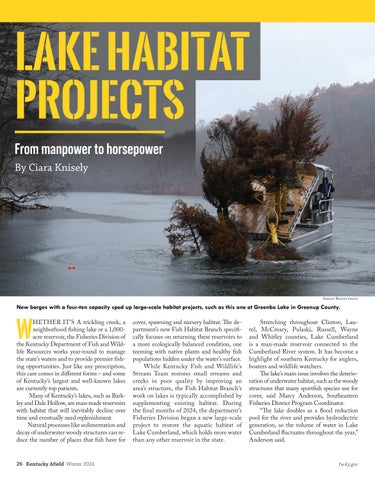
New barges with a four-ton capacity sped up large-scale habitat projects, such as this one at Greenbo Lake in Greenup County.
Built in the 1950s by the U.S. Army Corps of Engineers and formed by the construction of Wolf Creek Dam, the lake spans across 1,255 miles of shoreline and holds 50,250 surface acres of water at normal pool. In winter, the lake is noticeably lowered to increase its storage capacity for the basin’s coming spring rains.
This change in water level – low pool in winter and high pool in summer – has left its impact on the aquatic habitat of Lake Cumberland. “The continual change of going from being submerged underwater in warmer months to receiving air exposure during water level drawdowns in colder months breaks down the habitat structures even faster,” explained Anderson. “Weather and the elements also contribute to the decline in habitat at Lake Cumberland.”
The department uses several types of fish attractors to replenish the lake’s habitat. The structures currently being added to Lake Cumberland include freshly cut cedar trees securely anchored to cement blocks, which act as submerged brush that attract species like crappie and panfish. Typically, each site will receive around seven to 14 trees. By December of 2024, Lake Cumberland had received 468 fish habitat structures between 47 sites.
Crews at the lake will mainly work during the winter pool drawdown. “The goal is to have 65 sites by the time we’re finished,” said Fish Habitat Branch Program Coordinator Spencer Phillips, who oversees largescale habitat projects in lakes.
Popular fishing spots – generally situated off the main lakes in creek arms – are usually the first to receive habitat structures.
Satisfyingly, the cedar trees going into the lake are sourced directly from Meadow Creek Wildlife Management Area (WMA) in Wayne County, just south of the lake. Cedars are abundant across the landscape; thinning monoculture stands is a wildlife management practice to accelerate natural succession to hardwoods such as oaks and other heavy mast species which provide critical food for wildlife.
“These trees are easily found and using them straight from the WMA makes it very convenient for us. It’s helping more than just fisheries,” said Anderson. “Wildlife will benefit, too, from the new growth the cleared area creates.”
Types of habitat
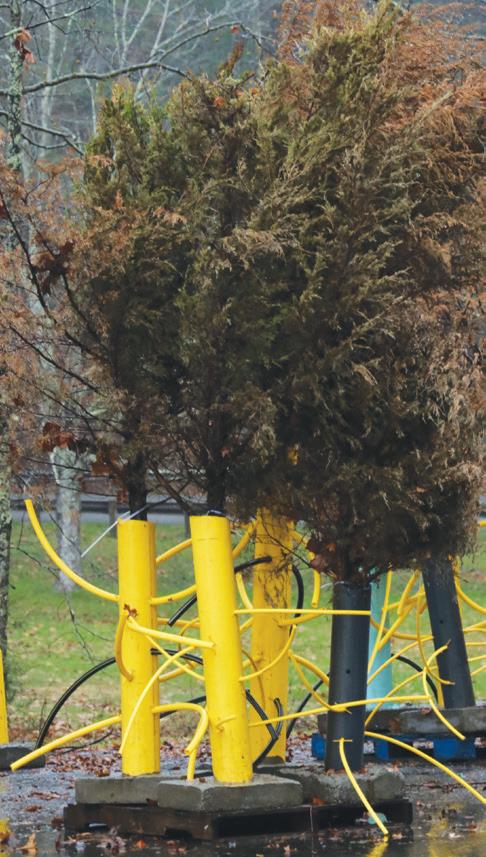
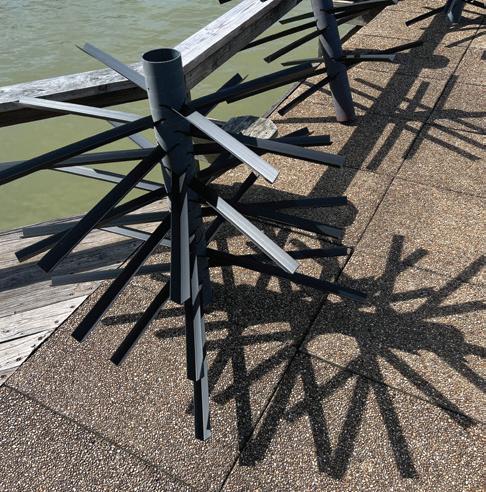
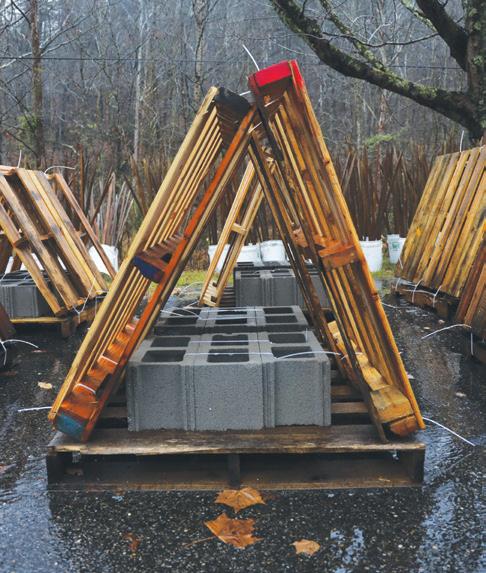
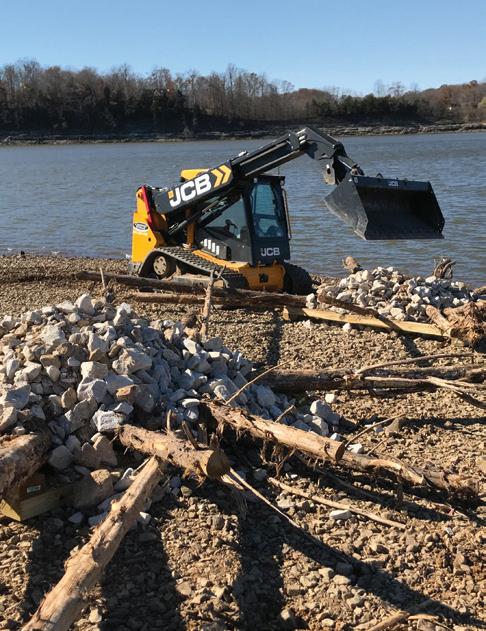
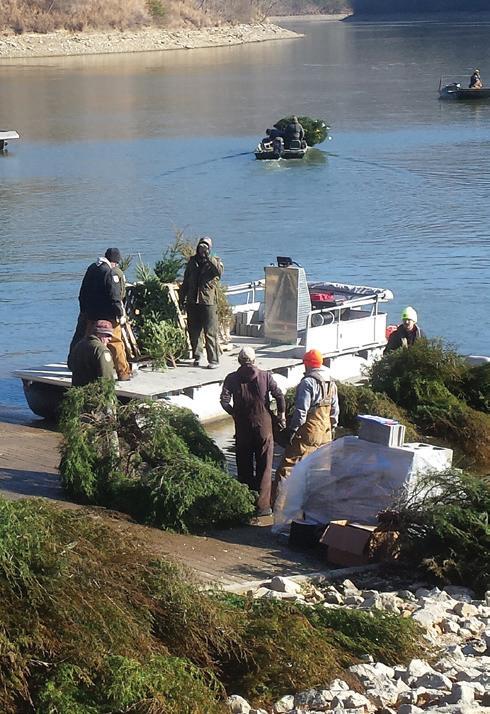

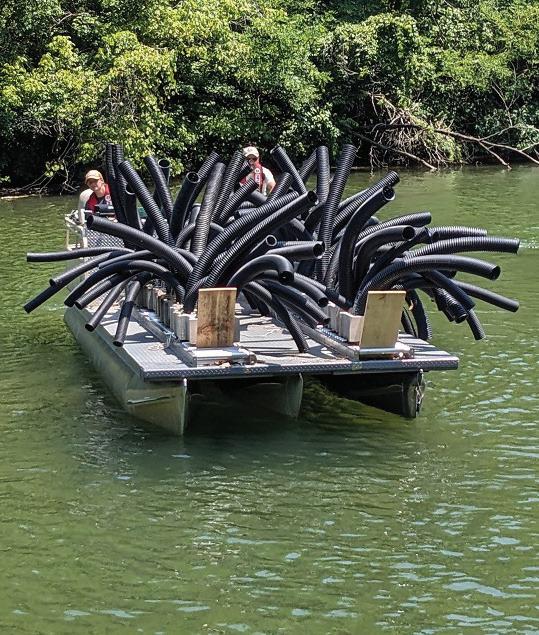
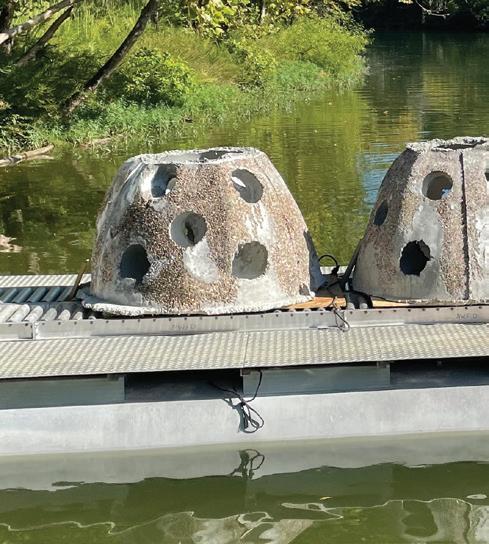
Department employees often fashion fish attractors out of recycled materials: discarded Christmas trees, leftover pallets, wooden stakes from lumberyard slabs and more. Employees use molds to create the concrete reef balls.
Spider Hump
Pallet Structure
Plastic/Brush Stake Buckets
artificial Structure
Corrugated Pipe Trees
Rock Piles Reef Balls
Ashley Reaves photo
Ashley Reaves photo
Ashley Reaves photo
KDFWR photo
KDFWR photo
KDFWR photo
KDFWR photo
KDFWR photo
KDFWR photo


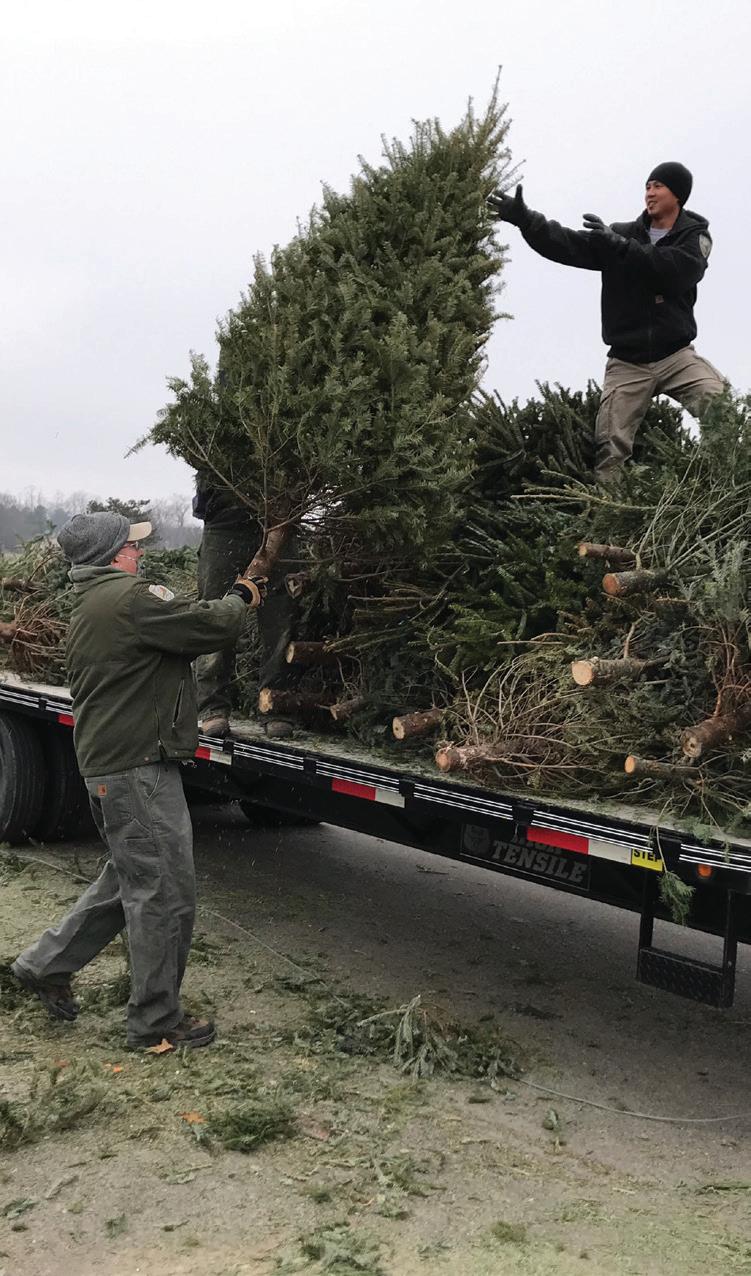
Other habitat structures used at lakes around the state include wooden pallets nailed into triangles and buckets of cemented wooden stakes. In general, materials can include trees, rocks, logs, wooden pallets and commercially made plastic structures. In January, the department also collects discarded Christmas trees and recycles them into brush piles – the Christmas for the Fishes program.
Fisheries crews once had to muscle stumps, pallets, concrete-filled buckets and trees onto boats to dump into a lake. Some of the large stumps weighed up to 500 pounds. New innovations, however, have quite literally changed the game.
“New equipment has streamlined this work,” said Phillips. “In the past, a project may have required anywhere between 20 to
40 people over several days, depending on the lake. Now, oftentimes teams of five to 10 people can easily handle fish habitat jobs in a single day.”
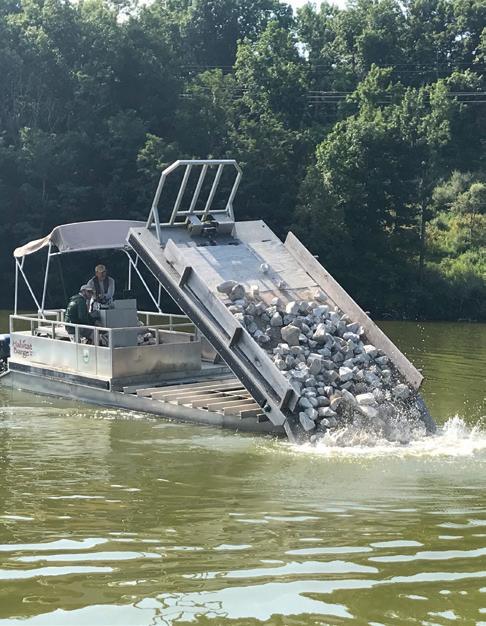
In the past few years, Kentucky Fish and Wildlife has made significant additions to its inventory of heavy equipment used to add habitat to lakes. The department now has three 27-foot-long barges with tilting beds able to slide four tons of stumps and other habitat into the water, three pontoon boats capable of handling lighter loads and six loaders with telescoping arms to place habitat in the boats.
Habitat staff and equipment are distributed from one end of the state to the other for maximum impact. In addition to Lake Cumberland, the equipment has been used for habitat projects at Greenbo, Taylorsville, Green River and Barren River lakes.
When dams and reservoirs were first constructed – Kentucky has more than 20 impounded lakes of various sizes throughout
Fisheries Biologist Tom Timmermann loads pallet structures at Greenbo Lake.
Ashley Reaves photo
Loaders with extendable booms decrease the amount of time it takes to load habitat into boats. The machines also allow department employees to place massive stumps.
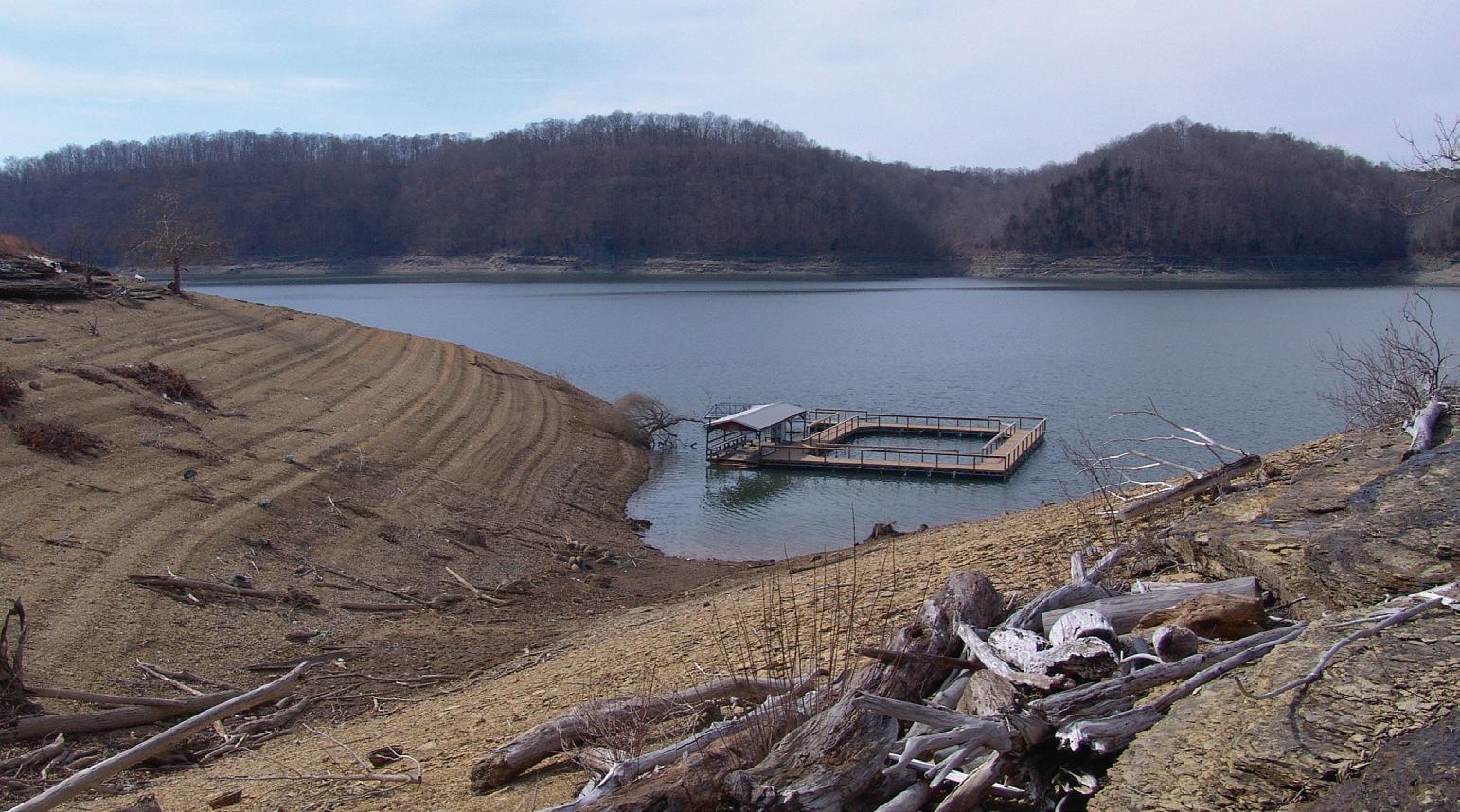
A drawdown at Lake Cumberland reveals the absence of cover on the exposed banks.
Rick Hill photo
Ashley Reaves photo
the state – most of the land to be submerged was cleared. Decades later, biologists saw the need to replenish fish cover that didn’t exist in these lakes in the first place, or habitat that had deteriorated with time.
Wildlife biologist John Phillips launched the department’s large scale restoration philosophy by insisting that maximum numbers of deer and elk be stocked at restoration sites. The Fisheries Division would later adopt this large-scale effort philosophy for its lake habitat restoration program.
Cave Run Lake was the first recipient of this program, receiving significant habitat work from 2014 through 2017. With 2,700 structures placed at 61 sites, Cave Run has received more habitat than any other lake to date. However, working without skid steers or barges at the time, placing the fish attractors required many hours and local support.
With most large scale projects, the department has encouraged and relied groups of volunteers to help, such as the Job Corps, high school students, angling organizations, the U.S. Army Corps of Engineers, the U.S. Forest Service and many others.
“By the time the Carr Creek Lake project began in 2018, the department had large groups of people helping, even volunteers and local anglers, because it was so laborious,” said Spencer Phillips.
Carr Creek received 1,726 structures placed at 33 sites.
Newer and more capable heavy equipment had an impact with the start of the Barren River Lake habitat project in 2019. Workers got more habitat in the water faster by using the department’s habitat barge, which has a tilt-bed that can dump loads weighing thousands of pounds into the water with the tug of a lever. Barren River Lake received 1,300 fish attractors at 63 sites by the time the project wrapped up in 2023.
Kentucky Fish and Wildlife staff recognized the importance of providing new habitat to the state’s lakes. The department responded with an investment in staff and heavier equipment to tackle large scale projects in a shorter amount of time.
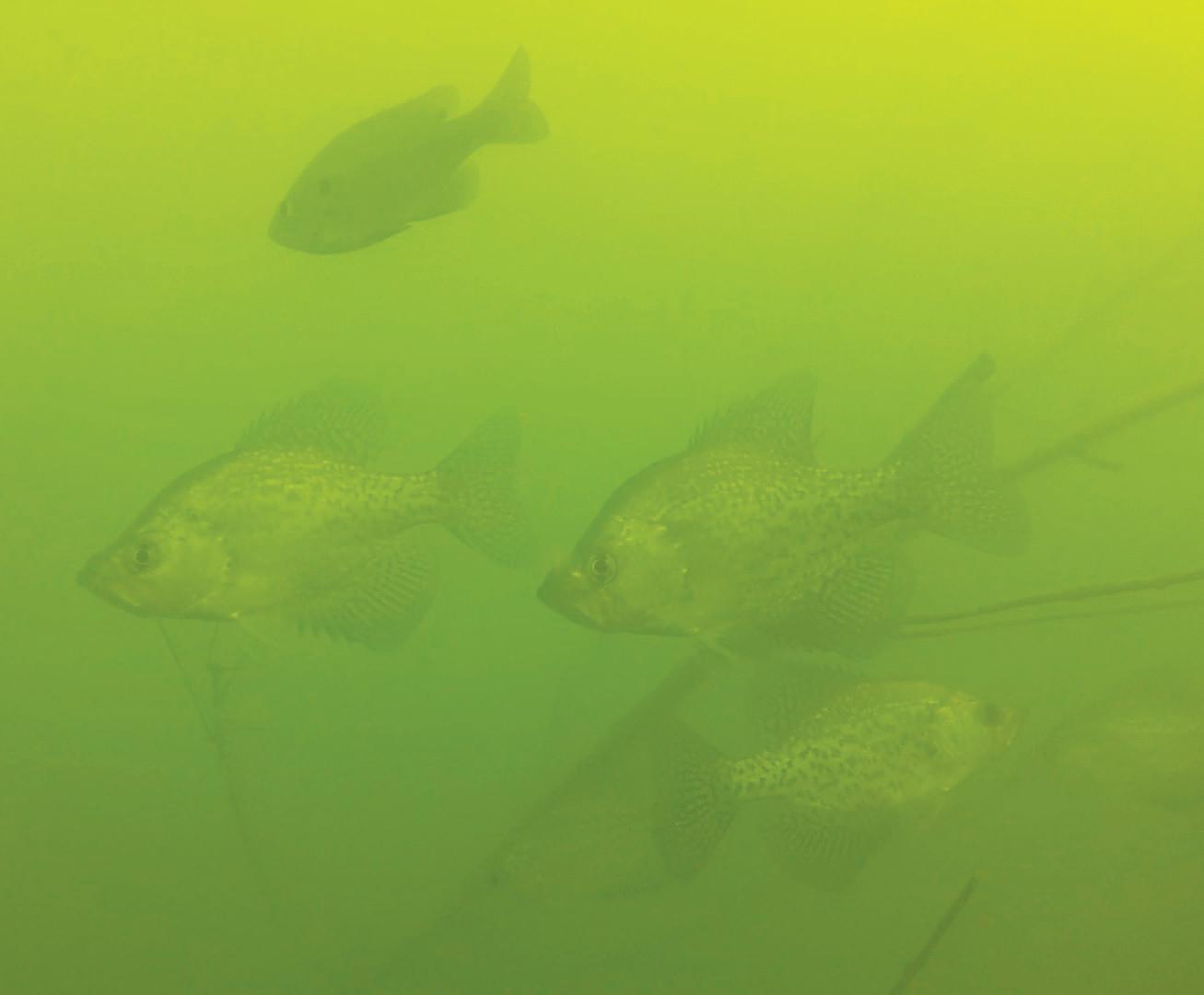
At Lake Cumberland, the new habitat is working. “At one of the sites, we sampled the area and within a couple weeks we saw a high rate of usage by crappie, sunfish and
bass,” Anderson said. “There are signs of fish concentrating around these structures.”
The Lake Cumberland project is starting along Fishing Creek. It eventually will expand elsewhere in the lake.
Anglers can find GPS coordinates for fish habitat locations across the state by checking out Kentucky Fish and Wildlife’s online Lakes with Fish Attractors database. To access, go online to fw.ky.gov and search for the keywords “Fish Attractor.” Viewers can also download GPX files to import into depth finders on boats; GPS coordinates will help reach the general vicinity and depth finders can help nail down exact location from there.
Anglers should also consider downloading the Fish Boat KY app on their phone. Users can view boating and fishing regulations, locate boat ramps or access points and see recent fish stockings.
Additionally, the Fisheries Division publishes its annual online Fishing Forecast each January. The forecast uses sampling information from the previous year to rate various water bodies. It also provides invaluable insight straight from the experts. n
Cave Run Lake
Biologists mounted a camera on a boom to document how crappie were using the cover provided by the new fish attractors placed at Cave Run Lake in 2014-17.
KDFWR photo
The annual Christmas for the Fishes program recycles discarded Christmas trees.
KDFWR photo