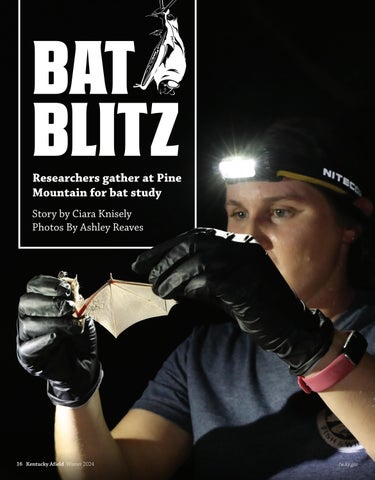
ONCE A YEAR , caravans of wildlife experts and eager students venture into the wilderness of Kentucky. As the sky dims, silence falls. Crickets chirp. When the first quick flash of a bat crosses overhead, the woods fill with excited but hushed whispers of researchers who know their subjects are on the way. It’s a mystery, guessing which creatures of the night will be seen, but among the forests of southeastern Kentucky, the potential to encounter a rare species is wide open.
Flying with precision under the cover of night, bats play essential roles in the environment even if they are infrequently seen or heard. The Kentucky Department of Fish and Wildlife Resources pays close attention to these small mammals to ensure their longevity in the ecosystem.
In late summer of 2024, Kentucky Fish and Wildlife employees and members of the Kentucky Bat Working Group organized a Bat Blitz – a focused trapping effort with dozens of participants – to learn more about the bat population around the Pine Mountain area of southeastern Kentucky.
The teams documented a total of 272 bats during a single weekend, including 13 gray bats and two northern long-eared bats, both federally endangered species – a great success for the event.
While collecting a large amount of information within a short period of time, this kind of event provides invaluable experience not only to students, but early-career biologists visiting from government agencies and private organizations invested in conservation. With financial support from the Kentucky Natural Lands Trust and the Imperiled Bat Conservation Fund, Kentucky’s 2024 Bat Blitz hosted more than 35 participants from 12 organizations. Information gathered during the annual event supplements Kentucky Fish and Wildlife’s understanding and monitoring efforts of the state’s bats.
“The unpredictable behavior of bats makes their study more difficult, and biologists aim to learn more about the habits of bats before more species are listed as threatened and endangered,” explained Michaela Rogers, nongame biologist for Kentucky Fish and Wildlife and president of the Kentucky Bat Working Group.
Before dusk each evening, the par-
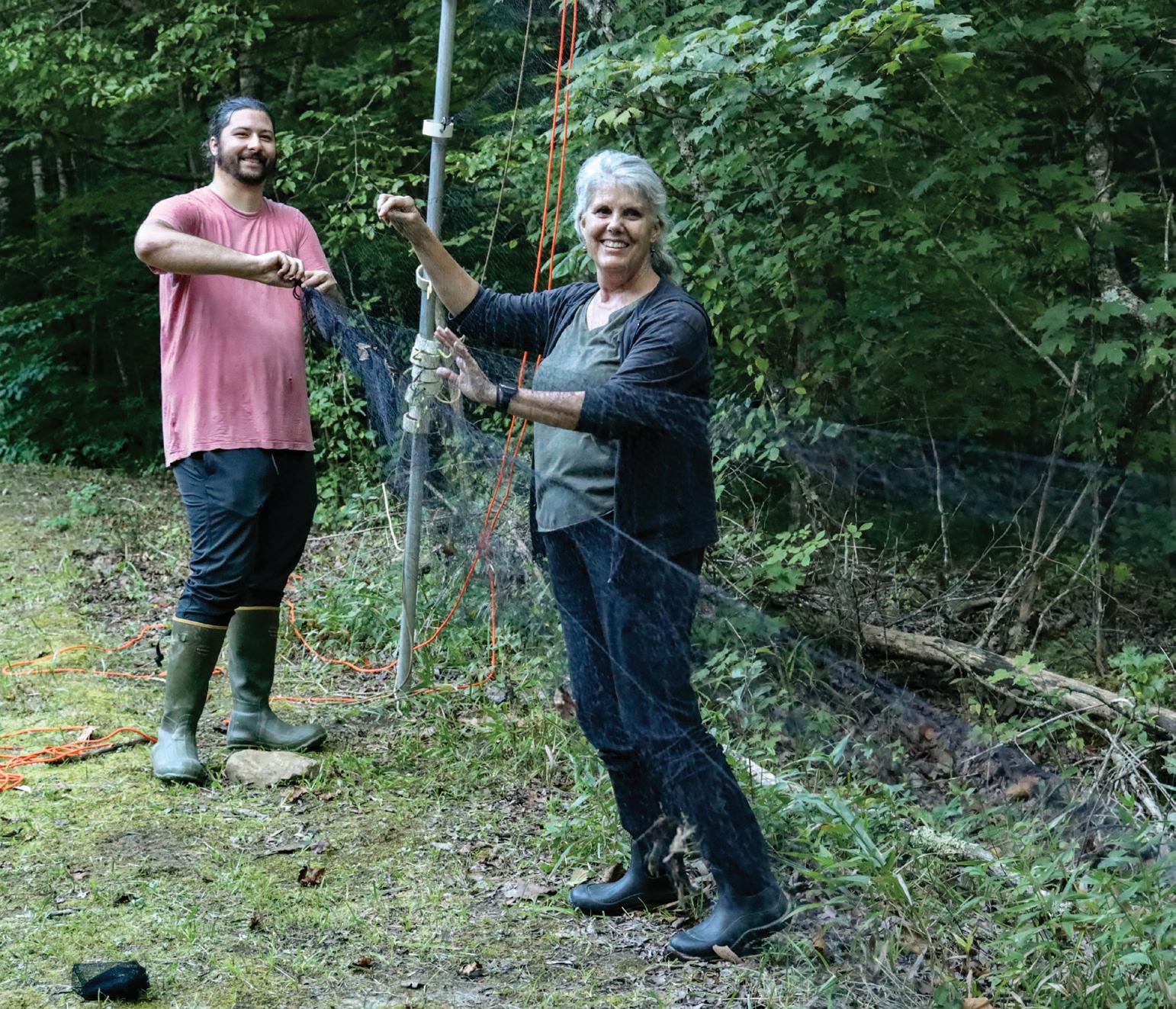
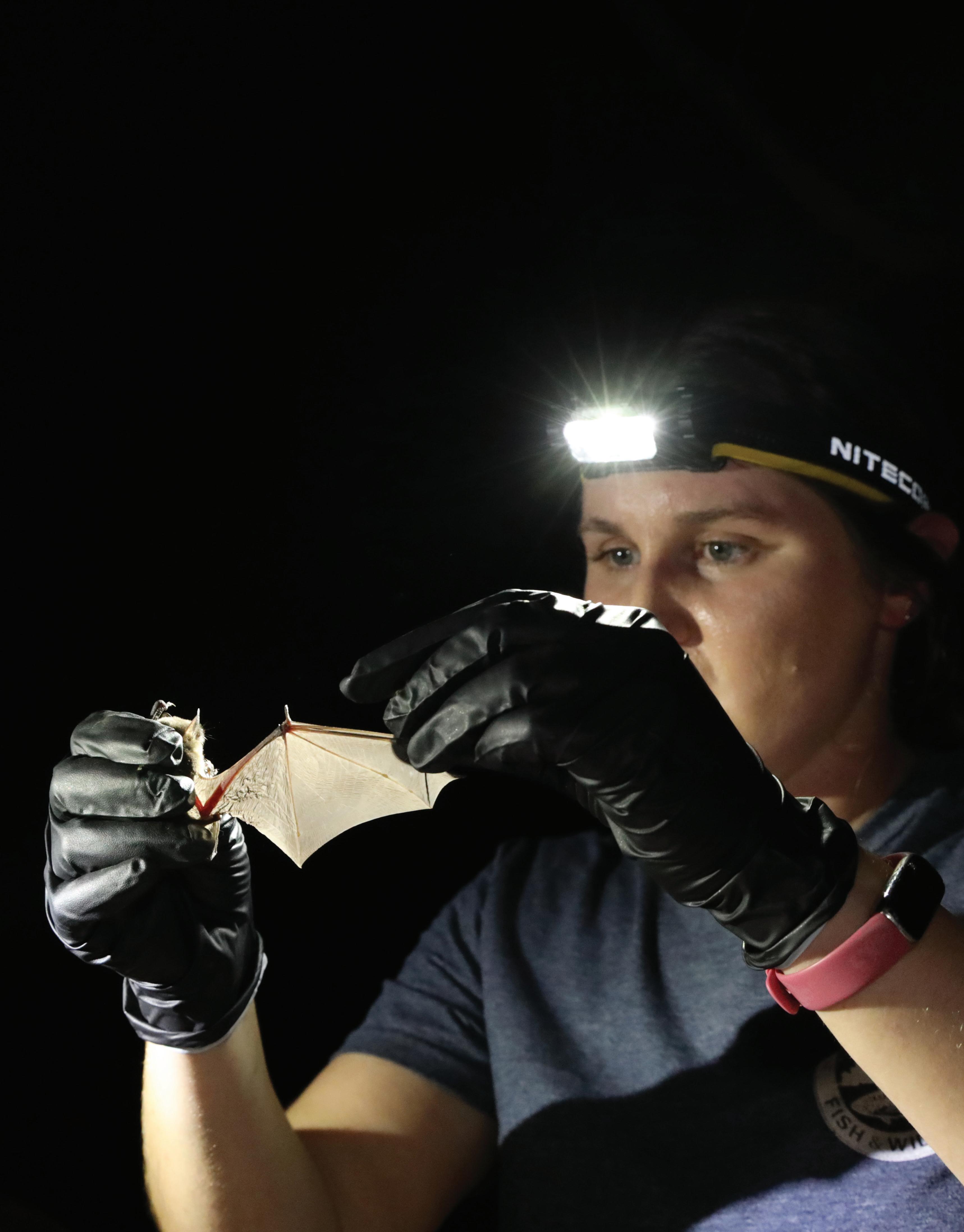
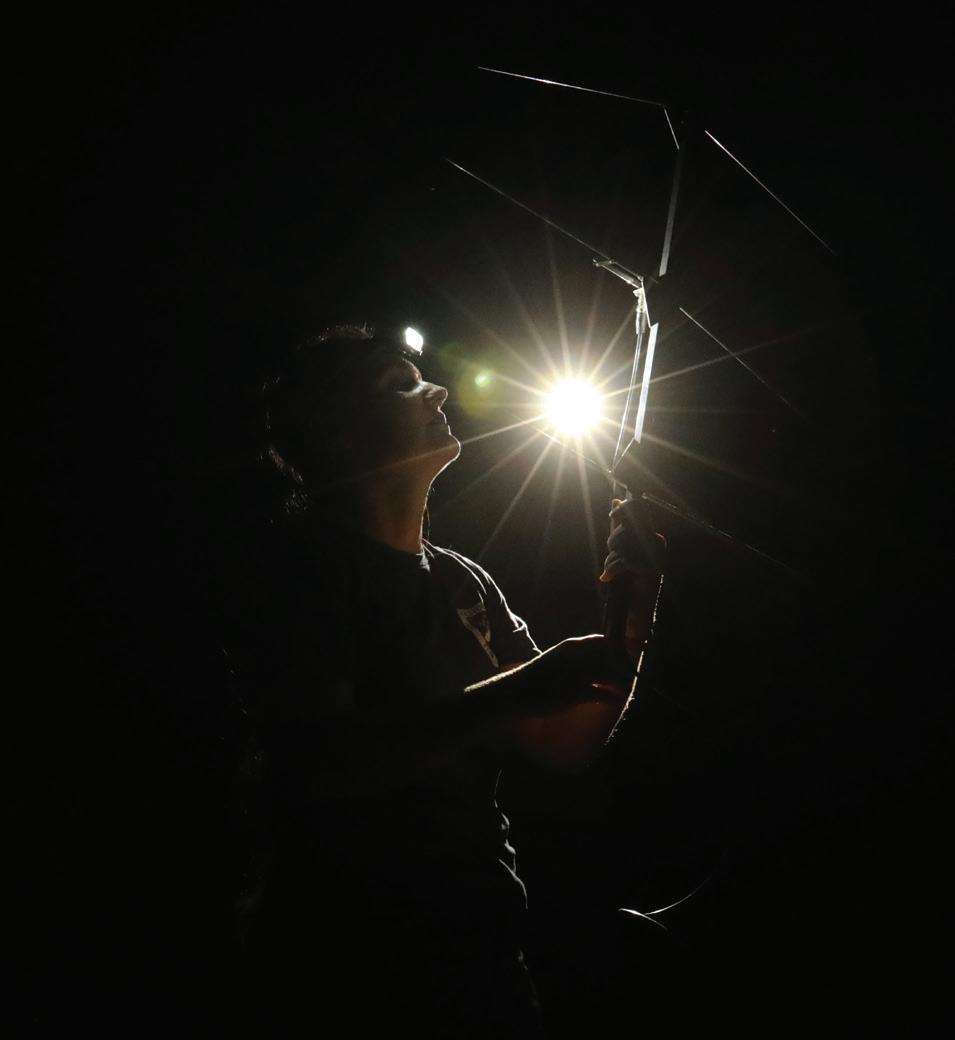
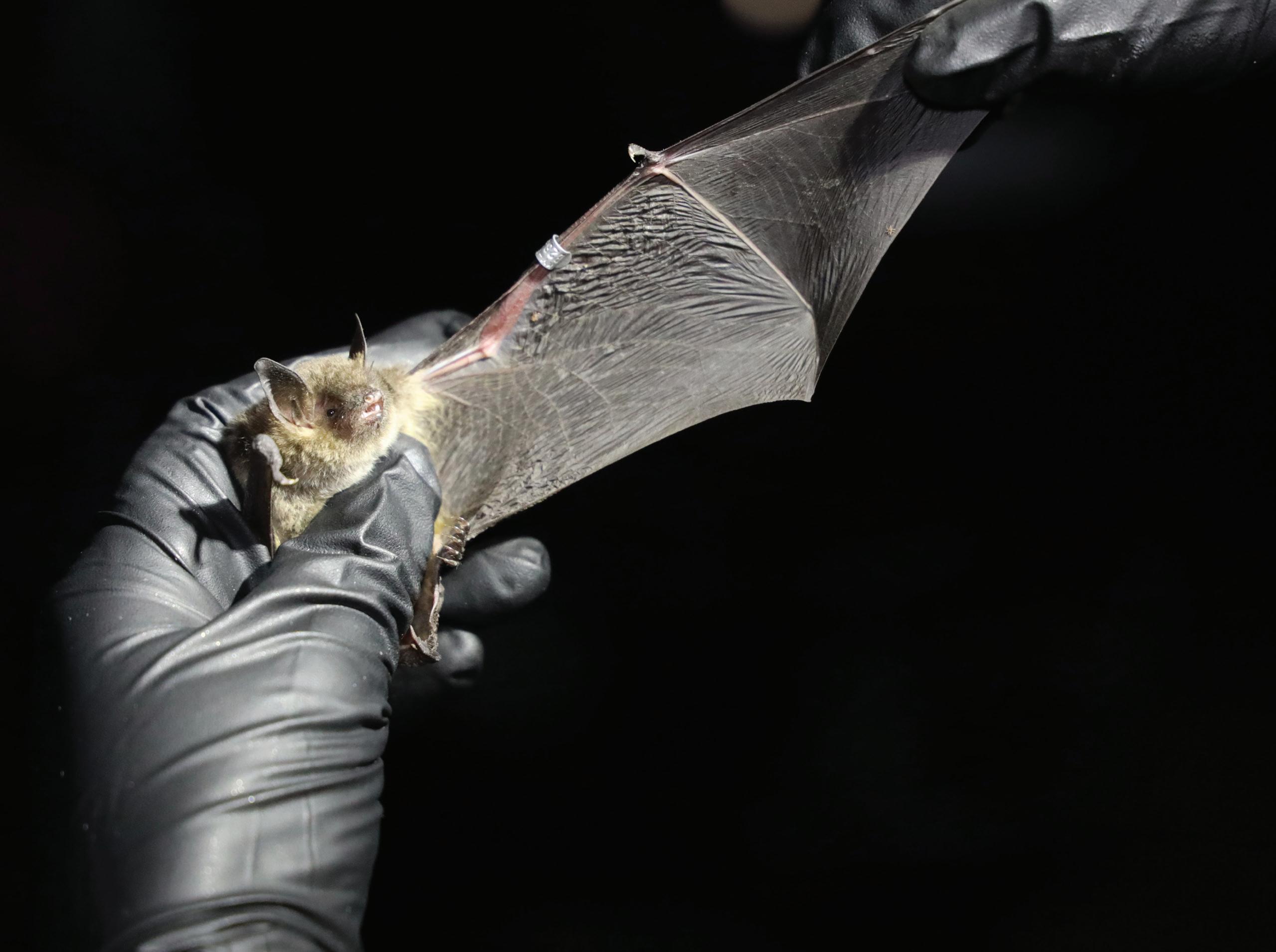
ticipants split into groups and erected fine, soft mist nets reaching 20 feet tall near areas that had seen recent bat activity. Per protocol during these surveys, bats that fly into these nets are then extracted and given quick examinations before they are released.
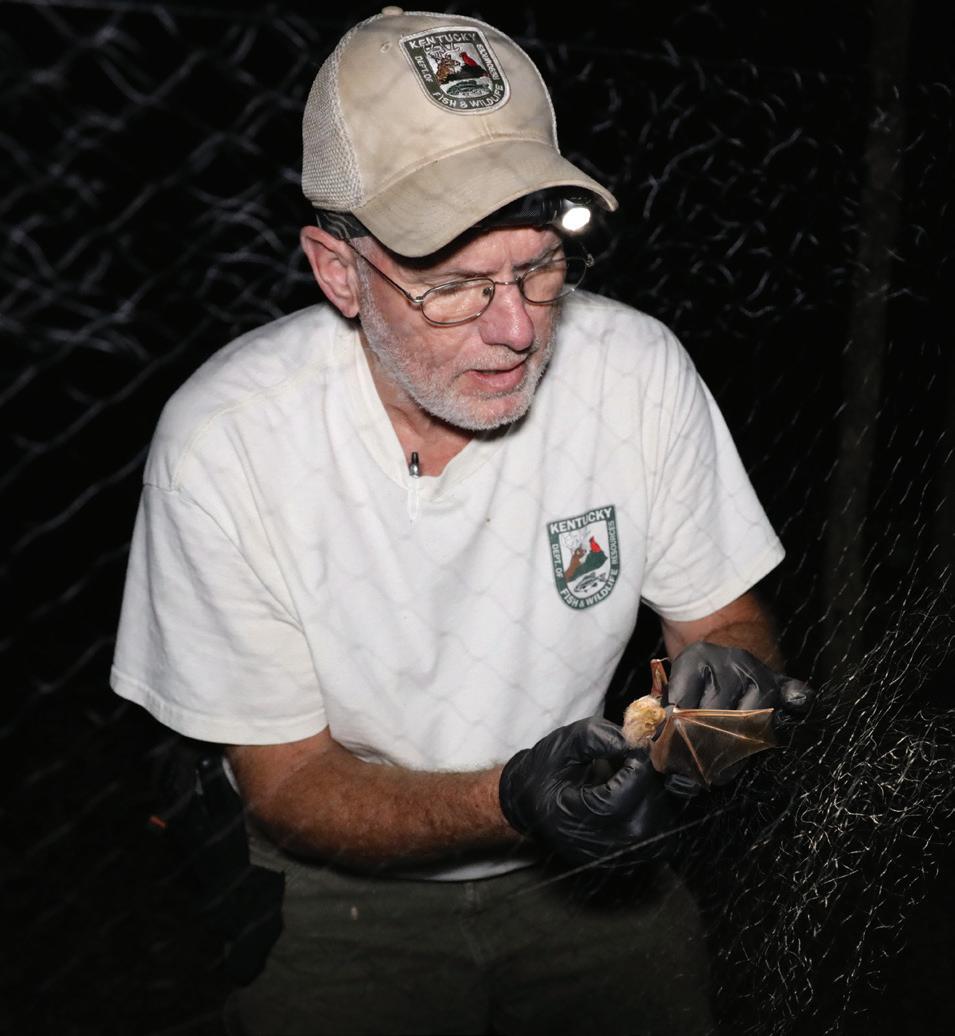
Blitz participants record the species, sex, age, weight, forearm length and reproductive condition of each bat. By the end of the event, the groups had documented 10 bat species.
The first to fly into Rogers’ net dur-
ing the 2024 blitz was a little brown bat, which is a widespread species experiencing a serious decline.
While some species frequent caves, many of Kentucky’s bats live primarily among woodlands, roosting underneath tree bark. For research and surveillance, this can make locating bats and colonies difficult. Despite such a challenge, researchers captured and examined 88 of Kentucky’s smallest bat species, the tricolored bat, during the 2024 blitz. Measuring just 3½ inches long with a wingspan of 9 inch-
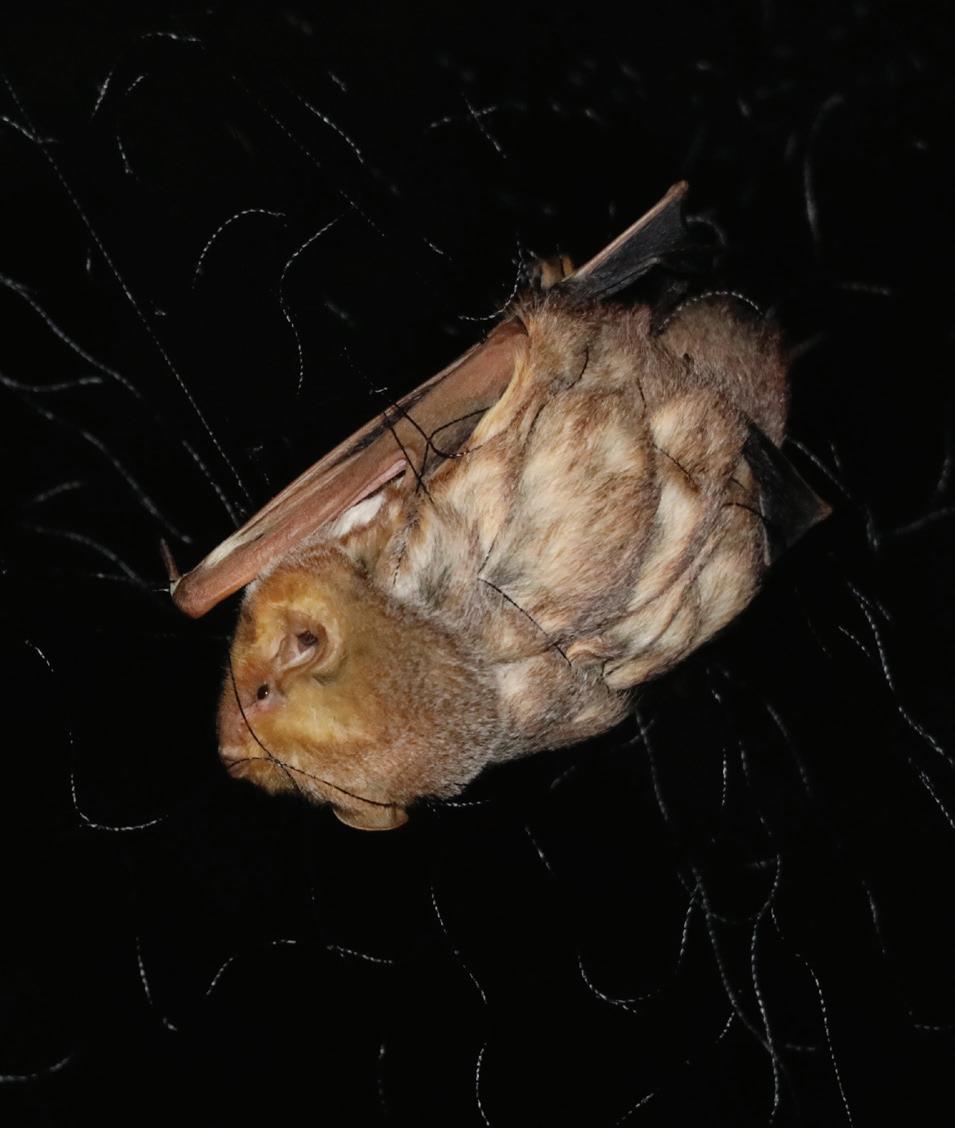
es, the U.S. Fish and Wildlife Service identifies the tricolored bat as a species in serious decline and has proposed to change its status to endangered.
In the dark woods of southeastern Kentucky that night, dwarfed in the careful hands of biologists, each bat’s tiny, fragile form became a reminder that these so-called creepy creatures are nearly defenseless.
Being so sensitive, not just anyone can handle bats; Rogers noted that U.S. Fish and Wildlife Service protocols require special permits. These can only be earned by showing competency and experience with different bat species – some of which are rarely seen even for biologists.
“Because bats are so elusive by nature, events such as bat blitzes are sometimes the only way students might encounter certain species,” explained Rogers. “So, while Kentucky Fish and Wildlife is receiving data, participants are receiving rare experiences with experts that will advance their career.”
Rogers herself participated in her first Kentucky blitz as a graduate student in 2018.
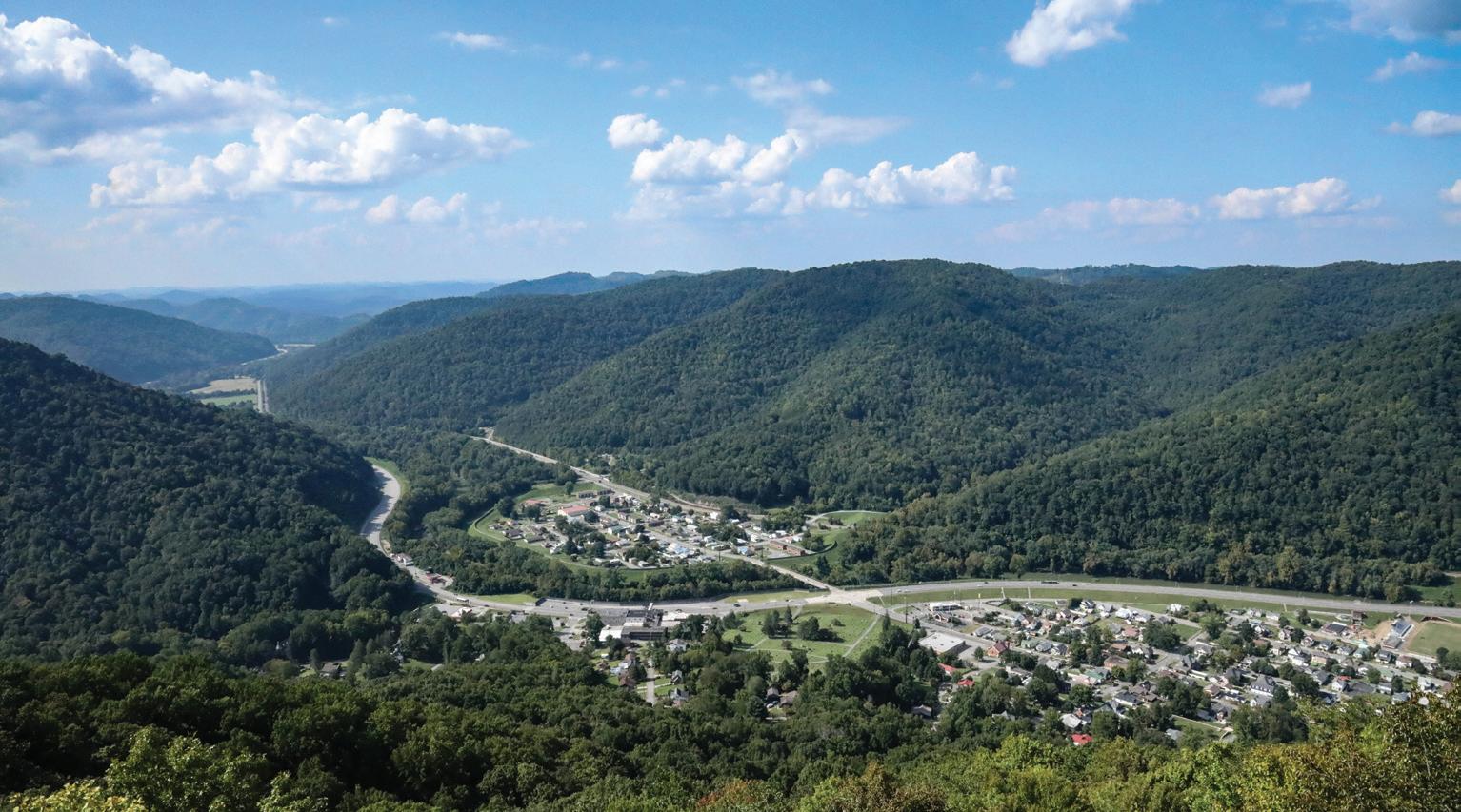
For the 2024 blitz, the team selected the Pine Mountain region of the Appalachians in particular for its high biodiversity and forests, which provide great roosting habitat. Its wooded mountains support many different bat species, making it an ideal location for surveys and research.
As key insectivores in the food chain that feed on common crop pests, the U.S. Geological Survey estimates that bats provide more than $3.7 billion annually in pest control services. There are 16 species of bats known to inhabit Kentucky throughout the year.
“Having enough time and manpower is the biggest obstacle for projects such as bat surveys. Late summer to fall is a great time of year to hold the blitz because bats will begin swarming to mate soon, before later going into hibernation due to their food source of
insects becoming scarce,” Rogers said. Researchers are still trying to understand how and why bats move between roost sites. “The collective volunteer efforts of many participants over multiple survey sites provides a lot of data in a short period, so it’s very efficient in gathering information,” Rogers said.
Kentucky’s Bat Blitz is managed under the main umbrella of the Southeastern Bat Diversity Network. Funding is specifically allocated toward bat research through initiatives such as the Kentucky Natural Lands Trust’s Imperiled Bat Conservation Fund. The U.S. Fish and Wildlife Service determines nationwide protocols and goals for bat studies.
“Survey sites are led by federally authorized biologists who have permits to conduct bat surveys,” said Laura Burford, Nongame Program coordinator for Kentucky Fish and Wildlife. “There are some bats that are so similar that sometimes it depends on very specific characteristics to tell them apart, such as toe hair length.”
Sites for the 2024 blitz were located within Cumberland Forest Wildlife Management Area, Kentucky Ridge State Forest, Pine Mountain State Resort Park, Martin’s Fork State Natural Area and Cumberland Gap National Park.
Many bats received lightweight metal bands on their wings. If the bat is recaptured in the future, it will give researchers insight about a bat’s lifespan and migration distances. “Though many of Kentucky’s bats are solely forest dwellers, cave-hibernating species are fitted with uniquenumbered bands to identify the individual if rediscovered during winter hibernacula surveys,” explained Rogers.
Two little brown bats captured during the blitz also received temporary radio transmitters at the request of the U.S. Fish and Wildlife Service. This species is in critical decline, and tracking devices will help biologists monitor their activity and assist in locating critical roosting habitat.
Alarmingly, 11 of the 16 bat species occurring in Kentucky are listed as species of greatest conservation need under the department’s current Statewide Wildlife Action Plan.
Besides habitat loss and degradation, white-nose syndrome (WNS) is a major threat to bat populations. The rapidly spreading fungus has been documented in 40 states, nine Canadian provinces and is believed responsible for the deaths of millions of bats in
$ 3.7 BILLION
Value the U.S. Geological Survey places on insect pest control services provided by bats each year.
North America, according to the U.S. Fish and Wildlife Service. The disease first appeared in Kentucky in 2011, and biologists are always on the lookout for signs of its presence. While it has no effect on people or other animals, it is highly transmissible between bats, can be fatal, and currently has no cure. Kentucky was the first state to develop a response plan to address white-nose syndrome both before and after its arrival. Currently, management focuses on limiting disturbance of caves used during hibernation, quantifying populations of bats in infected areas and monitoring bats during surveys for clinical signs of WNS. Bat Blitz events help biologists with the detection and monitoring of species likely impacted by whitenosed syndrome in an area.
“Bats are important to our ecosystems. Kentucky’s bats consume many agricultural pests. Bats in other parts of the world serve as important pollinators,” said Burford. “The vampire bats that can feed on the blood of livestock only occur as far north as Mexico and South America, but their saliva is being studied by doctors as an anticoagulant. Other studies about echolocation have helped develop navigational aids for the blind.”
There are several ways for everyone to support bats. People can join organizations such as the Kentucky Wild program offered by Kentucky Fish and Wildlife. Membership dues to Kentucky Wild, for example, paid for night vision goggles used during population counts at bat caves, as well as
cave gates to limit access to areas known to host white-nose syndrome.
People can create better habitat for bats on their property, too. “It surprises people, but one of the best things to do for bats is planting pollinator habitat in the form of native plants,” said Rogers. “Kentucky’s bats feed exclusively on insects, so pollinator habitat directly helps support their main food source.”
Both the big brown bat and the Eastern red bat are species commonly seen by people. The department will present its findings from the blitz during a winter meeting of the Kentucky Bat Working Group. While there is still much to learn about bats, events such as this demonstrate how the state is full of magnificent natural wonders, seen or unseen. n