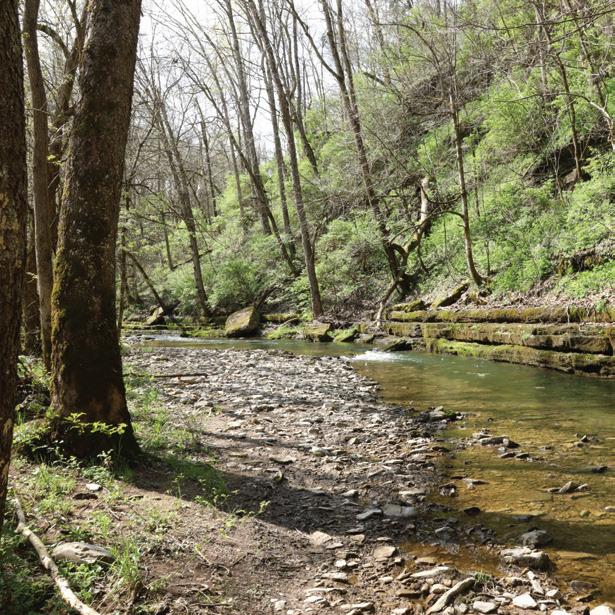
WILDLIFE BIOLOGIST WES Little peered through his binoculars along the shoreline of Pine Mountain’s Clear Creek Hollow. “I think I see what I’m looking for,” he said.
Before hitting the trail to birdwatch, Little had hoped in particular to see a Louisiana waterthrush, a reclusive species which frequents remote streamside habitat. As he watched, the tiny bird snatched a dragonfly out of the air before continuing on its way, hopping from rock to rock with impressive camouflage.
At any point in the year, Kentucky’s varying landscapes attract a large diversity in bird species, from raptors and gamebirds to songbirds and shorebirds. By late spring, Kentucky teems with species of all shapes, colors and sizes.
By Ciara Knisely
Birdwatching may seem to call for expert identification skills, but it’s quickly gaining popularity for the opposite reason: it’s a hobby that can be accomplished in simple ways as well, such as through an office window or while drinking coffee on the back porch.
Kentucky has many year-round bird species, such as cardinals and woodpeckers, but warm weather brings a variety of neotropical songbirds to Kentucky as they return north to nest.
Neotropical species are songbirds that nest in North America but spend the winter in South or Central Americas or the Caribbean; the official dividing line is the Tropic of Cancer, which passes through central Mexico. As birds return north after winter, many of these species either migrate through Kentucky or stay to nest, such as warblers, orioles and tanagers.
“March through May is the best time to
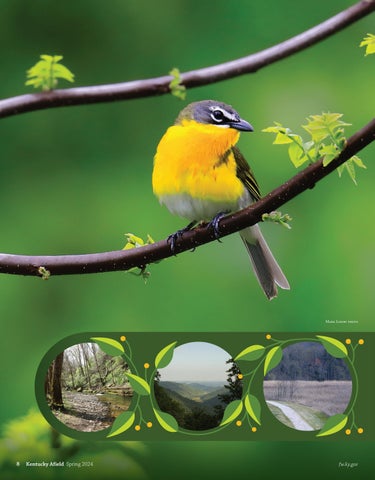
The state’s varying terrain and seasonal weather support many different types of birds. The mountain ranges of the east support many atrisk and endemic species of plants and wildlife. The bluegrass region with grassy prairies and hardwood forests provides prime habitat for birds such as the American woodcock, loggerhead shrike and Carolina wren. Large blocks of woodlands are great places to see songbirds such as vireos, warblers and nightjars.
see an overlap of birds that winter in Kentucky and birds that nest in Kentucky,” said Gary Sprandel, secretary of the Franklin County Audubon Society and official bird counter for the National Audubon Society.
Migratory waterfowl may still be lingering around water bodies from winter as late as March, when migratory songbirds typically begin returning.
“The red-winged blackbird is one of the earliest songbirds to come back – and seeing them marks the start of spring for me,” Sprandel said. “They are also a great example for new birdwatchers because they’re very common and very easy to identify visually,”
As the bird’s name suggests, males are dark-bodied with small red and white dashes on both wings while females are tawny brown.
Interestingly, songbirds can even change colors throughout the year, though it’s not for the purpose of blending in, said Kentucky Department of Fish and Wildlife Resources non-game avian biologist Kate Slankard.
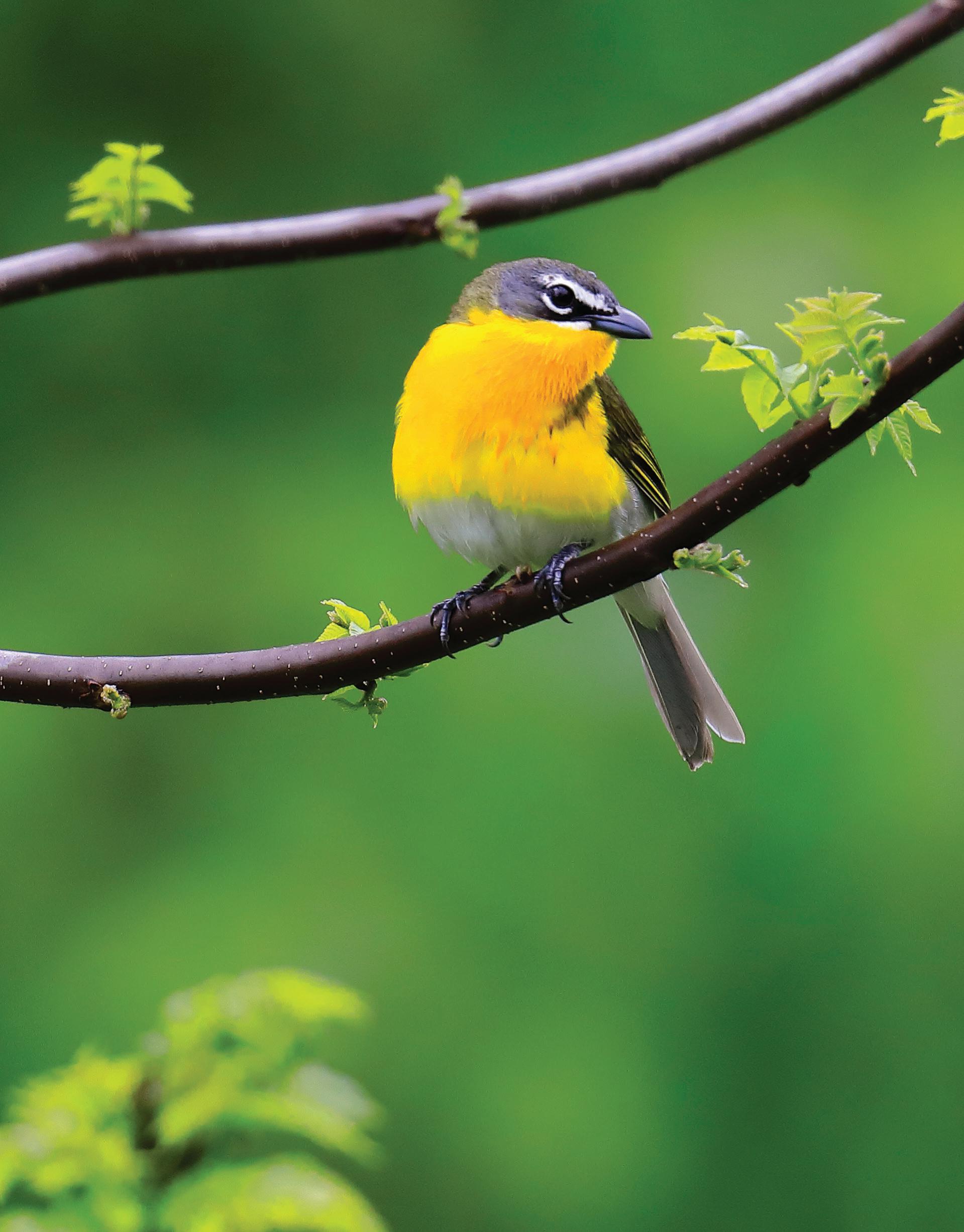
“In spring, bird species are in full breeding plumage. Mainly for male birds, their colors change to become flashier. This helps them attract a female,” explained Slankard.
Neotropical birds such as tanagers and orioles are easier to spot due to their telltale bright red and orange hues. Female birds may be more drab-colored for camouflage while nesting.
“Breeding season is also when birds are singing the most,” said Michael Patton, non-game avian biologist for Kentucky
Fish and Wildlife. “Birds make different calls and songs in different situations. Mornings and evenings are prime birdwatching hours as birds awaken or settle in the trees for the night. They are more vocal during these times than mid-day.”
It’s possible to see these species in the fall when nesting birds head south and migrants pass back through, but it can be more difficult to identify them because birds aren’t in colorful breeding plumage, explained Ben Leffew, preserve manager for Shaker Village at Pleasant Hill in Harrodsburg.
Typically, birds aren’t disturbed by minimal human activity nearby, but there are a few techniques to keep in mind when going into the field. First, be sure to have the right setup of gear; binoculars and neutral-colored clothing are high priority.
“Avoid colorful or noisy clothing and gear,” said Leffew. “The color white, too. You don’t have to be fully camouflaged, but those things can alert birds. Too much background noise can also make it harder for you to pick up bird calls.”
Keep in mind that certain gear will
make more noise in the field than others, especially while moving. A pencil and notebook are also helpful for writing down notes in the field.
Daily weather conditions do matter as birds might sing less in poor conditions, but a light rain can also present opportunities to see birds resting rather than flying about.
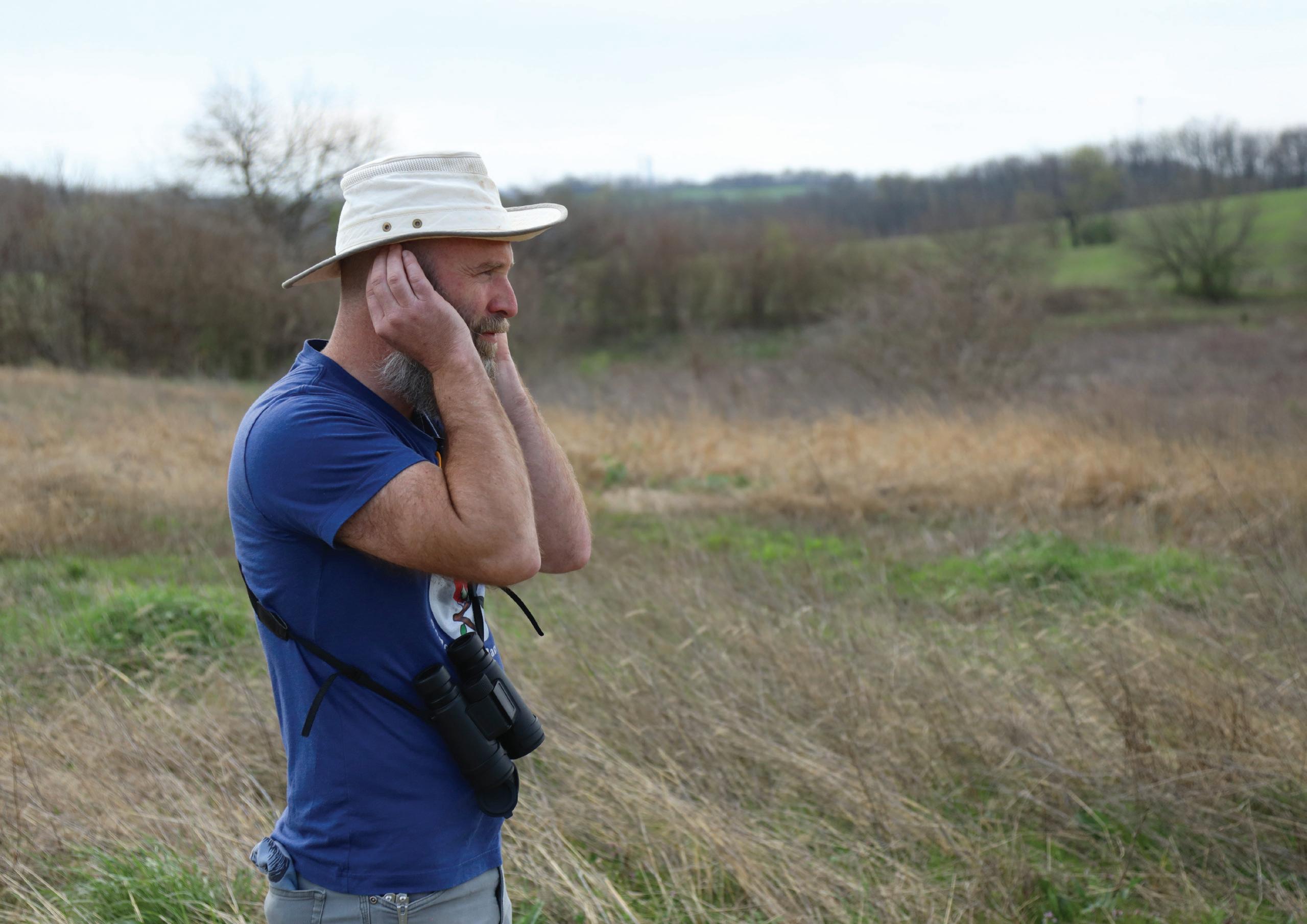
Remember that wind can both carry and cover up sound. While listening for birds, cup a hand behind your ear to help amplify sounds.
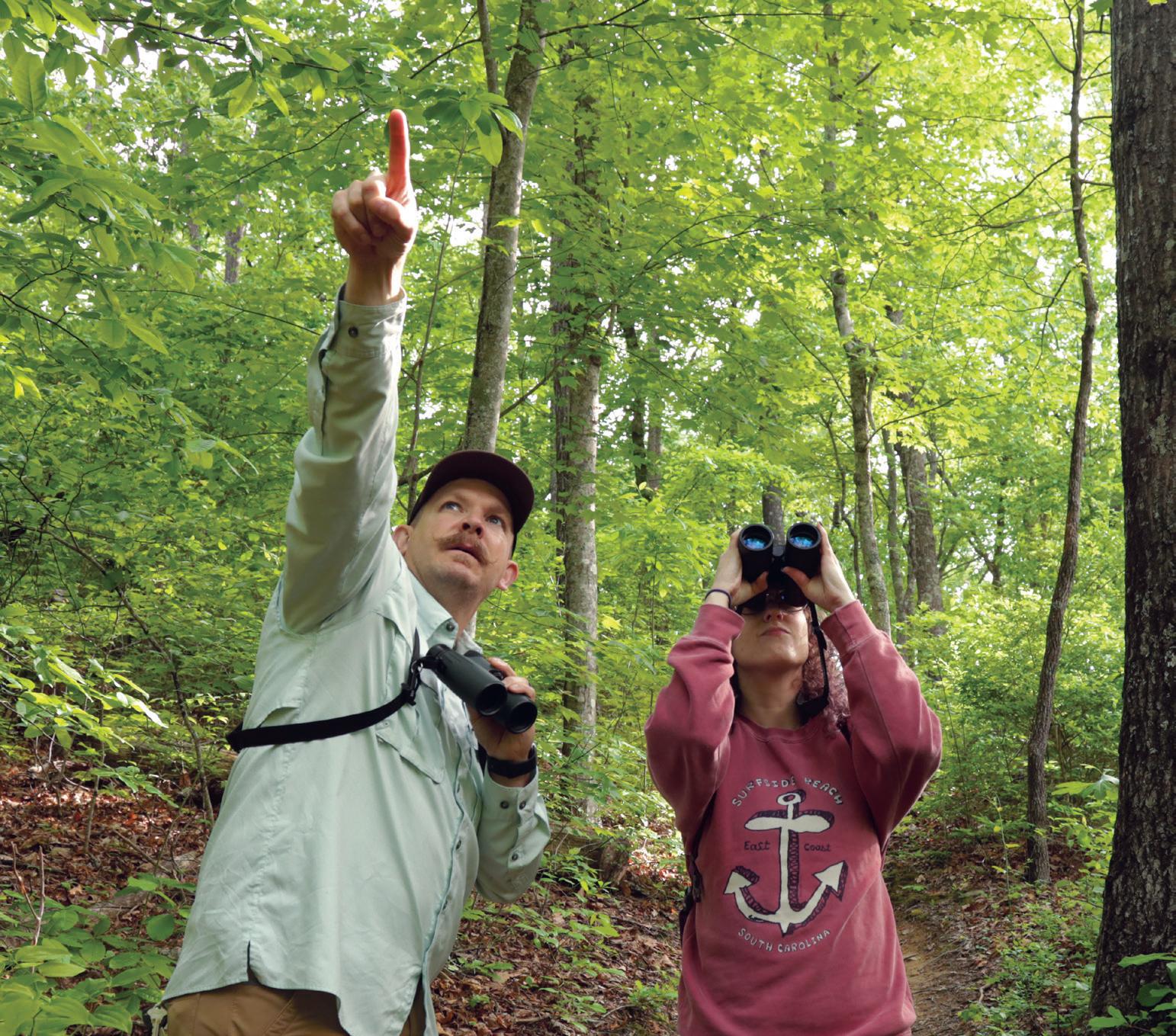
“When you’re looking for a singing bird, cup your ears and face different directions to find where the sound is coming from,” Little advised. “Open your mouth and close your eyes when cupping your ears.”
Another tactic involves gentle noises that birders call “psh-ing.” Sometimes birds will be curious about the “psh” sound that you make, although it can also deter birds if exaggerated. Wooded valleys with no wind are good spots to try this technique, as goofy as it may feel.
Identifying a bird in the field can seem overwhelming at first, but there are many
tools to help. Though Sprandel knows many bird calls by memory after decades of practice, he recommends utilizing a smartphone bird identification app and the online e-Bird database to keep track of bird sightings. Apps such as the Cornell Lab’s Merlin Bird ID use pre-existing recordings and images to help identify birds by sound or visuals, which is handy when a bird is singing somewhere out of sight. Additionally, e-Bird provides a platform to catalogue details of every individual birding trip, similar to performance tracking apps for runners. Apps can usually mimic bird calls as well, but it’s best not to call during the spring breeding season to avoid disrupting natural behavior.
Leffew utilizes the online apps to look for unusual or uncommon bird sightings posted by birders visiting Shaker Village in Mercer County.
Birding apps aren’t absolute, however. “Everyone knows the mockingbird, but brown thrashers, gray catbirds, starlings and jays also imitate other bird calls,” Leffew said. “The mockingbird mimics a call three times, thrashers twice, and catbirds once.” Sprandel suggested focusing on learning to identify the most common birds first, as that can make it easier to tell when something isn’t common. “Over time, you start memorizing bird songs. The field sparrow’s call has the cadence of a bouncing rubber ball. Grackles sound like the creak of a screen door opening,” said Sprandel.
“Scan with your eyes first, then raise your binoculars,” said Leffew, who oversees habitat management at Shaker Village and has come across many exciting birds on the grounds. “When trying to identify the species, start by narrowing out the most common birds. Don’t try to learn everything all at once.”
Poor lighting may alter a bird’s color.
“Try to keep your eyes on the bird for as long as you can,” added Little. Take note of the bird’s song, behavior and shape to help identify the bird afterwards. Birding books that show species’ different plumage throughout the year are other great identification tools.
The surrounding environment can also help identify species. Is it among the treetops or nestled in a bush? Is it near water, or maybe an open field? Warblers, for example, typically prefer blocks of forest, but sparrows are more likely near grassy or shrubby fields. Birds such as purple martins and barn swallows nest around human
structures as a means of evading predators.
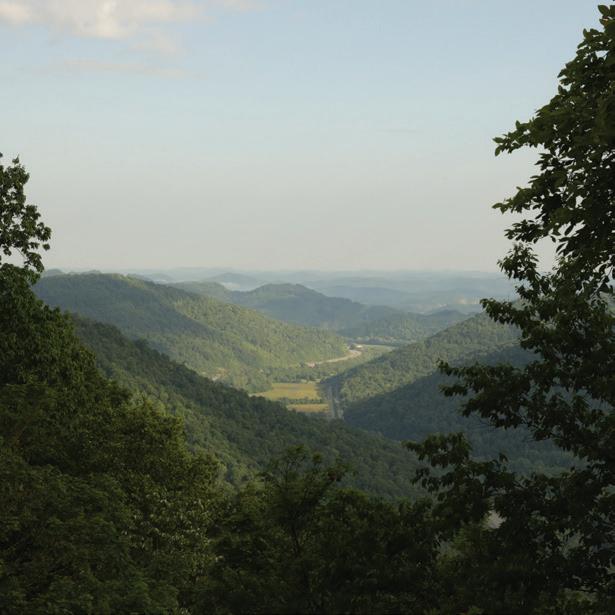
Spanning through Kentucky and Tennessee, the Pine Mountain region is hotspot for neotropical birds. It forms the first of the Appalachian mountain ridges – a critical migration corridor with high plant and wildlife biodiversity, as well as species that occur nowhere else in the world.
When looking for a particular species, familiarize yourself with its features and characteristics. Little, seeing Pine Mountain’s Clear Creek Hollow Trail had a water source that might attract birds such as the Louisiana waterthrush, knew what signs to look for while birding. After standing still and watching the creek bank, he proved himself right.
Just like other wildlife, quality habitat is important to songbird health. Kentucky is
unique in its landscape that changes from the western sloughs through the knobs and bluegrass to the forested mountains in the east.
“Our habitat work is typically birdcentric and invasive plant species removal is done year-round. Just about anything we do to improve habitat is to attract birds and birders to Shaker Village,” Leffew said.
Shaker Village includes 2,000 acres of grassland and forest dedicated to habitat management. Leffew recommends the Anderson Trail as one of the best birding walks.
With its vast native tree collection, Bernheim Arboretum and Research Forest provides another great opportunity to see high-quality habitats in one location. Volunteer naturalists offer guided programs throughout the year to highlight Bernheim’s specialties, and more than 40 miles
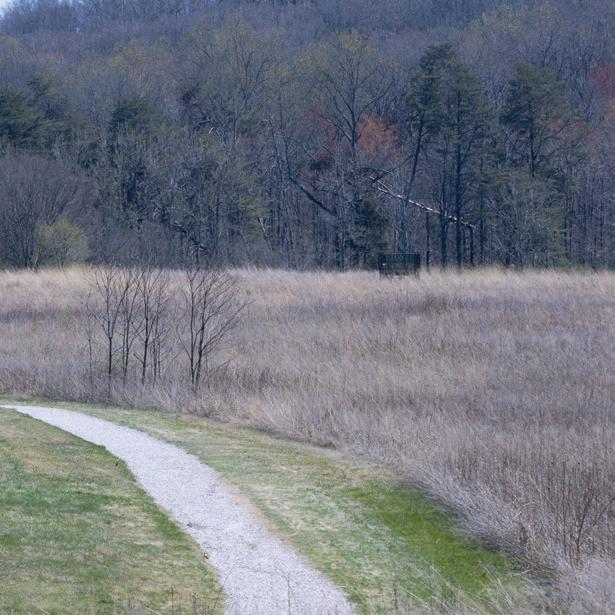
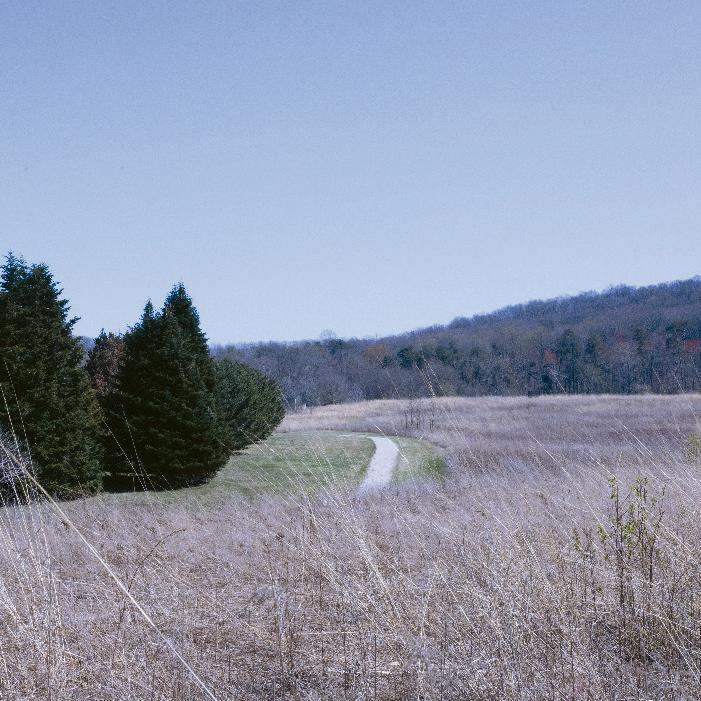
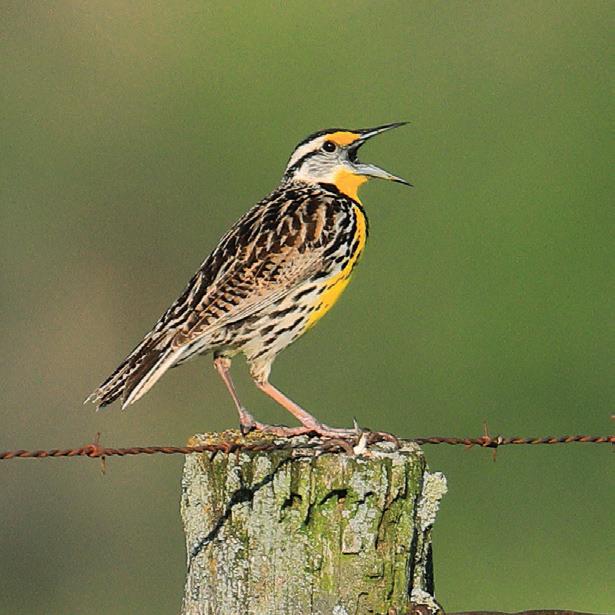
Many bird species of greatest conservation need, such as the eastern meadowlark, require native grass prairies for foraging and for nesting. Grasslands, however, are declining nationwide; their loss poses major threats to wildlife survival and reproduction. Actively managing grasslands to maintain them helps stabilize bird populations, according to biologists with the Kentucky Department of Fish and Wildlife Resources. Bird populations decline in areas succumbing to invasive plant species.
of trails are available to the public.
“Bernheim Forest has a variety of habitat types across our 16,140 acres that allow for a good diversity of bird species,” said Director of Conservation Andrew Berry. “The Bernheim Arboretum is great for birding as it provides a mixture of forests from hardwoods to conifers, lakes, wetlands, and prairies,” he added.
Bernheim’s oldest and largest trees are found along Forest Hill Drive and can be seen along 40 miles of trails, said Berry.
“Managing for mature forests helps provide for cavity nesting species and those that dwell in upper canopy habitat,” Berry explained. “White oaks, especially, are a keystone species at Bernheim. Migratory birds such as warblers nest in our oak forests and feed on caterpillars, and the moths that emerge from those caterpillars then support our endangered bats that use standing dead trees for their maternity colonies.”
Many neotropical songbirds visit the area, but Bernheim is especially notable for its work with golden eagle research and its 2019 Motus station installation, the first in Kentucky.
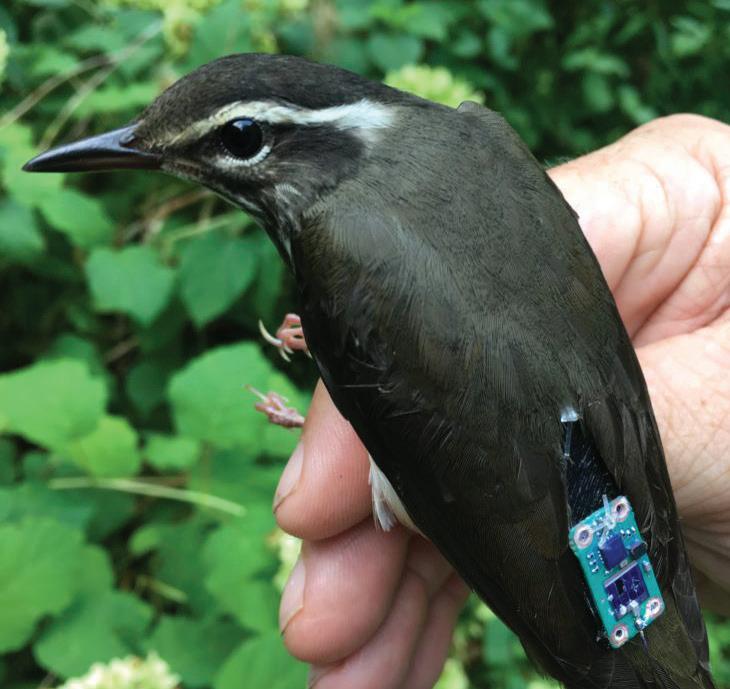
The Motus Wildlife Tracking System is a global research network which uses automated radio telemetry to track tagged birds. Motus tags look like small backpacks and
don’t impair the bird’s well-being. Data is collected whenever a tagged bird enters the vicinity of any Motus station.
The department uses five Motus stations: two at Shaker Village, one at Eastern Kentucky University’s Taylor Fork property, one within the Daniel Boone National Forest and a new installment at the Hancock Biological Station in 2023.
Patton, non-game avian biologist who works closely with these species, explained that the technology of Motus stations provides information about some of Ken-
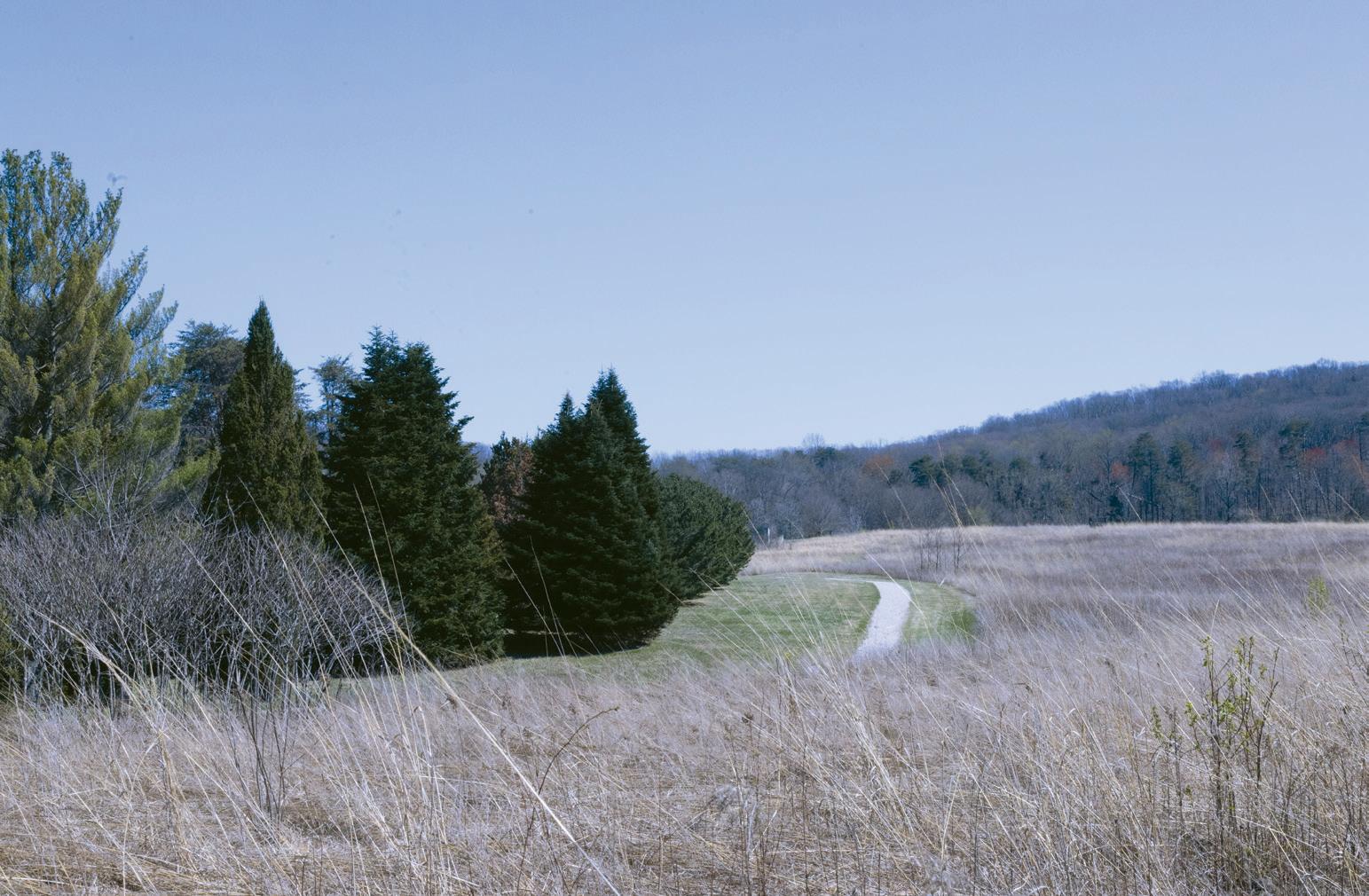
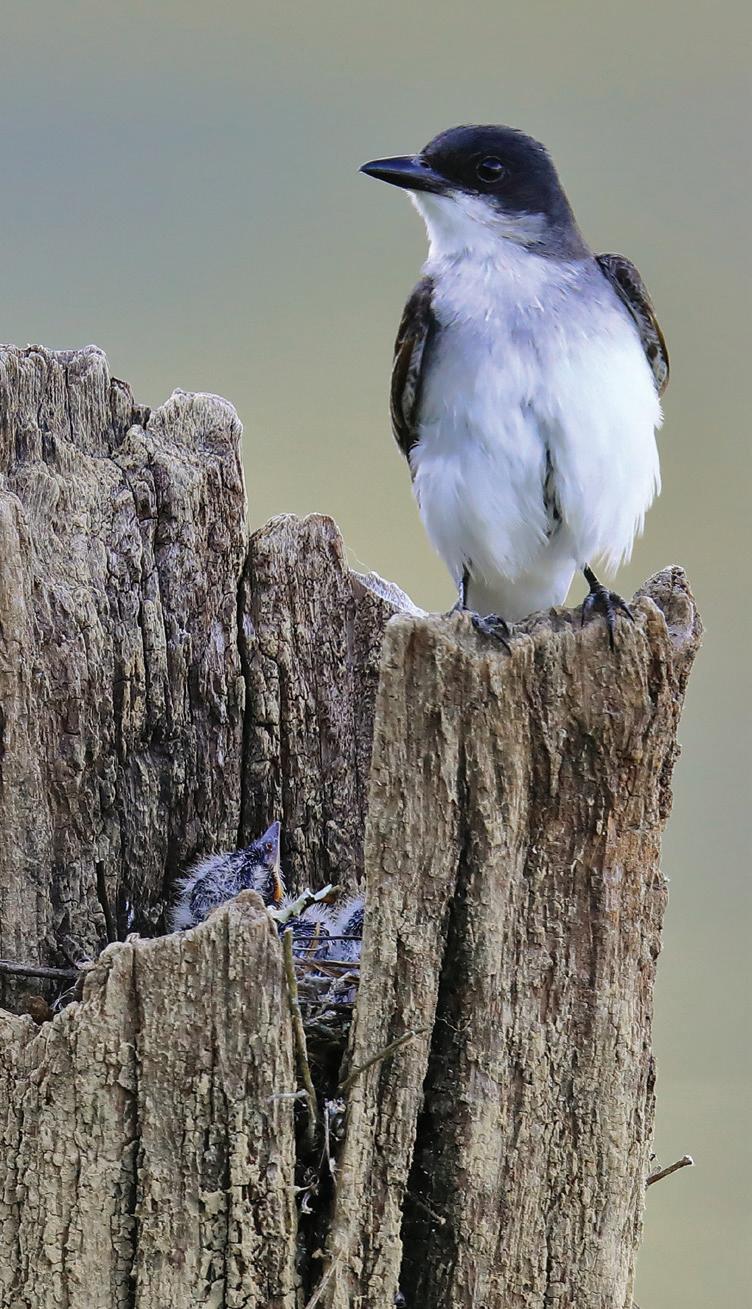
and Research Forest in Bullitt and Nelson counties features a mix of native grass prairies and hardwood stands. The area is a popular birding destination, and hosts nighttime programs for visitors. Right: The eastern kingbird, which can be spotted at Bernheim, flashes its hidden crown of red, yellow and orange when encountering predators. Bernheim’s birding list includes warblers, orioles, flycatchers, woodpeckers and more.
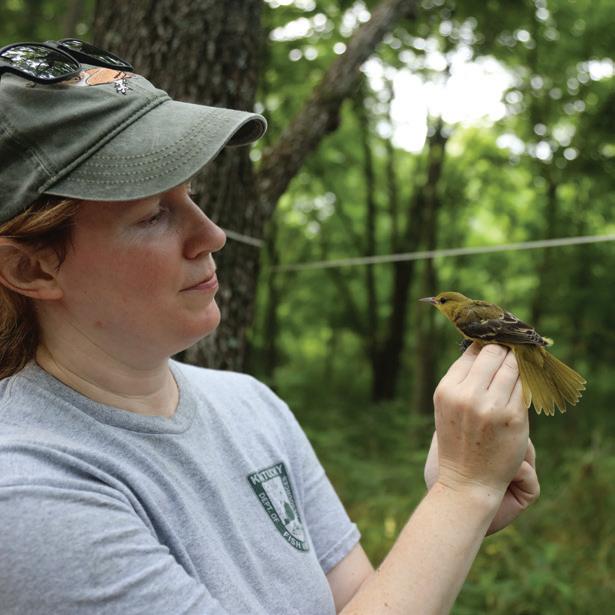
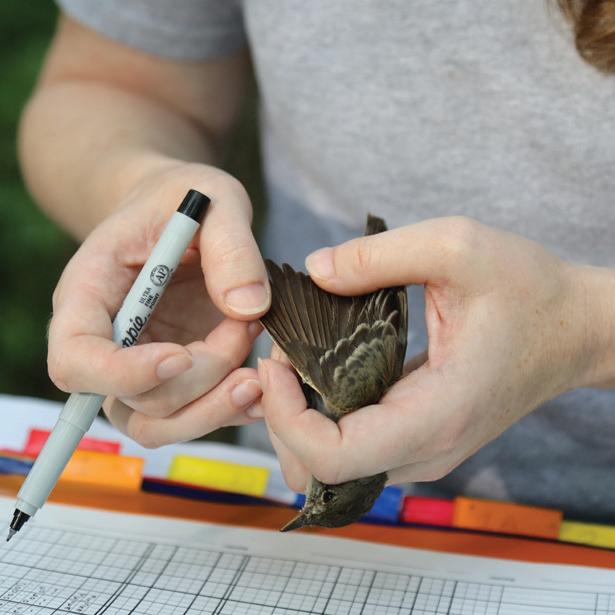
Left: Sometimes biologists must unfold wings to confirm a species captured during survey work, such as this willow flycatcher. Right: Biologist Kate Slankard holds a juvenile orchard oriole caught in a mist net during survey work at Shaker Village.
tucky’s 94 bird species of greatest conservation need, which are defined by Kentucky Fish and Wildlife and other state authorities as species that are imperiled or facing serious threats, such as the American Woodcock, loggerhead shrike and many
Researchers band and tag birds to document trends in songbird populations and activity. Biologists string “mist nets” – dark nets with small mesh openings that are hard for birds to see – across likely flight paths of songbirds. After a bird is captured, researchers log the species, note its condition and look for any leg bands. They may affix a tracking device (shown on this Louisiana waterthrush) to monitor its movement through a nationwide Motus station system.
species of warblers.
“Stations include radio receivers that routinely scan and save data of any tagged birds up to a 10-mile vicinity,” Patton said.
The Hancock Biological Station Motus station detected its first tagged bird in October 2023, and was an exciting find: an eastern whip-poor-will, a species of greatest conservation need, originally tagged that July at St. Williams Conservation Reserve in Norfolk, Ontario.
The department’s avian biologists also conduct annual MAPS (Monitoring Avian Productivity and Survivorship) research to assess the health of Kentucky’s birds by setting up mist nets throughout the state to capture and release songbirds for banding.
MAPS stations use a system of fine mesh nets to capture birds. Birds are gently removed from nets by a biologist and a standard protocol is followed while the bird receives a single leg band.
“We take note of the bird’s species, weight, sex and age before release. We also assess the health of the individual and look for any sign of disease,” said Slankard.
The MAPS process is standardized across the United States and Canada to best keep track of important data known as vital rates, such as species productivity and survival. Collecting this information allows biologists to see trends in different bird populations and what may drive population change.
On top of a decline in habitat, native species must also compete with introduced species, such as the European starling. First brought to the state of New York due to its connection to Shakespeare, the starling is incredibly common in Kentucky and often
gathers in large groups, especially during the colder months when they can be seen making elaborate flights in the sky.
Birdwatchers participate in citizen science by entering details of birding trips and bird sightings into e-Bird, which can complement biologists’ findings and research.
Every year, the Cornell Lab of Ornithology and the National Audubon Society sponsor the Great Backyard Birding Count and Global Big Day to tally up the number of species found in short periods of time, such as a single day.
Organizations such as Bernheim and Shaker Village host public events with naturalists during these times. These events are meant stress the importance of paying attention to songbirds just as closely as game species.
Songbirds had their role in the development of contemporary big game hunting and conservation, too. Historically, non-game birds faced similar perils to that of today’s game birds such as wild turkey and bobwhite quail but on a much more serious level.
Post-Civil War era farmers despised songbirds as pests, habitat was succumbing to human settlement and women’s fashion prized the use of feathers. The passenger pigeon and Carolina parakeet are wellknown examples of extinct bird species once native to Kentucky, the sole remainders of their kind perishing in 1914 and 1918 respectively at the Cincinnati Zoo.
Early conservationist George Bird Grinnell saw this rapid decline of songbirds as a symbolic canary call in the coal mine. His 1886 editorial published in the Forest and Stream magazine – then owned and edited by Grinnell, now known as Field
and Stream – warned in particular of the barn swallow’s decline. His words spurred a conservation movement which ultimately led to the National Audubon Society’s first installation, directed by Grinnell. His work captured the attention of Theodore Roosevelt, who became a close partner in Grinnell’s advocacy.
The early protections given to songbirds helped Grinnell persuade others of the need for big game hunting restrictions and their effectiveness. As a result, in 1887 Grinnell became a founding member, and eventually president, of the Boone and Crockett Club, a national organization focused on big game conservation and ethical hunting.
Alongside other fellow conservationists, Grinnell’s next project was pioneered under the goal of supporting waterfowl conservation, leading to the discovery of migratory bird flyways before eventually forming today’s Ducks Unlimited. Lastly, Grinnell served as president for the early National Parks Association.
Just like hunting and fishing, it can be very rewarding to appreciate the different species found. The world’s understanding of birds is constantly changing, too, said Sprandel. He doesn’t have a favorite bird because his goals change every year, and that’s part of what keeps him interested in birdwatching.
“There’s always something else to learn; there’s always an exception to the rule,” said Sprandel. With practice, it will begin to come naturally.
Birding is not only a hobby but an act of citizen science, and the health of its subjects relies upon this work. After all, birds like the barn swallow seek out the safety of human settlement for a reason. n