Modular Design Of General-purpose Small Components
THE GRAY NURSERY MODULE
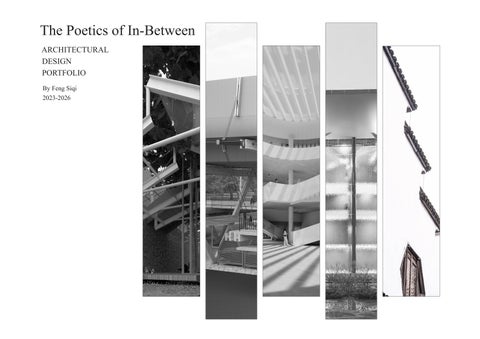
Design Of Parasitic Spaces Beneath Elevated Bridges
THE PAVILION OF FATE
The Museum of Emotional Memory: Liu He, Marquis of Haihun
JINGHONG PAVILION
Theater Design Based On The Curved Eaves Of Traditional Chinese Opera Stages
OTHER WORK
HuiZhou Architecture Measurement
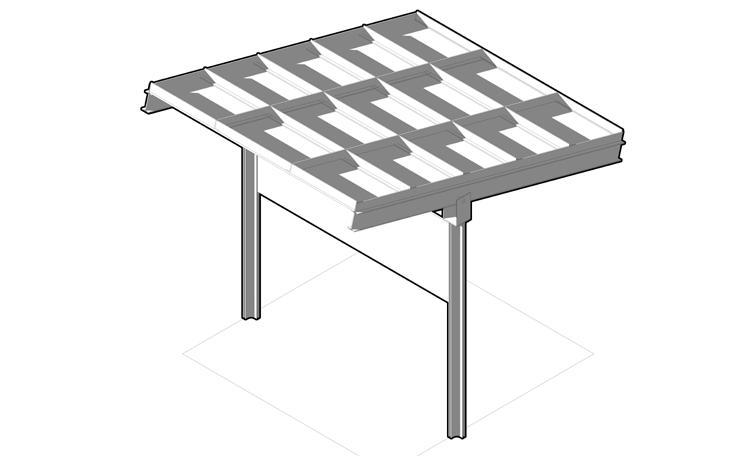
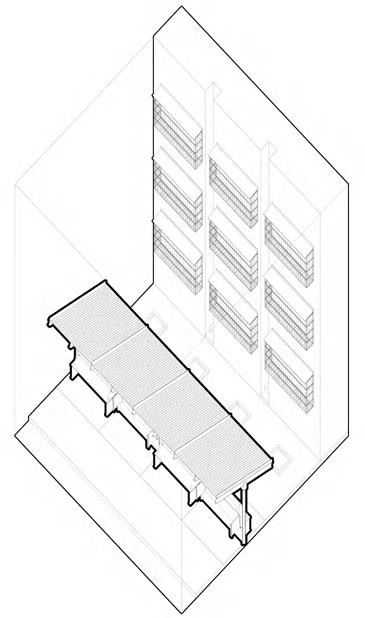
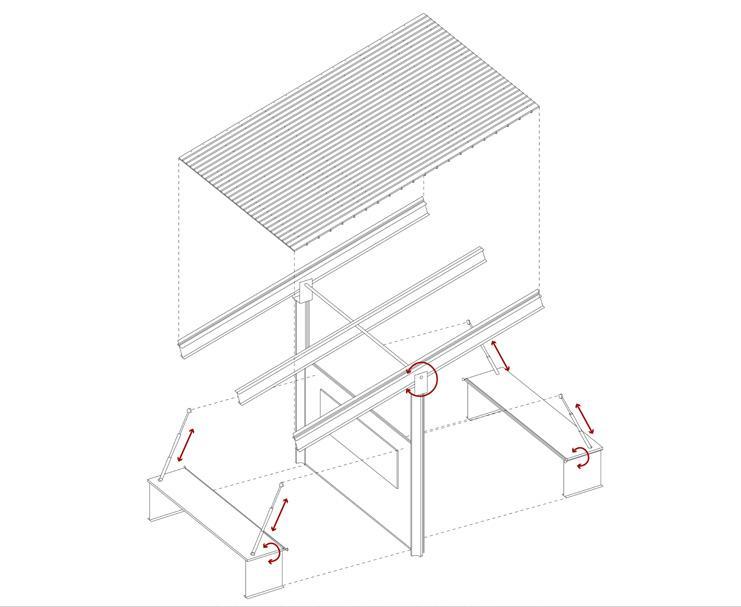
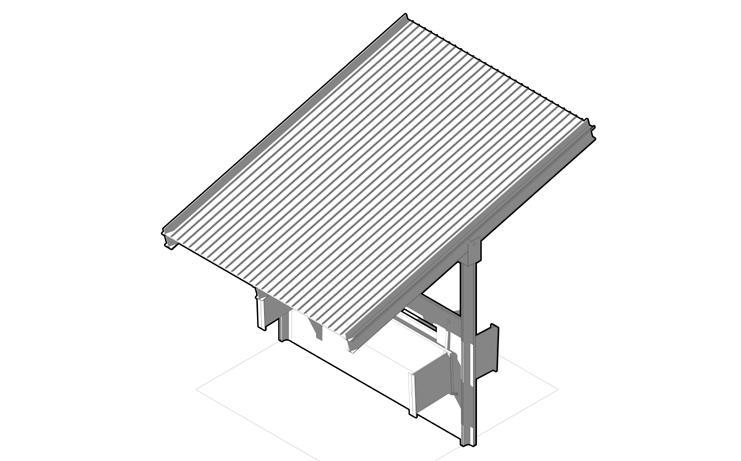
TIDAL COMPONENT MANUAL
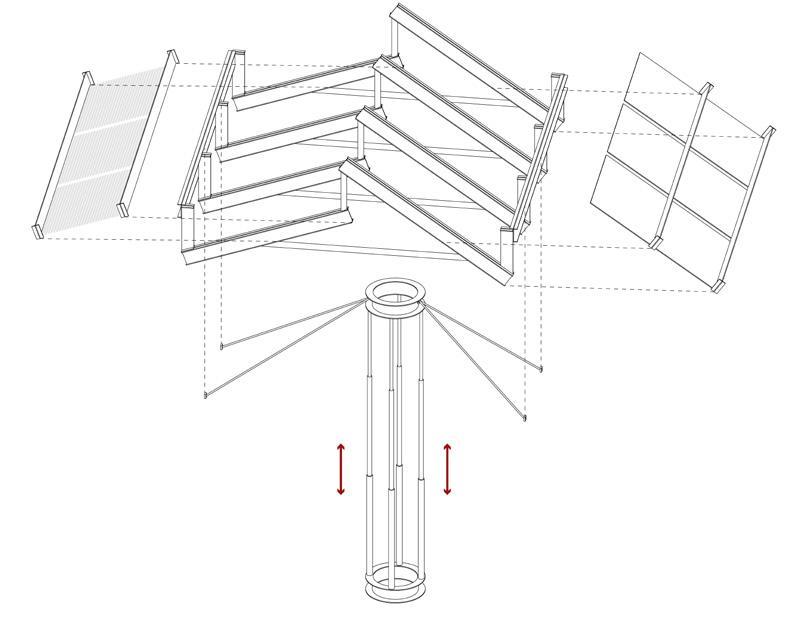
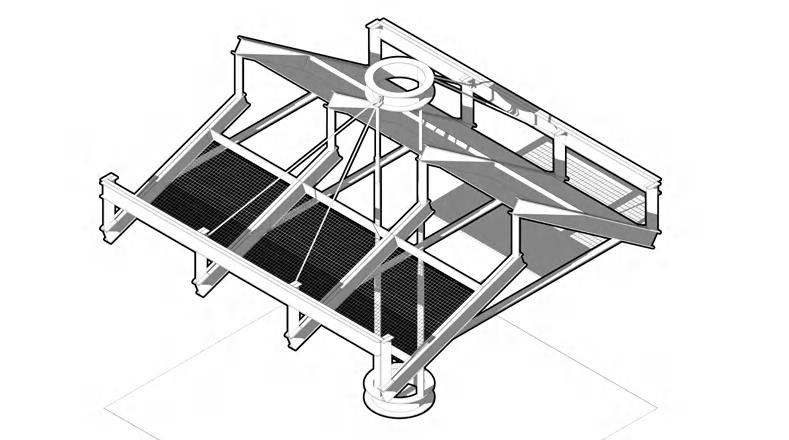
Modular Design Of General-purpose Small Components
Project duration: 2024.8-2024.10
Nature of project: competition
Team cooperation
Names of all collaborators: Feng Siqi, Li Wanlin
Individual contribution: Concept deepening, modeling and drawing.
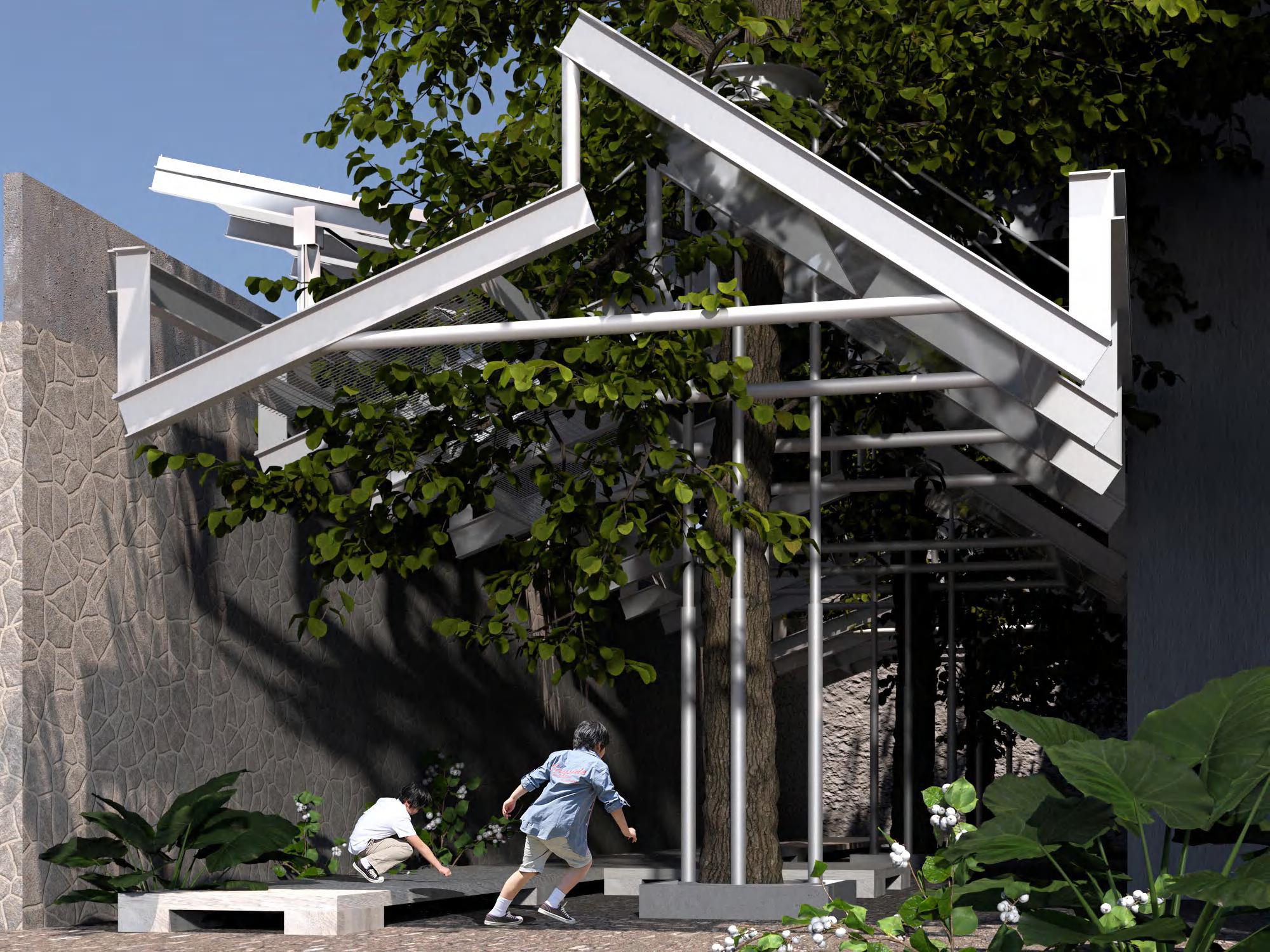
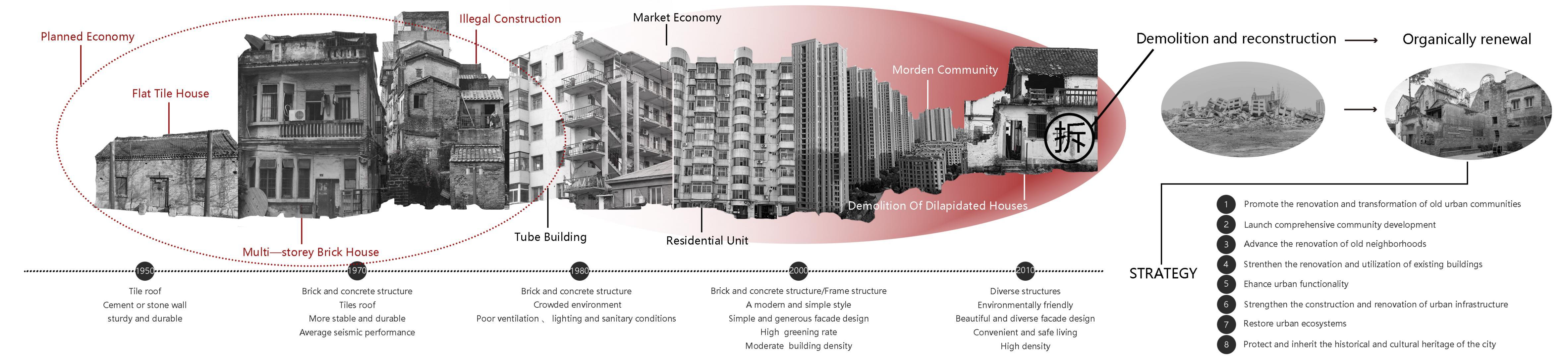
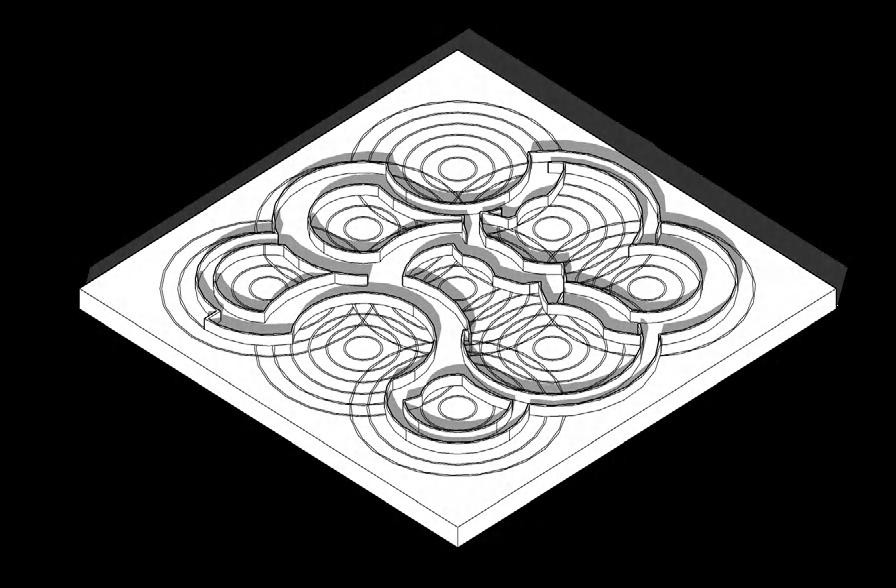
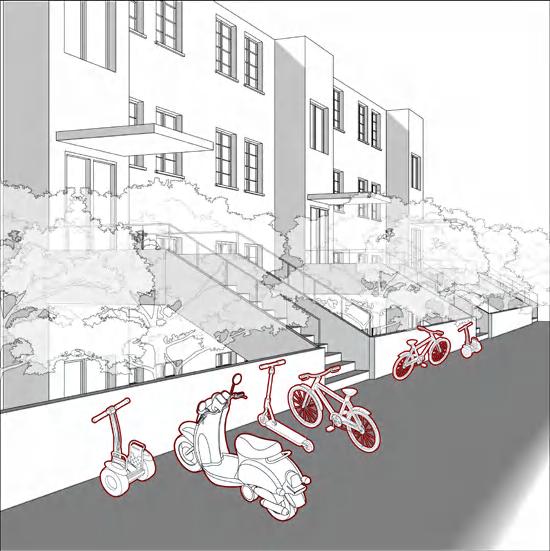
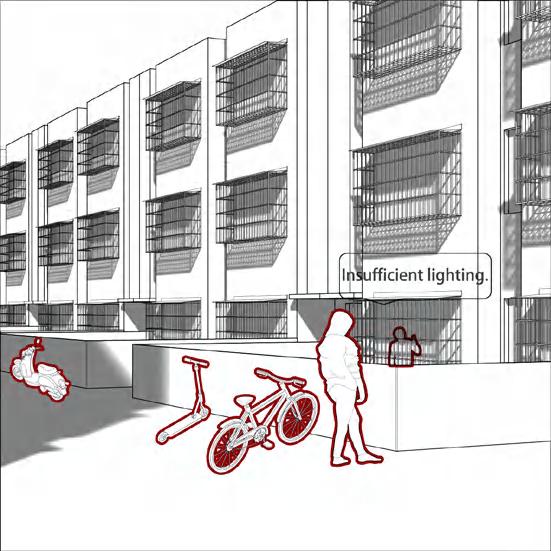
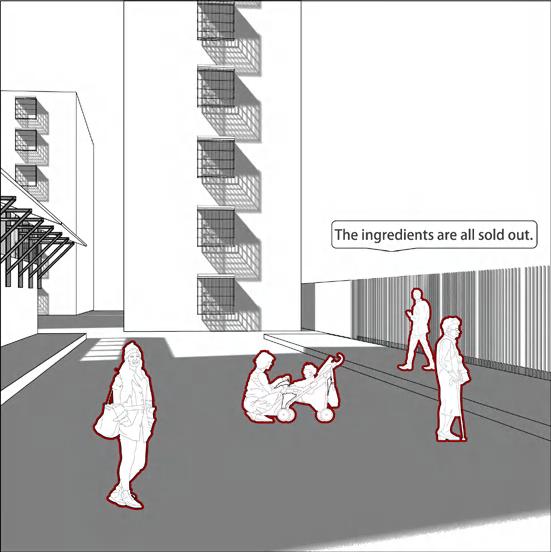
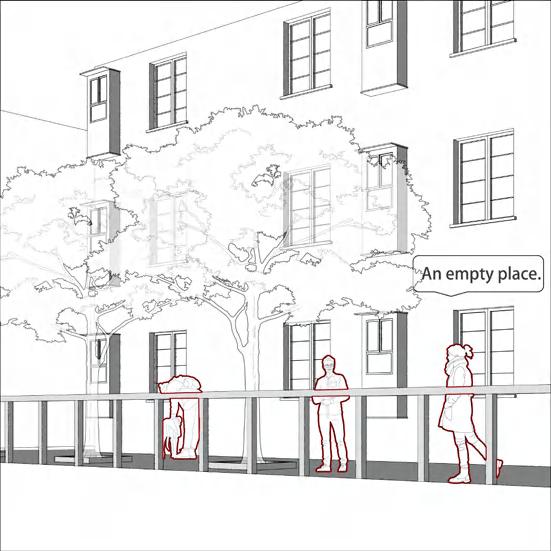
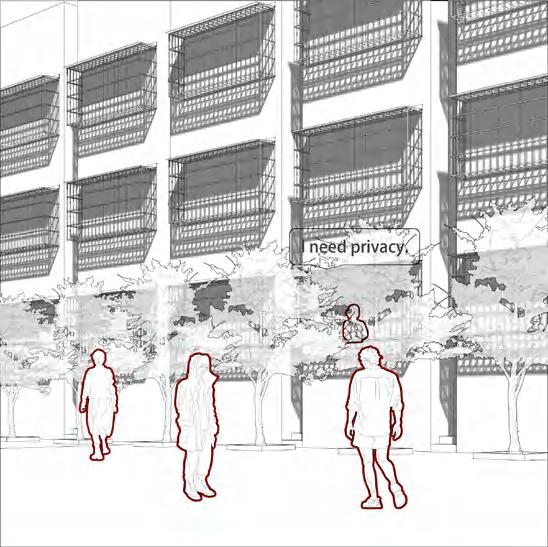
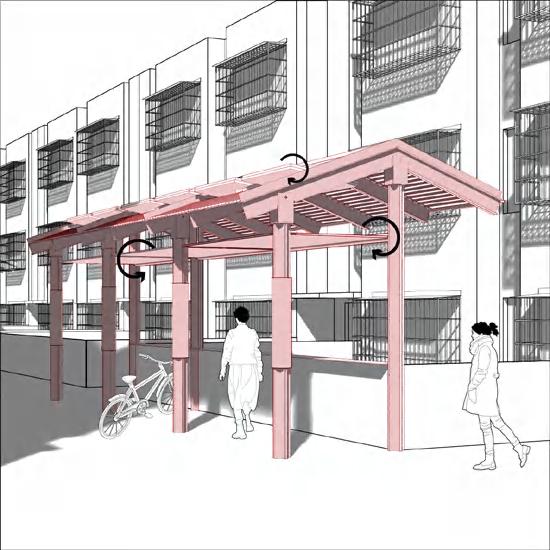
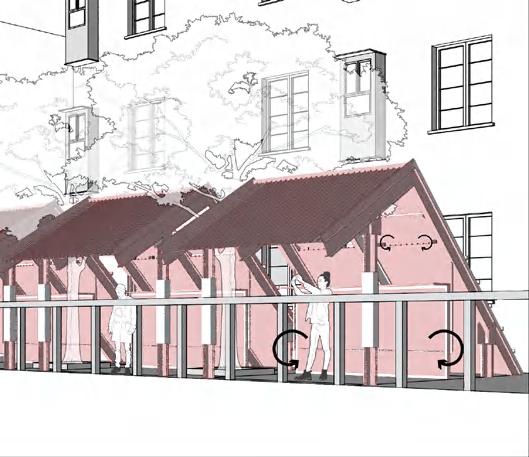
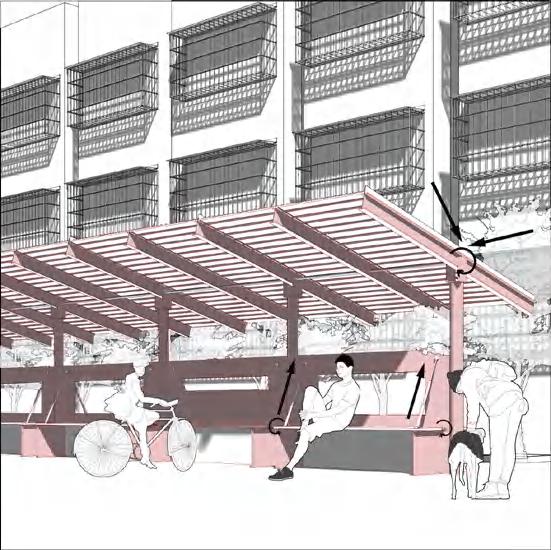
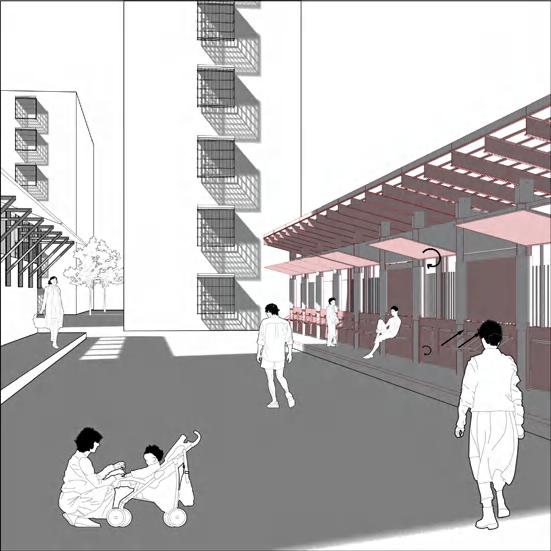
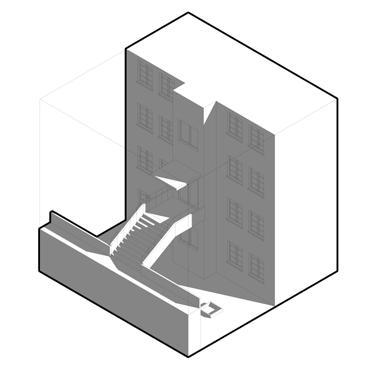
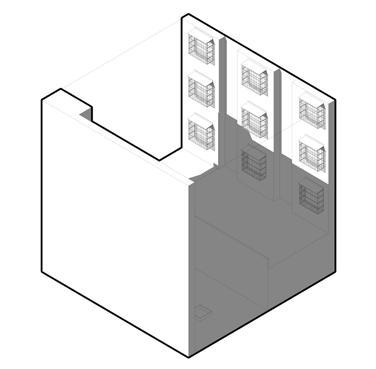
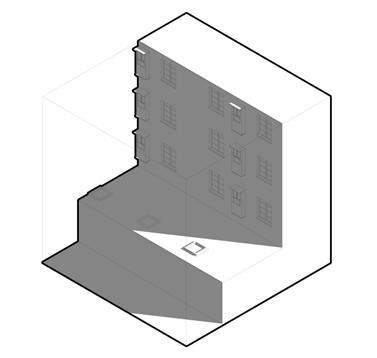
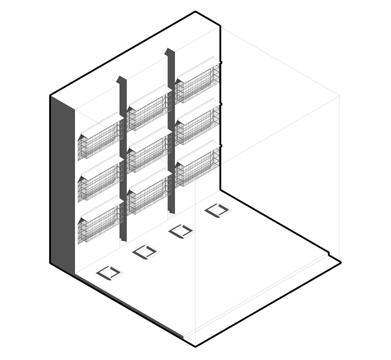
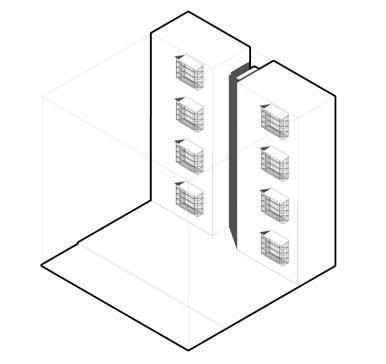
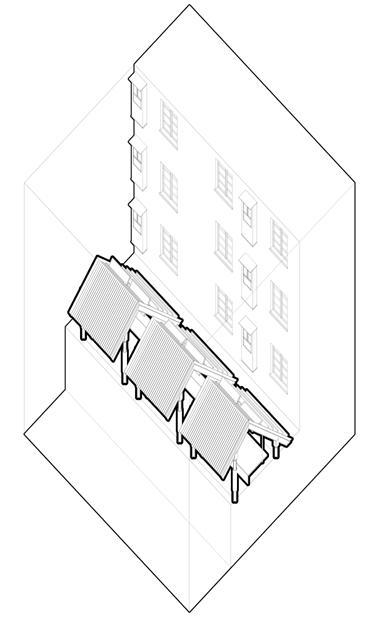
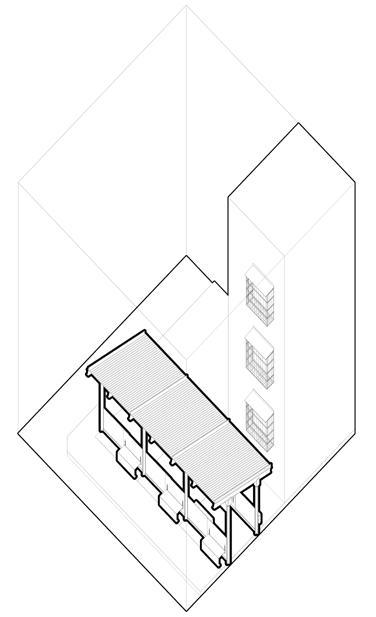
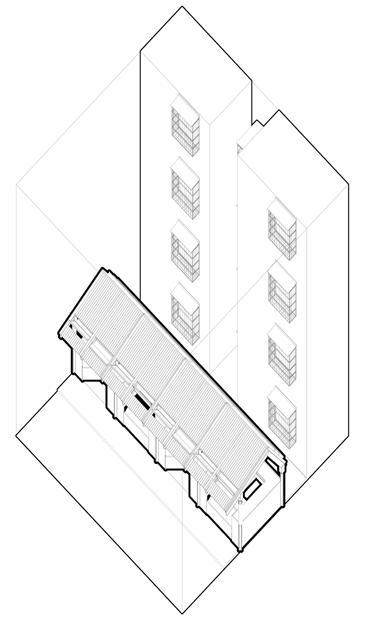
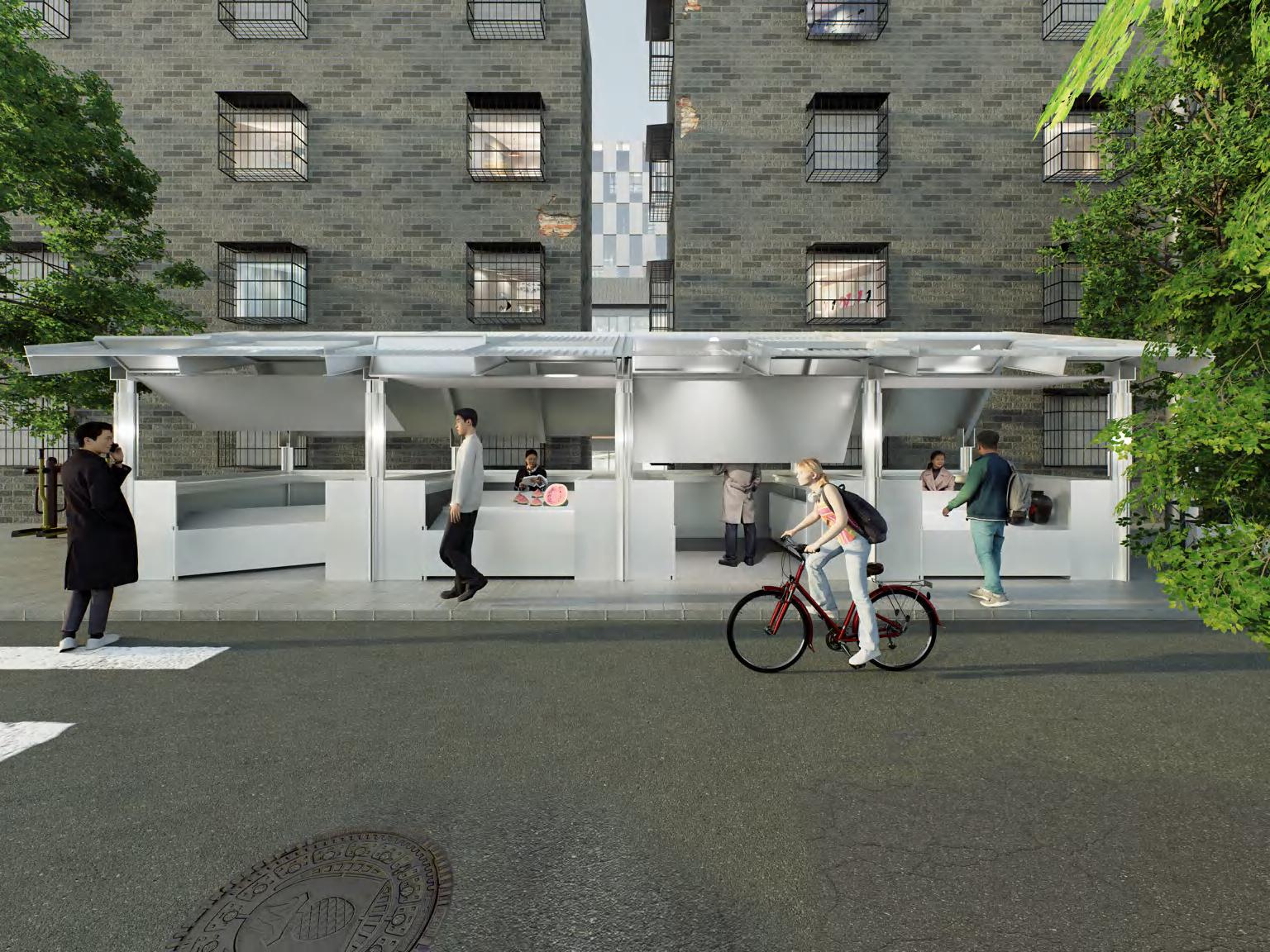
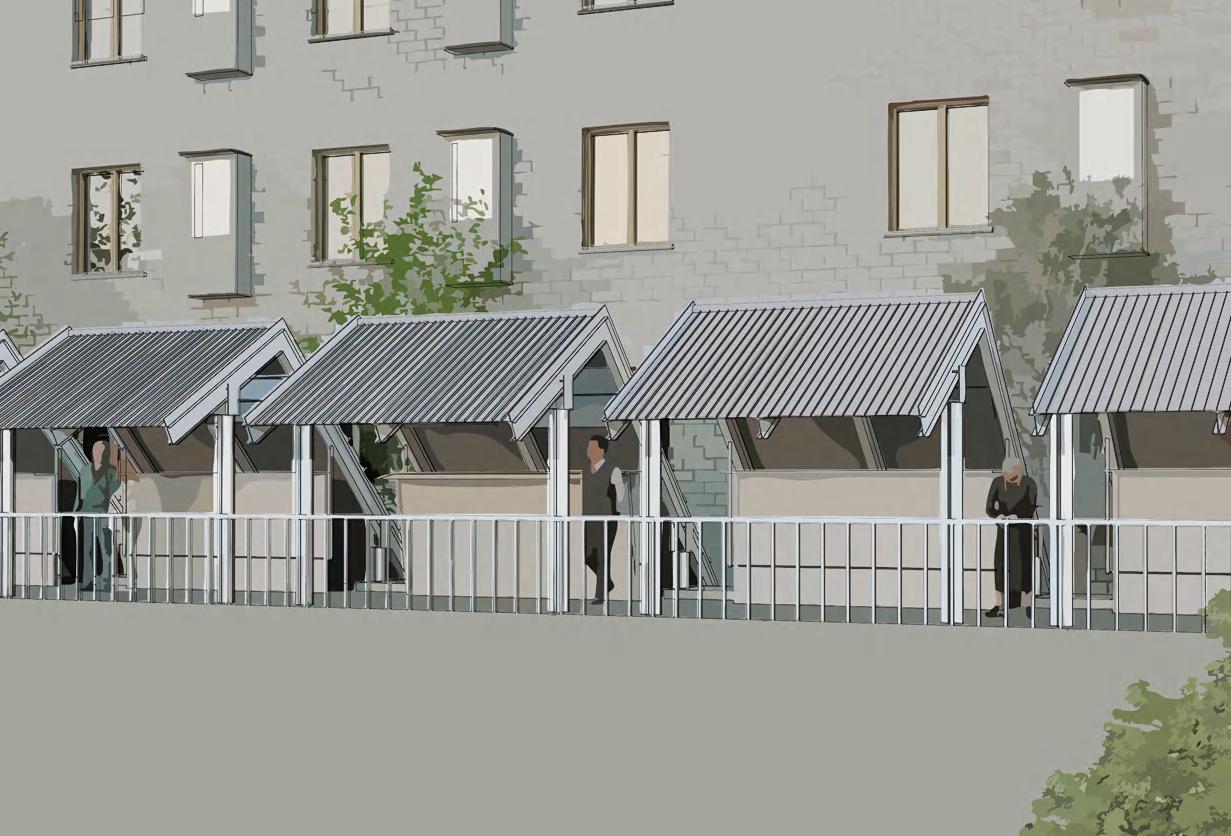
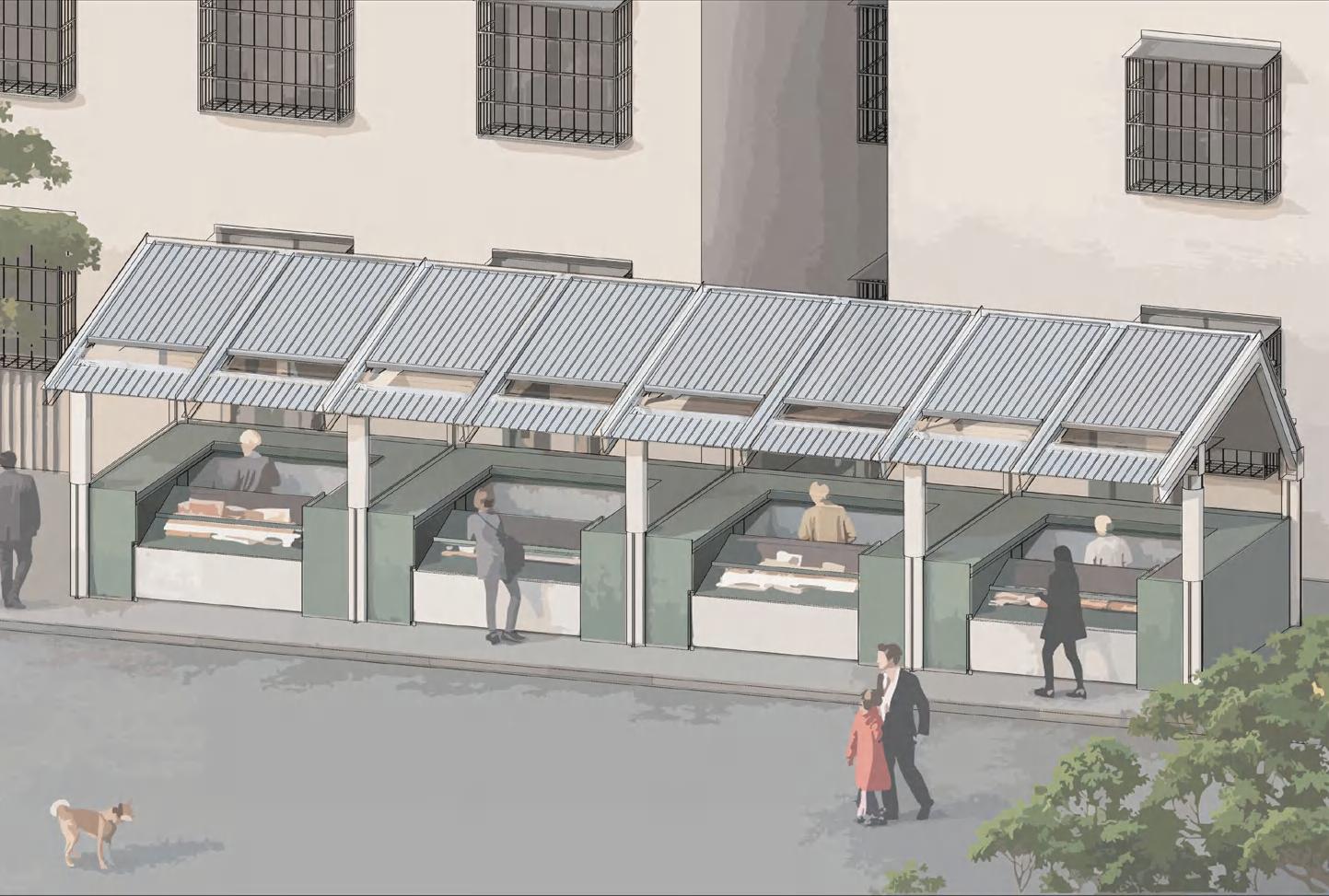
Amid China's urban renewal transition from crude demolition-andreconstruction to refined operational models, field research reveals that aging communities in Tianxin District, Changsha City, Hunan Province face persistent challenges in urbanization: inefficient space utilization, inadequate public services, and outdated infrastructure.
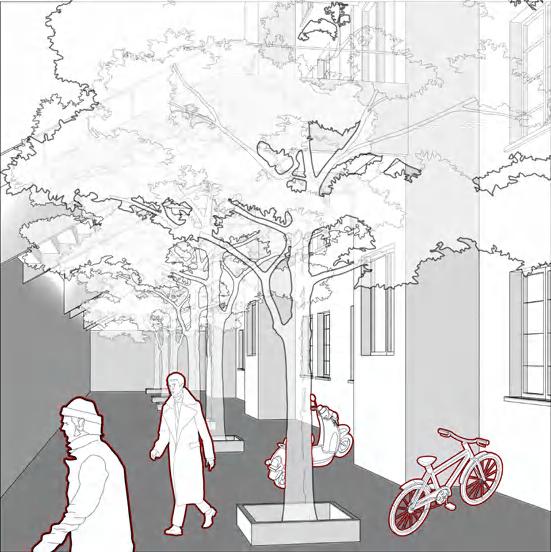
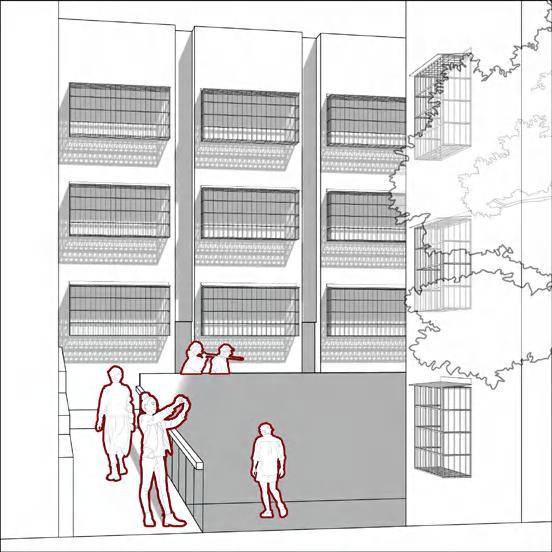
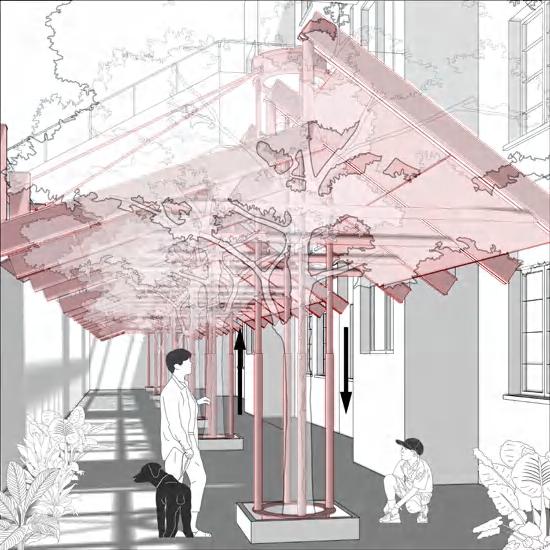
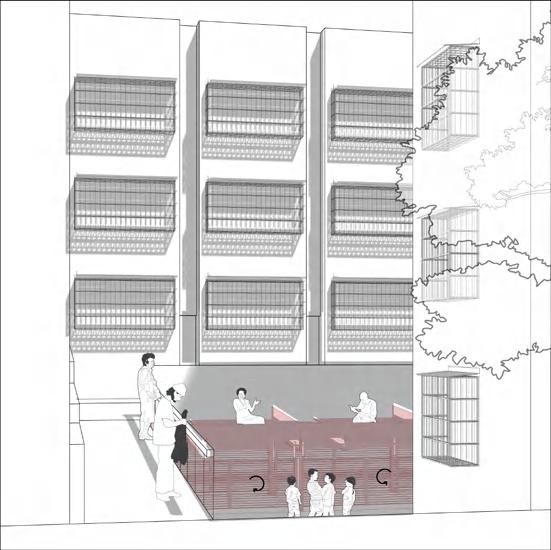
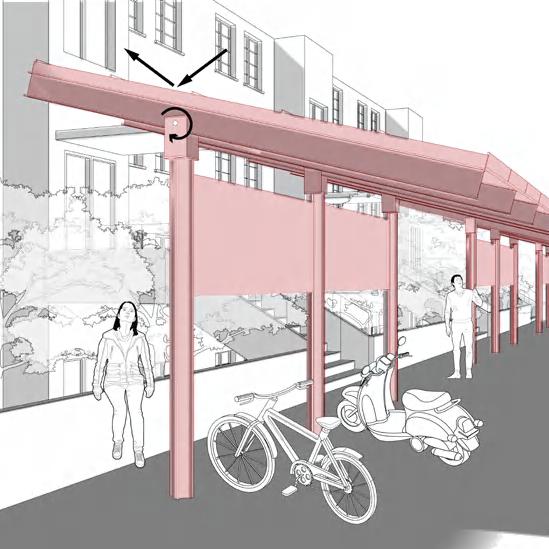
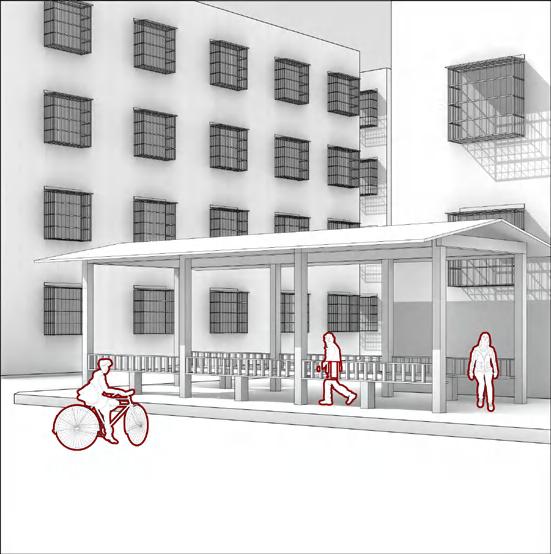
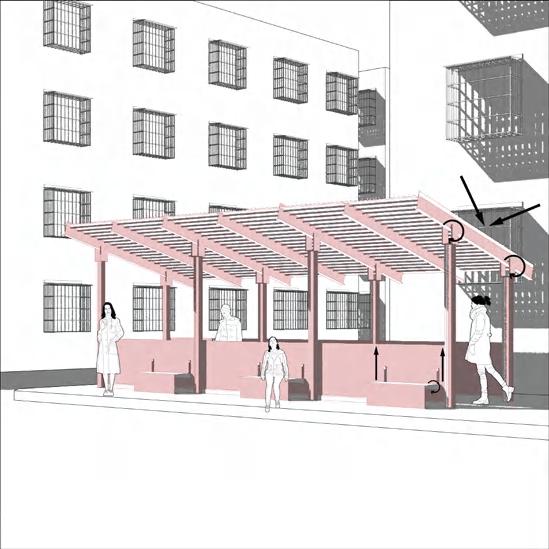
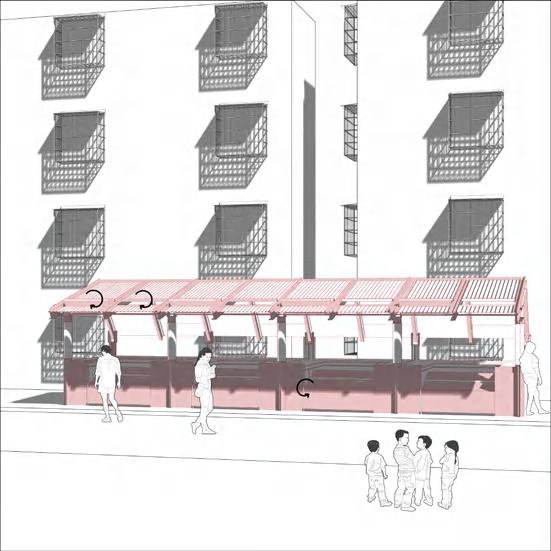
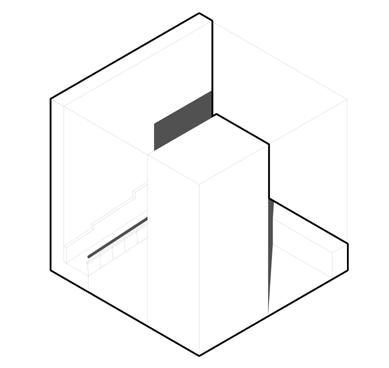
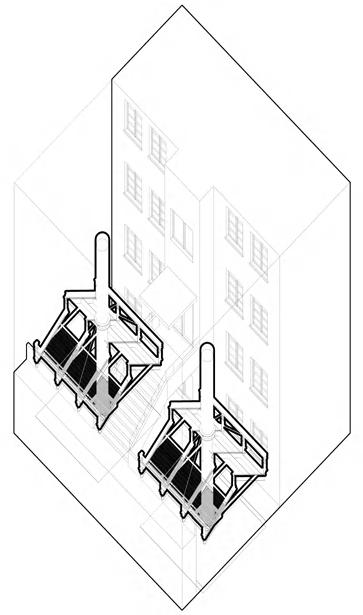
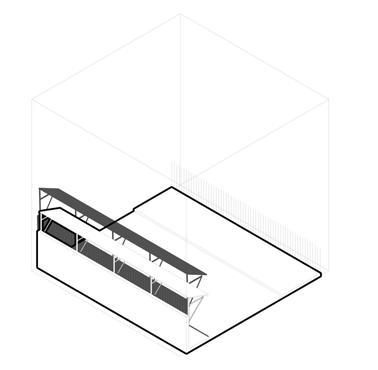
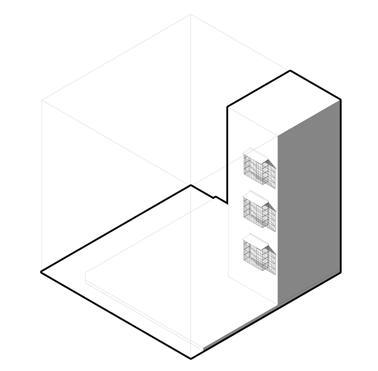
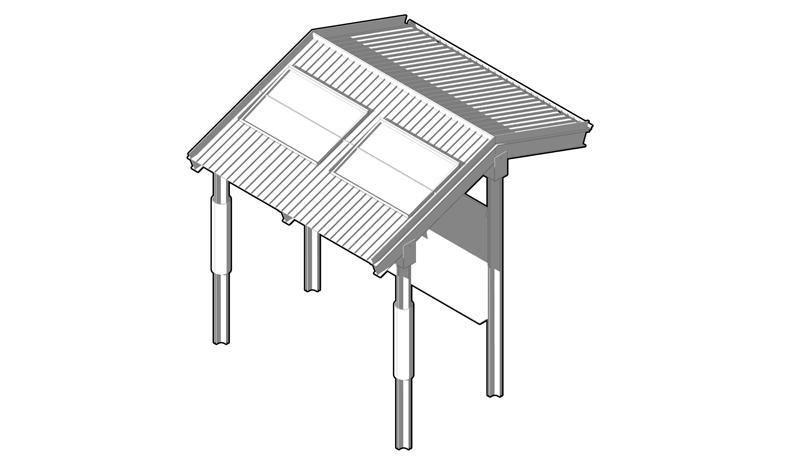
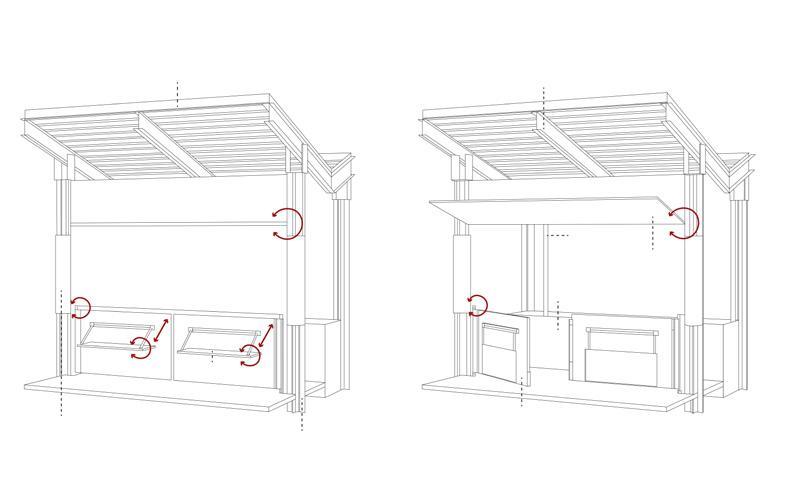
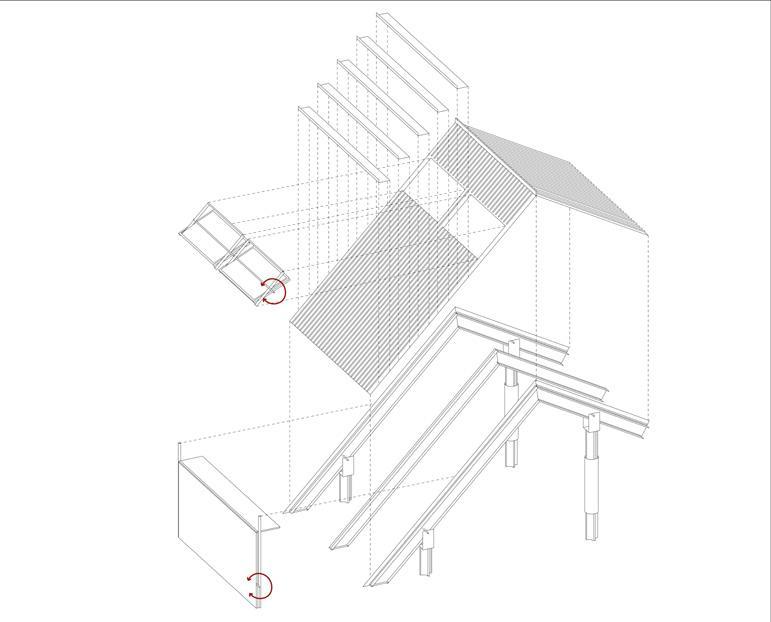
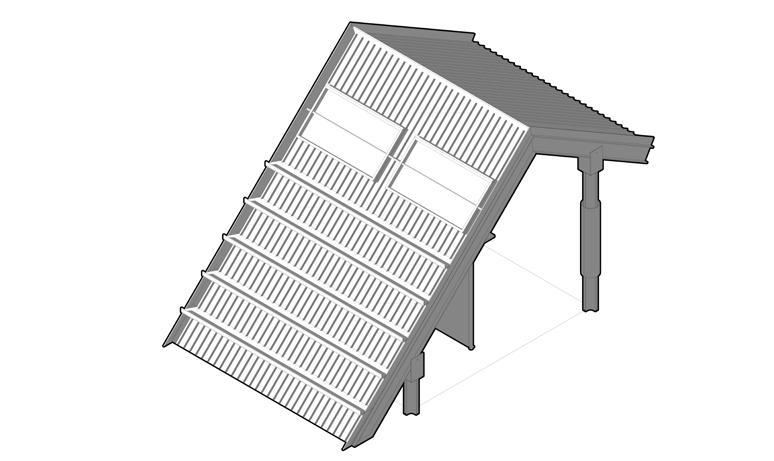
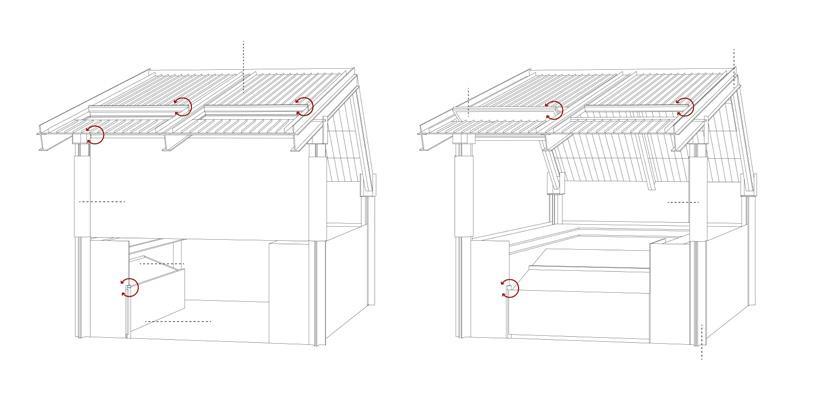
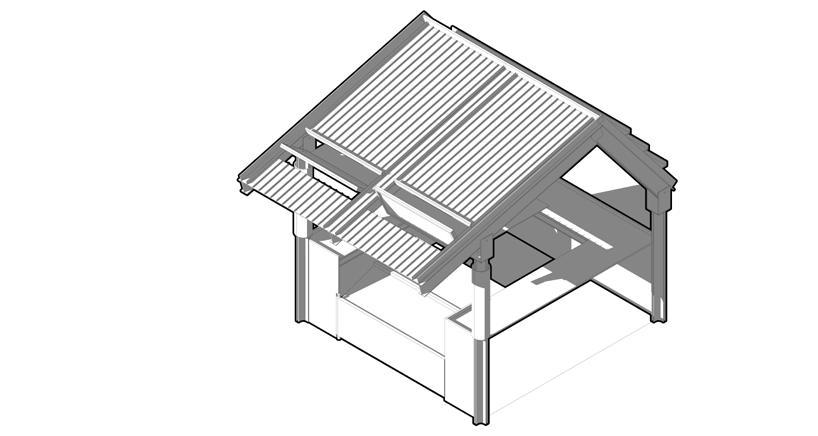
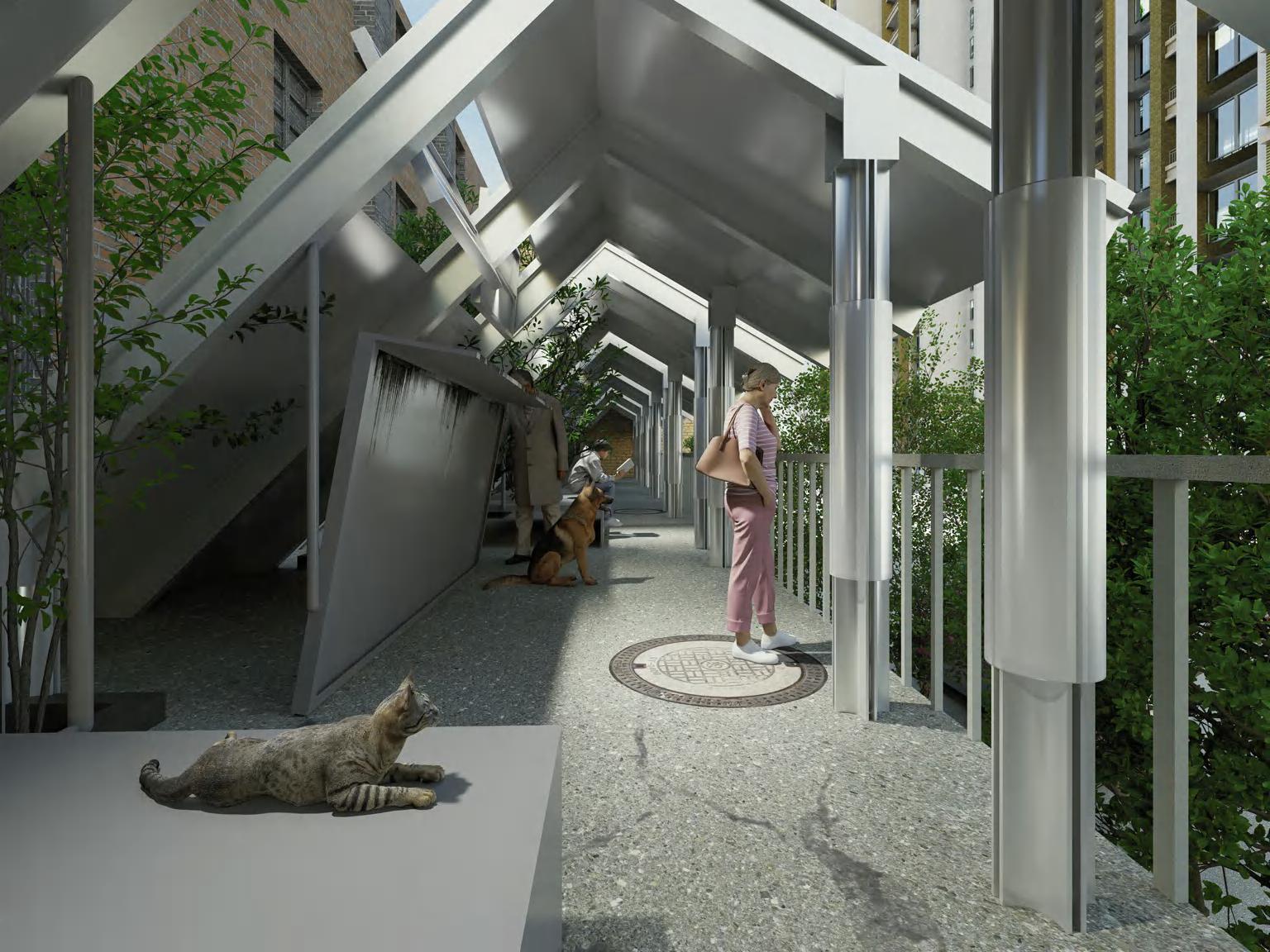
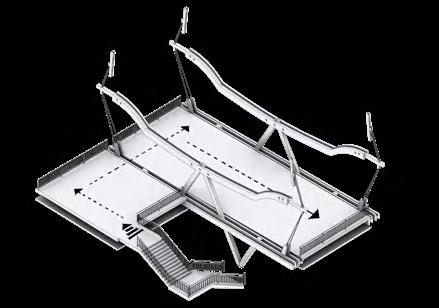
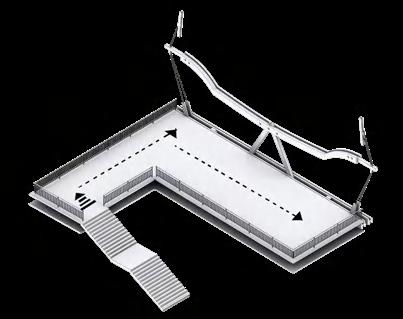
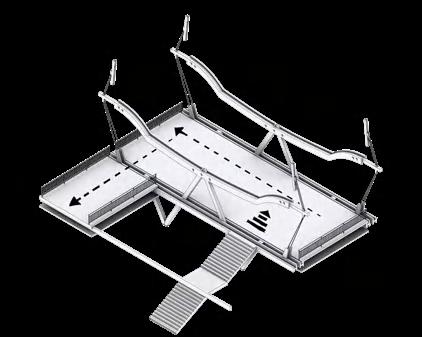
The project employs "dynamic functional transformation design" and "multi-functional space" methodologies to effectively address spatial waste. It emphasizes the coexistence of diverse functions across spatial-temporal dimensions, blurring functional boundaries to enhance community vitality.
Focusing on urban micro-updates, this manual provides actionable solutions for addressing common urban issues in similar contexts.
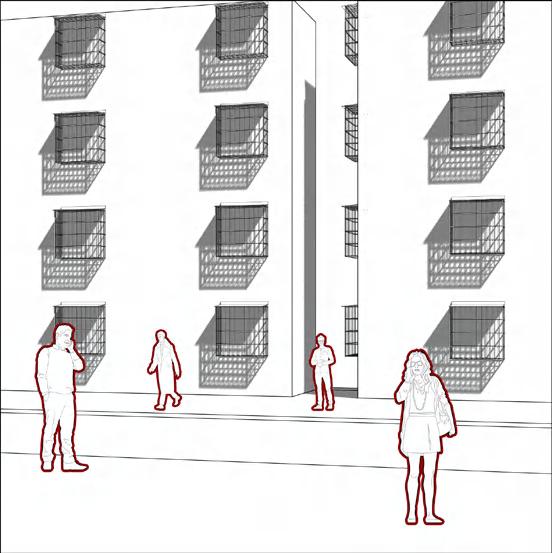
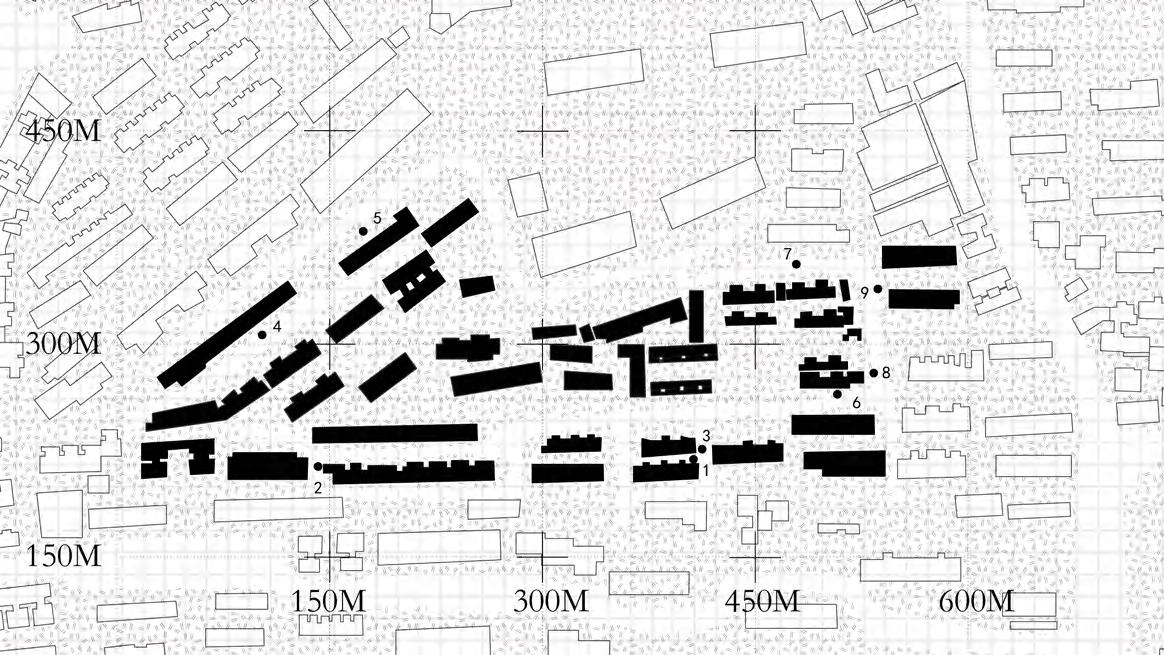
The site is located in Tianjian Community, Jinpenling Sub-district, Tianxin District, ChangshaCity,Hunan Province, and possesses the following three general characteristics of an old urban area:
First,Tianxin District is home to 60% of Changsha's historical and cultural sites, boasting a rich cultural heritage.Second, the Tianjian community has a high population density and a large number of floating population.Third, the Tianjian community
changes, enriching the site's
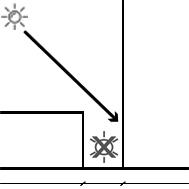
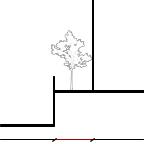
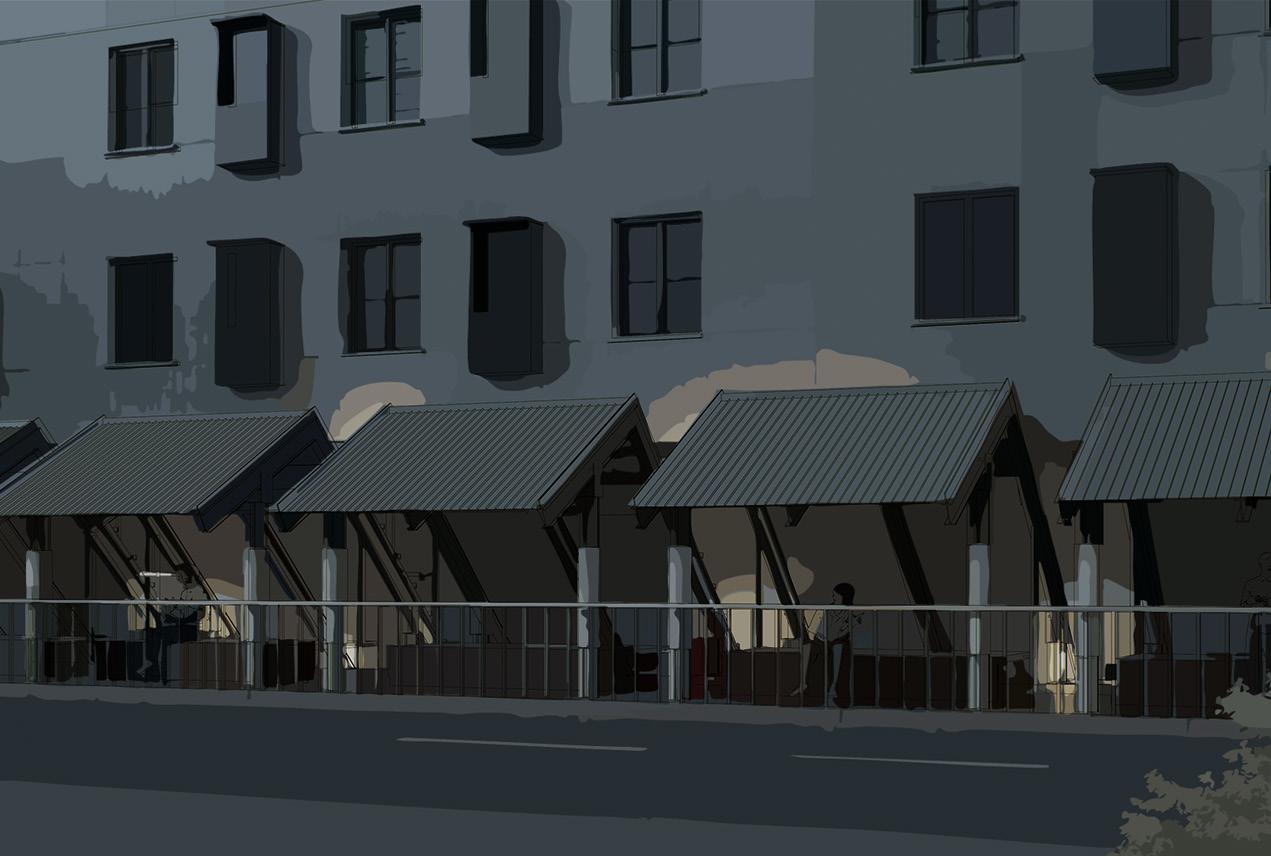
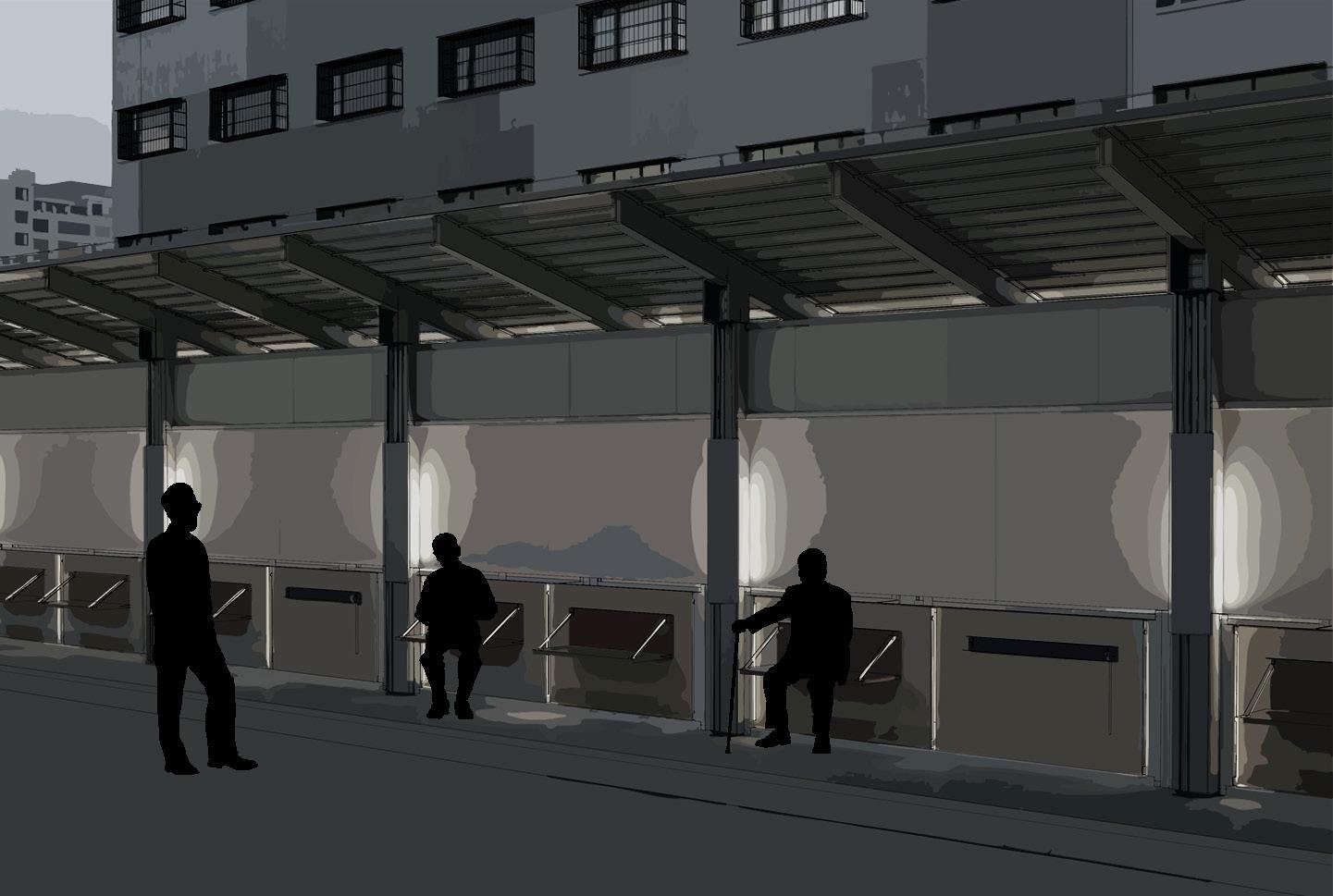
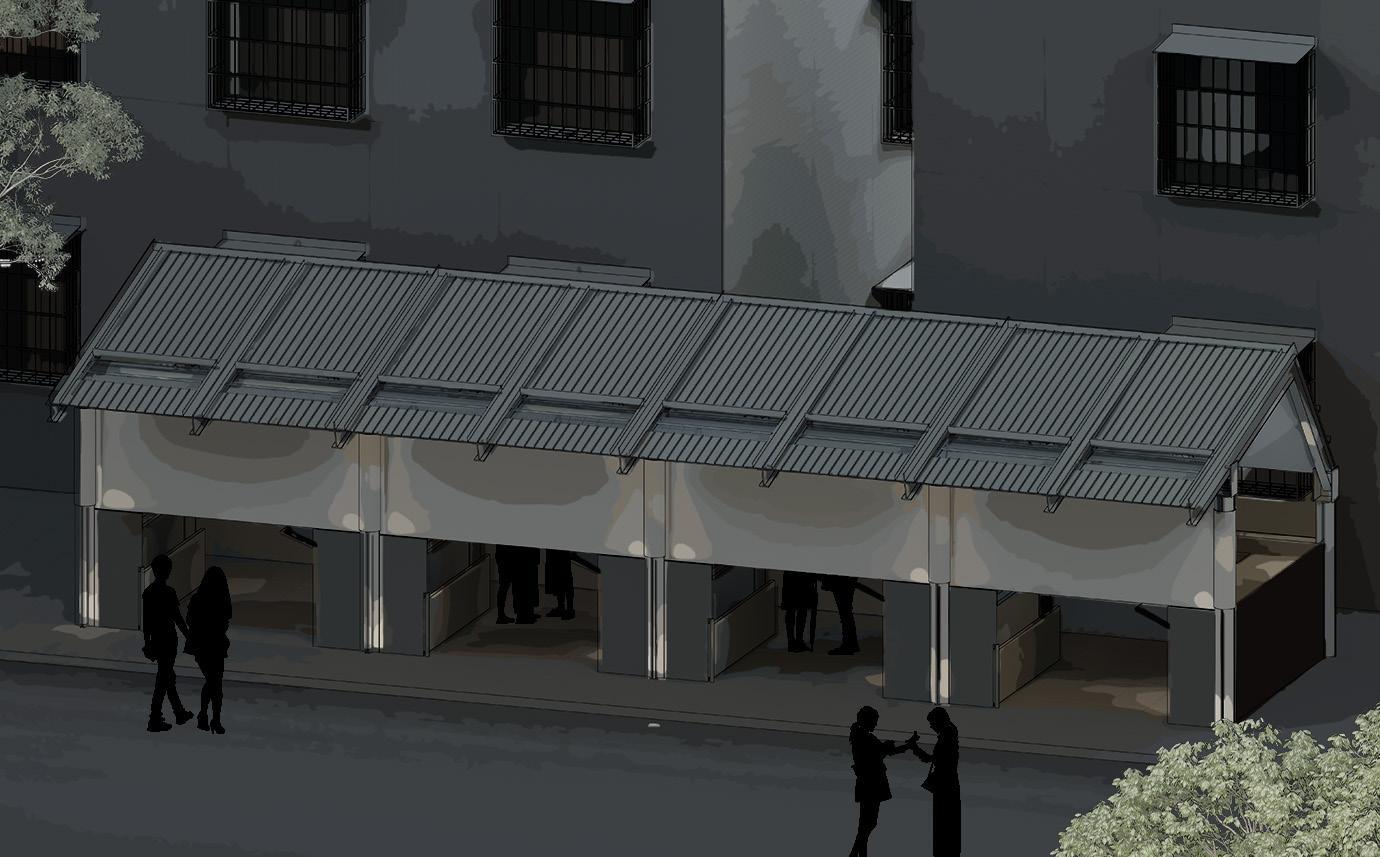
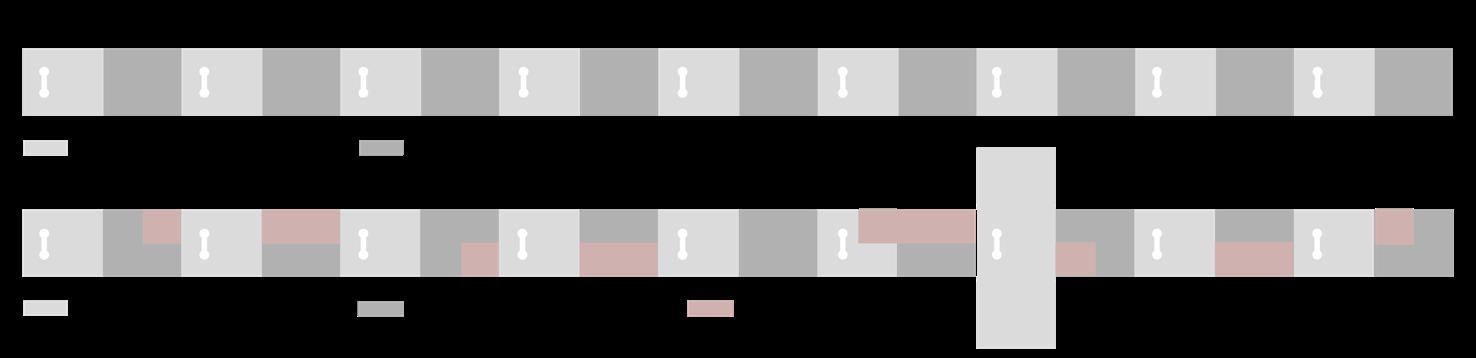
DAY AND NIGHT COMPARISON CHART
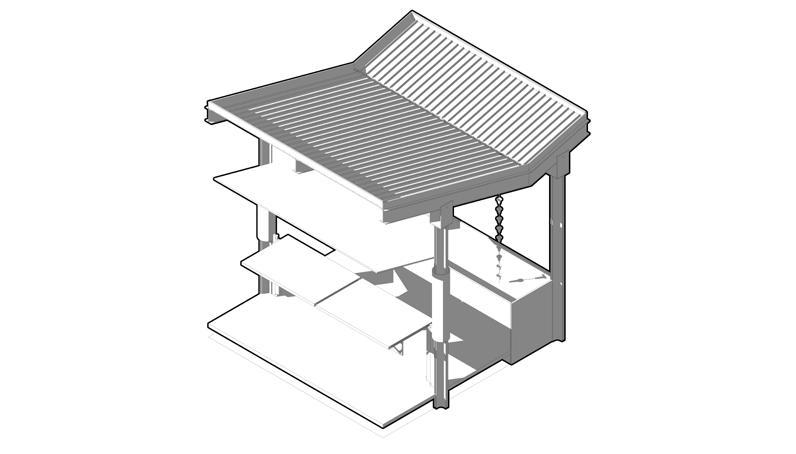
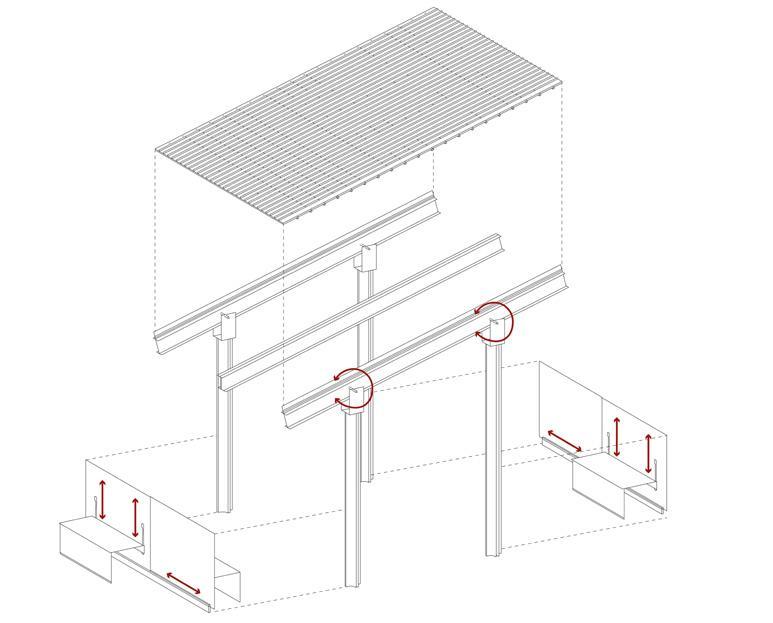
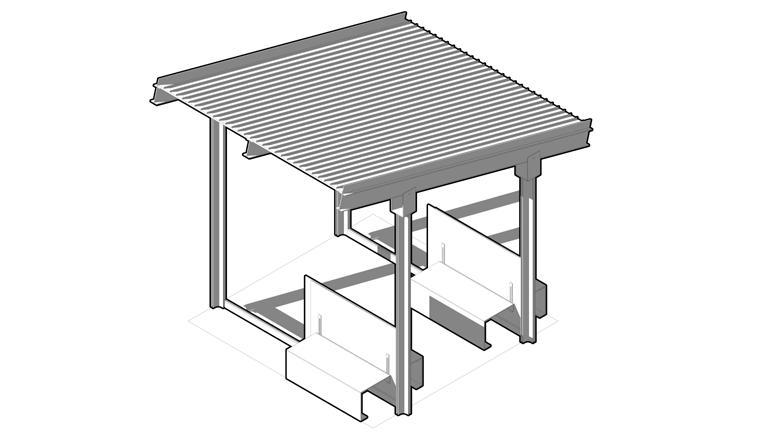
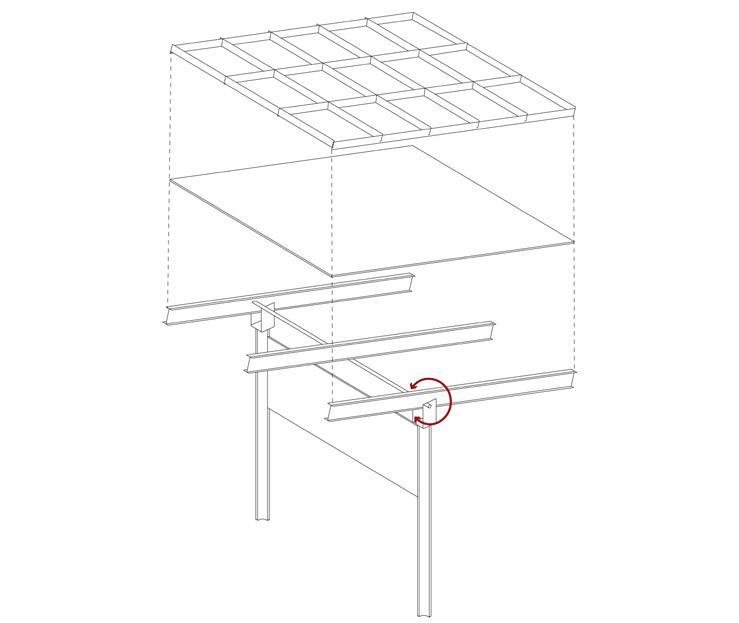
THE GRAY NURSERY MODULE
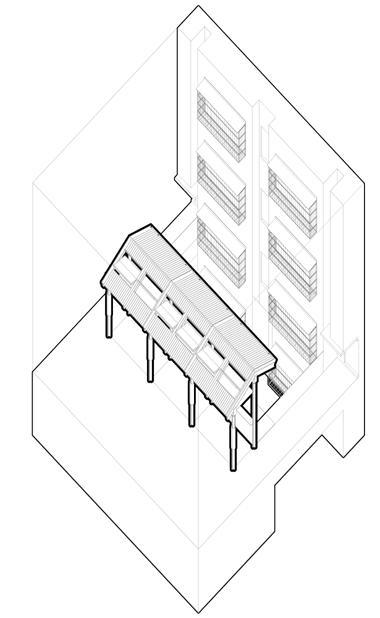
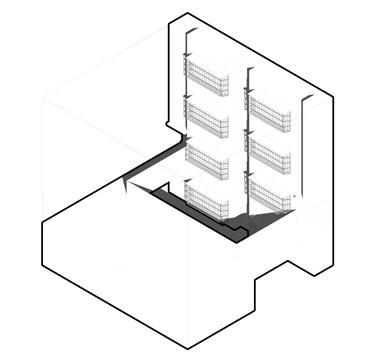
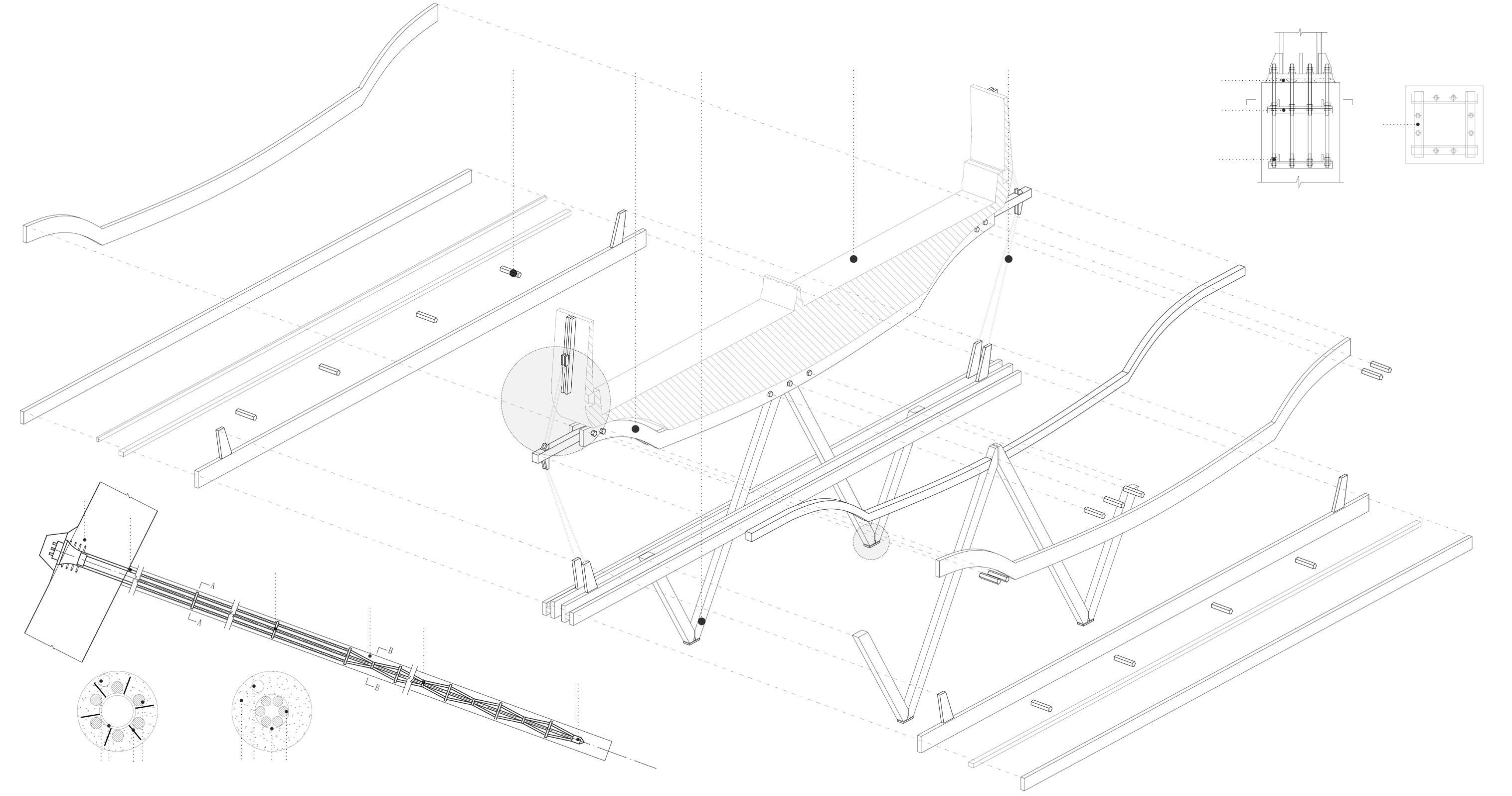
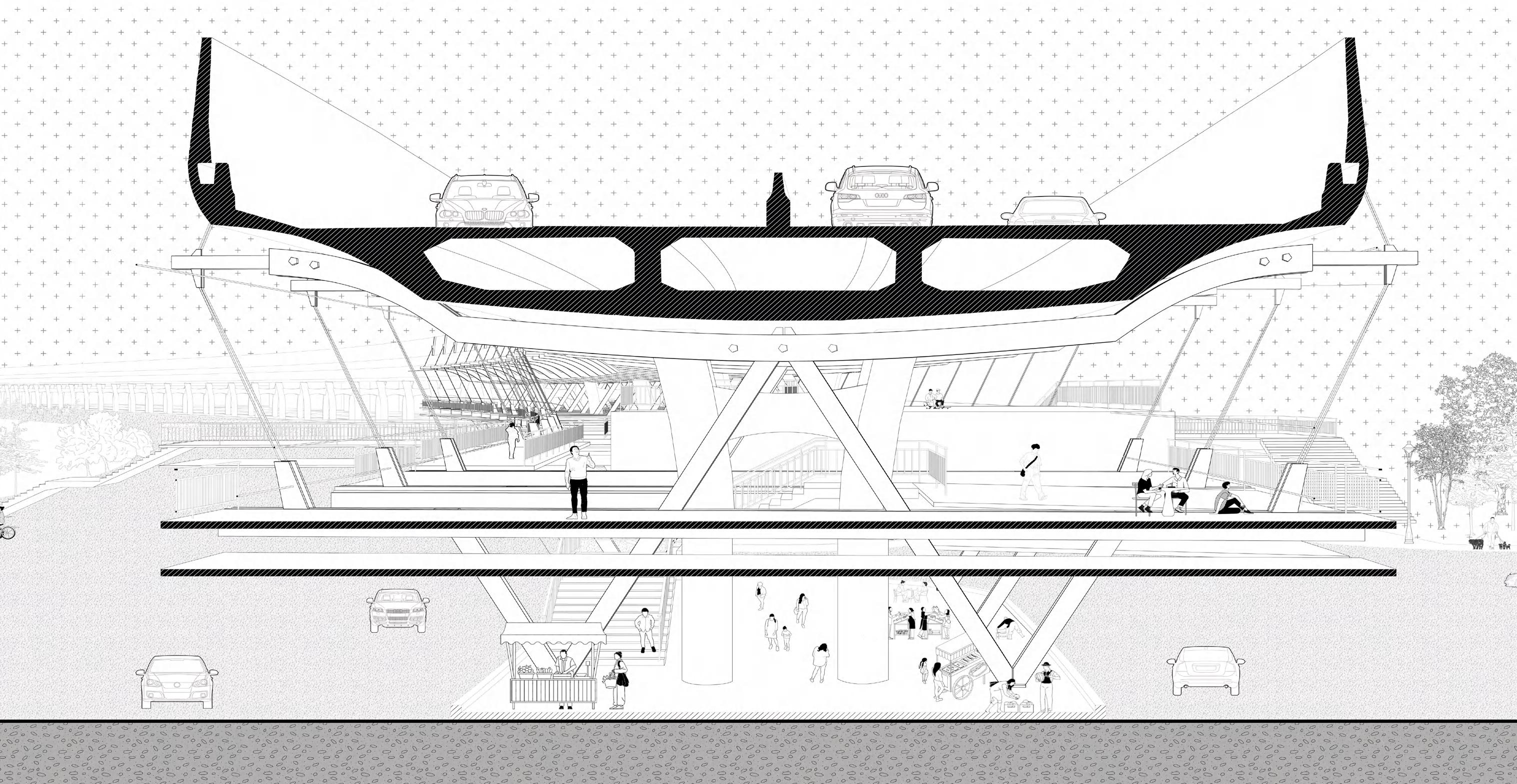
Design Of Parasitic Spaces Beneath Elevated Bridges
Project duration: 2025.8-2025.10
Nature of project: competition
Team cooperation
Names of all collaborators: Feng Siqi, Li Zhixin
Individual contribution: Concept deepening, modeling and drawing.
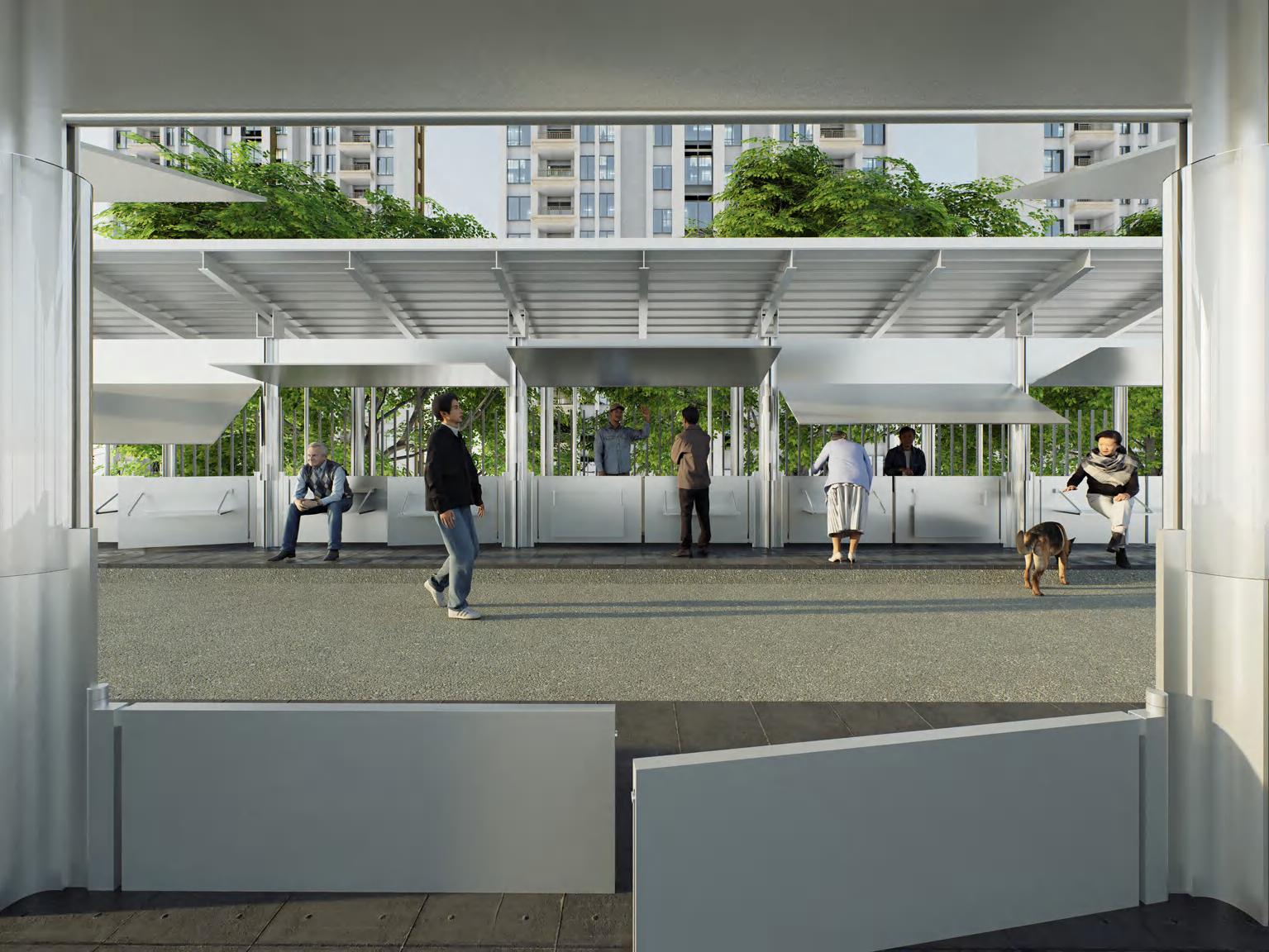
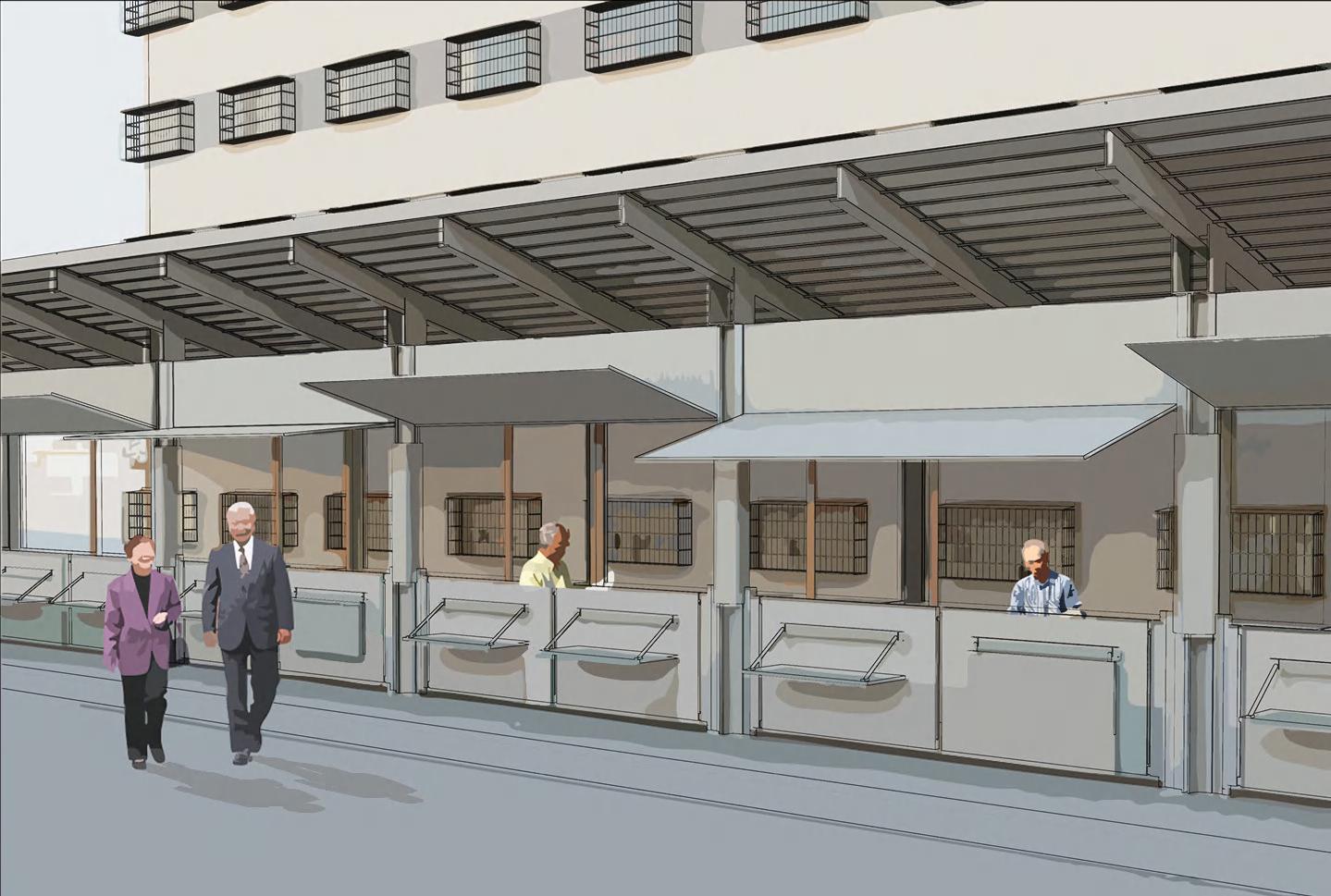
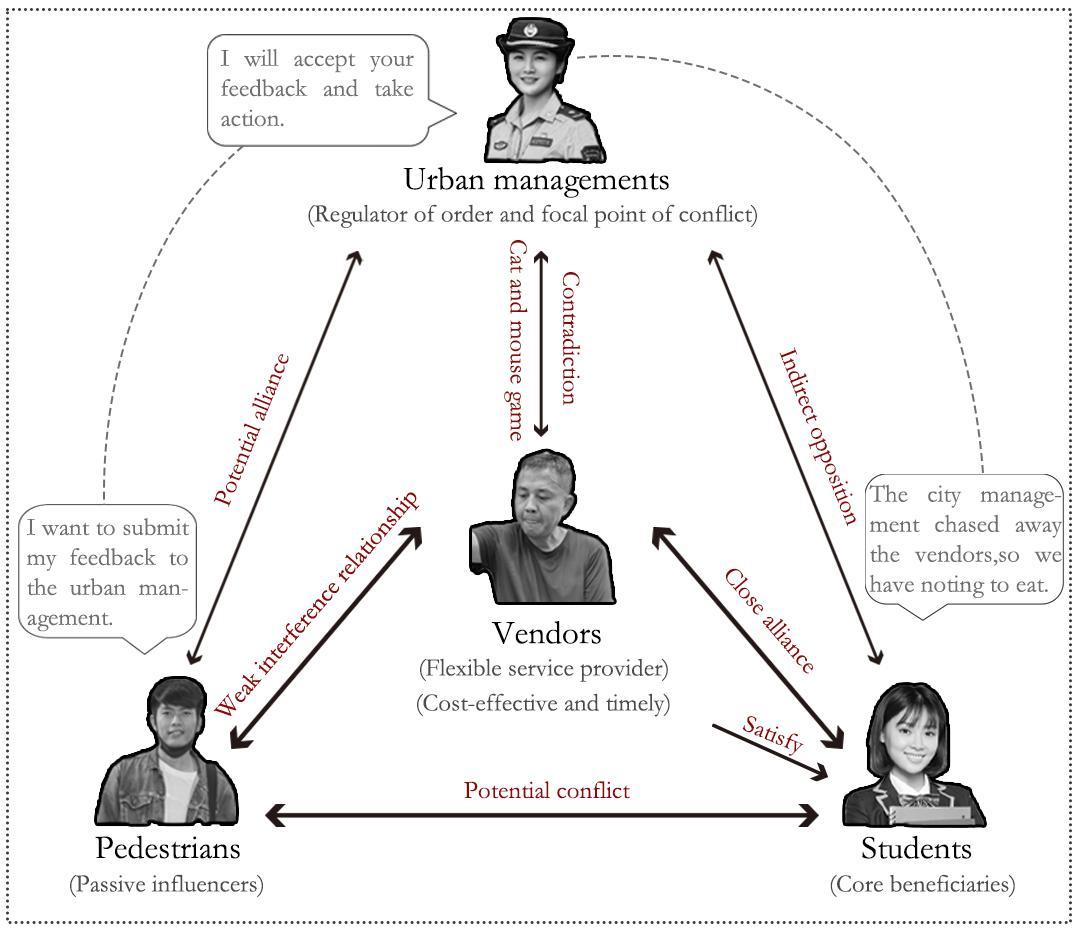
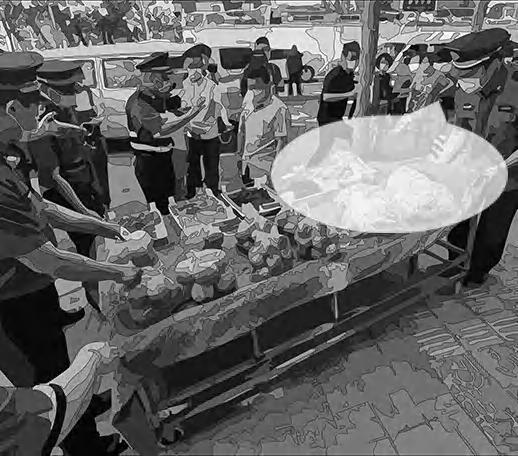
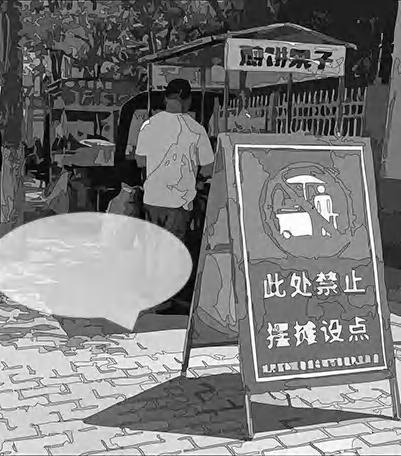
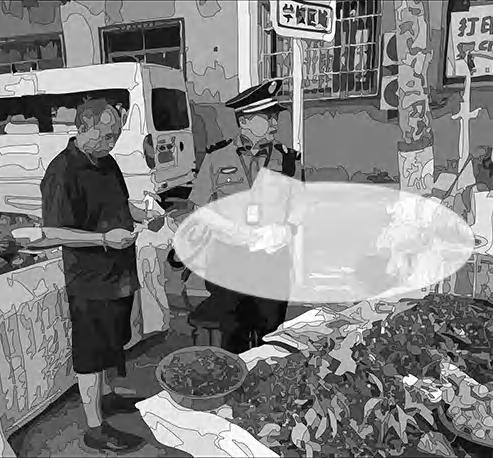
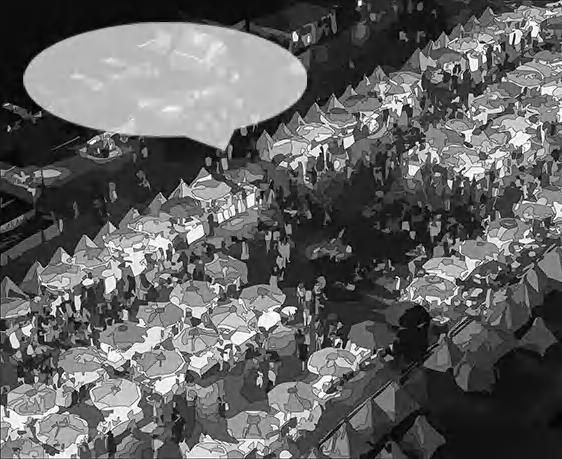
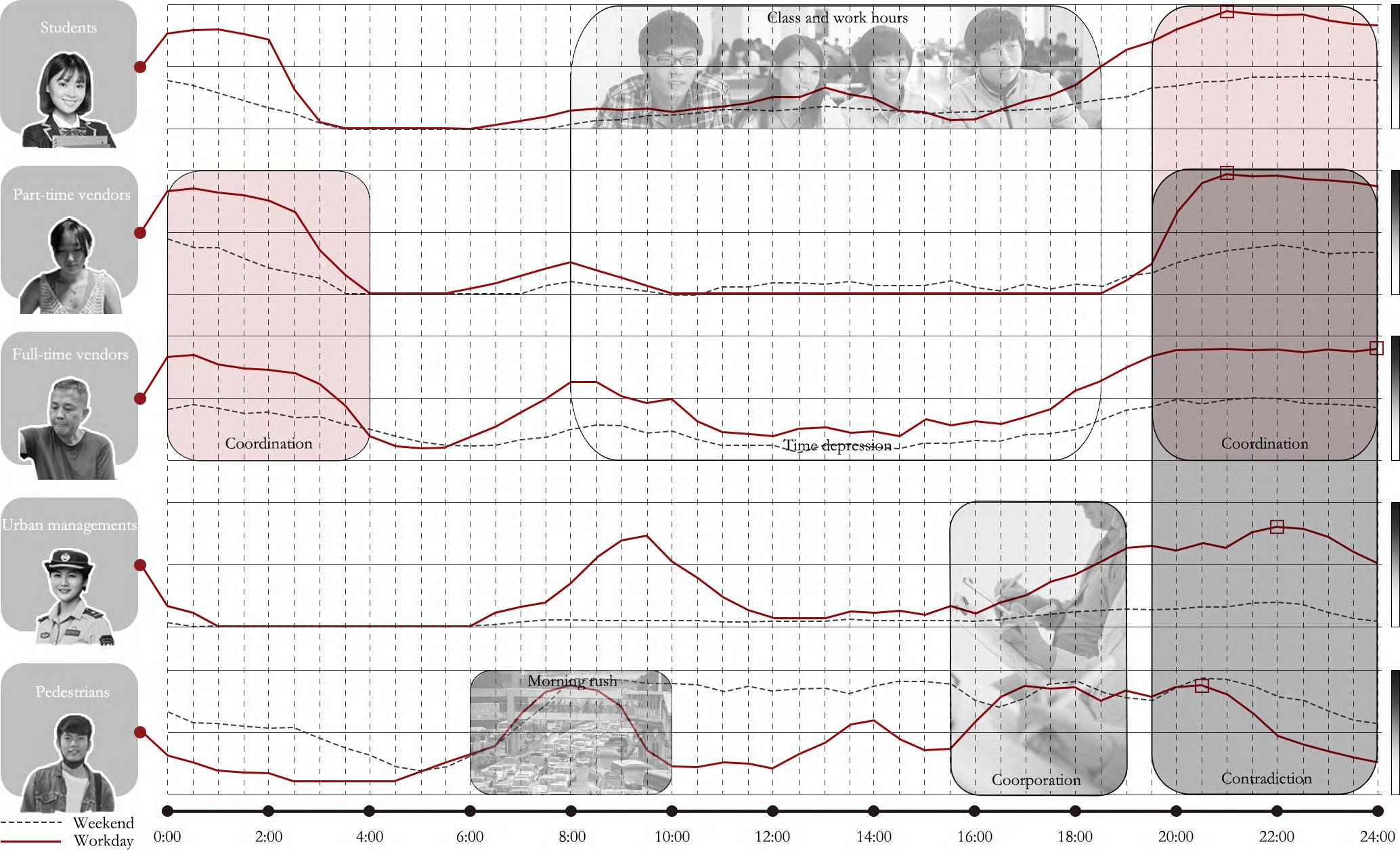
Currently, amid growing economic pressure, tightening employment conditions, and rising living costs, flexible employment forms have become increasingly common, giving rise to informal operations such as street food vendors. However, in urban management, planned zones often fail to align with spontaneously formed "golden locations" where market demand is highest. This mismatch leads many vendors to seek operating spaces outside official regulations, resulting in so-called "wild stalls."
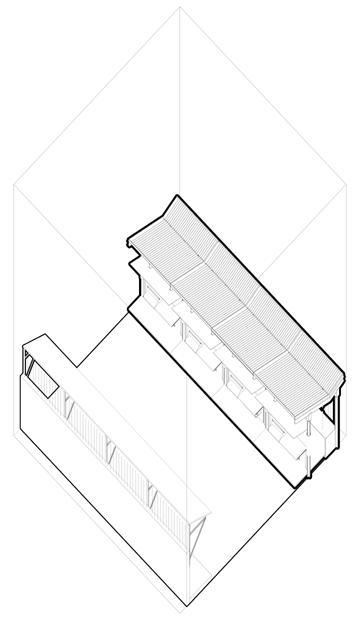
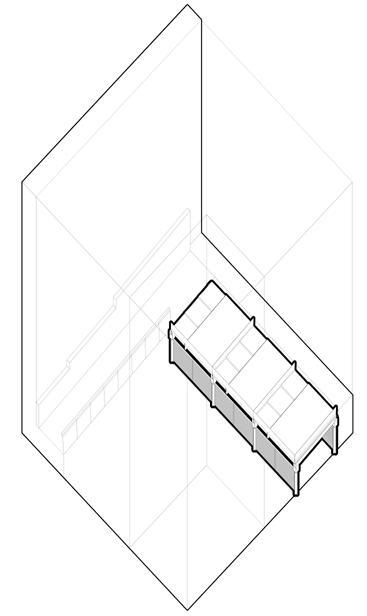
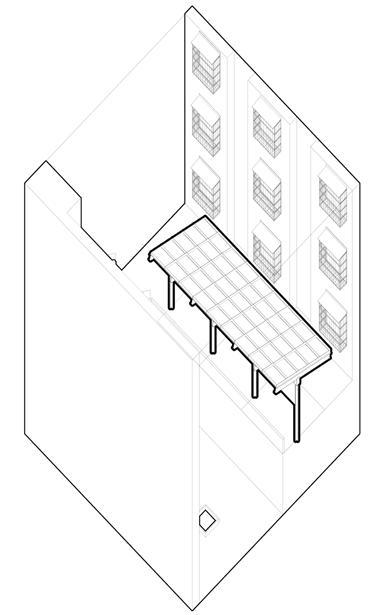
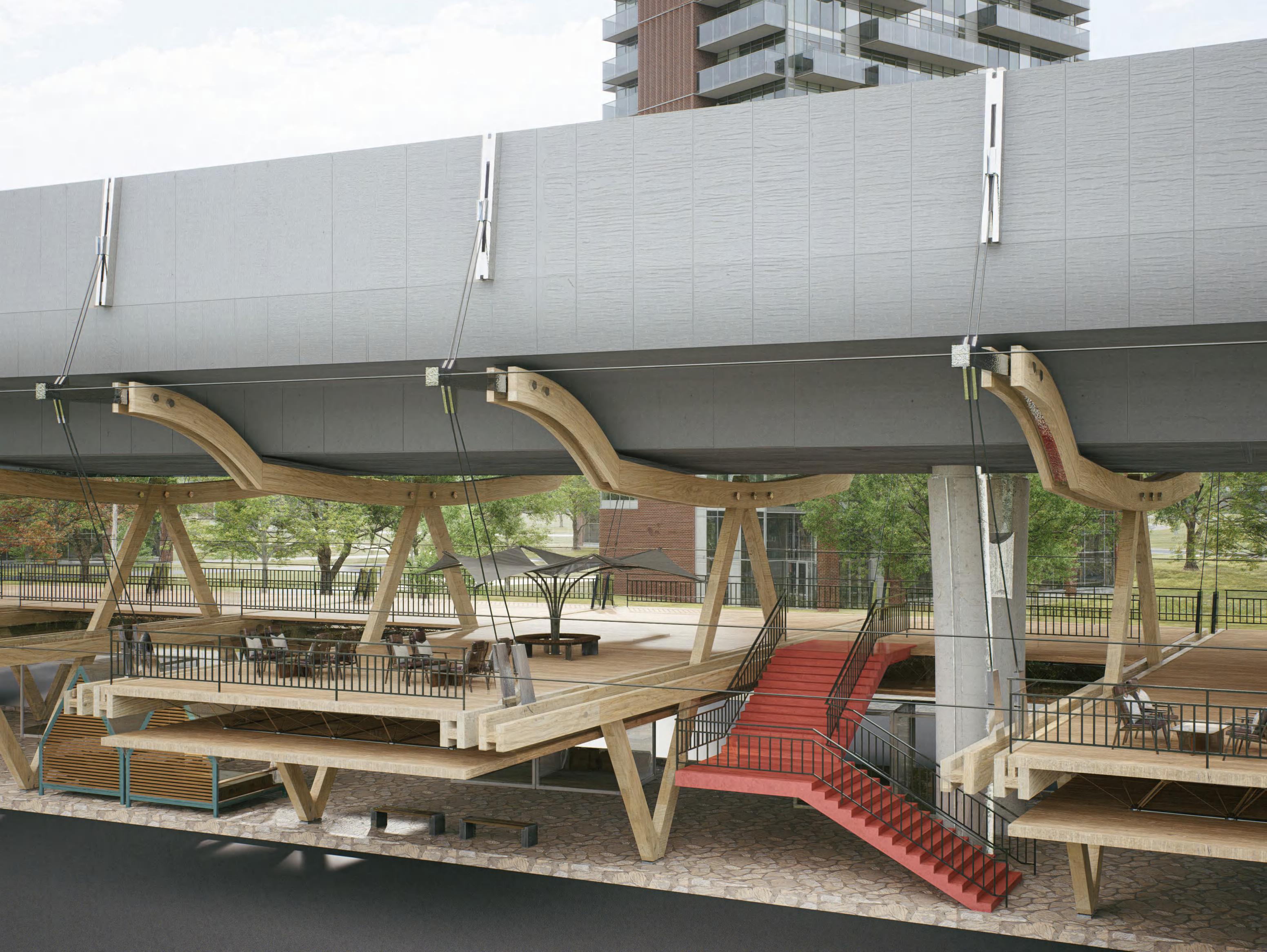
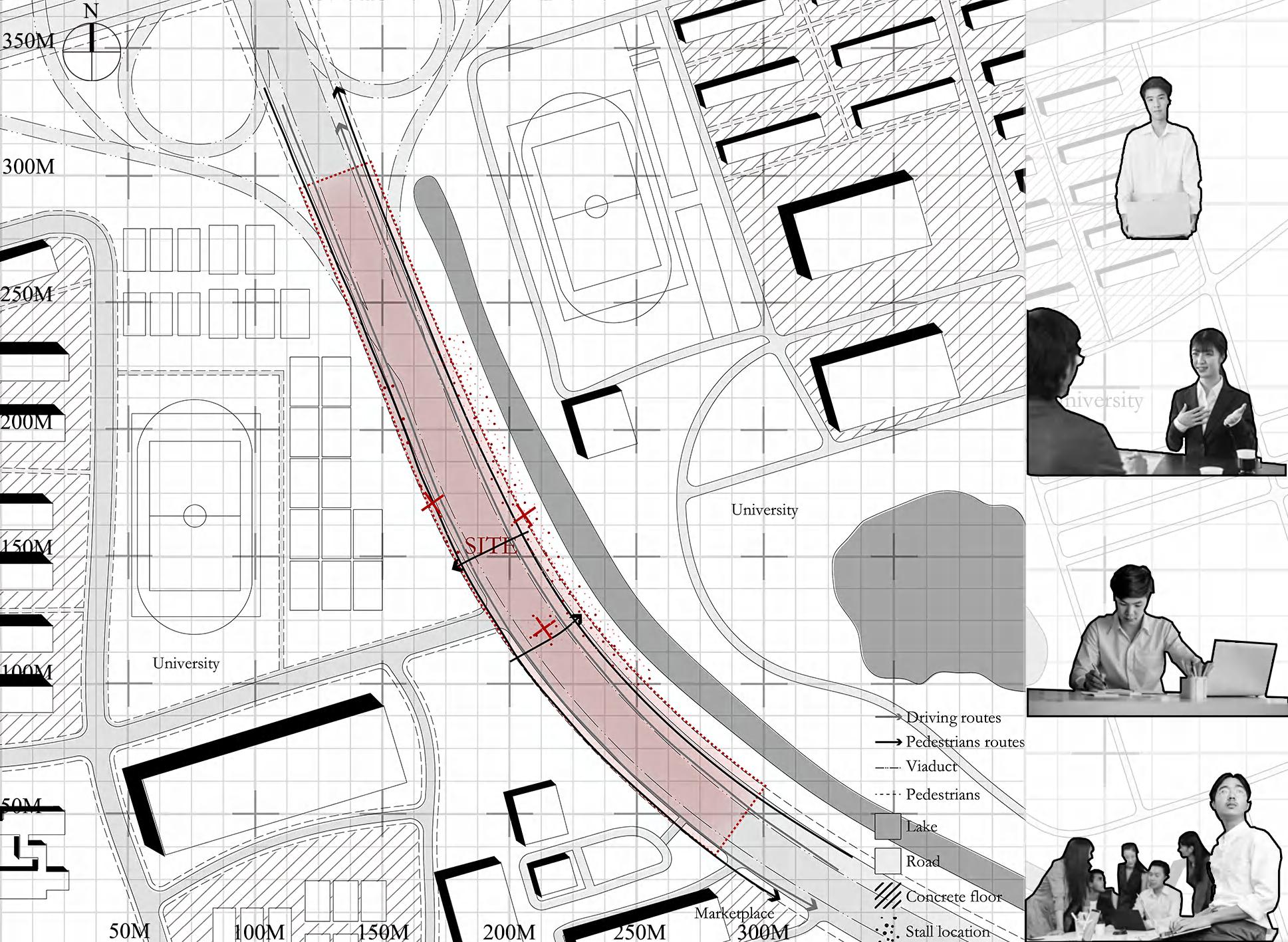
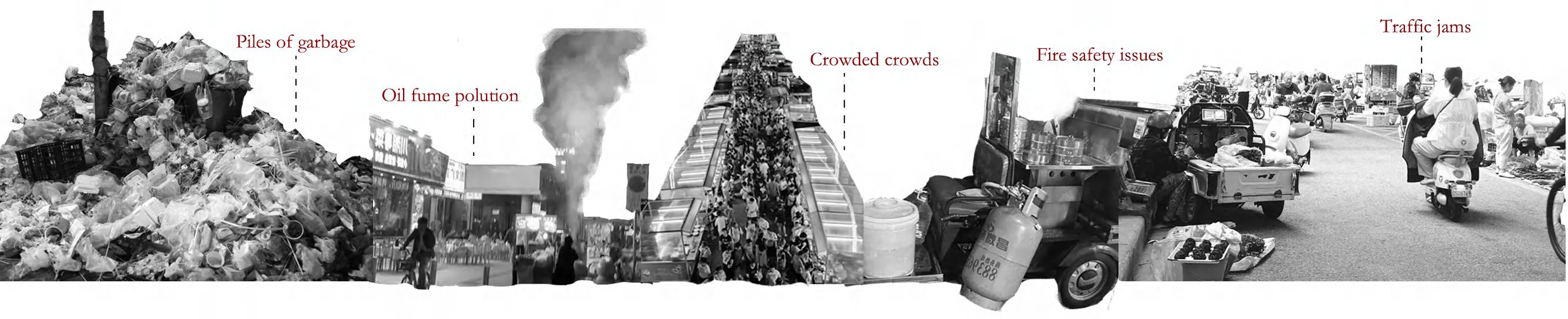
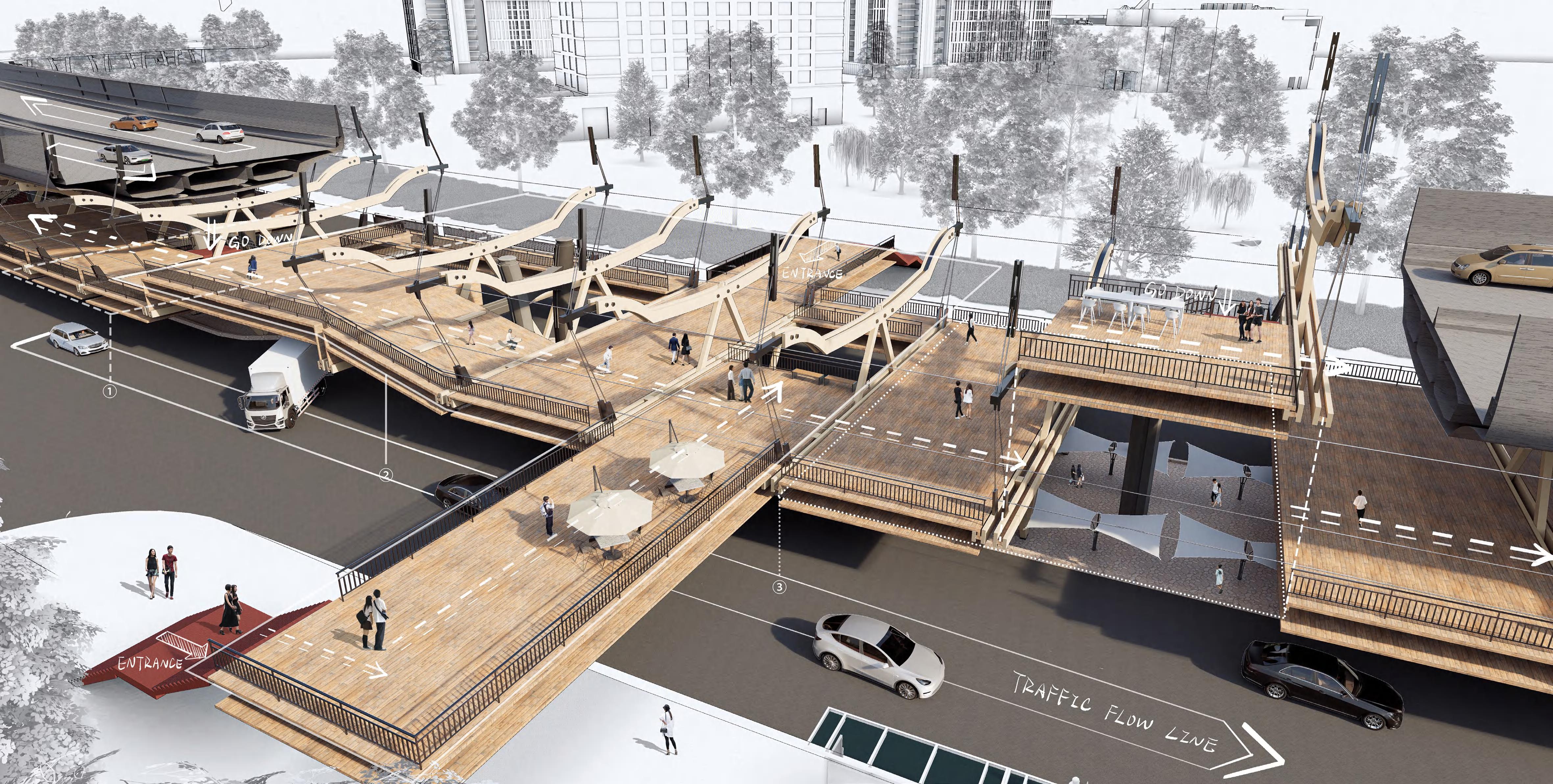
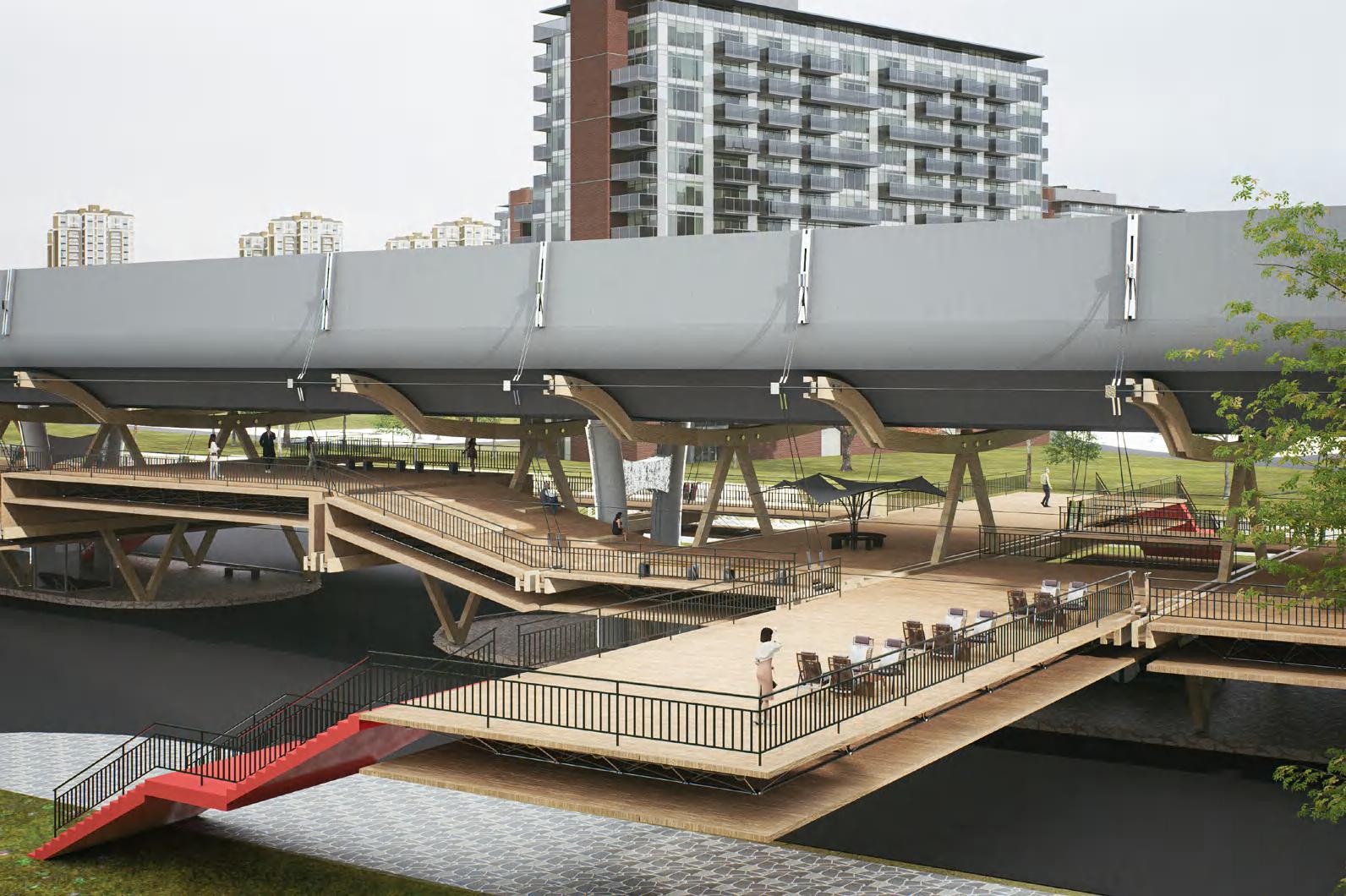
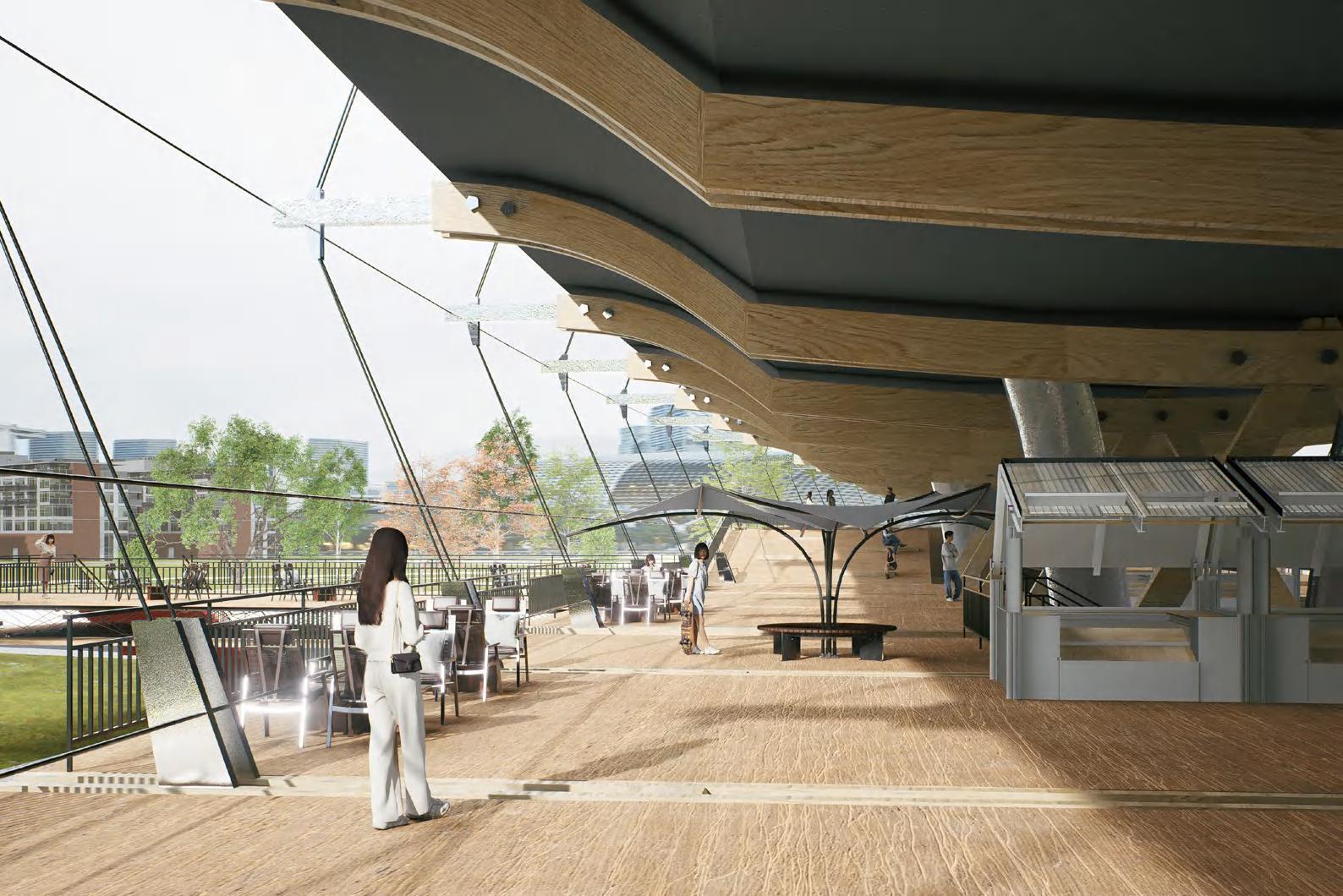
The project site is located at the entrance of a university campus, adjacent to a major urban road and connected to an elevated highway, forming a combined ground-level and aerial transportation system. The area beneath the elevated bridge constitutes a large expanse of underutilized space that has not yet been formally incorporated into urban planning or development. Given the high daily foot traffic and stable consumer demand near the university gate, this location has become a hotspot for numerous mobile vendors.
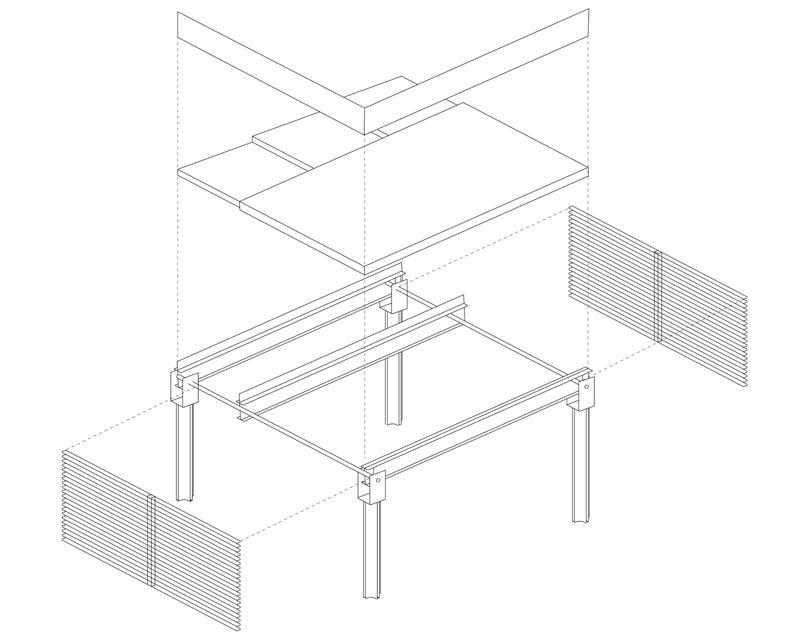
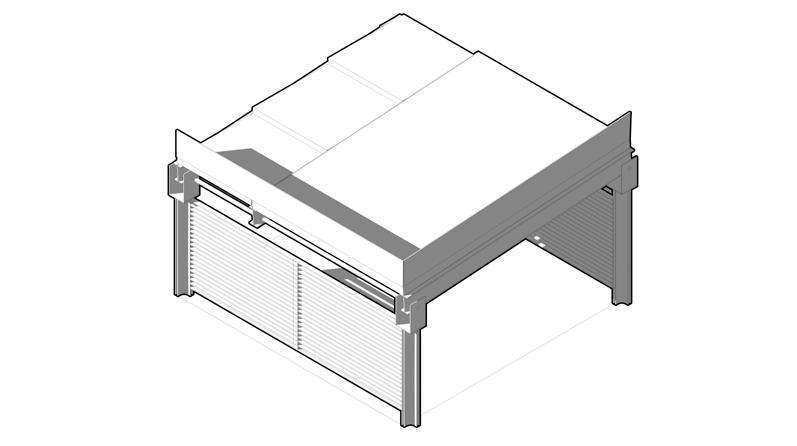
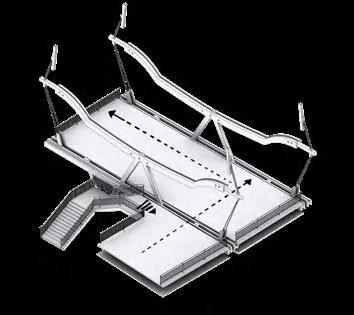
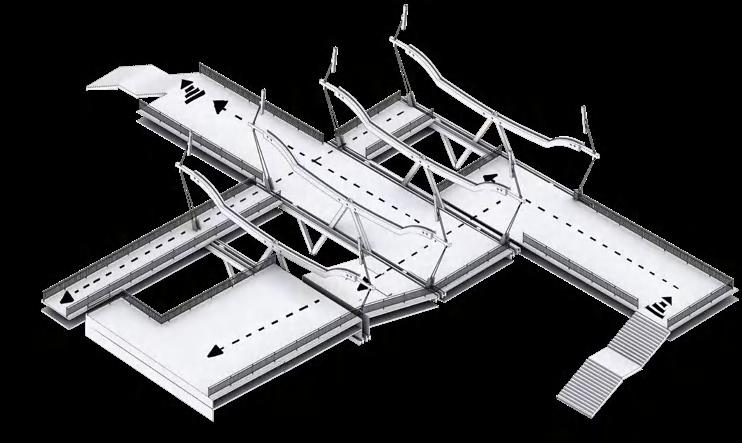
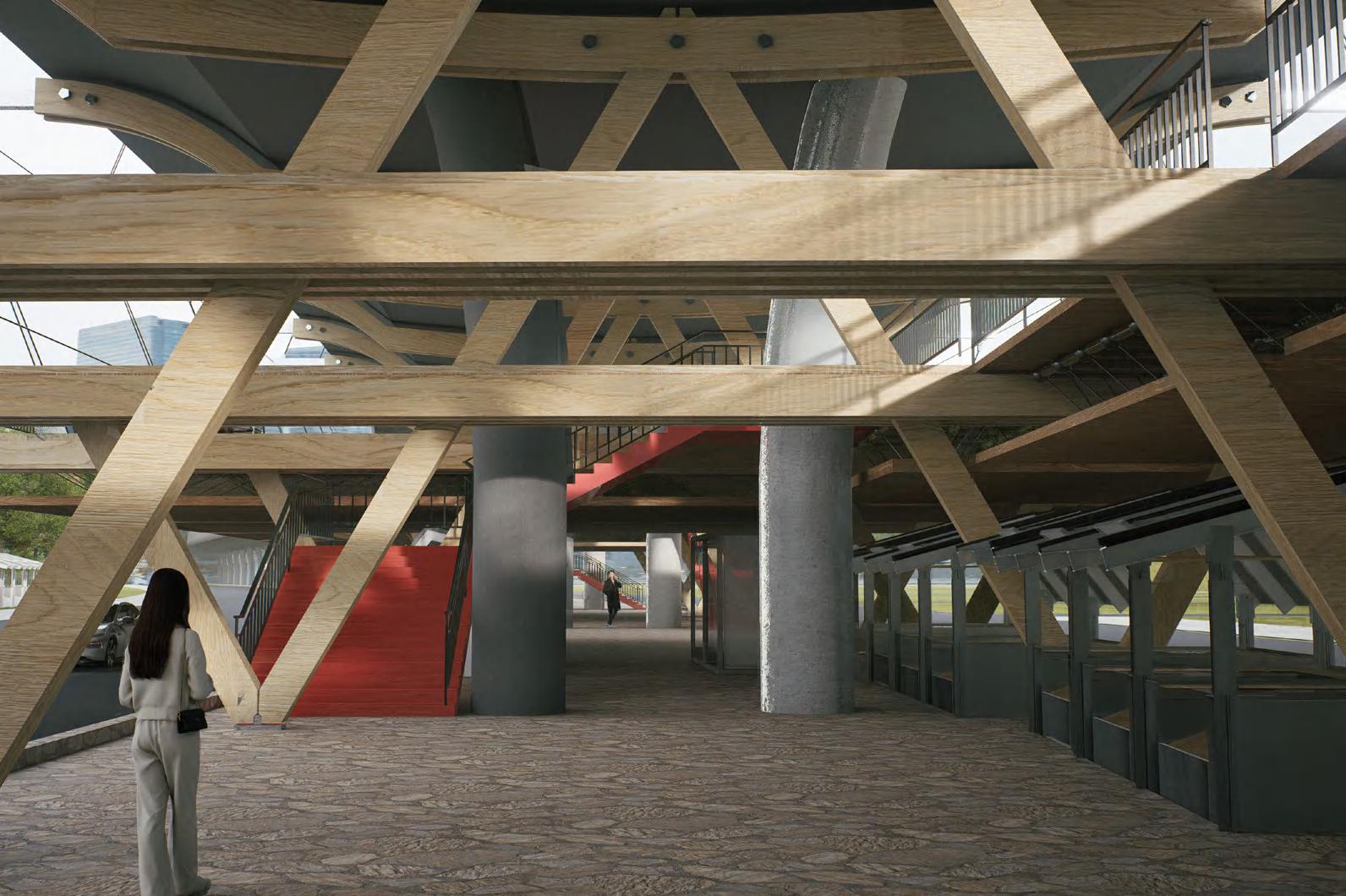
The site currently faces issues of functional conflict, cultural disconnection, and inefficient space utilization. Rather than adopting traditional approaches—either outright removal or complete laissez-faire—we propose a precise, systematic, and flexible "parasitic" design strategy. This approach aims to establish a symbiotic relationship with the university’s core functions, enabling organic renewal of vendor spaces and enhancing their overall value. Ultimately, it seeks to realign spatial resources with the actual needs of urban life.
AUDIENCE ANALYSIS
THE PAVILION OF FATE
The Museum of Emotional Memory: Liu He, Marquis of Haihun
Project duration: 2025.10-2025.12
Nature of project: academic
Personal project
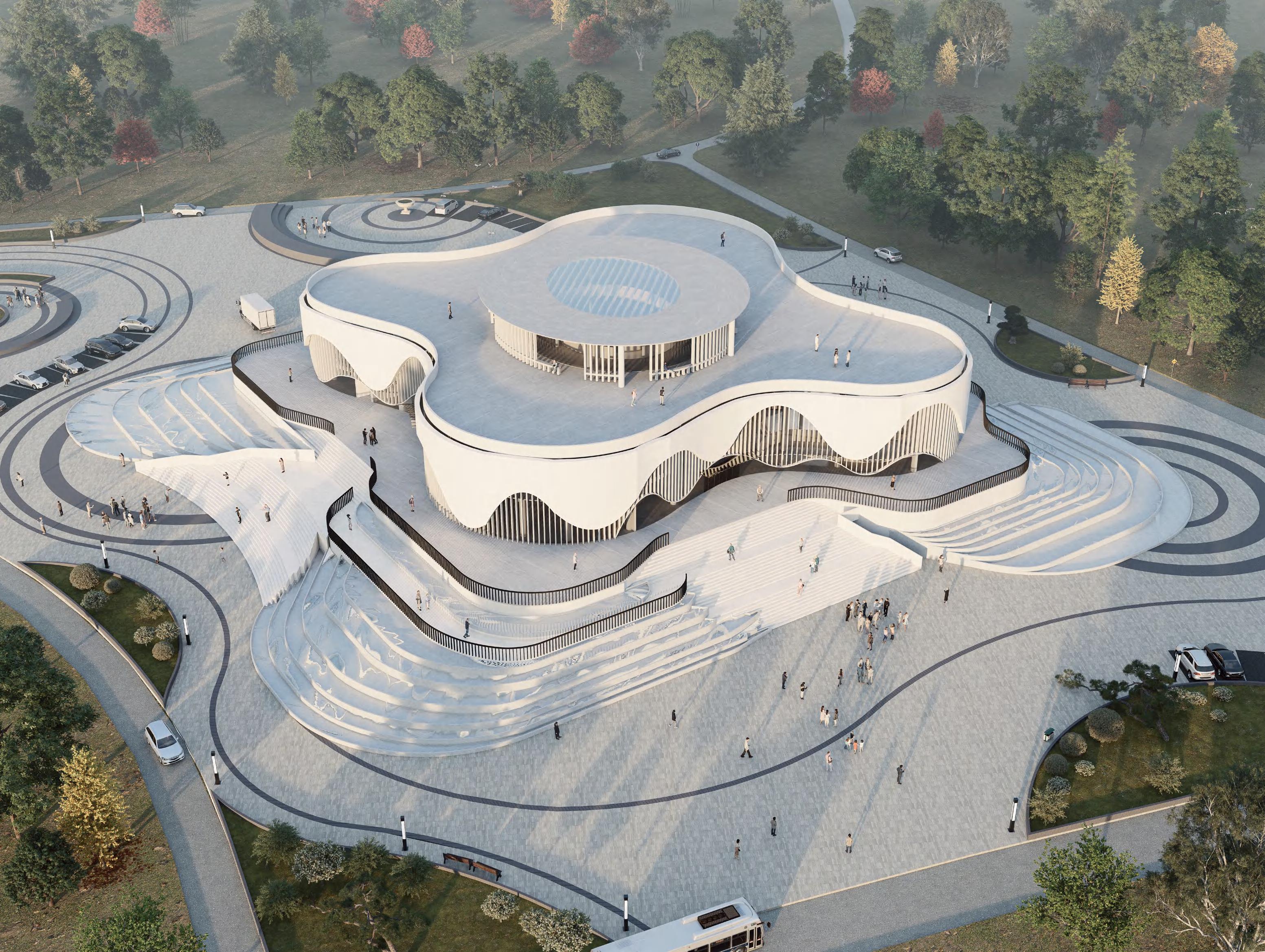
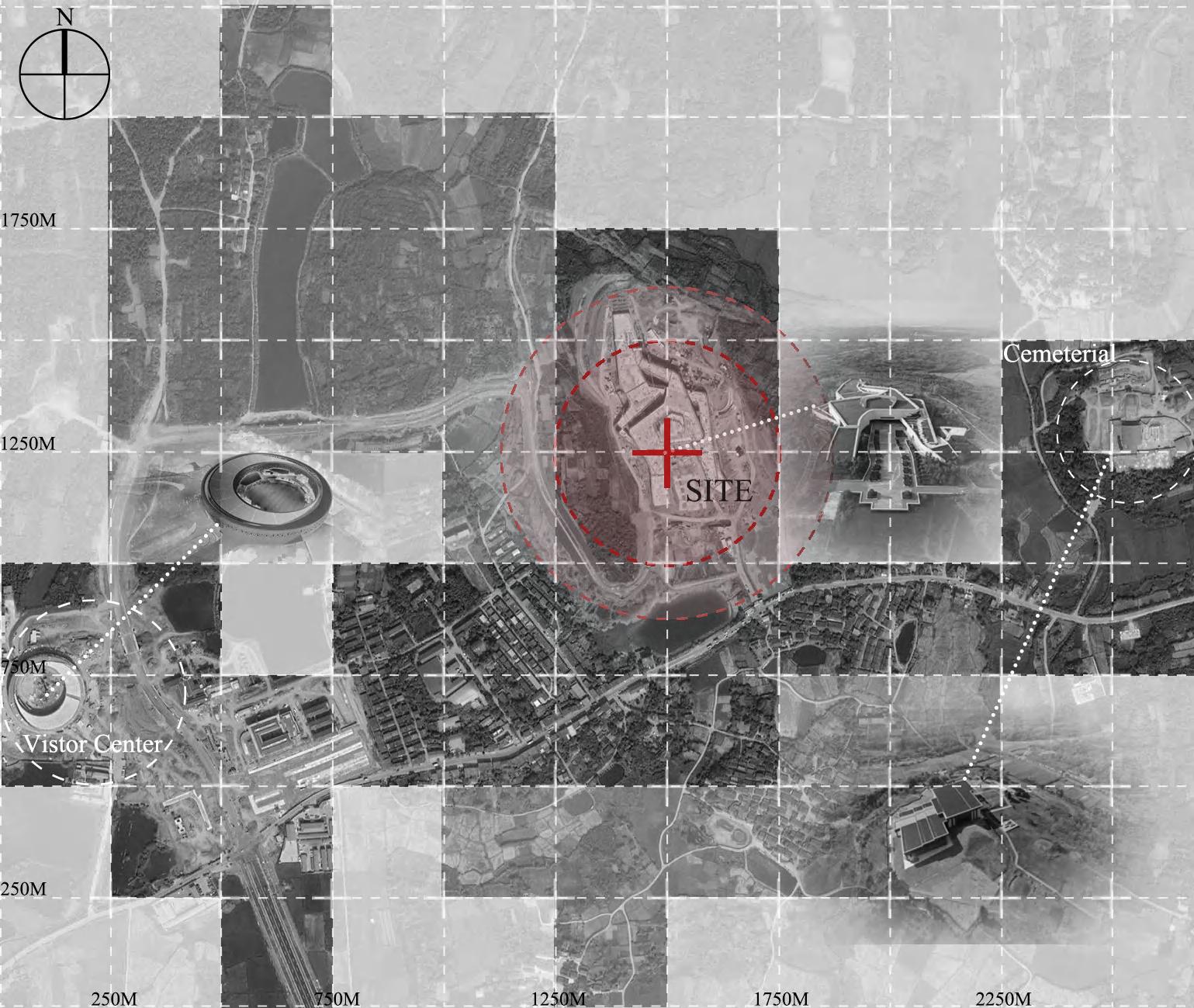
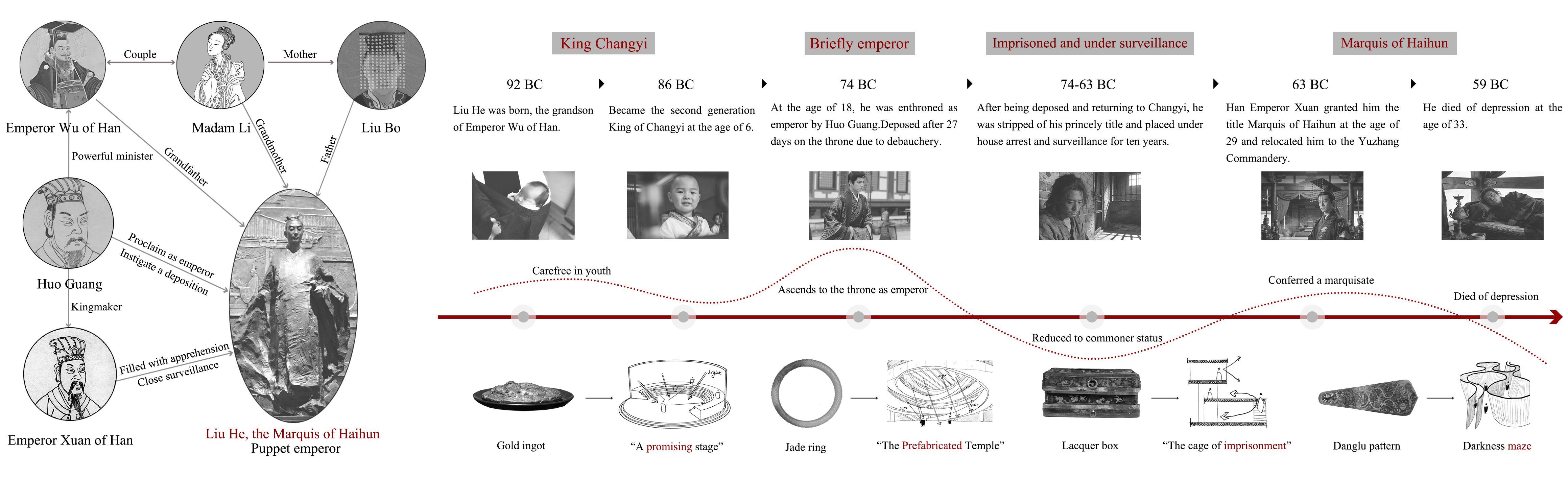
This project is located within the Haihunhou State Ruins Park in Xinchang District, Nanchang City, and serves as an emotional museum that translates architectural space into the fate of a historical figure.
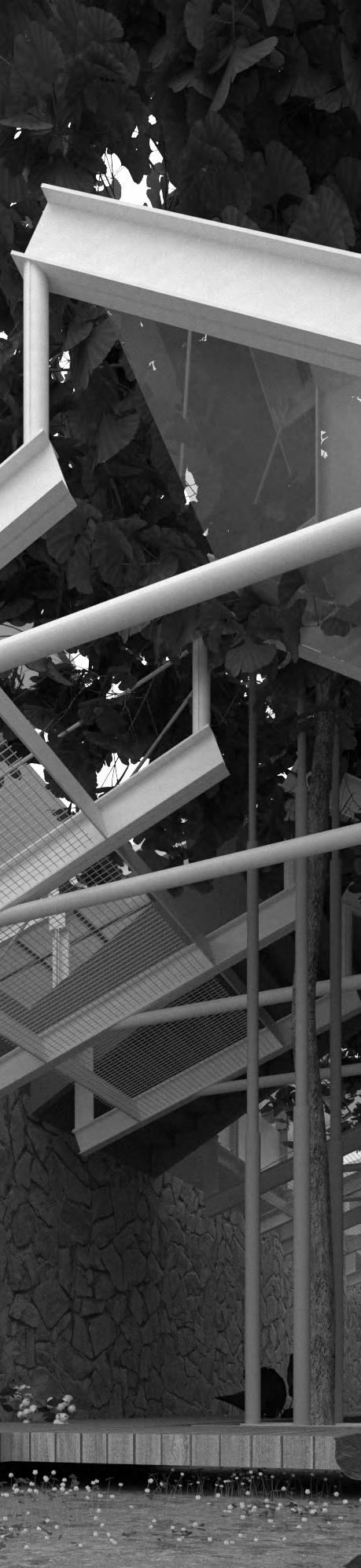
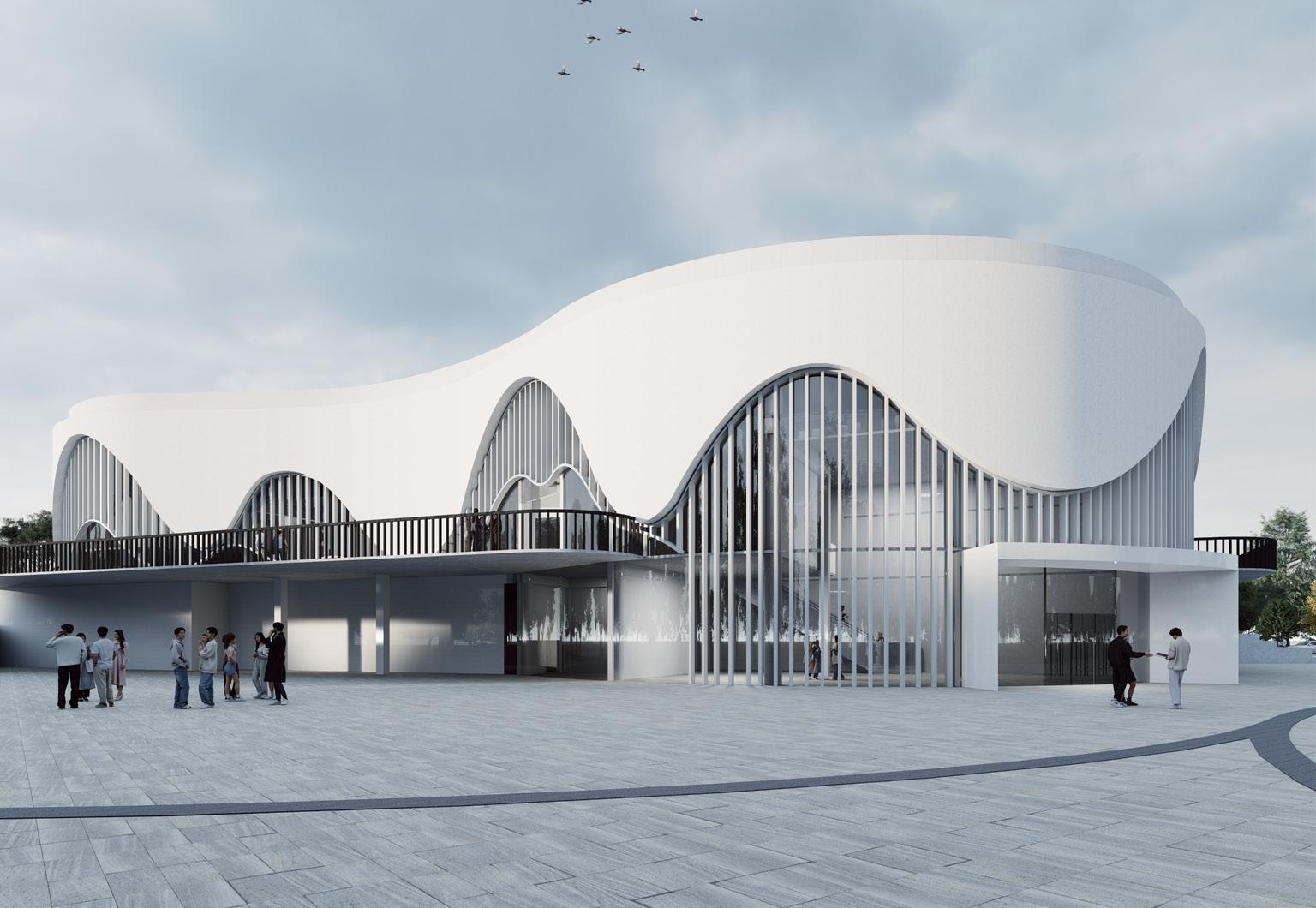
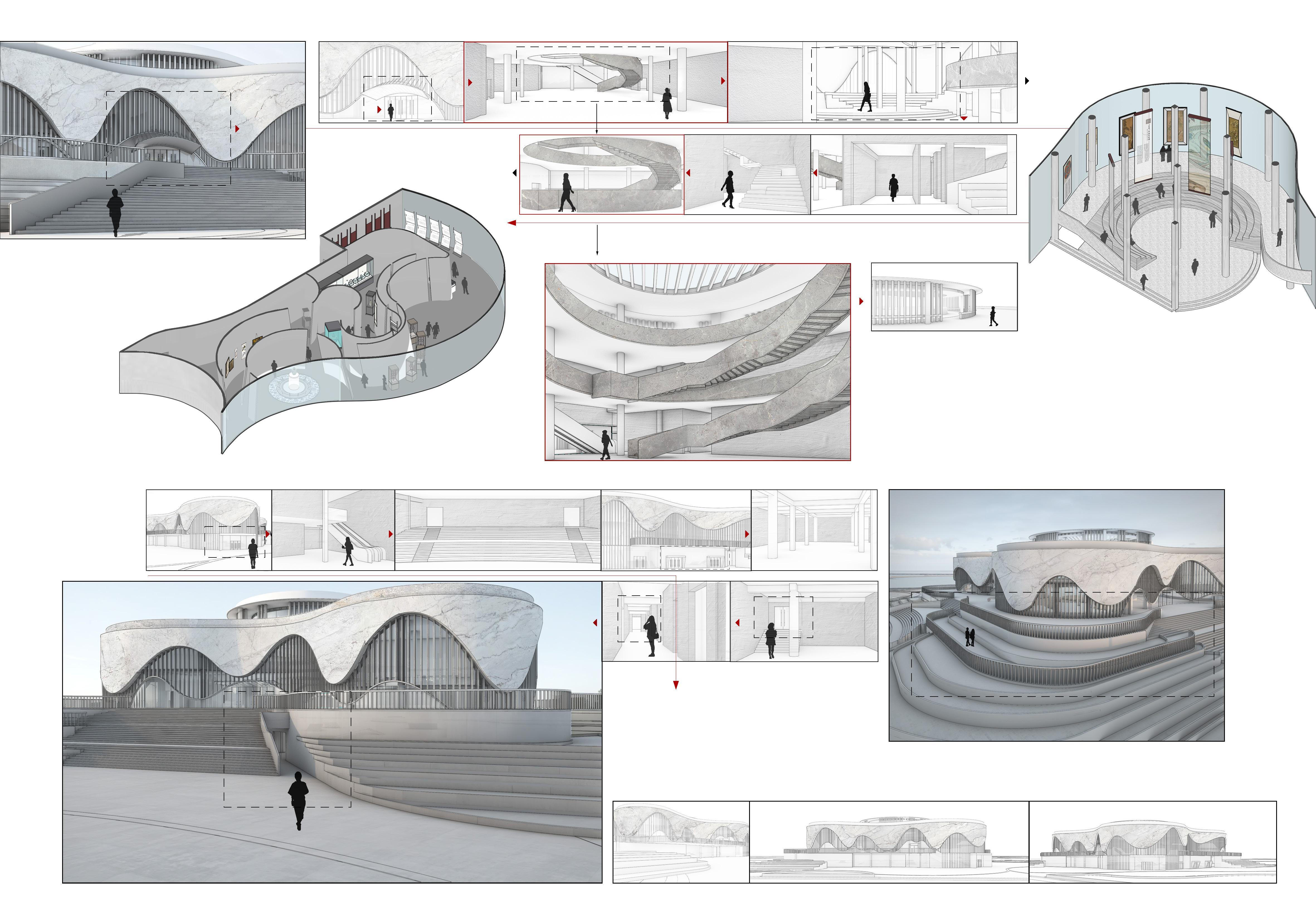
The museum adopts a narrative strategy of "external water, internal emotion." The exterior employs water as its architectural language: the site is paved with ripple-patterned tiles, surrounded by terraced water features, while the facade utilizes curved grilles and arced walls to capture the play of light on water, creating the overall image of a "historical seal floating on a watery realm."
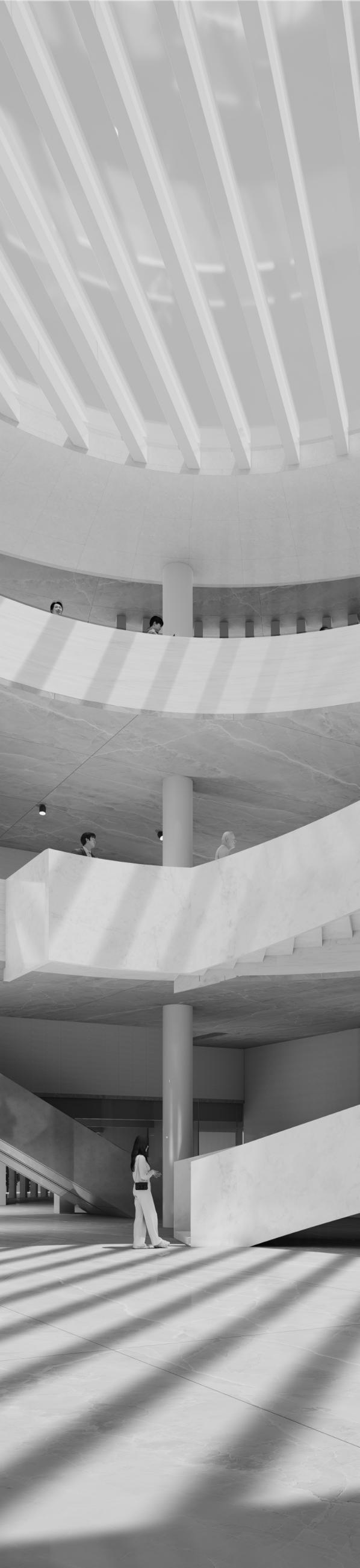
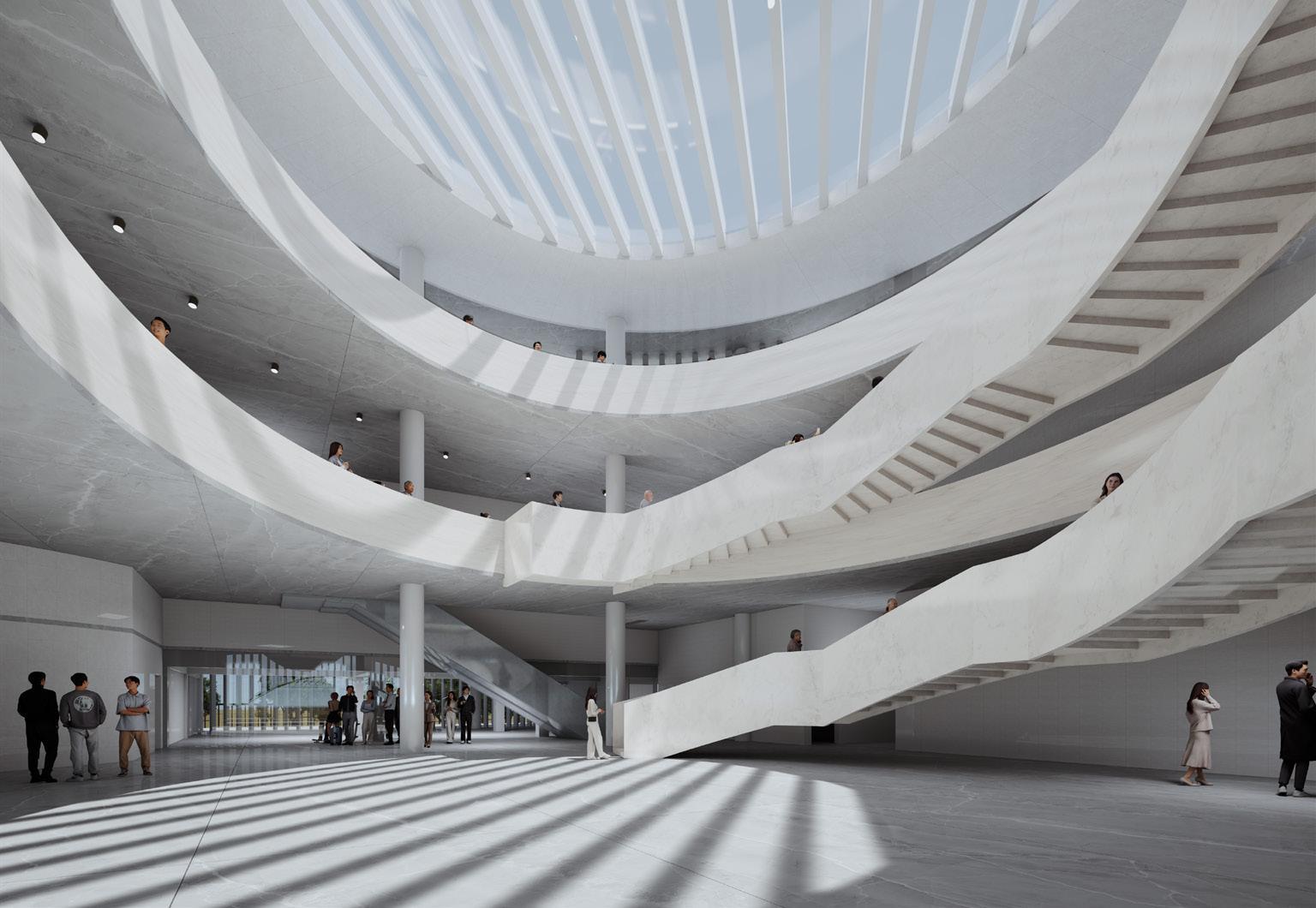
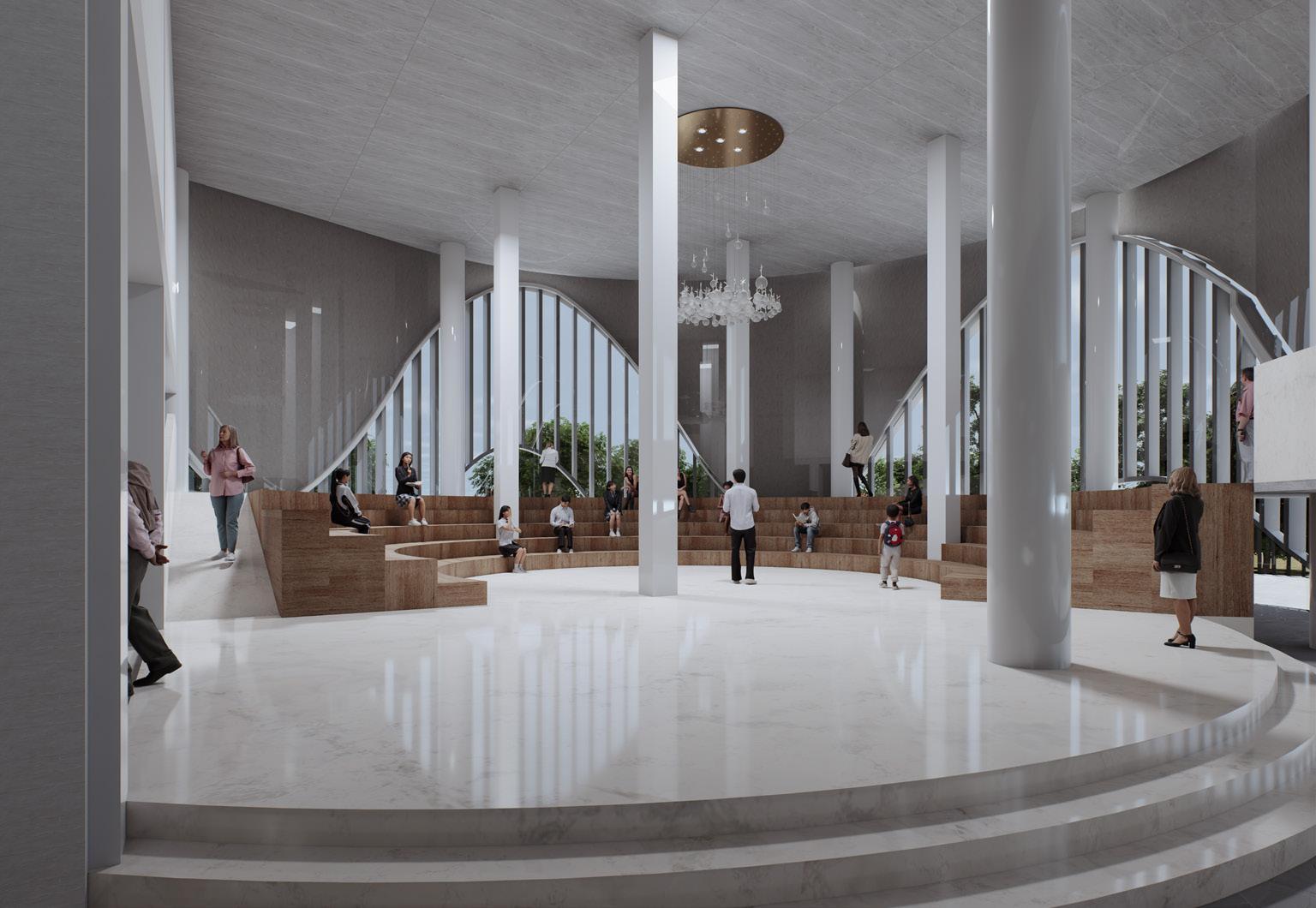
The interior focuses entirely on the emotional trajectory of Liu He's life: from an open, luminous lounge symbolizing his childhood innocence, to a mirror maze exhibition hall reflecting the confusion of his ascension, then to a dark, immersive space expressing the despair of his dethronement, and finally arriving at a spiraling, pure-white staircase—symbolizing the transcendent serenity of his later years. The external and internal narratives are distinct yet echo one another: the exterior represents the public memory of the long river of history, while the interior conveys the solitary monologue of personal destiny. Together, they construct an emotional memorial that "uses water as a mirror and space as a biography."
layout
Bamboo slips
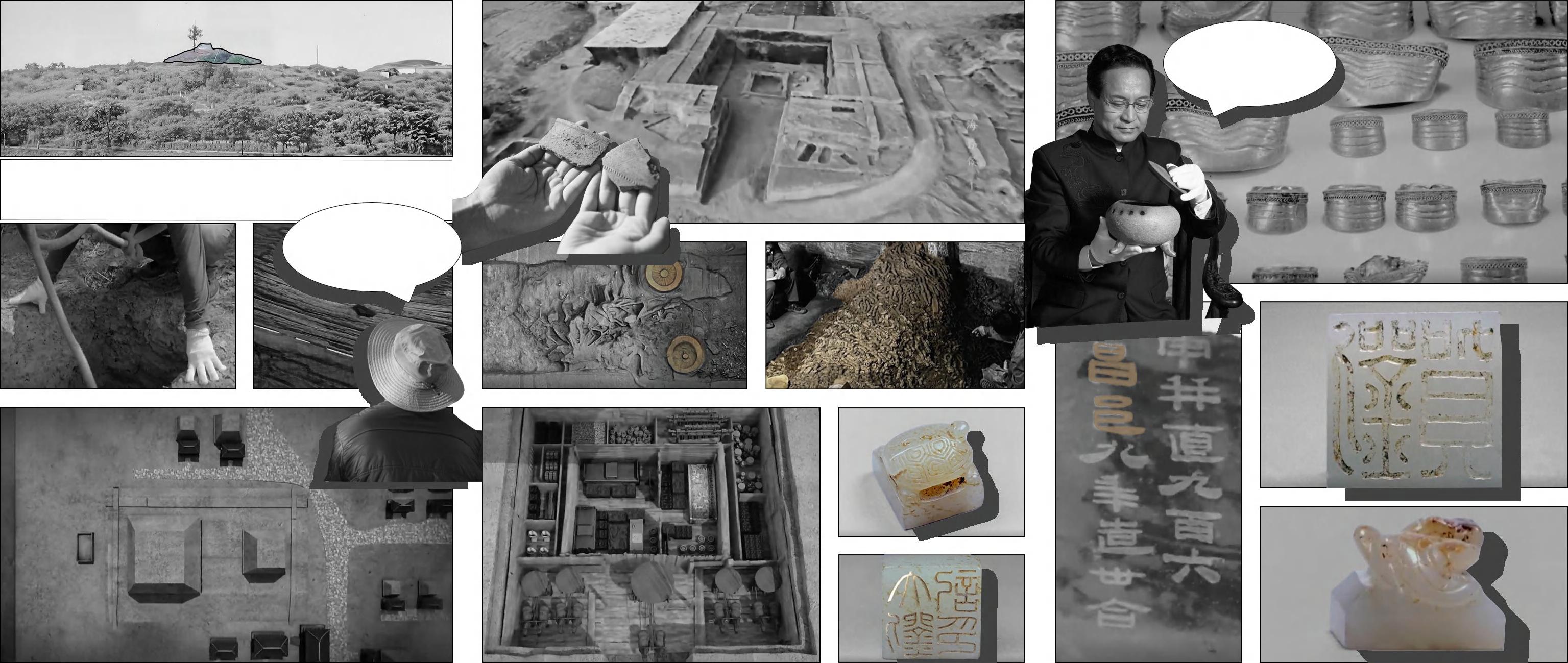
The emperor's burial items include golden horseshoes and golden qilin.
The seal inscribed with the tomb owner's name
The tomb's owner must be Liu He.
located
Datangping Township, Xinjian District, Nanchang City, Jiangxi Province.
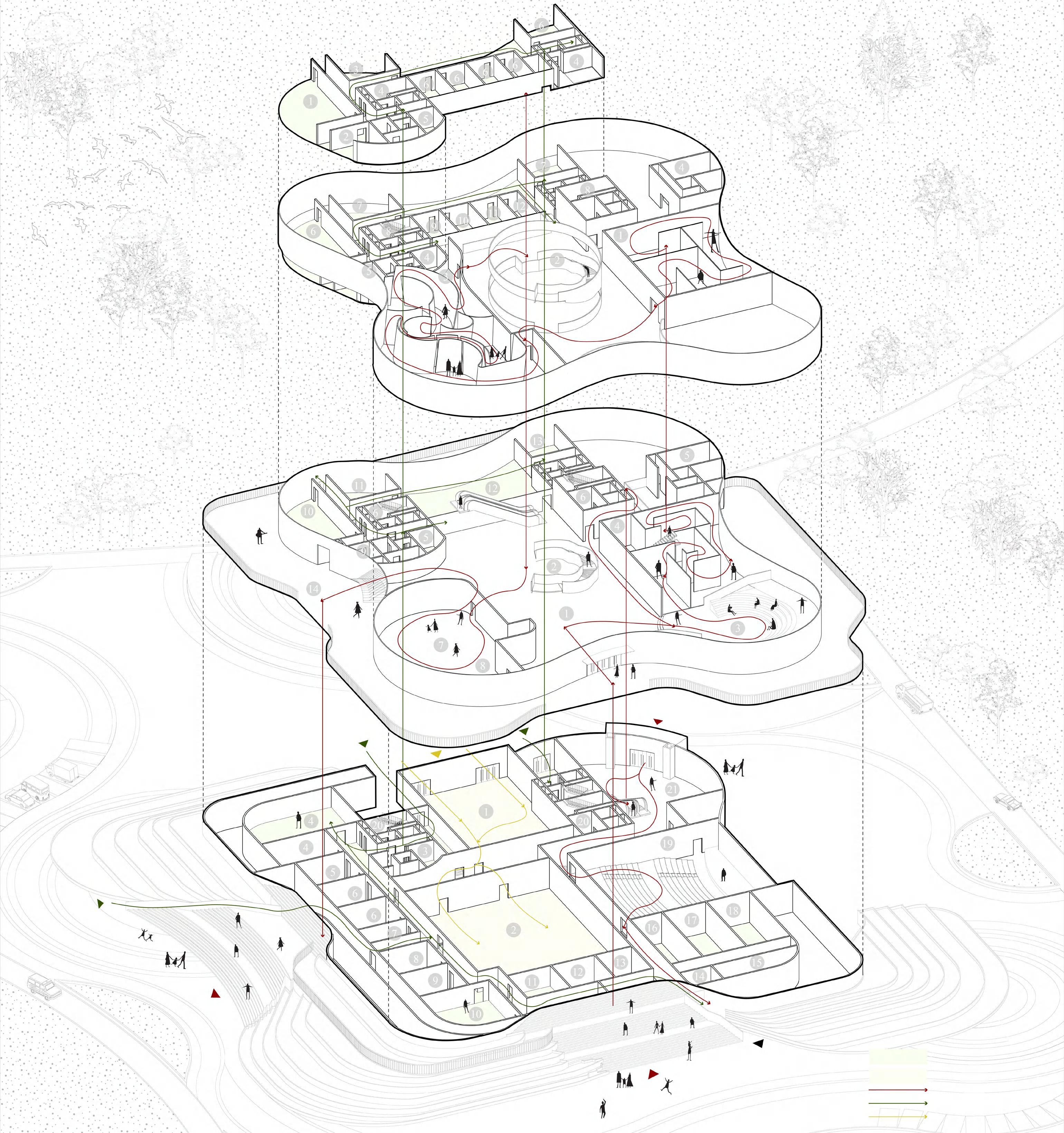
Entering from Exhibition Hall 1 into the dark and oppressive Exhibition Hall 2 with its undulating slanted walls, representing the despair of Liu He after his dethronement.
The artifact warehouse and staff also have a designated entrance.
After exiting Exhibition Hall 2, visitors can reach the rooftop via the Spiral Staircase which symbolizes the cycle of destiny in the Lobby, or descend via the spiral staircase to leave the museum.
Visitors first enter through the stairs to the Main Entrance
Visitors can enter the Lecture Hall on the first floor through Entrance 2
Platform and Stepped Pool
Visitors turn right from the main entrance into a bright, well-lit Lounge symbolizing Liu He's carefree childhood and a promising future.
Entering the soaring labyrinthine Exhibition Hall 1 from the lounge represents Liu He's confusion when he ascended the throne.
JINGHONG PAVILION
Theater Design Based On The Curved Eaves Of Traditional Chinese Opera Stages
Project duration: 2024.10-2024.12
Nature of project: academic
Personal project
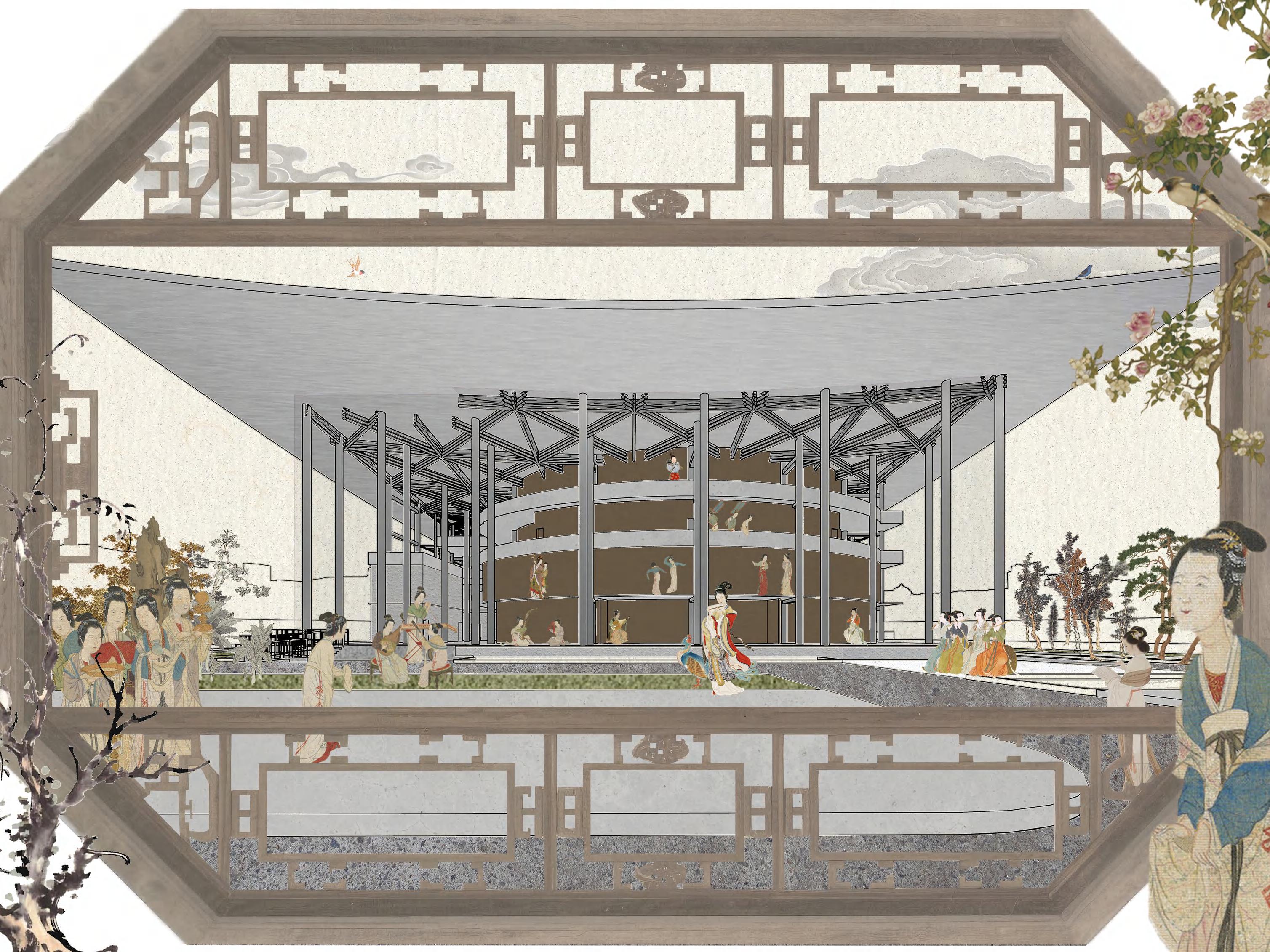
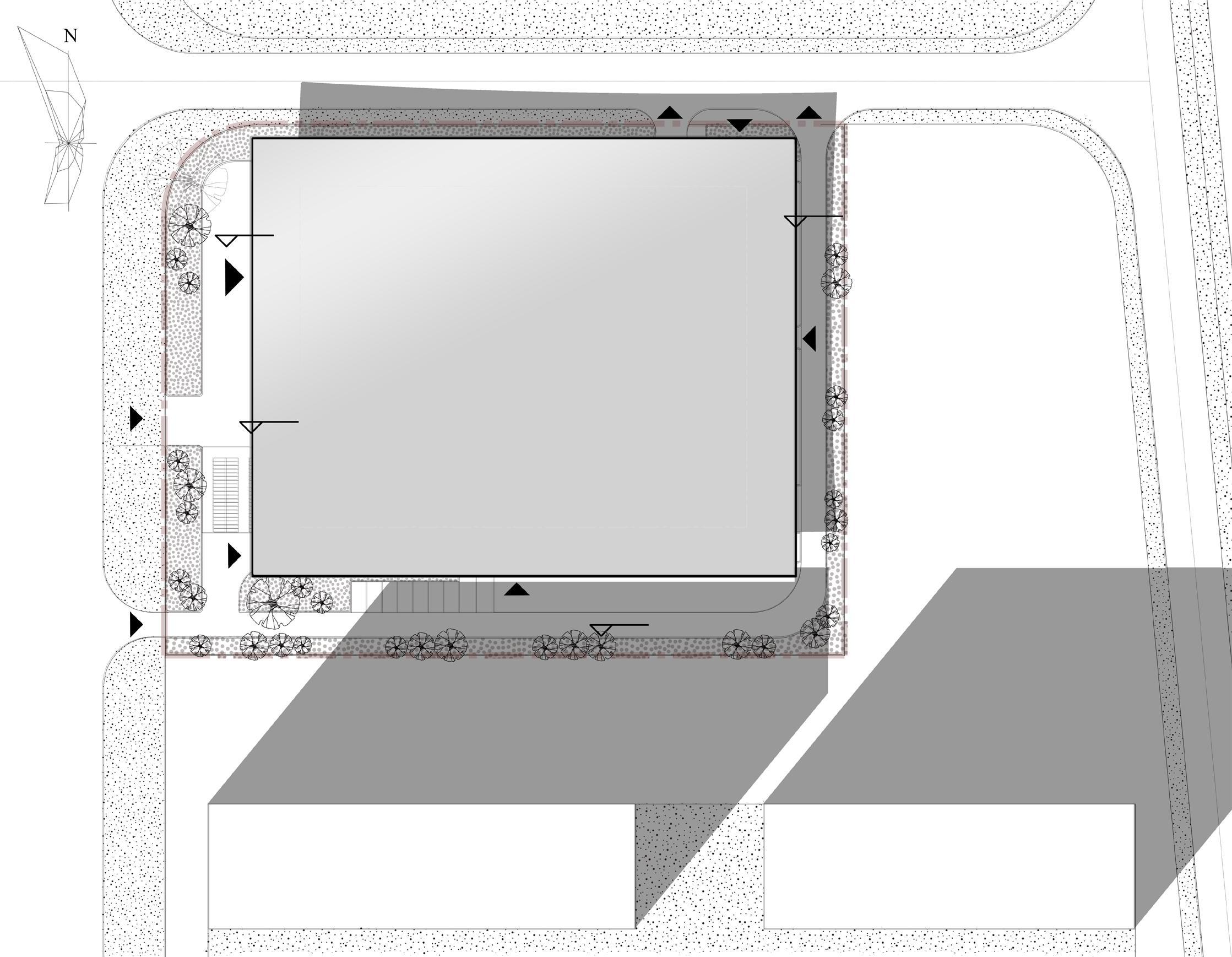
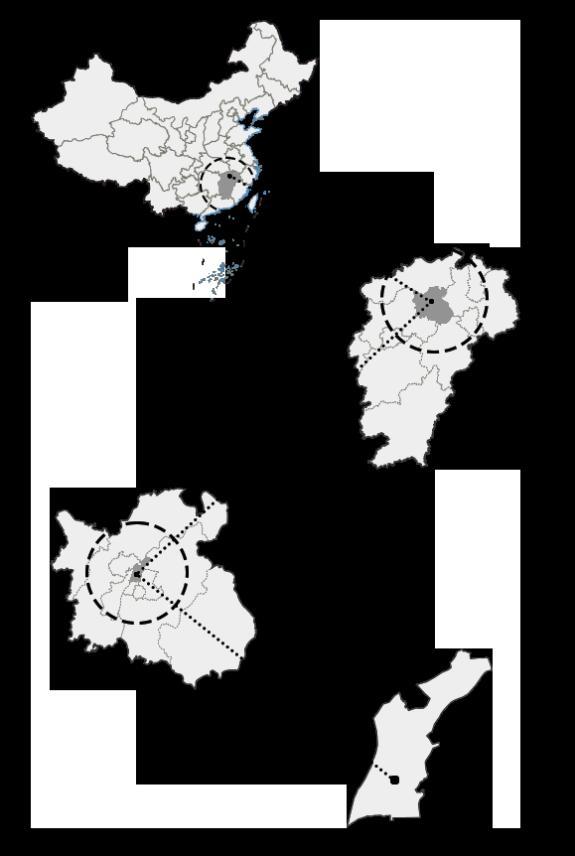
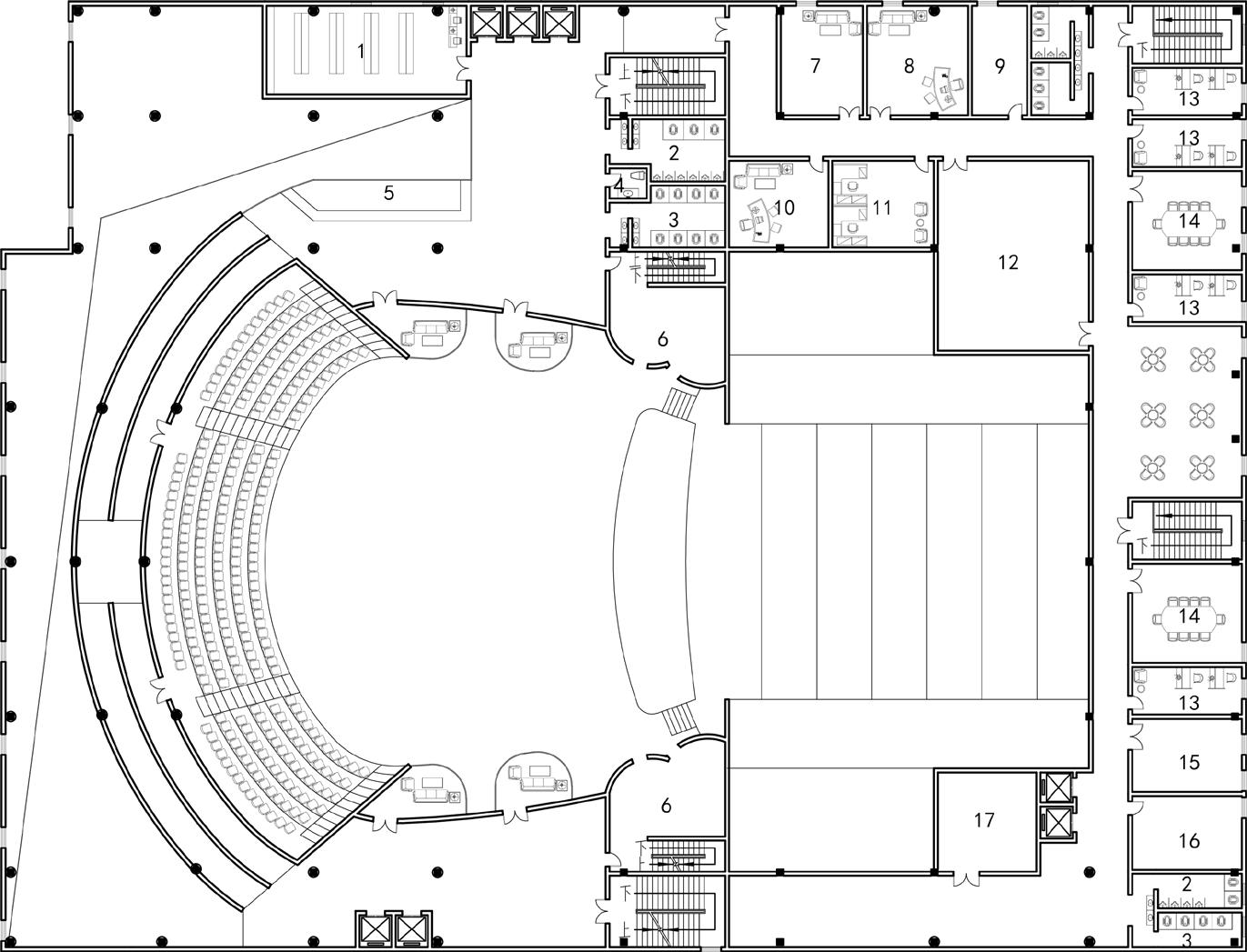
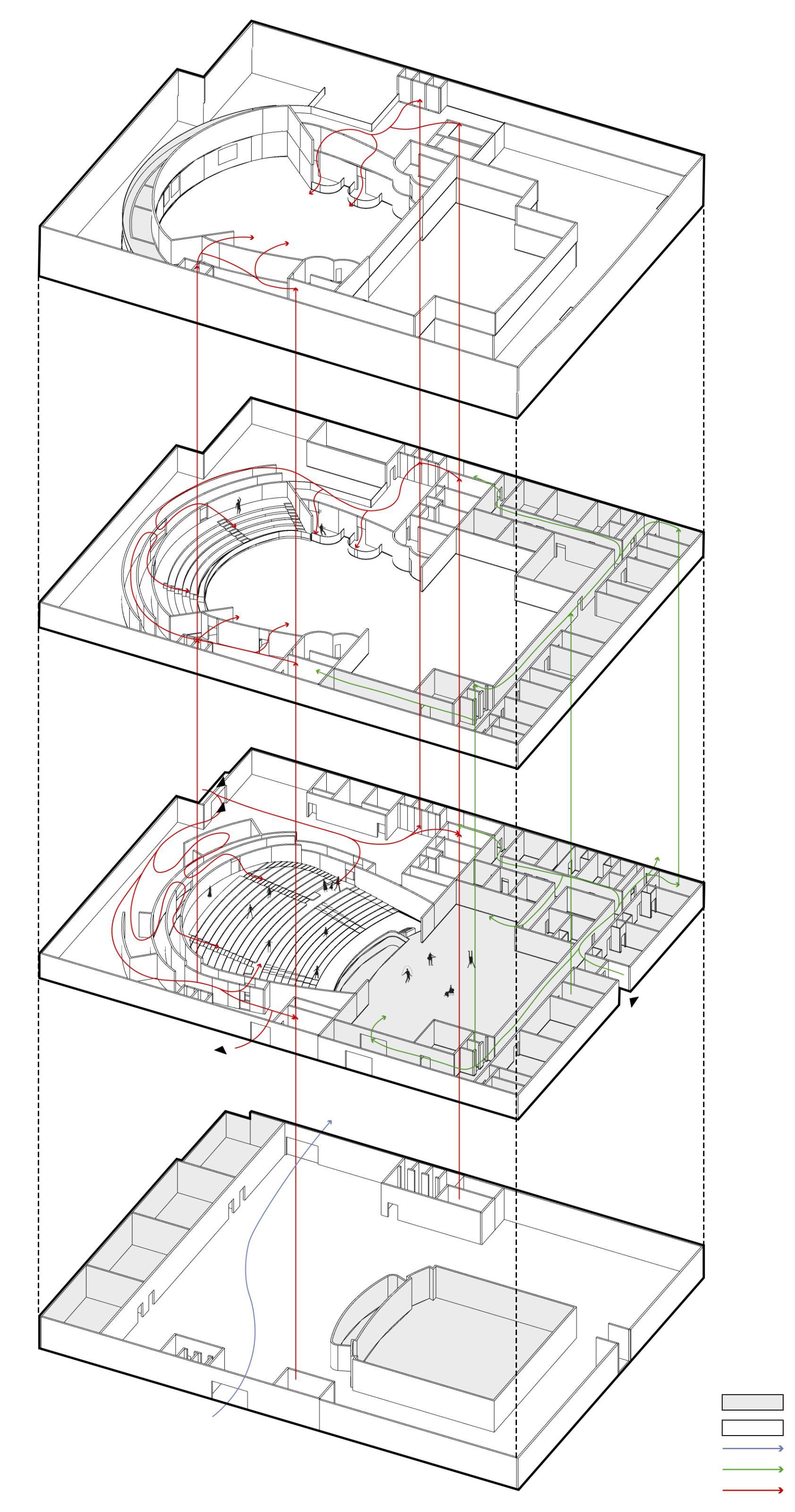
This project is located beside the core landmark of Nanchang City, Jiangxi Province—August 1st Square, boasting an exceptional geographical location and profound cultural significance. With a total building area of 6,780 ㎡ , it is planned as a 1,200-seat Class B medium-sized theater.
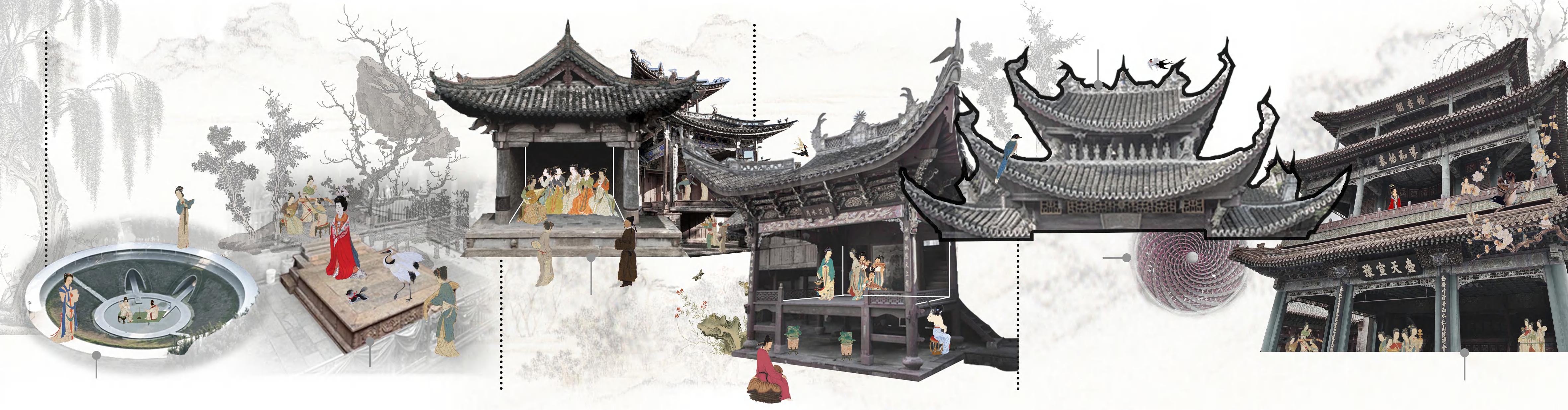
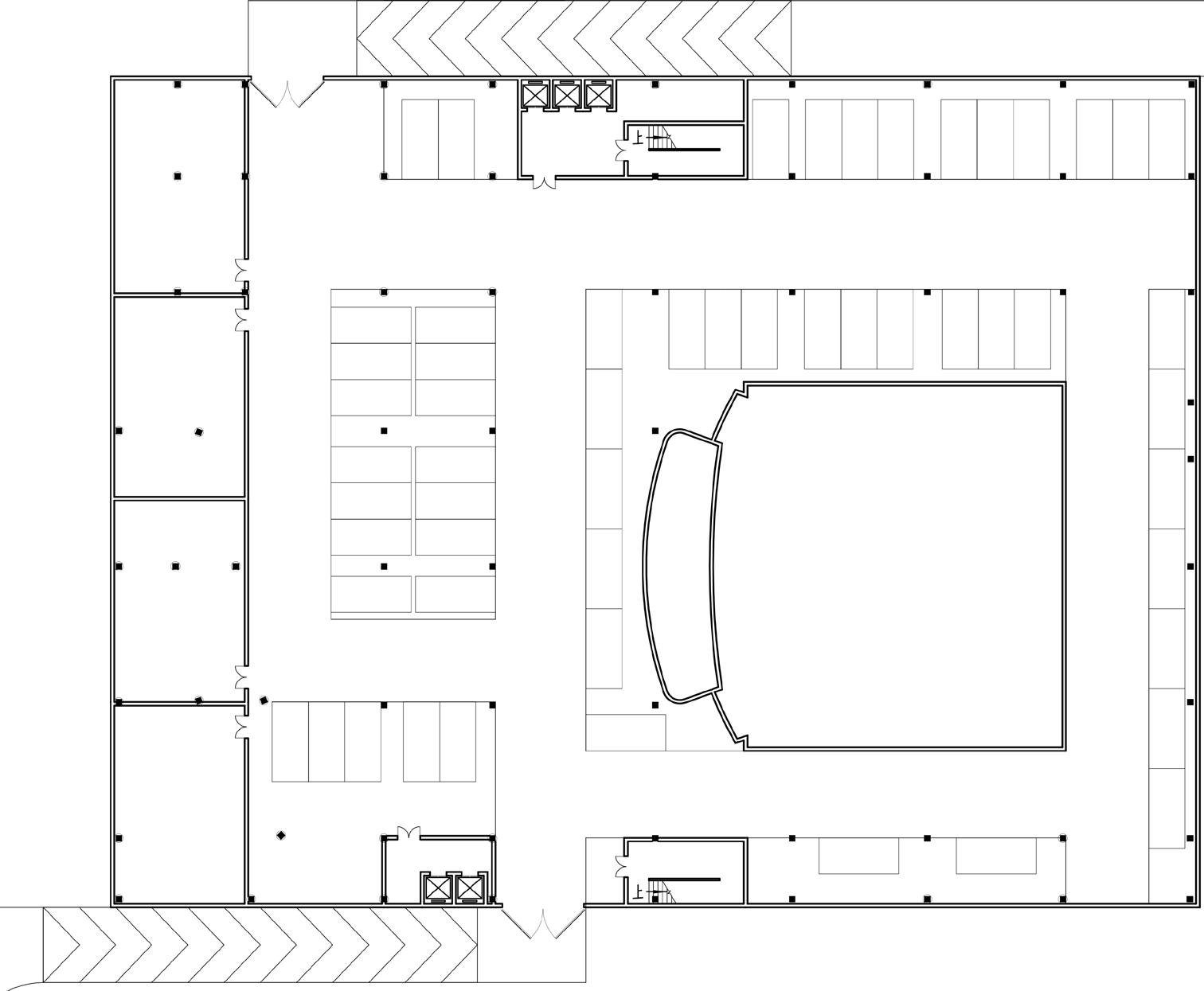
The design skillfully addresses the constraints of a high-density site by adopting an intensive layout with one underground floor and three aboveground floors. It abstractly and modernizes the essence of the traditional Chinese theater stage—the "upturned eaves and corners"—translating it into the iconic architectural language of the facade.
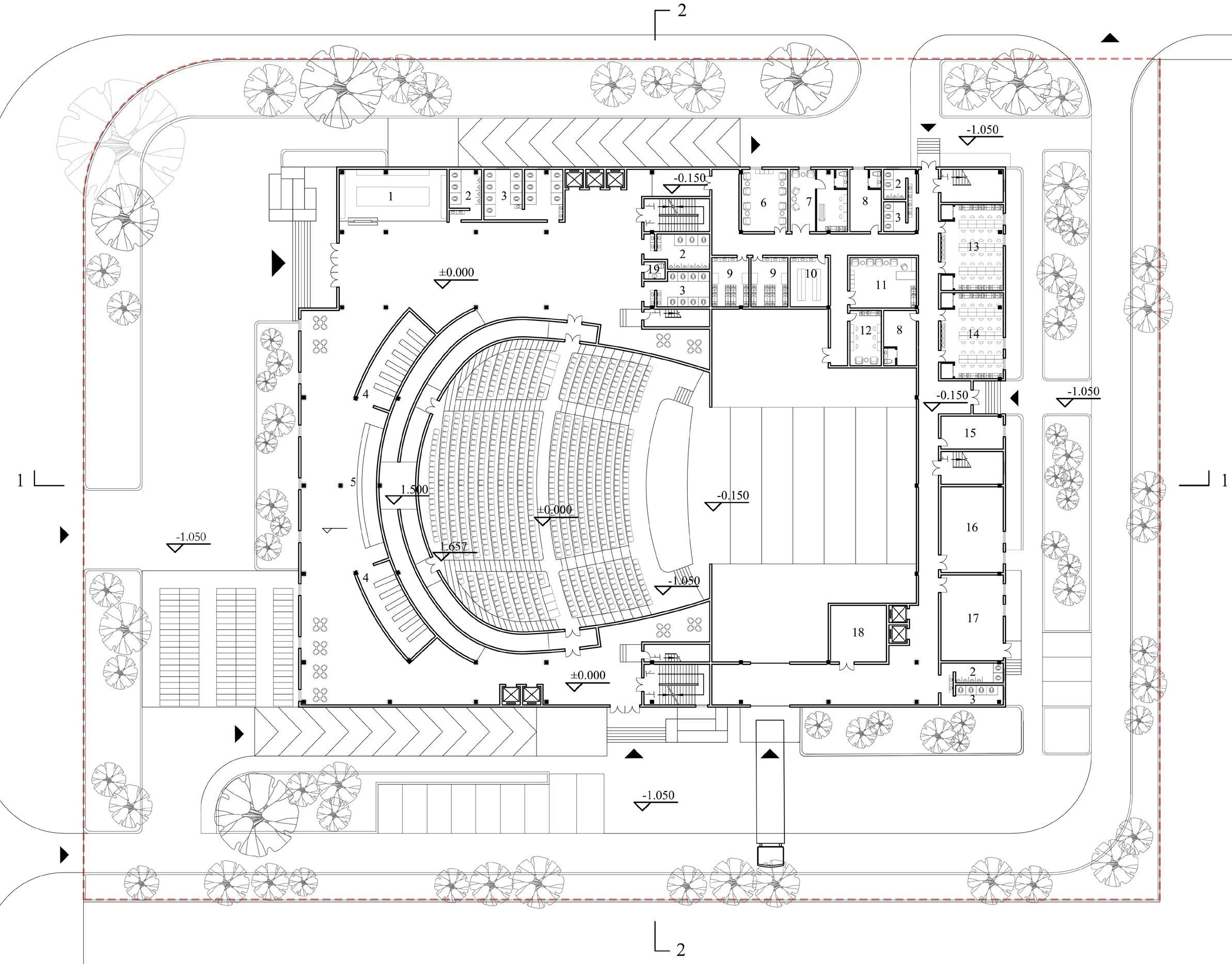
Given the project's scale and positioning, the design focuses core resources on optimizing the visual experience of the auditorium. Utilizing a classic horseshoe-shaped plan, precise calculations for the sloping of balconies and stalls ensure that all 1,200 seats offer unobstructed views, allowing even the audience in the last row to clearly capture the subtle expressions and movements of performers on stage.
AD 1271–1912
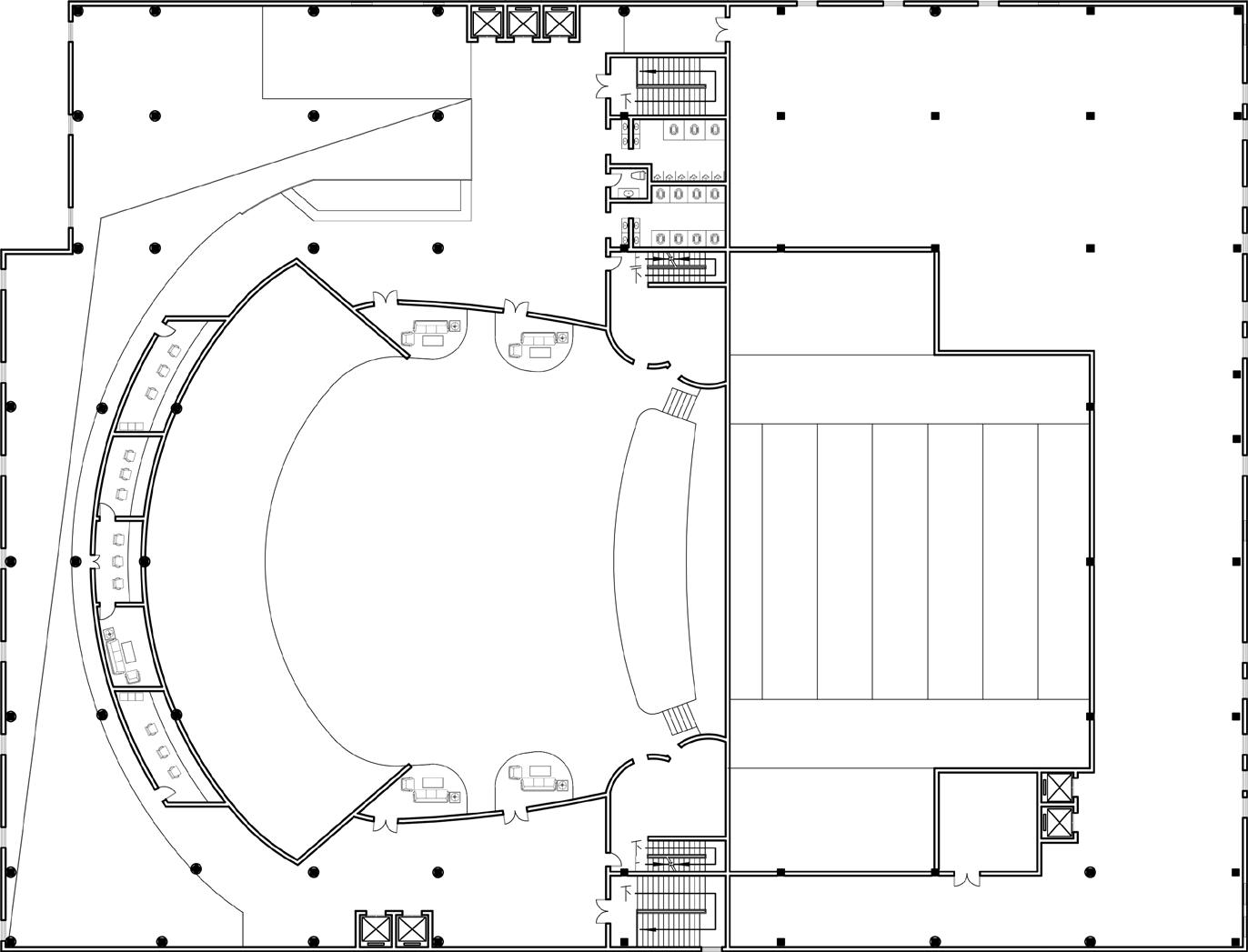
SECOND FLOOR
SECTIONAL DRAWING 1-1
SECTIONAL DRAWING 2-2
HUIZHOU ARCHITECTURE MEASUREMENT
The
Surveying And Mapping Of "Zhongjiang Hall"
Project duration: 2024.8-2024.9
Nature of project: academic
Team cooperation
Names of all collaborators: Feng Siqi, Li Zhixin, Wang Chuxuan, Li Yimeng, Dai Jiayu, Yan Yu, Zhang Luhong, Meng Yufei, Yang Tingting
Individual contribution: Data measurement, Drawing.
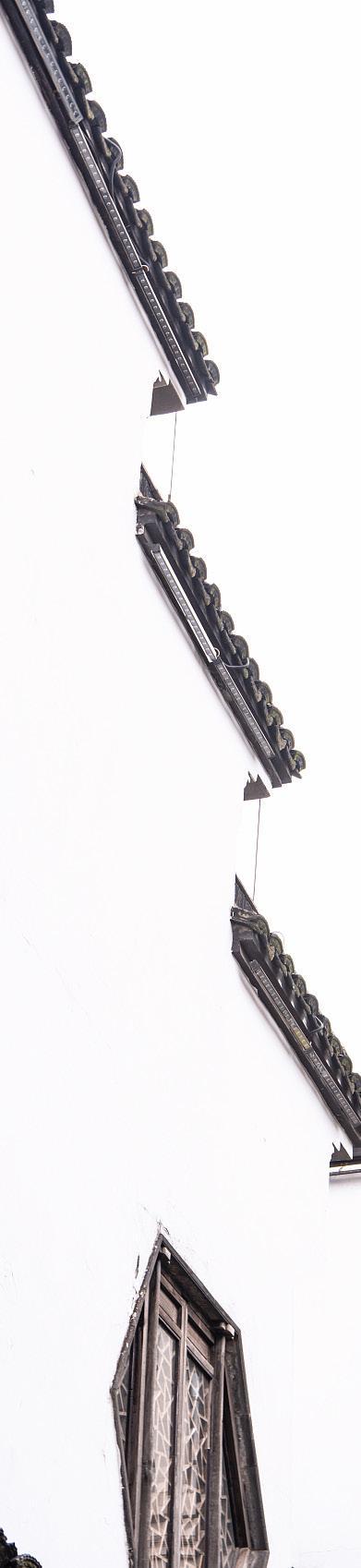
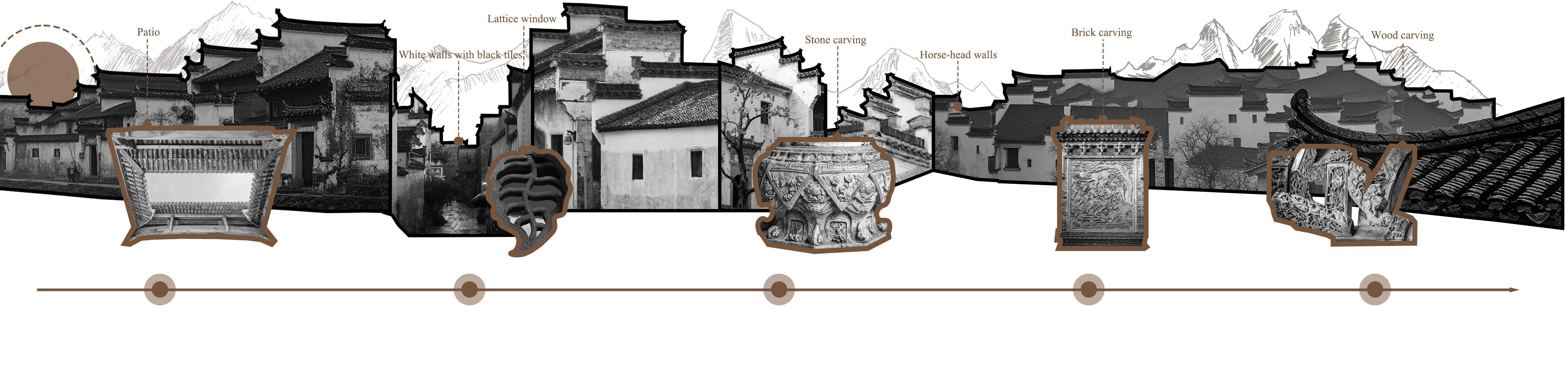
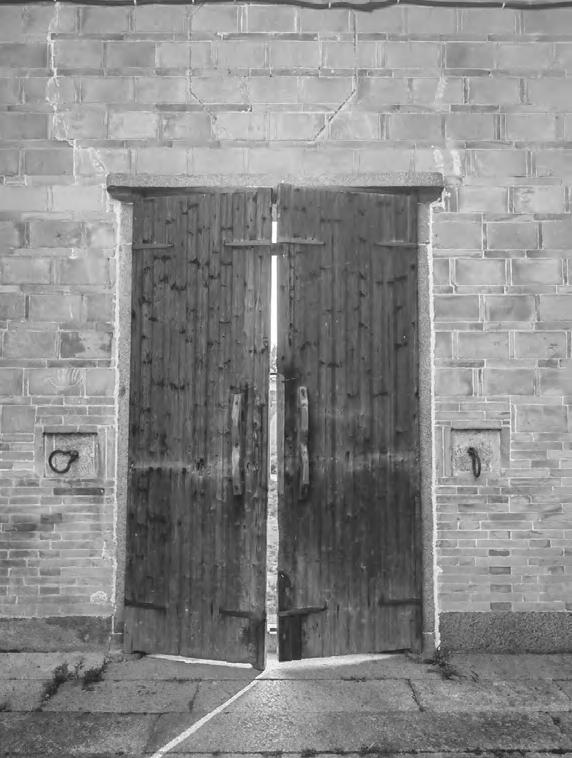
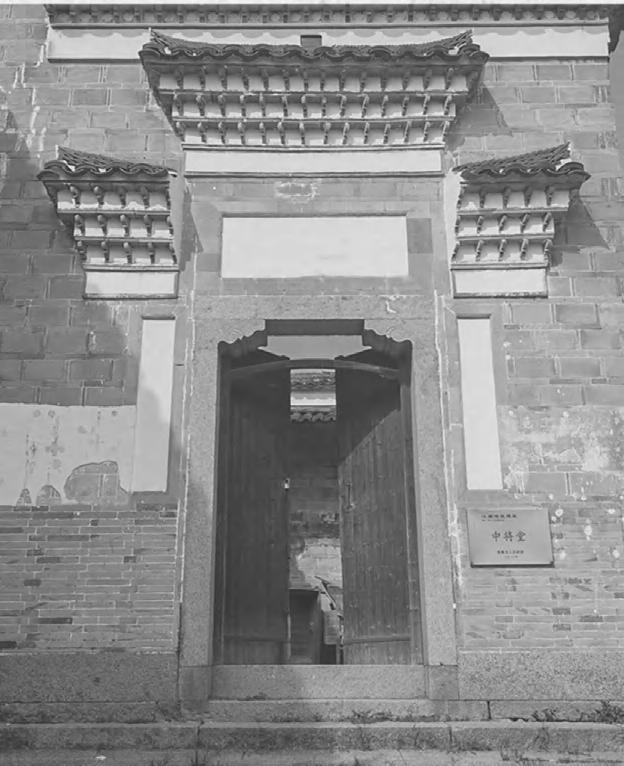
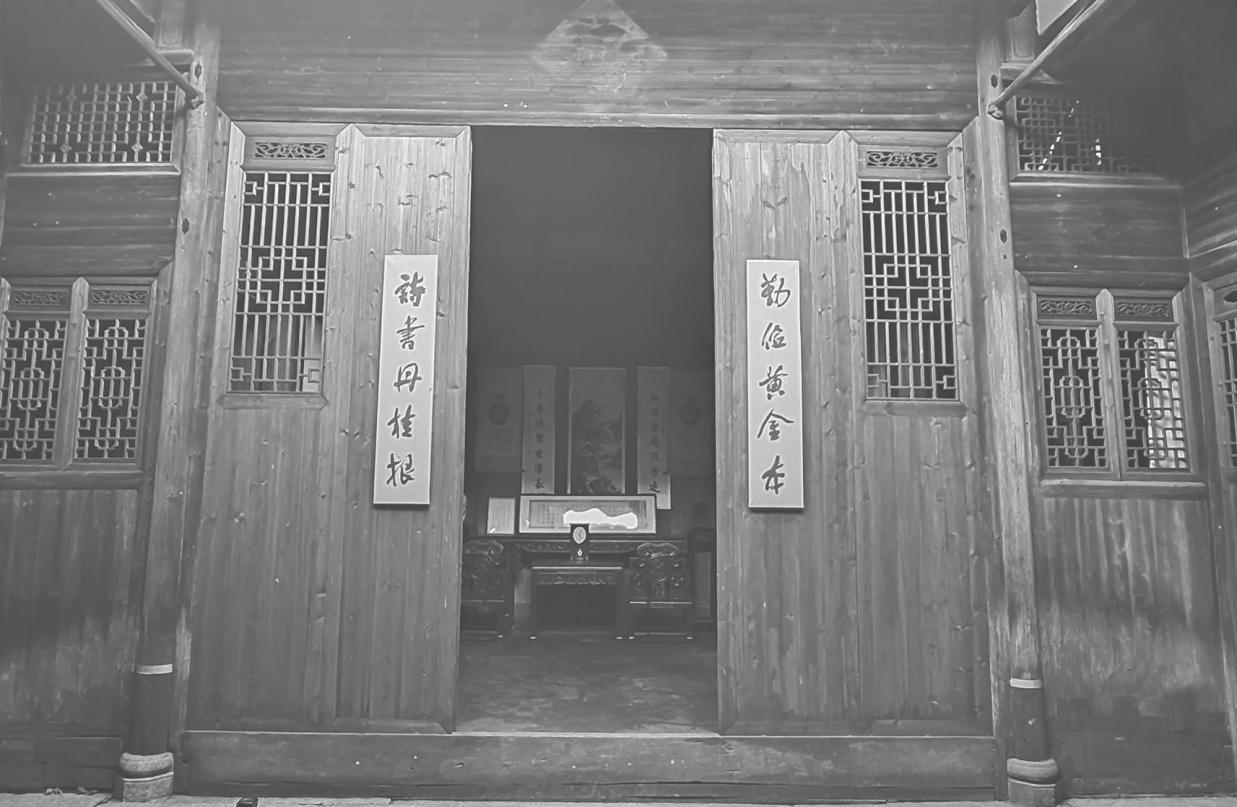
Huizhou architecture is an outstanding representative of traditional Chinese architecture, its distinctive elements—white-washed walls, dark-tiled roofs, and horse-head walls—forming a unique aesthetic of southern China. It not only embodies the wealth and cultural aspirations of Huizhou merchants but also carries Confucian ethical order and clan values.
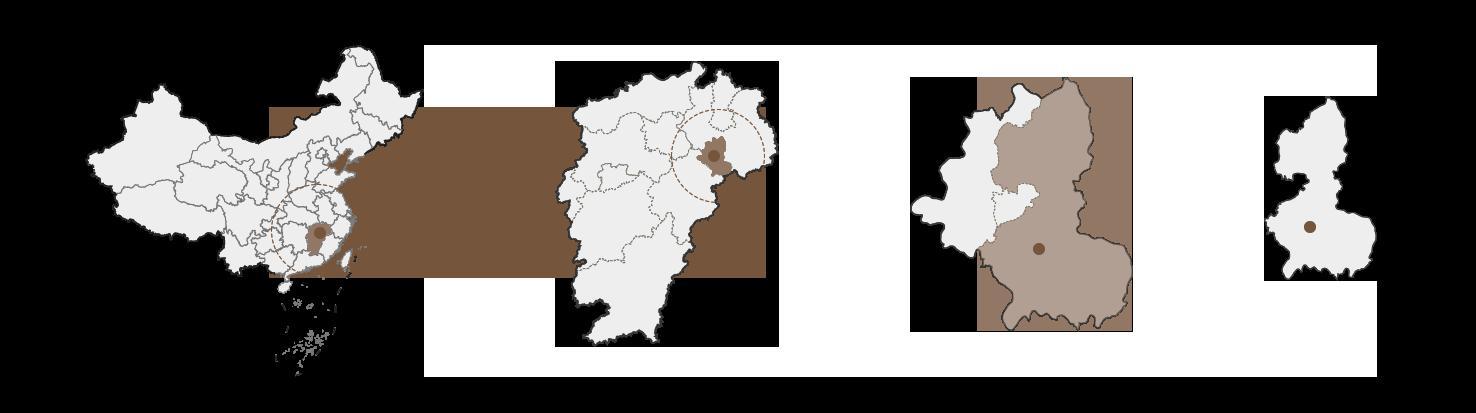
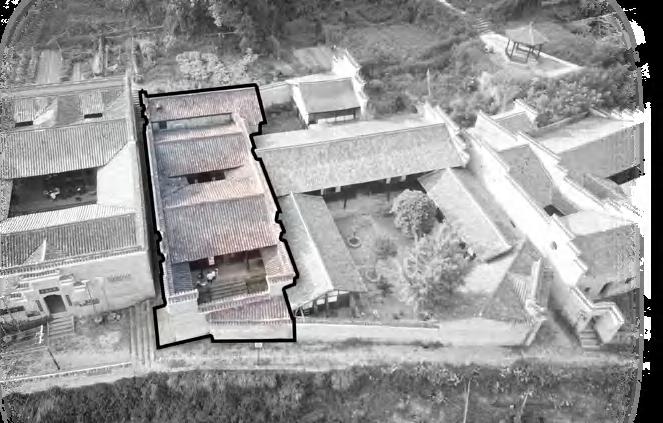
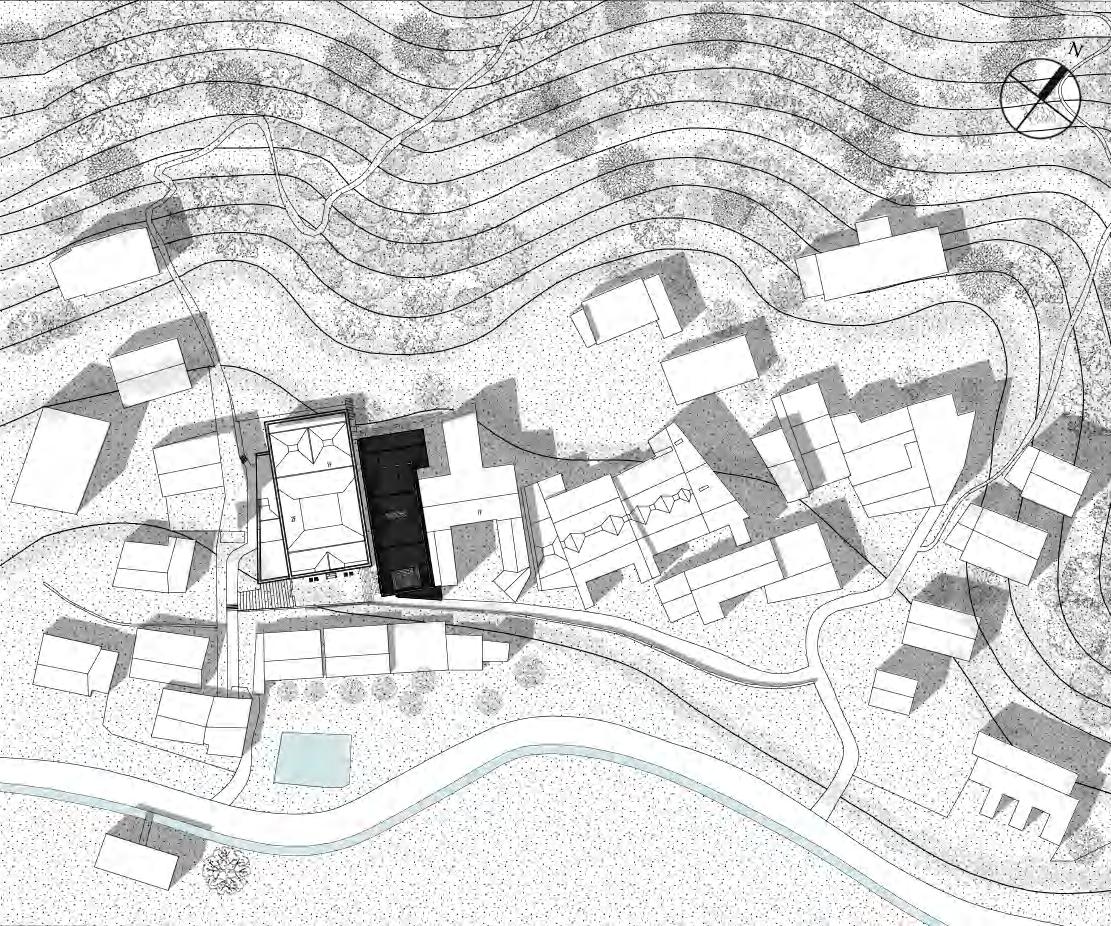
The Zhongjiang Hall is located in Zengjia Ancient Village,Eikou Township, Yingtan City, Jiangxi Province, China.
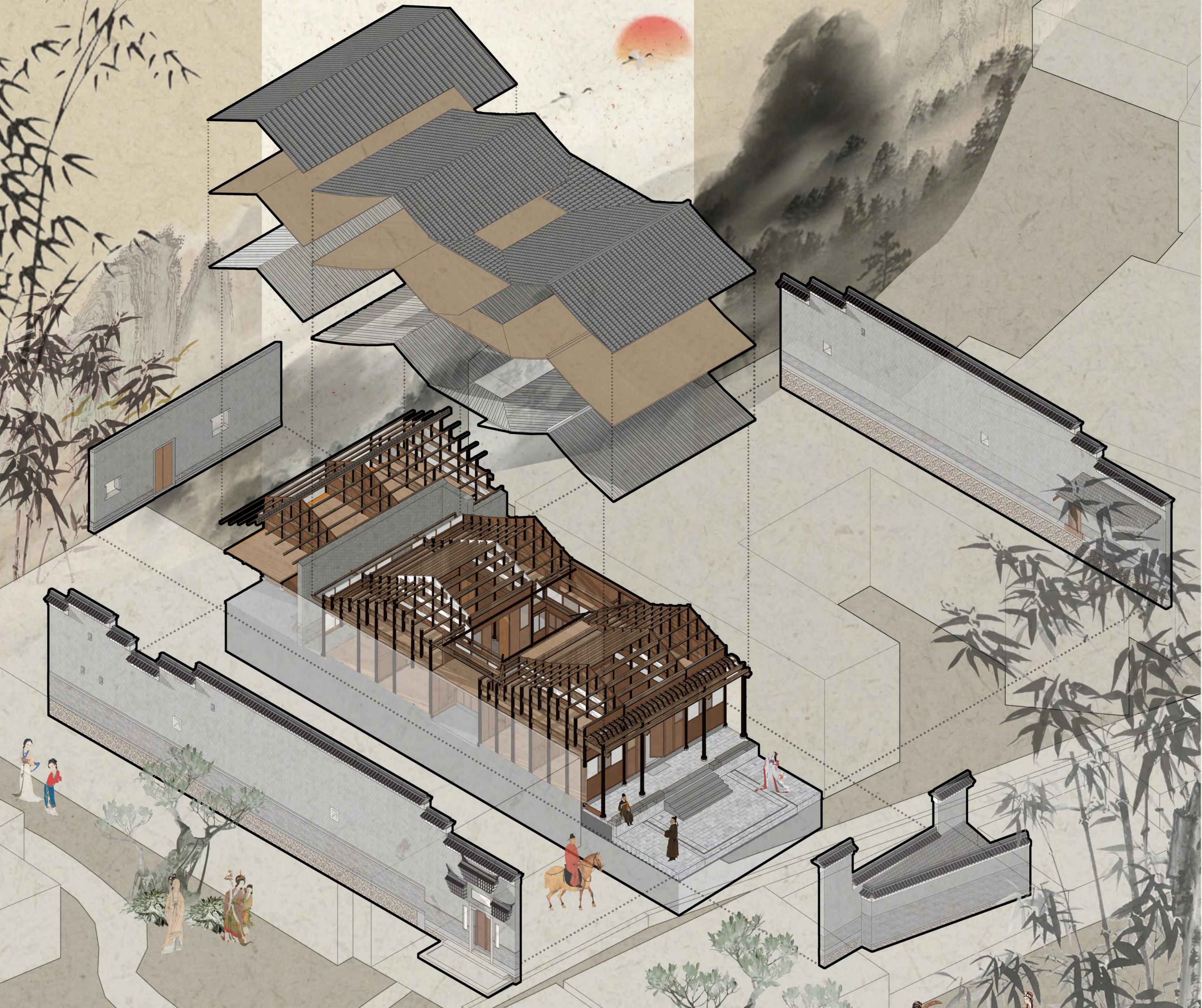
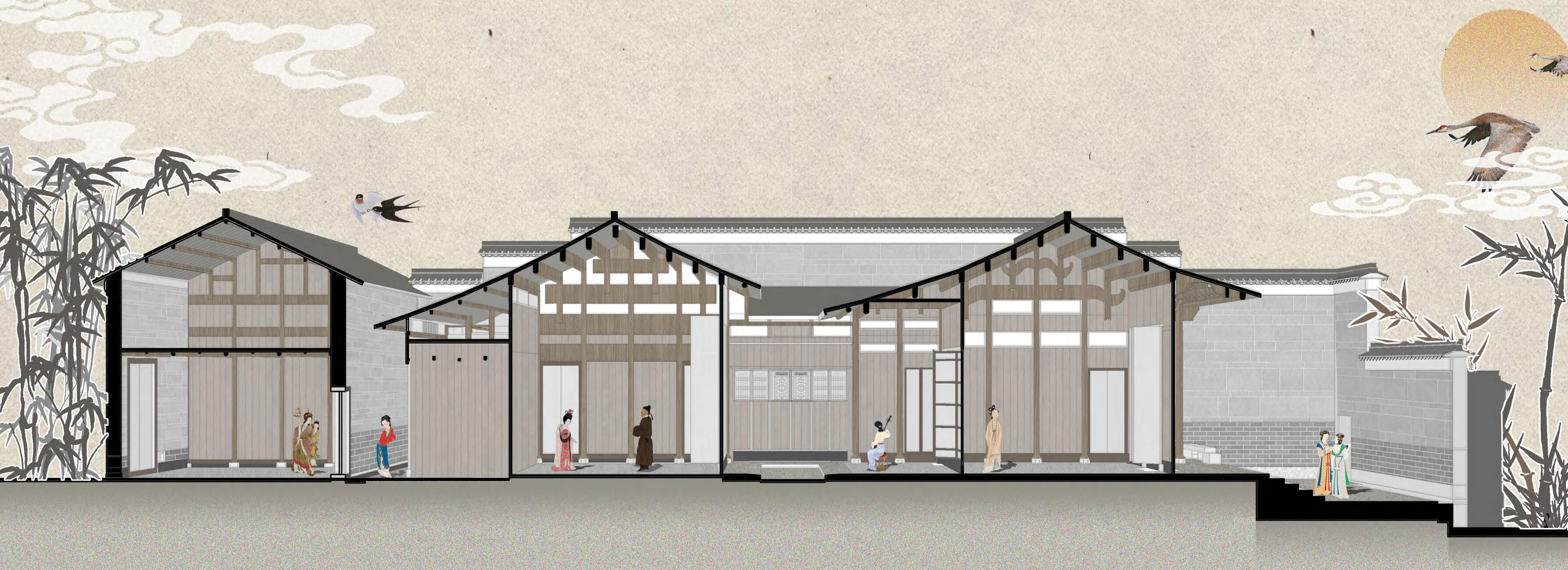
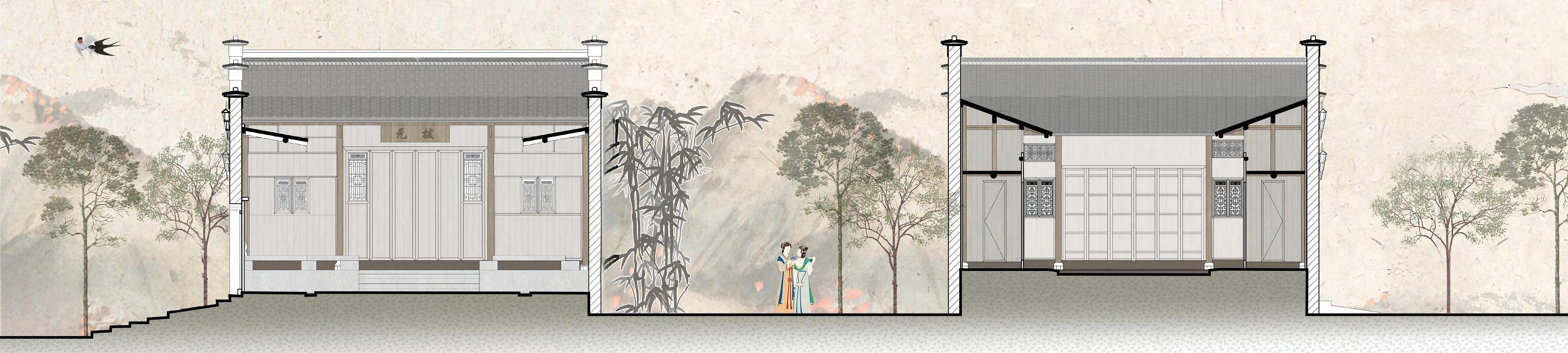
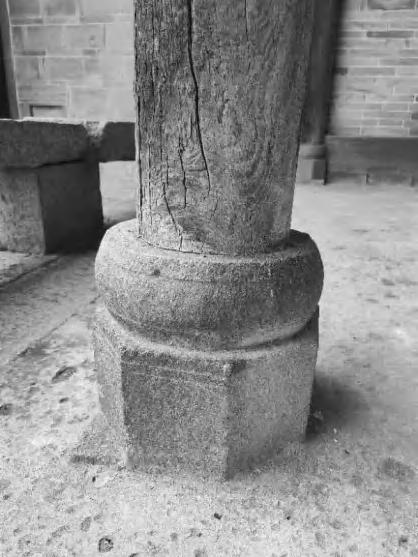
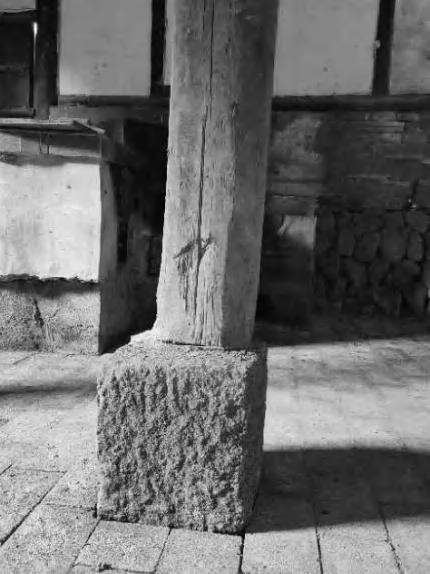
The team conducted a surveying and mapping project on the Zhongjiang Hall, using the collected data and researched materials to construct a computer model of the hall for further analysis.
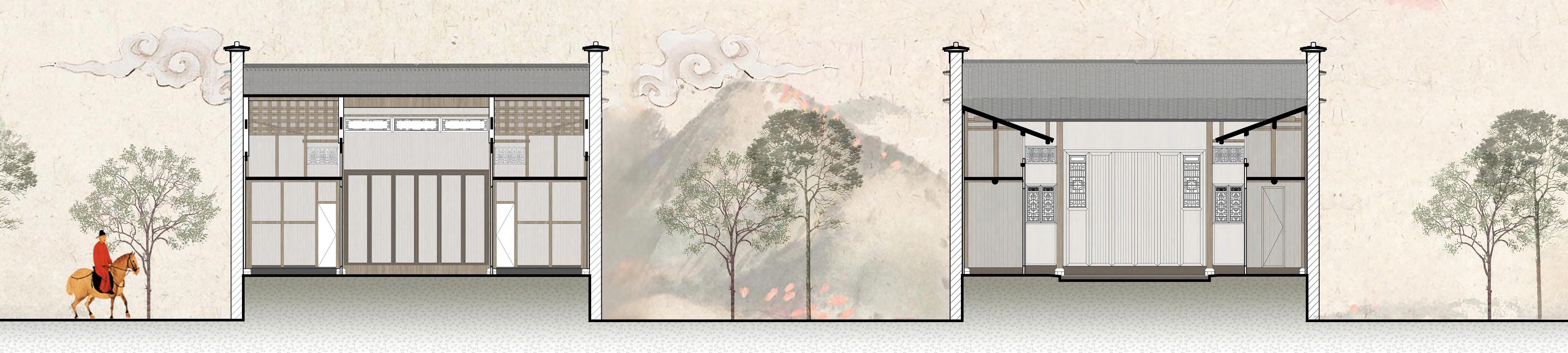
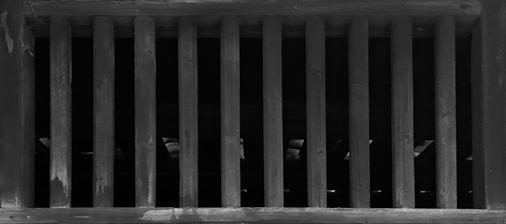
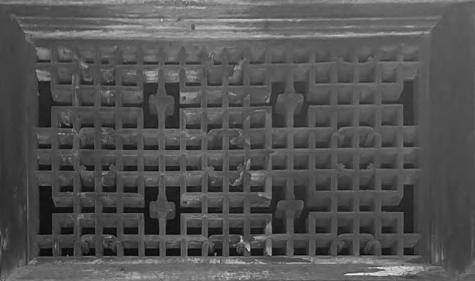
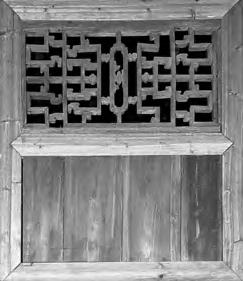
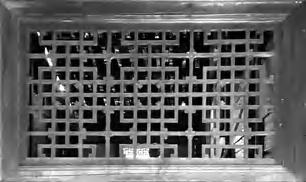
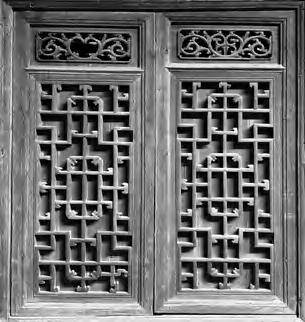
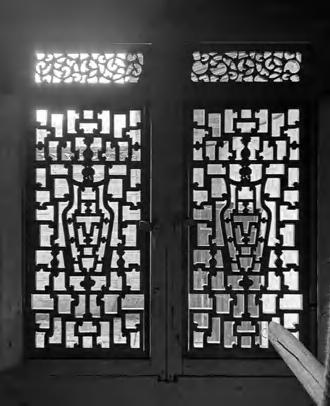
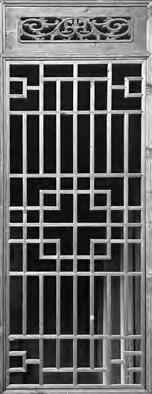
Building on the surveying results, the project aims to explore the cultural elements of the Huizhou architecture within the Zhongjiang Hall, particularly focusing on key elements such as couplets, window carvings, and murals. This effort is intended to uncover the cultural significance embedded in ancient buildings and understand their cultural connotations, all while considering the societal importance of preserving and educating on traditional architectural heritage.
Zengjia Ancient Village is located in Eikou Township, Guixi City, Jiangxi Province, along the middle reaches of the Luxi River. The Zeng family here are descendants of Zeng Gong, one of the "Eight Great Prose Masters of the Tang and Song Dynasties," and share a common ancestry with Zeng Guofan. The ancient architectural complex was built during the early Qing Dynasty, between the 30th and 50th years of Emperor Qianlong's reign, corresponding to 1765–1785 AD. The building surveyed this time is named "Zhongjiang Hall."
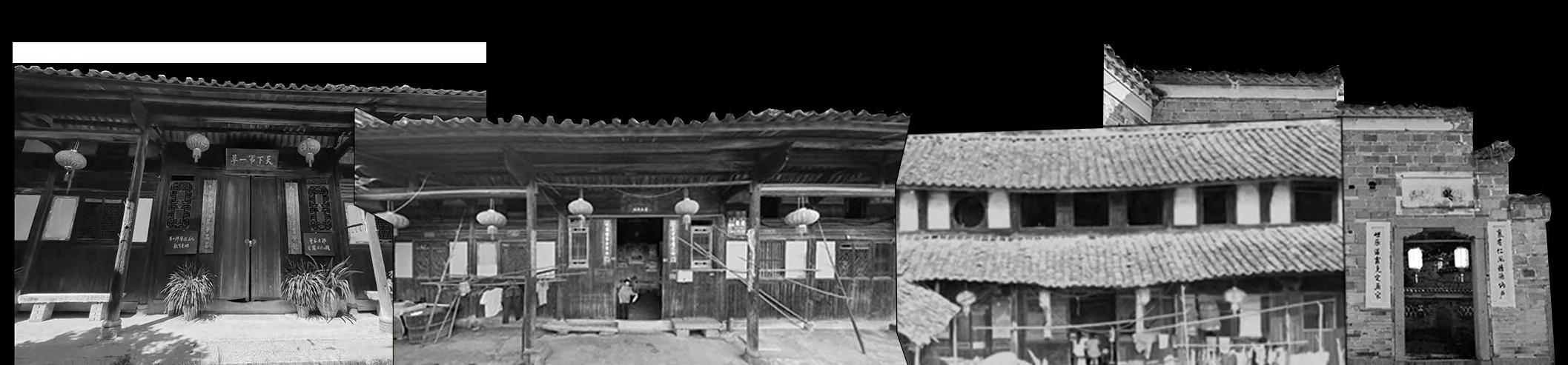
As this site was formerly the residence of General Zeng Xianyao of the Kuomintang, Zhongjiang Hall is also known as Zeng Xianyao's former residence. After liberation, this building served as the headquarters of the Railway Troops Command, the first office of Eikou District People's Government, Eikou Bank, and the original headquarters of Eikou Wuqi Branch Farm (predecessor to Eikou Forestry Farm).
Zengzai Ancestral Hall Zengyun Ancestral Hall Zhongjiang Hall Meeting Hall