Epic OF Eden Bible Study Guide
UNDERSTANDING THE OLD TESTAMENT AS YOUR STORY
SANDRA L. RICHTER
Epic of Eden Bible Study Guide
Copyright © 2026 by Sandra L. Richter
Published by HarperChristian Resources, 3950 Sparks Drive SE, Suite 101, Grand Rapids, MI 49546, USA. HarperChristian Resources is a registered trademark of HarperCollins Christian Publishing, Inc. Requests for information should be addressed to customercare@harpercollins.com.
ISBN 978-0-310-17924-5 (softcover)
ISBN 978-0-310-17925-2 (ebook)
Unless otherwise noted, Scripture quotations are taken from the Holy Bible, New International Version ®, NIV®. Copyright © 1973, 1978, 1984, 2011 by Biblica, Inc.® Used by permission. All rights reserved worldwide.
Scripture quotations marked ESV are taken from the ESV® Bible (The Holy Bible, English Standard Version ®). Copyright © 2001 by Crossway, a publishing ministry of Good News Publishers. All rights reserved.
Scripture quotations marked NASB are taken from the (NASB ®) New American Standard Bible ® . Copyright © 1960, 1971, 1977, 1995, 2020 by The Lockman Foundation. Used by permission. All rights reserved. www.lockman.org.
Scripture quotations marked RSV are taken from the Revised Standard Version of the Bible. Copyright © 1946, 1952, and 1971 National Council of the Churches of Christ in the United States of America. Used by permission. All rights reserved worldwide.
Any internet addresses (websites, blogs, etc.) and telephone numbers in this study guide are offered as a resource. They are not intended in any way to be or imply an endorsement by HarperChristian Resources, nor does HarperChristian Resources vouch for the content of these sites and numbers for the life of this study guide.
All rights reserved. No portion of this book may be reproduced, stored in a retrieval system, or transmitted in any form or by any means— electronic, mechanical, photocopy, recording, scanning, or other— except for brief quotations in critical reviews or articles, without the prior written permission of the publisher.
HarperChristian Resources titles may be purchased in bulk for church, business, fundraising, or ministry use. For information, please email ResourceSpecialist@ChurchSource.com.
Without limiting the exclusive rights of any author, contributor or the publisher of this publication, any unauthorized use of this publication to train generative artificial intelligence (AI) technologies is expressly prohibited. HarperCollins also exercise their rights under Article 4(3) of the Digital Single Market Directive 2019/790 and expressly reserve this publication from the text and data mining exception.
HarperCollins Publishers, Macken House, 39/40 Mayor Street Upper, Dublin 1, D01 C9W8, Ireland (https://www.harpercollins.com).
Art direction: Ron Huizinga Cover Design: Ron Huizinga Interior Design: Sara Guild
First Printing August 2026 / Printed in the United States of America
To all the amazing people with whom I’ve had the privilege of exploring the frontiers of the Great Story— may this study serve to expand your borders, build the kingdom, and bring the exiles home.
How to Use This Guide
If your group has tackled an Epic of Eden study before, you’re already pros. If not, here’s the plan:
• This curriculum revolves around a set of twelve filmed teaching sessions with me, Dr. Sandy Richter. Each study guide has streaming video access instructions printed on the inside cover. With this access, you can view the videos from any device. If you prefer, a DVD is available for purchase. The videos are best viewed before the weekly reading.
• The second component is this study guide, which contains lessons to be done individually at home whenever it fits your schedule. Each week offers you four lessons to review and absorb the week’s video lecture. Do as much or as little as your schedule permits. No pressure, really.
• Once per week your group will gather to view the video teaching, talk about the individual work from the week, and engage in group discussion questions about both. Again, the videos are available either via streaming (using the access instructions on the inside cover) or on DVD.
You may want to plan a little extra time for your first gathering as you meet each other, get your books, talk through expectations, drink some coffee and have some snacks (a must for every gathering, really!), and dive into the first video. Let the adventure begin!
Introduction
Have you ever found yourself struggling with the study of the Old Testament? You wouldn’t be alone! Over the many years that I have taught Old Testament I have found that the same three maladies affect everyone who dares to approach this first two-thirds of that large, leatherbound volume you are carrying around. The first issue is the one that inspired the title of this study: Christians often struggle to see the Old Testament as their story. Someone, somewhere along the way has told you that the Christian story starts in Matthew chapter one and Christians don’t need to understand the “unfortunate preface to the part of the Bible that really matters.” Of course, these same folk would never start reading the Lord of the Rings in book two, or Harry Potter in book four . . . and that’s because we all recognize these two epic tales, even though they’re broken down into multiple books, as a single narrative. A second issue for so many is what I call the “great barrier”— the geographic, historical, and cultural barrier that stands between us and the Old Testament and makes their world seem so very strange to us. The third and perhaps most challenging issue is how complex the Old Testament seems. So many names, dates, and places that swirl around us when we attempt to navigate past the great barrier and reclaim our story.
Well, this twelve-week study is designed to fix all of that. After decades of teaching Old Testament to more people than I can remember— high school students to seasoned pastors, toddlers to senior citizens, undergrads to doctoral students—I’ve figured out how to get you past the great barrier, organize that messy closet of Old Testament facts and figures for you, and reintroduce you to your people! My mission? To give you back your Old Testament. And I have no intention of failing.
Epic of Eden Timeline
PATRIARCHAL PERIOD
Down into Egypt with Joseph & the Tribes
Abraham/Isaac/Jacob c. 1850 BCE [c. 1700 BCE]
Noah
Eden ???? c. 2000 BCE [c. 1850 BCE]
Sinai 1446 BCE [c. 1275 BCE]
Desert Wanderings 40 years
HYKSOS PERIOD IN EGYPT C . 1650 –1550 BCE MOABITE STONE –C . 840 BCE
ASSYRIAN DESTRUCTION (SHALMANESER V)
ASSYRIA FALLS TO BABYLON612 BCE EGYPT DEFEATED AT CARCHEMISH605 BCE
Jehoahaz, Jehoiakim, Jehoiachin 1st Deportation 609–597 BCE
Josiah 640 BCE
BABYLON FALLS TO MEDO-PERSIAN EMPIRE –539 BCE EXODUS
CONQUEST & SETTLEMENT UNITED MONARCHY
Joshua & the Conquest c. 1400 BCE [c. 1250 BCE]
Era of the Judges
Series of Assassinations 752–722 BCE
DESTRUCTION OF SHECHEM TEMPLE C 1100 BCE MERNEPTAH STELE C . 1208 BCE
Saul/David/Solomon c. 1050–931 BCE
Jeremiah > The Omrides 885–841 BCE Dynasty of Jehu 841–752 BCE
Jeroboam I 931 BCE
722 BCE 586 BCE
SYRO-EPHRAIMITE WARS 734 –732 BCE
Jeroboam II Hosea & Amos
Jeremiah > Nahum
SENNACHERIB’S CAMPAIGN701 BCE
Manasseh 686 BCE
Hezekiah 715 BCE
Uzziah 767 BCE Ahaz 735 BCE
Isaiah > Micah Isaiah >
Ahab Elijah
Samuel 931 BCE
ISRAEL(NORTHERN KINGDOM)
Jehoshaphat 869 BCE
Rehoboam 931 BCE
DAN STELEC . 850 BCE
THE EXILE THE RETURN 2 ND TEMPLE JUDAISM
Zedekiah 597–586 BCE 70 yrs. Ezekiel Daniel < Jeremiah Edict of Cyrus 538 BCE
Rebuilding the Temple 520–515 BCE Haggai & Zechariah Ezra & Nehemiah 458–433 BCE Malachi
BABYLONIAN DESTRUCTION (NEBUCHADNEZZAR II)
JUDAH(SOUTHERNKINGDOM)
Hasmoneans
Alexander 336 BCE 141–64 BCE
CHRIST


SESSION 1
The Great Cultural Barrier
SESSION 1: GROUP MEETING
Lead your group through the following three prompts to open your time together. Do not spend more than a minute or two on each question. These are specifically meant to get the juices flowing, but
Turn to the person on your right and share one thing that hap -
Prep: Name something about the Old Testament you have a hard time making sense of or identifying with.
Prayer
Leader, read the following prayer aloud over the group.
Father, Son, and Holy Spirit,
Please be present among us as we begin this Bible study.
Help us come to know you better by understanding this great story of your mighty acts among your people in the Old Testament. Encourage, delight, and challenge us to grow as followers of Jesus.
We also ask that you grow our relationships through the time we spend together in this study. Help us to encourage and strengthen each other, and Lord will you fill this room with laughter. We pray that you would help us to be good listeners to each other and to you.
In Jesus’ name we pray. Amen.
The Epic of Eden
Watch Session 1 Video: The Great
Cultural Barrier
[32 minutes]
Stream the video using instructions on inside front cover or play the DVD.
Video Outline
Follow along during the video, take notes, or write down questions and aha moments as you like.
I. Three issues that get in the way of studying the Old Testament
A. Not understanding the Old Testament IS your story
B. The “great barrier”
C. The “dysfunctional closet syndrome”
II. Issues we need to get past to understand the story of redemption (the great barrier)
A. Ethnocentrism
B. “Canonizing culture”
III. Western modern bureaucratic culture vs. ancient near eastern tribal/traditional culture
A. Structure of Israelite society
1. Patriarch > Clan > Tribe > Nation
2. P
atriarchal, patrilineal, patrilocal (patri = male- centered focus of society)
Notes:
B. Tribal society is patriarchal
1. Authority within the household belongs to the oldest living male = the patriarch
2. Patriarch holds the responsibility for assets and behavior
C. Tribal society is patrilineal
1. All inheritance (land and children) moves through the male line
2. The firstborn son will one day become patriarch
a. Receives double portion of inheritance (Deut 21:17)
b. Serves as apprentice to the patriarch
3. Land only transfers via inheritance
a. Inalienable land law (Lev 25:13–22)
b. Year of Jubilee (Lev 25:8–22)
The Epic of Eden
Discuss the following as a group.
Group Discussion
• What is one aha moment someone in the group experienced when listening to Sandy teach about the great cultural barrier?
• In what ways have you experienced some of the common Christian struggles to studying the Old Testament?
• In what ways have you personally, or have you witnessed the larger church express ethnocentrism and “canonizing culture” when it comes to reading the Bible?
• Discuss how portraying Jesus in one’s own image can be both problematic and beautiful.
• If you were suddenly transported back to ancient Israel, what do you think your biggest adjustment to living in a tribal/traditional culture would be?
• Select a volunteer to read Galatians 3:26–29 to the group:
So in Christ Jesus you are all children of God through faith, for all of you who were baptized into Christ have clothed yourselves with Christ. There is neither Jew nor Gentile, neither slave nor free, nor is there male and female, for you are all one in Christ Jesus. If you belong to Christ, then you are Abraham’s seed, and heirs according to the promise
How does this passage take on new meaning with a deeper understanding of the patrilineal culture the Bible was written in?
• Did anyone notice a moment of hope when listening to Sandy that they would like to share?
Our Homework Objective this Week
To finish crossing the great barrier of culture so that we can start understanding the people of the Old Testament as our people.
Next Week We Will Tackle
Next week we will dig into the idea of “redemption”— what this church word actually means. (Spoiler alert: The definition emerges from your Old Testament!) We’ll be talking about how understanding redemption helps us understand God’s purposes for us and our world.
SESSION 1: INDIVIDUAL STUDY
“The Bible is the saga of Yahweh and Adam, the prodigal son and his ever gracious heavenly father; humanity in their rebellion and God in his grace. This narrative begins with Eden and does not conclude until the New Jerusalem is firmly in place. It is all one story. And if you are a believer, it is all your story. . . . If our goal is to know our own story, then we first have to come to understand the characters who populate the Old Testament: who they were, where they lived, what was important to them.”1
Setting the Stage
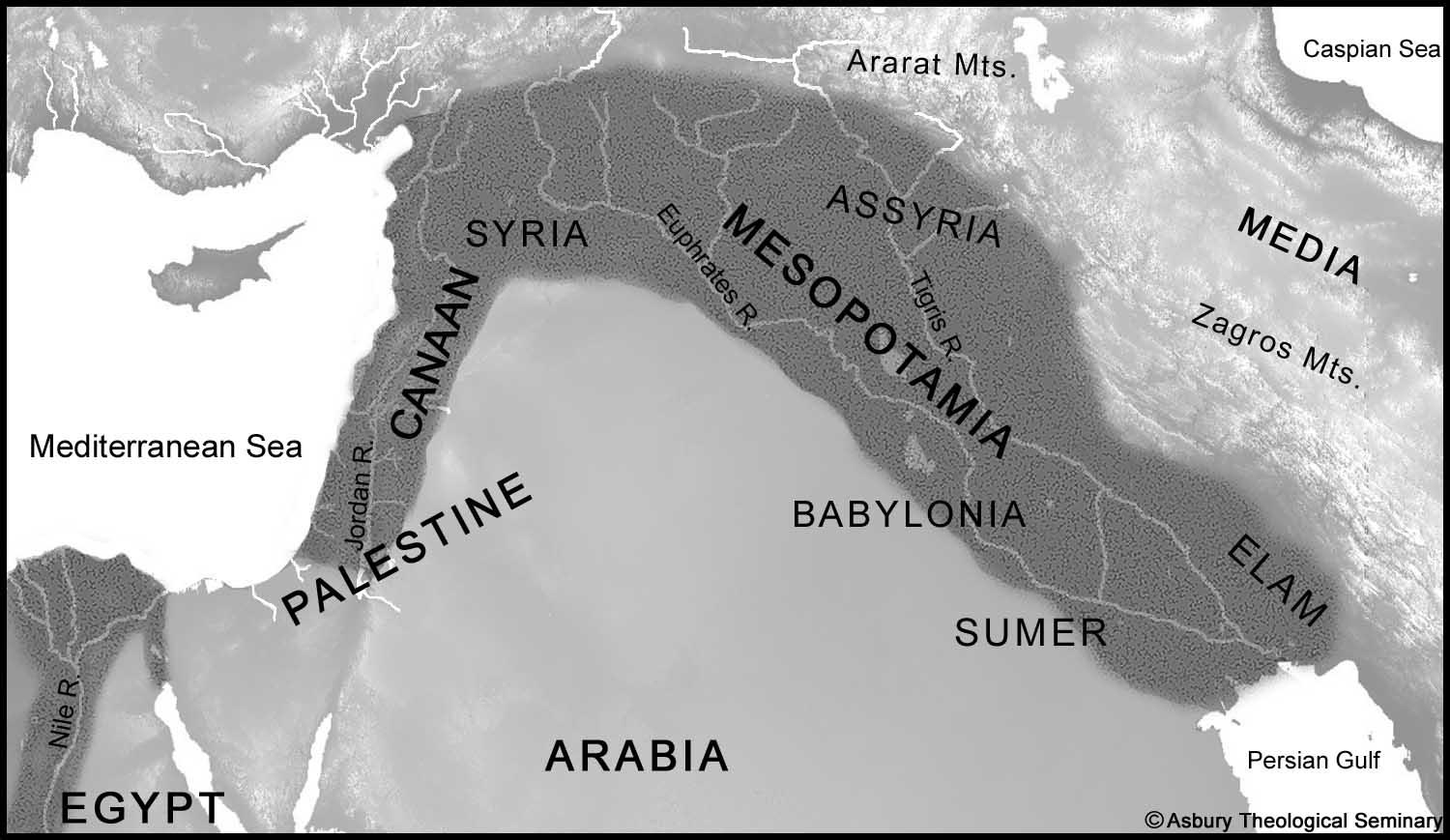
This week, we begin to address the barrier of culture that stands between us and the ancestors of our faith. As we learn about their culture, we will traverse the land of the Bible from Mesopotamia to Canaan/Israel/Palestine to Egypt. We will travel in time from Abraham’s world somewhere around 2000 BCE to the Passion of Jesus in approximately 30 CE.
Consider what it would be like to live in a culture where the family was the basic unit and regulatory force of society. Think about what it would look like for God to connect with people living and breathing in this sort of tribal culture.
As we begin our entry into the Old Testament, we will be spending a lot of time in the region of the globe known as The Fertile Crescent. Take a few minutes to familiarize yourself with the map on the next page.
1 Sandra L. Richter, The Epic of Eden: A Christian Entry into the Old Testament , 1st ed. (IVP Academic, 2008), 15, 17.
The Fertile Crescent
We will cover the Epic of Eden Timeline in a later session, but take a few minutes to become familiar with it now on page xii.
(Note: BCE stands for “before the Common Era”, or BC “before Christ”. CE stands for the “Common Era”, also referred to as Anno Domini, AD, meaning “The Year of Our Lord.”
With those thoughts in mind, let’s turn the page and enter the epic story of the Old Testament!
Day 1:
The Significance of the Old Testament Story
First Things
Circle which of the following you would say best conveys your perception or feelings about the Old Testament:
A. The what
B. The part of the Bible no one reads (“the unfortunate preface to the part of the Bible that really matters”)
C. Wait, doesn’t that have some songs in it?
D. The part of the Bible that has all that violence because God is very angry
E. The story of God’s plan of redemption
F. None of the above
Read Matthew 1:1–17.
Into the Story
• Circle any of the names that are familiar to you in Jesus’ genealogy.
• Why do you think the biblical writers would launch the first book of the New Testament with a genealogy? What might Matthew be attempting to communicate?
The Great Cultural Barrier
• Pay attention to verse 17. Why do you think the author is organizing Jesus’ genealogy this way?
• Locate the five women found in Jesus’ genealogy, and write their names here.
• What do you recall from the teaching about why finding women in a biblical genealogy is significant?
• Make a list of any characters whose stories are unfamiliar, disturb, or confuse you.
The Epic of Eden Real People, Real Places, Real Faith
Fill in the following chart to set the stage for your study.
Character with whom you most connect:
Reasons:
Character or story you find challenging to accept or to understand:
Reasons:
What do you want to know about this character?
What do you want to know about this character?
Our People, Our Places, Our Faith
Make a brief list of responses to the following question: Why does the Old Testament matter to your Christian faith?
Day 2:
The Culture of the Old Testament
First
Things
If you found yourself in need of a new job, which of the following categories would you most likely NOT include on your dream- job-seeking résumé? (Circle all that apply.)
Vision Statement Qualifications
List of Family Members Strengths Education Work Experience
Vocabulary
Sandy covered a lot of new vocabulary words in the video. Let’s review. See if you can match the vocabulary words on the left with the definition on the right that best describes it.
_____ 1. patriarchal
a. all authority and, therefore, all responsibility within the extended family belongs to the oldest living male
_____ 2. tribal/traditional society b. the state is the axis of community
_____ 3. patrilineal c. ancestral descent and inheritance are traced through the male line
_____ 4. canonizing culture d. found in Deuteronomy 25, a brother marries his deceased brother’s wife
_____ 5. patrilocal e. family living space is built around the oldest male family member
_____ 6. ethnocentrism f. the human characteristic of assuming my experience is normative
_____ 7. levirate law g. assuming my culture is superior to everyone else’s
_____ 8. bureaucratic society h. the family is the axis of the community
Key: 1./a, 2./h, 3/c, 4./g, 5./e, 6./f, 7/d, 8/b
The Epic of Eden
How did you do? Don’t worry if you don’t know all of these words yet. They will continue to come up throughout our study, and you’ll come to know them, use them, and refer to them as we move forward!
Into the Story
Read Genesis 29:1–30.
• How are Jacob and Laban related to each other?
• Where does Jacob meet Rachel, and what is she doing there?
• How do you think Jacob could be so deceived in this wedding process that he didn’t know he was marrying the wrong girl?
The Great Cultural Barrier
What aspects of this story are unfamiliar to you and your culture? Fill in the following chart with at least two or three examples of cultural differences you noticed in the passage, your reaction to those differences, and how you are recognizing your ethnocentric reading of the text (ethnocentrism: the human characteristic of assuming my experience is normative). We’ve provided some examples of our own.
Cultural differences in this story
My reaction to that difference
ex. Well, sheep, shepherds ex. I’ve never used a well, and I’ve never touched a sheep!
How is my ethnocentrism showing?
ex. I brushed past this part of the story, failing to recognize the local economy.
ex. Jacob weeping over Rachel
ex. I don’t get that emotional over my relatives.
ex. A man working seven years to get a wife
ex. This doesn’t sound anything like my dating app.
ex. I come from a much more individualized society and thought Jacob was overreacting.
ex. The idea of arranged marriages sounds so primitive to me!
The Epic of Eden Real People, Real Places, Real Faith
If you were Jacob, how would you react to Laban’s deception?
Put yourself in Rachel’s sandals. How would you react to having the man promised to you given to someone else? Especially your older sister! Do you think Rachel was in love at this point?
Consider Leah . How do you think she felt about being given in marriage to a man who wanted someone else? Can you even imagine these two women dealing with the wedding night? How in the world would they handle their future relationship?
What is your opinion of Laban at this point?
Our People, Our Places, Our Faith
Compare the story of Jacob, Rachel, and Leah to your own story. Consider whether you have had any experiences similar to these characters, and if so, what significance do you see in the differences between your story and this one?
How could understanding the biblical culture help you to better understand these stories?
Over the course of this study, your understanding of the time, space, and culture of the Old Testament story is going to grow tremendously. The goal is to help you understand the people in this book as real people, who lived in real places, and exercised real faith. And that will help you understand your God and your own story better!
Day 3:
The Household of the Old Testament First Things
As a refresher of the vocab words we’ve learned so far, fill in the blanks below. We’re adding a new vocabulary word today.
Vocabulary
patriarchal: All _________________ and, therefore, all ____________________ within the extended family lands on the oldest, living male.
patrilocal: Family living _________________ is built around the oldest male family member. bet ’ab: The Hebrew phrase for “father’s house(hold).” The bet ’ab included the family members of the extended family, up to twenty persons!
Into the Story
You’ve already been introduced to the term “levirate law,” which is found in Deuteronomy 25:5–10. Today we’re going to see the levirate law in action as we look at the story of Judah and Tamar found in Genesis 38.
In the following table you will find the levirate law from Deuteronomy 25:5–10 in the left column and a paraphrase of Genesis 38:1–11 in the right column.
Open your Bible to Genesis 38. Begin by reading the portion of the levirate law in the left column of the first row, and then look at Genesis 38 in the right column and fill in the blanks.1 The first row has been completed for you as an example. Answer the questions found below the table once you have completed the chart.
Key: patriarchal: authority / responsibility; patrilocal: space
1 All fill in the blank exercises throughout the study follow the NIV.
The Epic of Eden
The levirate law
Deuteronomy 25:5–10
(paraphrase of the NIV)
The story of Judah and Tamar Genesis 38:1–11
If brothers are living together [in a bet ’ab] . . . Judah and his sons, __ER __, __ONAN __, and __SHELAH__ were living together in their bet ’ab. And “Judah got a wife for ___ER___, his firstborn, and her name was __TAMAR___.”
. . . and one of them dies without a son, his widow must not marry outside the family [bet ’ab].
Her husband’s brother shall take her and marry her and fulfill the duty of a brother-in-law to her. The first son she bears shall carry on the name of the dead brother so that his name will not be blotted out from Israel.
Genesis 38:7 says Er died. Genesis 38:8 says Onan (Er’s brother) was told to sleep with Tamar to produce an heir for him—if he had a son, he would have had an heir.
“Then Judah said to _________________________, [his second son] ‘sleep with [_________________________], and fulfill your ________________________ to her as a brother-in-law to raise up _________________________ for your brother.’
However, if a man does not want to marry his brother’s wife, she shall go to the elders at the town gate and say, “My husband’s brother refuses to carry on his brother’s name in Israel. He will not fulfill the duty of a brother-in-law to me.” Then the elders of his town shall summon him and talk to him. If he persists in saying, “I do not want to marry her,” his brother’s widow shall go up to him in the presence of the elders, take off one of his sandals, spit in his face and say, “This is what is done to the man who will not build up his brother’s family line.” That man’s line shall be known in Israel as The Family of the Unsandaled.
“But Onan knew that the child would _______________________ be his; so . . . he spilled his semen on the ground to keep from providing _________________________________ for his brother.
What he did was wicked in the L ord’s sight; so the L ord put him to death also.
“Judah then said to his daughter-in-law Tamar, ‘Live as a widow in your ______________________________ until my son Shelah grows up.’ For he thought, ‘He may die too, just like his brothers.’ So Tamar went to live in ______ ____________ _________________.”
(Answer questions 2 and 3 below.)
1. In Genesis 38:6 , Judah marries Tamar to his firstborn, Er. According to Israel’s patrilocal culture, into whose household does Tamar move?
2. In Genesis 38:11, Tamar now lives in her biological father’s house. Why has she moved back?
3. Do you find anything in Judah and Tamar’s story that doesn’t line up with the levirate law in Deut 25:5–10? If so, what?
4. Read Genesis 38:12–26 . Why does Tamar take such a drastic and dangerous step to get herself pregnant?
5. What does Judah give to Tamar as a pledge (v. 18)?
6. What does Judah declare to be done to Tamar when he learns that she is pregnant (v. 24)?
7. Write down what Judah declares after realizing that he is the one by whom Tamar has become pregnant? Why does he say this?
Real People, Real Places, Real Faith
Think about the following questions:
Do you find that you are able to separate yourself from your own cultural norms as you read through Tamar’s story?
Do you see Tamar as a real person in a real place in a real time?
Now, make a list of the characters found in the story of Judah and Tamar. Write beside each name which characters you think are “good” and which are “bad.” Provide a reason for your classification. Pay attention to your own ethnocentrism and the message of the biblical narrator! Offer one or two words to describe each of those main characters. (One is provided for an example.)
Character Good or Bad? Reason Description ex. Er ex. bad
ex. The text says he was “wicked” in the Lord’s sight (v. 7) ex. wicked, evil
Our People, Our Places, Our Faith
Do you ever find yourself avoiding certain Bible stories because they make you uncomfortable, you disapprove of the things the characters are doing, or perhaps you find the scenarios are too violent? You may have noticed that a lot of children’s Bibles avoid these stories as well.Throughout this study, you will be challenged to stop dodging. Rather, thoughtfully consider the characters as real people who are quite human and fallen, in real places that are probably geographically and culturally very different from your own, struggling with real faith in their circumstances. The objective? To come out with a clearer understanding of why the characters in the great Story (that’s the Bible) are acting the way they do, and why God is reacting the way He does! It is in that space that we will come to understand the character of our God and his ambitions for his people.
What is one way you have a better understanding of the character of God because you have spent time studying Genesis 38 today?
How can you grow in loving God because of this story?
Day 4: The Firstborn in the Old Testament
First Things
Our focus yesterday was on the patriarchal and patrilocal aspects of the culture of the Old Testament. Our focus today is on the word patrilineal.
Vocabulary
patrilineal: Ancestral _____________ and _____________________ are traced through the male line.
nahala: Hebrew word for “inherited land”
Into the Story
Just as we looked at the levirate law in action in yesterday’s study, today we are going to look at another law— the rights of the firstborn Read Deuteronomy 21:15–17 and answer the following questions.
• According to this passage, what is the right of the firstborn son?
• In this culture who does the right of the firstborn belong to? Circle the correct answer:
The firstborn son of the favorite wife OR The actual firstborn son
Key: descent / inheritance
The Great Cultural Barrier
• What is the responsibility of the firstborn upon his father’s death and thus the reason for such a generous inheritance? In other words, what role does the firstborn take over upon his father’s death?
Read Genesis 25:19–26; 27:1–41, and answer the following questions.
• Who did Rebekah give birth to and in what order?
• What did the firstborn exchange his birthright for and why?
• What did he lose by exchanging his birthright?
• In Jacob and Esau’s patrilineal culture, what implications did the switching of the birthright have?
The Epic of Eden
• Thinking through Genesis 27, what do you think of Rebekah’s behavior. What do you think might have motivated her?
• Thinking through Jacob’s behavior, what do you think was motivating him?
• Do you think God felt constrained to operate according to Jacob’s manipulation and deceit? Or do you think God was free to do and choose as he wished?
Real People, Real Places, Real Faith
The biblical author tells us that Esau was famished, so much so that he chose food over his double- portioned inheritance. Thinking about Israel’s tribal/traditional culture and the privileged position of the firstborn male, do you think Esau saw this exchange as legally binding? Why or why not?
What do you think the narrator means by “so Esau despised his birthright” (v. 34)?
For more of the story and the emotions Esau and Isaac felt, turn to Genesis 27 where we find Isaac on his deathbed. How do you think Esau and Isaac felt when they realized what Jacob and Rebekah had done?
Our People, Our Places, Our Faith
If you know the rest of the story of Esau and Jacob, you know that Jacob becomes the father of twelve sons who become known as the twelve tribes of Israel. One of those tribes is Judah, from whose line Jesus comes. In a traditional culture in which the norm was that the eldest son was the one to lead the family, God, in opposition to that cultural norm, has now twice chosen the younger son to lead. What does this tell you about God’s character and his ways?
Do you think God felt constrained to operate according to Jacob’s deceit? Or do you think God was free to do and choose as he wished? Why?
SESSION 2 Redemption
SESSION 2: GROUP MEETING
Share one unexpected thing that happened to you this week.
Share one thing you learned from your homework this week that inspired you or
What is your current definition or understanding of the word “redemption”?
Prayer
Leader, read the following prayer aloud over the group.
Father God,
Thank you for what we have learned about you and your people this week! Please be present among us as we dive into your Word. We ask that you would help us come to know you better by understanding this great story of your mighty acts among your people in the Old Testament. Encourage, delight, and challenge us to grow as followers of Jesus.
We also request that you would continue to build our relationships as a community through the time we spend together in this study. Fill this room with care, empathy, and laughter. We pray to be good listeners to each other and to you.
In Jesus’ name we pray. Amen.
The Epic of Eden
Watch Session 2 Video: Redemption
[31 minutes]
Leader, stream the video or play the DVD.
Video Outline
Follow along during the video, take notes, or write down questions as you like.
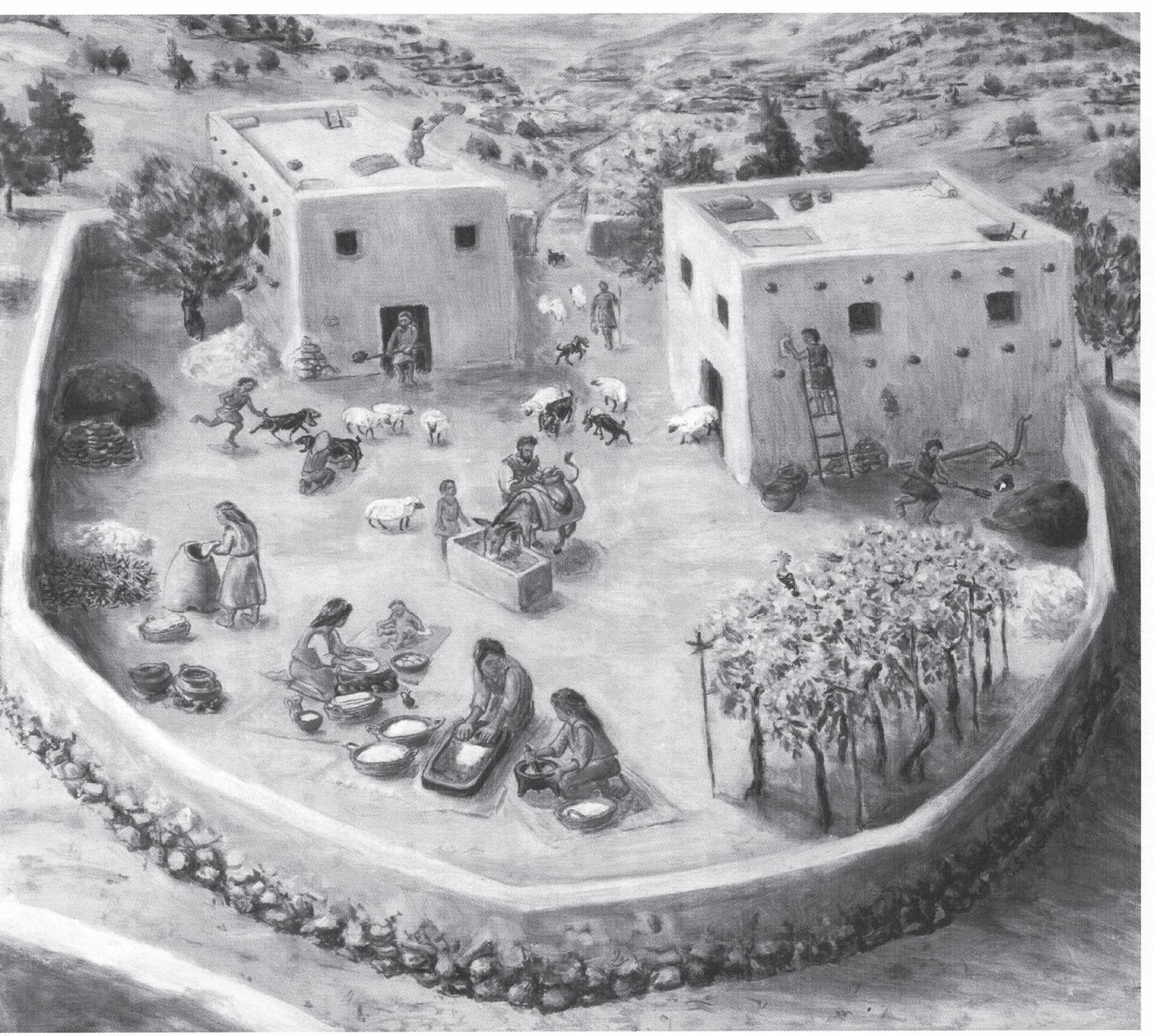
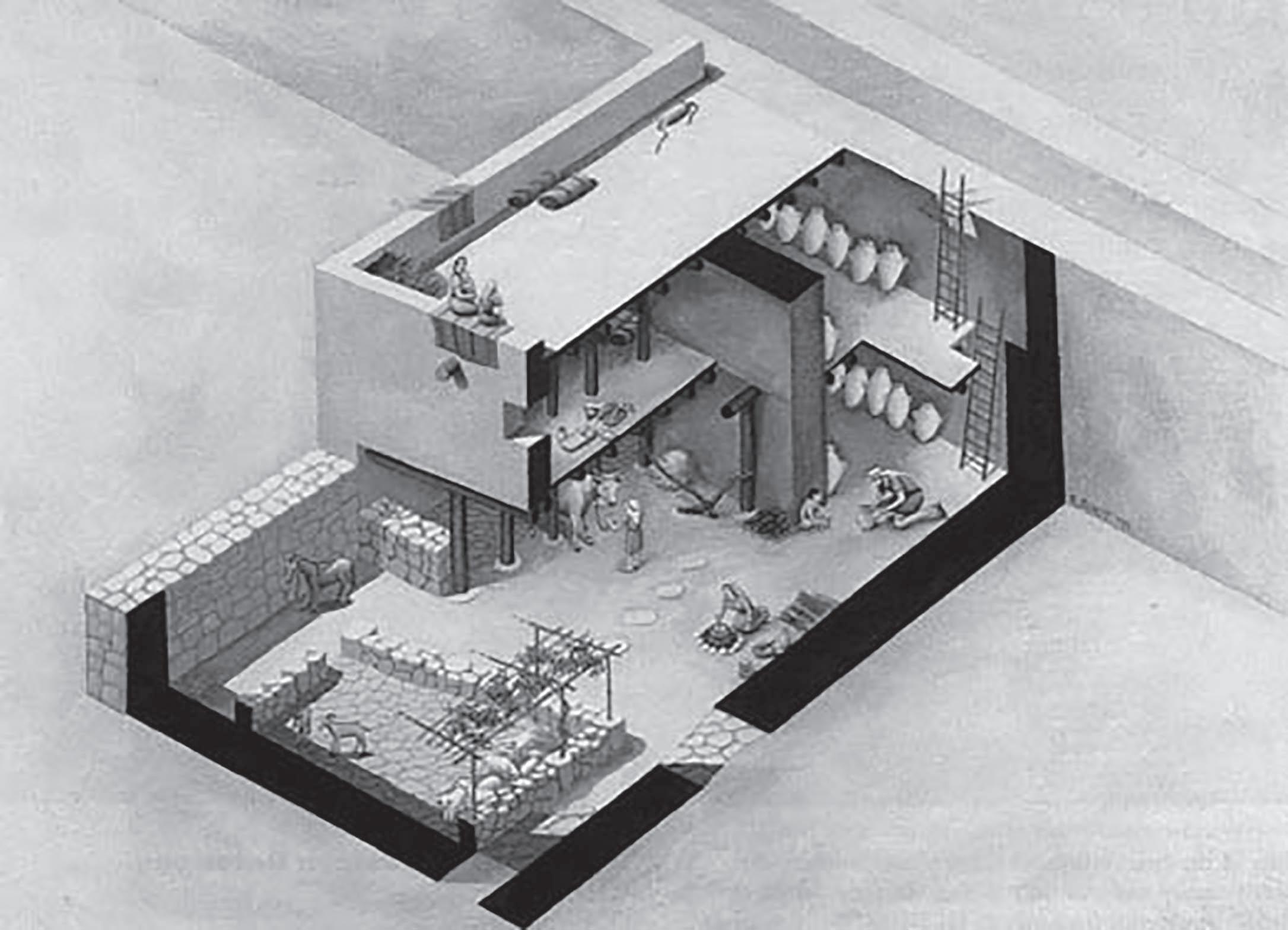
I. Tribal society is patrilocal
A. The bet ’ab as the family and the family compound
B. Four- room pillared house
C. Shared burial sites
B
II. B iblish: A word that is in the Bible, that is in English, but has been used so frequently out of its context that it has become gibberish.
III. Where does the term “redemption” come from?
A. Where did the church get the term?
B. Where did the New Testament writers get the term? (1 Pet 1:18–19)
C. Where did the Old Testament writers get the term? (Isa 43:1)
IV. What does the term “redemption” mean?
A. The Hebrew verb ga’al (to redeem)
B. Biblical examples
1. Naomi, Ruth and Boaz (the book of Ruth)
a. Kinsman redeemer
b. Redemption was both a societal norm and a law
2. Abraham and Lot (Gen 14): responding to patriarchal responsibilities
3. Hosea and Gomer (Hos 1–3)
a. Hosea was a prophet who was called to live his life as a visual example of God’s relationship with the northern kingdom of Israel
b. Gomer is an eshet zenunim: a promiscuous woman; a professional prostitute; a woman born in a brothel
V. Syncretism: the blending of two religions
VI. What is the metaphor of Scripture?
Notes:
Our Heavenly Father is the patriarch of the clan and he has sent the most precious member of his household, the firstborn son, to seek and to save the lost. What is his objective? To pay our ransom, to bring us home and to share his inheritance with us so that where he is, there we may be also.
The Epic of Eden Group Discussion
Leader, read each prompt and discuss the following as a group.
• An Epic aha: What is one aha moment someone in the group experienced when listening to the teaching on redemption?
• In the video, Sandy emphasizes 1 Peter 1:18–19 and Isaiah 43:1. Select a volunteer to read these passages aloud.
For you know that it was not with perishable things such as silver or gold that you were redeemed from the empty way of life handed down to you from your ancestors, but with the precious blood of Christ, a lamb without blemish or defect. (1 Pet 1:18–19)
But now, this is what the Lord says— he who created you, Jacob, he who formed you, Israel: “Do not fear, for I have redeemed you; I have summoned you by name; you are mine.” (Isa 43:1) What do you notice about how each of these passages references redemption?
• In what ways did Lawrence Stager’s theory of where Jesus was born help you see how important the cultural context of the biblical text is? Did you notice your ethnocentrism surrounding the nativity story?
• Using what you have learned about patriarchal culture, discuss Naomi’s crisis? How bad was it?
• Ruth asks Boaz, “Please redeem me.” What was Ruth asking for? What was Ruth risking in asking? What were the potential outcomes of this risky request for Ruth and Naomi?
• Sandy explains how Hosea’s unfortunate life calling is to live as a visual aid of God’s relationship with the Northern Kingdom. This included forgiving his adulteress wife for her repeated unfaithfulness. In what ways do you see yourself as the promiscuous wife in your relationship with God?
Discuss the parallels of Hosea buying back his wife and Yahweh continuing to forgive and preserve Israel.
Discuss the parallels of Hosea buying back his wife and Jesus paying for our sin on the cross.
• How have the stories of Ruth and Naomi, Abraham and Lot, and Hosea and Gomer changed your understanding of your own redemption?
• An Epic hope: Did anyone notice a moment of hope when listening to Sandy’s teaching on redemption that they want to share?
Our Homework Objective this Week
This week you will look a little more closely at patrilocality with the objective to understand the meaning of “redemption” and thereby understand God’s purposes for us and our world.
Next Week We Will Tackle
Timelines and maps! Next week we will take a journey through the lands in which all of the Old Testament narratives take place, and we will meet the five central characters in the story of redemption.
SESSION 2: INDIVIDUAL STUDY
Our objective as Christians is to understand the story of redemption, the Bible. More than anything else, we want to hear the words of the biblical writers as they were intended and claim their epic saga as our own. To accomplish this, we need to get past the great barrier— that chasm of history, language and culture that separates us from our heroes in the faith.”1
Last week, we began to examine and inventory what we know about the characters and stories of the Old Testament— and more importantly, why they matter. We learned that the Old Testament is more than just an unfortunate preface to the New Testament, that it is an integral part of the story, and that it is our story. We began to cross the great barrier by investigating Israel’s patriarchal , patrilineal , and patrilocal culture.
This week, we’ll take a look a bit more at patrilocality and what that meant. We will also continue to cross the great barrier of culture by exploring where our biblical writers got the term “redemption” and what that term means. We will see this concept lived out in the stories of Ruth and Boaz and Hosea and Gomer.
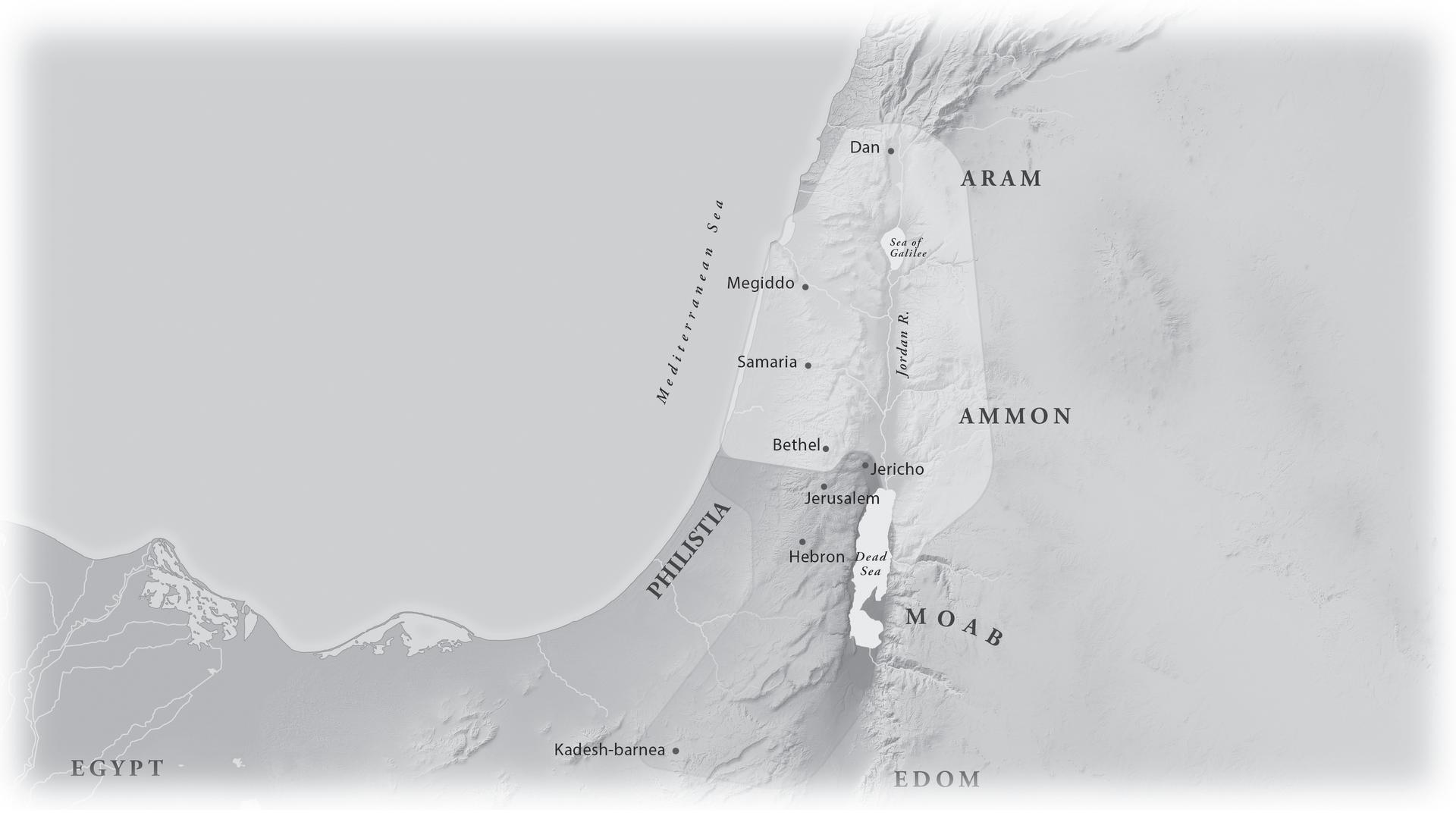
Use the maps on the following page as your reference points for this week’s study.
1 Richter, Epic , 1st ed., 21.
Day 1:
The Tribal Solidarity
First Things
Think about the make- up of your family. Not just your parents and siblings, but also your sisters- and brothers- in law, your nieces and nephews, grandchildren, and others. Now imagine, if you can, living with ALL of them in one compound of small, closely built houses surrounded by a walled enclosure. What is your first thought? Circle your initial response.
A. The more the merrier!
B. Too many people, too little space!
C. The noise, the mess, the constant cooking . . .
D. It’s like always having a friend.
E. There is no way I can handle my sister’s kids in my house all day every day!
F. My family is a feeling of security.
Vocabulary
patriarchal: Having to do with the authority and centrality of the oldest living male member of a family in tribal/traditional society.
patrilineal: Having to do with tracing ancestral descent through the male line in a tribal/traditional society.
patrilocal: Having to do with the living space of the family unit being built around the oldest male in a tribal/traditional society.
Into the Story
The design of the family compound illustrates that one of the primary values of Israel’s culture was tribal solidarity: living together, working together, and fighting against enemies together. What about in death?
Read Genesis 23:1–20; 25:7–10; 49:29–33; 50:13. Answer the following questions as you read.
• Who has died in Genesis 23:1?
• What does Abraham ask of the Hittites (v. 4)?
• How do the Hittites respond?
• How many more times does Abraham ask the same question in verses 5–16?
• Where did Abraham purchase the burial site? (See v. 19.) Why do you think it was so important that he purchase the site rather than accept it as a gift?
The Epic of Eden
• Who has died in Genesis 25:7–10?
• Write out the three verbal phrases that describe what happened to Abraham (v. 8).
• Who is giving instructions to his sons regarding his death in Genesis 49:29–32?
• Where is he (in what country) when he gives these instructions? (See Gen 47:27.)
• Where does he tell his sons to bury him (Gen 49:29–32)?
• Record the names of those already buried there.
• Write out the phrase that is repeated in verses 29 and 33.
• Why do you think it is so important to Jacob to be buried in the cave in the field of Machpelah?
Real People, Real Places, Real Faith
The phrase “gathered to his people” (Genesis 49:33) refers to the Israelite practice of shared family tombs. If possible, the body would be placed in the family tomb to decompose, and the bones would remain there with the past generations of kin. But if that wasn’t possible, the bones would be preserved so that they could be moved to the family burial cave at a later date, and thus be “gathered to their people.”1 As you saw above, several generations of the same family were gathered together in one cave. Just as the Israelites practiced tribal solidarity in life, they practiced it in death.
Our People, Our Places, Our Faith
Phil Wickham sings a song called “Hymn of Heaven”—it’s beautiful for so many reasons (watch the music video on YouTube!). But the reason it captures me is because when it speaks of heaven it names the fact the people of Christ will “stand beside the heroes of the faith”; that “with one voice, a thousand generations” will sing the hymn of Revelation 5:12: “Worthy is the Lamb who was slain, to receive power and wealth and wisdom and strength and honor and glory and praise!” 2 Now that you know something about tribal solidarity, about how a traditional society considers it essential that dead kinsmen are “gathered to their people,” pause over these lyrics. What does it say about our identity as Christians if the leading theme of heaven is that we, the followers of Jesus, will all be gathered together for all eternity?
1. Richter, Epic , 1st ed., 37.
2. Phil Wickham, “Hymn of Heaven,” track 3 on Hymn of Heaven, Fair Trade Services/Columbia, 2021, streaming audio.
The Epic of Eden
Write out your response.
Now that you know a little bit about the value that ancient Israelite culture placed on tribal solidarity, and are able to remove the western cultural lens from Jesus’ words, you are better able to understand what Jesus is saying to his disciples and to us.
How would you respond to someone who asks you about the hope that you have in Christ?
Take a moment to pray and consider, then record your response in the space below.
Day 2: The Father’s House
First Things
Last week you learned some vocabulary. Let’s see how you’re doing with that as we continue learning about ancient Israel’s culture. Fill in the blanks:
Vocabulary
patriarchal: All __________________ and, therefore, all ______________________ of the oldest living male member of a family in tribal society.
patrilineal: Having to do with tracing ancestral _________________ through the male line in a tribal society.
patrilocal: Having to do with the ______________ ________________ of the family unit being built around the oldest male in a tribal society. bet ’ab: Hebrew meaning father’s _________________.
Into the Story
Read John 13:1, 33; 14:1–3.
• Write down the setting of this story (13:1).
• Write down the players in the story.
Key: patriarchal: authority / responsibility; patrilineal: inheritance or descent; patrilocal: living space; bet ‘ab’: household
The
Epic of Eden
• Write down Jesus’ announcement (13:33). In this chapter, Jesus had washed the disciples’ feet (vv. 1–17) and predicted Judas’s betrayal (vv. 18–30) and Peter’s denial (vv. 31–38). What does he tell them in the midst of his prediction?
• Write down Jesus’ words of comfort to his panic-stricken disciples (14:1).
• Write down the place where Jesus is going (14:2).
• Write down what Jesus is going to do (14:3).
Real People, Real Places, Real Faith
If you read the whole chapter of John 13 you’ll find out that Jesus had some other news to share with his disciples before he told them he was leaving. First, Jesus gets up and washes the disciples’ feet. Then he tells them that one of them is going to betray him. Next, he tells Peter, Peter of all people, that he is going to deny Jesus, not just once but three times! Then he says, “Do not let your hearts be troubled” (John 14:1).
If you had been one of the disciples that night, what range of emotions would you have been feeling? Imagine yourself at the table with them. Make a list of the emotions you felt when Jesus washed your feet, when he told you one of the men you’ve all trusted, would betray Jesus, when you heard him tell Peter, one of the inner circle, that he would deny Jesus three times. And finally, when he says, “Do not let your hearts be troubled.” Describe the flood of emotions you felt.
Our People, Our Places, Our Faith
If you continue on reading in chapter 14 you’ll notice that Jesus also tells his disciples:
“And I will ask the Father, and he will give you another advocate to help you and be with you forever— the Spirit of truth. . . . I will not leave you as orphans. I will come to you. . . . The Advocate, the Holy Spirit, whom my Father will send in my name, will teach you all things and will remind you of everything I have said to you. Peace I leave with you; my peace I give you. . . . Do not let your hearts be troubled and do not be afraid.” (John 14:16–18, 26–27)
Jesus spoke these words to his disciples, and he also speaks these words to us. Think of a situation you may have found yourself in where your heart was troubled, and you were afraid. What did you do? Did you allow your fear and anxiety to overcome you and steal your peace? Or did you hear Jesus gently speaking to you, “Do not let your heart be troubled and do not be afraid”?
Day 3:
The Guardian-Redeemer
First Things
Have you ever been in a moment of real financial crisis? That terrible moment when you realize that the sum required is so high that there is simply no way out? Did you have someone to turn to for help? Or did you find yourself having to sell off a treasured possession, default on a loan, or shamefacedly walk away from a commitment to someone who really needed you?
Vocabulary
ga’al: Hebrew verb for “to redeem” go’el: Hebrew participle meaning “redeemer,” “kinsman redeemer,” “guardian redeemer” inalienable land law: a law that ensures that family land remains within the lineage
In the list of the following words, circle those that are synonyms of the word “redeem.”
buy back ransom deliver rescue save reclaim
Into the Story
Today we’re looking at a biblical law found in the book of Leviticus (25:13–28) called the “inalienable land law,” which we will see play out in the story of Ruth and Boaz. You can use the map on page 35 to put Naomi and Ruth in real space, circling or marking the cities and regions they traveled to and from as you study their story.
Read Leviticus 25:13–28 and, if time allows, the whole book of Ruth (it’s only four chapters!).
We’re looking specifically at Leviticus 25:25 and portions of Ruth provided for you below.
Leviticus 25:25a
Ruth 1:1–5
(NOTE: Bethlehem lies about 5–6 miles south of Jerusalem. Write in “Bethlehem” on your map on page 35.)
“If one of your fellow Israelites becomes poor and sells some of their property . . .”
In the days when the judges ruled, there was a famine in the land. So a man from Bethlehem in Judah, together with his wife and two sons, went to live for a while in the country of Moab. The man’s name was Elimelek, his wife’s name was Naomi, and the names of his two sons were Mahlon and Kilion. They were Ephrathites from Bethlehem, Judah. And they went to Moab and lived there.
Now Elimelek, Naomi’s husband, died, and she was left with her two sons. They married Moabite women, one named Orpah and the other Ruth. After they had lived there about ten years, both Mahlon and Kilion also died, and Naomi was left without her two sons and her husband.
(Circle the word[s] or phrase[s] that indicate that the man may have had to sell his land; underline the name of the place where he moved from and the place where he moved to; and draw boxes around what happened to Naomi’s husband and sons.)
Ruth 1:11–13
(What law is Naomi referring to? Fill in the blank.) The law
Leviticus 25:25b
But Naomi said, “Return home, my daughters. Why would you come with me? Am I going to have any more sons, who could become your husbands? Return home, my daughters; I am too old to have another husband. Even if I thought there was still hope for me—even if I had a husband tonight and then gave birth to sons—would you wait until they grew up? Would you remain unmarried for them? No, my daughters. It is more bitter for me than for you, because the L ord’s hand has turned against me!”
“ . . . their nearest relative is to come and redeem what they have sold.”
The Epic of Eden
Ruth 2:1
Ruth 3:12–13
Now Naomi had a relative on her husband’s side, a man of standing from the clan of Elimelek, whose name was Boaz.
(Draw a line connecting the matching word found in Lev 25:25b and Ruth 2:1. Circle his name.)
“Although it is true that I am a guardianredeemer of our family, there is another who is more closely related than I. Stay here for the night, and in the morning if he wants to do his duty as your guardian-redeemer, good; let him redeem you. But if he is not willing, as surely as the L ord lives I will do it.”
(Look again at Lev 25:25b and underline the adjective used to describe the one who is supposed to redeem what has been sold. Now underline the words Boaz uses to describe the other.)
For the rest of the story, read Ruth chapter 4. Spoiler alert: Boaz does “redeem” Naomi. He buys her family land back for her, marries Ruth, and takes both widows into his household.
As a result of that marriage, Ruth gives birth to a treasured son. Compare the genealogy in Ruth 4 to the genealogy of Jesus in Matthew 1:5–6. Highlight the name of Boaz and Ruth’s son.
What is their son’s relationship to David?
Boaz the father of Obed, Obed the father of Jesse, and Jesse the father of David.
(Ruth 4:21–22)
This is the genealogy of Jesus the Messiah the son of David, the son of Abraham: . . . Salmon the father of Boaz, whose mother was Rahab, Boaz the father of Obed, whose mother was Ruth,
Obed the father of Jesse, and Jesse the father of King David.
(Matt 1:1, 5–6)
Real People, Real Places, Real Faith
Let’s recap what just happened. We’ve got Naomi and Ruth both left without husbands or sons, which in a patriarchal society means that they are also left without legal or economic protection . . . until Boaz steps in. Boaz commits to redeem both the loss of family and the loss of land. But what if he hadn’t? What if Naomi and Ruth had not made it back to Bethlehem? What if Ruth had not been loyal to Naomi but instead had stayed in Moab with her own people? What if Boaz wasn’t the one to redeem Naomi’s land? What if the other relative had done it? What if neither had done it? What if Ruth had never given birth to Obed? . . . In this tapestry of interlocking decisions on the part of our man and woman of ḥayil (integrity), we see the hand of God.
Can you think of other “what if” questions?
Put yourself in the shoes of each character below. Consider how their circumstances are far from and near to your own. We’ve given one example to get you going. Try to write two things that are far from and near to you regarding each character.
In what ways are the character’s experiences and concerns FAR from yours?
In what ways are the character’s experiences and concerns NEAR to yours?
Naomi I’ve never been stranded in a foreign land. I’ve had economic instability too.
Ruth Boaz
Our People, Our Places, Our Faith
Think again about how seriously the Israelites took their responsibility for the well-being of the kinsmen within their households. Think again about our new covenant in which we are instructed to consider other believers as “brothers” and “sisters,” members together of the “household of faith” (e.g., Gal 6:10). How might we consider emulating Boaz in stepping up to the plate as a church member and saying: “Yes, I will redeem”?
Day 4:
The Metaphor of Scripture
First Things Vocabulary
syncretism: the process by which elements of one religion are assimilated into another religion, resulting in a change in the fundamental tenets or nature of those religions ’eshet zenunim: Hebrew phrase for “promiscuous woman,” “prostitute”
Figures of speech
simile: comparing two unlike things often using “like” or “as” metaphor: comparing two unlike things directly, using one word in place of another
Into the Story
To get you situated in the time of Hosea, turn to your timeline found on page xii and locate “Hosea.” Keeping your timeline in front of you and with your Bible open to Hosea, locate the names of the kings that are mentioned in 1:1. Keep in mind that after the united monarchy (Saul, David, and Solomon) the nation splits into the North and South. (HINT: You will find Hosea on the northern line.) Notice that the upper line records the Northern Kingdom, called “Israel,” and the lower line records the Southern Kingdom called “Judah.” (You will learn more about how that happened in session 3.)
Read Hosea chapters 1–3 and answer the following questions.
• Write down the two commands Yahweh gives to Hosea in 1:2.
1. 2.
The Epic of Eden
• Why does Yahweh tell Hosea to do these things? To what does Yahweh compare the “land” (God’s people) (1:2)?
• What impact does it have on you to hear God’s people compared to an “adulterous wife” (NIV), “a wife of whoredom” (ESV), “a wife of harlotry” (NASB)?
• Given what you now know about Israelite culture, what might you infer about Gomer’s place in her community prior to marrying Hosea?
• What sort of security and status has Hosea’s choice of Gomer as his wife given to her? Make a list here.
• By the end of chapter 1, who are the members of Hosea’s household (bet ’ab)? Write down their names and the meaning of their names (Hos 1:3–9).
• Now read Hosea 2:2–7 Why is Hosea saying that he will “not show my love to her children”?
• By the end of this reading (Hos 1:10–11), who are the members of Hosea’s household (bet ’ab)? Write down their names. How have they been transformed?
• By the end of chapter 3, how is the family crisis resolved?

Real People, Real Places, Real Faith
In biblical narratives, the authors have limited space and time and do not always give us all the details we want. Are there questions you would like to ask God about why he called Hosea to marry Gomer? What questions might you have for Hosea? For Gomer? Write down at least one question for each character. Then choose the most significant one and try to answer it
Our People, Our Places, Our Faith
The power of Hosea and Gomer’s story emerges from the fact that everyone knows what it feels like to be betrayed. Everyone has watched a best friend walk off with someone else, seen a boy or girlfriend’s glance turn to another. Too many of us have lived through the betrayal of a spouse. I want you to pause over the emotions that those experiences produced in you.
The Epic of Eden
Ask yourself where your “trust barometer” and your “forgiveness meter” landed after such an experience of abandonment. And I want you to ponder the fact that our God sees us the way we saw that friend, love interest, spouse. And yet our God did not hesitate to step forward in the public square, with every dime to his name, and shout out through the crowd, “Name your price! That one is mine.”
In his song “Redemption,” Matthew Clark says it this way:
Prophet take a prostitute and love her as your wife She will make her vows to you, each a vow she’ll break
Thirst for lovers drank her dry, drowned in debt she would have died When Hosea paid the dowry for his bride: redemption, redemption
The Father sends his only son, to ransom all the lost From enemies too strong for them, from the poverty of loss In the squalor of the pit, where the willing faithless sit,
To the depths the love of God has sent his Word: Redemption1
1. Matthew Clark, “Redemption,” performed by Matthew Clark, on Bright Came the World from His Mouth (independent release, 2013), streaming audio.
About the Author

Dr. Sandra Richter is the Robert H. Gundry Chair of Biblical Studies at Westmont College. She earned her PhD from Harvard University in Hebrew Bible and her MA in Theological Studies from Gordon- Conwell Theological Seminary. She has taught at Asbury Theological Seminary, Wesley Biblical Seminary, and Wheaton College. Because of her passion for the real people and places of the biblical narrative, she has spent many years directing Israel Studies programs that focus on historical geography and field archaeology. Sandy has a heart for the church and bringing high scholarship to the body. She is best known for her book The Epic of Eden: A Christian Entry into the Old Testament and its associated Bible studies: Epic of Eden, Isaiah, Jonah, Ruth, Psalms , and Deborah
Connect with Sandy at sandyrichter.org.